Secuity Council Report on Somaliland


Medeshi
Dec 23 , 2008
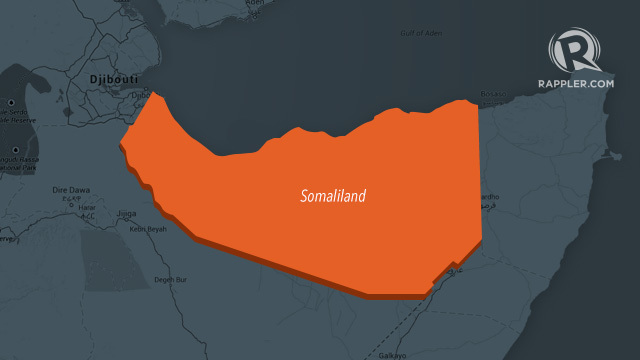
Part of the Security Council Report on (Somalia) Somaliland

43. The Somaliland authorities maintain a total security establishment of
approximately 22,000 security personnel, including military, police and intelligence
services. There is no air force or navy, but a small civilian coast guard functions
under the auspices of the Ministry of the Interior.
44. Somaliland security forces are paid and equipped principally with tax revenues
raised by the administration. In 2008, the total security budget was $7,830,717,
equivalent to 49 per cent of the total Somaliland budget ($16,140,804). The security
component was further broken down as follows:
• military: $4,629,341
• custodial corps: $881,768
• police: $2,287,862
• Ministry of the Interior: $31,746
45. Supplementary assistance to the police is provided by the European
Commission, the British Government, the UNDP rule of law programme, and IOM.
The Somaliland authorities and Ethiopian Government also cooperate closely on
security matters, and Ethiopia reportedly provides training for Somaliland military
officers.
S/2008/769
16 08-60473
46. Somaliland is currently not an active belligerent in the Somali conflict, but its
claim to independence and dispute with the Puntland administration over Sool and
eastern Sanaag regions could potentially lead to armed conflict in future. In October
2007, Somaliland forces and allied militias took control of the town of Laas Anood,
capital of the Sool region, which is also claimed by Puntland.
Somaliland army
47. The chain of command of the Somaliland army is as follows: Commander-in-
Chief: President Daahir Rayale Kaahin; Minister of Defence: Abdillahi Ali Ibrahim;
and Chief of Staff: Nuh Ismail Tani.
48. Budgetary allocations for the Somaliland army are based on an effective
strength of 16,000, and open source estimates range as high as an improbable
64,000. A March 2004 security sector workshop assessed total strength of the army
at 11,000 members, of which 6,000 were war widows, invalids and elderly who were
nevertheless still on the payroll.
Somaliland Police Force
49. The chain of command of the Somaliland Police Force is as follows: Minister
of the Interior: Abdillahi Ismail Ali ‘Irro’; and Chief of Staff: Mohamed Sanqadhi
Dubad.
50. The strength of the Somaliland Police Force is estimated at 3,000. UNDP
supports a 400-strong Special Protection Unit, which provides site protection and
armed escort for humanitarian operations.
Somaliland Custodial Corps
51. The chain of command of the Somaliland Custodial Corps is as follows:
Minister of Justice: Ahmed Ali Asowe.
52. The Custodial Corps consists of 1,540 armed guards, posted at various prisons
around the territory.
Somaliland National Intelligence Agency
53. The chain of command of the Somaliland National Intelligence Agency is as
follows: political authority: President Daahir Rayale Kaahin; and Director General:
Mohamed Nur Osman.
54. The Somaliland National Intelligence Agency serves as the principal
intelligence and counter-terrorism service of the Somaliland authorities, and
contains the Immigration Department.
55. It is apparently funded from the Somaliland budget through the Ministry of the
Presidency. It reportedly receives additional support from foreign donors, including
IOM and the Government of the United Kingdom.

Somalia: To Move Beyond the Failed State

INTERNATIONAL CRISIS GROUP - NEW REPORT
Somalia: To Move Beyond the Failed State
Nairobi/Brussels, 23 December 2008: Somalia’s latest transitional government is collapsing, but there is a chance to rescue a dire humanitarian and security situation if Western and other powers fundamentally revise their approach to a political solution.
Somalia: To Move Beyond the Failed State,* the latest International Crisis Group report, argues that the announced withdrawal at year’s end of the Ethiopian army, which intervened in December 2006, opens a new period of uncertainty and risk but also provides a chance to launch an inclusive political process. “The world is preoccupied with a symptom – piracy – instead of concentrating on a political settlement, the core of the crisis”, says Rashid Abdi, Crisis Group’s Somalia Analyst. “There is no quick fix to Somalia’s tragedy, but this opportunity must not be missed”.
The Transitional Federal Government (TFG) has failed to create a broad-based government and now exists almost solely in name. President Abdillahi Yusuf has marginalised most of the population, exacerbated divisions and become a liability. Talks begun in Djibouti eight months ago have accomplished little, not least because the parts of the Islamist insurgency with the most guns and territory are not participating.
Opposition to Ethiopia’s occupation has been the one issue on which the fractious insurgency agrees. When that glue is removed, infighting will likely increase, making it hard for the militias to sustain a military victory and creating political opportunities. The international community has been reluctant to engage with the Islamist opposition. U.S. air strikes at suspected foreign extremists have increased the insurgency’s popularity.
There is reason to believe that despite radical posturing, a significant majority in the Islamist insurgency would engage in a political process that does not seek to criminalise it and offers them a role in future governance. There is no other practical course than to reach out to it in an effort to stabilise the security situation with a ceasefire and then move on with a process that addresses the root causes of the conflict. In the course of that effort, the insurgents will need to provide assurances about the kind of Islamic state they envisage as well as clarify their rejection of foreign groups like al-Qaeda.
The African Union peacekeeping mission (AMISOM) originally sent to Mogadishu to relieve the Ethiopians is unable to fulfil its task and will be at increasing risk following their withdrawal. But it would be a bad idea to try to send a UN peacekeeping mission in now, as the U.S. wants the Security Council to do, when there is no viable peace process and enough troops cannot be found. The order of priorities must be a political settlement, then UN peacekeepers.
“One way or another, Somalia is likely to be dominated by Islamist forces”, argues Daniela Kroslak, Crisis Group’s Africa Program Deputy Director. “It makes sense, therefore, to offer the incentives of international recognition and extensive assistance in return for an agreement that is based on compromises by all major Somali actors and promotes the rights and well-being of all Somalis”.

Somalia crisis talks in Ethiopia

Medeshi Dec 21, 2008
Somalia crisis talks in Ethiopia
Ethiopia is hosting a series of talks on the deepening crisis in its neighbour, Somalia.
Foreign ministers from east Africa are meeting in the capital, Addis Ababa, to be followed by talks by the African Union's peace and security council.
The emergency meetings come after Ethiopia decided to withdraw its troops from Somalia by the end of December.
Islamist insurgents are gaining ground again after Ethiopia intervened two years ago to help government forces.
Different Islamist groups now control much of southern Somalia once more.
The Ethiopian troops and forces loyal to the interim Somali government are limited to parts of Mogadishu and the central town of Baidoa, where parliament is based.
Twin crises
The transitional government is in disarray, says the BBC's Elizabeth Blunt in Addis Ababa, after President Abdullahi Yusuf Ahmed attempted to sack Prime Minister Nur Hassan Hussein - a move the prime minister and parliament rejected.
With the president facing impeachment, it is not clear how much of a government is left for Somalia's neighbours in the East African regional grouping, Igad, and the AU to support, says our correspondent.
When the Ethiopian soldiers leave Somalia, the small African Union peacekeeping force will be on its own.
Only a tiny handful of countries answered a call from UN Secretary General Ban Ki-moon to send forces to help, and no-one has volunteered to fill a leadership role.
It is these twin political and security crises that the foreign ministers from the East African regional organisation Igad (Inter-governmental Authority on Development) and the AU's peace and security council will seek to address at their meetings on Sunday and Monday.
About one million people have fled their homes, many after fierce fighting in Mogadishu between Islamists and the Ethiopia-backed government forces.
Some three million people need food aid - about one-third of the population.
Somalia has not had a functioning national government since 1991, when warlords overthrew President Mohamed Siad Barre and then turned on each other.
Story from BBC NEWS:

Somali group seeks Sharia expansion


Medeshi Dec 21, 2008
Somali group seeks Sharia expansion
Fighters with Al-Shabab, an armed group that has taken control of the southern city of Kismayu, have told Al Jazeera they plan to impose Islamic law across Somalia.
Kismayu, Somalia's third biggest city, was once one of the most dangerous places in the south of the country.
However, relative calm has been restored to Kismayu after the Al-Shabab Mujahideen Movement and one of its key allies, the Raaskambooni Camp Mujahideen, seized control of the city from local clans three months ago.
Abu Ayman, the leader of the Raaskambooni Camp Mujahideen, told Al Jazeera: "We want to use Kismayu as an example and a model of our rule to the rest of Somalia.
"Our aim is to get residents in faraway towns inviting us to come and govern them according to the way of Allah. The calm in Kismayu has benefited its down-trodden most."
Most of Kismayu’s residents agree with Ayman, saying they are now able to go about normal life without fear of attacks by marauding gangs of armed men who had terrorised them periodically for nearly 18 years.
"I remember times when young boys with knives used to rob us of our daily earnings. Now we can carry lots of money without any fear of being robbed," Mohammed Fundi, a porter and Kismayu resident, said.
Seyyid Ali, also a porter in the city, said: “We used to be sort of enslaved. When we load six lorries, we used to be paid for just one or two. Today we get wages equal to our output. We have justice here.”
Peace, at a price
But Mohammed Adow, Al Jazeera’s correspondent in Kismayu, said the apparent peace had come at a price.
“International aid agencies, the lifeline of Somalia’s poor, fled the town because of the fighting.
"They have still not returned as the Islamists have little tolerance for anything - or anyone – foreign," he said.
Adow said that "the suffering is huge as the poor are largely left to fend for themselves".
Kismayu has been left with just one hospital to serve the needs of nearly one million people from the city and surrounding areas.
The hospital used to be run by Medicins Sans Frontier, who were forced to abandon the centre eight months ago after members of staff were killed by fighters.
Now, it is common for just one doctor to be on duty at a time, and medical supplies are dwindling.
Total breakdown
Dr Ali Hassan, who works at the hospital, said: “Our needs are many. Imagine a hospital like this operating without assistance from government or aid agencies. We have a shortage of drugs, equipment and staff are not motivated in any way."
"They [residents] have survived the vagaries of war. They have weathered the almost 20 changes in Kismayu’s administrations over the past 18 years and its people have learned to live with and obey any group that has the upper hand," he said.
Somalia has had no effective government since a coup removed Siad Barre from power in 1991, leading to an almost total breakdown in law and order across most of the country.
The only relative stability experienced by some parts of the country came during the brief six-month rule of the Islamic Courts Union in 2006.
However, they were driven out of the capital Mogadishu, and other areas, by Ethiopian and government troops – sparking an upsurge in fighting.
Ethiopia is due to remove its troops from war-torn Somalia by the end of the year.
Source:
Al Jazeera

How Bush Failed Somalia


Medeshi Dec 21, 2008
How Bush Failed Somalia
Two years ago the United States intervened in East African politics in a way that has been responsible for the deaths of untold thousands of people, has created the pirate problem, and is breeding a new generation of anti-American jihadists.
Matthew Yglesias December 18, 2008 web only
Americans don't spend much time thinking about Somalia. And what time we do spend has in recent months been focused on somewhat amused accounts of the uptick in pirate activity off the Somali coast. But the piracy is but a symptom of the larger problem of lawlessness and anarchy in Somalia. To Americans who have paid no attention to East Africa in the time between the departure of U.S. forces from Somalia in 1995 and the recent spate of pirate attacks, this situation may appear merely endemic to the region. But it's not. The Somali situation was, in many ways, improving as of two years ago. At which point the Bush administration initiated a new adventure that, like most Bush administration deeds, was ill-conceived and worked out poorly. In this case, it destroyed the country, has been responsible for the deaths of untold thousands of people, has created the pirate problem, and is breeding a new generation of anti-American jihadists.
And nobody in the United States seems to have noticed.
In part, this is because Somalia is an obscure corner of the world. And in part it's because the crucial events took place almost exactly two years ago -- during the Christmas season when most journalists were on vacation and most people weren't following the news.
Two years ago, most of Somalia was under the control of a militia called the Islamic Courts Union. This was, as the name suggests, an Islamist movement that arose out of sharia courts that had begun to provide some measure of local judicial authority amid Somalia's anarchy. Eventually, the ICU acquired armed forces and was able to seize control of the capital city, Mogadishu, and begin expanding its control over broader and broader swaths of the country. The ICU was not made up of nice people, and it didn't have a model of governance that was going to win any human-rights awards. What's more, one of the forces it was fighting against was the de jure government, the so-called Transitional Federal Government, a ragtag and essentially powerless group that had been put together some years prior under United Nations auspices. But the ICU did manage to bring a degree of actual law and order to the territories it supervised, and it wasn't trying to pick any fights with the United States. It was, in short, an improvement over the previous 15 years or so of anarchy.
But during the middle of the decade, the United States military had been building increasingly close ties with Ethiopia, hoping to turn that country into our key regional proxy. And Ethiopia and Somalia have traditionally been rivals. As the TFG got weaker, it also drew closer to Ethiopia. And when ICU forces attached the TFG's holdout in the south central city of Baidoa on Dec. 20, Ethiopian forces came to the TFG's rescue. By Dec. 24 -- Christmas Eve -- Ethiopian forces announced that they were staging a counterattack aimed at routing the ICU. The United States supported the operation, both with intelligence and some direct special-forces engagement and also diplomatically, which is crucially important since U.S. military assistance was how Ethiopia built their best-in-the-region military force. Before New Year's Eve, Ethiopians were in control of Mogadishu and began an occupation of the country in the name of the TFG.
To those of us who were both paying attention and chastened by the misadventure in Iraq, this looked like a recipe for disaster. Here was a largely Christian country (Ethopia), operating with the support of the United States, trying to occupy a largely Islamic country (Somalia) whose population has historically been at odds with the former. The inevitable results would be insurgency, death, destruction, anarchy, and the development of a more dangerous strain of Islamism as the United States sent the message that we were the enemy of all Somali Islamists whether or not they had any quarrel with us.
Some conservatives took note of these events to engage in some of their usual short-sighted bloody-mindedness. James Robbins observed in National Review that “Ethiopia is in it to win, nice to see a country in the developing world (or anywhere for that matter) that can take care of business." TNR‘s James Kirchick hailed the Ethiopian invasion as just and the U.S. participation, a worthy counterterrorism strategy.
Of course what actually happened was a downward spiral of insurgency, violence, criminality, piracy, death, destruction, and humanitarian tragedy. Over the summer, the U.N. decided the humanitarian situation was "worse than Darfur." Somalia has the world's highest rate of malnutrition. Because of the precarious security situation, it's extraordinarily difficult for humanitarian-aid organizations to operate. And because of the dismal record of foreign interventions in Somalia, no foreign countries are interested in intervening to stabilize things.
Of course the United States and the Bush administration are hardly the only blameworthy actors here. But we are blameworthy. We could have just minded our own business. But instead, in a fit of thoughtlessness, we initiated a policy that nobody in the States paid much attention to and that over a period of years has prompted massive human suffering around the world. And the Bush administration is continuing to make things worse in its final weeks in office. I can only hope that the incoming Obama administration will spend some time thinking about Somalia and learning not only specific policy lessons but also developing a sense of humility about the damage that can be done when the world's only superpower thrashes around carelessly.

US search for local link to Somaliland bombing


Medeshi
US homeland security looks for local link to Somaliland bombing
By Harvey Morris in New York
Published: December 20 2008
US authorities are targeting the country's Somali community following the discovery of a US link in a recent suicide bombing in Somaliland and the unexplained disappearance of young Somali-American men from the US.
More than a dozen Somali-American families in the midwest have reported their sons missing, fearing they may have fled to join al-Qaeda-linked groups in east Africa.
Establishing the youths' whereabouts has become more urgent since the perpetrator of a suicide bomb in autonomous Somaliland in October was identified as a naturalised American from Minneapolis, the Financial Times has learnt.
Members of the 70,000-strong Somali community in the state fear local imams are indoctrinating young men to join Islamist radicals fighting the western-backed transitional government in Mogadishu. Many of the youths, aged about 18 and 19, were American-born, said Omar Jamal, a community leader.
The spread of home-grown fundamentalism among American Muslims would mark a new trend in the US, although countries in Europe, including the UK, have been victims of attacks carried out by locally born Muslims.
The Federal Bureau of Investigation, following standard practice, refused to confirm or deny an investigation was under way. A spokesman said the agency was aware of the disappearances and feared some of the missing had gone to fight in Africa. There was no evidence they planned terror attacks on home soil.
The local Somali community fears they may have gone to join the al-Qaeda-linked al-Shabaab, an organisation that could try to seize Mogadishu if, as expected, Ethiopia pulls out the troops it has stationed in the capital since it intervened in Somalia two years ago.
The only other presence standing in the Islamists' way is an ineffective African peacekeeping force that Washington wants the UN to replace. Condoleezza Rice, US secretary of state, was at the UN this week to try to overcome the resistance of US allies to deploying a UN force.
Mr Jamal, a Somali community representative in Minneapolis, said US authorities recently prevented a local imam, suspected of recruiting Somali-American youths, from flying out of the US.
"There has been a conscious process of recruitment through mosques in the area. Our concern is that they'll be radicalised in Somalia and then sent back here," said Mr Jamal.

Somalia : The shining stupidity of the US Vice-President and the Ethiopian Prime Minister


Gwynne Dyer: The U.S. and Ethiopia's blunder in Somalia
By Gwynne Dyer
Statesmen ought to have a special prize just for themselves, like fools have the Darwin Awards. The Darwin Awards commemorate very stupid people who did a service to human evolution by accidentally removing themselves from the gene pool. The statesman’s equivalent could be called something like the Cheney-Zenawi Award.
I mention this because the shining stupidity of the US Vice-President and the Ethiopian Prime Minister are on special display this week, as the Ethiopian army prepares to withdraw from Somalia two years after its foredoomed invasion, leaving the country in the hands of precisely the people whom they wanted to eliminate. We need negative role models too, and you couldn’t ask for worse than this pair.
(Dick Cheney's shades reflect a strange being)
I can’t actually prove that getting Ethiopia to invade Somalia was Dick Cheney’s brainchild, but it smells exactly like a Dick Cheney idea: crude, violent, and barking up entirely the wrong tree. Just like invading Iraq, in fact.
As for Ethiopian Prime Minister Meles Zenawi, he had already distinguished himself by becoming obsessed with the stupidest border war in modern African history. It wasn’t his fault to start with: Ethiopia was attacked out of the blue in 1998 by the insanely aggressive regime in Eritrea, but Ethiopian troops drove the Eritreans back. By the ceasefire in mid-2000, Ethiopia had recovered all the ground it lost at the start.
An international commission found Eritrea guilty of aggression, and another one arbitrated all the disputed stretches of border, granting Ethiopia most of its claims. Both sides said they would accept the rulings—and then Zenawi walked away from the deal. He has been getting ready for another war with Eritrea ever since.
Going to war with Eritrea again would mean defying the United Nations ruling, so Zenawi needed the backing of some great power that could protect him from the UN’s censure. Who better than the United States, which has assiduously ignored and belittled the UN under the Bush administration? Now what could Ethiopia do for the Bush administration in return?
Well, it could invade Somalia. Washington didn’t want to put American troops into Somalia again, having had its nose bloodied in 1993, but it did want to overthrow the civilian regime that was restoring peace in southern Somalia and put its favourite warlord in power instead. Ethiopian troops would do the job just as well.
I think I can see the self-satisfied smirk on Cheney’s face as he closed the deal: another triumph for the subtle master of geopolitics. I can’t make out the look on Zenawi’s face, but maybe he was smiling too. Too clever by half, as the saying goes.
The job was to overthrow the Union of Islamic Courts, a mass movement funded by local merchants in Mogadishu who wanted to end the constant robberies and kidnaps that made life impossible in the Somali capital. The UIC mobilised the desire of ordinary Somalis for an end to the violence that had ravaged the country for fifteen years, and the peace they brought to Mogadishu soon spread over most of southern Somalia.
Unfortunately the courts were “Islamic” and they wanted to enforce sharia law, which in Washington’s book made them practically terrorists. They did have a few unsavoury allies, notably an extremist militia called al-Shebab, but they gave people in Mogadishu their first real hope of security and justice. They should not have been destroyed.
The Ethiopian army invaded Somalia in December 2006, drove the Islamic Courts out of Mogadishu, and installed Abdullahi Yusuf, the president of the “Transitional Federal Government” (TFG) of Somalia, in power. Well, not exactly in power, since the citizens and militias of Mogadishu immediately began attacking the hated Ethiopians, who only controlled whatever was in their gunsights. As for Abdullahi Yusuf, he only controlled a suite of rooms and some telephones.
He was originally chosen as president of the TFG, with ample US support, at a conclave of Somali warlords dignified with the name of “parliament” in Kenya in 2004. He would never have made it back to Mogadishu without the help of the Ethiopian army, and accepting that help made him deeply suspect in the eyes of most Somalis.
The resistance has driven the Ethiopian army out of most of southern Somalia in the past two years, and now the Ethiopians are going home. Abdullahi Yusuf will have to leave too, since he has no supporters except the Ethiopians and the Americans. Which will leave Mogadishu in the hands not of the Union of Islamic Courts, alas, but rather of the extremist militias that have pushed the UIC aside during their struggle against the foreign troops.
It’s almost as perverse as the Bush administration’s decision to eliminate Iran’s two great enemies in the Gulf, Saddam Hussein’s Iraq and the Taliban in Afghanistan. Ethiopia and the United States have not only plunged Somalia needlessly back into war. They have made it possible for the nastiest, craziest extremists, people who think it is their duty to kill other Muslims with “un-Islamic” haircuts, to take power in Mogadishu.
The world needs a Cheney-Zenawi Award for Gross Political Stupidity, and I know who the first nominees should be.
Gwynne Dyer’s new book, Climate Wars, has just been published in Canada by Random House.

The rise of the Shabab


The rise of the Shabab
Dec 18th 2008 KIUNGA
From The Economist print edition
Islamist fighters are taking over swathes of Africa’s most utterly failed state
Reuters
FOR all its paradisal waters, golden dunes and swanky “eco-lodges”, life in Kenya’s coastal district of Kiunga, just a few miles from the border with Somalia, is hard. The place is remote, hungry and thirsty. The harvest and the wells have failed again. Fishermen have no boats, only frayed nets cast from shore. Their catch rots for want of refrigeration. But what makes the village elders more nervous than anything is their proximity to Somalia.
During a war in the 1960s between Kenya and Somali bandits, known as “shifta”, who were egged on by Somalia, Kiunga was evacuated. These days a rough track, impassable during the rains, barely connects the two countries. The border has been closed since December 2006, when jihadist fighters in Somalia retreated headlong from Mogadishu, the capital, and Kismayo, a southern port, into the mangrove swamps around Ras Kamboni, just inside Somalia. There they were shredded by Ethiopian artillery and American air raids.

An attack on Kenya by Somali jihadists based near the border is unlikely. Resurgent fighters still train there but look north. They belong to the Shabab (Youth), the armed wing of the former Islamic Courts Union that was all but wiped out two years ago. The presence of hated Ethiopian troops in Somalia, together with a corrupt and hapless transitional Somali government, gave the Shabab a chance to regroup.
Money and arms from Eritrea, which wants to use Somalia to hurt Ethiopia, as well as from some Arab countries, enabled it to recruit. Several thousand have signed up in the past year. They attend large training camps in southern Somalia where one of the instructors is said to be a white American mujahideen. They are expected to disavow music, videos, cigarettes and qat, the leaf Somali men chew most afternoons to get mildly high. Thus resolved, they wrap their faces in scarves and seek to fight the infidel. In return, they get $100 a month, are fed, and can expect medical treatment and payments if they are wounded, as well as burial costs and cash for their families if they are killed.
The Shabab now controls much of south Somalia and chunks of Mogadishu. It took Kismayo a few months ago. The port of Marka, which takes in food aid, fell more recently. Many fighters are loosely grouped around two older jihadist commanders with strongholds near Kenya’s border, Mukhtar Robow and Hassan Turki.
Mr Robow celebrated the recent festival of Eid al-Adha by hosting prayers in Mogadishu’s cattle market. How sweet it would be at Eid, he told the gathering, if instead of slaughtering an animal in praise of Allah, they would slaughter an Ethiopian. On a visit to Marka he was only slightly less belligerent. He urged reconciliation—except with enemies of Islam. There are many of those, it seems. Hundreds of Somali aid workers, human-rights campaigners and journalists have been killed or exiled. Foreigners have been shot and kidnapped, in two cases just across Somalia’s border, in Kenya and Ethiopia. Where it cannot exert control, the Shabab excuses banditry. Borrowing tactics from Afghanistan’s Taliban, it spreads chaos to build a new order.
The Shabab has learnt from its mistakes in 2006, when it was overwhelmed in a few days by the Ethiopian army. It is now more pragmatic and more aggressive. This time round, it is apparently not picking fights with wealthy qat merchants. Men can chew what they like—but won’t be “clean enough” to get a lucrative job in Kismayo’s port. Education is encouraged. Girls can go to school. Charcoal burning is forbidden for the sake of the environment.
But the Shabab has also tightened its own security. Alleged spies for the transitional government or for Ethiopia are routinely beheaded with blunt knives. Mr Turki, the jihadist leader who lives mostly in the bush near the Kenyan border, sleeps in different houses when he is in a town. Public floggings and executions strike fear. So do masked faces. “Before, we knew who killed our relatives,” says a Kismayo merchant. “Now we don’t even know that.”
Most tellingly, the Shabab has learnt how to get hold of money faster. It concentrates its fighters in towns where there is money to be earned. The aim is to create an army that puts Islamist identity above divisive clan loyalties. Shabab commanders say a pious state will emerge once weaker militias have been disarmed. Some reckon that the Shabab shares some of the ransoms earned by pirates who operate out of the central Somali port of Haradheere. Those in Puntland, farther north, are apparently beyond the Shabab’s reach.
Ethiopia says it will withdraw its troops within weeks, once ships evacuate the 3,000 Ugandan and Burundian peacekeepers under the African Union’s aegis holed up in Mogadishu. Somalia’s transitional government looks even feebler than before. This week the president, Abdullahi Yusuf, an ageing warlord, sacked his prime minister, Nur Hussein, blaming him for what the president called a corrupt, inept and traitorous government. Mr Hussein refused to resign, and won a vote of confidence in parliament. Mr Yusuf went ahead and appointed his own prime minister anyway. More factional fighting beckons.
The UN says Somalia is the world’s worst humanitarian emergency. Some 3.2m people are said to need aid. The UN, which says 40,000 Somali children could soon starve to death, expects fighting over food to break out, another reason the Shabab wants to control the ports. Pirates make it hard to deliver aid. Their activities may be curtailed after the UN Security Council this week let foreign governments chase pirates in Somalia itself as well as at sea. But the piracy will probably continue as long as the catastrophe on land does.
George Bush’s administration backed some of Mogadishu’s worst warlords as part of its war on terror. President Obama will have to take a new tack. The AU force has proved ineffective but a bigger or more robust intervention, by America or any other country, is not expected; this week Condoleezza Rice, America’s secretary of state, called in vain for UN peacekeepers to be sent. A new American administration is unlikely to urge negotiation any time soon with the Shabab; it is still listed as a terrorist group by the Americans and may indeed shelter al-Qaeda people. It may have sleeper agents in Kenya and even in Britain. It has certainly become stronger.

Pirate attacks threaten food price hikes in African nations


Medeshi Dec 19, 2008
Pirate attacks threaten food price hikes in African nations
Pirate attacks wreaking havoc on one of the world's key shipping routes could cause sharp price hikes for food deliveries to African countries that can little afford it, port operators say.
"The costs of maritime transport will be affected -- either by a detour to avoid the Gulf of Aden route or by insurance fees -- and will be directly passed on to consumers," said Jerome Ntibarekerwa, head of the Port Management Association of Eastern and Southern Africa.
"For African countries, especially those that are isolated, the cost of transporting imported products already represents 70 percent of the final consumer price."
Pirates have attacked more than 100 ships since the start of the year in the Gulf of Aden and Indian Ocean off lawless and conflict-torn Somalia despite the recent presence of foreign navies in the region seeking to stop them.
In the latest wave of attacks, pirates hit three ships in the Gulf of Aden on Tuesday while Chinese sailors backed up by international naval vessels fought off attackers trying to hijack their vessel.
International efforts to counter the increasingly bold raids were boosted late Tuesday when the United Nations Security Council approved operations against the pirates' land lairs in Somalia.
But the threat of repercussions for both the region and the rest of the world remains -- and the loot currently held by the pirates is a clear illustration.
They now hold at least 15 ships, including a Saudi-owned super-tanker with two million barrels of crude oil and an arms-laden Ukrainian cargo vessel.
While residents of African nations are facing increases in prices on food and other imports, the ports themselves are also at risk, officials say.
Ntibarekerwa spoke of the possibility of "seeing certain companies frankly deserting our ports, causing slowdowns in merchandise transport and making it impossible to send our exports."
He said the pirate attacks threatened "serious implications" for ports.
Authorities in Djibouti, a small nation bordering Somalia that relies heavily on shipping, are particularly concerned.
"Piracy is among our biggest worries," said Djibouti Transport Minister Hassan Bahdon.
With Somalia, which has not had a functioning government for almost two decades, unable to clamp down on the pirates itself and international navies struggling to patrol the vast region, port officials say coastal African nations must unite against the problem.
"We are going to raise this problem at the next (African Union) summit in January to attempt to find a common position on the problem and to harmonise our legislative frameworks," said Imed Zamit, head of the African Union's maritime transport unit.
He said "indispensable African trade occurs by sea and through the ports."
The port management association is also attempting to have its members adopt a common approach that authorises land military operations that would allow them to pursue pirates.
"The draft agreement is ready. All that's left is for the member states to accept it," said Ntibarekerwa. "We must also discuss cooperation between the European Union (anti-piracy) force and our member states, and the installation of a common anti-piracy operations centre, likely in Djibouti."
A European Union naval force started anti-piracy operations on December 8 and has six warships, three surveillance planes and four helicopters.
Ntibarekerwa said countries in southern and eastern Africa have not been unified in their approach because some have not been as badly affected by piracy as others.
But that attitude cannot last, he said, "because piracy and its consequences, along with the global financial and economic crisis, will have a particularly negative effect on our line of business in Africa."

Somalis leaving Minn. for jihad


Medeshi Dec 19, 2008
Somalis leaving Minn. for jihad
By Oren Dorell, USA TODAY
MINNEAPOLIS — Mohamud Ali Hassan once told the Somali grandmother who raised him that he'd become a doctor and care for her.
The Somali immigrant, who moved to the "Land of 10,000 Lakes" when he was 8, had good grades at the University of Minnesota and called Muslims to prayer at his mosque, where he also slept during the holy month of Ramadan.
But on Nov. 1, Hassan disappeared, as have a dozen other boys and young men here — two days after another young Muslim from Minnesota blew himself up as a suicide bomber in Somalia.
Hassan, 18, called his grandmother to say he was back in Somalia, where an Islamist militia is trying to take over the Horn of Africa nation. What he was doing there, he did not say.
Now the FBI is asking questions, as are members of the Somali community. The Abubakar As-Saddique Islamic Center denies any wrongdoing, but many here suspect that the mosque and its imam are radicalizing their youth to become jihadists in an Islamic holy war overseas or perhaps even in the United States
"They are very powerful, whoever got into his mind and got him to do this," says Hassan's grandmother Fadumo Elmi, 83. "We were forced out of our country one time. We don't want to be forced out of here."
Details of the disappearances are few, but what little is known is cause for concern, says Abdizirak Bihi, a community activist who represents six families of young men who disappeared in early November.
Among them was Bihi's nephew, Burhan Hassan, 17, a high school junior.
All were good students, had no problems with the law, Bihi says. All were raised by single mothers and spent a lot of time in the Abubakar As-Saddique Islamic Center.
The center is the largest mosque in the Twin Cities. Bihi worries it is preaching a radical Islamic ideology to vulnerable young men.
Shirwa Ahmed, 19, who left in August with no notice to his family, was among five terrorists who blew themselves up Oct. 29 in an attack that killed 24 people in Somalia, Bihi says.
"We are wanting the government and politicians to investigate who is responsible for sending our kids and we are requesting the American government to help us to get us back our kids." Bihi says.
Other Somali immigrants worry the disappearances may foretell dangers for their adopted nation. "That kid that blew himself up in Somalia could have done it here in Minneapolis," says Omar Jamal, executive director of the Somali Justice Advocacy Center in St. Paul.
Special Agent E.K. Wilson of the FBI in Minneapolis would not say whether his agency is investigating the mosque. Bihi and Elmi said the FBI has talked to them and others about the missing.
Wilson said the FBI knows that Muslims here have been going overseas to fight.
"We're aware that a number of Somali men have traveled from around the United States including Minneapolis to potentially fight overseas," Wilson said.
A lawyer for the Abubaker As-Saddique Islamic Center denied any involvement in planning or financing the men's travels or any political indoctrination.
"The mosque has taken a position that it would never take a stand on any political issues," says lawyer Mahir Sherif in San Diego. "We do not support terrorism or any kind of suicide bombing or act of violence."
He said federal authorities last month prevented the mosque's religious leader, Sheik Abdirahman Ahmed, from flying to Mecca.
Somalia has been plagued by lawlessness, terrorism and warfare since the collapse of the military government in 1991. In recent years, a radical Islamist militia that seeks to impose Islamic law captured the capital of Mogadishu, where 18 U.S. soldiers died in the infamous "Blackhawk Down" battle of 1993. Troops from Ethiopia invaded in 2006 to counter the Islamists, who have been praised by Osama bin Laden.
Yusuf Shaba, who writes about Islamic ideology and radicalism for the Warsan Times, a Somali-English monthly newspaper published in Minneapolis, says he decided to speak out about what he considers Islamic indoctrination at Minneapolis mosques because he doesn't want his sons to follow the same path he did.
Shaba, 34, joined Al Ittihad Al-Islami (Islamic Union) at age 16 and was wounded at age 19 in Somalia. Al Ittihad was Somalia's largest Islamic terrorist group in the 1990s.
Shaba says jihadists generally recruit young men from among two groups: those shunned by their families because they've turned to drugs, gangs or alcohol; and the sons of families who forbid exposure to Western culture and allow them to socialize only at the mosque.
Shaba says he and his three teenage sons attended a program two months ago at Abubaker As-Saddique Islamic Center, where a former Somali warrior sat in a circle with other young people and delivered a passionate recitation of his experiences during the Somali civil war.
Some mosques also screen videos about the war in Afghanistan and about Muslim victims of perceived injustices in such places as Nigeria and the Palestinian territories. "They give them all the grievances that Osama Bin Laden has," Shaba says. "They talk about nothing but jihad and it's the best thing that can happen to a Muslim."
When the brainwashing is done and the teachers are confident students will do anything asked of them, the teachers give them tazkia, or clearance, to get more specialized training in the United States or abroad, Shaba says.
"The people who trained us encouraged us to not get married, to sever our ties with our families, so that when the mission comes we won't worry about family."
Shaba says similar activities occur at Minnesota Da'wah Institute in St. Paul, another mosque. Sheik Mahamud Hassan, the institute's imam, says nothing like that is happening as his mosque. "It's liars," he says. "I'm not missing any members."
Elmi wrapped herself in her shawl and sobbed as she thought of Hassan in her one bedroom apartment in a Minneapolis public housing high rise. Outside, snow covered the parking lot and temperatures were below zero.
They moved to the United States in 1996, when Hassan was 8 and after his father was killed in the civil war. Hassan was obedient, but after going to the mosque, "He was completely changed."
"I thought the mosque would be a much safer place than the night clubs and bars," she said, crying. "I don't want God to curse me because I say something bad about the mosque."

Somalia and the war on terror: The third front revisited


Medeshi Dec 19, 2008
Somalia and the war on terror: The third front revisited
Matthew Blood

Exploring Somalia’s fate under the Bush administration’s war on terror, Matthew Blood argues that the US has simply taken an already brutalised people and brutalised them even more. With warlordism, criminality, and piracy ever increasing, the author ponders whether the marked anti-Western sentiment and greater radicalisation of Islamic authority in the country will lead to violent future backlash within locations in the West from disaffected Somalis.

Somalia today is approaching a cataclysm not seen since the early 1990s, and the US role has added in no small part to the misery that once again engulfs the war-weary Horn of Africa nation.
The brutal Ethiopian military occupation of Somalia that began on Christmas Eve 2006 has sustained heavy losses over the past 20 months. The conflict has strained Ethiopian resources and Addis Ababa is currently reviewing its overall strategy. What remains of Somalia's Transitional Federal Government (TFG), barring a massive new foreign military intervention, teeters on the edge of collapse. In its place an already powerful Islamist insurgency is strengthening rapidly. Warlordism, criminality, and piracy are reaching new heights. All the while, the Somali population remains under siege, caught between abuses on all sides as its society literally disintegrates.
Underwriting a significant portion of the bloodshed has been a US administration engaged in expansive warfare with a preference for covert military operations. Somalia has long been of strategic interest to US policy makers. The country sits next to the strait of Bab al-Mandeb, a key oil transit waterway between the Red Sea and the Indian Ocean – the second closest point between Africa and the Middle East. During the Cold War the dictatorship of General Siad Barre was the long-time recipient of generous amounts of US military and economic largesse. In 1991, after years of unrest, rebellion, and protracted drought, Barre's regime collapsed into famine, war, and chaos. George H. W. Bush ordered US forces into the country a year later in support of the United Nations relief program, culminating in the Battle of Mogadishu and the now-famous Black Hawk Down incident.
At the time of the US withdrawal and international disengagement, no single actor was strong enough to establish and maintain control. Somalia fractured along semi-permanent tribal lines and warlord fiefdoms that would come to define the country's social and political landscape. For more than a decade and a half, the territory was left to fester in ungoverned criminality and violence, only rarely making international headlines.
September 2001 and the wars in the Middle East brought renewed US focus to the Horn of Africa. For some time, a diverse group of Islamists, clan leaders, businesspeople, militia heads, and civic actors had been coalescing into what would in 2005 become the Union of Islamic Courts (UIC), a heterogeneous movement seeking to establish a semblance of law and order after years of chaos.
The courts proved to be well organised, disciplined, and effective civil administrators. They were popular with average Somalis, even the less devout, all of whom were desperate for relief from the criminal gangs and brutality that had long ruled their country. The Islamists also began to challenge the weak, faction-ridden TFG – the successor to 13 previous failed attempts at creating a central government – which had been confined to the provincial town of Baidoa, headed by President Abdullahi Yusuf, closely linked to Mogadishu's warlords.
Alarmed at the Islamic Courts' growing strength and popularity, in early 2006 the CIA began supplying significant quantities of arms and money to a coalition of secular Mogadishu warlords under the name Alliance for the Restoration of Peace and Counter-Terrorism (ARPCT). The CIA programme had been a poorly conceived attempt to hunt down the small number of al-Qaeda affiliated individuals involved in the 1998 bombings of the US embassies in Kenya and Tanzania, then thought to be hiding in Somalia. But the operation failed disastrously and, according to reports, ‘the payoffs added to an anarchic situation that led many Somalis to turn to the Islamic Courts for protection’ (Washington Post, 13 May 2007).
The Islamists struck preemptively and decisively, routing the warlords and seizing control of Mogadishu within a matter of weeks. For six months in 2006, the Union of Islamic Courts proceeded to establish security and the provision of basic social services in much of Somalia for the first time in 15 years. The peace provided by the Islamists also came with more conservative social policies and a type of sharia law. For average Somalis, however, the security of the courts brought a brief respite from their usual suffering.
The Bush administration, seeing Somalia and the Islamic Courts through the lens of its war on terror and, having botched the earlier warlord programme, began stepping up aid to long-time ally and neighboring Ethiopian autocrat Meles Zenawi. Zenawi has held power in Ethiopia since the early 1990s. During a crackdown against popular protests after fraudulent elections in 2005, Zenawi's security forces massacred nearly 200 people, injured 760 more, and arrested an additional 20,000, among them opposition leaders, foreign aid workers, and journalists. Nonetheless, since 2002, Ethiopia has received nearly US$25 million in overt US military assistance while at least 100 US military personnel currently work inside Ethiopia in advisory positions as part of what the Pentagon characterises as a ‘close working relationship’ with the Ethiopian military.
Less than two weeks before the invasion, in mid-December 2006, Assistant Secretary of State for African Affairs Jendayi Frazer publicly declared, ‘The Council of Islamic Courts is now controlled by al-Qaeda cell individuals, east Africa al-Qaeda cell individuals.’ The claim was dubious and he provided no evidence. Horn of Africa specialist Ken Menkhaus noted in February 2007 that the Islamic Courts ‘movement as a whole was far from an al-Qaeda front. Only three foreign al-Qaeda operatives were said by the US to be in hiding in Mogadishu, a number far lower than those suspected of residing in neighboring Kenya.’
Assistant Secretary Frazer warned of ‘a risk [that] Al Qaeda may take up bases in Somalia,’ but denied that the United States would take military action against the courts. Similarly, then-UN Ambassador John Bolton told reporters in early December 2006, ‘[t]he United States strongly believes that a sustainable solution in Somalia should be based on credible dialogue between the [TFG] and the UIC and we continue to work with our African and other partners toward that end.’
Behind the scenes, General John Abizaid, at the time US Central Command (USCENTCOM) commander, had already visited Addis Ababa to express some last minute reservations to Prime Minister Zenawi. The decision had been made, though, and ultimately Washington lent its support to the invasion.
The Ethiopian military crossed the Somali border on 24 December 2006 and later reports indicated that ‘CIA agents traveled with the Ethiopian troops, helping to direct operations’ (the London Independent, 9 February 2008). The United States provided important satellite intelligence and other battleground information from unmanned Predator drones. ‘A lot of what we taught them was used to fight that global War on Terror,’ observed a US military advisor who had trained Ethiopian soldiers now fighting in Somalia. In terms of weaponry, he noted, ‘They got what they needed.’
US Special Forces also conducted periodic operations inside Somali territory, possibly moving out of a rumored CIA base in eastern Ethiopia. The full extent and exact type of activity is not known, but reports of their movements have been confirmed by Somali officials. As TFG Prime Minister Nur Hassan Hussein explained to reporters in February 2008, ‘The presence of the CIA, the presence of [US] troops, is not a big issue. We like that they are here. But right now they don't have a permanent military presence. They come in and out.’
US warships moved into position off the coast of Somalia in anticipation of the invasion. Acting on intelligence from the ground, Washington ordered bombing raids targeting what it believed to be Islamic militants. US-piloted AC-130 gunships and cruise missiles have blasted Somali territory at least a half dozen times since January 2007. The first of these air raids killed what turned out to be 70 Somali goat herders whom the Pentagon had initially claimed were Islamic fighters. After several other attempts, in May 2008, the bombings finally succeeded in killing the leader of the al-Shabaab militia, Aden Hashi Ayro. The strike also demolished the surrounding homes, killing ten others and leading to anti-US protests.
The Ethiopian military captured Mogadishu before New Year's Day 2007. The most powerful army in the region devastated organized UIC forces. But the remaining militants fled and quickly melted back into the larger civilian population. As predicted, the collapse of the Islamic Courts and the subsequent Ethiopian occupation led to a relentless Iraq-style insurgency – one that has been rapidly gaining strength.
The insurgents have successfully used roadside bombs, hit-and-run attacks, and assassinations targeted at government officials to assault the TFG and its Ethiopian backers. Increasingly, they have routed Ethiopian and TFG military forces in direct confrontations, moving to capture and hold swathes of territory for extended periods of time.
Ethiopian and TFG forces, for their part, responded with a ferocious campaign to root out militants in Mogadishu and surrounding areas. The vicious counterinsurgency has seen the regular shelling of densely populated urban neighbourhoods. Distinctions between civilians and insurgents are often irrelevant to security forces that frequently prey on the Somali population. Looting, rape, torture, mutilation, and cutting the throats of victims are regular tactics of Ethiopian and TFG forces. These are the same methods the Ethiopian military has used to suppress another ongoing insurgency in the Ogaden desert. The most recent report from Amnesty International recounts episodes too horrific to quote here.
Thus, Somalis are caught in the crossfire between Ethiopian and TFG security forces, insurgents, warlords, criminals, and US gunships. The ‘more common complaint among ordinary Somalis,’ according to reporters however, ‘is that the Ethiopians are “indiscriminate” in their reprisals – and that this is why Mogadishu has been emptied of people.’
The human cost has been staggering. The forces of war and drought are rapidly converging on the Horn of Africa nation in a perfect storm against the Somali population. The civilian death toll since the invasion is fast approaching 10,000. More than a million people have fled their homes, including half of Mogadishu, and are now living in squalid, makeshift refugee camps.
The food and fuel crisis that has affected international markets has combined with the disruption of fighting, looting, inflation, and a failure of the seasonal rains to push Somalia to the absolute brink. The country now stands on the verge of famine on a scale not seen since the early 1990s when an estimated 300,000 Somalis starved to death. Recent UN estimates hold that more than 3.25 million people, nearly half the population, are currently in need of food aid. International officials have long been calling the situation the most horrific humanitarian disaster on the African continent.
As in Iraq, the war on terror in Somalia has become a self-fulfilling prophecy, sowing the increasing radicalisation and anti-Westernisation of an entire population of poor Third World people. In recent months there has been new evidence of foreign fighters inside Somalia – decidedly not the case when Jendayi Frazer declared two weeks prior to the invasion that Somalia was ‘now controlled by al-Qaeda cell individuals.’
While the leadership of the Islamic Courts was originally a mix of moderate and conservative Islamic actors, the insurgency no longer maintains this character. A peace agreement between the former moderate elements of the courts, now called the Alliance for the Re-Liberation of Somalia, and the TFG has already concluded to no effect. The old leaders of the Courts no longer control the insurgency. Battle-hardened al-Shabaab militants, perhaps poised to succeed the Transitional Federal Government, espouse a far more radical and anti-Western Islamic ideology.
For the moment, the intervention in Somalia appears to be coming full circle. In September two Somalis in their early 20s were arrested at a German airport on suspicion of planning terrorist attacks somewhere in the West. They were released due to insufficient evidence, but German intelligence officials believe the men were arrested too early.
Somalia has indeed been a third front in the war on terror. A quiet front, but a front nonetheless. Six months after the Ethiopian invasion, Defense Department spokesperson Bryan Whitman told reporters, ‘The very nature of some of our operations, as well as the success of those operations, is often predicated on our ability to work quietly with our partners and allies.’ Now, almost two years into the occupation, few can still maintain delusions of success in the Horn of Africa. Perhaps most troubling is that the current episode must be seen against the background of the recent creation of AFRICOM and the larger militarisation of US foreign policy in Africa.
What becomes of Somalia remains to be seen. What is certain is that the US has taken a group of the world's most destitute, desperate, and brutalised people and brutalised them some more. We might expect to see angry young Somalis bringing violence to the West in the future. Whether we know it or not, we have certainly brought it to them. This is the Bush administration's legacy and it will be with us for a long time to come.

Ethiopia leaves Uganda in Somalia quagmire


Medeshi Dec 19, 2008
Ethiopia leaves Uganda in Somalia quagmire
By Rosebell Kagumire
By January 2009, many fighting Somali factions might have what they have been hoping for – the withdrawal of Ethiopian troops from their country. Recently, Ethiopia announced it intends to pull out its troops by the end this month, ending a two-year occupation of the lawless Horn of African nation.
(Photo: Burundian flag is passed on to Former Force Commander as Ugandan troops and Somali security officers welcome the first Burundi battalion early 2008)
The withdraw is in line with the Djibouti Accord, agreed upon in June this year by the Transitional Federal Government (TFG )in Somalia and the opposition the Alliance for Re-liberation of Somalia (ARS) better known as “The Alliance”.
The Ethiopians will only retain their troops around the border areas if all goes according to plan.
Although Ethiopia’s presence has been unpopular among Somalis who saw it as foreign occupation, the troops have held areas which would most likely by now be under the Islamist militants.
Analysts have warned that the withdrawal of Ethiopian troops will leave a vacuum which the militants might take advantage of to spread mayhem to more parts of Somalia. The Islamists already control much of the country and TFG under President Abdullahi Yusuf only controls Mogadishu and Baidoa.
Such a vacuum will no doubt have an impact on the 1,700 Burundian and 1,700 Ugandan troops on peacekeeping mission in Somalia.
The spokesperson for the African Union Mission in Somalia (AMISOM) Maj. Barigye Bahoku told The Independent that they hope the African Union (AU) nations live up to their pledge of sending more troops in Somalia.
“The withdrawal of Ethiopia is based on the fact that there are adequate forces to fill the vacuum they will leave behind. Whether it’s AU or UN this must be worked on very soon,” said Barigye.
In a recent Nairobi IGAD Heads of State Summit, the leaders once again called for generation of troops and there has also been talk of UN deploying in Somalia.
“In the initial mandate we were supposed to be there for six months and the UN takes over but that didn’t happen,” said Maj. Bahoku. “We are still hoping by the time the Ethiopians start withdrawing, more troops will be on the ground.”
However the lack of logistics to fund more troops in Somalia must be overcome as soon as possible for these extra troops to deploy.
Nicolas Bwakira, the AU envoy to Somalia, said it will cost at least $200 million to increase the number of AU troops from the current 3,400 to about 8,000.
Ugandan troops have only been confined in Mogadishu where they guard the Mogadishu Airport and seaport, the K4 junction (the main access route to and from Mogadishu) and the presidential palace. The Burundians are in one station at the former Somalia national university.
Although the mission has been generally less costly in terms of troop loss with ten soldiers – one Burundian and nine Ugandans killed, the peacekeepers remain targeted by extremist groups in Somalia
As recent as last month, the Islamists staged a botched attack on AU peacekeepers base.
Dr Paddy Musana, head of the Peace and Conflict Studies Program at Makerere University says the withdrawal of Ethiopian troops will less likely endanger Ugandans under the AMISOM.
“Uganda’s stand has been diplomacy and so far they have done a great job,” Musana said. “If they continue to tow this line of neutrality they will eventually be in good books of Somalis – even the militants.”
It’s unclear how hardliners like Al Qaeda linked Al Shabab will react to the withdrawal especially with increased TFG facing infighting.
There are worries that the current fights between President Yusuf and Prime Minister Nur Hassan Hussein could pose yet another threat to the presence of the AMISOM. The AU Commission Chairman, Dr. Jean Ping has already warned that the AU force could also leave if government in-fighting continues.
The current troop mandate expires in February 2009. Burundi’s Defence minister Germain Nikyoyankana last week said his country will pull troops from Somalia only after studying the situation and consulting with Uganda. Musana said Uganda’s presence in Somalia is more beneficial now more than ever if it can use its new position as on the UN Security Council to bring more international attention the situation in Somalia.
However Musana warns that Uganda must not be seen to push American or western interests.
“The moment Ugandans in Somalia are seen to be outrightly in bed with US, it will not only spell doom to Ugandan soldiers in Mogadishu but also for Kampala.”
Uganda recently been on high terror alert and groups like Al Shabab have vowed to fight Uganda’s presence in their country Somalia.
Somalia has been in a state of anarchy since 1991 when dictator Mohamed Siad Barre was ousted.
The failure of the international community to respond to the Somali situation where more than 10,000 civilians have been killed since 2007 has been manifested in the increase in piracy in Somali waters especially in the Gulf of Aden.
What the international community especially, US and UN decide to do in the face of spill over effects from the Somalia lawlessness that has made important sea routes bordering Somalia impassable is what might ultimately determine the future of AMISOM, and the peace for the people of Somalia.

Somali fighters warn Western powers


Medeshi Dec 19 , 2008
Somali fighters warn Western powers
An armed group battling Ethiopian forces in Somalia has told Al Jazeera it will take its fight beyond the country once it defeats its rivals.
"We are fighting to lift the burden of oppression and colonialism from our country ... We are defending ourselves against enemies who attacked us," Abu Mansoor, the leader of the al-Shabaab's movement, said.
(Abu Mansoor said al-Shabaab will fight "oppression" elsewhere once Ethiopian forces are defeated [AFP])
"Once we are successful with that we will fight on and finish oppression elsewhere on earth," he said.
Al-Shabaab, meaning youth, split last year from the Islamic Courts Union which controlled much of Somalia, including the capital Mogadishu, until it was pushed out by government and Ethiopian troops in 2006.
It has since retaken large areas of central and southern Somalia and is putting increased pressure of the transitional government, which exercises little control from its base in the town of Baidoa.
'Islamic rule'
In Marka, just 90km from the capital Mogadishu, Ibrahim Almaqdis, one of the fighters told Al Jazeera: "We wish to tell Bush and our opponents our real intentions.
"We will establish Islamic rule from Alaska and Chile to South Africa, Japan, Russia, the Solomon Islands and all the way to Iceland, be warned, we are coming."
Abu Mansoor said that al-Shabaab's ranks had been bolstered by foreign fighters and urged others to join, saying that a core principle of the group was that all Muslims are citizens of Somalia.
"Many have already died fighting our cause and many others are here with us," he said.
"We shall welcome any Muslim from any part of the world who wants to join us. We will allow him to wed our daughters and share our farms."
The group was created in 2001 by four Somali men who had trained in Afghanistan and is listed as a "terrorist organisation" by the United States.
Relative peace
The Islamic Courts Union brought relative peace to the Horn of Africa nation during its six months in control, enforcing strict laws and renewing hopes that the Somalia would become stable enough to allow aid agencies the freedom to operate.
However, their defeat by the Ethiopian and government forces has brought renewed violence as various anti-government forces have mounted near-daily attacks.
In Marka, Al Jazeera found people welcoming al-Shabaab and dressing their children like the fighters who have been the only people to bring some semblance of peace to
Somalia in recent years.More than one million people have been displaced by the fighting in Somalia, one third of the population rely on emergency food aid and the chaos has helped fuel kidnappings and piracy off the coast.
Source: Al Jazeera

Somalia nearing disaster


Medeshi Dec 19, 2008
Somalia nearing disaster
Unthinkable as it may seem Somalia looks set to plunge into a wave of even greater chaos when Ethiopian and African Union troops withdraw later this month

The international community now seems resigned to Somalia’s status as the world’s most failed state yet - almost unimaginably - the country is perilously close to a wider human catastrophe.
6,500 Ethiopian and African Union troops are due to withdraw from Somalia at the end of this month. Their legacy will be a complete power vacuum which risks triggering an even fiercer civil war between the heavily armed factions riven by competing visions of extreme Islamic militancy.
The major world powers have only engaged again in the region because of a spate of pirate attacks in the Gulf of Aden. The possibility of unrestrained anarchy in Somalia has naturally heightened diplomatic activity on wider security issues in the Horn of Africa.
But the prospects for the Somali people look bleak from any perspective. Edward Mason of Independent Diplomat, said: “It’s a slow burn disaster largely ignored by the world’s media and governments – the result in large part of a catastrophically negligent international policy towards Somalia.”
UN resolution 1851, agreed this week, now permits any country to employ, “any means necessary” to pursue pirates on land and air. The emphasis of the international community’s response to Somalia is clearly still on force. The US could exert huge influence but since 2001 their agenda has not extended beyond what is deemed necessary action in the “war on terror”. They were strong supporters of the Ethiopian incursion into Somalia two years ago.
UN Secretary General Ban Ki-Moon has tried and failed to persuade 50 countries to lead or contribute to a peacekeeping force. There were hopes Turkey might volunteer but Ankara has now refused. Their reluctance is understandable; the UN has not even sent a reconnaissance mission to fully assess the security risk.
Somalia now looks too difficult a political issue for any power to resolve. The prospects for peace are as derelict as the ‘ghost capital’ of Mogadishu.
The current Transitional Federal Government (TFG) has never exerted anything like controlling power; what little they had is dwindling fast. The dominant military force of insurgents amongst the various splinter groups in southern central Somalia is Al-Shabab (or the ‘lads’). They have overrun several towns in recent weeks, including the strategic ports of Kismayo and Merca – they are now threatening Mogadishu.
Al-Shabab adhere to an extreme interpretation of Sharia; like the former Taliban Government in Afghanistan, they wield severe punishment for anyone indulging in the ‘un-Islamic’ activities of listening to music or watching a film. One local commentator blamed the US for the irresistible ascendancy of Al-Shabab: “America has created precisely the radicalised security threat they so feared."
Somalia already has the worst famine situation in the world. World Food Programme spokesman, Peter Smerdon, based in Nairobi, said: “The figures are very substantial. There are now 3.4 million Somalis entirely dependent on humanitarian aid. This year we have supplied 260,000 tonnes of food.”
Al-Shabab’s control of the main port for aid supply, Merca, makes the supply routes of food look increasingly precarious. Smerdon said, “so far their presence has not been affected the aid programme. We are impartial. We deal with the authorities on the ground whoever they are. Security is our biggest problem. Across Somalia, 33 aid-related workers have been killed since January. It’s been a bad year.”
The Human Rights Watch report, So Much to Fear published last week, sets out in chilling detail the oppression and degradation of the people of Somalia.
The author, Chris Albin-Lackey, provided ample evidence of casual murders carried out regularly by troops from the TFG as well the Ethiopian occupiers effectively acting in a “climate of impunity”.
Sally Healy of the international analysis organisation, Chatham House, said the future was, “unpredictable and negative,” but blamed the Ethiopian intervention itself for, “generating a terrible insurgency” and fuelling the “historical enmity” between the two countries.
The threat to the lives of the main population is clear; already one million people have been displaced, another million live abroad. More than 800,000 have left the capital since last year. The Dadaab refugee camp, just over the border in Kenya, holds over 220,000 people - about the same population as Derby.
The fragile democracy of the former British Protectorate of Somaliland in the north has also been targeted. Al-Shabab set off a series of co-ordinated suicide attacks in Hargeisa in October killing about 30.
Michael Walls of Somaliland Focus UK said: “It is high time western nations reconsidered their strategies and looked to support those bits of Somalia that are currently functioning. Otherwise, we risk once again losing those rare flickers of hope that have so long been extinguished as the developed world continues to blunder its way through the world's most protracted and profound 'national' political crisis.”
After the troops withdraw, a few sparks of hope may yet emanate from a new more, enlightened US presidency. Obama has a long list of international crises to unpick following eight years of Bush/Cheney unilateralism.
But not even Barack Obama, blessed with the unique presidential attributes of a constructive and collegiate view of international relations, combined with an East African heritage may be able to resolve the intractable problem of Somalia. After twenty years of bloody chaos there are no levers left to pull.

Ethiopia misses Somali deadline

Medeshi Dec 19, 2008
Ethiopia misses Somali deadline
Ethiopia has missed the deadline set out in a peace deal to withdraw its forces from Somalia, but has promised to go by the end of December.
The recent agreement between the transitional government and Islamist opposition set Friday as the deadline.
A BBC reporter in the capital says the troops are still in their bases.
"Our total withdrawal... will be by the end of this month, the prime minister has made it very clear," Ethiopia's London ambassador told the BBC.
Ethiopia went into Somalia two years ago to help government forces drive Islamist forces from the capital.
But different Islamist forces have been gaining ground in recent months and now control much of southern Somalia once more.
The BBC's Mohamed Olad Hassan in Mogadishu says in the past two weeks the Ethiopians have been setting up bases in villages along the tarmac road between the capital and Baidoa - their possible exit road.
A small African Union peacekeeping force has indicated it may leave with the Ethiopians unless it gets reinforcements.
Berhanu Kebede, the Ethiopian ambassador to the UK, said Ethiopia's presence had given Somalis an opportunity to participate in political dialogue.
"The conducive environment we created has not been properly used both by international community and the Somalis themselves," he said on the BBC's Network Africa programme.
About one million people have fled their homes - many after fierce fighting in Mogadishu between Islamists and the Ethiopia-backed government forces.
Some three million people need food aid - about one third of the population.
Somalia has not had a functioning national government since 1991 when warlords overthrew the regime of President Mohamed Siad Barre and then turned on each other.
Story from BBC NEWS:

Qaar ka mid ah Ururada Bulshada Rayidka ah oo walaac ka muujiyay mudo dhaafka golayaasha deegaanada

Annaga oo ah Ururada Bulshada Rayidka ah ee Madaxa-banaan waxaanu si wayn uga walaacsanahay