Somalia backs U.S. plan to hunt pirates

Medeshi
Somalia backs U.S. plan to hunt pirates
By Abdi Sheikh
Thursday, December 11, 2008; 7:48 AM
MOGADISHU (Reuters) - Somalia's government has welcomed a call by the United States for countries to have U.N. authority to hunt down Somali pirates on land as well as pursue them off the coast of the Horn of Africa nation.
(Photo: A. Yussuf shopping at a mall in central London )
A surge in piracy this year in the busy Gulf of Aden and Indian Ocean off Somalia has driven up insurance costs, brought the gangs tens of millions of dollars in ransoms, and prompted foreign navies to rush to the area to protect shipping.
Diplomats at the United Nations said the U.S. delegation there had circulated a draft resolution on piracy for the Security Council to vote on next week.
A draft text seen by Reuters says countries with permission from Somalia's government "may take all necessary measures ashore in Somalia, including in its airspace" to capture those using Somali territory for piracy.
"The government cordially welcomes the United Nations to fight pirates inland and (on) the Indian Ocean," said Hussein Mohamed Mohamud, spokesman for Somali President Abdullahi Yusuf.
"We're also willing to give them a hand in case they need our assistance," Mohamud told Reuters in the capital Mogadishu.
Somalia has seen continuous conflict since 1991 and its weak Western-backed government is still fighting Islamist insurgents. The chaos has helped fuel the explosion in piracy: there have been nearly 100 attacks in Somali waters this year, despite the presence of several foreign warships. The gunmen are holding about a dozen ships and nearly 300 crew.
Among the captured vessels are a Saudi supertanker loaded with $100 million of crude oil, the Sirius Star, and a Ukrainian cargo ship carrying some 30 Soviet-era tanks, the MV Faina.
Many of the pirates are based in Somalia's semi-autonomous northern region of Puntland. An official there said he was skeptical whether the international community would take action.
"We are not happy because the United Nations never implements what they endorse," Abdulqadir Muse Yusuf, Puntland's assistant fisheries minister, told Reuters in Bosasso.
"We urge them to fight the pirates on land and in our waters. We would also like them to empower our security forces so that we can participate in the global war on piracy too."
There are already several international naval operations off Somalia, including a NATO anti-piracy mission. The European Union agreed Monday to launch anti-piracy naval operations in the area, involving warships and aircraft.
The U.N. special envoy to Somalia, Ahmedou Ould-Abdallah, told an international meeting on piracy in Kenya Thursday that the pirates were "threatening the very freedom and safety of maritime trade routes, affecting not only Somalia and the region, but also a large percentage of world trade."
(Additional reporting by Duncan Miriri in Nairobi; Writing by Daniel Wallis; editing by Mark Trevelyan)

Pirates 'put down hostage revolt'

Medeshi Dec 9 , 2008
Pirates 'put down hostage revolt'
Somali pirates say they have thwarted an apparent revolt by the crew of a hijacked Ukrainian cargo ship, according to reports.
An unnamed pirate told the AFP news agency that sailors of the MV Faina tried to "harm" two of their captors.
The ship is carrying 33 tanks and other weaponry and was seized by pirates two and half months ago.
A Ukrainian foreign ministry spokesman said they had not received any information of the incident.
"Some crew members on the Ukrainian ship are misbehaving," the pirate said.
"They tried to harm two of our gunmen late Monday. This is unacceptable, they risk serious punitive measures.
"Somalis know how to live and how to die at the same time, but the Ukrainians' attempt to take violent action is misguided."
Surprise attack
He claimed that two of the pirates were taken by surprise when a group of crew members attacked them.
"Maybe some of the crew are frustrated and we are feeling the same but our boys never opted for violence, this was a provocation," he told AFP by telephone.
Another report of the incident, by Russian Ren TV, quoted one of the pirates as saying that the crew responsible would be "seriously punished".
Gunmen seized the Kenya-bound MV Faina, carrying 33 tanks, grenade launchers and ammunition, on 24 September.
The ship, which is currently anchored off the pirate stronghold of Harardhere, has a mostly Ukrainian crew of 21.
Pirates had initially demanded a ransom of $20m (£13.5m).
In November, a Kenyan maritime official confirmed that a deal had been struck between the ship's owner and the pirates, and that the two sides were discussing the ship's release.
Details of the agreement have not been revealed.
Meanwhile, the British commander in charge of the EU's anti-piracy mission says the force will station armed guards on vulnerable cargo ships in the Gulf of Aden.
Rear Admiral Phillip Jones says his priority is to ensure safe passage for ships transporting food aid to Somalia.
The EU force - which includes four ships and two maritime reconnaissance aircraft - will take over from Nato ships on Monday.
Rear Adm Jones said the task facing the mission was enormous.
"I'd be the first to admit that a naval force itself cannot eradicate piracy... but we can still make a significant contribution to combating piracy," he said.
The task force - codenamed operation Atalanta and working under a UN mandate - is not allowed to board seized ships or to free crews held hostage.
Story from BBC NEWS:

Witnesses: Ethiopians troops pouring into Somalia

Witnesses: Ethiopians troops pouring into Somalia
By MOHAMED SHEIKH NOR
MOGADISHU, Somalia (AP)
Ethiopian troops are pouring into neighboring Somalia to fight radical Islamists who have taken over much of the country, raising fears of more violence in a country fighting a deadly insurgency and piracy, witnesses and the Somali government said Tuesday.
The Ethiopians' advance comes just weeks before they are scheduled to withdraw after an unpopular, two-year presence here. The Ethiopians are integral to protecting the Western-backed government, and their planned withdrawal at the end of the month will likely herald the administration's collapse.
Dahir Dhere, a Somali military spokesman, said the Ethiopians are "helping the Somali people and they will get rid of al-Shabab," referring to the extremist Islamic group that is advancing steadily toward the capital, Mogadishu.
The phone of Ethiopian foreign ministry spokesman Wahde Belay rang unanswered.
Somalia has been in chaos for nearly two decades, and the country's Western-backed transitional government has failed to assert any real control since it was formed in 2004. Ethiopia — the region's military powerhouse — sent thousands of troops here in late 2006 to help oust the Islamic extremists, who soon launched an Iraq-style insurgency.
The Somali troops and their Ethiopian allies have come under near-daily attack from the militants.
The Associated Press interviewed nearly a dozen residents of towns near the Somali-Ethiopian border, who say troops from Ethiopia have been streaming into the country in recent days.
In Balan Bal, another town on the countries' border, hundreds of Ethiopian troops riding 14 military vehicles entered the city Monday, said resident Ahmed Sheik Roble.
"The Ethiopian troops took positions at a former military base and a police station," he said. "Some of the troops started to dig trenches while others started to patrol the city."
The United States fears that Somalia could be a terrorist breeding ground, and accuses al-Shabab of harboring the al-Qaida-linked terrorists who allegedly blew up the U.S. embassies in Kenya and Tanzania in 1998.
Ethiopia recently announced it would withdraw its troops by the end of this month, leaving Somalia's government vulnerable to insurgents, who have captured most of southern Somalia and even move freely in the capital.
The Shabab declared an Islamic state in a region of southern Somalia on Sunday, establishing posts including a governor, security official and chief judge, according to the U.S-based SITE Intelligence Group, which monitors extremist sites. The declaration is the latest sign of the Shabab's steady advance.
Associated Press Writer Mohamed Olad Hassan contributed to this report.

Piracy in Somalia


Medeshi Dec 9 , 2008


David Miliband
Foreign Secretary
Yesterday marked the launch of the European Union's naval mission to tackle piracy in the Gulf of Aden and along the Somali Coast, under British command. It is a hugely tough job, inextricably linked to the ground situation in Somalia, but vital for global trade and security. The mission's key roles are to protect World Food Programme humanitarian deliveries to Somalia, protecting other vulnerable shipping and deterring and disrupting piracy more widely.


The mission, called Operation "Atalanta", also includes airborne surveillance in known piracy high risk areas. Warships and patrol aircraft from eight nations including the UK are so far committed to participate in "Atalanta", and the EU has made clear it would welcome participation by non-EU member states too, in recognition that this is a shared international problem and responsibility. It is a good example of the EU bringing together the resources of member states to good effect.

“So Much to Fear” : War Crimes and the Devastation of Somalia

So Much Fear : War Crimes and the Devastation of Somalia
(Human Rights report )

Summary
Medeshi Dec9, 2008
Somalia is a nation in ruins, mired in one of the world’s most brutal armed conflicts
of recent years. Two long years of escalating bloodshed and destruction have
devastated the country’s people and laid waste to its capital Mogadishu. Ethiopian,
Somali transitional government, and insurgent forces have all violated the laws of
war with impunity, forcing ordinary Somalis to bear the brunt of their armed struggle.
Beyond its own borders Somalia has had a reputation for violent chaos since the
collapse of its last central government in 1991. When Ethiopian military forces
intervened there in late 2006 the country already bore the scars of 16 conflict-ridden
years without a government.

But the last two years are not just another typical chapter in Somalia’s troubled
history. The human rights and humanitarian catastrophe facing Somalia today
threatens the lives and livelihoods of millions of Somalis on a scale not witnessed
since the early 1990s.

In December 2006 Ethiopian military forces, acting at the invitation of the
internationally recognized but wholly ineffectual Somali Transitional Federal
Government (TFG), intervened in Somalia against the Islamic Courts Union (ICU). The
ICU was a coalition of shari’a (Islamic law) courts that had taken control of
Mogadishu in June 2006 after ousting the various warlords who controlled most of
the city. At the time the ICU had begun what might have been a dramatic rise to
power across much of south-central Somalia. But Ethiopia viewed that development
with great alarm; leading figures associated with the ICU had openly threatened war
on Ethiopia and talked of annexing the whole of Ethiopia’s eastern Somali region.

Ethiopia’s ally the TFG was corrupt and feeble and it welcomed the Ethiopian military
support. In 2006 it had a physical presence in only two towns, provided no useful
services to Somalis, and with the ICU’s ascendancy was becoming increasingly
irrelevant. The United States, which denounced ICU leaders for harboring wanted
terrorists, supported Ethiopia’s actions with political backing and military assistance.
The Ethiopian military easily routed the ICU’s militias. For a few days it appeared that
they had won an easy victory and that the TFG had ridden Ethiopia’s coattails into
power in Mogadishu. But the first insurgent attacks against Ethiopian and TFG forces
began almost immediately and rapidly built towards a protracted conflict that has
since grown worse with every passing month. Opposition forces coalesced around a
broad group of ICU leaders, former parliamentarians, and others known as the
Alliance for the Re-Liberation of Somalia, around the fundamentalist Al-Shabaab
insurgent group and around numerous other largely autonomous armed factions.

During the past two years life in Mogadishu has settled into a horrifying daily rhythm
with Ethiopian, TFG, and insurgent forces conducting urban firefights and pounding
one another with artillery fire with no regard for the lives of hundreds of thousands of
civilians trapped in the city. The bombardments are largely indiscriminate, lobbed
into densely populated neighborhoods with no adequate effort made to guide them
to their intended targets. Insurgents lob mortar shells from populated
neighborhoods that crash through the roofs of families living near TFG police
stations and Ethiopian bases. Ethiopian and TFG forces respond with sustained
salvos of mortar, artillery, and rocket fire that destroy homes and their inhabitants
near the launching points of the fast-departed insurgents. Fighting regularly breaks
out between insurgents and Ethiopian or TFG forces and all too often civilians are
caught in the crossfire.

The warring parties in Somalia have been responsible for numerous serious human
rights abuses. TFG security forces and militias have terrorized the population by
subjecting citizens to murder, rape, assault, and looting. Insurgent fighters subject
perceived critics or TFG collaborators—including people who took menial jobs in TFG
offices or sold water to Ethiopian soldiers—to death threats and targeted killings.
The discipline of Ethiopian soldiers in Somalia has broken down to the point where
they increasingly are responsible for violent criminality. Victims have no way to file a
complaint—the TFG police force has itself been implicated in many of the worst
abuses, including the arbitrary arrests of ordinary civilians to extort ransom from
their families.

Two years of unconstrained warfare and violent rights abuses have helped to
generate an ever-worsening humanitarian crisis, without adequate response. Since
January 2007 at least 870,000 civilians have fled the chaos in Mogadishu alone—
two-thirds of the city’s population. Across south-central Somalia, 1.1 million Somalis
are displaced from their homes. Hundreds of thousands of displaced people are
living in squalid camps along the Mogadishu-Afgooye road that have themselves
become theaters of brutal fighting.

Thousands of Somali refugees pour across the country’s borders every month fleeing
the relentless violence. Freelance militias have robbed, murdered, and raped
displaced persons on the roads south towards Kenya. Hundreds of Somalis have
drowned this year in desperate attempts to cross the Gulf of Aden by boat to Yemen.
In spite of the dangers, thousands make these journeys every month. As a result the
Dadaab refugee camps in northeastern Kenya are now the largest in the world with a
collective population of more than 220,000.

Somalia’s humanitarian needs are enormous. Humanitarian organizations estimate
that more than 3.25 million Somalis—over 40 percent of the population of southcentral
Somalia— will be in urgent need of assistance by the end of 2008. But
violence, particularly targeted attacks on aid workers, is preventing the flow of
needed aid. This past year has seen a wave of death threats and targeted killings
against civil society activists and humanitarian workers in Somalia. At least 29
humanitarian workers have been killed in 2008 and the threat of more attacks has
driven many of the very people Somalia most needs in this time of crisis to flee the
country.

As shocking as these statistics are, the full horror of the crisis in Somalia can only be
understood through the experiences of the ordinary people whose lives it has
shattered. Human Rights Watch interviewed a young boy whose wounds from an
insurgent bomb attack were festering in Kenya’s under-resourced refugee camps.
Others saw their relatives cut down by stray bullets during wild and indiscriminate
exchanges of gunfire. One young man saw his parents shot and killed for arguing
with TFG security personnel. A pregnant teenage girl told Human Rights Watch that
she was gang raped by TFG forces. Another young man was overwhelmed with rage
after seeing his sisters and mother raped by Ethiopian soldiers who had killed his
father.

No party to the conflict in Somalia has made any significant effort to hold
accountable those responsible for war crimes and serious human rights abuses. The
grim reality of widespread impunity for serious crimes is compounded by the fact
that both TFG and insurgent forces are fragmented into multiple sets of largely
autonomous actors. TFG security forces are not regularly paid and often act as
freelance militias rather than disciplined security forces.

Somalia’s conflict has international as well as domestic dimensions. For Somalia’s
regional neighbors—Ethiopia, Eritrea, and Kenya—the conflict creates immediate
security risks. Regional and western governments are currently trying to play an
active role in supporting peace talks between the TFG and opposition groups in
Djibouti. With key warring factions refusing to take part, however, these have made
virtually no progress.

This report recognizes that there is no “quick fix” to bring about respect for human
rights, stability, and peace in Somalia. However this does not justify a lack of
political will to engage with problems that past international involvement in Somalia
helped create, let alone policies by outside powers that are making the situation
worse. Many key foreign governments have played deeply destructive roles in
Somalia and bear responsibility for exacerbating the conflict.

The poisonous relations between Ethiopia and Eritrea have greatly contributed to
Somalia’s crisis. Eritrea has treated Somalia primarily as a useful theater of proxy
war against Ethiopian forces in the country, while one of Ethiopia’s reasons for
intervening was a fear that an ICU-dominated Somalia would align itself with Eritrea
and shelter Ethiopian rebel fighters as Eritrea has done.

Ethiopia has legitimate security interests in Somalia, but has not lived up to its
responsibility to prevent and respond to war crimes and serious human rights
abuses by its forces in the country. Ethiopia’s government has failed to even
acknowledge, let alone investigate and ensure accountability for the crimes of its
force. This only serves to entrench the impunity that encourages more abuses.
United States policy towards Somalia largely revolves around fears of international
terrorist networks using the country as a base. The United States directly backed
Ethiopia’s intervention in Somalia and has provided strong political backing to the
TFG. But US officials have refused to meaningfully confront or even publicly
acknowledge the extent of Ethiopian military and TFG abuses in the country. The US
approach is not only failing to address the rights and suffering of millions of Somalis
but is counterproductive in its own terms, breeding the very extremism that it is
supposed to defeat.

The European Union and key European governments have also failed to address the
human rights dimensions of the crisis, with many officials hoping that somehow
unfettered support to abusive TFG forces will improve stability.

Now is the time for fresh thinking and new political will on Somalia. Human Rights
Watch calls upon all of the parties to the conflict in Somalia to end the patterns of
war crimes and human rights abuses that have harmed countless Somalis and to
ensure accountability for past abuses. This can only come to pass with much
stronger and more principled engagement by key governments that have hitherto
turned a blind eye to the extent and nature of conflict-related abuses in Somalia.

International engagement must take into account the rights and needs of the Somali
people. It should include better monitoring of past and ongoing abuses and, as a
starting point, a commitment at the UN Security Council to establish an independent
commission of inquiry to investigate serious crimes in Somalia. Key governments
should also use their diplomatic leverage with Ethiopian, TFG, and opposition
leaders to insist upon accountability and an end to the daily attacks upon Somalia’s
beleaguered citizens.

In the short term, Human Rights Watch calls upon the TFG to immediately suspend
officials implicated in serious human rights abuses pending the outcome of
independent investigations. The Ethiopian government should launch a full


Read full report at : http://www.hrw.org/sites/default/files/reports/somalia1208web.pdf

Ethiopia Redeploys Troops In Somalia -Witnesses

Ethiopia Redeploys Troops In Somalia -Witnesses
12-9-08
MOGADISHU, Somalia
(AFP)--Ethiopia sent troops across the border into Somalia on Tuesday and reoccupied former military positions in Mogadishu, raising questions about its withdrawal plans, witnesses told AFP.
Addis Ababa didn't comment on the troop movements, which some residents saw as negating Ethiopia's pledge to pull out its troops by the end of the year, while others interpreted it as a tactical move to ensure a smooth withdrawal.
"The Ethiopians deployed a battalion of their troops in Somalia's border town of Kalabeyr in the central Hiran region," Abdi Moalin Farah, a resident in the nearby town of Beledweyn, told AFP, adding the troops had left their positions there only two weeks earlier.
Other witnesses in the region confirmed the redeployment.
In the capital Mogadishu, Ethiopian troops reoccupied part of the northern district of Yaqshiid, residents said.
"Three areas which were vacated by Ethiopian troops five days ago were reoccupied," Abdullahe Mohamud, a local businessman, told AFP.
Ethiopia's Foreign Ministry announced late last month it would pull its troops out of Somalia by year's end, wrapping up its ill-fated two-year occupation of the conflict-ridden country. But the surprise announcement of a hasty withdrawal wreaked panic within the African Union, whose under-equipped peacekeepers are meant to take over security duties but need more time to prepare.
Ethiopia subsequently said it could delay its pullout "by a few days" in order not to expose AU forces to an onslaught by the Shebab, the Islamist insurgents who control large parts of Somalia and have been closing in on Mogadishu in recent weeks.
Dow Jones Newswires
Can the US learn the lessons of Ethiopia in Somalia?
By Clarity Staff Reporter on December 9th, 2008
There are some analogies between the US position in Iraq, and the Ethiopian experience in Somalia. Ethiopia entered Somalia to assist the government to combat a fundamental Muslim insurgent group, the Shabab that threatened to overrun the country. The result is that Ethiopia has been an unpopular occupier in Somalia among many locals, for the last two years. Ethiopia is the strongest military force in the region, and it believed it was acting in the best interest of Somalia. Ethiopia now wants to leave, but this proving more of a challenge than expected. Is this a forewarning of the issues the US will face as it tries to exit Iraq?
The Somalia exercise has been costly for Ethiopia both in terms of fiscal resources, personnel, and also in terms of political capital. Ethiopia openly stated that it intended in the next few weeks to withdraw, leaving the weak Somalia government to manage its own affairs. Somalia, in chaos for decades, has a figurehead government favored by the West in preference to a probable fundamentalist Muslim replacement government should the existing regime fall. . Somalia, and in effect the Ethiopian army, has been battling the Shabab who are claiming Somalia as an Islamic Republic. As soon as Ethiopia began to draw down troops, the Shabab group began regaining ground. In southern Somalia, the Shabab have already taken full control, raising their flag and creating new regional government to fill the vacuum created by the withdrawal of the Ethiopian army in the area. The Shabab are the Somalia equivalent of Al Qaeda, and are widely believed to be in communication and co-operation with them. It is believed members of Shabab were involved in, or are at least harboring, the terrorists that bombed the US Embassies in Kenya and Tanzania in 1998.
Today, Ethiopia had to acknowledge that their withdrawal will probably result in a Shabab victory and the downfall of the Somali government. As a result, Ethiopian troops are flooding back over the border into Somali to combat Shabab insurgents converging on the Somali capital, Mogadishu. The West isn’t willing to help given their past experiences in Somalia (‘Black Hawk Down’ being the most recent US expereince there), so the job remains with the Ethiopians. They are trying to get out, but having been the dominant military and political power in the country, are finding withdrawal a practical impossibility.
This is a similar situation that the US could face as they attempt to disengage themselves from Iraq. When you have been the power player in country and you leave, someone else with their own agenda wants to fill the top dog position that you leave vacant, and it may not be the duly elected government that one wants. The Shabab have played a strategic hand, harassing the Ethiopians to the point of frustration, developing local support based on religious and ethic grounds, and frustrating any attempt to contain them. It appears the Shabab, Taliban and Al Qaeda may be sharing the same play book. Ethiopia faces a hard decision. Does it withdraw and leave the Somali people to their fate or remain engaged for the sake of regional stability. This may end up being exactly the decision the US has to face in Iraq. We hope the US analysts are following the Somali conflict so that they can learn from the Ethiopian experience.

The Battle Over Africa

The Battle Over Africa
Medeshi Dec 9 ,2008
As the power of the United States wanes and the power of the European Union, China, and Russia rise so too will the level of competition between the various powers. Like all geopolitical competition it is be both overt and covert, governmental and corporate, and will rarely, if ever, involve the direct engagement of the powers in question. At the same time the constant proxy warfare will inflame nationalist sentiments and regional conflicts. These are the cases where direct involvement by one or more of the world powers becomes likely. As the powers increase their presence in a region they also will increase their vulnerability to domestic conflicts which ultimately lead to more intervention.
In Africa exists a fertile ground for large-scale proxy wars between the great powers and other forms of intervention. The Cold War saw battles against colonialism and civil wars becoming battles between the various powers including the European powers wishing to retain their territories in Africa. In the current era similar conflicts are potential staging grounds for proxy wars between outside powers.

Zimbabwe
Robert Mugabe, the President of Zimbabwe, has been a long-time ally of the Chinese government dating back to the days of the Rhodesian Bush Wars. At the same time he has become an enemy of Europe and the United States supposedly for his authoritarian methods. In Zimbabwe the U.S. and Europe favor opposition leader Morgan Tsvangirai. Despite criticism of the 2008 election Tsvangirai's party was able to win control of the lower house, though failing to secure the less powerful upper house. The presidential election results were delayed and pushed back but ultimately Tsvangirai was declared to have won but not by a sufficient margin to avoid a second round. In the intervening period Zimbabwean war veterans and loyalists of Mugabe began attacking members of the MDC and frequent threats were made. In the end Tsvangirai withdrew because of the violence against his supporters giving Mugabe victory in the presidential election.
Since that time a series of negotiations have been conducted to resolve the dispute and have a power-sharing arrangement. However, resistance from the military, which is believed to have pressured Mugabe against resigning following the first election and instead unleashing the wave of violence prior to the second round, has held up decisions on key government positions. The situation has deteriorated considerably in the country including an outbreak of cholera and domestic unrest by renegade members of the military.
This situation has also given rise to broader problems with European and pro-Western African officials actively calling for Mugabe to resign or be deposed by military force if necessary. The most notable controversies have arisen over the stance of Botswana's government which has not only suggested closing the borders of Zimbabwe to bring down Mugabe but has even talked about giving shelter to the MDC so it can form a "democratic resistance movement" to the Zimbabwean government should power-sharing talks fail, most likely meaning an armed resistance to Mugabe. Relations between Zimbabwe and Botswana have deteriorated to such a level that Botswana has announced it is closing its embassy with the nation.
Botswana is a major ally of the United States with the U.S. training most of Botswana's military officers and the dominant party in the country is said to receive money from the United States. As such Botswana is most likely acting at the behest of the United States government in its statements about Mugabe. The most likely motivation is to prevent the growth of Chinese influence in Africa as Zimbabwe is a stalwart ally of China. However, Zimbabwe is not without its regional allies with Namibia in particular attacking the statements of Botswana's government. Destabilization of the situation in Zimbabwe and interference from Botswana could invite Namibian intervention as a result. Such a conflict would also involve some form of assistance from various regional powers like South Africa and the Congo in the latter case possibly entangling with its own conflicts.
Sudan
While the situation in Sudan has not reached the level it did earlier in the year when rebels from Darfur attacked Khartoum and put Sudan and Chad on a potential path to war there are potential issues in Southern Sudan. The Justice and Equality Movement of Darfur has been reportedly moving forces into South Kordofan and the Sudanese army has responded by sending its military forces into the region. However the region is also disputed with Southern Sudan and scheduled to vote on joining Southern Sudan the same time Southern Sudan is set to vote on independence. The ruling party in the south, the Sudan People’s Liberation Movement, is claiming the deployment violates the peace agreement. A similar deployment in Abyei earlier in the year nearly resulted in the reigniting of the country's civil war.
Sudan is presently opposed by the U.S. and Europe because of the situation in Darfur, which many in the U.S. government consider genocide, while China has embraced the country. China gets a significant amount of oil from Sudan and one major source China is looking to exploit is in Sudan's south. In conjunction with China's economic and military relationship with Sudan it has a significant presence in the country which would be threatened by a renewed civil war. Most risky is the chance that Southern Sudan and Darfuri rebels will come together against the government in Khartoum posing a real threat to the state. Any threat to China's oil projects in the country and Chinese citizen there could invite Chinese military intervention to prop up the government and fight rebel forces. While relations have improved a major conflict in Sudan could rekindle tensions with Chad, which receives significant backing from France and the EU risking a proxy war between the Europeans and the Chinese through Chad and Sudan.
Somalia
No country best exemplifies the frequent proxy wars and geopolitical dynamics of Africa as much as Somalia. Switching from the Soviets to the U.S. on several occasion the government collapsed completely in 1991 and afterwards devolving into warlordism with several secessionist states forming in the area. In 2006 a powerful force emerged lead by the Islamic Courts Union with significant ties to the global jihadist network including al-Qaeda. Allegedly the ICU was backed by Eritrea with Ethiopia supporting its opponents, a part of the cold war between Ethiopia and Eritrea since their war over the border region of Badme. Ultimately Ethiopia, backed by the United States, launched an offensive into Somalia pushing back the ICU.

Since then, however, the situation has deteriorated. Al-Shebab, the militant wing of the Islamic Courts Union, became more radicalized and most leaders of the ICU had been swept aside following the Ethiopian intervention. Shebab has begun regaining lost territory in Somalia with its forces beginning to encircle Mogadishu and having already gained control of major ports in the Southern part of Somalia like Kismayo. They also have won support from the local populations to some extent by drastically reducing the crime rate in areas they've claimed. At the same time the Ethiopian government has announced plans to pull out of the country at the end of the year which could be followed by withdrawal of the African Union force. With the Western-backed transitional government in dire straits a withdrawal of foreign forces would allow the quick victory of al-Shebab over remaining resistance in Southern Somalia.

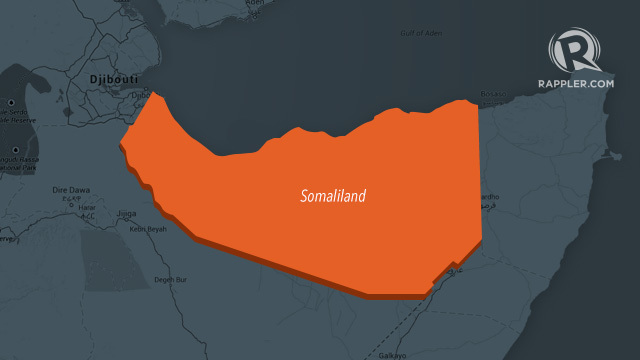
At this point focus would shift to north and the autonomous state in Puntland along with the pirates in the region. If Islamic force can manage to secure victory against Puntland then their next target will be the secessionist state of Somaliland. In such a scenario the West is likely to recognize Somaliland as an independent state and rush to its aid. This conflict could then become another proxy battle between Eritrea and Ethiopia. At the same time with Ethiopia less engaged in the country they could seek to resolve their conflict with Eritrea by force. Such an operation would likely receive Western support as Eritrea has also made threats to neighbor Djibouti including a brief border conflict. Any scenario where Ethiopia and Eritrea go to war will likely also include a conflict in Djibouti which is likely to bring in France and the United States. In such a scenario Eritrea could leak to foreign powers like Iran or Russia for support, thus casting the conflict as a greater proxy war between outside powers.


Congo


The Democratic Republic of the Congo has seen itself embroiled in the deadliest war in Africa since the Second World War with eight nations overalled fighting in the Second Congo War. Since that war concluded another conflict has brewed in the Kivu region as renegade general Laurent Nkunda fights against the Congolese government. Fighting intensified in 2008 with Nkunda making significant gains in the area and threatening to overthrow the government. While he agreed to peace talks initially they have been cast in doubt with threats of ending the talks if other rebel groups are brought on.
Despite apparently declaring together with African neighbors not to support Nkunda there is evidence the U.S. has covertly backed Nkunda against the Congolese governments and very clear evidence of him receiving support from Rwandan forces with members of Rwanda's military fighting alongside Nkunda according to reports and Nkunda's army even reportedly being on the payroll of the Rwandan government. On the Congo's side are various reports of Angolan soldiers fighting against Nkunda's forces alongside the Congolese military and Zimbabwean soldiers performing recon missions for the Congolese central government.
While the regional alliances are clear enough the outside ones are more complicated. While Nkunda could be receiving support from the U.S. and Rwanda, a U.S.-backed regime in the region, the European Union has talked about intervening in the conflict on the side of the Congolese government. The UN mission there, consisting of many European peacekeepers, have been attacked directly by Nkunda. At the same time Nkunda has shown considerable opposition to Chinese involvement in the country like a $9 billion Chinese plan to invest in Congolese infrastructure in exchange for considerable control of the nation's mineral resources. The terms of the agreement with the central government are clearly favorable to China which had led to accusations of colonialism.
Whether it is concern about the EU gaining too much influence in the country or China the U.S. may be backing Nkunda as a way of applying pressure on the central government to prevent such influence from becoming too great or may even desire to remove the current government in favor of one more pliable to the U.S. However, the only likely chance of direct military intervention is on the side of the Europeans and regional nations. On the regional side a conflict in the Congo could easily intersect with one in Zimbabwe representing a wider African war involving a proxy conflict simultaneously between the U.S. and the EU, the EU and China, and the U.S. and China.
Growing competition between the rising powers and the U.S. as well as between the rising powers themselves will manifest itself more and more as global conditions deteriorate and it is likely Africa will be just one major battleground for the inevitable proxy wars.

Source: World War III

Somali pirates threat force cruise ship evacuation

Medeshi Dec 9 ,2008
BERLIN – A cruise ship will evacuate passengers before sailing through waters off the Somali coast and fly them to the next port of call to protect them from possible pirate attacks, German cruise operator Hapag-Lloyd said Tuesday.
An official with the European Union's anti-piracy mission said separately that the force would station armed guards on vulnerable cargo ships in the Gulf of Aden.
The MS Columbus cruise ship will drop off its 246 passengers before the ship and some of its crew sail through the Gulf on Wednesday, the Hamburg-based company said in a statement, without saying exactly where they would disembark. It said the passengers would take a charter flight Wednesday to Dubai and spend three days at a five-star hotel waiting to rejoin the 150-meter (490-foot) vessel in the southern Oman port of Salalah for the remainder of a round-the-world tour that began in Italy.
The company said it was sending its passengers on the detour as a "precautionary measure," given rampant piracy off the coast of lawless Somalia that recently has targeted cruise ships as well as commercial vessels, including a Saudi oil tanker and a Ukrainian ship carrying tanks and other weapons.
Last week, pirates fired upon the M/S Nautica, a cruise liner carrying 650 passengers and 400 crew members, but the massive ship quickly outran its assailants. Other ships have not been so lucky. Pirates have attacked 32 vessels and hijacked 12 of them since NATO deployed a four-vessel flotilla on Oct. 24 to escort cargo ships and conduct anti-piracy patrols.
An EU anti-piracy mission — which takes over for the NATO ships on Monday — may also involve stationing armed guards on the most vulnerable cargo ships in high-risk areas, the British naval commander in charge of the EU mission said Tuesday.
British Vice-Admiral Philip Jones said the guards could be placed on some ships transporting food aid to Somalia. The EU mission will also includes four ships and two maritime reconnaissance aircraft.
In addition to the EU vessels, about a dozen other warships from the U.S. 5th Fleet based in Bahrain, as well as from India, Russia and Malaysia and other nations are patrolling in the area.
The Russian navy will soon replace its warship in the region with another from a different fleet, navy spokesman Capt. Igor Dygalo said Tuesday in Moscow.
The missile frigate Neustrashimy, or Intrepid — deployed from Russia's Northern Fleet after pirates seized the Ukrainian ship carrying tanks in September — has escorted freighters through the Gulf and helped thwart at least two pirate attacks, the navy said.
The Intrepid will remain in the region through December and be replaced by a ship from Russia's Pacific Fleet.
___
Associated Press Writer Slobodan Lekic contributed to this report from Brussels, Belgium.

Bush Doctrine's Defeat in Somalia


Medeshi Dec 9 , 2008

Bush Doctrine's Defeat in Somalia
A disastrous war in Somalia draws to a close. It killed thousands, displaced over 700,000 from Mogadishu alone, and created a pitiful humanitarian crisis. It is one more nail in the coffin of the Bush Doctrine, notes Patrick Seale.
The announcement from Addis Ababa that Ethiopian troops are withdrawing from Somalia by the end of this month means that the U.S. has suffered a defeat in the Horn of Africa -- to add to the long list of U.S. foreign policy failures in the Arab and Muslim world.
With American backing, small numbers of Ethiopian troops entered Somalia two and half years ago in July 2006, growing into a force of some 30,000 men over the following moths. Their aim was to drive from power the Union of Islamic Courts (UIC) -- a coalition of Islamist insurgents -- which had taken control of the Somali capital, Mogadishu, the previous month.
The Islamists had managed to put to flight corrupt and extortionate warlords and, after years of anarchy in Somalia, had set about restoring some form of law and order.
But for President George W Bush, Islamic rule in Somalia could not be allowed to stand. However beneficial it might be for the local population, it did not square with Bush’s ‘Global War on Terror’, launched after 9/11. The CIA then sought to overthrow the Islamists by means of Ethiopian forces, and of Abdullahi Yusuf’s ‘Transitional Government of Somalia’ (TGS), a pro-Western and pro-Ethiopian phantom administration, based in Baidao.
Fierce fighting between Ethiopian troops and the Union of Islamic Courts escalated throughout December 2006, causing some 4,000 dead and wounded. By the end of the month, Ethiopian troops, backed by U.S. airstrikes, captured Mogadishu, hours after Islamist fighters fled the city. By 1 January 2007, the southern port of Kismayo -- the last UIC stronghold -- fell to the Ethiopians, while the U.S. Navy patrolled the Somali coastline to prevent Islamists escaping by sea.
The Islamists were routed, but they were not beaten. Almost at once, they started guerrilla operations against Ethiopian troops, trapping them in ambushes and inflicting casualties on them by means of improvised explosive devices (IEDs), the lethal weapon which the United States had come to dread in Iraq.
As was predictable, the conflict attracted to Somalia a motley group of Islamist fighters from the Muslim world, intent on waging jihad against Ethiopia’s occupying army and its American backers.
To the alarm of Ethiopia’s Prime Minister Meles Zenawi, his country’s intervention in Somalia also served to breathe fresh life into two insurgent groups in Ethiopia itself -- namely the Oromo Liberation Front, which has been fighting for autonomy in southern Ethiopia, and the Ogaden National Liberation Front, largely made up of ethnic Somalis, which demands self-determination in eastern Ethiopia.
American help for Ethiopian forces -- in the form of training, weapons supply, clandestine missions, air strikes, and the capture and interrogation of ‘terrorist’ suspects – seems to have been of little avail. On the contrary, it has united rival Somali groups against their common enemies -- Ethiopia and the United States.
After gaining ground in recent months, the Islamist insurgents now control much of the south of Somalia -- including the ports of Kismayo, Merka and Brava. Casting a noose around Mogadishu itself, they are evidently preparing for a final push, once the Ethiopians go home.
As the tide of war turned against him, the Ethiopian leader Meles Zinawi clearly had enough. On 28 November, he sent a message to the United Nations and to the African Union to say that Ethiopian troops would leave Somalia before the end of the year.
This brings to a close a disastrous war that has ravaged the country, killed thousands, displaced over 700,000 from Mogadishu alone, and created a pitiful humanitarian crisis. It is one more nail in the coffin of the Bush Doctrine.
What next? A ‘moderate’ Islamist leader, Shaikh Sharif Ahmed, who broke away from the Union of Islamic Courts, has announced that he would welcome an international force to replace the Ethiopians. His appeal looks like an attempt to promote his own prospects. As he already has some support in Eritrea, Djibouti and Yemen, an international force, he no doubt believes, could put him in power.
But Shaikh Ahmed faces stiff competition from another Islamist leader, Shaikh Dahir Aweys, and indeed from the Shebab, a still more militant Islamist group. The war caused splits within the Islamic movement, which seem likely to result in a new struggle for power.
Preoccupied by the rise of maritime piracy off the Somali coast, Western states are putting together a naval force to combat the pirates. But, after the Ethiopian experience, no country seems prepared to send ground troops into the Somali snake pit.
Patrick Seale is a leading British writer on the Middle East, and the author of The Struggle for Syria; also, Asad of Syria: The Struggle for the Middle East; and Abu Nidal: A Gun for Hire.

Ethiopia Rejects Rights Report on Somalia as 'Politically-Motivated'


Medeshi Dec 9, 2008

Ethiopia Rejects Rights Report on Somalia as 'Politically-Motivated'

By Peter HeinleinVOAAddis Ababa08 December 2008

Heinlein report - Listen (MP3) audio clip
A just-released Human Rights Watch report accuses all parties to the conflict in Somalia of regularly committing war crimes that contribute to the Horn of Africa nation's humanitarian catastrophe. But Ethiopia is taking strong exception to charges made against Ethiopian troops, and questioning the methods used in compiling the report.
The report, issued Monday, charges Somalia's transitional government, the Ethiopian forces supporting it, and the country's various insurgent forces of widespread violations of the laws of war.
A summary posted on the internet quotes the group's Africa director Georgette Gagnon as saying, 'the combatants in Somalia have inflicted more harm on civilians than on each other'.
Ethiopia reacted immediately and strongly, calling the report 'deeply flawed'. In a phone interview, spokesman Wahde Belay charged Human Rights Watch's reliance on hearsay and second-hand evidence had led them to accuse Ethiopian forces of crimes committed by other groups.
"Almost all crimes in this report are committed by al-Shabab. I can talk with pride that our military is one of the most disciplined in the continent. Saying this, if there are credible allegations about any abuses by our forces in Somalia, we are ready to look into the details. But this report by Human Rights Watch is a politically-motivated one," he said.
The report's chief author, researcher Chris Albin-Lackey defended his conclusions. In a phone interview from Nairobi, Lackey said Ethiopian officials appear to be confused about how the rights group gets its information, and said some abuses attributed to Ethiopian troops appear to have been a matter of policy.
"I don't think it's possible to have an army so well-trained that it will not commit serious abuses if the soldiers on the ground are allowed to do so with complete impunity. And that's what happened with regard to Ethiopian troops in Somalia. And the systemic indiscriminate bombardment of whole neighborhoods of Mogadishu by Ethiopian military forces is organized. It appears to be a military policy," said Albin-Lackey.
Somalia has been without a functioning government since 1991, and a United Nations peacekeeping mission withdrew in failure in 1995. Ethiopian troops intervened in December, 2006 to drive out Islamist forces that had taken control of Mogadishu, and installed a U.N. backed government.
But the two-year Ethiopian military presence, along with an African Union peacekeeping force, has witnessed a dramatic increase in violence. Foreign ministry spokesman Wahde Monday reiterated that Ethiopia's decision to withdraw its remaining 2,000 soldiers from Somalia by the first week in January is irrevocable.
The African Union is hastily trying to bolster its 3,400-strong peacekeeping force to fill the security vacuum left by the Ethiopian withdrawal. But AU officials acknowledge it may be necessary to pull the peacekeepers out, too unless they can be reinforced to withstand an expected push by the Islamist extremists to reimpose their rule when the Ethiopians leave.

The Attempt to Whitewash Crime Against Humanity in Ogadenia

Medeshi Dec 9, 2008
Ethiopia - Human Rights Watch Vs Meles Zenawi’s Government:

The Attempt to Whitewash Crime Against HumanityInside the Ogaden Region of Ethiopia


Fekade Shewakena
A recent propaganda piece by the Ethiopian authorities masquerading as a government investigative report issued to whitewash the crimes in Ethiopia's Ogaden Region would have been laughed all the way to the waste basket had the issue in question not been the tragedy and suffering of a mass of human beings. The 47 page propaganda piece entitled, “Flawed Methodology, Unsubstantiated Allegations: The Results of an Investigation by the Government of Ethiopia into allegations by Human Rights Watch on human rights in the Somali Regional State”1 is full of manufactured outrage and meant to counter the meticulously researched findings and charges by Human Rights Watch (HRW), including crimes against humanity, the use of rape and starvation as weapons of war and the burning of villages and dislocation of people, compiled in a 138 page document.2
But if you carefully examine the so called investigation report by Mr. Zenawi’s government, it gives you a window to see the amount of crime and, in fact, speaks to the opposite of its intended use, in effect corroborating HRW’s charges. It actually reminded me of the story of the proverbial goat in Ethiopia that stole and ate the wheat reserved for ecclesiastical service at the church and was in the end driven to becoming laud more talkative to the level of almost telling that she was the thief. “Megeberia Yebelach fiyel Yaslefelifatal”, so goes the saying.
Apparently, some clever Woyane thought that it is smarter to set out by questioning the methodology of HRW rather than attacking its credibility directly. Or they must have been mindful of the fact that the credibility thing with regard to investigating itself is not the best suit of Meles Zenawi’s government. Many Ethiopians including the international community has not forgotten the fait of the investigation of the post election massacres in Addis Ababa where the investigators had to flee the country with the video and written transcript of the results of their investigation to tell the truth to the rest of the world. The whitewash of the genocide against the Agnuak ethnic group in Gambella is still fresh. They seem to understand that accusing an organization of stellar global respect as HRW for credibility would not fly. The less intelligent, shoot-from-the-hip TPLF puppies at Aigaforum (the people who wrote editorials recommending death penalty on members of the opposition for testifying at the US congress) did that crazy job already by throwing the kitchen sink at HRW moments after the report was published.
The Ethiopian authorities who wrote this so called investigation report, however, do not tell us how their methodology contrasts with that of HRW or how the witness interview method, one of multiple methods used by HRW researchers, yields less valid results than the interview method extensively and almost exclusively used by Meles Zenawi’s agents on a captive population in the Ogaden, a good number of whom are prisoners accused of being members of the ONLF (Ogaden National Liberation Movement). Some of the witnesses, we are told in the report, are former ONLF fighters living in the area. And Meles Zenawi and his cronies want people with heads on their shoulders, to believe the pile of crap they compiled by interviewing them.
As an Ethiopian who prides himself of the decency and goodness of the Ethiopian people, I want many of these damning reports by human rights groups and journalists including this by HRW about gruesome war crimes, collective punishment and the use of rape and starvation as a weapon of war by Meles Zenawi’s government to be false. I have two important reasons to want HRW’s report to be false.
First, I believe these kinds of extreme and gruesome crimes reported by human rights groups do not only tarnish the image of only the government or its leaders for which I care less, but unfortunately also speak badly of all of us as a people and distort the image of the country and the people we love. Disgraceful and shameful things that happen in a country, whoever the perpetrator and at whatever scale, often become broad paintbrushes that discolor the good and the bad together and create a bad single whole image of an entire country and people. Look how a handful of extremists in the Islamic world have tarnished the good religion of Islam. The crimes of the Nazi’s still shame many good Germans who were not even born at the time. Some years ago, I was chatting with a European friend when she asked me how I managed to survive and escape the famines in Ethiopia. She couldn’t believe me when I told her that there were millions of us, more than three fourths of the population at the time, who had enough food to eat. She couldn’t let go the image she formed of Ethiopia and kept on arguing with me until she got onto my nerves. But then again I myself also almost did the same thing to a Rwandan I met recently.
Even inside our long years of civil wars in the past, these kinds of systematic collective punishments of entire people and the use of rape as a weapon, as repeatedly reported by human rights groups and journalists as under Meles Zenawi in the Ogaden and earlier in Gambella, have never been heard of. Even Mengistu’s government, whose brutality is among the worst in our history, was transporting teff and other food items with cargo planes from central Ethiopia to Eritrea at the height of the civil war in the 1980s. This stands in huge contrast to Meles Zenawi’s blocking of relief organizations such as the Red Cross and Doctors Without Borders from operating in the Ogaden and the closure of access roads to transport food to the area at a time when the region was in the middle of a grueling famine. At one time some of these humanitarian organizations were begging Zenawi’s government to let them save lives. This, in my vew, can happen only in a country that is capable of producing human beasts. I don’t want to believe this took place in Ethiopia.
Second, I find it hard to accept that some among our good, wonderful and decent people turned soldiers, are capable of doing what human rights groups and journalists tell us they do. Having been to literally every part of Ethiopia and knowing most ethnic groups, I find it hard to believe that there could be beasts among those wonderful people who are capable of raping elderly women the age of their mothers, strangle and burry human beings alive, and burn the villages of poor people. Most of you may remember the days in June 1991 when Mengistu’s government collapsed and nearly half a million soldiers and armed militia were dispersed around the country without any command and control. I have seen them with my own eyes when they beg for food with automatic machineguns hung on their shoulders and round after round of ammunition all over them. Nothing but only that heritage of common decency was between them and the rest of us to stop them from crossing the line. I remember it with pride. That was an “only in Ethiopia” moment. I don’t want to believe that these values and that longstanding fabric of our society and culture have changed in a decade and half. I don’t want to believe that the poison of hate Meles Zenawi sprays in Ethiopia has succeeded to such an extent. So, I only wish the HRW report or the scathing annual reports of the US State Department on Human Rights or the gruesome stories written about the Ogaden on the New York Times are wrong.
The Sadism, the lie and the pile of crap in the report:
Reading this so-called investigation report of the Ethiopian authorities is a torture on two levels. First, a good part of the English is so difficult to understand. Sometimes you need to translate it into Amharic to understand it. The authorities who wrote, read, approved and issued this report seem to have shed any grain of sense of embarassment and shame. For heaven’s sakes, this is a government document that, for whatever it is worth, is expected to be read widely. How difficult is it for a government that hires lobbyists in the US with millions of dollars to hire an editor to at least check basic grammar and spelling? Consider the following I randomly picked as example:
“Its [HRW’s] inclusion of irrelevant and inappropriate satellite imagery seems to have been included to add drama to its media communications”. (Page 5) And this, “HRW, however, merely chose to use the burning of Lasoole as another unjustified accusation against her ENDF”. (Page 24) Or this,“As far as I know there is nobody has been killed in our village” (Page 34)
I could have gone on and on had this been my main concern here. It is pathetic.The second level of torture when reading this report is the sadism it is replete with. The government data was obtained almost exclusively through interviewing the local people who are traumatized by the savage war. A large number of these interviewees are prisoners. Many are women. Still many, we are told on the report, are former ONLF fighters. You can sense the terror they go through as they were trying to avoid the answers their questioners don’t want to hear. The video version of the report being spread by government media is particularly hard to watch. It is a mass manufacturing of lie. If you believe the results of this so-called investigation to be true, you should as well believe me when if tell you pigs can fly.Here are some interesting highlights. You may remember the 23 year old Mohammed Abdi Wayd who HRW reported was strangled and killed by member of the Ethiopian Defense Forces for being one of many community members who refused to obey a deadline to vacate a village as ordered by the army. The person the government interviewers summoned to testify on this dead kid, we are told, is his next of kin. Read the following and see the sadism for yourselves. How many Ethiopians under normal circumstances do you think would say the death of their young relative is a punishment from God?
He is a close relative of mine. He died in the fighting between government forces and ONLF. This is the truth. He was a trouble-maker. He was a bandit. Upon Alah’s orders, he met his death fighting the Defence Forces. I didn’t record the exact date when he died. One day there was fighting between ONLF and the Defence Forces in the Wafdug area. In the Yuub area too. He died in that period. He robbed people of their belongings. He picked up a quarrel and attacked people. His death is a punishment fro (sic) all his wrongs.” (Page 32)
Does anybody in his right mind believe that in a traditional society where kinship means a lot more than blood relation, and of all places in the Ogaden, would say of this about his dead relative unless at a gun point? Obviously, the person must be trying his best to fend off any possible suspicion of supporting the ONLF like his dead kin. Anybody who has done research in rural Ethiopia using questionnaires knows that telling what the government wants to hear is one of many sophisticated survival mechanisms peasants and pastoralists have developed to fight the tyranny of their governments over the years. And Meles Zenawi and his cronies want us to believe the crap they collected through this bogus method and question the validity of HRW’s conclusions refined over long years of recording Human rights abuse around the world.
In its attempt to clean itself of HRWs charges of rape and sexual abuses the government report, believe it or not, says this,
“It [the investigation team] interviewed people from various sectors of society and a number of women prisoners from several different prisons. All completely rejected HRW’s allegations”. (Page 37).
Now listen to what female prisoner Asmal Isal Abdi tells the investigating team:
“I am in prison here for the crime I committed. I have never encountered any problem. In prison, I am receiving proper treatment.” (Page 37)
And hear from another female prisoner Ram Ali Huyida who is reported to even have gone further in speaking for all women prisoners:“There is nothing like this that happened to me or to the other prisoners in this prison.” (Page 37)
Another female prisoner, Amina Usman, in the town of Jijiga has a more targeted “testimony” to which the interviewers seem to have direct her – to exonerate the soldier rapists cited in the HRW report:
“No prisoner, including myself, has suffered any ill treatment from Government soldiers.” (Page 38)
It is not even clear from the report as to why another female prisoner, Faduma Abdu Haj, had to testify saying that there were no women who were burnt alive when she was not even asked. Listen to her:
“I have never seen or heard any information regarding the raping of any woman byEthiopian soldiers. There is no woman who was raped or burnt alive.” (Page 38)
The report also has a cascade of responses from interviewees who say that no village has been burnt by the ENDF. All of them said that any village burnt was burnt by ONLF solders who were dressed in Ethiopian army uniforms and speaking the Amharic language to make it look the Ethiopian army did it. It gets more interesting, doesn’t it? The people are so in love with the Ethiopian army that the ONLF has to do this to have them hated, and by speaking the Amhaic language without a Somali accent? Huh!On the other hand the “investigators” tell us that they have done all their interview and research in the Ogaden. Why the investigators thought it is important to interview people to testify as to whether villages were burnt or not if they themselves see the villages intact is a mystery. HRW has given the geographic coordinates for the satellite imageries of the villages in question by providing the latitudes and longitudes of each site. Why is it difficult to present another aerial photo or a photograph taken from a higher ground and debunk it if it is a lie? Interestingly, the team has provided us with horizontally taken ground photographs that cannot by any measure show the condition of a larger settlement. Some of the photographs show two or three houses from one side surrounded by scrubland. More importantly, unless you hire a “tenquay” there is no way to attest that the picture shows the real village in question. They give you no coordinates.
The goons who prepared Zenawi’s report also want us to believe that girl HRW reported was brutally killed by the Ethiopian forces was alive by showing us a photograph of a girl who they say has the same name. They have been parading her on their TV and other media as if it is an airtight evidence to show the real girl is not dead, as if you can’t find hundreds of Faduma Hassans in the Ogaden or as if you cannot name the picture of any girl Faduma Hassan.
The investigators, in their wisdom thought that they should throw us some bones to be believable and help them sell us their pile of crap. They say they have found one case of torture among female prisoners by an army Major named Kiros. (Don’t forget most women who testified are already reported to have said that no torture of woman has ever taken place). Read her testimony paying special attention to her last sentence:
“I was arrested for being ONLF member. During the time I was in prison, I was tortured by Major Kiros, Intelligence Officer of the Fik zone 7th Regiment. This was around September 2007. During the interrogation, he strangled my neck with cloth, forced me to take off my clothes and flogged my back and feet. He tortured me by saying, out with the truth. Of course, I was ONLF member. Apart from this I do not know any other problem. I have not suffered from any wrongdoing in this prison. I confirm this.” (Page 40) emphasis added
Why was the lady that went through so much torture forced to say she “has not suffered any wrong doing in this prison”? After having gone through that humanly unbearable torture how did she manage to say that? Or shall we say the Investigator Team added it to make it look like what she went though was a prank between friends. How sadistic is that? By the way, where is Major Kiros the torturer? Why is his last name withheld? Why wasn’t this criminal interviewed like the rest of the prisoners? What was the punishment he received? The investigators are mum on these. We know why. I suspect Major Kiros is walking the streets of Addis Ababa or Mekele or managing some property of EFFORT somewhere or on scholarship in the Netherlands. After all, the Agazi soldier who killed Wro Etesnesh in front of her children for asking to spare her husband lives in freedom with no questions asked. There is a lot of repugnant and sadistic material to go over in this whitewash. You can read it holding your nose, as I did.
Challenge:
Either out of ethnic identification or innocence or misinformation or any other reason, I believe there are many Ethiopians who want to give Meles Zenawi’s report the benefit of the doubt, as there are many who actively promote this lie. I challenge all of them and the blind supporters of the TPLF/EPRDF, including my good friend Ato Haimanot Lakew from Boston who made me laugh by referring to the crap as a “carefully researched and written report” 3 and some Molla Mitiku who tried to shamelessly fake an outrage and called the governments investigators “independent investigating team” 4, to ask the Ethiopian authorities to allow independent investigators including the UN and reexamine the case. Why fear if you are outraged that HRW manufactured its report? To ask anything less is to collaborate with the cover up of crime and injustice. Don’t forget that we will all have to answer for this crime on judgment day. I don’t think this day is too far.

Ref documents:


Eid Mybarek


Eid Mubarek

Ciid Wanaagsan

Happy Eid

Hajj Diary: A hard day's work

Medeshi Dec 7 , 2008
Hajj Diary: A hard day's work
By Jamal Elshayyal in Mina
Day three, and its probably been the most difficult so far.
We are up at dawn again - leaving Mecca for the plains of Mina. Here we camp for three days, going to Arafat and coming back in the middle.
Aside from the spiritual high felt by the team, we're also pretty happy with our first day of live coverage.
But the strain of travelling, working and Hajj itself is beginning to take its toll on us. If we're not filming, we're worshiping and if we're not worshiping we're on the road.
As we approach our base in Mina, we drive by hundreds of thousands of white tents. The sheer quantity of things here, be it people, coaches or tents, and the way in which they appear in unison still amazes me.
No rest
In depth

Map - Tracking Hajj

Videos
'From Hollywood to Hajj'
Gazans denied pilgrimage
American's journey of faithWe have a live news segment as soon as we arrive so there's no time to rest, and to add to the stress, the guest we hoped to have on the show doesn't make it.
But our skin is saved when we meet an African-American couple who agree to fill in.
It transpires that they are also friends of someone we had been chasing with no success for three days: a convert who Al Jazeera has been following on his journey to Mecca from Washington.
Coincidence? Or a blessing in disguise? Either way we were grateful.
Although the pilgrims' tents at Mina are split into regions, depending on which country they started their journey, it is here that people mostly interact with their brothers and sisters in faith from across the world.
The camera man and I couldn't help but find the irony when noticing those from Pakistan and India were side by side.
Perhaps the most interesting person I have met so far has been another African-American named Omar Reagan.
Self-reflection
Omar is a Hollywood actor, who acted as a double for Chris Tucker in the blockbuster movie Rush Hour Two. Speaking to us he explained what Hajj meant to him.
As an actor he said, you are taught to put on a front, to not be yourself. But here on Hajj, you strip yourself of anything worldly or materialistic - even your cloths.
It is here that you realise that in the end, you will face your Lord for who you are on the inside, and not how you appear on the outside.
It got me thinking: If society's scales of success and classing systems were replaced with a society where we all wore the same cloths, ate the same food and slept in the same circumstances, what and how would one person be differentiated from another? And how and who would you aspire to be like? The Quran teaches Muslims that the most pious and sincere amongst humanity is the closest to God.
I guess when all you're wearing is two white pieces of cloth and you're sleeping on the ground along with three million other people, only God will be able to differentiate between you and the person you're sharing your food with.
Al jazeera

Ethiopia stalls on Somalia pullout

Medeshi Dec 7, 2008
Ethiopia stalls on Somalia pullout
Ethiopia has announced a possible delay of "a few days" in its plans to pull its troops out of Somalia by the end of the year and hand over security duties to the African Union Mission in Somalia, known as Amisom.
The country's foreign ministry made the announcement on Saturday, a day after Somali witnesses said Ethiopian troops killed at least 16 people in the Somali capital.
Ethiopian forces said they were targeting armed men in a stronghold of opposition fighters, but witnesses said that artillery shells were fired into a crowd at a market in Mogadishu.
Ethiopia sent its troops to Somalia in 2006 to oust the Islamic Courts Union (ICU), which had taken control of most of the country and was imposing a strict form of Sharia law.
Ethiopian troops, estimated at about 3,000, were meant to prop up Somalia's transitional federal government, but the internationally backed authorities never succeeded in asserting their power on the country.
Ethiopian withdrawal
Last month Addis Ababa announced it would pull its troops out by the end of the year, causing concern among Amisom and the UN, which urged immediate talks aimed at convinving Ethiopia to keep its forces in Somalia a little longer.
"Ethiopia accepted it had a moral obligation to Amisom and it would do whatever necessary to see that its withdrawal did not harm Amisom," the Ethiopian foreign ministry statement said on Saturday.
"This did not imply any delay in withdrawal but might allow for some flexibility in terms of a few days, if necessary, but this would be for Amisom to assess."
Following the removal of the Islamic courts, al-Shebab, the group's former youth and military wing, has waged an armed campaign against Somali government troops and Ethiopian forces.
Some Islamic Courts' Union factions have signed a peace pact with the Somali government, brokered in Djibouti, but no deadline has been set for the deal and anti-government groups inside Somalia have rejected the pact.
Further fighting
Ethiopia has also cast some doubt on the possible agreement, with the foreign ministry statement saying that the Djibouti process "looks unlikely to make a breakthrough".
Since Ethiopia said it was pulling out of Somalia, al-Shebab has closed in around Mogadishu after taking most the country, leaving government and AU troops to control only a handful of locations.
On Saturday, al-Shabab was reported to have taken control of the town of Gurael, 370km north of the capital Mogadishu, after fighting that killed at least 13 people and wounded dozens of others, residents said.
Locals said the group took the town after three days of fighting with a government-allied Sunni group in the area.
The battle began after al-Shabab fighters arrested a local Quran teacher of that group, they said.


Al Jazeera

Senator Coleman is concerned about the situation facing Somalis in Saudi Arabia.

Medeshi
Friday, December 05, 2008
Original Docoment

His Majesty King Abdullah Bin Abdul Aziz Al-Saud
c/o Royal Embassy of Saudi Arabia
601 New Hampshire Avenue, NW
Washington, DC 20037

Your Excellency,

As the Ranking Member of the Senate Foreign Relations Subcommittee on Near Eastern and South Central Asian Affairs, I wish to extend my greeting and good wishes during Islam’s four sacred months.

Today, I write to draw your attention to the situation facing many Somalis currently in Saudi Arabia. These immigrants fled a country where there is no functioning government, where violence rages and humanitarian needs are great.

Specifically, I am concerned about both the humanitarian conditions facing Somalis currently in Saudi Arabia, as well as their fate if forcibly returned to Somali during these difficult times. Through my contacts with the Somali community in Minnesota, home to the largest Somali immigrants in the U.S., I have been made aware that a plane of Somali deportees recently landed at the Mogadishu airport. Further, I have been informed that many more Somalis are currently being detained in various jails in Saudi Arabia while en route to Somalia, including a number of mothers with children. I am concerned about reports of poor conditions in these facilities.

As you know, protecting the refugees and safeguarding their needs is aligned with international law. Respectfully, I ask you to consider halting deportations to Somalia so long as the country remains dangerous and unstable. I also request that you look into improvements to the detention facilities where these individuals are being held.

Your Excellency, I deeply appreciate the steps that your government has taken to support the reconciliation of the Somali people. I urge you to continue your support for peace in Somalia and an alleviation of the humanitarian crisis there.

Thank you very much for your time and consideration of these concerns .
Sincerely
Norman Coleman

Qaar ka mid ah Ururada Bulshada Rayidka ah oo walaac ka muujiyay mudo dhaafka golayaasha deegaanada

Annaga oo ah Ururada Bulshada Rayidka ah ee Madaxa-banaan waxaanu si wayn uga walaacsanahay