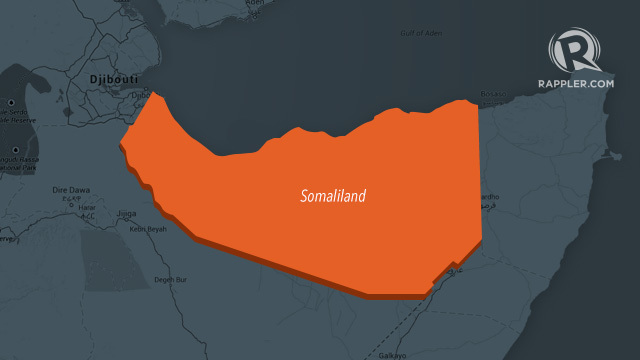
Laying Fiber optic cable in Kenya Somali coast is difficult

Medeshi 30 Aug, 2008
The Kenya Somali coast is proving a difficult route for the laying of the Eastern Africa Fiber optical cable managed by the Kenya government.
In order to catch up with the fast growing developments in other parts of the world, Kenyan Governments decides to support fiber optic communication developments in their land also.
To avoid the politically insecure coast of Somalia, Kenya is seeking an alternative route on which to lay the TEAMs fiber optic cable. The government is considering laying an extra 90 kilometers of fiber to ensure that the cable passes through international waters instead of crossing into Somali territory, said Victor Kyalo, deputy CEO of the Kenya ICT Board.Somalia has been rocked by civil war since 1991 and has since been divided into Somaliland, which claims some authority and South, consisting of Puntland and an area claimed by both the interim government and the Union of Islamic courts.
With the confusion over Somalia's leadership, pirates have taken to terrorizing any vessel that dares to venture into Somali waters, making for what the U.S. calls the world's most dangerous coastal region. The laying of the TEAMs (The East African Marine System) cable is scheduled to begin in December, but there are options still to be considered due to security risks, Kyalo told representatives of the five East Africa Community states.
Two weeks ago, Bitange Ndemo, Permanent Secretary in the Ministry of Information and Communication, led a government delegation to the Alcatel-Lucent Submarine Networks offices in France to inspect progress on cable construction, which Kyalo said is on schedule.
The Kenya government owns 85 percent of the cable, while the United Arab Emirate's Etisalat owns 15 percent. Out of the government stake, 80 percent is held by the private sector, with ownership divided between Safaricom, Telkom Kenya, KDN, Econet, Wananchi Telecom, Jamii Telkom, Access, Inhand, Flashcom, Equip and Uganda's Fiber Network.

Africa has found its feet, global image

Medeshi 30 Aug, 2008
Addis Ababa, Ethiopia - Africa has at last found its feet and its people are not only dynamic but giving the continent an enterprising outlook, according to Ethiopia's weekly 'Capital'. The business-focused tabloid this week says the continent has acquired a new global image that elicits the attention of the world's industrialised nations and the biggest emerging markets of Brazil, India, China and Turkey.
Africa's lure to these countries lies in the abundance of its minerals and a growing market space that is set to boom with infusion of capital and technology.
But, for Turkey in particular, the weekly's editorial suggests, there is need to get rid of the widely-held view in Africa that this country (Ethiopia), located between South-Eastern Europe and South-West Asia, is just another developing nation.
From 18-21 August 2008, Turkey hosted in Istanbul its first cooperation summit with Africa that was held under the theme 'Solidarity and Partnership for a Common Future'.
Opening up to Africa, Turkey declared 2005 'The Year of Africa' and the just-ended summit declared a number of principles that will guide the Africa-Turkey partnership based on equality and mutual benefit.
"Today's Turkey is engaging Africa with Africa in the pursuit of mutual prosperity," the Ethiopian paper reported, noting that the country has much to share wit h the new Africa through development cooperation and technology transfer.
"What Turkey gains is a 900-million strong emerging market of vast untapped potential."The geographic proximity to each other and the cultural affinity between their peoples will undoubtedly provide Turkish and African businesses with an edge," the paper adds, urging the expansion of the momentum gained at the Istanbul summit.
Meanwhile, another Ethiopian weekly tabloid, 'Sub-Saharan Informer', focuses on Somalia where it sees light at the end of the tunnel after the Transitional Federal Government and the opposition Alliance for Re-liberation of Somalia reached accord to cease hostilities and armed confrontation.
"The agreement debunks the myth that compromise within the Somali peace process is unattainable," says the paper, noting that the long-overdue agreement should be a cause to rally for to bring peace back to Somalia.
According to Sub-Saharan Informer, the price that Somalia has paid by looking for military solutions to its 18-year conflict and the ensuing diplomatic backlash warrant very little elaboration.
It argues that putting in place peacekeeping forces in Somalia is a venture that will either fail or go for the long haul scenarios where very few nations would prefer to embark on.
Nevertheless, the paper perceives that a political consensus would leave room for nations contributing peacekeeping forces to evaluate their stand on the matter.
"The real impact of a full-fledged peacekeeping operation in Somalia will no doubt help in garnering support as regards to setting up a government of national unity as well as federal institutions outside Mogadishu."
For government and factional leaders taking part in the search for peace in Somalia, it is important to understand that stalling national reconciliation would reflect negatively within their respective constituencies.
"[It] is only likely to translate into greater support for parties not included within the peace talks and further fragmentation of the parties involved in the talks," the paper cautions.
Also focusing on the same war-ravaged country, 'The Ethiopian Herald' appeals to the people of Somalia to let bygones be bygones in the wake of a reconciliation agreement signed this week in Addis Ababa by the leaders of the Transitional Federal Government and the Parliament of Somalia.
The agreement, reached after 10 days of talks and mediation by the African Union, the Government of Ethiopia and the Inter-Governmental Authority on Development (IGAD), ended squabbles that had put President Abdullahi Yusuf Ahmed, Prime Mini s ter Nur Hassan Hussein and Parliament speaker Sheikh Adan Madobe at loggerheads.
"If this agreement is put into practice on the ground, the attention of every Somali citizen will unquestionably focus on one thing -- working for stability, growth and prosperity of the nation of Somalia," says the Ethiopian government-run daily.
The paper expresses optimism that the people of Somalia would in due course come together with one vision to pull their country out of the presently grim situation of poverty, bloody conflict and diseases so that it gets back on the track of development.
Viewing Somalia as a failed state, the paper expresses confidence that neighbouring countries would come to its support once its citizens were ready to embark on national reconstruction.
The Herald, however, points out that Eritrea was the sole country in the Horn of Africa region that has played a negative role to aggravate the unpleasant situation in Somalia. Addis Ababa - 30/08/2008

SOMALIA: IRIN interview with Mark Bowden, the UN Resident and Humanitarian Coordinator

NAIROBI, 29 August 2008 (IRIN) - After almost two decades of civil war and anarchy, Somalia is now suffering one of the worst humanitarian crises in the world, with 3.2 million people, almost half the population, in need of assistance. To make matters worse because of security problems, killing and kidnappings of relief workers, access to those in need has become almost impossible. IRIN talked to Mark Bowden, the UN Resident and Humanitarian Coordinator, UNDP Resident Representative and Designated Official for Somalia, about how he now sees the humanitarian situation evolving.
Question: What is your assessment of the current humanitarian situation in Somalia?
(Photo: Mr. Mark Bowden, United Nations Resident and Humanitarian Coordinator for Somalia)
A: I think Somalia is moving rather more rapidly than people had expected into an increasingly serious crisis. The main elements of this crisis are: the drought, which has now extended and the news we have is that the effects of the drought are now far worse than before. The consequences, I think will be very serious across the whole of Somalia, Puntland and Somaliland. The issue of food prices is a major problem facing Somalia, and I think Somalia has been worse hit than most other countries in the world, because it’s been coupled with the collapse of the Somali shilling. This means we are now looking at major groups of people in towns as well as in the countryside that are facing extreme poverty as a result of the food price rises.
On top of that we have the continuing instability in the country, which is leading to massive displacement, people having to leave their homes, living in unsatisfactory and highly dangerous shelters and environments. So, Somalia is really at a stage where the situation is increasingly acute and a cause for a major concern.
Q: What would you say are some of the main challenges to humanitarian response in the country? A: The number one challenge has to be security. The problem that we face is that the most acute humanitarian crisis is in central and southern Somalia and that is where most of the security problems exist. But, it is a very complicated security picture that challenges the humanitarian community. We have had abductions of key humanitarian staff, people like Keynaan [Hassan Mohammed Ali, head of UNHCR's office in the Somali capital of Mogadishu], Somali national staff for all agencies who have been involved in humanitarian activities have been targeted and this creates a very difficult environment in which to carry out humanitarian operation. But I should say we don’t have a choice but to continue given the gravity of the crisis and to try and do more in response to Somalia's needs.
Q. What is the UN doing to try to increase access to vulnerable populations across the country? For example are you in touch with Al Shabaab and other groups to defend humanitarian access? A: I think we are doing a lot to increase access and we have reassurances from all groups … from many commanders from all the different groups involved in Somalia. What really matters is what happens on the ground and in the locality and that is where we need to have more support.
Q: How concerned are you that civilians are not being protected in this new upswing in conflict, particularly in the last couple of months? What can be done to improve their protection? A: I am very concerned about the protection of civilians, because civilians have experienced the worst of the conflict and it is a sad reflection on any society that we aren’t able to provide the protection for people that really need it. I am afraid that it is a very difficult environment in which to provide protection. There is more work going on in terms of human rights monitoring by a number of agencies and organisations. Locally, there are some very courageous organisations undertaking human rights reporting and monitoring on the ground. We also need to have better access, as an international community, to provide the levels of protection that are needed in Somalia. This remains a problem.
Q. Is the UN getting the requisite cooperation from the TFG and the Ethiopians? A: The UN gets cooperation from the TFG in particular, along with the ARS [Alliance for the Re-liberation of Somalia]. They committed themselves to access. The Djibouti agreement makes it clear that there are commitments to providing support and access. I think the problems are more in actually what they are able to provide in terms of support. So it is not that the commitment is not there, it is more the capacity to provide support is limited.
Q: We have seen a spike in the violence, particularly in Mogadishu, since the signing of the Djibouti agreement. How do you explain that, if both sides are committed? A: I think it comes down to what the TFG and ARS actually control…Essentially the problem is there are groups that are unhappy with the agreement, did not participate in it and also may wish to undermine the process by acts of violence. What strikes me as a humanitarian, outside the political process, is that the humanitarian organisations are not part of the political process. What saddens us is that humanitarian workers have been attacked as part of the violence in Mogadishu. Mogadishu is a place where there is more need than many other places but the difficulties of getting assistance there are greater than anywhere else. What we would like is far better recognition that people engaged in providing humanitarian aid are outside the political process and just trying to find ways of helping to meet the needs of the population in Mogadishu, at a time when they above all others need it.

Q: Would it be fair to say, because of the situation in the country, there is virtually no international humanitarian presence in Somalia? A: No. It is fair to say that. There is a considerable international humanitarian presence in the country, but it is there in the same way as it used to be because of the particular security constraints we have. We have at any one time in Somalia over 150 international staff on any one day. There are also many more Somalis working for international organisations providing humanitarian assistance across Somalia. Where it is difficult to maintain a presence is in places such as Mogadishu, where it has now become almost impossible, not just for the UN, but for anybody trying to undertake humanitarian activities and work there effectively. But it is still possible. Some things are happening. There is a major feeding programme taking place from WFP [the UN World Food Programme]. There are nutrition programmes taking place, but what we need is a far better acceptance of the humanitarian task of the international community, to be able to expand that presence.
Q: How have donors responded to the humanitarian crisis in Somalia? Is the response satisfactory? A: We are working very hard at the moment to increase the response. At the moment only 40% of the Consolidated Appeal, the mechanism we have for raising money for Somalia, has been met. We are going back to donors to say that there needs to be more. For the moment the food pipeline coming into Somalia is secure. We have committed to providing food for 3.2 million Somalis... The real gaps in assistance are in the areas of health and nutrition where a lot more needs to be done. I think one of the great tragedies in Somalia is the poor access to health services, which I know makes everybody feel very insecure and unsafe for the future of their children. Again, having said that, we are also able to carry out major immunisation programmes across the whole of Somalia to provide some protection.
Q: There has been upsurge in piracy off the coast of Somalia. Are you concerned that it may affect your ability to deliver food aid and does it have anything to do with funding the insurgency? A: We are concerned about piracy. It is of a particular concern in terms of the fact that just the reputation that Somalia has now for piracy means that shipping companies are very concerned about even sending ships with food into the country. That is a problem. What it has done is that those companies that are willing to send their ships in are charging far higher prices than before. So, it is making the whole relief effort a lot more expensive. It is a very serious problem and could interrupt the food pipeline. Now, whether it is going to the insurgency or not I have no knowledge or understanding of that at the moment. All I would say is that the amounts of money that are involved are very large and mean that the pirates are now better equipped than ever before and the challenges in addressing this are much more difficult. It is something that the international community is going to have to address. It is also an issue that needs to be addressed very strongly by the government of Puntland and others who feel at the moment, from my discussions with them, that the situation is beyond their control.
Q: You have been in other crises. How would you rate what is currently happening in Somalia as compared to others? A: Well, I think Somalia is, probably, the most complex crisis we are dealing with in the world at the moment. Partly, because it has gone on for so long, and it is becoming more difficult to find ways of ensuring access and partly because there are so many dimensions to the crisis: not just the drought, not just food price rises but also the instability. It is a major challenge to the international community, one where we also keep having to reassure people that it is possible to work in Somalia, and not only possible but critical to do so at this stage. We all, and I think all Somalis, have to face the challenge, [and counter the] feeling that because it is so complicated, there is nothing that can be done. That in a sense is our other big challenge, to try and reassure the people that are providing the funding for assistance, that it is possible to do things and meet this crisis.
Q: Going partly to protection, in August alone there were a number of incidents where civilians, particularly displaced persons, were the victims. There was a deafening silence from the international community. How is it possible to feed people when you can’t protect them in places of supposed refuge. A: You have raised a point that concerns us all. I think you still have to try and feed people. Everybody I know from the humanitarian side is worried about the inability to protect the civilian population. That is why in the end the solutions are political. The United Nations has made statements about some of these issues. The Emergency Relief Coordinator John Holmes made a strong statement about the levels of displacement in Beletwyene [central Somalia] and the impact of the disproportionate use of force by those involved in the fighting. We do try and draw attention to these issues as they occur. Without the access to the area it is difficult to do anything more than express concern. I am afraid the solutions lie at the end of the day in the political process and with the politicians to operate within the confines of recognised international humanitarian and human rights law.
Q: Anything you would like to add? A: What I would like to say is that the UN humanitarian agencies express their deep concern for the suffering that people are going through at the moment and recognise the severity of the crisis. We are working very hard to increase our capacity to respond. But above all what we need is the support of Somalis, at the community level, to ensure that we can work together to bring assistance through to those areas where it is most needed. This has to be a joint effort, not just the international community to be willing to provide assistance but communities working the UN and others to ensure that assistance can be made available at this critical time in Somalia.

UN humanitarian envoy urges Islamic world to aid Somalia during Ramadan

Medeshi 30 Aug, 2008
UN humanitarian envoy urges world to aid Somalia
Nairobi, August 29: The UN special humanitarian envoy has called for the international community, in particular Muslim nations, to step up aid to war-torn Somalia, which is facing a growing humanitarian emergency.
'Today, as we are about to enter the Holy month of Ramadan, I urge the international community, and in particular the global Muslim community, to exercise their moral and religious duty in support of the Somali people,' Abdul Aziz Arukkban said Thursday.
Much of Somalia, particularly the South Central region, is in the throes of a food crisis brought on by a brutal insurgency, drought and rising food prices.
The latest report by the UN's Food Security Analysis Unit (FSAU), released Tuesday, said the number of people in urgent need of food and other humanitarian assistance has reached 3.2 million, an increase of 77 percent from the beginning of the year.
The figure represents 43 percent of the Somali population.
Arukkban Wednesday travelled to South Central Somalia, where the food crisis is at its worst, and also visited the Dabaab refugee camp complex in neighbouring Kenya, which hosts over 200,000 Somali refugees.
'I saw women and children in bad conditions.... sometimes under the shade of a tree with no food,' he told journalists in the Kenyan capital Nairobi. 'I am here to add my voice to the silent cry of millions of Somalis.'
UN agencies say over 6,000 civilians have died in an insurgency that exploded in early 2007 after Ethiopian troops kicked out the Islamist regime and helped reinstate the transitional government.
Almost one million Somalis have fled fighting in the capital Mogadishu and are now living in camps outside the city or have crossed the border to Kenya.
While the fighting is directly impacting the crisis, Cindy Holleman, Chief Technical Adviser for the FSAU Somalia, said the indirect impact was worse.
'More importantly, it (the violence) has a wider impact in terms of creating an economic crisis,' she said.
Driven by the conflict, the Somali shilling has devalued by 165 percent since January 2007 while prices have increased by 700 percent since the beginning of this year, the FSAU report said.
Marc Bowden, the UN's Humanitarian Coordinator for Somalia, said that the UN would have to step up its efforts in face of the deepening crisis.
'We have no option but to do more and do it better,' he said.
However, as the need becomes more pressing it is becoming more difficult to deliver aid.
Insurgents have increasingly targeted humanitarian workers for kidnappings and killings in recent months.
The World Food Programme (WFP) has been hit particularly hard, with five contracted drivers and one direct employee shot dead this year so far.
Piracy off the Somali coast is also a problem, and the WFP is now having its shipments protected by a Canadian warship.
Bowden warned that the UN would have to spend more money on security for its staff.
'We have to invest in the security of our staff, but that comes at a cost,' he said. 'That cost is rarely met by donors.'
Somalia has been plagued by chaos and clan-based civil war since dictator Mohamed Siad Barre was toppled in 1991.

Eritreans in Saudi Detention Center Begin Hunger Strike to Call

Medeshi 28 Aug, 2008
Eritreans in Saudi Detention Center Begin Hunger Strike to Call for Resettlement
By Michael Ireland
Fourteen Eritreans in a Saudi detention center have begun a hunger strike to highlight the continuing plight of Eritrean refugees and asylum seekers.
According to Christian Solidarity Worldwide (CSW), the Eritreans are part of a group of 28 refugees and asylum seekers who have been held in Gizan Detention Center for periods ranging from three to seven years, pending offers of resettlement in third countries.
CSW says that while conditions in Gizan are relatively good, inmates are not allowed to work, study or receive training of any sort. Consequently, many suffer depression due to enforced idleness and separation from families.
The move comes as hundreds of Eritreans in Libya called off a five-day hunger strike aimed at drawing attention to their continued incarceration.
In a media advisory, CSW says 700 Eritrean refugees and asylum seekers have been incarcerated in Libya’s Misrata Detention Center for the last two years, and are being held in cramped and squalid conditions where abuse is rife and food, potable water and medical treatment are scarce.
CSW says the group, which includes around 30 children, recently staged a five-day a hunger strike in the hope of persuading the international community, and particularly the European Union (EU), to urgently facilitate their resettlement in third countries. However, the hunger-strike was called off five days later, following fresh offers of resettlement and promises of improved living conditions.
Meanwhile, at least 1,000 refugees and asylum seekers forcibly returned to Eritrea in June by the Egyptian government have been jailed in Wi’a military camp under conditions of extreme hardship and abuse.
The camp is situated in one of hottest places on earth, used during the Italian colonial era as a place of extreme punishment. Only pregnant women and those with young children have escaped this fate.
In addition, news received in July by the opposition Eritrean Democratic Alliance (EDA) appears to indicate that an unspecified number of returnees may have been executed in military camps in front of fellow prisoners in order to dissuade onlookers from escaping.
CSW’s spokesperson on Sub-Saharan Africa says: “We call on key members of the international community to consider offering sanctuary to Eritrean refugees and asylum seekers.
"Our thoughts and prayers are with the thousand men and women currently detained in the Wi’a military camp in Eritrea suffering unimaginable hardship and mistreatment in the most arduous conditions. Their fate should serve as a stark reminder of the appalling consequences of returning vulnerable people to countries where they have a well-founded fear of persecution.”
CSW is a human rights organization which specializes in religious freedom, works on behalf of those persecuted for their Christian beliefs and promotes religious liberty for all.
For CSW’s in depth report on Eritrea click here: http://dynamic.csw.org.uk/country.asp?s=id&urn=Eritrea.
© Assist News

70 African migrants missing in Mediterranean

Medeshi 28 Aug, 2008
70 African migrants missing in Mediterranean
GENEVA (AP) — A harrowing boat journey across the Mediterranean left some 70 African migrants missing after rough seas capsized the craft, the U.N. refugee agency said Thursday, calling on Malta to release the eight survivors from detention.
A Maltese fishing trawler rescued the eight on Tuesday. Authorities said the survivors first told the fishermen that 10 people were missing, but later said as many as 70 people from Somalia, Eritrea and Sudan made the sea voyage with them.
A Maltese military plane searched the seas Wednesday afternoon, but authorities called off the search at nightfall and no one was found.
The refugee agency said the Maltese armed forces recoverd three bodies.
"If no more survivors are found, this would be one of the deadliest losses at sea involving people trying to reach Europe from North Africa by sea," said a statement by the U.N. High Commissioner for Refugees.
UNHCR said its head of office in Malta visited the eight survivors and found them "in poor physical and mental condition after their ordeal on the high seas and subsequent detention."
UNHCR said the group included refugees and asylum seekers, and should not be held any longer. Instead, they should be given medical care and counseling, the agency said.
Thousands of Africans try to make the journey each year to Europe by often rickety vessels, and many die. Authorities from Malta, Italy and other Mediterranean nations have been trying to crack down on clandestine migrants.
UNHCR said refugees fleeing war or persecution make up a significant portion of those arriving by sea in Malta and Italy.

Gaddafi charged for cleric kidnap

Medeshi 28 Aug , 2008
Gaddafi charged for cleric kidnap
Lebanon has indicted Libyan leader Muammar Gaddafi over the disappearance of a prominent Shia Muslim cleric during a visit to Libya 30 years ago.
It is widely believed in Lebanon that Sheikh Moussa Sadr(Pictured) , who was revered locally, was kidnapped and killed on the orders of senior Libyan officials.
Libya has always denied involvement and says the sheikh left the country safely on a plane bound for Rome.
Col Gaddafi is accused of conspiring to kidnap and false imprisonment.
The charges carry the death penalty, but correspondents say it is highly unlikely that Col Gaddafi will ever stand trial in Lebanon.
Revered figure
Col Gaddafi has ignored a previous Lebanese summons for questioning about the case and he has never officially visited Lebanon since the cleric's disappearance.
Sheikh Moussa Sadr and two aides were visiting Libya in 1978 when they mysteriously disappeared.
Born in Iran in 1929, he had emigrated to Lebanon, where he remains a revered figure among the country's large Shia minority.
He founded Lebanon's opposition Amal movement, which is now led by parliamentary speaker Nabih Berri.
A charismatic speaker and religious scholar, the sheikh is credited with helping transform the Lebanese Shia into the major political force they are today.
Wednesday's arrest warrant was issued under a Lebanese law which allows for the indictment of any suspect who fails to respond to a summons for questioning.

Ethiopia Hints at Policy Shift on Somalia, Financial Times Says

Posted by Medeshi on 28 Aug , 2008
Ethiopia Hints at Policy Shift on Somalia, Financial Times Says
By Paul Richardson
(Bloomberg) -- Ethiopia may withdraw its troops from Somalia before the nation's transitional federal government stabilizes and begins functioning, the Financial Times reported, citing Prime Minister Meles Zenawi.
Zenawi's remarks signal a policy shift because Ethiopia has previously said it will remain in Somalia until the interim government is in control, the London-based newspaper said.
Ethiopia's withdrawal from Somalia while it remains lawless and violent may result in the state falling into a deeper crisis, the daily said. Ethiopia is closer to withdrawing its troops than at any time in the past, the FT said, citing unidentified analysts.
To contact the reporter on this story: Paul Richardson in Johannesburg at pmrichardson@bloomberg.net.

Ethiopia exports 22,390 tonnes of Khat

Medeshi 28 Aug, 2008
Addis Ababa, Various associations and individuals exported 22,390 tonnes of Khat to foreign markets in the just ended Ethiopian fiscal year, according to the Ministry of Trade and Industry.
Some 108.3m dollar was secured from the exported Khat, representative of the foreign trade promotion department, Girma Gelelcha, told WIC [Walta Information Centre].
He indicated that the amount of Khat exported is 84.3 per cent of the plan adding that it was declined by one per cent than that of last year.
Though the amount of Khat exported is less than that of the same period of last year, the foreign currency obtained from the export exceeds by 5.5m dollars, he said, further indicated that Khat ranks 7th among the export commodities.
Of the revenue obtained in the just concluded budget year, 69.5m dollars was from the Khat exported to Somalia while 29.6, 4.2 as well as 2.6m dollars was from Djibouti, England and Kenya respectively, it was learnt.
Source: Walta Information Centre website, Addis Ababa, in English 25 Aug 08
BBC

Transcript: FT Interview with Meles Zenawi

Medeshi 27 Aug, 2008
Transcript: FT Interview with Meles Zenawi
Ethiopia - Financial Times Interview with Meles Zenawi
Meles Zenawi, the prime minister who has led Ethiopia since the rebel movement he belonged to overthrew dictator Mengistu Haile Mariam in 1991, spoke to Barney Jopson, FT East Africa Correspondent, at his office in Addis Ababa on August 21, 2008. The following is a transcript of the interview.
Financial Times: The president and the prime minister of Somalia are here in Addis Ababa and have been here for the last few days. There’s been a lot of talk about a rift between the two of them. I wonder if you could give me your perspective on that and what affect it is having on the situation in Somalia?
Meles Zenawi (MZ): Well, there is still some rift between the key political leaders and inevitably that does tend to undermine the joint effort of all of them to achieve peace and fight terrorism. They’re all here. We have provided a space for them to be able to talk to each other outside of the daily hustle in Mogadishu and my hope and expectation is that they will sort out their problems.
FT: How exactly are those problems getting in the way of the effort to find peace?
MZ: All of them need to pull together and that is not happening to the extent that we would all like to see. It is not having an immediate and direct impact on the [peace] talks in Djibouti. As you know they have progressed well, but that’s only one aspect of achieving peace albeit an important aspect, and therefore the efforts of everyone in the TFG [Transitional Federal Government] are required for us to make progress in the right direction.
FT: What’s your understanding of the underlying causes of these disagreements?
MZ: I’m not privy to their discussions but I would be surprised if the usual problems amongst Somali politicians were to be absent.
FT: Meaning clan issues?
MZ: Clan issues.
FT: Of course you’ve still got troops in Somalia. How close or far away are you from being able to bring them back home?
MZ: Well, as I said in the past technically we could bring them back home tomorrow. We feel we have done what we planned to do in terms of preventing a total takeover of Somalia by a jihadist group. We have done what we could to help an alternative framework so technically we could remove our troops any day, but we have obligations including to the African Union to hold the rein until they are able to deploy their troops and they have been hindered by all sorts of problems, but most particularly, logistical ones. So we feel we need to continue to hold the ring until the African Union is able to deploy actional troops and hopefully the Somalis sort out some of these lingering problems amongst them so that they can take care of their own security requirements together with the African Union.
FT: So would you want to see a full Amisom [African Union Mission to Somalia] force of 8,000 people before you take your own soldiers out?
MZ: We would preferably want to see a full deployment or as close to full deployment as possible.
FT: When you think about withdrawal, do you see a stable and functioning TFG as a precondition or would you be willing to take your troops out even if the TFG is not functioning as well as it might?
MZ: We will try everything in our capacity to create an environment where our withdrawal would not seriously disrupt this process in Somalia but that is not necessarily precondition for our withdrawal. Our obligation towards peace in Somalia is only one aspect. There are also requirements of our own including financial requirements. The operation has been extremely expensive so we will have to balance the domestic pressures on the one hand and pressures in Somalia on the other and try to come up with a balanced solution.
FT: But that means that you could withdraw even if that withdrawal then left the TFG in danger.
MZ: We would try to avoid that but our legs are not joined at the hip.
FT: It’s 19 or 20 months since your troops came in. When you came in nobody seemed to expect that the troops would remain for this long. Looking back were there things that you think you didn’t anticipate, or things that developed in a way that was unexpected, which explain why you’ve been there for quite so long now?
MZ: We didn’t anticipate that the international community would be happy riding the Ethiopian horse and flogging it at the same time for so long. We had hoped and expected that the African Union would be able to intervene much quicker and that the international community would recognise that this is a unique opportunity for the stabilisation of Somalia and capitalise on it and act quickly.
FT: You mean by providing financial assistance?
MZ: By providing financial assistance and providing peacekeepers and so on. That hasn’t happened. Problems amongst Somalis could perhaps be anticipated and there may not be any surprises in that regard.
FT: People often compare the situation in Somali with Ethiopian troops to the Americans in Iraq. Do you see any sensible parallels there?
MZ: No. In the case of Ethiopian intervention in Somalia, it was purely defensive. The jihadists who had taken over southern Somalia had declared war publicly against Ethiopia. And we had been invited by a proper government, the TFG, which was recognised by United Nations among others, to intervene, and our task was very limited. We didn’t have a mission of transforming Somalia in one way or the other, just to prevent a jihadist takeover in Somalia. Now having done that, it was perhaps reasonable on the part of the international community and ourselves to try and capitalise on the opportunities opened up by that intervention to try and help the Somalis stabilise the situation. That is what kept us there for so long. The original mission had been completed let’s say, within a few weeks of our intervention and we could have withdrawn in a month or so.
FT: Are you using the possibility of withdrawal to put some pressure on the Somali president and the prime minister here? Is that one of the levers you can use?
MZ: No. We don’t need to use any levers. This is their country. They are more interested in peace than anybody else outside of their country and in the end only a solution that they are comfortable with can be sustained. External pressure may give the impression of short term movement in the right direction, but it does not provide a lasting solution so we do not need any such leverage and we do not think any such leverage would be helpful. What I’m telling you is first that we would do everything in our capacity to stay as long as possible to help them out. Hopefully our withdrawal will come as a result of more progress in peace in Somalia and more deployment of the African Union, but given past practise we could never be sure when the African Union could deploy in any meaningful sense and so it doesn’t make sense for any government to say that we have an open ended commitment until the international community, in its own good time, decides to relieve us of that responsibility. So what I’m saying is we do not have an open-ended commitment.
FT: You mentioned the financial cost and to use an over-used metaphor it would seem Ethiopia is at the centre of a financial perfect storm, funding Somalia on the one hand, while dealing with the consequences of a drought, and the consequences of food and fuel price inflation on the other. Could you tell me a little bit more about where all that leaves the government finances?
MZ: Government finances in terms of the budget deficit and so on and so forth have been reasonable as the IMF would tell you but of course there is what the economists would call opportunity cost. Every dollar we spend in Somalia could have been spent elsewhere in dealing with issues of a domestic nature. And that is what I meant. That’s why I said that our commitment to Somalia is not open-ended. As far as the economic situation here is concerned, some people see a perfect storm. I don’t. I see a bit of a rough stretch, but not the perfect storm. The perfect storm has the risk of wrecking the ship or the boat, or at least that is my assumption. There is no risk here of shipwreck. The economy on balance is growing very well and we expect it to continue to do so, however the fuel prices have very significantly undermined our balance of payments situation. The increase in food prices has pushed a significant number of Ethiopians, particularly among the urban poor and in some pastoralist regions and areas of drought, to the brink and so these are very serious challenges even though they do not pose an extensive threat.
FT: There’s been a lot of discussion about hunger in Ethiopia and I’m interested in putting this in the context of agricultural development. In the past few years of course, the agriculture sector has been performing well and indeed it’s been driving GDP growth, but what we’ve seen this year is that when the rains fail, problems emerge again. So it strikes me that whereas people thought agriculture was getting stronger in the last few years, maybe it was just getting lucky and maybe there are some underlying structural things that keep the sector vulnerable. What would you say to that?
MZ: Well, I think it’s very important to look at the macro issues and local specific issues. When we look at the macro issues, agriculture has been growing at double-digit rates for five years now. Now the chances of being lucky five years in a row, of growing at double digit growth rates, is not that high.
FT: But they have been five good years of rains as well, have they not?
MZ: We have always had good rains in some parts of the country and droughts in other parts of the country. What has happened is in the areas where we normally have good rains we have had sustained growth in productivity, and in those parts of the country millions of people have seen very significant improvements in their lives. Agriculture has been the key driver of growth as a whole and of export growth in particular so the macro situation as far as agricultural growth is concerned is very good. Now we have two groups that have been hit by the dramatic increase in commodity prices including agricultural prices and hit negatively.
But by the way, there are more people in Ethiopia who have benefited from the high food prices than those who have lost out from them. Farmers selling their own products have benefitted enormously and there are many more of them than those who have been damaged, but of course the purpose of government is not to hail those who have succeeded. The purpose of government is to support those who have not. What has happened is the pastoralist areas have not benefitted from the agricultural development activities because most of our agricultural development activities are based on settled farming. These are pastoralists and as pastoralists they will always be vulnerable to any change in precipitation. The pastoralists regions have the main problems as far as the rural areas are concerned.
There is an exceptional problem in the south. The exceptional problem in the south is that we have had two failed crops: the first one because there was too much rain, the second one because there was too little rain, and the loss of two harvests was well beyond the capacity of the farmers to cope. If you remove this freak event of two consecutive failures, then you see the structural problems. The structural problems are that the pastoralist areas have not been involved and have not benefitted from the growth that has happened. The second structural problem in our growth has been in the urban areas where the growth has not been such as to provide adequate employment opportunities to the urban poor. When agricultural prices moved against consumers who in any case were on the precipice many of the urban poor suffered, so the structural problem is related to how fast we can create jobs in the urban areas and how quickly we can integrate the pastoralist regions in the economic growth process. The problem in the south is in the short term a very serious problem but it is a freak event. It does not show a basic trend. The basic trends are the ones that I mentioned.
FT: But some people would say that there are also structural problems with arable farming in the south, namely that productivity remains low compared to neighbouring countries and that the population growth is such that the land simply cannot support the people.
MZ: I am told that many journalists feel that Ethiopians are procreating at a faster rate than is healthy for them. We have had programmes to deal with that and there has been a very significant reduction in the population growth rate. The latest data that some journalists are bandying around is that there are about 80m people living in Ethiopia. The census of 2007 seems to indicate that we have significantly less than 80m, about 6m less, and the population growth rate, which was close to 3 per cent has been sliding towards 2 or 2.5 per cent and I think it is continuing to slide. So those who think that Ethiopians are procreating with abandon because they are being given food assistance, assuming that is what they are saying, are getting their facts wrong.FT: What about the productivity issue though?
MZ: The productivity issue is a challenge. Productivity was extremely low and has been growing very significantly throughout the five years of growth that we have had. Interestingly, fertiliser prices have gone through the roof but fertiliser consumption during the rainy season now has also gone up and interestingly again in many of the surplus-producing regions of our country farmers, unlike in the past, were not given credit to buy fertiliser. They bought with cash so the fact that many millions of farmers were able to buy fertiliser at such high prices cash is very encouraging just as the fact that there are many Ethiopians who do not have enough to eat on a daily basis is a very serious challenge.
FT: Yes. But in the context of commodity price inflation it looks unfortunate that the government was encouraging a shift from growing food to growing cash crops, because if people had been growing food perhaps they would not have to deal with the problem of buying very expensive goods in the market. Are you thinking about that shift any differently nowadays, given that food has become so expensive?
MZ: The point is the farmers should make the decision and the farmers should make that decision on the basis of the net benefit to them. If it is beneficial for them to produce sesame and sell it at $2,000 per ton and buy wheat at $400 per ton, if they find the productivity difference between sesame and wheat is such that it makes sense to produce and export sesame and buy wheat from the Ukraine, then I see no reason why this should be a problem.
There is no reason why every person has to produce whatever he consumes. Actually our programme was designed to commercialise small scale farming so that these market pressures will result in more efficient allocation of land, labour and so on, and would result in improved livelihoods for those who are producing. The fact is that those who did not face the challenge of the pastoralists, those who did produce have benefitted enormously. So the way to help the urban poor is for us, for example, to use the foreign exchange earned by the farmers to buy wheat and we are doing this. We have already bought about 150,000 tonnes of wheat in Europe and we are distributing it through the market. We completed a contract for another 150,000 tonnes of wheat and that will help us dampen the prices in the urban areas and that’s the way it should be.
FT: One comment I’ve heard from several people about agriculture is that the government has been focusing very much, as you said, on commercialising small-scale farms. But these people say is you should be focused on big-scale farming and creating large commercial enterprises, because that’s the way to prevent a recurrence of the food shortages. Why have you decided to focus on the small scale rather than go big?
MZ: Because the alternative is patently stupid.
FT: Why is that?
MZ: Let’s look at two factors. The first factor is the availability of capital and savings in this economy. There are very, very low savings and very limited capital availability. If we were to invest in large-scale, commercial, mechanised farming, then we would have to deplete whatever savings we have in establishing these large-scale farms, and what do we get in return? We get in return some employment, but not much. If we were to focus on the commercialisation of small-scale farming, we wouldn’t need that much capital. We would be using the excess resource we have, which is labour and land, and we would be combining these two without too much capital to produce more. Secondly, we would be employing millions of people on their farms and giving them income. The problem that we face this year is not about production. It’s about income distribution and income distribution in Ethiopia is not going to be improved by abandoning small-scale farms and concentrating on large-scale farms. Fortunately in our case, to the extent that capital can be imported from abroad, we can do both because we have unutilised land in the lowlands where there is not much labour and we can combine that with foreign capital to supplement the small-scale farming. Such supplementary large-scale commercial farming is part of our strategy, but it is not the central piece of our strategy.
FT: And this is why you were meeting a delegation from Saudi Arabia a couple of weeks ago?
MZ: Yes, and many other investors including those who are involved in flower farms, horticulture and so on.
FT: They will be given land which is not being farmed at the moment?
MZ: Yes, and we have quite a bit of it, in the western lowlands and part of the eastern lowlands. We have a shortage in the central highlands and that’s where 70-80 per cent of the population live.
FT: But your strategy remains focused on the small scale?
MZ: Yes, because the small-scale farms are where we have the 9m households and what happens there determines their income. Large-scale commercial farming is not going to create millions of jobs and without those jobs, even if we had mountains of food in the country, it would not mean that people had access to that food.
FT: Because they wouldn’t have money to buy it?
MZ: They wouldn’t have the money to buy it and that has been the real problem here. It is not the availability of food. It’s the availability of money in the pockets of individuals.

SOMALIA: Humanitarian situation "increasingly acute"

NAIROBI, 27 August 2008 (IRIN) - Somalia is moving more rapidly than expected into a serious humanitarian crisis, with an estimated 3.2 million people both in urban and rural areas facing extreme poverty, according to humanitarian officials.
(Photo: A displaced woman with her child at an IDP camp: Officials say Somalia is moving rapidly into a serious humanitarian crisis, with 3.2 million people facing extreme poverty)
"Somalia is really at a stage where the situation is getting increasingly acute and a cause for major concern," Mark Bowden, the UN resident and humanitarian coordinator for Somalia, said in an interview with IRIN on 27 August.
He attributed the crisis to drought and high food prices, coupled with the collapse of the Somali currency and continuing instability, making the country "one of the most difficult crises to deal with”.
The Food Security Analysis Unit (FSAU) [http://www.fsausomali.org/] of the UN Food and Agriculture Organization (FAO) termed the humanitarian situation in Somalia as one of the worst in world.
"Within the first six months of this year, the number of people requiring emergency livelihood and humanitarian support increased 77 percent, from 1.83 million to 3.25 million, affecting 43 percent of the entire population of the country," said the agency in a statement issued on 26 August.
FSAU said: "One in six children under the age of five is acutely malnourished, and the number is continuing to increase.”

According to Cindy Holleman, the FSAU chief technical advisor: "More and more people from the rural and urban areas are falling into acute food and livelihood crisis and humanitarian emergency.
"As they cannot cope with the compounding shocks of conflict, drought, and hyperinflation, many of the poor and middle households are becoming severely indebted, and are adopting extreme coping strategies, including reducing food consumption, skipping meals, splitting families, selling productive assets and out migrating, known locally as 'keynaan’," she added.
The combined effects of escalating conflict, civilian insecurity and instability in Somalia has fuelled an economic crisis beginning to have a wider and more devastating impact on the broader population, she said, adding that this was "threatening to plunge the country into an even greater humanitarian disaster".
While all the indications are that the humanitarian crisis will continue to worsen in the coming months, humanitarian access is insufficient to meet the growing humanitarian needs, FSAU warned.
FSAU said there is an urgent need to scale-up integrated emergency livelihood and humanitarian assistance.

PJB: Who Started Cold War II?


Medeshi 27 Aug , 2208
PJB: Who Started Cold War II?
by Patrick J. Buchanan
The American people should be eternally grateful to Old Europe for having spiked the Bush-McCain plan to bring Georgia into NATO.
(Photo: Mikheil Saakashvili)
Had Georgia been in NATO when Mikheil Saakashvili invaded South Ossetia, we would be eyeball to eyeball with Russia, facing war in the Caucasus, where Moscow’s superiority is as great as U.S. superiority in the Caribbean during the Cuban missile crisis.
If the Russia-Georgia war proves nothing else, it is the insanity of giving erratic hotheads in volatile nations the power to drag the United States into war.
From Harry Truman to Ronald Reagan, as Defense Secretary Robert Gates said, U.S. presidents have sought to avoid shooting wars with Russia, even when the Bear was at its most beastly.
Truman refused to use force to break Stalin’s Berlin blockade. Ike refused to intervene when the Butcher of Budapest drowned the Hungarian Revolution in blood. LBJ sat impotent as Leonid Brezhnev’s tanks crushed the Prague Spring. Jimmy Carter’s response to Brezhnev’s invasion of Afghanistan was to boycott the Moscow Olympics. When Brezhnev ordered his Warsaw satraps to crush Solidarity and shot down a South Korean airliner killing scores of U.S. citizens, including a congressman, Reagan did — nothing.
These presidents were not cowards. They simply would not go to war when no vital U.S. interest was at risk to justify a war. Yet, had George W. Bush prevailed and were Georgia in NATO, U.S. Marines could be fighting Russian troops over whose flag should fly over a province of 70,000 South Ossetians who prefer Russians to Georgians.
The arrogant folly of the architects of U.S. post-Cold War policy is today on display. By bringing three ex-Soviet republics into NATO, we have moved the U.S. red line for war from the Elbe almost to within artillery range of the old Leningrad.
Should America admit Ukraine into NATO, Yalta, vacation resort of the czars, will be a NATO port and Sevastopol, traditional home of the Russian Black Sea Fleet, will become a naval base for the U.S. Sixth Fleet. This is altogether a bridge too far.
And can we not understand how a Russian patriot like Vladimir Putin would be incensed by this U.S. encirclement after Russia shed its empire and sought our friendship? How would Andy Jackson have reacted to such crowding by the British Empire?
As of 1991, the oil of Kazakhstan, Turkmenistan and Azerbaijan belonged to Moscow. Can we not understand why Putin would smolder as avaricious Yankees built pipelines to siphon the oil and gas of the Caspian Basin through breakaway Georgia to the West?
For a dozen years, Putin & Co. watched as U.S. agents helped to dump over regimes in Ukraine and Georgia that were friendly to Moscow.
If Cold War II is coming, who started it, if not us?
The swift and decisive action of Putin’s army in running the Georgian forces out of South Ossetia in 24 hours after Saakashvili began his barrage and invasion suggests Putin knew exactly what Saakashvili was up to and dropped the hammer on him.
What did we know? Did we know Georgia was about to walk into Putin’s trap? Did we not see the Russians lying in wait north of the border? Did we give Saakashvili a green light?
Joe Biden ought to be conducting public hearings on who caused this U.S. humiliation.
The war in Georgia has exposed the dangerous overextension of U.S. power. There is no way America can fight a war with Russia in the Caucasus with our army tied down in Afghanistan and Iraq. Nor should we. Hence, it is demented to be offering, as John McCain and Barack Obama are, NATO membership to Tbilisi.
The United States must decide whether it wants a partner in a flawed Russia or a second Cold War. For if we want another Cold War, we are, by cutting Russia out of the oil of the Caspian and pushing NATO into her face, going about it exactly the right way.
Vladimir Putin is no Stalin. He is a nationalist determined, as ruler of a proud and powerful country, to assert his nation’s primacy in its own sphere, just as U.S. presidents from James Monroe to Bush have done on our side of the Atlantic.
A resurgent Russia is no threat to any vital interests of the United States. It is a threat to an American Empire that presumes some God-given right to plant U.S. military power in the backyard or on the front porch of Mother Russia.
Who rules Abkhazia and South Ossetia is none of our business. And after this madcap adventure of Saakashvili, why not let the people of these provinces decide their own future in plebiscites conducted by the United Nations or the Organization for Security and Cooperation in Europe?
As for Saakashvili, he’s probably toast in Tbilisi after this stunt. Let the neocons find him an endowed chair at the American Enterprise Institute.

British Muslim delegation visits Ethiopia and Somaliland -

Medeshi 27 Aug, 2007
British Muslim delegation visits Ethiopia and Somaliland
LONDON, Aug 27 (APP)- Four prominent British Muslims have visited Ethiopia and Hargeisa in Somaliland as part of a Projecting British Islam visit. The main aim of the visit was to build stronger partnerships between British Muslims and the Ethiopian and Somali Muslim leadership. According to a Foreign and Commonwealth Office release, the delegation helped showcase the integral role of British Muslims in the UK and highlighted the work being undertaken in both countries by British organisations.

An important outcome of the visit was to add the voice of British Muslims to those in Ethiopia and Somalia who are opposed to extremist ideology. The four delegates were: journalist Fuad Nahdi ,educationalist Sheikh Babikir Ahmed Babikir, Sabin Malik a Community Cohesion specialist and Habib Malik of Islamic Relief charity.
The delegates met students, civil society and religious leaders in both Ethiopia and Hargeisa. A highlight of the visit was when Sheikh Babikir Ahmed Babikir, one of the delegates, addressed 10,000 people during Friday prayers at the main Mosque in Ethiopia.
Other highlights included meeting the President of Somaliland and taking part in two lively Q&A sessions about Islam with young Somali and Ethiopian Muslims.
Speaking about their visit, the delegates said:
“We went to Ethiopia and Hargeisa for discussions about issues of mutual concern, in particular to build partnerships between British Muslims and communities in both countries. We enjoyed an open and frank discussion with leading figures in Ethiopia and Hargeisa including Muslim scholars, community representatives, educational and women’s leaders. “We shared our experiences as British Muslims in Britain today and helped counter the misperceptions that existed about the role of Muslims in UK society. We also learned a lot from the experiences of our Ethiopian and Somali hosts. We were proud to represent the diverse range of British Muslim communities on this visit.”
Projecting British Muslims is a programme of visits by British Muslim delegations facilitated by the Foreign and Commonwealth Office to a range of Muslim majority countries, and countries with Muslim communities. The aim is to share their experiences as Muslims in Britain today and engage in constructive dialogue and debate with a range of political, religious and social groups and figures.

African Union – An obstacle to Somaliland Colonial Border


Medeshi 26 Aug, 2008
African Union – An obstacle to Somaliland Colonial Border
Abdulazez Al-Motairi
In the African Union (AU) there are countries that support Somaliland Cause of independence and others oppose it. Somaliland diplomatic fight back to win its lost sovereignty from the failed state of former Somalia, has received daring welcome from many African states. AU recommends the colonial border, but when it comes to Somaliland: AU says NO to Somaliland Colonial Border
Anti-Somaliland figures in the black continent mainly Somalis initiate their argument on colonial borders against Somaliland; they believe changing the colonial border in African will open Pandora Box of disintegration in many area of the countries.
However, this argument indirectly supports Somaliland, because Hargiesa Administration is demarcating the Somali map according to colonial border. Somaliland is demanding to restore centuries old British Somaliland Protectorate border, which existed until 1960. In July 28th 1886, British Parliament and Queen Victoria duly ratified current borderline of Somaliland, as the area was under Great Britain.
Moreover, Great Britain and Italian Government signed an agreements delimiting border between British Somaliland (Now Republic of Somaliland) and Italian Somalia (Now Republic of Somalia) on 1884. This again supports Somaliland´s call to restore colonial border in former Somalia. Somaliland Colonial Border is a victim of AU Policies, which implements regulations to some countries and denies the others.
Subsequently, both British Somaliland and Italian Somalia won independence on 26th June 1960 and 1st July 1960 respectively. More than 34 countries recognized British Somaliland as an independent and sovereign state including majority of AU Member States. Somaliland is demanding independence within its colonial borders.
Britain, as colonizing power in Somaliland, signed agreements with neighboring authorities including French in Djibouti, Ethiopia and Italy in Italian Somalia: to respect the colonial border of British Somaliland (Now Republic of Somaliland).
Based on aforesaid facts, AU has no right to suppress Somaliland´s claim of independence as per Cairo Accord. Like Somaliland and Somalia, many African countries united like Senegal and Gambia, where Egypt united with an Asian country – The Syria. Also, Eritrea disintegrated from Ethiopia based on colonial border and decision of the people of Eritrea. Senegal – Gambia and Egypt – Syria ended their unity without consulting to AU, because the unity wasn´t in their interest and as per Cairo agreement. So, why not the accord implemented in Somaliland?
All these nations joined to achieve social, religious or political agendas and later withdraw from such unions because unity is not on color, language and religion…etc. The unity should have pre-agreements to implement equality and justice between the uniting parties. Many Somalis advocate for the unity of Somalia based on religion, color, language and culture but it is quiet far from the fact inside Somalia.
BORDER CHANGING PRECEDENT – Dr. Bob Arnot NBC NEWS
Here is the irony. Julius Nyerere, first president of Tanzania, in the formative stages of the OAU, pleaded against redrawing African borders so that British Somaliland would not joint with Italian Somalia. Why? The fear was that a united Somalia would be a harbinger for the emergence of Greater Somalia, which, in order to annex surrounding Somali territories, would invade Ethiopia and Kenya. (The Republic of Somalia did invade Ethiopia in 1977, and Somali raiders still attack Kenya).
Even more ironic, Nyerere redrew his own borders, joining Tanganyika with Zanzibar to form Tanzania. Yet nearly 40 years later, Nyerere´s argument is being used to prevent Somaliland from being recognized as a sovereign state even though it was, briefly, an independent state after its liberation from British.
On balance, the OAU´s doctrine on the "inviolability" of boundaries inherited from the colonial powers does not apply to Somaliland because it is situated within the boundaries of the British Somaliland Protectorate defined in 1886 when it was declared a British protectorate.Somalilanders lament that the United States and the United Nations have had little trouble with redrawing borders in the Balkans or the former Soviet Union, but still resist to recognize their nascent republic. - Dr. Bob Arnot NBC NEWS
THE ORIGINAL SIN – JULY 1ST, 1960 UNITY:
The Somalis were uneducated with little experience in fledging unity; the people wanted unity of Somali-speaker without understanding the need of the unity and its consequences. The Somali people scattered in five countries in the region starting from Djibouti, Somaliland, Ethiopia, Somalia and Kenya. The Somalis make about 30% of East African population.
Somaliland was first Somali-speaking nation to gain independence on June 26th, 1960 from Great Britain and four days later Italian Somalia (Former Somalia) on July 1st, 1960. Djibouti gained independence from French on 1977.
Somaliland took the first step to establish the united Somali Republic on July 1st, 1960 – only four days from Independence Day June 26th, 1960. Somaliland elders and politicians traveled all the way to Mogadishu to achieve their dream of uniting Somalis. They handed over their sovereignty without any conditions except one – to see united Somali Republic and all Somali speakers should be its citizens. This initiative of unity cost Somaliland lives of thousands of its citizens, and lost of sovereignty until today.
First President of Somali Republic Adan Adde – one of the Somali Intellectuals – asked Somalilanders to stay away for a while. He requested the Somalilanders to wait until the south Somalia solves their differences than we can talk of unity with Somaliland. But the enthusiastic Somalilanders for unity rejected and demanded immediate unity without preconditions.
About decade and half, Djibouti gained independence on 1977 and all Somalis were thinking that Djibouti will join Somalia but that did not happen. Djibouti declared independence and turned down the offer of joining Somalia. Somalilanders, who lost trust in the unity on 1977, advised Djibouti to stay away.
Many people start the failure of Somalia from 1991, but the situation in Somalia started deteriorating after 1964 failed military coup led by military officers from Somaliland. Somalilanders unveiled their lost density and government and how much they have been cheated by Somali government. In other hand, NFD and majority of Somalis in Ethiopia decided to remain under Kenya and Ethiopia respectively, which ended the idea of united Somalis. This was the only reason that Somalilanders handed over their government to Italian Somalia.
Somalis are not the only community that was divided but there are many African communities who share culture, language and even religion under different countries because of the colonial border.
Somaliland can only stay with Somalia if the world delimits the Political Map based culture, language, religion and ethics. However, Somaliland respects the AU Accord in Cairo on 1963 and demands independence based on terms of the accord. The Anti-Somaliland figures always overlook the AU Accord and spread propaganda against Somaliland demand of independence.
HOW LONG SOMALILAND TO REMAIN HOSTAGE FOR FAILED SOMALIA:
AU stopped Somaliland efforts to win recognition, after international communities including US conditioned AU recognition to Somaliland. AU, as we mentioned earlier, is maintaining colonial borders in an attempt to avoid future disintegration in the black continent. AU, clearly, knows that Somaliland is demanding independence based on colonial borders but unfortunately did not get good support from AU.
AU sent fact-finding mission to Somaliland on 2005, and the mission reported that Somaliland is different than Somalia and should recognition should be considered. The AU downgraded the hard work of Somalilanders and preferred it over the failure in Somalia.
Somaliland established the entire infrastructure necessary for a modern government including Cabinet, Parliament, Multiparty system, Army and Police… etc. Somaliland attracted the eyes of international community including USA especially during visit of Assistant Undersecretary of State Department Dr. Frazier to Hargiesa. This visit was sign of goodwill from USA to the people of Somaliland.
However, the world tells Somaliland to process their file through African Union (AU) and if AU support Somaliland independence that the result of the world will follow. So, why AU is pushing Somaliland back into failure? Why AU prefers failed Somalia over Somaliland? Aren´t Somalilanders an Africans and has rights in AU? What will be faith of Somaliland if Somalia remains in current turmoil for another 50 years, Will AU keep Somaliland back until Somalia solves its differences? What is the mistake Somaliland did to Somalia? So, AU can punish Somaliland to hold until Somalia wakes.
AU should address to these questions and other millions, because the people of Somaliland need explanation from AU, and Why AU is giving side to Somalia against Somaliland?
The people of Somaliland are committed to continue their independence with or without Somalia, and nobody will be able to stop Somalilanders from deciding their destiny.
Source : The American Chronicle

Somaliland Deserves Recognition More than S. Ossetia and Abkhazia

Medeshi 26 Aug, 2008
Somaliland Deserves Recognition More than S. Ossetia and Abkhazia
Adnan Dahir
Today, 26th August, the President of Russia, Dmitry Medvedev declared that Russia formally recognizes the independence of the two break away Georgian regions of South Ossetia and Abkhazia.The two houses of Russian Parliament also called for the government to recognize these regions in a vote on Monday, 25th August 2008.This announcement came days after a heavy fighting broke out this region, in which Russian troops moved within Georgia. Russia took this step to protect their interests in the region, but not actually the interest of Ossetian citizens.The western countries immediately condemned the move. They blamed Russia´s decision as ´regrettable´. The West Countries are backing Georgian government and are severely against Russia´s recognition of these regions, which already had de facto independence. The West, especially America and its allies are against the move of Russia solely for their interest but not of the interest of Georgian people.Likewise, Russia condemned the recognition of Kosovo for the West. This has worsened the already strained relations between the West and Russia. It also shows how the world powers are playing cards against each other by looking their own causes.The population of South Ossetia and Abkhazia are 70,000 and 250,000 respectively in comparison with the population of Somaliland, which almost 3.5 Million according to government estimates. Furthermore, these regions have never been sovereign states but were part of either Soviet Union or Georgia.
Differently, Somaliland was British protectorate until it gained its independence in 26 June, 1960. Somaliland was sovereign state for four days but later merged with Italian Somali to form The Somali Republic. Due to severe hardships and breakdown of people´s expectations, Somaliland reclaimed their ´lost´ independence in 18 May, 1991 after a prolonged bloody struggle spearheaded by Somali National Movement (SNM) heroes.Furthermore, Somaliland is ruled by a democratically elected President, Dahir Rayale Kahin. Somaliland has two houses of parliament, the Upper House or Guurti and the Lower House or Representatives. The country has multiparty system and held presidential, local and parliamentary elections.Legally, the people of Somaliland have permanent identity, reside in internationally recognized boundaries of colonial era and the government system is exercised all over the country.Then, why not the Western Countries, Africans, Arab Countries and Russia recognize Somaliland?Today´s world, values are fading out and special interests dominate minds of many countries. The world has ignored the facts on the ground. But, the time will come that none will be able to deny the independence of Somaliland.
Source : The American Chronicle

Four Held in Plot to Kill Obama: Report

Four Held in Plot to Kill Obama: Report
26/08/2008
DENVER, Colorado (AFP) — Four people have been arrested in Denver amid fears of a plot to kill Democratic White House hopeful Barack Obama, a local report said Monday.
Denver-based CBS34 said one of the men arrested had told authorities they were "going to shoot Obama from a high vantage point using ... a rifle ... sighted at 750 yards (meters)."
The shooting was supposed to happen on Thursday when Obama will accept the nomination as the Democratic Party's presidential candidate for the November elections at the 75,000-seat Invesco stadium, the television station reported.
One man was arrested on Sunday after police found two high-powered rifles in a rented pick-up truck he was driving, it added.
Another man arrested was reported to be wearing a swastika and was thought to have links to white supremacist groups.
The US Attorney's Office in Denver has scheduled a press conference on Tuesday to discuss the incident, but Attorney Troy Eid told local media he did not believe there was a threat to Obama.
"We're aware of the matter discussed tonight by the Aurora Police Department," Eid said in a statement quoted by the Rocky Mountain News daily.
"Federal law enforcement is working hand-in-glove with the Aurora Police Department. Because this matter is currently under investigation, there is little we can say right now.
"We can say this: We're absolutely confident there is no credible threat to the candidate, the Democratic National Convention, or the people of Colorado."
The alleged plot was being investigated by the Secret Service, which is in charge of coordinating security for the Democratic Party convention as well as the FBI and the joint terrorism task force.

Somali Parliamentarians Seek to Remove Prime Minister Over Graft Allegations

Medeshi 26 Aug, 2008
Somali Parliamentarians Seek to Remove Prime Minister Over Graft Allegations
By Peter Clottey Washington, D.C.
Somalia's Prime Minister Nur Hassan Hussein is coming under intense pressure after some parliamentarians presented a motion seeking to remove him from his position. The parliamentarians accused Hussein of embezzlement and mismanagement of public funds, as well as undermining the country's security. They also accused Prime Minister of lacking a vision to develop the country. Some political analysts say the removal of Prime Minister Hussein would seriously jeopardize the recently signed Djibouti Agreement, which seeks to bring peace and stability to Somalia.
Ambassador Nicolah Bwakira is the Africa Union's special representative to Somalia. He tells reporter Peter Clottey from Kenya's capital, Nairobi that the accusations against Prime Minister Hussein are preposterous.
"First of all I don't think those graft allegations are founded. Secondly, I know for having been talking to both the president of the TFG (Transitional Federal Government) and the Prime Minister Nur Hassan and they are in very serious talks about the difference of interpretation about the constitution. I have also been talking to the speaker of the parliament whom I have met last week on Friday. I think they are resolving their differences in a very reasonable way to support the Djibouti Agreement," Bwakira pointed out.
He said if the motion in parliament to remove the prime minister succeeds, the recently signed Djibouti Agreement would be significantly affected.
"I would agree that if he (Nur Hassan) was removed the Djibouti agreement will be in trouble indeed. But Somali political leaders are very wise leaders. The speaker of the parliament whom I met Friday last week has told me he was in touch with the deputy speaker and the bureau of the parliament and I don't expect the (removal of the prime minister) to happen. Of course in any parliament, it is free to vote a motion of no confidence, but if it happens it will be done after considering the highest interest of Somalia. And the highest interest of Somalia at this moment is the implementation of the Djibouti Agreement. That is why I think this is more a stage than on reality," he said.
Bwakira said there was need to fully implement the Djibouti Agreement to restore the country's peace and stability.
"My advice to Somalis is that the most important consideration should be the peace and stability of Somalia. The second would be for them to consult with both the speaker and the President Abdullahi Yusuf whom I have also met on Friday. I think none of them will like to jeopardize the Djibouti agreement and the peace process. I'm convinced of that because I've seen the three leaders on Thursday and Friday last week and I'm confident that wisdom will prevail," Bwakira pointed out.
The Somali Deputy Parliament Speaker Mohamed Omar Dalha reportedly said that members of parliament have two days to study the motion before voting, which requires 139 votes of the 275 members to pass.It is, however, not certain whether the motion will muster the required majority.
The Djibouti Agreement, which was signed in early June by the transitional government and the main faction of the opposition coalition of the Alliance for the Reliberation of Somalia (ARS), aims to usher in a new era of stability in Somalia's future.
The Djibouti Agreement also stipulates that a ceasefire should take effect throughout Somalia 30 days after its signing. Under the pact, Ethiopian troops in Somalia, who crossed into the country in late 2006 to help Somali government forces oust an Islamist administration in south and central Somalia, would withdraw within 120 days after deployment of a" sufficient number" of UN stabilization forces.
Source : VOA

In Somalia, it's all about the clans

Medeshi 26 Aug, 2008
In Somalia, it's all about the clans
Analysts say West's push for central power fails in decentralized society
Aug 25, 2008 04:30 AM
Comments on this story (2)
Jeffrey Gettleman
NEW YORK TIMES
Nothing seems to be able to lift Somalia's curse of anarchy.
After 17 years, 14 transitional governments and $8 billion in foreign aid, the country is as violent, lawless – and many say hopeless – as ever.
Part of the problem, a rising number of Western academics and Somali professionals argue, is that the bulk of outside efforts have concentrated on standing up a strong central government, which may be anathema in a country where authority tends to be diffuse and clan-based.
The United Nations and donor countries are plowing millions of dollars into the Transitional Federal Government, an entity essentially created by the United Nations, with the idea of bringing order to Somalia from the top down.
But the transitional government is effectively on life support. Its presence in Mogadishu, the capital, is limited to a few blocks that are constantly shelled. It is unpopular and, by extension, weak. Its leaders are consumed by yet another round of infighting.
Ken Menkhaus, a professor at Davidson College in North Carolina who specializes in Somalia, likened the transitional government to "an hourglass," with no professional class or civil service at its core. Instead, there are "a whole bunch of ministers at the top, a whole bunch of soldiers at the bottom and nothing in between."
But there may be another answer: going local.
Somali intellectuals and Western academics are pushing an alternative form of government that might be better suited to Somalia's fluid, fragmented and decentralized society. The idea, is to rebuild Somalia from the bottom up.
It is called the building-block approach. The first blocks would be small governments at the lowest levels, in villages and towns. These would be stacked to form district and regional governments. The last step would be uniting the regional governments in a loose national federation that controlled, say, currency issues and the pirate-infested shoreline but did not sideline local leaders.
"It's the only way viable," said Ali Doy, a Somali analyst who works closely with the United Nations. "Local government is where the actual governance is. It's more realistic, it's more sustainable, and it's more secure."
But the building-block approach has its challenges. The UN tried to encourage representative district councils in the early 1990s, but the warlords in Mogadishu felt threatened and torpedoed the effort.
There are "always going to be spoilers from the centre," said Hassan Sheik Mohamud, the dean of a small college in Mogadishu. "Ideally, bottom-up is very good for Somalia. But the problem is the warlords. To make any government work, they have to be included, in some way."
There are also bureaucratic realities. Western diplomats, foreign donors and the UN prefer to deal with one government, not 26.
"I don't think the transitional government is so effective," said Ahmedou Ould-Abdallah, the top UN envoy for Somalia. "But it's what we have."
In weekend violence, Canadian freelance journalist Amanda Lindhout and her Australian colleague, Nigel Brennan, were abducted while travelling to Elasha, some 20 kilometres south of Mogadishu, on Saturday. They remained missing yesterday.
Somali officials confirmed the pair were kidnapped along with their Somali driver and two guards, The Associated Press reports.
Lindhout, from Sylvan Lake, Alta., is a television and print reporter normally based in Baghdad.


Comments on this story are moderated

Tribalism
The same stupid problem that has plagued Africa forever. You cannot have any type of regional government in a tribal environment. The "wants" of individual cheiftains will ALWAYS outweigh the "needs" of the collective. You cannot build a school in every village. Tribal leaders will look at any village who has a school as a vilage that has an advantage over his own. They may even look at schools in general as a threat to their social domination. Also you cannot develop roads or other social infrastructure if you have to deal with 500 individual parochial governments. It's too inefficient and is overtly subject to massive corruption (a concept not unheard of in Africa). Tribal rule is what has kept Africa 100 years behind the rest of the world. It is overdue that Africans recognize this.
Posted by THEGREATSATAN at Tuesday, August 26 2008

Sounds like an excellent approach & very suited for Afghanistan. The present approach has proven a total failure. Part of the answer to getting area loyalty is BRIBE the small groups by defending them as millions are poured into job creating reconstruction. It works in Canada why not Somalia ??? S:-)
Posted by STAN Stainton at Tuesday, August 26 2008

ETHIOPIA: Urban poor finding it harder to get food

Medeshi 26 Aug, 2008
ETHIOPIA: Urban poor finding it harder to get food
Photo: Tesfalem Waldyes/IRIN
Many residents of Addis Ababa live in slums, struggling everyday to get food
ADDIS ABABA, 25 August 2008 (IRIN) - Fatuma Ali and Tieba Hussein left Hara village in Wollo, Amhara region of northeastern Ethiopia with some of their neighbours, believing that they could improve their livelihoods in the capital city, Addis Ababa.

(Photo: Many residents of Addis Ababa live in slums, struggling everyday to get food )
"Our husbands decided to stay in the village with the children," Fatuma, a mother of three, told IRIN as her sister and mother of one looked on. "If rain comes, we will return to the village."
Like various villages across Ethiopia, Hara did not receive adequate precipitation in the short, or belg rainy season, which usually begins in February and ends in late April or early May.
As a result, local residents have had to endure serious food and water shortages. The situation was exacerbated by a poor harvest from the 2007 meher growing season.
Fatuma and Tieba worked hard to help their husbands try and get a good harvest. "After harvest, we sold the produce in the market and bought cattle," Tieba said.
Unfortunately, the short rains failed, killing the village pasture as well as their cattle.
Two weeks after arriving in the city, however, life for the two sisters proved just as tough as it was in Hara. "We came to Addis Ababa expecting to get [a better life]," Fatuma explained. "Sometimes the residents give us some food, but sometimes we sleep hungry."
Faced by increasing hardship, the two turned to begging. Moving from door-to-door, they often

(Photo: Failed short rains have killed the village pasture as well as the cattle)

turn up at people's gates and ask for help. On a lucky day, they will barely get enough to eat. High food inflation Fatuma and Tieba are just two of the thousands of Ethiopians who have flocked to urban areas to escape food shortages in the rural areas. Instead, the influx, according to aid workers, has increased demand and pushed urban prices even higher.
In Somali region, for example, decreasing food availability and price increments in local markets have led to migration from Woredas along the Shabelle river banks to Gode town, according to the UN World Food Programme.
This, however, has increased the numbers of malnourished children in the town.
In Amhara, according to the zonal Food Security Disaster Prevention and Preparedness office, serious food shortages exist in some areas of the region. At least five people have died while 300 have been forced to migrate from the area, in recent months.
Addis Ababa has, however, borne the biggest influx. The number of city dwellers, according to local officials, has swelled significantly over the last few months. Most new arrivals, however, have been forced to eke a living on the margins due to high costs of living and food.
The Consumer Price Index published by Ethiopia's Central Statistics Agency, showed the country's food inflation rate stood at 43. 3 percent in July, compared to 17.9 percent at the same time a year ago; with significant variations between regions.
The index is based on regional indices and measures the average change in prices paid by consumers for a fixed market basket of goods and services. The agency attributed the sharp rise to changes in the prices of food components, such as cereals which rose by 171.9 percent.

Decreasing food availability and price increments in local markets have led to migration
Should there be a decrease in food production during the September harvest season, warn aid workers, the situation will get worse. Last year, Ethiopia produced 16.1 million metric tonnes of grain during the September to November harvest, against an expected 16.5 million tonnes.
Economists blame a combination of factors for the current situation, including increasing numbers of mouths to feed, Ethiopia's largely subsistence farming systems, the global food crisis and high oil prices. Aid workers said there were also the broader questions of land ownership and the need for modern farming methods.
"One reason for the urban food crisis is the huge gap between demand and supply," said a lecturer from Addis Ababa University, who requested anonymity. "The demand is increasing beyond expectation while the supply is less."

Ethiopia's population has doubled to nearly 80 million in 22 years. Officially, an estimated 4.6 million people across Ethiopia are in need of emergency food assistance, but aid workers say the number is expected to increase in light of recent assessments.
More food insecurity The current high staple food prices, according to the Famine Early Warning System Network (Fews Net) have compounded already extreme levels of food insecurity.
"Increases in staple food prices are coming at a time of already high and extreme levels of food insecurity in [some] regions," Fews Net said on 12 August. "At the same time, livestock prices and labour rates have increased only minimally, further reducing the overall purchasing power of poor and very poor households."
Tewodros Makonnen, an economist from the Ethiopian Economist Association, said urban livelihoods had also been affected negatively by changes in prices of agricultural inputs on the international markets.
"When local production fails to feed the people, one looks at global markets," the university lecturer who requested anonymity, added. "But despite Ethiopia's move to import food from the international market, the prices are [still] not affordable to urban dwellers." There was, however, differing opinion on this. "The global situation has affected the response, not the problem," said one aid worker. "The problem remains the increasing population and poor farming methods. There has to be emphasis on helping people to recover."
Some 16 percent of Ethiopia's population live in urban areas. According to the UN Population Fund, Ethiopia is one of the fastest urbanising nations in sub-Saharan Africa with 4.3 percent growth per year.
But much of the growth is a result of migration, rather than just natural population increase. By 2020, the level of urbanisation is expected to reach 25 percent, meaning one out of four Ethiopians will be an urban dweller.
Meanwhile the government and aid agencies are grappling with the situation. Apart from increasing imports, such as wheat for distribution to bakers, especially in Addis Ababa, various strategies have been designed to try and deal with the situation.
The Ethiopia Commodity Exchange, for example, which started operations in April, is being strengthened to provide a marketplace where buyers and sellers can come together to trade and be assured of quality, delivery and payment.
Improvements in farming systems are also on the table, along with microfinance schemes and cooperative unions. But while some of these strategies have helped raised farm incomes, they have increased the burden on urban dwellers.

"Previously farmers brought their products and sold to wholesalers without prefixed price," the university economist said. "Now, unless they get a buyer at their price, they wait for a good offer."
According to the International Food Policy Research Institute, Ethiopia's agricultural markets had, over the years, been plagued by high transaction costs and excessive risk. Only a third of output reached the market.
Even then, small-scale farmers, who produce 95 percent of output, came to market with little information and were often at the mercy of the local merchants. If farmers in a particular region were especially productive, the local market got glutted and prices would drop. tw/eo
Theme(s): (IRIN) Food Security, (IRIN) Natural Disasters, (IRIN) Urban Risk [ENDS]

Qaar ka mid ah Ururada Bulshada Rayidka ah oo walaac ka muujiyay mudo dhaafka golayaasha deegaanada

Annaga oo ah Ururada Bulshada Rayidka ah ee Madaxa-banaan waxaanu si wayn uga walaacsanahay