Visit Medeshi English page here : http://www.medeshi.com/

Saturday, August 30, 2008

Laying Fiber optic cable in Kenya Somali coast is difficult

Medeshi 30 Aug, 2008
The Kenya Somali coast is proving a difficult route for the laying of the Eastern Africa Fiber optical cable managed by the Kenya government.
In order to catch up with the fast growing developments in other parts of the world, Kenyan Governments decides to support fiber optic communication developments in their land also.
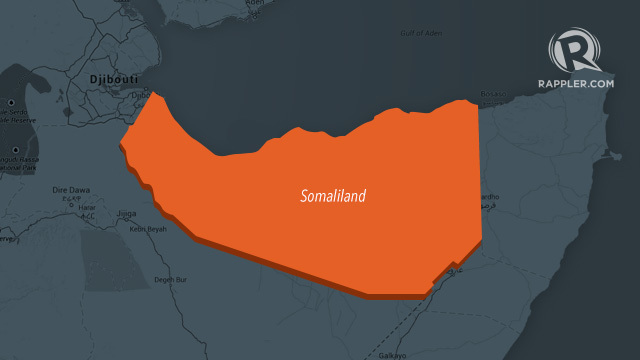
To avoid the politically insecure coast of Somalia, Kenya is seeking an alternative route on which to lay the TEAMs fiber optic cable. The government is considering laying an extra 90 kilometers of fiber to ensure that the cable passes through international waters instead of crossing into Somali territory, said Victor Kyalo, deputy CEO of the Kenya ICT Board.Somalia has been rocked by civil war since 1991 and has since been divided into Somaliland, which claims some authority and South, consisting of Puntland and an area claimed by both the interim government and the Union of Islamic courts.
With the confusion over Somalia's leadership, pirates have taken to terrorizing any vessel that dares to venture into Somali waters, making for what the U.S. calls the world's most dangerous coastal region. The laying of the TEAMs (The East African Marine System) cable is scheduled to begin in December, but there are options still to be considered due to security risks, Kyalo told representatives of the five East Africa Community states.
Two weeks ago, Bitange Ndemo, Permanent Secretary in the Ministry of Information and Communication, led a government delegation to the Alcatel-Lucent Submarine Networks offices in France to inspect progress on cable construction, which Kyalo said is on schedule.
The Kenya government owns 85 percent of the cable, while the United Arab Emirate's Etisalat owns 15 percent. Out of the government stake, 80 percent is held by the private sector, with ownership divided between Safaricom, Telkom Kenya, KDN, Econet, Wananchi Telecom, Jamii Telkom, Access, Inhand, Flashcom, Equip and Uganda's Fiber Network.

Africa has found its feet, global image

Medeshi 30 Aug, 2008
Addis Ababa, Ethiopia - Africa has at last found its feet and its people are not only dynamic but giving the continent an enterprising outlook, according to Ethiopia's weekly 'Capital'. The business-focused tabloid this week says the continent has acquired a new global image that elicits the attention of the world's industrialised nations and the biggest emerging markets of Brazil, India, China and Turkey.
Africa's lure to these countries lies in the abundance of its minerals and a growing market space that is set to boom with infusion of capital and technology.
But, for Turkey in particular, the weekly's editorial suggests, there is need to get rid of the widely-held view in Africa that this country (Ethiopia), located between South-Eastern Europe and South-West Asia, is just another developing nation.
From 18-21 August 2008, Turkey hosted in Istanbul its first cooperation summit with Africa that was held under the theme 'Solidarity and Partnership for a Common Future'.
Opening up to Africa, Turkey declared 2005 'The Year of Africa' and the just-ended summit declared a number of principles that will guide the Africa-Turkey partnership based on equality and mutual benefit.
"Today's Turkey is engaging Africa with Africa in the pursuit of mutual prosperity," the Ethiopian paper reported, noting that the country has much to share wit h the new Africa through development cooperation and technology transfer.
"What Turkey gains is a 900-million strong emerging market of vast untapped potential."The geographic proximity to each other and the cultural affinity between their peoples will undoubtedly provide Turkish and African businesses with an edge," the paper adds, urging the expansion of the momentum gained at the Istanbul summit.
Meanwhile, another Ethiopian weekly tabloid, 'Sub-Saharan Informer', focuses on Somalia where it sees light at the end of the tunnel after the Transitional Federal Government and the opposition Alliance for Re-liberation of Somalia reached accord to cease hostilities and armed confrontation.
"The agreement debunks the myth that compromise within the Somali peace process is unattainable," says the paper, noting that the long-overdue agreement should be a cause to rally for to bring peace back to Somalia.
According to Sub-Saharan Informer, the price that Somalia has paid by looking for military solutions to its 18-year conflict and the ensuing diplomatic backlash warrant very little elaboration.
It argues that putting in place peacekeeping forces in Somalia is a venture that will either fail or go for the long haul scenarios where very few nations would prefer to embark on.
Nevertheless, the paper perceives that a political consensus would leave room for nations contributing peacekeeping forces to evaluate their stand on the matter.
"The real impact of a full-fledged peacekeeping operation in Somalia will no doubt help in garnering support as regards to setting up a government of national unity as well as federal institutions outside Mogadishu."
For government and factional leaders taking part in the search for peace in Somalia, it is important to understand that stalling national reconciliation would reflect negatively within their respective constituencies.
"[It] is only likely to translate into greater support for parties not included within the peace talks and further fragmentation of the parties involved in the talks," the paper cautions.
Also focusing on the same war-ravaged country, 'The Ethiopian Herald' appeals to the people of Somalia to let bygones be bygones in the wake of a reconciliation agreement signed this week in Addis Ababa by the leaders of the Transitional Federal Government and the Parliament of Somalia.
The agreement, reached after 10 days of talks and mediation by the African Union, the Government of Ethiopia and the Inter-Governmental Authority on Development (IGAD), ended squabbles that had put President Abdullahi Yusuf Ahmed, Prime Mini s ter Nur Hassan Hussein and Parliament speaker Sheikh Adan Madobe at loggerheads.
"If this agreement is put into practice on the ground, the attention of every Somali citizen will unquestionably focus on one thing -- working for stability, growth and prosperity of the nation of Somalia," says the Ethiopian government-run daily.
The paper expresses optimism that the people of Somalia would in due course come together with one vision to pull their country out of the presently grim situation of poverty, bloody conflict and diseases so that it gets back on the track of development.
Viewing Somalia as a failed state, the paper expresses confidence that neighbouring countries would come to its support once its citizens were ready to embark on national reconstruction.
The Herald, however, points out that Eritrea was the sole country in the Horn of Africa region that has played a negative role to aggravate the unpleasant situation in Somalia. Addis Ababa - 30/08/2008

SOMALIA: IRIN interview with Mark Bowden, the UN Resident and Humanitarian Coordinator

NAIROBI, 29 August 2008 (IRIN) - After almost two decades of civil war and anarchy, Somalia is now suffering one of the worst humanitarian crises in the world, with 3.2 million people, almost half the population, in need of assistance. To make matters worse because of security problems, killing and kidnappings of relief workers, access to those in need has become almost impossible. IRIN talked to Mark Bowden, the UN Resident and Humanitarian Coordinator, UNDP Resident Representative and Designated Official for Somalia, about how he now sees the humanitarian situation evolving.
Question: What is your assessment of the current humanitarian situation in Somalia?
(Photo: Mr. Mark Bowden, United Nations Resident and Humanitarian Coordinator for Somalia)
A: I think Somalia is moving rather more rapidly than people had expected into an increasingly serious crisis. The main elements of this crisis are: the drought, which has now extended and the news we have is that the effects of the drought are now far worse than before. The consequences, I think will be very serious across the whole of Somalia, Puntland and Somaliland. The issue of food prices is a major problem facing Somalia, and I think Somalia has been worse hit than most other countries in the world, because it’s been coupled with the collapse of the Somali shilling. This means we are now looking at major groups of people in towns as well as in the countryside that are facing extreme poverty as a result of the food price rises.
On top of that we have the continuing instability in the country, which is leading to massive displacement, people having to leave their homes, living in unsatisfactory and highly dangerous shelters and environments. So, Somalia is really at a stage where the situation is increasingly acute and a cause for a major concern.
Q: What would you say are some of the main challenges to humanitarian response in the country? A: The number one challenge has to be security. The problem that we face is that the most acute humanitarian crisis is in central and southern Somalia and that is where most of the security problems exist. But, it is a very complicated security picture that challenges the humanitarian community. We have had abductions of key humanitarian staff, people like Keynaan [Hassan Mohammed Ali, head of UNHCR's office in the Somali capital of Mogadishu], Somali national staff for all agencies who have been involved in humanitarian activities have been targeted and this creates a very difficult environment in which to carry out humanitarian operation. But I should say we don’t have a choice but to continue given the gravity of the crisis and to try and do more in response to Somalia's needs.
Q. What is the UN doing to try to increase access to vulnerable populations across the country? For example are you in touch with Al Shabaab and other groups to defend humanitarian access? A: I think we are doing a lot to increase access and we have reassurances from all groups … from many commanders from all the different groups involved in Somalia. What really matters is what happens on the ground and in the locality and that is where we need to have more support.
Q: How concerned are you that civilians are not being protected in this new upswing in conflict, particularly in the last couple of months? What can be done to improve their protection? A: I am very concerned about the protection of civilians, because civilians have experienced the worst of the conflict and it is a sad reflection on any society that we aren’t able to provide the protection for people that really need it. I am afraid that it is a very difficult environment in which to provide protection. There is more work going on in terms of human rights monitoring by a number of agencies and organisations. Locally, there are some very courageous organisations undertaking human rights reporting and monitoring on the ground. We also need to have better access, as an international community, to provide the levels of protection that are needed in Somalia. This remains a problem.
Q. Is the UN getting the requisite cooperation from the TFG and the Ethiopians? A: The UN gets cooperation from the TFG in particular, along with the ARS [Alliance for the Re-liberation of Somalia]. They committed themselves to access. The Djibouti agreement makes it clear that there are commitments to providing support and access. I think the problems are more in actually what they are able to provide in terms of support. So it is not that the commitment is not there, it is more the capacity to provide support is limited.
Q: We have seen a spike in the violence, particularly in Mogadishu, since the signing of the Djibouti agreement. How do you explain that, if both sides are committed? A: I think it comes down to what the TFG and ARS actually control…Essentially the problem is there are groups that are unhappy with the agreement, did not participate in it and also may wish to undermine the process by acts of violence. What strikes me as a humanitarian, outside the political process, is that the humanitarian organisations are not part of the political process. What saddens us is that humanitarian workers have been attacked as part of the violence in Mogadishu. Mogadishu is a place where there is more need than many other places but the difficulties of getting assistance there are greater than anywhere else. What we would like is far better recognition that people engaged in providing humanitarian aid are outside the political process and just trying to find ways of helping to meet the needs of the population in Mogadishu, at a time when they above all others need it.

Q: Would it be fair to say, because of the situation in the country, there is virtually no international humanitarian presence in Somalia? A: No. It is fair to say that. There is a considerable international humanitarian presence in the country, but it is there in the same way as it used to be because of the particular security constraints we have. We have at any one time in Somalia over 150 international staff on any one day. There are also many more Somalis working for international organisations providing humanitarian assistance across Somalia. Where it is difficult to maintain a presence is in places such as Mogadishu, where it has now become almost impossible, not just for the UN, but for anybody trying to undertake humanitarian activities and work there effectively. But it is still possible. Some things are happening. There is a major feeding programme taking place from WFP [the UN World Food Programme]. There are nutrition programmes taking place, but what we need is a far better acceptance of the humanitarian task of the international community, to be able to expand that presence.
Q: How have donors responded to the humanitarian crisis in Somalia? Is the response satisfactory? A: We are working very hard at the moment to increase the response. At the moment only 40% of the Consolidated Appeal, the mechanism we have for raising money for Somalia, has been met. We are going back to donors to say that there needs to be more. For the moment the food pipeline coming into Somalia is secure. We have committed to providing food for 3.2 million Somalis... The real gaps in assistance are in the areas of health and nutrition where a lot more needs to be done. I think one of the great tragedies in Somalia is the poor access to health services, which I know makes everybody feel very insecure and unsafe for the future of their children. Again, having said that, we are also able to carry out major immunisation programmes across the whole of Somalia to provide some protection.
Q: There has been upsurge in piracy off the coast of Somalia. Are you concerned that it may affect your ability to deliver food aid and does it have anything to do with funding the insurgency? A: We are concerned about piracy. It is of a particular concern in terms of the fact that just the reputation that Somalia has now for piracy means that shipping companies are very concerned about even sending ships with food into the country. That is a problem. What it has done is that those companies that are willing to send their ships in are charging far higher prices than before. So, it is making the whole relief effort a lot more expensive. It is a very serious problem and could interrupt the food pipeline. Now, whether it is going to the insurgency or not I have no knowledge or understanding of that at the moment. All I would say is that the amounts of money that are involved are very large and mean that the pirates are now better equipped than ever before and the challenges in addressing this are much more difficult. It is something that the international community is going to have to address. It is also an issue that needs to be addressed very strongly by the government of Puntland and others who feel at the moment, from my discussions with them, that the situation is beyond their control.
Q: You have been in other crises. How would you rate what is currently happening in Somalia as compared to others? A: Well, I think Somalia is, probably, the most complex crisis we are dealing with in the world at the moment. Partly, because it has gone on for so long, and it is becoming more difficult to find ways of ensuring access and partly because there are so many dimensions to the crisis: not just the drought, not just food price rises but also the instability. It is a major challenge to the international community, one where we also keep having to reassure people that it is possible to work in Somalia, and not only possible but critical to do so at this stage. We all, and I think all Somalis, have to face the challenge, [and counter the] feeling that because it is so complicated, there is nothing that can be done. That in a sense is our other big challenge, to try and reassure the people that are providing the funding for assistance, that it is possible to do things and meet this crisis.
Q: Going partly to protection, in August alone there were a number of incidents where civilians, particularly displaced persons, were the victims. There was a deafening silence from the international community. How is it possible to feed people when you can’t protect them in places of supposed refuge. A: You have raised a point that concerns us all. I think you still have to try and feed people. Everybody I know from the humanitarian side is worried about the inability to protect the civilian population. That is why in the end the solutions are political. The United Nations has made statements about some of these issues. The Emergency Relief Coordinator John Holmes made a strong statement about the levels of displacement in Beletwyene [central Somalia] and the impact of the disproportionate use of force by those involved in the fighting. We do try and draw attention to these issues as they occur. Without the access to the area it is difficult to do anything more than express concern. I am afraid the solutions lie at the end of the day in the political process and with the politicians to operate within the confines of recognised international humanitarian and human rights law.
Q: Anything you would like to add? A: What I would like to say is that the UN humanitarian agencies express their deep concern for the suffering that people are going through at the moment and recognise the severity of the crisis. We are working very hard to increase our capacity to respond. But above all what we need is the support of Somalis, at the community level, to ensure that we can work together to bring assistance through to those areas where it is most needed. This has to be a joint effort, not just the international community to be willing to provide assistance but communities working the UN and others to ensure that assistance can be made available at this critical time in Somalia.

UN humanitarian envoy urges Islamic world to aid Somalia during Ramadan

Medeshi 30 Aug, 2008
UN humanitarian envoy urges world to aid Somalia
Nairobi, August 29: The UN special humanitarian envoy has called for the international community, in particular Muslim nations, to step up aid to war-torn Somalia, which is facing a growing humanitarian emergency.
'Today, as we are about to enter the Holy month of Ramadan, I urge the international community, and in particular the global Muslim community, to exercise their moral and religious duty in support of the Somali people,' Abdul Aziz Arukkban said Thursday.
Much of Somalia, particularly the South Central region, is in the throes of a food crisis brought on by a brutal insurgency, drought and rising food prices.
The latest report by the UN's Food Security Analysis Unit (FSAU), released Tuesday, said the number of people in urgent need of food and other humanitarian assistance has reached 3.2 million, an increase of 77 percent from the beginning of the year.
The figure represents 43 percent of the Somali population.
Arukkban Wednesday travelled to South Central Somalia, where the food crisis is at its worst, and also visited the Dabaab refugee camp complex in neighbouring Kenya, which hosts over 200,000 Somali refugees.
'I saw women and children in bad conditions.... sometimes under the shade of a tree with no food,' he told journalists in the Kenyan capital Nairobi. 'I am here to add my voice to the silent cry of millions of Somalis.'
UN agencies say over 6,000 civilians have died in an insurgency that exploded in early 2007 after Ethiopian troops kicked out the Islamist regime and helped reinstate the transitional government.
Almost one million Somalis have fled fighting in the capital Mogadishu and are now living in camps outside the city or have crossed the border to Kenya.
While the fighting is directly impacting the crisis, Cindy Holleman, Chief Technical Adviser for the FSAU Somalia, said the indirect impact was worse.
'More importantly, it (the violence) has a wider impact in terms of creating an economic crisis,' she said.
Driven by the conflict, the Somali shilling has devalued by 165 percent since January 2007 while prices have increased by 700 percent since the beginning of this year, the FSAU report said.
Marc Bowden, the UN's Humanitarian Coordinator for Somalia, said that the UN would have to step up its efforts in face of the deepening crisis.
'We have no option but to do more and do it better,' he said.
However, as the need becomes more pressing it is becoming more difficult to deliver aid.
Insurgents have increasingly targeted humanitarian workers for kidnappings and killings in recent months.
The World Food Programme (WFP) has been hit particularly hard, with five contracted drivers and one direct employee shot dead this year so far.
Piracy off the Somali coast is also a problem, and the WFP is now having its shipments protected by a Canadian warship.
Bowden warned that the UN would have to spend more money on security for its staff.
'We have to invest in the security of our staff, but that comes at a cost,' he said. 'That cost is rarely met by donors.'
Somalia has been plagued by chaos and clan-based civil war since dictator Mohamed Siad Barre was toppled in 1991.

Thursday, August 28, 2008

Eritreans in Saudi Detention Center Begin Hunger Strike to Call

Medeshi 28 Aug, 2008
Eritreans in Saudi Detention Center Begin Hunger Strike to Call for Resettlement
By Michael Ireland
Fourteen Eritreans in a Saudi detention center have begun a hunger strike to highlight the continuing plight of Eritrean refugees and asylum seekers.
According to Christian Solidarity Worldwide (CSW), the Eritreans are part of a group of 28 refugees and asylum seekers who have been held in Gizan Detention Center for periods ranging from three to seven years, pending offers of resettlement in third countries.
CSW says that while conditions in Gizan are relatively good, inmates are not allowed to work, study or receive training of any sort. Consequently, many suffer depression due to enforced idleness and separation from families.
The move comes as hundreds of Eritreans in Libya called off a five-day hunger strike aimed at drawing attention to their continued incarceration.
In a media advisory, CSW says 700 Eritrean refugees and asylum seekers have been incarcerated in Libya’s Misrata Detention Center for the last two years, and are being held in cramped and squalid conditions where abuse is rife and food, potable water and medical treatment are scarce.
CSW says the group, which includes around 30 children, recently staged a five-day a hunger strike in the hope of persuading the international community, and particularly the European Union (EU), to urgently facilitate their resettlement in third countries. However, the hunger-strike was called off five days later, following fresh offers of resettlement and promises of improved living conditions.
Meanwhile, at least 1,000 refugees and asylum seekers forcibly returned to Eritrea in June by the Egyptian government have been jailed in Wi’a military camp under conditions of extreme hardship and abuse.
The camp is situated in one of hottest places on earth, used during the Italian colonial era as a place of extreme punishment. Only pregnant women and those with young children have escaped this fate.
In addition, news received in July by the opposition Eritrean Democratic Alliance (EDA) appears to indicate that an unspecified number of returnees may have been executed in military camps in front of fellow prisoners in order to dissuade onlookers from escaping.
CSW’s spokesperson on Sub-Saharan Africa says: “We call on key members of the international community to consider offering sanctuary to Eritrean refugees and asylum seekers.
"Our thoughts and prayers are with the thousand men and women currently detained in the Wi’a military camp in Eritrea suffering unimaginable hardship and mistreatment in the most arduous conditions. Their fate should serve as a stark reminder of the appalling consequences of returning vulnerable people to countries where they have a well-founded fear of persecution.”
CSW is a human rights organization which specializes in religious freedom, works on behalf of those persecuted for their Christian beliefs and promotes religious liberty for all.
For CSW’s in depth report on Eritrea click here: http://dynamic.csw.org.uk/country.asp?s=id&urn=Eritrea.
© Assist News

70 African migrants missing in Mediterranean

Medeshi 28 Aug, 2008
70 African migrants missing in Mediterranean
GENEVA (AP) — A harrowing boat journey across the Mediterranean left some 70 African migrants missing after rough seas capsized the craft, the U.N. refugee agency said Thursday, calling on Malta to release the eight survivors from detention.
A Maltese fishing trawler rescued the eight on Tuesday. Authorities said the survivors first told the fishermen that 10 people were missing, but later said as many as 70 people from Somalia, Eritrea and Sudan made the sea voyage with them.
A Maltese military plane searched the seas Wednesday afternoon, but authorities called off the search at nightfall and no one was found.
The refugee agency said the Maltese armed forces recoverd three bodies.
"If no more survivors are found, this would be one of the deadliest losses at sea involving people trying to reach Europe from North Africa by sea," said a statement by the U.N. High Commissioner for Refugees.
UNHCR said its head of office in Malta visited the eight survivors and found them "in poor physical and mental condition after their ordeal on the high seas and subsequent detention."
UNHCR said the group included refugees and asylum seekers, and should not be held any longer. Instead, they should be given medical care and counseling, the agency said.
Thousands of Africans try to make the journey each year to Europe by often rickety vessels, and many die. Authorities from Malta, Italy and other Mediterranean nations have been trying to crack down on clandestine migrants.
UNHCR said refugees fleeing war or persecution make up a significant portion of those arriving by sea in Malta and Italy.

Gaddafi charged for cleric kidnap

Medeshi 28 Aug , 2008
Gaddafi charged for cleric kidnap
Lebanon has indicted Libyan leader Muammar Gaddafi over the disappearance of a prominent Shia Muslim cleric during a visit to Libya 30 years ago.
It is widely believed in Lebanon that Sheikh Moussa Sadr(Pictured) , who was revered locally, was kidnapped and killed on the orders of senior Libyan officials.
Libya has always denied involvement and says the sheikh left the country safely on a plane bound for Rome.
Col Gaddafi is accused of conspiring to kidnap and false imprisonment.
The charges carry the death penalty, but correspondents say it is highly unlikely that Col Gaddafi will ever stand trial in Lebanon.
Revered figure
Col Gaddafi has ignored a previous Lebanese summons for questioning about the case and he has never officially visited Lebanon since the cleric's disappearance.
Sheikh Moussa Sadr and two aides were visiting Libya in 1978 when they mysteriously disappeared.
Born in Iran in 1929, he had emigrated to Lebanon, where he remains a revered figure among the country's large Shia minority.
He founded Lebanon's opposition Amal movement, which is now led by parliamentary speaker Nabih Berri.
A charismatic speaker and religious scholar, the sheikh is credited with helping transform the Lebanese Shia into the major political force they are today.
Wednesday's arrest warrant was issued under a Lebanese law which allows for the indictment of any suspect who fails to respond to a summons for questioning.

Ethiopia Hints at Policy Shift on Somalia, Financial Times Says

Posted by Medeshi on 28 Aug , 2008
Ethiopia Hints at Policy Shift on Somalia, Financial Times Says
By Paul Richardson
(Bloomberg) -- Ethiopia may withdraw its troops from Somalia before the nation's transitional federal government stabilizes and begins functioning, the Financial Times reported, citing Prime Minister Meles Zenawi.
Zenawi's remarks signal a policy shift because Ethiopia has previously said it will remain in Somalia until the interim government is in control, the London-based newspaper said.
Ethiopia's withdrawal from Somalia while it remains lawless and violent may result in the state falling into a deeper crisis, the daily said. Ethiopia is closer to withdrawing its troops than at any time in the past, the FT said, citing unidentified analysts.
To contact the reporter on this story: Paul Richardson in Johannesburg at pmrichardson@bloomberg.net.

Ethiopia exports 22,390 tonnes of Khat

Medeshi 28 Aug, 2008
Addis Ababa, Various associations and individuals exported 22,390 tonnes of Khat to foreign markets in the just ended Ethiopian fiscal year, according to the Ministry of Trade and Industry.
Some 108.3m dollar was secured from the exported Khat, representative of the foreign trade promotion department, Girma Gelelcha, told WIC [Walta Information Centre].
He indicated that the amount of Khat exported is 84.3 per cent of the plan adding that it was declined by one per cent than that of last year.
Though the amount of Khat exported is less than that of the same period of last year, the foreign currency obtained from the export exceeds by 5.5m dollars, he said, further indicated that Khat ranks 7th among the export commodities.
Of the revenue obtained in the just concluded budget year, 69.5m dollars was from the Khat exported to Somalia while 29.6, 4.2 as well as 2.6m dollars was from Djibouti, England and Kenya respectively, it was learnt.
Source: Walta Information Centre website, Addis Ababa, in English 25 Aug 08
BBC

Wednesday, August 27, 2008

Transcript: FT Interview with Meles Zenawi

Medeshi 27 Aug, 2008
Transcript: FT Interview with Meles Zenawi
Ethiopia - Financial Times Interview with Meles Zenawi
Meles Zenawi, the prime minister who has led Ethiopia since the rebel movement he belonged to overthrew dictator Mengistu Haile Mariam in 1991, spoke to Barney Jopson, FT East Africa Correspondent, at his office in Addis Ababa on August 21, 2008. The following is a transcript of the interview.
Financial Times: The president and the prime minister of Somalia are here in Addis Ababa and have been here for the last few days. There’s been a lot of talk about a rift between the two of them. I wonder if you could give me your perspective on that and what affect it is having on the situation in Somalia?
Meles Zenawi (MZ): Well, there is still some rift between the key political leaders and inevitably that does tend to undermine the joint effort of all of them to achieve peace and fight terrorism. They’re all here. We have provided a space for them to be able to talk to each other outside of the daily hustle in Mogadishu and my hope and expectation is that they will sort out their problems.
FT: How exactly are those problems getting in the way of the effort to find peace?
MZ: All of them need to pull together and that is not happening to the extent that we would all like to see. It is not having an immediate and direct impact on the [peace] talks in Djibouti. As you know they have progressed well, but that’s only one aspect of achieving peace albeit an important aspect, and therefore the efforts of everyone in the TFG [Transitional Federal Government] are required for us to make progress in the right direction.
FT: What’s your understanding of the underlying causes of these disagreements?
MZ: I’m not privy to their discussions but I would be surprised if the usual problems amongst Somali politicians were to be absent.
FT: Meaning clan issues?
MZ: Clan issues.
FT: Of course you’ve still got troops in Somalia. How close or far away are you from being able to bring them back home?
MZ: Well, as I said in the past technically we could bring them back home tomorrow. We feel we have done what we planned to do in terms of preventing a total takeover of Somalia by a jihadist group. We have done what we could to help an alternative framework so technically we could remove our troops any day, but we have obligations including to the African Union to hold the rein until they are able to deploy their troops and they have been hindered by all sorts of problems, but most particularly, logistical ones. So we feel we need to continue to hold the ring until the African Union is able to deploy actional troops and hopefully the Somalis sort out some of these lingering problems amongst them so that they can take care of their own security requirements together with the African Union.
FT: So would you want to see a full Amisom [African Union Mission to Somalia] force of 8,000 people before you take your own soldiers out?
MZ: We would preferably want to see a full deployment or as close to full deployment as possible.
FT: When you think about withdrawal, do you see a stable and functioning TFG as a precondition or would you be willing to take your troops out even if the TFG is not functioning as well as it might?
MZ: We will try everything in our capacity to create an environment where our withdrawal would not seriously disrupt this process in Somalia but that is not necessarily precondition for our withdrawal. Our obligation towards peace in Somalia is only one aspect. There are also requirements of our own including financial requirements. The operation has been extremely expensive so we will have to balance the domestic pressures on the one hand and pressures in Somalia on the other and try to come up with a balanced solution.
FT: But that means that you could withdraw even if that withdrawal then left the TFG in danger.
MZ: We would try to avoid that but our legs are not joined at the hip.
FT: It’s 19 or 20 months since your troops came in. When you came in nobody seemed to expect that the troops would remain for this long. Looking back were there things that you think you didn’t anticipate, or things that developed in a way that was unexpected, which explain why you’ve been there for quite so long now?
MZ: We didn’t anticipate that the international community would be happy riding the Ethiopian horse and flogging it at the same time for so long. We had hoped and expected that the African Union would be able to intervene much quicker and that the international community would recognise that this is a unique opportunity for the stabilisation of Somalia and capitalise on it and act quickly.
FT: You mean by providing financial assistance?
MZ: By providing financial assistance and providing peacekeepers and so on. That hasn’t happened. Problems amongst Somalis could perhaps be anticipated and there may not be any surprises in that regard.
FT: People often compare the situation in Somali with Ethiopian troops to the Americans in Iraq. Do you see any sensible parallels there?
MZ: No. In the case of Ethiopian intervention in Somalia, it was purely defensive. The jihadists who had taken over southern Somalia had declared war publicly against Ethiopia. And we had been invited by a proper government, the TFG, which was recognised by United Nations among others, to intervene, and our task was very limited. We didn’t have a mission of transforming Somalia in one way or the other, just to prevent a jihadist takeover in Somalia. Now having done that, it was perhaps reasonable on the part of the international community and ourselves to try and capitalise on the opportunities opened up by that intervention to try and help the Somalis stabilise the situation. That is what kept us there for so long. The original mission had been completed let’s say, within a few weeks of our intervention and we could have withdrawn in a month or so.
FT: Are you using the possibility of withdrawal to put some pressure on the Somali president and the prime minister here? Is that one of the levers you can use?
MZ: No. We don’t need to use any levers. This is their country. They are more interested in peace than anybody else outside of their country and in the end only a solution that they are comfortable with can be sustained. External pressure may give the impression of short term movement in the right direction, but it does not provide a lasting solution so we do not need any such leverage and we do not think any such leverage would be helpful. What I’m telling you is first that we would do everything in our capacity to stay as long as possible to help them out. Hopefully our withdrawal will come as a result of more progress in peace in Somalia and more deployment of the African Union, but given past practise we could never be sure when the African Union could deploy in any meaningful sense and so it doesn’t make sense for any government to say that we have an open ended commitment until the international community, in its own good time, decides to relieve us of that responsibility. So what I’m saying is we do not have an open-ended commitment.
FT: You mentioned the financial cost and to use an over-used metaphor it would seem Ethiopia is at the centre of a financial perfect storm, funding Somalia on the one hand, while dealing with the consequences of a drought, and the consequences of food and fuel price inflation on the other. Could you tell me a little bit more about where all that leaves the government finances?
MZ: Government finances in terms of the budget deficit and so on and so forth have been reasonable as the IMF would tell you but of course there is what the economists would call opportunity cost. Every dollar we spend in Somalia could have been spent elsewhere in dealing with issues of a domestic nature. And that is what I meant. That’s why I said that our commitment to Somalia is not open-ended. As far as the economic situation here is concerned, some people see a perfect storm. I don’t. I see a bit of a rough stretch, but not the perfect storm. The perfect storm has the risk of wrecking the ship or the boat, or at least that is my assumption. There is no risk here of shipwreck. The economy on balance is growing very well and we expect it to continue to do so, however the fuel prices have very significantly undermined our balance of payments situation. The increase in food prices has pushed a significant number of Ethiopians, particularly among the urban poor and in some pastoralist regions and areas of drought, to the brink and so these are very serious challenges even though they do not pose an extensive threat.
FT: There’s been a lot of discussion about hunger in Ethiopia and I’m interested in putting this in the context of agricultural development. In the past few years of course, the agriculture sector has been performing well and indeed it’s been driving GDP growth, but what we’ve seen this year is that when the rains fail, problems emerge again. So it strikes me that whereas people thought agriculture was getting stronger in the last few years, maybe it was just getting lucky and maybe there are some underlying structural things that keep the sector vulnerable. What would you say to that?
MZ: Well, I think it’s very important to look at the macro issues and local specific issues. When we look at the macro issues, agriculture has been growing at double-digit rates for five years now. Now the chances of being lucky five years in a row, of growing at double digit growth rates, is not that high.
FT: But they have been five good years of rains as well, have they not?
MZ: We have always had good rains in some parts of the country and droughts in other parts of the country. What has happened is in the areas where we normally have good rains we have had sustained growth in productivity, and in those parts of the country millions of people have seen very significant improvements in their lives. Agriculture has been the key driver of growth as a whole and of export growth in particular so the macro situation as far as agricultural growth is concerned is very good. Now we have two groups that have been hit by the dramatic increase in commodity prices including agricultural prices and hit negatively.
But by the way, there are more people in Ethiopia who have benefited from the high food prices than those who have lost out from them. Farmers selling their own products have benefitted enormously and there are many more of them than those who have been damaged, but of course the purpose of government is not to hail those who have succeeded. The purpose of government is to support those who have not. What has happened is the pastoralist areas have not benefitted from the agricultural development activities because most of our agricultural development activities are based on settled farming. These are pastoralists and as pastoralists they will always be vulnerable to any change in precipitation. The pastoralists regions have the main problems as far as the rural areas are concerned.
There is an exceptional problem in the south. The exceptional problem in the south is that we have had two failed crops: the first one because there was too much rain, the second one because there was too little rain, and the loss of two harvests was well beyond the capacity of the farmers to cope. If you remove this freak event of two consecutive failures, then you see the structural problems. The structural problems are that the pastoralist areas have not been involved and have not benefitted from the growth that has happened. The second structural problem in our growth has been in the urban areas where the growth has not been such as to provide adequate employment opportunities to the urban poor. When agricultural prices moved against consumers who in any case were on the precipice many of the urban poor suffered, so the structural problem is related to how fast we can create jobs in the urban areas and how quickly we can integrate the pastoralist regions in the economic growth process. The problem in the south is in the short term a very serious problem but it is a freak event. It does not show a basic trend. The basic trends are the ones that I mentioned.
FT: But some people would say that there are also structural problems with arable farming in the south, namely that productivity remains low compared to neighbouring countries and that the population growth is such that the land simply cannot support the people.
MZ: I am told that many journalists feel that Ethiopians are procreating at a faster rate than is healthy for them. We have had programmes to deal with that and there has been a very significant reduction in the population growth rate. The latest data that some journalists are bandying around is that there are about 80m people living in Ethiopia. The census of 2007 seems to indicate that we have significantly less than 80m, about 6m less, and the population growth rate, which was close to 3 per cent has been sliding towards 2 or 2.5 per cent and I think it is continuing to slide. So those who think that Ethiopians are procreating with abandon because they are being given food assistance, assuming that is what they are saying, are getting their facts wrong.FT: What about the productivity issue though?
MZ: The productivity issue is a challenge. Productivity was extremely low and has been growing very significantly throughout the five years of growth that we have had. Interestingly, fertiliser prices have gone through the roof but fertiliser consumption during the rainy season now has also gone up and interestingly again in many of the surplus-producing regions of our country farmers, unlike in the past, were not given credit to buy fertiliser. They bought with cash so the fact that many millions of farmers were able to buy fertiliser at such high prices cash is very encouraging just as the fact that there are many Ethiopians who do not have enough to eat on a daily basis is a very serious challenge.
FT: Yes. But in the context of commodity price inflation it looks unfortunate that the government was encouraging a shift from growing food to growing cash crops, because if people had been growing food perhaps they would not have to deal with the problem of buying very expensive goods in the market. Are you thinking about that shift any differently nowadays, given that food has become so expensive?
MZ: The point is the farmers should make the decision and the farmers should make that decision on the basis of the net benefit to them. If it is beneficial for them to produce sesame and sell it at $2,000 per ton and buy wheat at $400 per ton, if they find the productivity difference between sesame and wheat is such that it makes sense to produce and export sesame and buy wheat from the Ukraine, then I see no reason why this should be a problem.
There is no reason why every person has to produce whatever he consumes. Actually our programme was designed to commercialise small scale farming so that these market pressures will result in more efficient allocation of land, labour and so on, and would result in improved livelihoods for those who are producing. The fact is that those who did not face the challenge of the pastoralists, those who did produce have benefitted enormously. So the way to help the urban poor is for us, for example, to use the foreign exchange earned by the farmers to buy wheat and we are doing this. We have already bought about 150,000 tonnes of wheat in Europe and we are distributing it through the market. We completed a contract for another 150,000 tonnes of wheat and that will help us dampen the prices in the urban areas and that’s the way it should be.
FT: One comment I’ve heard from several people about agriculture is that the government has been focusing very much, as you said, on commercialising small-scale farms. But these people say is you should be focused on big-scale farming and creating large commercial enterprises, because that’s the way to prevent a recurrence of the food shortages. Why have you decided to focus on the small scale rather than go big?
MZ: Because the alternative is patently stupid.
FT: Why is that?
MZ: Let’s look at two factors. The first factor is the availability of capital and savings in this economy. There are very, very low savings and very limited capital availability. If we were to invest in large-scale, commercial, mechanised farming, then we would have to deplete whatever savings we have in establishing these large-scale farms, and what do we get in return? We get in return some employment, but not much. If we were to focus on the commercialisation of small-scale farming, we wouldn’t need that much capital. We would be using the excess resource we have, which is labour and land, and we would be combining these two without too much capital to produce more. Secondly, we would be employing millions of people on their farms and giving them income. The problem that we face this year is not about production. It’s about income distribution and income distribution in Ethiopia is not going to be improved by abandoning small-scale farms and concentrating on large-scale farms. Fortunately in our case, to the extent that capital can be imported from abroad, we can do both because we have unutilised land in the lowlands where there is not much labour and we can combine that with foreign capital to supplement the small-scale farming. Such supplementary large-scale commercial farming is part of our strategy, but it is not the central piece of our strategy.
FT: And this is why you were meeting a delegation from Saudi Arabia a couple of weeks ago?
MZ: Yes, and many other investors including those who are involved in flower farms, horticulture and so on.
FT: They will be given land which is not being farmed at the moment?
MZ: Yes, and we have quite a bit of it, in the western lowlands and part of the eastern lowlands. We have a shortage in the central highlands and that’s where 70-80 per cent of the population live.
FT: But your strategy remains focused on the small scale?
MZ: Yes, because the small-scale farms are where we have the 9m households and what happens there determines their income. Large-scale commercial farming is not going to create millions of jobs and without those jobs, even if we had mountains of food in the country, it would not mean that people had access to that food.
FT: Because they wouldn’t have money to buy it?
MZ: They wouldn’t have the money to buy it and that has been the real problem here. It is not the availability of food. It’s the availability of money in the pockets of individuals.

SOMALIA: Humanitarian situation "increasingly acute"

NAIROBI, 27 August 2008 (IRIN) - Somalia is moving more rapidly than expected into a serious humanitarian crisis, with an estimated 3.2 million people both in urban and rural areas facing extreme poverty, according to humanitarian officials.
(Photo: A displaced woman with her child at an IDP camp: Officials say Somalia is moving rapidly into a serious humanitarian crisis, with 3.2 million people facing extreme poverty)
"Somalia is really at a stage where the situation is getting increasingly acute and a cause for major concern," Mark Bowden, the UN resident and humanitarian coordinator for Somalia, said in an interview with IRIN on 27 August.
He attributed the crisis to drought and high food prices, coupled with the collapse of the Somali currency and continuing instability, making the country "one of the most difficult crises to deal with”.
The Food Security Analysis Unit (FSAU) [http://www.fsausomali.org/] of the UN Food and Agriculture Organization (FAO) termed the humanitarian situation in Somalia as one of the worst in world.
"Within the first six months of this year, the number of people requiring emergency livelihood and humanitarian support increased 77 percent, from 1.83 million to 3.25 million, affecting 43 percent of the entire population of the country," said the agency in a statement issued on 26 August.
FSAU said: "One in six children under the age of five is acutely malnourished, and the number is continuing to increase.”

According to Cindy Holleman, the FSAU chief technical advisor: "More and more people from the rural and urban areas are falling into acute food and livelihood crisis and humanitarian emergency.
"As they cannot cope with the compounding shocks of conflict, drought, and hyperinflation, many of the poor and middle households are becoming severely indebted, and are adopting extreme coping strategies, including reducing food consumption, skipping meals, splitting families, selling productive assets and out migrating, known locally as 'keynaan’," she added.
The combined effects of escalating conflict, civilian insecurity and instability in Somalia has fuelled an economic crisis beginning to have a wider and more devastating impact on the broader population, she said, adding that this was "threatening to plunge the country into an even greater humanitarian disaster".
While all the indications are that the humanitarian crisis will continue to worsen in the coming months, humanitarian access is insufficient to meet the growing humanitarian needs, FSAU warned.
FSAU said there is an urgent need to scale-up integrated emergency livelihood and humanitarian assistance.

PJB: Who Started Cold War II?


Medeshi 27 Aug , 2208
PJB: Who Started Cold War II?
by Patrick J. Buchanan
The American people should be eternally grateful to Old Europe for having spiked the Bush-McCain plan to bring Georgia into NATO.
(Photo: Mikheil Saakashvili)
Had Georgia been in NATO when Mikheil Saakashvili invaded South Ossetia, we would be eyeball to eyeball with Russia, facing war in the Caucasus, where Moscow’s superiority is as great as U.S. superiority in the Caribbean during the Cuban missile crisis.
If the Russia-Georgia war proves nothing else, it is the insanity of giving erratic hotheads in volatile nations the power to drag the United States into war.
From Harry Truman to Ronald Reagan, as Defense Secretary Robert Gates said, U.S. presidents have sought to avoid shooting wars with Russia, even when the Bear was at its most beastly.
Truman refused to use force to break Stalin’s Berlin blockade. Ike refused to intervene when the Butcher of Budapest drowned the Hungarian Revolution in blood. LBJ sat impotent as Leonid Brezhnev’s tanks crushed the Prague Spring. Jimmy Carter’s response to Brezhnev’s invasion of Afghanistan was to boycott the Moscow Olympics. When Brezhnev ordered his Warsaw satraps to crush Solidarity and shot down a South Korean airliner killing scores of U.S. citizens, including a congressman, Reagan did — nothing.
These presidents were not cowards. They simply would not go to war when no vital U.S. interest was at risk to justify a war. Yet, had George W. Bush prevailed and were Georgia in NATO, U.S. Marines could be fighting Russian troops over whose flag should fly over a province of 70,000 South Ossetians who prefer Russians to Georgians.
The arrogant folly of the architects of U.S. post-Cold War policy is today on display. By bringing three ex-Soviet republics into NATO, we have moved the U.S. red line for war from the Elbe almost to within artillery range of the old Leningrad.
Should America admit Ukraine into NATO, Yalta, vacation resort of the czars, will be a NATO port and Sevastopol, traditional home of the Russian Black Sea Fleet, will become a naval base for the U.S. Sixth Fleet. This is altogether a bridge too far.
And can we not understand how a Russian patriot like Vladimir Putin would be incensed by this U.S. encirclement after Russia shed its empire and sought our friendship? How would Andy Jackson have reacted to such crowding by the British Empire?
As of 1991, the oil of Kazakhstan, Turkmenistan and Azerbaijan belonged to Moscow. Can we not understand why Putin would smolder as avaricious Yankees built pipelines to siphon the oil and gas of the Caspian Basin through breakaway Georgia to the West?
For a dozen years, Putin & Co. watched as U.S. agents helped to dump over regimes in Ukraine and Georgia that were friendly to Moscow.
If Cold War II is coming, who started it, if not us?
The swift and decisive action of Putin’s army in running the Georgian forces out of South Ossetia in 24 hours after Saakashvili began his barrage and invasion suggests Putin knew exactly what Saakashvili was up to and dropped the hammer on him.
What did we know? Did we know Georgia was about to walk into Putin’s trap? Did we not see the Russians lying in wait north of the border? Did we give Saakashvili a green light?
Joe Biden ought to be conducting public hearings on who caused this U.S. humiliation.
The war in Georgia has exposed the dangerous overextension of U.S. power. There is no way America can fight a war with Russia in the Caucasus with our army tied down in Afghanistan and Iraq. Nor should we. Hence, it is demented to be offering, as John McCain and Barack Obama are, NATO membership to Tbilisi.
The United States must decide whether it wants a partner in a flawed Russia or a second Cold War. For if we want another Cold War, we are, by cutting Russia out of the oil of the Caspian and pushing NATO into her face, going about it exactly the right way.
Vladimir Putin is no Stalin. He is a nationalist determined, as ruler of a proud and powerful country, to assert his nation’s primacy in its own sphere, just as U.S. presidents from James Monroe to Bush have done on our side of the Atlantic.
A resurgent Russia is no threat to any vital interests of the United States. It is a threat to an American Empire that presumes some God-given right to plant U.S. military power in the backyard or on the front porch of Mother Russia.
Who rules Abkhazia and South Ossetia is none of our business. And after this madcap adventure of Saakashvili, why not let the people of these provinces decide their own future in plebiscites conducted by the United Nations or the Organization for Security and Cooperation in Europe?
As for Saakashvili, he’s probably toast in Tbilisi after this stunt. Let the neocons find him an endowed chair at the American Enterprise Institute.

British Muslim delegation visits Ethiopia and Somaliland -

Medeshi 27 Aug, 2007
British Muslim delegation visits Ethiopia and Somaliland
LONDON, Aug 27 (APP)- Four prominent British Muslims have visited Ethiopia and Hargeisa in Somaliland as part of a Projecting British Islam visit. The main aim of the visit was to build stronger partnerships between British Muslims and the Ethiopian and Somali Muslim leadership. According to a Foreign and Commonwealth Office release, the delegation helped showcase the integral role of British Muslims in the UK and highlighted the work being undertaken in both countries by British organisations.

An important outcome of the visit was to add the voice of British Muslims to those in Ethiopia and Somalia who are opposed to extremist ideology. The four delegates were: journalist Fuad Nahdi ,educationalist Sheikh Babikir Ahmed Babikir, Sabin Malik a Community Cohesion specialist and Habib Malik of Islamic Relief charity.
The delegates met students, civil society and religious leaders in both Ethiopia and Hargeisa. A highlight of the visit was when Sheikh Babikir Ahmed Babikir, one of the delegates, addressed 10,000 people during Friday prayers at the main Mosque in Ethiopia.
Other highlights included meeting the President of Somaliland and taking part in two lively Q&A sessions about Islam with young Somali and Ethiopian Muslims.
Speaking about their visit, the delegates said:
“We went to Ethiopia and Hargeisa for discussions about issues of mutual concern, in particular to build partnerships between British Muslims and communities in both countries. We enjoyed an open and frank discussion with leading figures in Ethiopia and Hargeisa including Muslim scholars, community representatives, educational and women’s leaders. “We shared our experiences as British Muslims in Britain today and helped counter the misperceptions that existed about the role of Muslims in UK society. We also learned a lot from the experiences of our Ethiopian and Somali hosts. We were proud to represent the diverse range of British Muslim communities on this visit.”
Projecting British Muslims is a programme of visits by British Muslim delegations facilitated by the Foreign and Commonwealth Office to a range of Muslim majority countries, and countries with Muslim communities. The aim is to share their experiences as Muslims in Britain today and engage in constructive dialogue and debate with a range of political, religious and social groups and figures.

Tuesday, August 26, 2008

African Union – An obstacle to Somaliland Colonial Border


Medeshi 26 Aug, 2008
African Union – An obstacle to Somaliland Colonial Border
Abdulazez Al-Motairi
In the African Union (AU) there are countries that support Somaliland Cause of independence and others oppose it. Somaliland diplomatic fight back to win its lost sovereignty from the failed state of former Somalia, has received daring welcome from many African states. AU recommends the colonial border, but when it comes to Somaliland: AU says NO to Somaliland Colonial Border
Anti-Somaliland figures in the black continent mainly Somalis initiate their argument on colonial borders against Somaliland; they believe changing the colonial border in African will open Pandora Box of disintegration in many area of the countries.
However, this argument indirectly supports Somaliland, because Hargiesa Administration is demarcating the Somali map according to colonial border. Somaliland is demanding to restore centuries old British Somaliland Protectorate border, which existed until 1960. In July 28th 1886, British Parliament and Queen Victoria duly ratified current borderline of Somaliland, as the area was under Great Britain.
Moreover, Great Britain and Italian Government signed an agreements delimiting border between British Somaliland (Now Republic of Somaliland) and Italian Somalia (Now Republic of Somalia) on 1884. This again supports Somaliland´s call to restore colonial border in former Somalia. Somaliland Colonial Border is a victim of AU Policies, which implements regulations to some countries and denies the others.
Subsequently, both British Somaliland and Italian Somalia won independence on 26th June 1960 and 1st July 1960 respectively. More than 34 countries recognized British Somaliland as an independent and sovereign state including majority of AU Member States. Somaliland is demanding independence within its colonial borders.
Britain, as colonizing power in Somaliland, signed agreements with neighboring authorities including French in Djibouti, Ethiopia and Italy in Italian Somalia: to respect the colonial border of British Somaliland (Now Republic of Somaliland).
Based on aforesaid facts, AU has no right to suppress Somaliland´s claim of independence as per Cairo Accord. Like Somaliland and Somalia, many African countries united like Senegal and Gambia, where Egypt united with an Asian country – The Syria. Also, Eritrea disintegrated from Ethiopia based on colonial border and decision of the people of Eritrea. Senegal – Gambia and Egypt – Syria ended their unity without consulting to AU, because the unity wasn´t in their interest and as per Cairo agreement. So, why not the accord implemented in Somaliland?
All these nations joined to achieve social, religious or political agendas and later withdraw from such unions because unity is not on color, language and religion…etc. The unity should have pre-agreements to implement equality and justice between the uniting parties. Many Somalis advocate for the unity of Somalia based on religion, color, language and culture but it is quiet far from the fact inside Somalia.
BORDER CHANGING PRECEDENT – Dr. Bob Arnot NBC NEWS
Here is the irony. Julius Nyerere, first president of Tanzania, in the formative stages of the OAU, pleaded against redrawing African borders so that British Somaliland would not joint with Italian Somalia. Why? The fear was that a united Somalia would be a harbinger for the emergence of Greater Somalia, which, in order to annex surrounding Somali territories, would invade Ethiopia and Kenya. (The Republic of Somalia did invade Ethiopia in 1977, and Somali raiders still attack Kenya).
Even more ironic, Nyerere redrew his own borders, joining Tanganyika with Zanzibar to form Tanzania. Yet nearly 40 years later, Nyerere´s argument is being used to prevent Somaliland from being recognized as a sovereign state even though it was, briefly, an independent state after its liberation from British.
On balance, the OAU´s doctrine on the "inviolability" of boundaries inherited from the colonial powers does not apply to Somaliland because it is situated within the boundaries of the British Somaliland Protectorate defined in 1886 when it was declared a British protectorate.Somalilanders lament that the United States and the United Nations have had little trouble with redrawing borders in the Balkans or the former Soviet Union, but still resist to recognize their nascent republic. - Dr. Bob Arnot NBC NEWS
THE ORIGINAL SIN – JULY 1ST, 1960 UNITY:
The Somalis were uneducated with little experience in fledging unity; the people wanted unity of Somali-speaker without understanding the need of the unity and its consequences. The Somali people scattered in five countries in the region starting from Djibouti, Somaliland, Ethiopia, Somalia and Kenya. The Somalis make about 30% of East African population.
Somaliland was first Somali-speaking nation to gain independence on June 26th, 1960 from Great Britain and four days later Italian Somalia (Former Somalia) on July 1st, 1960. Djibouti gained independence from French on 1977.
Somaliland took the first step to establish the united Somali Republic on July 1st, 1960 – only four days from Independence Day June 26th, 1960. Somaliland elders and politicians traveled all the way to Mogadishu to achieve their dream of uniting Somalis. They handed over their sovereignty without any conditions except one – to see united Somali Republic and all Somali speakers should be its citizens. This initiative of unity cost Somaliland lives of thousands of its citizens, and lost of sovereignty until today.
First President of Somali Republic Adan Adde – one of the Somali Intellectuals – asked Somalilanders to stay away for a while. He requested the Somalilanders to wait until the south Somalia solves their differences than we can talk of unity with Somaliland. But the enthusiastic Somalilanders for unity rejected and demanded immediate unity without preconditions.
About decade and half, Djibouti gained independence on 1977 and all Somalis were thinking that Djibouti will join Somalia but that did not happen. Djibouti declared independence and turned down the offer of joining Somalia. Somalilanders, who lost trust in the unity on 1977, advised Djibouti to stay away.
Many people start the failure of Somalia from 1991, but the situation in Somalia started deteriorating after 1964 failed military coup led by military officers from Somaliland. Somalilanders unveiled their lost density and government and how much they have been cheated by Somali government. In other hand, NFD and majority of Somalis in Ethiopia decided to remain under Kenya and Ethiopia respectively, which ended the idea of united Somalis. This was the only reason that Somalilanders handed over their government to Italian Somalia.
Somalis are not the only community that was divided but there are many African communities who share culture, language and even religion under different countries because of the colonial border.
Somaliland can only stay with Somalia if the world delimits the Political Map based culture, language, religion and ethics. However, Somaliland respects the AU Accord in Cairo on 1963 and demands independence based on terms of the accord. The Anti-Somaliland figures always overlook the AU Accord and spread propaganda against Somaliland demand of independence.
HOW LONG SOMALILAND TO REMAIN HOSTAGE FOR FAILED SOMALIA:
AU stopped Somaliland efforts to win recognition, after international communities including US conditioned AU recognition to Somaliland. AU, as we mentioned earlier, is maintaining colonial borders in an attempt to avoid future disintegration in the black continent. AU, clearly, knows that Somaliland is demanding independence based on colonial borders but unfortunately did not get good support from AU.
AU sent fact-finding mission to Somaliland on 2005, and the mission reported that Somaliland is different than Somalia and should recognition should be considered. The AU downgraded the hard work of Somalilanders and preferred it over the failure in Somalia.
Somaliland established the entire infrastructure necessary for a modern government including Cabinet, Parliament, Multiparty system, Army and Police… etc. Somaliland attracted the eyes of international community including USA especially during visit of Assistant Undersecretary of State Department Dr. Frazier to Hargiesa. This visit was sign of goodwill from USA to the people of Somaliland.
However, the world tells Somaliland to process their file through African Union (AU) and if AU support Somaliland independence that the result of the world will follow. So, why AU is pushing Somaliland back into failure? Why AU prefers failed Somalia over Somaliland? Aren´t Somalilanders an Africans and has rights in AU? What will be faith of Somaliland if Somalia remains in current turmoil for another 50 years, Will AU keep Somaliland back until Somalia solves its differences? What is the mistake Somaliland did to Somalia? So, AU can punish Somaliland to hold until Somalia wakes.
AU should address to these questions and other millions, because the people of Somaliland need explanation from AU, and Why AU is giving side to Somalia against Somaliland?
The people of Somaliland are committed to continue their independence with or without Somalia, and nobody will be able to stop Somalilanders from deciding their destiny.
Source : The American Chronicle

Somaliland Deserves Recognition More than S. Ossetia and Abkhazia

Medeshi 26 Aug, 2008
Somaliland Deserves Recognition More than S. Ossetia and Abkhazia
Adnan Dahir
Today, 26th August, the President of Russia, Dmitry Medvedev declared that Russia formally recognizes the independence of the two break away Georgian regions of South Ossetia and Abkhazia.The two houses of Russian Parliament also called for the government to recognize these regions in a vote on Monday, 25th August 2008.This announcement came days after a heavy fighting broke out this region, in which Russian troops moved within Georgia. Russia took this step to protect their interests in the region, but not actually the interest of Ossetian citizens.The western countries immediately condemned the move. They blamed Russia´s decision as ´regrettable´. The West Countries are backing Georgian government and are severely against Russia´s recognition of these regions, which already had de facto independence. The West, especially America and its allies are against the move of Russia solely for their interest but not of the interest of Georgian people.Likewise, Russia condemned the recognition of Kosovo for the West. This has worsened the already strained relations between the West and Russia. It also shows how the world powers are playing cards against each other by looking their own causes.The population of South Ossetia and Abkhazia are 70,000 and 250,000 respectively in comparison with the population of Somaliland, which almost 3.5 Million according to government estimates. Furthermore, these regions have never been sovereign states but were part of either Soviet Union or Georgia.
Differently, Somaliland was British protectorate until it gained its independence in 26 June, 1960. Somaliland was sovereign state for four days but later merged with Italian Somali to form The Somali Republic. Due to severe hardships and breakdown of people´s expectations, Somaliland reclaimed their ´lost´ independence in 18 May, 1991 after a prolonged bloody struggle spearheaded by Somali National Movement (SNM) heroes.Furthermore, Somaliland is ruled by a democratically elected President, Dahir Rayale Kahin. Somaliland has two houses of parliament, the Upper House or Guurti and the Lower House or Representatives. The country has multiparty system and held presidential, local and parliamentary elections.Legally, the people of Somaliland have permanent identity, reside in internationally recognized boundaries of colonial era and the government system is exercised all over the country.Then, why not the Western Countries, Africans, Arab Countries and Russia recognize Somaliland?Today´s world, values are fading out and special interests dominate minds of many countries. The world has ignored the facts on the ground. But, the time will come that none will be able to deny the independence of Somaliland.
Source : The American Chronicle

Four Held in Plot to Kill Obama: Report

Four Held in Plot to Kill Obama: Report
26/08/2008
DENVER, Colorado (AFP) — Four people have been arrested in Denver amid fears of a plot to kill Democratic White House hopeful Barack Obama, a local report said Monday.
Denver-based CBS34 said one of the men arrested had told authorities they were "going to shoot Obama from a high vantage point using ... a rifle ... sighted at 750 yards (meters)."
The shooting was supposed to happen on Thursday when Obama will accept the nomination as the Democratic Party's presidential candidate for the November elections at the 75,000-seat Invesco stadium, the television station reported.
One man was arrested on Sunday after police found two high-powered rifles in a rented pick-up truck he was driving, it added.
Another man arrested was reported to be wearing a swastika and was thought to have links to white supremacist groups.
The US Attorney's Office in Denver has scheduled a press conference on Tuesday to discuss the incident, but Attorney Troy Eid told local media he did not believe there was a threat to Obama.
"We're aware of the matter discussed tonight by the Aurora Police Department," Eid said in a statement quoted by the Rocky Mountain News daily.
"Federal law enforcement is working hand-in-glove with the Aurora Police Department. Because this matter is currently under investigation, there is little we can say right now.
"We can say this: We're absolutely confident there is no credible threat to the candidate, the Democratic National Convention, or the people of Colorado."
The alleged plot was being investigated by the Secret Service, which is in charge of coordinating security for the Democratic Party convention as well as the FBI and the joint terrorism task force.

Somali Parliamentarians Seek to Remove Prime Minister Over Graft Allegations

Medeshi 26 Aug, 2008
Somali Parliamentarians Seek to Remove Prime Minister Over Graft Allegations
By Peter Clottey Washington, D.C.
Somalia's Prime Minister Nur Hassan Hussein is coming under intense pressure after some parliamentarians presented a motion seeking to remove him from his position. The parliamentarians accused Hussein of embezzlement and mismanagement of public funds, as well as undermining the country's security. They also accused Prime Minister of lacking a vision to develop the country. Some political analysts say the removal of Prime Minister Hussein would seriously jeopardize the recently signed Djibouti Agreement, which seeks to bring peace and stability to Somalia.
Ambassador Nicolah Bwakira is the Africa Union's special representative to Somalia. He tells reporter Peter Clottey from Kenya's capital, Nairobi that the accusations against Prime Minister Hussein are preposterous.
"First of all I don't think those graft allegations are founded. Secondly, I know for having been talking to both the president of the TFG (Transitional Federal Government) and the Prime Minister Nur Hassan and they are in very serious talks about the difference of interpretation about the constitution. I have also been talking to the speaker of the parliament whom I have met last week on Friday. I think they are resolving their differences in a very reasonable way to support the Djibouti Agreement," Bwakira pointed out.
He said if the motion in parliament to remove the prime minister succeeds, the recently signed Djibouti Agreement would be significantly affected.
"I would agree that if he (Nur Hassan) was removed the Djibouti agreement will be in trouble indeed. But Somali political leaders are very wise leaders. The speaker of the parliament whom I met Friday last week has told me he was in touch with the deputy speaker and the bureau of the parliament and I don't expect the (removal of the prime minister) to happen. Of course in any parliament, it is free to vote a motion of no confidence, but if it happens it will be done after considering the highest interest of Somalia. And the highest interest of Somalia at this moment is the implementation of the Djibouti Agreement. That is why I think this is more a stage than on reality," he said.
Bwakira said there was need to fully implement the Djibouti Agreement to restore the country's peace and stability.
"My advice to Somalis is that the most important consideration should be the peace and stability of Somalia. The second would be for them to consult with both the speaker and the President Abdullahi Yusuf whom I have also met on Friday. I think none of them will like to jeopardize the Djibouti agreement and the peace process. I'm convinced of that because I've seen the three leaders on Thursday and Friday last week and I'm confident that wisdom will prevail," Bwakira pointed out.
The Somali Deputy Parliament Speaker Mohamed Omar Dalha reportedly said that members of parliament have two days to study the motion before voting, which requires 139 votes of the 275 members to pass.It is, however, not certain whether the motion will muster the required majority.
The Djibouti Agreement, which was signed in early June by the transitional government and the main faction of the opposition coalition of the Alliance for the Reliberation of Somalia (ARS), aims to usher in a new era of stability in Somalia's future.
The Djibouti Agreement also stipulates that a ceasefire should take effect throughout Somalia 30 days after its signing. Under the pact, Ethiopian troops in Somalia, who crossed into the country in late 2006 to help Somali government forces oust an Islamist administration in south and central Somalia, would withdraw within 120 days after deployment of a" sufficient number" of UN stabilization forces.
Source : VOA

In Somalia, it's all about the clans

Medeshi 26 Aug, 2008
In Somalia, it's all about the clans
Analysts say West's push for central power fails in decentralized society
Aug 25, 2008 04:30 AM
Comments on this story (2)
Jeffrey Gettleman
NEW YORK TIMES
Nothing seems to be able to lift Somalia's curse of anarchy.
After 17 years, 14 transitional governments and $8 billion in foreign aid, the country is as violent, lawless – and many say hopeless – as ever.
Part of the problem, a rising number of Western academics and Somali professionals argue, is that the bulk of outside efforts have concentrated on standing up a strong central government, which may be anathema in a country where authority tends to be diffuse and clan-based.
The United Nations and donor countries are plowing millions of dollars into the Transitional Federal Government, an entity essentially created by the United Nations, with the idea of bringing order to Somalia from the top down.
But the transitional government is effectively on life support. Its presence in Mogadishu, the capital, is limited to a few blocks that are constantly shelled. It is unpopular and, by extension, weak. Its leaders are consumed by yet another round of infighting.
Ken Menkhaus, a professor at Davidson College in North Carolina who specializes in Somalia, likened the transitional government to "an hourglass," with no professional class or civil service at its core. Instead, there are "a whole bunch of ministers at the top, a whole bunch of soldiers at the bottom and nothing in between."
But there may be another answer: going local.
Somali intellectuals and Western academics are pushing an alternative form of government that might be better suited to Somalia's fluid, fragmented and decentralized society. The idea, is to rebuild Somalia from the bottom up.
It is called the building-block approach. The first blocks would be small governments at the lowest levels, in villages and towns. These would be stacked to form district and regional governments. The last step would be uniting the regional governments in a loose national federation that controlled, say, currency issues and the pirate-infested shoreline but did not sideline local leaders.
"It's the only way viable," said Ali Doy, a Somali analyst who works closely with the United Nations. "Local government is where the actual governance is. It's more realistic, it's more sustainable, and it's more secure."
But the building-block approach has its challenges. The UN tried to encourage representative district councils in the early 1990s, but the warlords in Mogadishu felt threatened and torpedoed the effort.
There are "always going to be spoilers from the centre," said Hassan Sheik Mohamud, the dean of a small college in Mogadishu. "Ideally, bottom-up is very good for Somalia. But the problem is the warlords. To make any government work, they have to be included, in some way."
There are also bureaucratic realities. Western diplomats, foreign donors and the UN prefer to deal with one government, not 26.
"I don't think the transitional government is so effective," said Ahmedou Ould-Abdallah, the top UN envoy for Somalia. "But it's what we have."
In weekend violence, Canadian freelance journalist Amanda Lindhout and her Australian colleague, Nigel Brennan, were abducted while travelling to Elasha, some 20 kilometres south of Mogadishu, on Saturday. They remained missing yesterday.
Somali officials confirmed the pair were kidnapped along with their Somali driver and two guards, The Associated Press reports.
Lindhout, from Sylvan Lake, Alta., is a television and print reporter normally based in Baghdad.


Comments on this story are moderated

Tribalism
The same stupid problem that has plagued Africa forever. You cannot have any type of regional government in a tribal environment. The "wants" of individual cheiftains will ALWAYS outweigh the "needs" of the collective. You cannot build a school in every village. Tribal leaders will look at any village who has a school as a vilage that has an advantage over his own. They may even look at schools in general as a threat to their social domination. Also you cannot develop roads or other social infrastructure if you have to deal with 500 individual parochial governments. It's too inefficient and is overtly subject to massive corruption (a concept not unheard of in Africa). Tribal rule is what has kept Africa 100 years behind the rest of the world. It is overdue that Africans recognize this.
Posted by THEGREATSATAN at Tuesday, August 26 2008

Sounds like an excellent approach & very suited for Afghanistan. The present approach has proven a total failure. Part of the answer to getting area loyalty is BRIBE the small groups by defending them as millions are poured into job creating reconstruction. It works in Canada why not Somalia ??? S:-)
Posted by STAN Stainton at Tuesday, August 26 2008

ETHIOPIA: Urban poor finding it harder to get food

Medeshi 26 Aug, 2008
ETHIOPIA: Urban poor finding it harder to get food
Photo: Tesfalem Waldyes/IRIN
Many residents of Addis Ababa live in slums, struggling everyday to get food
ADDIS ABABA, 25 August 2008 (IRIN) - Fatuma Ali and Tieba Hussein left Hara village in Wollo, Amhara region of northeastern Ethiopia with some of their neighbours, believing that they could improve their livelihoods in the capital city, Addis Ababa.

(Photo: Many residents of Addis Ababa live in slums, struggling everyday to get food )
"Our husbands decided to stay in the village with the children," Fatuma, a mother of three, told IRIN as her sister and mother of one looked on. "If rain comes, we will return to the village."
Like various villages across Ethiopia, Hara did not receive adequate precipitation in the short, or belg rainy season, which usually begins in February and ends in late April or early May.
As a result, local residents have had to endure serious food and water shortages. The situation was exacerbated by a poor harvest from the 2007 meher growing season.
Fatuma and Tieba worked hard to help their husbands try and get a good harvest. "After harvest, we sold the produce in the market and bought cattle," Tieba said.
Unfortunately, the short rains failed, killing the village pasture as well as their cattle.
Two weeks after arriving in the city, however, life for the two sisters proved just as tough as it was in Hara. "We came to Addis Ababa expecting to get [a better life]," Fatuma explained. "Sometimes the residents give us some food, but sometimes we sleep hungry."
Faced by increasing hardship, the two turned to begging. Moving from door-to-door, they often

(Photo: Failed short rains have killed the village pasture as well as the cattle)

turn up at people's gates and ask for help. On a lucky day, they will barely get enough to eat. High food inflation Fatuma and Tieba are just two of the thousands of Ethiopians who have flocked to urban areas to escape food shortages in the rural areas. Instead, the influx, according to aid workers, has increased demand and pushed urban prices even higher.
In Somali region, for example, decreasing food availability and price increments in local markets have led to migration from Woredas along the Shabelle river banks to Gode town, according to the UN World Food Programme.
This, however, has increased the numbers of malnourished children in the town.
In Amhara, according to the zonal Food Security Disaster Prevention and Preparedness office, serious food shortages exist in some areas of the region. At least five people have died while 300 have been forced to migrate from the area, in recent months.
Addis Ababa has, however, borne the biggest influx. The number of city dwellers, according to local officials, has swelled significantly over the last few months. Most new arrivals, however, have been forced to eke a living on the margins due to high costs of living and food.
The Consumer Price Index published by Ethiopia's Central Statistics Agency, showed the country's food inflation rate stood at 43. 3 percent in July, compared to 17.9 percent at the same time a year ago; with significant variations between regions.
The index is based on regional indices and measures the average change in prices paid by consumers for a fixed market basket of goods and services. The agency attributed the sharp rise to changes in the prices of food components, such as cereals which rose by 171.9 percent.

Decreasing food availability and price increments in local markets have led to migration
Should there be a decrease in food production during the September harvest season, warn aid workers, the situation will get worse. Last year, Ethiopia produced 16.1 million metric tonnes of grain during the September to November harvest, against an expected 16.5 million tonnes.
Economists blame a combination of factors for the current situation, including increasing numbers of mouths to feed, Ethiopia's largely subsistence farming systems, the global food crisis and high oil prices. Aid workers said there were also the broader questions of land ownership and the need for modern farming methods.
"One reason for the urban food crisis is the huge gap between demand and supply," said a lecturer from Addis Ababa University, who requested anonymity. "The demand is increasing beyond expectation while the supply is less."

Ethiopia's population has doubled to nearly 80 million in 22 years. Officially, an estimated 4.6 million people across Ethiopia are in need of emergency food assistance, but aid workers say the number is expected to increase in light of recent assessments.
More food insecurity The current high staple food prices, according to the Famine Early Warning System Network (Fews Net) have compounded already extreme levels of food insecurity.
"Increases in staple food prices are coming at a time of already high and extreme levels of food insecurity in [some] regions," Fews Net said on 12 August. "At the same time, livestock prices and labour rates have increased only minimally, further reducing the overall purchasing power of poor and very poor households."
Tewodros Makonnen, an economist from the Ethiopian Economist Association, said urban livelihoods had also been affected negatively by changes in prices of agricultural inputs on the international markets.
"When local production fails to feed the people, one looks at global markets," the university lecturer who requested anonymity, added. "But despite Ethiopia's move to import food from the international market, the prices are [still] not affordable to urban dwellers." There was, however, differing opinion on this. "The global situation has affected the response, not the problem," said one aid worker. "The problem remains the increasing population and poor farming methods. There has to be emphasis on helping people to recover."
Some 16 percent of Ethiopia's population live in urban areas. According to the UN Population Fund, Ethiopia is one of the fastest urbanising nations in sub-Saharan Africa with 4.3 percent growth per year.
But much of the growth is a result of migration, rather than just natural population increase. By 2020, the level of urbanisation is expected to reach 25 percent, meaning one out of four Ethiopians will be an urban dweller.
Meanwhile the government and aid agencies are grappling with the situation. Apart from increasing imports, such as wheat for distribution to bakers, especially in Addis Ababa, various strategies have been designed to try and deal with the situation.
The Ethiopia Commodity Exchange, for example, which started operations in April, is being strengthened to provide a marketplace where buyers and sellers can come together to trade and be assured of quality, delivery and payment.
Improvements in farming systems are also on the table, along with microfinance schemes and cooperative unions. But while some of these strategies have helped raised farm incomes, they have increased the burden on urban dwellers.

"Previously farmers brought their products and sold to wholesalers without prefixed price," the university economist said. "Now, unless they get a buyer at their price, they wait for a good offer."
According to the International Food Policy Research Institute, Ethiopia's agricultural markets had, over the years, been plagued by high transaction costs and excessive risk. Only a third of output reached the market.
Even then, small-scale farmers, who produce 95 percent of output, came to market with little information and were often at the mercy of the local merchants. If farmers in a particular region were especially productive, the local market got glutted and prices would drop. tw/eo
Theme(s): (IRIN) Food Security, (IRIN) Natural Disasters, (IRIN) Urban Risk [ENDS]

Monday, August 25, 2008

Kismayu, another blow for Somalia’s interim government

Medeshi 25 Aug, 2008
Kismayu, another blow for Somalia’s interim government
August 24, 2008 (KISMAYU) — Bodies littered the streets of this strategic southern port in Somalia on Saturday, a day after it was seized by Islamist rebels in fighting that killed at least 70 people.
The loss of Kismayu to the al-Shabaab insurgents was another blow for Somalia’s interim government, which signed a peace deal with some opposition figures last week that has only seemed to stoke violence in the Horn of Africa nation.
"We are now collecting the corpses lying in the streets," resident Mohamed Farah, 55, told Reuters.
"The town is calm today and we’re busy burying the victims of the fighting. The Islamists are at the abandoned sea and air ports, and people here are hoping to reopen their businesses."

Since the start of last year, al-Shabaab rebels have been waging an Iraq-style insurgency of mortar attacks, roadside bombings and assassinations, targeting the fragile administration and its Ethiopian military allies.

The artillery and gun battles that broke out on Wednesday around Kismayu were the heaviest in the area for months. Medical workers said at least 140 people had been wounded.

UNIDENTIFIED AIRCRAFT

Fearful residents said large, unidentified aircraft had been flying over the area since then. "We don’t know what will happen, but we are scared," said another local man, Hussein Ahmed, 35.
It was not clear who sent the planes. The United States, which has launched air strikes inside Somalia in recent months, officially listed al-Shabaab earlier this year as a terrorist organisation with close ties to Osama bin Laden’s al Qaeda.

Washington sees Somalia as a training ground for extremists and says that radical Islamist leaders have made much of it a safe haven for high level suspects, including the bombers of U.S. embassies in Kenya and Tanzania a decade ago.

The violence in Somalia has killed more than 8,000 civilians and uprooted 1 million since the beginning of 2007, when government forces backed by Ethiopian tanks and warplanes drove a sharia courts group out of the capital Mogadishu.

On Monday, U.N.-led talks in Djibouti produced a tentative peace agreement between the government and some opposition figures. But the deal had already been rejected by al-Shabaab commanders and other opposition hardliners.

Many in Kismayu fear the pro-government clan militia that fled the town on Friday might soon try to regroup to retake it.

"The capture of Kismayu by al-Shabaab may bring us a new disaster," Fatuma Mohamud, a local mother-of-four, told Reuters.

"We’re afraid our town will become like Mogadishu, where explosions and hit-and-run attacks are order of the day."
(Reuters)

Somalia : the Horn gets gored

Medeshi 25 Aug, 2008
Written by Antony Black
Monday, 25 August 2008
A View From the Gallows by Antony Black
'I don’t believe in capital punishment - as a rule. But I’m willing to make a few exceptions for our fearless leaders, indeed all the fearless leaders, who have so willingly prosecuted the totally bogus ‘war on terror’; who have, under the banner of peace, democracy and civilization, waged a ruthless campaign of war, terror and barbarism. '
(Picture; The guillotine)
Naturally, nary a court now in existence is capable of reaching such exalted levels of critical jurisprudence and justice. Take the International Criminal Court for example.


The ICC has recently made a big splash by indicting a world leader for war crimes. Bush and crew you say? Or perhaps their brown-nosing poodles and fellow conspirators Tony Blair and Gordon Brown? Or maybe some of their fellow NATO war criminal comrades-in-arms, busy little fascist bees that they are burning down their own domestic liberties whilst spreading militarism, empire and a new global arms race unto the very reaches of outer space? Maybe some of these goons? You know, the ones who have helped turn whole countries that never threatened them – or us - in any way whatsoever into complete rubble? You know, the guys who’ve (just recently) killed over a million people in Iraq and are implicated in the genocides, old and ongoing, in central (and as we’ll see, eastern) Africa? Like, maybe, these guys? Nope. The ICC has, instead, fingered Omar Bashir of Sudan. Now not to review the whole modern history of Sudan (See Issue #21, ‘Darfur & Humanitarian Imperialism’), still it is pertinent, nevertheless, to recall that the US has been, and currently is, heavily implicated in the political woes of this war torn country having variously armed and supported all sides to the conflict over 30 years. Sudan’s woes, of course, don’t mean a tinkers damn to Washington which is more interested in its large deposits of oil, uranium and copper (currently under largely Chinese control), and in the strategic barrier it represents to the US’s goal of securing the African continent as part and parcel of its global empire. The ICC, then, is simply acting, as have the various kangaroo ‘international war crimes tribunals’, i.e. as a tool of war. The only difference is that whereas the criminal tribunals for Yugoslavia and Rwanda served as post-facto justifications for subversion and attack, the ICC is now acting to justify in advance any potential ‘pre-emptive’ attack / intervention by the United States, or that is to say, the ‘international community’.

Meanwhile, elsewhere on the African front the Pentagon is moving fast and furious. For though the ‘eyes of the world’ are fixed steadfastly on the likes of Sudan and Zimbabwe, a larger and purely Western instigated humanitarian catastrophe is unfolding unseen and unreported – in Somalia.

The Horn Gets Gored
In December 2006 Ethiopia, acting under orders from Washington, and backed by US air and naval power, invaded Somalia. The Ethiopian invaders quickly installed a puppet regime called the Transitional Federal Government (TFG), this after having first deposed the popular Islamic Courts Union (ICU). The ICU was the first administration in living memory to have won the support of the majority of Somalis allowing it to end a decade of warlord violence, corruption, kidnapping and extortion.
Unfortunately for Somalia, there was oil in ‘them thar hills’ (The US is expected to import up to 30% of its oil from Africa by 2018). In addition, the Horn of Africa sports deep water ports and a strategic location abutting the Gulf of Aden and the Arabian Sea. Washington had long had designs on these and, indeed, had made a prior, if unsuccessful, attempt to take over the country back in 1994. Now, with Ethiopia having become one of its new ‘client states’ care of the new ‘war on terror’, the US proceeded to pressure the UN Security Council to grossly violate the UN Charter by passing a fraudulent resolution saying that the ‘situation’ in Somalia was a ‘threat to international peace’ – this precisely at a time when the ICU had, for the first time in decades, brought nothing but peace and stability to the war-torn nation. The UN Security Council, in playing along with this total fiction, not only sealed Somalia’s fate, but, incidentally, proved once again what a travesty is the UN’s vaunted ‘independence’.
With the UN resolution in hand, the US proxy force proceeded to kick butt. That is, they proceeded to kill thousands, round up thousands more into Ethiopian / US ‘rendition’ jails (i.e. torture gulags) and force hundreds of thousands of Somalis to flee the capital, Mogadishu. The ICU has since, however, been able to reconstitute itself as an effective and tenacious guerrilla force. The Ethiopians and TFG have, in response, resorted to wholesale violence and terror to try and break the spirit of the resistance. Thus, according to reports received by Amnesty International, Ethiopian forces are “slaughtering (Somalis) like goats”. At least 700,000 people have now been forced to flee Mogadishu, large sections of which have been reduced to rubble. In conjunction with the invasion, a prolonged drought has placed over 2.5 million Somalis in imminent danger of starvation, a figure which, according to UN monitors could easily top 3.5 million by the end of the year.
All this care of your friendly, neighbourhood humanitarian imperialism. And, of course, care of your dutiful, subservient ‘free press’ without whose total complicity this new, gratuitous humanitarian outrage – like all the multitudinous others - would scarce be able to operate unopposed.

Somaliland oil ambitions make headway

Medeshi 25 Aug , 2008
Somaliland oil ambitions make headway
Rashid Nur, AfricaNews reporter in Hargeysa, Somaliland
Norway-based Asante Oil executives began an official 5-day Somaliland visit last Wednesday after they flew into Hargeysa's Egal international airport and were met by the Director General of the ministry of water and minerals (MW & M), Mr Ahmed Ibrahim Sultan and other ministry officials.
Speaking to reporters in airport VIP lounge, Mr Sultan briefly explained that the Norwegian delegation have come to finalise a work program with the ministry and complete outstanding details in the oil exploration agreement which the Norwegians signed last May’08 with the ministry.
Asante Oil has been licensed by the ministry to explore and extract natural gas/oil resources in blocks SL13 and SL14.
The Norwegian delegation comprised of Mr. Jarand Rystad (delegation head), Mr. Christian Eidem, Mr. Tor B. Lund and Mr. Muhamad I.Hassan, head of Asante Oil office in Somaliland.
The head of the Norwegian delegation, Mr. Rystad explained to reporters on Thursday (21 Aug), in a joint press conference held with the MW & M at Maansoor Hotel in Hargeysa, that Asante Oil is on its final leg in preparations to start its drilling operations by 2009, once the acquisition of the seismic data taken by TGS-Nopec is finalised by end of 2008.Asante Oil executives gave a brief description of the company’s history, exploration plans, drilling program and highlighted costs already spent on their S/land acquisition amounting to millions of dollars.
The Norwegians said that their exploration agreement with the ministry did not involve any payments of signature bonus fees partly because this was covered by the company which part-funded the TGS-Nopec 2D seismic [offshore/onshore] survey
carried throughout S/land during 2007/8.
Furthermore, in place of bonus fees, Asante Oil has guaranteed to carry out a social development programmes in connection with the agreement in which Asante Oil will provide one water-borehole rig and it’s maintenance for the people living in SL13/14 regions and at same time provide vocational training in oil industry job related employment for locals.

The minister of Somaliland’s MW & M, Mr Qassim Sheekh Yusuf revealed during Thursday’s Maansoor Hotel joint-press conference that the ‘Production Sharing Contract’ agreement made with Asante Oil will go before the council of ministers and
the country’s parliament for final approval in the coming months.
The only other companies to have been licensed by the MW & M who own oil/gas exploration and extraction acreage in Somaliland are the Perth based Ophir Energy, a subsidiary of South Africa’s mighty conglomerate ‘Mvelaphanda Holdings’ and Britain's Prime Resources Ltd.
Along with Asante Oil, Ophir Energy and Prime Resources part-funded too last year’s TGS-Nopec’s 2D seismic survey carried out in Somaliland’s offshore/onshore. Both, companies are expected to begin drilling in 2009, according to MW & M.

Moreover, unconfirmed sources close to the ministry in Hargeysa disclosed that Ophir Energy, already, has recruited an Australian drilling ‘project manager’ who’d worked extensively in African oil exploration - to deliver its 2009 seismic and drilling program for its acreage in Somaliland. And said Ophir will probably begin its drilling operations 3-4 months ahead of Asante Oil and Prime Resources start their drilling operations in Somaliland next year.
The source, who asked not to be quoted, said Asante Oil, Ophir Energy and Prime Resources will definitely all be conducting their drilling programs by the coming year and much of this depends on how well and smooth the coming presidential elections in March 2009 turn out in Somaliland.
Asante Oil is made up of Mr. Christian Eidem, chairman and founder is the Norwegian professional footballer Christian Eidem who owns 11% of the equity, while another football personality, Kjetil Siem, is also an investor in it. Siem is a former sports journalist on Norwegian television who has now become an Internet businessman. He had managed the Norwegian club Valegenra until he moved to South Africa last year, taking up the post of CEO of the local Premier Soccer League (PSL) on a three year contract.
Jarand Rystad, is chairman of the board of the Oslo based investment fund Zoncolan SA, owns 17% of the Asante Oil capital. Another Asante Oil shareholder is its founder-shareholder Tor Lund, also a London based Norwegian and former head of Statoil Hydro’s Libyan activity and who has also worked in Angola and the Middle East. However, Asante’s leading shareholder, with 40% of the equity, is the fishing magnate Kjell Inge Rokke, the owner of the Aker conglomerate. Dyslexic and considered useless by his teachers when he was at school, Rokke went to make his fortune in the United States (Seattle) by trading in fish. He subsequently went back to Norway where he now owns a yacht and a private Boeing.[1]
Source : Africa News

Somalia in Comma - Somaliland is hostage to the failed Somalia

Medeshi 25 Aug , 2008
DIPLOMATIC EMBARGO ALIENATES SOMALILAND FROM WORLD
By Abdul Aziz Al Mutari
Diplomatic impediment is hampering Self-sufficient Somaliland efforts towards statehood. Somaliland needs to do business with international community and play vital in peace and human rights restoration in the world. If no diplomatic support, Somaliland democracy will die between search of sovereignty and international stubbornness on its cause.
When the regime of Siad Barre was ousted from power in Somaliland in 1991, the long waited dream of Somalilanders was finally realized with the return of their lost integrity and prompt filling of the power vacuum left by General Mohammed Siyad Barre – the regime that destroyed the unity of the Great Somalia, which was a combination of British Somaliland and Italian Somaliland after gaining independence in 1960.
In British Somaliland, the colony meant a marginal importance to the British Empire and was used merely as a logistical supply outpost for British ships sailing to India or to the Gulf of Aden. The British colonial praxis then could best be described as indirect rule and, as a result of this soft approach to indigenous political systems, the traditional order stayed largely intact.
The older and intelligent Somaliland generations signed an agreement with British in Yemen refusing to sign a Memorandum of Understanding – MoU with a foreign party on their own soil.
Following are the stipulations of the agreement:
1. Pregnant British women should not deliver their babies on Somaliland Soil, as per the understanding that the child has the right to hold the Somali nationality since he is born on Somaliland territory.
2. No British or accompanying foreigners including Indians will be allowed to bury their dead in Somaliland without obtaining a permit from the local council.
3. British citizens should not socially interact with Somalilanders including marriage.
4. British citizens should establish their own residential community separate from Somalilanders.
5. British citizens should not interfere with Somaliland´s religion, much so, propagate Christianity.
6. Educational institutions that will be established in Somaliland by British parties should gain the support of the local council.
7. British citizens should be considered as guests, not as colonizers.
8. British citizens should leave Somaliland anytime the people of Somaliland ask them to go.
These are some of the terms and conditions specified in the agreement signed between Somaliland elders and Her Excellency, the Queen of England and Wales representatives in Aden – Yemen. The agreement was written on animal skin, which still remains in the hands of the Somaliland elders today.
Our Senior Citizens who signed such an agreement with the British were either not educated or had no experience of signing high profile MoUs. Somalilanders adopted the problem solving techniques of the elders who resolved issues under the trees. The Somaliland modern democracy is nothing but a product of these traditional problem solving techniques.
After Somaliland was declared, clan leaders and elders in Somaliland gathered in a traditional meeting and proclaimed Somaliland independence in May 1991 at Burco City. Guurti (Upper House of Parliament in Somaliland) is a traditional conflict solving body in Somaliland, which has succeeded in bringing law and order in the country.
International Recognition:
Since then, Somaliland can be regarded as a democratic and stable region. With minimal foreign aid, it has managed significant progress in its effort to consolidate statehood. In a nationwide referendum held in 2001, the country introduced a new constitution with overwhelming 97% of support. In April 2003, voters were again called to the polling stations for the election of a new president. The ballots in which Dahir Riyale Kahin was elected as president were moderately free and fair. Opposition Parties Leaders Ahmed Mohammed Siiraanyo of KULMIYE and Eng. Faisal Ali Waraabe of UCID lost against Mr. Kahin in a historic, unique and democratic manner and readily accepted the result of election.
The consolidation reached a climax at the end of September 2005 when the country held parliamentary elections. International observers from South Africa, UN, I.G.A.D and AU called the elections free and fair. Furthermore, more voters turned out to elect candidates from different clans, a clear signal that Somalilanders are beginning to trust their political system. But the consolidation of statehood has so far not been followed by international recognition from the international community.
Meanwhile, the question of Somaliland's independence has created a row between the two former colonial powers of Somalia, Italy and Great Britain. Italy has strongly emphasized the importance of Somalia's unity and is subsequently supporting the T.F.G. headed by Abdullah Ahmed Yousif. Unfortunately, Britain´s support to its former colony has dwindled and sometimes rejected Somaliland´s claim of independence. Britain is the only country in the world, which is fully aware of Somaliland´s history particularly after gaining independence on the 26th of June 1960. Britain knows that over 34 countries have recognized Somaliland since its independence from the UK in 1960.
International Diplomatic Embargo on Somaliland:
Although Somaliland managed stability and continuity through its democratic policy, its foreign policy has been paralyzed by diplomatic embargo against Somaliland, where the international community realizes process, democracy and statehood in Somaliland but still remains blind and even refuses to hear the Somaliland voice of freedom. In 2007, Somaliland diplomacy started shinning after Rwanda Minister of Foreign Affairs Dr Charles MURIGANDE highlighted Somaliland development followed by a lecture delivered by Somaliland Minister of Foreign Affairs Abdullah Mohammed Duaale in the last AU Foreign Minister´s meeting.
I.G.A.D. is committed to Somalia's unity fearing that a successful secession of Somaliland could be misinterpreted as a precedent of other secessionist movements in East Africa. Arab countries are trying to balance Ethiopia's influence in the Horn. Yemen, for instance, supported Jama Ali Jama, a rival of Yusuf in Puntland, as Yusuf is regarded by many Somalis and Arabs as too attached to Addis Ababa. According to Arab theory, United Somalia is only a factor to balance Ethiopian military presence in east Africa, which forces them to throw the Somaliland case of independence in a dustbin. Yemen serves as an important transport hub for small arms to TGS ailing President Abdullah Yousuf Ahmed of Somalia despite a United Nations arms embargo (before it was lifted).
Furthermore, Ethiopia builds muscles of TFG President Abdullah-yey regime, with its subject of exercise being perceived as against Somaliland. The mature politics of Ethiopia was instrumental in maintaining good relations with Somaliland as well as with Yousif and the T.F.G.
Ethiopia utilizes Somaliland Ports after Djibouti and Eritrea sliced it off the coast of the red sea. Currently, Berbera Port is the only sea access to Ethiopian business and government supplies, because Somalia ports remain vicious and perilous for Ethiopian use. Djibouti, on the contrary, feels uneasy to have modern and democratic Somaliland in the region, and Djibouti doesn't want to promote a business competitor for its main source of revenues – port revenue collections is the backbone of Djibouti economy. The government of Djibouti enjoys a very peaceful border with Somaliland.

US sources, in the Economist December 2005 issue, hinted that Italy is funneling weapons to the provisional government despite a United Nations arms embargo. Britain, as the former colonial power of Somaliland, is said to develop a much more open approach to Somaliland and has repeatedly encouraged Hargeisa's process of democratization.
The United States also pursues a more open approach. The U.S. State Department announced that it "welcomes the September 29 parliamentary elections in Somaliland." Furthermore, US based Center for Strategic and International Studies issued a number of recommendations to strengthen U.S.-African policy, describing Somaliland's capital Hargiesa as a strategic location in the global war on terror and criticized the lack of a U.S. presence in the area.
Conclusion: Although Somalilanders voted for their independence and exhibited their right of self integrity, the latter is still a victim of ongoing conflict on the international diplomatic embargo. The International Community is deeply divided on the issue while I.G.A.D is unable to endorse any solution. Somaliland´s future rests to be seen besides Somalilanders commitment to continue with or without support from the international community.By Abdirahman Ali
Sources: www.somalilandpatriots.com –
The world should be fair to Somaliland
Republic of Somaliland is an unrecognized de facto sovereign state in horn of Africa.
Somaliland plays critical role in regional politics, security and stability. Somaliland neighbors enjoy warn relationship with Hargiesa Authority. Somaliland established essential statehood infrastructure that many African Countries don´t enjoy.
Somaliland implemented unique form of democracy with elected president, parliament and Municipality Council across the nation. International bodies including UN labeled Somaliland elections as free and fair elections. Somaliland practices multiparty system, having three main political parties including UDUB, the ruling party of President Dahir Riyale, UCID and KULMIYE as strong opposition party with majority in Parliament. Upper House of Parliament is called GUURTI, which have members of senior and former political leaders.
Somaliland free education is another point of self respect, up to university degree of different qualification including Medicine and Engineering. Somaliland authority provides free health care to every citizen. Somaliland major cities of Hargiesa, Boorame, Berbera, Burco, Ceerigaabo and Laascaanood enjoy free public social services including water and health care.
Somaliland foreign policy regulators utilized every opportunity to bring long waited independence from international community, but unfortunately the world doesn´t want democracy promotion in Somaliland. International community appreciates Somaliland developments and security with empty promises, no international aid donors invested Somaliland, Hargiesa authority cannot do business with international financers like World Bank and International Monetary Fund – IMF. European Union acknowledged Somaliland process after English Minister of African Affairs visited Somaliland and reported excellent administration and democracy, followed by Vice Chairman of African AU and reported the same, even advised Somaliland recognition.
IGAD member nations have interest in Somaliland, Ethiopia opening diplomatic and commercial offices in Somaliland, Ethiopian Banks operates in different parts of Somaliland, and Addis Ababa maintains excellent trade link with Hargiesa administration utilizing Gulf of Aden seaport Berbera as major sea access of Ethiopia to international community. Djibouti with its ethical relationship with Somaliland has another exceptional with Dahir Riyale regime, which led Somaliland businessmen and traders to export and import commercial goods in Djibouti.
Speaking about Somaliland will let writer enter to infinite success of stories world, and notice development loving nation disabled by international community its diplomatic embargo. Somaliland need to do business with the world, not ask aid and help. Arabian Gulf Countries paralyzed Somaliland economy after banning livestock exports to their countries due to baseless deceases, World Health Organization - WHO tested Somaliland domestic animals to GCC countries negative of Saudi government allegations. Kingdom of Saudi Arabia administration opposes Somaliland theory of independence and wants to keep Somalis together, in order to balance Ethiopian Military presence in East Africa. Military Ruler, Mohammed Siyad Barre (President of Somalia 1969-1991) with Arab support went with Ethiopia into two civil wars over Somali dominated 5th region of Ethiopia. Barre plus his colleagues believed to bring Somali speaking people under one government, which led conflict with Ethiopia and Kenya.
Somaliland today, demands fair UN, AU, EU and Arab League attention into Somaliland search of independence, and not to disappoint people who worked hard and built solid infrastructure on democratic principles.
If no International diplomatic Support:
Somaliland stability and development helped United Nation and regional countries to access Somalia security situation, Somaliland will be useful in solving instability in Southern Somalia, Somaliland with its ethical and cultural link can be utilized to achieve remarkable results more than any other nation. Somaliland united with Italian Somaliland for thirty one years, as dream of establishing greater Somalia, at time Somalis in south were not aware of importance of Somali unity. The test was failure, and proved to international community that unity between Somaliland and southern Somalia will let the country into endless chaos.
The diplomatic embargo on Somaliland may bring newborn democracy and administration back into violence like other parts of Somalia. UNHCR relocated Somali refuge camps in eastern Ethiopia back to Somaliland territory, in coordination with Somaliland Ministry of Rehabilitation; this shows the stability of Somaliland enjoys to the world. Somaliland economy and trade need international investment and partnership. Somaliland may turn to terrorist heaven if diplomatic embargo not lifted.
Somaliland people are committed to develop their country further with or without international community, only international trade partnership with Somaliland may fasten economic development in Somaliland.
Allah Bless Somaliland………… we all stand united
By Abdirahman Ahmed Ali
Sources: www.somalilandpatriots.com

Sunday, August 24, 2008

Somalia’s runners provide inspiration

Posted by Medeshi 24 Aug , 2008
By Charles Robinson, Yahoo! Sports
BEIJING – Samia Yusuf Omar headed back to Somalia Sunday, returning to the small two-room house in Mogadishu shared by seven family members. Her mother lives there, selling fruits and vegetables. Her father is buried there, the victim of a wayward artillery shell that hit their home and also killed Samia’s aunt and uncle.
(Photo : Samia Yusuf Omar of Somalia)
This is the Olympic story we never heard.
It’s about a girl whose Beijing moment lasted a mere 32 seconds – the slowest 200-meter dash time out of the 46 women who competed in the event. Thirty-two seconds that almost nobody saw but that she carries home with her, swelled with joy and wonderment. Back to a decades-long civil war that has flattened much of her city. Back to an Olympic program with few Olympians and no facilities. Back to meals of flat bread, wheat porridge and tap water.
“I have my pride,” she said through a translator before leaving China. “This is the highest thing any athlete can hope for. It has been a very happy experience for me. I am proud to bring the Somali flag to fly with all of these countries, and to stand with the best athletes in the world.”
There are many life stories that collide in each Olympics – many intriguing tales of glory and tragedy. Beijing delivered the electricity of Usain Bolt and the determination of Michael Phelps. It left hearts heavy with the disappointment of Liu Xiang and the heartache of Hugh McCutcheon.
But it also gave us Samia Yusuf Omar – one small girl from one chaotic country – and a story that might have gone unnoticed if it hadn’t been for a roaring half-empty stadium.

It was Aug. 19, and the tiny girl had crossed over seven lanes to find her starting block in her 200-meter heat. She walked past Jamaica’s Veronica Campbell-Brown – the eventual gold medalist in the event. Samia had read about Campbell-Brown in track and field magazines and once watched her in wonderment on television. As a cameraman panned down the starting blocks, it settled on lane No. 2, on a 17-year old girl with the frame of a Kenyan distance runner. Samia’s biography in the Olympic media system contained almost no information, other than her 5-foot-4, 119-pound frame. There was no mention of her personal best times and nothing on previous track meets. Somalia, it was later explained, has a hard time organizing the records of its athletes.
She looked so odd and out of place among her competitors, with her white headband and a baggy, untucked T-shirt. The legs on her wiry frame were thin and spindly, and her arms poked out of her sleeves like the twigs of a sapling. She tugged at the bottom of her shirt and shot an occasional nervous glance at the other runners in her heat. Each had muscles bulging from beneath their skin-tight track suits. Many outweighed Samia by nearly 40 pounds.
After introductions, she knelt into her starting block.

The country of Somalia sent two athletes to the Beijing Games – Samia and distance runner Abdi Said Ibrahim, who competed in the men’s 5,000-meter event. Like Samia, Abdi finished last in his event, overmatched by competitors who were groomed for their Olympic moment. Somalia has only loose-knit programs supporting its Olympians, few coaches, and few facilities. With a civil war tearing the city apart since the Somali government’s collapse in 1991, Mogadishu Stadium has become one of the bloodiest pieces of real estate in the city – housing U.N. forces in the early 1990s and now a military compound for insurgents.
That has left the country’s track athletes to train in Coni Stadium, an artillery-pocked structure built in 1958 which has no track, endless divots, and has been overtaken by weeds and plants.
“Sports are not a priority for Somalia,” said Duran Farah, vice president of the Somali Olympic Committee. “There is no money for facilities or training. The war, the security, the difficulties with food and everything – there are just many other internal difficulties to deal with.”
That leaves athletes such as Samia and 18-year old Abdi without the normal comforts and structure enjoyed by almost every other athlete in the Olympic Games. They don’t receive consistent coaching, don’t compete in meets on a regular basis and struggle to find safety in something as simple as going out for a daily run.
When Samia cannot make it to the stadium, she runs in the streets, where she runs into roadblocks of burning tires and refuse set out by insurgents. She is often bullied and threatened by militia or locals who believe that Muslim women should not take part in sports. In hopes of lessening the abuse, she runs in the oppressive heat wearing long sleeves, sweat pants and a head scarf. Even then, she is told her place should be in the home – not participating in sports.
“For some men, nothing is good enough,” Farah said.
Even Abdi faces constant difficulties, passing through military checkpoints where he is shaken down for money. And when he has competed in sanctioned track events, gun-toting insurgents have threatened his life for what they viewed as compliance with the interim government.
“Once, the insurgents were very unhappy,” he said. “When we went back home, my friends and I were rounded up and we were told if we did it again, we would get killed. Some of my friends stopped being in sports. I had many phone calls threatening me, that if I didn’t stop running, I would get killed. Lately, I do not have these problems. I think probably they realized we just wanted to be athletes and were not involved with the government.”
But the interim government has not been able to offer support, instead spending its cash and energy arming Ethiopian allies for the fight against insurgents. Other than organizing a meet to compete for Olympic selection – in which the Somali Olympic federation chose whom it believed to be its two best performers – there has been little lavished on athletes. While other countries pour millions into the training and perfecting of their Olympic stars, Somalia offers little guidance and no doctors, not even a stipend for food.
“The food is not something that is measured and given to us every day,” Samia said. “We eat whatever we can get.”
On the best days, that means getting protein from a small portion of fish, camel or goat meat, and carbohydrates from bananas or citrus fruits growing in local trees. On the worst days – and there are long stretches of those – it means surviving on water and Angera, a flat bread made from a mixture of wheat and barley.
“There is no grocery store,” Abdi said. “We can’t go shopping for whatever we want.”
He laughs at this thought, with a smile that is missing a front tooth.

When the gun went off in Samia’s 200-meter heat, seven women blasted from their starting blocks, registering as little as 16 one-hundredths of a second of reaction time. Samia’s start was slow enough that the computer didn’t read it, leaving her reaction time blank on the heat’s statistical printout.
Within seconds, seven competitors were thundering around the curve in Beijing’s Bird’s Nest, struggling to separate themselves from one another. Samia was just entering the curve when her opponents were nearing the finish line. A local television feed had lost her entirely by the time Veronica Campbell-Brown crossed the finish line in a trotting 23.04 seconds.
As the athletes came to a halt and knelt, stretching and sucking deep breaths, a camera moved to ground level. In the background of the picture, a white dot wearing a headband could be seen coming down the stretch.

Until this month, Samia had been to two countries outside of her own – Djibouti and Ethiopia. Asked how she will describe Beijing, her eyes get big and she snickers from under a blue and white Olympic baseball cap.
“The stadiums, I never thought something like this existed in the world,” she said. “The buildings in the city, it was all very surprising. It will probably take days to finish all the stories we have to tell.”
Asked about Beijing’s otherworldly Water Cube, she lets out a sigh: “Ahhhhhhh.”
Before she can answer, Abdi cuts her off.
“I didn’t know what it was when I saw it,” he said. “Is it plastic? Is it magic?”
Few buildings are beyond two or three stories tall in Mogadishu, and those still standing are mostly in tatters. Only pictures will be able to describe some of Beijing’s structures, from the ancient architecture of the Forbidden City to the modernity of the Water Cube and the Bird’s Nest.
“The Olympic fire in the stadium, everywhere I am, it is always up there,” Samia said. “It’s like the moon. I look up wherever I go, it is there.”
These are the stories they will relish when they return to Somalia, which they believe has, for one brief moment, united the country’s warring tribes. Farah said he had received calls from countrymen all over the world, asking how their two athletes were doing and what they had experienced in China. On the morning of Samia’s race, it was just after 5 a.m., and locals from her neighborhood were scrambling to find a television with a broadcast.
“People stayed awake to see it,” Farah said. “The good thing, sports is the one thing which unites all of Somalia.”
That is one of the common threads they share with every athlete at the Games. Just being an Olympian and carrying the country’s flag brings an immense sense of pride to families and neighborhoods which typically know only despair.
A pride that Samia will share with her mother, three brothers and three sisters. A pride that Abdi will carry home to his father, two brothers and two sisters. Like Samia’s father two years ago, Abdi’s mother was killed in the civil war, by a mortar shell that hit the family’s home in 1993.
“We are very proud,” Samia said. “Because of us, the Somali flag is raised among all the other nations’ flags. You can’t imagine how proud we were when we were marching in the Opening Ceremonies with the flag.
“Despite the difficulties and everything we’ve had with our country, we feel great pride in our accomplishment.”

As Samia came down the stretch in her 200-meter heat, she realized that the Somalian Olympic federation had chosen to place her in the wrong event. The 200 wasn’t nearly the best event for a middle distance runner. But the federation believed the dash would serve as a “good experience” for her. Now she was coming down the stretch alone, pumping her arms and tilting her head to the side with a look of despair.
Suddenly, the half-empty stadium realized there was still a runner on the track, still pushing to get across the finish line almost eight seconds behind the seven women who had already completed the race. In the last 50 meters, much of the stadium rose to its feet, flooding the track below with cheers of encouragement. A few competitors who had left Samia behind turned and watched it unfold.
As Samia crossed the line in 32.16 seconds, the crowd roared in applause. Bahamian runner Sheniqua Ferguson, the next smallest woman on the track at 5-foot-7 and 130 pounds, looked at the girl crossing the finish and thought to herself, “Wow, she’s tiny.”
“She must love running,” Ferguson said later.

Several days later, Samia waved off her Olympic moment as being inspirational. While she was still filled with joy over her chance to compete, and though she knew she had done all she could, part of her seemed embarrassed that the crowd had risen to its feet to help push her across the finish line.
“I was happy the people were cheering and encouraging me,” she said. “But I would have liked to be cheered because I won, not because I needed encouragement. It is something I will work on. I will try my best not to be the last person next time. It was very nice for people to give me that encouragement, but I would prefer the winning cheer.
She shrugged and smiled.
“I knew it was an uphill task.”
And there it was. While the Olympics are often promoted for the fastest and strongest and most agile champions, there is something to be said for the ones who finish out of the limelight. The ones who finish last and leave with their pride.
At their best, the Olympics still signify competition and purity, a love for sport. What represents that better than two athletes who carry their country’s flag into the Games despite their country’s inability to carry them before that moment? What better way to find the best of the Olympic spirit than by looking at those who endure so much that would break it?
“We know that we are different from the other athletes,” Samia said. “But we don’t want to show it. We try our best to look like all the rest. We understand we are not anywhere near the level of the other competitors here. We understand that very, very well. But more than anything else, we would like to show the dignity of ourselves and our country.”
She smiles when she says this, sitting a stone’s throw from a Somalian flag that she and her countryman Abdi brought to these Games. They came and went from Beijing largely unnoticed, but may have been the most dignified example these Olympics could offer.

Piracy ransoms funding Somalia insurgency

By Daniel Wallis
NAIROBI (Reuters) - An explosion of piracy this month off the coast of Somalia is funding a growing insurgency onshore as the hijackers funnel hefty ransom payments to Islamist rebels, a maritime official said on Sunday.
A record four ships were seized in 48 hours last week off the anarchic Horn of Africa nation, meaning Somali pirates are currently holding hostage four cargo vessels, two tankers and a tug boat, along with about 130 crew members.
The spike in attacks at sea has coincided with a rise in assaults on land by radical al-Shabaab insurgents, including the capture on Friday of Somalia's strategic southern port Kismayu.
The United States say al-Shabaab is a terrorist group with close ties to al Qaeda. Experts say some of the businessmen and warlords who command the pirates are also funding the rebels.
"The entire Somali coastline is now under control of the Islamists," Andrew Mwangura, head of the East African Seafarers' Assistance Programme, told Reuters in an interview.
"According to our information, the money they make from piracy and ransoms goes to support al-Shabaab activities onshore."
Piracy has been rife off Somalia since warlords overthrew dictator Mohamed Siad Barre in 1991. Experts say at least 30 ships have been hijacked off the coast so far this year -- and the attacks have hit unprecedented levels this month.
"It's crazy. We have never seen anything like it in our years of tracking them," Mwangura said. "They've broken all records for piracy in this region and indeed the whole world."
RICH REWARDS
The main lure is money. Most of the hijacked ships have brought ransoms of at least $10,000, and sometimes much more.
Many pirates, particularly in the northern Puntland region, have quickly become local celebrities, flaunting their newfound cash by building palatial beachside villas, marrying extra wives or roaring around its dusty towns in flashy cars.
And that has attracted many young men desperate for work in one of the poorest countries on the planet.
"Back in 2005, there were just five Somali pirate gangs, with fewer than 100 gunmen," Mwangura said.
"Now that youths who used to work as bodyguards for warlords or militia for the government see the rewards available at sea, our estimate is that there are between 1,100 and 1,200 pirates."
Thursday -- a day before al-Shabaab fighters seized Kismayu following battles that killed at least 70 people -- was the worst day on record for piracy in Somali waters.
In the space of one day, gunmen hijacked a German cargo ship, an Iranian bulk carrier and a Japanese-operated tanker. That came after a Malaysian tanker laden with palm oil was seized in the same area on Wednesday.
The pirates are also holding a Thai cargo ship, a Nigerian tug boat and a Japanese-managed bulk carrier.
Mwangura said the captors of the Nigerian vessel had demanded a $1 million ransom to free it and its 10 crew.
He said there were also reports some Malaysian and Filipino hostages on board two of the other hijacked vessels might have been badly hurt by gunfire. But he said that was not confirmed.
His organization advises all shipping using the area to maintain a strict lookout for pirates around the clock, and to be especially wary of any small boats that approach them.
(Editing by Mary Gabriel)

Bleak prospects await refugees from Ethiopia

Medeshi 24 Aug, 2008
Hargeisa, Somaliland - Moktar Cadre has a large scar across the right side of his face and neck from burns that he sustained after Ethiopian police came looking for his father and set fire to his house while he was still inside. Four months later, the 37-year-old farmer fled his native Oromia province to Somaliland, a de facto independent republic that is unrecognized internationally.
Images View Larger Images
In Somaliland, Cadre, whose father had been a supporter of a militant separatist group, expected a respite from a three-decade civil conflict between Oromo rebels and the Ethiopian military. Instead, he and an estimated 3,000 other displaced Oromos deemed rebel sympathizers by Ethiopian authorities have encountered a new set of daunting challenges.
Each month, some 200 Oromos arrive in Somaliland, according to the United Nations High Commissioner for Refugees (UNHCR), creating increasing tension in a clan-based state suffering from a 70 percent unemployment rate.
Along the dusty streets of the capital city of Hargeisa, Oromo children beg for food and spare change, while their parents toil at such menial jobs as hauling trash, cleaning toilets and working as domestics. Many Oromos worry about being kidnapped by Ethiopia's Secret Service, which has been reported to be active in Somaliland and paying off corrupt police to avoid deportation.
As a result, many are virtual prisoners in a sprawling camp where they live with destitute locals and displaced Somalis, who have fled their own conflict between Islamists, clan militias and a weak transitional government.
"If my future was in Hargeisa, I'd kill myself," Cadre said. "People here always insult us, call us bad names and tell us to go back. I have no freedom."
On most days, Cadre and other Oromos have little to do other than sit under a hot desert sun, boil rice over a charcoal fire and swat swarms of flies. At night, they cram into squalid tents comprised of old blankets, tarps and pieces of cardboard.
"We had such a better life over there (Ethiopia)," said Ashrata, 23, whose farmer husband now hauls garbage to provide food for their of family of three. "
We had property. It was our native land," she said.
The conflict in the province of Oromia, perhaps the most obscure of Ethiopia's internal and regional rebellions, is rife with accounts by human rights groups of arbitrary detention, political repression and rebellion. The struggle shows no sign of ending since Prime Minister Meles Zenawi assumed power 17 years ago.
After unilaterally declaring independence from Somalia in 1991, Somaliland has become the favorite destination for Oromos escaping the turmoil. In recent years, however, Somaliland officials have begun to show a thinning patience for the refugees, who they say come for economic reasons.
"Most of Ethiopia is at peace, so they always make up reasons to get asylum so that they can have better lives in different places," said Somaliland President Rayale Kahin. "It's a burden on us because our people have no jobs, but we are tolerant."
But securing asylum while living in an unrecognized country is no easy task. With the exception of Canada, no other nation has been willing to give the Oromos asylum. Recently, Moktar and 55 other Oromos were given permission to resettle in Canada by the end of the year.
"Canada works closely with the UNHCR to determine where to place our humanitarian efforts ... where resettlement spots are most urgently needed," said Karen Shadd, a spokeswoman for Canada's Citizenship and Immigration department in a recent e-mail.
In the U.S. Congress, some lawmakers are working to pressure the Ethiopian government to curb its human rights abuses against the Oromos and others. Last year, the House passed the "Ethiopia Democracy and Accountability Act sponsored by Rep. Donald Payne, D-N.J. If it passes the Senate and is signed by the president, the law would withhold U.S. aid from Ethiopia until it implements human rights reforms.
Abdi, a 22-year-old farmer, says he was only 14 when first arrested on suspicion of paying students at his school to support the Oromo Liberation Front, an outlawed separatist organization. Abdi says he was incarcerated for nine months without warrant or trial.
"The first month was the worst," he said, as he lifted his shirt to reveal a series of scars on his back that were made by beatings with tree branches. "They told me, 'You're going to die here.' "
Abdi was eventually released, but after narrowly escaping a second arrest four years later, he said goodbye to his wife, mother and children and left for Somaliland.
In its defense, the Ethiopian government insists international rights organizations are spreading politically motivated lies.
"People must be out of their minds to accuse this government," said Bereket Simeon, special adviser to Prime Minister Meles. "This is a constitutionally led country where human rights based on international conventions are respected."
In the meantime, Abdi recently returned to Ethiopia to see his children.
"I love to see him, but he can't stay. It's too dangerous for him," said his mother, a soft-spoken woman named Fatuma, as her grandchildren climbed on their father's shoulders in a dusty mud house in the hills. "I wish he could."
THE OROMOS
The Oromos are the single largest ethnic group in Ethiopia, whose 25 million people comprise about 32 percent of the nation's 75 million inhabitants. They are indigenous to the nation's west and southwestern regions and speak Afaan Oromoo, which is also called Oromiffa. They are mostly Muslims and Christians.
Since being forcibly incorporated into the Amhara-dominated Ethiopian empire at the end of the 19th century, the Omoros have had an antagonistic relationship with country rulers, who have made repeated attempts to suppress their culture.
The Oromo Liberation Front, the embodiment of Oromo resistance, was formed in 1973 and has continued, although in a weakened state, ever since. In 2008, U.S. immigration and counterterrorism agencies described them as an "undesignated terrorist organization."
But Demeksa Bulcha, a member of the Ethiopian Parliament and chairman of Oromo Federalist Democratic Movement, one of three official political parties that represent Oromo interests, says the Ethiopian government uses the Oromo Liberation Front as an excuse to tighten its political grip.
"All the government has to do is say you're a supporter of the OLF and you can be imprisoned," Bulcha said.
Critics say the United States has remained mostly silent on the issue of human rights abuses in Ethiopia. Instead, the Bush administration has embraced Prime Minister Meles Zenawi as its best option to oppose the spread of militant Islam in Africa's volatile Horn of Africa. Relations between the United States and Ethiopia strengthened after the U.S.-backed Ethiopian invasion of Somalia at the end of 2006 to counter the Council of Islamic Courts, a Somali political party with suspected ties to al Qaeda.
- Matthew Stein
SOMALILAND
Somaliland has been a self-declared independent republic since the Somali Nationalist Movement liberated the region from then-Somali strongman, Mohamed Siad Barre, in 1991.
Somaliland is bordered by Ethiopia in the south and west, Djibouti in the northwest, the Gulf of Aden in the north, and two other de facto independent Somali territories in the east - Maakhir and Northland.
Since declaring independence, Somaliland has drafted a secular Constitution, held three democratic elections and secured stable borders with its neighbors. Its government has been described as a power-sharing coalition of Somaliland's main clans.
The fear that international recognition of Somaliland's government could embolden other secessionist movements in the Horn of Africa has impeded foreign investment and multilateral assistance. As a result, Somaliland suffers from a 70 percent unemployment rate and a lack of many social services.
Matthew Stein

Media groups confirm kidnapping in Somalia


Medeshi 24 Aug, 2008

MOGADISHU, Somalia: Media organizations confirmed on Sunday that two foreign journalists have been kidnapped near Somalia's capital, and the family of one of the hostages expressed concern about his welfare.
The Canadian and Australian journalists were kidnapped Saturday along with their Somali driver and two Somali guards
(Photo: Australian photographer Nigel Brenan went missing near Mogadishu)
(while traveling to Elasha, 18 kilometers (11 miles) southwest of the capital, Mogadishu, Somali witnesses have said.
Somalia's government has confirmed the kidnapping.
In a statement Sunday, Paris-based Reporters Without Borders identified the journalists as Canadian Amanda Lindhout and Australian Nigel Brennan. The group said Lindhout is normally based in Baghdad and works for French TV station France 24 and Global National News of Canada.
The National Union of Somali Journalists condemned the kidnapping.

"We are appalled by this cruel abduction of journalists and call for the immediate release of our colleagues who are being held captive because of their noble work for Somali people," Omar Faruk Osman, the union's secretary general, said in a statement Sunday.
In Australia, Brennan's family said that it is worried about him.
"We are deeply concerned that our son Nigel Brennan may have gone missing near Mogadishu in Somalia yesterday. He is a freelance photographer who arrived in Kenya just over a week ago," the family said in a statement Sunday released by Australia's government.
Authorities in Australia said they are investigating whether Brennan has been kidnapped.
Somali government spokesman Abdi Haji Gobdon said Saturday that his government is trying to find out where the journalists are being held captive.
Journalists and humanitarian workers are frequently abducted for ransoms in Somalia, one of the world's poorest war-torn countries. Foreign and local workers generally travel in convoys heavily guarded by freelance militiamen.
Saturday's reported abduction came during a period of widespread violence in Somalia.
In the worst attack, Islamic militants said Saturday they have seized control of Kismayo, Somalia's third largest city, after fighting that left about 70 people dead.

-->

Somaliland: identity matters


Medeshi 24 Aug, 2008
Identity matters... Matt?
All identities are constructed, but as blogger Matt Eckel likes to remind us, that doesn't mean they're irrelevant.
Here's a short example from Somalia by Emily Meehan:
There is a drought in Somaliland, so I go to the desert to interview nomads who are living without water. I find a father outside his home, a structure of sticks and mats of woven grass covered with tin and colorful fabric. Ali Jama Odowa allows me and my team of two soldiers, a guide, and a driver to sleep on the ground outside his family's tent. Before we go to bed, and after everyone has listened to the scratchy shortwave broadcast of the BBC World Service, he tells me his problem: The drought might kill his cows, and they hardly have enough water to bathe with, cook with, and drink. The children look dangerously thin. I ask if he can take his family and move to another region where there's more rain. I have heard this is what nomads do.
"It's difficult for us to go where our clan doesn't live. We can't," he tells me.
"But there might be water there," I say, suggesting that he move into a region where the Darood clan rules. Odowa is from the Isaaq clan.
"There's no problem that would force us to go that far. We haven't seen that kind of a drought yet," he says, flustered. "We can travel inside Ethiopia where our clan lives, and we can wait for Allah to bring rain."
My guide and translator, Mohamed Amin Jibril, reminds me that Siad Barre, Somalia's dictator for 22 years, was Darood. Somaliland is populated by the Isaaq clan. Barre killed more than 50,000 Isaaqs in the Somali civil war of the late 1980s. In one incident, his soldiers tied more than 1,000 Isaaq men and boys to trees with barbed wire, pumped them full of bullets, and then drove over them with tanks, burying them alive. Barre's army bombed and razed Hargeysa, Somaliland's capital.
Isaaqs fled as refugees to Ethiopia or, if they were rich, to the United States, Canada, or Europe. So, to ask Odowa if he would move to a place where Daroods live is ridiculous, cruel even.
"You have made this man deny that there is even a drought!" my guide says disapprovingly. Odowa would rather die of starvation than travel inside the territory of an enemy clan, however lush.
Wandering around some more, we cross the unmarked border with Ethiopia. We run into a small, smiling lady in threadbare clothes; she has a dozen sheep. She and my guide speak in Somali, and I see that she is mentally ill. My guide picks up one of her sheep to joke with her, and she throws a stick at him and runs away, bursting into tears.
"It is something from the war. Maybe her parents were murdered in front of her," says Mohamed. "I asked her if she knew she was in Ethiopia, but she doesn't know what Ethiopia is. She does not know her own country even. She only knows her clan."

Saturday, August 23, 2008

Notes From a Failed State: America's Warlord

Medeshi 23 Aug, 2008
Notes From a Failed State
from: Emily Meehan
America's Warlord
Somalia has been a failed state since 1991. The security think tank Fund for Peace puts Somalia at the top of its Failed States Index, and the Ibrahim Index of African Governance ranks Somalia as Africa's biggest failure. Emily Meehan recently spent four months in Kenya and Somalia.
(Photo: M . Qanyare Afrah)
NAIROBI, Kenya—If you search for "Somalia parliament chair fight" on YouTube, you will find a shocking video. In the clip, old men in suits shout and beat each other with chairs. In one astonishing sequence, two men observe the fracas, turn to look at each other, pick up chairs in unison, and start slamming another man on the head.

The way you react to this video is likely the way you would feel if you met Mohamed Qanyare Afrah. He's a former warlord and a member of Somalia's transitional parliament. He ran for president in 2004 and came in third. He plans to run again next year when the current transitional charter runs out.
We meet on the patio of Nairobi's Grand Regency hotel. Qanyare—graying, jocular, handsome in a navy-blue suit and red-and-white tie—remembers the day with a smile. "I was in there!" he boasts. Qanyare says the fight was over President Abdullahi Yusuf's decision to invite Ethiopian troops to overthrow the Islamic Courts Union in Mogadishu, Somalia's capital. Qanyare lives in Nairobi because the Islamists overthrew the warlords two years ago, and he fled. But he's not satisfied with the Ethiopian troops that then broke up the Islamist government, and like most Somalis, he wants the Ethiopians to leave. As far as Mohamed Qanyare is concerned, the only acceptable leader of Somalia is Mohamed Qanyare. Until he gets the job, he will contribute nothing to Somalia's nominal government. "It's not functioning. It's nothing," he says of the parliament. The European Union doesn't pay MPs enough, he adds, only $1,100 a month. The parliament is supposed to be meeting in Baidoa, Somalia, when Qanyare and I are talking in Nairobi.

Very few people know what a warlord is. Qanyare doesn't call himself one; his preferred term is faction leader. His faction was Murusade, a family, or subclan, of south Somalia's powerful Hawiye clan. With a lucrative transportation business that moves cargo across Africa, the 67-year-old is also a wealthy businessman. He launched the company in the 1970s while living in exile from Siad Barre's regime.
The "war" in warlord was Qanyare's competition with other armed faction leaders for control of Mogadishu. Their rivalry was born in the power vacuum after Barre's deposition in 1991. The anarchy that resulted from this competition prevented Somalia from becoming a functioning state for 15 years. From the mid-1990s until 2006, Qanyare led a militia of about 2,000 young Murusade men. He controlled an airstrip that aid agencies and khat dealers used to import their material from Kenya. He controlled an area of Mogadishu. He had a lot of weapons, makeshift tanks, and money.

"It was not a cool atmosphere politically, but that was between me and the other faction leaders. Anyone who tells you my militia was killing innocent people or making roadblocks, they must be cheating you," says Qanyare defiantly. Like feudal lords, warlords in Africa are known for taxing people living in their zones, and their soldiers, usually teenagers, are known for setting up roadblocks and charging people to pass. "I only defended myself," says Qanyare. He was also defending his airport, which brought in $100,000 a month, he says. His fundamental objective? "Ever since I returned to Somalia in 1991, I have been a political man," he says over a fourth cup of chai tea. "I used to be a businessman, now I have only one goal." That goal is to be president.
"I am the man who told the United States there was al-Qaida in Somalia," says Qanyare. "They could not believe!" Eventually, they did believe. After 9/11, the CIA recruited Qanyare and other warlords to hunt down radical clerics and send them off for interrogation at a U.S. base in Djibouti. As an aspiring president, Qanyare had his own reasons for resisting Islamist revolution. In 2006, the warlords announced that they had forged an alliance: the CIA-funded Alliance for Restoration of Peace and Counter-Terrorism. The irony of warlords running a peace alliance was not lost on Somalis.

Qanyare says the CIA didn't pay him. Somali journalists say he was vastly enriched with cash deliveries. The counterterrorism tactic was controversial, and U.S. diplomat Michael Zorick was transferred from his post in Nairobi as a punishment for speaking out against it. Zorick later won a "constructive dissent" prize from the American Foreign Service Organization. Somalis were horrified by the alliance, and many now consider the United States their No. 2 enemy after Ethiopia. "One thing people know is the warlords are the worst people in Somalia, and the Americans are helping the worst people," Somali politician Mohamud Uluso told me.
Ask ordinary Somalis about Qanyare, and without fail, the first thing anyone who lived in Mogadishu back then will say is that he kidnapped innocent Muslim clerics to make money from the CIA. "Warlords were all kidnapping Muslim scholars and flying them out of Somalia systematically, and Mohamed Qanyare had his airport," says Hassan Mohamed, a 29-year-old who grew up in Qanyare's Mogadishu territory.

Qanyare says he wasn't very successful at catching terrorists, and his militia caught only one, by accident. He says the man he caught and flew out to Djibouti killed two British schoolteachers in Somaliland. Somaliland's former interior minister, Ismael Adam Osman, says the man who killed Richard and Enid Eyeington in 2003 was caught in Mogadishu and handed over to the CIA in Djibouti, but Osman doesn't know how he was caught. Mohamed Ali Isey currently awaits the death penalty in a Somaliland prison.

Qanyare's cooperation with the United States was a symptom of his unusual American bias. "Some people, they believe all roads lead to Rome," he says of elders who worshipped Italy, Somalia's former colonizer. "Me? I think all roads lead to Washington." On the topic of Islamist governance, he looks disgusted. "I'm a secularist," he says. "I'm not the person sent from God to regulate the peoples' religions. We must have a multiparty democracy." Qanyare is a Muslim. He wakes up every morning at 5 a.m. to pray—and to watch CNN.

Since 2006, Qanyare's relationship with the United States seems to have deteriorated, and he's angry that Washington accepts the Ethiopian occupation arranged by President Yusuf. "America is the sick person," he says, referring to 9/11 and the U.S. Embassy bombings. "They wanted to see the physician, and they are using a witch doctor—Yusuf and Ethiopia. I used to give my advice to the CIA. But I think nobody cares about American taxpayers. Now everything is bad there [in Somalia]." The people fighting Ethiopians in Somalia have a right to do so, says Qanyare, expressing a sentiment echoed by most Somalis. "They have a right to jihad with Ethiopia, because Ethiopia invaded a sovereign country."

Our meeting is wrapping up, and several demure Somali ladies are waiting for Qanyare in the hotel lobby. "Is one of those women your wife?" I ask him. "I don't know those ladies—I think they want my money," he says, dismissing them with a harassed wave.

If Qanyare is elected president, he will move back to Mogadishu. It's not in the state it was when he left in 2006. That was anarchy. Today it's compared to Baghdad.
Is he scared to go back? "My dear," says Qanyare, "I only fear God."

Abdiaziz Hassan Ahmed contributed to this article.

Friday, August 22, 2008

Ethiopia in Somalia: One year on


Medeshi 22 Aug, 2008
Ethiopia in Somalia: One year on
By Martin Plaut BBC Africa analyst
The Ethiopian decision to invade Somalia in December 2006 altered the balance of power in the Horn of Africa.
On 28 December 2006, they helped government forces capture Islamists from the capital, Mogadishu, which they had controlled for six months.
Ethiopian forces, which had been facing Eritrea along their 1,000km border, but were otherwise confronting few security threats, are now engaged on three fronts.
The forces in Somalia are now bogged down and cannot withdraw, as Prime Minister Meles Zenawi recently acknowledged.
In addition to the conflict in Somalia they now also confront a growing rebellion in the Somali region of Ethiopia from the Ogaden National Liberation Front.
Knox Chitiyo, head of the Africa programme at the Royal United Services Institute in London, believes the Ethiopian military position is increasingly difficult.
"The government now has daggers pointing at it from all directions," he says.
"It is facing a multi-front war with no prospect of a military victory."
The invasion has:
Left Ethiopia bogged down in Somalia
Forced around 600,000 Somalis to flee their homes, in what the UN has described as one of the worst humanitarian situations in Africa
Brought the United States into the conflict, allied to Ethiopia
Left Eritrea even more isolated from the international community and threatened with being declared a terrorist state by Washington.
The US says it opposed the Ethiopian invasion, although it certainly supplied assistance to the Ethiopian military once the invasion had happened, and used its AC-130 gunships to try to kill senior Islamists on at least one occasion in January 2007.
The US Assistant Secretary of State Jendayi Frazer said: "We urged the Ethiopian military not to go into Somalia."
This is acknowledged by Ethiopian officials, who say the then head of US Central Command, General John Abizaid told them the invasion would be a mistake, and warned that Somalia would become "Ethiopia's Iraq."
Others analysts are not so apocalyptic. Ethiopia argued it had no alternative but to confront the Union of Islamic Courts (UIC) after it took power in Mogadishu in mid-2006, because of the Islamists' alleged links with al-Qaeda.
The declaration of a jihad against Addis Ababa by UIC leader Sheik Hassan Dahir Aweys was seen as the last straw.
Human cost
But even if the UIC was routed, it has now re-formed and has banded together with other forces in the Eritrean-based Alliance for the Liberation of Somalia.
Sally Healy of the Royal Institute of International Affairs argues that even if Ethiopia has made some security gains, the suffering of ordinary Somalis has been disproportionately high.
"The cost for the people of Mogadishu has been unacceptable," she says.
This reflects the view of the United Nations, which now considers Somalia the worst humanitarian crisis in Africa.
Peter Smerdon of the World Food Programme says it will have to try to feed at least 1.2 million Somalis during 2008.
"More than 600,000 people were forced from their homes in Mogadishu in 2007 by fighting and the worst cereals harvest in 13 years in Middle and Lower Shabelle, traditionally the most agriculturally productive regions of the whole country," Mr Smerdon says.
He warns the numbers needing food aid could well rise if there is continued insecurity and any kind of repeat of the floods and bad harvests seen in recent years.
New initiative
So how might the Somali crisis be resolved?
Ethiopia has said it would consider withdrawing its troops if an international peacekeeping force were put in place, but UN Secretary General Ban Ki-moon has said the situation in the country makes such a deployment "neither realistic nor viable".
The UN believes a new initiative is required, bringing together Somalia's Transitional Federal Government and the opposition.
This proposal was put forward by the UN's senior Somali official, Ahmedou Ould Abdallah, when he addressed the UN Security Council earlier this month.
"These discussions should preferably be held in a location close to Somalia or in one where most observers following the situation in the country are based," he said.
"I am preparing the agenda, identifying a possible list of participants, and the timing for this process."
Ms Healy says this is really the only way forward.
Until an exit strategy can be achieved for Ethiopia, its troops will remain in occupation of the country - providing a cause around which the Islamists can rally.
"The Somali people must create a situation that would allow the Ethiopians to leave," she says.
But 16 years after the country last had a functioning national government, there seems little prospect of President Abdullahi Yusuf asserting control of the whole country in 2008.
Story from BBC NEWS:

Somali opposition group seizes port

The death toll in southern Somalia has risen to 70 with scores more wounded after three days of fighting in which an armed opposition group took control of the southern port of Kismayu.
At least 13 people were killed in clashes in Kismayu on Friday between a local clan militia and al-Shabab, a group that broke away from the powerful Islamic Courts Union in 2007.
It is the bloodiest fighting in the country for several months.
(Photo: Civilians caught in the fighting)
Kismayu is the country's biggest port, 500km south of the capital, Mogadishu.
Al Jazeera's Mohammed Adow reported that bodies remained on the streets where the fighting had been heaviest.
"They are said to still be in fighting spirit and they could be waging more fighting in the hours to come or even tomorrow morning," Adow reported on Friday.
A clan leader denied that al-Shabab had successfully taken the port, but that his troops had rather made a tactical withdrawal.
Side by side
Al-Shabab, fighting as part of the Islamic Courts Union, was driven out of Kismayu in early 2007 after Ethiopian forces rolled into Somalia to back the interim government in the fight to take control of much of central and southern Somalia.
"This is the first time in almost two years that Somalia's Islamic Court Union and al-Shabab are fighting side by side," Adow said.
"They also feel al-Shabab are fighting the same enemy despite the different ideologies they have," Adow said.
Worsening violence
"The leadership of Kismayu has changed hands nearly 30 times since the civil war in Somalia," Adow reported.
"The city has been fought over mainly because of its strategic location.
"It is one of the biggest ports in Somalia and is known as a bread basket for the country because of its agriculture."
Sahra Haji Ahmed, a resident, said al-Shabab forces were in the city centre and the sound of gunshots could be heard coming from only one area of the city.
At least 6,000 civilians have died in the past year alone.
Somalia has lacked an effective government since Siad Barre, Somalia's former president, was ousted.
Barre's removal touched off a deadly power struggle that has defied more than 14 attempts to stabilise the country of about 10 million people.

FACTBOX-Somalia, a country torn apart

Medeshi 22 August , 2008
FACTBOX-Somalia, a country torn apart
The death toll from the worst fighting in southern Somalia for months rose to 70 on Friday. Residents said most of Kismayu was now under the control of Islamist insurgents from the al-Shabaab group after two days of clashes.
(An injured man rests on a pavement following heavy artilery shells outside Bakara market in Mogadishu, August 21, 2008. )
The Horn of Africa country has had no effective government since warlords overthrew dictator Mohamed Siad Barre in 1991 and then turned on each other. Here are some details on aspects of the conflict.
ISLAMIST RULE:
In June 2006, Islamist militia called the Somalia Islamic Courts Council seized Mogadishu after defeating U.S.-backed warlords. Washington accused the Islamists of al Qaeda links.
With tacit U.S. approval, Somalia's neighbour Ethiopia sent troops to defend the government against an Islamist attack on Baidoa in December 2006. The force advanced rapidly, taking Mogadishu and driving the Islamists to Somalia's southern tip.

INTERIM GOVERNMENT:
Lawmakers had elected warlord Abdullahi Yusuf president and Ali Mohamed Gedi prime minister to run the 14th attempt at government since the fall of Barre. They entered the capital after the fall of the Islamists.
Gedi resigned in October 2007 and was succeeded by Nur Hassan Hussein as prime minister, but a rift has also opened between Yusuf and Hussein.
BLOODSHED AND HUNGER:
Violence in Somalia has killed over 8,000 people since the beginning of 2007 and uprooted 1 million. The U.N. says 3.5 million people may need food aid later this year but donors have only funded about a third of a $637 million aid appeal.
The African Union has said it is incapable of stabilising Somalia through its African Union Mission in Somalia (AMISOM) and urged the United Nations to take over the force. The AU had wanted an 8,000 strong force, but only has 2,600 from Uganda and Burundi. Nigeria has said it will send 850.
PEACE DEAL IN DOUBT:
The government signed a peace deal with some opposition figures on Tuesday. The deal, initialled in June, called for the rapid deployment of U.N. peacekeepers.
But the agreement was rejected by Islamist Sheikh Hassan Dahir Aweys, who now says he represents the opposition Alliance for the Re-Liberation of Somalia. The deal was also rejected by the rebels and other opposition hardliners.


Source : Reuters

Bad policies turn food crisis into famine in Ethiopia


21 Aug, 2008
Ethiopia - another famine, another avoidable disaster
Population explosion and a misguided land policy - two reasons why Addis Ababa is the architect of its own misery
Rosemary Righter
It was at a railway crossing near Diri Dawa, the provincial capital in the Ethiopian Ogaden desert, that I saw them: small children's hands, blackened by sun, clutching at the slats of a cattle truck dumped on a siding. The year was 1984, the height of the Ethiopian famine that claimed about a million lives. These young things must have expired, hours later, of heat and thirst in temperatures peaking at about 48C, in the truck where they had deliberately been left to die.
I know it was deliberate because I took quick photographs, muttered a few words they couldn't understand, and headed in to Diri Dawa to get help. The famine relief office officials shrugged and directed me to the military police commander. He cut me short: yes, he knew where they were. They were ethnic Somali kids - Somalis, the majority population of the Ogaden, had been in rebellion against Ethiopian rule for years - and they had been caught throwing stones at a train.
But they would die, I persisted. He lit a cigarette. “So what: they knew the risks and they must pay the price.”
You did not have to be caught throwing stones to “pay the price” in 1984. That famine in the Ogaden, the worst-affected region in Ethiopia, was far deadlier than it need have been because, until the international outcry forced it somewhat to relent, the Marxist Mengistu dictatorship blocked food aid to rebel areas, using it as a weapon of war.
What the world saw back then they are seeing again: heart-rending photographs of wide-eyed famished Ethiopian children. What the world did not hear much about then was the criminal exploitation of suffering. What the world will not see clearly, even now, is that disasters like drought can cause crops to fail, but should never, in a half-decently run country, lead to mass deaths from malnutrition. Famines in this day and age are man-made, if not by the sins of commission perpetrated by the thuggish Mengistu regime (and by North Korea's) then by culpable omission coupled with lousy policies.
Mengistu was overthrown in 1991, fleeing Addis Ababa to retire in the congenial climate of Robert Mugabe's Zimbabwe. Because Meles Zenawi, the Tigrayan rebel leader who ousted him, shed some of his Albanian-model Stalinist baggage, he was fêted by Westerners as a moderniser and showered with development aid.
A spot of election-rigging in 2005, followed by the shooting of up to 200 pro-democracy demonstrators, caused some temporary tut-tutting, after which aid quietly resumed and, in Britain's case, doubled. Not so quietly, the Ethiopian Army is again cracking heads in the Ogaden, burning villages and, according to Human Rights Watch, torturing and publicly executing not only rebels of the resurgent Ogaden National Liberation Front but also civilians sympathising with them. In the Ogaden, famine looms. Plus ça change.
Still, Meles and Mengistu are not la même chose. Meles is a bit of a thug, but he has introduced some judicial and commercial reforms, devolved powers from Addis Ababa to the regions, improved education, curbed child mortality through anti-poverty programmes and, importantly, advocated greater equality for women. He has also ploughed 17 per cent of government spending into agriculture, three to four times as much as most other African governments. He claims that farm production is growing by 10 per cent a year, and boasts that, two years ago, the country actually exported maize (odd, that, when in a “good” year millions of Ethiopians rely on foreign food aid).
After the last big drought, in 2003, the Ethiopian Government worked with donors to create a system designed to make famine history. It includes a Productive Safety Net, a public works programme providing seven million poor Ethiopians - nearly a tenth of the population - with food or cash, and a Famine Early Warning System that measures rainfall, livestock prices, household spending and signs of malnutrition.
Textbook stuff, and in stark contrast with the junta's attempt to hide the 1984 famine from the world. And yet... how, then, has the failure of the “little rains” this spring, and the consequent loss of a single harvest, translated into a huge emergency affecting ten million people, by the aid industry's probably inflated account, and 4.6 million by the Government's defensively conservative assessment?
Why are its emergency grain reserves so depleted that food rations have been reduced by a third, at least 75,000 children are already severely malnourished and hunger affects two thirds of the country and has, this time, spread to the towns? Why is Ethiopia, a country with lush two-crop breadbaskets as well as deserts and eroded hill farms, still so vulnerable that, as Meles himself admits, “one unexpected weather event can push us over the precipice”?
There are two big causes, and drought is not one of them. They are within the power of politicians to tackle, and tackled they must finally be, with the requisite sense of urgency. The first is Ethiopia's population explosion; with families averaging 5.4 children, it has soared from 33.5 million in the 1984 famine to 77 million now. In a country where 85 per cent of the people rely on farming for a living, this means that, per head, food production has actually fallen since 1984 - by more than a third - and farm plots get smaller and smaller. A fifth of Ethiopian farmers try to survive on areas no more than 20 metres by 40 metres per person, yielding no more than half their cereal needs.
The second is Meles's purblind refusal to reverse the Marxist folly of his 1995 law that put all land under state ownership. “Land holding certificates” graciously permit farmers to till land that their forebears have farmed for generations; but surveys show that 46 per cent still expect to lose their farms.
The policy is a disaster. It discourages careful land management; it deprives farmers of collateral to raise bank loans to buy fertiliser and agricultural tools; and they cling to plots too small to feed their families because, with nothing to sell, they have no alternative. The coffee and infant rose-growing sectors apart, most Ethiopians farm as their ancestors did, with hoes, wooden ploughs, oxen and an anxious eye on the skies.
Enough food aid is once more pouring in to stave off serious famine; but it will not remedy Ethiopia's deepening aid dependency and rural despair. With a smaller - because more mobile - landowning rural population, able to access loans to invest in higher-yield seeds, tractors and drip irrigation, Ethiopia could feed itself. But will donor governments champion the farmers' right to get back their land? On past experience, pigs will fly. And the next famine will be a matter of time.
Rosemary Righter is an associate editor of The Times

Thursday, August 21, 2008

Ethiopian FM blasts Somalia’s leaders

Medeshi 21 Aug, 2008
Ethiopian FM blasts Somalia’s leaders
By Barney Jopson in Addis Ababa
Published: August 21 2008
Ethiopia has blasted Somalia’s political leaders for getting bogged down in ”internal squabbles” while millions of Somalis live on the brink of a humanitarian disaster in a country that remains violent and ungoverned.
Thousands of Ethiopian troops invaded Somalia at the end of 2006 to reinstall an interim government headed by president Abdullahi Yusuf. But it has a tenuous grip on power and its time in office has been marked by growing insurgency, clan warfare, and the mass displacement of civilians.
Seyoum Mesfin, Ethiopia’s foreign minister, told the Financial Times that a rift between the president and prime minister Nur Hassan Hussein, appointed eight months ago after his predecessor fell out with Mr Yusuf, was the biggest obstacle to peace.
Ethiopia’s own security and credibility are at stake in Somalia, which it invaded to oust a coalition of Islamist groups that had taken control. As the interim government’s main international backer, it has closeted the president and prime minister in Addis Ababa for the past week as it seeks to bridge the divide between them.
In Mogadishu, the Somali capital, Ethiopian soldiers and troops from the transitional federal government remain the target of almost daily attacks by Islamist insurgents and clan gunmen opposed to Mr Yusuf’s regime.
“The main challenge now is not what they call the enemy. It’s an intra-government crisis that is preventing them from focusing on the tasks they need to get done,” said Mr Mesfin. “There has been a lack of vigour and, if I may say so, a lack of commitment.”
Since the beginning of last year more than 8,000 Somalis have been killed and 1m forced from their homes by fighting, which has centred on the capital Mogadishu. Humanitarian relief efforts have been undermined by the assassination of aid workers and the United Nations says that, due also to the additional impact of a drought, up to 3.5m Somalis – or nearly half the population – could need food aid later this year.
But Mr Seyoum gave a less bleak account of the security situation today than many independent observers, saying the country was experiencing less daily violence than Iraq and Afghanistan. To create a durable peace, he said the president and the prime minster needed to implement plans to create regional administrations that would give people a greater stake in government and, potentially, help to reconcile Somalia’s warring clans and sub-clans.
The rift between the leaders overshadowed the signing of a peace agreement in Djibouti on Monday between the interim government and one of two factions of the Somali political opposition. The agreement was welcomed on Thursday by the African Union, but it did little to lighten a mood of gloom among western diplomats who follow Somalia, because it had already been rejected by the other faction as well as by the al-Shabaab Islamist extremists leading the insurgency.
Mr Seyoum said that al-Shabaab, which the US says is linked to al-Qaeda, had been critically weakened: “They cannot sustain their own activities, let alone disband the government.” But other analysts say their strength and boldness appears to be increasing.
Copyright The Financial Times Limited 2008

Civilians 'butchered' at mosque, market in Somalia

Civilians 'butchered' at mosque, market in Somalia
MOGADISHU, Somalia (CNN) -- Heavy shelling struck Somalia's capital city on Thursday, leaving pools of blood around a neighborhood mosque, a devastated market and 11 civilians dead, according to witnesses and a local journalist.
Many of the dead were preparing for prayers at the Abu Hureyra mosque, which was packed with worshippers, according to Sheikh Abdullahi Omar, whose leg was wounded by shrapnel.
"Body parts of the worshippers are scattered all over," he said.
Local photojournalist Hassan Ahmed Haji rushed to the the mosque after the apparent mortar shell blast and saw six bodies. He said it was a frightening scene.
Mogadishu'smain market also came under attack, as vendors fled for their lives amid a continuous barrage of shelling that left five dead, witnesses told Haji.
"Bakaraha market has turned into a human butcher house today," said Hawa Hamud Abdi, a meat trader who survived the attack. She said a mother and child were among those killed. She spoke as mortar shells and artillery fire rained down on the market.
Clashes between Islamic insurgents and Somali and Ethiopian soldiers also raged around Suuqa Holaha, a neighborhood in northeast Mogadishu. Fighting also continued in Folarensa junction, an intersection near the presidential palace.
Wounded civilians are pouring into Mogadishu's Madina Hospital, which is already struggling to cope with other war-wounded patients, a nurse said.
The latest fighting comes after a major United Nations-brokered peace deal was signed in the neighboring country of Djibouti by Somalia's transitional government and an alliance of armed opposition forces.
Somalia has been mired in chaos since 1991, when warlords overthrew dictator Mohamed Siad Barre and sparked brutal clan infighting. Somalia's transitional government is trying to maintain control of the capital, with the help of the better-equipped Ethiopian forces.
The lawlessness has extended to the country's waters, where three international vessels were hijacked by suspected Somali pirates who are demanding "large ransoms," an International Maritime Bureau official told CNN.
Ethiopia invaded Somalia in December 2006 to install the transitional government in Mogadishu after a decade and a half of near-anarchy. The invasion had the blessing of the United States, which accused Islamists of harboring fugitives from the al Qaeda terrorist movement.
But the Ethiopian troops quickly became embroiled in an insurgency led by the Islamists. And as guerrilla attacks mounted, efforts to replace the Ethiopians with an African Union-led peacekeeping mission faltered.
The conflict displaced hundreds of thousands of Somalis, further worsening a humanitarian crisis that dates back to the collapse of the country's last government in 1991.
The situation has been exacerbated by drought, continual armed conflicts in central and southern Somalia, and high inflation on food and fuel prices.
The peace agreement, signed on June 9 in Djibouti, calls for a cease-fire between Somalia's U.N.-backed transitional government and the Alliance for the Re-liberation of Somalia. If followed, it would pave the way for a withdrawal of Ethiopian troops.
The agreement calls on the Alliance to disassociate itself from any armed groups still fighting the government and for all sides to allow "unhindered humanitarian access and assistance" to all Somalis. A joint committee led by U.N. officials will monitor the agreement's implementation.
From Journalist Mohamed Adow Amiin.

Obama Counts McCain's Houses

Medeshi August 21, 2008
Obama Counts McCain’s Houses
By Katharine Q. Seelye AND Kitty Bennett
Barack Obama in Virginia with Gov. Tim Kaine. (Photo: Richard Perry/The New York Times)

Updated CHESTER, Va. — If John McCain had tried to play into Barack Obama’s strategy of sounding out of touch with ordinary people, he could not have done better than to say in an interview that he didn’t know how many houses he had.

“I think — I’ll have my staff get to you,” Mr. McCain told reporters for The Politico in an interview in New Mexico on Wednesday. “It’s condominiums where — I’ll have them get to you.”

Mr. Obama seized on the remark at his first event here today to bolster his case that Mr. McCain is too rich to understand what’s going on with the economy and had recently said that it was “fundamentally strong.”

Here’s what Mr. Obama said next:
“This puzzled me. I was confused as to what he meant. Then there was another interview, where somebody asked John McCain, ‘How many houses do you have?’ He said, ‘I’m not sure I’ll have to check with my staff.’ True quote! ‘I’m not sure, I’ll have to check with my staff.’ So they asked his staff and he said, ‘at least four.’ ‘At least four.’

Now think about that. I guess if you think that being rich means you’ve got to make $5 million, and if you don’t know how many houses you have, then it’s not surprising that you might think the economy was fundamentally strong. But if you’re like me, and you got one house, or you were like the millions of people who are struggling right now to keep up with their mortgage so they don’t lose their home, you might have a different perspective.

By the way, the answer is, John McCain has seven homes. There’s just a fundamental gap of understanding between John McCain’s world and what people are going through every single day here in America. You don’t have to be a Nobel Prize-laureate economist, you just have to have a little bit of a sense of what ordinary people are going through to understand that we can’t afford eight more years or four more years or one more year of the failed economic policies that George Bush has put in place.”

For the record, Mr. Obama paid $1.65 million for his Chicago home and an adjacent parcel in 2005.

Mr. Obama was speaking to a group of perhaps 150 people at an outdoors town-hall meeting, under the shade of tall pines here at John Tyler Community College.

Mr. Obama returned to the subject later in an answer to a woman who asked him what he would do for poor people. He said that among other things he would expand the mortgage deduction beyond people who itemize their taxes.

“John McCain, with those homes, they get a mortgage deduction, up to $1 million,” he said. (The Obama plan would give a 10 percent tax credit on up to $8,000 of mortgage interest payments to households who take the standard deduction. The campaign estimates that 10 million homeowners would benefit from this proposal.)

The McCain campaign quickly fired back at Mr. Obama’s remarks, calling them a “personal attack.” Brian Rogers, a spokesman, issued this statement: “Does a guy who made more than $4 million last year, just got back from vacation on a private beach in Hawaii and bought his own million-dollar mansion with the help of a convicted felon really want to get into a debate about houses? Does a guy who worries about the price of arugula and thinks regular people “cling” to guns and religion in the face of economic hardship really want to have a debate about who’s in touch with regular Americans?

“The reality is that Barack Obama’s plans to raise taxes and opposition to producing more energy here at home as gas prices skyrocket show he’s completely out of touch with the concerns of average Americans.”

For its part, the Republican National Committee also is turning this controversy on its head, under the header “Flip That House,” by listing many news articles about how Tony Rezko’s family helped the Obamas on the house deal.

Campaigning with Mr. Obama today is Gov. Tim Kaine, who also hit the theme of Mr. McCain’s houses early this morning on CNN. “I understand that Senator McCain was asked yesterday this question, ‘How many houses do you own?,’ and he couldn’t answer that question,” Mr. Kaine said. “He couldn’t count high enough, apparently, to even know how many houses he owns.”

The Obama campaign also quickly cobbled together a TV ad for a national cable buy about the McCain homes, juxtaposed with residents dealing with foreclosure. It estimates that Mr. McCain owns seven homes, with a total worth of $13 million.

And, in another sign of how the Obama campaign has seized on Mr. McCain’s not remembering how many homes he owns, campaign workers have fanned out in various battleground states to ask voters if they remember how many homes they own. Among the states are Pennsylvania and Florida.

Now, two major labor organizations and Brave New Films teamed up earlier this week to produce a Web film that intersperses shots of some of those properties with the tale of a woman who lost her home in a mortgage foreclosure.

Mr. McCain’s Senate financial disclosures do not list these properties among his assets, because, according to public records, the homes and condominiums are in the name of a corporation trust listing his wife Cindy, the heiress to a beer distributorship whose worth is estimated to be anywhere from $35 million to $100 million.

Among those properties:
*Their ranch in Sedona, Ariz., where Mr. McCain is spending some down time this weekend, and its guest house and parcels, is valued at $1,766,440. (An earlier version of this post mistakenly referred to a piece in the Architectural Digest, which was not about Sedona.)

*In Phoenix, two adjacent condos with a price tag of $4.7 million in 2006.

*In Coronado, Calif., a condominium owned by Mrs. McCain’s “Dream Catcher Family” corporation is valued, according to recent tax assessments, at $2.7 million. And records show another condo there as well.

In La Jolla, Calif., Mrs. McCain’s trust owns another condo.

The couple also have a home in Arlington, Va., another condominium valued at $847,800 this year, according to public records.

Saudis Warn of ‘Cancerous’ Products from Israel

Medeshi 21 Aug, 2008
SAUDIS WARN OF ‘CANCEROUS’ PRODUCTS FROM ISRAEL
Saudi trade officials are warning against what they claim to be cancerous products made in Israel and other countries that are allegedly being smuggled into the kingdom.

The Riyadh Chamber of Commerce and Industry said smugglers are bringing in the products through Djibouti, Yemen and Somalia. The chamber is urging importers and traders to be watchful regarding this merchandise.

The products are said to be manufactured in Israel, China and Taiwan and include pesticides, agricultural fertilizers, children’s toys, canned foods, perfumes, cigarettes, juices and candy.

Israel and Saudi Arabia have no diplomatic relations.

Last month the Saudi Interior Ministry said it had information that smugglers on the coastal areas of the Arabian Peninsula were bringing in illegal and fake products.

Saudi authorities are asking importers to take the necessary steps to stop Israeli products from entering the kingdom.

An unnamed official from the Israeli trade industry told The Media Line the rumors of carcinogenic products being smuggled from Israel into Saudi Arabia were “improbable.”

“Every so often we see reports of this kind in the Saudi media. I believe it’s part of the Saudi demonization of relations with Israel,” the source said.

Israeli industrialists testify to a modest amount of indirect trade between Israel and Saudi Arabia. Israel's exports to the kingdom are estimated to be on a fairly small scale, perhaps a few dozen million dollars. These products are usually transferred to Saudi Arabia through third countries where they are repackaged and rebranded.

Israeli products sought after in Saudi Arabia include agricultural products, computer chips, hi-tech, desalination technology, irrigation equipment and security systems.

Although those in the industry are reluctant to comment on this trade, experts agree most of the trade is from Israel to Saudi Arabia and less so in the opposite direction.

Regarding the allegation that the smuggled items are cancerous, the Israeli industrialist said this was most unlikely, since Israel’s manufacturing standards would prohibit dangerous materials in any product.

“We make sure no products are manufactured that endanger the Israeli consumer so this claim is unfounded,” the source said.

Somalia: Pirates add Iranian, Japanese tankers to their swag

Medeshi 21 Aug, 2008
Somali pirates are on a tear in the Gulf of Aden, adding a couple of more tankers to their growing captured inventory, as set out here:
An Iranian and a Japanese tanker have been reportedly hijacked by pirates off Somalia's coast while sailing through the Gulf of Aden .
The two tankers were hijacked Thursday morning between 10 am (0200GMT) and 11am (0300GMT) in the Gulf of Aden bringing to six the number of ships seized in the region in the past month, AFP quoted a maritime watchdog as saying.
"The Iranian and Japanese ships have been attacked by pirates off the Somali coast and have been successfully hijacked by the pirates," Noel Choong, head of the Kuala Lumpur-based International Maritime Bureau's (IMB) Piracy Reporting Centre said.
"We have notified the US-led coalition naval forces but we are unable to release the names of the vessels or give further details of the vessels as it's still an ongoing operation," he said.
"We call on the United Nations to take urgent steps to stop this menace as they are the only ones who can do it."

Wednesday, August 20, 2008

Insight: Somaliland - Getting it Right in Africa

Medeshi 21 Aug, 2008
Insight: Somaliland - Getting it Right in Africa
Tue 9th September, 7.30pm Price: £10.00
Chaired by Edward Mason (Independent Diplomat)Richard Dowden (Royal African Society)Adam Mussa Jibril (Somaliland representative to the UK)Michael Walls - (Somaliland Focus UK)

Location: 13 Norfolk Place, London W2 1QJ

In May 1991 Somaliland declared independence from the rest of Somalia and over the past 17 years the government there has restored law and order to make it one of the must democratic and functioning societies in the Horn of Africa. In stark contrast to its neighbour Somalia, Somaliland has become an oasis of peace, stability and progress and a haven for thousands of Somalis fleeing from their war-torn country.
Yet Somaliland's independence and sovereignty is still not recognised by most of the international community including Britain. What are the obstacles in the way of international recognition and is this really the best way forward?
How have the people of Somaliland built such a stable democracy, society and institutions in such a war-torn region and what are the lessons other de facto states can learn from it?
Richard Dowden is director of the Royal African Society. He worked for the Times until 1986 when he became Africa Editor of the Independent and in 1995 he took the post of Africa Editor at The Economist. He has also made three television documentaries for the BBC and Channel 4 on Africa.
Adam Mussa Jibril has been the Somaliland representative in the UK since January 2008.
Michael Walls is chair of Somaliland Focus UK
Edward Mason is head of the London Office of Independent Diplomat. He joined the organisation in November 2005 and has worked on all of ID’s current projects with the governments of Kosovo, Somaliland and Western Sahara. He is ID’s expert on Somaliland.

Ministerial committee discusses food crisis in Somaliland

HARGEISA, 20 August 2008 (IRIN) - A ministerial committee in Somalia's self-declared autonomous region of Somaliland has started discussions on ways of resolving a food crisis worsened by runaway inflation in the country.
"We are here to search for solutions to the recent inflation and the food crisis facing the nation this year," Ali Mohamed Waran'adde, the civil aviation minister and chairman of the select committee, said at a news conference in Hargesia, the region's capital.
The committee, comprising nine members of Somaliland's Council of Ministers, held their first closed-door meeting on 13 August.
Waran'adde said the committee was looking at ways of improving the country's financial situation and boosting people's livelihoods through increasing income-generating activities.
Somaliland has, in the past six months, experienced drought, compounded by rising inflation, a situation that has led to sharp increases in food prices.
Members of the ministerial committee include Finance Minister Hussein Ali Du'ale, Qasim Qodah (Commerce), Mohamed Saleeban Weyne (Industry), Ali Mohamed Qorsef (Fishery) and Qasim Sh. Yusuf (Minerals).

Sources told IRIN the ministers were planning to increase revenue tariffs to raise the government's income, but the committee chairman, Waran'adde, said their main objective was to find ways of curbing inflation and improving the people's livelihoods.
"The meetings will continue in the coming days, and there is no discussion on the increase of tariffs; we are just dealing with the current problems in the country," Waran'adde said.
He added: "The recent inflation has led to the doubling of food prices and we have to find ways of dealing with this crisis."
On 26 July, Agriculture Minister Aden Ahmed Elmi issued a statement appealing to the international community for emergency aid, saying the food shortage was worsening.
"We are calling on UN agencies, international aid organizations, Islamic countries, as well as the whole world to come to our aid as we are experiencing a difficult situation of food shortages because we didn't get rain on time, and inflation has led to increases in the price of food items," the minister said. Elmi said the "Gu" rains were delayed, resulting in many farmers failing to cultivate and plant crops. He said army worms had also destroyed crops planted earlier. He said a survey jointly conducted by his ministry and the Food and Agriculture Organisation's food security assessment unit had found massive crop failure across the country, adding: For this reason it is important to call for emergency aid, to get a quick response for food aid.” mj/js/sr

When Aid Harms


Medeshi 21 Aug, 2008
When Aid Harms….
By Nicholas D. Kristof
Aid groups in general do an important job, and medical interventions have a better record than many other kinds — just think of vaccinations, or oral rehydration therapy. But one problem with medical aid groups is that they typically hire doctors and nurses and turn them into administrators — and in African countries with very few doctors, the result is even fewer people treating patients. The upshot is that the aid group may end up doing more harm than good.
( Photo: Nursing at Edna Hospital )

This problem has been long noted and discussed, without much being being done about it. Today I received an email from Edna Adan, a woman whom I hugely admire, who runs a maternity hospital in Somaliland. Naka Nathaniel and I did a video about her a couple of years ago, and she also figures into a book that my wife and I are writing about women in the developing world.

Here’s what Edna said:
I am writing to you in desperation because we have lost ten of our best qualified nurses and midwives to International NGOs who do not support us during the training but who snatch the best from us with salary offers that we cannot match. Somehow, we seem to have become victims of our success because our nurses are the best in the country. We train four times what our hospital needs but still cannot cover the demand for good and responsible nurses. My greatest need is for Nurse/Midwife trainers for the next couple of years so that I can get the current 70 students in training graduated. We would welcome Interns to teach English, basic Sciences, and if possible, Nursing subjects. We are also willing to pay a salary of $800 a month plus food and accommodation to qualified midwife trainers, as well as the air ticket.

One step to a solution must be much more pressure on NGO’s and UN agencies that hire away doctors and nurses in poor countries, particularly for administrative jobs. Another step has to be more training of doctors and nurses, perhaps producing people with degrees that do not easily transfer to other countries. Right now there are more Ethiopian doctors in the Washington DC area than in Ethiopia, and this brain drain amounts to a subsidy from poor countries to rich ones.
I’ve often recommended that young people go and live abroad for a time, the better to understand the world — and also the better to see their own country. Somaliland is a wonderful little country, and I can’t imagine a more remarkable experience than spending a year teaching at Edna’s hospital.

Pirates hijack MISC tanker

Medeshi 21 Aug, 2008
PETALING JAYA:The whereabouts of 29 Malaysians and 10 Filipinos on an MISC Bhd tankers remains unknown since the vessel was hijacked by heavily-armed pirates in the Gulf of Aden on Tuesday.
MISC, the world’s largest single owner and operator of liquefied natural gas tankers, confirmed that its 32,025 dead-weight-tonne chemical tanker Bunga Melati Dua which carried palm oil was hijacked by pirates at 10.09pm local time off the coast of Somalia.
The fully-laden vessel was heading for Rotterdam from Dumai, Sumatra, at the time of the incident.
“All authorities have been notified and we are working closely to render the necessary assistance and support,” MISC said in a statement.
The International Maritime Bureau (IMB)'s Piracy Reporting Centre regional head Noel Choong told The Star that based on “common case scenario” in the area, the pirates would most probably demand ransom for the release of the vessel and crew.
IMB received a distress call late Tuesday and immediately notified a naval ship patrolling the area to intercept the pirates.
“But the pirates had cut all modes of communication and are suspected to have entered Somali waters.
“Pirates in the area usually use firearms such as AK-47, machine-guns and grenade launchers,” he said.
He said this was the fourth piracy case in the same area in a month and IMB called on the United Nations (UN) and the international community to take necessary action to curb the crime.
The UN Security Council has voted to allow international warships to enter Somali waters.
“But, the warships are only allowed to monitor maritime crime such as piracy. They cannot take any physical action,” he said.
The piracy cases in the past month involved a bulk carrier, a tugboat and a general cargo vessel.
Somalia has the longest coastline in Africa of about 3,025km and is near key shipping routes connecting the Red Sea with the Indian Ocean.
The IMB cautioned all vessels transiting the area to take additional precautionary measures.

Ethiopia’s largest bank to open branches in Somaliland

Medeshi 21 Aug, 2008
By Tesfa-alem tekle
(ADDIS ABABA) — The state owned commercial bank of Ethiopia(CBE) is considering of opening branch offices in neighboring Sudan and Somaliland where bilateral trade relation is thriving in a higher rate.
“CBE wants to open branches offices in southern Sudan and Somaliland capital towns of Juba and Hargessa” Ayele Chernet, public relation within the bank told reporters.
The Sudan, Somalia and Somaliland are the top three African nations that import Ethiopian products on substantial amount.
According to the official CBE wants its share from the growing market along the border towns of Somaliland and also in Juba where oil companies are vying with each other for hydro carbon resources.
Business transaction in Juba is growing with new oil discoveries and the mushrooming exploration projects booming.
Currently a number Ethiopians in search of better jobs are migrating to Sudan, a country where relatively a fast economic growth is registering.
The 66 year old Commercial Bank of Ethiopia is the largest bank in Ethiopia that has about Birr 49 billion in assets, accounting for perhaps somewhere between 70% and 90% of the commercial banking market.
The bank has some 8000 employees who staff the headquarters and 205 branches positioned in the main cities and regional towns, including 45 branches in Addis Ababa.
1958 the State Bank of Ethiopia established a branch in Sudan that the Sudanese government nationalized in 1970.

Tuesday, August 19, 2008

Somaliland and British Council – Human Development Initiatives

Medeshi 19 Aug, 2008
Somaliland and British Council – Human Development Initiatives
Abdulazez Al-Motairi
The population pyramid, also called age-sex pyramid, of Somaliland displays more than sixty percent are between 15 – 30 years. The young citizens of Somaliland eager to study, and even some sponsor them selves to learn.
Today, large number of students can be seen waiting for classes at the private and public schools. The English language privates are booming and turned the Somaliland into English speaking nation. This is part of education revolution in Somaliland where everybody is hunting the knowledge. The government schools provide excellent learning environment and curriculum for the students.

British Council, which is located in Addis Ababa, can provide first-class professional education support to the English speaking Somaliland youngsters. The council will enable the Somaliland students to attend international examinations like accounting and auditing certification courses like ACCA, CAT, and CIMA…etc. If the Somaliland Ministry of Education encourages British Council to come Hargiesa, then it will produce well-qualified English speaking professionals.
The human development in Somaliland should be a process of extending citizen´s choices, which can be achieved by expanding human capabilities and functionings. The three basic essential capabilities for human development are for people to lead long and healthy lives, to be knowledgeable and to have access to the resources needed for a decent standard of living. If the basic capabilities are not achieved, then core rights are simply not available and inaccessible.

The human development will produce highly valued people, educated and lead extra economic and social development. However, educating the citizens will provide extra self-respect, better living standard, empowerment of the community.
Somaliland government and private sector should establish institutes to prepare the students for taking up international certification examinations. This will change the Structural Procedures implemented in the country, the system will be more professional and controlled.
For example, having certified auditors or IT Professionals will enable the government and private companies to control their revenues and accounting better; the corruption will be controlled easily through the perfect accounting system. Somaliland will be established as New York of Africa.
Some of the private companies in Somaliland grow bigger day after day, and need people with international standard qualification that can implement better professional systems like accounting, environment, safety, security, IT…etc. Somaliland government should sponsor Prometric Centers for IT Certifications like MCSD, MCSE, OCP, and MCP…etc. These will produce high-tech and qualified technical engineers.
The government should lead such initiative of preparing Somaliland students for better future, because the best investment in the world is within Human Development. The Somaliland student will be competitive at international job markets that will improve the living standard of the common family because majority of the families in Somaliland receive financial support from Diaspora.
Afterwards, the government will do marketing for the qualified Somalilanders at job markets in Europe, America and Middle East.
Somaliland can turn into place to find the qualified and English speaking professionals for many countries mainly the Islamic World, who will find Somalilanders not much different than local culture of their countries. Somalilanders are part of Arab and Islamic World, and will have better opportunity in Gulf region than Indians, Filipinos…etc.

This plan can be fruitful in less than 10 years.
In 2003, during my visit to Somaliland, I realized the people of Somaliland are hungry to learn and to discover the knowledge. Somaliland students own education basics and mainly completed 12 years of schooling or university unlike other parts of Somalia. The majority of children in Somaliland attend schools.
A call to Somaliland government:
Opening British Council in Hargiesa does not need much investment from Hargiesa administration; it is about request to the British Council, especially the current relation between the UK government and Somaliland is very positive. Also, British Council will find booming business in Hargiesa and Somalilanders, usually, pay the money to learn.
The initiative will reduce the unemployment because every qualified person will be demanding and competitive in the job market in Somaliland and abroad too. Human resources are major asset of Somaliland, which is equivalent to major economic backbone of the country – livestock exports.
Recently, large number of Somaliland youth, who were immigrating to Europe for better livings, died in the sea. This is because of the unemployment in the country and people are born to demand more. It is very sad to see youth dying in search of better life, and the government remains uncommitted in solving such problems. Human being, particularly the young, is the best asset of a country, and government should not tolerate with such incidents again.
In our rich oil producing Gulf countries, we recruit foreign manpower from Asia and Africa because there is no enough manpower to serve the booming economy and development needs. Indian Prime Minister Manmohan Sigh during his speech at US Congress, proudly, said India produce millions of English speaking professionals to serve the world via job markets. This is unique quality and Somaliland should take India as an example to challenge the world power.
If Somaliland produces qualified professionals to the world, the living standard of the people inside Somaliland will also improve. Because, as per Somaliland culture, the family members support each other unlike many parts of the world; at the end of the day, the professionals are Somalilanders and will come back anytime.
Somaliland will have thousands of its professionals coming back to home after satisfying their financial needs with very extensive experience from international markets. These returning professionals will share their experience in developing Somaliland.
Human Development Initiative vs. Caste based Inequality:
The Somaliland communities will be more aware of their political, social and civil rights. The current biased treatment to some Somali communities like Midgan, Gabooye and others will be eliminated. Midgan, Tumaal and Gabooye…etc are Somali tribes living across Ethiopia, Kenya, Djibouti and former Somalia; they face discrimination in marriage; they lost many of their rights due to inequality.
If the education takes roots in former Somalia, including Somaliland, will reform the understanding of the people, where education and qualification will be factor that differentiates between the people in Somaliland and Somalia. Such discrimination goes back to hundreds of years and need massive efforts to finish it.
The government, civil societies, democracy groups, political parties and people of Somaliland should work on implementing a procedure to utilize the young manpower in Somaliland and create job opportunities.By Abdulaziz Al-Mutairi

U.S. Navy Seabees Arrive at the Horn of Africa

Medeshi 19 Aug, 2008
CAMP LEMONIER, Djibouti- A detachment of 124 Navy Seabees assigned to Naval Construction Battalion (NMCB) 4, based out of Naval Base Ventura County, Calif. arrived at Camp Lemonier, Djibouti, Africa, on August 3, 2008 for a scheduled six-month deployment.
Djibouti is located 11 degrees north of the equator on the eastern coast of the African continent. It consists of a population of 600,000 and is constantly faced with new challenges and opportunities. With the development of an airport, seaport, and a military camp, employment opportunities are at an all time high. Camp Lemonier currently provides 60% of the Djibouti civilian population employment and will continue to grow for years to come, according to Capt. Patrick Gibbons, Commanding Officer of Camp Lemonier.
The Seabees of NMCB 4 are an integral part of over 2,400 troops at Camp Lemonier, which is currently serving to establish a strong partnership with various military forces from around the world and to support the Combined Joint Task Force-Horn of Africa's mission - - to prevent conflict, promote regional cooperation, and protect U.S and coalition Interest in order to prevail against extremism.NMCB 4 Detachment-Horn of Africa (Det HOA) will be conducting a wide variety of construction projects in Djibouti, Kenya, Ethiopia, and the Comoros Islands. The projects range from building schools, digging fresh water wells, and performing numerous humanitarian aid projects. These efforts will provide the Seabees the opportunity to work with and teach the African labor force new skills and to win the hearts and minds of the citizens of Africa.
"This detachment of Seabees currently in HOA have been training together as one unit preparing themselves for this deployment. I have no doubt in my mind that they are capable of executing any task efficiently, safely and to be able to produce a quality product. I expect nothing less from my detachment. My goal is to leave a positive lasting impression on the people of Africa and to provide a better quality of life for the local populace," said Lieutenant Commander Rafael Miranda, Officer in Charge, NMCB 4 Det HOA."I want my Seabees to leave Africa with a strong sense of pride knowing that we (Seabees) did our best to support the mission and more importantly improve the lives of Africans in our area of influence."
NMCB 4 Det HOA will be relieving NMCB 74, who are based out of Gulfport, Mississippi. Seabees from both Dets will work together to ensure the turnover is performed accurately and efficiently. The turnover will encompass a Battalion Equipment Evaluation Program (BEEP) which will certify that all Civil Engineer Construction Equipment will meet all required certifications. Also, all of the construction tools in the Central Tool Room (CTR) will be accounted for and inventoried. With the temperature breaking 100 degrees by 9 AM, the Seabees displayed the "Can Do" attitude and completed all the necessary requirements for turnover on 09 August 2008 despite the extreme heat.
"I am very excited to be part of Det HOA. Being that this is my first deployment, I am eager to get started on the projects at task, to further my construction skills, and to improve the quality of life of the locals for years to come," said Steelworker Constructionman Apprentice Victoria Bell. "I am also looking forward to interacting with the Djiboutian people and experiencing some of their culture." Bell added.
The next six months will be truly rewarding for the Seabees of NMCB 4. With their enthusiasm, motivation, and commitment these Seabees will truly carry out the Seabee's motto,With compassion for others we build, we fight for peace with freedom.'

Somali factions formally sign pact

Somali factions formally sign pact
Medeshi 19 Aug, 2008
By Daniel Wallis
NAIROBI - Somalia's government has formally signed a peace deal with some opposition figures, U.N. officials said on Tuesday, but the pact initialled in June has been rejected by hardliners and done little to quell violence.
More than 8,000 civilians have been killed and 1 million uprooted in fighting since early last year pitting President Abdullahi Yusuf's interim administration and allied Ethiopian forces against Islamist rebels.
His government and a faction of the opposition initialled a tentative peace agreement on June 9 at U.N.-led talks in Djibouti, and then formally signed it late on Monday.
"The parties agreed to continue the political dialogue between themselves and refrain from making inflammatory statements," the United Nations said in a statement.
"(They) strongly condemn the perpetrators as well as those who mastermind and fund violence which targets innocent people, including killings, indiscriminate shelling, looting, raping and acts of piracy."
The Djibouti Agreement calls for Ethiopian troops supporting the transitional government to be replaced with U.N. peacekeepers, who would also take over the duties of a small, ill-funded African Union force.
But disagreement over the discussions split the Eritrea-based opposition Alliance for the Re-Liberation of Somalia (ARS) in two, with hardline exiles in Asmara joining the insurgents in denouncing the ARS officials who took part.
Like previous rounds of talks -- including a six-week peace conference last year in rubble-strewn Mogadishu -- the negotiations have done little to reduce bloodshed on the ground.
ETHIOPIAN DENIALS
In some of the worst violence for weeks, city residents said nearly 50 people died on Friday when Ethiopian soldiers and government troops opened fire on civilians in retaliation after two roadside bombs tore through their convoys.
But the government in Addis Ababa denied that.
"Ethiopia's military conduct follows international rules of engagement and we do not attack civilians," Wahade Belay, Ethiopia's Foreign Ministry spokesman, told Reuters.
He said an independent investigation by Somali officials found the only deaths had been caused by bombs planted by the rebel al Shabaab militia, which Washington says is a terrorist organisation with close ties to Osama bin Laden's al Qaeda.
Months of fighting in Somalia have triggered a humanitarian crisis that aid workers fear may be the worst in Africa.
Near-daily grenade attacks, gun battles and assassinations have driven many civilians from their homes, particularly in the capital, and their plight has been compounded by record food prices, hyper-inflation and drought.
The U.N. statement said both sides in Djibouti were united on the urgent need to address all aspects of the crisis.
"In this connection, the parties reaffirmed their strong determination to help ensure unhindered humanitarian access and assistance," it added.
The United Nations says the number of Somalis desperately needing food aid could reach 3.5 million people later this year -- nearly half the population.
But U.N officials say international donors had so far funded only about a third of a $637 million (343 million pounds) aid appeal.

Ethiopia plays down civilian killings in Somalia

Medeshi 19 Aug, 2008
By Tesfa-alem Tekle
(ADDIS ABABA) — The Ethiopian government denied today reports about the killing of Somali civilians saying these allegation are fabricated by the Somali opposition.
Ethiopian forces opened fire on two civilian buses in the town of Arbiska near the Somali capital Mogadishu on Friday, killing at least 30 passengers, the Agence France Presse reported last Friday.
"It is shame that international media organizations irresponsibly took fabricated reports first released" from the opposition Al-Shabab website for granted. Said the Ethiopian foreign ministry in a statement released on Monday.
Addis Ababa said a Somalia-Ethiopia joint fact finding team comprising local residents has carried out its inquiry on the spot and unlike the reports it has found the Somali Al-shabab Islamist militant group responsible for the killings of those innocent civilians.
The statement said 11 passengers were killed by an explosive planted by the militants on the road between Afgoye and Mogadishu, at 18 away from the capital.
Following the blast, Somali government soldiers "and Ethiopia then took a joint counter measure on the Al-Shabab militants responsible for the bombing and killed five terrorists therein" the statement worded.
Roadside bombs are common in Somalia, where Islamist fighters are battling Ethiopian forces who backed government troops to oust an their movement in early 2007.
The Islamists also targeted government forces and African Union peacekeepers in Mogadishu.
Somalia has been shattered by deadly conflicts which have defied numerous attempt to restore peace since the 1991 ouster of dictator Mohamed Siad Bare.

Somalia's Opposition Vows to Unite, Fight Ethiopians

Medeshi 19 Aug, 2008
Somalia's Opposition Vows to Unite, Fight Ethiopians
By Hamsa Omar
Aug. 19 -- Somali Islamic insurgents fighting a United Nations-backed transitional government have pledged to unite rival factions to drive Ethiopian troops from the east African nation, a spokesman for the rebel group said.
The Alliance for the Reliberation of Somalia split in June when a moderate faction led by Sheikh Sharif Ahmed signed a deal with the interim government in Djibouti, agreeing that attacks would stop in 30 days and UN peacekeepers would replace Ethiopian troops within four months. The accord was rejected by Sheikh Hassan Dahir Aweys, an Islamist leader regarded by the U.S. as a terrorist linked to al-Qaeda.
Differences between the leaders of the Islamic Courts Union ``will end soon,'' Abdilkadir Ali Omar, the deputy chairman of the group, said yesterday in a teleconference with journalists in the capital, Mogadishu. ``We will continue fighting against the Ethiopian forces who invaded our homeland aggressively until they withdraw from our country.''
Ethiopia invaded Somalia in December 2006 to help the transitional government oust Islamic militias from southern and central parts of the country. Violence between rebels and government troops has intensified since then.
Somalia hasn't had a functioning central administration since the 1991 removal of former dictator Mohammed Siad Barre.
The transitional government and ARS representatives agreed at a meeting yesterday in neighboring Djibouti to halt all fighting and pledged to implement the June peace agreement, the government said in a communiqué.
`Inflammatory Statements'
``The parties agreed to continue the political dialogue between themselves and refrain from making inflammatory statements,'' it said. ``They reaffirmed their commitment to cease all armed confrontation and to establish sub committees to implement the arrangements to that end.''
Meanwhile, Ethiopia denied its soldiers were responsible for attacks on minibuses last week that killed at least 40 civilians. The authorities in Addis Ababa blamed the Islamic al- Shabaab militia for planting a remote-controlled bomb under one of the vehicles, killing 11 passengers.
A local doctor and eyewitnesses said on Aug. 16 the minibus passengers died after Ethiopian soldiers opened fire on the vehicles. The attack occurred in Arbiska, about 30 kilometers (18 miles) south of the capital, Mogadishu.
``It was the Al-Shabaab bombing of the bus that caused the deaths of passengers, not fire from Ethiopian soldiers,'' the government said in a statement posted on its Web site today.
Five civilians died in a shootout between the Islamic militants and Ethiopian and Somali government soldiers, it said.

Monday, August 18, 2008

Sudan’s president risks Turkey arrest

Sudan’s president risks Turkey arrest
afrol News, 18 August - President Omar al-Bashir of Sudan has been warned to be wary of being arrested if he goes ahead with his planned trip to attend the Turkish-African heads of state summit in Istanbul this week.
The two-day summit starts on 19 August. The risky trip will be Mr. al-Bashir's first abroad trip since he has been indicted for war crimes, crimes against humanity and genocide in Sudan's Darfur region by the International Criminal Court (ICC).
As a member of NATO, Turkey is yet to ratify the treaty that established the ICC.
According to an unnamed European diplomat, it would be "very risky" for the Sudanese leader to travel to Turkey.
"The whole world knows al-Bashir as a risk-taker," the diplomat said, adding that "traveling to Turkey in the face of ongoing ICC arrest warrant being issued while he is in Istanbul, could be one of the greatest risks he has ever taken in life."
ICC Chief Prosecutor Luis Moreno-Ocampo had issued an arrest warrant against President al-Bachir, accusing his regime of killing thousands of innocent people in Darfur.
Human rights groups welcomed the move, but continental and regional bodies said the warrant would derail the ongoing peace process in the country.
Mr. Morenco-Occampo did not give up in his efforts to galvanise support from African leaders on gross violations of human rights in Darfur as evidenced by his visit to Senegal last week.
Meanwhile, Turkish Foreign Ministry has confirmed that President al-Bachir will arrive in Istanbul on Monday.
Turkish officials said the Sudanese leader was invited to the summit and that they did not value the arrest warrant against him. President al-Bachir is expected to hold bilateral meetings with his Turkish counterpart Abdullah Gul and Prime Minister Tayyip Erdogan on the sidelines of the Africa-Turkey economic summit.
In a statement, the New York-based Human Rights Watch asked the Turkish government to "reject efforts by Sudan's President to secure a suspension of the ICC investigation against him. Turkey should also convey a clear message that Khartoum must not respond to the investigation with retaliation against civilians, peacekeepers, or humanitarian workers."
The Istanbul summit will be graced by leaders from 40 African countries. Turkey aims to emulate China and India to tap into Africa's natural resources as well as boost its presence on the continent.

SOMALILAND: Five arrested over threats to NGO workers

(Medeshi) HARGESIA, 18 August 2008
Five people have been arrested in Somalia's self-declared autonomous region of Somaliland after they allegedly threatened officials of an NGO that carries out de-mining activities.
In one incident on 16 August, four people in a truck forced a vehicle carrying officials of Halo Trust off the road. In the second incident on the same day, a man went to the Halo Trust offices in Hargeisa, the capital, and tried to assault an official.
Ahmed Mohamed Gas, logistics officer for Halo Trust, said that the NGO’s officials were returning to the capital from Waddo Geel Road, 8km south of Arabsiyo village in the newly established region of Gabiley west of Hargeisa, when the attempt was made.
"We had been to Waddo Geel where we held meetings with the residents on the de-mining of that road; when we reached Arabsiyo centre, we stopped to buy something in a shop and a truck, nicknamed 'Shambo Hayran' passed us," Gas said. "We then drove after it and when we tried to overtake it, the people in it turned the truck towards our car, forcing our driver, Hassan Kosar, to go off the road and hit some trees along the road."
He said the truck then left the scene despite efforts to stop it. The same thing was repeated further up the road after the NGO vehicle got back on the road.
"Finally, there was a third attempt by the same truck at about 12:30pm when it got to Abarso [20km west of Hargeisa], this time the men came out and even slapped us around; we chose to downplay the incident in order to save ourselves and we drove off," Gas said.
Later, at the Halo Trust offices in Hargeisa, Gas said, he was called out by a man who had driven into the compound and asked to speak to an official of the NGO.

"As I was speaking to the man, a truck drove towards us and suddenly stopped near us, someone come out carrying a thick stick and tried to beat hit me on the head but I blocked it using my hand, seriously injuring it, then the police came and arrested the men in the truck," Gas said.
He said two of the men arrested were involved in the earlier incidents when the first truck attempted to drive them off the road.
"After they were arrested we identified them as part of a group of people who attempted to steal scrap metal from our [Halo Trust] garage in mid March 2008," Gas added.
Somaliland police said they were investigating the incidents.
Between 2002 and 2004, at least five foreign nationals were killed in Somaliland, four of whom were working for aid organisations. At least 15 people were arrested over the deaths and some of them were sentenced to death or long prison sentences.

Ethiopia's new famine: 'A ticking time bomb'

Ethiopia's new famine: 'A ticking time bomb'
By Rick Hampson, USA TODAY
KONSO, Ethiopia — Once, the farmers walked for hours to bring their sorghum and maize here to market. These days they trod the same paths, parched grass crunching under foot, to carry their starving children to a feeding clinic.
Like crops, the children are weighed (in a nylon harness seat attached to a scale) and measured (with a tape to record arm circumference). The most severely malnourished are kept overnight for up to a month; the rest go home with a week's supply of Plumpy'nut, a nutritional paste.
The clinic, part of a system that didn't exist five years ago, will save almost all the children from starvation. But it can't sate the hunger that has shattered their families' livelihoods — forcing them to sell skeletal cows for a few dollars, to eat this year's food reserve and next year's seed, to keep children out of school, to flee the land itself.
"We give birth to the children," says Urmale Kasaso, whose listless 4-year-old son's cheeks are puffed up like apples from malnutrition, "but we can't grow them."
Ethiopia, perennially one of the world's hungriest nations, now faces what Oxfam, one of dozens of international aid organizations responding to the crisis, calls "a toxic cocktail."
Its ingredients: drought that in some places killed the entire spring crop; global inflation that has doubled the price of food; armed rebellion in the Somali region that has disrupted food delivery; and assorted plagues, from insects to hailstones.
Unlike 1985, when images of a famine that killed 1 million Ethiopians shocked the West — "We are the world!" pop stars sang at the globally televised Live Aid concert that raised more than $250 million — this year aid workers say there probably will be no mass starvation. An expensive, elaborate social welfare apparatus, erected largely by the world's rich nations to avert another 1985, will not permit it.
Those good intentions, however, have helped produce another problem: A nation that has long seen itself as the most independent in Africa faces an ever-growing dependence on food aid from countries who now must deal with increasing food problems of their own.
At least 14 million Ethiopians — 18% of the nation — need food aid (much of it from the USA) or cash assistance, according to government figures and aid agency estimates.
Since 1985 the population has doubled to almost 80 million, and per-capita farm production has declined. Meanwhile, the global cost of raising and moving food keeps rising.
It all makes Ethiopia's hunger "a ticking time bomb," says Peter Walker, a Tufts University famine specialist.
The problem is personified by Urmale, who like most Ethiopians is known by his first, given name.
With his 4-year-old son Kusse strapped to his back, he walked three hours to the clinic here run by the government and supported by Save the Children USA, the humanitarian aid agency.
The boy had shrunk to 20 pounds after the family's crop failed and market prices outstripped the cash allowance his family gets from a government anti-famine program. Now he's gaining almost a pound a day.
But Urmale, 30, says the boy's three older siblings have a question for which he has no answer: Why did you bring us into the world if you can't feed us?
"It is sad, but I try to calm them," he explains.
"I say, 'Let me go and search for some food.' "
'What else can I do?'
The hunger has spread across two-thirds of Ethiopia, from the slums of Addis Ababa to the parched countryside around Konso to the "green hunger" region where the rains came only after the spring growing season.
The nation's emergency grain reserve is tapped out, and last month the emergency food ration was reduced by one-third. The government says 75,000 children are severely malnourished. Some people are eating cactus, roots and other famine foods.
Oxfam America staffer Rob O'Neil, who visited the Somali and Afar regions, reports that in one village people pounded their animals' food pellets into a porridge for their children.
Such coping strategies get people through to the fall harvest, but also deepen their poverty.
Dararo Darimo, a widow who walked for an hour to carry her grandson to the clinic here, knows that selling her cow only put off the day of reckoning.
"What else can I do?" she asks. "I don't want to see my grandchildren die."
Gale Kalalo, a young mother whose breast milk has dried up, says her family has only a few days' food left. After that, they'll sell their three goats, one by one. After that, they'll leave their farm and move to the city.
The hunger will be waiting.
Urban Ethiopians traditionally were untouched by the hunger that droughts brought to the nation's subsistence farmers.
Now all Ethiopians face annual food-price inflation of more than 75%; only Zimbabwe's problem is worse, according to World Bank economist William Wiseman.
Messret Tesfay, 27, lives with her daughter in a slum of Addis Ababa, the nation's capital. Her husband has left her. Her home is a one-room brick mud hut wallpapered with old newspapers. But she's always been able afford to make injera — the spongy flatbread on which (and with which) Ethiopians hand-eat their meals.
Now, however, even this national staple is denied her.
She says the cost of teff, the iron-rich cereal from which injera is made, has doubled in the past year to more than $2 per pound. That's forced her buy small pieces of cheaper, pre-made injera, or to make injera with a substitute, such as sorghum or rice.
For a moment, her stoicism cracks. "Too bitter," she says of the alternatives, making a face. "Too hard."
Even some middle-class residents of Addis Ababa, the capital, are being forced to put off weddings, carry lunches to work and eat two meals daily instead of three.
Bassie Terefe, 28, a program officer at a humanitarian aid agency, doesn't go out to dinner any more with friends. He knows that sooner or later he'd have to pick up the check, and he can't afford to.
Instead, he stays home nights, reading newspapers.
"You isolate yourself," he says. "You feel ashamed."
Hallelujah Lulie, 24, a freelance journalist, says food prices have postponed his plan to leave home and get his own place. At this rate, he says, he'll never become independent, much less get married.
"I need to learn some life skills," he says. "Now I'm dependent on my mom."
Detecting malnutrition
Famine detection, prevention and alleviation have become a major industry here.
The USA alone will give about $460 million this year just in food aid, part of a $1 billion non-military foreign assistance package. (Ethiopia is the second-largest recipient of U.S. aid in sub-Saharan Africa, behind Sudan).
With each famine, the industry grows.
In 1985, when scenes of emaciated babies and open graves galvanized world opinion, international groups such as Doctors Without Borders and CARE came to stay.
After the drought of 2003, in which more than 13 million people needed emergency food, the government and foreign donors created a system designed to make famine history.
Its components include the Productive Safety Net, a public works program that gives food or cash to more than 7 million poor Ethiopians; the Famine Early Warning System, which uses local indices — rainfall, household income, the average price of a cow — to alert government and aid agencies; a national network of government health extension workers, with two workers per locality, to detect and treat early signs of malnutrition.
In the 2003 drought, Ayelech Echetu's 18-month-old daughter, Hagira, wasted away. "We didn't understand malnutrition then," she says.
But this spring, when the drought hit, a community volunteer visited her home. She examined Ayelech's 4-year-old son, Mattios, and told her to take him to a government clinic in Tulla.
The boy has gained several pounds on Plumpy'nut, but his mother has no illusions about the future. She has sold the family's only goat. The cow is next. Then, she says, "we pray."
A bottomless dependency
Beneath the system designed to stave off famine, Ethiopian agriculture is weaker than ever.
Per-capita farm production has fallen by more than one-third since the famine of 1984-85, largely because the population has doubled — up to an average of 5.4 children per family — and the average farm plot has gotten smaller and drier.
The "green revolution" that transformed agriculture in Asia and Latin America after World War II largely bypassed Africa.
Most Ethiopians farm as their ancestors did — with oxen, wooden plows and rainfall. Farmers agree the latter has become increasingly unreliable.
"In my grandfather's time there was rain. In my father's time there was rain," says Urmale, the farmer who carried his son to the Konso clinic.
"But now the rain is decreasing and decreasing and decreasing. … So there is nothing to eat," he says.
Walker, the Tufts University famine specialist, says the nation also suffers from a centralized agricultural policy that does not encourage small private enterprise or even allow small farmers to own their land.
He says federal officials "issue well-meaning edicts (such as), 'Increase food production 30% in your district.' " Local officials may report good results, Walker says, but "the reports we get is that production is down."
Sisay Tadesse, a spokesman for the government's Disaster Prevention and Preparedness Agency, denies that local officials tell higher-ups only what they want to hear and were slow this year to report the drought's impact: "The situation on the ground is known by everybody. We are working transparently and closely with our partners," foreign governments and aid agencies.
After some hectic scenes at underprovisioned rural feeding centers this spring, "all the stars are aligned now, and the situation is stabilized," says Glenn Anders, head of the U.S. aid mission.
But hunger remains a touchy issue in Ethiopia. The famine of 1973-74 brought down Emperor Haile Selassie, and the one of 1984-85 marked the beginning of the end for the regime that ousted him.
Moreover, the nation's reliance on others for food undercuts its sense of itself as the only African nation not colonized in the 19th century, and the only one to conclusively defeat a European power: the Italians at the Battle of Adwa in 1896.
Being synonymous with famine "hurts the image of the country," says Sisay, the government spokesman.
That may explain why Ethiopian leaders sometimes seem to be in denial.
In June, long after drought had created a food crisis, the country's health minister told reporters: "We don't need to beat the drum of hunger for Ethiopia every year."
Ethiopia can ill afford to play down its food needs; other nations' own economic worries have left them less willing or able to feed the likes of Ethiopia.
"We're past the time when food was abundant and cheap to transport," says Charles MacCormack, president of Save the Children USA, who points to spring floods in the Midwest and the price of oil as signs that U.S. largesse is finite.
This year there's been "push back" from food donor nations, says Anders, the U.S. aid mission chief: "There's this fatigue: 'Here's Ethiopia again, looking for food again.' "
He says Ethiopia and other African nations need agricultural development: hybrid seeds, irrigation systems, market roads, storage facilities. But foreign aid largely goes to keep people alive, with food or medicine (notably AIDS drugs). Only 0.7% of U.S. aid to Ethiopia goes to improve farm production.
So Ethiopian farmers will continue to wait for the rains — and the hunger.
Although some farmers gather in the fields at night for traditional rain-seeking rituals, Ayelech Echetu is a Christian who does her praying in church. Why, she is asked, did God not send the rains this spring?
She smiles and says what Ethiopians have been saying for a thousand years: "God is very kind. He will give us rain."

Can a central government ever fix Somalia?

Can a central government ever fix Somalia?
(A child in a building abandoned in March amid fighting by Somali forces and militants in Mogadishu. (Jehad Nga for The New York Times)
By Jeffrey Gettleman
Monday, August 18, 2008
Does the international community have it all wrong on Somalia?
After 17 years, 14 transitional governments and more than $8 billion in foreign aid, the country is as violent, lawless - and, many say, as hopeless - as ever.
Early this month, a man who had been running an orphanage for 18 years was fatally shot in the head. A few days before that, 20 women sweeping the streets were blown up by a bomb buried in a pile of garbage. No one is safe, and perhaps no place on earth more closely resembles Thomas Hobbes's description of a state of nature in which life is "nasty, brutish and short."
Nothing seems to be able to lift Somalia's curse of anarchy.
Part of the problem, a rising number of Western academics and Somali professionals argue, is that the bulk of outside efforts have concentrated on setting up a strong central government, which may be anathema in a country where authority tends to be diffuse and clan-based.
The United Nations and donor countries are plowing millions of dollars into the Transitional Federal Government, an entity essentially created by the United Nations, with the idea of bringing order to Somalia from the top down.
But the transitional government is essentially on life support. Its presence in Mogadishu, the capital, is limited to a few blocks that are constantly shelled. It is unpopular and, by extension, weak. Its leaders are consumed by yet another round of infighting.
President Abdullahi Yusuf Ahmed, a former warlord, is enraged that Prime Minister Nur Hassan Hussein, a former Red Crescent official, had the nerve to try to fire Mogadishu's mayor, another ex-warlord - the "ex" being a term of art, because the mayor is widely accused of running an extortion ring.
Ken Menkhaus, a professor at Davidson College in North Carolina who specializes in Somalia, likened the transitional government to an hourglass, with no professional class or civil service at its core.
Instead, he said, there are "a whole bunch of ministers at the top, a whole bunch of soldiers at the bottom and nothing in between."
But there may be another answer: going local.
Many Somali intellectuals and Western academics are pushing an alternative form of government that might be better suited to Somalia's fluid, fragmented and decentralized society. The new idea, which is actually an old idea that seems to enjoying something of a renaissance because of the transitional government's shortcomings, is to rebuild Somalia from the bottom up.
It is called the building-block approach. The first blocks would be small governments at the lowest levels, in villages and towns. These would be stacked to form district and regional governments. The last step would be uniting the regional governments in a loose national federation that controlled, say, currency and the pirate-infested shoreline, but did not sideline local leaders.
"It's the only way viable," said Ali Doy, a Somali analyst who works closely with the United Nations. "Local government is where the actual governance is. It's more realistic, it's more sustainable, and it's more secure."
Technically, the current transitional government is a federal system that is supposed to share power with various regions, but it is unclear, even to the people in the government, what exactly that means.
Somalia has always been a tricky place to rule. On the surface, it seems like one of the most homogeneous countries on the planet: Almost all of its estimated seven million to eight million people share the same language, religion, culture and ethnicity. But, in fact, it is one of the most fragmented. In Somalia, it is all about clan.
The Italians and the British colonized separate parts, but their efforts to impose Western laws never really worked. Disputes tended to be resolved by clan elders. Deterrence was key. "Kill me, and you will suffer the wrath of my entire clan" - that, to many people, was social order.
The places where the local ways were disturbed the least, like in British-ruled Somaliland, seem to have done better in the long run, with less fighting today than in areas where the Italian colonial administration supplanted the role of traditional elders.
Many Somalis have grown suspicious of a strong central government, especially after the dark years of Mohammed Siad Barre, the military dictator who ruled from 1969 to 1991.
"The state has never had any legitimacy," said Tobias Hagmann, a Somalia scholar at the University of Zurich.
Clan-based warlords toppled Siad Barre, then turned on one another.
In some places, limited local governments sprouted to fill the authority vacuum. They called themselves "administrations" and provided some services, like resolving property disputes or trying theft suspects in courts based on Islamic and customary Somali law.
By the early 2000s, several of those local courts began to gain strength, and in 2006 they united under an Islamist banner to fight warlords being paid by the Central Intelligence Agency. The Islamic courts won and disarmed and pacified much of south-central Somalia, following their own version of the building-block approach.
But the United States and Ethiopia considered the Islamic courts a terrorist threat, so the United States helped Ethiopia invade Somalia.
The result today is an ascendant Islamist guerrilla force, a wounded and divided transitional government and an increasingly impatient Ethiopia. Stir in Somalia's war profiteers, including gunrunners and importers of expired baby formula, and the country seems to be a recipe for long-term disaster.
Aid officials say Somalia may be headed toward another famine, with nearly 3 million people dependent on emergency food aid, 1.5 million displaced, and aid workers being killed.
Despite all this, local government has not been stamped out. In one area, a group of Somali-Americans has used its own money to set up a police force and a rudimentary court system based on clan ties.
"You can't start from the top down; that's a waste of energy," said Mohamed Aden, a health care manager from Minnesota who risked his savings - and his life - to set up a local administration in central Somalia.
He explained: "You have to start from the grass roots. People don't trust each other. You start small, and when people see that it's working, they will want to join."
But the building block approach has its challenges. The United Nations tried to encourage representative district councils in the early 1990s, but the warlords in Mogadishu felt threatened and torpedoed the effort.
There are "always going to be spoilers from the center," said Hassan Sheik Mohamud, the dean of a small college in Mogadishu.
"Ideally, bottom-up is very good for Somalia," he said. "But the problem is the warlords. To make any government work, they have to be included, in some way."
There are also bureaucratic realities. Western diplomats, foreign donors and the United Nations prefer to deal with one government, not 26.
"I don't think the transitional government is so effective," said Ahmedou Ould-Abdallah, the top UN envoy for Somalia. "But it's what we have."

Sunday, August 17, 2008

Somaliland's Political Landscape: Crisis Averted (Again)

(Medeshi) 17 Aug, 2008
(for a PDF version of this item, click here )
Michael Walls reviews recent political developments in Somaliland. Heated dispute over an extension to the President's term and the dates of upcoming elections recently reached crisis point before an eleventh hour resolution relieved the tension. In the heat of the process, though, it was violent protests and the unchallenged passage of an inflated national budget that perhaps provide the more serious causes for concern than a political environment that has once again proven its resilience in the face of crisis.
Perhaps the most encouraging feature of the Somaliland political arena is that, while crises occur with alarming regularity, they tend to end with the resolution of the main points and the avoidance of anything really serious. That pattern has been very much in evidence in recent months.
It is instructive to review the sequence of events briefly, with a logical starting point being the conclusion of the Kulmiye party congress at the end of March. Many observers, including those within the other parties, had expressed pessimism as to the prospects for a successful Congress. It had, after all, taken months to agree the voting weights allocated to each set of clan delegations, and even when an agreement had been struck, many remained dissatisfied. It was therefore something of a surprise to observers when the Congress ended on a high note, and although it is conjecture to say so, it seems to have worried a government counting on failure.
Initial delight on the part of the Kulmiye leadership and members, however, was dented with the subsequent disillusion of many Habar Yoonis delegates with the final allocation of officeholders, and what had initially appeared to be a remarkable success was somewhat diminished as a result.
The end of the Congress and the political machinations involved marked the beginning of a period of frantic efforts to agree a course of action with the 15 May expiry of the President's term in office looming.
To the relief of many of those involved, an intensive round of talks in early April relatively quickly generated an agreement that local body elections would be held in October 2008, while the presidential election would take place on 31st December. Plans were made for a formal session to be held on 9 April where all of the actors involved would sign the agreement, and a delegation of donors from the Democratisation Steering Committee (including amongst others, the European Commission) flew into Hargeisa the day prior to join in the celebrations. However, on 10 April, the day following the ceremony, the party was abruptly cut short when the upper house or Guurti announced that the agreed dates could not stand, citing security concerns in Sanaag and Sool and because they did not allow six months between each election. Instead, the Guurti announced that they were extending the term of the President by one year, effectively creating a new deadline of 15 May 2009 by which presidential elections would have to be held. The donor delegation was incensed, releasing a statement that in turn garnered an angry response from the Government.
Again, the country was confronted with a crisis: opposition politicians and some members of the media declared that they would not recognise the President as such once his 15 May 2008 term had passed, and the situation seemed to have reached boiling point.
A public disconcerted by renewed political uncertainty as well as the steep rises in food prices that were hitting people globally was getting impatient. The level of tension was vividly underlined when, on 27 April violent protests erupted in several parts of Hargeisa in response to the unexpected creation of a new administrative district in the capital; a part of a package of new regions and districts announced by the President.
The level of invective being traded publicly and privately was ratcheted up in the first fortnight of May and it was difficult to envisage a solution before the critical date of 15 May. With no progress evident, on 10 May, the Donor Committee announced that funding for the elections was suspended pending a resolution of the issues, while funds for voter registration were cancelled altogether and would be redeployed elsewhere.
The Speaker of the House of Representatives stepped in and attempted to mediate, but had to announce to the House that his efforts had failed. Then on the evening of Wednesday 14 May, the Minister of Finance apparently visited the homes of the two opposition leaders to invite them to talks with the President. They needed little encouragement, and talks were convened that very evening. This was enough to avert the immediate crisis, and within a week, a new agreement had been reached. Local elections would be held by mid-December, with presidential elections scheduled for mid-March 2009. There remained a number of details to be finalised, but once again, the country had reached a point just short of serious crisis before a resolution was found.
With a new sense of cooperation in place, on 30 May the 2008 budget was passed with barely a murmur by the House of Representatives for a substantially increased total of US$51 million. There is a good deal of disagreement over whether the new income level can be achieved, and it is to be wondered at that the House Budget Committee apparently raised no formal objection to the huge percentage increase in military spending or to the affordability of the whole package. Perhaps this is the downside of the spirit of conciliation that existed at the time!
On 3 June, the President announced that a final accord had indeed been reached, including agreement that local elections would be delayed, with presidential elections to precede the local poll, and to occur before 6 April 2009. Kulmiye had long called for the presidential vote to take place before the local body one, and the President confirmed that he saw this as a concession to the opposition. The hope is that the new timetable will allow the voter registration process to be completed before elections, although the terms of the accord also specified that the non-completion of voter registration would not be an acceptable basis on which to delay the presidential vote. Of the main points, the final was the creation of a cross-party 'technical committee' to oversee electoral preparations and to improve inter-party communications. The accord was signed in a major ceremony in Maansoor Hotel on 10 June.
At the date of writing, there has been steady if slow progress in implementing the June agreement. The donors have reinstated their financial support for both the voter registration process and the elections (a significant step: the reinstatement of the cancelled voter registration funding requiring a higher-level decision and the identification of new funds), and an international consortium has been retained to provide the IT equipment and services needed for voter registration. On 23 July, the President announced that voter registration would commence on 14 October, and would run until the end of the year, with finalisation of the voter register itself taking place in January 2009. A date of 29 March 2009 has been agreed for the presidential election, and a joint mission of government, Electoral Commission and political parties has travelled to Sool and Sanaag to assess areas in which security would allow registration and voting to take place.
There are, of course, many challenges that still need to be addressed. The technical committee called for in the June agreement is yet to be appointed (even though initial nominations were named in the agreement itself), while the Herculean task of appointing the almost 4,800 staff needed to run the registration process has barely begun. In addition, public unrest apparently remains. In an echo of the riots that erupted in April over the announcement of new regions and districts, a July decision to withdraw water-drilling machinery also caused disruption in the capital. The equipment was to be removed before the conclusion of a job in much the same area of Hargeisa as that in which the new district was created, and transferred to Gabiley for urgent drilling work there. That also triggered a riot in the capital and on this occasion two people died.
All-in-all, there is cause for guarded optimism that the presidential election can take place by the deadline of 6 April 2009. As has been the case so often in the past, the commitment of individuals to discussion and negotiation was finally successful in averting a full-scale crisis. That is to be commended, and perhaps in a polity as young as Somaliland, it is inevitable that the process of reaching agreement on what are becoming the institutions that govern a vibrant democracy will appear fragile at times. In time, it is to be hoped that the sense of heightened crisis that so often seems to precede the very necessary breakthroughs might become unnecessary. The effective functioning of a constructive but critical opposition, capable of holding a responsible government to account will take longer to evolve. It should never be the case that a budget is passed with such apparently careless ease, let alone one that assumes such an enormous increase in income.
No political process is likely to be (or should be) characterised by a sense of bonhomie and goodwill: democracies rest on lively contestation and heated debate, over budgets, elections and extensions, and everything else. The point is only that the sense of crisis and fragility that characterises the process at the moment may, with time, luck, goodwill and hard work, become less necessary as politicians and Somalilanders at home and abroad become more used to the process of running a representative democracy in a contemporary nation-state. It is not an easy process, and it is not one for which any template can be applied easily or effectively. The progress that has been made since 1991 remains astonishing, and is a credit to all those involved, and we at Somaliland Focus (UK) remain committed to supporting it in whatever ways we can.
5 August 2008

Scenes of carnage and massacre in Somalia

(Medeshi) 17 Aug, 2008
Civilians killed in Somalia firing
Ethiopian forces have opened fire on two civilian buses near the Somali capital, Mogadishu, killing at least 30 passengers, witnesses say.
Ethiopian soldiers in the town of Arbiska sprayed gunfire on the two vehicles, one of which was travelling from the capital and the other from nearby Afgoye, the witnesses said on Friday.

Other witneses said Somali government troops and their Ethiopian allies sprayed bystanders with gunfire in response to two separate bomb attacks, killing at least 40 people.
"I saw 37 dead civilians near Arbiska, where the Ethiopian forces indiscriminately opened fire on two civilian buses," said Ahmed Husein Mohamed, a local elder who witnessed the killings.
Scenes of carnage
All the witnesses and residents gave death tolls of at least 30. They said all the victims appeared to be civilians and described scenes of carnage.
"It's a scene of complete destruction of human life - everyone is dazed," Mohamed said. Another witness, Amino Hasan Adan, said: "They killed everyone on the buses, there was blood everywhere. It was unbearable to look at the scene."
She said she counted the bodies of 29 men, seven women and a child. It was not immmediately clear what prompted the Ethiopian troops - in Somalia to prop up a fragile interim government under attack from fighters loyal to the Union of Islamic Courts opposition - to open fire. The Ethiopians had come under attack three times earlier in the day, once by a roadside bomb and twice by gunfire. Adan Moalim Yahye, another witness, said: "The Ethiopian forces opened fire on the two civilian buses and they killed many. I personally counted 15 just in one spot, but I could not reach some of the other places, where people are saying many others were killed."

'Indiscriminate killing'

Hassan Sheikh Ali, a medical doctor at the nearby Afgoye hospital, said 10 wounded people were brought in. "Most of them are in shock, but they explained that many civilians were indiscriminately killed," he told AFP news agency.

The Ethiopian military in Somalia rarely comments on such incidents and it was not immediately possible to confirm the toll from Somali security sources.
The Ethiopian army rolled into Somalia in late 2006 at the request of the embattled transitional government.
They ousted the fighters controlling large parts of the Horn of Africa country.
The fighters have since reverted to guerrilla warfare and have been targeting Somali government forces, Ethiopian troops and African Union peacekeepers almost daily.
Death toll

Civilians have borne the brunt of the conflict. According to international rights groups and aid organisations, at least 6,000 people have died over the past year.
The bloodshed in Arbiska came only two days after a similar incident south of Mogadishu, on the road between the capital and the town of Wanlaweyn.
According to witnesses, Ethiopian forces mistook a civilian minibus travelling at night as hostile and opened fire, killing five civilians.
In April, Amnesty International, a London-based rights watchdog, accused Ethiopian forces of committing grave abuses against civilians after a raid on a Mogadishu mosque the previous month. Addis Ababa denied the charges.

Somalia: (SNM) Not a nice way to come home

(Medeshi) 17 Aug, 2008
The Economist, July 9th 1988 (reprinted with publisher's permission)
THREE months ago it all made beautiful sense. Reeling from secessionist victories in the provinces of Tigre and Eritrea, the Ethiopian government offered next-door Somalia an attractive deal. The Ethiopians said they would end a decade of border skirmishing between the two countries by returning two captured Somali villages and ending their support for the rebel fighters of the Somali National Movement (SNM), whom Ethiopia had previously armed and protected. The Somalis reciprocated by declaring that they would no longer support rebels inside Ethiopia. The relieved Ethiopians transferred troops to more desperate fronts, and booted the SNM's fighters out of their old Ethiopian sanctuaries.
But if Somalia's president Siad Barre thought he had got a bargain, he was quickly disabused. The SNM, deprived of its comfortable camps across the border in Ethiopia, decided to come home fighting. Within two months of the border agreement its guerrillas were engaged in the largest insurgency Somalia has faced since it gained independence in 1960. At the end of May, while Somalia's president and defence minister were attending a conference of the Organisation of African Unity in Addis Ababa, the rebels captured the northern provincial capital of Hargeysa and the town of Burao, and attacked the garrison near the port of Berbera, where the Americans have naval facilities.
Somalia responded by moving troops from the south and bombing Hargeysa and Burao. But its claim to have recaptured the two towns is qualified by foreigners in the area. The say that the guerrillas, with 5,000 or so men under arms, are holding out in pockets inside the town as well as in nearby villages, and still control some stretches of main road. Berbera is said to be "calm but anxious". Many people—some estimates go as high as 10,000—have been killed in the fighting.
President Barre abolished tribalism in 1970, but that is mostly what the civil war is about. The SNM is a movement of the Isaq, a clan of northern cattle-herders and traders, who feel that the Somali government in Mogadishu discriminates against them. The president, on his father's side, is from the Darod clan, which the Isaq complain monopolises political power. On his mother's side, he is from Ogaden, a clan with whom the Isaq have been in dispute ever since the Dervish rebellion against the British early this century.
The SNM is not a separatist movement: it simply wants to get rid of the president. Some non-Isaq Somalis view the rebellion with modest enthusiasm because they frown on the resolute way President Barre has centralised authority in his own person and family. His half-brother is the new finance minister; his son-in-law the military commander of Hargeysa; his son the general in charge of the garrison in Mogadishu. His war against Ethiopia in 1977-78 kept the country briefly united around a dream of Greater Somalia, which would have incorporated the ethnic Somalis in the Ogaden. But the Somalis lost, and 800,000 impoverished Ogaden refugees stayed in Somalia, adding to the country's economic burdens.
President Barre abandoned the previous Soviet-style economy in the early 1980s in favour of IMF-inspired free-market reforms. Decontrol of foodgrains led to a production boom which helped Somalia through the worst of the drought that brought famine in Ethiopia. Prosperity would be a useful ally in the battle against the rebels. But the IMF stopped lending to the country in 1986 when it failed to service its debts. Now price controls have returned, and food shortages with them: the foreign-currency auctions that used to keep the exchange rate realistic have been abolished.
The Somalis are still talking to the IMF. An unexpected 44% devaluation at the end ofJune suggests that the war has at last panicked the government into trying to sort out the country's finances. President Barre may hope that, without Ethiopian backing, the rebellion in the north will eventually fade. But there are plenty of wealthy Isaq traders in the Arabian peninsula who could willingly provide the rebels with weapons; Somalia's coast is vast and unpatrollable. And the president seems intent on fanning his country's tribal animosities. According to Amnesty International, hundreds of Isaq businessmen have been arrested and tortured by policy in Mogadishu in the past month alone.
© The Economist Newspaper Limited, London, July 9th 1988
Source : Somaliland Focus UK

Kulmiye Party Pardons Party lineage But Begs Tribally!

August 15, 2008
Kulmiye Party Pardons Party lineage But Begs Tribally!
How good is Kulmiye working for the common good and for our country? Is Kulmiye a national political entity or prosaically clan based? These are the questions that linger in the minds of any concerned Somaliland citizen.
But if the result from the first dream (wining the country’s leadership) challenge facing Kulmiye party is any indication, plenty is needed for kulmiye to improve. And so far the prediction of Kulmiye wining in the upcoming election is lousy. The idea is not to roast Kulmiye but to understand where we (SL) should improve to have a strong opposition political entity on national platform.
Nobody likes a tergiversator political party that abandons completely au fait all routes for national platform and plays footsie with its bedrock clan constituency to entertain its interests on the expense of national interest. The postponement of Kulmiye party central committee convention in order to deify its clan base caucus was a non sequitur, not played into the notion that Kulmiye has adapted to a political party lineage but preferred to beg tribally, an indication that usually peddled by weak support dealing with own candidate’s deficiencies. It also underscores how this party is far removed from sound political strategy and its leader spirit at low ebb that it has now become for him a far-fetched for acclaim and grab our country’s leadership.
This is actually a crucial watershed for all its conscientious party members including those who subscribe to party clan base to re-examine the party strategy, vision to have the idyllic ideas for leadership and its relevance to the common good and the country if so much a wining is to their party in the upcoming presidential election.
As SL presidential election is right at the corner, candidate’s integrity, personality, deep- seated belief in the existence of SL entity and leadership skills that best suite for the common good and aspiration of SL people take on importance with the public to winnow their selection for the only one candidate who embodies these characteristics. Kulmiye leader however ridicules such tenets by acting defiantly in spite of his glorification and accolades by none other than sycophants. Presidential elections are never referendums. They are, ultimately, a choice. Candidates stand up for the election; people decide.
As We, Somaliland people, are yearning for recognition, we expect our leaders psyche and thinking to reinforce our aspirations. Anything less would definitely be counterproductive. It is then the responsibility of Kulmiye party members to correct the wrongs of their party and its leaders to gain momentum to give a shot at wining the upcoming presidential election before it is too late. Let it be known to Kulmiye party and its leader that it is the national platform that pays court to wining and not clan deification that this party leader holds so dear.
Sharmarke Ali - USA

Talks to salvage Somalia peace deal begin


Talks to salvage Somalia peace deal begin
The Associated Press
Saturday, August 16, 2008
MOGADISHU, Somalia: U.N.-brokered talks to salvage a peace deal threatened by a split within Somalia's government began Saturday amid a wave of violence that has killed dozens over two days, officials said.
Somalia's government struck the deal in June with a relatively moderate faction of the country's Islamic insurgency. But Somalia's more hard-line opposition leaders never took part in the agreement, which has had little effect on the ground.
Ethiopian troops supporting the shaky U.N.-backed government drove the Islamists from power in December 2006, sparking the Iraq-style insurgency.
The talks in neighboring Djibouti aim to renew the deal. Mediators also hope the talks will reconcile Somali President Abdullahi Yusuf and his estranged Prime Minister Nur Hassan Hussein so the peace agreement doesn't fall apart altogether.
Both men have clashed since Hussein's attempts to fire a powerful presidential ally earlier this month.
A spokesman for the faction of the insurgency that signed the deal in June, Suleyman Olad Roble, said both sides have drawn up a list of 32 people to implement it during Saturday's talks.
The peace talks, however, have failed to prevent around 70 deaths in the last two days, according to officials and residents, who both have given conflicting numbers.
The Islamists have launched dozens of hit and run attacks on towns this year, taking control of territory for a few hours while they free prisoners and steal weapons before withdrawing.
In the latest violence Saturday, insurgents attacked the town of Belet Weyne, about 335 kilometers (210 miles) north of the capital, Mogadishu.
Ali Mohamud, a resident of the town, said he saw 13 bodies after the attack, including four Ethiopian soldiers allied to the government and three insurgents.
The town's mayor, Aden Abdi Isse, confirmed the attack and said nine insurgents were killed. He did not say how many government soldiers were killed, but said a number were wounded. Somali officials do not comment on civilian deaths, and Ethiopian officials refuse to speak to the media.
The Ethiopians "attacked us and we forced them to flee ... They do not have the power to defeat us," the mayor told The Associated Press by telephone.
Another resident, Shakir Idow, said hundreds of heavily armed insurgents launched an attack on Ethiopian troops based in the town at dawn. He said the Ethiopians were forced to retreat from a strategic bridge, but they later shelled the area with heavy artillery.
The Islamists' military spokesman, Abdirahin Issa Adow, said two of his men were killed.
The death toll from Friday's violence, meanwhile, rose to at least 60 with the discovery of 16 new bodies Saturday morning, local elder Mo'alim Husein Abdi said. Salah Sheikh, a town resident, said two more bodies were discovered in a different area.
Residents said most of the dead were killed when Ethiopian troops sprayed civilians with gunfire after an explosion near a military convoy. But it was not possible to verify their accounts.
The Islamists had controlled Mogadishu and much of the south for the previous six months. They were popular for dismantling militia roadblocks and disarming gunmen, but many Somalis also objected to their introduction of rigid Sharia law.
Somalia has not had a functioning government since 1991, when rival warlords overthrew a socialist dictator and then turned on each other.

UAE RCA to dispatch relief aid to Somalia


UAE RCA to dispatch relief aid to Somalia
Khaleej Times - 17/08/2008
(MENAFN - Khaleej Times) UAE Deputy Prime Minister and Chairman of Red Crescent Authority (RCA) Shaikh Hamdan bin Zayed Al Nahyan on Saturday gave orders to dispatch urgent food relief aid to Somali areas hit by drought and famine, said RCA on Saturday."The humanitarian relief aid which is aimed to support Somali people in times of crisis is a personal grant from Shaikh Hamdan bin Zayed," acccording to RCA secretary-general Dr Saleh Musa Al Taee who did not say how much is the grant.

A delegation from RCA will soon fly to Somalia to oversee the distribution of relief aid to eligible families as well as to inspect progress on drilling drinkable water wells in dry areas, Al Taee added.

The initiative comes at a crucial time to express UAE's solidarity and humanitarian sympathy with underprivileged Somalis ahead of the holy month of Ramadan, said head of relief and emergencies at RCA Saleh Salim Al Jaberi.

Friday, August 15, 2008

Remote Controlled Societies

(Medeshi) 15 Aug, 2008
VeriChip and remote-controlled societies
By Ashkan Kazemian, Press TV, Tehran
Despite efforts by proponents of implantable identification microchips to popularize them, most Americans are strongly against the use of VeriChip.
In 2004, the US Food and Drug Administration (FDA) granted clearance for VeriChip, an identification system using implantable Radio-frequency identification (RFID) technology, consisting of a handheld reader, a microchip approximately the size of a grain of rice (containing a unique 16-digit ID number), which is implanted in the right arm, and a database.
VeriChip Corporation, the producer of the microchips, considers them as a fast and secure way of accessing medical information for thousands of patients brought in emergency departments either unconscious or unable to communicate due to medical conditions.
The US and certain other countries are currently implanting these microchips in the body of infants. There has also been talk of replacing ID and credit cards with VeriChip.

However, there has been widespread opposition to the
product as these microchips not only allow authorities to control ones private life, but there is also the danger of hackers getting their hands on personal information.
On the other hand, the VeriChip seems to have been only a means of distracting the public from a far more sophisticated project, conducted by the Defense Advanced Research Projects Agency (DARPA) -- the central research and development organization for the US Defense Department.
DARPA has been investing in a new implantable chip called Multiple Micro Electrode Array (MMEA); a chip which is surgically implanted directly into a human nerve or into specific area of the brain and connects the brain to a computer.
While the medical advantages of these implantable microchips cannot be denied, a grain of rice in the right arm may prove to be much more decisive.
Perhaps the Wachowski brothers were right about a computer-controlled world of the future.

A. Yussuf targetd in ambush


(medeshi) 15 August , 2008
Somali leader targeted in blasts
Somali insurgents have attacked the president's convoy as he was preparing to leave for Ethiopia to attend talks to resolve a rift in the government.
Reports say the insurgents detonated two landmines near the convoy.
President Abdullahi Yusuf and Premier Hussein Nur Adde are to hold face-to-face talks in an attempt to end differences between the two leaders.
There are fears that the rift could affect a ceasefire agreement signed with the opposition in June.
Following the attack on the president's convoy, Ethiopian-backed government troops responded by opening fire, killing five civilians.
Ethiopia helped government forces oust the Islamists, who controlled much of Somalia in 2006, but has since become bogged down in the country.
Impatience
Relations between the president and his premier have been strained in the past few weeks.
The BBC's Elizabeth Blunt in Addis Ababa says Ethiopia is growing increasingly impatient with the constant feuding within the Somali government's ranks.
The rift between the two leaders has spread to parliament, where supporters of President Yusuf have threatened to pass a vote of no confidence in the prime minister.
Mr Nur Adde and top Islamist leader Sheikh Sharif Sheikh Ahmed signed a three-month ceasefire agreement in June.
Delegations from both sides are to consider political and security issues at a meeting in Djibouti on Saturday.
Another prominent Islamist leader, Sheikh Hassan Dahir Aweys, has refused to negotiate until all Ethiopian troops had left the country
Our correspondent says Ethiopia should have some influence over President Yusuf as his government would be extremely vulnerable without Ethiopian military support.
Former Prime Minister Ali Mohamed Ghedi was forced out of government in October after a series of disagreements with President Yusuf.
When Mr Nur Adde replaced Mr Ghedi, he was seen as a neutral figure who would make competent prime minister.
Somalia has experienced almost constant civil conflict since the collapse of Mohamed Siad Barre's regime in January 1991.

Does Multilingualism Equal Separatism?


(Medeshi) 15 Aug, 2008

(Somalians have refused to perform their adult responsibilities and form a state.....)

Morocco's conflict has nothing to do with language. Spanish Sahara was a Spanish colony in Africa. After the Spanish left in the early 1950's, Morocco invaded the country and colonized it, claiming in some irredentist way that the land had always been a part of Morocco. The residents beg to differ and say that they are a separate state.

An idiotic conflict ensued in which Morocco the colonizer has been elevated to one of the most sanctioned nations of all by the UN. Yes, Israel is not the only one; there are other international scofflaws out there. In this conflict, as might be expected, imperialism has supported Moroccan colonialism.
This colonialism has now become settler-colonialism, as colonialism often does. You average Moroccan goes livid if you mention their colony. He hates Israel, but Morocco is nothing but an Arab Muslim Israel. If men had a dollar for every drop of hypocrisy, we would be a world of millionaires.
There are numerous separatist conflicts in Somalia. As Somalians have refused to perform their adult responsibilities and form a state, numerous parts of this exercise in anarchism in praxis (Why are the anarchists not cheering this on?) are walking away from the burning house. Who could blame them.
These splits seem to have little to do with language. One,
Somaliland, was a former British colony and has a different culture than the rest of Somalia. Somaliland is now de facto independent, as Somalia, being a glorious exercise in anarchism, of course lacks an army to enforce its borders, or to do anything.
Jubaland has also
split, but this has nothing to do with language. Instead, this may be rooted in a 36-year period in which it was a British colony. Soon after this period, they had their own postage stamps as an Italian colony.
There is at least one serious separatist conflict in Ethiopia in the
Ogaden region, which is mostly populated by ethnic Somalis. Apparently this region used to be part of Somaliland, and Ethiopia probably has little claim to the region. This conflict has little do with language and more to do with conflicts rooted in colonialism and the illegitimate borders of states. There is also a conflict in the Oromo region that is not going very far lately. These people have been fighting colonialism since Ethiopia was a colony and then have been fighting against independent Ethiopia, something they never went along with. Language is a role here, but the colonization of a people by various imperial states plays a larger one.
There was a war in Southern Sudan that has now ended with the possibility that the area may secede. There is a genocidal conflict in Darfur that the world is ignoring because it involves Arabs killing Blacks as they have always done in this part of the world, and the world only gets upset when Jews kill Muslims, not when Muslims kill Muslims.
This conflict has to do with the Sudanese Arabs treating the Darfurians with utter contempt - they regard them as slaves, as they have always been to these racist Arabs.
The conflict in Souther Sudan involved a region in rebellion in which many languages were spoken. The South Sudanese are also niggers to the racist Arabs, plus they are Christian and animist infidels to be converted by the sword by Sudanese Arab Muslims. Every time a non-Muslim area has tried to split off from or acted uppity with a Muslim state they were part of, the Muslims have responded with a jihad against and genocide of the infidels.
This conflict has nothing to do with language; instead it is a war of Arab Muslim religious fanatics against Christian and animist infidels.
Read the full article at: Does Multilingualism Equal Separatism?

Pirates seize ships off Somalia

Pirates seize ships off Somalia
(Medeshi) 15 Aug, 2008
Pirates from Somalia have hijacked two more ships, people linked to the vessels said, in the latest of a wave of attacks that have marked its waters as the most dangerous in the world.
The owners of a Thai cargo ship, the MV Thor Star, said it was seized between Somalia and Yemen on Tuesday while delivering plywood to Aden but its 28 Thai crew were unharmed.
Andrew Mwangura, the head of the East African Seafarers' Assistance Programme, said Somali gunmen had also hijacked a Nigerian tug boat, the MT Yenegoa Ocean, last week.
The owners of the Thor Star said the pirates of that ship had made contact with them on Wednesday and assured them that all their crew members were "safe and well".
In most cases, Somali pirates have treated captives with care in the hope of receiving substantial ransom payments.
Somali pirates are still holding a Japanese-managed bulk vessel, the MV Stella Maris, that was hijacked on July 20.
Abdulkadir Muse, the deputy ports minister for northern Somalia's semi-autonomous Puntland region, told Reuters the Stella Maris had been brought to the Eyl area in recent days.
"We are told they made contact with the owners," he said.
Mwangura said this was the second time that the ill-fated Thai vessel, the Thor Star, had been attacked on the high seas.
Five years ago, armed robbers boarded the ship in Indonesian waters near Bintan Island, Mwangura said. The gang then tied up the crew and ransacked the vessel before making their getaway.
Piracy is rife off Somalia, which has been mired in anarchy since warlords overthrew a dictator in 1991.
An interim government formed in 2004 after peace talks has struggled to assert its authority and faces an Iraqi-style Islamist insurgency in the capital Mogadishu and elsewhere.
A week ago, pirates freed two German tourists who had been held hostage in the mountains of northern Somalia since gunmen stormed their yacht off Yemen in June.
Local elders and associates of the gang said a $1 million ransom was paid to the kidnappers

Somalia : Situation Report

(Medeshi) 15 Aug, 2008
Somalia : Situation Report No. 32 Main developments
Insecurity continues to threaten humanitarian workers operating in Somalia. A World Vision International (WVI) local staff member was killed on 12 August in Waajid, Bakool region, following a shootout between Al-Shabaab and Waajid airstrip guards near the WVI and United Nations compounds. The guards were reportedly asked to hand over their weapons, which they refused to do, prompting the shootout. Two women were wounded during the incident, bringing the total number of aid-related workers killed in Somalia since January to 22.
Civilians still bear the brunt of the conflict between Ethiopian/Transitional Federal Government forces and insurgents. In Wanla Weyn, Lower Shabelle, it is estimated that six civilians were killed on 11 August when Ethiopian forces opened fire indiscriminately. The shooting was triggered by a roadside bomb explosion that killed two Ethiopian soldiers as the forces were travelling to Baidoa. On 14 August, it is reported that Ethiopian forces shot at a mini bus travelling from Mogadishu to Wanla Weyn, alleging it was carrying insurgents who had attacked them earlier. Six more civilians were killed and seven others wounded.
In another incident involving WVI staff in Salagle, Middle Juba region, 10 local staff members were arrested by the Islamic Courts Union (ICU) during a food distribution on 10 August. The distribution targeting was allegedly the reason for the arrests. Following negotiations by elders, the staff members were released the next day, and the food distribution was completed.
NGO SAACID reported on 10 August that one of the food kitchens in Mogadishu's Heliwaa district was closed on 2 August following a food riot due to the absence of sufficient security personnel to ensure order at the distribution site. Some site staff members were badly beaten and the food for the day was looted. Following closure of the site, SAACID and local authorities met to discuss possibilities for a new location. The ability to better manage security will be one of the criteria for site selection.
In Gaalkacyo, where tensions have been high, elders met on 10 August to settle differences between the northern and southern communities, but failed to come to an agreement. In the past month, the two communities have been attacking each other. Assassinations, a bomb explosion and grenade attacks have been reported.
Visit to Puntland by Humanitarian Coordinator
A joint mission, led by the Humanitarian Coordinator for Somalia, Mark Bowden, OCHA, UNHCR and DSS, visited Garoowe and Bossaso in Puntland this week. The mission met with Government officials to discuss how to increase access for humanitarian workers. The security situation in Puntland was also discussed. The mission met with local partners and visited IDPs to discuss their needs and the increased response to the emerging drought, food crisis and scaling up assistance to the displaced populations.
Interagency Assessment of Belet Weyne
An interagency assessment in and around Belet Weyne, Hiraan region, started on 13 August to assess the humanitarian needs of more than 70,000 Internally Displaced Persons who were displaced following heavy fighting between Ethiopian forces and insurgents during July. The INGO Danish Refugee Council (DRC) is leading the assessment and the results will be shared next week.
Humanitarian Response
Although no fighting was reported in Belet Weyne during the week, WFP convoys of approximately 1,500 metric tones of food for 148,000 beneficiaries in Hiraan region were delayed due to tensions in the area. WFP have also experienced difficulties reaching displaced populations who have moved into rural villages, due to limited resources and insecurity.
CARE distributed 1,410 metric tons of food to 17,474 beneficiaries in Belet Weyne, Bulo Burto, Jalalaqsi, Matabaan and Maxaas districts in Hiraan region this week. In Bossaso, Puntland, WFP, working with DRC, completed a second round of general food distribution for 39,210 IDPs from 22 settlements. Another 3,558 residents also benefited from the distribution.
Consolidated Appeal Process (CAP) 2009
The process for the CAP 2009 has begun. Consultations were held during the week in Hargeysa, Somaliland. For South/Central, due to security constraints, the workshop will be held on 21 August in Nairobi. Consultations for Puntland, will take place on 28 August in Garowe. The Nairobi workshop will be on 4 and 5 September, primarily for sector/cluster participants to work on response plans. Information from the field workshops will be consolidated in the 2009 CAP document.
Further Information in Somali or English, Contact: Rita Maingi on 254 734 800 120 – maingi@un.org Webiste address: http://ochaonline.un.org/somalia

Thursday, August 14, 2008

Colonial borders. Does Africa have a choice?

(Medeshi) August 14th, 2008
Colonial borders. Does Africa have a choice?
Post a comment (3)
Matthew Tostevin
The lines of Europe’s carve up of Africa were finally taking shape. On March 11, 1913, Britain and Germany agreed who got which bits of a swampy corner of the continent that few in either of the cold and distant countries had heard of.
Two states that did not exist at that time put the border agreement into effect again on Thursday with Nigeria formally handing over the Bakassi peninsula to Cameroon.
That followed a ruling by the World Court in 2002 for which both countries supplied copies of yellowing colonial-era documents to justify claims to territory that had brought them to the brink of war.

Neither might have had as much interest had it not been for the expectation that there is oil there, but it again highlighted Africa’s commitment to colonial borders drawn without consideration for those actually living there.
Many people in Bakassi have made clear they would rather be in Nigeria than Cameroon. There have been recent attacks by groups very similar to those waging a different struggle further west in the Nigeria delta.

Nigeria said that by following the ruling it was showing its respect for international law, a demonstration of the change in the country since the end of military rule. On the other side of the continent, an international pronouncement on the Ethiopia-Eritrea border remains disputed.
Fights over historic borders go far beyond Africa of course, as the recent bloodshed in the Caucasus has made only too clear.
Does Africa have any choice but to stick with its colonial borders? There are several hundred ethnic groups in Nigeria and Cameroon alone. Would questioning borders mean the collapse of much of the continent in bitter disputes over who got what? Would it ease the ethnic tensions that poison many countries?

Nigeria peacekeepers to deploy to Somalia in weeks

Nigeria peacekeepers to deploy to Somalia in weeks
Thu 14 Aug 2008
By Tume Ahemba
LAGOS (Reuters) - Nigeria will deploy a battalion of soldiers to Somalia in the next few weeks as part of an African Union peacekeeping force, a defence spokesman said on Thursday.
"We are sending a battalion of 850 officers and soldiers to Somalia," Brigadier General Emeka Onwuamaegbu said.

"Right now the unit is putting finishing touches to their departure. We are hoping the troops will leave in the next few weeks," he said by telephone from the capital Abuja.
Onwuamaegbu said the initial plan was for the troops, who will help an under-strength AU force support Somalia's U.N.-backed interim government in its struggle against Islamist rebels, to leave for Mogadishu by the end of August.
Fighting in Somalia has killed thousands of civilians and displaced about a million since early last year, worsening a humanitarian crisis already sown by drought, soaring food prices and rampant inflation.
The current EU force, made up of 1,600 Ugandan soldiers and 600 Burundians, has been unable to stem the chaos in the Horn of Africa nation.
Nigeria's contribution will still leave the force, known as AMISOM, far below its planned size of 8,000 troops. A shortage of funds and the violence raging in Mogadishu have prompted several nations to reconsider their offers of troops.
AMISOM was meant to replace Ethiopian troops whose presence inflamed the insurgency because they helped Somalia's government dislodge an Islamist movement at the start of 2007.
But its small size has restricted the AU force to securing the capital's air and sea ports and a strategic junction, and guarding President Abdullahi Yusuf, senior government officials and visiting delegates.
Nigeria has sent peacekeepers into several war zones around the world's poorest continent, including Sudan's Darfur region, Sierra Leone and Liberia, bolstering its status as a major power in Africa.

Reality check in Somaliland

(Medeshi) 14 Aug, 2008
If you are a politician, and election season is upon you, then you know it is time to engage in the charm offensive, it is time to promise the moon, the sky and everything in between. It is time to show your best side, your softer side, your caring side, it is time to proclaim that you feel everyone’s pain so that they may cast their votes to you and have you get elected or even re-elected into office.

These are universal rules of behavior for anyone running for office and relying on the people’s vote to get there. As practical and necessary these rules may be, they do not apply in Somaliland as we watch Dahir Rayale’s administration flex its unilateral muscles.
Despite this being an election year, this administration has ignored the constitution and jailed prominent politicians for daring to be politicians and engage in political activities such as the creation of a new political association. An act protected by the constitution of the country. In order to silence criticism from independent sources it muscled its way into the inner working of a human right organization (Shuro-net) by actually replacing the existing board with one of its own creation.
This administration disregarded the constitution again and illegally extended its hold on power by utilizing the Guurti (the Upper House) whose role has been reduced to nothing more than a mouthpiece for the president since they accepted an illegal extension of their term in office from the president. Members of the press core are constantly harassed and jailed, and public demonstrations sparked by ill conceived policies are routinely met with deadly force.
If all of that was not bad enough, this administration continues to exercise a chock hold on the economy and commerce of this very poor country by forcefully enforcing destructive monopolies such as the one imposed on fuel importation (only Total can import fuel) and livestock exports (only Aljaberi can export livestock). Corruption is rampant; there is no accountability or any practical means to verify how money is spent or even how much is raised from various unilateral contracts the government issues to third parties and taxes levied on the populous.
In an interview conducted over the phone by EAPI of Mr. Abdillahi Mohamed and Hussein “Gacmadheere”, (the Chairman and the Vice chairman of the cooperative of live stock exporters), they indicated to us that all they wanted was to have the ability to earn their living in a fair manner guided by the free market forces instead of dictates and imposed price control monopolies from the Rayale administration. As early as last week there were over 15000 heads of livestock stranded in Berbera because the government refused to allow the merchants to sell their stock to anyone other than Aljaberi, a Saudi merchant.
The question that begs an answer is why? How can a politician who seeking one’s vote act in such a manner and hope to get re-elected back into office? Are the people of Somaliland so disenfranchised that the true and tried divide and rule old bag will once again do its magic trick and foster more divisions? Or does Rayale know something we don’t know?
A close examination of the situation on the ground reveals that;
• With the creation of six new regions in Somaliland, the president is banking on extending his influence by appointing a number of new positions, such as governors, mayors and a number of different offices where most if not all the decision makers will be under his direct payroll.
• Five of the seven election commission members are believed to be under the presidents direct control (3 appointed by him, and 2 appointed by the Guurti), giving him a clear majority if and when disputes arise. This combined with the anemic resistance the opposition parties have displayed so far against his strong arm tactics leaves most observers to think that the president is in a strong position to sway this entity to favor his positions.
• The president’s influence over the Guurti and the Supreme Court is such that for all practical purposes these branches of the government have morphed into an extension of the Executive Branch and will support the president as it was clearly demonstrated in the recent controversial ruling issued by the Guurti extending the president’s term in office after his elected term expired on the 15 of May 2008.
• Contrary to established precedent and the Constitution, holding the presidential elections before local elections are held removes from the scene any possibility of new players injecting new ideas and energy and possibly restructure the electoral map. Freezing the three existing parties to remain the only one’s to take part in this election process is an act agreed upon by all the three national parties to the detriment of the political process of the country.
• Having a political, economical or legal dispute with the government can land someone in jail for jeopardizing national security and endangering the peace. Nothing stops the government to act in any fashion it deems appropriate including using live ammunition to disperse demonstration as we all witness the country turn into a police State where the president enjoys absolute powers.
In the coming election it does not take much imagination to deduce that when someone is holding these kinds of cards, the outcome is going to be a predictable one. What is not known is what happens the morning after the election results are released. With the pitfalls of a voter registration that may or may not be complete by election time, the likelihood of unregistered voters voting or not voting and the usual other possible voter irregularities that come with every election there is a good chance of a disputed election in the making in Somaliland, and with a winner take all system, there is going to be very little room for a negotiated power sharing solution, because in Somaliland there is no Prime Minister and the presidency is the only office that matters.
Judging from past experience, this government does not like to be questioned, and is much more comfortable dictating than considering opposing views. The chances of Rayale accepting defeat at the polls are very unlikely, and equally challenging is the fact that Kulmiye may not be as willing to concede losing this election as they were the last time around. With an election Commission appearing less than competent and less independent every day, the chances for this body to mediate and find a credible answer is also another remote possibility. So, what happens when the fateful day arrives?
After the dust settles down and the brink has been reached, the matter will be handed over to the elders, (not the “Guurti”, that body is no longer viewed as an honest broker) and how and where these elders take the nation is where Somaliland will end up landing
Despite its bravado, this government constantly relies on traditional elders to come to its rescue every time it finds itself in hot water. Case and point, whenever lives are lost through government actions, no one sees the inside of a court, no charges are brought against the shooters, blood money is simply paid by the government and elders take of the rest. This arraignment is of course a one way street, because when elders take their grievances to him, they are summarily dismissed and instructed to safeguard the peace without having their issue addressed.
Safeguarding the peace in Somaliland means no one can oppose the government, because while the government can transgress on anyone’s peace, freedom and livelihood, the people’s role is to accept such transgressions in perpetuity if they are to have a nation.
This of course is a false perception and can be easily discarded like a house of cards, because the fact is that there can not be a war or peace in Somaliland without the active involvement and consent of the clan elders.
No one in Somaliland is itching for a new civil war, that it is why the president is constantly raising the specter of Armageddon in order to get away with all that he has been able to so far.

The question is how much longer will the people buy this distorted view of his reality?Source: East Africa Policy Institute.
www. eastafricapi.com
Responsible comments encouraged
http://us.mc568.mail.yahoo.com/mc/compose?to=info@eastafricapi.com This e-mail address is being protected from spambots, you need JavaScript enabled to view it

Wednesday, August 13, 2008

In Support of Somaliland: An Open Letter to General Secretary of GCC

In Support of Somaliland: An Open Letter to General Secretary of GCC
Abdulazez Al-Motairi

(Medeshi)August 13, 2008

The Gulf Cooperation Council (GCC) was established on 25th May 1981 in Riyadh, Saudi Arabia between: Bahrain, Kuwait, Oman, Qatar, Saudi Arabia and UAE. These countries established open economy and common political agenda. This agreement came after all members agreed fully the terms of the agreement including defences.
The GCC is also part of Arab league located in Cairo, Egypt. Similar policy applies to Somaliland, which shares culture and language with Somalia, Djibouti, Ethiopia and Kenya. The aforesaid common features cannot be the uniting factor, because the uniting people should accept each other. GCC States run their internal affairs independently same as Somaliland with Somalia.
Republic of Somaliland, located at northern part of former Somalia, won independence from Britain on 26th June 1960. 34 countries recognized Somaliland as an independent state. Four days later, Somaliland joined Italian Somalia, former Somalia, on 1st July 1960 to form Somali Republic. The main reason behind the unity was to bring Somali-speaking population in Horn of Africa under one government.
This failed after Djibouti, with 70% Somali-speaking population, rejected to join Somalia after 1977 independence. Also, the Somali-speakers in Ethiopia and Kenya remained under their governments and turned down the offer to join Somalia.
However, Somaliland stayed under the failed unity for 21 years until the last hope of the objectives of the unity ended in 1988 after Somalia Air Force and Military bombed and killed the civilians in Somaliland. Afterwards, Somaliland decided to go alone on 18th May 1991.
Similar to GCC countries, the unity comes with agreement of the uniting parties. The GCC states are planning common immigration and common currency. This is how the healthy unity works, but not forcing the people into corrupted government.
The unity between Somaliland and Somalia took place without pre-agreements; it was an enthusiastic union. There was no study on the best way that people can unity; there was no real understanding to the unity; the illiteracy rate was very high during the unity in 1960.
The people of British Somaliland suffered under Somali government; they lost all their rights and share in the administration; they were killed in organized genocide by the Siyad Barre (ruler of Somalia 1969-1991) government in Mogadishu. Somaliland brought 50% of the Somali unity in 1960 but got nothing in return; Somalilanders neither got high profile post in the Somali governments nor the capital of the country. Everything went to former Italian Somalia (Southern Somalia).
Even, the international media reported public killing against Somaliland people at Jazira area in Mogadishu during 1980´s; the media estimated the victims in Jazira area about 200 civilians from northern regions of Somalia (Now Somaliland). Jazira area is located at the coastal line of Mogadishu.
Today, Somaliland is willing to live peaceful side-by-side with their Somali brothers in Somalia, Djibouti, Ethiopia and Kenya. The international communities realized that forcing Somaliland into unity with Somalia will not be fruitful and will add insults to old injuries.

More than 3.5 million Somalilanders voted in favor of independence from former Somalia in 2001 with 97% YES Vote. It is teachings of democracy to accept the voice of the public.
The GCC, Arab League and African Union should support Somaliland similar as EU and America support to Kosovo. GCC and Transitional Government of Somalia (TGS):Recently, The TGS asked the GCC countries not to do business with any part of former Somalia without consulting it. This form of hypocoristic policy is to damage economically the stable parts of former Somalia. Somaliland had historical trade with GCC states including Saudi Arabia, UAE and Oman in more than four centuries like livestock exports.
Also, the leader of TGS Abdullah Yusuf convinced many Arab states to force Somalis living in their countries to use his new passport instead of old Somali passport, which will have negative influence in livings of the Somali people because 90% of the Somali families inside Somalia and Somaliland receive financial support from their relatives working in Europe, Northern American and Arabian Gulf.
Knowingly, TGS does not control Somalia in general; even Mogadishu is not under TGS control. The supporters of TGS are mainly from "Puntland" due to the leader of TGS is former President of "Puntland".
Today, the residents of Mogadishu are fighting against TGS and Ethiopian invasion into Somalia and even Somaliland does not have good relation with TGS authority. Ethiopians brought the TGS and if Ethiopia withdraws then TGS will go with it too.The international organizations and NGOs like UN deal with Somali groups independently because the situation is very complicated. Also, GCC states should follow similar procedure.
The Arab countries, in general, should play neutral policy in Somalia. Somaliland is quite different from the rest of Somalia because they have elected government and parliament. There is law and order and the government is the decision maker; there is human rights respect and democratic process.
The government of Somaliland controls all its territories starting from Sool region in East to Awdal region to west. The Opposition Parties control the elected Parliament, and monitors the government activities. The entire legislation process should win the majority support of the parliament.
Somaliland is country with complete democratic institutions. In 2003, Somaliland held Municipal, Presidential and Parliament elections in a row. The international election observers declared the election free and fair.Finally, in order to serve the Muslim people in East Africa, we call the GCC to respect the integrity of Somaliland because it came with desire of 3.5 million people.
The GCC Countries should avoid dealing with one warlord in Somalia like Abdullah Yusuf, who doesn´t control even Mogadishu.The people of Somaliland are very grateful for continuous support of GCC charity organizations.
By Abdulaziz Al-Mutairi

Iraq and Somalia most deadly for journalists...

Iraq and Somalia most deadly for journalists in 2007
by Jacquie Bowser Brand Republic 07-Feb-08, 15:00
LONDON - Almost 100 journalists and other media workers were killed last year with almost half of those deaths occurring in Iraq, according to a report.
(Iraq: 44 media workers killed in 2007)
Ninety-five journalists and media workers lost their lives in 2007, of whom 44 were killed in Iraq, according to research by the World Association of Newspapers.
Somalia was the second deadliest place for journalists, with eight killed, followed by Sri Lanka, where six died and Pakistan where five media workers died.

The 2007 death toll is the second highest since WAN began tracking annual deaths in 1998. I

n 2006, 110 journalists were killed and prior to this, 58 were killed in 2005, 72 killed in 2004, and 53 in 2003.
Timothy Balding, chief executive officer of WAN, said: "Iraq continues to be the deadliest country in the world for media, and the rising number of journalists killed in all conflicts is a cause for deep concern."
Journalists in many countries are also being targeted and killed for investigating organised crime, drug trafficking, corruption and other crimes.
The 95 deaths in 2007 occurred in 25 countries and territories, including Afghanistan, Brazil, Burma, China, Democratic Republic of the Congo, El Salvador, Eritrea, Guatemala, Haiti, Honduras, Iraq, Kyrgyzstan, Mexico, Nepal, Pakistan, Palestinian Territories, Paraguay, Peru, Philippines, Russia, Somalia, Sri Lanka, Turkey, United States and Zimbabwe.
Five journalists have already been killed in 2008 in Afghanistan, Brazil, Honduras, Iraq and Nepal, according to WAN.
Paris-based WAN is a global organisation for the newspaper industry, which defends and promotes press freedom worldwide.

Somalia plane crash, no survivors

(Medeshi) 13, Aug 2008
Mogadishu - A small aircraft delivering khat from Kenya to Somalia crashed south of Mogadishu on Wednesday, killing all three crew members on board, an airport official and witnesses said."There was a lot of humidity in the airport area, the plane circled twice over the landing zone, eventually hit a telephone line two kilometres away and crashed," K-50 airport official Bashir Hasan said."We rushed to the scene but unfortunately we couldn't find anybody alive. We collected the burnt remains of three people," he said, adding he believed two of the victims were Kenyans and the other an Arab national."We discovered the bodies of three men and they seem to be the crew of the plane," said Mohamed Abdullahi Nur, a khat trader.

Former refugees launch university in Somaliland

(Medeshi) 13 Aug, 2008
Former refugees launch university in Somaliland
Drawn by better governance and investment opportunities, Africans across the diaspora are increasingly returning to their home countries.
By Hussein Ali Nur and Guled Mohamed Reuters
from the August 12, 2008 edition
HARGEISA, Somalia - Almis Yahye Ibrahim remembers when he and his friends hit on the idea of building a university in one of the world's most neglected corners, the breakaway republic of Somaliland.
It was the winter of 1997, and they were hanging out in Helsinki's cafes, keeping the Finnish winter at bay. That's when they dreamt up the International Horn University.
Four years ago, armed with diplomas and savings and driven by a desire to make a difference, the three men and another friend who had been in Malaysia returned home to build their dream. The towering university now stands in Somaliland's hilly capital Hargeisa.
"We had better lives and jobs in Europe," said soft-spoken Mr. Ibrahim, the university's president.
"It was not an easy decision to leave all that and return to a totally destroyed country wrecked by civil war."
Ibrahim left in the 1980s and first went to Egypt before ending up in Finland. Of his friends, another also fled Somaliland while the two others are from Somalia.
Investments by returning refugees provide a lifeline to millions in Somaliland, which does not receive any direct foreign aid as it is not recognized internationally.
This trend of Africans returning home to do business is taking tentative hold in several sub-Saharan countries.
As nations shake off war, adopt better governance, and cash in on a commodities boom, former refugees and other members of the African diaspora are coming back, drawn by patriotism and investment opportunities in a region which the International Monetary Fund expects to grow by 6.5 percent this year.
In Sierra Leone, Liberia, Nigeria, Ethiopia, and elsewhere, these returning nationals are using skills acquired abroad and local knowledge to do business.
"The returnees have transformed Somaliland," said Abdullahi Ali, who drives a taxi for a returning refugee in Hargeisa.
A former British protectorate, Somaliland broke away from Somalia in 1991 when former dictator Mohamed Siad Barre was ousted, plunging the Horn of Africa country into anarchy.
Thousands of people left the north during Mr. Barre's reign. He bombed Hargeisa to crush antigovernment forces in 1988, killing thousands of people.
Some refugees began to return in the mid-1990s.
Officials say the returnees now number in the thousands, with Somalis from other regions also attracted here by the relative stability.
Slightly larger than England and Wales, Somaliland has enjoyed relative peace and prosperity and has held democratic elections, with a presidential vote scheduled for next year.
In a move to lure refugees home, the administration has introduced tax waivers on new investments to fuel more growth.
Despite its poverty, Somaliland and the region offer investment opportunities for those brave enough to return.
Half of Somaliland's cabinet and lawmakers are former refugees who came back mainly from Europe and America. Former refugees have also become small-factory owners or created businesses, for example, in telecommunications.
Ibrahim has even bigger dreams: he wants to fashion future leaders. "We don't have leaders in our country but we have managers. Our aim is to produce visionary leaders in future who can bring back hope and amalgamate our people. There is a huge appetite for such leadership and we hope to be the source," he said.
Ibrahim and his friends used their savings to start building the university. After they opened, they won grants from Islamic banks and institutions, mainly from Gulf states.
He estimated they had so far spent nearly $500,000. The grants help fund the day-to-day running of the university, including paying staff salaries.
Ugandan, Kenyan, and Asian lecturers provide tutorials in the the university, which offers master degrees and PhD courses, in conjunction with Malaysia Open University. Around 500 students pay an average of $450 per semester.
"Diasporas are the heart of our economy," said Mahamud Jiir, the mayor of Hargeisa. "We now waive tax ... to encourage more diaspora investment. The economy is built on them. They are our lifeline," he said, referring both to those who return and those who send money back.
Related Stories

Tuesday, August 12, 2008

Ethiopia recalls general from Somalia

Ethiopia recalls general from Somalia Tue, 12 Aug 2008 10:17:57 GMT
The commander of Ethiopian forces in Somalia has been called back to his country for his failure to bring peace to the war-torn nation.
Ethiopia's government ordered General Gabre Heard as well as a colonel connected to the Ethiopian secret intelligence agency to return to the country for failing to perform their duties, a Press TV correspondent reported Tuesday.
The men have since been replaced by two new Ethiopian army commanders in what has been described as a discreet handing-over ceremony in Mogadishu.
General Gabre had been accused by the former deputy prime minister of Somalia, Hussein Mohamed Farah Aideed, of allowing the killing and displacing of thousands of Somali civilians.
But Gabre and the unnamed colonel were reportedly also called back because of their suspected involvement in financial scandals including the blackmailing of the Somali president, prime minister and various businessmen.
Both men are thought to have gained large sums of wealth from the war in Somalia.
Somalia has been without an effective central government since President Siad Barre was overthrown in 1991. In 2006, US-backed Ethiopian troops invaded the country in an attempt to back Somalia's Transitional Federal Government (TFG).
Thousands of civilians have been killed and displaced as a result of the continuous violence in the war-torn country.

MORE ATTACKS OFF SOMALIA

MORE ATTACKS OFF SOMALIA
Tuesday, 12 August 2008
A TUG has been hijacked by Somali pirates. The latest ICC International Maritime Bureau report gives only brief detaisal but says that, on 04.08.08 at 0300 LT: off Bosasso, pirates attacked and hijacked a tug underway. It adds that the pirates took the crew hostage and sailed the tug into Somali coastal waters and that further details are awaited.
The tug joins the supramax bulk carrier Stella Maris, hijacked on 22 July and the largest vessel seized to-date. The ship and 18-strong crew are still being held and it is understood negotiations for their release are continuing.
Meanwhile the IMB has reported an incident in which it was able to inform naval forces in time to intervene to foil a violent armed attack on a merchant vessel. On 08.80.2008 seven pirates, in two speedboats, armed with guns and rocket propelled grenade launchers chased and fired on a bulk carrier underway. The master contacted the IMB Piracy Reporting Centre for assistance. The duty officer at the Piracy Reporting Centre advised the master to enforce anti piracy measures to prevent boarding of vessel and informed him that the Coalition naval force and other relevant authorities would be contacted to render assistance to the vessel. The Coalition dispatched one warship to assist the vessel. The constant manoeuvring of the bulker prevented the boarding of the pirates. On seeing the coalition warship, the pirate boats aborted their attempt and moved away. The vessel was able to resumed its and voyage and all crew were safe and no damage had been done to the ship. However unexploded grenade was then found on the bridge wing which was defused by a team from the warship.

ETHIOPIA-SOMALIA: Drought, fighting worsens situation of "Ogaden ...

ETHIOPIA-SOMALIA: Drought, fighting worsens situation of "Ogaden refugees"
12 Aug 2008 14:17:05 GMT 12 Aug 2008

Source: IRIN
Reuters and AlertNet are not responsible for the content of this article or for any external internet sites. The views expressed are the author's alone.
NAIROBI, 12 August 2008 (IRIN) - Drought and recent fighting around the town of Beletweyne, in central Somalia's Hiiraan region, have aggravated the plight of at least 1,000 Ethiopian refugee families, who were already facing acute food shortages, local sources told IRIN.
Most of these refugees, living in camps for the displaced in Bilis-did and Bulo-korah (on the outskirts of Beletweyne), are Somalis from Ogaden in Ethiopia's Somali region. They fled in 1977 during the war between Ethiopia and Somalia.
"Most of us fled from Kumisar, Afdub, Rebo, Omar Don and Dhur-dher locations in Kalafe district of the Somali region of Ethiopia," Kamis Abdi Day, an elder of the two camps, told IRIN. "We were farming communities; some of us fled during the war while others arrived following the drought that hit the region."
The refugees are also known as the Rer Shabelle, meaning families who live alongside River Shabelle. Before the latest fighting in Beletweyne, they survived by doing manual work in the town and in farms surrounding the camps.
"It seems the international community forgot us when Siad Barre was overthrown," Day said.
With the recent fighting, Day said, most of the displaced were unable to earn their keep as markets were closed and movement impeded.
"We are now facing starvation and malnutrition," he said.
Day said the group used to receive international aid during the Barre administration; he was ousted in 1991.
"Things changed with Barre's removal from office; since then, we have not gotten much help; only ACPO [a local NGO] has supplied us with some food. We could not flee the latest hostility [in Beletweyne] because we are poor people and we don't know where to go."
A journalist based in Beletweyne, who requested anonymity, said the refugee situation was deteriorating.
"They have not had much to eat since fighting [between insurgents and government forces] erupted in the region," the journalist said.
Despite the presence of local partners of UN agencies, the Ethiopian refugees in Bilis-did and Bulo-korah camps were not receiving any aid, the journalist said.
The UN Refugee Agency, UNHCR-Somalia, confirmed that the groups were considered "persons of concern", although they were not receiving specific assistance from UN relief agencies as refugees, aside from general assistance programmes for vulnerable communities in the area.

Monday, August 11, 2008

Moussa rules out deployment of Arab peacekeepers in Somalia

Moussa rules out deployment of Arab peacekeepers in Somalia
(Medeshi) 11 aug, 2008
CAIRO, Aug 10 (KUNA) -- Secretary of the Arab League Amr Moussa ruled out here on Sunday the possibility of deploying Arab peacekeeping forces in Somalia without consensus among all political forces in the Arab country."Reconciliation among all national forces in Somalia is a prerequisite for contribution by willing parties to reconstruction of Somalia, Moussa asserted, " Moussa said in a press release following his meeting with visiting Chairman of Alliance for the Re-liberation of Somalia (ARS) Sharif Sheikh Ahmad.Sheikh Mohammad, who leads an ARS delegation, is pushing for forming an Arab peacekeeping force to be a nucleus for a multi-national force and a replacement of the Ethiopian forces in his country.
"The ongoing conflict in Somalia discourages the Arab countries and the Arab League from playing a more active role there," Moussa pointed out."The Arab League is ready to give hand to the Somalis impartially. But the problem of Somalia can only be solved by the Somalis themselves."Stability is a prerequisite of reconstruction of Somalia," Moussa added.
The ARS is an organization created in September 2007 when Somali Islamists and opposition leaders meeting in Asmara, the capital of Eritrea, have joined forces to fight the occupation of Somalia by Ethiopian and Transitional Federal Government forces. (end) rg.gb.KUNA 101650 Aug 08NNNN

Horn of Africa 'at tipping point'


Horn of Africa 'at tipping point'
ActionAid UK
11 Aug 2008: Time is running out for the Horn of Africa, hit by the combined impact of failed harvests and global increases in the price of food.
With millions facing hunger and destitution, ActionAid is warning that the region is now reaching a tipping point with increasing numbers of people unable to cope. Altogether five countries – Ethiopia, Kenya, Somalia, Eritrea and Djibouti – are affected. If nothing is done, the situation could easily become catastrophic.
In Ethiopia, the government estimates that 4.6 million people need emergency food aid. Less documented is the disastrous food crisis in Kenya, with 1.2 million people already affected and numbers rising daily.
Areas which normally get two rainy seasons a year have had inadequate rain for more than 12 months. Crops have failed, livestock have been dying.
The drought arrived at the same time as the global increase in the prices of food, fuel and fertiliser. Poor people are going hungry because they can neither produce nor buy enough food. In Kenya the price of staple foods such as maize has increased by a half in less than a year.
In the northern Rift Valley, ActionAid found that most men were away searching for water and pasture for cattle, whilst women and children struggled to survive on poisonous wild fruit called loma. It takes a day to pick enough berries for one meal, plus a day’s drying and a day cooking before they are edible.
ActionAid’s head of emergencies, Roger Yates explained that whilst rain has fallen in recent weeks, in many places it has been too little or too late to ensure a harvest later this year. There has also been an explosion in army worm populations, decimating crops that had been salvaged.
Roger Yates said “People will need emergency food aid well into 2009. Women and children are suffering most from malnutrition and many are now only surviving because of supplementary food rations.
“Small holders and pastoralists must be helped to get back on their feet as soon as possible. Dams and water tanks need to be repaired, water trucked in and seeds and veterinary medicines supplied, to ensure no more crops or livestock are lost.
“Many agencies, including ActionAid, are already delivering aid, but to save lives and livelihoods much more is needed during the coming months.”
ActionAid is calling on world governments to take urgent action to tackle the underlying causes of the food crisis and to increase aid shipments to the region. The charity is also launching an appeal to help poor communities with which it works. To donate, please visit www.actionaid.org.uk.

Somali President Abdullahi Yusuf to be Disposed.

Somali President Abdullahi Yusuf to be Disposed.
The Somali TFG President Abdullahi Yusuf recently met with the the Somali TFG Prime Minister Nur Hasan Husein (Nur Ade) in a secret meeting held at the AMISOM base. The two top head officials of the Somali Transitional Federal Government (thought to be a puppet for Ethiopian dictator Melez Zenawi) discussed their conflicting stand on political issues in Somalia and the meeting to decide who has the upper hand or final say on deciding the route the puppet government will take.

Recently there has been feuds over decisions made by both of the TFG's top leaders involving the