For Obama, a Party Tempered by Tough Times

Medeshi
For Obama, a Party Tempered by Tough Times
By Alec MacGillis
Washington Post Staff Writer
Saturday, January 17, 2009
When a train pulls out of Philadelphia today carrying President-elect Barack Obama on a symbolic journey to Washington, it will set off a four-day inaugural celebration of unprecedented ambition that has been calibrated to strike a balance between marking a moment many thought would never come and setting a tone that suits the sober economic times.
The event's planners want to conjure optimism about the country's ability to rebound from a deep downturn, yet do not want to create unrealistic expectations for Obama -- a tension that will dominate the early months of his administration. So they have tried to take into account the reality of the times while satisfying the desire to celebrate the first black president in the nation's history and the first Democratic commander in chief in eight years.
"It is a celebration, so it should be a joyous and festive moment. But this is also a serious moment for the country, so we're constantly going to be trying to communicate both those elements," said Jim Margolis, a consultant who produced Obama's campaign ads and is helping to oversee the inaugural planning.
"We didn't go out with an objective to say, 'When an act walks out on stage there can't be scenery or it has to be austere, and we're only going to let one person with an acoustic guitar sing into a microphone.' There will be strong, well-performed events, which is appropriate in an inaugural," he said. "What we're trying to do . . . is show that we're cognizant of what the nation is facing but that we also make sure people are provided a wonderful entertainment experience."
After weeks of anticipation, that experience will officially begin today, as the first of hundreds of thousands of out-of-town visitors descend on a Washington that, despite frigid temperatures, was making final preparations for their arrival. Obama, who was in Ohio to speak at a factory yesterday, will not hold a public event when he arrives at Union Station this evening but will be greeted just up the road by an expected 20,000 or more at Baltimore's War Memorial Plaza.
The official welcoming event in the District will be tomorrow, a star-studded show in front of the Lincoln Memorial. Planners will try to infuse the celebrity gala with sobriety by having the musicians and actors deliver
(Photo: Workers haul a stack of folding chairs in preparation for tomorrow's concert at the Lincoln Memorial. The show will be part of four days of inaugural festivities. (By Bill O'leary -- The Washington Post)
thematically linked performances instead of just a collection of greatest hits -- though those selected to give readings include Hollywood stars not known for their gravity. To further ground the celebrations in the needs of the moment, the main theme Monday will be community service -- that is, until nightfall, when revelers will head to a slew of inaugural eve galas.
Trying to set just the right message throughout it all is a team that made its mark pulling off big campaign events that pushed the bounds of traditional political stagecraft: an Obama address before 200,000 people in Berlin after a presidential-style world tour; the Democratic convention acceptance speech at a football stadium; a half-hour TV special that ended by cutting to a live shot of Obama speaking at a rally.
Driving those events was the desire to make Obama, a young upstart running against a seasoned opponent, look presidential, a task that risked his appearing presumptuous. Mark Squier, a consultant who helped produce the convention for the Democratic National Committee, said the Obama team was adept at matching the theatrics to the moment.
At the convention, "it was, 'Hey, we're still a movement that can draw 80,000 to a stadium, but let's also be clear that what we're departing into is something that's incredibly serious: the presidency,' " he said.
Now that Obama is about to move into the
(Photo: Barack Obama's team has experience with big events, including the Democratic National Convention, above, but there is no precedent for this inauguration. By Preston Keres -- The Washington Post)
White House, the same impresarios who built him up in stature are in some sense seeking to achieve the opposite by signaling that even as he takes power, he remains the same person who started out as a community organizer and launched his campaign in small Iowa towns. Planners say the first priority of Obama and his wife, Michelle, was that the inauguration be as inclusive as possible, in keeping with a campaign driven by grass-roots support.
"We want to make sure that people understand that those core beliefs that fueled the campaign . . . that none of that has changed," Margolis said.
But the expected size of the crowds and the tough security measures have raised concerns about how open the celebration will really be. The inaugural committee's tight grip on information has also made the planning process less than transparent.
In a video about the inauguration released this week, Obama almost seemed to encourage people to stay away if they are worried about the conditions they would encounter. Tuesday will "mean long lines, a tough time getting around and most of all, a lot of walking on what could be a very cold winter day. Fortunately, you don't have to brave the crowds and commotion in order to participate in this celebration," he said, before listing activities on preceding days or ways to watch on TV.
The goal of accessibility helped drive Obama's decision to arrive on rail from Philadelphia, accompanied by voters he encountered on the campaign trail, a trip that planners say will allow people along the route to feel a part of the inaugural event. (The trip also echoes Abraham Lincoln's arrival for his inauguration and capitalizes, one last time, on the Amtrak commute of Vice President-elect Joseph R. Biden Jr., who will join the train in Wilmington, Del.)
(Photo: Florida fifth-graders take in rehearsals for the inaugural concert at the Lincoln Memorial. Thousands of visitors are expected to start arriving in the area today. (By Bill O'leary -- The Washington Post)
The grass-roots renewal theme prompted Monday's planned activity. Obama will take part in community service and is urging others to do the same around the country, with a video released this week calling attention to a new Web site, http://usaservice.org/, where volunteers are linked with service opportunities.
To honor those serving abroad, Michelle Obama is hosting a concert geared toward military children at the Verizon Center on Monday night, starring Miley Cyrus and the Jonas Brothers and to be broadcast on the Disney Channel. The concert is free but not open to the general public, with tickets targeted to preselected military families and Boys & Girls Clubs.
Making things inclusive led to one of the biggest decisions: opening for the inauguration the western end of the Mall, an area that had been used as a staging area for the parade. But the principle also sparked controversy when Obama invited evangelist Rick Warren to deliver the inaugural invocation, despite their difference on gay rights.
To get more uncredentialed faces into the prime seats, two separate essay contests were organized, with inaugural tickets as prizes. And Tuesday night, the committee has added to the usual lineup of official balls a "youth ball" and a low-cost Neighborhood Ball, which is set for broadcast on ABC and for which many tickets were directed at D.C. community groups.
The desire to keep the inauguration consistent with the campaign also drove the decision to forbid corporate or political action committee donations and limit contributions to $50,000. But the bulk of the committee's money -- it hopes to raise $45 million -- has come from big donors, with 420 people giving the maximum. Many voters who sent donations to Obama's campaign have complained online about the repeated requests to send money for the inauguration.
Some aspects of the event are not as novel as the Obama team suggests. The Clintons in 1993 stressed inclusivity, with a collection of booths on the Mall featuring food and crafts from around the country, a free show at the Lincoln Memorial produced by Quincy Jones and a free children's concert at the Kennedy Center. "We tried to open up the inaugural in a way it hadn't been in the past," said Debbie Willhite, who helped with that inauguration and later directed the 1997 festivities.
President Bush tried to make his 2001 inauguration as unifying as possible after the Florida recount fight, and in 2005 wrestled with how to celebrate his reelection when the war in Iraq was going poorly. Democrats chided him for the $42 million cost of the 2005 inaugural events, but Jeanne Phillips, an oil executive who chaired both inaugurations, said the figure was within reason.
"We were mindful there was a war and respectful of that fact, but it was important for the soul of the country to move forward and have an inaugural ceremony," she said. "We were low-key both times."
Still, the scale of the Obama undertaking sets it apart. The Clintons honored charity by letting people attend dress rehearsals of the presidential gala free if they brought canned goods for food banks; the Obama team is trying to create a nationwide online service network. Both the Clintons and Bushes had some massive TV screens, but not the 20 that will be lined up all the way down the Mall.
Above all, there are the numbers. With Obama's big campaign rallies, his team of advisers over time was able to gauge roughly how large a crowd to expect. But this is its first inauguration, and one for which precedent offers limited guidance.
Margolis dismissed the notion that all the talk of security and travel restrictions would scare people away. Visitors "are coming filled with hope, excitement and optimism, and recognize the enormity of any inaugural, so there's going to be a lot of good will," he said. "This is people who really want to be there and are willing to put up with some delays."
John Clemons, for one, is undaunted. He is a lawyer from southern Illinois who has known Obama since he was a state senator and who reserved his hotel room in Washington long before Obama clinched the Democratic nomination.
He fully expects the Obama team to "keep to their tradition of staging phenomenal events," and he sees nothing wrong with putting on a big celebration at a time of economic crisis.
"There's a kind of human nature thing where you party before the bad times, like that the Band song 'The Last Waltz,' " he said. "Well, this is the last waltz. We're going to have some hard times in 2009, so I'm spending my money now."

US denies Olmert influenced UN vote


Medeshi Jan 16, 2009
US denies Olmert influenced UN vote
Olmert described Bush as an unparalleled friend of Israel
The US has denied that a telephone call made by Ehud Olmert, the Israeli prime minister, to George Bush, the US president, led to the US abstaining in a UN vote on the Gaza war last week.
In a speech late on Monday, Olmert said Condoleezza Rice, the US secretary of state, was left "pretty shamed" at the vote and had to abstain on a resolution she had helped arrange.
Sean McCormack, a US state department spokesmen, who was with Rice at the UN last week during debate on the security council resolution, said the remarks were "just 100 per cent, totally, completely untrue".
McCormack said that Washington had no plans to seek clarification from Israel.
Mark Regev, a spokesman for Ehud Olmert, said the Israeli leader stood by his remarks.
Telephone influence
The Israeli prime minister said on Monday that he demanded to talk to Bush last Thursday, minutes before a vote in the UN Security Council on a resolution calling for an immediate ceasefire in Gaza.
"He [Bush] gave an order to the secretary of state and she did not vote in favour of it, a resolution she cooked up, phrased, organised and manoeuvred for"
Ehud Olmert"When we saw that Rice, for reasons we did not really understand, wanted to vote in favour of the resolution ... I looked for President Bush," Olmert said.
Bush, who Olmert said was taken off a stage in Philadelphia where he was making a speech, said he was not informed on the resolution and was "not familiar with the phrasing".
"I'm familiar with it. You can't vote in favour." Olmert claimed telling the US president.
"He [Bush] gave an order to the secretary of state and she did not vote in favour of it, a resolution she cooked up, phrased, organised and manoeuvred for," Olmert said.
Bush was in Philadelphia on Thursday morning and gave a 27-minute speech on education policy that ended about 10 hours before the UN vote and there was no interruption of the public event.
The Israeli prime minister described Bush as an "unparalleled friend" of Israel.
UN call
Fourteen of the security council's 15 members supported the legally binding resolution, which has until now failed to stop Israel's offensive in Gaza.
Olmert criticised the UN resolution, saying that "no decision, present or future, will deny us our basic right to defend the residents of Israel".
Israel launched its offensive on December 27, in what it said was an attempt to stop Hamas firing rockets into southern Israel from Gaza. After an intensive air campaign in the first week, Israel sent ground forces into Gaza in the second week of fighting and continues to push deeper into the strip.

Mogadishu after the end of 2 years brutal occupation

Medeshi Jan 16, 2009
Mogadishu after 2 years of brutal occupation
Residents of Mogadishu, the capital of Somalia, celebrated the end of two years of brutal occupation by the arch enemy Ethiopia and came out to the streets today. Jubilant residents have filled Mogadishu Stadium and other locations vacated by the departing Ethiopian forces in the capital.
Read more: http://www.hiiraan.com/news/2009/Jan/wararka_maanta16-5539.htm

Qatar, Mauritania cut Israel ties


Medeshi Jan 16, 200
Qatar, Mauritania cut Israel ties
Qatar and Mauritania have severed economic and political ties with Israel in protest against the war in Gaza.
The move announced on Friday followed calls by Bashar al-Assad, the Syrian president, and Khaled Meshaal, the exiled leader of Hamas, for all Arab nations to cut ties with Israel.
(Photo: Emir of Qatar)
Addressing leaders at an emergency Arab summit in Doha, the Qatari capital, al-Assad declared that the Arab initiative for peace with Israel was now "dead".
He said Arab countries should cut "all direct and indirect" ties with Israel in protest against its offensive in Gaza.
"Syria has decided that indirect peace negotiations with Israel will be halted," he said.
His comments were echoed by Khaled Meshaal, the exiled leader of Hamas, the Palestinian group that controls the Gaza Strip.
Meshaal also called on Arab leaders to cut all ties with Israel, stressing Hamas would not accept Israeli conditions for a ceasefire.
Egypt and Jordan are the only Arab countries who have signed peace treaties with Israel and have Israeli embassies.
Ceasefire offer
Hamas has proposed a year-long, renewable ceasefire if Israel immediately ends its offensive in Gaza and lifts its crippling blockade of the territory.
Israel wants to ensure that Hamas, and other Palestinian fighters, will not be able to re-arm during any truce.
Speaking from Ankara, Recep Tayyip Erdogan, the Turkish prime minister, said Israel should be barred from the United Nations while it continues to ignore UN demands to end the fighting in Gaza.
"How is such a country, which totally ignores and does not implement resolutions of the UN Security Council, allowed to enter through the gates of the UN?" he said.
Erdogan's comments came hours ahead of Friday's official visit to Turkey by Ban Ki-moon, the UN secretary general.
The Turkish leader also added his voice to widespread condemnation of Israel's bombing of a UN compound in Gaza on Thursday.
"The UN building in Gaza was hit while the UN secretary general was in Israel... this is an open challenge to the world, teasing the world," he said.
Diplomatic efforts to broker a ceasefire have intensified over recent days with emergency meetings being held in Qatar, Turkey, Kuwait and Egypt.
The UN secretary-general also visited the West Bank on Friday and Tzipi Livni, Israel's foreign minister, is flying to the US for talks.
Arab divisions
However, Friday's emergency Arab summit in Doha, the Qatari capital, has highlighted the divisions within the Arab world, with Egypt and Saudi Arabia declining to attend, preferring instead to send delegates to a meeting of foreign ministers in Kuwait.
Amr Moussa, the secretary-general of the Arab League, admitted on Friday that the Arab nation's reaction to the war on Gaza was "in a very big chaos".
The Palestinian political factions Hamas, Islamic Jihad and the Popular Front for the Liberation of Palestine (PFLP) are also at the Doha summit.
Hashem Ahelbarra, Al Jazeera's correspondent in Doha, said the delegates in Qatar recognise the legitimacy of the Gazan factions, whereas Egypt, Saudi Arabia and Western nations have sidelined them from ceasefire talks.
"You have two camps: The so-called moderate Arab countries, Saudi Arabia, Egypt, Jordan, some Gulf monarchies like the UAE, and those who are trying to say that we totally disagree with the US attempt to implement a new Middle East."
Ahelbarra said the "moderate camp" is uncomfortable with Hamas's ties with Iran and suspects that the Iranian leadership is using some Arab countries to further its influence in the region.
He said that the latter group believes it has the duty to convey the anti-war feeling of the Arab street and condemn Israel's actions.
Talks are continuing in Cairo over an Egypt-sponsored truce, with Amos Gilad, the Israeli chief negotiator, telling Egyptian officials Israel wants an open-ended ceasefire.
Israel is demanding that rocket fire from Gaza ceases and that an international force is established to prevent weapons being smuggled into Gaza.
Livni, due to arrive in Washington DC on Friday, will meet Condoleezza Rice, the outgoing US secretary of state, to discuss a potential US role in stopping weapons being smuggled into Gaza.
Rice said: "The Memorandum of Understanding that Foreign Minister Livni and I will sign should be thought of as one of the elements... to bring about a durable ceasefire.
"Among them is to do something about the weapons smuggling."

UN orders Eritrea's withdrawal from disputed Djibouti border

Medeshi
UN orders Eritrea's withdrawal from disputed Djibouti border
15 January - The UN Security Council has ordered Eritrea to withdraw its forces from a disputed border region with Djibouti. The border dispute that burst into fighting in June 2008, killed at least 35 people and left dozens wounded.

The Security Council unanimously adopted a resolution yesterday, giving Eritrea five weeks ultimatum to withdraw its forces and all their equipment and ensure that no military presence or activity would be pursued in Ras Doumeira and Doumeira island.
The resolution, drafted by France, demanded Eritrea to comply immediately with its demands and in any case, no later than five weeks after the adoption of the resolution.
It welcomed the fact that Djibouti withdrew its forces from the disputed areas as requested by the council last June and condemned Asmara's refusal to vacate the disputed land.
The council said it would review the situation six weeks from the adoption of this resolution on the basis of a report on the compliance by both parties with their obligations to be submitted by UN chief Ban Ki-moon in six weeks.
Last October, the United States had warned Eritrea that it faced appropriate action from the council if it refused to cooperate to resolve its border dispute with Djibouti peacefully.
The Council encouraged the African Union and the Arab League to strengthen their efforts to engage both parties in diplomacy, and asked Mr Ban to contact both organisations before reporting back on the matter within six weeks.
Last June's confrontation was the first clash since 1996. The two countries had in the past clashed twice over the border area at the southern end of the Red Sea, in 1996 and 1999.Eritrea which gained independence in 1993 from Ethiopia has been a menace in the horn of Africa having been involved in two serious conflicts on border demarcation with its neighbours and is still recovering from its 1998 war with Ethiopia.
Tension between the Horn of Africa countries has been high since 16 April 2008 when Eritrean troops raided Ras Doumeira, a disputed promontory on the shores of the Red Sea.
Source: Afro News

Somali executed for 'apostasy'

Medesh Jan 16, 2009
Somali executed for 'apostasy'
An Islamist militia has executed a Somali politician who they accused of changing his religion by working with non-Muslim Ethiopian forces.
An Islamist spokesman in the port of Kismayo told the BBC that Abdirahman Ahmed was shot dead on Thursday.
Mr Ahmed had worked with Kismayo's former warlord - the MP Barre Hiraale - who is accused of attempting to retake the city with Ethiopian backing.
He is believed to be the first politician executed by the Islamists.
Ethiopian forces are pulling out of Somalia, two years after they intervened to try to oust Islamists from the capital Mogadishu.
But their mission to prop up the interim government is widely regarded as a failure as various Islamist group have recently advanced and once more control much of the country.
A group of hardline Islamists retook the coastal city of Kismayo last August.
Islamist authorities in the city stoned a 12-year-old girl to death for adultery in November, although her aunt said she had been raped.
In Mogadishu, tens of thousands of people have gathered at the football stadium, a former Ethiopian base, to celebrate the withdrawal of Ethiopian forces.
Talks about power-sharing between moderate Islamists and the government earlier resumed in neighbouring Djibouti.
'Denied body'
Relatives of Abdirahman Ahmed - also known as Waldiire - told the BBC he did not have a lawyer present during his trial in a Sharia court.
They say he was arrested about a week ago and they were informed of his death sentence on Thursday morning.
Sheikh Hassan Yakub - the spokesman for Kismayo's Islamist administration - told the BBC's Somali Service that Mr Ahmed had admitted during his interrogation that he worked with those backed by Ethiopia.
This, he said, was the basis for the court's opinion that he had changed his religion.
The relatives said they had asked the authorities to allow Mr Ahmed to go into exile.
But he was executed after afternoon prayers on Thursday.
After the shooting, his brother pleaded to be able to bury his body, however, he was told the burial had already been done.
Mr Ahmed used to be the spokesman for the Jubba Valley Alliance - one of the factions which battled for control of Somalia during the 1990s.
Earlier this month, Mr Hiraale and his fighters took some towns from the hardline Islamist group al-Shabab in Gedo region, north of Kismayo.
Observers at the time said Mr Hiraale was being armed by the withdrawing Ethiopian troops - an allegation he denied.
Al-Shabab is on the US list of terrorist groups.

Somali prime minister announces he will run for presidency


Medeshi Jan 15, 2009
Somalia PM announces he will run for presidency
MOGADISHU (AFP) — Somali Prime Minister Nur Hassan Hussein will run for the country's presidency, he announced Thursday.
"I served the nation as premier and I want to be elected president and promote peace and harmony," he told reporters at Mogadishu airport before flying out on a trip to Djibouti.
"My immediate task would be to promote dialogue in order to achieve a lasting peace, if I am elected," he added.
"Somalia needs more reconciliation... to have a stable government. I will also give more attention to development and reconstruction."
Somalia's parliament will on January 26 elect a president to replace Abdullahi Yusuf Ahmed, who resigned on December 29 after having tried and failed to sack Hussein as prime minister.
Yusuf's bid to push Hussein out of his job was thwarted when parliament backed the prime minister with a massive vote of confidence.
Hussein, 70, was appointed prime minister in November 2007.
He launched the internationally-backed peace process that saw the signing in in Djibouti of a ceasefire with the moderate Islamist opposition in October 2008.
He and the Yusuf clashed on their approach to the opposition: during his time as president Yusuf had poor relations with the opposition, who accused him of obstructing the peace process.
Somalia's parliament will elect its new president by secret ballot.
The winner must garner a two-thirds majority of the votes. If not, a second and third round of voting is called. In the last round, the winner would only need a simple majority.
Conflict in Somalia and power struggles that erupted since 1991 have scuppered successive initiatives to restore any semblance of order.
Hardline Islamist fighters are continuing their military campaign against the government

SOMALILAND: Maternal mortality in decline but still worrying


SOMALILAND: Maternal mortality in decline but still worrying
HARGEISA, 15 January 2009 (IRIN) - Improved healthcare facilities have considerably reduced the rate of maternal mortality in the self-declared republic of Somaliland, but officials say much more still needs to be done.
In 1997, 1,600 out of every 100,000 women giving birth were estimated to die in Somaliland.
Anwar Mohamed Eggeh, Somaliland's director-general in the Ministry of Health and Labour, told IRIN the rate in 2006 was 1,044 per 100,000.
He attributed this to “increasing health facilities in the main towns and remote areas, as well as improvement in living standards. However, the rate is still high, so the Ministry, with the collaboration of UNICEF [the UN Children’s Fund] and EU, is planning to further reduce the rate, establishing new health facilities for the general public.
"There are not enough facilities such as maternal health centres in the country compared to the population, and we want to reduce maternal mortality as we did child mortality, which we reduced by 50 percent,” he added.
Edna Aden Ismail, who set up a maternity and teaching hospital in Hargeisa in 2002, said the facility had contributed to the reduction in maternal deaths.
“We train professional midwives in the hospital, who are now working in the main town hospitals, such as Burou, Lasanod, Borama, Hargeisa Group hospitals,” she told IRIN.
“The other factor is we have enough equipment, professional midwives, nurses and doctors here and the most serious cases are referred to this hospital. Only 32 mothers died in our hospital out of 8,307, and many of them could have been saved if they had arrived at the hospital early enough,” she added.
Antenatal care was still inadequate in Somaliland, according to Ugaso Jama Guled, a midwife and activist fighting female genital mutilation/cutting, which she said was a major contributor to the territory’s high rate of maternal deaths.
She said other factors included pre-eclampsia, hypertension, abortions, pulmonary embolism, ectopic pregnancy and ruptured uteruses.
"Most Somaliland mothers die because of prolonged bleeding, pre-eclampsia, hypertension, infection and malnutrition, caused by lack of a balanced diet," Ugaso said.

Ethiopia - Dignitaries active in business


Medeshi Jan 14, 2009


Ethiopia - Dignitaries active in business
Now that the EPRDF has been in power for almost two decades, its leaders have had time to accumulate wealth. We make a roundup – by no means exhaustive - of their activity.
Azeb Mesfin, the wife of Prime Minister Meles Zenawi, takes no mean interest in the world of business and sometimes has been highly interventionist in defending the commercial interests of those close to her. She recently put the spoke in the wheels of the firm Nyala Motors over the importing of UD Nissan lorries; conversely she has lobbied in favour of Sunshine Construction whose executives Samuel Tadesse and Fetlework Elala are close to her. Moreover, Azeb Mesfin is believed to have a stake in Alfa University College and in property in Addis Ababa.
(Photo: Azeb Mesfin with Meles Zenawi)

The Minister for Foreign Affairs, Seyoum Mesfin, is for his part at the head of a unit producing ceramics for the construction industry. It is winning all of the contracts, to such an extent that it has pushed some of its rivals to close down. Asefaw Yirga, the manager of Ase Marble, is believed to be one of them. He committed suicide on 20 December. Seyoum Mesfin also owns several tens of lorries registered in his name. Addisu Legese, the Deputy Prime Minister currently on the way out, owns a hotel at Bahr Dar, which is the stopping place for all the officials visiting this town. The State Minister for Public Works, Arkebe Oqubay Mitiku, owns two buildings in the capital, while one advisor to the Prime Minister, Bereket Simon, owns a rental building and a fleet of lorries transporting oil products from Djibouti. The Police Commissioner Workineh Gebreyehu is at the head of an import-export company which has no difficulty in getting foreign currency when it needs it. A band of generals is very active in the property market, buying and selling villas and plots of land, beginning with the army chief of staff, General Samora Younis, who owns a building in the smart neighbourhood of Bole.

The Ethiopian government recently attributed plots of land in Addis Ababa together with money for building, to some generals, mainly Tigrayans. Samora Younis, Yohannes Gebre Meskel and a few others are among the lucky beneficiaries of this scheme.


Source: Nzt

More international support for Somaliland could help stabilise the Horn of Africa


Medeshi
More international support for Somaliland could help stabilise the Horn of Africa
Dr Charles Tannock MEP says former British protectorate’s call for sovereignty should be reconsidered
Strasbourg, 14 January 2009 – The time has come to consider more seriously Somaliland’s quest for independence as the situation in the Horn of Africa deteriorates further, Conservative MEP Charles Tannock said today ahead of a parliamentary debate on the situation in the Horn of Africa.
Dr Tannock, a member of the European Parliament’s foreign affairs committee, said that an independent Somaliland, supported by the international community, could potentially be a force for stability and good governance in an otherwise hopeless region.
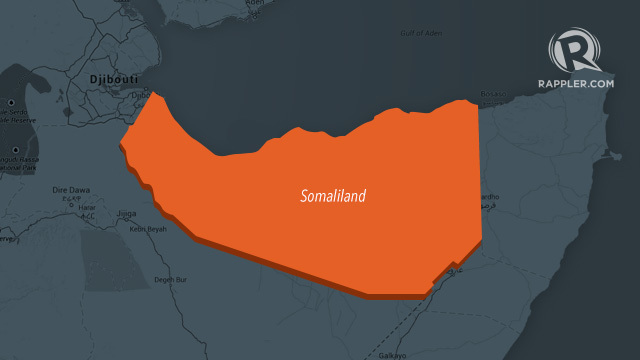
Somaliland was formerly a British protectorate that became briefly independent in 1960 but then chose to be absorbed into the Somali Republic. In 1991 as Somalia descended into chaos following the death of dictator Siad Barre, Somaliland once again opted to go its own way. However, Somaliland is not recognized internationally as a sovereign state by any country, despite having developed the symbols and functional governance of an independent state.
Dr Tannock said:
“Somaliland is the only cohesive and functional public authority in Somalia.
“The people of Somaliland benefit from a relatively benign government and progressive institutions as well as having symbols of statehood such as a separate currency and flag. Perhaps it’s time we began to consider more seriously Somaliland’s quest for independence.
“An independent Somaliland, supported by the international community, could be a force for stability and progress in an otherwise hopeless region, and could be an ally in fighting the scourge of piracy off the Somali coast.
“Certainly the people of Somaliland would be justified in asking why the international community is so reluctant to recognize their country but was so quick to recognize Kosovo.”

Egyptian teacher abducted in Burao , Somaliland

Medeshi Jan 14, 2009
Egyptian teacher abducted in Burao, Somaliland
Officials say gunmen have abducted an Egyptian teacher in Burao, Somaliland.
Senior government official Jama Abdullahi says the kidnappers armed with pistols stopped Mohamed Mustafa Ibrahim and bundled him into a car late Tuesday as he went to a mosque in the town of Burao.
The kidnapping is assessed to be related with commercial/livestock business disagreements between the local community and the government of Somaliland. This incident is reminiscent of another incident in 2008 where foreign fishermen were kidnapped to pressure the government. More kidnappings and attempts of internationals/foreigners are likely to occur in the near future within Somaliland if the situation is not addressed.
All staff of Aid agencies operating in Somaliland have already been advised to exercise extreme caution whilst travelling outside Hargeisa town.
Burao is the second largest town in the self-declared Republic of Somaliland.
Somaliland police chief Ahmed Saqadhe Dubad said Wednesday that his officers are searching for the kidnappers.
Somaliland declared its independence from Somalia in 1991 but hasn't received international recognition. It has been relatively peaceful, avoiding the anarchy of the rest of Somalia.

SOMALIA: Inside a pirate network

Medeshi Jan 13, 2009
SOMALIA: Inside a pirate network
HARGEISA, Hassan* and Mohamed* were fishermen in Bossaso, in the self-declared autonomous region of Puntland, northeastern Somalia, but turned to piracy out of desperation and lack of alternative livelihoods.
However, in August 2008, coastguards from the self-declared republic of Somaliland arrested them after they strayed into the region's waters. In September, they were each sentenced to 15 years in prison for their role in the piracy that has intensified off Somalia's waters in recent years.
Hassan and several others jailed on piracy charges spoke to IRIN between August and December from two prisons in Somaliland.

Hassan said: "I participated in two missions which we planned in Bossaso; the first in February [2008]. As part of a group of eight, we went to Ras Azayr area in Puntland in search of some foreign vessels. We did not find anything. We thought that since there were no foreign vessels operating in Puntland waters, we could go to Somaliland.
"I met up with a group of five men in Berbera and we agreed to operate in Somaliland waters. Unfortunately, Somaliland coastal guards captured us before we could do anything. I was later charged with organising piracy activities in Somaliland.
"I agreed to engage in piracy because we wanted to get back at the illegal foreign vessels that were fishing in our waters, denying us a livelihood. We targeted foreign cargo vessels for that reason."
Explaining how a pirate network works, Mohamed, who was sentenced in December, said: "I was captured in [Somaliland's] His District alongside four other men captured by coastguards on 13 December. I was sentenced to 20 years in prison.
"I, as do most pirates, consider myself as having been performing the duties of a coastguard. We usually work in groups of seven to 10 people. Often, our missions are financed by individuals and businessmen who collect half of the ransoms paid.
"Many people who opt to become pirates do so because authorities such as those in Puntland contribute to the degrading of the sea's environment by licensing foreign ships which use illegal fishing methods.”
Omar*, another of the jailed pirates, added: "Piracy has become booming business in Puntland territories; we receive the fuel and logistics from local business people. For example, when a kidnapped vessel pays ransom, 50 percent of it is taken by the people who invested their money; the pirates only get 50 percent."

However, he was quick to point out that pirates did not attack any ship coming to Bossaso.
"No one will attack any ship toward Bossaso because the local people who support the pirates will not agree to the hosting of those kidnapped in their area, so the ships coming to Bossaso are safe from piracy."
The pirates consider the ransom they get to be retribution for the ships that fish illegally off Somali waters.
"The ransom they pay is somehow a punishment for their illegal activity in the Somali water, especially in the era without government," one of the pirates said.
*Not their real names

Theme(s): (IRIN) Conflict, (IRIN) Human Rights, (IRIN) Water & Sanitation
[ENDS]

Obama pays public tribute to Lincoln's unifying legacy


Medeshi

Obama pays public tribute to Lincoln's unifying legacy

By Guy Adams in Los AngelesMonday, 12 January 2009

Barack Obama paid a visit to the Lincoln Memorial at the weekend, publicly honouring the man who inspired his career and whose legacy is to provide a major theme for the inauguration in eight days.
The President-elect took his family to the monument on Saturday night, where they admired the statue of the 16th President, before studying the inscriptions of his greatest speeches, including the Gettysburg Address.
(Photo: Barack Obama and his family leave the Lincoln Memorial )
It was the latest indication that Mr Obama intends to begin his presidency citing his hero, an opponent of slavery who led the abolitionist North during the Civil War of 1861-65.
He has decided to be sworn into office using Abraham Lincoln's bible, and will spend three days this week travelling by train from Philadelphia to Washington, following the final leg of an identical journey taken by Lincoln.
The theme of Mr Obama's inauguration week, "A New Birth of Freedom", was inspired by Lincoln's speeches, while the menu for the lunch following his swearing-in is a replica of the one enjoyed by his predecessor.
According to the Joint Congressional Committee on Inauguration Ceremonies, which has published recipes on its internet site, 200 guests will be served on plates identical to the fine bone china ordered for the White House by Lincoln's wife, Mary.
The appetiser will be seafood stew, while the main course is to be "a brace of American birds". This will have duck breast with sour-cherry chutney and herb-roasted pheasant, all served with molasses, sweet potatoes and winter vegetables. Lincoln, who grew up on the frontier in Kentucky and Indiana, was a fan of root vegetables and game. The "apple cinnamon sponge cake" being prepared for dessert is said to provide a nod to Mr Lincoln's love of both apples and cake.
Mr Obama and Abraham Lincoln have plenty in common. Both overcame poor backgrounds to become successful lawyers in Illinois. They share a skill for inspirational speechmaking, and both took office at a time of political turbulence.
Although opponents detect a whiff of the PR stunt in the President-elect's efforts to ally himself with such a pivotal figure, Mr Obama's affection for Lincoln appears to go back a long way. It is mentioned throughout Mr Obama's book The Audacity of Hope, and was also cited when he announced his decision to run for the presidency in Springfield, Illinois, on the steps of the Old Capitol, where Lincoln was a legislator.

SOMALIA: Three teaspoons a day to keep starvation at bay?


Medeshi Jan 12, 2009
SOMALIA: Three teaspoons a day to keep starvation at bay?
JOHANNESBURG, Ready-to-eat blended food has revolutionised the treatment of children who are acutely malnourished. In a pilot project, the UN Children's Agency (UNICEF) will use a similar product not to treat, but to prevent malnutrition in conflict- and drought-ridden Somalia.
( mother and her malnourished child in Beletweyne, Hiiraan region: Somalia has one of the world’s highest levels of malnutrition, with Global Acute Malnutrition rates of an estimated 18.6 percent)
In the biggest trial of Plumpy'doz, a variation of Plumpy'nut, a ready-to-use therapeutic food (RUTF), UNICEF plans to reach 100,000 children by mid-January.
Plumpy'doz is similar to Plumpy’nut in that it is possible to treat a child at home, without refrigeration, even where hygiene conditions are poor.
Somalia has one of the world’s highest levels of malnutrition, with Global Acute Malnutrition rates of an estimated 18.6 percent, topping 20 percent in some areas, and 28 percent in displaced people’s camps in Bossaso, northeast Somalia. Anything over 15 percent can be regarded as an emergency.
In the trial, children between six and 36 months old will receive three teaspoons of the paste of milk powder, sugar, peanut paste, oil, minerals and vitamins three times a day for eight months. Unlike Plumpy'nut, Plumpy'doz is a supplementary food, which comes in jars and is dispensed before children become malnourished; it has the same amount of micronutrients but a quarter of the calories.
Proper nutrition in the first three years is critical for the long-term health and growth of the child, as recent studies have shown.
"We are not saying that we can cull [eradicate] malnutrition, which is a complex problem, with Plumpy'doz, [but] we hope to make a difference to thousands of children in Somalia, where access to quality complementary food for young children remains difficult due to drought, extreme poverty and in addition high food prices," said Fitsum Assefa, UNICEF's nutrition specialist for Somalia.
A worsening drought, the global food crisis and a falling currency pushed the cost of imported cereals in Somalia up by almost 400 percent in 2007/2008, according to the Food and Agriculture Organization (FAO). Somalia is behind Zimbabwe in the countries worst hit by food inflation, according to Assefa. Milk and water are scarce.
(Photo: Packets of Plumpy'nut in a warehouse: UNICEF will use Plumpy'doz, a variation of Plumpy'nut, in a pilot project to prevent malnutrition in Somalia)
Besides handing out Plumpy'doz to mothers, UNICEF will promote exclusive breastfeeding, a natural immune booster up to six months, and breastfeeding with complementary food for two years. Only 13 percent of Somali infants younger than six months are exclusively breastfed, according to UNICEF.

Effectiveness debate
However, there is a lack of scientific evidence to back the effectiveness of ready-to-use foods (RUSFs) in preventing malnutrition. The World Health Organization (WHO), which initiated debate on the use of RUSFs to prevent malnutrition in 2008, has underlined the need for clinical trials.
"It was decided that any new RUSFs [...] as effective as any other existing RUSFs in aiding growth [and] reducing morbidity can be used, but simultaneously organisations should also hold clinical trials to test efficacy in carefully controlled circumstances," said André Briend, a WHO official and inventor of Plumpy'nut.
No clinical trials of Plumpy'doz have been undertaken.
UNICEF decided to go ahead with the intervention following the findings of the pioneer trial by Médecins Sans Frontières (MSF) of Plumpy'doz in Niger in 2007.
(Photo: A doctor examines a malnourished child in Hargeisa: UNICEF plans to reach 100,000 Somali children by mid-January in the biggest trial of Plumpy'doz, a ready-to-use therapeutic food )
In that trial, 62,000 children between six and 36 months in the district of Guidan Roumdji in the Maradi region were given Plumpy’doz. The NGO did not record a peak in malnutrition during the lean season from May to September as it usually did, said Stéphane Doyon, leader of MSF’s nutrition team.
After the trial, a national nutrition survey conducted by the World Food Programme and UNICEF in Niger recorded the lowest levels of malnutrition in the country in Guidan Roumdji, further strengthening MSF’s belief that the intervention worked.
However, there have been some questions around the technical basis of the Niger trial, which was not held within a controlled environment. The children’s total calorific intake was not monitored. "It was not a clinical trial; I am sure someone will hold a clinical trial. We are satisfied with our findings which will be published soon," said Doyon.
The policy-making UN Standing Committee on Nutrition formally endorsed the RUTF approach in 2007, saying it could be used to treat three-quarters of children with severe acute malnutrition.
The use of RUTF for prevention, rather than treatment has only just begun. After their Guidan Roumdji trial, MSF rolled out Plumpy’doz in the whole Maradi and neighbouring Zinder regions. Agencies are considering its use in Sudan.
Cost issues
Critics of the peanut paste cure have often said Plumpy’Nut and Plumpy’doz are too expensive, milk powder being the most expensive ingredient.
"Plumpy'doz is not that expensive – it costs 12 US cents a bottle," said Doyon. But the costs add up as a child could use a bottle a week for three years. Scientists are looking at cheaper options, using soya instead of milk, he explained.
Manufacturing the paste locally could also help bring down costs. The paste is being made in several African countries such as Niger, Ethiopia, Malawi, Tanzania, the Democratic Republic of Congo, Kenya, Ghana and South Africa.
Theme(s): (IRIN) Health & Nutrition

Ethiopia, Nigeria and Somalia are likely to break apart in the next few years" - US investor

Medeshi Jan 12, 2009
Ethiopia, Nigeria and Somalia are likely to break apart in the next few years" - US investor
US investor believes Ethiopia likely to break apart
A US businessman backed by former CIA and state department officials says, Ethiopia, Nigeria and Somalia are likely to break apart in the next few years. Philippe Heilberg, a former Wall Street banker and chairman of New York-based Jarch Capital told Financial Times that he is in contact with rebels in Sudan’s western region of Darfur and dissidents in Ethiopia and the government of the breakaway state of Somaliland. According to FT, the investor just bought 400,000 hectares of land – an area the size of Dubai in South Sudan from a war lord.
He was quoted as saying, "“If you bet right on the shifting of sovereignty then you are on the ground floor. I am constantly looking at the map and looking if there is any value,".
He told the Financial Times, “You have to go to the guns, this is Africa,” Read the entire article from Financial Times and have your say.
Here is more from the Financial Times.
“I am sure Paulino [Sudanese War Lord] has killed many, but I am sure he did it in protection of his people,” Mr Heilberg told the Financial Times.
(Photo: Philippe Heilberg , Jarch Capital)

Somali pirate's body washes ashore with $153,000


Medeshi Jan 11, 2009
Somali pirate's body washes ashore with $153,000
MOGADISHU, Somalia – The body of a Somali pirate who drowned just after receiving a huge ransom washed onshore with $153,000 in cash, a resident said Sunday, as the spokesman for another group of pirates promised to soon free a Ukrainian arms ship.
Five pirates drowned Friday when their small boat capsized after they received a reported $3 million ransom for releasing a Saudi oil tanker. Local resident Omar Abdi Hassan said one of the bodies had been found on a beach near the coastal town of Haradhere and relatives were searching for the other four.
"One of them was discovered and they are still looking for the other ones. He had $153,000 in a plastic bag in his pocket," he said Sunday.
The U.S. navy released photos of a parachute dropping a package onto the deck of the Sirius Star, and said the package was likely to be the ransom delivery.
But five of the dozens of pirates who had hijacked the tanker drowned when their small boat capsized as they returned to shore in rough weather. Three other pirates survived but also lost their share of the ransom.
Graeme Gibbon Brooks, managing director of the British company Dryad Maritime Intelligence Service Ltd, said the incident was unlikely to deter attacks.
"The loss or potential loss of the ransom means the pirates will be all the more keen to get the next ransom in," he said. "There are people lining up to be pirates."
The Sirius Star had been held near the Ukrainian cargo ship MV Faina, which was loaded with 33 Soviet-designed battle tanks and crates of small arms. The same day the Sirius Star was released, the family members of the Faina crew appealed for help, saying they were not being kept informed about the negotiations or the state of their loved ones' health.
But a pirate spokesman assured The Associated Press on Sunday that the 20 crew members on the MV Faina were doing well.
"The cargo is still there unharmed and the crew is healthy," Sugule Ali said. "Once the negotiations end in mutual understanding, the ship, its crew and the cargo as well will be released."
There have been several false alarms about the release of the MV Faina since it was seized last September. Ali said the pirates were still negotiating with the ship's owners.
"Nothing has changed from our previous demand of $20 million ransom for the release of the ship, but as negotiations continue we are likely to reduce the amount," he said. He declined to give further details.
American warships have been closely monitoring the Faina amid fears that some of the weapons onboard could be taken onshore and fall into the hands of Islamic insurgents.
The shaky Somali government is battling insurgents the U.S. State Department says are linked to al-Qaida. But the situation is complicated by clan militias and rivalries within the Islamist movement.
Somalia has not had a functioning government since 1991 and its lawless coastline is a perfect haven for pirates, who attacked 111 ships in the Gulf of Aden and kidnapped 42 of them last year alone. The multimillion dollar ransoms are one of the only ways to make money in the impoverished Horn of Africa nation.
An international flotilla including U.S. warships has been patrolling the area. The flotilla has stopped many attacks, but the area is too vast to keep all ships safe.

All routes to D.C. guarded for Obama inauguration

Medeshi
All routes to D.C. guarded for Obama inauguration
Security tightens ahead of ceremonies
BY TODD SPANGLER • FREE PRESS WASHINGTON STAFF • January 11, 2009
WASHINGTON -- As the U.S. Secret Service, Washington Metropolitan Police, U.S. Coast Guard and other agencies prepare for an unprecedented level of security around Barack Obama's Jan. 20 inauguration, they may be leaving out one piece of advice for the public:

(Photographers check out photo angles Saturday at the site of President-elect Barack Obama's upcoming inauguration on the west side of the U.S. Capitol in Washington, D.C.
INAUGURAL SECURITY MEASURES
Believe us, there's going to be more security in Washington at the presidential inauguration than you can squeeze into this spot, but here are some highlights and some Web sites where you can check it all out:
LAW ENFORCEMENT: Thousands, if not tens of thousands, of personnel will be on site from the U.S. Secret Service, Washington police, U.S. Coast Guard, etc.
AIR, WATER RESTRICTIONS: Other than regularly scheduled commercial flights, a 30-mile restricted-airspace zone is being drawn around Washington. And there are closures on the Potomac River for boats.
STREET CLOSURES: A 3 1/2 -square-mile section of downtown Washington is being closed to traffic and the bridges from Virginia are being closed to private vehicles, too. (Though there are some pedestrian and mass transit/bus crossings.)
ACCESS POINTS: To get to the inaugural parade, attendees will have to funnel through 13 security points. No coolers, backpacks, pets or bicycles -- plus much, much more.
DIVE IN: There's a plethora of information on security restrictions, with maps, transportation tips, advice (like keeping small children at home) and much more at the following Web sites:
U.S. Secret Service: www.secretservice.gov/presidential_inaugural.shtml
Washington, D.C., inaugural page: www.inauguration.dc.gov
Presidential Inaugural Committee: www.pic2009.org
Joint Congressional Committee on Inaugural Ceremonies: www.inaugural.senate.gov
Mass Transit: www.wmata.com/getting_around/metro_events/inauguration.cfm
Federal Aviation
Administration: www.faa.gov/news/media/public_advisory_inauguration_2009.pdf
U.S. Coast Guard: www.piersystem.com/go/doc/651/246060/cq-svann )

Get used to it
Obama's election has law enforcement in overdrive leading up to the events nine days from today in the nation's capital, with Potomac River restrictions on boats; street and bridge closings that effectively treat Virginia as if the Civil War were still being fought, and a restricted airspace zone reaching as far as Baltimore and halfway out into the Chesapeake Bay.
A 3 1/2 -square-mile chunk of downtown Washington will be closed to traffic, and Obama is getting a brand, spanking new (and heavily armored) Cadillac limo to tool around in.
"It's an unprecedented level of security," said David Heyman, director and senior fellow of the Homeland Security Program at the Center for Strategic and International Studies in Washington.
Now, no one expects inaugural-type levels of security to attend Obama's every move for the next four (or eight) years. But his popularity -- a recent Gallup poll showed 65% of Americans believe he will make a good president -- plus his historic standing as the nation's first African-American president, mean big crowds are expected to follow him everywhere.
And big crowds need big security.
The inauguration is a case in point: Officials expect as many as 2 million people to attend his swearing in and the inaugural parade up Pennsylvania Avenue -- far more than the 1.2 million who lined up to see Lyndon B. Johnson get sworn in by Chief Justice Earl Warren in 1965.
Add to it the heightened security in place around presidents, cabinet members and other top officials since the attacks of Sept. 11, 2001, and it explains why so much protection is in place. At this month's inauguration, there will be thousands of law enforcement officials at the ready (the Secret Service won't talk about how many) and 13 tightly controlled access points to even get to the Mall or to see the parade.
The Department of Homeland Security's color-coded advisory system is at yellow, indicative of an elevated risk. But they say there is no "credible, specific intelligence suggesting an imminent threat" involving the inauguration.
Meaning that for any event with this many people, where the president -- and many other luminaries -- is involved, in this wide-open of a venue, this is the new normal.
Standard operating procedure.
Skilled countersnipers
The Secret Service protects the president, and it does so in relative silence. It doesn't talk about the threats it's investigating, generally, and it avoids any discussion of personnel numbers on any given detail, how many cameras might be watching an event, or even what its agents can do.
Asked to verify a news media report that its sharpshooters could hit a teacup from 1,000 feet, spokesman Edwin Donovan would go no further than, "Our countersnipers are very skilled and highly trained."
He made one thing perfectly clear, however: The public -- and the news media -- may worry that Obama faces greater threats because of his historic standing, but it doesn't change how the protection is provided. Threats are investigated, regardless of who the president is. Credible ones bring more security.
Venues are secured. Crowds are dealt with.
"In terms of preparation, it's the same methods. It's no different than any other inauguration," said Reginald Ball, president of iSekurity -- an identity theft protection service based in Washington and Auburn Hills -- who retired from the Secret Service after 30 years and was part of security for George H.W. Bush's inauguration.
A former agent in the Detroit Field Office, Ball said for Secret Service personnel, every day of protecting the president is like the Super Bowl, a game they can't lose. That said, the blueprint for security is already known -- and is just improved upon.
That blueprint has been built through many successes and a few failures. A president hasn't been injured in an assassination attempt since John Hinckley Jr. tried unsuccessfully to kill Ronald Reagan outside the Washington Hilton in 1981. (Reagan was shot and recovered.) But there have been threats, including against Obama. For instance, before this year's election, a couple of men in Tennessee were accused of planning widespread violence against blacks to be capped with an attempt on Obama's life.
The Service is always monitoring such threats, investigating each.
"The assets that are at the disposal of the Secret Service are unbelievable," said Ball, declining to say what they are capable of in terms of security.
Still, there is reason to believe that Obama could present more of a security task than, say, George W. Bush. Obama's events on the campaign trail attracted huge crowds, for instance. His populist politics could keep big numbers of people coming, too. His children now go to school in Washington, requiring protection.
A Secret Service detail was attached to Obama on the campaign trail earlier than usual.
Meanwhile, some news media reports immediately after Obama's election in November suggested an increase in the threats against him -- though there has been no recent indication of credible threats.
In fact, if anything, the last few weeks have shown Obama trying to escape the news media spotlight -- such as when he ducked the journalists covering him during his holiday vacation in Hawaii -- an early indication perhaps that he could be having a hard time living inside the bubble that now contains him.
There are times, says Ball, when the protective unit may urge a president to cancel an event, feeling it can't be secured. But they can't tell him what to do -- like getting out of his car during the inaugural parade, for instance.
So the Secret Service designs what security it can provide and makes situations as safe as possible -- like getting the president to walk on a particular block of the parade route that it can secure.
"You talk about being hyped up and your adrenaline pumping? You're ready," said Ball.

Can Puntland´s Farole Put an End to the Somali Piracy Phenomenon Now?


Medeshi Jan 10, 2009
Can Puntland´s Farole Put an End to the Somali Piracy Phenomenon Now?
By M. S. Megalommatis
"I am one of the founding fathers [of Puntland] who helped enact the Provisional Constitution [of 1998]", Mr. Farole, the newly elected president of the semi-autonomous province of Puntland said. "It is a historic democratic election in Puntland, making me the region's fourth president since 1998. I hope I will bring some changes", Farole said after being elected. But first opposition responses in Puntland reacted angrily to the election of Abdirahman Mohamed (nicknamed Faroole) a former banker and Puntland finance Minister under Presidents Hashi and Yusuf as well as minister of Planning & International Cooperation under Mohamud Muse Hersi [nicknamed Muse Adde] and stated that he only won with the financial backing of a dubious exploitation company.
Farole was using his website, Garowe Online ´http://www.garoweonline.com´, created weeks after his departure from Puntland in 2006 and maintained by his son to expose mistakes of the former president. Farole's opponents also predict now serious clashes between resigned TFG President Abdullahi Yussuf's clan - the Omar Mahamoud - with Faroole's Isse Mahamud sub-clan, though both hail from the dominant Majeerteen clan. "If his legacy is to be taken at face value, then Farole is by far the single most corrupt government official Puntland has seen so far. As the finance minister, Farole bankrupted the State setting off its deep descendent into fiscal and economic crises - that was before the dim-witted Adde arrived at the scene to clear its coffers" stated Mohamed A. Ali. "The dispute with the President [of Puntland, Gen. Muse Adde] happened as we were in the process of finalizing the Five-Year Development Plan" which was authored by the Ministry of Planning, Farole countered. Farole and former Puntland president Muse Adde – who were allies during the 2005 election – disagreed strongly on an oil deal the then Puntland leader signed unilaterally with that small mining firm based in Australia, Range Resources.
When Muse engineered thereafter a parliament plot to sack him in February 2006, Farole supporters prohibited lawmakers from entering the parliament building in Garowe, the capital of Puntland. Three young men were gunned down in front of parliament hall in the government's crackdown, causing political uproar and a security nightmare for the government. When later questioned as to the rationale for such actions, he categorically denied of any involvement. Thanks to the late Islam Mohamed, further bloodshed was averted. Farole has lived in Melbourne / Australia since, where he is said to be a doctoral candidate in the history department at La Trobe University, and returned only two months ago to Puntland. "When I left, Puntland was well-established with security, law and order and on the correct path. There were no pirates, no [illegal militia] roadblocks", Farole stated and he has been an outspoken critic of Range's rights to Puntland's resources since the initial agreement was signed by Muse Adde, which gave the Australian company Range Resources as well as their Canadian joint venture partner, Africa Oil - co-sponsored by Sweden's Lundin family's wealth from Lundin Oil -, exclusive mineral and oil rights to Puntland in 2005. "We don't deal with any of the opposition leaders", said Range's executive director, Peter Landau recently, but insiders insist that the company had invested in both major candidates.
It remains to be seen if President Farole will maintain his former opposition to Range Resources' neo-colonial rights he criticized so vehemently in the past. And he also first has to declare how he will structure the future development in Puntland. Back in 2005 and as Minister of Planning and International Cooperation, Mr. Farole said he supported efforts to ensure that aid agencies "operated in all parts of Puntland" at a time when the region was still reeling from the effects of the 2004 Indian Ocean tsunami. President Farole's win will create another tsunami - that's for sure - question is only if this one will help and empower Puntlanders in general or if it just will be a turning tide for the benefit of himself and his sub-clan. Forle, however, has vowed to eradicate piracy and human trafficking originating from Puntland.
American Chronicle

5 Somali pirates drown with ransom share


Medeshi Jan 10, 2009
5 Somali pirates drown with ransom share
MOGADISHU, Somalia – Five of the Somali pirates who released a hijacked oil-laden Saudi supertanker drowned with their share of a reported $3 million ransom after their small boat capsized, a pirate and port town resident said Saturday.
Pirate Daud Nure says the boat with eight people on board overturned in a storm after dozens of pirates left the Sirius Star following a two-month standoff in the Gulf of Aden that ended Friday.
(Photo :AP – A parachute dropped by a small aircraft drops over the MV Sirius Star at anchor, in this U.S. Navy photo, … )
He said five people died and three people reached shore after swimming for several hours. Daud Nure was not part of the pirate operation but knew those involved.
Jamal Abdulle, a resident of the Somali coastal town of Haradhere, close to where the ship was anchored also confirmed that the boat sank and that the eight's portion of the ransom money that had been shared between dozens of pirates was lost.
U.S. Navy photos showed a parachute, carrying what they described as "an apparent payment," floating toward the tanker. The Sirius Star and its 25-member crew had been held since Nov. 15. Its cargo of crude oil was valued at US$100 million at the time.
The capture was seen as a dramatic demonstration of the pirates' ability to strike high value targets hundreds of miles offshore.
On the same day the Saudi ship was freed, pirates released a captured Iranian-chartered cargo ship, Iran's state television reported Saturday. It said the ship Daylight was carrying 36 tons of wheat when it was attacked in the Gulf of Aden Nov. 18 and seized by pirates. All 25 crew are in good health and the vessel is sailing toward Iran, the TV report said.
The U.S. Navy announced this week it will head a new anti-piracy taskforce after more than 100 ships were attacked last year. NATO and the European Union already have warships patrolling the Gulf of Aden and have intervened to prevent several ships from being captured.
More than a dozen ships with about 300 crew members are still being held by pirates off the coast of Somalia, including the weapons-laden Ukrainian cargo ship MV Faina, which was seized in September.
The multimillion dollar ransoms are one of the few ways to earn a living in the impoverished, war-ravaged country. Somalia has not had a functioning government since 1991 and nearly half of its population depends on aid.

Yoshia Morishita : News articles about Somalia in relation to Japan

Saturday, Jan. 10, 2009
SDF weapons rules may be eased to fight piracy
Kyodo News
A bill is being drafted to make it easier for the Self-Defense Forces to use their weapons if they engage in antipiracy missions off Somalia, government sources said Friday.
The Liberal Democratic Party-New Komeito ruling bloc kicked off debate Friday, and the government hopes to submit the bill to the Diet to deploy Maritime Self-Defense Force ships off Somalia, where piracy has been rampant. Any government bill must be endorsed by the ruling bloc before going to the Diet.
window.google_render_ad();
The relaxed rules may allow the MSDF to fire on armed ships to prevent piracy even when not under attack, stirring concern of violating the war-renouncing Constitution.
A coalition panel held its first meeting on the issue Friday, but the discussion did not specifically mention easing the rules on arms use — apparently out of consideration for Buddhist-backed New Komeito, which is traditionally dovish.
Nevertheless, Gen Nakatani, a former Defense Agency chief and LDP member who cochairs the project team with New Komeito's Shigeki Sato, told other panel members at the outset of the meeting to act "so we can take steps swiftly."
According to the government sources, the bill states the need to protect non-Japanese ships and crew from pirates under Japanese law, arguing that antipiracy operations are "an important and urgent issue that the international community should tackle (together)."
The government is also mulling over the various situations in which the SDF should be allowed to use arms.
Currently, SDF personnel are allowed to use weapons only to protect themselves, foreign troops and civilians under their care, and in emergency evacuations.
Another issue the government is looking at is whether Japanese criminal law can be applied to piracy "no matter what the criminals' nationalities are or where the crimes are perpetrated," the bill said.
The use of a Penal Code provision that criminalizes interference with government officials in the execution of their duties is also being considered.
Given that other countries patrolling off Somalia often hand captured pirates to Somali authorities, Japan will still need to clarify how much it could touch upon antipiracy activities, the sources said.
Warships from the United States, the European Union and elsewhere have been patrolling off the Horn of Africa nation to crack down on piracy, which has expanded substantially in recent years.
Japanese officials and lawmakers have been talking about sending the MSDF to join the international effort, but no established legal framework exists for such duty.
The government also is considering applying a maritime police-action provision

Doc abducted in Ethiopia freed safely
The Yomiuri Shimbun
A Japanese woman kidnapped by an armed group in Ethiopia in September has been freed, the Foreign Ministry said Thursday morning.
The ministry said it confirmed Keiko Akahane, a 32-year-old doctor, had no major injuries and was in good condition. Wilhem Sools, a Dutch male nurse who was abducted with Akahane, also was released safely, the ministry said.
Akahane and the nurse work for the French medical aid group Medicins du Monde (MDM).
Akahane was released Wednesday afternoon, and was handed over to MDM. MDM then reported her release to the Japanese Embassy in Kenya. Akahane was transferred to an airport in Nairobi, and Ambassador Shigeo Iwatani met her there.
Akahane was still in Nairobi as of Thursday morning and was to undergo a medical examination, the Foreign Ministry said.
The ministry refused to answer whether a ransom was paid to the armed group for Akahane's release.
Negotiations with the armed group for the release of Akahane and the nurse were conducted mainly by MDM, the Foreign Ministry said. The ministry said it would not announce the details of Akahane's release or any statement from her because MDM was expected to do so soon.
Akahane was engaged in medical activities in the Ogaden region in eastern Ethiopia on behalf of MDM. She was abducted in the region, which is close to the border of Somalia, on Sept. 22 with the Dutch nurse by the armed group. The two were then taken to Mogadishu, the Somali capital.
Many Somalis live in the Ogaden region, and armed Somali groups go in and out the region. Antigovernment forces seeking independence from Ethiopia also are active in the region, creating political uncertainty.
A string of abductions targeting foreigners took place last year in Somalia and neighboring regions. Six to eight foreigners including members of another French humanitarian support group are still being held in Mogadishu.
At a press conference held Thursday morning, Chief Cabinet Secretary Takeo Kawamura said, "We condemn this despicable criminal act of abduction."
Kawamura said the government will ask Japanese citizens to stay away from foreign danger zones. He also said the government would urge nongovernmental organizations to be more safety conscious. "When the groups go to dangerous areas to help people in need, it is important for those groups to do the best they can to inform their people of the dangers present in such areas," Kawamura said.
===
Abductors say ransom paid
By Shiomi Kadoya
Yomiuri Shimbun Correspondent
JOHANNESBURG--An armed group that freed Japanese doctor Keiko Akahane and a Dutch nurse Wednesday has claimed it received a ransom in exchange for releasing them, it was learned Thursday.
According to a source in Nairobi who phoned the armed group on Wednesday night, a man who claimed to be a spokesman for the armed group told the source that the group freed Akahane and the nurse Wednesday afternoon after confirming the ransom had been paid.
The man reportedly said the armed group had received the money and reportedly transferred the two to Nairobi from an airport in Mogadishu.
The transfer was kept secret to avoid the attention of the local media, the man told the source.
The armed group first demanded the release of group members imprisoned in Ethiopia in exchange for freeing the two. The group then demanded that MDM pay 3 million dollars (279 million yen) as ransom, but MDM refused the demand. Finally, the group demanded the Japanese government pay 1 million dollars as ransom for the release of Akahane by a deadline of Dec. 10.
(Jan. 9, 2009)

Court revives lawsuit against former Somali PM (M. Ali Samatar)

Medeshi Jan 9, 2009
Court revives lawsuit against former Somali PM
By MATTHEW BARAKAT
ALEXANDRIA, Va. (AP) — A federal appeals court has reinstated a human rights lawsuit against a former prime minister of Somalia who is accused of overseeing killings and other atrocities.
The 4th U.S. Circuit Court of Appeals in Richmond ruled Thursday that plaintiffs can sue Mohamed Ali Samantar of Fairfax, Va., who was defense minister and prime minister of Somalia in the 1980s and early 1990s under dictator Siad Barre.
The lawsuit alleges that Samantar was responsible for killings, rapes and torture, including waterboarding, of his own people while in power, particularly against disfavored clans.
The lawsuit was filed in 2004 at federal court in Alexandria under the Torture Victim Protection Act. U.S. District Judge Leonie Brinkema tossed out the case in 2007, ruling that Samantar was entitled to immunity under a separate U.S. law, the Foreign Sovereign Immunities Act.
But the appellate court ruled that the law does not extend immunity to individuals, only to foreign states themselves and their agencies.
The ruling sets up a split among federal circuits. The 9th U.S. Circuit Court of Appeals in California, for instance, has ruled that individuals are eligible for immunity under the law.
Samantar's lawyer, Fred B. Goldberg, said Friday that he intends to appeal — he can ask to 4th Circuit for a rehearing or appeal to the U.S. Supreme Court. The fact that a circuit split exists makes it more likely that the Supreme Court would agree to hear an appeal, he said.
Samantar has declined numerous requests for an interview.
Pamela Merchant — executive director for the San Francisco-based Center for Justice and Accountability, which brought the suit on behalf of several Somali plaintiffs, said it only makes sense that Samantar, who has lived in the U.S. for more than 10 years, should be subject to U.S. law.
"It is an important step in ensuring that human rights abusers who seek safe haven in the U.S. will be held accountable in our courts," she said in a statement.
The appeals court's ruling was unanimous, with Judge William B. Traxler, an appointee of Bill Clinton, writing the opinion, joined by Judge Robert B. King, also a Clinton appointee. Judge Allyson Kay Duncan, an appointee of George W. Bush, writing a concurring opinion that differed only on one small point.
Background : http://www.cja.org/cases/samantar.shtml

Ethiopia clamps down on khat dens


Medeshi Jan 9,2009
Ethiopia clamps down on khat dens

A crackdown has been launched in the Ethiopian capital on unlicensed parlours where boys and young men chew khat, a narcotic green leaf.
Addis Ababa city council has ordered raids on the backrooms where people also smoke shisha pipes and gamble.
Although khat is not banned, officials say boys skip school and steal to fund their pleasures in the parlours.
Other illegal activities such as trading stolen mobile phones are also reported to take place in khat dens.
The mild narcotic - which can cause users to experience excitement, euphoria and loss of appetite - is popular in parts of East Africa, especially Somalia, and Yemen.
During the clampdown in Addis Ababa, where the cheap narcotic has recently become popular with the young jobless, the BBC's Elizabeth Blunt saw shisha pipes being smashed, while playing cards and khat were burned.
Police have been slapping notices on the doors of unlicensed khat parlours, although the leaf is still openly sold on the streets.
Culture
The police have no way of stopping people sitting by the side of the road and chewing the drug.
Addis Ababa city council's head of justice and legal affairs Tsegaye HaileMariam made it fairly clear to our correspondent that he wished khat was a banned substance in Ethiopia.
However, exports of the drug bring in large amounts of foreign currency.
Muslims from the eastern Ethiopian city of Harar and the Somali region to the south-east chew the leaf as part of their culture.
In those areas, our correspondent says, the cream of society retires after lunch to rooms elegantly prepared with low couches and cushions to munch khat, drink sweet tea and smoke shisha pipes, while discussing the issues of the day.
She adds MPs, senior officials, security chiefs and university professors have invited her to join them in chewing khat.
But the use of the drug is now spreading to new areas of the country.

Israel and the Palestine conflict: Read the other side of the story

Medeshi Jan 9, 2009
The Israeli /Palestine conflict
My argument with a religious extremist that God has created mankind to live in peace , justice and equality to all and for all and to a certain time until He decides to revoke so has inspired me to write this simple artice . My argument with this certain person last night was confirmation of the ignorant religious extremists and close minded people who believe in death and destruction as a solution to any problem in all parts of the world. People come and go in a way or the other and in some way, the way they have left may be defined as suffering or glory (massacre or martyrdom).
My opponent in the argument was a person who enjoys all the privileges of a citizenship in the United kingdom better than me but , at the same time is not grateful for being given all the privileges of freedom.
I have offered this friend of mine, last night after he sent me a text message about the Gaza massacre, a platform for discussion about the cause of this war. I told him that I don’t support , as a Muslim, aggressors without a justifiable cause and that I am against any war and its support by the current powers of the world . I, also , offered this person to have a glimpse of the other side of the warring parties’ argument about the conflict(I:e Israel ) , but instead the person I was talking to got angry and called me un- Islamic and an infidel . As an elder and a person used to settling conflicts under a tree in accordance to the tradition of the country that I came from ( Somaliland ) I have come to the following conclusion about the current Gaza conflict:

Unless the Palestinian understand that Israel has been here and will go nowhere, then there will be no peace
Unless the Israelis stop using force to get what they want unjustifiably, then they will have no peace
All Muslims should encourage reconciliation between the Palestinians and the Jews as well as between the Muslims and the Christians; otherwise all of us including the Jews, the Muslims and the Christians will endup in a prolonged suffering and self destruction.
We, as Muslims have seen enough of the Israeli killing of the Palestinians , so let us give a chance to the other side of the story and why Israel is fighting the Arabs.
Click here to see and read:
To know more about the Palestine /Israeli conflict, please click on this link
http://fight-terror.tk/


Abdurahman Farole Elected New President Of Somalia's Puntland


Medeshi Jan 8, 2009
Abdurahman Farole Elected New President Of Somalia's Puntland
Somalia (AFP)--Puntland's parliament on Thursday elected Abdurahman Mohamed Farole as the new president of the semi-autonomous northern region of Somalia.
Farole, who received 49 votes in the 66-member house, replaces Adde Musa Hirsi, who was ousted in the first round of voting.
He becomes the third president of Puntland, a region which declared its autonomy in 1998. Puntland's first president, Abdullahi Yusuf Ahmed, resigned as Somali president late last month.
Farole held the finance portfolio under Yusuf and was one of the main opposition leaders during Adde Musa's tenure.
The coast of Puntland is a major hub for pirates who have turned the Gulf of Aden into the world's most dangerous waters, wreaking panic in the world's shipping industry.
Puntland's security apparatus was depleted by Yusuf's Ethiopia-backed war effort against the Islamists and has become largely lawless. Several foreign reporters and aid workers were kidnapped there in recent months. (END) Dow Jones Newswires
01-08-090517ET
Copyright (c) 2009 Dow Jones & Company, Inc.

Obama : Show of togetherness in the Oval Office

Medeshi Jan 8, 2009
Show of togetherness in the Oval Office
By Leonard Doyle in Washington
Thursday, 8 January 2009
As reunions go, it was an exclusive one, a living tableau of US history for which every surviving president, and the incoming one, came to the White House for lunch.
(Photo: The first gathering of all living presidents at the White House since 1981 took place as George Bush Snr, President-elect Barack Obama, George W Bush, Bill Clinton and Jimmy Carter came together for lunch)
Barack Obama joined George Bush Jnr, Bill Clinton, George Bush Snr and Jimmy Carter in the Oval Office, all grinning for the cameras. The mood was light and collegial. "I love this rug," Mr Clinton whispered to Mr Bush, a variation on his "I love your tie", which he saves for people he does not care for. The event was Mr Obama's idea. Mr Bush jumped at it.
It was the first gathering of all living presidents at the White House since 1981, when Richard Nixon, Gerald Ford, Jimmy Carter and Ronald Reagan, then president, came together before leaving for the funeral of Anwar Sadat, the Eygptian president and Nobel Peace Prize winner. On that day, they discussed the darkening situation in the Middle East, a subject surely raised at yesterday's lunch. All the former presidents have had experiences with Middle East wars and no doubt had advice for Mr Obama, who will soon be juggling the hot potato of Israel and Hamas

Why Eritrea Should Matter to the United States

Medeshi Jan 9, 2009
Why Eritrea Should Matter to the United States
By Scott A Morgan
In less than two weeks Barack Obama will assume the Presidency of the United States. This means that after eight years of the Bush Administration there stands an excellent chance of some wholesale changes in American Foreign Policy. We have heard of several potential challenges for the Incoming President but there is one which has not generated much Interest.

At this time there are stark differences between the United States and Eritrea. One of the Basic Concerns is in the Area of Human Rights. The First major area of concern is Freedom of Religion. At this time only 4 Faiths are allowed to practice in the Country. These four are: Orthodox, Lutheran, Catholic and Muslim. While the Current Government allows these Faiths to function there has been intervention over the last several years.
Another Concern has to be Freedom of the Press. Since a Crackdown on Dissent occurred in 2001 several Journalists have been detained without Charges in undisclosed locations throughout the Country. At least one reporter and several other Dissidents including a Vice-President of the Country have died in custody. Other concerns include Forced Conscription and the Repression of Civil Society.
But the factor that most strategists in the US will focus on is the role the Country is playing in regional tensions. Currently a long running Border Dispute with Ethiopia remains unresolved despite mediation by a third party. The countries whose leaders were ironically allies during the struggle against the Marxist Ethiopian Government fought a struggle that resulted in the Independence of Eritrea being seen.
Another dispute that is currently ongoing is with neighboring Djibouti. What makes this conflict an area of concern is the fact that the Headquarters for the US Military Horn of Africa Task Force is in this country. Although the Eritrean Government has seen fit only to seize a few square kilometers near the border the longer this conflict remains unresolved the greater the chance for another conflict to erupt.
Finally there is the fiasco known as Somalia. The Government in Asmara has been a vocal critic of the Ethiopian Intervention in the Country. For its part the State Department has accused the Eritrean Government of supporting the Islamist Insurgency in Somalia. In recent weeks the Country has stated that it has been the Policy of the Bush Administration that has been the root cause of spike in Piracy in the Gulf of Aden.
There is some hope that a change in Washington towards what many hope will be a more friendly Administration will be a benefit towards Africa. In some areas there may be a maintaining of current Policies in place. So this means that from a viewpoint looking at the US it may be more of the same.
In Eritrea itself there may be some Elements that may want to be an instrument of change themselves. A Group known as the RSADO (Red Sea Afar Democratic Organization) has launched a series of attacks against Military Targets. This effort known as Operation Ali Osman Mear can be seen as just the latest evidence of the frustration of the Political Opposition.
In General the United States has assisted any effort to promote Democratic Change. Whether its by having Embassy Officials attend court hearings of the Opposition to overt Military Assistance to those who have been struggling for their ideals there always has been a helping hand.
So with the current failure of the mission in Somalia will this mean that there will be an increase in scrutiny of Eritrea? We will find out soon enough.
The Author Publishes Confused Eagle on the Internet and Comments on US Policy towards Africa. Confused Eagle can be found at morganrights.tripod.com

Qaar ka mid ah Ururada Bulshada Rayidka ah oo walaac ka muujiyay mudo dhaafka golayaasha deegaanada

Annaga oo ah Ururada Bulshada Rayidka ah ee Madaxa-banaan waxaanu si wayn uga walaacsanahay