Medeshi April 27, 2009
Asian man found in car with gas cannisters strapped to him
London: In a bizarre incident, an Asian man was found in a car, bound and gagged, with gas canisters strapped around him, raising a bomb threat in Birmingham.
Police officials said the man, in his 30's, had been placed in the white car against his will and was warned by his abductors that he had been placed next to a bomb.
The unnamed man was sent to a hospital with an injured leg after he was found by the police, who have now launched a manhunt for the 'reprehensible' crime.
Army bomb disposal experts, firefighters and specialist police negotiators were on the scene after a shocked trucker driver raised the alarm.
The victim was lying across the front seats of the car surrounded by the canisters that were described as being the size of beer cans. The alert brought widespread disruption to Birmingham's rail network.
Councillor Ayoub Khan, cabinet member for community safety at Birmingham City Council, said an eye witness had told him he had seen "foam coming out of the man mouth and said he was unconscious".
Khan added: "It seems that this man is a victim rather than the assailant".
Chief superintendent Tom Coughlan said: "This incident has now become a criminal investigation. The man appears at this stage to have been placed in the car against his will possibly with a view to scaring him".
The man had been told by his kidnappers that a bomb was placed in the car with him.
"We are seeking to establish the actual nature of the device that was placed in the car," said Coughlan.
He said the action was "reprehensible" and had placed the victim, members of the public and emergency services at risk.
Apart from an injured leg, the victim's health was "fine," he said.
He added: "This was clearly a kidnap situation and almost certainly there will be a criminal motivation to it".
Pak intelligence believes Osama is dead: Zardari
Medeshi April 27, 2009
Pak intelligence believes Osama is dead: Zardari
Asif Ali Zardari on Monday said his intelligence believes that Al Qaeda chief Osama bin Laden is dead, but admitted they have no proof.
"The Americans tell me they don't know and they are (better) equipped than us to trace him (bin Laden). And our own intelligence services obviously think that he does not exist any more, that he is dead," Zardari told a panel of foreign journalists during an interview at the presidency here.
The President's remarks come as US intelligence and military reports believe that the elusive Al Qaeda chief is hiding in Pakistan's restive tribal region or in the mountains bordering Afghanistan.
Asked about reports that the Taliban in the northwestern Swat valley had said that they would welcome the Al Qaeda chief, Zardari said Pakistan's intelligence set-up believes that Osama bin Laden is dead.
"But there is no evidence, you cannot take that as a fact... We are between facts and fiction," Zardari said.
"The question is whether he is alive or dead. There is no trace of him," he added
Pak intelligence believes Osama is dead: Zardari
Asif Ali Zardari on Monday said his intelligence believes that Al Qaeda chief Osama bin Laden is dead, but admitted they have no proof.
"The Americans tell me they don't know and they are (better) equipped than us to trace him (bin Laden). And our own intelligence services obviously think that he does not exist any more, that he is dead," Zardari told a panel of foreign journalists during an interview at the presidency here.
The President's remarks come as US intelligence and military reports believe that the elusive Al Qaeda chief is hiding in Pakistan's restive tribal region or in the mountains bordering Afghanistan.
Asked about reports that the Taliban in the northwestern Swat valley had said that they would welcome the Al Qaeda chief, Zardari said Pakistan's intelligence set-up believes that Osama bin Laden is dead.
"But there is no evidence, you cannot take that as a fact... We are between facts and fiction," Zardari said.
"The question is whether he is alive or dead. There is no trace of him," he added

Yemen tanker seized from pirates

Medeshi 27 April , 2009
Yemen tanker seized from pirates
Yemeni special forces have freed an oil tanker captured by Somali pirates, Yemeni officials say.
Eleven pirates were arrested in the operation, they said. The Qana was seized on Sunday but was not carrying cargo at the time.
It was one of four tankers attacked off Yemen's coast but coastguards freed the other vessels after a fierce battle.
On Saturday an Italian cruise ship with 1,500 passengers fended off an attack from pirates off the coast of Somalia.
The Qana is being escorted to the Yemeni city of al-Mukalla, according to AFP news agency.
On Sunday pirates freed another Yemeni-owned tanker, the Sea Princess II, which had been held since January. There were no details about the conditions of the release.
Yemen lies 700 miles from Somalia, where the pirates operate from. The BBC's Christian Fraser in Cairo says they are taking advantage of current favourable weather conditions to launch attacks further afield.
Last year, pirates attacked more than 100 ships in the region, demanding huge ransoms for their release. Attacks have intensified recently despite the presence of international warships - part of an effort to counter piracy.
Some 16 vessels and 270 hostages are still being held by pirates demanding vast ransoms for their release our correspondent says.
They have freed a number of ships, but attacks have continued.
Somalia has been without an effective administration since 1991, fuelling the lawlessness which has allowed piracy to thrive.
When first loaded, the map's focus falls on Somalia where most of the pirates are based. Use the arrow icons to scroll left towards Europe and the United States which are both playing a central role in tackling the problem.
Scroll to the right for a story about the Philippines, which supplies many of the world's mariners.
You can zoom in for more detail by using the "+" or "-" signs on the upper left hand side.
Yemeni special forces have freed an oil tanker captured by Somali pirates, Yemeni officials say.
Eleven pirates were arrested in the operation, they said. The Qana was seized on Sunday but was not carrying cargo at the time.
It was one of four tankers attacked off Yemen's coast but coastguards freed the other vessels after a fierce battle.
On Saturday an Italian cruise ship with 1,500 passengers fended off an attack from pirates off the coast of Somalia.
The Qana is being escorted to the Yemeni city of al-Mukalla, according to AFP news agency.
On Sunday pirates freed another Yemeni-owned tanker, the Sea Princess II, which had been held since January. There were no details about the conditions of the release.
Yemen lies 700 miles from Somalia, where the pirates operate from. The BBC's Christian Fraser in Cairo says they are taking advantage of current favourable weather conditions to launch attacks further afield.
Last year, pirates attacked more than 100 ships in the region, demanding huge ransoms for their release. Attacks have intensified recently despite the presence of international warships - part of an effort to counter piracy.
Some 16 vessels and 270 hostages are still being held by pirates demanding vast ransoms for their release our correspondent says.
They have freed a number of ships, but attacks have continued.
Somalia has been without an effective administration since 1991, fuelling the lawlessness which has allowed piracy to thrive.
When first loaded, the map's focus falls on Somalia where most of the pirates are based. Use the arrow icons to scroll left towards Europe and the United States which are both playing a central role in tackling the problem.
Scroll to the right for a story about the Philippines, which supplies many of the world's mariners.
You can zoom in for more detail by using the "+" or "-" signs on the upper left hand side.
Deadly flu spreads across the globe

Medeshi April 26, 2009
Deadly flu spreads across the globe
A deadly new strain of flu that has killed more than 80 people in Mexico is spreading across the globe
The new flu strain, a mixture of swine, bird and human viruses, poses the biggest risk of a large-scale pandemic since avian flu surfaced in 1997, killing several hundred people.
Governments around the world have imposed health checks at airports as the disease killed up to 81 people in Mexico and infected 20 in the US. Six cases were also confirmed in Canada.
Two people have been admitted to a Scottish hospital after returning from Mexico with flu-like symptoms, Scotland's health secretary said.
In New Zealand, ten pupils from an Auckland school party that had returned from Mexico were being treated for influenza symptoms in what health authorities said was probably another outbreak of the virus
Governments around the world have imposed health checks at airports as the disease killed up to 81 people in Mexico and infected 20 in the US. Six cases were also confirmed in Canada.
Two people have been admitted to a Scottish hospital after returning from Mexico with flu-like symptoms, Scotland's health secretary said.
In New Zealand, ten pupils from an Auckland school party that had returned from Mexico were being treated for influenza symptoms in what health authorities said was probably another outbreak of the virus
US Homeland Security Secretary Janet Napolitano said she would declare a public health emergency, release stockpiles of anti-flu drugs and prepare for school closures.
Three people in Spain and two in France are being tested for the disease after they arrived from Mexico with flu symptoms. Tests on a BA cabin crew member taken to a London hospital with flu-like symptoms showed he does not have swine flu.
Countries across Asia, which have grappled with H5N1 bird flu and Sars in recent years, snapped into action. At airports and other border checkpoints in Hong Kong, Malaysia, South Korea and Japan, officials screened travellers for symptoms.
Russia imposed curbs on meat imports from Mexico, some US states and the Caribbean, and the United Arab Emirates said it was considering similar action.
Mexican Health Minister Jose Angel Cordova said the swine flu has killed as many as 81 people in Mexico, and more than 1,300 people were being tested for suspected infection.
Most of the dead are aged 25 to 45, a worrying sign because a hallmark of past pandemics has been high fatalities among healthy young adults.
The World Health Organisation (WHO) declared the flu a "public health event of international concern."
International experts will convene on Tuesday to advise the WHO whether to raise the pandemic alert level, which currently stands at three on a level of one to six.
Three people in Spain and two in France are being tested for the disease after they arrived from Mexico with flu symptoms. Tests on a BA cabin crew member taken to a London hospital with flu-like symptoms showed he does not have swine flu.
Countries across Asia, which have grappled with H5N1 bird flu and Sars in recent years, snapped into action. At airports and other border checkpoints in Hong Kong, Malaysia, South Korea and Japan, officials screened travellers for symptoms.
Russia imposed curbs on meat imports from Mexico, some US states and the Caribbean, and the United Arab Emirates said it was considering similar action.
Mexican Health Minister Jose Angel Cordova said the swine flu has killed as many as 81 people in Mexico, and more than 1,300 people were being tested for suspected infection.
Most of the dead are aged 25 to 45, a worrying sign because a hallmark of past pandemics has been high fatalities among healthy young adults.
The World Health Organisation (WHO) declared the flu a "public health event of international concern."
International experts will convene on Tuesday to advise the WHO whether to raise the pandemic alert level, which currently stands at three on a level of one to six.
Ethiopia Arrests 35 Suspects In Alleged Coup Plot
Medeshi
Ethiopia Arrests 35 Suspects In Alleged Coup Plot
By Peter Heinlein
Addis AbabaVOA
26 April 2009
Ethiopian authorities have arrested 35 people suspected of involvement in a plot to overthrow the government. Those arrested are said to be followers of an exiled opposition leader living in the United States.
Government spokesman Ermias Legesse says the 35 arrested included two groups, one comprising soldiers and another that included civilian government employees and others. He tells VOA police found weapons and other incriminating evidence when they raided the homes of suspects. "We have got information from different people and we investigate it, and we have gone to the court and the court gave us an allowance to go to their home and we have checked their home and we have arrested 35 people and in their home we have got so many weapons, landmines, soldier uniforms, and their future plan what they want to do," he said.
All those arrested are said to be members of a group called "Ginbot 7," or "May 15th", which is the date of Ethiopia's disputed 2005 election. Ginbot 7 is led by Berhanu Nega, who was elected mayor of Addis Ababa in the 2005 election. But he never took office.
He was jailed and convicted of treason along with more than 100 other opposition leaders in connection with violent post-election demonstrations in which nearly 200 protestors were killed. He and the others spent 20 months in prison before being pardoned.
After his release, Berhanu went to the United States, where he is currently a professor of economics at Bucknell University in Pennsylvania. A page on the university Web site says he has urged the United States and other western nations to back democratic movements in Ethiopia and other African countries by withdrawing support for dictators.
Opposition Web sites such as "Ginbot 7' are blocked in Ethiopia. Berhanu has in the past accused Prime Minister Meles Zenawi of creating a one-party state.
In a telephone interview, government spokesman Ermias described Ginbot 7 as an illegal organization. "It's not registered as a legal party, and not recognized by the government. It is an illegal party. The groups and the party, who are an illegal party, we call it Ginbot 7. That's our issue," he said.
Ermias declined to say what charges would be filed against those arrested, saying that would be up to the Justice Ministry. He also declined to identify any of the suspects. He said they would all be brought before a judge within a few days.
The arrests come as Ethiopia is beginning preparations for its next parliamentary election in May, 2010. With a little more than a year until election day, most political observers consider the ruling Ethiopian People's Revolutionary Democratic Front an overwhelming favorite to sweep the polls.
Party officials have said one of their top priorities will be preventing the kind of violence that marred the 2005 vote.
In local and bi-elections elections last April, opposition candidates won only three of approximately 3.6 million seats being contested. The annual U.S. State Department human rights report was highly skeptical about whether the results accurately reflected the will of the Ethiopian people.
Ethiopia Arrests 35 Suspects In Alleged Coup Plot
By Peter Heinlein
Addis AbabaVOA
26 April 2009
Ethiopian authorities have arrested 35 people suspected of involvement in a plot to overthrow the government. Those arrested are said to be followers of an exiled opposition leader living in the United States.
Government spokesman Ermias Legesse says the 35 arrested included two groups, one comprising soldiers and another that included civilian government employees and others. He tells VOA police found weapons and other incriminating evidence when they raided the homes of suspects. "We have got information from different people and we investigate it, and we have gone to the court and the court gave us an allowance to go to their home and we have checked their home and we have arrested 35 people and in their home we have got so many weapons, landmines, soldier uniforms, and their future plan what they want to do," he said.
All those arrested are said to be members of a group called "Ginbot 7," or "May 15th", which is the date of Ethiopia's disputed 2005 election. Ginbot 7 is led by Berhanu Nega, who was elected mayor of Addis Ababa in the 2005 election. But he never took office.
He was jailed and convicted of treason along with more than 100 other opposition leaders in connection with violent post-election demonstrations in which nearly 200 protestors were killed. He and the others spent 20 months in prison before being pardoned.
After his release, Berhanu went to the United States, where he is currently a professor of economics at Bucknell University in Pennsylvania. A page on the university Web site says he has urged the United States and other western nations to back democratic movements in Ethiopia and other African countries by withdrawing support for dictators.
Opposition Web sites such as "Ginbot 7' are blocked in Ethiopia. Berhanu has in the past accused Prime Minister Meles Zenawi of creating a one-party state.
In a telephone interview, government spokesman Ermias described Ginbot 7 as an illegal organization. "It's not registered as a legal party, and not recognized by the government. It is an illegal party. The groups and the party, who are an illegal party, we call it Ginbot 7. That's our issue," he said.
Ermias declined to say what charges would be filed against those arrested, saying that would be up to the Justice Ministry. He also declined to identify any of the suspects. He said they would all be brought before a judge within a few days.
The arrests come as Ethiopia is beginning preparations for its next parliamentary election in May, 2010. With a little more than a year until election day, most political observers consider the ruling Ethiopian People's Revolutionary Democratic Front an overwhelming favorite to sweep the polls.
Party officials have said one of their top priorities will be preventing the kind of violence that marred the 2005 vote.
In local and bi-elections elections last April, opposition candidates won only three of approximately 3.6 million seats being contested. The annual U.S. State Department human rights report was highly skeptical about whether the results accurately reflected the will of the Ethiopian people.
Somaliland :Somali pirates jailed for 15 to 20 years
Medeshi
Somaliland :Somali pirates jailed for 15 to 20 years
April 26 2009
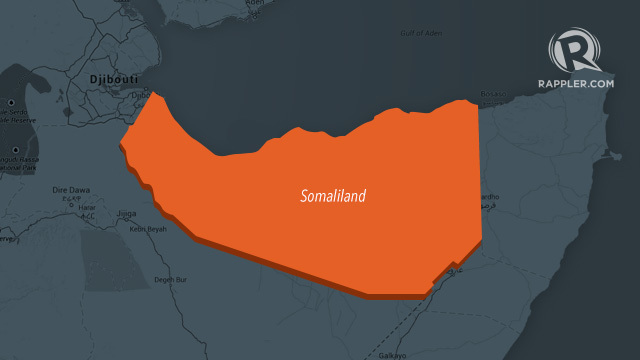
Mogadishu - Nine Somali pirates have been jailed for 15 to 20 years by a court in the breakaway northern state of Somaliland, an official said on Sunday.
"The nine pirates were found guilty of piracy and seven of them were given a jail term of 15 years, while two others were sentenced to 20 years," Mohamed Hashi, a Somaliland police officer told AFP by telephone from Berbera, Somaliland's main port.
"The pirates also admitted being guilty of chasing ships off Somaliland waters," added Hashi, who was in court for Saturday's hearing in Berbera.
The accused were arrested initially on April 18 by a Dutch navy warship patrolling the Gulf of Aden as part of NATO's anti-piracy mission.
Sixteen Yemeni fishermen they were holding were freed in the operation triggered by a distress call from a Greek merchant vessel, the Handytankers Magic.But the Dutch navy let the pirates go because they could not be prosecuted under Dutch law, the Portuguese commander of the NATO fleet explained.
However, the pirates were apprehended by the Somaliland authorities under circumstances which are not clear.
Somaliland's judicial authorities had already jailed seven pirates for 20 years in February after they were picked up by local coast guards near Berbera.
More than half the suspected pirates captured by international naval forces patrolling off Somalia have been handed over to authorities in the neighbouring self-proclaimed autonomous region of Puntland.
Kenya is the region's only state to have agreements with most major naval powers facilitating the arrest and transfer of suspected pirates.
Nevertheless, the United States -- in its first piracy trial for a century -- is also taking a teenager to court in New York after a US cargo-ship captain was held hostage for five days, forcing a dramatic mid-ocean rescue.
Ransom-hunting pirates off lawless Somalia -- without an effective central government since 1991 -- have defied an increased international naval presence to step up attacks during favourable weather, seizing at least 11 ships in April alone. - Sapa-AFP
Somaliland :Somali pirates jailed for 15 to 20 years
April 26 2009
Mogadishu - Nine Somali pirates have been jailed for 15 to 20 years by a court in the breakaway northern state of Somaliland, an official said on Sunday.
"The nine pirates were found guilty of piracy and seven of them were given a jail term of 15 years, while two others were sentenced to 20 years," Mohamed Hashi, a Somaliland police officer told AFP by telephone from Berbera, Somaliland's main port.
"The pirates also admitted being guilty of chasing ships off Somaliland waters," added Hashi, who was in court for Saturday's hearing in Berbera.
The accused were arrested initially on April 18 by a Dutch navy warship patrolling the Gulf of Aden as part of NATO's anti-piracy mission.
Sixteen Yemeni fishermen they were holding were freed in the operation triggered by a distress call from a Greek merchant vessel, the Handytankers Magic.But the Dutch navy let the pirates go because they could not be prosecuted under Dutch law, the Portuguese commander of the NATO fleet explained.
However, the pirates were apprehended by the Somaliland authorities under circumstances which are not clear.
Somaliland's judicial authorities had already jailed seven pirates for 20 years in February after they were picked up by local coast guards near Berbera.
More than half the suspected pirates captured by international naval forces patrolling off Somalia have been handed over to authorities in the neighbouring self-proclaimed autonomous region of Puntland.
Kenya is the region's only state to have agreements with most major naval powers facilitating the arrest and transfer of suspected pirates.
Nevertheless, the United States -- in its first piracy trial for a century -- is also taking a teenager to court in New York after a US cargo-ship captain was held hostage for five days, forcing a dramatic mid-ocean rescue.
Ransom-hunting pirates off lawless Somalia -- without an effective central government since 1991 -- have defied an increased international naval presence to step up attacks during favourable weather, seizing at least 11 ships in April alone. - Sapa-AFP
Ethiopia :Profiles of Least Developed Countries
 Medeshi April 25, 2009
 Profiles of Least Developed Countries
Ethiopia
Region: Eastern Africa
Capital: Addis Ababa
Population: 77,000,000 (2008)
Surface area: 1 104 300 square km
Currency: birr
Background:Unique among African countries, the ancient Ethiopian monarchy maintained its freedom from colonial rule. One exception was the Italian occupation of 1936-41. In 1974 a military junta, the Derg, deposed Emperor Haile SELASSIE (who had ruled since 1930) and established a socialist state. Torn by bloody coups, uprisings, wide-scale drought, and massive refugee problems, the regime was finally toppled by a coalition of rebel forces, the Ethiopian People's Revolutionary Democratic Front (EPRDF), in 1991. A constitution was adopted in 1994 and Ethiopia's first multiparty elections were held in 1995.
Economy – overview:Ethiopia's poverty-stricken economy is based on agriculture, which accounts for half of GDP, 60% of exports, and 80% of total employment. The agricultural sector suffers from frequent drought and poor cultivation practices. Coffee is critical to the Ethiopian economy with exports of some $156 million in 2002, but historically low prices have seen many farmers switching to qat to supplement income.
Under Ethiopia's land tenure system, the government owns all land and provides long-term leases to the tenants; the system continues to hamper growth in the industrial sector as entrepreneurs are unable to use land as collateral for loans. The government estimates that annual growth of 7% is needed to reduce poverty.
United Nations Membership date: 13 November 1945
New York Mission:Permanent Mission of the Federal Democratic Republic of Ethiopia to the United Nations
Capital: Addis Ababa
Population: 77,000,000 (2008)
Surface area: 1 104 300 square km
Currency: birr
Background:Unique among African countries, the ancient Ethiopian monarchy maintained its freedom from colonial rule. One exception was the Italian occupation of 1936-41. In 1974 a military junta, the Derg, deposed Emperor Haile SELASSIE (who had ruled since 1930) and established a socialist state. Torn by bloody coups, uprisings, wide-scale drought, and massive refugee problems, the regime was finally toppled by a coalition of rebel forces, the Ethiopian People's Revolutionary Democratic Front (EPRDF), in 1991. A constitution was adopted in 1994 and Ethiopia's first multiparty elections were held in 1995.
Economy – overview:Ethiopia's poverty-stricken economy is based on agriculture, which accounts for half of GDP, 60% of exports, and 80% of total employment. The agricultural sector suffers from frequent drought and poor cultivation practices. Coffee is critical to the Ethiopian economy with exports of some $156 million in 2002, but historically low prices have seen many farmers switching to qat to supplement income.
Under Ethiopia's land tenure system, the government owns all land and provides long-term leases to the tenants; the system continues to hamper growth in the industrial sector as entrepreneurs are unable to use land as collateral for loans. The government estimates that annual growth of 7% is needed to reduce poverty.
United Nations Membership date: 13 November 1945
New York Mission:Permanent Mission of the Federal Democratic Republic of Ethiopia to the United Nations
866 United Nations Plaza, Third Floor, New York, N.Y. 10017
Telephone: 212-421-1830Fax: 212-754-0360
This is a defining moment for America

Medeshi April 24, 2009
The huffington
This is a defining moment for America.
The way we respond -- or fail to respond -- to the revelations about the Bush administration's use of torture will delineate -- for ourselves and for the world -- the kind of country we are.
It is a test of our courage and our convictions. A test of whether we are indeed a nation of laws -- or a nation that pays lip service to the notion of being a nation of laws.
And everyone engaged in our public conversation has a role to play.
So far, the media are not getting high marks. They can't seem to shake their addiction to looking at every issue -- even one that pivots on questions of morality, not politics -- through the archaic prism of right vs. left.
So we got CNN's Ed Henry mainlining a right-left 8-ball at Tuesday's press briefing, asking Robert Gibbs, "Is this an example of this White House giving in to pressure from the left?"
And we got the Washington Post's Dan Balz saying -- in two different pieces -- that Obama's release of the torture memos "has stirred a major controversy on the right and left." According to Balz, "the anger on the right was expected. But Obama faces equally strong reaction from the left, where there is a desire to punish Bush administration officials for their actions... Obama owes his presidency in part to this constituency, who rallied to him during the battle for the Democratic nomination because he presented himself as a staunch and early opponent of the war in Iraq. Now they are demanding that he acknowledge their point of view."
Since when is the need to adhere to the laws that govern us a left-wing "point of view"? Is Thou Shalt Not Kill a "point of view"? When the police arrest a rapist, is it because rape is inherently, inarguably wrong -- or because that's the cops' "point of view"?
Isn't torture one of those things where there really is no legitimate other side?
And if this really is a question of right vs. left, how do Henry, Balz, and all the others framing the discussion that way account for Shepard Smith's table-slamming outburst on FoxNews.com's The Strategy Room? Was his "We are AMERICA! We do not fucking torture!" a left-wing point of view confusingly expressed by a right-wing commentator?
Memo to the media: Time to check in for a serious round of "right vs left" rehab. When it comes to torture, the only appropriate framing is "right vs wrong."
Obama and his team have had their own problems with the issue. Despite a commitment to looking forward, they failed to see the massive wall of public indignation directly in front of them.
After all the internal back-and-forth they apparently had about how to handle the issue, it was interesting to see how fast they reversed course -- the president quickly walking back from Rahm Emanuel's unequivocal "no prosecution" position.
Once the spotlight was turned on, it was impossible to sustain the let's-just-move-on stance. What is at stake is just too huge to sweep under the presidential rug. It leaves too big a lump in the middle of the Oval Office -- and too big a stumbling block in the path of Obama's presidency.
I understand the president's preference for "reflection" over "anger and retribution." But this is not about personal pique or a desire for vengeance. It's about the nation's fundamental morality.
Which is why it is imperative that we keep the pressure on the president, on Congress, and on the Justice Department. Not left-wing pressure. Not blogospheric pressure. Moral pressure. The pressure born of America's values.
Pressure to do the right thing. The moral thing. The legal thing. Pressure to keep the acts of the Bush White House from being implicitly condoned. And to keep the abuse of presidential power -- and the use of torture -- from becoming American precedent.
In pushing for a truth commission on torture, Sen. Patrick Leahy had repeatedly said that "we can't turn the page unless we first read the page." But we've actually read the page -- the torture memos -- and been horrified by what we're read. So now we need to act on that horror. And we can only do that by holding accountable those responsible for authorizing the use of torture.
The clock is ticking while the world waits to see if Yeats was right. Do the best of us really lack the conviction necessary to make sure that justice is done? Is it really only the worst of us who are full of passionate intensity? (See Rove and Cheney and Hayden coming out swinging, acting -- as John Cusack described them to me -- "like caged, cornered animals.")
And do the best of us become the worst of us if our passionate intensity does not make the leap from words to a ction?
The way we respond -- or fail to respond -- to the revelations about the Bush administration's use of torture will delineate -- for ourselves and for the world -- the kind of country we are.
It is a test of our courage and our convictions. A test of whether we are indeed a nation of laws -- or a nation that pays lip service to the notion of being a nation of laws.
And everyone engaged in our public conversation has a role to play.
So far, the media are not getting high marks. They can't seem to shake their addiction to looking at every issue -- even one that pivots on questions of morality, not politics -- through the archaic prism of right vs. left.
So we got CNN's Ed Henry mainlining a right-left 8-ball at Tuesday's press briefing, asking Robert Gibbs, "Is this an example of this White House giving in to pressure from the left?"
And we got the Washington Post's Dan Balz saying -- in two different pieces -- that Obama's release of the torture memos "has stirred a major controversy on the right and left." According to Balz, "the anger on the right was expected. But Obama faces equally strong reaction from the left, where there is a desire to punish Bush administration officials for their actions... Obama owes his presidency in part to this constituency, who rallied to him during the battle for the Democratic nomination because he presented himself as a staunch and early opponent of the war in Iraq. Now they are demanding that he acknowledge their point of view."
Since when is the need to adhere to the laws that govern us a left-wing "point of view"? Is Thou Shalt Not Kill a "point of view"? When the police arrest a rapist, is it because rape is inherently, inarguably wrong -- or because that's the cops' "point of view"?
Isn't torture one of those things where there really is no legitimate other side?
And if this really is a question of right vs. left, how do Henry, Balz, and all the others framing the discussion that way account for Shepard Smith's table-slamming outburst on FoxNews.com's The Strategy Room? Was his "We are AMERICA! We do not fucking torture!" a left-wing point of view confusingly expressed by a right-wing commentator?
Memo to the media: Time to check in for a serious round of "right vs left" rehab. When it comes to torture, the only appropriate framing is "right vs wrong."
Obama and his team have had their own problems with the issue. Despite a commitment to looking forward, they failed to see the massive wall of public indignation directly in front of them.
After all the internal back-and-forth they apparently had about how to handle the issue, it was interesting to see how fast they reversed course -- the president quickly walking back from Rahm Emanuel's unequivocal "no prosecution" position.
Once the spotlight was turned on, it was impossible to sustain the let's-just-move-on stance. What is at stake is just too huge to sweep under the presidential rug. It leaves too big a lump in the middle of the Oval Office -- and too big a stumbling block in the path of Obama's presidency.
I understand the president's preference for "reflection" over "anger and retribution." But this is not about personal pique or a desire for vengeance. It's about the nation's fundamental morality.
Which is why it is imperative that we keep the pressure on the president, on Congress, and on the Justice Department. Not left-wing pressure. Not blogospheric pressure. Moral pressure. The pressure born of America's values.
Pressure to do the right thing. The moral thing. The legal thing. Pressure to keep the acts of the Bush White House from being implicitly condoned. And to keep the abuse of presidential power -- and the use of torture -- from becoming American precedent.
In pushing for a truth commission on torture, Sen. Patrick Leahy had repeatedly said that "we can't turn the page unless we first read the page." But we've actually read the page -- the torture memos -- and been horrified by what we're read. So now we need to act on that horror. And we can only do that by holding accountable those responsible for authorizing the use of torture.
The clock is ticking while the world waits to see if Yeats was right. Do the best of us really lack the conviction necessary to make sure that justice is done? Is it really only the worst of us who are full of passionate intensity? (See Rove and Cheney and Hayden coming out swinging, acting -- as John Cusack described them to me -- "like caged, cornered animals.")
And do the best of us become the worst of us if our passionate intensity does not make the leap from words to a ction?
Somalia: Pirates Just a Piece of the Puzzle
Medeshi
Somalia: Pirates Just a Piece of the Puzzle
23 Apr 2009 Written by: Refugees International
Reuters and AlertNet are not responsible for the content of this article or for any external internet sites.
The views expressed are the author's alone.
More than 3 million Somalis are dependent on external assistance; over 1 million are internally displaced; and another 500,000 and counting have sought refuge in neighboring countries. Yet, as the humanitarian situation in Somalia continues to deteriorate, the world is focused on a lone “pirate” in New York. I can’t help but question where our humanity and moral resolve lies. What was even more disturbing was how the attention on the “alleged pirate” was justified in a recent CNN article. “He's just a little skinny guy, you know, from Somalia where they're all starving and stuff…If he goes to jail here, it will be a whole lot better than living in Somalia.” Such careless sentiments, that suggest imprisonment as a solution to the problems facing the people of Somalia, illustrate the gross misunderstanding of the humanitarian conditions in this failed state. Many reports of recent events have correctly deduced that the overwhelming piracy in the Gulf of Aden is a result of pervasive lawlessness within Somalia. However, what most have failed to mention is that Somalia is currently the world’s worst humanitarian crisis. This fact will not change until the U.S. and its allies direct attention to the millions of people suffering on land, while the world gazes out to sea.Refugees International has publicly called on Secretary of State Hillary Clinton to address the humanitarian situation in Somalia instead of focusing US policy solely on maritime operations. Tomorrow, US representatives will be in Brussels with other world leaders at the United Nations and European Union’s conference to address the security situation in Somalia. It is critical that the agenda look broadly at security conditions inside the country and, more importantly, stay focused on ensuring the delivery of life saving assistance. This past Sunday, three aid workers were kidnapped and another was killed in central Somalia. These acts were not perpetuated by pirates, but reinforce the overwhelming lawlessness within this region.The US should not allow recent events to shift overall policy away from the root of the crisis. The new government offers the best opportunity in almost 20 years to restore peace, security and stability in Somalia. This is not the time to dedicate millions of dollars to a narrow security agenda, when roughly 60% of the UN’s 2009 appeal for aid in the country has yet to be funded and the current African Union Peacekeeping Mission in Somalia (AMISOM) is under-staffed and under-resourced. President Sharif agrees that a comprehensive solution is needed to improve conditions and bring security and stability to the region. The US and other donors should utilize the world’s attention on Somalia as an impetus for constructive international engagement that meets the humanitarian needs of millions of displaced Somalis.
--Limnyuy Konglim
Somalia: Pirates Just a Piece of the Puzzle
23 Apr 2009 Written by: Refugees International
Reuters and AlertNet are not responsible for the content of this article or for any external internet sites.
The views expressed are the author's alone.
More than 3 million Somalis are dependent on external assistance; over 1 million are internally displaced; and another 500,000 and counting have sought refuge in neighboring countries. Yet, as the humanitarian situation in Somalia continues to deteriorate, the world is focused on a lone “pirate” in New York. I can’t help but question where our humanity and moral resolve lies. What was even more disturbing was how the attention on the “alleged pirate” was justified in a recent CNN article. “He's just a little skinny guy, you know, from Somalia where they're all starving and stuff…If he goes to jail here, it will be a whole lot better than living in Somalia.” Such careless sentiments, that suggest imprisonment as a solution to the problems facing the people of Somalia, illustrate the gross misunderstanding of the humanitarian conditions in this failed state. Many reports of recent events have correctly deduced that the overwhelming piracy in the Gulf of Aden is a result of pervasive lawlessness within Somalia. However, what most have failed to mention is that Somalia is currently the world’s worst humanitarian crisis. This fact will not change until the U.S. and its allies direct attention to the millions of people suffering on land, while the world gazes out to sea.Refugees International has publicly called on Secretary of State Hillary Clinton to address the humanitarian situation in Somalia instead of focusing US policy solely on maritime operations. Tomorrow, US representatives will be in Brussels with other world leaders at the United Nations and European Union’s conference to address the security situation in Somalia. It is critical that the agenda look broadly at security conditions inside the country and, more importantly, stay focused on ensuring the delivery of life saving assistance. This past Sunday, three aid workers were kidnapped and another was killed in central Somalia. These acts were not perpetuated by pirates, but reinforce the overwhelming lawlessness within this region.The US should not allow recent events to shift overall policy away from the root of the crisis. The new government offers the best opportunity in almost 20 years to restore peace, security and stability in Somalia. This is not the time to dedicate millions of dollars to a narrow security agenda, when roughly 60% of the UN’s 2009 appeal for aid in the country has yet to be funded and the current African Union Peacekeeping Mission in Somalia (AMISOM) is under-staffed and under-resourced. President Sharif agrees that a comprehensive solution is needed to improve conditions and bring security and stability to the region. The US and other donors should utilize the world’s attention on Somalia as an impetus for constructive international engagement that meets the humanitarian needs of millions of displaced Somalis.
--Limnyuy Konglim
Dubai denies laundering Somali pirates’ money
Medeshi April 23, 2009
Dubai denies laundering Somali pirates’ money
Shadiah Abdullah Arab News
DUBAI: The deputy commander in chief of Dubai police has denied allegations published in a UK-based newspaper that the emirate has been laundering money belonging to Somali pirates. The Independent ran a story on Tuesday claiming that huge amounts of money taken in ransom from vessels hijacked off the Horn of Africa were being laundered in Dubai and other Gulf countries.
The paper, quoting investigators hired by the shipping industry, said around $80 million (£56 million) has been paid out in ransom to pirates in the past year. The paper added that the so-called “godfathers” of the illicit operations include businessmen from Somalia and the Middle East, as well as people of South Asian nationalities.
Maj. Gen. Khamis Mattar Al-Mazinah gave a statement to the Arabic daily Al-Emarat Al-Youm saying the report was baseless and untrue.
He stressed that the UAE is the only country in the region that has prosecuted money launderers and issued rulings against them. He pointed out that in the UAE any amount over 40,000 dirhams is considered questionable until proven otherwise.
The Independent quoted Christopher Ledger, manager of Royal Marine Company, as saying that “there is evidence that those groups are active in Dubai and play a fundamental role in the piracy taking place in the Horn of Africa. Huge amounts of money the pirates receive facilitate their access to the latest technology when it comes to ransoms.”
The report added that while some of the money has ended up in Somalia, millions have been laundered through bank accounts in the UAE and other parts of the Middle East.
Al-Mazinah noted that the Financial Action Task Force (FATF) — an inter-governmental body whose purpose is the development and promotion of policies, both at national and international levels, to combat money laundering and terrorist financing — includes the UAE.
FATF issues periodic reports about countries that do not cooperate in monitoring money laundering. “We did not receive any report about money laundering taking place in the UAE,” Al-Mazinah said. He added that Dubai police have been cooperating with other countries in detecting money laundering and fraud that have taken place in those countries.
Al-Mazinah said certain parties, which he declined to mention, were targeting the UAE’s reputation by disseminating unfounded rumors. He reiterated that there are competent authorities tasked with holding noncooperating countries accountable and that the media is not among those authorities.
He underlined that Dubai police did not bar any journalist or any media outlet from seeking verification of stories before publication. He added that people are at liberty to log into the FATF website to read reports about the UAE before propagating rumors.
The Independent published its report without any comments from the security authorities in Dubai or from the UAE Central Bank.
Dubai denies laundering Somali pirates’ money
Shadiah Abdullah Arab News
DUBAI: The deputy commander in chief of Dubai police has denied allegations published in a UK-based newspaper that the emirate has been laundering money belonging to Somali pirates. The Independent ran a story on Tuesday claiming that huge amounts of money taken in ransom from vessels hijacked off the Horn of Africa were being laundered in Dubai and other Gulf countries.
The paper, quoting investigators hired by the shipping industry, said around $80 million (£56 million) has been paid out in ransom to pirates in the past year. The paper added that the so-called “godfathers” of the illicit operations include businessmen from Somalia and the Middle East, as well as people of South Asian nationalities.
Maj. Gen. Khamis Mattar Al-Mazinah gave a statement to the Arabic daily Al-Emarat Al-Youm saying the report was baseless and untrue.
He stressed that the UAE is the only country in the region that has prosecuted money launderers and issued rulings against them. He pointed out that in the UAE any amount over 40,000 dirhams is considered questionable until proven otherwise.
The Independent quoted Christopher Ledger, manager of Royal Marine Company, as saying that “there is evidence that those groups are active in Dubai and play a fundamental role in the piracy taking place in the Horn of Africa. Huge amounts of money the pirates receive facilitate their access to the latest technology when it comes to ransoms.”
The report added that while some of the money has ended up in Somalia, millions have been laundered through bank accounts in the UAE and other parts of the Middle East.
Al-Mazinah noted that the Financial Action Task Force (FATF) — an inter-governmental body whose purpose is the development and promotion of policies, both at national and international levels, to combat money laundering and terrorist financing — includes the UAE.
FATF issues periodic reports about countries that do not cooperate in monitoring money laundering. “We did not receive any report about money laundering taking place in the UAE,” Al-Mazinah said. He added that Dubai police have been cooperating with other countries in detecting money laundering and fraud that have taken place in those countries.
Al-Mazinah said certain parties, which he declined to mention, were targeting the UAE’s reputation by disseminating unfounded rumors. He reiterated that there are competent authorities tasked with holding noncooperating countries accountable and that the media is not among those authorities.
He underlined that Dubai police did not bar any journalist or any media outlet from seeking verification of stories before publication. He added that people are at liberty to log into the FATF website to read reports about the UAE before propagating rumors.
The Independent published its report without any comments from the security authorities in Dubai or from the UAE Central Bank.
'Somali effect' on piracy in Asia

Medeshi April 23, 2009
'Somali effect' on piracy in Asia
Lucy Williamson
BBC News, Jakarta
It was mid-afternoon when the pirates boarded.
Twelve of them, armed with rifles, swarmed onto the small tug boat chugging through the Malacca Straits - one of the world's busiest and most important waterways.
They quickly took command, stealing the boat's navigational and communications equipment - and the crew's personal belongings - then kidnapping the boat's captain and chief officer.
Both men were released unharmed a few days later. A ransom was almost certainly paid.
It may seem like small fry compared to the situation off the coast of Somalia. But this isolated incident has the power to get some people here in Asia very worried.
This kind of hostage-hijacking was a regular occurrence in the Malacca Straits five years ago, and some are asking why it's reared its head again now.
Noel Choong, at the international piracy reporting centre in the Malaysian capital Kuala Lumpur, says he is very concerned.
"I'm afraid of a resurgence of this kind of attack" he said. "There's so much publicity from Somalia, and pirates [here] are looking at how much Somali pirates are making."
“ My concern is that with this new global financial crisis, we're going to see a lot of Somali copycat attacks in Asia ” Analyst and author John S Burnett
Of course, he says, the difference here is that police will look for you.
Indonesia, which shares the Malacca Straits with Malaysia and Singapore, used to be the world's worst piracy hotspot.
In 2003, the International Maritime Bureau (IMB) received 121 reports of actual or attempted attacks in Indonesian waters - more than Somali pirates carried out in East Africa last year.
But last year, Indonesia generated only 28 reports - most of them low-level, opportunistic attacks.
That's down to some big changes in counter-piracy operations here. Four years ago, Indonesia and its neighbours began joint patrols of the international waterways here.
Around the same time, the US injected several million dollars to pay for high speed patrol boats and training for Indonesia's marine police. Japan provided more patrol boats, and radars to help detect attacks.
'Quality leadership'
A senior US official involved in the process says that initial investment led to a 300% rise in seizures in the first year, which recouped more than twice the initial investment.
Patrolling Indonesia's vast snaking coastline is expensive, and with the military budget spent before it even hits the kitty, Indonesia needs international help in tackling piracy almost as much as East Africa does.
But there is one thing Indonesia has which Somalia doesn't, and it is crucial: a well-functioning state.
"We believe there's no other answer," Capt Pottengal Mukundan, a spokesman at IMB headquarters in London told me. "Not private security firms or whatever - it's up to the governments to deal with it."
He said: "The US and Japan provided assets to beef up operations, but ultimately it's Indonesian and Malaysian actions which have brought about that change [in the region] - and that's something they don't get enough credit for."
The US says that this kind of result would not have been possible without a huge amount of political will from Indonesia and its neighbours.
A top US official told me: "Quality leadership [in key positions] has really changed things."
So has a new joint security body, which brings together Indonesia's navy, marine police, fisheries, transport and immigration officials to patrol the country's waterways.
"Fighting piracy has been our biggest success story," said Chandra Motik, a special adviser to the Navy chief of staff.
'Somalia effect'
John S Burnett, author of Dangerous Waters: Modern Piracy and Terror on the High Seas, believes there are new reasons why hostage-hijackings like the ones seen in East Africa are becoming more attractive to pirates here too.
"My concern is that with this new global financial crisis, we're going to see a lot of Somali copycat attacks in Asia.
"Pirates now realise that hijacking a ship for human cargo is far more profitable and less risky than dealing with illegal goods."
Greater port security and monitoring of vessels has made it harder to simply repaint a ship and pull into a port to sell its cargo, he says.
As many pirates here are simply petty criminals or unemployed fishermen looking to make a quick buck, the headlines from Somalia send a potent message.
Piracy here reached a peak during the last Asian financial crisis in the late 1990s.
According to the IMB, Indonesia and Malaysia have already increased their patrols to try to contain any rising threat.
"Pirates are lying low because of aggressive patrols," explained Noel Choong from the Piracy Reporting Centre, "but they're not detained or arrested - they'll rise up again once patrols stop."
Capt Mukundan agrees that Indonesia and its neighbours will need to keep a tight grip to stop the situation spiralling back to where it was a few years ago.
But he says copycat attacks like the ones in Somalia simply "can't happen" in Asia.
Isolated incidents are one thing, but 15 vessels held along a small stretch of coastline? "I can't imagine any country tolerating it," he says.
"Of course they're listening, but whether they can pull off an attack like that here, today, is another matter."
Story from BBC NEWS:
It was mid-afternoon when the pirates boarded.
Twelve of them, armed with rifles, swarmed onto the small tug boat chugging through the Malacca Straits - one of the world's busiest and most important waterways.
They quickly took command, stealing the boat's navigational and communications equipment - and the crew's personal belongings - then kidnapping the boat's captain and chief officer.
Both men were released unharmed a few days later. A ransom was almost certainly paid.
It may seem like small fry compared to the situation off the coast of Somalia. But this isolated incident has the power to get some people here in Asia very worried.
This kind of hostage-hijacking was a regular occurrence in the Malacca Straits five years ago, and some are asking why it's reared its head again now.
Noel Choong, at the international piracy reporting centre in the Malaysian capital Kuala Lumpur, says he is very concerned.
"I'm afraid of a resurgence of this kind of attack" he said. "There's so much publicity from Somalia, and pirates [here] are looking at how much Somali pirates are making."
“ My concern is that with this new global financial crisis, we're going to see a lot of Somali copycat attacks in Asia ” Analyst and author John S Burnett
Of course, he says, the difference here is that police will look for you.
Indonesia, which shares the Malacca Straits with Malaysia and Singapore, used to be the world's worst piracy hotspot.
In 2003, the International Maritime Bureau (IMB) received 121 reports of actual or attempted attacks in Indonesian waters - more than Somali pirates carried out in East Africa last year.
But last year, Indonesia generated only 28 reports - most of them low-level, opportunistic attacks.
That's down to some big changes in counter-piracy operations here. Four years ago, Indonesia and its neighbours began joint patrols of the international waterways here.
Around the same time, the US injected several million dollars to pay for high speed patrol boats and training for Indonesia's marine police. Japan provided more patrol boats, and radars to help detect attacks.
'Quality leadership'
A senior US official involved in the process says that initial investment led to a 300% rise in seizures in the first year, which recouped more than twice the initial investment.
Patrolling Indonesia's vast snaking coastline is expensive, and with the military budget spent before it even hits the kitty, Indonesia needs international help in tackling piracy almost as much as East Africa does.
But there is one thing Indonesia has which Somalia doesn't, and it is crucial: a well-functioning state.
"We believe there's no other answer," Capt Pottengal Mukundan, a spokesman at IMB headquarters in London told me. "Not private security firms or whatever - it's up to the governments to deal with it."
He said: "The US and Japan provided assets to beef up operations, but ultimately it's Indonesian and Malaysian actions which have brought about that change [in the region] - and that's something they don't get enough credit for."
The US says that this kind of result would not have been possible without a huge amount of political will from Indonesia and its neighbours.
A top US official told me: "Quality leadership [in key positions] has really changed things."
So has a new joint security body, which brings together Indonesia's navy, marine police, fisheries, transport and immigration officials to patrol the country's waterways.
"Fighting piracy has been our biggest success story," said Chandra Motik, a special adviser to the Navy chief of staff.
'Somalia effect'
John S Burnett, author of Dangerous Waters: Modern Piracy and Terror on the High Seas, believes there are new reasons why hostage-hijackings like the ones seen in East Africa are becoming more attractive to pirates here too.
"My concern is that with this new global financial crisis, we're going to see a lot of Somali copycat attacks in Asia.
"Pirates now realise that hijacking a ship for human cargo is far more profitable and less risky than dealing with illegal goods."
Greater port security and monitoring of vessels has made it harder to simply repaint a ship and pull into a port to sell its cargo, he says.
As many pirates here are simply petty criminals or unemployed fishermen looking to make a quick buck, the headlines from Somalia send a potent message.
Piracy here reached a peak during the last Asian financial crisis in the late 1990s.
According to the IMB, Indonesia and Malaysia have already increased their patrols to try to contain any rising threat.
"Pirates are lying low because of aggressive patrols," explained Noel Choong from the Piracy Reporting Centre, "but they're not detained or arrested - they'll rise up again once patrols stop."
Capt Mukundan agrees that Indonesia and its neighbours will need to keep a tight grip to stop the situation spiralling back to where it was a few years ago.
But he says copycat attacks like the ones in Somalia simply "can't happen" in Asia.
Isolated incidents are one thing, but 15 vessels held along a small stretch of coastline? "I can't imagine any country tolerating it," he says.
"Of course they're listening, but whether they can pull off an attack like that here, today, is another matter."
Story from BBC NEWS:
Press Release: Daily Telegraph: Journalism at its Lowest Ebb of Integrity…
Medeshi
Press Release: Daily Telegraph: Journalism at its Lowest Ebb of Integrity…
23/04/09
Shabait.com
Reporting on Eritrea for the Daily Telegraph of the United Kingdom, Damien McElory, manifested the art of distortion and deceit by trying to align Eritrea with al-Shebab.
President Isaias Afwerki and the Delegation led by Andrew Mitchell, the British Shadow Foreign Secretary, discussed a wide variety of issues; amongst them, Somalia, bilateral cooperation and the role of NGOs. Mr. Andrew Mitchell expressed his appreciation of the President’s deep knowledge of the situation in Somalia and referred the analysis as compelling. Furthermore, Lord Ashcroft, part of the delegation and present at the meeting, clearly entertained the views of the President on the role of NGOs.
Although the journalist was not privy to the meeting, President Isaias had summarized to him the gist of the discussions during his brief interview that lasted above five minutes. But Mr. Damien chose to ignore the briefing and to write something else because, it seems, he had come to Eritrea with an already drafted story. Indeed, his article starts with an alleged statement by an unidentified diplomatic source who claims that the Obama Administration had recently “warned Eritrea”. This was a blatant lie hinged on an incident that never took place and to which Eritrea could not be associated by any stretch of imagination.
Eritrea’s stance on Somalia has been repeatedly echoed by the Government of Eritrea on several occasions. It is also borne out by the facts on the ground which clearly demonstrate that the meddling of external forces has only exasperated the situation in Somalia. Eritrea has no other agenda except the maintenance of peace and stability in our region. Eritrea’s argument originates from the full knowledge of the Somali society and the prevailing realities on the ground. Ignoring the complexities and intricacies of the cultures and experiences of any given society, is the beginning of a failed endeavor.
The most amazing aspect of the Somalia situation is that, initially, the external actors vigorously searched for pretexts to justify their intent of intervention, and claimed the presence of 2000 Eritrean forces in Somalia. Consequently, the Western Media called it a proxy war between Eritrea and Ethiopia. The U.S. backed invasion of Somalia was initiated with pompous fanfare and statements of arrogance. At the time, Eritrea warned of the possible consequences. After two years, the pretentious statements of Ethiopia were nowhere to find. They “graciously” accepted a humiliating defeat and hit the road back home with tens of thousands of their dead soldiers left behind. Now, the perpetrators of this fiasco are looking for a scapegoat for their failed policy in Somalia. In this regard, Eritrea has become the target again.
Eritrea has been consistently calling for a comprehensive peace process in which all Somalis have a say in the installation of a lawful and legitimate government. What is more noble than calling for the widest possible participation of the people of Somalia? Eritrea never aligned itself with one group of actors in Somalia. Damien McElory’s inference that Eritrea is courting al-Shabab is a plain fabrication, to say the least. No one group is a solution, but only part of a solution in Somalia or elsewhere, for that matter. Contrary to what Damien McElory insinuates, Eritrea champions the Somali people at large. And at no time has Eritrea claimed to have aligned itself with any isolated group.
Piracy is a disease that was able to mushroom because of the anarchic situation in Somalia and, is indeed, a threat to be reckoned with. But how do you go about curing this disease without addressing the fundamental problem? It is Eritrea’s genuine belief that once the Somalis engage in and complete the reconstitution of their country, piracy will disappear.
The Delegation and the “journalist” had a half day visit to a village in the peripheries of Asmara, with a successful Water and Sanitation Project of which Andrew Mitchell expressed his delight with the appropriate application of Britain’s tax payers money. Not a word was mentioned of this success story in the Daily Telegraph. Instead, the “journalist” chose to disseminate fabricated and deceitful stories about Eritrea and tried to appear as if he has researched his story extensively.
Ministry of Foreign Affairs
Asmara
Press Release: Daily Telegraph: Journalism at its Lowest Ebb of Integrity…
23/04/09
Shabait.com
Reporting on Eritrea for the Daily Telegraph of the United Kingdom, Damien McElory, manifested the art of distortion and deceit by trying to align Eritrea with al-Shebab.
President Isaias Afwerki and the Delegation led by Andrew Mitchell, the British Shadow Foreign Secretary, discussed a wide variety of issues; amongst them, Somalia, bilateral cooperation and the role of NGOs. Mr. Andrew Mitchell expressed his appreciation of the President’s deep knowledge of the situation in Somalia and referred the analysis as compelling. Furthermore, Lord Ashcroft, part of the delegation and present at the meeting, clearly entertained the views of the President on the role of NGOs.
Although the journalist was not privy to the meeting, President Isaias had summarized to him the gist of the discussions during his brief interview that lasted above five minutes. But Mr. Damien chose to ignore the briefing and to write something else because, it seems, he had come to Eritrea with an already drafted story. Indeed, his article starts with an alleged statement by an unidentified diplomatic source who claims that the Obama Administration had recently “warned Eritrea”. This was a blatant lie hinged on an incident that never took place and to which Eritrea could not be associated by any stretch of imagination.
Eritrea’s stance on Somalia has been repeatedly echoed by the Government of Eritrea on several occasions. It is also borne out by the facts on the ground which clearly demonstrate that the meddling of external forces has only exasperated the situation in Somalia. Eritrea has no other agenda except the maintenance of peace and stability in our region. Eritrea’s argument originates from the full knowledge of the Somali society and the prevailing realities on the ground. Ignoring the complexities and intricacies of the cultures and experiences of any given society, is the beginning of a failed endeavor.
The most amazing aspect of the Somalia situation is that, initially, the external actors vigorously searched for pretexts to justify their intent of intervention, and claimed the presence of 2000 Eritrean forces in Somalia. Consequently, the Western Media called it a proxy war between Eritrea and Ethiopia. The U.S. backed invasion of Somalia was initiated with pompous fanfare and statements of arrogance. At the time, Eritrea warned of the possible consequences. After two years, the pretentious statements of Ethiopia were nowhere to find. They “graciously” accepted a humiliating defeat and hit the road back home with tens of thousands of their dead soldiers left behind. Now, the perpetrators of this fiasco are looking for a scapegoat for their failed policy in Somalia. In this regard, Eritrea has become the target again.
Eritrea has been consistently calling for a comprehensive peace process in which all Somalis have a say in the installation of a lawful and legitimate government. What is more noble than calling for the widest possible participation of the people of Somalia? Eritrea never aligned itself with one group of actors in Somalia. Damien McElory’s inference that Eritrea is courting al-Shabab is a plain fabrication, to say the least. No one group is a solution, but only part of a solution in Somalia or elsewhere, for that matter. Contrary to what Damien McElory insinuates, Eritrea champions the Somali people at large. And at no time has Eritrea claimed to have aligned itself with any isolated group.
Piracy is a disease that was able to mushroom because of the anarchic situation in Somalia and, is indeed, a threat to be reckoned with. But how do you go about curing this disease without addressing the fundamental problem? It is Eritrea’s genuine belief that once the Somalis engage in and complete the reconstitution of their country, piracy will disappear.
The Delegation and the “journalist” had a half day visit to a village in the peripheries of Asmara, with a successful Water and Sanitation Project of which Andrew Mitchell expressed his delight with the appropriate application of Britain’s tax payers money. Not a word was mentioned of this success story in the Daily Telegraph. Instead, the “journalist” chose to disseminate fabricated and deceitful stories about Eritrea and tried to appear as if he has researched his story extensively.
Ministry of Foreign Affairs
Asmara
Donors pledge over $250 million for Somalia
Medeshi April 23, 2009
Donors pledge over $250 million for Somalia
By SLOBODAN LEKIC
Associated Press Writer
International donors pledged more than $250 million Thursday to help Somalia strengthen its security forces and try to stop the rampant pirate attacks that have plagued one of the world's most important waterways.
The hefty sum included funding for equipment and material that significantly exceeded the request made by U.N. Secretary-General Ban Ki-moon, EU Development Commissioner Louis Michel said.
The U.N.-sponsored international donors' conference originally aimed to raise at least euro128 million ($166 million) to finance African Union peacekeepers already in the Horn of Africa nation as well as Somalia's fledgling police and security forces.
Stabilizing Somalia was the focus of Thursday's meeting - but squashing the persistent piracy jeopardizing international shipping also topped the agenda.
"Piracy is a symptom of anarchy and insecurity on the ground," Ban told the delegates. "More security on the ground will make less piracy on the seas."
"The situation continues to be very difficult, but with this financial help ... I sincerely hope we will be able to control the situation there," Ban said at a joint news conference with Jose Manuel Barroso, president of the European Union's executive body.
The pledges were a recognition of the need to end two decades of anarchy in Somalia and of the threat that further lawlessness posed to the world, not just one nation.
Somali President Sheik Sharif Sheik Ahmed, elected by parliament in January, is a former fighter with the Islamic insurgency. He has been trying to broker peace with warring groups after years of chaos and gain legitimacy, but his Western-backed government wields little control outside the capital of Mogadishu, and needs help from African peacekeepers to do even that.
Most of the funding pledged at the meeting will go for the AU force, which numbers 4,350 now but is expected to expand to 8,000 troops. Funding will also be earmarked for Ahmed's government, which wants to build up a police force of 10,000 along with a separate security force of 6,000 members.
Iranian Foreign Minister Manoucher Mottaki urged Somalia's interim government to speed up the process of national reconciliation.
"It is a must to encourage all groups that are not in the government, to encourage them to join this new move for stability in Somalia," he said.
Ahmed said his government had taken measures to achieve peace and stability and to reconcile with the warring militias.
"The piracy attacks are ... a symptom of the lack of security," he said. "The restoration of peace and stability to Somalia is the only way to solve these problems."
He also called on the international community to help his government set up a new coast guard to address the problem of piracy.
"It is our duty to pursue these criminals not only on the high seas, but also on terra firma," he said to loud applause.
Those comments may ignore reality. Ahmed's administration has not gone after pirates who flash their cash in the coastal cities because pirate leaders currently wield more power than his shaky government.
In the past year, pirates have hijacked dozens of ships in the Indian Ocean and the Gulf of Aden, a key shipping lane linking Asia via the Suez Canal to Europe. Piracy experts estimate the seafaring gangs took in about $80 million in ransom payments in 2008.
Nearly a dozen nations and organizations - including the U.S., the European Union NATO, Russia, China, Japan and South Korea - have deployed warships to the region, but the fleet has been unable to stop hijackings along Somalia's 1,900-mile-long (3,100-kilometer) coastline.
Associated Press writers Deborah Seward, Robert Wielaard, Constant Brand and Raf Casert in Brussels contributed to this report.
Donors pledge over $250 million for Somalia
By SLOBODAN LEKIC
Associated Press Writer
International donors pledged more than $250 million Thursday to help Somalia strengthen its security forces and try to stop the rampant pirate attacks that have plagued one of the world's most important waterways.
The hefty sum included funding for equipment and material that significantly exceeded the request made by U.N. Secretary-General Ban Ki-moon, EU Development Commissioner Louis Michel said.
The U.N.-sponsored international donors' conference originally aimed to raise at least euro128 million ($166 million) to finance African Union peacekeepers already in the Horn of Africa nation as well as Somalia's fledgling police and security forces.
Stabilizing Somalia was the focus of Thursday's meeting - but squashing the persistent piracy jeopardizing international shipping also topped the agenda.
"Piracy is a symptom of anarchy and insecurity on the ground," Ban told the delegates. "More security on the ground will make less piracy on the seas."
"The situation continues to be very difficult, but with this financial help ... I sincerely hope we will be able to control the situation there," Ban said at a joint news conference with Jose Manuel Barroso, president of the European Union's executive body.
The pledges were a recognition of the need to end two decades of anarchy in Somalia and of the threat that further lawlessness posed to the world, not just one nation.
Somali President Sheik Sharif Sheik Ahmed, elected by parliament in January, is a former fighter with the Islamic insurgency. He has been trying to broker peace with warring groups after years of chaos and gain legitimacy, but his Western-backed government wields little control outside the capital of Mogadishu, and needs help from African peacekeepers to do even that.
Most of the funding pledged at the meeting will go for the AU force, which numbers 4,350 now but is expected to expand to 8,000 troops. Funding will also be earmarked for Ahmed's government, which wants to build up a police force of 10,000 along with a separate security force of 6,000 members.
Iranian Foreign Minister Manoucher Mottaki urged Somalia's interim government to speed up the process of national reconciliation.
"It is a must to encourage all groups that are not in the government, to encourage them to join this new move for stability in Somalia," he said.
Ahmed said his government had taken measures to achieve peace and stability and to reconcile with the warring militias.
"The piracy attacks are ... a symptom of the lack of security," he said. "The restoration of peace and stability to Somalia is the only way to solve these problems."
He also called on the international community to help his government set up a new coast guard to address the problem of piracy.
"It is our duty to pursue these criminals not only on the high seas, but also on terra firma," he said to loud applause.
Those comments may ignore reality. Ahmed's administration has not gone after pirates who flash their cash in the coastal cities because pirate leaders currently wield more power than his shaky government.
In the past year, pirates have hijacked dozens of ships in the Indian Ocean and the Gulf of Aden, a key shipping lane linking Asia via the Suez Canal to Europe. Piracy experts estimate the seafaring gangs took in about $80 million in ransom payments in 2008.
Nearly a dozen nations and organizations - including the U.S., the European Union NATO, Russia, China, Japan and South Korea - have deployed warships to the region, but the fleet has been unable to stop hijackings along Somalia's 1,900-mile-long (3,100-kilometer) coastline.
Associated Press writers Deborah Seward, Robert Wielaard, Constant Brand and Raf Casert in Brussels contributed to this report.
Open letter to participants in the Somali Donors' Conference
Medeshi
Amnesty International - EU Office
Dear Mr Solana,
Open letter to participants in the Somali Donors' Conference
In advance of the upcoming donors conference on Somalia in Brussels on 23 April 2009, Amnesty International is urging you to place the protection of the human rights for all Somalis at the center of your efforts to support Somalia’s Transitional Federal Institutions.
The donors conference, convened by the United Nations Secretary-General as requested by Security Council Resolution 1863(2009), is intended to solicit contributions for both the African Union Mission in Somalia (AMISOM) for needs not covered by the United Nations logistical support package, and to support the Somali transitional security institutions. The re-establishment, training and retention of Somali judicial and security forces, encompassing military, police, and judiciary, is a monumental task, particularly given the challenge of ensuring such security institutions comply with human rights, are transparent and accountable, and subject to civilian oversight.
The existing National Security Force (the Somali armed forces) comprises a group of ex-Transitional Federal Government (TFG) forces and ex-Alliance for the Re-liberation of Somalia (ARS) forces. These forces, estimated about 3,000 strong, are joint forces in name only, and still commanded by local security authorities. The Somali Police Force, in turn, consists of some 2,700 members, with a similar lack of clarity regarding composition, and command and control.
Amnesty International and other human rights organizations have documented war crimes, crimes against humanity, and other grave human rights abuses that have been committed by all parties to the conflict in Somalia since the beginning of 2007. These have included violations committed by forces of the Transitional Federal Government, over a period of time when they were receiving funding from international donors and support from the UN. For further information, please see our report Routinely Targeted: Attacks on Civilians in Somalia.
In spite of this history of involvement in human rights violations, it is Amnesty International's understanding that no personnel from any of the Somali National Security Forces have been vetted, and some of those currently active or being considered for service could be responsible for human rights abuses that have characterized the conflict in Somalia over the years. It is therefore essential that, in order to assess human rights compliance by these forces, credible national and international human rights monitoring must be established as soon as possible.
It is Amnesty International's assessment that the provision of funding and equipment to Somali security forces in such a conflict-ridden environment without first resolving issues of vetting, accountability, transparency and good governance of armed forces represents funding without oversight. International donor funding without oversight, however inadvertent, seriously risks providing additional support to individuals and groups who may have committed and could continue to commit war crimes, crimes against humanity and other grave human rights violations. Such funding could also exacerbate the conflict, the opposite of its presumed intent.
A related issue is with regard to the current UN arms embargo on Somalia. In accordance with recent UN Security Council resolutions, it is crucial to maintain and strengthen the UN arms embargo on Somalia, including the requirement that all armed forces active in Somalia, as well as the Somali transitional armed forces, must request exemptions to import security-related material and equipment into Somalia. Donor governments should insist on adherence to this requirement with the transitional government. Donor governments should also contribute funding, as well as information and political support to the UN Monitoring Group, to improve enforcement of the embargo, to stem the tide of weapons into Somalia and prevent further human rights abuses against civilians.
In the absence of a permanent United Nations presence in Somalia, most particularly in Mogadishu, and similarly limited international diplomatic, humanitarian, human rights monitoring and protection presence, any UN support for security sector institutions would by necessity rely heavily on local partner organizations, making the possibility of independent and impartial monitoring, and the establishment of accountability and oversight systems difficult. Amnesty International is of the opinion that mechanisms of vetting, accountability, transparency and oversight, with international participation, should be in place before funds and equipment are transferred to any Somali security institution, and are incorporated into any support package for security forces. Such accountability mechanisms should include public monitoring and reporting as well as building the capacity for independent investigation into possible human rights violations, and mechanisms to ensure full adherence with current arms embargo requirements.
The Justice and Reconciliation Working Group established in late 2008 during the Djibouti peace talks, has to date failed to make progress towards its mandated objectives. The main task of this group should be to advance the establishment of mechanisms, such as concrete initial steps towards an international Commission of Inquiry, to investigate past abuses of international human rights and humanitarian law. Such a Commission of Inquiry could make a specific contribution to the vetting process for security and other potential government officials, in addition to sending a strong message that perpetrators of human rights abuses in Somalia will be held to account, and laying the ground work for a future justice mechanism to do so.
Amnesty International welcomes your participation in this important conference, and you commitment to pledge support for Somalia. However, any potential donations to address Somalia’s many significant needs must first be accompanied by support to establish mechanisms to ensure that the rights of Somali civilians are protected. We hope that the above recommendations from Amnesty International will inform decisions at the donors conference this month.
Thank you for your serious attention to these important matters. Please don’t hesitate to contact us if you would like additional information. We look forward to hearing your reply.
Yours sincerely,
Director,
Amnesty International EU Office
Amnesty International - EU Office
Dear Mr Solana,
Open letter to participants in the Somali Donors' Conference
In advance of the upcoming donors conference on Somalia in Brussels on 23 April 2009, Amnesty International is urging you to place the protection of the human rights for all Somalis at the center of your efforts to support Somalia’s Transitional Federal Institutions.
The donors conference, convened by the United Nations Secretary-General as requested by Security Council Resolution 1863(2009), is intended to solicit contributions for both the African Union Mission in Somalia (AMISOM) for needs not covered by the United Nations logistical support package, and to support the Somali transitional security institutions. The re-establishment, training and retention of Somali judicial and security forces, encompassing military, police, and judiciary, is a monumental task, particularly given the challenge of ensuring such security institutions comply with human rights, are transparent and accountable, and subject to civilian oversight.
The existing National Security Force (the Somali armed forces) comprises a group of ex-Transitional Federal Government (TFG) forces and ex-Alliance for the Re-liberation of Somalia (ARS) forces. These forces, estimated about 3,000 strong, are joint forces in name only, and still commanded by local security authorities. The Somali Police Force, in turn, consists of some 2,700 members, with a similar lack of clarity regarding composition, and command and control.
Amnesty International and other human rights organizations have documented war crimes, crimes against humanity, and other grave human rights abuses that have been committed by all parties to the conflict in Somalia since the beginning of 2007. These have included violations committed by forces of the Transitional Federal Government, over a period of time when they were receiving funding from international donors and support from the UN. For further information, please see our report Routinely Targeted: Attacks on Civilians in Somalia.
In spite of this history of involvement in human rights violations, it is Amnesty International's understanding that no personnel from any of the Somali National Security Forces have been vetted, and some of those currently active or being considered for service could be responsible for human rights abuses that have characterized the conflict in Somalia over the years. It is therefore essential that, in order to assess human rights compliance by these forces, credible national and international human rights monitoring must be established as soon as possible.
It is Amnesty International's assessment that the provision of funding and equipment to Somali security forces in such a conflict-ridden environment without first resolving issues of vetting, accountability, transparency and good governance of armed forces represents funding without oversight. International donor funding without oversight, however inadvertent, seriously risks providing additional support to individuals and groups who may have committed and could continue to commit war crimes, crimes against humanity and other grave human rights violations. Such funding could also exacerbate the conflict, the opposite of its presumed intent.
A related issue is with regard to the current UN arms embargo on Somalia. In accordance with recent UN Security Council resolutions, it is crucial to maintain and strengthen the UN arms embargo on Somalia, including the requirement that all armed forces active in Somalia, as well as the Somali transitional armed forces, must request exemptions to import security-related material and equipment into Somalia. Donor governments should insist on adherence to this requirement with the transitional government. Donor governments should also contribute funding, as well as information and political support to the UN Monitoring Group, to improve enforcement of the embargo, to stem the tide of weapons into Somalia and prevent further human rights abuses against civilians.
In the absence of a permanent United Nations presence in Somalia, most particularly in Mogadishu, and similarly limited international diplomatic, humanitarian, human rights monitoring and protection presence, any UN support for security sector institutions would by necessity rely heavily on local partner organizations, making the possibility of independent and impartial monitoring, and the establishment of accountability and oversight systems difficult. Amnesty International is of the opinion that mechanisms of vetting, accountability, transparency and oversight, with international participation, should be in place before funds and equipment are transferred to any Somali security institution, and are incorporated into any support package for security forces. Such accountability mechanisms should include public monitoring and reporting as well as building the capacity for independent investigation into possible human rights violations, and mechanisms to ensure full adherence with current arms embargo requirements.
The Justice and Reconciliation Working Group established in late 2008 during the Djibouti peace talks, has to date failed to make progress towards its mandated objectives. The main task of this group should be to advance the establishment of mechanisms, such as concrete initial steps towards an international Commission of Inquiry, to investigate past abuses of international human rights and humanitarian law. Such a Commission of Inquiry could make a specific contribution to the vetting process for security and other potential government officials, in addition to sending a strong message that perpetrators of human rights abuses in Somalia will be held to account, and laying the ground work for a future justice mechanism to do so.
Amnesty International welcomes your participation in this important conference, and you commitment to pledge support for Somalia. However, any potential donations to address Somalia’s many significant needs must first be accompanied by support to establish mechanisms to ensure that the rights of Somali civilians are protected. We hope that the above recommendations from Amnesty International will inform decisions at the donors conference this month.
Thank you for your serious attention to these important matters. Please don’t hesitate to contact us if you would like additional information. We look forward to hearing your reply.
Yours sincerely,
Director,
Amnesty International EU Office
Subscribe to:
Posts (Atom)
Qaar ka mid ah Ururada Bulshada Rayidka ah oo walaac ka muujiyay mudo dhaafka golayaasha deegaanada
Annaga oo ah Ururada Bulshada Rayidka ah ee Madaxa-banaan waxaanu si wayn uga walaacsanahay