Al-Shabaab nabs 50 over Khat ban demo


Medeshi March 28, 2009
Al-Shabaab nabs 50 over Khat ban demo
Al-Shabbab fighters have arrested more than 50 people in the southern Somali town of Baidoa for staging a protest against a ban on Khat.
(Photo:A market trader sells Khat in Somali capital, Mogadishu.)
Witnesses said hundreds of people took to the streets of Baidoa and blocked major roads in the city which consequently prompted Al-Shabba fighters to disperse the protestors using live bullets, Press TV correspondent reported.
The report added that Al-Shabaab militants went on rampage after the demonstration subsided, and destroyed kiosks used by traders to sell the popular narcotic drug in the town.
Al-Shabaab, which controls the southern Somali town imposed a ban on the sale of Khat, on Tuesday.
Khat leaves, used by Somalis for centuries, are known for their energy-giving qualities, and for making people more relaxed, talkative and friendly.
They are also said to improve sexual prowess -- although in some men it can actually have the opposite effect.
US military chiefs, who lost 18 soldiers during Operation Restore Hope in 1993, were amazed by the endurance of Somali militiamen who fought on for days boosted by Khat.
Many Somalis believe Khat is no more dangerous or anti-social than alcohol or tobacco and should not be criminalized. This is partly due to the fact that the Somali community has high levels of unemployment and non-engagement with the rest of society.
Somalia, located at Horn of Africa, has been mired in political and military anarchy since 1991 when Mogadishu warlords toppled former president Siad Barre.

The Unheard Saga of Oromo Refugees: The Unvoiced Weeps from Nairobi to Mogadishu


Medeshi March 28, 2009
The Unheard Saga of Oromo Refugees: The Unvoiced Weeps from Nairobi to Mogadishu
By Kadiro A. Elemo*
It is not exaggeration if I made a bold statement that Ethiopia is among those countries where the dignity of a human being is absolutely disregarded. This goes from the fact that human rights violations and naked tyranny are commonplace experiences under the regime of Meles Zenawi. There is no trend of improvement in human rights protection in the country and a general culture of impunity for violating human rights is rampant. Lack of respect for the fundamental human rights, arbitrary and illegal detentions, tortures, killings of members of the political opposition and demonstrators, summary executions of suspected insurgents, lengthy pretrial detentions, poor prison conditions, violations of individual privacy rights and laws regarding search warrants, and lack of freedom of press are among a few characterizing features of the police state of Ethiopia.
In Ethiopia, all types of human rights are virtually violated and basic freedoms are infringed now and then. The routines of human rights violation, the lack of trend of improvement in human rights protection, and the culture of impunity for violating human rights by the oppressive regime loom largely over the Oromo nation, a numerical majority, but a political minority in Ethiopia.
Horn of Africa: Oromo Refugee Sufferingstock
In order to escape persecution and harassment by the repressive regime, an exodus of Oromo refugees cross from Ethiopia into neighboring countries every day and every month. However, to the consternation of Oromo refugees, the other Horn countries are putting salt on the injuries of Oromo refugees. In other words, the reality for Oromo refugees in the other Horn countries squarely fits with the reality in Oromia, a TPLF open-field prison-house. Handing over Oromo refugees to the oppressive regime of TPLF, forcibly sending them back or detaining them with total disregard to international norms are part of common phenomena in the region. This aberration in international law happens repetitively in Kenya, Sudan, Djibouti and Somaliland. The case of Somalia is even worse to mention: the TPLF regime, exploiting the political anarchy and statelessness in Somalia, can jump to there anytime to massacre and torture Oromo refugees living there. In the worst scenario, the TPLF regime uses its warlord vassals in Somalia to wipe out Oromo political dissidents, who are lucky enough to escape from TPLF’s torture machinery at home. Oromo refugees are becoming more and more vulnerable to abuses of the state actors and non-state actors in the Horn. These days, being raped, being robbed, being attacked and being abused have become part of Oromo refugees’ daily lives. Moreover, becoming targets of terror attacks is a new emerging trend. The case in point is the heinous murders of innocent Oromo refugees by two simultaneous hand-grenade attacks in Bosaso restaurants.
Every single day, the agonies and plights of Oromo refugees are smoldering and touching. This is the ongoing problem and needs the attention of every person who feels the sufferings of human beings.
Are the Behaviors of the Horn Countries Acceptable under International Laws?
To understand the protection of the refugee law under international laws, it is necessary to understand the complementarity among the refugee protection law, international human rights law and humanitarian law.
International refugee rights are integral parts of the broader international human rights that an individual enjoys by virtue of humanity. Refugee rights have been anchored in several international human rights instruments. For instance, the Universal Declaration of Human Rights (UDHR), the bedrock of international human rights regime that has attained the status of customary international law and jus cogens, has clear provisions about the rights of refugees (asylum seekers). Article 14 of UDHR, the right to seek and enjoy asylum in other countries, is one of those principles, which reached the status of the peremptory norm binding on non-signatory states erga omnez.

Right to life, absolute prohibition of tortures, or cruel, inhumane and degrading treatments/punishments, and protection against genocides and crimes against humanity are also considered as some of the fundamental state obligations on the international plane. More importantly, these state obligations and international human rights instruments prohibit refoulement, sending back the refugee to the country where he/she fears persecution. Every country in the world, whether de facto or de jure state, (including Kenya, Somaliland, Puntland, Djibouti, Sudan…), has the duty to honor their international obligations by protecting individuals (Oromo refugees) from persecution. Hence, these countries cannot refouler Oromo refugees to Ethiopia since their lives and freedom can be threatened because of their race, religion, political opinions, and membership to particular social group.
In case of temporary protection, too, these countries are duty-bound to grant temporary protection status for the mass influx of the people falling outside the competence of 1951 Convention since forcible return can pose substantial threat to the lives, liberty, and security of these persons. Refoulement is tantamount with violation of the international law, and non-compliance with international obligations has consequences (at least in theory) on them. Hence, in this scenario, too, these countries have the incumbent duty to protect the right of refugee until the situation in the refugee’s country improves or the refugee is resettled in a third country. And also, in case of Protection Elsewhere (Third Host Countries), these countries have to observe their obligation to non-refoulement. The fact that refugee has got or might get protection in third country cannot discharge these countries from international obligation.
In a nut shell, these are among a few legal bases for the Horn nations not to hand over (refouler) Oromo refugees to Ethiopian authorities.
The Universal Declaration of Human Rights (UDHR)The right to seek and enjoy asylum is a peremptory norm of international law binding an all states of the world. Logically, refoulement is forbidden to the state where life and freedom of the individual might be periled.
The Convention against Torture (CAT)The Convention against Torture and Other Cruel, Inhumane and Degrading Treatment or Punishment provides protection from refoulement. This cardinal principle binds even those countries, which are not party to the Convention, on the ground that it has attained the status of customary international law.
The International Convention on Civil and Political Rights (ICCPR)The International Convention on Civil and Political Rights (ICCPR) prohibits refoulement to torture. The Convention secures right to life (Article 6), protection from torture (Article 7), and more importantly, it says that these rights are applicable to all persons within territory or jurisdiction of state [Article 2(1)]. Optional Protocol 1 to this Convention gives individuals including refugees the right to bring complaint to Human Rights Committee if their rights are violated.
The Convention on the Right of the Child (CRC) The Convention on the Right of the Child (CRC), which applies to all children without discrimination, whether they are national or refugees or asylum seekers, prohibits refoulement.
Countries should honor their Constitutional and Municipal LawsHuman rights are inalienable, universal, indivisible, interdependent, and interrelated. No one can neither give nor alienate these especial entitlements of human dignity. As the result of their natures, human rights provisions are applicable to all human beings regardless of their nationality: the principle of non-discrimination. Therefore, it is plausible to argue that a refugee can benefit from the rights guaranteed by the Constitutions and municipal laws of the Horn countries. Forcibly returning refugees to the country, where they might be persecuted, is the violation of the laws of these countries. These also reinforce and supplement these countries’ duties to safeguard the right of refugees.
The examples given above are simply a tip of an iceberg. There are numerous international conventions and instruments that prohibit refoulement, such as International Convention on Economic Social and Cultural Rights, International Convention to Eliminate All Forms of Discrimination against Women, International Convention to Eliminate All Forms of Racial Discrimination and so on.
What should the Oromo Diaspora do to ensure the maximum possible protection for the rights of Oromo refugees in the Greater and Unstable Horn of Africa?
To be continued …
* Kadiro Elemo is a host and a producer of Voice of Oromia (http://www.voiceoforomia.com/).

Ethiopia dam 'could spark water wars'


Medeshi March 27, 2009
Ethiopia dam 'could spark water wars'
By Peter Greste
BBC News, Ethiopia
Most people in Ethiopia's lower Omo River Valley continue to exist much as they have done for hundreds of years with virtually no concession to the 21st Century, with one disturbing exception: automatic weapons.
Almost every male carries a Kalashnikov or an M-16 assault rifle, and what might in the past have been a fairly innocuous dispute over grazing or water-rights between different groups, now frequently escalates into bloody warfare.
“ I don't think the government likes the Omo tribes. They are going to destroy us ” Bargaeri Mursi priest
Some fear the potential for dispute could be about to increase, because a huge dam - the second biggest in sub-Saharan Africa - is being built upstream.
The government denies that the river's flow will be affected and indeed says the Gilgel Gibe III Dam will reduce flooding.
"It increases the amount of water in the river system. It completely regulates flooding in the Omo, which has been a major problem," said Prime Minister Meles Zenawi.
But local people - and some academics - simply don't believe it.
'Rumours'
The Mursi people are one of about two dozen groups who depend, either directly or indirectly, on the river and its annual cycle of flood and recession for their survival.
They are famous for the coaster-sized clay disks that the women insert into their ear lobes and lower lips.
In the shade of a fig tree, a group of Mursi elders gathered to discuss "rumours" of the dam.
One of the senior community priests, Bargaeri, said although they were aware of the dam, they had heard nothing official.
"We will suffer because there will be no more floods," he said. "I don't think the government likes the Omo tribes. They are going to destroy us."
The floods lie at the very heart of the dispute over the dam.
The government plainly believes they will continue pretty much as they always have, except that the dam will allow the authorities to manage the timing and the height of the flood in a way that nature never did.
Richard Leakey - the renowned ecologist and most vocal critic of the dam - was blunt in his assessment of its consequences.
"My problem is that the dam is going to affect a huge number of people who have no voice, a huge number of people who will fight over the decreasing resources.
"Innocent people will be killed in conflict over those resources, and I don't believe it is necessary."
“ If the river goes down, there will be war ” Nyangatom elder
Mr Leakey's criticisms echo those of a collection of European, American and East African academics who have banded together as the "African Resources Working Group".
The group has released a highly detailed commentary on the electricity company's environmental impact assessment (EIA) that criticises almost every element of both the dam and the study.
In a section dealing with the impact on indigenous communities, the commentary asserts:
"Additional dispossession and disruption of the ethnic groups of the lowermost Omo basin, from the planned irrigation agricultural schemes and industrial projects described in the downstream EIA and planned by the Ethiopian government… will precipitate waves of new conflicts among groups already competing with one another over the shrinking natural resource base available to all of them."
Adaptation
The Nyangatom is amongst the most heavily armed of the communities in the Omo Valley.
Half of the group lives over the border inside South Sudan, where most young men fought with the rebel Sudan People's Liberation Movement during its long civil war with Khartoum. They brought back training, experience and weapons, raising the stakes even further.
In the village of Kangaten, the Nyangatom's elder spokesman called Kai shook with rage as he condemned the authorities.
"Let them first bring helicopters to kill us all; then the government can build its dam," he said.
Another elder bluntly declared: "If the river goes down, there will be war."
According to anthropologist Marco Bassi, of Oxford University, the tribes have developed sophisticated agricultural techniques that have allowed them to live comfortably and sustainably for centuries.
Each wet season, the riverside communities retreat to higher ground, waiting for the flood that inevitably comes.
Once the waters retreat, the communities move back to plant their crops on the damp and newly replenished soils.
Their cattle feed on the fresh grasses. The higher the flood, the more land is inundated, and the more becomes available to farm.
“ They will not be able to... deal with this change. They will simply die ” Marco Bassi,
Oxford University
Even the highest of floods are necessary to replenish the outlying bush lands that the communities use to feed their livestock during the equally inevitable droughts.
"It looks very primitive from the outside," Mr Bassi said. "But when you investigate it, you discover that they have a very intimate knowledge of the land and its fertility.
"Each family has maybe seven or eight different varieties of sorghum that responds to different conditions. And combined, the community has 20 or 30.
"They know how to plant in a way that guarantees enough food whatever happens through the year."
But the tribal lands have become increasingly squeezed between newly gazetted national parks and large commercial landholders, and growing populations on the other.
The government has promised irrigation schemes as a way of mitigating any negative effects of the dam, but that too is dismissed by the community elders like Mursi priest Biyatongiya.
"It's not true," he said. "I haven't seen anything like irrigation before. They're just lying to us. Maybe they come and tell us these things but it's not true."
And anyway, Marco Bassi doubts the communities will be able to adapt to irrigated farming which would mean a wholesale transformation of their centuries-old nomadic cultures.
"The issue is how to empower these communities to face this change in a way that they can manage. How do you empower, enable these people to deal with this change?
"Under the current circumstances, they will not be able to do that… Simply, they will die."
Story from BBC NEWS:

Israeli warplanes conducted air strike on arms smugglers in Sudan: CBS

Medeshi
Israeli warplanes conducted air strike on arms smugglers in Sudan: CBS
March 25, 2009 (WASHINGTON) — An airstrike that targeted a convoy of arm smugglers inside Sudan last January was launched by Israeli planes and not American ones, according to a US television network.
Yesterday a Sudanese government official said that a “major power bombed small trucks carrying arms” Northwest of Port Sudan city killing Sudanese, Eritreans and Ethiopians passengers.
An Egyptian newspaper had reported this week that US planes destroyed a convoy heading towards the borders carrying arms believed to be on its way to Gaza strip.
It also quoted an unidentified Egyptian official as suggesting that the planes flew from US bases in Djibouti.
However CBS news quoting unidentified US officials disputed the report about US involvement in the operation.
CBS News national security correspondent who covers the Pentagon was told by those officials that “Israeli aircraft carried out the attack”.
“Israeli intelligence is said to have discovered that weapons were being trucked through Sudan, heading north toward Egypt, whereupon they would cross the Sinai Desert and be smuggled into Hamas-held territory in Gaza” the officials said.
However the officials did not say whether they provided any assistance to the operation or if they were notified before it took place.
In Tel Aviv Israeli offcials speaking to Haartez newspaper refused to comment on the report of an air strike in Sudan or on the role that Israel may have played in that attack.
However Haartez said that Israeli defense sources reiterated on a number of occasions that Iran embarked on an intensive effort to supply Hamas with weapons and ammunition during Operation Cast Lead.
Hamas Islamic group is in control of the Gaza strip.
In Cairo the Sudanese foreign minister Deng Alor told reporters that he has no information on any airstrikes conducted in Eastern Sudan.
The US signed an agreement with Israel last January that calls for an international effort to stem the flow of weaponry and explosives to complement those of Egypt.
American and Israeli diplomats said at the time the agreement includes intelligence coordination to prevent arms from Iran from entering Gaza, maritime efforts to identify ships carrying weaponry, and the sharing of US and European technologies to discover and prevent the use of weapons-smuggling tunnels.
The convoy is believed to have consisted of 17 trucks carrying 39 passengers that were all destroyed in the operation. None of the people on board the trucks survived the attack.
Israeli officials in the past have said that arms are funneled into Sudan and then to Sinai, where they pass through the tunnels into Gaza.
(ST)

.Somali pirates hijack 2 tankers in 24 hours


Medeshi March 26, 2009
Somali pirates hijack 2 tankers in 24 hours
BRUSSELS – Pirates armed with machine guns pursued and captured a Norwegian chemical tanker off the coast of Somalia on Thursday, the owners said, less than 24 hours after a smaller Greek-owned vessel was seized in the same area.
The U.S. 5th Fleet, which patrols the pirate-infested Gulf of Aden, confirmed both hijackings and said they happened in the same area but separate from the gulf, one of the world's busiest — and now most treacherous — sea lanes.
The 23,000-ton Norwegian-owned Bow Asir was seized 250 miles (400 kilometers) off the Somali coast on Thursday morning, and the 9,000-ton Greek-owned Nipayia, with 19 crew members, was attacked about 450 miles (720 kilometers) off Somalia on Wednesday afternoon, the European Union's military spokesman said.
Norway's shipowner's association said the Bow Asir had a crew of 27 with a Russian captain, but the 5th Fleet said there were 23 crew on board. Fleet spokesman Lt. Nate Christensen said the Norwegian ship was Bahamian-flagged, but he did not know its cargo. U.S. Cmdr. Jane Campbell confirmed the hijacking on Wednesday of the Nipayia.
Both vessels are chemical tankers but their cargoes were not immediately made public
A Nairobi-based diplomat said the Nipayia had 18 Filipinos on board and a Russian captain. He said the ship is managed by Athens-based Lotus Shipping, speaking on condition of anonymity because he was not authorized to speak to the press.
The owner of the Norwegian Bow Asir, Salhus Shipping AS, said it received a security alert message from the Bow Asir at 0729GMT saying the ship was being chased by two small boats with suspected pirates on board.
At 0745GMT, the captain reported that the pirates had boarded the vessel, and three hours later, Salhus Shipping received an e-mail from the ship confirming that 16 to 18 pirates carrying machine guns had gained control, managing director Per H. Hansen said in a statement.
"We have no reports of any injuries," he said. "We are doing our utmost to ensure the safety of the crew, and have established communication lines with naval forces, insurance companies, flag state and charterer."
NATO announced Thursday that its anti-piracy flotilla of five ships was resuming patrols off the Horn of Africa, joining an international squadron already operating in the region.
The flotilla will join at least 20 warships from the EU, the U.S., China, Russia and other navies are patrolling the region in an effort to prevent pirate attacks on the sea lanes around the Horn of Africa.
An earlier NATO mission — sent to the region in October in response to appeals by the United Nations — was replaced in December by an EU flotilla. Its main task is to escort cargo ships chartered by the U.N. World Food Program carrying humanitarian aid to Somalia, which has been without a functioning government since 1991.
Naval officers say controlling an ocean area the size of Western Europe is difficult, even with the help of ships' helicopters and maritime reconnaissance aircraft.
Pirate attacks off the Somali coastline hit unprecedented levels in 2008. The pirates made 111 attacks and seized 42 vessels, mostly in the Gulf of Aden last year. Seven have been seized so far this year, although there were roughly 10 times as many attacks in January and February 2009 as there was over the same period last year. There have been almost daily attacks in March, including an incident in which a Korean sailor received a bullet wound in the head.


Associated Press correspondents Katharine Houreld in Nairobi, Kenya, and Katarina Kratovac in Cairo, Egypt, contributed to this report.

SOMALIA: Thousands need aid to return home from Somaliland

Medeshi
SOMALIA: Thousands need aid to return home from Somaliland
HARGEISA, 26 March 2009 (IRIN) - At least 15,000 Somalis, who had fled to the self-declared republic of Somaliland to escape violence in Mogadishu, want to return home following the recent change of government but lack the means to do so, aid workers said.
Moreover, the circumstances of the estimated 2,500 families are complicated by the fact that Somaliland authorities consider them refugees while aid agencies consider them internally displaced.
"The families want to return due to the difficult conditions they live in here," Zainab Mohamud, head of the Gashan Women’s Development Organisation, who works with the displaced families, told IRIN on 25 March.
She said the families shared camps with locally displaced people and "receive very little help. The main problem is the lack of clarity over their status; are they refugees or displaced?"
She said the families had received some food aid from the UN World Food Programme (WFP) but little else.
Mukhtar Mohamed, a father of six who fled Mogadishu and now lives in Mohamed Moge district of Somaliland's capital, Hargeisa, said: "I have been in Somaliland for the last nine months and have received very little help. We have safety but nothing else."
Mohamed Moge district is one of the most populated IDP settlements in Hargeisa.
Since the situation in Mogadishu seems to be improving, Mohamed said, he would like to return home, "but I lack the means to do so".
According to Mohamud, in the past two months more than 15,000 Somalis displaced in Somaliland and in neighbouring Djibouti had returned home to Somalia through Somaliland.
She said the families in Hargeisa should be assisted to return home, "instead of living in these difficult conditions and in limbo”.

According to the UN Refugee Agency (UNHCR), Somaliland is hosting 80,000 IDPs.
Roberta Russo, associate public information officer for UNHCR Somalia, said: "No IDP has approached UNHCR to ask for assistance to return to south-central Somalia yet."
She said that since the beginning of 2009, at least 52,000 people had returned to Mogadishu. However, she cautioned that the "returnees are mainly heads of families coming to assess the situation, leaving the rest of their families in IDP camps".
Russo said the humanitarian community "is seriously concerned about the spontaneous returns to Mogadishu as the security situation is still volatile and basic services to help the returnees are not in place".
A task-force, which includes UNHCR, has been set up to assess as soon as possible the situation in the capital "and make recommendations on how best to assist people who are spontaneously returning as well as people who are still in the camps", she added.

Yoshia Morishita:Distance matters but every little connection also matters for the future


Medeshi March 26, 2009
Section 3 of 3:
Distance matters but every little connection also matters for the future.
By Yoshia Morishita
Saporro, Japan
Reading newspapers of Japan and Europe is pretty interesting. Different headlines, different issues, and different perspectives, even about the same story. One thing for sure is that with only Japanese media, my awareness of international issues will definitely decline. In general Japanese people are less aware of international issues than other nationals.
(The picture attached shows an aquaduct in France. I attached it because I hope my articles will play a role of a bridge that connects Japan, Somalia/land and the Horn!
The other day Japan won the international baseball tournament! We are still excited, too excited )
This may be good in some ways though; in general, many ‘foreign’ cultures are new to them and so Japanese people are curious about different cultures and do not discriminate against them. Also, I have heard that people in developing countries, for instance, do not complain about Japan’s development assistance because Japan does not tell them what to do; you are less bossy when you show respect to and interest in others who have different perspectives. In fact, according to a recent survey conducted by The Yomiuri Shimbun of Japan and BBC, Japan, together with Canada, is considered as having the most positive impact on the international society, although some Japanese critics say that no one needs to complain about Japan because the country has no strong opinions or does not play an influential role internationally. It is like one of your classmates who always goes out for lunch with you, smiles, nods and is ready to pay for a few of the classmates’ meals who are currently short of money.

In Section 2 of this article I wrote that although the dispatch of a few Japanese Navy ships to the areas off Somalia/land is a big issue, the vast majority of Japanese people do not take it as seriously as they probably should. We import a wide range of commercial goods carried by vessels that go through the sea areas in question. Our economy depends so much on trading. By dispatching the Navy ships, we may be able to get rid of the image that Japan contributes to the international society only financially. We know that financial contribution, however big it is, does not bring a good international reputation or respect (e.g. Kuwait never thanked Japan for our financial help during the Gulf War, and Japan never seems to get a permanent seat at the Security Council despite its financial contribution the amount of which is the second biggest, or actually the biggest as the US does not pay as much as they should in time).

The politicians of Japan’s government party argue that by the dispatch Japan would be properly recognised as a committed and cooperative nation; it is good for national interest. Maybe... Politicians represent citizens in democratic countries and are supposed to think and act in future-oriented ways, although they often pursue short-term interests. Some of the Japanese media do support the dispatch. They do mention protecting Japan-related vessels is very important given the economic structure of Japan, but also tend to say that the dispatch is necessary because a number of other countries have already dispatched their war ships. Japan does not have the courage to do anything new. The country prefers to see what others do before it takes action itself, meaning that it is, in a sense, very cooperative and clever.

Distance also matters. Africa in general and Somalia/land are unknown and a probably-never-to-visit continent. No direct flights. Very limited connections. A distant place that suffers and needs help. On top of it, the pirates, which we only see in films or amusement parks. Naturally, all these are beyond ordinary Japanese people’s imagination. Protecting Japan-related vessels is important, but the dispatch and all the related issues, probably to many people in Japan, sound like other people’s business. Many others are already operating near Somalia/land and so it should be safe and legitimate to go there to join them. Supposedly this is how ordinary Japanese people see the issue of the dispatch.

One of Japan’s neighbours is that mysterious North Korea. Compared with Somalia/land, it is just a stone’s throw away from us, and yet we know very little about the country; we only know it is such a troublemaker. However, we pay attention to North Korea as it is near to us and preparing for a missile launch in early April. It may affect us. When we still do not know much about our troublesome neighbour, how come we are aware of issues surrounding Somalia/land which is really far? The necessity to know such issues is minimal. There are plenty of other issues to be dealt with in our daily life… One thing for sure is that Japan has no intention of expanding its sphere of influence to Somalia/land. It is simply too late and too far in the first place. I think Japan only wants to protect unarmed commercial vessels (and civilians like that Japanese female medical doctor who was kidnapped to Somalia when she was treating the disadvantaged in the Horn) from heavily armed people, be it Somalis or others.

The above being said, very few people have hatred towards Somali/land. We are very far, very different and so on. I hope my articles will help the visitors to the web site Medeshi to know that there is an ordinary Japanese citizen like me who wants to contribute to building an invisible but solid bridge between the two countries. That way, little by little, the distance will be overcome.

Thank you for reading! ( End of Section 3).

About the writer : (Mr) Yoshia MORISHITA is a Japanese national who studied and worked in the UK, as well as Turkey and Eritrea. He has visited around 25 countries of the world and developed his international perspectives. He has a Master’s degree in International Development from UCL, University of London and worked as a research associate at a British NGO. Currently he is living in Japan running a small business in the area of various international programmes and businesses facilitation and co-ordination, while reading sociology at Hokkaido University.

Arab unity in the shadows of empire


Medeshi March 26, 2009
Arab unity in the shadows of empire
In the midst of huge strategic and economic upheavals, the leaders of the Arab world appear divided.
Immersed in domestic disputes and bilateral bickering, Arab nations are facing stark choices.
Emerging from a history of colonial domination, the Arab world is now influenced by competing global and regional powers.
The failure of George Bush's policies to transform the greater Middle East through military force has left new threats and new opportunities for this energy rich, conflict-ridden region.
In the new world order, we examine the possibilities of Arabs engaging with the world's superpowers on an equal footing.
But with countries as diverse as Egypt and the Comoros Islands, is the era of pan-Arabism an outdated concept?
On the eve of the Arab League Summit in Doha, Empire asks the questions that have divided generations: How can Arabs improve their poor standing in the world and at the same time, deal collectively with the dramatic regional and global challenges engulfing their countries?
Empire, Arab Unity in the Shadow of Empires can be seen from Wednesday March 25 at the following times GMT: Wednesday 1900; Thursday 0600 and 1400; Friday 0300 and 1000.

Israeli use of phosphorus in Gaza 'a crime'


Medeshi March 26 , 2009
Israeli use of phosphorus a crime
A report by an international rights group has said that Israel's use of white phosphorus during its recent offensive on the Gaza Strip is evidence of war crimes.
Human Rights Watch (HRW) said on Wednesday that the munitions were fired indiscriminately and over densely populated areas during the 23-day war, leading to many casualties.
"In Gaza, the Israeli military didn't just use white phosphorus in open areas as a screen for its troops," Fred Abrahams, senior emergencies researcher at HRW and co-author of the report, said.
"It fired white phosphorus repeatedly over densely populated areas, even when its troops weren't in the area and safer smoke shells were available. As a result, civilians needlessly suffered and died."
'Senior approval'
The report said that senior commanders must have approved what they saw as a pattern or policy in white phosphorus use.
In depth
HRW has called for Israeli senior commanders to be held to account and for an international investigation to take place, since an Israeli Defence Force (IDF) inquiry is likely to be neither "thorough" nor "impartial".
The 71-page report documents evidence of spent shells and white phosphorus found in residential areas, city streets, a hospital and a UN school.
It follows reports by Amnesty International, the international rights group, and the UN alleging the improper use of white phosphorus by Israel.
Armies typically use the munition to obscure their operations on the ground via the thick smoke created. It can also be used to set targets alight.
The munitions are legal in open areas, but illegal when used unnecessarily and in civilian areas.
'Truely terrible'
Talking to Al Jazeera Abrahams said: "This is our first report of a series in Gaza, because what we saw was truly terrible."
"I've covered five wars and for me personally it was a traumatic experience to go to Gaza," Abrahams said.
"Israel repeatedly used [white phosphorus] in densely populated areas, such as downtown Gaza City," he said.
'It is a thoroughly inappropriate way to use this munition. It spreads 116 burning wafers of white phosphorus down in an area of up to 200 metres.
Abrahams said that Israel's past use of the munitions in the 2006 Lebanon war and repeated warnings of the proximity of their shelling to populations meant they knew the danger they were subjecting Palestinians to.
"So to us this indicates a pattern, a policy. Investigations of small fish, low level soldiers, is not enough," Abrahams said.
"We believe top level commanders should be investigated and where there's evidence they should be held accountable."
Abrahams called on either the UN Security Council or Ban Ki-Moon, the UN secretary general, appoint an international investigation that looks at all abuses in the war not just attacks on UN locations.
Location critical
Chris Cobb-Smith, a security consultant who co-authored a report with Amnesty International on the munitions' use, said that the important point was not the employment of the weapon, but where it was used.
"An important thing to remember about white phosphorus is that it is not an illegal weapons system. It is perfectly legal, but it must be used in the right way," Cobb-Smith told Al Jazeera.
"It is illegal to fire at humans. It is even illegal to fire this weapons system at enemy troops.
"It is purely an obscurant. It is purely to provide a smoke screen for soldiers on the battlefield.
"But there is absolutely no military tactical reason to use white phosphorus in a built up area. It can provide no use whatsoever.
"It was used at a time before the IDF actually commenced their ground offensive into Gaza itself. They were miles away from Gaza City when they first used this weapons system."
Israel originally denied using the munitions during its war on the Gaza Strip which began on December 27 last year, but later said it would hold an internal investigation into its improper use.
AJZ

The Tallest Dam in the world is nearly finished in Ethiopia


Medeshi March 26 , 2009
The Tallest Dam in the world is nearly finished in Ethiopia
The World's tallest dam is under construction in Ethiopia and BBC Special report has extensive coverage on the construction and the controversies surrounding the dam.
By Peter GresteBBC News, Ethiopia
Deep in the gorge country that falls off the Ethiopian plateau, workers in boots and hard hats are hammering, drilling, blasting and digging their way into the mountainside for the foundations of the vast wall that will, when finished, create the second largest hydroelectricity dam in sub-Saharan Africa.
Teams of workers are blasting out the "keyhole" - the slot in the side of the valley that will hold the dam wall in place.
Others are finishing the concrete lining to the last of three 1,000m long tunnels that have already begun diverting the Omo River waters around the main construction site.
The Gibe III dam is under construction on the Omo River, approximately 300km southwest of Addis Ababa. It is the third in a series of cascading hydroelectric projects in the region.
The first, the Gilgel Gibe dam (also called Gibe I), was completed north of the Gibe III dam site in 2004. The Gibe II project is a power plant associated with the Gibe I dam that is still under construction.
The new Gibe III dam is expected to produce 6500 GWh of energy a year, and surplus energy is expected to create 300 million euros (£282m; $407m) in revenue, according to the Ethiopian Electric Power Corporation (EEPCo), the sole provider of power in Ethiopia.
Ethiopia's neighbours, such as Djibouti, Yemen, Kenya, Uganda, Sudan and Egypt, would all be in a position to purchase the excess energy.
EEPCo sees another benefit of the project in regulating the flow of the river, which floods annually, and thereby making it navigable all year.
The resulting reservoir of approximately 200 sq km would be used as a fishery, according to an environmental and social impact assessment by EEPCo.
Read More from BBC News including Pictures, Video report
Nazret

Disaster warning as drought worsens in Puntland


Medeshi
Disaster warning as drought worsens in Puntland
NAIROBI, 25 March 2009 - More and more people in Somalia's self-declared autonomous region of Puntland are relying on water trucking as the drought that has gripped the region worsens, with officials warning the situation could become a "full-blown" disaster within months.
(A donkey in a drought-affected area: Puntland officials have warned that the drought that has gripped the region was worsening and the situation could become a disaster within months - file photo)
"Some of the population has reached the stage where they are no longer able to cope," Warsame Abdi, Puntland's information minister, told IRIN on 25 March.
Abdi said at least 133 localities in Puntland were now dependent on water trucking, adding that the region's authorities did not have the resources to ameliorate the situation.
Warning of a disaster in a month or two "if there is no quick intervention", Abdi urged international aid agencies to come to the region's rescue.
He said the first priority was to deliver water to affected areas and to distribute food to those who had lost their livestock.
Abdi said although there were about two weeks left of the rainy season, signs were that most parts of the region would continue to experience yet another season of little or no rains.
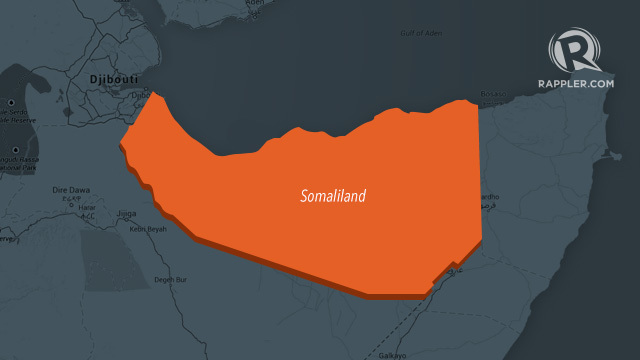
He said the problem was most acute in Mudug, Nugal and parts of Sool and Sanaag, which are claimed by both Puntland and the neighbouring self-declared republic of Somaliland.
Abdiaziz Diriye, of the Humanitarian Affairs and Disaster Management Agency of Puntland (HADMA), told IRIN a recent assessment it had conducted in the affected areas found water shortages to be the main problem.
"We found that 24 wells in the most affected areas are in urgent need of repairs," Diriye said.
They had also observed high incidence of malnutrition among the elderly and children in some parts: "Food is either not available or is too expensive for most."
Abdiaziz Sheikh Yusuf, the district commissioner of Jariiban, in Mudug region, one of the most affected areas, said 42 out of 47 of the district’s townships were facing "major” water problems.
"We had very little rains last year and almost all the barkads [water catchment areas] in the district are empty," he said.
Yusuf said that many nomadic families who had lost their livestock were moving to towns and setting up temporary shelters or moving in with relatives. "Our estimate is that some 400 nomadic families [2,400 people] are now in urban centres, with more coming every day."
He said minority clans in the area were especially affected. "They occupy some of the driest parts and need urgent help," he said.
He said that almost 40 percent of the livestock had succumbed to drought.

Saudi women to spurn lingerie shops over salesmen


Medeshi March 26, 2009
Saudi women to spurn lingerie shops over salesmen
RIYADH, Saudi Arabia – Before her wedding last year, Huda Batterjee went abroad to buy her bridal lingerie — she just couldn't bear the humiliation of discussing her most intimate apparel with a man. She had little choice: there are almost no saleswomen in Saudi Arabia. Now a group of Saudi women — sick of having to deal with male sales staff when buying bras or panties, not to mention frilly negligees or thongs — have launched a campaign this week to boycott lingerie stores until they employ women.
It's an irony of the kingdom's strict segregation of the sexes. Only men are employed as sales staff to keep women from having to deal with male customers or work around men.
But in lingerie stores, that means men are talking to women about bras or thongs, looking them up and down to determine their cup sizes, even rubbing the underwear to show how stains can be washed out.
The result is mortifying for everyone involved — shoppers, salesmen, even the male relatives who accompany the women.
"When I buy underwear in Saudi, some salesmen say, 'This is not the right size for you,'" said Batterjee. "You feel almost taken advantage of. Why is he looking at me in this way?"
So for her wedding trousseau, the 26-year-old went to neighboring Dubai to shop. She now lives in Virginia with her husband.
Heba al-Akki, a businesswoman who supports the boycott, said when she shops for underwear, "I go to a store, pick this, this and that and leave quickly. It's as if I'm buying illegal stuff."
It's not easy on the salesmen either.
At one lingerie boutique in a Riyadh mall Wednesday, salesmen blushed when asked about their jobs. All said they back the campaign to hire female sales staff.
"Even in such open regions as the U.S. and Europe, men do not sell underwear to women," said store manager Husam al-Mutayim, a 27-year-old Egyptian. "I don't let any of my female relatives buy underwear from men. It's just too embarrassing."
Mannequins — headless in keeping with a ban on realistic depictions of women — were displayed in the shop window dressed in modest pajamas. Inside, racks held an array of colorful bras, lacy panties and sexy nighties — along with more day-to-day undergarments.
Under Saudi Arabia's strict interpretation of Islamic law, women are required to cover themselves head-to-toe in black robes in public. But in the privacy of their own homes — and bedrooms — they can wear whatever they want, and sexy undergarments are popular.
But buying them is another story. Fitting rooms are banned in the kingdom — the idea of a woman undressing in a public place with men just outside is unthinkable. So a woman is never sure she has chosen the right size until she gets it home.
"I have bras with sizes ranging from 32 to 38 because I can't get to try them on," said Modie Batterjee, Huda's sister and one of the boycott organizers.
Even male relatives get dragged into the embarrassment. Women are allowed to shop without a male relative, but husbands or brothers sometimes insist on coming along — or the women want them there — to ensure salesmen stay respectful.
Modie Batterjee recalls how her husband fled a lingerie store because he could not bear to hear her explain to a salesman that she wanted high-waisted underwear to hold in her tummy after their daughter's birth.
The boycott was launched on Tuesday by about 50 women who gathered in the Red Sea port of Jiddah at the Al-Bidaya Breast-feeding Resource and Women's Awareness Center, which is run by Modie Batterjee.
The aim is to push for implementation of a law that has been on the books since 2006 which says only female staff can be employed in women's apparel stores.
The law has never been put into effect, partly due to hard-liners in the religious establishment who oppose employing women in mixed environments like malls, where religious police are always on the lookout to keep men and women from interacting.
Hiring women would also deprive men of jobs in a country where more than 10 percent of men are unemployed.
"We are raising awareness and calling for the implementation of the law," said Reem Asaad, a finance lecturer at Dar al-Hikma Women's College in Jiddah, who supports the boycott.
The campaign calls on women to shop at the country's few women-only lingerie stores. Usually stand-alone boutiques or located in malls that have women-only sections, these shops have no windows to ensure passing men cannot look in — and giving women the freedom to actually try things on.
How much impact the boycott call will have is unclear. Almost 1,700 people signed an online petition posted by Asaad on the social networking Web site Facebook. A few Saudi papers have written about it, but the campaign depends mostly on word of mouth.
Not all women support the idea. At the Riyadh lingerie shop on Wednesday, one woman — only her eyes visible through the black veil covering her face — said she is suspicious of women-only lingerie shops.
"Bad things happen there," she said.
What might that be?
Women can sneak a picture of you changing with their mobile phones, she replied and refused to give her name.

Pirate-Chasers Find Busting Brigands Is Easier Than Trying Them

Medeshi
Pirate-Chasers Find Busting Brigands Is Easier Than Trying Them
By Gregory Viscusi
March 26 (Bloomberg) -- The world’s navies have gotten better at catching Somali pirates in the Gulf of Aden. Now they have to figure out how to bring them to justice.
European Union and U.S. naval forces have captured dozens of presumed brigands in recent months after beefing up their presence in the Gulf of Aden, the world’s most dangerous waters. Most have been let go or dumped on the shores of neighboring Somalia because of a lack of evidence or confusion over what jurisdiction can prosecute them.
“International law is very clear about giving any warship from any sovereign nation the right to suppress piracy in international waters,” said John Kimball, a maritime expert at law firm Blank Rome LLP in New York. “But it’s a messy burden. They need to be processed and given trials. Not many governments are willing to do this.”
Spurred by a spike in piracy last year, about 20 warships from 15 countries are patrolling the gulf between Yemen and Somalia, and nearby waters. Pirates assaulted 165 ships last year, seizing 43 of them for ransom, with 10 boats taken in November alone. Only five ships have been seized so far this year, and only one this month.
Since last August, when international naval forces began aggressively patrolling off Somalia, 127 presumed pirates have been apprehended and then released, according to the U.S. Navy. Another 35 are awaiting trial in Europe or Kenya, and 91 were handed over to authorities of Somalia’s various entities. At least three have been killed in gun battles with French and British commandos.
Somalia has lacked a central government, and a working justice system, since 1991.
Legal Framework
“We do appreciate what’s been done and it’s starting to have an effect,” said Giles Noakes, head of security at Copenhagen-based BIMCO, the world’s largest shipping association. “Now the issue is, how do we assist the naval operation with the right legal framework?”
The United Nations Convention on the Law of the Sea gives sovereign nations the right to repress and prosecute pirates. France is one country that has tried, with little success.
In April 2008, French commandos leaped from helicopters onto Somali soil to seize six alleged pirates who had made off with $2.15 million in ransom from the hijacking of a French yacht.
The Somalis are still sitting in French prisons a year later, along with six other people captured by naval commandos who freed a hijacked French yacht in September. They haven’t been charged, and any eventual trial is at least 18 months away because of legal challenges and a backlog of criminal cases. A judge will rule April 6 on a defense motion to release them.
Detention Rules
Court-appointed defense lawyers argue that the detentions violated the French requirement that suspects be released or placed under investigation within 48 hours of arrest. The military held the presumed pirates for seven days before sending them to France. After they arrived, authorities waited four days before placing them under investigation.
“No one is contesting that France is competent to judge piracy attacks against its citizens,” said Gustave Charvet, a lawyer for one of the Somalis, Mohamed Said Hote, who is being held in prison outside Paris. “But there has to be some legal framework. Here we are in a world of no law and no rights.”
Isabelle Montagne, a spokeswoman for the French prosecutor’s office in Paris, said the national law was respected and the investigation “is progressing.” Christophe Prazuck, a spokesman for the French military’s joint chiefs, said previous court cases determined that arrests at sea aren’t bound to the same time limits.
Danish, Dutch
The Netherlands is the only other country to bring pirates home for prosecution. Five presumed Somali pirates were captured Jan. 2 by Danish frigate HDMS Absalon after attacking a Dutch Antilles merchant ship. They were held in Bahrain while a Dutch arrest warrant was processed and arrived in Rotterdam Feb. 11.
It’s the first time the Netherlands has put pirates on trial since the 17th century, said Wim de Bruin, a spokesman for the Dutch prosecutors. “We have a clear case based on videos and photos provided by the Danish Navy” that show the people attacking the boat, he said.
Reinier Feiner, a Rotterdam court-appointed lawyer defending one of the Somalis, disagreed: “They spent a month without legal assistance,” he said, adding that his clients deny attacking any ship. A public hearing is planned for May.
Let Them Go
More commonly, the suspects are just released. On March 20, the USS Gettysburg, a guided-missile cruiser, captured six presumed pirates after responding to a distress call from a Philippine-flagged ship. A helicopter pilot from the Gettysburg could see objects being thrown overboard, said U.S. Navy spokesman Matt Snodgrass in Bahrain. The Somalis were briefly detained and then returned to their skiff.
In the past two months, the U.S. and the EU have signed agreements with Kenya allowing them to turn suspected pirates over to the East African country for prosecution. Germany’s FGS Rheinland-Pfalz frigate delivered nine such detainees to a court in Mombasa, Kenya’s main seaport, on March 11. On March 5, the U.S. Echo turned seven over to Kenya.
The first trials are expected to start this summer, said Githu Muigai, managing partner of Nairobi law firm Mohammed Muigai.
Kenyan courts are likely to reject any jurisdiction challenges from defense lawyers, Muigai said. Even so, trials could drag on because of a backlog in Kenyan courts and the logistics of bringing foreign marines to testify.
“The real challenge will be to hold these trials expeditiously,” said Muigai. “But that’s a problem for the people on trial, not the prosecution.”

More People Seeking Asylum in Industrialized Countries

Medeshi
UN: More People Seeking Asylum in Industrialized Countries
By Lisa Schlein Geneva
24 March 2009
A new report by the U.N. refugee agency finds the number of asylum seekers in industrialized countries increased in 2008 for the second consecutive year. It says asylum requests have been rising in part because of the higher number of applications from Afghanistan, Somalia and other countries in turmoil or conflict.
The U.N. refugee agency says more than 380,000 new asylum applications were submitted last year in the 51 industrialized countries. This is 12 percent more than in 2007 and represents the second consecutive annual increase in the number of asylum seekers.
The report says the number of Iraqi asylum seekers declined by 10 percent in 2008. Despite this, Iraqis continue to be the largest nationality seeking asylum in the industrialized world. Somalia is in second place.
UNHCR Spokesman, Ron Redmond, says the number of Somali asylum seekers has gone up to 21,800 and reflects their increasing desperation. He says tens of thousands flee across the Gulf of Aden seeking a better life.
"Others flee up through Africa towards the Mediterranean Coast and then across the Mediterranean. So, in Somalia, it is ongoing conflict over a wide area, lack of economic opportunities. People cannot feed their families," Redmond said.
Redmond says the growing number of Afghans seeking asylum is a worrying sign. He notes Afghan asylum seekers peaked in 2001 and then dropped dramatically with the fall of the Taliban. But, now, he says, the numbers are going up again.
"And that reflects the difficulty of Afghans in resuming their lives, particularly for returning refugees who go back to very, very little in many cases ... So, Afghanistan needs a lot of attention. I would just say that this is a warning sign that Afghanistan still needs a lot of help from the international community so people can go home and stay home," he said.
The report finds the United States continued to be the main country of destination for asylum seekers of all nationalities in 2008. It received about 49,000 new asylum claims, accounting for 13 percent of all applications in industrialized countries.
After the United States, the study says the main countries of destination were Canada, France, Italy and the United Kingdom.

TB treatment success against the odds in Somaliland

Medeshi
TB treatment success against the odds in Somaliland
HARGEISA, 24 March 2009 (PlusNews) - Despite rampant poverty, high levels of illiteracy and limited international support, the self-declared republic of Somaliland in the northwest of Somalia has become an unlikely TB success story.
"We adopted the DOTS (Directly Observed Treatment Short Course) system for treating TB in 1995, so someone is always present to ensure patients take their medication," said Dr Ismail Adam Abdillahi, coordinator of the national TB programme. "As a result, adherence is very high and treatment success is over 90 percent."
The World Health Organization (WHO) has set a global target of 85 percent treatment success by 2015; Somalia, part of WHO's Eastern Mediterranean Region, ranks second in the region's 22 countries in terms of treatment success.
"The majority of the population has access to a health facility with TB services that have at least one doctor able to treat TB," Ismail said. "There is no shortage of drugs, which we get from the Global Fund [to fight AIDS, Tuberculosis and Malaria] through World Vision International."
Education has ensured that almost all patients have a basic knowledge of TB, while the establishment of a wide network of TB centres implementing close supervision and monitoring means TB treatment continues to make progress. The global target for TB case detection is 70 percent by 2015, but Somaliland has already achieved a case detection rate of 68 percent.
"In 2008 we diagnosed 4,153 cases; we believe these were most of the people who contracted the disease," Ismail said. Although the country does not have the technology to detect multidrug-resistant TB, he noted that there were very few cases of "chronic" or recurring TB.
This progress has been made despite the fact that Somaliland, which has not achieved international recognition as a sovereign state, is extremely poor - a decade-old livestock ban by Saudi Arabia and several other meat-importing countries in the Middle East has devastated its main source of income.
Although the country has been relatively peaceful since its formation in 1991, it continues to experience some insecurity, which hampers access and limits staff movement to certain areas.
Sustaining the response in a difficult environment
"We also have a lot of IDPs [internally displaced persons] and refugees in Somaliland from the south; when people are in such emergency situations, personal health is not a priority and people do not seek treatment," Ismail said.

"The war before 1991 also destroyed our health infrastructure, and we still need many more health facilities and staff trained to handle TB." The largest urban centre, Hargeisa city, with a population of more than 500,000, still has only one health centre equipped to treat TB.
"Our regulations are not as strong as they could be, and we do get unlicensed practitioners treating patients and private pharmacies selling TB drugs over the counter, which risks patients getting incorrect information and taking drugs the wrong way," said Dr Abdirashid Hashi Abdi, the Global Fund HIV/AIDS coordinator for the UN Children's Fund (UNICEF) in Hargeisa. "There is also no known data for the level of multi- and extensively drug-resistant TB."
Ismail noted that one of the groups still causing his department some concern were the nomads, who roamed the countryside, never settling anywhere long enough for TB education to reach them, and often grazing their herds far from health facilities with TB services.
"Men who chew khat [a mild stimulant widely used in the Horn of Africa] in small, poorly ventilated rooms for hours are also particularly at risk," Ismail said. "This explains the fact that the ratio of men to women infected with TB in Somaliland is two to one."
Somaliland and Somalia combined have an annual TB incidence of about 324 cases per 100,000 people, with more than half aged between 15 and 34. The disease is strongly associated with poverty, and many TB patients also suffer from malnutrition, making treatment more difficult.

Qaar ka mid ah Ururada Bulshada Rayidka ah oo walaac ka muujiyay mudo dhaafka golayaasha deegaanada

Annaga oo ah Ururada Bulshada Rayidka ah ee Madaxa-banaan waxaanu si wayn uga walaacsanahay