Former Ottawa gas station operator rules home state of Somali pirates

Medeshi Nov 26, 2008
Former Ottawa gas station operator rules home state of Somali pirates

Many of Somalia's pirates are based in a region called Puntland, whose president is a former Ottawa resident presiding over a government accused of turning a blind eye to the pirates' hijacking of foreign vessels.
CBC News
Many of the pirates hijacking vessels in the region are based in an autonomous region called Puntland, beyond the control of what passes for a central government in Somalia.
The president of Puntland for the past three years has been Mohamud Muse Hersi, a former Ottawa gas station operator.
Hersi emigrated to Canada in the 1980s, bought a gas station and raised a family, but his clan connections to Somalia remained strong. When the elders of Puntland were looking for a new president in 2005, they chose Hersi.
There are about a dozen hijacked ships anchored off the Puntland coast at the moment, waiting as the pirates and shipowners haggle over ransom money.
Hersi's critics accuse him and his ministers of taking bribes from the pirates to look the other way.
Ahmed Hussen, president of the Canadian Somali Congress, says he lacks evidence of such corruption but adds: "It would be inconceivable for all this piracy to be going on on the coast of Puntland without at least the knowledge, if not the collusion, of the Puntland government."
Hersi vigorously denies the charge. As proof, he points to two successful counterattacks against the pirates mounted by Puntland's coast guard.
Roger Middleton, an analyst at the London-based Royal Institute of International Affairs, says the two hijackings Hersi's government interfered with involved cargos of direct economic interest to the regime.
"In one case, the cement that was in the ship belonged to one of the ministers in the government, so there was clearly a reason why they wanted to get involved," he told CBC News.
If the Puntland government really wanted to stop the pirates, it would, Middleton says. But piracy has become the region's most profitable industry. Middleton estimates the pirates will net about $50 million US this year while the Puntland government's annual budget is just $20 million US.
Formally, Hersi is president of the Puntland State of Somalia, carved out of the collapsed country in 1998. It claims about a third of the national territory and calls itself "part of an anticipated Federal State of Somalia."
Hussen of the Canadian Somali Congress says Puntland has been sliding toward the abyss under Hersi's rule.
"I don't think it's reached the stage of anarchy yet, but it's on the verge of that," he told CBC News.
In a briefing paper on piracy published last month, Middleton made these points:
- Piracy off the Somali coast has more than doubled in 2008, with more than 60 ships attacked so far.
- Pirates are regularly demanding and getting million-dollar ransom payments and are becoming more aggressive and assertive.
- Money from ransom is helping to pay for the war in Somalia, and the high level of piracy is making aid deliveries to the drought-stricken country more difficult and costly.
- The danger and cost of piracy, including soaring insurance premiums, may force ships to avoid the Suez Canal route and sail around Africa, raising transportation costs and hence the price of oil and manufactured goods shipped to Europe and North America.
- Piracy could cause a major environmental disaster if a tanker is sunk, run aground or set afire - and the pirates' ever more powerful weaponry makes this increasingly likely.

Somalia Govt to Share Power With Some Opposition

Medeshi 26 Nov, 2008
Somalia Govt to Share Power With Some Opposition
UN announces power-sharing deal between Somali government and faction of the opposition
By MOHAMED OLAD
The Associated Press
MOGADISHU, Somalia
Somalia's weak transitional government has agreed to share power with a faction of the country's opposition, the United Nations said Wednesday.
The agreement was unlikely to change the political chaos in Somalia, however, as the extremist group at the center of a deadly insurgency did not participate.
The power-sharing deal calls for doubling the number of parliament seats to 550, with 200 going to the opposition Alliance for the Re-Liberation of Somalia — a relatively moderate group that split from the Shabab extremist group.
The U.S. State Department considers al-Shabab, or "The Youth," a terrorist organization.
No timeline was set for implementing the deal, which also extends parliament's term two years beyond its original end date of August 2009.
"We are happy with what we have achieved so far," Abdirahman Warsame, chief negotiator for the opposition alliance, told The Associated Press by telephone from the U.N.-backed talks in Djibouti. "What we are waiting for now is the election of the leadership that would haul the country out of its current chaos."
Calls to government negotiators were not immediately returned.
Somalia has had no effective government for two decades, and the U.N.-backed transitional administration has failed to exert any real control. Making matters worse, President Abdullahi Yusuf recently has been feuding openly with the prime minister, with each accusing the other of hampering plans for peace.
Meanwhile, a humanitarian crisis has worsened with high food prices and drought.
African Union peacekeepers have struggled to maintain security, with only 2,600 troops of the mission's approved 8,000 on the ground.
The U.N. Security Council said that, if Somalia can improve security and political reconciliation, it would consider sending U.N. peacekeepers to replace AU forces.
Somalia's transitional government was formed in 2004, but then lost control of the capital, Mogadishu, and most of the south to Islamic militants. In December 2006 it called in troops from neighboring Ethiopia to help retake control. But the insurgency remains a disruptive force and a threat to Yusuf's government.
The U.N. envoy to Somalia, Ahmedou Ould-Abdallah, said he hopes the new power-sharing deal will lead to "Somali leaders working together, wholeheartedly and committed to the dignity of the Somali people."

Somali pirates: we’re going to fish whatever passes through our sea because we need to eat

Medeshi
Nov 25, 2008
Somali pirates insist that they still wanted $25 million for the hip's release

The leader of Somali pirates holding the Sirius Star denied yesterday that the hijackers had lowered their ransom demand, insisting they still wanted $25 million for the ship’s release.
“We have not changed the amount of the ransom, it remains at exactly $25 million. If we want to change it, it will have to be agreed unanimously with all the people involved,” Mohamed Sayeed told AFP. Earlier reports suggested the ransom demand had been reduced to $15 million.
Sayeed was reached by phone in the coastal village of Haradheere where the Sirius Star was anchored after its capture. He warned against any forceful rescue of the huge tanker carrying around $100 million worth of crude oil.
“We are moving the ship from time to time and from place to place for tactical reasons. It’s like a war game. We are not taking the ship too far,” said Sayeed. “We still have enough people on the ground and on the ship. Nobody can terrorize us. Any attempt to take the ship by force is futile.”
One of the Somali pirates told the BBC they have no intention of harming the 25 crew members. The man, calling himself Daybad, spoke to the BBC’s Somali Service via telephone from the Sirius Star. He said the ship’s crew members were being treated humanely.
“The crew members are fine. We are treating them according to the charter of how you treat prisoners of war. They are allowed to contact their families. They are not prisoners, they can move from place to place, wherever they want to, they can even sleep on their usual beds and they have their own keys. The only thing they are missing is their freedom to leave the ship.”
Daybad said the pirates were fully aware of the consequences of their actions, but the lack of peace in Somalia and the plunder of its waters by foreign fishing trawlers had driven them to piracy. “Our fish were all eradicated so we can’t fish now. So we’re going to fish whatever passes through our sea because we need to eat

Puntland State and Lootah Investment sign strategic agreements worth Dhs170m


Medeshi Nov 24, 2008
Government of Punt Land State of Somalia, Lootah Investment sign strategic agreements worth Dhs170m
Lootah Group, a regional industrial group operating in Middle East and Africa, has signed incorporation agreements with the Punt Land State of Somalia Government, initially worth Dhs170m.
United Arab Emirates: Monday, November 24 - 2008
(The site of the project)
The newly born companies will strive to develop, manage and operate the Bosaso Airport, Seaport and a Free-Trade Zone as well as co-manage state customs. According to the agreement, a set of new companies will be established. The Bosaso Airport Company will have a mission to provide leading airport aero-ground services. It will initialy work to complete the Airport Complex towards international standards including its new 3.4 km runway, taxi and apron areas, main and auxiliary buildings and security perimeters. The Bosaso Seaport Company shall have a mission to provide attractive seaport services by increasing berth depths and maneuvering capabilities, increasing the quayside by 400%, and establishing a prefab concrete block shoulder at sea to protect basin from swell. The Bosaso Free Trade Zone over 500,000 square metres shall improve logistic services and cost/performance to all merchants and traders alike. Integratia Business Group, a subsidiary of Lootah Group has also signed a professional services agreement to co-manage Bosaso Customs for the coming 10 years and introduce best practices that will increase agility to material movement, improve merchant satisfaction and add to state earnings. On the onset, all the current business areas; laws, bylaws, policies, standards, regulatory, work processes, human capacity, financial and technologies, will be developed and set to meet the international standards for safety, security as well as boost of overall effectiveness and effciency. His Excellency, The President of the Punt Land State of Somalia Mohamud Musa Hirsi, welcomed the agreement saying:
'These infrastructure and services initiatives are key to position our state on the fast track for growth. At the home of Africa, Bosaso is situated at the crossroad of business and trade. We should put all our effort to make the Punt Land State of Somalia a safe place for foreign investors, and help grow our economy. These new initiatives will also have a positive impact on the people of Somalia, as new job opportunities arise. We believe that this new partnership with Lootah Investment will help us reach a better future.'Ibrahim Saeed Ahmed Lootah, Chairman of Lootah Investment and Lootah Group, added:
'We are very committed to support the growth vision of his Excellency the President of the Punt Land of Somalia and we are very privileged to partner with the state government. We have carried out many projects across the region and we have the appropriate knowledge to help grow these initiatives to fruition and success.'
Related Information:About Lootah Group: Lootah Group of Companies is a leading business group operating in the Middle East & Africa offering quality and professional products and services across industries including construction, manufacturing, ready mix, poultry and real estate. About Integratia Business Group: This is a subsidiary of Lootah Group that specialises in setting governance as well as performance Management Systems. The group is committed to the success of any projects entered by sharing the cost, risk and returns. For more information, please contact: Mohd.Salim Allawi PR Assistant The Idea Agency P.O. Box 50887 Dubai, UAE Office 503 Al Attar Tower, Sheikh Zayed Road Tel: +971 4 34 34 424 Fax: +971 4 34 34 305
© 1996-2008 by AME Info FZ LLC / Emap Limited. All rights reserved.This story was posted by Siba Sami AmmariMonday, November 24
UAE local time (GMT+4)

Interview– Eng.Abdirahman Saylici, Vice Presidential Candidate


Medeshi Nov 24, 2008

SOMALILAND AMERICAN COUNCIL (SAC)
Interview with Mr. Abdirahman Saylici, Vice Presidential Candidate, Kulmiye Party .

You are cordially invited to participate in this conference call hosted by Somaliland American Council.

The Keynote speaker is Mr. Abdirahman Saylici, Vice Presidential Candidate, Kulmiye
Date and time: Sunday, November 30, at 1 pm ET Time (6pm London time)

Agenda; State of Somaliland, Voter registration, & Upcoming Elections Keynote Speaker; Mr. Abdirahman Saylici, Vice Presidential Candidate, Kulmiye

To participate in this conference call please do the following: 1 - Call the conference bridge number: Dial-in #: (712) 432-1001 2 - Enter conference Attendee Passcode: 440-972-632 then (enter #) 3 - If you want to ask Mr. Abdirahman questions please email questions to: questions@somalilandamerican.com
Somaliland American Council http://www.somalilandamerican.com/
-----------------------------------------------------------------------------------------------------
PRESS RELEASE Contact: contact@somalilandamerican.com


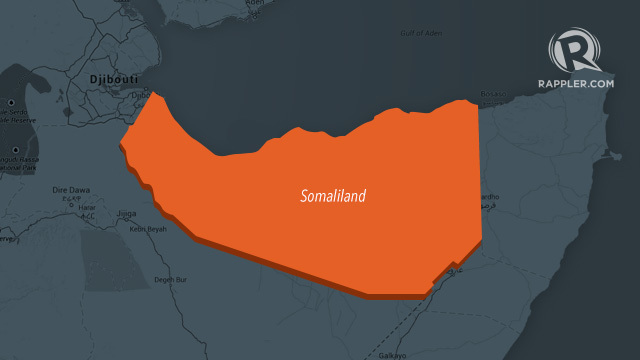
SOMALILAND CAN PROTECT AGAINST PIRACY IN THE REDSEA

Despite the fact that there are numerous opportunities where Somaliland can protect the interest of the international community better than anyone else, the International Community has acted as an ostrich that buried its head in the sand about the acknowledgment and the recognition of the Republic of Somaliland. Clearly this is another case where Somaliland can protect the interest of the International Community in the redsea waters to eliminate piracy. The map above shows that Somaliland successfully eliminated piracy in its waters, but the area close to Yemen and Puntland state of Somalia are the areas where all the piracy incidents have taken place in 2008. This unacceptable levels of piracy off of the coast of Somalia is presented challenges for the International Community where some nations are completely routing their ships out of the redsea at great cost. It is time that the international Community pays attention to Somaliland to bring normalcy back into the redsea waters. Please look at the following map that shows the incidents of piracy in the redsea: This map is published by Internaitonal Maritime Bureau.
It is an open secrete in Somalia that Puntland state and its people has founded, administer, support, and protect the piracy in the redsea waters. The above map shows that all of the piracy incidents happen in the waters that are closest to the Puntland state of Somalia;The above map that shows lists of piracy incidents in 2008; this map is provided by the International Maritime Bureau (IMB) http://www.icc-ccs.org [click the Live Piracy Map]

Piracy a growth industry in Somalia

Medeshi Nov 24 , 2008
Piracy a growth industry in Somalia
ON Friday afternoon, pirates in control of the African Sanderling, a large cargo ship anchored off Somalia, were lazing in the sun waiting for their ransom money when the telephone on the bridge rang.
Muhammad, the man who answered, was rather polite for a pirate from a heavily armed gang that had seized the ship last month. "Plizz, excuse me," he said, sounding more Cap'n Jack Sparrow than bloodthirsty Blackbeard. "Who are you?"
After The Sunday Times explained it was calling to find out what was happening to the hijacked vessel, Muhammad was as helpful as his mangled English allowed.
"The ship, the crew and the captain is OK. No problem. Only problem, money."
Have you demanded a ransom? "Yeah."
How much?
"First, $US8 million ($12.6 million). Then they (the ship owners) make bargain, then reduce, then more bargain, $2 million. Then they reduce it $1.2 million. Last we said we need $2 million."
The ship, a 59,000-tonne bulk carrier, was hijacked on October 15 with its crew of 21 Filipinos. What will the pirates do if they do not get a $US2 million ransom?
"Ah yeah," said Muhammad. "If we miss the money, the ship and the crew will be missing." As in missing, presumed dead.
The price of Somali piracy is rising fast. Yesterday, The Sunday Times also contacted a young pirate aboard the Sirius Star supertanker, which was hijacked eight days ago, 800km out in the ocean off the coast of Kenya. He said his gang was demanding a $US17 million ransom for the ship, which is carrying $US100 million worth of oil.
Another cut-throat with scruples, he said that the two British seamen among the 25 crew being held hostage were unharmed.
"The British are OK and we don't have any problems with them," said Muhammad Dashishle, 24. "All the people we captured with the ship are OK."
The risk of a violent clash remains, however. An Islamic extremist group has threatened to seize the ship and Dashishle said the hijackers would fight any attack. "We have plenty of men to defeat them," he said. "We are not afraid."
As incidents of piracy proliferate and ransom demands soar, politicians and shipping lines around the world are growing more and more alarmed - and trade is being disrupted.
On Friday, Maersk, the shipping company, ordered all its vulnerable vessels heading from the Arabian Gulf to Europe to avoid the Suez canal and follow the much longer route around the Cape of Good Hope.
Governments fear that some ransom money may be ending up with Islamic extremists, and terrorists may yet turn hijacked ships into weapons.
Until now, many observers had assumed that pirates picked off vessels at random. Shipping and security experts, however, suspect they are increasingly using spies in ports such as Dubai to alert them to the best targets.
It is also shockingly simple for anyone to track vessels online or to tune into ships' AIS (automatic identification system) beacons. They transmit a ship's exact position, size and cargo.
"It's serious," said Peter Hinchliffe, a director of the International Chamber of Shipping. "If the Sirius Star means pirates can attack deep in the ocean, warship patrols will not be enough. We need maritime patrol aircraft to protect shipping. We may even push to get the US Navy to dedicate an aircraft carrier to the area."
Any large cargo ship cruising at less than 15 knots, especially if low in the water, is easy prey for pirates in speedboats that can reach 20 knots. One of those captured in September was the bulk carrier Great Creation, which was released by pirates only last Wednesday.
"The pirates are just swarming around, even with all the warships," said the carrier's captain, who spoke from his vessel as it was heading away from Somali waters and asked to be identified only as Ganesh.
"They come far out from land in the mother ship and when they see a target they launch speedboats. They threatened us with guns, RPGs. When they reached us, they fired to make us stop."
The Great Creation was held for two months off the Somali coast. The captain and crew were confined to the ship's accommodation block, although were otherwise well treated.
"They kept us inside but we weren't locked up. As long as the owner is negotiating, they were well behaved," said Ganesh. "But if the owners don't co-operate, or if there is some problem with communication or there is a misunderstanding - then the situation could be very different. Otherwise, though, they won't intentionally kill."
As soon as it is clear pirates are going to capture a ship, the crew activates the ship security alert system - in effect, a panic button that transmits a warning to the owner.
"The guys that get on board hold a gun to the master's head and say I am going to kill you unless you do as I say," said Graeme Gibbon-Brooks of Dryad Maritime Intelligence Service. "The threat is always one of violence but it's rarely carried out. You can't ransom a burning hulk or a dead body."
Instead, cat-and-mouse negotiations ensue, often lasting weeks. Several problems are arising with Somali pirates, according to Darren Dickson of Drum-Cussac, a security firm staffed by former special forces personnel: "The talks change over the weeks. Pirates may be fuelled by drink and drugs (many chew khat, a narcotic) and they forget what they agreed." Pirates are also changing the way ransoms are delivered.
"The problem is the pirates don't want the money in a bank in Somalia," said Mr Dickson. "It's hard to access and the warlords get most of it."
So now some demand cash, air-dropped at sea or delivered at an offshore rendezvous.
"It increases the cost and risk," said Mr Dickson. "There have been attacks by other pirates on the way in (to deliver the ransom). Air drop is a bit better; there are firms doing it out of Dubai and Mombasa."
According to Mr Dickson, the pirates generally abide by the rules. They sit on the stern of the ship, "divvying up the cash, then off they go", setting the ship and crew free.
So far the casualties have been mainly attackers rather than merchant crews. In a recent clash, the (British) Royal Navy killed two suspected pirates and captured eight others, who were handed over to Kenyan authorities. Although two seafarers have died in pirate incidents, crews generally emerge physically unscathed.
French investigators who boarded a hijacked yacht in April even reported finding a pirates' "good conduct guide" that forbade sexual assault.
The sheer number of attacks threatens serious disruption to shipping and more violent clashes. Piracy is the only growth industry in Somalia, one of the world's poorest countries. Its unlikely epicentre is the tiny fishing village of Eyl on the northeast coast in a region called Puntland.
Less than a year ago it was mostly a jumble of crumbling, one-storey concrete buildings with tin roofs and wooden shacks on the beach. Bare-chested fishermen in knee-length sarongs used to set out on small wooden boats as their ancestors had for centuries.
Now goats wandering the dirt roads jostle with new four-wheel-drives as piracy brings a sudden influx of wealth - an estimated $45 million this year. The lead pirates have near-celebrity status and are building palatial villas. Some members of Somalia's ramshackle Government, many of whom are natives of Puntland, are said to get payoffs.
"The pirates are making so much money," said one source in Bossaso, the capital of Puntland. "They have taken second wives, they are all building new homes and buying new cars, like the latest Land Cruiser."
They are also acquiring satellite phones and GPS navigation equipment to co-ordinate operations. One expert in neighbouring Kenya claims the pirates have become so sophisticated that they are backed by "investors", who fund the upfront costs of hijackings in return for a share of the ransom.
What can be done to stop the pirates? Ship owners are reluctant to hire armed guards for fear of escalating confrontations. But nine days ago three former British marines posted as private guards on a tanker in the Gulf of Aden demonstrated one weapon that might be useful.
When speedboats containing gunmen approached, the guards, working for a firm called Anti-Piracy Maritime Security Solutions, deployed "magnetic audio devices" that emitted directed soundwaves of high intensity. Even at 600m the noise is unbearable.
The former marines trained the devices on the speedboats, which kept their distance and after 10 minutes turned away to seek another target.
Many shipping and security experts doubt naval force will be a cure. "The long-term answer to this is not more warships," said Mr Gibbon-Brooks. "The area is just so big. The answer is to sort out Somalia, which is a failed state. But that's a five-year job, 10 years probably."
The Sunday Times

Ethiopian troops remain in Somali capital

Medeshi
Ethiopian troops remain in Somali capital

MOGADISHU, Somalia (CNN) -- Ethiopian troops have not yet begun to withdraw from key positions in the capital of Somalia two days after they were supposed to do so under a peace agreement designed to end years of conflict.
The Ethiopians had agreed to withdraw from some bases by Friday under an agreement signed last month by the Somali transitional government and a rebel faction known as the Alliance for the Re-Liberation of Somalia.
Ethiopia invaded Somalia two years ago to expel Islamic forces who had conquered Mogadishu. Under the deal signed October 26, a cease-fire between the transitional government and the ARS went into effect November 5. The Ethiopians were to withdraw from from key positions in the capital on November 21, and leave the country entirely early in 2009.
Somali Prime Minister Nur Hassan Hussein has said that Ethiopian troops will withdraw as agreed.
Sheikh Sharif Sheikh Ahmed, a moderate leader of the rebel ARS, told the local radio station Shabelle Saturday that the Ethiopian troops would pull out on schedule.
Insurgents clashed with Somali government forces and their Ethiopian allies Friday, witnesses said, leaving at least 11 fighters dead.
The fighting started when armed insurgent fighters attacked the house of a local commissioner in Mogadishu's Wadajir district, sparking heavy fighting between the government troops guarding the house and the insurgents.
"I saw 11 men wearing red turbans on the heads dead on the ground," local resident Mohamed Haji Ali told CNN by phone from a house near where the clashes took place. Other residents provided a similar death toll.
The commissioner whose house was attacked, Ahmed Da'd, said that his soldiers killed 17 insurgents. He displayed what he said were some of the dead insurgents for the media.
It is not clear what will happen if the Ethiopian troops remain in Mogadishu despite the October 26 peace deal. Under that agreement, government and opposition members will form a 10,000-member joint police force to keep order, along with the African Union peacekeeping mission now in place and a U.N. force to be deployed later. Both sides will work toward establishing a unity government in Somalia, which has been riven by 17 years of strife since the collapse of its last fully functional government.
Ethiopia invaded Somalia in December 2006 to install the transitional government in Mogadishu after a decade and a half of near-anarchy. The invasion had the blessing of the United States, which accused the Islamic Courts Union -- which captured Mogadishu earlier that year -- of harboring fugitives from al Qaeda. The Islamists responded with a guerrilla campaign against government and Ethiopian troops.
Efforts to replace the Ethiopians with an African Union-led peacekeeping mission faltered as the violence worsened, and heavy fighting in Mogadishu and other cities drove hundreds of thousands from their homes. The lawlessness also spilled on to the seas off the Horn of Africa, where international vessels are routinely hijacked by suspected Somali pirates who demand large ransoms.

Somali Men Off Twin Cities Streets


Medeshi
The Missing: Somali Men Off Twin Cities Streets, Back in Somalia
Somali community fears young men leaving to fight holy war
Last Edited: Sunday, 23 Nov 2008
MINNEAPOLIS -- Young Somali men are vanishing off the streets of the Twin Cities. More than 20 have left in the last few months, and the community fears they’ve gone back to Somalia to fight in a holy war.
Video: The Missing
They’re known in the Somali community simply at The Missing. More than 20 young Somali men, between the ages of 17 and 22, who have left the Twin Cities in the last few months, without a single word to their families.
The families and community leaders believe the men have gone back to fight in a bloody civil war, in which Al Quiada is a major player.
"They're concerned emotional and in shock,” Omar Jamal, of the Somali Justice Center said. “They're completely grief stricken.
From multiple sources in the Somali community, FOX 9 has learned eight men are believed to have left on August 1, and another ten on November 4.
Flight itineraries discovered by their families show they left Minneapolis to take the winding trip back, through Dubai, Nairobi, Malindi, Kenya, where they’re believed to have snuck in by boat to Somalia.
Then, last week, five families went to the FBI, worries their kids were part of some jihad in Somalia. For their part, the FBI would not confirm or deny whether they have an ongoing investigation.
Shiek Imam Abdighani Ali is on of the few religious leaders who would discuss The Missing. He believes someone is organizing the trips.
“A lot of parents coming to us asking where their kid is going,” Ali said. “We are trying to find out who financed (the trips). They are 17 years old, $1,700 dollars and most of them didn't work."
Some of The Missing are believed to be former gang members, escaping the street violence that’s claimed the life of seven young Somali men this year. Others are in college, and some were said to be deeply religious.
The irony is their families risked everything to escape the violence and religious wars, yet something or someone is luring the young men back.
Some of their families told FOX 9 they are under pressure from law enforcement and religious leaders to not talk about The Missing.
At least one mother has received a phone call from her son. He told her he was in Somalia, but would not tell her what he was doing there.

America's hidden war in Somalia

'NOBODY IS WATCHING'
America's hidden war in Somalia
By Paul Salopek Tribune correspondent
CST, November 24, 2008
BERBERA, Somalia
To glimpse America's secret war in Africa, you must bang with a rock on the iron gate of the prison in this remote port in northern Somalia. A sleepy guard will yank open a rusty deadbolt. Then, you ask to speak to an inmate named Mohamed Ali Isse.
Isse, 36, is a convicted murderer and jihadist. He is known among his fellow prisoners, with grudging awe, as "The Man with the American Thing in His Leg."
That "thing" is a stainless steel surgical pin screwed into his bullet-shattered femur, courtesy, he says, of the U.S. Navy. How it got there — or more to the point, how Isse ended up in this crumbling, stone-walled hellhole at the uttermost end of the Earth—is a story that the U.S. government probably would prefer to remain untold.
That's because Isse and his fancy surgery scars offer what little tangible evidence exists of a bare-knuckled war that has been waged silently, over the past five years, with the sole aim of preventing anarchic Somalia from becoming the world's next Afghanistan.

It is a standoff war in which the Pentagon lobs million-dollar cruise missiles into a famine-haunted African wasteland the size of Texas, hoping to kill lone terror suspects who might be dozing in candlelit huts. (The raids' success or failure is almost impossible to verify.)
It is a covert war in which the CIA has recruited gangs of unsavory warlords to hunt down and kidnap Islamic militants and—according to Isse and civil rights activists—secretly imprison them offshore, aboard U.S. warships.
Mostly, though, it is a policy time bomb that will be inherited by the incoming Obama administration: a little-known front in the global war on terrorism that Washington appears to be losing, if it hasn't already been lost.
"Somalia is one of the great unrecognized U.S. policy failures since 9/11," said Ken Menkhaus, a leading Somalia scholar at Davidson College in North Carolina. "By any rational metric, what we've ended up with there today is the opposite of what we wanted."
What the Bush administration wanted, when it tacitly backed Ethiopia's invasion of Somalia in late 2006, was clear enough: to help a close African ally in the war on terror crush the Islamic Courts Union, or ICU. The Taliban-like movement emerged from the ashes of more than 15 years of anarchy and lawlessness in Africa's most infamous failed state, Somalia.
At first, the invasion seemed an easy victory. By early 2007, the ICU had been routed, a pro-Western transitional government installed, and hundreds of Islamic militants in Somalia either captured or killed.
But over the last 18 months, Somalia's Islamists—now more radical than ever—have regrouped and roared back.
On a single day last month, they flexed their muscles by killing nearly 30 people in a spate of bloody car-bomb attacks that recalled the darkest days of Iraq. And their brutal militia, the Shabab or "Youth," today controls much of the destitute nation, a shattered but strategic country that overlooks the vital oil-shipping lanes of the Gulf of Aden.
Even worse, in recent days Shabab's fighters have moved to within miles of the Somalian capital of Mogadishu, threatening to topple the weak interim government supported by the U.S. and Ethiopia.
At the same time, according to the UN, the explosion of violence is inflaming what probably is the worst humanitarian tragedy in the world.
In the midst of a killing drought, more than 700,000 city dwellers have been driven out of bullet-scarred Mogadishu by the recent clashes between the Islamist rebels and the interim government.
The U.S. role in Somalia's current agonies has not always been clear. But back in the Berbera prison, Isse, who is both a villain and a victim in this immense panorama of suffering, offered a keyhole view that extended all the way back to Washington.
Wrapped in a faded sarong, scowling in the blistering-hot prison yard, the jihadist at first refused to meet foreign visitors—a loathed American in particular. But after some cajoling, he agreed to tell his story through a fellow inmate: a surreal but credible tale of illicit abduction by the CIA, secret helicopter rides and a journey through an African gulag that lifts the curtain, albeit only briefly, on an American invisible war.
"Your government gets away with a lot here," said the warden, Hassan Mohamed Ibrahim, striding about his antique facility with a pistol tucked in the back of his pants. "In Iraq, the world is watching. In Afghanistan, the world is watching. In Somalia, nobody is watching."

From ashes of 'Black Hawk Down'
In truth, merely watching in Mogadishu these days is apt to get you killed.
Somalia's hapless capital has long been considered the Dodge City of Africa—a seaside metropolis sundered by clan fighting ever since the nation's central government collapsed in 1991. That feral reputation was cemented in 1993, when chanting mobs dragged the bodies of U.S. Army Rangers through the streets in a disastrous UN peacekeeping mission chronicled in the book and movie "Black Hawk Down."
Yet if Mogadishu was once merely a perilous destination for outsiders, visiting today is suicidal.
For the first time in local memory, the airport—the city's frail lifeline to the world—is regularly closed by insurgent mortar attacks despite a small and jittery contingent of African Union peacekeepers.
Foreign workers who once toiled quietly for years in Somalia have been evacuated. A U.S. missile strike in May killed the Shabab commander, Aden Hashi Ayro, enraging Islamist militants who have since vowed to kidnap and kill any outsider found in the country.
The upshot: Most of Somalia today is closed to the world.
It wasn't supposed to turn out this way when Washington provided intelligence to the invading Ethiopians two years ago.
The homegrown Islamic radicals who controlled most of central and southern Somalia in mid-2006 certainly were no angels. They shuttered Mogadishu's cinemas, demanded that Somali men grow beards and, according to the U.S. State Department, provided refuge to some 30 local and international jihadists associated with Al Qaeda.
But the Islamic Courts Union's turbaned militiamen had actually defeated Somalia's hated warlords. And their enforcement of Islamic religious laws, while unpopular among many Somalis, made Mogadishu safe to walk in for the first time in a generation.
"It's not just that people miss those days," said a Somali humanitarian worker who, for safety reasons, asked to be identified only as Hassan. "They resent the Ethiopians and Americans tearing it all up, using Somalia as their battlefield against global terrorism. It's like the Cold War all over again. Somalis aren't in control."
When the Islamic movement again strengthened, Isse, the terrorist jailed in Berbera, was a pharmacy owner from the isolated town of Buro in Somaliland, a parched northern enclave that declared independence from Somalia in the early 1990s.
Radicalized by U.S. military involvement in Iraq and Afghanistan, he is serving a life sentence for organizing the killings of four foreign aid workers in late 2003 and early 2004. Two of his victims were elderly British teachers.
A dour, bearded man with bullet scars puckering his neck and leg, Isse still maintains his innocence. Much of Isse's account of his capture and imprisonment was independently corroborated by Western intelligence analysts, Somali security officials and court records in Somaliland, where the wounded jihadist was tried and jailed for murdering the aid workers. Those sources say Isse was snatched by the U.S. after fleeing to the safe house of a notorious Islamist militant in Mogadishu.
How that operation unfolded on a hot June night in 2004 reveals the extent of American clandestine involvement in Somalia's chaotic affairs—and how such anti-terrorism efforts appear to have backfired.

Interrogation aboard ship
"I captured Isse for the Americans," said Mohamed Afrah Qanyare. "The Americans contracted us to do certain things, and we did them. Isse put up resistance so we shot him. But he survived."
A scar-faced warlord in a business suit, Qanyare is a member of Somalia's weak transitional government. Today he divides his days between lawless Mogadishu and luxury hotels in Nairobi.
But four years ago, his militia helped form the kernel of a CIA-created mercenary force called the Alliance for the Restoration of Peace and Counter-Terrorism in Somalia. The unit cobbled together some of the world's most violent, wily and unreliable clan militias—including gangs that had attacked U.S. forces in the early 1990s—to confront a rising tide of Islamic militancy in Somalia's anarchic capital.
The Somalis on the CIA payroll engaged in a grim tit-for-tat exchange of kidnappings and assassinations with extremists. And Isse was one of their catches.
He was wounded in a CIA-ordered raid on his Mogadishu safe house in June 2004, according to Qanyare and Matt Bryden, one of the world's leading scholars of the Somali insurgency who has access to intelligence regarding it. They say Isse was then loaded aboard a U.S. military helicopter summoned by satellite phone and was flown, bleeding, to an offshore U.S. vessel.
"He saw white people in uniforms working on his body," said Isse's Somali defense lawyer, Bashir Hussein Abdi, describing how Isse was rushed into a ship-board operating room. "He felt the ship moving. He thought he was dreaming."
Navy doctors spliced a steel rod into Isse's bullet-shattered leg, according to Abdi. Every day for about a month afterward, Isse's court depositions assert, plainclothes U.S. agents grilled the bedridden Somali at sea about Al Qaeda's presence.
The CIA never has publicly acknowledged its operations in Somalia. Agency spokesman George Little declined to comment on Isse's case.
For years, human-rights organizations attempted to expose the rumored detention and interrogation of terror suspects aboard U.S. warships to avoid media and legal scrutiny. In June, the British civil rights group Reprieve contended that as many as 17 U.S. warships may have doubled as "floating prisons" since the Sept. 11 terrorist attacks.
Calling such claims "misleading," the Pentagon has insisted that U.S. ships have served only as transit stops for terror suspects being shuttled to permanent detention camps such as the one in Guantanamo Bay, Cuba.
But Tribune reporting on Isse indicates strongly that a U.S. warship was used for interrogation at least once off the lawless coast of Somalia.
The U.S. Navy conceded Isse had stayed aboard one of its vessels. In a terse statement, Lt. Nathan Christensen, a spokesman for the Bahrain-based 5th Fleet that patrols the Gulf of Aden, said only that the Navy was "not able to confirm dates" of Isse's imprisonment.
For reasons that remain unclear, he was later flown to Camp Lemonier, a U.S. military base in the African state of Djibouti, Somali intelligence sources say, and from there to a clandestine prison in Addis Ababa, Ethiopia.
Isse and his lawyer allege he was detained there for six weeks and tortured by Ethiopian military intelligence with electric shocks.
Ethiopia's Ministry of Foreign Affairs and office of prime minister did not respond to queries about Isse's allegations.
However, security officials in neighboring Somaliland did confirm that they collected Isse from the Ethiopian police at a dusty border crossing in late 2004. "The Man with the American Thing in His Leg" was interrogated again. After a local trial, he was locked in the ancient Berbera prison.
"It doesn't matter if he is guilty or innocent," said Abdi, the defense lawyer. "Countries like Ethiopia and America use terrorism to justify this treatment. This is not justice. It is a crime in itself."
Tales of CIA "snatch and grab" operations against terror suspects abroad aren't new, of course. President George W. Bush finally confirmed two years ago the existence of an international program that "renditioned" terrorism suspects to a network of "black site" prisons in Eastern Europe, Iraq and Afghanistan.
As for the CIA's anti-terror mercenaries in Mogadishu, they may have kidnapped a dozen or more wanted Islamists for the Americans, intelligence experts say. But their excesses ended up swelling the ranks of their enemy, the Islamic Courts Union militias.
"It was a stupid idea," said Bryden, the security analyst who has written extensively on Somalia's Islamist insurgency. "It actually strengthened the hand of the Islamists and helped trigger the crisis we're in today."
In the sweltering Berbera prison, Exhibit A in Washington's phantom war in Somalia had finished his afternoon prayers. He clapped his sandals together, then limped off to his cell without a word.

A sinking nation
The future of Somalia and its 8 million people is totally unscripted. This unbearable lack of certainty, of a way forward, accommodates little hope.
Ethiopian and U.S. actions have eroded Somalis' hidebound allegiance to their clans, once a firewall against Al Qaeda's global ideology, says Bryden. Somalia's 2 million-strong diaspora is of greatest concern. Angry young men, foreign passports in hand, could be lured back to the reopened Shabab training camps, where instructors occasionally use photocopied portraits of Bush as rifle targets.
Some envision no Somalia at all.
With about $8 billion in humanitarian aid fire-hosed into the smoking ruins of Somalia since the early 1990s—the U.S. will donate roughly $200 million this year alone—a growing chorus of policymakers is advocating that the failed state be allowed to fail, to break up into autonomous zones or fiefdoms, such as Isse's home of Somaliland.
But there is another possible future for Somalia. To see it, you must go to Bosaso, a port 300 miles east of Isse's cell.
Bosaso is an escape hatch from Somalia. Thousands of people swarm through the town's scruffy waterfront every year, seeking passage across the Gulf of Aden to the Middle East. Dressed in rags, they sleep by the hundreds in dirt alleys and empty lots. Stranded women and girls are forced into prostitution.
"You can see why we still need America's help," said Abdinur Jama, the coast guard commander for Puntland, the semiautonomous state encompassing Bosaso. "We need training and equipment to stop this."
Dapper in camouflage and a Yankees cap, Jama was a rarity in Somalia, an optimist. While Bosaso's teenagers shook their fists at high-flying U.S. jets on routine patrols—"Go to hell!" they chanted—Jama still spoke well of international engagement in Somalia.
On a morning when he offered to take visitors on a coast patrol, it did not seem kind to tell him what a U.S. military think tank at West Point had concluded about Somalia last year: that, in some respects, failed states were admirable places to combat Al Qaeda, because the absence of local sovereignty permitted "relatively unrestricted Western counterterrorism efforts."
After all, Jama's decrepit patrol boat was sinking.
A crew member scrambled to stanch a yard-high geyser of seawater that spurted through the cracked hull. Jama screwed his cap on tighter and peered professionally at land that, despite Washington's best-laid plans, has turned far more desperate than Afghanistan.
"Can you swim?" Jama asked. But it hardly seemed to matter. Back on dry land, in Somalia, an entire country was drowning.

Ahoy there Somalia

Medeshi
Ahoy there Somalia
Nov 19th 2008 NAIROBI From Economist.com
The significance of the latest attacks by Somali pirates
AFP
Get article background
PIRATES do not win every encounter. On the evening of Tuesday November 18th an Indian warship attacked and destroyed a suspected Somali pirate boat in the Gulf of Aden, after the men on board had, reportedly, threatened to blow up the Indian craft. The pirates were said to be armed with guns and rocket-grenade launchers, and some escaped on speed boats. On the same day, however, other pirates in the Gulf of Aden did manage to grab a cargo ship carrying grain to Iran.
The pressure to tackle piracy off Somalia's coast is growing by the day. The threat to merchant shipping in the region is now greater than it has been for decades. The taking of the leviathan 330-metre Saudi-owned Sirius Star in the high seas fully 450 nautical miles (833km) off the Kenyan coast, on Saturday, shows that all tankers heading to or from the Arabian Gulf and all cargo vessels using the Suez Canal are now at risk from pirates, no matter what course they hold to.
Shipping companies face higher insurance premiums, customers could see longer delivery times, less traffic may pass through the Suez Canal. The success of the pirates may also strengthen the hand of radical Islamists in Somalia if gunmen abandon their poorly paid defence of the feeble transitional Somali government in Mogadishu for the promise of adventures and riches at sea.
The geographical range open to the pirates gives them (generally) the upper hand over foreign navies deployed to stop them. So, too, does their ingenious use of fishing boats for satellite cover. Warships can easily intercept captured vessels and, under a United Nations resolution agreed upon earlier this year, chase them back into Somali waters. But it is rare for them to stop the pirates boarding vessels and taking crews hostage in the first place. And by luring warships into Somali waters to watch over captured vessels, the pirates will continue to stretch their operations further south towards the Comoros and the Mozambique Channel–once the hunting grounds of late 17th century English pirates.

There have been at least 83 acknowledged pirate attacks off Somalia and in the Gulf of Aden this year, 33 of them successful enough to command a ransom. The amounts of money being paid have rocketed, with pirates demanding and getting $1m in ransom or more. The number of attacks is probably higher than stated, given the desire of some ship owners to pay a ransom quietly, without involving an insurance company.
The Sirius Star is believed now to be anchored somewhere off the coast of Somalia, near the pirate port of Eyl in the northern Puntland region of the country. It joins a dozen or so other vessels. They include the MV Faina, a Ukrainian cargo ship captured in September with a cargo of Soviet-era tanks bound for south Sudan, with the connivance of the Kenyan government. Ransom demands for the Faina have dropped from $20m to $8m since it was surrounded by American and Russian warships, but there is still no agreement on its release. The pirates are likely to ask for more than $30m for the release of the Sirius Star.
The tanker is owned by the shipping subsidiary of Saudi Aramco, the state-owned oil giant. It was carrying oil worth over $100m and was bound for America when captured. For the Saudis, its loss is a reminder of a problem that has been festering just across the Red Sea for some time: Somali analysts say that Saudi Arabia has made big promises of aid and assistance to Somalia, but has delivered nothing of value.
For America, the case of the Sirius Star underlines longstanding concerns that piracy off Somalia, still strictly mercenary, might soon attract jihadist operators. Some think that al-Qaeda has already looked into the possibility of blowing up tankers in the narrows off the Comoros. If the jihadists do not organise an attack themselves, the worry is that they might pay the pirates to do it for them.

Somalia, bring justice to its fisheries

Medeshi 22, Nov, 2008
Somalia, bring justice to its fisheries
Washington – In the past few weeks, a failed state that was forgotten for more than a decade once again made the world take notice. While Somalia's weak transitional government fails to assert control on land, a band of highly organized pirates have taken firm control of the country's sea lanes.
The pirates' recent seizure of a Ukrainian ship transporting military hardware and a Saudi oil supertanker has prompted the world to take action, with many countries sending warships to patrol the area around the Somali coast and Gulf of Aden. A longer-term solution may prove simpler and less costly: Forget about freight and focus on fishing.
Beyond the immediate need to temporarily send warships to police the troubled waters, a coalition force tasked with fishery protection should be deployed. It could be done under the auspices of the United Nations, African Union, or a coalition of willing states. This option will address a root cause of the piracy problem, rob the modern-day buccaneers of their legitimacy, and be more acceptable to the region as an enduring part of the solution.
First, this option will address the very problem that originally sparked this rise in piracy. The problem of piracy in Somalia originated about a decade ago because of disgruntled fishermen.
The headless state had no authority to patrol its tuna-rich coastal waters and foreign commercial vessels swooped in to cast their nets. This proved a slap in the face for Somalis, who saw these vessels as illegal and raking in profits at the expense of the local impoverished population. To make matters worse, there were reports that some foreign ships even dumped waste in Somali waters.
That prompted local fishermen to attack foreign fishing vessels and demand compensation. The success of these early raids in the mid-1990s persuaded many young men to hang up their nets in favor of AK-47s. Making the coastal areas lucrative for local fishermen again could encourage pirates to return to legitimate livelihoods.
Second, a fishery protection force will eliminate the pirates' source of legitimacy. The pirates' spokesman, Sugule Ali, told the international press last month that his men executed attacks to prevent illegal fishing and dumping in their waters.
Although this claim may seem thin, it matters to the pirates' public image and sense of legitimacy. If the international community steps in to address their concerns, they will lose the one pretense they continue to stand upon for internal support and credibility.
Third, an international force sent to protect local industry will achieve the same goal as warships but in a more acceptable way. The principal reason piracy thrives along Somalia's coast is that there is no coastal authority to patrol these waters. Armed foreign ships will still serve to fill that vacuum and deter attacks, but with the explicit mission of serving Somalia's people – the very people who have chalked up enough reasons to dislike foreign military interventions and are likely to view the presence of warships as intimidation.
Skeptics could argue that intimidation is just what these lawless bandits need. However, temporary crackdowns have not uprooted the problem yet. The Union of Islamic Courts brutally suppressed piracy during the brief period they controlled the Somali capital in 2006, but the pirates waited them out and resurged stronger than ever.
In response to pressure, the pirates also tend to migrate further down the long Somali coastline to focus operations in areas of the sea that are more difficult to patrol. A fishery protection force, however, could convince pirates that it is here to stay and futile to evade.
Piracy will not be eradicated from the region until Somalia becomes a stable, functioning state with a thriving economy. A robust fishery protection force can keep piracy under control in the meantime while the world shifts its resources to this bigger problem. This creative solution could make Somali waters more secure and give its people much-needed hope for the future.

Bring it on, say Somali supertanker pirates

Medeshi 22 Nov, 2008
Bring it on, say Somali supertanker pirates
SOMALI pirates holding an oil-laden Saudi supertanker say they will fight back if there is any military intervention to free the ship.
"I hope the owner of the tanker is wise enough and won't allow any military option because that would be disastrous for everybody. We are here to defend the tanker if attacked," Abdiyare Moalim said.
Speaking from the coastal village and pirate stronghold of Haradhere, off which the Sirius Star is anchored, he said he was one of the pirates on shore organising militias protecting the area.
Negotiations continue with the owners of the super-tanker, who on Thursday were given 10 days to pay a ransom of $US25 million ($41.06 million).
A local fisherman said reinforcements of at least 10 well-armed men had joined the pirates holding the ship and its 25 crew.
"Early this morning, I saw at least 10 heavily armed pirates heading to the ship. Their boat returned after dropping them off," Hassan Ahmed said.
The member of the pirate group said the gunmen holding the Sirius Star and its $US100 million of crude oil had no intention of destroying the vessel, the largest ever seized by pirates off the coast of Somalia.
"Their intention is clear, I was speaking to them some minutes ago and they told me they are not going to destroy the ship or harm the crew. They are hoping to get what they demanded," he said.
Harardhere is 300km north of lawless Somalia's capital Mogadishu.
Oil tanker hijackers build up defences in Somalia
Somali pirates have built up their defences around a captured Saudi Arabian super-tanker after reportedly demanding a $US25 million ransom.
The Sirius Star, the biggest ship ever hijacked, and its $US100 million cargo of oil was seized on 15 November and taken to Harardhere, 300km north of Somalia's capital Mogadishu.
As foreign navies sent warships to Somalia's dangerous waters and shipping companies sought alternative routes, extra clan militia and other fighters were brought in to Harardhere, residents said on Friday.
Local militia and hardline Shebab fighters have also arrived in what some residents said was a move to position themselves for a share of any ransom paid.
"There are two armed vehicles belonging to al Shebab. They have reached the town of Harardhere but there are no intentions of attacking the ship from here," a Harardhere Islamist official said by phone.
The militiamen want a share from the pirates if the ransom is paid, said Ahmed Abdullahi, a local elder. "They believe this ship is huge and the owner will pay a lot of money."
The pirates on Thursday gave the owners 10 days to pay the ransom.
However the company conducting negotiations on behalf of the tanker's owners has denied the figure of $US25 million has been demanded in ransom, reports the BBC.
The BBC also reports shipping industry experts expect the ransom for the tanker to be much higher.
Speaking from the tanker, a pirate who identified himself as Mohamed Said threatened "disastrous" consequences should Vela International, shipping arm of the Saudi oil giant Saudi Aramco, fail to comply.
He did not specify the threatened action but the 330-metre-long tanker is carrying two million barrels of crude oil.

Somali piracy starts affecting fuel pump prices in Uganda
KAMPALA, Nov. 22 -- Piracy off the coast of Somalia is partly to blame for the increasing pump prices in Uganda, a top government official said here on Saturday.
Kamander Bataringaya, minister of state for energy in charge of minerals told reporters that freight charges have gone up due to the increased risk of petroleum tankers being hijacked by pirates in the Gulf of Aden.
He said the insurance premiums for the tankers have also gone up which has forced dealers to pass the cost pressures on to the consumers.
Pump prices especially in the capital Kampala have been unstable in recent weeks with the highest being 2,850 shillings (1.6 U.S. dollars) for a liter of petrol.
Other factors pushing up the prices include depreciation of the local currency against the dollar, increase in transit truck charges due to the three axle weight limitation introduced in Kenya.
Uganda imports and exports all its products through the Kenyan sea port of Mombasa because it is land locked.
Analysts have warned that prices of basic consumer goods are also expected to increase as shipping operators opt for alternative routes to avoid the pirate-infested waters.
Piracy off the coast of Somalia has been on the increase affecting the shipping route, the world's busiest trade route, linking the Middle East and Asia to Europe and beyond through the Suez Canal.

Piracy off Somalia seen denting Suez Canal traffic


Medeshi
Piracy off Somalia seen denting Suez Canal traffic
By Yusri Mohamed
ISMAILIA, Egypt, Nov 22 (Reuters) - Rampant piracy off Somalia's coast will hit revenues at Egypt's Suez Canal if piracy is not quickly curtailed and shippers continue to shun the strategic waterway, current and former canal officials said. One of the world's biggest shippers has said some of its fleet was avoiding the canal due to piracy fears south of the waterway linking the Red Sea to the Mediterranean, and a major tanker association said many others were also diverting vessels.
"A decline may happen as a result of piracy acts," one Suez Canal official said, asking not to be named because he was not authorised to speak to the press. "We are following the situation with sharp interest."
The move by some shippers to avoid the canal follows the spectacular capture by Somali pirates of a Saudi Arabian supertanker loaded with $100 million worth of oil a week ago, the biggest ship hijacking in history.
Denmark's A.P. Moller-Maersk is routing some of its 50 oil tankers around the Cape of Good Hope instead of through Suez, and Intertanko said many other tanker firms were doing the same.
Norway's Frontline (nyse: FRO - news - people ), which ferries much of the Middle East's oil to world markets, said it was considering a similar step.
Millions of tonnes of crude oil, petroleum products, gas and dry commodities like grains, iron ore and coal, as well as containerised goods from electronic goods to toys are ferried through the Gulf of Aden and Suez Canal every month.
Revenues at the canal have already dropped from life highs in August, but officials attribute the slowdown to the global economic crisis and say piracy has not yet affected returns.
The canal made $467.5 million in October, down from $504.5 million in August when a record 1,993 ships used the canal.
NO NOTIFICATIONS OF CANCELLATION
Piracy could also deal a blow to Egyptian efforts to attract more large ships including larger oil tankers through Suez by working to deepen the navigation channel, a project expected to be completed in 2009.
Canal officials have said that once the planned expansion is finished, the waterway will be capable of attracting 64 percent of the global fleet of oil carriers with full loads. Egypt depends on the Suez Canal as a major source of foreign currency.
"The continuation of acts of piracy at the current rate will negatively affect numbers of ships passing through the canal and revenues," said Galal al-Deeb, a former member of the Suez Canal administration,
"Oil tankers passing through the canal will be affected as vessels begin to face hijacking, as will overall goods traffic because oil represents around 17 percent of total goods passing through the Suez Canal," he added.
But officials declined to speculate on how severely the canal's revenues might be affected.
Owners of oil supertankers already often send ships around the Cape of Good Hope because of capacity issues at Suez, where large ships occasionally run aground. The hijacked U.S.-bound Saudi tanker had not passed through the Suez Canal, a route more commonly used by European-bound tankers.
Canal spokesman Mahmoud Abd al-Wahab said that shipping firms had not given the canal word of any cancellations, but that the canal did not normally receive such notification.
"Ship owners have a right to determine whatever route they want to use," he said. "The Suez Canal administration has no forecasts on the numbers or type of ship that may be affected by piracy acts and would decide not to use the Suez Canal."
Cairo-based investment bank EFG-Hermes says the canal may earn a record $6.1 billion this fiscal year, up about 18 percent from the fiscal year that ended in June.
But even before last week's hijack, EFG-Hermes forecast tougher times ahead. The bank said it saw the canal's revenue growth slowing to 10 percent in the 2009/2010 year, with lower European demand presenting a significant downside risk. (Writing by Cynthia Johnston)

Somali Pirates in Discussions to Acquire Citigroup

Medeshi
Pirate humour rules Wall Street
Andrew Willis,
November 21, 2008
Argggg, Maties! Here's what shell-shocked financiers are laughing at on Wall Street Friday morning in a phony Bloomberg story:
Somali Pirates in Discussions to Acquire Citigroup
By Andreas Hippin November 20 (Bloomberg) -- The Somali pirates, renegade Somalis known for hijacking ships for ransom in the Gulf of Aden, are negotiating a purchase of Citigroup.
The pirates would buy Citigroup with new debt and their existing cash stockpiles, earned most recently from hijacking numerous ships, including most recently a $200 million Saudi Arabian oil tanker. The Somali pirates are offering up to $0.10 per share for Citigroup, pirate spokesman Sugule Ali said earlier today. The negotiations have entered the final stage, Ali said.
"You may not like our price, but we are not in the business of paying for things. Be happy we are in the mood tooffer the shareholders anything," said Ali.
The pirates will finance part of the purchase by selling new Pirate Ransom Backed Securities. The PRBS's are backed by the cash flows from future ransom payments from hijackings in the Gulf of Aden. Moody's and S&P have already issued their top investment grade ratings for the PRBS's.
Head pirate, Ubu Kalid Shandu, said: "We need a bank so that we have a place to keep all of our ransom money. Thankfully, the dislocations in the capital markets has allowed us to purchase Citigroupat an attractive valuation and to take advantage of TARP capital to grow the business even faster."
Shandu added, "We don't call ourselves pirates. We are coastguards and this will just allow us to guard our coasts better."
*CITI IN TALKS WITH SOMALI PIRATES FOR POSSIBLE CAPITAL INFUSION
*WILL REQUIRE ALL CITI EMPLOYEES TO WEAR PATCH OVER ONE EYE
*SOMALIAN PIRATES APPLY TO BECOME BANK TO ACCESS TARP
*PAULSON: TARP PIRATE EQUITY IS AN `INVESTMENT,' WILL PAY OFF
*KASHKARI SAYS `SOMALI PIRATES ARE 'FUNDAMENTALLY SOUND' '


*Moody's upgrade Somali Pirates to AAA
*HUD SAYS SOMALI DHOW FORECLOSURE PROGRAM HAD `VERY LOW' PARTICPATION
*SOMALI PIRATES IN DISCUSSION TO ACQUIRE CITIBANK
*FED OFFICIALS: AGGRESSIVE EASING WOULD CUT SOMALI PIRATE RISK
* FED AGREED OCT. 29 TO TAKE `WHATEVER STEPS' NEEDED FOR SOMALI PIRATES

(UN) Recent Political Progress in Somalia Obscured by Deteriorating Security

Medeshi
Recent Political Progress in Somalia Obscured by Deteriorating Security, Humanitarian Conditions, Security Council Hears in Several Briefings [document]
Released : Friday, November 21, 2008 6:38 AM
Nov 21, 2008 (United Nations)

Somalia 's Speaker Says Search for Peace Will Not Be Smooth or Quick; Council Debates Outline for Possible Multinational Force, Follow-On Peacekeeping Operation
Despite the recent political progress in Somalia, conditions on the ground continued to deteriorate and coherent international action was needed to stem instability in the East African country, as well as the piracy off its coast, officials of the United Nations and the African Union told the Security Council this morning.
In addition, according to Raisedon Zenenga, Director of the Africa II Division of the Department of Peacekeeping Operations, the Secretary-General's proposal for a multinational force meant to relieve the under-manned African Union force in Somalia (AMISOM) and serve as a precursor to a possible United Nations peacekeeping operation had not yet garnered significant pledges of either troops, resources or leadership.
Mr. Zenenga expressed appreciation to the Member States that had committed assets to anti-piracy operations, which were valuable in securing food deliveries for the 3.2 million people of Somalia who were dependent on international assistance. At the same time, he stressed that the piracy and terrorism was only a symptom of the anarchy that reigned in the country.
The approach being used to combat piracy should set an example for a similar coalition with the same level of military capabilities, he said. He appealed for the deployment of the multinational force to stabilize Somalia's capital of Mogadishu and prepare for a peacekeeping operation to consolidate peace in the country.
Haile Menkerios, Assistant Secretary-General for Political Affairs, introduced the Secretary-General's report and noted that the signing of the Cessation of Hostilities agreement on 25 October in Djibouti between the Transitional Federal Government and the Alliance for the Re-Liberation of Somalia had given the peace process renewed impetus.
However, he said, there was tension within the Transitional Federal Government, and hard-line groups continued to expand their operations within south-central Somalia, which exacerbated the difficulties already faced in delivering much-needed humanitarian assistance. The situation in Somalia remained volatile and the Djibouti process must still deliver improvement in security. "We must, therefore, persevere in our common efforts to ensure sustained support to the peace process," he concluded.
Somalia's representative said the leadership of the Transitional Federal Government had clearly demonstrated its commitment to reconciliation with the opposition Alliance and would continue to do so. The greatest challenge to peace and stability in Somalia now was not a lack of political will, but a lack of security. However, the Government had little financial support from the international community to enhance security.
"The search for peace and prosperity in Somalia will not be smooth; nor will full peace be achieved that quickly," he said. He assured members that the leadership of the Transitional Federal Government would overcome the current constitutional crisis by exercising leadership and wisdom. He urged the regional countries, the African Union, as well as the League of Arab States and the United Nations, to actively support the peace process, cautioning that a "wait and see" attitude was not enough.
The Permanent Observer for the African Union called for support to the Secretary-General's proposal for a multinational force and called on the Security Council to take the necessary steps to authorize the deployment of a United Nations peacekeeping operation in Somalia, as a matter of urgency. The Union was making all possible efforts to strengthen AMISOM as it continued to carry out its work on the ground; its member States were called on to contribute additional troops to reach its authorized capacity of 8,000, from the current level of about 3,000 troops from Uganda and Burundi. Piracy, armed robbery, violence, trafficking, abuse of women and children, despair and the threat of terrorism remained symptoms of the decades-long situation.
Speaking on the response to piracy, Efthimios Mitropoulos, Secretary-General of the International Maritime Organization (IMO), expressed great concern, not only about the frequency of attacks, but also by their ferocity. A total of 440 acts of piracy and armed robbery had been recorded since statistics had been compiled. This year alone, 120 attacks had been reported, with 35 ships seized and more than 600 seafarers kidnapped. He called on the Security Council to expand authorizations for a swift, coordinated national and international response, and to urge States to establish an effective legal jurisdiction to bring offenders to justice.
In the debate that followed those presentations, speakers welcomed the political agreements between Somali parties, but expressed deep concern over the deteriorating situation on the ground, particularly by the attacks against United Nations personnel, and the dire humanitarian situation.
Most speakers urged support for AMISOM, but reaction was mixed to the call for contributions to a multinational force in preparation for a United Nations peacekeeping operation. The conditions for such intervention were just not there, the representative of the Russian Federation stressed, though he maintained that planning for all eventualities should be ongoing. To bring about conditions that would allow a peacekeeping force, many speakers urged Somali leaders to advance the necessary political progress.
Appreciation was expressed around the table for the actions taken against piracy, but many speakers added that the scourge was a result of the instability in Somalia and would not end until a solution to the entire situation was found. Some also called for United Nations coordination of the anti-piracy operations.
Speaking in that debate were the representatives of South Africa, France, Italy, Libya, Burkina Faso, Indonesia, Viet Nam, Panama, China, Belgium, Croatia, United States, United Kingdom and Costa Rica.
The meeting, which began at 10:30 a.m., concluded at 1 p.m.
Background
The Security Council had before it a report of the Secretary-General on the situation in Somalia (document S/2008/709), in which the Secretary-General applauds the commitment of the Somali parties to the Djibouti process and the significant progress made, as reflected in the agreement on the cessation of armed confrontation, signed on 26 October. He also welcomes the readiness of Ethiopia to withdraw its troops in support of that ceasefire. As the Djibouti process remains open to all parties, he urges all Somalis to join the ongoing process and commit unconditionally to peace. The Addis Ababa agreement signed by the leadership of the Transitional Federal Government on 25 August must be implemented quickly to establish a credible and efficient administration in Mogadishu and its region.
The Secretary-General observes that the deterioration of the security situation, particularly in the south-central regions, poses an immense challenge, not only to reconciliation, but also to the delivery of humanitarian aid. He welcomes the parties' commitment to establish a mechanism to facilitate and support the delivery of humanitarian assistance. Deeply concerned at the threats issued by some groups to attack aircraft operating from Mogadishu International Airport, he calls upon armed groups to desist from imposing measures that disrupt air traffic.
Welcoming Council resolutions 1816 (2008) and 1838 (2008) on piracy and armed robbery at sea, the Secretary-General commends the efforts of Canada, Denmark, France, Netherlands and the North Atlantic Treaty Organization (NATO) to provide naval escorts for humanitarian vessels, as well as the decision by the European Union to establish a coordination mechanism for those escorts. He welcomes the decisions of the Governments of India and the Russian Federation to cooperate with the Transitional Federal Government to fight piracy and calls upon the international community to also address, in a pragmatic and effective manner, the legal issues relating to persons apprehended while engaged in acts of piracy.
The Secretary-General states that the African Union Mission in Somalia (AMISOM) continues commendably to play a stabilization role in Somalia. As the October agreement places specific responsibilities on AMISOM, he calls upon Member States that have pledged troops to deploy their contingents without any further delay. He calls upon the international community to provide financial and logistical support to the Mission.
Concerned that the international community's strategy for addressing the multiple threats to regional stability and international peace and security be coherent, the Secretary-General notes that it is imperative to tie together the ongoing anti-piracy operation, the AMISOM operations and the envisaged multinational force in a coordinated effort that effectively addresses both the consequences and the source of the lawlessness in Somalia. As current conditions are not conducive to a United Nations peacekeeping operation, he appeals to Member States to respond positively to his request and pledge troops, funds and equipment for a multinational force.
Responding to the Council's request to provide a detailed description of a feasible multinational force, he explains that he tasked the Department of Peacekeeping Operations to develop the concept of such a force to support implementation of the Djibouti agreement, taking into account AMISOM's presence. It is proposed that a feasible international stabilization force would be composed of a headquarters and two multinational force brigades, which should operate under a unified command. One of the brigades could be a reinforced AMISOM; if this is not possible, or not supported by the lead nation, then a second multinational force brigade would be required. The core mandate of the international stabilization force would be to provide a first phase of support to the implementation of the Djibouti agreement, helping the parties to establish a secure environment and create conditions for the deployment, at a later stage, of a multidimensional United Nations peacekeeping operation.
Briefings
HAILE MENKERIOS, Assistant Secretary-General for Political Affairs, introducing the Secretary-General's report, said that following the signing of the Cessation of Hostilities Agreement in Djibouti between the Transitional Federal Government and the Alliance for the Re-Liberation of Somalia on 25 October, the withdrawal of Ethiopian forces from locations in Beletweyne and Mogadishu had commenced on 17 November. Hard-line groups, including Al Shabaab, continued to expand their operations within south-central Somalia, which exacerbated the difficulties already faced in delivering much-needed humanitarian assistance.
He said the agreement on political cooperation signed on 25 October had given the peace process renewed impetus. It called for the formation of a broad-based parliament and unity Government bringing the Alliance into the transitional institutions. Various reports indicated the agreement had met with wide support inside Somalia. The Intergovernmental Authority for Development (IGAD) had held a special Heads of State and Government meeting on Somalia on 29 October.
Tensions remained between President Abdullahi Yusuf and Prime Minister Nur Hassan Hussein, with little prospects for reconciliation. Resolving the stalemate rested with the Transitional Federal parliament. IGAD had urged members of parliament to return from Kenya to Baidoa. The Secretary-General's special Representative Ahmedou Ould-Abdallah had met with both leaders on several occasions, calling for restraint and urging reconciliation.
He said the scourge of piracy continued to ravage the waters off the coast of Somalia. It was closely linked to the state of security inside Somalia and the absence of law and order. The Transitional Federal Government had taken steps to coordinate its efforts with the international community to eradicate acts of piracy and armed robbery at sea. Whereas international efforts to reduce the vulnerability of vessels had intensified, recent events had demonstrated the considerable capacity of pirates to hijack vessels and the need to establish appropriate legal mechanisms to hold accountable those responsible.
The United Nations Political Office in Somalia (UNPOS) continued to advance preparations for an international conference on assistance to Somalia to be held in the first quarter of 2009, which would focus on enhancing the implementation of the Djibouti agreement. Three thematic areas were currently being developed for wider consultations with Somali parties and relevant international partners, focusing on political, security and peace support. The situation in Somalia remained volatile and the Djibouti process must still deliver improvement in security. "We must, therefore, persevere in our common efforts to ensure sustained support to the peace process," he said in conclusion.
RAISEDON ZENENGA, Director of the Africa II Division of the Department of Peacekeeping Operations, outlined the actions taken by the Department in response to the Council's 4 September request to consider the possibility of a multinational force and a United Nations peacekeeping operation in Somalia. The possible size, tasks, area of employment and other details of those operations were described in the Secretary-General's report (document S/2008/709). The report also explained the phased deployment of the force, leading to a follow-on United Nations peacekeeping operation, which would be deployed in a manner subjected to progress on the political process and improvements in the security situation on the ground. It was expected that the African Union Mission in Somalia (AMISOM) would form part of the multinational force.
He said that the Department of Peacekeeping Operations had also developed a list of Member States and international organizations to lead the operations, or as potential troop financial or equipment contributors for the force. Given the 60-day deadline set by the Council, the Secretary-General requested responses from potential contributors by 4 November, but many had indicated that they would need more time to respond. The few responses received so far had been mixed, with only one Member State expressing explicit support for the force and offering to contribute equipment, airlift capacity or funding. That State had indicated, however, that it was not in a position to provide the lead contingent or troops. Several other countries, out of the 50 approached by the Secretary-General, had said that they were considering the proposal carefully. Such countries continued to receive briefings and answers to their queries.
In those briefings, the Secretary-General reiterated his view that the current conditions in Somalia were not conducive to a peacekeeping operation, he said, maintaining that the Council was aware of the need to ensure that any force deploying in the complex conditions of Somalia had the appropriate military capacities, which would not be available to a typical United Nations peacekeeping force. It was important to draw lessons from the Somalia operations of the 1990s, when a multinational force had succeeded in stabilizing Mogadishu and a United Nations peacekeeping force with lesser capabilities had failed. That said, the multinational force now envisioned was a limited, targeted operation, deployed in Mogadishu only. It would have the goal of supporting critical aspects of the Djibouti agreement and preparing the ground for the deployment of a follow-on United Nations peacekeeping operation.
Regarding the problem of piracy, he expressed appreciation to Member States, which had committed assets to anti-piracy operations off the coast of Somalia. That had been extremely valuable in securing food deliveries for the 3.2 million people of Somalia who were dependent on international assistance. At the same time, he realized that piracy and terrorism from Somalia were only a symptom of the anarchy that reigned in the country. He advocated that the approach being used to combat piracy set an example and he appealed to Member States to form a similar coalition with the same level of military capabilities, and deploy the resulting multinational force to stabilize Mogadishu and prepare for a peacekeeping operation to consolidate peace in the country.
EFTHIMIOS MITROPOULOS, Secretary-General of the International Maritime Organization (IMO), said the escalating incidents of piracy in the Somalia waters and the Gulf of Aden was of great concern to his organization. He was particularly concerned, not only by the frequency of attacks, but also by their ferocity. A total of 440 acts of piracy and armed robbery had been recorded since statistics had been compiled. This year alone, 120 attacks had been reported, with 35 ships seized and more than 600 seafarers kidnapped. Two seafarers had already lost their lives.
He said that the attackers followed two patterns. They attacked ships on the high seas, allegedly making use of "mother ships", or they attacked ships and hijacked them in the territorial waters off Somalia. His concerns were threefold: to protect seafarers, fisherman and passengers; to ensure the safe delivery of humanitarian aid to Somalia on World Food Programme ships; and to preserve the integrity of the shipping lane through the Gulf of Aden.
Because of Somalia's extensive coastline, the need for as many naval vessels and military aircraft for the job was more than obvious, he said. The strategic importance and significance of the Gulf of Aden made it imperative that the shipping lane that served, among other things, more than 12 per cent of the total volume of oil transported by sea, was adequately protected against any acts that might disrupt the flow of traffic there through.
In order to bring the situation under control, he asked the Council to undertake the following: extend the mandate in paragraph 7 of resolution 1816 (2008); call upon States that had the capacity to do so to take active part in the fight against piracy and armed robbery against ships; strengthen and enhance the provisions of resolution 1816 (2008) and 1838 (2008), particularly with respect to having clear rules of engagement; urge States to establish an effective legal jurisdiction to bring alleged offenders to justice.
He said there was a need to act fast and with firm determination to rid the world of the modern scourge. A coordinated and cohesive response, at the international and national levels, was necessary for the safety and well-being of seafarers, for the seamless delivery of humanitarian aid to Somalia, for the protection of the marine environment against casualties that might have a catastrophic impact, and for the shipping industry to continue to serve the seaborne trade and the world economy efficiently and effectively.
ELMI AHMED DUALE ( Somalia) said there had been a number of significant political developments in Somalia. The Government had signed the peace agreement with opposition groups, jointly creating the high-level political and security committees. The cessation of armed confrontation agreement had been signed, which would lead to establishment of joint security forces. The leadership of the Transitional Federal Government had clearly demonstrated its commitment to reconciliation with the opposition Alliance and would continue to do so.
He said the greatest challenges to the peace and stability in Somalia was not a lack of political will but a lack of security. The Transitional Federal Government did not have the capacity to defend and control the entire country. Moreover, it had inadequate or little financial support from the international community to enhance security. An improvement in the security situation, however, would definitely have a positive impact on the humanitarian situation.
Another challenge was the issue of piracy, he said. In that regard, he renewed his Government's request for the help of the Council in securing the international and territorial waters off the coast of Somalia. As the representative of South Africa had said at the adoption of resolution 1838 (2008), piracy was one of the many security challenges and the Council should address that threat to peace and security in Somalia in a comprehensive way.
He said that as the people of Somalia tackled the challenges, they would need sympathetic understanding and support from the international community. "The search for peace and prosperity in Somalia will not be smooth; nor will full peace be achieved that quickly," he warned. He assured members that the leadership of the Transitional Federal Government would overcome the current constitutional crisis by exercising leadership and wisdom. He strongly urged the countries in the region to provide "political space".
The main task in Somalia was helping the Government and opposition groups to implement the Djibouti agreement and to devise institutions which were trusted and legitimate and which commanded the allegiance of the population, he said. He urged the regional countries, the IGAD and the African Union, as well as the League of Arab States and the United Nations, to support the peace process. A "wait and see" attitude was not enough.
LILA RATSIFANDRIHAMANANA, Permanent Observer for the African Union, recounted recent meetings and press releases by her organization expressing concern over the situation in Somalia and welcoming the Djibouti agreement. She stressed the appeal of the African Union Council to the United Nations Security Council to take the necessary steps to authorize the deployment of a United Nations peacekeeping operation in Somalia as a matter of urgency. The Union was making all possible efforts to strengthen AMISOM as it continued to carry out its work on the ground; its member States were called on to contribute additional troops to reach its authorized capacity of 8,000, from the current level of about 3,000 troops from Uganda and Burundi. An appeal had also been launched to the international community to provide the necessary financial and logistical support to AMISOM.
Welcoming the initiative of the Secretary-General towards the deployment of a multinational force under the Djibouti agreement, she restated the readiness of the African Union to work towards the integration of AMISOM into that force, with the hope that it could help in finalizing the conditions for a United Nations peacekeeping operation in Somalia. She urged Member States and other stakeholders, whether or not they had been contacted by the Secretary-General, to respond positively and generously to his request. She also urged the Council to take a decisive step that could counter the serious challenges on the ground. Piracy, armed robbery, violence, trafficking, abuse of women and children, despair and the threat of terrorism were the symptoms of the decades-long situation.
Statements
DUMISANI S. KUMALO ( South Africa) took note of reports that the situation on the ground in Somalia was deteriorating quickly and commented that none of that was new. It was due to the long conflict in the country, and to some extent, the inaction of the international community. He condemned attacks on humanitarian workers, while welcoming the recent political agreements. The parties in the country had to be supported through confidence-building measures, and all parties must be brought into the political process. It was time for all Somali leaders to work for the people of Somalia. He also expressed concern over what would happen if contributions to the proposed multinational force were not forthcoming, asking what the Council's responsibility would be in that case. The fate of countries could not be left hanging in that way, he maintained.
He said that piracy received much attention, but such problems would not end until the entire situation of Somalia was addressed. He hoped that the Council would expend the same energy on, and attention to, the people of Somalia as it had to the piracy issue.
Noting the important role envisaged for AMISOM in implementing aspects of the Djibouti agreement and the preparatory phases for the deployment of a peacekeeping force, he said the African Union mission would not be able to do that if it continued to be under-resourced. It was important, therefore, for the international community to respond positively to the Union's call for support. The Council should not perpetuate the notion of Somalia as "the forgotten conflict"; it had a legal and, more importantly, a moral obligation to act.
JEAN-MAURICE RIPERT ( France), also speaking on behalf of the European Union, said that in 2007, France had taken the initiative to ensure protection of World Food Programme convoys. The European Council had set up a European Union naval force that would mobilize five to six naval vessels for the protection of vessels of the World Food Programme and others. The Secretary-General had welcomed the operations. Many States had wanted to reply to the Council's request to act. The European Union did not wish to be the only one to act. It had set up an office to coordinate efforts of the international community. The United Nations and the Secretary-General could help to mobilize efforts. However, it would not be feasible to set up real military coordination. He urged the Council to extend the mandate contained in resolution 1816 (2008).
Drawing attention to the link between the fight against piracy and the tragic situation of the people of Somalia, he said the situation was due to war, weakness of State, economy and crime. No anti-piracy operation could replace the action of an international force. A robust multinational force should be authorized by the Council and be deployed to Mogadishu.
ALDO MANTOVANI ( Italy) said the security situation continued to deteriorate. Kidnapping of hostages was of particular concern. He urged all parties to cease violence and to participate in the political process. The slow pace of implementation of the Djibouti agreement was also a matter of concern. He looked forward to the next meeting of the parties on Saturday. It was essential that leaders overcome their differences, as failure to do so would collapse the work of six years. The United Nations had a role to play, among other things, by the extension of financial aid and technical assistance, as well as through support for the establishment of the joint forces, as agreed.
He said a multinational force should either be established within a clear time frame, or other options should be considered. He underscored the need to provide support to AMISOM and to renew the mandate of resolution 1816 (2008) regarding piracy. Through such an extension, the issue of jurisdiction over those who were apprehended could also be addressed.
ATTIA OMAR MUBARAK ( Libya) expressed deep concern over the security and humanitarian situation in Somalia, despite the political progress that had been achieved. He condemned the attacks against the United Nations in the country, which he feared could erase the hopes that had been generated by recent agreements. He called upon the leaders of the country to work towards a functioning Government for all the people of Somalia, and he called on the Secretary-General to assure that all support efforts were well coordinated.
Turning to piracy, he expressed appreciation for the efforts of those countries that had contributed to the swift operations to allow humanitarian aid to continue. Piracy was the result of the instability in Somalia and would end when a comprehensive political settlement was reached. Maintaining that, there was an urgent need to deploy a force on the ground, whatever it was called, and he hoped that recent political agreements could be the basis for that force. There was no doubt that priority should be given to its deployment and to strengthening AMISOM. Unfortunately, the Secretary-General's report did not provide a timeline for those efforts, which raised even more concerns. He asked what the other options were and if conditions were not conducive for a force now. He urged countries in a position to do so to respond favourably to the Secretary-General's appeals for contributions to the force.
BONAVENTURE KOUDOUGOU ( Burkina Faso) condemned attacks in Somalia, particularly those against the United Nations and AMISOM. He welcomed the Djibouti agreement, calling on the parties to comply with it, and for all Somalis to join the process. He called on the international community to support the implementation of the agreement in all possible ways, including through the deployment of a multinational force. He deplored the weak response to the Secretary-General's request for contributions to that force. It was incumbent upon the Council to anticipate coming events and find solutions to that matter.
Piracy, he said, exacerbated the situation in the country, and he welcomed the effort by certain States to combat it. He welcomed the contributions of the International Maritime Organization in that area, but cautioned that the situation would only end with stability in Somalia. He called upon the international community to provide more assistance for AMISOM for that purpose and to act on the Secretary-General's requests for contributions. The credibility of the Organization was at stake.
HASAN KLEIB ( Indonesia) said efforts of leaders to reconcile were taking place against a situation where a military solution was becoming more attractive, due to the successes of opposition armed groups. The people of Somalia must come together and agree on a political framework to achieve peace. Welcoming the cessation of hostilities and the Djibouti agreements, he said the international community could do more to help Somalis to stop violence and humanitarian suffering. Today's resolution would hopefully contribute to the stability of Somalia. There was a hostile environment that made a peacekeeping force impossible. AMISOM remained central and the United Nations and the international community must urgently strengthen their support for the mission.
He said his country condemned and deplored all acts of piracy. Incidents of piracy took place on nearly a daily basis. Piracy also impacted the social and economic lives of the countries concerned. Piracy, however, was the by-product of lawlessness and lack of capacity. The key to combat it lay in the political process.
HOANG CHI TRUNG ( Viet Nam) noted with appreciation the progress made by the Transitional Federal Government and the Alliance for the Re-Liberation of Somalia in the implementation of the peace process. He hoped the signed agreements would pave the way for dialogue and mobilize the needed international assistance. It was a crucial step towards peace and stability. He remained concerned, however, by the increasing insecurity emanating from the fighting among armed groups, which had resulted in heavy loss of civilian lives.
The number of acts of piracy was alarming, he said, and the deterioration of security and stability in Somalia posed an immense challenge to the delivery of humanitarian aid. Simultaneous actions on both the political and security fronts were imperative. He urged the international community to continue its efforts to develop a common approach and commended the African Union and other regional organizations for their active role in the reconciliation process. The United Nations should extend necessary financial and technical assistance, and he expressed support for an early deployment of a multinational force.
RICARDO ALBERTO ARIAS ( Panama) expressed deep concern over the situation in Somalia. His country had repeatedly called for support to AMISOM, and he regretted the fact that such support had not been forthcoming in the manner requested by the African Union. He reiterated the call to support AMISOM with the required troops and equipment, as it was the only force now seeking to stabilize Somalia.
Regarding piracy, he said that the authorization of the Security Council to combat such crimes should be repeated and strengthened. Actions were now being taken separately by Member States, and some form of United Nations coordination should be considered.
ZHANG YESUI ( China) expressed appreciation for efforts towards reconciliation and political progress in Somalia. He called on all parties in the country to place national interests above all else and to make further progress as quickly as possible. The international community should support that process and encourage stability, he said, urging support for AMISOM. In 2007, China had provided funding to the African Union for that purpose and would consider other requests for support. A United Nations peacekeeping operation should be sent as soon as possible to prevent a worsening of the situation, he said, encouraging the Secretary-General to continue his efforts to get contributions for a multinational force that could precede a peacekeeping mission.
He said that the combat against piracy required coordinated action from the international community. That scourge was a result of the instability in Somalia and would not end until a solution to the overall situation was found.
JAN GRAULS ( Belgium) said he was extremely concerned at the ongoing deterioration of the humanitarian situation, which had a tragic impact on the population. Attacks against humanitarian workers were intolerable. He welcomed progress achieved by the Transitional Federal Government and the Alliance for the Re-Liberation of Somalia in the political situation; it should be supported by the international community and by all regional and subregional actors. The political progress, however, had not had the expected impact on the security situation. Opening up the Djibouti process to all stakeholders was the only solution.
He said the current security situation did not satisfy requirements for a United Nations peacekeeping operation, which in the current situation only left the option of a strengthened AMISOM. The number of acts of piracy had reached proportions that underlined the need for action by the international community. Belgium was studying the possibility of providing a vessel to the European Union force to be launched next month.
NEVEN JURICA ( Croatia) said that only progress on the political track could provide a solution to the rather bleak picture painted by the Secretary-General's report. He welcomed the agreements signed between the Transitional Government and the Alliance, commended the parties for their commitment to the peace process and called on all others to join the peace process.
The security situation gave little room for optimism, he said. The targeting of United Nations personnel and humanitarian workers was repugnant and should be dealt with severely. The Secretary-General's efforts would lead to a robust multinational force on the ground shortly. Meanwhile, however, AMISOM should be strengthened. All parties in the conflict should be held accountable when it came to respect for humanitarian law, particularly regarding delivery of humanitarian aid. Humanitarian access should remain a priority for the international community. In that regard, he supported the operations against piracy, but stressed that piracy was only a symptom. The country was in desperate need for a holistic approach.
KONSTANTIN DOLGOV ( Russian Federation) expressed hope that the resolution on sanctions adopted this morning would assist stability in Somalia. He welcomed recent political agreements, calling for their implementation and for cooperation between all parties. He backed the efforts of the Transitional Government to improve the situation, but noted that security continued to deteriorate, with attacks on humanitarian workers. He called on all States to cease the flow of arms into Somalia. The Russian Federation had authorized humanitarian aid to try to mitigate the situation.
Regarding piracy, he expressed appreciation for international efforts, noting that Russia was contributing to them and would continue to do so. There was a need to coordinate those efforts and for the criminals involved to be brought to justice. He agreed with all speakers who had noted that such actions alone would not solve the Somali situation, however, and he expressed support for AMISOM, while cautioning that the deployment of a United Nations mission depended on the willingness of Somali parties to implement the peace agreements. Thus far, the necessary conditions were absent, but it was incumbent on the Organization to continue to make preparations for all eventualities. He was carefully following discussions on the issue, and maintained that progress based on the Djibouti agreement could encourage States to contribute to a multinational force.
ROSEMARY DICARLO ( United States) stressed that all action to redress the instability in Somali must be coordinated and coherent, and include action to combat piracy. She was encouraged by recent political agreements, but stressed that the international community must take steps to cement stability in the country. The international community must support AMISOM for that purpose, and plan both for a multinational force or a peacekeeping operation, if contributions to a multinational force were not forthcoming. She emphasized that it was important to plan ahead for all scenarios. She supported the European Union initiative to combat piracy and efforts to improve humanitarian access in the interim.
JOHN SAWERS ( United Kingdom) said the report gave a realistic analysis of a bleak picture on the ground. The situation seemed to have worsened. The political process looked fragile, and that was not being helped by divisions within the Transitional Government. Increased violence suggested a worsening of the security situation. Security at sea was also deteriorating. With one frigate deployed and two other frigates in the area, ready to act, the United Kingdom was playing its part in the fight against piracy. When resolution 1816 (2008) came up for renewal next month, the mandate for naval operations should also be addressed, in order to provide the necessary means to effectively address the piracy problem. Humanitarian access was another pressing challenge, for which he would welcome advice from the Office for the Coordination of Humanitarian Affairs.
He said a military solution alone to the problems in Somalia was not possible. The Council should send a clear message that the best way forward was full implementation of the Djibouti agreement. The Secretary-General's report recommended first a multinational force to secure the situation on the ground and create conditions for a United Nations peacekeeping operation. He, therefore, encouraged the Secretary-General to continue efforts to identify States that would contribute to such a force. He welcomed the work done by the Peacekeeping Department to prepare for the time when a peacekeeping force was feasible.
JORGE URBINA ( Costa Rica) said the Council must face an important decision in order to define the nature of an intervention in Somalia, and it, therefore, needed more information and analysis. While welcoming the signing of the two agreements, he stressed the importance for other armed groups to join the peace process. The deterioration of the security situation was disturbing. He deplored that United Nations personnel, including local staff, and humanitarian personnel had been the target of armed groups. Progress in the security situation was necessary for the effective delivery of humanitarian assistance. One of the first objectives in Somalia should be to ensure the safety at the airport of Mogadishu.
He was concerned at the increase of armed robbery and kidnapping on the high seas. It was crucial to establish links between AMISOM and international efforts to fight piracy. He asked for more analysis and information on the Secretary-General's proposal for a multinational force and expressed the hope that countries that had the ability to provide personnel and resources would respond positively to the Secretary-General's call.
Copyright United Nations. Distributed by AllAfrica Global Media (allAfrica.com).Provider:Comtex News Network / AllAfrica.com English

Qaar ka mid ah Ururada Bulshada Rayidka ah oo walaac ka muujiyay mudo dhaafka golayaasha deegaanada

Annaga oo ah Ururada Bulshada Rayidka ah ee Madaxa-banaan waxaanu si wayn uga walaacsanahay