Puntland's lucrative piracy business – Police Turn Pirates


Puntland's lucrative piracy business – Police Turn Pirates
by Abdulazez Al-Motairi
October 22, 2008
Piracy, kidnapping and hijacking of ships is the most lucrative profession in "Puntland". The leaders of "Puntland" including Adde Mouse and President of Transitional Government of Somalia (TGS) Abdullah Yousuf take a loin's share from this illegal business.
Moreover, Puntland allows human trafficking, in which thousands of poor Ethiopians and Somalis are shipped in small wooden boats meant for lighter cargo to Yemen. The human traffickers charge from $50 to $100 per head. Human Rights accused Puntland of conducting this illegal business.
As the international news agencies reported and I pinpointed in my earlier articles, Puntland officials established the piracy business in mid 1998, starting with human trafficking to Yemen and expanding to piracy. The President of Puntland, Adde Moose, and TGS President Yousuf, founder and former leader of Puntland, emerged as the leading figure in the business of piracy.
Recently, French Forces, stationed in Djibouti, arrested six Somali pirates. France confirmed that all six members are kinsmen of Yousuf and Moose, and have been identified as former Puntland Police officers by French authorities. They are serving a lifer in Paris.
News agencies like AFP and AP reported that Puntland pirates earned $40 million in this year only, which is much more than Somalia's national budget. The dirty money of pirates enhanced the economy of Puntland, and even improved the deteriorating living standards of the people of Puntland.
"Puntland" formed Anti-Piracy Police Unit and even succeeded in freeing one of the hijacked ships, but the reality within "Puntland" says this was only a measure by the leaders to deal international pressure to end piracy.
The unit is combination of former pirates, because the police force lacks the training and hence cannot be relied on for protecting international vessels. Such a ragtag unit can only provide a hollow defense against piracy because it will ultimately be in cahoots with its erstwhile friends.
Puntland's weak economy has paved the way to its police force to enter into this lucrative business of piracy, because the state is unable to provide them with handsome salaries.
The piracy money has begun to trickle down to lowest strata of society and is buoying up the entire economy of the state. The high-ranking officials of "Puntland" receive the lion's share of the dirty ransom money. The ransom money has come to be accepted as legal tender in the state owing to its importance in filling up state coffers.
In the backdrop of all these facts it is easy to estimate that there are no serious efforts being undertaken to tackle the menace of piracy. Any effort is only a sham to pull wool over the eyes of the international community.
A case in point is the recent hijack drama and ensuing rescue operation, in which police officers posing to be pirates hijacked a ship only to be rescued by their colleagues through a fake encounter. The question lingering in my mind is, will Puntland finish its own piracy? And will Puntland authority be able to stop such profitable illegal business?
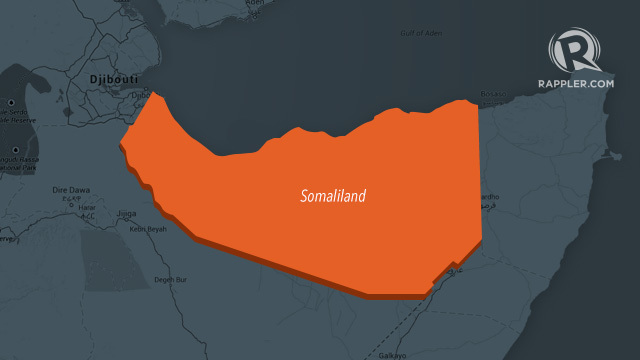
In other hand, Somaliland remains committed to its security and stability, where the pirates don´t subsist in Somaliland water. The international community should utilize the experience of Somaliland in the region, in order to end the piracy business in regional water.
Recently, Somaliland Forces crushed Puntland militia in its eastern regions: Sool and Sanaag. Somaliland is strong enough to eliminate Puntland pirates too.
Somaliland, the former British Somaliland, declared independence from failed Somalia 18 years ago, and remains active without international support. Somaliland has steady economy, army, police, jails authority, courts, elected government and parliament. Somaliland is model of modern democratic country, and deserves international diplomatic support.
By Abdulaziz Al-Mutairi

Pirates, clerics, warlords and the chaos in Somalia

Medeshi 23 Oct, 2008
Pirates, clerics, warlords and the chaos in Somalia
For seventeen years, chaos has plagued the Horn of Africa. Equipped with speedboats and rocket launchers, pirates roam the Indian Ocean in search of fortune. On land, radicals set off improvised explosive devices. Aid workers are assassinated and dragged through the center of the city. At a rally in a soccer stadium, children and parents alike bear Soviet-era rifles and yell “Allahu Akbar”: God is great. Welcome to Somalia.

Somalia is the most pressing humanitarian and security crisis in the world. Somalia is plagued by the human suffering of Darfur and the terrorism of Afghanistan. The global community, led by the United States, must act with vigor to help repair Somalia.
Somalia is no longer a state. It has no national army. It has no permanent governmental authority. The warlords govern localities, corruptly and violently improvising to make ends meet and nearly all foreign workers have fled the country after being targeted for assassination. The Somalis who remain are left with few options. Some have resorted to violence; others have tried theft; still others have embraced religion and joined the Union of Islamic Courts. Today’s Somalia is a conglomeration of pirates, warlords, Islamists (members of the Islamic Courts) and a few technocrats — a toxic mixture.
Somali pirates number in the thousands. They have attacked over fifty vessels in the past year, raking in millions in ransom money. They are an organized network with a unified mission and an official spokesperson. Think of us like a coast guard, he has said.
Most recently, the pirates spotted, attacked, and occupied a Ukrainian ship carrying $30 million worth of military equipment. The Somali pirates now possess a reservoir of tanks, grenade launchers and ammunition. However, it is hard to imagine how they will keep the 80,000 lb. tanks, for the pirates normally unload their booty with dinghy boats. Either way, the pirates aren’t stuck on details. They don’t want the weapons on the ship; they only want money. In fact, the pirates admit that the sea of weapons saturating Somalia is chiefly responsible for Somalis’ suffering over the past decade-and-a-half.
In a way, Somalia is in the throes of a never-ending civil war. Until a few years ago, Somalia was divided among warlords who led gangs that operated ad hoc local governments fueled by corruption and patronage. As the warlords struggled for power, an Islamist movement, the Union of Islamic Courts, grew to challenge the corrupt establishment in a new civil war.
The Islamists were quickly framed as a terrorist threat. The United States backed the warlords and allegedly sent them support through the CIA. In an encouraging testament to the power of our CIA, the warlords lost and the Islamists took over Mogadishu, the former capital. For several months, as the Islamists imposed a form of Shari’a law, Somalia was reasonably stable.
But that was not enough for the United States or Ethiopia. The United States was prepared to prosecute its War on Terror and Ethiopia was unprepared to deal with an Islamist neighbor. The United States supported an Ethiopian invasion of Somalia. The Ethiopians displaced the Islamists from power and occupied the country.
The Ethiopians continue to occupy Somalia and support the transitional government comprised largely of “former” warlords. In response, the Islamists have mounted an insurgent and assassination campaign to unseat the current government. They have assassinated foreign aid workers and officials from the Transitional Federal Government.
The United States has failed multiple times to stabilize Somalia. What merits another intervention, particularly when the country is more chaotic than ever?
Geographically, Somalia would be a perfect node for terrorism. Somali pirates, funded by terrorist networks, could seize oil tankers traveling through the Strait of Hormuz. With the proper support, Somali pirates could escalate an insurgent sea war that sends world oil prices skyrocketing. Somalia, like Afghanistan, could fast become a breeding ground of, and harbor for, international terrorism.
This is not to advocate a third leg of the war against terrorism. We cannot afford the financial cost and should not stomach the human cost of a third international war. However, we must do something about Somalia to promote stability and alleviate suffering.
First, the United States should convince the Ethiopian President, Meles Zenawi, to withdraw Ethiopian forces to the border between Ethiopia and Somalia. To ensure his compliance, we can offer Zenawi increased humanitarian aid as a carrot and reduced military aid as a stick.
An Ethiopian withdrawal would leave the Islamist forces to fight the warlords. Though both are bad guys, the Islamists are more likely to bring stability. Their last stint in power was the only period of stability in Mogadishu since the first Bush Presidency. Without Ethiopian opposition, the Islamists would likely win the ensuing war and again control Mogadishu, the former capital.
Before the Islamists can try to unseat the transitional government, the African Union should organize a joint summit with the Arab League (Somalia is a member of both) to orchestrate a power-sharing agreement between the technocrats in the transitional government and the Islamists. The few Somali technocrats are the only hope for a real Somali government. Warlords in the transitional government should opt into a reconciliation process or face exile.
If the power-sharing agreement succeeds, the United States should supply, with matching funds from the international community, $100 million for infrastructure reconstruction and secular education. The UN Security Council should continue to closely monitor the flow of money and arms to the new government, containing it from international terrorist influence.
Warlords amenable to reconciliation should be integrated into the new governmental system at the community level. Clan leaders should be allowed to continue overseeing local police forces, but report to a technocratic Interior Minister.
Yes, I am ultimately proposing another civil war, another political settlement and an Islamist government supported by American dollars that we currently do not have. It sounds crazy. It sounds tedious. It is both. The alternative is to do nothing and hope that the chaotic gridlock will somehow subside.
What do we lose by lobbying to have Zenawi withdraw Ethiopian troops? What do we lose by paying for infrastructure programs that cost less than .1% of our annual budget deficit? Somalia is subsumed by utter catastrophe and is headed for worse. The potential benefits include one less terrorist haven and millions more Somali children at peace for the first time.
As long as it is calibrated and limited, intervention will not burden Americans. Inshallah, it will help repair Somalia.

Occupied Somalia : UN & US Seek Ethiopian troop extension

Medehi 23 Oct, 2008
United Nations and America seek extension for Ethiopian troops in Somalia
2008-10-23 Somalia's warlord government again gathers in Kenya to legitimise Ethiopian troops in Somalia.
US Assistant Secretary of State for Africa Affairs Jendayi Frazer has called upon the leaders of Uganda, Ethiopia and Kenya to extend the mandate for the installed TFG ("Transitional Federal Government") whose tenure is due to ran out within six months.
From the start of next month in November, it is expected all current members of the TFG to be present in Nairobi for a meeting to formalise their extension for another five years without a lengthy voting process between the warlords.
One major obstacle facing the United States is the process of legitimising its servant nations such as Ethiopia and Uganda currently deploying troops in Somalia to protect the installed TFG and to fight the Somalians opposing such government.
The Ethiopian prime minister has been lobbying United Nations to accept the utter failures of current TFG to bring peace to Somalians. This he hopes will bolster United Nations suspicions of Somalian incapacity to govern its territories.
Dr Asha-Rose Migiro acting deputy Secretary-General of the United Nations from Tanzania met with Meles Zenawi to discuss Ethiopia's thirst to stay in Somalia by all means necessary. This coincides at a serious moment when USA is expected to cut the budgets of servant nations such as those in East Africa. Ethiopia hopes UN to convert occupying Ethiopian troops in Somalia to "peace corps" coming under the UN flag rather than under the directives of American forces stationed in Djibouti.
Warlord government is assumed to enthusiastically welcome such American requests in a bid to hold on to their fiefdoms as they face increasing opposition from within the country. However, this could also lead to more fractured government as many illiterate government officials are heading to Nairobi on the assumption of building a "new" government.
TFG Parliamentary speaker Mr Madoobe left the seat of parliament in Baidao along with many parliament members to fly to Kenya's capital, Nairobi. In a press release, he said .. all of us will participate in the building of a more inclusive government"
The UN supports the salaries of the warlord parliament of Somalia, and provides assistance to warlord government with travel expenses and other amenities. The UN does not recognise Somaliland who declared independence from Somalia, and continues to isolate officials from Somaliland in participating in UN sponsored conventions for Somalia.
By: Shuun Isaaq

In pictures: Kenya's Somali region drought

Medeshi 22 Oct, 2008
In pictures: Kenya's Somali region drought
BBC
Avoiding conflict
Echo is supporting the construction of strategically placed water pans and wells.
Ethiopian pastoralists often stray into Kenya and Somalia to use the water resources, which can lead to conflict.
This water collection tank in Ducale in Ethiopia has helped to reduce local tensions. It may also reduce livestock theft as people no longer need to plunder animals from other pastoralists to replace their animals which have died.


Camel milk
The only animals that can survive a sustained drought are camels, so farmers are moving away from traditional forms of pastoralism and replacing cattle with camels.
The European Commission's Humanitarian Aid department (Echo) is providing a small number of camels to pastoralists.
Camel milk is a delicacy which can be sold, and once the camels start reproducing the benefits will spread to the wider community.


Scarce water
The people of Takaba are among the worst hit in Kenya by the drought. Water has to be fetched in at great expense.
The town has had no rain for over six months and its six water pans have completely dried up.
Mohammed Abdulai Abdi points out that the closest functioning water pan is now more than 100km away.


Goat plague
The PPR virus, commonly known as goat plague, is sweeping across southern Ethiopia and northern Kenya.
Mohammed Noor recenlty lost 20 goats and is wondering how he will provide for his family.
Mohammed Abdulai Abdi says it is too late to save this goat, but that better provision of vaccines in the future could prevent the death of thousands of animals.


Vet
In Takaba, a small town 75km (47 miles) from the Ethiopian border, privately owned vet pharmacies give animals a better chance of surviving drought.
Community animal health worker Mohammed Abdulai Abdi serves around 3,000 herdsmen, sometimes travelling for several days on foot with a medicine pack, even to Ethiopia.
"Many pastoralists have little knowledge about how to cure ailments. I have saved a lot of animals with basic medicines from my pharmacy."

Maize stalks
Despite the hot and harsh conditions, communities are finding ways to cope with the water shortage and lack of fodder.
In Mandera, where farmers benefit from a seasonal river which flows down from the Ethiopian highlands, they are encouraged to harvest maize stalks for their animals before they grow into cobs.
Feisal Farah says he can produce enough stalks to get his cattle through the dry season as well as selling some to pastoralists who have no land.


Land pressure
More people require more livestock to survive, but the land is not able to support any more animals.
Pastoralist farmers are travelling further and further to find water for themselves and their animals.
There has not been enough rainfall to plant crops, and now a growing number of people require food and water assistance to survive.


Famine looming
Poor rains mean another tense period for communities living in the dry bush-land of north-eastern Kenya, close to Somalia and Ethiopia.
Despite the preparations that communities are making, if the short rains fail in October and November more people will be faced with famine.
The lack of rain causes drought, but it is the increase in the number of people living off the land that means many communities are threatened with famine.
By Daniel Dickinson/Echo

Somaliland: Conflict, drought force more children onto Hargeisa streets

Somaliland : Conflict, drought force more children onto Hargeisa streets
Photo: Abdi Hassan/IRIN
Street children pose for a photographer in Hargeisa
HARGEISA, 22 October 2008 (IRIN) - Conflict, drought and economic hardships have led to an unprecedented increase in the number of street children in Hargeisa, capital of Somalia’s self-declared independent republic of Somaliland, with government and aid agencies calling for urgent steps to stem the increase.
"Many of children on the streets of Hargeisa are from Mogadishu and other parts of south-central Somalia,” Sahardid Mohamed Osman, child protection and advocacy officer for Comprehensive Community-based Rehabilitation Services (CCBRS), a local NGO, told IRIN. Saleebaan Ismail Bulale, chairman of Hornwatch, a local human rights group, estimated there were 3,000-5,000 children on the streets of Hargeisa.

"There are no exact figures but that is our estimate and numbers seem to be increasing," Bulale told IRIN on 21 October. Osman said the children fell into three categories; those who work to help their families and go home at night; those who sleep on the streets; and, those who move from town to town. The reasons for the children being on the street vary, Osman added. Many of those from south-central Somalia were separated from their families on their way to Somaliland, while others end up on the streets due to poverty and violence at home, he said. Shoe-shining and car-washing are the jobs of choice for most of the street boys in Hargeisa, while the girls mostly clean or sweep business premises or clean people’s homes. Most beg, Osman said.
While on the streets, many children often suffer abuse, violence and particularly sexual abuse. "Many of those… that sleep on street corners have been victims of sexual violence," Osman said. "On the street at night they are easy prey with no one to protect them."

Risks

Many have been infected with "all sort of diseases, including HIV/AIDS and they don't even know what that is," he added. He said many of the street children had taken to tying a sack over the lower part of their bodies when sleeping at night.

"It is an attempt to protect themselves." Nasir Ahmed, 12, survives by washing cars. On average, he takes home 40,000 Somaliland shillings (about US$6.50) per day. "What I make from washing cars is what my mother and sisters and I eat,” he told IRIN. Ahmed’s father died in 2007, when the responsibility of caring for the family fell on him. “My mother used to sell vegetables in the market but she was not making enough so I told her `I will do the work. You stay at home and take care of the girls’,” he said.

There are no agencies that deal with street children and provide aid to them, said Osman. Osman’s agency, which is supported by the UN Children's Fund (UNICEF) among other agencies, is part of a child protection network in Somaliland. "Unfortunately we cannot provide material support but we provide psychological support, advocacy as well as community mobilisation,” Osman said.

More support needed

He said a lot more was needed to help the children. "To know the scale of the problem, we need to have reliable figures and to do that a serious assessment needs to be done,” Osman said. According to Denise Shepherd-Johnson, the chief of communication for UNICEF-Somalia, the agency has funded and provided technical support to CCBRS's interventions in child protection since 2005. She said UNICEF and CCBRS identify vulnerable communities and then - through an extensive process of mobilisation using trained child protection advocates - help communities put in place systems that better protect their children.
"These systems range from ensuring the poorest and most vulnerable children have access to schooling and health services, that girls fetching water are protected from harassment and sexual violence, that families whose children are more susceptible to living on the streets are supported to keep their families together, or that disabled children are referred to special schools and support," Shepherd-Johnson said. New law Ahmed Ali Asowe, Somaliland's minister of justice, told IRIN the government enacted a Juvenile Justice Law in March, aimed at guaranteeing children's rights. This means that children will no longer be tried in adult courts as was the case in past, Asowe said. The Somaliland government currently runs an orphanage that caters for about 400 children. “Our capacity to help all the children on the streets is limited and unfortunately we are not getting any assistance from the international agencies,” Asowe said.
Theme(s): (IRIN) Children, (IRIN) Conflict, (IRIN) Urban Risk [ENDS]

Report : Quiet Riot in Ethiopia!

Medeshi Oct 22, 2008
The Dewars Report on Internal Security in Ethiopia Ethiopian Review, US
Dewars Report
Quiet Riot in Ethiopia!
Alemayehu G. Mariam
The Dewars Report is attached as a PDF file
This past week an official report on riot control entitled “Modernizing Internal Security in Ethiopia” was posted online.[1] The report, prepared for the ruling regime in Ethiopia in July 2008 by retired British colonel Michael Dewars, summarizes findings and recommendations of an “assessment” study completed under the auspices of an Anglo-Ethiopian “think tank”. According to Col. Dewars a “number of experts on Ethiopia, including HE the Ethiopian Ambassador in London and an ex-British Ambassador to Ethiopia” had been meeting on the subject at the Ethiopian embassy in London beginning in May, 2007. Regime official Tefera Waluwa, in a letter dated January 2, 2008, instructed Col. Dewars to “complete and initial assessment” and “make recommendations designed to create a modern security force that will function effectively by using strategies designed to pre-empt civil unrest which threatens the security of the State of Ethiopia and its People,… and on the equipping and training of such a Security force.”
Col. Dewars’ report is as revealing as it is curiously self-contradictory. Dewars writes that “it is impossible to consider any aspect of Security today without putting it in the context of Human Rights in Ethiopia.” But he found it “enormously challenging” to “teach human rights conventions and norms set against the background of a complex mosaic of age-old customs and patterns of coexistence among some eighty different geographically ethnically diverse national groups speaking some two hundred languages.” He is dismissive of the advocates at Amnesty International (AI) for their naïvete and for their lack of real understanding of the Somali situation. He claims AI “makes little or no effort to take account of the realities of the Somali situation or of the fact that Somalia is currently engaged in a counter-terrorist struggle.” He asserts that the humanitarian crisis in Somalia is not the result of human rights abuses or “largely the responsibility of Ethiopian troops.” He congratulates the ruling regime in Ethiopia for “much laudable effort put into Human Rights programmes.”
Col. Dewars offers recommendations at two levels: 1) launching a propaganda campaign to present a kinder and gentler international face for the regime, and 2) improvements in logistical and tactical support for the Riot Police. Col. Dewars recommends that since “the Western press tends unthinkingly to take AI at its word,” it is important that the “AI lobby…be countered with a PR campaign that emphasises progress in the Human Right area and underlines positive change.” Regarding the Riot Control Police, Col. Dewars documented that they “are currently three times the size they were in 2005” when “anti-government riots” took place, and currently remain in good condition. They have “perfectly acceptable set of personal equipment” which includes “helmet, including neck protection, and visor, boots, protective leggings, baton, and shield.” Col. Dewars believes “the basic equipment they now have is perfectly adequate and should remain so for some years.” But he is concerned that the Riot Police have very little to do with their time. He noted that the “Riot Police appeared to be trained as riot police only so that most of their time is spent waiting for riots to happen.” He recommended that the idle “elements of Riot Control Divisions/Battalions be ‘double-hatted’ by giving them other additional responsibilities.”
Col. Dewars visited the Police College which appeared to be “a well run and impressive facility”. He noted that during his visit “the Commandant was not available, no training was in progress, classrooms were empty and the gate was not manned.” During a three-hour conversation, the Director General of the Ethiopian Federal Police told Col. Dewars that he “ ‘regretted a lot’, the bad publicity generated [by the police killings of unarmed protesters] in 2005. He had wished very much for a better outcome. As a direct result of the 2005 riots, he sacked 237 policemen.”
Col. Dewars was totally horrified when he visited detention facilities in an Addis Ababa sector police station.” He recounted:
I asked to go into the compound where the prisoners are kept. This consisted of a long yard with a shed to one side which provided some sort of shelter. The compound had a wall around it and a watchtower for an armed sentry overlooking it. Inside must have been 70 – 80 inmates, all in a filthy state. There was insufficient room for all these people to lie down on a mat at once. There was no lighting. The place stank of faeces and urine. There appeared to be no water or sanitation facilities within the compound. There was a small hut in an adjacent compound for women prisoners but there had been no attempt by anybody to improve the circumstances of the place. The prisoners were mostly on remand for minor crimes, in particular theft. Some had been there for months. There was one young boy among the prisoners, who appeared to me to be 12 or 13 years of age, who was weeping and pleading to speak to me so I asked him how old he was. He said 13. He certainly could not possibly have been older than 15. When I asked what the minimum age for holding prisoners in this facility was, one policeman said 18, another 15. In any event, he stayed there.
Col. Dewars concluded, “Detention conditions of prisoners are a disgrace and make the Federal Police vulnerable to the Human Rights lobby.” He “recommended that the Government should investigate this situation with the intention of improving the current appalling conditions inside Ethiopian prisons, which must brutalise prisoners and their goalers equally. It is recommended that senior Ethiopian Ministers and Police Officers visit the prison that I visited.”
Note: The balance of this article is available at the link above.

Somaliland : The agony of not affording to go to school

Medeshi Oct 21, 2008
SOMALILAND : Nasir Ahmed - "I feel bad every time I see children my age going to school"
HARGEISA, 21 October 2008 (IRIN) - More and more children are missing out on childhood as conflict continues in war-torn Somalia. Families who fled the violence have been separated from their children and, as poverty bites due to drought and hyperinflation, many children have taken to the streets to fend for their families. Nasir Ahmed, 12, is one such child in Hargeisa, the capital of the self-declared republic of Somaliland.
(Photo : Ahmed Nasir washes a car in Hargeisa)
Ahmed was born into a poor family and going to primary school was too expensive. Instead, he went to a Koranic school. However, even this came to an end when his father died in 2007. The family, comprising of Ahmed, four other children and mother, had to survive on whatever their mother made from selling vegetables in the market. Ahmed decided to work to help his mother. He spoke to IRIN on 20 October:
"After my father died, my mother started selling vegetables on a small table in the market but she was not making enough to feed us; so I decided to help.
"I started out as shoe-shine boy. Soon, I started washing cars. The owners trusted me with their cars so I would wipe off the dust from them and soon they would ask me to wash them. I realised I could make more money that way, so I stopped shining shoes and concentrated on washing cars.
"On average, I make about 40,000 [Somaliland shillings - about U$ 6.50] a day. Everything I make, I take it home to my mother.
"I told my mother to stop working and take care of the girls. I don't want to work but I have no choice; if I don't work we don't eat.
"If I had a choice and I had help finding food for the family, I would go to school. Every time I see children my age going to school I feel bad and wish I was going also.
"When I grow up, my dream is to become a teacher and help children like me.
"One day I pray that I would be in a position to not only help my family but also others like us enjoy a better life. I know I will not be doing this job forever."
irin

No place for Oromos to flee persecution

Medeshi 21 Oct, 2008
Press Release
OHRRO
Oromo Human Right and Relief Organisation received yesterday very alarming news that Mr. Mohamed Ahmed Mahamud was arrested by Somaliland Authorities on October 15, 2008 and handed over to Ethiopian Security. Mr. Mohamed Ahmed Mohamud is an elderly Oromo who fled persecution by the Ethiopian security years a go. His crime was nothing but only his political opinion like thousands of Oromo refugees. At the time of his abduction, Mr. Mahamud was under UNHCR mandate as a legal political refugee in Somaliland. Now Mr. Mahamud is back in to the hands of his persecutors to face physical torture, imprisonment or even death.

It is well known that the Somaliland authorities have progressively become helplessly allied to the Ethiopian government since the latter’s military incursion in to the southern Somalia. This fact has had a tremendous repercussion on the lives of thousands of Oromo refugees in Somaliland. The Oromo Human Right and Relief Organisation (OMRHO e.V.) has no doubt that Mr. Mahamud’s tragic fate would soon be the fate of many other Oromo refugees.

It appeals therefore to all international human right organisations to rescue the life of Mr. Mahamud and to follow up the adversary actions of the Somaliland authorities against Oromo refugees in general.
OMRHO e.v.

Somaliland: SGBV Consultant

Somaliland
SGBV Consultant
International Organizanisation for Migration (IOM)
Closing date: 22 Oct 2008Location: Somalia - Hargeisa
Vacancy Notice Number: IOM-HGA-SGBV-001-08Functional Title: Consultant – SGBV ResearcherDuty Station: Hargeisa, SomalilandDuration: 2 Months
Background
The United Nations System-wide Work Programme on Scaling-up HIV/AIDS Services focuses on populations of humanitarian concern not currently reached by HIV/AIDS humanitarian or development programmes. The United Nations Population Fund (UNFPA), through its implementing partner the International Organization for Migration (IOM), will address Output 3 of the Programme, to benefit women and girls, who are displaced and rendered especially vulnerable to sexual and gender-based violence (SGBV) as a result of conflict or crisis. The underlying focus will be on the linkages between HIV/AIDS and Gender- based Violence (GBV). This project, “Tackling Sexual and Gender-based Violence for Populations of Humanitarian Concern”, has two components, one in Somaliland and one in Zimbabwe, to identify and address SGBV through appropriate prevention, care, support and mitigation interventions. The component in Somaliland will comprise an SGBV Vulnerability Assessment and HOAP Programme Proposal for Post-Emergency Displaced Populations in Non-camp Settings in Somaliland under the Regional Partnership on HIV Vulnerability and Cross Border Mobility in the Horn of Africa (HOAP).
Objectives
To increase SGBV awareness among government, UN, INGO, and other stakeholders – representing multiple sectors – on the vulnerabilities of specific populations of humanitarian concern, and effective approaches for vulnerability reduction and sustainable delivery of integrated services. To provide governments and partner agencies with a strategic information document and programme proposal to facilitate extension of the IASC HIV and Gender-based Violence Guidelines and to address the needs of displaced women in non-camp situations during the post-acute emergency phase.
Tasks to be performed under the contract:
A. Conduct a qualitative SGBV vulnerability assessment (focussing on the linkages between HIV/AIDS and SGBV) in all regions of Somaliland.
a. Develop research methodology, including interview tools
b. Undertake key informant interviews and focus group discussions
B. Produce final report with findings, to be peer reviewed by IOM technical staff.
C. Present the research to local stakeholders and the Regional SGBV Working Groups.
D. Write an SGBV programme proposal, developed after dissemination and consultation meetings held in Hargeisa and Nairobi, and through involvement of HOAP and SGBV Working Groups.
Qualifications
- Bachelors Degree in relevant field
- Advanced training in anthropology, epidemiology or public health (i.e. Postgraduate degree)
- A minimum of two years experience undertaking qualititative social research (design and implementation) in the field of SGBV, GBV, HIV or related field
- Fluent in English
- Somali not required, but an asset
- Proficient in Microsoft Office
- Working knowledge of NVivo or other qualitative data analysis tools an asset
- Excellent inter-personal and cross-cultural communication skills
- Excellent ability to multi-task to deliver under pressure
Duration: Two months

How to apply

Submit a cover letter quoting the reference number on the subject line and an updated resume (CV) with three professional references and a daytime telephone contact to IOMHGA@iom.int.

Reference Code: RW_7KJC5Q-53

Power-Sharing Now On the Cards

Power-Sharing Now On the Cards
The East African (Nairobi)NEWS
Posted to the web 21 October 2008

By Fred OluochNairobi
There are prospects of a power sharing deal being struck in war torn Somalia that would borrow from the examples of Kenya and Zimbabwe.
Following the Djibouti agreement in June and a realisation that the conflict in Somalia is now taking unpredictable forms, the Inter-Governmental Authority on Development (Igad), has summoned the entire Transitional Federal Government (TFG) parliament to Nairobi to explore the possibility of the antagonists in Somalia working together after 18 years of anarchy.
Although most TFG MPs The EastAfrican spoke to maintained that the three-day meeting, set to kick off on October 26, will discuss issues like the rampant piracy in Somali waters, outside interference in Somalia, Somali refugee imprisoned in Tanzania and the continuing attacks on Somali nationals in South Africa, it is evident that most participants would not be averse to a power sharing deal.
Prospects of a power-sharing formula are strengthened by the fact that Sheikh Ahmed Sheriff, who led Somalia during the reign of the Union of Islamic Courts (UIC), has of late been pursuing a compromise approach to the conflict.
Sheikh Ahmed has always been seen as a moderate within the UIC, which was driven out of Mogadishu in early 2007 following the intervention of Ethiopian troops with the support of the US. He is now leading the Alliance for Re-Liberation of Somalia, which signed the Djibouti agreement with TFG in June.
Prof Mohamed Omar Dalha, Deputy Speaker of the TFG parliament, told The EastAfrican that the MPs are optimistic that something tangible will come out of the Igad talks.
"Having signed the Djibouti agreement, we will not mind if this meeting comes up with proposals for greater co-operation between the TFG and the opposition, even if it means sharing power to end this violence that has prevented the Somali people from realising their potential for the past 18 years. We expect that the group based in Asmara will join us," he said.
Prof Dalha noted that conflict is no longer between TFG and the UIC, but between those who want to restore law and order in Somalia and those who are against any system of government since they are benefiting from the chaos by engaging in illegal trade, kidnapping and illegal taxes.
Apart from the continued violence, the main concern for the international community is that the mandate of the TFG is set to expire at the end of next year, and nothing of significance has been achieved towards ending the war since the peace deal was signed in Nairobi in 2004.
Should the mandate expire without a new constitution to allow the holding of elections, and without the boundaries of the proposed state having been defined, Somalia will experience more anarchy, given that some groups would not support the handpicking of MPs that happened in 2004.
The setting up of the TFG and parliament, which later moved to Midowa, presented a semblance of sovereignty, but TFG has not been able to consolidate its control over the country in the past four years. Some of its MPs have been killed or injured in continuous attacks that also targeted President, Abdullahi Yusuf.
The parliament is yet to finish drawing up the constitution and the boundaries of the federal states, to be based on existing regions. Some regions like Lower Shabelle and Lower Juba are not under the control of local people, which is a recipe for constant conflict.
Specialists in Somalia affairs argue that the Djibouti agreement could act as a platform for serious co-operation, especially if it follows the example of neighbouring Kenya that used power sharing to bring an end to inter-ethnic strife.
However, the agreement has been criticised by some observers who argue that it did not give a definite timetable for the withdrawal of Ethiopian troops from Somalia.
As it is, the international community has been lukewarm on the issue of Somalia and has not conducted a serious follow-up of the peace deal as happened in Liberia, Sierra Leone, Rwanda and Burundi.
The Ethiopian government has said that it will withdraw its troops once African or UN peacekeepers are deployed. Most countries except Uganda, Rwanda and Burundi have been reluctant to deploy their troops in Somalia.
But now, the issue of piracy in the Somali waters is an emerging problem that could either force the international community to engage in a broader peace process, or concentrate on wiping out the pirates at the expense of the peace process.
Prof Dahla opposed the practise of paying the ransom demanded by the pirates because it would just empower those who are hijacking ships in the Gulf of Eden. Instead, those paying the pirates would rather give the money to TFG to establish its navy to deal with the pirates from within.

Somaliland’s prepares for 2009 elections

Medeshi Oct 21, 2008
Somaliland’s prepares for 2009 elections - Voter registration starts in the small region of Sahil
By Moha Dahir Farah Jire.
HARGEISA, SOMALILAND
Voter registrations have started in Somaliland in preparation for the upcoming general elections expected to take place at the end of march 2009. On Tuesday this week registrations of the voters started in the first region in Somaliland in the region of Sahil .
The voter registration in the region started after three months of planning in which people of all walks of life from Sahil region took part including the vice president of the republic Somaliland, Ahmed Yousuf Yasin, who led in the registration by being the first to register. While registering VP Ahmed Yousuf Yasin encouraged the population to register and be documented and become part of the nation’s historical legacy.

He also told the youth who are aspiring to immigrate to the developed countries that it is necessary to be a registered citizen, and enjoy the right to vote after registration.VP Ahmed Yousuf Yasin also the people to register and differentiate themselves from their brothers in Somalia who are still suffering from lack of peace and stability.the speaker of the Somaliland’s elected parliament Mr. Abdirahman Mohamed Abdilahi too registered who has blood ties to the Sahil region and his affiliation with the Opposition party, UCID party. He stated that all the politicians, opposition and government, business people, youth, women and every else who reach the age of 16 should register him or herself and be proud to be registered for the first time in the nation’s history.

The people from Sahil region became emotional and avidly followed its process for registration, since they are the first region to be part of the registration process. When asked some did not get enough information on why people needed to be registered and had told SSI that they had initially thought that registration was not required to go and vote on election day.

Also present at the launch of the registration include invited guests from all the three political parties, representative form the lower and upper houses of parliament, international observers and local NGO’s who were following the registration process. the chairperson of the Electoral Commission, Mr. Mohamed Ismail Kaboweine, in an exclusive interview with SSI said: “the work is going on in a proper manner as it was planned and once registration is concluded in the Sahil region registration of voters in other regions will start.
He reasoned that the Sahil region was chosen to be the first to test voter registration because of the fact that it is the smallest region and has a smaller population in relation to the other regions.

International observers and diplomats within the African diplomatic core mentioned at the occasion that documented Somaliland nations would get a better chance for consideration while applying for visas from Western embassies as previously problems were faced while trying to classify Somalis from Somalia and Somaliland and as a result Somaliland nationals would be refused visas because of the ensuing confusion.
October 21, 2008

Somalia: The way Forward

Medeshi Oct 20, 2008
Somalia: The way forward
After a protracted conflict, brutal Ethiopian occupation and flawed U.S. policies, there are signs of hope in Somalia. For the first time, the United States and the United Nations realize that ending Ethiopia's occupation and the inclusion of Islamists in the political process are necessary for comprehensive political settlement.
In May 2008, the U.S. Senate passed resolution 541, which demands from Ethiopia a responsible withdrawal timetable and encourages the UN to investigate the human rights' atrocities in Somalia. Members of the Security Council met with the leadership of the Islamist-dominated Alliance of Reliberation of Somalia (ARS) in Djibouti during their Africa tour in June 2008.
Although these are positive steps, establishing a political process that leads the way to a legitimate and functioning transitional administration in Somalia remains elusive. Ethiopia and Kenya - Somalia's hostile neighbors - manipulated the previous peace processes. As recent events indicate, these countries want to undermine the current UN-led peace process in Djibouti.
If the U.S. and the UN are serious about helping end the Ethiopian occupation and the Somali conflict, they must not allow these countries to hijack the UN-led peace process again. The international community must understand that the false arguments of regionalization failed the Somali people more than once. The Ethiopian-dominated Intergovernmental Authority on Development in Eastern Africa is neither capable nor united on this issue.
Neither the international community's quick-fix approach nor Ethiopian-dominated process will bring peace to Somalia. The Islamist-dominated alliance's concessions have to be considered an opportunity to open the process further and include other important stakeholders such as civil society, traditional leaders and diaspora Somalis.
In order to establish a legitimate and functioning government that does not need the protection of foreign forces, the international community must strengthen and expand the currently UN-led peace process in Djibouti.
A. Elmi

Yemen closes boarders in the face of African refugees.

Medeshi
Yemen closes boarders in the face of African refugees.
Posted in: Front Page Written By: Abdulaziz Oudah
Article Date: Oct 20, 2008
Yemeni security forces have closed the boarder crossings under the direction of Rashad Al-Masri, Minister of Interior in the face of the growing number of refugees the Yemeni coast has recently witnessed from Ethiopia, Eritrea and Somalia.
Al-Masri ordered the military units in the areas hardest hit by the influx to block refugees from Ethiopia and Eritrea, renewing his call for the international community to stand up to their commitments and support Yemen in receiving and hosting these refugees from the Horn of Africa.
Al-Masri expressed concern over the increasing number of the African Horn refugees which has increased to 200 - 300 a day, since last September. The ministry's information center quotes al-Masri as saying that the ministry is extremely concerned over the influx which is not only restricted to Somalia, stating that there about 140 refugees from Ethiopia and Eritrea who recently landed at Dhibab and Ras al-A'ra in bab-Mindab.
The ministry of Interior's statistics revealed that the Yemeni coast received 2214 Somali refugees during the period from the first to mid October.
The interior ministry is worried over the social, economic, cultural and security challenges that Yemen is now facing due to the continuing African refugee influx.
The Sana'a UNHCR's reports states that the smuggling process has resulted in hundreds and possibly a thousand deaths due to the unsafe human piracy practiced in the Red sea.
Ambassador Al-Aishi asked the international community and the refugee agreement parties to undertake their responsibilities pertaining to this humanitarian situation. He called on the international community and particularly relevant neighboring states to share Yemen’s burden and accept some of the refugees and asked for NGOs to cooperate with the UNCHR commissioner to take new measures to prevent any country or countries from becoming a permanent haven for refugees as is now the case in Yemen.

Colin Powell backs Barack Obama to be an ‘exceptional’ president

From The Times
October 20, 2008
Colin Powell backs Barack Obama to be an ‘exceptional’ president
The Republican hero questions McCain’s judgment
to not show photographer information
Colin Powell said that Barack Obama would transform America's fortunes at home and standing abroad

Tim Reid in Washington
Colin Powell, the Republican once tipped to become America’s first black President, endorsed the Democrat, Barack Obama, yesterday as a “transformational figure” who was ready to be the next Commander-in-Chief.
President Bush’s former Secretary of State said that he was backing Mr Obama, not because of his race, but because he had met the standard to be an exceptional President. And he delivered a stinging rebuff to the Republican, John McCain, describing his campaign as petty and troubling.
Endorsements rarely have a decisive impact in presidential politics, but the effusive backing for Mr Obama by a man so widely respected could play a significant role in persuading some undecided voters. It also ensures that the news will dominate media coverage of the campaign for the next 24 hours, robbing Mr McCain of one more day to change the trajectory of the race with only two weeks to go until the election on November 4.
At a rally in North Carolina, Mr Obama basked in the endorsement, calling General Powell “a great soldier, a great statesman and a great American”. He added that he was beyond honoured and deeply humbled to have his support.
Related Links
I can live with defeat, says John McCain
Brave Palin faces up to her chief tormentor
Environment will wither whoever wins US race
General Powell, who oversaw victory in the 1991 Gulf War, made clear that his decision to back Mr Obama was as much a sign of his unhappiness with Mr McCain, his campaign and his choice of Sarah Palin to be his running mate. General Powell, an avowed moderate, said that Mr McCain’s choices in recent weeks — especially his selection of the Alaska governor — had raised questions in his mind about the Arizona senator’s judgment.
“I don’t believe she’s ready to be President of the United States, which is the job of the Vice-President,” General Powell said bluntly. He decried what he called the “rightward shift” of the Republican Party — he cited Mrs Palin’s selection as an example — and criticised Mr McCain’s “unsure” response to the economic crisis. “Almost every day he had a different approach to the problems we were having,” General Powell told NBC’s Meet the Press.
Mr McCain, who has known General Powell for 25 years, sought to play down the endorsement, saying: “It doesn’t come as a surprise.” He pointed out that he had been endorsed by four other former Republican Secretaries of State.
General Powell, 71, who was also the National Security Adviser to Ronald Reagan, said that he had asked himself: “Which is the President we need now?” Referring to Mr Obama, he continued: “And I come to the conclusion that because of his ability to inspire, because of the inclusive nature of his campaign, because he is reaching out all across America, because of who he is and his rhetorical abilities — and you have to take that into account — as well as his substance — he has both style and substance, he has met the standard of being a successful President, being an exceptional President.
“I think he is a transformational figure. He is a new generation coming . . . on to the world stage and on the American stage. And for that reason I’ll be voting for Senator Barack Obama.”
General Powell criticised Mr McCain for invoking the Vietnam-era domestic terrorist William Ayers as an Obama associate. “I think this goes too far. And I think it has made the McCain campaign look a little narrow. It’s not what the American people are looking for. And I look at these kinds of approaches to the campaign, and they trouble me,” he said.
“I feel strongly about this particular point,” he added. “We have got to stop polarising ourselves in this way.”

Ethiopian regime Guides Western Triple Failure in Somalia

Ethiopian regime Guides Western Triple Failure in Somalia
By Dr. M. Omar Hashi
BSN
Today, the Hawiye people's armed struggle in Southern and Central Somalia continues to prevail decisively to victory; while for all intents and purposes Ethiopia has lost the war it launched.

America and European superpowers have conceded that the Ethiopian occupation was of limited utility (if at all useful), and now an abysmal and humiliating defeat. Moreover, militarily speaking there is not much the Ethiopian con scri pt army can do to influence events in the Resistance-held South Somalia. The whole Occupation has become "operationally dead" in the face of a growing, popular and more determined protracted insurgency. The useless Ethiopian allied war criminal Darood "TFG" entity has already self-destructed into mutually unintelligible parasitic pieces; whose ugly demise was foretold long before the ongoing defeat of the Ethiopian occupation army.
Therefore, in hindsight the Western powers through their many mistakes have themselves grossly miscalculated on both the resilience of the Hawiye people's Resistance and the Ethiopian mass murderer Meles Zinawi regime's capability to subdue that Resistance; not to mention its erstwhile Darood-TFG collaborators who are fleeing to and from like rats today. Somalia is a systemic and blunt Western miscalculation that has effectively eroded the competency of the US-EU Superpowers in the Third World and on the global stage, specifically in terms of organizational integrity and credibility, all at a time of growing anti-Western sentiment in the Muslim world and emerging counterweight military rivals in Russia, China, Venezuela and Iran. In addition, the current US-EU paralysis-cum Ethiopian genocide debacle in Somalia is also a 20 year policy of utter quagmire and blowback!
Consequently, this essay attempts to answer the question asked by so many Somali victims of Ethiopian genocide and non-Somalis alike-in fact the whole world today: Why have the Western powers, who themselves manufactured the decades long Somalia Civil War, been so profoundly unable to resolve that crisis? In other words, why have US-EU policy failed so dramatically when it could have succeeded, especially given that the US-EU started the war and with some intelligible actions ( based on firm understanding of the internal Somali tribal conflict dynamics) could easily resolved it?
Failure #1: Ethiopia and the so called "Hawiye warlords" Miscalculation
Ever since the 1977-78 Ethio-Somali war America and EU powers felt that it was best to leave Ethiopian priorities central in the West's bilateral dealings with the Somali state and people. The reason was Somalia not only won the1977-78 war as related to conflict with Mengistu regime and the Ethiopian army, but the war itself exposed the inherent contradictions in the artificial Ethiopian state itself. Therefore, the Western powers fearful that another major conflagration would result in the further and potentially irrevocable disintegration of the Ethiopian Habesha controlled concentration camp into its constituent ethnic blocs, decided to turn on the Barre dictatorship. However, with the unceremonious demise of the once US-backed brutal clannish dictator Siyad Barre in 1991, the fear of an immediate "Somali state" was quickly removed; put more correctly, the vestiges of an organized Somali national apparatus (even one as violent, corrupt and dysfunctional as Barre's regime) was gone.
Instead what America had and wanted was to deal with the Somali "people" directly, as understood in the disparate and unrelated clans, sub clans and tribes- all mutually antagonistic groupings. Both the US-EU leadership felt that dealing with such clans and tribal factions was a lot more convenient and safe for the post- Mengistu Haile Mariam, Tigrayan-run Ethiopia to rebuild its army than to risk another potential war with a Somalia regional rival; albeit in the form of a US-friendly post-Barre puppet regime in Mogadishu.
However, within the US and EU decision-making bodies there was also some serious doubts cast as to how long Somalia could be kept stateless and whether such a permanent stateless void would help or hinder Ethiopia in the long run.
Agreeing to keep Somalia stateless as option #1, certain military-industrial lobby groups in Washington led by major oil conglomerate ConocoPhillips urged the Bush administration to also try and secure the Somali natural resources by force. The Bush administration as a result decided to undertake a massive $5 billion dollar US-led and UN sanctioned Intervention with the stated aim of turning "Somalia into a quasi trusteeship"- this initiative was dubbed "Operation Restore Hope".
After its bloody failure and the subsequent withdrawal of UN and US forces, the Ethiopian dictator Meles Zinawi fearful of yet another potential popular resurrection of Somali state under the determined Hawiye (especially, since both the remnants of the tribal Barre regime and their foreign backers were kicked out), advised for a new policy shift: the cultivation of an array of uneducated and weak tribal warlords to block the Hawiye and by extension Somalia.
In this scenario, dictator Meles envisioned and was able to recruit an array of criminal warlords (all of whom are currently part of the TFG gang) solely controlled by his Tigrinya minority regime. The stated aim was to sow disunity and forestall Hawiye political and economic advancement.
Unfortunately, Zinawi regime proved to be as stupid as it is genocidal in providing such a direction towards unpopular warlords. Although the US-EU powers dutifully armed and legitimized various Ethiopian controlled warlords- especially through 14 or so sham "peace conferences" run by the corrupt Kenyan regime of Daniel Arap Moi, the Western powers miscalculated with the warlords. The actual Hawiye people "the clans and groups" on the ground soon realized the nefarious conspiracy of the belligerent Western powers and Ethiopia against their wellbeing in support of the cancerous and destructive warlords.
Instead, the Hawiye people- divided in clans, but all sharing the experience of victimization by both by foreign intervention and domestic tribal war and dictatorship- became ever more determined to continue to carry on with their lives no matter what the West and its Ethiopian puppet plotted. After 1995 internal Hawiye clashes, the people saw the rebuilding of Mogadishu's basic services like water and electricity, then slowly the multitude of towns and populated centers, until finally expanding business links across and beyond subclan and tribal lines.
All of this progress was achieved actually in spite of the dozen or so Ethiopian-controlled warlords and their unscrupulous foreign backers who menace all business and civilization. In fact, the Mogadishu region itself witnessed an unprecedented boom in commerce, private telecommunications, schools, hospitals and the export-import of all manners of goods since 1991- though there was no so called organized governmental authority managing these interactions.
Failure # 2: Ethiopia and the Darood collaborationist "TFG" Miscalculation
The Rise of the Islamic Courts Union was the result of a painstaking process based on cementing fraternal and communal ties between the Hawiye people and business community. Therefore, the Islamic courts started as an indigenous grassroots response to the utter collapse of law and order on the local level caused by the Western-funded and Ethiopian controlled warlord criminals and their Qat militias. By stamping out crime, especially the Ethiopian and Kenyan harvested drug Qat ( and the related lawlessness and insecurity it breeds) as well as creating jobs the ICU in Mogadishu ensured the free flow of goods, services and people-something very remarkable for a city of 2.5 million people without a government!
As a result of the ICU's neighborhood level successes it wasn't long before it morphed it into a popular governance mechanism able to unite the various clans and tribes of Southern Somalia's regions into one functional (credible) national authority. Similarly, the Zinawi dictatorship once again fearful of the "real-time" emergence of an effective Somali national authority in the form of the ICU movement decided to guide the Western policy to yet another miscalculation, this time in trying to impose the clannish TFG warlord entity under the cowardly-dependent Darood warlord Abdullahi Yusuf. Despite his foolish invasion of Somalia in December 2006 and receiving billions of dollars from US-EU powers for the war of occupation-genocide ( in addition to making his decrepit Darood warlord Abdullahi Yusuf be seen as the West's "surrogate ""- dictator Zinawi failed miserably to change the course of history or the ongoing War in Southern Somalia.

Rather than surrendering, the Hawiye people immediately launched an armed Liberation struggle to resist the US and EU-funded Ethiopian occupation-genocide. After more than 2 years and half of the worst atrocities and fighting imaginable in the world, the depleted Ethiopian killing machine has now become so bogged down and demoralized, that it, rather the hardened Hawiye civilians is the one receiving the worst brunt of the fighting!
The US and EU powers today feel humiliated and paralyzed despite trying to lie, deceive and pervert the course of justice to hide the Zinawi regime's war crimes. The invasion of Somalia was miscalculation and everyone in the world knows that the Ethiopians invasion failure was directly micromanaged by the West and is Western made debacle.
In addition, the so called TFG war criminals have become a serious liability for the West to want to immediately rid itself of. That is, the TFG war criminal entity is such a humiliation that the very "living god" of the Darood gangs dictator Meles has felt the need to loudly and publicly distance his regime from warlord Yusuf, ironically blaming the irrelevant coward for Ethiopia's ongoing defeat at the hands of the Hawiye Resistance!
Failure # 3: Ethiopia and the Sheikh Sharif "Djibouti Stooges" Miscalculation
Dictator Zinawi's recent contradictory statements on the so called IGAD Nairobi Conference-which is incidentally purely out of desperation-that if the Sharif Sheikh Ahmed "ARS Djibouti stooges" and the now defunct TFG gang led by war criminal Nur Adde are somehow able to successfully merge into a functional puppet entity Ethiopia might stay on is just another gross miscalculation for the US-EU powers towards regional failure- one which like the past two the West will dreadfully regret.
The reason is the Resistance forces in Somalia cannot be influenced or manipulated by the mere clique of stooges who are unrepresentative and led by so called Sharif Sheikh Ahmed-himself an opportunist who is now utterly disgraced and as a result been summarily removed as Chairman in the Alliance for the Re-Liberation of Somalia! Sharif was already isolated by his respective Abgaal subclan warlords, who as a group anyway were useless since the Abgaal clan is disproportionately pro-Ethiopian occupation from the beginning and today only a very small minority is fighting in the Hawiye Resistance movements.
Today, Sharif Sheikh Ahmed ranks even lower than his own fellow sub-clan warlords Nur Adde and Mohamed Dhere in terms of credibility and influence on the ground. By joining the Ethiopian occupation Sharif Sheikh Ahmed has no way out, he is literally finished! Let alone be able to face or disarm the Resistance forces; there is every indication that much like humiliated cowardly warlord Abdullahi Yusuf so called Sheikh Sharif will be as vulnerable and dependent hostage upon the beleaguered Ethiopian occupiers and the doomed African Uganda-Burundi mercenaries.
What's more, practically speaking the US and EU powers know full well the Djibouti charade has become a "real fiasco" with zero impact on the Core of the Resistance movement: the warrior and steadfast Habr Gedir clans, who will undoubtedly never compromise nor forsake their victorious armed struggle today. Consequently, the US-EU powers are engineering their own triple failure if they follow desperate Ethiopian regime to its end!

Qaar ka mid ah Ururada Bulshada Rayidka ah oo walaac ka muujiyay mudo dhaafka golayaasha deegaanada

Annaga oo ah Ururada Bulshada Rayidka ah ee Madaxa-banaan waxaanu si wayn uga walaacsanahay