NGOs fear for human rights defenders in Ethiopia

Medeshi
NGOs fear for human rights defenders in Ethiopia
(Photo: Ethiopia’s visa)
25 September 08 - Ethiopia recently launched a project of legislation, known as the Draft Proclamation on Charities and Societies, which could dramatically limit human rights activities in the country if signed into law later this year.
Jennifer Henrichsen/Human Rights Tribune - A new bill proposed by the government of Addis Ababa could limit human rights activities of foreign organizations in Ethiopia, as well as local organizations that receive more than ten percent of foreign funding. These organizations would not be allowed to carry out work on gender issues, children’s rights and the rights of disabled people, said Human Rights Watch (HRW) in a report published September 11.
Foreign organizations like Amnesty International and Human Rights Watch could only work in these areas if they are granted written permission by the Ethiopian government, stated the report.
The proposed bill would also have a dramatic impact on independent, domestic organizations like the Ethiopian Human Rights Council, said HRW at a panel discussion September 18 outside the Human Rights Council in Geneva.
Yoseph Mulugeta of the Ethiopian Human Rights Council (EHRCO) and panelist at this event said his organization could be crippled by the bill. “The EHRCO receives around 400,000 dollars in aid from the U.S. per year and less than 2,000 U.S. dollars comes from local sources,” said Mulugeta. “For many NGO’s, this [issue] is a matter of life or death,” he added.
An Ethiopian official present in the panel audience September 18 defended the proposed bill by saying that under the new law, foreign and foreign-funded civil society organizations could continue to work on poverty alleviation and economic development issues.
“Foreign NGO’s could still engage in humanitarian assistance, just not political activities,” Allehone Mulugeta Abebe, First Secretary of the Permanent Mission of Ethiopia to the U.N. said to HRT after the panel.
He cited last year’s expulsion of the International Committee of the Red Cross (ICRC) from the Ogaden region as an example of alleged “political interference” that wouldn’t be tolerated by his government.
“The ICRC was expelled from the Ogaden region in Ethiopia because the government had evidence that those working with the ICRC were associated with the rebels,” Abebe told HRT. “Even in liberal democracies, it is not a right for the NGO’s, but a privilege of the government to allow NGO’s to engage in political activities,” Abebe added.
Yet, human rights organizations like Amnesty International and Human Rights Watch (HRW) are worried that this new bill signals a trend in Ethiopia’s crackdown on human rights over the last several years.
In 2005, at least 78 people were killed and thousands arbitrarily detained following a contested political win by the ruling government’s party, said Amnesty International in a May 2006 report.
More recently, in July 2007, Yalemzawd Bekele, a human rights lawyer working for the European Commission in Addis Ababa, was “charged … with conspiring to commit an outrage against the constitution”, but granted bail pending a trial, said Amnesty International in his 2008 annual report.
“Ethiopia’s already-limited political space has already been narrowed through patterns of government repression, harassment, and human rights abuse since the controversy that followed the country’s 2005 elections,” said HRW in its report. “This [proposed] law would consolidate the trend narrowing political space by giving government the power to silence some of Ethiopia’s few remaining independent civil society voices,” said HRW.
Human rights organizations are also worried that this model will be used by other governments in Africa.
“As the headquarters for the African Union, Ethiopia sets the standards” and should not advocate the criminalization of NGO’s, said Julie de Rivero of Human Rights Watch at the September 18 panel.
The Draft Proclamation on Charities and Societies is expected to be reviewed during Ethiopia’s legislative session which begins in October.
See online: Ethiopia in the CIA factbook

ANALYSIS-Insurgents take upper hand in Somalia


ANALYSIS-Insurgents take upper hand in Somalia
Thu 25 Sep 2008, 8:26 GMT
By Andrew Cawthorne
NAIROBI, Sept 25 (Reuters) - Nearly two years after being driven from Mogadishu, Islamists have re-taken swathes of south Somalia and may have their sights again on the capital.
The insurgents' push is being led by Al Shabaab, or "Youth" in Arabic, the most militant in a wide array of groups opposed to the Somali government and military backers from Ethiopia, an ally in Washington's "War on Terror".
"Shabaab are winning. They have pursued a startlingly successful two-pronged strategy -- chase all the internationals from the scene, and shift tactics from provocation to conquest," said a veteran Somali analyst in the region.
"Before it was 'hit-and-run' guerrilla warfare. Now it's a case of 'we're here to stay'," he added, noting Shabaab was "flooded with money" from foreign backers.
The Islamist insurgency since early 2007, the latest instalment in Somalia's 17-year civil conflict, has worsened one of Africa's worst humanitarian crises and fomented instability around the already chronically volatile Horn region.
Shabaab's advances are galling to Washington, which says the group is linked to al Qaeda and has put it on its terrorism list. Western security services have long worried about Somalia becoming a haven for extremists, though critics -- and the Islamists -- say that threat has been fabricated to disguise U.S. aims to keep control, via Ethiopia, in the region.
Some compare the Somali quagmire to Iraq in character, if not scale, given its appeal to jihadists, the involvement of foreign troops and the tactics used by the rebels.
In August, in its most significant grab of a gradual territorial encroachment, Shabaab spearheaded the takeover of Kismayu, a strategic port and south Somalia's second city.
This month, its threats to shoot down planes have largely paralysed Mogadishu airport. And in recent days, its fighters have been targeting African peacekeepers.
"The only question is 'what next?" said a diplomat, predicting Shabaab would next seek to close Mogadishu port and take control of Baidoa town, the seat of parliament.
Analysts say Islamists or Islamist-allied groups now control most of south Somalia, with the exception of Mogadishu, Baidoa where parliament is protected by Ethiopian troops, and Baladwayne near the border where Addis Ababa garrisons soldiers.
That is a remarkable turnaround from the end of 2006, when allied Somali-Ethiopian troops chased the Islamists out of Mogadishu after a six-month rule of south Somalia, scattering them to sea, remote hills and the Kenyan border.
The Islamists regrouped to begin an insurgency that has killed nearly 10,000 civilians. Military discipline, grassroots political work, youth recruitment and an anti-Ethiopian rallying cry have underpinned their return, analysts say.
With the Islamists split into many rival factions, it is impossible to tell if an offensive against Mogadishu is imminent. Analysts say Shabaab and other Islamist militants may not want an all-out confrontation with Ethiopian troops, preferring to wait until Addis Ababa withdraws forces.
WORLD "NUMB" TO SOMALIA
Ethiopian Prime Minister Meles Zenawi is fed up with the human, political and financial cost of his Somalia intervention, but knows withdrawal could hasten the fall of Mogadishu.
The insurgents may also resist the temptation to launch an offensive on Mogadishu until their own ranks are united.
"Opposition forces at the moment are internally debating whether or not it's time for a major push," the diplomat said.
Meanwhile, the rebels attack government and Ethiopian targets in the city seemingly at will. Of late, they have also been hitting African Union (AU) peacekeepers, who number just 2,200, possibly to warn the world against more intervention.
Estimates vary but experts think Ethiopia has about 10,000 soldiers in Somalia, the government about 10,000 police and soldiers. Islamist fighter numbers are fluid but may match that.
The Islamists' growth in power has gone largely unnoticed outside Somalia by all but experts. For the wider world, Somalia's daily news of bombs, assassinations, piracy and kidnappings has blurred into an impression of violence-as-usual.
Even this week's horrors, including shells slicing up 30 civilians in a market, registered barely a blip outside.
"The world has grown numb to Somalia's seemingly endless crises," said analyst Ken Menkhaus.
But "much is new this time, and it would be a dangerous error of judgement to brush off Somalia's current crisis as more of the same," he said. "Seismic political, social, and security changes are occurring in the country."
The United Nations has been pushing a peace agreement in neighbouring Djibouti that would see a ceasefire, a pull-back of Ethiopian troops -- the insurgents' main bone of contention -- then some sort of power-sharing arrangement.
Diplomats see that as the main hope for stability, and moderates on both sides support it in principle. But Islamist fighters on the ground have rejected the process, and negotiators failed to agree on details last week.
A U.S. expert on Somalia, John Prendergast, said the world had taken its eyes off the conflict at its peril.
"Somalia truly is the one place in Africa where you have a potential cauldron of recruitment and extremism that, left to its own devices, will only increase in terms of the danger it presents to the region, and to American and Western interests."
One effect of the conflict impinging on the outside world is rampant piracy off Somalia. Gangs have captured some 30 boats this year, and still hold a dozen ships with 200 or so hostages.
The violence is also impeding relief groups from helping Somalia's several million hungry. Foreign investors, interested in principle in Somalia's hydrocarbon and fishing resources, barely give the place a second thought in the current climate.

Ethiopia to start coal production

Medeshi Sept 25, 2008
Ethiopia to start coal production
Yohaness Gessesse
AfricaNews reporter in Addis Ababa, Ethiopia
500 tons of coal would be produced per day when Ethiopia's coal production starts in October. It is a joint venture of Ethiopian and Pakistani company, Ethio-Pak Coal plc. The production site is 300 km West of Addis Ababa. Coal reserve is estimated 14million tons. It covers an area of 39 Kilometer square.
Ethio-Pak Coal is established with an initial investment capital of $10 million in 2005 by two Ethiopian and one Pakistani company. The 40 percent share of the total company belongs to Ezana Mining and 25 percent to Mesobe Cement Factory, while the remaining 35 percent share of the company belongs to the Pakistani company, Tradesman Engineering. Even though several attempts were made in the past by the government of Ethiopia to utilize its huge coal resource, Ethio-Pak Coal is the first to reach the production stage.
According to Engineer S. Amjad Hussain Shah, General Manager of Ethio-Pak Coal he has over 30 years of experience in mining Engineering field in Pakistan, out of the 500 tons of coal the company produces per day, it is planning to supply 400 tons to one of Ethio-Pak Coal’s share holder, Mesobe Cement Factor, which has already changed its cement production plant that uses furnace oil (petroleum) into coal-fired. According to the current price, coal is cheaper by half than petroleum.
The company also plans to sell the remaining 100 tons for the low income society for cooking purpose by crushing it in small pieces and changing it into briquetting, which replaces charcoal. The production capacity is expected to reach 1500 tons per day after a few months, according to Engineer Amjad. Currently, the number of employees is around 200. Additional 300 are also expected to benefit from the investment indirectly by engaging in transportation and other logistics.
In Ethiopia, there are half a dozen places rich with coal reserve. Yayou Coal Phosphate Project is one of the largest, which is estimated to have the potential of producing 300,000 tons of urea (fertilizer), 90 Mega Watt electricity and 20,000 tons of methanol per annum. Though there were several attempts for many years to implement this project by the government, still it has not gone far from paper works and some research activities on the ground.

Time to Hunt Somali Pirates

Medeshi 25 Sept , 2008
Time to Hunt Somali Pirates
J.Peter Pham, PhD
(The French appear to have decided to avail themselves of Somaliland President Dahir Riyale Kahin’s coincidental presence in their capital for consultations ...)
Late last Monday evening, for the second time this year, France’s President Nicolas Sarkozy dispatched special operations forces into the territory of the defunct Somali Democratic Republic to free French citizens who had been hijacked by pirates off the dangerous waters off the Horn of Africa. The next morning, in a pre-dawn operation lasting just ten minutes, a team from the Commando Hubert of the berets verts, the elite naval commandos, freed a French couple, Jean-Yves and Bernadette Delanne, who had been kidnapped two weeks earlier when their yacht, the Carré d’As IV, was seized by pirates as it was passing through the Gulf of Aden en route to France from Australia. The pirates holding the Delannes had been demanding a $1.4 million ransom.Instead one pirate ended up dead and another half dozen received a free trip to one of holding cells belonging to the France’s special counterterrorism court where they will join six other Somalis captured by French commandos in April after they hijacked the luxury sailboat Le Ponant and held its thirty crew members hostage. The berets verts suffered no casualties.


Several hours after the commando raid, in a speech from the Élysée Palace in Paris, President Sarkozy noted that he ordered the rescue when it became clear the pirates planned to take the hostages to Eyl, a pirate base in the semi-autonomous northeastern Somali region of Puntland, where “their captivity could have lasted months.” According to the French chief of state, “The world cannot accept this. Today, these are no longer isolated cases but a genuine industry of crime. This industry threatens a fundamental freedom, that of movement and of international commerce.”Citing the fact that piracy in the Gulf of Aden had “literally exploded” this year with more than fifty attacks so far this year and Somali pirates still holding an estimated 150 hostages and more than a dozen ships, mainly around Eyl, the president called the international community to action against “this plague.”


Yet barely 24 hours later, a Hong Kong-registered ship, the 25,000-ton Stolt Valor, which had been chartered by the Norwegian-Luxembourgish Stolt-Nielsen Transportation Group and bound for Mumbai, India, with a chemical cargo, was seized with its crew of twenty-two, including 18 Indians, two Filipinos, one Bangladeshi, and one Russian. The next day, Somali pirates hijacked the Greek-owned, Maltese registered bulk carrier Centauri, which was carrying 26 Filipino seamen and a load of 17,000 tons of salt to the Kenyan port of Mombasa; the vessel was taken to southern Somalia which, as I reported late last month, had come under the control of Islamist forces with al Qaeda links. In a separate attack that same day, the Hong Kong-registered Great Creation, which was traveling to India from Tunisia, was also seized with its crew of 24 Chinese and one Sri Lankan. On Sunday, another Greek-owned freighter, the Bahamian-registered Captain Stephanos, was hijacked 250 nautical miles off the Somali coast. As of the time this column is being filed, there is no word on the fate of ship’s crew of seventeen Filipinos, one Chinese, and one Ukrainian.


That the attacks are increasing should come as little surprise. In an interview with Der Spiegel last week, Germany ship owner Niels Stolberg admitted that his Bremen-based firm, Beluga Shipping GmbH, paid $1.1 million earlier this month to recover its $23 milllion freighter, the Antigua and Barbuda-registered BBC Trinidad, which had been hijacked while carrying pipes and other oil equipment from Houston, Texas, to Muscat, Oman. With ship owners willing to pay ransoms of more than $1 million for the release of their hijacked vessels, Somali piracy in increasing in both frequency and sophistication. Not only are the attacks the most lucrative economic activity in Somalia these days, but the pirates are using at least part of the ransoms they have collecting to upgrade their arsenals in the hopes of landing even larger maritime prizes. The authoritative shipping paper of record, Lloyd’s List, warned last week that “ransom paid to pirate raiders off Somalia could spiral to $50 million this year, fueling copy cat attacks.”


From being the occasional nuisance whose deadly potential I warned about more than two years ago in the inaugural column of this series when I reported on an incident of some pirates foolishly taking Ticonderoga-class cruiser USS Cape St. George and the Arleigh Burke-class destroyer USS Gonzalez 25 nautical miles off the Somali coast, Somali piracy has, alas, burgeoned into an international problem affecting literally dozens of countries around the globe. Hijacked vessels currently being held in Somali ports include ships flying the flags of China, Egypt, Iran, Japan, Malaysia, Nigeria, Panama, South Korea, and Thailand. Captured seamen presently being held for ransom by the pirates come from fifteen countries, including Croatia, India, Italy, Pakistan, the Philippines, and Russia. Insurance premiums for commercial shipping which must pass through the Gulf of Aden have soared tenfold over the course of the past year, adding yet another drag to the sluggish global economy. Yet shippers have few options: the adverse impact on international commerce of having to navigate all around the Cape of Good Hope, which adds at least 4,500 miles to a voyage, could be even more severe than the increased insurance costs.


Late last week the Round Table of International Shipping Associations – an umbrella group that brings together the Baltic and International Maritime Council (BIMCO), the International Association of Dry Cargo Ship-owners (Intercargo), the International Chamber of Shipping/International Shipping Federation, and the International Association of Independent Tanker Owners (Intertanko) – jointed the International Transport Workers’ Federation (ITF) in a joint appeal calling on the United Nations’ International Maritime Organization (IMO) to use its influence with the world body to secure “real and immediate action against brazen acts of piracy, kidnapping and armed robbery, carried out with increasing frequency against ships in the Gulf of Aden, by pirates based in Somalia,” a challenge which the statement described as “in danger of spiraling completely and irretrievably out of control.” It should be recalled that the shipping industry and union were hardly exaggerating the potential risks: in addition to other commerce, some 11 percent of world’s seaborne petroleum – some 3.3 million barrels – must pass through the very waters currently infested with the Somali pirates.


From the international security perspective, even more grave than the danger to global maritime commerce, there is increasing evidence that at least part of the proceeds from the piracy has gone to fund the Islamist insurgency against the internationally-recognized, but otherwise utterly ineffective, “Transitional Federal Government” (TFG) of Somalia. The insurgent “Alliance for the Re-Liberation of Somalia” (ARS) is spearheaded by al-Shabaab (“the Youth”), a group with ties to al-Qaeda which was formally designated a “foreign terrorist organization” by Secretary of State Condoleezza Rice earlier this year (see my March 27th report). The latest confirmation of what is at the very least tacit cooperation between the Somali pirates and their terrorist counterparts were the reports over the weekend that the Centauri was headed toward the Islamist-controlled southern Somali coast, rather than to one of the usual pirate havens in Puntland. Moreover, should the link between Somali piracy and Somali Islamist terrorism ever mature beyond the current marriage of convenience to achieve operational and strategic synergies, then the real consequences of the maritime economic warfare which I sketched out in concept two years ago will be truly catastrophic.


And while the pirate gangs and, however indirectly, the ARS insurgents have benefited from the attacks on shipping, the already marginal existence of ordinary Somalis has deteriorated. The United Nations World Food Programme (WFP) currently feeds some 2.4 million of the approximately 6 million inhabitants of Somalia proper; by the end of the year, the number of those totally dependent upon food assistance is expected to grow by about 50 percent to more than 3.6 million as the region faces what WFP Executive Director Josette Sheeran characterized Monday as “the worst humanitarian crisis since 1984,” when over one million died in the Ethiopian famine. With approximately 90% of that food aid moved by sea, the pirate attacks threaten to cut off that vital lifeline. While the pirates have not targeted WFP food shipments recently because of escort protection provided by the Canadian Halifax-class frigate HMCS Ville de Québec, the vessel is scheduled to end its three-month deployment and sail home this coming weekend. As yet, no country has stepped forward to take over the mission. The dire humanitarian situation is further aggravated by al-Shabaab’s warning last week against any aircraft landing at Mogadishu’s Aden Adde Airport, a threat backed by intelligence that the terrorist group had taken delivery of a new consignment surface-to-air missiles. As a result of the Islamists’ ban on flights, the only plane to come in all week was a Ugandan military flight that slipped in last Friday to deliver supplies to the Ugandan People’s Defense Force contingent which makes up the bulk of the woefully undermanned African Union Mission in Somalia (AMISOM) peacekeeping force. In response, ARS forces pounded Mogadishu over the weekend, shelling two AMISOM bases, the airport, and the city’s Bakara market; at least two dozen civilians were killed on Monday alone.


What then, might be done to deal with the growing challenge of Somali piracy?
First, commercial vessels need to be better prepared to protect themselves. For now, commercial shipping should limit their risk by navigating within the limits of Maritime Security Patrol Area (MSPA) proclaimed late last month by the Commander, United States Naval Central Command, and entrusted to the Combined Task Force 150 multinational effort originally set up to stop suspect shipping in support of the war on terrorism. In the event they come under pirate attack, vessels transiting through the Gulf of Aden via the MSPA corridor stand a greater chance of receiving assistance from coalition ships maintaining a continual presence in the vicinity. Some ship owners have also invested in alarm systems, close-circuit television, electric fences, and even armed guards as measures to counter the threat of being boarded, many have not. Nonetheless, even if all ships deployed countermeasures, the merchant marine cannot be turned into an armed fleet. Furthermore, with some attacks being mounted more than 200 nautical miles from the Somali coast by heavily armed pirates in ocean going vessels equipped with satellite technology, there is a limit to the effectiveness of the standard advice given to commercial shipping to avoid the coastline, keep alert, and maintain speed. (See point six below.)


Second, given the large area within which the pirates now apparently operate as well as their improved armaments and tactics necessitates a strong naval response to sweep the international sea lanes clear of the pirates. Since early this month the Royal Danish Navy has had a combat support ship, HDMS Absalon in the Gulf of Aden as part of the Combined Task Force 150 (the rotating command of the task force handed over to a Danish officer, Commodore Per Bigum Christensen, last Monday). The Absalon, however, has been spending more of its deployment chasing pirates away from commercial shipping in the MSPA than interdicting terrorist movements of men and materiel: this past week, the frigate-type vessel was answering at least one distress call a day. European Union (EU) foreign ministers meeting in Brussels last Monday expressed their “serious concern about the acts of piracy and armed robbery off the Somali coast” and decided to establish a coordination unit tasked with supporting surveillance and protection activities undertaken by individual member states. The ministers also approved “a strategic military option for a possible European Union naval operation.” On Saturday, a press release from the Spanish Defense Ministry announced that, in support of the EU coordination unit, Madrid had dispatched a P-3 Orion maritime reconnaissance plane and a Hercules helicopter, as well as a Boeing 727 carrying support personnel, on a three-month deployment to Djibouti, from where the aircraft will patrol the Somali coast. Also over the weekend, the French Permanent Mission to the United Nations was circulating a draft Security Council resolution calling on “all states interested in the safety of maritime activities” to “actively take part in the fight against piracy against vessels off the coast of Somalia, in particular by deploying naval vessels and military aircraft.”


Third, while an international anti-piracy coalition as advocated by the French is well and fine, it is effective; and it can only be as effective as its components. While the unanimously passed UN Security Council Resolution 1816 authorizes for a period of six months beginning in June the naval forces of other countries to enter Somali waters in pursuit of the pirates, that document predicated the legal authority to do so on cooperation with the TFG. The problem is that not only is the TFG no government, but it is part and parcel of the problem. Last Friday, the Special Representative of the UN Secretary-General for Somalia, Ahmedou Ould-Abdallah, accused the rulers of Puntland of complicity in the piracy, telling a press conference in Djibouti that “the Puntland leadership has made it easy for pirates to establish a base there” and alleging that some of ransom money collected would “be used to fund the 2009 presidential elections in Puntland.” What the Mauritanian diplomat discretely omitted was that Puntland is the stronghold of TFG “President” Abdullahi Yusuf Ahmad’s Darod clan and the Majeerteen subclansmen who are his most loyal supporters enjoy a disproportionately high representation in the ranks of the pirates. One can only guess how many of the consumer purchases which TFG chieftain is wont to make during frequent sojourns abroad are paid for with misappropriated international funds that are supposed to aid Somali civilians and how many are funded by the tribute payments received by the old warlord from his pirate kinsmen (see this photo posted on a Somali website – the very week it was taken in London earlier this year, dozens of Somalis died in attacks in Mogadishu). The TFG is likelier to be a hindrance than a help in taking the type of strong action, both on land as well as in the water, which will be needed if the pirate havens are to be destroyed once and for all – statements like last week’s declaration of support by the International Contact Group on Somalia for the TFG’s constantly proliferating array of do-nothing committees to dialogue with the toothless rump of the ARS that, having lost the internal power struggle to more extremist elements, signed the so-called Djibouti Agreement last month are little more than wishful thinking.


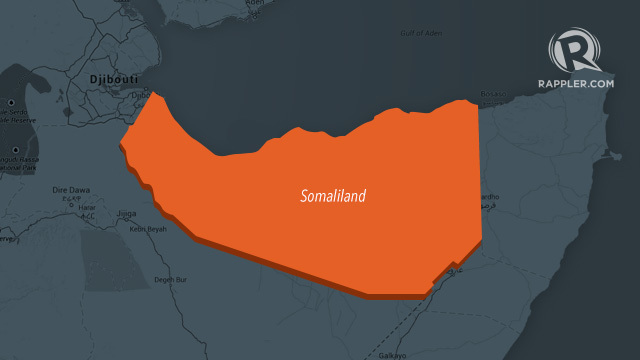
Fourth, in addition to eschewing entanglements with obstacles like the TFG, it is imperative that ties be forged with effective authorities capable of helping in the fight against piracy. While pirates operate openly along most of the 2,285 kilometers of the coastline in Somalia proper, none ply the 740 kilometers of Gulf of Aden coastline belonging to the as-yet unrecognized Republic of Somaliland. According to information first disclosed last Wednesday by my friend Professor Iqbal Jhazbhay of the University of South Africa in an interview with Nairobi, Kenya-based Voice of America (VOA) correspondent Alisha Ryu, despite having a base in neighboring Djibouti, France obtained permission from Somaliland authorities to use the abandoned U.S. base at Berbera in the northwestern region of the republic as the staging area for last week’s successful rescue. According to other sources, the operation also involved the La Fayette-class light stealth frigate Courbet and two ATL-2 maritime patrol aircraft. After the raid, the base was used again to transfer the six captured pirates to an airplane bound for France. The French appear to have decided to avail themselves of Somaliland President Dahir Riyale Kahin’s coincidental presence in their capital for consultations to secure the use of a staging ground that was less likely to jeopardize operational secrecy than Djibouti, where the one runway at Ambouli International Airport is shared by commercial traffic, the French military mission, and Camp Lemonier, home of the America’s Combined Joint Task Force-Horn of Africa (CJTF-HOA). As I have previously advocated and must repeat again:


The international community needs to formally acknowledge de jure what is already de facto: the desuetude of “Somalia” as a sovereign subject of international law. Unitary Somalia is not only dead, but the carcass of that state has been putrefied; reanimation is no longer in the realm of possible. To apply Max Weber’s thesis, a government like the TFG that does not even enjoy the monopoly on the legitimate use of force in its own capital –much less elsewhere in the territory it claims as its own – is no government at all. Instead of constantly trying to put the best face on a bad situation,…the emphasis should be shifted to local Somali entities which have taken responsibility for governance in their respective regions.


Fifth, while naval operations can be undertaken to clear the sea lanes of the pirate menace and commando raids launched to rescue hostages, the long term security of the waters around the Horn of Africa requires the development of maritime capacity on the part of states neighboring the anarchic regions of Somalia. As I suggested in last week’s column, there is a need to for engagement initiatives like the United States Navy-led Africa Partnership Station (APS), which strengthens the capacity of partner countries to deal with a variety of challenges, including piracy, criminal enterprises, and poaching. However, for most African nations, the scope of their maritime ambitions and interests is far more modest than those of the blue-water navies of middle-tier powers, much less those of the U.S. Navy. In America, functions like maritime safety and law enforcement, littoral escort, and port security have traditionally been the primary responsibility of the U.S. Coast Guard. Given that, in terms of mission as well as vessel size, this service is a much closer match to almost all of Africa’s naval forces than most of the assets of Naval Forces Central Command or the Pacific Fleet which operate nearby, it would behoove military strategists to consider how to incorporate the Coast Guard more into their planning for security in East Africa.


Sixth, even with short-term kinetic operations and long-term capacity enhancement initiatives, one has to acknowledge that in the waters off the Horn, there would still remain a not insignificant gap in maritime security between what assistance the international community can or will provide and such capacities as African states (and Yemen) might possess. Might it not be the case that, as I argued in The National Interest Online last year with respect to lack of deployable peacekeeping, the international community as a whole, interested states, or even those with stakes in maritime transportation ought to at least consider leveraging non-traditional security resources available within the private sector to fill, at least provisionally, the security vacuum?


It is bad enough that, Somaliland aside, the lack of an effective, much less legitimate, government in the territory of the former Somalia since 1991 has occasioned virtually endless conflict among the Somali. It is intolerable that the lawlessness should spill over and threaten the security of neighboring states like Ethiopia, Kenya, and Yemen, as well as global commerce as a whole, much less that it should augment the already considerable terrorist challenge. The time has come for responsible powers in the international community to develop an integrated strategy to cope with the worsening piracy, one that begins with declaring open season on the seaborne marauders whom admiralty law has long branded hostes humani generis, enemies of mankind.

In addition to serving on the boards of several international and national think tanks and journals, FamilySecurityMatters.org
Contributing Editor
Dr. J. Peter Pham has testified before the U.S.Congress. Feedback:editorialdirector@familysecuritymatters.org.

Somalia crisis deepened by Ethiopia

Medeshi 24 Sept, 2008
Analysis: Somalia crisis deepened by Ethiopia
NAIROBI, Kenya: Somalia is a land of a thousand plagues, with nearly 20 years of violent chaos and intractable poverty, Islamic extremism and failed peace talks.
But the crisis over the past 18 months is exceeding even the worst-case scenarios dreamed up nearly two years ago, when troops from neighboring Ethiopia arrived to oust a radical Islamic militia and support the Western-backed government.
The Ethiopian troops, which many Somalis consider an occupying force, are seen as a root of the violence and not a cure.
"The nature of the crisis is much more dangerous now," Ken Menkhaus, a Somalia expert at Davidson College in North Carolina, told The Associated Press. "The level of indiscriminate violence is worse than at any time."
With no plan in sight for an Ethiopian withdrawal, both sides of the conflict are at a deadly stalemate — seemingly immune to U.N.-brokered peace talks, international pressure and even the daily carnage on Mogadishu's streets.
This week saw a renewed explosion of violence with 30 people killed in fighting in the capital on Monday and at least 11 civilians killed during an overnight attack on an African Union peacekeepers' base in Mogadishu.
The government, powerless without Ethiopia's muscle, will likely crumble if their protectors pull out. And al-Shabab, a radical group at the heart of the insurgency, refuses to negotiate as long as Ethiopians remain.
Many in overwhelmingly Muslim Somalia resent the government's reliance on Ethiopia, a traditional rival with a large Christian population and one of Africa's largest armies. Ethiopia and Somalia fought a bloody war in 1977, and many Somalis see the Ethiopians as abusive and heavy-handed.
Neither side has shown regard for civilians who stream out of the capital in droves, many of them gravely wounded and taking shelter by roadsides or sneaking into neighboring countries. A local human rights group says the insurgency has killed more than 9,000 civilians to date.
The streets of Mogadishu, a once-beautiful seaside city, are now bullet-scarred and stained with blood.
"If your principal interest is quelling the political violence then an Ethiopian withdrawal will help," Menkhaus said. "That will take away the principal grievance."
But a pullout is unlikely, as the militants appear to be gaining strength and sidelining the government, just as they did during their six-month rule in 2006. The group, al-Shabab, or "The Youth," has taken over the port town of Kismayo, Somalia's third-largest city, and dismantled pro-government roadblocks. They also effectively closed the Mogadishu airport by threatening to attack any plane using it, and ordered journalists to register with them.
Unlike in 2006, however, when the Islamists steadily took over much of southern Somalia and the capital, imposing security while demanding religious piety, Ethiopia is now standing in the way of any truly significant rebel advances in power.
"The Ethiopians will make it impossible for the Islamists," said Daud Aweys, a Nairobi-based Somalia analyst. "The Ethiopians are more powerful, and they have more weapons."
That means al-Shabab's near-daily mortar attacks, suicide bombings and ambushes could very likely continue with no end in sight, with the goal of simply crippling and humiliating the government. Reprisals from government and Ethiopian allies are swift and heavy-handed, but have not eradicated the insurgency.
The African Union has sent about 2,600 peacekeepers to Somalia. But they have a mandate limited to protecting key government installations such as the airport and seaport. And they are generally are confined to the airport because security is so atrocious.
The U.N. has tried to push peace talks between the government and the opposition, but a recent deal with a more moderate faction of the Islamic group seems only to have worsened the violence.
Al-Shabab denounced the talks, which took place in Djibouti, and did not participate.
"We have started building up our military strength because some of our fellow insurgents seem to have been corrupted by the enemy, like those who signed the so-called deal with the puppet government in Djibouti," said Sheik Muhumed, a commander with al-Shabab, which the United States considers a terrorist group.
The Ethiopians, meanwhile, are eager to leave Somalia, saying they are not meant to be peacekeepers. But they continue to pledge support for the government, fearing a radical Islamic state on their doorstep.
The United States has repeatedly accused the Islamic group of harboring international terrorists linked to al-Qaida and allegedly responsible for the 1998 bombings of the U.S. Embassies in Kenya and Tanzania. America is concerned that Somalia could be a breeding ground for terror, particularly as Osama bin Laden declared his support for the Islamists.
The U.S. sent a small number of special operations troops with the Ethiopian forces in 2006 and in early 2007 conducted several airstrikes in an attempt to kill suspected al-Qaida members.

Senator Feingold writes to Secretary Rice on Ethiopia

Medeshi Sept 24, 2008
RUSSELL D. FEINGOLD
WISCONSIN
COMMITTEE ON THE BUDGET
COMMITTEE ON FOREIGN RELATIONS
COMMITTEE ON THE JUDICIARY
506 HARTSENATEOFFICEBUilDING
WASHINGTON,DC 20510
(202) 224-5323
(202) 224-1280 (TOO)
feingold.senate.gov
SELECT COMMITTEE ON INTELLIGENCE
DEMOCRATIC POLICY COMMITTEE
WASHINGTON, DC 20510-4904
September 22, 2008

The Honorable Condoleezza Rice
Secretary of State
U.S. Department of State
2201 C Street,NW
Washington, DC 20520

Dear Madam Secretary,

I write to express my concern about a response I received from the State Department in connection with testimony from Under Secretary Edelman and Deputy Secretary Negroponte at a July 31 Senate Foreign Relations Committee Hearing on "Defining the Militilry's Role towards Foreign Policy." It is of the utmost importance to our national security that Wepromote stability in Africa to, among other things, prevent the emergence of terrorist safe havens. Providing support for iocal security forces has a role to play in achieving that goal, but I am concerned that military assistance to some African nations could undermine longterm stability by associating the United States with forces engaged in political repression or other gross violations of human rights. Where security assistance tothose countries outweighs or overshadows other forms of engagement, the United States may be seen by local populations as supporting those abuses and become a target of esulting grievances.
As you know, federal law requires that the President engage in a careful analysis of the potentially counterproductive impacts of foreign military assistance before providing such assistance. The Foreign Assistance Act prohibits security assistance to governments that engage in a "consistent pattern of gross violations of internationally recognized human rights" unless the President certifies that "extraordinary circumstances" merit the provision of that aid. It defines "gross violation of internationally recognized human rights" to include extrajudicial killing, arbitrary detention and torture.

I appreciated State's prompt response to the question I posed on the Department'scompliance with the Foreign Assistance Act at the hearing. However, I am disappointed that despite acknowledging security forces in Chad and Ethiopia are reported to have committed abuses, the response asserted without any reservation or justification that there is not a consistent pattern of gross violations of internationally recognized human rights in these countries. This claim contradicts the State Department's own annual country reports.
According to those reports,security forces in both Chad and Ethiopia have committed gross violations of human rights for the last decade. Despite the incorporation of human rightssensitization into U.S. security assistance programs, abuses in these countries have continued and even worsened in some cases without serious efforts by the respective governments to stop them.
The State Department's Country Reports on Human Rights Practicesfor 2007 states that the Chadian government's human rights record remains poor, citing "torture and rape by security forces." In fact, each annual report over the last ten years describes serious human rights abuses by Chadian security forces, including extrajudicial killings, abduction, arbitrary arrest and detention. The reports consistently criticize the government's failure to prosecute members of the security forces who committed these crimes, fueling a culture of impunity. Nongovernmental organizations have further documented the recruitment of children into Chad's military. Ten years of such abuses, if not many more, suggests to me a consistent pattern of gross violations.
In Ethiopia, the State Department's annual reports over the last decade all document persistent human rights abuses by the security forces, including unlawful killings, beatings, abuse and torture, especially targeting members of the political opposition. In addition, the State Department's Country Reports on Human Rights Practicesfor 2007 specifically cites "the use of excessive force by security services in an internal conflict and counter-insurgency operations." This is a reference to the Ethiopian military's operations in the Ogaden region, where available reporting alleges that they have subjected civilians to executions, torture and rape. Ethiopia has made significant contributions to internationalpeacekeeping and is a key U.S. partner in the region, but its refusal to address this continuing record of gross abuses requires the President, under law, to provide certifications before providing military assistance to this country.

I appreciate that there can be a need to engage with foreign countries notwithstanding ongoing human rights abuses, but I note that your Department has several avenues for doing so through non-military assistance as well as rule of law training for military forces through the E-IMET program. I also appreciate that State and Defense engage in vetting of individual units that receive assistance.

Nonetheless, federal law (22 U.S.C. Section 2304(a)(3)) requires a certification of extraordinary circumstances before providing assistance to nations, not individual units, that have a history of systemic violations of human rights in order to "avoid identification of the United States, through such programs, with governments which deny to their people internationally recognized human rights and fundamental freedoms."
As the bipartisan 9/11 Commission found "one of the lessons of the Cold War was that short-term gains in cooperating with the most repressive and brutal governments were too often outweighed by long-term setbacks for America's stature and interests." While there may be extraordinary circumstances where specific threats to U.S. interests justify targeted military assistance despite gross human rights violations, those circumstances should not be the norm and the President must clearly spell them out to Congress. I would appreciate a detailed explanation of why certifications of extraordinary circumstances are not required for Chad and Ethiopia.
Sincerely
Russell D. Feingold
United States Senator

Captain Siddiqui, 'master' of Somalia's changing waters

Medeshi Sept 24, 2008
Captain Siddiqui, 'master' of Somalia's changing waters
ON BOARD THE GOLINA, Indian Ocean (AFP) — Seventeen years of bloodshed and destruction, capped by the emergence of Islamic extremism, have earned Somalia's capital Mogadishu the dubious moniker of "Baghdad by the sea".
(Photo :Lively street of Mogadishu, in 1977)
But Shoaib Siddiqui still remembers the days when the Indian Ocean port was more flatteringly known as "Asmara by the sea", in reference to the Eritrean capital's sophisticated Italian architecture, cafes and cultural life.
In 1979, the young Pakistani sailor was washed up in the Somali capital at the end of his first ever journey out to sea.
"At that time, Mogadishu was not the same: lots of hotels and clubs. You could go walking in the streets at night no problem," says Siddiqui.
Now Mogadishu has become a by-word for violence and lawlessness, a field of ruins run by turbaned gunmen and extortionist gangs, a post-apocalyptic vision from a sci-fi movie where starving survivors are more likely to find a stray bullet than a pint of milk.
It takes a seasoned old tar like Captain Siddiqui to carry on steering ships to Somalia, where the only flourishing trades are arms and people smuggling and whose waters are the kingdom of pirates equipped with speedboats and rockets.
At 46, donning a stained "Multiball League 59" tee-shirt, leather sandals and bad-boy smoked sunglasses, he looks the part of the wily skipper who has weathered a few storms and will accept missions to the world's worst hellholes.
His latest assignment was to guide a World Food Programme food aid shipment, on board the Golina cargo, to some of the 3.2 million Somalis in need of urgent humanitarian assistance.
Comfortably lounging back in a sagging brown chair with padded armrests, "Master Siddiqui", as his 20-strong Pakistani crew call him, oversees his empire of rust and soot, creaking along the ocean in wafting curry scents.
The cargo's safe docking in Mogadishu was aided by a Canadian navy frigate that shadowed the Golina from the Kenyan port of Mombasa to two and half miles from the shore.
Navy escorts have become a must for aid relief delivery headed to Somalia, as the pirates prowling the Indian Ocean and the Gulf of Aden have been on a rampage in recent months.
"They are well equipped. If we start answering, they have mortars, they could sink the boat," admits the chain-smoking Siddiqui.
Getting off the Golina for recreation is no longer an option for Captain Siddiqui, who has seen the city slip into anarchy over 30 years of sailing in the region.
"It's gone 200 years back. I don't know why they are fighting each other. There is nothing," he says.
"The port is under curfew. You can see children, aged six or seven coming to sweep the cargos at night to make a little money. It's very bad. They should be studying at school."
Somalia has been without a central authority since the 1991 ouster of former president Mohamed Siad Barre but it has seen its worst violence since Ethiopian troops invaded in 2006 to oust an Islamist that briefly controlled the country.
Somali pirates are currently holding no fewer than 12 foreign ships and the number of reported attacks since the start of the year stands at a staggering 56, according to the International Maritime Bureau.
The Karachi-born captain of the Golina considers himself lucky never to have been attacked by pirates off the coast of Somalia but he knows the dangers of sailing these waters through the tales of his colleagues.
The Victoria, another cargo ship skippered by one of Siddiqui's friends, was boarded earlier this year by a posse of pirates and its crew held hostage.
"The gunmen came onto the ship. There were 15 of them. One guy put a gun to his head and pulled the trigger. The chamber was empty...," he says.
Siddiqui says another 20 pirates then boarded the captured vessel and mistreated the crew as the ransom negotiations developed. "They were made to lie down on the deck in the scorching sun."
The Golina will continue to enjoy the protection of the HMCS Ville de Quebec until the end of September but no other foreign navy has yet stepped up to replace the Canadians when their rotation ends.
Captain Siddiqui says he hopes India or Pakistan might accept to take over but remains adamant that delivering the aid is paramount.
"We'll go anyway. It's aid cargo and it's very important to go there."

Ground 'shook' as Somali militants attack peacekeepers

Medeshi 24 Sept, 2008
Islamist militants launched a massive assault on African Union peacekeepers in the Somali capital Wednesday, sparking battles that killed at least 17 civilians, according to witnesses and journalists in Mogadishu.
"The fighting was so heavy, it shook the ground under our feet," Somali cameraman Hassan Ahmed Hagi said. "Both sides were using heavy artillery -- including tanks used by the AU."
(Photo: Nurses attend a man wounded Tuesday in a mortar attack in Somalia's capital, Mogadishu. )
Dozens of civilians have been killed in Mogadishu this week after Al-Shaabab Islamic militia members doubled their attacks on AU forces following the militia's closure of the city's only airport, which also houses AU forces.
At least 33 civilians were killed in the crossfire of Monday's battles.
Watch aftermath of violence in Mogadishu »
Hagi described Wednesday's violence as the heaviest fighting he had ever witnessed between Al-Shaabab and AU forces.
The fighting started when Al-Shaabab fighters attacked K4 square, where AU peacekeepers from Uganda are stationed.
Heavy artillery struck a school near the square where civilians displaced by the violence were being sheltered. Four civilians were killed, according to a young woman at the shelter.

"We are fleeing this morning, using every transport available, including donkey carts," Nasteho Mohamed Abdi said. "I am so scared to venture out of the camp because AU forces are taking positions all over the area, but I have to leave."

Three people -- including a 6-year-old boy -- were shot dead by Somali government forces taking positions near K4 square, a local journalist said. An artillery shell killed a group of five people running for cover, the reporter said.

At least 24 people were wounded in the fighting and taken to Medina Hospital, a hospital official said.

Al-Shaabab is an Islamic militia that has launched a bloody battle to seize control of Somalia and oust Ethiopian troops, who are helping Somali government forces try to rout the Islamic fighters.

It is a splinter group of the Islamic Courts Union, which pushed out Somalia's transitional government in 2006. The ICU was deposed in December of that year following Ethiopia's military intervention.
Last week, Al-Shaabab warned all airlines to stop flying into Mogadishu's only airport or possibly face a military assault.
In its statement, Al-Shaabab said it shut down the airport because the facility is being used by "infidel forces," including those of Ethiopia, Burundi and Uganda. Burundi and Ugandan forces make up the bulk of the AU mission in Somalia.
Fighting in Mogadishu continues unabated more than three months after a United Nations-brokered peace deal was signed in the neighboring country of Djibouti by Somalia's transitional government and an alliance of armed opposition forces.
Somalia has been mired in chaos since 1991, when warlords overthrew dictator Mohamed Siad Barre, sparking brutal clan infighting. Somalia's transitional government is trying to maintain control of the capital, with the help of the better-equipped Ethiopian forces.
The lawlessness has extended to the country's waters, where international vessels are routinely hijacked by suspected Somali pirates who demand large ransom payments.
Ethiopia invaded Somalia in December 2006 to install the transitional government in Mogadishu after a decade and a half of near-anarchy. The invasion had the blessing of the United States, which accused Islamists of harboring fugitives from the al Qaeda terrorist movement.
But the Ethiopian troops quickly became embroiled in an insurgency led by the Islamists. As guerrilla attacks mounted, efforts to replace the Ethiopians with an African Union-led peacekeeping mission faltered. The conflict displaced hundreds of thousands of Somalis, further worsening a humanitarian crisis that dates back to the collapse of the country's last government in 1991.
The situation has been exacerbated by drought, continual armed conflicts in central and southern Somalia, and high inflation of food and fuel prices.
The peace agreement, signed June 9 in Djibouti, calls for a cease-fire between Somalia's U.N.-backed transitional government and the Alliance for the Re-liberation of Somalia. If followed, it would pave the way for a withdrawal of Ethiopian troops.
The agreement calls on the Alliance to disassociate itself from any armed groups still fighting the government and for all sides to allow "unhindered humanitarian access and assistance" to all Somalis. A joint committee led by U.N. officials has been appointed to monitor the agreement's implementation.

Aid workers kidnapped in Ethiopia

Medeshi Sept 23, 2008
Aid workers kidnapped in Ethiopia
Two aid workers working for Medecins du Monde in Ethiopia have been abducted from the Ogaden region that borders Somalia, the French aid agency says.
Eyewitnesses say the man and woman, whose nationalities are not known, have been taken to Somalia's central region of Galguduud by well-armed gunmen.
Kidnapping of foreigners is common in Somalia. Correspondents say most are released after ransoms are paid.
On Monday, a kidnapped German and his Somali wife were freed.
They were released by police in the Somali semi-autonomous north-eastern region of Puntland.
The aid workers in Ogaden, Ethiopia's Somali region which is suffering from a severe drought, were kidnapped on Monday.
"The organisation is in permanent contact with the authorities, its team on the ground as well as other actors on the field," AFP news agency quotes Medecins du Monde as saying in a statement.
Somalia has been wracked by conflict since 1991 and ethnic Somali rebels have been fighting an insurgency for years in Ogaden.

Training the parlaiments from 13 African Countries

Medeshi Sept 23, 2008
Representatives of parliaments from 13 countries across Africa will attend a workshop in Kampala, Uganda next week to develop the skills needed to inform Parliamentarians about the scientific aspects of the issues they face in making policy decisions.

The workshop has been organised by the African Technology Policy Studies Network (ATPS), the UK Parliamentary Office of Science and Technology (POST), and SciDev.Net (the Science and Development Network).
Financial support has been provided by the UK-based Gatsby Foundation and SciDev.Net. The workshop, which takes place from 22 to 26 September, responds to a need identified by African nations for better communication between scientists and policymakers as part of their efforts to build science and technology capacity.
A key group of policymakers that can benefit from improved communications are members of national parliaments.
The purpose of the workshop is therefore to help increase the extent to which policymaking across Africa — ­ in areas such as health, agriculture, environmental conservation and climate change — is based more firmly on scientific evidence.
"Parliamentarians are increasingly required to tackle policy issues with a basis in science and technology. They rely to a large extent on parliamentary staff to provide them with the information they need to scrutinise government effectively," says Chandy Nath of POST Parliamentary staff therefore often act as 'middlemen' in the communication between scientists and policymakers.
However, as few staff come from a scientific background, they may lack the skills needed to relay scientific information effectively to parliamentarians." "The main role of the workshop is to provide an introduction to some of the skills required by parliamentary staff to improve the communication process. A secondary function will be to reinforce the importance of communicating with scientists."
Participants in the workshop have been selected from the staff of African parliaments — including clerks, researchers and librarians — from Botswana, Cote d'Ivoire, Ghana, Kenya, Malawi, Namibia, Nigeria, Somaliland, South Africa, Swaziland, Tanzania, Uganda and Zambia.

The conference will be opened by Rt. Hon. Edward Ssekandi Kiwanuka, Speaker of the Parliament of the Republic of Uganda. The Parliament has already been working with POST and other organisations, such as the Ugandan National Academy of Sciences and the UK Royal Society, to identify ways of strengthening its capacity to handle science issues.

The workshop will combine hands-on training from course tutors — such as science communication experts, scientists, and policy advisers — with group discussion where participants share best practice and present their own ideas.
Those addressing the workshop will include Charles Wendo, a science journalist who is the editor of the Saturday edition of New Vision, one of Uganda's leading newspapers. The meeting will also hear presentations from Kevin Urama, Executive Director of ATPS, and David Dickson, Director of SciDev.Net, who will present the results of an international survey carried out by the Overseas Development Institute (ODI) in London into the information needs of policymakers.

Teaching material produced for the workshop will subsequently be made widely available, with the aim of stimulating similar workshops in other parts of Sub-Saharan Africa. The workshop will be held at the Imperial Royale Hotel in Kampala.
For more, visit: http://www.scidev.net/

Somalia ranked world's most corrupt

Medeshi
Somalia ranked world's most corrupt
September 23, 2008
Somalia remains rooted to the bottom of a global corruption index that also features Iraq and Afghanistan, an international watchdog's annual report said.
Rich European countries such as Britain and Italy also have slipped, Transparency International's annual Corruption Perceptions Index said. The report said Denmark, Sweden and New Zealand share the honour of being the world's least corrupt countries.
There was little change at the bottom from last year - with Somalia closely followed, as in 2007, by Myanmar, Iraq and Haiti. Just ahead of them was Afghanistan, which slipped to 176th place from 172nd.
Berlin-based Transparency said the index "highlights the fatal link between poverty, failed institutions and graft." The ranking measures perceived levels of public sector corruption in 180 countries and draws on surveys of businesses and experts.
"In the poorest countries, corruption levels can mean the difference between life and death, when money for hospitals or clean water is in play," Transparency chairwoman Huguette Labelle said in a statement, describing the combination of corruption and poverty as "an ongoing humanitarian disaster."
Somalia has lacked an effective central government since 1991, leaving the country in the grip of violence and anarchy.
There were some bright spots in the new report - African powerhouse Nigeria improving to 121st place from 147th last year, reflecting increasingly positive perceptions of the country's new government.
Georgia rose to 67th place from 79th, showing that the government's "early reform efforts were highly effective in earning public confidence and improving the country's international image," the report said. But it added that, while petty corruption is generally agreed to have declined, grand corruption is a "persistent concern".
Labelle stressed that "even in more privileged countries, with enforcement disturbingly uneven, a tougher approach to tackling corruption is needed."
The report pointed to worsening performances by Britain, which slipped to 16th from 12th, and Italy, down to 55th from 41st.
It said Britain's perceived anti-corruption credentials suffered from a decision by its anti-fraud agency to halt an inquiry into whether one of the world's largest arms dealers offered bribes in exchange for lucrative contracts in Saudi Arabia; while fraud and corruption cases in the public health system weighed on Italy.
Another decliner in the European Union was Bulgaria - described as "still wary of tackling political corruption" - which slipped to 72nd from 64th. Finland, tied for first place last year, slid to fifth because of "a lack of transparency in election campaign finance".
The US was in 18th place, compared with 20th last year. The report noted that it remains among the lowest-ranked leading industrial countries.
"Contributing factors may include a widespread sense that political finance is in need of reform, with lobbyists and special interest groups perceived to have an unfair hold on political decision-making," the report said.
© 2008 AP

Somali Pirates Issue Warning to Europeans


Medeshi
Somali Pirates Issue Warning to Europeans
By Alisha Ryu Nairobi22 September 2008
Somali pirates, who have been relentlessly attacking ships this year off the coast of Somalia, say they will kill any European they capture if France fails to release six pirates seized by French commandos earlier this month. VOA Correspondent Alisha Ryu has this exclusive report from our East Africa Bureau in Nairobi.
(Photo: Canadian Navy sailor guards World Food Program ship into Mogadishu, 18 Sep 2008 )
In a telephone interview with VOA, a man identified as the spokesman of the pirate group based in the northern Puntland town of Eyl says the group wants the European Union to pressure France to release the six pirates immediately.
The spokesman, who calls himself Bileh, says if other European Union nations refuse to negotiate the release of his compatriots, his group will begin targeting all Europeans. He says every European hostage would be beheaded.
It is not clear whether the pirate group is in contact with European Union officials about the matter. The captured Somali pirates were transferred to Paris after French commandos mounted a raid last week to free a French couple kidnapped by pirates off the coast of Somalia on September 2.
The French military also seized another group of pirates during an operation in April. But Bileh, the pirate spokesman in Eyl, made no mention of them, suggesting that the pirates taken to Paris in April may have belonged to another group.
Last week, EU foreign ministers decided to set up a special unit to coordinate warship patrols off the coast of Somalia to protect ships from piracy.
In support of that mission, Spain deployed military aircraft to the Horn on Saturday to collect information on the movements of pirates. EU foreign ministers have not decided whether to create a special naval mission to pursue the pirates and capture them.
This year, well-armed pirates, using powerful speedboats, have attacked more than 55 ships and private vessels sailing through the Gulf of Aden and along Somalia's east coast. Piracy is threatening to disrupt global commerce and driving up costs because of soaring insurance premiums.
The group in Eyl, Puntland is believed to be the largest of the various pirate groups operating in Somalia. Pirates in Eyl and the factional leaders and businessmen who control them are said to have earned about $30 million this year in ransom payments. The group is currently holding about a dozen ships and their crew hostage.
Bileh insists the money ship owners are paying to free to their vessels and crew is not ransom, but fines and taxes being collected on behalf of the Somali people.
Bileh says the ships are being fined and taxed because they are trespassing on Somali territorial waters. He says in the absence of a functioning central government in Somalia, his group is working hard to collect enough money to form a navy strong enough to protect the Somali coast from foreign exploitation.
Eyewitness reports from Eyl suggest that pirates are using their share of the money to build palatial homes and to buy expensive cars. They are also believed to be purchasing increasingly sophisticated weapons and boats.
Somalia descended into factional chaos after the government of dictator Mohamed Siad Barre fell in 1991. The country is one of the poorest in the world, with more than 40 percent of its population in critical need of food aid.

US Policy Shifts towards Somaliland


Medeshi Sept 22, 2008
US Policy Shifts towards Somaliland
by Scott A Morgan
In what appears to be a effort to reward stablilty in a highly unstable part of the World ,The US is going to increase the amount of aid it sends to the "Breakaway Region" of Somaliland. On the surface that can be seen as the US growing increasingly frustrated with the Pace of "Nation Building" within Somalia.

In Recent Weeks there have been several Incidents of Piracy on the High Seas. In at least one instance there has been Western Intervention to Free some of those that were taken hostage. Several Nations will be deploying Warships to this volatile region in the near future to address this rapidly unfolding and deteriorating situation. The Situation on the Ground isn't much better either with Islamist Militias targeting Peacekeepers.

Earlier this year US Undersecretary of State for African Affairs Jendayi Frazier paid a visit to Hargeysa. Security Issues were forefront Naturally in her visit. The Combined Joint Task Force-Horn of Africa (CJTF-HOA) already has some contacts with Somaliland Authorities as well as several US Funded Aid Agencies. Somaliland has been registering Political Parties for its Presidential Elections in 2009.

The Visit by Jessica Davis Ba who is the US Diplomat Responsible for Somali Political and Economic Interests in the US Embassy in Nairobi and a representative from the USAID (United States Agency for International Development) was a follow-up to the trip of Underseceretary Frazier. The US Feels that Somaliland has made great Economic and Political gains since it declared its unilateral Independence back in 1991.

There are concerns in Washington that the rise in both Global Food and Petroleum Prices could be a hinderance to the Emergance of an Independent Somaliland. Several Countries have sent Delegations to Hargeysa in recent weeks to determine if any Economic Investments are indeed feasable. There are concerns about the youth of the country leaving school early to take on other endeavors currently.

With the rest of Somalia continuing to suffer Famine and the effects of a very effective Insurgency it is not a bad idea to reach out to People and areas that are having a modicum of success. Although the US has no immediate plans to open up a direct contact with Hargeysa the current Administration will use the contacts it already has to further improve ties. In the past the United States has stated that it will wait until the African Union Recgonizes Somaliland as an Independent State before it does.

In Recent Weeks there have been reports that Ethiopia is considering pulling out of Somalia. If this occurs than once again the efforts of the United Nations to restore a functioning Government to Somalia will have failed once again. Efforts to have African Peacekeepers on the ground have been lacking. Famine is a growing concern as is the rise of Piracy in the region known as Puntland. So it appears that the US is once again hedging its bets in a volatile region.

Somalia : Hurtling toward disaster


Medeshi Sept 22, 2008
by Ken Menkhaus
This is the first of two ENOUGH strategy papers on Somalia by Ken Menkhaus, a professor at Davidson College and a specialist on the Horn of Africa. Based on recent field research, the first half of this report provides an analysis of the current crisis in Somalia. The second half critically examines why international policies toward Somalia have produced disastrously unintended results, and makes an urgent case for a review of those policies. A follow-up report will explore options and make recommendations for a new, more effective, international approach to Somalia.
The world has grown numb to Somalia’s seemingly endless crises—18 years of state collapse, failed peace talks, violent lawlessness and warlordism, internal displacement and refugee flows, chronic underdevelopment, intermittent famine, piracy, regional proxy wars, and Islamic extremism. It would be easy to conclude that today’s disaster is merely a continuation of a long pattern of intractable problems there, and move on to the next story in the newspaper. So Somalia’s in flames again—what’s new?
The answer is that much is new this time, and it would be a dangerous error of judgment to brush off Somalia’s current crisis as more of the same. It would be equally dangerous to call for the same tired formulas for U.N. peacekeeping, state-building, and counterterrorism operations that have achieved little since 1990. Seismic political, social, and security changes are occurring in the country, and none bode well for the people of Somalia or the international community.


Over the past 18 months, Somalia has descended into terrible levels of displacement and humanitarian need, armed conflict and assassinations, political meltdown, radicalization, and virulent anti-Americanism. Whereas in the past the country’s endemic political violence—whether Islamist, clan-based, factional, or criminal in nature—was local and regional in scope, it is now taking on global significance.
As Enough’s April 2008 report on Somalia (“15 Years After Black Hawk Down: Somalia’s Chance?”) argued, this is the exact opposite of what the United States and its allies sought to promote when they supported the December 2006 Ethiopian military intervention in Somalia to oust an increasingly bellicose Islamist movement in Mogadishu. Indeed, the situation in Somalia today exceeds the worst-case scenarios conjured up by regional analysts when they first contemplated the possible impact of an Ethiopian military occupation. How did it get to be this bad?

Work of Evil: Beyond the Worst-Case Scenario in Somalia

Medeshi Sept 22, 2008
Work of Evil: Beyond the Worst-Case Scenario in Somalia
by Chris Floyd
I.Jim Lobe at Antiwar.com brings fresh news of what has become, proportionately, the most savage, brutal and ruinous front in the global campaign of military aggression known as the "War on Terror": Somalia.
We have been tracking the situation in Somalia here since American military and security forces and their Ethiopian proxies invaded the country in December 2006, in a "regime change" operation to overthrow the first quasi-stable government Somalia had seen in 15 years. As we noted earlier this year:
American forces have bombed fleeing refugees, slaughtered innocent herdsmen and destroyed villages in attempts to assassinate a handful of individual alleged, on shaky and specious evidence, to be "part of" or "associated with" or "linked to" al Qaeda. American agents have seized refugees from the Somali war, including U.S. citizens, and had them "renditioned" to the notorious prisons of the Ethiopian dictatorship. And as we have noted here many times, the Bush Administration has sent in death squads to "kill anyone left alive" after American strikes.
Not a word has been said in the presidential campaign about this ongoing atrocity, this open culpability in yet another vast war crime. Naturally one doesn't expect any comment or concern from John McCain, whose robotic neo-connism can only applaud this violent projection of American dominance in yet another Muslim land. (As neoconnist Michael Ledeen once famously proclaimed: "Every ten years or so, the United States needs to pick up some small crappy little country and throw it against the wall, just to show the world we mean business." This is about as perfect an encapsulation of the mindset of the bipartisan foreign policy establishment as can be imagined. For another example, see the "liberal" Thomas Friedman here.)
But neither has there been a single criticism or condemnation -- or even a mention -- of the murderous operation in Somalia by the Democratic candidate: a man whose own father was a black African Muslim like those being slaughtered with American backing today. Of course, Barack Obama has taken some pains to distance himself from the African side of his heritage -- perhaps understandable in a country where his own running mate brags about being from a "slave state" and not long ago expressed wonderment at the fact that an African-American politician (in fact, Obama himself!) could be so well-spoken and even "clean." And it goes without saying that an aspiring leader of the Terror War would want to renounce even more firmly any association with his Islamic background. Still, you would think that sheer partisan self-interest alone would entice the Democrats to bring up the subject of Somalia, pointing to it as yet enough botched and bloody catastrophe of Bush's foreign policy.
Then again, perhaps they know there is no political mileage in the issue. After all, who cares? No Americans have died in the operation (although some Americans were "rendered" to Ethiopia's notoriously draconian prisons). And after the initial barrage of refugee bombing and village destroying, America's direct involvement has been limited to the occasional lobbing of missiles into civilian homes -- and whatever secret missions are being carried out by U.S. covert operators and the death squads that clean up after them. And as the entire sordid enterprise has long been ignored by the mainstream media -- except for a rare story now and then, almost always shorn of any context or mention of America's instrumental role in the war -- it would require a great deal of background and explanation to make a denunciation of U.S. policy in Somalia comprehensible to a deliberately misinformed and blithely unconcerned American electorate. Who has time for that kind of boring stuff, when there are bumper stickers and sound bites to propagate?
There's also one other little point: the hearty he-man Terror Warriors at the top of the Democratic ticket obviously support America's actions in Somalia. If they did not, they would have condemned them long ago.
II.Lobe reports on a major new study that confirms what we have been saying here for months: the American-backed "regime change" in Somalia has created one of the world's worst humanitarian disasters -- and has radicalized much of the ruined country, incubating the very extremism and terrorism that the invasion was ostensibly -- ostensibly --designed to quash.
(The "War on Terror" has created so many vast new fertile fields for extremism and terrorism on all its fronts that a cynic might be forgiven for suspecting that the creation of more terrorism is, in fact, one of its principal aims. After all, who have been the chief beneficiaries of modern terrorism? Those who have reaped immeasurable riches and vastly augmented authoritarian power from "counter-terrorism." If the "War on Terrorism" had not arisen -- just in time to replace the Cold War -- something else would have had to been invented to keep the loot and power flowing to (and from) the war machine. Of course, if we are sliding into a new Cold War with resurgent Russia and ever-burgeoning China, then we may see the War on Terrorism start to diminish in importance. But for now, terror is still trumps in the loot-and-power game.)
Lobe points us to a report issued this week by Enough, a human rights group created by a cooperative effort between the International Crisis Group and the Center for American Progress. Written by Ken Menkhaus, a leading American expert on the region, the report -- "Somalia: A Country in Peril, a Policy Crisis" -- presents the stark reality of this Terror War atrocity:

Over the past 18 months, Somalia has descended into terrible levels of displacement and humanitarian need, armed conflict and assassinations, political meltdown, radicalization, and virulent anti-Americanism. Whereas in the past the country’s endemic political violence—whether Islamist, clan-based, factional, or criminal in nature—was local and regional in scope, it is now taking on global significance....Indeed, the situation in Somalia today exceeds the worst-case scenarios conjured up by regional analysts when they first contemplated the possible impact of an Ethiopian military occupation.

(Continued after the jump.) The report makes clear that the Bush Administration's malign intervention in Somalia began well before the Ethiopian invasion in 2006. Indeed, it was an application of the age-old American policy of "divide and conquer" -- deliberately fomenting violent conflict in the society of a targeted country -- that helped radicalize and empower extremist factions in Somalia:

The coalition of clans, militia leaders, civic groups, and Islamists which formed the Mogadishu Group [which opposed the Ethiopian-backed 'Transitional Federal Government' set up in 2004] were themselves divided, however, and war erupted between two wings of the group in early 2006. This war was precipitated by a U.S.-backed effort to create an alliance of clan militia leaders to capture a small number of foreign al Qaeda operatives believed to be enjoying safe haven in Mogadishu as guests of the hard-line Somalia Islamists, especially the jihadi militia known as the shabaab. The cynically named Alliance for the Restoration of Peace and Counter-Terrorism, or ARPCT, as the U.S.-backed group was called, clashed with local Islamists and within months was decisively defeated. The clan militias’ defeat paved the way for the rise of the Islamic Courts Union, or ICU, which for seven months in 2006 came to control and govern all of Mogadishu and most of south-central Somalia.

The first American intervention failed to bring its hired warlords to power, but instead paved the way for a coalition of moderate and hardline Islamist factions to govern. And for a few months, this worked well:

The ICU quickly delivered impressive levels of street security and law and order to Mogadishu and south-central Somalia. It reopened the seaport and international airport and began providing basic government services. In the process, the ICU won widespread support from war-weary Somalis, even those who did not embrace the idea of Islamic rule.

Factional disputes between moderates and hardliners -- with the latter taking increasingly strident public positions -- gave Ethiopia the excuse for its long-planned, American-backed invasion. As an April 2008 report for Enough by John Prendergast notes:

...In this volatile region, the U.S.-led “Global War on Terror” has become intertwined with Ethiopia’s own response to regional and internal threats. When Islamists established a foothold in southern Somalia in mid-2006, Ethiopia began planning an invasion aimed at propping up a fragile and unpopular transitional government in Mogadishu. With encouragement from the Bush administration, Ethiopian forces attacked in December 2006, and 16 months later they are hunkered down with no end in sight. To make matters worse, neighboring Eritrea’s support for insurgents in Somalia and oppositionists in Ethiopia means that Somalia is further complicated by a proxy war between Ethiopia and Eritrea, one that could contribute to a disastrous resumption of war between those two states.
The United States is concentrating most of its energies on capturing or killing three foreign Al Qaeda fugitives and a dozen or so of their Somali associates. U.S. support includes a vast and sustained intelligence effort, support for self-interested Somali “counter-terrorism” agencies, and obstruction of international efforts to broker a ceasefire and power-sharing agreement with Islamists...
U.S. counter-terrorism policy has failed to differentiate organic resistance movements in Somalia and elsewhere from real terrorists. By branding all resistance “terrorism” and providing aid to factions of the Somali transitional government that are simply warlords with titles, the United States has contributed to further polarization and made a political settlement less likely.

This is standard practice on every Terror War front, of course. Prendergast goes on to say:

U.S. policy since 9/11 has been a central ingredient in the Horn of Africa’s descent into crisis and the growth of extremism. Concerned that Somalia might become a safe haven for Al Qaeda and a breeding ground for Islamist extremism, the United States has designated Somalia as a priority in the Global War on Terror. But not only have U.S. counter-terrorism efforts failed to mitigate the threat in any sustainable way, they threaten to blow it out of all control. By placing the desire to capture or kill three “high value” Al Qaeda targets above the welfare of millions of Somalis, the United States and its Ethiopian allies have engendered profound resentment, promoted radicalization, and created the conditions for thousands of young radicals to turn toward extremist groups.

Lobe has more from other experts who attended the most recent report's release:
"The (current) crisis is fundamentally different and fundamentally worse than the situation of the last decade and a half," said Chris Albin-Lackey, a Horn of Africa specialist at Human Rights Watch (HRW), who appeared with Menkhaus at the report's release at a conference sponsored by at the Woodrow Wilson International Center for Scholars here Wednesday.
Albin-Lackey, who has conducted some 80 interviews of Somali refugees in East Africa in the past month, said ongoing violence, including almost daily artillery bombardments by Ethiopian army and TFG forces on the one hand and opposition militias, including the Islamist Shabaab on the other, as well as assassinations carried out by both sides, have added to the insecurity.
"People have nowhere to turn for security," he said, adding that search operations by TFG forces, while nominally for the purpose of arresting suspected insurgents, had become "an excuse for murder, rape and looting on an incredibly large scale." As a result, he said, Mogadishu has become "largely depopulated" with about two-thirds of the population – or about 800,000 people – having left their homes there over the past 18 months.

The new report by Menkhaus details the humanitarian catastrophe:
The humanitarian nightmare in Somalia is the result of a lethal cocktail of factors. The large-scale displacement caused by the fighting in Mogadishu is the most important driver. The displaced have fled mainly into the interior of the country, where they lack access to food, clean water, basic health care, livelihoods, and support networks. Internally displaced persons, or IDPs, are among the most vulnerable populations in any humanitarian emergency. With 700,000 people out of a population of perhaps 6 million in south-central Somalia forced to flee their homes, the enormity of the emergency is obvious...
Second, food prices have skyrocketed, eroding the ability of both IDPs and other households to feed themselves. The rise in food prices is due to a global spike in the cost of grains and fuel; chronic insecurity and crime, which has badly disrupted the flow of commercial food into the country; and an epidemic of counterfeiting of the Somali shilling by politicians and businesspeople, creating hyperinflation and robbing poorer Somalis of purchasing power. Mother Nature is not cooperating either: a severe drought is gripping much of central Somalia, increasing displacement, killing off livestock, and reducing harvests in farming areas.
Third, humanitarian agencies in Somalia are facing daunting obstacles to delivery of food aid. There is now virtually no “humanitarian space” in which aid can safely be delivered. Until recently, the TFG and its uncontrolled security forces were mainly responsible for most obstacles to delivery of food aid. TFG hardliners view the provision of assistance to IDPs as support to an enemy population—terrorists and terrorist sympathizers in their view—and have sought to impede the flow of aid convoys through a combination of bureaucratic and security impediments. They also harass and detain staff of local and international non-governmental organizations, or NGOs, and U.N. agencies, accusing them of supporting the insurgency. Uncontrolled and predatory TFG security forces, along with opportunistic criminal gangs, have erected over 400 militia roadblocks (each of which demands as much as $500 per truck to pass) and have kidnapped local aid workers for ransom.


Since May 2008, however, jihadist cells in Mogadishu linked to the shabaab have become an additional threat to humanitarian actors. They are engaged in a campaign of threats and alleged assassinations against any and all Somalis working for western aid agencies or collaborating with the U.N. and Western NGOs. Not all shabaab members embrace this policy (the shabaab leader Sheikh Mukhtar Robow has condemned the assassinations and is known to be working to provide protection for aid operations in his clan’s home region), but jihadist cells in Mogadishu are now increasingly fragmented and answer to no one, and some of these cells are believed to have targeted national aid workers and civil society leaders.

As Lobe notes: "The UN recently estimated that, barring substantial improvement in the security situation, some 3.5 million Somalis will be dependent on humanitarian aid by the end of this year." That is more than half the population of the entire country reduced to the most absolute penury. An equivalent number would be 14 million people in Iraq -- or 150 million in the United States.
Meanwhile, as we have seen in Iraq, the violent extremism, government terror and sheer chaos unleashed by the U.S.-backed invasion is destroying Somali society itself. From Lobe:

The assassination campaign by TFG hardliners and fragments of the shabaab movement is the latest attack on Somalia’s once vibrant civil society and has the potential to morph into a violent purge of all professionals and civic figures. Somali civic figures are in shock at this latest threat, and are either fleeing the capital or keeping a very low profile. This is an enormous setback for hopes to consolidate peace in the country...
A peace agreement signed last month by moderate factions of the opposition and the TFG is already in great peril from hardliners in both camps -- and from U.S. policies which continue to exacerbate the conflict. Lobe reports:
But the implementation of the agreement faces "steep challenges," warned Menkhaus, not least because "the moderates [who negotiated the accord] don't control any of the armed groups." While the Shabaab have already denounced the [moderate] leaders as "apostates," he noted, hard-liners in the TFG know that they can stay in power "if and only if the Ethiopians stay."
Only by reinforcing the moderates can the international community, including the US, enhance the chances for the agreement's successful implementation and, with it, the chances for reconciliation, according to Menkhaus. But that will require major changes in US and western policies, which have "actually worked to strengthen and embolden hardliners" over the past two years.
In that respect, the US emphasis on counterterrorism has been particularly destructive, not only in supporting the Ethiopian offensive in December, 2006, but, more recently, in placing the Shabaab on its list of designated terrorist groups last March. That step not only isolated opposition moderates from their own coalition but also gave the Shabaab "even more reason to sabotage" ongoing peace talks.
At the same time, Washington has provided "robust financial and logistical support to armed paramilitaries resisting the command and control of the TGF, even though they technically wear a TFG hat" to both fight the Shabaab and track down suspected terrorists.
"To the extent that these security forces also deeply oppose...reconciliation efforts with the opposition, the US counterterrorism partnerships have also undermined peace-building efforts by emboldening spoilers in the government camp," according to the report...
The Tomahawk missile attack that killed Shabaab leader Aden Hashi Ayro [and at least two dozen civilians] in May – the latest in a series of similar strikes against armed Islamists in Somalia, allegedly tied to al-Qaeda – resulted in a sharp radicalization in the group, which announced at the time that it would strike against US and western targets, including aid workers, as well as Ethiopian and TFG forces, compounding an already dramatic humanitarian crisis.

Again, these are policies that seem designed to produce more terrorism, more conflict, more instability, more death and suffering. Certainly, no sentient observer could believe that the American actions in Somalia are in any way designed to alleviate these conditions.
III.But perhaps we are being too cynical in suspecting subtle Machiavellian ploys behind U.S. policy in Somalia. It could be as brutally simple as this: the bipartisan imperial elite want to have their way -- they want to crush anyone they have designated as an enemy, they want to have their own clients and puppets in power, they want to "project dominance" over strategic regions, they want to frighten other nations into compliance with Washington's wishes, etc., etc. -- and they don't care what it costs. In other words, perhaps they have not deliberately set out to destroy a nation and grind its helpless people into the dust....but if that's what it takes to get their way, then by God, that's what they'll do. It's not their fault if these darkie Muslims won't play ball.
This is of course a gangster mentality: "If you do what we want, nobody gets hurt. Hey, we might even send you a turkey at Christmas, or get your nephew a job or something. But if you cross us, then you'll get what's coming to you -- and it'll be your own damn fault."
This hideous mentality is not restricted to the Bush Administration. It is the long-standing philosophy of America's bipartisan ruling elite. As Major General Smedley Butler noted back in 1933:

War is just a racket. A racket is best described, I believe, as something that is not what it seems to the majority of people. Only a small inside group knows what it is about. It is conducted for the benefit of the very few at the expense of the masses....
I spent thirty-three years and four months in active military service as a member of this country's most agile military force, the Marine Corps. I served in all commissioned ranks from Second Lieutenant to Major-General. And during that period, I spent most of my time being a high-class muscle-man for Big Business, for Wall Street and for the Bankers. In short, I was a racketeer, a gangster for capitalism....
I helped make Mexico, especially Tampico, safe for American oil interests in 1914. I helped make Haiti and Cuba a decent place for the National City Bank boys to collect revenues in. I helped in the raping of half a dozen Central American republics for the benefits of Wall Street. The record of racketeering is long. I helped purify Nicaragua for the international banking house of Brown Brothers in 1909-1912. I brought light to the Dominican Republic for American sugar interests in 1916. In China I helped to see to it that Standard Oil went its way unmolested.
During those years, I had, as the boys in the back room would say, a swell racket. Looking back on it, I feel that I could have given Al Capone a few hints. The best he could do was to operate his racket in three districts. I operated on three continents.

The racket is immeasurably more vast and more powerful these days. Somalia is its latest -- and one of its most cruelly ravaged -- victims. Yet among the great and good of America, not a word is raised in protest or opposition to the nation's complicity in this work of evil.

Qaar ka mid ah Ururada Bulshada Rayidka ah oo walaac ka muujiyay mudo dhaafka golayaasha deegaanada

Annaga oo ah Ururada Bulshada Rayidka ah ee Madaxa-banaan waxaanu si wayn uga walaacsanahay