Kismayu, another blow for Somalia’s interim government

Medeshi 25 Aug, 2008
Kismayu, another blow for Somalia’s interim government
August 24, 2008 (KISMAYU) — Bodies littered the streets of this strategic southern port in Somalia on Saturday, a day after it was seized by Islamist rebels in fighting that killed at least 70 people.
The loss of Kismayu to the al-Shabaab insurgents was another blow for Somalia’s interim government, which signed a peace deal with some opposition figures last week that has only seemed to stoke violence in the Horn of Africa nation.
"We are now collecting the corpses lying in the streets," resident Mohamed Farah, 55, told Reuters.
"The town is calm today and we’re busy burying the victims of the fighting. The Islamists are at the abandoned sea and air ports, and people here are hoping to reopen their businesses."

Since the start of last year, al-Shabaab rebels have been waging an Iraq-style insurgency of mortar attacks, roadside bombings and assassinations, targeting the fragile administration and its Ethiopian military allies.

The artillery and gun battles that broke out on Wednesday around Kismayu were the heaviest in the area for months. Medical workers said at least 140 people had been wounded.

UNIDENTIFIED AIRCRAFT

Fearful residents said large, unidentified aircraft had been flying over the area since then. "We don’t know what will happen, but we are scared," said another local man, Hussein Ahmed, 35.
It was not clear who sent the planes. The United States, which has launched air strikes inside Somalia in recent months, officially listed al-Shabaab earlier this year as a terrorist organisation with close ties to Osama bin Laden’s al Qaeda.

Washington sees Somalia as a training ground for extremists and says that radical Islamist leaders have made much of it a safe haven for high level suspects, including the bombers of U.S. embassies in Kenya and Tanzania a decade ago.

The violence in Somalia has killed more than 8,000 civilians and uprooted 1 million since the beginning of 2007, when government forces backed by Ethiopian tanks and warplanes drove a sharia courts group out of the capital Mogadishu.

On Monday, U.N.-led talks in Djibouti produced a tentative peace agreement between the government and some opposition figures. But the deal had already been rejected by al-Shabaab commanders and other opposition hardliners.

Many in Kismayu fear the pro-government clan militia that fled the town on Friday might soon try to regroup to retake it.

"The capture of Kismayu by al-Shabaab may bring us a new disaster," Fatuma Mohamud, a local mother-of-four, told Reuters.

"We’re afraid our town will become like Mogadishu, where explosions and hit-and-run attacks are order of the day."
(Reuters)

Somalia : the Horn gets gored

Medeshi 25 Aug, 2008
Written by Antony Black
Monday, 25 August 2008
A View From the Gallows by Antony Black
'I don’t believe in capital punishment - as a rule. But I’m willing to make a few exceptions for our fearless leaders, indeed all the fearless leaders, who have so willingly prosecuted the totally bogus ‘war on terror’; who have, under the banner of peace, democracy and civilization, waged a ruthless campaign of war, terror and barbarism. '
(Picture; The guillotine)
Naturally, nary a court now in existence is capable of reaching such exalted levels of critical jurisprudence and justice. Take the International Criminal Court for example.


The ICC has recently made a big splash by indicting a world leader for war crimes. Bush and crew you say? Or perhaps their brown-nosing poodles and fellow conspirators Tony Blair and Gordon Brown? Or maybe some of their fellow NATO war criminal comrades-in-arms, busy little fascist bees that they are burning down their own domestic liberties whilst spreading militarism, empire and a new global arms race unto the very reaches of outer space? Maybe some of these goons? You know, the ones who have helped turn whole countries that never threatened them – or us - in any way whatsoever into complete rubble? You know, the guys who’ve (just recently) killed over a million people in Iraq and are implicated in the genocides, old and ongoing, in central (and as we’ll see, eastern) Africa? Like, maybe, these guys? Nope. The ICC has, instead, fingered Omar Bashir of Sudan. Now not to review the whole modern history of Sudan (See Issue #21, ‘Darfur & Humanitarian Imperialism’), still it is pertinent, nevertheless, to recall that the US has been, and currently is, heavily implicated in the political woes of this war torn country having variously armed and supported all sides to the conflict over 30 years. Sudan’s woes, of course, don’t mean a tinkers damn to Washington which is more interested in its large deposits of oil, uranium and copper (currently under largely Chinese control), and in the strategic barrier it represents to the US’s goal of securing the African continent as part and parcel of its global empire. The ICC, then, is simply acting, as have the various kangaroo ‘international war crimes tribunals’, i.e. as a tool of war. The only difference is that whereas the criminal tribunals for Yugoslavia and Rwanda served as post-facto justifications for subversion and attack, the ICC is now acting to justify in advance any potential ‘pre-emptive’ attack / intervention by the United States, or that is to say, the ‘international community’.

Meanwhile, elsewhere on the African front the Pentagon is moving fast and furious. For though the ‘eyes of the world’ are fixed steadfastly on the likes of Sudan and Zimbabwe, a larger and purely Western instigated humanitarian catastrophe is unfolding unseen and unreported – in Somalia.

The Horn Gets Gored
In December 2006 Ethiopia, acting under orders from Washington, and backed by US air and naval power, invaded Somalia. The Ethiopian invaders quickly installed a puppet regime called the Transitional Federal Government (TFG), this after having first deposed the popular Islamic Courts Union (ICU). The ICU was the first administration in living memory to have won the support of the majority of Somalis allowing it to end a decade of warlord violence, corruption, kidnapping and extortion.
Unfortunately for Somalia, there was oil in ‘them thar hills’ (The US is expected to import up to 30% of its oil from Africa by 2018). In addition, the Horn of Africa sports deep water ports and a strategic location abutting the Gulf of Aden and the Arabian Sea. Washington had long had designs on these and, indeed, had made a prior, if unsuccessful, attempt to take over the country back in 1994. Now, with Ethiopia having become one of its new ‘client states’ care of the new ‘war on terror’, the US proceeded to pressure the UN Security Council to grossly violate the UN Charter by passing a fraudulent resolution saying that the ‘situation’ in Somalia was a ‘threat to international peace’ – this precisely at a time when the ICU had, for the first time in decades, brought nothing but peace and stability to the war-torn nation. The UN Security Council, in playing along with this total fiction, not only sealed Somalia’s fate, but, incidentally, proved once again what a travesty is the UN’s vaunted ‘independence’.
With the UN resolution in hand, the US proxy force proceeded to kick butt. That is, they proceeded to kill thousands, round up thousands more into Ethiopian / US ‘rendition’ jails (i.e. torture gulags) and force hundreds of thousands of Somalis to flee the capital, Mogadishu. The ICU has since, however, been able to reconstitute itself as an effective and tenacious guerrilla force. The Ethiopians and TFG have, in response, resorted to wholesale violence and terror to try and break the spirit of the resistance. Thus, according to reports received by Amnesty International, Ethiopian forces are “slaughtering (Somalis) like goats”. At least 700,000 people have now been forced to flee Mogadishu, large sections of which have been reduced to rubble. In conjunction with the invasion, a prolonged drought has placed over 2.5 million Somalis in imminent danger of starvation, a figure which, according to UN monitors could easily top 3.5 million by the end of the year.
All this care of your friendly, neighbourhood humanitarian imperialism. And, of course, care of your dutiful, subservient ‘free press’ without whose total complicity this new, gratuitous humanitarian outrage – like all the multitudinous others - would scarce be able to operate unopposed.

Somaliland oil ambitions make headway

Medeshi 25 Aug , 2008
Somaliland oil ambitions make headway
Rashid Nur, AfricaNews reporter in Hargeysa, Somaliland
Norway-based Asante Oil executives began an official 5-day Somaliland visit last Wednesday after they flew into Hargeysa's Egal international airport and were met by the Director General of the ministry of water and minerals (MW & M), Mr Ahmed Ibrahim Sultan and other ministry officials.
Speaking to reporters in airport VIP lounge, Mr Sultan briefly explained that the Norwegian delegation have come to finalise a work program with the ministry and complete outstanding details in the oil exploration agreement which the Norwegians signed last May’08 with the ministry.
Asante Oil has been licensed by the ministry to explore and extract natural gas/oil resources in blocks SL13 and SL14.
The Norwegian delegation comprised of Mr. Jarand Rystad (delegation head), Mr. Christian Eidem, Mr. Tor B. Lund and Mr. Muhamad I.Hassan, head of Asante Oil office in Somaliland.
The head of the Norwegian delegation, Mr. Rystad explained to reporters on Thursday (21 Aug), in a joint press conference held with the MW & M at Maansoor Hotel in Hargeysa, that Asante Oil is on its final leg in preparations to start its drilling operations by 2009, once the acquisition of the seismic data taken by TGS-Nopec is finalised by end of 2008.Asante Oil executives gave a brief description of the company’s history, exploration plans, drilling program and highlighted costs already spent on their S/land acquisition amounting to millions of dollars.
The Norwegians said that their exploration agreement with the ministry did not involve any payments of signature bonus fees partly because this was covered by the company which part-funded the TGS-Nopec 2D seismic [offshore/onshore] survey
carried throughout S/land during 2007/8.
Furthermore, in place of bonus fees, Asante Oil has guaranteed to carry out a social development programmes in connection with the agreement in which Asante Oil will provide one water-borehole rig and it’s maintenance for the people living in SL13/14 regions and at same time provide vocational training in oil industry job related employment for locals.

The minister of Somaliland’s MW & M, Mr Qassim Sheekh Yusuf revealed during Thursday’s Maansoor Hotel joint-press conference that the ‘Production Sharing Contract’ agreement made with Asante Oil will go before the council of ministers and
the country’s parliament for final approval in the coming months.
The only other companies to have been licensed by the MW & M who own oil/gas exploration and extraction acreage in Somaliland are the Perth based Ophir Energy, a subsidiary of South Africa’s mighty conglomerate ‘Mvelaphanda Holdings’ and Britain's Prime Resources Ltd.
Along with Asante Oil, Ophir Energy and Prime Resources part-funded too last year’s TGS-Nopec’s 2D seismic survey carried out in Somaliland’s offshore/onshore. Both, companies are expected to begin drilling in 2009, according to MW & M.

Moreover, unconfirmed sources close to the ministry in Hargeysa disclosed that Ophir Energy, already, has recruited an Australian drilling ‘project manager’ who’d worked extensively in African oil exploration - to deliver its 2009 seismic and drilling program for its acreage in Somaliland. And said Ophir will probably begin its drilling operations 3-4 months ahead of Asante Oil and Prime Resources start their drilling operations in Somaliland next year.
The source, who asked not to be quoted, said Asante Oil, Ophir Energy and Prime Resources will definitely all be conducting their drilling programs by the coming year and much of this depends on how well and smooth the coming presidential elections in March 2009 turn out in Somaliland.
Asante Oil is made up of Mr. Christian Eidem, chairman and founder is the Norwegian professional footballer Christian Eidem who owns 11% of the equity, while another football personality, Kjetil Siem, is also an investor in it. Siem is a former sports journalist on Norwegian television who has now become an Internet businessman. He had managed the Norwegian club Valegenra until he moved to South Africa last year, taking up the post of CEO of the local Premier Soccer League (PSL) on a three year contract.
Jarand Rystad, is chairman of the board of the Oslo based investment fund Zoncolan SA, owns 17% of the Asante Oil capital. Another Asante Oil shareholder is its founder-shareholder Tor Lund, also a London based Norwegian and former head of Statoil Hydro’s Libyan activity and who has also worked in Angola and the Middle East. However, Asante’s leading shareholder, with 40% of the equity, is the fishing magnate Kjell Inge Rokke, the owner of the Aker conglomerate. Dyslexic and considered useless by his teachers when he was at school, Rokke went to make his fortune in the United States (Seattle) by trading in fish. He subsequently went back to Norway where he now owns a yacht and a private Boeing.[1]
Source : Africa News

Somalia in Comma - Somaliland is hostage to the failed Somalia

Medeshi 25 Aug , 2008
DIPLOMATIC EMBARGO ALIENATES SOMALILAND FROM WORLD
By Abdul Aziz Al Mutari
Diplomatic impediment is hampering Self-sufficient Somaliland efforts towards statehood. Somaliland needs to do business with international community and play vital in peace and human rights restoration in the world. If no diplomatic support, Somaliland democracy will die between search of sovereignty and international stubbornness on its cause.
When the regime of Siad Barre was ousted from power in Somaliland in 1991, the long waited dream of Somalilanders was finally realized with the return of their lost integrity and prompt filling of the power vacuum left by General Mohammed Siyad Barre – the regime that destroyed the unity of the Great Somalia, which was a combination of British Somaliland and Italian Somaliland after gaining independence in 1960.
In British Somaliland, the colony meant a marginal importance to the British Empire and was used merely as a logistical supply outpost for British ships sailing to India or to the Gulf of Aden. The British colonial praxis then could best be described as indirect rule and, as a result of this soft approach to indigenous political systems, the traditional order stayed largely intact.
The older and intelligent Somaliland generations signed an agreement with British in Yemen refusing to sign a Memorandum of Understanding – MoU with a foreign party on their own soil.
Following are the stipulations of the agreement:
1. Pregnant British women should not deliver their babies on Somaliland Soil, as per the understanding that the child has the right to hold the Somali nationality since he is born on Somaliland territory.
2. No British or accompanying foreigners including Indians will be allowed to bury their dead in Somaliland without obtaining a permit from the local council.
3. British citizens should not socially interact with Somalilanders including marriage.
4. British citizens should establish their own residential community separate from Somalilanders.
5. British citizens should not interfere with Somaliland´s religion, much so, propagate Christianity.
6. Educational institutions that will be established in Somaliland by British parties should gain the support of the local council.
7. British citizens should be considered as guests, not as colonizers.
8. British citizens should leave Somaliland anytime the people of Somaliland ask them to go.
These are some of the terms and conditions specified in the agreement signed between Somaliland elders and Her Excellency, the Queen of England and Wales representatives in Aden – Yemen. The agreement was written on animal skin, which still remains in the hands of the Somaliland elders today.
Our Senior Citizens who signed such an agreement with the British were either not educated or had no experience of signing high profile MoUs. Somalilanders adopted the problem solving techniques of the elders who resolved issues under the trees. The Somaliland modern democracy is nothing but a product of these traditional problem solving techniques.
After Somaliland was declared, clan leaders and elders in Somaliland gathered in a traditional meeting and proclaimed Somaliland independence in May 1991 at Burco City. Guurti (Upper House of Parliament in Somaliland) is a traditional conflict solving body in Somaliland, which has succeeded in bringing law and order in the country.
International Recognition:
Since then, Somaliland can be regarded as a democratic and stable region. With minimal foreign aid, it has managed significant progress in its effort to consolidate statehood. In a nationwide referendum held in 2001, the country introduced a new constitution with overwhelming 97% of support. In April 2003, voters were again called to the polling stations for the election of a new president. The ballots in which Dahir Riyale Kahin was elected as president were moderately free and fair. Opposition Parties Leaders Ahmed Mohammed Siiraanyo of KULMIYE and Eng. Faisal Ali Waraabe of UCID lost against Mr. Kahin in a historic, unique and democratic manner and readily accepted the result of election.
The consolidation reached a climax at the end of September 2005 when the country held parliamentary elections. International observers from South Africa, UN, I.G.A.D and AU called the elections free and fair. Furthermore, more voters turned out to elect candidates from different clans, a clear signal that Somalilanders are beginning to trust their political system. But the consolidation of statehood has so far not been followed by international recognition from the international community.
Meanwhile, the question of Somaliland's independence has created a row between the two former colonial powers of Somalia, Italy and Great Britain. Italy has strongly emphasized the importance of Somalia's unity and is subsequently supporting the T.F.G. headed by Abdullah Ahmed Yousif. Unfortunately, Britain´s support to its former colony has dwindled and sometimes rejected Somaliland´s claim of independence. Britain is the only country in the world, which is fully aware of Somaliland´s history particularly after gaining independence on the 26th of June 1960. Britain knows that over 34 countries have recognized Somaliland since its independence from the UK in 1960.
International Diplomatic Embargo on Somaliland:
Although Somaliland managed stability and continuity through its democratic policy, its foreign policy has been paralyzed by diplomatic embargo against Somaliland, where the international community realizes process, democracy and statehood in Somaliland but still remains blind and even refuses to hear the Somaliland voice of freedom. In 2007, Somaliland diplomacy started shinning after Rwanda Minister of Foreign Affairs Dr Charles MURIGANDE highlighted Somaliland development followed by a lecture delivered by Somaliland Minister of Foreign Affairs Abdullah Mohammed Duaale in the last AU Foreign Minister´s meeting.
I.G.A.D. is committed to Somalia's unity fearing that a successful secession of Somaliland could be misinterpreted as a precedent of other secessionist movements in East Africa. Arab countries are trying to balance Ethiopia's influence in the Horn. Yemen, for instance, supported Jama Ali Jama, a rival of Yusuf in Puntland, as Yusuf is regarded by many Somalis and Arabs as too attached to Addis Ababa. According to Arab theory, United Somalia is only a factor to balance Ethiopian military presence in east Africa, which forces them to throw the Somaliland case of independence in a dustbin. Yemen serves as an important transport hub for small arms to TGS ailing President Abdullah Yousuf Ahmed of Somalia despite a United Nations arms embargo (before it was lifted).
Furthermore, Ethiopia builds muscles of TFG President Abdullah-yey regime, with its subject of exercise being perceived as against Somaliland. The mature politics of Ethiopia was instrumental in maintaining good relations with Somaliland as well as with Yousif and the T.F.G.
Ethiopia utilizes Somaliland Ports after Djibouti and Eritrea sliced it off the coast of the red sea. Currently, Berbera Port is the only sea access to Ethiopian business and government supplies, because Somalia ports remain vicious and perilous for Ethiopian use. Djibouti, on the contrary, feels uneasy to have modern and democratic Somaliland in the region, and Djibouti doesn't want to promote a business competitor for its main source of revenues – port revenue collections is the backbone of Djibouti economy. The government of Djibouti enjoys a very peaceful border with Somaliland.

US sources, in the Economist December 2005 issue, hinted that Italy is funneling weapons to the provisional government despite a United Nations arms embargo. Britain, as the former colonial power of Somaliland, is said to develop a much more open approach to Somaliland and has repeatedly encouraged Hargeisa's process of democratization.
The United States also pursues a more open approach. The U.S. State Department announced that it "welcomes the September 29 parliamentary elections in Somaliland." Furthermore, US based Center for Strategic and International Studies issued a number of recommendations to strengthen U.S.-African policy, describing Somaliland's capital Hargiesa as a strategic location in the global war on terror and criticized the lack of a U.S. presence in the area.
Conclusion: Although Somalilanders voted for their independence and exhibited their right of self integrity, the latter is still a victim of ongoing conflict on the international diplomatic embargo. The International Community is deeply divided on the issue while I.G.A.D is unable to endorse any solution. Somaliland´s future rests to be seen besides Somalilanders commitment to continue with or without support from the international community.By Abdirahman Ali
Sources: www.somalilandpatriots.com –
The world should be fair to Somaliland
Republic of Somaliland is an unrecognized de facto sovereign state in horn of Africa.
Somaliland plays critical role in regional politics, security and stability. Somaliland neighbors enjoy warn relationship with Hargiesa Authority. Somaliland established essential statehood infrastructure that many African Countries don´t enjoy.
Somaliland implemented unique form of democracy with elected president, parliament and Municipality Council across the nation. International bodies including UN labeled Somaliland elections as free and fair elections. Somaliland practices multiparty system, having three main political parties including UDUB, the ruling party of President Dahir Riyale, UCID and KULMIYE as strong opposition party with majority in Parliament. Upper House of Parliament is called GUURTI, which have members of senior and former political leaders.
Somaliland free education is another point of self respect, up to university degree of different qualification including Medicine and Engineering. Somaliland authority provides free health care to every citizen. Somaliland major cities of Hargiesa, Boorame, Berbera, Burco, Ceerigaabo and Laascaanood enjoy free public social services including water and health care.
Somaliland foreign policy regulators utilized every opportunity to bring long waited independence from international community, but unfortunately the world doesn´t want democracy promotion in Somaliland. International community appreciates Somaliland developments and security with empty promises, no international aid donors invested Somaliland, Hargiesa authority cannot do business with international financers like World Bank and International Monetary Fund – IMF. European Union acknowledged Somaliland process after English Minister of African Affairs visited Somaliland and reported excellent administration and democracy, followed by Vice Chairman of African AU and reported the same, even advised Somaliland recognition.
IGAD member nations have interest in Somaliland, Ethiopia opening diplomatic and commercial offices in Somaliland, Ethiopian Banks operates in different parts of Somaliland, and Addis Ababa maintains excellent trade link with Hargiesa administration utilizing Gulf of Aden seaport Berbera as major sea access of Ethiopia to international community. Djibouti with its ethical relationship with Somaliland has another exceptional with Dahir Riyale regime, which led Somaliland businessmen and traders to export and import commercial goods in Djibouti.
Speaking about Somaliland will let writer enter to infinite success of stories world, and notice development loving nation disabled by international community its diplomatic embargo. Somaliland need to do business with the world, not ask aid and help. Arabian Gulf Countries paralyzed Somaliland economy after banning livestock exports to their countries due to baseless deceases, World Health Organization - WHO tested Somaliland domestic animals to GCC countries negative of Saudi government allegations. Kingdom of Saudi Arabia administration opposes Somaliland theory of independence and wants to keep Somalis together, in order to balance Ethiopian Military presence in East Africa. Military Ruler, Mohammed Siyad Barre (President of Somalia 1969-1991) with Arab support went with Ethiopia into two civil wars over Somali dominated 5th region of Ethiopia. Barre plus his colleagues believed to bring Somali speaking people under one government, which led conflict with Ethiopia and Kenya.
Somaliland today, demands fair UN, AU, EU and Arab League attention into Somaliland search of independence, and not to disappoint people who worked hard and built solid infrastructure on democratic principles.
If no International diplomatic Support:
Somaliland stability and development helped United Nation and regional countries to access Somalia security situation, Somaliland will be useful in solving instability in Southern Somalia, Somaliland with its ethical and cultural link can be utilized to achieve remarkable results more than any other nation. Somaliland united with Italian Somaliland for thirty one years, as dream of establishing greater Somalia, at time Somalis in south were not aware of importance of Somali unity. The test was failure, and proved to international community that unity between Somaliland and southern Somalia will let the country into endless chaos.
The diplomatic embargo on Somaliland may bring newborn democracy and administration back into violence like other parts of Somalia. UNHCR relocated Somali refuge camps in eastern Ethiopia back to Somaliland territory, in coordination with Somaliland Ministry of Rehabilitation; this shows the stability of Somaliland enjoys to the world. Somaliland economy and trade need international investment and partnership. Somaliland may turn to terrorist heaven if diplomatic embargo not lifted.
Somaliland people are committed to develop their country further with or without international community, only international trade partnership with Somaliland may fasten economic development in Somaliland.
Allah Bless Somaliland………… we all stand united
By Abdirahman Ahmed Ali
Sources: www.somalilandpatriots.com

Somalia’s runners provide inspiration

Posted by Medeshi 24 Aug , 2008
By Charles Robinson, Yahoo! Sports
BEIJING – Samia Yusuf Omar headed back to Somalia Sunday, returning to the small two-room house in Mogadishu shared by seven family members. Her mother lives there, selling fruits and vegetables. Her father is buried there, the victim of a wayward artillery shell that hit their home and also killed Samia’s aunt and uncle.
(Photo : Samia Yusuf Omar of Somalia)
This is the Olympic story we never heard.
It’s about a girl whose Beijing moment lasted a mere 32 seconds – the slowest 200-meter dash time out of the 46 women who competed in the event. Thirty-two seconds that almost nobody saw but that she carries home with her, swelled with joy and wonderment. Back to a decades-long civil war that has flattened much of her city. Back to an Olympic program with few Olympians and no facilities. Back to meals of flat bread, wheat porridge and tap water.
“I have my pride,” she said through a translator before leaving China. “This is the highest thing any athlete can hope for. It has been a very happy experience for me. I am proud to bring the Somali flag to fly with all of these countries, and to stand with the best athletes in the world.”
There are many life stories that collide in each Olympics – many intriguing tales of glory and tragedy. Beijing delivered the electricity of Usain Bolt and the determination of Michael Phelps. It left hearts heavy with the disappointment of Liu Xiang and the heartache of Hugh McCutcheon.
But it also gave us Samia Yusuf Omar – one small girl from one chaotic country – and a story that might have gone unnoticed if it hadn’t been for a roaring half-empty stadium.

It was Aug. 19, and the tiny girl had crossed over seven lanes to find her starting block in her 200-meter heat. She walked past Jamaica’s Veronica Campbell-Brown – the eventual gold medalist in the event. Samia had read about Campbell-Brown in track and field magazines and once watched her in wonderment on television. As a cameraman panned down the starting blocks, it settled on lane No. 2, on a 17-year old girl with the frame of a Kenyan distance runner. Samia’s biography in the Olympic media system contained almost no information, other than her 5-foot-4, 119-pound frame. There was no mention of her personal best times and nothing on previous track meets. Somalia, it was later explained, has a hard time organizing the records of its athletes.
She looked so odd and out of place among her competitors, with her white headband and a baggy, untucked T-shirt. The legs on her wiry frame were thin and spindly, and her arms poked out of her sleeves like the twigs of a sapling. She tugged at the bottom of her shirt and shot an occasional nervous glance at the other runners in her heat. Each had muscles bulging from beneath their skin-tight track suits. Many outweighed Samia by nearly 40 pounds.
After introductions, she knelt into her starting block.

The country of Somalia sent two athletes to the Beijing Games – Samia and distance runner Abdi Said Ibrahim, who competed in the men’s 5,000-meter event. Like Samia, Abdi finished last in his event, overmatched by competitors who were groomed for their Olympic moment. Somalia has only loose-knit programs supporting its Olympians, few coaches, and few facilities. With a civil war tearing the city apart since the Somali government’s collapse in 1991, Mogadishu Stadium has become one of the bloodiest pieces of real estate in the city – housing U.N. forces in the early 1990s and now a military compound for insurgents.
That has left the country’s track athletes to train in Coni Stadium, an artillery-pocked structure built in 1958 which has no track, endless divots, and has been overtaken by weeds and plants.
“Sports are not a priority for Somalia,” said Duran Farah, vice president of the Somali Olympic Committee. “There is no money for facilities or training. The war, the security, the difficulties with food and everything – there are just many other internal difficulties to deal with.”
That leaves athletes such as Samia and 18-year old Abdi without the normal comforts and structure enjoyed by almost every other athlete in the Olympic Games. They don’t receive consistent coaching, don’t compete in meets on a regular basis and struggle to find safety in something as simple as going out for a daily run.
When Samia cannot make it to the stadium, she runs in the streets, where she runs into roadblocks of burning tires and refuse set out by insurgents. She is often bullied and threatened by militia or locals who believe that Muslim women should not take part in sports. In hopes of lessening the abuse, she runs in the oppressive heat wearing long sleeves, sweat pants and a head scarf. Even then, she is told her place should be in the home – not participating in sports.
“For some men, nothing is good enough,” Farah said.
Even Abdi faces constant difficulties, passing through military checkpoints where he is shaken down for money. And when he has competed in sanctioned track events, gun-toting insurgents have threatened his life for what they viewed as compliance with the interim government.
“Once, the insurgents were very unhappy,” he said. “When we went back home, my friends and I were rounded up and we were told if we did it again, we would get killed. Some of my friends stopped being in sports. I had many phone calls threatening me, that if I didn’t stop running, I would get killed. Lately, I do not have these problems. I think probably they realized we just wanted to be athletes and were not involved with the government.”
But the interim government has not been able to offer support, instead spending its cash and energy arming Ethiopian allies for the fight against insurgents. Other than organizing a meet to compete for Olympic selection – in which the Somali Olympic federation chose whom it believed to be its two best performers – there has been little lavished on athletes. While other countries pour millions into the training and perfecting of their Olympic stars, Somalia offers little guidance and no doctors, not even a stipend for food.
“The food is not something that is measured and given to us every day,” Samia said. “We eat whatever we can get.”
On the best days, that means getting protein from a small portion of fish, camel or goat meat, and carbohydrates from bananas or citrus fruits growing in local trees. On the worst days – and there are long stretches of those – it means surviving on water and Angera, a flat bread made from a mixture of wheat and barley.
“There is no grocery store,” Abdi said. “We can’t go shopping for whatever we want.”
He laughs at this thought, with a smile that is missing a front tooth.

When the gun went off in Samia’s 200-meter heat, seven women blasted from their starting blocks, registering as little as 16 one-hundredths of a second of reaction time. Samia’s start was slow enough that the computer didn’t read it, leaving her reaction time blank on the heat’s statistical printout.
Within seconds, seven competitors were thundering around the curve in Beijing’s Bird’s Nest, struggling to separate themselves from one another. Samia was just entering the curve when her opponents were nearing the finish line. A local television feed had lost her entirely by the time Veronica Campbell-Brown crossed the finish line in a trotting 23.04 seconds.
As the athletes came to a halt and knelt, stretching and sucking deep breaths, a camera moved to ground level. In the background of the picture, a white dot wearing a headband could be seen coming down the stretch.

Until this month, Samia had been to two countries outside of her own – Djibouti and Ethiopia. Asked how she will describe Beijing, her eyes get big and she snickers from under a blue and white Olympic baseball cap.
“The stadiums, I never thought something like this existed in the world,” she said. “The buildings in the city, it was all very surprising. It will probably take days to finish all the stories we have to tell.”
Asked about Beijing’s otherworldly Water Cube, she lets out a sigh: “Ahhhhhhh.”
Before she can answer, Abdi cuts her off.
“I didn’t know what it was when I saw it,” he said. “Is it plastic? Is it magic?”
Few buildings are beyond two or three stories tall in Mogadishu, and those still standing are mostly in tatters. Only pictures will be able to describe some of Beijing’s structures, from the ancient architecture of the Forbidden City to the modernity of the Water Cube and the Bird’s Nest.
“The Olympic fire in the stadium, everywhere I am, it is always up there,” Samia said. “It’s like the moon. I look up wherever I go, it is there.”
These are the stories they will relish when they return to Somalia, which they believe has, for one brief moment, united the country’s warring tribes. Farah said he had received calls from countrymen all over the world, asking how their two athletes were doing and what they had experienced in China. On the morning of Samia’s race, it was just after 5 a.m., and locals from her neighborhood were scrambling to find a television with a broadcast.
“People stayed awake to see it,” Farah said. “The good thing, sports is the one thing which unites all of Somalia.”
That is one of the common threads they share with every athlete at the Games. Just being an Olympian and carrying the country’s flag brings an immense sense of pride to families and neighborhoods which typically know only despair.
A pride that Samia will share with her mother, three brothers and three sisters. A pride that Abdi will carry home to his father, two brothers and two sisters. Like Samia’s father two years ago, Abdi’s mother was killed in the civil war, by a mortar shell that hit the family’s home in 1993.
“We are very proud,” Samia said. “Because of us, the Somali flag is raised among all the other nations’ flags. You can’t imagine how proud we were when we were marching in the Opening Ceremonies with the flag.
“Despite the difficulties and everything we’ve had with our country, we feel great pride in our accomplishment.”

As Samia came down the stretch in her 200-meter heat, she realized that the Somalian Olympic federation had chosen to place her in the wrong event. The 200 wasn’t nearly the best event for a middle distance runner. But the federation believed the dash would serve as a “good experience” for her. Now she was coming down the stretch alone, pumping her arms and tilting her head to the side with a look of despair.
Suddenly, the half-empty stadium realized there was still a runner on the track, still pushing to get across the finish line almost eight seconds behind the seven women who had already completed the race. In the last 50 meters, much of the stadium rose to its feet, flooding the track below with cheers of encouragement. A few competitors who had left Samia behind turned and watched it unfold.
As Samia crossed the line in 32.16 seconds, the crowd roared in applause. Bahamian runner Sheniqua Ferguson, the next smallest woman on the track at 5-foot-7 and 130 pounds, looked at the girl crossing the finish and thought to herself, “Wow, she’s tiny.”
“She must love running,” Ferguson said later.

Several days later, Samia waved off her Olympic moment as being inspirational. While she was still filled with joy over her chance to compete, and though she knew she had done all she could, part of her seemed embarrassed that the crowd had risen to its feet to help push her across the finish line.
“I was happy the people were cheering and encouraging me,” she said. “But I would have liked to be cheered because I won, not because I needed encouragement. It is something I will work on. I will try my best not to be the last person next time. It was very nice for people to give me that encouragement, but I would prefer the winning cheer.
She shrugged and smiled.
“I knew it was an uphill task.”
And there it was. While the Olympics are often promoted for the fastest and strongest and most agile champions, there is something to be said for the ones who finish out of the limelight. The ones who finish last and leave with their pride.
At their best, the Olympics still signify competition and purity, a love for sport. What represents that better than two athletes who carry their country’s flag into the Games despite their country’s inability to carry them before that moment? What better way to find the best of the Olympic spirit than by looking at those who endure so much that would break it?
“We know that we are different from the other athletes,” Samia said. “But we don’t want to show it. We try our best to look like all the rest. We understand we are not anywhere near the level of the other competitors here. We understand that very, very well. But more than anything else, we would like to show the dignity of ourselves and our country.”
She smiles when she says this, sitting a stone’s throw from a Somalian flag that she and her countryman Abdi brought to these Games. They came and went from Beijing largely unnoticed, but may have been the most dignified example these Olympics could offer.

Piracy ransoms funding Somalia insurgency

By Daniel Wallis
NAIROBI (Reuters) - An explosion of piracy this month off the coast of Somalia is funding a growing insurgency onshore as the hijackers funnel hefty ransom payments to Islamist rebels, a maritime official said on Sunday.
A record four ships were seized in 48 hours last week off the anarchic Horn of Africa nation, meaning Somali pirates are currently holding hostage four cargo vessels, two tankers and a tug boat, along with about 130 crew members.
The spike in attacks at sea has coincided with a rise in assaults on land by radical al-Shabaab insurgents, including the capture on Friday of Somalia's strategic southern port Kismayu.
The United States say al-Shabaab is a terrorist group with close ties to al Qaeda. Experts say some of the businessmen and warlords who command the pirates are also funding the rebels.
"The entire Somali coastline is now under control of the Islamists," Andrew Mwangura, head of the East African Seafarers' Assistance Programme, told Reuters in an interview.
"According to our information, the money they make from piracy and ransoms goes to support al-Shabaab activities onshore."
Piracy has been rife off Somalia since warlords overthrew dictator Mohamed Siad Barre in 1991. Experts say at least 30 ships have been hijacked off the coast so far this year -- and the attacks have hit unprecedented levels this month.
"It's crazy. We have never seen anything like it in our years of tracking them," Mwangura said. "They've broken all records for piracy in this region and indeed the whole world."
RICH REWARDS
The main lure is money. Most of the hijacked ships have brought ransoms of at least $10,000, and sometimes much more.
Many pirates, particularly in the northern Puntland region, have quickly become local celebrities, flaunting their newfound cash by building palatial beachside villas, marrying extra wives or roaring around its dusty towns in flashy cars.
And that has attracted many young men desperate for work in one of the poorest countries on the planet.
"Back in 2005, there were just five Somali pirate gangs, with fewer than 100 gunmen," Mwangura said.
"Now that youths who used to work as bodyguards for warlords or militia for the government see the rewards available at sea, our estimate is that there are between 1,100 and 1,200 pirates."
Thursday -- a day before al-Shabaab fighters seized Kismayu following battles that killed at least 70 people -- was the worst day on record for piracy in Somali waters.
In the space of one day, gunmen hijacked a German cargo ship, an Iranian bulk carrier and a Japanese-operated tanker. That came after a Malaysian tanker laden with palm oil was seized in the same area on Wednesday.
The pirates are also holding a Thai cargo ship, a Nigerian tug boat and a Japanese-managed bulk carrier.
Mwangura said the captors of the Nigerian vessel had demanded a $1 million ransom to free it and its 10 crew.
He said there were also reports some Malaysian and Filipino hostages on board two of the other hijacked vessels might have been badly hurt by gunfire. But he said that was not confirmed.
His organization advises all shipping using the area to maintain a strict lookout for pirates around the clock, and to be especially wary of any small boats that approach them.
(Editing by Mary Gabriel)

Bleak prospects await refugees from Ethiopia

Medeshi 24 Aug, 2008
Hargeisa, Somaliland - Moktar Cadre has a large scar across the right side of his face and neck from burns that he sustained after Ethiopian police came looking for his father and set fire to his house while he was still inside. Four months later, the 37-year-old farmer fled his native Oromia province to Somaliland, a de facto independent republic that is unrecognized internationally.
Images View Larger Images
In Somaliland, Cadre, whose father had been a supporter of a militant separatist group, expected a respite from a three-decade civil conflict between Oromo rebels and the Ethiopian military. Instead, he and an estimated 3,000 other displaced Oromos deemed rebel sympathizers by Ethiopian authorities have encountered a new set of daunting challenges.
Each month, some 200 Oromos arrive in Somaliland, according to the United Nations High Commissioner for Refugees (UNHCR), creating increasing tension in a clan-based state suffering from a 70 percent unemployment rate.
Along the dusty streets of the capital city of Hargeisa, Oromo children beg for food and spare change, while their parents toil at such menial jobs as hauling trash, cleaning toilets and working as domestics. Many Oromos worry about being kidnapped by Ethiopia's Secret Service, which has been reported to be active in Somaliland and paying off corrupt police to avoid deportation.
As a result, many are virtual prisoners in a sprawling camp where they live with destitute locals and displaced Somalis, who have fled their own conflict between Islamists, clan militias and a weak transitional government.
"If my future was in Hargeisa, I'd kill myself," Cadre said. "People here always insult us, call us bad names and tell us to go back. I have no freedom."
On most days, Cadre and other Oromos have little to do other than sit under a hot desert sun, boil rice over a charcoal fire and swat swarms of flies. At night, they cram into squalid tents comprised of old blankets, tarps and pieces of cardboard.
"We had such a better life over there (Ethiopia)," said Ashrata, 23, whose farmer husband now hauls garbage to provide food for their of family of three. "
We had property. It was our native land," she said.
The conflict in the province of Oromia, perhaps the most obscure of Ethiopia's internal and regional rebellions, is rife with accounts by human rights groups of arbitrary detention, political repression and rebellion. The struggle shows no sign of ending since Prime Minister Meles Zenawi assumed power 17 years ago.
After unilaterally declaring independence from Somalia in 1991, Somaliland has become the favorite destination for Oromos escaping the turmoil. In recent years, however, Somaliland officials have begun to show a thinning patience for the refugees, who they say come for economic reasons.
"Most of Ethiopia is at peace, so they always make up reasons to get asylum so that they can have better lives in different places," said Somaliland President Rayale Kahin. "It's a burden on us because our people have no jobs, but we are tolerant."
But securing asylum while living in an unrecognized country is no easy task. With the exception of Canada, no other nation has been willing to give the Oromos asylum. Recently, Moktar and 55 other Oromos were given permission to resettle in Canada by the end of the year.
"Canada works closely with the UNHCR to determine where to place our humanitarian efforts ... where resettlement spots are most urgently needed," said Karen Shadd, a spokeswoman for Canada's Citizenship and Immigration department in a recent e-mail.
In the U.S. Congress, some lawmakers are working to pressure the Ethiopian government to curb its human rights abuses against the Oromos and others. Last year, the House passed the "Ethiopia Democracy and Accountability Act sponsored by Rep. Donald Payne, D-N.J. If it passes the Senate and is signed by the president, the law would withhold U.S. aid from Ethiopia until it implements human rights reforms.
Abdi, a 22-year-old farmer, says he was only 14 when first arrested on suspicion of paying students at his school to support the Oromo Liberation Front, an outlawed separatist organization. Abdi says he was incarcerated for nine months without warrant or trial.
"The first month was the worst," he said, as he lifted his shirt to reveal a series of scars on his back that were made by beatings with tree branches. "They told me, 'You're going to die here.' "
Abdi was eventually released, but after narrowly escaping a second arrest four years later, he said goodbye to his wife, mother and children and left for Somaliland.
In its defense, the Ethiopian government insists international rights organizations are spreading politically motivated lies.
"People must be out of their minds to accuse this government," said Bereket Simeon, special adviser to Prime Minister Meles. "This is a constitutionally led country where human rights based on international conventions are respected."
In the meantime, Abdi recently returned to Ethiopia to see his children.
"I love to see him, but he can't stay. It's too dangerous for him," said his mother, a soft-spoken woman named Fatuma, as her grandchildren climbed on their father's shoulders in a dusty mud house in the hills. "I wish he could."
THE OROMOS
The Oromos are the single largest ethnic group in Ethiopia, whose 25 million people comprise about 32 percent of the nation's 75 million inhabitants. They are indigenous to the nation's west and southwestern regions and speak Afaan Oromoo, which is also called Oromiffa. They are mostly Muslims and Christians.
Since being forcibly incorporated into the Amhara-dominated Ethiopian empire at the end of the 19th century, the Omoros have had an antagonistic relationship with country rulers, who have made repeated attempts to suppress their culture.
The Oromo Liberation Front, the embodiment of Oromo resistance, was formed in 1973 and has continued, although in a weakened state, ever since. In 2008, U.S. immigration and counterterrorism agencies described them as an "undesignated terrorist organization."
But Demeksa Bulcha, a member of the Ethiopian Parliament and chairman of Oromo Federalist Democratic Movement, one of three official political parties that represent Oromo interests, says the Ethiopian government uses the Oromo Liberation Front as an excuse to tighten its political grip.
"All the government has to do is say you're a supporter of the OLF and you can be imprisoned," Bulcha said.
Critics say the United States has remained mostly silent on the issue of human rights abuses in Ethiopia. Instead, the Bush administration has embraced Prime Minister Meles Zenawi as its best option to oppose the spread of militant Islam in Africa's volatile Horn of Africa. Relations between the United States and Ethiopia strengthened after the U.S.-backed Ethiopian invasion of Somalia at the end of 2006 to counter the Council of Islamic Courts, a Somali political party with suspected ties to al Qaeda.
- Matthew Stein
SOMALILAND
Somaliland has been a self-declared independent republic since the Somali Nationalist Movement liberated the region from then-Somali strongman, Mohamed Siad Barre, in 1991.
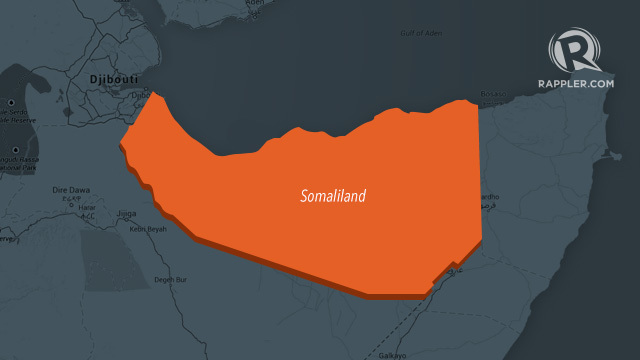
Somaliland is bordered by Ethiopia in the south and west, Djibouti in the northwest, the Gulf of Aden in the north, and two other de facto independent Somali territories in the east - Maakhir and Northland.
Since declaring independence, Somaliland has drafted a secular Constitution, held three democratic elections and secured stable borders with its neighbors. Its government has been described as a power-sharing coalition of Somaliland's main clans.
The fear that international recognition of Somaliland's government could embolden other secessionist movements in the Horn of Africa has impeded foreign investment and multilateral assistance. As a result, Somaliland suffers from a 70 percent unemployment rate and a lack of many social services.
Matthew Stein

Media groups confirm kidnapping in Somalia


Medeshi 24 Aug, 2008

MOGADISHU, Somalia: Media organizations confirmed on Sunday that two foreign journalists have been kidnapped near Somalia's capital, and the family of one of the hostages expressed concern about his welfare.
The Canadian and Australian journalists were kidnapped Saturday along with their Somali driver and two Somali guards
(Photo: Australian photographer Nigel Brenan went missing near Mogadishu)
(while traveling to Elasha, 18 kilometers (11 miles) southwest of the capital, Mogadishu, Somali witnesses have said.
Somalia's government has confirmed the kidnapping.
In a statement Sunday, Paris-based Reporters Without Borders identified the journalists as Canadian Amanda Lindhout and Australian Nigel Brennan. The group said Lindhout is normally based in Baghdad and works for French TV station France 24 and Global National News of Canada.
The National Union of Somali Journalists condemned the kidnapping.

"We are appalled by this cruel abduction of journalists and call for the immediate release of our colleagues who are being held captive because of their noble work for Somali people," Omar Faruk Osman, the union's secretary general, said in a statement Sunday.
In Australia, Brennan's family said that it is worried about him.
"We are deeply concerned that our son Nigel Brennan may have gone missing near Mogadishu in Somalia yesterday. He is a freelance photographer who arrived in Kenya just over a week ago," the family said in a statement Sunday released by Australia's government.
Authorities in Australia said they are investigating whether Brennan has been kidnapped.
Somali government spokesman Abdi Haji Gobdon said Saturday that his government is trying to find out where the journalists are being held captive.
Journalists and humanitarian workers are frequently abducted for ransoms in Somalia, one of the world's poorest war-torn countries. Foreign and local workers generally travel in convoys heavily guarded by freelance militiamen.
Saturday's reported abduction came during a period of widespread violence in Somalia.
In the worst attack, Islamic militants said Saturday they have seized control of Kismayo, Somalia's third largest city, after fighting that left about 70 people dead.

-->

Somaliland: identity matters


Medeshi 24 Aug, 2008
Identity matters... Matt?
All identities are constructed, but as blogger Matt Eckel likes to remind us, that doesn't mean they're irrelevant.
Here's a short example from Somalia by Emily Meehan:
There is a drought in Somaliland, so I go to the desert to interview nomads who are living without water. I find a father outside his home, a structure of sticks and mats of woven grass covered with tin and colorful fabric. Ali Jama Odowa allows me and my team of two soldiers, a guide, and a driver to sleep on the ground outside his family's tent. Before we go to bed, and after everyone has listened to the scratchy shortwave broadcast of the BBC World Service, he tells me his problem: The drought might kill his cows, and they hardly have enough water to bathe with, cook with, and drink. The children look dangerously thin. I ask if he can take his family and move to another region where there's more rain. I have heard this is what nomads do.
"It's difficult for us to go where our clan doesn't live. We can't," he tells me.
"But there might be water there," I say, suggesting that he move into a region where the Darood clan rules. Odowa is from the Isaaq clan.
"There's no problem that would force us to go that far. We haven't seen that kind of a drought yet," he says, flustered. "We can travel inside Ethiopia where our clan lives, and we can wait for Allah to bring rain."
My guide and translator, Mohamed Amin Jibril, reminds me that Siad Barre, Somalia's dictator for 22 years, was Darood. Somaliland is populated by the Isaaq clan. Barre killed more than 50,000 Isaaqs in the Somali civil war of the late 1980s. In one incident, his soldiers tied more than 1,000 Isaaq men and boys to trees with barbed wire, pumped them full of bullets, and then drove over them with tanks, burying them alive. Barre's army bombed and razed Hargeysa, Somaliland's capital.
Isaaqs fled as refugees to Ethiopia or, if they were rich, to the United States, Canada, or Europe. So, to ask Odowa if he would move to a place where Daroods live is ridiculous, cruel even.
"You have made this man deny that there is even a drought!" my guide says disapprovingly. Odowa would rather die of starvation than travel inside the territory of an enemy clan, however lush.
Wandering around some more, we cross the unmarked border with Ethiopia. We run into a small, smiling lady in threadbare clothes; she has a dozen sheep. She and my guide speak in Somali, and I see that she is mentally ill. My guide picks up one of her sheep to joke with her, and she throws a stick at him and runs away, bursting into tears.
"It is something from the war. Maybe her parents were murdered in front of her," says Mohamed. "I asked her if she knew she was in Ethiopia, but she doesn't know what Ethiopia is. She does not know her own country even. She only knows her clan."

Notes From a Failed State: America's Warlord

Medeshi 23 Aug, 2008
Notes From a Failed State
from: Emily Meehan
America's Warlord
Somalia has been a failed state since 1991. The security think tank Fund for Peace puts Somalia at the top of its Failed States Index, and the Ibrahim Index of African Governance ranks Somalia as Africa's biggest failure. Emily Meehan recently spent four months in Kenya and Somalia.
(Photo: M . Qanyare Afrah)
NAIROBI, Kenya—If you search for "Somalia parliament chair fight" on YouTube, you will find a shocking video. In the clip, old men in suits shout and beat each other with chairs. In one astonishing sequence, two men observe the fracas, turn to look at each other, pick up chairs in unison, and start slamming another man on the head.

The way you react to this video is likely the way you would feel if you met Mohamed Qanyare Afrah. He's a former warlord and a member of Somalia's transitional parliament. He ran for president in 2004 and came in third. He plans to run again next year when the current transitional charter runs out.
We meet on the patio of Nairobi's Grand Regency hotel. Qanyare—graying, jocular, handsome in a navy-blue suit and red-and-white tie—remembers the day with a smile. "I was in there!" he boasts. Qanyare says the fight was over President Abdullahi Yusuf's decision to invite Ethiopian troops to overthrow the Islamic Courts Union in Mogadishu, Somalia's capital. Qanyare lives in Nairobi because the Islamists overthrew the warlords two years ago, and he fled. But he's not satisfied with the Ethiopian troops that then broke up the Islamist government, and like most Somalis, he wants the Ethiopians to leave. As far as Mohamed Qanyare is concerned, the only acceptable leader of Somalia is Mohamed Qanyare. Until he gets the job, he will contribute nothing to Somalia's nominal government. "It's not functioning. It's nothing," he says of the parliament. The European Union doesn't pay MPs enough, he adds, only $1,100 a month. The parliament is supposed to be meeting in Baidoa, Somalia, when Qanyare and I are talking in Nairobi.

Very few people know what a warlord is. Qanyare doesn't call himself one; his preferred term is faction leader. His faction was Murusade, a family, or subclan, of south Somalia's powerful Hawiye clan. With a lucrative transportation business that moves cargo across Africa, the 67-year-old is also a wealthy businessman. He launched the company in the 1970s while living in exile from Siad Barre's regime.
The "war" in warlord was Qanyare's competition with other armed faction leaders for control of Mogadishu. Their rivalry was born in the power vacuum after Barre's deposition in 1991. The anarchy that resulted from this competition prevented Somalia from becoming a functioning state for 15 years. From the mid-1990s until 2006, Qanyare led a militia of about 2,000 young Murusade men. He controlled an airstrip that aid agencies and khat dealers used to import their material from Kenya. He controlled an area of Mogadishu. He had a lot of weapons, makeshift tanks, and money.

"It was not a cool atmosphere politically, but that was between me and the other faction leaders. Anyone who tells you my militia was killing innocent people or making roadblocks, they must be cheating you," says Qanyare defiantly. Like feudal lords, warlords in Africa are known for taxing people living in their zones, and their soldiers, usually teenagers, are known for setting up roadblocks and charging people to pass. "I only defended myself," says Qanyare. He was also defending his airport, which brought in $100,000 a month, he says. His fundamental objective? "Ever since I returned to Somalia in 1991, I have been a political man," he says over a fourth cup of chai tea. "I used to be a businessman, now I have only one goal." That goal is to be president.
"I am the man who told the United States there was al-Qaida in Somalia," says Qanyare. "They could not believe!" Eventually, they did believe. After 9/11, the CIA recruited Qanyare and other warlords to hunt down radical clerics and send them off for interrogation at a U.S. base in Djibouti. As an aspiring president, Qanyare had his own reasons for resisting Islamist revolution. In 2006, the warlords announced that they had forged an alliance: the CIA-funded Alliance for Restoration of Peace and Counter-Terrorism. The irony of warlords running a peace alliance was not lost on Somalis.

Qanyare says the CIA didn't pay him. Somali journalists say he was vastly enriched with cash deliveries. The counterterrorism tactic was controversial, and U.S. diplomat Michael Zorick was transferred from his post in Nairobi as a punishment for speaking out against it. Zorick later won a "constructive dissent" prize from the American Foreign Service Organization. Somalis were horrified by the alliance, and many now consider the United States their No. 2 enemy after Ethiopia. "One thing people know is the warlords are the worst people in Somalia, and the Americans are helping the worst people," Somali politician Mohamud Uluso told me.
Ask ordinary Somalis about Qanyare, and without fail, the first thing anyone who lived in Mogadishu back then will say is that he kidnapped innocent Muslim clerics to make money from the CIA. "Warlords were all kidnapping Muslim scholars and flying them out of Somalia systematically, and Mohamed Qanyare had his airport," says Hassan Mohamed, a 29-year-old who grew up in Qanyare's Mogadishu territory.

Qanyare says he wasn't very successful at catching terrorists, and his militia caught only one, by accident. He says the man he caught and flew out to Djibouti killed two British schoolteachers in Somaliland. Somaliland's former interior minister, Ismael Adam Osman, says the man who killed Richard and Enid Eyeington in 2003 was caught in Mogadishu and handed over to the CIA in Djibouti, but Osman doesn't know how he was caught. Mohamed Ali Isey currently awaits the death penalty in a Somaliland prison.

Qanyare's cooperation with the United States was a symptom of his unusual American bias. "Some people, they believe all roads lead to Rome," he says of elders who worshipped Italy, Somalia's former colonizer. "Me? I think all roads lead to Washington." On the topic of Islamist governance, he looks disgusted. "I'm a secularist," he says. "I'm not the person sent from God to regulate the peoples' religions. We must have a multiparty democracy." Qanyare is a Muslim. He wakes up every morning at 5 a.m. to pray—and to watch CNN.

Since 2006, Qanyare's relationship with the United States seems to have deteriorated, and he's angry that Washington accepts the Ethiopian occupation arranged by President Yusuf. "America is the sick person," he says, referring to 9/11 and the U.S. Embassy bombings. "They wanted to see the physician, and they are using a witch doctor—Yusuf and Ethiopia. I used to give my advice to the CIA. But I think nobody cares about American taxpayers. Now everything is bad there [in Somalia]." The people fighting Ethiopians in Somalia have a right to do so, says Qanyare, expressing a sentiment echoed by most Somalis. "They have a right to jihad with Ethiopia, because Ethiopia invaded a sovereign country."

Our meeting is wrapping up, and several demure Somali ladies are waiting for Qanyare in the hotel lobby. "Is one of those women your wife?" I ask him. "I don't know those ladies—I think they want my money," he says, dismissing them with a harassed wave.

If Qanyare is elected president, he will move back to Mogadishu. It's not in the state it was when he left in 2006. That was anarchy. Today it's compared to Baghdad.
Is he scared to go back? "My dear," says Qanyare, "I only fear God."

Abdiaziz Hassan Ahmed contributed to this article.

Ethiopia in Somalia: One year on


Medeshi 22 Aug, 2008
Ethiopia in Somalia: One year on
By Martin Plaut BBC Africa analyst
The Ethiopian decision to invade Somalia in December 2006 altered the balance of power in the Horn of Africa.
On 28 December 2006, they helped government forces capture Islamists from the capital, Mogadishu, which they had controlled for six months.
Ethiopian forces, which had been facing Eritrea along their 1,000km border, but were otherwise confronting few security threats, are now engaged on three fronts.
The forces in Somalia are now bogged down and cannot withdraw, as Prime Minister Meles Zenawi recently acknowledged.
In addition to the conflict in Somalia they now also confront a growing rebellion in the Somali region of Ethiopia from the Ogaden National Liberation Front.
Knox Chitiyo, head of the Africa programme at the Royal United Services Institute in London, believes the Ethiopian military position is increasingly difficult.
"The government now has daggers pointing at it from all directions," he says.
"It is facing a multi-front war with no prospect of a military victory."
The invasion has:
Left Ethiopia bogged down in Somalia
Forced around 600,000 Somalis to flee their homes, in what the UN has described as one of the worst humanitarian situations in Africa
Brought the United States into the conflict, allied to Ethiopia
Left Eritrea even more isolated from the international community and threatened with being declared a terrorist state by Washington.
The US says it opposed the Ethiopian invasion, although it certainly supplied assistance to the Ethiopian military once the invasion had happened, and used its AC-130 gunships to try to kill senior Islamists on at least one occasion in January 2007.
The US Assistant Secretary of State Jendayi Frazer said: "We urged the Ethiopian military not to go into Somalia."
This is acknowledged by Ethiopian officials, who say the then head of US Central Command, General John Abizaid told them the invasion would be a mistake, and warned that Somalia would become "Ethiopia's Iraq."
Others analysts are not so apocalyptic. Ethiopia argued it had no alternative but to confront the Union of Islamic Courts (UIC) after it took power in Mogadishu in mid-2006, because of the Islamists' alleged links with al-Qaeda.
The declaration of a jihad against Addis Ababa by UIC leader Sheik Hassan Dahir Aweys was seen as the last straw.
Human cost
But even if the UIC was routed, it has now re-formed and has banded together with other forces in the Eritrean-based Alliance for the Liberation of Somalia.
Sally Healy of the Royal Institute of International Affairs argues that even if Ethiopia has made some security gains, the suffering of ordinary Somalis has been disproportionately high.
"The cost for the people of Mogadishu has been unacceptable," she says.
This reflects the view of the United Nations, which now considers Somalia the worst humanitarian crisis in Africa.
Peter Smerdon of the World Food Programme says it will have to try to feed at least 1.2 million Somalis during 2008.
"More than 600,000 people were forced from their homes in Mogadishu in 2007 by fighting and the worst cereals harvest in 13 years in Middle and Lower Shabelle, traditionally the most agriculturally productive regions of the whole country," Mr Smerdon says.
He warns the numbers needing food aid could well rise if there is continued insecurity and any kind of repeat of the floods and bad harvests seen in recent years.
New initiative
So how might the Somali crisis be resolved?
Ethiopia has said it would consider withdrawing its troops if an international peacekeeping force were put in place, but UN Secretary General Ban Ki-moon has said the situation in the country makes such a deployment "neither realistic nor viable".
The UN believes a new initiative is required, bringing together Somalia's Transitional Federal Government and the opposition.
This proposal was put forward by the UN's senior Somali official, Ahmedou Ould Abdallah, when he addressed the UN Security Council earlier this month.
"These discussions should preferably be held in a location close to Somalia or in one where most observers following the situation in the country are based," he said.
"I am preparing the agenda, identifying a possible list of participants, and the timing for this process."
Ms Healy says this is really the only way forward.
Until an exit strategy can be achieved for Ethiopia, its troops will remain in occupation of the country - providing a cause around which the Islamists can rally.
"The Somali people must create a situation that would allow the Ethiopians to leave," she says.
But 16 years after the country last had a functioning national government, there seems little prospect of President Abdullahi Yusuf asserting control of the whole country in 2008.
Story from BBC NEWS:

Somali opposition group seizes port

The death toll in southern Somalia has risen to 70 with scores more wounded after three days of fighting in which an armed opposition group took control of the southern port of Kismayu.
At least 13 people were killed in clashes in Kismayu on Friday between a local clan militia and al-Shabab, a group that broke away from the powerful Islamic Courts Union in 2007.
It is the bloodiest fighting in the country for several months.
(Photo: Civilians caught in the fighting)
Kismayu is the country's biggest port, 500km south of the capital, Mogadishu.
Al Jazeera's Mohammed Adow reported that bodies remained on the streets where the fighting had been heaviest.
"They are said to still be in fighting spirit and they could be waging more fighting in the hours to come or even tomorrow morning," Adow reported on Friday.
A clan leader denied that al-Shabab had successfully taken the port, but that his troops had rather made a tactical withdrawal.
Side by side
Al-Shabab, fighting as part of the Islamic Courts Union, was driven out of Kismayu in early 2007 after Ethiopian forces rolled into Somalia to back the interim government in the fight to take control of much of central and southern Somalia.
"This is the first time in almost two years that Somalia's Islamic Court Union and al-Shabab are fighting side by side," Adow said.
"They also feel al-Shabab are fighting the same enemy despite the different ideologies they have," Adow said.
Worsening violence
"The leadership of Kismayu has changed hands nearly 30 times since the civil war in Somalia," Adow reported.
"The city has been fought over mainly because of its strategic location.
"It is one of the biggest ports in Somalia and is known as a bread basket for the country because of its agriculture."
Sahra Haji Ahmed, a resident, said al-Shabab forces were in the city centre and the sound of gunshots could be heard coming from only one area of the city.
At least 6,000 civilians have died in the past year alone.
Somalia has lacked an effective government since Siad Barre, Somalia's former president, was ousted.
Barre's removal touched off a deadly power struggle that has defied more than 14 attempts to stabilise the country of about 10 million people.

FACTBOX-Somalia, a country torn apart

Medeshi 22 August , 2008
FACTBOX-Somalia, a country torn apart
The death toll from the worst fighting in southern Somalia for months rose to 70 on Friday. Residents said most of Kismayu was now under the control of Islamist insurgents from the al-Shabaab group after two days of clashes.
(An injured man rests on a pavement following heavy artilery shells outside Bakara market in Mogadishu, August 21, 2008. )
The Horn of Africa country has had no effective government since warlords overthrew dictator Mohamed Siad Barre in 1991 and then turned on each other. Here are some details on aspects of the conflict.
ISLAMIST RULE:
In June 2006, Islamist militia called the Somalia Islamic Courts Council seized Mogadishu after defeating U.S.-backed warlords. Washington accused the Islamists of al Qaeda links.
With tacit U.S. approval, Somalia's neighbour Ethiopia sent troops to defend the government against an Islamist attack on Baidoa in December 2006. The force advanced rapidly, taking Mogadishu and driving the Islamists to Somalia's southern tip.

INTERIM GOVERNMENT:
Lawmakers had elected warlord Abdullahi Yusuf president and Ali Mohamed Gedi prime minister to run the 14th attempt at government since the fall of Barre. They entered the capital after the fall of the Islamists.
Gedi resigned in October 2007 and was succeeded by Nur Hassan Hussein as prime minister, but a rift has also opened between Yusuf and Hussein.
BLOODSHED AND HUNGER:
Violence in Somalia has killed over 8,000 people since the beginning of 2007 and uprooted 1 million. The U.N. says 3.5 million people may need food aid later this year but donors have only funded about a third of a $637 million aid appeal.
The African Union has said it is incapable of stabilising Somalia through its African Union Mission in Somalia (AMISOM) and urged the United Nations to take over the force. The AU had wanted an 8,000 strong force, but only has 2,600 from Uganda and Burundi. Nigeria has said it will send 850.
PEACE DEAL IN DOUBT:
The government signed a peace deal with some opposition figures on Tuesday. The deal, initialled in June, called for the rapid deployment of U.N. peacekeepers.
But the agreement was rejected by Islamist Sheikh Hassan Dahir Aweys, who now says he represents the opposition Alliance for the Re-Liberation of Somalia. The deal was also rejected by the rebels and other opposition hardliners.


Source : Reuters

Bad policies turn food crisis into famine in Ethiopia


21 Aug, 2008
Ethiopia - another famine, another avoidable disaster
Population explosion and a misguided land policy - two reasons why Addis Ababa is the architect of its own misery
Rosemary Righter
It was at a railway crossing near Diri Dawa, the provincial capital in the Ethiopian Ogaden desert, that I saw them: small children's hands, blackened by sun, clutching at the slats of a cattle truck dumped on a siding. The year was 1984, the height of the Ethiopian famine that claimed about a million lives. These young things must have expired, hours later, of heat and thirst in temperatures peaking at about 48C, in the truck where they had deliberately been left to die.
I know it was deliberate because I took quick photographs, muttered a few words they couldn't understand, and headed in to Diri Dawa to get help. The famine relief office officials shrugged and directed me to the military police commander. He cut me short: yes, he knew where they were. They were ethnic Somali kids - Somalis, the majority population of the Ogaden, had been in rebellion against Ethiopian rule for years - and they had been caught throwing stones at a train.
But they would die, I persisted. He lit a cigarette. “So what: they knew the risks and they must pay the price.”
You did not have to be caught throwing stones to “pay the price” in 1984. That famine in the Ogaden, the worst-affected region in Ethiopia, was far deadlier than it need have been because, until the international outcry forced it somewhat to relent, the Marxist Mengistu dictatorship blocked food aid to rebel areas, using it as a weapon of war.
What the world saw back then they are seeing again: heart-rending photographs of wide-eyed famished Ethiopian children. What the world did not hear much about then was the criminal exploitation of suffering. What the world will not see clearly, even now, is that disasters like drought can cause crops to fail, but should never, in a half-decently run country, lead to mass deaths from malnutrition. Famines in this day and age are man-made, if not by the sins of commission perpetrated by the thuggish Mengistu regime (and by North Korea's) then by culpable omission coupled with lousy policies.
Mengistu was overthrown in 1991, fleeing Addis Ababa to retire in the congenial climate of Robert Mugabe's Zimbabwe. Because Meles Zenawi, the Tigrayan rebel leader who ousted him, shed some of his Albanian-model Stalinist baggage, he was fêted by Westerners as a moderniser and showered with development aid.
A spot of election-rigging in 2005, followed by the shooting of up to 200 pro-democracy demonstrators, caused some temporary tut-tutting, after which aid quietly resumed and, in Britain's case, doubled. Not so quietly, the Ethiopian Army is again cracking heads in the Ogaden, burning villages and, according to Human Rights Watch, torturing and publicly executing not only rebels of the resurgent Ogaden National Liberation Front but also civilians sympathising with them. In the Ogaden, famine looms. Plus ça change.
Still, Meles and Mengistu are not la même chose. Meles is a bit of a thug, but he has introduced some judicial and commercial reforms, devolved powers from Addis Ababa to the regions, improved education, curbed child mortality through anti-poverty programmes and, importantly, advocated greater equality for women. He has also ploughed 17 per cent of government spending into agriculture, three to four times as much as most other African governments. He claims that farm production is growing by 10 per cent a year, and boasts that, two years ago, the country actually exported maize (odd, that, when in a “good” year millions of Ethiopians rely on foreign food aid).
After the last big drought, in 2003, the Ethiopian Government worked with donors to create a system designed to make famine history. It includes a Productive Safety Net, a public works programme providing seven million poor Ethiopians - nearly a tenth of the population - with food or cash, and a Famine Early Warning System that measures rainfall, livestock prices, household spending and signs of malnutrition.
Textbook stuff, and in stark contrast with the junta's attempt to hide the 1984 famine from the world. And yet... how, then, has the failure of the “little rains” this spring, and the consequent loss of a single harvest, translated into a huge emergency affecting ten million people, by the aid industry's probably inflated account, and 4.6 million by the Government's defensively conservative assessment?
Why are its emergency grain reserves so depleted that food rations have been reduced by a third, at least 75,000 children are already severely malnourished and hunger affects two thirds of the country and has, this time, spread to the towns? Why is Ethiopia, a country with lush two-crop breadbaskets as well as deserts and eroded hill farms, still so vulnerable that, as Meles himself admits, “one unexpected weather event can push us over the precipice”?
There are two big causes, and drought is not one of them. They are within the power of politicians to tackle, and tackled they must finally be, with the requisite sense of urgency. The first is Ethiopia's population explosion; with families averaging 5.4 children, it has soared from 33.5 million in the 1984 famine to 77 million now. In a country where 85 per cent of the people rely on farming for a living, this means that, per head, food production has actually fallen since 1984 - by more than a third - and farm plots get smaller and smaller. A fifth of Ethiopian farmers try to survive on areas no more than 20 metres by 40 metres per person, yielding no more than half their cereal needs.
The second is Meles's purblind refusal to reverse the Marxist folly of his 1995 law that put all land under state ownership. “Land holding certificates” graciously permit farmers to till land that their forebears have farmed for generations; but surveys show that 46 per cent still expect to lose their farms.
The policy is a disaster. It discourages careful land management; it deprives farmers of collateral to raise bank loans to buy fertiliser and agricultural tools; and they cling to plots too small to feed their families because, with nothing to sell, they have no alternative. The coffee and infant rose-growing sectors apart, most Ethiopians farm as their ancestors did, with hoes, wooden ploughs, oxen and an anxious eye on the skies.
Enough food aid is once more pouring in to stave off serious famine; but it will not remedy Ethiopia's deepening aid dependency and rural despair. With a smaller - because more mobile - landowning rural population, able to access loans to invest in higher-yield seeds, tractors and drip irrigation, Ethiopia could feed itself. But will donor governments champion the farmers' right to get back their land? On past experience, pigs will fly. And the next famine will be a matter of time.
Rosemary Righter is an associate editor of The Times

Ethiopian FM blasts Somalia’s leaders

Medeshi 21 Aug, 2008
Ethiopian FM blasts Somalia’s leaders
By Barney Jopson in Addis Ababa
Published: August 21 2008
Ethiopia has blasted Somalia’s political leaders for getting bogged down in ”internal squabbles” while millions of Somalis live on the brink of a humanitarian disaster in a country that remains violent and ungoverned.
Thousands of Ethiopian troops invaded Somalia at the end of 2006 to reinstall an interim government headed by president Abdullahi Yusuf. But it has a tenuous grip on power and its time in office has been marked by growing insurgency, clan warfare, and the mass displacement of civilians.
Seyoum Mesfin, Ethiopia’s foreign minister, told the Financial Times that a rift between the president and prime minister Nur Hassan Hussein, appointed eight months ago after his predecessor fell out with Mr Yusuf, was the biggest obstacle to peace.
Ethiopia’s own security and credibility are at stake in Somalia, which it invaded to oust a coalition of Islamist groups that had taken control. As the interim government’s main international backer, it has closeted the president and prime minister in Addis Ababa for the past week as it seeks to bridge the divide between them.
In Mogadishu, the Somali capital, Ethiopian soldiers and troops from the transitional federal government remain the target of almost daily attacks by Islamist insurgents and clan gunmen opposed to Mr Yusuf’s regime.
“The main challenge now is not what they call the enemy. It’s an intra-government crisis that is preventing them from focusing on the tasks they need to get done,” said Mr Mesfin. “There has been a lack of vigour and, if I may say so, a lack of commitment.”
Since the beginning of last year more than 8,000 Somalis have been killed and 1m forced from their homes by fighting, which has centred on the capital Mogadishu. Humanitarian relief efforts have been undermined by the assassination of aid workers and the United Nations says that, due also to the additional impact of a drought, up to 3.5m Somalis – or nearly half the population – could need food aid later this year.
But Mr Seyoum gave a less bleak account of the security situation today than many independent observers, saying the country was experiencing less daily violence than Iraq and Afghanistan. To create a durable peace, he said the president and the prime minster needed to implement plans to create regional administrations that would give people a greater stake in government and, potentially, help to reconcile Somalia’s warring clans and sub-clans.
The rift between the leaders overshadowed the signing of a peace agreement in Djibouti on Monday between the interim government and one of two factions of the Somali political opposition. The agreement was welcomed on Thursday by the African Union, but it did little to lighten a mood of gloom among western diplomats who follow Somalia, because it had already been rejected by the other faction as well as by the al-Shabaab Islamist extremists leading the insurgency.
Mr Seyoum said that al-Shabaab, which the US says is linked to al-Qaeda, had been critically weakened: “They cannot sustain their own activities, let alone disband the government.” But other analysts say their strength and boldness appears to be increasing.
Copyright The Financial Times Limited 2008

Qaar ka mid ah Ururada Bulshada Rayidka ah oo walaac ka muujiyay mudo dhaafka golayaasha deegaanada

Annaga oo ah Ururada Bulshada Rayidka ah ee Madaxa-banaan waxaanu si wayn uga walaacsanahay