Somali pirates guided by London intelligence team, report says


Medeshi May 11, 2009
Somali pirates guided by London intelligence team, report says
The Somali pirates attacking shipping in the Gulf of Aden and Indian Ocean are directed to their targets by a "consultant" team in London, according to a European military intelligence document obtained by a Spanish radio station.
The document, obtained by Cadena SER radio, says the team and the pirates remain in contact by satellite telephone.
It says that pirate groups have "well-placed informers" in London who are in regular contact with control centres in Somalia where decisions on which vessels to attack are made. These London-based "consultants" help the pirates select targets, providing information on the ships' cargoes and courses.
In at least one case the pirates have remained in contact with their London informants from the hijacked ship, according to one targeted shipping company.
The pirates' information network extends to Yemen, Dubai and the Suez canal.
The intelligence report is understood to have been issued to European navies.
"The information that merchant ships sailing through the area volunteer to various international organisations is ending up in the pirates' hands," Cadena SER reported the report as saying.
This enables the more organised pirate groups to study their targets in advance, even spending several days training teams for specific hijacks. Senior pirates then join the vessel once it has been sailed close to Somalia.
Captains of attacked ships have found that pirates know everything from the layout of the vessel to its ports of call. Vessels targeted as a result of this kind of intelligence included the Greek cargo ship Titan, the Turkish merchant ship Karagol and the Spanish trawler Felipe Ruano.
In each case, says the document, the pirates had full knowledge of the cargo, nationality and course of the vessel.
The national flag of a ship is also taken into account when choosing a target, with British vessels being increasingly avoided, according to the report. It was not clear whether this was because pirates did not want to draw the attention of British police to their information sources in London.
European countries have set up Operation Atalanta to co-ordinate their military efforts in the area.

Ships held by Somali pirates

Medeshi
Ships held by Somali pirates
May 10, 2009
May 9 (Reuters) - Somali pirates freed a British-owned ship on Saturday after its Italian operator paid a ransom, Bulgaria's Foreign Ministry said.
The 32,000-tonne bulker Malaspina Castle was hijacked on April 6. Bulgarian government officials have said the ship had a total of 24 crew, including 16 Bulgarians.
Here are details about some ships believed to be under pirate control and some facts about the increase in piracy:
YENEGOA OCEAN: Seized Aug. 4, 2008 - The Nigerian tugboat, with around 11 crew aboard was hijacked near Bosasso.
JAIKUR-I: Seized Oct. 2, 2008 - The 21,040 tonne general cargo ship was detained after a dispute with the owners over damaged cargo. Most of the 21 crew were released last month.
MASINDRA 7: Seized on Dec. 16, 2008. The Malaysian-owned tugboat, was seized with a barge off the Yemeni coast. The tug has around 11 Indonesian crew.
SERENITY: The catamaran sailing for Madagascar from the Seychelles with three people aboard, was seized in early March.
NIPAYIYA: Seized on March 25. The Greek-owned and Panama-registered vessel was seized by pirates 450 miles from Somalia's south coast.
INDIAN OCEAN EXPLORER: Seized March 2009. The 35-metre boat was built in Hamburg as an oceanographic research vessel. It accommodates around 12 passengers.
HANSA STAVANGER: Seized April 4, 2009. The 20,000-tonne German container vessel was captured about 400 miles off the southern Somali port of Kismayu, between the Seychelles and Kenya. The vessel had a German captain, three Russians, two Ukrainians and 14 Filipinos on board.
WIN FAR 161: Taiwanese tuna boat, Seized on April 6, 2009.
SHUGAA-AL-MADHI: Seized April 9, 2009. The fishing boat was seized with 13 crew aboard.
MOMTAZ 1: Seized April 10, 2009. Egyptian fishing vessel was detained with 18 crew.
BUCCANEER: Seized April 11, 2009. The Italian tugboat, owned by Micoperi Marine Contractors, was carrying 10 Italians, five Romanians and a Croatian, and was seized towing two barges while travelling westbound through the Gulf of Aden.
IRENE E.M.: Seized April 14, 2009. The St. Vincent and the Grenadines-flagged Greek-owned bulk carrier was hijacked as it travelled through the Gulf of Aden. 22 Filipino crew unharmed.
POMPEI: Seized April 18, 2009. The Belgian dredging vessel and its 10 crew was hijacked about 600 km (370 miles) from the Somali coast en route to the Seychelles. It has two Belgian, four Croatian, one Dutch and three Filipino crew on board.
ARIANA: Seized May 2, 2009. The Ariana was seized north of Madagascar en route to the Middle East from Brazil. The 24-strong Ukrainian crew are said to be unhurt. The ship, flying a Maltese flag, belongs to All Oceans shipping in Greece. A Ukrainian ship was hijacked on the same day in the Indian Ocean with a cargo including U.N. vehicles. Maritime officials were unable to confirm this seizure.
VICTORIA: Seized on May 5, 2009. The Antigua and Barbuda- flagged cargo vessel was hijacked by eight pirates in the Gulf of Aden whilst proceeding toward the Port of Jeddah. The 146-metre ship had a crew of 10.
MARATHON: Seized on May 7, 2009. The 2,575-tonne boat, carrying up to 18 crew, is both owned and flagged from the Netherlands. It was carrying coke fuel.
* PIRACY KEY FACTS:
-- In 2008 there were 293 incidents of piracy against ships worldwide -- 11 percent up on the year before. Attacks off Somalia and in the Gulf of Aden almost trebled.
-- In January 2009, one in every six vessels attacked was successfully hijacked. This increased to one in eight for February 2009 and one in 13 for the month of March.
Nearly 20,000 ships pass through the Gulf of Aden each year, heading to and from the Suez Canal.
Sources: Reuters/Ecoterra International/International Maritime Bureau Piracy Reporting Centre/Lloyds List/Inquirer.net

Somali pirates receive $2 mln for British-owned ship

Medeshi
Somali pirates receive $2 mln for British-owned ship
Sun May 10, 2009
BOSASSO, Somalia, May 10 (Reuters) - Somali pirates said on Sunday they had received a $2-million ransom for the release of a British-owned vessel and its 16 Bulgarian crew.
Pirate attacks, fuelled by large ransoms, have continued almost unabated despite the presence of an armada of foreign warships patrolling the Indian Ocean and Gulf of Aden.
"We got a $2 million ransom for the release of the British-owned ship," pirate Mohamed Saleh, from the Somali coastal village of Eyl, told Reuters on Sunday.
"A helicopter brought the money."
The 32,000-tonne bulker, Malaspina Castle, was released on Saturday after being captured more than a month ago. Its Italian operator paid the ransom, according to Bulgaria's Foreign Ministry, which gave no details on the amount.
Analysts say the only way to stop bandits on the high seas is to resolve Somalia's political crisis on land where pirates profit from lawlessness as Islamist-led rebels fight government troops and African Union peacekeepers. (Reporting by Abdiqani Hassan; Writing by Jack Kimball; Editing by Jon Hemming)

Eritrea denies hosting Iranian forces

Medeshi
Eritrea denies hosting Iranian forces
Sunday 10 May 2009
By Tesfa-alem Tekle
May 9, 2009 (ADDIS ABABA) — Despite growing reports,Eritrea on Friday has denied the presence of any Iranian forces in its soil.
Since November last year opposition websites and a number of western sources have reported that Iranian Revolutionary Guard unities have been heading to the Eritrea’s port town of Assab to establish a military base.
According to these reports, Iran has also anchored submarines and also deployed long-range missiles at the tiny red sea nation, to what the reports reason out was as a strategic preparation to confront in case a possible conflict breaks out with Israel or with the west in connection with Nuclear question, so it would be easy for Tehran to launch a "maritime jihad".
But Yemane, Gebremeskel, Spokesman for Eritrean President Issias Afeworki blasted the reports referring it as "Disinformation campaigns" by Israel.
"Neither Israel nor Iran have bases in Eritrea. More importantly, Eritrea’s long-standing policy is not to provide military bases to any power," said Yemane Gebremeskel.
Yemane termed the reports as "persistent disinformation campaigns by Israeli Intelligence officials."
"Why would Iran deploy troops in Assab? This is a ridiculous story."
Eritrea’s foreign Ministry also denounced the reports.
"The main sources of these relentless vilification campaigns against Eritrea are invariably the key western intelligence sources that have refined the art of disinformation," the ministry said.
It added that Eritrea and Iran had friendly ties. But this is not different from the warm diplomatic ties the nation enjoys with all other countries in the Middle East.
10 percent of the world’s maritime traffic passes through the area, including 25 percent of the world’s oil.
(ST)

Lawless Somalia keeps Dadaab full


Medeshi May 10, 2009

Lawless Somalia keeps Dadaab full
Mohammed Noor Hajir is waiting to hear whether he will be among the lucky few at the Dadaab refugee camp in Kenya, who will be resettled in the United States.
(Mohammed Noor Haji and his family at the camp. Picture: Courtesy of ECHO )
It has been a long wait. He fled his native Somalia in 1991 following the outbreak of clan fighting in Gedo region and made it to Dadaab with his wife and daughter. He has been there ever since living a life in limbo, not knowing where he will be going next.
“I didn’t expect to be here so long. I’m very disappointed with my country. There is little hope of returning, so my only option is to be resettled in a third country like the US or Canada,” he said.
Mohammed Noor Hajir now has seven children, six of whom were born at the Dadaab refugee camp. He lives in a small compound in a mud house that he built.
It is perhaps not a typical image of a refugee camp, but then Dadaab is an untypical camp. Set in the dusty scrub plains on the highway that leads to the Somali border, it is according to the United Nations High Commissioner for Refugees (UNHCR) unofficially the largest refugee camp in the world.
Although it was designed for 90,000 refugees, it now holds around three times that number and is expanding by up to 500 people every day as the clan fighting in Somalia intensifies.
Alongside the established plots where people like Mohammed Noor Hajir live, are rows of tents for the newly arrived. This is where 20 year old Deko Abdi Osman may be accommodated once she completes the camp registration procedures.
She has just arrived at Dadaab after fleeing from Mogadishu, the Somali capital.
“There was fighting all around my family home,” she said. “When we heard heavy guns firing we decided it was time to leave Mogadishu as it was just too dangerous.” In the confusion surrounding the family’s hasty departure, she got separated from her parents and siblings and decided to head for the Kenyan border alone.
After a week of walking and catching lifts on vehicles she arrived in Dadaab.
“I’m happy to be somewhere safe, but I do not intend to stay long here. I need to find my family.”
The reality is that Deko will, without doubt, stay longer in Dadaab than she intends as, for the time being at least, there is nowhere else for her to go.
The escalation in violence between rival clans means repatriation to Somalia is not an option. And although the camp will soon be 20 years old, the long-term integration of Somalis into the local population is also not considered a possibility.
The resettlement of the 270,000 Somali refugees in third countries is the most viable alternative to repatriation and local integration. Although it is fraught with difficulties, it remains the dream of most of the refugees.
UNHCR, which runs the camp, is hoping to resettle around 8,600 refugees in 2009. Even it if resettles that many and reaches the 2010 target of 20,000 people, the arrival of new refugees means that the population at Dadaab is unlikely to decline.
The pressure of providing services for 270,000 people in a camp designed for 90,000 is becoming a problem. Water delivery is a key issue. Although, there is a plentiful supply in the Dadaab area, it is becoming increasingly difficult to supply it to all the refugees.
The infrastructure of the ageing water network is nearing the end of its useful life and the increase in refugees is putting further pressure on the system.
If there is a partial breakdown of the water system, Dadaab could face a humanitarian catastrophe as it could lead to the outbreak of cholera and other diseases,” said Yves Horent, the head of the Kenya operations for the European Commission Humanitarian Aid department.
“In addition to providing food aid in the camp, we have provided funding of three million euros ($4 million) to rehabilitate the network and provide sanitation services. We’re confident that by the end of the year all refugees will have access to enough water for their daily lives,” he added.
As one of the longest residing refugees in the camp, Mohammed Noor Hajir is likely to be among the next to be resettled in the US. After 18 years, he is impatient to move on, but is prepared to wait his turn. Despite the hardships of living in Dadaab, he still considers himself fortunate.
“I consider myself to be one of the luckiest Somalis. I am alive and here with my family. There are many who are not so fortunate.”
Daniel Dickinson is the regional information officer with ECHO

Somaliland court jails 14 for piracy

Medeshi May 10, 2009
Somaliland court jails 14 for piracy
MOGADISHU (AFP) — A court in the republic of Somaliland on Sunday sentenced 14 people to between 15 and 20 years in jail for piracy.
The suspects had been arrested by the Somaliland coastguards near the port of Berbera. Three of them were sentenced in absentia after dodging arrest last week.
"After we listened to the charges against the defendants and the evidence brought against them, the court finds them guilty," judge Osman Ibrahim Dahir said.
Nine of the suspects were each handed 15-year jail terms, while another two plus those who escaped detention were given 20 years.
Authorities in Somaliland have so far this year jailed 62 pirates as attacks on ships off the lawless Somali coast soar.
In the first quarter of 2009, 102 piracy incidents were reported to the International Maritime Bureau, nearly double the number during the same period in 2008.
Foreign naval ships, including from NATO and the European Union, have however thwarted several hijacking attempts and also made dozens of arrests.
Edited by medeshi

Ethiopia - Meles Zenawi's Regime Recent Panic Is Not Without Cause.

Medeshi
Ethiopia - Meles Zenawi's Regime Recent Panic Is Not Without Cause.
Press release
The recent accusation by Meles Zenawi‘s, The Ethiopian Prime Minister, clique of an alleged “coup” attempt led by Ginbot 7, which in a matter of days, was revised and heralded as an “assassination” attempt is a vivid indication of a very serious internal danger that the regime has begun to face. The only objective of the confusing and the constantly changing statements coming from the Prime Minster’s office is to distract Ethiopians and the international community from seeing the real crisis engulfing the regime.
For a long time, high military positions and exclusive military training and educational opportunities both at home and abroad have been monopolized by ethnic Tigrean officers; and this has created immeasurable discontent in the highly polarized Ethiopian army. Officers affiliated with the ruling Tigrean People Liberation Front (TPLF) routinely disobey their superiors from other ethnic groups ignoring military codes of conduct and discipline. For example, a major affiliated with the TPLF scolds a General from other ethnic group in a breach of strict military protocol. The absolute majority of the Ethiopian army is composed of non Tigreans; however, most of the high ranking commanding officers, including the Army Chief of Staff are from the ruling Tigrean ethnic clique. In addition, 22 of the 23 Army Divisions and all of the five Regional Army Commands are headed by ethnic minority Tigrean commanders. Such disproportionate Tigrean domination is not limited to the military, it encompasses the Police Forces, Intelligence services as well as the political and economic spheres of the country. Moreover, almost all important civilian assignments within the government and key posts in the economic and social sectors are occupied by a small group of loyal ethnic Tigreans affiliated to the TPLF. The recent uproar in the military was to challenge the inequity and the injustice inherent in the system. General Kemal Gelchu from Oromo ethnic was the first high ranking officer to officially break rank with the ethno-racist politico-military rule of Meles Zenawi. General Tefera Mamo, the recent victim of the brutal regime, has been a long time outspoken opponent of the ethno racist policies of Zenawi's regime. The view of this courageous general is shared by tens of thousands in the highly politicized and polarized members of the Ethiopian Armed Forces.Ginbot 7 is acutely aware of the simmering discontent within the army and defense forces, shares their solemn belief that only a genuinely democratic Ethiopia will remove the scourge of preferential treatment and nepotism in the army and in the country at large. What shook Meles Zenawi's regime to its core is the realization that the Army has now joined the civilian population in concluding that Meles and his band of ethno-racists are the main impediments to Ethiopia's peace, stability, economic prosperity and forming a truly democratic government accountable to its citizenry. This is the frightening fact Meles and Bereket want to hide underneath the confusing allegations and denials of the last few days.
Meles and his colleagues are failing to understand that the problem they are facing now is of greater magnitude than anything they have faced in the last 18 years. The festering problem will not disappear just because the regime clumsily accuses and imprisons a handful of officers and a motley crew of alleged collaborators -- including an eighty year old senior citizen. Ginbot 7 would like to inform Ethiopians at large, and the international community in general, the simple truth behind the smoke screen of alleged “coups”, “plots” and “assassination” attempts concotted by the Zenawi regime.
The primary link between Ginbot 7 and General Tefera Mamo as well the civilian prisoners of the brutal regime is our shared vision of creating a democratic Ethiopia where citizenship and merit, rather than blood line will become the route to high office and wealth and where civil liberties and the rule of law will flourish in every corner and every hamlet of our proud and ancient land.
Ginbot 7 Movement for Justice, Freedom and Democracy

Clashes kill at least 65 in Somalia in 3 days


Medeshi
Clashes kill at least 65 in Somalia in 3 days
By Abdi SheikhReuters
Sunday, May 10, 2009
MOGADISHU (Reuters) - Clashes between rival Islamist groups have killed at least 65 people and wounded more than 190 others in three days of battles in Somalia's capital, witnesses and hospital sources said on Sunday.
The Horn of Africa nation's interim government is struggling with a powerful insurgency in one of the world's most dangerous countries, where fighting since late 2006 has killed thousands and forced more than a million more from their homes.
(People run past the body of a man in Mogadishu, Sunday, May 10, 2009. Rival Islamist groups clashed in Somalia's capital Sunday, killing at least 10 people and wounding dozens in renewed fighting in the seaside city, witnesses and hospital officials said. (AP Photo/Farah Abdi Warsameh)
Hundreds of Islamists loyal to the government and opposition al Shabaab militiamen fought with heavy machine guns and mortars in northern Mogadishu over the weekend. "We killed an uncountable number of government fighters and moderate Islamists. Their dead bodies lie in the streets," Sheikh Mohamed Ibrahim Bilal, a senior al Shabaab official, told Reuters.
"Now north Mogadishu is under our control. We swept them from five key positions including Mogadishu football stadium."
Residents and hospital sources said 50 people had been killed in the fighting and 181 others wounded. At least 15 other people were killed and ten injured when a mortar struck a local mosque on Sunday, witnesses said.
"I can see 15 bodies of people killed after a mortar hit a mosque," witness Hassan Abdulle told Reuters by telephone. "They wanted to attend the afternoon prayers."
A local elder told Reuters that foreign fighters were taking part in the clashes. "We see long-bearded Arabs everywhere," Osman Ali said.
There was no independent confirmation of the presence of foreigners. Western security agencies have long feared that Somalia could become a haven for terrorists. The anarchic nation has been without effective central rule since 1991.
Two local reporters were wounded after a mortar struck a news conference, witnesses said.
International donors have pledged at least $213 million to help boost Somalia's security forces. President Sheikh Sharif Ahmed -- a former Islamist rebel -- is seen by many as the best hope in years for restoring stability.
Heavily armed pirates from Somalia have captured dozens of merchant ships off the coast, taking hundreds of hostages and making off with millions of dollars in ransoms.
(Additional reporting by Mohamed Ahmed and Ibrahim Mohamed; writing by Jack Kimball; editing by Philippa Fletcher)

Somaliland : Upstanding citizen lumped with neighbours from hell


Medeshi
Upstanding citizen lumped with neighbours from hell
Friday May 08, 2009
The arrivals hall of Hargeisa Airport is a dust-blown, concrete box on a sweltering plain of scrub desert.
Through its broken doors are peeling walls with a few scattered pictures of Mecca. A brass plaque on a beam commemorates the opening of the building by Prince Henry, the 1st Duke of Gloucester, in 1958. The tarnished plate looks oddly out of place as a reminder of Britain's forgotten colony.
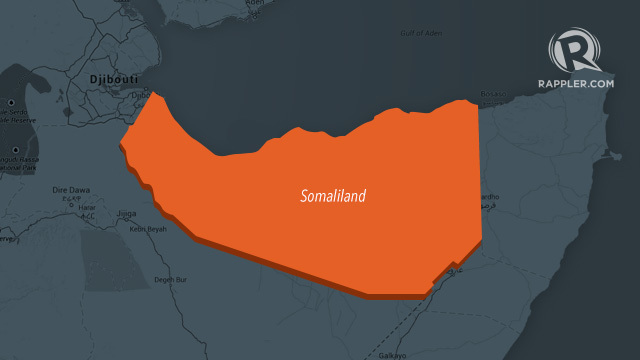
While the rest of Somalia has forced its way on to the world's news agenda as an anarchic, failed state and the spawning ground for a new age of piracy, the former British protectorate of Somaliland has been quietly pleading for international recognition.
To its south lies the region of Puntland, whose ports have been turned over to the pirate gangs. Beyond that, in Mogadishu, are the remnants of an Italian colony that is now among the most dangerous places on earth. To the west is the repressive and heavily armed Ethiopia. It is what Somaliland's Foreign Minister ruefully calls a "rough neighbourhood".
Sitting beneath a map of his unrecognised state - which is roughly the size of Wales and England combined - Abdillahi Duale cuts a polite, if exasperated, figure. He begins to list Somaliland's accomplishments, such as a functioning government, multi-party elections, a coastguard and a police force: quite mundane in most places in the world but in this neighbourhood, truly remarkable.It is, the minister says, "Africa's best kept secret".
Somaliland has more territory and a bigger population than at least a dozen other African states, he points out. A polished performer, Duale explains the Somalis' divergent paths with a brief history lesson. When both British and Italian Somaliland were granted independence within months of each other in 1960, there was a mistaken unity pact that eventually degenerated into the violent dictatorship of Siad Barre and then civil war.
When Barre's government fell in 1991, the north set up its own government within the former colonial borders while the south descended into warlordism.
Both paths had their origins in the colonial experience, the minister argues. Britain only wanted its protectorate to shore up naval control of the Gulf of Aden and to supply meat to Aden itself, and so left traditional elders largely in place. Italy treated its eastern coastal section of Somalia as a settlers' colony. When the shooting briefly stopped in 1991, the north had a starting point, the south didn't.
Despite this, Somaliland's 3.8 million people remain subject to a government in Mogadishu that doesn't exist. It has its own currency, security services, ministries and courts, but no place at the United Nations. Without recognition, Hargeisa has no access to lenders such as the International Monetary Fund or the World Bank.
Presiding over this limbo is Dahir Rayale Kahin. "All the criteria are fulfilled but still no one is recognising us," the President says calmly. "We are fighting piracy, we are arresting terrorists. Nobody can deny our regional contribution."
A referendum held in 2001 found overwhelming support for an independent Somaliland and an African Union report on recognition for the territory in 2005 found in favour, Rayale points out. "Always they say, 'If someone else recognises you, we will be second'. The problem is who will be first?"
The UK recognised Somaliland at independence in 1960 but London would have to upset powerful allies to renew that step. People here know that Egypt remains the major hurdle. Cairo sees a powerful Somalia as a bulwark against Ethiopia in any future conflict over the vital resources of the Nile.
But the potential costs of a continued limbo were hammered home in deadly fashion last October when a series of co-ordinated suicide attacks left 28 people dead and rocked the stability of Hargeisa. While no one wants to put a time limit on how long Somaliland can hold out in isolation, there are worrying signs everywhere.
A few feet away from the Duke of Gloucester's airport plaque is a meagre kiosk offering sugary biscuits. The bored-looking young man who works the day shift there has a favourite T-shirt - it is emblazoned with the name of Hassan Nasrullah, the Hizbollah leader in Lebanon.
- INDEPENDENT

For Somali Pirates, Worst Enemy May Be on Shore


Medeshi

The Pirate Chronicles
For Somali Pirates, Worst Enemy May Be on Shore
By JEFFREY GETTLEMAN
GAROOWE, Somalia — Abshir Boyah, a towering, notorious Somali pirate boss who admits to hijacking more than 25 ships and to being a member of a secretive pirate council called “The Corporation,” says he’s ready to cut a deal.
(Photo: Garoowe, where several prominent and many lesser Somali pirates make their homes.)
Facing intensifying naval pressure on the seas and now a rising backlash on land, Mr. Boyah has been shuttling between elders and religious sheiks fed up with pirates and their vices, promising to quit the buccaneering business if certain demands are met.
“Man, these Islamic guys want to cut my hands off,” he grumbled over a plate of camel meat and spaghetti. The sheiks seemed to have rattled him more than the armada of foreign warships patrolling offshore. “Maybe it’s time for a change.”
For the first time in this pirate-infested region of northern Somalia, some of the very communities that had been flourishing with pirate dollars — supplying these well-known criminals with sanctuary, support, brides, respect and even government help — are now trying to push them out.
Grass-roots, antipirate militias are forming. Sheiks and government leaders are embarking on a campaign to excommunicate the pirates, telling them to get out of town and preaching at mosques for women not to marry these un-Islamic, thieving “burcad badeed,” which in Somali translates as sea bandit. There is even a new sign at a parking lot in Garoowe, the sun-blasted capital of the semiautonomous region of Puntland, that may be the only one of its kind in the world. The thick red letters say: No pirates allowed.
Much like the violence, hunger and warlordism that has engulfed Somalia, piracy is a direct — and some Somalis say inevitable — outgrowth of a society that has languished for 18 years without a functioning central government and whose economy has been smashed by war.
But here in Garoowe, the pirates are increasingly viewed as stains on the devoutly Muslim, nomadic culture, blamed for introducing big-city evils like drugs, alcohol, street brawling and AIDS. A few weeks ago, Puntland police officers broke up a bootlegging ring and poured out 327 bottles of Ethiopian-made gin. In Somalia, alcohol is shunned. Such a voluminous stash of booze is virtually unheard of.
“The pirates are spoiling our society,” said Abdirahman Mohamed Mohamud, Puntland’s new president. “We will crush them.”
In the past 18 months, Somali pirates have netted as much as $100 million hijacking dozens of ships and holding them ransom, according to international maritime groups. It will be exceedingly difficult for these men — or the local businesses that they support — to make that kind of money doing anything else in this beleaguered nation.
Still, the Puntland pirate bosses insist they are ready to call it quits, if the sheiks find jobs for their young underlings and help the pirates form a coast guard to protect Somalia’s 1,880-mile coastline from illegal fishing and dumping. These are longstanding complaints made by many Somalis, including those who don’t scamper up the sides of cargo ships, AK-47 in hand.
It is a stretch, to say the least, that the world would accept being policed by rehabilitated hijackers. But on Monday, Mr. Boyah and two dozen other infamous Puntland pirates, many driving Toyota Surfs, a light, fast sport utility vehicle that has become the pirate ride of choice, arrived at an elder’s house in Garoowe to make their case nonetheless.
“Negotiation is our religion,” said one pirate, Abdirizak Elmi Abdullahi.
Puntland officials acknowledge, grudgingly, that the pirates have helped them in a way: bringing desperately needed attention and aid.
“Sad but true,” said Farah Dala, Puntland’s minister of planning and international cooperation. “After all the suffering and war, the world is finally paying attention to our pain because they’re getting a tiny taste of it.”
Last month, after an American sea captain was kidnapped by Somali pirates, donor nations pledged more than $200 million for Somalia, in part to fight piracy.
Since then, foreign navies have increased their patrols and arrested dozens of pirates. Mr. Boyah conceded that business was getting riskier. But, he said, there are still plenty of merchant ships — and plenty of ocean.
“It’s like hunting out there,” Mr. Boyah said through an interpreter. “Sometimes you get a deer, sometimes you get a dik-dik,” a runty antelope common in Somalia.
Mr. Boyah, 43, was born in Eyl, a pirate den on the coast. He said he dropped out of school in third grade, became a fisherman and took up hijacking after illegal fishing by foreign trawlers destroyed his livelihood in the mid-1990s.
“He’s respected as a pioneer,” said Yusuf Hassan, the managing editor of Garoowe Online, a Somali news Web site.
When Mr. Boyah walked into a restaurant recently, he had to shake half a dozen hands before sitting at a plastic, fly-covered table with two foreign journalists.
“Ha!” he said, through a mouthful of spaghetti. “Me eating with white men. This is like the cat eating with the mice!”
The restaurant sat across from the presidential palace. Mr. Boyah cut right through a crowd of Puntland soldiers to enter. He is hard to miss, about 6 foot 4 and dangerously thin. Earlier, he had been sitting on a couch, thigh to thigh, next to a high-ranking police chief. The two joked — or maybe it was not a joke — that they were cousins.
Puntland’s last president, Mohamud Muse Hirsi, was a former warlord widely suspected of collaborating with pirates and voted out of office in January. The new president, Mr. Abdirahman, is a technocrat who had been living in Australia and came back with many Western-educated advisers — and an ambition to be Somalia’s first leader to do something substantive about piracy. He formed an antipiracy commission and even issued a “First 100 Days” report.
Yet, Puntland officials are doing precious little about the pirate kings under their noses — reluctant, perhaps, to provoke a war with crime lords backed by hundreds of gunmen. When asked why they weren’t arresting the big fish, Mr. Abdirahman said, “Rumors are one thing, but we need evidence.”
Indeed, it is hard to see exactly where all those millions went, at least here in Garoowe. There are some nice new houses and a few new hotels where pirates hang out, including one encased in barbed wire called “The Ladies’ Breasts.” Dozens of dusty Surfs prowl the streets. But not much else.
Mr. Boyah, who lives in a simple little house, explains: “Don’t be surprised when I tell you all the money has disappeared. When someone who never had money suddenly gets money, it just goes.”
He claims that his estimated take of several hundred thousand dollars disappeared down a vortex of parties, weddings, jewelry, cars and qat, the stimulating leaf that Somalis chew like bubble gum.
Also, because of the extended network of relatives and clansmen, “it’s not like three people split a million bucks,” he said. “It’s more like 300.”
Oh, Mr. Boyah added, he also gives 15 percent to charity, especially to the elderly and infirm.
“I’d love to give them more,” he said.
Over all, he seemed like a man on a genuine quest for redemption — or a very good liar.
“We know what we’re doing is wrong,” he said gravely. “I’m asking forgiveness from God, the whole world, anybody.”
And then his silver Nokia phone chirped yet again. He would not say what he needed to do, but it was time to go.

Ethiopia - Legitimizing the Injustices


Medeshi May 9, 2009
Ethiopia - Legitimizing the Injustices
Tesfaye Z. Yigzaw
(A scorpion asked a frog for help, to cross over the river, as it is unable to swim. No, no, you will sting me, said a frog. The scorpion promised, it would not sting the frog. Alright, hop up on my back, said a frog. At midway over the river, a scorpion stung the frog. You sting me, you sting me, the frog cried. I cannot help it, it is my nature, said the scorpion, and so both drown deep into the river.(Atifithe Tifa)

Yes, it is TPLF’s nature. At no time since its inception, the Tigray Liberation Front (TPLF), ruling Ethiopia with iron fist, has spoken the truth. The recent alleged coup, which all of a sudden changed to “plotting to assassinate” unidentified “authorities” that led to the arrest of army officers and many citizens are not unanticipated news. This is an ordinary TPLF’s fallacious propaganda scheme to wish to gain an attention as usual when it is in a deep trouble. This arrest is not a surprise, because, technically, 80 million people are in prisons (except the members of TPLF). Apparently, TPLF is an organization founded on an ideal of deception, bewilderment, divisions, and it after all has continuous to inflict terror on the people of Ethiopia for eighteen years. The people and the world community very well know, TPLF is a pathological liar, and it is never to be embarrassed to tell bloodcurdling fabricated news and lies. Thus, “We won Badame, the Ethiopian economy has been growing 11.5 %” even at this time when the world’s economies are in downfall, the invasion of Somalia has been “successful”, “Ethiopia is enjoying democracy. Election is free and fair” and these are just a few examples of numerous TPLF’s deceptive reports.
They cannot help it, it is their nature; most often leaders are the products of their society, but not a kind of TPLF leaders. Ethiopians are very peace loving, religious, law abiding, and respects old and unable, children and woman. But, TPLF’s leaders do not have a slightest character of Ethiopian cultures. I come to understand the reason, they had their own monasteries cultures and behaviors built on when they were in isolation during their rebellious years. I am sure, they do not believe in God, but atheists do have a great respect for humanity. So, who are these people and where did they come from? Instead of taking responsibility for its wrongs, TPLF likes to blame individuals, groups, organizations and political dissents for its own incompetence. Rather than working with other political groups and experts on varies fields to develop the economy and technology the country greatly needs, it intentionally makes them enemies. TPLF, who has proud as warmonger has no comprehension other than creating a war, and which it cannot win. We are acquainted listening for eighteen years the same phrases and languages; terrorist, hooligans, neftegnas, and etc. and now they added a new word in their vocabulary collections “desperadoes” calling those disagree with its political philosophy, or when they “dislike the color of their eyes” I am sure TPLF does not understand the meanings of these words, except finding them in a dictionary. Let us look the word terrorism by it self, and how it implies, in short, it is an act of an individual, group, organization and government that implement or impose its interest and ideas by use of force. Those speak out of injustice, stood for a democracy and human rights are by no means labeled terrorist. It’s an obligation of every man and woman and their rights to defend a value of humanity. On the other hand, it is TPLF that has been terrorizing the entire citizens for eighteen years. There is an Amharic proverb: “Ye abbabne Le emmama”. It is obvious; TPLF has committed scandalous crimes against humanity and shattered democratic values, and continues with its crimes of arbitrary arrests, disappearances, mass-killings, and imprisonment of citizens without due process of law. Who is then should be called a terrorist?
TPLF is its own enemy, and has no other enemy than itself. TPLF waged guerilla warfare against Dergue, but never won a war. It is surly would have won the war had it seek peace with the Ethiopian people, and has a will to establish justices and a democratic values the people have had fought for a long time. Now, effectively, TPLF is at war with the people of Ethiopia.
In any rate, it has been believed, TPLF revolted against despotic rule seeking justice, of course, that is not an accurate assessment of its struggle. Nevertheless, TPLF’s mutiny against Dergue should be said a struggle for its sole belief in a communist ideology; subsequently for it had wished to establish an Albanian style of State of a greater Tigrea. Essentially, it never fought for justice to free the people of Ethiopia. In contrary, the fact that, TPLF has had aborted the process of democracy that was started to undertake in the country. Nonetheless, the power bestowed upon TPLF by British and the USA in London conference was clearly stated for TPLF to institute a democratic government in the country. At that conference, handing over a power to TPLF was done hastily to prevent a power vacuum in the country after Dergue surrendered a power, and that, it was because no other an alternate political group(s) that had been organized to replace a military dictator. That it was an open opportunity with a right time for TPLF to grab a state power. Now, after eighteen years, TPLF has not kept its mandate and promises, and it is necessitate for the people of Ethiopia to resume a struggle for democracy, justice, and ultimately bring to an end of ethnocentric corrupt regime of TPLF. It is only natural for human being to fight injustice, live free from despotic and brutal regime. “What is good for the goose is good for a gander”. Who gave the right to TPLF to revolt against a constitution during a Dergue brutal government? Was TPLF then a terrorist organization, than it is now?
Well, imprisonment, carnages and muzzling citizens never stop people to fight for justice; it is only a matter of time and at the end dictatorship will collapse. For eighteen years, many innocent citizens of dear Ethiopians are imprisoned all by fallacious allegations, and numerous had been disappeared or killed all by the actions of TPLF. Nevertheless, soon and suddenly one day every woman would wake up in the morning with a bright sun shine, and start calling herself, I am Birtukan Mideksa, and every man would start calling himself, professor Asrat, Darara Kefene, and many more others, the heroes and heroines will be called on one by one. With their names democracy and justices will be erected, and then man and woman, old and a child will never suffer again by dictators.

Eritrea: slender land, giant prison

Medeshi
Eritrea: slender land, giant prison
Human Rights Watch
May 6, 2009
Ben Rawlence
Ben Rawlence is a researcher for Human Rights Watch
Eritrea has avoided international attention in recent years in ways that may have protected the Red Sea country’s rulers from proper scrutiny but benefit no one else. Even those who recall that the continent’s youngest state gained its unlikely independence from Ethiopia in 1993 after a bloody thirty-year struggle may be shocked to hear that the optimistic nationalism of the 1990s has been dissolved under President Isaias Afewerki into a despairing void, causing thousands of Eritreans to flee the country that they fought so hard to establish.Much of the inattention to what is going on in Eritrea is owed to the fact that all independent media were shut down in 2001, at the start of a wave of political repression that continues to this day. Many journalists arrested at the start of the decade remain in prison. Foreign journalists of whom the government disapproves are deported. State-run media broadcast a near-continuous diet of praise of the president and vitriol against Eritrea’s nemesis, Ethiopia.
There is no independent civil society, and human-rights organisations are not allowed to operate. Freedom of worship is limited, and movement is restricted. Citizens travelling inside Eritrea need travel permits while those trying to leave the country need visas, which are rarely granted. Mistrust of Ethiopia frames the government of Eritrea’s relations with its citizens and its neighbours. In May 1998, a border dispute with Ethiopia gave Isaias Afewerki a justification to shelve plans for elections. The fighting killed tens of thousands on both sides before it ended in December 2000 (see Edward Denison, “Eritrea vs Ethiopia: the shadow of war”, 18 January 2006).
A United Nations commission was appointed to demarcate the border between the two countries, but Ethiopia refused to carry out its decision that awarded disputed territory to Eritrea. The government in Asmara, frustrated by the lack of international pressure on Ethiopia, stopped cooperating with a UN border force. The situation remains volatile, even if neither government seems eager to resume direct clashes. The respective governments support the other’s opposition movements; Eritrea has also supported extreme Islamist factions in Somalia, Ethiopia’s rival to the east.
President Isaias uses the border standoff and paranoid claims of “western interference” to justify his increasingly totalitarian rule. The country’s eighteen-month national-service obligation has been indefinitely extended. This means that much of the adult population (in a nation of about 4.4 million people) works at the direction of the state for years for only a token wage. The majority of national-service conscripts serve in the 300,000-member military.
The continuing “emergency” is also used to legitimise sweeping restrictions on political dissent and religion. National-service conscripts who question government policy soon find themselves in Eritrea’s massive and mysterious national network of jails. Among those languishing in appalling conditions in Eritrea’s prisons - underground, in shipping containers and in the notorious Dahlak Kebir island prison in the Red Sea - are students who were caught reading the bible in school, soldiers who tried to flee the army, and political opponents who in 2001 questioned the president and called for the return of democracy in 2001 (the last category includes the former foreign minister and vice-president).
Human Rights Watch interviewed dozens of refugees in Djibouti, Sicily and London in preparing a new report, Service for Life: State Repression and Indefinite Conscription in Eritrea. Many had been forced to work for the state indefinitely for a pittance, either in the military or in back-breaking jobs in farming, building or mining. All had been jailed at some point for their religious beliefs or for trying to flee, in some cases four or five times.
Indeed, it is no surprise that the repression is causing increasing numbers of Eritreans to flee. Every month, hundreds pour into refugee camps in Sudan and Ethiopia; many of them try to reach Europe, despite the risky journey across Darfur, Libya and the Mediterranean. But leaving Eritrea is not easy. The border is sometimes mined, and patrolled by soldiers with “shoot-to-kill” orders.
Even if they do manage to escape, their nightmare is not over. In recent years Malta, Libya, Sudan, Egypt and even Britain have returned asylum- seekers to Eritrea, where they are viewed as traitors to the nation-building cause and treated as such. They face almost certain incarceration, torture and possibly death. The Human Rights Watch report calls for an absolute prohibition on all forcible return of Eritrean asylum-seekers.
Many of the refugees we interviewed in Italy and Djibouti feared for their safety even outside the country. The Eritrean government has an active network of informants in the region, in Europe and the United States. Overseas embassies are also responsible for fundraising for the government; collecting a 2% tax from expatriates; and intimidating and repressing the family members in Eritrea of those who don’t pay.
The threat from this repressive government extends beyond the suffering of Eritrea’s people. Eritrea is also a major impediment to security in the Horn of Africa as a whole.
What should be done? Any serious efforts to stabilise the Horn and prevent Eritrea’s human-rights crisis from getting any worse should start with the poisonous relationship between Asmara and Addis Ababa. The United Nations, the African Union and key governments should make a serious effort to bring Ethiopia and Eritrea to terms, normalise relations and begin to reduce the network of repression that is choking democracy and human rights in both countries and fuelling instability in Somalia.

Update on the Famine Crisis in Eritrea: the Landless and Beggars


Medeshi
Update on the Famine Crisis in Eritrea: the Landless and Beggars
Friday, 08 May 2009
Mussie Hadgu
As the result of the land expropriation, endless national service programs, crop expropriation and restrictions of trade of food and other items as well as the result of the impact of last crop season’s drought, the Eritrean population has been subjected to famine and hunger. Since my last report the prices for grain has almost remained constant because the government has to some degree loosened the control over the movement and trading of specific crop items such as sorghum in the past months while still tight control is being imposed on other food items such oil, wheat, wheat flour, sugar, etc. The implication is the prices for some items such as sugar, oil, pasta has increased by 30 to 40% since my last report. But even so prices have been extremely high for such a long time that for the population of Eritrea with no income sources the main problem at this time is more of lack of affordability. Even the rations that were supplied through the so called “fair price shops” have been slashed or are being distributed occasionally – for example, oil is only being distributed occasionally. The crisis of supply of energy is unresolved yet. Thus the situation is so severe and with every passing day it is getting extremely difficult for people to cope bye. And it is further anticipated that the availability of food crops will be reduced and prices will further rise up because the government has again tightened the control over the trade of food crops and other items as per the 28th of April, 2009.
To many households the only available coping strategy is resorting to migration and begging. As I have already reported in my December, 2008 report, whole communities or villages have migrated to other areas begging for food crops during harvest time and to areas where markets for food items are relatively accessible and affordable. Large numbers of women headed households and children have migrated to urban areas such as Asmara and other towns including Tesseney and are engaged in begging activities.
Let me say a few words on the situation in Asmara to illustrate how the migrants make their living:
Large numbers of households have migrated to Asmara city and have camped within the premises of the churches and their surroundings. The households are mainly comprised of women, children and infants. Most of the migrants are from Debub Region. They have brought with them some household utensils and materials such as pans, cups and cooking stoves. The migrants have been engaged in begging activities at the church compounds, in streets and in the churches’ neighborhoods where they had camped. Their main target is the mass gathering of people who frequently visit the churches for praying. They also use to move from church to church whenever there are special occasions and celebrations that attract large mass gatherings.
The migrants use to spend day and night in the open air with no shelters and with no adequate clothing. Whatever amount of money they collect from begging activities, they buy food items (sorghum grain, sugar, tea leaves) and charcoal for cooking their meals. Grain is bought from the market and ground in the grinding mills and then prepared in their camping places. The food preparing activities include baking “kicha” (traditional unleavened bread) and tea using charcoal. As there is no adequate income from the begging activities that could meet their daily food requirement, if there is any, their food consumption mainly comprises of “kicha” and tea. This is from my observation. Though I have never stopped thinking of having informal interviews and discussions with them regarding their situations, but as the issue is politically sensitive, I have so far refrained from doing so fearing for my life.
The number of new migrants has added to the already high number of beggars in Asmara city, and the government could not tolerate the scene. As this is a clear manifestation of the prevailing famine and widespread poverty which the government denies its existence, in order to hide it, the government security forces raided all churches and streets on the 7th of April, 2009 (at dawn) and rounded up the beggars and took them to a detention center, a place known as Enda-Saal in Mai Temenai district in Asmara. The rounding up also continued in the subsequent days targeting those who were missed in the first day.
Those beggars who are originally from Asmara were released after their relatives were made to sign as guarantors. This means their relatives are to be hold responsible if the beggars engage again in any begging activities, which will cause the guarantors to pay a fine of 10,000 Nakfa. I have no information yet what the government has done to the beggars who are from Asmara and its surroundings but no relatives have taken responsibility for them. Regarding those migrant beggars that have come from the countryside, the government has forcefully returned them to their respective villages, mandating the government appointed administrators in their respective administrative areas to supervise and control them from migrating again. Moreover, they are warned that they would be relocated to Gash Barka if they try to engage again in any begging activities.
Land expropriation
The government has this year intensified and expanded its land expropriation programs. In the highland, in addition to what had been grabbed in the last year and the years before that, it has continued land expropriating this year too - whatever land the government considered as fertile and potential land, particularly for wheat production. The regions affected most by this program are Debub and Maekel.
In Gash-Barka, i.e. the southern part of Gash which is the fertile area and considered as the food basket of the country, and in which unlike in the highland, land ownership was permanent and land holding is relatively big compared with the highland, the government has cancelled all land ownership and the existing tenure system and put it under direct government control and management (instead of the communal management and control) claiming it is introducing land redistribution program. Under this redistribution program the government redistributes land to the farmers ranging from one to two hectares per household for subsistence farming depending in the geographical locations. According to this plan the allocation is one hectare per household in the Tekombia-Shilalo area and two hectares per household in Tesseney-Omhajer areas. Investors are allowed land that can be tens of hectares according to predetermined criteria – this is classified under concessional land ownership. This means large proportion of the land remains at the hand of the government which the government is planning to cultivate itself.
Apart from the loss of their land, the farmers had made a lot of investments in terms of capital, labor and time in clearing the land to make it fit for farming. In Gash Barka the initial cost of clearing the land is capital and labor intensive. To clear one hectare of land costs tens of thousands of Nakfa. Most of the farmers own more than two hectares, some of them up to ten hectares; thus it is obvious how much the clearing of the land has cost the farmers. As most of the farmers had shortage of money it took them several years to clear them using their family labor. For all the financial costs and labor expended in the clearing of the land the farmers are not being compensated.
Moreover, each farmer is obliged to pay 40 Nakfa for registration to access land under this redistribution program. Further, the farmers are asked to pay a cumulative amount of money as land tax to the government calculated at the rate of 100 Nakfa per hectare per year. The base year for calculating the cumulative tax from area to area varies; for example the base year in the Tesseney area is 2002. This means a household owning 3 hectare of land will pay to the government 2100 Nakfa.
What is more disappointing is that many families or households are denied their right to land ownership according to this redistribution program. These are the households in which the head of the household is supposed to be in the national service but are absent from the national service. This means until the heads of these families report to their units or enlist in the national service the members of these families are denied their rights and subjected to starvation.
Another issue worth paying attention is the forceful resettlement of the resettled population in Hadish –Adi. Hadish Adi is a name given to a newly established (from 2007 – 2009) settlement centre around Gerset, i.e. between Goluj and Tesseney. These people were initially resettled forcefully from the highland to this area and had invested in the construction their houses and clearing of their agricultural lands. Now the government has resettled them forcefully in three areas (Gergef, Tebeldia and Sabnait) without compensating for the investments expenses they had incurred and the labor they exerted in the initial resettlement. They have not also been given any financial support in their new settlement areas for the construction of their shelters and other needs. The resettlement action was taken because the government is going to cultivate itself the area around Gerset under the Warsay-Yekalo program.
Death of livestock
Another worrying development is people are losing one of their livelihood assets – the animals – not only as the result of the sale of their animals to cope with the current food crisis but as the result of death of the animals as the result of the effect of the drought. Taking as an example Maekel and Anseba regions, animals have already started dying and there are many in the verge of dying unless supply of feed is secured which is unlikely. Leaving aside its affordability, there is no feed available – neither the concentrated feed nor the fibrous feed. A donkey’s load of barley straws is selling at 600 Nakfa; the government is making a profitable business by collecting sorghum husks of Gash Barka of last season’s harvest and transporting them to Asmara and selling it at 500 Nakfa per quintal. The death of the draught animals particularly would have a huge negative impact on the capacity of the peasants to plough and cultivate their lands in the coming crop season.
The report on famine in Eritrea will continue …
Source: Asmarino Independent

Nearly 20 mln need urgent help in Horn of Africa

Medeshi May 9, 2009
Nearly 20 mln need urgent help in Horn of Africa
NAIROBI (AFP) — The global financial crisis, growing conflict and unpredictable weather patterns are threatening the lives of millions of people in the Horn of Africa, a UN agency said Friday.
An estimated 19.8 million people, among them four million children, are in need of emergency relief in the region, a rise of nearly 50 percent from 14 million in September, the United Nations Children's Fund (UNICEF) said.
"Over the last few months we have witnessed a steady increase in the numbers of children suffering from acute malnutrition... more children are at risk of death and disease," said Dorothy Rozga, the agency's deputy director for east and southern Africa.
Rampant piracy off the coast of Somali that is threatening a key shipping route had also contributed to the region's woes, the agency said.
"We are witnessing an all too familiar tragedy unfolding, and unless we act with much greater urgency the situation for children can only get worse," Rozga added.
Malnutrition rates among children in Djibouti, Somalia and parts of Eritrea were high, said UNICEF.
It said its relief efforts were hamstrung by lack of funds. So far this year it has received less than 10 percent of its projected emergency funding requirements.

Wings over Somalia


Medeshi
Friday, May 8, 2009
Wings Over Somalia
Latest from inside Somalia.
Unknown aeroplanes which are said to be low flying have been spotted tonight in various residential areas in Garowe [north-eastern Somalia], Puntland region. The true identity of these planes are not yet known, however, some have said that they belong to the American Navy based along the Somali coast and particularly Puntland and are fighting piracy and terrorism in the Horn of Africa.
One of the planes flew at a very low range and could be seen by residents of Garoowe who are concerned about possible military operation that might be carried out by these planes along the Puntland coast.
US Navy UAVs are usually high altitude, so maybe its the Air Force?
A military operation inside Somalia wouldn't be something new, nor an unexpected event. The Bush administration hit high value Al Qaeda targets of opportunity in Somalia on several occasions, and I have seen no evidence that suggests that Barack Obama wouldn't do the same thing if the opportunity was there.
But I highly doubt it is related to piracy, there are many problems in Somalia and piracy doesn't rank #1.
informationdissemination

Qaar ka mid ah Ururada Bulshada Rayidka ah oo walaac ka muujiyay mudo dhaafka golayaasha deegaanada

Annaga oo ah Ururada Bulshada Rayidka ah ee Madaxa-banaan waxaanu si wayn uga walaacsanahay