Migrant boat sinks off Libya, hundreds feared dead


Medeshi March 31, 2009
Migrant boat sinks off Libya, hundreds feared dead
By ABDEL MAJEED FERGANY and MAGGIE MICHAEL, Associated Press Writers
TRIPOLI, Libya – An overcrowded boat packed with migrants seeking a better life in Europe capsized in the stormy Mediterranean Sea off the coast of Libya, killing at least 21 and leaving 200 missing and feared dead four days after the accident, officials said Tuesday.
The boat, which a Libyan police official said had a capacity of just 50, overturned Friday in high winds with about 250 on board. Pictures showed six drowned bodies pulled from the water and stretched out among piles of nets and frayed ropes on the deck of a fishing boat that took part in the rescue.
"It is hard to imagine that there are survivors among the missing by now," said Laurence Hart, an official of The International Organization for Migration.
The missing boat was one of two struggling boats weighed down with migrants in the 60-degree waters on the most heavily traveled route for illegal migrants trying to reach Italy, Hart told The Associated Press.
The second boat, a flimsy vessel packed shoulder to shoulder with about 350 migrants, was rescued safely in the same area about 30 miles (50 kilometers) off land overnight into Sunday after an Italian merchant ship received its distress call, said Italian port authority spokesman Capt. Cosimo Nicastro.
Shown on Libyan television, most of the migrants appeared to be African men, with a few women and children in the group. One man on the rescued boat held a baby as he helped a woman struggling to walk.
Libyan police spokesman Col. Najy Abou Harous said only 21 people — the few passengers able to swim — were rescued from the missing craft.
"We found 21 other corpses. The rest are believed dead," he added. "The boat capacity is 40 to 50 and the smugglers packed it with hundreds. These are wooden fishing boats, not for sailing," Harous said.
Libyan officials released no information on the accident until Tuesday and by then, rescue efforts appeared to be over.
Harous said survivors told him a hole in the rickety boat may have caused it to sink.
"The first boat was rescued and is back to Tripoli. All of them are alive and safe," Hart said.
The rescued boat was spotted near an oil platform that notified Libyan authorities, Hart said.
According to Ron Redmond, chief spokesman for the U.N. High Commissioner for Refugees, this is the beginning of the smuggling season in the Mediterranean Sea.
Both boats carried migrants from Africa and the Middle East, Hart said.
Italy has been pressing Libya to crack down on illegal immigration, including with joint Libyan-Italian patrols against the thousands who try to cross the Mediterranean each year. Rome says that many of the illegal African immigrants who arrive in Italy transit through Libya.
According to figures from the IOM, some 33,000 people crossed from North Africa to the Italian island of Lampedusa in 2008 alone. Many of the boats are not seaworthy, and deadly accidents are frequent.

Somalia/Somaliland : Urgent help needed for drought-affected


Medeshi
Somalia/Somaliland : Urgent help needed for drought-affected
Date: 31 Mar 2009
NAIROBI/HARGEISA, 31 March 2009 (IRIN) - A severe drought that has gripped most of Somalia is worsening, with the affected populations needing urgent help after losing their livelihoods, Mahamud Abdi Ibrahim, the Minister for Humanitarian Affairs, told IRIN on 31 March.
"The reports we are getting are that people and livestock in drought-affected areas are dying of shortages of water, inadequate food, and lack pasture for livestock," he said. "It is really a very grim situation."
Ibrahim said the worst-affected regions were in Hiiraan, Galgadud, Mudug and parts of Bay and Bakol and Gedo, Middle and Lower Shabelle, and Lower and Middle Juba, in central and southern Somalia.
He urged humanitarian agencies "to come to the aid of those affected", saying the government had informed the agencies of the situation and was seeking "immediate and sustained assistance to save lives".
Haji Ahmadey Gurey, an elder in Torotorow in Lower Shabelle, said almost all the villages around the town were affected.
"Both farmers and nomads are suffering," he said. "We had no rains in the Deyr season [October-December]; now many nomads are coming into the town with nothing."
Gurey said lack of water and food was the main problem: "People are drinking untreated water, which is causing a lot of sickness and death."
Ibrahim said the government would help in facilitating access to affected areas, adding that where the security situation did not allow for access by foreign agencies, local partners should be used to deliver the aid.
"The government will help them identify local aid groups that can be trusted to deliver the aid," he said. "As government we don't care who delivers the assistance and where, so long as it reaches those in need. Now is the time to help if you are going to help."
Some rains reported
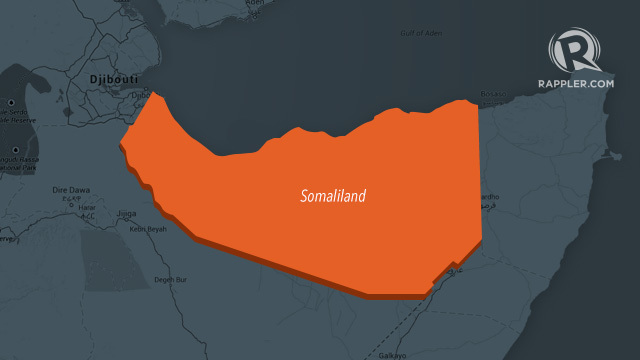
Meanwhile, in the self-declared republic of Somaliland, rains have started in parts of the region but the east remains drought-stricken.
"Some little rain was reported in the mountain areas of Erigavo [near the region's capital] and other areas, but it's not enough for the drought-affected region as a whole," Hashim Go'd, a journalist based in Borame, Awdal region, told IRIN.
He said the rains started on 28 March in Borame, Bon, Qulujeed and surrounding areas as well as in the capital, Hargeisa, and Gabiley and Sanag regions.
However, he said, there was still a lack of water in areas such as Jiidali, 35km southeast of Erigavo, Yufle, Goofa and Booca, with the local government sending four to five water trucks daily to these areas.
Mohamoud Awed Du'alle, the deputy mayor of Erigavo, said: "The situation is getting worse in these areas; animals such as cattle and sheep have already started dying in the region. Some families are taking their cattle to the urban areas to sell because of a lack of water."
Du'alle said the price of the water had increased dramatically in remote areas, as many donkeys used to ferry water have died.

Challenging the Dogma of Yesterday's Men


Medeshi March 30 ,2009
Ann Pettifor
New Economist, Author, Debtonation - The Coming First World Debt Crisis
As I'm sure he expected, President Lula's "blue-eyed Banker" statement caused an international uproar. But Lula's point was beautifully illustrated last week when the CEOs of the major U.S. banks - 'Yesterday's Men' - emerged from the White House after being "wooed" by the Administration.
In her latest op-ed piece, Maureen Dowd called Lula's comment "...international lunacy." But if white bankers and economists have angered US citizens and roiled Congress, we should have the humility to understand how much more they have angered people in far-away countries - people suffering collateral damage from the crises in the US, Europe and Japan. Crises for which they have no responsibility.
For years the leaders of countries in these regions were lectured by white, largely Chicago-trained economists on how to run their economies. The same economists that encouraged de-regulated bank lending in the US, reviled government intervention, and encouraged the growth of AIG's reckless build-up of liabilities -- they also spread their dogma to poor countries.
In ways that were to foreshadow the crisis in the US, financial de-regulation policies were effectively imposed on poor countries by the 'Washington Consensus.' These policies led to frequent crises: to a massive build-up of liabilities and debt, to cuts in government spending, bank failures and even country (sovereign) insolvency.
And then double standards were, and are imposed. The US, Europe and Japan responded to their own financial crises by government (central banks) creating money (as opposed to borrowing money). This money is used to finance a fiscal stimulus, or government spending, to build and repair infrastructure, create jobs and moderate the crisis.
In contrast, poor countries are forbidden by the Washington-based International Monetary Fund from creating money, and instead are forced to do the reverse. That is: contract their economies by hiking, not lowering interest rates; by bankrupting, not bailing-out their finance and other industries. And by slashing government spending. This causes bankruptcies and unemployment to rise dramatically - leading to a further downward spiral, and to social and political unrest.
Last week the International Labour Organisation predicted that in 2009, between 40%-50% of men and women globally will not be able to earn enough to lift themselves and their families above the $2 a day poverty line.
Most of these men and women will be black and poor, and will have had no responsibility for the crisis. Indeed their political protests will have been drowned out by the power and influence of white, often faceless, foreign economists.
Their descent into deeper poverty will be fostering widespread anger -- and enthusiastic support for President Lula's comments. We would be foolish to dismiss their anger.
Instead we should be acknowledging the fact that this crisis is not of their making. And we should be encouraging an infusion of new blood into the economics profession -- to develop alternatives to the failed economics of these last three decades.In my last post I promised a list of economists and financial experts that President Obama could usefully call upon to challenge the advice he gets from Larry Summers, Tim Geithner et al.
Thanks in part to Huffpost, we have been hearing from many liberal economists that appear not to be part of the White House magic circle, namely: Paul Krugman; Dean Baker of CEPR; Prof. Joseph Stiglitz; Simon Johnson of MIT, Prof. Jeffrey Sachs; Prof. James Galbraith; Prof. Nouriel Roubini and Prof. Kenneth Rogoff.
But there are many more he could call upon. I would strongly suggest that he seeks the advice of that sage of Steady State Economics, Prof. Herman Daly of the University of Maryland. Prof. Daly is a 'new economist'; advised the World Bank in the 1980s, and has pioneered ecological economics. His time has come.
I strongly recommend that the President set aside time on his visit to London next week to meet up with Graham Turner a former City of London economist. He has carefully studied the experience of Japan's long debt-deflationary agony, has written a book about it and, to my mind, has a better grasp of the management of Quantititave Easing than many in central banks.
In preparing my list it rapidly became clear: as far as diversity goes, economics, banking and finance still looks very much like America in the 1950s. The journal of Blacks in Higher Education undertook a survey back in 1994 and found 11 black economists at the nation's 30 highest-ranked universities. By 2006, this had risen to a miserly 13.
I strongly advise the President to include all 13 in his deliberations. The broader the spectrum of advice, the better.
Next the President should look to the example of Iceland, where, after the catastrophic meltdown of the Icelandic economy, women are at the forefront of the clean-up. " It goes back to our Viking women" said one of them. "While the men were out there raping and pillaging, the women were running the show at home."
First on the list of women he should seek advice from would be our own Arianna Huffington, an economist and one of the 50 most influential figures shaping the direction of the upcoming G20 summit, according to London's Financial Times.
Then he should consult the woman who, way back in 1997, took on Greenspan, Summers and Rubin over the need to regulate derivatives. The woman who was roundly beaten by that triumvirate: Brooksley E. Born of the Commodity Futures Trading Commission.
Again the President might take the opportunity of his London trip to meet up with Prof. Victoria Chick Emeritus Professor of Economics, University of London. Prof. Chick is a Keynesian true to Keynes and an expert on Keynes's advice to Roosevelt's administration in the 1930s. Advice that helped lift the US of out of the Great Depression.
Next I nominate Carmen M. Reinhart, Professor of Economics at the Department of Economics at the University of Maryland. And finally, Professor Sakiko Fukuda-Parr, Professor of International Affairs at the New School, New York.
By broadening the spectrum of economic advice -- President Obama would both strengthen his own position; but also offer the most effective rebuttal to the taunts of President Lula.

Related articles:

US Condemns Eritrea On Somalia Matters


Medeshi, March 30, 2009
US Condemns Eritrea On Somalia Matters
Office of Press and Public Diplomacy
United States Mission to the United Nations
140 East 45th Street
New York, N.Y. 10017
Statement by Ambassador Rosemary DiCarlo, U.S. Alternate Representative to the U.N. for Special Political Affairs, on Somalia, at the Security Council, March 20, 2009 :

Thank you, Mr. President. I too, would like to welcome Foreign Minister Omaar to the Council and thank him for his comments. My government congratulates you, Mr. Minister and other members of the unity government and assures you of our cooperation and support.
I would also like to welcome Special Representative Ould-Abdallah and thank him for his briefing today.
Mr. President, recent events present an opportunity to make real progress in Somalia. We welcome the election of President Sharif and the unity government’s move to Mogadishu. We must support the Somali people so that they can take advantage of this opening.
We remain encouraged by the political progress made under the Djibouti Agreement. My government strongly supports President Sharif’s efforts to encourage parties that are still outside the Djibouti Process to join him to rebuild their troubled country.
In this spirit, we urge all groups that have yet to lay down their arms and join the peace and reconciliation process to do so. Unfortunately, the terrorist organization al-Shabaab has failed to join this process, vowing instead not only to target the new government but also to continue its campaign against AMISOM and humanitarian NGOs. At the same time, Eritrea continues to provide financial, logistical, and political backing to al-Shabaab and other extremists and has issued a formal statement rejecting the new Somali government. We condemn these actions by al-Shabaab and Eritrea: they serve only to prolong the conflict in Somalia, and cannot be tolerated.
We highly commend the brave troops from Burundi and Uganda serving in AMISOM, who continue to operate under difficult conditions. They are doing crucial work in securing key infrastructure and allowing for the delivery of humanitarian aid, and they deserve our support.
The United States for its part has provided logistical assistance to AMISOM totaling over $100 million since 2007. We urge African Union member states that have pledged to provide troops to AMISOM to arrange to deploy them soon. And we strongly urge member states to support AMISOM.
Of course, Somalia must begin to provide for its own security, and we should consider ways to assist in the development of a Somali security sector.
Mr. President, this Council has made significant efforts to address the problem of piracy off the Somali coast. The United States is encouraged by the international community’s response. On any given day, ships from 15 to 20 different countries are now patrolling these waters.
My government also believes that the Contact Group for Piracy off the Coast of Somalia is proving to be an effective coordinating mechanism and we look forward to the third meeting of this group.
We also commend the Government of Kenya for offering to prosecute suspected pirates captured by the international community. We urge all states, especially those directly harmed by piracy, to help the Kenyan government manage the logistical and financial challenges of prosecuting suspected pirates. This is a burden that should not fall upon the shoulders of Kenya and its neighbors alone.
Finally, let me thank the staff of the UN agencies and the aid groups that are providing needed assistance to the Somali people under very difficult and dangerous circumstances. We strongly condemn those who impede the delivery of needed assistance through attacks against aid workers and AMISOM troops.
Mr. President, progress in Somalia will not come easily. The Secretary-General’s upcoming donors’ conference presents us with an opportunity to support the Somalis during this critical period. Let’s take advantage of it.
Thank you, Mr. President.

Food Aid Imports Enter Via Berbera Port

Medeshi March 30, 2009
Food Aid Imports Enter Via Berbera Port
The World Food Program (WFP) imported 375 metric tons of Sorghum to Ethiopia through the Port of Berbera last Thursday, March 26, 2009.
The WFP made a cross-border delivery of food commodities to Ethiopia from Berbera Port in Somaliland.
WFP, the world's largest humanitarian agency, used the port as an alternative entry port into Ethiopia to bring in its relief and emergency food stock.
The food aid is destined for the needy Somali region in the eastern part of Ethiopia for those obviously affected by famine.
"We are happy that the WFP sorghum has reached the region," Mitiku Kasa, state minister of Agriculture and Rural Development, told Fortune.
WFP confirmed that a convoy of 16 trucks and lorries had arrived in the eastern town of Jijiga from Berbera Port. The trucks were loaded with some 375 metric tons of sorghum for WFP beneficiaries in the Somali region. Men, women and children who are still enduring the impact of last year's severe drought and of high global food and fuel prices will benefit from this aid.
Out of the general 4.9 million people in need of food aid throughout the country, 1.5 million are found in this region.
"We will be able to help food insecure communities in the Somali region in an even more timely and efficient manner now that food supplies can arrive from across the border in Somaliland." Mohamed Diab WFP (PhD) country director in Ethiopia said in a press release sent to Fortune on Thursday, March 26, 2009.
The initial delivery of food commodities is part of a total consignment of 2,000 metric tons of sorghum that is expected to arrive in the country through the Berbera Port in the next few weeks.
WFP had sought for an alternative port to bring food stocks into Ethiopia since the recent heavy congestion at Djibouti Port. The new access from Berbera Port will complement the 'hubs and spokes' logistical system that WFP and the government implemented last October, and which operates in seven of the nine zones in the Somali region.
WFP confirmed that the 'hubs and spokes' delivery mode created three new storage points in the Somali region from which food is transported down multiple spokes to almost two hundred final distribution points. The restructuring has also involved the establishment of a secondary transport system using local transport companies.
By MERGA YONAS
FORTUNE STAFF WRITER

Ethiopia's dam project could kill Kenya's Lake Turkana


Medeshi
Ethiopia's dam project could kill Kenya's Lake Turkana
March 30, 2009
Lake Turkana’s clear waters emerge like a glassy screen, breaking through the rugged rocks and dry earth that precede its approach.
This most northerly of Kenya’s lakes, on the border with Ethiopia, formerly known as Lake Rudolf and referred to as the ‘Jade Sea’, brings life to its dry surroundings like an oasis in the desert.
But Lake Turkana, slightly salty and alkaline and abounding in 40 fish species, faces a severe threat from across the border in Ethiopia.
The row with Uganda over the tiny Migingo Island in Lake Victoria is nothing compared to the environmental catastrophe staring at Lake Turkana.
Ethiopia is midway through construction of a dam upstream on River Omo, which is Lake Turkana’s main tributary, giving it 80 per cent of its water. The other rivers, Turkwel and Kerio are seasonal and can barely sustain the lake’s water level.
Local and international impact reports have indicated the Turkana could start drying up once the huge dam, owned by Ethiopian Electric Power Corporation (EEPCO), cuts off the river to fill up a capacity of 11 billion cubic meters of water.
Big danger
The giant project poses a greater danger to 300,000 people around the lake in Turkana Central and Turkana North.
Its aquatic life, including the Nile perch, which they largely depend on for food and cash, could die out as salinity increases with the lowering of water level.
Similarly, a lake-dependent forest, one of the last pristine dry land forests in Africa, would also be in grave danger.
The tragedy looks real as the Gilgel Gibe III hydroelectric dam project is being built with the knowledge of the Kenya Government, which hopes to benefit from surplus power projected to be generated.
Irked by government indifference to the looming danger, residents, led by an NGO, Friends of Lake Turkana (FLT), recently demonstrated at Kalokol in Turkana North to drive their point home.
Ms Ikal Angelei, FLT chairperson, explained the realities of the endangered lake, saying it would never be the same again once the dam closes off its main water source.
"Nobody can touch the Nile from Alexandria (Egypt) down to its source at Jinja (Uganda). Egypt can even go to war if the river is interrupted. Why is our Government allowing this violation to our right," Angelei said.
Turkana politicians led by Mr Christopher Nakuleu, an East African Legislative Assembly MP, said in a joint statement that the Turkana, Rendile, Dassanch, Elmolo and Gabbra, who depend on the lake for food and water, would be affected.
"It is recognised that any interference with the Lake Turkana ecosystem could be catastrophic, but no effort has been made to avert disaster," says Pius Ewoton, the Executive Director of Arid Lands Integrated Programme.
He says since the start of the dam project on River Omo in 2006, the water levels have dropped by eight metres.
Mr Ewoton says Kenyan and Ethiopia’s governments approved the programme in total disregard of Environmental Impact Assessment (EIA) reports.
Since August 2006, Kenya has been negotiating with Ethiopia for a power supply deal.
Ethiopia has a total power demand of about 400 MW against a production capacity of more than 1,875 MW.
Already, a memorandum of understanding, which also involves KenGen, has been signed with the Ethiopian Electric Power Corporation.
Feasibility studies
While the African Development Bank has provided Sh68 million for the project’s feasibility study, EEPCO needs Sh51 billion to export power to Kenya. Djibouti and Sudan will also benefit. Project designing is under way. It will take another three years to complete interconnection.
The Turkana leaders said while a power purchase agreement outlining the terms of electricity sale was reportedly signed between Ethiopia and Kenya in 2006, there are no bilateral agreements on the use of the Omo-Turkana waterway and the dam’s downstream effects to Kenya.
The leaders claim that an EIA submitted to donors for funding of the damming project was ‘incredibly sloppy’.
"Shockingly, it does not even mention that RiverOmo supplies 80 per cent of Lake Turkana waters. It suggests that the dam will regulate the natural flooding cycle of the Omo, eliminating the seasonal floods critical to downstream farmers," said Nakuleu.
The leaders are now urging President Kibaki to intervene and save the Turkana ecosystem and way of life.
During a visit to the area two weeks ago, Fisheries Minister Paul Otuoma said the Government was holding talks with Ethiopia on the matter. He said a Kenyan delegation had visited the neighbouring country and held negotiations.
The Ethiopian authorities, quoted by the BBC, maintain they are building the Gilgel Gibe III hydroelectricity dam — the second largest in sub-Saharan Africa — to solve a regional energy crisis.
(By Osinde Obare, Isaiah Lucheli and Vincent Bartoo The Standard)

Somaliland youth risk death in search of better life


Medeshi
Somaliland youth risk death in search of better life
HARGEISA, 30 March 2009
Harir Omar Yusuf, about to finish high school, should be choosing a degree course and deciding on a career direction; instead, he spends most of his time planning a perilous escape from his hometown of Hargeisa, capital of the self-declared republic of Somaliland in the northwest of Somalia, to Europe. (A street in Hargeisa. Young people are leaving Somaliland in droves because of insufficient opportunities (file photo)
"As soon as I finish high school I will go there, because I have nothing to stay for in Somaliland," he told IRIN, adding that his parents could not afford university fees and he was not assured of a place even if they could.
Yusuf has many friends who have made the journey - first through Ethiopia, then Sudan and Libya and finally to Italy via the Mediterranean Sea - and are now living as illegal immigrants in Italy and other European nations. He also has many friends languishing in Sudanese or Libyan jails, arrested for entering the country illegally, and knows of many who died making the trip, but he remains determined.
Tens of thousands of Somalis also try to cross the Gulf of Aden into Yemen every year aboard small vessels run by people-traffickers operating from Somali ports; according to the UN Refugee Agency (UNHCR), one out of every 20 people attempting the journey in 2007 died.
Yusuf says he would rather risk death than live a life of certain poverty in Somaliland.
Unemployment "The issue of young people running away is very problematic in Somaliland," said Omer Ali Abdi, the director of the youth department in the Ministry of Youth and Sports. "Year after year, graduates from secondary schools are increasing and our universities just don't have the capacity to take in all of them - and even when they graduate from university, there is no guarantee they will get a job."
According to Ahmed Hashi Abdi, vice-minister in the Ministry of Planning and Coordination, only 10-20 percent of people under 35 are employed.

"Because it is unrecognised internationally, Somaliland has no access to bi-lateral funding, which has caused our economy to suffer, especially after the livestock ban of 1999, which destroyed the main source of income of most of our people," Abdi said. "For the same reason, international scholarships and higher education exchange programmes are not open to our students."
An outbreak of Rift Valley Fever in Saudi Arabia in 1999 resulted in a regional ban on imported livestock from Somalia, Ethiopia, Eritrea, Sudan, Kenya, and Djibouti; the ban on Somalia remains in place and now includes several other Middle Eastern nations. After the ban, remittances became the main foreign exchange earner; thousands fled the country during an outbreak of war in 1988, and regularly send money to their families. The Ministry of Planning estimates remittances account for US$500 million - or about 80 percent of Somaliland's economy. "When people leave the country legally, we are happy that they are able to send back money, but as much as possible we try to discourage young people from leaving illegally - then it becomes a matter of life and death and we cannot encourage that," Abdi said. Despite the risks, many families scrimp and save to send their children on these journeys. Over the past year, Amina Rooble (not her real name) has spent more than $6,500 on transport, communication, paying traffickers and bribing prison officers, all in an effort to get her son Hashim to Italy. Although his boat sank, Hashim survived and is now seeking asylum in Italy. "Even though my son was rescued, two other members of my family died on that boat," Rooble said. Incentive to stay

The government and local NGOs have run campaigns to discourage young people from leaving, but according to Yahye Mohamoud Ahmed, head of the Somaliland National Youth Organisation NGO, unless the government can provide some motivation, young people will continue to escape in droves.
"They have no incentive to stay - no jobs and no businesses, so it is fairly futile to tell them to stay," he said. "They need to be given the capacity to feed themselves here."
Ahmed added that many young men were now taking swimming lessons and using hi-tech communication equipment - such as satellite telephones to make SOS calls - to make their trips safer.
"When they hear about their friends and relatives in London or Italy, they get encouraged to go; even when their relatives have no jobs there, they still think they have a better life than here," he added.
According to Ahmed Abdi, the national development plan includes the creation of two vocational training institutes in every region of Somaliland to boost the number of tertiary institutions and the variety of courses available.
"We also intend to set up micro-finance schemes to enable them to be self-supporting," he added.
He noted that despite the continued livestock ban, a few countries in the Arab world were starting to buy Somaliland's meat, and the government hoped the Saudi ban would be lifted, restoring the industry.
Youth policy
The Ministry of Youth and Sports, in partnership with the UN Children's Fund (UNICEF), is drafting a national youth policy - due to be passed by parliament in 2011 - that hopes to address issues of youth emigration, unemployment, education and political participation.
"What we need more than anything is resources from our international partners focused on development rather than strictly emergencies - resources focusing on education and building the economy would encourage young people to stay and build their own nation," the Ministry of Youth's Abdi said.
maj/kr/mw
Theme(s): (IRIN) Education, (IRIN) Food Security, (IRIN) Governance, (IRIN) Migration, (IRIN) Refugees/IDPs

Binladen and Somalia

Medeshi March 29, 2007
Bin Laden and Somalia
By: Brydon Eady
Bin Laden has been very active with his communication lately. Releasing three recordings since January was three times more communicative than he was from 2001 to 2007.
His latest communication calls for the purge of the UN backed Somali government and its President (Mr. Sharif Sheikh). Last week, a cabinet minister of his (who himself led an Islamist group) was attacked. Although the cabinet minister wasn't killed, members of his security team were.
The north-east of Somalia contains an autonomous region called Puntland (also recently with a newly elected government). Puntland is unable to maintain legitimate control over vast parts of its borders (meaning the people of Puntland have a failed federal government as well as a failed provisional government). It also has a lot of beach ports that allow easy passage from the Horn of Africa into Yemen and even Saudi Arabia. Many people take this route on their pilgrimage to Mecca.
Bin Laden used to live and work in the horn - in Sudan where he was the engineer for the road networks. He ended up there after he was kicked out of Saudi Arabia for angering the royal family. He only left the Horn to go to Afghanistan because pressure from the United States (during the Clinton administration) was so great. He only went to Afghanistan because he knew the area (from his time fighting, leading and recruiting with the mujahideen).
The world has its eye on Tora Bora, the mountainous border region between Pakistan and Afghanistan where most of the world is convinced that he and other elite from al Qaeda and the Taliban are located. Obama is sending in 17 thousand troops, with another 4 thousand promised.
Nawaz Sharif is returning to power in the Punjab province, a massive "U-Turn" (the al-Jazeera term) in policy from the Pakistani province. Relating back to my first post with Shaharyar Khan, the former Secretary of Pakistan and his belief that the people of Pakistan want to return to a normal state of affairs and to have positive relations with countries like India. Read: On paper, and if things stay on course, Pakistan will be stable and have de facto control over its land. This is a bad thing if you're bin Laden.
I'm suggesting that there are multiple incentives for bin Laden to relocate to Somalia (if he hasn't done so already). This relocation would fit a trend he has shown in the past. The first and most obvious reason to leave Tora Bora/Jalalabad is because if Pakistan becomes politically stable, it will be harder to hide. With the American troop increase it will become increasingly difficult. He needs to go somewhere.
Out of all the places in the world, I see a parallel between Somalia/Puntland today and Afghanistan when he left Sudan. He left one place to go to another he is familiar with (Sudan-Afghanistan ~ Afghanistan-Somalia). There is no governing authority in Somalia (making it easy to hide) international presence is almost void (making it a much better place to be than Afghanistan). Salafism, and extreme conservative versions of it are also found in Somalia.
Which brings me to this next point- he keeps talking to Somalians. January 15th, on a communication that focuses on Jihad in Gaza he mentions Somalia twice. On March 14th he mentions the country twice again. On March 19th he states "fight on, Champions of Somalia" and dedicates a whole audio tape towards turning over the UN backed President of Somalia. Zawahiri also dedicates a recording "From Kabul to Mogadishu" on February 22nd. Keeping Somalia as a failed state is in his best interests.
Lastly, referring back to the Somali beach ports, Puntland/Somalia offer easy access to both Yemen and Saudi Arabia, which is where many prominent scholars (versed better than I) believe his real passion lies. Moving to Somalia would allow greater access to the states he wants to disrupt the most.

Sudanese President Received By Qatari Emir in Doha

Medeshi
Sudanese President Received By Qatari Emir in Doha
March 29, 2009
Al-Jazeera Satellite Television at 1337 gmt on 29 March carries a live relay of the arrival of Sudanese President Umar al-Bashir at the Doha Airport and Qatari Emir Shaykh Hamad Bin-Jasim Al Thani giving him a red carpet reception.
Showing Umar al-Bashir walking out of the plane and received by the Qatari emir, A-Jazirah anchorwoman says: "Some of the Sudanese ruling party members had fears about the Sudanese president's decision to take this flight."
At 1340 gmt, Al-Jazeera interviews live over satellite Al- Jazeera's correspondent Muhammad al-Kabir al-Kutubi, from Doha, who begins by saying that the expected final statement of the Doha summit will voice solidarity with Sudan and rejection of the decision of the International Criminal Court, ICC. He adds that "Al- Bashir's arrival in Doha is the first success of the Qatari diplomacy which culminated in bringing the Sudanese president and in his participation, which will definitely steal the lights at the summit."
Speaking further of the expected final statement at the Doha summit, Al-Kutubi adds: "I would like to note that the draft statement has been approved by all Arab countries without exceptions, including Jordan, Djibouti, and Comoros who are signing parties to the ICC."
For her part, Al-Jazeera anchorwoman notes "news leaks to Al- Jazeera from the Arab League that Arab leaders will make a request or a recommendation that Arab countries in general reconsider dealing with the ICC."
Originally published by Al-Jazeera TV, Doha, in Arabic 1337 29 Mar 09.
(c) 2009 BBC Monitoring Middle East. Provided by ProQuest LLC. All rights Reserved.
A service of YellowBrix, Inc.

Book launch: "Diiwaanka Qosolka” - collection of Somali wisdom jokes

Medeshi March 29, 2009
Book launch:
"Diiwaanka Qosolka” - collection of Somali wisdom jokes
By Jamal Ali Hussein in London and Bristol
Language of the event: Somali
London: Saturday, 11 April, 14pm at Arts Lecture Theatre, Queen Mary, university London E1 4NSO
Bristol: Sunday, 12 April, 15PM at St Pauls Community Sports Academy, New Foundland Street, Bristol, BS2 9NH
Kayd Somali Art and Culture is very excited to launch “Diiwaanka Qosolka”- Collection of Somali Wisdom Jokes. This is the first time the book will be launched and we are glad that the author, Jamal Ali, will be with us to share and present some of the 150 wonderful and hilarious short stories and poems which he has collected. Jamal Ali Hussein has collected a total of seven thousand ‘wisdom jokes’ and this is the first publication of its sort.
This book will give you an insight into the richness of Somali ‘wisdom jokes’, which have their roots in the traditional, nomadic Somali life style as well as addressing conteporary issues of immigration, exile and urbanization. The book will provide a greater understanding of Somali traditions, codes and life style.
The author, who is an International Banker with Citibank/Citigroup, and the CEO of the Bank’s operations in Ivory Coast and West Africa, has proven with this collection of Somali ‘wisdom jokes’ that laughter may be the best answer to the credit crunch! In addition to our main guest, there will be other books available for sale and there will be other poets and writers presenting some of their works, including Mohamed Baashe H. Hassan, Mawliid Aadan Aideed , Faysal Aw-Abdi, Abdirahman Ibrahim (Abees) and more.
More information: Ayan Mahamud: 0790371-2949
Mohamed Baashe: 07852239595
Faysal Aw-Cabdi: 07931892659
HADALADII BUUGA XAGIISA DANBE (Back Coverka)
Sheekooyinka buuggan “Diiwaanka Qosolka” ku jiraa waxay qofka ka fududaynayaan culays saaran, aadna waa looga helayaa. Waxa loo baahan yahay in sheekooyinka Buuggan ku jira loo tarjumo bulshooyinka aan furfurnayn sida caalamka Reer Galbeedka. Jamaal Cali Xuseen waxa uu ka mid yahay inta xiisaysa sheekooyinka noocan ah. Inta samaysa ee hibada u lehna waa ka mid.
Maxamed Ibraahim Warsame (Hadraawi): Abwaan Weyn, Mufaker Maansoole iyo Xeel-dheere Aqoonta Bulshada
Daraasado badan oo ku saabsan cilmi-nafsiga ayaa sheegaaya in qosolku yahay astaanta caafimaadka isla markaana qosolku kobciyo farxadda iyo himilada qofka. Bulshadu dhibaatooyinka nolosha waxay kaga gudbaan ama ay isku illowsiiyaan sheekooyin qosol, farxad, iyo xikmad leh, sida sheekooyinkan uu Jamaal Cali Xuseen ku soo ururiyey Diiwaankan qiimaha leh.
Dr. Xuseen Cabdillaahi Bulxan: Guddoomiyaha Jaamacadda Hargeysa, Bare Sare (Professor) ka ahaan jirey Jaamacadda Boston ( USA ), Xeel-dheere Cilmi Nafsiga
About Kayd: Kayd promotes Somali Art & Culture through a broad combination of poetry, literature, music, film and discussions. We wish to contribute to the creation of a culture of tolerance in the context of an appreciation of the richness of Somali culture; the Somali Week Festival remains one of the key events for
Managing Director: Ayan Mahamoud,Tel: 0-44(0)7903712949,
Email: ayan_mahamoud@kayd.org,
Website: www.kayd.org

Violence Hits Puntland

Medeshi
Violence Hits Quiet Somali Region
Written by The Media Line Staff
Published Sunday, March 29, 2009
At least one person was killed and three were wounded in two explosions that hit the relatively quiet Puntland region in northeastern Somalia on Saturday.
All the casualties were Ethiopian nationals, news reports said.
Witnesses said an explosion in of Puntland’s commercial city Bosasso took place near the headquarters of the Puntland Intelligence Service (PIS).
Last Monday, PIS agents arrested a cleric for alleged ties with A-Shabab, an Islamic group seeking to undermine the central government in Somalia, according to media reports.
Last week, at least two civilians and one policeman were killed and seven others were wounded after hundreds of stampeding demonstrators took to the streets of Bosasso to protest the cleric’s detention. Protesters hurled stones and metal objects while approaching a police post. Officers fired shots into the air in order to clear one of the nearby roads, but shot dead two of the protesters and wounded seven others, Nimco Afrah, a nearby shopkeeper told The Media Line. Puntland’s Vice President Abdi Samad Ali Shire said it was still uncertain whether troops arrested the sheikh, and urged people to maintain calm. However, Puntland Security Minister Abdullahi Said Samatar confirmed that security forces had arrested the sheikh and that he was being interrogated. Both Puntland and the neighboring Somaliland are relatively quiet areas of Somalia, which has been plunged in conflict for the past two years.
Puntland is a self-declared autonomous state, which has been self-governing since 1998, but unlike Somaliland, it does not seek independence from Somalia.
Puntland is home to a third of the Somali people.
Somalia has not had a stable government since 1991.
Violence in the country, particularly in the capital Mogadishu, has claimed thousands of lives. Many civilians have been killed in crossfire as gunmen roam the streets. Tens of thousands of people have fled their homes in recent months.
In addition, Somalia is also blighted by famine, disease, poverty and piracy.
Several Islamist groups do not recognize the new government, even though it is headed by the former leader of the Islamic Courts Union, Sheikh Sharif Sheikh Ahmad.
The political vacuum and other problems have allowed lawlessness to flourish, with pirates controlling Somalia’s waters and Islamists and other factions the streets.
An AFP report last week said foreign jihad warriors have been flocking to Somalia over the past few months and joining forces with local Al-Qa’ida sympathizers in order to turn the anarchic country into an Al-Qa’ida haven.
According to the report, some 450 fighters are cooperating with the homegrown A-Shabab Islamists.
A former Somalia security official said the numbers of foreigners entering the country were increasing dramatically. He said they hailed from Europe, the United States, the Middle East and Asia, and many were concentrated in Puntland.
The Puntland government has dismissed the report as unsubstantiated and false allegations.

A Promising Glimpse of Africa's Future Can Be Found in its Children


Medeshi ,March 29, 2009
Queen Rania of Jordan
Ironic. The peace conference, that brought me to South Africa, has been postponed.
A gathering billed to bring people together... that symbolized the power of dialogue and intercultural understanding... that was to be a medium for solutions to ongoing conflicts around the world has, instead, polarized opinions, fuelled frustration, and caused divisions. (Photo: Queen Rania of Jordan with school children )
In many ways, this unfortunate turn of events underscores many of the unresolved problems that our global community faces today. In my part of the world, the Palestinian/Israeli conflict is an open wound that we desperately need to heal. Perhaps if we all subscribed to the African concept of Ubuntu -- that we all become people through other people, and that we cannot be fully human alone, we could learn a lot. There'd be less hatred and more harmony.
And that's a good word on which to start my reflections because I had the best possible start to my working visit to Johannesburg: a meeting with President Mandela and Graça Machel. This was a moment in time...an experience to cherish forever.
In Madiba's presence, even before he speaks, something magical happens. Goodness and goodwill flow from this great man. Grace, humility, and courage light up the room. He makes you feel as if you, too, can be a force for good. People say that Madiba has slowed down, but as he spoke of his efforts to secure his legacy, especially for the children of South Africa, I wondered how everyone kept up with him.
He has said in the past, "There can be no keener revelation of a society's soul than the way in which it treats its children."
Currently, only three children's hospitals serve the entire African continent with its population of 741 million. Countries like Australia, Canada, and Germany, each boast nineteen or more facilities. The inequity is glaring and unfair. Madiba's state of the art Children's Hospital, due to open in July this year, is an example of how he believes children should be treated.
He smiles, his eyes crinkle, his infectious laugh fills the room...and I leave feeling like I can take on the world.
Next stop, Soweto and the Phefeni Secondary School to learn about the Girls' and Boys' Education Movement (G/BEM) run by the South African government and UNICEF. South Africa is on track to meet the MDG gender equality goal by 2015, but there is still work to do. G/BEM empowers girls by involving girls and boys in activities and discussions covering everything from teenage pregnancies and drug abuse to sexual harassment and human rights. Their logo, rather movingly, reads, "I am my brother's and sister's keeper.' And they are.
When I was growing up, I remember being told what to do by adults. But, 16 year old, Zanele taught me something that day. Her name, in Zulu, means "girls are enough," and she certainly lived up to that. This unbelievably articulate young woman told me about the progress of the G/BEM club that she coordinates, and how poetry, art, music and drama give everyone the chance to express themselves. It struck me that peer-to-peer learning was much more effective than anything adults could hope to achieve.
On the way to my next stop -- one of the Nelson Mandela Children's Fund projects -- I was able to bear the traffic with help from U2's new album on my iPod and the lush landscape passing by outside.
Kids' Haven, started by the big-hearted Moira Simpson in 1992, is a residential shelter offering care to children who have been abused or abandoned. Part of the haven is a children's village with six homes for girls and boys. The houses are very simple; the children don't have much, but there is warmth and love in every home; the children are grateful for a second chance.
One little boy I met, Moses, is 2 and the cutest little guy ever. He and his siblings are from Burundi, and have been at the village for five months. They were victims of last year's xenophobic riots in Soweto, during which his mother was arrested and jailed. Her five children were about to be deported back to Burundi, all alone, until Lawyers for Human Rights intervened at the airport and called Moira, who took them all in.
Each one of Moira's children has a frightening and heartbreaking story to tell. But no matter what trauma they've experienced, she believes that with love and support, they can live happy, fulfilled lives. And while her and her tireless team has the heart, they also need support.
Back in my hotel, sitting outside, dreamily watching the fish, on a balmy African evening, my husband calls to reassure me that he's conscientiously holding down the fort back home. I miss them all, but I worry about my youngest the most. He finds the disruption of our playtime, bath, dinner, story, and bed routine unsettling. But, he was sufficiently compensated today by the treat of having daddy pick him up from pre-school! I was told that as he climbed into the car, he cast a proud, almost boastful, glance at his toddler mates!
South Africa
Africa
Ironic. The peace conference, that brought me to South Africa, has been postponed. A gathering billed to bring people together... that symbolized the power of dialogue and intercultural understandi...

Detainee's Harsh Treatment Foiled No Plots

Medeshi
Detainee's Harsh Treatment Foiled No Plots
Waterboarding, Rough Interrogation of Abu Zubaida Produced False Leads, Officials Say
By Peter Finn and Joby Warrick
Washington Post Staff Writers
Sunday, March 29, 2009
When CIA officials subjected their first high-value captive, Abu Zubaida, to waterboarding and other harsh interrogation methods, they were convinced that they had in their custody an al-Qaeda leader who knew details of operations yet to be unleashed, and they were facing increasing pressure from the White House to get those secrets out of him.
The methods succeeded in breaking him, and the stories he told of al-Qaeda terrorism plots sent CIA officers around the globe chasing leads.
In the end, though, not a single significant plot was foiled as a result of Abu Zubaida's tortured confessions, according to former senior government officials who closely followed the interrogations. Nearly all of the leads attained through the harsh measures quickly evaporated, while most of the useful information from Abu Zubaida -- chiefly names of al-Qaeda members and associates -- was obtained before waterboarding was introduced, they said.
Moreover, within weeks of his capture, U.S. officials had gained evidence that made clear they had misjudged Abu Zubaida. President George W. Bush had publicly described him as "al-Qaeda's chief of operations," and other top officials called him a "trusted associate" of al-Qaeda leader Osama bin Laden and a major figure in the planning of the Sept. 11, 2001, terrorist attacks. None of that was accurate, the new evidence showed.
Abu Zubaida was not even an official member of al-Qaeda, according to a portrait of the man that emerges from court documents and interviews with current and former intelligence, law enforcement and military sources. Rather, he was a "fixer" for radical Muslim ideologues, and he ended up working directly with al-Qaeda only after Sept. 11 -- and that was because the United States stood ready to invade Afghanistan.
Abu Zubaida's case presents the Obama administration with one of its most difficult decisions as it reviews the files of the 241 detainees still held in the U.S. military prison at Guantanamo Bay, Cuba. Abu Zubaida -- a nom de guerre for the man born Zayn al-Abidin Muhammed Hussein -- was never charged in a military commission in Guantanamo Bay, but some U.S. officials are pushing to have him charged now with conspiracy.
The Palestinian, 38 and now in captivity for more than seven years, had alleged links with Ahmed Ressam, an al-Qaeda member dubbed the "Millennium Bomber" for his plot to bomb Los Angeles International Airport on New Year's Eve 1999. Jordanian officials tied him to terrorist plots to attack a hotel and Christian holy sites in their country. And he was involved in discussions, after the Taliban government fell in Afghanistan, to strike back at the United States, including with attacks on American soil, according to law enforcement and military sources.
Others in the U.S. government, including CIA officials, fear the consequences of taking a man into court who was waterboarded on largely false assumptions, because of the prospect of interrogation methods being revealed in detail and because of the chance of an acquittal that might set a legal precedent. Instead, they would prefer to send him to Jordan.
Some U.S. officials remain steadfast in their conclusion that Abu Zubaida possessed, and gave up, plenty of useful information about al-Qaeda.
"It's simply wrong to suggest that Abu Zubaida wasn't intimately involved with al-Qaeda," said a U.S. counterterrorism official, speaking on the condition of anonymity because much about Abu Zubaida remains classified. "He was one of the terrorist organization's key facilitators, offered new insights into how the organization operated, provided critical information on senior al-Qaeda figures . . . and identified hundreds of al-Qaeda members. How anyone can minimize that information -- some of the best we had at the time on al-Qaeda -- is beyond me."
Until the attacks on New York and Washington, Abu Zubaida was a committed jihadist who regarded the United States as an enemy principally because of its support of Israel. He helped move people in and out of military training camps in Afghanistan, including some men who were or became members of al-Qaeda, according to interviews with multiple sources, who spoke on the condition of anonymity. He was widely known as a kind of travel agent for those seeking such training.
That role, it turned out, would play a part in deciding his fate once in U.S. hands: Because his name often turned up in intelligence traffic linked to al-Qaeda transactions, some U.S. intelligence leaders were convinced that Abu Zubaida was a major figure in the terrorist organization, according to officials engaged in the discussions at the time.
But Abu Zubaida had strained and limited relations with bin Laden and only vague knowledge before the Sept. 11 attacks that something was brewing, the officials said.
His account was echoed in another U.S. interrogation going on at the same time, one never previously described publicly.
Noor al-Deen, a Syrian, was a teenager when he was captured along with Abu Zubaida at a Pakistani safe house. Perhaps because of his youth and agitated state, he readily answered U.S. questions, officials said, and the questioning went on for months, first in Pakistan and later in a detention facility in Morocco. His description of Abu Zubaida was consistent: The older man was a well-known functionary with links to al-Qaeda, but he knew little detailed information about the group's operations.
The counterterrorism official rejected that characterization, saying, "Based on what he shared during his interrogations, he was certainly aware of many of al-Qaeda's activities and operatives."
One connection Abu Zubaida had with al-Qaeda was a long relationship with Khalid Sheik Mohammed, the self-proclaimed mastermind behind the Sept. 11 attacks, officials said. Mohammed had approached Abu Zubaida in the 1990s about finding financiers to support a suicide mission, involving a small plane, targeting the World Trade Center. Abu Zubaida declined but told him to try bin Laden, according to a law enforcement source.
Abu Zubaida quickly told U.S. interrogators of Mohammed and of others he knew to be in al-Qaeda, and he revealed the plans of the low-level operatives who fled Afghanistan with him. Some were intent on returning to target American forces with bombs; others wanted to strike on American soil again, according to military documents and law enforcement sources.
Such intelligence was significant but not blockbuster material. Frustrated, the Bush administration ratcheted up the pressure -- for the first time approving the use of increasingly harsh interrogations, including waterboarding.
Such treatment at the hands of the CIA has raised questions among human rights groups about whether Abu Zubaida is capable of standing trial and how the taint of torture would affect any prosecution.
The International Committee of the Red Cross said in a confidential report that the treatment of Abu Zubaida and other, subsequent high-value detainees while in CIA custody constituted torture. And Abu Zubaida refused to cooperate with FBI "clean teams" who attempted to re-interview high-value detainees to build cases uncontaminated by allegations of torture, according to military sources.
"The government doesn't retreat from who KSM is, and neither does KSM," said Joseph Margulies, a professor of law at Northwestern University and one of Abu Zubaida's attorneys, using an abbreviation for Mohammed. "With Zubaida, it's different. The government seems finally to understand he is not at all the person they thought he was. But he was tortured. And that's just a profoundly embarrassing position for the government to be in."
His lawyers want the U.S. government to arrange for Abu Zubaida's transfer to a country besides Jordan -- possibly Saudi Arabia, where he has relatives.
The Justice Department declined repeated requests for comment.
Even before President Obama suspended military commissions at the military base in Cuba, prosecutors had expunged Abu Zubaida's name from the charge sheets of a number of detainees who were captured with him and stood accused of conspiracy and material support for terrorism.
When they were first charged in 2005, these detainees were accused of conspiring with Abu Zubaida, and the charge sheets contained numerous references to Abu Zubaida's alleged terrorist activities. When the charges were refiled last year, his name had vanished from the documents.
Abu Zubaida was born in 1971 in Saudi Arabia to a Palestinian father and a Jordanian mother, according to court papers. In 1991, he moved to Afghanistan and joined mujaheddin fighting Afghan communists, part of the civil war that raged after the 1989 withdrawal of the Soviet Union. He was seriously wounded by shrapnel from a mortar blast in 1992, sustaining head injuries that left him with severe memory problems, which still linger.
In 1994, he became the Pakistan-based coordinator for the Khalden training camp, outside the Afghan city of Khowst. He directed recruits to the camp and raised money for it, according to testimony he gave at a March 2007 hearing in Guantanamo Bay.
The Khalden camp, which provided basic training in small arms, had been in existence since the war against the Soviets. According to the 9/11 Commission's report, Khalden and another camp called Derunta "were not al Qaeda facilities," but "Abu Zubaydah had an agreement with Bin Laden to conduct reciprocal recruiting efforts whereby promising trainees at the camps could be invited to join al Qaeda."
Abu Zubaida disputes this, saying he admitted to such a connection with bin Laden only as the result of torture.
When the Sept. 11 attacks occurred, Abu Zubaida was in Kabul, the Afghan capital. In anticipation of an American attack, he allied himself with al-Qaeda, he said at a 2007 hearing, but he soon fled into hiding in Pakistan.
On the night of March 28, 2002, Pakistani and American intelligence officers raided the Faisalabad safe house where Abu Zubaida had been staying. A firefight ensued, and Abu Zubaida was captured after jumping from the building's second floor. He had been shot three times.
Cowering on the ground floor and also shot was Noor al-Deen, Abu Zubaida's 19-year-old colleague; one source said that he worshiped the older man as a hero. Deen was wide-eyed with fear and appeared to believe that he was about to be executed, remembered John Kiriakou, a former CIA officer who participated in the raid.
"He was frightened -- mostly over what we were going to do with him," Kiriakou said. "He had come to the conclusion that his life was over."
Deen was eventually transferred to Syria, but attempts to firmly establish his current whereabouts were unsuccessful.
His interrogations corroborated what CIA officials were hearing from Abu Zubaida, but there were other clues at the time that pointed to a less-than-central role for the Palestinian. As a veritable travel agent for jihadists, Abu Zubaida operated in a public world of Internet transactions and ticket agents.
"He was the above-ground support," said one former Justice Department official closely involved in the early investigation of Abu Zubaida. "He was the guy keeping the safe house, and that's not someone who gets to know the details of the plans. To make him the mastermind of anything is ridiculous."
As weeks passed after the capture without significant new confessions, the Bush White House and some at the CIA became convinced that tougher measures had to be tried.
The pressure from upper levels of the government was "tremendous," driven in part by the routine of daily meetings in which policymakers would press for updates, one official remembered.
"They couldn't stand the idea that there wasn't anything new," the official said. "They'd say, 'You aren't working hard enough.' There was both a disbelief in what he was saying and also a desire for retribution -- a feeling that 'He's going to talk, and if he doesn't talk, we'll do whatever.' "
The application of techniques such as waterboarding -- a form of simulated drowning that U.S. officials had previously deemed a crime -- prompted a sudden torrent of names and facts. Abu Zubaida began unspooling the details of various al-Qaeda plots, including plans to unleash weapons of mass destruction.
Abu Zubaida's revelations triggered a series of alerts and sent hundreds of CIA and FBI investigators scurrying in pursuit of phantoms. The interrogations led directly to the arrest of Jose Padilla, the man Abu Zubaida identified as heading an effort to explode a radiological "dirty bomb" in an American city. Padilla was held in a naval brig for 3 1/2 years on the allegation but was never charged in any such plot. Every other lead ultimately dissolved into smoke and shadow, according to high-ranking former U.S. officials with access to classified reports.
"We spent millions of dollars chasing false alarms," one former intelligence official said.
Despite the poor results, Bush White House officials and CIA leaders continued to insist that the harsh measures applied against Abu Zubaida and others produced useful intelligence that disrupted terrorist plots and saved American lives.
Two weeks ago, Bush's vice president, Richard B. Cheney, renewed that assertion in an interview with CNN, saying that "the enhanced interrogation program" stopped "a great many" terrorist attacks on the level of Sept. 11.
"I've seen a report that was written, based upon the intelligence that we collected then, that itemizes the specific attacks that were stopped by virtue of what we learned through those programs," Cheney asserted, adding that the report is "still classified," and, "I can't give you the details of it without violating classification."
Since 2006, Senate intelligence committee members have pressed the CIA, in classified briefings, to provide examples of specific leads that were obtained from Abu Zubaida through the use of waterboarding and other methods, according to officials familiar with the requests.
The agency provided none, the officials said.
Staff researcher Julie Tate contributed to this report.

GOP Begs Dick Cheney: Go Back Into Hiding


Medeshi March 29, 2009
The Hill:
GOP Begs Dick Cheney: Go Back Into Hiding
Congressional Republicans are telling Dick Cheney to go back to his undisclosed location and leave them alone to rebuild the Republican Party without his input.
Displeased with the former vice-president's recent media appearances, Republican lawmakers say he's hurting GOP efforts to reinvent itself after back-to-back electoral drubbings.

Warmonger Rumsfled Struggles To Board Bus

From the archives
Medeshi March 29, 2009
Jason Linkins
One of the unseen costs of Tom Daschle using up all of America's car services is that ordinary war-mongering political has-beens are forced to fend for themselves at street corners, waiting for buses. That's the situation that ex-Defense Secretary Donald Rumsfeld found himself in Monday, in a report from Roll Call's Emily Heil and Elizabeth Brotherton. (Roll Call's story is behind a pay-firewall. You can read John Byrne's witty retelling on Raw Story here.)
Basically, Rumsfeld was in Dupont Circle, attempting to catch the 42 bus, and all this happened:
With his SmarTrip card in hand -- the DC metro's rechargeable fare card -- Rumsfeld "stood quietly" waiting for the bus.
"It was almost like the guy at the first day of work," Heil and Brotherton's source remarked. "He was looking at the card, thinking, 'How does this work?'"
The bus eventually came but "was too packed to pick up any more passengers," the reporters wrote.
At least Rumsfeld was in possession of a SmarTrip card, clear and convincing evidence that he did not receive his public transportation intelligence from celebrated pinhead Douglas Feith.
Unable to board the bus, Rumsfeld took it on the arches. As Roll Call's source details, "He made it down the hill just fine...He didn't fall or anything."
So there you have it! Donald Rumsfeld, a man for whom reports of being able to walk must be corroborated by witnesses.

Qaar ka mid ah Ururada Bulshada Rayidka ah oo walaac ka muujiyay mudo dhaafka golayaasha deegaanada

Annaga oo ah Ururada Bulshada Rayidka ah ee Madaxa-banaan waxaanu si wayn uga walaacsanahay