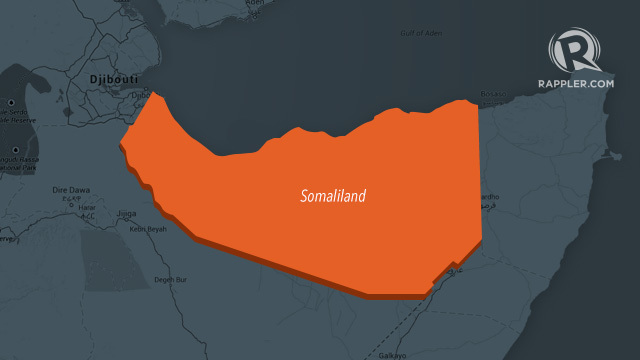
Brief History of Somaliland

Medeshi March 14, 2009

History of Somaliland
In 1991, after the collapse of the central government in Somalia, the main part of the territory asserted its independence as the Republic of Somaliland on May 18, 1991. It regarded itself as the successor state to the briefly independent State of Somaliland, but did not receive any international diplomatic recognition.
The economic and military infrastructure left behind by Somalia has been largely destroyed by war. The people of Somaliland had rebelled against the Siad Barre dictatorship in Mogadishu, which prompted a massive reaction by the government.
The late Abderahman Ahmed Ali Tuur was the first president of Somaliland. Muhammad Haji Ibrahim Egal was appointed his successor in 1993 by the Grand Conference of National Reconciliation in Boorama (Borama), which met for four months and led not only to a gradual improvement in security, but solidified the fledgling state. Egal was re-appointed in 1997, and remained in power until his death on May 3, 2002. The vice president, Dahir Riyale Kahin, was sworn in as president shortly afterwards, and in 2003 Kahin became the first Somaliland president to be elected in a free and fair election.
The 2006 War in Somalia between the Islamic Courts Union and the forces of Ethiopia and Somalia's transitional government has not directly affected Somaliland.
Politics and government
Politics and government of Somaliland
Somaliland has formed a hybrid system of governance under the Constitution of Somaliland, combining traditional and western institutions. In a series of inter-clan conferences, culminating in the Boorama Conference in 1993, a qabil (clan or community) system of government was constructed, which consisted of an Executive, with a President, Vice President, and Council of Ministers, a bicameral Legislature, and an independent judiciary. The traditional Somali council of elders (guurti) was incorporated into the governance structure and formed the upper house, responsible for selecting a President as well as managing internal conflicts. Government became in essence a "power-sharing coalition of Somaliland's main clans", with seats in the Upper and Lower houses proportionally allocated to clans according to a predetermined formula, although not all clans are satisfied with this formula of government. In 2002, after several extensions of this interim government, Somaliland finally made the transition to multi-party democracy, with district council elections contested by six parties.

Foreign relations
Foreign relations of Somaliland
Somaliland border dispute with Puntland. As of July 1, 2007, part of the disputed territory declared the state of Maakhir.
Somaliland has political contacts with the United Kingdom, Ethiopia, Belgium, Ghana,South Africa,Sweden and Djibouti. On January 17, 2007, the European Union sent a delegation for foreign affairs to discuss future cooperation.The African Union has also sent a foreign minister to discuss the future of international acknowledgment, and on January 29 and January 30, 2007, the ministers said that they would discuss acknowledgement with other member states In June 2007, the Prime Minister of Ethiopia, Meles Zenawi held a conference with President Kahin during which he was referred to in an official communique by the Ethiopian Foreign Ministry as the President of Somaliland, the first time that Somaliland has been officially acknowledged as a sovereign state by another government. While this is not claimed as a move to official recognition by Ethiopia, it is seen as a possible step towards a unilateral declaration by Ethiopia in the event of the African Union failing to move its recognition of Somaliland forward.
A delegation led by the President of Somaliland was present at the Commonwealth Heads of Government Meeting 2007 in Kampala, Uganda.
November 27, 2007, Annemie Neyts-Uyttebroeck of the ELDR, one of three main parties in EU, mailed a letter to Javier Solana (the High Representative for the Common Foreign and Security Policy (CFSP) and the Secretary-General of both the Council of the European Union (EU)) and to Dahir Rayale Kahin the president of Somaliland, in which there is required an acknowledgment of Somaliland by EU. In December 2007 the Bush administration discussed whether to back the shaky transitional government in Somalia or to acknowledge and support the less volatile Somaliland secessionists.Politics plays a big part in the new independent Somaliland region with the highly respected university Amoud with the universities first donator Bashir Mohamud Yusuf.
Border disputes
Main article: Somaliland-Puntland dispute
The Republic of Somaliland continues to claim the entire area of the former British Somaliland. Somaliland is currently in control of the western half of the former British Somaliland, with northeastern Maakhir having declared a separate, unrecognized autonomous state within Somalia on July 1, 2007, and with the disputed southeastern Sool state under the control of neighboring Puntland since 2003. A separatist movement exists also in the westernmost Awdal province.

Tensions escalated into a violent clash between Puntland and Somaliland in October 2007, when Somaliland forces captured Las Anod, the capital of the disputed region of Sool.
The Somaliland Defence Forces took control of the town of Las Qorey in eastern Sanaag on 10 July 2008, along with positions five kilometres east of the town. The Somaliland Defence Forces completed their operations on 9 July 2008 after the Maakhir and Puntland militia in the area left their positions.
Military of Somaliland
The Somaliland Armed Forces are the main military system in the Somaliland region along with the Somaliland Police Force, all of whom are part of the internal security forces and are subordinate to the military. (Photo: A BM-21 used by the Somaliland armed forces) Currently around 30,000 personnel are active in Somaliland. The Somaliland Armed Forces takes the biggest share of the government's budget with the police and security forces. The current head of Somaliland's Armed Forces is the Minister of Defense Mudane Adan Mire Mohammed MP.
Some military facilities were bought during Egal's administration to assist the military's usual duties and the necessary movements.

Japan Sends Ships to Anti-Piracy Mission Off Somalia


Medeshi
Japan Sends Ships to Anti-Piracy Mission Off Somalia
By VOA News 14 March 2009

Japan has sent two navy destroyers to the water's off Somalia's coast to join international anti-piracy efforts in the region.
The ships carry helicopters and speedboats and a combined crew of 400.
A day earlier, on Friday, South Korea sent a warship to join the anti-piracy force.
(Two Japanese Maritime Self-Defense Force destroyers wait to leave Kure base in Kure, central Japan, 14 Mar 2009)
The International Maritime Bureau says international anti-piracy efforts have reduced the number of successful hijackings in the area to one in seven attacks.
Somalia-based pirates carried out more than 120 attacks on ships last year, hijacking 42. In some cases, the pirates received millions of dollars in ransom for the release of the ships.
NATO, the European Union, China and the United States are among naval powers with warships on patrol off Somalia.
Japan sent the destroyers after its cabinet approved use of the country's self-defense forces to protect Japanese-flagged ships and Japanese citizens. Japan's post-World War Two pacifist constitution limits its military to defensive operations.
Some information for this report was provided by AFP, AP and Reuters

Domestic terror threat growing, Senate committee warns

Medeshi 14 March , 2009
Domestic terror threat growing, Senate committee warns
WASHINGTON (CNN) -- There is an increasing threat of homegrown terror stemming from segments of a deeply isolated and alienated Somali-American community, a U.S. Senate committee hearing concluded Wednesday.
The hearing, conducted by the Senate Homeland and Governmental Affairs Committee, focused on the attempted recruitment of young Somali-American men by al-Shabaab, "a violent and brutal extremist (Somali) group" with significant ties to al Qaeda, according to the U.S. State Department.
"Over the last two years, individuals from the Somali community in the United States, including American citizens, have left for Somalia to support and in some cases fight on behalf of al-Shabaab," noted the committee's chairman, Sen. Joseph Lieberman, I-Connecticut.
Al-Shabaab -- also known as the Mujahedeen Youth Movement -- was officially designated as a terrorist organization by the U.S. government in March 2008.
The hearing highlighted the case of Shirwa Ahmed, a 27-year-old Somali-American who had been radicalized by al-Shabaab in his adopted home state of Minnesota before traveling to Somalia and blowing up himself and 29 others in October.
The idea that Ahmed was radicalized in the United States raised red flags throughout the U.S. intelligence community. The incident -- the first suicide bombing by a naturalized U.S. citizen -- was the "most significant case of homegrown American terrorism recruiting based on violent Islamist ideology," Lieberman said.
"The dangers brought to light by these revelations is clear: radicalized individuals trained in terrorist tactics and in possession of American passports can clearly pose a threat to the security of our country," said Sen. Susan Collins, R-Maine.
Segments of the Somali-American community have been made vulnerable to recruitment by al-Shabaab because of a particularly tumultuous adjustment to American life, noted Andrew Liepman, deputy director for intelligence at the National Counterterrorism Center.
"Despite significant efforts to facilitate their settlement into American communities, many Somali immigrants face isolation," Liepman said.
"The (tough) adjustment to American society has reinforced their greater insularity compared to other more integrated recent immigrant communities and has aggravated the challenges of assimilation for their children," he said.
Somalis began arriving in the United States in significant numbers following the U.S. intervention in Somalia's humanitarian crisis in 1992, Liepman said. The Somali-American population is now concentrated in clusters primarily in Minneapolis, Minnesota; Columbus, Ohio; Seattle, Washington; and San Diego, California.
The potential recruitment of young Somali-American men has been made possible by "a number of factors that come together when a dynamic, influential and extremist leader gains access to a despondent and disenfranchised group of young men," Liepman said.
Many refugees, he said, "lack structure and definition in their lives" and are "torn between their parents' traditional tribal and clan identities and the new cultures and traditions offered by American society."
Liepman pointed out that there was no evidence of a radicalization of the entire Somali-American community, now believed to number between 70,000 and 200,000 people.
In fact, he said, the Somali-American community has been victimized by a "small group of extremists who are essentially terrorizing their own community, who are recruiting and radicalizing young people within that community."
"We don't have radicalized communities. We have radicalized clusters of (young) people," emphasized Philip Mudd, a director of the FBI's national security branch.
The potential terrorist indoctrination and recruitment was a consequence of these clusters, Liepman said, and is the product of "the refugee experience of fleeing a war-torn country combined with isolation, perceived discrimination, marginalization and frustrated expectations.
"Local criminal familial and clan dynamics make some members of this community more susceptible to (this) sort of extremist influence" of groups such as al-Shabaab, he said.
Liepman said there is a serious concern about individuals being indoctrinated by al Qaeda and al-Shabaab while in Somalia and then returning to the United States "with the intention to conduct attacks."

The Soon to Emerge Crisis in Ethiopia: A Bush Legacy?

Medeshi
Medeshi March 14, 2009
The Soon to Emerge Crisis in Ethiopia: A Bush Legacy?
by Scott A Morgan
Most of the Critics of American Policy in the Horn of Africa generally focus on the fiasco in Somalia. But recent reports are indicating that a Key Regional Ally could possibly be in Danger of Collapsing.
One of the most contested regions in East Africa is the Ogaden Region which lies along the Border between Ethiopia and Somalia. The Two Countries fought a Border Conflict in 1977 which saw the Soviet Union switch its allegiences from Mogadishu to Addis Ababa. After that conflict the Area became a hotspot in the Cold War. After the Collapse of the Soviet Union the Governments of both countries collapsed. Currently there is a Pro-Western Government in Addis Ababa and there is not a strong centralized Government in Somalia.
Since the Fall of the Siad Barre Government in 1991 Ethiopia has sent Forces into Somalia on three occasions. On All Three Occasions theses actions were seen to be proxy conflicts on behalf of the United States. The latest Incursion in December 2006 had Military Support from the United States. The US has been concerned about the rise of Somali Islamists ever since the Day of the Rangers in 1993. In that Battle 18 Members of the US Special Forces were killed trying to apprehend a Somali Warlord.
Ever Since the Controversial Decision to Prop up the TNG there has been a plethora of Problems for Prime Minister Zenawi. Obviously the Move was not popular with the Islamists in Somalia but that decision also led to rising tensions with Eritrea. The two countries fought a War that led to the establishment of an Independent Eritrean State. Now tensions are again rising along the border between the two countries. The Eritreans have been attempting to have the UN Mission leave its territory and the Ethiopians are still concerned.
The situation in Somalia is not the reason to be concerned however. The Area of concern should be the Ogaden Region. Although it has not garnered major coverage in the International Media it has been reported by the various Online Media Outlets from the region. According to Some Outlets a new series of clashes occured last week with reports of heavy casualties on both sides during the series of skirmishes. In the Past the Ogaden has been the base of the Anti-Zenawi Opposition in Ethiopia.
What should the United States do in this instance? There has been Legislation Drafted that would Limit the amount of Military Assistance to be provided by the US to the Improvement of the Human Rights Climate in Ethiopia. This is a good Idea. The US should also assist Civil Society Groups trying to promote Good Governance in Addis Ababa and other areas of Ethiopia. And it should work with Prime Minister Zenawi to promote a Free Vibrant and Independent Media. That is what the US should do at the very least. Now that there is a Change in Washington maybe that will happen.

The Author Publishes Confused Eagle on the Internet. It can be found at morganrights.tripod.com

US ANNUAL THREAT ASSESSMENT

Medeshi March 13, 2009
ANNUAL THREAT ASSESSMENT
Statement before the
Committee on Armed Services
United States Senate
10 March 2009
......In Somalia, the Transitional Federal Government will likely continue to weaken,
resulting in a further erosion of order. Largely ineffective, the Somali government is
incapable of addressing the social and economic causes contributing to the ongoing
piracy threat off the Somali coast. Unaddressed, piracy threatens to disrupt the flow of
humanitarian supplies as well as commercial traffic transiting off the Somali coast.

Warships from over a dozen nations currently conduct anti-pirate patrols in regional
waters and have apprehended over 40 suspected pirates this year; most have since been
transferred to Somali and Yemeni authorities for prosecution. Despite this, attacks
continue, but at rates lower than the peak of pirate activity in late 2008.
Read full assessment here: annual assessment

Somaliland wants to send deportee back to Finland


Medeshi

Somaliland wants to send deportee back to Finland
HS International Edition main information source on the case for Somaliland ministry

Somaliland, a state set up in the north of war-torn Somalia, has sharply condemned Finland for deporting a Somali-born man convicted of numerous crimes in Finland to Somaliland early last month.
(Photo: Minister Mohamed Osman (left) examines the map of Somaliland in his office in Hargeisa. )
“Somaliland is no camping area”, said Mohamed Osman, Somaliland’s Minister of Return Migration and Reconstruction to Helsingin Sanomat on Tuesday. “Finland should apologise to us and take the man back.”
Finnish police escorted the man to Dubai, where they placed him on a plane to Hargeisa, the capital of Somaliland, on February 9th, along with a temporary alien’s passport.
The ministry in Hargeisa learned about this action, and other deportation decisions made by Finland by reading the International Edition of Helsingin Sanomat on the Internet. Osman said that Finnish officials had not been in contact with Somaliland over the issue.
“In our view, the man has been smuggled into Somaliland. We cannot accept this.” Osman says that his ministry has approached Finland, and many other countries, hoping to cooperate on issues of asylum and deportation.
The country has already agreed on cooperation with Britain, Denmark, Sweden, Canada, and The Netherlands.
Osman says that Finland has not reacted to his government’s attempts at contact. “Finnish officials have not responded to us in any way. We interpret this as hostility toward us, and are very disappointed.”
Officials of Somaliland allowed the deportee into the country, because he had no police escort, and he could not be sent back with them.
Osman says that the deportee made a mistake when he boarded a connecting flight in neighbouring Djibouti.
He was ordered to leave Somaliland with his temporary passport, and go to Ethiopia, which has a Finnish Embassy.
Osman says that the man was given a document by the ministry declaring that his presence in Somaliland was unlawful. The deportee’s lawyer has submitted the document to both Finnish officials and the media.
Officials at the Somaliland ministry were especially shocked at how Jorma Vuorio, the director-general of the Finnish Immigration Service, commented on the document given to the deportee. They read his comments to Helsingin Sanomat on the Internet.
Vuorio voiced suspicions that the document was a forgery. "It is possible to get just about any forged document you care to name in Somaliland. Anyone can get hold of anything from there, even a passport if required", he said.
“The statement indicates a total lack of diplomacy, as well as ignorance of Somaliland. We would expect a person in such a high position not to make such statements”, the Somaliland minister said.
In the news story, Vuorio did not believe that the man was in danger of being deported from Somaliland.
“This person [Vuorio] supports chaos and anarchy. He violates the fundamental human rights of the deportee”, the minister told Helsingin Sanomat.
Officials at the ministry were surprised to hear that the deportee is still in Hargeisa. His alien’s passport is no longer in force, and the ministry assumed that he had stayed in Ethiopia.
“We will put out a warrant for him. If the police find him, we will have to consider what to do. It might be possible to send him to Somalia, from where he could come by land to Somaliland, in which case he would be classified as a refugee.”
“He is a criminal. If he continues this kind of behaviour, he is in danger of losing his life. We have lost 100,000 people in a civil war. Perhaps Finland has lived in peace for so long that people there do not understand what it is like to come from a war zone.”
More on this subject: Interior Ministry: “The guy is there, and that’s that”

Water pipe sparks Somali/Ethiopian conflict

Medeshi March 13, 2009
Water pipe sparks Somali/Ethiopian conflict
Some 70,000 people have fled their homes in a remote part of southern Ethiopia, after a deadly conflict broke out between rival groups - apparently triggered by the construction of a new borehole. The BBC's Elizabeth Blunt has been to visit the affected areas.
Wamo Boru and his family used to live in Kafa, one of the many small ethnic Borana communities scattered across the arid borderlands of southern Ethiopia and northern Kenya.
The hard red earth shows through the thin grass of the sun-baked landscape, a wide expanse of thorny scrub, flat-topped thorn-trees and tall red anthills.
The Borana lead a hard life, especially in the past year or two, when rains have been poor.
But the community had its livestock - cattle and camels and goats - and was expecting to have a better water supply when the Oromia regional government finished work on a new borehole in the area.
But at the beginning of February they had - quite literally - a rude awakening.
“ In past conflicts, communities would fight, but they wouldn't destroy government property ” Mohamed Nur Emergency official
"It was nine o'clock at night, we were sleeping when we were fired at," said Wamo.
"We just had to jump from our sleep and protect ourselves. Because it was night, we didn't see who was attacking us, but we think they were the people called Gherri from Somali regional state.
"They came on foot, without vehicles, but they had bombs and missile launchers, and at that time we didn't have guns, only sticks to defend ourselves."
Wamo, his family and neighbours fled with just the clothes they stood up in.
They managed to bring some of their stronger livestock with them, but they had to leave the weaker ones behind to be taken by the raiders.
Now they are camped close to the dirt road that runs east from Yabelo, the administrative headquarters of Ethiopia's Borana zone.
Wareba, the village teacher, is there too; he lost one of his in-laws in the raid.
"This was a war no-one was prepared for," he says.
"That was how the Somalis could come and destroy so much."
The children he used to teach are scattered across the area, and, he says, "not in good condition".
Wamo says three members of their community died during the attack, another seven were badly injured.
Their community is now just another group of displaced people - 2,000 of them among nearly 70,000 estimated to have been driven from their homes by the fighting.
Jealousy
This part of Ethiopia has a long history of conflict, cattle raiding and fights over water and grazing among its various pastoral communities.
But this, says Wamo, was different from other wars.
"They came and fought us at night," he says. "It was not a warrior-like war."
He attributes the attack to jealousy over the scheme to dig a new borehole.
"They didn't want us to live well, and water is very important to us, so they attacked our water source."
The emergency-response officer from the local administration, Mohamed Nur, agrees that it was an unusual conflict.
"This went to a very large scale," he said.
“ The Somalis are problematic people - they are always pushing us ” Guyo Halake Liban Borana politician
"It affected a huge number of people from both sides. In past conflicts, communities would fight, but they wouldn't destroy government property, like the drilling rig."
An attack on the new borehole may have started the fighting, but the causes are deep rooted.
The water scheme was close to the dividing line between two of Ethiopia's ethnically-based regional states - Oromia and Somali regions - a boundary which has never been properly demarcated.
The Oromo regional government thought it was drilling the borehole on its own territory; people in Somali region thought it was on their side of the boundary.
When Somalis destroyed the rig, the Borana mobilised to take revenge, angry at what they saw as years of Somali encroachment.
"The Somalis are problematic people," said one Borana politician from the Moyale area, Guyo Halake Liban.
"They are always pushing us. It's as if I give you a place to pitch your tent and the following morning you are telling me to leave; the Borana are not accepting that.
"These people have pushed the Borana from very, very far places. I don't think the Borana are willing to move an inch from where they are any more."
Stockpiling weapons
Like all pastoralists in this part of the world, Borana men habitually go armed to defend their flocks.
When they fought back, there were pitched battles in the area. More than 300 people are thought to have died.
Humanitarian workers like Mohamed Nur are now dealing with the consequences.
The first priority, he says, is food and shelter for the displaced - the people from Kafa say they are living mostly on water and sweet milkless tea.
Following that, he says there has to be agreement between members of the two rival communities, and between the two regional governments.
At the moment the fighting seems to have stopped.
But there are reports that both Borana and Somalis have been stockpiling weapons in an area about 100km (62 miles) east of where Wamo Boru and his family are camped, with a force of Ethiopia's paramilitary federal police positioned in between the two sides.
Many of the displaced have had their villages destroyed or lost all their livestock to the attackers.
In areas near the border, some of those stolen animals have probably been taken across into Kenya, which will make it even more difficult to get them back.
And until there is some guarantee of peace, Wamo and his family and neighbours are not going to be able to go back home.
Story from BBC NEWS:

USA Haunted by Somalia

Medeshi
USA Haunted by Somalia
U.S. policy blunders helped throw the nation into anarchy. Now Al Qaeda may be taking advantage.
LA Times
March 13, 2009
We can't say we weren't warned: In an annual assessment of major national security threats presented to the Senate Armed Services Committee on Tuesday, military intelligence chief Lt. Gen. Michael D. Maples revealed that Al Qaeda is strengthening its foothold in East Africa. Specifically, an Islamic terrorist group in Somalia, Al Shabab,(Somalia) has been releasing propaganda pointing out its shared ideology with Al Qaeda, suggesting, Maples said, that "a formal merger announcement is forthcoming."
This is worrisome not only because Somalia is a failed state overrun by armed militants that makes Afghanistan under the Taliban look like the garden spot of South Asia, but because Al Shabab is actively recruiting American citizens. Young men of Somali descent have been vanishing from Minnesota and other Midwestern states and heading for Somalian terrorist training camps run by Al Shabab, which means "the Youth" in Arabic. One of them has already carried out a suicide bombing in Africa, and others are believed to be forming terrorist cells to hit targets in Europe and the United States. A union with Al Qaeda makes that scenario even likelier.
And that's not the worst part. Al Shabab probably would not exist were it not for the disastrous failure of U.S. policies in Somalia. In other words, we are the authors of our own undoing.
Somalia is where well-meaning U.S. foreign policy measures go to die. Presidents Clinton and George W. Bush both failed dismally in their efforts to stabilize the anarchic country, which hasn't had a functioning government since 1991. In their experiences, and in the years that followed, we've seen clearly what doesn't work.
At the top of the list: military force, whether by U.S. troops or proxy armies. Clinton learned this in 1993 when he sent U.S. Army Rangers to hunt for the country's leading warlord at the time, Mohammed Farah Aidid. They encountered unanticipated resistance from armed groups in the capital city of Mogadishu and discovered a truism of Somali culture: A society that seems hopelessly splintered by clan identities and loyalties to opposing warlords becomes highly unified when confronted by outsiders. Clinton's operation, chronicled in the film “Black Hawk Down,” was a humiliating defeat that resulted in the deaths of 18 U.S. soldiers and ended U.S. efforts to rid Somalia of its warlords.
After that, the United States was mostly content to leave Somalia's crumbling affairs to the United Nations. The U.N.-backed regime that followed was a bad joke, struggling to control the immediate vicinity of its enclave in Baidoa while leaving the rest of the country to fend for itself. But a glimmer of hope appeared in the early years of this decade when Muslim groups began banding together in a network called the Islamic Courts Union. It imposed a particularly repressive brand of Sharia law on the territories it oversaw, but also brought something the country hadn't seen for more than a decade: order.
The Islamic Courts Union disarmed the populace, tamed the warlords and stamped out piracy on the country's coast. But its versionof Islamic nationalism was deeply troubling to the Bush administration, whose intelligence services reported that it contained radical anti-American elements. Fearing a repeat of the Taliban experience in Afghanistan, the administration first armed warlords who pledged to fight the Islamists, then encouraged the government of next-door Ethiopia, a strong U.S. ally, to invade in 2006. Ethiopian troops encountered little resistance and quickly took over. But the Ethiopians found themselves confronting a grinding insurgency akin to that in Iraq, and a refugee crisis as people fled the increasingly dangerous streets of Mogadishu. Ethiopian troops pulled out in January, leaving a power vacuum behind.
Into that vacuum stepped Al Shabab. With most of the moderate elements of the Islamic Courts Union having left the country or been driven underground during the Ethiopian occupation, it was the radical young members of Al Shabab who were left to fight the insurgency, and who have emerged as probably the most powerful military force in Somalia. Islamic Courts Union. It is a measure of how badly things have deteriorated since the Ethiopian invasion that the West is looking to Somalia's latest president, Sheik Sharif Sheik Ahmed, as the best hope to bring stability to the country, despite the fact that he is nearly powerless and that he had previously been a leading figure with the hated Islamic Courts Union.
In 2006, this page advised the international community to work with moderate Islamists and encourage them to form a stable government that, if it wouldn't rule over a bastion of democracy or human rights, would at least create a functioning state where the rule of law held sway, rather than a hotbed of terrorism and piracy. We're hoping the Obama administration learns from past mistakes and takes our years-old advice. That doesn't mean giving guns and money to warlords, but shoring up religious leaders such as Sheik Ahmed and identifying others who are worthy of support. Theocracy is nobody's idea of good government, but as we've learned the hard way in Somalia, it's better than anarchy.

How to help failed states?

Medeshi
How to help failed states?
Written by Marko Kananen
Thursday, 12 March 2009
Somalia has been in a state of chaos and anarchy since the fall of dictator Said Barre in 1991. The war situation has thus continued, with short exceptions, for 18 years. Due to the humanitarian, political and economic disaster, caused by two decades of war, Somalia is generally described as a failed state. But what do we mean by this concept, and more importantly, what can we do to help Somalia and all the other failed states?

Somalia has been in a state of chaos and anarchy since the fall of dictator Said Barre in 1991. The war situation has thus continued, with short exceptions, for 18 years. Due to the humanitarian, political and economic disaster, caused by two decades of war, Somalia is generally described as a failed state[1]. But what do we mean by this concept, and more importantly, what can we do to help Somalia and all the other failed states?
Although there are lot of differences between various failing states, there are also certain similarities between them. According to João Marques de Almeida, adviser to the President of the European Commission, failed states share four characteristics. Firstly, in a failed state the central government has lost its control and authority over its territory and is thus unable to safeguard peace, law and order. Secondly, failed states are characterised by “warlord politics”: violence is needed to control the distribution of wealth and the building of political alliances. This makes it hard to distinguish between rebel groups and government forces. Thirdly, in failed states humanitarian tragedies, caused by extreme poverty, hunger and deceases are widespread. Also human rights and democratic norms are commonly subverted. Fourthly, conflicting parties are financed, for a large part, by money coming from kidnapping, trafficking, prostitution, and smuggling. Hence, the state of anarchy serves as a façade for organised crime.
Failed states pose a severe challenge for the EU’s traditional methods of foreign policy. First of all, most of the instruments available to the EU depend on the diplomatic channels and existence of an effective and recognised state. However, this is not, per definition, the case in the context of failed states. In many conflict areas it is hard to find political leaders who are in a position to, first of all, negotiate and cooperate with the international community and secondly, to have enough influence to truly change the situation. For example, in Somalia there have already been 14 attempts to create a central government – so far they have all failed. The country is divided into multitude of clans and sub-clans, not to mention that the northwestern part of the country – Somaliland – has unilaterally claimed independence. Therefore it is not a surprise that the diplomatic channels have remained mostly mute.
But what is the alternative to diplomacy? Military interventions can make the matters even worse. The UN Mission in Somalia (1992-1995) led to significant casualties and failed to restore order. Hence, as the example of Somalia shows, even a benign intervention, such as protection of food delivery, can become violent and turn the intervener into a party to the conflict. In addition to being risky, dangerous and possible ineffective, military interventions are also domestically highly unpopular. Therefore the European Union has rejected calls from the African Union and Somalia's neighbours to deploy peace-keeping forces in the country.
In addition to diplomacy and military intervention, humanitarian aid is one of the standard methods in crisis situations. This has been the case also in Somalia. However, already since the 90’s there has been a growing awareness of the problematic effects caused by the international aid. In Somalia, aid materials have become a main target for the various militia and bandits and they are used to financing the war activities. This does not mean that humanitarian aid to Somalia could or should be stopped. On the contrary, according to the UN analysis more than three million people in Somalia – a third of the total population – is dependent on humanitarian assistance. But aid alone can not solve the problems of a failed state.
In Somalia all the standard prescriptions for troubled countries – diplomacy, peacekeeping and humanitarian aid – have thus proven to be unable to change the situation. Therefore, there is clearly a need for alternative ways of helping failed states. Lately, various books and reports have been conducted to highlight these new ways of crisis management. The thing that most of the experts seem to be emphasising is flexibility. For example, Ashraf Ghani and Clare Lockhart[2] have criticised the western world for its outmoded vision of a sovereign state, which in many parts does exist anymore. Today, identities and loyalties do not necessarily correspond to traditional nation-states, and nations are not as unified and autonomous as it is often expected. Therefore, the authors are encouraging the international community to create and to foster more bonds with different actors of civil societies and markets.
Also João Marques de Almeida is supporting this kind of perception. In stead of emphasising the fixed idea of sovereign statehood under central government and democratic principle, more flexible solutions, such as trusteeships, shared sovereignties or federal structures, should be employed to deal with the complex situation. In Somalia this has been partly done in case of Somaliland. The international community has not recognised Somaliland’s independence, but it has still cooperated with the government in Hargeisa. Although independent Somaliland does not fit into the image of a unified Somalia, held by the international community, from a humanitarian perspective relatively peaceful and well functioning Somaliland is a big step forward.
In addition to flexibility we need pragmatism and concrete solutions on the level of individuals. As Paul Collier writes in “The Bottom Billion[3]. “, the reasons for Africa’s history of repeated coups d'etat and civil wars are not caused merely by a fractious populace or especially bad politics, but mostly by poverty. In an environment of hopeless poverty, joining a rebel army offers a small chance of riches. Therefore, a citizen-based approach, emphasising the basic wellbeing of the people is crucially important in stabilising societies and preventing the circle of violence.
What Collier, Ghani and Lockhart all emphasise, is the importance of engaging the local people in tackling their problems. They have to be allowed to and empowered to promote and manage local projects. For example, food aid is far less helpful than giving people the chance to earn money to buy their own, by providing them with work. This means that the international community has to take a bottom-up approach, supporting, encouraging and enabling the local people to take the matters in to their own hands. A good starting point is the creation and gradual expansion of networks of local actors.
Bottom-up approach also means that the international community has to strive for to cooperate with all the parties connected to the conflict. The international community has to make clear that it supports the general principles of reconciliation and consensus-building, and not a certain political leader or a party. As put by Ghani and Lockhart, foreign-backed leader, taking decisions from the top down, is far less likely to be seen as legitimate by citizens, or to inspire their loyalty.
To conclude, failed states need careful handling. In a situation of complex power structures and vulnerable institutions, the role of the international community is important. However, it has to remain in a background and let the local people take the lead.

[1]Since 2005 the American think-tank Fund for Peace and the magazine Foreign Policy have been publishing an annual failed state’s index, listing the most vulnerable states facing the risk of a major collapse. In the last year’s index Somalia took the unwanted first position.
[2] Ghani & Lockhart (2008): Fixing Failed States: A Framework for Rebuilding a Fractured World. OxfordUniversity Press.
[3] Collier (2008): The Bottom Billion. Why the Poorest Countries are Failing and What Can Be Done About It. Oxford University Press.

Tender Affection for khat ..-- is it more coffee or cocaine?

Medeshi March 12, 2009
Tender affection for khat -- is it more coffee or cocaine?
The narcotic leaf is a time-honored tradition in Africa but illegal in the U.S., where demand is growing.
By Cynthia Dizikes
Reporting from Washington -- In the heart of the Ethiopian community here, a group of friends gathered after work in an office to chew on dried khat leaves before going home to their wives and children.
(FLOWER OF PARADISE’: In East African countries like Somalia, khat leaves have been used as a stimulant and social tonic. But in the U.S. khat is illegal, and increased demand is leading to clashes between narcotics officers and immigrants.)

Sweet tea and sodas stood on a circular wooden table between green mounds of the plant, a mild narcotic grown in the Horn of Africa.
(Photo: The Big Daddy . This is where the major league plays ball...)
As the sky grew darker the conversation became increasingly heated, flipping from religion to jobs to local politics. Suddenly, one of the men paused and turned in his chair. "See, it is the green leaf," he said, explaining the unusually animated discussion as he pinched a few more leaves together and tossed them into his mouth.
For centuries the "flower of paradise" has been used legally in East Africa and the Arabian Peninsula as a stimulant and social tonic.
But in the United States khat is illegal, and an increased demand for the plant in cities such as Washington and San Diego is leading to stepped up law enforcement efforts and escalating clashes between narcotics officers and immigrants who defend their use of khat as a time-honored tradition.
In the last few years, San Diego, which has a large Somali population, has seen an almost eight-fold increase in khat seizures. Nationally, the amount of khat seized annually at the country's ports of entry has grown from 14 metric tons to 55 in about the last decade.
Most recently, California joined 27 other states and the federal government in banning the most potent substance in khat, and the District of Columbia is proposing to do the same.
"It is a very touchy subject. Some people see it like a drug; some people see it like coffee," said Abdulaziz Kamus, president of the African Resource Center in Washington, D.C. "You have to understand our background and understand the significance of it in our community."
Increased immigration from countries such as Ethiopia, Yemen and Somalia has fueled the demand in this country and led to a cultural conflict.
"We grew up this way, you can't just cut it off," said a 35-year-old Ethiopian medical technician between mouthfuls of khat as he sat with his friends in the office.
In the Horn of Africa and parts of the Middle East, khat is a regular part of life, often consumed at social gatherings or in the morning before work and by students studying for exams. Users chew the plant like tobacco or brew it as a tea. It produces feelings of euphoria and alertness that can verge on mania and hyperactivity depending on the variety and freshness of the plant.
But some experts are not convinced that its health and social effects are so benign. A World Health Organization report found that consumption can lead to increased blood pressure, insomnia, anorexia, constipation and general malaise. The report also said that khat can be addictive and lead to psychological and social problems.
(Photo: A khat seller, Hargeisa)
"It is not coffee. It is definitely not like coffee," said Garrison Courtney, spokesman for the Drug Enforcement Administration. "It is the same drug used by young kids who go out and shoot people in Africa, Iraq and Afghanistan. It is something that gives you a heightened sense of invincibility, and when you look at those effects, you could take out the word 'khat' and put in 'heroin' or 'cocaine'."
Khat comes from the leaves and stems of a shrub and must be shipped in overnight containers to preserve its potency. It contains the alkaloid cathinone, similar in chemical structure to amphetamine but about half as potent, according to Nasir Warfa, a researcher in cross cultural studies at Queen Mary University of London.The United Kingdom determined last year that evidence does not warrant restriction of khat. In the United States, the substance has been illegal under federal law since 1993.
But the world supply of khat is exploding. Countries such as Ethiopia and Kenya now rely on it as a major cash crop to bolster their economies. Khat is Ethiopia's second largest export behind coffee.
Khat usage has grown so much in San Diego that Assemblyman Joel Anderson (R-San Diego) wrote a 2008 bill that added cathinone and its derivative cathine to California's list of Schedule II drugs along with raw opium, morphine and coca leaves.
As of Thursday, Anderson's bill made possession of khat a misdemeanor in California, punishable by up to one year in county jail and a $1,000 fine. Possession of the leaf with intent to sell is a felony that carries a three-year maximum sentence in state prison.
In some cases, khat seizures have resulted in warnings and probation. In other instances, like New York City's "Operation Somali Express" bust in 2006, which led to the seizure of 25 tons of khat worth an estimated $10 million, the perpetrators were sent to jail for up to 10 years.
(Photo: khat Congregation
A small group of Khat consumers, kicking it in the late afternoon of Hargeisa.)
"In my mind, [such arrests are] wrong," said an Ethiopian-born cabdriver who was arrested in November in a Washington, D.C., khat bust and spoke on condition of anonymity. "They act like they know more about khat than I know."
Khat leaves are sold attached to thick stalks or dried like tea leaves. A bundle of 40 leafed twigs costs about $28 to $50.
The plant's cost has been linked to family problems, including domestic abuse, said Starlin Mohamud, a Somali immigrant who is completing a dissertation on khat at San Diego State University.
In fact, within the East African community in the U.S., there are many who welcome the khat restrictions.
"I have seen what it does," Mohamud said. "Families who are trying to make ends meet on a daily basis cannot afford it. It just creates so many problems between a husband and wife to the point where a broken family is going to be the result."Not all lawmakers, however, support the increased efforts to prosecute khat sellers and users. California state Sen. Gloria Negrete McLeod (D-Chino) called khat use "a minor problem that may be nonexistent and little understood" and voted against Anderson's bill.
"The Legislature cannot continue to add on penalties and punishments filling up critically overcrowded prison system without weighing the consequences on how this will affect California," she said.
Even though khat smuggling continues to grow in the United States, the level is nowhere near that of drugs like marijuana, cocaine, heroine and methamphetamine. Still, law enforcement officials worry that in a refined, stronger and more portable form, khat could spread outside the immigrant communities.
(Photo: Smalltime Money Changer
The really good guys have that box full of cash, and some overflowing on the top, sometimes topped off with a blank Somali passport for sale. They quoted the price at $50.)
In Israel, a pill known as hagigat (essentially Hebrew for "party khat"), has emerged on the club scene.
"I don't think we are going to see American teenagers chewing the plant," said Phil Garn, a U.S. postal inspector in San Diego. "But based on what I saw with meth and how it spread across the country, I can absolutely see how khat in a refined form could be a major problem."
Photo pics by Ozgur Can Leonard

TGS Announces the Availability of Seismic and Aeromagnetic Data in Somaliland


Medeshi March 12, 2009
TGS Announces the Availability of Seismic and Aeromagnetic Data in Somaliland
Multi-Client Data Ready for Somaliland’s First Petroleum Licensing Round
HOUSTON--(BUSINESS WIRE)--TGS-NOPEC Geophysical Company (TGS) announced today that it has completed processing and interpretation of two new multi-client programs in Somaliland. Acquired in partnership with the Somaliland Ministry of Water and Mineral Resources (Ministry), the programs include 5,300 kilometers of marine 2D seismic, gravity, and magnetic data, plus approximately 34,000 kilometers of high resolution aeromagnetic data covering onshore areas.
Designed to define the principle structural elements of the area and allow for the development of leads, plays, and structural highs for further investigation, this new data is released to coincide with Somaliland’s first petroleum licensing round, which opened in February. The bid round includes eight concession blocks comprised of more than 89,624 square kilometers of onshore and offshore areas. Somaliland is geologically analogous to nearby Yemen, where several oil fields have been discovered to date.
TGS is the first company to gather new geophysical data in the Republic of Somaliland in almost thirty years. Through an agreement with the Ministry, TGS will exclusively market the seismic and aeromagnetic data on behalf of Somaliland.
TGS-NOPEC Geophysical Company (TGS) is a principal resource for global geoscientific data products and services in the E&P industry. TGS specializes in the design, acquisition and processing of multi-client seismic surveys worldwide and delivers advanced high performance seismic imaging and software solutions. The Company also provides the world's largest online well-log database, well data management services, multi-client interpretive products and subsurface consulting services to industry. The suite of integrated exploration data products available from TGS is distinctive and unmatched. The Company philosophy is to create unique high-quality data collected in the right place at the right time.
All statements in this press release other than statements of historical fact are forward-looking statements, which are subject to a number of risks, uncertainties and assumptions that are difficult to predict, and are based upon assumptions as to future events that may not prove accurate. These factors include TGS' reliance on a cyclical industry and principal customers, TGS' ability to continue to expand markets for licensing of data, and TGS' ability to acquire and process data product at costs commensurate with profitability. Actual results may differ materially from those expected or projected in the forward-looking statements. TGS undertakes no responsibility or obligation to update or alter forward-looking statements for any reason.
TGS-NOPEC Geophysical Company ASA is listed on the Oslo Stock Exchange (OSLO:TGS).

AU Security Body Asks UN to Lift Somalia Arms Embargo

Medeshi
AU Security Body Asks UN to Lift Somalia Arms Embargo
By Peter Heinlein Addis Ababa
11 March 2009
Africa's highest security body asked the United Nations on Wednesday to lift an arms embargo on Somalia's government to allow it to equip defense forces facing well-armed Islamist radicals who control large parts of the country. U.N. officials are speaking cautiously of the first signs of hope as Somali President Sheikh Sharif Ahmed's administration extends its rule in the capital, Mogadishu.
The African Union Peace and Security Council, or PSC, approved a three month extension of the A.U. peacekeeping mission in Somalia, known as AMISOM. Benin's A.U. Ambassador, Edouard Aho-Giele, who holds the rotating council presidency, said three months was needed because the U.N. Security Council is expected to replace AMISOM with a blue-helmeted U.N. force in June.
A.U. Commission Chairman Jean Ping's report to the PSC described security in Somalia as "very volatile". In calling for an end to the U.N. arms embargo on government forces, he noted that the radical al-Shabab group had claimed responsibility for a suicide bomb attack that killed 11 Burundian AMISOM peacekeepers last month.
Ping's six page report said the foreign-funded al-Shabab had refused to heed calls for an end to hostilities, despite considerable pressure, and that it had stepped up its media propaganda campaign against AMISOM.
Despite the security troubles, Ping reported "significant progress" in the political process in Somalia in the weeks since President Sheikh Sharif took power. Officials noted that the government is operating in Mogadishu for the first time in a month, and that there is a relative calm in the capital despite a bomb incident that killed a security official this week.
Parliament is meeting in Mogadishu for the first time since the transitional government was formed in 2004. Last Monday, a U.N. team made a brief visit to the city for a security assessment. One member of that team, Deputy U.N. envoy to Somalia Charles Petrie, said it is too early to speak of optimism. But he said the changing political dynamic has created opportunities that have not existed in Somalia for years.
"What's clear over the last few weeks is that the security situation has stabilized and it's to a large part to the credit of the government and the leadership of the government, who are reaching out to different groups -- even groups that are potentially hostile to them. So within the U.N. and the special representative, we feel there are opportunities that can be seized. There's a new political dynamic that creates opportunities, and the question of supporting the opportunities and translating them into some form of positive traction," he said.
Among the hopeful signs is a bill being sent to parliament that would establish a cabinet-level committee to examine how to bring the country's constitution into line with Islamic law, or Sharia. Several insurgent groups that control parts of Mogadishu and outlying regions have indicated they would lay down their arms if Sharia were introduced.
The hardline al-Shabab has rejected President Sheikh Sharif's peace overtures and has vowed to continue its armed struggle. But diplomatic sources in Addis Ababa say al-Shabab has been weakened by a recent loss of funding from Arab states in the region and by the recent withdrawal of Ethiopian troops whose two-year occupation in support of the previous transitional government outraged many Somalis.

Law enforcement worried about Somalis

Medeshi
Law enforcement worried about Somalis
Foon Rhee,
deputy national political editor
March 11, 2009 08:31 PM
By Bryan Bender and Shelley Murphy, Globe Staff
WASHINGTON -- A Somali-American community leader warned a US Senate panel today that Boston may be among a half a dozen cities where youths are being recruited to travel to Somalia to fight alongside a radical Islamic group with links to Al Qaeda.
Top US law enforcement and intelligence officials told the Senate Committee on Homeland Security that a "small but significant" number of Somali-Americans from several US cities have traveled to Somalia since 2006 to join Al -Shabaab, which was designated a terrorist organization by the State Department last year.
But the officials did not specifically mention Boston, and the head of the Boston FBI office and officials with the Boston-based Somali Development Center said today they have not heard of any local recruitment efforts.
"We are not aware of anyone in the Boston area involved in any recruitment activities to send someone to Al-Shabaab," said Warren T. Bamford, the special agent in charge of the FBI's Boston office.
Community activists in Boston said that most Somalis condemn Al-Shabaab because it is trying to undermine the struggling nation’s prospects for peace.
At the Senate hearing, the law enforcement officials said they believe the initial motivation of youths who returned to Somalia was to defend their native land from an invasion by neighboring Ethiopia two years ago, but that they could be indoctrinated and trained to return the United States to mount terrorist attacks.
The officials pointed to signs that some Somali community leaders and radical websites have relied on religious appeals -- including a proclamation last month by Al Qaeda's second-in-command that Al-Shabaab's gains were "a step on the path of victory of Islam" -- while preying on a sense of isolation among some Somalis in the United States.
"They've become pawns in game larger than themselves," said the Senate committee chairman, Joe Lieberman, a Connecticut independent.
National law enforcement officials first became alarmed when a 27-year-old Somali-American college student from Minneapolis blew himself up in a suicide attack in Somalia last October.
Officials said they now believe "tens" of others have recently traveled to Somalia to take up arms with the group, which controls a large swath of the country's south and has introduced suicide attacks, roadside bombs, and other tactics to undermine the Somali government and attack Ethiopian targets. The group has been linked to Al Qaeda operatives responsible for bombing US embassies in Africa during the 1990s as well as terrorist leaders hiding in Pakistan, the panel was told.
"We are concerned that if Somali-American youth can be motivated to engage in such activities overseas ...fellow travelers could return to the US and engage in terrorist activities here," Andrew Liepman, the deputy director of intelligence at the National Counterterrorism Center, told the panel.
Osman Ahmed, a Somali-American community leader who was invited by the committee to testify, said that special attention should be given to Minneapolis, Seattle, Boston, and Columbus, Ohio, and he called for task forces to reach out to the Somalis. "There are youth programs that in some cases have hidden agendas," he testified.
Ahmed is president of a tenants group in Minneapolis, home to the largest Somali community in the United States and home to as many as 20 youths the FBI believes have left for Somalia. He has been sounding warnings on the issue since a nephew went to Somalia last fall.
Ahmed said in a later interview that he believes that at least two Somali youngsters from the Boston area traveled to Somalia last summer and may have been recruited by Al-Shabaab.
However, staff members at Somali Development Center's offices in Jamaica Plain, Chelsea, and Springfield said today they were unaware of any local recruiting efforts or of any youths or young men returning to their homeland.
Bamford of the FBI also said he has no confirmation of any youngsters going to Somalia from Boston to fight. He said agents have spoken to local Somalis about the recruitment of Somali youths in Minneapolis and urged them to come forward if they see similar efforts in New England, he said.
"Some young men have gone over to Somalia so we have to be aware of that," Bamford said in a telephone interview. "We can't just sit back and hope it doesn't happen. We have to go out and make the community aware of the concern and make parents aware of what happened elsewhere. They need to be good parents and watch out for their kids."
Boston has a small, tight-knit Somali-American community of about 5,000, who have arrived since 1992, following the US intervention in the country's humanitarian crisis, according to the Somali Development Center. Several thousand more live elsewhere in New England, including Portland, Maine, according to the center, which was established in 1996 to provide social services.
Nationwide there are an estimated 150,000 to 200,000 Somali-Americans. Youths are considered particularly vulnerable to religious or other community leaders who might sympathize with Al-Shabaab, which means "youth" in Arabic.

Plane crashes carrying supplies for peacekeepers in Somalia

Medeshi
Uganda Plane crash : Carrying supplies for peacekeepers in Somalia
African Union peacekeepers are among 11 people feared dead after a cargo plane carrying supplies to Somalia crashed in Uganda's Lake Victoria.
Ugandan officials said the Soviet-era jet caught fire shortly after taking off from the country's main Entebbe airport before coming down in Lake Victoria near Bugunga island. A search and rescue effort is underway but officials say there is little hope of finding any survivors. Three senior Burundian army officers were on board.

Rodney Muhumuza & Martin Ssebuyira
Kampala/Entebbe
Rescue workers yesterday widened the exploration area as the search for victims of the Monday plane crash into Lake Victoria entered its third day without success.
Mr Ignie Igunduura, the public affairs manager at the Civil Aviation Authority (CAA), said no bodies had been recovered, but by press time there were unconfirmed reports that body parts had been found floating near some fish landing sites.
A police officer, speaking on condition of anonymity because he was not authorised to speak to the press, said polythene bags containing body parts had been taken to a military base in Entebbe.
CAA officials could not confirm this information, insisting the search was still unsuccessful.
Transport Minister John Nasasira said the plane’s fuselage, in which the bodies could be trapped, may have “travelled very far” across the lake.
“That plane could have been travelling at 300 km per hour [before it went down in flames]”, Mr Nasasira said yesterday, adding, “We could do with help in the search.”
Some 10 people, including two American experts, were taking turns diving under selected spots on Lake Victoria, but bad weather was slowing their efforts, according to Mr Nasasira. The victims include two Ugandans, a South African, an Indian, three Burundians, two Ukrainians and two Russians.
“It could take much longer, perhaps weeks, to locate and retrieve the fuselage, with strong lake currents impairing visibility,” Mr Nasasira said.
The tail end of the plane, a Somalia-bound Illyushin-76 carrying 11 people and cargo for African Union peace keepers in Somalia, was on Monday discovered by fishermen at a beach 27 km away from the crash site.
Mr Igunduura said the search was getting more complicated. “Of course we have a centre, but we keep going to different areas. The radius keeps growing,” he said.
Although the official investigation begins today, Mr Nasasira, citing the accounts of officials at the airport’s control tower, told a committee of Parliament on Tuesday that engine failure was the most probable cause of the crash.

Roadside blast kills four in Somalia


Medeshi
Roadside blast kills four in Somalia
Wed Mar 11, 2009
MOGADISHU, March 11 (Reuters) - Insurgents detonated a remote-controlled roadside bomb in Mogadishu on Wednesday killing a senior Somali security official and three other people, witnesses and officials said.
Al Shaabab, a movement of Islamist militants fighting the government and the African Union peacekeepers helping it, claimed responsibility and promised more attacks.
The blast killed former prime minister Ali Mohamed Gedi's security chief -- who is also working for the new government -- as well as his brother and two bodyguards as they were driving in the north of the coastal capital, police said.
"The officer and several of his body guards perished on the spot in the blessed explosion. His car was ruined there and then," Shabaab said in its website, www.kataaib.info.
"Al shabaab makes clear again that our Mujahideens (fighters) will continue operations against foreign troops, government officers and their soldiers. Wherever they pass, we shall keep our eyes on them," it said.
The failed Horn of Africa state has suffered civil conflict for nearly two decades, and Western security services fear it could be a base al Qaeda-linked militants.
In a separate development, al Shabaab rejected as hypocritical a vote in favour of implementing Islamic sharia law passed this week by President Sheikh Sharif Ahmed's cabinet.
"It's the plot of infidels," said Sheikh Hassan Yaqub, spokesman for al Shabaab in the southern port of Kismayu.
The group says Ahmed, a moderate Islamist who once led a sharia courts movement, is now in league with foreign powers and has ulterior motives for introducing Islamic law. Al Shabaab imposes a strict form of sharia in areas it controls.
Analysts say Ahmed's move is part of his strategy to neutralise the threat from armed opponents and pacify Somalia. (Reporting by Abdi Guled, Ibrahim Mohamed and Abdi Sheikh; Editing by Katie Nguyen)

Qaar ka mid ah Ururada Bulshada Rayidka ah oo walaac ka muujiyay mudo dhaafka golayaasha deegaanada

Annaga oo ah Ururada Bulshada Rayidka ah ee Madaxa-banaan waxaanu si wayn uga walaacsanahay