Obama: Managing Expectations and Understanding the Economic Crisis

Medeshi March 11, 2009
Obama: Managing Expectations and Understanding the Economic Crisis
Rarely has the expectation game been as complicated as it is for President Obama. Presidents are, still, to a substantial extent, judged by the performance of the economy during their term in office; and Obama is unlikely to be an exception. It would seem, therefore, that Obama has every reason to reduce hopes for an economic recovery in the immediate future because this would make it possible for voters to reward any economic recovery by supporting the Democrats in congress in 2010 and Obama himself during his 2012 reelection bid. The expectations calculation is not so simple for Obama because the tone coming from the White House is viewed as having an effect on the country's economic performance.

Towering dust clouds engulf the capital of Saudi Arabia


Medeshi March 11, 2009
Towering dust clouds engulf the capital of Saudi Arabia
THESE scenes were captured as a whole capital city was swallowed up in a huge sandstorm yesterday.
Dust clouds blew across from the desert at noon, engulfing the whole Saudi Arabian city of Riyadh, in ten minutes.

Activity in the capital ground to a halt as reduced visibility of a few metres caused travel chaos on the roads.Riyadh’s four million residents were forced to seek refuge from the grit as the storm raged for hours.

Although sand storms are common in the area, these towering dust clouds have been described as the worst in decades.

Hard times lead 21 Somali couples to share wedding

Medeshi
Hard times lead 21 Somali couples to share wedding
Wed Mar 11, 2009
HARGEISA, Somalia (Reuters) - Twenty-one couples have shared a joint wedding in Somalia, where the traditional lavish celebrations are increasingly unaffordable at a time of economic slump.
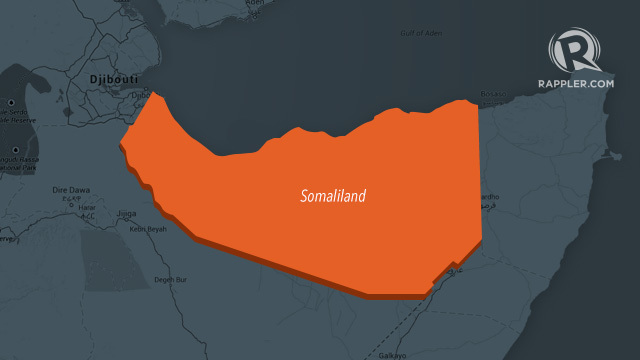
The function was held on Tuesday at a hotel in Hargeisa, capital of Somalia's breakaway region of Somaliland, and was arranged by Telsom, a telecoms company that employs all the bridegrooms.
The Horn of Africa region is staunchly Muslim, so the men and women celebrated separately.
The expense of a traditional wedding, especially when economic times are hard, is driving some young Somalis to leave their homeland.
"One of the reasons why the youth migrate is weddings are expensive, and I appeal to the community to simplify marriage by reducing the cost," Sheikh Mohamed Sheikh Omar Dirir, one of the area's most prominent religious leaders, told guests.
(Reporting by Husein Ali Nur; Writing by Daniel Wallis; Editing by Phakamisa Ndzamela)

What to do with a captured pirate

Medeshi March 10 , 2009
What to do with a captured pirate
By Oliver Hawkins Reporter, Law in Action, BBC Radio 4
When pirate attacks off the coast of Somalia surged last year, the world sent its navies to tackle the problem. But now that we are taking the pirates on, does anyone know what to do when we catch them?
The Roman law-maker Cicero once dubbed them "enemies of all mankind". And certainly pirates have long posed a major legal problem.
It has become even more acute in recent months, following the audacious attack last November on the world's largest supertanker, the Sirius Star, off the coast of Somalia.
It is not just a question of headline-grabbing attacks on prestige ships. Vessels from states across the developed and developing world face the threat of piracy from a new generation of pirates, often from failed or failing states.
Jurisdiction
Piracy is what is known as a universal crime. That means that because the pirates commit their crimes on the high seas, beyond any one country's jurisdiction, they are treated as a threat to every country.
In turn, each country may arrest pirates at sea and prosecute them at home.
At least that is how it is supposed to work. In practice, whether a country can prosecute arrested pirates depends on its own laws.
It is a problem the Danish Navy came up against last September when the flagship Absalon detained 10 suspected armed pirates in the seas off Somalia after they had allegedly been attacking merchant ships.
"We were stuck with them," says Thomas Winkler, a legal expert at the Danish Foreign Ministry.
"We only have national criminal jurisdiction if the pirates are attacking a Danish ship or Danish citizens. So we couldn't bring them to Denmark for prosecution.
"We looked to other states, but the evidence we had was not sufficient for these states. We had to set them free and land them in a safe place on the shore of Somalia."
Labyrinth
The Danes are not alone.
SOMALIA PIRACY
More than 100 attacks in 2008
42 successful hijackings in 2008
815 crew held hostage in 2008

6 ships currently held Source: International Maritime Bureau, 2009
The German authorities had to release suspected pirates just before Christmas.
BBC Radio 4's Law in Action has discovered that on two occasions last year, the Royal Navy also released pirate suspects after confiscating their equipment.
Some other navies are reluctant to detain the pirates they catch for fear of becoming legally responsible for them.
The problem is particularly acute with Somalia because it lacks an effective criminal justice system.
According to Rear Admiral Philip Jones, who heads the European Union's piracy task force Operation Atalanta, when a navy intervenes to stop a pirate attack, they often do not know whether the pirates they catch can be prosecuted.
"That depends on where we find them, on the nationality of the ship that arrests them, on the nationality of the pirates themselves and the circumstances in which they are arrested.
"There is a different response available in almost every case."
Impunity?
The consequences of this legal labyrinth can be seen in official figures released by the US Navy at the beginning of March.
“ They either walk out or someone pays a bribe for them to be released ” Roger Middleton, Chatham House
Out of the 238 suspected pirates investigated by navies operating off Somalia, barely half were sent for prosecution. Most of them were released.
Even these figures overstate the number of pirates that actually face trial because they include those handed over to the authorities in Puntland, the semi-autonomous region in the north-east of Somalia from which most pirates come.
According to Roger Middleton, in-house expert on Somali piracy at the Royal Institute of International Affairs, Chatham House, it is often unclear how long the pirates will stay in prison.
"Often not for very long," he says. "They either walk out or someone pays a bribe for them to be released."
Of the 57 pirates caught by the French Navy so far, 45 have been handed over to the Puntland authorities. The US Navy sent nine more pirates to Puntland at the beginning of March.
That means Puntland accounts for roughly half of the pirates reported to be facing prosecution.
Deal
In a bid to tackle the apparent impunity with which pirates can operate, the US and the EU have both concluded deals with Somalia's neighbour Kenya to send pirates for prosecution there.
Britain sent eight suspected pirates to Kenya last November. The US is in the process of sending another seven.
But is using Kenya as the first choice jurisdiction for prosecuting Somali pirates a viable long-term solution?
The Kenyan Foreign Affairs Minister Moses Wetangula has insisted that Kenya will not become a dumping ground for every Somali pirate captured on the high seas, despite the agreements.
And human rights groups have raised concerns about the standard of justice that pirate suspects will face there. Ben Rawlence of Human Rights Watch says there are significant problems with Kenya's justice system.
"People are routinely beaten in jail. Trials are rarely free and fair. Judges are highly susceptible to corruption," he claims.
However, the British government insists that the pirate suspects which it sends to Kenya will be treated in accordance with the UK's human rights obligations.
Everybody agrees that the long-term solution to piracy off Somalia is an effective government in Somalia with a well-resourced coast guard and a functional justice system.
Until that happens - and with civil strife in Somalia still acute - countries trying to combat piracy face huge problems in bringing pirates to justice.
Story from BBC NEWS:

Ethiopia ONLF rebels 'seize town'

Medeshi March 10, 2009
Ethiopia ONLF rebels 'seize town'
Rebels in Ethiopia fighting for the independence of the Somali-speaking Ogaden region say they have captured a town in the east of the country.
The Ogaden National Liberation Front (ONLF) said it had seized Mustahil and was also fighting for the towns of Wardheer and Khalavo.
It said at least 80 Ethiopian soldiers had been killed.
An Ethiopian government spokesman told the BBC the reports were absolutely false and the ONLF was on the run.
On Saturday, the Ogaden rebels said they had killed more than 20 Ethiopian troops in recent fighting, a report also denied by the authorities in Addis Ababa.
The ONLF, founded in 1984, says the Somali-speaking population in Ethiopia's oil-rich Ogaden region has been marginalised by Addis Ababa.
Ethiopia's military launched an offensive against the ONLF after its fighters attacked a Chinese-run oil venture in Ogaden in 2007, killing dozens of people, including nine Chinese nationals.

Once the camels start dying, people are not far behind


Medeshi
SOMALIA: “Once the camels start dying, people are not far behind”
NAIROBI, 10 March 2009 (IRIN) - Hundreds of people are at risk in Somalia's central region of Mudug, where a severe drought has caused an acute shortage of water, with local leaders appealing for urgent help.
"Some 42,940 sheep and goats have already died and many families have moved to urban areas in search of help," Mursal Hashi Shirwa, commissioner for social affairs of Gal-Mudug state, a self-declared autonomous region, said.
He said people would soon die if help did not arrive on time as hundreds of families were facing a bleak future after losing their livestock.
Shirwa visited the worst-affected areas from 2-6 March and told IRIN 5,500 families (33,000 people) in 40 villages north-east of the regional capital Galkayo needed immediate assistance.
He said about 100 nomadic families (6,000 people), who lost all their livestock, had moved to Bud Bud town, 175km north-east of Galkayo.
"They have nothing and nowhere to go, so they go to the closest town," he said, adding that in Qeydare, another town he visited, more people were arriving.
Livestock deaths
Yassin Mohamed Ganni, a senior elder from the area, said the situation was so bad that camels had started dying in some villages.
"Camels are the last animals to die and once they start dying, it is only a matter of time before people start dying," Ganni said.
He said urgent aid was needed to help stave off more animal deaths as livestock-keeping was the economic mainstay of the population.
"Our life depends entirely on livestock and if we lose it, then we have lost everything," Ganni said, adding that in certain cases people had lost all or two-thirds of their livestock.
Like most of central Somalia, the area has had no rain in the past two years and water points and boreholes have either dried up or are in disrepair, said Ibrahim Ilmi Ahmed, of the Somali Community Development Organization (SCDO), a local NGO that has organised water-trucks for the affected populations.

"We have been trucking water from long distances but the scale of the need and what we can deliver is not even close," Ahmed said.
He said the local business community and the administration, helped by the diaspora, had helped to bring water to some areas.
There were, however, areas "we have not been able to access largely due to distance and lack of funds", he added.
Shirwa said the Gal-Mudug administration would issue an appeal to international aid agencies to "help mitigate this unfolding catastrophe".
He said water, food and shelter for the displaced were a priority, as was restocking some of the lost livestock.
"We are appealing for immediate assistance to avert a disaster," he said.

Theme(s): (IRIN) Environment, (IRIN) Food Security, (IRIN) Natural Disasters, (IRIN) Water & Sanitation [ENDS]

Somaliland: Democracy in Action - VII

Medeshi
Somaliland: Democracy in Action - VII
Abdulazez Al-Motairi
March 09, 2009
The recent visit of Somaliland President Dahir Riyale Kahin was very important to strength the relation between the two countries - UK and Somaliland. UK government received Kahin with full diplomatic head of state reception, and he met number of MPs and UK Minister of Foreign Affairs.
Somaliland flag was flying high at the UK House of Commons, and large crowd of Somaliland community in UK welcomed the president and his delegate to London. UK Ministry of Foreign Affairs invited the president officially to visit London, in an attempt to support the growing democracies in Africa.
The below is informative article about democracy in Somaliland by Somali intellectual.
The article highlights the terrorist attacks in Somaliland, in which terrorist planned to stop the democracy development in Somaliland on 29th Oct 2008.
Somaliland: War on Terror Threatens Democracy - November 07, 2008 - 00:32
Despite the fallacious war on terror, in fact terrorism spread beyond control. Places that suicide attacks were unknown before are now struggling to cope with the devastation caused by them. Evidently, in the wake of massive terrorist attacks in Somaliland—its nascent democracy faces uncertainty. Never before did Somaliland witness horrific crimes committed by terrorists in its soil.
But on the beautiful morning of October 29, 2008 everything changed. After living peacefully in their country for almost two decades and establishing a remarkable democratic state, Somalilanders—once again—witnessed bloody attacks in their capital, Hargaisa. (In late 80s, close to 60, 000 civilians were massacred in Somaliland by the former Somali Army led by the infamous Gen. Morgan—the butcher of Hargaisa.) And again, chaos and panic swept through the streets of Hargaisa as scores of innocent Somaliland citizens—over twenty two people— lost their lives due to the simultaneous suicide attacks detonated in the heart of the city. The targets included the presidential palace, the Ethiopian commercial office, and the UNDP headquarters. And although understandably emotions are running high and there are more finger-pointing and blame-placing accusations than answers, the most crucial question remains unanswered: why was Somaliland attacked?
Though overwhelmed and frightened, Somaliland citizens continue searching answers. Meanwhile, the Western Media, while—of course—speaking to its captive audience and offering not a single shred of evidence quickly blamed the usual suspects—the Southern Somali group Alshabaab (the youth) which resolutely opposes the occupation of its country by Ethiopia.
Somaliland adversaries: Alshabaab, TFG and pirates
The plausible reasons that Alshabaab would attack Somaliland are plenty and clear. After all, Alshabaab is not pleased with Somaliland´s ties with the West and Ethiopia. And naturally, Alshabaab strongly believes the reunification of Somalia—including Somaliland—so this group will do whatever it takes to achieve its goals.
On the other hand, despite the Transitional "Federal" Government TFG claims that it is the only authority in former Somalia which theoretically includes Somaliland, the TFG barely controls its seat in Baydhabo, a city in Southern Somalia, much less rule Somaliland. Even worse, both Ethiopia and Kenya are now declaring their client TFG—led by the notorious warlord Col. Abudullahi Yussuf—as a hopeless regime doomed to fail. Ethiopia and Kenya parachuted the TFG into power in October 2004. hiiran.com
However, currently, the TFG has three priorities in its agenda: taking attention away from its failure, convincing the International community the presences of Al-Qaeda in the region, and most important—stopping Somaliland independence. The TFG knows that the year 2009 will bring some wonders to the Somali world. While the upcoming Somaliland presidential election in March 2009 will inevitably lead to its recognition, the TFG will not only crumple but also its five-year mandate will end in October 2009. However, without a doubt, after a successful, fair and transparent presidential election in Somaliland, Hargaisa will be on the verge of gaining its independence. And for the TFG derailing Hargaisa´s quest for independence is far more important than stabilising Southern Somalia, therefore. The timing could not have been better for Somaliland enemies either. Whatever it takes the TFG to sabotage Somaliland vote registration which has kicked in recently may be the ultimate goal. So whether it is Alshabaab or an earthquake, a civil war or a tidal wave—whatever is needed to stop Somaliland recognition makes no difference to the Somali quisling leaders. But what do the TFG, Alshabaab, and Al-Qaeda have in common? In fact, if the TFG, Alshabaab, and so-called Al-Qaeda groups in Somalia could agree on one thing, it would be: sabotaging Somaliland´s efforts to stand as a sovereign state—at any cost.
The war on terror has had ugly twists and turns. For instance, despite Col. Yussuf´s crying wolf about terrorists in Somalia he is now using the heinous attacks against Somaliland to his advantage for two reasons: to show the world that terrorists are even attacking Somaliland—an oasis in Africa—and to hinder Somaliland´s efforts to gain its severity. Therefore, undoubtedly the TFG ruthless thugs led by the belligerent warlord Col. Abudullahi Yussuf—the butcher of Mogadishu—whish they could congratulate the culprits of Somaliland attacks.
Meanwhile on a smaller scale but equally dangerous, the TFG employed pirates are chocking Somaliland´s ability to export livestock to the Middle East. Surpassingly, these pirates are directly connected to the same TFG the makes loud shrills about the presence of piracy in Somalia´s waters. The head of the Kenya-based Seafarers' Assistance Program, Andrew Mwangura could not have said it better when he stated, "Most of [the pirates] are linked to warlords…And the warlords are linked to the [government], all the way to the top." time.com Read also about the danger that pirates pose to Somaliland: awdalnews
The proliferation of Alshabaab
Truly, the unabated Ethiopian onslaught against Southern Somalia, the merciless U.S. bombings against Somali villages, and the never-ending plight of the Somalis in the Ogaden region of Ethiopia have infuriated Somalis around the world. Even Kenyan soldiers are reported gang-raping Somali women in the Somali region of Kenya. reuters.comAs a result, Alshabaab groups are now recruiting sympathisers not only in Somaliland but also in Djibouti. Whether the world accepts or not.
Then, it is no surprise that some of the attackers in Hargaisa may be locals who have been enraged by the plight of fellow Somali ethnics throughout East Africa. And the longer the Ethiopian military adventure into Somalia continues, the more recruits for Alshabaab. Hence, Ethiopia and U.S. are in fact responsible for the proliferation of groups like as Alshabaab, introducing suicide attackers and roadside bombers. To make matters worse: Ethiopia isn´t safer than it was when it invaded Somalia in December 2006. Additionally, with the exception of few pockets in Mogadishu, and Baydhabo which is home to the foreign-imposed Somali regime, Alshabaab runs the show in the rest of Somalia. Possibly Ethiopia may exit Somalia by the end of December 2008. So in essence, Ethiopia´s invasion not only strengthened Alshabaab fighters but it will also bring them to power, just as the U.S. brought power to the Islamic Court Union I.C.U, after the U.S. supported brutal Somali warlords were defeated by the I.C.U. Ethiopia just reinvented the wheel, didn´t it?
The irony of Hargaisa attacks
Sadly, the terrorist attacks in Somaliland have an ironic twist. While the relatives of the victims mourn the loss of their loved ones, the government may find the attacks as a blessing in disguise. The government which received the fury of the attacks may in fact use the devastation in Hargaisa as yet another stale propaganda to demonize the opposition parties—namely KULMIYE—as Hargaisa has done in the past. Not so long ago, Somaliland Interior Minster, Abdullahi Irro accused KULMIYE party of committing terrorist acts against the country and having ties with Alshabaab group. tinyurl.com But in reality, Mr. Irro´s laughable smear campaign has less to do with terrorism and has more to do with the government´s deceptive efforts to either monopolies or chock the lifeline of Somaliland people—exporting livestock to the Middle East. So, at times of massive devastation in Hargaisa, Mr. Irro may make yet another vomit-worthy accusation against KULMIYE. Truly, Somaliland yearns for a half-decent Interior Minster, don´t you think so? Terrorism became a propaganda gimmick just as communism was during the cold war. (Next war will be against Chinism!)
Indeed, the terrorists may have shrewdly concluded since the authority was bound to blame KULMIYE for everything including terrorist attacks, (lack of rains…you name it), why not wreck havoc and watch as Somaliland engulfs itself in a violent firestorm. That is, the foolhardy policy of our government towards KULMIYE party possibly accelerated the attacks.
Next attack: Djibouti
The terrorists that attacked Hargaisa know that there is a bigger fish to fry across the border to Djibouti. Both U.S. and France have troops in Djibouti. Now, the perpetrators gained experience, and without a doubt they have sympathisers and perhaps fighters in Djibouti; then it will be a matter of time before U.S. and France send body bags home.
Given Somaliland´s limited resources, lack of high tech weapons and proper anti-terrorism trainings, it will impossible for the government to seal off its border with Djibouti. For instance, Somaliland doesn´t have single fighter jet, or a helicopter to patrol its borders, nor does it have the resources to fight off terrorists.
As long as Somaliland lacks technology and resources to rebuild its armed forces, to secure its borderers, and to uproot extremists groups from its soil, the American and the French troops in Djibouti will have to deal with the wrath of terrorists at the gates of their [American and French] bases rather than stop the attackers at Somaliland border.
Final thoughts
There is hardly a nation which terrorism has not affected. Just like uncontrollable diseases, terrorism spread like a wildfire. But while governments do at most to control epidemics, terrorism is—inadvertently and imprudently—spread by authorities.
Behind the façade of curbing terrorism, a new breed of extremist groups is about to hatch in East Africa. Thanks to the war on terror. Neither suicide attacks, nor roadside bombs were known in Somalia before the invasion of Ethiopia. But these desperate tactics are daily occurrences. Truly, terrorism is an act of desperation—when people are not give hope or a reason to live, they do whatever it takes to alleviate their pains. The myth that the terrorists envy the Western way of life and they want to impose their ideologies on the civilised world lost steam. It is an overused propaganda.
Additionally, the war on terror is now threatening one of the most democratic nations in Africa: Somaliland. Apart from economic and political isolations, among other problems, Somaliland struggles to cope with high seas pirates who threaten its only economic lifeline—the export of livestock to the Middle East—and terrorist attacks; the nation is stretched beyond its capacity to handle crisis. If the International community doesn´t act quickly—Somaliland could be the first nation succumbed to terrorist demands.
Doubtlessly, both Alshabaab and TFG factions are pleased with the terrorist attacks in Hargaisa, and the efforts of the perpetrators to derail the upcoming Somaliland election. Through the eyes of Alshabaab and TFG whatever it takes to stop Somaliland gaining its independence—including terrorist attacks is a fair game.
Also, evidently, the adventurous and reckless war on terror is in fact responsible for the proliferation of extremist groups in Africa and elsewhere. And as long as the plight of the Somali people remains ignored, Somalia´s neighbours won´t sleep comfortably.
It is about time to help Ethiopia evacuate its troops from Somalia. Understandably, Ethiopia has security concerns, but giving it the green light to invade its neighbour neither made Ethiopia more secure, nor curbed radical groups in Somalia. Ethiopia is the natural adversary of Somalia. And the idea of having the Ethiopian troops in Somalia as "peacekeepers" is ludicrous. Just as it is ridiculous to call the Israeli troops in Palestine peacekeepers, and so it is pathetic to camouflage the occupying Ethiopians in Somalia as "peacekeepers". Ethiopia needs peaceful neighbours, and the world could help Somalis choose their own government that approaches Ethiopia as a partner of peace and a good neighbour, rather than imposing a client Somali regime on the Somali people.
My assertions are not about accusing U.S.—Ethiopia coalition of creating mayhem in East Africa all alone, nor are they about defending Alshabaab´s possible crime committed in Somaliland—they are about looking into and beyond the thick smoke caused by Hargaisa terror attacks and how the war on terror would eventually undermine Somaliland democracy as well as its existence as a nation. Will the world rescue or watch as the nascent democracy of Somaliland surrenders to pirates and terrorists? Dalmar Kahin

Somaliland Marines Tackle Treacherous Seas

Medeshi
Somaliland Marines Tackle Treacherous Seas
Abdulazez Al-Motairi
March 10, 2009
By Matt Brown
BERBERA, Somaliland, February 28, 2009 – Before setting out into the warm, azure waters of the Gulf of Aden, Ahmed Saleh, a colonel in the coastguard here, surveys his men. The 10 marines are well armed with AK-47 rifles, rocket-propelled grenade launchers and an imposing Russian-made anti-aircraft gun mounted on the bow of their speedboat.
These men carry a small arsenal for a reason. They are tasked with patrolling some of the most dangerous waters on Earth, the pirate-infested sea off the Somali coast.
"We do not fear because we have arms," Col Saleh said aboard his patrol boat in the open water of the Gulf of Aden. "The pirates have arms too, but still we do not fear. If we show fear, they can do whatever they want to us."
Indeed, the pirates are just as well armed and have terrorized international shipping vessels in one of the world´s busiest shipping lanes while outsmarting the most sophisticated navies on Earth. In the past year, Somali pirates have attacked more than 100 boats in the shipping route from the Red Sea to the Indian Ocean, according to the International Maritime Organization.
Experts believe that more than 1,000 pirates now operate off the Somali coast, taking advantage of the lawlessness stemming from the country´s 18-year civil war. Young fishermen are lured by the promise of huge ransoms in the millions of dollars. For example, the owners of the hijacked MV Faina, a Ukrainian ship carrying tanks and other weapons, recently paid a band of pirates US$3 million (Dh11m) for the release of the boat.
But piracy has its roots in illegal fishing and toxic waste dumping off the coast of Somalia, according to some of the pirates recently interviewed. Local fishermen began patrolling these waters demanding money for fishing rights from international ships. Once they realised they could make a profit, they began hijacking cargo vessels and extorting ransoms.
"Before we started the piracy, we appealed to the world to do something about the illegal fishing in our territorial waters," said Farah Ismail, a convicted pirate serving 15 years in a Somali prison. "They didn´t listen, so we turned to piracy."
In an interview from the prison in northern Somalia, Ismail described how his band of pirates captured large cargo ships using a six-meter skiff.
"The ships are very big and our boat is very small," he said. "Before he sees us, we can see him. Our boat is very speedy. By the time they see us, it is too late. We use ladders to climb on board. When we are on board, the first thing we do is cut their communication. Then, we use our guns and move the crew to one area."
Ismail, 38, is from Puntland, the anarchic Somali territory on the tip of the Horn of Africa. Most of the piracy takes place there and in southern Somalia. Pirates have largely avoided this north-western Somali territory known as Somaliland, which has a functioning government and security forces. Seeing a growth industry, Ismail and four other pirates moved to Somaliland to set up shop. The band of pirates was arrested last month, and they are all serving prison sentences.
window.google_render_ad();
Piracy is on the rise even here in Somaliland, where the coastguard has just three boats to patrol the entire 860-kilometre coastline. Ships from the US, European Union, Russia and a dozen other international navies stationed off the coast of Somalia, have concentrated their efforts on Puntland and the Indian Ocean coast, avoiding Somaliland.
"The local community is very aware and they alert us when they suspect pirates are operating in the area," said Admiral Osman Jibril Hagar, the head of the Somaliland coastguard. "In Somaliland, the people don´t like piracy. They say it is an evil business."
In the past two years, the coastguard has arrested about 50 pirates in Somaliland, according to Mr Hagar. Only one boat has been hijacked in Somaliland´s waters, a yacht sailed by a German couple that was taken in July on the border between Puntland and Somaliland.
Jurgen Kantner and his wife were sailing around the world on their yacht, the Rockall, when the pirates struck. The pirates took the couple to a hideout in the rugged mountains of Somalia´s interior, where they were held for 52 days.
"We slept in the bush, we had little water and sometimes we had no food for three days," said Mr Kantner, 62, who has returned to the Somali port town of Berbera to fix his boat. "I´ve lived 33 years on a boat, and it was the worst experience of my life."
The couple were subjected to mock executions. The pirates tied a rope around Mr. Kantner´s neck and threatened to hang him. Once they fired a gun, barely missing his head. At one point, he was separated from his wife when he heard a gunshot. The pirates told him that she had just been killed.
The couple was finally released after a $600,000 ransom was paid. Mr. Kantner said it was not clear if the German government or a private party paid the ransom.
Once his boat is seaworthy again, Mr. Kantner plans to continue his voyage to Asia, even though it means braving the pirate-infested waters a second time.
"Next time I will buy a gun," he said. "It is the only way. I will be ready. If they attack, I will fight back."

RIFT VALLEY INSTITUTE HORN OF AFRICA FIELD COURSE 2009

Medeshi
RIFT VALLEY INSTITUTE HORN OF AFRICA FIELD COURSE 2009
We are pleased to announce that the second Horn of Africa Course will beheld from Saturday 20 June to Friday 26 June 2009, in Lamu, Kenya. For aprospectus and application form please write to horn.course@riftvalley.net
The Horn of Africa Course is a one-week, intensive, graduate-level,residential programme that provides a fast-track introduction to thehistory, political economy and culture of Ethiopia, Eritrea, Djibouti,South-central Somalia, Puntland, Somaliland and northern Kenya. The Courseis designed for aid workers, diplomats, peacekeepers, researchers,campaigners, business people and journalists, who are living and working inthe region or about to start. The course examines the historical andcultural patterns of this diverse region and the contemporary issues andchallenges faced by people in these countries. The residential nature of thecourse provides extensive opportunity for informal exchanges betweenstudents and teaching staff.
The course is taught by regional and international specialists. The Directorof Studies is Ken Menkhaus, Professor of Political Science from DavidsonCollege, and A prolific author on the region. The Course Director is MarkBradbury, author of "Becoming Somaliland".
The teaching staff on this year's course includes the following: LeeCassanelli, of the University of Pennsylvania, author of "The Shaping ofSomali Society"; Terrence Lyons, Associate Professor of Conflict Resolutionat the Institute for Conflict Analysis at George Mason University and authorof "Avoiding Conflict in the Horn of Africa: U.S. Policy toward Ethiopia andEritrea;" Dekha Ibrahim Abdi, Kenyan civic activist and peace builder andwinner of the 2007 Right Livelihood Award; Sally Healy OBE, Fellow ofChatham House and author of the recent report, "Lost Opportunities in theHorn of Africa: How Conflicts Connect and Peace Agreements Unravel"; JabrilIbrahim Abdulle, civic activist and Director of the Centre for Research andDialogue, Mogadishu; Kjetil Tronvoll, University of Oslo, co-author of"Brothers at War: Making Sense of the Eritrean-Ethiopian War".
Rift Valley Institute website http://www.riftvalley.net/
Earlier RVI courses http://www.riftvalley.net/?view=courses
Videoclips of earlier RVI courses http://www.youtube.com/Riftvalleyinstitute
The Rift Valley Institute (RVI) is a non-profit research and educationalorganization working with communities and institutions in Eastern Africa,including Sudan and the Horn. RVI programmes connect local knowledge toglobal information, aiming to modify development practice. Programmesinclude field-based social research, support for indigenous educationalinstitutions, in-country training courses and a digital library. RVI Fellowsare academic specialists and practitioners in the fields of education,conservation, media, law and human rights. To unsubscribe from the RVImailing list please write to administration@riftvalley.net

Somaliland among 64 countries to go to polls in 2009

Medeshi
64 countries to go to polls in 2009
8 Mar 2009, IST, Subodh Varma, TNN
NEW DELHI: It's not just India that's swirling to the dance of democracy. 2009 will be the biggest year for electoral democracy in history, with
governments that rule over 2.6 billion people seeking a mandate from them. In India alone, there are more than 700 million voters.
From the tropical rain forests of Congo and Ivory Coast, to the icy wilderness of Greenland, from palm-fringed beaches of New Caledonia to the vast pampas of Argentina, people in 64 countries will be voting this year to elect new governments.

Some of the more important elections coming up in 2009 are in Iran, South Africa, Japan, Afghanistan, Mexico and Palestine. Some countries have already gone to the polls in the first two months of this year, notably, Israel and El Salvador.
Apart from the 64 countries having direct elections, five others are holding indirect elections, that is, an elected legislature further electing a head of state, as in Bangladesh and Germany. Another 14 countries will vote on crucial issues through referendums. These include Denmark, Switzerland and Iraq. Iraqis will vote to decide the fate of an agreement between their government and the United States on the future of US armed forces currently occupying the country.
Elections may be a common feature but countries going to the polls this year are hugely different. Leichtenstein with a population of just about 37,000 and Andorra with about 83,000 will be voting, as will be several small island nations like the Comoros and French Polynesia.

Another contender is Somaliland. A breakaway province of Somalia which declared sovereignty in 1991, Somaliland is yet to be recognized by any country in the world, but it holds regular five-yearly elections for president.
In Africa, several of the most backward countries, which have long been victims of bloody wars are also slated to make tentative approaches to democracy. These include Sudan, where war and famine in the Darfur region have taken a toll of over half a million people in the past decade. Adjoining Chad, home to over 200,000 Darfur refugees is also going to elections. In the Republic of Congo too, elections are being held in the hope of ending a conflict fuelled by greed for its rich mineral resources.
For the world, elections in some of the countries assume an added importance due to geo-political considerations. Iran is witnessing a keen tussle between moderates and hardline fundamentalists in the forthcoming presidential elections. The outcome may determine the strategic equations in the region, which is already embroiled in several lethal wars from Palestine to Afghanistan. Israel has already held elections on February 10, leading to the victory of a coalition of rightwing forces, riding on a wave of support after the recent Gaza war. On the other side, elections to the Palestinian National Authority are also scheduled for this year, with the ruling Al Fatah party facing a Palestinian electorate angry over its vacillation in the face of the Israeli attack on Gaza. There are chances that the militant Hamas will wrest the leadership.
In South Africa, a splintered African National Congress faces people discontented at growing inequality and elitism.
Not many of the developed nations are voting this year and so, their people will not be able to give a political reaction to the ongoing economic slump. However, elections to the European Union Parliament, representing about 500 million people in 27 member states, may well see a political fallout of the global recession.
Several less-developed countries that have got tied up with the global order and thus suffered from its downfall are facing tough elections. These include Argentina and Chile in South America, and East European emerging economies like Bulgaria, Moldova, Romania, Slovakia and Macedonia.

2008 Human Rights Reports: Ethiopia

Medeshi
March 7, 2009
2008 Human Rights Reports: Ethiopia
Bureau of Democracy, Human Rights, and Labor
2008 Country Reports on Human Rights Practices
US State Department
Ethiopia is a federal republic led by Prime Minister Meles Zenawi and the ruling Ethiopian People's Revolutionary Democratic Front (EPRDF) coalition. The population was approximately 77 million. In the 2005 parliamentary elections, the EPRDF won a third consecutive five-year term. In local and by-elections held in April the EPRDF and allied parties won virtually all of the more than three million seats contested, severely diminishing opportunities for mainstream political opposition. Prior to the vote, ruling coalition agents and supporters used coercive tactics and manipulation of the electoral process, including intimidation of opposition candidates and supporters. Political parties were predominantly ethnically based, and opposition parties remained fractured. During the year fighting between government forces, including local militias, and the Ogaden National Liberation Front (ONLF), an ethnically based, nationalist, insurgent movement operating in the Somali Region, resulted in continued allegations of human rights abuses by all parties, particularly diversion of food aid from intended beneficiaries suffering from a severe drought. Although there were fewer reports of extrajudicial killings and other similar human rights violations in the Ogaden than the previous year, nongovernmental organizations (NGOs) and others reported persistent abuses. While civilian authorities generally maintained effective control of the security forces, there were numerous instances in which elements within those forces acted independently of government authority.
Human rights abuses reported during the year included limitations on citizens' right to change their government in local and by-elections; unlawful killings, torture, beating, abuse, and mistreatment of detainees and opposition supporters by security forces, usually with impunity; poor prison conditions; arbitrary arrest and detention, particularly of suspected sympathizers or members of opposition or insurgent groups; police and judicial corruption; detention without charge and lengthy pretrial detention; infringement on citizens' privacy rights including illegal searches; use of excessive force by security services in an internal conflict and counterinsurgency operations; restrictions on freedom of the press; arrest, detention, and harassment of journalists;restrictions on freedom of assembly and association; violence and societal discrimination against women and abuse of children; female genital mutilation (FGM); exploitation of children for economic and sexual purposes; trafficking in persons; societal discrimination against persons with disabilities and religious and ethnic minorities; and government interference in union activities, including harassment of union leaders.
Read full report here: US State Department

Somaliland President’s Speech at Chatham House

Medeshi
Somaliland President’s Speech at Chatham House
Sat, Mar 7, 2009
Somaliland Press
Mr. Chairperson;Distinguished Guests;Ladies and Gentleman;
Mr. Chairman, I would like to thank you, for inviting me to Chatham House. I am extremely delighted to be here with you this afternoon, to speak about the issue of Recognition of Somaliland among others.
I would like to emphasis the success story of Somaliland which by and large the international community failed to recognize. A success story that is basically considered us a miracle achievement attained by Somalilanders, without tangible assistance.
Over the years our administration has taken series of steps towards a nation building process from 1991. This process was long and painstaking one, it constituted reconciliation, demobilization and Institutional processes through homegrown bottom up approach. Which by and large became a Model for nation building.
It all started with an SNM (Somali National Movement) sponsored Conference held in Burao in May, 1991(Widely known as Burao National Conference), which set the stage for a new beginning – the restoration of Somaliland’s statehood in 1960. Then followed a National Conference in Borama in 1993, which was the corner stone of an elected President and Vice President the adoption of a National Charter with a two-chamber parliament through Electoral College. A model labeled as “Africa’s Best Kept Secret” by Prof. Iqbal Jhazbay of South Africa. It is worth noting during that process that there were hiccups and pitfalls that slowed down the process, such as the conflict of 1995 to late 1996 that took place amongst our selves, which costed both human lives and other resources. Somaliland overcame this conflict through reconciliation. That was a learning experience. Once again in 1997 an electoral college was assembled in Hargeisa, whereby a President (Late President Egal) and myself as Vice President where elected.
In Addition, a national constitution was adopted and was put for a national referendum in 2001 with 97 % percent of approval. International observers described the process as free, fair and consistent with international norms for referenda and elections. In the meantime, back to back election were held, i.e. Local Government, presidential, and Parliamentary elections which were characterized by the International Community as fair and transparent. It is worth noting once again, that the aforementioned process was extremely challenging and terribly costly.
Mr. Chairman, I would like to note, that our Late President, Mr. Mohamed Ibrahim Egal, (My God bless his soul) has passed away on May 2002 in South Africa. At the time, the term of his office was to expire within nine Months. Soon after the death of late President, I was sworn in as the new President of the Republic of Somaliland, according to the constitution of the Republic which states that the vice President takes the seat of the President. This was the smoothest transition that I can thing of, after the nine (9) Months we held the first Local Government, Presidential and Parliamentary elections successfully. During my tenure, my administration made possible all of these back to back elections with transparency and fairness.
All alone, Somaliland has contributed immensely to the regional security, Democratization process and a regional geopolitical stability. Today Somaliland enjoys fantastic relationship with its neighbours.
Somaliland attained its independence from Great Britain 1960. As a result 35 Countries recognized Somaliland’s statehood; these included Egypt, Ghana and Libya among others.
As you are fully aware of the definition of a STATE is that it should have:
1. A permanent population;
2. A defined territory;
3. A functioning Government;
4. A capacity to enter into relations with other states.
My country fulfils all the above and thus qualifies for statehood.Allow me to say something about our views towards Somalia. There are those who believe that the recognition issue of Somaliland may adversely affect or undermine the reconciliation efforts underway. I would argue that the opposite is true. If Somaliland is recognized, those in Somalia would concentrate and spend all their energies in finding a solution to their conflict, if Somaliland issue is taken out of the equation. In addition, we believe that a sovereign and recognized Somaliland could play a positive role in the reconciliation of Somalia.
Having seen the tremendous strides Somaliland has made despite enormous odds, in the past 18 years, the world community padded Somalilanders on the back, and told us time and again that we are on the right track, and that we should continue on this course. The people of Somaliland have decided in their 2001 referendum to affirm their sovereignty thus challenging the world community as to how long to stay on the course without recognition? It is about high time that the international community gives serious attention to the achievements and the success story of Somaliland.If East-Timor, Eritrea, Serbia, Georgia, Kosovo to name a few were recognized as sovereign nations, in the last 18 years, why not Somaliland. The fact, the matter is that Somaliland is more populated than approximately 63 sovereign countries including Luxemburg, the republic of Congo and Jamaica. Somaliland is also larger in area than 85 sovereign nations, including Belgium, Jordan, and El-Salvador.
Somaliland has built a society founded on peace, democracy, justice and the rule of law. Our commitment to the peace and stability of the region included unreserved respect for the unity and territorial integrity of all our neighboring states; expecting a reciprocal treatment from its neighbors.
Somaliland neither stands for secession, nor for the revision of Africa’s borders. The people of Somaliland have made their choice loud and clear, independence is an inalienable right.
Today, our economy and livelihood by and large depends entirely on the livestock sector, a sector that is subject to extreme fluctuations depending on the domestic weather conditions and external market situations, two vital variables not under our control. We are working hard to diversify the economy, by exploiting our vast untapped resources, like oil and gas, precious stones and the vast sea resources over the coming years. We have already taken steps in that direction, we will open the 15th of March the first bid round for hydrocarbon concession, the bid round will include eight concession blocks comprised of more than 89,624 square Kilometers of onshore and offshore, but our efforts are being hamstrung by the refusal of the international community to invest in our country or deal with us bilaterally.
The Lack of de jure Recognition hinders the development of Somaliland in terms of foreign investment, infrastructure and the delivery of meaningful social services, in that respect Somaliland earnestly, requests from member states of International Organizations to recognize Somaliland. Justice delayed is Justice denied.
Such a recognition will in no doubt allow the European Union, World Bank, the International Monetary Fund, the United Nations, and the international community in general, to deal with Somaliland on a bilateral basis and engage with us in the developmental programmes that Somaliland has been wrongfully denied over the years.
Understandably, there is an alarm here in London and elsewhere and around the world about the issue of failed states in these troubling times, and a desire to limit any dangers they might pose to our collective security.
Trust me, we know all about failed states. Somaliland is not a failed state, but rather, a capable, responsible and democratic state. However, we share the same fears with you about failed states, and the threat they could pose to us all.
Ladies and Gentlemen,
Likewise, the well-being and the success of other nations can equally have a profound positive effect on all of us. The reality on the ground today is, in our global village, what is good for one country is good for the other. The surest and the most effective way of fighting terrorism is not by trying to cure the symptom of the disease but the root cause of the malady by eradicating poverty, which manifests itself in misery and frustration. It is easy to assume that a neglected poverty-ridden society will be a congenial breeding ground for terrorists. The rich and the poor countries must have a common agreement to fight and cooperate in the interest of all mankind to eliminate poverty at the global level. Fighting human misery and degradation of human life must be a common concern for everybody, if we aspire a more peaceful life in this fast shrinking world of ours.In the past Somaliland has been a victim of terrorism on numerous occasions. Most recently, on October .29th Last Year, International Terrorism struck the heart and the soul of Somaliland. Using at least three suicide car bombs, violent extremists attacked our innocent citizens, the symbols of our democracy, the United Nations offices and the Ethiopian mission in Hargeisa the Capital City of Somaliland. More than twenty innocent people of different nationalities were killed in these senseless terrorist attacks and dozens more were injured.
Despite our limited resources and capabilities, our government immediately responded to help the victims and quickly took all the necessary measures to thwart any further attempts to destabilize our peace and stability.
Clearly, the timing of these violent terrorist acts indicates that they were launched in order to disrupt and derail our National Voter Registration Process, a key democratic milestone achievement for our country. But the government and people of Somaliland are determined not to allow the actions of these terrorist thugs to defeat our infant democracy and stop our desire and aspiration for peace and stability.
The tremendous outpouring of sympathy and solidarity from members of the International Community including UK the Government, our moment of national tragedy heartened our government and people. For this, Somaliland is deeply grateful. Indeed, our pain and tragedy is similar to the one inflicted upon the innocent citizens of Washington DC, New York City, London, Madrid, Bali and many other cities that fell victim to the violence perpetrated by the same violent extremists.
It is, therefore, the conviction of My Government that the threat of International Terrorism should be addressed with full participation of all peace loving nations through effective international, regional and sub-regional cooperation. Taking into account compacting terrorism that the fight against terrorism takes place within the framework of respect for all the principles enshrined in the Charter of the United Nations, our government specifically appeals for the help and cooperation of the International Community.
Somaliland has fought piracy in its waters. There has not been one single piracy case in the territorial waters of Somaliland. In fact, we have caught pirates at least three times in Somaliland and tried them in our courts. They were sentenced them up to 20 Years.
Now, we have finalized successfully, the Voter Registration in all six regions of The Republic of Somaliland, thanks to the International Community, Donor countries including Great Britain for their significant financial, material and moral support to the democratization process in our country.
We planned to hold our second round of Presidential Elections on March 29th. However, the National Electoral Commission (NEC) has recently announced that the elections would not be held as planned due to technical related matters.
In that regard, and after series of consultations with the political parties, the National Electoral Commission (NEC) announced a delay of 91 days, which starts on the 2nd March, 2009, in other words elections will take place on May 31st of this Year.
As I stated earlier, my Government has successfully held series of expensive and exhausting elections with fair and transparent results in the past.
Today, My Government expresses its full commitment in holding free and fair elections on the announced date, once again. Additionally, I assure the continuation of successful nation building process of the Republic of Somaliland.
Finally, I earnestly request from this distinguished audience to support the jut cause of Somaliland. With that note Ladies and Gentlemen, I sincerely thank all of you for your attendance and patience.
May God Bless you all.

IDPs returning to "risky" Mogadishu


Medeshi
IDPs returning to "risky" Mogadishu
NAIROBI, 5 March 2009 (IRIN) - Hawa Salad Halane and her two children are among the families returning to Heliwa district of north Mogadishu after 18 months in an overcrowded camp on the outskirts of the capital.
"We came back five days ago but found most of our homes destroyed by shells; everything is either destroyed or looted," Halane told IRIN on 4 March.
Thousands of Mogadishu residents such as Halane opted to return following the withdrawal, in late January, of Ethiopian troops after two years supporting the Transitional Federal Government.
Halane said many of the returnees were using plastic sheeting "and anything else we can find" for roofing after the iron sheets on their homes were looted.
"This will do for now but if it rains I don’t know what we will do," she said. "It is not what I expected but it is better than what I left behind [the IDP camp]."
Halane said some of her neighbours did not even have walls on their homes. "We are one of the lucky ones."
She said she hoped the new government, installed in February after the resignation of former President Abdullahi Yusuf, would come to their aid.
"We have nothing to rebuild with. Without my husband I don’t even know how I will feed my children.”
During her displacement, Halane lost touch with her husband. "We have not seen him for seven months. I don’t even know whether he is alive or dead."
She said she was still hanging on to a makeshift shelter in the camp as insurance. "I don’t know if things will settle, so I asked my neighbours in the camp to keep my place for me in case," she said.
Heliwa district was one of the areas in the city that experienced most fighting.
Although Halane's family and others have begun returning, many others remain in camps, said Ahmed Dini of Peaceline, a civil society group in Mogadishu.
"There are returns but I would describe it as a trickle, not a flood yet," Dini said.
He said most of the returnees were coming back to a risky situation, with little or no services.
"They have no health facilities or schools and on top of that there is no help to assist them restart their lives," he said. "Most homes are either partially or totally destroyed."
He added that many of the families could not afford to rebuild. "We may have to set up [IDP] camps inside their compounds."
Malnourished children
Dini said his organisation, which monitors children, had noticed many of the returning youngsters were malnourished.
Moreover, he said, many neighbourhoods were infested with mines and other unexploded ordnances, "posing the greatest danger to children".
Another civil society source told IRIN the returns were driven by the difficulties in the camps. He warned, however, that they were taking a "great risk. We have a new government but Mogadishu is still a very dangerous place and fighting could resume at any time."
The UN Refugee Agency, UNHCR, estimates that at least 40,000 displaced Somalis have returned to Mogadishu. At least 1.3 million Somalis are displaced within the country, according to UNHCR.

Pirates: Nation builders

Medeshi March 5 , 2009
Pirates: Nation builders
By Kevin Potvin
It certainly was the case for Americay
http://www.republic-news.org/archive/208-repub/208_potvin_pirates.html
It returns with the same anachronistic shock as tuberculosis and leprosy. High-seas piracy is raging again, at least in the region off Somalia.
It hardly seems possible in the 21st Century, what with global positioning systems, satellite communications and the projection of state power through aircraft carriers and nuclear submarines, that men armed with knives and handguns bouncing over waves in whining open outboards can take over oil supertankers. But that’s exactly what has been happening in shipping lanes between the Persian Gulf, the Red Sea, the Suez Canal and throughout the Indian Ocean. Pirates remain in control today of one of those from the largest class of ships ever to float, holding onto it now for months for a big ransom.
It’s not the only attack. Smaller cargo ships and oil carriers have been pirated with alarming regularity in this region. Canadian Prime Minister Stephen Harper has noticed. A sizable portion of the Canadian navy has recently been diverted from war support duties off Iraq and Afghanistan to the seas leading into and around the east coast of Africa to combat and suppress the scourge said to be more menacing than war itself.
A special UN committee has been struck to engineer new, widespread international cooperation to squelch the illegality that is a threat to all nations, friends and foe. Pirates are bad, everybody knows it. But history is irony’s attic trunk, and sure enough, there is a gem of irony in the reappearance of piracy off Africa, after a very lengthy hiatus. Specifically, the irony is found in exactly where piracy is reappearing, who is doing it, and to whom it is being done.
Three hundred years ago (come on, a mere blink of an eye!), pirates sailing out of safe harbours in lawless lands attacked and robbed with impunity state-flagged vessels of modern nations carrying the goods and money necessary to the smooth functioning of international commerce and tourism. Only in this case, they were pirates who called New York home, and it was Muslim cargo and passenger ships in and around the Red Sea that were mercilessly attacked, their crews hacked to pieces, their passengers raped, murdered and enslaved, and their merchant goods and gold stolen—to be auctioned at pennies to the dollar on wharfs in the harbours of New York, Baltimore, Philadelphia and other North American seaboard colonies.
Nobody in nascent America much minded, either. The victims were only heathens, usually well-heeled tourists on their way to and from Mecca for the Haj pilgrimage.
Popular movies and books have created the popular impression that the hey-day of piracy took place in the Caribbean and was run by outlaws unwelcome in the civilized world. The truth is quite different, according to the foremost expert on historical piracy, Douglass R Burgess Jr, in his 2008 book, The Pirates’ Pact: The secret alliances between history’s most notorious buccaneers and colonial America.
Caribbean piracy was nothing compared to what was going on in and around the Red Sea. The Muslim nations in the 17th Century were by far richer than anything European or in the growing European colonial occupations around the world. The Red Sea contained far more floating prizes to steal among the more advanced and more highly developed Muslim countries than anything to be found between newly emergent European countries and their barely functioning colonial enterprises. Most of these colonies were anyway established merely as land-piracy operations themselves, interested only in ripping out raw resources and gold for shipping back home, with piratical murder and mayhem brought to anyone who stood in the way.
We also have come to believe pirates then and now are outlaws. This would also be wrong. The most avaricious, and vicious, pirates not only operated in the full knowledge of British-appointed governors and the elite of the new business world in the American colonies, they operated with direct state and business sponsorship, support, and collusion.
Burgess makes clear in his book that the actual highwater mark for piracy—that which flowed out of American east coast cities like New York and attacked international shipping in the Red Sea—was integral to the growth and establishment of those ports as the teeming successful and wealthy cities they are today. Piracy in the years 1680 to 1720 or thereabouts was so openly encouraged and financed by leaders in the business and political world of the American north east that it would be accurate to say that in their early decades, at least, they were largely pirate economies, living and growing off the delivery, sale, and distribution of pirate booty. Pirates then and there were not outlaws at all. They were married to governor’s daughters, dined with the elites of commerce, strolled about dressed as dandies in the open daylight in streets of New York and Philadelphia and were entirely integrated into the high circles of social community in these cities.
Piracy, so long as it was aimed mostly (but not always) away from one’s own sea-borne trade, was not only legitimate in nascent America, it was honourable. Pirates of the Atlantic coast were not the swashbuckling swarthy outlaws of the popular imagination. They were top-hot wearing, socially well-connected elites themselves, entirely welcome in the high-end clubs and mansions just as any other well-bred, well-mannered (when ashore, at least) and successful businessman was, which is what, through anyone’s eyes at the time—at least in America—they were.
Burgess argues that American piracy, far from being a scourge to trade and a cost to the economy, brought the budding nation its first flexing of independence from mother Britain, not to mention its wide variety of goods and supplies from around the world, large stores of gold, and a self-sustaining (if constant theft can be self-sustaining) economy no longer dependent on Britain. America would not so soon have struck out for independence and would never have created its own economy, nor its own wealth and its own naval power, were it not for the piracy that was part and parcel of the founding of the American nation. (Apparently, the best crews for pirate ships were found in Newfoundland and other colonies that later became Canada. Lots of things never change.)
For blustering American bombastics now to condemn piracy off Somalia as destructive to all good people’s interests, and to label it evidence of failed states in the region, as press commentators in Canada have, is to deny America’s own founding and rise to power. It takes some kind of organizational ability to operate piracy. There are trained crews to recruit, navigational abilities to develop and far-reaching intelligence reporting to nurture, and then of course there is the hard part, disposing of the stolen cargo. That part requires a wide network of land-side collusion and systems of mutual obligation and reciprocity among elites in all communities throughout a pirating region, not to mention countless customs and import inspection officials, money-handling infrastructures, and distribution and land-side shipping services. For from being indicative of failed states, the arrival of piracy on the African east coast, regrettable though it is to Volvo-and-farmers’-market sensitivities, is indicative of a solid nation taking shape, much as piracy built the foundations for the modern successful American nation.
What is, after all, being pirated? Cargos of oil taken from fellow Muslim nations at piratical-like terms and destined, otherwise, to be sold largely on wharfs in America to the enrichment of elites living in those harbour cities, New York prime among them. If a Muslim war ship caught notorious American pirate Captain Henry Every and seized his Red Sea-stolen cargo of silks, gems and gold, would that also be piracy, or would it rather be the imposition of law and order? If the pirate ship was an oil supertanker and the vessels of law and order were small whining outboards, are we that easily led astray by appearances to get the picture completely backward? Or are we that transparently partisan as to settle for the outraged indignant claims of our own pirates, they being from among us, and not from among them others?
As Edward Randolph, emissary from London, sent to the colonies in 1698 to investigate piracy, said of his colleague, Lord Bellomont, busy trying to arrest the governors and pirates making a mess of English commercial monopolies, “Lord Bellemont has highly displeased the trading men of New York.” The “trading men of New York” have since fixed the source of their displeasure (through a war for independence). They might not look like pirates anymore today—but then, they never did.

Outcry against arrest move from Arab, African countries, Russia, China

Medeshi
Outcry against arrest move from Arab, African countries, Russia, China
Thursday 5 March
March 4, 2009 (ADDIS ABABA) -– Arab ministers opposed to the ICC arrest move against President Al-Bashir began meeting in Cairo shortly after the announcement while African Union Chairman Jean Ping also expressed deep concern over the decision made.
The Egyptian foreign minister called on the UN Security Council to "hold an urgent and emergency meeting" to defer the warrant against President Omar Hassan Al-Bashir. In Cairo also the Arab League, which is "deeply concerned" by the arrest warrant, said a high level delegation would be sent to New York for this purpose.
The Arab ministers held a meeting today, hours after the ICC made the decision, on the sidelines of a joint Arab-Southern American foreign ministers’ conference which was in session here at the AL headquarters.
Likewise, AU Chairman Ping underlined that the search for justice should be pursued in a way that would not impede or jeopardize peace.
Last summer, the Peace and Security Council of the African Union at its 142nd meeting requested that the UN Security Council invoke Article 16 of the Rome statute to defer the process initiated by ICC. The recommendation has never been brought to a vote and several permanent members of the Security Council threatened to veto the move.
The application for Al-Bashir’s arrest has prompted the executive council of the AU to schedule a discussion Thursday on the matter.
Ugandan officials declined to comment to comment on the matter, the Daily Monitor reported, but indicated that they would take the position chosen by the AU Peace and Security Council.
Earlier this week, Libya urged other African countries to remove themselves from the court’s jurisdiction. “Thirty-seven African nations that have ratified the Rome Statute will un-sign the treaty if it issues an arrest warrant for Sudanese president” Libya’s state minister for African affairs Abdul Salam Al-Tereyki told reporters in Khartoum on Monday.
Other African countries indicated disdain for the court ruling: Senegalese President Abdoulaye Wade commented at a press conference that he is “disturbed to see that the International Criminal Court only judges Africans.”
The two global powers Russia and China also voiced opposition to the ICC decision. Russian President Dmitry Medvedev’s envoy for Sudan immediately criticized the decision.
"The untimely decision of the International Criminal Court creates a dangerous precedent in the system of international relations and could have a negative effect both on the situation inside Sudan and on the general regional situation," said Mikhail Margelov.
Chinese Foreign Ministry spokesman Qin Gang said "China expresses regret and worry about the International Criminal Court’s issuing of an arrest warrant against the Sudanese President," according to the official Xinhua news agency.
But Gang did not say that China is interested in pushing for an Article 16 suspension of the case; the Darfur issue was discussed last month in China between US Secretary of State Hillary Clinton and Chinese leaders.
(ST)

Qaar ka mid ah Ururada Bulshada Rayidka ah oo walaac ka muujiyay mudo dhaafka golayaasha deegaanada

Annaga oo ah Ururada Bulshada Rayidka ah ee Madaxa-banaan waxaanu si wayn uga walaacsanahay