Medeshi
Fate, destiny and the last dance of Sudan’s President
Thursday 5 March
By Mohamed Hassan Bashir
March 4, 2009 — Ironical as it may seem, the original candidate to lead 1989’s coup d’état was another Brigadier named Osman Ahmed Al Hassan, because he was the leader of the Islamist group in the Sudan Armed Forces at the time. However, he was hastily replaced just a few days before the coup, because Osman wanted the army to have complete control over political power in the country. Nevertheless the civilian plotters had second thoughts and they selected Omer Hassan al Bashir, considering him an easygoing officer who could be effortlessly controlled and manipulated. Al Turabi used to say, “Al Bashir is a gift from God to us”.
In ancient Aztec tradition the most handsome of the prisoners captured on the battlefield would be made king. Protected by guards and dressed in robes, his every need was satisfied for a whole year. Then the king was lead to the top of the temple pyramid. Here, stripped naked, he was stretched out on an altar, his torso was sliced open and his heart torn out and offered to the gods. This ritual celebrated the return of spring. These Aztec rituals now haunt the unfortunate second choice of the 1989 coup because little did he know that he would now be experiencing the pain that once was felt at the top of the temple pyramid. Following the ICC indictment, his soul has been sliced open for the entire world to see. In the Aztec case the King lost his life, in Sudan’s case the leader has lost his soul and dignity.
DESTINY
The unknown 45-year-old coup leader delivered his first statement in 1989 to the Sudanese people and said: "the coup was to save the country from rotten political parties. Your armed forces have come to carry out a tremendous revolution for the sake of change after suffering that has included the deterioration of everything to the extent that your lives have become paralyzed". The coup was also aimed at preventing the signing of a peace treaty with John Garang’s Sudan People’s Liberation Movement (SPLM) in July 1989. As a result the country paid a heavy price, a million died and more millions were displaced and uprooted. Suffering had arrived in Sudan.
Omer Hassan Al Bashir was born in January 1st 1944, in Hosh Banga, a small village on the banks of the river Nile located 80kms north of Khartoum. He went to primary school in Shandi, a nearby town, and then moved with his family to Khartoum and enrolled in a secondary school there. His father was a dairy farm worker in Kafori, north of Khartoum. Hassan al Bashir struggled to feed his large family of eight boys and four girls, but working hard in his early days in Khartoum he eventually succeeded in educating his kids. His father was regarded as a follower of the Khatmiyya sect and a committed supporter of the Democratic Unionist party. However Omer seems to have chosen a radically different path from his father’s and he joined the Muslim Brothers organization at an early age, as did many of his siblings. Young Omer also seems to have been fascinated by the military and after graduating from secondary school he joined the Sudan Military Academy and graduated in 1967.
For a period he lead an uneventful life like most of his follow citizens, and progressed normally in different military posts, including military attaché in the United Arab Emirates (1975–79), garrison commander (1979–81) and head of the armored parachute brigade in Khartoum (1981–87). In 1987 he was appointed as a commander of the 8th brigade in South Kordofan. But his fate was changed forever in late June 1989 when he was chosen to lead an Islamist backed military coup, since then his life would never be the same.
In the 1990s he submitted to the role of merely a token head of state, while his mentor Al Turabi was the real force behind the throne. But in the late 1990s he finally got fed up with the role of a front man. He wanted to lead and he has severed his ties with Al Turabi since then. To his credit, he has yet to develop the typical megalomaniac characteristics of his predecessor Gaafar Nimeiry, and other regional dictators. He does lack a natural leadership charisma, although he is described by his associates as an affable, humorous and laid-back kind of person, a “true Sudanese”. Sometimes he can get very emotional, in his recent visit to the River Nile state a local woman offered him her child, the childless president lost control of his emotions and cried openly.
THE DANCE
According to his press secretary Al Bashir has an unforgiving and short temper. In many public rallies he has frequently managed to embarrass his aids with unscripted outbursts. As a reaction to the ICC in a rally last month in the state of Sennar-South Eastern Sudan, he said, “I swear to god I will not surrender even a single cat from Sudan”. Regarding the court ruling he said, “They can soak it in water and drink it”. After each rally Al Bashir performs a customary dance, one of his favorite songs is a traditional Sudanese one whose lyrics go something like this: “They entered [the battlefield] and the vultures fly [over the enemy’s dead bodies]”. The words try to describe the horrible death of the enemy and how their bodies are left for the vultures to rip to pieces. The song conjures up a disturbing image, and if you have just been accused of war crimes and dance to such a tune, not many people will be able to distinguish between the image and the reality. There is something in the President’s recent behavior that almost makes you feel sorry for the guy. He looks like someone who has completely lost his composure. No one seems readily at hand to tell him, “Pull yourself together man!”.
From his supporters’ point of view, if you fast-forward 20 years, the accidental coup leader is now considered a national icon, a symbol of the country’s sovereignty. The future and the destiny of the nation were linked with his fate, because he rules “through God’s will”. Of course, throughout human history and across cultures, rulers, monarchs, Kings and Queens have all claimed they are somehow supernaturally ordained – that they are “chosen by God to rule”. Even in the USA a recent survey conducted in 2006 by Baylor University’s Institute for Studies of Religion in Texas, found that 19% of Americans think that, “God favours the United States’ international politics”. The Shah of Iran claimed to be the Shadow of God on Earth – he was eventually deposed by the quintessential men of God. Now Al Bashir has become God’s much loved being in Sudan… if you ever wondered what blasphemy means, then such an outlandish claim is the answer.
THE OPTIONS
Now the International Criminal Court has issued an arrest warrant for the Sudanese President for crimes against humanity and war crimes in Darfur – many observers have identified three possibilities:
Firstly: that a state of emergency may be declared; the UN Mission in Sudan (UNMIS) and the UN/African Union Hybrid Forces (UNAMID) may be expelled from Sudan; independent civil society organizations may be harassed; and the elections may be postponed while the regime declares a confrontation with the international community.
Secondly: the indictment of the president will weaken his position and will make him a liability to his own party. This may open the way for his removal in a palace coup d’état.
Thirdly: “Nothing will happen on the Sudanese front”, argued the moderate Islamist Al Tayyab Zein Al Abdin in his article for Al Saahafa newspaper. He asserted that the government is far more pragmatic than people give it credit for. In his opinion the exaggerated claims that the government will react “impulsively” will not happen, anarchy will not engulf Darfur, the CPA implementation will continue. However, what will take place? “A few demonstrations here and there and it will die away in matter of days”, says Zien Al Abdien. “A normal life will return to Khartoum”.
Many in Sudan share Zein Al Abdin’s view, the government rhetoric is designed to achieve three things: (a) to appear militant in front of their local and regional followers, (b) to blackmail the international community that has invested heavily in the peace process in Sudan and, (c) to prevent the effect of the ICC ruling.
PEACE AND JUSTICE ARGUMENTS
On the international level many believe the government rhetoric; Julie Flint and Alex de Waal, warned the international community of the appalling consequences if an arrest warrant were issued against Al Bashir. Following the indictment of Slobodan Milosevic in 1999, Ian Black and Stephen Bates wrote an article in the Guardian on 28 May 1999 predicting that, “War crimes move dims peace hope”. They also argued that, “Prospects for a negotiated solution to the Yugoslav conflict were thrown into doubt last night after Slobodan Milosevic was accused of murder”. Many human rights activist also observed that, “There seems to be something approaching a universal rule that whenever a politician comes close to being charged with genocide or war crimes, someone somewhere will wring their hands and talk about the impracticality of it all, and the threat that this supposedly poses to ‘peace’”.
Many among the leaders of the NCP accept that crimes were committed in Darfur. Unfortunately, they have underestimated the seriousness of the international community’s and Darfur victims’ response to these crimes. They have made countless diplomatic blunders that ended up in the ICC. However, they are also aware of the hard realities of Sudanese and regional politics and they cannot afford to scare away the foreign investment that has been attracted to Sudan in the last five years. And they do not want to risk their own stake in the country’s wealth. In short, they simply cannot afford anarchy in Sudan, let alone encourage it. And another reality, peace and justice are neither mutually exclusive nor sequential; they are more often inter-linked and simultaneous. Above all, impunity for the guilty is not an option that the victims of Darfur are willing or can afford to accept.
IN RETROSPECT
Now the naive Brigadier of 1989 is paying a high price for his role in an adventure written and composed by others. His own former mentor, Al Turabi, now cynically supporting his arrest. In retrospect, his mother was reported to have said in shock, following the news that her own son was the leader of the military coup in 1989, “What is wrong with my son Omer? This country is a river corpse [i.e. can not be resuscitated]”. If he ever listened to her, maybe he would have had a different destiny. But, wait a minute, if you’re a gift from God then maybe there was nothing you could have done to change your fate in any case.
The author is a Sudanese based in Italy
Somalia: Civilians pay the price of intense fighting in Mogadishu
Medeshi
AMNESTY INTERNATIONAL
PUBLIC STATEMENT
AI index: AFR 52/002/2009
4 March 2009
Somalia: Civilians pay the price of intense fighting in Mogadishu
Amnesty International is calling on armed opposition groups and government forces in Somalia to cease all indiscriminate or disproportionate attacks and to take all feasible precautions to avoid loss of life and injury of civilians. Last week’s fighting in the Somali capital, Mogadishu, resulted in some 40 deaths and at least 241 injuries, including to at least 70 women and children, though this toll may be higher.
Amnesty International is also concerned at allegations that the African Union force in Somalia (AMISOM) used mortars and heavy artillery in civilian-populated areas during the fighting. Amnesty International is calling on the African Union to clearly instruct its soldiers in Somalia that their rules of engagement include respect for international humanitarian law at all times.
Amnesty International is also calling on the international community to apply pressure on all parties to the conflict to end indiscriminate and disproportionate attacks, and to demand that all feasible precautions are taken to avoid loss of life and injury of civilians. Those who order and carry out indiscriminate and disproportionate attacks should be held accountable for war crimes. The international community should establish an international Commission of Inquiry to investigate violations of international human rights and humanitarian law in Somalia.
Most of those killed or injured in fighting on 24 and 25 February were wounded by blast, mortar shrapnel and gunshots. Amnesty International has received reports that all those engaged in last week’s fighting, including armed opposition groups, government police forces and AMISOM, have fired mortars, heavy machine guns and rocket-propelled grenades (RPGs) in areas populated by civilians.
On the morning of 24 February, an armed group attacked a Transitional Federal Government (TFG) police checkpoint in Taleh in the Hodan district of southern Mogadishu with machine guns and RPGs. The attack was claimed by Hizb al-Islamiya, a coalition recently formed of armed groups opposed to the TFG.
Heavy fighting ensued and spread through adjacent streets towards an AMISOM base, whose forces reportedly came to reinforce the TFG forces. Mortar shells landed in nearby civilian areas, including in the Hodan, Bakara market, Hawlwadag, and Black Sea neighbourhoods. Ahmed Saed Omar, a 38-year-old lecturer in English, was killed by shrapnel from a mortar that landed in the street in the Hodan district.
Fighting continued throughout the day and evening, with mortars fired at the Presidential Palace. Fighting resumed on 25 February, when mortar shells hit a Koranic school in Tawfiq, northern Mogadishu, killing one child and injuring seven others. One of the wounded children in that blast was reported to have later died in hospital. Shells also hit homes in southern Mogadishu, killing at least three persons.
While many civilians had fled Mogadishu because of conflict since early 2007, there are still many civilians living in the city. In addition, some 40,000 displaced, according to UNHCR estimates, have returned to the capital since January 2009 in the hope that the appointment of the new TFG President, a former opponent of the TFG, would improve security. In Hodan district, where the fighting started, some 3,000 were reported to have recently returned to the area. Now hundreds, possibly thousands, of people have fled Hodan and Hawlwadag again.
Indiscriminate attacks by all parties have become a well-established pattern in Somalia’s conflict since early 2007.
Under international humanitarian law all parties to the conflict must take all feasible precautions to protect civilians against the effect of attacks. Routinely initiating attacks in densely civilian-populated areas, as done by the armed opposition groups, violates this obligation.
While TFG and African Union forces have a right to defend themselves against attacks, indiscriminate attacks, such as the shelling of whole areas where civilians live without attempting to identify and target military objectives is illegal. Artillery and mortars are area weapons and are not appropriate for pinpointing targets in densely populated civilian areas.
Background:
Somalia has been marred by conflict since the fall of the Siad Barre government in 1991.
Conflict intensified and unlawful killings of civilians increased after Ethiopian troops entered Somalia at the end of 2006 to help the TFG fight armed opposition groups, some of whom issued from the Union of Islamic Courts, which was controlling the capital Mogadishu and other parts of the country in 2006.
Ethiopian troops withdrew at the end of 2008 and Abdullahi Yusuf resigned as President of the TFG, and was replaced by Sheikh Sharif Ahmed, then leader of the opposition Alliance for the Re-Liberation of Somalia- Djibouti (ARS-Djibouti). The new TFG President nominated a Prime Minister, Omar Abdirashid Ali Sharmarke, who has now formed a new government and has just returned to the capital.
Armed groups – including al-Shabab militias and Hizb al-Islamiya, which includes a faction faithful to the opposition ARS-Asmara, which opposed peace talks between the TFG and the ARS-Djibouti, have vowed, since the withdrawal of Ethiopian forces, to target the small African Union peace-support mission in Somalia (AMISOM). On 22 February, a suicide attack, claimed by an Al-Shabab faction, on an African Union base in Mogadishu killed 11 Burundian soldiers.
An internal investigation is reportedly underway into allegations that on 2 February, AMISOM soldiers opened fire indiscriminately, resulting in civilian casualties, after one of their vehicles was hit by an explosion on Maka Al-Mukarama road in Mogadishu.
END/
Public Document
****************************************
For more information please call Amnesty International's press office in London, UK, on +44 20 7413 5566 or email: press@amnesty.org
International Secretariat, Amnesty International, 1 Easton St., London WC1X 0DW, UK www.amnesty.org
AMNESTY INTERNATIONAL
PUBLIC STATEMENT
AI index: AFR 52/002/2009
4 March 2009
Somalia: Civilians pay the price of intense fighting in Mogadishu
Amnesty International is calling on armed opposition groups and government forces in Somalia to cease all indiscriminate or disproportionate attacks and to take all feasible precautions to avoid loss of life and injury of civilians. Last week’s fighting in the Somali capital, Mogadishu, resulted in some 40 deaths and at least 241 injuries, including to at least 70 women and children, though this toll may be higher.
Amnesty International is also concerned at allegations that the African Union force in Somalia (AMISOM) used mortars and heavy artillery in civilian-populated areas during the fighting. Amnesty International is calling on the African Union to clearly instruct its soldiers in Somalia that their rules of engagement include respect for international humanitarian law at all times.
Amnesty International is also calling on the international community to apply pressure on all parties to the conflict to end indiscriminate and disproportionate attacks, and to demand that all feasible precautions are taken to avoid loss of life and injury of civilians. Those who order and carry out indiscriminate and disproportionate attacks should be held accountable for war crimes. The international community should establish an international Commission of Inquiry to investigate violations of international human rights and humanitarian law in Somalia.
Most of those killed or injured in fighting on 24 and 25 February were wounded by blast, mortar shrapnel and gunshots. Amnesty International has received reports that all those engaged in last week’s fighting, including armed opposition groups, government police forces and AMISOM, have fired mortars, heavy machine guns and rocket-propelled grenades (RPGs) in areas populated by civilians.
On the morning of 24 February, an armed group attacked a Transitional Federal Government (TFG) police checkpoint in Taleh in the Hodan district of southern Mogadishu with machine guns and RPGs. The attack was claimed by Hizb al-Islamiya, a coalition recently formed of armed groups opposed to the TFG.
Heavy fighting ensued and spread through adjacent streets towards an AMISOM base, whose forces reportedly came to reinforce the TFG forces. Mortar shells landed in nearby civilian areas, including in the Hodan, Bakara market, Hawlwadag, and Black Sea neighbourhoods. Ahmed Saed Omar, a 38-year-old lecturer in English, was killed by shrapnel from a mortar that landed in the street in the Hodan district.
Fighting continued throughout the day and evening, with mortars fired at the Presidential Palace. Fighting resumed on 25 February, when mortar shells hit a Koranic school in Tawfiq, northern Mogadishu, killing one child and injuring seven others. One of the wounded children in that blast was reported to have later died in hospital. Shells also hit homes in southern Mogadishu, killing at least three persons.
While many civilians had fled Mogadishu because of conflict since early 2007, there are still many civilians living in the city. In addition, some 40,000 displaced, according to UNHCR estimates, have returned to the capital since January 2009 in the hope that the appointment of the new TFG President, a former opponent of the TFG, would improve security. In Hodan district, where the fighting started, some 3,000 were reported to have recently returned to the area. Now hundreds, possibly thousands, of people have fled Hodan and Hawlwadag again.
Indiscriminate attacks by all parties have become a well-established pattern in Somalia’s conflict since early 2007.
Under international humanitarian law all parties to the conflict must take all feasible precautions to protect civilians against the effect of attacks. Routinely initiating attacks in densely civilian-populated areas, as done by the armed opposition groups, violates this obligation.
While TFG and African Union forces have a right to defend themselves against attacks, indiscriminate attacks, such as the shelling of whole areas where civilians live without attempting to identify and target military objectives is illegal. Artillery and mortars are area weapons and are not appropriate for pinpointing targets in densely populated civilian areas.
Background:
Somalia has been marred by conflict since the fall of the Siad Barre government in 1991.
Conflict intensified and unlawful killings of civilians increased after Ethiopian troops entered Somalia at the end of 2006 to help the TFG fight armed opposition groups, some of whom issued from the Union of Islamic Courts, which was controlling the capital Mogadishu and other parts of the country in 2006.
Ethiopian troops withdrew at the end of 2008 and Abdullahi Yusuf resigned as President of the TFG, and was replaced by Sheikh Sharif Ahmed, then leader of the opposition Alliance for the Re-Liberation of Somalia- Djibouti (ARS-Djibouti). The new TFG President nominated a Prime Minister, Omar Abdirashid Ali Sharmarke, who has now formed a new government and has just returned to the capital.
Armed groups – including al-Shabab militias and Hizb al-Islamiya, which includes a faction faithful to the opposition ARS-Asmara, which opposed peace talks between the TFG and the ARS-Djibouti, have vowed, since the withdrawal of Ethiopian forces, to target the small African Union peace-support mission in Somalia (AMISOM). On 22 February, a suicide attack, claimed by an Al-Shabab faction, on an African Union base in Mogadishu killed 11 Burundian soldiers.
An internal investigation is reportedly underway into allegations that on 2 February, AMISOM soldiers opened fire indiscriminately, resulting in civilian casualties, after one of their vehicles was hit by an explosion on Maka Al-Mukarama road in Mogadishu.
END/
Public Document
****************************************
For more information please call Amnesty International's press office in London, UK, on +44 20 7413 5566 or email: press@amnesty.org
International Secretariat, Amnesty International, 1 Easton St., London WC1X 0DW, UK www.amnesty.org

Somaliland's Role in the Stability of the Horn of Africa
Medeshi
Somaliland's Role in the Stability of the Horn of Africa
Friday 6 March 2009 15:00 to 16:00
Location
Chatham House, London
Participants
President Dahir Rayale Kahin of Somaliland
Register here to participate: https://www.chathamhouse.org.uk/events/book/-/id/1091/
Type: Research and other events
This meeting will be an opportunity to hear from President Rayale about Somaliland's experience domestically and regionally. He will address what he sees as the challenges facing Somaliland and the achievements of Somaliland. President Rayale will speak about the democratisation process in Somaliland and how Somaliland has deterred piracy. He will also discuss Somaliland's role in the wider Horn of Africa region.
For more information please contact Tighisti Amare.
Somaliland's Role in the Stability of the Horn of Africa
Friday 6 March 2009 15:00 to 16:00
Location
Chatham House, London
Participants
President Dahir Rayale Kahin of Somaliland
Register here to participate: https://www.chathamhouse.org.uk/events/book/-/id/1091/
Type: Research and other events
This meeting will be an opportunity to hear from President Rayale about Somaliland's experience domestically and regionally. He will address what he sees as the challenges facing Somaliland and the achievements of Somaliland. President Rayale will speak about the democratisation process in Somaliland and how Somaliland has deterred piracy. He will also discuss Somaliland's role in the wider Horn of Africa region.
For more information please contact Tighisti Amare.
Court issues war crimes warrant for Sudan's Bashir

Medeshi
4 March, 2009
By MIKE CORDER, Associated
Court issues war crimes warrant for Sudan's Bashir
THE HAGUE, Netherlands – The International Criminal Court issued an arrest warrant Wednesday for Sudanese President Omar al-Bashir on charges of war crimes and crimes against humanity in Darfur. He is the first sitting head of state the court has ordered arrested.
The three-judge panel said there was insufficient evidence to support charges of genocide in a war in which up to 300,000 people have died and 2.7 million have fled their homes.
Al-Bashir's government denounced the warrant as part of a Western conspiracy aimed at destabilizing the vast oil-rich nation south of Egypt.
African and Arab nations fear the warrant will destabilize the whole region, bring even more conflict in Darfur and threaten the fragile peace deal that ended decades of civil war between northern and southern Sudan. China, which buys two-thirds of Sudan's oil, supports the African and Arab positions.
Some African nations reportedly threatened to pull out of the court in retaliation for a warrant. Thirty African countries are among the court's 108 member states.
In a show of defiance Tuesday in anticipation of the decision, al-Bashir told supporters at a rally, "We are telling them to immerse it in water and drink it," a common Arabic insult meant to show extreme disrespect.
Hundreds of Sudanese waving pictures of the president and denouncing the court quickly turned out in a rally at the Cabinet building in Khartoum. Security was increased around many embassies, and some diplomats and aid workers stayed home amid fears of retaliation against Westerners.
"He is suspected of being criminally responsible ... for intentionally directing attacks against an important part of the civilian population of Darfur, Sudan, murdering, exterminating, raping, torturing and forcibly transferring large numbers of civilians, and pillaging their property," court spokeswoman Laurence Blairon said. If al-Bashir is brought to trial and prosecuted, he faces a maximum sentence of life imprisonment.
Blairon rejected accusations that the warrant was part of a political plot and said the decision was made purely on legal grounds.
Al-Bashir denies the war crimes accusations and refuses to deal with the court, and there is currently no international mechanism to arrest him. The main tool the court has is diplomatic pressure for countries to hand over suspects.
Prosecutor Luis Moreno Ocampo suggested al-Bashir could be arrested if he flies out of Sudan.
"As soon as Mr. al-Bashir travels in international airspace, his plane could be intercepted and he could be arrested. That is what I expect," the prosecutor said.
"Like Slobodan Milosevic or Charles Taylor, Omar al-Bashir's destiny is to face justice," Moreno Ocampo said referring to the former presidents of Yugoslavia and Liberia who were indicted while in office and ended up on trial in The Hague.
Sudan does not recognize its jurisdiction and refuses to arrest suspects. U.N. peacekeepers and other international agencies operating in Sudan have no mandate to implement the warrant, and Sudanese officials have warned them not to go outside their mandates.
Asked why judges, in a 2-1 split decision, did not issue the warrant for genocide, Blairon explained that genocide requires a clear intent to destroy in part or as a whole a specific group.
"In this particular case, the pretrial chamber has not been able to find there were reasonable grounds to establish a genocidal intent," she said.
She said prosecutors could ask again for genocide charges to be added to the warrant if they can produce new evidence. Prosecutor Luis Moreno Ocampo said he would study the ruling before deciding whether to keep pursuing genocide charges.
The war in Sudan's western Darfur region began in 2003, when rebel ethnic African groups, complaining of discrimination and neglect, took up arms against the Arab-dominated government in Khartoum. In 2005, the U.N. Security Council asked Moreno Ocampo to investigate crimes in Darfur.
The Rome statute that set up the International Criminal Court allows the Security Council to vote to defer or suspend for a year the investigation or prosecution of a case. It also gives the council authority to renew such a resolution.
The 52-member countries of the African Union and 26 states of the Arab League make up about a third of U.N. member states and they have said they would call for such a suspension.
But the council is sharply divided on suspending the case and is unlikely to take any action.
Some African nations reportedly have threatened to pull out of the court in retaliation for the warrant. Thirty African countries are among the court's 108 member states.
The Sudanese ruling party leadership will meet later Wednesday to decide its course of action, al-Bashir's foreign affairs adviser Mustafa Osman Ismail told state TV after the court announcement.
"This decision was not a surprise to us, but all the mechanism of the state will react. We in the Cabinet will meet tomorrow to see what steps are to be taken," Ismail said.
Rights groups welcomed the decision.
"With this arrest warrant, the International Criminal Court has made Omar al-Bashir a wanted man," said Richard Dicker, director of the International Justice Program at Human Rights Watch. "Not even presidents are guaranteed a free pass for horrific crimes. By ruling there is a case for President al-Bashir to answer for the horrors of Darfur, the warrant breaks through Khartoum's repeated denials of his responsibility."
Sudan's ruling party announced that it plans a "million man march" in Khartoum on Thursday to protest any warrant.
THE HAGUE, Netherlands – The International Criminal Court issued an arrest warrant Wednesday for Sudanese President Omar al-Bashir on charges of war crimes and crimes against humanity in Darfur. He is the first sitting head of state the court has ordered arrested.
The three-judge panel said there was insufficient evidence to support charges of genocide in a war in which up to 300,000 people have died and 2.7 million have fled their homes.
Al-Bashir's government denounced the warrant as part of a Western conspiracy aimed at destabilizing the vast oil-rich nation south of Egypt.
African and Arab nations fear the warrant will destabilize the whole region, bring even more conflict in Darfur and threaten the fragile peace deal that ended decades of civil war between northern and southern Sudan. China, which buys two-thirds of Sudan's oil, supports the African and Arab positions.
Some African nations reportedly threatened to pull out of the court in retaliation for a warrant. Thirty African countries are among the court's 108 member states.
In a show of defiance Tuesday in anticipation of the decision, al-Bashir told supporters at a rally, "We are telling them to immerse it in water and drink it," a common Arabic insult meant to show extreme disrespect.
Hundreds of Sudanese waving pictures of the president and denouncing the court quickly turned out in a rally at the Cabinet building in Khartoum. Security was increased around many embassies, and some diplomats and aid workers stayed home amid fears of retaliation against Westerners.
"He is suspected of being criminally responsible ... for intentionally directing attacks against an important part of the civilian population of Darfur, Sudan, murdering, exterminating, raping, torturing and forcibly transferring large numbers of civilians, and pillaging their property," court spokeswoman Laurence Blairon said. If al-Bashir is brought to trial and prosecuted, he faces a maximum sentence of life imprisonment.
Blairon rejected accusations that the warrant was part of a political plot and said the decision was made purely on legal grounds.
Al-Bashir denies the war crimes accusations and refuses to deal with the court, and there is currently no international mechanism to arrest him. The main tool the court has is diplomatic pressure for countries to hand over suspects.
Prosecutor Luis Moreno Ocampo suggested al-Bashir could be arrested if he flies out of Sudan.
"As soon as Mr. al-Bashir travels in international airspace, his plane could be intercepted and he could be arrested. That is what I expect," the prosecutor said.
"Like Slobodan Milosevic or Charles Taylor, Omar al-Bashir's destiny is to face justice," Moreno Ocampo said referring to the former presidents of Yugoslavia and Liberia who were indicted while in office and ended up on trial in The Hague.
Sudan does not recognize its jurisdiction and refuses to arrest suspects. U.N. peacekeepers and other international agencies operating in Sudan have no mandate to implement the warrant, and Sudanese officials have warned them not to go outside their mandates.
Asked why judges, in a 2-1 split decision, did not issue the warrant for genocide, Blairon explained that genocide requires a clear intent to destroy in part or as a whole a specific group.
"In this particular case, the pretrial chamber has not been able to find there were reasonable grounds to establish a genocidal intent," she said.
She said prosecutors could ask again for genocide charges to be added to the warrant if they can produce new evidence. Prosecutor Luis Moreno Ocampo said he would study the ruling before deciding whether to keep pursuing genocide charges.
The war in Sudan's western Darfur region began in 2003, when rebel ethnic African groups, complaining of discrimination and neglect, took up arms against the Arab-dominated government in Khartoum. In 2005, the U.N. Security Council asked Moreno Ocampo to investigate crimes in Darfur.
The Rome statute that set up the International Criminal Court allows the Security Council to vote to defer or suspend for a year the investigation or prosecution of a case. It also gives the council authority to renew such a resolution.
The 52-member countries of the African Union and 26 states of the Arab League make up about a third of U.N. member states and they have said they would call for such a suspension.
But the council is sharply divided on suspending the case and is unlikely to take any action.
Some African nations reportedly have threatened to pull out of the court in retaliation for the warrant. Thirty African countries are among the court's 108 member states.
The Sudanese ruling party leadership will meet later Wednesday to decide its course of action, al-Bashir's foreign affairs adviser Mustafa Osman Ismail told state TV after the court announcement.
"This decision was not a surprise to us, but all the mechanism of the state will react. We in the Cabinet will meet tomorrow to see what steps are to be taken," Ismail said.
Rights groups welcomed the decision.
"With this arrest warrant, the International Criminal Court has made Omar al-Bashir a wanted man," said Richard Dicker, director of the International Justice Program at Human Rights Watch. "Not even presidents are guaranteed a free pass for horrific crimes. By ruling there is a case for President al-Bashir to answer for the horrors of Darfur, the warrant breaks through Khartoum's repeated denials of his responsibility."
Sudan's ruling party announced that it plans a "million man march" in Khartoum on Thursday to protest any warrant.
Somaliland Electoral Laws

Medeshi
March 4, 2009
A timely production and helpful resource for all those who are following the upcoming elections in Somaliland. Ibrahim Hashi Jama, former Chair of Somaliland Forum's Committee on Constitution, and editor of somalilandlaw.com, shares with us a great handbook.
This handbook covers the laws and codes developed from 1993 to 2008 which were necessary for the electoral process. The introductory chapters of the handbook explore the development of all these main legal instruments, including the basic laws (The National Charter of 1992 followed by the Constitution) that set up the governmental structures and the institutions which should be elected.
REDSEA-ONLINE e-books is grateful to the author for his permission to post the book here for its readers. Version: 1.0 Filesize: 2.45 MBAdded on: 11-Feb-2009 Downloads: 137
Download the complete book :
This handbook covers the laws and codes developed from 1993 to 2008 which were necessary for the electoral process. The introductory chapters of the handbook explore the development of all these main legal instruments, including the basic laws (The National Charter of 1992 followed by the Constitution) that set up the governmental structures and the institutions which should be elected.
REDSEA-ONLINE e-books is grateful to the author for his permission to post the book here for its readers. Version: 1.0 Filesize: 2.45 MBAdded on: 11-Feb-2009 Downloads: 137
Download the complete book :
Ethiopia new king
 Medeshi
 March 4, 2009
Ethiopia new king
Guyyoo Gobbaa sits surrounded by people shortly after he was crowned the 70th king of the cattle-herding Borena people, Tuesday, Feb. 3, 2009 in Badhaasaa in southern Ethiopia. Guyyoo Gobbaa became the 70th king of the Borena people this Tuesday in a secret ceremony considered so sacred it has the power to kill unauthorized observers. Like his predecessors, he was chosen from birth to serve an eight year term in a system that rotates power between the tribe’s top clans and is as difficult to explain to outsiders as the American electoral college.
Guyyoo Gobbaa sits surrounded by people shortly after he was crowned the 70th king of the cattle-herding Borena people, Tuesday, Feb. 3, 2009 in Badhaasaa in southern Ethiopia. Guyyoo Gobbaa became the 70th king of the Borena people this Tuesday in a secret ceremony considered so sacred it has the power to kill unauthorized observers. Like his predecessors, he was chosen from birth to serve an eight year term in a system that rotates power between the tribe’s top clans and is as difficult to explain to outsiders as the American electoral college.
Somaliland: Democracy in Action - II
Medeshi March 1, 2009
Somaliland: Democracy in Action - II
By A. Al Muttairi
As part of series of articles about Somaliland democracy development, this is an informative article by Somali Intellectual on Somaliland Democracy and Development, the writer is comparing Somaliland with the failed Somalia, and fake state of "Puntland" - The land of piracy.
The Triumph of Democracy in Somaliland
Posted to the web 11:19 Sept 28 2002 by Adam Mohamed Egeh "Mardaadi".
Sept 28 2002 The people of Somaliland were once the architects of Somali unity. On June 26, 1960 Somaliand got its independence from the British. During that time, the sentiment of nationalism and Pan Somalism were all time high and Somalilanders were so enamored with the idea of bringing all ethnic Somali speaking communities under one nation (NFD, Djibouti and
Ogaden).
The union took place on July 1, 1960, the day the Italian Somalia became independent. The international community was quite surprised with this unique decision taken by the newly independent British colony to surrender its sovereignty and merge with yet to become an independent Southern Somalia. The Italian Somalia was technically under U N trusteeship and was supposed to be free in December of that year. The headlines of the internal newspapers were among others, -- the colony that rejected freedom -- the colony that surrendered its independence and refused to join the Common Wealth. Unequivocally, the Somalilanders sacrificed their independence for the sake of attaining Greater Somalia.
This union was unconstitutional, since the parliaments of Somaliland - North and Somalia - South did not ratify it as a single act of union. Not a single year elapsed when the people in the north showed the initial signs of resentment about the ill-fated marriage between the two Somali regions. The southerners dominated all the cabinet positions of the newly created Somali Republic. Almost all-economic development projects were shifted to southern Somalia with nothing or very little allocated for Somaliland. The northerners immediately felt as being treated as second-class citizens. Their confidence and loyalty to the Somali government suddenly dwindled; the sense of being betrayed became wide spread. Somaliland was economically marginalized and politically oppressed by the southern dominated central government. Consequently, the northerners lost faith with the union and the talk of reversing the merger became very popular. That feeling was expressed in 1961, when a young army officer by the name of Hassan Kayd - a Sandhurst graduate and other northern military officers launched an unsuccessful coup in the north against the Somali government. These northern officers were brought to Mogadishu for trial. Citing the illegality of the union, the judge in the court dismissed the case against these officers on the grounds that as Northerns, they could not be tried and judged by a Southern court.
On October 21, 1969 the military regime overthrew the civilian government. Siyad Barre became the president of Somali Democratic Republic. This military regime became one of the most vicious and brutal dictatorships the world ever witnessed. This was the beginning of Somalia disintegration. The death knell for Greater Somalia sounded, as the government was politically unable to bring NFD-Kenya, Djibouti-French and Ogaden-Ethiopia into one nation. These Somali speaking regions saw the brutal actions of Barre's dictatorship and their interest to unite with Somalia immediately disappeared. Djibouti opted for its own separate nation and became an independent country on June 1977. The military regime also embarked on barbaric tactics against its citizens by targeting certain clans suspected of being opposed to the policies of Barre's dictatorship. Somalilanders formed Somali National Movement (SNM) and were first to declare organized military measures against Dictator Siyad Barre. The response of the military regime was near genocidal, as they unleashed a massive military might on the major towns of Hargeisa, Buroa, Berbera and Gabiley on the summer of 1988. Some 65000 innocent civilian people were massacred and more than half million people had fled to Ethiopia as refugees. The SNM with its huge supply of reserve army (incoming refugees) continued its armed struggle and finally defeated the military regime. The entire territory of Somaliland fell under the control of SNM and the restoration of Somaliland independence was declared on May 18, 1991.
Today, the Republic of Somaliland is little over eleven years old and had fiercely refused to take the path many African nations pursued during their independence. They decided to become a true democratic state. Some of the foreign reporters that visited Somaliland were quite impressed how the deliberations in the Lower House are carried out. They confessed that these deliberations are among the freest in the world. The people of Somaliland said no to one party system that is why this state is marching towards the institutionalization of full-blown democracy. Multiparty system has been created, aimed to neutralize the influence of tribal affiliation. There are nine political parties destined to compete for the up coming municipal, presidential and parliamentarian elections. The three most popular parties with 20% of the regional votes during the municipal elections will gain an official party status according to a new law designed to regulate the registration of the political parties. The date for municipal elections is already set to happen on December 2002, while the elections for the presidency and parliamentarians are also tentatively planned to take place in the first quarter of 2003. The question that comes to mind is WHY SOWING THE SEEDS OF DEMOCRACY IS VERY SUCCESSFUL IN SOMALILAND, WHILE THE SOUTHERN SOMALIA IS STILL WRACKED BY UNCEASING CLAN WARFARE AND TOTAL ANARCHY?
Apparently, the achievements of Somaliland to establish the major organs of civil society through a democratic process are not per chance. Therefore, the answer to the preceding question is two folds:
The will of the people remains the major bedrock for this success. The desire to establish peace and stability became the greatest priority in Somaliland. Enjoying the full support of the people, the elders worked around the clock to disarm the many different militia groups scattered throughout the country. The people also consolidated their collective efforts to rebuild the country. There is a general consensus among the communities in Somaliland that the only way to development and nation building is through a democratic process. The elders, politicians, businessmen, tribal leaders and the intelligentsia all agreed to assemble a democratic form of government; a broad-based government of regional reconciliation including representatives from all clans of the country. Eventually this facilitated the establishment of a government in which the people hold the ruling power either directly or through elected representatives. In addition the principle of equality of rights, opportunity and treatment are guaranteed for every citizen. When every region of the country is fairly represented in the government and no community is left underrepresented, the nexus that holds the nation together gains a substantial strength.
The mutual agreements of the community were clearly enshrined in the constitution of the Republic of Somaliland, which was adapted throughout a National Referendum held on May 31, 2001. The people of Somaliland voted for the constitution and 97.09% accepted it. Foreign observers monitored the referendum and declared it as being conducted openly, fairly, honestly and in accordance with internationally recognized election procedures. The results of the referendum were very convincing and clearly indicative of the will of the Somaliland community, i.e., a state laboriously striving to develop the country by way of democratic process. The rights of the individuals, freedom of opinions, freedom of movement, freedom of public demonstration, the right to own private property, and freedom of press and media are guaranteed under the constitution of Somaliland.
The other major contributing factor to the easy transition to democratic system is the deeply rooted cultural conditions that have been hospitable to the tender shoots of democratization process. The nomadic communities in Somaliland have their own distinct cultural traditions that nourish the spread of democracy. Long before the arrival of the European colonial powers in the area, the ethnic communities of Somaliland developed a traditional form of democracy, unique to their own environment. This is the concept of pastoral democracy with an effective and efficient built in mechanism of conflict resolution under the guidance of tribal elders. These conflict resolutions are normally conducted under the wisdom tree. The big shadow of the wisdom tree serves as the traditional courthouse. Tribal chiefs, Sultans and elders are the final arbiters in any unexpected situation perceived as being a treat to peace and the harmony among the various clans. Any verdict rendered by these elders is always binding on the parties in conflict. In addition, the nucleus of this culture did not suffer any significant injury during the British rule of Somaliland Protectorate. Therefore, the fast based democracy taking shape in Somaliand stems from the homogenous blend of that traditional Pastoral Democracy combined with some contemporary democratic ideas adapted according to the needs of this vibrant and viable state of Somaliland.
When the British set foot on the coastal city of Berbera, the tribal leaders entered a historic agreement with the British colony. The British were asked not to interfere with the culture of the indigenous people, and neither British children were to be born on the soil of Somaliland nor British citizens are to be buried in Somaliland. The British honored these demands, as their colonial style was distinct from that of other major colonial powers such as the French and the Italians. The British practiced a policy of indirect rule, and they administered Somaliand through the chiefs and clans - an indirect form of rule that left the cultural practices of the society fully in tact.
In contrast, the faction leaders in Southern Somalia have failed miserably to lift their country from the chaos and anarchy, which are the hallmarks of Mogadishu. Numerous mediation efforts by the UN, the IGAD and the neighboring countries did not bear fruit. The leaders of the south were unable to map out a viable political agreement intended to rebuild the fundamental foundations of civil society. Ironically, the only known agreement the faction leaders in Southern Somalia have in common is not to allow the restoration of Somaliland independence. Understandably, the binding clue that used to counterbalance and keep the defunct Somali Republic together suddenly vanished from the scene. They desperately need a new strong molecular structure capable of replacing the missing link.
Furthermore, the Italians have colonized the Somali communities in the south. Apart from their imperial intentions, the Italians were involved in major economic activities in the south, such as crop plantation, hotels and the local shops. The colonial style of the Italians was direct rule. They mingled with the ethnic communities and created a working class from the indigenous population employed in the plantation and other sectors of Italian businesses in the major towns. With the meager economic incentive available to them, this emerging working class, and the government employees become a subordinate group very close and loyal to the colonial master. The Italians also married from the ethnic societies, thus creating a maternal kingship within the southern communities. As a result, the colonial master was able to neutralize the cultural aspects of the native society. This type of colonial practices and the fact that cultural homogeneity was not wide spread, the southern Somalis suffered an insurmountable cultural disorientation. The lack of uniform cultural traits that connect them rendered each tribe to be confined in its own dwelling places minding their own interests. That is why the elders in the southern Somalia are chronically inept in undertaking regional reconciliation and effective conflict resolutions among the local clans.
This unrecognized state in the horn of Africa has all the attributes that make a perfect sovereign state. It has a fully functioning administration, police, military, national currency and immigration department that grants visitors a visa at the airport.
Furthermore, the local businesses are booming, of course under the sprit of free market. There are six different commercial airlines operating in the country, and five different telephone companies providing a fairly affordable communications to the international world. Somaliland achieved all these without receiving an iota of economic assistance from the international communities. The Republic of Somaliland is free from foreign debt, because the World Bank and the International Monetary Fund do not provide economic and development aid to Somaliland, as these two organizations do not acknowledge the statehood of Somaliland.
In Somaliland, the elders are the backbone and the brain behind the peaceful Co-existence among the clans. Their pious efforts to secure lasting peace and stability throughout the country will not only serve as beacon light, but a vivifying force that encourages every individual to respect the law and order.
Undeniably, they are strong pillars in the edifice of learning and maintaining lasting democratic principles. Their contribution to the cause of restoring Somaliland sovereignty and nation building is tremendous and without parallel.
They are also a galaxy of unique hope and virtue whose exemplary determination for the betterment of the country was and will remain a perennial source of guidance and inspiration to everyone in Somaliland. Without a doubt, the elders are such a source of strength and vigor to which Somaliland cannot afford to lose.
Somaliland: Democracy in Action - II
By A. Al Muttairi
As part of series of articles about Somaliland democracy development, this is an informative article by Somali Intellectual on Somaliland Democracy and Development, the writer is comparing Somaliland with the failed Somalia, and fake state of "Puntland" - The land of piracy.
The Triumph of Democracy in Somaliland
Posted to the web 11:19 Sept 28 2002 by Adam Mohamed Egeh "Mardaadi".
Sept 28 2002 The people of Somaliland were once the architects of Somali unity. On June 26, 1960 Somaliand got its independence from the British. During that time, the sentiment of nationalism and Pan Somalism were all time high and Somalilanders were so enamored with the idea of bringing all ethnic Somali speaking communities under one nation (NFD, Djibouti and
Ogaden).
The union took place on July 1, 1960, the day the Italian Somalia became independent. The international community was quite surprised with this unique decision taken by the newly independent British colony to surrender its sovereignty and merge with yet to become an independent Southern Somalia. The Italian Somalia was technically under U N trusteeship and was supposed to be free in December of that year. The headlines of the internal newspapers were among others, -- the colony that rejected freedom -- the colony that surrendered its independence and refused to join the Common Wealth. Unequivocally, the Somalilanders sacrificed their independence for the sake of attaining Greater Somalia.
This union was unconstitutional, since the parliaments of Somaliland - North and Somalia - South did not ratify it as a single act of union. Not a single year elapsed when the people in the north showed the initial signs of resentment about the ill-fated marriage between the two Somali regions. The southerners dominated all the cabinet positions of the newly created Somali Republic. Almost all-economic development projects were shifted to southern Somalia with nothing or very little allocated for Somaliland. The northerners immediately felt as being treated as second-class citizens. Their confidence and loyalty to the Somali government suddenly dwindled; the sense of being betrayed became wide spread. Somaliland was economically marginalized and politically oppressed by the southern dominated central government. Consequently, the northerners lost faith with the union and the talk of reversing the merger became very popular. That feeling was expressed in 1961, when a young army officer by the name of Hassan Kayd - a Sandhurst graduate and other northern military officers launched an unsuccessful coup in the north against the Somali government. These northern officers were brought to Mogadishu for trial. Citing the illegality of the union, the judge in the court dismissed the case against these officers on the grounds that as Northerns, they could not be tried and judged by a Southern court.
On October 21, 1969 the military regime overthrew the civilian government. Siyad Barre became the president of Somali Democratic Republic. This military regime became one of the most vicious and brutal dictatorships the world ever witnessed. This was the beginning of Somalia disintegration. The death knell for Greater Somalia sounded, as the government was politically unable to bring NFD-Kenya, Djibouti-French and Ogaden-Ethiopia into one nation. These Somali speaking regions saw the brutal actions of Barre's dictatorship and their interest to unite with Somalia immediately disappeared. Djibouti opted for its own separate nation and became an independent country on June 1977. The military regime also embarked on barbaric tactics against its citizens by targeting certain clans suspected of being opposed to the policies of Barre's dictatorship. Somalilanders formed Somali National Movement (SNM) and were first to declare organized military measures against Dictator Siyad Barre. The response of the military regime was near genocidal, as they unleashed a massive military might on the major towns of Hargeisa, Buroa, Berbera and Gabiley on the summer of 1988. Some 65000 innocent civilian people were massacred and more than half million people had fled to Ethiopia as refugees. The SNM with its huge supply of reserve army (incoming refugees) continued its armed struggle and finally defeated the military regime. The entire territory of Somaliland fell under the control of SNM and the restoration of Somaliland independence was declared on May 18, 1991.
Today, the Republic of Somaliland is little over eleven years old and had fiercely refused to take the path many African nations pursued during their independence. They decided to become a true democratic state. Some of the foreign reporters that visited Somaliland were quite impressed how the deliberations in the Lower House are carried out. They confessed that these deliberations are among the freest in the world. The people of Somaliland said no to one party system that is why this state is marching towards the institutionalization of full-blown democracy. Multiparty system has been created, aimed to neutralize the influence of tribal affiliation. There are nine political parties destined to compete for the up coming municipal, presidential and parliamentarian elections. The three most popular parties with 20% of the regional votes during the municipal elections will gain an official party status according to a new law designed to regulate the registration of the political parties. The date for municipal elections is already set to happen on December 2002, while the elections for the presidency and parliamentarians are also tentatively planned to take place in the first quarter of 2003. The question that comes to mind is WHY SOWING THE SEEDS OF DEMOCRACY IS VERY SUCCESSFUL IN SOMALILAND, WHILE THE SOUTHERN SOMALIA IS STILL WRACKED BY UNCEASING CLAN WARFARE AND TOTAL ANARCHY?
Apparently, the achievements of Somaliland to establish the major organs of civil society through a democratic process are not per chance. Therefore, the answer to the preceding question is two folds:
The will of the people remains the major bedrock for this success. The desire to establish peace and stability became the greatest priority in Somaliland. Enjoying the full support of the people, the elders worked around the clock to disarm the many different militia groups scattered throughout the country. The people also consolidated their collective efforts to rebuild the country. There is a general consensus among the communities in Somaliland that the only way to development and nation building is through a democratic process. The elders, politicians, businessmen, tribal leaders and the intelligentsia all agreed to assemble a democratic form of government; a broad-based government of regional reconciliation including representatives from all clans of the country. Eventually this facilitated the establishment of a government in which the people hold the ruling power either directly or through elected representatives. In addition the principle of equality of rights, opportunity and treatment are guaranteed for every citizen. When every region of the country is fairly represented in the government and no community is left underrepresented, the nexus that holds the nation together gains a substantial strength.
The mutual agreements of the community were clearly enshrined in the constitution of the Republic of Somaliland, which was adapted throughout a National Referendum held on May 31, 2001. The people of Somaliland voted for the constitution and 97.09% accepted it. Foreign observers monitored the referendum and declared it as being conducted openly, fairly, honestly and in accordance with internationally recognized election procedures. The results of the referendum were very convincing and clearly indicative of the will of the Somaliland community, i.e., a state laboriously striving to develop the country by way of democratic process. The rights of the individuals, freedom of opinions, freedom of movement, freedom of public demonstration, the right to own private property, and freedom of press and media are guaranteed under the constitution of Somaliland.
The other major contributing factor to the easy transition to democratic system is the deeply rooted cultural conditions that have been hospitable to the tender shoots of democratization process. The nomadic communities in Somaliland have their own distinct cultural traditions that nourish the spread of democracy. Long before the arrival of the European colonial powers in the area, the ethnic communities of Somaliland developed a traditional form of democracy, unique to their own environment. This is the concept of pastoral democracy with an effective and efficient built in mechanism of conflict resolution under the guidance of tribal elders. These conflict resolutions are normally conducted under the wisdom tree. The big shadow of the wisdom tree serves as the traditional courthouse. Tribal chiefs, Sultans and elders are the final arbiters in any unexpected situation perceived as being a treat to peace and the harmony among the various clans. Any verdict rendered by these elders is always binding on the parties in conflict. In addition, the nucleus of this culture did not suffer any significant injury during the British rule of Somaliland Protectorate. Therefore, the fast based democracy taking shape in Somaliand stems from the homogenous blend of that traditional Pastoral Democracy combined with some contemporary democratic ideas adapted according to the needs of this vibrant and viable state of Somaliland.
When the British set foot on the coastal city of Berbera, the tribal leaders entered a historic agreement with the British colony. The British were asked not to interfere with the culture of the indigenous people, and neither British children were to be born on the soil of Somaliland nor British citizens are to be buried in Somaliland. The British honored these demands, as their colonial style was distinct from that of other major colonial powers such as the French and the Italians. The British practiced a policy of indirect rule, and they administered Somaliand through the chiefs and clans - an indirect form of rule that left the cultural practices of the society fully in tact.
In contrast, the faction leaders in Southern Somalia have failed miserably to lift their country from the chaos and anarchy, which are the hallmarks of Mogadishu. Numerous mediation efforts by the UN, the IGAD and the neighboring countries did not bear fruit. The leaders of the south were unable to map out a viable political agreement intended to rebuild the fundamental foundations of civil society. Ironically, the only known agreement the faction leaders in Southern Somalia have in common is not to allow the restoration of Somaliland independence. Understandably, the binding clue that used to counterbalance and keep the defunct Somali Republic together suddenly vanished from the scene. They desperately need a new strong molecular structure capable of replacing the missing link.
Furthermore, the Italians have colonized the Somali communities in the south. Apart from their imperial intentions, the Italians were involved in major economic activities in the south, such as crop plantation, hotels and the local shops. The colonial style of the Italians was direct rule. They mingled with the ethnic communities and created a working class from the indigenous population employed in the plantation and other sectors of Italian businesses in the major towns. With the meager economic incentive available to them, this emerging working class, and the government employees become a subordinate group very close and loyal to the colonial master. The Italians also married from the ethnic societies, thus creating a maternal kingship within the southern communities. As a result, the colonial master was able to neutralize the cultural aspects of the native society. This type of colonial practices and the fact that cultural homogeneity was not wide spread, the southern Somalis suffered an insurmountable cultural disorientation. The lack of uniform cultural traits that connect them rendered each tribe to be confined in its own dwelling places minding their own interests. That is why the elders in the southern Somalia are chronically inept in undertaking regional reconciliation and effective conflict resolutions among the local clans.
This unrecognized state in the horn of Africa has all the attributes that make a perfect sovereign state. It has a fully functioning administration, police, military, national currency and immigration department that grants visitors a visa at the airport.
Furthermore, the local businesses are booming, of course under the sprit of free market. There are six different commercial airlines operating in the country, and five different telephone companies providing a fairly affordable communications to the international world. Somaliland achieved all these without receiving an iota of economic assistance from the international communities. The Republic of Somaliland is free from foreign debt, because the World Bank and the International Monetary Fund do not provide economic and development aid to Somaliland, as these two organizations do not acknowledge the statehood of Somaliland.
In Somaliland, the elders are the backbone and the brain behind the peaceful Co-existence among the clans. Their pious efforts to secure lasting peace and stability throughout the country will not only serve as beacon light, but a vivifying force that encourages every individual to respect the law and order.
Undeniably, they are strong pillars in the edifice of learning and maintaining lasting democratic principles. Their contribution to the cause of restoring Somaliland sovereignty and nation building is tremendous and without parallel.
They are also a galaxy of unique hope and virtue whose exemplary determination for the betterment of the country was and will remain a perennial source of guidance and inspiration to everyone in Somaliland. Without a doubt, the elders are such a source of strength and vigor to which Somaliland cannot afford to lose.
Corruption eats into Somaliland’s food aid

Medeshi
Corruption eats into Somaliland’s food aid
Matt Brown, Foreign Correspondent
March 02. 2009
BURAO, SOMALILAND
(Photo: Bags of sorghum intended to be given as food aid are stacked in a warehouse at a market in Burao, Somalia. Matt Brown / The National)
In a dimly lit warehouse behind the bustling market in this northern Somali town, white plastic sacks full of sorghum are stacked nearly to the ceiling.Most of the 200 or so bags of grain have the United Nations World Food Programme (WFP) logo on them. Some are from the United States Agency for International Development and have the words, “Not for sale or exchange” written on them.
However, all of this food, intended as handouts to some of the world’s neediest people, is for sale. Corruption is adding to the already catastrophic food crisis here in Somalia, where three million people, or one-third of the population, are dependent on food aid.In south and central Somalia, where nearly 20 years of war has ravaged the country, warlords commonly steal food aid and use it to control the population. Here in the more stable northern region, where many have sought shelter from the fighting, some of the food is stolen by corrupt officials looking to make a profit.
“There is corruption,” said Asha Essa, who lives in a camp for displaced people on the outskirts of the town. “I have seen the officials selling our food aid in town.”The displaced people who live in this dusty, sprawling camp of stick and plastic tents lament the fact that they have to buy the food that should be given to them. Many cannot afford to pay the US$7 (Dh25) for a 25kg bag of sorghum. Rising food prices and hyperinflation have put even basic food out of reach for the most vulnerable.
“There’s no food,” said Ali Gouled, a camp resident. “When they bring rice, people take it to town. It flies away from here like a bird.”Hassan Bilaal, a programme assistant for the WFP, said 80 per cent of the grain sold in Somali markets had been intended as food aid. He said corruption is partly to blame, but much of it is sold by the aid recipients themselves so that they can earn money to buy sugar and tea and other basics.
“If a family gets two bags of sorghum, they will sell one,” he said.Besides corruption, inflation, rising food prices and war, Somalia has been hit with one of its worst droughts in decades. This collection of calamities in the past year has caused what many consider to be the world’s worst humanitarian crisis. Somalia is the WFP’s second largest operation in the world, after Sudan. Malnutrition rates among children here are up to 20 per cent, the WFP says.
“Malnutrition is very common in Somalia,” said Gerardo Romay, a programme officer with WFP. “It is very critical and it is everywhere.”The people living in the camps are supposed to receive food donations at the beginning of each month consisting of rice, sorghum, maize, beans and vegetable oil. But the people living in this camp say they have not been fed for three months.“All of us, we are hungry,” said Arfi Ainashe, who has watched four of her eight children die. “The food is not sufficient.”
The war in southern Somalia is complicating relief efforts. Somalia has been embroiled in near constant fighting since 1991, when Siad Barre, the dictator, was overthrown by warlords. The warlords then turned against each other in a struggle for control of the country. In 2006, an Islamist movement briefly came to power, but was ousted by Ethiopian forces. The Islamists have waged a guerrilla war ever since.
The Ethiopians remained in Somalia until January. After their pullout, the Islamists have continued their war against African Union peacekeepers. At least 11 AU troops were killed in a battle last week.The refugees here in northern Somalia have lived through more than two decades of displacement. They fled to Ethiopia in the 1980s when the Barre regime launched a civil war against the northern Somaliland region. When Ethiopia faced its own war in the eastern Ogaden region, the Somalis went back home, where they have continued to live in squalid camps.
They hack out a meagre existence in the flat, dry scrub brush. Many raise livestock or work as labourers in town to earn extra money to buy back the food rations that are being sold in the market. The global food crisis last year made life particularly tough even for these resilient people that are used to hardship.“This year has been the hardest,” Mrs Ainashe said. “We have had no water. The food prices have gone up. It is a harsh life.”
Somalia's demography: Little-known, dispersed and dying
Medeshi
Somalia's demography
Little-known, dispersed and dying
Feb 26th 2009 NAIROBI
From The Economist print edition
No wonder no one knows for certain what should be done
HOW many people still live in Somalia? No one knows. The UN says around 10m. Just as Somalia’s problems of jihadism and piracy have gone global, so have its people. War has scattered Somalis across the world. But the diaspora is probably at least 1m-strong—favourite outposts include Cardiff, Dubai, Minneapolis and Stockholm—and plays a big part in the country’s politics. These figures exclude the 6m-plus ethnic Somalis who live in neighbouring Ethiopia, Kenya, Djibouti and Yemen. Many MPs carry foreign passports. Remittances from abroad are all that keep the economy afloat.
“We know less about [the country] today than at any time in the last 100 years,” says Ken Menkhaus of Davidson College in North Carolina. One reason is that it is too dangerous to visit. Many diplomats working on Somalia have never been there. Some experts have not been for years. The UN’s special envoy, Ahmedou Ould-Abdallah, thinks some of the specialists on the country, who are often paid handsomely by international bodies and government agencies, are part of the problem. “The Somali peace agenda has been held hostage by so-called experts,” he says.
Dozens of aid workers, campaigners and journalists, most of them locals, have been killed in the past year or so. Hundreds more have been beaten, threatened or forced into exile. Many, including two freelance journalists from Australia and Canada, are still held hostage. Just as this correspondent was about to visit southern Somalia with people from the UN’s World Food Programme, the trip was cancelled when two of the agency’s workers were shot dead and a third died on an airstrip waiting for medical help. Intrepid charities such as Médecins Sans Frontières and the International Committee for the Red Cross rarely send in foreign staff. Businessmen in Mogadishu say they can no longer trust their hired gunmen to protect foreigners. Most analyses of Somalia, including this one, are written in Kenya, based on second-hand reports.
But one thing is indisputable: Somalia is one of the world’s most pressing humanitarian emergencies. With famine looming, food prices high and the local currency going down, the situation is worsening. Emergency feeding stations for children are packed. Some 3.2m Somalis now depend on food aid, at least two-thirds more than in 2007. Aid is shipped from the Kenyan port of Mombasa with a foreign naval escort to protect it from pirates. Less than a quarter of Somalia’s children go to school; Somalia may soon be Africa’s most illiterate country. Its maternal mortality rate may be the highest in the world.
Since the Ethiopians invaded at the end of 2006, at least 10,000 Somalis have been killed in fighting and more than 1m displaced. Despite a UN arms embargo, small arms still flow in. The newest AK-47s in Mogadishu’s Bakara market were made in Libya in 2006. It is reckoned there is almost one gun for every man, woman and child in the city.
Somalia's demography
Little-known, dispersed and dying
Feb 26th 2009 NAIROBI
From The Economist print edition
No wonder no one knows for certain what should be done
HOW many people still live in Somalia? No one knows. The UN says around 10m. Just as Somalia’s problems of jihadism and piracy have gone global, so have its people. War has scattered Somalis across the world. But the diaspora is probably at least 1m-strong—favourite outposts include Cardiff, Dubai, Minneapolis and Stockholm—and plays a big part in the country’s politics. These figures exclude the 6m-plus ethnic Somalis who live in neighbouring Ethiopia, Kenya, Djibouti and Yemen. Many MPs carry foreign passports. Remittances from abroad are all that keep the economy afloat.
“We know less about [the country] today than at any time in the last 100 years,” says Ken Menkhaus of Davidson College in North Carolina. One reason is that it is too dangerous to visit. Many diplomats working on Somalia have never been there. Some experts have not been for years. The UN’s special envoy, Ahmedou Ould-Abdallah, thinks some of the specialists on the country, who are often paid handsomely by international bodies and government agencies, are part of the problem. “The Somali peace agenda has been held hostage by so-called experts,” he says.
Dozens of aid workers, campaigners and journalists, most of them locals, have been killed in the past year or so. Hundreds more have been beaten, threatened or forced into exile. Many, including two freelance journalists from Australia and Canada, are still held hostage. Just as this correspondent was about to visit southern Somalia with people from the UN’s World Food Programme, the trip was cancelled when two of the agency’s workers were shot dead and a third died on an airstrip waiting for medical help. Intrepid charities such as Médecins Sans Frontières and the International Committee for the Red Cross rarely send in foreign staff. Businessmen in Mogadishu say they can no longer trust their hired gunmen to protect foreigners. Most analyses of Somalia, including this one, are written in Kenya, based on second-hand reports.
But one thing is indisputable: Somalia is one of the world’s most pressing humanitarian emergencies. With famine looming, food prices high and the local currency going down, the situation is worsening. Emergency feeding stations for children are packed. Some 3.2m Somalis now depend on food aid, at least two-thirds more than in 2007. Aid is shipped from the Kenyan port of Mombasa with a foreign naval escort to protect it from pirates. Less than a quarter of Somalia’s children go to school; Somalia may soon be Africa’s most illiterate country. Its maternal mortality rate may be the highest in the world.
Since the Ethiopians invaded at the end of 2006, at least 10,000 Somalis have been killed in fighting and more than 1m displaced. Despite a UN arms embargo, small arms still flow in. The newest AK-47s in Mogadishu’s Bakara market were made in Libya in 2006. It is reckoned there is almost one gun for every man, woman and child in the city.
Somalia's civil war Just a glimmer of hope

Medeshi
Somalia's civil war Just a glimmer of hope
Feb 26th 2009 NAIROBI
Feb 26th 2009 NAIROBI
From The Economist print edition
After 18 years of strife, there is a small chance that a new Somali president and a new American one could make a fresh start
THE most smashed-up country in the world has reached a crossroads. The recent election of a moderate Islamist, Sharif Ahmed (pictured above), as Somalia’s new president may offer the best chance of peace in the country for more than a decade. As head of the Islamic Courts Union that held sway over a chunk of Somalia in 2006, he was later driven into exile by invading Ethiopian troops backed by America. So it was quite a turnaround when, on his first day in office a few weeks ago, this courteous former geography teacher went to Ethiopia and got a standing ovation from heads of state in its capital, Addis Ababa, at an African Union (AU) jamboree.
This week he and his ministers went back to Mogadishu, Somalia’s wrecked seaside capital. In his campaign he pledged to crush or co-opt Somalia’s jihadists, who have taken over chunks of the country, and to rebuild national unity. Somalia has had no effective government since 1991, when a military dictator, Siad Barre, was toppled as the cold war ended. Could that change?
Mr Ahmed has a mammoth task. For a start, he has nothing resembling a proper government. His ministers are cobbled together from Islamists, secular nationalists, grizzled warlords and white-collar émigrés. They have no budget. He was elected by a parliament that can no longer meet in its own country. Its members operate at foreign donors’ expense, staying in a plush hotel in the nearby country of Djibouti. A few weeks ago, Somali jihadists overran the dusty Somali town of Baidoa, parliament’s official seat (see map below).
While the world has focused on a wave of piracy off Somalia’s coast, which has threatened even the biggest ships heading for the Suez Canal or the Mozambique Channel, space has opened up onshore for jihadists that has not been seen since the Taliban gave Osama bin Laden his Afghan haven. Most of these fighters are loosely gathered around a group called the Shabab (Youth), which began as the armed wing of Mr Ahmed’s Islamic Courts.
The original Shabab was shredded by Ethiopian artillery and American air strikes two years ago. The revitalised Shabab is sustained by a martyrdom complex. But its success is also due partly to money: it pays young Somalis to fight for it. It has also benefited from the decision of President George Bush’s administration to isolate moderate Islamists such as Mr Ahmed and to embrace secular warlords with a history of terrorising civilians.
In the past few years, Shabab numbers have risen from a few hundred fighters to several thousand. The group controls the port towns of Kismayo and Marka, a number of places in the interior and parts of Mogadishu. It gets rake-offs from factories, warehouses, ports and airports, plus cash from Arab donors who see Somalia as a vital front in global jihad.
Local and foreign fighters, belonging to the Shabab or linked to them, are trained in camps beside Somalia’s coastal mangrove swamps and in the scorching bush inland. They want to create a pure Islamist state, with hopes of acquiring the Somali-populated bits of eastern Ethiopia and north-east Kenya. The caliphate that emerged would be governed under a rigid Wahhabist interpretation of Islam, very different from the easy-going, mystical Sufism practised by most Somalis. The Shabab is ready to deploy suicide-bombers at home and abroad to further its cause.
Where it has control, it conveys its message with ruthless effect. When its people executed Abdirahman Ahmed by firing squad in the southern port of Kismayo in January, the event featured on al-Qaeda websites. What excited the viewers was the sight of an Islamist court, run by the Shabab and operating freely, publicly sentencing a 55-year-old politician to death. He had been found guilty of “showing sympathy for Christianity”. His corpse was thrown into the infidels’ cemetery to show he had worked with the occupying Ethiopian troops, whom the jihadists view as “crusaders”, though many are Muslim.
Will the Shabab take over completely?
In the next few months, governments of countries with historical, humanitarian, commercial or strategic ties to Somalia, including its African neighbours, the United States, Italy, Britain, Sweden, Saudi Arabia and the Gulf states, must decide whether to spend time and money to give Mr Ahmed a chance to rescue his benighted country. If they do not, he will very probably fail—and the country with him.
The battleground is Somalia’s centre and south, which has water and food. Everywhere the complex mix of clans and sub-clans is combustible. By contrast, the arid north, peopled largely by nomadic camel-herders, is fairly peaceful. Puntland, in the north-east, is semi-autonomous, but most of its people want to be part of a federal Somalia. It hosts some of the pirates, as well as people-traffickers, kidnappers and a fair number of jihadists. But its government has disarmed freewheeling militias and more or less keeps order.
The recently ousted previous Somali president, Abdullahi Yusuf, a Puntland warlord, has taken several hundred gunmen back north from Mogadishu and now seems more interested in his businesses, mainly in the town of Bossaso. Somaliland, a former British territory, has been fairly stable since it declared independence in 1991. If coming elections there go well, with voters using biometric identity cards, it may slowly start to win recognition from some African countries and others farther afield. It is not clear what Mr Ahmed thinks about independence for Somaliland. But nationalists and jihadists are violently against it, as is Puntland, which disputes a border zone with it.
What is clear is that no one controls the country, neither the government, nor the Shabab. But, certainly until Mr Ahmed’s arrival, the Shabab have been in the ascendant. Its system of 20 to 30 men per cell, each one locking into larger command structures when they take a town, is hard to crack. Hardened by battle, hunger and disease (often malaria), the Shabab fighters are difficult for foreign security services to track. They pass easily between Somalia and Kenya and from there into Somali communities in Europe and America. Foreign intelligence services think a Shabab terror attack sooner or later in Nairobi is likely. Some airlines may soon stop flying to Nairobi’s Jomo Kenyatta Airport because of threats.
London and other Western cities could well become targets too. The FBI apparently put the Shabab high on its list of outfits that might have tried to launch an attack during Barack Obama’s inauguration. A suicide-bomber, Shirwa Ahmed, who blew himself up in a Shabab operation in northern Somalia in October, was an American citizen, one of 100,000-odd ethnic Somalis resident in Minnesota.
So what’s the cure?
Nearly all Ethiopia’s occupying troops have now withdrawn from Somalia. Since then, the Shabab has begun to use suicide-bombers and roadside bombs in an effort to drive out the 3,400-odd remaining AU peacekeepers, who guard a few streets around the port, airport and presidential palace. Last week 11 Burundian peacekeepers were killed by Shabab suicide-bombers. Earlier in February a remote-controlled landmine wounded several of them. In a panicky response, the AU soldiers opened fire, killing at least 20 civilians—just what the Shabab wanted.
Whether or not foreigners have been involved, peacemaking has failed for the past 18 years. Since Mr Barre fell, no fewer than 16 concerted efforts to make peace have foundered. Mr Ahmed may fail too. Many people profit from the long war and want to keep it going. Some siphon off aid money, others move heroin through Mogadishu or traffick people by sea to Yemen. Somali pirates are often sponsored by Somali businessmen abroad.
Many Somalia-watchers think Somalis should work out their own political settlement—and that foreigners should keep out. Somehow the Shabab has to be crushed, perhaps bringing some of its more amenable members into Mr Ahmed’s apparently moderate Islamist fold. The Shabab may not be as cohesive as it claims to be. The recent departure of the hated Ethiopians and the Shabab’s own record of bullying the impious and smashing the gravestones of Sufi saints have lost it some support. Its two top commanders, Muqtar Robow and Hassan Turki, may become isolated if Mr Ahmed’s government holds up, especially as many of the Shabab fighters come from the new president’s own Hawiye clan. Thanks to some back-channel talks, some Shabab, including an influential commander in the town of Jowhar, have already changed sides.
Crush them or co-opt them
Plainly the Shabab will be hard to deal with, whether by force, negotiation or trickery. With its training camps, arms caches and money, it is more than just an Islamist outgrowth of Somalia’s intricate clan politics, which has generally determined the balance of power in the country. Aden Hashi Ayro, a Shabab commander killed by an American missile last year, still has a following, even in death. If foreigners keep out and the AU withdraws the remnants of its peacekeepers, the Shabab may simply fill the vacuum, tighten its grip on the south and exert more power nationwide by controlling the supply of food to a hungry people. Civil strife could turn into sectarian war, with secular warlords presenting themselves as Sufi sheikhs in the fight against the Shabab.
AP
Alternatively, if Mr Ahmed is too indulgent as he seeks to buy off the Shabab, Somalia may get a caliphate by stealth. If, however, he keeps on good terms with Ethiopia and America and refuses to institute sharia law, as he promises, he may lose support in Mogadishu, where an influential group of clerics has called for sharia’s imposition, including public executions.
Some suggest, as a first step, that Mr Ahmed should persuade the International Criminal Court (ICC) at The Hague to indict Somalia’s worst offenders. Human-rights campaigners wonder why thugs are being brought to justice in Liberia, Sierra Leone and even, most recently, in Congo, but have never been indicted for crimes in Somalia. They fear that the latest peace effort may strengthen a culture of impunity by letting warlords off scot-free as a reward for coming on board. Proponents of using the ICC say that Mr Yusuf, the last president, was forced to step down partly because of threats that he would face an international travel ban and an assets freeze if he clung to office.
Another proposal is to set up an international “green zone” in Mogadishu. But in present circumstances, there is no chance of Western armies establishing themselves in the lawless capital. Nor are United Nations peacekeepers likely to hunker down there. Some suggest extending the mandate of the AU’s present embattled force of Ugandans and Burundians for another year. The AU troops could perhaps be bolstered by private security firms to let UN offices and foreign embassies be re-established in Somalia, helping Mr Ahmed get a grip on Mogadishu. At the least, the airport should be secured. The UN’s special envoy, Ahmedou Ould-Abdallah, a former foreign minister of Mauritania, says he is determined to move his office from Nairobi. “Why [is there a green zone] in Baghdad and Kabul but not in Mogadishu?”, he asks plaintively. But previous efforts to bring in effective peacekeepers, whether African or UN, have all failed.
In any event, Mr Ahmed’s government needs cash—to pay for basic services and to reinforce his own fledgling security force. For instance, the UN has trained 3,000 Somali police, but they have not been paid for a year. Somali businessmen say outsiders—Saudis are most often mentioned—could bankroll the new government and do more to spur free enterprise by buying livestock and investing in fishing.
If the UN and Western governments remain loth to get involved, Mr Ahmed will hope for more energetic regional diplomacy. Ethiopia and Eritrea, bitter rivals, have used Somalia as a battlefield for a proxy war. Ethiopia has kept its promise to Somalia’s more moderate Islamists that it would remove its troops and has publicly backed Mr Ahmed. His fragile government would be helped if Eritrea’s was persuaded to cut its links with the radical Somali Islamists it has been backing merely to hurt Ethiopia. But according to some reports, Eritrea has recently flown several planeloads of arms into Kismayo to bolster the Shabab. It may also help Iranian and Arab sympathisers to send arms and explosives.
Though unlikely to get deeply involved, Barack Obama’s administration may have a chance to help too. It is likely to continue to foster cosy relations with Ethiopia, despite that country’s poor human-rights record, and may want to be tougher with Eritrea. Backing Mr Ahmed, at least with cash and diplomatic support, would meet part of Mr Obama’s inaugural promise to put out the hand of friendship to those who unclench their fist. But it seems likely, at any rate at first, that Mr Ahmed will be on his own, while al-Qaeda and its friends continue to view ungoverned Somalia as a promising territory for infiltration.
After 18 years of strife, there is a small chance that a new Somali president and a new American one could make a fresh start
THE most smashed-up country in the world has reached a crossroads. The recent election of a moderate Islamist, Sharif Ahmed (pictured above), as Somalia’s new president may offer the best chance of peace in the country for more than a decade. As head of the Islamic Courts Union that held sway over a chunk of Somalia in 2006, he was later driven into exile by invading Ethiopian troops backed by America. So it was quite a turnaround when, on his first day in office a few weeks ago, this courteous former geography teacher went to Ethiopia and got a standing ovation from heads of state in its capital, Addis Ababa, at an African Union (AU) jamboree.
This week he and his ministers went back to Mogadishu, Somalia’s wrecked seaside capital. In his campaign he pledged to crush or co-opt Somalia’s jihadists, who have taken over chunks of the country, and to rebuild national unity. Somalia has had no effective government since 1991, when a military dictator, Siad Barre, was toppled as the cold war ended. Could that change?
Mr Ahmed has a mammoth task. For a start, he has nothing resembling a proper government. His ministers are cobbled together from Islamists, secular nationalists, grizzled warlords and white-collar émigrés. They have no budget. He was elected by a parliament that can no longer meet in its own country. Its members operate at foreign donors’ expense, staying in a plush hotel in the nearby country of Djibouti. A few weeks ago, Somali jihadists overran the dusty Somali town of Baidoa, parliament’s official seat (see map below).
While the world has focused on a wave of piracy off Somalia’s coast, which has threatened even the biggest ships heading for the Suez Canal or the Mozambique Channel, space has opened up onshore for jihadists that has not been seen since the Taliban gave Osama bin Laden his Afghan haven. Most of these fighters are loosely gathered around a group called the Shabab (Youth), which began as the armed wing of Mr Ahmed’s Islamic Courts.
The original Shabab was shredded by Ethiopian artillery and American air strikes two years ago. The revitalised Shabab is sustained by a martyrdom complex. But its success is also due partly to money: it pays young Somalis to fight for it. It has also benefited from the decision of President George Bush’s administration to isolate moderate Islamists such as Mr Ahmed and to embrace secular warlords with a history of terrorising civilians.
In the past few years, Shabab numbers have risen from a few hundred fighters to several thousand. The group controls the port towns of Kismayo and Marka, a number of places in the interior and parts of Mogadishu. It gets rake-offs from factories, warehouses, ports and airports, plus cash from Arab donors who see Somalia as a vital front in global jihad.
Local and foreign fighters, belonging to the Shabab or linked to them, are trained in camps beside Somalia’s coastal mangrove swamps and in the scorching bush inland. They want to create a pure Islamist state, with hopes of acquiring the Somali-populated bits of eastern Ethiopia and north-east Kenya. The caliphate that emerged would be governed under a rigid Wahhabist interpretation of Islam, very different from the easy-going, mystical Sufism practised by most Somalis. The Shabab is ready to deploy suicide-bombers at home and abroad to further its cause.
Where it has control, it conveys its message with ruthless effect. When its people executed Abdirahman Ahmed by firing squad in the southern port of Kismayo in January, the event featured on al-Qaeda websites. What excited the viewers was the sight of an Islamist court, run by the Shabab and operating freely, publicly sentencing a 55-year-old politician to death. He had been found guilty of “showing sympathy for Christianity”. His corpse was thrown into the infidels’ cemetery to show he had worked with the occupying Ethiopian troops, whom the jihadists view as “crusaders”, though many are Muslim.
Will the Shabab take over completely?
In the next few months, governments of countries with historical, humanitarian, commercial or strategic ties to Somalia, including its African neighbours, the United States, Italy, Britain, Sweden, Saudi Arabia and the Gulf states, must decide whether to spend time and money to give Mr Ahmed a chance to rescue his benighted country. If they do not, he will very probably fail—and the country with him.
The battleground is Somalia’s centre and south, which has water and food. Everywhere the complex mix of clans and sub-clans is combustible. By contrast, the arid north, peopled largely by nomadic camel-herders, is fairly peaceful. Puntland, in the north-east, is semi-autonomous, but most of its people want to be part of a federal Somalia. It hosts some of the pirates, as well as people-traffickers, kidnappers and a fair number of jihadists. But its government has disarmed freewheeling militias and more or less keeps order.
The recently ousted previous Somali president, Abdullahi Yusuf, a Puntland warlord, has taken several hundred gunmen back north from Mogadishu and now seems more interested in his businesses, mainly in the town of Bossaso. Somaliland, a former British territory, has been fairly stable since it declared independence in 1991. If coming elections there go well, with voters using biometric identity cards, it may slowly start to win recognition from some African countries and others farther afield. It is not clear what Mr Ahmed thinks about independence for Somaliland. But nationalists and jihadists are violently against it, as is Puntland, which disputes a border zone with it.
What is clear is that no one controls the country, neither the government, nor the Shabab. But, certainly until Mr Ahmed’s arrival, the Shabab have been in the ascendant. Its system of 20 to 30 men per cell, each one locking into larger command structures when they take a town, is hard to crack. Hardened by battle, hunger and disease (often malaria), the Shabab fighters are difficult for foreign security services to track. They pass easily between Somalia and Kenya and from there into Somali communities in Europe and America. Foreign intelligence services think a Shabab terror attack sooner or later in Nairobi is likely. Some airlines may soon stop flying to Nairobi’s Jomo Kenyatta Airport because of threats.
London and other Western cities could well become targets too. The FBI apparently put the Shabab high on its list of outfits that might have tried to launch an attack during Barack Obama’s inauguration. A suicide-bomber, Shirwa Ahmed, who blew himself up in a Shabab operation in northern Somalia in October, was an American citizen, one of 100,000-odd ethnic Somalis resident in Minnesota.
So what’s the cure?
Nearly all Ethiopia’s occupying troops have now withdrawn from Somalia. Since then, the Shabab has begun to use suicide-bombers and roadside bombs in an effort to drive out the 3,400-odd remaining AU peacekeepers, who guard a few streets around the port, airport and presidential palace. Last week 11 Burundian peacekeepers were killed by Shabab suicide-bombers. Earlier in February a remote-controlled landmine wounded several of them. In a panicky response, the AU soldiers opened fire, killing at least 20 civilians—just what the Shabab wanted.
Whether or not foreigners have been involved, peacemaking has failed for the past 18 years. Since Mr Barre fell, no fewer than 16 concerted efforts to make peace have foundered. Mr Ahmed may fail too. Many people profit from the long war and want to keep it going. Some siphon off aid money, others move heroin through Mogadishu or traffick people by sea to Yemen. Somali pirates are often sponsored by Somali businessmen abroad.
Many Somalia-watchers think Somalis should work out their own political settlement—and that foreigners should keep out. Somehow the Shabab has to be crushed, perhaps bringing some of its more amenable members into Mr Ahmed’s apparently moderate Islamist fold. The Shabab may not be as cohesive as it claims to be. The recent departure of the hated Ethiopians and the Shabab’s own record of bullying the impious and smashing the gravestones of Sufi saints have lost it some support. Its two top commanders, Muqtar Robow and Hassan Turki, may become isolated if Mr Ahmed’s government holds up, especially as many of the Shabab fighters come from the new president’s own Hawiye clan. Thanks to some back-channel talks, some Shabab, including an influential commander in the town of Jowhar, have already changed sides.
Crush them or co-opt them
Plainly the Shabab will be hard to deal with, whether by force, negotiation or trickery. With its training camps, arms caches and money, it is more than just an Islamist outgrowth of Somalia’s intricate clan politics, which has generally determined the balance of power in the country. Aden Hashi Ayro, a Shabab commander killed by an American missile last year, still has a following, even in death. If foreigners keep out and the AU withdraws the remnants of its peacekeepers, the Shabab may simply fill the vacuum, tighten its grip on the south and exert more power nationwide by controlling the supply of food to a hungry people. Civil strife could turn into sectarian war, with secular warlords presenting themselves as Sufi sheikhs in the fight against the Shabab.
AP
Alternatively, if Mr Ahmed is too indulgent as he seeks to buy off the Shabab, Somalia may get a caliphate by stealth. If, however, he keeps on good terms with Ethiopia and America and refuses to institute sharia law, as he promises, he may lose support in Mogadishu, where an influential group of clerics has called for sharia’s imposition, including public executions.
Some suggest, as a first step, that Mr Ahmed should persuade the International Criminal Court (ICC) at The Hague to indict Somalia’s worst offenders. Human-rights campaigners wonder why thugs are being brought to justice in Liberia, Sierra Leone and even, most recently, in Congo, but have never been indicted for crimes in Somalia. They fear that the latest peace effort may strengthen a culture of impunity by letting warlords off scot-free as a reward for coming on board. Proponents of using the ICC say that Mr Yusuf, the last president, was forced to step down partly because of threats that he would face an international travel ban and an assets freeze if he clung to office.
Another proposal is to set up an international “green zone” in Mogadishu. But in present circumstances, there is no chance of Western armies establishing themselves in the lawless capital. Nor are United Nations peacekeepers likely to hunker down there. Some suggest extending the mandate of the AU’s present embattled force of Ugandans and Burundians for another year. The AU troops could perhaps be bolstered by private security firms to let UN offices and foreign embassies be re-established in Somalia, helping Mr Ahmed get a grip on Mogadishu. At the least, the airport should be secured. The UN’s special envoy, Ahmedou Ould-Abdallah, a former foreign minister of Mauritania, says he is determined to move his office from Nairobi. “Why [is there a green zone] in Baghdad and Kabul but not in Mogadishu?”, he asks plaintively. But previous efforts to bring in effective peacekeepers, whether African or UN, have all failed.
In any event, Mr Ahmed’s government needs cash—to pay for basic services and to reinforce his own fledgling security force. For instance, the UN has trained 3,000 Somali police, but they have not been paid for a year. Somali businessmen say outsiders—Saudis are most often mentioned—could bankroll the new government and do more to spur free enterprise by buying livestock and investing in fishing.
If the UN and Western governments remain loth to get involved, Mr Ahmed will hope for more energetic regional diplomacy. Ethiopia and Eritrea, bitter rivals, have used Somalia as a battlefield for a proxy war. Ethiopia has kept its promise to Somalia’s more moderate Islamists that it would remove its troops and has publicly backed Mr Ahmed. His fragile government would be helped if Eritrea’s was persuaded to cut its links with the radical Somali Islamists it has been backing merely to hurt Ethiopia. But according to some reports, Eritrea has recently flown several planeloads of arms into Kismayo to bolster the Shabab. It may also help Iranian and Arab sympathisers to send arms and explosives.
Though unlikely to get deeply involved, Barack Obama’s administration may have a chance to help too. It is likely to continue to foster cosy relations with Ethiopia, despite that country’s poor human-rights record, and may want to be tougher with Eritrea. Backing Mr Ahmed, at least with cash and diplomatic support, would meet part of Mr Obama’s inaugural promise to put out the hand of friendship to those who unclench their fist. But it seems likely, at any rate at first, that Mr Ahmed will be on his own, while al-Qaeda and its friends continue to view ungoverned Somalia as a promising territory for infiltration.
'First' American suicide bomber killed 30 after being 'radicalized in his hometown'
Medeshi Thursday, February 26, 2009
'First' American suicide bomber killed 30 after being 'radicalized in his hometown'
WASHINGTON — The United States has reported its first suicide bomber, a naturalized citizen who returned to his native Somalia and blew himself up for an Al Qaida-aligned group.
"A man from Minneapolis became what we believe to be the first U.S. citizen to carry out a terrorist suicide bombing," FBI director Robert Mueller said.
"The attack occurred last October in Somaliland, but it appears that this individual was radicalized in his hometown in Minnesota."
Officials said Shirwa Ahmed became the first U.S. citizen to blow himself up in a suicide strike. They said Ahmed killed as many as 30 people in a suicide car bombing in Somaliland in October 2008. He was returned for burial in the
'First' American suicide bomber killed 30 after being 'radicalized in his hometown'
WASHINGTON — The United States has reported its first suicide bomber, a naturalized citizen who returned to his native Somalia and blew himself up for an Al Qaida-aligned group.
"A man from Minneapolis became what we believe to be the first U.S. citizen to carry out a terrorist suicide bombing," FBI director Robert Mueller said.
"The attack occurred last October in Somaliland, but it appears that this individual was radicalized in his hometown in Minnesota."
Officials said Shirwa Ahmed became the first U.S. citizen to blow himself up in a suicide strike. They said Ahmed killed as many as 30 people in a suicide car bombing in Somaliland in October 2008. He was returned for burial in the
Somaliland : Gebiley / Boorame confrontation
Medeshi Feb 25, 2009
Somaliland : Gebiley / Boorame confrontation
I have been saddened by the news item from Togdheer news which reported about a confrontation between two militias from Somaliland , particularly Gebiley and Boorame who have been in confronts for some time. The clash between these two groups left two dead and eleven wounded today and may go on for sometime. It is sad that the government of Somaliland has not sent any government troops to separate the two militias and has left the matter prone to escalation any time soon.
But the strange thing is that a group of intellectuals from the united stated sent a peace petition through Google news weeks earlier alerting the nation to this tragic waiting if peaceful settlement of the dispute between these local clans was not pursued.
While the politicians are busy in wresting the seat of power from each other, the people of Somaliland are either dying of conflicts, hunger or poor health . Do we need a new president OR peace and a sustainable livelihood for the people of Somaliland is the big question that the public should question and ponder.
We here in the united Kingdom urge all those involved in this conflict to exercise ultimate restraint and avoid further bloodshed among the brotherly neighbours and to respect the rule of law to solve this conflict.
Here is the peace petition by the group from the US that I have distributed through many websites and also disseminated through Google RSS few weeks earlier before this happening:
Saturday, February 14, 2009
Conflict resolution in Somaliland : Peace Petition
Medeshi
Conflict Resolution In Somaliland : Peace Petition
Coalition of Somaliland Crisis Group Release Petition with hundred of signatures urging to prevent any civil clash in Gabiley-Awdal area. Feb,14,2009Petition to prevent any clash, discord or conflict in Ceelbardaale and surrounding area in SomalilandFriday, February 14th 2009"Every Somalilander must avoid any kind of clash in any form in Somaliland territory."News Release
(Photo: Reer Guurayiyo Gabadh tima tidcaniWaa waxa dadkeena u gaar ahee la inagu garteeMaantey galadi noo toostey ee Gobonimadayada Guulow adkee : Nomadic girl infront of Somali dome and and pastoralist on the move )For Immediate Release: Feb, 14, 2009Contact available at saylacnews@yahoo.comAfter organizing two days campaign to gather more than hundred of supporters for this petition, Coalition of Somaliland Crisis Group received this outpouring of support from Somaliland communities around the world. This respond has strengthened our resolve and validate our belief that a silent Somaliland majority that was waiting ready, and eager to speak our emerging. Today we join together and speak as one “No need any clash in any form in Somaliland Territory"Recommendations* taking the necessary steps to preventing all attacks, threats and violent intimidation of civilians by any party or group, including both sides;* respecting the livelihoods and property of the individuals and communities;* ensuring the principle of good neighborhood and decent manner and valuable cultural heritage of peace loving and solving problem through dialogue.*Protecting the rights of rural society in the area to cultivate their fields in stable and security.*cooperating fully with current government and coming government alike to implement a sustainable peace in the area.*appointing an independent commission of traditional Gurti to solve this dispute land through dialogue.* Any involvement of violation of any kind of agreement should be reported to the appropriate authorities or current government and any one who commit this violation should be accountable.Coalition of Somaliland Crisis Group plans to continue to gather signatures on their future website which will launch shortly, so please join and be part of the Gurmad. Send your support to our media partner saylac.com at saylacnews@yahoo.comThe least you can be part of peace making effort is to forward this petition to a friend or publish in your site.
CSCG Press OfficeWashington USA
temp' email saylacnews@yahoo.com
Posted by Medeshi on Saturday, February 14, 2009
Somaliland : Gebiley / Boorame confrontation
I have been saddened by the news item from Togdheer news which reported about a confrontation between two militias from Somaliland , particularly Gebiley and Boorame who have been in confronts for some time. The clash between these two groups left two dead and eleven wounded today and may go on for sometime. It is sad that the government of Somaliland has not sent any government troops to separate the two militias and has left the matter prone to escalation any time soon.
But the strange thing is that a group of intellectuals from the united stated sent a peace petition through Google news weeks earlier alerting the nation to this tragic waiting if peaceful settlement of the dispute between these local clans was not pursued.
While the politicians are busy in wresting the seat of power from each other, the people of Somaliland are either dying of conflicts, hunger or poor health . Do we need a new president OR peace and a sustainable livelihood for the people of Somaliland is the big question that the public should question and ponder.
We here in the united Kingdom urge all those involved in this conflict to exercise ultimate restraint and avoid further bloodshed among the brotherly neighbours and to respect the rule of law to solve this conflict.
Here is the peace petition by the group from the US that I have distributed through many websites and also disseminated through Google RSS few weeks earlier before this happening:
Saturday, February 14, 2009
Conflict resolution in Somaliland : Peace Petition
Medeshi
Conflict Resolution In Somaliland : Peace Petition
Coalition of Somaliland Crisis Group Release Petition with hundred of signatures urging to prevent any civil clash in Gabiley-Awdal area. Feb,14,2009Petition to prevent any clash, discord or conflict in Ceelbardaale and surrounding area in SomalilandFriday, February 14th 2009"Every Somalilander must avoid any kind of clash in any form in Somaliland territory."News Release
(Photo: Reer Guurayiyo Gabadh tima tidcaniWaa waxa dadkeena u gaar ahee la inagu garteeMaantey galadi noo toostey ee Gobonimadayada Guulow adkee : Nomadic girl infront of Somali dome and and pastoralist on the move )For Immediate Release: Feb, 14, 2009Contact available at saylacnews@yahoo.comAfter organizing two days campaign to gather more than hundred of supporters for this petition, Coalition of Somaliland Crisis Group received this outpouring of support from Somaliland communities around the world. This respond has strengthened our resolve and validate our belief that a silent Somaliland majority that was waiting ready, and eager to speak our emerging. Today we join together and speak as one “No need any clash in any form in Somaliland Territory"Recommendations* taking the necessary steps to preventing all attacks, threats and violent intimidation of civilians by any party or group, including both sides;* respecting the livelihoods and property of the individuals and communities;* ensuring the principle of good neighborhood and decent manner and valuable cultural heritage of peace loving and solving problem through dialogue.*Protecting the rights of rural society in the area to cultivate their fields in stable and security.*cooperating fully with current government and coming government alike to implement a sustainable peace in the area.*appointing an independent commission of traditional Gurti to solve this dispute land through dialogue.* Any involvement of violation of any kind of agreement should be reported to the appropriate authorities or current government and any one who commit this violation should be accountable.Coalition of Somaliland Crisis Group plans to continue to gather signatures on their future website which will launch shortly, so please join and be part of the Gurmad. Send your support to our media partner saylac.com at saylacnews@yahoo.comThe least you can be part of peace making effort is to forward this petition to a friend or publish in your site.
CSCG Press OfficeWashington USA
temp' email saylacnews@yahoo.com
Posted by Medeshi on Saturday, February 14, 2009
Asharq Al-Awsat Talks to Somali President Sheikh Sharif Sheikh Ahmed

Medeshi
Asharq Al-Awsat Talks to Somali President Sheikh Sharif Sheikh Ahmed
25/02/2009
By Michel Abu Najm
Djibouti, Asharq Al-Awsat- Following his meeting with French Foreign Minister Bernard Kouchner in Djibouti, the new Somali President, Sheikh Sharif Sheikh Ahmad, called on the Arab countries, particularly the Gulf States, to support his government. In an exclusive interview with Asharq Al-Awsat, the Somali president appeared optimistic that the chronic problems facing his country, which has been mired in civil war since 1991, will be resolved.
The following is the full text of the interview:
[Asharq Al-Awsat] What has changed in your country since your election as president of the Republic of Somalia?
[Ahmad]What Somalia witnessed over the past few years was very painful. However, the efforts to bring about accord and peace have recently succeeded. This was manifest in the election of a new president and the appointment of a prime minister and a new government. This government has received the confidence of the parliament, the Somali people, as well as the international community. I anticipate that the international community, particularly the Arab countries, will take a strong, practical stand in our support because it will greatly help render the government's endeavors successful.
[Asharq Al-Awsat] Have you contacted the Arab and Gulf states; what are you practically asking for?
[Ahmad] Intensive contacts are under way with the Arab countries, particularly the Gulf States. All of these countries have given their blessings to the steps we have taken and have expressed readiness to stand by us and by the Somali people.
[Asharq Al-Awsat] When will you go back to Mogadishu?
[Ahmad] I will go back very soon, God willing.
[Asharq Al-Awsat] We are told that that you are going back on Tuesday, is this correct?
[Ahmad] I will go back very soon.
[Asharq Al-Awsat] Do you have a plan for normalizing the situation in Somalia as acts of violence and piracy continue to be launched from the Somali coasts?
[Ahmad] We have started taking bold steps to address this problem. We have set up committees to be in charge of security in the capital. Calm is returning to Mogadishu's neighborhoods and to many other parts of the country. The government's plan is to give the security issue absolute priority and provide humanitarian aid to the needy and to those affected by both wars and drought. In tandem with these steps, we want the government's work to be transparent, and to keep in contact with the other parties in Somalia and with the outside world, and to focus on fostering our relations with the Arab world.
[Asharq Al-Awsat] How can you move on in Somalia as there is no central administration or state, and there is no security, and government authority is absent in large parts of the country?
[Ahmad] The problems of the absence of administration and the collapse of the state will be solved by our efforts. The new government contains competent cadres. I believe these cadres will push for restructuring the state and rebuilding its institutions. In addition, we will have in the government a security team that will be tasked with establishing peace in the country. The government has begun working along the lines I have mentioned. As for the Somali parties that did not approve of the government formation, our response is that we will be open to dialogue. Efforts and mediation attempts are being made by Somali religious scholars, tribal chiefs, notables, and by the religious scholars of the Islamic world. All these efforts seek to achieve the sole goal of persuading the Somali parties to lay down their arms and opt for negotiation and conviction.
[Asharq Al-Awsat] Much is said that the Al-Qaeda organization has established bases in Somali, what is the truth about this issue?
[Ahmad] I cannot firmly confirm that Al-Qaeda exists in Somalia despite the general conviction that does. What I know is that the jihadist ideology has spread in the country. We do not reject this ideology, but we maintain that it must be disciplined by the Islamic Shariaa tenets.
[Asharq Al-Awsat] The other problem Somalia is facing is the phenomenon of acts of piracy and the failure so far of the international measures, which have been in force in the past few months, to put an end to the growing acts of piracy. What are you going to do in this respect?
[Ahmad] The acts of piracy are a result of the absence of security in Somalia. This problem can be solved by re-establishing security and forming a Somali naval force capable of combating this phenomenon.
[Asharq Al-Awsat] With the support of the African Union you seek to form a 10,000-stong security force. How will you achieve this goal and how will you be able to recruit this large number?
[Ahmad] This force which we are seeking to form will be the nucleus of the Somali security forces that will impose security and stability. We will form this force from selected elements from the existing police force and from some elements of the resistance. Every Somali citizen who is prepared to work for his country and do his duty will be able to join this force.
[Asharq Al-Awsat] France has expressed preparedness to play a part in training the Somali security forces provided the training will take place in Djiboutian territory? [Ahmad] This is exactly what we need: Rehabilitation and training. The French foreign minister has promised us to do all he can to help Somalia and he has urged the EU countries to do their part to help Somalia.
By Michel Abu Najm
Djibouti, Asharq Al-Awsat- Following his meeting with French Foreign Minister Bernard Kouchner in Djibouti, the new Somali President, Sheikh Sharif Sheikh Ahmad, called on the Arab countries, particularly the Gulf States, to support his government. In an exclusive interview with Asharq Al-Awsat, the Somali president appeared optimistic that the chronic problems facing his country, which has been mired in civil war since 1991, will be resolved.
The following is the full text of the interview:
[Asharq Al-Awsat] What has changed in your country since your election as president of the Republic of Somalia?
[Ahmad]What Somalia witnessed over the past few years was very painful. However, the efforts to bring about accord and peace have recently succeeded. This was manifest in the election of a new president and the appointment of a prime minister and a new government. This government has received the confidence of the parliament, the Somali people, as well as the international community. I anticipate that the international community, particularly the Arab countries, will take a strong, practical stand in our support because it will greatly help render the government's endeavors successful.
[Asharq Al-Awsat] Have you contacted the Arab and Gulf states; what are you practically asking for?
[Ahmad] Intensive contacts are under way with the Arab countries, particularly the Gulf States. All of these countries have given their blessings to the steps we have taken and have expressed readiness to stand by us and by the Somali people.
[Asharq Al-Awsat] When will you go back to Mogadishu?
[Ahmad] I will go back very soon, God willing.
[Asharq Al-Awsat] We are told that that you are going back on Tuesday, is this correct?
[Ahmad] I will go back very soon.
[Asharq Al-Awsat] Do you have a plan for normalizing the situation in Somalia as acts of violence and piracy continue to be launched from the Somali coasts?
[Ahmad] We have started taking bold steps to address this problem. We have set up committees to be in charge of security in the capital. Calm is returning to Mogadishu's neighborhoods and to many other parts of the country. The government's plan is to give the security issue absolute priority and provide humanitarian aid to the needy and to those affected by both wars and drought. In tandem with these steps, we want the government's work to be transparent, and to keep in contact with the other parties in Somalia and with the outside world, and to focus on fostering our relations with the Arab world.
[Asharq Al-Awsat] How can you move on in Somalia as there is no central administration or state, and there is no security, and government authority is absent in large parts of the country?
[Ahmad] The problems of the absence of administration and the collapse of the state will be solved by our efforts. The new government contains competent cadres. I believe these cadres will push for restructuring the state and rebuilding its institutions. In addition, we will have in the government a security team that will be tasked with establishing peace in the country. The government has begun working along the lines I have mentioned. As for the Somali parties that did not approve of the government formation, our response is that we will be open to dialogue. Efforts and mediation attempts are being made by Somali religious scholars, tribal chiefs, notables, and by the religious scholars of the Islamic world. All these efforts seek to achieve the sole goal of persuading the Somali parties to lay down their arms and opt for negotiation and conviction.
[Asharq Al-Awsat] Much is said that the Al-Qaeda organization has established bases in Somali, what is the truth about this issue?
[Ahmad] I cannot firmly confirm that Al-Qaeda exists in Somalia despite the general conviction that does. What I know is that the jihadist ideology has spread in the country. We do not reject this ideology, but we maintain that it must be disciplined by the Islamic Shariaa tenets.
[Asharq Al-Awsat] The other problem Somalia is facing is the phenomenon of acts of piracy and the failure so far of the international measures, which have been in force in the past few months, to put an end to the growing acts of piracy. What are you going to do in this respect?
[Ahmad] The acts of piracy are a result of the absence of security in Somalia. This problem can be solved by re-establishing security and forming a Somali naval force capable of combating this phenomenon.
[Asharq Al-Awsat] With the support of the African Union you seek to form a 10,000-stong security force. How will you achieve this goal and how will you be able to recruit this large number?
[Ahmad] This force which we are seeking to form will be the nucleus of the Somali security forces that will impose security and stability. We will form this force from selected elements from the existing police force and from some elements of the resistance. Every Somali citizen who is prepared to work for his country and do his duty will be able to join this force.
[Asharq Al-Awsat] France has expressed preparedness to play a part in training the Somali security forces provided the training will take place in Djiboutian territory? [Ahmad] This is exactly what we need: Rehabilitation and training. The French foreign minister has promised us to do all he can to help Somalia and he has urged the EU countries to do their part to help Somalia.
Africa’s 3rd Finest Democracy: Somaliland Election
Medeshi Feb 25 ,2009
Africa’s 3rd Finest Democracy: Somaliland Election
Abdulazez Al-Motairi
In Somaliland, democracy means a form of popular government in which the power is held directly or indirectly by the citizens via a free election.
As first free and fair democracy in East Africa, Somaliland has a tradition of promoting democracy, liberty, equality, freedom of worship and expression. Somaliland held more than one election starting with Referendum Election on the Constitution of Somaliland, which defines the independence and integrity of Somaliland Republic in its first paragraphs. Somaliland received financial support from free world in the process of organizing the elections, including European Union that sponsors the expenses of 29th March 2009 Presidential Election.
United States of America, EU, Great Britain, African Union…etc all called for support to Somaliland democracy and Multiparty system, which is rare in Africa. Democracy analyzers ranked Somaliland on third place after South Africa and Ghana in free and fair democracy in the black continent. In 2003, UDUB, the ruling party, won with 80 votes over strong Kulmiye party. The upcoming election may surprise many people and change the leadership of the country.
UDUB Chairman and President of Somaliland Dahir Riyale Kahn know the challenge waiting him and his party in next election. He promised to lead the country for another five years, as the constitution of Somaliland allows only two terms for each leader. The Kulmiye leader Ahmed Siilanyo vowed his supporters win in next election.
In other hand, UCID party plays very vital role because its support is necessary to both the strong contestants – UDUB and Kulmiye. UCID formed opposition coalition with Kulmiye party in last parliament election, which earned UCID the Parliament Speaker Seat. Also, both bigger parties UDUB and Kulmiye need the support of UCID to cross dividing line and form the next government. It is very much expected that result will be tight.
Somaliland Election Commission is an independent, and constitution gives full authority to carry out the election without need of any political party. The commission executes all its operations without referring the cabinet of ministers, and elects its administration body and chairman between the board members of the commission.
What is highly new in Africa is the Biometric Voter Registration in Somaliland, where fingerprints of all citizens are saved in centralized database. This eliminated the duplication and identifies Somalilanders from other regional population. Biometric Voter Registration is first time in the history of Africa; even the rich African countries like South Africa don´t have such splendid technique to support democracy.
Diplomatic impediment is hampering Self-sufficient Somaliland efforts towards statehood. Somaliland needs to do business with international community and play vital in peace and human rights restoration in the world. If no diplomatic support, Somaliland democracy will die between search of sovereignty and international stubbornness on its cause.
When the regime of Siad Barre was ousted from power in Somaliland in 1991, the long waited dream of Somalilanders was finally realized with the return of their lost integrity and prompt filling of the power vacuum left by General Mohammed Siyad Barre – the regime that destroyed the unity of the Great Somalia, which was a combination of British Somaliland and Italian Somaliland after gaining independence in 1960.
In British Somaliland, the colony meant a marginal importance to the British Empire and was used merely as a logistical supply outpost for British ships sailing to India or to the Gulf of Aden. The British colonial praxis then could best be described as indirect rule and, as a result of this soft approach to indigenous political systems, the traditional order stayed largely intact.
The older and intelligent Somaliland generations signed an agreement with British in Yemen refusing to sign a Memorandum of Understanding – MoU with a foreign party on their own soil.
Following are the stipulations of the agreement:
1. Pregnant British women should not deliver their babies on Somaliland Soil, as per the understanding that the child has the right to hold the Somali nationality since he is born on Somaliland territory.
2. No British or accompanying foreigners including Indians will be allowed to bury their dead in Somaliland without obtaining a permit from the local council.
3. British citizens should not socially interact with Somalilanders including marriage.
4. British citizens should establish their own residential community separate from Somalilanders.
5. British citizens should not interfere with Somaliland´s religion, much so, propagate Christianity.
6. Educational institutions that will be established in Somaliland by British parties should gain the support of the local council.
7. British citizens should be considered as guests, not as colonizers.
8. British citizens should leave Somaliland anytime the people of Somaliland ask them to go.
These are some of the terms and conditions specified in the agreement signed between Somaliland elders and Her Excellency, the Queen of England and Wales representatives in Aden – Yemen. The agreement was written on animal skin, which still remains in the hands of the Somaliland elders today.
Our Senior Citizens who signed such an agreement with the British were either not educated or had no experience of signing high profile MoUs. Somalilanders adopted the problem solving techniques of the elders who resolved issues under the trees. The Somaliland modern democracy is nothing but a product of these traditional problem solving techniques.
After Somaliland was declared, clan leaders and elders in Somaliland gathered in a traditional meeting and proclaimed Somaliland independence in May 1991 at Burco City. Guurti (Upper House of Parliament in Somaliland) is a traditional conflict solving body in Somaliland, which has succeeded in bringing law and order in the country.
International Recognition:
Since then, Somaliland can be regarded as a democratic and stable region. With minimal foreign aid, it has managed significant progress in its effort to consolidate statehood. In a nationwide referendum held in 2001, the country introduced a new constitution with overwhelming 97% of support. In April 2003, voters were again called to the polling stations for the election of a new president. The ballots in which Dahir Riyale Kahin was elected as president were moderately free and fair. Opposition Parties Leaders Ahmed Mohammed Siiraanyo of KULMIYE and Eng. Faisal Ali Waraabe of UCID lost against Mr. Kahin in a historic, unique and democratic manner and readily accepted the result of election.
The consolidation reached a climax at the end of September 2005 when the country held parliamentary elections. International observers from South Africa, UN, I.G.A.D and AU called the elections free and fair. Furthermore, more voters turned out to elect candidates from different clans, a clear signal that Somalilanders are beginning to trust their political system. But the consolidation of statehood has so far not been followed by international recognition from the international community.
Meanwhile, the question of Somaliland's independence has created a row between the two former colonial powers of Somalia, Italy and Great Britain. Italy has strongly emphasized the importance of Somalia's unity and is subsequently supporting the T.F.G. headed by Abdullah Ahmed Yousif. Unfortunately, Britain´s support to its former colony has dwindled and sometimes rejected Somaliland´s claim of independence. Britain is the only country in the world, which is fully aware of Somaliland´s history particularly after gaining independence on the 26th of June 1960. Britain knows that over 34 countries have recognized Somaliland since its independence from the UK in 1960.
International Diplomatic Embargo on Somaliland:
Although Somaliland managed stability and continuity through its democratic policy, its foreign policy has been paralyzed by diplomatic embargo against Somaliland, where the international community realizes process, democracy and statehood in Somaliland but still remains blind and even refuses to hear the Somaliland voice of freedom. In 2007, Somaliland diplomacy started shinning after Rwanda Minister of Foreign Affairs Dr Charles MURIGANDE highlighted Somaliland development followed by a lecture delivered by Somaliland Minister of Foreign Affairs Abdullah Mohammed Duaale in the last AU Foreign Minister´s meeting.
I.G.A.D. is committed to Somalia's unity fearing that a successful secession of Somaliland could be misinterpreted as a precedent of other secessionist movements in East Africa. Arab countries are trying to balance Ethiopia's influence in the Horn. Yemen, for instance, supported Jama Ali Jama, a rival of Yusuf in Puntland, as Yusuf is regarded by many Somalis and Arabs as too attached to Addis Ababa. According to Arab theory, United Somalia is only a factor to balance Ethiopian military presence in east Africa, which forces them to throw the Somaliland case of independence in a dustbin. Yemen serves as an important transport hub for small arms to TGS ailing President Abdullah Yousuf Ahmed of Somalia despite a United Nations arms embargo (before it was lifted).
Furthermore, Ethiopia builds muscles of TFG President Abdullah-yey regime, with its subject of exercise being perceived as against Somaliland. The mature politics of Ethiopia was instrumental in maintaining good relations with Somaliland as well as with Yousif and the T.F.G.
Ethiopia utilizes Somaliland Ports after Djibouti and Eritrea sliced it off the coast of the red sea. Currently, Berbera Port is the only sea access to Ethiopian business and government supplies, because Somalia ports remain vicious and perilous for Ethiopian use. Djibouti, on the contrary, feels uneasy to have modern and democratic Somaliland in the region, and Djibouti doesn't want to promote a business competitor for its main source of revenues – port revenue collections is the backbone of Djibouti economy. The government of Djibouti enjoys a very peaceful border with Somaliland.
US sources, in the Economist December 2005 issue, hinted that Italy is funneling weapons to the provisional government despite a United Nations arms embargo. Britain, as the former colonial power of Somaliland, is said to develop a much more open approach to Somaliland and has repeatedly encouraged Hargeisa's process of democratization.
The United States also pursues a more open approach. The U.S. State Department announced that it "welcomes the September 29 parliamentary elections in Somaliland." Furthermore, US based Center for Strategic and International Studies issued a number of recommendations to strengthen U.S.-African policy, describing Somaliland's capital Hargiesa as a strategic location in the global war on terror and criticized the lack of a U.S. presence in the area.
Conclusion: Although Somalilanders voted for their independence and exhibited their right of self integrity, the latter is still a victim of ongoing conflict on the international diplomatic embargo. The International Community is deeply divided on the issue while I.G.A.D is unable to endorse any solution. Somaliland´s future rests to be seen besides Somalilanders commitment to continue with or without support from the international community.
Africa’s 3rd Finest Democracy: Somaliland Election
Abdulazez Al-Motairi
In Somaliland, democracy means a form of popular government in which the power is held directly or indirectly by the citizens via a free election.
As first free and fair democracy in East Africa, Somaliland has a tradition of promoting democracy, liberty, equality, freedom of worship and expression. Somaliland held more than one election starting with Referendum Election on the Constitution of Somaliland, which defines the independence and integrity of Somaliland Republic in its first paragraphs. Somaliland received financial support from free world in the process of organizing the elections, including European Union that sponsors the expenses of 29th March 2009 Presidential Election.
United States of America, EU, Great Britain, African Union…etc all called for support to Somaliland democracy and Multiparty system, which is rare in Africa. Democracy analyzers ranked Somaliland on third place after South Africa and Ghana in free and fair democracy in the black continent. In 2003, UDUB, the ruling party, won with 80 votes over strong Kulmiye party. The upcoming election may surprise many people and change the leadership of the country.
UDUB Chairman and President of Somaliland Dahir Riyale Kahn know the challenge waiting him and his party in next election. He promised to lead the country for another five years, as the constitution of Somaliland allows only two terms for each leader. The Kulmiye leader Ahmed Siilanyo vowed his supporters win in next election.
In other hand, UCID party plays very vital role because its support is necessary to both the strong contestants – UDUB and Kulmiye. UCID formed opposition coalition with Kulmiye party in last parliament election, which earned UCID the Parliament Speaker Seat. Also, both bigger parties UDUB and Kulmiye need the support of UCID to cross dividing line and form the next government. It is very much expected that result will be tight.
Somaliland Election Commission is an independent, and constitution gives full authority to carry out the election without need of any political party. The commission executes all its operations without referring the cabinet of ministers, and elects its administration body and chairman between the board members of the commission.
What is highly new in Africa is the Biometric Voter Registration in Somaliland, where fingerprints of all citizens are saved in centralized database. This eliminated the duplication and identifies Somalilanders from other regional population. Biometric Voter Registration is first time in the history of Africa; even the rich African countries like South Africa don´t have such splendid technique to support democracy.
Diplomatic impediment is hampering Self-sufficient Somaliland efforts towards statehood. Somaliland needs to do business with international community and play vital in peace and human rights restoration in the world. If no diplomatic support, Somaliland democracy will die between search of sovereignty and international stubbornness on its cause.
When the regime of Siad Barre was ousted from power in Somaliland in 1991, the long waited dream of Somalilanders was finally realized with the return of their lost integrity and prompt filling of the power vacuum left by General Mohammed Siyad Barre – the regime that destroyed the unity of the Great Somalia, which was a combination of British Somaliland and Italian Somaliland after gaining independence in 1960.
In British Somaliland, the colony meant a marginal importance to the British Empire and was used merely as a logistical supply outpost for British ships sailing to India or to the Gulf of Aden. The British colonial praxis then could best be described as indirect rule and, as a result of this soft approach to indigenous political systems, the traditional order stayed largely intact.
The older and intelligent Somaliland generations signed an agreement with British in Yemen refusing to sign a Memorandum of Understanding – MoU with a foreign party on their own soil.
Following are the stipulations of the agreement:
1. Pregnant British women should not deliver their babies on Somaliland Soil, as per the understanding that the child has the right to hold the Somali nationality since he is born on Somaliland territory.
2. No British or accompanying foreigners including Indians will be allowed to bury their dead in Somaliland without obtaining a permit from the local council.
3. British citizens should not socially interact with Somalilanders including marriage.
4. British citizens should establish their own residential community separate from Somalilanders.
5. British citizens should not interfere with Somaliland´s religion, much so, propagate Christianity.
6. Educational institutions that will be established in Somaliland by British parties should gain the support of the local council.
7. British citizens should be considered as guests, not as colonizers.
8. British citizens should leave Somaliland anytime the people of Somaliland ask them to go.
These are some of the terms and conditions specified in the agreement signed between Somaliland elders and Her Excellency, the Queen of England and Wales representatives in Aden – Yemen. The agreement was written on animal skin, which still remains in the hands of the Somaliland elders today.
Our Senior Citizens who signed such an agreement with the British were either not educated or had no experience of signing high profile MoUs. Somalilanders adopted the problem solving techniques of the elders who resolved issues under the trees. The Somaliland modern democracy is nothing but a product of these traditional problem solving techniques.
After Somaliland was declared, clan leaders and elders in Somaliland gathered in a traditional meeting and proclaimed Somaliland independence in May 1991 at Burco City. Guurti (Upper House of Parliament in Somaliland) is a traditional conflict solving body in Somaliland, which has succeeded in bringing law and order in the country.
International Recognition:
Since then, Somaliland can be regarded as a democratic and stable region. With minimal foreign aid, it has managed significant progress in its effort to consolidate statehood. In a nationwide referendum held in 2001, the country introduced a new constitution with overwhelming 97% of support. In April 2003, voters were again called to the polling stations for the election of a new president. The ballots in which Dahir Riyale Kahin was elected as president were moderately free and fair. Opposition Parties Leaders Ahmed Mohammed Siiraanyo of KULMIYE and Eng. Faisal Ali Waraabe of UCID lost against Mr. Kahin in a historic, unique and democratic manner and readily accepted the result of election.
The consolidation reached a climax at the end of September 2005 when the country held parliamentary elections. International observers from South Africa, UN, I.G.A.D and AU called the elections free and fair. Furthermore, more voters turned out to elect candidates from different clans, a clear signal that Somalilanders are beginning to trust their political system. But the consolidation of statehood has so far not been followed by international recognition from the international community.
Meanwhile, the question of Somaliland's independence has created a row between the two former colonial powers of Somalia, Italy and Great Britain. Italy has strongly emphasized the importance of Somalia's unity and is subsequently supporting the T.F.G. headed by Abdullah Ahmed Yousif. Unfortunately, Britain´s support to its former colony has dwindled and sometimes rejected Somaliland´s claim of independence. Britain is the only country in the world, which is fully aware of Somaliland´s history particularly after gaining independence on the 26th of June 1960. Britain knows that over 34 countries have recognized Somaliland since its independence from the UK in 1960.
International Diplomatic Embargo on Somaliland:
Although Somaliland managed stability and continuity through its democratic policy, its foreign policy has been paralyzed by diplomatic embargo against Somaliland, where the international community realizes process, democracy and statehood in Somaliland but still remains blind and even refuses to hear the Somaliland voice of freedom. In 2007, Somaliland diplomacy started shinning after Rwanda Minister of Foreign Affairs Dr Charles MURIGANDE highlighted Somaliland development followed by a lecture delivered by Somaliland Minister of Foreign Affairs Abdullah Mohammed Duaale in the last AU Foreign Minister´s meeting.
I.G.A.D. is committed to Somalia's unity fearing that a successful secession of Somaliland could be misinterpreted as a precedent of other secessionist movements in East Africa. Arab countries are trying to balance Ethiopia's influence in the Horn. Yemen, for instance, supported Jama Ali Jama, a rival of Yusuf in Puntland, as Yusuf is regarded by many Somalis and Arabs as too attached to Addis Ababa. According to Arab theory, United Somalia is only a factor to balance Ethiopian military presence in east Africa, which forces them to throw the Somaliland case of independence in a dustbin. Yemen serves as an important transport hub for small arms to TGS ailing President Abdullah Yousuf Ahmed of Somalia despite a United Nations arms embargo (before it was lifted).
Furthermore, Ethiopia builds muscles of TFG President Abdullah-yey regime, with its subject of exercise being perceived as against Somaliland. The mature politics of Ethiopia was instrumental in maintaining good relations with Somaliland as well as with Yousif and the T.F.G.
Ethiopia utilizes Somaliland Ports after Djibouti and Eritrea sliced it off the coast of the red sea. Currently, Berbera Port is the only sea access to Ethiopian business and government supplies, because Somalia ports remain vicious and perilous for Ethiopian use. Djibouti, on the contrary, feels uneasy to have modern and democratic Somaliland in the region, and Djibouti doesn't want to promote a business competitor for its main source of revenues – port revenue collections is the backbone of Djibouti economy. The government of Djibouti enjoys a very peaceful border with Somaliland.
US sources, in the Economist December 2005 issue, hinted that Italy is funneling weapons to the provisional government despite a United Nations arms embargo. Britain, as the former colonial power of Somaliland, is said to develop a much more open approach to Somaliland and has repeatedly encouraged Hargeisa's process of democratization.
The United States also pursues a more open approach. The U.S. State Department announced that it "welcomes the September 29 parliamentary elections in Somaliland." Furthermore, US based Center for Strategic and International Studies issued a number of recommendations to strengthen U.S.-African policy, describing Somaliland's capital Hargiesa as a strategic location in the global war on terror and criticized the lack of a U.S. presence in the area.
Conclusion: Although Somalilanders voted for their independence and exhibited their right of self integrity, the latter is still a victim of ongoing conflict on the international diplomatic embargo. The International Community is deeply divided on the issue while I.G.A.D is unable to endorse any solution. Somaliland´s future rests to be seen besides Somalilanders commitment to continue with or without support from the international community.
Somalia at a crossroads

Medeshi Feb 25, 2009
Somalia at a crossroads
By Mohammed Adow in Mogadishu
By Mohammed Adow in Mogadishu
Recent developments in Somalia appear to suggest that the country may be on the verge of reaching an end to two decades of war, displacement and hunger.
Somalis were first given hope when Ethiopian forces, who invaded Somalia in late 2006, began withdrawing in 2008.
This was quickly followed by the surprise resignation of Abdullahi Yusuf Ahmed, the then president, who many had considered an obstacle to peace.
But it is the rise to power of the young Islamic cleric Sharif Ahmed that has created more jubilation in Somalia than any event in recent history.
The former leader of the Islamic Courts Union was elected president by an expanded Somali parliament convened in neighbouring Djibouti in early February.
Thousands of people took to the streets of the capital Mogadishu to cheer the man they believe is poised to usher in a new era of reconciliation and peaceful dialogue among Somalis.
Ahmed scored his first political goal when he nominated Omar Abdirashid Sharmarke, from the semi-autonomous region of Puntland, as his prime minister.
In doing so, Ahmed is addressing Puntland's grievances and bringing them back from a secessionist course they had embarked on immediately after Abdullahi Yusuf resigned.
Known ties
Sharmarke was picked from a long list that included people with known ties to regional powers.
Sharmarke, who graduated from Carleton University in Canada and worked for the United Nations, is the son of the last democratically-elected president of Somalia, whose assassination in 1969 was followed by a military coup led by Mohammed Siad Barre, who held power until 1991.
He belongs to the Majeerteen clan of the greater Daarood tribe that controls much of the politics and economics of the Puntland state.
The leadership of Ahmed and Sharmarke was also welcomed by the Somali diaspora.
Challenges ahead
On February 23, Ahmed returned to Mogadishu to begin the arduous task of forming a stable government.
The al-Shabab militia now controls huge parts of southern Somalia including pockets of Mogadishu. It has vowed to fight the new government saying it is no different to that of its predecessor.
A few other opposition groups, such as the Alliance for [the] Re-liberation of Somalia (ARS), and the Muaskar Kiamboni Mujahideen, have also united under the banner of the Hizb-ul-Islam, or Islamic Party, to fight Sharif's government.
In an interview with Al Jazeera recently Ahmed committed himself to dialogue. "It's the only way forward, we must avoid anything that will trigger further conflict," he said.
Though he is hoping for dialogue with his opponents, sources close to the president say he is prepared for war.
He has already begun the task of bringing together as many militias as possible to implement his plan for pacifying the country, particularly the anarchic capital.
Al-Shabab's waning support
The al-Shabab militia say they will not agree to a ceasefire as long as foreign forces remain in Somalia.
With their primary target – the Ethiopian military presence – out of the way and now facing increasing resistance from Somali constituencies, al-Shabab have resorted to attacking African Union forces (AMISOM).
They have carried out suicide attacks and roadside bombings against the peacekeepers in recent weeks.
The withdrawal of Ethiopian forces has left al-Shabab with no mandate to continue fighting and their global jihad platform has alienated many Somalis who simply want peace and stability.
Other clan-based Islamist groups in Mogadishu have resisted al-Shabab's attempts to seize control of some key neighbourhoods in the capital.
Islamist groups who have already voiced support for Ahmed could call for effective disarmament of al-Shabab's fighters as a pre-condition to joining his government.
Possible scenarios
However, some analysts have cautioned that the country is at a crucial crossroads.
In the coming weeks and months, Ahmed will use his influence over the Islamic Courts Union to pacify Mogadishu.
This would allow the government to return to its traditional administrative capital and offer the city's residents some reprieve as law and order is restored.
It will likely mean a big boost for clans in the city who will almost certainly assume the highest positions in government.
However, al-Shabab and other groups might continue their guerrilla attacks and try to make the country as lawless as possible.
This would then lead to a second, less desirable scenario in which opposition fighters, including al-Shabab, exert control over the capital and consequently the rest of the country. An al-Shabab victory could then lead to disputes over power-sharing with its allies.
Many Somalis, already angry at al-Shabab's ruthless reign, could mobilise into an uprising against the Islamist fighters.
The Ethiopian factor
If Mogadishu succumbs to civil war, Ethiopian troops may feel they have no choice but to return to Somalia and prevent a radical Islamist government gaining influence just across its border.
With numerous dissident groups jostling for power in Ethiopia today, Addis Ababa fears Somalia could be used as the platform on which Eritrea – its arch enemy - could unite Ethiopian rebels and arm them to destabilise the country.
The Ethiopian government also fears that the Islamists will rekindle age-old Somali territorial claims to liberate Ogaden – the Somali-inhabited region in Ethiopia. Ogaden is rich in energy resources such as oil and natural gas.
The US may also feel it necessary to intercede, backed by a UN Security Council mandate, against what it classifies an extremist faction in power.
Stalemate
The worst possible outcome would be a prolonged stalemate in which neither side wins territory or influence.
For Somalis, this would spell a catastrophe as food deliveries would most likely grind to a halt, forcing millions to become internally displaced.
With no clear winner in the capital other parts of the country could soon lose hope and announce their own armed clan fiefdoms.
Puntland would most definitely lead the way while Somaliland will continue to argue its case for recognition as an independent state given southern Somalia's protracted conflict.
This is a scenario many Somalis are hoping Ahmed can avoid.
Somalis were first given hope when Ethiopian forces, who invaded Somalia in late 2006, began withdrawing in 2008.
This was quickly followed by the surprise resignation of Abdullahi Yusuf Ahmed, the then president, who many had considered an obstacle to peace.
But it is the rise to power of the young Islamic cleric Sharif Ahmed that has created more jubilation in Somalia than any event in recent history.
The former leader of the Islamic Courts Union was elected president by an expanded Somali parliament convened in neighbouring Djibouti in early February.
Thousands of people took to the streets of the capital Mogadishu to cheer the man they believe is poised to usher in a new era of reconciliation and peaceful dialogue among Somalis.
Ahmed scored his first political goal when he nominated Omar Abdirashid Sharmarke, from the semi-autonomous region of Puntland, as his prime minister.
In doing so, Ahmed is addressing Puntland's grievances and bringing them back from a secessionist course they had embarked on immediately after Abdullahi Yusuf resigned.
Known ties
Sharmarke was picked from a long list that included people with known ties to regional powers.
Sharmarke, who graduated from Carleton University in Canada and worked for the United Nations, is the son of the last democratically-elected president of Somalia, whose assassination in 1969 was followed by a military coup led by Mohammed Siad Barre, who held power until 1991.
He belongs to the Majeerteen clan of the greater Daarood tribe that controls much of the politics and economics of the Puntland state.
The leadership of Ahmed and Sharmarke was also welcomed by the Somali diaspora.
Challenges ahead
On February 23, Ahmed returned to Mogadishu to begin the arduous task of forming a stable government.
The al-Shabab militia now controls huge parts of southern Somalia including pockets of Mogadishu. It has vowed to fight the new government saying it is no different to that of its predecessor.
A few other opposition groups, such as the Alliance for [the] Re-liberation of Somalia (ARS), and the Muaskar Kiamboni Mujahideen, have also united under the banner of the Hizb-ul-Islam, or Islamic Party, to fight Sharif's government.
In an interview with Al Jazeera recently Ahmed committed himself to dialogue. "It's the only way forward, we must avoid anything that will trigger further conflict," he said.
Though he is hoping for dialogue with his opponents, sources close to the president say he is prepared for war.
He has already begun the task of bringing together as many militias as possible to implement his plan for pacifying the country, particularly the anarchic capital.
Al-Shabab's waning support
The al-Shabab militia say they will not agree to a ceasefire as long as foreign forces remain in Somalia.
With their primary target – the Ethiopian military presence – out of the way and now facing increasing resistance from Somali constituencies, al-Shabab have resorted to attacking African Union forces (AMISOM).
They have carried out suicide attacks and roadside bombings against the peacekeepers in recent weeks.
The withdrawal of Ethiopian forces has left al-Shabab with no mandate to continue fighting and their global jihad platform has alienated many Somalis who simply want peace and stability.
Other clan-based Islamist groups in Mogadishu have resisted al-Shabab's attempts to seize control of some key neighbourhoods in the capital.
Islamist groups who have already voiced support for Ahmed could call for effective disarmament of al-Shabab's fighters as a pre-condition to joining his government.
Possible scenarios
However, some analysts have cautioned that the country is at a crucial crossroads.
In the coming weeks and months, Ahmed will use his influence over the Islamic Courts Union to pacify Mogadishu.
This would allow the government to return to its traditional administrative capital and offer the city's residents some reprieve as law and order is restored.
It will likely mean a big boost for clans in the city who will almost certainly assume the highest positions in government.
However, al-Shabab and other groups might continue their guerrilla attacks and try to make the country as lawless as possible.
This would then lead to a second, less desirable scenario in which opposition fighters, including al-Shabab, exert control over the capital and consequently the rest of the country. An al-Shabab victory could then lead to disputes over power-sharing with its allies.
Many Somalis, already angry at al-Shabab's ruthless reign, could mobilise into an uprising against the Islamist fighters.
The Ethiopian factor
If Mogadishu succumbs to civil war, Ethiopian troops may feel they have no choice but to return to Somalia and prevent a radical Islamist government gaining influence just across its border.
With numerous dissident groups jostling for power in Ethiopia today, Addis Ababa fears Somalia could be used as the platform on which Eritrea – its arch enemy - could unite Ethiopian rebels and arm them to destabilise the country.
The Ethiopian government also fears that the Islamists will rekindle age-old Somali territorial claims to liberate Ogaden – the Somali-inhabited region in Ethiopia. Ogaden is rich in energy resources such as oil and natural gas.
The US may also feel it necessary to intercede, backed by a UN Security Council mandate, against what it classifies an extremist faction in power.
Stalemate
The worst possible outcome would be a prolonged stalemate in which neither side wins territory or influence.
For Somalis, this would spell a catastrophe as food deliveries would most likely grind to a halt, forcing millions to become internally displaced.
With no clear winner in the capital other parts of the country could soon lose hope and announce their own armed clan fiefdoms.
Puntland would most definitely lead the way while Somaliland will continue to argue its case for recognition as an independent state given southern Somalia's protracted conflict.
This is a scenario many Somalis are hoping Ahmed can avoid.
Subscribe to:
Posts (Atom)
Qaar ka mid ah Ururada Bulshada Rayidka ah oo walaac ka muujiyay mudo dhaafka golayaasha deegaanada
Annaga oo ah Ururada Bulshada Rayidka ah ee Madaxa-banaan waxaanu si wayn uga walaacsanahay
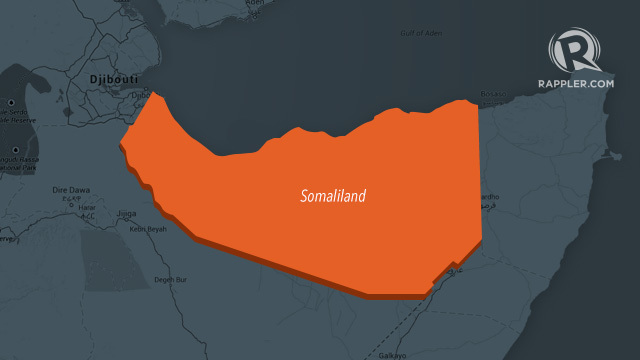
-
 Medeshi Oct 29, 2008 Somali pirates living the high life By Robyn Hunter BBC News "No information today. No comment," a Somali pir...
 -
Medeshi Amnesty International Urgent Action - woman sentenced to death in Puntland, Somalia PUBLIC AI Index: AFR 52/003/2009 12 May 2009 UA ...
