Somali-born rapper returns to his roots


Medeshi Feb 25, 2009
Somali-born rapper returns to his roots
By Nikki Jecks
BBC World Service
Somali-born rapper K'Naan may have exchanged the cross-fire of civil war for the rapid-fire of hip hop and rap, but in his latest album Troubadour, Somalia is still every present.
K'Naan, born Kanaan Warsame, fired his first gun at the age of eight. At 11, he found a hand grenade, detonated it by mistake and blew up half his school. Later, he saw three of his closest friends shot dead.
He and his mother fled the Somali capital, Mogadishu, in 1991, just as the country plunged into civil war.
Now resident in Canada, the situation in Somalia still very much it influences his music.
His songs are sometimes described as "poetry for the dispossessed" and K'Naan sees himself more as a poet than a rapper.
Challenging conceptions
K'Naan means "traveller" in Somali and much of his music is about his personal journey from war-torn Somalia, to the streets of New York, to rapper in Canada.
Speaking to the BBC World Service about his new album, he explains why his homeland is so omnipresent in the songs.
"I don't think you can ever really escape Somalia, once you've had that experience and lived in it," he says.
"A lot of my family's still home, and I think the reflection of when I was a young boy there and also as a grown person contributing and making music, my reflections on it are still very much prominent on this album."
“ I really wanted to touch on [piracy], not from the way the media has been covering it, but from the way a Somali would talk about it ” K'Naan
Tracks called Somalia and America sit side-by-side on Troubadour.
In Somalia, K'Naan challenges listeners about their preconceptions about pirates, rapping: "So what you know about the pirates terrorise the ocean? To never know a single day without a big commotion?"
He says Somalis are presented as people without reason, and he is concerned with the way the media presents piracy.
"I think it is still undiscussed in the true sense of what is going on with it," he says.
It is context that is often missing according to K'Naan.
"I really wanted to touch on it, not from the way the media has been covering it, but from the way a Somali would talk about it."
"I think its conveniently discussed...not in a way that is well rounded at all. A lot of the issues we talk about in western media when we're concerned with Somalia are very much sensationalised."
He accuses the media of telling us what has happened, but rarely why.
It's not just piracy that concerns him. He always agonises over his responsibility to the many members of his family that were not able to escape Somalia with he and his mother when the civil war first broke out.
"We have family members whose homes were hit by rocket propelled grenades and we have to be responsible for trying to get them into proper hospitals, if there is such a thing in Somalia. These things are daily issues and everybody is just kinda trying to survive over there."
Mixing traditions
His music is increasingly popular both not just in North American and the Somalia diaspora, but also in Somalia itself, breaking new territory for rap and hip-hop.
"My music does [have a profile in Somalia] but modern hip-hop music does not," he explains.
"My music mixes the traditions of Somalia to American folk protest to hip-hop. Somali's because of the content of the music have taken to it."
But he resists any efforts to label him a spokesperson.
"Just by the nature of what I do I think people kinda respond to it...but I'm not really trying to be a spokesperson, to be honest."
Instead he just wants people to listen to his music and enjoy it.

Rebels seize Somali town


Medeshi Feb 25, 2009
Rebels seize Somali town
A hardline Islamist Somali militia has seized control of a town near the border with Ethiopia, as fighting continues in the capital Mogadishu.
Al-Shabab insurgents - who are opposed to UN-sponsored reconciliation efforts in Somalia - overpowered pro-government forces in Hudur early on Wednesday.
Four civilians in Mogadishu were killed bringing the death toll to 30 and 120 injured from two days of fighting.
It comes days after the new president returned to the Somali capital.
President Sheikh Sharif Sheikh Ahmed, a moderate Islamist, is trying to set up his new unity government.
The failed Horn of Africa state has not had a functioning national government since 1991.
Al-Shabab fighters said they had captured Hudur, 300km (180 miles) north-west of Mogadishu on Wednesday morning.
Mohamed Dirie, a resident in the town, told AFP news agency: "There was heavy fighting this morning and the Somali government forces fled and the al-Shabab are controlling the town now."
Back in Mogadishu, fighting continued to focus on the south of the city, near the presidential palace, between rebels and African Union and pro-government troops.
Correspondents say it is the fiercest fighting since the new president was elected by MPs in January under a UN-brokered peace deal.
Ethiopian troops, which had been in the country since 2006 to support Somalia's fragile transitional government, pulled out at the end of January.
The AU's 3,400-strong force of Burundian and Ugandan peacekeepers - deployed since 2007 - are now the only foreign troops in the Somali capital.
Some three million people - half the population - need food aid after years of fighting.
Story from BBC NEWS:http://news.bbc.co.uk/go/pr/fr/-/1/hi/world/africa/7909880.stm

Ethiopia - Ogaden Group Accuses Addis Ababa of Atrocities

Medeshi
Ethiopia - Ogaden Group Accuses Addis Ababa of Atrocities
By Peter Clottey
VOAWashington,
D.C25 February 2009
The Ogaden National Liberation Front (ONLF) is accusing the Ethiopian government of committing genocide against the people of the Ogaden region. The group said it would not relent in its effort to expose what it described as the nefarious activities of the Meles Zenawi government in the region. This comes after Ethiopia recently barred international journalists from the area, saying that the area is not safe. But the liberation group sharply disagreed and promised to tell the world about the need for an independent investigation into what the group said are the ongoing atrocities allegedly being committed by the Addis Ababa government. Abdirahman Sheikh Mahdi is a leading member of the liberation group. He was here in our VOA Washington studio after meeting US congressmen. Sheikh Mahdi tells reporter Peter Clottey that there should be a holistic approach towards resolving the insecurity situation in the Ogaden region.
"As you know, there is a big problem in the Horn of Africa and one of the problem areas is what is happening in the Ogaden region. So, our mission is to bring international attention to the calamities that are happening in Ogaden. There is a big fight between the Ethiopian government and the Ogaden Liberation Front. The Ethiopian government is abusing the people in Ogaden and there is an economic blockade, there is a massacre and there is actually an active genocide going on there. So, we came to the United States to highlight that issue and to meet relevant actors in international politics," Sheikh Mahdi noted.
He said international organizations have expressed their concerns about the difficult situation in the Ogaden region despite claims by Addis Ababa to the contrary.
"Both the United Nations and the International Human rights organization and the NGO's (Non-Governmental Organizations) in the area have already ascertained that there has been serious human rights violations in Ogaden. And the response of the Ethiopian government was to shut the doors and ban all NGO's journalists from going there. So, what we are saying is if Ethiopia is telling the truth, why doesn't it allow independent international journalists to go there and verify what we are saying? That is the reason why we believe the Ethiopian government is lying about what is going on in Ogaden," he said.
Sheikh Mahdi said there is a long history involving the surrounding countries who have fought over the Ogaden area for a long time.
"First of all the people in Ogaden are Somalis and the place is almost as large as Somalia. The population there is about six million and the population about Somalia is about eight million and the area is almost the size of Somalia. So, it is a whole territory it is not just a small region and because of history and because of the circumstances that have happened in the Horn of Africa during the 19 century Ogaden became separated from the bigger Somali nation," Sheikh Mahdi pointed out.
He called for international help towards finding a lasting solution to the ongoing problems in Ogaden.
"So, the issue of Ogaden if it is to resolved, we believe it cannot be divorced from the greater Horn of Africa problem because Somalia and Ethiopia have been at loggerheads because of Ogaden. So, the whole Horn of Africa needs a comprehensive solution. You cannot solve the problem there by piece meal. So, we believe that the international community should give as much attention to the problem in the Ogaden the same given to Somalia or may to Darfur or to other parts of the region," he said.
Sheikh Mahdi said there was need to give residents of the Ogaden region the right to determine what their future should be.
"The Ogaden National Liberation Front does not dictate what the people of Ogaden want. The people of Ogaden want self-determination and they have the right to choose whatever they want. They can choose to be state and they can choose to be part of any other nation in the area. But what we are saying is that let the people of Ogaden be given the right to decide what they want. Nobody can force them to choose what they don't want and what they don't want is very clear. The way Ethiopia is treating them and the way the Ethiopian government is dealing with them that is what they don't want," Sheikh Mahdi noted.
He called on Ethiopia to allow for international mediation to resolve the problems in the Ogaden.
"First of all we are telling the Addis Ababa government that bloodshed, African bloodshed has no value. So, far you have been believing in the rule of the gun, but what we propose to you is to stop that and accept internationally mediated negotiated peace process that have no conditions and which is run by credible international mediators," he said.

Binyamin Mohamed back in UK

Medeshi Feb 24, 2009
Binyamin Mohamed Back in UK
The following is a statement released Monday by former Guantanamo detainee Binyam Mohamed:
(Watch video doc at www.medeshi.com front page)
"I hope you will understand that after everything I have been through I am neither physically nor mentally capable of facing the media on the moment of my arrival back to Britain. Please forgive me if I make a simple statement through my lawyer. I hope to be able to do better in days to come, when I am on the road to recovery."I have been through an experience that I never thought to encounter in my darkest nightmares. Before this ordeal, "torture" was an abstract word to me. I could never have imagined that I would be its victim.
"It is still difficult for me to believe that I was abducted, hauled from one country to the next, and tortured in medieval ways — all orchestrated by the United States government.
"While I want to recover, and put it all as far in my past as I can, I also know I have an obligation to the people who still remain in those torture chambers.
"My own despair was greatest when I thought that everyone had abandoned me. I have a duty to make sure that nobody else is forgotten.
"I am grateful that in the end I was not simply left to my fate. I am grateful to my lawyers and other staff at Reprieve, and to Lt. Col. Yvonne Bradley, who fought for my freedom.
"I am grateful to the members of the British Foreign Office who worked for my release. And I want to thank people around Britain who wrote to me in Guantanamo Bay to keep my spirits up, as well as to the members of the media who tried to make sure that the world knew what was going on.
"I know I would not be home in Britain today if it were not for everyone's support. Indeed, I might not be alive at all.
"I wish I could say that it is all over, but it is not. There are still 241 Muslim prisoners in Guantanamo.
"Many have long since been cleared even by the U.S. military, yet cannot go anywhere as they face persecution. For example, Ahmed bel Bacha lived here in Britain, and desperately needs a home.
"Then there are thousands of other prisoners held by the U.S. elsewhere around the world, with no charges, and without access to their families.
"And I have to say, more in sadness than in anger, that many have been complicit in my own horrors over the past seven years.
"For myself, the very worst moment came when I realized in Morocco that the people who were torturing me were receiving questions and materials from British intelligence.
"I had met with British intelligence in Pakistan. I had been open with them. Yet the very people who I had hoped would come to my rescue, I later realized, had allied themselves with my abusers.
"I am not asking for vengeance; only that the truth should be made known, so that nobody in the future should have to endure what I have endured."

From Kabul to Mogadishu


Medeshi Feb 24 , 2009
From Kabul to Mogadishu
(CNN) -- Islamist fighters in Somalia have made significant gains in the country, according to the latest statement purportedly from al Qaeda's second-in-command, Ayman al-Zawahiri.

The 25-minute audio recording, titled "From Kabul to Mogadishu," focuses primarily on the "important developments" in Somalia, which al-Zawahiri called "a step on the path of victory of Islam."
(Ayman al-Zawahiri, pictured here in 2006, also spoke about Yemen, Gaza, Afghanistan and Pakistan.)
CNN cannot authenticate the message, which was released on Sunday and was interspersed with television news reports and statements from various al Qaeda-linked commanders. CNN analysts who listened to the recording say the voice is consistent with his intonation and accent.
This is the third message from al-Zawahiri espousing the views of the al Qaeda terror network in 2009; the other two focused on Israel's recent military operation against Hamas leaders in Gaza.
In addition to Somalia, al-Zawahiri also addresses the situations in Yemen, Gaza, and Afghanistan and Pakistan.
Al-Zawahiri praised Al-Shabaab fighters in Somalia who recently seized control of Baidoa, where the U.N.-backed transitional government had been based. He warned the newly installed government, under President Sheikh Sharif Sheikh Ahmed, not to squander those gains by submitting "to American demands" and not abiding by sharia, or Islamic law.
"I call on my Muslim brothers in beloved Somalia ... to not be deceived by those who agree to the secularist constitutions which vie with the sharia in its right to rule," he said.
Related articles:
Peacekeepers' fury over Somalia killing
Al Qaeda No. 2 releases second message
Al Qaeda message blames Obama, Egypt for Gaza violence
Al-Zawahiri also addressed the "awakening" in Yemen, where many suspected al Qaeda militants wanted in neighboring Saudi Arabia are believed to have fled. That group includes several former detainees of the U.S. military detention facility in Guantanamo Bay, Cuba.
The al Qaeda leader accused Yemeni President Ali Abdullah Salih and his government of being "servants and slaves" to the United States by allowing Yemen to be used as "a supply center ... against Muslim countries."
"How can you agree to let the ruling authority in Yemen be the CIA?" al-Zawahiri asked the people of Yemen.
Al-Zawahiri spent the last eight minutes addressing the situation in Afghanistan, Pakistan and Gaza.
His focus on Somalia and Yemen -- which accounted for more than 17 minutes of the 25-minute address -- is a departure from the topics of his previous messages. CNN terrorism analyst Peter Bergen suggested that is a reflection of al Qaeda's recent losses as a result of U.S. missile strikes along the Afghanistan-Pakistan border.
"There were three in 2007 and 34 in 2008 by my count," Bergen said. "These strikes are causing al Qaeda leaders to consider their options."
Al Qaeda has considered relocating its base to Somalia or Yemen, according to a former U.S. official who is familiar with the intelligence.
Other analysts have suggested that it would be difficult for al Qaeda to gain a stronghold in Somalia because its radical agenda is unpopular in the moderate Islamic country.
John Prendergast, who studies the Horn of Africa for the Center for American Progress think tank, said he expects Al-Shabaab's overseas ties to dry up after the recent withdrawal of Ethiopian forces, which was its only basis of support in Somalia. J. Anthony Holmes, director of the Africa program for the Council on Foreign Relations, said it is unlikely Somalia will emerge as "a breeding ground for terrorism" because of its clan-based society.
But Bergen noted that both Somalia and Yemen lack a strong central government and "therefore (are) attractive locations for al Qaeda."
"Al Qaeda also has had an on-and-off presence in Somalia since 1992 and even earlier in Yemen," he said. "As we have seen also, Yemen's weak government and permissive attitude to jihadists have made it an increasingly attractive venue for Saudi members of al Qaeda."
Bergen said that is most likely why al-Zawahiri chose to focus more than half of his latest message on Yemen and Somalia.

Kulmiye Party's Political Strategy

Medeshi
Kulmiye Party's Political Strategy.
by Awdalnews Feb,20th,,2009
We looked carefully at elements of various Kulmiye party principles and policies and made inference of a generalized conclusion from those specific policies. The conclusion was the emergence of a framework of overarching Kulmiye strategy based on creating in the minds of Somalilanders of an enemy from within, which is the Gadabusri people, and rallying the rest of the electorate behind the party to confront this enemy.Since losing the last presidential election by a razor thin margin, Kulmiye party leaders mistakenly lumped together president Rayale and the inhabitants of Awdal region in their quest to unseat the incumbent in the upcoming election. The efforts of going after, not only the President, but also the people of Awdal, are evident explicitly from pronouncements of party leaders and from the policy and behavior of the party. The elements of the strategy that led to the above conclusion are:

1. The Kulmiye Party platform, which is a declaration of its principles and policies include a plank or article which states that the number of parliamentary seats allocated to Awdal region must be apportioned between the Gadabursi and Issa who together inhabit the region. There are no planks in the platform that suggest that the parliamentary delegation in Hargeisa region should be divvyed up between the Garhajis & Habar Awal people, or Burao’s between the Habar Jeclo & Habar Yunis or Erigavo’s and Berbera’s between the sub-clans that inhabit those regions. The idea per se of issuing a rule on apportioning seats arbitrarily is a violation of the country’s constitution. It is an important principle of democracy that the number of seats must be based on the proportional votes cast. No party has the authority to suggest a rule that violates this important principle. There are apparently two objectives of Kulmiye behind this plank (a) to dilute the voting power of the Gadabursi people and (b) to create tension between the brotherly Issa and Gadabursi people.

2. The use of SNM as the main campaign theme for the party. In a presidential campaign the debate ought to be about the future of the country. No society needs more good ideas than the people of Somaliland who find themselves deeply impoverished and their country unrecognized by the world. Yet Kulmiye decided to run their campain issues based on the their past and not on the future. The party selected this theme for a nefarious purpose, to create a wedge between Awdal and the rest of the country by reminding the Isaaq electorate that the Gadabursis were not along side the SNM in the war against the Siad Barre forces. One thing is true: the people of Somaliland, whether they are the elders or the electorate, never considered SNM credential as the main qualification for president because twice they rejected to elect two SNM leaders as a president and instead favored two leaders who did not participate in that struggle. Hence the indisputable conclusion that the SNM theme and symbols were selected as a wedge issue.

3. Whipping passions on a fabricated electoral Jurisdictional dispute at election times. Whenever there is an election, Kulmiye’s talking points include politicizing the issue of an electoral jurisdictional dispute between the Gadabursi and the Habar Awal. This issue was raised by Kulmiye during the 2005 parliamentary elections. Party leaders talked about it and it was an issue all the over the world thru the internet. We hear again now about the subject during this presidential election. It seems they bring this up during election times when they believe time is propitious and passions are high. But what is in for the party to raise this issue at a time of a presidential election? After all votes cast for Kulmiye the result will be based on the cumulative total. It will not matter whether a vote casted for the party is from Awdal, Gabille or Hargeisa. Kulmiye never mentions any dispute between Hargeisa-Burao or Burao-Erigavo. It is always the Gadabursi-Habar Awal fabricated dispute. It is fair to conclude Kulmiye is trying to sow seeds of conflict between those brotherly and neighborly tribes.
4. Composition of the Kulmiye central committee membership. Out of 175 members Kulmiye central party members only 10 are from Awdal, which is 5.7%. This in contrast to the fact that Awdal was 20% of total voters during the last 2005 parliamentary election. This shows again that Kulmiye is not a national party.
5. Statements that incite violence. It is the habit of Kulmiye party leaders to say statements that are anti-Gadabursi and incite violence. Speaking to a graduating class in Hargeisa last summer, the Kulmiye party chairman told the young graduating students this: “we are being governed by the same people that once killed us”. There is long catalogue of such statements. Few years ago there was the infamous incident when young soccer players from Awdal were heckled, spat upon and stones hurled at them at Hargeisa Soccer Stadium. Kulmiye was responsible for what happened to these young soccer players. If Kulmiye were in power there is no question it would be more fatal with some people taking the party rhetoric as sanctioning violence against the people of Awdal.The high esteem that our people have for the other opposition leader Mr. Faisal Ali must be a lesson to Kulmiye. When Faisal visits Borama, he is greeted by throngs and ululations of women. If Kulmiye were not pursuing dangerous policies, they would have been accorded the same treatment.
Awdal has nothing against Kulmiye party leaders or their supporters as a people. We are concerned about the principles, policies and pronouncements of the party and the strategy they are following. It is perfectly legitimate for them to go after the policy of the administration. But they have no right or business to pursue policies that endanger the lives of people by inciting hatred and bloodshed with neighboring communities. Awdalities inside and overseas are firmly united to defend their rights vehemently.
Awdalnews

Ethiopian Rebels Clash With Government Forces; at Least 45 Dead

Medeshi
Ethiopian Rebels Clash With Government Forces; at Least 45 Dead
By Jason McLure
Feb. 20
At least 45 people died in clashes between Ethiopia’s army and the separatist Ogaden National Liberation Front in the east of the country, government and rebel spokesmen said.
The ONLF said its ethnic Somali fighters killed 140 Ethiopian soldiers and allied militia members in battles over the past five days near the towns of Fik and Degehebur, according to an e-mailed statement from the group. In addition, 29 ONLF members died in the fighting, it said.
“The area around Degehebur is now completely in the hands of the ONLF, as is the area around the city of Fik,” it said.
Ethnic Somali rebels from the ONLF are seeking autonomy for Ethiopia’s Somali region, an arid tract of land twice the size of England, which is also known as the Ogaden. In June, New York-based Human Rights Watch accused the Ethiopian government of burning villages, executing civilians and raping women in an effort to quell the ONLF’s insurgency. Ethiopia denied the allegations.
Ethiopia’s government disputed the ONLF’s version of the latest fighting.
“This is completely wrong,” Ermias Legesse, Ethiopia’s state minister for communications, said in a phone interview today from Addis Ababa, the capital. “The regional peoples fought with the ONLF and they killed more than 45 ONLF soldiers.”
Legesse said three or four innocent people died in the fighting. He said he couldn’t respond to an ONLF claim that Ethiopian attack helicopters have been active in the region.
Opposition
Ethiopia claimed the Ogaden region in the late 19th century through a series of agreements with Italy and the U.K., which colonized much of modern-day Somalia. Ethnic Somalis from the Ogaden clan have opposed Ethiopian rule, and fighting in the region surged after the ONLF killed 73 Chinese and Ethiopian workers at an oil exploration site in the region in April 2007.
Ethiopia accuses neighboring Eritrea of backing the ONLF and has in turn backed Somali militias from rival clans to fight the rebel group.
Ethiopia has banned journalists from traveling independently in the region and rejected a United Nations call for an independent assessment of human rights atrocities.
Bloomberg

U.S. Senator Urges Full-Spectrum Somalia Policy

Medeshi
U.S. Senator Urges Full-Spectrum Somalia Policy
By JOHN T. BENNETT
Published: 19 Feb
An influential Senate Democrat is urging the Obama administration to fashion a new soup-to-nuts U.S. policy for the tinderbox that is Somalia, a strategy he says must break with Bush administration plans by including the U.S. military.
In a Feb. 13 letter to President Barack Obama, Sen. Russell Feingold, D-Wis., expressed frustration at the Bush administration's Somalia efforts and made clear he expects more from the new White House team. The African nation has been beset by civil war and strife since the early 1990s.
"The previous administration maintained a disjointed and short-sighted approach toward Somalia that was counterproductive and led to increased anti-Americanism in the region," according to the letter. "As a result, the situation in Somalia has deteriorated, undermining our national security goals, including counterterrorism."
What Feingold wants from the Obama White House is a "comprehensive strategy to address this crisis." The Bush administration complied with a law requiring that such a plan be fashioned annually, but according to the Senate Foreign Relations Committee member, those plans "addressed only diplomatic activities."
"Just as important, however, is the integration of all our national security resources, including those of the Department of Defense and the intelligence community, into one coherent strategy," Feingold writes.
His letter states Feingold asked the Bush administration for information about its interagency plans on Somalia but received only "disjointed and incomplete briefings."
The letter also was sent to Defense Secretary Robert Gates, Secretary of State Hillary Rodham Clinton and Director of National Intelligence Dennis Blair.
Under the Bush administration, the U.S. military carried out a 2007 strike against extremist targets. The military also has delivered humanitarian aid to the conflict-stricken nation.

Somaliland opens first hydrocarbon bid round


Medeshi , Feb 19, 2009
Somaliland opens first hydrocarbon bid round
HARGEISA, SOMALILAND: The Somaliland Ministry of Water and Mineral Resources will open the country's first bid round for hydrocarbon concessions today, Feb. 19. The bid round will include eight concession blocks comprised of more than 34,604 square miles (89,624 sq km) of onshore and offshore areas. The deadline for bid submissions is August 15, and the concessions are expected to be awarded on Dec. 15, 2009.
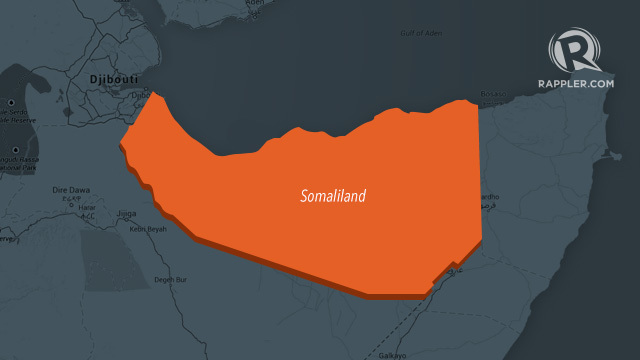
One hindrance to the bid round could come from the fact that Somaliland has not been recognized as its own country, but rather still a part of Somalia. Somaliland, which is located in the Horn of Africa, bordered by Ethiopia, Djibouti, the Puntland region of Somalia and the Gulf of Aden, withdrew from Somalia in 1991 and has maintained a de jure separate status since that time. However, without international recognition, oil and gas companies may be hesitant to sign long-term contracts and invest money into projects that could possibly become void if the political situation in Somaliland changes in the future.
The geology off the coast of Somaliland is analogous to the oil-producing basins in nearby Yemen that have yielded several discoveries. Yemen's Balhaf Graben Basin and Somaliland's Berbera Basin contain similarities in fault trends and structural complexity.
In preparation for the Somaliland licensing round, TGS-NOPEC Geophysical Co. ASA acquired 3,293 miles (5,300 km) of seismic, gravity and magnetic data in the offshore areas and 21,562 miles (34,700 km) of high resolution aeromagnetic data covering all known petroleum basins. The surveys mark the first new geophysical data acquired in the area in almost 30 years.
The data acquisition was completed in 2007 and 2008, and TGS used this data along with existing well logs and interpreted data to create comprehensive interpretation reports for the Ministry. The reports, as well as the newly acquired geophysical data and well logs are all multi-client products to be exclusively marketed by TGS on behalf of the Ministry.
Somaliland's Minster of Water and Mineral Resources Qasim Sh. Yusuf Ibrahim said, "The previous drilling has proven the existence of hydrocarbons and the reservoir class rock formations. With the help of the new geophysical data we can now map the structures needed to identify where the hydrocarbons are trapped."

Concerns grow over global reach of Somali militants


Medeshi
Concerns grow over global reach of Somali militants
Kenya tightened security at all airports and border crossings on Tuesday as authorities warned of a potential attack.
By David Montero
posted February 18, 2009
(Members of a Somalian Islamist group, who call themselves the Islamic party, display their weapons during the arrival of Somalia's new president Sheikh Sharif Ahmed in Mogadishu Feb. 7. Mr. Ahmed has asked militant groups to lay down their arms.
Mowlid Abdi/Reuters
As Somalia's new president and prime minister vow to uphold peace, evidence is emerging of the international reach of Somalia's Al Qaeda-linked extremist groups.
On Tuesday, officials in Kenya warned of an imminent attack by Somalia-based militants tied to Al Qaeda, reports The Standard, an English-language newspaper based in Kenya.
They are reportedly unhappy with the cooperation between Kenya, the United States, and European countries in the war against piracy, a major source of revenue for terrorists and other criminal gangs in Somalia.
Internal Security Minister George Saitoti said on Monday they are taking measures to ensure the attack does not occur.
"We are aware and monitoring whatever is going on especially in Somalia. I am not dreaming because the threat is real and we have been victims," he said....
Saitoti also cited a US report by a spy agent, who warned that Kenya was likely to face terror attacks as extremists plot to hit US targets. Saitoti termed the remarks serious.
Agence France-Presse adds that Kenyan authorities, on alert for possible attacks, tightened security at all airports and border points Tuesday.
"We are screening all vehicles and persons entering the airport because we don't want to take any chances. We have instructions to be more careful. These threats are serious," said an official at the capital's Jomo Kenyatta International Airport.
The heightened security underscores the continuing threat that militants pose to a new government struggling to bring order back to a country ravaged by 20 years of war, reports Xinhua, the official Chinese news agency.
On Saturday [the] Somali parliament overwhelmingly approved the nomination of Omar Abdirashid Shermarke as ... Prime Minister after he was picked on Friday by the Somali president, Sheikh Sharif Sheikh Ahmed, who was himself elected in a parliamentary vote in the neighboring Djibouti last month.
The hardline Islamist insurgent movements of Al Shabab and the newly formed Hezbul Islam vowed to fight the new Somali leadership.
In an interview yesterday with The Wall Street Journal, the new president asked militant groups to lay down their arms.
Mr. Ahmed said Monday that neither he nor his government had communicated directly with Al Shabab. Instead, he said he had made a public appeal to all groups to lay down their arms and participate in rebuilding the country.
"If they agree to a dialogue, they are in, whatever their past positions were," he said, speaking through a translator during the interview. "If they are against dialogue, there is no way we can deal with them, except to be harsh."
As the government struggles to maintain order inside the country, further evidence has emerged suggesting the global reach of militants trained in Somalia, reports the The Times (of London).
Dozens of Islamic extremists have returned to Britain from terror training camps in Somalia, the British security services believe.
Intelligence analysts are worried that they may attempt to launch attacks in this country or use the kudos from having trained and fought in Somalia to try to attract new recruits. The issue was raised by Jonathan Evans, the head of MI5, in his first interview last month....
"Pakistan rightly gets the most attention in terms of external threats," a senior counter-terrorism source said. "But we believe we should focus more on the Horn of Africa and Somalia in particular."
The militant migration works both ways, with British citizens traveling to Somalia to fight, reports Britain's Daily Telegraph.
Jonathan Evans ... voiced his concerns over increasing numbers of young men travelling to the East African country in an interview with the Daily Telegraph last month.
He talked of "networks that help individuals go and take part or provide support to extremist gangs in Somalia" and may return to attack Britain.
Michael Hayden, the outgoing head of the CIA, has said that the Ethiopian invasion of Somalia has "catalyzed" expatriates around the world.
An audio message from Osama bin Laden last month urged Muslims to send money or go to Somalia to fight.
A recent report in Foreign Policy magazine draws attention to how the threat from Somalia is spreading.
The mayhem is now spilling across Somalia's borders, stirring up tensions and violence in Kenya, Ethiopia, and Eritrea, not to mention Somalia's pirate-infested seas. The export of trouble may just be beginning. Islamist insurgents with Al Qaeda connections are sweeping across the country, turning Somalia into an Afghanistan-like magnet for militant Islam and drawing in hard-core fighters from around the world. These men will eventually go home (if they survive) and spread the killer ethos. Somalia's transitional government, a UN-santioned creation that was deathly ill from the moment it was born four years ago, is about to flatline, perhaps spawning yet another doomed international rescue mission.

Top UN official in Somalia under fire for controversial statements


Medeshi Feb 18, 2009
Top UN official in Somalia under fire for controversial statements
Jimma Times
(Photo: Former Secretary of State Condoleezza Rice, right, meets with the United Nations envoy to Somalia, Ahmedou Ould-Abdallah, at the State Department in Washington (AP Photo: Charles Dharapak)
Some human rights and journalist groups have condemned statements by UN's top envoy for Somalia Ahmedou Ould-Abdallah for comparing Somali media outlets with the radio station in Rwanda that was convicted for inciting genocidal hatred in 1994. Human Rights Watch (HRW) asked Ould-Abdallah to apologize for his comments but a Somali media group Somali Press Review (SPR) says the UN envoy "has not offended Somali journalists."
Ould-Abdallah's controversial statements came after a violent clash between al Shabaab insurgents and Ugandan soldiers from the African Union Mission in Somalia (AMISOM) on February 2, in which dozens of civilians were reportedly killed by the AMISOM troops. The AU peacekeeping mission's spokesmen angrily denied the accusations coming from the local Somali media and al Shabaab militants, claiming that the insurgents and suicide bombers killed the civilians instead. The same reaction came from the UN envoy Ould-Abdallah, who said the local Somali media was trying "to divert attention" from the Djibouti peace talks and "as usual to use the media to repeat Radio Mille Colline, to repeat the genocide in Rwanda."
In response, Human Rights Watch (HRW) called on Ould-Abdallah to "immediately retract" his controversial statements. HRW's Africa director Georgette Gagnon said "the U.N. should be making every effort to support independent Somali media and civil society at this critical time, not comparing journalists to war criminals."
But according to Abdurahman Warsame of the Somali group calling itself "Terror Free Somalia Foundation," most southern Somalia media outlets like Horn Afrik and Shabelle Media Network are owned by Habar Gidir sub-clan personals which al Shabaab depended on to "spread disinformation." Shabelle Media Network is also the main Somali media that international human rights groups and western news agencies depend on for details about the violence in Somalia. Another major local Somali media, SOMALIWEYN, literally translates in English to the phrase "Greater Somalia" which is the central expansionist ideology of radical islamists who indicated their goal to annex eastern Ethiopian and Kenyan territories of Ogaden and NFD, respectively.
"ONE MONTH TRUCE"
The 18 years old civil war in southern Somalia has been between clans and sub-clans as well as between differing forms of Islam as foreign "Arab organizations, many from Saudi Arabia and followers of the strict Wahhabi branch of Sunni Islam, quietly stepped in" lawless Somalia during the 1990s, according to a recent report published by New York Times's Jeffrey Gettleman. During these periods, several warlords linked and supported by warring clans and sub-clans rose to power as well as media outlets associated with the various sides.
When the then Darod clan dominated Transitional Federal Government (TFG) of former President Abdullahi Yusuf arrived in southern Somalia in 2006, he accused many local Habar Gidir clan dominated radio stations of spreading propaganda and stirring the public against his TFG. Ethiopian troops supporting the TFG also got into a dispute with the media as some local radios claimed Ethiopian soldiers raped Somali women in Mogadishu in late 2006, a day before Ethiopian soldiers reached the city. The Somali Press Review claimed it was "clear that Mogadishu radio stations poured more fuel on the conflict that was/is raging between the Transitional Federal Government of Somalia’s forces and insurgents."
According to the Institute for Security Studies (ISS), the TFG also believed there was "an illicit relationship between the journalists and the insurgents, one developed over the long period of state absence." However, some Somali rights groups accused TFG, Ethiopian forces and more recently the UN envoy for seeking censorship on alleged massacres of civilians. "This is not the first time AMISOM troops have been implicated in indiscriminate attacks on Somali civilians," added Human Rights Watch (HRW) last week.
Despite pressure to retract his controversial statements, Ould-Abdallah repeated his accusations on the Somali media on Thursday. According to Voice Of America (VOA), the U.N. envoy said he "stood by his earlier charge that extremist forces such as the Islamic militant al-Shabab were trying to use the media to sow confusion and hatred, in much the same way as had been done by Rwandan extremists in inciting genocide a generation ago." He also reportedly suggested a one month ban on media reports from Somalia saying that "there is a need to have a truce, one month truce in reporting on Somalia.. till there is double, triple checking, because Somalia is exceptional." But some officials in the United Nations are reportedly calling for him to step down.

Somalia elected the islamist President Sheikh Sharif Sheikh Ahmed on January 31 after a peace deal between TFG members and his moderate islamist group Alliance for the Re-Liberation of Somalia (ARS). But al Shabab islamist forces have waged jihad on the islamist leader. Somalia has not had an effective central government since 1991.

Iran says it has built unmanned aircraft

Medeshi , Feb 18, 2009
Iran says it has built unmanned aircraft
TEHRAN, Iran – Iran has built an unmanned surveillance aircraft with a range of more than 600 miles — enough to reach Israel — a top defense official said in remarks published Wednesday.
Deputy Defense Minister Ahmad Vahidi said he could not provide more details, only saying the development of the unmanned aircraft, or drone, was an "important achievement." His remarks were published Wednesday in the government-owned newspaper, Iran, and by the semiofficial Fars news agency.
Iran announced two years ago it had built an unmanned aircraft, but Vahidi's comments were the first by a top official revealing its range. His claims could not be independently confirmed.
Wednesday's reports follow this week's announcement that Iran has restructured its military in an effort to improve its air defense capabilities.
The move was widely seen as part of a broader military build up by Tehran, which is concerned about the U.S. military's presence in neighboring Iraq and Afghanistan and Israeli threats to target its nuclear facilities.
Iran has taken Israeli threats to strike its nuclear sites seriously and has said Israel would be subject to Iran's "devastating retaliation" if it attacks.
The first word of the drone came in 2007, when the then-commander of the Revolutionary Guards, Gen. Yahya Rahim Safavi, said the unmanned device was designed to take photos of and gather information about enemy positions.
Iran also is seeking to develop a drone with attack capabilities.
In December, air force commander Gen. Hasan Shah Safi said Iranian experts had designed an unmanned aircraft with radar-evading devices that would be able to attack an enemy target and avoid detection. He said the military was working on building a prototype of the craft. He did not elaborate on what sort of weaponry the craft would be fitted with.
Since 2005, Tehran has accused the United States of flying surveillance drones over Iran's airspace to spy on its nuclear and military facilities.
Iran says it is fighting an intelligence battle with the United States and Israel, which accuse Tehran of seeking to build nuclear weapons. Iran has denied the charges, saying its nuclear program is solely geared toward generating electricity.
Iran launched an arms development program during its ruinous 1980-88 war with neighboring Iraq to compensate for a U.S. arms embargo. Since 1992, Iran says it has produced its own jet fighters, torpedoes, radar-avoiding missiles, tanks and armored carriers.

Cheney: Chief of Churls


Cheney: Chief of Churls
John Seery
Professor of Politics at Pomona College
Read More: Abu Ghraib, Bush Administration, Bush Administration Torture, Carl Schmitt, Cheney Torture, CIA Interrogations, Dick Cheney, Enhanced Interrogations, Guantanamo, Guantanamo Detainees, Guantanamo Torture, Hobbes, Machiavelli, Taxi To The Dark Side, Torture, Politics News
I feel sick to my stomach as I write this.
This morning I read the interview with the former Guantanamo guard who describes in excruciating detail how Gitmo prisoners were allegedly subjected to anal rape as well as other forms of sexual abuse, torture, humiliation, and other atrocities, all at the hands of their U.S. captors, in some cases under the supervision of U.S. medical personnel. It is a ghastly account.

Over the weekend, I decided to view Alex Gibney's 2007 documentary, Taxi to the Dark Side, a film that narrates similar detainee maltreatment -- in some cases, resulting in outright homicide -- at Bagram prison in Afghanistan and Abu Ghraib in Iraq. The film incorporates gruesome Abu Ghraib photos that have not been widely displayed to the general public. I guess the reason I hadn't yet watched Taxi to the Dark Side is that, like many others, I just wanted to move on past this dark national episode, especially once the Bush perpetrators were out of office: Who, after all, really wants to dwell on the topic of U.S. torture? Besides, I knew that my former Pomona College colleague, the late Frank Gibney, makes a cameo appearance at the end of the film - -which is dedicated to his memory, as the filmmaker recalls his father's principled patriotism - -and I just didn't want to engage in double grieving, personal and political.
Evidence of these Bush-era war crimes will, no doubt, continue to leak out. It's becoming clearer and clearer that these official acts of cruelty had little to do, either in intent or effect, with enhancing national security or producing reliable intelligence. Those rationalizations, those cover stories, will not pass the test of time, the scrutiny of history, the light of evidence and reasoned judgment.
Let me put a general name to today's sickening news: These were acts of government-sponsored sadism. In some cases, especially at Abu Ghraib and now, apparently, also at Guantanamo, the sadism was explicitly sexualized. But by identifying U.S. policy as sadistic, I also mean to cover a more general range of perverse behaviors in our recent past, all united by a wanton delight, to call it that, in dominating, degrading, bullying, browbeating, and threatening others, as a matter of policy.
The initial tendency will be to try to personalize, in order to contain, such sadism, as a supposedly isolated aberration perpetuated by bad-apple individuals. It is easy, perhaps a natural temptation, to depict, for example, Dick Cheney -- the clipped-wing bird hunter -- as the poster boy of U.S. sadism. He became the bragging ringleader for policies that exceeded the bounds of respectable military strategy (and/or domestic partisanship) in order to inflict special psychological damage on all perceived adversaries within earshot: the terrifying talk about WMD, ticking time bombs, and mushroom clouds; the bombast about the need for preemptive war; the lying about an incontrovertible link between 9-11 and Saddam; the shocking and awing; the insistence on waterboarding; the indecent disdain for the Geneva Conventions; the Plamegating of critics; the spying without warrant; the legal approval for squeezing a child's testicles; and so on. Last week, several commentators roundly condemned Cheney's most recent remarks as a macabre exercise in domestic fear mongering, a not-so-subtle ill-wishing for calamity to be visited upon the body politic. They wished in turn that he would simply remain quiet, or else just go away, sinking into oblivion, never to be heard from again.
But I'm more concerned about Cheney's (and others') sadism as government policy (not with his personal pathology as such) and with the lingering question about what we are to do about it now. Cheney insisted again last week that the U.S. must use dastardly and extra-constitutional (and un-Christian) techniques because, "These are evil people. And we're not going to win this fight by turning the other cheek." And he faulted the new administration for being naive about all of this: "The United States needs to be not so much loved as it needs to be respected. Sometimes, that requires us to take actions that generate controversy. I'm not at all sure that that's what the Obama administration believes."
Let's be clear about Cheney's devious words here, which hardly conceal his underlying sadism: He thinks the U.S. will be "respected" if and only if it is willing to meet evil with evil. That position goes well beyond Machiavelli's infamous "it is better to be feared than loved" maxim or Hobbes' "covenants, without the sword, are but words" or Carl Schmitt's contention that modern politicians ought not extend liberal tolerance toward their enemies. Cheney and his ilk clearly abide by an unchecked belief that our adversaries must be beaten, raped, degraded, and humiliated, not just thwarted and defeated. He condones torture, not because it makes us safer (he knows better), but because it produces the kind of "respect" he seeks.
Let us put aside the obvious rejoinder that such imaginary "victories" are Pyrrhic. Instead, what are we to do now with the residual current of compliant, complementary masochism that condoned, sustained, perpetuated, and even celebrated Bush and Cheney's sadistic horrors? I don't agree with those who believe we can repress and postpone indefinitely confronting such national crimes against humanity. In my view, it would be better for the days of such reckoning to come sooner, rather than later (the election wasn't sufficient to that gravely moral end). If we wait too long, who among us will still have the resilience to be able to write the next Oresteia, the next Beloved, or the next Eichmann in Jerusalem?

Immigration Service does not want to reconsider deportation of Somali

Medeshi Feb 18, 2009
Immigration Service does not want to reconsider deportation of Somali
Helsingin Sanomat
Authenticity of message sent to lawyer questioned
The Finnish Immigration Service does not want to take the Somali man who was deported to Somaliland back into Finland, even if Somaliland were to expel him from its territory.
Jorma Vuorio, director-general of the service, says that it is very unlikely that Somaliland would expel him.
The man, who had been convicted of a number of crimes in Finland, was sent to Hargesia, the capital of Somaliland, just over a week ago.
The deportee says that officials in Somaliland, a relatively peaceful political entity which has been set up in the north of Somalia, will not allow him to stay in the area, because he was born in Mogadishu, in Central Somalia.
Somaliland considers itself an independent state, separate from the rest of Somalia. No country has recognised its independence, however.
Jorma Vuorio does not believe the man’s claim that he would be in danger of being deported again. “There are tens of thousands of Somali internal refugees in Somaliland. Besides, he was let into the country at the airport”, Vuorio explains.
The deportation of the man was decided by the Immigration Service, and his appeals were rejected by both the Helsinki Administrative Court and the Supreme Administrative Court.
Vuorio also says that the Immigration Service would not take the deportee back to Finland even if Somaliland really were to expel him.
“The man is banned from entering the Schengen zone, and Finland is not obligated to take him back. Ethiopia is the closest country, where there are many Somalis. He could well go there. However, I don’t believe that Somaliland will expel him”, Vuorio says.
Vuorio is also sceptical about the authenticity of the letter received by the man's legal counsel in Finland claiming to be from the Somaliland administration, and saying that he cannot remain in the area.
"It is possible to get just about any forged document you care to name in Somaliland. Anyone can get hold of anything from there, even a passport if required", said Vuorio.
Previously in HS International Edition:
Somali deportee says Somaliland refuses to let him stay (17.2.2009)
International Organization for Migration denies having taken stand on deportation of Somalis (28.1.2009)
Remorseful Somali man awaiting deportation fears return to former home country (9.1.2009)

Somali deportee says Somaliland refuses to let him stay

Medeshi Feb 17, 2009
Somali deportee says Somaliland refuses to let him stay
Finland sends Somali citizen to home country for first time in years
A Somali citizen who was deported by Finnish officials to Somaliland in the north of the country, says that officials there are not allowing him to remain. Finnish police were not able to confirm or deny the claim on Monday.
The man, about 25 years of age, had been convicted of a number of crimes, and was sent to Hargeisa, the capital of Somaliland, a week ago on Monday. The expulsion was kept out of the media.
The deportation was the first from Finland to Somalia since November 2004.
Police escorted the man from Finland to Dubai in the United Arab Emirates, from where he was flown to Hargeisa without a police escort.
Since then, the deportee has made several calls to his Finnish lawyer Pekka Kivi, and said that officials there will not let him stay. Helsingin Sanomat was also able to contact the deportee.
“I am not welcome here. I will be arrested if I stay in Hargeisa. I am outside the city waiting for official papers to indicate that I am not allowed to stay here”, he told Helsingin Sanomat on Monday.
“I have built a shelter for myself out of trees and leaves. I only drink water and I try to find food”, he said, describing his conditions.
There appeared to be some confirmation of the situation on Monday afternoon, when the deportee’s lawyer got an e-mail sent in the name of the Somaliland administration.
The e-mail pointed out that the deportee cannot stay in Somaliland, because he was born in Mogadishu, the capital of Somalia. Somaliland does not consider itself part of the same state as the rest of Somalia.
Kivi considers the e-mail to be a genuine letter of the ministry. He passed it on to Finnish police and the Supreme Administrative Court, which confirmed the call for deportation before Christmas.
The deportee was advised by his lawyer to go to a Finnish diplomatic mission. The closest one is in the Ethiopian capital Addis Abeba.
Juha Holopainen of the foreigners’ unit of the Helsinki Police heard about the claims on Monday.
“We have not heard any information that there would have been problems in entering the country. I consider it unlikely.”
“He was allowed on board the plane as normal, and we have not heard that he would have been turned away from Hargeisa.”
Holopainen notes that it is difficult to confirm the matter, because Finland does not have a diplomatic mission in Somalia.
Previously in HS International Edition:
International Organization for Migration denies having taken stand on deportation of Somalis (28.1.2009) Remorseful Somali man awaiting deportation fears return to former home country (9.1.2009) -->

Qaar ka mid ah Ururada Bulshada Rayidka ah oo walaac ka muujiyay mudo dhaafka golayaasha deegaanada

Annaga oo ah Ururada Bulshada Rayidka ah ee Madaxa-banaan waxaanu si wayn uga walaacsanahay