Freed weapons ship docks in Kenya


Medeshi
Feb 12, 2009
Freed weapons ship docks in Kenya
A ship packed with battle tanks and ammunition, freed after being held by Somali pirates since September, has reached the Kenyan port of Mombasa.
The MV Faina, released for a ransom of $3.2m (£2.2m), was met by Kenyan and Ukrainian government officials.
Controversy still surrounds the freight on the Ukrainian-registered vessel.
Kenya insists the weaponry is for the Kenyan army, but the ship's documents seem to suggest the arms belong to the government of South Sudan.
A parliamentary committee is investigating the issue.
The BBC's Karen Allen in Mombasa says if the allegations are true, it would be a huge embarrassment for the Kenyan government, which helped broker a peace deal between the north and south of Sudan four years ago.
MV FAINA
.Pirates seized the MV Faina on 25 September 2008
.Cargo consisted of 33 T-72 tanks, rocket launchers and small arms
.Kenya claims the cargo; reports said it was for South Sudan


The MV Faina was brought into port by two tugs, along with a military escort.
Its arrival has become a huge public spectacle, with the media invited to witness the event.
This is in sharp contrast to the secrecy that has surrounded the ship and its cargo since it was hijacked off the coast of Somalia on 25 September 2008.
The Kenyan authorities insist that the cargo of 33 Soviet-era T-72 combat tanks and thousands of rounds of ammunition are destined for the Kenyan military.
But the ship's manifest - checked by international security experts - suggests the weaponry is destined for South Sudan.
Kenya's military spokesman Bogita Ongeri told AFP news agency on Wednesday: "Those who had doubts about the contents and its destination should be there to witness.
"We will all be there to receive the Faina and our military cargo which will be offloaded and taken in for safety in our respective military camps."
Embassy officials have turned up to meet the mainly Ukrainian crew of 20.
The captain of the ship died two days after it was seized by the pirates but the cause of his death is not yet clear and his body still needs to be repatriated.
Ukrainian television channel ICTV reported on Wednesday that special services sources have suggested the captain may have been poisoned to conceal the cargo's destination.

Anti-Islam Dutch MP refused entry to Britain

Medeshi
Feb 12, 2009
Anti-Islam Dutch MP refused entry to Britain
Link: http://news.bbc.co.uk/1/hi/business/7886698.stm
A Dutch MP who called the Koran a "fascist book" has been sent back to the Netherlands after attempting to defy a ban on entering the UK.
Freedom Party MP Geert Wilders had been invited to show his controversial film - which links the Islamic holy book to terrorism - in the UK's House of Lords.
But Mr Wilders, who faces trial in his own country for inciting hatred, has been denied entry by the Home Office.
He told the BBC it was a "very sad day" for UK democracy.
The Dutch ambassador was also at Heathrow to make clear his government's opposition to the ban on Mr Wilders entering the UK.
'Free speech'
Mr Wilders' film Fitna caused outrage across the Muslim world when it was posted on the internet last year.
After being questioned at Heathrow, the MP said he had been to the House of Lords two weeks ago and there had been "no problem".
He added: "I'm not doing anything wrong. I'm not protesting or running through the streets of London."
Mr Wilders added: "Democracy means differences and debate. It's a very sad day when the UK bans an elected parliamentarian... Of course I will come back."
He said the government's actions had proved that Gordon Brown was the "biggest coward in Europe".
Mr Brown's spokesman said the prime minister "fully supports the decision" taken by Home Secretary Jacqui Smith.
Mr Wilders was invited to the House of Lords for a screening of Fitna by the UK Independence Party's Lord Pearson.
The peer said it was a "matter of free speech", telling the BBC: "We are going to show it anyway because we think MPs and peers should see this film."
'No purpose'
He added: "The film isn't offensive unless you are a violent Islamist. Most of my Muslim friends think it's a very good film."
Fitna's opening scenes show a copy of the Koran followed by footage of the 9/11 attacks in the US and the bombings in Madrid in 2004 and London in 2005.
The Lords screening went ahead as planned, despite Mr Wilder's non-attendance.
RECENT CASES
Jamaican reggae singer Bounty Killer (real name Rodney Pryce) allowed entry despite using controversial lyrics about homosexuals and gang culture
Muslim cleric Dr Yusuf al-Qaradawi refused entry in order to protect community cohesion. He has described suicide bombers as "martyrs" and homosexuality as "a disease"
Nation of Islam leader Louis Farrakhan barred on the grounds that his allegedly racist and anti-Semitic views could threaten public order
Martha Stewart and US rapper Snoop Dogg denied entry because of criminal convictions
BBC political correspondent Iain Watson said about 30 people had been at the screening and had given a round of applause, while calling for a debate on the issues raised.
The Dutch prime minister has said the film serves "no purpose other than to offend".
Foreign Secretary David Miliband told the BBC's Hardtalk: "The home secretary made a decision on an individual case as she is required to do."
He added that the film contained "extreme anti-Muslim hate and we have very clear laws in this country".
Mr Miliband also said: "We have profound commitment to freedom of speech but there is no freedom to cry 'fire' in a crowded theatre and there is no freedom to stir up hate, religious and racial hatred, according to the laws of the land."
The Home Office said there was a blanket ban on Mr Wilders entering the UK under EU laws enabling member states to exclude someone whose presence could threaten public security.
'No respect'
"The government opposes extremism in all forms," it said in a statement, adding that it had tightened up rules on excluding those engaging in "unacceptable behaviour" in October.
The home secretary has the power to stop people entering the UK if she believes there is a threat to national security, public order or the safety of UK citizens, but she cannot exclude people simply because of their views.
Earlier this year, a Dutch court ordered prosecutors to put the MP on trial for inciting hatred and discrimination by making anti-Islamic statements.
Labour peer Lord Ahmed, who expressed his concerns to the parliamentary authorities about Mr Wilders' visit, told the BBC: "This man doesn't have any respect for law. He's doing this for publicity and he's seeking that and getting that."
He added: "If this man was allowed into this country it would certainly cause problems within communities around Britain."
The Muslim Council of Britain said Mr Wilders was "an open and relentless preacher of hate".
Lib Dem home affairs spokesman Chris Huhne said: "Freedom of speech is our most precious freedom of all, because all the other freedoms depend on it.
"But there is a line to be drawn even with freedom of speech, and that is where it is likely to incite violence or hatred against someone or some group."
Story from BBC NEWS:

Soo dhowaynta Drs Cureejo iyo buuggeeda cuusb daahfurkiisa

Medeshi
Feb 10, 2009
Daah-furka Buugaagta iyo Bandhigga Suugaanta ee London
Waxa dadka Soomaalida ah ee wax-akhriska iyo suugaanta xiiseeya lagu wargelinayaa in maalinta Axadda ee 15th February 2009 laga bilaabo 14:30:00 – 8:30 ay Rugta caanka ah ee Kensington Town Hall ee Badhtamaha caasimadda London marti inoogu tahay Drs Faadumo Axmed Caalin (Cureejo) oo booqasho inooga imanaysa waddanka Canada, soona bandhigi doonta buuggeeda cusub ee Saa Waxay Tiri “And Then She Said” oo ay ka qortay Taariikhdii iyo Suugaantii hooyadeed Xaawo Jibriil. Waa buug qiime leh oo laba af isku turmaya (Somali-English)

Waxa kale oo xafladdaas lagu soo dhowaynayo Drs Cureejo iyo buuggeeda lagu daah-furi doonaa buugaag kale oo cusub oo laga qoray Soomaalida iyo waayaheeda. Buugaagtaas cusub ee maalintaas la daah-furi doono waxa foolaad u ah:

Hal Aan Tebayey “The One I Yearned For Most” oo laga qoray Baal-taariikheedkii iyo Gabayadii abwaankii weynaa ee waddaniga ahaa Xaaji Aadan Axmed Xasan (Af-qallooc): Qalinkii Maxamed Baashe X. Xasan
Barashada Afsoomaaliga: Qalinkii Cabdiraxmaan Abtidoon
Sida Soomaalida Geela U Dhaqdo. Qalinkii: Maxamuud X. Ibraahim
Roge: Sheeko mala-awaal ah oo casri ah. Qalinkii Cabdillaahi Cawed Cige

Buugaagtaas cusub ee la gardaadinayo, waxa soo raacaya buugaag kale oo hore loo qoray oo kala duwan oo madasha la soo wadhi doono.

Xafladdan Gardaadinta iyo Bandhigga Buugaagta raaci doona bandhig suugaaneed ay ka soo qayb geli doonaan hal-abuuriyo maansooleyaal kala duwan oo habeennadaas iyana suugaantooda ina durduursiin doona waraab ahaan, galabtaasna hibooyinkooda maanka iyo maskaxdaba ku carin doona godol ahaan. Waxa ka mid ah Hal-abuurka galabtaas goobjoogga ah:

Cali Axmed Raabbi (Seenyo)
Faysal Aw Cabdi Cambalaash
Cabdillaahi Bootaan Kurweyne
Cabdiraxmaan Ibraahim (Abees)

CINWAANKA
Kensington Town Hall
Hornton Street
London, W8 7NX

Waa Hoolkii hore lagu qaban jiray xafladaha 26th Juun iyo 1-da Luulyo

Nearest Tube: Kensington High Street
Lines: Piccadilly, District and Circle Lines
Buses: 328, 49, 28, 10, 9, 52, 70,

Xidhiidhka
Axmed Shell 0796 104 2631
Dahabo Dawlo 0207 370 4168
M. Baashe 078 522 39595

More troops to be sent to Somalia


More troops to be sent to Somalia
By JOHN NGIRACHU, NATION Reporter, Nairobi
Posted Monday, February 9 2009
The Daily Nation
Uganda and Burundi are this month expected to send additional soldiers to Somalia, bringing to 5,100 the number of foreign troops deployed to the war-torn country.
According to African Union Special Representative for Somalia Nicolas Bwakira, the two countries have already agreed to send an additional two battalions of 1700 soldiers to Somalia by the end of this month.
Nearly two decades
Nigeria is expected to boost this number and the AU Commission has already approached Ghana, Burkina Faso and Malawi to send soldiers to the country that has not had peace for nearly two decades.
Speaking at the start of a training workshop for civilian and military staff from the AU and a South Africa-based NGO, Accord, at the Hilton hotel in Nairobi, Mr Bwakira said the recent withdrawal of Ethiopian troops from Mogadishu has created a ‘security vacuum.’
He said the AU has confidence that newly-elected Somalia President Sheikh Sharif Sheikh Ahmed will fulfil his pledge to ensure security in Somalia within the next six months.
“Somalia has gained momentum since the signing of the Djibouti agreement in August last year and we expect the new government of national unity to be in place by the end of this week,” he added.
The UN-sponsored agreement was signed between the Transitional Government and the Somali opposition on August 19 after talks in Djibouti.
Mr Bwakira said the AU commission had allocated $1 million (Sh77m) for the training and allowances of some 2,700 police officers for Somalia, a move, he said would boost the security situation in the country.
The police force is expected to increase to at least 10,000 officers in the coming months. Mr Bwakira described the humanitarian situation in Somalia as critical and said the new government would be expected to deal with it as its first priority.
Last Saturday, the newly-elected president was greeted with mortar attacks at the presidential palace in Mogadishu.

Under Gaddafi, Africa could explode


Under Gaddafi, Africa could explode
By HENRY OWUOR Posted Monday, February 9 2009
The Nation
In Summary
New AU chief Gaddafi says coups are welcome so long as they are staged peacefully, and that there is nothing wrong with piracy since it is a way to “correct colonial wrongs.’’

With the election of Libyan leader leader Muammar Gaddafi as the chairman of the African Union, the continent is in for a very explosive period.
For one, Africa finally has a chairman who says that coups are welcome so long as they are staged peacefully.
At the same time, Col Gaddafi says that there is nothing wrong with piracy since it is a way to “correct colonial wrongs.’’
Addressing journalists at the just ended AU summit in Addis Ababa, Col Gaddafi said: “Coups and rebellions are spontaneous events that cannot be controlled. Coups are fine so long as they are staged peacefully.’’
On democracy, he said: “If you want to have political formations, there will be tribal parties. We do not have political structures, our system is social. The system that is being tried in Africa has not been successful.’’
'Democracy cannot work'
Col Gaddafi, who rules under the Jamahiriya “mass-state” system, said the post-election violence in Kenya early last year was a sign that democracy cannot work in Africa.
On Somali gunmen seizing ships and demanding ransoms, he said as he addressed AU staffers: “It is not piracy, it is self defence, and it is defending Somali children’s food. It is a response to greedy Western nations who invade and exploit Somalia’s resources illegally.’’
The signs are that Africa is in for a very tumultuous time under the guardianship of Col Gaddafi. In power since a 1969 coup against Libyan monarchy then led by King Idris I, Gaddafi is currently the fifth longest serving head of state. He is also the longest serving head of government worldwide.
The year 2009 has come with its surprises. For the first time, the former leader of a group listed as terrorist is now a fully recognised under the AU charter as a president. He is none other than Sheikh Sharif Ahmed who had been chairman of Somalia’s Islamic Courts Union in the early stages. The Islamists were chased out of Mogadishu by Ethiopian forces in 2006.
This year, by early July, the continent is to finalise plans for a single government with a president and vice-president and its own ministers covering various portfolios such as education, foreign affairs health and defence.
The other issues being pushed by Africa is the continent’s desire to join the UN Security Council. Africa contends that in 1945 when the UN was being formed, most of Africa was not represented and that when in 1963, the first reform of the UN took place, Africa was represented but was in a particularly weak position.
This is also the year when Africa must decide when it is to hold its “Diaspora Summit’’ more so now that the US now has a president, Mr Barack Obama, who traces his roots to Africa.
The Diaspora summit will bring together delegates from all over the world but, since AU leaders are loathe to the criticism they will face for their failed policies, they have been reluctant to call this meeting.
'Africa Women’s Decade’
At the same time, the AU is preparing for the “Africa Women’s Decade’’ to run from 2010 to 2020 and putting in place its argument against what it calls “abuse of Principles of Universal Jurisdiction,’’ under which Africans have been charged in Europe, among them Rwanda’s Rose Kabuye.
This is the perfect time for Col Gaddafi to take the reins of leadership. He can push his agenda. There are actually very few leaders who can challenge him.
In the past, South Africa’s Thabo Mbeki could challenge Gaddafi at AU meetings but he is no longer in office and his replacement, Kgalema Motlanthe is an acting president who is due to hand over to his mentor Jacob Zuma at elections set for mid this year.


On the other hand, Africa’s most populous state, Nigeria, has a president who is perennially sick and who was on holiday as the AU met in Addis. Umaru Musa Yar’Adua instead sent his vice-president Mr Goodluck Jonathan, a man who cannot challenge Gaddafi.
In the past, retired general Olusegun Obasanjo was a man Gaddafi could not ignore but his presidency ended in 2007.
What happened in Addis is that many heads of state simply did not show up because they did not want to commit to Gaddafi’s grand project of a single government for Africa.
But, there was one leader for whom going to Addis was out of the question after an attempt on his life during a past AU summit. That is none other than Egyptian president Hosni Mubarak, a man who has been in power for 28 years.
Currently, many African leaders are very fresh off the ballot box or off the barracks and the ones who have been in office for long have too many problems. Take the case of Sudan’s Omar al-Bashir. True, he has been in office since 1989, but the indictment planned against him by the International Criminal Court (ICC) over the Darfur conflict leaves him very little breathing space.
In fact in Addis, there was talk that the AU would recall its support for Bashir over the indictments but this did not take place.
Ask Zambia’s Rupiah Banda, in office since October 2008 or Ghana’s John Atta Mills in office since January and who did not even bother to show up in Addis or Sierra Leone’s Ernest Bai Koroma who took power in 2007 if they are planning to take on Gaddafi at the next AU summit in July and what you will get is “no comment.’’
But, the fact is Africa is at a turning point. It is like 1963, the year the defunct Organisation of African Unity was formed. At that time, the man calling the shots was Ethiopian Emperor Haile Selassie.
But even at that time, there was a group of African states that wanted the continent to unite under a federation. This idea was pushed by Ghana’s leader Kwame Nkrumah and the countries supporting him were: Libya, Algeria, Guinea, Morocco, Egypt and Mali.
Those against were led by Leopold Sedar Senghor of Senegal. This group comprised Nigeria, Liberia and Ethiopia.
Major split
Just as in 1963, there is a major split between those leaders who want the single government created now and those who want a gradual move to a continental government.
Currently those for immediate federation are: Egypt, Senegal and Libya. Those who want a gradual move to a continental government are: South Africa, Ghana, Uganda, Zimbabwe and Kenya.
Ethiopia as host of AU has taken a middle ground saying it supports the plan but wants an orderly transition. The "gradualists” are led by Ugandan President Yoweri Museveni while the “immediatists” are led by Colonel Gaddafi.
The “immediatists” are already one step ahead since the Addis summit agreed to create African Union Authority that will function like a government.
What remains currently is reform of the AU constitution to embrace this new arrangement under which the continent is to have a president and vice-president plus secretaries to run African affairs.
The question here is the deadlines set which may not be achievable. The Addis summit mandated its Foreign Ministers to meet within three months to work out the transition from the current African Union Commission to the Authority. The council of ministers is to hand its resolutions to the next AU heads of state summit set for July 1-3 in Antananarivo, Madagascar.
But this may not happen as Madagascar is currently under an uprising against the rule of President Marc Ravalomanana with over 100 protesters killed.


Picking Madagascar as the host means that the AU will take the next available option which is Tripoli, right in the heart of the Gaddafi Empire.
Related Stories
Gaddafi defends Somali pirates
The question now is how much power the states that comprise the AU are ready to cede to the new body to be created in July.
The other issue is funding since currently and as expressed by the former chairman, Jakaya Mrisho Kikwete the AU has no budget even for its chairman’s operations and the continent remains the poorest in the world with “30 out of 50 poorest nations being African and 21 out 36 countries facing food shortages in the world being African.’’

Kenya: Mass burial for oil fire victims


Kenya: Mass burial for oil fire victims
By MARK AGUTU Posted Monday, February 9, 2009
Seventy eight people who died in the Sachang’wan oil fire tragedy in Nakuru district of Kenya's Rift Valley province have been buried.
They were interred in a mass grave, without coffins and a few steps from where they met their painful death.
They were buried collectively, having been burned beyond recognition by the inferno triggered by the exploding oil tanker that overturned at Sachang’wan, about thirty kilometres from Nakuru town on the Nakuru-Eldoret highway.
The bodies - individually wrapped in polythene bags – were covered with large white canvass sheets.
The grave had been dug at the weekend by an earthmover hired from a road contractor. It is to be cemented and a monument erected in honour of the deceased.
The plot of land was donated by a local farmer Richard Muir.
Men, women and children sobbed uncontrollably with many fainting as their grief proved too much to bear shortly after clergymen – including Muslim leaders - led by Catholic Bishop Philip Anyolo Nakuru Catholic finished the final rites at the gravesite.
Some carried framed pictures of their loved ones who died in the fire.
Those who fainted were given first aid by personnel from the Kenya Red Cross Society and St John Ambulance.
Monday’s burial marked the sad climax of a week of mourning for the residents of Sachang’wan and Kibunja villages in Molo district, who lost their kin in the fire.
The emotional send off- attended by President Kibaki, former President Moi and other government leaders- saw renewed calls for Kenyans to ensure their safety at all times.
President Kibaki directed the ministry of Special Programmes to hasten implementation of the National Disaster Management Strategy.
“The Ministry should first conduct training for local leaders, NGOs, Civil Servants including provincial administrators, on disaster management.
“Then Provincial Administration and teachers should conduct civic education to sensitise wananchi on how to ensure their own safety and how to conduct themselves when disasters occur.”
He said that the fund set up to assist the Nakumatt/Molo fire victims will settle hospital bills and provide other related humanitarian assistance.
The President appealed to Kenyans to come forward and donate towards the fund.
Prime Minister Raila Odinga urged Kenyans to be wary of scenes such as the one where the deceased met their death adding there was need to teach Kenyans, especially students, on disaster preparedness.

New video about Somaliland

Medeshi
Feb 7, 2009
New Video about Somaliland :
Click on this link to watch : http://current.com/items/89786244/somalia_s_breakaway_republic.htm
or visit : www.medeshi.com to view on screen.

Somalia has been deemed the ultimate failed state. But there exists a land of peace within its borders: a breakaway republic named Somaliland. The only problem is that the rest of the world refuses to recognize its independence. We travel to a land that technically doesn't exist in order to experience Somaliland’s culture, people and beauty....
Source : Current

KENYA: Camp resources stretched by influx of Somali refugees


Medeshi
KENYA: Camp resources stretched by influx of Somali refugees
NAIROBI, 6 February 2009
An influx of refugees, mainly from Somalia, into Dadaab camp in northeastern Kenya, has not only overstretched the camp’s resources; incidences of sexual and gender-based violence doubled between 2007 and 2008, the UN Refugee Agency (UNHCR) said.
(Newly arrived Somali refugees wait to register at the Dadaab camp (file photo): An influx of refugees has overstretched the camp’s resources)
Originally built to accommodate 90,000, the camp's population was 244,217 on 25 January. "Trying to squeeze 200,000 plus people into an area intended for 90,000 is inviting trouble," Craig Johnstone, the deputy UN high commissioner for refugees, said on 5 February.
The influx has also reduced water availability and put enormous pressure on sanitation systems; two cholera epidemics occurred in 2007.
"In Dadaab we face a very serious condition. It is critical to establish a new camp and improve the situation, even for the host community," said Johnstone.
In November 2008, UN officials warned of a possible humanitarian crisis in Dadaab due to overcrowding. At least 60,000 new arrivals, mainly from Somalia, were recorded that year, according to UNHCR. Many of them were from the main Mogadishu clan, the Hawiye.
This year, 6,000 arrivals have been recorded so far. With the withdrawal of Ethiopian troops from Somalia, UNHCR anticipates a sharp increase in new arrivals in early 2009.
UNCHR said it was talking with the Kenyan government to allocate it more land. "This is expected to ease life for absolutely everybody," Johnstone said, adding that some 2,000 hectares of land had been identified near Daadab by the government, local authorities and UNHCR for a new camp to accommodate about 50,000 refugees. However, negotiations with the local community were still going on.
The local community is against an expansion of the camp boundaries, saying it is already encroaching on their land. Environmental concerns had also been raised.
"The collection of firewood from nearby areas has reduced many wooded areas of land to shrubs," said UNHCR.
Sexual violence
The lack of shelter and the limited police presence had also made it difficult to prevent sexual violence in the camp. Cases increased in 2008 to 219 - up from 103 in 2007, with 79 cases of rape, defilement, assault, sodomy or attempted defilement reported.
"Unknown men raped women while they were grazing livestock far away from the housing blocks," said UNHCR. Female genital mutilation/cutting was also reported among new arrivals.
Kakuma
UNHCR is to move some refugees from Dadaab to Kakuma camp, 1,200km away in the northwest, to ease overcrowding, though difficulties are envisioned. "There is space in Kakuma but not much infrastructure," said Johnstone.
The relocation is also expected to be costly. The population in Kakuma has reduced from a high of 95,000, due to returns to southern Sudan.
While no timetable has been fixed for the creation of a new camp, time was of the essence. "We have seen manifestations of 'breaking points' already," Johnstone said, adding that demonstrations had occurred protesting against the setting up of structures outside the camp.

Somaliland deports 81 Yemenis for illegal fishing

Medeshi
Somaliland deports 81 Yemenis for illegal fishing
HARGEISA, Somaliland, Feb. 6
Authorities in the Republic of Somaliland said 81 Yemenis were fined and deported to their home country for fishing illegally in the southern port town of Berbera, officials said Friday.
The fishermen, captured by the local coastal guards last week with six fishing boats, were found guilty of illegal fishing by a regional court in the eastern Saahil Province, Abdalla Mohamed Ali, Mayor of Berbera, the provincial capital of Saahil, told Xinhua by phone from the coastal town.
Ali said the court fined the men but he did not elaborate the amount, adding that the fishermen were deported to their home country of Yemen in accordance with the court's ruling.
The mayor said Somaliland coastal guards have apprehended the six illegal fishing boats and their crews of 81 fishermen who were "involved in illegal fishing within the territorial waters of Somaliland, around Berbera town".
Colonel Osman Jabril Hagar, Commander of the Somaliland Coastal Guards, said his forces have doubled their efforts to combat illegal fishing in Somaliland waters and to fight piracy that has plagued the Gulf of Aden to the north of Somalia.
A number of other foreign illegal fishing boats, mostly from Yemen, were previously apprehended by Somaliland coastal guards and were deported after being found guilty.
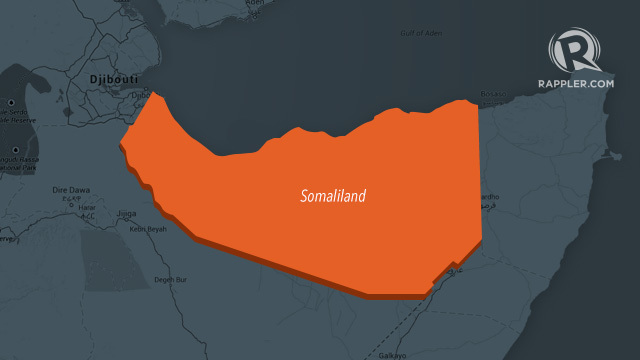
Somaliland, which unilaterally declared its independence from rest the of Somalia after the collapse of the Somali government in 1991, has not received international recognition. However, Somaliland enjoys relative stability, has its own government, flag, police and military forces and currency.
Source: Xinhua , edited by medeshi

Amnesty International: AMISOM killing civillians in Somalia

Medeshi Feb 6, 2009
Amnesty International Press Release
Thursday, February 5, 2009
For Immediate Release
Amnesty International Calls for Investigation of Civilian Deaths in Somalia As Allegations Point to Shooting Incident by African Union Peace Operation
Instead, AMISOM Spokesman Blames Deaths on Roadside Explosion
Contact: Suzanne Trimel, 212-633,4150, strimel@aiusa.org
(New York) -- Amnesty International today called for an immediate, independent and impartial investigation into allegations that AMISOM, the African Union peace support operation in Somalia, opened fire indiscriminately in the capital of Mogadishu, killing civilians on Monday, (February 2).
An AMISOM spokesperson denied that troops opened fire on civilians, saying that three civilians were killed and one of their soldiers injured by an explosion on the Maka Al-Mukarama road that targeted one of their vehicles.
But Amnesty International has received several reports that AMISOM soldiers fired indiscriminately in response to the explosion, killing at least 10 civilians on board or boarding buses on that road, and injuring at least a dozen others. Reports indicate that at least 10 bodies with gunshot wounds were transported to the Medina hospital in the capital. AMISOM later stated that civilians killed in the incident were victims of both the explosion and gunfire fired by armed opposition groups.
The human rights organization said an investigation is needed to establish the number and identity of the civilians killed and injured in the incident, the nature of their injuries and the sources of the gunfire. If it reveals that AMISOM soldiers did open fire, the investigation should also establish whether all feasible precautions were taken to spare civilian deaths and injuries. Soldiers alleged to have opened fire should be suspended from duty pending the results of the investigation and anyone found responsible for violations of international humanitarian law should be brought to justice.
“It is crucial that an effective public investigation is conducted into accusations that AMISOM troops unlawfully killed civilians. This would send a message to the Somali population that AMISOM is willing to uphold standards of international humanitarian law, in a situation where all parties to the conflict have unlawfully killed civilians with impunity,” said Michelle Kagari, deputy director of Amnesty International's Africa program.
Amnesty International has repeatedly condemned attacks on civilians by all parties to the conflict in Somalia. Armed groups fighting the Somali Transitional Federal Government (TFG) forces have used explosive devices in civilian-populated areas and launched attacks from civilian areas, while TFG forces, militias and their allies have carried out indiscriminate attacks as well as directly targeted civilians in response to attacks by armed groups.
###
Amnesty International is a Nobel Peace Prize-winning grassroots activist organization with more than 2.2 million supporters, activists and volunteers in more than 150 countries campaigning for human rights worldwide. The organization investigates and exposes abuses, educates and mobilizes the public, and works to protect people wherever justice, freedom, truth and dignity are denied.
For more information please visit: www.amnestyusa.org

'India, China clash off Somalia'

Medeshi Feb 6, 2009
'India, China clash off Somalia'
The two Chinese warships and an Indian submarine have reportedly faced off during an anti-piracy mission off the coast of Somalia
The incident occurred on Jan. 15 in the waters near the Bab Al-Mandab Strait, Qingdao Chenbao, a Chinese daily reported Wednesday.
The Indian submarine 'stalked' the Chinese warships and they were "locked in a tense standoff for at least half an hour," the daily noted.
The standoff reportedly ended when the Indian vessel left without further confrontation.
However, an Indian Navy spokesperson told reporters in New Delhi that "no Indian submarine surfaced in the area". Chinese authorities have not officially commented on the incident.
The Gulf of Aden has turned into an extremely hazardous place for commercial ships thanks to frequent attacks on the vessels by Somalia-based pirates.
India and China fought a brief but bloody border war in 1962. Relations between the two countries have remained tense since the conflict.
The two are among several countries that have deployed warships to patrol the sea lanes in the area

Top priorities for President Obama’s Africa team

Medeshi Feb 5, 2009
Top priorities for President Obama’s Africa team
Barack Obama’s election as president of the U.S. brought pride to Kenya, where his father was born, as well as to Africa as a whole. But it remains to be seen whether African policy will be a priority for the Obama administration.
(A member of the U.S. Africa Command (AFRICOM) speaks with a Ugandan colonel.)
Jean Herskovits is a professor of history at the State University of New York at Purchase, where she specializes in African history and politics. She writes at the “African Arguments” blog.
While the Bush administration prioritized HIV/AIDS in Africa, she emphasizes the importance of U.S. policy in Africa beyond aid to the U.S.’s political and military role on the continent.
For more on the new administration’s options in Somalia, listen to our radio show on lawlessness in Somalia.
A Hippocratic Africa Policy
The past decade of U.S. Africa policy has made some wish most for policies that would “first, do no harm.” A Hippocratic test could be useful for President Obama’s new Africa team at the NSC and the State Department, as they reflect on the harm that has punctuated their predecessors’ policies towards many African countries.
The sins fall into (at least) three categories: omission, commission, and intersecting them at times, militarization. Here are three. First, “democratic” elections in Nigeria and, relatedly, Kenya; this could also be called non-regime-change. Second, fear and loathing of “Islamist” regimes, as in Somalia; thus, regime change. Finally, the rushed creation of AFRICOM, with a mission that looks likely to ingest functions of the State Department and USAID.
In Nigeria, missed opportunities and worse have led to pervasive pessimism as Nigerians face the future. Key in this was President Olusegun Obasanjo, fresh from political imprisonment, who became president in May 1999 through an only slightly flawed election. Nigerians and Americans alike rejoiced at the departure of the military; Obasanjo had more goodwill at home and abroad than any head of state before him. The relief in Washington was palpable, and largely set the tone for the next nine years: Washington could rely on Obasanjo’s help on African and other global issues and wouldn’t have to worry about Nigeria’s stability.
In 2003 elections were due again. Washington didn’t want to know about political assassinations, intimidation and looming fraud. The elections themselves, taking rigging and violence to new depths, bore out Nigerians’ and observers’ worst fears. But from official Washington, only silence. Further, just weeks after Obasanjo’s second swearing-in, President Bush paid his only visit to Abuja, signaling to Nigerians U.S. approval of what had happened.
Months later rumors began circulating that Obasanjo wanted to change the constitution to secure a third term, a project he denied but Nigerians gradually knew to be his priority. The embassy in Abuja, with a new ambassador, sent ample warning to Washington, producing no effort to dissuade him.
Nigerians managed to mobilize and defeat the constitutional change in May 2006, and a period of uncertainty and anxiety followed. It was clear that the electoral commission, whose chairman was nominated by the president, was unable or unwilling to conduct free and fair elections. This time, the U.S. Embassy in Abuja and professionals in Washington were reporting and analyzing fully.
But from Washington came no pressure to remedy the impending election disaster. On the contrary, when the issue that had been Obasanjo’s policy priority from the start-debt forgiveness for Nigeria-was coming to fruition, the Treasury Department helped out; no one asked for anything in return.
When the 2007 election of Obasanjo’s hand-picked successor proved to be another travesty, as reported by Nigerian and international observers alike, Washington withheld congratulations briefly, and then recognized “reality.” Other problems were more pressing.
Such as Kenya’s upcoming elections. Two points here: first, that President Mwai Kibaki is known to have said that Nigeria’s elections showed that the U.S. didn’t care, as long as the result was a seemingly stable government and reliable ally. The tragic consequences of that assumption are well known. The New York Times has just reported the suppression by the Nairobi embassy-on whose instructions from Washington it doesn’t say-of exit polling, done by the International Republican Institute, that showed initial results favoring the challenger, Raila Odinga. This echoes the Abuja Embassy’s attitude towards Obasanjo’s reelection in 2003.
The harm done in Nigeria and Kenya is obvious.
Meanwhile, proactive, regime-change policy is evident in Somalia, where American attempts at engagement since 1991 have had far-reaching consequences for the region and U.S. policy alike. After 9/11, Jendayi Frazier, first at the NSC and then as Assistant Secretary for African Affairs, focused, along with the Pentagon, on fighting Islamist terrorism in the Horn. In Somalia in 2006, an alliance called the Islamic Courts Union (ICU) finally brought peace to Mogadishu and much of southern Somalia. But it was “Islamist,” and the Bush administration reacted by urging the Ethiopian army to invade and seize control of the country. It installed an alternative government, which could never function beyond Baidoa and eventually, not even there.
No one who knows the history of the Horn could imagine the Somalis welcoming an Ethiopian force. In the fighting that followed, thousands of Somali civilians died, and now the Ethiopian soldiers are gone. The Somali parliament, which was able to meet only in Djibouti, has just elected a new president: Sheik Sharif Ahmed, now heading the Alliance for the Re-liberation of Somalia, is the moderate Islamist who, in 2006, headed the ICU. Somalis in Mogadishu cheer! Somalia “has come nearly full circle.”
The “nearly” part is that now there is a strong Al Shabaab, a more radical breakaway group from the ICU, whose fighters control much of south-central Somalia, including key towns. And there is escalating piracy, fueled by the lack of effective government on shore, but which, ironically, had been controlled by the ICU in 2006.
The harm to Somalis and to how they view the United States is obvious.
And finally, AFRICOM. Presented first as a simple reorganization, unifying previously divided U.S. military activities in Africa under one command, AFRICOM has grown into something new. Highly unpopular among African governments, which have denied it a base on the continent, it now will undertake development projects and engage with African governments through civilian deputy leadership-apparently assuming aspects of the State Department’s and USAID’s traditional roles.
This is happening in part because far greater resources are available to the military than to the State Department, a fact recently deplored, notably, by Secretary of Defense Robert Gates. In Africa the harm has not yet been done, but the potential can easily be imagined, from the Horn of Africa, to the Sahel, to the Niger Delta and elsewhere. The hope is that the new Africa team in Washington may reexamine the structure now being elaborated at AFRICOM’s headquarters-in Stuttgart.
With this, as with all of Africa’s challenges, remembering Hippocrates is a place to begin.
See the original post.
Perspectives

A row over human rights

Medeshi
Ethiopia A row over human rights
Feb 5th 2009
ADDIS ABABA
From The Economist print edition
The government says Human Rights Watch has got it wrong. Really?
INDEPENDENT voices in Ethiopia are finding it ever harder to be heard. Suffocated by an irascible government, the country’s newspapers are now the least informative in east Africa. Journalists deemed critical of the prime minister, Meles Zenawi, are pilloried. And they are not alone.
Foreign aid people and diplomats say a law pushed through parliament last month will curtail the activities of local human-rights workers. The new law means that independent local outfits that get more than 10% of their income from abroad will be classified as foreign. Once designated as such, they will not be allowed to engage in anything to do with democracy, justice or human rights. Real foreigners are already banned from doing so. As few home-grown charities and non-governmental organisations can stand on their own feet in a country as poor as Ethiopia, the government will be able to control domestic dissent more tightly.
The task of raising human-rights issues now increasingly falls to foreigners. A particularly bitter tussle is under way over allegations of atrocities by Ethiopian soldiers in the country’s south-eastern Ogaden region. This area abuts the border with turbulent Somalia and is populated mainly by ethnic Somalis traditionally hostile to the government in Addis Ababa, the capital.
Human Rights Watch, a pressure group, accuses Ethiopia of war crimes and crimes against humanity there. It says that Ethiopian troops burned down villages and killed, raped and tortured civilians in a counter-insurgency campaign against the separatist Ogaden National Liberation Front after its fighters had killed 74 Ethiopian and Chinese oil-exploration workers in 2007. Ethiopia’s government was so incensed by the description of “systematic atrocities” in the Ogaden that it commissioned a report of its own that dismissed Human Rights Watch’s allegations as hearsay and its methods as slapdash.
The government report found “no trace” of serious human-rights violations. People reported to have been killed or tortured were said to have been found alive and well. Villages marked down as torched were said to be unscathed. The sole admitted instance of torture was said to have resulted in a court-martial. According to the Ethiopian report, Human Rights Watch was one-sided, since it failed to document the guerrillas’ thuggery. Perhaps unwittingly, said the Ethiopians, it had made itself a propaganda tool of the separatists.
The Ethiopian investigation did not, however, examine all of Human Rights Watch’s accusations. Some executions listed by the group go unchallenged or are blamed unconvincingly on the guerrillas. The report skims over the Ogaden’s humanitarian emergency, which Médecins Sans Frontières, a French-based charity, lists as one of the world’s ten worst. The Ethiopian report flatly denies that the government blockaded separatist strongholds during a famine, thus starving civilians. The Ethiopians also lambast Human Rights Watch for not visiting the Ogaden, knowing that it was they who blocked the visit. They claim that the Ogaden has been open to anyone, yet most independent journalists have been banned from travelling there freely. Several aid organisations, including the International Committee of the Red Cross, have been kicked out. Aid workers there speak only anonymously, for fear of expulsion.
The government has a general election to win next year. A wave of arrests of political dissenters, including a prominent opposition leader, Birtukan Mideksa, suggests the government wants to keep all its opponents in check.
A simple way for it to win confirmation of its claim that Human Rights Watch’s accusations are false would be to let independent journalists, both foreign and Ethiopian, visit the Ogaden and see for themselves.

Museveni, Gaddafi clash in Ethiopia


Medeshi
Museveni, Gaddafi clash in Ethiopia
Posted in: News
By Henry Owour & Argaw Ashine, Daily Monitor Correspondents

Feb 5, 2009 Addis Ababa
President Yoweri Museveni on Tuesday night openly clashed with Libyan leader Muammar Gaddafi, after the two disagreed over the direction of the formation of a single government for all African states.
According to sources at the summit, Zimbabwean President Robert Mugabe reportedly helped Mr Museveni take on Col. Gaddafi, who besides mooting the single African government plan, also sought to be bestowed the title “King of Kings”.
Col. Gaddafi reportedly clashed with Mr Museveni over his calls for speeding of the single African government plan. Whereas Mr Museveni calls for strengthening of regional blocs, a position he reiterated in Addis Ababa, Col. Gaddafi wants an immediate fast track to form the United States of Africa.
In what looked like a parliamentary debate characterised by points of order, the two leaders also disagreed on the involvement of traditional leaders by Col. Gaddafi in his pursuit of the United States of Africa dream.Col. Gaddafi sponsored Mr Museveni’s National Resistance Army guerilla war that brought the Ugandan leader to power in 1986.

Their current disagreements could bring one of the longest political relationships to an end. At the AU summit, Mr Museveni reportedly warned that he would arrest any traditional leader in Uganda who claimed to speak for Col. Gaddafi.
The Ugandan government last month cancelled a summit of traditional leaders across the continent convened in Kampala and funded by Col. Gaddafi, saying the leaders had discussed politics.
The Ugandan Constitution bars traditional leaders from participating in partisan politics. In Col. Gaddafi’s proposal for the single government, Africa is to have a president, a vice-president and secretaries handling various portfolios such as foreign affairs, research and the battle against pandemics.
However, with much opposition from the other African leaders, Col. Gaddafi stormed out of the meeting at about 2am and a few minutes later, all the leaders filed out.
Asked why Col. Gaddafi had stormed out, Tanzanian Foreign Affairs Minister Bernard Membe said Gaddafi ‘’may have felt unwell”.The summit ended yesterday with no concrete agreement on the way forward over a single government.
Col. Gaddafi said a special meeting of the group’s Council of Ministers would meet in three months’ time to iron out what powers its newly created African Union Authority should have.
This came after the 53-member group’s marathon talks that failed to agree on ways to transform the current Africa Union Commission into an authority, a process that will end with the creation of the “United States of Africa.”
Yesterday, at a meeting with journalists, Col. Gaddafi struck a conciliatory figure, talking of his vision for a “continent that relies on itself and which is a key player in world affairs.’’
He added that the continent has adopted a “step by step’’ approach to “this historic effort’’ on a single government. But, AU Commission chairman Jean Ping said ‘the whole process may take years.’’
According to Mr Ping, amending the AU Charter is not a simple task and two thirds of the 53 states must accept to proceed with the amendment.

Somali Sea Corps 'reduce tuna haul'

Medeshi Feb 5, 2009
Somali Sea Corps 'reduce tuna haul'
Piracy off Somalia's coast is a cause of falls in tuna catches in the Indian Ocean - one of the world's richest sources of the fish, experts say.
The head of the Indian Ocean Tuna Commission, Alejandro Anganuzzi, said catches fell by about 30% last year, seriously affecting the industry.
The Seychelles economy has been badly hit as many foreign fishing fleets are based there.
The reduced supply because of piracy has also driven up the price of tuna.
Ship seizures
The Indian Ocean tuna industry is said to be worth up to $6bn.
Last year Somali pirates took 42 commercial ships with crews hostage, according to the International Maritime Bureau, including the biggest oil supertanker ever captured.
A number of countries began naval patrols off East Africa and in the Gulf of Aden to try to combat the attacks.
With the threat still present, fishing fleets have had to move further east from the Somali coast, Mr Anganuzzi told Reuters news agency.
About 40% of Seychelles's foreign earnings come from tuna and related industries, the IOTC said.
French and Spanish fleets based in Seychelles caught only 50% of their expected catch.
The fleets usually catch nearly two-thirds of the year's haul off Somalia between August and November, he said.
Seychelles is paid per tonne of fish landed for port facilities and reduced catches mean fewer calls to port.
"The pirates' biggest impact, however, is reduced supply, driving prices up," the head of the Seychelles Fisheries Authority, Rondolph Payet, told Reuters.
Story from BBC NEWS:

Qaar ka mid ah Ururada Bulshada Rayidka ah oo walaac ka muujiyay mudo dhaafka golayaasha deegaanada

Annaga oo ah Ururada Bulshada Rayidka ah ee Madaxa-banaan waxaanu si wayn uga walaacsanahay