HRW Says US Intervention Worsening Somalia Crisis


Medeshi Dec 28, 2008

HRW Says US Intervention Worsening Somalia Crisis

Report:
This past year, Somalis have experienced the worst violence in a decade. In a new report, Human Rights Watch says the United States is only making the crisis worse. The report states, “The United States, treating Somalia primarily as a battlefield in the global war on terror, has pursued a policy of uncritical support for transitional government and Ethiopian actions, and the resulting lack of accountability has fueled the worst abuses.” We speak to HRW’s Leslie Lefkow.
Guest:
Leslie Lefkow, Leads Human Rights Watch’s Horn of Africa research team and contributed to the latest Human Rights Watch report on Somalia, “So Much to Fear: War Crimes and the Devastation of Somalia.”
AMY GOODMAN: Two years after US-backed Ethiopian troops invaded Somalia, they are set to withdraw from the war-ravaged country by the end of this year. The African Union, meanwhile, has announced it will extend the mandate of its 3,400-member force in the capital city of Mogadishu by another two months.
The US-backed transitional government is facing new setbacks after an official appointed to be prime minister last week just resigned, following opposition from the Somali parliament and threats of sanctions from East African leaders.
This past year, Somalis have experienced the worst violence in a decade, according to the group Doctors without Borders, that lists Somalia among the worst humanitarian crises of the year. A new report by Human Rights Watch states, “The last two years are not just another typical chapter in Somalia’s troubled history. The human rights and humanitarian catastrophe facing Somalia today threatens the lives and livelihoods of millions of Somalis on a scale not witnessed since the early 1990s.”
Over a million Somalis have been displaced from their homes, and thousands have been killed. Two-thirds of the population in Mogadishu, the capital, have fled. The Human Rights Watch report is called “So Much to Fear.” It says the United States is only making the crisis worse. The report states, “The United States, treating Somalia primarily as a battlefield in the global war on terror, has pursued a policy of uncritical support for transitional government and Ethiopian actions, and the resulting lack of accountability has fueled the worst abuses.”
I’m joined on the phone right now from Amsterdam by one of the authors of the report. Leslie Lefkow leads Human Rights Watch’s Horn of Africa research team.
Welcome to Democracy Now!, Leslie. Your major findings?
LESLIE LEFKOW: Thanks for having me on the program. Yeah, this report that we’ve just released is the second major investigation that we’ve done into what’s been happening in Somalia over the last two years, and we find that all of the warring parties, so the Ethiopians, the forces of the Somali transitional government and the insurgents, have all been responsible for massive and heinous abuses: indiscriminate bombardment of civilians, looting, rape, arbitrary detentions on a tremendous scale. And it’s really the effect of these crimes, these very serious international crimes, that have forced two-thirds of the population of Mogadishu to flee the city in a way that we really haven’t seen anywhere else in the world perhaps since the war in Chechnya some years ago.
AMY GOODMAN: And what about the role of, well, for example, out country, the United States? What role has it played in Somalia?
LESLIE LEFKOW: Well, the US policy in Somalia has been problematic on two levels. It’s been problematic because the most visible face of US policy has been twofold. It’s been a series of air strikes in different parts of Somalia, targeting suspected terrorists, individuals. There have been a handful of individuals who were suspected of having links to al-Qaeda who have been sheltering in Somalia for some years. And the US has launched at least four air strikes at different times over the last couple of years, most of which have failed to hit the target and have hit civilians, injured civilians and killed civilians instead. So that’s been problematic, because, you know, the fact that civilians have been the main casualties of these attacks has been a source of real grievance to Somalis.
The second layer of the problem is the fact that the US is perceived as backing the Ethiopian intervention unconditionally. The US and Ethiopia are very close partners in the war on terror in the region in the Horn of Africa, and the fact that Ethiopian forces have also been committing serious abuses and that these abuses have been met with utter silence in Washington by the US makes—it creates the perception among many Somalis that the US doesn’t care what the cost of this war is on civilians and really has no concern for the welfare of ordinary Somalis.
AMY GOODMAN: What do you think needs to happen right now, Leslie Lefkow?
LESLIE LEFKOW: Well, you know, Somalia is a very complex problem. There are many layers to it. There’s regional layers. There’s an internal political crisis. But I think, you know, there are a number of steps that Human Rights Watch sees where we think we could—you know, that could lead to some progress. And number one among those is the need for accountability. One of the problems is Somalia has been considered to be a kind of free-fire zone by all of the parties, by the Ethiopians, by the US, you know, where anything goes. And we need to see a new awareness and recognition of the crimes that have happened, so, you know, statements condemning these crimes, statements that we would see coming out of Washington if it were probably any other country. So that kind of recognition of the crimes and real support for accountability, an end to this impunity that has governed—you know, that has reigned in Somalia for years now. So, for example, we would like to see the US support a commission of inquiry to investigate the crimes by all parties and to look at different kinds of mechanisms to bring the perpetrators of crimes to justice.
But there are other—you know, there are other political steps that also need to be taken. There needs to be real support for an inclusive political process that will include all the actors. One of the main problems with the peace process over the last eight months has been that the main group with the guns, the more radical Islamic groups that control much of southern Somalia, are actually not involved in the peace process.
AMY GOODMAN: Well, I want to talk more about the peace process with a Somali activist who I just met in Stockholm. I want to thank you, Leslie Lefkow, for joining us, of Human Rights Watch. And we will link to your report on our website, democracynow.org.

US Senator Russ Feingold's call for a new strategy in the Horn of Africa


Posted by Medeshi on Dec 28, 2008

US Senator Russ Feingold's call for a new strategy in the Horn of Africa

(Djibouti Dec 22– )Today, U.S. Senator Russ Feingold (D-WI) called for a new strategy to address instability, terrorism and the humanitarian crisis in Somalia and the Horn of Africa while visiting Djibouti, which is hosting the Somalia peace process. Feingold, Chairman of the U.S. Senate Foreign Relations Subcommittee on African Affairs, met with the President and Foreign Minister of Djibouti, the Prime Minister of the Somali Transitional Federal Government (TFG), the leadership of the opposition Alliance for the Re-Liberation of Somalia, the United Nations Special Representative for Somalia, the President of Somaliland, and members of Somalia's civil society. He also visited the U.S. base in Djibouti, home to the military's Combined Joint Task Force - Horn of Africa.
"There is both an urgent need and an opportunity for a new U.S. policy for Somalia and the Horn of Africa," Feingold said. "With the security and humanitarian crisis deepening, the expansion of the Shebab terrorist group, the announced withdrawal of Ethiopian troops from Somalia, and a fragile peace process, it is critical that the incoming Obama Administration take immediate steps to develop a new, comprehensive strategy for Somalia and the region. Disjointed policies in Somalia have often undermined one another, ultimately proving counterproductive. Moving forward, we must address direct threats at the same time that we confront the ongoing humanitarian and human rights crisis, supporting legitimate governance institutions, promote accountability and rule of law and work to undercut the appeal of violent extremism. The current situation is not just a disaster for the people of Somalia and the region. It is a direct threat to America's national security."
Feingold has led efforts in the Senate to focus on this critical region of the world. He authorized legislation, passed by Congress, requiring the administration to develop a comprehensive stabilization and reconstruction strategy for Somalia and has consistently called on the international community to commit the necessary resources and attention to stabilize Somalia and rebuild its institutions. Recently, insurgent militias in Somalia have overtaken several strategic towns as they march toward the capital city of Mogadishu. They now control territory throughout southern and central Somalia. Ethiopian troops supporting the TFG have announced plans to withdraw at the end of the year, which could lead to a power vacuum. Feingold has stated that instability in the country has enabled the recent rise in pirate attacks off the Somali coast.
On March 11, 2008, Feingold chaired a full Foreign Relations Committee hearing on U.S. policy options for the Horn of Africa. The New York Times has labeled Feingold "the Senate's leading expert on Somalia." This is his ninth official visit to Africa. He last visited the continent in August 2007 when he traveled to the Democratic Republic of Congo and Uganda. He is on a three-country tour that includes Germany, the headquarters of the Department of Defense's Africa Command, and Tanzania.

Listening to Occupied Somalia

Medeshi
Listening to Occupied Somalia
December 28, 2008:

On Christmas day, a UAV crashed outside the Somali town of Baidoa. Ethiopian occupiers in the area rushed to the scene, and kept people away. The UAV was believed to be an American Predator. Local civilians reported that a small aircraft had been circling the Baidoa area for at least a day. Earlier this year, another Predator came down near the town of Marka, further south.
The U.S. and France have a counter-terror task force in Djibouti, Somalias neighbor in the north. Manned and unmanned recon aircraft operate out of Djibouti, as do American and French special operations troops. Predators have fired Hellfire missiles at Islamic radical leaders over the last year, killing several of them.
(Photo: Evil-eyes A Marine CH-46E helicopter )
Baidoa is the headquarters of the Transitional National Government, a coalition of clans and warlords, that is fighting several groups of Islamic radicals. Ethiopia has a army force of about 15,000 in Somalia, but is in the process of withdrawing them. There are also nearly 2,000 African Union peacekeepers in Mogadishu, southeast of Baidoa, and these troops are likely to withdraw in the next six months as well. All that's keeping an eye on Somalia are U.S. UAVs, taps in local electronic communication, and a network of informants on the ground, maintained by U.S. Army Special Forces and the CIA.
Strategy Page

Losing Somalia, US Eyes Somaliland


Medeshi Dec 26, 2008
Losing Somalia, US Eyes Somaliland
American officials are now examining whether the US should give support to the region's independence.CAIRO — With its allies failing to destabilize war-racked Somalia, the US is turning its attention to the breakaway Somaliland as the new card to play in the strategic Horn of Africa region.
"Somaliland should be independent," one defense official told the Washington Post on Tuesday, December 4.
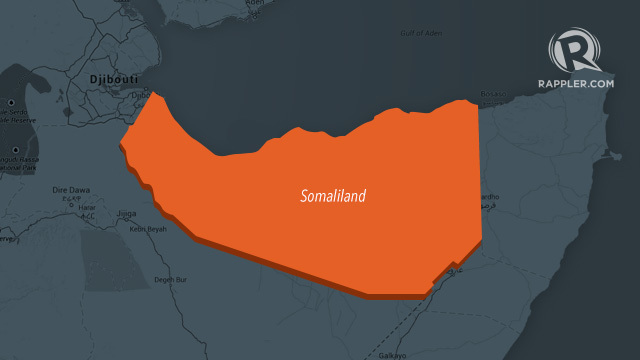
Somaliland is an autonomous region in the north-western portion of Somalia that advocates independence from Mogadishu.
The breakaway territory of some 3.5 million people declared independence in 1991, but is not internationally recognized.
American officials are now examining whether the US should give support to the region's independence.
They argue that Somaliland could offer greater potential for US military assistance inside Somalia.
"We should build up the parts that are functional and box in" unstable regions, particularly around Mogadishu, said the defense official.
Somaliland's leaders have long distanced themselves from Somalia's central transitional government.
The region has escaped much of the chaos and violence that plagued Somalia since neighboring Ethiopia sent in troops to oust the Islamic Courts in favor of the interim government.
Since then, Somalia has plunged into abyss with daily shooting and fighting.
Difficult Option
The Pentagon's plan is facing opposition from the State Department, which believes Washington should not recognize Somaliland until the African Union does.
"We do not want to get ahead of the continental organization on an issue of such importance," Assistant Secretary of State Jendayi E. Frazer told the Post.
The issue is diplomatically sensitive because recognizing Somaliland could set a precedent for other secession movements seeking to change colonial-era borders, opening a Pandora's box in the region.
"We're caught between a rock and a hard place because they're not a recognized state," recognizes a senior official in the US Department of Defense.
Other Pentagon officials fault the State's view altogether.
"The State Department wants to fix the broken part first," said the defense official. "That's been a failed policy."
In Djibouti, US military officials are eager to engage Somaliland.
"We'd love to, we're just waiting for State to give us the okay," said Navy Capt. Bob Wright, head of strategic communication for the Combined Joint Task Force Horn of Africa.
The force is composed of about 1,800 US troops who conduct military training and reconstruction projects in the region.
Washington says Somalia as the greatest source of instability in the Horn of Africa.
Pro-Ethiopia
But as US officials mull their options, they stand stubborn in supporting their Ethiopian ally in the war-torn nation.
"Any government that provides Somalis with assistance we support, including Ethiopia," a senior defense official affirmed.
In recent months, several human rights groups have spoken out against Ethiopian violations in Somalia.
They accuse Ethiopian forces of abuses such as raping, indiscriminate killing of civilians and bombing and burning of entire villages.
"I am unaware of specific allegations regarding the conduct of the Ethiopian troops," said the Pentagon official.
Ethiopia has long been a strong ally of Washington in the strategic Horn of Africa.
For years the US has been pouring weapons, military advisers and millions of dollars in military aid into Ethiopia, and the American military has trained Ethiopian troops at bases in the eastern region.

From Bristol to Mogadishu, with love


Medeshi Dec 26, 2008
From Bristol to Mogadishu, with love
The BBC's Mohamed Olad Hassan meets a Mogadishu family that depends for money on a relative living and working in the UK. The relative works in a warehouse in Bristol, and supports eight families back in Somalia with the money he makes.
Living in Mogadishu, the capital of a lawless country, is far from easy.
Thousands of its residents have already fled Somalia as a result of violence between Islamist insurgents and Ethiopian troops, which back the weak but UN-recognised government of Somalia.
The country's official unemployment rate is close to 100%.
Many people have little choice but to live in camps for internally displaced people. Some in Mogadishu depend solely on remittances from their relatives abroad. Others run small businesses.
Abdulahi Husein Aboti is a 33-year-old father of four - two sons and two daughters. The family lives together in a troubled zone in the south of the capital. Most of his neighbours and his relatives have already fled.
Because the Ethiopians have bases nearby, the area is always a prime target for the insurgents.
Staying in the city
But, unlike many others, he has decided to remain in his own home, with his wife, 24-year-old Anisa, and their children. He says he doesn't have enough money to enable the family to seek shelter in a safer part of the city.
"I know everything is from God," he says.
"We remain here because living in IDP camps is not healthy and I can't afford to pay for medicine for my kids if they fall ill.
(Photo: Aboti and Anisa live in southern Mogadishu with their four children)
"We live here and every time fighting goes on around us, we duck while it is going on and then come out once it subsides."
Despite such risks surrounding his family, Aboti is more worried about what would happen to his children and wife if his brother - who lives and works in the UK city of Bristol - were to lose his job.
He says that because of the global financial crisis the money sent back by his brother has already decreased by a quarter.
"My family depends completely on my brother in Britain, who sends us $150 every month.
"I have no job here and nowhere else to turn. I'm waiting for my destiny. He has dropped the amount he was sending us from $200 to $150," he said.
Balancing the budget
"Now we live a simple life, but it's not a real one. You can imagine, $150 is just not enough for a family like ours. The kids need milk and food - which are expensive. You even need money for water here.
"But I am really worried that this false life might turn into nothing if my brother Abdi Husein, in Bristol, loses his current job or if the financial crisis gets any worse," Aboti said.
His wife Amisa too senses that times could get even tougher for her family. But she points out that it will be her, not Aboti, who will feel the pain of feeding a family with a very restricted income. She is the one who manages the family budget.
"If you are short of money in Mogadishu, planning family meals is very difficult, because the prices of essential food stuffs fluctuate so much," Anisa explains.
"For example, one day you go to market and buy something. The next morning the prices have already changed but your income always remains the same, so how do you manage? It's like living just for the sake of living."
"But my worst fear would be if my children's paternal uncle in Britain - our only tower of our strength and the sole bread-winner for my family - were to lose his job as a result of the current financial crisis," she said.

Story from BBC NEWS:

Chinese navy to patrol Somali Coast

Medeshi Dec 26, 2008
Chinese navy to patrol Somali coast
Three Chinese naval vessels are to leave for the waters off Somalia to start anti-piracy operations.The two destroyers and a supply ship will have about 70 special operations troops aboard, the state-run Xinhau news agency reported.
The destroyers, Haikou and Wuhan, are said to be two of China's most sophisticated warships and will set sail on Friday.Rear Admiral Du Jingcheng, the mission commander, told Xinhau: "We have made special preparations to deal with pirates, even though these waters are not familiar to us."
"Our primary target is not striking them but dispelling them.
"If the pirates make direct threats against the warships or the vessels we escort, the fleet will take counter measures."
A surge in attacks this year in the Gulf of Aden and Indian Ocean has pushed up insurance costs, brought the pirates tens of millions of dollars in ransom payments and prompted foreign warships to patrol the area.
While China's growing wealth and influence have seen it involved in peacekeeping operations around the world, it has traditionally kept troops close to home, reflecting a doctrine of non-interference in other nations' affairs.Possible Japanese deploymentThe Chinese deployment comes as Japan also considers sending ships to the area.Taro Aso, the Japanese prime minister, ordered Yasukazu Hamada, the defence minister, to move ahead with deliberations on how the armed forces could act, the government's senior spokesman told the Reuters news agency."He ordered the defence minister to speed up considerations," Takeo Kawamura, the chief cabinet secretary, said.The dispatch could prove a legal and diplomatic hurdle for Japan, whose military activities overseas are restricted by its pacifist constitution.
Japan's forces have not engaged in combat since the second world war though Japanese forces have been in Iraq to help in reconstruction.
Source:Agencies

Qatar, Malawi, Angola and Ethiopia on top of GDP growth forecasts, 2009


Medeshi Dec 26, 2008
Ethiopia 4th Fastest Growing Economy in the World in 09 - Economist
(nazret) - The Economist magazine predicts Ethiopia's economy to grow by more than 7% in 2009 and predicts the country to be the 4th fastest growing economy for 2009. According to the Economist Intelligence Unit, GDP growth forecasts for 2009, Qatar will be the fastest economy with a GDP growth of close to 14% followed by Malawi, Angola and Ethiopia. Ethiopia's economy is expected to grow faster than red-hot Chinese economy in 2009. The latest GDP growth forecast was published on page 169 of the US edition of The Economist magazine (The Economist December 20th-January 2 2009)
Ethiopia has been described as the fastest non-oil economy in Africa by IMF. CIA World Factbook puts Ethiopia's GDP at $56.05 billion (2007 est. PPP) / $19.43 billion (2007 est. official exchange rate). The Economist's, The World in 2009 magazine, predicts Ethiopia's GDP to reach $31 Billion (PPP $71 Billion) in 2009. If Ethiopia can sustain the economic growth of the last few years, Ethiopia could become the biggest economy in East Africa in few years time.

Nzt

Somaliland records drop in landmine accidents


Medeshi
Somaliland records drop in landmine accidents
HARGEISA, 26 December 2008 (IRIN) - The Republic of Somaliland recorded a sharp drop in landmine-related accidents in 2008 compared with 2007, a mine clearance organisation official has said.
Hassan Ahmed Kosar, operations officer for the Halo Trust, the only international mine clearance organisation currently operating in Somaliland, said 15 accidents - down from 45 in 2007 - were recorded in Somaliland in 2008.
(Photo : A de-mining official uses a metal detector to check for landmines in Somaliland)
"Most of the accidents were caused by unexploded ordnance [UXO] and anti-tank mines planted in roads during the confrontation between the SNM [Somali National Movement - the liberation organisation in Somaliland between 1981 and 1991] and [former Somali President] Siyad Barre's regime in the late 1980s, as well as during the Ogaden war between Somalia and Ethiopia in the late 1970s," Kosar told IRIN on 22 December in Somaliland's capital, Hargeisa.
(Photo : The wreckage of a truck that hit a landmine in Somaliland)
Kosar said Somaliland was one of five unrecognised nations to have signed the international landmine ban treaty, adding that the government had destroyed 3,014 anti-personnel mines in its stores in 2003.
He said the Halo Trust had destroyed more than 3,614 landmines or UXO, 90,694 small arms, and 37,760 anti-tank mines since 1999.
According to the Somaliland Mine Action Centre (SMAC), a government body, over two million mines were planted in Somaliland between 1964 and 1990.
Abdirahman Yusuf, a SMAC operations officer, said: "According to the last survey - conducted in collaboration with international mine clearance organisations, particularly the Halo Trust - over 600 roads were mined during the war; there are also 300 minefields scattered throughout the country."
International demining efforts
Demining operations have been going on in Somaliland since 1991.
Rimfire, a UK-based mine clearance organisation, began its first demining project in Somaliland in 1992-1993, clearing over 64,000 landmines and UXO.
“We are much bigger than Rimfire in terms of manpower and we also use modern demining equipment," the Halo Trust’s Kosar said.
In 2003 the Danish Demining Group (DDG) cleared landmines from 300 roads. Santa Barbara, an international mine clearance organisation, was also active in Somaliland 2000-2002.
The Halo Trust is carrying out a new landmine survey due for completion in late 2009. Kosar made a plea for more international funding to speed up mine clearance operations.

Mark Bowden: In Somalia, guns of anarchy still reign


Medeshi
Mark Bowden: In Somalia, guns of anarchy still reign
Wednesday, Dec. 24, 2008

In 1999, when I was touring the United States to promote my book "Black Hawk Down," the story of an ill-fated U.S. raid against a rebel warlord in the Somali capital of Mogadishu, I was often invited to college campuses, where I was fond of asking audiences whether there were any anarchists among them. Occasionally a scruffy student or two would raise a hand.
"Good news," I'd tell them. "You don't have to wait. Go to Somalia. Check it out."

When I was last there in 1997, Somalia had already been rudderless for six years. Mogadishu lay in rubble, like a city hit by a natural disaster. Every wall was pockmarked with holes from bullets and cannon blasts. Gunmen in pickup trucks terrorized the streets. Unbelievably, in the decade since then, it has only gotten worse.
While the world has largely stood by, the Horn of Africa has served as a laboratory for anarchy -- and the results aren't pretty. Somalia today is teetering on the edge of becoming an Islamist state while harboring terrorists who export its chaos to its neighbors.
"Here we have a country that has been in crisis for nearly 20 years," Ahmedou Ould-Abdallah, the U.N. special representative for Somalia, said to me by phone from Nairobi. "And we say, 'Well OK, we'll chase down some pirates and send some bags of rice.' It is not enough."
Today 3 million Somalis, half the country's population, rely on food handouts from the United States and Europe, delivered by increasingly harassed humanitarian organizations. Millions who could afford to have fled.
Meanwhile, Islamist terrorist groups train and hatch plots against targets in neighboring countries: The al-Qaida cell that bombed the U.S. embassies in Nairobi and Dar es Salaam in 1998 was and still is based in Somalia. Since then, the same group and another have successfully bombed a Mumbai resort, attempted to shoot down an Israeli passenger jet and carried out a number of assassinations and other killings, including that of an Italian nun in the town of Elwak, near the border with Kenya. Local mullahs enforce horribly brutal penalties for acts that most of the world doesn't even consider criminal.
And now, pirates -- nothing more than the general criminal chaos spilled from land to sea -- ply the waters off Somalia's thousand-mile coastline.
A flimsy "transitional" authority, a coalition of warlords supported by the United Nations, ostensibly governs the country, but it spends most of its time arguing from the safety of neighboring capitals over power it doesn't have.
Back in 1997, few Somalis believed that the world's cold shoulder would endure. People would line up in the street outside the gates of the compound where I stayed while researching my book to see me. Sightings of Americans were then so rare that most people refused to believe that I was just a writer. Many preferred to believe that I was on a secret mission for the United Nations or the United States, that I was laying the groundwork for the return of nation-building, for the restoration of law and order, basic services and sanity.
They are still waiting for that. Meanwhile, because there is no government, there are no public schools, no universities, no courts, no trash collection, no electrical grid (Mogadishu nights are filled with the steady hammering of generators) -- none of the basic services of a civil society.
Owning anything of value in Somalia means having to arm yourself, because someone more powerful will eventually try to take it away. You can tell a person's relative importance by the length of his armed entourage as he moves through the streets. Young men with nothing else to do are lured into these private armies by promises of food, money, shelter and a steady supply of narcotic khat.
When President-elect Barack Obama takes office, he can help greatly simply by putting a stop to U.S. missile attacks on suspected Islamist terrorists. Whatever is gained by eliminating one murderous zealot is lost by turning entire Somali communities against Western aid efforts.
Somalia has a lesson for the rest of the world. It's an old lesson, but one that we have yet to learn: Ignoring a problem does not kill it or contain it. A lawless zone soon enough becomes a danger to more than those trapped in its borders. We will have to engage with whoever comes to power in Somalia next, both for humanitarian reasons and in the best interests of the region and the world.
Mark Bowden is an author and national correspondent for the Atlantic.

Somalia president expected to resign


Somalia president expected to resign
The departure of Abdullahi Yusuf, long seen as a stabilizing force, could reignite clan warfare -- or pave the path toward peace.

By Edmund Sanders December 25, 2008

Reporting from Nairobi, Kenya -- Somalia's aging president is expected to resign in the coming days, aides said Wednesday, succumbing to threats of impeachment and international sanctions over his refusal to support a national reconciliation plan.
Abdullahi Yusuf, a warlord-turned-statesman, was once widely viewed as the linchpin of Somalia's transitional government. But in recent months, Yusuf, 74, has repeatedly clashed with the prime minister and has come to be regarded as an obstacle to peace.

Yusuf's departure would mark a turning point for the Horn of Africa nation. It could reignite clan warfare, but it also could clear the way for a new power-sharing government that includes a key Islamist opposition faction.
"Yusuf was always a liability to Somalia and to the peace process," said Ali Said Omar Ibrahim, head of the Center for Peace and Democracy, a Somali peace advocacy group. "This is going to help bring in a new era for Somalia by helping different stakeholders come together to decide the country's future."
Last week, Yusuf tried to fire the prime minister he appointed a year ago, Nur Hassan Hussein. Since the U.N.-recognized government was formed in 2004, Yusuf has had similar confrontations with others who challenged his authority, including the previous prime minister and parliament speaker.

Parliament rejected the effort to oust Hussein, and Western nations, including the United States, voiced their support for the prime minister. Some African countries, Kenya among them, threatened to impose a travel ban and asset freeze against Yusuf.
"He has come to a juncture whereby it serves a good purpose for him to yield," said Abdulrizak Durgan, a Yusuf advisor. He said the president had been facing pressure to step down for nearly a year.
"Nobody can make this decision for him," Durgan said. "He may still defy us all."
Aides say Yusuf will use the days ahead to consult with his clan leaders and make security arrangements for a return to his native Puntland in northern Somalia.
In an interview Tuesday, the prime minister declined to comment on Yusuf's possible resignation. Both men are in Somalia.
The primary dispute between the two is a reconciliation deal negotiated by Hussein, who sought to make peace with a moderate faction of the Islamic Courts Union, a religious alliance that briefly controlled the capital, Mogadishu, and southern Somalia in 2006.
Under the terms of the deal, the opposition group would receive half of the seats in a new parliament, expected to take power in early 2009.
Yusuf complained that the agreement handed too much power to a single clan and failed to include key Islamist militias that have been fueling an insurgency for two years.
If approved by parliament, the deal also probably would end Yusuf's tenure because new parliamentary elections are expected for both president and prime minister.
Experts say the so-called Djibouti agreement, named for the tiny African nation where it was signed this year, may be the last chance to salvage Somalia's government. Somalia has not had a functioning national government since 1991.
Some Yusuf supporters, however, predicted that parliament would be unable to select a new president. Mistrust is so pervasive that shouting matches are common, and one notorious session ended in a chair-tossing brawl.
"Yusuf is what holds [together] this experiment," said Mohamoud Ali, a Yusuf supporter and Foreign Ministry official.
Under Somalia's transitional charter, the speaker of parliament assumes the president's duties if he resigns and a new president should be elected within 30 days. But some lawmakers said they might delay the presidential election until February, when the new unity parliament should be in place.
Another key question is how Yusuf's clan, the Darod, will respond. Some fear the Darod will take the president's resignation as an insult, possibly setting the stage for a renewal of clan warfare between north and south. Puntland, home to most Darod, might also attempt to declare its independence. Though ruled by an autonomous government, Puntland to date has not sought to become an independent state.
Aides to the prime minister said efforts were underway to court the president's clan, including assurances that a top post in the new government -- either president, prime minister or speaker -- would be reserved for the Darod.
The political shake-up comes as Ethiopian troops, who have been supporting and protecting the transitional government since 2006, are preparing to withdraw. Experts say that about 3,400 African Union troops from Uganda and Burundi currently in Somalia will not be enough to counter the growing threat of Islamist insurgents, including Shabab, a militia designated by the United States as a terrorist group.
Shabab, which has rejected the Djibouti agreement, controls much of southern Somalia and parts of Mogadishu. It is vowing to retake all of southern Somalia and set up a strict Islamic-based government.
The prime minister, however, said his peace deal would bring stability.
"I'm not expecting to see a vacuum that will bring problems," Hussein said in the interview. "Let's be optimistic."

Turkey's IHH initiates cataract surgeries in Somaliland


Medeshi Dec 25, 2008
Turkey's IHH initiates cataract surgeries in Somalia
The IHH, which initiated cataract surgeries in African countries of Benin Ghana, Togo, Niger, Chad and Sudan, has recently launched a similar project in Somaliland.

World Bulletin / News Desk Cataract surgeries in Somaliland region of Hargeisa started on December 25, 2008 and 800 cataract patients have been brought to the light so far. A health team of two doctors and seven nurses are performing surgeries. The Somali Health Ministry appreciated the fact that all surgeries have been successful.

Patients pleased to see light

Old and young, man and woman patients who were able to recognize the light after surgery sent regards and thanks to charitable people of Turkey through our foundation.
"May Allah be pleased with the charitable person who helped bring me to the light. I will always pray for him/her," said Qirdisi after the surgery. Muhammad Dedbus, 47, said he had been suffering from cataract for five years, but could not undergo surgery due to financial hardships. I did not believe it when I first heard people were operated on free-of-charge, he said, and added "I and my son left the village and came here to find out whether the news was true. I learnt that the IHH was performing cataract surgeries free-of-charge and underwent surgery. Thank Allah I can see the light again. May Allah be pleased with people of Turkey."
100,000 people to undergo surgery The IHH aims to treat 10,000 cataract patients in Somalia within a year. In Africa, 12,000 patients have been brought to the light so far. When the cataract project is completed, 100,000 people will have been operated on.
Voluntary doctors, nurses needed

Cataract surgeries are funded by donations from charitable people of Turkey. Donation worth 100 new Turkish liras is enough to bring a cataract patient to the light. Doctors and nurses coming from Turkey as well as local doctors and nurses are performing cataract surgeries.
Source : World Bulletin

Somaliland children to benefit from health package


Somaliland children to benefit from health package
Published on 24/12/2008
By Peter Orengo
More than one million children in Somalia will benefit from a health package funded by the international community.
The programme will improve the survival rates of all children and women against preventable diseases.
On Wednesday, a campaign Child Health Days was launched in Hargeisa, the capital of Somaliland by Vice-President Ahmed Yusuf Yasin, who urged every family to participate in the programme.
"I recommend to everyone to take their children to be vaccinated. This campaign is important because it will lead to social improvement and development of Somaliland."
The country is plagued by limited social services, poor health infrastructure and a volatile security situation.
Unicef and WHO have partnered with local authorities and NGOs to protect children under five against preventable childhood diseases and water-borne illnesses.
The children will undergo immunisation against measles, diphtheria, whooping cough, tetanus and polio.
Speaking at the launch, Unicef representative for Somaliland, Christian Balslev-Olesen said: "We aim to reach every single child with this high-impact life-saving package of interventions. Working together, we can protect children and their mothers against preventable diseases."
Sourec : the Standard

Sanctions imposed on Somalia head


Medeshi Dec 23, 2008
Sanctions imposed on Somalia head
The East African regional grouping Igad has decided to impose sanctions on Somali President Abdullahi Yusuf Ahmed and his associates.
In a communique after a meeting of foreign ministers in Ethiopia it backed Prime Minister Nur Hassan Hussein, whom the president tried to dismiss.
The grouping also discussed ways to replace Ethiopian troops when they pull out of Somalia in the next few weeks.
African Union commission head Jean Ping said Nigeria was ready to send troops.
Torn by internal conflict, Somalia has been without an effective central government for more than 15 years.
Infighting
The BBC's Elizabeth Blunt in Addis Ababa says there was no doubt whose side this meeting of the Inter-governmental Authority on Development (Igad) was on.
In a place of honour on the platform was Ahmed Mohammed Goala, the Somali prime minister's newly appointed foreign minister, not his predecessor, who had been associated with President Abdullahi, our correspondent says.
At the end of the meeting, the foreign ministers of the six member states expressed their support for Mr Nur and his newly appointed cabinet, and said they regretted the attempt by the president to replace him last Sunday.
Mr Abdullahi said the government had been "paralysed by corruption, inefficiency and treason" and failed to bring peace.
However, Somalia's parliament declared the sacking illegal and passed a vote of confidence in Mr Nur by a huge majority on Monday.
In the communique issued at the end of the meeting, Igad gave its strong backing to Mr Nur and his government.
"[Igad] regrets the attempts by President Abdullahi Yusuf to unconstitutionally appoint a new prime minister that Igad does not recognise, and decides to impose sanctions on him and his associates immediately," it said.
It also called on other countries to take similar measures.
Our correspondent says that in addition to the infighting in the Somali government, the imminent departure of Ethiopian troops from the country overshadowed the meeting.
Ethiopian Foreign Minister Seyoum Mesfin said his country's decision to pull out over the coming weeks was "irrevocable".
Igad formally thanked the Ethiopians for the sacrifices they had made to advance the cause of peace in Somalia, but made no appeal to them to change their mind and stay.
The issue of peacekeeping will be considered further at a meeting of the African Union's Peace and Security Council on Monday.
Ministers now have the task of trying to beef up the AU's mission in Somalia, which will no longer have the comfort of knowing it can call for Ethiopian back-up when needed, our correspondent adds.
At the Igad meeting, the president of the African Union Commission said Nigeria had promised to send a battalion of about 850 soldiers to Somalia next month, and that Burundi and Uganda would each send an additional battalion.
Story from BBC NEWS:

SOMALIA: IDPs prefer camps to war-torn Mogadishu


Medeshi
SOMALIA: IDPs prefer camps to war-torn Mogadishu
NAIROBI, 22 December 2008 (IRIN) - Shukri Mohamed, a mother of seven, is not ready to return home to Mogadishu, despite changing camps four times since she was displaced by violence in 2007.
"I will only return when the last Ethiopian soldier leaves Mogadishu; because they [insurgents] say they won't stop fighting until the Ethiopians leave," she told IRIN on 22 December.
Ethiopia, which sent troops to support the Transitional Federal Government (TFG), had indicated it would leave by the end of 2008.
Mohamed, like many internally displaced persons (IDPs) in the war-torn country, is pessimistic about returning home soon.
"All this talk about them [Ethiopians] leaving and peace agreements has not changed anything," she said. "We have to see it to believe it. I hope we will soon be back home but I doubt it."
Mohamed is one of tens of thousands of civilians who fled Mogadishu to escape fighting between Ethiopian-backed government forces and insurgents in the past two years.
She said she and her family moved from one IDP camp to another whenever fighting caught up with them. "At one point, the family was sleeping under a tree, that was the hardest part, but I'd rather keep them [the children] safe under a tree,” she said.
Mohamed, who ran a shop in Towfiq area of north Mogadishu, now lives with her family in an IDP camp in Karan district.
At the camp, she said, they received food aid - "at least now my children don’t go hungry”.
A civil society activist in Mogadishu, who requested anonymity, told IRIN that many IDPs would be reluctant to return to their homes “even if the guns fall silent tomorrow”.
He said there was doubt about the departure of the Ethiopian soldiers, and "even if they do that the fighting will not stop”.
Many IDPs had lost everything, he said, adding that their homes had either been destroyed or looted in the civil war that has been raging for years.
"Many others were small-scale traders and lost the little they had and have no idea where to start,” the activist said, adding that in camps, IDPs received various services, such as food, water and some health and sanitation facilities, which they would not find if they returned to their homes.
"To many, the camps offer some sort of security. It will require a great deal of convincing, planning and support to get them back, if and when the fighting stops and the Ethiopians leave,” the activist said.
A ceasefire between the TFG and a faction of the Eritrea-based Alliance for the Re-liberation of Somalia, led by Sheikh Sharif Sheikh Ahmed, has been in place since early June; however, it had not had much effect in Mogadishu, said one local journalist, who requested anonymity.
“It seems that every time they sign something, things get worse in the city,” he said. Mogadishu had seen some of the worst fighting since then, he added.
Health issues
Abikar Sheekhey, a volunteer doctor visiting makeshift IDP camps outside the city, said the health of the displaced was "not getting better".
He said that on his latest visit on 22 December to the camp in Karan, he saw people suffering from diarrhoea, TB and other respiratory and skin diseases. "Almost 90 percent of the patients I see are children," he said.
Meanwhile, a local human rights group said that at least 16,000 Somalis died between 2007 and 2008 and more than 30,000 were injured. Ali Sheikh Yassin, acting chairman of the Mogadishu-based Elman Human Rights Organization, told IRIN those were the numbers his group was able to verify.
“I am certain that the real figures are much higher as there are many unaccounted for.”
Yassin said more than a million people had been displaced by the violence. ah/mw
Theme(s): (IRIN) Conflict, (IRIN) Refugees/IDPs [ENDS]

Hidden Genocide in Somalia: UN

Medeshi Dec 23, 2008
Hidden Genocide in Somalia: UN
ADDIS ABABA — The United Nations warned on Monday, December 22, about a hidden genocide in the war-torn Horn of African country of Somalia.
(More than 10,000 civilians have been killed in Somalia over the past two years. (Reuters)
"There is a hidden genocide in Somalia which has sacrificed entire generations," UN special envoy to Somalia Ahmedou Ould Abdallah told a meeting of the African Union Peace and Security Council (PSC) in Addis Ababa, reported Agence France Presse (AFP).
Somalia has been ravaged by violence since Ethiopian troops invaded the country in 2006 to topple the ruling Islamic Courts at the request of the weak interim government.
More than 10,000 civilians have been killed, over a million displaced and a third of the population dependent on emergency aid.
In an August report, the Human Rights Watch accused the warring parties of committing serious war crimes and massive human rights violations.
The New York-based watchdog particularly slammed Ethiopian forces for "deliberate attacks" on civilians and hospitals.
But Somali's problem go beyond the current conflict as the country has been without a central government for more than 17 years.
Alarming
The UN urged African countries to help achieve peace in the war-wrecked country.
"The Somali problem is a problem for the whole region," said Abdallah.
"The security situation in Somalia is alarming…piracy is escalating against the background of weakening leadership and insurgents control nearly all the country with the exception of Mogadishu and Baidoa," the PSC said in a statement.
It called on Ethiopia to delay a move to withdraw its 3,000 forces from Somalia to allow for reinforcements.
"We appeal to Ethiopia to consider phasing out withdrawal, until such time (when) more troops from Nigeria, Uganda and Burundi are deployed in Somalia."
About 850 Nigerian troops are expected to strengthen the 3,200 AU peacekeepers from Uganda and Burundi, to prevent a security vacuum when the Ethiopians leave.
The AU said they were expected soon but no concrete time has been given.
Uganda and Burundi have a battalion each ready to go, but need financial support and equipment to deploy.
Ethiopian minister of state Tekeda Alemu said their pullout decision was irreversible.
"The decision to withdraw troops from Somalia was a commitment made by the country's authorities to parliament and will not be changed."

Qaar ka mid ah Ururada Bulshada Rayidka ah oo walaac ka muujiyay mudo dhaafka golayaasha deegaanada

Annaga oo ah Ururada Bulshada Rayidka ah ee Madaxa-banaan waxaanu si wayn uga walaacsanahay