Ethiopia’s Zenawi denies peace talks with rebel OLF


Medeshi
Ethiopia’s Zenawi denies peace talks with rebel OLF
Sunday 14 December
(ADDIS ABABA) — Ethiopian Prime Minister Meles Zenawi denied reports saying that Ethiopian government has agreed to hold peace talks with the Oromo Liberation Front (OLF) without preconditions
“There are no started, ongoing or planned talks with OLF” Meles replied to a question raised from opposition MPs in parliament on Thursday.
Despite his denial a mediation team drawn from Oromo elders recently said that they have met the Prime Minister in person and he told them that his country is ready to hold talks with the group without any preconditions.
But Meles agreed that there were many elders that demanded and given permission and support from government in an effort to convince the group to come to a peaceful, democratic and legal way of struggle, which he said the efforts didn’t seem to work out so far.
"Ethiopia welcomes any political group at home or abroad for peace talks but only on one condition," said Prime Minister Zenawi.
"That body has first to agree to accept, respect and safe-guard the nation’s constitution" he said. He further added "OLF in a clear and concrete words didn’t yet assured us that it accepts Ethiopia’s constitution."
"As far as this stand is not changed negotiation with OLF or any other group is impossible. No body can change, improve or negotiate over the constitution," he stressed.
The OLF is an organization established in1973 by Oromo nationals to promote self-determination for the majority Oromo people against what they call "Ethiopia’s colonial rule".
Ethiopian government considers the group as a “terror group” and holds it responsible for different bomb attacks including to the latest bomb blast that blew a town minibus near the ministry of foreign affairs.

Somaliland forces apprehend five suspected pirates


Medeshi Dec 14, 2008
Somaliland forces apprehend five suspected pirates
Authorities in Somaliland said Saturday that local security forces captured five men suspected of planning to carry out piracy activities off the coast of the region, reports reaching here said.
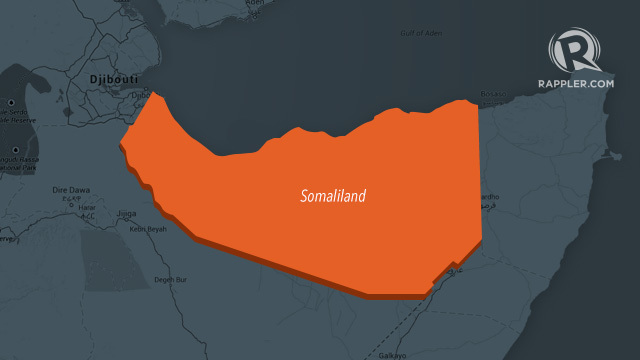
The local coast guards managed to apprehend the five men along with their weapons and boat following a short exchange of gunfire in the Sanag province, Abdulahi Ismael Irro, Interior Minster, told reporters in Hargiesa, the capital of the self-proclaimed republic of Somaliland .


Irro said at a news conference in Hargeisa that there were no casualties from the gun fight between the suspected pirates and local coast guards, adding that the men were from the neighboring semiautonomous Somali region of Puntland, hotbed for the piracy off Somalia.
Somaliland has not received international recognition for its secession from Somalia since the collapse of the Somali government in 1991. However the region enjoys relative stability and has its separate self-government, flag, police and military forces and currency.
An international conference on piracy in Somalia concluded this week in the Kenyan capital Nairobi . A number of international warships are currently deployed off Somali to fight piracy while the UN Security Council is expected to authorize further actions to deal with the scourge.
More than a hundreds ships have been attacked off Somali coast while nearly half of that figure have actually been pirated but most were released after huge ransoms were reportedly paid.

How do you tackle piracy?

Medeshi Dec 14, 2008
How do you tackle piracy?
By Frank Gardner

BBC security correspondent, Bahrain
On the tranquil island state of Bahrain, home to the headquarters of the US Navy's powerful 5th Fleet, defence ministers, admirals and officials from 25 countries have gathered to discuss, amongst other regional problems, the thorny issue of Somali pirates.
(Photo : Robert Gates, waving, called for ships to better protect themselves)
Over the past year, delegates were told, there had been a 300% increase in attempted and actual attacks on shipping in the region, with 17 ships and around 300 crew members currently being held for ransom off the Somalia coast.
In a keynote speech on Saturday the US Defence Secretary, Robert Gates, called on commercial shipping companies to do more to protect their vessels transiting the Gulf of Aden or sailing past the Horn of Africa.
Instead of stopping when challenged by pirates, he said, they should accelerate and pull up their ladders as there had been plenty of recent instances of ships outmanoeuvring the pirates.
He also suggested that another possible preventative measure could be to post armed guards onboard, but shipping sources in London were quick to dismiss this as impractical.
A leading maritime lawyer told the BBC that if insurers could prove that an armed clash with pirates constituted "unlawful use of weapons at sea" then the insurance company would be unlikely to pay up for any damage or loss of the ship and its cargo.
No shipping company, said the lawyer, would want that.
One option under discussion here in the Gulf is possible military action against pirate bases on land, since nearly everyone agreed that tackling pirates at sea is only dealing with the symptoms of the problem, not the root cause.
The US is sponsoring a draft UN Security Council resolution that would authorise - with permission from the weak Somali government - attacks on pirate land bases.
But while Mr Gates said he believed that the problem came from two or three extended Somali clans, the US did not yet have enough intelligence on which individuals were involved to go after them without causing civilian casualties.
The one thing that had been established, said US naval officers, was that there was no connection between piracy and terrorism.
Consequences
If that changed, they said, then the rules of engagement were likely to become a lot more robust.
Britain's Defence Secretary John Hutton added his own views on piracy, telling the BBC in an interview that the world was paying a price for ignoring Somalia's descent into lawlessness and that piracy was the result.
He said the nature of the threat had changed dramatically over the last 12 months and that the problem stemmed from the pirates' bases on land.
"We haven't been as involved in Somalia as we should have been. This is the consequence.
"It could get worse unless we try and resolve this problem with our regional partners and friends and allies around the world. The piracy is a manifestation of failed states.
"It could take other manifestations: terrorism, drugs, people trafficking and so on. We cannot allow these remote parts of the world to descend into this type of chaos."
International prison?
Finally, there is the question of how to prosecute those accused of piracy.
Senior naval officers from the US, France and other nations agreed here that there was an urgent need to establish an international legal framework for prosecution.
Currently navies are reluctant to arrest alleged pirates as in most cases there was nowhere to take them to stand trial.
What was needed, said some officers, was an international court, backed by the UN, with perhaps even an international prison for those convicted.
Story from BBC NEWS:

Uganda says AU will follow Ethiopian forces out of Somalia


Medeshi Dec 14 , 2008
Uganda says AU will follow Ethiopian forces out of Somalia
Nairobi/Kampala - A Ugandan government official on Friday confirmed that the African Union peacekeeping force in Somalia will pull out should Ethiopia stick to its promise of withdrawing its troops before the end of the year.

(Photo: African Union (AU) Peacekeeping Forces patrol a street in Mogadishu)
'If the Ethiopians pull out ... the AU force will pull out because it will not have adequate numbers,' James Mugume, permanent secretary at the Ugandan Foreign Ministry, told Deutsche Presse-Agentur dpa.
The Ethiopian government in late November said it would extract its several thousand soldiers unconditionally by the end of the year.
Ethiopian Prime Minister Meles Zenawi on Thursday broke the news that the AU force would also leave and promised to help the Ugandan and Burundian peacekeepers, numbering around 3,000, to pull out.
Ethiopian forces invaded in 2006 to help kick out the Islamic Courts' Union (ICU) - a hardline Islamist regime that was in power for six months.
A bloody insurgency in Southern and Central Somalia then kicked off in early 2007.
Aid agencies say around 10,000 civilians have died and over 1 million have fled as al-Shabaab, a militant splinter group of the ICU, has made huge gains.
The insurgent group is now perched on the edge of Mogadishu and is on the verge of over-running the squabbling and ineffective Transitional Federal Government.
Should both Ethiopia and the AU leave, the only force standing between the insurgents and victory would be a collection of pro- government armed militia and poorly trained recruits.
A report by the UN monitoring group on Somalia, released Thursday, said that 80 per cent of Somalia's soldiers and police - some 15,000 - had deserted or defected, often taking their weapons and vehicles with them.
The AU's top diplomat, Jean Ping, said Friday that he hoped the Ugandan and Burundian forces could be persuaded to stay.
Mugume, however, said that the AU force would only remain in Somalia if long-standing calls for a UN peacekeeping force to be deployed were answered.
'If the Ethiopians are replaced by other troops like UN peacekeepers, a number of about 8,000, we will stay,' he said.
However, the UN has appeared reluctant to deploy and analysts say this is unlikely to change.
'I don't think there is a realistic prospect for substitute troops,' Roger Middleton, Horn of Africa analyst at London-based think tank Chatham House, told dpa.
The AU force was supposed to have been much larger, but many nations have failed to meet their commitments. As a result, the AU force is undermanned and overwhelmed.
Ping said that he had asked other African countries to contribute troops to bring the AU force up to the full complement of 8,000 originally envisaged.
Middleton said that the AU peacekeepers would have little choice but to leave should the Ethiopians stick to their promise to go.
'If the Ugandans stayed ... they would become greater targets,' he said. 'Even if they stayed, I don't think they would have a stabilizing impact. Their force is tiny and can't even secure (Mogadishu) airport.'
Hardline Islamists have refused to talk peace unless the Ethiopians first left Somalia, but it is not clear if they will now come to the table or continue to advance.
Al-Shabaab has already rejected a peace deal agreed between moderate opposition figures and the government.
There are fears that in the absence of the common enemy, the Ethiopians, the insurgent groups will splinter and begin fighting, creating more chaos.
However, Middleton said that the worst-case scenario would be that al-Shabaab remained united and decided to finish off the government.
'The scariest scenario is that al-Shabaab holds together ... and we see an al-Shabaab regime with the attended radicalization of the population.'
The US says that al-Shabaab has links to al-Qaeda. In May it launched an airstrike that killed al-Shabaab leader Aden Hashi Ayro.
Al-Shabaab has also been implementing strict sharia, or Islamic law, in the towns it has seized from the government.
So far this year, a teenage girl has been stoned to death for adultery after being raped and people have been whipped for dancing and playing music.
The developments are also unlikely to be good news for plans to fight a surge in piracy off Somalia, which peaked with the recent seizure of a Saudi supertanker carrying crude oil worth 100 million dollars.
Delegates at a international conference on Thursday said that piracy was inextricably linked to the insecurity in Somalia and called for stronger efforts to help build a stable government.
The Horn of Africa nation has been plagued by chaos and civil war since the ouster of dictator Mohamed Siad Barre in 1991.

The last ditch : Yussuf fires Nur Adde


Medeshi Dec 14 , 2008
Somalia president says has fired prime minister
By MOHAMED OLAD HASSAN, Associated Press Writer
Mohamed Olad Hassan, Associated MOGADISHU, Somalia .

Somalia's president fired the prime minister Sunday, saying he failed to bring security to a nation struggling with a violent insurgency and political turmoil.
(Photo: AP – A member of the armed militia for the Islamic Union Courts poses with a recoiless rifle, during training … )
President Abdullahi Yusuf announced the decision in Baidoa, one of the few towns the government still controls now that Islamic militants have taken over most of the country.
"The government has been paralyzed by corruption, inefficiency and treason," Yusuf said, adding that he will name a new prime minister in three days.
Somalia has been without an effective government since 1991, when warlords overthrew a dictatorship and then turned on one another. Thousands of civilians have been killed since early 2007, when Islamic militants began a brutal insurgency.
The prime minister, Nur Hassan Hussein, said he will challenge the move. The president needs parliament's approval to remove the prime minister, but Yusuf said that legally there is no government in place anyway because two-thirds of ministers have already resigned.
"The president was speaking in his usual personal capacity, which is always contrary to the country's existing rules and regulations," Hussein told The Associated Press.
Somalia is at a dangerous crossroads. Ethiopia, which has been protecting the Somali government, recently announced it would withdraw its troops by the end of this month. This will leave the government vulnerable to Islamic insurgents, who have captured most of southern Somalia and move freely inside the capital, Mogadishu.
In the past they have brought a semblance of security to a chaotic country, but have done it by carrying out public executions and floggings.
On Saturday, fighters loyal to the most powerful arm of the Islamist movement — al-Shabab — publicly executed by firing squad two men accused of killing their parents in southern Somalia.
Civilians have borne the brunt of the violence surrounding the insurgency, with thousands killed or maimed by mortar shells, machine-gun crossfire and grenades. The United Nations says there are around 300,000 acutely malnourished children in Somalia, but attacks and kidnappings of aid workers have shut down many humanitarian projects.
The lawlessness, meanwhile, has allowed piracy to flourish off the coast, with bandits taking in about $30 million in ransoms this year alone.
Somalia has urged the United Nations to send a peacekeeping force, which the U.N. Security Council said is possible if the country can improve its security situation.
The United States worries Somalia could be a terrorist breeding ground, and accuses al-Shabab — "The Youth" — of harboring the al-Qaida-linked terrorists who allegedly blew up the U.S. embassies in Kenya and Tanzania in 1998.
In the past, international forces have not fared well in Somalia.
A U.N. peacekeeping force met disaster in 1993, when militiamen shot down two U.S. Army Black Hawk helicopters and battled U.S. troops, killing 18.
The troops from Ethiopia — the region's military powerhouse — have come under regular attack since arriving two years ago. They have been largely confined to urban bases, as have the 2,600 African Union peacekeepers so far sent for a mission that was approved at 8,000 members.

Neglected Sanaagland: See photos of what is left of the famous Dayaha school


Medeshi Dec 13, 2008

Neglected Sanaagland
It has always been the case since the former governments of Somalia that Sanaagland was neglected for a reason or the other. This time it inexcusable to see how development projects are kept confined to the western part of Somaliland while the east is forgotten under the pretext of security reasons which the government uses as a scare tactic to prevent NGO's move to Sanaag.

While more than the number of schools required for Hargiesa region has been built even in the remote areas of Aw Barkhadle , the most needed school of Dayaha is left for the shepherds to shelter. This is very unfair to Sanaagland which may opt for a greater Somalia in the near future if policy change on the part of the current Somlaliland government is not introduced soon.

The following images are some what is left of Dayaha school which , like Sheikh Intermediate and Secondary schools , has been among the best schools built by the British colonizers in the late fifties.
Medeshi

HORN OF AFRICA: Rural poor rocked by wobbly dollar


HORN OF AFRICA: Rural poor rocked by wobbly dollar
GENEVA, 12 December 2008 (IRIN) -
Fluctuations in the US dollar during 2008 have had devastating results for people in rural parts of the Horn of Africa as the value of remittances fell at the same time as the cost of living went up, according to the International Federation of Red Cross and Red Crescent Societies (IFRC).
"The decline, by more than 35 percent in some cases, affected many people," said Roger Bracke during the launch in Geneva of a US$95 million appeal to help 2.2 million needy people in Djibouti, Ethiopia, Kenya and Somalia over the next five years.
Bracke, who headed a two-month study into the food crisis in the Horn of Africa, said families who were dependent on relatives working abroad, mainly in the Gulf, found themselves receiving less money or none at all.
This was also true for rural families who sent members to cities to work, but then received no remittances, as the cost of living shot up, forcing labourers to keep all the money for their own needs.
"The average family [in the Horn of Africa] spends 80 percent or more of their income on food, in a normal time. So the increase has made it impossible," Bracke told reporters. "There is no money for healthcare, less for education."
Droughts have wreaked havoc in countries such as Kenya and Djibouti, where, respectively, three and four rainy seasons were deemed "failures”.
"In rural Djibouti it is almost impossible to survive. Key water sources have dried up," said the Red Cross official, warning that the current humanitarian crisis was "more than just the drought".
Famine risk
According to the IFRC, some 20 million people in the Horn of Africa are at risk of famine.
The president of the Ethiopian Red Cross, Shimelis Adugna, said the first promises to end hunger in Africa made during the 1970s have gone unfulfilled, and worse.
"Not only are children still going to bed hungry, more are going hungry and more are dying," he said.
The situation has destroyed the livelihoods of many farmers, and the IFRC said its five-year plan would include a recovery aspect, to help them get back on their feet. This would include creating new and alternative jobs for former pastoralists.
It also warned that a dying out of traditional lifestyles would also lead to rapid urbanisation, which would need to be handled correctly to avoid a health crisis in the cities.

Ethiopia's PM Declares 'Mission Accomplished' in Somalia


Medeshi
Ethiopia's PM Declares 'Mission Accomplished' in Somalia

By Peter Heinlein


Addis Ababa 11 December 2008
Ethiopia's Prime Minister Meles Zenawi has declared "mission accomplished" in Somalia, and told parliament Ethiopian troops will be home from their controversial two-year military mission within weeks. Mr. Meles also pledged Ethiopia would guarantee the safety of African Union peacekeepers in Somalia, should they choose to withdraw.
The Ethiopian leader admitted it has been impossible to crush the Islamist extremist al-Shabab forces and establish a stable government in the two years since he dispatched troops to neighboring Somalia. But he said that was not Ethiopia's objective.
That, he said, is the job of the United Nations, which gave legitimacy to Somalia's Transitional Federal Government; the African Union, which initially pledged to send 8,000 peacekeepers that he thought would quickly replace Ethiopian soldiers; and the international community.
But in answering questions in parliament, Mr. Meles said he was bringing the troops home confident they had accomplished the twin missions of preventing the establishment of a militant Islamic regime, and giving the international community time to intervene.
"Our main mission was to defuse the plan orchestrated by Eritrea, accompanied by al-Shabab, and anti-peace elements in Ethiopia, he said. "We have defused it in a way that it cannot come again. That is, if we feel there are signs it is coming back again, we can take action. We did that in the first two weeks. Our second mission was to give the international community and Somali peace forces time to accomplish their mission of bringing lasting peace to Somalia. We consider two years enough time. So we have accomplished both our missions. Unfortunately, it has not been possible to bring lasting peace to Somalia."
Urgent efforts are underway to bolster the 3,400-member AU force known as AMISOM, and possibly transform it into a U.N. peacekeeping mission. If that fails, however, and the international community abandons Somalia, Mr. Meles said he has assured Burundi and Uganda, the two AMISOM troop contributors, that Ethiopia will guarantee safe departure of the peacekeepers.
"When we intervened in Somalia, there were forces that stood by our side," he saidi. "So when we think of withdrawing from Somalia, we also think about how those countries will withdraw their troops. When we withdraw, the Burundi and Uganda forces have told us that if we withdraw, they might like to withdraw. They have told us they would need our assistance to withdraw form Somalia. They say it would be better if we escort them first, then we withdraw."
AU Peace and Security Commissioner Ramtane Lamamra is in New York for talks with U.N. secretary-general and Security Council ambassadors about ways of preventing a collapse of Somalia's transitional government after Ethiopia leaves.
African Union diplomats in Addis Ababa said the international community is showing a heightened awareness of the severity of Somalia's crisis. The U.N. Security Council is said to be preparing a ministerial-level meeting on Somalia next week. The African Union Peace and Security Council will hold a similar session the following week.
Even so, diplomats said it would take months to replace the several-thousand Ethiopian troops who are going home, much less to bring the AMISOM force up to its authorized strength of 8,000, or to transform it to a more robust U.N. peacekeeping mission.
In what are seen as significant political developments, the leader of the opposition Alliance for the Re-Liberation of Somalia returned to Mogadishu this week after a two-year absence, and the transitional government's parliament is assembling for a meeting Saturday aimed at affirming a power-sharing deal.

'Thousands' desert Somalia forces


Medeshi Dec 12, 2008
'Thousands' desert Somalia forces
More than 80% of Somalia's soldiers and police - about 15,000 members - have deserted, some taking weapons, uniforms and vehicles, the UN says.
The head of the UN monitoring group on Somalia, Dumisani Kumalo, said Islamist insurgents got many of their weapons and ammunition from the deserters.
The head of the Somali police rejected the UN's report.
Meanwhile, the African Union wants peacekeepers from Burundi and Uganda to stay when Ethiopian troops leave soon.
In the UN report, Mr Kumalo, the South African ambassador, also said most of the Somali government's security budget - supposedly 70% of its total budget - disappeared through corruption.
The Somali police chief, Abdi Awale, said all the money had been properly spent, and only a few soldiers and police officers had deserted.
Peacekeeper pledge
With Somalia's fragile transitional government facing a growing insurgency, the African Union's top diplomat said he hoped the 3,400 peacekeepers currently stationed in Mogadishu would stay - despite claims by the Ethiopian prime minister that they would leave.
"We have asked the African countries to increase their participation in Somalia, asked the UNSC (UN Security Council) to join us there, and to the AU partners to help us financing this force," Jean Ping said.
"A withdrawal from Somalia is something we cannot accept, not only the AU, but also the rest of the world," he said, according to AFP news agency.
Mr Ping's comments come in response to a statement in the Ethiopian parliament by Prime Minister Meles Zenawi that African Union peacekeepers wanted to leave Somalia.
The AU force, from Uganda and Burundi, had been expected to stay and even beef up its presence to make up for the planned Ethiopian pull-out at the end of the month.
Ethiopia has said Burundi and Uganda have asked its army to help their peacekeepers pull-out, but Burundi and Uganda have denied this.
The United Nations Security Council is due to consider a US proposal to send a full UN peacekeeping force to Somalia - something the AU has been pressing for.
Ethiopia troops intervened two years ago to oust Islamist forces from the capital, Mogadishu.
But different Islamist factions are again in control of much of southern Somalia.
Story from BBC NEWS:

Teen disappears: 'Mom, I'm in Somalia'


Medesh Dec 12, 2008
Teen disappears: 'Mom, I'm in Somalia'
His mother spoke to her son just a few days ago over the phone. To her shock, she says, he told her he was no longer in the United States.
"Mom, I'm in Somalia! Don't worry about me; I'm OK," the mother quoted her son as saying.
Details of how he got there and what has transpired in his life since his November disappearance are sketchy. His mother, who agreed to be identified only as Amina, says her son has clearly changed.
"He was different," she said of his attitude on the phone. Watch a report on missing Somalis »
Hassan is one of more than a dozen young men of Somali descent -- many U.S. citizens -- to have disappeared from Minneapolis over the past six months, according to federal law enforcement authorities. Authorities say young men have also disappeared in Boston, Massachusetts; Portland, Maine; and Columbus, Ohio.
"A number of young Somali men have traveled from throughout the United States to include Minneapolis to Somalia, potentially to fight," said FBI Special Agent E.K. Wilson.
Amina speaks about her son in the past tense, almost as if he were dead. She worries about him night and day.
"Now that he's gone, I can't sleep," she said. Watch Amina talk about her son »
The fear among the Somali community in Minneapolis is that their young men are being preyed upon and recruited to fight jihad, or holy war, in Somalia. Some have even called to tell their parents not to look for them.
"Those I talked to were completely shocked and dismayed as to what happened. They were completely in disbelief," said Omar Jamal of the Somali Justice Advocacy Center, based in St. Paul, Minnesota.
Don't Miss
US may pursue pirates in Somalia, U.N. sources say
Rights group berates West over Somalia failure
28 killed in Somalia fighting
The shock is magnified by what happened to one of them: Authorities say a 27-year-old named Shirwa Ahmed blew himself up in an apparent suicide bombing in northern Somalia in October.
Amina doesn't like to think about that and refuses to believe that her son could be learning similar tactics.
She and her son lived in an apartment along the Mississippi River in a thriving Somali neighborhood in Minneapolis. Hassan's father died years ago, and she raised him as a single parent. Hassan's other siblings have all moved out.
"I'm feeling empty tonight, like I have [nothing]," she said.
Amina says she now forgets to cook. It's gotten so bad that when she's out shopping, she'll often feel that her son is back home again. She'll quickly return, only to remember he's still away.
She struggles when she recalls how smart he is and how he was studying to become a doctor. Holding up a copy of his high school class schedule, which includes Advanced Placement courses in mathematics, chemistry and biology, she says Hassan was to graduate in May.
He wanted to attend college in Arizona, and he wanted her to move there with him.
"He was planning to be a physician assistant. He told me to move ... to Arizona because he said in Arizona, we can get [those jobs] as soon as possible after graduating," she said. "His expectations were high."
She added, "He doesn't like to fight. Sometimes, he was a comedian. He likes to laugh or to say things that make you laugh. He was a very kind person."
Amina says her son has called a few times, most recently Saturday. She says that each time, it feels as if her son is being watched or listened to by at least one or two other men, because she can hear other voices in the background.
"It's like a kidnapped person. And he has no freedom, because if he said, 'Mom, I have to leave here; I have no life,' then they would kill him."
The question that plagues Amina and just about everyone in Minneapolis' Somali community is: How could these young men who were well-educated and who stayed out of trouble in the United States wind up in war-torn Somalia, possibly as fighters?
In Hassan's case, his mother fled the nation when she was pregnant with him, and they eventually came to the United States to escape the country's violence. She says her son's demeanor changed a couple months before he disappeared. He became more withdrawn, and she doesn't know why.
Other local Somalis have voiced concern that, because a large number of the men missing attended the same Islamic center after school, it could have played a role.
Amina does not believe the center itself played a role but thinks there are certain people associated with it who may be involved.
On Monday, representatives of the mosque, Abubakar As-Saddique Islamic Center, held a news conference to address the issue. The mosque's attorney, Mahir Sherif, strongly denied any allegations that it is connected to the men's disappearance, saying the center "has not and will not recruit for any political cause."
"I haven't talked to any of them [since the stories came out]. I haven't seen any of them fighting," Sherif said. "I mean, I would be speculating. I'm hearing what everybody else hears."
Amina keeps hoping her son will return and that somebody in the community will come forward with more information.
"I'm asking for those who took my son or know anything about it to come forward. I'm asking you kindly to help and facilitate how to make possible to return [him]. Most sincerely."

Don't Miss
US may pursue pirates in Somalia, U.N. sources say
Rights group berates West over Somalia failure
28 killed in Somalia fighting

Puppet government near collapse in Somalia


Medeshi Dec 11 ,2008
Puppet government near collapse in Somalia
By Abayomi Azikiwe Editor, Pan-African News Wire
The Ethiopian government on Nov. 25 announced it was withdrawing its military forces from neighboring Somalia. This represents a defeat for the foreign policy aims of Washington, which encouraged the government of Meles Zenawi to invade Somalia in December 2006.
(Map : Green : Somalia)
The Ethiopian military force is now down to some 2,000 troops from an initial 12,000. The Ethiopians are supposed to be replaced by 8,000 African Union “peacekeeping” forces.
However, only 2,600 AU troops, supplied by the U.S.-backed countries of Uganda and Burundi, have been deployed in the capital of Mogadishu. Other nations such as Nigeria, Ghana, Malawi and Kenya, which had pledged to send troops, have not deployed any.
In a candid statement, President Abdullahi Yusuf of the U.S.-backed Transitional Federal Government in Somalia, which is bolstered militarily by the Ethiopian army, said the regime is “on the verge of collapse.” (Reuters, Nov. 16) Fighters from the al-Shabaab organization have not only taken control of vast areas of the country, but are openly challenging the puppet forces inside Mogadishu.
“Most of the country is in the hands of Islamists and we are only in Mogadishu and Baidoa, where there is daily war,” said Yusuf, speaking before an assembly of 100 Somali legislators in Kenya.
Yusuf spoke about the fragility of the TFG government, saying: “We, ourselves, are behind the problems and we are accountable in this world and in the hereafter. Islamists have been capturing all towns and now control Elasha. It is every man for himself if the government collapses.”
In a further sign of disarray, Yusuf accused Prime Minister Nur Hassan Hussein of the political problems within the regime. The government has failed to appoint a new cabinet since the previous one was dissolved months ago.
Resistance forces advance
As the TFG bickered over cabinet seats within an ineffective regime, reports from the ground in Somalia indicated that the al-Shabaab resistance movement had taken control of the port town of Barawe, located approximately 110 miles from the capital. During the week of Nov. 10, the movement seized the town of Merka, where a strategic airstrip is located.
In Mogadishu, where the TFG claims it still maintains control, al-Shabaab fighters operate openly, carrying out recruitment drives and training exercises. The organization is already presenting itself as a parallel government to the U.S.-backed TFG.
The resistance forces also consist of groups within the Union of Islamic Courts that are negotiating agreements with the TFG in Djibouti. This faction, led by Sheik Hassan Dahir Aweys, has been described as more “moderate” than al-Shabaab, which was the youth wing of the UIC during its burgeoning period of influence prior to the Ethiopian invasion.
Another prominent Islamic leader, Sheik Hassan Dahir Aweys, who was also a part of the UIC, has rejected talks with the TFG until the Ethiopians withdraw. The U.S. government has accused Aweys of supporting “terrorism” and has actively discouraged the TFG from reaching any agreement with his forces.
An article in the Nov. 24 Chicago Tribune by correspondent Paul Salopek points out the central role of the U.S. government in the current situation in Somalia.
“It is a standoff war in which the Pentagon lobs million-dollar cruise missiles into a famine-haunted African wasteland the size of Texas, hoping to kill lone terror suspects who might be dozing in candlelit huts. The raids’ success or failure is almost impossible to verify,” writes Salopek.
“It is a covert war in which the CIA has recruited gangs of unsavory warlords to hunt down and kidnap Islamic militants and ... secretly imprison them offshore, aboard U.S. warships.”
Salopek states that U.S. efforts in this Horn of Africa nation are bound to result in another defeat: “It is a policy time bomb that will be inherited by the incoming Obama administration: a little-known front in the global war on terrorism that Washington appears to be losing, if it hasn’t already been lost.”
The article quotes Ken Menkhaus, a leading Somalia scholar at Davidson College in North Carolina: “Somalia is one of the great unrecognized U.S. policy failures since 9/11. By any rational metric, what we’ve ended up with there today is the opposite of what we wanted.”
Will policy change under Obama?
It is not yet clear whether the incoming U.S. administration will make any significant changes in its military policy toward the Horn of Africa. However, President-elect Barack Obama’s selection of several top-level Clinton administration figures indicates a continuing reliance on military force in the region.
Bill Clinton inherited the invasion of Somalia initiated by the George H.W. Bush administration in December 1992. The situation grew tense during 1993, leading to coordinated resistance by the Somali masses that forced the U.S. to withdraw from the country in 1994.
This Nov. 20 the U.N. Security Council passed a unanimous resolution to impose sanctions against so-called “pirates, arms smugglers and perpetrators of instability in Somalia.” (AP, Nov. 21)
The council’s “quick approval of the British-sponsored resolution was followed by an open meeting on the deteriorating situation in Somalia—both on land and at sea off its nearly 3,900-km coastline, which includes some of the world’s most important shipping routes.”
Deputy U.S. Ambassador to the U.N. Rosemary DiCarlo appealed for immediate measures to address the situation in the Horn of Africa, which is threatening an Oct. 26 ceasefire agreement between some Islamic groups and the TFG. The more militant resistance forces such as al-Shabaab are not party to the Oct. 26 agreement.
DiCarlo called for strengthening the 3,450 African Union troops in Mogadishu, supposedly so much-needed food aid can be delivered to the population—the same excuse given for the U.S. intervention in 1992.
DiCarlo said that if 6,000 AU forces from various countries cannot be mobilized, then the U.N. should intervene directly in Somalia.
A greater U.N., U.S. or E.U. military involvement in the Horn of Africa will prove disastrous for these entities. The Somali people have a proven history of successful resistance against imperialist intervention.
The peoples of the U.S. and the E.U. have no desire to see their governments drawn into a protracted struggle in this region. The anti-war forces in these countries must oppose military intervention and uphold the right of self-determination and sovereignty for the Somali people and other nations throughout the Horn of Africa.
Articles copyright 1995-2008 Workers World. Verbatim copying and distribution of this entire article is permitted in any medium without royalty provided this notice is preserved. Workers World, 55 W. 17 St., NY, NY 10011

Pirates cashed in $120 mln in 2008: UN


Medeshi
Thursday, December 11, 2008
NAIROBI (AFP) — Somali pirates have raked in more than 120 million dollars in ransom money since the start of 2008, the United Nations' top envoy for Somalia said at an international conference here on Thursday.
Ahmedou Ould Abdallah said pirates had attacked 32 ships since October alone and warned the 140 delegates gathered in Nairobi that "the threat of piracy cannot and should not be underestimated anymore."
"They may have collected over 120 million dollars (91.3 million euros) for this year, with total impunity," he said.
"This unprecedented rise in piracy is threatening the very freedom and safety of maritime trade routes, affecting not only Somalia and the region, but also a large percentage of world trade," he said.
Ould Abdallah also said it was key to identify and target the financiers of the pirates boarding the ships, most of whom are former coastguards and seasonal fishermen.
Handout image from Britain's Ministry of Defence shows boats from HMS Cumberland intercepting a suspect pirate dhow
"Countries that can do so should trace, track and freeze the assets of the backers of the pirates," the UN envoy said.
"They deserve to be brought to justice and prevented from harming their country, its economy and reputation. Impunity and lack of respect for human rights have no doubt encouraged piracy," he added.
Pirates have redistributed ransom money to ensure the local coastal communities' support and have also reinvested in better equipment, such as bigger engines for their speedboats and satellite phones.
The pirates holding the Sirius Star, a 330-metre (1100-foot) Saudi super-tanker carrying two million barrels of crude, even have a money-counting machine should the 3.5 million dollars they have demanded come in cash.
But a maritime official in Kenya argued that only a fraction of the ransom money paid for the release of ships goes through Somalia.
"Most of it ends up in Nairobi, Mombasa, the United Kingdom, Canada etc.," the official said on condition of anonymity. "Ransom money goes through Kenya so it means that the security system here is part of the problem."
He argued that if the international community wanted to apply pressure on the backers of Somali piracy, they should start looking in Nairobi, a key hub for Somali trade and business.
"Harardhere is not a pirate den, the real pirate den is Nairobi," the official said. Harardhere is the port north of Mogadishu near where the Sirius Star and other hijacked ships are being held. SOURCE: AFP, Thursday, December 11, 2008

SPECIAL REPORT: A Marshall Plan for Africa

Medeshi Dec 11, 2008
SPECIAL REPORT: A Marshall Plan for Africa
MANAMA -- Piracy in the Horn of Africa has recently grabbed the front pages of newspapers around the world after Somali pirates successfully hijacked several cargo ships, including a Saudi-owned super tanker, the Sirius Star, with $100 million dollars worth of oil on board.
(Photo: A French anti-piracy unit undergoes a naval exercise in the Mediterranean Sea near Toulon, southern France in preparation to tackle pirates off the coast of Somalia who have sown panic throughout the shipping world and caused some firms to reroute to the Cape of Good Hope - hiking costs and causing delays . )
These modern-day buccaneers operating in the troubled waters off the coast of Somalia and Yemen, have extorted what is no less than kings' ransoms in exchange for the safe return of ships, crews and cargoes.
As of this publishing the pirates continue to hold a number of vessels and their crews.
Newspapers and television stations are not the only ones following developments in the Horn of Africa. The recent spike in piracy has also aroused the attention of security and military officials around the world, particularly after intelligence sources began linking some of them to Islamist terrorist groups affiliated with al-Qaida.
In the last 12 months more than 120 ships, according to the World Maritime Union, have been attacked by pirates and about 40 – in other words one out of every three ships attacked has been successfully hijacked.
Indeed, piracy in the Horn of Africa is such a hot topic these days that it is piquing the interest of the world's top security experts. The London-based International Institute for Strategic Studies is devoting an entire session to studying this new phenomenon and to discuss ways to successfully deter modern piracy, during the institute's annual symposium on Gulf security that will be held in Bahrain Dec. 12-15.
The West in general, and the European Union and the United States in particular, were somewhat slow to react to the threat. This delay allowed the pirates to become bolder and more daring. It has also allowed them to acquire more sophisticated weapons with the ransom they received.
But now, after months of failing to respond to the challenge posed by these pirates, the EU has finally begun to take action.
As of Monday, the European Union launched a new initiative in the area, Operation Atlanta, a joint effort by its 27 member nations. This was the first naval mission of its kind, the aim of which is to try and eradicate this new plague and growing threat to international shipping.
By no means will the mission be an easy one, given the size of the area in question – three times the size of France – and the means at their disposal to police that zone.
The initial task force counts only six warships and three maritime patrol planes.
Britain and France, two former colonial powers in Africa have taken the lead in the fight against modern day piracy, along with Greece, a country where a high percentage of the word's merchant ships are registered, providing the country with an important revenue stream. Germany and Italy are sending gunboats and France and Spain are contributing fighter planes from a nearby French military base in Djibouti still used by the French Foreign Legion.
So challenging is the task that the European Union is asking non-EU members to participate in the joint naval task force.
While no doubt this is a positive development - and it should inject some much needed confidence among vessels of the world's merchant marine and pleasure cruises, both of which have been the target of international piracy - action should have been taken months ago, when the problem was still manageable and when the pirates were not as well armed and equipped.
The fact that these hijackers were able to make fortunes now gives them additional clout and resources. A few million dollars goes a long way in the Horn of Africa, one of the poorest regions on earth.
Pirates know how to invest the money they steal. A good portion of it is "reinvested" in the tools of their trade.
Modern seaborne plunderers are equipped with speedboats fitted with powerful outboard engines, often more powerful than those used by the authorities. They are also equipped with automatic weapons, light artillery and sophisticated navigational equipment.
Now if that was not bad enough, according to intelligence sources, many pirates also have links with militant Islamist organizations.
Of course brute military force alone is not the solution and will only solve the problem temporarily, if that. What is needed is a mini-Marshall plan to help develop the region, in turn offering Somalis a viable alternative to joining marauding gangs of criminals, be they on land or at sea.
Cracking down on piracy and crime is indeed a must, however logic demands that the thousands of unemployed and aimless youth in the Horn of Africa be offered a way out of their misery.

World's neglect of Somalia to blame for piracy, say diplomats


World's neglect of Somalia to blame for piracy, say diplomats
Africa News
Dec 11, 2008,
Nairobi - The world's long-term neglect of conflict-stricken Somalia has created the current boom in piracy in the Gulf of Aden, diplomats and UN officials said Wednesday as the second day of an international conference on piracy began in Nairobi.
'The Somali leadership ... and the international community have neglected Somalia,' UN Special Representative for Somalia Ahmedou Ould-Abdallah said. 'Piracy is one of the most important consequences of this neglect.'
Over 140 delegates from 45 countries - including ambassadors, ministers and technical experts - have gathered in the Kenyan capital to look at how to increase cooperation in fighting Somali pirates, in particular the thorny legal aspects of the issue.
The increase in piracy this year has coincided with a degeneration of the security situation in Somalia, where the Transitional Federal Government is crumbling under a fierce Islamist insurgency.
Ould-Abdallah said 32 vessels had been attacked in the last two months alone, with 12 being successfully seized.
Around 15 ships and 300 crew members are in the hands of pirates, including a Saudi supertanker carrying crude oil worth 100 million dollars and a Ukrainian ship carrying a cargo of 33 tanks and other military equipment.
The surge in piracy has prompted increased patrols along the Somali coast by the North Atlantic Treaty Organization, Russia, India and France.
The EU on Tuesday also formally launched operation 'Atalanta,' a year-long mission relying on up to six warships and two or three maritime patrol aircraft at any one time
However, Kenyan Foreign Minister Moses Wetangula, opening the conference on behalf of President Mwai Kibaki, said that until the world addressed the root cause of the piracy - insecurity on the ground - no progress would be made.
'If the major powers paid one-tenth of their responsibility to Somalia, compared to the 100 per cent paid to Iraq, Afghanistan or the former Yugoslavia ... we wouldn't be here today,' he read from a statement attributed to Kibaki.
Piracy in Somali has its roots in the early 1990s, when illegal fishing trawlers and ships dumping toxic waste took advantage of the collapse of the regime of dictator Mohamed Siad Barre in 1991 to target Somali waters.
Fishermen began seizing the foreign ships, saying they were defending their coastline. Now piracy in Somalia has morphed into a multimillion-dollar industry, with gunmen commanding huge ransoms for the ships they seize.
Ould-Abdallah said pirates may have made over 120 million dollars from ransoms this year alone.
Andrew Mwangura, head of the Kenyan branch of the East African Seafarers' Association, on Tuesday called for dialogue with the pirates to address their grievances.
While delegates at the conference said that the insecurity in Somalia had to be addressed, calls for dialogue with the young gunmen were rejected.
'These other things like illegal fishing and toxic dumping need to be addressed, but it is no excuse for the behaviour of these gangsters,' German Ambassador to Kenya Walter Lindner told Deutsche Presse-Agentur dpa on the sidelines of the conference.
Somalia has been embroiled in chaos ever since Barre's ouster, but the crisis has deepened since Ethiopian forces helped kick out a hardline Islamist regime for the last half of 2006, sparking the insurgency.
At least 10,000 civilians have died and over a million have fled since early 2007. The insurgents have made huge gains and are now perched on the edge of Somali capital Mogadishu.
Somali President Abdullahi Yusuf Ahmed, in a statement read out at the start of the conference, called for UN peacekeepers to be deployed to help an undermanned and overwhelmed African Union force.
'Somalia has been abandoned by the whole world,' the statement said. 'It is high time (the world) examines its conscience and comes to rescue Somalia now.'


Sharif back in Mogadishu as death toll hits 16,210

MOGADISHU , Somalia's moderate Islamist leader Sheikh Sharif Ahmed returned to Mogadishu for the first time in two years on Wednesday and a local rights group said fighting had killed 16,210 civilians since then.
Security was tightened in the capital as Sharif, who is in talks with the country's Western-backed interim government, was rushed to a hotel in a northern district of the city surrounded by government troops and Islamist militiamen.
The U.N. special envoy to Somalia, Ahmedou Ould-Abdallah, said Sharif's return was "most welcome", while the sight of gunmen who used to shoot at each other now working side by side cheered many of the capital's war-weary residents.
"His enemies have welcomed him as a friend today ... Sharif's presence will minimise the violence, even if it doesn't end it completely," said 44-year-old local Hassan Garaad.
"Islamists wearing turbans and soldiers with uniforms together in one place is a peaceful sign for Mogadishu."
Sharif was one of two main leaders of a sharia courts group driven from the capital by government soldiers and their Ethiopian military allies at the start of last year.
ISLAMISTS BATTLE
Sharif's return brought a rare ray of hope to some Somalis. But experts say he has little influence over Islamist hardliners who have steadily gained ground to control most of the south, and are camped on the outskirts of Mogadishu.
Exposing splits in the Islamist ranks, the latest battle between two rebel factions killed at least four people days ahead of a planned Ethiopian military withdrawal that could leave the capital open for an insurgent assault.
Witnesses said hardline al Shabaab fighters clashed with more moderate Islamic Courts militia on Tuesday in El Garas, 50 km (30 miles) southeast of the central town of Dusamareb. Both sides fired heavy machine guns and rocket-propelled grenades.
Spokesman from neither side were immediately available.
Addis Ababa has become increasingly frustrated by the financial cost, by feuding between its leaders, and the absence of a serious, international effort to pacify Somalia.
Now Ethiopia says it will pull out its troops by the end of December, leaving a probable power vacuum and more bloodshed.
The Mogadishu-based Elman Peace and Human Rights Organisation has been tracking the casualties since Islamist insurgents launched a rebellion against Somalia's interim government and its Ethiopian military allies early in 2007.
Elman said 7,574 civilians had been killed so far in 2008, adding to 8,636 killed the year before. In a report, it said nearly 29,000 people had been wounded over that two-year period.
The Islamists' main weakness is the rift between hardliners such as Shabaab -- which the United States accuses of having links to al Qaeda -- and the more moderate elements such as Sharif's.
Presidential spokesman Hussein Mohamed Mohamud told Reuters Sharif was a peace-loving leader who would change the situation in the country for the better. "He will also tell the truth to Somalis who were confused and disturbed by al Shabaab," he said.

Ethiopia says AU peacekeepers to quit Somalia too

Medeshi
Ethiopia says AU peacekeepers to quit Somalia too
Thu 11 Dec 2008
By Tsegaye Tadesse
ADDIS ABABA (Reuters) - African Union peacekeepers in Somalia have asked Ethiopian troops planning to leave the country at the end of the year to help them quit Mogadishu too, Ethiopian Prime Minister Meles Zenawi said on Thursday.
There are 3,200 soldiers from Uganda and Burundi guarding strategic sites in the capital, which has been the focus of a two-year Iraq-style insurgency by Islamist rebels battling the Horn of Africa nation's Western-backed interim government.

The withdrawal of the foreign forces could leave the door open for an insurgent assault.
Ethiopian troops have been supporting the administration, but Meles has become increasingly frustrated by feuding among its leaders, the financial cost of the operation and the absence of any serious, international effort to pacify Somalia.
Addis Ababa says it will withdraw its forces at the end of December, and Meles said the AU soldiers wanted to leave too.
"The African Union, Uganda and Burundi have all asked us to stay behind and provide protection for the safe passage of their troops," Meles told parliament.
"The AU troops in Somalia are our comrades in arms, we have responsibility to provide safe passage during their withdrawal."
Ethiopia's decision to pull out was final, he said, and he blamed the international community for failing to fund the AU mission, AMISOM, to its planned strength of 8,000 troops.
An Ethiopian withdrawal could create a power vacuum and leave Mogadishu vulnerable to a takeover by the Islamists, who now control most of the south and central regions and are camped on the outskirts of the city.
The ill-equipped AU troops would not be able to stop that, even if it were in their mandate. Ugandan and Burundian military spokesmen were not immediately available to comment.
SHARIF CONDEMNS FIGHTING
Some residents were cheered on Wednesday when moderate Islamist leader Sheikh Sharif Ahmed returned to Mogadishu for the first time in two years. His opposition faction is in U.N.-led talks with President Abdullahi Yusuf's government.
But the rebels remain deeply divided, and witnesses said clashes between other Islamist gunmen and pro-government forces killed at least 10 people in the city early on Thursday.
"We attacked five government bases and even neared the presidential palace this morning," Sheikh Abdirahman Isse Adow, spokesman for the Islamic Courts, told Reuters.
Experts say Sharif has little influence over Islamist hardliners including the al Shabaab group, which the United States accuses of having links to Osama bin Laden's al Qaeda.
At a news conference, Sharif condemned the bloodshed and urged the opposition to unite.
"All Islamists must stop fighting and resolve their differences at the negotiating table," he said. "We are very disappointed with those who claim jihad and attack Ethiopian troops who have already agreed to pull out."
A prominent Islamist hardliner, Sheikh Hassan Dahir Aweys, said Sharif's return proved he had joined the "enemies".
"This will only fuel war and bring more harm," Aweys told Reuters by telephone from Asmara. "You saw there was more fighting in Mogadishu this morning and we shall not cease it."
A local rights group says the insurgency had killed 16,210 civilians since the start of last year, when allied Somali-Ethiopian forces drove the Islamists from the capital.
About 1 million people have been uprooted, and 3.2 million -- more than a third of the population -- need emergency aid. The chaos has also helped fuel an explosion of piracy offshore.

Qaar ka mid ah Ururada Bulshada Rayidka ah oo walaac ka muujiyay mudo dhaafka golayaasha deegaanada

Annaga oo ah Ururada Bulshada Rayidka ah ee Madaxa-banaan waxaanu si wayn uga walaacsanahay