Ethiopia and Somalia: A promised withdrawal


A promised withdrawal
Dec 4th 2008 NAIROBI
From The Economist print edition
Ethiopia says its troops will be out of Somalia soon. Will they? And then?
IT TOOK Ethiopia two weeks in December 2006 and January 2007 to invade Somalia and crush fighters loyal to the Somali Islamic Courts Union. By contrast, it has taken two years for it to decide to withdraw, leaving the nastiest of the same Islamists in control of much of the country. Officially, Ethiopia is making good on a promise to quit, signed at peace talks in Djibouti last month between Somalia’s impotent transitional government and moderate Islamists. It has been reducing its presence for some time. Its intelligence network will remain on the ground, though some of its agents may well be killed by the ascendant jihadists. Several thousand of its troops will be stationed on Ethiopia’s side of the border, a day’s drive from Mogadishu, Somalia’s battered capital.
The Djibouti agreement is supposed to swell Somalia’s parliament with moderate Islamists, promising the country the first broadly-based government it has known since the collapse of Siad Barre’s regime in 1991, the last time Somalia had anything approaching a government that controlled the whole country. In truth, the Ethiopians are leaving because they are fed up—with the vanity of Somalia’s president, Yusuf Abdullahi, and his constant bickering with his prime minister, Nur Hussein; fed up, too, with the listlessness of the African Union (AU) and the UN. Both have failed Somalia almost as entirely as its own leaders.
The AU promised 8,000 troops to control Mogadishu but only 3,000 Ugandan and Burundian peacekeepers pitched up, and then only to protect a few key installations, while other parts of Mogadishu became ever more anarchic. The capital may now be in its worst shape ever. Several hundred thousand of its hungry people are in dangerous, squalid camps outside the city. The UN has tried to deliver aid, but its budget is far too small and the country is far too dangerous for aid workers, many of whom have been kidnapped and killed.
Among Ethiopian officials and soldiers, a sense of quiet relief prevails; it could have been worse. Perhaps 800 Ethiopian soldiers have been killed. No one knows the cost of the operation or how much of it may have been borne by the United States, which egged on Ethiopia to invade. But the Ethiopians’ original aims, to shore up Meles Zenawi, their ruthless prime minister, and rout Ethiopia’s ethnic-Somali separatists in the country’s restive Ogaden region in the east, have largely been realised.
Ethiopia, in any case, reckons that the jihadist fighters’ influence in Somalia is weaker than many observers think. It says the reason young men flock to the Shabab (Youth), the former armed wing of the Islamic Courts, wrap their faces in black scarves and kill in the name of Allah, has less to do with al-Qaeda’s virulent internet rhetoric than with the $100 monthly salary the Shabab pays. Somalia’s government forces have not been paid for months.
Some Ethiopian officials may hope to be begged to stay on with all their costs paid for, but they know that is as unlikely as the UN sending a robust force of peacekeepers. So far, President-elect Obama’s team of foreign-policy advisers has given no hint that it will drastically change American policy in the Horn of Africa. Until someone has the courage and the equipment to intervene decisively on a large scale, Somalia will remain the world’s murkiest failed state, with ordinary Somalis trapped in their misery.

Somali Pirates Thrive After U.S. Helped Oust Their Islamic Foes


Somali Pirates Thrive After U.S. Helped Oust Their Islamic Foes
By Gregory Viscusi

Medeshi Dec 6, 2008

International patrols at sea have done little to stop pirates from menacing ships off the coast of Somalia. Even less is being done to thwart them on land -- and for that the brigands may want to thank an unintended consequence of the U.S.’s war on terror.
In 2006, militant supporters of the Islamic Courts Union, an alliance of Sharia tribunals, won control of Somalia and imposed religious law.
“Under the Courts, there was literally no piracy,” says Hans Tino Hansen, chief executive of Risk Intelligence, a maritime security consultant in Denmark.
Then the U.S. helped drive out the Muslim rulers to prevent the East African country from becoming a terrorist haven, leaving behind a lawless chaos in which piracy has flourished.
“It’s a bad mistake to look at Somali events through the prism of international politics,” says Richard Cornwell, an Institute for Security Studies researcher in Pretoria. “The U.S. turned an internal Somali conflict into part of the global war on terror.”
Now, Cornwell says, the West is making the same mistake with piracy by focusing more on battling it at sea than on pushing feuding Somali factions toward a settlement. And with Islamist militiamen again poised to seize the capital, Mogadishu, there’s little chance they will be able to control the outlaws this time.
$100 Million Extorted
“They are no longer some ragged bunch of pirates,” says Cornwell. “They are increasingly well armed and organized.” The pirates also are flush with cash, having extorted an estimated $100 million since the 1990s, according to Will Geddes, managing director of ICP Group, a London security company.
Moreover, today’s Islamists are unlikely to deliver a government capable of eradicating piracy because they are more divided than in 2006, says Rashid Abdi, an International Crisis Group analyst in Nairobi. Some may even form alliances with the pirates in the self-governing breakaway northern region of Puntland, the base for many brigands, he says.
Somalia hasn’t had a central government since the 1991 fall of the Siad Barre regime, which led to an earlier ill-fated U.S. intervention, recounted in the book and movie “Black Hawk Down.”
The Islamic Courts Union took control of Somalia in June 2006 by defeating its ruling alliance of warlords. The new rulers raided pirate dens on land and sea, effectively shutting them down, Hansen said.
Restraint Urged
The Islamist takeover alarmed neighboring Ethiopia, a U.S. ally. Initially, U.S. officials urged Ethiopia to show restraint and tried to cajole the Islamists into a power-sharing deal with other Somalis, says Ken Menkhaus, a former adviser to the United Nations in Somalia.
After those efforts failed, Ethiopia invaded in December 2006 and went on to rout the Islamists. The U.S. asserted in mid-December that the Islamists were linked to al-Qaeda, the group behind the Sept. 11, 2001, attacks. And once the invasion was under way, the Americans helped the Ethiopians “with advisers and intelligence,” as well as “aerial attacks,” Menkhaus says.
In January 2007, a U.S. gunship attacked Islamists in the south after the Ethiopians forced them out of Mogadishu, the Americans said at the time. The U.S. military also has confirmed launching missiles against Islamic leaders in Somalia on Jan. 8, March 3 and May 1.
“The U.S. denies it publicly, but it’s a commonly held view that the American government provided tacit if not overt support to the Ethiopians,” says Roger Middleton, an Africa researcher at Chatham House, a London consultant.
‘Common Vision’
“The Americans and the Ethiopians have different agendas in Somalia,” Middleton adds, but “it was clear from the U.S. missile strikes” that the two countries “shared a common vision that an Islamic movement was not what they wanted to govern Somalia.”
Before being shut down, the pirates demanded tens to hundreds of thousands of dollars for each boat they seized, mostly preying on ships plying trade routes along Somalia’s east coast.
Now they use more powerful boats and also strike ships in the Gulf of Aden on their way to the Suez Canal, usually demanding between $500,000 and $2 million per ship, according to a report by Chatham House. Pirates holding an oil-filled Saudi tanker want $25 million.
The tanker is one of 120 attacked so far this year off Somalia’s east coast and in the Gulf of Aden on the way to Egypt’s Suez Canal, a route used by 20,000 ships a year carrying a tenth of the world’s trade.
Seized Ships
That’s up from 37 attacks for all of 2007, the French government says. About 40 vessels have been successfully seized this year. They include a Ukrainian ship carrying tanks that will soon be released for an undisclosed ransom, the Associated Press reported Dec. 2, citing a pirate spokesman.
Russell Brooks, a U.S. State Department spokesman, rejects the idea that American actions might be to blame for increased piracy, noting that the U.S. had urged the Ethiopians not to go into Somalia.
Moreover, the “epicenter of the piracy problem” is Puntland, which the Islamists never controlled, he says. “So to suggest that the Islamic Courts were able to control the piracy problem is a misreading of the situation.”
The Chatham House’s Middleton says the Islamists had their own coast guard, raided ports in Puntland and controlled Hobyo, Harardheere and other central Somalia port towns where most pirates were then based, before the brigands moved north.
Edge of Mogadishu
This year, an Islamic militia known as Al-Shabab, or “the Youth,” began moving against the warlords and now controls much of the center and south of the country and is on the edge of Mogadishu.
“We strongly oppose piracy,” said Sheikh Abdi Rihin Isse Adow, a militia spokesman, by telephone from a location he declined to disclose. He didn’t specify what action would be taken to stop them.
Somalia’s internationally recognized Transitional Federal Government, which controls just a few Mogadishu neighborhoods, has approved foreign action against the pirates.
The North Atlantic Treaty Organization, the European Union, Malaysia, India, and Russia have sent ships to patrol waters off Somalia. A United Nations Security Council resolution passed in June and renewed Dec. 2 gives navies the right to pursue pirates into Somali waters.
Patrol Ships
The pirates operate across 2 million square kilometers (772,200 square miles) of sea, more than three times the size of France. In all, about 15 ships patrol the area, says Christophe Prazuck, a French military spokesman. It would take 300 warships to control every ship movement there, he adds.
The Western powers say they don’t have the right to operate at will on land or to blockade Somalia. “Blocking ports is not contemplated,” said Jaap de Hoop Scheffer, NATO’s Secretary General, in Brussels Nov. 24.
“A naval force can keep piracy levels down, but it can’t solve the problem,” says Risk Intelligence’s Hansen. “A permanent solution can only come from land.”

Mismanagement of Somaliland port hinders development


Medeshi Dec 6, 2008
Mismanagement of Somaliland port hinders development
Great opportunities were opened to the famed deepwater port of Berbera in non-recognised Somaliland as Ethiopia needed a new outlet in the 1990s. Somaliland's revenues and geopolitical importance were to increase. Mismanagement and alleged corruption however is leading to declining government revenues as shipping companies avoid Berbera in favour of ports in Djibouti, Somalia and Sudan.

A few years ago, the port of Berbera contributed with an estimated 60 percent to Somaliland's GDP and government revenues. According to non-confirmed figures, revenues from the non-recognised country's main port however have dropped by around 30 percent during the last two or three years. Berbera Port is definitively losing out in the regional competition over the lucrative foreign trade of Ethiopia.
According to several sources, the main reason for the decline of the Berbera Port has been years of mismanagement and a culture of corruption and extortion. Due to ineffective standards, unloading at Berber Port takes two to three times longer than in the competing ports of Bossaso (in Somalia's Puntland region), Djibouti and Port Sudan.
While time spent at Berbera Port is growing longer each time, the unwanted stay also gets expensive. Somaliland authorities in 2002 increased tariffs and taxes for vessels unloading and uploading in Berbera. At the same time, the modernised port of Djibouti lowered taxes and the Bossaso port tariff was almost dropped altogether. Berbera became reputed as a milking cow for the Somaliland government.
Even more annoying for shipping companies are however the non-legal payments demanded during the stay in Berbera. According to 'Somaliland Times', visiting vessels are forced to pay daily fees to port authorities for services not requested, including garbage collection and cleaning. Fees for jobs as unloading, tallying, piloting and anchorage are further collected double, by port authorities and by "a bogus firm," the newspaper found.
Also the World Bank in a recently published study found practices at Berbera Port to be little competitive. "The Berbera Port Authority collects import-export duties, board dues and other charges, and has a monopoly on loading / unloading services. However, the port continues to lack vital cargo handling equipment and storage facilities, and its loading time and cost compare unfavourably with those of privately managed ports," the Bank concluded.
For Ethiopian importers and exporters, the hassle does not stop in the port. According to the World Bank, municipal governments collect inappropriate tolls on the Berbera-Hargeisa road, which is the first passage towards Ethiopia. Compared with the somewhat longer distance between Addis Ababa and Djibouti, the Berbera - Addis Ababa road is in a poor state and has less capacity.
Consequently, Ethiopian businessmen and foreign shipping companies choose alternative routes. The Berbera Port is not gaining from the fact that Somaliland has the friendliest terms with Ethiopia compared with all other neighbours. Despite the unstable relations between Ethiopia and Djibouti, effectively and competitive prices at Djibouti Port have directed more and more regional trade to this facility, making it a regional hub.
The restructuring of Djibouti's port in fact has become a model investment. During the last five years, the port has been privatised and has attracted large investments to make it more effective and modern. Corruption has targetly been rooted out. The only factors hindering an even greater traffic to Djibouti Port is the transport bottleneck to Addis Ababa and the lack of political will in Ethiopia to get more dependent on trade through Djibouti.
A growing number of Somalilanders now urge the government of President Dahir Riyale Kahin to take equal steps to revitalise Berbera Port. Analyst Guled Ismail this week in an article in 'Awdal News' that the answer to the current crisis "is to privatise the port with a controlling majority shares left in the hands of Somalilander businessmen." A privatisation would also bring capital for investment and upgrading, Mr Guled holds.
A possible privatisation of the run-down port has in fact been discussed for years in the Somaliland press. The World Bank and the UN's development agency UNDP have several times recommended such a solution to increase efficiency in Berbera.
Observers however hold that such a solution is very difficult given the power balance in Somaliland. "Despite the highly touted democracy and rule of law in Somaliland, the reality is that the country is still governed on clan-basis and Berbera port is not an exception," a Somalilander journalist today told afrol News.
- The top management of the port comes from the natives of Berbera and the government has little say in the management of the port's revenue and how it is operated, he added. Attempts to privatise the port could provoke tensions between the traditional and economic elite in Berbera on one side and the central government on the other.
After all, the Director of the Port Authority is said to be one of Somaliland's richest and most powerful men, despite his modest salary, several sources hold. He also is said to have the backing of the local business community and clan leaders.
Meanwhile, Somaliland sees its regional importance diminishing from year to year, also making the government's efforts for international recognition of the breakaway republic more difficult. Somaliland lost a great opportunity to become a regional trading hub as Ethiopians were looking for new port facilities in the late 1990s, government critics hold.
This article was originally published in Afro news in June 08

Somaliland offers ports for anti-pirate operations

Medeshi Dec 6, 2008
Somaliland offers ports for anti-pirate operations
By Andrew Cawthorne and David Clarke
NAIROBI (Reuters) - The breakaway enclave of Somaliland offered on Thursday the use of ports along its long coastline for foreign naval patrols against Somali pirates.
The Somali sea-gangs have attacked dozens of ships in the Gulf of Aden this year, but generally prefer to strike in waters near Yemen instead of going close to Somaliland's shore.
"Our coast is extremely long but we have kept our waters free of pirates. We have not had one single incident," said Abdillahi Duale, foreign minister for Somaliland which broke away from Somalia to declare itself an independent republic in 1991.
"We will support the fight against pirates any way we can. Our ports are open for the coalition and all those who are fighting piracy to use as they wish," he told Reuters.
The European Union is to begin an air and naval operation off Somalia next week, while a Danish-led multilateral task force has eight ships, and the NATO alliance has a further four patrolling the waters off Somalia.
Duale said the coastguard of Somaliland -- a semi-desert terrain that is home to 3.5 million people and neighbours Djibouti and Ethiopia in the north-west of Somalia -- was doing a good job keeping pirates at bay.
He declined to say how many boats Somaliland had.
Neighbouring Puntland, which also runs its affairs relatively autonomously but has not sought independence from Somalia, is by contrast a major base for pirates.
Seventeen years of civil conflict in southern and central Somalia has fuelled piracy, which has spilled into Indian Ocean waters as well as the Gulf of Aden, shaking global shipping.
U.N. SECURITY ALERT
Since early 2007, Islamist insurgents have been fighting the Mogadishu-based government of Somalia and its Ethiopian military backers. The insurgents are within a few miles of the capital.
Duale said the militant Islamist group al Shabaab was behind an October 29 wave of suicide blasts in Somaliland's capital Hargeisa that killed at least 25 people at a U.N. building, the Ethiopian embassy and a local government building.
"They want to cripple Somaliland's democratisation process," the minister said during a visit to Kenya.
The ex-British protectorate, roughly the size of England and Wales, has won plaudits for multi-party polls and institutions. No country, however, has recognised its independence.
Duale, and other ministers on a Somaliland delegation in Nairobi, said the United Nations' decision to put the region on a Phase Four alert after the bombs -- meaning all non-essential staff are evacuated -- was "outrageous" and unfair.
"That is just what the terrorists want," Duale said
Planning Minister Ali Ibrahim said Somaliland should be supported, rather than abandoned, in its fight against militants, which included foiling numerous bomb plots.
"It is very paradoxical. We all talk about the fight against terror, but when terror hits a poor country like Somaliland, everyone pulls back and retreats in the name of protecting their nationals," he said. "They are giving up to terrorists."
The U.N. security decision would hinder much-needed development projects in Somaliland, deter foreign aid groups and investors, and may even undermine a local presidential election set for March 2009, the ministers said.
"Voter registration is in full swing. If this Phase Four continues, we might have problems, for example in getting in all the foreign observers who were expected," Ibrahim said.
Somalianders abroad remain undeterred, however, the ministers said, still pouring money into construction of homes, hotels and factories.
"We are a de facto state," Foreign Minister Duale said. "We will stay the course. We know that one brave country will ... recognise our independence. History will put the Somaliland state where it belongs."

British Somalis play politics from afar

Medeshi Dec 6 , 2008
British Somalis play politics from afar
By Samanthi Dissanayake
BBC News
The university of Burao in the breakaway territory of Somaliland began life on the streets of Whitechapel, east London.
"It is a diaspora building. We set up committees in every country to fund-raise. We had to do something to help our people."
Dr Saad Ali Shire knows that he is a lucky man. He sensed the danger and fled Somalia shortly before 40 people, including a friend, were massacred on a Mogadishu beach during an insurgency in 1989.
In the years that followed, conflict laid waste to his hometown of Burao in the north. Building a university for Burao was his idea.
Since Somaliland declared independence in 1991 it has enjoyed relative stability. Its independence is not recognised by the international community but it has a parliament and a police force, and money from the diaspora funds universities, hospitals, schools - the fabric of civil society.
Even though the rest of Somalia has been in turmoil since 1991 and Islamist insurgents are capturing more territory, remittances from the diaspora keep Somali society functioning.
"There are few sources of income but what comes from the diaspora," says Dr Ali Shire, who also runs Dahabshiil, the UK's biggest Somali money transfer company.
Reliable figures are very difficult to come by but some estimate that remittances come to about $1bn (£650m) each year.
Whenever north London housewife Isha can get small jobs she sends money back, even if it is as little as £20. Her brother was murdered in front of her and the money sent to her nephew sustains his business and many families.
"Every day people are dying. It is hard to say no," she says.
Dr Anna Lindley of the Refugees Studies Centre at the University of Oxford explains how even such small remittances to relatives can invigorate the economy.
Exporting chaos
"People receive money and then recirculate it. They spend it and that creates demand for different types of goods and services. It energises the whole economy," she says.
But the chaos and competing factions that have characterised Somalia's recent history of civil strife can also be found in the UK.
Somali community workers often lament how fragmented Somali society is here. It is an extremely complex community with different clans and different social backgrounds, including a high number of educated professionals, politicians and activists. There is no one overarching organisation for Somalis - hundreds flourish throughout the UK.
"People came here because of tribal war. That enmity still exists and it hurts everyone," said one community worker who wished to remain anonymous.
It is reported that al-Shabab, a group of Islamist insurgents, which the US believes is linked to al-Qaeda, does have collection agents operating in the UK. People do contribute money - although some might not know exactly where it is going beyond the cause of getting Ethiopian troops out of Somalia.
Mohammed Abdullahi of the UK Somali Community Initiative says: "We know it is going on in the Somali community." But he stresses the importance of the community uniting.
Warlords 'go freely'
Experts say that clan divisions can be overplayed. But whatever divisions do exist, there is palpable resentment towards those who exploit them. People do not shy from blaming Western governments for their attitude.
"Warlords come and go freely. Nobody disturbs them because they were part of the Western support for the transitional government [currently in power in Somalia]. They find sanctuary here," says Somali journalist Abdulkadir Gutaale.
Many people expressed support for the brief period in 2006 when the Islamist group the Union of Islamic Courts (UIC) controlled Mogadishu and defeated the warlords. It represented a force which transcended clan divisions, many argue.
"They did something the international community could not do for the last 16 years. Mogadishu became peaceful," says Mohamud Nur, head of community group the Somali Speakers' Association.
Mr Nur says that when the UIC took control, many Somalis streamed back to Mogadishu to congratulate them. He was among their number and he is now a representative for the Alliance for the Liberation of Somalia, the organisation opposing Somalia's transitional government, which includes elements of the UIC.
He is part of a Somali political class in the UK that makes it their business to get involved in the deals and coalitions about Somalia's political future.
In a refugee centre in Birmingham, there is talk of yet another coalition of UK-based power-brokers to tackle Somalia's problems.
"We can make a better government if we go back," says Mohamed Aden, who believes the diaspora is critical to Somalia's future political stability.
Growing discontent
But unemployment, poverty and difficulties with integration are all serious problems facing Somalis in Britain, regardless of clan or class. A number of London's teenage knife crime victims come from Somali backgrounds and Somali gangs have been the subject of intense media and police scrutiny.
At a gathering of young Somalis in east London's Oxford House in October, there were complaints about being criminalised, the humiliation of being stopped and searched under the Terrorism Act, being questioned by police up to six times a day.
In Birmingham, which has a growing Somali community, a report from the Human City Institute last year highlighted the appalling conditions many Somali families lived in. The social housing available is often unsuitable for big families, so many take poor quality private sector accommodation.
"We are all politicians. We have to unpack our bags, settle down and try to live as normal British people," says Mr Gutaale.
He argues that an emphasis on life back home - often almost an obsession - has meant that the Somali community has allowed itself to become neglected and marginalised in the UK.
"In this advanced Western country, people should be putting other factors such as education, finding work, getting life skills instead of talking about backwards things such as tribalism," he says.
The responsibility of sustaining Somalia from afar can also become a burden.
"You can't make any progress. You work hard, try to go up the ladder. Whatever you earn is sent back home. It handicaps you."
The warning is clear; an absorption in the traumas of Somalia can lead to the neglect and alienation of Somalis in Britain.
Story from BBC NEWS:

Somaliland recognition


Medeshi 6 Dec, 2008
Suggestions for America... a Foreign Policy Item: Somalia
Skipping ahead because it is timely... here is one on...NATIONAL DEFENSE AND FOREIGN POLICY Try a fresh approach in the Horn of Africa... and (carefully) assert power for good
.
by David Brin
A recent surge of high-profile piracy has drawn attention to the Gulf of Aden - one of the world’s most important seaways - now under siege and frequent assault by brazen pirates, based in Somalia.
That lawless land has been a calamity in many other ways, for example by offering a haven for terrorist organizations to train and operate. Unpoliced Somali territorial waters have become a handy dumping ground for unscrupulous companies to dump toxic waste. Criminal gangs launder cash and stolen goods. Meanwhile, millions of innocents suffer under horrific warlords, in a land where schools, hospitals and basic services have almost vanished from memory.
The world community has tried a variety of timid “solutions” that range from increasing naval patrols to encouraging an incursion by neighboring Ethiopia -- all to no avail. The entire region, from the Kenyan border, past the national capital, Mogadishu, all the way to the Horn of Africa, remains a hellish maelstrom of fanatics, marauders and tribal vendettas. Sure, we got our fingers burned in the early 1990s, trying to bring order to Somalia with peacekeeping troops. So? Must we therefore stand aside, wringing our hands while an important region festers in catastrophic lawlessness?
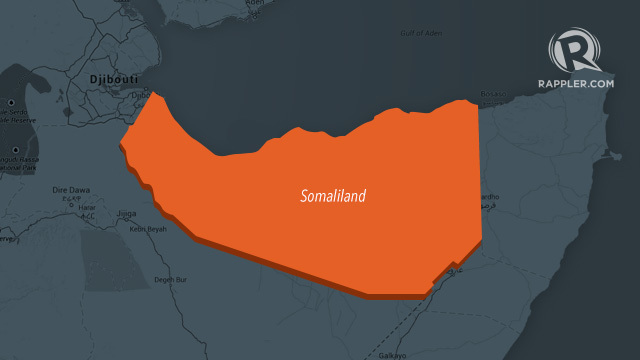
One potential alternative has been avoided, till now, for reasons never made publicly clear. Go online and look up Somaliland, as opposed to Somalia. It turns out that this northern third of the country -- the portion formerly colonized by Britain -- is already at peace and relatively well-ordered.
It also sits directly adjacent to the Gulf of Aden. And yet, this region has striven to be a solution, not a part of the problem. “Our coast is extremely long, but we have kept our waters free of pirates,” said Abdillahi Duale, foreign minister of Somaliland, in a statement last week, offering the use of his territory’s ports for foreign naval patrols. This overture, like many others, appears likely to be ignored. Why?
Ever since attempting to declare its independence in 1991, Somaliland has failed to gain recognition from a single nation, because of an archaic diplomatic consensus that original national boundaries should be held sacrosanct -- an axion that has had hellish effects in Africa and that was shrugged aside, in places as wide-ranging as Tibet, Bangladesh, Kashmir, East Timor, Kosovo and Georgia. Still, because of this standing principle, for almost two decades, four million people in northern Somalia have been told that they could not legally detach themselves from the madness in the south.
But all right. If that’s the iron rule of diplomacy, then why not turn the matter around? Here’s an alternative idea.
Recognize Somaliland as the one calm region of Somalia. Establish and upgrade western consulates in its capital, Hargeisa. Assist improvements in democracy and human rights. Beef up aid to this promising zone and make clear to southern factions which way the wind is blowing. Reward any tribes who choose to turn away from madness and join a growing confederation that already has a record of providing at least basic law and safety, under a purely Somalian umbrella.
Moreover, with modest international aid, a Somalian constabulary based right there at the Gulf of Aden might carry out far more effective efforts against piracy - both at sea and on land, taking the fight to the pirate enclaves. (This, historically, was always the best solution to piracy.)
One Somali territory that immediately borders Somaliland, Puntland, is a major pirate haven. It ought to be possible to sway Puntland, with a combination of carrots and sticks, to join in confederation with Somaliland, or else face quarantine, while watching Somaliland grow overwhelmingly strong, next door. In any event, the cost of such an experiment would be low, and no western or foreign troops need put a foot on the ground.
Sure, it’s no panacea. But why not offer this purely Somali option -- to join a growing portion of the nation that is sane, moderate and increasingly democratic -- to any Somalian who wants to live like a civilized person?
Or, at least, could we finally hear an explanation why not?

December 5, 2008
Why does Somaliland deserve U.S. recognition?
By Peter J. Schraeder
The United States government should officially recognize the independence of Somaliland, a moderate Muslim democracy in the Horn of Africa. Such an argument may seem counterintuitive at a time when tensions are rising in the region. But I submit that it is precisely because of those rising tensions that it is time for the Bush administration to act, especially if it is truly serious about democracy promotion, counter-terrorism, and curtailing the spread of Islamic fundamentalism.
First and foremost, it is important to recollect that, after achieving independence from British colonial rule on June 26, 1960, Somaliland was duly recognized as a sovereign entity by the United Nations and thirty-five countries, including the United States. Several days later, on July 1, the independent country of Somaliland voluntarily joined with its newly independent southern counterpart (the former UN Trust Territory of Somalia that was a former Italian colony) to create the present-day Republic of Somalia. Somalilanders rightfully note that they voluntarily joined a union after independence, and that, under international law, they should (and do) have the right to abrogate that union, as they did in 1991.
Examples abound in the second half of the twentieth century of international recognition of countries that have emerged from failed federations or failed states, including East Timor, Eritrea, Gambia, and the successor states of the former Soviet Union and Yugoslavia. The same legal principle should be applied to Somaliland.
The political basis for Somaliland’s claim is that the voluntary union of 1960 was derailed in 1969 by a military coup d’etat in Mogadishu that ushered in more than two decades of brutal military rule under the dictatorship of General Mohamed Siyaad Barre. Himself a southerner, Barre destroyed the foundations of the north-south democratic compact, most notably by unleashing a murderous campaign (bordering on genocide) against northern civilians that resulted in more than 50,000 deaths and created over 500,000 refugees as part of a widening civil war during the 1980s.
Even after Barre was overthrown in 1991 by a coalition of guerrilla armies, including the northern-based Somali National Movement (SNM), northern expectations of a government of national unity were dashed when southern guerrilla movements reneged on an earlier agreement and unilaterally named a southerner president, which in turn was followed by the intensification of inter and intra-clan conflict in the south. Nearly thirty years of unfulfilled promises and brutal policies ripped the fabric of the already fragile north-south political compact.
A "point of no return" had been reached for Somalilanders intent on reasserting their country’s independence. In May 2001, a popular mandate was given to dissolving the union, when a resounding number of ballots cast (97 percent) in a national Somaliland referendum favored the adoption of a new constitution that explicitly underscored Somaliland’s independence.
Somaliland deserves recognition if the Bush administration is truly sincere about promoting democracy in the wider Middle East. In sharp contrast to southern Somalia where instability and crisis have reigned and in fact intensified in the last fifteen years, Somaliland has established a democratic polity that, if recognized, would make it the envy of democracy activists in the Muslim world.
The essence of Somaliland’s successful democratization was captured by U.S.-based International Republican Institute and the National Endowment for Democracy in convening a September 2006 panel discussion on Somaliland. They wrote that "Somaliland’s embrace of democracy, its persistence in holding round after round of elections, both winners and losers abiding by the rules, the involvement of the grassroots, the positive role of traditional authorities, the culture of negotiation and conflict resolution, the temperance of ethnicity or clan affiliation and its deployment for constructive purposes, the adaptation of modern technology, the conservative use of limited resources, and the support of the diaspora and the professional and intellectual classes are some of the more outstanding features of Somaliland’s political culture that are often sorely lacking elsewhere."
Somaliland also deserves recognition from a purely U.S.-centric national security perspective. The Somaliland government and population embody a moderate voice in the Muslim world that rejects radical interpretations of Islam, including that espoused by various portions of the Council of Somali Islamic Courts (CSIC) currently in control of Mogadishu and its environs. It would serve as a bulwark against the further expansion of radical ideologies in the Horn of Africa by offering a shining example (along with Mali and Senegal and other predominantly Muslim Sub-Saharan African democracies) of how Islam and democracy are not mutually exclusive, but rather mutually reinforcing. Somaliland leaders are also eager to cooperate with the Bush administration in a variety of counter-terrorism measures, including working with the Combined Joint Task Force-Horn of Africa (CJTF-HOA) based in Djibouti.

Somalia's al-Shabaab seize central town

Somalia's al-Shabaab seize central town
MOGADISHU, SOMALIA Dec 06 2008
The hard-line Islamist insurgent group al-Shabaab has taken control of a central Somali trading town after fighting that killed at least 13 people and wounded dozens of others, residents said on Saturday.
(Photo: Hardline islamist women shwing off machine gun)
The capture of Gurael, 370km north of the capital, Mogadishu, adds to the growing hold al-Shabaab has gained across south and central Somalia in a two-year insurgency against the government and its Ethiopian military allies.
Locals said al-Shabaab, which means youth in Arabic, took Gurael after three days of fighting with a government-allied moderate Sunni Islamist group in the area.
The battle began after al-Shabaab fighters arrested a local teacher of that group, they said.
"I have counted 10 dead men myself," one local resident, Ali Aden, told Reuters by telephone from the area. "Six died yesterday [Friday] and four were lying in the paths of the deserted town this morning. It is now under control of al-Shabaab."
Witnesses spoke of chaos in the area, with bullets being fired on vehicles full of fleeing residents. Three women were killed in one lorry, they said.
More than 5 000 Gurael residents had fled to the protection of nearby woods, a local human rights group said.
Medical staff were overwhelmed.
"We received 15 injured people including civilians and fighters. And we hear many families fled with injuries to other towns," said Ismail Ali, a nurse at Gurael hospital.
Al-Shabaab leaders could not be reached for comment.
Since the start of 2007, al-Shabaab and other Islamist rebels have waged an Iraq-style insurgency of mortar attacks, roadside bombings and assassinations in Mogadishu, and been gradually taking towns across south-central Somalia. -- Reuters

Source: Mail & Guardian Online

The As Salaam, with 11,000 tons of humanitarian aid from the United Nations arrives at Berbera, Somalia.

Medeshi
U.N. Extends License to Fight Piracy Using 'All Necessary Means'
Tuesday , December 02, 2008
UNITED NATIONS — The U.N. Security Council has extended for another year its authorization for countries to enter Somalia's territorial waters, with advance notice, and use "all necessary means" to stop acts of piracy and armed robbery at sea.

(Photo: Nov. 30: The As Salaam, with 11,000 tons of humanitarian aid from the United Nations and escorted by the Italian Navy arrives at Berbera, Somaliland.)
Virtually all the world's nations have powers under the 15-nation council's unanimous resolution Tuesday to repress the increasingly brazen pirates off Somalia. Before acting, however, nations must first have the approval of Somalia's weak U.N.-backed government, which also must give advance notice to U.N. Secretary-General Ban Ki-moon.
Diplomats said such sweeping authorizations are needed to stop the piracy off Somalia that threatens humanitarian efforts and regional security, and seems to be growing ever more audacious and technologically sophisticated each week.
• Click here for photos
The resolution extends until one year from now a measure first approved in June that granted authorization to foreign ships to enter Somali waters when fighting piracy and armed robbery along the country's 1,880-mile coastline, the continent's longest.
A maritime official said Tuesday that pirates chased and shot at a U.S. cruise ship with more than 1,000 people on board but failed to hijack the vessel as it sailed along a corridor patrolled by international warships.
The London-based International Maritime Bureau, which fights maritime crime, could not say how many cruise liners use the waters. International warships patrol the area and have created a security corridor in the region under a U.S.-led initiative, but attacks on shipping have not abated.
With the deteriorating situation in Somalia — both on land and at sea — threatening some of the world's most important shipping routes, Russian Ambassador Vitaly Churkin called the pirates' goals "ever-expanding."
In September, pirates seized a Ukrainian freighter loaded with 33 battle tanks and on Nov. 15 they seized a Saudi oil tanker carrying $100 million worth of crude oil.
About 100 attacks on ships have been reported off the Somali coast this year and 40 vessels hijacked, with 14 still remaining in the hands of pirates along with more than 250 crew members, according to maritime officials.
The latest council resolution, which had been pushed by France and the United States, was in part a response to requests for help from both the Somali government and the U.N. chief.
Somalia's transitional president Abdullahi Yusuf told council members in Djibouti earlier this year that "the issue of piracy is beyond our present means and capabilities."
Somalia, a nation of about 8 million people, lacks a navy. It has not had a functioning government since warlords overthrew a dictator in 1991 and then turned on each other. The current government, formed in 2004 with the help of the U.N. and backed by Ethiopia, has failed to protect citizens while it battles a growing Islamist insurgency.
Last month, the council voted to impose sanctions on pirates, arms smugglers, and perpetrators of instability in Somalia in a fresh attempt to help end the years of lawlessness in the Horn of Africa nation.
A council panel was authorized to recommend people and entities whose financial assets would be frozen and who would face a travel ban. It also reaffirms an arms embargo.
Somali pirates preying on international shipping are also damaging their homeland's battered economy, worsening the instability that opened the door to piracy and inroads by Islamic extremists, according to the U.N., which also reports that inflation is "unbridled," especially in south-central Somalia where fuel costs and food prices are soaring.
Since January, the number of Somalis in need of humanitarian aid has increased from 1.8 million to more than 3 million.

Somaliland leaders take part in voter registration

Medeshi Dec 2, 2008
Somaliland leaders take part in voter registration

Hargeisa, SomalilandThe Somaliland voter registration programme for the upcoming 2009 Presidential and local assembly elections resumed in Hargeisa at 6 am, amidst heavy security, on Monday, December 1^st^ 2008 after a brief delay due to recent terrorist attacks in Somaliland.
According the local media sources, the registration programme resumed this morning in the local region of Marodi Jeh made up of 377 local registration locations guarded by members of the Somaliland police force. According to these same sources, participation of local residents appears to have been steady with long lines outside the registration locations from 6:30 am until around noon prayers at 12 pm local time.
Marodi Jeh which the most populated region of Somaliland is expected to provide a strong test of the registration programme which include the use of bio-metric technology for registering voters in 2009 Presidential and local assemblies elections.
Among those who registered this morning at various locations around Hargeisa, included the President of Somaliland, Mr. Dahir Rayale Kahin, the leaders of the two Somaliland opposition parties, KULMIYE and UCID, Mr. Ahmed Mohamed Mohamud and Mr. Faisal Ali Warabe.
Speaking to the local media outside the registration office, the President of Somaliland, Mr. Rayale presented his new voter registration card which included his photograph, name and other personal information. Mr. Rayale encouraged the people of Somaliland to take part in the voter registration programme in order to them to exercise their democratic rights.
Also addressing the Somaliland media at their respective registration locations, the leaders of Somaliland's opposition parties, Mr. Mohamud and Mr. Warabe welcomed the resumption of the voter registration programme after the recent terrorist attacks and also displayed their new voting cards.
According to local media sources, the majority of the registration locations around Marodi Jeh region appear to be conducting their work, although there are reports of at least 10 locations in which the registration officers reported some technical difficulties which led to delays.
The voter registration drive programme is expected to take at least six day in the Marodi Jeh with offices open from 6am till 8pm local time.

Source: iReports

Stranded in Bangkok


United Nations Seeks 39% Increase in Assistance for Somalia

United Nations Seeks 39% Increase in Assistance for Somalia
By Eric Ombok
Dec. 1 ,the United Nations said it will seek $918.8 million next year to provide assistance to people living in Somalia ( See regional map here), where almost half of the population needs aid.
The amount required compares with the $662 million used in 2008, Mark Bowden, UN Humanitarian and Resident Coordinator for Somalia, said in an e-mailed statement today in Nairobi, Kenya.
The rise “reflects not only the dramatic increase in the number of people in need, but also the sharp rise in commodity and delivery costs for Somalia,” Bowden said.
To contact the reporter on this story: Eric Ombok in Nairobi via Johannesburg at pmrichardson@bloomberg.net.

Pirates Give World Markets a Lesson in Economics

Pirates Give World Markets a Lesson in Economics
Commentary by Matthew Lynn
Dec. 2 The hijackings of a Saudi Arabian oil tanker and a Yemeni cargo ship by Somali pirates last month would seem to have little to do with the financial crisis.
In fact, the pirates aren’t so different from the bankers who caused the credit crunch and put the global economy on edge.
The pirates only want money, just like the bankers.
They don’t like regulation, just like the bankers.
And they hold the world to ransom, just like the bankers.
Piracy is a serious matter. The world’s most important shipping lanes are faced with virtual closure. Ships and sailors can’t be expected to travel through waters where they are likely to be taken hostage.
The last thing the world needs right now is a threat that slows down world trade even further. Nor can it afford to see an increase in the cost of insuring vessels and freight rates.
And yet, we also must understand that piracy is an economic problem, just like the credit crunch. Political and military solutions alone won’t fix it.
It is turning into a major headache for global trade. The capture of the Saudi tanker Sirius Star on Nov. 15 with a cargo worth an estimated $100 million was the most dramatic example so far of the range and ambition of the pirates. It highlighted a growing threat: At least 581 crew members were taken hostage from January to September this year, compared with 172 in the same period last year, according to the International Maritime Bureau.
Brute Force
The world’s oceans are too big to be effectively policed by overstretched military forces. European naval ships of the 18th and 19th centuries may have successfully defeated earlier generations of pirates, but only by using brute force. It is hard to believe that in the 21st century we will feel comfortable with U.S., Japanese or Russian warships sailing around capturing and executing pirates or raiding their bases.
“There are 2.2 million square miles of sea to police,” says Liam Morrissey, a partner at London-based consulting firm BGN Risk. “It is very hard to protect all of it.”
Ships can always have security guards on board, though they aren’t trained fighters. They are watchmen. Their main job is to call the police, who can usually be there in minutes. At sea, it could take days for naval help to arrive. We can’t expect every vessel to have a platoon of soldiers on board. The costs would be prohibitive.
It isn’t hard to understand the economics of how the pirates operate. Capturing a ship poses no great challenge. They are lightly crewed, and the sailors can hardly be expected to get into gunfights with armed pirates. If the cargo is worth, say, $100 million, it makes sense to pay $10 million in ransom to get it back. It would be madness to refuse. For the pirates, it is a pretty easy living.
Protection Money
At the moment, we seem to be approaching the worst of all possible worlds. Shipping companies either avoid the African coastline. Or else they agree to pay what amounts to protection money for safe passage. Neither is satisfactory in the long term. Over time, the pirates will just grow stronger, the attacks will cover a wider area, and the ransom demands will get even bigger.
The reality is that piracy can’t be fixed at sea. It needs to be fixed on land.
It is the existence of failed states such as Somalia that is allowing piracy to flourish. The pirates need somewhere to launch attacks. They need a base for the ships. They need somewhere to live, and a way of processing ransom payments.
No Government
Any stable government would have cracked down on the pirates operating from its shores, yet Somalia doesn’t have a functioning government. Its gross domestic product per capita is just $600, according to the U.S. Central Intelligence Agency. Life expectancy is less than 50 years. It has “no permanent national government,” according to the CIA Factbook. Those are the conditions in which piracy flourishes.
For the last decade, developed nations have largely ignored the failed states of Africa and elsewhere. They have sent aid, and not worried about restoring proper government. The rise of modern-day pirates shows why that isn’t good enough. You can’t forget poverty and lawlessness in distant countries, imagining it doesn’t have an impact on you. Eventually, it will.
The developed nations need to come up with plans to rebuild the economies of countries such as Somalia, so that they can establish the rule of law. So far, there doesn’t appear to be any will to tackle either the pirates or the failed states in which they have their bases. Yet if we carry on ignoring it, the whole world economy will eventually suffer.

Tanzania worried over increased piracy off Somlia

Medeshi Dec2 , 2008
Tanzania Worried over increased piracy off Somalia
President Jakaya Kikwete has expressed concern over increased incidents of piracy off the Somali coast, saying they were now a threat to global peace. President Kikwete, who is also the African Union (AU) Chairman, said the international community should come in swiftly to save the country from further disintegration.
The AU chairman said this during talks with the Kuwait Deputy Prime Minister and Foreign Affairs Minister, Dr Muhammad Sabah al Salem al Sabah here late Sunday, on the sidelines of the four-day UN Conference on Financing Development, which kicked off on Saturday. “Piracy is not only a threat to peace and security to countries neighbouring Somalia, but to the entire world in general.
“We are all worried. Many people are now thinking of optional routes instead of passing through the Suez Canal, which is short but highly risky because of its vicinity to the Somali Coast,” President Kikwete said. Mr Kikwete said the interim Somali government was on the brink of total collapse and the AU peacekeeping force now in Somalia is inadequate.

He said more troops are needed to be sent to Somalia and Ethiopia has plans to pull out its forces later next month. “If Ethiopia goes ahead with its plans to pull out from Somalia, then a major humanitarian crisis is likely to follow,” he told the Kuwait minister. He explained that there were serious misunderstandings between the interim president and his prime minister, where the president and his government are operating from Libya.
“It is unfortunate many attempts to resolve the conflicts have failed,” he added. Dr al Sabah also expressed concern over the situation in Somalia. Earlier, President Kikwete held talks with Sudan President Omar al Bashir, who briefed him on his government’s initiatives to restore peace in Darfur. Bashir also said his country was keen to resolve the current tension with its northern neighbour – Chad. President Kikwete commended the Sudanese leader for his initiatives to end protracted armed violence, political and humanitarian crisis in Darfur.

Ethiopia's Somalia dilemma

Medeshi Dec 2, 2008
Ethiopia's Somalia dilemma
By Roger Middleton Royal Institute for International Affairs
Ethiopia entered Somalia two years ago to remove the Union of Islamic Courts , elements of whose leadership had been making provocative and aggressive statements about Ethiopia.
But the reality is that Ethiopian intervention, backed by the US and others, seems to have bolstered precisely the elements of the UIC, al-Shabab, that are most at odds with Ethiopia's interests and may very well have fatally undermined any chance Somalia's Transitional Federal Government (TFG) had of gaining legitimacy.
Ethiopia has announced that they will leave Somalia, come what may, by the end of the year.
This announcement follows warnings to Somalia's government from its major backer to get its act together.
Ethiopian troops helped install the internationally recognised government in Mogadishu last year and without Ethiopian support ministers would still at best be holed up in Baidoa or more likely comfortably in the hotels of Nairobi.
But without popular support or local legitimacy the government has singularly failed to establish itself, as even President Abdullahi Yusuf appears to be admitting.
Golden age
Consequently, in most of Somalia, the TFG is a government in name only.
Some see Ethiopia's threat to leave as a bluff to elicit funds from western countries afraid of al-Shabab entrenching itself in southern Somalia.
Al-Shabab, which is on the US list of terrorist organisations and has taken control of Kismayo, Merca and large parts of southern Somalia, grew from the Union of Islamic Courts but now stands against some other former UIC members in the Djibouti-based Alliance for the Reliberation of Somalia (ARS) opposition who are negotiating for Ethiopian withdrawal.
Al-Shabab is not a monolithic organisation but within it there are elements who represent a very hard-line tendency who were responsible for the stoning to death of a 13-year-old girl accused of adultery, who had in fact been raped.
Stories are also circulating of beheadings and Somalis speak in hushed tones of their fear of what an al-Shabab dominated country would be like.
This future is not what was promised when the UIC were ousted and looking back, many residents view the time of UIC rule as a golden age.
International concerns about links between the UIC and international terror networks were never substantiated and al-Shabab is far more likely to cultivate those connections.
Hardship posting
Another view holds that Ethiopia is quite serious about leaving.
Somalia is a hardship posting for Ethiopian troops and the continuing mission may be affecting morale.
Ethiopia also has a more serious security concern along the still un-demarcated border with Eritrea.
Many see this as the real threat to Ethiopia's security. Although the total number of troops in Somalia is small as a proportion of Ethiopia's army, the resources required to maintain them in Mogadishu could be better used along the border.
Ethiopia may also feel that leaving Somalia is the only way to force the government to work together to make the Djibouti peace process work.
Ongoing chaos
In any case, at present, Ethiopia is bogged down fighting an insurgency that gains strength from their continued presence and the government they came to protect and bolster has shown no sign of becoming effective or being able to handle its own security.
The more moderate elements of the various opposition forces are being undermined and al-Shabab is growing in military and territorial strength.
For Ethiopia the objectives they hoped to achieve in Somalia seem very hard to attain whether they stay or go.
Leaving at least means Ethiopian troops will not remain trapped in the ongoing chaos.
If Ethiopia leaves Somalia now, it is likely that the TFG will finally cease to exist.
The broad coalition that makes up the ARS could very well break into its constituent parts and start fighting each other, as well as the militias of former TFG bigwigs and the extremist al-Shabab groups.
Best of a bad situation
One strand of opinion holds that the only thing that keeps the various factions of the ARS, the government, or indeed al-Shabab, united is the presence of Ethiopian troops inside Somalia.
Yet, the departure of Ethiopian troops is one of the few concrete things that the UN-brokered negotiations between the ARS and government have been able to agree on.
It is depressingly possible that whilst almost all Somali factions are agreed on the need for Ethiopia to leave, the lack of forward-thinking will mean that after the troops are gone, violence will intensify as multiple groups fight for their share.
So will Ethiopia leave?
This will likely mean that the government they backed and the president, that it is often alleged Ethiopia chose, will fall.
Or do they stay - leaving a government that has yet to gain legitimacy to deal with the growth of al-Shabab.
The calculation in Addis Ababa seems to be that it is time to make the best of a bad situation and get out.
Story from BBC NEWS:

Cruise ship attacked by pirates off Somalia

Medeshi
Cruise ship attacked by pirates off Somalia
NAIROBI, Dec. 2 (Xinhua) -- A Miami-based luxury cruise ship has evaded an attack from Somali pirates as it sailed between Somalia and Yemen, a maritime official said on Tuesday.
Andrew Mwangura, of the East Africa's Seafarers Assistance Program (SAP) said the Nautica, an Oceania cruise ship, was carrying 680 American, British and Australian passengers and a 400-member crew when two small fishing boats tried to intercept it on Sunday.
"The cruised ship was attacked in the Gulf of Aden on Sunday morning but no sailor was injured in the attack," Mwangura told Xinhua by telephone on Tuesday.
The Miami-based Oceania Cruises said on its website that the MSNautica was sailing through the Gulf on Saturday when two small skiffs tried to intercept it.
The captain, Jurica Brajcic, increased the Nautica's speed and took evasive maneuvers. Oceania said one skiff closed to within 300 meters and fired eight rifle shots at the vessel before giving up the chase.
While cargo ships and small pleasure boats have been attacked by Somali pirates in the past, this is only the second time they have attempted to hijack a cruise ship.
"Nautica was immediately brought to flank speed and was able to outrun the two skiffs. One of the skiffs did manage to close the range to approximately 300 yards and fired eight rifle shots in the direction of the vessel before trailing off," the company said.
Meanwhile, Ukraine's Foreign Ministry said negotiations to release a cargo ship carrying 33 Russian-made tanks are nearly complete. But there was no word on when the ship may be released.
Ministry spokesman Vasyl Kyrylych reportedly said the crew of the MV Faina is in "satisfactory" condition.
The pirates holding the ship initially demanded a ransom of 35 million U.S. dollars, but they later lowered their demand to a reported 3 million dollars.
The ship which was hijacked on Sept. 25 is carrying tanks and other weapons which were destined for the Kenyan port of Mombasa but the ultimate destination has been a source of controversy with suggestions that the arms were headed for southern Sudan, not Kenya.
The MV Faina is currently moored off Somalia's coast close to the town of Hobyo with 20 crew members after one was killed during the attack.
Somali pirates have hijacked some 40 ships this year, and are currently holding about 15 ships along with their crews, including a giant Saudi oil tanker.
The United States, Russia, India, NATO and the European Union have all sent warships to Somalia's waters, but the piracy problem still rages.

Qaar ka mid ah Ururada Bulshada Rayidka ah oo walaac ka muujiyay mudo dhaafka golayaasha deegaanada

Annaga oo ah Ururada Bulshada Rayidka ah ee Madaxa-banaan waxaanu si wayn uga walaacsanahay