The collapse of the TFG


NAIROBI, 17 November 2008 (MEDESHI) - The widening split between Somalia's leaders could lead to the total collapse of the transitional federal government (TFG), a Nairobi-based regional analyst, who requested anonymity, has warned.
The split has widened as insurgents gain ground across Somalia, taking control in recent days of large parts of south and central regions, according to civil society sources. (President Abdullahi Yusuf (left) in a file photo. A split between Yusuf and Prime Minister Nur Hassan Hussein (not in picture) could lead to the total collapse of the transitional federal government, an analyst has warned)
Insurgents comprising Islamist Al-Shabab, nationalists and militia clans opposed to foreign forces have over the past two months taken control of more than a dozen localities, they said.
"The success of the insurgents is a reflection of the desire of ordinary Somalis to end the anarchy, coupled with the TFG's [Transitional Federal Government] inability to restore order," Timothy Othieno, a regional analyst at the London-based Overseas Development Institute (ODI), said.
"There is little doubt that the anarchic situation, with the inability of the TFG to restore order, security and provide the basic services, has enabled the Islamists to be ever more popular," he added.
According to Othieno, the only recent experience Somalis have had with peace and a sense of security was the six months in 2006 when the Islamists controlled vast parts of the country.
"That was the first time in nearly 15 years that witnessed a return to peace in Somalia, albeit only briefly. It is this sense of ‘security’ that Somalis crave and are willing to secede some of their freedoms to be safe from harm," he added.
Blame game
Somali legislators disagree on whether the situation is getting out of control, but blame their leaders.
"The TFG is not on the brink of collapse; it has already collapsed," Abdi Ahmed Dhuhulow, a parliamentarian allied to Prime Minister Nur Hassan Hussein, told MEDESHI on 17 November.
"He [President Abdullahi Yusuf] started immediately after his election [in 2004] by trying to usurp the power of parliament; he fought with Sharif Hassan [former parliamentary speaker], then with Ali Gedi [former prime minister] and he will not stop until he gets his way," Dhuhulow said.

However, Abdirashid Mohamed Iro, an MP allied to Yusuf, disagreed, saying although there was a "very serious split" between the president and the prime minister, the TFG had not collapsed.
So far, Yusuf and Hussein have failed to agree on a new cabinet. On 17 November, the UN Special Representative for Somalia, Ahmedou Ould-Abdallah, appealed to the leaders to put aside their differences.
He urged the government to agree on a new cabinet quickly, saying a continuing power struggle did not serve Somalia’s interests, particularly as there was now an agreement to establish a broad-based unity government.
Way forward
After months of on-off talks in Djibouti, representatives of the TFG and a faction of an Eritrea-based opposition alliance signed an agreement to cease hostilities in August.
"The TFG and the ARS [Alliance for the Re-liberation of Somalia] Djibouti wing must conclude the accord and cement their partnership without further delay, if they are not to be overtaken by events on the ground," the Nairobi analyst said.
Even then, the process faced serious challenges. Apart from Yusuf's resistance, he added, a determined opposition and the presence of Ethiopian troops in Somalia had continued to undermine public confidence in the Djibouti process.
It had also strengthened the hand of those insurgents who favour a military solution. "Should the Djibouti peace process fail, then the TFG is likely to disintegrate and southern Somalia be carved up between rival Islamist factions, some of them - like Al-Shabab - committed to an agenda of regional destabilisation and violence," he warned.
However, Othieno of ODI said it would be wise to allow the Somalis "to decide how they want to design their own state", adding, "I am not saying to neglect Somalia, but not interfere in their ‘state-making’ processes."
Conflict, drought and hyperinflation have combined to create a humanitarian crisis in Somalia, with aid workers estimating that 2.6 million Somalis need assistance.
That number is expected to reach 3.5 million by the end of the year if the situation does not improve, according to the UN.

Cutting charcoal use in urban Somaliland

Medeshi
HARGEISA, 17 November 2008 (IRIN) - Authorities in Somalia's self-declared republic of Somaliland have embarked on efforts to reduce charcoal use in urban areas to curb deforestation, officials said.
(A forested area in Somaliland. Charcoal burning has contributed to deforestation and environmental degradation)
"We are involved in a number of plans to get alternatives to charcoal and, with the collaboration of the ADRA [Adventist Development and Relief Agency], are encouraging the use of stoves that use less charcoal than ordinary ones," Mohamed Bile, Somaliland's Deputy Minister for Pastoralists and Rural Development, told IRIN.
He said the local organisations, known as the United Livestock Professionals Association, had established an awareness programme and were supplying low-cost gas stoves to the main urban centres in a bid to reduce charcoal use.
Charcoal use in the region has continued to rise, with most urban families using it as the main source of energy for cooking. This has led to greater environmental degradation in the region.
"The environment is already degraded, but we can't do much because of several reasons encountered by the ministry, including lack of trained staff," Bile said.
The licensing of commercial charcoal companies compounded the situation, he added.
"Instead of decreasing charcoal use, the ministry has, inadvertently, encouraged it as it issues licences to the charcoal companies; for example, in Hargeisa there are three or four charcoal companies," Bile said. "Similarly, the ministry collects revenues from the companies..."
The companies sell the charcoal inside the country and export it to the Gulf states.

"We load more than 10 trucks daily, carrying at least 100 sacks of charcoal in Hargeisa, and the trucks come from the western forest of the Hawd area near the border with Ethiopia," Mohamed Abdillahi, an employee of Hargeisa-based Laalays Charcoal Trade Company, said.
Somaliland has no meteorological institution and the only meteorologist, Ali Abdi Odowa, does not work in his profession, he is director-general of the Ministry of Education.
However, Odowa said: "When there are more trees in the country, a lot of evaporation takes place and more rain falls; but if trees are burned, evaporation decreases and less rain is received.
"This contributes to climate change, for example, when the rain system changes, the weather also changes; there may be more rains or less rain. When there is a lot of rain, we need to plan for more protection [of the environment] and when there is less rain, we need to deal with the resulting drought."

Somali president: Government on verge of collapse


Medeshi 16 Nov, 2008

Somali president: Government on verge of collapse
MOGADISHU, Somalia (AP) — The Somali government is close to collapse because disputes within its ranks have allowed armed Islamic insurgents to take control of much of the country, the president said.
President Abdullahi Yusuf's remarks to about 100 Somali lawmakers in the Kenyan capital, Nairobi, late Saturday represent the first admission by any official that the government is losing control.
Hours earlier, a radical Islamic group seized another Somali port town, consolidating its control over a southwestern region that borders the Somali capital.
"You know what the situation is. Because of the endless disputes in government, the opposition groups have taken most of the country, including Elasha, which is 18 kilometers (11 miles) from the capital," Yusuf said in comments that received wide coverage on radio stations in Somalia.
Yusuf said his government only had control of the capital and the southwestern town of Baidoa, which is the seat of Parliament.
"Imagine how the country's future will be if al-Shabab takes (control of Somalia). It is really at risk," the president said, referring to one of the Islamic groups that has recently made significant territorial gains.
The Somali lawmakers came to Kenya two weeks ago to meet with regional leaders for a one-day meeting to discuss Somalia's future. They have stayed on, in part because many of their families live in the safety of Nairobi.
Yusuf appealed to the lawmakers to return to Somalia and take steps aimed at "saving a government on the verge of total collapse."
He said that he had still failed to agree with his prime minister on a Cabinet. Last month, a regional grouping that mediated the formation of Somalia's government gave the Somali leaders until Thursday to form a new Cabinet. The seven-nation grouping, the Intergovernmental Authority on Development, did not say what would happen if the leaders failed to meet the deadline.
In its latest offensive, al-Shabab on Saturday seized without resistance the port town of Barawe, 110 miles (180 kilometers) southwest of Mogadishu.
The U.S. considers al-Shabab — meaning The Youth — a terrorist organization and accuses the group of harboring the al-Qaida-linked terrorists who allegedly blew up the U.S. embassies in Kenya and Tanzania in 1998, killing more than 230 people.
Officials of a separate Islamic group on Saturday publicly whipped 32 traditional dancers in the southern town of Balad because they said it is "Un-Islamic" for men and women to dance together.
Islamic fighters have seized most of southern Somalia, but unlike in 2006 when they operated under one umbrella group, they are split and at times compete for control of the same key towns.
For almost two years the Islamic fighters have launched a vicious insurgency, mainly in Mogadishu, that has killed thousands of civilians and sent an estimated half of the capital's 2 million people fleeing from near-daily roadside bombings and remote-controlled explosions.
Associated Press Writer Mohamed Sheikh Nor in Mogadishu, Somalia, contributed to this report.

Britain drafts new United Nation Somalia sanctions’


Medeshi Nov 14, 2008
Britain drafts new United Nation Somalia sanctions
* Diplomats say resolution proposes asset freezes, travel bans for violence
UNITED NATIONS: Britain has circulated a draft resolution that would impose new UN sanctions on anyone contributing to violence and instability in Somalia, UN Security Council diplomats told Reuters on Wednesday.

The draft resolution, distributed to the 15 members of the Security Council, calls for asset freezes and travel bans for anyone engaging in or supporting violence in Somalia, including individuals or companies that violate a 1992 UN arms embargo against the lawless Horn of Africa country. The resolution, obtained by Reuters, also targets anyone “obstructing the delivery of humanitarian assistance to Somalia.” Several Western council diplomats said they hoped the resolution would be approved next week. “The idea is to increase the pressure on those responsible for undermining stability in Somalia,” a Western diplomat told Reuters.

The situation in Somalia has grown steadily worse this year. Assassinations, kidnappings and attacks on aid workers have been rife amid a militant insurgency against the government and its Ethiopian military allies. Suspicion for attacks generally falls on clan militia, though rebel leaders have said the interim government is behind the killings to discredit them and stir the international community to intervene. Somalia’s transitional government has repeatedly called on the Security Council to send UN peacekeepers to take over from the African Union, which has 3,000 troops in Somalia but has said it is not up to the task. The council has asked the UN secretariat to prepare possible scenarios for sending peacekeepers to Somalia, but council diplomats and UN officials say privately that the situation is far too dangerous for UN troops. reuters

Somaliland: The pull of terror

Medeshi Nov 14, 2008
Somaliland: The pull of terror
Recent terror attacks in the self-styled independent Somaliland could be designed to destabilize the secessionist region, dragging it into Somalia's brutal quagmire, Simon Roughneen writes for ISN Security Watch.
By Simon Roughneen for ISN Security Watch
Somaliland is not Somalia. Ever since Somalia fell apart in the early 1990s that has been the message hammered out by Hargeisa's would-be officials, who would be officially officials if Somaliland was ever officially recognized.
The latter has not yet happened, despite Somaliland's relative stability and nascent democracy - casting the rest of what was Somalia more clearly as the wanton haven for pirates, warlords, terrorists and chronic suffering that it is - with over 3 million people homeless due to fighting, and aid workers a constant target for murder and kidnap.
Somaliland has a working political system, government institutions and its own currency. It also has a 740-kilometer coastline along the Red Sea - a vital outlet for Ethiopia, which has been landlocked since the Eritrean secession in 1993.
Somaliland's democratic transition began in May 2001 with a plebiscite on a new constitution that introduced a multiparty electoral system, and continued in December 2002 with local elections that were widely described as open and transparent. Presidential elections held in 2003 were seen as another milestone, with nearly half a million voters casting ballots in one of the closest polls ever conducted in the region, and the would-be state is gearing up for general elections due next year.
While Somalia was riven by, inter alia, vicious clans, aid-stealing warlords, al-Qaida, an invading Ethiopian army and a weak but internationally-backed transitional government, Somaliland was holding successive rounds of elections, with both winners and losers sticking to the rules. This was laid on a bedrock of traditional authorities showing leadership and maturity, the utilization of indigenous means of negotiation and a measured, positive-sum view of inter-clan rivalries.
Unlike its now-archetypal failed-state neighbor to the south, Somaliland not only has emerged with the basic trappings of self-government, it has some solid legal grounding upon which to build a case for sovereignty.
In 1960, Somaliland was independent for a few days, between the end of British colonial rule and its union with the former Italian colony of Somalia (southern Somalia). Forty years later, in 2001, voters in the territory overwhelmingly backed Somaliland's independence in a referendum. Somaliland declared its independence from the rest of the Somali Republic in May 1991, following the end of the Cold War and the collapse of its leech regime in Mogadishu.
Somaliland voluntarily joined with its newly independent southern counterpart (the former UN Trust Territory of Somalia that was a former Italian colony) to create the present-day Republic of Somalia. Somalilanders note that they voluntarily joined a union after independence, and that, under international law, they should have the right to abrogate that union, as they did in 1991.
But without official recognition from other states, Somaliland, to its chagrin, is still Somalia. For now, that is in name only, and things could change, both for the better, as Hargeisa sees it, or for worse.
Maybe not by the fiat of international law or African Union pressure, or even by some powerful and dominant entity taking control in Mogadishu, but Somaliland could become Somalia - in the reductionist, pejorative sense, with country name used as synonym for terror-wracked failed state.
It would be a shame, but that seems to be the method-in-madness rationale behind recent terror attacks in Hargeisa - and in pirate-alley Puntland, a region in Somalia that claims increased autonomy, but not outright independence, from the barely existing transitional government in Mogadishu.
On 30 October, just days after the Ethiopian and US-backed transitional government signed an agreement in Nairobi with some of the Islamist opposition - a potential landmark given that both sides were at war in 2006, when the Islamic Courts Union tried to take control of Somalia by force before the Ethiopian Army intervened - five near-simultaneous and apparently coordinated suicide attacks struck high-profile targets in Hargeisa and in Bosasso, the economic capital of the neighboring region of Puntland.
In Hargeisa, the bombs targeted the presidential palace, the UN Development Programme's compound and Ethiopia's diplomatic representation, killing 19 people on the spot.
Somaliland is a US ally, and as such is seen by Somalia's hardline Islamists, most notably the misnamed al-Shebaab ("the lads" or "the youth") group - which opposed the Nairobi talks - as a perfidious abomination backed by an Addis Ababa bent on further breaking up the historic "Greater Somalia," which should include the Somali-speaking Ogaden in Ethiopia and parts of northern Kenya, not just Somalia as mapped today.
Somaliland has perhaps been designated an easy target by an al-Shebaab seeking vengeance for the 1 May US airstrike that killed its leader, Aden Hashi Ayro, in the central Somali town of Dusamareeb. That hit came just weeks after the US State Department designated al-Shebaab as a "global terrorist entity." Afghanistan-trained Ayro was linked to the murder of 16 foreigners, including a number of aid workers and BBC journalist Kate Peyton.
Reacting to the assassination, David Shinn from Elliott School of International Affairs at George Washington University told ISN Security Watch last May that "I have no doubt that al-Shebaab will attempt to avenge Ayro's death by attacking American, Kenyan and/or Ethiopian interests in the region."
The US has not moved on recognizing its unofficial ally Somaliland, out of deference to the African Union, which places a priori value on state sovereignty and integrity, even though both are effectively history in Somalia. What is an effective, relatively free and de facto sovereign state, is denied recognition as such, in favor of a fractious, war-torn country where the state has had at best limited control over the past decade and a half.
If Somalia's Islamist terror groups have their way, Somaliland's strong case for recognition will be dismantled - not by Somalia arguing a compelling counter-suit, but by undermining the real democratic and governance gains made by Hargeisa since 1991. This will drag Somaliland into the violent struggles over faith, fatherland, turf and tribe that have made Somalia the failed state par excellence since the early 1990s.

Islamists Continue Advance Through Somalia


Medeshi Nov 14, 2008
Islamists Continue Advance Through Somalia
By JEFFREY GETTLEMAN

NAIROBI, Kenya — Islamist militias in Somalia on Thursday continued their steady and surprisingly uncontested march toward the capital, Mogadishu, capturing a small town on the outskirts of the city.

Several dozen Islamist fighters poured into Elasha Biyaha, which is 11 miles southwest of Mogadishu, after government-allied militias fled. No shots were fired, but residents feared it was only a matter of time.
“Many people are now on the verge of fleeing,” said Yusuf Abdi Nur, a shopkeeper in Elasha Biyaha.
The tense but bloodless capture of Elasha Biyaha was a carbon copy of what happened in Merka, a strategic port town, on Wednesday, when hundreds of heavily armed Islamist militants took over the town after government-allied troops beat a hasty retreat.
But the siege of Elasha Biyaha on Thursday was carried out by a different wing of the Islamist movement, according to residents and the Islamists themselves. What seems to be emerging is an accelerating scramble among Somalia’s rival Islamist factions to seize control of areas that the weak transitional government can no longer defend. The government has been hobbled by infighting and plagued by defections to the Islamists, and seems on the brink of collapse.
Many towns in southern Somalia, including Merca, Chisimayu, Qoryooley and Buulo Mareer, are now firmly in the hands of the Shabab, the most militant wing of the Islamists and a group the Bush administration has designated a terrorist organization. The Shabab commanders are fighting to turn Somalia into an Islamic state and they often impose strict Islamic law in their zones of control. On Thursday, residents said the newly arrived clerics in Merca announced that all shops from now on would be closed during prayer time.
But other parts of Somalia — such as Beledweyne on the Ethiopian border, and Giohar, north of Mogadishu — are now falling under the control of a more moderate insurgent group, the Islamic Courts Union. This group receives strong support from Somalia’s influential business community, and often the population.
In Mogadishu, the government is clinging to a few shrinking enclaves, like the port, airport and the presidential palace — all of which are frequently shelled. Much of the rest of the city is controlled by Islamist groups and clan militias.
On Thursday, Abdirahin Isse Adow, a spokesman for the Islamic Courts Union, said it was his group that had taken over Elasha Biyaha, in order to “bring back peace and security.”
“We don’t want these people to feel insecurity, then evacuate,” he said, referring to intense fighting earlier in the year that displaced hundreds of thousands of Somalis.
Many residents said they were happy to see the Islamic gunmen.
The Islamic Courts Union and the Shabab used to be allies. In the summer of 2006, their combined forces ousted the predatory warlords that had controlled Mogadishu. For the first time since Somalia’s central government collapsed in 1991, many Somalis said they experienced peace.
But a few months later, Ethiopian forces routed the Islamist troops and brought Somalia’s transitional government to Mogadishu, which set off some of the most intense warfare Somalia has ever seen. Thousands of civilians have been killed since early 2007, with different Islamist groups waging relentless attacks on government and Ethiopian forces and sometimes battling it out themselves.

Off the coast of Somalia: 'We're not pirates. These are our waters, not theirs'


Medeshi 14 Nov, 2008

Off the coast of Somalia: 'We're not pirates. These are our waters, not theirs'

When Bile Wadani is not counting his money, he counts his wives. So far he has three – but he promises there will be more to come. "I didn't ever dream I would marry three wives but I have that dream now because I can get as much money as I want."
(Photo: Two boats from HMS Cumberland intercept a suspected pirate vessel in the Gulf of Aden after Russian and British forces repelled an attack on a cargo ship)
As he speaks, waves can be heard crashing in the background. Bile is speaking by mobile telephone from the deck of a captured ship somewhere off the mountainous coast of northern Somalia, near the tip of the Horn of Africa. His words are interrupted by the crackle of gunfire.
Bile will not reveal his exact location or identify the captured vessel as he claims he is being hunted by foreign warships.
He is one of the new generation of pirates who have turned the Gulf of Aden into the most dangerous shipping lane in the world. The success of their rough and ready tactics has been such that insurers are warning that shipowners may have to use alternative routes, which would have tremendous ramifications for global trade and commodity prices.
International governments are committing millions of pounds to fighting the pirates. The Royal Navy's HMS Cumberland joined forces with a Russian frigate to kill three pirates as they attempted to seize a Danish vessel in the latest incident on Tuesday.
Despite the fact that warships from Denmark, France, Russia, Japan and the US have joined the Royal Navy in patrolling the gulf, little attention has been paid to the roots of the problem.
Both the risks and the rewards of Bile's chosen career are colossal. And along with an increasing number of his compatriots in the anarchy of Somalia, he has chosen to embrace them. The lure of vast sums of money is transforming the coast of this country and turning the pirates into the heroes of a shattered land.
Millions of dollars in ransoms are being paid by desperate ship owners – an estimated $30m (£20.5m) so far this year. That is one and a half times the annual budget for authorities in the northern region of Puntland. One captured vessel can fetch up to $2m.
The epicentre of this piracy is the port town of Eyl, in the Nugal region. It is off limits to the outside world, a safe haven for the pirates and a base for their attacks. It now functions, according to residents, almost completely on the proceeds from piracy.
Much of the rest of Somalia has been destroyed by the seemingly endless wars that have washed across the country in the two decades since it last had a functioning government. The capital, Mogadishu, lies mostly in ruins.
In Eyl, the streets are lined with new buildings and awash with Landcruisers, laptops, satellite phones and global positioning systems.
Almost everyone in Eyl has a relative or husband among the pirates. Fatima Yusuf, who has lived her whole life in Eyl, describes the intense involvement of the whole community in the fortunes of the young men who set out in crews of seven or eight armed with AK-47s and rocket launchers to take on the tankers on the high seas.
The planning is rigorous, Bile insists: "When we want to kidnap a ship, we go with not more than six or seven men because we don't want to be a mob, this is a military tactic."
Fatima says the people will gather to pray for the pirates and that when they set sail sacrifices are made in traditional ceremonies where a goat will be slaughtered, its throat cut."
An industry has grown up around the pirates, with restaurants to feed the kidnapped crews who as potentially tradable assets must be looked after. The pirates have become glamorous figures. Like most of the girls in Eyl, Sadiya Samatar Haji wants to marry a pirate. "I'm not taking no for an answer," she says. "I'll tie the knot with a pirate man because I'll get to live in a good house with good money."
Twelve-year-old Mohamed Bishar Adle, in nearby Garowe, the regional capital of Puntland, knows what he wants to do with his education. "When I finish high school, I will be a pirate man, I will work for my family and will get more money."
Beyond the bravado, Bile acknowledges that the danger is increasing. He will not say how many attacks he has participated in but he does claim to have been one of the pirates who clashed with French forces in April this year after the capture and ransom of a luxury yacht. French commandoes pursued a band of Somali pirates en route to Eyl after a ransom had been paid. Bile says nine of his compatriots were taken and that only he and one other friend were able to escape. Six of those caught face prosecution in Paris after being transferred to France.
He also remembers the terror of his first mission. "You don't know if it's a warship. You have to open fire and if it doesn't respond you know."
Bile did not grow up dreaming of being a pirate. He comes from a family of fishermen whose livelihood was destroyed, he says, by the arrival of industrial trawlers from Europe.
At some 3,300 kilometres, Somalia has the longest coastline in Africa. With a fertile upswelling where the ocean reaches Africa's Horn, the seas are rich in tuna, swordfish and shark, as well as coastal beds of lobster and valuable shrimp.
With the overthrow of Siad Barre's government in 1991, the territorial waters off Somalia became a free-for-all. Trawlers from more than 16 different nations were recorded within its waters – many of them armed. EU vessels flying flags of convenience cut deals with the illegitimate authorities in Somalia, according to UN investigators.
Clashes between large, foreign fishing interests and Somali fishermen in the late 1990s were the prelude to the upsurge in piracy.
Bile, like many of the pirates, calls himself a "coastguard" and insists he has more right to these contested seas than the foreign forces now patrolling them. He says many of his friends' boats were destroyed in these battles and stocks of a fish known locally as "yumbi" have all but disappeared.
Like many in Somalia, Bile is angry that outside powers are seeking a military solution to a more complex problem. He rejects the tag of "terrorist" and denies links to Islamic militias, like the Al-Shabab, which are in control of large areas of Somalia. He insists that the pirates would not give "one AK-47" to the Islamists.
While admitting that the influx of foreign navies is making his life more dangerous, he remains defiant: "We will keep carrying out attacks. We are ready for long distance attacks as far as the coast of Yemen."

Somaliland : Somalia's new frontline


Britain is leaving once-stable Somaliland to the mercy of al-Shabaab Islamist militants

Jeremy Sare
guardian.co.uk, Thursday November 13 2008 10.00 GMT
Article history
The co-ordinated suicide bomb attacks in Somaliland's capital Hargeisa two weeks ago shattered more than a decade of stability. Yet the despite the continuing threat hanging over this former British protectorate, the British government will not act to properly protect the fledgling democracy.
Since tearing itself from a bloody union with the violent southern half of Somalia, Somaliland to the north has been an oasis of democratic hope in a turbulent region (about 8,000 people are estimated to have been killed in southern Somalia in the last 18 months). The car bombings, which killed about 30 people (including two UN officials), served as a bitter reminder to the Somalilanders, if one were needed, of their proximity to the pit of spiralling violence and their own vulnerability of sliding back into it. There were also lethal explosions in the semi-autonomous regime of Puntland.
The international community is watching passively as the terror and violence erupt again. There is no shortage of international condemnation for the attacks, including from the minister for Africa, Lord Malloch-Brown, but no real practical help is being offered. As the former colonial power, Britain has a particular responsibility to the 3.5 million Somalilanders. "We need two levels of support," says Abdi Karim, head of Wales Somaliland Communities Link. "First, capacity-building and training of police and security services. Second, humanitarian support for the hospitals, if there are further attacks".
Somaliland does not qualify for specific aid and development, let alone additional security support, because it is not recognised as sovereign by the UN. It has been effectively an independent country since 1991, but without diplomatic recognition there can be no support programme; the result is extreme poverty and a chronic lack of defence infrastructure. Michael Walls of Somaliland Focus (UK) blames "a lack of willingness on the part of many international actors to sufficiently recognise… both state and civil society remain enormously under-resourced".
The bombings in Somaliland were most likely a concerted effort to curtail the country's third presidential election to be held next March; voter registration has ceased in the ensuing security clampdown.There is a strong suspicion across the region the group responsible for the atrocities was al-Shabaab an extreme Islamist militia which now effectively controls the southern Somali port of Kismayo and parts of the capital, Mogadishu. They practice an extreme form of sharia law and have now turned their spiteful gaze to the harmonious north.
They announced their murderous intent in 2006 when one of the leaders of the Islamic Courts Union, Sheikh Dahir Aweys, promised publicly "to send 30 young martyrs to carry out explosions and killing of the Jewish and American collaborators in the northern regions".
Al-Shabaab is considered by many governments to be, at least ideologically, if not materially linked to al-Qaida. Since they overran Kismayo in August, al-Shabaab leaders have restored order. But then began the wholesale violent suppression of the people, particularly women, under their perverse interpretation of Islamic law.
To gauge the degree of fundamentalism within al-Shabaab, you need look no further than the stoning to death of 13-year old girl a few days ago in Kismayo.
The circumstances of Asha Ibrahim Dhuhulow's killing could hardly be more brutal. She was first raped by three men but was condemned as "an adulterer" by Al-Shabaab leaders. An anonymous eyewitness told the BBC she was dragged to a stadium weeping. She was buried up to her neck before 50 men stoned her in front of a 1,000 strong crowd. The international community seems resigned to this institutionalised barbarism and routine human rights abuses in Somalia.
But there has been some hint from the British government they would like to help Somaliland but are held back by the "technicality' of not having recognised sovereignty - notably by, chair of the All-Party Group for Somaliland Alun Michael MP, Britain's support would risk offending the sensibilities of Italy and a couple of African Union countries which oppose their independence.
But the counter-argument to an independent Somaliland can be captured in one word: "Somaliweyn'. In essence it means a call for a Greater Somalia by uniting all the Somali peoples who currently live in southern Somalia, Somaliland, Djibouti, eastern Ethiopia and the north-eastern province of Kenya.
Somaliweyn is nothing more than chauvinistic patriotism which defies long-established international boundaries and flies in the face of political reality. Reports from Hargeisa in recent days describe a tense city still in shock and fearful of the next strike from al-Shabaab. It is time Britain acted to offer effective security support and intelligence to Somaliland.

SOMALILAND: Hostility rises in Hargeisa after suicide bombings

HARGEISA, 10 November 2008 (IRIN) - Somalis displaced to the self-styled independent republic of Somaliland from other parts of the Horn of Africa country have faced increasing hostility after three suicide bombing incidents in late October.
Reports of criminal incidents targeting non-Somaliland Somalis in Hargeisa, Somaliland's capital, have prompted Interior Minister Abdillahi Ismail Irro to call for restraint.
"I am calling on Somaliland citizens not to harm or take aggressive actions against the refugees from Somalia [by] linking them to the criminals, because these people were not part of the attacks; on the contrary, only a small number of people were involved in the crimes which we are now investigating. I urge you to report any suspects to the nearest police station instead of taking the law into your own hands," Irro said.
Somaliland considers Somalis displaced from outside Somaliland as refugees and only recognises those displaced within Somaliland as internally displaced.
Several people from southern Somalia in Hargeisa said they were now living in fear while others had been thrown out of their residences since the bombings, which targeted the presidential palace, a UN compound and the Ethiopian embassy.
The bombers have been linked to the Al-Shabab militia group based in Mogadishu.
Mohamed Abdirahman 19, who has been in Hargeisa for about a month, said: "The people of Hargeisa welcomed me when I first came to Somaliland after leaving Mogadishu; everybody was so nice to me and used to give me meals but this changed within 24 hours of the bombings.
"I was quickly thrown out by my hosts. Whenever I walk along the street, I try not to talk to anyone because I fear that if I am identified as a Somali citizen, I will face difficulties because the suspects were believed to have come from Mogadishu," Abdirahman told IRIN.
However, Abdirahman was taken in by another family on 3 November.
"I am now living with another family neighbouring my former hosts; I hope the situation will improve soon," he said.
Fadumo Hassan, another Somali resident, was robbed by people who posed as policemen investigating the bombings.
She said: "A day after the bombings, four men came to my home in Kodbur district here in Hargeisa; they claimed they were police officers and wanted to inspect my house in relation to the attacks; I allowed them into the house where they conducted a search. After they left, it was established that they were thieves and had stolen money and jewellery from me. I don't know how I will recover my property."
Meanwhile, Somaliland police have arrested freelance journalist Hadis Mohamed Hadis, another Somali citizen, who has been in Somaliland for the past six years.
The police declined to give a reason for his arrest.

Horn of Africa: The tragedy of the decade?

Medeshi Nov 6, 2008
The tragedy of the decade?
From The Economist print edition
Millions of people in dire need of help

ONE result of Ethiopia’s dreadful famine in 1984, when at least 1m people starved to death, was the invention of celebrity activism on behalf of the world’s most miserable. Band Aid, then Live Aid, then ever more sophisticated networking and the airing of films of starving children on television helped persuade rich countries’ governments to double aid to Africa as part of a wider set of promises to meet the UN’s eight Millennium Development Goals laid out in 2000, the first of which is to “eradicate extreme poverty and hunger” by 2015. Despite progress in setting up early-warning systems, better procurement methods and the rapid delivery of nutrition in the form of foil packets of plumpy nut, the Horn of Africa has remained a hunger zone.

The UN’s World Food Programme (WFP) says the present drought is the worst there since 1984. The International Committee of the Red Cross, which is usually slow to press the panic button, says it may be the tragedy of the decade. At least 17.5m people, the agencies reckon, may face starvation. The WFP is trying to feed 14m of them. High food prices, together with civil strife, the assassination of aid workers by jihadists, and piracy against food convoys sailing from Kenya to Somalia have combined with drought and desert to create a catastrophe. Some 12m of the hungry are in Ethiopia, 3m in Somalia, 2m in Kenya and Uganda, the rest in Eritrea and Djibouti.

Aid workers are getting better at stopping mass starvation. Fewer people will die than in 1984 or 1992, when Somalia was famine-stricken. But doctors at feeding clinics in affected areas say that children are already dying of illnesses linked to malnutrition, such as diarrhoea, heart failure, pneumonia and other infections. Survivors may be physically and mentally stunted, and ravaged by sores. Fighting in Ethiopia’s Ogaden region and across Somalia makes it more expensive to reach the hungry. The WFP says it needs an extra $572m to keep people alive until April. Falling oil prices may reduce transport costs, but not by much. A shortage in the region’s markets has forced the WFP to buy most of its food from distant South Africa.

An extra worry is that the world’s financial turmoil may reduce remittances from the Horn’s vast number of émigrés, putting more people at risk of starvation. The African Union, based in Addis Ababa, says a famine would wreck the region’s prospects and worsen general instability. Fighting between desperate pastoralist groups has already increased.

Obama in Pictures

Photograph taken in 1987 of Barack Obama and his grandmother Sarah Hussein Obama hangs in her home in the village of Nyagoma-Kogelo, western Kenya AP


Somaliland : Detainee Transfer Announced

Medeshi 05 Nov, 2008
Somaliland : Detainee Transfer Announced
The Department of Defense announced today the return of one detainee from Guantanamo Bay, Cuba, to Somaliland. This detainee was determined to be eligible for transfer following a comprehensive series of review processes.

The transfer is a demonstration of the United States’ desire not to hold detainees any longer than necessary. It also underscores the processes put in place to assess each individual and make a determination about their detention while hostilities are ongoing – an unprecedented step in the history of warfare.

The Department of Defense has determined – through its comprehensive review processes - that more than 60 detainees at Guantanamo are eligible for transfer or release. Departure of these detainees is subject to ongoing discussions between the United States and other nations.

Since 2002, approximately 520 detainees have departed Guantanamo for other countries including Albania, Algeria, Afghanistan, Australia, Bangladesh, Bahrain, Belgium, Denmark, Egypt, France, Great Britain, Iran, Iraq, Jordan, Kuwait, Libya, Maldives, Mauritania, Morocco, Pakistan, Russia, Saudi Arabia, Spain, Sweden, Sudan, Tajikistan, Turkey, Uganda, United Kingdom and Yemen.

There are approximately 255 detainees currently at Guantanamo.

Somaliland - Growing Stronger as a State Within a State

Medeshi 05 Nov, 2008
Somaliland - Growing Stronger as a State Within a State
The Monitor (Kampala)ANALYSIS

By Gitau Muthuma
Although Somaliland is not recognised as an independent state, in reality, it functions as one.
Despite the recent attack on the president's palace and the UNDP headquarters in the capital, Hargeisa - suspected to have been carried out by Islamic militants - the breakaway Republic of Somaliland remains largely unaffected by the chaos that persists in southern Somalia. Situated in northwestern Somalia in the Horn of Africa, it was part of Somalia until 1991.
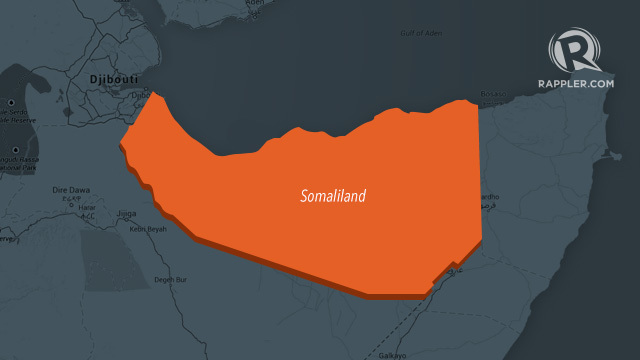
The region is bordered by Djibouti to the west, Ethiopia to the south, and the Puntland region of Somalia to the East. Somaliland has a working political system, government institutions, and its own currency and a 740 kilometre coastline along the Red Sea.
Following the collapse of the Siad Barre regime, the northern part of the country declared itself independent as the Republic of Somaliland on May 18, 1991. However, it did not receive international diplomatic recognition.
In 1960, the area had enjoyed independence for a few days, between the end of British colonial rule and its union with the former Italian colony of Somalia (southern Somalia). 40 years later, in 2001, voters in the territory overwhelmingly backed Somaliland's independence in a referendum.
As a result, Somaliland leaders distance themselves from Somalia's central transition government, which they see as a threat to their autonomy. That is why they were not part of the just ended IGAD leaders' meeting on Somalia in Nairobi. The main preoccupation of the government of Somaliland is to get international diplomatic recognition, which has so far proved elusive.
Those opposed to the recognition of Somaliland internationally fear that such a move would trigger an avalanche of secessionist demands in the rest of the continent. But even without this recognition, Somaliland has political contacts with Britain, Djibouti, Ghana, Belgium, Sweden and Ethiopia.
Ethiopia, in particular, needs Somaliland as an import/export outlet since it is landlocked. The US is also said to be toying with the idea of acknowledging the less volatile Somaliland Republic.
Some parts of the Somaliland territory such as Sool, Sanaag, northeastern Maakhir and Cayn are, however, not quite reconciled to the idea of the Somaliland Republic and still yearn for unity with Somalia.
Somaliland's first president was the Abdirahman Ahmed Ali Tuur. He succeeded by the late Muhammad Haji Ibrahim Egal (also deceased) in 1993. Neither of them was elected; instead, they were appointed by the Grand Conference of National Reconciliation.
Egal was reappointed in 1997, and remained in power until his death on May 3, 2002. The vice president, Dahir Riyale Kahin succeeded him and in 2003 and became the first Somaliland president to be elected by popular vote.
Somaliland's system of government combines traditional and western institutions. The Executive consists of a President, Vice-President and a Council of ministers. The judiciary is independent, and the Legislature bicameral.
The traditional Somali council of elders was incorporated into the governance structure and forms the Upper House of the Legislature; it is responsible for managing internal conflicts. The government in Somaliland is a power-sharing coalition of the main clans, with seats in the Upper House proportionally allocated to clans according to a predetermined formula.
This was also the case with the Lower House, but in September 2005, voters elected a new parliament, and the system where MPs had hitherto been chosen by clan elders through a process of consultation was finally discarded.
The Somaliland constitution limits the number of political parties to three, and they are the United Peoples' Democratic Party (UDUB); Peace, Unity and Development Party (Kulmiye); and the Justice and Development Party (UCUD). These parties are mainly clan based and no single one is capable of winning power on its own, hence the coalition.
President Dahir Riyale Kahin of the ruling UDUB, who won Somaliland's first multi - party presidential elections in April 2003 with a slim majority, and whose five-year term ended in May 2008, had his term controversially extended by Somaliland's council of elders.
This was ostensibly because Somaliland was not adequately prepared in terms of voter registration and other logistics. Voter registration is now complete, and the presidential election will be held in April 2009.
Somaliland is mainly inhabited by the sub-clans of the Dir and the Darood clans. The major clan in Somaliland is the Isak, followed by the Gadabursi. Others clans are the Issa the Gabooye and the Darood sub-clans, the Dhulbahanta, and Warsengeli.
The Darood sub-clans mainly support the Kulmiye party, whose candidate is Ahmed Mohamed Mohamud Silanyo. The various sub-clans of the Isaksub- clan of the larger Dir clan, namely the Garhajis, and the Habar Jelo, support the UCUD party whose presidential candidate is Faysal Ali Warabe. The Habar Awal, also a sub-clan of the Isak, support President Riyale's UDUB.
The Gadabursi's support is divided between two parties. One of the sub-clans, the Mahadase, support Kulmiye since the vice-presidential candidate for the party, Abdirahman Saylici is one of their own. The other Gadabursi sub-clan, the Habar Arfan, support UCUD. The Makahil, also of the Gadabursi clan from which President Riyale hails, support UDUB.
As things stand now, there seems to be an alliance between the Kulmiye and UCUD parties, and they may well kick Riyale's UDUB out of power.
Economically, Somaliland is still in its developing stages. The Somaliland shilling, while stable, is not an internationally recognised currency and currently has no official exchange rate (unofficially $1 is equivalent to 6,000 Somaliland shillings).
It is regulated by the Bank of Somaliland, the central bank. The bulk of Somaliland's exports are livestock, hides and skins. Agriculture, mostly cereal production, is minimal.
However, recent research shows that Somaliland has large offshore and inshore oil and natural gas reserves. But since the country lacks diplomatic status, these resources cannot be exploited at the moment. Somaliland's port of Berbera has also grown as a major export port for Ethiopia since the latter's fall-out with Eritrea.
Given its relative stability, and despite some local and international opposition, it may well be more practical for the international community to recognise Somaliland as a separate entity from the chaotic south Somalia since it in fact functions as such in reality.
Gitau Muthuma is the registrar, Eelo American University, Borama, Somaliland.
Africa Insight is an initiative of the Nation Media Group's Africa Media Network Project.

Racial Barrier Falls as Voters Embrace Call for Change

Medeshi 05 Nov , 2008
Obama Elected President as Racial Barrier Falls
By ADAM NAGOURNEY
Barack Hussein Obama was elected the 44th president of the United States on Tuesday, sweeping away the last racial barrier in American politics with ease as the country chose him as its first black chief executive.
The election of Mr. Obama amounted to a national catharsis — a repudiation of a historically unpopular Republican president and his economic and foreign policies, and an embrace of Mr. Obama’s call for a change in the direction and the tone of the country.
But it was just as much a strikingly symbolic moment in the evolution of the nation’s fraught racial history, a breakthrough that would have seemed unthinkable just two years ago.
Mr. Obama, 47, a first-term senator from Illinois, defeated Senator John McCain of Arizona, 72, a former prisoner of war who was making his second bid for the presidency.
To the very end, Mr. McCain’s campaign was eclipsed by an opponent who was nothing short of a phenomenon, drawing huge crowds epitomized by the tens of thousands of people who turned out to hear Mr. Obama’s victory speech in Grant Park in Chicago.
Mr. McCain also fought the headwinds of a relentlessly hostile political environment, weighted down with the baggage left to him by President Bush and an economic collapse that took place in the middle of the general election campaign.
“If there is anyone out there who still doubts that America is a place where all things are possible, who still wonders if the dream of our founders is alive in our time, who still questions the power of our democracy, tonight is your answer,” said Mr. Obama, standing before a huge wooden lectern with a row of American flags at his back, casting his eyes to a crowd that stretched far into the Chicago night.
“It’s been a long time coming,” the president-elect added, “but tonight, because of what we did on this date in this election at this defining moment, change has come to America.”
Mr. McCain delivered his concession speech under clear skies on the lush lawn of the Arizona Biltmore, in Phoenix, where he and his wife had held their wedding reception. The crowd reacted with scattered boos as he offered his congratulations to Mr. Obama and saluted the historical significance of the moment.
“This is a historic election, and I recognize the significance it has for African-Americans and for the special pride that must be theirs tonight,” Mr. McCain said, adding, “We both realize that we have come a long way from the injustices that once stained our nation’s reputation.”
Not only did Mr. Obama capture the presidency, but he led his party to sharp gains in Congress. This puts Democrats in control of the House, the Senate and the White House for the first time since 1995, when Bill Clinton was in office.
The day shimmered with history as voters began lining up before dawn, hours before polls opened, to take part in the culmination of a campaign that over the course of two years commanded an extraordinary amount of attention from the American public.
As the returns became known, and Mr. Obama passed milestone after milestone —Ohio, Florida, Virginia, Pennsylvania, New Hampshire, Iowa and New Mexico — people rolled spontaneously into the streets to celebrate what many described, with perhaps overstated if understandable exhilaration, a new era in a country where just 143 years ago, Mr. Obama, as a black man, could have been owned as a slave.
For Republicans, especially the conservatives who have dominated the party for nearly three decades, the night represented a bitter setback and left them contemplating where they now stand in American politics.
Mr. Obama and his expanded Democratic majority on Capitol Hill now face the task of governing the country through a difficult period: the likelihood of a deep and prolonged recession, and two wars. He took note of those circumstances in a speech that was notable for its sobriety and its absence of the triumphalism that he might understandably have displayed on a night when he won an Electoral College landslide.
“The road ahead will be long, our climb will be steep,” said Mr. Obama, his audience hushed and attentive, with some, including the Rev. Jesse Jackson, wiping tears from their eyes. “We may not get there in one year or even one term, but America, I have never been more hopeful than I am tonight that we will get there. I promise you, we as a people will get there.” The roster of defeated Republicans included some notable party moderates, like Senator John E. Sununu of New Hampshire and Representative Christopher Shays of Connecticut, and signaled that the Republican conference convening early next year in Washington will be not only smaller but more conservative.
Mr. Obama will come into office after an election in which he laid out a number of clear promises: to cut taxes for most Americans, to get the United States out of Iraq in a fast and orderly fashion, and to expand health care.
In a recognition of the difficult transition he faces, given the economic crisis, Mr. Obama is expected to begin filling White House jobs as early as this week.
Mr. Obama defeated Mr. McCain in Ohio, a central battleground in American politics, despite a huge effort that brought Mr. McCain and his running mate, Gov. Sarah Palin of Alaska, back there repeatedly. Mr. Obama had lost the state decisively to Senator Hillary Rodham Clinton of New York in the Democratic primary.
Mr. McCain failed to take from Mr. Obama the two Democratic states that were at the top of his target list: New Hampshire and Pennsylvania. Mr. Obama also held on to Minnesota, the state that played host to the convention that nominated Mr. McCain; Wisconsin; and Michigan, a state Mr. McCain once had in his sights.
The apparent breadth of Mr. Obama’s sweep left Republicans sobered, and his showing in states like Ohio and Pennsylvania stood out because officials in both parties had said that his struggles there in the primary campaign reflected the resistance of blue-collar voters to supporting a black candidate.
“I always thought there was a potential prejudice factor in the state,” Senator Bob Casey, a Democrat of Pennsylvania who was an early Obama supporter, told reporters in Chicago. “I hope this means we washed that away.”
Mr. McCain called Mr. Obama at 10 p.m., Central time, to offer his congratulations. In the call, Mr. Obama said he was eager to sit down and talk; in his concession speech, Mr. McCain said he was ready to help Mr. Obama work through difficult times.
“I need your help,” Mr. Obama told his rival, according to an Obama adviser, Robert Gibbs. “You’re a leader on so many important issues.”
Mr. Bush called Mr. Obama shortly after 10 p.m. to congratulate him on his victory.
“I promise to make this a smooth transition,” the president said to Mr. Obama, according to a transcript provided by the White House .“You are about to go on one of the great journeys of life. Congratulations, and go enjoy yourself.”
For most Americans, the news of Mr. Obama’s election came at 11 p.m., Eastern time, when the networks, waiting for the close of polls in California, declared him the victor. A roar sounded from the 125,000 people gathered in Hutchison Field in Grant Park at the moment that they learned Mr. Obama had been projected the winner.
The scene in Phoenix was decidedly more sour. At several points, Mr. McCain, unsmiling, had to motion his crowd to quiet down — he held out both hands, palms down — when they responded to his words of tribute to Mr. Obama with boos.
Mr. Obama, who watched Mr. McCain’s speech from his hotel room in Chicago, offered a hand to voters who had not supported him in this election, when he took the stage 15 minutes later. “To those Americans whose support I have yet to earn,” he said, “I may not have won your vote, but I hear your voices, I need your help, and I will be your president, too.”
Initial signs were that Mr. Obama benefited from a huge turnout of voters, but particularly among blacks. That group made up 13 percent of the electorate, according to surveys of people leaving the polls, compared with 11 percent in 2006.
In North Carolina, Republicans said that the huge surge of African-Americans was one of the big factors that led to Senator Elizabeth Dole, a Republican, losing her re-election bid.
Mr. Obama also did strikingly well among Hispanic voters; Mr. McCain did worse among those voters than Mr. Bush did in 2004. That suggests the damage the Republican Party has suffered among those voters over four years in which Republicans have been at the forefront on the effort to crack down on illegal immigrants.
The election ended what by any definition was one of the most remarkable contests in American political history, drawing what was by every appearance unparalleled public interest.
Throughout the day, people lined up at the polls for hours — some showing up before dawn — to cast their votes. Aides to both campaigns said that anecdotal evidence suggested record-high voter turnout.
Reflecting the intensity of the two candidates, Mr. McCain and Mr. Obama took a page from what Mr. Bush did in 2004 and continued to campaign after the polls opened.
Mr. McCain left his home in Arizona after voting early Tuesday to fly to Colorado and New Mexico, two states where Mr. Bush won four years ago but where Mr. Obama waged a spirited battle.
These were symbolically appropriate final campaign stops for Mr. McCain, reflecting the imperative he felt of trying to defend Republican states against a challenge from Mr. Obama.
“Get out there and vote,” Mr. McCain said in Grand Junction, Colo. “I need your help. Volunteer, knock on doors, get your neighbors to the polls, drag them there if you need to.”
By contrast, Mr. Obama flew from his home in Chicago to Indiana, a state that in many ways came to epitomize the audacity of his effort this year. Indiana has not voted for a Democrat since President Lyndon B. Johnson’s landslide victory in 1964, and Mr. Obama made an intense bid for support there. He later returned home to Chicago play basketball, his election-day ritual.
Elisabeth Bumiller contributed reporting from Phoenix, Marjorie Connelly from New York and Jeff Zeleny from Chicago.

Somalia : The 843-day War, It's Time To Cut and Run!

Medeshi
The 843-day War By Alemayehu G. Mariam

November 3, 2008

It's Time To Cut and Run!
In mid-July 2006, Zenawi sent his troops to Somalia to prop up the so-called transitional government in Baidoa. By late December 2006, his tanks rolled into Mogadishu to dislodge the “government” of the Islamic Courts Union (ICU) and crush the “Talibanic” Al Shabab. Zenawi justified his invasion as an act of pre-emptive self-defense: “Ethiopian defense forces were forced to enter into war to protect the sovereignty of the nation. We are not trying to set up a government for Somalia, nor do we have an intention to meddle in Somalia's internal affairs. We have only been forced by the circumstances.” But everyone knows the invasion was about empowering one faction of the warlords against the rest.

By mid-October, 2008, Zenawi said he has had enough. It is time to cut and run! He told his parliament: “If the Somali political scenario improves and its stakeholders assure us of their commitment, we will remain to help them out. Otherwise we will leave as no other option will be available.” Last week, it was announced that following a ceasefire agreement that takes effect on November 5, Zenawi will begin a “phased withdrawal” of his troops from Somalia.

Accordingly, by November 21, Zenawi’s soldiers will be withdrawn from the capital Mogadishu and Beledweyne, near the Ethiopian border. The second phase is expected to take place in 120 days. By then African Union peacekeepers, militiamen loyal to the transitional Somali government and certain elements of the opposition Alliance for the Re-Liberation (ARS) will form a 10,000-man police force to maintain law and order.

A humbled Zenawi struck a conciliatory tone with his erstwhile jihadists enemies as he prepared to pull out: “If the people of Somalia have a government, even one not positively inclined to Ethiopia, it would be better than the current situation. Having a stable government in place in Somalia is in our national interests.” (In December, 2006, Somalia had a “stable” government which enjoyed popular support after securing Mogadishu from competing warlords and thugs). On October 28, Zenawi’s foreign minister Seyoum Mesfin blamed everybody but his own regime for everything that went wrong in Somalia after the invasion: “Somalia’s problems are not security, but political [and the transitional government] failed to create any institutions of governance to speak of. The continuing feud within the leadership had contributed to the paralysis of the TFG. Of course no one could assume that, speaking now on behalf of my country, Ethiopia will continue to keep its troops in Somalia. In all honesty, the international community can hardly be proud of its record in Somalia. But this is no excuse for the kind of egregious lack of responsible behaviour that we continue to witness on the part of all those in positions of authority in Somalia.”
But the ceasefire was flatly rejected by the “hardliners” including Sheikh Hassan Dahir Aweys, Al Shabab leaders and other insurgent and clan leaders. Mukhtar Robow, an Al Shabab spokesman defiantly declared: “We have already rejected the (peace) conference and its agreements. We are now saying again that we will not accept them. We will continue fighting against the enemies of Allah. I say Meles Zenawi must admit defeat, because he found people who hide his defeat after his power was severely weakened. We will continue attacks on Ethiopian and African Union forces.” On October 29, a coordinated attack by unidentified suicide bombers struck a United Nations compound and other targets in northern Somalia killing at least 22 people. Despite the announced ceasefire, there are continued reports of daily mortar attacks and gun battles with insurgent elements in the streets. According to one report, Zenawi now has less than 2500 soldiers left inside Somalia, down from an estimated 15,000-18,000 in the first year of the invasion. Secret plans are said to be in place to evacuate officials of the transitional government to Kenya once the troops are withdrawn.

The Logic of the Somali Invasion

Somalia has been without any central government since the downfall of President Mohamed Siad Barre in 1991. Clan warfare, warlords, armed thugs and bandits have made Somalia the archetypal “failed state”. The marauding and murderous warlords have left tens of thousands of innocent victims in their wake. Zenawi’s casus belli (justification for invasion and war) was framed against this backdrop of clan anarchy and the overshadowing specter of a Somali Talibanic-Islamist-Jihadist “bogeyman” rampaging throughout the Horn of Africa. The invasion was anchored in an unarticulated doctrine of containment of terrorism in the Horn where Zenawi expected to play a pivotal role in eliminating or severely restricting the sphere of influence of Al Qaeda and other homegrown terrorists in Somalia and the region. To ensure the unflinching support of the terrorism-obsessed Bush administration, Zenawi wanted to be seen as a star player in the “second front” on the war on global terrorism.

Based on a content analysis of Zenawi’s public statements, one can discern a pretty slick set of fabricated arguments for the invasion of Somalia and regional hegemonism based on systematic demonization of Somali Islamists as die-hard terrorists and jihadists. Here are the elements of the casus belli: 1) Under the rule of the ICU and influence of the Al Shabaab, Somalia is in imminent danger of being transformed into a Taliban-style Islamic fundamentalist state. 2) The Taliban-style Islamic state in Somalia is sworn to provide a haven and training grounds for Al Qaeda and other Islamic terrorists and militants globally, and militarily threaten Ethiopia and other countries in the region. 3) The Somali Islamic state, unless opposed, will be in a strong position to support and expand Islamic fundamentalism and terrorism among Ethiopian Muslims and other Muslims in the region; and for this purpose the Islamic state will support other internal armed opposition anti-regime groups as proxies to destabilize Ethiopia and the region. 4) The Islamic Somali state is revanchist (expansionist) in its ideology and will aggressively try to combine the Islamic populations in the Ogaden, Djbouti and Eritrea in an effort to create a greater Islamic state or sphere of influence. 5) Unless militarily challenged by Ethiopia, the Islamists in Somalia will take control of the southern flank of the Red Sea (Gulf of Aden) and the coastal areas of the Indian Ocean providing a beachhead for Islamic terrorists (may be pirates). 6) Without the active support and participation of the Zenawi regime, U.S. anti- terrorism strategy in the Horn, and possibly even in the southwestern Arabian Peninsula, is doomed to failure. 7) Ergo, only Zenawi can save the Horn from the plague of global terrorism, Islamic fundamentalism and regional instability.

Winners and Losers: A Ceasefire is Not a Substitute for Victory!

Governments who believe in war as an instrument of foreign policy understand that war is about victory over the enemy and winning. Invading a country and waging war on it is not a picnic. Fighting a war to victory requires great sacrifices in human lives and resources. This holds true even in a limited war (where the objects of the war are well defined and military confrontation does not require maximum military efforts). It has been said that the invasion of Somalia is not about “trying to set up a government for Somalia” or “to meddle in Somalia's internal affairs.” The limited objective of the war, we were told, is to neutralize and eliminate the “jihadists”. Thus, war against “jihadists” means vanquishing them and bringing them to their knees. Offering them a ceasefire is not victory. Settling with anyone willing to sign the instrument of a ceasefire to save face while cutting and running is not victory. Retreating under the sustained onslaught of the “enemy” is not victory. As General Douglas MacArthur said, “In war, there is no substitute for victory. War’s very object is victory, not prolonged indecision.”

Why is there no “victory” in Somalia? There are military and political reasons why “victory” in Somalia is impossible. Militarily, there are three reasons why Zenawi could not win the Somali war. First, to defeat the Somali “jihadists” and “Islamists” it was necessary to apply overwhelming force. That was accomplished in the initial stages of the invasion when Zenawi’s troops swiftly routed the ICU and Al Shabab in a blitzkrieg using heavy armor and air support from U.S. AC-130 gunships stationed in Djbouti. After the initial onslaught and “victory”, Zenawi fell into “prolonged indecision”. The nature of the conflict changed as the “jihadists” began to fight guerilla-style against the occupation forces. Zenawi was forced to change from an offensive action to waging a defensive war. But as General MacArthur cautioned, “You can’t win a war fighting it defensively.” The “jihadists” had scattered to the south and began regrouping to wage a war of liberation. Within months, Zenawi’s and the transitional government’s troops had lost the offensive and the insurgents were putting up effective resistance. Al Shabab operatives were busy laying roadside bombs and attacking targets with small arms fire and mortars often hiding in neighborhoods and civilians areas. Zenawi’s troops would respond indiscriminately by bombarding residential areas killing hundreds and causing the flight of hundreds of thousands of people from Mogadishu and other areas. By the Fall of 2007, the “jihadist terrorists” had been transformed by the invasion. They had become insurgents dedicated to ridding Somalia from foreign invaders and occupiers. Defending Somali sovereignty had become far more important to them than their own internal squabbles or allegiance to a particular political orientation, ideology or system.

Second, from the tactical perspective it appears Zenawi completely underestimated the insurgents and the Somali people and overestimated the military prowess of his troops. He really did not know the Somalis as much as he thought he knew them. He underestimated their resolve to fight a force that had invaded and occupied their country. His public statements reveal that he completely underestimated the bravery, strength, resilience, resolve and military experience of the Somalis and the nationalist political dynamic the invasion was bound to foster in the creation of an unyielding insurgent fighting force. Zenawi and possibly some of his generals foolishly and arrogantly believed that defeating the jihadists would be a cakewalk. It is possibly this infantile optimism about their own military prowess that led them to declare in January, 2006 that “we’ll be out of Somalia in a few weeks”. They just did not know their “enemy” or have a healthy respect for him.

Third, the secret of the Somali insurgency and its obvious victory over the invading forces was foretold long ago by Gen. Vo Nguyen Giap in his book, How We Won the War, a narrative of how the North Vietnamese army and the Vietcong systematically countered the United States military and South Vietnamese troops until they swooped down from the north and captured Saigon in 1975. Giap said that “Any force that wishes to impose its will on other nations will certainly face failure.” Giap explained, “We had ingenuity and the determination to fight to the end. I appreciated the fact that they [U.S] had sophisticated weapon systems but I must say that it was the people who made the difference, not the weapons. And so they made mistakes. They did not know the limits of power. ... No matter how powerful you are there are certain limits, and they did not understand it well. ... We had the spirit that we would govern our own nation; we would rather sacrifice than be slaves.” The Somali insurgents could not be defeated because they had the “spirit” to govern themselves (even though they are having an extraordinarily difficult time doing it) and the “spirit” to resist aggression by any means necessary -- hit and run attacks, ambushing unsuspecting patrols and convoys, using improvised explosive devices, mortar attacks and so on. In the end, the Somali insurgents understood Ho Chi Mihn’s famous statement, “You can kill ten of my men for every one I kill of yours, but even at those odds you will lose and I will win.”
They won!

The problems involved in bringing about a political solution to Somalia’s problems were vastly complicated by the presence of foreign troops and the military situation on the ground. Bringing order (let alone peace) to a country that has been stateless and racked by violence for seventeen years is daunting. They tried numerous peace conferences to bring the warring parties to the peace table. None of them worked out. Against this backdrop, in 2006 Zenawi rode into Mogadishu like a knight on a white horse seeking to “stabilize the internationally recognized transitional government” and drive out the terrorist. For nearly two years, he tried to impose a Pax Zenawi on them in the form of a negotiated power-sharing program. There were no takers. When a comprehensive political solution could not be achieved, he offered them a ceasefire, and put the blame on the transitional government for its internal weaknesses and the international community for failing to provide military muscle to backup his vision of a political solution for Somalia.

The political problems are not limited to post-invasion Somalia. They also focus on the reasons for the invasion. Why did Zenawi invade Somalia and how did he go about making that decision? Was the invasion absolutely necessary? The incontrovertible evidence is that there was no public discussion of the legitimacy or necessity of the invasion and war in Somalia. Neither the common Ethiopian folks nor the political elites openly discussed and debated the wisdom or utility of the invasion and the war. There was no real debate in the “parliament”. A few opposition leaders who dared to speak made it clear that they were not convinced of the justness or necessity of the invasion. Privately, many influential opinion leaders acknowledged that they felt that the invasion was insane. They were afraid to speak out. It is also incontrovertible that Zenawi’s justifications for the invasion were fabricated. He exaggerated the threat of a jihadist aggression and the regional threat posed by Al Queida and intentionally demonized the Islamists as Al Quieda stooges. He played the Bush administration for its knee jerk reaction to the word “terrorism”. By invading Somalia, Zenawi also saw an opportunity to burnish his image internationally and put a damper on all of the congressional activity aimed at sanctioning him for dismal human rights record. He wanted to convince the Bush administration that even though the international human rights organizations were saying nasty things about him, he is actually a pretty nice guy. Most of all, he is really trustworthy and reliable. In the end, Zenawi painted himself into a corner. He could not win a war he started nor could he impose his vision of a peaceful Somali state. In his retreat he is unable to explain the enormous sacrifices in human lives and resources fighting an illegal war of aggression.

The Question of War Crimes

Now that there will be a “ceasefire” (effectively ending the occupation and the war), there are serious questions of war crimes against Zenawi’s troops, the forces loyal to the TFG and the insurgents. The tip of the war crimes iceberg is evident in a report by Human Rights Watch (HRW) entitled, Shell Shocked: Civilians Under Siege in Mogadishu [1] HRW in its scathing report alleges that the insurgents would “launch mortar rounds within minutes, then melt back into the civilian population.” The “Ethiopian and TFG response to mortar attacks increasingly included the return firing of mortars and rockets in the direction of origin of insurgency fire.” Specific “neighborhoods like Casa Populare (KPP) in the south, Towfiq and Ali Kamin around the Stadium, all along Industrial Road, and the road from the Stadium to Villa Somalia were heavily shelled or repeatedly hit by Ethiopian BM-21 multiple-rocket launcher and mortar rounds.” The impact of the shelling on the civilian population was “devastating”. HRW concluded, “The appalling consequences of indiscriminate attacks, the deployment of forces in densely populated areas, and the failure of all warring parties generally to take steps to minimize civilian harm is reflected in the thousands of civilians who died or whose lives were shattered by the injuries they sustained or by the loss of family members. It is also reflected in the staggering numbers of people who fled Mogadishu and in the scale of the destruction of homes, hospitals, schools, mosques, and other infrastructure in Mogadishu.”

Somalia: Mission NOT Accomplished!

The time to get out of Somalia was in the Spring of 2007. It was much easier to declare victory after chasing the “jihadists” out of town. As military or legally enforceable agreements, ceasefires do not amount to much. Ceasefires are about stopping armed conflict or suspending hostile action until one side determines it could get an advantage by resuming military action. Ceasefires rarely lead to comprehensive settlements. All over Africa ceasefires are signed and broken before the ink on the paper is dry. In 1973 President Nixon used the Paris Accords ceasefire agreements as a graceful way to exit the war in Vietnam. That was his peace with honor strategy. Two years later, the North Vietnamese Army swooped down on Saigon and took over. The “jihadists”, “Islamists” or whatever you want to call them will now feel emboldened in their ability to drive out the invader. They have defiantly declared they will not honor the ceasefire. Ironically, thousands of Somalis have been killed and over 1 million have been displaced. Many Ethiopian lives have been lost and resources wasted. All for one grand prize: A Ceasefire!
Perhaps in a few months the tanks and the artillery pieces will fall silent. But that will not signal the arrival of peace in Somalia. As long as heavily-armed insurgent groups, clan leaders, warlords, militants, pirates and other warmongers run amok, peace will remain elusive in Somalia. Hopefully, the ceasefire will give pause to the opposing factions to look inward for a durable solution. Ultimately, whether there shall be war or peace in Somalia will be in the hands of Somali people alone. Only they can choose their destiny. When the dust settles in Somalia, what will matter the most will not be the armies of the invaders and the defenders who signed or did not sign a ceasefire. To paraphrase the old saying, the only armies that matter will be the army of cripples, the army of mourners, the forgotten army of the innocent dead and the army of displaced persons and refugees.

PEACE!

Qaar ka mid ah Ururada Bulshada Rayidka ah oo walaac ka muujiyay mudo dhaafka golayaasha deegaanada

Annaga oo ah Ururada Bulshada Rayidka ah ee Madaxa-banaan waxaanu si wayn uga walaacsanahay