Medeshi Nov 3, 2008
A DEATH OF A GIANT IN SOMALI LITERATURE
I've been saddened to hear the ill-timely death of the late ABDI MUXUMAD AMIIN who was buried today in Nairobi.
He's been a towering figure in the field of Somali literary history. I've been priviledged to have known the late Abdi Muxumed Amiin in my early years of university education in Mogadishu.
I've also been priviledged to literally enjoy his songs & dramas that captured the imagination of the Somali nation.
The "Muufo, muufo macaan", " Landcruiser", and many more of some of his contributions.
The late Abdi Muxumed Amiin was also an admirable singer of mine. Remember the song he sang with Hibo Nuura.
I would like to remind you of some of the verses in that song. " Haddii dawo bakooto, maxaa lagu dabiibaa!"
"Haddii dab dhaxamoodo, maxaa laga diiriyaa!" "Waa su'aal da'a weynoo madax daalinaysee, dadweynahaa la weydiin".
May Allah rest his soul in peace.
Dr. Hassan Ismail Yussuf
Hargeisa
Kenya : Officials on high alert following bomb scare
Medeshi 3 Nov , 2008
Kenya: Officials on high alert following bomb scare
Detectives have established that the two suspects arrested in connection with 600 electronic detonators had attempted to acquire another batch from a military officer a month ago.
The suspects had approached the officer and revealed that, although they had some detonators, their group still needed another 80mm capacity batch for an unspecified mission.
The suspects said they would buy the detonators at any price the officer quoted.
Detectives then began trailing the suspects, hoping to arrest the group and seize any explosives in their possession.
Working on a tip-off, they trailed a bus headed for Wajir and stopped it along Thika road.
The security agents seized 600 detonators, which a bomb expert said are capable of setting off a huge bomb.
Anti-terrorism police detectives are trying to establish if the suspects have more detonators and where they were destined.
A police source privy to the investigations revealed that one of the suspects had been under investigation for the 2007 explosion near the Ambassadeur Hotel in which one person was killed.
He had been sought for arrest but escaped from the country until a month ago when he approached the military officer.
Alerted the police
“The military officer reported the matter to his seniors who alerted the police immediately,” a senior police officer said.
One of the suspects arrested claimed that he resides in Kariobangi and had been given the detonators by a man from Langata to deliver to Wajir.
The other suspect, who was arrested later in a hotel in Westlands, is also helping police with investigations. The two are being held at an undisclosed police station.
Security has been heightened around the country after the discovery of the detonators on the Wajir-bound bus and last week’s explosions in Somaliland and Puntland.
Security officials at the United Nations’ regional headquarters in Gigiri are on high alert after five simultaneous explosions in Somalia’s breakaway regions of Somaliland and Puntland targeted the offices of the UNDP and the Ethiopian consulate.
Over 60 UN staff based in Somalia and Puntland have been evacuated to Kenya and are staying in two hotels in Westlands. The staff began arriving on Friday after their stations were declared dangerous.
The explosions, suspected to have been the handiwork of al-Qaeda operatives, happened while Kenya was hosting the Inter Governmental Authority meeting to discuss the future of Somalia.
Police have also increased the number of roadblocks along the road from Nairobi to Garissa and are carrying out thorough security checks.
Sent a memo
Police and intelligence officers in Wajir, where one of the suspects was travelling to, have also been put on high alert and asked to investigate any suspicious goings-on.
In addition, a Kenya Revenue Authority commissioner, Wambui Namu, sent a memo to all regional officers around the country calling for increased vigilance ahead of the US Presidential election scheduled for Tuesday.
However, the police said that the memo from Kenya Revenue Authority was a routine one to advise all government officials working in strategic posts to be observant in the performance of their official duties.
The Nation
Kenya: Officials on high alert following bomb scare
Detectives have established that the two suspects arrested in connection with 600 electronic detonators had attempted to acquire another batch from a military officer a month ago.
The suspects had approached the officer and revealed that, although they had some detonators, their group still needed another 80mm capacity batch for an unspecified mission.
The suspects said they would buy the detonators at any price the officer quoted.
Detectives then began trailing the suspects, hoping to arrest the group and seize any explosives in their possession.
Working on a tip-off, they trailed a bus headed for Wajir and stopped it along Thika road.
The security agents seized 600 detonators, which a bomb expert said are capable of setting off a huge bomb.
Anti-terrorism police detectives are trying to establish if the suspects have more detonators and where they were destined.
A police source privy to the investigations revealed that one of the suspects had been under investigation for the 2007 explosion near the Ambassadeur Hotel in which one person was killed.
He had been sought for arrest but escaped from the country until a month ago when he approached the military officer.
Alerted the police
“The military officer reported the matter to his seniors who alerted the police immediately,” a senior police officer said.
One of the suspects arrested claimed that he resides in Kariobangi and had been given the detonators by a man from Langata to deliver to Wajir.
The other suspect, who was arrested later in a hotel in Westlands, is also helping police with investigations. The two are being held at an undisclosed police station.
Security has been heightened around the country after the discovery of the detonators on the Wajir-bound bus and last week’s explosions in Somaliland and Puntland.
Security officials at the United Nations’ regional headquarters in Gigiri are on high alert after five simultaneous explosions in Somalia’s breakaway regions of Somaliland and Puntland targeted the offices of the UNDP and the Ethiopian consulate.
Over 60 UN staff based in Somalia and Puntland have been evacuated to Kenya and are staying in two hotels in Westlands. The staff began arriving on Friday after their stations were declared dangerous.
The explosions, suspected to have been the handiwork of al-Qaeda operatives, happened while Kenya was hosting the Inter Governmental Authority meeting to discuss the future of Somalia.
Police have also increased the number of roadblocks along the road from Nairobi to Garissa and are carrying out thorough security checks.
Sent a memo
Police and intelligence officers in Wajir, where one of the suspects was travelling to, have also been put on high alert and asked to investigate any suspicious goings-on.
In addition, a Kenya Revenue Authority commissioner, Wambui Namu, sent a memo to all regional officers around the country calling for increased vigilance ahead of the US Presidential election scheduled for Tuesday.
However, the police said that the memo from Kenya Revenue Authority was a routine one to advise all government officials working in strategic posts to be observant in the performance of their official duties.
The Nation

Amnesty International condemns bomb attacks in Hargeisa and Bossasso
AMNESTY INTERNATIONAL
PUBLIC STATEMENT
30 October 2008
AI Index: AFR 52/018/2008
Somalia (Somaliland/Puntland): Amnesty International condemns bomb
attacks in Hargeisa and Bossasso
Amnesty International condemns a series of suicide bomb attacks carried out mid-morning on
Wednesday 29 October in Hargeisa, Somaliland and Bossaso, Puntland.
In Hargeisa witnesses reported more than 20 people were killed and more than 30 injured when three separate cars simultaneously drove into compounds housing President Dahir Riyale Kahin's private residence, the UN Development Programme offices, and the Ethiopian consulate, with the last location suffering the worst of the damage and the greatest number of casualties.
The government of Puntland has not released numbers of those killed or wounded in two attacks on government facilities in Bossaso that reportedly took place at approximately the same time as the attacks in Hargeisa, but it appears at least several were killed and others injured.
The UN office of Coordination for Humanitarian Affairs has confirmed that two of its national staff died in the attack, and 6 others were injured, two seriously. At the UNDP office in Hargeisa one staff member described shock and fear after witnessing the aftermath of the explosion that reportedly killed a local security officer and a driver. One of several vehicles used in yesterday morning's attack had forced entry through the security barrier in front of the UNDP offices after security guards refused to open the gate.
While kidnappings and other forms of armed violence against civilians have increased in the semiautonomous region of Puntland in northeast Somalia in 2008, as well as piracy along the coast, similar violations have been rare in self-declared independent Somaliland.
No one has claimed responsibility for Wednesday's bombings which resemble attacks on Somali,
Ethiopian and international authorities and other civilians routinely waged in south central Somalia since Somalia's Transitional Federal Government backed by Ethiopian forces claimed power in December 2006.
Amnesty International condemns all deliberate and indiscriminate attacks on civilians, which are
clearly prohibited under international law. Amnesty International calls for prompt and impartial
investigations into Wednesday's deadly attacks, and calls on Somaliland, Puntland and TFG
authorities to ensure that those responsible are held accountable according to international standards of justice without application of the death penalty.
END/
Public Document
For more information please call Amnesty International's press office in London, UK, on +44 20 7413 5566 or email: press@amnesty.org
International Secretariat, Amnesty International, 1 Easton St., London WC1X 0DW, UK
www.amnesty.org
PUBLIC STATEMENT
30 October 2008
AI Index: AFR 52/018/2008
Somalia (Somaliland/Puntland): Amnesty International condemns bomb
attacks in Hargeisa and Bossasso
Amnesty International condemns a series of suicide bomb attacks carried out mid-morning on
Wednesday 29 October in Hargeisa, Somaliland and Bossaso, Puntland.
In Hargeisa witnesses reported more than 20 people were killed and more than 30 injured when three separate cars simultaneously drove into compounds housing President Dahir Riyale Kahin's private residence, the UN Development Programme offices, and the Ethiopian consulate, with the last location suffering the worst of the damage and the greatest number of casualties.
The government of Puntland has not released numbers of those killed or wounded in two attacks on government facilities in Bossaso that reportedly took place at approximately the same time as the attacks in Hargeisa, but it appears at least several were killed and others injured.
The UN office of Coordination for Humanitarian Affairs has confirmed that two of its national staff died in the attack, and 6 others were injured, two seriously. At the UNDP office in Hargeisa one staff member described shock and fear after witnessing the aftermath of the explosion that reportedly killed a local security officer and a driver. One of several vehicles used in yesterday morning's attack had forced entry through the security barrier in front of the UNDP offices after security guards refused to open the gate.
While kidnappings and other forms of armed violence against civilians have increased in the semiautonomous region of Puntland in northeast Somalia in 2008, as well as piracy along the coast, similar violations have been rare in self-declared independent Somaliland.
No one has claimed responsibility for Wednesday's bombings which resemble attacks on Somali,
Ethiopian and international authorities and other civilians routinely waged in south central Somalia since Somalia's Transitional Federal Government backed by Ethiopian forces claimed power in December 2006.
Amnesty International condemns all deliberate and indiscriminate attacks on civilians, which are
clearly prohibited under international law. Amnesty International calls for prompt and impartial
investigations into Wednesday's deadly attacks, and calls on Somaliland, Puntland and TFG
authorities to ensure that those responsible are held accountable according to international standards of justice without application of the death penalty.
END/
Public Document
For more information please call Amnesty International's press office in London, UK, on +44 20 7413 5566 or email: press@amnesty.org
International Secretariat, Amnesty International, 1 Easton St., London WC1X 0DW, UK
www.amnesty.org
Somalia: Girl stoned was a child of 13

Somalia: Girl stoned was a child of 13
31 October 2008
Contrary to earlier news reports, the girl stoned to death in Somalia this week was 13, not 23, Amnesty International can reveal.
Aisha Ibrahim Duhulow was killed on Monday, 27 October, by a group of 50 men who stoned her to death in a stadium in the southern port of Kismayu, in front of around 1,000 spectators.
Some of the Somali journalists who had reported she was 23 have told Amnesty International that this age was based upon a judgement of her age from her physical appearance.
She was accused of adultery in breach of Islamic law but, her father and other sources told Amnesty International that she had in fact been raped by three men, and had attempted to report this rape to the al-Shabab militia who control Kismayo, and it was this act that resulted in her being accused of adultery and detained. None of men she accused of rape were arrested.
“This was not justice, nor was it an execution. This child suffered a horrendous death at the behest of the armed opposition groups who currently control Kismayo,” said David Copeman, Amnesty International's Somalia Campaigner.
“This killing is yet another human rights abuse committed by the combatants to the conflict in Somalia, and again demonstrates the importance of international action to investigate and document such abuses, through an International Commission of Inquiry.” Amnesty International has learnt that:
*Aisha Ibrahim Duhulow was reported as being 23, based upon a judgement on her physical appearance, according to one of the journalists who had reported the stoning. Her actual age was confirmed to Amnesty International by other sources, including her father.
*Her father said she had only travelled to Kismayo from Hagardeer refugee camp in north eastern Kenya three months earlier.
*She was detained by militia of the Kismayo authorities, a coalition of Al-shabab and clan militias. During this time, she was reportedly extremely distressed, with some individuals stating she had become mentally unstable.
*A truckload of stones was brought into the stadium to be used in the stoning.
At one point during the stoning, Amnesty International has been told by numerous eyewitnesses that nurses were instructed to check whether Aisha Ibrahim Duhulow was still alive when buried in the ground. They removed her from the ground, declared that she was, and she was replaced in the hole where she had been buried for the stoning to continue.
*An individual calling himself Sheik Hayakalah, was quoted on Radio Shabelle saying:``The evidence came from her side and she officially confirmed her guilt, while she told us that she is happy with the punishment under Islamic law.'' In contradiction to this claim, a number of eye witnesses have told Amnesty International she struggled with her captors and had to be forcibly carried into the stadium.
*Inside the stadium, militia members opened fire when some of the witnesses to the killing attempted to save her life, and shot dead a boy who was a bystander. An al-Shabab spokeperson was later reported to have apologized for the death of the child, and said the milita member would be punished.
Background
Amnesty International has campaigned to end the use of the punishment of stoning, calling it gruesome and horrific. This killing of Aisha Ibrahim Duhulow demonstrates the cruelty and the inherent discrimination against women of this punishment.
The reports on this killing should be understood within the climate of fear that armed insurgent groups such as al-Shabab have created within the areas they control in Somalia. As Amnesty International has documented previously, government officials, journalists and human rights defenders face death threats and killing if they are perceived to have spoken against al-Shabab, who have waged a campaign of intimidation against the Somali people through such killings.
Since the death, a number of individuals have told Amnesty International they have fled from Kismayo out of fear of suffering a similar fate to Aisha Ibrahim Duhulow.
West scrambles to avert all-out Congo war
 Medeshi Oct 31 , 2008
West scrambles to avert all-out Congo war
Catherine Philp, Diplomatic Correspondent
David Miliband, the Foreign Secretary, was to fly to Democratic Republic of Congo and neighbouring Rwanda today on an emergency mission to help prevent all-out regional war.
Mr. Miliband and his French counterpart, Bernard Kouchner, are expected to see for themselves the humanitarian fall-out from the fighting in eastern Congo where Rwandan-backed rebels have battled to the gates of the regional capital Goma.
The fighting has created tens of thousands more internal refugees, swelling the ranks of the quarter-million already displaced by the conflict since August.
With tens of thousands now roaming out of the reach of aid workers, the Red Cross has warned of a coming “humanitarian catastrophe” underlined by reports today that rebel forces had emptied displacement camps of civilians and looted their belongings before torching the sites.
Related Links
Congo troops unleash death on own people
Rwanda gambles on rebels to show strength
UN peacekeepers braced for full-scale war
In the besieged city of Goma, government soldiers have turned to looting, with killings and rapes also reported. A fragile ceasefire has held since late Wednesday evening with thousands of United Nations peacekeepers stationed in defence of the city but residents remain on a knife-edge with the possibility that peace could dissolve at any moment.
The rebels are led by the charismatic ethnic Tutsi leader Laurent Nkunda, a renegade general from the Congolese army. He claims to fight in defence of the marginalised Tutsi minority. He draws support from the Tutsi-led regime in Rwanda, which is striving to secure control of eastern Congo and its vast and lucrative mineral deposits.
Rwanda’s President Paul Kagame vehemently denies the association and has avoided international opprobrium largely because of Western guilt over failures to halt the 1994 genocide.
That may now change with Mr. Miliband’s visit. He and Mr. Kouchner will go with strong warnings for leaders in Kigali and Kinshasa that the violence must end. They will press Mr. Kagame and the Congolese president Laurent Kabila to sit down at the same table and negotiate a lasting truce. “Our view is that it’s a political problem,” a senior British official said. “They need to stop.”
Rwanda regards itself as a close ally to Britain but not to France, which Mr. Kagame blames for failing to prevent the genocide of Rwandan Tutsis by Hutu militiamen. Since taking office, Mr. Kagame has even removed French as an official language, replacing it with English - a move that has provided British companies with lucrative contracts for school textbooks.
Mr. Miliband’s intervention in one of the world’s most intractable conflicts may appear a huge risk; in reality he has everything to gain as the situation in Congo could barely be worse and almost any improvement could be heralded as a success.
The two envoys will visit north Kivu for a snapshot of the humanitarian crisis there to press the point to Congo and Rwanda’s leaders over the dire consequences of continued conflict. American and UN envoys themselves arrived in Congo yesterday to deliver similar messages to leaders there.
Earlier today, the UN refugee agency said it had received reports that 50,000 people had been forces out of refugee camps and ad-hoc settlements in areas around the town of Rutshuru, seized by rebels in recent days.
The uprooted are in “desperate need of help,” according to Antonio Guterres, the agency’s chief. The chaos has sent a tide of displaced people fleeing in all directions to evade armed groups, taking them beyond the reach of aid agencies, many of whom have been forced to evacuate.
“The conflict is now threatening the lives of our aid workers so we have temporarily withdrawn our staff to safety,” Hussein Mursal, Save the Children’s country director said. “With the humanitarian crisis worsening day by day, it’s vital for us to be able to get help to communities, but the security situation is making it impossible
Somalia: Kenya On the Spot Over Seized Ship
 Kenya On the Spot Over Seized Ship
The Nation (Nairobi)NEWS
30 October 2008 Posted to the web 31 October 2008 Nairobi
The US has asked Kenya and Ukraine to disclose the actual destination of the 33 T-72 tanks and ammunition aboard the hijacked Ukrainian ship moored off the coast of Somalia.
"Kenya should say what is the destination of the weapons and Ukraine who are the exporters should say who they were exporting the weapons to," the US Under-Secretary of State for African Affairs, Dr Jendayi Frazer, said.
While Kenya insists that the weapons are meant for its military, some groups, including a US army commander, have said the arms were being shipped to South Sudan.
Extremist groups
Dr Frazer was in the country to attend an Inter-Governmental Authority on Development summit.
The US official said the international community was concerned about the possibility of the weapons falling into the hands of extremist groups in the region.
She was referring to the weapons aboard the hijacked MV Faina, which has been held for the past 36 days by pirates demanding ransom.
Meanwhile, pirates have hijacked a Turkish ship after making five attempts on other vessels on Tuesday. MV Yasa Neslihan, with 20 crew members, was seized by Somali pirates in the Gulf of Aden.
The US has asked Kenya and Ukraine to disclose the actual destination of the 33 T-72 tanks and ammunition aboard the hijacked Ukrainian ship moored off the coast of Somalia.
"Kenya should say what is the destination of the weapons and Ukraine who are the exporters should say who they were exporting the weapons to," the US Under-Secretary of State for African Affairs, Dr Jendayi Frazer, said.
While Kenya insists that the weapons are meant for its military, some groups, including a US army commander, have said the arms were being shipped to South Sudan.
Extremist groups
Dr Frazer was in the country to attend an Inter-Governmental Authority on Development summit.
The US official said the international community was concerned about the possibility of the weapons falling into the hands of extremist groups in the region.
She was referring to the weapons aboard the hijacked MV Faina, which has been held for the past 36 days by pirates demanding ransom.
Meanwhile, pirates have hijacked a Turkish ship after making five attempts on other vessels on Tuesday. MV Yasa Neslihan, with 20 crew members, was seized by Somali pirates in the Gulf of Aden.
Somalia: Questions and Answers about Pirates
 Medeshi
October 31, 2008
Questions and Answers about Pirates
Questions and Answers about Pirates
"Believe me, a lot of our money has gone straight into the government's pockets," said Farah Ismail Eid, a pirate who was captured in nearby Berbera and sentenced to 15 years in jail
Both the LA Times and the NY Times have fascinating articles this morning on the booming pirate economy in northern Somalia. Included are some rather jaw-dropping quotations.
How easy is it to become a pirate?
"All you need is three guys and a little boat, and the next day you're millionaires," said Abdullahi Omar Qawden, a former captain in Somalia's long-defunct navy.
What brings the pirates together?
"We are just a group of people with a common interest in making money," said Sugule Ali, a spokesman for the pirates.
How do they deal with questions of legality?
When one young thug complains that a $5,000 deduction for disobeying an order is "illegal," the old man snaps back: "Even the $15,000 you are getting is illegal! It's all stolen!"
Where does the money go?
"Believe me, a lot of our money has gone straight into the government's pockets," said Farah Ismail Eid, a pirate who was captured in nearby Berbera and sentenced to 15 years in jail.
How effective has the NATO force surrounding the hijacked Ukrainian ship been?
"The ships roam around us every two to three hours and helicopters come close to see what is going on inside the ship," said Sugule Ali, a spokesman for the pirates.
(Hint: they should go after the pirates' "mother ships.")
And how tough is it to compete with the pirates' notorious sex appeal?
"Women here don't talk to you if you are not a pirate," said Suleiman Farey, 21, a recent high-school graduate. "I'm fed up with these guys."
The international community is, too, Suleiman.
How easy is it to become a pirate?
"All you need is three guys and a little boat, and the next day you're millionaires," said Abdullahi Omar Qawden, a former captain in Somalia's long-defunct navy.
What brings the pirates together?
"We are just a group of people with a common interest in making money," said Sugule Ali, a spokesman for the pirates.
How do they deal with questions of legality?
When one young thug complains that a $5,000 deduction for disobeying an order is "illegal," the old man snaps back: "Even the $15,000 you are getting is illegal! It's all stolen!"
Where does the money go?
"Believe me, a lot of our money has gone straight into the government's pockets," said Farah Ismail Eid, a pirate who was captured in nearby Berbera and sentenced to 15 years in jail.
How effective has the NATO force surrounding the hijacked Ukrainian ship been?
"The ships roam around us every two to three hours and helicopters come close to see what is going on inside the ship," said Sugule Ali, a spokesman for the pirates.
(Hint: they should go after the pirates' "mother ships.")
And how tough is it to compete with the pirates' notorious sex appeal?
"Women here don't talk to you if you are not a pirate," said Suleiman Farey, 21, a recent high-school graduate. "I'm fed up with these guys."
The international community is, too, Suleiman.
Somaliland will never surrender to terrorist groups
 Somaliland will never surrender to terrorist groups
by Abdulazez Al-Motairi
October 30, 2008
Terrorist bomb attack stroke important places in Hargiesa, Capital of Somaliland, and killed 31 innocent people including students, children, women and elderly. Such barbaric attack was clearly a terrorist plan to disturb the growing democracy in Somaliland particularly on going Electronic Voter Registration.
Somaliland Election Commission completed registration process at Sahil Region and started at Awdal Region. Somaliland is committed to register its citizens, in order to carry out free and fair elections. Somaliland is one of the rare countries in Africa, in which the citizens are counted electronically.
I call the people of Somaliland to closely cooperate with authorities including the Police against the terrorist. The citizens should alert the police incase of any suspected individuals.
I, as friend of Somaliland, convey my condolences to the President of Somaliland, Vice President, Parliament, House of Elders and the Free People of Somaliland.Read the below article by Somalilander Intellectual:Written by Mohamed-Aar A Mohamed
Oct 29, 2008 at 01:04 PM
There have been three almost simultaneous suicide attacks in Hargeisa this morning.
One attack was directed at Somaliland´s presidential palace, but was successfully rebuffed by the presidential guard and the police force. The second attack was on the office of the UNDP, which caused lot of damage. But the most devastating one took place in the Ethiopian mission in Hargeisa, where we are still working on identifying bodies. Most of the victims where people who went there to get visas to enter Ethiopia. So far the death toll is over 19 and there are more casualties in Hargeisa General Hospital. Right now Hargeisa is going through what Nairobi went through in August1998.Somaliland has never witnessed such attacks before. We have been very lucky at foiling them as well deterring any terrorist attack on our soil. However, this time it appears that the dark forces that has been destabilising many parts of this world have succeeded to commit terrorist attacks in Somaliland.
The government of Somaliland is now pursuing leads to those who instigated, aided and carried out this barbaric terrorist attacks. We do understand most of our neighbouring countries are assisting us in this endeavour, bar Somalia proper where there is no functioning government with whom we could deal. Unfortunately, Somalia proper has become fertile place for terrorists, where they train their would-be suicide bombers and then wage terrorist attacks on neighbouring countries.
Somaliland will be doing everything with which to ensure the safety of the public within Somaliland and forewarns that this may entail some restrictions. Somaliland will never surrender to terrorist groups. The government of Somaliland calls upon Somalilanders to unit with the view of making Somaliland saver place for all of us.
This morning´s terrorist attacks would not stop the voter registration process, which has been taking place in Somaliland.
Posted: Mohamed-Aar A Mohamed BSc, MSc, PhD
Somaliland ambassador at large.sl_diplomat@yahoo.co.uk
Source : American Chronicle via google alerts
Somaliland witness: 'Terrible day'

Medeshi 29 Oct, 2008
Somaliland witness: 'Terrible day'
Part-time student Isahaq Hashi, 22, tells the BBC News website what he witnessed in the Somaliland capital, Hargeisa, after three car-bombs went off in a wave of coordinated attacks.
I was sitting at my desk in my office when I heard a high sound. I didn't know what it was but all I knew is that my office was shaking.
I had never heard such a thing. I just thought it was something in our work building.
We saw smoke. A lot of smoke and all blowing from the president's palace Hargeisa resident Isahaq Hashi
Time didn't seem to pass.
Then there was another one but this time it was louder and closer. The first one was quite far away and we didn't know what was going on but when the next one went off, my four colleagues and I left our office. We knew something was not normal.
We saw smoke. A lot of smoke and all blowing from the president's palace.
One of my colleagues, who is much older than the rest of us, said it smelt like a bomb and he was saying that he thought it had been a bomb because he said he knew the sound. He was alive in the days before, when Somaliland was troubled.
Then many, many people were running towards us and past our office.
I didn't follow but I stopped some of them to ask what was happening. Some of them told me they had seen everything and had been standing close to the area and it was too bad. They said they had seen the bombs go off after people attacked the presidential palace using cars as bombs.
I ran to the Hargeisa General Hospital.
There was a mother at the hospital saying: 'My little baby' over and over again.
She had been at home but said a friend had seen her son near the place where the bombings happened. She was told that her son had been one of the victims. She no longer had shoes because she had run so fast to get to the hospital she lost them on the way.
She was crying and crying.
I don't know if she found her son.
The people at the hospital were very sad at what happened and many were crying too.
The ambulance was going back and back and back and back - getting the dead people and the injured.
I am feeling so sad for the people of Hargeisa.
It is a terrible day.
Story from BBC NEWS:
Part-time student Isahaq Hashi, 22, tells the BBC News website what he witnessed in the Somaliland capital, Hargeisa, after three car-bombs went off in a wave of coordinated attacks.
I was sitting at my desk in my office when I heard a high sound. I didn't know what it was but all I knew is that my office was shaking.
I had never heard such a thing. I just thought it was something in our work building.
We saw smoke. A lot of smoke and all blowing from the president's palace Hargeisa resident Isahaq Hashi
Time didn't seem to pass.
Then there was another one but this time it was louder and closer. The first one was quite far away and we didn't know what was going on but when the next one went off, my four colleagues and I left our office. We knew something was not normal.
We saw smoke. A lot of smoke and all blowing from the president's palace.
One of my colleagues, who is much older than the rest of us, said it smelt like a bomb and he was saying that he thought it had been a bomb because he said he knew the sound. He was alive in the days before, when Somaliland was troubled.
Then many, many people were running towards us and past our office.
I didn't follow but I stopped some of them to ask what was happening. Some of them told me they had seen everything and had been standing close to the area and it was too bad. They said they had seen the bombs go off after people attacked the presidential palace using cars as bombs.
I ran to the Hargeisa General Hospital.
There was a mother at the hospital saying: 'My little baby' over and over again.
She had been at home but said a friend had seen her son near the place where the bombings happened. She was told that her son had been one of the victims. She no longer had shoes because she had run so fast to get to the hospital she lost them on the way.
She was crying and crying.
I don't know if she found her son.
The people at the hospital were very sad at what happened and many were crying too.
The ambulance was going back and back and back and back - getting the dead people and the injured.
I am feeling so sad for the people of Hargeisa.
It is a terrible day.
Story from BBC NEWS:
Somaliland Focus Statement on Bombings in Hargeisa and Bossaso
 Medeshi 29 Oct, 2009
Somaliland Focus Statement on Bombings in Hargeisa and BossasoSomaliland Focus wishes to express our deepest sympathies to the families of those who were killed in today's bomb blasts in the Somaliland capital, Hargeisa, and in the Puntland commercial centre of Bossaso. While the news is still fresh and the numbers and identities of those who died or were injured are not yet confirmed, it is already clear that the vast majority of those killed were bystanders, Somalis waiting to submit visa applications in Hargeisa, and security personnel engaged in their normal employment. In our opinion, attacks of this nature are never an acceptable means of attempting to influence events, but when the human targets are so clearly innocent of any direct involvement in whatever policies or programmes the perpetrators so disagree with, such acts clearly have no comprehensible moral basis whatsoever.
We understand the depth of feeling on many levels among those who disagree with aspects of policy and reality in the Somali territories. However, no religious or political cause or other sense of grievance or desire for change can justify the indiscriminate killing of human beings going about their daily lives. There is no legitimate religion that calls for or even condones such acts, nor any valid ideology that does so.
Acts of this sort are utterly deplorable and we join with all those who unreservedly condemn them as inhumane and unacceptable.
Somali pirates living the high life
 Medeshi Oct 29, 2008
Somali pirates living the high life
By Robyn Hunter BBC News
"No information today. No comment," a Somali pirate shouts over the sound of breaking waves, before abruptly ending the satellite telephone call.
They wed the most beautiful girls; they are building big houses; they have new cars; new guns
Garowe resident Abdi Farah Juha
He sounds uptight - anxious to see if a multi-million dollar ransom demand will be met.
He is on board the hijacked Ukrainian vessel, MV Faina - the ship laden with 33 Russian battle tanks that has highlighted the problem of piracy off the Somali coast since it was captured almost a month ago.
But who are these modern-day pirates?
According to residents in the Somali region of Puntland where most of the pirates come from, they live a lavish life.
Fashionable
"They have money; they have power and they are getting stronger by the day," says Abdi Farah Juha who lives in the regional capital, Garowe.
"They wed the most beautiful girls; they are building big houses; they have new cars; new guns," he says.
"Piracy in many ways is socially acceptable. They have become fashionable."
Most of them are aged between 20 and 35 years - in it for the money.
And the rewards they receive are rich in a country where almost half the population need food aid after 17 years of non-stop conflict.
Most vessels captured in the busy shipping lanes of the Gulf of Aden fetch on average a ransom of $2m.
This is why their hostages are well looked after.
The BBC's reporter in Puntland, Ahmed Mohamed Ali, says it also explains the tight operation the pirates run.
They are never seen fighting because the promise of money keeps them together.
Wounded pirates are seldom seen and our reporter says he has never heard of residents along Puntland's coast finding a body washed ashore.
Given Somalia's history of clan warfare, this is quite a feat.
It probably explains why a report of a deadly shoot-out amongst the pirates onboard the MV Faina was denied by the vessel's hijackers.
Pirate spokesman Sugule Ali told the BBC Somali Service at the time: "Everybody is happy. We were firing guns to celebrate Eid."
Brains, muscle and geeks
The MV Faina was initially attacked by a gang of 62 men.
BBC Somalia analyst Mohamed Mohamed says such pirate gangs are usually made up of three different types:
· Ex-fishermen, who are considered the brains of the operation because they know the sea
· Ex-militiamen, who are considered the muscle - having fought for various Somali clan warlords
· The technical experts, who are the computer geeks and know how to operate the hi-tech equipment needed to operate as a pirate - satellite phones, GPS and military hardware.
The three groups share the ever-increasing illicit profits - ransoms paid in cash by the shipping companies.
A report by UK think-tank Chatham House says piracy off the coast of Somalia has cost up to $30m (£17m) in ransoms so far this year.
The study also notes that the pirates are becoming more aggressive and assertive - something the initial $22m ransom demanded for MV Faina proves. The asking price has apparently since fallen to $8m.
Calling the shots
Yemen, across the Gulf of Aden, is reportedly where the pirates get most of their weapons from.
A significant amount is also bought directly from the Somali capital, Mogadishu.
Observers say Mogadishu weapon dealers receive deposits for orders via a "hawala" company - an informal money transfer system based on honour.
Militiamen then drive the arms north to the pirates in Puntland, where they are paid the balance on delivery.
It has been reported in the past that wealthy businessmen in Dubai were financing the pirates.
But the BBC's Somali Service says these days it is the businessmen asking the pirates for loans.
Such success is a great attraction for Puntland's youngsters, who have little hope of alternative careers in the war-torn country.
Once a pirate makes his fortune, he tends to take on a second and third wife - often very young women from poor nomadic clans, who are renowned for their beauty.
But not everyone is smitten by Somalia's new elite.
"This piracy has a negative impact on several aspects of our life in Garowe," resident Mohamed Hassan laments.
He cites an escalating lack of security because "hundreds of armed men" are coming to join the pirates.
They have made life more expensive for ordinary people because they "pump huge amounts of US dollars" into the local economy which results in fluctuations in the exchange rate, he says.
Their lifestyle also makes some unhappy.
"They promote the use of drugs - chewing khat [a stimulant which keeps one alert] and smoking hashish - and alcohol," Mr Hassan says.
The trappings of success may be new, but piracy has been a problem in Somali waters for at least 10 years - when Somali fishermen began losing their livelihoods.
Their traditional fishing methods were no match for the illegal trawlers that were raiding their waters.
Piracy initially started along Somalia's southern coast but began shifting north in 2007 - and as a result, the pirate gangs in the Gulf of Aden are now multi-clan operations.
But Garowe resident Abdulkadil Mohamed says, they do not see themselves as pirates.
"Illegal fishing is the root cause of the piracy problem," he says.
"They call themselves coastguards."
Suicide bombers strike in Somaliland
 Medeshi 29 Oct, 2008
Three suspected suicide bombers attacked a government office, a UN compound and the Ethiopian embassy in Hargeisa, northern Somalia today, killing and wounding several people.
In other attacks, two suicide bombers detonated vehicles inside a heavily guarded compound in Bosasso, in the neighbouring region of Puntland, wounding at least eight soldiers.
Somalia's north has tried to sever ties with the chaotic south, which includes the beleaguered capital, Mogadishu.
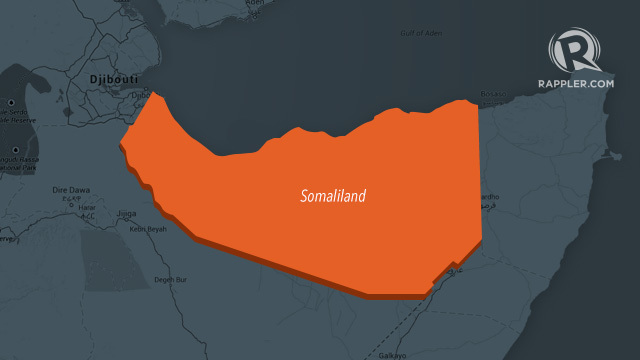
Puntland has a semi-autonomous administration, and Somaliland has long sought international recognition as a nation separate from Somalia.
The wave of bombings appeared to have been timed to coincide with a meeting of east African leaders in Nairobi, Kenya, to discuss a new peace deal. The regional body the Inter-governmental Authority on Development (IGAD) is hosting the talks.
The meeting follows a UN deal, brokered on Sunday, between the weak interim Somali government and an opposition group. The UN pact calls for Ethiopian troops, who intervened last year to back the transitional Somali government, to withdraw from key areas of the capital, Mogadishu, and regional centres.
With nine months left before their mandate to rule expires, Transitional Front Government (TFG) leaders attending the Nairobi conference are expected to brief their neighbours on the progress they have made. The TFG denies it has been a failure.
Mohamed Talha, the deputy speaker of parliament, said: "We recognise ourselves that we have sacrificed and have been victimised. Many members of parliament were killed and injured. We lost many friends, and we want the international community and Somalis to recognise that we are heroes, not failures."
The TFG has been fighting forces loyal to the Islamic Courts Union, which controlled the capital, and large parts of southern Somalia until Ethiopian troops drove it out of Mogadishu.
The Islamic Courts' military wing, al-Shabaab, which has split into a separate force, has rejected the UN peace effort, saying it will carry on fighting. But anti-government forces are split, with some groups supporting the UN peace deal.
The Nairobi conference is the latest initiative to try to bring peace to Somalia, which has been without an effective government since 1991. Aid groups describe Somalia as one of the world's greatest humanitarian disasters - worse even than the western Sudanese region of Darfur.
Nearly half of the country's population of 7 million depend on food aid, the UN estimates. Many have fled their homes in the capital and live on its outskirts in desperate conditions.
Al-Shabaab's control of the southern port of Kismayo was underlined this week when its members stoned to death a woman accused of adultery, according to witnesses.
The woman, who was 23, was killed in the town square in front of hundreds of people. She is the first person to be killed by stoning in Somalia for two years. When a relative and others pushed forward to rescue her, guards opened fire, killing a child.
In other attacks, two suicide bombers detonated vehicles inside a heavily guarded compound in Bosasso, in the neighbouring region of Puntland, wounding at least eight soldiers.
Somalia's north has tried to sever ties with the chaotic south, which includes the beleaguered capital, Mogadishu.
Puntland has a semi-autonomous administration, and Somaliland has long sought international recognition as a nation separate from Somalia.
The wave of bombings appeared to have been timed to coincide with a meeting of east African leaders in Nairobi, Kenya, to discuss a new peace deal. The regional body the Inter-governmental Authority on Development (IGAD) is hosting the talks.
The meeting follows a UN deal, brokered on Sunday, between the weak interim Somali government and an opposition group. The UN pact calls for Ethiopian troops, who intervened last year to back the transitional Somali government, to withdraw from key areas of the capital, Mogadishu, and regional centres.
With nine months left before their mandate to rule expires, Transitional Front Government (TFG) leaders attending the Nairobi conference are expected to brief their neighbours on the progress they have made. The TFG denies it has been a failure.
Mohamed Talha, the deputy speaker of parliament, said: "We recognise ourselves that we have sacrificed and have been victimised. Many members of parliament were killed and injured. We lost many friends, and we want the international community and Somalis to recognise that we are heroes, not failures."
The TFG has been fighting forces loyal to the Islamic Courts Union, which controlled the capital, and large parts of southern Somalia until Ethiopian troops drove it out of Mogadishu.
The Islamic Courts' military wing, al-Shabaab, which has split into a separate force, has rejected the UN peace effort, saying it will carry on fighting. But anti-government forces are split, with some groups supporting the UN peace deal.
The Nairobi conference is the latest initiative to try to bring peace to Somalia, which has been without an effective government since 1991. Aid groups describe Somalia as one of the world's greatest humanitarian disasters - worse even than the western Sudanese region of Darfur.
Nearly half of the country's population of 7 million depend on food aid, the UN estimates. Many have fled their homes in the capital and live on its outskirts in desperate conditions.
Al-Shabaab's control of the southern port of Kismayo was underlined this week when its members stoned to death a woman accused of adultery, according to witnesses.
The woman, who was 23, was killed in the town square in front of hundreds of people. She is the first person to be killed by stoning in Somalia for two years. When a relative and others pushed forward to rescue her, guards opened fire, killing a child.
Suicide blasts hit Somaliland
 Medeshi 29 Oct, 2008
Suicide blasts hit northern Somalia
Five suspected suicide bombers have attacked targets in the Republic of Somaliland and Puntland , killing up to 25 people and leaving several wounded, officials say.
In Hargeisa, the capital of Somaliland, three suspected suicide bombings struck several targets including the presidential palace, killing at least 19 people.
Al Jazeera's Mohammed Adow, reporting from Nairobi where regional leaders are discussing the situation in Somalia, said that the Somaliland president and his wife were safe.
"Suicide car bombs targeted the presidential palace and the Ethiopian embassy. I saw smoke coming out of the presidential building. I also saw one dead soldier in front of the gate, but I could not get closer," said one eyewitness.
One police official said an employee of Ethiopia's embassy was badly wounded in the blasts.
There was no immediate claim of responsibility for the attacks in the two cities, which had been largely spared by the violence that has rocked southern and central Somalia in recent months.
A former British protectorate, Somaliland united with the Italian Somalia in 1960. But it unilaterally broke away and announced independence 10 months after Mohamed Siad Barre was removed from power in 1991.
Puntland blasts
Muse Gelle, the governor of Bari in Puntland, said two blasts hit the offices of the Puntland Intelligence Service in Bosasso port on Wednesday.
"Two suicide bombers exploded cars in the Puntland Intelligence Service (PIS) compound," Gelle said.
Mohamoud Musa Hirsi Adde, the president of Puntland, said six members of PIS were killed in the explosions.
According to witnesses, the explosions took place at around 10.30am (07:30 GMT).
Puntland declared itself autonomous from the rest of Somalia in August 1998 under the leadership of Abdullahi Yusuf Ahmed, the current president of the Somali interim government.
The attacks took place as leaders of Somalia's UN-backed interim government met regional heads of state for talks in neighbouring Kenya.
The four-year-old administration is under pressure to end the chaos and share some power with moderate opposition figures.
The Endorsement From the extremists
 Medeshi 28 Oct ,2008
John McCain isn’t boasting about a new endorsement, one of the very, very few he has received from overseas. It came a few days ago:
“Al Qaeda will have to support McCain in the coming election,” read a commentary on a password-protected Islamist Web site that is closely linked to Al Qaeda and often disseminates the group’s propaganda.
The endorsement left the McCain campaign sputtering, and noting helplessly that Hamas appears to prefer Barack Obama. Al Qaeda’s apparent enthusiasm for Mr. McCain is manifestly not reciprocated.
“The transcendent challenge of our time [is] the threat of radical Islamic terrorism,” Senator McCain said in a major foreign policy speech this year, adding, “Any president who does not regard this threat as transcending all others does not deserve to sit in the White House.”
That’s a widespread conservative belief. Mitt Romney compared the threat of militant Islam to that from Nazi Germany or the Soviet Union. Some conservative groups even marked “Islamofascism Awareness Week” earlier this month.
Yet the endorsement of Mr. McCain by a Qaeda-affiliated Web site isn’t a surprise to security specialists. Richard Clarke, the former White House counterterrorism director, and Joseph Nye, the former chairman of the National Intelligence Council, have both suggested that Al Qaeda prefers Mr. McCain and might even try to use terror attacks in the coming days to tip the election to him.
“From their perspective, a continuation of Bush policies is best for recruiting,” said Professor Nye, adding that Mr. McCain is far more likely to continue those policies.
An American president who keeps troops in Iraq indefinitely, fulminates about Islamic terrorism, inclines toward military solutions and antagonizes other nations is an excellent recruiting tool. In contrast, an African-American president with a Muslim grandfather and a penchant for building bridges rather than blowing them up would give Al Qaeda recruiters fits.
During the cold war, the American ideological fear of communism led us to mistake every muddle-headed leftist for a Soviet pawn. Our myopia helped lead to catastrophe in Vietnam.
In the same way today, an exaggerated fear of “Islamofascism” elides a complex reality and leads us to overreact and damage our own interests. Perhaps the best example is one of the least-known failures in Bush administration foreign policy: Somalia.
Today, Somalia is the world’s greatest humanitarian disaster, worse even than Darfur or Congo. The crisis has complex roots, and Somali warlords bear primary blame. But Bush administration paranoia about Islamic radicals contributed to the disaster.
Somalia has been in chaos for many years, but in 2006 an umbrella movement called the Islamic Courts Union seemed close to uniting the country. The movement included both moderates and extremists, but it constituted the best hope for putting Somalia together again. Somalis were ecstatic at the prospect of having a functional government again.
Bush administration officials, however, were aghast at the rise of an Islamist movement that they feared would be uncooperative in the war on terror. So they gave Ethiopia, a longtime rival in the region, the green light to invade, and Somalia’s best hope for peace collapsed.
“A movement that looked as if it might end this long national nightmare was derailed, in part because of American and Ethiopian actions,” said Ken Menkhaus, a Somalia expert at Davidson College. As a result, Islamic militancy and anti-Americanism have surged, partly because Somalis blame Washington for the brutality of the Ethiopian occupiers.
“There’s a level of anti-Americanism in Somalia today like nothing I’ve seen over the last 20 years,” Professor Menkhaus said. “Somalis are furious with us for backing the Ethiopian intervention and occupation, provoking this huge humanitarian crisis.”
Patrick Duplat, an expert on Somalia at Refugees International, the Washington-based advocacy group, says that during his last visit to Somalia, earlier this year, a local mosque was calling for jihad against America — something he had never heard when he lived peacefully in Somalia during the rise of the Islamic Courts Union.
“The situation has dramatically taken a turn for the worse,” he said. “The U.S. chose a very confrontational route early on. Who knows what would have happened if the U.S. had reached out to moderates? But that might have averted the disaster we’re in today.”
The greatest catastrophe is the one endured by ordinary Somalis who now must watch their children starve. But America’s own strategic interests have also been gravely damaged.
The only winner has been Islamic militancy. That’s probably the core reason why Al Qaeda militants prefer a McCain presidency: four more years of blindness to nuance in the Muslim world would be a tragedy for Americans and virtually everyone else, but a boon for radical groups trying to recruit suicide bombers.
“Al Qaeda will have to support McCain in the coming election,” read a commentary on a password-protected Islamist Web site that is closely linked to Al Qaeda and often disseminates the group’s propaganda.
The endorsement left the McCain campaign sputtering, and noting helplessly that Hamas appears to prefer Barack Obama. Al Qaeda’s apparent enthusiasm for Mr. McCain is manifestly not reciprocated.
“The transcendent challenge of our time [is] the threat of radical Islamic terrorism,” Senator McCain said in a major foreign policy speech this year, adding, “Any president who does not regard this threat as transcending all others does not deserve to sit in the White House.”
That’s a widespread conservative belief. Mitt Romney compared the threat of militant Islam to that from Nazi Germany or the Soviet Union. Some conservative groups even marked “Islamofascism Awareness Week” earlier this month.
Yet the endorsement of Mr. McCain by a Qaeda-affiliated Web site isn’t a surprise to security specialists. Richard Clarke, the former White House counterterrorism director, and Joseph Nye, the former chairman of the National Intelligence Council, have both suggested that Al Qaeda prefers Mr. McCain and might even try to use terror attacks in the coming days to tip the election to him.
“From their perspective, a continuation of Bush policies is best for recruiting,” said Professor Nye, adding that Mr. McCain is far more likely to continue those policies.
An American president who keeps troops in Iraq indefinitely, fulminates about Islamic terrorism, inclines toward military solutions and antagonizes other nations is an excellent recruiting tool. In contrast, an African-American president with a Muslim grandfather and a penchant for building bridges rather than blowing them up would give Al Qaeda recruiters fits.
During the cold war, the American ideological fear of communism led us to mistake every muddle-headed leftist for a Soviet pawn. Our myopia helped lead to catastrophe in Vietnam.
In the same way today, an exaggerated fear of “Islamofascism” elides a complex reality and leads us to overreact and damage our own interests. Perhaps the best example is one of the least-known failures in Bush administration foreign policy: Somalia.
Today, Somalia is the world’s greatest humanitarian disaster, worse even than Darfur or Congo. The crisis has complex roots, and Somali warlords bear primary blame. But Bush administration paranoia about Islamic radicals contributed to the disaster.
Somalia has been in chaos for many years, but in 2006 an umbrella movement called the Islamic Courts Union seemed close to uniting the country. The movement included both moderates and extremists, but it constituted the best hope for putting Somalia together again. Somalis were ecstatic at the prospect of having a functional government again.
Bush administration officials, however, were aghast at the rise of an Islamist movement that they feared would be uncooperative in the war on terror. So they gave Ethiopia, a longtime rival in the region, the green light to invade, and Somalia’s best hope for peace collapsed.
“A movement that looked as if it might end this long national nightmare was derailed, in part because of American and Ethiopian actions,” said Ken Menkhaus, a Somalia expert at Davidson College. As a result, Islamic militancy and anti-Americanism have surged, partly because Somalis blame Washington for the brutality of the Ethiopian occupiers.
“There’s a level of anti-Americanism in Somalia today like nothing I’ve seen over the last 20 years,” Professor Menkhaus said. “Somalis are furious with us for backing the Ethiopian intervention and occupation, provoking this huge humanitarian crisis.”
Patrick Duplat, an expert on Somalia at Refugees International, the Washington-based advocacy group, says that during his last visit to Somalia, earlier this year, a local mosque was calling for jihad against America — something he had never heard when he lived peacefully in Somalia during the rise of the Islamic Courts Union.
“The situation has dramatically taken a turn for the worse,” he said. “The U.S. chose a very confrontational route early on. Who knows what would have happened if the U.S. had reached out to moderates? But that might have averted the disaster we’re in today.”
The greatest catastrophe is the one endured by ordinary Somalis who now must watch their children starve. But America’s own strategic interests have also been gravely damaged.
The only winner has been Islamic militancy. That’s probably the core reason why Al Qaeda militants prefer a McCain presidency: four more years of blindness to nuance in the Muslim world would be a tragedy for Americans and virtually everyone else, but a boon for radical groups trying to recruit suicide bombers.
R. R. Darlington Foundation Launched in Hargeisa, Somaliland
Tuesday, October 28, 2008
GACMADHEERE: Richard R. Darlington Foundation Launched in Hargeisa
Hargeisa (Observer): The long-time principal of Sheikh and Amoud Schools was honoured on Thursday with the establishment of an educational charity in his name. The foundation, the Darlington (Gacmadheere) Foundation was announced by Mr. Eid Ali Salan Ahmed, a former graduate of Sheikh Secondary School (class of 69), Dr. Said Mohamed Gees (class of 68) and Mr, Ali Abdi Odowa, Director-General of the Ministry of Education. Mr. Eid Ali Salaan Ahmed, who also represented the Somaliland Society in Europe (SSE), explained that after his death in April of 2007, Richard Darlington’s family first established a post-graduate scholarship endowment at the prestigious Cambridge University in the UK from which Darlington graduated.
The endowment will be started with 250,000 Pounds Sterling bequeath from Richard Darlington’s estate. The endowment will be administered by the Caius College of Cambridge University and the proceedings will be used to help gifted students from Somaliland universities to complete postgraduate work at Cambridge.
Eid also explained that with the help of SSE and Darlington’s family the new Darlington (Gacmdheere) Foundation will help deserving Somaliland secondary school leavers to attend local universities. Darlington’s family will donate the initial startup funds, but Eid urged all Somaliland citizens, especially graduates of Sheikh and Amoud Secondary Schools, many of whom are among Somaliland’s elite to help with this foundation. At the ceremony Eid read a statement from Richard and Susan Sills, Richard Sills representing Darlington’s family. Richard Sills is Mr. Darlington’s cousin and executor of his will.
Dr. Ahmed Hussein Esa (class of 71) and Director of IPRT praised the SOS foundation for rebuilding Sheikh after the ravages of the civil war. He reminded the audience that school is now called GC Meiner Sheikh Secondary School and suggested that another good way of remembering Darlington’s name would be to name the school after him; a proposal which was taken under advisement by the dignitaries at the ceremony.
Richard R. Darlington came to Somaliland after the 2nd World War. From the late 1950’s to 1971 he served as a teacher and headmaster at Sheikh and Amoud, turning them into some of the finest secondary schools in the region. He left Somaliland just two years after Siad Barre’s coup d’état.
Medeshi webmaster was class of 75
Source:http://samotalis.blogspot.com/
GACMADHEERE: Richard R. Darlington Foundation Launched in Hargeisa
Hargeisa (Observer): The long-time principal of Sheikh and Amoud Schools was honoured on Thursday with the establishment of an educational charity in his name. The foundation, the Darlington (Gacmadheere) Foundation was announced by Mr. Eid Ali Salan Ahmed, a former graduate of Sheikh Secondary School (class of 69), Dr. Said Mohamed Gees (class of 68) and Mr, Ali Abdi Odowa, Director-General of the Ministry of Education. Mr. Eid Ali Salaan Ahmed, who also represented the Somaliland Society in Europe (SSE), explained that after his death in April of 2007, Richard Darlington’s family first established a post-graduate scholarship endowment at the prestigious Cambridge University in the UK from which Darlington graduated.
The endowment will be started with 250,000 Pounds Sterling bequeath from Richard Darlington’s estate. The endowment will be administered by the Caius College of Cambridge University and the proceedings will be used to help gifted students from Somaliland universities to complete postgraduate work at Cambridge.
Eid also explained that with the help of SSE and Darlington’s family the new Darlington (Gacmdheere) Foundation will help deserving Somaliland secondary school leavers to attend local universities. Darlington’s family will donate the initial startup funds, but Eid urged all Somaliland citizens, especially graduates of Sheikh and Amoud Secondary Schools, many of whom are among Somaliland’s elite to help with this foundation. At the ceremony Eid read a statement from Richard and Susan Sills, Richard Sills representing Darlington’s family. Richard Sills is Mr. Darlington’s cousin and executor of his will.
Dr. Ahmed Hussein Esa (class of 71) and Director of IPRT praised the SOS foundation for rebuilding Sheikh after the ravages of the civil war. He reminded the audience that school is now called GC Meiner Sheikh Secondary School and suggested that another good way of remembering Darlington’s name would be to name the school after him; a proposal which was taken under advisement by the dignitaries at the ceremony.
Richard R. Darlington came to Somaliland after the 2nd World War. From the late 1950’s to 1971 he served as a teacher and headmaster at Sheikh and Amoud, turning them into some of the finest secondary schools in the region. He left Somaliland just two years after Siad Barre’s coup d’état.
Medeshi webmaster was class of 75
Source:http://samotalis.blogspot.com/
Subscribe to:
Posts (Atom)
Qaar ka mid ah Ururada Bulshada Rayidka ah oo walaac ka muujiyay mudo dhaafka golayaasha deegaanada
Annaga oo ah Ururada Bulshada Rayidka ah ee Madaxa-banaan waxaanu si wayn uga walaacsanahay
-
 Medeshi Oct 29, 2008 Somali pirates living the high life By Robyn Hunter BBC News "No information today. No comment," a Somali pir...
 -
Medeshi Amnesty International Urgent Action - woman sentenced to death in Puntland, Somalia PUBLIC AI Index: AFR 52/003/2009 12 May 2009 UA ...
