Mentally inferior Black South Africans don’t welcome smarter Somalis

Mentally inferior Black South Africans don’t welcome smarter Somalis
CAPE TOWN, 17 October 2008 (Medeshi) - About 200 Somali businessmen in South Africa's Western Cape Province are being threatened with violence if they continue doing business in the townships. They recently returned to the areas after fleeing a wave of xenophobic attacks in May 2008.
A group of local township businessmen, acting under the banner of the Zanokhanyo Retailers Association (ZRA), sent the Somalis letters in September, warning them to close their shops or face "actions that will include physically fighting".
Somali businessman Mahad Omar Abdi, 33, who owns a supermarket in Khayalitsha that was looted during the xenophobic attacks, told IRIN the threats were being taken seriously.
"The letters have caused fear and mistrust in the township's [Somali] business community and it shows the vulnerability of foreigners who want to come back to the communities they left last May. However, we believe this is more a criminal element looking to move in on our businesses, rather than the whole community disliking our presence here, so we are not prepared to just let them take everything from us," he said.
Thousands of Somalis fled their homes and businesses after xenophobic violence, which began in the Johannesburg township of Alexandra, spread throughout the country and claimed at least 65 lives, while displacing tens of thousands of people.
Some South Africans claim that foreigners are responsible for the high crime rate - although there is no empirical evidence for this - are taking jobs, and bribing government officials to be first in line for state housing.
Civil war
Somalis began arriving in South Africa in the mid 1990s after civil war broke out in their country in 1991, and have probably been singled out for attacks more than any other African migrant community.
According to representatives of Somali's Western Cape community, these attacks have increased in frequency and ferocity over the past five years, to the point where hundreds of their countrymen seeking refuge in South Africa have been murdered.
In August Mahad Abukar Alasow, 26, a Somali who had returned to Khayalitsha after staying at the Soetwater safety site established in the wake of the xenophobic attacks, was killed by a group of people said to be robbers.
A local Western Cape newspaper, The Cape Times, said Alasow was shot three times and died at the scene, but nothing of value was taken from his shop, prompting speculation that he was targeted because of his nationality.

The May xenophobic attacks in Western Cape Province displaced about 20,000 foreign nationals and there are still about 1,400 living in camps around Cape Town, the provincial capital, because they are too afraid to reintegrate into township communities.
Last month a Somali woman and her three young children were murdered in the Eastern Cape Province town of Queenstown, with the viciousness of the attack prompting the United Nations Human Rights Commission conduct an investigation.
UN Human Rights High Commissioner Navi Pillay condemned the acts and acknowledged the increase of attacks on Somalis. "There appears to be a dangerous pattern of targeted attacks on foreigners, especially but not exclusively involving Somalis," she said.
ZRA chairperson Sydwell Citwa last week told the Mail and Guardian, a local weekly newspaper, that businessmen in Khayalitsha wanted Somali shops to be closed in the short term. "While we're talking to them, we want them to stop operating. Our problem is simple: We are hungry. We are angry. And the Somalis are undercutting us.
"These people come into the country with nothing, and the next minute they have stocked shops and fridges. We've done our research and we know that the Muslim Judicial Council [MJC] is helping them because they're Muslim.
"We also want help from our government because we gave them power. We are the ones who fought for freedom and democracy, and now these Somalis are here eating our democracy," he said.
Fight for scarce resources
Abdul Fattaag Carr of the Muslim Judicial Council of South Africa denied that the organisation was funding the Somalis in the Western Cape, but said the council was helping foreigners adversely affected by the xenophobic attacks.
"This is more about a fight for scarce resources than a case of outright racism against Somalis, but because their traditions and culture are very different to South Africans' they stand out more than other foreigners and are viewed with suspicion.
"Somalis are good business people and they are very united as a group. They approach suppliers as a group and buy in bulk so they can get the cheapest price possible. This is why they can offer their goods at a lower price to the average South African operating a shop in the townships," he told IRIN.
Cape Town city officials intervened after the media attention the ZRA and the Somali community received over the threats, and chaired a meeting between the groups that has defused the situation for now, Abdi said.
But the Somali community was still vulnerable because of the differences between Somalis and other cultures, said Alas Jama, 43, a Somali from the Cape Town suburb of Bellville.
Although his countrymen had integrated well when it came to establishing businesses in South Africa's townships, many preferred not to weave their lives into that of the local community. "Because we are Muslim, many Somalis prefer to marry amongst themselves because of the sensitivities associated with mixing cultures," he commented.

"Somali people's culture is very different to those you find in Southern African communities and this leads to problems. Many Somalis don't feel comfortable taking on local cultural traits, which has the affect of alienating them to some degree," said Jama, who helped coordinate relief efforts during the xenophobic violence.
"Because other Africans from around the region have integrated better with the South African communities in terms of living amongst and marrying locals, they were the first to be targeted by the mobs that took over," he said.
"Somalis created their own jobs, opened their own shops and stayed amongst themselves, and this really helped them to be spared during the killings here at that time," Jama said.
"They lost property and had shops destroyed, but it was those who had integrated best who suffered the most from violence, because they initially felt safe and did not leave in time."

The final debate...

Medeshi
Did Obama weather the debate assaults?
Thu Oct 16 , 2008
The third and final presidential debate also was the nastiest. As Politico's Roger Simon notes, Sen. John McCain sometimes "attacked directly, and sometimes he attacked sarcastically, but he never stopped attacking." Yet, Simon writes, he "never rattled" Sen. Barack Obama, who "answered every attack and kept his cool. How cool? Obama was so cool that after 90 minutes under blazing TV lights, an ice cube wouldn't have melted on his forehead....He never got off his game plan. He never got shook up." The result, Simon concludes: "John McCain needed a miracle in his final debate with Barack Obama on Wednesday night, a miracle that would wipe away McCain's deficit in the polls and re-energize his flagging campaign. He did not get one. The clouds did not part. Heavenly choirs were not heard. Instead, the American public heard angry attacks from McCain."
James Fallows of The Atlantic found the debate not only tough, but the most interesting of the three. McCain "has not controlled his disdain for Obama in previous debates, and he's not even trying now." Above all, Fallows writes, the passages "that began with Obama looking at McCain and talking about crowds at (Sarah) Palin rallies saying ‘Kill him' were riveting TV and seemed to reveal purified versions of the persona each candidate has been presenting through the previous sessions. This debate may matter less in the long-term outcome than the others, since that's typically true of final debates. But because the contenders are engaging each other more directly - being at the same table, being physically so close to each other, having more trouble containing their emotions, being aware that the whole thing is almost over - in human terms this is actually the most interesting."
The New York Times' Patrick Healy also takes note of McCain's many attacks on Obama during the debates and writes, "It seemed as if Mr. McCain was veering from one hot button to another, pressing them all, hoping to goad Mr. Obama into an outburst or a mistake that would alter the shape of the race in its last three weeks. But for a punch to make a difference, the punch needs to do something to its target - to rattle, to wound, or (best of all) cause the opponent to counterpunch in a self-defeating way." And while the overall consensus seems to be that McCain probably didn't change the race, "For some Republicans, the debate performance was Mr. McCain's best, especially his moments of focus on the economy and taxes and Mr. Obama's record. There was relief among Republicans, if not a declaration that Mr. McCain had turned his campaign in a winning direction."
Salon.com's Walter Shapiro, who largely agreed with the rest of his fellow pundits, also took a minute to look at what happens next. "In late September, before the first debate, Bill McInturff, a McCain pollster, predicted that the contours of the race would not be known until a few days after the final debate when public opinion finally had a chance to settle. That is why McCain's fate will probably be dictated by whether the weekend polls tighten or Obama continues to flirt with a double-digit lead in the national surveys and state-by-state scenarios that could give him as many as 350 electoral votes. Unless McCain makes up ground quickly from either Wednesday's debate (unlikely but possible) or the simple force of gravity (Obama's outlandish lead comes back to earth), the Republican nominee will soon be facing a stark choice. Does he want to go out railing about Ayers and ACORN, or does he want to step back and play out his string as a principled conservative, the reputation he held before this down-and-dirty campaign?" At this point, it's anyone's guess.
by Sara Murray and Gerald F. Seib

Africa : Network effects

Medeshi
Network effects
Oct 16th 2008 MOMBASA From The Economist print edition
Connectivity and commitment pay dividends in African transport
ASIDE from a few niche industries such as cut flowers, which are air-freighted from Kenya and Ethiopia to auctions in the Netherlands, African trade has not changed much since the end of the colonial era. Unprocessed raw materials go out; finished goods come in. The trade imbalance is vividly illustrated by the ships sent from Asia to pick up empty containers left at African ports. Within Africa, moreover, it is difficult and costly to move goods. The continent has only a few broken-down railways. It has nothing resembling a transcontinental motorway. Even the British colonial dream of a road connecting Cape Town with Cairo failed.
Today, getting a container to the heart of Africa—from Douala in Cameroon to Bangassou in the Central African Republic, say—still means a wait of up to three weeks at the port on arrival; roadblocks, bribes, pot-holes and mud-drifts on the road along the way; malarial fevers, prostitutes and monkey-meat stews in the lorry cabin; hyenas and soldiers on the road at night. The costs of fuel and repairs make even the few arterial routes (beyond southern Africa) uneconomic. A study by America’s trade department found that it cost more to ship a ton of wheat from Mombasa in Kenya to Kampala in Uganda than it did to ship it from Chicago to Mombasa.
But several companies are trying to make the best of Africa’s creaking infrastructure to construct transcontinental logistics networks. Among them are DHL, Maersk, Dubai World and Chinese companies supplying oil and mining projects in Angola and the Democratic Republic of Congo (DRC). The clear leader so far is Bolloré Africa Logistics, a division of Bolloré, a French industrial conglomerate.
Bolloré’s African adventure started in the 1980s when Vincent Bolloré, the omnivorous billionaire who heads the family firm, began to buy up ancient transport infrastructure in west Africa. Growth since has been rapid and mostly profitable. As a port operator, stevedore, warehouser and freight forwarder, Bolloré handles 80% of west Africa’s exports (excluding oil) and 25% of east Africa’s—in short, nearly all of Africa’s cotton and cocoa, as well as much of its coffee, rubber, and timber.
With offices in 42 African countries and 20,000 of his 31,000 employees based in Africa, Mr Bolloré is bullish on the continent’s prospects. Bolloré Africa Logistics accounts for $2 billion of the group’s $10 billion annual revenues. Its head, Dominique Lafont, predicts 12-17% annual growth for the division for the next five years. He believes better logistics are vital to reduce poverty in Africa. A new warehouse for perishable goods, or a new garage for repairing overland lorries, he reckons, create more lasting benefits to Africans than most aid projects do.
Bolloré’s aim is to exploit the massive unrealised potential for trade between African countries by being the first to link the economies of the Francophone and English-speaking parts of Africa. It wants to do this by establishing a 26,000km (16,000 mile) pan-African network of “vital corridors”, making use of whatever infrastructure is available, with long sections of transit by barge down the Niger, Congo, and Nile rivers deep into the interior.
Ports and “dry ports” (depots with customs-bonded warehouses) are probably the easiest part of Africa’s logistics network to fix. Bolloré was among 100 firms, “15 of them serious”, says Mr Lafont, to tender for the right to operate a new port outside Lagos in Nigeria. It already runs several other west African ports, hopes to be reconsidered for the Dar es Salaam port in Tanzania, and wants to compete with Dubai World’s Djibouti port, which has a monopoly in the Horn of Africa, by developing the port of Berbera in former British Somaliland. Bolloré’s biggest bet was on Abidjan port in Côte d’Ivoire, where it invested heavily despite a prolonged civil war, reducing the handling time of containers in the port from eight days to two.
Ivorian officials say Bolloré’s investment, which allowed cocoa exports to continue during the fighting, helped keep the country from collapse. For its part, Bolloré brazenly uses Abidjan as part of its sales pitch of Afro-optimism and to illustrate its policy of never pulling out of any country. The firm claims to have continued operations through the Rwanda genocide, wars in Sudan and Congo, and during this year’s election crisis in Kenya.
As African economies grow and demand for consumer goods increases, Bolloré expects to make more of its money from supply-chain contracts. In Kenya, for example, it has a contract with British American Tobacco to transport tobacco from farm to factory and then as finished cigarettes to smokers across east Africa. Bolloré expects to lose money on serving the remote ends of its “vital corridors”, but believes maintaining the network will put it in a better position to bid for supplying lucrative projects such as iron ore mines in DRC, oil fields in Sudan, gold fields in Tanzania and gas pipelines in Nigeria.
The biggest impact of improved logistics in Africa may be on good governance. Prompt payment of customs dues by logistics companies on behalf of their clients and paperless transit have increased tax revenues and reduced government corruption. It is harder for a customs official to hold out for a bribe when the system is computerised and tracked by a logistics company’s bar code—although not impossible: in grubbier ports, officials sometimes hold cargo to ransom by refusing to press the return key on the keyboard.
But if the logisticians are to make headway, African governments must also do their part. They need to reduce banditry, keep roads and bridges in better shape and regulate Africa’s informal trucking business, run by cowboy operators who overload old lorries and pay bribes instead of taxes. Above all, Africa needs to smooth passage along its roads. Landlocked Rwanda recently identified 47 checkpoints and weighbridges between Mombasa and Kigali. Getting rid of roadblocks would cut the cost of shipments by 20%—and clear the way for broader economic growth.

TPLF Regime's continued deception

Medeshi Oct 16, 2008
ETHIOPIA: TPLF Regime's Continued Phantasm
Sophia Tesfamariam
(Red spot : Map of Ethiopia-Tigray - Zenawi's region)
It´s election season and the American public is now bombarded with all sorts of statistics to show which candidate is in the lead. There is nothing wrong with using statistics to illustrate a point, if the facts on the ground can back them up. Someone said that there were three kinds of lies: Little white lies, damned lies and statistics, and I suppose the Embassy of Ethiopia in Washington, DC has chosen the latter to once again mislead the Ethiopian people and paint a rosy picture of Ethiopia´s economy. After the regime´s shameless Foreign Minister told the UN General Assembly that "Ethiopia was the fastest growing non-oil economy in Africa", now the regime´s cadres in Washington, DC are peddling statistics that just don´t jive with the realities on the ground.
The minority regime´s Embassy in Washington shamelessly put up the following information about Ethiopia on its site:
"…The U.N.'s Food and Agriculture Organization (FAO) has released livestock and agricultural rankings detailing the world's leading producers across a number of categories. Ethiopia, which has placed the development of its agricultural sector high on the list of national priorities, features prominently in the 2007 data…"
What the regime´s cadres do not bother to tell the readers is that the data, like the ones in the IMF/World Bank reports, were provided to the FAO by the TPLF regime itself.
Here is the abbreviated version of the list it posted showing Ethiopia´s rankings, which the regime wants the readers to believe is "based upon 2007 data compiled by the U.N.'s Food and Agriculture Organization":
Top 10 Cattle Countries -Ethiopia ranked 6th in the world
Top 10 Beehive Countries –Ethiopia ranked 4th in the world
Top 10 Camel Countries –Ethiopia ranked 3 in the world with 2300000
Top 10 Coffee Producers –Ethiopia ranked 5th in the world
Top 10 Donkey Countries –Ethiopia ranked 2nd in the world
Top 10 Goat Countries –Ethiopia ranked 8th in the world
Top 10 Horse Countries –Ethiopia ranked 8th in the world
Top 10 Sheep Countries –Ethiopia ranked 12th in the world
Top 10 Papaya Producers –Ethiopia ranked 6th in the world
Top 10 Sesame Seed Producers –Ethiopia ranked 6th in the world
Top 10 Chickpea Producers –Ethiopia ranked 8th in the world
Top 10 Nut Producers –Ethiopia ranked 4th in the world
Top 10 Sorghum Producers –Ethiopia ranked 8th in the world
Top 10 Wheat Producers-Ethiopia ranks 27th in the world in wheat production and is the 2nd largest wheat producer in Africa after Egypt.
Top 10 Maize Producers-Ethiopia is the 18th largest producer of maize in the world and 4th largest maize producer in Africa after Nigeria, South Africa and Egypt.
Ethiopia is also the world's 16th largest producer of avocados
Ethiopia is also the world's 18th largest producer of sweet potatoes
Ethiopia is also the world's 19th largest producer of barley
Ethiopia is also the world's 22nd largest producer of dry beans
Ethiopia is also the world's 41st largest producer of bananas
The FAO stats, like the IMF/World Bank stats do not tell of the billions in aid received by Ethiopia, the largest recipient of aid to Africa. Underlying these rosy FAO statistics, is the grim reality of a country that is in debt, in deep poverty, with over 11 million of its people dependent on food handouts and with a minority mercenary regime dependent on donors for 60% of its national budget.
The IMF/World bank and FAO´s statistics are not an accurate measure of the state of Ethiopia´s economy, or the distribution of the country´s wealth, now in the hands of a few TPLF cadres and their handlers. If Ethiopia is producing so much, and is ranked in the Top 10 list as FAO and the minority regime claim, where is the food or the revenue from the food produced by Ethiopian farmers going? Why are Ethiopian farmers the poorest farmers in the world? Who is benefiting from their labor? Certainly not the Ethiopian people!

If Ethiopia is producing so much, why is the mercenary regime still begging for food aid and more? Allow me to share the latest headlines, some from just hours ago, that tell the story of the realities on the ground:
Voice of America reported the following on 14 October 2008:
"…Ethiopia is appealing for $266 million in emergency aid for the remainder of this year to alleviate food shortages threatening the lives of nearly 6.5 million people… Ethiopia's minister of state for agriculture and Rural Development Mitiku Kassa is asking donor nations and humanitarian agencies to boost food aid pledges which already this year are believed to be well over $1 billion. The United States, the largest donor, has contributed more than half that amount…"
Bloomberg reported on 14 October 2008:
"…Beyond the number of people needing emergency aid, another 7.4 million people depend on a donor- funded ``safety-net'' program that provides food to families for at least six months of the year…"
Tim Shenk reporting for the Mennonite Central Committee said on October 14, 2008:
"…A severe drought earlier this year has left about 12 million Ethiopians in need of food assistance, according to the Ethiopian government. Of that number, nearly 5 million are at risk of starvation…Mennonite Central Committee (MCC) is distributing food to nearly 100,000 people in southern Ethiopia in partnership with the Meserete Kristos Church Relief and Development Association (MKC-RDA) and the Canadian Foodgrains Bank (CFGB)…"
A 15 October 2008 Associated Press report said:
"…Ethiopian minister says his country urgently needs US$265 million to feed 6.4 million people affected by drought. State Minister of Agriculture and Rural Development Mitiku Kassa says Ethiopia needs US$225.9 million to buy food through December. The rest of the money is needed to buy seeds, provide training and toilets, among other things…"
Ethiopia is along way from being the land of "milk and honey"-even if it is in the Top 10 producers of cows and beehives according to the FAO!
When the reckless, deceptive minority regime cannot even provide for the basic needs of its people, pretending to be the economic power in the region, is not going to make it one, nor are the IMF/World Bank rankings going to elevate its stature in the international community, which is "happy riding the Ethiopian horse and flogging it at the same time". It is a mercenary regime that serves the interests of its handlers and not that of the Ethiopian people.
Not only is this posting an insult to the intelligence of the Ethiopian people, it is yet another deceptive propaganda gimmick employed by the regime to cover up its failed social, economic and political policies in Ethiopia. With millions starving and millions more disenfranchised and ignored, with millions suffering in the Ogaden, Oromo, Gambela and even Tigray regions of Ethiopia because of its racist, ethnic cleansing policies, and with TPLF cadres robbing Ethiopia´s wealth in broad day light, the minority regime´s cadres in Washington

Somaliland - Livelhood Project Manager

Medeshi Oct 16, 2008
Somaliland- Livelihood Project Manager
16 Oct 2008
Department: ProgrammePosition: Livelihood Project Manager Somaliland
Contract duration: 6 months renewable
Location: 50% Nairobi 50% Somaliland
Starting Date Immediate

Department: Programme
Position: Livelihood Project Manager Somaliland
Contract duration: 6 months renewable
Location: 50% Nairobi 50% Somaliland
Starting Date Immediate
Please note this is an anticipated position based on potential funding that is expected to arise shortly.
I. Background on ACTED
ACTED is an independent international, private, non-partisan and non-profit organization that operates
according to principles of strict neutrality, political and religious impartiality, and non discrimination.
ACTED was created in 1993 to support populations affected by the conflict in Afghanistan. Based in
Paris, France, ACTED now operates in 22 countries worldwide, with over 120 international and 2500
national staff. ACTED has a 40 million € budget for over 150 projects spanning 8 sectors of
intervention; including emergency relief, food security, health promotion, economic development,
education & training, microfinance, local governance & institutional support, and cultural promotion.
For more information, please visit our website at www.acted.org.
II. Country Profile
In September 2007, ACTED launched an exploratory mission to evaluate the security situation,
coordinate with other humanitarian actors on the ground, and evaluate possible areas for an
intervention in Somalia. ACTED is currently developing its area coordination in the region
III. Position Profile
Under the authority of the Country Director, the Project Manager is responsible for the implementation
and management of a specific project in coordination with the ACTED country strategy.
Responsibilities:
-Management of a local and expatriate staff team;
-Close supervision and monitoring of the finance, administration and logistics teams;
-Supervise program budgets and evaluate financial program effectiveness;
-Management and supervision of ACTED's programmes and their timely implementation according to
financial and programmatic frame;
-Facilitate program development, through conceptualization, design, proposal and program initiation;
-Build and/or improve systems to supervise and manage the design, implementation, monitoring, and
evaluation of programmes;
-Monitor security situation in the region and oversee implementation of ACTED security procedures;
-Internal reporting to Country Coordination on project follow-up and best practices;
-Ensure external representation of ACTED in relevant sectors, including provincial authorities, donors,
and other international organisations in the area
-Provide Relevant Technical Expertise to ensure that technical quality and standards are maintained
during project implementation
-Oversee Project Staff, including regular coordination meetings and appraisals for staff, developing a
productive work environment, and assisting in the recruitment process
IV. Qualifications:
-At least 2 years of field experience in program management and coordination;
-Familiarity with the aid system, and ability to understand donor and governmental requirements;
-Excellent communication and drafting skills;
Job profile
ACTED Paris
HR Department
Last Update
Oct 2008
-Able to coordinate and manage staff and project activities;
-Proven ability to work creatively and independently both in the field and in the office;
-Being a strong team player and adept at creating a strong team spirit;
-Ability to organize and plan effectively;
-Ability to work with culturally diverse groups of people;
-Ability to travel and work in difficult conditions and under pressure;
-Knowledge of local language and/or regional experience an asset
V. Conditions:
- Salary defined by the ACTED salary grid; educational level, expertise, hardship, security, and
performance are considered for pay bonus
- Additional monthly living allowance
- Free food and lodging provided at the organisation’s guesthouse/or housing allowance
(depending on contract length and country of assignment)
- Transportation costs covered, including additional return ticket + luggage allowance
- Provision of medical, life, and repatriation insurance + retirement package
VI. Submission of applications:
Please send, in English, your cover letter, CV, and three references to jobs@acted.org
Ref: PM/SOM/SA
For more information, visit us at http://www.acted.org

Somalia Pirates: 'We just want the money'

Medeshi oct 16, 2008
The Japan Times
EDITORIAL
Swashbuckling in Somalia
'We just want the money." That is the honest sentiment of the pirates who hijacked a Ukrainian freighter loaded with weapons off the coast of Somalia. Were it so simple. What was intended to be the mere "ransoming" of a ship has become an international standoff between oceangoing bandits and the world's most modern navies, exposing the lawlessness in Somalia and perhaps even uncovering illegal arms trafficking. (Somali pirates have attacked more than 60 ships in the Gulf of Aden so far this year, extracting ransom payments exceeding $30 million (€20.7 million). No matter what the purpose of the hijacking, it has focused international attention on a situation that cannot continue.
The waters off the coast of Somalia, south of the mouth of the Red Sea, are among the world's most dangerous. Some 20,000 ships navigate the area yearly as they pass to and from the Suez Canal.
More than 60 ships have been attacked by pirates so far in 2008, more than twice as many as the year before. Insurance premiums for ships transiting these waters have already increased tenfold, and that has escalated the problem. Pirates know of the insurance and know that crews will not put up a fight: After all, it is only about money and no one needs to get hurt.
The pirates cloak their actions in honorable purposes. They claim they are policing the waters, preventing ships from polluting the waters or dumping waste and fishing illegally. Somalia, which has been rudderless and lawless for years, does not have a coast guard. The pirates' rapaciousness has also exacerbated a food shortage in one of the world's poorest countries.
It is estimated that more than 3 million people — nearly half the population of Somalia — depend on emergency food aid to survive. But the bulk of that assistance — 90 percent of that from the World Food Program — arrives by sea. The pirates are now holding the country hostage. And even if they do not seize ships, transportation costs climb to account for insurance and protection of the vessels hauling the aid.
The world was prepared to turn a blind eye to this sad state of affairs until last month, when pirates seized the M.V. Faina, a Ukrainian-flagged freighter. When they opened the cargo bays, they were surprised to discover 33 T-72 battle tanks and crates of arms and ammunition. The initial elation — "we saw the tanks and thought we could charge more money," explained a spokesman for the hijackers — quickly faded. The tanks were of little value: Weighing several tons apiece, there is no way the hijackers could unload them. The guns were a different matter, however. They could easily be transferred and the prospect of those weapons finding their way into any of the conflicts in the region is a disturbing one.
The bidding began at $35 million for the release of the ship and its 20 crew members. That sum quickly dropped as an international flotilla composed of U.S. and Russian warships assembled near the hijacked ship to ensure that no arms were offloaded. Reportedly, the ransom is now down to $8 million and the hijackers have threatened to sink the ship if there is no progress "within days." A deal is likely to be struck. The Ukrainian ship owners and the country's ministry of defense have all said they want a peaceful solution to the standoff.
By focusing international attention on the lawlessness in these waters, the pirates may have done some good. The United Nations Security Council passed a resolution that allows governments to use "all necessary measures" to fight piracy. An international coalition of 20 countries based in Bahrain is now patrolling the waters. NATO has dispatched a flotilla and European Union countries have agreed to help with a maritime security force to fight piracy. Mr. Abdullahi Yusuf, the president of Somalia, has welcomed the assistance.
Mr. Yusuf presides over a government that exists in name only. Somalia has been a failed state since 1991, and armed factions and terrorists have exploited the power vacuum. Ultimately, much more than a naval patrol is needed to fix what ails Somalia. If this incident forces the rest of the world to bring some peace and stability to that troubled country, some good will have come of it.
Ukraine and Kenya are not quite as happy about the spotlight now fixed on the Faina. The shipment was heading for Kenya, but it now appears that the weapons were actually destined for southern Sudan and for use in the vicious conflict there. Ukrainian officials insist that their country has done nothing wrong. No good comes from being seen supplying weapons to forces accused of mass attacks resembling genocide.
The Japan Times: Thursday, Oct. 16, 2008

Ethiopian troops to stay in Somalia, wait for AU

Ethiopian troops to stay in Somalia, wait for AU
Thu 16 Oct 2008, 10:12 GMT
By Tsegaye Tadesse
ADDIS ABABA (Reuters) - The time for Ethiopian forces to leave Somalia is fast approaching, but they will stay until an African Union peacekeeping force is fully deployed, Ethiopian Prime Minister Meles Zenawi said on Thursday.
Ethiopian soldiers are in Somalia supporting its U.N.-backed interim government, which has struggled to impose control in the face of a Iraq-style insurgency by Islamist rebels.

Some 3,000 peacekeepers from Uganda and Burundi are in the capital Mogadishu -- part of a planned 8,000 strong AU mission.
"The time for us to withdraw is fast approaching," Meles told the Ethiopian parliament in Addis Ababa.
"(But) it is not fair to abandon the AU and international community, which have taken the firm position our troops should stay at least until the African peace force is fully deployed."
Violence in Somalia has killed nearly 10,000 people and displaced more than a million since the start of last year.
The presence of mostly Christian troops from Ethiopia in the staunchly Muslim Horn of Africa country is opposed by the rebels and other opposition figures, while the interim government wants a fully-fledged U.N. peace force to let the Ethiopians go home.
African nations are wary about sending soldiers to Somalia, where the Ugandans and Burundians have often been attacked, and it is unclear if the AU mission will reach its planned strength.
Meles told legislators his administration was constantly reviewing the situation on the ground, but that there appeared to be little scope for agreement between the warring parties.
"We have explained to the international community that there is no readiness by the leadership in Somalia to take their responsibilities for peace and reconciliation," he said.
"If the political leaders in Somali show readiness for peace, then our troops can stay for an additional period."

I cannot go back to Somalia !!!!!!

Medeshi 16 Oct, 2008
Mahad Omar Abdi: "I cannot go back to Somalia"
CAPE TOWN , Mahad Omar Abdi, 33, from Somalia, owns a supermarket in the sprawling dormitory township of Khayalitsha, on the outskirts of the Atlantic port city of Cape Town. His shop was looted during xenophobic attacks in South Africa in May 2008.
"I belong to the Hawiye tribe, one of the main tribes in Somalia, and I lived in Mogadishu [the capital] before I left in 1994 because of the fighting. At that time I was only 18 years old and there was no hope or future in my homeland.
"If I stayed there I would have been forced to fight in the civil war by my tribal elders, like many of the other boys in my homeland. I did not want to get involved in the fighting so I decided I must leave my country - and my father, mother, brother and sister – behind.
"I decided to go by sea, so I went to the harbour in Mogadishu to try and find a boat that would take people away from the city. I gave the captain US$100 to take me to wherever he was going. I did not know the destination and I did not care, I just wanted to get out of Mogadishu.
"There were hundreds of us on board – men, women and children – and we were packed in so tight it was very uncomfortable. It was chaos from the very beginning because no one knew where we were going or what was going to happen to us.
"We did not starve because we were able to catch fish, but there were no luxuries. The biggest problem for many of us was the lack of water, so often we were very thirsty.
"The crew kept control of the people through physical actions. There was hitting with sticks and pushing and threatening to keep us in line; some people were even whipped. But the people were more afraid of staying in Somalia than the physical abuse, so they did not retaliate.
"We spent 28 days at sea and when we were finally put ashore I thought the captain of the ship had brought us back to Somalia, because the coastline of where we were looked similar to that of my own country.
"However, once we were on land people we met told us we were not in Somalia but near Maputo in Mozambique. There were no officials at the time because the country was just recovering from its own war, so it was okay to enter the country.
"I decided that the best place for me to go would be South Africa, once I knew where I was. We were lucky, because although I did not know the way to South Africa, bystanders were willing to tell me how to get there for a small price.
"I walked from Maputo to the border with South Africa, and myself and a few of the people from the boat journey just crossed over into Mpumalanga [Province] near Nelspruit [town in Mpumalanga] without any problems – there was no checkpoint.
"Once in South Africa I found out that I had a Somali relative who was a teacher in KwaZulu-Natal [Province]. He took pity on me and helped me. He even organised for me to go to college in Durban [a port city in KwaZulu-Natal]. I also started to work as a waiter, and began selling shoes to pay for my living expenses and get experience in business.
"After college I went to university, which I funded with odd jobs and by writing letters to NGOs [non-governmental organisations], asking for sponsorship to help me pay my basic rent while I studied.

"I also had a job with Pick 'n Pay supermarket [a national chain store] and it was here that I got the idea to own a supermarket. I came to the Western Cape [Province] because I heard some other Somali people were living there. I opened a small shop and I have been building up my grocery business in Khayalitsha ever since.
"Last May [2008], during the xenophobic attacks, people from the township [Khayalitsha] came to my shop and destroyed everything and took all my stock from the shelves.
"The goods were worth a lot of money and for a time I thought I was finished, but I have managed to reopen because I have a good relationship with my suppliers. But I am very worried for the future because this could easily happen again.
"I bought a house in Bellville [a suburb in northern Cape Town] a few years ago, where many Somalis stay, so I was fortunate in that way during the xenophobic attacks. Most of the Somalis who lived in the townships came to Bellville when the trouble started, to seek help.
"I will never live in a township in South Africa again because of what has happened here. I have a wife and three kids, and I will never put them at risk. My situation is not good, but there is nothing I can do – I cannot go back to Somalia.

Displaced and neglected in Somaliland

Displaced and neglected in Somaliland
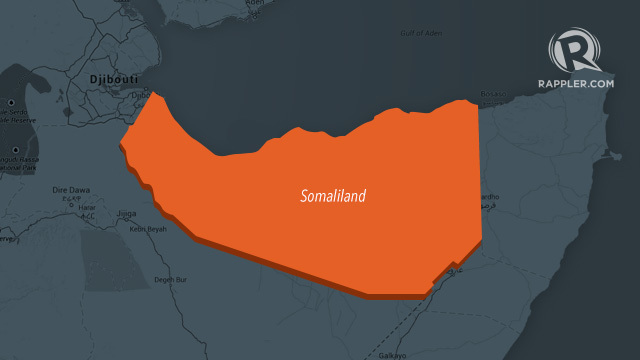
HARGEISA, 16 October 2008 (IRIN) - More than 26,000 people displaced from southern Somalia to Somaliland are not receiving adequate assistance because officials in the region, which regards itself as an independent country, give priority to those displaced within Somaliland.
(An estimated 4,370 families, or some 26,200 people, from southern Somalia live in Somaliland)
"We have a different definition of IDPs [internally displaced persons] compared with the international community because the international community regards the displaced from southern Somalia as IDPs but we regard them as refugees," Ali Ibrahim, Somaliland's minister for planning and national coordination, told IRIN.
By definition, a refugee has to have crossed an international border.
There are estimated to be 4,370 families, or some 26,200 people, from southern Somalia living in Somaliland. Since Somaliland's independence is unrecognised internationally, UN agencies and NGOs classify these people as IDPs and therefore the responsibility of the Somaliland government.
Zainab Mohamoud, who chairs Gashan Women's Organization, which works solely with those displaced from southern Somalia, said these families were often without support, apart from the occasional food distribution by the UN World Food Programme (WFP).

"These families also face legal problems and often have run-ins with the police and ordinary citizens. We try to help them by providing protection," Mohamoud said.
"Somaliland IDPs receive a piece of land from the authorities as well as health facilities, education and other services in the areas they are relocated to, but IDPs from southern Somalia who are in Hargeysa [Somaliland's capital] do not receive aid because they are regarded as refugees by the government of Somaliland."
Ibrahim told IRIN that the government's policy was changing.
"We are now exploring ways of recognising all the people who live in the temporary centres throughout the country as IDPs," he said.
He explained that a standing committee had been established in the Ministry of Rehabilitation, Reintegration and Returnees to handle IDP affairs in conjunction with international and local NGOs.
Theme(s): (IRIN) Human Rights, (IRIN) Refugees/IDPs

Eritrea has the highest proportion of undernourished people in the world - report

Medeshi Oct 15 , 2008
Eritrea has the highest proportion of undernourished people in the world - report
33 countries face "alarming" levels of hunger
(Photo: Eritreans stand in long lines for milk and other staples at stores)
Eritrea has the highest proportion of undernourished people in the world. 75% of Eritreans are undernourished, the highest percentage in the whole world. In Global Hunger Index 2008 Eritrea ranks 87th out of 88 countries and Ethiopia with 15 times the population of Eritrea ranks 82nd.
Source: IFPRI
Thirty-three countries around the world have "alarming" or "extremely alarming" levels of hunger, according to the 2008 Global Hunger Index, a metric released by the International Food Policy Research Institute (IFPRI), in conjunction with Welthungerhilfe and Concern Worldwide.

The index measures global hunger by ranking countries on prevalence of child malnutrition, rates of child mortality, and the proportion of people who are calorie deficient. The Democratic Republic of Congo scored the worst on the Index, followed by Eritrea, Burundi, Niger, Sierra Leone, Liberia, and Ethiopia.

IFPRI says that because the baseline data dates to 2006, "the rankings do not reflect the current crisis of rising food prices, but they do highlight which countries could be most vulnerable to the crisis."

"Most of the countries ranked in the Index are net importers of grains, and are therefore more likely to suffer because of rising food prices," added the NGO in a statement.

Joachim von Braun, IFPRI director general, says that slow gains in reducing hunger in recent decades may be losing ground.

“The world has made only slow progress in reducing hunger in past decades, with dramatic differences among countries and regions,” said Joachim von Braun, IFPRI director general. “Population and income growth, high energy prices, biofuels, science and technology, climate change, globalization, and urbanization are introducing drastic changes to food consumption, production, and markets. The current financial crisis complicates the picture: it actually brings some short-term relief for hungry people, as it contributes to reduced commodity prices, but the credit crunch makes access to capital difficult, including for agriculture, and that adds another obstacle for overcoming the food crisis.”

IFPRI recommends increased spending on agricultural research and policy measures to address the current food crisis.

“Priorities for action at the national and global level must address the immediate food needs of poor people priced out of food markets," said von Braun At the same time, national governments and the global community should begin to correct previous failures in agricultural policy by investing in agriculture and food production, setting up reliable systems for assisting the most vulnerable people in a timely way, and establishing a fair global trading system and a conducive investment environment."


Global Hunger Index

Highlights from the report

Global Trends
• Overall Global Hunger Index scores have improved from 18.7 in the 1990 GHI to 15.2 in the 2008 GHI.
• On a global level, the most progress has been made in reducing the proportion of underweight children, with that indicator decreasing by 5.9 points since 1990.
• The ongoing food price crisis exacerbates hunger problems in many countries, cutting into poor householdsï ½ food budgets, with particularly serious risks for undernourished infants and children under two. High prices also reduce the amount of food aid that donors can supply.
Regional Trends
• As regions, Sub-Saharan Africa and South Asia have the worst scores (23.3 and 23.0, respectively) on the 2008 GHI.
• Of the ten countries with the highest levels of hunger on the GHI, nine are in Sub-Saharan Africa. None of the Sub-Saharan African countries is amongst the ten most improved since 1990.
Country-level Trends
• Mauritius has the best score (lowest level of hunger) on the 2008 GHI, followed by Jamaica, Moldova, Cuba, and Peru.
• The countries that have made the most progress in reducing hunger since 1990, with the most improved GHI scores, are Kuwait, Peru, Syrian Arab Republic, Turkey, and Mexico.
• The Democratic Republic of Congo (DRC) has the worst score (highest level of hunger), followed by Eritrea, Burundi, Niger, and Sierra Leone.
• The GHI scores of the DRC, North Korea, Swaziland, Guinea-Bissau, and Zimbabwe actually increased (worsened) since 1990.
• Eritrea and the DRC have the highest proportion of undernourished people, with 75 and 74 percent, respectively, of their populations being calorie deficient.
• India, Yemen, and Timor-Leste, have the highest prevalence of underweight children (a measure of malnutrition) of more than 40 percent.
• In Sierra Leone and Angola, more than one-fourth of all children die before the age of five, with child mortality rates of 27 and 26 percent, respectively, the highest of all GHI ranked countries.
The World's 10 Hungriest Countries
79 Angola
80 Yemen, Rep
81 Chad
82 Ethiopia
83 Liberia
84 Sierra Leone
85 Niger
86 Burundi
87 Eritrea (The world's 2nd Hungriest 'Country')
88 Congo, Dem. Rep.
Read full report here : IFPRI

Barbaric Executions of the Helpless Somalis in Saudi Arabia


Medeshi 15 Oct, 2008
Barbaric Executions of the helpless Somalis in Saudi arabia
Following is an excerpt from the Amnesty International Report on the Barbarism against the poor Somalis and others who don’t have governments to speak for them:
On the morning of 4 April 2005, six young Somali nationals were taken from their prison cells in Jeddah, western Saudi Arabia, and beheaded in public. Announcing the executions, the Saudi Arabian Ministry of Interior stated that the six had been convicted of robberies, and that their executions were ordered in October 2004. The news of the executions shocked the men’s relatives in Somalia and Europe. The relatives were under the impression that the six men, who were arrested in 1999, had been sentenced to five-year prison terms and flogging. The relatives had failed to obtain official confirmation of the sentences, and became increasingly anxious when the expected release date had come and gone and there was still no sign of the men. They approached Amnesty International in 2004 but no further information could be obtained until the announcement of the executions. Amnesty International then learnt that the six prisoners were themselves unaware of the death sentences until the very morning of their executions.


The six had escaped war-torn Somalia in search of a better life only to fall victim to Saudi Arabia’s relentless use of the death penalty. Their families were unable to recover their bodies for burial.


The case of the six Somalis is only one of many to illustrate the stark horror of the death penalty in Saudi Arabia. In defiance of a growing international trend towards abolition of the death penalty, and despite Saudi Arabia’s membership of the UN Human Rights Council, the country’s authorities continue to apply the death penalty frequently and execute, on average, at least two prisoners each week. The sentences follow a harsh, largely secretive and grossly unfair process that imposes excessive suffering on the condemned and their families. It is a shocking reality. Every year scores of people are executed, often following a conviction for non-violent or vaguely worded offences in summary trials in which they have little or no opportunity to defend themselves and almost no protection against miscarriage of justice.

Under Saudi Arabian law and judicial practices, judges have great discretionary power and can impose a death sentence even on children, for a wide range of offences, including acts that are not considered serious crimes in most other countries. Poor foreign migrant workers, such as the six Somali nationals, comprise a large proportion of those executed. All too often, they receive no legal defence, are unable to follow court proceedings, which are conducted in Arabic, and face insuperable difficulties in mounting legal appeals. Those who are executed are usually beheaded, often in public. Married people, who are convicted of adultery, may be executed by stoning. The dead body is in some cases crucified.

Read full report here : report

Poll Says McCain Hurts His Bid by Using Attacks

Medeshi Oct 15, 2008
Poll Says McCain Hurts His Bid by Using Attacks
By MICHAEL COOPER and MEGAN THEE
The McCain campaign’s recent angry tone and sharply personal attacks on Senator Barack Obama appear to have backfired and tarnished Senator John McCain more than their intended target, the latest New York Times/CBS News poll has found.

After several weeks in which the McCain campaign unleashed a series of strong political attacks on Mr. Obama, trying to tie him to a former 1960s radical, among other things, the poll found that more voters see Mr. McCain as waging a negative campaign than Mr. Obama. Six in 10 voters surveyed said that Mr. McCain had spent more time attacking Mr. Obama than explaining what he would do as president; by about the same number, voters said Mr. Obama was spending more of his time explaining than attacking.

Over all, the poll found that if the election were held today, 53 percent of those determined to be probable voters said they would vote for Mr. Obama and 39 percent said they would vote for Mr. McCain.

The findings come as the race enters its final three weeks, with the two candidates scheduled to hold their third and last debate on Wednesday night, and as separate polls in critical swing states that could decide the election give Mr. Obama a growing edge. But wide gaps in polls have historically tended to narrow in the closing weeks of the race.

Voters who said their opinions of Mr. Obama had changed recently were twice as likely to say they had grown more favorable as to say they had worsened. And voters who said that their views of Mr. McCain had changed were three times more likely to say that they had worsened than to say they had improved.

The top reasons cited by those who said they thought less of Mr. McCain were his recent attacks and his choice of Gov. Sarah Palin of Alaska as his running mate. (The vast majority said their opinions of Mr. Obama of Illinois, the Democratic nominee, and Mr. McCain of Arizona, the Republican nominee, had remained unchanged in recent weeks.) But in recent days, Mr. McCain and Ms. Palin have scaled back their attacks on Mr. Obama, although Mr. McCain suggested he might aggressively take on Mr. Obama in Wednesday’s debate.

With the election unfolding against the backdrop of an extraordinary economic crisis, a lack of confidence in government, and two wars, the survey described a very inhospitable environment for any Republican to run for office. More than 8 in 10 Americans do not trust the government to do what is right, the highest ever recorded in a Times/CBS News poll. And Mr. McCain is trying to keep the White House in Republican hands at a time when President Bush’s job approval rating is at 24 percent, hovering near its historic low.

While the poll showed Mr. Obama with a 14 percentage-point lead among likely voters in a head-to-head matchup with Mr. McCain, when Ralph Nader and Bob Barr, the Libertarian candidate, were included in the question, the race narrowed slightly, with 51 percent of those surveyed saying that they were supporting Mr. Obama and 39 percent supporting Mr. McCain, with Mr. Nader getting the support of 3 percent and Mr. Barr 1 percent. Other national polls have shown Mr. Obama ahead by a smaller margin.

The poll suggested that the overwhelming anxiety about the economy and distrust of government have created a potentially poisonous atmosphere for members of Congress. Only 43 percent of those surveyed said that they approved of their own representative’s job performance, which is considerably lower than approval ratings have been at other times of historic discontent. By way of comparison, just before the Democrats lost control of Congress in 1994, 56 percent of those polled said that they approved of the job their representative was doing.

And after nearly eight years of increasingly unpopular Republican rule in the White House, 52 percent of those polled said that they held a favorable view of the Democratic Party, compared with 37 percent who said they held a favorable view of the Republican Party. Voters said they preferred Democrats to Republicans when it came to questions about who would better handle the issues that are of the greatest concern to voters — including the economy, health care and the war in Iraq.

The nationwide telephone poll was conducted Friday through Monday with 1,070 adults, of whom 972 were registered voters, and it has a margin of sampling error of plus or minus three percentage points for both groups.

After several weeks in which the McCain campaign sought to tie Mr. Obama to William Ayers, a founder of the Weather Underground terrorism group, 64 percent of voters said that they had either read or heard something about the subject. But a majority said they were not bothered by Mr. Obama’s background or past associations. Several people said in follow-up interviews that they felt that Mr. McCain’s attacks on Mr. Obama were too rooted in the past, or too unconnected to the nation’s major problems.

“What bothers me is that McCain initially talked about running a campaign on issues and I want to hear him talk about the issues,” said Flavio Lorenzoni, a 59-year-old independent from Manalapan, N.J. “But we’re being constantly bombarded with attacks that aren’t relevant to making a decision about what direction McCain would take the country. McCain hasn’t addressed the real issues. He’s only touched on them very narrowly. This is a time when we need to address issues much more clearly than they ever have been in the past.”

The poll found that Mr. Obama is now supported by majorities of men and independents, two groups that he has been fighting to win over. And the poll found, for the first time, that white voters are just about evenly divided between Mr. McCain and Mr. Obama, who, if elected, would be the first black president. The poll found that Mr. Obama is supported by 45 percent of white voters — a greater percentage than has voted for Democrats in recent presidential elections, according to exit polls.

Mr. McCain was viewed unfavorably by 41 percent of voters, and favorably by 36 percent. Ms. Palin’s favorability rating is now 32 percent, down 8 points from last month, and her unfavorable rating climbed nine percentage points to 41 percent. Mr. Obama’s favorability rating, by contrast, is now at 50 percent, the highest recorded for him thus far by The Times and CBS News.

There were still some strong findings for Mr. McCain. Sixty-four percent of voters polled said Mr. McCain, 72, was well-prepared for the presidency, which has been a central theme of his campaign. Fifty-one percent said Mr. Obama, 47, was.

But roughly 7 in 10 voters said Mr. Obama had the right kind of temperament and personality to be president; just over half said the same of Mr. McCain.

Mr. Obama’s supporters continued to be more enthusiastic about him than Mr. McCain’s supporters, the poll found, and more of those surveyed said they had confidence in Mr. Obama than in Mr. McCain to make the right decisions about the economy and health care. And while more than 6 in 10 said Mr. Obama understood the needs and problems of people like them, more than half said Mr. McCain did not.

Marjorie Connelly and Marina Stefan contributed reporting.

Judge: 'You're a criminal, you'll be safe in Somalia'

Medeshi Oct 15, 2008
Judge: 'You're a criminal, you'll be safe in Somalia'
Man who came here aged four can be sent back to war-torn country, judge rules
By Robert Verkaik, Law EditorWednesday, 15 October 2008

Photo : Abdi Mohamed was told his ability to speak English will help him in Somalia
A 34-year-old man who has lived in London for three decades is to be deported to Somalia after a judge said his criminal record qualified him to survive in the war-torn country.
But the family of Abdi Mohamed say sending him back to the east African state would be like signing his death warrant. Mr Mohamed fled persecution in Somalia with his mother and father when he was four and claims to know nothing about the country today.
Since arriving in Britain, he has tried to build a life in north London but took up petty offending to support his drug and alcohol addictions. Mr Mohamed came into contact with law enforcement when he was 12 and later began committing burglaries to buy cannabis and cocaine. His most recent conviction was for an assault on a prison officer, after which the Home Office applied to have him deported to Somalia.
Dismissing his appeal, the immigration tribunal judge said: "His experience [criminal activity] will make him more street wise than someone of a similar age who has led a crime-free and more conventional life. These experiences will place him at a distinct advantage in dealing with the circumstances in Somalia and should make it much easier for him to avoid pitfalls."
The judge, James Simpson, said Mr Mohamed's ability to speak English would help him find work and said his family ties here were not strong. But Mr Mohamed said he has always seen himself as British: "The first I knew that I wasn't British was when the judge said I was to be deported after serving my sentence. I couldn't apply for citizenship because I was only a little boy when I came here. I am British not Somalian. I know nothing about Somalia."
Mr Mohamed has been held in an immigration detention centre for 16 months awaiting deportation. Three attempts to fly him to Somalia have been postponed and his family is worried about his physical and mental health. Nothing has been done to regularise his immigration status in Britain, so his criminal record made him liable to detention and deportation under laws for foreign criminals.
Mr Mohamed's two sisters, both teachers in London, are shocked. "It would be like a death warrant for him. Far from surviving, he is not equipped to deal with Somalia and all its problems," said Shukri Mohamed. "Abdi is extremely depressed. He is in limbo. He has been out on bail on three occasions and redetained. This is mental torture. Abdi has served his time but this is double punishment." Amnesty International's Africa Deputy Programme Director Michelle Kagari said: "There is no safety for civilians in Somalia]. Those fleeing violence in Mogadishu are attacked outside and those who reach a camp face violence."
A UK Border Agency spokesperson said: "Where someone is not deemed conducive to the public good we will not hesitate to deport them."
A country in crisis
Much of the world's focus on Somalia in recent weeks has been on the bands of pirates seizing ships and threatening to blow them up. On dry land, the violence and chaos are even more staggering. Two years after being driven from the capital by Ethiopian and Government troops, Islamic insurgents have retaken large areas of the country – 10,000 citizens were killed in the fighting. Last month, a threat to shoot down planes paralysed Mogadishu airport, and almost 40,000 people fled their homes. This week African Union peacekeepers have been targeted. Nearly half of Somalia's eight million people are in need of food aid.

Ethiopia's 'green famine' takes its toll

Medeshi Oct 15, 2008
Ethiopia's 'green famine' takes its toll
SODO, Ethiopia (AFP) — Okume Ochubo's tiny plot of land in southern Ethiopia is lush with waist-high maize sprouts and other crops, but she and her seven young children are struggling to feed themselves.
"We cannot survive without food aid, we collect assistance whenever it is available," she said, as two of her children jostled under the shadows of giant eucalyptus trees.
"We are praying to God for a better situation," the 40-year-old farmer added, her voice barely audible under the breeze of swaying maize leaves.
Okume is one of millions of people in the Horn of Africa nation -- a country with a long history of extreme food shortages -- who are at renewed threat of hunger as a result of failed and delayed rains.
The British charity group Oxfam announced last week that the number of Ethiopians in need of emergency food aid had risen from 4.6 to 6.4 million since June, as rising food prices and drought continued to compound the crisis.
But in Wolaytta district, some 330 kilometres (200 miles) south of Addis Ababa, and most surrounding areas, it is a crisis of a different kind.
The region is known for its diverse crop varieties, and a recent downpour of rain since August has turned the valley into a sea of green.
But the area's apparent fertility is deceptive. Rains fell at the wrong time, reserves are dwindling and 50 percent of the area's two million inhabitants are facing what aid workers have labelled a "green famine".
Prior to that, not a single rain drop fell for eight months, leaving farmers with dwindling food reserves, while plunging the entire region into one of the worst droughts it has ever seen.
"It certainly is one of the worst in Wolaytta's history, probably third to 1984 after 2003," Abraham Asha, representative of the US-based charity group Concern, told AFP.
"Had it not been for the quick response of the government and NGOs, the disaster would not have been averted," he added.
At least a million people died in the 1984 famine, with the then dictator Haile Marian Mengistu accused of concentrating scarce resources on the lengthy conflict along the border with what is now Eritrea, and the 2003 crisis left 14 million Ethiopians in need of food assistance.
The current Ethiopian government under Prime Minister Meles Zenawi has been criticised for spending too much of its budget on the military and not enough on guaranteeing the basic needs of the population.
The authorities also expelled several aid groups operating in the Ogaden region, where government troops have since last year cracked down on a rebellion, further deepening an alarming humanitarian situation there.
At the height of the drought in April, Abraham said hundreds of children in several districts suffered from stunted growth and weight deficit.
The UN Office for the Coordination of Humanitarian Affairs said up to 12 percent were diagnosed with acute malnutrition in the area at that time.
Experts blame numerous factors for the chronic food insecurity behind the facade of green fields in Wolaytta and the rest of southern Ethiopia.
High population density of up to 800 people per square kilometre and a system of smallholdings have always exerted huge pressure on the land.
"Resources are being exhausted and population is increasing. The region has to take drastic measures such as voluntary resettlement to curb the burden," Abraham said.
Government officials on the other hand, are banking on high yields as a cure for the problem.
"In this district, productivity is far from satisfactory. Farmers here produce only 20 quintals of yield per hectare when other nearby zones produce up to 80," district administrator Hailebirhan Zena told participants in a recent meeting.
"We are focusing on increasing yields through irrigation. It is no secret that Wolaytta lies in proximity to several rivers," he said.
Despite the number of hungry Ethiopians doubling since April and aid agencies reporting a funding shortfall of 260 million dollars (190 million euros), chronic malnutrition has stabilised in the region.
Yet local residents remained pessimistic. The September harvest is thought to be enough to stave off starvation until December but unless reserves last until February, millions will be on the brink again.
"It will happen again as not enough stocks will last until then. It is even expected to be worse next year," Abraham said.
Aid organisations have warned that Ethiopia -- one of Africa's poorest countries and its second most populous -- on the brink of a major famine to that which killed millions in the 1980s.

Somalia: Will It Become Obama’s War?

Somalia: Will It Become Obama's War?

A Black Agenda Radio commentary
by Glen Ford
"George Bush and his Ethiopian military allies have reduced Somalia to a wasteland."

Somalia's humanitarian crisis is nowhere near an end - but the cause of it might be. Ethiopia may be preparing to end its bloody occupation of its neighbor, which began with the invasion of December 2006, at the instigation of the United States. If the Ethiopians are, indeed, going, they are leaving Hell behind. Half the population has been displaced, in what the United Nations has called "the worst humanitarian crisis in Africa." The capital city, Mogadishu, once home to three million people, is empty of civilians. The puppet government installed by Ethiopia is said by the UK's Sunday Herald to "control just three small areas in Mogadishu and a few streets in Baidoa, the seat of parliament." If the Ethiopians withdraw, the so-called "transitional government" is unlikely to survive.

The United States' own Voice of America reports that all of Ethiopia's opposition parties now demand the regime bring the troops home. It is also clear that the Bush administration wants the Ethiopians to remain in Somalia, as U.S. surrogates. Their departure could lead to a quick pullout of an African Union so-called "peace-keeping" force made up mostly of Ugandans, who have acted as proxies for the United States elsewhere on the continent.

In less than two years, George Bush and his Ethiopian military allies have reduced Somalia to a wasteland. The U.S. is widely - and justifiably - despised by Somalis, who have been bombed and strafed by American airpower, and know full well that Ethiopia would not have invaded without massive U.S. urging and assistance.

"All of Ethiopia's opposition parties now demand the regime bring the troops home."

The Islamist forces that had brought a brief period of relative peace and stability to Somalia - and whom Washington claimed were linked to Al Qaida - may soon be in a position to claim military victory against the invaders and their American backers. Ethiopian politicians worry that their country's reputation in the world will suffer. Said one former Ethiopian lawmaker: "No Somali would consider Ethiopia as a savior.... They resolved to fight against us, and they are fighting, and in my opinion they are winning."

The timing seems to make it certain that Bush's proxy war against Somali society will have to be rethought by the next U.S. administration. Barack Obama has said nothing - not a word - about the suffering of the Somali people, or to indicate what his policy will be on Somalia, the northern neighbor of his father's country, Kenya. Kenya is also home to a huge ethnic Somali population, and the site of a giant refugee camp where a quarter million displaced Somalis languish.

A President Obama would have at his disposal the newly launched U.S. Africa Command, Africom, and a giant U.S. military base in Djibouti, the French neocolonial outpost on Somalia's northern border. With Ethiopia's occupation unraveling, the next American president will have to choose: Will he continue George Bush's murderous assaults on the Somali people, or allow them to rebuild their nation in ways of their own choosing.

Qaar ka mid ah Ururada Bulshada Rayidka ah oo walaac ka muujiyay mudo dhaafka golayaasha deegaanada

Annaga oo ah Ururada Bulshada Rayidka ah ee Madaxa-banaan waxaanu si wayn uga walaacsanahay