Medeshi Oct 14, 2008 ( From the archives )
THE ISAQ SOMALI DIASPORA AND POLL-TAX AGITATION IN KENYA, 1936-41
by E. R. Turton University of Zambia
'Kenya has always regarded the Somali as either an infernal nuisance or embarrassment'.
Glenday to Beckett, 21 June 1941
Poll-tax agitation has been a fairly common phenomenon in Africa. On most occasions it has involved little more than vocalized protest. In a few instances, however, it has led to resistance that has been both serious and violent; the earliest example of the latter is probably to be found in the widespread Fante uprisings that occurred immediately after the introduction of the Gold Coast Poll Tax Ordinance of 1852; a later example is the Natal uprising of 1906 which has been attributed in large measure to the introduction of poll tax at the end of the previous year. Yet the agitation by the Isaq Somali in Kenya did not follow either of these two patterns. In several respects it was a highly unusual movement: first, the Isaq were campaigning to pay higher taxation; secondly, in order to secure their aims they attempted to mobilize the whole Isaq diaspora, so that Somali in Uganda, Tanganyika, British Somaliland and Britain were all involved in this agitation.
The Isaq are one of six Somali clan-families (the widest level of segmentation amongst the Somali) and are divided further into clans, sub-clans and primary lineages. Traditionally their home is along the northern coast of the Somali peninsula, though for centuries a number have settled in Arabia. The emergence of an Isaq diaspora, however, only dates from the end of the nineteenth century and seems to have been encouraged by three different factors. First, there was the opening of the Suez Canal in 1869. Then, during the jihad of Muhammad Abdille Hassan between 1899 and 1920, the Isaq found themselves on the whole supporting the British Government and subject to increasing political and economic pressure. Lastly, there was the constant problem of poverty and population increase and the opportunity of alleviating this by temporary or permanent emigration.
The opening of the Suez Canal led to the development of bunkering facilities at Aden which quickly became an important port of call. The Isaq were well placed geographically to take advantage of this development, since many lived at Aden or on the Somali coast immediately opposite, and they enlisted in significant numbers as stokers and firemen on passing ships. As a result, by the end of the nineteenth century, ports as far apart as Perth and New York had small Isaq communities, but the largest groups outside Africa and Arabia were to be found along the Welsh coast of Britain.
At the same time there was a steady flow of Isaq from the northern Somali coast down to East Africa and their numbers gradually increased between 1900 and 1930. Initially many came as askaris and gun-bearers. It was Stanley who set a precedent in 1874 by stopping at Aden and recruiting the first Isaq for his Congo expedition. Others quickly followed suit: Count Teleki, Sir Richard Burton, Captain Lugard and J. W. Gregory all hired Isaq for their trips. Most explorers formed a highly favourable opinion of them and not surprisingly, therefore, many were encouraged to stay on in British East Africa, despite strict repatriation clauses in their contracts.
Many Isaq entered government service as clerks and interpreters or joined the King's African Rifles and the East African Constabularies. Most, however, became stock-traders an occupation at which they excelled—either trading on their own account in the pastoral reserves, or working as factotums to large stock-owners such as Lord Delamere, the Hon. Galbraith and Berkeley Cole A number of European farmers encouraged and financed Somali stock-trading contracting them to buy donkeys in Karamoja or Southern Ethiopia and to exchange cattle for sheep in Laikipia.
Invariably the Isaq ended by residing in the townships and trading centres of Kenya. From 1900 onwards the largest concentration of Isaq was to be found in Nairobi, while Isiolo became their second most important centre after 1927. There were sizable communities at Nanyuki and Nyeri and less numerous groups at Kakamega, Kajiado, Maralal, Nakuru, Embu, Kitale and Eldoret. There were also a small number of Isaq in Uganda most of whom were confined to the area around Mbale. During the same period there was a similar, though very much smaller, movement of Isaq to Tanganyika. The Germans, like the British, had made use of Somali askaris recruited at Aden, and most of those that remained on had likewise turned to the cattle trade. But the evidence suggests that during the 1930s Isaq migration to Tanganyika was very much more rapid than it was to either Uganda or Kenya, until eventually their number came to be almost as great if not greater than in either of the other two East African countries.
The status of the Isaq in Kenya, 1919-36
Virtually without exception all those who wrote of their contacts with the Isaq either in Kenya or in Tanganyika noted their proud, reserved bearing and haughty demeanour towards other East African peoples. The Isaq were indeed strongly convinced that their status was superior to that of other East Africans and they bitterly resented being placed in the same category as the Bantu, whom they perjoratively referred to as 'slaves'. Moreover, such an attitude was encouraged by those government officials who claimed that the Somali were not of African origin and who advised that the Isaq should not be classified as ordinary African natives. For their part, the Isaq refused to be called Africans, or even Somali, if this gave the idea that they came from a part of Africa. Instead, they emphasized that they had either resided or been born at Aden, and that their written language was either English or Arabic. The significance of this claim lay in the fact that from 1839 to 1937 Aden was annexed to British India and its inhabitants were therefore considered to be Asians. But the claim suffered from the fact that verification was impossible due to the absence of documentary evidence, and so, despite Isaq pretensions, they were initially classified as natives.
Pressure from the Isaq in Kenya to be allowed to pay higher poll-tax was almost certainly motivated by their desire to acquire Asiatic status. According to a Provincial Commissioner of the Northern Frontier District (NFD), the Isaq believed
'that Asiatic status would confer, amongst other things, immunity from arrest by African police constables, special accommodation in hospitals and prisons, more favourable treatment in the law courts, and eventually the sharing with the Indians of lands in the "White highland".'
Whether the Isaq ever wanted land is a moot point, but according to Ahamed Nur and M. H. Mattan, two prominent members of the Isaq Association, their aims were to obtain: (1) access to Asian wards in hospitals, which was granted them between 1919 and 1928; (2) Asiatic privileges in jail; (3) an Isaq member on the Legislative Council; (4) the same trading privileges as Indians both in the townships and in the reserves the Somali, for instance, were not allowed to own more than one shop, and trading licences, so they claimed, were sometimes refused them.
Isaq Somali aspirations were partially fulfilled in 1919, when they achieved limited non-native status through the Somali Exemption Ordinance of that year. This ordinance allowed them to pay non-native poll-tax and also permitted them to be classified as non-natives in all future ordinances. In a government notice of 1921 defining the term 'native', in the General Revision Ordinance of 1925 which repealed it, and in the Interpretation (Definition of Native) Ordinance of 1934, the Isaq were indeed consistently defined as non- natives. At the same time, however, almost all native legislation was still made to apply to them with only a small number of exemptions. This was clearly an unsatisfactory state of affairs. 4 The Isaq were considered to be natives under the Native Authority Ordinance but not under its corollary the Native Tribunal Ordinance, while under the Registration of Domestic Servants Ordinance they were considered to be either native or non-native depending on their salary. Their social position was confused and uncertain.
Nevertheless, between 1919 and 1936, the Isaq continued to pay exactly the same taxation as Asians and this, to them, was a significant vindication of their claims to equality of status. In 1936, however, a sliding scale was introduced and non-native tax was divided into three categories: Europeans paid 40s., Asians 30s., and other non-natives 20s. The Isaq found themselves placed in the last category, their per capita tax being reduced by 10s. and it was this that sparked off their agitation.
Initially, they sought to change the 1936 Non-Native Poll-Tax Ordinance by articulating their grievances to as wide an audience as possible. Lawyers were consulted, memorials drafted and signatures gathered for petitions. In 1937 the Isaq asked Ormsby-Gore, then Colonial Secretary, to appoint a board of enquiry so that their complaints could be properly investigated and settled definitively. The following year they sent a petition to King George VI. All this proved to be extremely expensive, however, and funds had to be raised to defray the costs. Moreover, this sort of activity if it was to be sustained, required some form of central organization, and this was provided by the Ishaakia Shariff Community, an Isaq Somali association, which met once every there months as a national body in one of the Eastleigh sections of Nairobi. Yet, in the process of orchestrating their complaints, the Isaq were not content merely to involve their fellow clansmen in East Africa. At their most expansive, they addressed circulars to 'Isaq everywhere in the World'; but, in particular, they attempted to organize a vocal and sympathetic following in British Somaliland.
The support for the Kenya Isaq in British Somaliland
The Kenya Isaq had persuaded their clansmen in Burao as early as 1926 to raise the question of their status with the Governor of British Somaliland, and four years later the Burao Isaq presented the Duke of Gloucester with a memorandum on the same issue when he visited the Protectorate. After 1936, however, the Nairobi Isaq began to organize support in British Somaliland for their agitation more systematically. First, they started to correspond regularly with the Nadi Atiya Rahmani Association, a sort of Somali welfare club, which had been founded by Isaq traders in 1935 and which had branches in Burao, Hargeisa and Erigavo. Secondly, in 1938 they appointed Haji Farah Omar as their representative in British Somaliland. Educated in India, where he had been greatly influenced by Gandhi, Haji Farah was an experienced political leader, and, according to Touval, was 'one of the first modern politicians to emerge in the Protectorate'. Within a matter of months Haji Farah had found an issue the proposal to introduce written Somali into the school curriculum which not only aroused widespread local opposition but which could also be closely linked to the struggle of the Isaq in Kenya over Asiatic status.
At this time, the administration in British Somaliland was preparing to implement a programme of educational expansion that was long overdue. A Director of Education was appointed for the first time in 1938 and it was hoped to open a number of new schools, starting with one at Berbera. It was also planned to introduce written Somali into the curriculum. Mr Ellison, the new Director, arrived in the Protectorate in April 1938 and almost immediately began a tour of the government assisted Koranic schools. At that stage the government's plans seem to have been accepted without opposition, though from the start a number of reservations were expressed at Berbera by certain influential religious leaders.
These reservations, which were initially religious, quickly acquired a political significance when they were supported by appeals from Isaq Somali in East Africa for full scale opposition to the introduction of written Somali. The Isaq in Kenya claimed Asiatic status partly on the basis that Arabic was their written language and they feared that this claim would be undermined if an alphabet were invented for the Somali language which was at that time only spoken. They therefore wrote to British Somaliland expressing their keen apprehension that if Somali were to be written in Roman script, as were many Bantu languages, Somalis everywhere would be reduced to the same status of the Bantu they despised. Many of these letters described the plight of the Isaq in East Africa in highly emotive terms; an Isaq trader from Moshi for example wrote to the Nadi Atiya Rahmani Association in Burao:
'We are in a very bad condition and treated very severely in respect of the tax as some new regulations have been issued against us. Because we agreed to pay yearly the same taxes as the Indians and Asiatics and now we are ordered to pay the same taxes as slaves as if we are the natives of this Africa. . . . You must not think that he (the new Governor Sir Vincent Glenday) came to Somaliland to administer justice —No! No! No!—but he came to make you slaves as those in this Africa . . . This information must be kept secret.'
An impression was created in British Somaliland that should written Somali be accepted there, other disabilities against which the Isaq were vigorously campaigning in East Africa, such as poll-tax and registration, would likewise be introduced into the Protectorate. The fear that poll-tax might be introduced was not entirely unreasonable since the British Somaliland Protectorate must have been virtually unique in 1939 in not having any system of direct taxation. Earlier attempts to introduce tax had been dropped after bloodshed and riots. However, there was in fact little chance of any tax being introduced until the Somali clans had been disarmed and that did not happen until 1942. But additional substance was given to these fears when it was learnt in January 1939 that the Governor, Sir Arthur Lawrence was to be succeeded by Sir Vincent Glenday, who had previously been a Provincial Commissioner in Kenya primarily concerned with the Somali there. Glenday was described by the Nairobi Isaq in a telegram to the Secretary of State as an administrative officer venomously opposed to the Community's efforts at rising of its status' (sic). The telegram ended: 'Appointment viewed with apprehension, in Somaliland may cause unrest.' The interests of the Kenya Isaq in their struggle to pay a higher poll-tax, and thus secure a higher status for themselves, seemed more than ever at this point to coincide with the interests of their brethren in British Somaliland who felt their own status threatened by the possibility that Somali would be rendered in a Roman script.
This combination of religious and political opposition proved to be extremely potent, and resistance to the introduction of written Somali spread remarkably quickly. From the start, the leaders of the Qadiriyya tariqa (brotherhood) played a prominent part in securing widespread opposition to the idea of written Somali. In June 1938, Sheikh Ibrahim Egal, a Habr Awal Isaq, brought a letter from the leaders of the Qadiriyya tariqa at Berbera to the elders of the Salihiyya tariqa at Burao, appealing against Somali being taught in the schools; this letter was read out in the mosque at Burao.
At the same time, the qadi (judge) in Hargeisa also expressed his opposition to written Somali stating: 'We Somalis are Arabs by origin and we like to consider ourselves as still being of the Arabic race. We can never consent to our being considered as Africans.' He claimed that the issue over the status of the Isaq in East Africa was only a minor consideration and had not influenced his stand, but other religious spokesmen openly connected the two issues. On 15 July, at the feast of' Aw Barkadle, two wadads (people who claim to be religious experts) spoke out against teaching Somali in the schools and specifically referred to the Isaq campaign in East Africa where, they stated, the Isaq were already classed with the Asians and the Arabs, and paid the same taxes as the latter; and they added that if Somali became a written language, they would then all be classified as Africans.
Even more disquieting for the administration were the rumours that were started and the allegations that were being made and widely circulated about the Director of Education:
'In the mosques and coffee shops, in all the larger centres, it was preached that the Director of Education was a disguised Christian priest and that he had been seen in Aden wearing a beard (a supposed characteristic of Roman Catholic missionaries).'
It was suggested that the attempt to introduce written Somali was motivated by a desire to spread Christianity, for as long as Somali could not be written, so the argument ran, the Bible could not be propagated. It became quite common for Somalis to address the Director of Education as 'Padre', and the whole education scheme was brought into disrepute.
Meanwhile, the campaign against written Somali was also being organized along political lines. When in 1938 Haji Farah Omar had been contacted by the Kenya Isaq and appointed as their representative, he had immediately sought their financial assistance and had begun organizing political support for the anti-Somali movement. In particular, he had tried to get himself appointed 'spokesman' for the Somali, thereby by passing the political structure of traditional and government appointed headmen. His first success occurred at Burao where at the beginning of August he was chosen to be the 'spokesman' of the local Somali. A document signed by 125 people declared:
'We the undersigned Akils and elders of British Somaliland do hereby declare that we have come to the conclusion that we have nominated and appoint Haji Farah Omar to represent British Somaliland subjects grievance and we fully authorize him to represent in whole matters which injures and interests the tribe. '
However, the akils and elders of Burao did not give Haji Farah authority to act simply as he thought best. He undertook to consult them about events that concerned their welfare and this consultation was to take place in Burao itself. He also agreed not to interfere in tribal disputes and to be impartial in tribal affairs. He agreed that his position was to be elective annually, and reserved the right to resign after giving four months' notice. At the same time, Haji Farah successfully reorganized the normal decision-making structure by creating a small council, and it was normally this council and not the larger body of elders that he consulted before making representations to the Colonial Office.
He certainly lost no time in making the most of his new position. Within three days of being elected he sent the following telegram to the Secretary of State for the Colonies:
' British Government loyal subjects lost complete confidence with this Government. They suffer spy raids, unbearable fines, other intolerable torture. Appeal for immediate protection from Distractors (i.e. District Officers) . . . Haji Farah Omar spokesman.'
By the end of August he was gaining support in Hargeisa. Signatures were collected supporting his appointment as 'spokesman' there, though a certain amount of intimidation was used. Many signatures were obtained through pressure exerted at the local branch of the Qadiriyya tariqa. In the mosque a wadady Abdullahi Warsama, was alleged to have declared: 'The man who does not follow (other) Muslims and appoint Haji Farah Omar as spokesman is finished with religion. The few government interpreters who spoke against Warsama and Haji Farah Omar were openly called kafirs in the streets and jostled or threatened. When, therefore, Haji Farah was elected spokesman in Hargeisa, the administration began to look on his movement in a rather different light. Previously, it had been assumed that he was simply trying to unite the Somali in their grievances. It was now felt that his aims were 'purely anti- Government and that he definitely wants to cripple the whole administration.
Nevertheless, the movement continued to grow and was beginning to make an impact on Protectorate affairs. The Governor came to the conclusion that the Protectorate's educational policy would have to be held in abeyance for the time being, stating that 'the opposition to written Somali is still almost universal.' Meanwhile, Haji Farah got himself elected 'spokesman' in Berbera and persuaded the local akils to sign an obsequiously worded petition supporting Isaq agitation in East Africa which was sent to the Colonial Office:
' In East Africa the Somali community is sometimes considered on the same level as the Negroes of East Africa. Since they pay non-native poll tax cannot the British Government assure them that they will get the same privi leges as the non-Europeans residing there. We Somalis have always tried our utmost to show our loyalty to the Union Jack . . . Thousand and thousands of lives have been laid down for the British flag in East Africa not to mention Mesopotamia. During the struggle with the Mad Mullah we were fighting against our own countrymen but we realized that we were fighting for an ideal Government . . . This may not compare well to the sacrifices of other parts of the Empire but it surely proved our loyalty. . . (ends) long live the King.'
A few weeks later, in the middle of October, he sent another telegram to the Colonial Office, asking for a Royal Commission to be appointed immediately in order to investigate the unrest in the Protectorate. He claimed to be writing on behalf of the so-called Burao National Council, a characteristic hyperbole which referred to nothing more than the small consultative council Haji Farah normally created in those towns where he had been elected 'spokesman'. The Colonial Office, however, was suitably impressed by the terminology and even the Governor was momentarily caught off balance by the hyperbole. He cabled that a most urgent reply was required but added that he had never heard of any National Council.
Haji Farah Omar, however, had over-reached himself. Nemesis followed swiftly, not as the result of any action by the British administration but through the rapid desertion of his followers. Both in Burao and in Berbera this was due to his high-handed manner and his failure to consult with the elders there. Twice he had sent telegrams to the Secretary of State for the Colonies in the name of committees that had never functioned. In practice, he interpreted his role as 'spokesman' in a very different way from that of the people who had elected him.
By the end of the year, the 'spokesman' movement had died down and in December the school at Berbera was opened, though without written Somali being part of the curriculum. Religious opposition was also weakening, and, while the Qadiriyya tariqa remained steadfastly hostile, both the Salihiyya and the Andarawiyya turuq agreed to appoint Koran teachers at the school. Moreover, the appeal of the religiously motivated claim that the Somali were essentially Arabs who accepted Arab culture declined until it was ultimately restricted to a tiny educated elite, who had for the most part visited Arabia. The ordinary coastal Somali, on the other hand, became increasingly conscious of a potential rivalry between themselves and the Arabs for jobs. This rivalry became so acute that in December 1938 it gave rise to the Nadi al-Shabiba el-Arabiya, an Arab Youth Club, established to protect Arab rights along the coast. It was so effective that in Jibuti jobs were divided equally between Somali and Arabs on the steamers of the Messageries Maritimes and the two no longer formed one body within the Syndical des gens de Mer.
At the beginning of 1939, the Governor visited the Atiya Rahmani Association and specifically criticized the use of the club for political discussion. Haji Farah Omar dropped out of the Isaq movement and the club does not seem to have played any further part in supporting the Isaq of Kenya. However, the situation was still potentially explosive in the Protectorate, and on 18 May 1939 the Director of Education was stoned by a hostile crowd when he was visiting the Koranic school at Burao.
Nevertheless, the 'spokesman' movement did not entirely disappear. At the same time that Haji Farah seemed to be losing popularity a new candidate appeared on the scene, Jama Siad (also known as Jama Telephone), a Dolbahanta Herti. The Protectorate administration was never quite sure whether he was a potential rival to Haji Farah or working in league with him, but later events and oral testimony suggest that the two were co-operating closely. Haji Farah had achieved no success in British Somaliland. It was clearly time to start campaigning elsewhere and Jama Siad was in an excellent position to do this, for he had lived almost 33 years in England and was obviously going to return there. In November 1938 he started visiting Erigavo, Burao and Las Anod in connection with the 'spokesman' movement, collecting money and signatures. The following year he undertook an extensive trip to the out lying areas of the Protectorate, always trying and sometimes succeeding to get himself appointed as delegate to represent the Somali in England where he returned in March 1940.
The attempt by the Kenya Isaq to gain effective support from their clansmen in British Somaliland had not proved to be very productive, whilst at the same time being a costly undertaking. Far from contributing to the financial resources of the Kenya Somali, their clansmen in British Somaliland demanded payment for their assistance. Moreover, the orchestration of Isaq grievances from Burao and Berbera probably only intensified and widened the opposition of the British Government to their demands. Strongly worded despatches from the Somaliland Protectorate, warning of the dangers and pointing out the broader implications of granting them Asiatic status, were often referred to by Colonial Officials as one reason for not acceding to Isaq requests. As their allies in British Somaliland proved less effective than anticipated, so the Isaq increasingly pinned their hopes on their supporters in Britain.
Somali agitation in BritainMost of the Somali who visited or lived in Britain were seamen, and many of the latter were stokers. Others were involved in service industries associated with the sea: a few owned cafes at sea-side ports offering light refreshment and entertainment; rather more were hotel-keepers providing accommodation for seamen, frequently finding employment for them as well and even smuggling them into the country if necessary.
There are no accurate statistics yet available on the number of Somali in Britain at the time when their poll tax agitation began. However, in 1930 there were approximately 500 Somali in Britain and close on half of these were Herti Darod and not Isaq. The small number of Isaq clearly limited their scope for action. Moreover, there was a long history of competition and hostility between the Somali and other much larger immigrant groups, such as the Arabs and the Indians. An alliance with the Arabs would have been particularly useful. In Cardiff, where there was the greatest concentration of Somali, they numbered 227 in 1930, while the Arabs there numbered 1,241. Further more, all of these Arabs professed to have come from Aden, thus claiming Asiatic status on precisely the same grounds as the Isaq. But destitute Adenese and Indians long remained a problem at Cardiff and competition for jobs between these groups and the Somali was often acute. In a notice concerning the rules of employment in the port it was written that officers engaging Somali and Arab crews shall be informed that it is very undesirable to mix Somalis and Arabs'.
Because of their relative isolation and the lack of support they could obtain from other immigrant groups, and because of their small numbers, the Isaq never attempted to mobilize mass support to gather petitions or to raise money. Nor did they try to mobilize the support of other Isaq in Britain, since many of the latter were often only transient visitors. Instead, they sensibly concentrated their efforts on a campaign of political lobbying.
As early as 1930 the three members of Parliament for Cardiff had arranged a meeting with officials from the Board of Trade, the Home Office and the India Office to discuss the plight of the Somali and of the Aden Arabs. Later that year, Mr Henderson Jr. wrote to the Prime Minister about the problems that the Herti and the Isaq were facing. When, therefore, the Kenya Isaq approached Mr Abi Farah, a Somali logding-house keeper who lived at Barry Dock, to be their representative in Britain the Somali community there had already formed its contacts with a firm of Cardiff solicitors and the local members of Parliament, and they had also formed their own Somali Society.
Through Mr Abi Farah and a Cardiff solicitor, Mr Morgan, the Isaq com munity managed to make direct contact with the Colonial Office where their grievances were made known. Much more important, they got a succession of MPs to write about their aspirations and difficulties to the Colonial Secretary. In retrospect it is tempting to be sceptical of the practical value of this lobbying and to conclude that it achieved nothing. Certainly it produced no change in British Colonial policy. Yet, in fact, there were two very important results.
First, the Colonial Office approached any question relating to the Isaq with a constant awareness that what they were doing might at any moment be brought to the attention of a wider public in Britain and that awkward questions might easily be raised in Parliament. This factor alone encouraged a certain caution where otherwise one imagines there would have been little. Moreover, the mere fact that Governors in Kenya were asked to write much fuller explanations of the motives behind their decisions than they were wont, the mere fact that their despatches were often found to be wanting in detail, meant that Governors themselves were aware of some pressure, however slight, which in itself was useful to the Isaq.
Secondly, and this surely was the real importance of the lobbying, it gave the political organization of the Isaq community a truly formidable appearance to their followers in East Africa. It must have greatly assisted both their recruitment of new members and also their fund-raising campaigns to defray the costs of Mr Morgan's services. The fact that they were apparently able to circumvent an unsympathetic administration in Nairobi and that they had their own direct line of contact with the Colonial Secretary, so that they could plead their case directly to those responsible for the formulation of policy, brought them immense prestige. These were powerful psychological props which boosted the morale of the Isaq and encouraged them to pursue their action with determination. There can be no doubt that their contacts with Isaq in Britain and the knowledge that their representatives there had access to the Colonial Office, added a new dimension to their struggle and made it seem almost impossible to their supporters that it should fail.
Jama Siad's return to Britain in 1940 also added to the barrage of Parliamentary representatives pleading the case of the Isaq. Sir Richard Acland wrote stating that he was thinking of putting a question in the House of Commons about the Somali. He emphasized that the 'question of the status of Somalis has been represented to me very strongly by some of them', and it was assumed at the Colonial Office that Jama Siad had been his main source of information. It was obviously embarrassing for the Government to have a question brought up in Parliament. A long and detailed reply was sent to Sir Richard with the plea that it was earnestly hoped he would not find it necessary to raise the question in the Commons. At about the same time, similar queries were raised by Creech-Jones and it was again thought that Jama Siad had been in contact with him. Indeed although Jama Siad was regarded at the Colonial Office as 'quite a pleasant gentleman', he was also the one Somali in Britain with a sufficiently wide range of contacts to cause the authorities some uneasiness. Not only did he have contacts with a number of well-known Labour political figures such as Clement Attlee, Fenner Brockway and Creech- Jones, but he was also one of the Joint Secretaries of the Somali Society and from 1935 had been an office holder on the League against Imperialism.
However, the Isaq campaign in Britain, as in British Somaliland, was an expensive foray. There was a heavy price to be paid for the kudos of being able to lobby support there. The essence of the Isaq movement was therefore necessarily concentrated in East Africa, and particularly in Kenya, where their numbers were sufficiently large to support their agitation.
The Isaq campaign in Kenya
The nature of the Isaq movement posed a number of problems for the Kenya administration. It was exceptionally difficult to keep under constant surveillance an organization whose contacts extended throughout the Colony and into Uganda and Tanganyika, and the CID Nairobi often bewailed the lack of any substantial interchange of information between the three East African territories. In practice, neither Uganda nor Tanganyika furnished any reports on the Isaq until a specific query had first been submitted and even then the reply was almost certain to take many months. The mobility of the Isaq posed a further problem. One week their leaders might be in Nairobi and the next week in Tanga or Kampala. Traditionally, the Kenya administration had made considerable use of Isaq traders as a useful source of intelligence. Now, in the 1930s, by contrast, these highly mobile people had in their turn to be watched, their movements noted and controlled, and some efforts made to gauge their intentions. And this proved more than a little difficult.
From the beginning of 1938 the Isaq started holding secret meetings and placing look-outs outside houses, and they were remarkably successful in preventing the authorities from discovering what they were discussing. There were wild and unsubstantiated rumours of plots to assassinate various adminis trative officers which were taken very seriously. The CID made strenuous efforts to infiltrate informants into the movement and also made plentiful use of plain-clothes officers. However, the number of Isaq informants was very few and the plain-clothes men tended to be of strictly limited value. PC Muhammad Abdi, described as 'the pseudo fish scout', found that within a few days of taking up his duties at Nyeri his house was being watched by a strange Somali. After climbing out of his back window he found himself constantly followed and was soon relegated to other duties. The plain-clothes constable on special duty in Isiolo who was trying to pick up local gossip in the coffee houses reported that he was so well known that local Somali deliberately avoided discussing controversial subjects when he appeared. Elmi Farah was sent as a temporary replacement and reported at the end of the first day that many Somali had asked him whether he was yet another plain-clothes officer seeking information about them. Corporal Elmi was a disappointment to the CID for he was quickly won over by Isaq arguments and started pleading their case to his superiors. Even the local administrative officials seem to have doubted the value of the extra police effort. As the District Commissioner at Isiolo noted light-heartedly in April 1938: 'there had been a change in the political atmosphere since Police precautionary measures were instituted. The change may, however, be due to the rains which started at approximately the same time. '
One consequence of this is that there is very little information about the activity of local Isaq committees, while quite a lot is known about the National meetings held in Nairobi, for no attempt was made to conceal the latter. Indeed, on several occasions the Commissioner of Police was invited to attend, and the Isaq were fully aware that police informants were present at these meetings. As a result, special motions clearly designed for police consumption would be slowly and laboriously read out in English, while most of the proceedings were naturally conducted in Somali.
The National branch met once every three months in the Eastleigh section of Nairobi. Members who attended were charged one shilling admission fee and attendance varied between 150 to just over 200. The organization was highly centralized and the greater part of every meeting was taken up with the election of office-bearers. First, there were seven office-bearers on the National Committee; then there was a Central Managing Committee of 15; finally, the main office-bearers of the local branches were chosen and so too were local clan-heads. Wisely, the choice of office-bearers in Uganda and Tanganyika was generally left to the local branches in those countries. But in Kenya there was often considerable friction between the Central Committee and the local branch over the nomination of local office holders. In January 1938, the local branch at Nakuru refused to accept their new President who had just been elected in Nairobi at a National meeting; and the local branch unanimously threatened that if the appointment were not cancelled 'then we shall be obliged to take up the matter legally and have your Private elections stopped. ' Yet the Central Committee got its way, as it did elsewhere, by threatening to impose heavy fines on any branch that defied its authority.
The second major item discussed at all National meetings was the question of finance. The leaders of the Isaq community showed a certain penchant for flamboyance and extravagance. There were occasions, true they were rare, when anything up to 850s. were spent on hiring a fleet of cars to visit a single branch. And while the normal mode of communication was by word of mouth or by letter, the Central Committee was all too often inclined to send telegrams. At the end of 1937 the Isaq had succeeded in collecting 3,000s. and by March 1938 the sum had risen to 10,000s. At the March meeting it was agreed to divide the Association into three sections: (1) Nairobi; (2) outlying districts; (3) Northern Frontier Province. And each of these sections was to contribute 1,000s. a quarter. Additional revenue was to be raised by the sale of tickets and at the meeting 110 books each containing a hundred tickets at one shilling each were issued. Moreover, every member of the Association was expected to pay a monthly contribution of one shilling.
A great deal of this money was presumably spent in obtaining legal advice. Mr Morgan had to be paid for his services in Cardiff and there were two firms of solicitors whom the Isaq consulted regularly in Nairobi. But as their agitation became more intensive, especially towards the end of 1938 and through out 1939, more and more money was needed to support those members who were arrested and imprisoned. Throughout 1937 the Isaq successfully paid the 30s. poll tax that was demanded from Asians. The Kenya administration accepted the money but returned a receipt of 20s. in lieu of poll tax and a separate miscellaneous receipt of 10s. Money collected on this miscellaneous account was then deposited in a bank and the payee told that he could withdraw it whenever he wished. In 1938, however, the Government decided not to accept 30s. from the Isaq any longer. But, since the latter had just petitioned King George VI over the tax issue, they refused to pay at the lower rate until they had heard the result of their petition.
By the middle of 1938 it was estimated at Isiolo that out of 154 Isaq registered there only 11 had paid their 1937 tax and none had paid anything in 1938. Moreover, the movement was having an impact on the Herti Darod and out of 120 of the latter only 38 had paid their 1937 tax and six their tax for 1938. There was apparently little the administration could do. Two dozen tax defaulters were arrested, but lack of jail accommodation prevented the arrest of any more. The complete lack of grazing for attached stock (seized in lieu of tax) was also a serious handicap. Again the identification of a defaulter's cattle could be difficult. Objections could be lodged and towards the end of 1938 a movement to make over cattle to wives was started. Towards the end of the year over 100 Somali were arrested in Nairobi and imprisoned.Never theless, during the first three months of 1939, the Isaq continued to refuse to pay any poll tax, though according to Police Intelligence a number of Isaq did in fact pay but then attempted to keep this a secret for fear of reprisals.
Due to the lack of administrative staff, the Isaq campaign of passive resistance was beginning to have some success. By this time the campaign had spread to all centres where the Isaq were to be found, and two leaders were imprisoned in Lamu. In the middle of April 1939, the Isaq learnt that their petition to King George VI had been rejected. The news was received with incredulity. The Isaq maintained that they were being duped by individual District Commissioners and that the truth was being kept from them. The year 1940 opened with the campaign of the Isaq to be allowed to pay Asiatic tax in full swing. Passive resistance to the payment of lower tax was extended in April to non-observance of the Outlying Districts Ordinance; the Isaq rejected their passes because they were described as Somalis, whereas they now called themselves Sharif Isaq Arabs.
The Officer in Charge of the Northern Frontier District (NFD) noted with concern that 'much is made of the greatness of the Somali nation, and the great deeds of the Isaq troops in the past. The spirit of nationalism seems to have spread to East Africa.' One may doubt the accuracy of this diagnosis, for there was a considerable difference between Isaq tribal chauvanism and post Second World War Somali nationalism, yet clearly the Isaq movement was causing concern. It was well known that a number of Isaq were in the pay of the Italian Consul at Nairobi and there was the usual fear that their agitation was being manipulated from outside sources. It is not altogether surprising, therefore, that when allied troops gained control of Italian Somaliland the Officer in Charge of the NFD wrote hopefully: 'we want to get rid of as many Somalis as possible be they Herti or Isaq and we are asking for the assistance of British Somaliland and Somalia as well. , Such assistance, however, was not forthcoming; while, in July 1941, the Attorney General ruled that though many Isaq and Herti had entered the Colony illegally, those who had resided there over five years —and this was the vast majority—would have to be considered as legally domiciled in Kenya. Yet, by the end of 1940 the Isaq had begun to pay their tax and the following year the administration was surprised to discover that to the best of their knowledge the Isaq had indulged in no disloyal or subversive activity. Even more surprising, the Isaq in no way opposed the issue of identity certificates in 1941 under the Defence Regulations and willingly put their thumb-prints on certificates instead of photos. This sudden collapse of their movement requires an explanation. And, although the war situation in East Africa was clearly a contributory factor, a much more important reason can be found in the actual organization of the movement itself.
The failure of the Poll Tax Movement
It was one of the main weaknesses of the Isaq movement that they failed to gain the support of two important groups of East African Somalis who could have contributed significantly towards the successful achievement of their goals; these were the Herti Darod and the NFD pastoralists. There were many good reasons for the hostility that often prevailed between the Darod and the Isaq. In the first place, many of the supporters of Muhammad Abdille Hassan (better known perhaps as the Mad Mullah) had been Darod, while most of the Somali who had fought on the side of the British against him had been Isaq. The legacy of this conflict was a long-standing blood feud between these two groups. Secondly, this blood-feud was compounded by the actions of Abdurrahman Mursaal of Serenli, who led an uprising in 1916 in which a number of Isaq were murdered by Darod. Finally, most of the Herti Darod came from Italian Somaliland and there was little point in them supporting the Isaq claim to Asiatic status since the claim was based so firmly on their alleged place of birth being Aden.
At the same time, there were equally important reasons why it was most desirable for the Isaq to win the support of the Herti. Ultimately, it was a question of numbers: Herti support would have doubled the size of the Isaq movement. During the last months of 1937, therefore, the Isaq made every effort to get the Darod to participate in their agitation, but without success. Realizing that co-operation was not possible at that stage they changed their tactics and began to violently denounce the Herti. They declared that all the Mijjertein Herti (a sub-clan that lived in Italian Somaliland) and most of the Dolbahanta Herti were Italian agents and they openly pressed for their expulsion from the Colony. Such allegations were naturally impossible to prove and the Herti were not slow to bring similar charges against the Isaq. Accusation and counter-accusation for theft, sedition and espionage followed; but after a time, the pressing need for some form of co-operation once again made itself felt.
In March 1938 it was reported that the Isiolo Isaq were trying to persuade the Herti Darod there to present a united front with them. They used, as intermediaries, men who had Darod fathers and Isaq mothers. But the failure to achieve a rapprochement led in May 1938 to renewed and more violent bitterness. Writing of this hostility one of the leaders of the Isaq movement at that time claimed that 'the latter hates the former like hell' and it took many months for feelings to calm down. A final attempt in January 1939 to secure a joint Isaq and Herti protest over the appointment of Glenday as Governor of British Somaliland failed partly because of bad timing. The approach was made after the Herti had already sent a congratulatory telegram.
Equally important was the failure of the Isaq to gain the support of the NFD pastoralists. This was due largely to the fact that these pastoralists attached little significance to the objectives of the Isaq. Thus, while the Isaq wanted to gain continuing access to Asian hospital wards, the NFD pastoralists merely wanted a hospital in their Province, for none existed, and there was no experience of Asian wards. Again, the Isaq wanted to be able to send their children to Indian schools, but during the 1930s there is no evidence of any desire amongst the Somali pastoralists for a Western-type education for their children. More over, until the Second World War there was not even one school in the whole of the Province.
At the same time, the Isaq were willing to pay a higher rate of taxation in order to secure these privileges. Indeed, this insistence on voluntarily paying higher taxation lay at the very centre of all their campaigns. Yet, it is clear that the Somali pastoralists had no desire to pay any more tax. At the beginning of 1933 there had been a certain amount of resistance to the introduction of poll tax. The Muhammad Zubeir had paid slowly and reluctantly, while the Habr Suleiman and a group of Abd Wak under Kuni Jibrail had absconded to Italian territory without paying anything. Later, when the principle of individual taxation was introduced into Wajir District in 1936, the Digodia stated that they would refuse to pay. This was because communal agreements had previously let the Digodia off very slightly, some sections only paying between one or two shillings a head. Yet the Isaq were campaigning at this very time to increase their per capita tax from 20s to 30s. Naturally they could hope for scant support from pastoralists who baulked even at paying a few dozen pence.
Not merely were the Isaq unable to gain any support from Somali pastoralists, but those Isaq who resided in the NFD found their position there extremely precarious, and this made it difficult for them to participate fully in the policy of non-cooperation or of civil disobedience laid down in Nairobi or Isiolo. The Isaq had no prescriptive right to be in the NFD and at the slightest hint of agitation or recalcitrance, the administration could, and at times did, expel them from the Province. Both their continued presence there and their authorization to trade depended on their continuing good behaviour. Moreover, there was a natural bias amongst all the Provincial administrative staff against them. And Reece, for many years the officer in charge of the Province summed up this attitude observing that by 'disseminating propaganda and Islamic ideas of a crude and fanatical nature they often do much harm. '
Furthermore, during the 1930s the Isaq in the NFD experienced a number of economic problems that hardly gave them the opportunity to endanger their position still further. During the early years of the 1930s the stringent application of Quarantine Regulations meant that the stock trade, which was their livelihood, practically disappeared. And when that trade picked up, especially after 1935 when there was a flourishing export trade to Italian Somaliland, the Isaq and other 'alien' Somali found themselves discouraged from participating in it.
The inability of the Isaq to co-operate with the Herti also made itself felt in the NFD. At Mandera, at the end of the 1930s, there were 12 'alien' Somali of whom only two were Isaq. Their numbers were generally so small as to make them totally ineffective. Thus, although the Isaq at Moyale and Wajir were urged not to pay tax in 1938, there were few defaulters. 'Their attitude', according to a Moyale Intelligence Report, 'appeared to be that they were only a small community in Moyale and that a demonstration by them would be quite ineffective, especially as they do not have the sympathy of the other alien Somalis, and that should they give unnecessary trouble to the Government it would undoubtedly react to their disadvantage later.'
Lastly, the start of the Second World War and the evacuation of the NFD in 1940 dealt a conclusive blow to any possibility of Isaq agitation in the Province. Their impact remained purely on the intellectual level, as the disseminators of new ideas. 'Already one or two NFD tribesmen who have gone down country are reported to have tried to pay non-native poll-tax in Nairobi, Gerald Reece noted in 1938, and he continued: 'The prominence at the present time of the Isaq Association and their efforts to exalt themselves by making contemptuous remarks about other Somali is probably responsible for the beginning of a feeling of tribe consciousness amongst the Somali of this District.'
But, if a key weakness of the poll-tax agitation movement lay in the failure of the Isaq to win sufficient support from other Somali clans and clan-families, their own internal disunity also played an important role in their relative lack of success. Not all Isaq sections had participated with the same amount of enthusiasm in the movement, and, even more important, not all sections contributed equally to the campaign funds. From the very start the Habr Yunis were at the forefront of the agitation, closely supported by the Ediagalla and the Arap (these three sections made up the Habr Gerhajis Isaq clan). The second main Isaq clan, the Habr Toljaala, closely supported the agitation but was anxious to hide its activity. On the other hand, the third Isaq clan, the Habr Awal, did not participate in the movement for several years and at best were lukewarm supporters of the agitation.
Moreover, the arrest of over 100 Isaq in 1938 for non-payment of tax began to put a mounting strain on the financial resources of the community. Isaq who had been imprisoned necessarily suffered a financial loss and they began to demand assistance from the Association. In January 1939 it was agreed to levy 10s. from each member and the amount collected to be placed in a special fund to be used for the benefit of ex-prisoners. But this was not enough. At the National meeting in July 1939 it was stated that at least 10,000s. in cash were needed and a few months later the Association was heading towards bankruptcy. By November there was no money in the bank, and the President was attempting to borrow 200s. to pay for a trip to Isiolo, the money to be repaid out of future annual subscriptions.
Pressure on the different Isaq clans to increase the level of their contributions intensified competition between the different sections for posts. Already, at the beginning of 1939, the Habr Yunis were insisting that the Treasurer and the Secretary should belong to their sub-clan, since they contributed the largest share of the Association's funds. Rivalry became so intense that at the July national meeting each sub-clan was asked to swear an oath of fidelity to the move ment. The President tried to restore calm by grandiloquently announcing: 'We have telegraphed our London legal adviser and Mr Aby Farah about this, they both said we should be cool.
But when at the beginning of 1940 it was announced that the Association needed a further 12,000s. the movement split asunder. The Habr Yunis, Habr Awal and Eidegalla refused to contribute because they maintained they did not have a large enough say in the disposal of funds. The delegations from Tanganyika and Uganda claimed that large sums had been paid to Nairobi and they demanded to know how they had been spent before contributing any more. By March 1940 only the Habr Yunis were willing to continue with the campaign of civil-disobedience and the centre of the movement gravitated to Kitale where Habr Yunis influence predominated and where they tried to consolidate their position as the controllers of the movement's policy and funds. What ultimately brought the poll tax agitation to a close was the very rapid increase in the level of taxation as a result of the war. In 1940 it was decided to levy non-native tax according to wealth instead of race. Those with an annual income of over £120 were to pay 60s. a year; those earning between £60 and £120 were to pay 40s. and those earning less than £60 were only to pay 20s. The Kenya administration, however, used a very much easier rule of thumb for assessing the Somali: Isaq shop-keepers were taxed 60s.; Isaq stock-traders were taxed 40s. 63 By the end of the year, the Isaq found that their level of tax had either doubled or trebled and there was no desire to increase the level still more. Equally, the new tax system was no longer linked indirectly to a whole series of related privileges. The Second World War, moreover, dealt a crushing financial blow to the Isaq. Lack of money ensured that in the post 1945 period there would be no revival of the earlier agitation. As the Provincial Commissioner of the NFD noted in 1950, 'the older men, who in earlier days caused trouble as a pastime, have now quietened down, their standard of living has fallen and they no longer have the spare cash to indulge in worthless litigation.' 64 What he might have added, equally appo sitely, was that the sort of goals which had inspired the Isaq in the 1930s no longer inspired the mass of the Somali in the 1940s.
Conclusion
Though in Kenya the practical achievements of the Isaq had been limited, they had not been entirely unsuccessful. In 1942 they succeeded in getting themselves classified as Asians for the purpose of rice rationing. Rather more important, they got themselves classified as Asiatic by the Commissioner of Labour in 1947. Yet the watchful eye of Sir Gerald Reece and Sir Richard Turnbull ensured that these aberrations were either limited or erased. The real success of their movement, however, lay outside Kenya. For in Kenya they had been recognized as being non-native since 1919, but this had not been the case in Uganda and Tanganyika. In the 1940s, on the other hand, the administrations in both these countries agreed to reclassify the Somali so that they became non-native. Whether this was a really significant advantage is of course another matter altogether. The common formula adopted was to say that the Isaq was not a native of East Africa, but, nevertheless, he was a native of Africa! In practice, this meant that according to the various Definition of the Term Native Acts he was clearly classified as being non-native, though at the same time and incongruously almost all native legislation was made to apply to him.
Yet the significance of Isaq agitation in the 1930s needs to be viewed within a broader perspective. Where the Isaq had shown themselves to be particularly innovative had been in their appeal to a diaspora; and where they have been politically most mature was in the way they attempted to put pressure on the government in Britain by lobbying for support amongst sympathetic MPs, and in their attempt to co-ordinate their activities in Kenya so that where possible pressure was applied simultaneously in the outlying regions and in Nairobi. Most subsequent political movements tried to emulate this aspect of the Isaq poll-tax agitation.
However, the development of mass Somali nationalism in the post-Second World War period challenged the traditional goals of the Isaq for the latter had always aimed at improving their status within the colonial framework and had never aspired to overturn it. The result was a split amongst the Isaq: one group, initially consisting mostly of members of the younger generation, joined the nationalist movement; while a minority remained faithful to the Isaq Association, which continued to exist under a new name, and to its old ideals. The Association continued to pay for the services of a Cardiff solicitor and continued to press for improvements in their status. Yet, while emphasis on Isaq clan superiority had had its positive advantages in the 1930s, it proved to be a heavy liability in the 1950s greatly diminishing the appeal of the Association and providing an example of the tribal chauvinists. Its membership declined drastically and its political influence disappeared. As far as the administration in Kenya was concerned its members acquired a new aura of respectability by dissociating themselves from the main branch of Somali nationalism. It was indeed ironic that the Association which had a long tradition of striving for an improvement in the status of the Isaq in Kenya should have found itself so out of sympathy with the more energetic and popular nationalist movement which attracted the support of the great mass of the Isaq themselves precisely because it seemed to offer a real chance of improved status.
Saudi Arabia Executions : Foreigners such as Somalis Most Killed
 Medeshi Oct 14 ,2008
Saudi Arabia Executions Quadruple; Foreigners Most Often Killed
By Caroline Alexander
Executions quadrupled last year in Saudi Arabia, where the majority of those put to death were poor, foreign workers, Amnesty International said.
More than half the 1,839 people executed in Saudi Arabia in the past 23 years were foreigners from developing nations such as Somalia and Sudan, the London-based human rights group said in a report today. Those condemned usually lack family support or ties to influential Saudis who have arranged for many citizens of the kingdom to be spared, Amnesty said. Their countries are unlikely to intervene and ask for pardons, the organization added.
``The implication is that Saudi Arabian authorities effectively discriminate on national or ethnic grounds when carrying out executions,'' according to the 54-page report titled Affront to Justice: The Death Penalty in Saudi Arabia.
As a result, Saudi Arabia is one of the world's most prolific users of the death penalty, Amnesty said. At least 158 people were executed in the kingdom last year, up from 39 the year before, the group said. Saudi Arabia doesn't release official statistics and the Interior Ministry declined to comment on the report.
The examples include Sabri Bogday, a Turkish man, married with one child, who was sentenced to death on March 31. He was convicted of apostasy following trial proceedings of which very little is known, Amnesty said. A 39-year-old Indian woman living in Had City, whose name was undisclosed, was arrested in 2005 on adultery charges and sentenced to death by stoning.
The death penalty is invoked for apostasy, or the abandonment of religious faith, adultery, rebellion and highway robbery, a term referring to violent criminal acts against people or property.
Secretive System
The ``sharp rise'' in executions can't be fully explained because Saudi Arabia's criminal justice system is so secretive, Amnesty said. The number of executions began to increase following the kingdom's extension of the death penalty in 1987 to cover drug offenses, it said.
In 1971, the United Nations General Assembly called on states to restrict the use of the death penalty to the ``most serious crimes,'' with the aim of abolishing it. The punishment remains legal in 68 countries, though not all of them use it. The U.S., Libya, China, and Japan are among nations that carried out executions in the past two years.
Saudi authorities introduced changes in 2000 to improve criminal-court procedures and the role of lawyers. The government also set up two groups to promote and protect human rights and has begun to cooperate with the UN's human rights mechanisms, Amnesty said.
Youths, Women
Still, Saudi Arabia is one of the few countries to execute people for crimes committed when they were under 18. It is also one of the few states in the world with a high rate of executions for women, the group said.
Trials are often held in secret, and foreigners wouldn't understand proceedings because they're routinely denied access to a lawyer, according to the report. Confessions are usually extracted through torture, ranging from electric shocks to nail- pulling and beatings, it said.
Saudi authorities, who say the death penalty is justified under Islamic Sharia law, argue that execution is a deterrent to crime and mention the country's low rate of reported crime. They haven't produced statistics to support this claim, Amnesty said.
The organization said it was concerned at the prospect of a further increase in executions after the end of the Muslim fasting month of Ramadan on Oct. 1. Saudi authorities had suspended executions during Ramadan. A total of 71 people were executed in Saudi Arabia this year before Ramadan, Amnesty said.
A Filipino was one of two people beheaded in the kingdom today, Agence France-Presse reported, citing the Interior Ministry. He was accused of strangling a Saudi after an argument, AFP said.
Read updated version of this artice@ http://www.medeshivalley.com/
( link : http://www.medeshivalley.com/2010/08/saudi-arabia-executions-foreigners-such.html )
By Caroline Alexander
Executions quadrupled last year in Saudi Arabia, where the majority of those put to death were poor, foreign workers, Amnesty International said.
More than half the 1,839 people executed in Saudi Arabia in the past 23 years were foreigners from developing nations such as Somalia and Sudan, the London-based human rights group said in a report today. Those condemned usually lack family support or ties to influential Saudis who have arranged for many citizens of the kingdom to be spared, Amnesty said. Their countries are unlikely to intervene and ask for pardons, the organization added.
``The implication is that Saudi Arabian authorities effectively discriminate on national or ethnic grounds when carrying out executions,'' according to the 54-page report titled Affront to Justice: The Death Penalty in Saudi Arabia.
As a result, Saudi Arabia is one of the world's most prolific users of the death penalty, Amnesty said. At least 158 people were executed in the kingdom last year, up from 39 the year before, the group said. Saudi Arabia doesn't release official statistics and the Interior Ministry declined to comment on the report.
The examples include Sabri Bogday, a Turkish man, married with one child, who was sentenced to death on March 31. He was convicted of apostasy following trial proceedings of which very little is known, Amnesty said. A 39-year-old Indian woman living in Had City, whose name was undisclosed, was arrested in 2005 on adultery charges and sentenced to death by stoning.
The death penalty is invoked for apostasy, or the abandonment of religious faith, adultery, rebellion and highway robbery, a term referring to violent criminal acts against people or property.
Secretive System
The ``sharp rise'' in executions can't be fully explained because Saudi Arabia's criminal justice system is so secretive, Amnesty said. The number of executions began to increase following the kingdom's extension of the death penalty in 1987 to cover drug offenses, it said.
In 1971, the United Nations General Assembly called on states to restrict the use of the death penalty to the ``most serious crimes,'' with the aim of abolishing it. The punishment remains legal in 68 countries, though not all of them use it. The U.S., Libya, China, and Japan are among nations that carried out executions in the past two years.
Saudi authorities introduced changes in 2000 to improve criminal-court procedures and the role of lawyers. The government also set up two groups to promote and protect human rights and has begun to cooperate with the UN's human rights mechanisms, Amnesty said.
Youths, Women
Still, Saudi Arabia is one of the few countries to execute people for crimes committed when they were under 18. It is also one of the few states in the world with a high rate of executions for women, the group said.
Trials are often held in secret, and foreigners wouldn't understand proceedings because they're routinely denied access to a lawyer, according to the report. Confessions are usually extracted through torture, ranging from electric shocks to nail- pulling and beatings, it said.
Saudi authorities, who say the death penalty is justified under Islamic Sharia law, argue that execution is a deterrent to crime and mention the country's low rate of reported crime. They haven't produced statistics to support this claim, Amnesty said.
The organization said it was concerned at the prospect of a further increase in executions after the end of the Muslim fasting month of Ramadan on Oct. 1. Saudi authorities had suspended executions during Ramadan. A total of 71 people were executed in Saudi Arabia this year before Ramadan, Amnesty said.
A Filipino was one of two people beheaded in the kingdom today, Agence France-Presse reported, citing the Interior Ministry. He was accused of strangling a Saudi after an argument, AFP said.
Read updated version of this artice@ http://www.medeshivalley.com/
( link : http://www.medeshivalley.com/2010/08/saudi-arabia-executions-foreigners-such.html )

Sudan summons envoys over weapons
 Medeshi Oct 14, 2008
 Sudan summons envoys over weapons
Sudan has summoned the ambassadors of Kenya and Ethiopia over what it says are illegal deliveries of weapons to the country's semi-autonomous south.
The summons came after Somali pirates seized a Ukrainian ship last month carrying 33 tanks bought by Kenya.
The cargo's manifest appeared to show the tanks were destined for South Sudan, though Kenya has denied this.
Sudan's Suna news agency said the foreign ministry also complained about a plane-load of weapons from Ethiopia.
The weapons had arrived in the South Sudanese capital of Juba on Friday, Suna said.
But officials from Ethiopia and the southern Sudan People's Liberation Army (SPLA) said the weapons were meant for a previously planned trade fair.
'Violations'
Under the terms of a 2005 peace agreement that ended more than two decades of civil war, any build-up of military equipment has to be approved by a north-south Joint Defence Board.
Suna said that "against the backdrop" of the arms deliveries, the foreign ministry had asked the ambassadors to "inform their governments of its protest at these violations".
Authorities in northern and southern Sudan are reported to be building up their forces ahead of a referendum on independence for the South in 2011.
Ethiopia's Consul General Negash Legesse told Reuters news agency that some weapons from the Ethiopian delivery had been taken to the SPLA for inspection.
"They are samples," he said. "Some Kalashnikovs. Some others that Ethiopia is producing."
The manifest for the delivery of tanks obtained by the BBC carried the letters "GOSS", widely used to mean the Government Of South Sudan.
Diplomatic sources have also said the cargo - still being held off the Somali coast - was to be delivered to South Sudan.
But Kenya's foreign minister said it meant General Ordinance Supplies and Security, and that this was a code for the department of defence.
Story from BBC NEWS:
Sudan has summoned the ambassadors of Kenya and Ethiopia over what it says are illegal deliveries of weapons to the country's semi-autonomous south.
The summons came after Somali pirates seized a Ukrainian ship last month carrying 33 tanks bought by Kenya.
The cargo's manifest appeared to show the tanks were destined for South Sudan, though Kenya has denied this.
Sudan's Suna news agency said the foreign ministry also complained about a plane-load of weapons from Ethiopia.
The weapons had arrived in the South Sudanese capital of Juba on Friday, Suna said.
But officials from Ethiopia and the southern Sudan People's Liberation Army (SPLA) said the weapons were meant for a previously planned trade fair.
'Violations'
Under the terms of a 2005 peace agreement that ended more than two decades of civil war, any build-up of military equipment has to be approved by a north-south Joint Defence Board.
Suna said that "against the backdrop" of the arms deliveries, the foreign ministry had asked the ambassadors to "inform their governments of its protest at these violations".
Authorities in northern and southern Sudan are reported to be building up their forces ahead of a referendum on independence for the South in 2011.
Ethiopia's Consul General Negash Legesse told Reuters news agency that some weapons from the Ethiopian delivery had been taken to the SPLA for inspection.
"They are samples," he said. "Some Kalashnikovs. Some others that Ethiopia is producing."
The manifest for the delivery of tanks obtained by the BBC carried the letters "GOSS", widely used to mean the Government Of South Sudan.
Diplomatic sources have also said the cargo - still being held off the Somali coast - was to be delivered to South Sudan.
But Kenya's foreign minister said it meant General Ordinance Supplies and Security, and that this was a code for the department of defence.
Story from BBC NEWS:
Lawless Somalia elbows its way back into the news
 Elizabeth Sullivan: Lawless Somalia elbows its way back into the news
Medeshi Oct 14 , 2008
By : Elizabeth Sullivan
The emergence of a virulent form of gunboat piracy off Somalia's shores is just the latest symptom of a country -- and region -- in crisis.
Anyone who's paid even modest attention to the plunge into anarchy of this Horn of Africa nation knows its bumper crops of late have been gunmen, radicals, terrorists and crooks. Now, a high-stakes pirate standoff may finally be bringing the world back for a closer look at the trauma that is Somalia.
Somalia's No. 1 export, however, long has been desperate people -- including many who die aboard rickety boats abandoned by unscrupulous human traffickers. The country stays afloat largely because of $1 billion in annual remittances from exiled Somalis, but even that lifeline is now threatened by the rising violence.
Formerly home to poets and prosperous nomadic clans, Somalia hasn't functioned as a state for more than 17 years.
And while this nation not far from the Persian Gulf has pockets of relative stability and one of Africa's most ethnically homogenous populations, its clan warfare is accelerating. Increasingly, that's drawing in gunmen, opportunists and terrorist operatives from outside its borders -- with profound implications for the potential infection of more violence, extremist ideology and terrorism from this failed state into others nearby, including Kenya, Ethiopia and Yemen.
Long the world's most ignored tragedy, Somalia largely dropped off the West's radar after U.S. forces ignominiously withdrew in 1994, five months after 18 U.S. soldiers died in the dust of a Mogadishu street, during a one-day battle gone disastrously wrong.
Yet out of the spotlight, its humanitarian horrors have grown exponentially, greased by the continuing cycle of international neglect and misguided intervention, as well as by recurring droughts. That's not to mention the depravities of a gangland society that has lost its internal order and glue.
With one in every five Somali toddlers dying before their fifth birthday and nearly half the rest chronically undernourished, more international light couldn't come too soon. Especially since it's the international caregivers -- teachers, aid workers and transporters of desperately needed food -- who find themselves prime targets of the gunmen and terrorists. At least half a dozen aid workers and teachers have been executed this year; as of July, another seven were being held hostage.
Street warfare has virtually emptied much of Somalia's once-bustling seaside capital, Mogadishu. The U.N. refugee agency estimates that more than a million Mogadishu residents are internally displaced and living in squalid camps outside town. That's on top of a million Somalis who already fled the country. That means at least one fourth of the nation's populace have abandoned their homes.
Sadly, what drew the world's attention was not this human trauma, but the offshore drama focused on modern-day Somali pirates in fast boats with advanced weaponry and GPS systems, who seized a Belize-flagged ship, its mostly Ukrainian crew and Ukrainian cargo of 33 military tanks, six anti-aircraft systems and other arms, and is holding them for ransom.
As of this writing, that standoff continues, with a Russian frigate on the way and a half-dozen U.S. warships surrounding the pirated vessel to make sure the military hardware doesn't go to al-Qaida-linked groups.
Mysteriously, the ship had no armed escort. Even food shipments into Somalia have to be heavily guarded. So why wasn't this one? The Kenyans confirm they were the intended recipients of the arms, yet notations on a cargo invoice obtained by BBC News with the initials GOSS, which may refer to the "Government of South Sudan," raise questions about the ultimate recipient. (Kenya says the initials stand for General Ordinance Supplies and Security, a government arms office.)
If the U.S.-aided southern Sudanese, supposedly adhering to a peace deal and cease-fire with the Sudanese government, are instead in the market for tons of new military hardware, that could blow out of the water the deal that ended a major civil war.
Either way, Sudan's order also is threatened by Somalia's disorder -- a tragedy with many causes and no clear cures. A 2007 U.S.-backed Ethiopian military incursion that successfully overthrew a fledgling Islamist Somali government Washington believed was in league with elements of al-Qaida has simply changed the nature of the conflict to a multipart war. It's a war in which the Islamists, other Somali clans, the Ethiopians, U.N. peacekeepers and U.S. soldiers hunting terrorists out of a base nearby in Djibouti all seem to have their own agendas.
Sadly, the pirates are the ones who seem to be doing best out of this mess, with their own seaside villas and high-end cars. The rest of the Somali people are just slipping further into the abyss.
Hargeisa Institute of Health Sciences (HIOHS) Job Vacancies
Hargeisa Institute of Health Sciences (HIOHS) Job Vacancies
Nursing Clinical Instructor/lecturer (12 months) & Consultant in Nursing Curricula (6 weeks) vacancies
The Hargeisa Institute of Health Sciences (HIOHS) and Somaliland Nursing and Midwifery Association (SLNMA) have two vacancies for nurse educationalists with significant overseas experience to contribute to a programme of work being implemented to enhance nursing education within Somaliland.
Clinical Instructor/lecturer
Reporting to the Head Nurse Tutor of the HIOHS'. the postholder will be based in Hargeisa, the capital of Somaliland.
Essential
• A recognised professional nurse or midwifery qualification
• A minimum of three years recent experience within a relevant training environment
• Evidence of teaching skills e.g. Certificate Ed, PGCE, or extensive teaching
experience.
• Education to degree level in a related subject area
• Excellent communication and presentation skills
• Excellent English language skills - both oral and written
• Ability to use the clinical supervision process effectively
• Ability to identify and use opportunities for self-development
• Commitment to the values of equal opportunities
• Ability to use I.T. skills, including power point
Consultant in Nursing Curricula and Examination
Reporting to the SLNMA & the Ministry of Health and Labour".
Role:
• Contribute to a review of the two curricula currently being used
• Consult with each training institution to understand their examinations processes
• Provide technical support to a working group that will review and update the
curricula currently being used for basic nurse training
• Support the drafting of a revised competency based curricula.
To apply, please send a CV and a one page covering letter to Rachael Coker, THET, 1 Wimpole Street, London. Wl G OAE or by email to rachael @ thet.org.
For full job descriptions please visit www.thet.org. Closing date for both applications is Monday the 20th October 2008.
Nursing Clinical Instructor/lecturer (12 months) & Consultant in Nursing Curricula (6 weeks) vacancies
The Hargeisa Institute of Health Sciences (HIOHS) and Somaliland Nursing and Midwifery Association (SLNMA) have two vacancies for nurse educationalists with significant overseas experience to contribute to a programme of work being implemented to enhance nursing education within Somaliland.
Clinical Instructor/lecturer
Reporting to the Head Nurse Tutor of the HIOHS'. the postholder will be based in Hargeisa, the capital of Somaliland.
Essential
• A recognised professional nurse or midwifery qualification
• A minimum of three years recent experience within a relevant training environment
• Evidence of teaching skills e.g. Certificate Ed, PGCE, or extensive teaching
experience.
• Education to degree level in a related subject area
• Excellent communication and presentation skills
• Excellent English language skills - both oral and written
• Ability to use the clinical supervision process effectively
• Ability to identify and use opportunities for self-development
• Commitment to the values of equal opportunities
• Ability to use I.T. skills, including power point
Consultant in Nursing Curricula and Examination
Reporting to the SLNMA & the Ministry of Health and Labour".
Role:
• Contribute to a review of the two curricula currently being used
• Consult with each training institution to understand their examinations processes
• Provide technical support to a working group that will review and update the
curricula currently being used for basic nurse training
• Support the drafting of a revised competency based curricula.
To apply, please send a CV and a one page covering letter to Rachael Coker, THET, 1 Wimpole Street, London. Wl G OAE or by email to rachael @ thet.org.
For full job descriptions please visit www.thet.org. Closing date for both applications is Monday the 20th October 2008.
Somalia enjoys the spoils of piracy

Medeshi Oct 14 ,2008
(Photo: Malaysian tanker Bunga Melati 2 heading towards Eyl)Somalia enjoys the spoils of piracy
AS Somalia sinks ever deeper into hunger and despair, attacking foreign ships bottle-necking into the Gulf of Aden is proving to be one of the few profitable activities in the country.
Abdi Garad, who describes himself as the commander of one of the first groups of pirates who started marauding Somalia's much-frequented waters, has no qualms about listing the personal advantages derived from piracy.
"We enjoy life with the money we get as a ransom,'' he told AFP from an undisclosed location in the semi-autonomous breakaway region of Puntland.
Abdi Garad boasts a large flat in one of Puntland's main towns, owns two fully-equipped SUV's, three mobiles, a satellite phone and a laptop.
Last on his list, but maybe not least, he says he recently married two more wives to add to the lone spouse he had before launching his career in piracy.
Residents have also reported a boom in lavish wedding parties in the Puntland town of Garowe since the hijacking of mainly merchant vessels off Somalia's lawless coastline became a weekly occurrence last year.
According to experts, the surge in piracy has raked in up to $30 million in ransom money since the start of the year alone, causing jitters in world trade and attracting unprecedented attention to a forgotten country.
But Garad remains a far cry from the romantic image of the swashbuckling buccaneers that wreaked havoc in the 17th century Carribbean and claims to be engaged in a legitimate nationalist struggle.
"This is just like any business for us. We care about it just like anyone would care about their job. I have been on the ocean for a long time, not to fish but to hunt down ships in our territorial waters, which nobody will guard if I don't do it,'' he explained.
"We're defending our waters from foreigners dumping toxic waste and plundering our sea resources. I hope the world can understand this is the responsibility of Somalis and we shall one day be rewarded for our efforts.''
In Puntland's coastal villages, not everyone sees the pirates as heroic freelance coast guards but most show suitable respect for the area's new rulers and their money.
"They have a lot of money and they can buy everything without even looking at the price,'' said Mohamed Abdi Dige, a trader in Puntland's main port and economic capital Bossaso.
"We give them supplies, medicines, food, fuel and clothes when they go to sea to stalk ships and they pay us after they obtain the ransom.''
Pirates have had the nous to share the spoils, distributing the ransom money to friends, relatives and local officials across clanic lines.
Bile Mohamoud Qabowsade, adviser to the president of Puntland, said such an approach has meant the pirates have built an informal network providing logisitical and political back-up onshore.
"Many people like the pirates for their pockets. They have money and give to their relatives and friends. That money goes through many hands, which in return gives them support among the community,'' he said.
Jama Ahmed, 26, joined the trade in Harardhere, one of the coast's main pirate lairs. For him, redistribution to the community is logical since he does not consider the pirates extort ransoms but rather "fees'' from foreign ships.
"All we do is ask ransoms for the ships we hijack because we believe a ransom represents a legal tax that a government may have taken,'' he said.
In some parts of Puntland, an impoverished region of northern Somalia with a barely functioning administration and security forces depleted by successive conflicts, returning pirates are welcomed back like prodigal sons.
AS Somalia sinks ever deeper into hunger and despair, attacking foreign ships bottle-necking into the Gulf of Aden is proving to be one of the few profitable activities in the country.
Abdi Garad, who describes himself as the commander of one of the first groups of pirates who started marauding Somalia's much-frequented waters, has no qualms about listing the personal advantages derived from piracy.
"We enjoy life with the money we get as a ransom,'' he told AFP from an undisclosed location in the semi-autonomous breakaway region of Puntland.
Abdi Garad boasts a large flat in one of Puntland's main towns, owns two fully-equipped SUV's, three mobiles, a satellite phone and a laptop.
Last on his list, but maybe not least, he says he recently married two more wives to add to the lone spouse he had before launching his career in piracy.
Residents have also reported a boom in lavish wedding parties in the Puntland town of Garowe since the hijacking of mainly merchant vessels off Somalia's lawless coastline became a weekly occurrence last year.
According to experts, the surge in piracy has raked in up to $30 million in ransom money since the start of the year alone, causing jitters in world trade and attracting unprecedented attention to a forgotten country.
But Garad remains a far cry from the romantic image of the swashbuckling buccaneers that wreaked havoc in the 17th century Carribbean and claims to be engaged in a legitimate nationalist struggle.
"This is just like any business for us. We care about it just like anyone would care about their job. I have been on the ocean for a long time, not to fish but to hunt down ships in our territorial waters, which nobody will guard if I don't do it,'' he explained.
"We're defending our waters from foreigners dumping toxic waste and plundering our sea resources. I hope the world can understand this is the responsibility of Somalis and we shall one day be rewarded for our efforts.''
In Puntland's coastal villages, not everyone sees the pirates as heroic freelance coast guards but most show suitable respect for the area's new rulers and their money.
"They have a lot of money and they can buy everything without even looking at the price,'' said Mohamed Abdi Dige, a trader in Puntland's main port and economic capital Bossaso.
"We give them supplies, medicines, food, fuel and clothes when they go to sea to stalk ships and they pay us after they obtain the ransom.''
Pirates have had the nous to share the spoils, distributing the ransom money to friends, relatives and local officials across clanic lines.
Bile Mohamoud Qabowsade, adviser to the president of Puntland, said such an approach has meant the pirates have built an informal network providing logisitical and political back-up onshore.
"Many people like the pirates for their pockets. They have money and give to their relatives and friends. That money goes through many hands, which in return gives them support among the community,'' he said.
Jama Ahmed, 26, joined the trade in Harardhere, one of the coast's main pirate lairs. For him, redistribution to the community is logical since he does not consider the pirates extort ransoms but rather "fees'' from foreign ships.
"All we do is ask ransoms for the ships we hijack because we believe a ransom represents a legal tax that a government may have taken,'' he said.
In some parts of Puntland, an impoverished region of northern Somalia with a barely functioning administration and security forces depleted by successive conflicts, returning pirates are welcomed back like prodigal sons.
Obama vs. McCain
 Medeshi 13 Oct, 2008
McCain vows 'respectful' race
John McCain, the Republican presidential candidate, has told supporters that he wants a "respectful" campaign after a series of stinging attacks on Barack Obama, his Democratic rival.
McCain made the remarks on Sunday as he tried to encourage campaign volunteers in Virginia after several conservative commentators criticised his conduct of the campaign.
"I want to emphasise again, I respect Senator Obama," McCain said.
"We will conduct a respectful race and we will make sure that everybody else does too, and that's important, but there are stark differences between us."
The Republican campaign has turned highly personal over the past week asking "who is the real Barack Obama" and suggesting that he was not candid or truthful.
That attack came on the back of a speech by Sarah Palin, McCain's running mate, in which she accused the Democrat of "palling around with terrorists".
During rallies after the initial attacks, Republican supporters shouted "traitor," "terrorist," "treason," "liar" and even "off with his head," in reference to Obama.
McCain trailing
McCain was still trailing Obama by four per cent in a Reuters/C-SPAN/Zogby tracking poll released on Monday. While a Washington Post-ABC News survey gave the Democrat a lead of 53 per cent to 43 per cent over his rival.
"He [McCain] doesn't need an attack strategy, he needs a comeback strategy,'' Alex Castellanos, a longtime national Republican media consultant who worked for Mitt Romney's campaign for the nomination, said.
There were signs as early as Friday that the negative tone was not having the desired effect. McCain drew jeers at a town hall meeting in Minnesota when he defended Obama after a supporter said he feared what would happen if Obama were elected president.
He also cut short a woman who described Obama as an Arab, saying his rival was "a decent, family man".
'Seeds of hatred'
The strategy had drawn a stinging rebuke from John Lewis, a highly respected veteran of the civil rights movement and a Democratic congressman, comparing the remarks to the atmosphere fostered by George Wallace, a segregationist governor, in Alabama in the 1960s.
In a statement issued on Saturday, Lewis said McCain and Palin were "sowing the seeds of hatred and division, and there is no need for this hostility in our political discourse".
McCain rejected any comparison to Wallace.
"I am saddened that John Lewis, a man I've always admired, would make such a brazen and baseless attack on my character and the character of the thousands of hardworking Americans who come to our events," he said.
Obama and McCain will meet on Wednesday in their third and final debate before the Novemebr 4 election, with the Republican candidate vowing to "whip" Obama.
"We're a couple points down, OK, nationally, but we're right in this game," he told the campaign workers in Virginia. "I know that we're going to win this race."
McCain has been hurt by the perception of many voters that Obama would be better at handling the current global economic crisis, the issue that has overtaken all others on the campaign trail.
Fury over ''Islam Message''

Medeshi 13 Oct, 2008
Watch video: Fury over 'Islam message'
Parents have demanded toy-makers Fisher-Price remove a doll from sale in the US because it appears to say 'Islam is the light'. » Hear the doll
Watch video: Fury over 'Islam message'
Parents have demanded toy-makers Fisher-Price remove a doll from sale in the US because it appears to say 'Islam is the light'. » Hear the doll
The £19.99 Little Mummy Real Loving Baby Cuddle and Coo Doll has caused outrage in America where parents say it 'spouts religious messages'.
Distributers Mattel say the toy – sold in Britain – is programmed only to say the word 'Mama' and the rest is just 'gurgling and gibberish'.
They refuse allegations that a Muslim worker has tampered with the voice box – and deny the plaything also says: 'Satan is King'.
But stores in America have removed the doll – and demand that Mattel remove it from British shops too.
Distributers Mattel say the toy – sold in Britain – is programmed only to say the word 'Mama' and the rest is just 'gurgling and gibberish'.
They refuse allegations that a Muslim worker has tampered with the voice box – and deny the plaything also says: 'Satan is King'.
But stores in America have removed the doll – and demand that Mattel remove it from British shops too.
Somalia : Stealing From the Rich
 ANALYSIS
Medeshi , 13 October 2008
By Paul GoldsmithNairobi
What is it that makes Pirates different from other brigands; why do dacoits of the sea excite the imagination where the land-bound highwayman invokes fear and loathing? To explain, we cite the curious case of the Pirates of Puntland.
Somalia may be an arid and environmentally challenged country, but its strategic location and long coastline is a major asset. How these improbable pirates came to fulfill the country's manifest destiny is a long if circular story.
To begin with, during the Cold War, Somalia's proximity to Arabia and the shipping lanes connecting Europe to its oil attracted superpower competition.
The Soviet Union befriended President Siad Barre during his scientific socialism phase (or "camel-sharing," to use the local term). All Somalis were jalle, brothers -- actually brothers-in-arms -- after the Soviets provided weaponry that made Somalia Africa's most militarised nation.
But some brothers were more jalle than others. In 1978, against the advice of his generals, Barre crossed the line and invaded the Ogaden to liberate the jalle in Ethiopia, who also belonged to his wife's clan.
When Barre denied involvement during a visit to the Kremlin, his hosts produced aerial photographs pinpointing the Somali army's positions.
The Soviets flip-flopped. Together with their Cuban protégés, they launched the largest single logistical operation in military history to support their new Afro-Marxist comrades in Ethiopia. The comrades scorched the jalle invaders.
The survivors limped home, leaving behind the hundreds of bombed out tanks and burning armoured cars testifying to Barre's ill-advised gambit. Barre squashed an attempted coup by disillusioned army officers, and then executed the Majertain clan top brass.
The survivors escaped across the border, where Barre's brother diktator, Mengistu Haile Mariam, funded an armed liberation movement led by the former army colonel, Abdullahi Yusuf.
Barre switched his support to clan-based militias (i.e., Darod clan militias) to stay in power; conservative Arab governments pitched in with small arms (i.e. AK-47s) worth $450 million.
Consistent with the law predicting that most policies end up producing the opposite results, jalle camel-sharing ended up reviving the monolithic status of the segmentary lineage and clans in Somali society, enabling Barre to hold on for another 15 years -- a period during which conditions in Somalia in general declined.
But after Mohammed Farah Aideed's Hawiye Habr Gedir dislodged Afwein (meaning "Big Mouth," the dictator's nickname) for good in January 1993, things began to seriously go south. Both literally, in regard to the thousands of refugees pouring into Kenya, and more figuratively in the case of the civil war erupting in the capital, Mogadishu.
The conflict provided the backdrop for the benignly entitled US intervention, Operation Restore Hope, which culminated with the battle Somalis dubbed Ma Alinti Ranga and Ridley Scott depicted on the silver screen under the title, Black Hawk Down.
We need to highlight two aspects of the failed special forces mission to capture the warlord Aideed:
One, the retreat of the international community from Somalia following the extended street fight between the rangers and his Habr Gedr clan; and, two, the contrast between the clan's unseemly parading of the corpse of the fallen helicopter pilot and the capture of another pilot by a mooryan militia, who treated their captive's wounds before collecting a ransom for returning him to the US command. Mooryan refers to gangs not affiliated to a particular clan -- arguably the best prototype for understanding the Pirates of Puntland phenomenon.
Ethnic capital and Social transition
Somalia has remained stateless for over 15 years and life somehow goes on, even in "the Mog," despite periodic eruptions of civil strife and all-out war in the capital and its environs.
During this span, the notion that clans represent both the main problem and central variable determining the ultimate outcome of the unresolved crisis, has become strongly rooted among Somalis and non-Somali observers alike.
Several countervailing developments during this prolonged period of transition, however, warrant serious attention: The blossoming of the Somali Diaspora; the rise and fall of the Islamic Courts Movement; and the progress realised by the unrecogised Republic of Somaliland.
While territorial Somalia remains mired in poverty, Diaspora Somalia, only recently established on new soil, is prospering. Somalis are building a reputation for being peaceful and law-abiding citizens abroad, especially compared with other immigrant communities.
They are accumulating capital at a remarkable rate. Somalis based in Dubai are the free port's second largest exporters after the Iranians.
They have transformed the former low-income residential ward of Nairobi's Eastleigh into a major commercial centre, and the same process is underway in the Rwanda Somalia suburb of Addis Ababa, and in other diverse and sundry cities across the globe where the jalle cluster.
The Somali Diaspora are tired of remitting money, they want to invest it. This ethnic capital is already beginning to flow into Somaliland, where clan elders committed to negotiating the peace through political means at an early point in the post-state crisis.
When President Riyaale Kahin won the 2002 national elections by a mere 50 votes, Somaliland's political parties resolved the potential crisis amicably. Successful completion of the national polls later this year is likely to see the rate of investment take off.
Diaspora capital flows into Mogadishu too, but several caveats apply.
Southern Somalia is an environmentally benign land where rain falls and rivers run year round, making it a magnet for clan in-migration. The region is ethnically diverse and home to a complex mix of large and small, nomadic, agro-pastoral, and sedentary clans.
Because the kheer, customary clan law, is more difficult to administer in these circumstances, Sharia law helps bridge the divide.
Pre-colonial southern governance was based on this synthetic Islamic-Somali justice system, and through the agency of the business community, it resumed in the south after the state collapsed.
When the Salafi Al Ittihad movement, in contrast, tried to take over Kismayu, the salafi Islamicists were run out of town.
But the spread of the Islamic Courts model to the even more jumbled social microcosm of Mogadishu provided an opportunity for the failed leaders of Al Ittihad to re-enter the game.
The region's warlords, who operated as a kheer onto themselves, formed the Alliance for the Restoration of Peace and Counter-Terrorism, or ARPCT, to stem the tide. President Bush, against the advice of his own State Department, bankrolled the formerly bête noire brigade.
The Islamic Courts Union (ICU), supported by the multi-clan jihadist militia, Al Shabaab, and funded by the anti-jihadist government of Eritrea, prevailed.
The ICU was a practical arrangement for restoring law and order that brought Islamic civil society actors from moderate organisations like Al Islah and a clutch of radical jihadis under the same umbrella.
The ICU model foreshadowed similar political developments occurring in Kenya and Zimbabwe, and its brief six-month rule is now regarded as Mogadishu's Golden Age.
But like Afwein before them, they miscalculated their capacity to take on a superpower-backed Ethiopian state. The Ethiopians escorted President Abdullahi Yusuf's beleaguered Transitional National Government back to Mogadishu.
Despite the support of the Ethiopian army, the TFG's political legitimacy is compromised and its ability to govern is severely constrained by a Taliban-Iraqi style insurgency ostensibly spearheaded by Al Shabaab militants.
Meanwhile, the force of African Union peacekeepers that are supposed to replace the Ethiopians and the small Uganda contingent is unlikely to materialise.
If the Bush regime's "Long War on Terror" (LWOT) has effectively maintained a focus on internal events in Somalia, its narrow focus on the several individuals linked to Al Qaeda, like the quest to neutralise Aideed, has proved disastrous for governance across the Horn of Africa.
Although US air strikes have vaporised at least two of the prominent Islamicist outlaws, their colleagues survived to scuttle the political dialogue offered by the Djibouti accord.
There is no reason to expect a change in the contemporary status quo -- itself a product of misguided interests, bungled interventions, and naked opportunism -- or incentive for the international community to meaningful engage.
But this has changed since the Pirates of Puntland waltzed on to centrestage.
The return of the tanks
Compared with other Somali inhabited regions, conditions in the semi-autonomous state of Puntland are in many ways exceptional.
Large expanses of Puntland are true desert, yielding pasture during short and unpredictable bursts of rain that, in some places, may only appear twice a decade. The maritime plains and low mountain on their fringe are called guban, the burnt land.
As in the case of Kenya's overcrowded Central Province, these conditions pushed the predominantly Majertain clan inhabitants to seek education and employment in the colonial administration.
Large numbers of Majertain migrated south, many settling in cosmopolitan Kismayu after independence. The turbulence erupting in the south forced many of them to undertake the precarious journey back to Puntland.
Thousands of these internally displaced persons live in camps on the outskirts of Bossaso, swelling the population of this isolated gubanistan to an estimated 800,000 souls.
A VISIT TO PUNTLAND LAST year introduced this well-travelled writer to the most forbidding landscape I have ever seen.
Puntland makes Kenya's most arid district, Marsabit, appear lush in comparison. Except for several tame gazelle in the walled compound where I stayed in Bossaso, I did not see one domestic animal on the ground or from the air; no one I talked to could report seeing man or animal during the eight-hour journey to Puntland's capital, Garowe.
I was pleasantly surprised by the popularity of fish in the local cafes and the extent to which Kiswahili is spoken in the port and in the streets.
Bossaso's port, a larger version of Lamu's main jetty, is the engine of the Puntland economy and competes successfully with the modern facilities in Berbera. Yemeni-style wedding cake high-rises are sprouting along the oceanfront.
Security is at best tenuous. A mid-day shootout at a petrol station caused a traffic jam while I was there, and armed youth manning mobile roadblocks routinely collect cash and mobile phones after 8pm.
Wahabi fundamentalists now control most of Bossaso's mosques, while the persistence of Eastleigh-style nightlife provides a counterpoint.
The rise of Bossaso's role as the headquarters of the piracy sector is consistent with these trends. Puntland's long coastline borders Africa's richest fishing grounds but Somalia's marine fishery has declined to less than 10 per cent of the tonnage recorded before the governance meltdown.
When Kenya's Environment Minister, Francis Lotodo, finally chased away the foreign trawlers that used to light up the coastal horizon at night in 1997, the poachers moved north to the waters off Puntland.
The shimmering offshore lights induced impoverished entrepreneurs to join the illicit food chain. Unlike the occasional reports of small freighters (usually transporting famine relief) coming under attack while at dock, it follows this activity went unreported at the time.
The growth of the pirate industry followed the usual curve, and began to spike in 2006. Capital investment enabled the maritime mooryan to range over 200 kilometres offshore; a captured vessel was converted into a mother ship and the self-proclaimed Central Somalia Coast Guard began to justify their designation as pirates proper.
Details of the operation have circulated in the press of late: 60 ships captured, $30 million in ransom, the TFG's laissez faire stance, a money trail leading from the pirates' cove in Eyl to Garowe, Nairobi, and Canada; and imputed links to Al Shabaab militias.
But comparisons to the Carribean privateers who transformed the British colony of Port Royale into the party capital of the New World are superficial; the Pirates of Puntland are social bandits in the tradition of Robin Hood, not buccaneers.
They steal from the rich and share the cash with extremely poor communities. If the investors claim the lion's share according to local custom, their spokesman, Ali Sugulle, reports that the syndicate also funds local community development projects.
Unlike Captain John Morgan's crew, they don't kill and torture their captives for entertainment. Instead, they treat their captives humanely and share the same food and housing.
A British captain who spent several weeks in their hands told the BBC they gave him a goat, although he did not realise the significance of this gesture of Somali hospitality: "For some reason, they gave us a goat, which we took in as pet; but several days later, they slaughtered the animal and cooked him for us to eat."
These "Jalle Rogers" deviate from the universal pirate code and return the cargo intact along with the ransomed crew.
Like most of the reportage emerging out of stateless Somalia, the pirate phenomenon raises unanswered questions.
The lack of response on the international level -- US, EU, regional governments -- is an anomaly.
Why seek a UN security council resolution? Bush did not seek approval to shell the mountains behind Eyl when intelligence reported Hassan Dahir Aweis to be in the vicinity.
Why should the US intervene directly after Russia sent a warships, especially right after facing off with Putin over Georgia?
This in turn leads to the events in Ukraine and the enmity between the Orange faction and Mother Russia, raising the question, "Are these Ukrainian tanks or are they Russian tanks on an Ukrainian freighter? What if it was a Chinese shipment?"
These and other factors contradict the claims that pirate money is funding jihadi insurgents. Who is Al Shabaab anyway? Al Shabaab militias began popping up everywhere after the demise of the notorious Aden Hashi "Airo." Insurgency will stay in fashion until the Ethiopians depart.
Of course, the government of the day in Kenya once again finds itself caught in a dodgy position; why does Kenya, or the GOSS (government of Southern Sudan), need obsolete war machines like fuel-guzzling tanks anyway?
Looking at the big picture, the Pirates of Puntland have been extracting taxes from a neglectful international system.
The capitalist high-roaders have gone multinational. For example: The first reference to the three pirates who died after exposure to toxic chemicals on an captured Iranian ship is buried on page seven when you Google "Somali pirates."
It is wholly consistent for the excess-prone Somalis to ruin a good thing by pushing the envelope. It follows that, by the end of the day, the surcharges and premiums charged by shippers and insurers will trump by far the cash collected by the pirates.
Imagine that.
What is it that makes Pirates different from other brigands; why do dacoits of the sea excite the imagination where the land-bound highwayman invokes fear and loathing? To explain, we cite the curious case of the Pirates of Puntland.
Somalia may be an arid and environmentally challenged country, but its strategic location and long coastline is a major asset. How these improbable pirates came to fulfill the country's manifest destiny is a long if circular story.
To begin with, during the Cold War, Somalia's proximity to Arabia and the shipping lanes connecting Europe to its oil attracted superpower competition.
The Soviet Union befriended President Siad Barre during his scientific socialism phase (or "camel-sharing," to use the local term). All Somalis were jalle, brothers -- actually brothers-in-arms -- after the Soviets provided weaponry that made Somalia Africa's most militarised nation.
But some brothers were more jalle than others. In 1978, against the advice of his generals, Barre crossed the line and invaded the Ogaden to liberate the jalle in Ethiopia, who also belonged to his wife's clan.
When Barre denied involvement during a visit to the Kremlin, his hosts produced aerial photographs pinpointing the Somali army's positions.
The Soviets flip-flopped. Together with their Cuban protégés, they launched the largest single logistical operation in military history to support their new Afro-Marxist comrades in Ethiopia. The comrades scorched the jalle invaders.
The survivors limped home, leaving behind the hundreds of bombed out tanks and burning armoured cars testifying to Barre's ill-advised gambit. Barre squashed an attempted coup by disillusioned army officers, and then executed the Majertain clan top brass.
The survivors escaped across the border, where Barre's brother diktator, Mengistu Haile Mariam, funded an armed liberation movement led by the former army colonel, Abdullahi Yusuf.
Barre switched his support to clan-based militias (i.e., Darod clan militias) to stay in power; conservative Arab governments pitched in with small arms (i.e. AK-47s) worth $450 million.
Consistent with the law predicting that most policies end up producing the opposite results, jalle camel-sharing ended up reviving the monolithic status of the segmentary lineage and clans in Somali society, enabling Barre to hold on for another 15 years -- a period during which conditions in Somalia in general declined.
But after Mohammed Farah Aideed's Hawiye Habr Gedir dislodged Afwein (meaning "Big Mouth," the dictator's nickname) for good in January 1993, things began to seriously go south. Both literally, in regard to the thousands of refugees pouring into Kenya, and more figuratively in the case of the civil war erupting in the capital, Mogadishu.
The conflict provided the backdrop for the benignly entitled US intervention, Operation Restore Hope, which culminated with the battle Somalis dubbed Ma Alinti Ranga and Ridley Scott depicted on the silver screen under the title, Black Hawk Down.
We need to highlight two aspects of the failed special forces mission to capture the warlord Aideed:
One, the retreat of the international community from Somalia following the extended street fight between the rangers and his Habr Gedr clan; and, two, the contrast between the clan's unseemly parading of the corpse of the fallen helicopter pilot and the capture of another pilot by a mooryan militia, who treated their captive's wounds before collecting a ransom for returning him to the US command. Mooryan refers to gangs not affiliated to a particular clan -- arguably the best prototype for understanding the Pirates of Puntland phenomenon.
Ethnic capital and Social transition
Somalia has remained stateless for over 15 years and life somehow goes on, even in "the Mog," despite periodic eruptions of civil strife and all-out war in the capital and its environs.
During this span, the notion that clans represent both the main problem and central variable determining the ultimate outcome of the unresolved crisis, has become strongly rooted among Somalis and non-Somali observers alike.
Several countervailing developments during this prolonged period of transition, however, warrant serious attention: The blossoming of the Somali Diaspora; the rise and fall of the Islamic Courts Movement; and the progress realised by the unrecogised Republic of Somaliland.
While territorial Somalia remains mired in poverty, Diaspora Somalia, only recently established on new soil, is prospering. Somalis are building a reputation for being peaceful and law-abiding citizens abroad, especially compared with other immigrant communities.
They are accumulating capital at a remarkable rate. Somalis based in Dubai are the free port's second largest exporters after the Iranians.
They have transformed the former low-income residential ward of Nairobi's Eastleigh into a major commercial centre, and the same process is underway in the Rwanda Somalia suburb of Addis Ababa, and in other diverse and sundry cities across the globe where the jalle cluster.
The Somali Diaspora are tired of remitting money, they want to invest it. This ethnic capital is already beginning to flow into Somaliland, where clan elders committed to negotiating the peace through political means at an early point in the post-state crisis.
When President Riyaale Kahin won the 2002 national elections by a mere 50 votes, Somaliland's political parties resolved the potential crisis amicably. Successful completion of the national polls later this year is likely to see the rate of investment take off.
Diaspora capital flows into Mogadishu too, but several caveats apply.
Southern Somalia is an environmentally benign land where rain falls and rivers run year round, making it a magnet for clan in-migration. The region is ethnically diverse and home to a complex mix of large and small, nomadic, agro-pastoral, and sedentary clans.
Because the kheer, customary clan law, is more difficult to administer in these circumstances, Sharia law helps bridge the divide.
Pre-colonial southern governance was based on this synthetic Islamic-Somali justice system, and through the agency of the business community, it resumed in the south after the state collapsed.
When the Salafi Al Ittihad movement, in contrast, tried to take over Kismayu, the salafi Islamicists were run out of town.
But the spread of the Islamic Courts model to the even more jumbled social microcosm of Mogadishu provided an opportunity for the failed leaders of Al Ittihad to re-enter the game.
The region's warlords, who operated as a kheer onto themselves, formed the Alliance for the Restoration of Peace and Counter-Terrorism, or ARPCT, to stem the tide. President Bush, against the advice of his own State Department, bankrolled the formerly bête noire brigade.
The Islamic Courts Union (ICU), supported by the multi-clan jihadist militia, Al Shabaab, and funded by the anti-jihadist government of Eritrea, prevailed.
The ICU was a practical arrangement for restoring law and order that brought Islamic civil society actors from moderate organisations like Al Islah and a clutch of radical jihadis under the same umbrella.
The ICU model foreshadowed similar political developments occurring in Kenya and Zimbabwe, and its brief six-month rule is now regarded as Mogadishu's Golden Age.
But like Afwein before them, they miscalculated their capacity to take on a superpower-backed Ethiopian state. The Ethiopians escorted President Abdullahi Yusuf's beleaguered Transitional National Government back to Mogadishu.
Despite the support of the Ethiopian army, the TFG's political legitimacy is compromised and its ability to govern is severely constrained by a Taliban-Iraqi style insurgency ostensibly spearheaded by Al Shabaab militants.
Meanwhile, the force of African Union peacekeepers that are supposed to replace the Ethiopians and the small Uganda contingent is unlikely to materialise.
If the Bush regime's "Long War on Terror" (LWOT) has effectively maintained a focus on internal events in Somalia, its narrow focus on the several individuals linked to Al Qaeda, like the quest to neutralise Aideed, has proved disastrous for governance across the Horn of Africa.
Although US air strikes have vaporised at least two of the prominent Islamicist outlaws, their colleagues survived to scuttle the political dialogue offered by the Djibouti accord.
There is no reason to expect a change in the contemporary status quo -- itself a product of misguided interests, bungled interventions, and naked opportunism -- or incentive for the international community to meaningful engage.
But this has changed since the Pirates of Puntland waltzed on to centrestage.
The return of the tanks
Compared with other Somali inhabited regions, conditions in the semi-autonomous state of Puntland are in many ways exceptional.
Large expanses of Puntland are true desert, yielding pasture during short and unpredictable bursts of rain that, in some places, may only appear twice a decade. The maritime plains and low mountain on their fringe are called guban, the burnt land.
As in the case of Kenya's overcrowded Central Province, these conditions pushed the predominantly Majertain clan inhabitants to seek education and employment in the colonial administration.
Large numbers of Majertain migrated south, many settling in cosmopolitan Kismayu after independence. The turbulence erupting in the south forced many of them to undertake the precarious journey back to Puntland.
Thousands of these internally displaced persons live in camps on the outskirts of Bossaso, swelling the population of this isolated gubanistan to an estimated 800,000 souls.
A VISIT TO PUNTLAND LAST year introduced this well-travelled writer to the most forbidding landscape I have ever seen.
Puntland makes Kenya's most arid district, Marsabit, appear lush in comparison. Except for several tame gazelle in the walled compound where I stayed in Bossaso, I did not see one domestic animal on the ground or from the air; no one I talked to could report seeing man or animal during the eight-hour journey to Puntland's capital, Garowe.
I was pleasantly surprised by the popularity of fish in the local cafes and the extent to which Kiswahili is spoken in the port and in the streets.
Bossaso's port, a larger version of Lamu's main jetty, is the engine of the Puntland economy and competes successfully with the modern facilities in Berbera. Yemeni-style wedding cake high-rises are sprouting along the oceanfront.
Security is at best tenuous. A mid-day shootout at a petrol station caused a traffic jam while I was there, and armed youth manning mobile roadblocks routinely collect cash and mobile phones after 8pm.
Wahabi fundamentalists now control most of Bossaso's mosques, while the persistence of Eastleigh-style nightlife provides a counterpoint.
The rise of Bossaso's role as the headquarters of the piracy sector is consistent with these trends. Puntland's long coastline borders Africa's richest fishing grounds but Somalia's marine fishery has declined to less than 10 per cent of the tonnage recorded before the governance meltdown.
When Kenya's Environment Minister, Francis Lotodo, finally chased away the foreign trawlers that used to light up the coastal horizon at night in 1997, the poachers moved north to the waters off Puntland.
The shimmering offshore lights induced impoverished entrepreneurs to join the illicit food chain. Unlike the occasional reports of small freighters (usually transporting famine relief) coming under attack while at dock, it follows this activity went unreported at the time.
The growth of the pirate industry followed the usual curve, and began to spike in 2006. Capital investment enabled the maritime mooryan to range over 200 kilometres offshore; a captured vessel was converted into a mother ship and the self-proclaimed Central Somalia Coast Guard began to justify their designation as pirates proper.
Details of the operation have circulated in the press of late: 60 ships captured, $30 million in ransom, the TFG's laissez faire stance, a money trail leading from the pirates' cove in Eyl to Garowe, Nairobi, and Canada; and imputed links to Al Shabaab militias.
But comparisons to the Carribean privateers who transformed the British colony of Port Royale into the party capital of the New World are superficial; the Pirates of Puntland are social bandits in the tradition of Robin Hood, not buccaneers.
They steal from the rich and share the cash with extremely poor communities. If the investors claim the lion's share according to local custom, their spokesman, Ali Sugulle, reports that the syndicate also funds local community development projects.
Unlike Captain John Morgan's crew, they don't kill and torture their captives for entertainment. Instead, they treat their captives humanely and share the same food and housing.
A British captain who spent several weeks in their hands told the BBC they gave him a goat, although he did not realise the significance of this gesture of Somali hospitality: "For some reason, they gave us a goat, which we took in as pet; but several days later, they slaughtered the animal and cooked him for us to eat."
These "Jalle Rogers" deviate from the universal pirate code and return the cargo intact along with the ransomed crew.
Like most of the reportage emerging out of stateless Somalia, the pirate phenomenon raises unanswered questions.
The lack of response on the international level -- US, EU, regional governments -- is an anomaly.
Why seek a UN security council resolution? Bush did not seek approval to shell the mountains behind Eyl when intelligence reported Hassan Dahir Aweis to be in the vicinity.
Why should the US intervene directly after Russia sent a warships, especially right after facing off with Putin over Georgia?
This in turn leads to the events in Ukraine and the enmity between the Orange faction and Mother Russia, raising the question, "Are these Ukrainian tanks or are they Russian tanks on an Ukrainian freighter? What if it was a Chinese shipment?"
These and other factors contradict the claims that pirate money is funding jihadi insurgents. Who is Al Shabaab anyway? Al Shabaab militias began popping up everywhere after the demise of the notorious Aden Hashi "Airo." Insurgency will stay in fashion until the Ethiopians depart.
Of course, the government of the day in Kenya once again finds itself caught in a dodgy position; why does Kenya, or the GOSS (government of Southern Sudan), need obsolete war machines like fuel-guzzling tanks anyway?
Looking at the big picture, the Pirates of Puntland have been extracting taxes from a neglectful international system.
The capitalist high-roaders have gone multinational. For example: The first reference to the three pirates who died after exposure to toxic chemicals on an captured Iranian ship is buried on page seven when you Google "Somali pirates."
It is wholly consistent for the excess-prone Somalis to ruin a good thing by pushing the envelope. It follows that, by the end of the day, the surcharges and premiums charged by shippers and insurers will trump by far the cash collected by the pirates.
Imagine that.
Subscribe to:
Posts (Atom)
Qaar ka mid ah Ururada Bulshada Rayidka ah oo walaac ka muujiyay mudo dhaafka golayaasha deegaanada
Annaga oo ah Ururada Bulshada Rayidka ah ee Madaxa-banaan waxaanu si wayn uga walaacsanahay
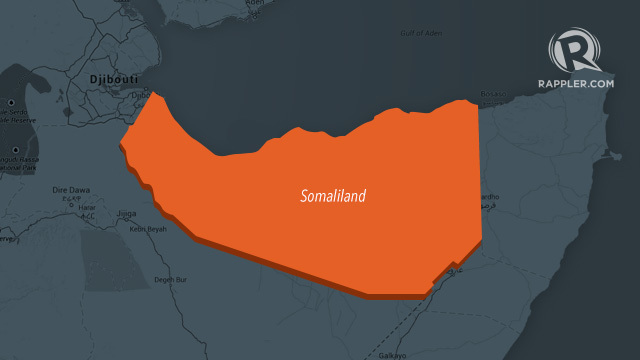
-
 Medeshi Oct 29, 2008 Somali pirates living the high life By Robyn Hunter BBC News "No information today. No comment," a Somali pir...
 -
Medeshi Amnesty International Urgent Action - woman sentenced to death in Puntland, Somalia PUBLIC AI Index: AFR 52/003/2009 12 May 2009 UA ...
