Failed Raid on Hijacked Ship off Somalia

Medeshi ,October 13, 2008
Failed Raid on Hijacked Ship off Somalia
Interesting report this morning from the AP.
Somali forces raided one of the many ships hijacked off the country's coast Sunday as a deadline loomed in a standoff aboard another, arms-laden vessel, officials said.
Troops in northern Somalia's semiautonomous Puntland region unsuccessfully tried to take back a ship that was taken over by pirates on Thursday, said Ali Abdi Aware, Puntland's foreign minister. He said two pirates were killed.
The vessel, which carrying cement, is believed to have Syrian and Somali crew on board.
"Our forces are chasing the ship and we hope to rescue it," Aware said in a telephone interview from Puntland, a hotbed of piracy.
Someone in Puntland has the political will to take action against pirates, but it would appear the capabilities to be successful against pirates are lacking. Potential opportunity for coalition forces, and by that I mean training opportunity to engage with local Puntland Coast Guard authorities. Cooperation with the local government is part of the long term solution.
Reuters reports the ship is the Panama-flagged ship Wail, which was hijacked on Friday. None of the reporting to date suggests where the action took place, but it was likely in the northern region near Bosasso based on where the hijacking took place and

Neocons lose another War on Somalia

Bush-Neocons lose another war: Somalia
The Bush disasters keep on coming. His Neocon advisers told him he could defeat “Islamofascism” by intervening in Somalia. Now that’s lost, too:
SOMALIA’S FRAGILE government appears to be on the brink of collapse. Islamist insurgents now controls large parts of southern and central Somalia - and are continuing to launch attacks inside the capital, Mogadishu.
Ethiopia, which launched a US-backed military intervention in Somalia in December 2006 in an effort to drive out an Islamist authority in Mogadishu, is now pulling out its troops.
Diplomats and analysts in neighbouring Nairobi believe the government will fall once Ethiopia completes its withdrawal, and secret plans have been made to evacuate government ministers to neighbouring Kenya.


Troop pull-out leaves government on brink
Ethiopian withdrawal marks end of disastrous intervention that sparked new violence and suffering

Sunday Herald

From Steve Bloomfield in Nairobi
SOMALIA'S FRAGILE government appears to be on the brink of collapse. Islamist insurgents now controls large parts of southern and central Somalia - and are continuing to launch attacks inside the capital, Mogadishu.
Ethiopia, which launched a US-backed military intervention in Somalia in December 2006 in an effort to drive out an Islamist authority in Mogadishu, is now pulling out its troops.
Diplomats and analysts in neighbouring Nairobi believe the government will fall once Ethiopia completes its withdrawal, and secret plans have been made to evacuate government ministers to neighbouring Kenya.
That may happen sooner rather than later. A shipment of Ethiopian weapons, including tanks, left Mogadishu port last month as part of the withdrawal. Bringing the equipment back to Ethiopia by land would have been impossible - analysts believe Ethiopian troops and their Somali government allies control just three small areas in Mogadishu and a few streets in Baidoa, the seat of parliament. There are now estimated to be just 2500 Ethiopian soldiers left inside Somalia, down from 15,000-18,000 at the height of the war.
Somalia's overlapping conflicts go back, at the very least, to 1991, the year the country's last recognised government was overthrown. Men and women who were children then have since given birth to a second generation of Somalis who have known only war.
But analysts believe Somalia is now in the midst of its worst ever crisis. The ongoing conflict, which has claimed the lives of at least 9000 civilians and forced more than 1.1 million to flee their homes, has combined with devastating droughts and rocketing food prices to create one of the world's worst humanitarian catastrophes.
Almost half the population - 3.2m people - are in need of emergency aid (the figure has almost doubled in the last 12 months). One in six children is thought to be malnourished.
"This crisis is broadening as well as deepening," said Mark Bowden, the head of the UN's humanitarian effort. "It is now the world's most complicated crisis."
Violence and insecurity have made it almost impossible for aid to get through, and 24 aid workers have been killed in Somalia so far this year. A recent shipment of food aid needed a military escort to navigate Somalia's pirate-infested waters. But within hours of the food being unloaded in Mogadishu's port most of it was stolen by gun-toting gangs.
Oxfam, Save The Children and 50 other aid agencies working in Somalia last week said the international community had "completely failed Somali civilians".
As the crisis worsens thousands are trying to leave the country every week. Around 6000 people are now crossing the border into Kenya every month - despite the Kenyan government's decision to close the border. Some are arriving at the overcrowded Dadaab refugee camp in eastern Kenya, which is now one of the largest refugee camps in the world with nearly 250,000 people.
Others try to leave by sea, travelling to the northern town of Bosasso and paying $100 to people smugglers who ram more than 100 people onto a small fishing boat and set sail for Yemen.
Many do not make it. Smugglers last week forced 150 people off the boat three miles off the Yemeni coast. Only 47 made it to shore.
Attempts to find a political solution have stalled. The UN claims progress has been made, citing an agreement signed in neighbouring Djibouti by the Somali government and the opposition Alliance for the Reliberation of Somalia (ARS).
But the deal has been signed only by the moderates on each side: Prime Minister Nur Adde and the ARS's Sheikh Sharif Sheikh Ahmed.
President Abdullahi Yusuf, a former warlord who controls the government's security forces, has refused to get involved. Sheikh Hassan Dahir Aweys, the hardline Islamic leader of another faction of the ARS, has denounced the deal, as have the leaders of the insurgents, a group called Al Shabaab.
Since the deal was struck in June, the level of violence has increased.
Few Somalis will weep if the government falls. In most respects it is a government in name only. Few ministries have offices, let alone civil servants to fill them. There are no real policies - and no real way to implement any.
Worst of all, this government, which is backed by the United Nations and funded by Western donors including Britain and the EU, has been accused of committing a litany of war crimes. Its police force, many of whom were trained under a UN programme part-funded by Britain, has carried out extrajudicial killings, raped women and fired indiscriminately on crowds at markets. Militias aligned to the government have killed journalists and attacked aid workers.
The government's fall would mark the end of a disastrous US-backed intervention. For six months in 2006, Somalia was relatively calm. A semblance of peace and security had returned to Mogadishu. The reason was the rise of the Union of Islamic Courts (UIC), a loose coalition of Islamist leaders who had driven out Mogadishu's warlords.
Hardline elements within the UIC vowed to launch a jihad against Somalia's traditional enemy, Ethiopia. The US viewed the UIC has an "al-Qaeda cell" - a belief not shared by the majority of analysts and diplomats.
Ethiopia, with the support of the US, sent thousands of troops across the border to drive out the UIC. It took just a few days to defeat them. Their leaders fled towards the border with Kenya, while many of the fighters took off their uniforms and melted into Mogadishu.
Within weeks, an Iraq-style insurgency had begun, targeting Somali government and Ethiopian troops. Al Shabaab began laying roadside bombs and firing at Ethiopian troops from inside civilian areas.
The Ethiopians responded by bombarding residential areas. Hundreds were killed and hundreds of thousands fled Mogadishu. Human rights groups accused Ethiopia of committing war crimes.
The US must now be wondering whether it was all worth it. Western backing for the unpopular Somali government and US support for the Ethiopian intervention has created a groundswell of anti-West sentiment in Somalia.
The Islamist leaders they were so keen to oust are the same ones they are now engaged in negotiations with. US officials have met both Sheikh Sharif and the more hardline Sheikh Aweys in an effort to find a peace deal.
Meanwhile, in Somalia, the Islamists taking control of towns and villages across the country are considered far more extremist than Aweys. "They are real international jihadis," said one Nairobi-based diplomat. "The Americans' fear of al-Qaeda in Somalia is becoming a self-fulfilling prophecy."

Can peac be achieved through war ?

Medeshi Oct 12, 2008
Using War to Promote Peace & Democracy: We Bring the Values of Civilization to People by Invading and Bombing Them.
US national Archives
Can peace be achieved through war? Of course it can. Every war has been followed by a peace of some sort. It's not that unusual for aggressors to be defeated through war, thus ushering in a new era of peace and freedom -- or at least relatively more peace and freedom than before. At the same time, though, it's also not that unusual for wars to lead to eras of greater repression and brutality. Perhaps the more relevant question is whether peace can be imposed through war -- whether war can be used as an effective means for imposing peace, democracy, justice, etc.
That's the question which faces America today because the Bush administration has chosen to try to impose democracy in the Middle East through force of arms. Muslims who try to achieve their goals through killing and brutality are chastised as barbaric. Those goals include the "true" freedom under Islam and Islamic government. America's efforts to achieve its goals through killing and actions which the victims regard as "brutal" is only acting out of an altruistic desire to spread freedom.
The parallels between the two are not exact, but they are striking. Both regard the other as using violence to impose repression and immorality; both see themselves as the bearers of civilization, freedom, and order which justifies the need to use a bit of violence to promote. It's hard for Americans to see this because Americans tend to have a naive sense of innocence about themselves -- they feel that they are only ever acting for the sake of helping others, never out of self-interest, and this leads to very strong negative reactions when those actions aren't received (or perceived) in just that manner.
Even if it could be demonstrated that Americans were absolutely correct and just, it would help if they could see themselves as others see them and their international policies. It might instill a bit of humility, something that goes well even with the pursuit of truth. Of course, in cases where America is wrong, that humility would be even more important.
This image is based on a World War II poster saying that "It Can Happen Here," so people need to keep producing war materiel in the factories in order to keep it from happening.

Somalia: Pirates are a reminder of country's chaos, international neglect

Medeshi
Lawless Somalia elbows its way back into the news
ByElizabeth Sullivan
Pirates are a reminder of country's chaos, international neglect
Sunday, October 12, 2008
The emergence of a virulent form of gunboat piracy off So malia's shores is just the latest symptom of a country - and region - in crisis.
Anyone who's paid even modest attention to the plunge into anarchy of this Horn of Africa nation knows its bumper crops of late have been gunmen, radicals, terrorists and crooks. Now, a high-stakes pirate standoff may finally be bringing the world back for a closer look at the trauma that is Somalia.
Somalia's No. 1 export, however, long has been desperate people - including many who die aboard rickety boats abandoned by unscrupulous human traffickers. The country stays afloat largely because of $1 billion in annual remittances from exiled Somalis, but even that lifeline is now threatened by the rising violence.
Formerly home to poets and prosperous nomadic clans, Somalia hasn't functioned as a state for more than 17 years.
And while this nation not far from the Persian Gulf has pockets of relative stability and one of Africa's most ethnically homogenous populations, its clan warfare is accelerating. Increasingly, that's drawing in gunmen, opportunists and terrorist operatives from outside its borders - with profound implications for the potential infection of more violence, extremist ideology and terrorism from this failed state into others nearby, including Kenya, Ethiopia and Yemen.
Long the world's most ignored tragedy, Somalia largely dropped off the West's radar after U.S. forces ignominiously withdrew in 1994, five months after 18 U.S. soldiers died in the dust of a Mogadishu street, during a one-day battle gone disastrously wrong.
Yet out of the spotlight, its humanitarian horrors have grown exponentially, greased by the continuing cycle of international neglect and misguided intervention, as well as by recurring droughts. That's not to mention the depravities of a gangland society that has lost its internal order and glue.
With one in every five Somali toddlers dying before their fifth birthday and nearly half the rest chronically undernourished, more international light couldn't come too soon. Especially since it's the international caregivers - teachers, aid workers and transporters of desperately needed food - who find themselves prime targets of the gunmen and terrorists. At least half a dozen aid workers and teachers have been executed this year; as of July, another seven were being held hostage.
Street warfare has virtually emptied much of Somalia's once-bustling seaside capital, Mogadishu. The U.N. refugee agency estimates that more than a million Mogadishu residents are internally displaced and living in squalid camps outside town. That's on top of a million Somalis who already fled the country. That means at least one fourth of the nation's populace have abandoned their homes.
Sadly, what drew the world's attention was not this human trauma, but the offshore drama focused on modern-day Somali pirates in fast boats with advanced weaponry and GPS systems, who seized a Belize-flagged ship, its mostly Ukrainian crew and Ukrainian cargo of 33 military tanks, six anti-aircraft systems and other arms, and is holding them for ransom.
As of this writing, that standoff continues, with a Russian frigate on the way and a half-dozen U.S. warships surrounding the pirated vessel to make sure the military hardware doesn't go to al-Qaida-linked groups.
Mysteriously, the ship had no armed escort. Even food shipments into Somalia have to be heavily guarded. So why wasn't this one? The Kenyans confirm they were the intended recipients of the arms, yet notations on a cargo invoice obtained by BBC News with the initials GOSS, which may refer to the "Government of South Sudan," raise questions about the ultimate recipient. (Kenya says the initials stand for General Ordinance Supplies and Security, a government arms office.)
If the U.S.-aided southern Sudanese, supposedly adhering to a peace deal and cease-fire with the Sudanese government, are instead in the market for tons of new military hardware, that could blow out of the water the deal that ended a major civil war.
Either way, Sudan's order also is threatened by Somalia's disorder - a tragedy with many causes and no clear cures. A 2007 U.S.-backed Ethiopian military incursion that successfully overthrew a fledgling Islamist Somali government Washington believed was in league with elements of al-Qaida has simply changed the nature of the conflict to a multipart war. It's a war in which the Islamists, other Somali clans, the Ethiopians, U.N. peacekeepers and U.S. soldiers hunting terrorists out of a base nearby in Djibouti all seem to have their own agendas.
Sadly, the pirates are the ones who seem to be doing best out of this mess, with their own seaside villas and high-end cars. The rest of the Somali people are just slipping further into the abyss.

Statement by 52 non-governmental organisations working in Somalia

Posted by Medeshi on 12 Oct, 2008
Statement by 52 non-governmental organisations working in Somalia on the rapidly deteriorating humanitarian crisis in the country

We, the undersigned NGOs, are extremely concerned about the devastating humanitarian crisis in Somalia. Nearly half of Somalia’s population, or 3.25 million people, are now in need of emergency aid. This is a 77% increase since the beginning of 2008. This number has increased dramatically over the past year due to the destructive combination of extreme insecurity, drought and record-high food prices. The situation is expected to deteriorate further with ordinary Somalis bearing the brunt of the cost.

Despite the ongoing political process we have not witnessed any lessening of the violence that continues to have a horrendous impact on civilians. In the last few weeks, renewed shelling in Mogadishu has displaced approximately 37,000 civilians from their homes. Over the past nine months, 870,000 have fled for their lives. A total of 1.1 million people are currently displaced in Somalia today.

We are appalled by the indiscriminate and disproportional use of force by all armed parties to the conflict, which is further exacerbating the humanitarian crisis.

The poorest of Mogadishu’s residents have no means to flee the extreme violence and have limited means to earn a living leaving them completely dependent on humanitarian assistance. This while the average Somali has seen price increases for food and water of up to 1,000 percent, plunging many into worsening poverty. One in six children under five, or approximately 180,000 children, is acutely malnourished in South and Central Somalia.
Aid workers are increasingly the victims of assassination and kidnapping and are now seen as legitimate targets. This year alone 24 aid workers, of which 20 are Somali nationals, have been killed whilst carrying out their work. The whereabouts of another ten are unknown. There have been 111 reported security incidents directly targeting aid agencies.

National and international aid agencies are prevented from responding effectively to the needs of ordinary Somalis because of violence and severely limited access. At present, South and Central Somalia is almost entirely off limits to international staff of aid agencies.
We call upon all parties to the conflict to allow aid agencies unhindered access to Somalis who are in desperate need of emergency assistance.

The international community has completely failed Somali civilians. We call on the international community to make the protection of Somali civilians a top priority now.

Spokespeople:
Andrea Pattison – Oxfam International (Nairobi based)
andrea.pattison@oxfamnobiv.or.ke
Mob: +254 736 476 514

Robert Maletta – Oxfam International (Nairobi based but currently in the US)
robert.maletta@oxfamnovib.or.ke
+254 735678890

Susannah Friedman – Save the Children UK (Nairobi based)
s.friedman@scuk.or.ke
Mob: +254 7336 28192

Rosemary Heenan – Trocaire (Nairobi based)
+254 720218674


Signatories to the statement (52 National and International NGOs):
ADRA - Adventist Relief Development Agency
AET – Africa Educational Trust
AFREC – Africa Rescue Committee
ASEP – Advancement for Small Enterprise Program
CARE – Cooperative Assistance for Relief Everywhere
CARITAS SWITZERLAND & CARITAS LUXUMBOURG
CEFA – Somalia European Committee for Agricultural Training
CISP – Comitato Internazionale per lo Sviluppo dei Popoli
CPD Centre for Peace and Democracy
COOPI – Cooperazione Internazionale
DEVELOPMENT CONCERN
DRC - Danish Refugee Council
DIAKONIA EMERGENCY AID BREAD FOR THE WORLD
DIAKONIA Sweden
FERO – Family Economy Rehabilitation Organization
GHC – Gedo Health Consortium
GREDO – Gol Yome Rehabilitatation & Development Organisation
HANDICAP INTERNATIONAL
HAPO CHILD – Hiran HIV/AIDS Prevention and Child Protecton Organisation
HARDO – Humanitarian Action for Relief and Development Organisation
HIMILO – Himilo Relief and Development Association
HISAN
HORN RELIEF
IAS – International Aid Services
IDF – Integrated Development Focus
IMC – International Medical Corps
INTERPEACE/WSP – Interpeace / War torn Societies
INTERSOS
IRC – International Rescue Committee
IREX – International Research & Exchanges Board
ISLAMIC RELIEF
KAALO RELIEF AND DEVELOPMENT
MAG – Mines Advisory Group
MEDAIR
MERCY CORPS SOMALIA
MERLIN
NORWEGIAN CHURCH AID
NRC – Norwegian Refugee Council
OXFAM INTERNATIONAL
PROGRESSIO UK
RI – Relief International
SAACID AUSTRALIA
SAFERWORLD
SCUK – Save the Children UK
TERRA NUOVA – Terra Nuova Association for International Cooperation to Development
TROCAIRE
VSF SUISSE – Veterinaires Sans Frontieres - Switzerland
VSF GERMANY - Veterinaires Sans Frontieres - Germany
WELTHUNGERHILFE
WOCCA – Women and Child Care Organization
WORLD CONCERN
WORLD VISION


Notes to editors:
NGOs working on the rapidly deteriorating humanitarian crisis in Somalia have issued two previous statements calling attention to the rapidly deteriorating situation in the country. In October 2007 and in April 2008. Please see statements below.

The UN has described the security situation in Somalia as the worst the country has experienced since the early 1990s.

The UN’s FSAU has described the level of human suffering and deprivation in Somalia as “shocking” (FSAU).

The humanitarian crisis:
· The UN’s Food Security and Analysis Unit (FSAU) for Somalia announced that the magnitude and speed at which the Somalia crisis is deteriorating is ‘alarming and profound.’
· The number of people in need of emergency assistance in Somalia has risen by more that 77% since January to 3.25 million people (or 43% of the country) (FSAU).
· This number includes 870,000 people who have been forced to flee their homes due to violence and insecurity since the start of 2007 (there are 1.1m IDPs across Somalia). 37,000 people have been displaced from their homes in Mogadishu since the 21st September (FSAU & UNHCR).
· Over 1.3 million people in rural communities are in need (FSAU).
· Over 700,000 people in urban areas are in need.

The humanitarian crisis in Somalia is dramatically worsening due to a combination of three main factors:
1. Extreme and worsening insecurity – also severely limiting access to those in need by aid agencies.
2. Drought is deepening and spreading throughout Central and parts of Southern Somalia – caused by the fourth consecutive rainy season failure.
3. Hyperinflation causing record-high food and water prices that have increased by up to 1600%.

Other indicators:
· One in six children under five (approx.180, 000) are thought to be acutely malnourished in Southern and Central Somalia. 26,000 are severely malnourished – needing immediate treatment. The numbers are increasing (FSASU).
· Prices for imported and locally produced foods are at record-high levels in Somalia. Over the past 18 months, hyperinflation has led to price increases for food and basic non-food items by up to 1000% (FSAU).
· Among the coping mechanism identified by IDPs in reports to UNHCR in August were: forced prostitution ((identified again in Afgooye), Bossaso, Mogadishu, and Dhuusamarreeb), reducing the number of meals per day, reducing food quality, joining a militia for payment/employment (identified in a small number of reports from IDPs fleeing Mogadishu and Elasha). Relying on humanitarian assistance for support was identified most often as the coping / survival mechanism by IDPs in reports to UNHCR in August.
· Only 30 percent of school age children are enrolled in school (countrywide) according to the Somalia Education Cluster. Schools in Mogadishu shut down for three days in a protest against insecurity and attacks targeting schools.

Access
· The UN has stated that the level of insecurity in Somalia is limiting humanitarian space by the day (OCHA).
· 24 aid workers have been killed inside Somalia since January – 20 of them Somali nationals (NGO Security Preparedness and Support Project (NGO SPAS)). The whereabouts of ten other aid workers remains unknown.
· There have been 111 security-related incidents directly affecting NGOs since the start of January. Another 28 incidents have affected NGOs indirectly. The vast majority of the incidents are taking place in South and Central regions (NGO SPAS).
· Numerous obstacles continue to limit access to those in need by aid agencies: assassinations, kidnappings, prohibitive demands at checkpoints, the targeting of aid assets – like food and other items intended for delivery to people in need, carjackings (there have been nearly 40 this year).
· There are currently over 300 checkpoints in South Central Somalia – limiting access to those in need.
· Somalis trying to find safety continue to try and cross to Yemen over the Gulf of Aden. In September, more than a 100 Somalis seeking security died while attempting this journey.

Piracy
· Between 1st Jan – 31st August 2008, 32 ships were hijacked off the coast of Somalia.
· Canadian ships are currently providing naval escorts for WFP food shipments. In a recent decision Canada decided to extend the naval escorts to 23 October.
· Since November 2007, a succession of international navies including Canadian, Dutch, Danish and French, have been escorting WFP ship destined for Somalia.
· On 2 October EU Defence Ministers decided to establish an anti-piracy security operation off the coast of Somalia. A number of EU member states have expressed an interest to take part. An official decision is expected on 10 November.


NGO Joint statement in October 2007:
“There is an unfolding humanitarian catastrophe in South Central Somalia. Tens of thousands of people are currently fleeing violence in Mogadishu adding to the up to 335,000 people already needing immediate lifesaving assistance in Mogadishu and the Shabelle regions.”

“International and National NGOs cannot respond effectively to the crisis because access and security are deteriorating dramatically at a time when needs are increasing.”

“The international community and all parties to the present conflict have a responsibility to protect civilians, to allow the delivery of aid and to respect humanitarian space and the safety of humanitarian workers.”

NGO Joint statement in April 2008:
On Oct. 30, 2007, 39 NGOs warned of the rapidly deteriorating situation in Somalia and an impending humanitarian catastrophe. Since then, the crisis engulfing Somalia has deteriorated dramatically while access to people in need continues to decrease; 360,000 people have been newly displaced and an additional half a million people are reliant on humanitarian assistance.

There are now more than one million internally displaced people in Somalia. Intense conflict in Mogadishu continues to force an average of 20,000 people from their homes each month. This, combined with record high food prices, hyperinflation and drought in large parts of the country is leaving communities struggling to survive. Extreme water and food shortages are expected to worsen across the country if the seasonal rains (April - June) fail as they are predicted to.

As the crisis worsens, Somali and international aid agencies are unable to respond adequately to the needs. Attacks on, and killings of, aid workers, the looting of relief supplies, and a lack of respect for international humanitarian law by all parties to the conflict have left two million Somalis in need of basic humanitarian assistance.

For too long, the needs of ordinary Somalis have been forgotten. The undersigned agencies are asking the international community and all parties to the conflict to urgently focus their attention on the catastrophic humanitarian crisis in Somalia. They must ensure access for humanitarian supplies, live up to their responsibility to protect civilians and address the environment of impunity. The humanitarian crisis will become more and more complex and will continue to deepen in the absence of a political solution to the current crisis.

More Burundi troops deploy in Mogadishu-witnesses

More Burundi troops deploy in Mogadishu-witnesses
Sat 11 Oct 2008
By Abdi Sheikh
MOGADISHU, Oct 11 (Reuters) - Two African Union military planes landed in Mogadishu on Saturday carrying 400 Burundian reinforcements for an embattled peacekeeping force, sources at the airport said.
The AU mission, AMISOM, is guarding sites in the chaotic Somali capital where a U.N.-backed interim government and its Ethiopian military allies are fighting Islamist insurgents.
The multinational African force was supposed to be 8,000 strong but has been operating for months with 2,200 soldiers, all from Uganda and Burundi.
"Two planes landed carrying at least 400 Burundian troops," a staff member at Mogadishu's airport told Reuters, asking not to be named.
AMISOM spokesman Barigye Ba-Hoku said: "I am not at liberty to talk about the movement of our troops. If there is a deployment we'll formally inform the Mogadishu people."
Last month, Islamist al Shabaab rebels vowed to shoot down aircraft using the coastal airstrip and fired mortar shells at another AU military plane that touched down there.
The threats effectively shut down the city's main airport until Thursday, when a civilian plane carrying 120 Somali deportees from Saudi Arabia landed without incident.
Peacekeepers at the airport and elsewhere in the capital have been targeted in a string of attacks since Islamists launched an Iraq-style insurgency in early 2007 that has killed nearly 10,000 civilians and an unknown number of combatants.
Having ruled south Somalia for six months in 2006, but then been forced out by allied Ethiopian-Somali troops, the Islamists have regrouped and now control large swathes of the south again.
The worst insecurity for nearly two decades in the Horn of Africa country has fuelled a wave of kidnappings this year as well as an explosion of piracy in shipping lanes off the coast. (Writing by Daniel Wallis; Editing by Janet Lawrence)

Salvation Corps and Toxic waste on the shores of Somalia.

Medeshi 11 Oct, 2008
'Toxic waste' behind Somali piracy
By Najad Abdullahi
Somali pirates have accused European firms of dumping toxic waste off the Somali coast and are demanding an $8m ransom for the return of a Ukranian ship they captured, saying the money will go towards cleaning up the waste.
The ransom demand is a means of "reacting to the toxic waste that has been continually dumped on the shores of our country for nearly 20 years", Januna Ali Jama, a spokesman for the pirates, based in the semi-autonomous region of Puntland, said.
"The Somali coastline has been destroyed, and we believe this money is nothing compared to the devastation that we have seen on the seas."
The pirates are holding the MV Faina, a Ukrainian ship carrying tanks and military hardware, off Somalia's northern coast.
According to the International Maritime Bureau, 61 attacks by pirates have been reported since the start of the year.
While money is the primary objective of the hijackings, claims of the continued environmental destruction off Somalia's coast have been largely ignored by the regions's maritime authorities.
Dumping allegations
Ahmedou Ould-Abdallah, the UN envoy for Somalia confirmed to Al Jazeera the world body has "reliable information" that European and Asian companies are dumping toxic waste, including nuclear waste, off the Somali coastline.
"I must stress however, that no government has endorsed this act, and that private companies and individuals acting alone are responsible," he said
Allegations of the dumping of toxic waste, as well as illegal fishing, have circulated since the early 1990s.
But evidence of such practices literally appeared on the beaches of northern Somalia when the tsunami of 2004 hit the country.
The UN Environment Programme (UNEP) reported the tsunami had washed up rusting containers of toxic waste on the shores of Puntland.
Nick Nuttall, a UNEP spokesman, told Al Jazeera that when the barrels were smashed open by the force of the waves, the containers exposed a "frightening activity" that has been going on for more than decade.
"Somalia has been used as a dumping ground for hazardous waste starting in the early 1990s, and continuing through the civil war there," he said.
"European companies found it to be very cheap to get rid of the waste, costing as little as $2.50 a tonne, where waste disposal costs in Europe are something like $1000 a tonne.
"And the waste is many different kinds. There is uranium radioactive waste. There is lead, and heavy metals like cadmium and mercury. There is also industrial waste, and there are hospital wastes, chemical wastes – you name it."
Nuttall also said that since the containers came ashore, hundreds of residents have fallen ill, suffering from mouth and abdominal bleeding, skin infections and other ailments.
"We [the UNEP] had planned to do a proper, in-depth scientific assessment on the magnitude of the problem. But because of the high levels of insecurity onshore and off the Somali coast, we are unable to carry out an accurate assessment of the extent of the problem," he said.
However, Ould-Abdallah claims the practice still continues.
"What is most alarming here is that nuclear waste is being dumped. Radioactive uranium waste that is potentially killing Somalis and completely destroying the ocean," he said.
Toxic waste
Ould-Abdallah declined to name which companies are involved in waste dumping, citing legal reasons.
But he did say the practice helps fuel the 18-year-old civil war in Somalia as companies are paying Somali government ministers to dump their waste, or to secure licences and contracts.
"There is no government control ... and there are few people with high moral ground ... [and] yes, people in high positions are being paid off, but because of the fragility of the TFG [Transitional Federal Government], some of these companies now no longer ask the authorities – they simply dump their waste and leave."
Ould-Abdallah said there are ethical questions to be considered because the companies are negotiating contracts with a government that is largely divided along tribal lines.
"How can you negotiate these dealings with a country at war and with a government struggling to remain relevant?"
In 1992, a contract to secure the dumping of toxic waste was made by Swiss and Italian shipping firms Achair Partners and Progresso, with Nur Elmi Osman, a former official appointed to the government of Ali Mahdi Mohamed, one of many militia leaders involved in the ousting of Mohamed Siad Barre, Somalia's former president.
At the request of the Swiss and Italian governments, UNEP investigated the matter.
Both firms had denied entering into any agreement with militia leaders at the beginning of the Somali civil war.
Osman also denied signing any contract.
'Mafia involvement'
However, Mustafa Tolba, the former UNEP executive director, told Al Jazeera that he discovered the firms were set up as fictitious companies by larger industrial firms to dispose of hazardous waste.
"At the time, it felt like we were dealing with the Mafia, or some sort of organised crime group, possibly working with these industrial firms," he said.
Nations have found it difficult to tacklethe problem of piracy [AFP]
"It was very shady, and quite underground, and I would agree with Ould-Abdallah’s claims that it is still going on... Unfortunately the war has not allowed environmental groups to investigate this fully."
The Italian mafia controls an estimated 30 per cent of Italy's waste disposal companies, including those that deal with toxic waste.
In 1998, Famiglia Cristiana, an Italian weekly magazine, claimed that although most of the waste-dumping took place after the start of the civil war in 1991, the activity actually began as early as 1989 under the Barre government.
Beyond the ethical question of trying to secure a hazardous waste agreement in an unstable country like Somalia, the alleged attempt by Swiss and Italian firms to dump waste in Somalia would violate international treaties to which both countries are signatories.
Legal ramifications
Switzerland and Italy signed and ratified the Basel Convention on the Control of Transboundary Movements of Hazardous Wastes and their Disposal, which came into force in 1992.
EU member states, as well as 168 other countries have also signed the agreement.
The convention prohibits waste trade between countries that have signed the convention, as well as countries that have not signed the accord unless a bilateral agreement had been negotiated.
It is also prohibits the shipping of hazardous waste to a war zone.
Abdi Ismail Samatar, professor of Geography at the University of Minnesota, told Al Jazeera that because an international coalition of warships has been deployed to the Gulf of Aden, the alleged dumping of waste must have been observed.
Environmental damage
"If these acts are continuing, then surely they must have been seen by someone involved in maritime operations," he said.
"Is the cargo aimed at a certain destination more important than monitoring illegal activities in the region? Piracy is not the only problem for Somalia, and I think it's irresponsible on the part of the authorities to overlook this issue."
Mohammed Gure, chairman of the Somalia Concern Group, said that the social and environmental consequences will be felt for decades.
"The Somali coastline used to sustain hundreds of thousands of people, as a source of food and livelihoods. Now much of it is almost destroyed, primarily at the hands of these so-called ministers that have sold their nation to fill their own pockets."
Ould-Abdallah said piracy will not prevent waste dumping.
"The intentions of these pirates are not concerned with protecting their environment," he said.
"What is ultimately needed is a functioning, effective government that will get its act together and take control of its affairs."

War on Terror vs. Geneva Conventions

Medeshi 11 Oct, 2008
We can be Trusted to Abandon the Geneva Conventions in the War on Terrorism

Christian Nationalists are vocal in their advocacy of America becoming a Christian state. This may lead some to conclude that Christianity is the only basis for their ideology, but this would be a mistake. Christian Nationalism is at least as nationalistic as it is Christian and this nationalism on behalf of America is important in their policies, attitudes, and values. Whereas patriotism may simply be a positive attitude towards one's country, nationalism tends to be much more extreme in that it sees the nation as exceptional, something to be placed above all else. This helps justify policies in which traditional standards of morality or justice are abandoned. When it comes to defending the nation, everything is permitted.
If Christian Nationalists were merely Christian, we might expect them to make common cause with Christians around the world -- Christianity is, after all, a universal religion. Anyone can become a Christian and all Christians are equal before God. Not everyone is an American, however, and not all nations are equal in the eyes of Christian Nationalism. Christian Nationalists frequently adopt positions at odds which Christians elsewhere in the world because those policies are designed to advance American economic, political, or military interests. Christian Nationalists also frequently adopt positions which are arguably at odds with traditional Christian moral values, but this is also because those positions advance nationalistic interests.
All of this is evident in America's War on Terror. Christians elsewhere in the world, including conservative evangelicals, object to America's invasion of Iraq and as well as America's treatment of detainees. Christian Nationalists, however, don't even try to defend their positions via Christian traditions or doctrines. America's actions in the War on Terror are justified in almost Machiavellian terms in which the survival of the nation is all that matters. The actual suffering of detainees or Iraqis is less important than the theoretical suffering of Americans in the future if harsh tactics aren't adopted. The immorality visited upon detainees and the injustice of the loss of domestic civil liberties are less important than the immorality and injustice of a theoretical terrorist attack in the future if detainees aren't vigorously questioned (i.e., torture).
This image is based on a World War I poster encouraging Americans to invest in the Liberty Loan (war bonds).
The web.

America as a Christian Nation, America as a White Nation

Medeshi Oct 11, 2008
America as a Christian Nation, America as a White Nation: Racism & White Supremacy in American Christianity
Conservative, evangelical Christianity in America is not inherently or necessarily racist. However, there has been significant convergence between racism, White Supremacy, and conservative Christianity throughout American history. Not only have conservative evangelical Christians been leading defenders of slavery, racism, and segregation, but there are aspects of evangelical doctrine which encourage the continuation of racist outcomes.
Evangelical Christianity's development as a defender of racist social structures wasn't inevitable from a theological standpoint, but it was necessary from a political one: itinerant evangelical preachers in the South made little headway so long as they retained their revolutionary attitudes. In order to become more accepted socially, they had find acceptance by society's leading figures: the white gentry. This led to numerous changes, including a new emphasis on the supremacy of whites over blacks, pushing women to the margins, acceptance of sinful behavior like drinking and gambling, and stronger defenses of social order.
Southern evangelical churches ended up on the forefront of defending slavery against Northern abolitionist movements, also generally originating in evangelical churches. Southern churches framed the defense of slavery as a religious cause and the Civil War as a Religious War. They lost, but hateful theology never dies -- it just goes underground and waits for new opportunities. In this case, the same basic theology arose again in the fight over segregation a century later.
Today few conservative evangelical Christians are openly racist, but some doctrines encourage racist outcomes. Evangelical Christianity encourages conformity and discourages efforts that "rock the boat," even if to achieve justice. Sharing the gospel takes precedence over social justice for minorities. Evangelical Christianity also generally denies the moral agency of institutions -- thus institutional racism cannot exist and so long as individuals are themselves not racist, then social outcomes must be racism-free. If it appears that blacks are failing, it must be their own fault.
A few Christians do remain openly racist, and sometimes they justify their racism or White Supremacy on the basis of Christian doctrine, just as their ancestors did. Christian racism is also not limited to conservative evangelicals. We can find it across the spectrum of Christian denominations, including Catholicism.
Read more at :
The web.

Somalis Waste Away in the Shadows

Medeshi Oct 11, 2008
With Spotlight on Pirates, Somalis on Land Waste Away in the Shadows

By JEFFREY GETTLEMAN
AFGOOYE, Somalia — Just step into a feeding center here, and the sense of hopelessness is overwhelming.
Dozens of women sit with listless babies in their laps, snapping their fingers, trying to get a flicker of life out of their dying children.
(Photo: a severely malnourished baby lay unresponsive on Thursday as the mother and father sat nearby in a feeding center in Afgooye, Somalia.)
Little eyes close. Wizened 1-year-olds struggle to breathe. This is the place where help is supposed to be on its way. But the nurses in the filthy smocks are besieged. From the doorway, you can see the future of Somalia fading away.
While the audacity of a band of Somali pirates who hijacked a ship full of weapons has grabbed the world’s attention, it is the slow-burn suffering of millions of Somalis that seems to go almost unnoticed.
The suffering is not new. Or especially surprising. This country on the edge of Africa has been slowly, but inexorably, sliding toward an abyss for the past year and a half — or, some would argue, for the past 17. United Nations officials have called Somalia “the forgotten crisis.”
The causes are unemployment, drought, inflation, a squeeze on global food supplies and a war that will not end. Fighting between Somalia’s weak transitional government and a determined Islamist insurgency has been heating up in the past few weeks, driving thousands from their homes and cutting people off from food. The hospital wards here are one indicator of the conflict’s intensity.
“In the past two months,” said Muhammad Hussein, a doctor at a feeding center in Afgooye, “our patients have doubled.”
In August, 200 women with emaciated babies lined up outside his clinic every day. Today, there are 400.
More than three million people, about half Somalia’s population, need emergency rations to survive. Nobody seems to like it. Many say they feel humiliated.
“That’s all we talk about: when will the next handout come,” said Zenab Ali Osman, a grandmother raising her daughter’s children.
Before fighting drove her from Mogadishu, the capital, to Afgooye’s endless refugee camps of gumdrop-shaped huts made of plastic bags and in some cases soiled T-shirts, Ms. Zenab used to wash clothes for a living. On a good day, she made the equivalent of 80 cents.
The civil war has eviscerated the economy, leaving so many people to survive on pennies. But out on the high seas, it is a different story. Pirates thrive off this same lawlessness, making millions of dollars by hijacking ships in Somalia’s unpatrolled waters and demanding hefty ransoms to free them. On Sept. 25, a band of pirates seized a Ukrainian freighter full of tanks and other weapons bound for Kenya.
The pirates are asking for $20 million, an unfathomable amount here. Negotiations are still going on, and the price will probably be closer to $5 million. No one wants to pay the pirates, but in this case, with 20 crew members being held hostage on a ship full of explosives, giving in may be the safest way out.
But the pirates may be growing impatient. According to The Associated Press, they threatened Friday night to blow up the ship if they were not paid the money within three days.
“I pray to God they are caught,” said Dhuho Abdi Omar, a mother who was waiting at a feeding center in Afgooye with her 2-year-old girl, who had not eaten for two weeks. “These pirates are blocking our food.”
Not everyone agreed. Many young men in the camps seemed to lionize the gunmen of the seas.
“They’re tough guys,” said Muhammad Warsame, 22. “And they’re protecting our coast.”
The pirates have made the same argument, saying they hijack ships in response to illegal fishing and dumping.
“They’re our marines,” said Jaemali Argaga, a militia leader.
Somalia has not had any marines, or national army or navy of any significance, since the central government imploded in 1991. Clan-based warlords carved the country into fiefs, preying upon the population. People eventually got fed up, and in the summer of 2006, a grass-roots Islamist movement drove away the warlords.
Ethiopia and the United States accused the Islamists of sheltering terrorists, and in the winter of 2006, Ethiopian and American forces ousted the Islamists. But the Islamists are back. Supported by businessmen and war profiteers, Islamist guerrilla fighters are viciously battling the weak government forces and Ethiopian soldiers. Civilians are often caught in between. Thousands have been killed in the past year and a half.
Many aid workers have fled. The United Nations World Food Program is one of the last organizations with a large staff inside Somalia. Denise Brown, the deputy country director, said the environment was increasingly hostile. And desperate.
Thousands of hungry people besieged a convoy of 35 United Nations-chartered food trucks moving through Mogadishu two weeks ago. They stripped the trucks clean, looting more than two million pounds of food.
“It’s unprecedented,” Ms. Brown said “Things just went haywire.”
That has taken food out of the mouths of people like Ms. Zenab, whose daughter was one of the 20 street sweepers in Mogadishu killed by a bomb in August that was buried in a pile of garbage.
She is now helping raise several grandchildren. Amina, 13 months old, will not eat. The two sat the other day on a cot covered with flies. All around them were babies looking up at the ceiling with round wet eyes, some with faces covered in tape because they were too sick to swallow and were being fed milk through their noses.
Whom does she blame?
“Those with guns,” Ms. Zenab said. “Whoever they are.”

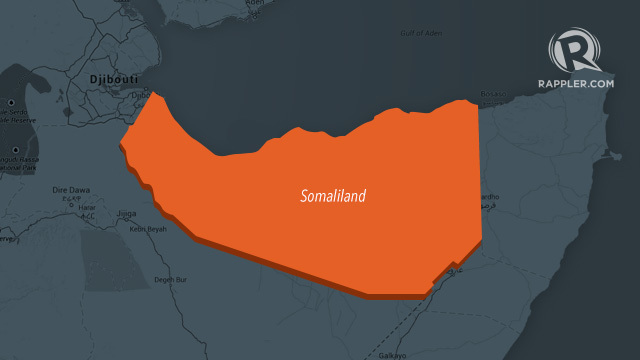
So why is it that Somaliland...

Medeshi Oct 11, 2008
Somaliland Recognition
Somaliland declared its independence from the rest of Somalia in 1991, yet with municipal , parliamentary and presidential elections, no country has so far recognised it.
On the contrary, the world has been in busy supporting the weak government in the south headed by the warlord-turned president , Abdillahi Yussuf .

The Montevideo Convention on Rights and Duties of States (1933), Art. 1:“The State as a person of international law should possess the following qualifications: (a) a permanent population; (b) a defined territory; (c) government; and (d) capacity to enter into relations with other states.”

It seems to me that Somaliland possesses all the requirements of statehood, except one. It has received no international recognition. Without recognition as a state, Somaliland is technically not a sovereign nation, despite how it currently operates.

Jennings and Watts, Oppenheim’s International Law, 9th ed., at p. 130:“The overwhelming practice of states does not accept that the mere claim of a community to be an independent state automatically gives it a right to be so regarded ….”

Somaliland is a prime example of the politics behind state recognition and why the above statement is sad but true. Without recognition as a sovereign state, Somaliland will receive little in the way of outside investment, aid when necessary, and trade. The process of development is that much harder because of it, and were Somalia to invade Somaliland, it could at best be seen as a civil war not warranting intervention by the UN and Powers That Be.

On May 14, 1948, the leaders of the Jewish organizations, proclaimed the establishment of the State of Israel, to take effect at midnight that night; and the United States recognized the provisional Jewish government as de facto authority of the Jewish state within minutes. (literally minutes). So why is it that Somaliland, over a decade later, fulfilling the requirements of statehood, is not being recognized ?

US , India nuclear deal

Medeshi Oct 10, 2008
US and India to sign nuclear deal
The United States and India are due to sign a civilian nuclear co-operation accord to end 34 years of US sanctions.
US Secretary of State Condoleezza Rice and Indian foreign minister Pranab Mukherjee will sign the deal in Washington after years of negotiations.
India will gain access to US civilian nuclear technology and fuel in return for inspections of its civilian, but not military, nuclear facilities.
India says the accord is vital to meet its rising energy needs.
Critics say it creates a dangerous precedent.
They say it effectively allows India to expand its nuclear power industry without requiring it to sign the Non-Proliferation Treaty (NPT) as other nations must.
The US restricted nuclear co-operation with India after it tested a nuclear weapon in 1974.
'Natural partners'
US President George W Bush signed the accord into law earlier this week, after it had finally been approved by the US Congress.
NUCLEAR POWER IN INDIA
India has 14 reactors in commercial operation and nine under construction
Nuclear power supplies about 3% of India's electricity
By 2050, nuclear power is expected to provide 25% of the country's electricity
India has limited coal and uranium reserves
Its huge thorium reserves - about 25% of the world's total - are expected to fuel its nuclear power programme long-term Source: Uranium Information Center
The deal was first agreed three years ago and is regarded as a key foreign policy priority for both the Indian and US governments.
Indian Prime Minister Manmohan Singh has said the deal will help India to liberate itself from "the constraints of technology denial of 34 years".
Although India has said it retains the right to conduct nuclear tests, the US has said the deal would be cancelled in such an eventuality.
The Nuclear Suppliers Group (NSG) recently lifted a ban that had denied India access to the international nuclear market.
India and France have also signed a major co-operation pact which paves the way for the sale of French nuclear reactors to Delhi.
France is the world's second largest producer of nuclear energy after the United States.
Russia has also been lobbying the Indian government hard on behalf of its firms.
Story from BBC NEWS:

Fear grips world stock markets

Medeshi Oct 10, 2008
Fear grips world stock markets
United States, European and Asian stock markets have plummeted, as lending rates between banks continue to rise despite this week's efforts by central banks to break the impasse in credit markets.
The Dow Jones industrial average of leading US shares in New York fell nearly 700 points on opening, briefly dropping below the 8,000 mark.
European markets were hard hit again, with Britain's FTSE-100 down 6.9 per cent, German's DAX down 8.5 per cent, and France's CAC-40 down eight per cent.
Asian stock markets had dropped sharply earlier on Friday, with the Nikkei 225 down 9.6 per cent and the Hang Seng lower by 7.2 per cent.
John Terrett, Al Jazeera's correspondent in New York, said: "The markets have come down more than 20 per cent in just seven days. This is a market crash by any other name.
"The markets are concerned about the banks... and are not seeing the global leadership they are seeking. All eyes are on today's G7 meeting in Washington."
Russia bailout
In Vienna, the stock exchange was suspended after stocks tumbled 10 per cent at the opening bell, and in Russia representatives of the MICEX and RTS exchanges said they had suspended regular trading until further notice under orders from financial regulators.
IN DEPTH
How the financial bubble burstQ&A: The US financial meltdownReacting to the financial crisis
Russia's Duma, the country's lower house of parliament, later announced it had approved two financial crisis packages worth a total of $86bn on Friday.
They include making available $50bn of state money to banks and companies who need to refinance foreign debt, and giving $36bn to Russia's key banks in loans.
Oleg Morozov, the Duma vice-speaker, said: "It's understood that those who play the stock markets, those who have taken big sums of credit in the West, the big companies, they are in a risk zone, the same as any financial and economic activity.
"Today we are helping them too by taking the decision [to ratify financial crisis measures], so I repeat again - today there is no reason at all for panic in the financial markets."Investor confidence
But efforts to thaw frozen credit markets and boost investor confidence, such as co-ordinated interest rate cuts by the world's central banks, have fallen flat as markets remain gripped by fears about the scale and depth of the likely global recession.
Speaking to Al Jazeera, Jeremy Batstone, head of research at Charles Stanley Brokers in London, said: "What we have got to remember is that a stock market is essentially a bet on a future company's profitability, and company profits are under major pressure, as the world enters an economic recession, so says the IMF head.
"If that's the case, then clearly profits across a range of sections are under pressure, its not a great surprise then, that stock markets are selling off.
"The other problem is in the money markets where banks remain very wary and to some extent are unable to deal with each other, which in turn is fostering the fear that we're seeing spread around the world."
The latest woes in Europe came after the Dow Jones index in the US closed down 678.91 or, 7.3 per cent lower, at 8,579.19, on Thursday the first time it has fallen below 9,000 in five years.
Nikkei woes
Meanwhile, the global credit crisis claimed its first Japanese financial institution on Friday as the government looked to prop up the country's smaller banks.
Ministers played down the risk of contagion from the collapse of Yamato Life, an unlisted, small insurance company, but investors were spooked.
The benchmark Nikkei 225 index fell 881.06 points, or 9.6 per cent, to 8,276.43, marking its lowest closing level since May 2003.
It was its biggest one-day percentage loss since the stock market crash of October 1987 and meant that the Nikkei lost nearly a quarter of its value during the week.In Sao Paulo, South America's largest stock market, trading was automatically suspended after the market slid more than 10 per cent.
Finance ministers and central bankers from the Group of Seven industrialised nations are due to meet later on Friday in Washington to address the financial meltdown but market commentators are sceptical that they can do anything to soothe concerns about the world economy.
Speaking to Al Jazeera from Paris, Max Keiser, a financial analyst, said: "[This is] pure greed, pure hubris, the gods are punishing us humans. We are going to enter something like 1893 which was a lot worse than the 1929 [Wall Street crash].
"This is a catastrophe, these are suicide bankers ... they are almost completely out of control."
George Bush, the US president, is due to make an address on the economic situation to the American people later in the day.
Source:
Agencies

Somali Pirates: Ocean Salvation Corps

Medeshi
Off the lawless coast of Somalia, pirates say they are merely patriots protecting their shores, the Tribune's Paul Salopek writes
By Paul Salopek
Tribune correspondent
October 10, 2008
JOHANNESBURG — Somalia's pirates want the world to know they are regrettably misunderstood.
They are merely "gentlemen who work in the ocean." Indeed, many are salty patriots risking their lives at sea while "protecting Somalia's shores." And the sea — ah, she is the pirates' beloved "mother."
Or so said a rueful pirate who telephoned a Somali radio station earlier this year, complaining about all the negative publicity surrounding the epidemic of boat hijackings, hostage-takings and thuggish attacks on UN aid ships that have made Somalia's coastline the most dangerous in the world.
The aggrieved buccaneer, calling himself a spokesman for the "Ocean Salvation Corps," said he and his men were merely exacting a tax for years of foreign poaching in Somalia's fish-rich waters. He even offered to embed reporters with his corsairs.
As the seizure of a weapons-stuffed Ukrainian freighter edges into its third week of a tense standoff between pirates and U.S. naval vessels off the coast of Somalia, the motivations of Somalia's notorious pirates would seem grimly clear: In this case, $20 million in hard cash in exchange for cutting loose the ship and its crew.
Yet for years, Somali pirates have wielded other, more self-serving justifications for their criminal activity on the high seas. Mostly, they say their attacks are tough payback for the world community's abuse of prostrate Somalia's territory and resources. And, surprisingly, some experts admit that these arguments, while never forgiving the terrors of piracy, may hold a grain of truth.
Somalia's lawless coastline has been ravaged by unscrupulous outsiders with impunity since the Somali government collapsed in 1991, experts say.
In the early 1990s, for example, Somalia's unpatrolled waters became a cost-free dumping ground for industrial waste from Europe. Fishing boats from Italy were reported to have ferried barrels of toxic materials to Somalia's shores and then returned home laden with illicit catches of fish. Rusting containers of hazardous waste washed up on Somali beaches as recently as 2005, after a powerful tsunami roared through.
But fish poaching has proved far more devastating to Somalis, environmental officials say.
"It's been like a long gold rush for Thai, European, Yemeni and Korean boats," said Abdulwali Abdulrahman Gayre, the vice minister of ports and fisheries for Puntland, a dusty, semiautonomous state in northern Somalia that is the bastion of the pirates.
"We have some of the richest fishing grounds in the world," said Gayre. "Scientists say it is like a rain forest of fish. But our fishermen can't compete with the foreigners in big ships who come to steal from our waters."
Somalia, like all maritime countries, has legal rights over an exclusive economic zone that extends 200 nautical miles to sea. And though it has no navy to enforce its control, it theoretically owns the fish and minerals in that area.
Many of Somalia's angry fishermen have picked up rifles and joined the pirate mafias that have seized more than two dozen vessels off the Somali coast so far this year, maritime security experts say.
"It's almost like a resource swap," said Peter Lehr, a Somalia piracy expert at the University of St. Andrews in Scotland and the editor of "Violence at Sea: Piracy in the Age of Global Terrorism." "Somalis collect up to $100 million a year from pirate ransoms off their coasts. And the Europeans and Asians poach around $300 million a year in fish from Somali waters."
Lehr said at least 700 Somalis go to sea as pirates, usually in small speedboats that operate from mother ships. He said the criminal activity is bolstered by a massive shore-based infrastructure —boat repairers, food suppliers, security guards—that directly involves 10,000 to 15,000 people.
Experts worry that piracy's quick and dirty spurts of cash into Somalia's coastal communities will destroy the local fishing industry once and for all.
In the raw frontier port of Bosaso, which also doubles as a hub for smuggling migrants to the Middle East, shiny new mansions have sprouted amid smoldering garbage dumps. The millions of dollars raked in by pirates have trickled far and wide, through local clans, Somalia's Islamist rebels and even the leadership of the weak transitional government, experts say.
The Puntland authorities insist they are doing what they can. Seven pirates are serving time in the dilapidated Bosaso jail, a government spokesman said.

About 100 migrants are feared to have drowned after being thrown overboard by smugglers

Medeshi Oct 10, 2008
Migrants 'feared dead' off Yemen
About 100 migrants are feared to have drowned after being thrown overboard by smugglers in the Gulf of Aden, the UN refugee agency says.
The migrants were attempting to flee to Yemen from war-torn Somalia but were forced off the boat about 5km (3 miles) from the coast, a UN official said.
About 47 migrants managed to swim to shore and alert the authorities.
The UN says about 32,000 people have made the perilous crossing to Yemen this year, and 365 have gone missing.
The boat had left Marera in Somalia, close to the port of Bossasso, on Monday with 150 people on board, according to Ron Redmond, a spokesman for UN High Commission for Refugees (UNHCR).
"Survivors said they counted a total of 47 people reaching the beach and later saw Yemeni authorities burying five bodies," Mr Redmond said at a press conference.
UNHCR estimates that in addition to those missing, at least 230 people have died attempting the crossing this year.
Piracy rife
Last month, the agency said that despite the burden on the Yemeni authorities, they were still maintaining an open door policy towards refugees.
But they said that global action was needed to tackle the problem.
Piracy is also rife in the busy shipping lanes of the Somali coast, where dozens of ships have been hijacked this year.
The Nato military alliance has said it will send warships to combat the piracy and help escort aid deliveries off Somalia by the end of the year.
Somalia has experienced almost constant civil conflict since the collapse of Mohamed Siad Barre's regime in January 1991.
Islamist militants are currently fighting government and Ethiopian troops, with frequent bombings and shelling in the capital, Mogadishu
Story from BBC NEWS:

Qaar ka mid ah Ururada Bulshada Rayidka ah oo walaac ka muujiyay mudo dhaafka golayaasha deegaanada

Annaga oo ah Ururada Bulshada Rayidka ah ee Madaxa-banaan waxaanu si wayn uga walaacsanahay