Largest wind farm in Africa

Medeshi Oct 9 , 2008
Ethiopia signs deal for largest wind farm in Africa
ADDIS ABABA ,Ethiopia on Thursday signed a 220-million-euro (300 million dollar) deal with a French company for the construction of Africa's largest wind farm.
The contract was inked by representatives of the Ethiopian Electric Power Corporation (EEPC) and French wind turbine manufacturer Vergnet.
The wind farm is expected to produce 120 megawatts within two and half years, making it the largest such project on the continent.
"This is a very strategic project for us. The first (largest) in Africa for wind energy production with 120 megawatts, that is to say 15 percent of our present capacity," EEPC chairman Meheret Debebe said.
"This project will help us to fill the gap of hydrological risks we are facing in Ethiopia with the droughts," he explained.
Ethiopia has been chronically hit by droughts, affecting the humanitarian plight of millions as well as crippling its electricity production, which is heavily reliant on hydroelectric dams.
The landlocked Horn of Africa country -- Africa's second most populous -- is currently experiencing a severe drought and has been plagued by incessant power cuts in recent months.
"This contract is a very important one cause with a budget in excess of 200 million euros it will be the largest wind farm in Africa," French Minister of State for Foreign Trade Anne-Marie Idrac said at the signing ceremony.
"It is also very symbolic of France's commitment to developing renewable energies," she added.

Somaliland: A New Manual for Peace?

Medeshi
‘Responsibility to Protect’: A New Manual for Peace?
Thursday, 09 October 2008
Gareth Evans, International Crisis Group president, has launched his book ‘Responsibility to Protect’ (R2P) in Brussels and UNPO was present to gauge its reception.
Below is an article written by UNPO:
7 October 2008, Brussels – Gathering at the international Press Center in Brussels, UNPO joined other NGOs, press, and officials for the launch in Europe of Gareth Evans’ book, ‘Responsibility to Protect: Ending Mass Atrocity Crimes Once and For All’.
Mr. Evans, one of the driving forces behind the emergence of the Responsibility to Protect (R2P) doctrine, was joined on a panel by Ms. Emma Bonino and Mr.Joschka Fischer who each took the opportunity to comment briefly on the book and the state of the R2P doctrine in the world today.
Mr. Evans developed their references using recent case studies that, in his opinion, showed some of the confusion over the correct application and implementation of the R2P doctrine. Spanning continents, each case study showed the wide applicability of the R2P doctrine, but also the need for international actors to be schooled in its application.
Starting with the ethnic violence that swept Kenya in the wake of presidential elections in December 2007, Mr. Evans cited this as a classic instance of R2P and one that “fell far short of military action”. Although it was a case where the failure to protect had gone unnoticed, international diplomatic pressure and the threat of sanctions had led to a resolution of the crisis. This welcome resolution stood in sharp relief to the international community’s failure to act in Rwanda in 1994.
Unfortunately there was still much confusion over the terminology of R2P and Cyclone Nargis’ impact on Burma and the “instinctive” response to the junta’s obstruction by some quarters of the international community had shown this all too clearly, Mr. Evans regretted. This response, threatening unilateral air drops of food aid for instance, was “very counterproductive” and ran this risk of reinforcing perceptions among the global South of R2P being another instrument of regime change which had been seen in Iraq in 2003.
Looking to more current situations, Mr. Evans remarked that Darfur was “clearly a R2P in my view” and a situation where there had been a clear failure to prevent, protect, or create a situation for stability. The recent decision by the International Court of Justice to indict Sudan’s President Omar al-Bashir appeared to indicate a shift in this position, and it was far too early to consider it a failure of R2P by any means. Mr. Evans concluded that one alternative, invasion, would inevitably be a catastrophe and one that no-one was considering with any seriousness.
Taking the opportunity to raise the issue of Somaliland in the context of the instability facing the Somali state, UNPO’s General Secretary, Marino Busdachin, asked Mr. Evans whether he saw a role for the unrecognized de facto state as a launch pad to rebuilding security in Somalia. Responding, Mr. Evans noted the successes Somaliland had been able to achieve since it had been able to break out of the “implausible marriage” that had united it disastrously with Italian Somaliland in 1960.
Concluding the question and answer session at the close of the event, Ms. Bonino declared her belief that it was important international figures “don’t play grandiose” with crises and use R2P responsibly and as it was designed. Making his own conclusions, Mr. Joschka Fischer saw the need to reinforce the integration and unity of the European Union so that it would be better placed to react to future crises and fill the current gaps in capability that could be seen in the African Union and other regional bodies.
Significant gaps remain in the implementation of R2P as a doctrine, but Mr. Evans expressed the hope that this latest text will reinforce the progress already made. The establishment, by Mr. Evans, in 2008 of the Global Centre for Responsibility to Protect (GCR2P) is another step which he hopes will educate and inform decision makers about the implementation and utility of the R2P doctrine.

Arms Ship - UN Okays Commando Attack

Medeshi 9 Oct, 2008
Arms Ship - UN Okays Commando Attack
The Nation (Nairobi)NEWS
By Alphonce Shiundu And Dominic WaballaNairobi
The United Nations has authorised force to free the hijacked Ukrainian ship.
The UN Security Council resolved that states with warships and planes in the area should attack the ship "on the high seas and airspace off the coast of Somalia".
(The 20-man crew of the hijacked Ukrainian vessel, MV Faina, stand side-by-side along the ship's deck after the US Navy asked the Somali pirates to prove the hostages were being well looked after. One hostage has reportedly died since the stand-off began two weeks ago.)
Military experts believed the most likely option was a commando style raid to overpower the pirates on board, rather than a direct attack on the ship.
Shelling the vessel could cause a catastrophic explosion and kill the hostages as well as losing the entire cargo, they said.
The Security Council resolution was described by the UN as necessary to repress piracy, consistent with the 1982 UN Convention on the law of the Sea.
The vote to attack the pirates holding the ship that has been moored off Somalia since September 26 came as the Kenya Government through Foreign Affairs minister Moses Wetang'ula backed the use of force to repossess the ship.
The Government has insisted the controversial 33 T-72 tanks, rocket propelled grenades and spare parts on the MV Faina belong to Kenya's Defence ministry although other reports maintain the cargo was destined for South Sudan.
Approval for force came as a Reuters report quoted an associate of the pirates holding the ship as saying an $8 million (Sh576m) ransom deal was in the offing, which may enable the boat to be freed within days.
"A boat will carry the money from Djibouti and pirates are expected to release the ship in the coming two nights," a business partner of the pirates, who identified himself only as Farah, told Reuters.
"I think the Americans are aware of the deal because there is no other alternative to release the ship," added Farah, who has given reliable information in the past about piracy.
"If the warships threatened, pirates would die in a last-ditch fight and risk the hostages."
Tuesday's UN resolution poses a challenge to Kenya's ability to secure the tanks to which it has laid claim.
Restore order
The 15-country UN Security council has on more than one occasion called for the deployment of military vessels and aircraft to restore order in the lawless Gulf of Aden.
On Wednesday, Mr Wetang'ula said: "We will fight the pirates anywhere and everywhere to keep the high seas safe."
However, the resolution only applies to pirates off Somalia, whose 1,880-mile coastline is the longest in Africa and near key shipping routes that connect the Indian Ocean with the Red Sea.
Addressing a news conference at his office, Mr Wetang'ula insisted that ransom should not be paid. "The more you pay, the more you empower them," he said.
It is estimated that the pirates have made between $30-50 million from ransom payments over the past year.
They have been demanding $20 million to release the ship that was hijacked with arms from Ukraine enroute to Mombasa.
The minister disclosed that the Kenya Navy will patrol Somalia's territorial waters to secure the Indian Ocean coast.
The pirates, he said, were "part of an organised international criminal syndicate" that would have grave consequences on the maritime route to the Mombasa port.
"There is a real risk of merchant ship owners shunning the region," Mr Wetang'ula said.
He insisted that the UN resolution gave "extra-territorial powers", but could not explain if this meant an invasion of Somalia to pursue the pirates on land.
But Somalia's Foreign Affairs minister Ali Ahmed Jama called for caution before using force.
He said that even though the threat "was serious and unacceptable," the safety of crew being held hostage must be taken into consideration.
Mr Wetang'ula also refuted media reports that the arms were destined for Southern Sudan.
He termed the reports as "unhelpful speculation".
Cabinet meeting
Other sources said the issue is likely to be discussed at a Cabinet meeting to be held on Thursday.
Analysts say Southern Sudan could be building up its military power ahead of a 2011 referendum on whether it should secede from the Khartoum Government.
The Faina, captured with 33 T72 tanks and anti-aircraft guns, is moored at the Somalia coast near Hobyo port under surveillance from Kenyan and US forces.

Dossier of Crimes Against the People of Ethiopia and Somalia

Dossier of Crimes Against the People of Ethiopia and Somalia
October 9th, 2008

''In keeping silent about evil, in burying it so deep within us that no sign of it appears on the surface, we are implanting it, and it will rise up a thousandfold in the future. When we neither punish nor reproach evildoers… we are ripping the foundations of justice from beneath new generations." - Aleksander Solzehnitsyn


Ethiopian Review continues to work on a dossier of crimes that documents the crimes of Meles Zenawi's regime against the people of Ethiopia, Somalia and Eritrea. We need help from every one in making this dossier comprehensive and factual that can be admitted to future judicial proceedings against the Meles criminal gang. Please participate in this important documentation by posting here any information of crime you may have been informed about that have been committed by the brutal dictatorship of the Tigrean People Liberation Front (Woyanne) and its opportunist allies.
Click here to see the information documented so far.


War Crimes and Crimes against Humanity in the Ogaden area of Ethiopia’s Somali Region

This 130-page report documents a dramatic rise in unchecked violence against civilians since June 2007, when the Ethiopian army launched a counterinsurgency campaign against rebels who attacked a Chinese-run oil installation. The Human Rights Watch report provides the first in-depth look at the patterns of abuse in a conflict that remains virtually unknown because of severe restrictions imposed by the Ethiopian government.

Click here to read the full report.

Somalia Crises is Worsening


IRC Responds in Somalia, but Says Crisis is Worsening
08 Oct 2008 - The International Rescue Committee and 51 other aid organizations have expressed concern about the worsening humanitarian crisis in Somalia.
(Photo: Children outside a temporary shelter in Somalia )
In a statement issued October 6, the agencies said, "Nearly half of Somalia's population, or 3.25 million people, are now in need of emergency aid. This is a 77 percent increase since the beginning of 2008."
A destructive combination of extreme drought, record-high food prices and "the indiscriminate and disproportional use of force by all armed parties to the conflict" are responsible for the escalating crisis, the statement said.
The 52 agencies call upon all parties to the conflict to allow aid agencies unhindered access to those in need of emergency assistance, and for the international community to make the protection of Somali civilians a top priority. The IRC is responding to the rapidly deteriorating situation by providing urgent water and sanitation for tens of thousands of displaced people and the communities now hosting them.
IRC's emergency water, sanitation and hygiene programs — including the rehabilitation of a strategic water borehole that provides for 30,000 people — are situated in the central Mudug region, where thousands have fled Mogadishu.
IRC's Somalia country director Bruce Hickling says the growing insecurity is making it increasingly difficult to meet the needs of the population.
"Our activities are continuing but we are not able to operate at full capacity, which means that increasing assistance to meet the growing needs is going to be very difficult to achieve," said Hickling.

Somaliland Independence

Medeshi Oct 9 ,2008
Somaliland Independence

By Jeremy Sare
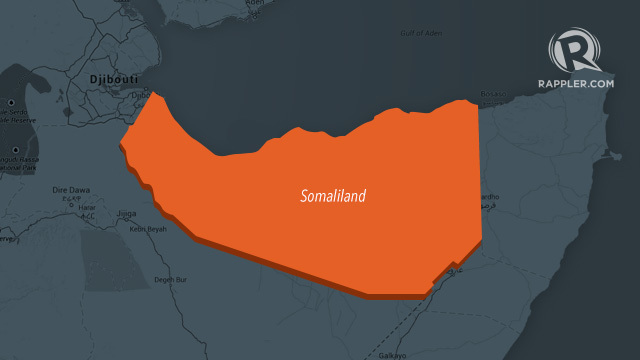
The recent spate of piracy off Somalia's coast is yet another symptom of the country's collapse of stability and some of its peoples' intense desperation. Reports that the pirates or hijackers of the Ukrainian vessel had begun shooting each other formed a perfect microcosm of Somalia's brutal inner turmoil.But in the northern half of the country, known as Somaliland, there is no such mayhem. Given its close proximity to the ravaged "failed state" of Somalia, it is astonishing that Somaliland should be stable, safe, democratic and largely crime-free.
To most people, Somalia is synonymous with bloody anarchy – simply one of the most dangerous places in the world. Only the few people with an active interest in the Horn of Africa seem aware of Somaliland's peaceful existence. The leading authority on the region since the 1950s is Professor Ioan Lewis – his book, Understanding Somalia and Somaliland, published in July, leads you to the conclusion. In comprehending the unending enigma of the Horn, one course of action is clear – the peaceful north must be allowed to declare independence from the endless chaos of the south.
That view is privately shared by many governments in Africa and in the wider world, but Somaliland's declared independence of 1991 is still yet to formally recognised by any nation and it remains an "invisible" country.
Diplomatic recognition is the perpetual obsession of the Somaliland government; without it, the country remains starved of foreign investment and aid. In all probability, it would take just one country, such the US, to move on the issue and the rest, with a handful of exceptions, would be bound to follow. However, none of the main players wants to be first, so they are engaged in a multiple "Mexican stand-off".
The few countries who openly oppose recognition (Egypt and Italy) argue "former colonial boundaries should not be redrawn". But Somalilanders agree. The country was a former British protectorate which became independent in 1960 and simultaneously joined in union with the former Italian colony of Somalia. By the mid-1980s the union was rapidly disintegrating; the mass bombing in 1988 of Somaliland's capital, Hargeisa, where 50,000 civilians were killed extinguished any thoughts of reconciliation.
The collective policy of finding a peaceful solution in the southern half of Somalia has not progressed even after 15 peace conferences in as many years. One Somali commentator called this apparently pointless exercise, "the policy of following a blind camel". A Senlis council report published in April says, "the international community needs to be reawakened from its torpor on Somaliland".
But Ted Dagne from Washington's congressional research service argues: "Somalia must develop a federal structure that gives regional autonomy." For the Somalilanders in the north this political theorem is plainly non-sensical. They see the failed union like two brothers who went into business together – while one brother was sober and hard-working, the other went off the rails, destroying the company's stock along with its reputation. Yet it is to the "reckless brother" the international community relentlessly turns to for a solution.
The Somaliland president Dahir Riyale Kahin visited the US in April in the hope of broadening support towards the goal of recognition. Somaliland has certainly passed any democratic test set by Washington in establishing a multi-party system, holding free and fair elections and upholding freedom of speech.
There is now a division of opinion at the top of the US government on this issue. Pentagon chief Robert Gates sees Somaliland as "an entity that works". But Dr Jendayi Frazer, second in command at the state department said: "The US will not take the first step to recognising Somaliland before the African Union."
A change of president in January may alter that position, or before that Bush may be persuaded that Somaliland recognition could be part of his "African legacy". The military see the strategic importance of having a base in the Gulf of Aden as a bulwark against al-Qaida and the deep-water port of Berbera could be ideal.
Ultimately, these are the factors which are likely to determine Somaliland's chances of gaining equal nation status under the UN and not its efforts, against the odds, to create a democratic and free society.

Kenya deports anti-Obama author

Medeshi Oct 8, 2008
Kenya deports anti-Obama author
afrol News, 8 October - The American author of a book that seeks to tear down the Democratic presidential candidate Barack Obama was on Tuesday deported by Kenyan authorities.

Jerome Corsi, the author of the best-selling book titled "The Obama Nation: Leftist Politics and the Cult of Personality," was deported few hours before he had launched the controversial book in the capital Nairobi.
Senator Obama has had his roots from Kenya where his popularity is unquestionable. Many people believed Corsi chose Kenya to advance his negative agenda against Obama whose popularity has been on the increase barely less than a month before the 4 November presidential polls.
Kenyan immigration officials confirmed the detention of the critical author for lacking a work permit before his deportation.
Both the government of Kenya and Obama's spokesman reserved comments on the issue. His Kenyan uncle, Said Obama, said he was not aware of the case and also refused to comment.
Earlier, the Illinois senator's campaign committee referred Dr. Corsi "a bigot peddaling rehashed lies to hurt Obama in the presidential race against Republican senator John McCain."
A product of a Kenyan father and a white American from Kansas, Obama was born and brought up in Hawaii. Obama's last trip to Kenya, in 2006, drew thousands of Kenyans who thronged every stop of his tour.
Dr. Corsi's book, which described Obama as "a dangerous and radical candidate for president," contains innuendos and false rumors that he was raised a Muslim and attended a radical black church.
By staff writer

Press Release: Invading troops must leave Somalia without any delay

Medeshi Oct 8, 2008
Invading troops must leave Somalia without any delay
Press Release
EPRP
Leave aside the increasing violence and mayhem in Mogadishu and other places, the recent report that the Somali Transitional Government is to be moved out of Somalia to Nairobi is enough proof that the invasion by the troops of Meles Zenawi has turned into a complete fiasco.

The Meles Zenawi regime sent troops to invade Somalia and fell into the marsh even as it boasted of fast and lightning victory over the Islamic Courts militia there. It was an ill advised move that was destined to further complicate the Somali civil strife and, as a consequence, also to aggravate the insurgency in the Ogaden region. The EPRP condemned the invasion and called on immediate withdrawal, to let the Somali people solve their own problems by themselves, to seek a better global solution to the ongoing war. The Meles regime refused to heed the voices of reason and prompted by its own political need to toe the line and get support from a foreign power whose foreign policy in the region has proved a failure, it sent in troops and is not only bogged down in Somalia but is committing atrocities that would spoil the relations between the fraternal peoples of Somalia and Ethiopia. In the Ogaden too, the regime is engaged in a scorched earth anti-insurgency campaign that has brought death and suffering on the people there.

Now that Somalia is in a deplorable situation thanks to the invasion and the violence of the invading troops it is obvious that the solution for the Somali conflict demands first of all the withdrawal of the invading troops of Meles Zenawi. There is absolutely no justification for Ethiopians to die in dozens in Somalia, no justification for atrocities to be committed by the soldiers against the people of Somalia. That this horrible adventure has little or nothing to do with the so called anti terror war has also been proved by its failure in this so called mission. The people of Ethiopia are suffering under a big famine, economic penury, the lack of good governance and gross violation of human rights under the Meles regime. This is their primary problem and not any militia in Somalia.

Invading troop must withdraw from Somalia without any delay. The atrocities in the Ogaden must stop.
Nazret

Saudis deport while the West grants asylum to Somalis


This is the irony. The so called Saudis who are supposed to be our brothers deport our people to unsafe and occupied Somalia while the west grants asylum to those who seek. Please read the the following article and post your comments:
(Photo: Hargeisa Airport)

Somaliland: Plane Carrying Deportees Refused Permission to Land
Posted on: Tuesday, 7 October 2008,
Excerpt from report by independent Somaliland newspaper Waaheen on 7 October
A plane from Saudi Arabia which was carrying Somalis who had been deported from that country is said to have been denied clearance to land at Hargeysa airport.
The plane is said to have tried to land at Mogadishu airport but aborted after being informed that Mogadishu airport was insecure. It then proceeded to Hargeysa to offload its human cargo. However, airport officials declined to have it land there forcing it to fly back to Saudi Arabia.
Reports say the plane was carrying Somalis who had been deported from Saudi Arabia and was told about the insecurity at the airport after it was established that it was carrying the Somali deportees.
Somali migrants in Saudi Arabia are usually deported back to the country soon after they are arrested by Saudi police.
Reports say Jeddah prisons are bursting at the seams with illegal Somali migrants who cannot be deported back to the country.
This comes at a time when thousands of migrant Somalis are flocking to the Kingdom of Saudi Arabia. They risk their lives by travelling by sea to Yemen. Hundreds die every year [passage omitted].
Originally published by Waaheen newspaper in Somali 7 Oct 08.
(c) 2008 BBC Monitoring Africa.

Somalis resist U.S.-backed occupation

As warships move into area: Somalis resist U.S.-backed occupation
By Abayomi Azikiwe
Editor, Pan-African News Wire
During the last week of September, unprecedented fighting took place in several areas of the east African nation of Somalia. This rising tide of armed conflict is directly related to the resistance efforts of the Somali people against the occupation of their country by the military forces of neighboring Ethiopia. The Ethiopian invasion in December 2006 was fully supported, financially and militarily, by the U.S.
(The escalation of fighting in Somalia, both on land and in the waterways surrounding this Horn of Africa nation, must be blamed on the foreign policy role of the U.S. Under the guise of “fighting Islamic terrorism,” the U.S. has heightened instability in Somalia and throughout the region.


An important dimension to the recent fighting is the role of African Union (AU) “peacekeeping” units. They consist largely of Ugandan troops who have operated in a fashion that has drawn increasing attacks from the resistance movement in the capital, Mogadishu. The resistance is fighting against the Transitional Federal Government (TFG), which has been kept in power by Ethiopian troops working in collaboration with the Pentagon.
In the early hours of Sept. 29, Islamic resistance fighters fired on Ugandan, Ethiopian and TFG troops in Mogadishu, the capital of Somalia, resulting in the reported deaths of at least four people.
Eyewitness Hamad Ali Ahmed said three people, including a Somali government soldier, were killed in a series of gun battles “near Villa Baidoa when two mortar shells struck buildings.” (Agence France Press, Sept. 29)
During the same time period, in the Holwadag district of the city, another person was killed in a crossfire and at least seven were wounded.
Islamic resistance members confirmed that the attacks on the military bases of the pro-U.S. forces are the result of a new offensive aimed at driving the Ethiopians, Ugandans and their Somali allies in the surrogate government out of the capital. According to Commander Mohamed Mohamud Dulyadeyn of the resistance, “We attacked the bases of Ugandan forces, Ethiopians and Somali stooges. Five of our men were wounded, but they sustained heavy casualties.” (AFP, Sept. 29)
At the same time, a roadside bomb struck Ethiopian troops in Mogadishu. The device exploded while the soldiers were leaving an area near the presidential palace. In the aftermath of the blast, Somali surrogate troops arrived at the scene and randomly opened fire on commuters who were gathering in the area. No casualties were reported in the incident.
The escalation of fighting between Sept. 20 and 29 has sparked another large-scale exodus from Mogadishu. “From Sept. 20, our figures show that 18,500 people have fled their homes due to the fighting and shelling,” said Ali Sheikh Yassin, acting chair of the Elman Human Rights Organization in Mogadishu.
“Heavy fighting and shelling went on in Hodan and Holwadag districts in south Mogadishu,” Yassin said, adding that many families could be seen on the roads, moving rapidly out of the area.
Journalists confirmed the severity of the situation. “The area is emptying. Those who had not left before are on the move now. It is not going to be a very happy Eid [festivities after the month of Ramadan] for many.” (Integrated Regional Information Network [IRIN], Sept. 29)

One of the important resistance organizations, the Alliance for the Re-liberation of Somalia, led by Sheikh Sharif Sheih Ahmed, is currently engaged in discussions with the TFG. It said that the actions of the Ethiopian and Ugandan troops and their local counterparts are totally unacceptable.
The alliance condemned the Ugandan troops, accusing them of brutality and indiscriminate use of excessive force in areas occupied by civilians not involved in the fighting.
In a statement on Sept. 29, the alliance stated that “AMISOM (the African Union Mission in Somalia) used unnecessary force and targeted heavily populated quarters and markets far away from the fighting areas, which can only be taken as a deliberate mass killing.”
In response to the statement by the Alliance, AMISOM spokesman Barigye Ba-Hoku told IRIN that the accusation of indiscriminate targeting of civilians “was nonsense.” Ba-Hoku said that the AU forces did not initiate these attacks. “We only defend our positions when attacked,” he said.

However, the United Nations refugee agency UNHCR claims that Somali refugees are flooding the Dadaab camp in northeastern Kenya. “This year alone we have registered more than 45,000 new asylum-seekers at Dadaab,” the agency said in a statement. On average about 5,000 Somalis reach the camp every month.
In other attacks, the Al-Shabab organization, which is a spinoff from the Union of Islamic Courts, has carried out operations against four International Medical Corps (IMC) offices in the Bakool and Bay regions of Somalia. In a Sept. 26 statement, the IMC said that the group “is deeply concerned about the impact of these attacks on the health of already suffering Somali people, especially children.”
Ongoing talks in neighboring Djibouti between the opposition forces and the TFG have failed to reach agreement on ending the fighting. According to a civilian activist close to the talks in Djibouti, “The main stumbling block is the withdrawal of Ethiopian forces.”
The activist told IRIN on Sept. 23 that the TFG “seemed to be trying to find a way for a less hurried withdrawal, while the Alliance for the Re-liberation of Somalia was demanding that the Ethiopian military withdraw from the country within 30 days.”

Humanitarian situation worsens
As a result of the intense fighting, the main hospital in the capital of Mogadishu has been overwhelmed by people caught up in the clashes. “We are receiving more injured people than we can reasonably handle; we are completely swamped,” Abdi Mohamed Hangul, a doctor at Medina Hospital, told IRIN on Sept. 24.
Hangul said that the numbers of injured people were increasing daily. “Last night alone [Sept. 23] we had 30 people within an hour. I worked as a doctor throughout the civil war and I have to say this is one of the worst times for the population. It is a disaster.”
Hospital beds were completely filled and people were being treated for various injuries in the corridors and outside the facility under trees. “We have more people outside than inside,” the physician said. Making the situation worse is the fact that some staff members are unable to come to work at the hospital due to the intense fighting.
Despite the shortage of workers at the two main hospitals, Medina and Keysaney, International Committee of the Red Cross (ICRC) spokesperson Pedram Yazdi said, “For the time being, the capital hospitals have enough medical supplies to cope with the influx of wounded, and we will re-supply them if more is needed.” (IRIN, Sept. 24)
U.S. Navy off northern Somalia
While the fighting was growing in Somalia, a Ukrainian ship carrying a large-scale arsenal was seized on Sept. 26 by so-called pirates in the Gulf of Aden. The vessel and its crew are reportedly being held for a $20-million ransom.
The Gulf of Aden, located between Yemen and northern Somalia, is a major artery utilized by approximately 20,000 vessels every year traveling to and from the Suez Canal. Somalis have reportedly seized 30 ships there since the beginning of the year.
According to Reuters press agency, the Ukrainian ship was transporting grenade launchers and ammunition as well as T-72 tanks. The U.S. military, which is very active in this region, has sent the USS Howard destroyer and other boats of the Gulf-based Fifth Fleet to the area, supposedly to confront the hijacked Ukrainian ship.
“There are now several Fifth Fleet ships in the vicinity,” said the fleet’s deputy spokesman Lt. Nathan Christensen. “Our goal is to maintain a vigilant and visual watch over the ship while negotiations take place.”
One of the main Islamic leaders in Somalia, Sheikh Hassan Dahir Aweys, told Reuters on Sept. 29 that his organization—which was associated with the Union of Islamic Courts (UIC), the front that was consolidating its power in 2006 when the U.S.-backed invasion occurred—was not involved in the ship seizures.
“Piracy is not our hobby and we are sorry for being linked to everything that is bad,” said Aweys. He noted that during the rule of the UIC piracy was substantially curtailed, but “no one congratulated us” for these efforts.

U.S. role must be condemned
The escalation of fighting in Somalia, both on land and in the waterways surrounding this Horn of Africa nation, must be blamed on the foreign policy role of the U.S. Under the guise of “fighting Islamic terrorism,” the U.S. has heightened instability in Somalia and throughout the region.

It was the Bush administration that engineered the invasion of Somalia by Ethiopia in late 2006, after the Union of Islamic Courts had made significant progress in organizing the population and establishing community development projects. Since the UIC efforts were taking place independently of U.S. foreign policy imperatives, the imperialists set out to occupy the country, utilizing a military surrogate under the leadership of Prime Minister Meles Zenawi of Ethiopia.

Since this time Ugandan troops, operating ostensibly on behalf of the African Union, have been sent into the capital to back up the Ethiopian occupation.
The increasing attacks on vessels in the Gulf of Aden are now providing another rationale for U.S. naval operations. However, these efforts are doomed to failure.
Anti-war and anti-imperialist forces inside the U.S. must condemn the Washington-organized intervention in Somalia as a further manifestation of the bogus “global war on terrorism.”

Judging from the current situation in Somalia, the first steps toward normalization and stability in the Horn of Africa will be the immediate withdrawal of U.S. and surrogate forces so that real negotiations can resume among the various political forces inside the country and the region.

Displaced Somalis hit by heavy flooding

Medeshi Oct 8, 2008
Displaced Somalis hit by heavy flooding
This is a summary of what was said by the UNHCR spokesperson at today's Palais des Nations press briefing in Geneva. Further information can be found on the UNHCR websites, www.unhcr.org and www.unhcr.fr, which should also be checked for regular media updates on non-briefing days.
Torrential rains and strong winds have hit a string of settlements for hundreds of thousands of internally displaced Somalis between Mogadishu and Afgooye, destroying makeshift shelters and leaving many homeless once again. Ten hours of heavy rain fell overnight Sunday, flooding many shelters and forcing many people to return to their homes in war-torn Mogadishu, despite the dangers.
Many people are once again homeless, although we don't have exact numbers. Some 300,000 displaced people have been staying in flimsy, temporary shelters along the Afgooye corridor, west of Mogadishu. Most of them fled fighting in the capital in 2007 and earlier this year. More than 40,000 have received shelter assistance from UNHCR.
Initial reports indicate that rains and wind mainly struck IDP settlements in the Kurtunwarrey district, near Afgooye, and in Marka district near Mogadishu.
UNHCR is now planning to distribute 3,500 assistance kits for 21,000 people. The kits contain plastic sheeting, blankets, kitchen sets and sleeping mats.
The sudden and heavy flooding is worsening an already dramatic situation in war-torn Somalia, where over 1 million people are displaced. Some 700,000 people fled Mogadishu last year alone. Since the beginning of the year, another 170,000 people were forced to leave the Somali capital, including over 35,000 in recent weeks. People are currently escaping fighting described as the worst since the beginning of the latest insurgency in February 2007.

Somali stooge fired by Meles

Medeshi Oct 8 , 2008
ADDIS ABABA, Ethiopia (AFP)--The president of Ethiopia's restive Somali region has been sacked for failing to curb a secessionist insurgency and implement development plans, state-media said Monday.
"The Somali Peoples' Democratic Party has decided to dismiss President Abdullahi Hassan following consultations in Jijiga (the Somali province capital city)," state-owned Ethiopian Radio said.
The agency didn't specify the exact date when the decision was taken.
"Regional officials took the measure after a three-month report highlighted a failure in implementing desired development programs, tackling drought and security threats," it said.
Ethiopia is a federal system and each provincial assembly chooses a leader. The SPDP is allied to Ethiopian Prime Minister Meles Zenawi's ruling party.
A regional official who asked to remain anonymous said however Abdullahi may have been given the sack for links with corrupt businessmen and for interfering in the trials of suspected insurgents.
The Somali province, which includes the troubled Ogaden region, has been hit by a series of attacks attributed to separatist rebels in recent years.
Abdullahi himself was injured in May 2007 when grenades were hurled into a stadium where some 100,000 people were gathered for a national celebration.
Eight members of the rebel Ogaden National Liberation Front, or ONLF, were subsequently sentenced to death following the assassination attempt. Last year the army launched an offensive against the rebels after they attacked a Chinese- run oil venture and killed 77 people.
Earlier this month, four people were killed and 22 injured by a separate bomb explosion in Jijiga. The attack was attributed to the Islamist rebel group Al- Ittihad Al-Islamiya.
Source: Nazret

Watch out for the Somaliland Navy

Medeshi Oct 8, 2008
Watch out for the Somaliland Navy

Below is an article in harrysworldnews which carries the link to a videa of the Somaliland navy carrying exercise off the port of Berbera.


Recognition or without , Somaliland is set to go its way and build its future without the support of the international community that has been supporting the fragile TFG governement headed by warlords. People of Somaliland have survived the genocide of the late dictator Siyad Barre and will not never be lured to the the unity with the south.

Here is the article :

Arr! Pirates Better Watch Out For the Somaliland Navy!
The Republic of Somaliland, a state which has approximately 3.5 million people in a territory the size of New York state, has decided not to wait for international recognition to build a navy.This video shows off their gunships. Apparently, this is one part of Somalia that has taken steps to defend its coastline against illegal fishing and toxic waste dumping.
Watch video:

I don't understand why the rest of the world doesn't just recognize these guys as an independent nation. Apparently the attitude is that there is a line in the sand around Somalia and we aren't going to allow anyone to be recognized until they conquer all of it.

Somalian 'ghost city' wracked by war


Medeshi Oct 7 , 2008
Video: In Somalia's danger zone
Somalian 'ghost city' wracked by war
Years of conflict in Somalia have left large parts of the country in the hands of warlords while its capital, Mogadishu, is contested by Ethiopian-backed government forces and armed insurgents.
(Photo: The face of war - this woman cannot afford the treatment for her daughter)
The city has been abandoned by at least half of its residents. The BBC's World Affairs Correspondent, Mark Doyle, sent this report from a war zone few Western journalists dare to visit.
The bombed-out buildings are shocking enough.
There are street after ruined street of them in the centre of Mogadishu.
Some have been reduced by shellfire to rubble. Others retain a building-like shape - the rough skeletons of once-ornate Italian colonial apartment blocks or shopping arcades.
But the really eerie side to many parts of Mogadishu is the lack of people.
The last 18 months of fighting have seen the population plummet in a way that even the infamous Black Hawk Down year - 1993 - did not achieve.
According to the United Nations, at least half of Mogadishu's population - perhaps 500,000 people - have fled.
In 1993 a joint United States/United Nations aid effort descended into war. Somali warlords resisted the international force partly because it reduced their racketeering of food aid.
The Americans then fell into the trap of thinking the flip flop-wearing "Skinnies", as the Marines disparagingly called Somalis, would be a pushover.
However, the "Skinnies" could fight, and fight well. The US and the UN withdrew in disarray.

But even back then - when tracer fire lit up the sky every night - the streets were still full of people.
Not any more. Parts of Mogadishu are now a ghost city.
The new situation has an intensity of street shelling and military atrocities that even this veteran war city has never seen before.
On patrol with AU troops in Mogadishu
The latest conflict is between a weak, though internationally-recognised Somali government, backed by troops from neighbouring Ethiopia - and armed insurgents who are a mixture of Islamists and nationalists.
The United States is still a key player, backing the Ethiopians. It accuses the Islamists of having links to al-Qaeda.
"Its getting worse and worse," said Sophia Hussein, a housewife turned refugee. "Now foreign governments are involved" - a reference to the Ethiopian presence.
Mrs Hussein was speaking in a Kenyan refugee camp, surrounded by nine children she had rescued from Mogadishu.
Grafted onto the traditional clan wars in Somalia are new disputes that pit Islamists and nationalists against the Ethiopians and their US allies.
These new wars may explain why Mogadishu has been emptied of people like never before.

The political landscape began changing in 2005 when armed Islamists joined forces with businessmen to oust a chaotic collection of warlords from Mogadishu.
By 2006 the Islamists/businessmen had won and a group known as the Union of Islamic Courts ran the capital.
"They were efficient; they ran the city quite well," said a senior Somali official with an international aid agency who requested anonymity.
In late 2006, the army of neighbouring Ethiopia intervened to oust the Courts and install the internationally-recognised government in Mogadishu.
It is widely believed that the US encouraged or participated in this move because of fears that the Courts had links to al-Qaeda.
Certainly, there was a long-range US missile attack at the time on fleeing Courts officials. The US later mounted other attacks on what it said were al-Qaeda operatives, and American drones still regularly buzz the skies of Somalia.
The Ethiopian army easily routed the Courts regime. But, in an echo of the early US military success in Baghdad, the Ethiopians then appeared unsure what to do next.
Gradually, the Islamists and nationalists regrouped.
There was a traditional clan aspect to the new war. But what might be called the "Islamist/nationalist clan" to some extent transcended this in the face of what many Somalis saw as "Ethiopian occupation".
'Indiscriminate reprisals'
Today the remnants of the Courts administration, backed by Islamist fighters known as al-Shabaab (Somali for "The Lads"), have made much of south and central Somalia a no-go area for the government and the Ethiopians.
Al-Shabaab and related fighters mount hit-and-run attacks aimed at government forces but which often also kill civilians.
However, a more common complaint among ordinary Somalis I spoke to is that the Ethiopians are "indiscriminate" in their reprisals - and that this is why Mogadishu has been emptied of people.
Stuck in the middle, and trying to inject some sanity into the situation, is the small and beleaguered 2,700-strong African Union peacekeeping Mission in Somalia, Amisom.
Its commander is Ugandan Major General, Francis Okello.
"I need more troops, I need more equipment," he said, repeating the common refrain of peacekeeping commanders.
But the diplomat-general was wise enough to add: "I also need more political support, I need more diplomatic support. You cannot impose a solution on Somalis, you can only encourage peace".
Tentative peace talks are taking place under a UN initiative but - as so often with peace processes - the talks are dominated by the moderates, not the radicals on all sides who are fighting on the ground.
Mark Doyle's full report on his trip to Somalia can be seen in the UK on BBC's Newsnight programme next week and elsewhere on Our World on BBC World News on Wednesday 8 October.

Rendition victims threaten to sue Kenya government

Rendition victims threaten to sue Kenya government
Mon 6 Oct 2008, 14:11 GMT
By Wangui Kanina
NAIROBI (Reuters) - Eight Kenyans who were arrested as suspected Somali Islamist fighters and covertly flown to Ethiopia threatened to sue the government on Monday if the officials they blame for their rendition are not charged.
The eight men were among suspected Islamists detained by Kenyan troops early last year when members of a Somali sharia courts group fled into Kenya after being driven from power.

Rights activists and Muslim groups accuse the Kenyan authorities of covertly rounding up scores of people who were sent to Mogadishu and Addis Ababa for interrogation. They say they were tortured.
The eight returned from Ethiopia on Saturday. On Monday, their lawyers demanded Kenya's Attorney General take action.
"We urge you to direct the police to immediately investigate the identity of the public officials who authorised the arbitrary kidnapping of our clients, with a view to arresting and prosecuting the officials for abuse of office," the lawyers said in a letter.
It said the eight had been subjected to mental and physical torture while in Ethiopia, where they had been interrogated and abused by investigators from several nations.
"Officers of the Somalia government, Ethiopian military, FBI officers and British officers frequently assaulted them and taunted them that they were al Qaeda terrorists destined to die at the American naval prison at Guantanamo bay in Cuba."
The lawyers said the eight had been undergoing medical checks in the port city of Mombasa, and that they planned to sue the government if they did not receive a reply from the Attorney General within seven days.
The Kenyan authorities deny sending their citizens abroad.
"Wild and unverifiable charges that the government deported Kenyans to Ethiopia are baseless," a statement from the government spokesman's office said on Monday.
"The government has been very clear that it repatriated combatants to Somalia after they, the combatants, said they were not Kenyan," the statement said.
Last week, U.S.-based Human Rights Watch said at least 150 men, women and children from more than 18 countries had been rounded up near the Somali border at the start of last year. It said most had been sent home, but that several were missing.

Qaar ka mid ah Ururada Bulshada Rayidka ah oo walaac ka muujiyay mudo dhaafka golayaasha deegaanada

Annaga oo ah Ururada Bulshada Rayidka ah ee Madaxa-banaan waxaanu si wayn uga walaacsanahay