Tackling khat consumption in Djibouti

Medeshi Sept 20, 2008
Tackling khat consumption in Djibouti: a strong new political commitment
Djibouti – For the first time in the history of Djibouti, there is a firm move towards tackling the issue of khat in the country. On 4 September 2008, an inter-ministerial meeting called by the Minister of Health was hosted by the Ministry of Education to deliberate on the socio-economic and health consequences of khat consumption on Djiboutians.
In attendance were the Minister of Education, the Minister of Health, the Minister of Women Promotion, the Minister of Muslim Affairs and the Secretary General of the Ministry of Youth. Several senior technical staff of these ministries as well as key Muslim religious leaders and senior UNICEF staff attended the meeting. All agreed that Khat is a social phenomenon that requires strong political commitment in order to address it heads on.
A major outcome of the meeting was the commitment from these line ministries to set up a national committee that will take the leadership of moving forward the fight against khat nationwide. The committee is set to develop a multi sectoral strategy with a five year plan of action to reduce the consumption of khat in the country, especially among children and youth.
During the meeting’s deliberations, Muslim leaders advocated for the ban of khat, while the majority of other participants argued for a strategy based on communication for sustained reduction of khat consumption.
This high level meeting is held in the wake of the three-day July visit to Djibouti of Ms Sigrid Kaag, UNICEF Regional Director for the Middle-East and North Africa region. During her meetings with the President of the Republic of Djibouti and several members of his Cabinet, Ms. Kaag had persistently called for a firm commitment from national authorities to address the thorny issue of khat in the country.
In the Horn of Africa, chewing khat – a plant that usually contains the alkaloid called cathinone, an amphetamine-like stimulant - is a practice deeply ingrained in society. It causes, among others, excitement, loss of appetite and euphoria. In 1980 the World Health Organization classified khat as a drug of abuse that can produce mild to moderate psychological dependence.
On average, a khat session in Djibouti lasts for over five hours and it is estimated that households spend 30 percent of their income on its purchase. Nationally, about 25 million US dollars are devoted to khat transactions every year. According to the 2006 Djibouti Multiple Indicator Cluster Survey (MICS), 26 percent of the population chew khat, and 22 percent consume it every day. This survey also revealed that men (46 per cent) chew khat much more than women (7 per cent). Most observers believe these figures are underestimated.
Khat consumption in Djibouti is a serious threat to the well being of its children. The survey shows that in the group age of 15-19 years 4.7 percent chew khat every day and 7.4 percent once per week. Many children below the age of fifteen are known to also chew khat. The future of children who consume khat is likely to be compromised, including because many families’ expenditure on the substance does not leave enough resources to send children to school. Khat’s depletion of household income comes in a country where extreme and relative poverty affects respectively 42 and 74 percent of the total population.
The time is ripe to demystify the taboo around addressing khat consumption in Djibouti. Development partners are encouraged to support the Government and civil society in this drive for long term interventions to free Djibouti from this harmful practice.

Boost Africa aid by $700m, UN says

Medeshi Sept 20 , 2008
Boost Africa aid by $700m, UN says
The biggest problems were in Ethiopia and Somalia. (AFP: Mustafa Ozer, file photo)
UN emergency relief coordinator John Holmes has called on wealthy donor countries to provide $700 million in emergency aid to avoid famine in the Horn of Africa.
Mr Holmes says as many as 17 million people are in urgent need of food in the region.
"We can avoid the situations of the 1980s and the 1990s which were genuine famines at different times," he said.
"But we do need extra resources, very quickly indeed if we are going to avoid going back to famine situations."
Mr Holmes said the crisis was becoming even more desperate due to the combined effects of drought, rising food prices and conflict.
The biggest problems were in Ethiopia and Somalia.
In Ethiopia, the number of people needing emergency support is now more than 6 million.
He said that 43 per cent of the population of Somalia were in need of urgent humanitarian assistance.
Mr Holmes says the conditions in the region are the worst they have been in many years.
"People there talk to me in desperation about the worst situation since 1928 when the whole of their livestock died," he said.
"This situation looks to them as bad as that, particularly if it doesn't rain in the next month or two there to provide at least some grazing.
"There was no prospect of cereal harvest there until well into next year."
- BBC

Spain military plane leaves for Somalia


Posted by Medeshi
Spain military plane leaves for Somalia
Sat 20 Sep 2008

MADRID, Sept 20 (Reuters) - The Spanish military aircraft which will patrol the waters off the coast of Somalia to protect ships from pirates left on Saturday from the Moron air base in Seville, the Ministry of Defence said on Saturday.
The P-3 orion plane was accompanied by a Boeing 727 and a Hercules helicopter, which carried 90 personnel, including crew, the ministry said in a news release.
The patrol operation will be for an initial three months, which could be extended depending on the decisions taken on the international stage.
The move comes after French commandos on Tuesday freed two French tourists held for ransom on their yacht off the African country's coast. In April, crew members of a Spanish fishing boat were freed by pirates in the area after payment of a $1.2 million ransom, according to a Somali official.
The P-3 Orion will collect information on the movements of pirates to relay to a European Union task force formed on Monday to work against piracy off the Horn of Africa.
(Reporting by Judy MacInnes; editing by xxx)

Pics from Japan by Yoshia Morishita


*Mt. Okura ski jumping stadium
* Downtown
* An aerial view
* A view from the top of Mt Moiwa in wintertime
* Sapporo TV Tower, the landmark in springtime
* Our car covered with so much snow in wintertime

Dear Somali people: my experiences with them (Article 2 of 3)

Medeshi Sept 20, 2008
Dear Somali people: my experiences with them (Article 2 of 3)
By Yoshia MORISHITA
Having Somali friends meant a lot to me. My usual plans for weekends began to shift to a series of excursions to some of the predominantly Islamic sections of London, including Whitechapel, of course. In this second article, I will write about some of my experiences with Somali people.
(Photo: Yoshia lecturing to young soldiers)
One day I was walking with my Somali friend in the Whitechapel area. I had already lived in London for about 3 years but was pretty surprised to see all the vendors, little Halal cafés and restaurants, the variety of newspapers sold, people’s clothing and so on. I never felt out of place in central London where there are people literally from all over the world but this time it was different. At a Somali restaurant where we had lunch, I was out of place. We took our seats by the window and I noticed this huge waiter was staring at me while taking our orders. When the huge man brought our massive meals I got to know that I was being treated differently because I was given a knife, a fork and a spoon. This is just like Japanese restaurants giving non-Asian customers these things in addition to chopsticks. I saw only Somali customers there, unlike Chinese restaurants, for example, where you see Asian, American, European and other customers. I wonder why because the Somali cuisine is good (although its presentation could be improved if it was to be widely accepted) but maybe serving their countrymen and women may be enough for the Somali restaurants to stay in business!?

As I got to know more about Somali people and their cultures, I became able to tell the difference between Somali people and other Africans. Just like Japanese are different from Chinese and Koreans Somali people are different from Ghanaians and Egyptians. When I talk to people who I guess are from the Somali region, I ask, ‘Where are you from? You are from Somalia, aren’t you?’ I get it right most of the time and the Somali person looks so surprised and happy, saying, ‘How could you tell?’

To be honest, Africans looked all the same to me till I lived in London but now I know that it is not very useful to make generalisations when you want to be specific about something. However, I have seen some black Africans categorise themselves as ‘an African people’ and likewise with that some people still ask Japanese people if they are Chinese (stop assuming all East Asians are Chinese!). I remember when I was travelling to Holland by coach, there was a family near my seat and we started to chat. They looked happy because I talked about my Somali friends but what a few of the family members were saying to me was clearly based on the assumption that Japan and China form one single country.

By talking to Somali people I always get the impression that the Somali network is tight and wide. Many of them mention their friends, relatives and so on who live here and there, in an attempt to find even the weakest link between us. Surprisingly the worldwide Somali network does exist. One of the executive members of the organisation I worked for in London attended the wedding ceremony of the Somali guy who lives in our neighbourhood in Japan! Moreover, his ‘brother’ (more correctly his cousin) who was here in Japan with us for sightseeing knows the web master of this web site! What a small world!
END
About the writer:
(Mr) Yoshia MORISHITA is a Japanese national who studied and worked in the UK, as well as Turkey and Eritrea. He has visited around 25 countries of the world and developed his international perspectives. He has a Master’s degree in International Development from UCL, University of London and worked as a research associate at a British NGO. Currently he is living in Japan running a small business in the area of various international programmes and businesses facilitation and co-ordination, while reading sociology at Hokkaido University.

Pirates seize two more ships off Somalia

Medeshi Sept 18, 2008
Pirates seize two more ships off Somalia
By Helen Nyambura-Mwaura
NAIROBI (Reuters) - Pirates from Somalia have hijacked a Greek ship and another from Hong Kong, each carrying 25 crew, a Kenyan maritime official said on Thursday.
Heavily-armed Somali pirates have hijacked more that 30 vessels off the Horn of Africa country this year, making its waters the most dangerous in the world.
Andrew Mwangura of the East African Seafarers' Assistance Programme said the Greek ship, the Centauri, was heading for Kenya when it was seized on Wednesday off southern Somalia.
He told Reuters that gunmen captured the Great Creation, owned by Hong Kong's Sinotrans, early on Thursday.
Mwangura said the Centauri was now being taken towards Eyl, a lawless former fishing outpost on the Somali coast where gangs are holding several ships for ransom.
"The ship was expected to call at Mombasa on September 19 and discharge 17,000 tonnes of bulk salt," he said. "It was taken in southern Somalia, which is unusual for the pirates."
The Great Creation was travelling to India from Tunisia with 24 Chinese and a Sri Lankan on board when it was attacked.
There were no immediate details on the Greek ship's crew.
Somali pirates are holding 13 vessels captive at the moment, along with more than 200 sailors. Most of the gangs are based in northern Somalia's Puntland region, where security forces reportedly clashed with pirates on Thursday.
Local media said several pirates had been injured and others arrested during the gunfight on the outskirts of Bosasso port. No other details were immediately available.
Spain said on Wednesday that a military aircraft would patrol the waters off Somalia to guard against the gunmen. The plane will observe the pirates' movements and relay information to a European Union task force formed to tackle piracy.

Hiding famine to starve the Ogaden

Medeshi Sept 18, 2008
Jonathan Rugman in Jijiga
Ethiopia has been accused of deliberately underestimating the scale of a deadly drought facing millions of its people, some of whom are being deprived of emergency food aid by the country’s military.
(Photo: A goat herder in the Ogaden desert. Herdsmen say that their children have died from eating poisonous buds from trees for lack of anything else to eat)
The humanitarian crisis, caused by three years of failed rains, currently affects about 4.6 million people, though the official number could jump to as high as 6.7 million this week.
United Nations agencies say that the real number at risk is above 8 million, an estimate disputed hotly by Addis Ababa, which is insisting on publishing a much lower figure.
“The figure has risen very substantially, maybe even doubled,” said Sir John Holmes, the UN’s emergency relief co-ordinator, who visited Ethiopia earlier this month. “Any government doesn’t want to be perceived as always in the position of receiving aid.”
The crisis is at its most worrying in the vast deserts of the Ogaden region, where the UN’s World Food Programme (WFP) says in a confidential alert to donors that it is receiving “increasing reports of hunger-related mortality”. About two million people are at risk until the main rains fall next spring – if they fall at all. The Ogaden is Ethiopia’s biggest and most remote state.

Nomadic tribes there are resorting to eating dead leaves and cactus fruit to survive the worst drought since the famines of 1984-85, when an estimated one million Ethiopians died.
A twenty-mile trek on foot into the bush revealed mediaeval mud-hut villages, where ethnic Somali herdsmen say that their children have died after eating poisonous buds from trees, for lack of anything else to eat. Others say that they depend on camel milk and meat because cattle, sheep and goats have perished in their thousands.
“I am ill and hungry,” said one man, removing his shirt to reveal his rib cage visible through taut skin. “Because of the drought we have nothing to eat. The only people who receive food are the military forces.”
The UN has raised about 60 per cent of $325 million (£181 million) it is seeking in emergency relief for Ethiopia and says that it is suffering a shortfall of about 300,000 tonnes of aid.

The WFP has told donors that it blames Ethiopia’s “delays in recognising the extent of need” for causing the rapid depletion of existing food stocks. But a Channel 4 News investigation tonight claims that the army has withheld food from villages in the Ogaden deliberately as part of a “scorched earth” policy against separatist rebels of the Ogaden National Liberation Front (ONLF).
Herdsmen in villages almost completely cut off from the outside world said that many of their animals had been killed by Ethiopian soldiers, who also deprived them of water.
“We walk for eight hours to collect water,” said Abdi, a villager about three hours from Jijiga, the regional capital. “Then the military take the water from us. They say the rebels pass through our villages and that we give them supplies. But what can we give? We are dying of hunger. We have nothing to give to our own children.”
The UN says that it has negotiated with the Ethiopian army for the military’s role in food distribution to be kept to a minimum. “If there is a situation where food is taken by the military, we protest,” said Mohammed Diab, the WFP’s Ethiopia director.
However, a confidential investigation by USAid, the US Government’s disaster relief agency, complained in March that “literally hundreds of areas . . . have neither been assessed nor received any food assistance”, with “populations we met terrorised by the inability to access food”.
“This situation would be shameful in any other country,” the report concludes. “The US Government cannot in good conscience allow the food operation to continue in its current manifestation.” The US is spending more than £230 million on food aid for Ethiopia this year but is hamstrung from being too critical in public; Washington sees Meles Zenawi, Ethiopia’s Prime Minister, as an ally in the War on Terror after Ethiopia’s invasion of Somalia in 2005, which ousted an Islamist administration from power.
Britain has doubled its annual aid to Ethiopia in the last three years to £130 million, including £15 million this summer through the UN’s Humanitarian Response Fund, while Save the Children (SCF) is halfway through a campaign to raise £10 million for the country. Two SCF workers were expelled from the Ogaden last year amid allegations – rejected by SCF – that they had diverted food to ONLF rebels. The British charity abandoned a full-scale feeding programme, fearing supplies could be diverted.

Somalia: A Leadership in Despair

Medeshi Sept 18, 2008
The Somali Transitional Federal Government (TFG) has experienced since its inception ceaseless military and political blows. It had its leaders assassinated, its forces defeated and driven out of control in most of the country by Islamic opposition forces, and it grew largely unpopular among Somalis. Despite all that, TFG has survived thanks essentially to Ethiopia’s diplomatic and military support.
(Photo: Wounded Somali government soldiers captured by Somali insurgents lie in the back of a van in Mogadishu.)
TFG today suffers a new painful –and perhaps this time fatal – blow of clan-based internal disputes between its members. It started between President Abdulahi Yusuf Ahmed and his Prime Minister Nur “Adde” Hassan Hussein when the cabinet decided to fire the mayor of the capital city, Mogadishu.
The cabinet accused the mayor of taking anti-peace measures including attacks on civilians and business community, but the president called unconstitutional the decision of the prime minister to fire the mayor.
Amid the mediation talks in Ethiopia, the members of the parliament supporting the president proposed “no confidence vote” motion to unseat the prime minister, but the latter survived the vote. The members of the parliament supporting the prime minister then proposed their own motion to impeach the president; and this is still waiting the vote.
President Abdulahi Yusuf Ahmed, a former warlord and a leader of Darod clan mainly dominant in the north-west of the country, is seen to run a frontline of clannish feuds and to try to eliminate any powerful person from his rival Hawiye clan that may challenge him with the power sharing.
On the opposite, the Prime Minister Nur “Adde” Hassan Hussein –a former Red Crescent chief and member from Hawiye clan mainly dominant in the capital city in the south-central of the county – puts all his focus on challenging the president instead of the growing insecurity and the droughts that hit the whole nation.
“The prime minister and the leaders of the opposition groups who have negotiated a peace deal are all from the Hawiye clan; they want to unite and face against the Darod clan of the president,” Abdulrasak Hassan from the president’s office said.
Most members of the opposition Alshabab movement, stamped by the United States as a terrorist group, are said to belong to the president’s Darod clan. They rejected the Djibouti agreement between the TFG prime minister and the opposition Alliance for the Re-liberation of Somalia (ARS) who are both from the Hawiye clan.
The TFG president was not happy with the agreement concluded with the opposition, which did not include Alshabab, his clan brethren. Abdulrasak Hassan from the president’s office said, “We can’t accept negotiation among actors of one clan.”
But according to the prime minister’s office, a peace deal is essential and it should be supported because it will reduce the violence which, by its account, affects the Hawiye people the most. Abdi Moalim, a member of the Premier’s office said, “Darod politicians want to kill our [Hawiye] children and women and say they are terrorists.” Moalim said the government should not discriminate between clans and should work for the security of all Somalis.
End of Patience
Amid such internal divisions inside TFG, the Ethiopian Prime Minister Meles Zenawi announced in an interview with the Financial Times that the existence of his troops in Somalia is not open-ended.
“Our obligation towards peace in Somalia is only one aspect," Meles said. “The operation has been extremely expensive so we will have to balance the domestic pressures on the one hand and pressures in Somalia on the other and try to come up with a balanced solution.”
“We didn't anticipate the international community would be happy riding the Ethiopian horse and flogging it at the same time." President Zenawi added.
Zinawi’s words were translated in double meaning. On the one hand, they appear as simple political manoeuvres to threaten the conflicting Somali government officials and push them to end their internal disputes. On the other hand, Zenawi’s words can also express a serious Ethiopian plan to withdraw from Somalia after two years of failing to establish peace in that country.
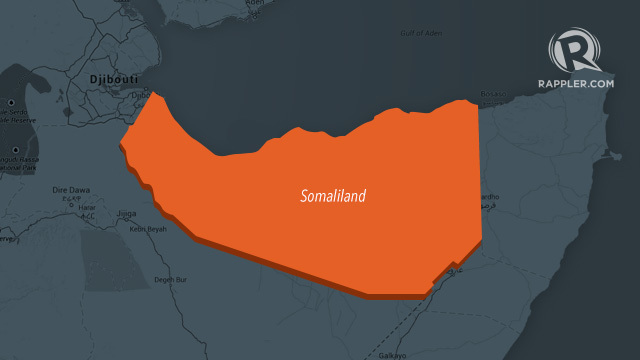
Sources close to the Ethiopian military recently confirmed that some Ethiopian tanks were loaded from Mogadishu port and sent to Ethiopia through Berbera port in the northern Somalia break-away Republic of Somaliland.
Divisions among members of Somali TFG are seen to benefit the Islamic opposition, especially Alhabab, which rejected the Djibuti agreement and insists on fighting both the government and Ethiopian forces.
Mohamed Ibrahim Fanah, an aid worker and political analyst, said: “This is a moment for the Islamist groups; Ethiopians are worried and want to escape instead of protecting the transitional government whose members are now busy with their conflict of interest.”
The Islamist opposition has vowed to intensify attacks on both government and Ethiopian forces in the wholly month of Ramadan. Abdulrahim Issa Addow, one spokesman of the militants said: “The more we fight while fasting for the sake of Allah, the more we succeed."
Fanah said the dispute among TFG members, followed by Ethiopian announcement of a possible withdrawal, is a clear sign of TFG’s failure, its Ethiopian backers and the United States that backs it behind the shades.
In the last 30 days, the TFG suffered excessive blows from attacks by the Alshabab who intensified their attacks and captured several strategic towns in the south and the middle regions in Somalia.

Somaliland Seeking Security Ties With Western Nations

Medeshi Sept 18, 2008
Somaliland Seeking Security Ties With Western Nations
By Alisha Ryu
VOA, Nairobi
Somaliland, which has been seeking recognition from the international community for its independent status from the rest of Somalia, is said to be increasing security ties with France and other western nations. VOA Correspondent Alisha Ryu has the story from our East Africa Bureau in Nairobi.
Associate Professor Iqbal Jhazbhay at the University of South Africa tells VOA that a French Special Forces operation in April that enabled France to take six captured Somali pirates back to Paris was partly accomplished with the help of Somaliland authorities.
"The French government decided to use the landing strip in Berbera to undertake such a mission, despite the fact that it has a military base in Djibouti," said Jhazbhay. "It was done with extreme sensitivity. It was just a few people who knew about it. I think the French were concerned that if they used Djibouti, there could have been a leak and the mission may have not worked."
Jhazbhay says he believes the French may have used the landing strip in Somaliland's main port city again Tuesday to transfer six more pirates to France. A Special Forces team captured the pirates after freeing a French couple seized earlier this month in their yacht off the coast of Somalia.
French military officials tell VOA that both missions were conducted from warships at sea and its military base in Djibouti.
Jhazbhay says top-level Somaliland ministers and security officials have told him that they are cooperating with France and other western countries on piracy and terrorism issues.
He says officials in the Somaliland capital Hargeisa are hoping that the strategy will lead to the recognition of Somaliland as a sovereign nation.
"Their ultimate goal is recognition. Somaliland government's agenda is to engage with France on the level of more security cooperation, given that France is the current chair of the European Union," added Jhazbhay.
Jhazbhay notes the strategy has already produced some positive results. Somaliland President Dahir Riyale Kahin is in Europe this week for meetings with French President Nicolas Sarkozy's top Africa advisor in Paris and with officials in Germany and Britain.
The trip follows visits by French, British, and American diplomats in Hargeisa in recent weeks.
Jhazbhay says the West has also stepped up efforts to strengthen democracy in the breakaway republic and is seeking Somaliland's help in the global fight against terror.
"The European Union has formally taken a position and so has the United States to support Somaliland's democratic process. In this context, the International Republican Institute from Washington has opened an office in Hargeisa and the European Union has taken a formal decision to fund the registration process of voters in the upcoming presidential elections on March 29th, 2009," continued Jhazbhay. "The United States has on-going discussions with the Somaliland government at the level of the U.S. ambassador in Ethiopia and low-level officials visiting Hargeisa. There have been exchanges of intelligence on terrorism issues and how to better secure Somali coast."
Somaliland proclaimed independence from war-ravaged Somalia in 1991 after the fall of the last functioning government. Since then, it has made notable progress in establishing a constitutional democracy and maintaining peace within its borders. But no country has recognized Somaliland amid fears that doing so could lead to the fragmentation of Somalia and other African states.

The brutal return of piracy

Medeshi Sept 18, 2008
By Patrick Barkham
Linking the Red Sea to the Indian Ocean, the blue waters of the Gulf of Aden are one of the most important trading routes in the world. They are also the most feared.
Far from the romantic villains of Hollywood legend, brutal pirates are terrorising congested shipping lanes and oceans from the South China Sea to the Gulf of Guinea. Their targets are not dead men's treasure chests but ships and their crew, who they can hold to ransom, demanding - and getting - sums of up to $1m.
The Gulf of Aden, close to the Somali coastline, is the real piracy hotspot, however, with more than 50 attacks on ships in or near the gulf so far this year, up from just 13 in 2007.
Based on at least three elusive "mother ships" believed to be Russian-made trawlers and a tugboat, bands of pirates fan out in fast, inflatable boats and fire rocket-propelled grenades at their victims. The latest hijack of a retired couple aboard the 50ft yacht Carré d'As (Four Aces) was only foiled when French special forces in night-vision goggles dropped by parachute into waters nearby. The couple were rescued, six pirates were seized and one was shot dead. Extraordinarily, Somali pirates are currently holding hostage 10 other vessels and 221 crew members.
The surge in attacks has come despite a new UN security council resolution allowing naval vessels to enter Somalia's territorial waters and repress piracy "by all necessary means". EU foreign ministers this week agreed to coordinate warship patrols off the Somali coast but the International Maritime Bureau still wants the international community to take "a more proactive approach". French president Nicolas Sarkozy has also hinted other countries are not doing enough. "The world cannot accept this," he declared. "I call on the other countries of the world to assume their responsibilities, as France has done."
Andrew Linnington of the maritime union Nautilus says piracy has got worse because successful demands for large ransoms have inspired "copycat" attacks. Linnington argues that ship owners are not doing enough to protect their vessels and crew and must invest in better alarm systems, CCTV, electric fences on ships and, in some cases, armed guards. It is not just seafarers who are put in peril. Some 3.3m barrels of crude oil - almost 4% of daily global demand - are transported through the Gulf of Aden each day. Linnington warns that if the hijacking of a big oil tanker goes wrong there could be an environmental catastrophe. "It is more by luck than anything else that we haven't had a major disaster yet," he says.

US embassy bombed in Yemeni capital

Medeshi Sept 17 , 2008
At least 16 people have been killed in an attack on the US embassy in the Yemeni capital Sanaa by a suicide bomber and armed fighters, the country's interior ministry has said.
A suicide bomber on Wednesday morning drove a car close to the embassy before detonating his explosives, witnesses said, leaving part of the building on fire.
Armed men then attacked the embassy from a second car, they said.
Six guards, four civilians and six attackers died in the assault, the interior ministry said.
A group called Islamic Jihad in Yemen has claimed responsibility for the attack and threatened to target the British, Emirati and Saudi embassies in Sanaa, reports say.
Police cordon
A vehicle was on fire on the road near the embassy compound's perimeter and police sealed off the area, witnesses said.
Roads leading to the embassy were closed after the attack.
Mohammed al-Qadi, a political columnist for the Yemen Times, told Al Jazeera: "The attack came at about 9.30 in the morning, when there were not so many people passing in the streets outside the US embassy.
"Otherwise, the casualties could have been a lot more."
The US state department in April ordered all non-essential diplomatic staff to leave the country after an attack on the embassy claimed by al-Qaeda the previous month.
A residential compound used by US oil workers in Sanaa had also come under attack from rockets at that time.
The embassy called on Americans in Yemen to "exercise caution and take prudent security measures, including maintaining a high level of vigilance, avoiding crowds and demonstrations, keeping a low profile, varying times and routes for all travel".
There have been several attacks by fighters in Yemen in recent years.
AJ

Zimbabwe : Who is the boss?

Medeshi Sept 17, 2008
Zimbabwe's uneasy balancing act
By Martin Plaut BBC Africa analyst
The full details of the deal hammered out on power-sharing in Zimbabwe have been made public, but the document leaves its readers with more questions than answers.
The agreement signed in Harare on Monday is far from clear.
It says that executive authority shall be shared between President Robert Mugabe, Prime Minister Morgan Tsvangirai and the cabinet.
The only guidance on how this will be done is the instruction that "in exercising this authority the President, Vice Presidents, Prime Minister, Deputy Prime Ministers, Ministers and Deputy Ministers must have regard to the principles and spirit underlying the formation of the Inclusive Government and act in a manner that promotes cohesion inside and outside government."
How responsibility will be divided between the cabinet and the council of ministers remains to be seen.
There is little to distinguish between them, and little to distinguish their functions.
It seems very much down to what Mr Mugabe and Mr Tsvangirai and their respective parties make of what they are allocated.
'Direction of travel'
Two other bodies have been established.
There is a Joint Monitoring and Implementation Mechanism, consisting of the political parties to sort out difficulties.

There is also a National Economic Council, including business and farmers to help rebuild the economy.
DEAL'S KEY POINTS

Robert Mugabe:
President
Chairs cabinet
Chairs National Security Council (includes security chiefs)
Zanu-PF has 15 ministers

Morgan Tsvangirai:
Prime minister
Chairs council of ministers
Runs the country day-to-day
Member of National Security Council


MDC has 16 ministers - 3 from smaller faction Other agreements:
Both men needed to dissolve parliament
End violence, abusive language
Free political activity
Press freedom
Carry out land audit, UK urged to compensate white farmers
Demand end to international sanctions, calls for regime change
State bodies must be non-partisan
While it remains unclear who is ultimately in charge, President Mugabe has retained control of the security forces, as he chairs the National Security Council.
Mr Tsvangirai, who says his supporters were brutalised by the security forces during the election campaign, does however gain a seat on the NSC, which includes Zimbabwe's military chiefs.


Cheryl Hendricks of South Africa's Institute for Strategic Studies (ISS) says much of the detail is to be fleshed out later.
"This is an agreement that will have to be made to work in practice."
But she points to the role of South Africa, the African Union and the regional Southern African Development Community (Sadc), as guarantors.
If this deal fails, it will be up to these organisations to come to the rescue.
Perhaps the best that can be said of this agreement is that it is an indication of the direction of travel, rather than a final destination.
With goodwill it might work, without it, the crisis in Zimbabwe will only continue.
Which is why the European Union and the United States have decided to wait and see, before giving it their blessing.
Story from BBC NEWS:

Somalia under Spotlight

Medeshi Sept 17, 2008
Abdulazez Al-Motairi
As I promised to my readers, this analysis will enlighten the real situation inside Somalia and Somaliland, the fall and rise in the horn of Africa in addition to foreign hands in Somali Affairs.


Many Somalis, mainly from fake state "Puntland", call Somaliland secessionist state and accuse Somaliland for dividing the failed state of Somalia; they accuse Somaliland for failing the unity of greater Somalia; they accelerated their hate after Somaliland Armed Forces secured its borders in the east with Somalia. However, "Puntland" supports the leaders of Transitional Government of Somalia (TGS) in Mogadishu who kills the innocent people and even led the Ethiopian invasion.
The human trafficking and Hijacking the International Vessels and Aid Workers is best business in fake state of "Puntland".
Moreover, the Al-Shabab and remaining of Islamic Courts Union (ICU) captured the port city of Kismayo in Jubbada Hoose Region from Warlord Barre Hiirale. The question is, Will Islamist resist the Ethiopian Forces and rule the city? Hassan Turki, leader in Islamists in Kismayo, is referred as Mad Mullah Junior by many Somalis.
ARS disintegrated into two groups led by Sheikh Aweys and Sheikh Sharif Ahmed and Islamist fighters in Somalia disown the two leaders. The analysis focuses the below points:
I. Fall of Kismayo to Al-Shabab and Islamic Courts
II. The return of Mad Mulla
III. Crumbling ARS and Djibouti Peace Deal
IV. TGS bridges the gap in Addis Ababa, why not in Mogadishu?
V. Puntland and hijacking business
VI. Somaliland – A hostage for failed Somalia
I. Fall of Kismayo to Al-Shabab and Islamic Courts
KISMAYO City was small village used by fishermen mainly the Bajun tribes of Somalia; the city is located on Indian Ocean. The Sultanate of Zanzibar came in Kismayo on 1872 and passed to Great Britain in 1887 and Italia took over on 1924. Than the other Somali tribes started moving into Kismayo.
Ogaden tribe emigrated from Kenya due to starvation and bad weather in addition to fighting between Ogaden subtribes in the Northern Frontier Districts of Kenya. There is little water as the area is semi desert. Also, Mareehaan of Darod and Cayr of Hawiye occupied the city very recently and call themselves as Brothers of Galguduud (Walalaha Galguduud). Galguduud is region in central Somalia dominated by Mareehaan and Cayr tribes.
Kismayo attracted aforesaid tribes due to its beautiful and green nature; the three tribes killed and displaced the Bajun tribes, forcing them to relocate to other regions in Somalia. Bajun are Somalis with African origin, as other major Somali tribes are Arab descendants. All Kismayo warlords are neither Kismayo sons nor born in Kismayo.
Today, the city is under Islamist control after terminating warlord Barre Hirale of Mareehaan tribe. The fighters instated Islamic rule in the city similar to that of Taliban in Afghanistan, which restricts the personal freedom.
The Islamist appointed administration council to run the local affairs of the city led by Islamist from Hargiesa, Somaliland. This is to avoid tribalism, win local support and downgrade Somaliland as an integral part of Somaliland. Warlords Xasan Turki, Maxamad Saciid Xirsi Morgan, Cabdurazaq Afguduud, Barre Hirale and Seeraar are warlords in Kismayo starting from the fall of Siyad Barre Administration in 1991.
Turki uses religion as shield to achieve personal interest and others use tribalism as tool to achieve their personal interest.
Morgan, Afguduud, Hirale and Seeraar support TGS Warlord Abdullah Yusuf (Known Butcher of Mogadishu) because they mainly belong to Darod tribe. Morgan was General in Somalia Army Forces and committed genocide in Hargiesa on 1988. He is wanted in Somaliland for such killings. Morgan, who is practicing beard, tried to join the ICU in 2006 but failed to adjust with lifestyle of the Islamist.
The Ethiopians and TGS are preparing to take back Kismayo from the Islamist, and Islamists are preparing to defend the city. The civilians moved out of the city due to danger.
II. The return of Mad Mulla
In 1899 Mad Mullah, Mohamed bin Abdullah Hassan declared a Jihad on Somaliland and led the Somaliland-British forces to dismiss Hasan as a religious fanatic, calling him the "Mad Mullah." and drove his forces into dust. However, his return was noticed in Kismayo. His grandson follows his footsteps, calling Somaliland as land of "Kefirs", exactly as Mad Mullah Sr. did in 19th century. The grandson considers his warrior the Mad Mullah as father of modern Somalia, unofficially.
Sheikh Hasan Hersi "Turki", "the grandson and Mad Mullah Jr." describes himself as liberator of Kismayo and future warrior, who will drive the kefirs out of Somaliland (Kefir means unbelievers; Senior Mad Mullah described Somalilanders as Kefirs). The media reported the warlord of Kismayo, Barre Hirale fled without major resistance against ousted Islamist militia. The Grandson, several times highlighted his willingness to fight against Somalilanders in their homeland. But the question remains unanswered! Will he defeat Somalilanders inside Somaliland or he will follow the footsteps of his lost grandfather…?
Today, Mad Mullah Jr. in middle of Islamists wants to reprint the black pages of his grandfather´s history, as he applies, the same ideology of using religion to achieve his personal and tribal achievements. The junior will be defeated just like his grandfather, the Mad Mullah Sr.
The conservative Sufi leader Sheikh Muhammad Abdullah Hassan as "the Mad Mullah," though he was neither mad nor a mullah (traditional religious scholar); he considered him self as angel, who will save Somalia from attacks of kefirs. The literature of Sufism that began to be produced in the tenth century CE employed the term Sufi in a deliberate and self-conscious fashion to orchestrate the ethical and mystical goals of the growing movement in a prescriptive fashion.
The Mad Mullah Sr. who armed his tribesmen and cronies could not win support of Somalilanders as they were more educated than rest of Somalia; they rejected his campaign against Britain. UK signed an agreement with Somaliland and stayed in Somaliland based on these predefined terms and conditions. Both sides Somalilanders and UK government respected the agreement, which led UK to leave Somaliland peacefully in 1960 without bloodshed. These agreements are kept in Somaliland Museums as a part of Somaliland history.
At end of Mad Mullah Sr., UK-Somaliland coalition started bombing the Mullah and his tribesman that resulted the end of his era. The Mad Mulla could not bear the sound of the aircrafts used against him and fled to unknown.
III. Crumbling ARS and Djibouti Peace Deal
After Ethiopians ousted the Islamic Courts Union in 2006, The Islamists seek support of Eritrea and established their office in Asmara to remote control their fighters inside Somalia against Ethiopia. Eritrea supplies full support to fail the traditional foe -Ethiopia. The Islamists established Alliance for Re-liberation of Somalia (ARS) on 2007.
The Warlords like Hussein Aideed joined ARS, which led many fighters in Mogadishu to disown ARS including Sheikh Sharif and Sheikh Aweys. The Official Spokesman of Al-Shabab Abu Mansour officially announced the disintegration of Al-Shabab from ARS. This was beginning of ARS disintegration.
Apparently, Sheikhs Sharif and Aways lost the credibility and support of the people of Somalia after they entered the politics. According to Somali Culture, Religion and Politics cannot share under single roof. Sheikh Sharif and Sheikh Aweys even disagreed over political issues which resulted in the disintegration of ARS into two wings: Djibouti and Asmara Wings. Also, the constant interference of Asmara regime in ARS affairs angered Sheikh Sharif.
Due to the disagreement and nosiness of Asmara regime in ARS affairs led Sheikh Sharif to shift his office to Djibouti. Somali websites reported that Sheikh Sharif took all official stamps of ARS without the knowledge of Executive Committee of ARS including Sheikh Aweys. This enabled Sheikh Sharif to sign agreements with TGS in Djibouti without consulting ARS members in Asmara and having admiration between the Islamist fighters.
Djibouti Peace Deal between the TGS Prime Minister Nur Adde and Sheikh Sharif has increased the difference between Sharif and Aweys. Sharif conditioned Ethiopian withdrawal from all Somali areas in the agreement.
Moreover, TGS President Abdullah Yousuf disliked the peace deal and even asked the parliament to "Vote on No Confidence" for Nur Adde government. Ethiopia and the Western governments welcomed the deal but unfortunately the deal failed due to Sherif inability to control the Islamist in Mogadishu.
This unveiled to the international communities that neither Sheikh Sharif nor Sheikh Aweys can influence the Islamist fighters inside Mogadishu. Recently, Hassan Turki – The Mad Mulla Junior in Kismayo – asked both Sheikhs to fear Allah the Almighty and clean their souls from the dirty politics.

Today, the power isn´t in the hands of ARS Wings in Djibouti and Eritrea. The situation in Somalia is deteriorating day after day, as the leaders of the militias´ loose control. The fighting in Somalia will be independent guerrilla war, where every fighter will kill whom he sees as infidel. This is the beginning of new era of fighting in Somalia, and Ethiopians and TGS will remain as long as there is no stability in the country.
USA described Sheikh Sharif as modern Islamists, and blacklisted Sheikh Aways as hardliner. Sheikh Aweys is wanted in USA
VI. TGS bridges the gap in Addis Ababa, why not in Mogadishu?
Two months ago, TGS President Abdullah Yusuf and Prime Minister Nur Adde visited Addis Ababa, Ethiopia to settle their differences. Djibouti Peace Agreement between Adde and Sheikh Sharif triggered the disagreement between Yusuf and Adde, because Yusuf did not want negotiation with the Islamists until they stop the fighting against Ethiopia and TGS.
Also, Sheikh Sharif, who signed the deal on behalf of ARS, and TGS Prime Minister Nur Adde are from same tribe "Hawiyo". Hawiyo are dominant of Mogadishu City and its suburbs. This elevated the fear of TGS President Abdullah Yusuf that if Sharif and Adde sign the peace deal, they will win the support of Ethiopia and if so, TGS President will not be required anymore.
Mogadishu residents nicknamed Adde as peace-man. TGS President Abdullah Yusuf is from Majeerteen tribe of Darood Clan: an old foe of Hawiyo tribe.
The leaders of Somalia, Abdullah Yusuf and Nur Adde could not settle their differences on Somali soul due to fear of Abdullah Yusuf from Hawiyo tribe and Nur Adde´s desire to establish peace in vicious Somalia.
Addis Ababa was trusted destination for both leaders, because Ethiopian Prime Ministers Melese Sanawi is the man in command in Somalia. He installed Abdullah Yusuf and Nur Addein in their current posts. Sanawi instructed both Yusuf and Adde to end their differences in 24 hours else they will not go back Mogadishu, and Ethiopia will appoint another administrator to Somalia. Highly reliable sources said that Ethiopian Military Commander in Mogadishu General Gabre slapped the TGS President Abdullah Yusuf on the face.
This is the first time that Ethiopia runs the Somalia affairs; starting from 16th to 20th Century Ethiopia was in defense from attacking Somalia. In 1977, Somali Forces captured many parts of Ethiopia, and Addis Ababa asked Russia for help.
The unfortunate of Somalia started after collapse of Siyad Barre, and rise of General Mohammed Farah Aideed – nicknamed Lion of Africa – and Ali Mehdi. The civil war spread across the southern parts of the country until today.
V. NO "Puntland", NO Piracy in Somali Water
The fake state of "Puntland" was established on 1998 by current ailing leader of TGS Abdullah Yusuf Ahmed. The state was based on tribes and even describes its citizens on tribe bases. The tribalism ideology led "Puntland" to claim some parties of Somaliland.
In "Puntland", piracy, kidnapping and hijacking of ships is the best profession. The leaders of "Puntland" including Adde Mouse take loin´s share in the revenues from the kidnapping the foreigners and hijacking the ships from international water. "Puntland" administration allows human trafficking to Yemen, where thousands of poor Ethiopians and Somalis carried in small wooden boat. The "Puntland" human traffickers charge from $50 to $100 per person. Human Rights accused "Puntland" for the illegal business.
For more information please read: http://www.americanchronicle.com/articles/72198
French Forces in Djibouti used force to release the hijacked French ship and arrested about 6 pirates. All six pirates were very close relatives of TGS Leader Abdullah Yusuf and are all from "Puntland".
In 2007, Somaliland Forces with support of people of Sool expelled the "Puntland" militia from eastern regions of Somaliland including Sool and Eastern Sanaag. The Laasanood city is very stabilized and well-run by local authority appointed by Somaliland government. The services restored in the city including clean drinking water at the first time of the history of the city, even Somali governments failed to provide clean drinking water. Somaliland arrested thousands of pirates in Sool region of Somaliland, who came from "Puntland". For more information read: http://www.americanchronicle.com/articles/60246
Taking control of Lasaanood, by Somaliland Forces, triggered anger between supporters of "Puntland" who roar with revenge but they will fail against the well-trained soliders of Somaliland. There are misled citizens of Laasaanood who support "Puntland" on tribe bases. They call Somaliland "The Secessionists" and "Isaaq-Land". They believe in tribalism rather than democracy. In Somaliland democracy and voting is backbone of the system in the country, where only elected ones can lead the country.
However "Puntland" and misled citizens of Lasaanood, Somaliland support TGS Leaders Abdullah Yusuf and his Ethiopian backers in Mogadishu. The revenge killing of innocent citizens of Mogadishu is victory for people in "Puntland" and the misled citizens. They, blindly, support Abdullah and Ethiopians because they hate Hawiyo – the residents of Mogadishu – due to old bad feelings between them.
This reveals that "Puntland" supports Ethiopian occupation in Mogadishu because the man who invited the Ethiopians to occupy Somalia is from their tribe. At the same time, they oppose Somaliland after securing its borders because the Somaliland citizens in Sool and Eastern Sanaag share same tribe with Puntland. The questions lingering in my mind are:
1. Can tribe be a nation? NO, it can´t.
2. Laasaanood belongs to whom? It belongs to Somaliland
3. Who overtook the administration of Lasanood? It is Somaliland – the Owner.
4. Mogadishu belongs to whom? It belongs to Somalis
5. Who captured Mogadishu? Ethiopians supported by "Puntland" tribesmen
The surprise is, "Puntland" is opposing Somaliland and supporting the Ethiopians by the name of tribe. "Puntland" says ´We love Ethiopia because they support our tribesman Abdullah Yusuf´ and ´we hate Somaliland because they took our tribesmen away´…This is the ideology of "Puntland". It starts with tribalism and ends with tribalism. At the end, Somaliland is Somali people but not Ethiopians.
Somalis support Somaliland because it protects its border integrity. In other hand, Somalis hate "Puntland" because they handed over the entire country to Ethiopians.
VI. Somaliland – A hostage for failed Somalia
Starting from 18th May 1991, Somaliland has made notable progress in building peace, security and constitutional democracy within its de facto borders. Hundreds of thousands of refugees and internally displaced people have returned home, tens of thousands of landmines have been removed and destroyed, and clan militias have been integrated into unified police and military forces. UN, AU, IGAD, USA and Great Britain supported Somaliland peace process and supply aid to Somaliland government.
A multi-party political system and successive competitive elections have established Somaliland as a rarity in the Horn of Africa and the Muslim world. The African Union (AU) needs to engage in preventive diplomacy now, laying the groundwork for resolution of the dispute before it becomes a confrontation from which either side views violence as the only exit.
Unfortunately, Somaliland is waiting diplomatic recognition from international community in order to do business with them. Somaliland cannot trade with outside world, Somaliland banks cannot exchange transactions with other banks, and certificates of Somaliland students are not accepted. These are result of diplomatic embargo.
IGAD and AU sent fact-finding mission to Somaliland on 2005, and report was very positive and even asked both organizations to consider the case of Somaliland. US Assistant Undersecretary for African Affairs Dr. Friazer visited Somaliland on 2007 and she was very happy with the progress made in Somaliland.
Somaliland is not asking aid or loans to the international community, it only needs to do business with them. But the world is taking too long to response to freedom voice of Somaliland and its self determination.
By Abdulaziz Al-Mutairi

New Book : Somalia; A Nation in Tatters

Medeshi 17 Sept, 2008
A Nation in Tatters: Somalia
This is a new book written by A. Ibarhim Mohamed , a Somali Scholar who currently lives in Liverpool, the United kingdom.


This book sheds light on both the culture and the history of Somalia as a whole and Somaliland in particular. There is much to learn about the deep roots of the Somali culture and the pastoralist nature of the Somalis specially those who live in the arid areas of Somalia.


This book will benefit much to the new generation of Somalis in the diaspora who had lost contact with the true culture of our ancestors and the nature of life in the countryside and the badlands of the semi desert Somalia. More emphasis is given by the author to to Somali proverbs, poetry and Somali nomad life with plenty of illustrations of the dwellings and the daily activities of the Somali Nomads..


This book can be obtained from :

the Somali Education Trust

28 Rose Lane, Liverpool, L18 5ED, UK

Kenya's leading role in surge of Somalia pirates

Medeshi 17 Sept, 2008
Staggering number of ships seized in Southern Somalia coastal lines must step up new efforts to significantly suppress shipping information misuse .

Congratulations must be sent to the French officers responsible for the latest attack to counter against pirates in Somalia's break-away tribal enclave of "Puntland State of Somalia". As predicted in an article titled "Somalia sea pirates seek revenge; to kill French hostages", the abandoned small coastal village of Baargaal; a traditional piracy staging post once again suspected and routed by French commandos.
(Coastal communities between Bander Qasim and Eyl look out for ships to hijack on a daily basis.)
These initiatives by France may proof more effective rather than heeding to misinformation from the corruption renowned country Kenya, often encouraging capitulation to pirates.
Kenya enjoyed a huge influence over Somalia matters including air traffic control and sea as Somalia's state structures to monitor air and sea still remain non-existent since 1991. As a result, pilots and ship captains desperately depend upon communications with Kenyan control centres. It is this access to shipping information and trust what is currently suspected of being abused by certain Kenyan officials.
Exactly one month ago, a man calling himself Andrew Mwangaru representing the self styled East African Seafarers' Assistance Programme blamed Somalia's "Al-Shabaab" who are active a great distant far away from the current invested coastal lines of Somalia and said "The entire Somali coastline is now under control of the Islamists". Not only is this misleading, but astonishingly counter productive in finding solutions to combat sea piracy.
The whole of the Somali coasts from Northern Kenya to Djibouti can be considered as "Islamist stronghold" since its inhabitants are Islam believers. However, there are many evidences of ships far away from coastal lines that are being seized and is enough to conclude more complex web of sophisticated tools at their disposal. Kenyan advice to keep clear of "Somali Coast" will not only fail, but increase the tally of ships falling victim to such heinous criminals. Not only are the pirates aware of the ships locations and routes, more detailed information regarding ship details and their respective declared cargoes are also supplied to them.
As a consequence, pirates pick and choose their victims whether for financial gain or revenge as in the case of the French yacht. It is not surprising to witness hostages flown to Kenya after the final payment is made as all nodes of the sea piracy enterprise stems from Kenyan communication centres. France should not depend on shaky agreements to enter Somalia territorial waters signed with an unpopular government in Somalia know as TFG (Transitional Federal Government), but imperatively seize this opportunity to render such pirate staging centres and hostage holding centres uninhabitable.
Current "Transitional Federal Government" is a facade government led by a president hailing from the pirate invested self declared region of "Puntland State of Somalia". The TFG was created in Kenya in 2004, built with a constitution similar to Ethiopia's "ethnic federalism". This despite the Somali identity having no differences except tribal lineages and commercial interests. Somalis in Kenya, Djibouti, Ethiopia, Somaliland and Somalia all unite in accusing the cancerous predatory imposed government for hijacking the "Somali identity".
"Puntland State of Somalia" is a stronghold of the TFG as the tribal enclave of current president Abullahi Yusuf who also enjoys huge support within for his role in subjugating Southern groups by force with Ethiopian militias.
By Shuun Isaaq

PRI

Qaar ka mid ah Ururada Bulshada Rayidka ah oo walaac ka muujiyay mudo dhaafka golayaasha deegaanada

Annaga oo ah Ururada Bulshada Rayidka ah ee Madaxa-banaan waxaanu si wayn uga walaacsanahay