Somalia, the yet-to-be known part of Africa: how the region is perceived in Japan

Medeshi 17 Sept, 2008
Somalia, the yet-to-be known part of Africa: how the region is perceived in Japan
By: Yoshia MORISHITA
Seen from Japan, it is mysterious, very far as well as very confusing, and even a little bit scary sometimes. What is mysterious, very far, confusing and scary? Don’t ask me that question! I am talking about Somalia, Somaliland, Puntland, Mogadishu, Hargeysa, people from there and all that!

Somehow, a Japanese person (me!) has come to contribute articles to this web site (medeshi)… I will write about how your region of the world is generally seen in Japan. But dear readers! I want you to know that in my articles I do not distinguish all the different parts of ‘the Somali region’; I only generally write about the Somali region and people from there (hoping that the use of ‘the Somali region’, ‘Somali people’ etc is neutral enough!). This actually reflects my limited knowledge about the region and thus highlights the raison d’etre of this informative web site at the same time, doesn’t it? In any case, however, I am sure that I am familiar with Somali-related topics more than the vast majority of ordinary Japanese people.

How I encountered people originally from ‘the Somali region’ (Article 1 of 3)
Let me start with a conditional sentence. Had I not had Somali colleagues before, I would not have had any contact with Somali people, let alone contributed to this web site. I mean I am very lucky.

I lived in London for about 4 years in total. Luckily I worked there with a couple of people from the Somali region. I felt privileged to have those colleagues, who soon became my friends and we went to the cinema, ate out, and even shared Iftar meals, whereas the vast majority of my friends and acquaintances did not seem to have such opportunities. Of course, I must have seen and spoken to Somali people before I met the colleagues. For example, I must have travelled by mini-cab or bus driven by Somali drivers, checked e-mail at Internet cafés run by Somali entrepreneurs and purchased meat from Halal meat shops owned by Somali butchers.

However, it was not until I became friends with my colleagues that I felt attached to Somali people. Living in a multicultural society like London does not guarantee non-Somalis automatically make Somali friends. That is, you need to open your eyes to discover the lives lived by ‘others’; otherwise birds of a feather flock together and you often find yourself spending most of your time with similar and familiar faces, cultures, languages and skin colours, feeling a little too lazy to break away from these essentially psychological barriers! This is something that we all know as our own experiences, isn’t it? Now I am back in Japan and here again have got to know a few Somali residents in our neighbourhood (FYI: I live in a city called Sapporo in northern Japan, by the way). One of these Somali guys here speaks excellent Japanese and in fact is due to be issued with a Japanese passport soon.

I have been very fortunate to have stayed on good terms with all my Somali friends. In my next article, I will write about some of the experiences I have had with my Somali friends.
END
About the writer:
(Mr) Yoshia MORISHITA is a Japanese national who studied and worked in the UK, as well as Turkey and Eritrea. He has visited around 25 countries of the world and developed his international perspectives. He has a Master’s degree in International Development from UCL, University of London and worked as a research associate at a British NGO. Currently he is living in Japan running a small business in the area of various international programmes and businesses facilitation and co-ordination, while reading sociology at Hokkaido University.

Nearly 9500 civilians dead since the Ethiopian invasion of Somalia

Medeshi 16 Sept, 2008
MOGADISHU: Nearly 9,500 Somalis die in insurgency: group
Fighting in Somalia has killed 838 people since June, local rights activists said on Tuesday, bringing the total to have died in an insurgency that began early last year to 9,474.
The Mogadishu-based Elman Peace and Human Rights Organisation has been tracking the casualties since Islamist fighters launched an Iraq-style rebellion against the Western-backed interim government and its Ethiopian military allies early in 2007.
"We have recorded 838 civilian deaths between June and today, with 1,329 injured," Elman's vice chairman, Yasin Ali Gedi, told Reuters in an interview.
"Fifty-three people have been abducted in that time, all of them aid workers except for two foreign journalists."
More than 100 women are known to have been raped since June, he said, but the real number is thought to be much higher.
Tens of thousands more families had been added to the 1 million people already uprooted by the fighting.
Aid workers say the violence has cut their access to increasingly desperate communities, and that drought, hyper-inflation and high fuel and food costs are stoking the worst humanitarian crisis in Africa.
Last month, a report for the United Nations said the number of Somalis needing aid had leapt 77 percent since January to more than 3.2 million, or over a third of the population.
It said the Horn of Africa nation was suffering the worst insecurity it had seen since the early 1990s when Somalia collapsed into anarchy following the toppling of a dictator.
A tentative peace deal that was agreed between the government and part of the opposition in June at U.N.-led talks in Djibouti has had little impact on the ground.
A small African Union peacekeeping force of 2,200 Ugandan and Burundian troops has been unable to stem the chaos.
Two Ugandan soldiers were killed in separate roadside bombings in the capital on Sunday and Monday.
One hardline Islamist group, al Shabaab, has vowed to stop planes landing at the city's airport after midnight on Tuesday.
The group, which Washington says has close ties to al Qaeda, appears to have stepped up its attacks, and widened its range of targets, since being officially listed as a terrorist organisation by the United States earlier this year.
The web

Lehman bankruptcy sparks global turmoil

Medeshi Sept 16, 2008
Lehman bankruptcy sparks global turmoil
LONDON: Global stock markets plunged yesterday as the dramatic collapse of US investment bank Lehman Brothers sparked sharp losses across the financial sector on fears more bad news is to come.
With European bourses down between three and four percent, Wall Street slumped after a bankruptcy filing by Lehman Brothers and the distress sale of Wall Street rival Merrill Lynch to Bank of America.
The central banks, led by the US Federal Reserve, rushed to inject tens of billions of dollars into the money markets to head off any rush on liquidity as investors pulled money out of stocks and looked for safety.
The Federal Reserve yesterday said it had agreed to inject $70 billion into financial markets. The European Central Bank injected 30 billion euros ($42.7 billion) in a one-day special operation while the Bank of England said it had provided 5.0 billion pounds (6.3 billion euros, $9 billion).
Asia tumbled first on the news yesterday, followed by the Middle East, Russia and then Europe before the shock wave hit the North and South American markets.
Lehman Brothers Holdings Inc. filed for bankruptcy protection, after trying to finance too many risky assets with too little capital, making it the largest and highest-profile casualty of the global credit crisis. Based on its assets at the time of filing, Lehman surpassed WorldCom as the largest US Bankruptcy filing ever. Lehman had about $639 billion in assets at the time of filing, while WorldCom had about $107 billion when it filed for bankruptcy protection in 2002.
At the same time, the dollar fell heavily against the euro before recovering some lost ground in volatile trade while oil prices plunged yesterday to seven-month lows near $91 on prospects of weaker energy demand.
Brent North Sea crude for October delivery tumbled $4.84 to $92.74 after earlier hitting $91.17 a barrel — the lowest level since February. New York’s main contract, light sweet crude for October, lost $4.24 to $96.94.
“The turmoil in financial markets yesterday in the aftermath of the bankruptcy of Lehman Brothers and the takeover of Merrill Lynch, is a clear indication that global de-leveraging and the related decline in asset prices have not yet run their course. The decision of US authorities to allow Lehman Brothers to enter bankruptcy suggests that the worst may be over from the point of view of systemic risk to the financial system,” Howard Handy, general manager and chief economist of Samba Financial Group, said.
He added: “Central banks in Europe and the US have taken further timely steps to provide more market liquidity and are determined to avert systemic threats. Beyond this it will be essential for global banks to rebuild their capital. And a solution will need to be found to the dilemma resulting from the perverse effect of mark-to-market valuation in times when asset prices fall beyond reasonable prospective values.”
Handy said, “With nearly $1 trillion in cash estimated to be sitting in hedge funds, there is the wherewithal for asset prices to recover once risk takers perceive that a bottom is near.”
John Sfakianakis, chief economist at SABB (The Saudi British Bank) said, “The US banking crisis shows that no financial institution is infallible and risk complacency have costs. Lehman was a global giant that went down like a deck of cards. The most severe financial crisis since the 1929 crash does have structural and systemic problems that require important regulatory shakeups in the US. The complacency of the financial services sector and their involvement in the real estate bubble does offer important lessons, especially for some countries in the GCC, which are facing their own asset inflation moments.”
He said that the negative sentiments will continue but the challenge is in maintaining financial sanity. “There is no doubt that the negative sentiment will continue for sometime to come given that we don’t know yet where the bottom lies. The challenge lies on the remaining two global investment banks to maintain financial sanity. Time will tell how financial institutions will come out of this crisis.
“The medium-term outlook remains bleak as US consumers are faced with tighter credit, asset deflation as well as lack of confidence in the general economy. The optimistic view offered today is that we are soon going to reach a bottom and a recovery should be in sight by either yearend or the first quarter of 2009,” he said.
“The pessimists expect markets and economies to languish during 2009 and a recovery taking place sometime in 2010. The US has been decisive in dealing with the problems in the banking sector and one has to recognize that the balance between panic and market confidence is a very difficult task. Refusing to financially support Lehman with government money, the US authorities showed they are not willing to help a troubled firm.
“But being over-supportive the US government needs to avoid criticism of helping complacent bankers who should be held accountable. Shirking of the financial sector has a social cost which also has to be taken into account” he said.
Some analysts feared a tidal wave of financial trouble as firms linked to Lehman Brothers scrambled to cover their positions, possibly leading to more selling pressure.
US stocks were in a dramatic sell-off yesterday amid a widening credit crisis, as bank failures and takeovers eroded the confidence of investors. The blue-chip Dow Jones Industrial Average closed down more than 500 points to below 11,000 — its biggest one-day drop since 2002.
In Canada, stocks fell about three percent while the Brazilian market, South America’s largest, lost five percent at the open but later steadied to show a loss of around four percent. In London, the FTSE 100 index was down 3.92 percent at 5,204.20 points. In Paris, the CAC-40 tumbled 3.78 percent to 4,168.97 points and in Frankfurt the DAX shed 2.74 percent at 6,064.16 points. The Euro Stoxx 50 index of leading euro zone companies lost 3.67 percent.
In Asia, where Tokyo and Hong Kong were among several markets closed for a public holiday, shares fell sharply, with Sydney down 1.8 percent and Singapore off 3.27 percent.
Gold prices rebounded yesterday. On the London Bullion Market, the price of gold rose to $785.70 per ounce, from $750.25 late on Friday.
Gulf Arab stocks fell to 14-month lows in frantic trading yesterday.
Saudi Arabia’s leading index slumped 6.5 percent to its lowest level since July, 2007, as investors sold across the board to avoid the risk of a financial storm. The Tadawul All-Share Index (TASI) closed 503.92 points down at 7,255.15. The stock market turnover was about SR4.49 billion as all 124 shares were in the red yesterday.
Shares in Saudi Basic Industries Corp. (SABIC) plunged 6.27 percent to close at SR104.50. Al-Rajhi Bank shares declined 5.88 percent to SR76.
Few Gulf Arab companies were spared as investors across the globe dumped emerging markets stocks, with India’s 30-share BSX index down 3.4 percent and Taiwan’s TAIEX down 4 percent.
Dubai’s leading index fell 8 percent at one point to the lowest level since April, 2007, as investors exited banks and real estate companies before recovering partially to close down 1.7 percent as investors snapped up cheap shares.
The Doha benchmark ended 7.06 percent lower at 8,216 points, its biggest one-day fall since Jan. 22.
Kuwait’s main index closed 3.8 percent down at 12,360 points. The index has fallen more than 20 percent since June 25.
— With input from agencies

Mission to tackle piracy off Somalia

Medeshi Sept 16, 2008
EU plans mission to tackle piracy off Somalia
By Tony Barber in Brussels
European Union foreign ministers yesterday approved plans for a possible naval mission to the Horn of Africa to crack down on pirates causing mayhem to maritime traffic off Som-alia's coast.
Ministers of the 27-nation bloc ordered that a coordination unit be set up to support protection and surveillance operations led by EU member states off the Somali coast.
EU governments have become frustrated with the lawlessness in the Gulf of Aden, which lies off Somalia's northern coast and is an important sea route for European commerce flowing to and from the Suez Canal.
The European plan came as the United Nations appealed yesterday for help to protect world food programme shipments in Somalia's waters, warning of shortages if no country came forward.
Pirates have launched at least 50 attacks since January in the Gulf of Aden and Indian Ocean, selecting targets from cargo ships and chemical tankers to fishing boats, yachts and vessels bringing humanitarian aid to Somalia.
One European shipping company said last week that it had paid a $1m (€705,000, £550,000) ransom for the release of a cargo vessel and its crew, a practice that supporters of a harder line say has encouraged piracy.
The International Maritime Bureau, a private non-profit organisation that specialises in piracy and maritime crime, says seizures of ships and sailors are running at their highest level since 1991, when it first started to collect piracy data.
Insurance premiums for cargo ships intending to pass through the Gulf of Aden have soared tenfold over the past year.
EU foreign ministers said they "deplored the upsurge in acts of piracy and armed robbery off the coasts of Somalia" and had given the green light to "a possible EU military naval operation".
Any EU action would be taken within the framework of United Nations Security Council resolution 1816, which the 15 council members unanimously adopted in June.
The resolution allowed states co-operating with Somalia's transitional government to enter Somali territorial waters for six months and use "all necessary means" to suppress acts of piracy and armed robbery at sea.
Somalia has lacked a functioning central government since the overthrow in 1991 of Mohamed Siad Barre, the late leader. The EU has already adopted a higher-profile role in efforts to promote security in Africa, having deployed a 3,700-strong peacekeeping force in eastern Chad this year to protect refugees from the conflict raging in Sudan's Darfur region.
Copyright The Financial Times Limited 2008

Djibouti a death trap

Medeshi Sept !6, 2008
Djibouti a death trap as conflicts and drought threaten population
According to the official UN report on Djibouti, food supply and emergency aids is would be needed to keep the larger part of the population alive as drought and rising food prices hit the country hard, an early warning information check has hinted.
by Desmond North
According to the official UN report on Djibouti, food supply and emergency aids is would be needed to keep the larger part of the population alive as drought and rising food prices hit the country hard, an early warning information check has hinted.
Djibouti is classified by the UN as both a least developed and a low-income, food and water-deficit country.
An almost entirely desert state that experiences frequent droughts and imports all its staple foods. It has been four consecutive years of minimal rains and both rural and urban populations have been left dependent on food imports due to poor pastoral and agro-pastoral production while international commodity prices have risen steadily.
The most helpless Djiboutians are in the northwest and southeast, where households depend heavily on livestock for food and income, according to the agency.
It is said that the crises have been worsened by high fuel prices, high inflation, decreased remittances, border conflict with Eritrea, and a lack of sufficient government and donor resources to assist affected populations.
At least 340,000 of the country’s 632,000 people are at risk, the Famine Early Warning Systems Network (FEWS Net), which is funded by the US Agency for International Development, said in a September 12 report.

Sarkozy Seeks Global Piracy Effort After Somalia Raid

Medeshi Sept 16, 2008
Sarkozy Seeks Global Piracy Effort After Somalia Raid (Update2)
By Gregory Viscusi
President Nicolas Sarkozy called for a global effort to combat piracy in the Gulf of Aden after French naval commandos freed a couple held by Somali pirates.
One pirate was killed and six taken prisoner in the 10- minute raid by 30 naval commandos yesterday, Sarkozy said. It was the second French attack this year on Somali pirates.
``This is a warning to all those that take part in these criminal acts,'' Sarkozy said at a press conference in Paris today. ``I hope France is not the only country that assumes its responsibilities. I call for the mobilization of the international community. Crime must not pay.''
Sarkozy said he'll seek a debate at the United Nations Security Council on fighting piracy, as well as push for greater naval cooperation among the 27 members of the European Union. A Hong Kong chemical tanker with 22 crew was seized in the Gulf of Aden yesterday, Sarkozy said.
`` I decided to act to show our determination against piracy,'' Sarkozy said. ``The pirates now know they run risks. The world can't stay passive or indifferent. I ask other countries to act, as France has done twice.''
The French man and woman were taking a yacht from France from Australia when they and the boat were seized Sept. 2 in the Gulf of Aden, between Yemen and Somalia's northern coast. The pirates took them to the breakaway region of Puntland.
`Safe and Sound'
The couple are ``safe and sound,'' Sarkozy said. He wouldn't provide details of the raid, carried out by commandos from the Courbet frigate, which entered service in 1994. Sarkozy said he ordered forces at the French base in neighboring Djibouti to intervene when it became clear the yacht was being taken to the town of Eyl, where he said 150 people and 15 boats are held.
``When I had the certainty that they were being taken to Eyl, where an operation would have been difficult and their detention would have been prolonged, I decided it was time to act,'' Sarkozy said. The raid took place in open seas, he said.
In April, Somali pirates released a 30-strong French crew they'd seized after a ransom was paid. Naval commandos later seized six hijackers and part of the ransom in a helicopter-borne raid on Somali soil. The release of those pirates was one of the conditions the latest kidnappers set for the release of the couple freed last night.
Sarkozy said France would return the 12 pirates it now has in custody to Somalia only if it received assurances they will be judged, condemned, and made to serve their sentences. ``There will be no impunity,'' he said. The body of the dead pirate was turned over to his village, he said.
`Strong Signal'
``President Sarkozy has sent a very strong signal that France intends to respond to these attacks,'' said Dominique Montecer, head of operations at GEOS, a Montrouge, France-based risk management company that advises ship owners on how to avoid attacks. ``If all actors respond to his call, we can secure most of the shipping lanes in the area, even if 100 percent security is impossible'' because the zone is so large.
Sarkozy thanked Germany and Malaysia for their help in the recent raid, saying he couldn't provide any details of the nature of their assistance.
Of the 12 pirate attacks on boats worldwide that the International Maritime Bureau, or IMB, lists for the week of Sept. 9 to 15, seven took place off Somalia. The Horn of Africa nation's 3,300-kilometer (2,060-mile) coastline is considered one of the world's most dangerous stretches of water because of piracy. The number of attacks on vessels more than tripled last year to 31 incidents, compared with 10 a year earlier, according to the IMB.
Grenade-Launchers
Attacks are taking place further from Somalia's shores. A French fishing vessel last week escaped an assault by pirates armed with grenade-launchers in the Indian Ocean, 420 miles off the Somali coast, Sarkozy said.
The French Foreign Ministry advises pleasure craft to avoid the area.
Somalia is at the entrance to the Gulf of Aden, which leads to the Red Sea and the 166-kilometer Suez Canal, one of the world's most important shipping channels.
Ransom payments to Somali pirates operating in the Gulf of Aden may climb to $50 million this year, Lloyd's List reported yesterday, citing Robert Davies, a kidnap and insurance underwriter at Hiscox Ltd.
``These pirates aren't bloodthirsty terrorists,'' said GEOS's Montecer. ``They see it as a business, the only one available to them to make sizeable sums of money.''
Merchant ships can reduce attacks through surveillance equipment and better communication with local naval forces, he said.
To contact the reporter on this story: Gregory Viscusi in Paris at

Somaliland leader visiting Europe

Medeshi Sept , 15, 2008
Somalia: Somaliland leader visiting Europe
HARGEISA, Somalia Sep 14- The president of Somaliland, Mr. Dahir Riyale Kahin, flew from the region's capital Hargeisa on Friday to Europe via the Ethiopian capital, Addis Ababa.
Mr. Riyale was accompanied on this trip by First Lady Huda Barkad, Foreign Affairs Minister Abdullahi Mohamed Du'ale and Finance Minister Hussein Ali Du'ale.
The Somaliland leader is scheduled to begin his visit in France, before proceeding to Germany and the United Kingdom, government officials said.
While in Europe, Mr. Riyale will appeal to the European Union to deal with Somaliland as a political entity independent of Somalia in the distribution of aid.
Somaliland President Riyale meeting with AU Envoy BwakiraAfrican Union Envoy
Mr. Nicolah Bwakira, the African Union's Special Envoy to Somalia, visited the Somaliland regions on Friday and met privately with President Riyale.
The AU Envoy told reporters that he last visited the region in 1993 and was "impressed" with the security and economic development in Hargeisa, Somalia's second-largest city and the capital of Somaliland.
"It was a must that I visit Somaliland and see first-hand the democratization process," Mr. Bwakira said at the Hargeisa presidential compound, adding that he will present his findings to AU heads of state.
For his part, the Somaliland leader criticized the AU, Arab states and European countries for "ignoring" positive developments in Somaliland.
Mr. Riyale said Somaliland is peaceful and "independent" of the chaos in southern Somalia, citing daily acts of violence, a massive refugee exodus and piracy as examples.
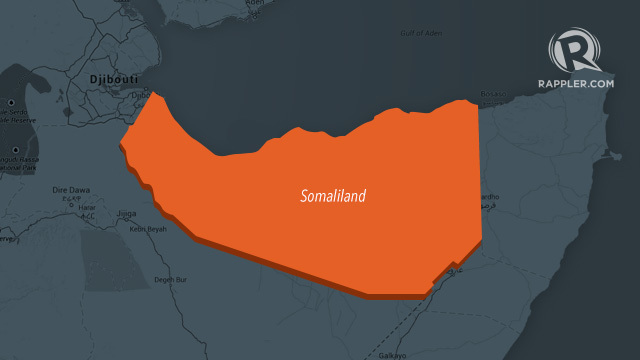
Somaliland, in Somalia's northwest, declared independence from the rest of the Horn of Africa country in 1991 but has not been recognized internationally.

Source : Garowe online

Bomb kills another Ugandan peacekeeper in Somalia

Medeshi Sept 15, 2008
Bomb kills another Ugandan peacekeeper in Somalia
Source: Reuters
By Ibrahim Mohamed
MOGADISHU, Sept 15 (Reuters) - A roadside bomb killed another Ugandan peacekeeper on Monday serving with an African Union force in the Somali capital Mogadishu, a spokesman said.
The dead soldier was the second Ugandan to be killed by a bomb in the anarchic city in as many days.
"Our troops went out on inspection as normal and an improvised explosive device went off, killing one of our soldiers and injuring two others," Major Barigye Ba-Hoku, spokesman for the small AU force, told Reuters.
Seven Ugandan troops and a Burundian soldier have been killed by near-daily violence rocking the Somali capital.
Since the start of last year, Islamist insurgents have waged an Iraq-style rebellion of roadside bombs, assassinations and artillery attacks targeting the U.N.-backed interim government and its Ethiopian military allies.
Local man Ali Hussein witnessed Monday's blast: "There was lots of smoke and several soldiers were lying on the ground."
The 2,200 AU peacekeepers are mostly restricted to guarding Mogadishu's vital air and sea ports, as well as the strategic K4 junction and hilltop Villa Somalia presidential palace.
They have been unable to stem the chaos raging around them, and the pan-African body wants to hand over to U.N. troops.
One hardline Islamist group, al Shabaab, has vowed to stop planes landing at the city's airport after midnight on Tuesday.
Al Shabaab appears to have stepped up its attacks, and widened its sphere of targets, since being put on the United States' list of terrorist organisations earlier this year.
Exposing a rift in the opposition, a spokesman for the broader Islamic Courts group, rejected the ban on the airport.
"Civilians like pilgrims, business people and ill patients are served by the airport," said Sheikh Abdirahim Isse Adow.
"We therefore urge the group that want to close it, to think again and consider our suffering people."
Somalia's civil war has killed more than 8,000 civilians since last year -- and an unknown number of combatants. Another 1 million people have been forced from their homes by fighting. (Additional reporting by Abdi Sheikh; Writing by Daniel Wallis; Editing by Richard Balmforth) news ## for search indexer, do not remove -->

Ethiopia - 'Egypt's most urgent problem is water' - Boutros Ghali

Medeshi Sept 15, 2008
What do you think is the most urgent problem facing Egyptian society at the moment?
I believe that the most urgent problem is water. Because tomorrow Ethiopia may begin using the source of the Nile — as they need it for irrigation — or Kenya, which is one-third desert. All those countries will sooner or later need to use the Nile water, and then you will have a problem of water in this country. When I was Minister of Foreign Affairs I tried, without success, to provoke an interest in the government. I said look what happened with the Danube, what happened in Asia with the Mekong. I even sent the Minister of Irrigation to visit the Mekong. I failed.
But do you think that is because people are more worried about poverty?
Yes, people are interested in poverty, money, overpopulation, the problem of big cities, etc. But the real problem for me is water. Again, the confrontation with Israel, this was the main problem. The Palestinians, this is the main problem. And for me the real problem is the problem of the Nile, because there is no rain in this country. Unless in the next 20 years we have a new invention to produce rain.
How would you describe the human rights situation in Egypt now?
I believe we are at the beginning of a very long road. It will take time. You cannot improve human rights in two or four years. A good doctor takes 20 years of experience, so what about the culture of human rights in a country in which 30 percent of the population is illiterate and such other percent is half literate. So it will take time.
Do you think literacy is the problem?
I believe that the problem is that if you are confronted with poverty, the real problem is poverty. Again, it is one part of the economic and social rights that is more important than political rights. The trend is to pay attention to political rights, that offering political rights and offering democratization will help development.
I participated for three years in a symposium about the relationship between democracy and development. The theory is that if you want development you need democracy. Again, democracy is related to the protection of human rights.
So human rights, democracy, development, what is first?
There is not a global solution for every country; each country has its own problems. Certain countries can afford to take part of just an elite, and 90 percent of the population will be born in the streets and die in the streets. Other countries cannot do this. So the problem will not be the same in each country.
I was there at a conference in Khartoum in 1978 or ‘79. At three in the morning you have a dispute between Leopold Senghor [ex-president of Senegal] defending human rights and [another participant] defending the people’s rights. And the African Convention was people and human rights.
In Africa they say look, the right of the tribe is more important, the average African feels more secure in his own tribe. Even human rights change: Asian tradition is something, African tradition is something else.
What is the role of the National Council for Human Rights in this?
We are trying first of all to promote human rights. We are trying to create an education of human rights, a culture of human rights, which will help us to capture the interest of the public, because if you do not capture the interest of the public in solving the problems of the country, then you will not be able to solve the problems.
We have arranged to receive complaints. The first year we had 7,000 complaints and 200 answered from the government. Now we have more answered from the government. So the public feels that this organization can help them.
The fact that every day in the newspaper we see the words ‘human rights’ is already a step. The fact that we are communicating with the other human rights organizations — we are establishing a network, we help each other.
The fact that we have a meeting of the Arab commissions of human rights every year: Even in a country without a commission of human rights, we send the man in the Ministry of Foreign Affairs, or the Ministry of Justice dealing with the problem of human rights, and this may encourage him to create his own commission.
The fact that if there is a commission of human rights in Kenya or France we will send somebody — this again will help the public accept that an American commission or a European commission can come and ask what we are doing about human rights in Egypt. Otherwise they’ll say, “Oh, this is a foreign intervention, this is new imperialism.” No, because we are allowed to do the same thing.
Do you think the fact that the Centre is attached to the government hurts its credibility?
Certain members of the government understand that this will help them, that they need the participation of the public if you want real reform, if you want economic progress. But passivity is an obstacle to any kind of reform.
As an organization as such, I am a weak organization, so I need the support of other organizations. The fact that I discuss issues with the Jordanian commission of human rights — I’m supporting the Jordanian and the Jordanian is supporting me.
The fact that you’ll have a meeting in Cairo on December 1 for the sixtieth anniversary of the declaration of human rights — we have invited all the national commissions of Africa and the Arab world, plus UNESCO, the High Commissioner of Human Rights in Geneva etc. — again, creates a kind of mobilization of the public opinion.
I agree you have people saying this means nothing, you are doing nothing, it’s too late, look at the violations every day. Yes, certainly, but this is why we exist. This is why we are trying to find a solution to this problem.
But for the man on the street, looking at an organization so close to the government, wouldn’t he say that it is just the government putting a face on itself?
No, because we have 20 other non-governmental organizations that at the beginning were very suspicious of this organization, and we had to convince them that we wanted to cooperate with them. Because we need them: Through our solidarity we will be able to do something.
Again, we are at the beginning of a very long road. New technology makes us in a hurry, we want to solve everything in a few hours. This cannot be solved in a few hours. It is like an education, from strong children becoming mature people, it will take 40 years, 50 years.
What’s your view about the emergency law extension?
We have already said that we are against the extension of the emergency law. We believe that through normalization it will help us [] But again, I was the man who presided over [the World Conference on Human Rights] in Vienna in 1993.
The government was very suspicious of the commission, so to overcome this suspicion we said the commission will have an advisory role only. So again, our role is very limited. We come and advise the government. We may try to obtain the support of public opinion, but you have no real power.
Are you concerned about the new anti-terrorism legislation?
We have not seen it, we have to wait. There are so many rumors.
It is not a question of being afraid. You see, what’s important is the way the different rules will be applied. And very often the rules are not respected. I will put it differently: It is more a question of education.
Of the government or of the people?
Of everybody, the government and the people. The government represents the people, the government is coming from the people. It is a question of culture. Until we will be able to promote the culture of human rights, it will take time.
Do you see people’s lives getting better in Egypt?
I believe that the problem is the demographic explosion. When I began to teach at Cairo University we had 200 students, now we have 20,000 students. Cairo [had a population of] 1 million. I had the same apartment in Giza and I was able to go from the apartment to Al Ahram in five minutes; now it takes me one and a half hours. Okay, you cannot compare this with 20 years ago, 50 years ago.
So the situation will be more complicated because one, you have a problem of water, and two, 80 million are concentrated in five percent of the territory, the Nile valley. We may use the coast but it will take 10 years. We may find a way to obtain water to cultivate the desert, but it will not be easy.
Do you think there will be democracy in Egypt?
I believe there is democracy. Look what happens in the newspapers: We are insulted everyday — this never happens in any English or French newspaper. This is an excess of democracy.
I agree this is a very special democracy, but again democracy changes from one country to another. I spent many years of my life traveling in Africa. Democracy in Africa is how the 50 different tribes will be represented in the cabinet. Who will be the minister of foreign affairs, will they be a Christian, will they be a Muslim, will they be somebody who believes in African religion? et

Senator Feingold: Support for Democracy and Human Rights in Ethiopia Act of 2008

Medeshi Sept 15, 2008
Senator Feingold: Support for Democracy and Human Rights in Ethiopia Act of 2008
Forwarded by the Office of Senator Russ Feingold
draft-of-bill
Statement of U.S. Senator Russ Feingold
On the Support for Democracy and Human Rights in Ethiopia Act of 2008
Mr. President, today I am pleased to introduce the Support for Democracy and Human Rights in Ethiopia Act of 2008. Senator Leahy joins me as an original co-sponsor. The purpose of this bill is to reaffirm policy objectives towards Ethiopia and encourage greater commitment to the underpinnings of a true democracy – an independent judiciary and the rule of law, respect for human and political rights, and an end to restrictions on the media and non-governmental organizations.
As many in this body know, I have spoken numerous times in recent months about the situation in Ethiopia and I continue to believe that the US-Ethiopian partnership is very important – one of the more critical ones given not only our historic relationship but also Ethiopia’s location in an increasingly strategic region. Ethiopia sits on the Horn of Africa – perhaps one of the roughest neighborhoods in the world, with Somalia a failed state and safe haven for terrorists, Eritrea an inaccessible authoritarian government that meddles across national borders, Sudan a genocidal regime, and Kenya still emerging from a profound electoral crisis. One look at the deteriorating situation across the Horn and the importance of a robust relationship with Ethiopia is obvious. And, by contrast with some of its neighbors, Ethiopia appears relatively stable with a growing economy. But I am concerned about a number of anti-democratic actions in that country, particularly since this administration has largely overlooked them.
The security threats in Ethiopia are real but, unfortunately, the Bush administration’s approach to addressing these threats and strengthening this alliance remains short-sighted and narrow – focusing predominately on short-term ways to address insecurity while overlooking the need for long-term measures that are needed to achieve the same goal, such as desperately needed governance reform, the rule of law, and increased accountability. Mr. President, genuine democratic progress in Ethiopia is essential if we are to have a healthy and positive bilateral relationship. It is also essential if we are going to successfully combat extremism, thereby bolstering our own national security here at home.
And that is why today I’m introducing the Support for Democracy and Human Rights in Ethiopia Act of 2008 — because as our administration fails to balance our priorities in Ethiopia, or to adopt comprehensive strategies to achieve those priorities, we are watching significant backsliding in previously hard-won democratic gains. As we turn a blind eye to the escalating political tensions, people are being thrown in jail without justification and non-government organizations are being restricted, while civilians are dying unnecessarily in the Ogaden region – just like so many before them in Oromiya, Amhara, and Gambella. Furthermore, the Ethiopian military has come under increasing scrutiny for its conduct in the Ogaden as well as Somalia, with credible reports from non-governmental organizations of torture, rape and indiscriminate attacks. By providing unconditioned security assistance we are also sowing the seeds of insecurity and creating new grievances both in Ethiopia and in its neighboring countries.
I want to see greater progress – not less – in Ethiopia which is why this bill authorizes an additional $20 million for democracy and governance projects in Ethiopia. The addition of these funds would make it one of the top five countries on the continent receiving this kind of assistance from this US government. This bill calls on the President to take additional steps to implement these programs but also requires that funds made available to the Ethiopian government be subject to regular congressional notification. This ensures US taxpayer dollars are being used appropriately – and used to support a government taking steps to become more democratic, not less.
I make it a practice to pay for all bills I introduce, and the authorization in this bill is offset by a transfer of funds from NASA. Some may disagree with me on the need for an offset, but recent Office of Management and Budget projections confirm that we now have the biggest budget deficit in the history of our country. We cannot afford to be fiscally irresponsible so we must make choices to ensure that our children and grandchildren do not bear the burden of our reckless spending. Instead of cutting specific programs, which are likely to have begun and thus would cost more to close, transferring $20 million from the general budget would allow appropriators to evaluate, at their discretion, how best to make this transfer.
I ask my colleagues to consider what our own State Department has said about the political situation in Ethiopia and then consider how best to rectify the situation. The 2007 State Department Report on Human Rights notes that in Ethiopia the following occurred: “limitation[s] on citizens’ right to change their government during the most recent elections; unlawful killings, and beating, abuse, and mistreatment of detainees and opposition supporters by security forces; poor prison conditions; arbitrary arrest and detention, particularly of those suspected of sympathizing with or being members of the opposition or insurgent groups; detention of thousands without charge and lengthy pretrial detention; infringement on citizens’ privacy rights and frequent refusal to follow the law regarding search warrants; use of excessive force by security services in an internal conflict and counter-insurgency operations; restrictions on freedom of the press; arrest, detention, and harassment of journalists for publishing articles critical of the government; restrictions on freedom of assembly; limitations on freedom of association; violence and societal discrimination against women and abuse of children; female genital mutilation (FGM); exploitation of children for economic and sexual purposes; trafficking in persons; societal discrimination against persons with disabilities and religious and ethnic minorities; and government interference in union activities, including killing and harassment of union leaders.”
The continued failure of the administration to acknowledge this reality is emblematic of its insular thinking and unwillingness to see the big picture. Without a balanced policy that addresses both short and long-term concerns in Ethiopia we are putting ourselves at greater risk and making ourselves more vulnerable, not less.

Why Pirates Thrive And Cannot Be Defeated

Medeshi Sept 15 ,2008
Why Pirates Thrive And Cannot Be Defeated
The Transitional National Government (TNG), and its Ethiopian allies are still trying to work out political and economic agreements. While the TNG represents the majority of Somalis (or at least according to population controlled by clans and warlords), the smaller number of groups allied with the religious radicals of the Islamic Courts are more disciplined and militarily effective. But the Islamic groups are not powerful enough to dominate and rule the majority.
The natural state of Somalia, over the last few centuries, has been violent anarchy. For the last century, however, order was imposed, first by colonial governments, and then by post-colonial dictators. But Somali dictators have been unable to maintain their rule over the entire region known as "Somalia." A government of sorts was always found in some of the coastal towns, which enabled trade with the outside world. But this has been threatened by the recent growth of piracy. Some warlords are taking over coastal villages and running piracy operations from them. This is possible because of the current anarchy. In the past, piracy was suppressed by foreign navies destroying the towns of villages the pirates used as bases. This is no longer politically acceptable, and no one is yet willing to send troops ashore to fight the warlords who created and maintain the pirate operations. The nations with the military forces able to go into Somalia (like the U.S., Britain and France) are well aware of the region's history, and the willingness of the Somalis to just keep fighting. The availability of speedboats, satellite radio and GPS have made it possible to conduct piracy deep into the Straits of Aden (a major choke point for international shipping). Many nations are sending warships to try and control the pirates at sea, without going ashore. This will be expensive, but is believed to be ultimately less expensive than skyrocketing insurance rates for ships.
At least someone is trying to do something about the growing pirate activity off Somalia's north coast. As the risk of ships getting seized in the Gulf of Aden passes one percent, the maritime insurance companies have raised premiums (covering passage through the 1,500 kilometer Straits of Aden) from an average of $900 to $9,000. That's expected to go higher because, when you do the math, you realize that the current increase does not quite cover the million dollars per ship ransom (which is also going up.) The insurance increase has made certain that all ships moving through the area are aware of the pirate risk, and more ships are alert enough to spot and speed away from the pirates. Most ships moving through the Straits of Aden have a top speed in excess of what the pirate speedboats can achieve. But the larger ships take time to reach their top speed, and the trick is to rev the engines of the larger ship soon enough to get away from the approaching pirate speedboats. This requires posting more lookouts (because the speedboats are low enough in the water to not show up well, if at all, on the navigation radar of larger ships). The pirates will continue to go after the ships that they can catch, and these will tend to be the smaller and slower ones from poor (often Moslem) nations. That could have interesting repercussions.
September 8, 2008: An American warship caught 14 Somali pirates in the Gulf of Aden, arrested them and destroyed their boats. Inside Somalia, the group that seized a Canadian journalist last month, are demanding a $2.5 million ransom for her release.
September 5, 2008: Ten ships have been hijacked by Somali pirates in the Gulf of Aden during the last two months.

Voluntary Poverty

Medeshi 15 Sept, 2008
Voluntary Poverty
Posted by Ingrid Hartmann
I always wanted to live in poverty like Gandhi did, as long as I had a lot of money. I must say, I used to be somewhat in love with Gandhi and actually, inspired by the Ethiopian extended family principles where the wealthier ones care for the more needy ones, I also was always open to share my resources with families I used to live with.

Working once for a reduced salary, however, I changed my mind about Gandhi. Gandhi was not really poor. According to nobelist Amartya Sen, somebody who has a freedom of choice is not poor. So Gandhi was not poor, he had chosen to live in poverty, what is different, since he had the whole congress behind him, he came from a merchant caste, his father was a governor and he had chosen the lifestyle he lived. According to what is reported about him, even his Ashram was not economically sustainable and they secretely subsidized him. So, if he only would have had to establish his ashram on the returns of the sales of their spinnings, or if someone would have forced him to work for a low salary, would he have accepted? I doubt. He always used to travel with a 4th class ticket through India, but when they denied him a first class ticket in South Africa as a coloured person, he started his political movement. Also Jesus was not poor, actually, doesn’t he have a very rich father? And Buddha was a prince. Mohammed, well, was not that wealthy, but didn’t he marry a rich woman? So they all were not poor, as well as somebody who is fasting is not a hungry person. And moreover, they did not have families, or neglected them a little bit, like Gandhi did. So why did they tell the world we have to live in poverty? Nobdoy can start a social revolution from the position of poverty. Nevertheless, since I started to join the Ramadan fasting, I became reconciled with all of them. Although fasting with the opportunity to get any food you want during night time or whenever you want is not the same suffering as having no food and no idea of when to get something. Nevertheless, there is also some suffering and some purification in voluntary fasting - so the Koran considers it as an act of solidarity with the hungry ones and also as an act of equity since the King is fasting as well as the beggar, and actually I admire that the whole Muslim society does it uniformly.

So, I think it is the same with in voluntary poverty, because there is a lot of beauty not to exploit one’s opportunities of living a wealthy life if one could. Then I read the blog of Satish Kumar’s homepage, who said, that it was love, that made Gandhi the Mahatma, Gotama the Buddha, Jesus the Christ, and Sister Theresa the Mother and I think he is right. So what obviously makes the difference, is the love within somebody. But love is also the product of freedom and internal richness. Therefore, if someone wants to realize principles of Gandhi, Christ or whoever, there is only a chance to impose it on oneself, never on someone else.

Anyhow, I am not a Gandhi or someone like that, and thanks to God I also do not have to be, and if I would start a walk to Berbera with Somali friends to produce our own salt, as my dear brother suggested to tease me, I do not think anybody would internationally recognize Somaliland, but that is also a pity on the other hand.

But what I have in common with Gandhi is our problem with security guards. Gandhi did not want security guards and I do not want to have security guards, but he had and I have. The difference is, Gandhi’s security guards were dressed as Dalits when he left his Ashram for his political work, so he is said not to have known that security guards were around him. Because having security guards means violating the principles of non-violence. And actually, his end shows, that they even were of no use. As for me, I am forced to accept having two policemen as security guards in my compounds. Not only that, also two watchmen in addition. In the first month here, I did not sleep even one night, because I was so scared. I was not scared of being killed or kidnapped by Somali pirates, I was afraid of my guards.

In Hargeisa I asked some security specialists for help me how to get rid of the security guards. The guy said: “Actually I thought you want to know how to increase your security, now you ask me how to get rid of them”, then I told him I believe security problems can only be solved through communication and not through arms, then he said: “But you cannot communicate with a wall.” I liked the guy, but I do not think Somalis are a wall, and now, since I got to know my neighbors with all their kids and know more words of Somali language so that I could start communicating with the guards I am no more afraid. But I am awfully ashamed of having all that guards, and whenever I go out to some place and they have to follow either walking 20 m behind me or, if going by car they have to follow in another car, I feel so embarrassed about the picture I might give, and I always wonder what local people might think about me, if I am the reincarnation of colonialism or the richest person in town or the foreign minister of my country or –worst of all, that I think they all are murderers, kidnappers or criminals? ….and I would prefer to hide myself in the ground, but thanks to Allah, I have to wear a veil, so I if not below ground at least I can hide myself under that veil. And then I think I would like to go to cinema Thursday nights, and I imagine one policeman sitting on my right side and one on my left side to protect me and what kind of Thursday night fever would that be?

Riyaale leaves for france

Medeshi Sept 15 , 2007
Somaliland Leader Leaves For France Following Invitation
Presenter: A delegation led by the president of the Republic of Somaliland, Dahir Riyale Kahin, left for France on Friday afternoon on a working mission after recieving an univitation from the French Govent.
The president, who spoke to journalists at the airport lounge, said the visit to France follows invitation from the French government.
He said that he would hold talks with French leaders, adding that France was the current chair of the European Union. The president stated that although Somaliland had no relations with France, it has an office there.
Kahin: First, I will visit France where I have an appointment with the French government. France is the current chair of the EU. I haven’t visited France before. They accepted us to open an office in their country; that is my mission. After I return, God willing [words indistinct]
Presenter: The president added that he also planned to visit Germany on medical grounds. The president and his delegation was seen off at the airport by the vice-president, Ahmad Yusuf Yasin, and other government officials.
The president inspected a guard of honour mounted by the national armed forces. He was accompanied by the first lady, the minister of finance, and his personal secretary.
Source : Somaliland Radio

Stolen cattle recovered in Ethiopia

Medeshi Sept 13, 2008
Stolen cattle recovered in Ethiopia Written
By:Stanley Wabomba
Police in Moyale have recovered 34 head of cattle out of 70 stolen from Turbi area in the new Chalbi district a fortnight ago where a herdsman was killed during the raid.
The livestock were recovered in Ethiopia on Friday and handed over to the Kenyan Government officials at Indilola in Ethiopia some 150 km from the common border.
Receiving the livestock, Moyale senior District Officer Ngala Mwachiro who was accompanied district police boss Rono Bunei hailed the Ethiopian government for their cooperation in the fight against cross border banditry.
Mwachiro noted that it was through enhanced cross border cooperation between the two countries that the livestock were recovered.
Ethiopia's Miu District Commissioner Kadilo Geche who handed over the livestock assured Kenyans that the two suspects arrested in connection with the raid would be prosecuted.

Will the Horn of Africa one day be “the Dreamland”?

Medeshi 13 Sept, 2008
Building Brand bin Laden
Will the tiny nation of Djibouti one day be the “Dubai of Africa,” host to the largest suspension bridge in the world? Sheikh Tarek bin Laden, along with an alliance of international investors and some $200 billion in capital, hopes so.
By Jeff Neumann
Inside a half-finished five-star hotel in Djibouti this past July, several hundred foreign dignitaries, investors and journalists gathered for the first look at an ambitious plan to unite two continents.
(Will the Horn of Africa one day be “the Dreamland)
Dubai-based Al Noor Holding Investment Company hopes to build a bridge between Africa and the Arabian Peninsula. But not just any bridge: Spanning 29 kilometers of the Red Sea between Djibouti and Yemen, it will be the world’s largest suspension structure, at points boasting 800-meter pilings and anchored at each side by brand new cities bearing the same name: Al Noor City, or City of Light.
The estimated cost of the whole venture is somewhere around $200 billion (LE 1.06 trillion).
The visionary behind the project, Tarek bin Laden, the Saudi oligarch and half-brother of the notorious Osama, hopes in 15 to 20 years time to see his dream of the bridge and both cities become reality. But just how realistic is it?
Perhaps Djibouti’s only real asset today is its location at the junction of the Red Sea and the Gulf of Aden. It has one of Africa’s smallest populations, estimated at around 500,000, and its land size is comparable to Massachusetts in the United States. It is also bordered by Ethiopia, Eritrea and Somalia — three nations that are embroiled in multiple conflicts and whose names have long generated images of famine, despotism and anarchy.
Along the road between Djibouti-Ambouli Airport and the hotel hosting the project launch, people wandered between single-story concrete buildings and shacks — some carried jerry cans or bundles of sticks, but most walked empty-handed. Less than a kilometer away from the five-star hotel, a naked child squatted beside a wall while groups of shirtless men slept in ditches beneath the shade of trees.
The “Bridge of the Horn” is to have a six-lane highway and light rail lines for passenger and commercial traffic, with the goal of one day handling 100,000 cars and 20,000 rail passengers per day. There are also plans for a natural gas pipeline to run the length of the bridge from Djibouti into Yemen and on to the Gulf.
If completed, the bridge will cross the aptly named Bab El-Mandeb, the Gateway of Tears. It is the shortest point between Yemen and Djibouti and is named after the treacherous waters made famous from centuries of taking ships and lives. There is also the deadly threat of Somali pirates operating in the area, enough to warrant the permanent basing of an international pirate task force and several thousand French Foreign Legion and US military troops. Europe’s supply of oil from the Gulf passes through these straits, making security here all the more vital.
And just as the Suez Canal controls sea traffic at the northern end of the Red Sea, the Gateway of Tears owns the shipping lanes of the south. Not far from the hotel there is a sight common to every port city from Buenos Aires to Shanghai: shipping containers. Stacked like a multi-colored set of Legos, rows of metal boxes waiting to be filled with goods, loaded onto ships and sent out across the globe.
This is the Horn of Africa.

A Bridge to
Guests at the launch were given a video presentation in the main ballroom and later held roundtable discussions with designers, financers and project management teams. The conference was held to entice those with deep pockets and even deeper ambition to get in on one of the twenty-first century’s boldest schemes to date. Bin Laden’s Al Noor Holding has already pledged to invest an initial $1 billion (LE 53 billion) and more cash will surely follow as other investors fall in line.
Speaking on behalf of Al Noor Holding to open the ceremony was the company’s CEO, Mohammad Ahmed Al-Ahmed. He compared the new city in Djibouti to Singapore, Hong Kong and Dubai, adding that “They have done it, so can we.”
Computer-generated images of the city and bridge flashed across the screen as guests flipped through booklets packed with photographs of construction sites, smiling children in classrooms, golf courses and skyscrapers. Providing commentary with the images, Al-Ahmed used words including “courage” and “good intentions.” Referring to the vast revenues that Al Noor City will hopefully one day bring in, he said, “That money will be for everybody.”
The video referred to Djibouti as “the dreamland.” Alternating between French and English, Michel Vachon, senior vice president of L3 Communications, a US-based defense contractor that is running project management for both cities and the bridge, spoke briefly to the crowd after Al-Ahmed. He promised success and pointed out his hopes of accommodating 100 million passengers at Djibouti Airport over the next 20 years.
The idea is for Al Noor City to cover some 1,000 square kilometers along the northern Djibouti coastline, in what is now no more than hardscrabble desert populated by camels and nomadic herders. During a lunch break, guests crowded around a light-up model at 1/30,000 scale, which showed that the city will be divided into two parts: one for commerce and business related activities — including a deepwater port and rail links — and the other for residential and leisure facilities. It is here that Al Noor Holding envisions the birth of “a brand name for Africa.”
One section of town, called Wisdom City, will house schools, a world-class shipping port and free-trade zones. Then there will be Leisure City with resorts, boutique hotels, residential blocks and a yacht club, while the bridge will land roughly in the middle of the two areas. The glimpse of Djibouti I had just seen out on the road might as well have been a different planet.
The video showed a high-tech, prosperous society where the destitute Horn of Africa once existed. One aspect of bin Laden’s grandiose vision would have upstart local entrepreneurs building on the periphery of the free zone and contributing to a flourishing Djiboutian economy. As the narrator on the video reminded viewers, “It’s not about what’s here today, but what can be here tomorrow.”
However, the simple question of “Where does the bridge go?” remains.
Dean Kershaw, program manager at L3, acknowledges the dilemma: “You can’t build something that doesn’t go anywhere.” As the plans now show, the foot of the bridge would have passengers dropped off to nearby Ras Doumeira, an area where as recently as June, Djiboutian and Eritrean troops traded shots, claiming at least 12 lives.
Citing historical proof that many of the world’s greatest cities sprouted up around bridges and other crossings, Michael Mann, senior vice president at L3, said, “You’ll find that cities grow on both ends of the bridge. You change the whole dynamics of the region. Where do those roads come from? They come from some entrepreneur saying, ‘I’m going to build a factory here and I’m going to build this link to get out to this road.’”
But building that link would be virtually impossible today —there are less than 400 kilometers of paved roads in all of Djibouti.

The Alliance Raises Capital
If anyone were equipped to undertake such an endeavor it would be bin Laden and Al Noor Holding. As pioneers of Dubai’s rapid ascension to the world stage, Al Noor Holding’s subsidiary, Middle East Development (MED), has been involved in some of the United Arab Emirates’ most visible and renowned development projects, including the Palm Islands and Dubailand.
Al Noor Holding and MED don’t feel that financing the nearly $200 billion project will be an issue and are adamant that that investors will clamor for a shot at getting in on such a prestigious venture.
The first of three phases, or “tranches” (as Al Noor Holding refers to them), of investments will go to “critical infrastructure” — building roads, upgrading the existing port and laying the foundations for Al Noor City, Djibouti.
The project management office aims to complete its work within two years after framework agreements are in place with the Yemeni and Djiboutian governments. At this point, investors will be on board and significant construction will have already been well underway. A series of cash infusions and corporate guarantees will come in the second phase. The third and final phase of the fundraising side will be about “utilizing value” and raising capital through private equity firms.
As the worldwide scramble for natural resources gains urgency, Africa has become hotly contested ground between China and the West. The US military has been trying to establish a base on the continent for AFRICOM, the command and control nerve center for its Africa-based operations, since 2007. American and European companies have been extracting natural gas from Algeria and oil from Nigeria for decades. For its part, China has been striking lucrative oil drilling and mining deals in countries including Sudan, Angola and Zimbabwe in exchange for everything from the construction of schools and wells to the sale of guns and ammunition.
As a US-based defense contractor, L3 Communications is staffed by former military officers and has a board of directors that includes John M. Shalikashvili, the retired chairman of the Joint Chiefs of Staff of the US Armed Forces. Both Al-Ahmed and Vachon have in the past worked for DynCorp, one of the world’s largest defense contractors whose missions have included everything from training national police in Liberia to running security operations at Baghdad International Airport and guarding Afghan President Hamid Karzai. It has also been subject to several US Congressional investigations and audits alleging fraud over government contracts in Iraq and Afghanistan.
Among the nearly 60 companies already in the so-called “Al Noor Alliance” are defense contractors such as Allied Defense Group, IAP and Lockheed Martin. Other partners like KBR (formerly Kellogg, Brown and Root) and Bechtel have been involved in nation building experiments from Bosnia to Iraq and Afghanistan. The alliance also includes several design firms, investment houses, public relations firms and multinational real estate developers.
As one journalist from Hong Kong pointed out during the press conference, there are no Chinese companies included in Al Noor Alliance. But Al Noor Holding says it is actively looking for investment partners with no discrimination against nationality, and it is hard to imagine that anyone with the right amount of money would be turned away.
Whether or not bin Laden will meet with the same success on the Horn of Africa as he has in the Gulf remains to be seen. Whereas the UAE and Saudi Arabia have vast amounts of oil reserves and established economies to support large-scale development projects, Djibouti has virtually no natural resources or other means to sustain itself. Bin Laden is hedging his bets that Djibouti can thrive on serving as an international shipping hub, with other world-class moneymaking industries following suit.

There Goes the Neighborhood
Our scripted tour was originally to include a stop in Yemen, the other side of the bridge and proposed site of Al Noor City, Yemen, but the government denied visa requests for unspecified reasons at the last minute. A few days prior to our scheduled arrival, a bomb attack struck Yemeni security forces in the eastern part of the country.
Yemen is notoriously secretive and is fighting an insurgency of Shi’ite Houthi rebels in the northern part of the country. The rebels are allegedly backed by Iran and are attempting to overthrow the authoritarian government. Travel outside of the capital Sana’a or the main port city of Aden is hampered by security checkpoints and foreigners are generally required to have a police escort away from the two cities.
Plans for Al Noor City, Yemen, state that the city will be even bigger than its sister in Djibouti, at 1,500 square kilometers. It is to have similar facilities but on an even bigger scale. Just off the coast of Yemen lies Perim, a 13 kilometer-long island that will serve as a land base for the bridge before continuing on the remaining stretch to Djibouti.
Back on the African continent, land-locked Ethiopia is wholly dependent on Djibouti for access to the Red Sea and its sea-borne trade due to the country’s hostile relationship with its other neighbor, Eritrea — and the fact that Somalia’s ports are in shambles and controlled by warlords. As a result, Ethiopian trucks and lorries must make a journey of around 800 kilometers from Djibouti’s port to Addis Ababa using decrepit roads through dangerous territory. Otherwise, the dilapidated Djibouti-Ethiopia Railway is used for commerce between Ethiopia’s capital and the Red Sea. Recently, DP World, a subsidiary of Dubai World, has been looking into resuscitating the ageing railway, as well as installing a new oil pipeline.
Djibouti’s prickly northern neighbor, Eritrea, has been unpredictable in recent years and has lashed out violently against both Ethiopia and Djibouti over various territorial claims. After a 30-year war, Eritrea gained independence from Ethiopia in 1993. The two countries again fought a series of running battles over a strip of sparsely populated desert that claimed some 70,000 lives between 1998 and 2000.
Somalia, the world’s premier failed state, has been partially occupied by Ethiopian troops since ousting Islamist insurgents from power in January 2007. It has also been without a functioning government since 1991 and the current transitional government holds little sway outside of a handful of towns along the Ethiopian border.
In other words, Djibouti is wedged between some of the world’s longest running, bloodiest conflicts and dangerously unpredictable neighbors — a region that at any given moment can explode.

If You Build It, They Will Come
While the plan for Al Noor City focuses on mundane details — like speed limits on certain highways, layouts for residential subdivisions and organic waste management — it lacks specifics on major issues, like sovereignty. With the city operating as a free-trade zone, Al Noor Holding will run civil governance, as opposed to the Djiboutian government.
Mann says that the city will be governed under the rule of law with “a focus on investors.” Here is Al Noor Holding’s least-thought-out — and perhaps most important — aspect regarding the city it is hoping to create. With a target population of 2.7 million by the time the city is complete, having concrete plans for governance is essential.
Construction will begin in “base cities” — camps for workers living in modular units that will, in theory, serve as the basis for civil society in Al Noor City. A project of this size requires an incredibly large workforce, well over one million workers of various skill levels. Asked where that workforce will come from, Kershaw said, “Well, certainly we’re looking at the local economy as much as possible. But it’s going to come from the world. Face it: We’re building a city in Djibouti, [a country] that has an entire population of what? 700,000?”
According to Kershaw, these “base cities” will serve a dual purpose as a center for construction operations and a place where the Al Noor cities can “grow [their] own bureaucrats that work within the city structure.”
“Is it actionable, can it be done? The answer is ‘yes,’” says Kershaw. Bin Laden has said one major reason for building the bridge is so African Muslims can more easily make the Hajj pilgrimage to Mecca. Today, if they can afford it, travelers must make the arduous journey across the Gateway of Tears or through Egypt and by ferry across the Red Sea to Jeddah.
An acute shortage of arable land on the Arabian Peninsula may also be one reason for constructing the Bridge of the Horn. Africa has large swaths of uncultivated land that are suitable for growing agricultural products. But the ability to quickly transport produce from the hinterlands of Africa to Al Noor City and the Gulf is decades away, as reliable rail and road infrastructure is all but non-existent for thousands of miles in each direction.
There is no doubt Djibouti is seen as a foothold on a continent rich in oil, natural gas, diamonds, coal and timber. Africa’s history is marred by hundreds of years of foreign powers claiming territory to extract these precious commodities and the twenty-first century has so far been no different. Recent wars have been fought over control of diamond mines and oil pipelines.
With Gulf countries rapidly moving away from oil-based economies, companies like Al Noor Holding and MED are stepping in with large-scale development projects promising cities of the future. The race is on in Africa.

The Prophecy
“This is a noble experiment,” said Kershaw, adding, “Sheikh Tarek has a vision. It creates a whole legacy for him.” Bin Laden did not speak during the launch or to journalists, but he watched the presentation at the side of Djiboutian Prime Minister Mohamed Dileita Dileita. So far, the Bridge of the Horn and Al Noor Cities projects have the full blessing of the Djiboutian government, but whether or not the Yemenis are fully compliant remains unclear.
There are significant hurdles to overcome before bin Laden’s dream can come to life. Details like sovereignty, regional and local security, funding and infrastructure all must be handled before major steps on the construction side can take place. Attracting new investors and keeping the governments of Djibouti and Yemen satisfied throughout the process will ultimately hinge on all of these elements coming together.
Djibouti today is little more than an African port town surrounded by barren land, hunger and war. On a street corner near the airport is Fun City, an abandoned amusement park. At a small beach near the port, dozens of children swim, splashing each other and waving excitedly as our motorcade passes, while a man sitting on a milk crate gives us the finger. As we waited for our flight to take off, the only other aircraft on the tarmac were US military cargo planes and helicopters, some fighter jets tucked under hangars and an Air Finland passenger jet. It takes a wild imagination to see this place one day handling as many travelers as Dubai International Airport, or for the streets to have an electric-powered commuter rail and high-end shopping malls.
Executives from Al Noor and L3 are brimming with confidence as the project enters its first phase of garnering funds and support. And they should be, because realizing bin Laden’s bold dream depends on it. Vachon closed his opening remarks of the conference by saying, “I may not be a prophet, but I can make a prophecy: Al Noor City will exist.” bt

Qaar ka mid ah Ururada Bulshada Rayidka ah oo walaac ka muujiyay mudo dhaafka golayaasha deegaanada

Annaga oo ah Ururada Bulshada Rayidka ah ee Madaxa-banaan waxaanu si wayn uga walaacsanahay