60 year old Saudis marry girls as young as 8 yrs

Medeshi Sept 13, 2008
Marriage officials to be punished if bride consent not soughtWalaa Hawari I Arab News
RIYADH: Saudi society has been recently exposed to a number of marriages that involve elderly men as old as 60 marrying young girls as young as eight. The marriages shocked many people who objected to such marriages, saying that there is no equality in this type of marriage and that there should be a strong law against such marriages. The question that was raised was how have marriage officials approved such marriages in the first place.
Sheikh Abdul Mohsen Al-Belaihi, a member of the faculty at Imam Saud University, has described the practice of marrying young girls to elderly men "a crime against young girls."
A Saudi girl, 16, was admitted to the hospital after trying to end her life when she was forced by her father to marry a 75-year-old man. The girl was a part of an exchange deal between two fathers involving their two daughters. The girl had appealed to officials to block the marriage and bring to an end her father's attempts to marry her off without her consent.
Al-Belaihi agrees totally with the Ministry of Justice's new regulations, which include imposing disciplinary punishment against marriage officials who marry girls without their consent. Al-Belaihi believes that there should a legal liability on the wali - the legal guardian.
"The definition of wali is misinterpreted," said Al-Belaihi. "It does not mean the 'controller' or 'dictator', on the contrary, it means 'the responsible person for the welfare and wellbeing of the woman.'" He explained that in the Saudi society many women and girls are not exposed to men, and due to their limited experience the wali is supposed to examine the most suitable spouse for them to ensure their rights are maintained.
In this regard, consultant to the Ministry of Justice and member of the Shoura Council, Sheikh Abdul Mohsen Al-Obaikan, stressed the fact that should the wali be conspiring to marry his daughter without her consent or approval he should be deprived of the guardianship over his daughter.
Al-Belaihi says that he finds it irresponsible for marriage officials to overlook the consent requirement.
"Traditions can hold back some marriage officials from seeking the girl's consent, as it might be uncomfortable for the family to bring the girl in front of the official and the male relatives and expect her to approve or disapprove of her father's decision ... I personally have turned away cases where I found violations and misleading information."
Although Al-Belaihi acknowledges that, in some cases, the official can be tricked when another woman family member poses as the bride. And since women don't generally have photo IDs, it can be hard to confirm that the woman giving consent is indeed the bride-to-be.
"The signature is also not sufficient enough in many cases, as it is not a norm for young girls to have an official signature," he said. Al-Belaihi called on the ministry to find an efficient mechanism to ensure that the bride's identity is not faked.
Al-Belaihi also said that using the example of Prophet Muhammad's (peace be upon him) wife Aisha is not acceptable, as it was a different era when it was the norm for girls to marry at such a young age then.

Somalia: Dozens of Somalis Drown Off Yemen's Coast

Medeshi 13 September 2008
The United Nations refugee agency has reported that at least 26 people making the perilous voyage from the Horn of Africa to Yemen earlier this week have died, and a number remain missing, after being forced overboard in the Gulf of Aden.
Survivors of the incident told the UN High Commissioner for Refugees (UNHCR) that all 120 passengers on the boat were forced overboard at gunpoint after the vessel was stopped off shore on Tuesday.
“They said those who refused were pushed and beaten. Some were killed. Survivors said they had earlier been assured by the smugglers that a smaller vessel would take them ashore, but none arrived,” according to an agency press release.
Twenty-six bodies were recovered as of Wednesday morning and 20 were still missing. Some 74 survivors made it to shore and were taken to UNHCR’s reception centre at Ahwar.
Tuesday’s incident comes after UNHCR reported that calmer weather in the Gulf of Aden had led to an increase in people smuggling in August, as compared to the same period last year.
UNHCR believes the recent upsurge is due to a number of factors, including continuing strife and displacement in Somalia, the opening of new smuggling routes across the Gulf of Aden, as well as a perceived decline in coastal surveillance during the Islamic fasting month of Ramadan, which began in early September.
So far this year, almost 25,860 people have arrived in Yemen aboard smugglers’ boats. More than 200 have died and at least 225 remain missing. At the same time last year, there were 9,153 arrivals, 267 dead and 118 missing.
News Tracker: past stories on this issue

US 'in need of rebellion'

Medeshi Sept 13, 2008
Al Jazeera speaks to Howard Zinn, the author, American historian, social critic and activist, about how the Iraq war damaged attitudes towards the US and why the US "empire" is close to collapse.
(Zinn says "corruption" of the US system enabled Bush to win office [EPA])
Q: Where is the United States heading in terms of world power and influence?
HZ: America has been heading - for some time, and is heading right now - toward less and less world power, less and less influence.
Obviously, since the war in Iraq, the rest of the world has fallen away from the United States, and if American foreign policy continues in the way it has been - that is aggressive and violent and uncaring about the feelings and thoughts of other people - then the influence of the United States is going to decline more and more.
This is an empire which is on the one hand the most powerful empire that ever existed; on the other hand an empire that is crumbling - an empire that has no future ... because the rest of the world is alienated and simply because this empire is top-heavy with military commitments, with bases around the world, with the exhaustion of its own resources at home.
[This is] leading to more and more discontent at home, so I think the American empire will go the way of other empires and I think it is on its way now.
Q: Is there any hope the US will change its approach to the rest of the world?
HZ: If there is any hope, the hope lies in the American people.
It lies in American people becoming resentful enough and indignant enough over what has happened to their country, over the loss of dignity in the world, over the starving of human resources in the United States, the starving of education and health, the takeover of the political mechanism by corporate power and the result this has on the everyday lives of the American people.
[There is also] the higher and higher food prices, the more and more insecurity, the sending of the young people to war.
I think all of this may very well build up into a movement of rebellion.
We have seen movements of rebellion in the past: The labour movement, the civil rights movement, the movement against the war in Vietnam.
I think we may well see, if the United States keeps heading in the same direction, a new popular movement. That is the only hope for the United States.
Q: How did the US get to this point?
HZ: Well, we got to this point because ... I suppose the American people have allowed it to get it to this point because there were enough Americans who were satisfied with their lives, just enough.
Of course, many Americans were not, that is why half of the population doesn't vote, they're alienated.
But there are just enough Americans who have been satisfied, you might say getting some of the "goodies" of the empire, just some of them, just enough people satisfied to support the system, so we got this way because of the ability of the system to maintain itself by satisfying just enough of the population to keep its legitimacy.
And I think that era is coming to an end.
Q: What should the world know about the United States?
HZ: What I find many people in the rest of the world don't know is that there is an opposition in the United States.
Zinn says "corruption" of the USsystem enabled Bush to win office [EPA]Very often, people in the rest of the world think that Bush is popular, they think 'oh, he was elected twice', they don't understand the corruption of the American political system which enabled Bush to win twice.
They don't understand the basic undemocratic nature of the American political system in which all power is concentrated within two parties which are not very far from one another and people cannot easily tell the difference.
So I think we are in a situation where we are going to need some very fundamental changes in American society if the American people are going to be finally satisfied with the kind of society we have.
Q: Do you think the US can recover from its current position?
HZ: Well, I am hoping for a recovery process. I mean, so far we haven't seen it.
You asked about what the people of the rest of the world don't know about the United States, and as I said, they don't know that there is an opposition.
"We have a long history in this country of violent expansion and I think not only do most people in other countries [not] know this, most Americans don't."
Howard ZinnThere always has been an opposition, but the opposition has always been either crushed or quieted, kept in the shadows, marginalised so their voices are not heard.
People in the rest of the world hear the voices of the American leaders.
They do not hear the voices of the people all over this country who do not like the American leaders who want different policies.
I think also, people in the rest of the world should know that what they see in Iraq now is really a continuation of a long, long term of American imperial expansion in the world.
I think ... a lot of people in the world think that this war in Iraq is an aberration, that before this the United States was a benign power.
It has never been a benign power, from the very first, from the American Revolution, from the taking-over of Indian land, from the Mexican war, the Spanish-American war.
It is embarrassing to say, but we have a long history in this country of violent expansion and I think not only do most people in other countries [not] know this, most Americans don't know this.
Q: Is there a way for this to improve?
HZ: Well you know, whatever hope there is lies in that large number of Americans who are decent, who don't want to go to war, who don't want to kill other people.
It is hard to see that hope because these Americans who feel that way have been shut out of the communications system, so their voices are not heard, they are not seen on the television screen, but they exist.
I have gone through, in my life, a number of social movements and I have seen how at the very beginning of these social movements or just before these social movements develop, there didn't seem to be any hope.
I lived in the [US] south for seven years, in the years of the civil rights movements, and it didn't seem that there was any hope, but there was hope under the surface.
And when people organised, and when people began to act, when people began to work together, people began to take risks, people began to oppose the establishment, people began to commit civil disobedience.
Well, then that hope became manifest ... it actually turned into change.
Q: Do you think there is a way out of this and for the future influence of the US on the world to be a positive one?
HZ: Well, you know for the United States to begin to be a positive influence in the world we are going to have to have a new political leadership that is sensitive to the needs of the American people, and those needs do not include war and aggression.
[It must also be] sensitive to the needs of people in other parts of the world, sensitive enough to know that American resources, instead of being devoted to war, should be devoted to helping people who are suffering.
You've got earthquakes and natural disasters all over the world, but the people in the United States have been in the same position as people in other countries.
The natural disasters here [also] brought little positive reaction - look at [Hurricane] Katrina.
The people in this country, the poor people especially and the people of colour especially, have been as much victims of American power as people in other countries.
Q: Can you give us an overall scope of everything we talked about – the power and influence of the United States?
"Ultimately power rests on the moral legitimacy of a system and the United States has been losing moral legitimacy."
Howard ZinnHZ: The power and influence of the United States has declined rapidly since the war in Iraq because American power, as it has been exercised in the world historically, has been exposed more to the rest of the world in this situation and in other situations.
So the US influence is declining, its power is declining.
However strong a military machine it is, power does not ultimately depend on a military machine. So power is declining.
Ultimately power rests on the moral legitimacy of a system and the United States has been losing moral legitimacy.
My hope is that the American people will rouse themselves and change this situation, for the benefit of themselves and for the benefit of the rest of the world.

Ethiopia says Eritrea "incapable" of another war

Medeshi Sept 13, 2008
Ethiopia says Eritrea "incapable" of another war
ADDIS ABABA (Reuters) - Ethiopia has said its neighbour and foe Eritrea is "incapable" of launching a war across its border even as regional diplomats fear the withdrawal of U.N. peacekeepers has heightened that possibility.
"Eritrea could not risk another war with Ethiopia, because its troops do not match the power of Ethiopian armed forces. They are not capable," Prime Minister Meles Zenawi said on Thursday night in the latest rhetoric between the two.
At the end of July the U.N. Security Council disbanded its peacekeeping mission on the volatile border where Ethiopia and Eritrea fought a 1998-2000 war that killed 70,000 people.

The two governments intensely dislike each other and still do not agree on their frontier despite its "virtual demarcation" on maps by an independent boundary commission.
Both say they do not want another war, but keep their militaries on alert and accuse each other of fomenting tensions.
"Eritrea also knows the consequences of igniting another conflict with Ethiopia," added Meles in a statement on state TV.
Because it knew it could not win on the battleground, Eritrea was trying to destabilise Ethiopia by "sending armed terrorists" into its neighbour and round the region, Meles said.
"As the whole world knows, Eritrea is now engaged in training, arming and dispatching armed terrorists to destabilise countries of the Horn," he said.
Eritrea backs, but denies concretely aiding, Islamist insurgents fighting Somalia's Ethiopian-backed government.
It also denies backing rebel groups inside Ethiopia.
Asmara accuses Ethiopia of "occupying" Somalia, and scoffs at claims against it in the constant toing-and-froing of accusations between the two nations.

Somaliland’s Legal Clinic Spreads its Wings

Medeshi Sept 13, 2008
Somaliland’s Legal Clinic Spreads its Wings
Four years ago UNDP helped establish a service which has transformed the lives of many citizens of Somaliland. The UNDP Legal Clinic based out of Hargeisa University has been offering free legal advice to the people of Hargeisa since 2004, giving guidance and representation to people formerly excluded from the legal process by their inability to pay the cost of hiring a lawyer.
The Legal Aid clinic is staffed by nine legal aid lawyers assisted by students from the university’s law faculty. Last year saw them expand their activities beyond Hargeisa to provide outreach services in Burao, Berbera, Erigavo, Boromo and Gabilay, recruiting legal aid lawyers in those regions to take on cases and represent clients free of charge.
A dedicated human rights section was added to the clinic last year, with funds partly provided by UNHCR, and has resulted in an increase in legal assistance provided to IDPs and refugees living in the settlements around Hargeisa. They have benefited from advice in a variety of civil and criminal cases as well as on immigration and asylum claims.
This expansion has seen a rapid increase in the number of cases dealt with by the Legal Clinic from 174 in 2006 to 509 in 2007, including 250 remand cases, a tribute to the dedication and determination of the clinic team and an indication of its growing profile and reputation not only in Hargeisa but throughout Somaliland.
The head of the Regional Court in Gabiley, a town an hour and a half drive from Hargeisa, says, "We have been impressed with the Legal Clinic over the last year. Whenever people have requested lawyers and they cannot afford one, the Legal Clinic has been on hand to help. We hope this cooperation continues".
The Clinic has represented clients in a number of ground breaking cases over the last year. One such case was a civil matter concerning a client from a clan affiliated with the former regime. He had owned property in Hargeisa which was then appropriated by persons belonging to a Somaliland based clan. He approached the Legal Clinic who agreed to assist.
After a number of hearings throughout the Court System, the Supreme Court of Somaliland eventually found in favour of the Legal Clinic and ordered the property to be returned to its rightful owner. The case was seen as a landmark, illustrating the transparency and growing independence of the Judiciary here in that the court was not afraid to go against what is perceived to be the status quo.
Another important case involved a victim of an assault in which he had suffered extensive head and facial injuries, leaving him scarred and destitute as a result of being incapacitated. The Legal Clinic agreed to act, bringing a civil claim for loss of earnings and compensation against the suspect, and referring the case to the police who brought a criminal prosecution. The court sentenced the suspect to six months imprisonment and ordered him to pay compensation to the client. Following his release from prison, he is paying this compensation in monthly installments to the court.
The Dean of Hargeisa University’s law faculty and director of the Legal Clinic, Mohamoud Hussein Farah, explains, "The case was important because of the linkages between civil and criminal law, it is rare here that in criminal cases that a civil action will necessarily follow. This case was an important development."
Goals for 2008 include building on the growth of last year, expanding the clinic’s coverage in the regions while consolidating their work in Hargeisa. The Dean is an enthusiastic supporter of the clinic.
"The Legal Clinic has an important role to play in the administration of justice, in developing jurisprudence in Somaliland and in ensuring that everyone who wants to is represented when they have their day in court. This can only help to ensure that everyone has a fair trial."
Bringing justice for the poor motivates paralegal adviser
Hussein Aw Deria has been working as a paralegal in UNDP’s Legal Clinic since November last year. He and another paralegal, Adam Ali Buale, visit each of Hargeisa’s eight police stations twice a day where they are given free access to the cells and the police registers detailing arrests and charges. Their aim is simple: to provide legal assistance to the poor and vulnerable in Hargeisa and to provide that advice free of charge.
In the few months since he started this work, Hussein has helped provide free legal advice in more than 50 criminal and civil cases including assault, theft, extortion as well as as domestic violence and rape in one month. He has also provided assistance in a number of civil cases involving land issues and compensation. In each of these cases Hussein has used his experience and judgement and either referred the case to UNDP Legal Aid lawyers or, where appropriate, sought to resolve them himself.
He is enthusiastic about the impact of his and the Legal Clinic’s work, "we provide free legal assistance for everyone. In the past suspects might wait on remand for months, but we are trying to reverse this and ensure that people’s cases are dealt with quickly and, moreover, that they have their day in court".
Hussein, 55, and Ali, a former police officer, are themselves graduates of Hargeisa law faculty and amongst the first group to graduate in 2006 after UNDP’s support for the faculty began in 2004. Hussein was not able to afford the fees and applied for and was granted a full scholarship by UNDP. He is now committed to assisting his Community through the Legal Clinic saying, "I believe it is important to give a voice to the poor and the vulnerable. The Legal Clinic has been able to do that. It is important for these people to have a lawyer if we are serious about giving everyone, rich or poor, a fair trial."
Over the last two months Hussein has helped personally in resolving a number of civil and criminal cases. Earlier this year he represented a 13 year old girl who had been arrested for shoplifting and was being held in detention at a police station in Hargeisa. Hussein explained "because of my intervention, the case was expedited and heard by the Court within three days. Before the hearing I mediated between the child’s parents and the owner of the shop, during which the owner agreed to an out of court settlement and all charges against the child were dropped. She has now been reunited with her parents".
Hussein is committed to providing free legal assistance to the people of Hargeisa.
"The chance UNDP gave me in helping me gain a quality legal education at Hargeisa University now means I can put my knowledge into practice and also improve the administration of Justice in Somaliland. Thank you to UNDP for giving me the opportunity to help to realize this".
Source: http://www.reliefweb.int/

ETHIOPIA: More parents saying no to FGM

ADDIS ABABA, 11 September 2008 (IRIN) - Fewer Ethiopian parents are subjecting their daughters to female genital mutilation and cutting (FGM), according to an NGO campaigning to eradicate the practice.
"The knowledge [that FGM is harmful] is increasing," said Abate Gudunfa, head of the Ethiopian National Committee on Traditional Practices (commonly referred to as EGLDAM - its name in Amharic]. "Children born more recently are safer."
(Photo: Girls dance at a past FGM initiation ceremony in Ethiopia: Female circumcision is one of the 140 harmful traditions still commonly practised )
A network of 40 NGOs, including EGLDAM, the government and international organisations, are involved in anti-FGM campaigns in Ethiopia. Policies have also been reviewed to ensure participants are punished.
"Prevalence, especially among newly born children is decreasing - meaning that more families have sufficient awareness and do not support this practice anymore," Abate added.
A 2007 survey conducted by EGLDAM found that prevalence across the country had dropped from 61 percent in 1997 to 46 percent.
Nine regions including Tigray, the Southern and Oromiya as well as two city administrations namely the capital Addis Ababa and Dire Dawa, showed the highest improvement.
Other regions recorded minimal change. "There is almost no decrease in Afar and Somali [regions] - the strongholds of infibulation," the survey noted.
Assessing prevalence among various ethnic groups, EGLDAM found a decrease in almost all. Some 29 groups reflected a 20 percent decline, of which 18 were located in the Southern Region.
"Those ethnic groups ...should be considered real success areas and given due attention as possible learning sites," EGLDAM said. "Six ethnic groups show about or less than 10 percent decrease and should be considered as groups of probable major resistance to change."
These included the Harari, Shinasha, Alaba and Hadia ethnic groups. Old tradition Female circumcision is one of the 140 harmful traditions still commonly practised in Ethiopia. Often female circumcision involves the removal of part of the clitoris or the clitoris and all or some of the labia.
In some cases, genitalia are sewn up, leaving a small hole for urine and blood to pass. When combined with excision, this is the most severe form of FGM, according to experts.
In some communities, the girls are secluded for a month with their legs bound together to immobilise them, as they wait for the bleeding to stop and scar tissue to form.
FGM is carried out on girls as young as 80 days old, particularly in the predominately Christian highlands, and up to 14 years of age in the lowland Muslim regions. Some excisors use the same knife or razor blade on all their victims, regardless of the danger of spreading infections.
Globally, an estimated two million girls are still at risk of undergoing FGM each year. Activists say FGM is deeply entrenched in society despite various efforts to stop it.
According to the Inter-African Committee, the practice is a serious health issue affecting women, helping to spread HIV/AIDS and responsible for high female mortality rates in Africa.

Shipping insurance cost soars with piracy surge off Somalia

Medeshi Sept 10, 2008
Miles Costello
A dramatic increase in piracy off the coast of Somalia and a ten-fold increase in insurance premiums has sent the cost of sending ships through one of the world's busiest transport routes, soaring, shipping experts said yesterday.
The warning came as pirates hijacked the latest cargo ship off the Horn of Africa yesterday. The South Korean vessel and its nine crew joined 10 other ships being held for ransom by pirates in Somali waters as the country suffers a crippling humanitarian crisis and its worst bout of insecurity since the early 1990s.
Insurance companies have increased premiums for sending a cargo shipment through the Gulf of Aden to about $9,000 from $900 a year ago.Meanwhile, the pirates, who use speed boats and are armed with rocket propelled grenades and assault rifles, have become increasingly sophisticated in their attacks. Ships are typically held for at least three months before a ransom, which averages $1million, can secure their release.
Robert Davies, head of specialist risks at Hiscox, the London-based insurer, said that embattled ship owners are facing a big increase in ransom demands, as well as the cost of settling tense negotiations that last an averge 100 days. The average kidnap settlement is now $1 million. Previously, the pirates would have happily settled for payments “in the low hundreds of thousands”, Mr Davies said.
Related Links
Somalia intent on sliding into further anarchy
Shipping threatened as piracy rises again
Pirates demand $1m ransom for yacht couple
“It's not just a growing frequency, there is also a growing cost of piracy, kidnap and ransoms,” he said. “The size of the ransom, depending on the vessel and its cargo, is growing. The time these things are lasting is also increasing. Before, they were quick in and out events. Now, the bad guys are a bit more sophisticated.”
Pleasure craft are also being targeted by the Somali pirates. A Kenyan-based shipping agency reported yesterday said that the bandits were demanding $1.4million for the release of a French couple seized last week as they sailed their yacht between the Indian Ocean and the Red Sea.
Jean-Yves Delanne and his wife Bernadette were dropped ashore on the Somali coast before being taken to a pirate hideout in the Xaabo mountains, according to the East African Seafarers' Assistance Programme. It said that the group were also demanding the release of six pirates seized by French commandos in April as part of the ransom deal. The organisation claimed the couple's luxury yacht, the 24 metre (79 foot) twin-masted Carre D'as IV, was probably being used as a decoy vessel to capture other ships.
“It might very well be used as a decoy to approach other unsuspecting yachts or simulate and signal an engine failure or other emergency at sea, whereby it then would attack any ship coming closer in order to provide assistance,” it said.
“If you think about Somalia - it's not really a country anymore. It is being controlled by a bunch of warlords. It has become a haven for lawlessness. If you are a shipowner and want to get your cargo east to west, you pretty much have to go through the Gulf of Aden,” Mr Davies said.
In the first half of this year, 94 crew and passengers were taken hostage while trying to cross the Gulf of Aden, according to figures compiled by maritime experts at the International Maritime Bureau, part of the International Chambers of Commerce (ICC-IMB).
A further 63 people have been taken hostage in Somalia over the same period, according to the ICC-IMB.
And the evidence shows that Somalia is by far the most dangerous location for commercial travel this year - considerably ahead of the Philippines and Indonesia.

Source: Times Online

Somali Week Festival 2008

Medeshi Sept 10, 2008
Somali Week Festival 2008
Thursday, 9 October – Wednesday 15 October
Oxford House in Bethnal green
Derbyshire, E2 6HG
http://oxfordhouse.org.uk/template.php?ID=173&PageName=somaliweekfestival2008
http://www.redsea-online.com/swf/

Oxford House in Bethnal Green in partnership with http://www.red-seaonline.com/, Culture and Heritage Foundation, Halabuur Centre for Culture and Communication in the Horn (HCCC), Horn of Africa Voluntary Youth Committee (HAVOYOCO) and a range of national and local community organisations is pleased to present the Somali Week Festival as a part of Black History Month. The Festival will take place at Oxford House from the 9th to 15th October 2008.

Attracting over 2,000 people last year, this year’s festival builds on that, offering the best of Somali culture, old and new, through an eclectic mix of events including poetry, literature and music. This year’s Somali Week Festival will focus on the Somali concept of gobannimo. Gobannimo is a very complex word with a broad range of meanings including freedom and liberty, but also implying a dignified, coherent, independent, giving, tolerant, and respectful approach to dealing with other people. In other words, it encompasses all that is good and achievable by free and responsible human beings. Gobannimo has an inherent sense of reaching an ultimate state of human responsibility and thus is very relevant to the interlinked notions of citizenship and freedom. Although it relates to personal development and individual dignity it is also at the heart of many strands of current social and political thought amongst Somalis, which will be explored through art and literature.

The festival will focus on poetry, prose literature and music which will be presented and discussed by artists and audiences. We are proud to have invited a range of guests including renowned artists, academics and commentators:

Ali Sugule (renowned poet, UAE), Abdiqaadir Abdi Shube (poet, Somalia), Ahmed Aw Geeddi (poet, Somaliland), Mahamed Dahir "Afrah" (Chair of Somali Pen, Djibouti), Yusuf Shaacir (poet, Somaliland), Abdi Mahamud Aamin (writer and educator, Djibouti), Nimco Deggan, (vocalist, UK), Abdikariim Raas (vocalist, UK), Abdilahi Bootaan (poet, UK), Adan Tarabi (poet, Somaliland), Martin Orwin (SOAS, UK), Boobe Yusuf Duale (writer, Academy for Peace and Development, Somaliland), Hassan Adan Samatar (vocalist, Netherlands), Jama Musse Jama (writer, Italy), Abdillahi Awed Egeh,(writer, UK), Mahamed Hassan "Alto" (SOAS, UK), Qaboojiye (vocalist, UK), Jihaan (vocalist, UK), Mahamed Baashe (writer, UK), Aar (composer and vocalist, UK), Abdifitaah Yare (vocalist, UK), Mohamed Rashid (BBC, UN, Somaliland), Warsan Shire (poet, UK), Michael Walls (UCL, UK), Ibrahim Hashi Jama (lawyer, UK), Anna Lindley (University of Oxford, UK) and many more.

We will highlight and explore not only the importance of tolerance as expressed through gobannimo but will also promote the idea that only free, liberated individuals can develop a culture of tolerance and a deep sense of personal responsibility.

We also want to encourage and support emerging Somali artists, who themselves are promoting a sense of gobannimo. Our aim is to facilitate collaboration and exchange between young and established artists, UK-based Somalis and people from the Somali territories. We will also continue to advocate the importance of Somali art throughout the wider Somali community.

The international aspect of the festival is an important part of our continued development and partnership work with artists and organisations in Somali speaking territories.
Join us at this exceptional festival to celebrate and explore the uniqueness of Somali art and culture.
For more information about the Festival’s Programme visit; http://www.oxfordhouse.org.uk/template.php?ID=173&PageName=somaliweekfestival2008 and http://www.redsea- online.com/ swfhttp://www.redsea- online.com/ bimgs/inside/ swf_468x60. gif"

For more information about the Festival’s Programme, call Ayan Mahamoud, the Festival Coordinator on 020 7749 1140 or e-mail: http://us.mc568.mail.yahoo.com/mc/compose?to=ayan.mahamoud@oxfordhouse.org.uk
Insight: Somaliland - Getting it Right in Africa
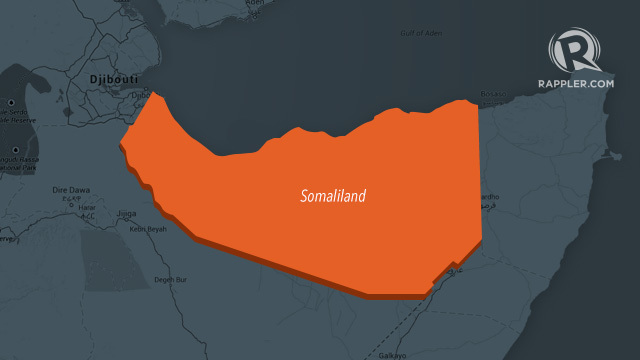
In May 1991 Somaliland declared independence from the rest of Somalia and over the past 17 years the government there has restored law and order to make it one of the must democratic and functioning societies in the Horn of Africa .
In stark contrast to its neighbour Somalia, Somaliland has become an oasis of peace, stability and progress and a haven for thousands of Somalis fleeing from their war-torn country.
Yet Somaliland's independence and sovereignty is still not recognised by most of the international community including Britain.
What are the obstacles in the way of international recognition and is this really the best way forward?How have the people of Somaliland built such a stable democracy, society and institutions in such a war-torn region and what are the lessons other de facto states can learn from it?
Richard Dowden is director of the Royal African Society. He worked for the Times until 1986 when he became Africa Editor of the Independent and in 1995 he took the post of Africa Editor at The Economist. He has also made three television documentaries for the BBC and Channel 4 on Africa.Adam Mussa Jibril has been the Somaliland representative in the UK since January 2008.Michael Walls is chair of Somaliland Focus UKEdward Mason is head of the London Office of Independent Diplomat. He joined the organisation in November 2005 and has worked on all of ID’s current projects with the governments of Kosovo, Somaliland and Western Sahara. He is ID’s expert on Somaliland.

Click on the title for complete video of the Insight.

Ethiopian occupation and Chaos in Somalia

Medeshi Sept 10, 2008
By Lee Jay Walker
December 2006 the Ethiopian government dislodged the Islamists from power in order to bring some fresh hope to the people of Somalia and also to prevent the spread of Islam.
(Photo : Ethiopian soldiers in Somalia)
Shortly after Ethiopia crushed the Islamists in Mogadishu they appealed for global help and support. After all, the United States of America stressed the importance to fight back against international terrorism. However, the international community appeared to turn a blind eye, with the notable acception being Uganda and some other nations who gave basic support. Therefore, why did major powers ignore Ethiopia and will this nation pull out of Somalia in order to fight a rear guard action via Ethiopia?
Before focusing on current events it is important to briefly mention the past between both nations. If we go back to the 1977-1978 Ogaden War, then it is clear that both nations do not trust each other and power politics is a major issue, and this is based on ethnic and religious lines. During the Ogaden War the Soviet Union (once an ally of Somalia) and Cuba helped Ethiopia to defeat Somalia because at one point Ethiopia could only control 10% of Eastern Ethiopia in the Ogaden region. For Somalia the Ogaden should belong to them because of ethnic and religious factors, however, to Ethiopia this region is vital because after the loss of Eritrea, in recent times, this nation can not afford to lose even more territory.
Therefore, in history the rulers of both modern nations have not trusted each other and this goes back centuries and under various different names, for example ancient Abyssinia (Ethiopia) was often at loggerheads with the Somali people and other ethnic groups. Also, the role of Ethiopian Orthodox Christianity was central to the rulers of Abyssinia and to them they feared losing power to Islam and other ethnic groups in the Horn of Africa. Therefore, Eastern Ethiopia was a weak spot because the majority of people were Muslim and the traditional rulers of Ethiopia, the Amhara and the Tigrean, feared losing power. So in history and modern times the history of Ethiopia and Somalia is often inter-linked and sadly this linkage is usually negative.
If we move closer to modern times, then it is clear that both nations have been ravaged by the Cold War, civil wars, starvation, ethnic or clan based politics, outside manipulation, and other major factors. Given this, the mechanics of democracy and mutual understanding appears to be lost and the past vicious circle remains today. Also, the role of the United Nations and the United States in Somalia was also an abject failure in the 1990s. Added to this is the growth of radical Islam in Somalia, international terrorists using this nation for their own political gains, just like in Afghanistan, and continuing outside meddling, means that instability is flourishing throughout the region.
Therefore, from an Ethiopian perspective the nation of Somalia is vital with regards to the war on international terrorism and preserving the unity of Ethiopia. Yet, to the leaders of modern day Ethiopia they see little international support and they are not sure why? However, the answer is not that simple because major problems already exist throughout the world and of course the mass media focuses on Iraq, the Israel-Palestinian issue, and Afghanistan, the most. However, if radical Islamists managed to rule in Somalia then this nation could destabilise the entire region. Also, Islamic terrorists could use this nation in order to cause mayhem in other nations. This reality is obvious in Ethiopia, however, the government of this nation feels betrayed because of being let down by the international community.
Since dislodging the Islamists from power in late 2006 the Ethiopian government suffered the usual war syndrome, just like America in Iraq, because the insurgents have hit back via breathing space. Given this reality, the Ethiopian government is alarmed by her neighbour Eritrea because Ethiopia claims that this nation is causing chaos in the Islamic heartlands of eastern Ethiopia. Also, the rulers of Ethiopia claim that Eritrea is also helping the Islamists in Somalia via economic support and they also accuse wealthy outside organizations of being involved in this crisis. Of course, Eritrea denies this and instead blames Ethiopia for causing the mayhem. Whatever the "real truth" is, it is clear that regional disunity is not helping and instead it is merely adding "fuel to the fire."
Therefore, the policy enacted by Ethiopia is now in danger because of the growing insurgency and lack of outside support. If Ethiopia fails, then more chaos may spread to Kenya, Sudan, Uganda, and other nations. Also, Ethiopia will face enormous internal problems and this situation is extremely grave now. Given this, the leader of Ethiopia, PM Meles Zenawi, stated "We didn't anticipate that the international community would be happy riding the Ethiopian horse and flogging it at the same time for so long." PM Meles Zenawi also rebuked the international community for not funding the African Union and its peacekeeping force. Therefore, Ethiopia may decide to pull out of Somalia if a solution can not be found in the near future?
So why did the international community fail Ethiopia and Somalia? Maybe for politicians and military leaders in America, it is the terrible memories of their failed policy in Somalia and the lasting images of American troops being dragged through the streets of Mogadishu. Meanwhile, for the leaders of the European Union (EU) they may deem this war to be too distant and some nations may also be divided within Europe. After all, not all nations support the Ethiopian theory and some nations have sympathy with the opposition or they are neutral. In Africa it is more complex because many nations fear the chaos of Somalia, however, regional nations like Kenya, Sudan, and Uganda, have many internal problems to deal with and their resources are limited.
However, if Ethiopia does pull out or the civil war increases, which in turn could lead to growing malnutrition and starvation, or a base for international terrorism; then the international community will rue this missed opportunity. Therefore, the international community should either be supporting the Somali interim government via economics, peacekeepers, and other viable methods to enhance stability. Or the international community should be working with Ethiopia in order to crush the forces of disorder. Sadly, the Ethiopian leader, PM Meles Zenawi, may be correct because it does appear that the international community is not interested and like he states, they are "...happy riding the Ethiopian horse and flogging it at the same time for so long." Therefore, Ethiopia may decide to pull out and strengthen their border with Somalia and fight via a proxy force, if so, then a missed opportunity will have gone begging and the people of Somalia will continue to suffer.
Lee Jay Walker Dip BA MA

MP killed in provincial town in lawless Somalia

Tuesday, September 09, 2008
MOGADISHU (AFP) — A gunman Tuesday killed a Somali lawmaker in the provincial town of Baidoa, the latest in a series of attacks in the lawless African nation, a witness and colleague said.
Mohamed Osman Maye(Photo) died on the spot outside a mosque in Baidoa, site of the country's transitional parliament, about 250 kilometres (155 miles) northwest of the capital Mogadishu, they said.
"He was shot in the head outside a mosque where he had attended evening prayers. Maye is now dead and may Allah rest his soul in peace," Amir Shaketi, another lawmaker, told AFP.

Witness Yassin Mohamed said a lone gunman fled the scene after shooting the lawmaker, who did not have bodyguards.
"I saw a man running from the scene after shooting the MP, then people gathered around his body," Mohamed added.
Maye becomes the second Somali lawmaker to be killed in Baidoa since the country's parliament and government relocated from exile in Kenya in June 2005 to attempt to pacify the country.

Somalia plunged into civil war after the 1991 ouster of president Mohamed Siad Barre, setting off a deadly power struggle that has defied numerous attempts to restore a functional government.
Source: AFP, Sept 09, 2008

HORN OF AFRICA: Calm sea lures African migrants

Medeshi Sept 10, 2008
Hundreds of African migrants, mostly Somalis, have taken advantage of calm seas to make the perilous journey from Somalia to Yemen in the first week of September and more are expected, Hussein Hajji, the Somali consul in Aden, said.
Hajji told the press on 7 September that more than 2,000 Africans, mostly Somalis, landed on Yemeni shores after crossing the Gulf of Aden. "Between three and five boats arrive at Yemeni shores on a daily basis," he said.
Almost all the new migrants had arrived safely due to the calm sea. However, one incident claimed the lives of 14 Somalis who drowned in deep waters offshore. "Their bodies were buried," he said.
In one boat a girl died of lack of oxygen after being confined to a very small cabin. "These are fishing boats and are not designed to carry passengers. After three hours at sea it is difficult to breathe in the cabins. When passengers try to get out [of cabins], the smugglers stop them," he said.
According to Hajji, 85 percent of the new arrivals intend to seek a better life in the oil-rich Gulf States.
New security plan Yemeni authorities, meanwhile, have prepared a new security plan to stem the illegal migration of Africans into Yemen by preventing the boats from entering Yemeni territorial waters.
Ahmed Hayel, head of the Ministry of Interior's Information Centre, said the plan would be implemented in cooperation with neighbouring countries as well as international marine forces operating in the Red and Arabian seas.
"The plan aims at decreasing the continuous African influx which overburdens Yemen. It will put an end to the arrival of smuggling boats in Yemen," Hayel told the press.
Implementation will begin next month, he said.
Yemen has been receiving thousands of African migrants since 1991 as a result of civil wars and instability in the Horn of Africa. It is the only country in the Arabian Peninsula that has signed the 1951 UN Convention Relating to the Status of Refugees and its related 1967 Protocol.
Somalis are given automatic refugee status by the government of Yemen, while non-Somalis (mostly Ethiopians and Eritreans) must apply to the UN Refugee Agency (UNHCR) for refugee status.
"When the African migrants reach the Yemeni shores, we are committed to receive them. Non-Somalis are not allowed to stay and so they get deported [if they do not qualify for refugee status]," Hayel said.
The Yemeni official said the new plan would not contradict the government's signing of the UN Convention. "Signing the convention does not mean we should receive large numbers of Africans. The government has to take all necessary measures to stop their influx. Yemen cannot stand the burden," he said, adding that large numbers of African migrants were expected in the coming days. According to UNHCR, more than 22,532 people have arrived in Yemen since the beginning of 2008. Some 165 died while trying to reach the shore, and another 220 are missing, presumed dead. UNHCR has registered over 100,000 Africans, mostly Somalis, in Yemen.

SOMALIA: Puntland villages facing starvation

NAIROBI, 9 September 2008 (IRIN) - Thousands of villagers in Mudug region of the self-declared autonomous region of Puntland, northeastern Somalia, are on the brink of starvation due to severe food and water shortages, local officials said.
The high level of inflation is contributing to the suffering of the people. "Everything costs three to four times more than it did a year ago," said Dahir Abdulkadir, the governor of Mudug. "This is disastrous for people whose only source of income [livestock] is no more."
"People in the villages of Beer Dhagahtuur, Baadweyn and others nearby, all part of Harfo district, are facing the worst food crisis in a very long time," Bashir Mahamud Mire, the deputy governor of Mudug region, who recently visited the area, told IRIN.
He said severe drought, loss of livestock - the economic mainstay of the area - and hyperinflation had pushed many families to the brink of starvation. "These are people who depend on their livestock and it is dead or is so weakened it is of little use," added Mire.
Abdulkadir said the plight of the villagers was a "reflection of a broader humanitarian problem faced by people of this region both in rural and urban areas". The area has endured three years of little or no rains.
An estimated 3,000 families (about 18,000 people) live in the area. Abdulkadir told IRIN of reports from other villages on the verge of catastrophe through hunger.
"There are families that have lost everything," he added, appealing to aid agencies to help the people "before it is too late".
Mire, who oversees the health and social services of the region, told IRIN that lack of food had weakened the people and was having a negative impact on their health.
He witnessed about 80 people, most of them children, who were also suffering from watery diarrhoea. ah/mw

Somaliland: Teacher Training for All

Medeshi Sept 8, 2008
One effective way of realizing Education for All is to educate more teachers. Unfortunately there are not enough universities or college buildings to educate everyone in the world. But with e-learning we can reach more, even in the rural and remote areas and people that usually shouldn’t be able to participate in higher studies depending on lack of money or life situations.
MKFC Stockholm College are running teacher training in Somaliland from Stockholm, Sweden. The teacher training is based on the British standard and here is an extract of an interview with the tutors from MKFC Stockholm College website.

Emma Hedlund, educating tutor, and Mohamed Xarbi, tutor and communicator, are excited after the start up of a complete Teacher Training End-to-End eLearning™ education in Somaliland
–It’s a quite comprehensive education lasting for three years and a half, says Emma, tutor at the course. And it will give the 13 teachers very good common teacher qualifications. Most of the teachers have long experience at the school and are well educated, but there is a great value in getting a common platform in method and pedagogic.
While Emma is the formal tutor of the course, responsible for course content and educational tutoring, Xarbi plays the role of a communicator and supporter in technical matters.
–I am pushing the students and I inform and explain things. Simultaneously I do some support in course administration on the learning platform, says Xarbi.
Then, are there any problems when performing the course?
–The lack of computers and a slow Internet connection at the school may cause some waiting, says Xarbi, but we have sent the course materials on CD-roms, so they can do most of the job without any connection.
The End-to-End eLearning™ concept offers different channels for managing a course despite modest technical equipment. Also, the standard of equipment as well as connections will certainly improve; it’s surely just a matter of time.
The Somaliland school also has a blog where they post about their processes of participating in the teacher education, you find it here.
Imagine when we won’t be limited by the picture of a physical building when thinking about education, but rather thinking of learning in a connected world. Then our vision of Education for All will be realized.

Africa in pictures: 30 Aug-5 Sept

On Friday, a displaced woman in Somalia looks out of her ruined makeshift house outside the capital, Mogadishu, after torrential rain. For more on Africa's week, tune into BBC Weekend Network Africa.
Children play football on the outskirts of Manzini in Swaziland where nearly 40% of adults are unemployed.

On Wednesday, thousands of Swazis protest in Manzini at the amount of money being spent to celebrate Swaziland's 40th year of independence and the king's 40th birthday this coming weekend...


Algerian film director Tariq Teguia waves to photographers before the screening of his movie Gabbla (Inland) at the Venice International Film Festival on Thursday.


An illegal African migrant awaits medical attention at a beach on Tenerife in the Spanish Canary Islands on Tuesday after making the treacherous - and often deadly - crossing from Africa.


On the same day, Ivory Coast's ex-President Konan Bedie waves to supporters. The country, split in two six years ago in an armed rebellion, has reunited and goes to polls at the end of November.


A South African fan gives the thumbs up after his team - the Springboks - beat the Australian Wallabies during their Tri Nations rugby union match in Johannesburg on Saturday.


The next day, relatives of those accused of killing a US diplomat and his driver in Sudan earlier this year shout slogans outside a courthouse in the capital, Khartoum, before the beginning of the trial.


Residents of the drought-stricken southern
Ethiopia town of Boricha wait for their names to be called out to receive their 10kg food ration on Saturday


The Muslim fasting month of Ramadan began this week - on Tuesday, a Tunisian vendor at the central market in the capital, Tunis, sells dates to those preparing to break their fast.


Qaar ka mid ah Ururada Bulshada Rayidka ah oo walaac ka muujiyay mudo dhaafka golayaasha deegaanada

Annaga oo ah Ururada Bulshada Rayidka ah ee Madaxa-banaan waxaanu si wayn uga walaacsanahay