Pop Star Murdered in Dubai: Egypt MP Charged

Medeshi Sept. 5 , 2008
Pop Star Murder: Egypt MP Charged
An Egyptian billionaire has been charged with hiring a hitman to kill the winner of Lebanon's equivalent of Pop Idol, in a case that has rocked the Arab world.
(Photo: Suzanne Tamim)
Suzanne Tamim enjoyed a meteoric rise to pop fame after winning the reality show in Lebanon.
But on July 28 the star's body was found with her throat slit in her luxury apartment block in Dubai.
The man accused of ordering her death is one of Egypt's most prominent and most successful tycoons, Heshaam Talaat Moustafa.
The alleged killer was a former police officer who stalked Tamim from London to Dubai before killing her, say authorities.
They claim the hitman entered the singer's apartment pretending to bring a letter from her landlord. "He then laid into her with the knife," read the official indictment, "cutting her main arteries and her trachea".
Moustafa is charged with paying the alleged killer two million dollars to carry out the killing.
The Egyptian is an MP with the ruling National Democratic Party, led by President Hosni Mubarak - but that is not helping him now. The upper house of the parliament has stripped him of his legal immunity as a lawmaker
The indictment says little about a possible motive, mentioning only that the killing was an act of revenge.
Arab papers have speculated that the singer had been romantically involved with Moustafa, a married father-of-three.
Lebanese pop music is enormously popular across the Arab world. Tamim had been one of its biggest stars.
The story is causing a sensation in the region, but in Egypt was subject to a reporting ban last month, only lifted in time to reveal the identity of the pair allegedly behind Tamim's killing.

SOMALIA: Schools close in protest over insecurity

NAIROBI, 3 September 2008 (IRIN) -
A three-day protest against insecurity and attacks targeting educational institutions in Mogadishu has shut down most schools and left thousands of children out of class, locals said.
"Almost 90 percent of primary and secondary schools in Mogadishu are participating in the strike," said Abdulkadir Omar Roble, spokesman for the Education Fraternity, an umbrella organisation of education networks in the city, which organised the protest.
Deliberate attacks and targeting of schools were the main reasons for the strike, Roble told IRIN on 3 September. "In this year alone, six schools have been attacked, resulting in injuries to six students and two teachers," he said.
Many schools in the city are totally destroyed and many students are no longer going to school. "We are losing a lot of children from classes because parents no longer feel their children will be safe," he added.
A local civil society activist told IRIN the education system in the capital was "almost broke".
"For some strange reason they seem to relish targeting schools," he said, adding that this trend had forced many educators to close their schools and send the children home. "In the last two years, at least two dozen schools have either been destroyed or closed due to the insecurity."
Roble accused government forces of attacking two schools last week, Imam Shaafi and SYL. "Five students and two teachers were injured in the attacks," he said.
"These attacks are badly undermining an already weak education sector," said the civil society activist. "Many in the education sector have worked hard over the last 18 years to restore education, but that is being undermined by the volatile situation."
Abdi Haji Gobdon, the government spokesman, told IRIN the government did not condone "entering or attacking" educational institutions.
"The government is very concerned about these incidents and will do everything in its power to deal very harshly with the perpetrators," he said.
After the collapse of Somalia's central government in 1991, schools and universities were destroyed as the city was torn apart by militia. But private schools have been gradually re-established over the past few years.
"In the past 18 years we have not experienced these kinds of attacks on schools," said Roble.
Organisers of the school strike said they wanted to show the public and the government that “these targeted attacks must stop". They appealed to the government to deal with the attackers and called on the opposition to cease mounting attacks on government positions near schools.
Roble urged the international community to support his group "and provide both

Ethiopia’s Somali region is worst affected by drought, observes UN envoy

Medeshi Sept 4, 2008
Ethiopia’s Somali region is worst affected by drought, observes UN envoy
APA-Addis Ababa (Ethiopia) The Somali region of Ethiopia, inhabited mostly by ethnic Somalis is one of the regions worst hit by the current drought in Ethiopia, a visiting UN envoy said here Wednesday. The envoy, United Nations Under-Secretary-General and Emergency Relief Coordinator John Holmes was speaking after visiting the area for the past two days.
“It is critical that the presence of NGOs and other humanitarian actors be expanded as soon as possible in this region. Mothers and children are in desperate need of food and water. Strengthening the response, including transparent and ongoing assessments, will be the key to saving lives,” said Holmes.
He is visiting the country following Ethiopia’s recent appeal to feed around 4.5 million people who depend on food assistance due to poor rain from February to April 2008.
He underlines the need to speed up the current humanitarian assistance in the area to avoid any deaths from the drought.
“In the absence of humanitarian assistance, Ethiopians’ attempt to adopt to the status of asylum seekers in the hope of accessing food, shelter and medical care. However, while they may not be asylum seekers, they live in grim conditions and need immediate assistance.” he added.
The Somali region is experiencing the worst emergency since 2001 following the failure of three consecutive rainy seasons.
According the UN Office for the Coordination of Humanitarian Affairs (UNOCHA) Ethiopian office, more than one million people are being assisted through emergency food aid.
“Water is scarce, forcing emergency interventions to continue even throughout the rainy season,” the office said.

Court annuls Somali assets ruling


Medeshi Sept 4, 2008
Europe's highest court has overturned a ruling to freeze the funds of a Sweden-based foundation that used to be one of Somalia's biggest money transfer firms.
The European Court of Justice has given the EU three months to inform al-Barakaat International Foundation why its funds were frozen.
The court also overturned the decision to freeze the assets of Saudi businessman Yassin Abdullah Kadi.
EU governments froze the assets in 2001 because of suspected links to al-Qaeda.
The court's decision breaks with a UN ruling ordering member states to freeze the assets of people or groups accused of links to terrorism.
With the chaos and conflict in Somalia, many people survive through funds sent by their relatives abroad, using money transfer agencies.
Somalia has not had an effective national government since 1991 and firms such as al-Barakaat are the closest institutions to banks which still exist.
'Conceivable'
"The rights of the defence, in particular the right to be heard and the right to effective judicial review of those rights were patently not respected," the court said in its ruling.
But it was not immediately clear whether the assets would be released.
The court said it was still "conceivable" that the measures might be justified.
Other groups or individuals have won rulings for similar reasons, but their assets have remained frozen.
EU governments argue that the court rulings do not oblige them to remove people from a blacklist - only to inform them that their assets have been frozen.
Swedish lawyer Thomas Olsson, who represented al-Barakaat, told the AP news agency he would examine ways of having assets released to the Somali immigrants in Sweden who used the network to send funds to relatives in Somalia.
A spokeswoman for the European Commission said the EU would try to rectify its failure to respect the parties' rights of defence.
"We have roughly three months to repair this," she said.
The court's decision overturns an earlier ruling in 2005.

Somalia: MP says Ethiopia “colonizes Somalia”

Medeshi Sept 4, 2008
Somalia: MP says Ethiopia “colonizes Somalia”
By ShabelleOne of Somalia’s legislative body members has announced that Ethiopia laid claims to Somalia. Reacting on the transitional government’s remarks regarding capturing of Kismayo town from the islamists Osman Elmi Boqore has told Shabelle that Ethiopia dictated for the government to recapture Kismayo to make possible that Ethiopian troops to move out to the town that has significant port.
“Ethiopia wants to seize where ever it interests in Somalia to acquire supplementary economic because Ethiopia is landlocked, Somalis seized the town only Somalis can also recapture “no Ethiopians” ” Boqore said.
Regarding on the agreement signed by the president and the prime minister in Ethiopia Boqre has pointed out that it was “erroneous” accord since they didn’t in person agreed as he put it. “They have been read out for what they agreed, they have to agree as leaders of nation” Boqore further said. It’s the first kind or speech from Somali MP who stated that Ethiopia seized Somalia and take

US' Somalia Policy Likely to Bring Blowback

US' Somalia Policy Likely to Bring Blowback
by Jim Lobe
US counterterrorism policies and support for the Ethiopian-backed Transitional Federal Government (TFG) in Somalia have helped create an increasingly desperate humanitarian and security situation in the East African nation, whose population has become increasingly radicalized and anti-US, according to a new report by a major US human rights group.
The report, authored by Ken Menkhaus, a Davidson College professor who is regarded as one of the foremost US experts on the Horn of Africa, calls for a thorough reassessment of US policy, including its support for the TFG and the primacy it has given to its "war on terrorism" in Somalia.
"US counterterrorism policies have not only compromised other international agendas in Somalia, they have generated a high level of anti-Americanism and are contributing to radicalization of the population," concluded the report, entitled "Somalia: A Country in Peril, a Foreign Policy Nightmare."
"In what could become a dangerous instance of blowback, defense and intelligence operations intended to make the United States more secure from the threat of terrorism may be increasing the threat of jihadist attacks on American interests," the report stressed.
The 17-page report, released by ENOUGH, a group launched last year by the Brussels-based International Crisis Group (ICG) and the Washington-based Center for American Progress (CAP), was released amid continuing violence in Somalia that has forced some one million people to flee their homes since December 2006, when US-backed Ethiopian and TFG forces swept the Islamic Courts Union (ICU) out of the capital, Mogadishu, and other major cities and towns.
The UN recently estimated that, barring substantial improvement in the security situation, some 3.5 million Somalis will be dependent on humanitarian aid by the end of this year.
"The (current) crisis is fundamentally different and fundamentally worse than the situation of the last decade and a half," said Chris Albin-Lackey, a Horn of Africa specialist at Human Rights Watch (HRW), who appeared with Menkhaus at the report's release at a conference sponsored by at the Woodrow Wilson International Center for Scholars here Wednesday.
Albin-Lackey, who has conducted some 80 interviews of Somali refugees in East Africa in the past month, said ongoing violence, including almost daily artillery bombardments by Ethiopian army and TFG forces on the one hand and opposition militias, including the Islamist Shabaab on the other, as well as assassinations carried out by both sides, have added to the insecurity.
"People have nowhere to turn for security," he said, adding that search operations by TFG forces, while nominally for the purpose of arresting suspected insurgents, had become "an excuse for murder, rape and looting on an incredibly large scale." As a result, he said, Mogadishu has become "largely depopulated" with about two-thirds of the population – or about 800,000 people – having left their homes there over the past 18 months.
Menkhaus described last month's signing by the TCG and the opposition Alliance for the Reliberation of Somalia (ARS) of the "Djibouti Agreement" negotiated between moderate leaders of both sides with the help of UN Special Representative Ahmadou Ould-Abdulla last June as an "important step" toward reconciliation but warned that hard-liners in both camps could derail it.
The agreement, which has been rejected by the Shabaab and was only agreed to by the hawkish TFG president, Adullahi Yusuf, under heavy pressure from Ethiopian President Meles Zenawi, calls for a cessation of hostilities, deployment of a UN peacekeeping force, and the subsequent withdrawal of Ethiopian forces.
"The hope is that any agreement that facilitates the withdrawal of Ethiopian forces will open the door for an end to the insurgency," according to the report.
But the implementation of the agreement faces "steep challenges," warned Menkhaus, not least because "the moderates [who negotiated the accord] don't control any of the armed groups." While the Shabaab have already denounced the ARS leaders as "apostates," he noted, hard-liners in the TFG know that they can stay in power "if and only if the Ethiopians stay."
Only by reinforcing the moderates can the international community, including the US, enhance the chances for the agreement's successful implementation and, with it, the chances for reconciliation, according to Menkhaus. But that will require major changes in US and western policies, which have "actually worked to strengthen and embolden hardliners" over the past two years.
In that respect, the US emphasis on counterterrorism has been particularly destructive, not only in supporting the Ethiopian offensive in December, 2006, but, more recently, in placing the Shabaab on its list of designated terrorist groups last March. That step not only isolated opposition moderates from their own coalition but also gave the Shabaab "even more reason to sabotage" ongoing peace talks.
At the same time, Washington has provided "robust financial and logistical support to armed paramilitaries resisting the command and control of the TGF, even though they technically wear a TFG hat" to both fight the Shabaab and track down suspected terrorists.
"To the extent that these security forces also deeply oppose...reconciliation efforts with the opposition, the US counterterrorism partnerships have also undermined peace-building efforts by emboldening spoilers in the government camp," according to the report.
Washington has not been alone in supporting the hard-liners, however. As part of their state-building agenda, other western donors have also provided direct support to TGF security forces under the control of the hawks. Despite the UN's role as a supposedly neutral broker between the TFG and the opposition, the UN Development Program, has also provided security assistance to the TFG.
The Tomahawk missile attack that killed Shabaab leader Aden Hashi Ayro in May – the latest in a series of similar strikes against armed Islamists in Somalia, allegedly tied to al-Qaeda – resulted in a sharp radicalization in the group, which announced at the time that it would strike against US and western targets, including aid workers, as well as Ethiopian and TFG forces, compounding an already dramatic humanitarian crisis.
"Somalia today is the most dangerous place in the world for humanitarian aid workers," according to Menkhaus. More than 20 humanitarian workers have been killed since January, while some 30 more have been kidnapped.
"The situation in Somalia today exceeds the worst-case scenarios conjured up by regional analysts when they first contemplated the possible impact of an Ethiopian military occupation," according to the report. "Over the past 18 months, Somalia has descended into terrible levels of displacement and humanitarian need, armed conflict and assassinations, political meltdown, radicalization and virulent anti-Americanism."
"We've gotten the exact opposite of what we set out to achieve," Menkhaus noted, including a "population radically angry at us and very fertile ground for al-Qaeda."
(Inter Press Service)

UN aid chief wants more access to Ethiopia's Somali region

UN aid chief wants more access to Ethiopia's conflict zone
KEBRI DEHAR, Ethiopia (AFP) — UN humanitarian chief John Holmes on Tuesday urged Ethiopia to grant aid groups access to conflict zones in the southern Ogaden region where the army is battling a rebel group.
Ethiopian military launched a crackdown last year on the region after the Ogaden National Liberation Front (ONLF) attacked a Chinese-run oil venture, killing 77 people.
Aid workers say the military operation has caused a humanitarian crisis, displacing hundreds of thousands of people, many of them fleeing to lawless neighbouring Somalia.
"There are still some areas (in Ogaden) where access is more limited because conflict is more active. That's where we want to press (the governement) for more free access," he told reporters during a fact-finding mission to the country.
"We need to be allowed to work freely, do our assessments freely and be able to release data."
But he conceded that aid agencies had unfettered access in one Ogaden region, Kebri Dehar. "It's a lot better than it was when I was here last year."
But he criticised inadequate civilian and human rights protection in Ogaden, a barren, impoverished region where the discovery of gas and oil has brought new hopes of wealth as well as new causes of conflict.
"We haven't had a satisfaction that I would like on that and I have raised that question with the government," he said.
Ethiopia has denied as exaggerated charges by aid groups that military operation has hampered delivery of aid to the region.
Holmes is on a three-day visit to Ethiopia, where 4.6 million people need emergency assistance and eight million others need immediate food relief due a severe drought, according to the UN humanitarian office (OCHA).

Piracy in Somalia: why solutions can’t be found at sea

Posted by Medeshi 2 Sept, 2008
Piracy in Somalia: why solutions can’t be found at sea
Christian Bedford
Maritime Forces Pacific Headquarters
The year 2008 has been a banner one for pirates in Somalia.
By the end of May, there had been over a dozen incidents of piracy in the waters off its vast coastline, and attacks were occurring with startling regularity.
For over two years, the International Maritime Organization (IMO) had been lobbying the United Nations Security Council (UNSC) to take action to combat Somali piracy, a phenomenon that had grown steadily to become the single largest industry in that fractured country.
In an unprecedented move, on June 2, the UNSC adopted Resolution 1816 (2008), authorizing foreign naval vessels to enter Somali territorial waters for an initial period of six months (and likely to be extended) to use “all necessary means” to repress acts of piracy and armed robbery at sea, consistent with relevant and existing provisions of international law.
Although the UNSC resolution is welcome news for shipping companies, insurers, vacationers, and others who find themselves off the Horn of Africa, it does little to address the root causes of Somali piracy, and as such, is likely to fail to end acts of piracy off the troubled country’s coast.
The World’s Forgotten State
Although there are numerous reasons for the rise in pirate attacks in Somalia over the past few years, Western indifference towards the country must be placed near-or-at the top of the list.
It has been more than 17 years now since the fall of the Siad Barre regime, the last semblance of truly national governance that Somalia has known. In the interval, several other international crises, from the Balkans, to India/Pakistan, to Afghanistan and Iraq, have galvanized world attention and relegated “lesser” conflicts and regional disputes to the last page of the newspaper.
This, of course, is in addition to the world’s apparent indifference towards African issues in general, with the exception of extraordinary cases such as the 1994 Rwandan genocide and the conflict-diamond-fuelled West African civil wars.
Even Congo’s 1998-2003 civil war, that involved at least eight countries and resulted in over 5 million deaths, making it the deadliest conflict since WWII, was largely unknown in the West).
Since 1991, Somalia has limped along a brutal path of warring clans, separatist movements, and failed Western interventions that have, collectively, bestowed upon the country the dubious honour of being the world’s truest “failed state”.
Today, this lack of central authority and effective Western involvement has caused Somalia’s lawlessness to reach beyond its coastline to infect its territorial waters that lie across one of the world’s busiest maritime intersections, the heavily trafficked approaches to the Red Sea.
Although the UNSC’s recent resolution aimed at Somali piracy is a positive first step, the scope and sophistication of the pirate’s operations in 2008 means that the world community will have to tackle the issue both at sea and on land; it remains to be seen whether the collective will exist to exercise the latter.
A World Leader
Far from a random group of miscreants high on Qat and looking for a quick buck, Somali pirates are part of large, well-financed and well-organized criminal organizations based in Somalia, the semi-autonomous northern region of Puntland , and in states such as Kenya, Tanzania, and the United Arab Emirates. It has even been suggested that Canada, home to the largest Somali diaspora outside Africa, hosts logistical and organizational cells for Somali pirates.
Experts on the topic say there are five main pirate gangs that operate along Somalia’s 3,025 kilometre-long coastline (Africa’s longest), each of which is tied to a powerful local warlord who, in turn, has connections to the largely ineffective Transitional Federal Government (TFG) of President Abdullahi Yusuf.
Although borne out of opportunity by having no central authority to prevent it, it has been argued that Somali piracy is in fact viewed by many in the country as providing an essential service by policing the country’s territorial waters and preventing illegal fishing and toxic waste-dumping.
Although this self-righteous assessment may be scoffed at by Western shipping firms whose vessels are affected by the attacks, illegal fishing in Somali waters is in fact quite a lucrative business, with the United Nations estimating that the country regularly loses up to USD $100 million per year due to illegal fishing by states as diverse as Spain, South Korea, and Egypt.
The pirates’ sense of national duty notwithstanding, what may have begun as an exercise in maritime protection has now grown into the largest industry in Somalia.
In a country where the average yearly income is at most USD $600, a pirate earns between USD $10,000 and $30,000 per year, an unheard-of amount for most Somalis. Ransoms this year alone have included a German-registered freighter released for USD $800,000; a Dutch cargo ship exchanged for $700,000; the Danish-owned Spitzer Korsakov icebreaker freed for $1.6 million; and the now-famous French luxury yacht Le Ponant which was released after its owners reportedly paid $2 million.
While Somali pirates generally hold Western-flagged ships for ransom, vessels with less-well-to-do owners are employed as “mother ships”, allowing the pirates to strike at vessels traveling farther out at sea.
In the case of the hijacking of Le Ponant, it was attacked more than 160 miles off the Somali coast by a large Yemeni-flagged fishing trawler that launched two smaller speedboats, each with six pirates toting AK-47s and RPGs.
The use of these “mother ships” has meant that the danger zone for ships traveling near Somalia has expanded significantly.
Five years ago, captains were advised to stay at least 50 miles off the coast of Somalia.
However, today, due to increased pirate attacks and their enhanced capabilities, including GPS devices and satellite phones, that advisory has extended to 200 nautical miles, and will likely have to be expanded again after the Spanish-owned Playa de Bakio, a fishing trawler, was seized by Somali pirates in late June, 247 miles off Somalia’s coast.
Cure or a band-aid?
So what effect will the United Nations Security Council’s resolution have on Somali piracy?
In the near term, it is likely that this resolution will succeed in reducing pirate attacks.
The areas immediately surrounding Somalia’s territorial waters are being patrolled by Combined Task Force 150, a flotilla of naval vessels currently commanded by a Canadian Navy commodore.
Coalition naval forces have had successes recently against Somali pirates, including the French Navy’s well-publicized operation to track down and arrest the perpetrators of the Le Ponant hijacking, and the US Navy’s success in securing the release of the Japanese tanker MV Golden Nori.
However, despite these successes, CTF 150 and other allied navies cannot hope to fully patrol and monitor territorial waters that are the size of Somalia’s, particularly given the fact that CTF-150’s area of responsibility extends from the North Arabian Sea to the Gulf of Oman and the Red Sea.
Given other events occurring in the area, including smuggling between Pakistan’s Makran coast and the Arabian peninsula, human trafficking, the ongoing search for weapons of mass destruction, and recent heightened tension between the United States and Iran, Western nations are unlikely to be able to dedicate enough naval forces to Somali waters to tackle Somali piracy adequately.
In fact, history suggests that an “off shore” approach to this issue will marginalize the Somali pirates at best throughout the duration of the UNSC resolution, and will not succeed in tackling the core issue of a lack of central authority. Piracy in Somalia began following the dissolution of the Barre government in 1991.
There is little evidence to suggest it occurred before this. During the rule of the Union of Islamic Courts (UIC), a grouping of Sunni Muslim clans who controlled southern Somalia for six months in 2006, pirate attacks in the vast area they ruled virtually ceased as they brought a measure of law and order that had not been seen in nearly a generation.
Although considered an unacceptable government by Western powers due to the UIC’s alleged connections to, and harbouring of al-Qaeda militants, the UIC is nonetheless credited with bringing stability to southern Somalia during its brief time in power.
Other recent “off shore” approaches towards Somalia by the United States have included Tomahawk cruise missiles launched from submarines lurking off the coast, and strafing runs by AC-130 Spectre Gunships.
These tactics have rarely accomplished their intended goal, and have killed many civilians in the process, angering locals and driving them into the arms of groups like the UIC. When boots have hit the ground in Somalia, the results have all too often been disastrous, both for foreign forces and Somalis.
Canada and the United States sent troops into the country in the early 1990s, with Canada having to withdraw its forces following the infamous “Somalia Affair,” and with the U.S. losing 19 Marines in 1993 in the events that were portrayed in the film “Black Hawk Down.”
Pakistan, another member of CTF-150, lost 24 soldiers in clashes with a Somali militia in the same year. Ethiopian troops, the largest contingent in an AU force that overthrew the UIC and remained in the country to provide security, have been regular targets for Somali insurgents, with dozens killed since 2006.
The Way Forward
Given current priorities and commitments, as well as ongoing crises in Darfur and Zimbabwe, it is highly unlikely that Western nations will commit any significant efforts and resources to resolving Somalia’s political crisis.
Nor it is likely, despite their best efforts, that the African Union, through its peacekeepers and negotiators, will be able to bring peace and stability to a country that has been wracked by chaos for so many years.
A new approach is clearly needed both to help this struggling country and end maritime piracy off its shores.
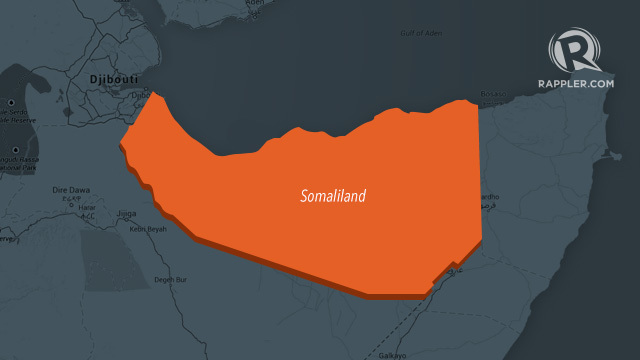
Perhaps this approach will mean finally recognizing the regions of Puntland and Somaliland, which have operated independently from Mogadishu’s rule for nearly twenty years and have been on the frontlines of Somalia’s struggles with piracy.
Although recognizing new political entities can be a dangerous game to play, the alternatives are continued strife, increased piracy, the use of the country as a safe-haven for terrorists, and the risk that Somalia’s internal disputes could spill over its borders and infect neighbouring states more than they already are.
Also, recognizing these two quasi-states should empower them to strengthen their institutions, driving pirates south to areas that lack such law and order and thereby making it easier for coalition forces to focus on them through the Security Council’s recent resolution.
Western diplomats based in East African countries should redirect their focus in a way similar to that employed in the recent electoral crises in Zimbabwe and Kenya to Somalia, with the hope that increased pressure can coerce Somalia’s various clans to agree to a power-sharing structure upon which a stable government can emerge.
Although the UN Security Council’s recent resolution will likely do much to reduce piracy in Somalia’s waters in the near term, this effort will be incomplete without a comprehensive strategy to tackle Somalia’s fractured politics and lack of central authority, conditions that allows the scourge of piracy to persist.

Somalia fighters 'making comeback'

Medeshi Sep 2 , 2008
Somalia fighters 'making comeback'
Opposition fighters in Somalia appear to have made a major comeback after being ousted by Somali government troops backed up by Ethiopian forces last year.
The fighters and remnants of the Islamic Courts Union first took the key port city of Kismayo and now they say they are making headway across southern Somalia, slowly wresting back from the government control of towns such as Dhoble, near the Kenyan border.
But a Somali government adviser says the opposition is exaggerating the extent of its alleged comeback.
"I think they are less powerful than they were before. But of course they always re-group in areas that are very simple for them to take over," Yusuf Al Azhari told Al Jazeera.
Some Kismayo residents say they are optimistic the lawlessness there will end, just a week after opposition fighters seized the area from clan militias, but others are wary.
"The last time the Islamic fighters controlled the city, we saw some violations .. We urge them not to repeat that again," one elder in Kismayo told Al Jazeera.
Other residents have warned the fighters against imposing a strict Islamic code and to focus instead on achieving peace.
But many southern citizens appear to be expecting the opposition fighters to fulfil their promises of respecting tribal divisions in order to prevent pitfalls of the past.
Although accused by the United States of harbouring al-Qaeda fighters, the Islamic Courts Union is credited by some for bringing a degree of law and order to Somalia after its central government collapsed in 1991, giving way to an all out confrontation between various clan militias.
Source : AJ

Somalia - Life has little value in Somalia

Medeshi 2 Sept, 2008
PETALING JAYA: A person’s life is not worth much in Somalia – Sufi Yusoff should know.
The personal assistant to Tun Dr Mahathir was trapped in Mogadishu, Somalia, for three months in 1993 when he was sent there as a journalist.
“Over there, it is overrun by Somali warlords and rebel groups. They do not hesitate to kill. Your life is not worth much to them. It’s everybody for himself and the strongest warlord wins,” he said.
Sufi, 37, was there in mid-August of 1993 to cover the Malaysian army involvement in the UN peacekeeping operations in Somalia.
“I was supposed to be there for two weeks and then fly out on my own on a UN civilian flight,” he said.
However, as the rebels had intensified attacks against United Nations, all airports were closed for civilian flights, leaving him stranded in the city until Nov 19, when he managed to fly out to Nairobi, Kenya.
“In Somalia, it’s very difficult to really do any negotiations as they have no central government. Over there you are dealing with a lot of warlords and everybody wants to be the party to negotiate with the UN.
“But the problem is that no one person has enough influence over everyone in the country so no one person can actually represent everyone,” he said.
“Somalia is still very much the same now. It’s still in the news for all the wrong reasons. I hope we get the Malaysian hostages out safely.”

All at sea in Somalia

Medeshi 2 Sept, 2008
THE seizure of at least 30 vessels so far this year and the high ransoms demanded and paid for the release of ships' crews underscore how piracy has become big business in Somalia. With some 130 crew members from at least seven vessels, including two tankers from Malaysia, being held hostage in the village of Eyl, piracy has reached new heights in the Gulf of Aden. The busy maritime waterway to the Suez Canal has become more dangerous than ever before not only to merchant shipping but also to vessels carrying international aid to Somalia.
While the establishment of a Maritime Security Patrol Area is a positive step, it remains to be seen whether enough nations will dedicate sufficient naval and air forces to fully patrol and monitor coastal waters the size of Somalia's and bring about a significant reduction in pirate attacks. In any event, it will be difficult to assure safe passage. Moreover, whatever action is taken on the seas will prove to be inadequate because the root of the problem of piracy on the high seas stems from dry land. It was rare before the fall of the Barre regime in 1991 and during the short rule of the Union of Islamic Courts in 2006, because there was a measure of law and order. But Somalia has become a haven for pirates because the present government can't even control the capital, let alone the country. There's infighting between the president and the prime minister, and rebel forces have made a comeback after being ousted by government troops backed by Ethiopian soldiers. The Djibouti Agreement has done little to restore order and quell the violence, which has displaced thousands of people. Without political stability and a strong central authority in Somalia, it will be difficult to tackle piracy.
Now that the killings and bombings have been compounded by inflation and drought and triggered a humanitarian crisis that aid agencies fear may be the worst in Africa, and pirates have made its waters the most perilous in the world, there should be no forgetting Somalia. But at the moment, there's little hope that it will get the attention it needs. Given other priorities and commitments, it is unlikely that the West will commit significant resources to resolve the crisis in Somalia. Despite their best efforts, the peacekeepers from the African Union will not be able to bring stability. The best that Malaysians can hope for is that the negotiators will be able to free the Malaysian hostages as quickly and safely as possible.

Somalia president threatens to break away from Somalia

Medeshi 01 Sept, 2008
Somalia's TFG president threatens to abandon for tribal fiefdom
"Dad xumaato ku heshiiyay, wanaagay ku kala tagaan""Those united in mischievousness, separate in goodness"Somaliland proverb

The president of the violently imposed "Transitional Federal Government" for former Italian colony of Somalia was met with heckles and booed by his own government officials during a speech in the temporary transitional parliament. During the past month, current transitional government was mired in a long struggle of tribal jousting and chauvinism accompanied by ruthless streaks of sabotage to control security forces in Mogadishu.

Current appointed president had reasons to distrust Mogadishu security as he hails from the invading tribes of the self declared semi-autonomous Bantustan namely "Puntland State of Somalia". As a result, his tribal militias worryingly sought means to dominate feeling vulnerable to attacks and infiltrations by means of considerably arming and supporting tribes who side with them such as the "Abgaals" desperately seeking to settle their differences with the anti-Ethiopia "Habar Gidir" tribes. To make this strategy work, the united nations supported transitional government appointed an "Abgaal" prime minister to oversee plans to cleanse Mogadishu of all anti-Ethiopia elements.
Again, Mogadishu descended into a civil war this time sold to the rest of the world as a war against terrorism. The evidence of this war is only visible only once one leaves for IDP (Internally Displaced Persons) settlements outside Mogadishu. These settlements have become a home for the suspected terrorists incidentally mostly women and children from the "Habar Gidir" tribes. Within twenty months, Mogadishu mayor Mohamed Dhehre successfully finalised his government's plan when Mogadishu's biggest market was torched and looted representing the triumph of the "Abgaal" over the "Habar Gidir" who once dominated the trade at the Bakara market.
Snuff at Mayor creates furoreUnderstandably, such ill caused many arguments leading to the eventual replacements of the former veterinary technician prime minister Ghedi for a new one of the same tribal lineage hoping to continue its divide and conquer tactics. However, tribal elders intervened late to disassociate themselves from the atrocities accusing the government built on the tribal 4.5 as disruptive and criminal. With time ticking towards the end of this transitional government, the new prim minister sought methods to encourage inclusion of aggravated tribes within the administration of Mogadishu rather than being forced out of the city.
Such huge turnaround of policy clashed with its former policies led by the president and Ethiopia. Having found a comfort zone in neglecting the needs of people in Somalia whilst busy pleasing Ethiopian minders, the Somalia president faced a new challenge to be held accountable for his past appointments of officials beginning from the Mayor of Mogadishu and he lost. The mayor was subsequently sacked, abrasively leading to a lengthy and prolonged cyber-rattling between prime minister and president.
Ruling a ruined city and locked into meaningless dual, the two chose to take their combat into the IGAD offices in Addis Ababa. IGAD played a major role in the building of current Somalia constitution obviously with better knowledge than the Somalis themselves and rightfully reminded them of their rights and roles within the constitution. As anticipated, the chief responsibility was given to Somalia's reckless president although the sacking of Mogadishu mayor was found to be well within the powers of the prime minister. On their return, they both set to give speech to their parliament concerning the agreements they made in Addis Ababa.
With heady mix of vanity and vulgar superiority, Abdullahi Yusuf gave speech to parliamentarians full of hostilities. Astonishingly, without use of violence seen before, some walked out in protest and others choose to heckle his speech in protest against the sheer stupidity and arrogance of the appointed president. Seeing how hopeless it was to continue his speech amid torrents of abuse, he thought wise to threaten the parliament never to return shouting while huffing and buffing "you will pay attention when I leave the union for "Puntland State of Somalia.
Interestingly, reasons to explain foreign influences with Somali politics is clear to see from the recent signatures of the three highest officials in the transitional government. Signing the agreement were the president, speaker of parliament and a prime minister eager to safe himself from a concocted vote of confidence motion. Abdullahi Yusuf's signature pettily resembling that of a three year old child displayed all characters of a person with low IQ. Such persons are often vulnerable to fall for manipulations as they make it easy for people to make use of them. There should be no excuses made for him as the Somali language is written in the Latin alphabet.
Another region for secession?Consequently, with plans to build cohesion between former enemies in Mogadishu. The Ethiopians saw themselves surplus to requirements along with the tribal militias of the president. This new wind of change has lately produced Ethiopian prime ministers comments to leave Somalia as their charade of Islamic terrorism is lost under a renewed friendship between "Abgaals" and Habar Gidir. With the subsequent unemployment of "Puntland State of Somalia" militias, Abdullahi Yusuf rues his chances to completely destroy perceived enemies rather than working with some while he murdered others. For Ethiopians, after achieving a complete control of Mogadishu from poorly armed insurrections, pulling out hastily may open the terrain again for more clashes stemming from past tribal grudges if current mediations efforts are not facilitated properly.
Nevertheless, the current direction of the transitional government will no longer require militias from "Puntland State of Somalia" seen disastrously as criminals in the eyes of South Somalia people. Rightfully, ethnic groups in "Puntland State of Somalia" are taking precautions to intervene in order to safe themselves from a complete annihilation. One popular intervention is to cut relations with South Somalia as they fear South Somalia soldiers may predictably use "nationalism" to clandestinely destroy them for their collusion with merciless Ethiopia.
Currently, "Puntland State of Somalia" flies the blue Somalia flag not out of love for Somalia. But the fact that the original flag was created by a man affiliated with the Harti; "Puntland State of Somalias main ethnic group, hence making ownership claims to the flag on tribal grounds. Unknown to many people in Somalia who wrongly believe the five stars to represent French Somaliland, British Somaliland, Italian Somalia, North Eastern Kenya, and Hawd of Ethiopia. The creator of the flag had a more subversive tribal ideology with the five stars representing the five children of the Harti. Not surprisingly, such subversive ideology had led to the subversive influences of "Puntland State of Somalia" within Somalia's backstabbing politics. Faysal Waraabe of Somaliland's stubborn UCID party once exclaimed "Puntland State of Somalia" politicians to be feeding from two plates( separatism and unionism); meanwhile, the Harti of "Puntland State of Somalia" continue to overeat while the United Nations reports nearly 2 millions suffering from malnutrition in southern Somalia.


By Shuun Isaaq

A new donor approach to fragile societies: The case of Somaliland

Medeshi 01 Sept, 2008
Over the past two decades, develop­ment practitioners and donor agen­cies have been pre-occupied with the need to engage more effectively with fragile states. In many fragile societies, the state-building process is a violent one, leading to human tragedy and the destruction of infra­structure. Donors have been reassessing how they engage with such societies to move away from the traditional ‘response to crises’, to an approach that is more effective and involves the people they are trying to help.
Some researchers (Fritz and Rocha Menocal, 2007) observe that the state-building model promoted by donors has a narrow focus and fails to address some of the challenges facing fragile societies. This model – state-building through the promotion of democracy based on market economics – may need rethinking. Several alternatives have been proposed, including state-building efforts that are shaped and led from within the state to ensure legiti­macy and sustainability.
In the absence of a comprehensive and internationally accepted state-building strat­egy, it would be sensible to adopt a strategy that would support peaceful local/internal state-building processes in fragile societies. The purpose would be two-fold: to give donors ‘entry points’ to engage effectively with these types of societies in areas where they could actually make a positive impact; and to move away from their comfort zone to focus on local ownership as the key ingredient. It would be especially important to shift the focus of donor engagement on such processes that have had either minimal or no donor or other support to sustain them.

Somaliland casts light on such an approach. Here, peaceful, indigenous state-building proc­esses have benefited from limited donor assist­ance. Since 2000, Somalia has received an average of around £100 million a year from the international community, with the bulk of fund­ing going to the south of the country. However, this imbalance is slowly changing. The UK gov­ernment, for example, has increased funding for Somaliland’s home-grown initiatives over the past six years. Funding from the UK Department for International Development (DFID) for its over­all Somalia development programme increased from £3.1 million in 2002-2003 to £26.5 million in 2007-2008. Somaliland now receives around half of this funding for governance, security, emergency humanitarian relief and assistance to service delivery.
DFID also provides institutional support through a partnership with the UN Development Programme (UNDP), including capacity-building for key ministries and local administrations and support for a new constitutional process. This partnership also focuses on establishing the rule of law, including training for the police and judiciary. DFID not only co-funds the Interpeace programme to promote peace-building across Somalia, it also funded Somaliland’s demo­cratic presidential elections in 2003, as well as the parliamentary and local elections in 2005.
Somaliland is unique in that, unlike south­ern Somalia, it has restored law and order and become one of the most democratic parts of the Muslim world (Bradbury, 2008). The dynamics of its reconciliation process revolve around a complex interplay of modern forces on the one hand, comprising the generation of African post-colonial liberation-cum-resistance and, on the other, the traditional, indigenous forces of the north-west’s clan leadership (Hussein, 2003).

In the early 1990s these forces were accom­modated by several “hybrid” institutions, mixing western and traditional forms of government. Somaliland adopted a national charter known as a beel – a clan or community system.
The beel system of government acknowl­edges kinship as the organising principle of society. It has developed into a power-sharing coalition of Somaliland’s main clans, integrat­ing tradition and modernity in one holistic governance framework. This framework, which aims to foster ‘popular participation’ in governance, might best define the essence of democracy without Western connotations.
The structure is comprised of an executive (Golaha Xukuumadda) with a president and vice-president and council of ministers, a legislature that includes a bicameral parliament with an upper house of elders (Golaha Guurtida) and a house of representatives (Golaha Wakiillada), and an inde­pendent judiciary.
Presidential appointments to the executive are made to ensure a clan balance. In the upper and lower houses of parliament, seats are proportionally allocated to clans. This political system integrates traditional authorities in the state administration to guard against the re-emergence of authoritarian rule.
The role of elders was formally recognised by giving them responsibility for selecting a president, ensuring state security by managing internal con­flicts and demobilising the militia. The masterstroke of this hybrid system is the incorporation of the elders into the upper house of the new legislature to act as a check on the executive and the repre­sentatives. For Somaliland, donor aid has played an integral role in sustaining and even developing these institutions and arrangements. The result: a peaceful and developmental society in the midst of a chaotic regional environment.
Somaliland demonstrates that aid can make a difference if targeted to the right areas. Similarly, if we look hard enough, we can find other ‘progressive nuggets’ in similarly fragile settings. The task before us, therefore, is to identify these nuggets of devel­opment and use aid to nurture and sustain them.
Although state-building in Somaliland has been an internal initiative, the authorities in Hargeisa have worked with donors from the beginning, advis­ing them on the funds and assistance needed.
The analysis of peaceful indigenous state-making processes in fragile societies, backed by efficient and limited donor aid, could inform a possible new donor engagement approach in such societies. Donors have not yet found concrete ways to make failed states function, and in the absence of a comprehensive and internationally accepted state-building strategy, it is vital that donors engage with the indigenous, local, peaceful processes that are already taking place, and foster them through sustainable aid.
In conclusion, donors need to be both sensi­tive and attentive to indigenous state-building and developmental processes. Their understandable urge to act at speed should not jeopardise devel­opmental work alongside fragile societies. This is work that will, in the long-term, help to remove that fragility as Somaliland demonstrates. There, we have seen the value of allowing citizens to share their own vision of the future and the kind of state they want.
Written by Timothy Othieno, ODI

Somalia's Prime Minister Wins No-Confidence Vote in Parliament

Medeshi 01 Sept, 2008
Somalia's Prime Minister Wins No-Confidence Vote in Parliament
By Hamsa Omar
Sept. 1 (Bloomberg) -- Somali Prime Minster Nur Hassan Hussein won a no-confidence vote, defeating a bid to unseat him because of the government's failure to improve the security situation in the Horn of Africa country.
Hussein won the ballot by 191 to seven with two abstentions, Sheikh Aden Mohamed Nor Madobe told lawmakers today in Baidoa, 250 kilometers (155 miles) southwest of the capital, Mogadishu. The vote was also called over allegations of misuse of state funds and the failure by the government to stop attacks on aid workers that caused a reduction in relief supplies.
Today's result was ''a landslide vote from the majority of the lawmakers,'' Sheik Aden said.
Somalia has been wracked by violence since Ethiopian-backed government soldiers ejected Islamic fighters from southern and central areas in January 2007. About 3.2 million people are in need of humanitarian assistance due to drought and civil war, according to figures released last month by the Food and Agriculture Organization-managed Food Security Analysis Unit for Somalia.

Somalia: another US proxy is losing its war

Medeshi 01 Sept, 2008
Somalia: another US proxy is losing its war
Back in 2006, when it looked like the Islamic Court Union was going to emerge as the winner in the country's decades long civil war, Ethiopia intervened by invading the country and propping up the western friendly "interim government". Ethopia quickly managed to drive the ICU out of much of Somalia, but at the cost of an ongoing guerilla war. Not a rich country, Ethiopia can't keep up its occupation of Somalia the way America can do with Iraq and with little to no support given by the west, it's no wonder the country has threatened to withdraw even if this meants the ICU will win:

Ethiopia is prepared to withdraw troops from Somalia even if the interim government is not stable, Ethiopian Prime Minister Meles Zenawi has said.

Ethiopia invaded its neighbour in 2006 to oust an Islamist militia and re-install the transitional government.

He told the UK's Financial Times paper that financial pressures had to be taken into account and said the commitment was not open ended.

The withdrawal of Ethiopians is a key demand of the Islamist insurgents.

Al-Shabab, the radical wing of the Islamists who controlled much of Somalia in 2006, has refused to recognise a recent UN-brokered agreement the interim government has signed with an opposition group including a top Islamist leader.

It has demanded that Ethiopian troops leave Somalia before any ceasefire is considered.

Ethiopian interference in Somalia has been a disaster for the country, with aid agencies active in Somalia warning about famine as far back as March this year. It would've been much better off if the ICU had been allowed to win the civil war, even if they are the Islamic fanatics western porpaganda has made them out to be, but in the framework of The War Against Terror this was never on the cards. The American government would rather wreck a country than let it fall into the hands of "Islamic terrorists", so they first sponsored the same warlords America fought against back in 1993, then got ethiopia to invade when that wasn't enough. It's more than even odds that when Ethiopia withdraws (officially to be replaced with an African Union peaceforce) the Somalian civil war proper will flare up again, but this is of lesser concern to the US and Ethiopia, as long as the ICU doesn't gain power. As usual in American foreign policy, if they can't keep a puppet regime in power, a crippled country is a good secondbest scenario.

Qaar ka mid ah Ururada Bulshada Rayidka ah oo walaac ka muujiyay mudo dhaafka golayaasha deegaanada

Annaga oo ah Ururada Bulshada Rayidka ah ee Madaxa-banaan waxaanu si wayn uga walaacsanahay