Safer water in Somaliland


Medeshi
Safer water in Somaliland
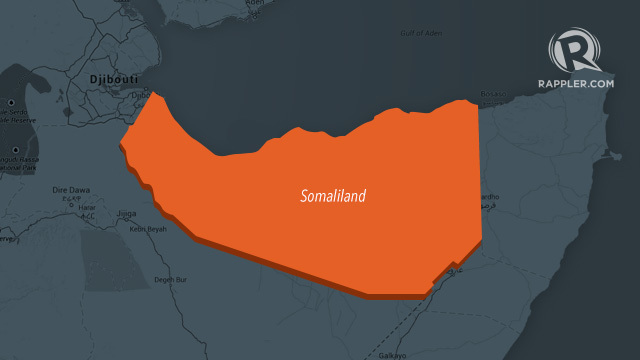
HARGEISA, 30 April 2009 (IRIN) - The availability of water purification tablets, digging of shallow wells in rural areas as well as privatisation of water services have resulted in more people in Somalia's self-declared republic of Somaliland gaining access to clean water and proper sanitation, officials said.
(Photo:Fetching water from a tanker: People's access to safe water in Somaliland has improved due to the availability of water purification tablets and digging of shallow wells in rural areas - file photo)
At least 45-50 percent of the Somaliland population now has access to safe water, compared with 35 percent in 2000, according to Ali Sheikh Omar Qabil, director of environmental health in the Ministry of Health and Labour.
"Most of the urban centres such as Hargeisa [the capital], Borama, Berbera, and Gabiley have central water supply systems and chlorine is routinely mixed into the water provided," Qabil said.
Sheikh Ali Jawhar, director of the water department in the Ministry of Minerals and Water, said: "The installation of chlorination equipment units in water supply dams in the main urban centres and at shallow wells in remote areas is one of the factors that has increased water sanitation in the country."
However, Jawhar said the region had yet to meet international standards in terms of quantity, with the average safe water availability being 14l per person per day in the capital and 8l in rural areas. The international standard is 20l/person/day.
Water purification tablets are widely available across the region, supplied and sold by the NGO Population Services International (PSI).
(A woman carries water: Officials say at least 45-50 percent of the Somaliland population now has access to safe water, compared with 35 percent in 2000)
Privatisation
In Borama region, the privatisation of the town's water agency, Shirkadda Adeega Bulshada Awdal, has been one the reason for improved access to water and sanitation.
"We have made major improvements in both water access and supply for the town," Abdirahman Mohamoud Muse, a board member, said. "We supply water to about 80,000-100,000 of the city inhabitants."
Muse said: "We have an agreement with the Somaliland authorities on profit sharing; for example, we get 20 percent of the benefit of the total investment while 3 percent is paid to the local government in taxes and we give some to the Ministry of Minerals and Water."
The privatisation followed a severe water shortage in the area. The project was funded by USAID through the UN Children's Fund (UNICEF).
Before then, only 500 cubic metres was pumped for use in Borama region but the firm now pumps 1,700 cubic metres per day, Muse said.
Reaching more people
He said the number of houses that had installed water supply pipes had significantly increased since 2003.


"Only 250 households had installed the water pipes [in 2003] but now we have installed pipes in about 5,000 households and more than 2,000 households share [the water pipes] with their neighbours while the others get water from kiosk centres, which we consider to be clean water," Muse said. "Fewer than 1.2 percent of Borama residents do not receive the agency's water supply."
However, Muse expressed concern over the depletion of water sources in parts of the region, "especially in the main urban centres of Somaliland, Hargeisa and Borama".
He said this had forced the water ministry to conduct surveys to identify new water sources. Consequently, Muse added, the Borama water agency had dug a new well in Amoud, Borama region.
"The depletion [of the water sources] followed a dramatic increase in the urban population and the construction of modern buildings," Jawhar said.
"For example, when China installed a water system in Hargeisa and Borama, the density of the population and buildings was much smaller than what we have today; Hargeisa then had only 150,000 individuals but now its population is about 800,000 yet nothing has changed in its water supply system."
Despite the progress made in water provision and sanitation, Somaliland authorities remain concerned over services in parts of the republic, such as Burou, the second-largest city, which, Qabil said, lacked adequate water chlorination.
"This is why we consider Burou the most risky place in the country as it lacks a link to the central dam where water chlorination is done," Qabil said. "In fact, diarrhoea has broken out in recent years in the city several times, which we attribute to the lack of chlorination of the town water supply."
Theme(s): (IRIN) Water & Sanitation

The Nexus Of Evil

Medeshi
The Nexus Of Evil
April 30, 2009: Ethiopia’s withdrawal from Somalia left a vacuum there, but it appears that Ethiopia has kept a significant number of troops in the border area. Reports continue to crop up of Ethiopian recon forces inside Somalia. This makes sense. Somali Islamists and Eritrea make common cause with ethnic Somali secessionists in Ethiopia’s Ogaden region. The military wants to cut down on re-supply and infiltration. But there is a larger message –Ethiopian forces could return to southern Somalia very quickly. The government doesn’t want to do this but it could if it had to. The government notes that Somalia’s Al Shabaab radical Islamist organization it threatening to “wage jihad” in neighboring Kenya. The Ethiopian and Kenyan governments have made several bi-lateral security agreements. Kenya has reported that two Islamist militia groups have made that threat. Would an Islamist militia attack on Kenya lead to an Ethiopian foray into Somalia? The threat of a counter-attack can’t be discounted.

April 27, 2009: Ethnic Oromos who oppose the Ethiopian government plan a mass protest in late May. Many of the planned protests will take place in Western Europe (EU countries) since that’s where the television cameras are.

April 22, 2009: Eritrea denied reports that Iran is using Eritrean ports to smuggle weapons into Africa. Allegedly, the Iranian weapons then move north through Sudan and into Egypt, then are smuggled into Hamas-controlled Gaza. However, the Eritrean government acknowledged that weapons smugglers might be “transferring arms on ships” outside of Eritrean territorial waters.

April 16, 2009: Eritrea has gotten a reputation in Africa and the Middle East for “hosting” just about every opposition group on the continent. A new opposition group has appeared in Eritrea, this time a group of Djiboutis who are opposed to the current government of Djibouti. This is of course very convenient for Eritrea, since the Eritrea-Djibouti border war remains unresolved.

April 14, 2009: The government of Somaliland, the separatist Somali “statelet” in northwestern Somalia, accused Eritrea of training rebels who have infiltrated Somaliland. The report claimed that Somaliland police had arrested several “suspects” who were trained in Eritrea. The Somaliland Republic is an ally of Ethiopia. Eritrea argues that Somaliland is a creation of Ethiopia. The statelet is another place where Eritrea and Ethiopia wage their proxy war.

April 12, 2009: The Ogaden National Liberation Front (ONLF) disputed Ethiopian government claims made earlier this month that it has been defeated. The ONLF claimed that just the opposite is true and that ONLF forces have been very active in the last month and that its “offensive capacity” was stronger than ever.

April 10, 2009: The Ethiopian government claimed that the rebellion led by the Ogaden National Liberation Front (ONLF) is “on its last legs.” This is more than a bit triumphalist, for the rebels have not disappeared from Ogaden. The political war continues as ONLF spokespeople continue to accuse Ethiopia of genocide. Still, things have changed in the Ogaden over the last two years, especially since the great raid, in Spring 2008, on a Chinese oil exploration rig operating in the Ogaden. Attacking the oil venture and kidnapping Chinese workers was a big political move by the ONLF. The ONLF accused the government of stealing wealth from the Ogaden. The government sent the army into the Ogaden in force. It also began moving NGO aid groups out of Ogaden – a move for which it was condemned. Its smartest move, however, was to create its own developmental programs for the Ogaden, projects designed to appeal to “towns and tribes” (ie, farmers and businesspeople as well as pastoralists and even the nomads). It appears the political initiatives, coordinated with the military’s counter-insurgency operations, has begun to pay off – but the ONLF is not on its last legs, yet.

April 8, 2009: The UN accused Eritrea of failing to meet Security Council requirements to withdraw its troops from Djibouti. The UN passed the withdrawal demand resolution in January 2009. Eritrean forces attack Djibouti’s Ras Doumeira peninsula in June 2008

Piracy cash not funding Kenya projects, says MP

Medeshi
Piracy cash not funding Kenya projects, says MP
By LUCAS BARASA
Posted Thursday, April 30 2009
In Summary
Mr Ashareh says money generated from Somalis in the diaspora.
A Somali MP has denied that money accrued from piracy off the East African coast is being used to buy property in Kenya.
Mr Ashad Awad Ashareh said, instead, the money that has seen value of property in places like Nairobi’s Eastleigh and Mombasa rise was from Somalis in the diaspora.
The MP told the Nation that Somalis in the diaspora remitt home more than Sh70 billion annually, part of which find its way to Kenya.
“It is not true that money accrued from piracy is being used to acquire property in Kenya,” Mr Ashareh said.
According to a research by United Nations Development Programme in Somalia, there are at least one million Somalis in the diaspora who remitt more than US$1 billion annually.
The money, the UNDP says, contributes a lot to the Somali economy, livelihoods, humanitarian assistance and recovery and reconstruction efforts.
The UNDP says about one million Somalis or 14 per cent of the population are in the diaspora including Horn of Africa and Yemen, Gulf States, Western Europe, US and Canada.
It is, however, the UK that has largest number of Somalis while Malaysia and Australia are new growth areas.
Kenya hosts about 220,000 registered Somali refugees, Ethiopia (17,000), Djibouti (7,000) and South Africa (8,000).
According to a US State Department report last year, about $100 million (about Sh8 billion) is laundered through Kenya every year from Somalia.
Last month, the Saturday Nation reported that the North Eastern provincial administration had launched investigations into the possibility that the $150 million (about Sh12 billion) Somali pirates reaped in the high seas last year may have found its way into the area, pushing up property values.
Property values in places like Eastleigh in Nairobi and Mombasa have also gone up tremendously causing fears that the pirates’ money could be finding its way into the country.
Mr Ashareh accused some foreign countries of illegally fishing in Somali waters and dumping toxic waste there.
It is a move by some Somalis to try and defend their territory from illegal fishing and dumping that resulted to piracy, he said.
The MP said piracy could only end if international community helped Somalia return to peace and stability so that it can establish a strong law enforcement agency.
“We need a strong navy to man our waters,” he said.
Tens of ships have been hijacked by Somali pirates in the recent past and only released after ransoms are paid.

'Robin Hood' life for Somalia's pirates

Medeshi April 30,2009
'Robin Hood' life for Somalia's pirates
Somali pirates seek targets with 'gentleman kidnapper' spirit as they abide by complex system of rules.
By Mustafa Haji Abdinur - MOGADISHU
A mobile tribunal, a system of fines and a code of conduct: the success of Somali pirates' seajacking business relies on a structure that makes them one of the country's best-organised armed forces.
A far cry from the image conveyed in films and novels of pirates as unruly swashbucklers, Somalia's modern-day buccaneers form a paramilitary brotherhood in which a strict and complex system of rules and punishments is enforced.
They are organised in a multitude of small cells dotting the Indian Ocean and Gulf of Aden coastline. The two main land bases are the towns of Eyl, in the breakaway state of Puntland, and Harardhere, further south in Somalia.
"There are hundreds of small cells, linked to each other," said Hasan Shukri, a pirate based in Haradhere.
"We talk every morning, exchange information on what is happening at sea and if there has been a hijacking, we make onshore preparations to send out reinforcement and escort the captured ship closer to the coast," he explained.
Somali piracy started off two decades ago with a more noble goal of deterring illegal fishing, protecting the people's resources and the nation's sovereignty at a time when the state was collapsing.
While today's pirates have morphed into a sophisticated criminal ring with international ramifications, they have been careful to retain as much popular prestige as possible and refrain from the violent methods of the warlords who made Somalia a by-word for lawlessness in the 1990s.
They don't rape, they don't rob
"I have never seen gangs that have rules like these. They avoid many of the things that are all too common with other militias," said Mohamed Sheikh Issa, an elder in the Eyl region.
"They don’t rape, and they don’t rob the hostages and they don’t kill them. They just wait for the ransom and always try to do it peacefully," he said.
Somalia's complex system of clan justice is often rendered obsolete by the armed chaos that has prevailed in the country for two decades, but the pirates have adapted it effectively.
Abdi Garad, an Eyl-based commander who was involved in recent attacks on US ships, explained that the pirates have a mountain hide-out where leaders can confer and where internal differences can be solved.
"We have an impregnable stronghold and when there is a disagreement among us, all the pirate bosses gather there," he said.
The secretive pirate retreat is a place called Bedey, a few miles from Eyl.
"We have a kind of mobile court that is based in Bedey. Any pirate who commits a crime is charged and punished quickly because we have no jails to detain them," Garad said.
Some groups representing different clans farther south in the villages of Hobyo and Haradhere would disagree with Garad's claim that Somalia's pirates all answer to a single authority.
But while differences remain among various groups, the pirates' first set of rules is precisely aimed at neutralising rivalries, Mohamed Hidig Dhegey, a pirate from Puntland, explained.
"If any one of us shoots and kills another, he will automatically be executed and his body thrown to the sharks," he said from the town of Garowe.
"If a pirate injures another, he is immediately discharged and the network is instructed to isolate him. If one aims a gun at another, he loses five percent of his share of the ransom," Dhegey said.
Anyone shooting a hostage will be shot
Perhaps the most striking disciplinary feature of Somali "piratehood" is the alleged code of conduct pertaining to the treatment of captured crews.
"Anybody who is caught engaging in robbery on the ship will be punished and banished for weeks. Anyone shooting a hostage will immediately be shot," said Ahmed Ilkacase.
"I was once caught taking a wallet from a hostage. I had to give it back and then 25,000 dollars were removed from my share of the ransom," he said.
Following the release of the French yacht Le Ponant in April 2008, investigators found a copy of a "good conduct guide" on the deck which forbade sexual assault on women hostages.
As Ilkacase found out for himself, pirates breaking internal rules are punished. Conversely, those displaying the most bravery are rewarded with a bigger share of the ransom, called "saami sare" in Somali.
"The first pirate to board a hijacked ship is entitled to a luxurious car, or a house or a wife. He can also decide to take his bonus share in cash," he explained.
Foreign military commanders leading the growing fleet of anti-piracy naval missions plying the region in a bid to protect one of the world's busiest trade routes acknowledge that pirates are very organised.
"They are very well organised, have good communication systems and rules of engagement," said Vice Admiral Gerard Valin, commander of the French joint forces in the Indian Ocean.
So far, nothing suggests that pirates are motivated by anything other than money and it is unclear whether the only hostage to have died during a hijacking was killed by pirates or the French commandos who freed his ship.
Some acts of mistreatment have been reported during the more than 60 hijackings recorded since the start of 2008, but pirates have generally spared their hostages to focus on speedy ransom negotiations.
With the Robin Hood element of piracy already largely obsolete, observers say the "gentleman kidnapper" spirit could also fast taper off as pirates start to prioritise riskier, high-value targets and face increasingly robust action from navies with enhanced legal elbow room.
They have warned that the much-bandied heroics of a US crew who wrested back control of their ship and had their captain rescued by navy snipers who picked off three pirates could go down as the day pirates decided to leave their manners at home.

At Mandheera, former British prison, Somali pirates tell their side


Medeshi April 29, 2009
At Mandhera, former British prison, Somali pirates tell their side
By Shashank Bengali McClatchy Newspapers
MANDHERA, Somaliland — Their exploits have turned the inky-blue waters of the Indian Ocean into a perilous gantlet for ships and an unlikely security challenge for world leaders. But behind the bare brick walls of a desolate former British colonial prison here, five jailed Somali pirates didn't seem very fearsome at all.
One looked to be in his late 40s, his brambly hair stained a deep henna orange, his milky eyes staring into the middle distance. A slightly younger man clutched a faded sarong to his matchstick waist and spoke in barely a whisper.
The leader of the pirate crew, 38-year-old Farah Ismail Eid, wore such a hungry look that a visiting government official, unsolicited, folded a pale $10 bill into his sandpaper palm.
That a few hundred men like these have wreaked so much havoc in the seas off of East Africa is a testament to the sheer power of guts and greed. It's also a stark illustration of the all-consuming anarchy ashore in Somalia, where, after 18 years of conflict, jobs are scarce, guns are plentiful, men will risk everything for a payday — and their government is too weak and corrupt to stop them.
The men behind bars, however, offered another explanation for piracy.
Their story is also rooted in greed — not of their brazen colleagues with the million-dollar ransoms, they say, but of foreign companies that they say have profited from Somalia's lawlessness by fishing illegally in their waters since the 1990s.
In a long interview with McClatchy at the jailhouse in Mandhera, an austere desert fortress in the autonomous northern region of Somaliland, where British forces held Italian POWs during World War II, Eid related what amounts to the pirates' creation myth, in which overfishing by European and Asian trawlers drove Somalia's coastal communities to ruin and forced local fishermen to fight for their livelihoods.
"Now the international community is shouting about piracy. But long before this, we were shouting to the world about our problems," said Eid, a bony-cheeked former lobsterman with a bushy goatee. "No one listened."
Of course, the pirates' journey from vigilante coast guard to firing automatic weapons at cruise ships — as one band did over the weekend — is a reminder that good intentions don't last long in desperate Somalia.
In 1991, Eid was scavenging for lobsters along the craggy shores of central Somalia, saving to start a fishing company, when the government and its security forces were swallowed up in a coup. The country's endless coastline — at nearly 2,000 miles, it's longer than the U.S. West Coast — suddenly became an unguarded supermarket of tuna, mackerel and other fish.
When huge foreign trawlers suddenly began appearing, the local fishermen who plied their trade with simple nets and small fiberglass boats were wiped out, Eid said.
"They fished everything — sharks, lobsters, eggs," he recalled. "They collided with our boats. They came with giant nets and swept everything out of the sea."
At the outset, fishermen in the ramshackle ports of Puntland, Somaliland's rowdy neighbor, re-branded themselves as "coast guards." The first hijackings that Eid remembered came in 1997, when pirates from the port of Hobyo seized a Chinese fishing vessel and then held a Kenyan ship for a $500,000 ransom.
"When I heard about this," Eid said, "I was happy."
Eid had sunk his savings into three boats. In 2005, with catches all too rare and a wife and two children to support, he traded his fishing equipment for a couple of Kalashnikov rifles and rocket launchers in a market in the wild-west port of Bossasso.
He and five other fishermen, swathed in camouflage, piled into a motorized skiff and set off from the village of Garacad. But their motor was too feeble to catch up to any of the ships they spotted, so after five sweltering days they returned to shore.
The next year Eid tried with a stronger engine, a German one imported from Dubai. This time, the novice pirates caught up to a cargo ship and came face to face with its European crew. But Eid's men couldn't prop their heavy metal ladder up against the freighter's hull quickly enough to board the ship. The vessel escaped unmolested.
Global Witness, a London-based group that investigates natural resource exploitation, agrees that vessels from countries such as France, Spain, Indonesia and South Korea gobbled up hundreds of millions of dollars' worth of fish from Somali waters without licenses.
However, experts say that the foreign fishing wasn't necessarily illegal because the Somali government, even before the coup, didn't delineate its territorial waters, as international maritime laws require.
"In the early to mid-1990s there was some fishing in those waters that, if Somalia had a government that was performing its job, would have demanded licensing fees for," said J. Peter Pham, a piracy expert at James Madison University in Harrisonburg, Va. "But the Somalis never got around to declaring what was legal and illegal."
Somali officials don't argue with the pirates' version of events — only with their tactics.
"We know they have their grievances," said Abdillahi Mohamed Duale, the foreign minister of Somaliland, which declared independence from Somalia in 1991. "But the problem of overfishing has always been there, in the Caribbean, Latin America and the Indian Ocean. It doesn't mean that you take the law into your own hands."
Entering this week, there'd been 93 hijack attempts off the coast in 2009, according to the International Maritime Bureau in London — 17 fewer than in all of last year. After a tense, five-day standoff this month ended with U.S. Navy sharpshooters killing three pirates and rescuing an American ship captain they'd taken hostage, countries pledged $213 million to bolster the Somali security forces.
In Puntland, the pirates have a comfortably chaotic haven. Markets carry everything from automatic weapons to spare batteries for satellite phones, standard equipment for any seagoing bandit. A regional government claims to rule the area, but many suspect that the president, Abdirahman Mohamed Farole, is on the take from pirates, which Farole denies.
According to Eid and others, some officers from Somalia's erstwhile marine corps and coast guard, which patrolled the shores skillfully until the civil war, are training pirate groups in navigation and other seafaring techniques.
"If 20 pirate groups go to sea, one will succeed" in capturing a ship, Eid said. "Nineteen will fail, but they'll keep trying. They have all the equipment and support they need."
Somaliland says it's cracking down on pirates. Four groups of pirates — 26 men in all — have been arrested, and three of the groups are serving 15- to 20-year prison sentences.
Last August, Somaliland authorities raided a seaside guesthouse and captured Eid, who'd moved there and was posing as a mechanic. He and four others were charged with weapons possession and plotting a hijacking, and swiftly sentenced to 15-year prison terms despite having never carried out an attack.
"We are afraid this piracy could spread to Somaliland," said Youssef Essa, Somaliland's vice minister of justice. "That's why we have to give harsh sentences."
Nevertheless, Essa, a former high school teacher, seemed impressed with Eid's story. After listening for over an hour, he rose to shake the younger man's hand and handed him $10. Afterward, he and the silver-haired warden agreed that Eid probably would spend the money on khat, a narcotic leaf that Somali men chew to get high.

Somaliland political parties accept the extention of presidential term .

Medeshi
Somaliland political parties accept the extention of presidential term .
Hargeisa April 29, 2009
The the three political parties of Somalilands accepted today the decision of the House of elders to extend the presidential term until Sept 2009.
Ahmed Mohamed Silanyo, the main opposition leader said that they have accepted the decision and are respecting the House of elders move to extend the president’s term. He said that his party is welcoming this decision putting into consideration to the interest of the public.
On the other hand the spokesman of the president Mr. Saeed Adaani said that the government is also welcoming the decision of the house of elders and that they are going to work on ways of organising free and fair election.
The leader of UCID party, Mr Faisal Ali Warabe , also , said that his party is welcoming the decision putting into consideration the interest of the nation. He said that it is needed to continue discussing ways of preventing abuse of the public money, property and the media.
This move was applauded by the public as it is said to be in the interest of Somaliland.
Slightly Translated from Somali by M. Ali

Armed Italian cruise ship fends off Somalian pirates

Medeshi
Armed Italian cruise ship fends off Somalian pirates
Last Updated: Monday, April 27, 2009
The Associated Press
An Italian cruise ship came under attack by Somalian pirates on Saturday, but its security forces were able to prevent them from clambering aboard, the company's director said Sunday.
A small white skiff approached the Melody cruise ship after dinnertime as it sailed north of the Seychelles, off Africa's east coast. The pirates fired wildly toward the 1,500 passengers and crew on board, but the MSC Cruises ocean liner's private Israeli security forces fired back.
Adding a new twist to the increasing scourge of Somalian pirate hijackings, the security guards aboard also sprayed water hoses at the pirates to prevent them from clambering aboard, company director Domenico Pellegrino said.
"It was an emergency operation," Pellegrino said. "They didn't expect such a quick response. They were surprised."
Passengers were ordered to return to their cabins and the lights on deck were switched off. The massive vessel then sailed on in darkness, eventually escorted by a Spanish warship to make sure it made it to its next port.
"It felt like we were in war," the ship's Italian commander, Ciro Pinto, told Italian state radio.
None of the 1,000 passengers were hurt and by Sunday afternoon they were back out on deck sunning themselves, Pellegrino said.
Armed ships
But analysts said the unprecedented use of weapons by the ship's security force could make things worse in the pirate-infested waters off the Horn of Africa, where more than 100 ships were attacked last year by pirates based in Somalia. In nearly all the successful hijackings, the crews were unharmed and were let go after a ransom was paid.
"There is a consensus in the shipping industry that, in the vast majority of cases, having an armed guard is not a good idea. The No. 1 reason is that it could cause an escalation of violence and pirates that have so far been trying to scare ships could now start to kill people," said Roger Middleton, an expert on Somalian piracy at London-based think tank Chatham House.
Other experts disagree, saying piracy off the coast of modern-day Somalia is unique in that the pirates are most interested in human cargo.
"Their business model, if you will, has been to not cross a line which would bring the whole weight of the world upon them. They want to seize hostages and ransom those hostages. So the likelihood that they would escalate violence is unlikely," said Africa expert Peter Pham, director of the Nelson Institute for International and Public Affairs at James Madison University in Virginia.
He argued that arming ships is not a sustainable solution, given that an estimated 20,000 vessels pass through the Gulf of Aden each year.
"For the Melody, you're talking about 1,000 passengers and 500 crew members, so maybe for 1,500 people paying to have security on board makes both economical and tactical sense — but when you're dealing with ordinary cargo ships it's very different," he said.
Pellegrino said MSC Cruises has Israeli private security forces on all their ships because they are the best. He said the pistols on board were at the discretion of the commander and the security forces.
The attack occurred near the Seychelles and about 800 kilometres east of Somalia, according to the anti-piracy flotilla headquarters of the European Union's Maritime Security Centre – Horn of Africa. The Melody was travelling up Africa's east coast, from Durban, South Africa, to Genoa, Italy.
Pinto said the pirates fired "like crazy" with automatic weapons, slightly damaging the liner, when they approached in a small, white, Zodiac-like boat.
"After about four or five minutes, they tried to put a ladder up," Pinto told the TV station Sky TG24.
"They were starting to climb up but we reacted, we started to fire ourselves. When they saw our fire, and also the water from the water hoses that we started to spray toward the Zodiac, they left and went away.... They followed us for a bit, about 20 minutes," he said.
Other clashes at sea
In a separate incident Sunday, Yemen's Interior Ministry said the Yemeni coast guard clashed with pirates and killed two of them when they tried to hijack a Yemeni tanker in the Gulf of Aden. And the Turkish cruiser Ariva 3, with two British and four Japanese crew members aboard, survived a pirate attack near the Yemeni island of Jabal Zuqar, said Ali el-Awlaqi, head of the Yemeni El-laqi Marine Co.
Earlier this month, the U.S. navy shot and killed three pirates and took a fourth into custody after a five-day standoff in the waters off Somalia, where they had hijacked the U.S.-flagged Maersk Alabama.
Saturday's exchange of fire between the Melody and pirates was one of the first reported between pirates and a nonmilitary ship. Civilian shipping and passenger ships have generally avoided arming crewmen or hiring armed security for reasons of safety, liability and compliance with the rules of the different countries where they dock.
It was not the first attack on a cruise liner, however. In November, pirates opened fire on a U.S.-operated ship, the M/S Nautica, which was taking 650 passengers and 400 crew members on a month-long luxury cruise from Rome to Singapore. The liner was able to outrun the pirates. And in early April a tourist yacht was hijacked by Somali pirates near the Seychelles just after having dropped off its cargo of tourists.

The pirate king of Somalia

Medeshi
The pirate king of Somalia
Khat-chewing former fisherman known as Garaad is the brains behind pirates' brawn
JAY BAHADUR
From Monday's Globe and Mail
April 26, 2009 at 7:49 PM EDT
BOSASSO, SOMALIA — When Gilbert and Sullivan composed their melodies about the pirate king, it was doubtful they had a Somali like Garaad in mind. Yet this former fisherman, the man behind many of the recent hijackings in the Gulf of Aden and Indian Ocean, is as close as it comes to pirate royalty in the modern world.
In an interview on the breezy patio of a Somali hotel, he explains how he exerts direct control over 13 groups of pirates with a total of 800 hijackers, operating in bases stretching from Bosasso to Kismaayo, near the Kenyan border. Each group has a “sub-lieutenant” who reports directly to Garaad, and none of them make a move without his authorization.
An armchair CEO, Garaad is curiously uninterested in the fruits of his operation. “I don't know the names of any of the ships my men capture, and I don't care,” he says, “The only thing I care about is sending more pirates into the sea.”
Garaad is a name that has grown notorious in his own time – at least within the borders of Puntland, the autonomous region in northern Somalia that has spawned the recent pirate epidemic.
Garaad had agreed to the interview on the outskirts of the northern Somali port city of Bosasso, about six weeks before the high-profile hijacking of the U.S.-flagged Maersk Alabama. The interview was supposed to take place on the previous day, but after preliminary discussions in the morning, Garaad turned off his phone and disappeared. “He's off chewing khat somewhere,” suggests Mohamed, the interpreter who arranged the meeting, referring to the leafy narcotic religiously consumed by most pirates.
Much later, Garaad calls with his explanation: “I was busy,” he says.
The next day, he shows up at the gated entrance to the hotel, and meets on the restaurant patio at a table separated from its neighbours by a barrier of ferns and shrubs. With his freshly ironed dress shirt, pressed slacks, and his clean, cropped hair, Garaad blends right in with the crowd of Somali businessmen staying at the hotel. In contrast to his impeccable clothing, his face looks ragged for someone in his mid-30s, his eyes scratched raw by the constant rubbing – a textbook case of khat withdrawal.
Like many pirate headmen, Garaad hails from the infamous coastal pirate haven of Eyl. He began as a front-line pirate, participating directly in hijackings, but has since risen through the ranks to become one of the better known organizers and financiers in Puntland. As with most pirate handles, Garaad is a nickname, taken from the Somali word for “clan elder,” and is a sign of his status among his colleagues.
He instantly prickles when he hears the word pirate. “Illegal fishing ships, they are the real pirates” he says, insisting that his operations got going in 2002, with the sole objective of defending his livelihood and that of his fellow fishermen. So far, his crusade against the “real pirates” of Somalia has netted him a total of about a dozen captured illegal fishing ships, and an untold number of commercial vessels.
Garaad remains close-lipped about the dozens of hijackings he has reputedly financed, maintaining that seizing commercial vessels is a necessary evil in his private war against illegal fishing. “I've never personally attacked commercial ships,” he says. “The only one I've ever captured is the Stella Maris, and the reason for it was the financial problems we were having then.”
The MV Stella Maris, a Japanese-owned bulk carrier, was seized in the Gulf of Aden in July 2008 and held for eleven weeks before being released for a ransom of $2-million. Garaad's operating expenses since then must have been high, because he insists that he is broke. “I don't have one cent,” he says. “I don't even have a house.”
Despite his protestations of poverty, it's said that when he took his third bride, the wedding procession included 100 vehicles. And, there is a credible rumour that Garaad was involved with the much-reported hijacking of the MV Faina, the weapons-laden Ukrainian transport ship that fetched a generous $3.2-million ransom after a four-months hijacking. The story goes that in December of 2008, Garaad left Garowe, the region's capital, with a heavily armed convoy, aiming to relieve the Faina hijackers and bring them back to safety in Puntland.
They were in dire need of his assistance; forced by the U.S. Navy to anchor the captured ship at Xarardheere, south of the Puntland coast, the Americans proceeded to encircle and blockade the pirates onboard the Faina. On shore, the environment was equally hostile; Xarardheere is rival clan land, and thus was alien turf for the hijackers.
Completing the third point of this Bermuda triangle of perils was the proximity to al-Shabaab controlled territory, where militias from the Islamist group were waiting patiently inland to relieve the Faina pirates of any ransom they received the moment they came ashore. Into this melee allegedly charged Garaad with his Toyota-brand cavalry.
His intention, presumably, was to escort the hijackers to Puntland once they had secured the ransom payment for the Faina. Unfortunately, on his way to Xarardheere, Shabaab militants ambushed his motorcade, confiscating his weapons and vehicles. He was unharmed, and had to make the long journey back to Puntland, but wasn't discouraged from resuming pirating.
“If the international community ever pays us our rightful compensation for the illegal fishing,” he says, “attacks will stop within 48 hours.”

Ending Child Hunger: School Feeding in Somalia


Medeshi
Ending Child Hunger: School Feeding in Somalia
William Lambers
April 26, 2009
Somalia is one of the most dangerous places in the entire world. The danger begins even before you reach the land of this African nation. Off the coast of Somalia are pirates who have hijacked a number of vessels in recent years. The United Nations World Food Programme (WFP) delivers most of its food aid for Somalia by sea. With the threat of piracy, these WFP ships need to be provided armed
escorts.Within Somalia, people are suffering from hunger due to conflict, displacement, and prolonged droughts. WFP provides food aid to millions of people in Somalia and some of its own staff have lost their lives carrying out this humanitarian mission. WFP officer Ibrahim Hussein Duale was killed earlier this year while monitoring a school feeding program.
"This was a shocking attack on one of our staff while he was doing his job," WFP director Josette Sheeran stated. "Ibrahim was a good, honest man and worked extremely hard to assist those in need. Our thoughts and prayers are with his family, friends and colleagues."
WFP Deputy Chief Operating Officer Ramiro Lopes da Silva states, "Our only goal in Somalia as an impartial international organization is to alleviate the suffering of the Somali people. We cannot do that when our courageous staff are being targeted."
WFP runs school feeding programs to help children who are suffering during Somalia´s strife. School feeding is a key element toward building peace in a country plagued by violence. Jennifer Parmelee, a WFP officer based in Washington, says that "In Somalia, lack of food and education aggravate the lawlessness; ironically, it is the Somali refugee camps –- with their school feeding programs –- that offer young Somalis the best chance to make a future for themselves and for their beleaguered country."
Abdullahi Khalif is a WFP Program Officer for Somalia and in the following interview he discusses how vital this program is for children and their communities.
How many children benefit from the WFP school feeding programs in Somalia?
WFP in Somalia is currently providing food assistance to 93,000 primary school children, 37% of whom are girls, in 373 schools. Most of the target schools are located in the most food insecure areas in Somalia.
Discuss what effect the meals have on the children in terms of school attendance, performance, and nutrition.
Nearly 3.2 million people in Somalia (over 40% of the entire population) need food assistance. Recurring droughts, prolonged conflicts, structural poverty, continuous displacements, and, above all, lack of a central government for nearly 20 years have seriously hampered opportunities for children in Somalia to enroll in, attend, and complete primary school.
To reduce the impact of these problems, WFP Somalia began a school feeding program in 2003. Since then, the number of children benefiting from the program has grown significantly. In 2008, the number of children benefiting from the WFP school feeding program more than doubled from 2007. The agency carried out a baseline survey in 2008 to establish a school feeding databank. The information helps local administrations to see how they can be effective in achieving universal primary education and meeting the Millennium Development Goal (MDG) of education for all.
Currently the project targets 60 rural and semi-rural, food-insecure districts in Somalia. 50% of the districts are in the Northwest, 30% in the Northeast and 20% in Southcentral Somalia.
In 2008, attendance in WFP-assisted primary schools in Somalia was 97%, compared to attendance at primary schools as a whole, which was 92%. A recent survey conducted by WFP shows that 98% of teachers believe that children´s attentiveness in class increased due to the school feeding program. 75% believe that violence by children has decreased.
Both boys and girls receive food twice a day. They receive porridge in the morning and an early afternoon lunch. The meals are made with rice, legumes, corn-soya blend (CSB), vegetable oil, and sugar to ensure that the nutritional needs of the children are being met. These meals provide the children with 927 Kcal, nearly half of the daily caloric needs of a 6-14 year child.
What plans are there for making school meals available for all children?
This year, WFP will be running its school feeding program under its new Emergency School Feeding (ESF) strategy. WFP will be working to determine how many schools lack a school feeding program to get a better idea of where and how the program can be expanded. To encourage school enrollment and attendance among girls, WFP in Somalia introduced a take-home ration program. Girls who attend school regularly will receive a take-home ration of vegetable oil to share with their families. Communities have been encouraged to contribute to the school feeding program by providing meat and vegetables for meals, providing fuel or wood for cooking, contributing to the labor costs of the program, and taking responsibility for storing the food. This will enable communities to continue feeding school children when the WFP program eventually ends.
What would be the sources of funding for any expansion of the school feeding program?
Somalia remains one of the poorest countries in the world. There is no central system that governs funding for any social support sector; therefore, the country continues to depend on external aid. For the last eighteen years, schools have been supported by donors, the United Nations, and international NGOs. There are some schools that are funded by local institutions, but not many. WFP continues to support school feeding as a means of promoting basic education, with a goal of achieving the Millennium Development Goal of education for all. In addition, WFP supports the Ministry of Education and Community Education Committees (CECs) through capacity building programs to enable them to encourage their communities to send their children to school.
Somalia´s Government of National Unity was formed in Djibouti in February 2009 but is not yet operational in all parts of Somalia. Therefore, external support will remain the main source of funding for education in Somalia for the coming years.
Due to Somalia´s current crises, the majority of the funding and donor priorities are directed to emergency activities. As a result, not as much attention is given to supporting education, including the school feeding program, as it is considered a recovery activity. This has greatly impacted the expansion of the school feeding program.
How can someone help the school feeding program?
Due to the dire humanitarian situation in Somalia, the country will no doubt remain in the emergency and recovery stages for the foreseeable future. At a local level, in-kind support would be beneficial. A focus on capacity building for the Ministry of Education and Community Education Committee will help ensure that the school feeding program is implemented efficiently and effectively. Donors can give resources to support many specific projects. In the U.S., donors can visit the Friends of WFP website. Donor support of proper nutrition and sanitation, specific support to girls to ensure that they stay in school through adolescence, the provision of deworming, health, and nutrition packages, and the support of school gardening are all welcomed.
Anything else you'd like to add about why you think school feeding is important for people to support?
The 2008 short rains seasonal assessment, which shows changes in the food security situation, confirms that the people of Somalia are facing a humanitarian crisis. Over 40% of the Somali population - 3.2 million people - are in need of emergency life-saving assistance. This situation could have grave effects on children´s school enrollment and attendance. Many schools without school feeding programs could be closed, and some others might suffer from lack of enrollment and attendance. Donor support to the school feeding program and emergency school feeding will help tackle this problem.
In addition to increases in enrollment and attendance and the retention of students from year to year, school meals clearly contribute to good nutrition and food security within the household. If school feeding is not supported, children from less fortunate families will most likely suffer from lack of education and inadequate nutrition. They will receive little relief from short-term hunger.

European Aid Workers Released in Somalia

Medeshi
European Aid Workers Released in Somalia
By Derek Kilner Nairobi
28 April 2009
Gunmen in Somalia have released two European aid workers abducted nine days earlier.
The two aid workers, one Belgian and one Dutch, had been working for Doctors Without Borders. They were abducted by a group of gunmen on April 19 while traveling between towns in the Bakool region of southern Somalia, near the border with Ethiopia.
A clan leader in Bakool, Ali Mumin, confirmed their release.
He said elders and clerics in the region had been in discussions with the captors. He said no ransom had been paid.
The kidnappers had previously demanded a $4 million ransom for the hostages. Members of the al-Shabab, the hard-line Islamist militia that controls the area were also involved in securing the release of the aid workers.
Abductions of aid workers are common in Somalia. According to the United Nations, 16 aid workers are being held in Somalia, including four Europeans and two Kenyans. A total of 26 aid workers were abducted in 2008, and 35 killed.
Aid officials warn the insecurity threatens the humanitarian effort in Somalia, where more than three million people, or almost half the population, require emergency food aid.
Meanwhile, al-Shabab has released three radio journalists it detained Monday in Baidoa, the central town that used to house the parliament. Their station, Radio Jubba, was also allowed to return to the air.
Local media reported the militia objected to the station's coverage of the security situation in the area, and the station will continue to be barred from broadcasting music.
Somalia's internationally-backed government is struggling to extend its control beyond a small part of the capital, Mogadishu.
Monday, Somali President Sheikh Sharif Sheikh Ahmed met with Sudan President Omar al-Bashir, to discuss Sudanese support for training Somalia's security forces.
Last week, international donors pledged more than $200 million to the government to improve security in the country.

Shifts in Somalia as exile returns


Medeshi April28, 2009
Shifts in Somalia as exile returns
By Mohamed Mohamed BBC Somali Service
The return of the Islamist opposition leader Sheikh Hassan Dahir Aweys to Somalia after two years in exile is the latest move in the seemingly perpetually shifting sands of Somali politics.
He fled to Eritrea in 2007 after Ethiopian troops ousted his movement, the Union of Islamic Courts (UIC).
While in Eritrea, Mr Aweys broke ranks with fellow UIC leader Sheikh Sharif Sheikh Ahmed, because the latter started talks with the Somali government.
Mr Ahmed is now Somali president, after UN-brokered talks, while the US labels Mr Aweys a terrorist.
In Somalia, however, he is still considered to be the spiritual leader of all Islamist groups and is seen by many as being the country's real king-maker.
So who he chooses to aligned himself with matters for the future of Somalia.
'Bacteria'
President Sharif welcomed his return and hinted at the possibility of talks.
But Mr Aweys does not seem to be interested in making up with his former colleague.
Speaking to supporters in Mogadishu, Mr Aweys described the government of President Sharif as being appointed by the enemies of Somalia.
"Mr Sharif's government was not elected by the Somali people and it is not representing the interests the Somali people," he said.
He described the African Union peacekeepers is Somalia as "bacteria" who should leave or he will fight them.
Members of the radical Islamist group al-Shabab were said to have been at his welcoming rally and reliable sources say that Mr Aweys is talking to its leadership and other Islamist groups, including the newly formed umbrella organisation Hisbul Islam or Islamic Party.
Open War
If this is the case, it confirms fears that the kingmaker is more interested in toppling the president than supporting him.
Negotiating with al-Shabab is certain to provoke the anger of the government because it has been waging an open war on President Ahmed's administration.
“ Al-Shabab want to kill meaningful people in society ” Ahmed Dirie
They have attacked members of the government including the Interior Minister, Sheik Omar, who was slightly injured in an assassination attempt which killed one of his bodyguards.
Before that ambush, Mr Omar could move freely around Mogadishu.
He was a senior UIC official and the only one who stayed in the country to fight against Ethiopian troops and government forces led by former President Abdullahi Yusuf.
After the assassination attempt, Mr Omar's forces raided al-Shabab hideouts in Mogadishu.
In one, three al-Shabab members were killed and another injured member was captured.
In the other, al-Shabab fought back and captured two members from the militia and a battle wagon (a vehicle mounted with an anti-aircraft gun).
Al-Shabab retaliated by killing a close friend of Mr Omar whose militia were thought to have been involved in the al-Shabab raids.
Government reaction
In response, the government seems to have adopted a twin-track policy.
First, it wants to negotiate with Islamist groups who are willing to talk.
“ We must deal with the mayhem of al-Shabab ” Omar Haashi Security minister
A senior source told the BBC Somali Service that the president recently sent four close associates to meet Mr Aweys when he was in Sudan.
But Mr Aweys refused to talk to the delegation and also declined an offer of Sudanese mediation.
Second, it has taken the decision to fight back against any group that takes up arms against it and in particular al-Shabab.
In a strident statement, the Security Minister Omar Haashi declared war on the "satanic" al-Shabab.
He said: "We must deal with the mayhem of al-Shabab".
The Somali parliament also changed the law so that anyone who fights against President Sharif is guilty of fighting against Islam.
But al-Shabab has also antagonised the leaders of the Hawiye clan, which dominates the area around Mogadishu. Their spokesman Ahmed Dire said he had been targeted.
Mr Dire said that the council was neutral and was "working for peace and talking to every group involved in the violence".
"But whenever we try to contact al-Shabab, they lie to us or never call back". He accused the group of wanting "to kill meaningful people in society".
Political storm
The battle lines seem to be drawn and al-Shabab seem to sense that a political storm is growing around it.
They deny that they attack members of the government or that they target Mogadishu elders.
Meanwhile local analysts say that moderate Islamists led by the president are on the verge of a violent confrontation with al-Shabab which could create little fiefdoms controlled by different factions in Mogadishu.
The government would be one of those factions and given past experience it would have a serious fight on its hands.
Perhaps looking ahead to this possibility, President Sharif has been travelling around a number of countries to get financial and technical support for his government to help with security.
The United Nations, European Union, Arab league and African Union have all pledged support worth millions of dollars.
Prime Minister Omar Abdirashid Ali Sharmarke has said that AU forces will have to stay in the country to train Somali government troops - a statement which, given Mr Aweys' recent comments, is bound to ratchet up tension.
The president says he has plans to deal with the security and piracy issues in Somalia, but if Mr Aweys openly sides with radical Islamists and al-Shabab, the president will have to decide what to deal with him too.
All eyes are on Mr Aweys.
Can an alliance be formed which could lead to peace? Or will the two former colleagues be locked in violent struggle?
From here, opposition and conflict look the most likely outcome.

Cruise line CEO: Cruising in waters around Somalia 'not safe'

Medeshi April 28, 2009
Cruise line CEO: Cruising in waters around Somalia 'not safe'
The chief executive of one of the world's biggest cruise lines says a route cruise ships commonly take around the Horn of Africa is "not safe" and he no longer will send ships there.
MSC Cruises CEO Pierfrancesco Vago tells travelweekly.co.uk today the line's vessels no longer will cruise around Somalia to the Suez Canal in the wake of a pirate attack this weekend on one of the line's vessels in the region.
Pirates fired upon and attempted to board the 1,062-passenger MSC Melody late Saturday as it sailed hundreds of miles off the coast of Somalia on its way to the Red Sea, the Suez Canal and, eventually, Europe. They were repelled by security officers on the ship who fired back.
RELATED ITEM: Passenger describes coming under fire during pirate attackALSO ONLINE: Feds to check cruise passengers arriving from Mexico for swine fluALSO ONLINE: Cruise lines say swine flu is no reason to stop cruises to Mexico
"We were in an area that was considered to be safe," Vago tells the trade publication. "MSC will no longer take the risk. I will never have a ship there again until the area is secure."
Several dozen cruise ships operated by Cunard Line, Princess Cruises, Regent Seven Seas Cruises and other globetrotting lines must sail past the coast of Somalia each year -- either along its northern coast, which faces the Gulf of Aden, or its eastern coast, which faces the Indian Ocean -- as they reposition between Africa, Asia and Europe.
Piracy off Somalia has intensified in recent months, with more attacks against a wider range of targets, including at least two other cruise ships.
The 684-passenger Oceania Nautica, attacked on Nov. 30 by pirates in two small boats, was able to outrun its attackers, but not before they fired shots at the upscale vessel. A similar raid on Nov. 28 on Transocean Tours' 492-passenger Astor was broken up when a German naval ship fired warning shots at the attackers, sending them fleeing.
No one was injured in either incident.
Cruise Loggers, share your thoughts on the topic below.

EAST AFRICA: Swine flu scare prompts surveillance scale-up

Medeshi
EAST AFRICA: Swine flu scare prompts surveillance scale-up
NAIROBI, 28 April 2009 (IRIN) - The East African region is generally not well prepared for a pandemic like swine flu which has killed more than 100 in Mexico and is spreading to other countries, an expert said.
Most people in the region do not have access even to basic health care and many die from preventable diseases. The main problem is a critical shortage of health workers. While there are 250 doctors per 100,000 people in the UK, Sudan has only 16, according to the African Medical and Research Foundation (AMREF).
In Addis Ababa, a meeting of African humanitarian NGOs, Red Cross actors and diplomats discussed pandemic preparedness. "We are using Mexico as [a] teaching opportunity to promote planning in this region," said Gregory Pappas, senior coordinator and technical specialist for pandemic preparedness at InterAction, the American Council for Voluntary Action.
Swine influenza or "swine flu" is a highly contagious acute respiratory disease of pigs, caused by one of several swine influenza A viruses. Morbidity tends to be high and mortality low, according to WHO. The viruses are normally species specific and only infect pigs, but they sometimes cross the species barrier to cause disease in humans.
"This region cannot even handle cholera," the Nairobi-based pandemics expert said. "An outbreak or pandemic flu would be catastrophic."
Responses to date
Here is how some East African countries are responding so far:
- Somalia: No capacity to deal with such pandemics due to the prolonged civil war and destruction of medical facilities. "We are not prepared for anything like the swine flu; we don’t have the means to deal with it," Awad Abdi, adviser to the Somali Health Ministry said. "God help us if it reaches here."
- Rwanda: Mobile clinics set up for screening visitors at airports and other entry points; pork imports from European countries suspended; sale of grilled pork in cafes prohibited; epidemiologists deployed to work on preparedness in main health facilities and information points set up in 143 centres. However, according to WHO, there is no risk of infection from consumption of well-cooked pork and pork products.
- Uganda: All districts are being put on alert. "We met last night and are going to handle this with the ministries of tourism, agriculture and health," Paul Kaggwa, Health Ministry spokesman, told IRIN. "We have contacted airlines, the Civil Aviation Authority and Uganda Revenue Authority to be alert. We are going to screen all entries into the country."
- Kenya: Health facilities around the country have been directed to screen patients suspected of showing symptoms. Preparations to start screening people at all border and other entry points have started. "The government has set up teams for surveillance purposes - [we] had already set up teams to deal with the threat of bird flu a while ago. It is these that we are beefing up to deal with the threat of swine flu," said Shahnaz Shariff, director of public health in the Ministry of Public Health.
- Southern Sudan: Surveillance has been increased at the airport. A meeting between the Health Ministry, NGOs and other health agencies is due to be held on 28 April. "We are doing the necessary information-gathering and disease surveillance," John Runumi, director-general for preventive medicine, told IRIN. At this point, WHO advises no restriction of regular travel or closure of borders, but encourages people who are ill to delay international travel.
- Ethiopia: The Ethiopian Red Cross (ERC) announced plans to train 800 volunteers on public health messaging. "At this point, we have adopted public health messages which focus on hand-washing, isolation of the sick and following the norms of [handling] respiratory illness, " Mesfin Worku, national coordinator of ERC's human pandemic preparedness project, told IRIN.
- Burundi: No specific measures yet, but planning meetings going on and options for importation of Tamiflu drugs available. According to Fidèle Bizimana, who is in charge of the control of epidemic diseases in the Health Ministry, the government is aware of the swine flu pandemic. "We are confident we will be able to avert its spread," Health Ministry spokesman Louis Mboneko told IRIN.

Statement of U.S. Senator Russ Feingold on Somalia Piracy

Medeshi
Statement of U.S. Senator Russ Feingold on Somalia Piracy
As Submitted for the Record
Friday, April 24, 2009
Mr. President, I was glad earlier this week to join Senator Leahy in passing a resolution commending Captain Richard Phillips for his brave conduct, and those members of our Armed Services, particularly members of the Navy and Navy SEAL teams, who rescued Captain Phillips. I also want to commend the leadership of the President and the efforts of many U.S. government departments and agencies in their response to this crisis. These many acts of bravery and leadership are deeply inspiring, and we should recognize them.
However, while the episode involving the Maersk Alabama was resolved, we are likely to see more such episodes if we do not take comprehensive measures to address not only piracy on the waters, but also conditions on land that enable it. We cannot ignore the fact that piracy off the coast of Somalia is an outgrowth of the state collapse, lawlessness and humanitarian crisis that have plagued the country for over a decade. In recent Congressional testimony, both Director of National Intelligence Blair and Defense Intelligence Agency Director Army Lt. General Michael Maples cited lawlessness and economic problems on land as the cause of the rise in piracy at sea. Until we address those conditions, we will be relying on stopgap measures, at best, to deter this piracy problem and we are unlikely to succeed in reversing the growing violent extremism in Somalia.
Mr. President, for years I have been calling for the development of a comprehensive, interagency strategy to help establish stability, the rule of law, and functional, inclusive governance in Somalia. This is the only sure and sustainable solution to address the problem of piracy – and the instability in Somalia – over the long term. Moreover, I am convinced that we have a unique window of opportunity for progress as a result of the Ethiopian troop withdrawal earlier this year and the establishment of a new unity government relocated back to Mogadishu. This government has the potential to unite Somalia if it demonstrates a genuine commitment to inclusion and begins to make a real difference in people’s lives – in terms of security and basic services, such as protection, trash collection and job creation. Helping the government to find tangible solutions to expand effective and inclusive governance must be a central part of our overall strategy to stabilize Somalia and address the threats of piracy and terrorism.
To that end, I continue to urge the Obama administration, as it develops its response to piracy, to make it a priority to engage at a high level with the new Somali government. I have written to President Obama, asking him to personally call Somali President Sheik Sharif and indicate a clear commitment to work with his government not just on maritime insecurity, but also on establishing security and governance within the country. We have been engaging with President Sharif at the ambassadorial level for quite some time now, and I met the president in Djibouti in December. In addition, there needs to be a stronger and more sustained diplomatic push to engage with a wide range of actors within Somalia and stakeholders in the wider region – both in the Horn of Africa and the Middle East – if we are going to address the underlying problems that have contributed to piracy and rising extremism.
Mr. President, the events with the Maersk Alabama earlier this month have finally brought increased attention to the problem of piracy in Somalia’s waters. But it will be insufficient if our response only deals with the symptoms and not Somalia’s central problems. I urge my colleagues and the different committees who will examine this issue over the coming weeks and months to take this seriously. For if we do not finally deal with Somalia’s lawlessness and instability, we will continue to see them manifest themselves in activities – be they acts of piracy or terrorism – that threaten U.S. and international security.
I yield the floor.

Things you didn't know about the Somali pirates

Medeshi April 27, 2009
10 Things You Didn't Know About Somali Pirates
By David Axe
In the 15 years since armed Somali fishermen began forcing their way onto commercial ships, pirates have turned East Africa's seas into the world's most dangerous waters. In 2008 alone, Somalia's lawless seamen captured more than 40 large vessels in the Gulf of Aden, a shortcut between Asia and Europe that's vital to the global economy. Wiping out today's pirates won't be easy; they're smarter, better organized, and, frankly, better loved abroad than the swashbucklers of yesteryear. In a special dispatch from Mombasa, Kenya, Mental Floss correspondent David Axe explains.
Associated Press
FBI agents escort the Somali pirate that U.S. officials identify as Abdiwali Abdiqadir Muse into FBI headquarters in New York, on April 20, 2009. Muse is the sole surviving Somali pirate from the hostage-taking of commercial ship captain Richard Phillips.
1. They Have a Robin Hood Complex
Many Somali pirates see themselves as good guys. And at one point, they were. After the government in Mogadishu collapsed in 1991, neighboring countries began illegally fishing in Somali waters. The first pirates were simply angry fishermen who boarded these foreign vessels and demanded a "fee." But as the illegal fishing persisted, some early pirates banded together and called themselves "coast guards." They claimed to be looking after Somalia's territorial integrity until the government could pull itself back together.
These weren't the only vigilantes on the scene, however. Other pirates made their debut robbing U.N. ships that were carrying food to refugee camps in Somalia. These bandits argued that if they hadn't taken the food, warlords would have seized it on land. And they had a good point. Warlords gobbled down at lot of Somalia's relief food during the 1990s.
But from these perhaps defensible beginnings, piracy spread farther from Somalia's shores and evolved into a multimillion-dollar enterprise. Today, pirates are blunt about their motives. In late 2008, after a band of pirates seized a Ukrainian freighter full of weapons and demanded $25 million for its release, Sugule Ali, a member of the pirate crew, told a reporter, "We only want the money."
2. Nobody Brings Home the Bacon Like a Pirate
According to some estimates, pirates in 2008 pulled in as much as $150 million, indicating that piracy is now Somalia's biggest industry. In fact, successful pirates are the country's most eligible bachelors. While small-time swashbucklers earn in the low five figures, bosses can pull in $2 million a year—this, in a country where you can buy dinner for less than $1. But as their wallets fatten, many pirates are heading for greener pastures, and the real money is flowing out of the country with them. Many are buying properties on the seashore of Mombasa, Kenya, where new condos are being built every day. If a condo is selling for a few million dollars, there's a good chance the bosses will throw in an extra half-million, just to make sure the Kenyans don't ask too many questions.
3. Being a Pirate Is Easy!
Piracy is so simple that anyone can do it. All you need is a gun, an aluminum ladder (for scaling other ships), and a motorboat. Then you just have to wait for commercial ships to pass by. Best of all, you don't have to worry about your targets shooting back. By international agreement, civilian vessels aren't allowed to carry guns because governments don't want armed ships moving from port to port. "Once pirates are on board, they've got the upper hand," says Martin Murphy, a piracy expert with the Corbett Center for Maritime Policy Studies. The best defense against piracy is speed, but because most commercial ships aren't designed to go fast, pirates don't have any trouble chasing them down. The most sophisticated marauders use machine guns and GPS systems, but many pirates are still low-tech fisherman. After they board a ship, all they have to do is steal or ransom the goods and prisoners. The cargo of a typical commercial ship ransoms for about $1 million.
4. The Law Can't Touch Them
Everybody knows piracy is wrong, but is it illegal? The truth is that the places where pirates operate are actually lawless. In Somali territory, there's no functional government to make or enforce regulations. And because nations don't control much of the ocean, there are no laws on the high seas, either. Throughout history, governments have patched together legal frameworks to bring pirates to justice, but it's never fast or easy. Pirates—even those caught in the act by one navy or another—are often simply released on the nearest Somali beach, without so much as a slap on the wrist.
With Somali piracy on the rise, the world is playing legal catch-up. In November 2008, the United Kingdom signed an agreement to try pirates captured by the Royal Navy in Kenya. And other countries are following Britain's lead, with nations including the United States, Singapore, and Turkey signing similar agreements. But Kenya, despite having the most powerful democracy in East Africa, doesn't appear to have an effective court system. When Britain's first batch of eight captured pirates went on trial in Mombasa in December, the defense argued that Kenya shouldn't have jurisdiction and succeeded in persuading the judge to defer the trial. The long-term solution to piracy is a stable Somali government with a functional judiciary, but that requires peace between the country's warring clans. Somalia's new president, elected in February 2009, is just starting to get groups to talk.
Associated Press
A French Commando escorts one of 11 suspected pirates from the French naval frigate the Nivose on April 22, 2009. France has traditionally been aggressive in fighting piracy - this was its ninth military operation against pirates.
5. Pirates Rarely Kill People (Which is Why They're So Dangerous)
It's difficult to tell pirates from fishermen, until they climb aboard another ship and pull out their AK-47s. So, there's not much the U.S. Navy and other military forces can do as a deterrent except sail around and look menacing. After pirates have seized a ship, navies rarely attempt to retake it, because hostages could be hurt in the process. In the absence of an effective defense, there were more than 100 documented pirate attacks in 2008 that resulted in more than 40 ships being hijacked. But for all their aggression, the body count is low. One ship's captain died of natural causes while being held hostage, and a few militia men have died in shoot-outs as they tried to rescue prisoners, but in general, little blood has been spilled.
Pirates also prefer to keep their prisoners in good health. Not only are civilians worth hundreds of thousands of dollars apiece in ransom, but the pirates' reputation for not harming their hostages has made governments reluctant to strike back on behalf of shipping companies. While the pirates' hands remain mostly blood-free, the navies patrolling East African waters have taken lives. The Indian navy, for example, destroyed one pirate boat only to discover that the pirates had Thai hostages on board. At least a dozen innocent victims died.
More from Mental Floss
6. Pirates Have Friends in High Places
Pirates prowl about 2 million square miles of the ocean. That's a lot of water, and even with thousands of ships on the high seas, it's possible to sail for days without seeing another vessel. So how do pirates know where to look and which ships to attack? Spies. The biggest gangs have informants in Mombasa, the major port in the region, where ships have to file paperwork stating what they're carrying and where they're going. According to one Mombasa business leader, spies inside the Kenyan maritime agencies pass along this information to pirate bosses—for a price. Pirates are also in cahoots with local big-wigs in northern Somalia. In exchange for a cut of pirates' hauls, officials in the Puntland region of Somalia turn a blind eye to the international crime flourishing under their noses.
7. Sailors Are Fighting Back (And It's Working)
Sailors know what they're getting into when they steer toward East African waters. And because their crews can't carry guns, they've found other ways to fight off pirates. Last year, one Chinese ship used tactics borrowed straight from a medieval castle siege.
When pirates clambered up the side of the Zhenhua 4, the crew climbed onto a higher deck and pulled up the ladder. Then they turned on high-pressure fire hoses and knocked the pirates off their feet. But the crew didn't stop there. Once in better position, the Chinese sailors started hurling down Molotov cocktails, made from beer bottles filled with gasoline.
Four hundred cocktails later, the pirates retreated. One pirate, who wasn't wearing any shoes, saw he was about to walk across a deck paved with shattered glass to get back to his ship. He called up to the ship's stalwart defenders and begged for something to cover his feet.
8. Bigger Ships Mean Bigger Paychecks
Somali pirates are getting bolder. For years, they've chased small fry, such as Kenyan fishermen, small coastal freighters, and U.N. food ships. Today, with faster boats, better weapons, and more accurate information from their spies, they're going after massive cargo ships, super-tankers, and even passenger liners. Nobody's safe. In September, pirates grabbed a Ukrainian ship called the Faina, which was carrying armored vehicles, rockets, and other weapons. They followed up that dramatic heist by overtaking the Saudi oil tanker Sirius Star, which had crude oil aboard valued at $100 million. (Both ships were released earlier this year after ransoms were paid.) Recent attacks on cruise-liners have been unsuccessful, but maritime officials are increasingly worried. Pirates usually attack in groups of about 10 and capture ships with 20 or so passengers. That ratio of captors to captives lets the pirates stay in control. But with cruise ships carrying as many as 2,000 people, there's no way pirates would be able to conduct an orderly capture. Things might get out of hand; and that, officials say, is when people get hurt.
9. Pirates Hurt Somalia the Most
The biggest victims of Somali piracy are the Somalis themselves. Nearly 4 million people there (half the population) depend on food donations to survive. But pirate attacks on food ships have made it difficult for the United Nations to keep sending provisions. In a desperate bid to keep the supplies flowing, the U.N. issued a plea to the world's navies in 2007. As of March 2009, no food ship sets sail from Mombasa without a Dutch, Canadian, French, German, Italian, or Greek warship riding shotgun. "If you don't have an escort, you cannot move food there," says U.N. official Lemma Jembere. But naval deployments are expensive, and warships might not be available forever. This could mean death by starvation for millions, all due to a few thousand opportunistic pirates.
10. It May Be Time for Desperate Measures
Even with the world's navies rushing to protect East African shipping, the sheer size of the ocean and the huge numbers of ships involved mean warships are rarely in the right place at the right time. The mood in Mombasa, where so many ship owners and seafarers are based, is bleak. Karim Kudrati, a shipping director whose four ships have all been hijacked at least once, says it's time for the world to mobilize an army and invade Somalia. "Everybody knows where captured vessels are being taken, and on that aspect of things, nothing is being done."
The United Nations recently passed a resolution allowing an invasion, but the United States military has put the brakes on participating in any operation. Perhaps they're hesitant because of their last experience sending troops to Somalia. In 1993, 18 Americans were killed during a commando raid to capture a few, low-ranking warlords. And yet, it's becoming more and more clear that without major, international intervention, piracy will continue to grow. With the benefits far outweighing the risks, pirates have no incentive to stop pillaging.

Transcript of FT interview with Sheikh Sharif Sheikh Ahmed, president of Somalia

Medeshi
Transcript of FT interview with Sheikh Sharif Sheikh Ahmed, president of Somalia
Published: April 28 2009
There have been 15 attempts to create a functioning government in Somalia since the overthrow of dictator Siad Barre in 1991. None of them have come close to working. Overrun by warlords and Islamist insurgents, the country is in the grips of another potential famine.
Proliferating acts of piracy on one of the world’s busiest trading routes off the Somali coast have forced up shipping insurance costs and are affecting global commodity markets. But they are also focusing international attention on the need for stability on land as well as sea.
Before Ethiopia invaded in 2006 Sheikh Ahmed was the leader of the Islamic Courts Union, an alliance of Islamic militias that during a six month period came closer than any other body to re-establishing order. In January he returned to Somalia from exile, and was elected by a UN-backed transitional parliament to lead the country out of chaos.
Last week at an international donors conference in Brussels, he won $213m of backing for African peacekeepers and for his plans to build a national security force, raising hopes that finally a concerted effort to put Somalia back together again is under way.
William Wallis, Financial Times Africa editor, interviewed Sheikh Ahmed at his hotel in Brussels after the conference.
Financial Times: What is the significance of today’s events for Somalia?
Sheikh Sharif Sheikh Ahmed: What happened today is very important for two reasons. Firstly, there has always been this issue of the international community not being forthcoming enough and not being forthcoming at the right time. Secondly there has been a lack of leadership on the Somali side to seize the opportunity and establish a partnership with the international community. Today we believe these two things have come together.
FT: How do you plan to go about using the goodwill that has been generated at an international level, and the cash that is now coming with it?
SSSA: The funds and the political support need to be translated into actions on the ground first and foremost with regards to security. Security has to be established. Then it is important to translate this security and political will into actions that affect the needs of the public and to help reconstruction, education, and all the elements that give normality to life. The public must feel the change and see the change.
FT: But how will you be able to expand the writ of your government from what appears to be the very small part of Somalia you control?
SSSA: There are already many provinces … where government support and structures are present. Where our administration and reach exists, the delivery of services and justice should be strengthened and reinforced. Where it does not exist yet, these areas we must stretch our reach to.
FT: Will this necessarily involve force?
SSSA: Preparations in terms of the readiness of the public for peace are gathering pace by the day, and are already substantially established. In parallel, if we are also able to get the security forces on the ground and operational and these two forces are able to come together we believe it will be almost a natural process for the rule of law and the administration to reach those parts where they don’t already exist.
FT: How formidable do you consider the forces your government are up against?
SSSA: We believe that in essence there is no logic and no sustainable basis for armed forces opposing the government. The only options open for these opposing forces will be to either come into the reconciliation process either as the government or as opposition. Or, to return to civilian life, into their homes and into normal livelihoods.
FT: They seem pretty determined from the outside and at least a minority of them have backing from another pretty determined bunch [of people] headquartered out of the tribal areas of Pakistan [al-Qaeda].
SSSA: Once the government is strong enough and is fully on the ground there will come a time when those who act illegally either have to leave or will have to give themselves up. That moment will come.
FT: How far are you prepared to accommodate these forces in order to absorb them into the reconciliation process?
SSSA: We are prepared in a major way to accommodate and negotiate but the essential factor is there must be dialogue; there must be negotiation for that to happen.
FT: Are you already talking for example to [radical Islamic cleric] Hassan Dawir Aweys, or some of the leaders of the al Shabab militia?
SSSA: Not directly but many well-intentioned and well meaning Somalis are busy and engaged explaining to them the need for dialogue and peace. From our side they know and we have stated that we are ready for dialogue and negotiation.
FT: What do you make of the arrival in Mogadishu today [after more than two years in exile] of Mr Aweys?
SSSA: I think his return today will remind him that he left at a time when there was conflict and war and show him that today we are rebuilding peace. We believe he will choose to take part and support the peace process and re-establishment of security in the country.
FT: Do you consider him someone who is important in that process?
SSSA: There is no one who is not needed for this process of reconciliation and peace. Everyone is needed.
FT: How signficant is the recent passage in parliament of Sharia law in re-establishing state authority?
SSSA: It is very important for several reasons. One Sharia is a normal part of Muslim life and Muslim culture and tradition. Secondly there were people for whom this was a major factor, necessity, and in passing the bill and putting it through cabinet and parliament this enables us to show goodwill and to take that element out of the conflict and ensure it does not become an obstacle. It is part of the reconciliation process but also bringing people on board for the reconstruction of the state. Both psychologically and practically it is very important.
FT: How quickly can you bring back the court system? Is it something you can do very quickly given your experience at the head of the Islamic Courts Union in 2006?
SSSA: The government is actually very busy with that issue. It will need to absorb and take on experienced and knowledgeable people in that field.
FT: In 2006 the administration you were involved in was very effective in fighting piracy. Is that something you can reproduce now and what was the secret before?
SSSA: This is part and parcel of the security infrastructure and policies that we have. We believe that this will also be effective in tackling that issue successfully.
FT: Some of the countries [US, Ethiopia] that seemed very happy to see the back of you in 2006 when the Ethiopia invaded Somalia are now applauding you. Are these countries you can trust?
SSSA: Without a shadow of doubt we have to look forward and not back.

Somalia: top UN envoy calls for donors' pledges to be turned into action

Medeshi
Somalia: top UN envoy calls for donors' pledges to be turned into action
Published on Apr 27, 2009
April 27, 2009 - Following last week's over $200 million pledge by international donors for Somalia, the top United Nations envoy to the Horn of Africa nation today voiced hope that resources will be mobilized quickly to promote peace and stability.
At the donors' conference in Brussels - under the joint auspices of the UN, the African Union (AU), European Union (EU) and the League of Arab States - pledges of $213 were received for the AU peacekeeping mission in Somalia (AMISOM) and for Somalia security.
That amount surpassed the $166 million requested by the AU.
Ahmedou Ould-Abdallah, the Secretary-General's Special Representative, characterized last week's international gathering as a "turning point" for Somalia, which has not had a functioning national government since 1991 but has witnessed several encouraging developments in recent months, including the election of a new President and the formation of a Government of National Unity.
"While strengthening security, providing youth employment and delivering humanitarian assistance are essential, lasting peace and stability will come through continued dialogue as laid out in the Djibouti Agreement," he said, referring to the last year's UN-facilitated pact between the Transitional Federal Government and the Alliance for the Re-Liberation of Somalia (ARS), in which the two agreed to end their conflict.
Due to that Agreement, uprooted people are returning to their homes, the Parliament is more inclusive and Ethiopian troops withdrew in an orderly manner, the envoy said.
"Now is the time for Somalis to show their people, their region and the international community that they are finally serious about peace and leaving behind the culture of ‘winner takes all' and the ever-shifting alliances that are still devastating their nation," he said.
The UN Independent Expert on the situation of human rights in Somalia last week stressed the importance of international assistance to stabilize the political situation in the country, noting that accountability and transitional justice initiatives are essential in Somalia, "where human rights is a victim of endless and myriad violations on a daily basis."
Shamsul Bari pointed out that there is a consensus among many that the "success of the security mechanisms will be judged on their capacity to protect the civilian population rather than abuse."Thus, he stressed, to ensure that security forces are human rights-compliant, vetting processes, command structures and international disciplinary structures and independent oversight are essential

UK swine flu cases confirmed

Medeshi
UK swine flu cases confirmed
Monday, April 27
Scottish Health Secretary Nicola Sturgeon has confirmed the first British cases of deadly swine flu. Skip related content
Related photos / videos
25 cases of possible swine flu reported in UK Play video
Swine flu explained: Symptoms, eating pork ... Play video
Swine flu: How the UK will cope with a pandemic Play video
Swine flu: UK cases likely Play video
Swine flu: How the virus is spreading Play video
Related content
British swine flu cases confirmed
First Swine Flu Cases Confirmed In Britain
Avoid US and Mexico, Britons told
Related Hot Topic: Swine Flu
Have your say: Swine Flu
Two people have tested positive for the virus and are being treated in isolation in hospital in Airdrie, near Glasgow, while seven more people among 22 who have been in contact with them have developed "mild symptoms" not confirmed as swine flu.
The pair developed symptoms after returning from a trip to Mexico, where more than 100 people have died following an outbreak of the H1N1 virus.
Ms Sturgeon added: "I would reiterate that the threat to the public remains low and that the precautionary actions we have taken over the last two days have been important in allowing us to respond appropriately and give us the best prospect of disrupting the spread of the virus."
Health Secretary Alan Johnson earlier said ministers have put in place "enhanced" port health checks on passengers arriving in the UK and will use its stockpile of anti-viral drugs if the virus begins to spread widely.
Spain earlier confirmed Europe's first case of swine flu. The man, who had recently been in Mexico, is said to be responding well to treatment and was not in a serious condition.
The European Union's health chief has warned non-essential travel to swine flu-hit parts of Mexico and the US be postponed.
The disease has claimed 103 lives in Mexico with as many as 1,600 carrying the virus. Cases have been confirmed in countries including the US, New Zealand and Canada.
The US Centers for Disease Control and Prevention said there are up to 45 cases of swine flu in five states, including 20 more cases at a New York school, while people who have had contact with confirmed cases are also developing flu-like symptoms.
Passengers returning to Heathrow from Mexico City are being kept aboard their planes while health officials ask them if they feel unwell. But other travellers at Gatwick airport said they had not been stopped as they returned to Britain.
The Government said it has enough medicine to treat half the population.
The NHS has a stockpile of more than £500 million worth of the Tamiflu anti-viral drug, which has proved effective on patients in Mexico, and scientists are working on developing a vaccine against the new strain.
World Health Organisation Director-General Margaret Chan said the outbreak, caused when the H1N1 strain associated with pigs crossed over to the human population, constituted a "public health emergency of international concern".

Q&A: What is swine flu?


Medeshi April 27, 2009
Q&A: What is swine flu?
Infection control experts are scrambling to respond to outbreaks of swine flu in Mexico and the US, and suspected cases elsewhere.
What is swine flu?
Swine flu is a respiratory disease, caused by influenza type A which infects pigs.
There are many types, and the infection is constantly changing.
Until now it has not normally infected humans, but the latest form clearly does, and can be spread from person to person - probably through coughing and sneezing.
What is new about this type of swine flu?
The World Health Organization has confirmed that at least some of the human cases are a never-before-seen version of the H1N1 strain of influenza type A.
SWINE FLU
Symptoms usually similar to seasonal flu - but deaths recorded in Mexico
It is a new version of the H1N1 strain which caused the 1918 flu pandemic
Too early to say whether it will lead to a pandemic
Current treatments do work, but there is no vaccine
Good personal hygiene, such as washing hands, covering nose when sneezing advised
H1N1 is the same strain which causes seasonal outbreaks of flu in humans on a regular basis.
But this latest version of H1N1 is different: it contains genetic material that is typically found in strains of the virus that affect humans, birds and swine.
Flu viruses have the ability to swap genetic components with each other, and it seems likely that the new version of H1N1 resulted from a mixing of different versions of the virus, which may usually affect different species, in the same animal host.
Pigs provide an excellent 'melting pot' for these viruses to mix and match with each other.
How dangerous is it?
Symptoms of swine flu in humans appear to be similar to those produced by standard, seasonal flu.
These include fever, cough, sore throat, body aches, chills and fatigue.
Most cases so far reported around the world appear to be mild, but in Mexico lives have been lost.
How worried should people be?
When any new strain of flu emerges that acquires the ability to pass from person to person, it is monitored very closely in case it has the potential to spark a global epidemic, or pandemic.
FLU PANDEMICS
1918: The Spanish flu pandemic remains the most devastating outbreak of modern times. Caused by a form of the H1N1 strain of flu, it is estimated that up to 40% of the world's population were infected, and more than 50 million people died, with young adults particularly badly affected
1957: Asian flu killed two million people. Caused by a human form of the virus, H2N2, combining with a mutated strain found in wild ducks. The impact of the pandemic was minimised by rapid action by health authorities, who identified the virus, and made vaccine available speedily. The elderly were particularly vulnerable
1968: An outbreak first detected in Hong Kong, and caused by a strain known as H3N2, killed up to one million people globally, with those over 65 most likely to die
The World Health Organization has warned that taken together the Mexican and US cases could potentially trigger a global pandemic, and stress that the situation is serious.
However, experts say it is still too early to accurately assess the situation fully.
Currently, they say the world is closer to a flu pandemic than at any point since 1968 - rating the threat at three on a six-point scale.
Nobody knows the full potential impact of a pandemic, but experts have warned that it could cost millions of lives worldwide. The Spanish flu pandemic, which began in 1918, and was also caused by an H1N1 strain, killed millions of people.
The fact that all the cases in the US have so far produced mild symptoms is encouraging. It suggests that the severity of the Mexican outbreak may be due to an unusual geographically-specific factor - possibly a second unrelated virus circulating in the community - which would be unlikely to come into play in the rest of the world.
Alternatively, people infected in Mexico may have sought treatment at a much later stage than those in other countries.
It may also be the case that the form of the virus circulating in Mexico is subtly different to that elsewhere - although that will only be confirmed by laboratory analysis.
There is also hope that, as humans are often exposed to forms of H1N1 through seasonal flu, our immune systems may have something of a head start in fighting infection.
However, the fact that many of the victims are young does point to something unusual. Normal, seasonal flu tends to affect the elderly disproportionately.
Can the virus be contained?
The virus appears already to have started to spread around the world, and most experts believe that containment of the virus in the era of readily available air travel will be extremely difficult.
Can it be treated?
The US authorities say that two drugs commonly used to treat flu, Tamiflu and Relenza, seem to be effective at treating cases that have occurred there so far. However, the drugs must be administered at an early stage to be effective.
Use of these drugs may also make it less likely that infected people will pass the virus on to others.
The UK Government already has a stockpile of Tamiflu, ordered as a precaution against a pandemic.
It is unclear how effective currently available flu vaccines would be at offering protection against the new strain, as it is genetically distinct from other flu strains.
US scientists are already developing a bespoke new vaccine, but it may take some time to perfect it, and manufacture enough supplies to meet what could be huge demand.
A vaccine was used to protect humans from a version of swine flu in the US in 1976.
However, it caused serious side effects, including an estimated 500 cases of Guillain-Barré syndrome. There were more deaths from the vaccine than the outbreak.
What should I do to stay safe?
Anyone with flu-like symptoms who might have been in contact with the swine virus - such as those living or travelling in the areas of Mexico that have been affected - should seek medical advice.
But patients are being asked not to go into doctors surgeries in order to minimise the risk of spreading the disease to others. Instead, they should stay at home and call their healthcare provider for advice.
Although the Foreign and Commonwealth Office says people "should be aware" of the outbreak, it is not currently advising people against travelling to affected areas of Mexico and the US.
What measures can I take to prevent infection?
Avoid close contact with people who appear unwell and who have fever and cough.
General infection control practices and good respiratory hand hygiene can help to reduce transmission of all viruses, including the human swine influenza. This includes covering your nose and mouth when coughing or sneezing, using a tissue when possible and disposing of it promptly.
It is also important to maintain good basic hygiene, for example washing hands frequently with soap and water to reduce the spread of the virus from your hands to face or to other people and cleaning hard surfaces like door handles frequently using a normal cleaning product.
If caring for someone with a flu-like illness, a mask can be worn to cover the nose and mouth to reduce the risk of transmission.
But experts say there is no scientific evidence to support more general wearing of masks to guard against infections.
Is it safe to eat pig meat?

Yes ( for non-muslims). There is no evidence that swine flu can be transmitted through eating meat from infected animals.
However, it is essential to cook meat properly. A temperature of 70C (158F) would be sure to kill the virus.
What about bird flu?
The strain of bird flu which has caused scores of human deaths in South East Asia in recent years is a different strain to that responsible for the current outbreak of swine flu.
The latest form of swine flu is a new type of the H1N1 strain, while bird, or avian flu, is H5N1.
Experts fear H5N1 hold the potential to trigger a pandemic because of its ability to mutate rapidly.
However, up until now it has remained very much a disease of birds.
Those humans who have been infected have, without exception, worked closely with birds, and cases of human-to-human transmission are extremely rare - there is no suggestion that H5N1 has gained the ability to pass easily from person to person.
Where can I get further advice?
Further information and advice on swine flu can be found at websites of leading health and research organisations around the world.

Qaar ka mid ah Ururada Bulshada Rayidka ah oo walaac ka muujiyay mudo dhaafka golayaasha deegaanada

Annaga oo ah Ururada Bulshada Rayidka ah ee Madaxa-banaan waxaanu si wayn uga walaacsanahay