AMNESTY INTERNATIONAL
PUBLIC STATEMENT
30 October 2008
AI Index: AFR 52/018/2008
Somalia (Somaliland/Puntland): Amnesty International condemns bomb
attacks in Hargeisa and Bossasso
Amnesty International condemns a series of suicide bomb attacks carried out mid-morning on
Wednesday 29 October in Hargeisa, Somaliland and Bossaso, Puntland.
In Hargeisa witnesses reported more than 20 people were killed and more than 30 injured when three separate cars simultaneously drove into compounds housing President Dahir Riyale Kahin's private residence, the UN Development Programme offices, and the Ethiopian consulate, with the last location suffering the worst of the damage and the greatest number of casualties.
The government of Puntland has not released numbers of those killed or wounded in two attacks on government facilities in Bossaso that reportedly took place at approximately the same time as the attacks in Hargeisa, but it appears at least several were killed and others injured.
The UN office of Coordination for Humanitarian Affairs has confirmed that two of its national staff died in the attack, and 6 others were injured, two seriously. At the UNDP office in Hargeisa one staff member described shock and fear after witnessing the aftermath of the explosion that reportedly killed a local security officer and a driver. One of several vehicles used in yesterday morning's attack had forced entry through the security barrier in front of the UNDP offices after security guards refused to open the gate.
While kidnappings and other forms of armed violence against civilians have increased in the semiautonomous region of Puntland in northeast Somalia in 2008, as well as piracy along the coast, similar violations have been rare in self-declared independent Somaliland.
No one has claimed responsibility for Wednesday's bombings which resemble attacks on Somali,
Ethiopian and international authorities and other civilians routinely waged in south central Somalia since Somalia's Transitional Federal Government backed by Ethiopian forces claimed power in December 2006.
Amnesty International condemns all deliberate and indiscriminate attacks on civilians, which are
clearly prohibited under international law. Amnesty International calls for prompt and impartial
investigations into Wednesday's deadly attacks, and calls on Somaliland, Puntland and TFG
authorities to ensure that those responsible are held accountable according to international standards of justice without application of the death penalty.
END/
Public Document
For more information please call Amnesty International's press office in London, UK, on +44 20 7413 5566 or email: press@amnesty.org
International Secretariat, Amnesty International, 1 Easton St., London WC1X 0DW, UK
www.amnesty.org
Somalia: Girl stoned was a child of 13

Somalia: Girl stoned was a child of 13
31 October 2008
Contrary to earlier news reports, the girl stoned to death in Somalia this week was 13, not 23, Amnesty International can reveal.
Aisha Ibrahim Duhulow was killed on Monday, 27 October, by a group of 50 men who stoned her to death in a stadium in the southern port of Kismayu, in front of around 1,000 spectators.
Some of the Somali journalists who had reported she was 23 have told Amnesty International that this age was based upon a judgement of her age from her physical appearance.
She was accused of adultery in breach of Islamic law but, her father and other sources told Amnesty International that she had in fact been raped by three men, and had attempted to report this rape to the al-Shabab militia who control Kismayo, and it was this act that resulted in her being accused of adultery and detained. None of men she accused of rape were arrested.
“This was not justice, nor was it an execution. This child suffered a horrendous death at the behest of the armed opposition groups who currently control Kismayo,” said David Copeman, Amnesty International's Somalia Campaigner.
“This killing is yet another human rights abuse committed by the combatants to the conflict in Somalia, and again demonstrates the importance of international action to investigate and document such abuses, through an International Commission of Inquiry.” Amnesty International has learnt that:
*Aisha Ibrahim Duhulow was reported as being 23, based upon a judgement on her physical appearance, according to one of the journalists who had reported the stoning. Her actual age was confirmed to Amnesty International by other sources, including her father.
*Her father said she had only travelled to Kismayo from Hagardeer refugee camp in north eastern Kenya three months earlier.
*She was detained by militia of the Kismayo authorities, a coalition of Al-shabab and clan militias. During this time, she was reportedly extremely distressed, with some individuals stating she had become mentally unstable.
*A truckload of stones was brought into the stadium to be used in the stoning.
At one point during the stoning, Amnesty International has been told by numerous eyewitnesses that nurses were instructed to check whether Aisha Ibrahim Duhulow was still alive when buried in the ground. They removed her from the ground, declared that she was, and she was replaced in the hole where she had been buried for the stoning to continue.
*An individual calling himself Sheik Hayakalah, was quoted on Radio Shabelle saying:``The evidence came from her side and she officially confirmed her guilt, while she told us that she is happy with the punishment under Islamic law.'' In contradiction to this claim, a number of eye witnesses have told Amnesty International she struggled with her captors and had to be forcibly carried into the stadium.
*Inside the stadium, militia members opened fire when some of the witnesses to the killing attempted to save her life, and shot dead a boy who was a bystander. An al-Shabab spokeperson was later reported to have apologized for the death of the child, and said the milita member would be punished.
Background
Amnesty International has campaigned to end the use of the punishment of stoning, calling it gruesome and horrific. This killing of Aisha Ibrahim Duhulow demonstrates the cruelty and the inherent discrimination against women of this punishment.
The reports on this killing should be understood within the climate of fear that armed insurgent groups such as al-Shabab have created within the areas they control in Somalia. As Amnesty International has documented previously, government officials, journalists and human rights defenders face death threats and killing if they are perceived to have spoken against al-Shabab, who have waged a campaign of intimidation against the Somali people through such killings.
Since the death, a number of individuals have told Amnesty International they have fled from Kismayo out of fear of suffering a similar fate to Aisha Ibrahim Duhulow.

West scrambles to avert all-out Congo war
 Medeshi Oct 31 , 2008
West scrambles to avert all-out Congo war
Catherine Philp, Diplomatic Correspondent
David Miliband, the Foreign Secretary, was to fly to Democratic Republic of Congo and neighbouring Rwanda today on an emergency mission to help prevent all-out regional war.
Mr. Miliband and his French counterpart, Bernard Kouchner, are expected to see for themselves the humanitarian fall-out from the fighting in eastern Congo where Rwandan-backed rebels have battled to the gates of the regional capital Goma.
The fighting has created tens of thousands more internal refugees, swelling the ranks of the quarter-million already displaced by the conflict since August.
With tens of thousands now roaming out of the reach of aid workers, the Red Cross has warned of a coming “humanitarian catastrophe” underlined by reports today that rebel forces had emptied displacement camps of civilians and looted their belongings before torching the sites.
Related Links
Congo troops unleash death on own people
Rwanda gambles on rebels to show strength
UN peacekeepers braced for full-scale war
In the besieged city of Goma, government soldiers have turned to looting, with killings and rapes also reported. A fragile ceasefire has held since late Wednesday evening with thousands of United Nations peacekeepers stationed in defence of the city but residents remain on a knife-edge with the possibility that peace could dissolve at any moment.
The rebels are led by the charismatic ethnic Tutsi leader Laurent Nkunda, a renegade general from the Congolese army. He claims to fight in defence of the marginalised Tutsi minority. He draws support from the Tutsi-led regime in Rwanda, which is striving to secure control of eastern Congo and its vast and lucrative mineral deposits.
Rwanda’s President Paul Kagame vehemently denies the association and has avoided international opprobrium largely because of Western guilt over failures to halt the 1994 genocide.
That may now change with Mr. Miliband’s visit. He and Mr. Kouchner will go with strong warnings for leaders in Kigali and Kinshasa that the violence must end. They will press Mr. Kagame and the Congolese president Laurent Kabila to sit down at the same table and negotiate a lasting truce. “Our view is that it’s a political problem,” a senior British official said. “They need to stop.”
Rwanda regards itself as a close ally to Britain but not to France, which Mr. Kagame blames for failing to prevent the genocide of Rwandan Tutsis by Hutu militiamen. Since taking office, Mr. Kagame has even removed French as an official language, replacing it with English - a move that has provided British companies with lucrative contracts for school textbooks.
Mr. Miliband’s intervention in one of the world’s most intractable conflicts may appear a huge risk; in reality he has everything to gain as the situation in Congo could barely be worse and almost any improvement could be heralded as a success.
The two envoys will visit north Kivu for a snapshot of the humanitarian crisis there to press the point to Congo and Rwanda’s leaders over the dire consequences of continued conflict. American and UN envoys themselves arrived in Congo yesterday to deliver similar messages to leaders there.
Earlier today, the UN refugee agency said it had received reports that 50,000 people had been forces out of refugee camps and ad-hoc settlements in areas around the town of Rutshuru, seized by rebels in recent days.
The uprooted are in “desperate need of help,” according to Antonio Guterres, the agency’s chief. The chaos has sent a tide of displaced people fleeing in all directions to evade armed groups, taking them beyond the reach of aid agencies, many of whom have been forced to evacuate.
“The conflict is now threatening the lives of our aid workers so we have temporarily withdrawn our staff to safety,” Hussein Mursal, Save the Children’s country director said. “With the humanitarian crisis worsening day by day, it’s vital for us to be able to get help to communities, but the security situation is making it impossible
Somalia: Kenya On the Spot Over Seized Ship
 Kenya On the Spot Over Seized Ship
The Nation (Nairobi)NEWS
30 October 2008 Posted to the web 31 October 2008 Nairobi
The US has asked Kenya and Ukraine to disclose the actual destination of the 33 T-72 tanks and ammunition aboard the hijacked Ukrainian ship moored off the coast of Somalia.
"Kenya should say what is the destination of the weapons and Ukraine who are the exporters should say who they were exporting the weapons to," the US Under-Secretary of State for African Affairs, Dr Jendayi Frazer, said.
While Kenya insists that the weapons are meant for its military, some groups, including a US army commander, have said the arms were being shipped to South Sudan.
Extremist groups
Dr Frazer was in the country to attend an Inter-Governmental Authority on Development summit.
The US official said the international community was concerned about the possibility of the weapons falling into the hands of extremist groups in the region.
She was referring to the weapons aboard the hijacked MV Faina, which has been held for the past 36 days by pirates demanding ransom.
Meanwhile, pirates have hijacked a Turkish ship after making five attempts on other vessels on Tuesday. MV Yasa Neslihan, with 20 crew members, was seized by Somali pirates in the Gulf of Aden.
The US has asked Kenya and Ukraine to disclose the actual destination of the 33 T-72 tanks and ammunition aboard the hijacked Ukrainian ship moored off the coast of Somalia.
"Kenya should say what is the destination of the weapons and Ukraine who are the exporters should say who they were exporting the weapons to," the US Under-Secretary of State for African Affairs, Dr Jendayi Frazer, said.
While Kenya insists that the weapons are meant for its military, some groups, including a US army commander, have said the arms were being shipped to South Sudan.
Extremist groups
Dr Frazer was in the country to attend an Inter-Governmental Authority on Development summit.
The US official said the international community was concerned about the possibility of the weapons falling into the hands of extremist groups in the region.
She was referring to the weapons aboard the hijacked MV Faina, which has been held for the past 36 days by pirates demanding ransom.
Meanwhile, pirates have hijacked a Turkish ship after making five attempts on other vessels on Tuesday. MV Yasa Neslihan, with 20 crew members, was seized by Somali pirates in the Gulf of Aden.
Somalia: Questions and Answers about Pirates
 Medeshi
October 31, 2008
Questions and Answers about Pirates
Questions and Answers about Pirates
"Believe me, a lot of our money has gone straight into the government's pockets," said Farah Ismail Eid, a pirate who was captured in nearby Berbera and sentenced to 15 years in jail
Both the LA Times and the NY Times have fascinating articles this morning on the booming pirate economy in northern Somalia. Included are some rather jaw-dropping quotations.
How easy is it to become a pirate?
"All you need is three guys and a little boat, and the next day you're millionaires," said Abdullahi Omar Qawden, a former captain in Somalia's long-defunct navy.
What brings the pirates together?
"We are just a group of people with a common interest in making money," said Sugule Ali, a spokesman for the pirates.
How do they deal with questions of legality?
When one young thug complains that a $5,000 deduction for disobeying an order is "illegal," the old man snaps back: "Even the $15,000 you are getting is illegal! It's all stolen!"
Where does the money go?
"Believe me, a lot of our money has gone straight into the government's pockets," said Farah Ismail Eid, a pirate who was captured in nearby Berbera and sentenced to 15 years in jail.
How effective has the NATO force surrounding the hijacked Ukrainian ship been?
"The ships roam around us every two to three hours and helicopters come close to see what is going on inside the ship," said Sugule Ali, a spokesman for the pirates.
(Hint: they should go after the pirates' "mother ships.")
And how tough is it to compete with the pirates' notorious sex appeal?
"Women here don't talk to you if you are not a pirate," said Suleiman Farey, 21, a recent high-school graduate. "I'm fed up with these guys."
The international community is, too, Suleiman.
How easy is it to become a pirate?
"All you need is three guys and a little boat, and the next day you're millionaires," said Abdullahi Omar Qawden, a former captain in Somalia's long-defunct navy.
What brings the pirates together?
"We are just a group of people with a common interest in making money," said Sugule Ali, a spokesman for the pirates.
How do they deal with questions of legality?
When one young thug complains that a $5,000 deduction for disobeying an order is "illegal," the old man snaps back: "Even the $15,000 you are getting is illegal! It's all stolen!"
Where does the money go?
"Believe me, a lot of our money has gone straight into the government's pockets," said Farah Ismail Eid, a pirate who was captured in nearby Berbera and sentenced to 15 years in jail.
How effective has the NATO force surrounding the hijacked Ukrainian ship been?
"The ships roam around us every two to three hours and helicopters come close to see what is going on inside the ship," said Sugule Ali, a spokesman for the pirates.
(Hint: they should go after the pirates' "mother ships.")
And how tough is it to compete with the pirates' notorious sex appeal?
"Women here don't talk to you if you are not a pirate," said Suleiman Farey, 21, a recent high-school graduate. "I'm fed up with these guys."
The international community is, too, Suleiman.
Somaliland will never surrender to terrorist groups
 Somaliland will never surrender to terrorist groups
by Abdulazez Al-Motairi
October 30, 2008
Terrorist bomb attack stroke important places in Hargiesa, Capital of Somaliland, and killed 31 innocent people including students, children, women and elderly. Such barbaric attack was clearly a terrorist plan to disturb the growing democracy in Somaliland particularly on going Electronic Voter Registration.
Somaliland Election Commission completed registration process at Sahil Region and started at Awdal Region. Somaliland is committed to register its citizens, in order to carry out free and fair elections. Somaliland is one of the rare countries in Africa, in which the citizens are counted electronically.
I call the people of Somaliland to closely cooperate with authorities including the Police against the terrorist. The citizens should alert the police incase of any suspected individuals.
I, as friend of Somaliland, convey my condolences to the President of Somaliland, Vice President, Parliament, House of Elders and the Free People of Somaliland.Read the below article by Somalilander Intellectual:Written by Mohamed-Aar A Mohamed
Oct 29, 2008 at 01:04 PM
There have been three almost simultaneous suicide attacks in Hargeisa this morning.
One attack was directed at Somaliland´s presidential palace, but was successfully rebuffed by the presidential guard and the police force. The second attack was on the office of the UNDP, which caused lot of damage. But the most devastating one took place in the Ethiopian mission in Hargeisa, where we are still working on identifying bodies. Most of the victims where people who went there to get visas to enter Ethiopia. So far the death toll is over 19 and there are more casualties in Hargeisa General Hospital. Right now Hargeisa is going through what Nairobi went through in August1998.Somaliland has never witnessed such attacks before. We have been very lucky at foiling them as well deterring any terrorist attack on our soil. However, this time it appears that the dark forces that has been destabilising many parts of this world have succeeded to commit terrorist attacks in Somaliland.
The government of Somaliland is now pursuing leads to those who instigated, aided and carried out this barbaric terrorist attacks. We do understand most of our neighbouring countries are assisting us in this endeavour, bar Somalia proper where there is no functioning government with whom we could deal. Unfortunately, Somalia proper has become fertile place for terrorists, where they train their would-be suicide bombers and then wage terrorist attacks on neighbouring countries.
Somaliland will be doing everything with which to ensure the safety of the public within Somaliland and forewarns that this may entail some restrictions. Somaliland will never surrender to terrorist groups. The government of Somaliland calls upon Somalilanders to unit with the view of making Somaliland saver place for all of us.
This morning´s terrorist attacks would not stop the voter registration process, which has been taking place in Somaliland.
Posted: Mohamed-Aar A Mohamed BSc, MSc, PhD
Somaliland ambassador at large.sl_diplomat@yahoo.co.uk
Source : American Chronicle via google alerts
Somaliland witness: 'Terrible day'

Medeshi 29 Oct, 2008
Somaliland witness: 'Terrible day'
Part-time student Isahaq Hashi, 22, tells the BBC News website what he witnessed in the Somaliland capital, Hargeisa, after three car-bombs went off in a wave of coordinated attacks.
I was sitting at my desk in my office when I heard a high sound. I didn't know what it was but all I knew is that my office was shaking.
I had never heard such a thing. I just thought it was something in our work building.
We saw smoke. A lot of smoke and all blowing from the president's palace Hargeisa resident Isahaq Hashi
Time didn't seem to pass.
Then there was another one but this time it was louder and closer. The first one was quite far away and we didn't know what was going on but when the next one went off, my four colleagues and I left our office. We knew something was not normal.
We saw smoke. A lot of smoke and all blowing from the president's palace.
One of my colleagues, who is much older than the rest of us, said it smelt like a bomb and he was saying that he thought it had been a bomb because he said he knew the sound. He was alive in the days before, when Somaliland was troubled.
Then many, many people were running towards us and past our office.
I didn't follow but I stopped some of them to ask what was happening. Some of them told me they had seen everything and had been standing close to the area and it was too bad. They said they had seen the bombs go off after people attacked the presidential palace using cars as bombs.
I ran to the Hargeisa General Hospital.
There was a mother at the hospital saying: 'My little baby' over and over again.
She had been at home but said a friend had seen her son near the place where the bombings happened. She was told that her son had been one of the victims. She no longer had shoes because she had run so fast to get to the hospital she lost them on the way.
She was crying and crying.
I don't know if she found her son.
The people at the hospital were very sad at what happened and many were crying too.
The ambulance was going back and back and back and back - getting the dead people and the injured.
I am feeling so sad for the people of Hargeisa.
It is a terrible day.
Story from BBC NEWS:
Part-time student Isahaq Hashi, 22, tells the BBC News website what he witnessed in the Somaliland capital, Hargeisa, after three car-bombs went off in a wave of coordinated attacks.
I was sitting at my desk in my office when I heard a high sound. I didn't know what it was but all I knew is that my office was shaking.
I had never heard such a thing. I just thought it was something in our work building.
We saw smoke. A lot of smoke and all blowing from the president's palace Hargeisa resident Isahaq Hashi
Time didn't seem to pass.
Then there was another one but this time it was louder and closer. The first one was quite far away and we didn't know what was going on but when the next one went off, my four colleagues and I left our office. We knew something was not normal.
We saw smoke. A lot of smoke and all blowing from the president's palace.
One of my colleagues, who is much older than the rest of us, said it smelt like a bomb and he was saying that he thought it had been a bomb because he said he knew the sound. He was alive in the days before, when Somaliland was troubled.
Then many, many people were running towards us and past our office.
I didn't follow but I stopped some of them to ask what was happening. Some of them told me they had seen everything and had been standing close to the area and it was too bad. They said they had seen the bombs go off after people attacked the presidential palace using cars as bombs.
I ran to the Hargeisa General Hospital.
There was a mother at the hospital saying: 'My little baby' over and over again.
She had been at home but said a friend had seen her son near the place where the bombings happened. She was told that her son had been one of the victims. She no longer had shoes because she had run so fast to get to the hospital she lost them on the way.
She was crying and crying.
I don't know if she found her son.
The people at the hospital were very sad at what happened and many were crying too.
The ambulance was going back and back and back and back - getting the dead people and the injured.
I am feeling so sad for the people of Hargeisa.
It is a terrible day.
Story from BBC NEWS:
Somaliland Focus Statement on Bombings in Hargeisa and Bossaso
 Medeshi 29 Oct, 2009
Somaliland Focus Statement on Bombings in Hargeisa and BossasoSomaliland Focus wishes to express our deepest sympathies to the families of those who were killed in today's bomb blasts in the Somaliland capital, Hargeisa, and in the Puntland commercial centre of Bossaso. While the news is still fresh and the numbers and identities of those who died or were injured are not yet confirmed, it is already clear that the vast majority of those killed were bystanders, Somalis waiting to submit visa applications in Hargeisa, and security personnel engaged in their normal employment. In our opinion, attacks of this nature are never an acceptable means of attempting to influence events, but when the human targets are so clearly innocent of any direct involvement in whatever policies or programmes the perpetrators so disagree with, such acts clearly have no comprehensible moral basis whatsoever.
We understand the depth of feeling on many levels among those who disagree with aspects of policy and reality in the Somali territories. However, no religious or political cause or other sense of grievance or desire for change can justify the indiscriminate killing of human beings going about their daily lives. There is no legitimate religion that calls for or even condones such acts, nor any valid ideology that does so.
Acts of this sort are utterly deplorable and we join with all those who unreservedly condemn them as inhumane and unacceptable.
Somali pirates living the high life
 Medeshi Oct 29, 2008
Somali pirates living the high life
By Robyn Hunter BBC News
"No information today. No comment," a Somali pirate shouts over the sound of breaking waves, before abruptly ending the satellite telephone call.
They wed the most beautiful girls; they are building big houses; they have new cars; new guns
Garowe resident Abdi Farah Juha
He sounds uptight - anxious to see if a multi-million dollar ransom demand will be met.
He is on board the hijacked Ukrainian vessel, MV Faina - the ship laden with 33 Russian battle tanks that has highlighted the problem of piracy off the Somali coast since it was captured almost a month ago.
But who are these modern-day pirates?
According to residents in the Somali region of Puntland where most of the pirates come from, they live a lavish life.
Fashionable
"They have money; they have power and they are getting stronger by the day," says Abdi Farah Juha who lives in the regional capital, Garowe.
"They wed the most beautiful girls; they are building big houses; they have new cars; new guns," he says.
"Piracy in many ways is socially acceptable. They have become fashionable."
Most of them are aged between 20 and 35 years - in it for the money.
And the rewards they receive are rich in a country where almost half the population need food aid after 17 years of non-stop conflict.
Most vessels captured in the busy shipping lanes of the Gulf of Aden fetch on average a ransom of $2m.
This is why their hostages are well looked after.
The BBC's reporter in Puntland, Ahmed Mohamed Ali, says it also explains the tight operation the pirates run.
They are never seen fighting because the promise of money keeps them together.
Wounded pirates are seldom seen and our reporter says he has never heard of residents along Puntland's coast finding a body washed ashore.
Given Somalia's history of clan warfare, this is quite a feat.
It probably explains why a report of a deadly shoot-out amongst the pirates onboard the MV Faina was denied by the vessel's hijackers.
Pirate spokesman Sugule Ali told the BBC Somali Service at the time: "Everybody is happy. We were firing guns to celebrate Eid."
Brains, muscle and geeks
The MV Faina was initially attacked by a gang of 62 men.
BBC Somalia analyst Mohamed Mohamed says such pirate gangs are usually made up of three different types:
· Ex-fishermen, who are considered the brains of the operation because they know the sea
· Ex-militiamen, who are considered the muscle - having fought for various Somali clan warlords
· The technical experts, who are the computer geeks and know how to operate the hi-tech equipment needed to operate as a pirate - satellite phones, GPS and military hardware.
The three groups share the ever-increasing illicit profits - ransoms paid in cash by the shipping companies.
A report by UK think-tank Chatham House says piracy off the coast of Somalia has cost up to $30m (£17m) in ransoms so far this year.
The study also notes that the pirates are becoming more aggressive and assertive - something the initial $22m ransom demanded for MV Faina proves. The asking price has apparently since fallen to $8m.
Calling the shots
Yemen, across the Gulf of Aden, is reportedly where the pirates get most of their weapons from.
A significant amount is also bought directly from the Somali capital, Mogadishu.
Observers say Mogadishu weapon dealers receive deposits for orders via a "hawala" company - an informal money transfer system based on honour.
Militiamen then drive the arms north to the pirates in Puntland, where they are paid the balance on delivery.
It has been reported in the past that wealthy businessmen in Dubai were financing the pirates.
But the BBC's Somali Service says these days it is the businessmen asking the pirates for loans.
Such success is a great attraction for Puntland's youngsters, who have little hope of alternative careers in the war-torn country.
Once a pirate makes his fortune, he tends to take on a second and third wife - often very young women from poor nomadic clans, who are renowned for their beauty.
But not everyone is smitten by Somalia's new elite.
"This piracy has a negative impact on several aspects of our life in Garowe," resident Mohamed Hassan laments.
He cites an escalating lack of security because "hundreds of armed men" are coming to join the pirates.
They have made life more expensive for ordinary people because they "pump huge amounts of US dollars" into the local economy which results in fluctuations in the exchange rate, he says.
Their lifestyle also makes some unhappy.
"They promote the use of drugs - chewing khat [a stimulant which keeps one alert] and smoking hashish - and alcohol," Mr Hassan says.
The trappings of success may be new, but piracy has been a problem in Somali waters for at least 10 years - when Somali fishermen began losing their livelihoods.
Their traditional fishing methods were no match for the illegal trawlers that were raiding their waters.
Piracy initially started along Somalia's southern coast but began shifting north in 2007 - and as a result, the pirate gangs in the Gulf of Aden are now multi-clan operations.
But Garowe resident Abdulkadil Mohamed says, they do not see themselves as pirates.
"Illegal fishing is the root cause of the piracy problem," he says.
"They call themselves coastguards."
Suicide bombers strike in Somaliland
 Medeshi 29 Oct, 2008
Three suspected suicide bombers attacked a government office, a UN compound and the Ethiopian embassy in Hargeisa, northern Somalia today, killing and wounding several people.
In other attacks, two suicide bombers detonated vehicles inside a heavily guarded compound in Bosasso, in the neighbouring region of Puntland, wounding at least eight soldiers.
Somalia's north has tried to sever ties with the chaotic south, which includes the beleaguered capital, Mogadishu.
Puntland has a semi-autonomous administration, and Somaliland has long sought international recognition as a nation separate from Somalia.
The wave of bombings appeared to have been timed to coincide with a meeting of east African leaders in Nairobi, Kenya, to discuss a new peace deal. The regional body the Inter-governmental Authority on Development (IGAD) is hosting the talks.
The meeting follows a UN deal, brokered on Sunday, between the weak interim Somali government and an opposition group. The UN pact calls for Ethiopian troops, who intervened last year to back the transitional Somali government, to withdraw from key areas of the capital, Mogadishu, and regional centres.
With nine months left before their mandate to rule expires, Transitional Front Government (TFG) leaders attending the Nairobi conference are expected to brief their neighbours on the progress they have made. The TFG denies it has been a failure.
Mohamed Talha, the deputy speaker of parliament, said: "We recognise ourselves that we have sacrificed and have been victimised. Many members of parliament were killed and injured. We lost many friends, and we want the international community and Somalis to recognise that we are heroes, not failures."
The TFG has been fighting forces loyal to the Islamic Courts Union, which controlled the capital, and large parts of southern Somalia until Ethiopian troops drove it out of Mogadishu.
The Islamic Courts' military wing, al-Shabaab, which has split into a separate force, has rejected the UN peace effort, saying it will carry on fighting. But anti-government forces are split, with some groups supporting the UN peace deal.
The Nairobi conference is the latest initiative to try to bring peace to Somalia, which has been without an effective government since 1991. Aid groups describe Somalia as one of the world's greatest humanitarian disasters - worse even than the western Sudanese region of Darfur.
Nearly half of the country's population of 7 million depend on food aid, the UN estimates. Many have fled their homes in the capital and live on its outskirts in desperate conditions.
Al-Shabaab's control of the southern port of Kismayo was underlined this week when its members stoned to death a woman accused of adultery, according to witnesses.
The woman, who was 23, was killed in the town square in front of hundreds of people. She is the first person to be killed by stoning in Somalia for two years. When a relative and others pushed forward to rescue her, guards opened fire, killing a child.
In other attacks, two suicide bombers detonated vehicles inside a heavily guarded compound in Bosasso, in the neighbouring region of Puntland, wounding at least eight soldiers.
Somalia's north has tried to sever ties with the chaotic south, which includes the beleaguered capital, Mogadishu.
Puntland has a semi-autonomous administration, and Somaliland has long sought international recognition as a nation separate from Somalia.
The wave of bombings appeared to have been timed to coincide with a meeting of east African leaders in Nairobi, Kenya, to discuss a new peace deal. The regional body the Inter-governmental Authority on Development (IGAD) is hosting the talks.
The meeting follows a UN deal, brokered on Sunday, between the weak interim Somali government and an opposition group. The UN pact calls for Ethiopian troops, who intervened last year to back the transitional Somali government, to withdraw from key areas of the capital, Mogadishu, and regional centres.
With nine months left before their mandate to rule expires, Transitional Front Government (TFG) leaders attending the Nairobi conference are expected to brief their neighbours on the progress they have made. The TFG denies it has been a failure.
Mohamed Talha, the deputy speaker of parliament, said: "We recognise ourselves that we have sacrificed and have been victimised. Many members of parliament were killed and injured. We lost many friends, and we want the international community and Somalis to recognise that we are heroes, not failures."
The TFG has been fighting forces loyal to the Islamic Courts Union, which controlled the capital, and large parts of southern Somalia until Ethiopian troops drove it out of Mogadishu.
The Islamic Courts' military wing, al-Shabaab, which has split into a separate force, has rejected the UN peace effort, saying it will carry on fighting. But anti-government forces are split, with some groups supporting the UN peace deal.
The Nairobi conference is the latest initiative to try to bring peace to Somalia, which has been without an effective government since 1991. Aid groups describe Somalia as one of the world's greatest humanitarian disasters - worse even than the western Sudanese region of Darfur.
Nearly half of the country's population of 7 million depend on food aid, the UN estimates. Many have fled their homes in the capital and live on its outskirts in desperate conditions.
Al-Shabaab's control of the southern port of Kismayo was underlined this week when its members stoned to death a woman accused of adultery, according to witnesses.
The woman, who was 23, was killed in the town square in front of hundreds of people. She is the first person to be killed by stoning in Somalia for two years. When a relative and others pushed forward to rescue her, guards opened fire, killing a child.
Suicide blasts hit Somaliland
 Medeshi 29 Oct, 2008
Suicide blasts hit northern Somalia
Five suspected suicide bombers have attacked targets in the Republic of Somaliland and Puntland , killing up to 25 people and leaving several wounded, officials say.
In Hargeisa, the capital of Somaliland, three suspected suicide bombings struck several targets including the presidential palace, killing at least 19 people.
Al Jazeera's Mohammed Adow, reporting from Nairobi where regional leaders are discussing the situation in Somalia, said that the Somaliland president and his wife were safe.
"Suicide car bombs targeted the presidential palace and the Ethiopian embassy. I saw smoke coming out of the presidential building. I also saw one dead soldier in front of the gate, but I could not get closer," said one eyewitness.
One police official said an employee of Ethiopia's embassy was badly wounded in the blasts.
There was no immediate claim of responsibility for the attacks in the two cities, which had been largely spared by the violence that has rocked southern and central Somalia in recent months.
A former British protectorate, Somaliland united with the Italian Somalia in 1960. But it unilaterally broke away and announced independence 10 months after Mohamed Siad Barre was removed from power in 1991.
Puntland blasts
Muse Gelle, the governor of Bari in Puntland, said two blasts hit the offices of the Puntland Intelligence Service in Bosasso port on Wednesday.
"Two suicide bombers exploded cars in the Puntland Intelligence Service (PIS) compound," Gelle said.
Mohamoud Musa Hirsi Adde, the president of Puntland, said six members of PIS were killed in the explosions.
According to witnesses, the explosions took place at around 10.30am (07:30 GMT).
Puntland declared itself autonomous from the rest of Somalia in August 1998 under the leadership of Abdullahi Yusuf Ahmed, the current president of the Somali interim government.
The attacks took place as leaders of Somalia's UN-backed interim government met regional heads of state for talks in neighbouring Kenya.
The four-year-old administration is under pressure to end the chaos and share some power with moderate opposition figures.
The Endorsement From the extremists
 Medeshi 28 Oct ,2008
John McCain isn’t boasting about a new endorsement, one of the very, very few he has received from overseas. It came a few days ago:
“Al Qaeda will have to support McCain in the coming election,” read a commentary on a password-protected Islamist Web site that is closely linked to Al Qaeda and often disseminates the group’s propaganda.
The endorsement left the McCain campaign sputtering, and noting helplessly that Hamas appears to prefer Barack Obama. Al Qaeda’s apparent enthusiasm for Mr. McCain is manifestly not reciprocated.
“The transcendent challenge of our time [is] the threat of radical Islamic terrorism,” Senator McCain said in a major foreign policy speech this year, adding, “Any president who does not regard this threat as transcending all others does not deserve to sit in the White House.”
That’s a widespread conservative belief. Mitt Romney compared the threat of militant Islam to that from Nazi Germany or the Soviet Union. Some conservative groups even marked “Islamofascism Awareness Week” earlier this month.
Yet the endorsement of Mr. McCain by a Qaeda-affiliated Web site isn’t a surprise to security specialists. Richard Clarke, the former White House counterterrorism director, and Joseph Nye, the former chairman of the National Intelligence Council, have both suggested that Al Qaeda prefers Mr. McCain and might even try to use terror attacks in the coming days to tip the election to him.
“From their perspective, a continuation of Bush policies is best for recruiting,” said Professor Nye, adding that Mr. McCain is far more likely to continue those policies.
An American president who keeps troops in Iraq indefinitely, fulminates about Islamic terrorism, inclines toward military solutions and antagonizes other nations is an excellent recruiting tool. In contrast, an African-American president with a Muslim grandfather and a penchant for building bridges rather than blowing them up would give Al Qaeda recruiters fits.
During the cold war, the American ideological fear of communism led us to mistake every muddle-headed leftist for a Soviet pawn. Our myopia helped lead to catastrophe in Vietnam.
In the same way today, an exaggerated fear of “Islamofascism” elides a complex reality and leads us to overreact and damage our own interests. Perhaps the best example is one of the least-known failures in Bush administration foreign policy: Somalia.
Today, Somalia is the world’s greatest humanitarian disaster, worse even than Darfur or Congo. The crisis has complex roots, and Somali warlords bear primary blame. But Bush administration paranoia about Islamic radicals contributed to the disaster.
Somalia has been in chaos for many years, but in 2006 an umbrella movement called the Islamic Courts Union seemed close to uniting the country. The movement included both moderates and extremists, but it constituted the best hope for putting Somalia together again. Somalis were ecstatic at the prospect of having a functional government again.
Bush administration officials, however, were aghast at the rise of an Islamist movement that they feared would be uncooperative in the war on terror. So they gave Ethiopia, a longtime rival in the region, the green light to invade, and Somalia’s best hope for peace collapsed.
“A movement that looked as if it might end this long national nightmare was derailed, in part because of American and Ethiopian actions,” said Ken Menkhaus, a Somalia expert at Davidson College. As a result, Islamic militancy and anti-Americanism have surged, partly because Somalis blame Washington for the brutality of the Ethiopian occupiers.
“There’s a level of anti-Americanism in Somalia today like nothing I’ve seen over the last 20 years,” Professor Menkhaus said. “Somalis are furious with us for backing the Ethiopian intervention and occupation, provoking this huge humanitarian crisis.”
Patrick Duplat, an expert on Somalia at Refugees International, the Washington-based advocacy group, says that during his last visit to Somalia, earlier this year, a local mosque was calling for jihad against America — something he had never heard when he lived peacefully in Somalia during the rise of the Islamic Courts Union.
“The situation has dramatically taken a turn for the worse,” he said. “The U.S. chose a very confrontational route early on. Who knows what would have happened if the U.S. had reached out to moderates? But that might have averted the disaster we’re in today.”
The greatest catastrophe is the one endured by ordinary Somalis who now must watch their children starve. But America’s own strategic interests have also been gravely damaged.
The only winner has been Islamic militancy. That’s probably the core reason why Al Qaeda militants prefer a McCain presidency: four more years of blindness to nuance in the Muslim world would be a tragedy for Americans and virtually everyone else, but a boon for radical groups trying to recruit suicide bombers.
“Al Qaeda will have to support McCain in the coming election,” read a commentary on a password-protected Islamist Web site that is closely linked to Al Qaeda and often disseminates the group’s propaganda.
The endorsement left the McCain campaign sputtering, and noting helplessly that Hamas appears to prefer Barack Obama. Al Qaeda’s apparent enthusiasm for Mr. McCain is manifestly not reciprocated.
“The transcendent challenge of our time [is] the threat of radical Islamic terrorism,” Senator McCain said in a major foreign policy speech this year, adding, “Any president who does not regard this threat as transcending all others does not deserve to sit in the White House.”
That’s a widespread conservative belief. Mitt Romney compared the threat of militant Islam to that from Nazi Germany or the Soviet Union. Some conservative groups even marked “Islamofascism Awareness Week” earlier this month.
Yet the endorsement of Mr. McCain by a Qaeda-affiliated Web site isn’t a surprise to security specialists. Richard Clarke, the former White House counterterrorism director, and Joseph Nye, the former chairman of the National Intelligence Council, have both suggested that Al Qaeda prefers Mr. McCain and might even try to use terror attacks in the coming days to tip the election to him.
“From their perspective, a continuation of Bush policies is best for recruiting,” said Professor Nye, adding that Mr. McCain is far more likely to continue those policies.
An American president who keeps troops in Iraq indefinitely, fulminates about Islamic terrorism, inclines toward military solutions and antagonizes other nations is an excellent recruiting tool. In contrast, an African-American president with a Muslim grandfather and a penchant for building bridges rather than blowing them up would give Al Qaeda recruiters fits.
During the cold war, the American ideological fear of communism led us to mistake every muddle-headed leftist for a Soviet pawn. Our myopia helped lead to catastrophe in Vietnam.
In the same way today, an exaggerated fear of “Islamofascism” elides a complex reality and leads us to overreact and damage our own interests. Perhaps the best example is one of the least-known failures in Bush administration foreign policy: Somalia.
Today, Somalia is the world’s greatest humanitarian disaster, worse even than Darfur or Congo. The crisis has complex roots, and Somali warlords bear primary blame. But Bush administration paranoia about Islamic radicals contributed to the disaster.
Somalia has been in chaos for many years, but in 2006 an umbrella movement called the Islamic Courts Union seemed close to uniting the country. The movement included both moderates and extremists, but it constituted the best hope for putting Somalia together again. Somalis were ecstatic at the prospect of having a functional government again.
Bush administration officials, however, were aghast at the rise of an Islamist movement that they feared would be uncooperative in the war on terror. So they gave Ethiopia, a longtime rival in the region, the green light to invade, and Somalia’s best hope for peace collapsed.
“A movement that looked as if it might end this long national nightmare was derailed, in part because of American and Ethiopian actions,” said Ken Menkhaus, a Somalia expert at Davidson College. As a result, Islamic militancy and anti-Americanism have surged, partly because Somalis blame Washington for the brutality of the Ethiopian occupiers.
“There’s a level of anti-Americanism in Somalia today like nothing I’ve seen over the last 20 years,” Professor Menkhaus said. “Somalis are furious with us for backing the Ethiopian intervention and occupation, provoking this huge humanitarian crisis.”
Patrick Duplat, an expert on Somalia at Refugees International, the Washington-based advocacy group, says that during his last visit to Somalia, earlier this year, a local mosque was calling for jihad against America — something he had never heard when he lived peacefully in Somalia during the rise of the Islamic Courts Union.
“The situation has dramatically taken a turn for the worse,” he said. “The U.S. chose a very confrontational route early on. Who knows what would have happened if the U.S. had reached out to moderates? But that might have averted the disaster we’re in today.”
The greatest catastrophe is the one endured by ordinary Somalis who now must watch their children starve. But America’s own strategic interests have also been gravely damaged.
The only winner has been Islamic militancy. That’s probably the core reason why Al Qaeda militants prefer a McCain presidency: four more years of blindness to nuance in the Muslim world would be a tragedy for Americans and virtually everyone else, but a boon for radical groups trying to recruit suicide bombers.
R. R. Darlington Foundation Launched in Hargeisa, Somaliland
Tuesday, October 28, 2008
GACMADHEERE: Richard R. Darlington Foundation Launched in Hargeisa
Hargeisa (Observer): The long-time principal of Sheikh and Amoud Schools was honoured on Thursday with the establishment of an educational charity in his name. The foundation, the Darlington (Gacmadheere) Foundation was announced by Mr. Eid Ali Salan Ahmed, a former graduate of Sheikh Secondary School (class of 69), Dr. Said Mohamed Gees (class of 68) and Mr, Ali Abdi Odowa, Director-General of the Ministry of Education. Mr. Eid Ali Salaan Ahmed, who also represented the Somaliland Society in Europe (SSE), explained that after his death in April of 2007, Richard Darlington’s family first established a post-graduate scholarship endowment at the prestigious Cambridge University in the UK from which Darlington graduated.
The endowment will be started with 250,000 Pounds Sterling bequeath from Richard Darlington’s estate. The endowment will be administered by the Caius College of Cambridge University and the proceedings will be used to help gifted students from Somaliland universities to complete postgraduate work at Cambridge.
Eid also explained that with the help of SSE and Darlington’s family the new Darlington (Gacmdheere) Foundation will help deserving Somaliland secondary school leavers to attend local universities. Darlington’s family will donate the initial startup funds, but Eid urged all Somaliland citizens, especially graduates of Sheikh and Amoud Secondary Schools, many of whom are among Somaliland’s elite to help with this foundation. At the ceremony Eid read a statement from Richard and Susan Sills, Richard Sills representing Darlington’s family. Richard Sills is Mr. Darlington’s cousin and executor of his will.
Dr. Ahmed Hussein Esa (class of 71) and Director of IPRT praised the SOS foundation for rebuilding Sheikh after the ravages of the civil war. He reminded the audience that school is now called GC Meiner Sheikh Secondary School and suggested that another good way of remembering Darlington’s name would be to name the school after him; a proposal which was taken under advisement by the dignitaries at the ceremony.
Richard R. Darlington came to Somaliland after the 2nd World War. From the late 1950’s to 1971 he served as a teacher and headmaster at Sheikh and Amoud, turning them into some of the finest secondary schools in the region. He left Somaliland just two years after Siad Barre’s coup d’état.
Medeshi webmaster was class of 75
Source:http://samotalis.blogspot.com/
GACMADHEERE: Richard R. Darlington Foundation Launched in Hargeisa
Hargeisa (Observer): The long-time principal of Sheikh and Amoud Schools was honoured on Thursday with the establishment of an educational charity in his name. The foundation, the Darlington (Gacmadheere) Foundation was announced by Mr. Eid Ali Salan Ahmed, a former graduate of Sheikh Secondary School (class of 69), Dr. Said Mohamed Gees (class of 68) and Mr, Ali Abdi Odowa, Director-General of the Ministry of Education. Mr. Eid Ali Salaan Ahmed, who also represented the Somaliland Society in Europe (SSE), explained that after his death in April of 2007, Richard Darlington’s family first established a post-graduate scholarship endowment at the prestigious Cambridge University in the UK from which Darlington graduated.
The endowment will be started with 250,000 Pounds Sterling bequeath from Richard Darlington’s estate. The endowment will be administered by the Caius College of Cambridge University and the proceedings will be used to help gifted students from Somaliland universities to complete postgraduate work at Cambridge.
Eid also explained that with the help of SSE and Darlington’s family the new Darlington (Gacmdheere) Foundation will help deserving Somaliland secondary school leavers to attend local universities. Darlington’s family will donate the initial startup funds, but Eid urged all Somaliland citizens, especially graduates of Sheikh and Amoud Secondary Schools, many of whom are among Somaliland’s elite to help with this foundation. At the ceremony Eid read a statement from Richard and Susan Sills, Richard Sills representing Darlington’s family. Richard Sills is Mr. Darlington’s cousin and executor of his will.
Dr. Ahmed Hussein Esa (class of 71) and Director of IPRT praised the SOS foundation for rebuilding Sheikh after the ravages of the civil war. He reminded the audience that school is now called GC Meiner Sheikh Secondary School and suggested that another good way of remembering Darlington’s name would be to name the school after him; a proposal which was taken under advisement by the dignitaries at the ceremony.
Richard R. Darlington came to Somaliland after the 2nd World War. From the late 1950’s to 1971 he served as a teacher and headmaster at Sheikh and Amoud, turning them into some of the finest secondary schools in the region. He left Somaliland just two years after Siad Barre’s coup d’état.
Medeshi webmaster was class of 75
Source:http://samotalis.blogspot.com/
Somaliland : Safiya: "I have to continue for the children’s sake"
 HARGEISA, SOMALILAND, 27 October 2008 (IRIN) - In September, Safiya (not her real name) fled fighting in Mogadishu to seek shelter in a camp in Hargeisa, capital of the self-declared republic of Somaliland.
Hargeisa, 1,500km north of Mogadishu, is home to thousands of displaced people from south-central Somalia. Safiya, 27, came to the city with her husband and three children, aged between 18 months and eight years, but her 10-year-old son was lost on the journey. She and other IDP women were robbed and raped. She spoke about her plight to IRIN on 21 October:
"We used to live in Manapolio [north Mogadishu]. The area suffered occasional bombardment but it was not as bad as most places in Mogadishu. In the past two to three months, things took a turn for the worse. We were becoming a battleground. It seemed there was not a day without fighting.
"We had a shop which was run by my husband and I had a stall in the market. We were not rich but we had enough to feed our family.
"The area got to the point where no one was safe and looting and rape became normal. Many houses were destroyed. One night, our neighbour's house was totally destroyed and no one survived. In the blink of an eye the entire family was dead.
"Our house was partially destroyed but we escaped unhurt. That morning we decided to leave with other families and take our children to some place safe.
"We had heard that many people were going north and had found peace and security there, so we also decided to go there.
"The journey was long; it took more than nine days. I lost my boy and we were robbed of everything we had.
"The second time they [bandits] took us away from the main road and into the bush. They told the men to lie down and then took the women they thought looked good and young and raped us; five other women and myself.
"Our husbands heard our cries but could do nothing. They were being held at gunpoint. It was the only time I wished I had never left Mogadishu.
"By the time we reached Hargeisa we had nothing. The people here [in Hargeisa] have been very kind. In the camp the residents let us share their dwellings.
“Since the incident [rape] my husband has not been the same. I am still searching for my boy and hope to find him. It is very hard but what can I do? I have to continue for the sake of the other children. It is the only thing that is keeping me going and makes me forget, at least for a while, what I went through.
"In Hargeisa I am not worried about bombs and killings and someone coming into my house to hurt me or my family. We have peace and security - something we did not have in Mogadishu. I thank God for that despite all my problems."
Somali Woman Stoned to Death for Committing Adultery
 Somali Woman Stoned to Death for Committing Adultery (Update1)
By Hamsa Omar
Oct. 28 (Bloomberg) -- A 23-year-old Somali woman was stoned to death in Kismayo after being convicted of adultery in a Shariah court established by Islamists who control the southern port city, an eyewitness said.
(Photo: A Somali crowd gather at a public execution)
Aisha Ibrahim Duhulow was buried in the ground up to her neck and her head covered with a black sack before she was executed, Yusuf Abdi Mohamed, a resident who attended the public event, said in a phone interview today from Kismayo, 500 kilometers (310 miles) southwest of the capital, Mogadishu. She had earlier confessed to the offense, which is banned by Muslim Shariah law.
It was the first such execution in Kismayo since the Islamist al-Shabaab militia captured the city in August. Shariah courts operate under a code of Islamic principles first established in the Arab world by the Muslim prophet Muhammad in the seventh century.
Somalia is in its 18th year of civil war and hasn't had a functioning central administration since the ouster of former dictator Mohammed Siad Barre in 1991. Violence has escalated since Ethiopian troops helped Somalia's United Nations-backed government oust the Islamic Courts Union militia from southern and central parts of the country in January 2007.
Torture of Bashir Makhtal and the indifference of the Canadian Government
 Medeshi 25 Oct, 2008
October 24th, 2008
By Louisa TaylorThe Ottawa Citizen
The cousin of a Canadian being held in an Ethiopian jail says an official from the Department of Foreign Affairs urged him yesterday to keep the case “low-key” because Canada is doing its best behind the scenes to help Bashir Makhtal.
By Louisa TaylorThe Ottawa Citizen
The cousin of a Canadian being held in an Ethiopian jail says an official from the Department of Foreign Affairs urged him yesterday to keep the case “low-key” because Canada is doing its best behind the scenes to help Bashir Makhtal.
(Photo: Torure Bed in Ethiopian prison)
However, following the Iacobucci report on the role of Canadian officials in the torture of three Canadians in Syria, Said Maktal said he no longer trusted what the government was telling him.
“I’m a polite person, I’ve been patient and I’ve had a lot of respect for our government,” said Mr. Maktal, whose cousin has been in an Addis Ababa prison since January 2007. “They keep saying, ‘We’re doing our best.’ But now, reading what our government did to our citizens, that gives me more doubt about what’s really going on.
“I’m not going to be low-key anymore.”
Bashir Makhtal is ethnically Somali, born in the Ogaden region of Ethiopia. He came to Canada as a refugee and became a citizen in 1994. After training as a computer programmer, he worked for a Toronto bank. In 2001, he left for the Horn of Africa region to start a business trading used clothes in Somalia, Djibouti and Kenya.
Mr. Makhtal was in Mogadishu when Ethiopia invaded in late 2006, and he joined thousands of others in fleeing to Kenya to avoid the fighting. He and dozens of other foreign nationals were arrested at the border by Kenyan police, held in a Nairobi prison and eventually flown illegally to Ethiopia, where they were imprisoned.
According to Human Rights Watch, many of them were interrogated by FBI and CIA agents. There have been reports of beatings and torture by Ethiopian officials, and Bashir Makhtal has been held in solitary confinement since at least the summer of 2007.
Ethiopia at first denied Mr. Makhtal was in its custody, but finally admitted holding him in April 2007. It has variously accused the Canadian of being a financier for the Islamic Courts, a fundamentalist group in Somalia, or a liberation fighter for the Ogaden National Liberation Front, which was founded by his grandfather. The Ethiopians consider the ONLF a terrorist organization, while Canada does not.
No evidence has been presented for either charge, nor has Mr. Makhtal been allowed to see a lawyer throughout his 22-month incarceration. Canadian diplomats were allowed to visit him for the first time in July, but Ethiopian authorities have denied all subsequent requests for consular visits.
Human Rights Watch says Mr. Makhtal and a Kenyan national are the only remaining foreigners from the 2007 renditions known to be detained, though 22 others are not accounted for. The governments of 16 other countries secured the release of their citizens, some within weeks of the arrest in Kenya.
“The people at Foreign Affairs, they’re sitting in their offices, doing their paperwork and everything has a procedure,” said Said Maktal, who spells his name differently from his cousin. “But we’re dealing with a country that does not obey international law. What we’re doing is not enough.”
Mr. Maktal says his sources in Ethiopia tell him that Bashir was taken before a military court twice this week and pressured to sign a false confession of terrorist activities. He refused. Bashir managed to send a message through intermediaries, telling Mr. Maktal that the prison was “another world” and that diplomatic efforts at the level of junior officials wouldn’t get him released, or even a fair trial.
“What has to happen is the prime minister has to get involved personally,” Mr. Maktal said. “This is between countries. (Prime Minister) Stephen Harper should pick up the phone.”
Foreign Affairs spokesman Daniel Barbarie was unable to comment on the “low-key” comment by the end of the day yesterday. However, he did say that Canadian officials had made numerous high-level representations to the Ethiopian authorities, including two visits to Ethiopia by Deepak Obhrai, parliamentary secretary to the minister of foreign affairs. The result was one consular visit on July 18, more than 18 months after Mr. Makhtal’s arrest.
“Canadian officials were able to verify Mr Makhtal’s well-being during this visit,” Mr. Barbarie said. “Canadian officials continue to actively engage senior Ethiopian authorities on the issues of ongoing consular access, due process and respect for Mr. Makhtal’s rights.”
Pointing to Bashir’s case and those of Maher Arar, Abdullah Almalki, Ahmad El-Maati and Muayyed Nureddin, Mr. Maktal said the common denominator was that “they’re all Canadians from somewhere else.”
“Are we not important enough, or Canadian enough? I’d like to know: Are there two classes of citizenship in this country?” Email This Post Add a comment Print This P
However, following the Iacobucci report on the role of Canadian officials in the torture of three Canadians in Syria, Said Maktal said he no longer trusted what the government was telling him.
“I’m a polite person, I’ve been patient and I’ve had a lot of respect for our government,” said Mr. Maktal, whose cousin has been in an Addis Ababa prison since January 2007. “They keep saying, ‘We’re doing our best.’ But now, reading what our government did to our citizens, that gives me more doubt about what’s really going on.
“I’m not going to be low-key anymore.”
Bashir Makhtal is ethnically Somali, born in the Ogaden region of Ethiopia. He came to Canada as a refugee and became a citizen in 1994. After training as a computer programmer, he worked for a Toronto bank. In 2001, he left for the Horn of Africa region to start a business trading used clothes in Somalia, Djibouti and Kenya.
Mr. Makhtal was in Mogadishu when Ethiopia invaded in late 2006, and he joined thousands of others in fleeing to Kenya to avoid the fighting. He and dozens of other foreign nationals were arrested at the border by Kenyan police, held in a Nairobi prison and eventually flown illegally to Ethiopia, where they were imprisoned.
According to Human Rights Watch, many of them were interrogated by FBI and CIA agents. There have been reports of beatings and torture by Ethiopian officials, and Bashir Makhtal has been held in solitary confinement since at least the summer of 2007.
Ethiopia at first denied Mr. Makhtal was in its custody, but finally admitted holding him in April 2007. It has variously accused the Canadian of being a financier for the Islamic Courts, a fundamentalist group in Somalia, or a liberation fighter for the Ogaden National Liberation Front, which was founded by his grandfather. The Ethiopians consider the ONLF a terrorist organization, while Canada does not.
No evidence has been presented for either charge, nor has Mr. Makhtal been allowed to see a lawyer throughout his 22-month incarceration. Canadian diplomats were allowed to visit him for the first time in July, but Ethiopian authorities have denied all subsequent requests for consular visits.
Human Rights Watch says Mr. Makhtal and a Kenyan national are the only remaining foreigners from the 2007 renditions known to be detained, though 22 others are not accounted for. The governments of 16 other countries secured the release of their citizens, some within weeks of the arrest in Kenya.
“The people at Foreign Affairs, they’re sitting in their offices, doing their paperwork and everything has a procedure,” said Said Maktal, who spells his name differently from his cousin. “But we’re dealing with a country that does not obey international law. What we’re doing is not enough.”
Mr. Maktal says his sources in Ethiopia tell him that Bashir was taken before a military court twice this week and pressured to sign a false confession of terrorist activities. He refused. Bashir managed to send a message through intermediaries, telling Mr. Maktal that the prison was “another world” and that diplomatic efforts at the level of junior officials wouldn’t get him released, or even a fair trial.
“What has to happen is the prime minister has to get involved personally,” Mr. Maktal said. “This is between countries. (Prime Minister) Stephen Harper should pick up the phone.”
Foreign Affairs spokesman Daniel Barbarie was unable to comment on the “low-key” comment by the end of the day yesterday. However, he did say that Canadian officials had made numerous high-level representations to the Ethiopian authorities, including two visits to Ethiopia by Deepak Obhrai, parliamentary secretary to the minister of foreign affairs. The result was one consular visit on July 18, more than 18 months after Mr. Makhtal’s arrest.
“Canadian officials were able to verify Mr Makhtal’s well-being during this visit,” Mr. Barbarie said. “Canadian officials continue to actively engage senior Ethiopian authorities on the issues of ongoing consular access, due process and respect for Mr. Makhtal’s rights.”
Pointing to Bashir’s case and those of Maher Arar, Abdullah Almalki, Ahmad El-Maati and Muayyed Nureddin, Mr. Maktal said the common denominator was that “they’re all Canadians from somewhere else.”
“Are we not important enough, or Canadian enough? I’d like to know: Are there two classes of citizenship in this country?” Email This Post Add a comment Print This P
All Hail the King: President George W. Bush
 Medeshi 25 Oct, 2008
All Hail the King: President George W. Bush.
America is supposed to be a democratic nation founded by "we the people" and based upon the will of the people. This conception of government contrasted sharply with European traditions that rulers were essentially chosen by God and thus the decisions of rulers were effectively divine mandates. Unfortunately, more than 200 years of democratic tradition have failed to extinguish the religious impulse to attribute divine agency to democratically elected leaders. There are many who believe God is responsible for George W. Bush being president -- including, it seems, George W. Bush himself.
America is supposed to be a democratic nation founded by "we the people" and based upon the will of the people. This conception of government contrasted sharply with European traditions that rulers were essentially chosen by God and thus the decisions of rulers were effectively divine mandates. Unfortunately, more than 200 years of democratic tradition have failed to extinguish the religious impulse to attribute divine agency to democratically elected leaders. There are many who believe God is responsible for George W. Bush being president -- including, it seems, George W. Bush himself.
There are reports of President Bush claiming that he was chosen by God to be president during this time in history. There are also reports of Bush claiming that he speaks to God, with God giving him instructions on foreign policy -- including the invasions of Afghanistan ,Iraq and Somalia. If Bush were alone in this it might simply be dismissed as egotistical delusions, but many of Bush's Christian supporters completely agree. They believe that Bush was placed in office by God, that Bush's authority is derived from this divine mandate, and that Bush's policies are all the Will of God.
If people believe their leader is placed in charge by gods, they are less likely to question, challenge, or oppose his decisions. This is what makes such beliefs popular with authoritarian, totalitarian, theocratic, and fascist rulers; it's also what makes such beliefs inimical to democratic systems. If God, not the people, is the sovereign power responsible for Bush being president, then it means Bush is ultimately responsible to God rather than to the people. Democracy requires the principle that citizens, not gods, choose their leaders and that the government is founded on human reason rather than divine agency.
This is fertile ground for Christian Nationalism and Christian Fascism because it allows for the excision of democracy, democratic elections, the separation of powers, constitutionally protected rights, and everything else which makes America a secular and free nation. People who say that Bush was placed in office by God are denying that Bush's authority and office derive from the will of the people. People who say that Bush is doing the Will of God are denying that the American people have any right to challenge or stop Bush. All of this is unequivocally anti-democratic.
This image is based on a World War II recruitment poster for America's Army Air Corps.
Slightly condensed from the web by medeshi
Brutal Behavior in the War on Terror Isn't Real Brutality When Christians Do It
 Medeshi 25 Oct, 2008
Real Christians Do No Wrong: Brutal Behavior in the War on Terror Isn't Real Brutality When Christians Do It
Although it is technically inconsistent with Christian doctrine for a Christian to regard themselves as incapable of doing wrong, many seem to adopt this on a practical level and especially when it comes to acts designed to further a Christian religious or political agenda. An action committed by governments like those in Nazi Germany, Soviet Russia, or communist North Korea will be reviled as violations of human rights, but when committed by Christian America in the War on Terror and the War on Islamofascism the same sort of action is welcomed as necessary or even as a sign that the government has our best interests at heart.
Although it is technically inconsistent with Christian doctrine for a Christian to regard themselves as incapable of doing wrong, many seem to adopt this on a practical level and especially when it comes to acts designed to further a Christian religious or political agenda. An action committed by governments like those in Nazi Germany, Soviet Russia, or communist North Korea will be reviled as violations of human rights, but when committed by Christian America in the War on Terror and the War on Islamofascism the same sort of action is welcomed as necessary or even as a sign that the government has our best interests at heart.
(Original Poster: Northwestern University)
Conservative evangelical Christians in America are very vocal and passionate supporters of both the Republican Party and of George W. Bush. If they think that the Bush administration has done anything "sinful" in the War on Terror, they have been fairly quiet about it. We hear loud denouncements of abortion and homosexuality on a regular basis. We do not hear such denouncements of "alternative" and aggressive interrogation methods, of secret prisons in foreign countries where prisoners can be questioned without oversight, of detaining of imprisoning American citizens without charges or trials, of domestic spying without warrants or court oversight, or of assertions of presidential authority to ignore both the courts and Congress.
We can learn a lot about a person and about an ideology by looking at what sorts of actions they choose to condemn and what they choose to accept, facilitate, or even encourage. Christian Nationalists in America condemn pornography, homosexuality, and gay marriage, They accept, facilitate, or even encourage secret prisons, torture, warrantless domestic spying, imprisoning American citizens without trial, and so forth. They would condemn (and have condemned in the past) such behavior when done by other nations, but it's suddenly not so wrong when done by their Christian president.
The above image was taken from a World War II poster which also stated as its headline "This is Nazi Brutality," but the text was about how Nazi troops had killed the men of Lidice, Czechoslovakia and deported all of the women to concentration camps. The image of a prisoner with a hood over his head is disturbingly close to the iconic photograph from Abu Ghraib, but that may be because brutal regimes keep repeating the same tactics generation after generation.
Ath.Conservative evangelical Christians in America are very vocal and passionate supporters of both the Republican Party and of George W. Bush. If they think that the Bush administration has done anything "sinful" in the War on Terror, they have been fairly quiet about it. We hear loud denouncements of abortion and homosexuality on a regular basis. We do not hear such denouncements of "alternative" and aggressive interrogation methods, of secret prisons in foreign countries where prisoners can be questioned without oversight, of detaining of imprisoning American citizens without charges or trials, of domestic spying without warrants or court oversight, or of assertions of presidential authority to ignore both the courts and Congress.
We can learn a lot about a person and about an ideology by looking at what sorts of actions they choose to condemn and what they choose to accept, facilitate, or even encourage. Christian Nationalists in America condemn pornography, homosexuality, and gay marriage, They accept, facilitate, or even encourage secret prisons, torture, warrantless domestic spying, imprisoning American citizens without trial, and so forth. They would condemn (and have condemned in the past) such behavior when done by other nations, but it's suddenly not so wrong when done by their Christian president.
The above image was taken from a World War II poster which also stated as its headline "This is Nazi Brutality," but the text was about how Nazi troops had killed the men of Lidice, Czechoslovakia and deported all of the women to concentration camps. The image of a prisoner with a hood over his head is disturbingly close to the iconic photograph from Abu Ghraib, but that may be because brutal regimes keep repeating the same tactics generation after generation.
Somalia: In search of a better future

Medeshi Oct 25, 2008
Somalia: In search of a better future
Thousands of Somali refugees have fled their homes to escape violence only to find themselves stranded for years in overcrowded camps in Dadaab, northern Kenya, waiting for peace which continues to elude Somalia.
"Today I have seen children who have been born, raised and grown up in this camp. It's unacceptable from a human rights point of view," Deputy High Commissioner for Human Rights Kyung-wha Kang told journalists during her visit to Dadaab refugee camp on 23 October.
She talked to children in the camp, many of them have spent their entire lives there, and urged them not to give up.
"Somalia is not a lost cause; it is a long term cause, and one that will require stamina, creativity and a concerted effort by the international community, civil society, and above all, Somali political leaders," Kang later said.
She also listened to the heartbreaking stories of new victims of the Somali conflict, who have been coming to the camp at a rate of some 5000 per month.
Three months ago, a human rights assessment mission on Somalia by the Office of the High Commissioner for Human Rights (OHCHR) interviewed newly arrived refugees in Dadaab.
A 34-year-old mid-wife spoke about her six-year-old son, who was killed in crossfire in Mogadishu while returning home from school at midday. She fled with her seven other children as well as two orphaned children, and gave birth to her latest child on her way to the camp. A 50-year-old school teacher lived in constant fear whether his three oldest children, aged 7, 9, and 13, would come home safely from school.
Shamsul Bari, Independent Expert on the Situation of Human Rights in Somalia, also recorded the plight of the Somali refugees in his September 2008 report to the Human Rights Council.
"They walked long distances, hitched rides on the back of trucks, paid for bus rides with scant money they could gather by different means or borrow from people, to reach safety in refugee camps in Kenya," the Independent Expert said.
"There were two families with large number of children whose fathers were killed in bombing or other attacks. A common factor was that they could not deal any more with the violence and fighting that raged around them most of the time. Some had to leave because their houses were razed to the ground by indiscriminate bombing…. In short, all were afflicted with utter hopelessness," he said.
The Deputy High Commissioner said the determination of Somali human rights defenders, humanitarian workers and members of civil society gave her hope for peace in Somalia.
"But any lasting peace in Somalia must be based on accountability and justice for the serious violations of human rights committed by all sides throughout the Somali conflict," said the Deputy High Commissioner.
"The Djibouti peace process should serve as a safeguard against amnesties for gross human rights violators, not a mechanism to let warlords off the hook. Broad participation of Somali civil society in the peace process, in particular women, who have borne the brunt of abuses, should help to ensure this," she added.
According to the United Nations refugee office (UNHCR), Dadaab camp has more than twice as many people as it should have. One of the world's oldest, biggest and most congested refugee camps, Dadaab is now home to more than 215,000 people – a 25 percent increase since the beginning of this year.
Thousands of Somali refugees have fled their homes to escape violence only to find themselves stranded for years in overcrowded camps in Dadaab, northern Kenya, waiting for peace which continues to elude Somalia.
"Today I have seen children who have been born, raised and grown up in this camp. It's unacceptable from a human rights point of view," Deputy High Commissioner for Human Rights Kyung-wha Kang told journalists during her visit to Dadaab refugee camp on 23 October.
She talked to children in the camp, many of them have spent their entire lives there, and urged them not to give up.
"Somalia is not a lost cause; it is a long term cause, and one that will require stamina, creativity and a concerted effort by the international community, civil society, and above all, Somali political leaders," Kang later said.
She also listened to the heartbreaking stories of new victims of the Somali conflict, who have been coming to the camp at a rate of some 5000 per month.
Three months ago, a human rights assessment mission on Somalia by the Office of the High Commissioner for Human Rights (OHCHR) interviewed newly arrived refugees in Dadaab.
A 34-year-old mid-wife spoke about her six-year-old son, who was killed in crossfire in Mogadishu while returning home from school at midday. She fled with her seven other children as well as two orphaned children, and gave birth to her latest child on her way to the camp. A 50-year-old school teacher lived in constant fear whether his three oldest children, aged 7, 9, and 13, would come home safely from school.
Shamsul Bari, Independent Expert on the Situation of Human Rights in Somalia, also recorded the plight of the Somali refugees in his September 2008 report to the Human Rights Council.
"They walked long distances, hitched rides on the back of trucks, paid for bus rides with scant money they could gather by different means or borrow from people, to reach safety in refugee camps in Kenya," the Independent Expert said.
"There were two families with large number of children whose fathers were killed in bombing or other attacks. A common factor was that they could not deal any more with the violence and fighting that raged around them most of the time. Some had to leave because their houses were razed to the ground by indiscriminate bombing…. In short, all were afflicted with utter hopelessness," he said.
The Deputy High Commissioner said the determination of Somali human rights defenders, humanitarian workers and members of civil society gave her hope for peace in Somalia.
"But any lasting peace in Somalia must be based on accountability and justice for the serious violations of human rights committed by all sides throughout the Somali conflict," said the Deputy High Commissioner.
"The Djibouti peace process should serve as a safeguard against amnesties for gross human rights violators, not a mechanism to let warlords off the hook. Broad participation of Somali civil society in the peace process, in particular women, who have borne the brunt of abuses, should help to ensure this," she added.
According to the United Nations refugee office (UNHCR), Dadaab camp has more than twice as many people as it should have. One of the world's oldest, biggest and most congested refugee camps, Dadaab is now home to more than 215,000 people – a 25 percent increase since the beginning of this year.
Tension In Sudan-Ethiopia Relations
 Medeshi
Written on Saturday, October 25th, 2008
by Al-Hayat, London, October 23, 2008–Diplomatic elements in Khartoum, Sudan are reporting a “quiet crisis” in Sudan-Ethiopia relations, citing a number of reasons. While Sudan is enraged over the transfer of arms shipments from Ethiopia to the South Sudan army, Ethiopia is accusing Sudan of not preventing rebels from operating within its borders, of identifying with Somali Islamists, and of supporting its sworn rival Eritrea. Sudan Tribune has more…
ST–October 23, 2008 (KHARTOUM) –Sudanese security agents stormed the home of an Ethiopian diplomat in Khartoum and detained some of the attendees, a newspaper reported today.
The daily Al-Hayat newspaper published in London quoting unidentified diplomatic sources said that the incident happened this week at the home of the Ethiopian military attaché during a party he was holding.
Security officials justified their action as saying that some of the people in the party violated the laws because of liquor that was being served.
The diplomats said the incident is the latest of series of recently setbacks in Sudanese-Ethiopian relations. They further said that Khartoum is angry at Addis Ababa for allegedly supplying arms to the Government of Southern Sudan (GoSS).Earlier this month it was reported that an Ethiopian military plane arrived at Juba airport with weapons to the Sudan People’s Liberation Army (SPLA).
The Sudanese Ministry of Foreign Affairs summoned the ambassadors of Ethiopia to protest the shipment. However the Ethiopian government said the weapons were for a military show.
The Ethiopian government is also reported to be dissatisfied with the close relations that between Eritrea, its main rival, and Sudan. Moreover some circles in Addis Ababa accuse Khartoum of backing Ethiopian Oromo rebels and Islamist militants in Somalia.Last July Sudan’s army accused Ethiopian troops of attacking a military camp inside their borders killing 19 soldiers.
ST–October 23, 2008 (KHARTOUM) –Sudanese security agents stormed the home of an Ethiopian diplomat in Khartoum and detained some of the attendees, a newspaper reported today.
The daily Al-Hayat newspaper published in London quoting unidentified diplomatic sources said that the incident happened this week at the home of the Ethiopian military attaché during a party he was holding.
Security officials justified their action as saying that some of the people in the party violated the laws because of liquor that was being served.
The diplomats said the incident is the latest of series of recently setbacks in Sudanese-Ethiopian relations. They further said that Khartoum is angry at Addis Ababa for allegedly supplying arms to the Government of Southern Sudan (GoSS).Earlier this month it was reported that an Ethiopian military plane arrived at Juba airport with weapons to the Sudan People’s Liberation Army (SPLA).
The Sudanese Ministry of Foreign Affairs summoned the ambassadors of Ethiopia to protest the shipment. However the Ethiopian government said the weapons were for a military show.
The Ethiopian government is also reported to be dissatisfied with the close relations that between Eritrea, its main rival, and Sudan. Moreover some circles in Addis Ababa accuse Khartoum of backing Ethiopian Oromo rebels and Islamist militants in Somalia.Last July Sudan’s army accused Ethiopian troops of attacking a military camp inside their borders killing 19 soldiers.
OPEC to cut output
 OPEC to cut output
Atul Aneja
DUBAI: Aiming to stem the decline in oil prices, the Organisation of Petroleum Exporting Countries (OPEC) has decided to slash its daily output by 1.5 million barrels.
The decision was taken during an OPEC meeting in Vienna on Friday. It was not clear when the cut would come into force. Saudi Arabia’s Oil Minister Ali Naimi said the new measure would come into effect on November 1. Some members said the decision would be enforced immediately.
OPEC meets nearly 40 per cent of the world’s daily demand of 87 million barrels. It is estimated Saudi Arabia would now lower its daily production by 4,66,000 barrels, the highest among OPEC members.
Analysts point out it is not necessary that the cutback in production would raise oil prices, which have declined substantially after reaching a per barrel high of $147.27 in mid-July.
Two major factors are apparently hampering resurgence in prices. First, the heightened value of the dollar over the last one month is imposing a downward pressure on prices. Second, despite the cutback, there are fears that the global demand of oil would be weak, in anticipation of a worldwide economic slowdown.
Oil prices sank to their lowest point since May 2007, reaching a low of $63 after OPEC announced its decision. Mr. Naimi was non-committal on whether further production cuts were possible in case oil prices failed to rise. However, he said all options were open between now and December, when OPEC reassembles in Algeria.
Earlier, OPEC President Chakib Khelil had said the cartel intended to stabilise oil prices between $70-90 a barrel.
The decision was taken during an OPEC meeting in Vienna on Friday. It was not clear when the cut would come into force. Saudi Arabia’s Oil Minister Ali Naimi said the new measure would come into effect on November 1. Some members said the decision would be enforced immediately.
OPEC meets nearly 40 per cent of the world’s daily demand of 87 million barrels. It is estimated Saudi Arabia would now lower its daily production by 4,66,000 barrels, the highest among OPEC members.
Analysts point out it is not necessary that the cutback in production would raise oil prices, which have declined substantially after reaching a per barrel high of $147.27 in mid-July.
Two major factors are apparently hampering resurgence in prices. First, the heightened value of the dollar over the last one month is imposing a downward pressure on prices. Second, despite the cutback, there are fears that the global demand of oil would be weak, in anticipation of a worldwide economic slowdown.
Oil prices sank to their lowest point since May 2007, reaching a low of $63 after OPEC announced its decision. Mr. Naimi was non-committal on whether further production cuts were possible in case oil prices failed to rise. However, he said all options were open between now and December, when OPEC reassembles in Algeria.
Earlier, OPEC President Chakib Khelil had said the cartel intended to stabilise oil prices between $70-90 a barrel.
UGANDA: Displaced first by war, now by elephants
 UGANDA: Displaced first by war, now by elephants
AMURU, 24 October 2008 (IRIN) - Marauding elephants in northern Uganda have added to the challenges faced by civilians trying to rebuild their lives in the wake of 20 years of civil war, destroying their crops and prompting some to return to displaced people’s (IDP) camps they had only recently left. "The villagers are scared of the elephants; some of them have sought refuge in huts they had left in the [IDP] camps," John Bosco Okullo, a local leader in Amuru District told IRIN. Most affected are hundreds of returnees from six IDP camps - Goma, Anaka, Purongo, Ongako, Corner Nwoya, and Aler, all in Amuru District - whose crops have also been eaten by wildebeest roaming the villages in search of water and pasture. Some of the returnees have had narrow escapes from attacks by wildebeest competing for the same land that the villagers are returning to. Jackson Lukwiya, 78, from Koch village, said his 10 hectares of bananas had been destroyed by elephants. "A few days ago a man was thrashed beyond recognition by a charging calving elephant that had strayed into the village; we are worried," Lukwiya said. He said some families were now commuting from IDP camps to cultivate their land for fear of being killed. Earlier this year, a group of people were attacked by elephants crossing the main Koch-Lalworodwong village road in Alero village. The elephants also trampled on a bicycle belonging to one of those attacked, Lukwiya said. Local leaders have vowed to kill the elephants marauding in the area. Okullo said: "We shall organise the community to send back the elephants if the concerned authorities fail." Another resident said if one elephant were killed, the rest would automatically go away. Human-wildlife conflict Okullu said the elephants had destroyed the crops of up to 800 people in his village. "Crops like bananas, millet, sweet potatoes, beans, cassava, maize, yams, have been uprooted and eaten," he said.
Area residents accused the government of prioritising wildlife over the welfare of returning IDPs - in reference to the government's failure to revise the law on wild protected animals. Between May and July, an estimated 100 elephants from the park roamed villages in Gulu and Amuru, ravaging crops and interrupting the reintegration of IDPs. Uganda's wildlife senior conservation officer, Stonewall Kato, told IRIN in Gulu that in recent years there has been an explosion in the number of elephants in the park, forcing some to stray out in search of water and food. "It's a problem, but the law prohibits the killing of wild life. We have dispatched a team of rangers to drive the elephants back," Kato said. Moreover, Kato said, most people in the district had been living in IDP camps for about 20 years and their original villages had become forested, attracting the elephants and other wild animals. He said a team from the Uganda Wildlife Authority, accompanied by local leaders and community representatives, recently visited neighbouring Kenya's Tsavo National Park to find out more on elephant control measures being undertaken by communities in Kenya.
"We have started digging trenches at the elephants' crossing point, supporting community bee-keeping projects because the buzzing sound of bees drives elephants away, and we have [set up] ranger stations for scare-shooting in the villages around," he said. Kato said an estimated 1,500 elephants stray out of the park to villages yearly. The Ugandan government is ensuring that some of the money generated from the tourism industry is injected into community projects bordering national parks, such as the building of schools, skills training and other community income-generating projects. "This is a way of compensating the affected community," Kato said.
Theme(s): (IRIN) Conflict, (IRIN) Refugees/IDPs
Djibouti to go to war with Eritrea
 Medeshi Oct 24, 2008
Djibouti to go to war with Eritrea
Djibouti’s president has said his country will have to go to war with Eritrea unless the UN acts to resolve growing tension over a border dispute. Djibouti has accused Eritrea of invading its territory and its ambassador to the UN said Eritrea had been avoiding mediation. Eritrea has said it had no territorial ambitions.Both France and the US have troops in Djibouti. Its border with Eritrea is at a key strategic point on the Red Sea. But Eritrean ambassador Araya Desta said his country wanted “the cultivation of good neighbourly relations with Djibouti”.
“Contrary to the claims made, Eritrea has not taken any land that belongs to Djibouti and it does not have any territorial ambitions,” he said.
Desta instead accused Ethiopia of moving troops to high ground on the border of the three countries,
“Ethiopia has built from the Djiboutian side a network of winding roads up the mount and deployed offensive long-range artillery and heavy equipment directed at Eritrea,” he said.Since Eritrea gained independence in 1993, the Horn of Africa country has been involved in two serious conflicts over territory with its neighbours.
‘Missions rebuffed’
Clashes between Eritrea and Djibouti earlier this year left nine Djiboutian troops dead and 60 injured.
In June the UN Security Council called on Eritrea and Djibouti to agree to a ceasefire, stressing that Eritrea should pull its forces back, the BBC reporter from the United Nations.
France, the former colonial power in Djibouti, is working on presenting a plan to the Security Council reiterating demands for Eritrea to withdraw its forces.
France also wants the two sides to talk to each other about their disputed border.Djibouti’s ambassador to the UN, Roble Olhaye, said Eritrea had “refused or rebuffed all international mediation”.
“For the last four months all international organisations have been trying to talk to them, all regional organisations have been trying to send missions to Eritrea’s capital Asmara and they did not even issue them visas.” he added
“Contrary to the claims made, Eritrea has not taken any land that belongs to Djibouti and it does not have any territorial ambitions,” he said.
Desta instead accused Ethiopia of moving troops to high ground on the border of the three countries,
“Ethiopia has built from the Djiboutian side a network of winding roads up the mount and deployed offensive long-range artillery and heavy equipment directed at Eritrea,” he said.Since Eritrea gained independence in 1993, the Horn of Africa country has been involved in two serious conflicts over territory with its neighbours.
‘Missions rebuffed’
Clashes between Eritrea and Djibouti earlier this year left nine Djiboutian troops dead and 60 injured.
In June the UN Security Council called on Eritrea and Djibouti to agree to a ceasefire, stressing that Eritrea should pull its forces back, the BBC reporter from the United Nations.
France, the former colonial power in Djibouti, is working on presenting a plan to the Security Council reiterating demands for Eritrea to withdraw its forces.
France also wants the two sides to talk to each other about their disputed border.Djibouti’s ambassador to the UN, Roble Olhaye, said Eritrea had “refused or rebuffed all international mediation”.
“For the last four months all international organisations have been trying to talk to them, all regional organisations have been trying to send missions to Eritrea’s capital Asmara and they did not even issue them visas.” he added
Source : travelhouseuk
Teenagers released from prison in Somaliland
 Medeshi Oct 24, 2008
Teenagers released from prison in Somaliland
NAIROBI, The UN children's fund, UNICEF, said on Friday that 104 teenagers aged 15 to 18 have been released from eight prisons in Somaliland, northwestern Somalia, following the enactment of the new Juvenile Justice Law for Somaliland in April 2008.
UNICEF Representative for Somalia Christian Balslev-Olesen welcomed the presidential decree and the initiatives taken by the Somaliland authorities, saying the action would lead to a fair legal system.
"These actions will ensure a fair justice legal system for children and build greater awareness of child rights and the need for children to be protected when they come in contact with the law," Balslev-Olesen said in a statement issued in Nairobi.
The Juvenile Justice Law has introduced well founded provisions to protect the rights of children in legal proceedings.
These include an increase in the age of criminal responsibility to 15 years and the stipulation that imprisonment of children should be as a measure of last resort for the shortest possible period.
Under a presidential decree pardon, announced to commemorate Eid Al Fitr, the children were released on Tuesday into the care of their communities. Many had been imprisoned on charges such as truancy, vagrancy or Asi Al-Walidain (disobedience to parents).
According to UNICEF, before their release, the children were evaluated and given two days of individual counseling and psycho social support.
"Upon release, services to reintegrate the children were immediately provided by the Justice for Children Project, a joint program between UNICEF and the UNDP Rule of Law and Security (ROLS) Program," the statement said.
UNDP's ROLS Program Manager Alejandro said implementation of the ROLS Justice for Children Project had helped to strengthen the judiciary, law enforcement and human rights in Somaliland.
"The new Juvenile Justice Law takes precedence over all other laws relating to children in conflict with the law and we expect its provisions -- such as community mechanisms to address juvenile misbehavior -- to be used more frequently to prevent the imprisonment of children," he said.
UNICEF said the children were provided with clothing, food allowances and transport back to their communities. Those without parents will be further supported to enrol in vocational programs.
Other activities will include the mobilization of communities to create protective environments to which the children can return: where they are not stigmatized but supported to become responsible and productive citizens.
Community child protection committees will also support education of children through enrolment in formal and non-formal education programs for children who have come into contact with the law.
Food running low for Ukranian arms ship

Medeshi Oct 24 , 2008
Food, water running low on Ukrainian arms ship hijacked off Somalia
MALKHADIR M. MUHUMED
Released : Friday, October 24, 2008
NAIROBI, Somalia, Food and water are reportedly running low on the Ukrainian arms ship hijacked by Somali pirates.
Meanwhile a spokesman for the pirates warned Thursday that the 20 crew members of the MV Faina would be among those killed if NATO forces attack the ship.
Pirate spokesman Sugule Ali also mocked comments by Tomex Team, the company which operates the Faina, for saying it has accumulated only $1 million toward the $20-million ransom the pirates initially demanded.
Ali described the Tomex statement as worthless, saying the money they claim to have raised ``would only pay for several nights' stay in a hotel.'
Ali declined to say whether the pirates had lowered their ransom demand.
He told the Associated Press that supplies were running out but the pirates would share what remained with the crew.
``We Somalis don't eat in front of a hungry person,' he said, speaking Thursday by satellite phone. ``We will share our food with them.'
But he repeated his promise to fight back if attacked, regardless of the arrival of a flotilla of NATO warships in the next few days.
``Either we get the money or hold on to the ship,' he said. ``And if attacked, we will fight back to the bitter end.'
``The important thing, though, is if we die they will die too,' he added, referring to the Faina's crew.
The Faina was heading for a Kenyan port with a cargo of 33 battle tanks and heavy weapons when armed pirates seized it Sept. 25 off coast of Somalia.
The ship is now anchored off Somalia's coast near the central town of Hobyo, where Ali was seeking medical treatment Thursday.
U.S. warships have surrounded the Faina for weeks, making sure its heavy weapons don't fall into the hands of any insurgent groups linked to al-Qaida.
Somalia in pictures
 Warlord A. Yussuf Shopping in central London .
 A member of Somalia’s Parliament, Abdi Abdullahi, in Baidoa .
 Members of the local police force assemble in the back of a truck to enforce
 A woman leads a donkey and cart through a street in Mogadishu, Somalia's bullet-pocked capital


“Stray Bullets”
Posted by Medeshi on 24 Oct, 2008
Poem: “Stray Bullets”
By Ben Armstrong
By Ben Armstrong
My sister’s limbs twist to the rhythm,
Dance to the deadly beat of the bloody drum.
No destination but devastation,
No destination but devastation,
Slug after slug viciously whizzes.
To our streets they bring their epic fight,
To our streets they bring their epic fight,
Their thirst for power, their fear of oblivion,
Unquenchable,
Their teeth into cigars,Their daggers into flesh, Sinking,
Their shots no target but catharsis,Their war no aim but fantasy,
Their teeth into cigars,Their daggers into flesh, Sinking,
Their shots no target but catharsis,Their war no aim but fantasy,
Brains washed, people cleansed,
One silver bullet sprayed, Pierced my impervious heart,
One silver bullet sprayed, Pierced my impervious heart,
Guiltless,
Limbs folding neatly upon the dirt road, I writhed from the impact.
A bloody tear scales my bony cheek,The beating continues.
My life fading, Hidden from God.
Limbs folding neatly upon the dirt road, I writhed from the impact.
A bloody tear scales my bony cheek,The beating continues.
My life fading, Hidden from God.
Free at last?
KENYA: Insecurity, transport stoppage deepens crisis in northeast town

Posted by Medeshi
KENYA: Insecurity, transport stoppage deepens crisis in northeast town
MANDERA, 23 October 2008 (IRIN) - An upsurge in insecurity in the northeastern region of Mandera has paralysed transport and led to the imposition of a curfew, worsening the situation for residents already affected by floods and extreme food shortages.
"The situation is getting from bad to worse and a curfew has been imposed," Titus Mung'ou, Kenya Red Cross Communication Officer, told IRIN on 22 October.
At least three people were killed, 300 displaced and some 31 houses burned on 21 October in the nearby village of Koromey during attacks by armed raiders. Koromey is located five kilometers from Mandera town.
The clashes involve the Garre and Murule clans who have in the past battled over water points for their livestock. On 16 October the clans fought over land that people displaced by flooding in the town had settled on temporarily.
Some 13 Koromey residents were missing as of the evening of October 22, according to the Red Cross.
“There is urgent need of food and other non-food items such as shelter to the latest victims of clan fighting,” the agency said in a statement released 23 October.
“Kenya Red Cross is working with the Government and other NGOs to provide relief assistance to those displaced by the flash floods and the recent clan fighting. Humanitarian assistance is underway after being disrupted by the fighting,” the statement added.
A severe food shortage and a sharp rise in prices have been reported in the border town after the only three transport companies serving the area suspended their operations over security concerns.
Mandera, which is experiencing food insecurity, is reliant on food brought in from other parts of the country and border regions. The town borders Ethiopia and Somalia.
Local food trader, Amina Shekh Abdullahi, told IRIN she was stranded with her fresh farm produce in Isiolo, a town in the neighbouring Eastern province. "I fear that all these cabbages, potatoes and carrots that I bought to sell in Mandera will go to waste." Isiolo is located southwest of Mandera.
Hundreds of passengers travelling to the neighbouring towns of Garissa and Wajir have also been left stranded. A bus driver told IRIN that some vehicles had been attacked and two passengers killed.
The government imposed a curfew outlawing population movement and the conducting of business in the town after the killing of at least 20 people in the past month. na/aw/am
Theme(s): (IRIN) Conflict
Subscribe to:
Posts (Atom)
Qaar ka mid ah Ururada Bulshada Rayidka ah oo walaac ka muujiyay mudo dhaafka golayaasha deegaanada
Annaga oo ah Ururada Bulshada Rayidka ah ee Madaxa-banaan waxaanu si wayn uga walaacsanahay
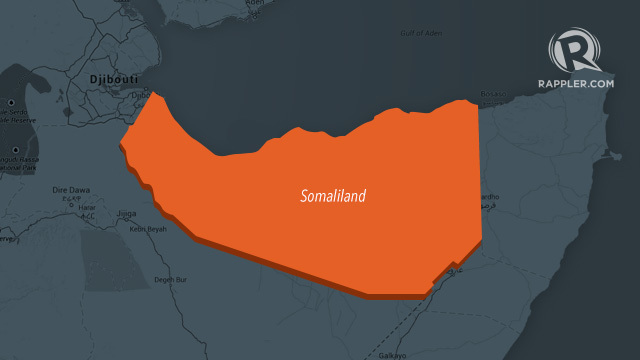
-
 Medeshi Oct 29, 2008 Somali pirates living the high life By Robyn Hunter BBC News "No information today. No comment," a Somali pir...
 -
Medeshi Amnesty International Urgent Action - woman sentenced to death in Puntland, Somalia PUBLIC AI Index: AFR 52/003/2009 12 May 2009 UA ...


