Medeshi
Wednesday, May 20, 2009
Somali diplomat gives up Kenyan passport
By NATION Reporter Posted Wednesday, May 20 2009
A Kenyan passport issued to Mr Hassan Sheikh Aden Issak has been withdrawn. Immigration and Registration of Persons minister Otieno Kajwang’ said the Somali diplomat had become a Kenyan citizen by registration when he was issued the passport.
However, Sheikh Aden was appointed a diplomat when the Somali government was installed. “We realised he had a Kenyan passport when his name registered in our systems when he returned to the country, and withdrew it. He had not even renounced his Kenyan citizenship,” Mr Kajwang’ said.
Dual citizenship
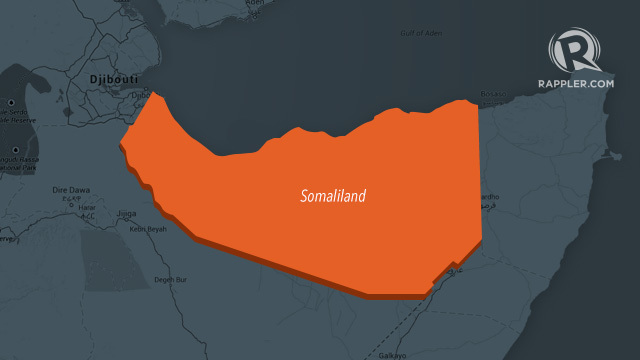
The minister told the Nation in his Nyayo House office in Nairobi that Sheikh Aden’s children had also become Kenyan citizens. He said since the law currently does not allow dual citizenship, his ministry usually confiscates Kenyan passports.Mr Kajwang’ said his ministry also discovered a number of Somalis who had acquired genuine Kenyan travel documents as they were just about to board a plane to their destinations. “We refused them exit after we realised they were not Kenyans but Somalis from Somaliland.” Somaliland is an autonomous region in Somalia.
The minister said his ministry was facing challenges using birth certificates and national IDs as primary documents for the issuance of national passports. Following reforms in the ministry, Mr Kajwang’ said, it now took three days for one to renew a passport, and 14 days for fresh applicants to acquire one.
He said it took 20 days for applicants in Nairobi to acquire national ID cards, 30 days for those living in non-border areas and 40 days for those coming from border regions. The minister regretted that many eligible Kenyans were yet to apply for national IDs even though there was no backlog.
www.medeshi.com
Visit Medeshi English page here : http://www.medeshi.com/
Wednesday, May 20, 2009
Somali football team to get teenagers off the Cambridge Estate
Medeshi
Somali football team to get teenagers off the Cambridge Estate
18th May 2009
By David Lindsell »
Medeshi
Somali teenagers have started a five-a-side football team to keep them out of trouble and improve their footballing skills.
The 16 to 25 year olds approached Somali community organisers asking them to help set up a club.
The project is set to be awarded £750 by Kingston Town Centre councillors this week toward pitch hire, coaching, publicity and football equipment.
Organiser Mohammed Ali said: "They hang around the Cambridge Estate and we feel that we have to keep them off the estates and give them something to do.
"They are good players. Some have experience but the others are getting healthy through it. They do like to show off their skills."
The 54-year-old said his legs would no longer stretch to training with the team on Saturday afternoons at Kingsmeadow but he hoped to build a squad of 22 players for an 11-a-side team.
While the Kingston Somali football team goes from strength to strength, the national team has struggled in recent years because of the ongoing civil war. Their star striker Ayub Daud plays for Juventus but the Somalis are forced to play all their games away from home.
The Kingston Somali Community Association was set up in December 2006 with an office in the United Reformed Church offering advice and assistance.
Medeshi
Somali football team to get teenagers off the Cambridge Estate
18th May 2009
By David Lindsell »
Medeshi
Somali teenagers have started a five-a-side football team to keep them out of trouble and improve their footballing skills.
The 16 to 25 year olds approached Somali community organisers asking them to help set up a club.
The project is set to be awarded £750 by Kingston Town Centre councillors this week toward pitch hire, coaching, publicity and football equipment.
Organiser Mohammed Ali said: "They hang around the Cambridge Estate and we feel that we have to keep them off the estates and give them something to do.
"They are good players. Some have experience but the others are getting healthy through it. They do like to show off their skills."
The 54-year-old said his legs would no longer stretch to training with the team on Saturday afternoons at Kingsmeadow but he hoped to build a squad of 22 players for an 11-a-side team.
While the Kingston Somali football team goes from strength to strength, the national team has struggled in recent years because of the ongoing civil war. Their star striker Ayub Daud plays for Juventus but the Somalis are forced to play all their games away from home.
The Kingston Somali Community Association was set up in December 2006 with an office in the United Reformed Church offering advice and assistance.
Medeshi
Somaliland clans in ceasefire over disputed farmland

Medeshi
Somaliland clans in ceasefire over disputed farmland
KALABAIDH, 20 May 2009 - Two clans in Somaliland's Elberdale farmland in Gabiley region, who have fought intermittently in the past five months over disputed farmland, have agreed a ceasefire, a mediator said.
(Photo: Abdirahman Warsame, a member of the mediation committee seeking to reconcile the two clans)
Abdirahman Warsame, a member of the Somaliland's Guurti mediation committee, told IRIN on 17 May that 25 elders from each clan had sworn to end fighting and to reconcile the two clans.
However, talks aimed at resolving the dispute, which started in mid-April between the Hared and the Nour clans, are ongoing in Kalabait.
The government sent military and police troops to Elberdale last month in a bid to stop the fighting.
On 14 May, elders visited patients admitted to hospital in Gabiley and Dila areas who had been injured in previous fighting over the Elberdale farmland.
"We went to Gabiley Hospital and to Dila Hospital to see all those who were injured in the conflict; we also ascertained the number of those who have died," Aden Elabe, one of the elders, told IRIN.
Elabe said the team of elders also visited areas where farmers from Elberdale had fled, such as Geed Diqsi, Jaldhabaha, Satile and Da'walay, to reassure them the conflict would be resolved.
However, local officials have expressed concern over farmers missing the present planting season.
Elabe Mohamoud Hufane, the mayor of Dila district in Awdal region, said: "This is the season when farmers grow sorghum and maize but here in Dila district, we have more than 120 families who fled the conflict in early April and are yet to return to their farms in Burdi and Geed Diqsi areas."
Abdirahman Warsame, a member of the Somaliland's Guurti mediation committee, told IRIN on 17 May that 25 elders from each clan had sworn to end fighting and to reconcile the two clans.
However, talks aimed at resolving the dispute, which started in mid-April between the Hared and the Nour clans, are ongoing in Kalabait.
The government sent military and police troops to Elberdale last month in a bid to stop the fighting.
On 14 May, elders visited patients admitted to hospital in Gabiley and Dila areas who had been injured in previous fighting over the Elberdale farmland.
"We went to Gabiley Hospital and to Dila Hospital to see all those who were injured in the conflict; we also ascertained the number of those who have died," Aden Elabe, one of the elders, told IRIN.
Elabe said the team of elders also visited areas where farmers from Elberdale had fled, such as Geed Diqsi, Jaldhabaha, Satile and Da'walay, to reassure them the conflict would be resolved.
However, local officials have expressed concern over farmers missing the present planting season.
Elabe Mohamoud Hufane, the mayor of Dila district in Awdal region, said: "This is the season when farmers grow sorghum and maize but here in Dila district, we have more than 120 families who fled the conflict in early April and are yet to return to their farms in Burdi and Geed Diqsi areas."
Tuesday, May 19, 2009
Israel 'deaf' to two-state solution

Medeshi May 19, 2009
Israel 'deaf' to two-state solution
US calls for a two-state solution "fell on deaf ears", the Palestinians' chief negotiator with Israel has said.
Speaking to Al Jazeera on Tuesday, the day after the first official meeting between Barack Obama, the US president, and Binyamin Netanyahu, Israel's prime minister, Saeb Erekat indicated that Palestinians had low expectations of the outcome.
In their talks in Washington, Obama told Netanyahu to stop expanding Jewish settlements and grasp the "historic opportunity" to make peace with the Palestinians.
"We appreciate very much what Mr Obama said ... [But] I'm sure this fell on deaf ears. Mr Netanyahu will continue to be in a state of denial," Erekat told Al Jazeera.
"He will not accept the two-state solution, he will not accept agreements signed. He will continue with settlement activities and he thinks he can beat about the bush by more vagueness and linguistics and public relations campaigns."
In four hours of talks with Obama, Netanyahu refused to publicly commit to an independent Palestinian state.
He told Obama that Israel was "ready" to resume negotiations with the Palestinians, which stalled during Israel's 22-day offensive in the Gaza Strip, but avoided endorsing the two-state solution.
"If we resume negotiations then I think the Palestinians will have to recognise Israel as a Jewish state and also enable Israel to have the means to defend itself," Netanyahu said.
Following the meeting, Netanyahu said: "I did not say two states for two peoples."
He also said that Israel did not want to govern the Palestinians.
"We want them to govern themselves [minus] a handful of powers that could endanger the state of Israel," Netanyau said.
But Erekat rejected this as rhetoric.
"Really, when he [Netanyahu] says that he wants Palestinians to govern themselves by themselves - Mr Netanyahu I have a question for you: How can I govern myself by myself under your wall, settlements, incursions, assasinations, roadblocks?" he told Al Jazeera.
'Nothing but wishes'
Hamas, the Palestinian faction that controls the Gaza Strip, was sceptical of the meeting, saying it offered nothing new.
"The statements by Obama are nothing but wishes on which we do not much count," Fawzi Barhoum, a Hamas spokesman, said in a statement.
He said that statements by Obama that "are not accompanied by pressure on the Zionist occupation and concrete measures do not reflect a radical change of American policy toward our people".
Sherine Tadross, Al Jazeera's correspondent reporting from Jerusalem, said that Israel officially remained up beat about the meeting but that the press saw the two leaders as finding little common ground.
"The official line is that it was a very good meeting, that there was a lot of chemistry between the two leaders and there were a lot of common interests expressed ... now that is a world apart from how the Israeli press has read the situation," she said.
"Certainly, it seems, the line that is often given to US presidents by Israeli leaders - 'listen I need more time because domestically I'm not in a situation where I can press my fragile coalition government to dismantle settlements and establish a two state solution' - was not bought by Obama."
Settlement concerns
Despite Obama's call for a halt to settlement building, there were reports that Israel was moving ahead with construction of a new settlement on the east side of the West Bank, where Israeli officials have already issued tenders for housing units in the area.
David Elhaiini, a local Israeli government official, said the timing of the construction was not intended to make a political point as it was initially approved in 2008 by Ehud Barak, the Israeli defence minister, the Associated Press news agency reported.
The Palestinians say settlements, which the World Court has deemed illegal, could deny them a viable state.
Netanyahu and Obama also discussed the issue of Iran's nuclear programme, which the West and Israel believe is a disguised weapons drive but which Iran says is for purely civilian purposes.
Obama warned that the US was "not going to have talks forever" on the issue, but reinforced his earlier position that he offered an "outstretched hand" to Tehran.
Netanyahu, speaking separately to reporters, insisted that Israel "reserves its right to defend itself".
Israel 'deaf' to two-state solution
US calls for a two-state solution "fell on deaf ears", the Palestinians' chief negotiator with Israel has said.
Speaking to Al Jazeera on Tuesday, the day after the first official meeting between Barack Obama, the US president, and Binyamin Netanyahu, Israel's prime minister, Saeb Erekat indicated that Palestinians had low expectations of the outcome.
In their talks in Washington, Obama told Netanyahu to stop expanding Jewish settlements and grasp the "historic opportunity" to make peace with the Palestinians.
"We appreciate very much what Mr Obama said ... [But] I'm sure this fell on deaf ears. Mr Netanyahu will continue to be in a state of denial," Erekat told Al Jazeera.
"He will not accept the two-state solution, he will not accept agreements signed. He will continue with settlement activities and he thinks he can beat about the bush by more vagueness and linguistics and public relations campaigns."
In four hours of talks with Obama, Netanyahu refused to publicly commit to an independent Palestinian state.
He told Obama that Israel was "ready" to resume negotiations with the Palestinians, which stalled during Israel's 22-day offensive in the Gaza Strip, but avoided endorsing the two-state solution.
"If we resume negotiations then I think the Palestinians will have to recognise Israel as a Jewish state and also enable Israel to have the means to defend itself," Netanyahu said.
Following the meeting, Netanyahu said: "I did not say two states for two peoples."
He also said that Israel did not want to govern the Palestinians.
"We want them to govern themselves [minus] a handful of powers that could endanger the state of Israel," Netanyau said.
But Erekat rejected this as rhetoric.
"Really, when he [Netanyahu] says that he wants Palestinians to govern themselves by themselves - Mr Netanyahu I have a question for you: How can I govern myself by myself under your wall, settlements, incursions, assasinations, roadblocks?" he told Al Jazeera.
'Nothing but wishes'
Hamas, the Palestinian faction that controls the Gaza Strip, was sceptical of the meeting, saying it offered nothing new.
"The statements by Obama are nothing but wishes on which we do not much count," Fawzi Barhoum, a Hamas spokesman, said in a statement.
He said that statements by Obama that "are not accompanied by pressure on the Zionist occupation and concrete measures do not reflect a radical change of American policy toward our people".
Sherine Tadross, Al Jazeera's correspondent reporting from Jerusalem, said that Israel officially remained up beat about the meeting but that the press saw the two leaders as finding little common ground.
"The official line is that it was a very good meeting, that there was a lot of chemistry between the two leaders and there were a lot of common interests expressed ... now that is a world apart from how the Israeli press has read the situation," she said.
"Certainly, it seems, the line that is often given to US presidents by Israeli leaders - 'listen I need more time because domestically I'm not in a situation where I can press my fragile coalition government to dismantle settlements and establish a two state solution' - was not bought by Obama."
Settlement concerns
Despite Obama's call for a halt to settlement building, there were reports that Israel was moving ahead with construction of a new settlement on the east side of the West Bank, where Israeli officials have already issued tenders for housing units in the area.
David Elhaiini, a local Israeli government official, said the timing of the construction was not intended to make a political point as it was initially approved in 2008 by Ehud Barak, the Israeli defence minister, the Associated Press news agency reported.
The Palestinians say settlements, which the World Court has deemed illegal, could deny them a viable state.
Netanyahu and Obama also discussed the issue of Iran's nuclear programme, which the West and Israel believe is a disguised weapons drive but which Iran says is for purely civilian purposes.
Obama warned that the US was "not going to have talks forever" on the issue, but reinforced his earlier position that he offered an "outstretched hand" to Tehran.
Netanyahu, speaking separately to reporters, insisted that Israel "reserves its right to defend itself".
AusAID: Australian Assistance to Somalia

Medeshi
AusAID: Australian Assistance to Somalia
May 19, 2009
Australia will provide $2 million to support efforts to restore peace to Somalia after almost two decades of conflict and humanitarian crises.
The United Nations estimates that over half the population of Somalia is in need of humanitarian assistance and that one in six Somali children under five is acutely malnourished.
Essential services have collapsed and around 1.3 million Somalis are displaced.
Australia will contribute:
- $1.5 million to the United Nations Humanitarian Appeal
- $500,000 to the African Union Mission in Somalia (AMISOM).
The UN's humanitarian appeal for Somalia is 70 per cent underfunded - the worst shortfall of any UN appeal. This is having a major adverse impact on the provision of essential services, including education and health, to Somalis affected by conflict, economic collapse and famine.
Maternal and infant mortality rates are amongst the highest in the world, and women and children are most vulnerable to violence. Australia's contribution to UN agencies will support vital health services for women and children, and security for humanitarian workers so that they can deliver aid to the people who most need it.
Australia's contribution will also support AMISOM's operations in Somalia, including the provision of medical support and supplies to local communities.
Australia commends the African Union for its commitment to improving security in Somalia through AMISOM and contributing to the improvement of the humanitarian situation. It faces a challenging mission helping Somalia's Transitional Government stabilise the situation in the country and has paid a heavy price in the lives of personnel lost on duty.
Resolution of the conflict in Somalia is essential to relieve the humanitarian crisis and strengthen stability in the Horn of Africa. It will help tackle the root causes of Somalia-based piracy, which continues to threaten shipping and maritime security in the Gulf of Aden and off the East African coast.
May 19, 2009
Australia will provide $2 million to support efforts to restore peace to Somalia after almost two decades of conflict and humanitarian crises.
The United Nations estimates that over half the population of Somalia is in need of humanitarian assistance and that one in six Somali children under five is acutely malnourished.
Essential services have collapsed and around 1.3 million Somalis are displaced.
Australia will contribute:
- $1.5 million to the United Nations Humanitarian Appeal
- $500,000 to the African Union Mission in Somalia (AMISOM).
The UN's humanitarian appeal for Somalia is 70 per cent underfunded - the worst shortfall of any UN appeal. This is having a major adverse impact on the provision of essential services, including education and health, to Somalis affected by conflict, economic collapse and famine.
Maternal and infant mortality rates are amongst the highest in the world, and women and children are most vulnerable to violence. Australia's contribution to UN agencies will support vital health services for women and children, and security for humanitarian workers so that they can deliver aid to the people who most need it.
Australia's contribution will also support AMISOM's operations in Somalia, including the provision of medical support and supplies to local communities.
Australia commends the African Union for its commitment to improving security in Somalia through AMISOM and contributing to the improvement of the humanitarian situation. It faces a challenging mission helping Somalia's Transitional Government stabilise the situation in the country and has paid a heavy price in the lives of personnel lost on duty.
Resolution of the conflict in Somalia is essential to relieve the humanitarian crisis and strengthen stability in the Horn of Africa. It will help tackle the root causes of Somalia-based piracy, which continues to threaten shipping and maritime security in the Gulf of Aden and off the East African coast.
Eritrea awards more mining licences

Medeshi
Eritrea awards more mining licences
Tue May 19, 2009
By Andrew Cawthorne
ASMARA (Reuters) - Eritrea said on Tuesday eight more foreign firms had entered its mining sector with a clutch of new exploration licences in a nation seen on the cusp of a minerals boom that could motor its needy economy.
Alem Kibreab, director general of mines for the Energy and Mines Ministry, added the Horn of Africa nation's first and flagship project -- the Bisha mine -- should start producing gold by the third quarter of 2010.
"Despite its small size, Eritrea is going to be on the map of mining countries," he told Reuters, adding that reserves identified so far were only the "tip of the iceberg."
Foreign miners agree on the potential, but Eritrea insists the sector must be developed slowly and carefully to prevent the so-called "resources curse" where oil and minerals have spawned corruption and violence elsewhere in Africa.
A new round of licences awarded earlier this year had brought the total number of foreign companies exploring or about to explore in Eritrea to 14, Alem said.
He named the newcomers as Britain's Andiamo Exploration and London Africa; China's Land and Energy and Zhongchang Mining; the Eritrean-Libyan Mining Share; Australia's South Boulder and Gippsland; and India's Spice Minerals.
Gold, copper, zinc and potash are the main interest.
"We know that the juniors are the ones who aggressively come for exploration," he said. "We are comfortable not only with the size but the diversification of countries."
Eritrea's most advanced project, run by Canada's Nevsun Resources Ltd with a 40 percent stake for the state, is Bisha. Its 27 million tonnes of ore are believed to contain 1 million ounces of gold, 700-800 million lb of copper and 1 billion lb of zinc.
"Construction has started. Most of the workers' quarters are ready. We strongly believe that by the third quarter of 2010, we will start production," Alem said, adding that feasibility and environment impact studies had been lengthy.
For the first two-and-a-half years it will produce gold, with output of 450,000 ounces a year expected. Then it will turn to copper, followed by zinc in a probable 10-year life.
"Bisha is unique. You rarely find a project with gold on top, then copper, then zinc, like that," Alem said.
"If we get the gold price at today's price, it will be beneficial, obviously," he said, adding the mine was planned with a lower price of between $400-600 an ounce in mind.
MINISTERIAL RE-SHUFFLE
Next up will be the Zara project, run by Australia's Sub-Sahara Resources, and the Asmara belt, headed by Canada's Sunridge.
Zara is believed to hold 1 million ounces of gold.
Asmara belt has some 70 million tonnes of ore thought to contain between 500,000-1 million ounces of gold, 2 billion lb of zinc and 700-800 million lb of copper, Alem said.
"It is a very difficult time because of the credit crunch. If all goes well, though, we should have feasibility studies finished by 2011 for both, then construction would start, and production would be a year or two years after."
Mining company sources said those targets were not over-ambitious, but may shift according to global economics.
Alem said Eritrea did not have any estimates for total national reserves, but the potential was clear and the economy -- one of the world's smallest -- had much to gain.
"As well as the revenues, it can provide a big support to other sectors," Alem said.
Apart from small-scale, artisan mining and some minor extraction by Italians during the colonial era, Eritrea's mining potential is unexploited. Some bigger miners were scared off by the 1998-2000 border war with Ethiopia.
President Isaias Afwerki recently moved long-serving Energy and Mines Minister Tesfai Ghebreselassie to the environment portfolio, replacing him with Ahmed Haj Ali who had been running the fisheries ministry.
Ahmed had experience in the sector from a stint as deputy energy and mines minister, Alem said. And while foreign companies would be reassured by Tesfai's move to the environment, he would be no pushover, he added.
"It is a plus to the industry. That is how the companies take it ... I am sure, though, that he will be even tougher in protecting the environment because a lot of people will say he will have a weakness there. Even when here, he was very strong on the environment."
Tue May 19, 2009
By Andrew Cawthorne
ASMARA (Reuters) - Eritrea said on Tuesday eight more foreign firms had entered its mining sector with a clutch of new exploration licences in a nation seen on the cusp of a minerals boom that could motor its needy economy.
Alem Kibreab, director general of mines for the Energy and Mines Ministry, added the Horn of Africa nation's first and flagship project -- the Bisha mine -- should start producing gold by the third quarter of 2010.
"Despite its small size, Eritrea is going to be on the map of mining countries," he told Reuters, adding that reserves identified so far were only the "tip of the iceberg."
Foreign miners agree on the potential, but Eritrea insists the sector must be developed slowly and carefully to prevent the so-called "resources curse" where oil and minerals have spawned corruption and violence elsewhere in Africa.
A new round of licences awarded earlier this year had brought the total number of foreign companies exploring or about to explore in Eritrea to 14, Alem said.
He named the newcomers as Britain's Andiamo Exploration and London Africa; China's Land and Energy and Zhongchang Mining; the Eritrean-Libyan Mining Share; Australia's South Boulder and Gippsland; and India's Spice Minerals.
Gold, copper, zinc and potash are the main interest.
"We know that the juniors are the ones who aggressively come for exploration," he said. "We are comfortable not only with the size but the diversification of countries."
Eritrea's most advanced project, run by Canada's Nevsun Resources Ltd with a 40 percent stake for the state, is Bisha. Its 27 million tonnes of ore are believed to contain 1 million ounces of gold, 700-800 million lb of copper and 1 billion lb of zinc.
"Construction has started. Most of the workers' quarters are ready. We strongly believe that by the third quarter of 2010, we will start production," Alem said, adding that feasibility and environment impact studies had been lengthy.
For the first two-and-a-half years it will produce gold, with output of 450,000 ounces a year expected. Then it will turn to copper, followed by zinc in a probable 10-year life.
"Bisha is unique. You rarely find a project with gold on top, then copper, then zinc, like that," Alem said.
"If we get the gold price at today's price, it will be beneficial, obviously," he said, adding the mine was planned with a lower price of between $400-600 an ounce in mind.
MINISTERIAL RE-SHUFFLE
Next up will be the Zara project, run by Australia's Sub-Sahara Resources, and the Asmara belt, headed by Canada's Sunridge.
Zara is believed to hold 1 million ounces of gold.
Asmara belt has some 70 million tonnes of ore thought to contain between 500,000-1 million ounces of gold, 2 billion lb of zinc and 700-800 million lb of copper, Alem said.
"It is a very difficult time because of the credit crunch. If all goes well, though, we should have feasibility studies finished by 2011 for both, then construction would start, and production would be a year or two years after."
Mining company sources said those targets were not over-ambitious, but may shift according to global economics.
Alem said Eritrea did not have any estimates for total national reserves, but the potential was clear and the economy -- one of the world's smallest -- had much to gain.
"As well as the revenues, it can provide a big support to other sectors," Alem said.
Apart from small-scale, artisan mining and some minor extraction by Italians during the colonial era, Eritrea's mining potential is unexploited. Some bigger miners were scared off by the 1998-2000 border war with Ethiopia.
President Isaias Afwerki recently moved long-serving Energy and Mines Minister Tesfai Ghebreselassie to the environment portfolio, replacing him with Ahmed Haj Ali who had been running the fisheries ministry.
Ahmed had experience in the sector from a stint as deputy energy and mines minister, Alem said. And while foreign companies would be reassured by Tesfai's move to the environment, he would be no pushover, he added.
"It is a plus to the industry. That is how the companies take it ... I am sure, though, that he will be even tougher in protecting the environment because a lot of people will say he will have a weakness there. Even when here, he was very strong on the environment."
Ethiopia troops 'back in Somalia'

Medeshi May 19, 2009
Ethiopia troops 'back in Somalia'
Ethiopian military forces have crossed back into Somalia, four months after leaving, witnesses told the BBC.
Their reported return comes as Islamist militants continue to seize towns from the fragile Western-backed government.
One resident said he saw Ethiopian troops digging trenches in Kalabeyr, a town 22km (14 miles) from the Somali-Ethiopian border.
An Ethiopian spokesman denied the reports. Its troops left Somalia in January after two years in the country.
They entered Somalia in 2006 to help oust Islamist forces from the capital Mogadishu but withdrew under a UN-backed peace deal.
“ They stopped me and checked my car and then ordered me to move ” Farah Ahmed Adaan Bus driver
When its troops left, Ethiopia made it clear it did still reserve the right to intervene in Somalia if its interests were directly threatened.
There have been several reports of the Ethiopian military crossing into Somali territory for hot-pursuit operations, or to check vehicles moving in the border area.
The BBC's Elizabeth Blunt in Addis Ababa says the latest reported troop movements may well be part of a similar, limited operation.
But Ethiopian government spokesman Bereket Simon told our correspondent the reports were "fabricated".
He said at the moment they believed events in Somalia presented no immediate threat to Ethiopia and their troops were not contemplating going back there at this point.
Language
However, Kalabeyr resident Fadumo Du'ale told the BBC's Mohamed Olad Hassan on Tuesday: "They have crossed the border late last night and they are here now. They look to be stationing here."
Another resident, Tabane Abdi Ali, told the BBC: "We recognise them because of their military uniform and the language they were speaking."
Bus driver Farah Ahmed Adaan told our correspondent he had spotted "a lot" of Ethiopian troops with 12 military vehicles.
"Some of them were digging trenches while others were guarding the whole area," he said.
"They stopped me and checked my car and then ordered me to move."
On Sunday, fighters from the al-Shabab group, which is linked to al-Qaeda, took the key town of Jowhar from government forces.
This is the home town of President Sheikh Sharif Sheikh Ahmed and now that the country's rainy season has arrived, Jowhar is the only passable route into central Somalia from the capital.
Since withdrawing at the beginning of the year, Ethiopian troops have kept up a strong presence along the Somali border.
Ethiopia, a US ally, invaded its war-torn neighbour in December 2006 to prop up the transitional government and initially everything went according to plan.
Rebel resistance melted away before the 3,000-strong Ethiopian advance and the Somali government was able to set up in Mogadishu.
But the government did not extend its control and the Islamists continued to launch deadly attacks on both Ethiopian and Somali government forces.
About 4,300 Ugandan and Burundian peacekeepers from the African Union have arrived in Mogadishu, where they have taken up positions vacated by the Ethiopians in January.
But analysts say they are only in effective control of the presidential palace, airport and seaport in Mogadishu, while the Islamist guerrillas control chunks of the capital, along with swathes of central and southern Somalia.
Story from BBC NEWS:
Ethiopian military forces have crossed back into Somalia, four months after leaving, witnesses told the BBC.
Their reported return comes as Islamist militants continue to seize towns from the fragile Western-backed government.
One resident said he saw Ethiopian troops digging trenches in Kalabeyr, a town 22km (14 miles) from the Somali-Ethiopian border.
An Ethiopian spokesman denied the reports. Its troops left Somalia in January after two years in the country.
They entered Somalia in 2006 to help oust Islamist forces from the capital Mogadishu but withdrew under a UN-backed peace deal.
“ They stopped me and checked my car and then ordered me to move ” Farah Ahmed Adaan Bus driver
When its troops left, Ethiopia made it clear it did still reserve the right to intervene in Somalia if its interests were directly threatened.
There have been several reports of the Ethiopian military crossing into Somali territory for hot-pursuit operations, or to check vehicles moving in the border area.
The BBC's Elizabeth Blunt in Addis Ababa says the latest reported troop movements may well be part of a similar, limited operation.
But Ethiopian government spokesman Bereket Simon told our correspondent the reports were "fabricated".
He said at the moment they believed events in Somalia presented no immediate threat to Ethiopia and their troops were not contemplating going back there at this point.
Language
However, Kalabeyr resident Fadumo Du'ale told the BBC's Mohamed Olad Hassan on Tuesday: "They have crossed the border late last night and they are here now. They look to be stationing here."
Another resident, Tabane Abdi Ali, told the BBC: "We recognise them because of their military uniform and the language they were speaking."
Bus driver Farah Ahmed Adaan told our correspondent he had spotted "a lot" of Ethiopian troops with 12 military vehicles.
"Some of them were digging trenches while others were guarding the whole area," he said.
"They stopped me and checked my car and then ordered me to move."
On Sunday, fighters from the al-Shabab group, which is linked to al-Qaeda, took the key town of Jowhar from government forces.
This is the home town of President Sheikh Sharif Sheikh Ahmed and now that the country's rainy season has arrived, Jowhar is the only passable route into central Somalia from the capital.
Since withdrawing at the beginning of the year, Ethiopian troops have kept up a strong presence along the Somali border.
Ethiopia, a US ally, invaded its war-torn neighbour in December 2006 to prop up the transitional government and initially everything went according to plan.
Rebel resistance melted away before the 3,000-strong Ethiopian advance and the Somali government was able to set up in Mogadishu.
But the government did not extend its control and the Islamists continued to launch deadly attacks on both Ethiopian and Somali government forces.
About 4,300 Ugandan and Burundian peacekeepers from the African Union have arrived in Mogadishu, where they have taken up positions vacated by the Ethiopians in January.
But analysts say they are only in effective control of the presidential palace, airport and seaport in Mogadishu, while the Islamist guerrillas control chunks of the capital, along with swathes of central and southern Somalia.
Story from BBC NEWS:
Sunday, May 17, 2009
Q&A: Somalia's conflict
Medeshi May 17, 2009
Q&A: Somalia's conflict
Somalia has experienced almost constant conflict since the collapse of its central government in 1991.
It was hoped the election of moderate Islamist Sheikh Sharif Sheikh Ahmad as president of a transitional government in January and the departure of Ethiopian troops would stop the violence, but Islamist insurgents are keeping up their almost daily attacks.
Who are the insurgents?
The main fighters are from al-Shabab, a radical faction that emerged from the remnants of the Union of Islamic Courts, routed by the Ethiopian forces that invaded Somalia in 2006.
AU's MOGADISHU QUAGMIRE
AU force in Somalia (Amisom) was mandated in January 2007
Supposed to be 8,000-strong but currently has only 4,300 troops
Comprised of soldiers from Uganda and Burundi
Sierra Leone has offered battalion, which would take force over 5,000
Restricted by security situation to operations in Mogadishu
The group, which is on the US terror list and is said to have links with al-Qaeda, now controls much of southern and central Somalia and has imposed strict Sharia law in those areas.
They see President Sheikh Sharif Sheikh Ahmed, a former UIC leader, as having sold out for agreeing to head a government backed by the international community.
This view is shared by another group of Islamist fighters - Hisbul-Islam - formed after Mr Ahmed become president in January.
One of its main leaders is Sheikh Hassan Dahir Aweys, who together with Mr Ahmed headed the UIC in 2006.
Unlike previous divisions in Somalia, these groups are not based on the clan system.
So what do they want?
Power - so that Somalia is ruled by Sharia.
President Ahmed's recent introduction of Islamic law has not appeased them.
They are followers of the Wahhabi school of Islam, which is based on a more rigid and literal interpretation of Islamic texts, rather than mainstream Sunni faith practised by most Somalis.
The Islamists also want the African Union peacekeepers, based in Mogadishu, to leave.
Mr Aweys, who recently returned from exile, says he will not enter peace talks with the government and his former ally until these "invaders" have gone.
Will the government survive?
Not necessarily. Military and intelligence sources say many government troops have defected to the insurgents.
One assessment reckons the government can only rely on some 4,000 fighters against 6,000 from al-Shabab.
Meanwhile, the AU peacekeepers, in the capital to bolster the government, do not have the mandate to pursue the insurgents.
Only 4,300 troops of a planned 8,000 strong force have deployed.
What is the international response?
There is little appetite for international intervention given Ethiopia's recent experience, which gave rise to the current insurgency.
Ethiopia initially intervened in late 2006 to save the interim government and to prevent the spread of fundamentalist Islam in Africa, a concern shared by America.
But they suffered daily attacks - and at the worst of the fighting the bodies of dead Ethiopian soldiers were dragged through Mogadishu, bringing to mind similar events when the US intervened in the 1990s - made famous by the film Black Hawk Down.
The UN backed the peace process which led to the election of Sheikh Sharif Sheikh Ahmed as president.
In April, the international community pledged more than $200m to Somalia to beef up its security.
Most of this is for the embattled AU to help them with equipment and the training of Somali forces.
They are intended to oversee the creation of 10,000-strong police force and the training of 6,000 soldiers.
How are ordinary people coping?
The latest fighting is said to have forced about 20,000 people from residential areas of the capital, where the battles are being played out by pro-government forces and insurgent groups.
And over the years hundreds of thousands of Somalis have fled to neighbouring countries.
More than one million people, in a nation the UN estimates to be of nine million, are internally displaced.
Drought is further exacerbating the situation, with more than one third of the population reliant on food aid.
Many Somalis depend for their survival on money sent home by their relatives abroad.
Story from BBC NEWS:
Somalia has experienced almost constant conflict since the collapse of its central government in 1991.
It was hoped the election of moderate Islamist Sheikh Sharif Sheikh Ahmad as president of a transitional government in January and the departure of Ethiopian troops would stop the violence, but Islamist insurgents are keeping up their almost daily attacks.
Who are the insurgents?
The main fighters are from al-Shabab, a radical faction that emerged from the remnants of the Union of Islamic Courts, routed by the Ethiopian forces that invaded Somalia in 2006.
AU's MOGADISHU QUAGMIRE
AU force in Somalia (Amisom) was mandated in January 2007
Supposed to be 8,000-strong but currently has only 4,300 troops
Comprised of soldiers from Uganda and Burundi
Sierra Leone has offered battalion, which would take force over 5,000
Restricted by security situation to operations in Mogadishu
The group, which is on the US terror list and is said to have links with al-Qaeda, now controls much of southern and central Somalia and has imposed strict Sharia law in those areas.
They see President Sheikh Sharif Sheikh Ahmed, a former UIC leader, as having sold out for agreeing to head a government backed by the international community.
This view is shared by another group of Islamist fighters - Hisbul-Islam - formed after Mr Ahmed become president in January.
One of its main leaders is Sheikh Hassan Dahir Aweys, who together with Mr Ahmed headed the UIC in 2006.
Unlike previous divisions in Somalia, these groups are not based on the clan system.
So what do they want?
Power - so that Somalia is ruled by Sharia.
President Ahmed's recent introduction of Islamic law has not appeased them.
They are followers of the Wahhabi school of Islam, which is based on a more rigid and literal interpretation of Islamic texts, rather than mainstream Sunni faith practised by most Somalis.
The Islamists also want the African Union peacekeepers, based in Mogadishu, to leave.
Mr Aweys, who recently returned from exile, says he will not enter peace talks with the government and his former ally until these "invaders" have gone.
Will the government survive?
Not necessarily. Military and intelligence sources say many government troops have defected to the insurgents.
One assessment reckons the government can only rely on some 4,000 fighters against 6,000 from al-Shabab.
Meanwhile, the AU peacekeepers, in the capital to bolster the government, do not have the mandate to pursue the insurgents.
Only 4,300 troops of a planned 8,000 strong force have deployed.
What is the international response?
There is little appetite for international intervention given Ethiopia's recent experience, which gave rise to the current insurgency.
Ethiopia initially intervened in late 2006 to save the interim government and to prevent the spread of fundamentalist Islam in Africa, a concern shared by America.
But they suffered daily attacks - and at the worst of the fighting the bodies of dead Ethiopian soldiers were dragged through Mogadishu, bringing to mind similar events when the US intervened in the 1990s - made famous by the film Black Hawk Down.
The UN backed the peace process which led to the election of Sheikh Sharif Sheikh Ahmed as president.
In April, the international community pledged more than $200m to Somalia to beef up its security.
Most of this is for the embattled AU to help them with equipment and the training of Somali forces.
They are intended to oversee the creation of 10,000-strong police force and the training of 6,000 soldiers.
How are ordinary people coping?
The latest fighting is said to have forced about 20,000 people from residential areas of the capital, where the battles are being played out by pro-government forces and insurgent groups.
And over the years hundreds of thousands of Somalis have fled to neighbouring countries.
More than one million people, in a nation the UN estimates to be of nine million, are internally displaced.
Drought is further exacerbating the situation, with more than one third of the population reliant on food aid.
Many Somalis depend for their survival on money sent home by their relatives abroad.
Story from BBC NEWS:
Militants take key Somali town, warlord defects
Medeshi
Militants take key Somali town, warlord defects
By Abdi Sheikh and Ibrahim Mohamed
Sunday, May 17, 2009
MOGADISHU (Reuters) - Militant Islamist fighters captured a strategic town north of Mogadishu on Sunday, leaving government forces isolated in pockets of the country's capital and central region after two weeks of heavy clashes.
In a sign of some disarray among militant ranks however, a former warlord and powerful opposition leader defected to the government side over the weekend.
President Sheikh Sharif Ahmed's United Nations-backed government -- the 15th attempt to establish central rule -- is struggling like predecessors to contain powerful insurgents, currently led by hardline militant al Shabaab.
"Al Shabaab captured Jowhar after serious fighting on Sunday morning," resident Ismail Farah told Reuters. "At least seven people including four civilians died."
Jowhar, Ahmed's hometown, is 90 km (56 miles) from Mogadishu and links it to the volatile central region where local sources say 68 people have been killed in clashes between al Shabaab and a moderate Islamist group since Friday.
Over the past two weeks, fighting in southern Somalia has killed at least 172 civilians and wounded 528 others, according to a local rights group.
Somali Security Minister Omar Hashi Aden said the militants were being supported from outside. He has previously accused Eritrea of arming the insurgents, a charge Asmara denies.
"They are fighting in Mogadishu, and central Somalia. They have also started a war in Jowhar. They are economically and militarily supported ... it is not cheap to sustain fighting."
Eighteen years of conflict have destabilised the region, sent tens of thousands across the border, and drawn foreign militants and a flood of arms to the Horn of Africa nation.
Pirates have taken advantage of the anarchy with ever bolder attacks on international shipping. Nearly 30 hijackings so far this year have set it on course to be the worst ever.
DEFECTION
In a much-needed boost for the government, former warlord and powerful opposition leader Sheikh Yusuf Mohamed Siad, also known as "Inda'ade", defected to its side over the weekend.
"The opposition are bandits," Inda'ade told reporters. "We shall defend the Islamic government. They (opposition) do irreligious acts, and they kill innocent people."
Inda'ade's former group, Hizbul Islam, confirmed the defection but said it would not change anything. "(Inda'ade) and his troops have left us and joined the government ... but that will not affect us," said Hassan Mahdi, spokesman for the group.
Hizbul Islam is an umbrella opposition group including militant leader Sheikh Hassan Dahir Aweys, seen as a powerful figure among insurgents. Aweys said Inda'ade had given most of his weapons to him before defecting.
The International Crisis Group think tank said Somalia's opposition groups had become deeply divided. "There is now a battle shaping up between reportedly moderate Muslims and the extremists, such as Al-Shabaab," it said.
On Friday and Saturday, fighting between Shabaab and a moderate Islamist group in two central towns killed some 68 people and sent 3,300 others fleeing from their homes, pro-government forces and a rights group said.
"We have killed 47 al Shabaab fighters including a white man in Mahas and Wabho," Sheikh Abdullahi Sheikh Abu Yusuf, spokesman of the moderate Ahlu Sunna Waljamaca, told Reuters, adding that three of their fighters had been killed.
The Mogadishu-based Elman Peace and Human Rights group said 18 civilians were killed in those clashes, and that 3,300 people had fled their homes. "Fighting continues non-stop in those areas," said Yasin Ali Gedi, vice chairman of the group. (Additional reporting by Mohamed Ahmed and Abdi Guled; writing by Jack Kimball; editing by Philippa Fletcher).
Source: Reuters, May 17, 2009
Militants take key Somali town, warlord defects
By Abdi Sheikh and Ibrahim Mohamed
Sunday, May 17, 2009
MOGADISHU (Reuters) - Militant Islamist fighters captured a strategic town north of Mogadishu on Sunday, leaving government forces isolated in pockets of the country's capital and central region after two weeks of heavy clashes.
In a sign of some disarray among militant ranks however, a former warlord and powerful opposition leader defected to the government side over the weekend.
President Sheikh Sharif Ahmed's United Nations-backed government -- the 15th attempt to establish central rule -- is struggling like predecessors to contain powerful insurgents, currently led by hardline militant al Shabaab.
"Al Shabaab captured Jowhar after serious fighting on Sunday morning," resident Ismail Farah told Reuters. "At least seven people including four civilians died."
Jowhar, Ahmed's hometown, is 90 km (56 miles) from Mogadishu and links it to the volatile central region where local sources say 68 people have been killed in clashes between al Shabaab and a moderate Islamist group since Friday.
Over the past two weeks, fighting in southern Somalia has killed at least 172 civilians and wounded 528 others, according to a local rights group.
Somali Security Minister Omar Hashi Aden said the militants were being supported from outside. He has previously accused Eritrea of arming the insurgents, a charge Asmara denies.
"They are fighting in Mogadishu, and central Somalia. They have also started a war in Jowhar. They are economically and militarily supported ... it is not cheap to sustain fighting."
Eighteen years of conflict have destabilised the region, sent tens of thousands across the border, and drawn foreign militants and a flood of arms to the Horn of Africa nation.
Pirates have taken advantage of the anarchy with ever bolder attacks on international shipping. Nearly 30 hijackings so far this year have set it on course to be the worst ever.
DEFECTION
In a much-needed boost for the government, former warlord and powerful opposition leader Sheikh Yusuf Mohamed Siad, also known as "Inda'ade", defected to its side over the weekend.
"The opposition are bandits," Inda'ade told reporters. "We shall defend the Islamic government. They (opposition) do irreligious acts, and they kill innocent people."
Inda'ade's former group, Hizbul Islam, confirmed the defection but said it would not change anything. "(Inda'ade) and his troops have left us and joined the government ... but that will not affect us," said Hassan Mahdi, spokesman for the group.
Hizbul Islam is an umbrella opposition group including militant leader Sheikh Hassan Dahir Aweys, seen as a powerful figure among insurgents. Aweys said Inda'ade had given most of his weapons to him before defecting.
The International Crisis Group think tank said Somalia's opposition groups had become deeply divided. "There is now a battle shaping up between reportedly moderate Muslims and the extremists, such as Al-Shabaab," it said.
On Friday and Saturday, fighting between Shabaab and a moderate Islamist group in two central towns killed some 68 people and sent 3,300 others fleeing from their homes, pro-government forces and a rights group said.
"We have killed 47 al Shabaab fighters including a white man in Mahas and Wabho," Sheikh Abdullahi Sheikh Abu Yusuf, spokesman of the moderate Ahlu Sunna Waljamaca, told Reuters, adding that three of their fighters had been killed.
The Mogadishu-based Elman Peace and Human Rights group said 18 civilians were killed in those clashes, and that 3,300 people had fled their homes. "Fighting continues non-stop in those areas," said Yasin Ali Gedi, vice chairman of the group. (Additional reporting by Mohamed Ahmed and Abdi Guled; writing by Jack Kimball; editing by Philippa Fletcher).
Source: Reuters, May 17, 2009
New Legislation and the Return of an Old Argument
Medeshi May 17, 2009
By Scott Morgan
Medeshi
New Legislation and the Return of an Old Argument
There is a specific reason why I chose this title. There are two distinct actions that have been taken this week in Washington regarding Issues in Africa.
The First Part is New Legislation was Introduced in the US Senate that Deals with an Important but Highly Underreported Root of the Crisis in the Democratic Republic of the Congo.
The Second Part is a Statement by the New Undersecretary of State For African Affairs Johnny Carson. Lets say it appears that it is once Again 2006 in Somalia.
First of All is the Congo Conflict Minerals Act.
This is a Bi-Partisan Introduced Legislation that seeks to Address One of the Root Causes for All that ills the Democratic Republic of the Congo.
The Sponsors Include Sam Brownback Republican from Kansas, Russ Feingold a Democrat from Wisconsin and who is the Chairman of the African Subcommitee on the Senate Foreign Relations Committee and Charles Schumer a Democrat from New York.
What is the reason why this Legislation is currently needed? Key Components for Electronic Devices are made from Raw Materials Extracted from the Conflict Prone Eastern Part of the DRC. In Essence it is alledged that Multi-National Coporations are Profitting from the Suffering of their Fellow Human Beings.
What Materials will be Covered? According to the Legislation the Origin of the Country where purchases of Gold, Coltan, Casserite (Tin Ore) and Wolframite are Made From. The Legislation will require such information be disclosed to the Securities and Exchange Commission.
It is believed that the sales of these Minerals are funding various Warlords and Militia Groups that literally Run Affairs in the Eastern DRC.
At this time the Consumer Electronics Industry has had a tepid response to this Legislation but have indicated that they will work on this issue.
US Officals will have a Lot on their Agenda in the Near Future when it Comes to Crisis Spots in Africa!!!
Now to the Return of the Old Argument:
In 2006 Ethiopian Forces entered Somalia to Prop up a Weak Western-Backed Government against an Islamic Insurgency. As Much as anything this may have been a key factor in the spike in the Acts of Piracy that Began in 2008.
When the Incursion began in December 2006 the US State Department reported that it had Evidence that Eritrea had been providing Logisitical Support and even Ground Forces to the UIC (Union of Islamic Courts.)
Fast Forward to 2009. Ethiopian Forces have left Somalia but a number of them remain along the Border in case that they have to return. A small contingent of AU Peacekeepers are in Mogadishu under a limited Mandate. A New Islamist Militia Al-Shabbab which some People maintain has close links to Al-Qaida has Power in the Southern Part of the Country. They have also threatened to Invade Kenya as well.
Recently in an Interview with the BBC US Undersecretary of State for African Affairs Johnny Carson reiterated the Claim that Eritrea has been supporting the Islamist Militias in Somalia. He stated that the US and the UN have "credible" Evidence of Eritrean Involvement in Somalia.
This is one of the reason for the Tensions between the United States and Eritrea. Other Reasons are the Situation along the Border with Ethiopia and the Human Rights Record within Eritrea.
There has been an increase in the Fighting In and Around Mogadishu and an Offer by the Government for a Ceasefire was rejected by the Islamists.
For its part the Eritrean Government has denied any involvement in Somalia once Again
This situation can best be described as TO BE CONTINUED......
By Scott Morgan
Medeshi
New Legislation and the Return of an Old Argument
There is a specific reason why I chose this title. There are two distinct actions that have been taken this week in Washington regarding Issues in Africa.
The First Part is New Legislation was Introduced in the US Senate that Deals with an Important but Highly Underreported Root of the Crisis in the Democratic Republic of the Congo.
The Second Part is a Statement by the New Undersecretary of State For African Affairs Johnny Carson. Lets say it appears that it is once Again 2006 in Somalia.
First of All is the Congo Conflict Minerals Act.
This is a Bi-Partisan Introduced Legislation that seeks to Address One of the Root Causes for All that ills the Democratic Republic of the Congo.
The Sponsors Include Sam Brownback Republican from Kansas, Russ Feingold a Democrat from Wisconsin and who is the Chairman of the African Subcommitee on the Senate Foreign Relations Committee and Charles Schumer a Democrat from New York.
What is the reason why this Legislation is currently needed? Key Components for Electronic Devices are made from Raw Materials Extracted from the Conflict Prone Eastern Part of the DRC. In Essence it is alledged that Multi-National Coporations are Profitting from the Suffering of their Fellow Human Beings.
What Materials will be Covered? According to the Legislation the Origin of the Country where purchases of Gold, Coltan, Casserite (Tin Ore) and Wolframite are Made From. The Legislation will require such information be disclosed to the Securities and Exchange Commission.
It is believed that the sales of these Minerals are funding various Warlords and Militia Groups that literally Run Affairs in the Eastern DRC.
At this time the Consumer Electronics Industry has had a tepid response to this Legislation but have indicated that they will work on this issue.
US Officals will have a Lot on their Agenda in the Near Future when it Comes to Crisis Spots in Africa!!!
Now to the Return of the Old Argument:
In 2006 Ethiopian Forces entered Somalia to Prop up a Weak Western-Backed Government against an Islamic Insurgency. As Much as anything this may have been a key factor in the spike in the Acts of Piracy that Began in 2008.
When the Incursion began in December 2006 the US State Department reported that it had Evidence that Eritrea had been providing Logisitical Support and even Ground Forces to the UIC (Union of Islamic Courts.)
Fast Forward to 2009. Ethiopian Forces have left Somalia but a number of them remain along the Border in case that they have to return. A small contingent of AU Peacekeepers are in Mogadishu under a limited Mandate. A New Islamist Militia Al-Shabbab which some People maintain has close links to Al-Qaida has Power in the Southern Part of the Country. They have also threatened to Invade Kenya as well.
Recently in an Interview with the BBC US Undersecretary of State for African Affairs Johnny Carson reiterated the Claim that Eritrea has been supporting the Islamist Militias in Somalia. He stated that the US and the UN have "credible" Evidence of Eritrean Involvement in Somalia.
This is one of the reason for the Tensions between the United States and Eritrea. Other Reasons are the Situation along the Border with Ethiopia and the Human Rights Record within Eritrea.
There has been an increase in the Fighting In and Around Mogadishu and an Offer by the Government for a Ceasefire was rejected by the Islamists.
For its part the Eritrean Government has denied any involvement in Somalia once Again
This situation can best be described as TO BE CONTINUED......
Change is coming to Ethiopia

Medeshi May 17, 2009
Change is coming to Ethiopia
After 18 years in power, serious moves are afoot to renew the leadership of the ruling EPRDF
Change is coming to Ethiopia, says Prime Minister Meles Zenawi. It was time the country's political old guard stepped down, he told Africa Confidential in an interview on 3 May. Meles has submitted his resignation and the ruling party discussed it in February - but that does not make it inevitable. If there is a change, it would be more of personnel than policy, he suggested. The issue was not that the Ethiopian People's Revolutionary Democratic Front had ruled for 18 years but that 'the same people have been in positions of leadership throughout the period'. He included himself in 'the old leadership which was leading the EPRDF during the armed struggle and up to now'.
When asked if he was expecting 'a collective transition', Meles replied, 'Yes, I think that the next crucial step needs to be taken,' implying that the older generation faced retirement. Meles has recently repeated that he would like to step down by the next elections. This statement has been greeted with scepticism. He had been less forthright about renewing the leadership - a message that many of his colleagues will not welcome. The EPRDF has ruled since 1991 and many leaders of the Tigray People's Liberation Front (TPLF), the main party in its four-party coalition, have been in positions of power since they took up arms in 1975. No names have officially been named.
Any changes on this scale require an EPRDF congress. Several options would open up regarding Meles' successor (see Box). 'The generation that moved the mountains', as the war veterans that defeated Colonel Mengistu Haile Mariam's regime are known, may be growing tired. It seems unlikely that a collective transition could pass unopposed: some in the EPRDF might feel they should take over if Meles left office.
Opposition could also come from closer to home: the Premier's wife, Azeb Mesfin, is now in a controlling position at the Endowment Fund for the Rehabilitation of Tigray. She might not relish a diminution of her growing political role, even for the sake of the ruling party's political health.
Leading potential candidates include Seyoum Mesfin, Abay Tsehaye, Addisu Legesse, Tewodros Adhanom and Arkebe Oqubay. All are Tigrayan: ethnicity is an important bargaining chip in this diverse society and despite representing the major nationalities, the EPRDF is dominated by Tigrayans, even though they are nationally outnumbered by both Amharas and Oromo. There are those who think a Tigrayan successor to Meles could widen ethnic divisions that the EPRDF has never been able fully to close.
No consensusThe question of succession may be largely academic. Leaving the final decision on Meles's resignation to the party offers plenty of room for a change of face. The issue was raised at the quarterly EPRDF Executive Committee meeting in February, attended by an equal number of representatives from each member party: the TPLF, Amhara National Democratic Movement (both EPRDF founding members), Oromo People's Democratic Organisation and Southern Ethiopian Peoples' Democratic Movement.
There was heated discussion but no consensus. Meles's recognition of the need to rejuvenate the EPRDF as a whole demonstrates that he understands the need for a show of democratic change. A new party leader would set an important precedent and mark the first-ever peaceful and voluntary handover of power in Ethiopia.
However, a change of age group might not trigger a change of attitude. Tewodros would ostensibly constitute a departure from the traditional leadership; he was not involved in the student movement and played no part in the liberation struggle, yet he is very close to Meles and would provide no real change of direction. Arkebe took part in the liberation struggle, albeit for less time than others of the old guard, yet he retains more political independence than might be expected.
In any event, the EPRDF has begun to prepare actively for the elections. The government has organised talks on procedure: it is keen to avoid the violence and other problems of 2005, when an impressive pre-electoral process was marred by post-poll violence, followed by the refusal of some elected opposition members to take their seats in Parliament. The opposition has already said that it does not expect a fair deal but although still much divided, some elements have begun organising.
The major challenge may come from the Forum (Medrek) for Democratic Dialogue in Ethiopia (FDDE), an alliance of parties established by former Defence Minister Siye Abraha and former President Negasso Gidada. A central element in the Forum is the Arena Tigray for Democracy and Sovereignty, under Gebru Asrat, an opposition party in Tigray Region which threatens the TPLF in its own heartland.
The other parties in Forum include: Ethiopian Democratic Unity Movement; Oromo Federalist Democratic Movement, led by member of parliament Bulcha Demeksa; Somali Democratic Alliance Forces; the United Ethiopian Democratic Forces, which consists of the Ethiopian Social Democratic Party and Southern Ethiopian Peoples' Democratic Congress (both chaired by Beyene Petros, MP), plus the Oromo People's Congress of MP Merara Gudina; and Union for Democracy and Justice (UDJ), chaired by Birtukan Mideksa.
These parties have all agreed to contest the elections under the Medrek banner while maintaining their own structures and leaders. They thus hope to avoid a collapse like that of the opposition Coalition for Unity and Democracy in 2005. The CUD had never been much more than a veil covering major policy disagreements and competing ambitions; its leaders' inability to put aside these ambitions lost it many supporters. The need for an effective coalition is pressing.
A group of former CUD members led by Birtukan set up the UDJ, which is now in the Forum. Former CUD Chairman Hailu Shawel, who refuses to have anything to do with his former colleagues, has formed the All Ethiopia Unity Party. Yet another splinter, led by Ayele Chamiso, has kept the CUD name. The United Ethiopian Democratic Party-Medhin is renamed the Ethiopian Democratic Party. It is still led by Lidetu Ayelew, who caused its split with the CUD after a confrontation with Hailu Shawel.
Ginbot 7 was founded last year in the diaspora and is not registered in Ethiopia. It is led by Berhanu Nega, the only opposition leader to leave Ethiopia after oppositionists were pardoned in 2007. The 24 April arrests have raised its profile (AC Vol 50 No 9). Most ex-CUD parties suffer from the widespread disenchantment about their infighting; it is uncertain how much support they will get.
Opposition fractures are visible, despite the fledgling alliances. Where power is fiercely contested, this is dangerous. Many oppositionists have little faith that the government will really address their concerns: expanding political freedom; freeing all political prisoners; press freedom and equal media access; neutrality for the National Electoral Board; full and independent judiciary; and freedom of expression. Yet without a concerted attempt at organisation, none of the opposition parties can hope for a favourable outcome to the 2010 elections.
In 2005, the EPRDF made the telling point that the opposition criticised the government but never came up with any serious alternative policies. However, Meles' government has done little to address opposition concerns, then or since. The government has stressed that it is keen to avoid any of the violence that haunted the 2005 elections. This requires dialogue with the opposition and addressing the issues involved in building a democratic system.
Change is coming to Ethiopia, says Prime Minister Meles Zenawi. It was time the country's political old guard stepped down, he told Africa Confidential in an interview on 3 May. Meles has submitted his resignation and the ruling party discussed it in February - but that does not make it inevitable. If there is a change, it would be more of personnel than policy, he suggested. The issue was not that the Ethiopian People's Revolutionary Democratic Front had ruled for 18 years but that 'the same people have been in positions of leadership throughout the period'. He included himself in 'the old leadership which was leading the EPRDF during the armed struggle and up to now'.
When asked if he was expecting 'a collective transition', Meles replied, 'Yes, I think that the next crucial step needs to be taken,' implying that the older generation faced retirement. Meles has recently repeated that he would like to step down by the next elections. This statement has been greeted with scepticism. He had been less forthright about renewing the leadership - a message that many of his colleagues will not welcome. The EPRDF has ruled since 1991 and many leaders of the Tigray People's Liberation Front (TPLF), the main party in its four-party coalition, have been in positions of power since they took up arms in 1975. No names have officially been named.
Any changes on this scale require an EPRDF congress. Several options would open up regarding Meles' successor (see Box). 'The generation that moved the mountains', as the war veterans that defeated Colonel Mengistu Haile Mariam's regime are known, may be growing tired. It seems unlikely that a collective transition could pass unopposed: some in the EPRDF might feel they should take over if Meles left office.
Opposition could also come from closer to home: the Premier's wife, Azeb Mesfin, is now in a controlling position at the Endowment Fund for the Rehabilitation of Tigray. She might not relish a diminution of her growing political role, even for the sake of the ruling party's political health.
Leading potential candidates include Seyoum Mesfin, Abay Tsehaye, Addisu Legesse, Tewodros Adhanom and Arkebe Oqubay. All are Tigrayan: ethnicity is an important bargaining chip in this diverse society and despite representing the major nationalities, the EPRDF is dominated by Tigrayans, even though they are nationally outnumbered by both Amharas and Oromo. There are those who think a Tigrayan successor to Meles could widen ethnic divisions that the EPRDF has never been able fully to close.
No consensusThe question of succession may be largely academic. Leaving the final decision on Meles's resignation to the party offers plenty of room for a change of face. The issue was raised at the quarterly EPRDF Executive Committee meeting in February, attended by an equal number of representatives from each member party: the TPLF, Amhara National Democratic Movement (both EPRDF founding members), Oromo People's Democratic Organisation and Southern Ethiopian Peoples' Democratic Movement.
There was heated discussion but no consensus. Meles's recognition of the need to rejuvenate the EPRDF as a whole demonstrates that he understands the need for a show of democratic change. A new party leader would set an important precedent and mark the first-ever peaceful and voluntary handover of power in Ethiopia.
However, a change of age group might not trigger a change of attitude. Tewodros would ostensibly constitute a departure from the traditional leadership; he was not involved in the student movement and played no part in the liberation struggle, yet he is very close to Meles and would provide no real change of direction. Arkebe took part in the liberation struggle, albeit for less time than others of the old guard, yet he retains more political independence than might be expected.
In any event, the EPRDF has begun to prepare actively for the elections. The government has organised talks on procedure: it is keen to avoid the violence and other problems of 2005, when an impressive pre-electoral process was marred by post-poll violence, followed by the refusal of some elected opposition members to take their seats in Parliament. The opposition has already said that it does not expect a fair deal but although still much divided, some elements have begun organising.
The major challenge may come from the Forum (Medrek) for Democratic Dialogue in Ethiopia (FDDE), an alliance of parties established by former Defence Minister Siye Abraha and former President Negasso Gidada. A central element in the Forum is the Arena Tigray for Democracy and Sovereignty, under Gebru Asrat, an opposition party in Tigray Region which threatens the TPLF in its own heartland.
The other parties in Forum include: Ethiopian Democratic Unity Movement; Oromo Federalist Democratic Movement, led by member of parliament Bulcha Demeksa; Somali Democratic Alliance Forces; the United Ethiopian Democratic Forces, which consists of the Ethiopian Social Democratic Party and Southern Ethiopian Peoples' Democratic Congress (both chaired by Beyene Petros, MP), plus the Oromo People's Congress of MP Merara Gudina; and Union for Democracy and Justice (UDJ), chaired by Birtukan Mideksa.
These parties have all agreed to contest the elections under the Medrek banner while maintaining their own structures and leaders. They thus hope to avoid a collapse like that of the opposition Coalition for Unity and Democracy in 2005. The CUD had never been much more than a veil covering major policy disagreements and competing ambitions; its leaders' inability to put aside these ambitions lost it many supporters. The need for an effective coalition is pressing.
A group of former CUD members led by Birtukan set up the UDJ, which is now in the Forum. Former CUD Chairman Hailu Shawel, who refuses to have anything to do with his former colleagues, has formed the All Ethiopia Unity Party. Yet another splinter, led by Ayele Chamiso, has kept the CUD name. The United Ethiopian Democratic Party-Medhin is renamed the Ethiopian Democratic Party. It is still led by Lidetu Ayelew, who caused its split with the CUD after a confrontation with Hailu Shawel.
Ginbot 7 was founded last year in the diaspora and is not registered in Ethiopia. It is led by Berhanu Nega, the only opposition leader to leave Ethiopia after oppositionists were pardoned in 2007. The 24 April arrests have raised its profile (AC Vol 50 No 9). Most ex-CUD parties suffer from the widespread disenchantment about their infighting; it is uncertain how much support they will get.
Opposition fractures are visible, despite the fledgling alliances. Where power is fiercely contested, this is dangerous. Many oppositionists have little faith that the government will really address their concerns: expanding political freedom; freeing all political prisoners; press freedom and equal media access; neutrality for the National Electoral Board; full and independent judiciary; and freedom of expression. Yet without a concerted attempt at organisation, none of the opposition parties can hope for a favourable outcome to the 2010 elections.
In 2005, the EPRDF made the telling point that the opposition criticised the government but never came up with any serious alternative policies. However, Meles' government has done little to address opposition concerns, then or since. The government has stressed that it is keen to avoid any of the violence that haunted the 2005 elections. This requires dialogue with the opposition and addressing the issues involved in building a democratic system.
Not all Somalias are created equal
Medeshi May 17, 2009
Not all Somalias are created equal
By McClatchy
When I've gone to Somalia, the first question I've had to grapple with, as a foreigner and therefore ransom bait, is how many armed bodyguards to hire.
Not so in Somaliland. The first serious question asked of me after I landed recently came from the helpful young clerk at the cell phone company.
“Do you want to get Internet on your phone?” he asked.
Somaliland was almost a pleasure to work in -- not as hot and pirate-infested as Puntland, not as likely to be fatal as Mogadishu. Walking through the main market there, I didn't get that heavy pulse-pounding you usually feel in Somalia, like someone could be after you or the car in front of you could explode. And yet Somaliland is still, technically, Somalia.
The regional government has been trying to get African and Western countries to recognize its independence, but so far in vain. While this irks experts and aid workers, African countries are still trying to maintain the rhetoric of a unified Somalia -- and the U.S. and other Western countries aren't going to take the lead in recognizing Somaliland.
This is unfortunate. Somaliland has earned the right to decide its own fate by doing an admirable job governing itself, creating relatively robust economic and political systems in the midst of chaos. This hasn't exactly sat well with the extremists in the south, who staged coordinated suicide bombings in the capital, Hargeisa, last October -- the most shocking violence here since the civil war of the early 1990s.
The government swiftly instituted security measures, and now buildings frequented by foreigners and top officials are barricaded and most expatriates don't venture outside after dark.
The economy is stable but sluggish, which is what you get when foreign banks aren't free to open branches, and officials insist they need access to direct foreign investment to decouple it from the rest of Somalia. Shipments are regularly delayed because the main port, Berbera, still registers for insurance companies as part of Somalia. When I was there, the main cell phone company, Telesom, had run out of SIM cards.
But, they assured me, they could put Internet on my phone. I sat in the airy second-story customer service center, surrounded by a whirring bank of computers, while the guy worked on my phone. He fiddled with it for 10 minutes before I realized he had no idea what he was doing. When I walked over he was staring at the keypad blankly.
“Have you ever programmed one of these before?” I asked.
“No,” he said finally, and handed the phone back apologetically. So the BlackBerry has yet to reach Somaliland. But it will.
Not all Somalias are created equal
By McClatchy
When I've gone to Somalia, the first question I've had to grapple with, as a foreigner and therefore ransom bait, is how many armed bodyguards to hire.
Not so in Somaliland. The first serious question asked of me after I landed recently came from the helpful young clerk at the cell phone company.
“Do you want to get Internet on your phone?” he asked.
Somaliland was almost a pleasure to work in -- not as hot and pirate-infested as Puntland, not as likely to be fatal as Mogadishu. Walking through the main market there, I didn't get that heavy pulse-pounding you usually feel in Somalia, like someone could be after you or the car in front of you could explode. And yet Somaliland is still, technically, Somalia.
The regional government has been trying to get African and Western countries to recognize its independence, but so far in vain. While this irks experts and aid workers, African countries are still trying to maintain the rhetoric of a unified Somalia -- and the U.S. and other Western countries aren't going to take the lead in recognizing Somaliland.
This is unfortunate. Somaliland has earned the right to decide its own fate by doing an admirable job governing itself, creating relatively robust economic and political systems in the midst of chaos. This hasn't exactly sat well with the extremists in the south, who staged coordinated suicide bombings in the capital, Hargeisa, last October -- the most shocking violence here since the civil war of the early 1990s.
The government swiftly instituted security measures, and now buildings frequented by foreigners and top officials are barricaded and most expatriates don't venture outside after dark.
The economy is stable but sluggish, which is what you get when foreign banks aren't free to open branches, and officials insist they need access to direct foreign investment to decouple it from the rest of Somalia. Shipments are regularly delayed because the main port, Berbera, still registers for insurance companies as part of Somalia. When I was there, the main cell phone company, Telesom, had run out of SIM cards.
But, they assured me, they could put Internet on my phone. I sat in the airy second-story customer service center, surrounded by a whirring bank of computers, while the guy worked on my phone. He fiddled with it for 10 minutes before I realized he had no idea what he was doing. When I walked over he was staring at the keypad blankly.
“Have you ever programmed one of these before?” I asked.
“No,” he said finally, and handed the phone back apologetically. So the BlackBerry has yet to reach Somaliland. But it will.
Saturday, May 16, 2009
Political crisis in Kuwait

Medeshi May 16, 2009
Political crisis in Kuwait
By Hashem Ahelbarra
(Photo: Salwa Al Jassar pays her registration fee to stand in the Kuwaiti election on May 16, 2009 [EPA]
The political standoff between Kuwait's royal family and some members of parliament has delayed health, education, investment and infrastructure projects.
Al Jazeera correspondent Hashem Ahelbarra explains the issues fuelling the feud.
Q: Why has the Kuwaiti parliament been dissolved three times in as many years?
Kuwait faces the challenge of maintaining a relatively democratic system while preserving quasi-absolute powers of the ruling family.
In video
Political infighting disrupts Kuwait's markets
More videos...The media is very outspoken, MPs have more latitude to file no-confidence votes, sanction the government and fire ministers. However, criticising Sheikh Sabah al-Ahmad Al-Sabah, the emir, or ruler, of Kuwait, is a red line.
Attempts by independent and Islamist members of parliament to oust the prime minister and the defence minister - both of whom are members of the royal family - were rebuffed by the emir, who simply dissolved the legislature to put an end to the political standoff that has crippled life in the oil-rich Gulf state.
MPs who openly said that some members of the royal family are unfit to hold key cabinet posts, were also arrested and accused of disparaging the powers of the emir.
Mutual distrust between the national assembly and the ruling family has deepened over the past few years, with both sides trading accusations.
The royal family alleges some MPs have abused their constitutional powers for personal gain. On the other hand, parliamentarians say the government is not up to the task of ruling the country.
Is the political crisis rooted in a standoff between what some describe as 'Islamist deputies' and a pro-Western government?
Not exactly. There is a misconception here. Unlike in Egypt, the "Islamists" of the Gulf in general, and of Kuwait in particular, have on many occasions sided with the government and approved legislation and budgets.
Rather, the standoff is between conservative Islamic, independent, liberal and tribal MPs who think the powers given to the ruling family - particularly the emir and the prime minister - should be diminished.
The row that prompted the emir to dissolve the parliament came after the latter accused the royal family of squandering public funds and doing less to bail out the economy.
However, it is important to remember the crisis is not just rooted in dissatisfaction with a government. It is more about a parliament asking to have a bigger say in the decision-making process - something that the conservative Gulf state is not ready for just yet.
Why won't the prime minister - a relative of Sheikh Sabah - stand down?
The crisis started when some MPs tried to question Sheikh Nasser Mohammed al-Ahmad Al-Sabah - nephew of the emir - for allegedly misusing public funds and mismanaging the country.
But the spat was not only about his personal performance; it was more about the role of the prime minister and the powers he exercises.
In 2003, in a departure from long-established tradition, Jaber al-Ahmad Al-Sabah, the then emir, removed the title of prime minister from the crown prince.
Separating the two positions was a key demand of political reformers in the country.
But just a few years on, securing the premiership is the dream of many ambitious members of the ruling family because the prime minister will most likely become a crown prince if the emir dies.
This is the reason why prime ministers now desperately fight to remain in position and the importance of the role has created tensions within the royal family.
Observers suspect some sheikhs may be using their allies in parliament to topple the prime minister for their own interests.
What sort of political system is in operation in Kuwait?
Kuwait is a constitutional monarchy with the oldest parliament in the region. The emir still holds huge powers, but the parliament has the means to influence many decisions.
The constitution gives the assembly the right to dismiss the prime minister or any other cabinet member - although it must follow a series of procedures. The nomination of the emir and the crown prince has to be approved by the legislature.
However, relations between the royal family and parliament have been constantly tumultuous. The Kuwaiti sheikhs blame MPs for trying to win rights that have been royal perogatives for decades, while independent MPs want parliament to have a bigger say in political life.
Parliament has been suspended entirely on three occasions in the past - from 1976 to 1981, from 1986 to 1991 and from May to July 1999 - when the dispute reached absolute deadlock.
Women can stand for election so why aren't there any female MPs?
Despite the fact Kuwait has more political freedoms, a social context that allows women more opportunities compared to, for example, Saudi Arabia, women only won the right to vote and run for public office in 2005.
Women have been trying hard to secure a seat in parliament, but gender barriers are still deeply rooted in Kuwaiti society. The chances of a woman being elected to the legislative body remain slim because of the lack of political support.
Ironically, even though polls suggest women make up more than 50 per cent of the electorate, female candidates received more votes from men than women. For women to successfully stand for election, they need to win the female vote.
What are the financial implications for Kuwait given the current political impass is holding up legislation - including passing a financial stimulus package?
The political stagnation is claiming victims in the country - projects have been postponed and many social development programmes have been delayed. Although it enjoys massive oil reserves, Kuwait is lagging far behind neighbouring countries in terms of healthcare, education and infrastructure - again, largely because of the bickering between the cabinet and parliamentarians.
Have companies began to pull out of Kuwait?
The cancellation of the $17.4bn joint venture between Kuwait and the US company Dow Chemical was obviously related to political infighting, although MPs publicly argued the project was not economically viable and also opposed building a new $1.5bn refinery
However, the oil-rich nation will continue to attract more companies vying for lucrative contracts.
By Hashem Ahelbarra
(Photo: Salwa Al Jassar pays her registration fee to stand in the Kuwaiti election on May 16, 2009 [EPA]
The political standoff between Kuwait's royal family and some members of parliament has delayed health, education, investment and infrastructure projects.
Al Jazeera correspondent Hashem Ahelbarra explains the issues fuelling the feud.
Q: Why has the Kuwaiti parliament been dissolved three times in as many years?
Kuwait faces the challenge of maintaining a relatively democratic system while preserving quasi-absolute powers of the ruling family.
In video
Political infighting disrupts Kuwait's markets
More videos...The media is very outspoken, MPs have more latitude to file no-confidence votes, sanction the government and fire ministers. However, criticising Sheikh Sabah al-Ahmad Al-Sabah, the emir, or ruler, of Kuwait, is a red line.
Attempts by independent and Islamist members of parliament to oust the prime minister and the defence minister - both of whom are members of the royal family - were rebuffed by the emir, who simply dissolved the legislature to put an end to the political standoff that has crippled life in the oil-rich Gulf state.
MPs who openly said that some members of the royal family are unfit to hold key cabinet posts, were also arrested and accused of disparaging the powers of the emir.
Mutual distrust between the national assembly and the ruling family has deepened over the past few years, with both sides trading accusations.
The royal family alleges some MPs have abused their constitutional powers for personal gain. On the other hand, parliamentarians say the government is not up to the task of ruling the country.
Is the political crisis rooted in a standoff between what some describe as 'Islamist deputies' and a pro-Western government?
Not exactly. There is a misconception here. Unlike in Egypt, the "Islamists" of the Gulf in general, and of Kuwait in particular, have on many occasions sided with the government and approved legislation and budgets.
Rather, the standoff is between conservative Islamic, independent, liberal and tribal MPs who think the powers given to the ruling family - particularly the emir and the prime minister - should be diminished.
The row that prompted the emir to dissolve the parliament came after the latter accused the royal family of squandering public funds and doing less to bail out the economy.
However, it is important to remember the crisis is not just rooted in dissatisfaction with a government. It is more about a parliament asking to have a bigger say in the decision-making process - something that the conservative Gulf state is not ready for just yet.
Why won't the prime minister - a relative of Sheikh Sabah - stand down?
The crisis started when some MPs tried to question Sheikh Nasser Mohammed al-Ahmad Al-Sabah - nephew of the emir - for allegedly misusing public funds and mismanaging the country.
But the spat was not only about his personal performance; it was more about the role of the prime minister and the powers he exercises.
In 2003, in a departure from long-established tradition, Jaber al-Ahmad Al-Sabah, the then emir, removed the title of prime minister from the crown prince.
Separating the two positions was a key demand of political reformers in the country.
But just a few years on, securing the premiership is the dream of many ambitious members of the ruling family because the prime minister will most likely become a crown prince if the emir dies.
This is the reason why prime ministers now desperately fight to remain in position and the importance of the role has created tensions within the royal family.
Observers suspect some sheikhs may be using their allies in parliament to topple the prime minister for their own interests.
What sort of political system is in operation in Kuwait?
Kuwait is a constitutional monarchy with the oldest parliament in the region. The emir still holds huge powers, but the parliament has the means to influence many decisions.
The constitution gives the assembly the right to dismiss the prime minister or any other cabinet member - although it must follow a series of procedures. The nomination of the emir and the crown prince has to be approved by the legislature.
However, relations between the royal family and parliament have been constantly tumultuous. The Kuwaiti sheikhs blame MPs for trying to win rights that have been royal perogatives for decades, while independent MPs want parliament to have a bigger say in political life.
Parliament has been suspended entirely on three occasions in the past - from 1976 to 1981, from 1986 to 1991 and from May to July 1999 - when the dispute reached absolute deadlock.
Women can stand for election so why aren't there any female MPs?
Despite the fact Kuwait has more political freedoms, a social context that allows women more opportunities compared to, for example, Saudi Arabia, women only won the right to vote and run for public office in 2005.
Women have been trying hard to secure a seat in parliament, but gender barriers are still deeply rooted in Kuwaiti society. The chances of a woman being elected to the legislative body remain slim because of the lack of political support.
Ironically, even though polls suggest women make up more than 50 per cent of the electorate, female candidates received more votes from men than women. For women to successfully stand for election, they need to win the female vote.
What are the financial implications for Kuwait given the current political impass is holding up legislation - including passing a financial stimulus package?
The political stagnation is claiming victims in the country - projects have been postponed and many social development programmes have been delayed. Although it enjoys massive oil reserves, Kuwait is lagging far behind neighbouring countries in terms of healthcare, education and infrastructure - again, largely because of the bickering between the cabinet and parliamentarians.
Have companies began to pull out of Kuwait?
The cancellation of the $17.4bn joint venture between Kuwait and the US company Dow Chemical was obviously related to political infighting, although MPs publicly argued the project was not economically viable and also opposed building a new $1.5bn refinery
However, the oil-rich nation will continue to attract more companies vying for lucrative contracts.
Ethiopia : Big dam, bigger problems

Medeshi
From the Los Angeles Times
Opinion
Big dam, bigger problems
By Lori PottingerMay 14, 2009
Right now, the Obama administration is participating in its first annual meeting of the African Development Bank, which is mandated to fund critical infrastructure for poor African nations. On the agenda is financing one of the biggest projects ever considered by the bank, the $2.1-billion Gilgel Gibe III dam in Ethiopia.
The U.S. government has contributed more than $400 million in the last three years to the African Development Bank. It is also Ethiopia's largest aid donor, giving upward of $450 million a year for everything from food and water to military assistance. American taxpayers have a responsibility to ensure that this money is well spent.
By any measure, Gibe III is a lousy investment. It is the third element in a massive five-part dam project on the Omo River and its tributaries. The Ethiopian government wants to generate power, in part for export, by "taming" the Omo. But this is the most poorly planned hydropower project being built on the continent today. The government has cut corners in its preparation, increasing its risks of economic and technical failure, and it has done next to nothing to reduce the project's massive ecological and social footprint. A group of affected people and the organization I work for, International Rivers, already have filed complaints with the African Development Bank, citing five social and environmental bank policies the dam violates.
Gibe III will change forever the Lower Omo River Valley, one of the world's most isolated regions. It is the homeland of a handful of indigenous communities, half a million farmers, herders and fishermen who are largely untouched by modern society. Damming the Omo will wreak havoc with its natural flood cycles, which underlie the cultures and the traditional "flood retreat" farming practices of the Mursi, Bodi, Kara and other communities along it.
The dam will affect ecosystems and disrupt communities all the way to the world's largest desert lake, Turkana, downstream in Kenya. An oasis of biodiversity in a harsh desert, Lake Turkana, a World Heritage site, supports more than a quarter of a million Kenyans and rich animal life. The Omo River accounts for up to 90% of the lake's inflow. That will be curtailed by at least 50% as the dam fills, and it will be reduced thereafter by evaporation from the massive reservoir that will form behind the dam, according to the African Resources Working Group, which is made up of international scientists and scholars who work in Ethiopia. Turkana's salinity -- already high -- will intensify, making it undrinkable and affecting fisheries.
Such outcomes should have been predicted in project analysis, but Ethiopia started building the dam before undertaking a thorough environmental impact assessment. When it finally produced such a report, the project was already two years into construction and the study, again according to the independent African Resources Working Group, was "fundamentally flawed." Ethiopian government officials told the BBC that proper environmental studies were simply "luxurious preconditions."
The people who depend directly on the Omo's precious water would have appreciated having the dam's sweeping effects on their lives properly analyzed before the bulldozers rolled out. International Rivers' studies show that only a tiny proportion of the people have been consulted or effectively informed of the changes the dam will bring, in contravention of guarantees in the Ethiopian Constitution.
For centuries, these unique cultures tied to a harsh landscape have proved highly resilient, but the dam, combined with climate change, may prove to be the last straw. These communities need small-scale water supply systems where they live, increased capacity to grow food crops during times of drought and other forms of climate-adaptation assistance. Big, centralized dams will not address these needs.
Climate change brings huge risks not just for riverine people and biodiversity but for the dam's viability as a development project. Five major droughts since 1980 already have taken a toll on Ethiopia's economy. More than 85% of its electricity now comes from large dams; the figure will be 95% after the dam boom is over. A drought-crippled Gibe III would bring a sea of red ink to Ethiopia and lead to blackouts and economic consequences for regional governments that buy its electricity.
The African Development Bank should closely investigate Gibe III and measure it against the bank's environmental and social standards. Rather than support such destructive projects, it should help Ethiopia drought-proof its energy sector, diversify its energy mix, tap its abundant renewable energy resources and get serious about climate-change adaptation plans for its river peoples. That is what the United States government should be supporting at the bank this week, not the Gibe III dam.
Lori Pottinger works in the Africa program of the environmental group International Rivers.
Opinion
Big dam, bigger problems
By Lori PottingerMay 14, 2009
Right now, the Obama administration is participating in its first annual meeting of the African Development Bank, which is mandated to fund critical infrastructure for poor African nations. On the agenda is financing one of the biggest projects ever considered by the bank, the $2.1-billion Gilgel Gibe III dam in Ethiopia.
The U.S. government has contributed more than $400 million in the last three years to the African Development Bank. It is also Ethiopia's largest aid donor, giving upward of $450 million a year for everything from food and water to military assistance. American taxpayers have a responsibility to ensure that this money is well spent.
By any measure, Gibe III is a lousy investment. It is the third element in a massive five-part dam project on the Omo River and its tributaries. The Ethiopian government wants to generate power, in part for export, by "taming" the Omo. But this is the most poorly planned hydropower project being built on the continent today. The government has cut corners in its preparation, increasing its risks of economic and technical failure, and it has done next to nothing to reduce the project's massive ecological and social footprint. A group of affected people and the organization I work for, International Rivers, already have filed complaints with the African Development Bank, citing five social and environmental bank policies the dam violates.
Gibe III will change forever the Lower Omo River Valley, one of the world's most isolated regions. It is the homeland of a handful of indigenous communities, half a million farmers, herders and fishermen who are largely untouched by modern society. Damming the Omo will wreak havoc with its natural flood cycles, which underlie the cultures and the traditional "flood retreat" farming practices of the Mursi, Bodi, Kara and other communities along it.
The dam will affect ecosystems and disrupt communities all the way to the world's largest desert lake, Turkana, downstream in Kenya. An oasis of biodiversity in a harsh desert, Lake Turkana, a World Heritage site, supports more than a quarter of a million Kenyans and rich animal life. The Omo River accounts for up to 90% of the lake's inflow. That will be curtailed by at least 50% as the dam fills, and it will be reduced thereafter by evaporation from the massive reservoir that will form behind the dam, according to the African Resources Working Group, which is made up of international scientists and scholars who work in Ethiopia. Turkana's salinity -- already high -- will intensify, making it undrinkable and affecting fisheries.
Such outcomes should have been predicted in project analysis, but Ethiopia started building the dam before undertaking a thorough environmental impact assessment. When it finally produced such a report, the project was already two years into construction and the study, again according to the independent African Resources Working Group, was "fundamentally flawed." Ethiopian government officials told the BBC that proper environmental studies were simply "luxurious preconditions."
The people who depend directly on the Omo's precious water would have appreciated having the dam's sweeping effects on their lives properly analyzed before the bulldozers rolled out. International Rivers' studies show that only a tiny proportion of the people have been consulted or effectively informed of the changes the dam will bring, in contravention of guarantees in the Ethiopian Constitution.
For centuries, these unique cultures tied to a harsh landscape have proved highly resilient, but the dam, combined with climate change, may prove to be the last straw. These communities need small-scale water supply systems where they live, increased capacity to grow food crops during times of drought and other forms of climate-adaptation assistance. Big, centralized dams will not address these needs.
Climate change brings huge risks not just for riverine people and biodiversity but for the dam's viability as a development project. Five major droughts since 1980 already have taken a toll on Ethiopia's economy. More than 85% of its electricity now comes from large dams; the figure will be 95% after the dam boom is over. A drought-crippled Gibe III would bring a sea of red ink to Ethiopia and lead to blackouts and economic consequences for regional governments that buy its electricity.
The African Development Bank should closely investigate Gibe III and measure it against the bank's environmental and social standards. Rather than support such destructive projects, it should help Ethiopia drought-proof its energy sector, diversify its energy mix, tap its abundant renewable energy resources and get serious about climate-change adaptation plans for its river peoples. That is what the United States government should be supporting at the bank this week, not the Gibe III dam.
Lori Pottinger works in the Africa program of the environmental group International Rivers.
UN cites reports Eritrea aiding Somali militants
Medeshi
UN cites reports Eritrea aiding Somali militants
Reuters
May 15, 2009
* Security Council wants charged against Eritrea probed* Eritrea denies aiding insurgents in Somalia
Megan Davies
UNITED NATIONS - The U.N. Security Council on Friday voiced concern over reports that Eritrea has been supplying arms to Islamist militants intent on toppling Somalia’s new government and condemned the recent violence.
The 15-nation council demanded that Somali opposition groups immediately end the violence and join reconciliation efforts in the lawless Horn of Africa state.
“The Security Council … expresses its concern over reports that Eritrea has supplied arms to those opposing the (government of) Somalia in breach of the U.N. arms embargo,” the statement said.
It also called for an investigation of the reports.
In an accusation backed by some security experts and diplomats, Somalia’s government said earlier this month that Asmara continues to support al Shabaab militants with planeloads of AK-47 assault rifles, rocket-propelled grenades and other weapons.
Eritrea rejects accusations that it sends weapons to the al Qaeda-linked Islamist militants fighting Somalia’s government.
“We have never done this — it is totally false and misleading,” said Eritrea’s U.N. Ambassador Araya Desta. He said Eritrea had never given financial or military support to opposition factions in Somalia.
“The historical relationship that exists between Eritrea and Somalia is still intact, we fully respect them and we anticipate peace and stability in the country — that is our goal,” said Desta.
One diplomat said the Security Council statement was significant for singling out Eritrea by name. It usually refers to “third countries” or “outside” parties, he said.
Fighting between al Shabaab militants — who admit to having foreigners in their ranks — and pro-government fighters has killed at least 139 people and sent some 27,000 fleeing the pock-marked, seaside capital Mogadishu since late last week.
The Security Council expressed “concern at the loss of life and the worsening humanitarian situation arising out of the renewed fighting.”
Somalia’s 18 years of anarchy has left millions displaced, killed tens of thousands and created one of the world’s worst aid crises. Attacks on relief workers, extortion and regular clashes have hampered groups trying to work there.
Aid organizations warned on Thursday that Somalia’s worst fighting in months was aggravating an already dire humanitarian emergency.NO U.N. PEACEKEEPERS FOR NOW
Somalia has been a byword for anarchy since a dictatorship was overthrown in 1991. Currently, large parts of south and central Somalia are under the control of al Shabaab insurgents and allied Islamist fighters.
The U.N. Security Council has long been under pressure from African states to send a U.N. force to Somalia, but repeatedly delayed deciding. It is due to consider the matter again by June 1.
U.N. Secretary-General Ban Ki-moon recommended in a report to the Security Council last month that the best approach would be to step up support for African Union peacekeepers already in Somalia, known as AMISOM, and for Somali security forces.
If that is successful, the United Nations could gradually build up a U.N. presence and take over from AMISOM. Indonesia has said it would be willing to lead and provide troops for an eventual U.N. peacekeeping mission in Somalia.
Ban has cautioned that sending U.N. blue helmets to Somalia any time soon would be a high-risk move that would likely prompt attacks against the peacekeepers.
Somalia’s moderate Islamist leader Sheikh Sharif Ahmed was sworn in as president in January, promising to forge peace with east African neighbors, tackle rampant piracy offshore and rein in hard-line insurgents.
UN cites reports Eritrea aiding Somali militants
Reuters
May 15, 2009
* Security Council wants charged against Eritrea probed* Eritrea denies aiding insurgents in Somalia
Megan Davies
UNITED NATIONS - The U.N. Security Council on Friday voiced concern over reports that Eritrea has been supplying arms to Islamist militants intent on toppling Somalia’s new government and condemned the recent violence.
The 15-nation council demanded that Somali opposition groups immediately end the violence and join reconciliation efforts in the lawless Horn of Africa state.
“The Security Council … expresses its concern over reports that Eritrea has supplied arms to those opposing the (government of) Somalia in breach of the U.N. arms embargo,” the statement said.
It also called for an investigation of the reports.
In an accusation backed by some security experts and diplomats, Somalia’s government said earlier this month that Asmara continues to support al Shabaab militants with planeloads of AK-47 assault rifles, rocket-propelled grenades and other weapons.
Eritrea rejects accusations that it sends weapons to the al Qaeda-linked Islamist militants fighting Somalia’s government.
“We have never done this — it is totally false and misleading,” said Eritrea’s U.N. Ambassador Araya Desta. He said Eritrea had never given financial or military support to opposition factions in Somalia.
“The historical relationship that exists between Eritrea and Somalia is still intact, we fully respect them and we anticipate peace and stability in the country — that is our goal,” said Desta.
One diplomat said the Security Council statement was significant for singling out Eritrea by name. It usually refers to “third countries” or “outside” parties, he said.
Fighting between al Shabaab militants — who admit to having foreigners in their ranks — and pro-government fighters has killed at least 139 people and sent some 27,000 fleeing the pock-marked, seaside capital Mogadishu since late last week.
The Security Council expressed “concern at the loss of life and the worsening humanitarian situation arising out of the renewed fighting.”
Somalia’s 18 years of anarchy has left millions displaced, killed tens of thousands and created one of the world’s worst aid crises. Attacks on relief workers, extortion and regular clashes have hampered groups trying to work there.
Aid organizations warned on Thursday that Somalia’s worst fighting in months was aggravating an already dire humanitarian emergency.NO U.N. PEACEKEEPERS FOR NOW
Somalia has been a byword for anarchy since a dictatorship was overthrown in 1991. Currently, large parts of south and central Somalia are under the control of al Shabaab insurgents and allied Islamist fighters.
The U.N. Security Council has long been under pressure from African states to send a U.N. force to Somalia, but repeatedly delayed deciding. It is due to consider the matter again by June 1.
U.N. Secretary-General Ban Ki-moon recommended in a report to the Security Council last month that the best approach would be to step up support for African Union peacekeepers already in Somalia, known as AMISOM, and for Somali security forces.
If that is successful, the United Nations could gradually build up a U.N. presence and take over from AMISOM. Indonesia has said it would be willing to lead and provide troops for an eventual U.N. peacekeeping mission in Somalia.
Ban has cautioned that sending U.N. blue helmets to Somalia any time soon would be a high-risk move that would likely prompt attacks against the peacekeepers.
Somalia’s moderate Islamist leader Sheikh Sharif Ahmed was sworn in as president in January, promising to forge peace with east African neighbors, tackle rampant piracy offshore and rein in hard-line insurgents.
UN sees not yet time for Somalia blue-helmet force
Medeshi
UN sees not yet time for Somalia blue-helmet force
Source: Reuters - AlertNet
Date: 16 May 2009
- British envoy: Security Council not ready to send troops
- "Conditions on the ground don't exist at the moment"
- Council to step up support for AU Somalia force instead
By Patrick Worsnip
ADDIS ABABA, May 16 (Reuters) - The U.N. Security Council does not think conditions are yet right to send a peacekeeping force to Somalia but will step up support for African Union (AU) troops there, a senior Western envoy said on Saturday.
The Council, which has long been urged by African states to send blue-helmets to the turbulent Horn of Africa country, promised early this year to decide by June 1 whether to do so.
But after an annual meeting between the Council and the AU's Peace and Security Council, Britain's U.N. Ambassador John Sawers said: "The analysis of most members of the Council is that the conditions for that at present don't exist."
"The consensus within the Council is to continue our support for the African Union peacekeeping mission and to strengthen that support," Sawers told a news conference.
Battles between al Shabaab militants and pro-government fighters have killed at least 139 people and sent some 27,000 fleeing the Somali capital Mogadishu in the past week or so.
Some Western intelligence agencies fear Somalia, with its weak central government struggling against the Islamist insurgents, could become a beach-head in Africa for al Qaeda-style militants.
The U.N. special envoy to Somalia said on Friday up to 300 foreign fighters had joined the insurgents, and the Security Council voiced concern over reports that Eritrea has been arming the militants. Eritrea called this 'totally false'.
'UNDERPINNING' THE AU
Diplomats said several African delegates at Saturday's meeting again raised the issue of turning the AU force into a U.N. one. But U.N. Secretary-General Ban Ki-moon has said such a force could become a target for attacks.
Sawers told reporters a resolution to be considered in New York later this month would extend an existing support package for the AU force, known as AMISOM, for eight months.
"This is an unprecedented arrangement whereby through U.N. assessed contributions, we give the sort of underpinning to the African Union peacekeeping force to ensure its support arrangements are up to U.N. standards," he said.
Assessed contributions from the U.N. are obligatory and not subject to ad hoc fund-raising. One diplomat put a figure of $350 million on the value of the package but others said it was up to the General Assembly budgetary committee and could include goods and services such as transport.
There are currently more than 4,000 Ugandan and Burundian troops in AMISOM, but the force has been growing only slowly towards its planned strength of 8,000.
The presence of foreign soldiers backing Somalia's government has been a sticking point for opposition figures since Ethiopian troops intervened in 2006. The Ethiopians left earlier this year.
Hardline opposition leader Sheikh Hassan Dahir Aweys says he will not enter talks with the government until the AU peacekeepers leave. In an interview with Reuters this week he accused U.N. special envoy to Somalia Ahmedou Ould-Abdallah of "destroying" the country by supporting the government.
But diplomats said delegates at Saturday's meeting continued to back the government. "We support the government in Somalia because it has gone through the rigours of consensus building," said Ugandan U.N. Ambassador Ruhakana Rugunda.
The talks in the Ethiopian capital Addis Ababa also focused on Sudan, including the Darfur conflict.
Diplomats said an envoy from Burkina Faso, which is on the Council, told delegates there was no agreement in the body on deferring an International Criminal Court arrest warrant for Sudan's President Omar Hassan al-Bashir for war crimes in Darfur. The AU and Arab League support such a deferment.
The visiting team of ambassadors and top diplomats from the 15-member Council will also visit Rwanda, Congo and Liberia.
UN sees not yet time for Somalia blue-helmet force
Source: Reuters - AlertNet
Date: 16 May 2009
- British envoy: Security Council not ready to send troops
- "Conditions on the ground don't exist at the moment"
- Council to step up support for AU Somalia force instead
By Patrick Worsnip
ADDIS ABABA, May 16 (Reuters) - The U.N. Security Council does not think conditions are yet right to send a peacekeeping force to Somalia but will step up support for African Union (AU) troops there, a senior Western envoy said on Saturday.
The Council, which has long been urged by African states to send blue-helmets to the turbulent Horn of Africa country, promised early this year to decide by June 1 whether to do so.
But after an annual meeting between the Council and the AU's Peace and Security Council, Britain's U.N. Ambassador John Sawers said: "The analysis of most members of the Council is that the conditions for that at present don't exist."
"The consensus within the Council is to continue our support for the African Union peacekeeping mission and to strengthen that support," Sawers told a news conference.
Battles between al Shabaab militants and pro-government fighters have killed at least 139 people and sent some 27,000 fleeing the Somali capital Mogadishu in the past week or so.
Some Western intelligence agencies fear Somalia, with its weak central government struggling against the Islamist insurgents, could become a beach-head in Africa for al Qaeda-style militants.
The U.N. special envoy to Somalia said on Friday up to 300 foreign fighters had joined the insurgents, and the Security Council voiced concern over reports that Eritrea has been arming the militants. Eritrea called this 'totally false'.
'UNDERPINNING' THE AU
Diplomats said several African delegates at Saturday's meeting again raised the issue of turning the AU force into a U.N. one. But U.N. Secretary-General Ban Ki-moon has said such a force could become a target for attacks.
Sawers told reporters a resolution to be considered in New York later this month would extend an existing support package for the AU force, known as AMISOM, for eight months.
"This is an unprecedented arrangement whereby through U.N. assessed contributions, we give the sort of underpinning to the African Union peacekeeping force to ensure its support arrangements are up to U.N. standards," he said.
Assessed contributions from the U.N. are obligatory and not subject to ad hoc fund-raising. One diplomat put a figure of $350 million on the value of the package but others said it was up to the General Assembly budgetary committee and could include goods and services such as transport.
There are currently more than 4,000 Ugandan and Burundian troops in AMISOM, but the force has been growing only slowly towards its planned strength of 8,000.
The presence of foreign soldiers backing Somalia's government has been a sticking point for opposition figures since Ethiopian troops intervened in 2006. The Ethiopians left earlier this year.
Hardline opposition leader Sheikh Hassan Dahir Aweys says he will not enter talks with the government until the AU peacekeepers leave. In an interview with Reuters this week he accused U.N. special envoy to Somalia Ahmedou Ould-Abdallah of "destroying" the country by supporting the government.
But diplomats said delegates at Saturday's meeting continued to back the government. "We support the government in Somalia because it has gone through the rigours of consensus building," said Ugandan U.N. Ambassador Ruhakana Rugunda.
The talks in the Ethiopian capital Addis Ababa also focused on Sudan, including the Darfur conflict.
Diplomats said an envoy from Burkina Faso, which is on the Council, told delegates there was no agreement in the body on deferring an International Criminal Court arrest warrant for Sudan's President Omar Hassan al-Bashir for war crimes in Darfur. The AU and Arab League support such a deferment.
The visiting team of ambassadors and top diplomats from the 15-member Council will also visit Rwanda, Congo and Liberia.
Somaliland strives to distinguish itself in troubled region
Medeshi
Somaliland strives to distinguish itself in troubled region
The breakaway republic hopes to become Africa's newest state, wooing international support with state-of-the-art elections. But it faces the corruption, injustice and tensions endemic to the region.
By Edmund Sanders
May 16, 2009
Reporting from Hargeisa, Somaliland — When it came time to register voters for a presidential election in Somaliland, this dirt-poor breakaway republic picked the most expensive fingerprint-identification technology available to prevent fraud.
Then it seemed everyone did their best to undermine it.
With many people using different fingers on a biometric scanning pad or other ways to fool the device, nearly twice as many as the 700,000 to 800,000 estimated eligible voters received voter cards. Under the new $8-million system, one polling station registered, astonishingly, nearly 14 times as many people as it had for a parliamentary election four years ago.
Now Somaliland's embattled election commission, aided by a European consultant, is scrambling to cull the list of voters by applying a second security layer, of facial-recognition software. If it works, the voter rolls in this relatively stable corner of northern Somalia stand to become among the most technologically vetted in the world.
The voter registration controversy says a lot about the challenges facing this Horn of Africa territory of 3.5 million people. Somaliland, after declaring its independence from Somalia in 1991, has hoped sovereignty would enable it to better protect its citizens, rebuild the economy and attract foreign assistance.
Just about everything Somaliland does -- from holding elections to chasing pirates -- seems aimed at currying international favor, portraying an image of stability and distancing itself from the chaos raging to its south. It dreams of becoming Africa's newest nation.
"It's the thing always in the back of our minds," said Ahmed Mohamed Silanyo, one of Somaliland's founding fathers and a leading opposition figure. "The only commodity we sell to the international community is that we are a stable country."
Yet as Somaliland tries to leapfrog from oppressed backwater to regional role model, it's facing the same ghosts -- corruption, injustice and ethnic tensions -- that have haunted its neighbors.
The election scheduled for September, which was intended to highlight Somaliland's democratic progress, is instead exposing institutional weaknesses and stirring domestic discontent.
Besides the voter-registration debacle, the election date has been twice postponed at the request of President Dahir Riyale Kahin. His term was extended over the objection of opposition parties, who now call his government unconstitutional.
Ethnic rivalry is on the rise as political parties court Somaliland's major clans, which yield considerable cultural and political clout in Africa. Many residents are bracing for what is expected to be a very close race. In 2003, the president was declared the winner by just 80 votes amid allegations of rigging.Civil-society leaders worry Somaliland could be headed toward the same kind of election turmoil that rocked Kenya last year after a disputed presidential vote ignited ethnic violence that left more than 1,000 people dead.
Longtime human rights activist Ibrahim Wais questioned whether Somaliland's political leaders respected democratic ideals enough to conduct a free and fair election.
"It's not a conviction with them," he said. "It's a pretense, a plaything to impress the international community."
President Kahin insisted Somaliland was on the right path to democracy and dismissed naysayers, noting that there have been three peaceful national elections since 2001.
"There's no [democratic] backsliding," he said in an interview in the reception hall of the presidential palace in Hargeisa. "A lot of people never believed elections could happen smoothly in this country."
But opposition leaders suggest they won't accept defeat as gracefully as they did in 2003.
"If I lose by the rules, I'll accept," said Silanyo, the leading presidential challenger. "If I don't, I'll fight it."
Silanyo said he wouldn't resort to violence, but others in the opposition aren't so sure. He and others accuse Kahin of clinging to power by repeatedly delaying the election. They also say that the president has hidden lucrative oil-exploration deals from parliament, arrested opposition leaders and journalists, monopolized state-owned media and bribed clan leaders and members of the Upper House.
The president denied the allegations. He blamed election delays on the faulty voter-registration system and last fall's triple suicide bombings in Hargeisa by Islamic extremists, which killed about two dozen people.
For most of the last decade, Somaliland's governance and human rights record have drawn praise, particularly compared with those of its neighbors. Somaliland boasts free speech and private newspapers. Its population voluntarily disarmed, reconciled and transitioned into an elected, civilian government.
By contrast, Somalia continues to struggle with no fully functioning government. Ethiopia has been accused of heavy-handed crackdowns against its citizens. Eritrea has no elections or free press.
"The government in Somaliland has a better human rights record than any other government in the Horn, including Kenya," said Chris Albin-Lackey, an analyst at Human Rights Watch. "But that's setting the bar pretty low."
British Somaliland, a protectorate of the crown, won independence in 1960 and merged with the Italian colony to its south to form the Republic of Somalia. Residents soon regretted unity when successive regimes marginalized, and eventually bombed, the northern areas.
Somaliland rebels helped bring about the collapse of the Siad Barre dictatorship in 1991 and promptly declared independence from Somalia. But the international community, including the United Nations and African Union, have feared recognition of Somaliland might have a domino effect by encouraging other disgruntled regions to assert self-rule.
Somaliland's leaders expressed dismay at the world's reluctance to recognize their progress and warned that they might not be able to hold the would-be nation together without more outside support.
"If, God forbid, things go haywire, it will be the fault of the international community," said Foreign Minister Abdillahi Duale. "We've done everything we are supposed to do."
The pursuit of international recognition has contributed to Somaliland's relative stability and democratic progress, experts say.
"It makes everyone behave a little better," said Ahmed Hussein Esa, a political activist in Hargeisa and director of the Institute for Practical Research and Training.
Government crackdowns are typically short-lived. Opposition groups are loath to organize mass protests or resort to violence.The drive for recognition is even fueling Somaliland's aggressive anti-piracy campaign. Hoping to receive international aid for its fledgling coast guard, which consists of just three speedboats, Somaliland has arrested 40 suspected pirates in recent months.
Many Somaliland citizens say they are committed to independence, but some accuse leaders of using the issue as an excuse to avoid addressing domestic problems.
Hargeisa is still a capital of mostly dirt roads. Unemployment runs about 90%. Remittances sent by family members living abroad keep the economy going.
"For 18 years they've been talking about recognition, recognition, recognition," said Abdulla Ali Ahmed, 26, a grocery store clerk in Hargeisa. "We need to develop the economy, improve schools and create jobs. When we do a better job with that, the rest of the world will recognize us."
Source: L.ATimes
Somaliland strives to distinguish itself in troubled region
The breakaway republic hopes to become Africa's newest state, wooing international support with state-of-the-art elections. But it faces the corruption, injustice and tensions endemic to the region.
By Edmund Sanders
May 16, 2009
Reporting from Hargeisa, Somaliland — When it came time to register voters for a presidential election in Somaliland, this dirt-poor breakaway republic picked the most expensive fingerprint-identification technology available to prevent fraud.
Then it seemed everyone did their best to undermine it.
With many people using different fingers on a biometric scanning pad or other ways to fool the device, nearly twice as many as the 700,000 to 800,000 estimated eligible voters received voter cards. Under the new $8-million system, one polling station registered, astonishingly, nearly 14 times as many people as it had for a parliamentary election four years ago.
Now Somaliland's embattled election commission, aided by a European consultant, is scrambling to cull the list of voters by applying a second security layer, of facial-recognition software. If it works, the voter rolls in this relatively stable corner of northern Somalia stand to become among the most technologically vetted in the world.
The voter registration controversy says a lot about the challenges facing this Horn of Africa territory of 3.5 million people. Somaliland, after declaring its independence from Somalia in 1991, has hoped sovereignty would enable it to better protect its citizens, rebuild the economy and attract foreign assistance.
Just about everything Somaliland does -- from holding elections to chasing pirates -- seems aimed at currying international favor, portraying an image of stability and distancing itself from the chaos raging to its south. It dreams of becoming Africa's newest nation.
"It's the thing always in the back of our minds," said Ahmed Mohamed Silanyo, one of Somaliland's founding fathers and a leading opposition figure. "The only commodity we sell to the international community is that we are a stable country."
Yet as Somaliland tries to leapfrog from oppressed backwater to regional role model, it's facing the same ghosts -- corruption, injustice and ethnic tensions -- that have haunted its neighbors.
The election scheduled for September, which was intended to highlight Somaliland's democratic progress, is instead exposing institutional weaknesses and stirring domestic discontent.
Besides the voter-registration debacle, the election date has been twice postponed at the request of President Dahir Riyale Kahin. His term was extended over the objection of opposition parties, who now call his government unconstitutional.
Ethnic rivalry is on the rise as political parties court Somaliland's major clans, which yield considerable cultural and political clout in Africa. Many residents are bracing for what is expected to be a very close race. In 2003, the president was declared the winner by just 80 votes amid allegations of rigging.Civil-society leaders worry Somaliland could be headed toward the same kind of election turmoil that rocked Kenya last year after a disputed presidential vote ignited ethnic violence that left more than 1,000 people dead.
Longtime human rights activist Ibrahim Wais questioned whether Somaliland's political leaders respected democratic ideals enough to conduct a free and fair election.
"It's not a conviction with them," he said. "It's a pretense, a plaything to impress the international community."
President Kahin insisted Somaliland was on the right path to democracy and dismissed naysayers, noting that there have been three peaceful national elections since 2001.
"There's no [democratic] backsliding," he said in an interview in the reception hall of the presidential palace in Hargeisa. "A lot of people never believed elections could happen smoothly in this country."
But opposition leaders suggest they won't accept defeat as gracefully as they did in 2003.
"If I lose by the rules, I'll accept," said Silanyo, the leading presidential challenger. "If I don't, I'll fight it."
Silanyo said he wouldn't resort to violence, but others in the opposition aren't so sure. He and others accuse Kahin of clinging to power by repeatedly delaying the election. They also say that the president has hidden lucrative oil-exploration deals from parliament, arrested opposition leaders and journalists, monopolized state-owned media and bribed clan leaders and members of the Upper House.
The president denied the allegations. He blamed election delays on the faulty voter-registration system and last fall's triple suicide bombings in Hargeisa by Islamic extremists, which killed about two dozen people.
For most of the last decade, Somaliland's governance and human rights record have drawn praise, particularly compared with those of its neighbors. Somaliland boasts free speech and private newspapers. Its population voluntarily disarmed, reconciled and transitioned into an elected, civilian government.
By contrast, Somalia continues to struggle with no fully functioning government. Ethiopia has been accused of heavy-handed crackdowns against its citizens. Eritrea has no elections or free press.
"The government in Somaliland has a better human rights record than any other government in the Horn, including Kenya," said Chris Albin-Lackey, an analyst at Human Rights Watch. "But that's setting the bar pretty low."
British Somaliland, a protectorate of the crown, won independence in 1960 and merged with the Italian colony to its south to form the Republic of Somalia. Residents soon regretted unity when successive regimes marginalized, and eventually bombed, the northern areas.
Somaliland rebels helped bring about the collapse of the Siad Barre dictatorship in 1991 and promptly declared independence from Somalia. But the international community, including the United Nations and African Union, have feared recognition of Somaliland might have a domino effect by encouraging other disgruntled regions to assert self-rule.
Somaliland's leaders expressed dismay at the world's reluctance to recognize their progress and warned that they might not be able to hold the would-be nation together without more outside support.
"If, God forbid, things go haywire, it will be the fault of the international community," said Foreign Minister Abdillahi Duale. "We've done everything we are supposed to do."
The pursuit of international recognition has contributed to Somaliland's relative stability and democratic progress, experts say.
"It makes everyone behave a little better," said Ahmed Hussein Esa, a political activist in Hargeisa and director of the Institute for Practical Research and Training.
Government crackdowns are typically short-lived. Opposition groups are loath to organize mass protests or resort to violence.The drive for recognition is even fueling Somaliland's aggressive anti-piracy campaign. Hoping to receive international aid for its fledgling coast guard, which consists of just three speedboats, Somaliland has arrested 40 suspected pirates in recent months.
Many Somaliland citizens say they are committed to independence, but some accuse leaders of using the issue as an excuse to avoid addressing domestic problems.
Hargeisa is still a capital of mostly dirt roads. Unemployment runs about 90%. Remittances sent by family members living abroad keep the economy going.
"For 18 years they've been talking about recognition, recognition, recognition," said Abdulla Ali Ahmed, 26, a grocery store clerk in Hargeisa. "We need to develop the economy, improve schools and create jobs. When we do a better job with that, the rest of the world will recognize us."
Source: L.ATimes
Friday, May 15, 2009
'Exiled for life' in Somali camp

Medeshi 15 May 2009
'Exiled for life' in Somali camp
Dadaab, in north-eastern Kenya, is the world's biggest refugee camp, home to 260,000 people. It was built in 1991 for Somalis fleeing the fighting that erupted with the collapse of Siad Barre's military regime. Eighteen years on, conflict is still raging and Somalis continue to seek safety there.
One of the earliest camp arrivals, Mohamed Nur Hajin, tells the BBC about his life in exile:
We fled our home in 1991, when the fighting first broke out.
It was very bad back then. There was killing and looting, so we had to come to Kenya.
I was a farmer in Gede district, in the north of Somalia.
“ I thought it would only be for a month or so, but nearly 18 yers later we're still here ”
In our village, there were a lot of armed militiamen who came to raid and molest and kill everyone who was living in that area.
I thought it would only be for a month or so, and then we would return to my country, so in the beginning we never built anything permanent.
We always planned to go home as soon as things settled down and became safe enough to return, but nea
rly 18 years later, we're still here.
Water shortage
I have no hope of returning now. I have to stay here. Every day there are 500 new arrivals, so it shows you that there is nothing to go back to.
“ It is especially difficult for the young people... there is no future for them here ”
People are still leaving. Nobody is going back and I don't think I ever will.
Our life here in the camp is peaceful, but it is still very difficult.
There is a severe shortage of water, and the food ration is not enough for everyone. It is very hard here.
I am the chairman of the camp, so I speak for the refugees.
It is especially difficult for the young people because there is no future for them here. There are no jobs, no industry, and no hope.
When I came here, my family consisted of three, but thanks to God, I have had six more children so now we are nine.
I have a big family and I can't take them back.
Forgotten land
There is no peace in Somalia for two reasons.
Firstly, it is because everyone has forgotten the country. The international community no longer gives Somalia the support it needs to solve the problems.
The other reason is that some countries keep arming the militias. That's why they keep on fighting. Without weapons they would have to talk and solve their problems.
'Exiled for life' in Somali camp
Dadaab, in north-eastern Kenya, is the world's biggest refugee camp, home to 260,000 people. It was built in 1991 for Somalis fleeing the fighting that erupted with the collapse of Siad Barre's military regime. Eighteen years on, conflict is still raging and Somalis continue to seek safety there.
One of the earliest camp arrivals, Mohamed Nur Hajin, tells the BBC about his life in exile:
We fled our home in 1991, when the fighting first broke out.
It was very bad back then. There was killing and looting, so we had to come to Kenya.
I was a farmer in Gede district, in the north of Somalia.
“ I thought it would only be for a month or so, but nearly 18 yers later we're still here ”
In our village, there were a lot of armed militiamen who came to raid and molest and kill everyone who was living in that area.
I thought it would only be for a month or so, and then we would return to my country, so in the beginning we never built anything permanent.
We always planned to go home as soon as things settled down and became safe enough to return, but nea
rly 18 years later, we're still here.Water shortage
I have no hope of returning now. I have to stay here. Every day there are 500 new arrivals, so it shows you that there is nothing to go back to.
“ It is especially difficult for the young people... there is no future for them here ”
People are still leaving. Nobody is going back and I don't think I ever will.
Our life here in the camp is peaceful, but it is still very difficult.
There is a severe shortage of water, and the food ration is not enough for everyone. It is very hard here.
I am the chairman of the camp, so I speak for the refugees.
It is especially difficult for the young people because there is no future for them here. There are no jobs, no industry, and no hope.
When I came here, my family consisted of three, but thanks to God, I have had six more children so now we are nine.
I have a big family and I can't take them back.
Forgotten land
There is no peace in Somalia for two reasons.
Firstly, it is because everyone has forgotten the country. The international community no longer gives Somalia the support it needs to solve the problems.
The other reason is that some countries keep arming the militias. That's why they keep on fighting. Without weapons they would have to talk and solve their problems.

In the beginning, it was a fight between tribes, between clans. In Somalia clans are very strong.
But now it has changed to be a fight over religion, and that is much harder to resolve. I'm very disappointed.
Al-Shabab (a militant Islamic movement fighting to overthrow the transitional government) is not a good group because they are imposing a religion that says everyone who disagrees with them must be killed.
But our religion says people must be respected, whatever their views, and their lives must be preserved.
It is difficult to talk about the future, but right now, the situation is getting worse, because every day more Islamic groups form, and things become more fractured.
Now my only wish is for resettlement in a third country.
Then, my children can come and get a better education and some hope for a decent future, because here the education facilities are really not very good.
Interview and photos: BBC's East Africa correspondent Peter Greste
The
children of Dadaab face a future without education or employment
Thursday, May 14, 2009
Somaliland stable as brother nation unravels
Medeshi By Shashank Bengali
McClatchy Newspapers
Somaliland stable as brother nation unravels
HARGEISA, Somaliland — It might surprise you to learn that Somalia — that post-apocalyptic shell of a nation where Islamist insurgents, clan warlords and now pirates hold sway over a helpless government — has some nice parts, too.
In Hargeisa, a visitor can walk the asphalt roads at dusk and freely breathe the sharp mountain air. The street markets are busy and boisterous, and hanging out there isn’t likely to get you killed. Cell phone companies advertise mobile Internet service and the good hotels have wireless hot spots.
If this doesn’t feel like Somalia, residents say that’s because it’s not. This is Somaliland, a northern former British protectorate that broke away from chaotic southern Somalia in 1991, established an admirably stable government and hoped never to look back.
No country has recognized Somaliland’s independence, however. The argument has always been that to do so would further destabilize Somalia, even as Somalia seems to be destabilizing well enough on its own.
So for now, this quiet slice of land along the volatile Gulf of Aden is an undeniable, if very reluctant, piece of Somalia.
A territory of 5 million people, Somaliland is trying to be a good regional citizen, hosting tens of thousands of refugees from southern Somalia and, lately, trying and imprisoning pirates, which few governments anywhere have been eager to do.
At least 26 men are serving time in Somaliland prisons for piracy. Last month, a European warship stopped nine men who were attempting to hijack a Yemeni vessel but allowed them to flee in a lifeboat. The would-be pirates washed ashore in Somaliland, where police and the scrappy coast guard, which patrols a 600-mile coastline with two speedboats and a tiny fleet of motorized skiffs, chased them down.
“We are patient. We always feel like we are getting close” to recognition, said Abdillahi Mohamed Duale, the polished foreign minister, betraying just a trace of exasperation in his near-flawless English. “Time will put Somaliland where we belong.”
Yes, the territory has a foreign minister, along with liaison offices — don’t call them diplomatic missions — in a handful of countries including the United States. It has a president and a bicameral legislature, as well as feisty opposition parties. It issues its own currency — crisp bills printed in the United Kingdom — and its own passports and visas.
It can’t make deals with other countries for development projects, though, and no international banks have opened here. The economy remains mostly pre-modern and farm-based.
So you can understand Duale’s frustration: While Somalia is a country without a functioning government, Somaliland is a noncountry with a reasonably functioning government.
The president, Dahir Riyale Kahin, won the first free elections in 2003 and was rewarded last year with a visit by the then-ranking U.S. diplomat for Africa, then-Assistant Secretary of State Jendayi Frazer. This year, however, Riyale has sparred with opposition leaders over the timing of elections, which have been postponed twice and now are set for October.
Some foreign officials are worried that the young democracy is backsliding.
“They were a model for Somalia, in our minds, but now they’re having significant problems,” said a Western diplomat who closely follows Somalia and who wasn’t authorized to be quoted by name.
Experts regard the spat as temporary and expect foreign governments to keep funding Somaliland-based relief efforts and political reform projects, but Somaliland’s limbo status appears more enduring. While the United Nations urges support for the transitional Somali government in the south, African countries are leery of encouraging their own secessionist movements and the United States is unwilling to go out on a limb for the obscure little territory.
“Governments don’t want to be involved in the politics” of Somaliland’s independence, said Patrick Duplat of Refugees International, a Washington-based advocacy group. “But they have to be cognizant of the fact that it’s the only operating government in this place.”
From colonial times, Somaliland took a different path. In the 19th-century scrum over Africa, Britain acquired the territory mainly to supply its more important garrison in Aden, across the sea in Yemen.
Relatively few British expatriates settled here, leaving tribes and institutions intact, while southern Somalia became a full-fledged colony of Italy, complete with Italianate architecture and banana farms to supply the home country.
The British and Italian territories were joined at independence to form the Somali Republic, but in 1991, with the southern-based regime verging on collapse, a rebel government in Somaliland declared itself autonomous. After two years of fighting, a new government emerged that melded traditional clan structures with Western-style separation of powers, a hybrid system that some experts have called a prototype for the rest of Somalia.
Contrast that, Duale said, with the hundreds of millions of dollars the world has poured into Somalia’s feeble transitional government, including $213 million pledged last month to bolster security forces and African Union peacekeepers.
“It’s pure hypocrisy,” Duale said. “You have here in Somaliland a nation-building process that didn’t require massive expense by others. And yet we have everything the international community preaches: self-reliance, inclusiveness, stability.”
The troubles down south have spilled over, with more than 75,000 displaced Somalis taking shelter in Somaliland. On Oct. 29, coordinated suicide bombings struck the presidential residence, a U.N. compound and an Ethiopian political office in Hargeisa, reportedly killing 30 people.
The attack was immediately blamed on Islamist militants who are battling for control of Somalia, a reminder that for all its advantages, Somaliland remains yoked to that troubled land to the south.
“Everybody was scared that we could be targeted so easily,” said Mohammed Isak, a marketing manager for a mobile phone company. “You cannot enjoy peace while your neighbor is burning.”
In Hargeisa, a visitor can walk the asphalt roads at dusk and freely breathe the sharp mountain air. The street markets are busy and boisterous, and hanging out there isn’t likely to get you killed. Cell phone companies advertise mobile Internet service and the good hotels have wireless hot spots.
If this doesn’t feel like Somalia, residents say that’s because it’s not. This is Somaliland, a northern former British protectorate that broke away from chaotic southern Somalia in 1991, established an admirably stable government and hoped never to look back.
No country has recognized Somaliland’s independence, however. The argument has always been that to do so would further destabilize Somalia, even as Somalia seems to be destabilizing well enough on its own.
So for now, this quiet slice of land along the volatile Gulf of Aden is an undeniable, if very reluctant, piece of Somalia.
A territory of 5 million people, Somaliland is trying to be a good regional citizen, hosting tens of thousands of refugees from southern Somalia and, lately, trying and imprisoning pirates, which few governments anywhere have been eager to do.
At least 26 men are serving time in Somaliland prisons for piracy. Last month, a European warship stopped nine men who were attempting to hijack a Yemeni vessel but allowed them to flee in a lifeboat. The would-be pirates washed ashore in Somaliland, where police and the scrappy coast guard, which patrols a 600-mile coastline with two speedboats and a tiny fleet of motorized skiffs, chased them down.
“We are patient. We always feel like we are getting close” to recognition, said Abdillahi Mohamed Duale, the polished foreign minister, betraying just a trace of exasperation in his near-flawless English. “Time will put Somaliland where we belong.”
Yes, the territory has a foreign minister, along with liaison offices — don’t call them diplomatic missions — in a handful of countries including the United States. It has a president and a bicameral legislature, as well as feisty opposition parties. It issues its own currency — crisp bills printed in the United Kingdom — and its own passports and visas.
It can’t make deals with other countries for development projects, though, and no international banks have opened here. The economy remains mostly pre-modern and farm-based.
So you can understand Duale’s frustration: While Somalia is a country without a functioning government, Somaliland is a noncountry with a reasonably functioning government.
The president, Dahir Riyale Kahin, won the first free elections in 2003 and was rewarded last year with a visit by the then-ranking U.S. diplomat for Africa, then-Assistant Secretary of State Jendayi Frazer. This year, however, Riyale has sparred with opposition leaders over the timing of elections, which have been postponed twice and now are set for October.
Some foreign officials are worried that the young democracy is backsliding.
“They were a model for Somalia, in our minds, but now they’re having significant problems,” said a Western diplomat who closely follows Somalia and who wasn’t authorized to be quoted by name.
Experts regard the spat as temporary and expect foreign governments to keep funding Somaliland-based relief efforts and political reform projects, but Somaliland’s limbo status appears more enduring. While the United Nations urges support for the transitional Somali government in the south, African countries are leery of encouraging their own secessionist movements and the United States is unwilling to go out on a limb for the obscure little territory.
“Governments don’t want to be involved in the politics” of Somaliland’s independence, said Patrick Duplat of Refugees International, a Washington-based advocacy group. “But they have to be cognizant of the fact that it’s the only operating government in this place.”
From colonial times, Somaliland took a different path. In the 19th-century scrum over Africa, Britain acquired the territory mainly to supply its more important garrison in Aden, across the sea in Yemen.
Relatively few British expatriates settled here, leaving tribes and institutions intact, while southern Somalia became a full-fledged colony of Italy, complete with Italianate architecture and banana farms to supply the home country.
The British and Italian territories were joined at independence to form the Somali Republic, but in 1991, with the southern-based regime verging on collapse, a rebel government in Somaliland declared itself autonomous. After two years of fighting, a new government emerged that melded traditional clan structures with Western-style separation of powers, a hybrid system that some experts have called a prototype for the rest of Somalia.
Contrast that, Duale said, with the hundreds of millions of dollars the world has poured into Somalia’s feeble transitional government, including $213 million pledged last month to bolster security forces and African Union peacekeepers.
“It’s pure hypocrisy,” Duale said. “You have here in Somaliland a nation-building process that didn’t require massive expense by others. And yet we have everything the international community preaches: self-reliance, inclusiveness, stability.”
The troubles down south have spilled over, with more than 75,000 displaced Somalis taking shelter in Somaliland. On Oct. 29, coordinated suicide bombings struck the presidential residence, a U.N. compound and an Ethiopian political office in Hargeisa, reportedly killing 30 people.
The attack was immediately blamed on Islamist militants who are battling for control of Somalia, a reminder that for all its advantages, Somaliland remains yoked to that troubled land to the south.
“Everybody was scared that we could be targeted so easily,” said Mohammed Isak, a marketing manager for a mobile phone company. “You cannot enjoy peace while your neighbor is burning.”
SOMALIA: Heavy rains aggravating conditions for “poorest of the poor”

Medeshi
SOMALIA: Heavy rains aggravating conditions for “poorest of the poor”
NAIROBI, 14 May 2009 (IRIN) - Heavy rains have compounded the already difficult conditions for thousands of internally displaced persons (IDPs), who fled fighting in Mogadishu for camps outside the Somali capital, civil society groups said.
“The rains have made their living conditions even more difficult; almost all the new arrivals are staying under trees with nothing to shelter from the rains,” Ahmed Dini of Peaceline, a Somali civil society group, who was visiting the IDPs at the Ceelsha camps (15km south of Mogadishu), told IRIN on 14 May.
He said many of those displaced by the latest fighting were first-time IDPs, residents of some of the poorest neighbourhoods of Mogadishu.
"These are people from the Siina'a, Arjantiina and Tookiyo [all slums in the north of the city]; they are the poorest of the poor," Dini said.
He said they had stayed put during previous clashes in the capital because they did not have the means to escape.
"It is an indication of how bad things are," he said. "This current displacement is affecting mainly minorities and others who have no clan support."
Dini said the civil society community was appealing to Somalis and donor agencies, "particularly to the United Nations, to urgently come to the assistance of these people who are living in the open and under trees".
Nadiifo Hussein, one of the displaced, fled her home in the Siina'a slum on 13 May following heavy fighting and shel
ling. She went to the Ceelsha camps where she is caring for eight orphaned relatives.
"I left my house with nothing except what I am wearing and these children," said Hussein.
She said they had taken advantage of a lull in the fighting to escape but she was worried about how she would feed the children. "I had a small stall in the market and that was our food; now I don’t know what I will give them."
Dini, whose group monitors children, said 60 of the 150 dead and 125 of the more than 300 injured were children.
Daily exodus
Despite a lull in fighting on 13 May, many people were still leaving the city.
The UN Refugee Agency (UNHCR) said the rate of displacement was increasing on a daily basis.
"Between yesterday [13 May] and the day before, 10,000 people were displaced," said Roberta Russo, spokeswoman for UNHCR Somalia.
Russo said the agency had partners on the ground who were preparing for the immediate distribution of shelter material and sleeping mats, blankets and kitchen sets.
"In the warehouse in Mogadishu, we already have sets for over 100,000 people," she said. “We are also planning to appeal to all parties through radio and other mass media to spare civilians."
Renewed fighting
Meanwhile, the fighting in Mogadishu resumed on 14 May in the northern part of the city, according to a local journalist who requested anonymity.
"There are clashes going on at Afarta Jardiino [north Mogadishu]," he said. "It is not as bad as it was three days ago but it is forcing people out of the area," he added.
The UN Special Representative for Somalia, Ahmedou Ould-Abdallah, has accused those who launched the recent at
tacks on Mogadishu of carrying out "an attempted coup d’état to topple a legitimate government using force.
"These extremists know that they do not have the support of the Somali people and that is why they have to bring in foreign fighters who are not connected to the situation in Somalia in any way," Ould-Abdallah said.
Forces loyal to the Government of National Unity are fighting an alliance of the militant al-Shabab group and elements of the Hisbul Islam alliance.
ah/mw
Theme(s): (IRIN) Conflict, (IRIN) Refugees/IDPs
SOMALIA: Heavy rains aggravating conditions for “poorest of the poor”
NAIROBI, 14 May 2009 (IRIN) - Heavy rains have compounded the already difficult conditions for thousands of internally displaced persons (IDPs), who fled fighting in Mogadishu for camps outside the Somali capital, civil society groups said.
“The rains have made their living conditions even more difficult; almost all the new arrivals are staying under trees with nothing to shelter from the rains,” Ahmed Dini of Peaceline, a Somali civil society group, who was visiting the IDPs at the Ceelsha camps (15km south of Mogadishu), told IRIN on 14 May.
He said many of those displaced by the latest fighting were first-time IDPs, residents of some of the poorest neighbourhoods of Mogadishu.
"These are people from the Siina'a, Arjantiina and Tookiyo [all slums in the north of the city]; they are the poorest of the poor," Dini said.
He said they had stayed put during previous clashes in the capital because they did not have the means to escape.
"It is an indication of how bad things are," he said. "This current displacement is affecting mainly minorities and others who have no clan support."
Dini said the civil society community was appealing to Somalis and donor agencies, "particularly to the United Nations, to urgently come to the assistance of these people who are living in the open and under trees".
Nadiifo Hussein, one of the displaced, fled her home in the Siina'a slum on 13 May following heavy fighting and shel
ling. She went to the Ceelsha camps where she is caring for eight orphaned relatives."I left my house with nothing except what I am wearing and these children," said Hussein.
She said they had taken advantage of a lull in the fighting to escape but she was worried about how she would feed the children. "I had a small stall in the market and that was our food; now I don’t know what I will give them."
Dini, whose group monitors children, said 60 of the 150 dead and 125 of the more than 300 injured were children.
Daily exodus
Despite a lull in fighting on 13 May, many people were still leaving the city.
The UN Refugee Agency (UNHCR) said the rate of displacement was increasing on a daily basis.
"Between yesterday [13 May] and the day before, 10,000 people were displaced," said Roberta Russo, spokeswoman for UNHCR Somalia.
Russo said the agency had partners on the ground who were preparing for the immediate distribution of shelter material and sleeping mats, blankets and kitchen sets.
"In the warehouse in Mogadishu, we already have sets for over 100,000 people," she said. “We are also planning to appeal to all parties through radio and other mass media to spare civilians."
Renewed fighting
Meanwhile, the fighting in Mogadishu resumed on 14 May in the northern part of the city, according to a local journalist who requested anonymity.
"There are clashes going on at Afarta Jardiino [north Mogadishu]," he said. "It is not as bad as it was three days ago but it is forcing people out of the area," he added.
The UN Special Representative for Somalia, Ahmedou Ould-Abdallah, has accused those who launched the recent at
tacks on Mogadishu of carrying out "an attempted coup d’état to topple a legitimate government using force."These extremists know that they do not have the support of the Somali people and that is why they have to bring in foreign fighters who are not connected to the situation in Somalia in any way," Ould-Abdallah said.
Forces loyal to the Government of National Unity are fighting an alliance of the militant al-Shabab group and elements of the Hisbul Islam alliance.
ah/mw
Theme(s): (IRIN) Conflict, (IRIN) Refugees/IDPs
Free Bashir Makhtal

Medeshi
Free-Makhtal Working Coalition Town Hall Meeting: RESOLUTION
Posted 14th May 2009
FOR IMMEDIATE RELEASE
Contact information
Posted 14th May 2009
FOR IMMEDIATE RELEASE
Contact information
Said Maktal
Edmonton, AB (May 11, 2009)
Free Makhtal-Working Coalition, a coalition of citizens and residents of Canada, held a town hall meeting on Sunday, May 10, 2009 to raise awareness about the plight of Bashir Makhtal. Mr. Makhtal, a CanadianCitizen has been held in an Ethiopian military prison for over two years. Much of that time, he has not hadaccess to legal representation nor where the charges against him ever been placed in front of a judge until early 2009, as a result of consist pressure the Makhtal family and the Free-Makhtal Working Coalition.It is important to note that under the guise of the war on terror, Mr. Bashir Makhtal of Toronto, was illegally detained by the Kenyan Government in 2006 and without any court proceeding, was transferred to a military prison in Ethiopia. This type of secret and extraordinary rendition where any country can imprison anyone at anytime without any legal protection is against the laws and conventions of the international community. The Canadian people and government must come to the aid of their fellow Canadian.
Present at the town hall meeting were dignitaries such as the Honourable Laurie Hawn, Professor HusseinWarsame, Ms. Fowsia Abdulkadir, Chairperson of the Free-Makhtal Working Coalition of Ottawa, Mr. Obang Metho of the Solidarity Movement for New Ethiopia, and Mr. Said Makhtal family member and representatives of Somali communities of Calgary, Edmonton and Fort McMurray, who collectively spoke of the need for the Canadian government to act. All the participants of this Town Hall meeting showed that they stood in solidarity with the Free Makhtal-Coalition, shed light on Mr. Makhtal’s condition and covered what can and must be done.
Free Makhtal-Working Coalition, wishes to also commend the participants and offer our sincere thanks to the Honourable Minister of Transport, John Baird, for his thoughtful open-letter and his continued leadership on behalf of Mr. Makhtal. We look forward to future cooperation with him and his office.
All of our elected officials deserve special thanks for bringing a level of hope to the community that showedthat Canadian leaders are paying close attention to this case.
It is with resounding unanimity that the attendees, participants and organizers hereby resolve:
That Wednesday May20, 2009 become the designated Action Day for Free-Makhtal, a day to mobilize all concerned Canadians to call, e-mail and/or write to their Members of Parliament to bring Bashir Makhtal home.
To mobilize all concerned Canadians to lobby the Canadian Parliament to leverage aid to Ethiopia to meet acceptable human rights standards for the Ogaden region, the Gambella region and for all Ethiopians.
To work towards strong constituencies that advocates, and reach out to mainstream Canadiancommunities for justice for all Canadians.
For questions or press information, please contact Yassin Kassim at (780) 914-2226 and jawaabo@yahoo.com.
Present at the town hall meeting were dignitaries such as the Honourable Laurie Hawn, Professor HusseinWarsame, Ms. Fowsia Abdulkadir, Chairperson of the Free-Makhtal Working Coalition of Ottawa, Mr. Obang Metho of the Solidarity Movement for New Ethiopia, and Mr. Said Makhtal family member and representatives of Somali communities of Calgary, Edmonton and Fort McMurray, who collectively spoke of the need for the Canadian government to act. All the participants of this Town Hall meeting showed that they stood in solidarity with the Free Makhtal-Coalition, shed light on Mr. Makhtal’s condition and covered what can and must be done.
Free Makhtal-Working Coalition, wishes to also commend the participants and offer our sincere thanks to the Honourable Minister of Transport, John Baird, for his thoughtful open-letter and his continued leadership on behalf of Mr. Makhtal. We look forward to future cooperation with him and his office.
All of our elected officials deserve special thanks for bringing a level of hope to the community that showedthat Canadian leaders are paying close attention to this case.
It is with resounding unanimity that the attendees, participants and organizers hereby resolve:
That Wednesday May20, 2009 become the designated Action Day for Free-Makhtal, a day to mobilize all concerned Canadians to call, e-mail and/or write to their Members of Parliament to bring Bashir Makhtal home.
To mobilize all concerned Canadians to lobby the Canadian Parliament to leverage aid to Ethiopia to meet acceptable human rights standards for the Ogaden region, the Gambella region and for all Ethiopians.
To work towards strong constituencies that advocates, and reach out to mainstream Canadiancommunities for justice for all Canadians.
For questions or press information, please contact Yassin Kassim at (780) 914-2226 and jawaabo@yahoo.com.
Note: Medeshi group fully supports this initiative to release Bashir Makhtal who has been unlawfully kept by the Ethiopian regime for the last two years.
1909 Egyptian Sirdar in Somaliland
Medeshi
1909 Egyptian Sirdar in Somaliland
ADEN
The interest in British Somaliland at present centres mainly round the visit of Sir Reginald Wingate, who has proceeded with his staff from Berbera into the interior and commenced his investigation of the political and general military situation there, on which he is to report to the Government. Various rumors are in circulation as to the outcome of this visit, the most prominent of which is that the country in question may ultimately be placed under Egyptian administration. H.M.S. Philomel has been temporarily removed from the blockade along the Somaliland coast and remains at Berbera in attendance on the Sirdar and will act as his despatch ship between there and Aden whenever the necessity arises.
www.medeshi.com
1909 Egyptian Sirdar in Somaliland
ADEN
The interest in British Somaliland at present centres mainly round the visit of Sir Reginald Wingate, who has proceeded with his staff from Berbera into the interior and commenced his investigation of the political and general military situation there, on which he is to report to the Government. Various rumors are in circulation as to the outcome of this visit, the most prominent of which is that the country in question may ultimately be placed under Egyptian administration. H.M.S. Philomel has been temporarily removed from the blockade along the Somaliland coast and remains at Berbera in attendance on the Sirdar and will act as his despatch ship between there and Aden whenever the necessity arises.
www.medeshi.com
Wednesday, May 13, 2009
Pastoralists hardest-hit by drought in Somaliland
Medeshi
Pastoralists hardest-hit by drought in Somaliland
ERIGAVO, 13 May 2009 (IRIN) - A severe drought that has gripped Somaliland's Sanag region in the past months has hit pastoralists hardest, with hundreds of families moving to urban centres after their animals died, officials said.
"We estimate that up to 400 families [2,400 people] have been displaced to Erigavo [the region's capital], after they lost their animals in the recent drought,” Yasin H Nour, the mayor of Erigavo, told IRIN.
"Hundreds of families are now in a serious situation due to the drought that has hit the region. Their cattle and donkeys have already died; now their camels and sheep are dying daily," he added.
The drought has also affected regions surrounding Sanag in both Somaliland and the self-declared autonomous region of Puntland.
The region has suffered consecutive rainfall failure in the past three years.
Officials in the El-Afweyn, Hulul and Dararweyne districts of Sanag said 60 percent of pastoralists' animals had died in the drought.
The most affected areas are in the eastern regions of Sool, Sanag and Togdheer, according to Mursal Askar Mire, the mayor of El-Afweyn district.
"WFP [UN World Food Programme] and its partners used to supply food to the district and other rural surroundings but they stopped at the beginning of this year," Mire said. "Now the situation has deteriorated and the people are facing shortages of food and water."
Mahamud Hassan "Guled", senior public information assistant, WFP Somalia, told IRIN: “We have no relief operations at the moment due to the last FSAU [Food Security Assessment Unit/Food and Agriculture Organization Somalia] assessment, which did not warrant any relief programmes. WFP distributed 86 metric tonnes of food to 5,064 people in the district four months ago before the FSAU assessment."
Disease threats
Salah Yusuf, the mayor of Dararweyne, said the nearest water point in some areas was about 120-130km away, while most animals could only walk about 60km a day.
Yusuf and Mire called for help, saying Dararweyne was the worst-affected district.
"We are calling on the government of Somaliland, as well as the international community, to come to the aid of the people hit by the drought in the districts of El-Afweyn, Gar-adag, Hulul and Dararweyne,” the mayors said.
Yusuf said: "About 40 families [200 people] have moved to urban areas of Dararweyne District after they lost all their animals and, last week, 20 people were hospitalised for diarrhoea.
"The problem is not only lack of food and water but also some diseases have erupted in the areas, such as malaria, flu and diarrhoea." Trucking water
Ahmed-Kayse Hussein Mohamed, a data collection officer with Candle Light, a local NGO, said a team toured the remote areas of the affected districts on 10 May and found hundreds of families who had moved out of their home areas to the urban centre of El-Afweyn after losing all their animals.
Mayor Nour said the local government was trucking water to some of the affected areas in the district.
"We send eight to 10 water trucks daily to the remote areas of Erigavo, particularly the areas to the southeast and southwest of the district," Nour said.
Local officials said if the rains - expected any time now – are delayed, more pastoralists would lose their last remaining animals.
"We are worried that if the rains do not start in coming weeks, more animals may die, and even if the rains start, we fear the animals may not adapt well to the wet conditions because there is no pasture," Nour said.
maj/js/ah/mw
Theme(s): (IRIN) Food Security, (IRIN) Natural Disasters
Pastoralists hardest-hit by drought in Somaliland
ERIGAVO, 13 May 2009 (IRIN) - A severe drought that has gripped Somaliland's Sanag region in the past months has hit pastoralists hardest, with hundreds of families moving to urban centres after their animals died, officials said.
"We estimate that up to 400 families [2,400 people] have been displaced to Erigavo [the region's capital], after they lost their animals in the recent drought,” Yasin H Nour, the mayor of Erigavo, told IRIN.
"Hundreds of families are now in a serious situation due to the drought that has hit the region. Their cattle and donkeys have already died; now their camels and sheep are dying daily," he added.
The drought has also affected regions surrounding Sanag in both Somaliland and the self-declared autonomous region of Puntland.
The region has suffered consecutive rainfall failure in the past three years.
Officials in the El-Afweyn, Hulul and Dararweyne districts of Sanag said 60 percent of pastoralists' animals had died in the drought.
The most affected areas are in the eastern regions of Sool, Sanag and Togdheer, according to Mursal Askar Mire, the mayor of El-Afweyn district.
"WFP [UN World Food Programme] and its partners used to supply food to the district and other rural surroundings but they stopped at the beginning of this year," Mire said. "Now the situation has deteriorated and the people are facing shortages of food and water."
Mahamud Hassan "Guled", senior public information assistant, WFP Somalia, told IRIN: “We have no relief operations at the moment due to the last FSAU [Food Security Assessment Unit/Food and Agriculture Organization Somalia] assessment, which did not warrant any relief programmes. WFP distributed 86 metric tonnes of food to 5,064 people in the district four months ago before the FSAU assessment."
Disease threats

Salah Yusuf, the mayor of Dararweyne, said the nearest water point in some areas was about 120-130km away, while most animals could only walk about 60km a day.
Yusuf and Mire called for help, saying Dararweyne was the worst-affected district.
"We are calling on the government of Somaliland, as well as the international community, to come to the aid of the people hit by the drought in the districts of El-Afweyn, Gar-adag, Hulul and Dararweyne,” the mayors said.
Yusuf said: "About 40 families [200 people] have moved to urban areas of Dararweyne District after they lost all their animals and, last week, 20 people were hospitalised for diarrhoea.
"The problem is not only lack of food and water but also some diseases have erupted in the areas, such as malaria, flu and diarrhoea." Trucking water
Ahmed-Kayse Hussein Mohamed, a data collection officer with Candle Light, a local NGO, said a team toured the remote areas of the affected districts on 10 May and found hundreds of families who had moved out of their home areas to the urban centre of El-Afweyn after losing all their animals.
Mayor Nour said the local government was trucking water to some of the affected areas in the district.
"We send eight to 10 water trucks daily to the remote areas of Erigavo, particularly the areas to the southeast and southwest of the district," Nour said.
Local officials said if the rains - expected any time now – are delayed, more pastoralists would lose their last remaining animals.
"We are worried that if the rains do not start in coming weeks, more animals may die, and even if the rains start, we fear the animals may not adapt well to the wet conditions because there is no pasture," Nour said.
maj/js/ah/mw
Theme(s): (IRIN) Food Security, (IRIN) Natural Disasters
Tuesday, May 12, 2009
Somaliland MPs in Uganda
Medeshi
Somaliland MPs in Uganda
Tuesday, 12th May, 2009
By Milton Olupot
MEMBERS of the parliament of Somaliland are in Uganda to study the budget system and the role of parliament in the budget distribution.
The delegation, led by Eng. Nasir Hagi Ali, was yesterday received by deputy clerk Chris Kaija Kwamya.
Kaija took the MPs through the budget process. The group is also scheduled to attend various parliamentary committees.
Addressing journalists at the Speaker’s Boardroom, Nasir gave the background of the country that has remained unrecognised as a sovereign state internationally, despite assuming independence about 20 years ago.
Nasir said the African Union recently sent into the country a fact-finding mission.
“We are a de-facto state. Many countries do not recognise us, but we deal with many like the US,” he said.
“Somaliland has been named Africa’s best kept secret by scholars. This is the fourth parliament since we claimed our independence in 1991,” Nasir added.
The country has a republican form of government. The legislative assembly is composed of two chambers - an elected elder’s chamber, and a house of representatives.
It has three political parties, the ruling UDUB Party, Kulmiye Party and UCID.
The next presidential elections are slated for Sept. this year.
Somaliland MPs in Uganda
Tuesday, 12th May, 2009
By Milton Olupot
MEMBERS of the parliament of Somaliland are in Uganda to study the budget system and the role of parliament in the budget distribution.
The delegation, led by Eng. Nasir Hagi Ali, was yesterday received by deputy clerk Chris Kaija Kwamya.
Kaija took the MPs through the budget process. The group is also scheduled to attend various parliamentary committees.
Addressing journalists at the Speaker’s Boardroom, Nasir gave the background of the country that has remained unrecognised as a sovereign state internationally, despite assuming independence about 20 years ago.
Nasir said the African Union recently sent into the country a fact-finding mission.
“We are a de-facto state. Many countries do not recognise us, but we deal with many like the US,” he said.
“Somaliland has been named Africa’s best kept secret by scholars. This is the fourth parliament since we claimed our independence in 1991,” Nasir added.
The country has a republican form of government. The legislative assembly is composed of two chambers - an elected elder’s chamber, and a house of representatives.
It has three political parties, the ruling UDUB Party, Kulmiye Party and UCID.
The next presidential elections are slated for Sept. this year.
Torture Tape Implicates UAE Royal Sheikh
Medeshi May 12, 2009
Torture Tape Implicates UAE Royal Sheikh
Police in Uniform Join In as Victim Is Whipped, Beaten, Electrocuted, Run Over by SUV
By VIC WALTER, REHAB EL-BURI, ANGELA HILL and BRIAN ROSS
A video tape smuggled out of the United Arab Emirates (Watch the tape here: http://abcnews.go.com/video/playerIndex?id=2688465)shows )a member of the country's royal family mercilessly torturing a man with whips, electric cattle prods and wooden planks with protruding nails.
A man in a UAE police uniform is seen on the tape tying the victim's arms and legs, and later holding him down as the Sheikh pours salt on the man's wounds and then drives over him with his Mercedes SUV.
In a statement to ABC News, the UAE Ministry of the Interior said it had reviewed the tape and acknowledged the involvement of Sheikh Issa bin Zayed al Nahyan, brother of the country's crown prince, Sheikh Mohammed.
"The incidents depicted in the video tapes were not part of a pattern of behavior," the Interior Ministry's statement declared.
The Minister of the Interior is also one of Sheikh Issa's brother.
The government statement said its review found "all rules, policies and procedures were followed correctly by the Police Department."
"If this is their complete reply, then sadly it's a scam and it's a sham," said Sarah Leah Whitson of Human Rights Watch.
"It is the state that is torturing them," she said, "if the government does not investigate and prosecute these officers, and those commanding those officers."
The 45-minute long tape was smuggled out of the country by Bassam Nabulsi, of Houston, Texas, a former business associate of Sheikh Issa.
Nabulsi is now suing the Sheikh in federal court in Houston, alleging he also was tortured by UAE police when he refused to turn over the videos to the Sheikh following their falling out.
"They were my security, really, to make my case that this man is capable of doing what I say he can do," said Nabulsi in an interview to be broadcast Wednesday on the ABC News program Nightline.
Nabulsi says the video tapes were recorded by his brother, on orders from the Sheikh who liked to watch the torture sessions later in his royal palace.
The Sheikh begins by stuffing sand down the man's mouth, as the police officers restrains the victim.
Then he fires bullets from an automatic rifle around him as the man howls incomprehensibly.
Sadistic Torture by Sheikh
At another point on the tape, the Sheikh can be seen telling the cameraman to come closer.
"Get closer. Get closer. Get closer. Let his suffering show," the Sheikh says.
Over the course of the tape, Sheikh Issa acts in an increasingly sadistic manner.
He uses an electric cattle prod against the man's testicles and inserts it in his anus.
At another point, as the man wails in pain, the Sheikh pours lighter fluid on the man's testicles and sets them aflame.
Then the tape shows the Sheikh sorting through some wooden planks. "I remember there was one that had a nail in it," he says on the tape.
The Sheikh then pulls down the pants of the victim and repeatedly strikes him with board and its protruding nail. At one point, he puts the nail next to the man's buttocks and bangs it through the flesh.
"Where's the salt," asks the Sheikh as he pours a large container of salt on to the man's bleeding wounds.
The victim pleads for mercy, to no avail.
The final scene on the tape shows the Sheikh positioning his victim on the desert sand and then driving over him repeatedly. A sound of breaking bones can be heard on the tape.
Sheikh Issa's lawyer, Daryl Bristow of Baker Botts in Houston, told ABC News "the tape is the tape."
The torture victim was identified by Nabulsi as an Afghan grain dealer, Mohammed Shah Poor, who the Sheikh accused of short changing on a grain delivery to his royal ranch on the outskirts of Abu Dhabi.
The UAE government, in its statement, says the matter was settled privately between the Sheikh and the grain dealer, "by agreeing not to bring formal charges against each other, i.e., theft on the one hand and assault on the other hand."
Nabulsi says Sheikh Issa became increasing violent and sadistic following the 2004 death of his father, the UAE's first and only president until that time, Sheikh Zayed bin Sultan Al Nahyan.
"It's like you flipped a switch and the man took a wrong turn in his life and started getting violent," said Nabulsi.
Sheikh Issa is one of the country's 22 royal sheikhs but does not hold an official position in the UAE government.
Man Says U.S. Embassy Officials in Abu Dhabi Knew of Torture Tape
Nabulsi first met Sheikh Issa when he traveled to Houston for medical reasons. Nabulsi provided hotel and limousine services and their relationship grew into a business partnership, he says.
Nabulsi, in his lawsuit, says he was falsely arrested on narcotics trafficking charges by Abu Dhabi police when he refused to turn over the tapes and mistreated in prison, where he was held for three months.
"They would stick a finger up his anus and say, 'this is from Sheik Issa, are you going to give us the tapes,'" said Nabulsi's Houston lawyer, Tony Buzbee.
"They would keep him from sleeping, deny him his medications, tell him they were going to rape his wife, kill his child. They made him pose naked while they took pictures," the lawyer alleges.
The UAE government said its review "also confirmed that Mr. Nabulsi was in no way mistreated during his incarceration for drug possession."
After a short trial, Nabulsi was convicted of having prescription medicine without a prescription from a local doctor. Evidence at the trail showed his doctor in Houston had prescribed the medicine.
Nabulsi was expelled from the country and his passport is stamped with the notation "Not Allowed to Return to the UAE."
Nabulsi says officials at the U.S. Embassy in Abu Dhabi were aware of the torture tapes but took no action to protest the Sheikh's action.
The UAE is considered a stalwart U.S. ally in the region, with close cooperation in working against al Qaeda. The U.S. Navy has an important base outside Dubai.
Nabulsi says he even showed portions of the tape to a Department of Homeland Security official stationed in Abu Dhabi to train UAE police, Bill Wallrap.
Nabulsi says after the U.S. official watched the tapes, he advised Nabulsi to "gather your family and get out of the country as soon as possible for your own safety."
A spokesman for DHS said neither Wallrap nor the DHS would have any comment on the torture tapes.
In its 2008 Human Rights report, the U.S. State Department referred to "reports that a royal family member tortured a foreign national who had allegedly overcharged him in a grain deal." The State Department made no reference to the video tapes played for the U.S. official.
Rep. McGovern Weighs In
Other U.S. embassy employees did help, says Nabulsi, who credits them with keeping him alive by their visits to the prison.
Asked why neither he nor his brother didn't report the torture he saw on the tape to authorities in the UAE, Nabulsi said, "I mean the whole government is all brothers. I mean the president is al Nahyan, the crown prince is al Nahyan, the foreign minister is al Nahyan, the foreign minister is al Nahyan. What can you do?"
The co-chairman of the House Human Rights Commission, Rep. James McGovern (D-MA), said the existence of the tape requires the U.S. to take action.
"Granted that they're strategically located in a key part of the world, but it's hard to imagine that we're going to keep going on as if it' business as usual when this kind of stuff happens," said McGovern. "My guess is that this is just the tip of the iceberg."
Sheikh Issa's lawyer, Bristow, has moved to have the case, which also involves allegations surrounding their business dealings, transferred to courts in the UAE.
Wherever it is heard, said Bristow, "You may be assured that in due course the one-sided "story" being told to ABC by the Nabulsi's and their lawyers will be completely addressed and the Nabulsi's will be discredited," he said in a letter to ABC News.
The "'story that we think ABC is being told is grossly misleading; it is in large measure demonstrably untrue; and it is defamatory to Sheikh Issa." Bristow represented George W. Bush in the Florida recount case in 2000. Among the firm's partners is former Secretary of State James Baker.
Torture Tape Implicates UAE Royal Sheikh
Police in Uniform Join In as Victim Is Whipped, Beaten, Electrocuted, Run Over by SUV
By VIC WALTER, REHAB EL-BURI, ANGELA HILL and BRIAN ROSS
A video tape smuggled out of the United Arab Emirates (Watch the tape here: http://abcnews.go.com/video/playerIndex?id=2688465)shows )a member of the country's royal family mercilessly torturing a man with whips, electric cattle prods and wooden planks with protruding nails.
A man in a UAE police uniform is seen on the tape tying the victim's arms and legs, and later holding him down as the Sheikh pours salt on the man's wounds and then drives over him with his Mercedes SUV.
In a statement to ABC News, the UAE Ministry of the Interior said it had reviewed the tape and acknowledged the involvement of Sheikh Issa bin Zayed al Nahyan, brother of the country's crown prince, Sheikh Mohammed.
"The incidents depicted in the video tapes were not part of a pattern of behavior," the Interior Ministry's statement declared.
The Minister of the Interior is also one of Sheikh Issa's brother.
The government statement said its review found "all rules, policies and procedures were followed correctly by the Police Department."
"If this is their complete reply, then sadly it's a scam and it's a sham," said Sarah Leah Whitson of Human Rights Watch.
"It is the state that is torturing them," she said, "if the government does not investigate and prosecute these officers, and those commanding those officers."
The 45-minute long tape was smuggled out of the country by Bassam Nabulsi, of Houston, Texas, a former business associate of Sheikh Issa.
Nabulsi is now suing the Sheikh in federal court in Houston, alleging he also was tortured by UAE police when he refused to turn over the videos to the Sheikh following their falling out.
"They were my security, really, to make my case that this man is capable of doing what I say he can do," said Nabulsi in an interview to be broadcast Wednesday on the ABC News program Nightline.
Nabulsi says the video tapes were recorded by his brother, on orders from the Sheikh who liked to watch the torture sessions later in his royal palace.
The Sheikh begins by stuffing sand down the man's mouth, as the police officers restrains the victim.
Then he fires bullets from an automatic rifle around him as the man howls incomprehensibly.
Sadistic Torture by Sheikh
At another point on the tape, the Sheikh can be seen telling the cameraman to come closer.
"Get closer. Get closer. Get closer. Let his suffering show," the Sheikh says.
Over the course of the tape, Sheikh Issa acts in an increasingly sadistic manner.
He uses an electric cattle prod against the man's testicles and inserts it in his anus.
At another point, as the man wails in pain, the Sheikh pours lighter fluid on the man's testicles and sets them aflame.
Then the tape shows the Sheikh sorting through some wooden planks. "I remember there was one that had a nail in it," he says on the tape.
The Sheikh then pulls down the pants of the victim and repeatedly strikes him with board and its protruding nail. At one point, he puts the nail next to the man's buttocks and bangs it through the flesh.
"Where's the salt," asks the Sheikh as he pours a large container of salt on to the man's bleeding wounds.
The victim pleads for mercy, to no avail.
The final scene on the tape shows the Sheikh positioning his victim on the desert sand and then driving over him repeatedly. A sound of breaking bones can be heard on the tape.
Sheikh Issa's lawyer, Daryl Bristow of Baker Botts in Houston, told ABC News "the tape is the tape."
The torture victim was identified by Nabulsi as an Afghan grain dealer, Mohammed Shah Poor, who the Sheikh accused of short changing on a grain delivery to his royal ranch on the outskirts of Abu Dhabi.
The UAE government, in its statement, says the matter was settled privately between the Sheikh and the grain dealer, "by agreeing not to bring formal charges against each other, i.e., theft on the one hand and assault on the other hand."
Nabulsi says Sheikh Issa became increasing violent and sadistic following the 2004 death of his father, the UAE's first and only president until that time, Sheikh Zayed bin Sultan Al Nahyan.
"It's like you flipped a switch and the man took a wrong turn in his life and started getting violent," said Nabulsi.
Sheikh Issa is one of the country's 22 royal sheikhs but does not hold an official position in the UAE government.
Man Says U.S. Embassy Officials in Abu Dhabi Knew of Torture Tape
Nabulsi first met Sheikh Issa when he traveled to Houston for medical reasons. Nabulsi provided hotel and limousine services and their relationship grew into a business partnership, he says.
Nabulsi, in his lawsuit, says he was falsely arrested on narcotics trafficking charges by Abu Dhabi police when he refused to turn over the tapes and mistreated in prison, where he was held for three months.
"They would stick a finger up his anus and say, 'this is from Sheik Issa, are you going to give us the tapes,'" said Nabulsi's Houston lawyer, Tony Buzbee.
"They would keep him from sleeping, deny him his medications, tell him they were going to rape his wife, kill his child. They made him pose naked while they took pictures," the lawyer alleges.
The UAE government said its review "also confirmed that Mr. Nabulsi was in no way mistreated during his incarceration for drug possession."
After a short trial, Nabulsi was convicted of having prescription medicine without a prescription from a local doctor. Evidence at the trail showed his doctor in Houston had prescribed the medicine.
Nabulsi was expelled from the country and his passport is stamped with the notation "Not Allowed to Return to the UAE."
Nabulsi says officials at the U.S. Embassy in Abu Dhabi were aware of the torture tapes but took no action to protest the Sheikh's action.
The UAE is considered a stalwart U.S. ally in the region, with close cooperation in working against al Qaeda. The U.S. Navy has an important base outside Dubai.
Nabulsi says he even showed portions of the tape to a Department of Homeland Security official stationed in Abu Dhabi to train UAE police, Bill Wallrap.
Nabulsi says after the U.S. official watched the tapes, he advised Nabulsi to "gather your family and get out of the country as soon as possible for your own safety."
A spokesman for DHS said neither Wallrap nor the DHS would have any comment on the torture tapes.
In its 2008 Human Rights report, the U.S. State Department referred to "reports that a royal family member tortured a foreign national who had allegedly overcharged him in a grain deal." The State Department made no reference to the video tapes played for the U.S. official.
Rep. McGovern Weighs In
Other U.S. embassy employees did help, says Nabulsi, who credits them with keeping him alive by their visits to the prison.
Asked why neither he nor his brother didn't report the torture he saw on the tape to authorities in the UAE, Nabulsi said, "I mean the whole government is all brothers. I mean the president is al Nahyan, the crown prince is al Nahyan, the foreign minister is al Nahyan, the foreign minister is al Nahyan. What can you do?"
The co-chairman of the House Human Rights Commission, Rep. James McGovern (D-MA), said the existence of the tape requires the U.S. to take action.
"Granted that they're strategically located in a key part of the world, but it's hard to imagine that we're going to keep going on as if it' business as usual when this kind of stuff happens," said McGovern. "My guess is that this is just the tip of the iceberg."
Sheikh Issa's lawyer, Bristow, has moved to have the case, which also involves allegations surrounding their business dealings, transferred to courts in the UAE.
Wherever it is heard, said Bristow, "You may be assured that in due course the one-sided "story" being told to ABC by the Nabulsi's and their lawyers will be completely addressed and the Nabulsi's will be discredited," he said in a letter to ABC News.
The "'story that we think ABC is being told is grossly misleading; it is in large measure demonstrably untrue; and it is defamatory to Sheikh Issa." Bristow represented George W. Bush in the Florida recount case in 2000. Among the firm's partners is former Secretary of State James Baker.
Amnesty International Urgent Action - woman sentenced to death in Puntland, Somalia
Medeshi
Amnesty International Urgent Action - woman sentenced to death in Puntland, Somalia
PUBLIC
AI
Index: AFR 52/003/2009 12 May 2009
UA 123/09
Imminent execution/unfair trial
SOMALIA
Ifraah Ali Aden (f), aged 30
Ifraah Ali Aden is in imminent danger of being executed for the murder of another woman, Suad Mohamed Aware, who was another of her husband's wives. She was convicted after an unfair trial. The warrant for her execution does not set a date, and it appears that she could be put to death at any time.
She was sentenced to death by the Court of First Instance in the city of Bossaso, on the coast of the north-eastern region of Puntland. She is four or five months pregnant, according to sources close to her. The court does not appear to have ordered any medical tests to confirm the pregnancy. International human rights law and standards prohibit the execution of pregnant women or new mothers.
Ifraah Ali Aden has a cell to herself in a prison in Bossaso which is only for prisoners under sentence of death. Relatives of the woman Ifraah Ali Aden killed have apparently been able to get into the prison, as have members of the security forces, to taunt her about her imminent execution.
Ifraah Ali Aden was sentenced to death on 27 April, less than 24 hours after the killing of Suad Mohamed Aware. She had no time to prepare her defence, as required under international law. The verdict says that she was represented by a lawyer during the trial, but it is not clear whether she had adequate legal representation, or whether she has the right to appeal to a higher court, as per Article 41(5) of the Transitional Constitution of the Puntland Regional Government.
Ifraah Ali Aden and Suad Mohamed Aware appear to have been in dispute for some time. There are conflicting reports about the killing, with some (including her relatives) saying that Suad Mohamed Aware was attacked by Ifraah Ali Aden with a knife in a medical centre in Bossaso. According to relatives of Ifraah Ali Aden, she was confronted by Suad Mohamed Aware and two other women; there was a struggle, during which she killed Suad Mohamed Aware in self-defence. Suad Mohamed Aware was seven or eight months pregnant when she was killed.
Ifraah Ali Aden’s relatives also say that she complained to the police several times that she had been threatened by Suad Mohamed Aware, once with a gun, but that the police did nothing; some of her relatives, including her seven children, were intimidated by Suad Mohamed Aware's family before the killing. This intimidation continued after the killing, and they had to flee Bossaso, and have been unable to visit Ifraah Ali Aden in prison, where she is said to be in a "state of shock."
BACKGROUND INFORMATION
The Puntland region declared its autonomy from Somalia in 1998, and has its own government. Although there is no effective or competent system of administration of justice in Somalia, Puntland has functioning courts, based on three legal systems: the judicial system of the former Somali state; shari’a (Islamic law); and customary law, as traditionally administered by elders. The system applied will depend on the matter under consideration as well as the region in which the issue arose. Several people have been sentenced to death in Puntland since it came into being, and at least one person was executed in 2008.
While the death penalty is not in itself a violation of international law, there is an increasing international trend towards its abolition and international law and standards place strict limitations on its use in those states where it is still used. These limitations include a prohibition on the execution of pregnant women and new mothers; a requirement that people charged with crimes punishable by death are entitled to the strictest observance of all fair trial guarantees required by international human rights law; and that they should have the right to seek pardon or commutation of sentence.
Amnesty International opposes the death penalty unconditionally and under any circumstances, as a violation of the right to life and the ultimate cruel, inhuman and degrading punishment.
RECOMMENDED ACTION: Please send appeals to arrive as quickly as possible, in Somali or English or your own language:
- calling on the authorities to immediately suspend the warrant of execution against Ifraah Ali Aden, and give her immediate access to a doctor, to confirm whether she is pregnant;
- stating that international human rights law and standards prohibit the execution of pregnant women and new mothers;
- urging the authorities to ensure that Ifraah Ali Aden has adequate legal representation and that her family is able to visit her;
- urging the authorities to ensure that Ifraah Ali Aden is able to appeal to a higher court in proceedings which comply with international fair trial standards, and that her rights to legal representation, to adequate time and facilities to prepare her defence, to challenge evidence brought against her and to call her own witnesses, and to seek clemency, are upheld;
- stating your opposition to the death penalty as a violation of the right to life and the ultimate cruel, inhuman and degrading punishment;
- calling on the authorities to commute all death sentences and to establish a moratorium on executions.
APPEALS TO:
President Abdirahman Mohamed Mohamud (Farole) President of Puntland
Email: plpresidencyg@hotmail.com
info@puntlandgovt.com
Salutation: Dear President
COPIES TO:
Mrs Asha Ghele Dirie
Minister of Women Development and Family Affairs
Ministry of Women Development and Family Affairs
Fax: +2525434501
Email:
mowdfa@puntlandgov.net
ashagelle@yahoo.com
mowdafa_punt@hotmail.com
mailto:mowdfa@puntlandgov.net
and to diplomatic representatives of your own government in Nairobi, Kenya.
PLEASE SEND APPEALS IMMEDIATELY. Check with the International Secretariat, or your section office, if sending appeals after 22 June 2009.
Amnesty International Urgent Action - woman sentenced to death in Puntland, Somalia
PUBLIC
AI
Index: AFR 52/003/2009 12 May 2009
UA 123/09
Imminent execution/unfair trial
SOMALIA
Ifraah Ali Aden (f), aged 30
Ifraah Ali Aden is in imminent danger of being executed for the murder of another woman, Suad Mohamed Aware, who was another of her husband's wives. She was convicted after an unfair trial. The warrant for her execution does not set a date, and it appears that she could be put to death at any time.
She was sentenced to death by the Court of First Instance in the city of Bossaso, on the coast of the north-eastern region of Puntland. She is four or five months pregnant, according to sources close to her. The court does not appear to have ordered any medical tests to confirm the pregnancy. International human rights law and standards prohibit the execution of pregnant women or new mothers.
Ifraah Ali Aden has a cell to herself in a prison in Bossaso which is only for prisoners under sentence of death. Relatives of the woman Ifraah Ali Aden killed have apparently been able to get into the prison, as have members of the security forces, to taunt her about her imminent execution.
Ifraah Ali Aden was sentenced to death on 27 April, less than 24 hours after the killing of Suad Mohamed Aware. She had no time to prepare her defence, as required under international law. The verdict says that she was represented by a lawyer during the trial, but it is not clear whether she had adequate legal representation, or whether she has the right to appeal to a higher court, as per Article 41(5) of the Transitional Constitution of the Puntland Regional Government.
Ifraah Ali Aden and Suad Mohamed Aware appear to have been in dispute for some time. There are conflicting reports about the killing, with some (including her relatives) saying that Suad Mohamed Aware was attacked by Ifraah Ali Aden with a knife in a medical centre in Bossaso. According to relatives of Ifraah Ali Aden, she was confronted by Suad Mohamed Aware and two other women; there was a struggle, during which she killed Suad Mohamed Aware in self-defence. Suad Mohamed Aware was seven or eight months pregnant when she was killed.
Ifraah Ali Aden’s relatives also say that she complained to the police several times that she had been threatened by Suad Mohamed Aware, once with a gun, but that the police did nothing; some of her relatives, including her seven children, were intimidated by Suad Mohamed Aware's family before the killing. This intimidation continued after the killing, and they had to flee Bossaso, and have been unable to visit Ifraah Ali Aden in prison, where she is said to be in a "state of shock."
BACKGROUND INFORMATION
The Puntland region declared its autonomy from Somalia in 1998, and has its own government. Although there is no effective or competent system of administration of justice in Somalia, Puntland has functioning courts, based on three legal systems: the judicial system of the former Somali state; shari’a (Islamic law); and customary law, as traditionally administered by elders. The system applied will depend on the matter under consideration as well as the region in which the issue arose. Several people have been sentenced to death in Puntland since it came into being, and at least one person was executed in 2008.
While the death penalty is not in itself a violation of international law, there is an increasing international trend towards its abolition and international law and standards place strict limitations on its use in those states where it is still used. These limitations include a prohibition on the execution of pregnant women and new mothers; a requirement that people charged with crimes punishable by death are entitled to the strictest observance of all fair trial guarantees required by international human rights law; and that they should have the right to seek pardon or commutation of sentence.
Amnesty International opposes the death penalty unconditionally and under any circumstances, as a violation of the right to life and the ultimate cruel, inhuman and degrading punishment.
RECOMMENDED ACTION: Please send appeals to arrive as quickly as possible, in Somali or English or your own language:
- calling on the authorities to immediately suspend the warrant of execution against Ifraah Ali Aden, and give her immediate access to a doctor, to confirm whether she is pregnant;
- stating that international human rights law and standards prohibit the execution of pregnant women and new mothers;
- urging the authorities to ensure that Ifraah Ali Aden has adequate legal representation and that her family is able to visit her;
- urging the authorities to ensure that Ifraah Ali Aden is able to appeal to a higher court in proceedings which comply with international fair trial standards, and that her rights to legal representation, to adequate time and facilities to prepare her defence, to challenge evidence brought against her and to call her own witnesses, and to seek clemency, are upheld;
- stating your opposition to the death penalty as a violation of the right to life and the ultimate cruel, inhuman and degrading punishment;
- calling on the authorities to commute all death sentences and to establish a moratorium on executions.
APPEALS TO:
President Abdirahman Mohamed Mohamud (Farole) President of Puntland
Email: plpresidencyg@hotmail.com
info@puntlandgovt.com
Salutation: Dear President
COPIES TO:
Mrs Asha Ghele Dirie
Minister of Women Development and Family Affairs
Ministry of Women Development and Family Affairs
Fax: +2525434501
Email:
mowdfa@puntlandgov.net
ashagelle@yahoo.com
mowdafa_punt@hotmail.com
mailto:mowdfa@puntlandgov.net
and to diplomatic representatives of your own government in Nairobi, Kenya.
PLEASE SEND APPEALS IMMEDIATELY. Check with the International Secretariat, or your section office, if sending appeals after 22 June 2009.
US Soldier allegedly kills 5 American Soldiers in Iraq

Medeshi May 11, 2009
US Soldier allegedly kills 5 peers at ‘stress clinic’ in Iraq
Shooting happened at sprawling Camp Liberty base outside Baghdad
BAGHDAD - An American Army sergeant shot and killed five fellow soldiers following an altercation at a counseling center on a military base in Iraq Monday, officials said. The attack drew attention to the issues of combat stress and morale among soldiers serving multiple combat tours over six years of war.
The suspect had been disarmed after an earlier incident at the center but returned with another weapon, according to a senior military official in Washington, who spoke on condition of anonymity because the investigation into the shootings was ongoing.
Attacks on fellow soldiers, known as fraggings, were not uncommon during the Vietnam war but are believed to be rare in Iraq and Afghanistan.
A brief U.S. statement said the assailant was taken into custody following the 2 p.m. shooting at Camp Liberty, a sprawling U.S. base on the western edge of Baghdad near the city's international airport.
Names not releasedPresident Barack Obama, who visited a base adjacent to Camp Liberty last month, was shocked by the "terrible tragedy," White House spokesman Robert Gibbs said. Obama planned to discuss the shooting with Defense Secretary Robert Gates.
After a meeting with Defense Secretary Robert Gates, Obama said he would make sure "that we fully understand what led to this tragedy" and will do everything possible "to ensure that our men and women in uniform are protected as they serve our country so capably and courageously in harm's way."
The military statement in Baghdad said nobody else was hurt, but military officials in Washington said one person was wounded. The names of the victims and shooter were not released.
Pentagon officials said the shooting happened at a stress clinic, where troops can go for help with the stresses of combat or personal issues. Soldiers routinely carry weapons on Camp Liberty and other bases, but they are supposed to be unloaded.
The military official told The Associated Press that the sergeant had been involved in a verbal altercation at the center. His service weapon was taken from him for his own protection and he was driven back to the center later in the day.
The official said that when the sergeant returned he had another weapon. It was unclear whether he was returning under orders or of his own volition.
Another senior military official said the shooter was a patient at the clinic. The official, who also spoke on condition of anonymity because of the probe, did not know what relationship the shooter had to those he killed. It was unclear whether the victims were workers at the clinic or were there for counseling.
At the Pentagon, Adm. Mike Mullen, chairman of the Joint Chiefs of Staff, said the shooting occurred "in a place where individuals were seeking help."
"It does speak to me about the need for us to redouble our efforts in terms of dealing with the stress," Mullen said.
The U.S. military is coping with a growing number of stress cases among soldiers in Iraq and Afghanistan — many of whom are on their third or fourth combat tours. Some studies suggest that about 15 percent of soldiers returning from Iraq suffer from some sort of emotional problems.
With violence declining, many soldiers face new challenges trying to shift from fighting a war to supporting the Iraqis — tasks that often require skills in which they have not been trained.
Troops under fireAdding to the stress, there have been several incidents recently when men dressed as Iraqi soldiers have opened fire on American troops, including an attack in the northern city of Mosul on May 2 when two soldiers and the gunman were killed.
Rep. Harry Mitchell, a member of the House Veterans' Affairs Committee, said the Camp Liberty shooting underscores the "critical need" to reach out to soldiers suffering from "the effects of combat stress and post-traumatic stress disorder."
"Many troops are under great psychological strain and are not receiving the treatment they need," said Paul Rieckhoff, founder and head of Iraq & Afghanistan Veterans of America. "Much more must be done to address troops' psychological injuries before they reach a crisis point."
The death toll from the shooting at the counseling center was the highest for U.S. personnel in a single attack since April 10, when a suicide truck driver killed five American soldiers with a blast near a police headquarters in Mosul.
"Anytime we lose one of our own, it affects us all," U.S. spokesman Col. John Robinson said. "Our hearts go out to the families and friends of all the service members involved in this terrible tragedy."
There have been several previous fragging incidents in the Iraq war.
Last September, Sgt. Joseph Bozicevich, 39, of Minneapolis was detained after allegedly killing two members of his unit south of Baghdad. The case remains under investigation.
In April 2005, Army Sgt. Hasan Akbar was sentenced to death for killing two officers in Kuwait just before the U.S.-led invasion of Iraq in 2003.
In June 2005, an Army captain and lieutenant were killed when an anti-personnel mine detonated in the window of their room at the U.S. base in Tikrit. National Guard Staff Sgt. Alberto Martinez was acquitted in the blast.
Spc. Chris Rolan, an Army medic, was sentenced to 33 years in prison in 2007 for killing a fellow soldier after a night of heavy drinking in Iraq.
In 2008, Army Cpl. Timothy Ayers was sentenced to two years and four months in prison after pleading guilty to involuntary manslaughter in the fatal 2007 shooting of his platoon sergeant in Iraq.
In other violence, the military announced Monday that a U.S. soldier was killed a day earlier when a roadside bomb exploded near his vehicle in Basra province of southern Baghdad.
In the northern city of Kirkuk, a car bombing killed two people Monday, including a 10-year-old boy, and wounded 10 others, police Brig. Gen. Sarhat Qadir said.
In Baghdad, a senior Iraqi traffic officer was assassinated on his way to work. It was the second attack on a high-ranking traffic police officer in the capital in as many days.
The suspect had been disarmed after an earlier incident at the center but returned with another weapon, according to a senior military official in Washington, who spoke on condition of anonymity because the investigation into the shootings was ongoing.
Attacks on fellow soldiers, known as fraggings, were not uncommon during the Vietnam war but are believed to be rare in Iraq and Afghanistan.
A brief U.S. statement said the assailant was taken into custody following the 2 p.m. shooting at Camp Liberty, a sprawling U.S. base on the western edge of Baghdad near the city's international airport.
Names not releasedPresident Barack Obama, who visited a base adjacent to Camp Liberty last month, was shocked by the "terrible tragedy," White House spokesman Robert Gibbs said. Obama planned to discuss the shooting with Defense Secretary Robert Gates.
After a meeting with Defense Secretary Robert Gates, Obama said he would make sure "that we fully understand what led to this tragedy" and will do everything possible "to ensure that our men and women in uniform are protected as they serve our country so capably and courageously in harm's way."
The military statement in Baghdad said nobody else was hurt, but military officials in Washington said one person was wounded. The names of the victims and shooter were not released.
Pentagon officials said the shooting happened at a stress clinic, where troops can go for help with the stresses of combat or personal issues. Soldiers routinely carry weapons on Camp Liberty and other bases, but they are supposed to be unloaded.
The military official told The Associated Press that the sergeant had been involved in a verbal altercation at the center. His service weapon was taken from him for his own protection and he was driven back to the center later in the day.
The official said that when the sergeant returned he had another weapon. It was unclear whether he was returning under orders or of his own volition.
Another senior military official said the shooter was a patient at the clinic. The official, who also spoke on condition of anonymity because of the probe, did not know what relationship the shooter had to those he killed. It was unclear whether the victims were workers at the clinic or were there for counseling.
At the Pentagon, Adm. Mike Mullen, chairman of the Joint Chiefs of Staff, said the shooting occurred "in a place where individuals were seeking help."
"It does speak to me about the need for us to redouble our efforts in terms of dealing with the stress," Mullen said.
The U.S. military is coping with a growing number of stress cases among soldiers in Iraq and Afghanistan — many of whom are on their third or fourth combat tours. Some studies suggest that about 15 percent of soldiers returning from Iraq suffer from some sort of emotional problems.
With violence declining, many soldiers face new challenges trying to shift from fighting a war to supporting the Iraqis — tasks that often require skills in which they have not been trained.
Troops under fireAdding to the stress, there have been several incidents recently when men dressed as Iraqi soldiers have opened fire on American troops, including an attack in the northern city of Mosul on May 2 when two soldiers and the gunman were killed.
Rep. Harry Mitchell, a member of the House Veterans' Affairs Committee, said the Camp Liberty shooting underscores the "critical need" to reach out to soldiers suffering from "the effects of combat stress and post-traumatic stress disorder."
"Many troops are under great psychological strain and are not receiving the treatment they need," said Paul Rieckhoff, founder and head of Iraq & Afghanistan Veterans of America. "Much more must be done to address troops' psychological injuries before they reach a crisis point."
The death toll from the shooting at the counseling center was the highest for U.S. personnel in a single attack since April 10, when a suicide truck driver killed five American soldiers with a blast near a police headquarters in Mosul.
"Anytime we lose one of our own, it affects us all," U.S. spokesman Col. John Robinson said. "Our hearts go out to the families and friends of all the service members involved in this terrible tragedy."
There have been several previous fragging incidents in the Iraq war.
Last September, Sgt. Joseph Bozicevich, 39, of Minneapolis was detained after allegedly killing two members of his unit south of Baghdad. The case remains under investigation.
In April 2005, Army Sgt. Hasan Akbar was sentenced to death for killing two officers in Kuwait just before the U.S.-led invasion of Iraq in 2003.
In June 2005, an Army captain and lieutenant were killed when an anti-personnel mine detonated in the window of their room at the U.S. base in Tikrit. National Guard Staff Sgt. Alberto Martinez was acquitted in the blast.
Spc. Chris Rolan, an Army medic, was sentenced to 33 years in prison in 2007 for killing a fellow soldier after a night of heavy drinking in Iraq.
In 2008, Army Cpl. Timothy Ayers was sentenced to two years and four months in prison after pleading guilty to involuntary manslaughter in the fatal 2007 shooting of his platoon sergeant in Iraq.
In other violence, the military announced Monday that a U.S. soldier was killed a day earlier when a roadside bomb exploded near his vehicle in Basra province of southern Baghdad.
In the northern city of Kirkuk, a car bombing killed two people Monday, including a 10-year-old boy, and wounded 10 others, police Brig. Gen. Sarhat Qadir said.
In Baghdad, a senior Iraqi traffic officer was assassinated on his way to work. It was the second attack on a high-ranking traffic police officer in the capital in as many days.
Monday, May 11, 2009
Somali pirates guided by London intelligence team, report says

Medeshi May 11, 2009
Somali pirates guided by London intelligence team, report says
The Somali pirates attacking shipping in the Gulf of Aden and Indian Ocean are directed to their targets by a "consultant" team in London, according to a European military intelligence document obtained by a Spanish radio station.
The document, obtained by Cadena SER radio, says the team and the pirates remain in contact by satellite telephone.
It says that pirate groups have "well-placed informers" in London who are in regular contact with control centres in Somalia where decisions on which vessels to attack are made. These London-based "consultants" help the pirates select targets, providing information on the ships' cargoes and courses.
In at least one case the pirates have remained in contact with their London informants from the hijacked ship, according to one targeted shipping company.
The pirates' information network extends to Yemen, Dubai and the Suez canal.
The intelligence report is understood to have been issued to European navies.
"The information that merchant ships sailing through the area volunteer to various international organisations is ending up in the pirates' hands," Cadena SER reported the report as saying.
This enables the more organised pirate groups to study their targets in advance, even spending several days training teams for specific hijacks. Senior pirates then join the vessel once it has been sailed close to Somalia.
Captains of attacked ships have found that pirates know everything from the layout of the vessel to its ports of call. Vessels targeted as a result of this kind of intelligence included the Greek cargo ship Titan, the Turkish merchant ship Karagol and the Spanish trawler Felipe Ruano.
In each case, says the document, the pirates had full knowledge of the cargo, nationality and course of the vessel.
The national flag of a ship is also taken into account when choosing a target, with British vessels being increasingly avoided, according to the report. It was not clear whether this was because pirates did not want to draw the attention of British police to their information sources in London.
European countries have set up Operation Atalanta to co-ordinate their military efforts in the area.
Somali pirates guided by London intelligence team, report says
The Somali pirates attacking shipping in the Gulf of Aden and Indian Ocean are directed to their targets by a "consultant" team in London, according to a European military intelligence document obtained by a Spanish radio station.
The document, obtained by Cadena SER radio, says the team and the pirates remain in contact by satellite telephone.
It says that pirate groups have "well-placed informers" in London who are in regular contact with control centres in Somalia where decisions on which vessels to attack are made. These London-based "consultants" help the pirates select targets, providing information on the ships' cargoes and courses.
In at least one case the pirates have remained in contact with their London informants from the hijacked ship, according to one targeted shipping company.
The pirates' information network extends to Yemen, Dubai and the Suez canal.
The intelligence report is understood to have been issued to European navies.
"The information that merchant ships sailing through the area volunteer to various international organisations is ending up in the pirates' hands," Cadena SER reported the report as saying.
This enables the more organised pirate groups to study their targets in advance, even spending several days training teams for specific hijacks. Senior pirates then join the vessel once it has been sailed close to Somalia.
Captains of attacked ships have found that pirates know everything from the layout of the vessel to its ports of call. Vessels targeted as a result of this kind of intelligence included the Greek cargo ship Titan, the Turkish merchant ship Karagol and the Spanish trawler Felipe Ruano.
In each case, says the document, the pirates had full knowledge of the cargo, nationality and course of the vessel.
The national flag of a ship is also taken into account when choosing a target, with British vessels being increasingly avoided, according to the report. It was not clear whether this was because pirates did not want to draw the attention of British police to their information sources in London.
European countries have set up Operation Atalanta to co-ordinate their military efforts in the area.
Sunday, May 10, 2009
Ships held by Somali pirates
Medeshi
Ships held by Somali pirates
May 10, 2009
May 9 (Reuters) - Somali pirates freed a British-owned ship on Saturday after its Italian operator paid a ransom, Bulgaria's Foreign Ministry said.
The 32,000-tonne bulker Malaspina Castle was hijacked on April 6. Bulgarian government officials have said the ship had a total of 24 crew, including 16 Bulgarians.
Here are details about some ships believed to be under pirate control and some facts about the increase in piracy:
YENEGOA OCEAN: Seized Aug. 4, 2008 - The Nigerian tugboat, with around 11 crew aboard was hijacked near Bosasso.
JAIKUR-I: Seized Oct. 2, 2008 - The 21,040 tonne general cargo ship was detained after a dispute with the owners over damaged cargo. Most of the 21 crew were released last month.
MASINDRA 7: Seized on Dec. 16, 2008. The Malaysian-owned tugboat, was seized with a barge off the Yemeni coast. The tug has around 11 Indonesian crew.
SERENITY: The catamaran sailing for Madagascar from the Seychelles with three people aboard, was seized in early March.
NIPAYIYA: Seized on March 25. The Greek-owned and Panama-registered vessel was seized by pirates 450 miles from Somalia's south coast.
INDIAN OCEAN EXPLORER: Seized March 2009. The 35-metre boat was built in Hamburg as an oceanographic research vessel. It accommodates around 12 passengers.
HANSA STAVANGER: Seized April 4, 2009. The 20,000-tonne German container vessel was captured about 400 miles off the southern Somali port of Kismayu, between the Seychelles and Kenya. The vessel had a German captain, three Russians, two Ukrainians and 14 Filipinos on board.
WIN FAR 161: Taiwanese tuna boat, Seized on April 6, 2009.
SHUGAA-AL-MADHI: Seized April 9, 2009. The fishing boat was seized with 13 crew aboard.
MOMTAZ 1: Seized April 10, 2009. Egyptian fishing vessel was detained with 18 crew.
BUCCANEER: Seized April 11, 2009. The Italian tugboat, owned by Micoperi Marine Contractors, was carrying 10 Italians, five Romanians and a Croatian, and was seized towing two barges while travelling westbound through the Gulf of Aden.
IRENE E.M.: Seized April 14, 2009. The St. Vincent and the Grenadines-flagged Greek-owned bulk carrier was hijacked as it travelled through the Gulf of Aden. 22 Filipino crew unharmed.
POMPEI: Seized April 18, 2009. The Belgian dredging vessel and its 10 crew was hijacked about 600 km (370 miles) from the Somali coast en route to the Seychelles. It has two Belgian, four Croatian, one Dutch and three Filipino crew on board.
ARIANA: Seized May 2, 2009. The Ariana was seized north of Madagascar en route to the Middle East from Brazil. The 24-strong Ukrainian crew are said to be unhurt. The ship, flying a Maltese flag, belongs to All Oceans shipping in Greece. A Ukrainian ship was hijacked on the same day in the Indian Ocean with a cargo including U.N. vehicles. Maritime officials were unable to confirm this seizure.
VICTORIA: Seized on May 5, 2009. The Antigua and Barbuda- flagged cargo vessel was hijacked by eight pirates in the Gulf of Aden whilst proceeding toward the Port of Jeddah. The 146-metre ship had a crew of 10.
MARATHON: Seized on May 7, 2009. The 2,575-tonne boat, carrying up to 18 crew, is both owned and flagged from the Netherlands. It was carrying coke fuel.
* PIRACY KEY FACTS:
-- In 2008 there were 293 incidents of piracy against ships worldwide -- 11 percent up on the year before. Attacks off Somalia and in the Gulf of Aden almost trebled.
-- In January 2009, one in every six vessels attacked was successfully hijacked. This increased to one in eight for February 2009 and one in 13 for the month of March.
Nearly 20,000 ships pass through the Gulf of Aden each year, heading to and from the Suez Canal.
Sources: Reuters/Ecoterra International/International Maritime Bureau Piracy Reporting Centre/Lloyds List/Inquirer.net
Ships held by Somali pirates
May 10, 2009
May 9 (Reuters) - Somali pirates freed a British-owned ship on Saturday after its Italian operator paid a ransom, Bulgaria's Foreign Ministry said.
The 32,000-tonne bulker Malaspina Castle was hijacked on April 6. Bulgarian government officials have said the ship had a total of 24 crew, including 16 Bulgarians.
Here are details about some ships believed to be under pirate control and some facts about the increase in piracy:
YENEGOA OCEAN: Seized Aug. 4, 2008 - The Nigerian tugboat, with around 11 crew aboard was hijacked near Bosasso.
JAIKUR-I: Seized Oct. 2, 2008 - The 21,040 tonne general cargo ship was detained after a dispute with the owners over damaged cargo. Most of the 21 crew were released last month.
MASINDRA 7: Seized on Dec. 16, 2008. The Malaysian-owned tugboat, was seized with a barge off the Yemeni coast. The tug has around 11 Indonesian crew.
SERENITY: The catamaran sailing for Madagascar from the Seychelles with three people aboard, was seized in early March.
NIPAYIYA: Seized on March 25. The Greek-owned and Panama-registered vessel was seized by pirates 450 miles from Somalia's south coast.
INDIAN OCEAN EXPLORER: Seized March 2009. The 35-metre boat was built in Hamburg as an oceanographic research vessel. It accommodates around 12 passengers.
HANSA STAVANGER: Seized April 4, 2009. The 20,000-tonne German container vessel was captured about 400 miles off the southern Somali port of Kismayu, between the Seychelles and Kenya. The vessel had a German captain, three Russians, two Ukrainians and 14 Filipinos on board.
WIN FAR 161: Taiwanese tuna boat, Seized on April 6, 2009.
SHUGAA-AL-MADHI: Seized April 9, 2009. The fishing boat was seized with 13 crew aboard.
MOMTAZ 1: Seized April 10, 2009. Egyptian fishing vessel was detained with 18 crew.
BUCCANEER: Seized April 11, 2009. The Italian tugboat, owned by Micoperi Marine Contractors, was carrying 10 Italians, five Romanians and a Croatian, and was seized towing two barges while travelling westbound through the Gulf of Aden.
IRENE E.M.: Seized April 14, 2009. The St. Vincent and the Grenadines-flagged Greek-owned bulk carrier was hijacked as it travelled through the Gulf of Aden. 22 Filipino crew unharmed.
POMPEI: Seized April 18, 2009. The Belgian dredging vessel and its 10 crew was hijacked about 600 km (370 miles) from the Somali coast en route to the Seychelles. It has two Belgian, four Croatian, one Dutch and three Filipino crew on board.
ARIANA: Seized May 2, 2009. The Ariana was seized north of Madagascar en route to the Middle East from Brazil. The 24-strong Ukrainian crew are said to be unhurt. The ship, flying a Maltese flag, belongs to All Oceans shipping in Greece. A Ukrainian ship was hijacked on the same day in the Indian Ocean with a cargo including U.N. vehicles. Maritime officials were unable to confirm this seizure.
VICTORIA: Seized on May 5, 2009. The Antigua and Barbuda- flagged cargo vessel was hijacked by eight pirates in the Gulf of Aden whilst proceeding toward the Port of Jeddah. The 146-metre ship had a crew of 10.
MARATHON: Seized on May 7, 2009. The 2,575-tonne boat, carrying up to 18 crew, is both owned and flagged from the Netherlands. It was carrying coke fuel.
* PIRACY KEY FACTS:
-- In 2008 there were 293 incidents of piracy against ships worldwide -- 11 percent up on the year before. Attacks off Somalia and in the Gulf of Aden almost trebled.
-- In January 2009, one in every six vessels attacked was successfully hijacked. This increased to one in eight for February 2009 and one in 13 for the month of March.
Nearly 20,000 ships pass through the Gulf of Aden each year, heading to and from the Suez Canal.
Sources: Reuters/Ecoterra International/International Maritime Bureau Piracy Reporting Centre/Lloyds List/Inquirer.net
Somali pirates receive $2 mln for British-owned ship
Medeshi
Somali pirates receive $2 mln for British-owned ship
Sun May 10, 2009
BOSASSO, Somalia, May 10 (Reuters) - Somali pirates said on Sunday they had received a $2-million ransom for the release of a British-owned vessel and its 16 Bulgarian crew.
Pirate attacks, fuelled by large ransoms, have continued almost unabated despite the presence of an armada of foreign warships patrolling the Indian Ocean and Gulf of Aden.
"We got a $2 million ransom for the release of the British-owned ship," pirate Mohamed Saleh, from the Somali coastal village of Eyl, told Reuters on Sunday.
"A helicopter brought the money."
The 32,000-tonne bulker, Malaspina Castle, was released on Saturday after being captured more than a month ago. Its Italian operator paid the ransom, according to Bulgaria's Foreign Ministry, which gave no details on the amount.
Analysts say the only way to stop bandits on the high seas is to resolve Somalia's political crisis on land where pirates profit from lawlessness as Islamist-led rebels fight government troops and African Union peacekeepers. (Reporting by Abdiqani Hassan; Writing by Jack Kimball; Editing by Jon Hemming)
Somali pirates receive $2 mln for British-owned ship
Sun May 10, 2009
BOSASSO, Somalia, May 10 (Reuters) - Somali pirates said on Sunday they had received a $2-million ransom for the release of a British-owned vessel and its 16 Bulgarian crew.
Pirate attacks, fuelled by large ransoms, have continued almost unabated despite the presence of an armada of foreign warships patrolling the Indian Ocean and Gulf of Aden.
"We got a $2 million ransom for the release of the British-owned ship," pirate Mohamed Saleh, from the Somali coastal village of Eyl, told Reuters on Sunday.
"A helicopter brought the money."
The 32,000-tonne bulker, Malaspina Castle, was released on Saturday after being captured more than a month ago. Its Italian operator paid the ransom, according to Bulgaria's Foreign Ministry, which gave no details on the amount.
Analysts say the only way to stop bandits on the high seas is to resolve Somalia's political crisis on land where pirates profit from lawlessness as Islamist-led rebels fight government troops and African Union peacekeepers. (Reporting by Abdiqani Hassan; Writing by Jack Kimball; Editing by Jon Hemming)
Eritrea denies hosting Iranian forces
Medeshi
Eritrea denies hosting Iranian forces
Sunday 10 May 2009
By Tesfa-alem Tekle
May 9, 2009 (ADDIS ABABA) — Despite growing reports,Eritrea on Friday has denied the presence of any Iranian forces in its soil.
Since November last year opposition websites and a number of western sources have reported that Iranian Revolutionary Guard unities have been heading to the Eritrea’s port town of Assab to establish a military base.
According to these reports, Iran has also anchored submarines and also deployed long-range missiles at the tiny red sea nation, to what the reports reason out was as a strategic preparation to confront in case a possible conflict breaks out with Israel or with the west in connection with Nuclear question, so it would be easy for Tehran to launch a "maritime jihad".
But Yemane, Gebremeskel, Spokesman for Eritrean President Issias Afeworki blasted the reports referring it as "Disinformation campaigns" by Israel.
"Neither Israel nor Iran have bases in Eritrea. More importantly, Eritrea’s long-standing policy is not to provide military bases to any power," said Yemane Gebremeskel.
Yemane termed the reports as "persistent disinformation campaigns by Israeli Intelligence officials."
"Why would Iran deploy troops in Assab? This is a ridiculous story."
Eritrea’s foreign Ministry also denounced the reports.
"The main sources of these relentless vilification campaigns against Eritrea are invariably the key western intelligence sources that have refined the art of disinformation," the ministry said.
It added that Eritrea and Iran had friendly ties. But this is not different from the warm diplomatic ties the nation enjoys with all other countries in the Middle East.
10 percent of the world’s maritime traffic passes through the area, including 25 percent of the world’s oil.
(ST)
Eritrea denies hosting Iranian forces
Sunday 10 May 2009
By Tesfa-alem Tekle
May 9, 2009 (ADDIS ABABA) — Despite growing reports,Eritrea on Friday has denied the presence of any Iranian forces in its soil.
Since November last year opposition websites and a number of western sources have reported that Iranian Revolutionary Guard unities have been heading to the Eritrea’s port town of Assab to establish a military base.
According to these reports, Iran has also anchored submarines and also deployed long-range missiles at the tiny red sea nation, to what the reports reason out was as a strategic preparation to confront in case a possible conflict breaks out with Israel or with the west in connection with Nuclear question, so it would be easy for Tehran to launch a "maritime jihad".
But Yemane, Gebremeskel, Spokesman for Eritrean President Issias Afeworki blasted the reports referring it as "Disinformation campaigns" by Israel.
"Neither Israel nor Iran have bases in Eritrea. More importantly, Eritrea’s long-standing policy is not to provide military bases to any power," said Yemane Gebremeskel.
Yemane termed the reports as "persistent disinformation campaigns by Israeli Intelligence officials."
"Why would Iran deploy troops in Assab? This is a ridiculous story."
Eritrea’s foreign Ministry also denounced the reports.
"The main sources of these relentless vilification campaigns against Eritrea are invariably the key western intelligence sources that have refined the art of disinformation," the ministry said.
It added that Eritrea and Iran had friendly ties. But this is not different from the warm diplomatic ties the nation enjoys with all other countries in the Middle East.
10 percent of the world’s maritime traffic passes through the area, including 25 percent of the world’s oil.
(ST)
Lawless Somalia keeps Dadaab full

Medeshi May 10, 2009
Lawless Somalia keeps Dadaab full
Mohammed Noor Hajir is waiting to hear whether he will be among the lucky few at the Dadaab refugee camp in Kenya, who will be resettled in the United States.
(Mohammed Noor Haji and his family at the camp. Picture: Courtesy of ECHO )
Mohammed Noor Hajir is waiting to hear whether he will be among the lucky few at the Dadaab refugee camp in Kenya, who will be resettled in the United States.
(Mohammed Noor Haji and his family at the camp. Picture: Courtesy of ECHO )
It has been a long wait. He fled his native Somalia in 1991 following the outbreak of clan fighting in Gedo region and made it to Dadaab with his wife and daughter. He has been there ever since living a life in limbo, not knowing where he will be going next.
“I didn’t expect to be here so long. I’m very disappointed with my country. There is little hope of returning, so my only option is to be resettled in a third country like the US or Canada,” he said.
Mohammed Noor Hajir now has seven children, six of whom were born at the Dadaab refugee camp. He lives in a small compound in a mud house that he built.
It is perhaps not a typical image of a refugee camp, but then Dadaab is an untypical camp. Set in the dusty scrub plains on the highway that leads to the Somali border, it is according to the United Nations High Commissioner for Refugees (UNHCR) unofficially the largest refugee camp in the world.
Although it was designed for 90,000 refugees, it now holds around three times that number and is expanding by up to 500 people every day as the clan fighting in Somalia intensifies.
Alongside the established plots where people like Mohammed Noor Hajir live, are rows of tents for the newly arrived. This is where 20 year old Deko Abdi Osman may be accommodated once she completes the camp registration procedures.
She has just arrived at Dadaab after fleeing from Mogadishu, the Somali capital.
“There was fighting all around my family home,” she said. “When we heard heavy guns firing we decided it was time to leave Mogadishu as it was just too dangerous.” In the confusion surrounding the family’s hasty departure, she got separated from her parents and siblings and decided to head for the Kenyan border alone.
After a week of walking and catching lifts on vehicles she arrived in Dadaab.
“I’m happy to be somewhere safe, but I do not intend to stay long here. I need to find my family.”
The reality is that Deko will, without doubt, stay longer in Dadaab than she intends as, for the time being at least, there is nowhere else for her to go.
The escalation in violence between rival clans means repatriation to Somalia is not an option. And although the camp will soon be 20 years old, the long-term integration of Somalis into the local population is also not considered a possibility.
The resettlement of the 270,000 Somali refugees in third countries is the most viable alternative to repatriation and local integration. Although it is fraught with difficulties, it remains the dream of most of the refugees.
UNHCR, which runs the camp, is hoping to resettle around 8,600 refugees in 2009. Even it if resettles that many and reaches the 2010 target of 20,000 people, the arrival of new refugees means that the population at Dadaab is unlikely to decline.
The pressure of providing services for 270,000 people in a camp designed for 90,000 is becoming a problem. Water delivery is a key issue. Although, there is a plentiful supply in the Dadaab area, it is becoming increasingly difficult to supply it to all the refugees.
The infrastructure of the ageing water network is nearing the end of its useful life and the increase in refugees is putting further pressure on the system.
If there is a partial breakdown of the water system, Dadaab could face a humanitarian catastrophe as it could lead to the outbreak of cholera and other diseases,” said Yves Horent, the head of the Kenya operations for the European Commission Humanitarian Aid department.
“In addition to providing food aid in the camp, we have provided funding of three million euros ($4 million) to rehabilitate the network and provide sanitation services. We’re confident that by the end of the year all refugees will have access to enough water for their daily lives,” he added.
As one of the longest residing refugees in the camp, Mohammed Noor Hajir is likely to be among the next to be resettled in the US. After 18 years, he is impatient to move on, but is prepared to wait his turn. Despite the hardships of living in Dadaab, he still considers himself fortunate.
“I consider myself to be one of the luckiest Somalis. I am alive and here with my family. There are many who are not so fortunate.”
Daniel Dickinson is the regional information officer with ECHO
“I didn’t expect to be here so long. I’m very disappointed with my country. There is little hope of returning, so my only option is to be resettled in a third country like the US or Canada,” he said.
Mohammed Noor Hajir now has seven children, six of whom were born at the Dadaab refugee camp. He lives in a small compound in a mud house that he built.
It is perhaps not a typical image of a refugee camp, but then Dadaab is an untypical camp. Set in the dusty scrub plains on the highway that leads to the Somali border, it is according to the United Nations High Commissioner for Refugees (UNHCR) unofficially the largest refugee camp in the world.
Although it was designed for 90,000 refugees, it now holds around three times that number and is expanding by up to 500 people every day as the clan fighting in Somalia intensifies.
Alongside the established plots where people like Mohammed Noor Hajir live, are rows of tents for the newly arrived. This is where 20 year old Deko Abdi Osman may be accommodated once she completes the camp registration procedures.
She has just arrived at Dadaab after fleeing from Mogadishu, the Somali capital.
“There was fighting all around my family home,” she said. “When we heard heavy guns firing we decided it was time to leave Mogadishu as it was just too dangerous.” In the confusion surrounding the family’s hasty departure, she got separated from her parents and siblings and decided to head for the Kenyan border alone.
After a week of walking and catching lifts on vehicles she arrived in Dadaab.
“I’m happy to be somewhere safe, but I do not intend to stay long here. I need to find my family.”
The reality is that Deko will, without doubt, stay longer in Dadaab than she intends as, for the time being at least, there is nowhere else for her to go.
The escalation in violence between rival clans means repatriation to Somalia is not an option. And although the camp will soon be 20 years old, the long-term integration of Somalis into the local population is also not considered a possibility.
The resettlement of the 270,000 Somali refugees in third countries is the most viable alternative to repatriation and local integration. Although it is fraught with difficulties, it remains the dream of most of the refugees.
UNHCR, which runs the camp, is hoping to resettle around 8,600 refugees in 2009. Even it if resettles that many and reaches the 2010 target of 20,000 people, the arrival of new refugees means that the population at Dadaab is unlikely to decline.
The pressure of providing services for 270,000 people in a camp designed for 90,000 is becoming a problem. Water delivery is a key issue. Although, there is a plentiful supply in the Dadaab area, it is becoming increasingly difficult to supply it to all the refugees.
The infrastructure of the ageing water network is nearing the end of its useful life and the increase in refugees is putting further pressure on the system.
If there is a partial breakdown of the water system, Dadaab could face a humanitarian catastrophe as it could lead to the outbreak of cholera and other diseases,” said Yves Horent, the head of the Kenya operations for the European Commission Humanitarian Aid department.
“In addition to providing food aid in the camp, we have provided funding of three million euros ($4 million) to rehabilitate the network and provide sanitation services. We’re confident that by the end of the year all refugees will have access to enough water for their daily lives,” he added.
As one of the longest residing refugees in the camp, Mohammed Noor Hajir is likely to be among the next to be resettled in the US. After 18 years, he is impatient to move on, but is prepared to wait his turn. Despite the hardships of living in Dadaab, he still considers himself fortunate.
“I consider myself to be one of the luckiest Somalis. I am alive and here with my family. There are many who are not so fortunate.”
Daniel Dickinson is the regional information officer with ECHO
Somaliland court jails 14 for piracy
Medeshi May 10, 2009
Somaliland court jails 14 for piracy
MOGADISHU (AFP) — A court in the republic of Somaliland on Sunday sentenced 14 people to between 15 and 20 years in jail for piracy.
The suspects had been arrested by the Somaliland coastguards near the port of Berbera. Three of them were sentenced in absentia after dodging arrest last week.
"After we listened to the charges against the defendants and the evidence brought against them, the court finds them guilty," judge Osman Ibrahim Dahir said.
Nine of the suspects were each handed 15-year jail terms, while another two plus those who escaped detention were given 20 years.
Authorities in Somaliland have so far this year jailed 62 pirates as attacks on ships off the lawless Somali coast soar.
In the first quarter of 2009, 102 piracy incidents were reported to the International Maritime Bureau, nearly double the number during the same period in 2008.
Foreign naval ships, including from NATO and the European Union, have however thwarted several hijacking attempts and also made dozens of arrests.
Edited by medeshi
Somaliland court jails 14 for piracy
MOGADISHU (AFP) — A court in the republic of Somaliland on Sunday sentenced 14 people to between 15 and 20 years in jail for piracy.
The suspects had been arrested by the Somaliland coastguards near the port of Berbera. Three of them were sentenced in absentia after dodging arrest last week.
"After we listened to the charges against the defendants and the evidence brought against them, the court finds them guilty," judge Osman Ibrahim Dahir said.
Nine of the suspects were each handed 15-year jail terms, while another two plus those who escaped detention were given 20 years.
Authorities in Somaliland have so far this year jailed 62 pirates as attacks on ships off the lawless Somali coast soar.
In the first quarter of 2009, 102 piracy incidents were reported to the International Maritime Bureau, nearly double the number during the same period in 2008.
Foreign naval ships, including from NATO and the European Union, have however thwarted several hijacking attempts and also made dozens of arrests.
Edited by medeshi
Ethiopia - Meles Zenawi's Regime Recent Panic Is Not Without Cause.
Medeshi
Ethiopia - Meles Zenawi's Regime Recent Panic Is Not Without Cause.
Press release
The recent accusation by Meles Zenawi‘s, The Ethiopian Prime Minister, clique of an alleged “coup” attempt led by Ginbot 7, which in a matter of days, was revised and heralded as an “assassination” attempt is a vivid indication of a very serious internal danger that the regime has begun to face. The only objective of the confusing and the constantly changing statements coming from the Prime Minster’s office is to distract Ethiopians and the international community from seeing the real crisis engulfing the regime.
For a long time, high military positions and exclusive military training and educational opportunities both at home and abroad have been monopolized by ethnic Tigrean officers; and this has created immeasurable discontent in the highly polarized Ethiopian army. Officers affiliated with the ruling Tigrean People Liberation Front (TPLF) routinely disobey their superiors from other ethnic groups ignoring military codes of conduct and discipline. For example, a major affiliated with the TPLF scolds a General from other ethnic group in a breach of strict military protocol. The absolute majority of the Ethiopian army is composed of non Tigreans; however, most of the high ranking commanding officers, including the Army Chief of Staff are from the ruling Tigrean ethnic clique. In addition, 22 of the 23 Army Divisions and all of the five Regional Army Commands are headed by ethnic minority Tigrean commanders. Such disproportionate Tigrean domination is not limited to the military, it encompasses the Police Forces, Intelligence services as well as the political and economic spheres of the country. Moreover, almost all important civilian assignments within the government and key posts in the economic and social sectors are occupied by a small group of loyal ethnic Tigreans affiliated to the TPLF. The recent uproar in the military was to challenge the inequity and the injustice inherent in the system. General Kemal Gelchu from Oromo ethnic was the first high ranking officer to officially break rank with the ethno-racist politico-military rule of Meles Zenawi. General Tefera Mamo, the recent victim of the brutal regime, has been a long time outspoken opponent of the ethno racist policies of Zenawi's regime. The view of this courageous general is shared by tens of thousands in the highly politicized and polarized members of the Ethiopian Armed Forces.Ginbot 7 is acutely aware of the simmering discontent within the army and defense forces, shares their solemn belief that only a genuinely democratic Ethiopia will remove the scourge of preferential treatment and nepotism in the army and in the country at large. What shook Meles Zenawi's regime to its core is the realization that the Army has now joined the civilian population in concluding that Meles and his band of ethno-racists are the main impediments to Ethiopia's peace, stability, economic prosperity and forming a truly democratic government accountable to its citizenry. This is the frightening fact Meles and Bereket want to hide underneath the confusing allegations and denials of the last few days.
Meles and his colleagues are failing to understand that the problem they are facing now is of greater magnitude than anything they have faced in the last 18 years. The festering problem will not disappear just because the regime clumsily accuses and imprisons a handful of officers and a motley crew of alleged collaborators -- including an eighty year old senior citizen. Ginbot 7 would like to inform Ethiopians at large, and the international community in general, the simple truth behind the smoke screen of alleged “coups”, “plots” and “assassination” attempts concotted by the Zenawi regime.
The primary link between Ginbot 7 and General Tefera Mamo as well the civilian prisoners of the brutal regime is our shared vision of creating a democratic Ethiopia where citizenship and merit, rather than blood line will become the route to high office and wealth and where civil liberties and the rule of law will flourish in every corner and every hamlet of our proud and ancient land.
Ginbot 7 Movement for Justice, Freedom and Democracy
Ethiopia - Meles Zenawi's Regime Recent Panic Is Not Without Cause.
Press release
The recent accusation by Meles Zenawi‘s, The Ethiopian Prime Minister, clique of an alleged “coup” attempt led by Ginbot 7, which in a matter of days, was revised and heralded as an “assassination” attempt is a vivid indication of a very serious internal danger that the regime has begun to face. The only objective of the confusing and the constantly changing statements coming from the Prime Minster’s office is to distract Ethiopians and the international community from seeing the real crisis engulfing the regime.
For a long time, high military positions and exclusive military training and educational opportunities both at home and abroad have been monopolized by ethnic Tigrean officers; and this has created immeasurable discontent in the highly polarized Ethiopian army. Officers affiliated with the ruling Tigrean People Liberation Front (TPLF) routinely disobey their superiors from other ethnic groups ignoring military codes of conduct and discipline. For example, a major affiliated with the TPLF scolds a General from other ethnic group in a breach of strict military protocol. The absolute majority of the Ethiopian army is composed of non Tigreans; however, most of the high ranking commanding officers, including the Army Chief of Staff are from the ruling Tigrean ethnic clique. In addition, 22 of the 23 Army Divisions and all of the five Regional Army Commands are headed by ethnic minority Tigrean commanders. Such disproportionate Tigrean domination is not limited to the military, it encompasses the Police Forces, Intelligence services as well as the political and economic spheres of the country. Moreover, almost all important civilian assignments within the government and key posts in the economic and social sectors are occupied by a small group of loyal ethnic Tigreans affiliated to the TPLF. The recent uproar in the military was to challenge the inequity and the injustice inherent in the system. General Kemal Gelchu from Oromo ethnic was the first high ranking officer to officially break rank with the ethno-racist politico-military rule of Meles Zenawi. General Tefera Mamo, the recent victim of the brutal regime, has been a long time outspoken opponent of the ethno racist policies of Zenawi's regime. The view of this courageous general is shared by tens of thousands in the highly politicized and polarized members of the Ethiopian Armed Forces.Ginbot 7 is acutely aware of the simmering discontent within the army and defense forces, shares their solemn belief that only a genuinely democratic Ethiopia will remove the scourge of preferential treatment and nepotism in the army and in the country at large. What shook Meles Zenawi's regime to its core is the realization that the Army has now joined the civilian population in concluding that Meles and his band of ethno-racists are the main impediments to Ethiopia's peace, stability, economic prosperity and forming a truly democratic government accountable to its citizenry. This is the frightening fact Meles and Bereket want to hide underneath the confusing allegations and denials of the last few days.
Meles and his colleagues are failing to understand that the problem they are facing now is of greater magnitude than anything they have faced in the last 18 years. The festering problem will not disappear just because the regime clumsily accuses and imprisons a handful of officers and a motley crew of alleged collaborators -- including an eighty year old senior citizen. Ginbot 7 would like to inform Ethiopians at large, and the international community in general, the simple truth behind the smoke screen of alleged “coups”, “plots” and “assassination” attempts concotted by the Zenawi regime.
The primary link between Ginbot 7 and General Tefera Mamo as well the civilian prisoners of the brutal regime is our shared vision of creating a democratic Ethiopia where citizenship and merit, rather than blood line will become the route to high office and wealth and where civil liberties and the rule of law will flourish in every corner and every hamlet of our proud and ancient land.
Ginbot 7 Movement for Justice, Freedom and Democracy
Clashes kill at least 65 in Somalia in 3 days

Medeshi
Clashes kill at least 65 in Somalia in 3 days
By Abdi SheikhReuters
Sunday, May 10, 2009
MOGADISHU (Reuters) - Clashes between rival Islamist groups have killed at least 65 people and wounded more than 190 others in three days of battles in Somalia's capital, witnesses and hospital sources said on Sunday.
The Horn of Africa nation's interim government is struggling with a powerful insurgency in one of the world's most dangerous countries, where fighting since late 2006 has killed thousands and forced more than a million more from their homes.
MOGADISHU (Reuters) - Clashes between rival Islamist groups have killed at least 65 people and wounded more than 190 others in three days of battles in Somalia's capital, witnesses and hospital sources said on Sunday.
The Horn of Africa nation's interim government is struggling with a powerful insurgency in one of the world's most dangerous countries, where fighting since late 2006 has killed thousands and forced more than a million more from their homes.
(People run past the body of a man in Mogadishu, Sunday, May 10, 2009. Rival Islamist groups clashed in Somalia's capital Sunday, killing at least 10 people and wounding dozens in renewed fighting in the seaside city, witnesses and hospital officials said. (AP Photo/Farah Abdi Warsameh)
Hundreds of Islamists loyal to the government and opposition al Shabaab militiamen fought with heavy machine guns and mortars in northern Mogadishu over the weekend. "We killed an uncountable number of government fighters and moderate Islamists. Their dead bodies lie in the streets," Sheikh Mohamed Ibrahim Bilal, a senior al Shabaab official, told Reuters.
"Now north Mogadishu is under our control. We swept them from five key positions including Mogadishu football stadium."
Residents and hospital sources said 50 people had been killed in the fighting and 181 others wounded. At least 15 other people were killed and ten injured when a mortar struck a local mosque on Sunday, witnesses said.
"I can see 15 bodies of people killed after a mortar hit a mosque," witness Hassan Abdulle told Reuters by telephone. "They wanted to attend the afternoon prayers."
A local elder told Reuters that foreign fighters were taking part in the clashes. "We see long-bearded Arabs everywhere," Osman Ali said.
There was no independent confirmation of the presence of foreigners. Western security agencies have long feared that Somalia could become a haven for terrorists. The anarchic nation has been without effective central rule since 1991.
Two local reporters were wounded after a mortar struck a news conference, witnesses said.
International donors have pledged at least $213 million to help boost Somalia's security forces. President Sheikh Sharif Ahmed -- a former Islamist rebel -- is seen by many as the best hope in years for restoring stability.
Heavily armed pirates from Somalia have captured dozens of merchant ships off the coast, taking hundreds of hostages and making off with millions of dollars in ransoms.
(Additional reporting by Mohamed Ahmed and Ibrahim Mohamed; writing by Jack Kimball; editing by Philippa Fletcher)
Hundreds of Islamists loyal to the government and opposition al Shabaab militiamen fought with heavy machine guns and mortars in northern Mogadishu over the weekend. "We killed an uncountable number of government fighters and moderate Islamists. Their dead bodies lie in the streets," Sheikh Mohamed Ibrahim Bilal, a senior al Shabaab official, told Reuters.
"Now north Mogadishu is under our control. We swept them from five key positions including Mogadishu football stadium."
Residents and hospital sources said 50 people had been killed in the fighting and 181 others wounded. At least 15 other people were killed and ten injured when a mortar struck a local mosque on Sunday, witnesses said.
"I can see 15 bodies of people killed after a mortar hit a mosque," witness Hassan Abdulle told Reuters by telephone. "They wanted to attend the afternoon prayers."
A local elder told Reuters that foreign fighters were taking part in the clashes. "We see long-bearded Arabs everywhere," Osman Ali said.
There was no independent confirmation of the presence of foreigners. Western security agencies have long feared that Somalia could become a haven for terrorists. The anarchic nation has been without effective central rule since 1991.
Two local reporters were wounded after a mortar struck a news conference, witnesses said.
International donors have pledged at least $213 million to help boost Somalia's security forces. President Sheikh Sharif Ahmed -- a former Islamist rebel -- is seen by many as the best hope in years for restoring stability.
Heavily armed pirates from Somalia have captured dozens of merchant ships off the coast, taking hundreds of hostages and making off with millions of dollars in ransoms.
(Additional reporting by Mohamed Ahmed and Ibrahim Mohamed; writing by Jack Kimball; editing by Philippa Fletcher)
Saturday, May 9, 2009
Somaliland : Upstanding citizen lumped with neighbours from hell

Medeshi
Upstanding citizen lumped with neighbours from hell
Friday May 08, 2009
The arrivals hall of Hargeisa Airport is a dust-blown, concrete box on a sweltering plain of scrub desert.
Through its broken doors are peeling walls with a few scattered pictures of Mecca. A brass plaque on a beam commemorates the opening of the building by Prince Henry, the 1st Duke of Gloucester, in 1958. The tarnished plate looks oddly out of place as a reminder of Britain's forgotten colony.
While the rest of Somalia has forced its way on to the world's news agenda as an anarchic, failed state and the spawning ground for a new age of piracy, the former British protectorate of Somaliland has been quietly pleading for international recognition.
To its south lies the region of Puntland, whose ports have been turned over to the pirate gangs. Beyond that, in Mogadishu, are the remnants of an Italian colony that is now among the most dangerous places on earth. To the west is the repressive and heavily armed Ethiopia. It is what Somaliland's Foreign Minister ruefully calls a "rough neighbourhood".
Sitting beneath a map of his unrecognised state - which is roughly the size of Wales and England combined - Abdillahi Duale cuts a polite, if exasperated, figure. He begins to list Somaliland's accomplishments, such as a functioning government, multi-party elections, a coastguard and a police force: quite mundane in most places in the world but in this neighbourhood, truly remarkable.It is, the minister says, "Africa's best kept secret".
Somaliland has more territory and a bigger population than at least a dozen other African states, he points out. A polished performer, Duale explains the Somalis' divergent paths with a brief history lesson. When both British and Italian Somaliland were granted independence within months of each other in 1960, there was a mistaken unity pact that eventually degenerated into the violent dictatorship of Siad Barre and then civil war.
When Barre's government fell in 1991, the north set up its own government within the former colonial borders while the south descended into warlordism.
Both paths had their origins in the colonial experience, the minister argues. Britain only wanted its protectorate to shore up naval control of the Gulf of Aden and to supply meat to Aden itself, and so left traditional elders largely in place. Italy treated its eastern coastal section of Somalia as a settlers' colony. When the shooting briefly stopped in 1991, the north had a starting point, the south didn't.
Despite this, Somaliland's 3.8 million people remain subject to a government in Mogadishu that doesn't exist. It has its own currency, security services, ministries and courts, but no place at the United Nations. Without recognition, Hargeisa has no access to lenders such as the International Monetary Fund or the World Bank.
Presiding over this limbo is Dahir Rayale Kahin. "All the criteria are fulfilled but still no one is recognising us," the President says calmly. "We are fighting piracy, we are arresting terrorists. Nobody can deny our regional contribution."
A referendum held in 2001 found overwhelming support for an independent Somaliland and an African Union report on recognition for the territory in 2005 found in favour, Rayale points out. "Always they say, 'If someone else recognises you, we will be second'. The problem is who will be first?"
The UK recognised Somaliland at independence in 1960 but London would have to upset powerful allies to renew that step. People here know that Egypt remains the major hurdle. Cairo sees a powerful Somalia as a bulwark against Ethiopia in any future conflict over the vital resources of the Nile.
But the potential costs of a continued limbo were hammered home in deadly fashion last October when a series of co-ordinated suicide attacks left 28 people dead and rocked the stability of Hargeisa. While no one wants to put a time limit on how long Somaliland can hold out in isolation, there are worrying signs everywhere.
A few feet away from the Duke of Gloucester's airport plaque is a meagre kiosk offering sugary biscuits. The bored-looking young man who works the day shift there has a favourite T-shirt - it is emblazoned with the name of Hassan Nasrullah, the Hizbollah leader in Lebanon.
- INDEPENDENT
The arrivals hall of Hargeisa Airport is a dust-blown, concrete box on a sweltering plain of scrub desert.
Through its broken doors are peeling walls with a few scattered pictures of Mecca. A brass plaque on a beam commemorates the opening of the building by Prince Henry, the 1st Duke of Gloucester, in 1958. The tarnished plate looks oddly out of place as a reminder of Britain's forgotten colony.
While the rest of Somalia has forced its way on to the world's news agenda as an anarchic, failed state and the spawning ground for a new age of piracy, the former British protectorate of Somaliland has been quietly pleading for international recognition.
To its south lies the region of Puntland, whose ports have been turned over to the pirate gangs. Beyond that, in Mogadishu, are the remnants of an Italian colony that is now among the most dangerous places on earth. To the west is the repressive and heavily armed Ethiopia. It is what Somaliland's Foreign Minister ruefully calls a "rough neighbourhood".
Sitting beneath a map of his unrecognised state - which is roughly the size of Wales and England combined - Abdillahi Duale cuts a polite, if exasperated, figure. He begins to list Somaliland's accomplishments, such as a functioning government, multi-party elections, a coastguard and a police force: quite mundane in most places in the world but in this neighbourhood, truly remarkable.It is, the minister says, "Africa's best kept secret".
Somaliland has more territory and a bigger population than at least a dozen other African states, he points out. A polished performer, Duale explains the Somalis' divergent paths with a brief history lesson. When both British and Italian Somaliland were granted independence within months of each other in 1960, there was a mistaken unity pact that eventually degenerated into the violent dictatorship of Siad Barre and then civil war.
When Barre's government fell in 1991, the north set up its own government within the former colonial borders while the south descended into warlordism.
Both paths had their origins in the colonial experience, the minister argues. Britain only wanted its protectorate to shore up naval control of the Gulf of Aden and to supply meat to Aden itself, and so left traditional elders largely in place. Italy treated its eastern coastal section of Somalia as a settlers' colony. When the shooting briefly stopped in 1991, the north had a starting point, the south didn't.
Despite this, Somaliland's 3.8 million people remain subject to a government in Mogadishu that doesn't exist. It has its own currency, security services, ministries and courts, but no place at the United Nations. Without recognition, Hargeisa has no access to lenders such as the International Monetary Fund or the World Bank.
Presiding over this limbo is Dahir Rayale Kahin. "All the criteria are fulfilled but still no one is recognising us," the President says calmly. "We are fighting piracy, we are arresting terrorists. Nobody can deny our regional contribution."
A referendum held in 2001 found overwhelming support for an independent Somaliland and an African Union report on recognition for the territory in 2005 found in favour, Rayale points out. "Always they say, 'If someone else recognises you, we will be second'. The problem is who will be first?"
The UK recognised Somaliland at independence in 1960 but London would have to upset powerful allies to renew that step. People here know that Egypt remains the major hurdle. Cairo sees a powerful Somalia as a bulwark against Ethiopia in any future conflict over the vital resources of the Nile.
But the potential costs of a continued limbo were hammered home in deadly fashion last October when a series of co-ordinated suicide attacks left 28 people dead and rocked the stability of Hargeisa. While no one wants to put a time limit on how long Somaliland can hold out in isolation, there are worrying signs everywhere.
A few feet away from the Duke of Gloucester's airport plaque is a meagre kiosk offering sugary biscuits. The bored-looking young man who works the day shift there has a favourite T-shirt - it is emblazoned with the name of Hassan Nasrullah, the Hizbollah leader in Lebanon.
- INDEPENDENT
For Somali Pirates, Worst Enemy May Be on Shore

Medeshi
The Pirate Chronicles
For Somali Pirates, Worst Enemy May Be on Shore
By JEFFREY GETTLEMAN
GAROOWE, Somalia — Abshir Boyah, a towering, notorious Somali pirate boss who admits to hijacking more than 25 ships and to being a member of a secretive pirate council called “The Corporation,” says he’s ready to cut a deal.
For Somali Pirates, Worst Enemy May Be on Shore
By JEFFREY GETTLEMAN
GAROOWE, Somalia — Abshir Boyah, a towering, notorious Somali pirate boss who admits to hijacking more than 25 ships and to being a member of a secretive pirate council called “The Corporation,” says he’s ready to cut a deal.
(Photo: Garoowe, where several prominent and many lesser Somali pirates make their homes.)
Facing intensifying naval pressure on the seas and now a rising backlash on land, Mr. Boyah has been shuttling between elders and religious sheiks fed up with pirates and their vices, promising to quit the buccaneering business if certain demands are met.
“Man, these Islamic guys want to cut my hands off,” he grumbled over a plate of camel meat and spaghetti. The sheiks seemed to have rattled him more than the armada of foreign warships patrolling offshore. “Maybe it’s time for a change.”
For the first time in this pirate-infested region of northern Somalia, some of the very communities that had been flourishing with pirate dollars — supplying these well-known criminals with sanctuary, support, brides, respect and even government help — are now trying to push them out.
Grass-roots, antipirate militias are forming. Sheiks and government leaders are embarking on a campaign to excommunicate the pirates, telling them to get out of town and preaching at mosques for women not to marry these un-Islamic, thieving “burcad badeed,” which in Somali translates as sea bandit. There is even a new sign at a parking lot in Garoowe, the sun-blasted capital of the semiautonomous region of Puntland, that may be the only one of its kind in the world. The thick red letters say: No pirates allowed.
Much like the violence, hunger and warlordism that has engulfed Somalia, piracy is a direct — and some Somalis say inevitable — outgrowth of a society that has languished for 18 years without a functioning central government and whose economy has been smashed by war.
But here in Garoowe, the pirates are increasingly viewed as stains on the devoutly Muslim, nomadic culture, blamed for introducing big-city evils like drugs, alcohol, street brawling and AIDS. A few weeks ago, Puntland police officers broke up a bootlegging ring and poured out 327 bottles of Ethiopian-made gin. In Somalia, alcohol is shunned. Such a voluminous stash of booze is virtually unheard of.
“The pirates are spoiling our society,” said Abdirahman Mohamed Mohamud, Puntland’s new president. “We will crush them.”
In the past 18 months, Somali pirates have netted as much as $100 million hijacking dozens of ships and holding them ransom, according to international maritime groups. It will be exceedingly difficult for these men — or the local businesses that they support — to make that kind of money doing anything else in this beleaguered nation.
Still, the Puntland pirate bosses insist they are ready to call it quits, if the sheiks find jobs for their young underlings and help the pirates form a coast guard to protect Somalia’s 1,880-mile coastline from illegal fishing and dumping. These are longstanding complaints made by many Somalis, including those who don’t scamper up the sides of cargo ships, AK-47 in hand.
It is a stretch, to say the least, that the world would accept being policed by rehabilitated hijackers. But on Monday, Mr. Boyah and two dozen other infamous Puntland pirates, many driving Toyota Surfs, a light, fast sport utility vehicle that has become the pirate ride of choice, arrived at an elder’s house in Garoowe to make their case nonetheless.
“Negotiation is our religion,” said one pirate, Abdirizak Elmi Abdullahi.
Puntland officials acknowledge, grudgingly, that the pirates have helped them in a way: bringing desperately needed attention and aid.
“Sad but true,” said Farah Dala, Puntland’s minister of planning and international cooperation. “After all the suffering and war, the world is finally paying attention to our pain because they’re getting a tiny taste of it.”
Last month, after an American sea captain was kidnapped by Somali pirates, donor nations pledged more than $200 million for Somalia, in part to fight piracy.
Since then, foreign navies have increased their patrols and arrested dozens of pirates. Mr. Boyah conceded that business was getting riskier. But, he said, there are still plenty of merchant ships — and plenty of ocean.
“It’s like hunting out there,” Mr. Boyah said through an interpreter. “Sometimes you get a deer, sometimes you get a dik-dik,” a runty antelope common in Somalia.
Mr. Boyah, 43, was born in Eyl, a pirate den on the coast. He said he dropped out of school in third grade, became a fisherman and took up hijacking after illegal fishing by foreign trawlers destroyed his livelihood in the mid-1990s.
“He’s respected as a pioneer,” said Yusuf Hassan, the managing editor of Garoowe Online, a Somali news Web site.
When Mr. Boyah walked into a restaurant recently, he had to shake half a dozen hands before sitting at a plastic, fly-covered table with two foreign journalists.
“Ha!” he said, through a mouthful of spaghetti. “Me eating with white men. This is like the cat eating with the mice!”
The restaurant sat across from the presidential palace. Mr. Boyah cut right through a crowd of Puntland soldiers to enter. He is hard to miss, about 6 foot 4 and dangerously thin. Earlier, he had been sitting on a couch, thigh to thigh, next to a high-ranking police chief. The two joked — or maybe it was not a joke — that they were cousins.
Puntland’s last president, Mohamud Muse Hirsi, was a former warlord widely suspected of collaborating with pirates and voted out of office in January. The new president, Mr. Abdirahman, is a technocrat who had been living in Australia and came back with many Western-educated advisers — and an ambition to be Somalia’s first leader to do something substantive about piracy. He formed an antipiracy commission and even issued a “First 100 Days” report.
Yet, Puntland officials are doing precious little about the pirate kings under their noses — reluctant, perhaps, to provoke a war with crime lords backed by hundreds of gunmen. When asked why they weren’t arresting the big fish, Mr. Abdirahman said, “Rumors are one thing, but we need evidence.”
Indeed, it is hard to see exactly where all those millions went, at least here in Garoowe. There are some nice new houses and a few new hotels where pirates hang out, including one encased in barbed wire called “The Ladies’ Breasts.” Dozens of dusty Surfs prowl the streets. But not much else.
Mr. Boyah, who lives in a simple little house, explains: “Don’t be surprised when I tell you all the money has disappeared. When someone who never had money suddenly gets money, it just goes.”
He claims that his estimated take of several hundred thousand dollars disappeared down a vortex of parties, weddings, jewelry, cars and qat, the stimulating leaf that Somalis chew like bubble gum.
Also, because of the extended network of relatives and clansmen, “it’s not like three people split a million bucks,” he said. “It’s more like 300.”
Oh, Mr. Boyah added, he also gives 15 percent to charity, especially to the elderly and infirm.
“I’d love to give them more,” he said.
Over all, he seemed like a man on a genuine quest for redemption — or a very good liar.
“We know what we’re doing is wrong,” he said gravely. “I’m asking forgiveness from God, the whole world, anybody.”
And then his silver Nokia phone chirped yet again. He would not say what he needed to do, but it was time to go.
Facing intensifying naval pressure on the seas and now a rising backlash on land, Mr. Boyah has been shuttling between elders and religious sheiks fed up with pirates and their vices, promising to quit the buccaneering business if certain demands are met.
“Man, these Islamic guys want to cut my hands off,” he grumbled over a plate of camel meat and spaghetti. The sheiks seemed to have rattled him more than the armada of foreign warships patrolling offshore. “Maybe it’s time for a change.”
For the first time in this pirate-infested region of northern Somalia, some of the very communities that had been flourishing with pirate dollars — supplying these well-known criminals with sanctuary, support, brides, respect and even government help — are now trying to push them out.
Grass-roots, antipirate militias are forming. Sheiks and government leaders are embarking on a campaign to excommunicate the pirates, telling them to get out of town and preaching at mosques for women not to marry these un-Islamic, thieving “burcad badeed,” which in Somali translates as sea bandit. There is even a new sign at a parking lot in Garoowe, the sun-blasted capital of the semiautonomous region of Puntland, that may be the only one of its kind in the world. The thick red letters say: No pirates allowed.
Much like the violence, hunger and warlordism that has engulfed Somalia, piracy is a direct — and some Somalis say inevitable — outgrowth of a society that has languished for 18 years without a functioning central government and whose economy has been smashed by war.
But here in Garoowe, the pirates are increasingly viewed as stains on the devoutly Muslim, nomadic culture, blamed for introducing big-city evils like drugs, alcohol, street brawling and AIDS. A few weeks ago, Puntland police officers broke up a bootlegging ring and poured out 327 bottles of Ethiopian-made gin. In Somalia, alcohol is shunned. Such a voluminous stash of booze is virtually unheard of.
“The pirates are spoiling our society,” said Abdirahman Mohamed Mohamud, Puntland’s new president. “We will crush them.”
In the past 18 months, Somali pirates have netted as much as $100 million hijacking dozens of ships and holding them ransom, according to international maritime groups. It will be exceedingly difficult for these men — or the local businesses that they support — to make that kind of money doing anything else in this beleaguered nation.
Still, the Puntland pirate bosses insist they are ready to call it quits, if the sheiks find jobs for their young underlings and help the pirates form a coast guard to protect Somalia’s 1,880-mile coastline from illegal fishing and dumping. These are longstanding complaints made by many Somalis, including those who don’t scamper up the sides of cargo ships, AK-47 in hand.
It is a stretch, to say the least, that the world would accept being policed by rehabilitated hijackers. But on Monday, Mr. Boyah and two dozen other infamous Puntland pirates, many driving Toyota Surfs, a light, fast sport utility vehicle that has become the pirate ride of choice, arrived at an elder’s house in Garoowe to make their case nonetheless.
“Negotiation is our religion,” said one pirate, Abdirizak Elmi Abdullahi.
Puntland officials acknowledge, grudgingly, that the pirates have helped them in a way: bringing desperately needed attention and aid.
“Sad but true,” said Farah Dala, Puntland’s minister of planning and international cooperation. “After all the suffering and war, the world is finally paying attention to our pain because they’re getting a tiny taste of it.”
Last month, after an American sea captain was kidnapped by Somali pirates, donor nations pledged more than $200 million for Somalia, in part to fight piracy.
Since then, foreign navies have increased their patrols and arrested dozens of pirates. Mr. Boyah conceded that business was getting riskier. But, he said, there are still plenty of merchant ships — and plenty of ocean.
“It’s like hunting out there,” Mr. Boyah said through an interpreter. “Sometimes you get a deer, sometimes you get a dik-dik,” a runty antelope common in Somalia.
Mr. Boyah, 43, was born in Eyl, a pirate den on the coast. He said he dropped out of school in third grade, became a fisherman and took up hijacking after illegal fishing by foreign trawlers destroyed his livelihood in the mid-1990s.
“He’s respected as a pioneer,” said Yusuf Hassan, the managing editor of Garoowe Online, a Somali news Web site.
When Mr. Boyah walked into a restaurant recently, he had to shake half a dozen hands before sitting at a plastic, fly-covered table with two foreign journalists.
“Ha!” he said, through a mouthful of spaghetti. “Me eating with white men. This is like the cat eating with the mice!”
The restaurant sat across from the presidential palace. Mr. Boyah cut right through a crowd of Puntland soldiers to enter. He is hard to miss, about 6 foot 4 and dangerously thin. Earlier, he had been sitting on a couch, thigh to thigh, next to a high-ranking police chief. The two joked — or maybe it was not a joke — that they were cousins.
Puntland’s last president, Mohamud Muse Hirsi, was a former warlord widely suspected of collaborating with pirates and voted out of office in January. The new president, Mr. Abdirahman, is a technocrat who had been living in Australia and came back with many Western-educated advisers — and an ambition to be Somalia’s first leader to do something substantive about piracy. He formed an antipiracy commission and even issued a “First 100 Days” report.
Yet, Puntland officials are doing precious little about the pirate kings under their noses — reluctant, perhaps, to provoke a war with crime lords backed by hundreds of gunmen. When asked why they weren’t arresting the big fish, Mr. Abdirahman said, “Rumors are one thing, but we need evidence.”
Indeed, it is hard to see exactly where all those millions went, at least here in Garoowe. There are some nice new houses and a few new hotels where pirates hang out, including one encased in barbed wire called “The Ladies’ Breasts.” Dozens of dusty Surfs prowl the streets. But not much else.
Mr. Boyah, who lives in a simple little house, explains: “Don’t be surprised when I tell you all the money has disappeared. When someone who never had money suddenly gets money, it just goes.”
He claims that his estimated take of several hundred thousand dollars disappeared down a vortex of parties, weddings, jewelry, cars and qat, the stimulating leaf that Somalis chew like bubble gum.
Also, because of the extended network of relatives and clansmen, “it’s not like three people split a million bucks,” he said. “It’s more like 300.”
Oh, Mr. Boyah added, he also gives 15 percent to charity, especially to the elderly and infirm.
“I’d love to give them more,” he said.
Over all, he seemed like a man on a genuine quest for redemption — or a very good liar.
“We know what we’re doing is wrong,” he said gravely. “I’m asking forgiveness from God, the whole world, anybody.”
And then his silver Nokia phone chirped yet again. He would not say what he needed to do, but it was time to go.
Ethiopia - Legitimizing the Injustices

Medeshi May 9, 2009
Ethiopia - Legitimizing the Injustices
Tesfaye Z. Yigzaw
(A scorpion asked a frog for help, to cross over the river, as it is unable to swim. No, no, you will sting me, said a frog. The scorpion promised, it would not sting the frog. Alright, hop up on my back, said a frog. At midway over the river, a scorpion stung the frog. You sting me, you sting me, the frog cried. I cannot help it, it is my nature, said the scorpion, and so both drown deep into the river.(Atifithe Tifa)
Yes, it is TPLF’s nature. At no time since its inception, the Tigray Liberation Front (TPLF), ruling Ethiopia with iron fist, has spoken the truth. The recent alleged coup, which all of a sudden changed to “plotting to assassinate” unidentified “authorities” that led to the arrest of army officers and many citizens are not unanticipated news. This is an ordinary TPLF’s fallacious propaganda scheme to wish to gain an attention as usual when it is in a deep trouble. This arrest is not a surprise, because, technically, 80 million people are in prisons (except the members of TPLF). Apparently, TPLF is an organization founded on an ideal of deception, bewilderment, divisions, and it after all has continuous to inflict terror on the people of Ethiopia for eighteen years. The people and the world community very well know, TPLF is a pathological liar, and it is never to be embarrassed to tell bloodcurdling fabricated news and lies. Thus, “We won Badame, the Ethiopian economy has been growing 11.5 %” even at this time when the world’s economies are in downfall, the invasion of Somalia has been “successful”, “Ethiopia is enjoying democracy. Election is free and fair” and these are just a few examples of numerous TPLF’s deceptive reports.
They cannot help it, it is their nature; most often leaders are the products of their society, but not a kind of TPLF leaders. Ethiopians are very peace loving, religious, law abiding, and respects old and unable, children and woman. But, TPLF’s leaders do not have a slightest character of Ethiopian cultures. I come to understand the reason, they had their own monasteries cultures and behaviors built on when they were in isolation during their rebellious years. I am sure, they do not believe in God, but atheists do have a great respect for humanity. So, who are these people and where did they come from? Instead of taking responsibility for its wrongs, TPLF likes to blame individuals, groups, organizations and political dissents for its own incompetence. Rather than working with other political groups and experts on varies fields to develop the economy and technology the country greatly needs, it intentionally makes them enemies. TPLF, who has proud as warmonger has no comprehension other than creating a war, and which it cannot win. We are acquainted listening for eighteen years the same phrases and languages; terrorist, hooligans, neftegnas, and etc. and now they added a new word in their vocabulary collections “desperadoes” calling those disagree with its political philosophy, or when they “dislike the color of their eyes” I am sure TPLF does not understand the meanings of these words, except finding them in a dictionary. Let us look the word terrorism by it self, and how it implies, in short, it is an act of an individual, group, organization and government that implement or impose its interest and ideas by use of force. Those speak out of injustice, stood for a democracy and human rights are by no means labeled terrorist. It’s an obligation of every man and woman and their rights to defend a value of humanity. On the other hand, it is TPLF that has been terrorizing the entire citizens for eighteen years. There is an Amharic proverb: “Ye abbabne Le emmama”. It is obvious; TPLF has committed scandalous crimes against humanity and shattered democratic values, and continues with its crimes of arbitrary arrests, disappearances, mass-killings, and imprisonment of citizens without due process of law. Who is then should be called a terrorist?
TPLF is its own enemy, and has no other enemy than itself. TPLF waged guerilla warfare against Dergue, but never won a war. It is surly would have won the war had it seek peace with the Ethiopian people, and has a will to establish justices and a democratic values the people have had fought for a long time. Now, effectively, TPLF is at war with the people of Ethiopia.
In any rate, it has been believed, TPLF revolted against despotic rule seeking justice, of course, that is not an accurate assessment of its struggle. Nevertheless, TPLF’s mutiny against Dergue should be said a struggle for its sole belief in a communist ideology; subsequently for it had wished to establish an Albanian style of State of a greater Tigrea. Essentially, it never fought for justice to free the people of Ethiopia. In contrary, the fact that, TPLF has had aborted the process of democracy that was started to undertake in the country. Nonetheless, the power bestowed upon TPLF by British and the USA in London conference was clearly stated for TPLF to institute a democratic government in the country. At that conference, handing over a power to TPLF was done hastily to prevent a power vacuum in the country after Dergue surrendered a power, and that, it was because no other an alternate political group(s) that had been organized to replace a military dictator. That it was an open opportunity with a right time for TPLF to grab a state power. Now, after eighteen years, TPLF has not kept its mandate and promises, and it is necessitate for the people of Ethiopia to resume a struggle for democracy, justice, and ultimately bring to an end of ethnocentric corrupt regime of TPLF. It is only natural for human being to fight injustice, live free from despotic and brutal regime. “What is good for the goose is good for a gander”. Who gave the right to TPLF to revolt against a constitution during a Dergue brutal government? Was TPLF then a terrorist organization, than it is now?
Well, imprisonment, carnages and muzzling citizens never stop people to fight for justice; it is only a matter of time and at the end dictatorship will collapse. For eighteen years, many innocent citizens of dear Ethiopians are imprisoned all by fallacious allegations, and numerous had been disappeared or killed all by the actions of TPLF. Nevertheless, soon and suddenly one day every woman would wake up in the morning with a bright sun shine, and start calling herself, I am Birtukan Mideksa, and every man would start calling himself, professor Asrat, Darara Kefene, and many more others, the heroes and heroines will be called on one by one. With their names democracy and justices will be erected, and then man and woman, old and a child will never suffer again by dictators.
They cannot help it, it is their nature; most often leaders are the products of their society, but not a kind of TPLF leaders. Ethiopians are very peace loving, religious, law abiding, and respects old and unable, children and woman. But, TPLF’s leaders do not have a slightest character of Ethiopian cultures. I come to understand the reason, they had their own monasteries cultures and behaviors built on when they were in isolation during their rebellious years. I am sure, they do not believe in God, but atheists do have a great respect for humanity. So, who are these people and where did they come from? Instead of taking responsibility for its wrongs, TPLF likes to blame individuals, groups, organizations and political dissents for its own incompetence. Rather than working with other political groups and experts on varies fields to develop the economy and technology the country greatly needs, it intentionally makes them enemies. TPLF, who has proud as warmonger has no comprehension other than creating a war, and which it cannot win. We are acquainted listening for eighteen years the same phrases and languages; terrorist, hooligans, neftegnas, and etc. and now they added a new word in their vocabulary collections “desperadoes” calling those disagree with its political philosophy, or when they “dislike the color of their eyes” I am sure TPLF does not understand the meanings of these words, except finding them in a dictionary. Let us look the word terrorism by it self, and how it implies, in short, it is an act of an individual, group, organization and government that implement or impose its interest and ideas by use of force. Those speak out of injustice, stood for a democracy and human rights are by no means labeled terrorist. It’s an obligation of every man and woman and their rights to defend a value of humanity. On the other hand, it is TPLF that has been terrorizing the entire citizens for eighteen years. There is an Amharic proverb: “Ye abbabne Le emmama”. It is obvious; TPLF has committed scandalous crimes against humanity and shattered democratic values, and continues with its crimes of arbitrary arrests, disappearances, mass-killings, and imprisonment of citizens without due process of law. Who is then should be called a terrorist?
TPLF is its own enemy, and has no other enemy than itself. TPLF waged guerilla warfare against Dergue, but never won a war. It is surly would have won the war had it seek peace with the Ethiopian people, and has a will to establish justices and a democratic values the people have had fought for a long time. Now, effectively, TPLF is at war with the people of Ethiopia.
In any rate, it has been believed, TPLF revolted against despotic rule seeking justice, of course, that is not an accurate assessment of its struggle. Nevertheless, TPLF’s mutiny against Dergue should be said a struggle for its sole belief in a communist ideology; subsequently for it had wished to establish an Albanian style of State of a greater Tigrea. Essentially, it never fought for justice to free the people of Ethiopia. In contrary, the fact that, TPLF has had aborted the process of democracy that was started to undertake in the country. Nonetheless, the power bestowed upon TPLF by British and the USA in London conference was clearly stated for TPLF to institute a democratic government in the country. At that conference, handing over a power to TPLF was done hastily to prevent a power vacuum in the country after Dergue surrendered a power, and that, it was because no other an alternate political group(s) that had been organized to replace a military dictator. That it was an open opportunity with a right time for TPLF to grab a state power. Now, after eighteen years, TPLF has not kept its mandate and promises, and it is necessitate for the people of Ethiopia to resume a struggle for democracy, justice, and ultimately bring to an end of ethnocentric corrupt regime of TPLF. It is only natural for human being to fight injustice, live free from despotic and brutal regime. “What is good for the goose is good for a gander”. Who gave the right to TPLF to revolt against a constitution during a Dergue brutal government? Was TPLF then a terrorist organization, than it is now?
Well, imprisonment, carnages and muzzling citizens never stop people to fight for justice; it is only a matter of time and at the end dictatorship will collapse. For eighteen years, many innocent citizens of dear Ethiopians are imprisoned all by fallacious allegations, and numerous had been disappeared or killed all by the actions of TPLF. Nevertheless, soon and suddenly one day every woman would wake up in the morning with a bright sun shine, and start calling herself, I am Birtukan Mideksa, and every man would start calling himself, professor Asrat, Darara Kefene, and many more others, the heroes and heroines will be called on one by one. With their names democracy and justices will be erected, and then man and woman, old and a child will never suffer again by dictators.
Eritrea: slender land, giant prison
Medeshi
Eritrea: slender land, giant prison
Human Rights Watch
May 6, 2009
Ben Rawlence
Ben Rawlence is a researcher for Human Rights Watch
Eritrea has avoided international attention in recent years in ways that may have protected the Red Sea country’s rulers from proper scrutiny but benefit no one else. Even those who recall that the continent’s youngest state gained its unlikely independence from Ethiopia in 1993 after a bloody thirty-year struggle may be shocked to hear that the optimistic nationalism of the 1990s has been dissolved under President Isaias Afewerki into a despairing void, causing thousands of Eritreans to flee the country that they fought so hard to establish.Much of the inattention to what is going on in Eritrea is owed to the fact that all independent media were shut down in 2001, at the start of a wave of political repression that continues to this day. Many journalists arrested at the start of the decade remain in prison. Foreign journalists of whom the government disapproves are deported. State-run media broadcast a near-continuous diet of praise of the president and vitriol against Eritrea’s nemesis, Ethiopia.
There is no independent civil society, and human-rights organisations are not allowed to operate. Freedom of worship is limited, and movement is restricted. Citizens travelling inside Eritrea need travel permits while those trying to leave the country need visas, which are rarely granted. Mistrust of Ethiopia frames the government of Eritrea’s relations with its citizens and its neighbours. In May 1998, a border dispute with Ethiopia gave Isaias Afewerki a justification to shelve plans for elections. The fighting killed tens of thousands on both sides before it ended in December 2000 (see Edward Denison, “Eritrea vs Ethiopia: the shadow of war”, 18 January 2006).
A United Nations commission was appointed to demarcate the border between the two countries, but Ethiopia refused to carry out its decision that awarded disputed territory to Eritrea. The government in Asmara, frustrated by the lack of international pressure on Ethiopia, stopped cooperating with a UN border force. The situation remains volatile, even if neither government seems eager to resume direct clashes. The respective governments support the other’s opposition movements; Eritrea has also supported extreme Islamist factions in Somalia, Ethiopia’s rival to the east.
President Isaias uses the border standoff and paranoid claims of “western interference” to justify his increasingly totalitarian rule. The country’s eighteen-month national-service obligation has been indefinitely extended. This means that much of the adult population (in a nation of about 4.4 million people) works at the direction of the state for years for only a token wage. The majority of national-service conscripts serve in the 300,000-member military.
The continuing “emergency” is also used to legitimise sweeping restrictions on political dissent and religion. National-service conscripts who question government policy soon find themselves in Eritrea’s massive and mysterious national network of jails. Among those languishing in appalling conditions in Eritrea’s prisons - underground, in shipping containers and in the notorious Dahlak Kebir island prison in the Red Sea - are students who were caught reading the bible in school, soldiers who tried to flee the army, and political opponents who in 2001 questioned the president and called for the return of democracy in 2001 (the last category includes the former foreign minister and vice-president).
Human Rights Watch interviewed dozens of refugees in Djibouti, Sicily and London in preparing a new report, Service for Life: State Repression and Indefinite Conscription in Eritrea. Many had been forced to work for the state indefinitely for a pittance, either in the military or in back-breaking jobs in farming, building or mining. All had been jailed at some point for their religious beliefs or for trying to flee, in some cases four or five times.
Indeed, it is no surprise that the repression is causing increasing numbers of Eritreans to flee. Every month, hundreds pour into refugee camps in Sudan and Ethiopia; many of them try to reach Europe, despite the risky journey across Darfur, Libya and the Mediterranean. But leaving Eritrea is not easy. The border is sometimes mined, and patrolled by soldiers with “shoot-to-kill” orders.
Even if they do manage to escape, their nightmare is not over. In recent years Malta, Libya, Sudan, Egypt and even Britain have returned asylum- seekers to Eritrea, where they are viewed as traitors to the nation-building cause and treated as such. They face almost certain incarceration, torture and possibly death. The Human Rights Watch report calls for an absolute prohibition on all forcible return of Eritrean asylum-seekers.
Many of the refugees we interviewed in Italy and Djibouti feared for their safety even outside the country. The Eritrean government has an active network of informants in the region, in Europe and the United States. Overseas embassies are also responsible for fundraising for the government; collecting a 2% tax from expatriates; and intimidating and repressing the family members in Eritrea of those who don’t pay.
The threat from this repressive government extends beyond the suffering of Eritrea’s people. Eritrea is also a major impediment to security in the Horn of Africa as a whole.
What should be done? Any serious efforts to stabilise the Horn and prevent Eritrea’s human-rights crisis from getting any worse should start with the poisonous relationship between Asmara and Addis Ababa. The United Nations, the African Union and key governments should make a serious effort to bring Ethiopia and Eritrea to terms, normalise relations and begin to reduce the network of repression that is choking democracy and human rights in both countries and fuelling instability in Somalia.
Eritrea: slender land, giant prison
Human Rights Watch
May 6, 2009
Ben Rawlence
Ben Rawlence is a researcher for Human Rights Watch
Eritrea has avoided international attention in recent years in ways that may have protected the Red Sea country’s rulers from proper scrutiny but benefit no one else. Even those who recall that the continent’s youngest state gained its unlikely independence from Ethiopia in 1993 after a bloody thirty-year struggle may be shocked to hear that the optimistic nationalism of the 1990s has been dissolved under President Isaias Afewerki into a despairing void, causing thousands of Eritreans to flee the country that they fought so hard to establish.Much of the inattention to what is going on in Eritrea is owed to the fact that all independent media were shut down in 2001, at the start of a wave of political repression that continues to this day. Many journalists arrested at the start of the decade remain in prison. Foreign journalists of whom the government disapproves are deported. State-run media broadcast a near-continuous diet of praise of the president and vitriol against Eritrea’s nemesis, Ethiopia.
There is no independent civil society, and human-rights organisations are not allowed to operate. Freedom of worship is limited, and movement is restricted. Citizens travelling inside Eritrea need travel permits while those trying to leave the country need visas, which are rarely granted. Mistrust of Ethiopia frames the government of Eritrea’s relations with its citizens and its neighbours. In May 1998, a border dispute with Ethiopia gave Isaias Afewerki a justification to shelve plans for elections. The fighting killed tens of thousands on both sides before it ended in December 2000 (see Edward Denison, “Eritrea vs Ethiopia: the shadow of war”, 18 January 2006).
A United Nations commission was appointed to demarcate the border between the two countries, but Ethiopia refused to carry out its decision that awarded disputed territory to Eritrea. The government in Asmara, frustrated by the lack of international pressure on Ethiopia, stopped cooperating with a UN border force. The situation remains volatile, even if neither government seems eager to resume direct clashes. The respective governments support the other’s opposition movements; Eritrea has also supported extreme Islamist factions in Somalia, Ethiopia’s rival to the east.
President Isaias uses the border standoff and paranoid claims of “western interference” to justify his increasingly totalitarian rule. The country’s eighteen-month national-service obligation has been indefinitely extended. This means that much of the adult population (in a nation of about 4.4 million people) works at the direction of the state for years for only a token wage. The majority of national-service conscripts serve in the 300,000-member military.
The continuing “emergency” is also used to legitimise sweeping restrictions on political dissent and religion. National-service conscripts who question government policy soon find themselves in Eritrea’s massive and mysterious national network of jails. Among those languishing in appalling conditions in Eritrea’s prisons - underground, in shipping containers and in the notorious Dahlak Kebir island prison in the Red Sea - are students who were caught reading the bible in school, soldiers who tried to flee the army, and political opponents who in 2001 questioned the president and called for the return of democracy in 2001 (the last category includes the former foreign minister and vice-president).
Human Rights Watch interviewed dozens of refugees in Djibouti, Sicily and London in preparing a new report, Service for Life: State Repression and Indefinite Conscription in Eritrea. Many had been forced to work for the state indefinitely for a pittance, either in the military or in back-breaking jobs in farming, building or mining. All had been jailed at some point for their religious beliefs or for trying to flee, in some cases four or five times.
Indeed, it is no surprise that the repression is causing increasing numbers of Eritreans to flee. Every month, hundreds pour into refugee camps in Sudan and Ethiopia; many of them try to reach Europe, despite the risky journey across Darfur, Libya and the Mediterranean. But leaving Eritrea is not easy. The border is sometimes mined, and patrolled by soldiers with “shoot-to-kill” orders.
Even if they do manage to escape, their nightmare is not over. In recent years Malta, Libya, Sudan, Egypt and even Britain have returned asylum- seekers to Eritrea, where they are viewed as traitors to the nation-building cause and treated as such. They face almost certain incarceration, torture and possibly death. The Human Rights Watch report calls for an absolute prohibition on all forcible return of Eritrean asylum-seekers.
Many of the refugees we interviewed in Italy and Djibouti feared for their safety even outside the country. The Eritrean government has an active network of informants in the region, in Europe and the United States. Overseas embassies are also responsible for fundraising for the government; collecting a 2% tax from expatriates; and intimidating and repressing the family members in Eritrea of those who don’t pay.
The threat from this repressive government extends beyond the suffering of Eritrea’s people. Eritrea is also a major impediment to security in the Horn of Africa as a whole.
What should be done? Any serious efforts to stabilise the Horn and prevent Eritrea’s human-rights crisis from getting any worse should start with the poisonous relationship between Asmara and Addis Ababa. The United Nations, the African Union and key governments should make a serious effort to bring Ethiopia and Eritrea to terms, normalise relations and begin to reduce the network of repression that is choking democracy and human rights in both countries and fuelling instability in Somalia.
Update on the Famine Crisis in Eritrea: the Landless and Beggars

Medeshi
Update on the Famine Crisis in Eritrea: the Landless and Beggars
Friday, 08 May 2009
Mussie Hadgu
As the result of the land expropriation, endless national service programs, crop expropriation and restrictions of trade of food and other items as well as the result of the impact of last crop season’s drought, the Eritrean population has been subjected to famine and hunger. Since my last report the prices for grain has almost remained constant because the government has to some degree loosened the control over the movement and trading of specific crop items such as sorghum in the past months while still tight control is being imposed on other food items such oil, wheat, wheat flour, sugar, etc. The implication is the prices for some items such as sugar, oil, pasta has increased by 30 to 40% since my last report. But even so prices have been extremely high for such a long time that for the population of Eritrea with no income sources the main problem at this time is more of lack of affordability. Even the rations that were supplied through the so called “fair price shops” have been slashed or are being distributed occasionally – for example, oil is only being distributed occasionally. The crisis of supply of energy is unresolved yet. Thus the situation is so severe and with every passing day it is getting extremely difficult for people to cope bye. And it is further anticipated that the availability of food crops will be reduced and prices will further rise up because the government has again tightened the control over the trade of food crops and other items as per the 28th of April, 2009.
To many households the only available coping strategy is resorting to migration and begging. As I have already reported in my December, 2008 report, whole communities or villages have migrated to other areas begging for food crops during harvest time and to areas where markets for food items are relatively accessible and affordable. Large numbers of women headed households and children have migrated to urban areas such as Asmara and other towns including Tesseney and are engaged in begging activities.
Let me say a few words on the situation in Asmara to illustrate how the migrants make their living:
Large numbers of households have migrated to Asmara city and have camped within the premises of the churches
and their surroundings. The households are mainly comprised of women, children and infants. Most of the migrants are from Debub Region. They have brought with them some household utensils and materials such as pans, cups and cooking stoves. The migrants have been engaged in begging activities at the church compounds, in streets and in the churches’ neighborhoods where they had camped. Their main target is the mass gathering of people who frequently visit the churches for praying. They also use to move from church to church whenever there are special occasions and celebrations that attract large mass gatherings.
The migrants use to spend day and night in the open air with no shelters and with no adequate clothing. Whatever amount of money they collect from begging activities, they buy food items (sorghum grain, sugar, tea leaves) and charcoal for cooking their meals. Grain is bought from the market and ground in the grinding mills and then prepared in their camping places. The food preparing activities include baking “kicha” (traditional unleavened bread) and tea using charcoal. As there is no adequate income from the begging activities that could meet their daily food requirement, if there is any, their food consumption mainly comprises of “kicha” and tea. This is from my observation. Though I have never stopped thinking of having informal interviews and discussions with them regarding their situations, but as the issue is politically sensitive, I have so far refrained from doing so fearing for my life.
The number of new migrants has added to the already high number of beggars in Asmara city, and the government could not tolerate the scene. As this is a clear manifestation of the prevailing famine and widespread poverty which the government denies its existence, in order to hide it, the government security forces raided all churches and streets on the 7th of April, 2009 (at dawn) and rounded up the beggars and took them to a detention center, a place known as Enda-Saal in Mai Temenai district in Asmara. The rounding up also continued in the subsequent days targeting those who were missed in the first day.
Those beggars who are originally from Asmara were released after their relatives were made to sign as guarantors. This means their relatives are to be hold responsible if the beggars engage again in any begging activiti
es, which will cause the guarantors to pay a fine of 10,000 Nakfa. I have no information yet what the government has done to the beggars who are from Asmara and its surroundings but no relatives have taken responsibility for them. Regarding those migrant beggars that have come from the countryside, the government has forcefully returned them to their respective villages, mandating the government appointed administrators in their respective administrative areas to supervise and control them from migrating again. Moreover, they are warned that they would be relocated to Gash Barka if they try to engage again in any begging activities.
Land expropriation
The government has this year intensified and expanded its land expropriation programs. In the highland, in addition to what had been grabbed in the last year and the years before that, it has continued land expropriating this year too - whatever land the government considered as fertile and potential land, particularly for wheat production. The regions affected most by this program are Debub and Maekel.
In Gash-Barka, i.e. the southern part of Gash which is the fertile area and considered as the food basket of the country, and in which unlike in the highland, land ownership was permanent and land holding is relatively big compared with the highland, the government has cancelled all land ownership and the existing tenure system and put it under direct government control and management (instead of the communal management and control) claiming it is introducing land redistribution program. Under this redistribution program the government redistributes land to the farmers ranging from one to two hectares per household for subsistence farming depending in the geographical locations. According to this plan the allocation is one hectare per household in the Tekombia-Shilalo area and two hectares per household in Tesseney-Omhajer areas. Investors are allowed land that can be tens of hectares according to predetermined criteria – this is classified under concessional land ownership. This means large proportion of the land remains at the hand of the government which the government is planning to cultivate itself.
Apart from the loss of their land, the farmers had made a lot of investments in terms of capital, labor and time in clearing the land to make it fit for farming. In Gash Barka the initial cost of clearing the land is capital and labor intensive. To clear one hectare of land costs tens of thousands of Nakfa. Most of the farmers own more than two hectares, some of them up to ten hectares; thus it is obvious how m
uch the clearing of the land has cost the farmers. As most of the farmers had shortage of money it took them several years to clear them using their family labor. For all the financial costs and labor expended in the clearing of the land the farmers are not being compensated.
Moreover, each farmer is obliged to pay 40 Nakfa for registration to access land under this redistribution program. Further, the farmers are asked to pay a cumulative amount of money as land tax to the government calculated at the rate of 100 Nakfa per hectare per year. The base year for calculating the cumulative tax from area to area varies; for example the base year in the Tesseney area is 2002. This means a household owning 3 hectare of land will pay to the government 2100 Nakfa.
What is more disappointing is that many families or households are denied their right to land ownership according to this redistribution program. These are the households in which the head of the household is supposed to be in the national service but are absent from the national service. This means until the heads of these families report to their units or enlist in the national service the members of these families are denied their rights and subjected to starvation.
Another issue worth paying attention is the forceful resettlement of the resettled population in Hadish –Adi. Hadish Adi is a name given to a newly established (from 2007 – 2009) settlement centre around Gerset, i.e. between Goluj and Tesseney. These people were initially resettled forcefully from the highland to this area and had invested in the construction their houses and clearing of their agricultural lands. Now the government has resettled them forcefully in three areas (Gergef, Tebeldia and Sabnait) without compensating for the investments expenses they had incurred and the labor they exerted in the initial resettlement. They have not also been given any financial support in their new settlement areas for the construction of their shelters and other needs. The resettlement a
ction was taken because the government is going to cultivate itself the area around Gerset under the Warsay-Yekalo program.
Death of livestock
Another worrying development is people are losing one of their livelihood assets – the animals – not only as the result of the sale of their animals to cope with the current food crisis but as the result of death of the animals as the result of the effect of the drought. Taking as an example Maekel and Anseba regions, animals have already started dying and there are many in the verge of dying unless supply of feed is secured which is unlikely. Leaving aside its affordability, there is no feed available – neither the concentrated feed nor the fibrous feed. A donkey’s load of barley straws is selling at 600 Nakfa; the government is making a profitable business by collecting sorghum husks of Gash Barka of last season’s harvest and transporting them to Asmara and selling it at 500 Nakfa per quintal. The death of the draught animals particularly would have a huge negative impact on the capacity of the peasants to plough and cultivate their lands in the coming crop season.
The report on famine in Eritrea will continue …
Friday, 08 May 2009
Mussie Hadgu
As the result of the land expropriation, endless national service programs, crop expropriation and restrictions of trade of food and other items as well as the result of the impact of last crop season’s drought, the Eritrean population has been subjected to famine and hunger. Since my last report the prices for grain has almost remained constant because the government has to some degree loosened the control over the movement and trading of specific crop items such as sorghum in the past months while still tight control is being imposed on other food items such oil, wheat, wheat flour, sugar, etc. The implication is the prices for some items such as sugar, oil, pasta has increased by 30 to 40% since my last report. But even so prices have been extremely high for such a long time that for the population of Eritrea with no income sources the main problem at this time is more of lack of affordability. Even the rations that were supplied through the so called “fair price shops” have been slashed or are being distributed occasionally – for example, oil is only being distributed occasionally. The crisis of supply of energy is unresolved yet. Thus the situation is so severe and with every passing day it is getting extremely difficult for people to cope bye. And it is further anticipated that the availability of food crops will be reduced and prices will further rise up because the government has again tightened the control over the trade of food crops and other items as per the 28th of April, 2009.
To many households the only available coping strategy is resorting to migration and begging. As I have already reported in my December, 2008 report, whole communities or villages have migrated to other areas begging for food crops during harvest time and to areas where markets for food items are relatively accessible and affordable. Large numbers of women headed households and children have migrated to urban areas such as Asmara and other towns including Tesseney and are engaged in begging activities.
Let me say a few words on the situation in Asmara to illustrate how the migrants make their living:
Large numbers of households have migrated to Asmara city and have camped within the premises of the churches
and their surroundings. The households are mainly comprised of women, children and infants. Most of the migrants are from Debub Region. They have brought with them some household utensils and materials such as pans, cups and cooking stoves. The migrants have been engaged in begging activities at the church compounds, in streets and in the churches’ neighborhoods where they had camped. Their main target is the mass gathering of people who frequently visit the churches for praying. They also use to move from church to church whenever there are special occasions and celebrations that attract large mass gatherings.The migrants use to spend day and night in the open air with no shelters and with no adequate clothing. Whatever amount of money they collect from begging activities, they buy food items (sorghum grain, sugar, tea leaves) and charcoal for cooking their meals. Grain is bought from the market and ground in the grinding mills and then prepared in their camping places. The food preparing activities include baking “kicha” (traditional unleavened bread) and tea using charcoal. As there is no adequate income from the begging activities that could meet their daily food requirement, if there is any, their food consumption mainly comprises of “kicha” and tea. This is from my observation. Though I have never stopped thinking of having informal interviews and discussions with them regarding their situations, but as the issue is politically sensitive, I have so far refrained from doing so fearing for my life.
The number of new migrants has added to the already high number of beggars in Asmara city, and the government could not tolerate the scene. As this is a clear manifestation of the prevailing famine and widespread poverty which the government denies its existence, in order to hide it, the government security forces raided all churches and streets on the 7th of April, 2009 (at dawn) and rounded up the beggars and took them to a detention center, a place known as Enda-Saal in Mai Temenai district in Asmara. The rounding up also continued in the subsequent days targeting those who were missed in the first day.
Those beggars who are originally from Asmara were released after their relatives were made to sign as guarantors. This means their relatives are to be hold responsible if the beggars engage again in any begging activiti
es, which will cause the guarantors to pay a fine of 10,000 Nakfa. I have no information yet what the government has done to the beggars who are from Asmara and its surroundings but no relatives have taken responsibility for them. Regarding those migrant beggars that have come from the countryside, the government has forcefully returned them to their respective villages, mandating the government appointed administrators in their respective administrative areas to supervise and control them from migrating again. Moreover, they are warned that they would be relocated to Gash Barka if they try to engage again in any begging activities.Land expropriation
The government has this year intensified and expanded its land expropriation programs. In the highland, in addition to what had been grabbed in the last year and the years before that, it has continued land expropriating this year too - whatever land the government considered as fertile and potential land, particularly for wheat production. The regions affected most by this program are Debub and Maekel.
In Gash-Barka, i.e. the southern part of Gash which is the fertile area and considered as the food basket of the country, and in which unlike in the highland, land ownership was permanent and land holding is relatively big compared with the highland, the government has cancelled all land ownership and the existing tenure system and put it under direct government control and management (instead of the communal management and control) claiming it is introducing land redistribution program. Under this redistribution program the government redistributes land to the farmers ranging from one to two hectares per household for subsistence farming depending in the geographical locations. According to this plan the allocation is one hectare per household in the Tekombia-Shilalo area and two hectares per household in Tesseney-Omhajer areas. Investors are allowed land that can be tens of hectares according to predetermined criteria – this is classified under concessional land ownership. This means large proportion of the land remains at the hand of the government which the government is planning to cultivate itself.
Apart from the loss of their land, the farmers had made a lot of investments in terms of capital, labor and time in clearing the land to make it fit for farming. In Gash Barka the initial cost of clearing the land is capital and labor intensive. To clear one hectare of land costs tens of thousands of Nakfa. Most of the farmers own more than two hectares, some of them up to ten hectares; thus it is obvious how m
uch the clearing of the land has cost the farmers. As most of the farmers had shortage of money it took them several years to clear them using their family labor. For all the financial costs and labor expended in the clearing of the land the farmers are not being compensated.Moreover, each farmer is obliged to pay 40 Nakfa for registration to access land under this redistribution program. Further, the farmers are asked to pay a cumulative amount of money as land tax to the government calculated at the rate of 100 Nakfa per hectare per year. The base year for calculating the cumulative tax from area to area varies; for example the base year in the Tesseney area is 2002. This means a household owning 3 hectare of land will pay to the government 2100 Nakfa.
What is more disappointing is that many families or households are denied their right to land ownership according to this redistribution program. These are the households in which the head of the household is supposed to be in the national service but are absent from the national service. This means until the heads of these families report to their units or enlist in the national service the members of these families are denied their rights and subjected to starvation.
Another issue worth paying attention is the forceful resettlement of the resettled population in Hadish –Adi. Hadish Adi is a name given to a newly established (from 2007 – 2009) settlement centre around Gerset, i.e. between Goluj and Tesseney. These people were initially resettled forcefully from the highland to this area and had invested in the construction their houses and clearing of their agricultural lands. Now the government has resettled them forcefully in three areas (Gergef, Tebeldia and Sabnait) without compensating for the investments expenses they had incurred and the labor they exerted in the initial resettlement. They have not also been given any financial support in their new settlement areas for the construction of their shelters and other needs. The resettlement a
ction was taken because the government is going to cultivate itself the area around Gerset under the Warsay-Yekalo program.Death of livestock
Another worrying development is people are losing one of their livelihood assets – the animals – not only as the result of the sale of their animals to cope with the current food crisis but as the result of death of the animals as the result of the effect of the drought. Taking as an example Maekel and Anseba regions, animals have already started dying and there are many in the verge of dying unless supply of feed is secured which is unlikely. Leaving aside its affordability, there is no feed available – neither the concentrated feed nor the fibrous feed. A donkey’s load of barley straws is selling at 600 Nakfa; the government is making a profitable business by collecting sorghum husks of Gash Barka of last season’s harvest and transporting them to Asmara and selling it at 500 Nakfa per quintal. The death of the draught animals particularly would have a huge negative impact on the capacity of the peasants to plough and cultivate their lands in the coming crop season.
The report on famine in Eritrea will continue …
Source: Asmarino Independent
Nearly 20 mln need urgent help in Horn of Africa
Medeshi May 9, 2009Nearly 20 mln need urgent help in Horn of Africa
NAIROBI (AFP) — The global financial crisis, growing conflict and unpredictable weather patterns are threatening the lives of millions of people in the Horn of Africa, a UN agency said Friday.
An estimated 19.8 million people, among them four million children, are in need of emergency relief in the region, a rise of nearly 50 percent from 14 million in September, the United Nations Children's Fund (UNICEF) said.
"Over the last few months we have witnessed a steady increase in the numbers of children suffering from acute malnutrition... more children are at risk of death and disease," said Dorothy Rozga, the agency's deputy director for east and southern Africa.
Rampant piracy off the coast of Somali that is threatening a key shipping route had also contributed to the region's woes, the agency said.
"We are witnessing an all too familiar tragedy unfolding, and unless we act with much greater urgency the situation for children can only get worse," Rozga added.
Malnutrition rates among children in Djibouti, Somalia and parts of Eritrea were high, said UNICEF.
It said its relief efforts were hamstrung by lack of funds. So far this year it has received less than 10 percent of its projected emergency funding requirements.
Wings over Somalia

Medeshi
Friday, May 8, 2009
Wings Over Somalia
Latest from inside Somalia.
Unknown aeroplanes which are said to be low flying have been spotted tonight in various residential areas in Garowe [north-eastern Somalia], Puntland region. The true identity of these planes are not yet known, however, some have said that they belong to the American Navy based along the Somali coast and particularly Puntland and are fighting piracy and terrorism in the Horn of Africa.
Wings Over Somalia
Latest from inside Somalia.
Unknown aeroplanes which are said to be low flying have been spotted tonight in various residential areas in Garowe [north-eastern Somalia], Puntland region. The true identity of these planes are not yet known, however, some have said that they belong to the American Navy based along the Somali coast and particularly Puntland and are fighting piracy and terrorism in the Horn of Africa.
One of the planes flew at a very low range and could be seen by residents of Garoowe who are concerned about possible military operation that might be carried out by these planes along the Puntland coast.
US Navy UAVs are usually high altitude, so maybe its the Air Force?
A military operation inside Somalia wouldn't be something new, nor an unexpected event. The Bush administration hit high value Al Qaeda targets of opportunity in Somalia on several occasions, and I have seen no evidence that suggests that Barack Obama wouldn't do the same thing if the opportunity was there.
But I highly doubt it is related to piracy, there are many problems in Somalia and piracy doesn't rank #1.
informationdissemination
Friday, May 8, 2009
Capital punishment in Saudi Arabia
Medeshi
14 Indonesians on death row seek clemency
Ghazanfar Ali Khan Arab News
RIYADH: The Indonesian government has stepped up efforts to save the lives of 14 of its citizens who are on death row in Saudi Arabia for being convicted of involvement in a range of criminal cases, including murder.
“Our missions in Riyadh and Jeddah will provide legal assistance to these people and help them get a royal pardon or their sentences commuted,” said an Indonesian diplomat while reacting to a recent report on the cases. He refused to divulge more details about the cases.
The report said the Indonesian government had managed to persuade the Saudi side to delay executions, citing appeals for clemency to some of the victims’ families.
“We are intensifying our personal approach to family members of the victims,” said the diplomat. The Indonesian side has already requested the Saudi government to grant royal clemency in some individual cases, but the host government has not responded so far, said another report obtained by Arab News yesterday.
The report added that the Kingdom deported 24,020 Indonesians without valid work permits in 2008. Most of them were employed as housemaids.
Between January and September last year, around 18,000 Indonesians working illegally in the Kingdom were deported. These workers lacked the necessary legal documents and had violated the terms of their visas, according to the Indonesian Embassy.
Most of them entered the Kingdom using Umrah visas but stayed to work, while others had work visas that had expired. The report said more than 20,000 Indonesian workers are deported from Saudi Arabia each year.
Some of 14 workers who are seeking pardon from the Saudi government were found guilty many years ago. Siti Zainab was sentenced to death several years ago for killing her employer. The Indonesian Embassy has repeatedly approached her victim’s family to secure a pardon for her. “The Indonesian president has written to the Saudi government twice about her case,” said the report.
The report claimed that some of these workers committed murders while acting in self-defense.
Others have been handed death sentences for killing compatriots.
Last year, the Indonesian Embassy succeeded in postponing the execution of six workers.
Key suspects in kidnap case face death sentenceMuhammad Abdullah Arab News
MADINAH: The key suspects in the kidnapping of an Afghan girl in Madinah four years ago may face capital punishment as the act has been treated as a major socially corrupting crime deserving execution in accordance with Shariah.
“The case filed against Muhammad Junaidi and his sister Jamalat, prime suspects in the kidnapping and imprisonment of Raziah, has been transferred to the headquarters of the Commission for Investigation and Prosecution in Riyadh in view of the seriousness of the case,” said a reliable source in Madinah legal circles.
“Given the strong evidences gathered by the prosecution and the nature of the crime the final verdict is likely to be execution,” said the source, who preferred to remain anonymous.
Junaidi, an Egyptian, his wife Fatimah and his sister Jamalat were arrested in January in connection with the kidnapping of Raziah who was kept prisoner in their home for four years.
“Abduction and rape are crimes not condoned by the religion because they amount to terrorizing people and disrupting law and order,” said Faihan Al-Mutairi, who teaches law at the Islamic University of Madinah, commenting on the crime.
According to the girl, Jamalat lured her to Junaidi’s house where she was kept prisoner. Raziah said Junaidi wanted to marry her and smuggle her to Egypt. “They changed my name to Duaa and told me that Junaidi would marry me,” Raziah told Arab News after police reunited her with her parents in January.
According to Raziah’s mother, who sold clothes outside the Prophet’s Mosque, Jamalat purportedly took the girl to her hotel room promising to send with her the money for clothes she had bought as she had no cash on her, but Raziah never came back.
Jamalat has been charged with kidnapping and detaining the girl, while Fatimah has been charged with concealing her husband and sister-in-law’s crimes.
Junaidi is currently being held at Abyar Ali General Prison in Madinah. The couple’s four children are currently at the Taiba Children’s Village; a fifth child is with Fatimah in jail.
14 Indonesians on death row seek clemency
Ghazanfar Ali Khan Arab News
RIYADH: The Indonesian government has stepped up efforts to save the lives of 14 of its citizens who are on death row in Saudi Arabia for being convicted of involvement in a range of criminal cases, including murder.
“Our missions in Riyadh and Jeddah will provide legal assistance to these people and help them get a royal pardon or their sentences commuted,” said an Indonesian diplomat while reacting to a recent report on the cases. He refused to divulge more details about the cases.
The report said the Indonesian government had managed to persuade the Saudi side to delay executions, citing appeals for clemency to some of the victims’ families.
“We are intensifying our personal approach to family members of the victims,” said the diplomat. The Indonesian side has already requested the Saudi government to grant royal clemency in some individual cases, but the host government has not responded so far, said another report obtained by Arab News yesterday.
The report added that the Kingdom deported 24,020 Indonesians without valid work permits in 2008. Most of them were employed as housemaids.
Between January and September last year, around 18,000 Indonesians working illegally in the Kingdom were deported. These workers lacked the necessary legal documents and had violated the terms of their visas, according to the Indonesian Embassy.
Most of them entered the Kingdom using Umrah visas but stayed to work, while others had work visas that had expired. The report said more than 20,000 Indonesian workers are deported from Saudi Arabia each year.
Some of 14 workers who are seeking pardon from the Saudi government were found guilty many years ago. Siti Zainab was sentenced to death several years ago for killing her employer. The Indonesian Embassy has repeatedly approached her victim’s family to secure a pardon for her. “The Indonesian president has written to the Saudi government twice about her case,” said the report.
The report claimed that some of these workers committed murders while acting in self-defense.
Others have been handed death sentences for killing compatriots.
Last year, the Indonesian Embassy succeeded in postponing the execution of six workers.
Key suspects in kidnap case face death sentenceMuhammad Abdullah Arab News
MADINAH: The key suspects in the kidnapping of an Afghan girl in Madinah four years ago may face capital punishment as the act has been treated as a major socially corrupting crime deserving execution in accordance with Shariah.
“The case filed against Muhammad Junaidi and his sister Jamalat, prime suspects in the kidnapping and imprisonment of Raziah, has been transferred to the headquarters of the Commission for Investigation and Prosecution in Riyadh in view of the seriousness of the case,” said a reliable source in Madinah legal circles.
“Given the strong evidences gathered by the prosecution and the nature of the crime the final verdict is likely to be execution,” said the source, who preferred to remain anonymous.
Junaidi, an Egyptian, his wife Fatimah and his sister Jamalat were arrested in January in connection with the kidnapping of Raziah who was kept prisoner in their home for four years.
“Abduction and rape are crimes not condoned by the religion because they amount to terrorizing people and disrupting law and order,” said Faihan Al-Mutairi, who teaches law at the Islamic University of Madinah, commenting on the crime.
According to the girl, Jamalat lured her to Junaidi’s house where she was kept prisoner. Raziah said Junaidi wanted to marry her and smuggle her to Egypt. “They changed my name to Duaa and told me that Junaidi would marry me,” Raziah told Arab News after police reunited her with her parents in January.
According to Raziah’s mother, who sold clothes outside the Prophet’s Mosque, Jamalat purportedly took the girl to her hotel room promising to send with her the money for clothes she had bought as she had no cash on her, but Raziah never came back.
Jamalat has been charged with kidnapping and detaining the girl, while Fatimah has been charged with concealing her husband and sister-in-law’s crimes.
Junaidi is currently being held at Abyar Ali General Prison in Madinah. The couple’s four children are currently at the Taiba Children’s Village; a fifth child is with Fatimah in jail.
Saving Somaliland

Medeshi
Saving Somaliland
by Stijn Jaspers
08-05-2009
by Stijn Jaspers
08-05-2009
Once in a while, but definitely not too often, you meet a person that will stay with you for the rest of your life. Edna Adan Ismail, the founder of the Edna Hospital of Somaliland, is one of those people. Her achievements are quite remarkable considering the difficult circumstances she has been working in for the past few years.
Despite the grave problems that the whole region is facing, such as piracy, terrorist violence and drought, Edna Adan has been able to build a private hospital that focuses on mother and child care in the self-declared independent republic of Somaliland.
Since the hospital has been operating it has helped thousands of mothers and children and improved their health significantly. The figures show that the maternal and child mortality rate has dropped dramatically in Hargeisa, the capital of Somaliland, due to the work of the Edna Hospital.
Heart, soul and mindEdna Adan is seventy-two-years-old but still full of energy and not willing to give up on the people of Somaliland. Despite her age she still runs the hospital on a day-to-day basis and is in control of the whole venture. She actually is the heart, soul and mind of the hospital. This also poses a threat to the sustainability of the organization because it relies on her way too much.
To see Edna Adan at work in the hospital is quite enjoyable. Her energy and good spirits are a joy for everybody. She walks through the corridors of the hospital full of energy and has time for a casual, or business, talk with everybody she meets. It so clear that this woman has a vision and a mission that she will pursue.
Sense of hopeAs a former Secretary of State of Somaliland and an employee of the World Health Organization. Edna Adan knows politics, finance and networking. She has used these assets very well to realize her dream to build a hospital (pictured left) which is now considered as one of the best in town. Her experience as a politician also makes it easy to attract foreign donors and expertise such as internships and scientific surveys conducted by students and universities from Europe and the US.
Walking through this hospital gives the visitor, and especially the patients of course, a sense of hope and optimism that things can be achieved in this region that has been almost forgotten by the international community. Edna Adan does not only provide medical assistance via her work and staff, but she spreads hope to a community that has to fight for survival every single day.
Tags: Edna Adan Ismail, Edna Hospital, Hargeisa
Despite the grave problems that the whole region is facing, such as piracy, terrorist violence and drought, Edna Adan has been able to build a private hospital that focuses on mother and child care in the self-declared independent republic of Somaliland.
Since the hospital has been operating it has helped thousands of mothers and children and improved their health significantly. The figures show that the maternal and child mortality rate has dropped dramatically in Hargeisa, the capital of Somaliland, due to the work of the Edna Hospital.
Heart, soul and mindEdna Adan is seventy-two-years-old but still full of energy and not willing to give up on the people of Somaliland. Despite her age she still runs the hospital on a day-to-day basis and is in control of the whole venture. She actually is the heart, soul and mind of the hospital. This also poses a threat to the sustainability of the organization because it relies on her way too much.
To see Edna Adan at work in the hospital is quite enjoyable. Her energy and good spirits are a joy for everybody. She walks through the corridors of the hospital full of energy and has time for a casual, or business, talk with everybody she meets. It so clear that this woman has a vision and a mission that she will pursue.
Sense of hopeAs a former Secretary of State of Somaliland and an employee of the World Health Organization. Edna Adan knows politics, finance and networking. She has used these assets very well to realize her dream to build a hospital (pictured left) which is now considered as one of the best in town. Her experience as a politician also makes it easy to attract foreign donors and expertise such as internships and scientific surveys conducted by students and universities from Europe and the US.
Walking through this hospital gives the visitor, and especially the patients of course, a sense of hope and optimism that things can be achieved in this region that has been almost forgotten by the international community. Edna Adan does not only provide medical assistance via her work and staff, but she spreads hope to a community that has to fight for survival every single day.
Tags: Edna Adan Ismail, Edna Hospital, Hargeisa
Thursday, May 7, 2009
UN Warns of Ties Between Lawless Groups in Somalia and Yemen
Medeshi
UN Warns of Ties Between Lawless Groups in Somalia and Yemen
By Alisha Ryu Nairobi07 May 2009
For years, criminals have used ports in the Arab world's poorest country, Yemen, as staging areas for trafficking humans, drugs, and weapons. There are growing fears that criminal groups in Yemen and pirate gangs in Somalia are moving closer together, further complicating international efforts to stabilize the region.
In a report released last December, the U.N. group tasked with monitoring the 1992 arms embargo on Somalia included a paragraph on piracy, alluding to the growing financial ties between Somali pirates and criminal entrepreneurs in Yemen.
The U.N. report said the NATO Shipping Center had identified five ports along the Yemeni coast, which were serving as re-supply stations for mother ships belonging to Somali pirates. Mother ships are usually hijacked fishing trawlers or merchant vessels, used to tow the speedboats needed to attack slow-moving ships sailing in open waters.
Maritime terrorism analyst Peter Lehr at the University of St. Andrews in Scotland says the information is worrisome because it implies that Yemenis, facing high unemployment and widespread poverty in their country, are being increasingly lured into the lucrative world of piracy.
"So far, there is no evidence that Yemeni fishermen are actually working as pirates," said Peter Lehr. "You have just these opportunistic people on the shore, who do not care to whom they sell their stuff. But because of the economic meltdown, we have lots of people descending into even deeper poverty than before. And it is quite logical to me that the Yemeni fishermen there might also embark on piracy because this is, at the moment, the only show in town, even for them. And the Gulf of Aden is perfect for pirates because you have confined waters and lots of targets."
The Gulf of Aden is a narrow waterway that divides Somalia from Yemen on the Arabian Peninsula. It is also a vital shipping route for hundreds of maritime companies around the world. In the past year, dozens of vessels have been seized in the area, earning Somali pirates and their associates tens of millions, perhaps hundreds of million of dollars, in ransom.
The U.N. Monitoring Group believes much of the arms, ammunition, and fuel needed to sustain the growth of piracy off the coast of Somalia is being supplied by locals in Yemen. Its adds that pirates, in turn, may be assisting smugglers by using hijacked vessels to move refugees and economic migrants from Somalia to Yemen, and then bringing arms and ammunition on the return journey to Somalia.
An analyst with the global intelligence company Stratfor, Scott Stewart, says the problem is growing largely because the Yemeni government has been unable to crack down on criminal activities taking place in its southern ports.
"They do not have the resources," said Scott Stewart. "It takes people. It takes boats. It takes training, and they simply do not have the bandwidth to devote to that issue. They have got much bigger problems, where they really need to focus at this point. The south is really looking to break away. There are a lot of mass protests and uprisings right now. The country is very, very tense. So, that is a very important dynamic in what is going on here. There are factions and tribes and people trying to make money off this trade, not only for personal gain, but also to use it to foster their independence of the south."
Oil makes up two-thirds of Yemen's public revenue and 90 percent of its export earnings. Most of the oil facilities are in the south, where the people have long complained of being discriminated against by northerners and the government in Sana'a.
Secession would be disastrous for President Ali Abdullah Saleh, who took power in the former North Yemen and has been the country's leader since the merger with the south in 1990. His government is already trying to cope with numerous other problems, including a separate tribal rebellion in the north, a rapid population growth, threats from a regional al-Qaida group, and worries that the country's dwindling oil and water resources may soon plunge Yemen into deeper poverty.
Peter Lehr at the University of St. Andrews says he fears Yemen will begin to mirror Somalia, acting not only as a breeding ground for al-Qaida, but also for legions of impoverished youths joining pirate gangs.
"The more the problem persists, the more likely that you will have Yemeni pirate expeditions on the scale comparable to the Somali expeditions," he said. "What you need to do is move fast now to prevent the situation deteriorating in Yemen any further. How you do that is anybody's guess."
In a recent report, London-based Chatham House warned that Yemen faced a potent combination of problems, which, if left unresolved, could expand a lawless zone stretching from northern Kenya, through Somalia and the Gulf of Aden to Saudi Arabia.
UN Warns of Ties Between Lawless Groups in Somalia and Yemen
By Alisha Ryu Nairobi07 May 2009
For years, criminals have used ports in the Arab world's poorest country, Yemen, as staging areas for trafficking humans, drugs, and weapons. There are growing fears that criminal groups in Yemen and pirate gangs in Somalia are moving closer together, further complicating international efforts to stabilize the region.
In a report released last December, the U.N. group tasked with monitoring the 1992 arms embargo on Somalia included a paragraph on piracy, alluding to the growing financial ties between Somali pirates and criminal entrepreneurs in Yemen.
The U.N. report said the NATO Shipping Center had identified five ports along the Yemeni coast, which were serving as re-supply stations for mother ships belonging to Somali pirates. Mother ships are usually hijacked fishing trawlers or merchant vessels, used to tow the speedboats needed to attack slow-moving ships sailing in open waters.
Maritime terrorism analyst Peter Lehr at the University of St. Andrews in Scotland says the information is worrisome because it implies that Yemenis, facing high unemployment and widespread poverty in their country, are being increasingly lured into the lucrative world of piracy.
"So far, there is no evidence that Yemeni fishermen are actually working as pirates," said Peter Lehr. "You have just these opportunistic people on the shore, who do not care to whom they sell their stuff. But because of the economic meltdown, we have lots of people descending into even deeper poverty than before. And it is quite logical to me that the Yemeni fishermen there might also embark on piracy because this is, at the moment, the only show in town, even for them. And the Gulf of Aden is perfect for pirates because you have confined waters and lots of targets."
The Gulf of Aden is a narrow waterway that divides Somalia from Yemen on the Arabian Peninsula. It is also a vital shipping route for hundreds of maritime companies around the world. In the past year, dozens of vessels have been seized in the area, earning Somali pirates and their associates tens of millions, perhaps hundreds of million of dollars, in ransom.
The U.N. Monitoring Group believes much of the arms, ammunition, and fuel needed to sustain the growth of piracy off the coast of Somalia is being supplied by locals in Yemen. Its adds that pirates, in turn, may be assisting smugglers by using hijacked vessels to move refugees and economic migrants from Somalia to Yemen, and then bringing arms and ammunition on the return journey to Somalia.
An analyst with the global intelligence company Stratfor, Scott Stewart, says the problem is growing largely because the Yemeni government has been unable to crack down on criminal activities taking place in its southern ports.
"They do not have the resources," said Scott Stewart. "It takes people. It takes boats. It takes training, and they simply do not have the bandwidth to devote to that issue. They have got much bigger problems, where they really need to focus at this point. The south is really looking to break away. There are a lot of mass protests and uprisings right now. The country is very, very tense. So, that is a very important dynamic in what is going on here. There are factions and tribes and people trying to make money off this trade, not only for personal gain, but also to use it to foster their independence of the south."
Oil makes up two-thirds of Yemen's public revenue and 90 percent of its export earnings. Most of the oil facilities are in the south, where the people have long complained of being discriminated against by northerners and the government in Sana'a.
Secession would be disastrous for President Ali Abdullah Saleh, who took power in the former North Yemen and has been the country's leader since the merger with the south in 1990. His government is already trying to cope with numerous other problems, including a separate tribal rebellion in the north, a rapid population growth, threats from a regional al-Qaida group, and worries that the country's dwindling oil and water resources may soon plunge Yemen into deeper poverty.
Peter Lehr at the University of St. Andrews says he fears Yemen will begin to mirror Somalia, acting not only as a breeding ground for al-Qaida, but also for legions of impoverished youths joining pirate gangs.
"The more the problem persists, the more likely that you will have Yemeni pirate expeditions on the scale comparable to the Somali expeditions," he said. "What you need to do is move fast now to prevent the situation deteriorating in Yemen any further. How you do that is anybody's guess."
In a recent report, London-based Chatham House warned that Yemen faced a potent combination of problems, which, if left unresolved, could expand a lawless zone stretching from northern Kenya, through Somalia and the Gulf of Aden to Saudi Arabia.
Potential For Violence Shadows Ethiopia's 2010 Election
Medeshi
Potential For Violence Shadows Ethiopia's 2010 Election
By Peter Heinlein
VOA
Addis Ababa06 May 2009
Ethiopia's next national election is a year away, but tensions are already increasing. At least two opposition politicians have recently been jailed, both possibly facing life in prison, and security forces have arrested dozens of others, accusing them of plotting against the government. Both government and opposition leaders are expressing concern about the potential for election-related violence.
No Ethiopian needs reminding about the horrors that followed the disputed 2005 election. Nearly 200 protesters killed in the streets by security forces, more than 100 opposition leaders, arrested, convicted of treason and sentenced to life in prison before being pardoned.
When government spokesman Bereket Simon kicked off the 2010 election season, he said a top priority of the ruling Ethiopian People's Revolutionary Democratic Party would be preventing violence. "This election must be peaceful. Government must do whatever it takes to ensure that our election will be peaceful," he said.
Prime Minister Meles Zenawi warned that government forces would have little tolerance for street protests. "The 2005 experience was experience enough for anybody to be able to learn from, and so I'm sure our law enforcement entities will be much better prepared for any eventuality than they were in 2005, not only in terms of handling riots, but also in terms of deterring and preventing riots," he said.
Opposition activists are equally concerned. It was their supporters that were killed in the streets four years ago. Many fear 2010 could be as bad or worse than 2005.
Already, several government opponents have been jailed. Among them, Birtukan Mideksa, a charismatic young former judge who was among those sentenced to life and then pardoned after the 2005 election.
Birtukan had been touted to be a potent force in the 2010 vote. But she was re-arrested and ordered to serve out her sentence after saying she had not asked for the pardon.
Another prominent member of Birtukan's party, Melaku Teferra, was among 40 people accused last month of involvement in a coup plot directed by Berhanu Nega, who was elected mayor of Addis Ababa in 2005.
Berhanu and Melaku were also among those jailed for life after the last election. Melaku stayed in Ethiopia after being freed. Berhanu fled to the United States, where he teaches economics at a Pennsylvania university and heads a political group that advocates the overthrow of the Meles Zenawi government.
Merera Gudina is another political science professor who doubles as an opposition leader. Merera teaches at Addis Ababa University. His party is among eight opposition groups banding together in hopes of mounting a serious challenge to the ruling EPRDF.
Merera worries, however, that next year's vote may turn into a replay of last year's local and bi-elections, in which the EPRDF and its affiliates won all but three out of nearly 3.6 million seats being contested. Most opposition parties pulled out of the contest in advance, complaining the rules were written so only pro-government parties could win.
Merera says given that the EPRDF now controls all local administrations, this election will be a struggle to prevent Ethiopia from becoming a one-party state.
"Our role is… to make sure this government cannot rule without accepting the rules of multi-party democracy. We are in a struggle. This government is not ready for change, and this government is cheating left and right and its ultimate agenda is revolutionary democracy. We know all these things, and in fact people who were with (Prime Minister) Meles, who used to play those games and clearly know these games, are now with us," he said.
Seeye Abraha Hagos is a former member of Prime Minister Meles's inner circle. He was military commander of the guerrilla force that brought the Meles government to power. After a falling out with the government, he was convicted of corruption and spent several years in prison. But he is still popular among his former military colleagues
Seeye is now a member of the coalition of opposition groups know as the forum. He says the only ways of breaking Ethiopia's long tradition of violence-plagued elections is to ensure opposition parties and their supporters know change is possible through the ballot box.
"There is always violent opposition in Ethiopia. Even if you take out the 2005 elections, there was violent opposition in this country. So if we are ever going to control violence in this country, the only way out is to chart a peaceful political transition. No peaceful elections, no peaceful political transfer of power would mean there will be continuous violence in this country, and this can take this country down the drain given our poverty," he said.
A year before the May, 2010 election, Ethiopia displays all the outward signs of calm. Despite grinding poverty, frequent power cuts, and a severe foreign exchange shortage that has seen imported goods disappear from stores, there is little evidence of the country's violent past.
But opposition leaders and political analysts caution that the outward appearance masks a deep-seated longing among Ethiopians for freedom of political expression. Former defense minister Seeye Abraha likens the country to a dormant volcano. It might look calm, but even a small disturbance could set it off.
Potential For Violence Shadows Ethiopia's 2010 Election
By Peter Heinlein
VOA
Addis Ababa06 May 2009
Ethiopia's next national election is a year away, but tensions are already increasing. At least two opposition politicians have recently been jailed, both possibly facing life in prison, and security forces have arrested dozens of others, accusing them of plotting against the government. Both government and opposition leaders are expressing concern about the potential for election-related violence.
No Ethiopian needs reminding about the horrors that followed the disputed 2005 election. Nearly 200 protesters killed in the streets by security forces, more than 100 opposition leaders, arrested, convicted of treason and sentenced to life in prison before being pardoned.
When government spokesman Bereket Simon kicked off the 2010 election season, he said a top priority of the ruling Ethiopian People's Revolutionary Democratic Party would be preventing violence. "This election must be peaceful. Government must do whatever it takes to ensure that our election will be peaceful," he said.
Prime Minister Meles Zenawi warned that government forces would have little tolerance for street protests. "The 2005 experience was experience enough for anybody to be able to learn from, and so I'm sure our law enforcement entities will be much better prepared for any eventuality than they were in 2005, not only in terms of handling riots, but also in terms of deterring and preventing riots," he said.
Opposition activists are equally concerned. It was their supporters that were killed in the streets four years ago. Many fear 2010 could be as bad or worse than 2005.
Already, several government opponents have been jailed. Among them, Birtukan Mideksa, a charismatic young former judge who was among those sentenced to life and then pardoned after the 2005 election.
Birtukan had been touted to be a potent force in the 2010 vote. But she was re-arrested and ordered to serve out her sentence after saying she had not asked for the pardon.
Another prominent member of Birtukan's party, Melaku Teferra, was among 40 people accused last month of involvement in a coup plot directed by Berhanu Nega, who was elected mayor of Addis Ababa in 2005.
Berhanu and Melaku were also among those jailed for life after the last election. Melaku stayed in Ethiopia after being freed. Berhanu fled to the United States, where he teaches economics at a Pennsylvania university and heads a political group that advocates the overthrow of the Meles Zenawi government.
Merera Gudina is another political science professor who doubles as an opposition leader. Merera teaches at Addis Ababa University. His party is among eight opposition groups banding together in hopes of mounting a serious challenge to the ruling EPRDF.
Merera worries, however, that next year's vote may turn into a replay of last year's local and bi-elections, in which the EPRDF and its affiliates won all but three out of nearly 3.6 million seats being contested. Most opposition parties pulled out of the contest in advance, complaining the rules were written so only pro-government parties could win.
Merera says given that the EPRDF now controls all local administrations, this election will be a struggle to prevent Ethiopia from becoming a one-party state.
"Our role is… to make sure this government cannot rule without accepting the rules of multi-party democracy. We are in a struggle. This government is not ready for change, and this government is cheating left and right and its ultimate agenda is revolutionary democracy. We know all these things, and in fact people who were with (Prime Minister) Meles, who used to play those games and clearly know these games, are now with us," he said.
Seeye Abraha Hagos is a former member of Prime Minister Meles's inner circle. He was military commander of the guerrilla force that brought the Meles government to power. After a falling out with the government, he was convicted of corruption and spent several years in prison. But he is still popular among his former military colleagues
Seeye is now a member of the coalition of opposition groups know as the forum. He says the only ways of breaking Ethiopia's long tradition of violence-plagued elections is to ensure opposition parties and their supporters know change is possible through the ballot box.
"There is always violent opposition in Ethiopia. Even if you take out the 2005 elections, there was violent opposition in this country. So if we are ever going to control violence in this country, the only way out is to chart a peaceful political transition. No peaceful elections, no peaceful political transfer of power would mean there will be continuous violence in this country, and this can take this country down the drain given our poverty," he said.
A year before the May, 2010 election, Ethiopia displays all the outward signs of calm. Despite grinding poverty, frequent power cuts, and a severe foreign exchange shortage that has seen imported goods disappear from stores, there is little evidence of the country's violent past.
But opposition leaders and political analysts caution that the outward appearance masks a deep-seated longing among Ethiopians for freedom of political expression. Former defense minister Seeye Abraha likens the country to a dormant volcano. It might look calm, but even a small disturbance could set it off.
Somalia Faces Problems More Critical than Piracy, says New Report
Medeshi
Somalia Faces Problems More Critical than Piracy, says New Report
By Joe DeCapua Washington D.C
07 May 2009
A new report makes recommendations on what the international community should do to help bring peace to Somalia. Beyond Piracy: Next Steps to Stabilize Somalia is published by the Enough Project, part of Center for American Progress in Washington.
The report finds piracy to be the "lowest order of threat" to Somalia, the region and the United States. Davidson College political science professor Ken Menkhaus is one of the authors.
"It's clearly a second order threat compared to the main security issue in Somalia, which is the state of the Transitional Federal Government (TFG) and the status of the Shabaab insurgency and the growing al-Qaida presence in support of Shabaab. That's really of much greater long-term importance both to the Somalis, to the United States and to the region than piracy is," he says.
Menkhaus says the piracy problem should be addressed, but adds, "If it's privileged in US policy or global policy, it could come at a cost of a more coherent strategy toward that first order threat, which is the increased al-Qaida activities and Shabaab's continued strength in southern Somalia."
The ENOUGH Project report makes a number of recommendations to improve security, such as supporting local efforts.
"The Somalis can do that. They have done that… It's important not to address the security needs of the Transitional Federal Government as something that has to become a ward of the international community. The international community can provide support, but this has to be locally owned and it has to be primarily locally funded if it's going to work," he says.
With al-Qaida and al Shabaab are on the US terrorist list, how does the United States address that issue in Somalia? Menkhaus says, "I think the key here is how we define Shabaab. Shabaab is not an organization in which you are a hard and fast member. This is more of a Somali dynamic where there are concentric circles of affiliation. And I think some flexibility on the part of the United States and other external actors as to how a terrorist organization and how individuals are defined is very important."
Change in affiliation and loyalties can happen among the various groups in Somalia. Menkhaus says, "There are lots and lots of people who have re-hatted themselves in Somalia in various ways, including Shabaab (members), who in fact are not indoctrinated into hardcore jihadist ideologies. They can be brought into this broader Transitional Federal Government. They should be."
He agrees with the current approach of the TFG to reach out to the many different groups in Somalia. But he says there should be certain conditions if they join with the TFG.
"They obviously cannot be making the territorial claims on neighbors. They have to respect the security of neighboring states and not be interested in harboring foreign al-Qaida terrorists," he says.
The report also calls for an end to impunity by supporting Somali efforts to seek justice for war crimes.
"War crimes in Somalia have been a plague for 20 years. The past two years have been especially brutal. And of course there are many potentially culpable parties to that, including the old transitional federal government, including the insurgents, including the Ethiopian occupying forces…that all has to be looked at. Ultimately, the dispensation of war criminals is a matter for the Somali people to decide," he says.
The report recommends international support for Somali efforts at transition and good governance. Menkhaus says, "This is one of the things that the international community in general can do and has to do in a supporting role in Somalia. Transitions are very difficult things to achieve. We have a lot of experience internationally with transitional governments from Congo to a host of other places. And we can bring that expertise to the Somalis."
He says Somalis must remember the "principle task" of the TFG is to, among other things, write a new constitution to ensure Somalia has a legitimate government.
Somalia Faces Problems More Critical than Piracy, says New Report
By Joe DeCapua Washington D.C
07 May 2009
A new report makes recommendations on what the international community should do to help bring peace to Somalia. Beyond Piracy: Next Steps to Stabilize Somalia is published by the Enough Project, part of Center for American Progress in Washington.
The report finds piracy to be the "lowest order of threat" to Somalia, the region and the United States. Davidson College political science professor Ken Menkhaus is one of the authors.
"It's clearly a second order threat compared to the main security issue in Somalia, which is the state of the Transitional Federal Government (TFG) and the status of the Shabaab insurgency and the growing al-Qaida presence in support of Shabaab. That's really of much greater long-term importance both to the Somalis, to the United States and to the region than piracy is," he says.
Menkhaus says the piracy problem should be addressed, but adds, "If it's privileged in US policy or global policy, it could come at a cost of a more coherent strategy toward that first order threat, which is the increased al-Qaida activities and Shabaab's continued strength in southern Somalia."
The ENOUGH Project report makes a number of recommendations to improve security, such as supporting local efforts.
"The Somalis can do that. They have done that… It's important not to address the security needs of the Transitional Federal Government as something that has to become a ward of the international community. The international community can provide support, but this has to be locally owned and it has to be primarily locally funded if it's going to work," he says.
With al-Qaida and al Shabaab are on the US terrorist list, how does the United States address that issue in Somalia? Menkhaus says, "I think the key here is how we define Shabaab. Shabaab is not an organization in which you are a hard and fast member. This is more of a Somali dynamic where there are concentric circles of affiliation. And I think some flexibility on the part of the United States and other external actors as to how a terrorist organization and how individuals are defined is very important."
Change in affiliation and loyalties can happen among the various groups in Somalia. Menkhaus says, "There are lots and lots of people who have re-hatted themselves in Somalia in various ways, including Shabaab (members), who in fact are not indoctrinated into hardcore jihadist ideologies. They can be brought into this broader Transitional Federal Government. They should be."
He agrees with the current approach of the TFG to reach out to the many different groups in Somalia. But he says there should be certain conditions if they join with the TFG.
"They obviously cannot be making the territorial claims on neighbors. They have to respect the security of neighboring states and not be interested in harboring foreign al-Qaida terrorists," he says.
The report also calls for an end to impunity by supporting Somali efforts to seek justice for war crimes.
"War crimes in Somalia have been a plague for 20 years. The past two years have been especially brutal. And of course there are many potentially culpable parties to that, including the old transitional federal government, including the insurgents, including the Ethiopian occupying forces…that all has to be looked at. Ultimately, the dispensation of war criminals is a matter for the Somali people to decide," he says.
The report recommends international support for Somali efforts at transition and good governance. Menkhaus says, "This is one of the things that the international community in general can do and has to do in a supporting role in Somalia. Transitions are very difficult things to achieve. We have a lot of experience internationally with transitional governments from Congo to a host of other places. And we can bring that expertise to the Somalis."
He says Somalis must remember the "principle task" of the TFG is to, among other things, write a new constitution to ensure Somalia has a legitimate government.
Wednesday, May 6, 2009
SOMALIA: Puntland drought getting worse

Medeshi
SOMALIA: Puntland drought getting worse
NAIROBI, 6 May 2009 (IRIN) - Somalia's self-declared autonomous region of Puntland is on the brink of a humanitarian crisis following poor rains that have created severe water and food shortages, officials said.
"We had very little Deyr [October-December 2008] rain and we have had even less rain in the Gu [April-June 2009] season so far, which has exacerbated an already bad situation," Mohamed Said Kashawiito, the director-general of Puntland's Ministry of Interior, told IRIN on 6 May.
Most of the population relies on livestock, but poor rainfall has left them struggling to make ends meet.
"We are getting reports of livestock dying; in some places 30 to 40 percent of the livestock has died," he said. "What little livestock is left is so weak they cannot even sell it, much less use it for milk and meat."
The situation had also forced many nomads to move to urban centres, he said.
Most affected are the regions of Bari, Nugal and parts of Mudug, and parts of Sool and Sanaag, which are claimed by both Puntland and the neighbouring self-declared republic of Somaliland.
Ordinarily, many Puntland residents depend on Barkads (water catchments), but insufficient rains have left most of the catchments dry. The Puntland cabinet, Kashawiito added, was holding an emergency meeting to devise a plan to assist the affected populations.
He called on international aid agencies to scale up their activities to help the affected population.
Abdi Hirsi, the governor of Nugal, said the villages of Kalabeyr, Birta Dheer and Awr Ulus, all in Garowe district, and some others were in desperate need of food and water.
"Some of the populations are no longer able to cope and need immediate intervention in terms of
food," he warned. "We need urgent assistance," he said.
In a February report, the Food Security Analysis Unit of the UN Food and Agriculture Organization (FAO/FSAU) for Somalia warned that Puntland had experienced a third consecutive seasonal rainfall failure (Deyr October-December 2008).
At least 195,000 people were facing an acute food and livelihood crisis and humanitarian emergency, particularly in Bari, Nugal and Mudug regions, in addition to the long-term IDPs.
Warsame Abdi, Puntland's information minister, told IRIN on 25 March that at least 133 localities were dependent on water trucking but the local authorities did not have the resources to address the situation.
Abdiaziz Sheikh Yusuf, the district commissioner of Jariiban, in Mudug region, said 42 out of 47 townships in the district were facing major water problems.
Theme(s): (IRIN) Early Warning, (IRIN) Food Security, (IRIN) Natural Disasters [ENDS]
NAIROBI, 6 May 2009 (IRIN) - Somalia's self-declared autonomous region of Puntland is on the brink of a humanitarian crisis following poor rains that have created severe water and food shortages, officials said.
"We had very little Deyr [October-December 2008] rain and we have had even less rain in the Gu [April-June 2009] season so far, which has exacerbated an already bad situation," Mohamed Said Kashawiito, the director-general of Puntland's Ministry of Interior, told IRIN on 6 May.
Most of the population relies on livestock, but poor rainfall has left them struggling to make ends meet.
"We are getting reports of livestock dying; in some places 30 to 40 percent of the livestock has died," he said. "What little livestock is left is so weak they cannot even sell it, much less use it for milk and meat."
The situation had also forced many nomads to move to urban centres, he said.
Most affected are the regions of Bari, Nugal and parts of Mudug, and parts of Sool and Sanaag, which are claimed by both Puntland and the neighbouring self-declared republic of Somaliland.
Ordinarily, many Puntland residents depend on Barkads (water catchments), but insufficient rains have left most of the catchments dry. The Puntland cabinet, Kashawiito added, was holding an emergency meeting to devise a plan to assist the affected populations.
He called on international aid agencies to scale up their activities to help the affected population.
Abdi Hirsi, the governor of Nugal, said the villages of Kalabeyr, Birta Dheer and Awr Ulus, all in Garowe district, and some others were in desperate need of food and water.
"Some of the populations are no longer able to cope and need immediate intervention in terms of
food," he warned. "We need urgent assistance," he said.
In a February report, the Food Security Analysis Unit of the UN Food and Agriculture Organization (FAO/FSAU) for Somalia warned that Puntland had experienced a third consecutive seasonal rainfall failure (Deyr October-December 2008).
At least 195,000 people were facing an acute food and livelihood crisis and humanitarian emergency, particularly in Bari, Nugal and Mudug regions, in addition to the long-term IDPs.
Warsame Abdi, Puntland's information minister, told IRIN on 25 March that at least 133 localities were dependent on water trucking but the local authorities did not have the resources to address the situation.
Abdiaziz Sheikh Yusuf, the district commissioner of Jariiban, in Mudug region, said 42 out of 47 townships in the district were facing major water problems.
Theme(s): (IRIN) Early Warning, (IRIN) Food Security, (IRIN) Natural Disasters [ENDS]
Monday, May 4, 2009
Somaliland offers hope to the Horn of Africa
Medeshi
Somaliland offers hope to the Horn of Africa
Published: May 4 2009
From Charles Tannock MEP.
Sir, Your otherwise prescient editorial about the hopelessness of Somalia (“Tackling pirates the hard way”, April 29) omitted one of the few options that could actually bring some stability to the Horn of Africa: greater international engagement with Somaliland.
Having enjoyed a brief period of independence in 1960, this former British protectorate broke away from the Somali Republic in 1991 and since then has constructed a relatively peaceful, democratic and secular society that could scarcely be more different from the chaos and oppression elsewhere in Somalia.
Presidential elections later this year will mark another chapter in Somaliland’s political maturity.
Somaliland’s achievements need to be acknowledged and rewarded, not necessarily by the granting of full statehood, although the rush to recognise Kosovo as an independent country exposes a certain international double standard in this regard.
Charles Tannock,
Conservative,
London,
European Parliament
Somaliland offers hope to the Horn of Africa
Published: May 4 2009
From Charles Tannock MEP.
Sir, Your otherwise prescient editorial about the hopelessness of Somalia (“Tackling pirates the hard way”, April 29) omitted one of the few options that could actually bring some stability to the Horn of Africa: greater international engagement with Somaliland.
Having enjoyed a brief period of independence in 1960, this former British protectorate broke away from the Somali Republic in 1991 and since then has constructed a relatively peaceful, democratic and secular society that could scarcely be more different from the chaos and oppression elsewhere in Somalia.
Presidential elections later this year will mark another chapter in Somaliland’s political maturity.
Somaliland’s achievements need to be acknowledged and rewarded, not necessarily by the granting of full statehood, although the rush to recognise Kosovo as an independent country exposes a certain international double standard in this regard.
Charles Tannock,
Conservative,
London,
European Parliament
Kidnapped yachtie returns to Somaliland to claim his yacht

Medeshi
Kidnapped yachtie returns to Somaliland to claim his yacht
Mon 4 May 2009
'Jurgen and Sabine' .
What would you be prepared to do to go sailing? Many people give up their jobs, their families, their homes. But the most extraordinary story of all must be that of one German sailor who has braved a return to Somalia, where he had been kept a prisoner for 52 days by pirates, to mend and retrieve his boat.
On June 23 2008, Jurgen and his partner Sabine Merz were kidnapped by Somali pirates and held captive with a 2 million dollar ransom on their heads. The German government negotiated with a tribal elder for their release, but the pair were held in a rugged hideout in the mountains pending the outcome.
We caught up with Jurgen Kantner just before he made the decision to return into the very jaws of the pirate gangs who had cost him his freedom before the German government stepped in and paid his ransom.
'We slept in the bush, we had little water and sometimes we had no food for three days,' said Mr Kantner. 'I´ve lived 33 years on a boat, and it was the worst experience of my life.'
The couple were subjected to mock executions. The pirates tied a rope around Mr. Kantner´s neck and threatened to hang him. Once they fired a gun, barely missing his head. At one point, he was separated from his wife when he heard a gunshot. The pirates told him that she had just been killed.
The couple was finally released after a $600,000 ransom was paid. Mr. Kantner said it was not clear if the German government or a private party paid the ransom.
Apart from the gruesome experience, the loss of his boat was a disaster for the couple, and we found Mr Kantner and his partner ready to talk.
“The 'Rockall' is not just a yacht.” he said. “Everything we owned was in it. Everything. We wanted to start a new life in Thailand. We had sold the house and the car, our bank account was gone and all the money invested in the yacht or in cash, which we carried with us.”
“You were leaving Germany for good?”
“Yes. At 28 years of age I bought my first boat, and I have lived now for 33 years mostly on the water. With my first wife I sailed the world's oceans, and my son and daughter virtually grew up on our sailing boats.
“And you, Ms. Merz, you were looking for a great adventure too?”
“No, not at all. I was ready to try sailing such a long distance, but not sure. Then when, after 23 years, I lost my job as an electronic assistant, I decided to see if I liked the life style. If not, I was intending to return to Germany.”
“ It was her first trip.”
“You had never been at sea?”
“No. It was bad. I was often seasick. . Jürgen had to do everything alone.”
“Actually,” confessed Jurgen, “this journey seemed to be under a bad star from the beginning. Our steering gear was damaged in a very heavy storm near Crete, there were earthquakes off the coast of Greece, and we had mechanical problems during our Suez Canal transit.”
“ Is there money from the insurance company?”
“The boat was not insured. So I have no idea what to do next.”
“Can you perhaps find a job?”
“At 61? No, there is only one solution: I think I must get my boat working again. I have nothing else. It is my home - everything is there, not only money and equipment, bu also log books, photographs, all our private property.
“How will you achieve that?”
“As I now hear, the yacht is in Berbera in Somalia's north coast. The mast is intact, and the sails are there. If I go there, I can repair it. I feel I may still be bait for the pirates, but I think if I electrify the rails with 220 volts, I could probably be safe enough to repair the boat and sail away.”
What has allowed the gutsy sailor to return is the emergence of an informal breakaway country of Somaliland, which is a functioning government and is attempting to be part of the solution in ridding the area of piracy.
They even have a small coastguard consisting of just three small patroll boats. It is a big task, an impossible task, for them to patrol the 860kilometre coastline, but they are trying.
'The local community is very aware and they alert us when they suspect pirates are operating in the area,' said Admiral Osman Jibril Hagar, the head of the Somaliland coastguard. 'In Somaliland, the people don´t like piracy. They say it is an evil business.'
In the past two years, the coastguard has arrested about 50 pirates in Somaliland, according to Mr Hagar.
Now Kantner has returned successfully to Somaliland, travelled to Berbera, and spends his days rebuilding his yacht, on the other side of the pier from the Somaliland coastguard base, seemingly safe from pirate attack. He has, however, little belief in the effectiveness of the coastguards. 'They put on a Mickey Mouse show,' he said, dismissing them with a wave of the hand. 'They will never catch a thing.'
The admiral of the coastguard, Osman Jibril Hagar, admits his men stand little chance against the pirates. 'We are struggling,' he said. 'The pirates have bigger boats.'
Once his boat is seaworthy again, Mr. Kantner plans to continue his voyage to Asia, even though it means braving the pirate-infested waters a second time.
'Next time I will buy a gun,' he says. 'It is the only way. I will be ready. If they attack, I will fight back.'
by Nancy Knudsen
'Jurgen and Sabine' .
What would you be prepared to do to go sailing? Many people give up their jobs, their families, their homes. But the most extraordinary story of all must be that of one German sailor who has braved a return to Somalia, where he had been kept a prisoner for 52 days by pirates, to mend and retrieve his boat.
On June 23 2008, Jurgen and his partner Sabine Merz were kidnapped by Somali pirates and held captive with a 2 million dollar ransom on their heads. The German government negotiated with a tribal elder for their release, but the pair were held in a rugged hideout in the mountains pending the outcome.
We caught up with Jurgen Kantner just before he made the decision to return into the very jaws of the pirate gangs who had cost him his freedom before the German government stepped in and paid his ransom.
'We slept in the bush, we had little water and sometimes we had no food for three days,' said Mr Kantner. 'I´ve lived 33 years on a boat, and it was the worst experience of my life.'
The couple were subjected to mock executions. The pirates tied a rope around Mr. Kantner´s neck and threatened to hang him. Once they fired a gun, barely missing his head. At one point, he was separated from his wife when he heard a gunshot. The pirates told him that she had just been killed.
The couple was finally released after a $600,000 ransom was paid. Mr. Kantner said it was not clear if the German government or a private party paid the ransom.
Apart from the gruesome experience, the loss of his boat was a disaster for the couple, and we found Mr Kantner and his partner ready to talk.
“The 'Rockall' is not just a yacht.” he said. “Everything we owned was in it. Everything. We wanted to start a new life in Thailand. We had sold the house and the car, our bank account was gone and all the money invested in the yacht or in cash, which we carried with us.”
“You were leaving Germany for good?”
“Yes. At 28 years of age I bought my first boat, and I have lived now for 33 years mostly on the water. With my first wife I sailed the world's oceans, and my son and daughter virtually grew up on our sailing boats.
“And you, Ms. Merz, you were looking for a great adventure too?”
“No, not at all. I was ready to try sailing such a long distance, but not sure. Then when, after 23 years, I lost my job as an electronic assistant, I decided to see if I liked the life style. If not, I was intending to return to Germany.”
“ It was her first trip.”
“You had never been at sea?”
“No. It was bad. I was often seasick. . Jürgen had to do everything alone.”
“Actually,” confessed Jurgen, “this journey seemed to be under a bad star from the beginning. Our steering gear was damaged in a very heavy storm near Crete, there were earthquakes off the coast of Greece, and we had mechanical problems during our Suez Canal transit.”
“ Is there money from the insurance company?”
“The boat was not insured. So I have no idea what to do next.”
“Can you perhaps find a job?”
“At 61? No, there is only one solution: I think I must get my boat working again. I have nothing else. It is my home - everything is there, not only money and equipment, bu also log books, photographs, all our private property.
“How will you achieve that?”
“As I now hear, the yacht is in Berbera in Somalia's north coast. The mast is intact, and the sails are there. If I go there, I can repair it. I feel I may still be bait for the pirates, but I think if I electrify the rails with 220 volts, I could probably be safe enough to repair the boat and sail away.”
What has allowed the gutsy sailor to return is the emergence of an informal breakaway country of Somaliland, which is a functioning government and is attempting to be part of the solution in ridding the area of piracy.
They even have a small coastguard consisting of just three small patroll boats. It is a big task, an impossible task, for them to patrol the 860kilometre coastline, but they are trying.
'The local community is very aware and they alert us when they suspect pirates are operating in the area,' said Admiral Osman Jibril Hagar, the head of the Somaliland coastguard. 'In Somaliland, the people don´t like piracy. They say it is an evil business.'
In the past two years, the coastguard has arrested about 50 pirates in Somaliland, according to Mr Hagar.
Now Kantner has returned successfully to Somaliland, travelled to Berbera, and spends his days rebuilding his yacht, on the other side of the pier from the Somaliland coastguard base, seemingly safe from pirate attack. He has, however, little belief in the effectiveness of the coastguards. 'They put on a Mickey Mouse show,' he said, dismissing them with a wave of the hand. 'They will never catch a thing.'
The admiral of the coastguard, Osman Jibril Hagar, admits his men stand little chance against the pirates. 'We are struggling,' he said. 'The pirates have bigger boats.'
Once his boat is seaworthy again, Mr. Kantner plans to continue his voyage to Asia, even though it means braving the pirate-infested waters a second time.
'Next time I will buy a gun,' he says. 'It is the only way. I will be ready. If they attack, I will fight back.'
by Nancy Knudsen
RCA delegation to fight eye diseases in Hargeisa

Medeshi May 4, 2009
RCA delegation to fight eye diseases in Hargeisa
Hargeisa, Somalia - The UAE Red Crescent Authority (RCA) delegation commenced here yesterday the diagnostic and free treatment services to the needy and remote villages. Many Somalis converged to Horgeisa Hospital when they heard about the arrival of the UAE RCA delegation for anti blindness and treatment of eyes diseases.
In a step to better services provided to over one million people in Hargeisa, the delegation discussed with Dr Yaseen Arab, director of Hargeisa Hospital, necessary medical preparations and equipment. Dr Arab lauded the services rendered by the RCA to Somali people. – Emirates News Agency,
Postcard from Somaliland: The Obama Restaurant & Cafe

Medeshi May 4, 2009
Postcard from Somaliland : The Obama Restaurant & Cafe
Holly Bailey
Holly Bailey
Yes we can… run into Obamamania everywhere.
Jeff Bartholet, Newsweek’s D.C. bureau chief (and your Gaggler’s boss—please forward all complaints to him, thank you very much) is traveling in Africa this week and stumbled upon the Obama Restaurant & Café—yes, named after that Obama—in Hargeisa, Somaliland. (This is an independent republic due west of Puntland, Somalia, an autonomous region where most of the pirates operate.)
Here’s Jeff: The owner, 35-year-old Mohammed Hassan, grew up in California and Oregon, but his family comes from what is now called the Republic of Somaliland. Hassan moved back to the city of Hargeisa three years ago. He says he wanted to "get away from Bush and Bushonomics for a while.
Sunday, May 3, 2009
Somali pirate suspects captured

Medeshi May 03, 2009
Somali pirate suspects captured
Fourteen suspected Somali pirates have been captured in separate operations by a French frigate and the Seychelles coast guard.
French commandos on the frigate Nivose caught 11 suspects some 900 kms (560 miles) off the Somali coast, the French Defence Ministry says.
The Nivose is reported to have alerted the Seychelles authorities to help them capture the other three.
Somali pirates are currently holding nearly 20 ships for ransom.
On Saturday a Greek-owned ship with a Ukrainian crew was hijacked by Somali pirates south-west of the Seychelles, a seafarers' group says.
On the same day a Portuguese warship thwarted an attack on a Norwegian vessel in the Gulf of Aden.
Moving south
According to the French navy, the commandos on the Nivose used fast outboard vessels and a helicopter to detain the 11 Somali suspects who were on three vessels.
It is not clear what will happen to them. In earlier cases pirate suspects have been sent for trial in Kenya or to Somalia's semi-autonomous region of Puntland or to France.
The Nivose is part of the European Union's operation to protect shipping in the Gulf of Aden. In April it captured 11 presumed pirates off the coast of Kenya.
As foreign navies have stepped up efforts to capture pirates in the Gulf of Aden they have moved further south , operating more in waters of the Seychelles.
The Seychelles government says three more pirates were captured on Sunday.
"The three men identified themselves as Somali. They were travelling in a six-metre skiff with several barrels of fuel and water onboard," a Seychelles presidential statement said, AFP reports.
Somalia has been without a stable government since 1991, allowing piracy to flourish. The problem worsened in the first months of 2009.
Fourteen suspected Somali pirates have been captured in separate operations by a French frigate and the Seychelles coast guard.
French commandos on the frigate Nivose caught 11 suspects some 900 kms (560 miles) off the Somali coast, the French Defence Ministry says.
The Nivose is reported to have alerted the Seychelles authorities to help them capture the other three.
Somali pirates are currently holding nearly 20 ships for ransom.
On Saturday a Greek-owned ship with a Ukrainian crew was hijacked by Somali pirates south-west of the Seychelles, a seafarers' group says.
On the same day a Portuguese warship thwarted an attack on a Norwegian vessel in the Gulf of Aden.
Moving south
According to the French navy, the commandos on the Nivose used fast outboard vessels and a helicopter to detain the 11 Somali suspects who were on three vessels.
It is not clear what will happen to them. In earlier cases pirate suspects have been sent for trial in Kenya or to Somalia's semi-autonomous region of Puntland or to France.
The Nivose is part of the European Union's operation to protect shipping in the Gulf of Aden. In April it captured 11 presumed pirates off the coast of Kenya.
As foreign navies have stepped up efforts to capture pirates in the Gulf of Aden they have moved further south , operating more in waters of the Seychelles.
The Seychelles government says three more pirates were captured on Sunday.
"The three men identified themselves as Somali. They were travelling in a six-metre skiff with several barrels of fuel and water onboard," a Seychelles presidential statement said, AFP reports.
Somalia has been without a stable government since 1991, allowing piracy to flourish. The problem worsened in the first months of 2009.
Friday, May 1, 2009
Fire damages Makkah tower

Medeshi May 1, 2009
Fire damages Makkah tower
Ibtisam Sheqdar Arab News
MAKKAH: A fire at King Abdul Aziz Endowment Towers here yesterday gutted six floors of Sara Tower in the complex located close to the Grand Mosque. No deaths or injuries were reported in the blaze that was quickly contained by Civil Defense.
Eyewitnesses said the fire broke out soon after Asr prayer while some workers in the building were welding iron rods on wooden scaffoldings. The fire damaged a large part of the building, which is under construction.
(Fire burns in Sara Tower close to the Haram Mosque. (AN photo by Ahmad Hashad)
This is the second fire in the building in six months. The first fire, which burned for 10 hours, consumed nine floors of Hajer Tower.
Maj. Gen. Adel Zamzami, director general of Civil Defense in the Makkah province, said his firemen had rushed to the site soon after receiving information about the fire.
“The fire broke out at the 14th floor and spread mainly to floors above ,” Zamzami told Arab News. The fire reached up to the 20th floor of the tower.
The seven-tower King Abdul Aziz endowment project, which is being constructed by Saudi Binladin Group, is one of the largest residential projects in the world. Spread over an area of 1.4 million square meters, the project will cost SR6 billion. Work on two towers — Marwa and Safa — have been completed.
This is the second fire in the building in six months. The first fire, which burned for 10 hours, consumed nine floors of Hajer Tower.
Maj. Gen. Adel Zamzami, director general of Civil Defense in the Makkah province, said his firemen had rushed to the site soon after receiving information about the fire.
“The fire broke out at the 14th floor and spread mainly to floors above ,” Zamzami told Arab News. The fire reached up to the 20th floor of the tower.
The seven-tower King Abdul Aziz endowment project, which is being constructed by Saudi Binladin Group, is one of the largest residential projects in the world. Spread over an area of 1.4 million square meters, the project will cost SR6 billion. Work on two towers — Marwa and Safa — have been completed.
Court annuls marriage of 8 year old girl with 58-year man
Medeshi May 1, 2009
Court annuls marriage of 8 year old girl with 58-year-old man
Laura Bashraheel Arab News
JEDDAH: Saudi human rights advocates lauded yesterday a court decision this week annulling the marriage between an eight-year-old girl and a 58-year-old man who paid SR30,000 to the girl’s father in exchange for the nuptials.
“The marriage contract was illegal because she is a minor and her father gave his agreement without her knowledge,” said Suhaila Zain Al-Abidin, a human rights activist.
On Wednesday a court issued the divorce document to end the marriage that raised the ire of many members of Saudi society and was condemned by international child rights advocates, including UNICEF. The marriage took place in Onaizah, a town in the northcentral Qassim province.
The divorce came after many attempts from the governmental Human Rights Commission (HRC) and several officials in the area trying to convince the man to divorce the child.
After an appeal by the girl’s mother, the Court of Cassation was asked to review a ruling by the local judge, Sheikh Habib Al-Habib, who upheld the marriage in exchange for a pledge by the man not to have sex with the girl until she was 18. The judge maintained that only the girl, upon reaching adulthood, could choose to divorce the man.
The decision outraged child rights advocates who argued that the girl’s father did not have his daughter’s best interests in mind. “The father, who is her guardian, gave his agreement to the old man without her knowing anything about it,” said Al-Abidin.
Following the high-profile coverage of such marriages in the media, the HRC has taken steps to end matrimony involving minors. According to the HRC, the Ministry of Justice has begun studying ways to set a minimum age for marriage, which may end up being 16. Abdul Mohsen Al-Obeikan, a consultant at the Ministry of Justice, has suggested 18 as the legal minimum age of marriage.
“We heard that the Ministry of Justice is conducting a study,” said Al-Abidin. “We are keeping our hopes up to set an age for women to get married.”
Jeddah-based lawyer Adnan Al-Zahrani says he personally is opposed to the marriage of minors, boys or girls.
However, he also believes that religiously it is allowed since the father is the guardian. “It is completely legal in Shariah but it is also allowed to make adjustments when needed,” he said. “It’s a controversial issue and it won’t end unless a law is set and implemented.”
When asked about governmental interventions in such cases, Al-Zahrani said it should not happen unless there is a law.
“The Shoura Council should carry out an in-depth study on the issue and pass legislation,” he added. “The circumstances have changed and each situation has its time and place.”
He also pointed out that the Ministry of Justice is an executive institution and not a legislative body. “Legislations should come from the Shoura Council,” he said.
The mother of the girl, who divorced the father years ago, had complained about her ex-husband as far back as August, but the courts sided with the father.
The father agreed to marry his daughter to the 58-year-old man for a dowry of SR30,000.
Islam defines dowry as the property of the bride rather than the father.
The girl’s father took control of the funds, which he used to settle some financial problems. Had the girl later decided not to continue the marriage at adulthood, her father would have been expected to return the dowry.
Court annuls marriage of 8 year old girl with 58-year-old man
Laura Bashraheel Arab News
JEDDAH: Saudi human rights advocates lauded yesterday a court decision this week annulling the marriage between an eight-year-old girl and a 58-year-old man who paid SR30,000 to the girl’s father in exchange for the nuptials.
“The marriage contract was illegal because she is a minor and her father gave his agreement without her knowledge,” said Suhaila Zain Al-Abidin, a human rights activist.
On Wednesday a court issued the divorce document to end the marriage that raised the ire of many members of Saudi society and was condemned by international child rights advocates, including UNICEF. The marriage took place in Onaizah, a town in the northcentral Qassim province.
The divorce came after many attempts from the governmental Human Rights Commission (HRC) and several officials in the area trying to convince the man to divorce the child.
After an appeal by the girl’s mother, the Court of Cassation was asked to review a ruling by the local judge, Sheikh Habib Al-Habib, who upheld the marriage in exchange for a pledge by the man not to have sex with the girl until she was 18. The judge maintained that only the girl, upon reaching adulthood, could choose to divorce the man.
The decision outraged child rights advocates who argued that the girl’s father did not have his daughter’s best interests in mind. “The father, who is her guardian, gave his agreement to the old man without her knowing anything about it,” said Al-Abidin.
Following the high-profile coverage of such marriages in the media, the HRC has taken steps to end matrimony involving minors. According to the HRC, the Ministry of Justice has begun studying ways to set a minimum age for marriage, which may end up being 16. Abdul Mohsen Al-Obeikan, a consultant at the Ministry of Justice, has suggested 18 as the legal minimum age of marriage.
“We heard that the Ministry of Justice is conducting a study,” said Al-Abidin. “We are keeping our hopes up to set an age for women to get married.”
Jeddah-based lawyer Adnan Al-Zahrani says he personally is opposed to the marriage of minors, boys or girls.
However, he also believes that religiously it is allowed since the father is the guardian. “It is completely legal in Shariah but it is also allowed to make adjustments when needed,” he said. “It’s a controversial issue and it won’t end unless a law is set and implemented.”
When asked about governmental interventions in such cases, Al-Zahrani said it should not happen unless there is a law.
“The Shoura Council should carry out an in-depth study on the issue and pass legislation,” he added. “The circumstances have changed and each situation has its time and place.”
He also pointed out that the Ministry of Justice is an executive institution and not a legislative body. “Legislations should come from the Shoura Council,” he said.
The mother of the girl, who divorced the father years ago, had complained about her ex-husband as far back as August, but the courts sided with the father.
The father agreed to marry his daughter to the 58-year-old man for a dowry of SR30,000.
Islam defines dowry as the property of the bride rather than the father.
The girl’s father took control of the funds, which he used to settle some financial problems. Had the girl later decided not to continue the marriage at adulthood, her father would have been expected to return the dowry.
Ethiopia says plotters sought to assassinate officials
Medeshi
Ethiopia says plotters sought to assassinate officials
01 May 2009 Source: Reuters
* Plan to assassinate officials, blow up utilities
* Ethiopia may seek extradition of diaspora figures
By Barry Malone
ADDIS ABABA, May 1 (Reuters) - Ethiopia said on Friday a group led by an Ethiopian-American professor had planned to assassinate officials and blow up public utilities in a plot to topple the government.
Addis Ababa arrested 40 former and current army personnel and members of a disbanded opposition group last week from a "terror network" it said was formed by Berhanu Nega, an opposition leader now living in the United States.
"Several individuals were targeted for assassination," Bereket Simon, head of information for Prime Minister Meles Zenawi's government, told reporters, without saying who were the intended targets.
"They were intending to pave the way for street actions to overthrow the government," he said, adding that the group had planned to target telecommunications and power sectors.
Some 200 opposition supporters were killed and hundreds arrested following the disputed 2005 parliamentary election.
Berhanu, now residing in the U.S. state of Pennsylvania, was elected mayor of Addis Ababa in that poll, but was arrested when the opposition disputed the results. He and other opposition leaders were released in a 2007 pardon.
Meles was initially hailed as part of a new generation of African leaders, but rights groups have increasingly criticised the rebel-turned-leader for cracking down on opposition.
Even though Meles has held power since the early 1990s, the recent arrests show his government is still sensitive to the opposition in the run-up to next year's parliamentary vote.
Sub-Saharan Africa's second most populous country has been eyed by foreign investors in agriculture, horticulture and real estate although it has recently suffered from high inflation and a fall in foreign exchange inflows.
SCURRILOUS
Berhanu's group called the accusations "baseless".
"No amount of scurrilous accusations, threats or blackmail by the regime will deter us from pursuing the cause of democracy and freedom," it said on its Web site www.ginbot7.org last week.
Bereket said those arrested included a general.
The government may ask for Berhanu and others from the United States and Britain to be extradited, Bereket said.
"If a court of law adjudicates that they are criminal, then as with any criminal we would want their extradition," he said.
Bereket said the group had received money to buy weapons from Berhanu and other diaspora opposition members.
Berhanu's organisation "May 15th" is named after the date of the 2005 poll. He had made statements in the United States, where he teaches economics at Bucknell University, saying it wants to violently overthrow the government.
Opposition parties routinely accuse the government of harassment and say their candidates were intimidated during local elections in April of last year. The government denies it. (Editing by Jack Kimball) news ## for search indexer, do not remove -->
Ethiopia says plotters sought to assassinate officials
01 May 2009 Source: Reuters
* Plan to assassinate officials, blow up utilities
* Ethiopia may seek extradition of diaspora figures
By Barry Malone
ADDIS ABABA, May 1 (Reuters) - Ethiopia said on Friday a group led by an Ethiopian-American professor had planned to assassinate officials and blow up public utilities in a plot to topple the government.
Addis Ababa arrested 40 former and current army personnel and members of a disbanded opposition group last week from a "terror network" it said was formed by Berhanu Nega, an opposition leader now living in the United States.
"Several individuals were targeted for assassination," Bereket Simon, head of information for Prime Minister Meles Zenawi's government, told reporters, without saying who were the intended targets.
"They were intending to pave the way for street actions to overthrow the government," he said, adding that the group had planned to target telecommunications and power sectors.
Some 200 opposition supporters were killed and hundreds arrested following the disputed 2005 parliamentary election.
Berhanu, now residing in the U.S. state of Pennsylvania, was elected mayor of Addis Ababa in that poll, but was arrested when the opposition disputed the results. He and other opposition leaders were released in a 2007 pardon.
Meles was initially hailed as part of a new generation of African leaders, but rights groups have increasingly criticised the rebel-turned-leader for cracking down on opposition.
Even though Meles has held power since the early 1990s, the recent arrests show his government is still sensitive to the opposition in the run-up to next year's parliamentary vote.
Sub-Saharan Africa's second most populous country has been eyed by foreign investors in agriculture, horticulture and real estate although it has recently suffered from high inflation and a fall in foreign exchange inflows.
SCURRILOUS
Berhanu's group called the accusations "baseless".
"No amount of scurrilous accusations, threats or blackmail by the regime will deter us from pursuing the cause of democracy and freedom," it said on its Web site www.ginbot7.org last week.
Bereket said those arrested included a general.
The government may ask for Berhanu and others from the United States and Britain to be extradited, Bereket said.
"If a court of law adjudicates that they are criminal, then as with any criminal we would want their extradition," he said.
Bereket said the group had received money to buy weapons from Berhanu and other diaspora opposition members.
Berhanu's organisation "May 15th" is named after the date of the 2005 poll. He had made statements in the United States, where he teaches economics at Bucknell University, saying it wants to violently overthrow the government.
Opposition parties routinely accuse the government of harassment and say their candidates were intimidated during local elections in April of last year. The government denies it. (Editing by Jack Kimball) news ## for search indexer, do not remove -->
THE VOICE OF FREE SOMALILAND
Medeshi
THE VOICE OF FREE SOMALILAND
May 1st, 2009
An Interview with Dr. Saad Noor, North American representative of the Republic of Somaliland
by Bill Weinberg, WBAI Radio
Somaliland is a de facto independent country in what is known in the media (none too accurately) as "Somalia." It is an ironic situation that southern Somalia has no effective government on the ground, but has a largely fictional government that is recognized by the international community; whereas in the northern part of the country—Somaliland—exactly the opposite is true: it has a functioning government on the ground, but no government that is recognized by the international community.
So-called "government-controlled" Somalia in the south is war zone, while Somaliland, with no recognized government, is an enclave of stability. With all the media attention Somalia has received in recent years—with the warlords, the Islamic Courts Union, the Ethiopian invasion, the insurgents, and now the pirates—there is very little acknowledgment that the northern third of the country is a functioning independent republic.
Dr. Saad Noor, North American representative of the Republic of Somaliland, spoke with Bill Weinberg over the airwaves of WBAI Radio in New York City on the night of April 21.
Dr. Nur, what does your work entail? What is it like to be the representative of a government that most people in America don't know exists?
My post is not an official one, because Somaliland is not internationally recognized yet. But nonetheless, I do the same kind of work that envoys from officially recognized countries do perform. I am working to create a situation where there will be connections and contacts between the government of Somaliland and the government of the United States of America. It is rather difficult, because you feel like you are here, yet you are invisible. It takes a great deal of patience.
Is there any kind of de facto diplomatic contact between Washington and Somaliland?
Yes, indeed. That's the reality of the situation—there are de facto diplomatic contacts between Somaliland and the government of the United States of America, and a great deal of understanding on a number of issues.
Well, the issue of piracy is the one that happens to be in the news at the moment. Have there been any moves towards cooperation around addressing that crisis?
The piracy phenomenon takes place, actually, in Somalia—the former Italian colony—and particularly in the northern province of Puntland. It does not, as such, really concern Somaliland. But anything that calls for cooperation between the government of the United States and Somaliland, Somaliland happily will do that. And of course, there already is cooperation in the area of security.
Let's talk a little bit about the history. What we might call "government-controlled" Somalia in the south of the country and the autonomous enclave of Puntland together make up what was the former Italian colony; whereas, Somaliland is the former British colony…
That's correct.
…and it achieved its independence in 1991 with the fall of the Siad Barre dictatorship.
Somaliland actually became independent on June 26, 1960, from Great Britain. Unfortunately, in the same year, it formed a union with the former Italian colony of Somalia, which became independent on July 1, 1960. But that union did not work. And eventually, there was an armed struggle on the part of Somaliland against the former Italian colony of Somalia. And that ended in 1991, when Somaliland re-proclaimed its independence in May of that year.
What were the issues that led to the emergence of this independence struggle? Why was the union with Somalia not working?
It was a union that was created in a haphazard fashion. The people of Somaliland were actually the ones who instigated that union, because it was seen that there was a need to have a government that included both the former British colony and Italian colony, and what had been French Somaliland [Djibouti], and Ethiopian Somalia [Ogaden], and a part of Kenya—the northeast part of Kenya, the Northern Frontier District. The idea was to create a government that encompasses all the Somali-speaking communities in the Horn of Africa.
But that did not happen. What happened was the guys in the south began usurping all the government forces. They took advantage of the good intentions of the people of Somaliland. They had the capital, Mogadishu, the president, the prime minister, the commander of the army, the commander of the police—you name it. Eventually, it became a southern oppression against the north. So the north eventually had to react.
As you pointed out when we spoke earlier, the union of Somalia and Somaliland was actually an exception to the stated policy of the Organization of African Unity that the colonial boundaries were to remain intact under independence.
Absolutely correct. When that resolution of the Organization of African Unity was passed in Addis Ababa [1963], it actually made the union retroactively illegal—because it changed the boundaries that were inherited from the colonial administration. And now we are saying that all that Somaliland has done is to go back to the [original] boundaries. And therefore, the Organization of African Unity, and now the African Union, should recognize that principle of the inviolability of the boundaries inherited from the colonial administration. But unfortunately, both the Organization of African Unity and now the African Union never took that seriously. Our separation from the former Italian colony of Somalia is legal, as a matter of fact. The problem is a political one. There is no political will, thus far, on the part of the African Union, to address this issue the way it should be addressed.
And the problem is that countries like the United States of America and the European Union are saying that this issue should be dealt with by the Africans first. If the African Union recognizes Somaliland, then we have to problem with Somaliland, they say. But the African Union does not have the same capability of the European Union—which would never allow the continuation of such a thing. They immediately recognized the republics of the former Yugoslavia, and lately Kosovo. But the African Union has never, thus far, since its inception—or the Organization of African Unity before it—recognized one single new entity.
Well, there is Eritrea…
Eritrea was actually in a confederation with Ethiopia, and Ethiopia agreed in advance. If Ethiopia did not agree, the African Union would not have done anything.
So in 1991, Somaliland formally declared its independence. A referendum was held, I understand.
Yes, and 79% of the people approved it.
And elections were held?
We created an electoral process. We have three political parties, a multi-party system. And we have held elections—parliamentary elections; elections for the governorates, the local regions of the country; elections for president and vice president. And now we are preparing our second multi-party presidential elections. This president is the third one, but the first one actually was appointed. From now on, all our presidents will be popularly elected, with a one-man-one-vote multi-party system.
The current president is Dahir Riyale. How long has he been in power?
I think this is his sixth year now.
And he was elected into office?
Indeed.
So he's the third president, and the second to be elected?
Well, he's the first to be elected popularly, with a multi-party system, one-man-one-vote. The first two were appointed. Our first president, Abdirahman Ali, led the independence struggle. Our second president, Mohammed Egal, put together our political system.
And who appointed them?
They were appointed by a body of elders, who were appointed by their constituencies. A council of elders.
But there has been a functioning parliament—it's a bicameral system, like the United States—for how many years now?
At this point, from 1993.
So how does the country function? Since it has no recognized government, I don't imagine there's a lot of corporate investment. I imagine there's a lot of fishing going on. What else is going on?
Livestock is the most important thing that sustains the local economy at this point. Beyond that, our people are very industrious—doing business with Ethiopia, with Djibouti. And also, remittances from our own diaspora. That helps a lot.
But the country is known to be a potential oil source. There are indications that we may be sitting on an oil glut. But because of the absence of international recognition, international companies cannot come. They say, "Look, we would love to come, but according to international law, you don't exist. And if you don't exist, we cannot insure our equipment, our capital, our staff. If we invest in the place, and something goes wrong, we cannot sue you anywhere."
So it's a very, very difficult situation. The country is far away from being self-sufficient at this point. But look at the other African countries, that have been independent for 20, 30, 40 years. Many of them are not democratic. Second, they are not that better off than we are, despite the recognition and heavy investment and foreign aid. The majority of them could not exist without foreign aid for six months. We are standing without foreign aid, and we don't anyone a penny—because nobody would give it to us to begin with! [Laughs]
Right! Well, this is a very critical point. I'd like to hear your analysis of why the entity that people consider to be "government-controlled" Somalia has been a war zone with no functioning government since 1991, while Somaliland, with a government not recognized by the outside world, has been an enclave of peace and stability. How do you account for this seeming paradox?
This is a question that has been raised a lot by many people. The people in both areas are Somalis—they all speak the Somali language. But people who have studied the question attribute it, at least as one factor, to the different colonial administrations. The British rule of Somaliland was totally different from the Italian rule of Somalia. The British—as in many other parts of Africa, as in Ghana, as in Nigeria—had an indirect rule. They empowered the local indigenous political structure that was in place. And they controlled it from afar as a supervisor. The Italians did not have this political culture. They penetrated the society down to its lowest level, and they eliminated whatever local political structure that was there. So by the time they left, there was nothing.
Whereas, when the British were preparing Somaliland for independence, they did it from the grassroots, to level of a shadow parliament. So that is one thing. Another thing is the lack of cohesion. There has never been an attempt on the part of the people of Somalia—the former Italian colony—to go and sit down and do what we did. We built ours from the bottom up—not from the top down. We began at the household and worked up to the sub-clan, clan, major clan, all the way to the regions. None of that has been tried in Somalia, unfortunately. In Somalia, everything which the international community has supported has been trying to impose everything from the top. Unless someone gets a handle on the situation at the level of the grassroots, I don;t think anything is going to happen there.
And yet there was, at least, a functioning government in Somalia from independence in 1960 through the fall of the Siad Barre regime in 1991.
That government would not have functioned if it had not been for sacrifice made by the Somalilanders, who offered themselves as a sacrificial lamb.
How so? Explain.
When the leaders in the south tried to grab power, the Somaliladers said, "What are you fighting about? You want power? Here, take it. Let is create a government and let us hope for a better future." There are some people who say—although I personally reject it—that unless Somaliland goes back to that union, there will never be a Somalia. But we say: Hell no. Never, never, never again. Like the Jewish community say when they recall the ghettos of Warsaw.
Union with Somalia was that much of a disaster for your people?
Oh, my God. It was more than a disaster. It was a real excruciating pain and destruction. We never got anything from that union other than death and destruction and deprivation.
What was the mechanism of oppression?
Well, first of all, they disenfranchised us, even before the [1969] military coup d'etat of Gen. Siad Barre. They sent their own rulers to our cities and regions, and treated us as second-class citizens. In the 30 years of the union, not one single development project was put in place in Somaliland. All of them were put in Somalia. It was just as if they said, "Go to hell, you're not going to get anything."
And then when the resistance began, the city of Hargeisa, our capital, was totally razed. I mean, 85% of it was destroyed in June 1988 by the Somali air force. About 50,000 people were killed or injured. And 1.1 million fled as refugees to Ethiopia. This is the first time an air force flew from a city airport to bomb the same city! And after that, the Somali army was brought in with field artillery. This is what happened. You call that brotherhood? You call that unity?
Now, this received very little coverage at the time in the world media.
It did not. Because at the time, unfortunately, it was during the Cold War, and Siad Barre had severed his relationship with the Soviet Union and moved toward the American side.
Right, he flipped. After the fall of Haile Selassie in Ethiopia in the mid-1970s, they flipped sides. Before that, Ethiopia had been in the US camp and Somalia had been in the Soviet camp, and then they totally flipped.
Indeed, that's what happened. So by 1988, everybody here [in the US] was looking the other way. And Somalia was a member of the Arab League, so the Arab League looked the other way—and still continues to see Somaliland's departure from the union as a secession which should be shunned and rejected.
So for the US, because Ethiopia was Communist at the time, everybody was paying attention to the very real atrocities which were going on there, but I guess they didn't want to look at what was happening in Somalia, which was their ally.
That's right. You see, Siad Barre, seeing instability, attacked Ethiopia when Haile Selassie fell and Mengistu Haile Mariam came to power. He thought he could take the Somali Ethiopian region by force, so he began a war.
The Ogaden crisis.
Yes, in 1977. And he was defeated—by the Ethiopian army, supported by the Red Army. Can you imagine? The Red Army was there, and East Germans and Cubans.
Well, the Soviets had military advisors in Ethiopia…
No! Real combat units! This was the first time that the Red Army came to the African continent. And the Somali forces were beaten to death. and then when Siad Barre started dealing with Somaliland, and destroyed the city of Hargeisa, everybody looked the other way.
Right. I follow the news, and I was not aware of it at the time. I was aware of the Ogaden crisis and the starvation in Ethiopia, but I was not aware of what was happening in Somaliland in 1988.
Yes, it was unbelievable. We have rebuilt the city now. And without any international support. There is even a new hotel opening in downtown Hargeisa. he city still needs a lot of work. But I even saw some tourists from Europe the last time I was in Hargeisa! And there is peace. There is nobody fighting there. Nobody is going to shoot you. So people are welcome.
Now, the situation is becoming very tense, as you know, because of the machinations of these Islamic extremists…
Yes, there's been some recent political controversies I'd like to discuss. But first—how did you manage to rebuild your city without any international aid? That's quite an accomplishment.
Well, people came back, and reclaimed the location of what was left of their houses. And what did help us was the money that came from the diaspora.
People working in Europe, for the most part…?
In the Middle East, Europe, Canada and the US.
Your liberation struggle was led by the Somali National Movement, or SNM. When did it take up arms?
In 1981.
And finally achieved victory in 1991.
Yes, 10 years of armed struggle.
And 1991 was also when the warlords emerged in Somalia proper, so to speak. And there was the famous "Black Hawk down" incident after the apparent threat of mass starvation prompted the US military intervention of 1992. What was happening in Somaliland at this time?
At that time, we were just busy trying to pick up the pieces and put the place together. Operation Restore Hope was launched by the first President George Bush with good intentions, but it ended disastrously. The SNM at first aided Farah Aidid and his Somali National Congress to fight Siad Barre in the south. We gave him ammunition and training and our own officers. We wanted our two movements to get rid of Siad Barre and sit down together and come up with some acceptable order. But unfortunately, it didn't happen. It turned into a fight within the major clan in that part of Somalia, Mogadishu and its environs, the Hawiye. And that, unfortunately, is still going on.
Well, I have to say that some of us took a much more cynical view of George HW Bush's intervention, and saw it as a means to secure a very strategic region. There's a strategic choke-point there at the southern end of the Red Sea that could be used to block off the world's oil. And I think it was perceived that there was a power vacuum that could be filled by Islamic radicals or what have you, and that it was necessary to get some kind of military presence there to fill the vacuum.
The US action was not devoid of strategic interests. Remember, Berbera, which is now Somaliland's major port, was a Red Army air and naval base, given by Siad Barre to the Russians during the Russian [influence] era. The things they left in the ground there, we cannot even clean it up. So, yes, it is strategically located close to the Middle East and the Persian Gulf—where the oil was coming from, and is still coming from. So I cannot divorce strategic thinking from Bush's actions. But nonetheless, I think he did a fantastic job of stopping the fighting at the time, and feeding the starving children and dying mothers.
And yet the fighting certainly continued.
Unfortunately, yes. And it ended with Black Hawk down, with 18 Americans killed and 72 injured.
So at the same time that (for lack of another phrase) Somalia proper was being torn apart by the warlords, Somaliland was rebuilding from a period of war.
That's a fact.
Then we could fast-forward nearly 20 years to the current situation. In June 2006, the Islamic Courts Union established power in Mogadishu. They brought a modicum of stability there, but under extremely draconian terms, imposing their very harsh interpretation of sharia law. And this prompted the US to back the Ethiopian intervention of that December, which ousted them but merely succeeded in re-igniting the war.
Yes. [Laughs]
So what has been the view of this whole chess game which has been playing out from Somaliland? Who were you rooting for in all of this conflict?
We were rooting for no particular faction. We were rooting for stability and order, so Somalia would not be a source for extremist activities. We are not going to go back to the union. We withdrew from the union freely. But we are still waiting for leadership in Somalia to whom we can say, "Let us cooperate as two sisterly states. We cannot close our borders or deny our common Somali language and culture. So why don't we cooperate, as brothers?" That is what we have been waiting and waiting for.
So we really were not rooting for a particular group. But now, with the emergence of this Islamic extremism, it is a whole new ballgame. You know they attacked us last October…
Yes, there were a series of suicide blasts in Somaliland in October…
The al-Shabaab group…
The Islamist insurgent group that is active in Somalia proper.
That's right. They attacked the presidency, attacked the Ethiopian consulate, and attacked the United Nations office in Hargeisa, and killed and injured so many people.
And these people are actually in control of much of Somalia proper. The government, which is called the Transitional Federal Government, is actually the third effort at a transitional government. The first one was created in Djibouti in the year 2000. It collapsed. The second one was created in Kenya and was headed by a former warlord, Abdillahi Yusuf. It collapsed. This is the third one, and it's not doing well. I don't want to be pessimistic, and in fact we wish them success. But we also wish that if they succeed, they will be realistic and deal with us as an equal state. Because if they don't, nothing is going to go anywhere. They cannot control us. If they attack us, I don't think they will be victorious. There is no way they can be.
Why do you think the Islamists attacked Somaliland? Somaliland had not even been involved in the crisis in the south of the country.
Because they don't believe in international boundaries. They have threatened to attack Ethiopia and Kenya. They want what they call the "Somali Islamic Emirate." And they believe Somaliland in the biggest [regional] enemy, because it has a democratic constitution—which in their dictionary is equal to the denial of God and the Koran. They see Somaliland as a bridgehead against them. They call us the government of the Americans and Jews.
But your government is not even recognized by Washington! So how could they accuse you of being a puppet of Washington?
They simply say that we cooperate with Washington, that the West likes us because we don't to become a part of the emirate that they want to form. They call us pro-Western. Well, we are pro-Western. We don't deny that. Is that a crime?
What do you mean by "pro-Western" exactly?
I mean, simply, that we are a democracy, to the best of our ability. We have a democratic constitution. We believe in human rights. We are not recognized by any state, but we uphold international law. Our relations with Britain and the United States of America are excellent, although it is a de facto diplomatic [arrangement]. You could even call it de facto recognition—but not de jure.
So they don't want that. They don't want any Western influence in the area. They don't want a political order that calls itself a democratic political order. They say democracy is a Western deception, they say it is anti-Islam. Just like the Taliban.
When was Somaliland's constitution drawn up?
In the year 2000. Before that we had a national charter, which was drawn up in 1993.
And what does your constitution have to say about Islam and freedom of religion?
Like any Muslim nation—except Iran and Saudi Arabia, which are theocracies, as you know very well—Somaliland is governed by a democratic constitution and a modern legal court, within the sharia framework. Sharia courts exist, but deal largely with religious and moral issues—and do not supersede the civil courts.
What exactly do you mean by "religious and moral issues"?
Marriage, inheritance, things along those lines. The local sharia courts, overseen by people well-versed in Islamic jurisprudence, oversee those things. But they cannot supersede the civil courts.
So the sharia courts have jurisdiction in cases of divorce, inheritance, child custody?
Yes. But if things cannot be adjudicated through the sharia courts for one reason or another, then they go to the civil courts.
So the sharia courts exist more to adjudicate than to rule, and if they fail to adjudicate the case would go to the civil courts.
Yes, sir.
I would imagine there is acknowledgment in the constitution of Islam on some level.
Yes, indeed. As in Afghanistan's constitution, Pakistan's, Egypt, Yemen, Libya, Mauritania. They all say that the religion of the land is Islam, and that the constitution cannot contradict the basic beliefs and philosophical underpinnings of the Islamic religion. It's based on that ethos.
Are there provisions for freedom of religion?
Well, 99.9% of the people are Muslim. Accordingly, that issue is a mute issue. There is a very small Christian minority, but you never hear from them. I'm sure one day, they will come to the fore within the context of human rights.
So perhaps this is still a developing question.
Yes.
Let's talk about some of the recent instances of violence and unrest in Somaliland. It is certainly nothing approaching the scale of what is happening in southern Somalia, but it is nonetheless worrying. For instance, I understand there has been a certain amount of violence around the elections which are coming up…
Well, there has been no violence actually, but a great deal of commotion between the opposition and the ruling party. But nobody has been killed. There have been flare-ups here and there, where clans disagree on the possession of certain lands or wells or what have you. But it never gets out of hand. We have been there. We know what it means.
Well, there's been this move on the part of the sitting president, Dahir Riyale, to postpone the election for several months, which has been met with some controversy. Why did he choose to do that?
Well, the government's version is that there are things that have to be completed prior to holding the election. For instance, voter registration, which has been happening. Legally, it has been stipulated that no election should take place prior to the identification and registration of all voters.
And yet the opposition has held protests against the postponement in the capital.
Yes. Democracy comes with its own problems. The government is being accused of being sluggish, taking its own sweet time [in the voter registration], and using undemocratic techniques to have people arrested and what have you. And the government is saying, no, this is just a matter of upholding law and order. There is always a gray area in the middle… So yes, we are going through a very delicate time. I think we will come through it.
And, as you say, there's been some clan violence in the countryside…
In one small area only, not far away from the capital. It has been a simmering excuse for a long time. This feud goes back to the Siad Barre period. Some clans say their lands and wells and were given to another clan that was loyal to Siad Barre. And so far, nobody has really looked into it and come up with the right solution. It is a sensitive situation, but there are groups that are working on it now to solve it once and for all.
Through mediation…
Yes, through mediation. You have to give and take.
More worrisome, in 2007 there were border clashes between Puntland and Somaliland. What was that all about?
Well, first of all, Puntland is a new name. The name Punt was used by the ancient Egyptians when they went to the Horn of Africa for the first time. The entire Horn, the entire frankincense area, they called Punt. In, as I recall, 1987, they began using the name Puntland for that northeast region of Somalia that is inhabited by one major clan, called the Harti. Some of the Harti are also on the Somaliland side, according to the international boundaries created by the Anglo-Italian agreement of the 1880s. But they say they are creating a state that is based on ethnicity—on the clan. Now, when the Europeans were making boundaries in Africa, clans were not taken into consideration. So, there are Isaaqs—who are the majority group in Somaliland—who live in Ethiopia and in Djibouti. But there are some in Puntland who refuse to accept the international boundary between Somaliland and Somalia—because, they say, their cousins live there. We say, it is not a matter of cousins. Everybody's cousin is living across international borders in Africa. We told them, you cannot do it that way.
There was speculation that international oil companies may have been behind the Putland attacks, because they were seeking to exploit oil in Somaliland's territory.
That's right. We sent them away, we told them they cannot come.
Do you know which oil companies?
Some Canadians, we believe, and maybe some Australians. In 2003, they took an area from Somaliland—the capital of the Sool region, which is called Laascaanood. Puntland occupied it. We told them to leave and they refused. Eventually, we took it back without killing anybody, because they were fighting among themselves.
The Puntlanders?
Yes. There is no state as such there, but they are better than Somalia proper. Although they have been heavily infiltrated by the Islamists.
The leadership of Puntland has?
No, the people on the ground. The port of Bossasso is full to the hilt with Islamists. They don't even hide.
And yet it seems that the pirates are operating out of Puntland, and the pirates and Islamists are not allied. In fact, they seem to be antagonistic.
When it comes to command and control, they are not allies. When it comes to cooperating on the clan level, it is very difficult to discern. And it has been alleged time and again that the leadership of Puntland have been involved in piracy themselves.
And yet they've also at least made some token efforts to crack down on the pirates.
Yes, but it has been said that the appointed president of Puntland [Abdirahman Mohamud Farole] is a godfather of the pirates. I'm not accusing him, but it has been said time and again.
Now, it should be said that Puntland has not declared independence from Somalia.
No, they haven't. They are still flying that flag, and using the old money. In Somaliland, we have our own currency, the Somaliland shilling.
You mint it in Somaliland?
No, we mint it outside, but with reputable people in Europe. It cannot be falsified, and, strangely enough, it has been stable.
We have the flag, we have the currency, we have the army, we have the police, the intelligence service, we have the national anthem, we are at peace—but where's the recognition? It's tough.
Well, Puntland may not have declared independence, but it isn't under the control of the Transitional Federal Government, or the Islamic Courts Union, or any of the other factions that have been vying for control.
That's correct, although they cooperate with the government in Mogadishu—particularly under Abdillahi Yusuf, that last president who was pressured to get out. Because Abdillahi Yusuf was the founder of Puntland.
Oh really? And he was replaced by the current Transitional Federal Government president, Sharif Sheikh Ahmed, who was formerly the leader of the Islamic Courts Union. Which is rather an irony!
It's an irony. This man was chased from Mogadishu by the Ethiopian army, and when he was appointed in Djibouti, his first trip was to Addis Ababa! [Laughs.] So, it's politics.
Well, I think Ethiopia, probably with US connivance, decided to put him in power to try to buy peace with the Islamist insurgents.
But they cannot.
It has failed, largely.
No, they cannot. And we are all worried, because everyone is saying this is Somalia's best chance. The international community, it seems to me, is really in a state of daydreaming.
Daydreaming?
Because they are dreaming of a unitary government of Somalia. And that is not going to happen. The international community should help Somalia to rebuild the state that existed before union in 1960—[the former] Somalia Italiano. We will help you with that. But time and again, they say they have to have a central government in Somalia.
The international community?
Including the USA. They tell us our government will not be included. And none of the factions in Somalia have recognized Somaliland as a separate entity, no matter what color they are—democrats, Islamists. They refuse. The international community is still trying to put Humpty-Dumpty together.
Right.
But they cannot put it together. We need someone who will say, OK, let's call a spade a spade.
So what about the pirate crisis, and the showdown with the international naval taskforce that has been assembled to confront them? What challenges dos this situation pose to Somaliland's independence?
At this point, there is no challenge as such. There has never been any hijacking in our part of the Gulf of Aden. We have a small coast guard. The pirates came and tried to operate from Somaliland twice. Both times, we arrested them. They are serving in our jail now. We sentenced them to 20 years.
What do you make of the claim that they aren't really pirates, that it's actually the Somalia Volunteer Coast Guard, and that they are protecting Somalia's coast from illegal fishing, toxic waste dumping, et cetera? Does this have any legitimacy, in your view?
When it comes to fighting the illegal fishing and dumping, it has some legitimacy. Because the place was raped, really. The kind of illegal fishing that was taking place was unbelievable. They destroyed the coral reefs…
You are using the past tense. Is this still continuing?
It is still continuing, but it is getting better since those guys came! They chased a lot of them out. Last week, they took two Egyptian trawlers. But Thailand, China, India—they were the worst. So yes, it began as resistance against this. They were cutting their nets, and eventually they realized they could take them over. There are a lot of people [in the pirates] who used to be in the Somali coastguard, with a lot of know-how. That's true. So these are the origins. But now it's becoming a real thriving business, and a real menace to international trade.
And I think the solution to this is not on the sea, it's on the shore. The area that has to be patrolled is about 1.4 million square miles. How are you going to do it? The entire US Fifth Fleet couldn't do it. You have to solve the problem on land.
How?
By creating some kind of order in Somalia. And that's what the international community talks about.
They've been trying since 1991 to impose some kind of stability in Somalia, and they've completely failed.
Speaking unofficially, to my friends, I say this. You have to come up with a comprehensive policy and put behind it what it takes in men and matériel. That's the only way you can do it. And there is no heart for that. So sometimes I jokingly say—failing to do that, why don't you recognize us and deputize us? We will bring peace to that country. I'm not kidding you!
Aren't you afraid of getting sucked into the maelstrom?
No. Listen, we are all Somalis. We know everybody and his grandmother. Nobody can lie to us.
Well, this is my fear actually—what I've been trying to get around to in this line of questioning. When the crisis is just on land, they can let it fester. But when it is actually posing a threat to global commerce on the seas, there's a greater imperative to get Somalia under control. And every intervention by the international community has only made things worse. So if they go into Puntland to clean out the pirates, Somaliland could be the next domino, so to speak.
Listen, we could assist to a great extent. This whole thing has been from outside and half-hearted. The international community should say, first of all, Somaliland is safe; we have to see to it that it remains safe. Two, we should see what we can do to utilize the know-how of the Somalilanders. When it comes to the reconciliation of the clans—we created Somaliland through a reconciliation conference in 1993. It took us only four months. And we brought every clan and sub-clan to the level of households together through representatives at that conference in Borama. In four months, we came up with a president, a charter and a republic! Still, we are using the same structure.
So you think this is model that could work in Somalia proper?
We have a Ph.d in that business! I'm telling you!!
THE VOICE OF FREE SOMALILAND
May 1st, 2009
An Interview with Dr. Saad Noor, North American representative of the Republic of Somaliland
by Bill Weinberg, WBAI Radio
Somaliland is a de facto independent country in what is known in the media (none too accurately) as "Somalia." It is an ironic situation that southern Somalia has no effective government on the ground, but has a largely fictional government that is recognized by the international community; whereas in the northern part of the country—Somaliland—exactly the opposite is true: it has a functioning government on the ground, but no government that is recognized by the international community.
So-called "government-controlled" Somalia in the south is war zone, while Somaliland, with no recognized government, is an enclave of stability. With all the media attention Somalia has received in recent years—with the warlords, the Islamic Courts Union, the Ethiopian invasion, the insurgents, and now the pirates—there is very little acknowledgment that the northern third of the country is a functioning independent republic.
Dr. Saad Noor, North American representative of the Republic of Somaliland, spoke with Bill Weinberg over the airwaves of WBAI Radio in New York City on the night of April 21.
Dr. Nur, what does your work entail? What is it like to be the representative of a government that most people in America don't know exists?
My post is not an official one, because Somaliland is not internationally recognized yet. But nonetheless, I do the same kind of work that envoys from officially recognized countries do perform. I am working to create a situation where there will be connections and contacts between the government of Somaliland and the government of the United States of America. It is rather difficult, because you feel like you are here, yet you are invisible. It takes a great deal of patience.
Is there any kind of de facto diplomatic contact between Washington and Somaliland?
Yes, indeed. That's the reality of the situation—there are de facto diplomatic contacts between Somaliland and the government of the United States of America, and a great deal of understanding on a number of issues.
Well, the issue of piracy is the one that happens to be in the news at the moment. Have there been any moves towards cooperation around addressing that crisis?
The piracy phenomenon takes place, actually, in Somalia—the former Italian colony—and particularly in the northern province of Puntland. It does not, as such, really concern Somaliland. But anything that calls for cooperation between the government of the United States and Somaliland, Somaliland happily will do that. And of course, there already is cooperation in the area of security.
Let's talk a little bit about the history. What we might call "government-controlled" Somalia in the south of the country and the autonomous enclave of Puntland together make up what was the former Italian colony; whereas, Somaliland is the former British colony…
That's correct.
…and it achieved its independence in 1991 with the fall of the Siad Barre dictatorship.
Somaliland actually became independent on June 26, 1960, from Great Britain. Unfortunately, in the same year, it formed a union with the former Italian colony of Somalia, which became independent on July 1, 1960. But that union did not work. And eventually, there was an armed struggle on the part of Somaliland against the former Italian colony of Somalia. And that ended in 1991, when Somaliland re-proclaimed its independence in May of that year.
What were the issues that led to the emergence of this independence struggle? Why was the union with Somalia not working?
It was a union that was created in a haphazard fashion. The people of Somaliland were actually the ones who instigated that union, because it was seen that there was a need to have a government that included both the former British colony and Italian colony, and what had been French Somaliland [Djibouti], and Ethiopian Somalia [Ogaden], and a part of Kenya—the northeast part of Kenya, the Northern Frontier District. The idea was to create a government that encompasses all the Somali-speaking communities in the Horn of Africa.
But that did not happen. What happened was the guys in the south began usurping all the government forces. They took advantage of the good intentions of the people of Somaliland. They had the capital, Mogadishu, the president, the prime minister, the commander of the army, the commander of the police—you name it. Eventually, it became a southern oppression against the north. So the north eventually had to react.
As you pointed out when we spoke earlier, the union of Somalia and Somaliland was actually an exception to the stated policy of the Organization of African Unity that the colonial boundaries were to remain intact under independence.
Absolutely correct. When that resolution of the Organization of African Unity was passed in Addis Ababa [1963], it actually made the union retroactively illegal—because it changed the boundaries that were inherited from the colonial administration. And now we are saying that all that Somaliland has done is to go back to the [original] boundaries. And therefore, the Organization of African Unity, and now the African Union, should recognize that principle of the inviolability of the boundaries inherited from the colonial administration. But unfortunately, both the Organization of African Unity and now the African Union never took that seriously. Our separation from the former Italian colony of Somalia is legal, as a matter of fact. The problem is a political one. There is no political will, thus far, on the part of the African Union, to address this issue the way it should be addressed.
And the problem is that countries like the United States of America and the European Union are saying that this issue should be dealt with by the Africans first. If the African Union recognizes Somaliland, then we have to problem with Somaliland, they say. But the African Union does not have the same capability of the European Union—which would never allow the continuation of such a thing. They immediately recognized the republics of the former Yugoslavia, and lately Kosovo. But the African Union has never, thus far, since its inception—or the Organization of African Unity before it—recognized one single new entity.
Well, there is Eritrea…
Eritrea was actually in a confederation with Ethiopia, and Ethiopia agreed in advance. If Ethiopia did not agree, the African Union would not have done anything.
So in 1991, Somaliland formally declared its independence. A referendum was held, I understand.
Yes, and 79% of the people approved it.
And elections were held?
We created an electoral process. We have three political parties, a multi-party system. And we have held elections—parliamentary elections; elections for the governorates, the local regions of the country; elections for president and vice president. And now we are preparing our second multi-party presidential elections. This president is the third one, but the first one actually was appointed. From now on, all our presidents will be popularly elected, with a one-man-one-vote multi-party system.
The current president is Dahir Riyale. How long has he been in power?
I think this is his sixth year now.
And he was elected into office?
Indeed.
So he's the third president, and the second to be elected?
Well, he's the first to be elected popularly, with a multi-party system, one-man-one-vote. The first two were appointed. Our first president, Abdirahman Ali, led the independence struggle. Our second president, Mohammed Egal, put together our political system.
And who appointed them?
They were appointed by a body of elders, who were appointed by their constituencies. A council of elders.
But there has been a functioning parliament—it's a bicameral system, like the United States—for how many years now?
At this point, from 1993.
So how does the country function? Since it has no recognized government, I don't imagine there's a lot of corporate investment. I imagine there's a lot of fishing going on. What else is going on?
Livestock is the most important thing that sustains the local economy at this point. Beyond that, our people are very industrious—doing business with Ethiopia, with Djibouti. And also, remittances from our own diaspora. That helps a lot.
But the country is known to be a potential oil source. There are indications that we may be sitting on an oil glut. But because of the absence of international recognition, international companies cannot come. They say, "Look, we would love to come, but according to international law, you don't exist. And if you don't exist, we cannot insure our equipment, our capital, our staff. If we invest in the place, and something goes wrong, we cannot sue you anywhere."
So it's a very, very difficult situation. The country is far away from being self-sufficient at this point. But look at the other African countries, that have been independent for 20, 30, 40 years. Many of them are not democratic. Second, they are not that better off than we are, despite the recognition and heavy investment and foreign aid. The majority of them could not exist without foreign aid for six months. We are standing without foreign aid, and we don't anyone a penny—because nobody would give it to us to begin with! [Laughs]
Right! Well, this is a very critical point. I'd like to hear your analysis of why the entity that people consider to be "government-controlled" Somalia has been a war zone with no functioning government since 1991, while Somaliland, with a government not recognized by the outside world, has been an enclave of peace and stability. How do you account for this seeming paradox?
This is a question that has been raised a lot by many people. The people in both areas are Somalis—they all speak the Somali language. But people who have studied the question attribute it, at least as one factor, to the different colonial administrations. The British rule of Somaliland was totally different from the Italian rule of Somalia. The British—as in many other parts of Africa, as in Ghana, as in Nigeria—had an indirect rule. They empowered the local indigenous political structure that was in place. And they controlled it from afar as a supervisor. The Italians did not have this political culture. They penetrated the society down to its lowest level, and they eliminated whatever local political structure that was there. So by the time they left, there was nothing.
Whereas, when the British were preparing Somaliland for independence, they did it from the grassroots, to level of a shadow parliament. So that is one thing. Another thing is the lack of cohesion. There has never been an attempt on the part of the people of Somalia—the former Italian colony—to go and sit down and do what we did. We built ours from the bottom up—not from the top down. We began at the household and worked up to the sub-clan, clan, major clan, all the way to the regions. None of that has been tried in Somalia, unfortunately. In Somalia, everything which the international community has supported has been trying to impose everything from the top. Unless someone gets a handle on the situation at the level of the grassroots, I don;t think anything is going to happen there.
And yet there was, at least, a functioning government in Somalia from independence in 1960 through the fall of the Siad Barre regime in 1991.
That government would not have functioned if it had not been for sacrifice made by the Somalilanders, who offered themselves as a sacrificial lamb.
How so? Explain.
When the leaders in the south tried to grab power, the Somaliladers said, "What are you fighting about? You want power? Here, take it. Let is create a government and let us hope for a better future." There are some people who say—although I personally reject it—that unless Somaliland goes back to that union, there will never be a Somalia. But we say: Hell no. Never, never, never again. Like the Jewish community say when they recall the ghettos of Warsaw.
Union with Somalia was that much of a disaster for your people?
Oh, my God. It was more than a disaster. It was a real excruciating pain and destruction. We never got anything from that union other than death and destruction and deprivation.
What was the mechanism of oppression?
Well, first of all, they disenfranchised us, even before the [1969] military coup d'etat of Gen. Siad Barre. They sent their own rulers to our cities and regions, and treated us as second-class citizens. In the 30 years of the union, not one single development project was put in place in Somaliland. All of them were put in Somalia. It was just as if they said, "Go to hell, you're not going to get anything."
And then when the resistance began, the city of Hargeisa, our capital, was totally razed. I mean, 85% of it was destroyed in June 1988 by the Somali air force. About 50,000 people were killed or injured. And 1.1 million fled as refugees to Ethiopia. This is the first time an air force flew from a city airport to bomb the same city! And after that, the Somali army was brought in with field artillery. This is what happened. You call that brotherhood? You call that unity?
Now, this received very little coverage at the time in the world media.
It did not. Because at the time, unfortunately, it was during the Cold War, and Siad Barre had severed his relationship with the Soviet Union and moved toward the American side.
Right, he flipped. After the fall of Haile Selassie in Ethiopia in the mid-1970s, they flipped sides. Before that, Ethiopia had been in the US camp and Somalia had been in the Soviet camp, and then they totally flipped.
Indeed, that's what happened. So by 1988, everybody here [in the US] was looking the other way. And Somalia was a member of the Arab League, so the Arab League looked the other way—and still continues to see Somaliland's departure from the union as a secession which should be shunned and rejected.
So for the US, because Ethiopia was Communist at the time, everybody was paying attention to the very real atrocities which were going on there, but I guess they didn't want to look at what was happening in Somalia, which was their ally.
That's right. You see, Siad Barre, seeing instability, attacked Ethiopia when Haile Selassie fell and Mengistu Haile Mariam came to power. He thought he could take the Somali Ethiopian region by force, so he began a war.
The Ogaden crisis.
Yes, in 1977. And he was defeated—by the Ethiopian army, supported by the Red Army. Can you imagine? The Red Army was there, and East Germans and Cubans.
Well, the Soviets had military advisors in Ethiopia…
No! Real combat units! This was the first time that the Red Army came to the African continent. And the Somali forces were beaten to death. and then when Siad Barre started dealing with Somaliland, and destroyed the city of Hargeisa, everybody looked the other way.
Right. I follow the news, and I was not aware of it at the time. I was aware of the Ogaden crisis and the starvation in Ethiopia, but I was not aware of what was happening in Somaliland in 1988.
Yes, it was unbelievable. We have rebuilt the city now. And without any international support. There is even a new hotel opening in downtown Hargeisa. he city still needs a lot of work. But I even saw some tourists from Europe the last time I was in Hargeisa! And there is peace. There is nobody fighting there. Nobody is going to shoot you. So people are welcome.
Now, the situation is becoming very tense, as you know, because of the machinations of these Islamic extremists…
Yes, there's been some recent political controversies I'd like to discuss. But first—how did you manage to rebuild your city without any international aid? That's quite an accomplishment.
Well, people came back, and reclaimed the location of what was left of their houses. And what did help us was the money that came from the diaspora.
People working in Europe, for the most part…?
In the Middle East, Europe, Canada and the US.
Your liberation struggle was led by the Somali National Movement, or SNM. When did it take up arms?
In 1981.
And finally achieved victory in 1991.
Yes, 10 years of armed struggle.
And 1991 was also when the warlords emerged in Somalia proper, so to speak. And there was the famous "Black Hawk down" incident after the apparent threat of mass starvation prompted the US military intervention of 1992. What was happening in Somaliland at this time?
At that time, we were just busy trying to pick up the pieces and put the place together. Operation Restore Hope was launched by the first President George Bush with good intentions, but it ended disastrously. The SNM at first aided Farah Aidid and his Somali National Congress to fight Siad Barre in the south. We gave him ammunition and training and our own officers. We wanted our two movements to get rid of Siad Barre and sit down together and come up with some acceptable order. But unfortunately, it didn't happen. It turned into a fight within the major clan in that part of Somalia, Mogadishu and its environs, the Hawiye. And that, unfortunately, is still going on.
Well, I have to say that some of us took a much more cynical view of George HW Bush's intervention, and saw it as a means to secure a very strategic region. There's a strategic choke-point there at the southern end of the Red Sea that could be used to block off the world's oil. And I think it was perceived that there was a power vacuum that could be filled by Islamic radicals or what have you, and that it was necessary to get some kind of military presence there to fill the vacuum.
The US action was not devoid of strategic interests. Remember, Berbera, which is now Somaliland's major port, was a Red Army air and naval base, given by Siad Barre to the Russians during the Russian [influence] era. The things they left in the ground there, we cannot even clean it up. So, yes, it is strategically located close to the Middle East and the Persian Gulf—where the oil was coming from, and is still coming from. So I cannot divorce strategic thinking from Bush's actions. But nonetheless, I think he did a fantastic job of stopping the fighting at the time, and feeding the starving children and dying mothers.
And yet the fighting certainly continued.
Unfortunately, yes. And it ended with Black Hawk down, with 18 Americans killed and 72 injured.
So at the same time that (for lack of another phrase) Somalia proper was being torn apart by the warlords, Somaliland was rebuilding from a period of war.
That's a fact.
Then we could fast-forward nearly 20 years to the current situation. In June 2006, the Islamic Courts Union established power in Mogadishu. They brought a modicum of stability there, but under extremely draconian terms, imposing their very harsh interpretation of sharia law. And this prompted the US to back the Ethiopian intervention of that December, which ousted them but merely succeeded in re-igniting the war.
Yes. [Laughs]
So what has been the view of this whole chess game which has been playing out from Somaliland? Who were you rooting for in all of this conflict?
We were rooting for no particular faction. We were rooting for stability and order, so Somalia would not be a source for extremist activities. We are not going to go back to the union. We withdrew from the union freely. But we are still waiting for leadership in Somalia to whom we can say, "Let us cooperate as two sisterly states. We cannot close our borders or deny our common Somali language and culture. So why don't we cooperate, as brothers?" That is what we have been waiting and waiting for.
So we really were not rooting for a particular group. But now, with the emergence of this Islamic extremism, it is a whole new ballgame. You know they attacked us last October…
Yes, there were a series of suicide blasts in Somaliland in October…
The al-Shabaab group…
The Islamist insurgent group that is active in Somalia proper.
That's right. They attacked the presidency, attacked the Ethiopian consulate, and attacked the United Nations office in Hargeisa, and killed and injured so many people.
And these people are actually in control of much of Somalia proper. The government, which is called the Transitional Federal Government, is actually the third effort at a transitional government. The first one was created in Djibouti in the year 2000. It collapsed. The second one was created in Kenya and was headed by a former warlord, Abdillahi Yusuf. It collapsed. This is the third one, and it's not doing well. I don't want to be pessimistic, and in fact we wish them success. But we also wish that if they succeed, they will be realistic and deal with us as an equal state. Because if they don't, nothing is going to go anywhere. They cannot control us. If they attack us, I don't think they will be victorious. There is no way they can be.
Why do you think the Islamists attacked Somaliland? Somaliland had not even been involved in the crisis in the south of the country.
Because they don't believe in international boundaries. They have threatened to attack Ethiopia and Kenya. They want what they call the "Somali Islamic Emirate." And they believe Somaliland in the biggest [regional] enemy, because it has a democratic constitution—which in their dictionary is equal to the denial of God and the Koran. They see Somaliland as a bridgehead against them. They call us the government of the Americans and Jews.
But your government is not even recognized by Washington! So how could they accuse you of being a puppet of Washington?
They simply say that we cooperate with Washington, that the West likes us because we don't to become a part of the emirate that they want to form. They call us pro-Western. Well, we are pro-Western. We don't deny that. Is that a crime?
What do you mean by "pro-Western" exactly?
I mean, simply, that we are a democracy, to the best of our ability. We have a democratic constitution. We believe in human rights. We are not recognized by any state, but we uphold international law. Our relations with Britain and the United States of America are excellent, although it is a de facto diplomatic [arrangement]. You could even call it de facto recognition—but not de jure.
So they don't want that. They don't want any Western influence in the area. They don't want a political order that calls itself a democratic political order. They say democracy is a Western deception, they say it is anti-Islam. Just like the Taliban.
When was Somaliland's constitution drawn up?
In the year 2000. Before that we had a national charter, which was drawn up in 1993.
And what does your constitution have to say about Islam and freedom of religion?
Like any Muslim nation—except Iran and Saudi Arabia, which are theocracies, as you know very well—Somaliland is governed by a democratic constitution and a modern legal court, within the sharia framework. Sharia courts exist, but deal largely with religious and moral issues—and do not supersede the civil courts.
What exactly do you mean by "religious and moral issues"?
Marriage, inheritance, things along those lines. The local sharia courts, overseen by people well-versed in Islamic jurisprudence, oversee those things. But they cannot supersede the civil courts.
So the sharia courts have jurisdiction in cases of divorce, inheritance, child custody?
Yes. But if things cannot be adjudicated through the sharia courts for one reason or another, then they go to the civil courts.
So the sharia courts exist more to adjudicate than to rule, and if they fail to adjudicate the case would go to the civil courts.
Yes, sir.
I would imagine there is acknowledgment in the constitution of Islam on some level.
Yes, indeed. As in Afghanistan's constitution, Pakistan's, Egypt, Yemen, Libya, Mauritania. They all say that the religion of the land is Islam, and that the constitution cannot contradict the basic beliefs and philosophical underpinnings of the Islamic religion. It's based on that ethos.
Are there provisions for freedom of religion?
Well, 99.9% of the people are Muslim. Accordingly, that issue is a mute issue. There is a very small Christian minority, but you never hear from them. I'm sure one day, they will come to the fore within the context of human rights.
So perhaps this is still a developing question.
Yes.
Let's talk about some of the recent instances of violence and unrest in Somaliland. It is certainly nothing approaching the scale of what is happening in southern Somalia, but it is nonetheless worrying. For instance, I understand there has been a certain amount of violence around the elections which are coming up…
Well, there has been no violence actually, but a great deal of commotion between the opposition and the ruling party. But nobody has been killed. There have been flare-ups here and there, where clans disagree on the possession of certain lands or wells or what have you. But it never gets out of hand. We have been there. We know what it means.
Well, there's been this move on the part of the sitting president, Dahir Riyale, to postpone the election for several months, which has been met with some controversy. Why did he choose to do that?
Well, the government's version is that there are things that have to be completed prior to holding the election. For instance, voter registration, which has been happening. Legally, it has been stipulated that no election should take place prior to the identification and registration of all voters.
And yet the opposition has held protests against the postponement in the capital.
Yes. Democracy comes with its own problems. The government is being accused of being sluggish, taking its own sweet time [in the voter registration], and using undemocratic techniques to have people arrested and what have you. And the government is saying, no, this is just a matter of upholding law and order. There is always a gray area in the middle… So yes, we are going through a very delicate time. I think we will come through it.
And, as you say, there's been some clan violence in the countryside…
In one small area only, not far away from the capital. It has been a simmering excuse for a long time. This feud goes back to the Siad Barre period. Some clans say their lands and wells and were given to another clan that was loyal to Siad Barre. And so far, nobody has really looked into it and come up with the right solution. It is a sensitive situation, but there are groups that are working on it now to solve it once and for all.
Through mediation…
Yes, through mediation. You have to give and take.
More worrisome, in 2007 there were border clashes between Puntland and Somaliland. What was that all about?
Well, first of all, Puntland is a new name. The name Punt was used by the ancient Egyptians when they went to the Horn of Africa for the first time. The entire Horn, the entire frankincense area, they called Punt. In, as I recall, 1987, they began using the name Puntland for that northeast region of Somalia that is inhabited by one major clan, called the Harti. Some of the Harti are also on the Somaliland side, according to the international boundaries created by the Anglo-Italian agreement of the 1880s. But they say they are creating a state that is based on ethnicity—on the clan. Now, when the Europeans were making boundaries in Africa, clans were not taken into consideration. So, there are Isaaqs—who are the majority group in Somaliland—who live in Ethiopia and in Djibouti. But there are some in Puntland who refuse to accept the international boundary between Somaliland and Somalia—because, they say, their cousins live there. We say, it is not a matter of cousins. Everybody's cousin is living across international borders in Africa. We told them, you cannot do it that way.
There was speculation that international oil companies may have been behind the Putland attacks, because they were seeking to exploit oil in Somaliland's territory.
That's right. We sent them away, we told them they cannot come.
Do you know which oil companies?
Some Canadians, we believe, and maybe some Australians. In 2003, they took an area from Somaliland—the capital of the Sool region, which is called Laascaanood. Puntland occupied it. We told them to leave and they refused. Eventually, we took it back without killing anybody, because they were fighting among themselves.
The Puntlanders?
Yes. There is no state as such there, but they are better than Somalia proper. Although they have been heavily infiltrated by the Islamists.
The leadership of Puntland has?
No, the people on the ground. The port of Bossasso is full to the hilt with Islamists. They don't even hide.
And yet it seems that the pirates are operating out of Puntland, and the pirates and Islamists are not allied. In fact, they seem to be antagonistic.
When it comes to command and control, they are not allies. When it comes to cooperating on the clan level, it is very difficult to discern. And it has been alleged time and again that the leadership of Puntland have been involved in piracy themselves.
And yet they've also at least made some token efforts to crack down on the pirates.
Yes, but it has been said that the appointed president of Puntland [Abdirahman Mohamud Farole] is a godfather of the pirates. I'm not accusing him, but it has been said time and again.
Now, it should be said that Puntland has not declared independence from Somalia.
No, they haven't. They are still flying that flag, and using the old money. In Somaliland, we have our own currency, the Somaliland shilling.
You mint it in Somaliland?
No, we mint it outside, but with reputable people in Europe. It cannot be falsified, and, strangely enough, it has been stable.
We have the flag, we have the currency, we have the army, we have the police, the intelligence service, we have the national anthem, we are at peace—but where's the recognition? It's tough.
Well, Puntland may not have declared independence, but it isn't under the control of the Transitional Federal Government, or the Islamic Courts Union, or any of the other factions that have been vying for control.
That's correct, although they cooperate with the government in Mogadishu—particularly under Abdillahi Yusuf, that last president who was pressured to get out. Because Abdillahi Yusuf was the founder of Puntland.
Oh really? And he was replaced by the current Transitional Federal Government president, Sharif Sheikh Ahmed, who was formerly the leader of the Islamic Courts Union. Which is rather an irony!
It's an irony. This man was chased from Mogadishu by the Ethiopian army, and when he was appointed in Djibouti, his first trip was to Addis Ababa! [Laughs.] So, it's politics.
Well, I think Ethiopia, probably with US connivance, decided to put him in power to try to buy peace with the Islamist insurgents.
But they cannot.
It has failed, largely.
No, they cannot. And we are all worried, because everyone is saying this is Somalia's best chance. The international community, it seems to me, is really in a state of daydreaming.
Daydreaming?
Because they are dreaming of a unitary government of Somalia. And that is not going to happen. The international community should help Somalia to rebuild the state that existed before union in 1960—[the former] Somalia Italiano. We will help you with that. But time and again, they say they have to have a central government in Somalia.
The international community?
Including the USA. They tell us our government will not be included. And none of the factions in Somalia have recognized Somaliland as a separate entity, no matter what color they are—democrats, Islamists. They refuse. The international community is still trying to put Humpty-Dumpty together.
Right.
But they cannot put it together. We need someone who will say, OK, let's call a spade a spade.
So what about the pirate crisis, and the showdown with the international naval taskforce that has been assembled to confront them? What challenges dos this situation pose to Somaliland's independence?
At this point, there is no challenge as such. There has never been any hijacking in our part of the Gulf of Aden. We have a small coast guard. The pirates came and tried to operate from Somaliland twice. Both times, we arrested them. They are serving in our jail now. We sentenced them to 20 years.
What do you make of the claim that they aren't really pirates, that it's actually the Somalia Volunteer Coast Guard, and that they are protecting Somalia's coast from illegal fishing, toxic waste dumping, et cetera? Does this have any legitimacy, in your view?
When it comes to fighting the illegal fishing and dumping, it has some legitimacy. Because the place was raped, really. The kind of illegal fishing that was taking place was unbelievable. They destroyed the coral reefs…
You are using the past tense. Is this still continuing?
It is still continuing, but it is getting better since those guys came! They chased a lot of them out. Last week, they took two Egyptian trawlers. But Thailand, China, India—they were the worst. So yes, it began as resistance against this. They were cutting their nets, and eventually they realized they could take them over. There are a lot of people [in the pirates] who used to be in the Somali coastguard, with a lot of know-how. That's true. So these are the origins. But now it's becoming a real thriving business, and a real menace to international trade.
And I think the solution to this is not on the sea, it's on the shore. The area that has to be patrolled is about 1.4 million square miles. How are you going to do it? The entire US Fifth Fleet couldn't do it. You have to solve the problem on land.
How?
By creating some kind of order in Somalia. And that's what the international community talks about.
They've been trying since 1991 to impose some kind of stability in Somalia, and they've completely failed.
Speaking unofficially, to my friends, I say this. You have to come up with a comprehensive policy and put behind it what it takes in men and matériel. That's the only way you can do it. And there is no heart for that. So sometimes I jokingly say—failing to do that, why don't you recognize us and deputize us? We will bring peace to that country. I'm not kidding you!
Aren't you afraid of getting sucked into the maelstrom?
No. Listen, we are all Somalis. We know everybody and his grandmother. Nobody can lie to us.
Well, this is my fear actually—what I've been trying to get around to in this line of questioning. When the crisis is just on land, they can let it fester. But when it is actually posing a threat to global commerce on the seas, there's a greater imperative to get Somalia under control. And every intervention by the international community has only made things worse. So if they go into Puntland to clean out the pirates, Somaliland could be the next domino, so to speak.
Listen, we could assist to a great extent. This whole thing has been from outside and half-hearted. The international community should say, first of all, Somaliland is safe; we have to see to it that it remains safe. Two, we should see what we can do to utilize the know-how of the Somalilanders. When it comes to the reconciliation of the clans—we created Somaliland through a reconciliation conference in 1993. It took us only four months. And we brought every clan and sub-clan to the level of households together through representatives at that conference in Borama. In four months, we came up with a president, a charter and a republic! Still, we are using the same structure.
So you think this is model that could work in Somalia proper?
We have a Ph.d in that business! I'm telling you!!
Subscribe to:
Posts (Atom)