Visit Medeshi English page here : http://www.medeshi.com/

Thursday, April 30, 2009

Safer water in Somaliland


Medeshi
Safer water in Somaliland
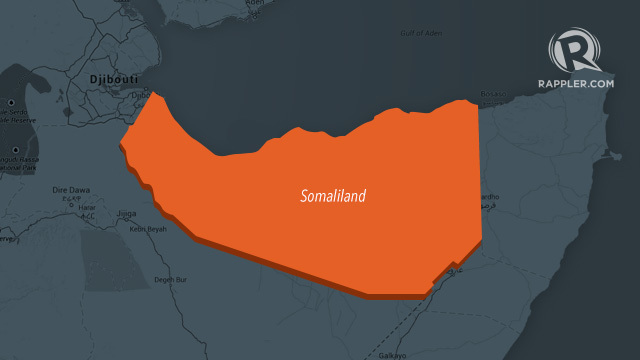
HARGEISA, 30 April 2009 (IRIN) - The availability of water purification tablets, digging of shallow wells in rural areas as well as privatisation of water services have resulted in more people in Somalia's self-declared republic of Somaliland gaining access to clean water and proper sanitation, officials said.
(Photo:Fetching water from a tanker: People's access to safe water in Somaliland has improved due to the availability of water purification tablets and digging of shallow wells in rural areas - file photo)
At least 45-50 percent of the Somaliland population now has access to safe water, compared with 35 percent in 2000, according to Ali Sheikh Omar Qabil, director of environmental health in the Ministry of Health and Labour.
"Most of the urban centres such as Hargeisa [the capital], Borama, Berbera, and Gabiley have central water supply systems and chlorine is routinely mixed into the water provided," Qabil said.
Sheikh Ali Jawhar, director of the water department in the Ministry of Minerals and Water, said: "The installation of chlorination equipment units in water supply dams in the main urban centres and at shallow wells in remote areas is one of the factors that has increased water sanitation in the country."
However, Jawhar said the region had yet to meet international standards in terms of quantity, with the average safe water availability being 14l per person per day in the capital and 8l in rural areas. The international standard is 20l/person/day.
Water purification tablets are widely available across the region, supplied and sold by the NGO Population Services International (PSI).
(A woman carries water: Officials say at least 45-50 percent of the Somaliland population now has access to safe water, compared with 35 percent in 2000)
Privatisation
In Borama region, the privatisation of the town's water agency, Shirkadda Adeega Bulshada Awdal, has been one the reason for improved access to water and sanitation.
"We have made major improvements in both water access and supply for the town," Abdirahman Mohamoud Muse, a board member, said. "We supply water to about 80,000-100,000 of the city inhabitants."
Muse said: "We have an agreement with the Somaliland authorities on profit sharing; for example, we get 20 percent of the benefit of the total investment while 3 percent is paid to the local government in taxes and we give some to the Ministry of Minerals and Water."
The privatisation followed a severe water shortage in the area. The project was funded by USAID through the UN Children's Fund (UNICEF).
Before then, only 500 cubic metres was pumped for use in Borama region but the firm now pumps 1,700 cubic metres per day, Muse said.
Reaching more people
He said the number of houses that had installed water supply pipes had significantly increased since 2003.


"Only 250 households had installed the water pipes [in 2003] but now we have installed pipes in about 5,000 households and more than 2,000 households share [the water pipes] with their neighbours while the others get water from kiosk centres, which we consider to be clean water," Muse said. "Fewer than 1.2 percent of Borama residents do not receive the agency's water supply."
However, Muse expressed concern over the depletion of water sources in parts of the region, "especially in the main urban centres of Somaliland, Hargeisa and Borama".
He said this had forced the water ministry to conduct surveys to identify new water sources. Consequently, Muse added, the Borama water agency had dug a new well in Amoud, Borama region.
"The depletion [of the water sources] followed a dramatic increase in the urban population and the construction of modern buildings," Jawhar said.
"For example, when China installed a water system in Hargeisa and Borama, the density of the population and buildings was much smaller than what we have today; Hargeisa then had only 150,000 individuals but now its population is about 800,000 yet nothing has changed in its water supply system."
Despite the progress made in water provision and sanitation, Somaliland authorities remain concerned over services in parts of the republic, such as Burou, the second-largest city, which, Qabil said, lacked adequate water chlorination.
"This is why we consider Burou the most risky place in the country as it lacks a link to the central dam where water chlorination is done," Qabil said. "In fact, diarrhoea has broken out in recent years in the city several times, which we attribute to the lack of chlorination of the town water supply."
Theme(s): (IRIN) Water & Sanitation

The Nexus Of Evil

Medeshi
The Nexus Of Evil
April 30, 2009: Ethiopia’s withdrawal from Somalia left a vacuum there, but it appears that Ethiopia has kept a significant number of troops in the border area. Reports continue to crop up of Ethiopian recon forces inside Somalia. This makes sense. Somali Islamists and Eritrea make common cause with ethnic Somali secessionists in Ethiopia’s Ogaden region. The military wants to cut down on re-supply and infiltration. But there is a larger message –Ethiopian forces could return to southern Somalia very quickly. The government doesn’t want to do this but it could if it had to. The government notes that Somalia’s Al Shabaab radical Islamist organization it threatening to “wage jihad” in neighboring Kenya. The Ethiopian and Kenyan governments have made several bi-lateral security agreements. Kenya has reported that two Islamist militia groups have made that threat. Would an Islamist militia attack on Kenya lead to an Ethiopian foray into Somalia? The threat of a counter-attack can’t be discounted.

April 27, 2009: Ethnic Oromos who oppose the Ethiopian government plan a mass protest in late May. Many of the planned protests will take place in Western Europe (EU countries) since that’s where the television cameras are.

April 22, 2009: Eritrea denied reports that Iran is using Eritrean ports to smuggle weapons into Africa. Allegedly, the Iranian weapons then move north through Sudan and into Egypt, then are smuggled into Hamas-controlled Gaza. However, the Eritrean government acknowledged that weapons smugglers might be “transferring arms on ships” outside of Eritrean territorial waters.

April 16, 2009: Eritrea has gotten a reputation in Africa and the Middle East for “hosting” just about every opposition group on the continent. A new opposition group has appeared in Eritrea, this time a group of Djiboutis who are opposed to the current government of Djibouti. This is of course very convenient for Eritrea, since the Eritrea-Djibouti border war remains unresolved.

April 14, 2009: The government of Somaliland, the separatist Somali “statelet” in northwestern Somalia, accused Eritrea of training rebels who have infiltrated Somaliland. The report claimed that Somaliland police had arrested several “suspects” who were trained in Eritrea. The Somaliland Republic is an ally of Ethiopia. Eritrea argues that Somaliland is a creation of Ethiopia. The statelet is another place where Eritrea and Ethiopia wage their proxy war.

April 12, 2009: The Ogaden National Liberation Front (ONLF) disputed Ethiopian government claims made earlier this month that it has been defeated. The ONLF claimed that just the opposite is true and that ONLF forces have been very active in the last month and that its “offensive capacity” was stronger than ever.

April 10, 2009: The Ethiopian government claimed that the rebellion led by the Ogaden National Liberation Front (ONLF) is “on its last legs.” This is more than a bit triumphalist, for the rebels have not disappeared from Ogaden. The political war continues as ONLF spokespeople continue to accuse Ethiopia of genocide. Still, things have changed in the Ogaden over the last two years, especially since the great raid, in Spring 2008, on a Chinese oil exploration rig operating in the Ogaden. Attacking the oil venture and kidnapping Chinese workers was a big political move by the ONLF. The ONLF accused the government of stealing wealth from the Ogaden. The government sent the army into the Ogaden in force. It also began moving NGO aid groups out of Ogaden – a move for which it was condemned. Its smartest move, however, was to create its own developmental programs for the Ogaden, projects designed to appeal to “towns and tribes” (ie, farmers and businesspeople as well as pastoralists and even the nomads). It appears the political initiatives, coordinated with the military’s counter-insurgency operations, has begun to pay off – but the ONLF is not on its last legs, yet.

April 8, 2009: The UN accused Eritrea of failing to meet Security Council requirements to withdraw its troops from Djibouti. The UN passed the withdrawal demand resolution in January 2009. Eritrean forces attack Djibouti’s Ras Doumeira peninsula in June 2008

Piracy cash not funding Kenya projects, says MP

Medeshi
Piracy cash not funding Kenya projects, says MP
By LUCAS BARASA
Posted Thursday, April 30 2009
In Summary
Mr Ashareh says money generated from Somalis in the diaspora.
A Somali MP has denied that money accrued from piracy off the East African coast is being used to buy property in Kenya.
Mr Ashad Awad Ashareh said, instead, the money that has seen value of property in places like Nairobi’s Eastleigh and Mombasa rise was from Somalis in the diaspora.
The MP told the Nation that Somalis in the diaspora remitt home more than Sh70 billion annually, part of which find its way to Kenya.
“It is not true that money accrued from piracy is being used to acquire property in Kenya,” Mr Ashareh said.
According to a research by United Nations Development Programme in Somalia, there are at least one million Somalis in the diaspora who remitt more than US$1 billion annually.
The money, the UNDP says, contributes a lot to the Somali economy, livelihoods, humanitarian assistance and recovery and reconstruction efforts.
The UNDP says about one million Somalis or 14 per cent of the population are in the diaspora including Horn of Africa and Yemen, Gulf States, Western Europe, US and Canada.
It is, however, the UK that has largest number of Somalis while Malaysia and Australia are new growth areas.
Kenya hosts about 220,000 registered Somali refugees, Ethiopia (17,000), Djibouti (7,000) and South Africa (8,000).
According to a US State Department report last year, about $100 million (about Sh8 billion) is laundered through Kenya every year from Somalia.
Last month, the Saturday Nation reported that the North Eastern provincial administration had launched investigations into the possibility that the $150 million (about Sh12 billion) Somali pirates reaped in the high seas last year may have found its way into the area, pushing up property values.
Property values in places like Eastleigh in Nairobi and Mombasa have also gone up tremendously causing fears that the pirates’ money could be finding its way into the country.
Mr Ashareh accused some foreign countries of illegally fishing in Somali waters and dumping toxic waste there.
It is a move by some Somalis to try and defend their territory from illegal fishing and dumping that resulted to piracy, he said.
The MP said piracy could only end if international community helped Somalia return to peace and stability so that it can establish a strong law enforcement agency.
“We need a strong navy to man our waters,” he said.
Tens of ships have been hijacked by Somali pirates in the recent past and only released after ransoms are paid.

'Robin Hood' life for Somalia's pirates

Medeshi April 30,2009
'Robin Hood' life for Somalia's pirates
Somali pirates seek targets with 'gentleman kidnapper' spirit as they abide by complex system of rules.
By Mustafa Haji Abdinur - MOGADISHU
A mobile tribunal, a system of fines and a code of conduct: the success of Somali pirates' seajacking business relies on a structure that makes them one of the country's best-organised armed forces.
A far cry from the image conveyed in films and novels of pirates as unruly swashbucklers, Somalia's modern-day buccaneers form a paramilitary brotherhood in which a strict and complex system of rules and punishments is enforced.
They are organised in a multitude of small cells dotting the Indian Ocean and Gulf of Aden coastline. The two main land bases are the towns of Eyl, in the breakaway state of Puntland, and Harardhere, further south in Somalia.
"There are hundreds of small cells, linked to each other," said Hasan Shukri, a pirate based in Haradhere.
"We talk every morning, exchange information on what is happening at sea and if there has been a hijacking, we make onshore preparations to send out reinforcement and escort the captured ship closer to the coast," he explained.
Somali piracy started off two decades ago with a more noble goal of deterring illegal fishing, protecting the people's resources and the nation's sovereignty at a time when the state was collapsing.
While today's pirates have morphed into a sophisticated criminal ring with international ramifications, they have been careful to retain as much popular prestige as possible and refrain from the violent methods of the warlords who made Somalia a by-word for lawlessness in the 1990s.
They don't rape, they don't rob
"I have never seen gangs that have rules like these. They avoid many of the things that are all too common with other militias," said Mohamed Sheikh Issa, an elder in the Eyl region.
"They don’t rape, and they don’t rob the hostages and they don’t kill them. They just wait for the ransom and always try to do it peacefully," he said.
Somalia's complex system of clan justice is often rendered obsolete by the armed chaos that has prevailed in the country for two decades, but the pirates have adapted it effectively.
Abdi Garad, an Eyl-based commander who was involved in recent attacks on US ships, explained that the pirates have a mountain hide-out where leaders can confer and where internal differences can be solved.
"We have an impregnable stronghold and when there is a disagreement among us, all the pirate bosses gather there," he said.
The secretive pirate retreat is a place called Bedey, a few miles from Eyl.
"We have a kind of mobile court that is based in Bedey. Any pirate who commits a crime is charged and punished quickly because we have no jails to detain them," Garad said.
Some groups representing different clans farther south in the villages of Hobyo and Haradhere would disagree with Garad's claim that Somalia's pirates all answer to a single authority.
But while differences remain among various groups, the pirates' first set of rules is precisely aimed at neutralising rivalries, Mohamed Hidig Dhegey, a pirate from Puntland, explained.
"If any one of us shoots and kills another, he will automatically be executed and his body thrown to the sharks," he said from the town of Garowe.
"If a pirate injures another, he is immediately discharged and the network is instructed to isolate him. If one aims a gun at another, he loses five percent of his share of the ransom," Dhegey said.
Anyone shooting a hostage will be shot
Perhaps the most striking disciplinary feature of Somali "piratehood" is the alleged code of conduct pertaining to the treatment of captured crews.
"Anybody who is caught engaging in robbery on the ship will be punished and banished for weeks. Anyone shooting a hostage will immediately be shot," said Ahmed Ilkacase.
"I was once caught taking a wallet from a hostage. I had to give it back and then 25,000 dollars were removed from my share of the ransom," he said.
Following the release of the French yacht Le Ponant in April 2008, investigators found a copy of a "good conduct guide" on the deck which forbade sexual assault on women hostages.
As Ilkacase found out for himself, pirates breaking internal rules are punished. Conversely, those displaying the most bravery are rewarded with a bigger share of the ransom, called "saami sare" in Somali.
"The first pirate to board a hijacked ship is entitled to a luxurious car, or a house or a wife. He can also decide to take his bonus share in cash," he explained.
Foreign military commanders leading the growing fleet of anti-piracy naval missions plying the region in a bid to protect one of the world's busiest trade routes acknowledge that pirates are very organised.
"They are very well organised, have good communication systems and rules of engagement," said Vice Admiral Gerard Valin, commander of the French joint forces in the Indian Ocean.
So far, nothing suggests that pirates are motivated by anything other than money and it is unclear whether the only hostage to have died during a hijacking was killed by pirates or the French commandos who freed his ship.
Some acts of mistreatment have been reported during the more than 60 hijackings recorded since the start of 2008, but pirates have generally spared their hostages to focus on speedy ransom negotiations.
With the Robin Hood element of piracy already largely obsolete, observers say the "gentleman kidnapper" spirit could also fast taper off as pirates start to prioritise riskier, high-value targets and face increasingly robust action from navies with enhanced legal elbow room.
They have warned that the much-bandied heroics of a US crew who wrested back control of their ship and had their captain rescued by navy snipers who picked off three pirates could go down as the day pirates decided to leave their manners at home.

Wednesday, April 29, 2009

At Mandheera, former British prison, Somali pirates tell their side


Medeshi April 29, 2009
At Mandhera, former British prison, Somali pirates tell their side
By Shashank Bengali McClatchy Newspapers
MANDHERA, Somaliland — Their exploits have turned the inky-blue waters of the Indian Ocean into a perilous gantlet for ships and an unlikely security challenge for world leaders. But behind the bare brick walls of a desolate former British colonial prison here, five jailed Somali pirates didn't seem very fearsome at all.
One looked to be in his late 40s, his brambly hair stained a deep henna orange, his milky eyes staring into the middle distance. A slightly younger man clutched a faded sarong to his matchstick waist and spoke in barely a whisper.
The leader of the pirate crew, 38-year-old Farah Ismail Eid, wore such a hungry look that a visiting government official, unsolicited, folded a pale $10 bill into his sandpaper palm.
That a few hundred men like these have wreaked so much havoc in the seas off of East Africa is a testament to the sheer power of guts and greed. It's also a stark illustration of the all-consuming anarchy ashore in Somalia, where, after 18 years of conflict, jobs are scarce, guns are plentiful, men will risk everything for a payday — and their government is too weak and corrupt to stop them.
The men behind bars, however, offered another explanation for piracy.
Their story is also rooted in greed — not of their brazen colleagues with the million-dollar ransoms, they say, but of foreign companies that they say have profited from Somalia's lawlessness by fishing illegally in their waters since the 1990s.
In a long interview with McClatchy at the jailhouse in Mandhera, an austere desert fortress in the autonomous northern region of Somaliland, where British forces held Italian POWs during World War II, Eid related what amounts to the pirates' creation myth, in which overfishing by European and Asian trawlers drove Somalia's coastal communities to ruin and forced local fishermen to fight for their livelihoods.
"Now the international community is shouting about piracy. But long before this, we were shouting to the world about our problems," said Eid, a bony-cheeked former lobsterman with a bushy goatee. "No one listened."
Of course, the pirates' journey from vigilante coast guard to firing automatic weapons at cruise ships — as one band did over the weekend — is a reminder that good intentions don't last long in desperate Somalia.
In 1991, Eid was scavenging for lobsters along the craggy shores of central Somalia, saving to start a fishing company, when the government and its security forces were swallowed up in a coup. The country's endless coastline — at nearly 2,000 miles, it's longer than the U.S. West Coast — suddenly became an unguarded supermarket of tuna, mackerel and other fish.
When huge foreign trawlers suddenly began appearing, the local fishermen who plied their trade with simple nets and small fiberglass boats were wiped out, Eid said.
"They fished everything — sharks, lobsters, eggs," he recalled. "They collided with our boats. They came with giant nets and swept everything out of the sea."
At the outset, fishermen in the ramshackle ports of Puntland, Somaliland's rowdy neighbor, re-branded themselves as "coast guards." The first hijackings that Eid remembered came in 1997, when pirates from the port of Hobyo seized a Chinese fishing vessel and then held a Kenyan ship for a $500,000 ransom.
"When I heard about this," Eid said, "I was happy."
Eid had sunk his savings into three boats. In 2005, with catches all too rare and a wife and two children to support, he traded his fishing equipment for a couple of Kalashnikov rifles and rocket launchers in a market in the wild-west port of Bossasso.
He and five other fishermen, swathed in camouflage, piled into a motorized skiff and set off from the village of Garacad. But their motor was too feeble to catch up to any of the ships they spotted, so after five sweltering days they returned to shore.
The next year Eid tried with a stronger engine, a German one imported from Dubai. This time, the novice pirates caught up to a cargo ship and came face to face with its European crew. But Eid's men couldn't prop their heavy metal ladder up against the freighter's hull quickly enough to board the ship. The vessel escaped unmolested.
Global Witness, a London-based group that investigates natural resource exploitation, agrees that vessels from countries such as France, Spain, Indonesia and South Korea gobbled up hundreds of millions of dollars' worth of fish from Somali waters without licenses.
However, experts say that the foreign fishing wasn't necessarily illegal because the Somali government, even before the coup, didn't delineate its territorial waters, as international maritime laws require.
"In the early to mid-1990s there was some fishing in those waters that, if Somalia had a government that was performing its job, would have demanded licensing fees for," said J. Peter Pham, a piracy expert at James Madison University in Harrisonburg, Va. "But the Somalis never got around to declaring what was legal and illegal."
Somali officials don't argue with the pirates' version of events — only with their tactics.
"We know they have their grievances," said Abdillahi Mohamed Duale, the foreign minister of Somaliland, which declared independence from Somalia in 1991. "But the problem of overfishing has always been there, in the Caribbean, Latin America and the Indian Ocean. It doesn't mean that you take the law into your own hands."
Entering this week, there'd been 93 hijack attempts off the coast in 2009, according to the International Maritime Bureau in London — 17 fewer than in all of last year. After a tense, five-day standoff this month ended with U.S. Navy sharpshooters killing three pirates and rescuing an American ship captain they'd taken hostage, countries pledged $213 million to bolster the Somali security forces.
In Puntland, the pirates have a comfortably chaotic haven. Markets carry everything from automatic weapons to spare batteries for satellite phones, standard equipment for any seagoing bandit. A regional government claims to rule the area, but many suspect that the president, Abdirahman Mohamed Farole, is on the take from pirates, which Farole denies.
According to Eid and others, some officers from Somalia's erstwhile marine corps and coast guard, which patrolled the shores skillfully until the civil war, are training pirate groups in navigation and other seafaring techniques.
"If 20 pirate groups go to sea, one will succeed" in capturing a ship, Eid said. "Nineteen will fail, but they'll keep trying. They have all the equipment and support they need."
Somaliland says it's cracking down on pirates. Four groups of pirates — 26 men in all — have been arrested, and three of the groups are serving 15- to 20-year prison sentences.
Last August, Somaliland authorities raided a seaside guesthouse and captured Eid, who'd moved there and was posing as a mechanic. He and four others were charged with weapons possession and plotting a hijacking, and swiftly sentenced to 15-year prison terms despite having never carried out an attack.
"We are afraid this piracy could spread to Somaliland," said Youssef Essa, Somaliland's vice minister of justice. "That's why we have to give harsh sentences."
Nevertheless, Essa, a former high school teacher, seemed impressed with Eid's story. After listening for over an hour, he rose to shake the younger man's hand and handed him $10. Afterward, he and the silver-haired warden agreed that Eid probably would spend the money on khat, a narcotic leaf that Somali men chew to get high.

Somaliland political parties accept the extention of presidential term .

Medeshi
Somaliland political parties accept the extention of presidential term .
Hargeisa April 29, 2009
The the three political parties of Somalilands accepted today the decision of the House of elders to extend the presidential term until Sept 2009.
Ahmed Mohamed Silanyo, the main opposition leader said that they have accepted the decision and are respecting the House of elders move to extend the president’s term. He said that his party is welcoming this decision putting into consideration to the interest of the public.
On the other hand the spokesman of the president Mr. Saeed Adaani said that the government is also welcoming the decision of the house of elders and that they are going to work on ways of organising free and fair election.
The leader of UCID party, Mr Faisal Ali Warabe , also , said that his party is welcoming the decision putting into consideration the interest of the nation. He said that it is needed to continue discussing ways of preventing abuse of the public money, property and the media.
This move was applauded by the public as it is said to be in the interest of Somaliland.
Slightly Translated from Somali by M. Ali

Armed Italian cruise ship fends off Somalian pirates

Medeshi
Armed Italian cruise ship fends off Somalian pirates
Last Updated: Monday, April 27, 2009
The Associated Press
An Italian cruise ship came under attack by Somalian pirates on Saturday, but its security forces were able to prevent them from clambering aboard, the company's director said Sunday.
A small white skiff approached the Melody cruise ship after dinnertime as it sailed north of the Seychelles, off Africa's east coast. The pirates fired wildly toward the 1,500 passengers and crew on board, but the MSC Cruises ocean liner's private Israeli security forces fired back.
Adding a new twist to the increasing scourge of Somalian pirate hijackings, the security guards aboard also sprayed water hoses at the pirates to prevent them from clambering aboard, company director Domenico Pellegrino said.
"It was an emergency operation," Pellegrino said. "They didn't expect such a quick response. They were surprised."
Passengers were ordered to return to their cabins and the lights on deck were switched off. The massive vessel then sailed on in darkness, eventually escorted by a Spanish warship to make sure it made it to its next port.
"It felt like we were in war," the ship's Italian commander, Ciro Pinto, told Italian state radio.
None of the 1,000 passengers were hurt and by Sunday afternoon they were back out on deck sunning themselves, Pellegrino said.
Armed ships
But analysts said the unprecedented use of weapons by the ship's security force could make things worse in the pirate-infested waters off the Horn of Africa, where more than 100 ships were attacked last year by pirates based in Somalia. In nearly all the successful hijackings, the crews were unharmed and were let go after a ransom was paid.
"There is a consensus in the shipping industry that, in the vast majority of cases, having an armed guard is not a good idea. The No. 1 reason is that it could cause an escalation of violence and pirates that have so far been trying to scare ships could now start to kill people," said Roger Middleton, an expert on Somalian piracy at London-based think tank Chatham House.
Other experts disagree, saying piracy off the coast of modern-day Somalia is unique in that the pirates are most interested in human cargo.
"Their business model, if you will, has been to not cross a line which would bring the whole weight of the world upon them. They want to seize hostages and ransom those hostages. So the likelihood that they would escalate violence is unlikely," said Africa expert Peter Pham, director of the Nelson Institute for International and Public Affairs at James Madison University in Virginia.
He argued that arming ships is not a sustainable solution, given that an estimated 20,000 vessels pass through the Gulf of Aden each year.
"For the Melody, you're talking about 1,000 passengers and 500 crew members, so maybe for 1,500 people paying to have security on board makes both economical and tactical sense — but when you're dealing with ordinary cargo ships it's very different," he said.
Pellegrino said MSC Cruises has Israeli private security forces on all their ships because they are the best. He said the pistols on board were at the discretion of the commander and the security forces.
The attack occurred near the Seychelles and about 800 kilometres east of Somalia, according to the anti-piracy flotilla headquarters of the European Union's Maritime Security Centre – Horn of Africa. The Melody was travelling up Africa's east coast, from Durban, South Africa, to Genoa, Italy.
Pinto said the pirates fired "like crazy" with automatic weapons, slightly damaging the liner, when they approached in a small, white, Zodiac-like boat.
"After about four or five minutes, they tried to put a ladder up," Pinto told the TV station Sky TG24.
"They were starting to climb up but we reacted, we started to fire ourselves. When they saw our fire, and also the water from the water hoses that we started to spray toward the Zodiac, they left and went away.... They followed us for a bit, about 20 minutes," he said.
Other clashes at sea
In a separate incident Sunday, Yemen's Interior Ministry said the Yemeni coast guard clashed with pirates and killed two of them when they tried to hijack a Yemeni tanker in the Gulf of Aden. And the Turkish cruiser Ariva 3, with two British and four Japanese crew members aboard, survived a pirate attack near the Yemeni island of Jabal Zuqar, said Ali el-Awlaqi, head of the Yemeni El-laqi Marine Co.
Earlier this month, the U.S. navy shot and killed three pirates and took a fourth into custody after a five-day standoff in the waters off Somalia, where they had hijacked the U.S.-flagged Maersk Alabama.
Saturday's exchange of fire between the Melody and pirates was one of the first reported between pirates and a nonmilitary ship. Civilian shipping and passenger ships have generally avoided arming crewmen or hiring armed security for reasons of safety, liability and compliance with the rules of the different countries where they dock.
It was not the first attack on a cruise liner, however. In November, pirates opened fire on a U.S.-operated ship, the M/S Nautica, which was taking 650 passengers and 400 crew members on a month-long luxury cruise from Rome to Singapore. The liner was able to outrun the pirates. And in early April a tourist yacht was hijacked by Somali pirates near the Seychelles just after having dropped off its cargo of tourists.

Tuesday, April 28, 2009

The pirate king of Somalia

Medeshi
The pirate king of Somalia
Khat-chewing former fisherman known as Garaad is the brains behind pirates' brawn
JAY BAHADUR
From Monday's Globe and Mail
April 26, 2009 at 7:49 PM EDT
BOSASSO, SOMALIA — When Gilbert and Sullivan composed their melodies about the pirate king, it was doubtful they had a Somali like Garaad in mind. Yet this former fisherman, the man behind many of the recent hijackings in the Gulf of Aden and Indian Ocean, is as close as it comes to pirate royalty in the modern world.
In an interview on the breezy patio of a Somali hotel, he explains how he exerts direct control over 13 groups of pirates with a total of 800 hijackers, operating in bases stretching from Bosasso to Kismaayo, near the Kenyan border. Each group has a “sub-lieutenant” who reports directly to Garaad, and none of them make a move without his authorization.
An armchair CEO, Garaad is curiously uninterested in the fruits of his operation. “I don't know the names of any of the ships my men capture, and I don't care,” he says, “The only thing I care about is sending more pirates into the sea.”
Garaad is a name that has grown notorious in his own time – at least within the borders of Puntland, the autonomous region in northern Somalia that has spawned the recent pirate epidemic.
Garaad had agreed to the interview on the outskirts of the northern Somali port city of Bosasso, about six weeks before the high-profile hijacking of the U.S.-flagged Maersk Alabama. The interview was supposed to take place on the previous day, but after preliminary discussions in the morning, Garaad turned off his phone and disappeared. “He's off chewing khat somewhere,” suggests Mohamed, the interpreter who arranged the meeting, referring to the leafy narcotic religiously consumed by most pirates.
Much later, Garaad calls with his explanation: “I was busy,” he says.
The next day, he shows up at the gated entrance to the hotel, and meets on the restaurant patio at a table separated from its neighbours by a barrier of ferns and shrubs. With his freshly ironed dress shirt, pressed slacks, and his clean, cropped hair, Garaad blends right in with the crowd of Somali businessmen staying at the hotel. In contrast to his impeccable clothing, his face looks ragged for someone in his mid-30s, his eyes scratched raw by the constant rubbing – a textbook case of khat withdrawal.
Like many pirate headmen, Garaad hails from the infamous coastal pirate haven of Eyl. He began as a front-line pirate, participating directly in hijackings, but has since risen through the ranks to become one of the better known organizers and financiers in Puntland. As with most pirate handles, Garaad is a nickname, taken from the Somali word for “clan elder,” and is a sign of his status among his colleagues.
He instantly prickles when he hears the word pirate. “Illegal fishing ships, they are the real pirates” he says, insisting that his operations got going in 2002, with the sole objective of defending his livelihood and that of his fellow fishermen. So far, his crusade against the “real pirates” of Somalia has netted him a total of about a dozen captured illegal fishing ships, and an untold number of commercial vessels.
Garaad remains close-lipped about the dozens of hijackings he has reputedly financed, maintaining that seizing commercial vessels is a necessary evil in his private war against illegal fishing. “I've never personally attacked commercial ships,” he says. “The only one I've ever captured is the Stella Maris, and the reason for it was the financial problems we were having then.”
The MV Stella Maris, a Japanese-owned bulk carrier, was seized in the Gulf of Aden in July 2008 and held for eleven weeks before being released for a ransom of $2-million. Garaad's operating expenses since then must have been high, because he insists that he is broke. “I don't have one cent,” he says. “I don't even have a house.”
Despite his protestations of poverty, it's said that when he took his third bride, the wedding procession included 100 vehicles. And, there is a credible rumour that Garaad was involved with the much-reported hijacking of the MV Faina, the weapons-laden Ukrainian transport ship that fetched a generous $3.2-million ransom after a four-months hijacking. The story goes that in December of 2008, Garaad left Garowe, the region's capital, with a heavily armed convoy, aiming to relieve the Faina hijackers and bring them back to safety in Puntland.
They were in dire need of his assistance; forced by the U.S. Navy to anchor the captured ship at Xarardheere, south of the Puntland coast, the Americans proceeded to encircle and blockade the pirates onboard the Faina. On shore, the environment was equally hostile; Xarardheere is rival clan land, and thus was alien turf for the hijackers.
Completing the third point of this Bermuda triangle of perils was the proximity to al-Shabaab controlled territory, where militias from the Islamist group were waiting patiently inland to relieve the Faina pirates of any ransom they received the moment they came ashore. Into this melee allegedly charged Garaad with his Toyota-brand cavalry.
His intention, presumably, was to escort the hijackers to Puntland once they had secured the ransom payment for the Faina. Unfortunately, on his way to Xarardheere, Shabaab militants ambushed his motorcade, confiscating his weapons and vehicles. He was unharmed, and had to make the long journey back to Puntland, but wasn't discouraged from resuming pirating.
“If the international community ever pays us our rightful compensation for the illegal fishing,” he says, “attacks will stop within 48 hours.”

Ending Child Hunger: School Feeding in Somalia


Medeshi
Ending Child Hunger: School Feeding in Somalia
William Lambers
April 26, 2009
Somalia is one of the most dangerous places in the entire world. The danger begins even before you reach the land of this African nation. Off the coast of Somalia are pirates who have hijacked a number of vessels in recent years. The United Nations World Food Programme (WFP) delivers most of its food aid for Somalia by sea. With the threat of piracy, these WFP ships need to be provided armed
escorts.Within Somalia, people are suffering from hunger due to conflict, displacement, and prolonged droughts. WFP provides food aid to millions of people in Somalia and some of its own staff have lost their lives carrying out this humanitarian mission. WFP officer Ibrahim Hussein Duale was killed earlier this year while monitoring a school feeding program.
"This was a shocking attack on one of our staff while he was doing his job," WFP director Josette Sheeran stated. "Ibrahim was a good, honest man and worked extremely hard to assist those in need. Our thoughts and prayers are with his family, friends and colleagues."
WFP Deputy Chief Operating Officer Ramiro Lopes da Silva states, "Our only goal in Somalia as an impartial international organization is to alleviate the suffering of the Somali people. We cannot do that when our courageous staff are being targeted."
WFP runs school feeding programs to help children who are suffering during Somalia´s strife. School feeding is a key element toward building peace in a country plagued by violence. Jennifer Parmelee, a WFP officer based in Washington, says that "In Somalia, lack of food and education aggravate the lawlessness; ironically, it is the Somali refugee camps –- with their school feeding programs –- that offer young Somalis the best chance to make a future for themselves and for their beleaguered country."
Abdullahi Khalif is a WFP Program Officer for Somalia and in the following interview he discusses how vital this program is for children and their communities.
How many children benefit from the WFP school feeding programs in Somalia?
WFP in Somalia is currently providing food assistance to 93,000 primary school children, 37% of whom are girls, in 373 schools. Most of the target schools are located in the most food insecure areas in Somalia.
Discuss what effect the meals have on the children in terms of school attendance, performance, and nutrition.
Nearly 3.2 million people in Somalia (over 40% of the entire population) need food assistance. Recurring droughts, prolonged conflicts, structural poverty, continuous displacements, and, above all, lack of a central government for nearly 20 years have seriously hampered opportunities for children in Somalia to enroll in, attend, and complete primary school.
To reduce the impact of these problems, WFP Somalia began a school feeding program in 2003. Since then, the number of children benefiting from the program has grown significantly. In 2008, the number of children benefiting from the WFP school feeding program more than doubled from 2007. The agency carried out a baseline survey in 2008 to establish a school feeding databank. The information helps local administrations to see how they can be effective in achieving universal primary education and meeting the Millennium Development Goal (MDG) of education for all.
Currently the project targets 60 rural and semi-rural, food-insecure districts in Somalia. 50% of the districts are in the Northwest, 30% in the Northeast and 20% in Southcentral Somalia.
In 2008, attendance in WFP-assisted primary schools in Somalia was 97%, compared to attendance at primary schools as a whole, which was 92%. A recent survey conducted by WFP shows that 98% of teachers believe that children´s attentiveness in class increased due to the school feeding program. 75% believe that violence by children has decreased.
Both boys and girls receive food twice a day. They receive porridge in the morning and an early afternoon lunch. The meals are made with rice, legumes, corn-soya blend (CSB), vegetable oil, and sugar to ensure that the nutritional needs of the children are being met. These meals provide the children with 927 Kcal, nearly half of the daily caloric needs of a 6-14 year child.
What plans are there for making school meals available for all children?
This year, WFP will be running its school feeding program under its new Emergency School Feeding (ESF) strategy. WFP will be working to determine how many schools lack a school feeding program to get a better idea of where and how the program can be expanded. To encourage school enrollment and attendance among girls, WFP in Somalia introduced a take-home ration program. Girls who attend school regularly will receive a take-home ration of vegetable oil to share with their families. Communities have been encouraged to contribute to the school feeding program by providing meat and vegetables for meals, providing fuel or wood for cooking, contributing to the labor costs of the program, and taking responsibility for storing the food. This will enable communities to continue feeding school children when the WFP program eventually ends.
What would be the sources of funding for any expansion of the school feeding program?
Somalia remains one of the poorest countries in the world. There is no central system that governs funding for any social support sector; therefore, the country continues to depend on external aid. For the last eighteen years, schools have been supported by donors, the United Nations, and international NGOs. There are some schools that are funded by local institutions, but not many. WFP continues to support school feeding as a means of promoting basic education, with a goal of achieving the Millennium Development Goal of education for all. In addition, WFP supports the Ministry of Education and Community Education Committees (CECs) through capacity building programs to enable them to encourage their communities to send their children to school.
Somalia´s Government of National Unity was formed in Djibouti in February 2009 but is not yet operational in all parts of Somalia. Therefore, external support will remain the main source of funding for education in Somalia for the coming years.
Due to Somalia´s current crises, the majority of the funding and donor priorities are directed to emergency activities. As a result, not as much attention is given to supporting education, including the school feeding program, as it is considered a recovery activity. This has greatly impacted the expansion of the school feeding program.
How can someone help the school feeding program?
Due to the dire humanitarian situation in Somalia, the country will no doubt remain in the emergency and recovery stages for the foreseeable future. At a local level, in-kind support would be beneficial. A focus on capacity building for the Ministry of Education and Community Education Committee will help ensure that the school feeding program is implemented efficiently and effectively. Donors can give resources to support many specific projects. In the U.S., donors can visit the Friends of WFP website. Donor support of proper nutrition and sanitation, specific support to girls to ensure that they stay in school through adolescence, the provision of deworming, health, and nutrition packages, and the support of school gardening are all welcomed.
Anything else you'd like to add about why you think school feeding is important for people to support?
The 2008 short rains seasonal assessment, which shows changes in the food security situation, confirms that the people of Somalia are facing a humanitarian crisis. Over 40% of the Somali population - 3.2 million people - are in need of emergency life-saving assistance. This situation could have grave effects on children´s school enrollment and attendance. Many schools without school feeding programs could be closed, and some others might suffer from lack of enrollment and attendance. Donor support to the school feeding program and emergency school feeding will help tackle this problem.
In addition to increases in enrollment and attendance and the retention of students from year to year, school meals clearly contribute to good nutrition and food security within the household. If school feeding is not supported, children from less fortunate families will most likely suffer from lack of education and inadequate nutrition. They will receive little relief from short-term hunger.

European Aid Workers Released in Somalia

Medeshi
European Aid Workers Released in Somalia
By Derek Kilner Nairobi
28 April 2009
Gunmen in Somalia have released two European aid workers abducted nine days earlier.
The two aid workers, one Belgian and one Dutch, had been working for Doctors Without Borders. They were abducted by a group of gunmen on April 19 while traveling between towns in the Bakool region of southern Somalia, near the border with Ethiopia.
A clan leader in Bakool, Ali Mumin, confirmed their release.
He said elders and clerics in the region had been in discussions with the captors. He said no ransom had been paid.
The kidnappers had previously demanded a $4 million ransom for the hostages. Members of the al-Shabab, the hard-line Islamist militia that controls the area were also involved in securing the release of the aid workers.
Abductions of aid workers are common in Somalia. According to the United Nations, 16 aid workers are being held in Somalia, including four Europeans and two Kenyans. A total of 26 aid workers were abducted in 2008, and 35 killed.
Aid officials warn the insecurity threatens the humanitarian effort in Somalia, where more than three million people, or almost half the population, require emergency food aid.
Meanwhile, al-Shabab has released three radio journalists it detained Monday in Baidoa, the central town that used to house the parliament. Their station, Radio Jubba, was also allowed to return to the air.
Local media reported the militia objected to the station's coverage of the security situation in the area, and the station will continue to be barred from broadcasting music.
Somalia's internationally-backed government is struggling to extend its control beyond a small part of the capital, Mogadishu.
Monday, Somali President Sheikh Sharif Sheikh Ahmed met with Sudan President Omar al-Bashir, to discuss Sudanese support for training Somalia's security forces.
Last week, international donors pledged more than $200 million to the government to improve security in the country.

Shifts in Somalia as exile returns


Medeshi April28, 2009
Shifts in Somalia as exile returns
By Mohamed Mohamed BBC Somali Service
The return of the Islamist opposition leader Sheikh Hassan Dahir Aweys to Somalia after two years in exile is the latest move in the seemingly perpetually shifting sands of Somali politics.
He fled to Eritrea in 2007 after Ethiopian troops ousted his movement, the Union of Islamic Courts (UIC).
While in Eritrea, Mr Aweys broke ranks with fellow UIC leader Sheikh Sharif Sheikh Ahmed, because the latter started talks with the Somali government.
Mr Ahmed is now Somali president, after UN-brokered talks, while the US labels Mr Aweys a terrorist.
In Somalia, however, he is still considered to be the spiritual leader of all Islamist groups and is seen by many as being the country's real king-maker.
So who he chooses to aligned himself with matters for the future of Somalia.
'Bacteria'
President Sharif welcomed his return and hinted at the possibility of talks.
But Mr Aweys does not seem to be interested in making up with his former colleague.
Speaking to supporters in Mogadishu, Mr Aweys described the government of President Sharif as being appointed by the enemies of Somalia.
"Mr Sharif's government was not elected by the Somali people and it is not representing the interests the Somali people," he said.
He described the African Union peacekeepers is Somalia as "bacteria" who should leave or he will fight them.
Members of the radical Islamist group al-Shabab were said to have been at his welcoming rally and reliable sources say that Mr Aweys is talking to its leadership and other Islamist groups, including the newly formed umbrella organisation Hisbul Islam or Islamic Party.
Open War
If this is the case, it confirms fears that the kingmaker is more interested in toppling the president than supporting him.
Negotiating with al-Shabab is certain to provoke the anger of the government because it has been waging an open war on President Ahmed's administration.
“ Al-Shabab want to kill meaningful people in society ” Ahmed Dirie
They have attacked members of the government including the Interior Minister, Sheik Omar, who was slightly injured in an assassination attempt which killed one of his bodyguards.
Before that ambush, Mr Omar could move freely around Mogadishu.
He was a senior UIC official and the only one who stayed in the country to fight against Ethiopian troops and government forces led by former President Abdullahi Yusuf.
After the assassination attempt, Mr Omar's forces raided al-Shabab hideouts in Mogadishu.
In one, three al-Shabab members were killed and another injured member was captured.
In the other, al-Shabab fought back and captured two members from the militia and a battle wagon (a vehicle mounted with an anti-aircraft gun).
Al-Shabab retaliated by killing a close friend of Mr Omar whose militia were thought to have been involved in the al-Shabab raids.
Government reaction
In response, the government seems to have adopted a twin-track policy.
First, it wants to negotiate with Islamist groups who are willing to talk.
“ We must deal with the mayhem of al-Shabab ” Omar Haashi Security minister
A senior source told the BBC Somali Service that the president recently sent four close associates to meet Mr Aweys when he was in Sudan.
But Mr Aweys refused to talk to the delegation and also declined an offer of Sudanese mediation.
Second, it has taken the decision to fight back against any group that takes up arms against it and in particular al-Shabab.
In a strident statement, the Security Minister Omar Haashi declared war on the "satanic" al-Shabab.
He said: "We must deal with the mayhem of al-Shabab".
The Somali parliament also changed the law so that anyone who fights against President Sharif is guilty of fighting against Islam.
But al-Shabab has also antagonised the leaders of the Hawiye clan, which dominates the area around Mogadishu. Their spokesman Ahmed Dire said he had been targeted.
Mr Dire said that the council was neutral and was "working for peace and talking to every group involved in the violence".
"But whenever we try to contact al-Shabab, they lie to us or never call back". He accused the group of wanting "to kill meaningful people in society".
Political storm
The battle lines seem to be drawn and al-Shabab seem to sense that a political storm is growing around it.
They deny that they attack members of the government or that they target Mogadishu elders.
Meanwhile local analysts say that moderate Islamists led by the president are on the verge of a violent confrontation with al-Shabab which could create little fiefdoms controlled by different factions in Mogadishu.
The government would be one of those factions and given past experience it would have a serious fight on its hands.
Perhaps looking ahead to this possibility, President Sharif has been travelling around a number of countries to get financial and technical support for his government to help with security.
The United Nations, European Union, Arab league and African Union have all pledged support worth millions of dollars.
Prime Minister Omar Abdirashid Ali Sharmarke has said that AU forces will have to stay in the country to train Somali government troops - a statement which, given Mr Aweys' recent comments, is bound to ratchet up tension.
The president says he has plans to deal with the security and piracy issues in Somalia, but if Mr Aweys openly sides with radical Islamists and al-Shabab, the president will have to decide what to deal with him too.
All eyes are on Mr Aweys.
Can an alliance be formed which could lead to peace? Or will the two former colleagues be locked in violent struggle?
From here, opposition and conflict look the most likely outcome.

Cruise line CEO: Cruising in waters around Somalia 'not safe'

Medeshi April 28, 2009
Cruise line CEO: Cruising in waters around Somalia 'not safe'
The chief executive of one of the world's biggest cruise lines says a route cruise ships commonly take around the Horn of Africa is "not safe" and he no longer will send ships there.
MSC Cruises CEO Pierfrancesco Vago tells travelweekly.co.uk today the line's vessels no longer will cruise around Somalia to the Suez Canal in the wake of a pirate attack this weekend on one of the line's vessels in the region.
Pirates fired upon and attempted to board the 1,062-passenger MSC Melody late Saturday as it sailed hundreds of miles off the coast of Somalia on its way to the Red Sea, the Suez Canal and, eventually, Europe. They were repelled by security officers on the ship who fired back.
RELATED ITEM: Passenger describes coming under fire during pirate attackALSO ONLINE: Feds to check cruise passengers arriving from Mexico for swine fluALSO ONLINE: Cruise lines say swine flu is no reason to stop cruises to Mexico
"We were in an area that was considered to be safe," Vago tells the trade publication. "MSC will no longer take the risk. I will never have a ship there again until the area is secure."
Several dozen cruise ships operated by Cunard Line, Princess Cruises, Regent Seven Seas Cruises and other globetrotting lines must sail past the coast of Somalia each year -- either along its northern coast, which faces the Gulf of Aden, or its eastern coast, which faces the Indian Ocean -- as they reposition between Africa, Asia and Europe.
Piracy off Somalia has intensified in recent months, with more attacks against a wider range of targets, including at least two other cruise ships.
The 684-passenger Oceania Nautica, attacked on Nov. 30 by pirates in two small boats, was able to outrun its attackers, but not before they fired shots at the upscale vessel. A similar raid on Nov. 28 on Transocean Tours' 492-passenger Astor was broken up when a German naval ship fired warning shots at the attackers, sending them fleeing.
No one was injured in either incident.
Cruise Loggers, share your thoughts on the topic below.

EAST AFRICA: Swine flu scare prompts surveillance scale-up

Medeshi
EAST AFRICA: Swine flu scare prompts surveillance scale-up
NAIROBI, 28 April 2009 (IRIN) - The East African region is generally not well prepared for a pandemic like swine flu which has killed more than 100 in Mexico and is spreading to other countries, an expert said.
Most people in the region do not have access even to basic health care and many die from preventable diseases. The main problem is a critical shortage of health workers. While there are 250 doctors per 100,000 people in the UK, Sudan has only 16, according to the African Medical and Research Foundation (AMREF).
In Addis Ababa, a meeting of African humanitarian NGOs, Red Cross actors and diplomats discussed pandemic preparedness. "We are using Mexico as [a] teaching opportunity to promote planning in this region," said Gregory Pappas, senior coordinator and technical specialist for pandemic preparedness at InterAction, the American Council for Voluntary Action.
Swine influenza or "swine flu" is a highly contagious acute respiratory disease of pigs, caused by one of several swine influenza A viruses. Morbidity tends to be high and mortality low, according to WHO. The viruses are normally species specific and only infect pigs, but they sometimes cross the species barrier to cause disease in humans.
"This region cannot even handle cholera," the Nairobi-based pandemics expert said. "An outbreak or pandemic flu would be catastrophic."
Responses to date
Here is how some East African countries are responding so far:
- Somalia: No capacity to deal with such pandemics due to the prolonged civil war and destruction of medical facilities. "We are not prepared for anything like the swine flu; we don’t have the means to deal with it," Awad Abdi, adviser to the Somali Health Ministry said. "God help us if it reaches here."
- Rwanda: Mobile clinics set up for screening visitors at airports and other entry points; pork imports from European countries suspended; sale of grilled pork in cafes prohibited; epidemiologists deployed to work on preparedness in main health facilities and information points set up in 143 centres. However, according to WHO, there is no risk of infection from consumption of well-cooked pork and pork products.
- Uganda: All districts are being put on alert. "We met last night and are going to handle this with the ministries of tourism, agriculture and health," Paul Kaggwa, Health Ministry spokesman, told IRIN. "We have contacted airlines, the Civil Aviation Authority and Uganda Revenue Authority to be alert. We are going to screen all entries into the country."
- Kenya: Health facilities around the country have been directed to screen patients suspected of showing symptoms. Preparations to start screening people at all border and other entry points have started. "The government has set up teams for surveillance purposes - [we] had already set up teams to deal with the threat of bird flu a while ago. It is these that we are beefing up to deal with the threat of swine flu," said Shahnaz Shariff, director of public health in the Ministry of Public Health.
- Southern Sudan: Surveillance has been increased at the airport. A meeting between the Health Ministry, NGOs and other health agencies is due to be held on 28 April. "We are doing the necessary information-gathering and disease surveillance," John Runumi, director-general for preventive medicine, told IRIN. At this point, WHO advises no restriction of regular travel or closure of borders, but encourages people who are ill to delay international travel.
- Ethiopia: The Ethiopian Red Cross (ERC) announced plans to train 800 volunteers on public health messaging. "At this point, we have adopted public health messages which focus on hand-washing, isolation of the sick and following the norms of [handling] respiratory illness, " Mesfin Worku, national coordinator of ERC's human pandemic preparedness project, told IRIN.
- Burundi: No specific measures yet, but planning meetings going on and options for importation of Tamiflu drugs available. According to Fidèle Bizimana, who is in charge of the control of epidemic diseases in the Health Ministry, the government is aware of the swine flu pandemic. "We are confident we will be able to avert its spread," Health Ministry spokesman Louis Mboneko told IRIN.

Monday, April 27, 2009

Statement of U.S. Senator Russ Feingold on Somalia Piracy

Medeshi
Statement of U.S. Senator Russ Feingold on Somalia Piracy
As Submitted for the Record
Friday, April 24, 2009
Mr. President, I was glad earlier this week to join Senator Leahy in passing a resolution commending Captain Richard Phillips for his brave conduct, and those members of our Armed Services, particularly members of the Navy and Navy SEAL teams, who rescued Captain Phillips. I also want to commend the leadership of the President and the efforts of many U.S. government departments and agencies in their response to this crisis. These many acts of bravery and leadership are deeply inspiring, and we should recognize them.
However, while the episode involving the Maersk Alabama was resolved, we are likely to see more such episodes if we do not take comprehensive measures to address not only piracy on the waters, but also conditions on land that enable it. We cannot ignore the fact that piracy off the coast of Somalia is an outgrowth of the state collapse, lawlessness and humanitarian crisis that have plagued the country for over a decade. In recent Congressional testimony, both Director of National Intelligence Blair and Defense Intelligence Agency Director Army Lt. General Michael Maples cited lawlessness and economic problems on land as the cause of the rise in piracy at sea. Until we address those conditions, we will be relying on stopgap measures, at best, to deter this piracy problem and we are unlikely to succeed in reversing the growing violent extremism in Somalia.
Mr. President, for years I have been calling for the development of a comprehensive, interagency strategy to help establish stability, the rule of law, and functional, inclusive governance in Somalia. This is the only sure and sustainable solution to address the problem of piracy – and the instability in Somalia – over the long term. Moreover, I am convinced that we have a unique window of opportunity for progress as a result of the Ethiopian troop withdrawal earlier this year and the establishment of a new unity government relocated back to Mogadishu. This government has the potential to unite Somalia if it demonstrates a genuine commitment to inclusion and begins to make a real difference in people’s lives – in terms of security and basic services, such as protection, trash collection and job creation. Helping the government to find tangible solutions to expand effective and inclusive governance must be a central part of our overall strategy to stabilize Somalia and address the threats of piracy and terrorism.
To that end, I continue to urge the Obama administration, as it develops its response to piracy, to make it a priority to engage at a high level with the new Somali government. I have written to President Obama, asking him to personally call Somali President Sheik Sharif and indicate a clear commitment to work with his government not just on maritime insecurity, but also on establishing security and governance within the country. We have been engaging with President Sharif at the ambassadorial level for quite some time now, and I met the president in Djibouti in December. In addition, there needs to be a stronger and more sustained diplomatic push to engage with a wide range of actors within Somalia and stakeholders in the wider region – both in the Horn of Africa and the Middle East – if we are going to address the underlying problems that have contributed to piracy and rising extremism.
Mr. President, the events with the Maersk Alabama earlier this month have finally brought increased attention to the problem of piracy in Somalia’s waters. But it will be insufficient if our response only deals with the symptoms and not Somalia’s central problems. I urge my colleagues and the different committees who will examine this issue over the coming weeks and months to take this seriously. For if we do not finally deal with Somalia’s lawlessness and instability, we will continue to see them manifest themselves in activities – be they acts of piracy or terrorism – that threaten U.S. and international security.
I yield the floor.

Things you didn't know about the Somali pirates

Medeshi April 27, 2009
10 Things You Didn't Know About Somali Pirates
By David Axe
In the 15 years since armed Somali fishermen began forcing their way onto commercial ships, pirates have turned East Africa's seas into the world's most dangerous waters. In 2008 alone, Somalia's lawless seamen captured more than 40 large vessels in the Gulf of Aden, a shortcut between Asia and Europe that's vital to the global economy. Wiping out today's pirates won't be easy; they're smarter, better organized, and, frankly, better loved abroad than the swashbucklers of yesteryear. In a special dispatch from Mombasa, Kenya, Mental Floss correspondent David Axe explains.
Associated Press
FBI agents escort the Somali pirate that U.S. officials identify as Abdiwali Abdiqadir Muse into FBI headquarters in New York, on April 20, 2009. Muse is the sole surviving Somali pirate from the hostage-taking of commercial ship captain Richard Phillips.
1. They Have a Robin Hood Complex
Many Somali pirates see themselves as good guys. And at one point, they were. After the government in Mogadishu collapsed in 1991, neighboring countries began illegally fishing in Somali waters. The first pirates were simply angry fishermen who boarded these foreign vessels and demanded a "fee." But as the illegal fishing persisted, some early pirates banded together and called themselves "coast guards." They claimed to be looking after Somalia's territorial integrity until the government could pull itself back together.
These weren't the only vigilantes on the scene, however. Other pirates made their debut robbing U.N. ships that were carrying food to refugee camps in Somalia. These bandits argued that if they hadn't taken the food, warlords would have seized it on land. And they had a good point. Warlords gobbled down at lot of Somalia's relief food during the 1990s.
But from these perhaps defensible beginnings, piracy spread farther from Somalia's shores and evolved into a multimillion-dollar enterprise. Today, pirates are blunt about their motives. In late 2008, after a band of pirates seized a Ukrainian freighter full of weapons and demanded $25 million for its release, Sugule Ali, a member of the pirate crew, told a reporter, "We only want the money."
2. Nobody Brings Home the Bacon Like a Pirate
According to some estimates, pirates in 2008 pulled in as much as $150 million, indicating that piracy is now Somalia's biggest industry. In fact, successful pirates are the country's most eligible bachelors. While small-time swashbucklers earn in the low five figures, bosses can pull in $2 million a year—this, in a country where you can buy dinner for less than $1. But as their wallets fatten, many pirates are heading for greener pastures, and the real money is flowing out of the country with them. Many are buying properties on the seashore of Mombasa, Kenya, where new condos are being built every day. If a condo is selling for a few million dollars, there's a good chance the bosses will throw in an extra half-million, just to make sure the Kenyans don't ask too many questions.
3. Being a Pirate Is Easy!
Piracy is so simple that anyone can do it. All you need is a gun, an aluminum ladder (for scaling other ships), and a motorboat. Then you just have to wait for commercial ships to pass by. Best of all, you don't have to worry about your targets shooting back. By international agreement, civilian vessels aren't allowed to carry guns because governments don't want armed ships moving from port to port. "Once pirates are on board, they've got the upper hand," says Martin Murphy, a piracy expert with the Corbett Center for Maritime Policy Studies. The best defense against piracy is speed, but because most commercial ships aren't designed to go fast, pirates don't have any trouble chasing them down. The most sophisticated marauders use machine guns and GPS systems, but many pirates are still low-tech fisherman. After they board a ship, all they have to do is steal or ransom the goods and prisoners. The cargo of a typical commercial ship ransoms for about $1 million.
4. The Law Can't Touch Them
Everybody knows piracy is wrong, but is it illegal? The truth is that the places where pirates operate are actually lawless. In Somali territory, there's no functional government to make or enforce regulations. And because nations don't control much of the ocean, there are no laws on the high seas, either. Throughout history, governments have patched together legal frameworks to bring pirates to justice, but it's never fast or easy. Pirates—even those caught in the act by one navy or another—are often simply released on the nearest Somali beach, without so much as a slap on the wrist.
With Somali piracy on the rise, the world is playing legal catch-up. In November 2008, the United Kingdom signed an agreement to try pirates captured by the Royal Navy in Kenya. And other countries are following Britain's lead, with nations including the United States, Singapore, and Turkey signing similar agreements. But Kenya, despite having the most powerful democracy in East Africa, doesn't appear to have an effective court system. When Britain's first batch of eight captured pirates went on trial in Mombasa in December, the defense argued that Kenya shouldn't have jurisdiction and succeeded in persuading the judge to defer the trial. The long-term solution to piracy is a stable Somali government with a functional judiciary, but that requires peace between the country's warring clans. Somalia's new president, elected in February 2009, is just starting to get groups to talk.
Associated Press
A French Commando escorts one of 11 suspected pirates from the French naval frigate the Nivose on April 22, 2009. France has traditionally been aggressive in fighting piracy - this was its ninth military operation against pirates.
5. Pirates Rarely Kill People (Which is Why They're So Dangerous)
It's difficult to tell pirates from fishermen, until they climb aboard another ship and pull out their AK-47s. So, there's not much the U.S. Navy and other military forces can do as a deterrent except sail around and look menacing. After pirates have seized a ship, navies rarely attempt to retake it, because hostages could be hurt in the process. In the absence of an effective defense, there were more than 100 documented pirate attacks in 2008 that resulted in more than 40 ships being hijacked. But for all their aggression, the body count is low. One ship's captain died of natural causes while being held hostage, and a few militia men have died in shoot-outs as they tried to rescue prisoners, but in general, little blood has been spilled.
Pirates also prefer to keep their prisoners in good health. Not only are civilians worth hundreds of thousands of dollars apiece in ransom, but the pirates' reputation for not harming their hostages has made governments reluctant to strike back on behalf of shipping companies. While the pirates' hands remain mostly blood-free, the navies patrolling East African waters have taken lives. The Indian navy, for example, destroyed one pirate boat only to discover that the pirates had Thai hostages on board. At least a dozen innocent victims died.
More from Mental Floss
6. Pirates Have Friends in High Places
Pirates prowl about 2 million square miles of the ocean. That's a lot of water, and even with thousands of ships on the high seas, it's possible to sail for days without seeing another vessel. So how do pirates know where to look and which ships to attack? Spies. The biggest gangs have informants in Mombasa, the major port in the region, where ships have to file paperwork stating what they're carrying and where they're going. According to one Mombasa business leader, spies inside the Kenyan maritime agencies pass along this information to pirate bosses—for a price. Pirates are also in cahoots with local big-wigs in northern Somalia. In exchange for a cut of pirates' hauls, officials in the Puntland region of Somalia turn a blind eye to the international crime flourishing under their noses.
7. Sailors Are Fighting Back (And It's Working)
Sailors know what they're getting into when they steer toward East African waters. And because their crews can't carry guns, they've found other ways to fight off pirates. Last year, one Chinese ship used tactics borrowed straight from a medieval castle siege.
When pirates clambered up the side of the Zhenhua 4, the crew climbed onto a higher deck and pulled up the ladder. Then they turned on high-pressure fire hoses and knocked the pirates off their feet. But the crew didn't stop there. Once in better position, the Chinese sailors started hurling down Molotov cocktails, made from beer bottles filled with gasoline.
Four hundred cocktails later, the pirates retreated. One pirate, who wasn't wearing any shoes, saw he was about to walk across a deck paved with shattered glass to get back to his ship. He called up to the ship's stalwart defenders and begged for something to cover his feet.
8. Bigger Ships Mean Bigger Paychecks
Somali pirates are getting bolder. For years, they've chased small fry, such as Kenyan fishermen, small coastal freighters, and U.N. food ships. Today, with faster boats, better weapons, and more accurate information from their spies, they're going after massive cargo ships, super-tankers, and even passenger liners. Nobody's safe. In September, pirates grabbed a Ukrainian ship called the Faina, which was carrying armored vehicles, rockets, and other weapons. They followed up that dramatic heist by overtaking the Saudi oil tanker Sirius Star, which had crude oil aboard valued at $100 million. (Both ships were released earlier this year after ransoms were paid.) Recent attacks on cruise-liners have been unsuccessful, but maritime officials are increasingly worried. Pirates usually attack in groups of about 10 and capture ships with 20 or so passengers. That ratio of captors to captives lets the pirates stay in control. But with cruise ships carrying as many as 2,000 people, there's no way pirates would be able to conduct an orderly capture. Things might get out of hand; and that, officials say, is when people get hurt.
9. Pirates Hurt Somalia the Most
The biggest victims of Somali piracy are the Somalis themselves. Nearly 4 million people there (half the population) depend on food donations to survive. But pirate attacks on food ships have made it difficult for the United Nations to keep sending provisions. In a desperate bid to keep the supplies flowing, the U.N. issued a plea to the world's navies in 2007. As of March 2009, no food ship sets sail from Mombasa without a Dutch, Canadian, French, German, Italian, or Greek warship riding shotgun. "If you don't have an escort, you cannot move food there," says U.N. official Lemma Jembere. But naval deployments are expensive, and warships might not be available forever. This could mean death by starvation for millions, all due to a few thousand opportunistic pirates.
10. It May Be Time for Desperate Measures
Even with the world's navies rushing to protect East African shipping, the sheer size of the ocean and the huge numbers of ships involved mean warships are rarely in the right place at the right time. The mood in Mombasa, where so many ship owners and seafarers are based, is bleak. Karim Kudrati, a shipping director whose four ships have all been hijacked at least once, says it's time for the world to mobilize an army and invade Somalia. "Everybody knows where captured vessels are being taken, and on that aspect of things, nothing is being done."
The United Nations recently passed a resolution allowing an invasion, but the United States military has put the brakes on participating in any operation. Perhaps they're hesitant because of their last experience sending troops to Somalia. In 1993, 18 Americans were killed during a commando raid to capture a few, low-ranking warlords. And yet, it's becoming more and more clear that without major, international intervention, piracy will continue to grow. With the benefits far outweighing the risks, pirates have no incentive to stop pillaging.

Transcript of FT interview with Sheikh Sharif Sheikh Ahmed, president of Somalia

Medeshi
Transcript of FT interview with Sheikh Sharif Sheikh Ahmed, president of Somalia
Published: April 28 2009
There have been 15 attempts to create a functioning government in Somalia since the overthrow of dictator Siad Barre in 1991. None of them have come close to working. Overrun by warlords and Islamist insurgents, the country is in the grips of another potential famine.
Proliferating acts of piracy on one of the world’s busiest trading routes off the Somali coast have forced up shipping insurance costs and are affecting global commodity markets. But they are also focusing international attention on the need for stability on land as well as sea.
Before Ethiopia invaded in 2006 Sheikh Ahmed was the leader of the Islamic Courts Union, an alliance of Islamic militias that during a six month period came closer than any other body to re-establishing order. In January he returned to Somalia from exile, and was elected by a UN-backed transitional parliament to lead the country out of chaos.
Last week at an international donors conference in Brussels, he won $213m of backing for African peacekeepers and for his plans to build a national security force, raising hopes that finally a concerted effort to put Somalia back together again is under way.
William Wallis, Financial Times Africa editor, interviewed Sheikh Ahmed at his hotel in Brussels after the conference.
Financial Times: What is the significance of today’s events for Somalia?
Sheikh Sharif Sheikh Ahmed: What happened today is very important for two reasons. Firstly, there has always been this issue of the international community not being forthcoming enough and not being forthcoming at the right time. Secondly there has been a lack of leadership on the Somali side to seize the opportunity and establish a partnership with the international community. Today we believe these two things have come together.
FT: How do you plan to go about using the goodwill that has been generated at an international level, and the cash that is now coming with it?
SSSA: The funds and the political support need to be translated into actions on the ground first and foremost with regards to security. Security has to be established. Then it is important to translate this security and political will into actions that affect the needs of the public and to help reconstruction, education, and all the elements that give normality to life. The public must feel the change and see the change.
FT: But how will you be able to expand the writ of your government from what appears to be the very small part of Somalia you control?
SSSA: There are already many provinces … where government support and structures are present. Where our administration and reach exists, the delivery of services and justice should be strengthened and reinforced. Where it does not exist yet, these areas we must stretch our reach to.
FT: Will this necessarily involve force?
SSSA: Preparations in terms of the readiness of the public for peace are gathering pace by the day, and are already substantially established. In parallel, if we are also able to get the security forces on the ground and operational and these two forces are able to come together we believe it will be almost a natural process for the rule of law and the administration to reach those parts where they don’t already exist.
FT: How formidable do you consider the forces your government are up against?
SSSA: We believe that in essence there is no logic and no sustainable basis for armed forces opposing the government. The only options open for these opposing forces will be to either come into the reconciliation process either as the government or as opposition. Or, to return to civilian life, into their homes and into normal livelihoods.
FT: They seem pretty determined from the outside and at least a minority of them have backing from another pretty determined bunch [of people] headquartered out of the tribal areas of Pakistan [al-Qaeda].
SSSA: Once the government is strong enough and is fully on the ground there will come a time when those who act illegally either have to leave or will have to give themselves up. That moment will come.
FT: How far are you prepared to accommodate these forces in order to absorb them into the reconciliation process?
SSSA: We are prepared in a major way to accommodate and negotiate but the essential factor is there must be dialogue; there must be negotiation for that to happen.
FT: Are you already talking for example to [radical Islamic cleric] Hassan Dawir Aweys, or some of the leaders of the al Shabab militia?
SSSA: Not directly but many well-intentioned and well meaning Somalis are busy and engaged explaining to them the need for dialogue and peace. From our side they know and we have stated that we are ready for dialogue and negotiation.
FT: What do you make of the arrival in Mogadishu today [after more than two years in exile] of Mr Aweys?
SSSA: I think his return today will remind him that he left at a time when there was conflict and war and show him that today we are rebuilding peace. We believe he will choose to take part and support the peace process and re-establishment of security in the country.
FT: Do you consider him someone who is important in that process?
SSSA: There is no one who is not needed for this process of reconciliation and peace. Everyone is needed.
FT: How signficant is the recent passage in parliament of Sharia law in re-establishing state authority?
SSSA: It is very important for several reasons. One Sharia is a normal part of Muslim life and Muslim culture and tradition. Secondly there were people for whom this was a major factor, necessity, and in passing the bill and putting it through cabinet and parliament this enables us to show goodwill and to take that element out of the conflict and ensure it does not become an obstacle. It is part of the reconciliation process but also bringing people on board for the reconstruction of the state. Both psychologically and practically it is very important.
FT: How quickly can you bring back the court system? Is it something you can do very quickly given your experience at the head of the Islamic Courts Union in 2006?
SSSA: The government is actually very busy with that issue. It will need to absorb and take on experienced and knowledgeable people in that field.
FT: In 2006 the administration you were involved in was very effective in fighting piracy. Is that something you can reproduce now and what was the secret before?
SSSA: This is part and parcel of the security infrastructure and policies that we have. We believe that this will also be effective in tackling that issue successfully.
FT: Some of the countries [US, Ethiopia] that seemed very happy to see the back of you in 2006 when the Ethiopia invaded Somalia are now applauding you. Are these countries you can trust?
SSSA: Without a shadow of doubt we have to look forward and not back.

Somalia: top UN envoy calls for donors' pledges to be turned into action

Medeshi
Somalia: top UN envoy calls for donors' pledges to be turned into action
Published on Apr 27, 2009
April 27, 2009 - Following last week's over $200 million pledge by international donors for Somalia, the top United Nations envoy to the Horn of Africa nation today voiced hope that resources will be mobilized quickly to promote peace and stability.
At the donors' conference in Brussels - under the joint auspices of the UN, the African Union (AU), European Union (EU) and the League of Arab States - pledges of $213 were received for the AU peacekeeping mission in Somalia (AMISOM) and for Somalia security.
That amount surpassed the $166 million requested by the AU.
Ahmedou Ould-Abdallah, the Secretary-General's Special Representative, characterized last week's international gathering as a "turning point" for Somalia, which has not had a functioning national government since 1991 but has witnessed several encouraging developments in recent months, including the election of a new President and the formation of a Government of National Unity.
"While strengthening security, providing youth employment and delivering humanitarian assistance are essential, lasting peace and stability will come through continued dialogue as laid out in the Djibouti Agreement," he said, referring to the last year's UN-facilitated pact between the Transitional Federal Government and the Alliance for the Re-Liberation of Somalia (ARS), in which the two agreed to end their conflict.
Due to that Agreement, uprooted people are returning to their homes, the Parliament is more inclusive and Ethiopian troops withdrew in an orderly manner, the envoy said.
"Now is the time for Somalis to show their people, their region and the international community that they are finally serious about peace and leaving behind the culture of ‘winner takes all' and the ever-shifting alliances that are still devastating their nation," he said.
The UN Independent Expert on the situation of human rights in Somalia last week stressed the importance of international assistance to stabilize the political situation in the country, noting that accountability and transitional justice initiatives are essential in Somalia, "where human rights is a victim of endless and myriad violations on a daily basis."
Shamsul Bari pointed out that there is a consensus among many that the "success of the security mechanisms will be judged on their capacity to protect the civilian population rather than abuse."Thus, he stressed, to ensure that security forces are human rights-compliant, vetting processes, command structures and international disciplinary structures and independent oversight are essential

UK swine flu cases confirmed

Medeshi
UK swine flu cases confirmed
Monday, April 27
Scottish Health Secretary Nicola Sturgeon has confirmed the first British cases of deadly swine flu. Skip related content
Related photos / videos
25 cases of possible swine flu reported in UK Play video
Swine flu explained: Symptoms, eating pork ... Play video
Swine flu: How the UK will cope with a pandemic Play video
Swine flu: UK cases likely Play video
Swine flu: How the virus is spreading Play video
Related content
British swine flu cases confirmed
First Swine Flu Cases Confirmed In Britain
Avoid US and Mexico, Britons told
Related Hot Topic: Swine Flu
Have your say: Swine Flu
Two people have tested positive for the virus and are being treated in isolation in hospital in Airdrie, near Glasgow, while seven more people among 22 who have been in contact with them have developed "mild symptoms" not confirmed as swine flu.
The pair developed symptoms after returning from a trip to Mexico, where more than 100 people have died following an outbreak of the H1N1 virus.
Ms Sturgeon added: "I would reiterate that the threat to the public remains low and that the precautionary actions we have taken over the last two days have been important in allowing us to respond appropriately and give us the best prospect of disrupting the spread of the virus."
Health Secretary Alan Johnson earlier said ministers have put in place "enhanced" port health checks on passengers arriving in the UK and will use its stockpile of anti-viral drugs if the virus begins to spread widely.
Spain earlier confirmed Europe's first case of swine flu. The man, who had recently been in Mexico, is said to be responding well to treatment and was not in a serious condition.
The European Union's health chief has warned non-essential travel to swine flu-hit parts of Mexico and the US be postponed.
The disease has claimed 103 lives in Mexico with as many as 1,600 carrying the virus. Cases have been confirmed in countries including the US, New Zealand and Canada.
The US Centers for Disease Control and Prevention said there are up to 45 cases of swine flu in five states, including 20 more cases at a New York school, while people who have had contact with confirmed cases are also developing flu-like symptoms.
Passengers returning to Heathrow from Mexico City are being kept aboard their planes while health officials ask them if they feel unwell. But other travellers at Gatwick airport said they had not been stopped as they returned to Britain.
The Government said it has enough medicine to treat half the population.
The NHS has a stockpile of more than £500 million worth of the Tamiflu anti-viral drug, which has proved effective on patients in Mexico, and scientists are working on developing a vaccine against the new strain.
World Health Organisation Director-General Margaret Chan said the outbreak, caused when the H1N1 strain associated with pigs crossed over to the human population, constituted a "public health emergency of international concern".

Q&A: What is swine flu?


Medeshi April 27, 2009
Q&A: What is swine flu?
Infection control experts are scrambling to respond to outbreaks of swine flu in Mexico and the US, and suspected cases elsewhere.
What is swine flu?
Swine flu is a respiratory disease, caused by influenza type A which infects pigs.
There are many types, and the infection is constantly changing.
Until now it has not normally infected humans, but the latest form clearly does, and can be spread from person to person - probably through coughing and sneezing.
What is new about this type of swine flu?
The World Health Organization has confirmed that at least some of the human cases are a never-before-seen version of the H1N1 strain of influenza type A.
SWINE FLU
Symptoms usually similar to seasonal flu - but deaths recorded in Mexico
It is a new version of the H1N1 strain which caused the 1918 flu pandemic
Too early to say whether it will lead to a pandemic
Current treatments do work, but there is no vaccine
Good personal hygiene, such as washing hands, covering nose when sneezing advised
H1N1 is the same strain which causes seasonal outbreaks of flu in humans on a regular basis.
But this latest version of H1N1 is different: it contains genetic material that is typically found in strains of the virus that affect humans, birds and swine.
Flu viruses have the ability to swap genetic components with each other, and it seems likely that the new version of H1N1 resulted from a mixing of different versions of the virus, which may usually affect different species, in the same animal host.
Pigs provide an excellent 'melting pot' for these viruses to mix and match with each other.
How dangerous is it?
Symptoms of swine flu in humans appear to be similar to those produced by standard, seasonal flu.
These include fever, cough, sore throat, body aches, chills and fatigue.
Most cases so far reported around the world appear to be mild, but in Mexico lives have been lost.
How worried should people be?
When any new strain of flu emerges that acquires the ability to pass from person to person, it is monitored very closely in case it has the potential to spark a global epidemic, or pandemic.
FLU PANDEMICS
1918: The Spanish flu pandemic remains the most devastating outbreak of modern times. Caused by a form of the H1N1 strain of flu, it is estimated that up to 40% of the world's population were infected, and more than 50 million people died, with young adults particularly badly affected
1957: Asian flu killed two million people. Caused by a human form of the virus, H2N2, combining with a mutated strain found in wild ducks. The impact of the pandemic was minimised by rapid action by health authorities, who identified the virus, and made vaccine available speedily. The elderly were particularly vulnerable
1968: An outbreak first detected in Hong Kong, and caused by a strain known as H3N2, killed up to one million people globally, with those over 65 most likely to die
The World Health Organization has warned that taken together the Mexican and US cases could potentially trigger a global pandemic, and stress that the situation is serious.
However, experts say it is still too early to accurately assess the situation fully.
Currently, they say the world is closer to a flu pandemic than at any point since 1968 - rating the threat at three on a six-point scale.
Nobody knows the full potential impact of a pandemic, but experts have warned that it could cost millions of lives worldwide. The Spanish flu pandemic, which began in 1918, and was also caused by an H1N1 strain, killed millions of people.
The fact that all the cases in the US have so far produced mild symptoms is encouraging. It suggests that the severity of the Mexican outbreak may be due to an unusual geographically-specific factor - possibly a second unrelated virus circulating in the community - which would be unlikely to come into play in the rest of the world.
Alternatively, people infected in Mexico may have sought treatment at a much later stage than those in other countries.
It may also be the case that the form of the virus circulating in Mexico is subtly different to that elsewhere - although that will only be confirmed by laboratory analysis.
There is also hope that, as humans are often exposed to forms of H1N1 through seasonal flu, our immune systems may have something of a head start in fighting infection.
However, the fact that many of the victims are young does point to something unusual. Normal, seasonal flu tends to affect the elderly disproportionately.
Can the virus be contained?
The virus appears already to have started to spread around the world, and most experts believe that containment of the virus in the era of readily available air travel will be extremely difficult.
Can it be treated?
The US authorities say that two drugs commonly used to treat flu, Tamiflu and Relenza, seem to be effective at treating cases that have occurred there so far. However, the drugs must be administered at an early stage to be effective.
Use of these drugs may also make it less likely that infected people will pass the virus on to others.
The UK Government already has a stockpile of Tamiflu, ordered as a precaution against a pandemic.
It is unclear how effective currently available flu vaccines would be at offering protection against the new strain, as it is genetically distinct from other flu strains.
US scientists are already developing a bespoke new vaccine, but it may take some time to perfect it, and manufacture enough supplies to meet what could be huge demand.
A vaccine was used to protect humans from a version of swine flu in the US in 1976.
However, it caused serious side effects, including an estimated 500 cases of Guillain-Barré syndrome. There were more deaths from the vaccine than the outbreak.
What should I do to stay safe?
Anyone with flu-like symptoms who might have been in contact with the swine virus - such as those living or travelling in the areas of Mexico that have been affected - should seek medical advice.
But patients are being asked not to go into doctors surgeries in order to minimise the risk of spreading the disease to others. Instead, they should stay at home and call their healthcare provider for advice.
Although the Foreign and Commonwealth Office says people "should be aware" of the outbreak, it is not currently advising people against travelling to affected areas of Mexico and the US.
What measures can I take to prevent infection?
Avoid close contact with people who appear unwell and who have fever and cough.
General infection control practices and good respiratory hand hygiene can help to reduce transmission of all viruses, including the human swine influenza. This includes covering your nose and mouth when coughing or sneezing, using a tissue when possible and disposing of it promptly.
It is also important to maintain good basic hygiene, for example washing hands frequently with soap and water to reduce the spread of the virus from your hands to face or to other people and cleaning hard surfaces like door handles frequently using a normal cleaning product.
If caring for someone with a flu-like illness, a mask can be worn to cover the nose and mouth to reduce the risk of transmission.
But experts say there is no scientific evidence to support more general wearing of masks to guard against infections.
Is it safe to eat pig meat?

Yes ( for non-muslims). There is no evidence that swine flu can be transmitted through eating meat from infected animals.
However, it is essential to cook meat properly. A temperature of 70C (158F) would be sure to kill the virus.
What about bird flu?
The strain of bird flu which has caused scores of human deaths in South East Asia in recent years is a different strain to that responsible for the current outbreak of swine flu.
The latest form of swine flu is a new type of the H1N1 strain, while bird, or avian flu, is H5N1.
Experts fear H5N1 hold the potential to trigger a pandemic because of its ability to mutate rapidly.
However, up until now it has remained very much a disease of birds.
Those humans who have been infected have, without exception, worked closely with birds, and cases of human-to-human transmission are extremely rare - there is no suggestion that H5N1 has gained the ability to pass easily from person to person.
Where can I get further advice?
Further information and advice on swine flu can be found at websites of leading health and research organisations around the world.

Asian man found in car with gas cannisters strapped to him

Medeshi April 27, 2009
Asian man found in car with gas cannisters strapped to him
London: In a bizarre incident, an Asian man was found in a car, bound and gagged, with gas canisters strapped around him, raising a bomb threat in Birmingham.
Police officials said the man, in his 30's, had been placed in the white car against his will and was warned by his abductors that he had been placed next to a bomb.
The unnamed man was sent to a hospital with an injured leg after he was found by the police, who have now launched a manhunt for the 'reprehensible' crime.
Army bomb disposal experts, firefighters and specialist police negotiators were on the scene after a shocked trucker driver raised the alarm.
The victim was lying across the front seats of the car surrounded by the canisters that were described as being the size of beer cans. The alert brought widespread disruption to Birmingham's rail network.
Councillor Ayoub Khan, cabinet member for community safety at Birmingham City Council, said an eye witness had told him he had seen "foam coming out of the man mouth and said he was unconscious".
Khan added: "It seems that this man is a victim rather than the assailant".
Chief superintendent Tom Coughlan said: "This incident has now become a criminal investigation. The man appears at this stage to have been placed in the car against his will possibly with a view to scaring him".
The man had been told by his kidnappers that a bomb was placed in the car with him.
"We are seeking to establish the actual nature of the device that was placed in the car," said Coughlan.
He said the action was "reprehensible" and had placed the victim, members of the public and emergency services at risk.
Apart from an injured leg, the victim's health was "fine," he said.
He added: "This was clearly a kidnap situation and almost certainly there will be a criminal motivation to it".

Pak intelligence believes Osama is dead: Zardari

Medeshi April 27, 2009
Pak intelligence believes Osama is dead: Zardari
Asif Ali Zardari on Monday said his intelligence believes that Al Qaeda chief Osama bin Laden is dead, but admitted they have no proof.
"The Americans tell me they don't know and they are (better) equipped than us to trace him (bin Laden). And our own intelligence services obviously think that he does not exist any more, that he is dead," Zardari told a panel of foreign journalists during an interview at the presidency here.
The President's remarks come as US intelligence and military reports believe that the elusive Al Qaeda chief is hiding in Pakistan's restive tribal region or in the mountains bordering Afghanistan.
Asked about reports that the Taliban in the northwestern Swat valley had said that they would welcome the Al Qaeda chief, Zardari said Pakistan's intelligence set-up believes that Osama bin Laden is dead.
"But there is no evidence, you cannot take that as a fact... We are between facts and fiction," Zardari said.
"The question is whether he is alive or dead. There is no trace of him," he added

Yemen tanker seized from pirates


Medeshi 27 April , 2009

Yemen tanker seized from pirates
Yemeni special forces have freed an oil tanker captured by Somali pirates, Yemeni officials say.
Eleven pirates were arrested in the operation, they said. The Qana was seized on Sunday but was not carrying cargo at the time.
It was one of four tankers attacked off Yemen's coast but coastguards freed the other vessels after a fierce battle.
On Saturday an Italian cruise ship with 1,500 passengers fended off an attack from pirates off the coast of Somalia.
The Qana is being escorted to the Yemeni city of al-Mukalla, according to AFP news agency.
On Sunday pirates freed another Yemeni-owned tanker, the Sea Princess II, which had been held since January. There were no details about the conditions of the release.
Yemen lies 700 miles from Somalia, where the pirates operate from. The BBC's Christian Fraser in Cairo says they are taking advantage of current favourable weather conditions to launch attacks further afield.

Last year, pirates attacked more than 100 ships in the region, demanding huge ransoms for their release. Attacks have intensified recently despite the presence of international warships - part of an effort to counter piracy.
Some 16 vessels and 270 hostages are still being held by pirates demanding vast ransoms for their release our correspondent says.
They have freed a number of ships, but attacks have continued.
Somalia has been without an effective administration since 1991, fuelling the lawlessness which has allowed piracy to thrive.
When first loaded, the map's focus falls on Somalia where most of the pirates are based. Use the arrow icons to scroll left towards Europe and the United States which are both playing a central role in tackling the problem.
Scroll to the right for a story about the Philippines, which supplies many of the world's mariners.
You can zoom in for more detail by using the "+" or "-" signs on the upper left hand side.

Sunday, April 26, 2009

Deadly flu spreads across the globe


Medeshi April 26, 2009
Deadly flu spreads across the globe
A deadly new strain of flu that has killed more than 80 people in Mexico is spreading across the globe

The new flu strain, a mixture of swine, bird and human viruses, poses the biggest risk of a large-scale pandemic since avian flu surfaced in 1997, killing several hundred people.
Governments around the world have imposed health checks at airports as the disease killed up to 81 people in Mexico and infected 20 in the US. Six cases were also confirmed in Canada.
Two people have been admitted to a Scottish hospital after returning from Mexico with flu-like symptoms, Scotland's health secretary said.
In New Zealand, ten pupils from an Auckland school party that had returned from Mexico were being treated for influenza symptoms in what health authorities said was probably another outbreak of the virus

US Homeland Security Secretary Janet Napolitano said she would declare a public health emergency, release stockpiles of anti-flu drugs and prepare for school closures.
Three people in Spain and two in France are being tested for the disease after they arrived from Mexico with flu symptoms. Tests on a BA cabin crew member taken to a London hospital with flu-like symptoms showed he does not have swine flu.
Countries across Asia, which have grappled with H5N1 bird flu and Sars in recent years, snapped into action. At airports and other border checkpoints in Hong Kong, Malaysia, South Korea and Japan, officials screened travellers for symptoms.
Russia imposed curbs on meat imports from Mexico, some US states and the Caribbean, and the United Arab Emirates said it was considering similar action.
Mexican Health Minister Jose Angel Cordova said the swine flu has killed as many as 81 people in Mexico, and more than 1,300 people were being tested for suspected infection.
Most of the dead are aged 25 to 45, a worrying sign because a hallmark of past pandemics has been high fatalities among healthy young adults.
The World Health Organisation (WHO) declared the flu a "public health event of international concern."
International experts will convene on Tuesday to advise the WHO whether to raise the pandemic alert level, which currently stands at three on a level of one to six.

Ethiopia Arrests 35 Suspects In Alleged Coup Plot

Medeshi
Ethiopia Arrests 35 Suspects In Alleged Coup Plot
By Peter Heinlein
Addis AbabaVOA
26 April 2009
Ethiopian authorities have arrested 35 people suspected of involvement in a plot to overthrow the government. Those arrested are said to be followers of an exiled opposition leader living in the United States.
Government spokesman Ermias Legesse says the 35 arrested included two groups, one comprising soldiers and another that included civilian government employees and others. He tells VOA police found weapons and other incriminating evidence when they raided the homes of suspects. "We have got information from different people and we investigate it, and we have gone to the court and the court gave us an allowance to go to their home and we have checked their home and we have arrested 35 people and in their home we have got so many weapons, landmines, soldier uniforms, and their future plan what they want to do," he said.
All those arrested are said to be members of a group called "Ginbot 7," or "May 15th", which is the date of Ethiopia's disputed 2005 election. Ginbot 7 is led by Berhanu Nega, who was elected mayor of Addis Ababa in the 2005 election. But he never took office.
He was jailed and convicted of treason along with more than 100 other opposition leaders in connection with violent post-election demonstrations in which nearly 200 protestors were killed. He and the others spent 20 months in prison before being pardoned.
After his release, Berhanu went to the United States, where he is currently a professor of economics at Bucknell University in Pennsylvania. A page on the university Web site says he has urged the United States and other western nations to back democratic movements in Ethiopia and other African countries by withdrawing support for dictators.
Opposition Web sites such as "Ginbot 7' are blocked in Ethiopia. Berhanu has in the past accused Prime Minister Meles Zenawi of creating a one-party state.
In a telephone interview, government spokesman Ermias described Ginbot 7 as an illegal organization. "It's not registered as a legal party, and not recognized by the government. It is an illegal party. The groups and the party, who are an illegal party, we call it Ginbot 7. That's our issue," he said.
Ermias declined to say what charges would be filed against those arrested, saying that would be up to the Justice Ministry. He also declined to identify any of the suspects. He said they would all be brought before a judge within a few days.
The arrests come as Ethiopia is beginning preparations for its next parliamentary election in May, 2010. With a little more than a year until election day, most political observers consider the ruling Ethiopian People's Revolutionary Democratic Front an overwhelming favorite to sweep the polls.
Party officials have said one of their top priorities will be preventing the kind of violence that marred the 2005 vote.
In local and bi-elections elections last April, opposition candidates won only three of approximately 3.6 million seats being contested. The annual U.S. State Department human rights report was highly skeptical about whether the results accurately reflected the will of the Ethiopian people.

Somaliland :Somali pirates jailed for 15 to 20 years

Medeshi
Somaliland :Somali pirates jailed for 15 to 20 years
April 26 2009
Mogadishu - Nine Somali pirates have been jailed for 15 to 20 years by a court in the breakaway northern state of Somaliland, an official said on Sunday.
"The nine pirates were found guilty of piracy and seven of them were given a jail term of 15 years, while two others were sentenced to 20 years," Mohamed Hashi, a Somaliland police officer told AFP by telephone from Berbera, Somaliland's main port.
"The pirates also admitted being guilty of chasing ships off Somaliland waters," added Hashi, who was in court for Saturday's hearing in Berbera.
The accused were arrested initially on April 18 by a Dutch navy warship patrolling the Gulf of Aden as part of NATO's anti-piracy mission.
Sixteen Yemeni fishermen they were holding were freed in the operation triggered by a distress call from a Greek merchant vessel, the Handytankers Magic.But the Dutch navy let the pirates go because they could not be prosecuted under Dutch law, the Portuguese commander of the NATO fleet explained.
However, the pirates were apprehended by the Somaliland authorities under circumstances which are not clear.
Somaliland's judicial authorities had already jailed seven pirates for 20 years in February after they were picked up by local coast guards near Berbera.
More than half the suspected pirates captured by international naval forces patrolling off Somalia have been handed over to authorities in the neighbouring self-proclaimed autonomous region of Puntland.
Kenya is the region's only state to have agreements with most major naval powers facilitating the arrest and transfer of suspected pirates.
Nevertheless, the United States -- in its first piracy trial for a century -- is also taking a teenager to court in New York after a US cargo-ship captain was held hostage for five days, forcing a dramatic mid-ocean rescue.
Ransom-hunting pirates off lawless Somalia -- without an effective central government since 1991 -- have defied an increased international naval presence to step up attacks during favourable weather, seizing at least 11 ships in April alone. - Sapa-AFP

Saturday, April 25, 2009

Ethiopia :Profiles of Least Developed Countries

Medeshi April 25, 2009
Profiles of Least Developed Countries
Ethiopia
Region: Eastern Africa
Capital: Addis Ababa
Population: 77,000,000 (2008)
Surface area: 1 104 300 square km
Currency: birr
Background:Unique among African countries, the ancient Ethiopian monarchy maintained its freedom from colonial rule. One exception was the Italian occupation of 1936-41. In 1974 a military junta, the Derg, deposed Emperor Haile SELASSIE (who had ruled since 1930) and established a socialist state. Torn by bloody coups, uprisings, wide-scale drought, and massive refugee problems, the regime was finally toppled by a coalition of rebel forces, the Ethiopian People's Revolutionary Democratic Front (EPRDF), in 1991. A constitution was adopted in 1994 and Ethiopia's first multiparty elections were held in 1995.
Economy – overview:Ethiopia's poverty-stricken economy is based on agriculture, which accounts for half of GDP, 60% of exports, and 80% of total employment. The agricultural sector suffers from frequent drought and poor cultivation practices. Coffee is critical to the Ethiopian economy with exports of some $156 million in 2002, but historically low prices have seen many farmers switching to qat to supplement income.
Under Ethiopia's land tenure system, the government owns all land and provides long-term leases to the tenants; the system continues to hamper growth in the industrial sector as entrepreneurs are unable to use land as collateral for loans. The government estimates that annual growth of 7% is needed to reduce poverty.
United Nations Membership date: 13 November 1945
New York Mission:Permanent Mission of the Federal Democratic Republic of Ethiopia to the United Nations

866 United Nations Plaza, Third Floor, New York, N.Y. 10017

Telephone: 212-421-1830Fax: 212-754-0360

Friday, April 24, 2009

This is a defining moment for America


Medeshi April 24, 2009
The huffington
This is a defining moment for America.
The way we respond -- or fail to respond -- to the revelations about the Bush administration's use of torture will delineate -- for ourselves and for the world -- the kind of country we are.
It is a test of our courage and our convictions. A test of whether we are indeed a nation of laws -- or a nation that pays lip service to the notion of being a nation of laws.
And everyone engaged in our public conversation has a role to play.
So far, the media are not getting high marks. They can't seem to shake their addiction to looking at every issue -- even one that pivots on questions of morality, not politics -- through the archaic prism of right vs. left.
So we got CNN's Ed Henry mainlining a right-left 8-ball at Tuesday's press briefing, asking Robert Gibbs, "Is this an example of this White House giving in to pressure from the left?"
And we got the Washington Post's Dan Balz saying -- in two different pieces -- that Obama's release of the torture memos "has stirred a major controversy on the right and left." According to Balz, "the anger on the right was expected. But Obama faces equally strong reaction from the left, where there is a desire to punish Bush administration officials for their actions... Obama owes his presidency in part to this constituency, who rallied to him during the battle for the Democratic nomination because he presented himself as a staunch and early opponent of the war in Iraq. Now they are demanding that he acknowledge their point of view."
Since when is the need to adhere to the laws that govern us a left-wing "point of view"? Is Thou Shalt Not Kill a "point of view"? When the police arrest a rapist, is it because rape is inherently, inarguably wrong -- or because that's the cops' "point of view"?
Isn't torture one of those things where there really is no legitimate other side?
And if this really is a question of right vs. left, how do Henry, Balz, and all the others framing the discussion that way account for Shepard Smith's table-slamming outburst on FoxNews.com's The Strategy Room? Was his "We are AMERICA! We do not fucking torture!" a left-wing point of view confusingly expressed by a right-wing commentator?
Memo to the media: Time to check in for a serious round of "right vs left" rehab. When it comes to torture, the only appropriate framing is "right vs wrong."
Obama and his team have had their own problems with the issue. Despite a commitment to looking forward, they failed to see the massive wall of public indignation directly in front of them.
After all the internal back-and-forth they apparently had about how to handle the issue, it was interesting to see how fast they reversed course -- the president quickly walking back from Rahm Emanuel's unequivocal "no prosecution" position.
Once the spotlight was turned on, it was impossible to sustain the let's-just-move-on stance. What is at stake is just too huge to sweep under the presidential rug. It leaves too big a lump in the middle of the Oval Office -- and too big a stumbling block in the path of Obama's presidency.
I understand the president's preference for "reflection" over "anger and retribution." But this is not about personal pique or a desire for vengeance. It's about the nation's fundamental morality.
Which is why it is imperative that we keep the pressure on the president, on Congress, and on the Justice Department. Not left-wing pressure. Not blogospheric pressure. Moral pressure. The pressure born of America's values.
Pressure to do the right thing. The moral thing. The legal thing. Pressure to keep the acts of the Bush White House from being implicitly condoned. And to keep the abuse of presidential power -- and the use of torture -- from becoming American precedent.
In pushing for a truth commission on torture, Sen. Patrick Leahy had repeatedly said that "we can't turn the page unless we first read the page." But we've actually read the page -- the torture memos -- and been horrified by what we're read. So now we need to act on that horror. And we can only do that by holding accountable those responsible for authorizing the use of torture.
The clock is ticking while the world waits to see if Yeats was right. Do the best of us really lack the conviction necessary to make sure that justice is done? Is it really only the worst of us who are full of passionate intensity? (See Rove and Cheney and Hayden coming out swinging, acting -- as John Cusack described them to me -- "like caged, cornered animals.")
And do the best of us become the worst of us if our passionate intensity does not make the leap from words to a ction?

Thursday, April 23, 2009

Somalia: Pirates Just a Piece of the Puzzle

Medeshi
Somalia: Pirates Just a Piece of the Puzzle
23 Apr 2009 Written by: Refugees International
Reuters and AlertNet are not responsible for the content of this article or for any external internet sites.
The views expressed are the author's alone.
More than 3 million Somalis are dependent on external assistance; over 1 million are internally displaced; and another 500,000 and counting have sought refuge in neighboring countries. Yet, as the humanitarian situation in Somalia continues to deteriorate, the world is focused on a lone “pirate” in New York. I can’t help but question where our humanity and moral resolve lies. What was even more disturbing was how the attention on the “alleged pirate” was justified in a recent CNN article. “He's just a little skinny guy, you know, from Somalia where they're all starving and stuff…If he goes to jail here, it will be a whole lot better than living in Somalia.” Such careless sentiments, that suggest imprisonment as a solution to the problems facing the people of Somalia, illustrate the gross misunderstanding of the humanitarian conditions in this failed state. Many reports of recent events have correctly deduced that the overwhelming piracy in the Gulf of Aden is a result of pervasive lawlessness within Somalia. However, what most have failed to mention is that Somalia is currently the world’s worst humanitarian crisis. This fact will not change until the U.S. and its allies direct attention to the millions of people suffering on land, while the world gazes out to sea.Refugees International has publicly called on Secretary of State Hillary Clinton to address the humanitarian situation in Somalia instead of focusing US policy solely on maritime operations. Tomorrow, US representatives will be in Brussels with other world leaders at the United Nations and European Union’s conference to address the security situation in Somalia. It is critical that the agenda look broadly at security conditions inside the country and, more importantly, stay focused on ensuring the delivery of life saving assistance. This past Sunday, three aid workers were kidnapped and another was killed in central Somalia. These acts were not perpetuated by pirates, but reinforce the overwhelming lawlessness within this region.The US should not allow recent events to shift overall policy away from the root of the crisis. The new government offers the best opportunity in almost 20 years to restore peace, security and stability in Somalia. This is not the time to dedicate millions of dollars to a narrow security agenda, when roughly 60% of the UN’s 2009 appeal for aid in the country has yet to be funded and the current African Union Peacekeeping Mission in Somalia (AMISOM) is under-staffed and under-resourced. President Sharif agrees that a comprehensive solution is needed to improve conditions and bring security and stability to the region. The US and other donors should utilize the world’s attention on Somalia as an impetus for constructive international engagement that meets the humanitarian needs of millions of displaced Somalis.
--Limnyuy Konglim

Dubai denies laundering Somali pirates’ money

Medeshi April 23, 2009
Dubai denies laundering Somali pirates’ money
Shadiah Abdullah Arab News
DUBAI: The deputy commander in chief of Dubai police has denied allegations published in a UK-based newspaper that the emirate has been laundering money belonging to Somali pirates. The Independent ran a story on Tuesday claiming that huge amounts of money taken in ransom from vessels hijacked off the Horn of Africa were being laundered in Dubai and other Gulf countries.
The paper, quoting investigators hired by the shipping industry, said around $80 million (£56 million) has been paid out in ransom to pirates in the past year. The paper added that the so-called “godfathers” of the illicit operations include businessmen from Somalia and the Middle East, as well as people of South Asian nationalities.
Maj. Gen. Khamis Mattar Al-Mazinah gave a statement to the Arabic daily Al-Emarat Al-Youm saying the report was baseless and untrue.
He stressed that the UAE is the only country in the region that has prosecuted money launderers and issued rulings against them. He pointed out that in the UAE any amount over 40,000 dirhams is considered questionable until proven otherwise.
The Independent quoted Christopher Ledger, manager of Royal Marine Company, as saying that “there is evidence that those groups are active in Dubai and play a fundamental role in the piracy taking place in the Horn of Africa. Huge amounts of money the pirates receive facilitate their access to the latest technology when it comes to ransoms.”
The report added that while some of the money has ended up in Somalia, millions have been laundered through bank accounts in the UAE and other parts of the Middle East.
Al-Mazinah noted that the Financial Action Task Force (FATF) — an inter-governmental body whose purpose is the development and promotion of policies, both at national and international levels, to combat money laundering and terrorist financing — includes the UAE.
FATF issues periodic reports about countries that do not cooperate in monitoring money laundering. “We did not receive any report about money laundering taking place in the UAE,” Al-Mazinah said. He added that Dubai police have been cooperating with other countries in detecting money laundering and fraud that have taken place in those countries.
Al-Mazinah said certain parties, which he declined to mention, were targeting the UAE’s reputation by disseminating unfounded rumors. He reiterated that there are competent authorities tasked with holding noncooperating countries accountable and that the media is not among those authorities.
He underlined that Dubai police did not bar any journalist or any media outlet from seeking verification of stories before publication. He added that people are at liberty to log into the FATF website to read reports about the UAE before propagating rumors.
The Independent published its report without any comments from the security authorities in Dubai or from the UAE Central Bank.

'Somali effect' on piracy in Asia


Medeshi April 23, 2009
'Somali effect' on piracy in Asia
Lucy Williamson
BBC News, Jakarta
It was mid-afternoon when the pirates boarded.
Twelve of them, armed with rifles, swarmed onto the small tug boat chugging through the Malacca Straits - one of the world's busiest and most important waterways.
They quickly took command, stealing the boat's navigational and communications equipment - and the crew's personal belongings - then kidnapping the boat's captain and chief officer.
Both men were released unharmed a few days later. A ransom was almost certainly paid.
It may seem like small fry compared to the situation off the coast of Somalia. But this isolated incident has the power to get some people here in Asia very worried.
This kind of hostage-hijacking was a regular occurrence in the Malacca Straits five years ago, and some are asking why it's reared its head again now.
Noel Choong, at the international piracy reporting centre in the Malaysian capital Kuala Lumpur, says he is very concerned.
"I'm afraid of a resurgence of this kind of attack" he said. "There's so much publicity from Somalia, and pirates [here] are looking at how much Somali pirates are making."
“ My concern is that with this new global financial crisis, we're going to see a lot of Somali copycat attacks in Asia ” Analyst and author John S Burnett
Of course, he says, the difference here is that police will look for you.
Indonesia, which shares the Malacca Straits with Malaysia and Singapore, used to be the world's worst piracy hotspot.
In 2003, the International Maritime Bureau (IMB) received 121 reports of actual or attempted attacks in Indonesian waters - more than Somali pirates carried out in East Africa last year.
But last year, Indonesia generated only 28 reports - most of them low-level, opportunistic attacks.
That's down to some big changes in counter-piracy operations here. Four years ago, Indonesia and its neighbours began joint patrols of the international waterways here.
Around the same time, the US injected several million dollars to pay for high speed patrol boats and training for Indonesia's marine police. Japan provided more patrol boats, and radars to help detect attacks.
'Quality leadership'
A senior US official involved in the process says that initial investment led to a 300% rise in seizures in the first year, which recouped more than twice the initial investment.
Patrolling Indonesia's vast snaking coastline is expensive, and with the military budget spent before it even hits the kitty, Indonesia needs international help in tackling piracy almost as much as East Africa does.
But there is one thing Indonesia has which Somalia doesn't, and it is crucial: a well-functioning state.
"We believe there's no other answer," Capt Pottengal Mukundan, a spokesman at IMB headquarters in London told me. "Not private security firms or whatever - it's up to the governments to deal with it."
He said: "The US and Japan provided assets to beef up operations, but ultimately it's Indonesian and Malaysian actions which have brought about that change [in the region] - and that's something they don't get enough credit for."
The US says that this kind of result would not have been possible without a huge amount of political will from Indonesia and its neighbours.
A top US official told me: "Quality leadership [in key positions] has really changed things."
So has a new joint security body, which brings together Indonesia's navy, marine police, fisheries, transport and immigration officials to patrol the country's waterways.
"Fighting piracy has been our biggest success story," said Chandra Motik, a special adviser to the Navy chief of staff.
'Somalia effect'
John S Burnett, author of Dangerous Waters: Modern Piracy and Terror on the High Seas, believes there are new reasons why hostage-hijackings like the ones seen in East Africa are becoming more attractive to pirates here too.
"My concern is that with this new global financial crisis, we're going to see a lot of Somali copycat attacks in Asia.
"Pirates now realise that hijacking a ship for human cargo is far more profitable and less risky than dealing with illegal goods."
Greater port security and monitoring of vessels has made it harder to simply repaint a ship and pull into a port to sell its cargo, he says.
As many pirates here are simply petty criminals or unemployed fishermen looking to make a quick buck, the headlines from Somalia send a potent message.
Piracy here reached a peak during the last Asian financial crisis in the late 1990s.
According to the IMB, Indonesia and Malaysia have already increased their patrols to try to contain any rising threat.
"Pirates are lying low because of aggressive patrols," explained Noel Choong from the Piracy Reporting Centre, "but they're not detained or arrested - they'll rise up again once patrols stop."
Capt Mukundan agrees that Indonesia and its neighbours will need to keep a tight grip to stop the situation spiralling back to where it was a few years ago.
But he says copycat attacks like the ones in Somalia simply "can't happen" in Asia.
Isolated incidents are one thing, but 15 vessels held along a small stretch of coastline? "I can't imagine any country tolerating it," he says.
"Of course they're listening, but whether they can pull off an attack like that here, today, is another matter."
Story from BBC NEWS:

Ethiopia Damp (Gilgel Gibe) report

Press Release: Daily Telegraph: Journalism at its Lowest Ebb of Integrity…

Medeshi
Press Release: Daily Telegraph: Journalism at its Lowest Ebb of Integrity…
23/04/09
Shabait.com
Reporting on Eritrea for the Daily Telegraph of the United Kingdom, Damien McElory, manifested the art of distortion and deceit by trying to align Eritrea with al-Shebab.
President Isaias Afwerki and the Delegation led by Andrew Mitchell, the British Shadow Foreign Secretary, discussed a wide variety of issues; amongst them, Somalia, bilateral cooperation and the role of NGOs. Mr. Andrew Mitchell expressed his appreciation of the President’s deep knowledge of the situation in Somalia and referred the analysis as compelling. Furthermore, Lord Ashcroft, part of the delegation and present at the meeting, clearly entertained the views of the President on the role of NGOs.
Although the journalist was not privy to the meeting, President Isaias had summarized to him the gist of the discussions during his brief interview that lasted above five minutes. But Mr. Damien chose to ignore the briefing and to write something else because, it seems, he had come to Eritrea with an already drafted story. Indeed, his article starts with an alleged statement by an unidentified diplomatic source who claims that the Obama Administration had recently “warned Eritrea”. This was a blatant lie hinged on an incident that never took place and to which Eritrea could not be associated by any stretch of imagination.
Eritrea’s stance on Somalia has been repeatedly echoed by the Government of Eritrea on several occasions. It is also borne out by the facts on the ground which clearly demonstrate that the meddling of external forces has only exasperated the situation in Somalia. Eritrea has no other agenda except the maintenance of peace and stability in our region. Eritrea’s argument originates from the full knowledge of the Somali society and the prevailing realities on the ground. Ignoring the complexities and intricacies of the cultures and experiences of any given society, is the beginning of a failed endeavor.
The most amazing aspect of the Somalia situation is that, initially, the external actors vigorously searched for pretexts to justify their intent of intervention, and claimed the presence of 2000 Eritrean forces in Somalia. Consequently, the Western Media called it a proxy war between Eritrea and Ethiopia. The U.S. backed invasion of Somalia was initiated with pompous fanfare and statements of arrogance. At the time, Eritrea warned of the possible consequences. After two years, the pretentious statements of Ethiopia were nowhere to find. They “graciously” accepted a humiliating defeat and hit the road back home with tens of thousands of their dead soldiers left behind. Now, the perpetrators of this fiasco are looking for a scapegoat for their failed policy in Somalia. In this regard, Eritrea has become the target again.
Eritrea has been consistently calling for a comprehensive peace process in which all Somalis have a say in the installation of a lawful and legitimate government. What is more noble than calling for the widest possible participation of the people of Somalia? Eritrea never aligned itself with one group of actors in Somalia. Damien McElory’s inference that Eritrea is courting al-Shabab is a plain fabrication, to say the least. No one group is a solution, but only part of a solution in Somalia or elsewhere, for that matter. Contrary to what Damien McElory insinuates, Eritrea champions the Somali people at large. And at no time has Eritrea claimed to have aligned itself with any isolated group.
Piracy is a disease that was able to mushroom because of the anarchic situation in Somalia and, is indeed, a threat to be reckoned with. But how do you go about curing this disease without addressing the fundamental problem? It is Eritrea’s genuine belief that once the Somalis engage in and complete the reconstitution of their country, piracy will disappear.
The Delegation and the “journalist” had a half day visit to a village in the peripheries of Asmara, with a successful Water and Sanitation Project of which Andrew Mitchell expressed his delight with the appropriate application of Britain’s tax payers money. Not a word was mentioned of this success story in the Daily Telegraph. Instead, the “journalist” chose to disseminate fabricated and deceitful stories about Eritrea and tried to appear as if he has researched his story extensively.
Ministry of Foreign Affairs
Asmara

Donors pledge over $250 million for Somalia

Medeshi April 23, 2009
Donors pledge over $250 million for Somalia
By SLOBODAN LEKIC
Associated Press Writer
International donors pledged more than $250 million Thursday to help Somalia strengthen its security forces and try to stop the rampant pirate attacks that have plagued one of the world's most important waterways.
The hefty sum included funding for equipment and material that significantly exceeded the request made by U.N. Secretary-General Ban Ki-moon, EU Development Commissioner Louis Michel said.
The U.N.-sponsored international donors' conference originally aimed to raise at least euro128 million ($166 million) to finance African Union peacekeepers already in the Horn of Africa nation as well as Somalia's fledgling police and security forces.
Stabilizing Somalia was the focus of Thursday's meeting - but squashing the persistent piracy jeopardizing international shipping also topped the agenda.
"Piracy is a symptom of anarchy and insecurity on the ground," Ban told the delegates. "More security on the ground will make less piracy on the seas."
"The situation continues to be very difficult, but with this financial help ... I sincerely hope we will be able to control the situation there," Ban said at a joint news conference with Jose Manuel Barroso, president of the European Union's executive body.
The pledges were a recognition of the need to end two decades of anarchy in Somalia and of the threat that further lawlessness posed to the world, not just one nation.
Somali President Sheik Sharif Sheik Ahmed, elected by parliament in January, is a former fighter with the Islamic insurgency. He has been trying to broker peace with warring groups after years of chaos and gain legitimacy, but his Western-backed government wields little control outside the capital of Mogadishu, and needs help from African peacekeepers to do even that.
Most of the funding pledged at the meeting will go for the AU force, which numbers 4,350 now but is expected to expand to 8,000 troops. Funding will also be earmarked for Ahmed's government, which wants to build up a police force of 10,000 along with a separate security force of 6,000 members.
Iranian Foreign Minister Manoucher Mottaki urged Somalia's interim government to speed up the process of national reconciliation.
"It is a must to encourage all groups that are not in the government, to encourage them to join this new move for stability in Somalia," he said.
Ahmed said his government had taken measures to achieve peace and stability and to reconcile with the warring militias.
"The piracy attacks are ... a symptom of the lack of security," he said. "The restoration of peace and stability to Somalia is the only way to solve these problems."
He also called on the international community to help his government set up a new coast guard to address the problem of piracy.
"It is our duty to pursue these criminals not only on the high seas, but also on terra firma," he said to loud applause.
Those comments may ignore reality. Ahmed's administration has not gone after pirates who flash their cash in the coastal cities because pirate leaders currently wield more power than his shaky government.
In the past year, pirates have hijacked dozens of ships in the Indian Ocean and the Gulf of Aden, a key shipping lane linking Asia via the Suez Canal to Europe. Piracy experts estimate the seafaring gangs took in about $80 million in ransom payments in 2008.
Nearly a dozen nations and organizations - including the U.S., the European Union NATO, Russia, China, Japan and South Korea - have deployed warships to the region, but the fleet has been unable to stop hijackings along Somalia's 1,900-mile-long (3,100-kilometer) coastline.
Associated Press writers Deborah Seward, Robert Wielaard, Constant Brand and Raf Casert in Brussels contributed to this report.

Wednesday, April 22, 2009

Open letter to participants in the Somali Donors' Conference

Medeshi
Amnesty International - EU Office
Dear Mr Solana,
Open letter to participants in the Somali Donors' Conference
In advance of the upcoming donors conference on Somalia in Brussels on 23 April 2009, Amnesty International is urging you to place the protection of the human rights for all Somalis at the center of your efforts to support Somalia’s Transitional Federal Institutions.
The donors conference, convened by the United Nations Secretary-General as requested by Security Council Resolution 1863(2009), is intended to solicit contributions for both the African Union Mission in Somalia (AMISOM) for needs not covered by the United Nations logistical support package, and to support the Somali transitional security institutions. The re-establishment, training and retention of Somali judicial and security forces, encompassing military, police, and judiciary, is a monumental task, particularly given the challenge of ensuring such security institutions comply with human rights, are transparent and accountable, and subject to civilian oversight.
The existing National Security Force (the Somali armed forces) comprises a group of ex-Transitional Federal Government (TFG) forces and ex-Alliance for the Re-liberation of Somalia (ARS) forces. These forces, estimated about 3,000 strong, are joint forces in name only, and still commanded by local security authorities. The Somali Police Force, in turn, consists of some 2,700 members, with a similar lack of clarity regarding composition, and command and control.

Amnesty International and other human rights organizations have documented war crimes, crimes against humanity, and other grave human rights abuses that have been committed by all parties to the conflict in Somalia since the beginning of 2007. These have included violations committed by forces of the Transitional Federal Government, over a period of time when they were receiving funding from international donors and support from the UN. For further information, please see our report Routinely Targeted: Attacks on Civilians in Somalia.

In spite of this history of involvement in human rights violations, it is Amnesty International's understanding that no personnel from any of the Somali National Security Forces have been vetted, and some of those currently active or being considered for service could be responsible for human rights abuses that have characterized the conflict in Somalia over the years. It is therefore essential that, in order to assess human rights compliance by these forces, credible national and international human rights monitoring must be established as soon as possible.
It is Amnesty International's assessment that the provision of funding and equipment to Somali security forces in such a conflict-ridden environment without first resolving issues of vetting, accountability, transparency and good governance of armed forces represents funding without oversight. International donor funding without oversight, however inadvertent, seriously risks providing additional support to individuals and groups who may have committed and could continue to commit war crimes, crimes against humanity and other grave human rights violations. Such funding could also exacerbate the conflict, the opposite of its presumed intent.

A related issue is with regard to the current UN arms embargo on Somalia. In accordance with recent UN Security Council resolutions, it is crucial to maintain and strengthen the UN arms embargo on Somalia, including the requirement that all armed forces active in Somalia, as well as the Somali transitional armed forces, must request exemptions to import security-related material and equipment into Somalia. Donor governments should insist on adherence to this requirement with the transitional government. Donor governments should also contribute funding, as well as information and political support to the UN Monitoring Group, to improve enforcement of the embargo, to stem the tide of weapons into Somalia and prevent further human rights abuses against civilians.
In the absence of a permanent United Nations presence in Somalia, most particularly in Mogadishu, and similarly limited international diplomatic, humanitarian, human rights monitoring and protection presence, any UN support for security sector institutions would by necessity rely heavily on local partner organizations, making the possibility of independent and impartial monitoring, and the establishment of accountability and oversight systems difficult. Amnesty International is of the opinion that mechanisms of vetting, accountability, transparency and oversight, with international participation, should be in place before funds and equipment are transferred to any Somali security institution, and are incorporated into any support package for security forces. Such accountability mechanisms should include public monitoring and reporting as well as building the capacity for independent investigation into possible human rights violations, and mechanisms to ensure full adherence with current arms embargo requirements.
The Justice and Reconciliation Working Group established in late 2008 during the Djibouti peace talks, has to date failed to make progress towards its mandated objectives. The main task of this group should be to advance the establishment of mechanisms, such as concrete initial steps towards an international Commission of Inquiry, to investigate past abuses of international human rights and humanitarian law. Such a Commission of Inquiry could make a specific contribution to the vetting process for security and other potential government officials, in addition to sending a strong message that perpetrators of human rights abuses in Somalia will be held to account, and laying the ground work for a future justice mechanism to do so.
Amnesty International welcomes your participation in this important conference, and you commitment to pledge support for Somalia. However, any potential donations to address Somalia’s many significant needs must first be accompanied by support to establish mechanisms to ensure that the rights of Somali civilians are protected. We hope that the above recommendations from Amnesty International will inform decisions at the donors conference this month.
Thank you for your serious attention to these important matters. Please don’t hesitate to contact us if you would like additional information. We look forward to hearing your reply.

Yours sincerely,
Director,
Amnesty International EU Office

Obama Open to Prosecuting Bush Officials Over Abuse


Medeshi
Obama Open to Prosecuting Bush Officials Over Abuse
President Talks of Independent Panel on Interrogation Policy
By Michael A. Fletcher and Perry Bacon Jr.
Washington Post Staff Writers
Wednesday, April 22, 2009
President Obama yesterday declined to rule out legal consequences for Bush administration officials who authorized the harsh interrogation techniques applied to "high-value" terrorism suspects, saying the attorney general should determine whether they broke the law.
Obama also said that if Congress is intent on investigating the enhanced interrogation practices, an independent commission might offer a better means to do so than a congressional panel, which he indicated is more likely to split along partisan lines than to produce constructive results.
Obama last week released a statement that left open the possibility of legal jeopardy for those who formulated the interrogation policy, which critics say amounted to torture, but his comments marked the first time that he has explicitly raised the prospect. They also reversed his administration's apparent opposition to prosecuting those officials -- a stance taken Sunday by White House Chief of Staff Rahm Emanuel.
While Obama defended his opposition to holding CIA interrogators legally accountable, he did not extend that posture to those who created a legal foundation for the policy.
"For those who carried out some of these operations within the four corners of legal opinions or guidance that had been provided from the White House, I do not think it's appropriate for them to be prosecuted," Obama told reporters at the White House. "With respect to those who formulated those legal decisions, I would say that that is going to be more of a decision for the attorney general within the parameters of various laws, and I don't want to prejudge that."
Asked whether there had been a change in policy, White House press secretary Robert Gibbs said: "I don't think so, no. I think, again, the president has stated on any number of occasions -- and as he stated today -- in saying, I think we should be looking forward and not backward."
The president's remarks came as he was under fire from critics on both the left and the right for his handling of formerly classified Office of Legal Counsel memos in which Bush administration officials authorized the interrogation techniques, which Obama banned in the early days of his presidency.
After a lengthy internal debate, Obama released the memos late last week, saying that CIA employees who operated under their guidance should not face legal consequences. That position was opposed by some lawmakers and activists, who said someone should be held accountable for what they considered torture.
Critics on the right, including former vice president Richard B. Cheney, said that Obama was jeopardizing national security by releasing the memos. Obama officials have noted that the techniques have been discussed in news reports and even publicly by former president George W. Bush.
That divide remained evident yesterday.
"I am pleased that the president made clear that he has not ruled out investigations or prosecutions of those who authorized torture, or provided the legal justification for it. Horrible abuses were committed in the name of the American people, and we cannot look the other way or just move on," said Sen. Russell Feingold (D-Wis.). "The final decision will be up to the attorney general and the president, but I urge the Justice Department to take this matter very seriously."
But some Republicans questioned Obama's move. "There is a lot of gray, there's going to be an awful lot of conflict out there," said Sen. John Thune (S.D.), adding: "They would be well served not to depart abruptly from the policies that have kept us safe the last seven years."
Concern about the intense political feelings surrounding the issue shadowed White House deliberations about how to handle the interrogation memos. The idea of a "9/11-style" commission appointed with the president's imprimatur was broadly discussed in the weeks leading up to the release of the memos, according to senior White House officials who participated in the discussions.
But the idea was quashed by Obama, who said that such a panel would provide a forum for a renewed national argument over torture and the broader question about the fight against terrorism.
"His concern was that would ratchet the whole thing up," a senior White House official said. "His whole thing is: I banned all this. This chapter is over. What we don't need now is to become a sort of feeding frenzy where we go back and re-litigate all this."
In the private discussions, Obama acknowledged that Congress might pursue such a course, aides said. But the president was clear: He did not want to put his stamp of approval on a commission.
That, coupled with Emanuel's statement Sunday on ABC's "This Week" that the president thought those who devised the interrogation policy should not be prosecuted, made Obama's comments yesterday surprising.
The Bush Justice Department wrote three of the memos in 2005 in response to a request from John A. Rizzo, senior deputy general counsel at the CIA, who wanted to ensure the agency's interrogation procedures complied with laws and international treaties. The memos were prepared by Steven G. Bradbury, who led the department's Office of Legal Counsel. A fourth was drafted with the help of Jay S. Bybee, who served in the OLC before Bush named him to the U.S. Court of Appeals for the 9th Circuit, and John C. Yoo, who became a law professor at the University of California at Berkeley. Telephone messages left for the three were not immediately returned, and a CIA spokesman said Rizzo declined to comment.
One memo said the agency had used waterboarding, a technique that simulates drowning, 183 times on detainee Khalid Sheik Mohammed, the alleged mastermind of the Sept. 11, 2001, terrorist attacks. Zayn al-Abidin Muhammed Hussein, known as Abu Zubaida, was waterboarded 83 times, the memo stated.
"The department's Office of Professional Responsibility is conducting an ongoing review into OLC memos on interrogation techniques to determine whether they were consistent with the professional standards that apply to department attorneys," said Justice Department spokesman Matthew A. Miller. "We have no comment at this time on the outcome of that review or on other possible investigations."
Staff writers Spencer S. Hsu and Michael D. Shear contributed to this report.

SOMALIA: Drought-affected flock to towns in central region


Medeshi
SOMALIA: Drought-affected flock to towns in central region
NAIROBI, 22 April 2009 (IRIN) - More and more drought-affected internally displaced persons (IDPs) are flocking to towns across Somalia's central region of Galgadud in search of food, despite the onset of the `Gu’ rains (April-June), local officials told IRIN.
"Some 550 families [3,300 people] have arrived in Abudwaq from rural areas after losing their livestock," said Abdirizak Abdullahi Warsame, a doctor with Hadia Medical Swiss-Somalia, an NGO supported by Somalis in the diaspora and the Swiss government, and operating in Abudwaq District.
Warsame, the only doctor in the town, said people were coming into town because the rains had been "light and patchy".
He said his organisation was providing medical help and water to the camps but this was not enough; the IDPs require food, shelter and more water.
"We are seeing malnutrition cases among the IDPs on the increase," Warsame said.
He said they had written to aid agencies but had so far not received any assistance.
In a 15 April report, the Food Security Analysis Unit of the UN Food and Agriculture Organization (FAO/FSAU) for Somalia warned that drought-affected populations in the central region faced a continuing deterioration in their food security and nutritional situation as a result of the unusually prolonged and harsh dry `Jilaal’ season (January-April).
Ali Sheikh Mahamud, the Guri-Eil district commissioner, said thousands of drought-affected IDPs people were camped in Guri-Eil town.
"We have 11 camps around the town populated by IDPs and almost 70 percent of them are drought affected," he said, adding that the IDP population in the area was estimated at 10,000 families (60,000 people).
Mahamud said: "Those from Mogadishu have begun returning, but these [the drought-affected] are not going anywhere.”
Livelihoods lost
Halima Ismail, who coordinates activities for IIDA, a local NGO, and represents CISP, an Italian NGO, in Galgadud, said: "The problem with these IDPs, unlike normal IDPs, is that they have nowhere to return to. They have lost their livelihoods."
Ismail said the region's economy was based mainly on livestock and "the loss of livestock by the nomads affects the entire economy of the region."
She said a new approach was needed to deal with the problem. The main options were a livestock restocking programme or training to help people get a skill and make a living.
A humanitarian worker in the region who requested anonymity told IRIN that one of the main problems facing Galagadud "was the lack of an effective local authority with which aid agencies can partner".
However, Mahamud said the security situation in the region had improved and that aid agencies willing to work "will find a very receptive environment".
The aid worker said the drought-displaced were scattered, mostly in the towns of Guri-Eil, Abudwaq, Adado, Balanbale and Dusamareb, the regional capital.
Appeal by US aid agencies
Meanwhile, six US aid agencies working in Somalia have appealed to US President Barack Obama to respond to the humanitarian crisis.
The agencies - American Friends Service Committee, International Rescue Committee, Mercy Corps, Oxfam America, Refugees International and World Concern - said in a statement issued on 20 April, as the latest piracy attacks off the coast of Somalia captured the world's attention, "the country remains in the midst of a severe humanitarian crisis," with three million people in need of emergency assistance.
They said "the humanitarian crisis requires massive support from the international community and in particular the US."
The agencies said only US$251 million had been raised despite the consolidated humanitarian appeal for 2009 of $918 million.
The low response to the appeal could force aid agencies to scale back life-saving programmes in parts of the country. "President Obama must work with US allies to ensure that the Somali people receive life sustaining food, water and shelter," the agencies said.
In a separate statement, ahead of a donor's conference on Somalia in Brussels on 23 April, IRC said the piracy situation must not divert attention from the humanitarian crisis.
“The piracy epidemic is just one symptom of the appalling humanitarian conditions and chronic instability in Somalia,” said Bruce Hickling, who oversees IRC aid programmes in Somalia.

Waterboarding: A Mental and Physical Trauma


Medeshi

Waterboarding: A Mental and Physical Trauma
By Bryan Walsh Monday, Apr. 20, 2009
(Photo: A US soldier and a Vietnamese interpreter use the "waterboarding" technique on a Viet Cong suspect near Da Nang, South Vietnam, January 17, 1968.)
In Chile, they called it submarino, a form of simulated drowning that has much the same effect as what we call waterboarding. During Augusto Pinochet's 17-year-long dictatorship, thousands of Chileans were detained by the military and subjected to torture. During the submarino, they were forcibly submerged in a tank of water, over and over again, until they were on the edge of drowning. (The Chilean military liked to foul the water with urine, feces or worse, something that—so far—hasn't been known to be a part of U.S. waterboarding of terrorism suspects.) Submarino became a popular tool for military interrogators, in part because it left relatively few permanent physical marks.
Related
Stories
How Waterboarding Got Out of Control
Why Obama Needs to Reveal Even More on Torture
Bush Torture Memo Approved Use of Insects
More Related
Why the Gitmo Cases Are in Disarray
Rudy on Torture
The Bush Administration’s Most Despicable Act
But the impact on the torture victim's mind was lasting. After Pinochet's fall in 1990, the new civilian government in Chile investigated incidents of alleged torture, and found deep scars. Years after they were tortured, submarino victims were still haunted. A 2007 study in the International Review of the Red Cross found that "the acute suffering produced during the immediate infliction of the submarino is superseded by the often unbearable fear of repeating the experience. In the aftermath, it may lead to horrific memories that persist in the form of recurrent 'drowning nightmares.'" As one Chilean who was tortured by submarino under Pinochet put it: "Even today I wake up because of having nightmares of dying from drowning." (Read "Obama: No Prosecution for Waterboarding.")
The news that the U.S. waterboarded one al-Qaeda prisoner, Abu Zubaydah, at least 83 times, and another, the confessed 9/11 mastermind Khalid Sheikh Mohammed, 183 times, has given new energy to the debate over whether U.S. interrogation methods amounted to torture. Defenders of waterboarding say that the procedure, while awful for the prisoner, is relatively safe and has few long-term effects. But doctors and psychologists who work with torture victims disagree strongly. They say that victims of American waterboarding—like the Chileans submitted to the submarino under Pinochet—are likely to be psychologically damaged for life.
"This is an utterly terrifying event," says Allen Keller, the director of the Bellevue/New York University School of Medicine Program for Survivors of Torture. "Psychologically this can result in significant long-term post traumatic stress, and produce anxiety and depression."
Defenders of the procedure have pointed to the fact that American soldiers are put through a form of waterboarding during the military's Survival, Evasion, Resistance and Escape program, as training for the possibility of capture. But Keller points out that being waterboarded during training, as scary as it might be, bears little resemblance to what a detainee would endure. "The trainees know that they are not going to be hurt," he says. "When someone's being tortured there are no such guarantees. There is no reason to believe they aren't going to be drowned."
If a prisoner is waterboarded repeatedly, as Zubaydah and Mohammed were, it's tempting to believe that the effect would lessen over time; that the victim would no longer fear drowning, knowing that his interrogator would stop the process in time. But waterboarding can be so intense—and the fear of drowning so primal—that each time would be a fresh trauma. Worse, being waterboarded repeatedly raises the possibility that something could go wrong and the detainee could, in fact, drown. (Read "Torture Memos Released.")
"Done 183 times on a single person, each flood of water, each subsequent near-death experience, increases the possibility of debilitating and irreparable harm," says Brad Olson, a research professor of psychology at Northwestern University. "The cumulative impact of this waterboarding is tremendous. It's going to produce permanent psychological damage even in the most resilient human."
Keller, who treats victims at Bellevue, agrees that psychological effects of asphyxiation torture like waterboarding can be insidiously long-lived. One patient whose head was repeatedly submerged during torture has constant flashbacks. "Every time he has a shower, he panics," says Keller. One victim panics every time he becomes the least bit short of breath, even during exercise. And in most cases, it is the helplessness the victims endured under torture that renders the experience ineradicable. "They fear that loss of control," says Keller. "That's what is so terrifying."
It can take years for psychological scars to show, and to truly gauge the long-term psychological impact of torture, psychologists need to follow up with victims well after they are released. That may never happen with detainees like Zubaydah and Mohammed—meaning we may never know the final wages of what CIA agents did in dark rooms under our name. But there should be no doubt now that we tortured. "That we would still be having a discussion about whether or not waterboarding is torture is so disingenuous," says Keller. "They should come out and say what it is."

Senate Report Links CIA To Military's Harsh Tactics

Medeshi
Senate Report Links CIA To Military's Harsh Tactics

NPR.org, April 22, 2009 · The brutal treatment of terror detainees and prisoners by members of the military followed directly from the CIA's use of harsh interrogation techniques, according to a Senate report that is likely to add fuel to the debate over the United States' use of torture.
The 232-page report released Tuesday by the Senate Armed Services Committee came less than a week after President Barack Obama released Bush-era memos that detailed the use of harsh tactics by the CIA.
The report documents the Bush administration's growing reliance on harsh interrogations that began just two months after the Sept. 11, 2001, terror attacks. It also ties those unyielding interrogation policies to the abuses of Iraqi prisoners by U.S. military authorities at the Abu Ghraib prison as well as to interrogations at the U.S. naval base at Guantanamo Bay, Cuba, and in Afghanistan.
Sen. Carl Levin, D-Mich., the chairman of the Armed Services Committee, said the report shows that abuse of terror detainees and combat prisoners was systematic.
"Authorizations of aggressive interrogation techniques by senior officials resulted in abuse and conveyed the message that physical pressures and degradation were appropriate treatment for detainees in U.S. military custody," Levin said.
The Senate investigation has been in a Pentagon security review since Nov. 21, 2008. Its findings were drawn from more than 70 interviews and 200,000 pages of classified and unclassified documents.
"In my judgment," Levin said, "the report represents a condemnation of both the Bush administration's interrogation policies and of senior administration officials who attempted to shift the blame for abuse such as that seen at Abu Ghraib, Guantanamo Bay and Afghanistan to low-ranking soldiers."
Obama said Tuesday that Justice Department officials who authorized harsh interrogation techniques are not immune from prosecution.
"With respect to those who formulated those legal decisions," the president said, "that is going to be more of a decision for the attorney general within the parameters of various laws, and I don't want to prejudge that."
Obama also said he could support a bipartisan inquiry into Bush-era detention policies.
Attorney General Eric Holder had no comment. There is a Justice Department investigation into whether department lawyers who wrote the interrogation memos violated professional guidelines. Holder may be waiting to see that report before he makes a decision on prosecutions.
Since last week, the administration has consistently said CIA officials won't be prosecuted for following Justice Department legal guidance in good faith. That language leaves out at least three groups:
- CIA officials who conducted harsh interrogations before the Justice Department provided legal guidance.
- CIA officials who went beyond what the Justice Department said was legal.
- Justice Department officials who provided legal guidance endorsing harsh interrogations.
The three men facing the most scrutiny are former Justice Department officials Jay Bybee, John Yoo and Steven Bradbury. Bybee is currently a judge on the 9th U.S. Circuit Court of Appeals. Yoo is a professor at the University of California Berkeley.
From NPR staff and wire reports.
Read full report here: Inquiry Into The Treatment Of Detainees In U.S. Custody

EU pledges 60 mln euros for security in Somalia

Medeshi
EU pledges 60 mln euros for security in Somalia
22 Apr 2009 12:00:03 GMT 22 Apr 2009
Source: Reuters
BRUSSELS, April 22 (Reuters - The European Union pledged at least 60 million euros ($77.54 million) on Wednesday to support security forces in Somalia and African Union peacekeepers based in the conflict ridden region.
The European Commission made the announcement a day before an international conference in Brussels that will seek funds to boost security in Somalia, which faces an insurgency and is used as a base for pirates attacking global shipping.
European Commission President Jose Manuel Barroso said the pirate attacks had been "a wake-up call to the international community" but a military response -- which has included the deployment of EU and NATO naval forces -- was not enough.
"Supporting Somalia's future security set-up is critical," he said in a statement, which said security would be established at sea only if there was stability on land.
"The only real and viable solution is to help Somalia from within: by pooling international efforts and supporting the new government to build security, peace and stability," Barroso said.
Thursday's conference will test support for Somalia's new government which says it needs more money to improve security and help provide jobs for unemployed young men, giving them alternatives to piracy and other violence.
The meeting will be hosted by the European Commission and chaired by U.N. Secretary General Ban Ki-moon and African Union Chairman Jean Ping. It will aim to raise at least $165 million to boost security for the next 12 months.
EU aid commissioner Louis Michel called on the rest of the international community to "dig deep".
Somalia's government has expressed its commitment to building a civilian police force of 10,000 personnel and a 6,000-strong national security force and has said this will require international funding. (Reporting by David Brunnstrom; Editing by Timothy Heritage and Farah Master)

U.S. takes new look at Somalia strategy

Medeshi
U.S. takes new look at Somalia strategy
Tue Apr 21, 2009 3:47pm BST
* U.S. looks for new strategy on Somalia*
Still searching for embassy bombers*
Support for government could backfire
By Sue Pleming
WASHINGTON, April 21 (Reuters) - Piracy off its shores has made Somalia an early challenge for the Obama administration, which is grappling to devise a new strategy that will not replicate past failed U.S. policies in the Horn of Africa.
The immediate goal, say U.S. officials, is to bolster Somalia's new government and its moderate Islamist president, seen by many as the best hope of bringing stability to the lawless country after 18 years of turmoil.
As a starting point, the United States plans to help fund the country's nascent security force. An overall review of U.S. strategy is looking at what else Washington could do to stabilize the capital Mogadishu and surrounding areas while at the same time tackling the piracy scourge.
But if the United States is too public in its support of President Sheikh Sharif Ahmed, it could backfire and embolden hardliners, with the new leader being branded as Washington's puppet.
"When the United States embraces a government in Somalia, we de-legitimize it. It is this awful sort of double-edged sword," a senior U.S. defense official told Reuters.
The State Department's key Africa diplomat, acting Assistant Secretary of State Phillip Carter, said Washington had learned from its mistakes of the 1990s when a peacekeeping mission ended in shambles and U.S. forces withdrew.
The United States had no desire to "drive this process" and would let the Somalis push their own peace process forward.
"It can't be a made in the USA kind of thing," said Carter, who will be the U.S. envoy at a donors conference for Somalia in Brussels later this week.
SECURITY THREAT
The Obama administration is deciding how to balance U.S. security interests with Somalia's own political future.
Somalia is seen as a poster child for security threats emanating from Africa, but following the "retributive military strikes" of the Bush administration is not the answer, said Somalia expert John Prendergast.
"Airstrikes during the Bush administration occasionally took out one or two targets on the ground but inspired hundreds more Somalis to join the jihadist insurgency," Prendergast said.
The Bush administration tacitly approved a 2006 invasion by Somalia's regional rival Ethiopia to crush supposed al Qaeda activity and this boosted local suspicion of the U.S. role.
"Absent a state-building strategy, muscle-flexing military approaches are counter-productive for counter-terrorism," added Prendergast, chair of the advocacy group, the Enough Project.
A brazen attack this month on a U.S.-flagged carrier has re-focused attention on fighting piracy off Somalia, with some in the military weighing up hitting pirate camps on land. [nN20517909]
But U.S. air strikes or land raids in Puntland, where most of the pirates are based, were very unlikely, said the defense official, because of the high risk of civilian deaths and the fallout that would follow.
The pirates would then seek common cause with Islamist militants such as Somalia's al Shabaab group, a powerful al Qaeda-aligned group who control large swathes of territory.
However, the United States is looking for cooperation from the new government in tracking down al Qaeda operatives in Somalia, including those suspected of the 1998 attacks on the U.S. embassies in Kenya and Tanzania.
"There are still a couple of really bad guys out there that we would not mind seeing depart from the planet," said the defense official.
POLITICAL SPACE
Somalia's new government is trying to reconcile warring factions, possibly bringing in militants like Sheikh Hassan Dahir Aweys, a former chairman of the Islamic Courts Union that ruled Mogadishu in 2006
Somali expert Ken Menkhaus said the United States needed to provide "political space" for individuals like Aweys, who is on Washington's list of foreign terrorists, to make public commitments to renounce terrorism.
"We need to provide a certain amount of flexibility in these negotiations," said Menkhaus, a professor at Davidson College and former special advisor to the U.N. operation in Somalia.
The State Department's Carter said it was unclear what kind of role Aweys wanted to play. "He has been a spoiler and he is a person of concern for us," he said.
Carter said the United States was banking on a "lot of disillusionment" on behalf of Somalis, both toward groups like al Shabaab as well as spoilers in political reconciliation.
"This is probably the best opportunity that Somalia has had in a long time to develop a sustainable peace and get the country on some kind of a development path. But it is very risky." (Additional reporting by Andrew Gray; Editing by Patricia Wilson and Paul Simao)

U.S. chase of Somali pirate assets faces rough seas

Medeshi
U.S. chase of Somali pirate assets faces rough seas
Tue Apr 21, 2009
By Tabassum Zakaria - Analysis
WASHINGTON (Reuters) - The U.S. pledge to hunt down the fortunes Somali pirates amassed from capturing ships on the high seas may score political points but is unlikely to yield much bounty, experts say.
The millions of dollars that the pirates receive in ransom payments to release ships and their crews largely end up in Somalia, where lawlessness dominates and a fledgling government is trying to take hold.
U.S. Secretary of State Hillary Clinton last week announced that the United States would go after the pirates' illicit gains, saying, "there are ways to crack down on companies that would do business with pirates."
But experts say going after assets of Somali pirates is not the same as going after terrorists and drug traffickers.
"The model we've used to go after other transnational threats like terrorist financing doesn't necessarily apply easily in the context of piracy where you have a localized economy and industry in a safe haven," Juan Zarate, an analyst at the Center for Strategic and International Studies, said.
"It's very unclear where that localized economy actually touches the international financial system either formally or informally," said Zarate, a former counterterrorism official at the White House National Security Council and Treasury.
The ability of the United States to affect illicit financing derives from its ability to have influence, but it does not have much reach into Somalia, he said. "It's very hard to imagine how we're going to find and freeze assets of local pirates."
Fairly simple questions are difficult to answer without help from local authorities -- how to determine whether a boat is bought for fishing or for piracy? Who on land in Somalia would enforce any seizures of assets?
Somalia has been without an effective central government since dictator Mohamed Siad Barre was toppled in 1991. The United States wants to help the new government of President Sheikh Sharif Ahmed stabilize the African country.
Combating Somali piracy took on a higher priority for the United States after the U.S.-flagged Maersk Alabama container ship was attacked and its American captain held hostage this month. The U.S. Navy rescued the captain and killed three of the pirates.
TARGET CLANS, BUSINESS
Urging clan leaders and the Somali business community to help restrain piracy may lead to greater success against the pirates, said Princeton Lyman, an Africa policy analyst at the Council on Foreign Relations.
"Somalia does a lot of business in spite of its anarchy and lack of government, and there are very prominent Somali businessmen, and I'm sure they are directly or indirectly in touch with this whole business," he said. For example, Somalia is a large exporter of livestock to the Middle East.
Somali clans or business leaders might have an incentive to cooperate if they feared U.S. military action, he said.
"There is some worry about what the West will do. They would be concerned about growing threats of military action, although I think military action on land in Somalia would be a disaster," said Lyman, a former U.S. ambassador to South Africa and Nigeria.
Piracy is big business in Somalia and becoming more organized, with bigger ships supporting smaller ships, experts said. But the foot soldiers still use relatively low-capital tools for the attacks: a skiff, AK-47 rifles, and rocket-propelled grenade launchers.
Experts say one way to curb piracy would be to stop paying ransoms, but that becomes a difficult equation for ship owners weighing the threat to their crew and cargo.
"The real lever that we have to affect the funding of piracy is to drive an international campaign to stop the payment of ransoms," Zarate said.
"You have to do this on the front end because once the money hits the shores of Somalia, I don't think at this point we have the ability or the levers to affect the pirates or their networks," he said.
Peter Leeson, author of "The Invisible Hook: The Hidden Economics of Pirates," said going after the assets was in fact shifting the focus away from the criminals to the businesses.
"Notice we're shifting the blame from wealth destroyers, who are pirates, to wealth producers, which are legitimate firms that happen to sell stuff," said Leeson, an economics professor at George Mason University.
"It's like the lazy man's solution," he said.
(Editing by Deborah Charles and Paul Simao)

Exiled Somali opposition leader returns to Eritrea

Medeshi
Exiled Somali opposition leader returns to Eritrea
Tue Apr 21, 2009
Opposition leader returns to exile base in Asmara*
No meeting with president, legislators
By Abdiaziz Hassan
NAIROBI, April 21 (Reuters) - Somalia's hardline Islamist opposition leader Sheikh Hassan Dahir Aweys has returned to his exile base in Eritrea without meeting Somalia's new President Sheikh Sharif Ahmed, a close ally said on Tuesday.
Aweys, 62, is on a U.S. list of terrorism suspects. He quit self-imposed exile in Eritrea last month and went to Sudan for what some Somalis had hoped would be reconciliation meetings with the president and members of parliament from his clan.
His return to Asmara is another setback for Ahmed, who faces the daunting task of trying to establish a new national security force and persuade heavily-armed Islamist guerrillas to back his government in the interests of peace.
"He returned as he had planned. He has been in Asmara for the last three days," said Jama' Mohamed Khalib, deputy chairman of the opposition Alliance for the Re-Liberation of Somalia (ARS) in Asmara, and an Aweys ally.
"Khartoum is not his base. He went back to the ARS base in Asmara. He has no animosity with (Somali) government officials," he told Reuters by phone from Eritrea.
Aweys and Ahmed had worked alongside one another in the Islamic Courts Union that ruled Somalia's capital in 2006 before being ousted by Ethiopian troops.
They later formed the ARS in Eritrea but fell out when Ahmed joined a U.N.-hosted peace process in neighbouring Djibouti. Ahmed was elected Somalia's first Islamist president by lawmakers meeting in Djibouti in January.
FOREIGN TROOPS THE OBSTACLE
But some Somalis had expected the former colonel to end his exile in Eritrea, return to Mogadishu from Sudan and endorse Ahmed's government, which voted last week to introduce sharia law in the Horn of Africa nation.Regional diplomats accuse Eritrea of meddling in Somalia's affairs to destabilise the Western-backed government and fear the return of Aweys could lead to more insecurity down the line.
"It's not good news," said one diplomat. "There was no progress, no dialogue while he was in Sudan."
A senior Somali embassy official in Khartoum said Aweys had refused to see legislators from his Hawiye clan who had travelled there to meet him. Ahmed is also a Hawiye.
Khalib said his group would only speak with government officials once some conditions, such as the withdrawal of foreign troops from Somalia, were met.
The Ethiopian troops that ousted the Islamic Courts withdrew this year, but there are 4,300 African Union peacekeepers in Somalia and hardline Islamists routinely launch mortar and suicide attacks against the force.
"The only obstacle to direct negotiations is the presence of the foreign forces. Talks are impossible as long as the troops are there," said Khalib.
Ahmed has said he wants the troops from Uganda and Burundi to stay in the country until Somali security and police forces can be established to curb the violence.
International donors meeting in Brussels this week say Somalia needs about $165 million over the next 12 months to pay for a 6,000-strong new national security force, 10,000 Somali police, and to support the African Union troops. (Additional reporting by David Clarke; Writing by Helen Nyambura-Mwaura; Editing by David Clarke)
© Thomson Reuters 2009 All rights reserved.
addImpression("1390732_Share Links");

Why New York Is No Place to Try Somali Pirates

Medeshi
Why New York Is No Place to Try Somali Pirates
By Tony Karon Tuesday, Apr. 21, 2009
The reason Abdulwali Muse will stand trial in New York's Southern District Court, we are told, is that the court has a lot of experience in trying those who have attacked U.S. targets abroad. The 19-year-old Somali is accused of being the ringleader of a group of pirates who seized the U.S.-flagged Maersk Alabama cargo ship in the waters off East Africa, before a dramatic U.S. military rescue operation. Unlike previous pirate suspects who have been handed over for trial in Kenya, Muse was brought to New York on Monday night and is expected to be arraigned in Manhattan soon. But even if the young Somali broke the law and kidnapped Americans, putting him on trial in New York will do nothing to stamp out the piracy that is plaguing the Somali coastline. If anything, it will turn Muse into a martyr, prompting an escalation of violence on the high seas by his peers, who will rally more Somalis to their cause (which is already pretty popular in the long-suffering nation), and jeopardize U.S. national-security interests in East Africa.
Stories
How Somalia's Fishermen Became Pirates
Why the Somali Pirates Keep Getting Their Ransoms
The competence of the Southern District Court is not in question. But the guiding principle in dealing with the Muse case ought to be enhancing the effort to stamp out piracy and stabilizing the failed state in which it has festered. From that perspective, bringing Muse to stand trial in New York is a terrible idea. (See pictures of the dramatic pirate-hostage rescue.)
Somalia's pirates are not viewed as criminals by their own communities. They're a symptom of a unique set of local problems: the collapse of the Somali state and the absence of the rule of law and government authority (which leaves the country's territorial waters open to exploitation and abuse by foreigners) as well as the absence of any prospect of making an honest living. Even if he is guilty as charged, Muse is not some pathological individual who has transgressed his community's norms. There are hundreds of young men just like him all along the Somali coastline, calling themselves "coast guards" who protect Somali waters and "tax" foreign shipping to compensate for the fact that foreign fishing fleets, unmolested by any Somali state authority, annually plunder hundreds of millions of dollars of fish from Somali waters — and also for the fact that unscrupulous foreigners have used the coast to dump toxic waste. None of this excuses piracy, of course, and many of these claims are spurious, since the prime beneficiaries of booty extracted by pirates are land-based warlords, many of them associated with the now deposed U.S.-backed government. Still, the plight of Somalia's coastline certainly helps explain why the phenomenon is so widespread — and why the pirates are viewed by many Somalis as folk heroes. Putting Muse on trial in New York won't change that; it will simply reinforce an already negative prevailing view of the U.S.
Even those Somalis who take a dim view of piracy will not have forgotten that the last time the country produced a political authority with a willingness and capability to stamp out piracy — in the form of the Islamic Courts Union, which drove out the feuding warlords and brought a modicum of peace and stability to Mogadishu in 2006 — the U.S. backed an Ethiopian invasion to topple that authority because it was sheltering a handful of al-Qaeda suspects. But the U.S.-backed Transitional Government propped up by the Ethiopians was not only unable or unwilling to tackle piracy; the government itself was untenable, and it subsequently collapsed.
Somalis' hopes for stability now rest with a process of reconstituting a government in which the Islamists play a central role — though this is opposed by the more radical, al-Qaeda-aligned breakaway youth militia known as the Shebab. The fact that the deployment in the area of more than 20 warships from around the world has done little more than contain the problem of piracy, and then only temporarily, underscores the reality that the only hope of eliminating the problem lies in establishing a government deemed legitimate by a majority of Somalis, and therefore capable of enforcing its writ.
A New York trial for Muse is unlikely even to prompt others to refrain from acts of piracy. There is no fear of America among young Somali gunmen, who demonstrated that attitude in the most grisly fashion in the streets of Mogadishu in 1993, during the infamous "Black Hawk Down" incident. That event has achieved mythic status in the Somali imagination. Instead, the trial is more likely to prompt Muse's peers to seek symbolic retribution — possibly even prompting them to make his release the condition for freeing some future group of hostages they capture on the high seas. Until now, the Somali pirates have scrupulously avoided harming their captives; their capture has been simply a business transaction. That may soon change. An escalation in the confrontation between the pirates and the ships of richer nations will present a golden opportunity to the Shebab to exploit popular nationalist sentiment and turn the business of piracy into a coastal jihad.
A more likely way to turn local sentiment against piracy would be, for example, to put those responsible for holding a shipment of food aid destined to feed the starving in a famine-plagued region on trial in an African court. Somali piracy needs a Somali solution — beginning with the creation of a political order capable of enforcing law and order and protecting Somalia's sovereignty, and offering young Somali men alternative livelihoods. Putting captive pirates on trial may be part of the solution to the piracy problem, but it will only be effective if the courts and laws are seen as legitimate by the communities from which the pirates hail. Putting them on trial in New York may satisfy the desire by many in the U.S. to send a harsh message to those who dare mess with Americans. But it only raises the likelihood of more, and more dangerous, pirate attacks.

Tuesday, April 21, 2009

Piracy: 'I don't even tell my company what route I'm taking'

Medeshi
Piracy: 'I don't even tell my company what route I'm taking'
By Daniel Howden Africa correspondent
Tuesday, 21 April 2009
Amid the late night, dockside scrum of reporters in Mombasa awaiting the return earlier this month of the now famous US container ship the Maersk Alabama, was one man who wasn't there to file a story.
Related articles
Pirates: the $80m Gulf connection
Somali pirates release chemical tanker
A sea captain himself he had come down to the heavily guarded berth 12 in the hope of getting some tips from the American sailors on what to do if your ship is attacked by Somali pirates.
He was due to set sail soon afterwards in a similar container ship. He was understandably nervous. "My crew are shit scared, they don't want to go," he said. "They're saying they're going to go on strike."
Chain smoking cigarettes but refusing a drink as he was sailing soon, the captain spoke of the incredible strain that crews and captains come under when an ordinary cargo voyage can end up with your being held hostage for up to a year off the coast of a failed state.
There are at least 17 hijacked vessels being held in the coastal waters off Somalia and some 300 sailors being kept hostage.
In this atmosphere of fear, he is far from convinced that everything is being done to prevent piracy. "If I can find my house on Google Earth why can't they find the pirates?" he asked.
In return for anonymity he was happy to offer a tour of his freighter berthed nearby.
On the bridge something that looks like a telex machine was spitting out the latest piracy reports.
Tearing off an update he smiled broadly, gave a shrug and said: "You can get one of these in Mombasa. They cost $200 (£137). All the pirates have them."
As he contemplated a high-seas dash for the Middle East during a week in which there had been at least two pirate attacks every day he said it no longer made sense to trust anyone.
"I don't tell my company exactly what route I will be taking, I don't want people to know where I am."
It is widely believed that there are spies both within the ports and the shipping companies themselves leaking information on ships' cargo and whereabouts to the pirates.
He said he avoided typical shipping lanes, where pirate mother ships carrying smaller attack craft lie in wait.
"No one" gets to see his charts, he explained, and that is the best form of anti-piracy he has come across.

Pirates: the $80m Gulf connection


Medeshi April 21, 2009
Pirates: the $80m Gulf connection
Crime syndicates laundering vast sums taken in ransom from ships and their crews hijacked in Horn of Africa
By Kim Sengupta In Nairobi and Daniel Howden Africa correspondent

Organised piracy syndicates operating in Dubai and other Gulf states are laundering vast sums of money taken in ransom from vessels hijacked off the Horn of Africa.
Investigators hired by the shipping industry have told The Independent that around $80m (£56m) has been paid out in the past year alone – far more than has previously been admitted. But while some of this money has ended up in the pirate havens of Somalia, millions have been laundered through bank accounts in the United Arab Emirates and other parts of the Middle East.
The so-called "godfathers" of the illicit operations, according to investigators, include businessmen from Somalia and the Middle East, as well as other nationalities on the Indian sub-continent. There have also been reports that some of the money from piracy ransoms has gone to Islamist militants.

Somali pirate arrives in NYC, awaits court hearing


Medeshi
Apr 21
Somali pirate arrives in NYC, awaits court hearing
By VIRGINIA BYRNE Associated Press Writer
AP Photo/Louis Lanzano
Watch Related Video
Piracy Suspect to Be Tried in New York
NEW YORK (AP) -- A Somali teenager arrived to face what are believed to be the first piracy charges in the United States in more than a century, smiling but saying nothing as he was led into a federal building under heavy guard.
Abdiwali Abdiqadir Muse, the sole surviving Somali pirate from the hostage-taking of an American ship captain, was to appear in a courtroom Tuesday on what were expected to be piracy and hostage-taking charges.
(Police and FBI agents escort the Somali pirate suspect U.S. officials identified as Abduhl Wali-i-Musi into FBI headquarters in New York on Monday, April 20, 2009. Abduhl Wal-i-Musi is the sole surviving Somali pirate suspect from the hostage-taking of commercial ship captain Richard )
Handcuffed with a chain wrapped around his waist and about a dozen federal agents surrounding him, the slight teen seemed poised as he passed through the glare of dozens of news cameras in a drenching rainstorm. His left hand was heavily bandaged from the wound he suffered during the skirmish on the cargo ship, the Maersk Alabama.
A law enforcement official familiar with the case said Muse (moo-SAY') was being charged under two obscure federal laws that deal with piracy and hostage-taking. The official spoke on condition of anonymity because the charges had not been announced.
The teenager was flown from Africa to a New York airport on the same day that his mother appealed to President Barack Obama for his release. She said her son was coaxed into piracy by "gangsters with money."
"I appeal to President Obama to pardon my teenager; I request him to release my son or at least allow me to see him and be with him during the trial," Adar Abdirahman Hassan said in a telephone interview with The Associated Press from her home in Galkayo town in Somalia.
The boy's father, Abdiqadir Muse, said the pirates lied to his son, telling him they were going to get money. The family is penniless, he said.
"He just went with them without knowing what he was getting into," Muse said in a separate telephone interview with the AP through an interpreter.
He also said it was his son's first outing with the pirates after having been taken from his home about a week and a half before he surrendered at sea to U.S. officials.
The young pirate's age and real name remained unclear. His parents said he is only 16; law enforcement said he is at least 18, meaning prosecutors will not have to take extra legal steps to try him in a U.S. court.
His worried family asked the Minneapolis-based Somali Justice Advocacy Center to help get him a lawyer, said the organization's executive director, Omar Jamal.
"What we have is a confused teenager, overnight thrown into the highest level of the criminal justice system in the United States out of a country where there's no law at all," Jamal said. Muse speaks no English, he said.
The suspect was taken aboard a U.S. Navy ship, the USS Bainbridge, shortly before Navy SEAL snipers killed three of his colleagues who had held Maersk Alabama Capt. Richard Phillips hostage.
The U.S. officials said the teenager was brought to New York to face trial in part because the FBI office here has a history of handling cases in Africa involving major crimes against Americans, such as the al-Qaida bombings of two U.S. embassies in East Africa in 1998.
Court documents list the suspect's name as Abduhl Wali-i-Musi, which the boy's parents have said is incorrect.
Ron Kuby, a New York-based civil rights lawyer, said he has been in discussions about forming a legal team to represent the Somali suspect.
"I think in this particular case, there's a grave question as to whether America was in violation of principles of truce in warfare on the high seas," said Kuby. "This man seemed to come onto the Bainbridge under a flag of truce to negotiate. He was then captured. There is a question whether he is lawfully in American custody and serious questions as to whether he can be prosecuted because of his age."

Monday, April 20, 2009

Country profile: Djibouti

Medeshi
Country profile: Djibouti
Facts and staticstics on Djibouti including history, population, politics, geography, economy, religion and climate
Monday 20 April 2009
Map of Djibouti. Source: Graphic
Potted history of the country: The nomadic Afars and Issas inhabited Djibouti hundreds of years before the French colonised it in the 19th century. It was renamed the French Territory of the Afars and Issas in 1967. Ten years later Djibouti won its independence, with Hassan Gouled Aptidon ushering in an authoritarian one-party state. Civil war erupted in the 1990s. In 2000 the government and the Front for the Restoration of Unity and Democracy signed a peace treaty.
At a glance
Location: Horn of Africa, at the southern entrance to the Red Sea on the Gulf of Aden
Neighbours: Eritrea, Ethiopia, Somaliland
Size: 8,958 square miles
Population: 848,000 (168th)
Density: 94.7 people per square mile
Capital city: Djibouti (population 583,000)
Head of state: President Ismael Omar GellehHead of government: Prime minister Dileita Mohamed Dileita
Currency: Djibouti franc
Time zone: Djibouti zone (+3 hours)
International dialling code: +253
Website: presidence.dj
Political pressure points:
President Ismail Omar Guelleh came to power in the country's first multi-party elections in 1999. He has close ties to France, which maintains a strong military presence. As a frontline state in the war on terrorism, Djibouti hosts the only US military base in Africa. High unemployment is a major problem.
Population mix: Somali 60%, Afar 35%, French, Arab, Ethiopian, Italian 5%
Religious makeup: Muslim 99%, citizens not identifying with a religion are officially considered to be Muslim
Main languages: French, Arabic, Somali, Afar
Living national icons: Abdourahman Waberi (author), Fathia Ali Bouraleh (athletics, first female Olympian)
Landscape and climate: Positioned at the mouth of the Red Sea on one of the busiest shipping trade routes in the world, Djibouti is the smallest country in the Horn of Africa. The land is largely barren and coastal desert. It has a hot semi-arid climate with a cooler season from October to April.
Highest point: Moussa Ali, 2,028 metres
Area covered by water: Eight square miles
Healthcare and disease: The civil war fractured the healthcare system, and clinics have still not recovered. Vaccination coverage is poor and there is a high incidence of TB, diarrhoeal diseases, malaria and measles. Thirty per cent of children under five are affected by malnutrition.
Average life expectancy (m/f): 53/56
Average number of children per mother: 4.1
Maternal deaths per 100,000 live births: 650
Infant deaths per 1,000 births: 130
Adults HIV/Aids rate: 3.1%
Doctors per 1,000 head of population: 2
Adult literacy rate: 65.5%
Economic outlook: Despite its position on the Gulf of Aden, with a busy port servicing landlocked neighbours, Djibouti is mostly underdeveloped and has few natural resources. The airport, port and banking account for 80% of the GDP.
Main industries: Service industry
Key crops/livestock: Virtually all food supplies imported
Key exports: Machinery and transport equipment
GDP: £393m (166th)
GDP per head: £480
Unemployment rate: 58%
Proportion of global carbon emissions: n/a
Most popular tourist attractions: Islands and beaches in the Gulf of Tadjoura and the Bab al-Mandab; the Marché Central bazaar in the capital.
Local recommendation: Surrounded by dormant volcanos and hot springs in the Danakil desert, Lake Assal, at 155 metres below sea level, is the lowest point in Africa.
Traditional dish: Skoudehkaris (lamb and rice)
Foreign tourist visitors per year: 20,000
Media freedom index: (ranked out of 173): 134
Did you know ... Lake Assal is considered to be among the most saline body of water in the world - only some hypersaline lakes of the McMurdo Dry Valleys in Antarctica have higher salinity levels.
National anthem:Arise with strength!For we have raised our flagThe flag which has cost us dearWith extremes of thirst and pain
· Information correct on date of first publication, Monday 20 April 2009.

Gov’t urged to act on seamen held off Somalia

Medeshi
Gov’t urged to act on seamen held off Somalia
By Jerome Aning
Philippine Daily Inquirer
04/19/2009
MANILA, Philippines -- A labor organization called on the government on Sunday to step up pressure on foreign shipping firms to secure the release of 105 Filipino sailors held hostage in seven vessels in the Gulf of Aden off Somalia.
"No effort should be spared to safely recover all of the hostages without further delay," the Trade Union Congress of the Philippines (TUCP), through its secretary general Ernesto Herrera, said.
Herrera said the government should also see to it that the families of the sailors get adequate help and timely updates on the conditions of their loved ones from the shipping firms or their staffing agencies here.
"Apart from the emotional distress associated with having a member in captivity, our worry is that the families of the victims might also be having financial difficulties. We presume they have not been receiving their remittances, since those who are supposed to send the money have been unable to do so," Herrera said.
The former senator said the government should ensure that the captives’ families would get enough assistance to tide them over financially.
He said the government should likewise ensure active negotiations to free of all Filipino sailors held by Somali porates, and that no one has been left out or abandoned by their employers.
"This is apart from ensuring that the victims are being properly looked after. It is quite possible that some of them may have become ill in captivity, or may require some medical attention,” the labor leader added.
Since 2006, a total of 227 Filipino sailors on foreign vessels have been seized in the pirate-infested waters off Somalia. At least 122 of them have been freed.
Citing Bangko Sentral ng Pilipinas (BSP) statistics, Herrera said more than 350,000 Filipino sailors wired home a record $3.034 billion in 2008, up 36 percent or $798.19 million compared to the $2.236 billion they remitted in 2007.
In the first two months of this year, they remitted a total of $491.12 million, up six percent or $28.04 million versus the $463.07 million they sent home in the same period in 2008.
Herrera said the cash wired home by Filipino sailors grew more than 100 percent over the last four years, from the $1.464 billion they remitted in 2004. Sailors are able to send home large amounts because they receive higher emoluments, and they live where they work, according to Herrera. Thus, they do not have to spend for rent, food and utilities.
Officers on foreign ships receive more than $3,000 monthly, while other personnel get around $1,250, according to Herrera.

Somali piracy: Global overview

Medeshi April 20, 2009
Somali piracy: Global overview
World leaders are increasingly concerned by pirates operating off the coast of Somalia, who have seized several ships recently, demanding ransom payments to free them.
Warships from several countries have been sent to patrol the Indian Ocean, as the pirates are threatening some of the world's busiest shipping lanes.
Use the map to see how the pirates have affected various countries.
EYL
The so-called pirate capital of Somalia's Puntland region is where the high seas hijackers often steer their captured vessels. Special restaurants in the town cater for the captive crews. With their expensive tastes in fancy houses, cars and women, the pirates have brought boom times to the local economy.
YEMEN
A number of pirates have pounced close to the Yemeni shores but it is not known if any are actually based there. The gangs have been known to seize Yemeni fishing boats and use them to fool naval patrols. The pirates are believed to source much of their heavy weaponry, like rocket-propelled grenades, from Yemen.

ETHIOPIA
Ethiopia is another source - albeit indirect - of arms such as AK-47s for the pirates. Somalia's Horn of Africa neighbour is known to have provided Somali clan militias with weapons to take on radical Islamists, although many of the firearms end up on sale in markets throughout Somalia.

LONDON
The business capital of the world's maritime industry, London is home to many of the lawyers, negotiators and security teams who help reunite ship owners with their seized vessels. Legal advisors and maritime risk consultants help haggle over ransom fees while hired muscle ensures the cash reaches the raiders.

FRANCE
France has led the way in taking tough action against the pirates. In the past year French forces have captured more than 70 Somali pirates, and killed three others.

DUBAI
Wealthy businessmen in the emirate, which has a large Somali community, are suspected of having funded the pirates in the past through the informal Islamic finance system of Hawala. They also provided equipment like speedboats and GPS devices. But the pirates are now thought to largely manage their own affairs.

KENYA
Kenya is trying a number of the Somali pirates currently in detention. Many of the captured ships have either been going to, or coming from, its main port of Mombasa. These include ships delivering food aid to Somalia.

USA
US engagement with the issue of Somalia piracy escalated after two of its vessels were attacked. Secretary of State Hillary Clinton has announced a four-point plan for dealing with the pirates, including improving the situation in Somalia and freezing pirates' assets. One pirate, captured by US forces, is to be tried in the US.
MOGADISHU
Mogadishu is the capital of a nation which has been without an effective government since 1991. Islamist insurgents are battling a weak, internationally recognised government. The anarchy and fighting on the land has now spread to Somalia's waters. Mogadishu also has a large weapons market.
INDIAN OCEAN
Every year, 22,000 ships pass through the Gulf of Aden to or from the Indian Ocean, carrying about 8% of the world's trade. Since piracy has escalated, at least nine countries have sent naval vessels to patrol the region. But the task is extremely difficult, because of the huge area within which the pirates operate.

Pirate mother's Obama mercy plea


Medeshi April 20, 2009
Pirate mother's Obama mercy plea
The mother of a teenage alleged pirate held over the hostage-taking of a US sea captain this month has appealed to US President Barack Obama to free him.
Adar Abdurahman Hassan told the BBC her son, Abde Wale Abdul Kadhir Muse, was innocent and just 16 years old.
He was held over the seizure off Somalia of Richard Phillips, captain of the Maersk Alabama cargo ship.
(Photo: President Obama in Somali dress while in a visit to Wajeir -NFD)
While her son was allegedly negotiating on a US warship, naval snipers shot dead three pirates holding the captain.
The mother of the teenager, who is facing trial in New York, said she wanted to be present in court if the case goes ahead.
'Under-age'
Mrs Hassan said her son had been missing for two weeks prior to the hijacking and she only realised he had been implicated when she heard his name in a radio report.
“ I am requesting President Obama to release my child, he has got nothing to do with the pirates' crime, he is a minor ” Adar Abdurahman Hassan Mother of alleged pirate
The teenager is accused of being a member of the pirate gang which boarded the container ship on 8 April and took Capt Phillips hostage in a lifeboat.
The standoff ended on the fifth day while her son was aboard a US warship allegedly demanding a ransom when US Navy marksmen killed three of the pirates.
Mrs Hassan told the BBC's Somali service: "I am requesting the American government, I am requesting President Obama to release my child. He has got nothing to do with the pirates' crime.
"He is a minor; he is under-age and he has been used for this crime. I also request from the US, if they choose to put him on trial, I want them to invite me there."
Her plea came as Somali pirates released a Togo-flagged cargo ship seized last week, reportedly after a $100,000 (£68,000) ransom was paid.
The 5,000-tonne Lebanese-owned MV Sea Horse - which had been heading to India to pick up food aid for Somalia - was seized on 14 April.
But 19 foreign vessels and more than 300 sailors remain in the hands of Somali pirates, who have stepped up attacks on shipping in recent weeks.
About three million people - half the Somali population - need assistance, donors say.
On Sunday, the weak, internationally recognised Somali government said captured pirates could face the death penalty.
But the Horn of Africa nation has been without an effective administration since 1991, fuelling the lawlessness which has allowed piracy to thrive.
Shipping companies last year handed over about $80m (£54m) in ransom payments to the gangs.

Desert locust swarms increase in Yemen and Somaliland

Medeshi
Desert locust swarms increase in Yemen and Somaliland
Source: (FAO)
Date: 20 Apr 2009
During the past week, more swarms have been reported in southern Yemen and, to a lesser extent, in Somaliland.
In southern Yemen, there were a dozen reports of small immature swarms that migrated into the interior of Shabwah (Ataq, Nisab, Bayhan) during the second week of April, reaching Marib and Al Abr. Thereafter, some immature and mature swarms were seen moving from west to east to villages in Wadi Hadhramaut (Shebam, Sayun). All of these swarms are thought to have originated from breeding that occurred on the southern coast in March. Unusually good and widespread rains fell in late March and early April throughout the interior desert of Shabwah, Hadhramaut and Mahra provinces from Marib to Shehan on the Oman border. These rains will allow ecological conditions to become favourable for breeding, and locusts will mature rapidly and lay eggs by the end of April. Hatching and band formation are expected to occur from early May onwards.
In Somaliland , ground control operations finished on 12 April against late instar hopper bands on the coast near Silil. The infestations that were not treated have now become adults. A few small swarms formed during the second week and moved from the coast up the escarpment to the east towards Burao and to the southwest towards Ethiopia. Scattered adults were reported in the railway area of Ethiopia while groups of gregarious mature were seen in adjacent areas of Djibouti near Holhol. As good rains fell in late March and early April on the coast, escarpment and plateau, the locusts are expected to mature and lay eggs within a large area between Dire Dawa and Jijiga (Ethiopia) and Silil and Burao (Somaliland).
All efforts are required by the affected countries to monitor the current infestations and undertake the necessary control operations in order to prevent locusts from increasing further and spreading to other countries in the Region.

Saturday, April 18, 2009

ONLF rebels support calls to probe genocide allegations in Ethiopia

Medeshi
ONLF rebels support calls to probe genocide allegations in Ethiopia
Sunday 19 April 2009
April 18, 2009 (NAIROBI) — Ogaden rebels yesterday backed call launched by a genocide watchdog to investigate genocide allegations in the south-eastern of Ethiopia.
In a letter sent to the United Nations High Commissioner for Human Rights, the Genocide Watch requested to investigate extra-judicial killings, rape, disappearances, destruction of livelihood and the displacement of thousands of Anuak ethnic group who live in a remote section of southeastern Ethiopia.
The rights group said the Ethiopian army had continued into late 2005 before finally subsiding when the same Ethiopian National Defense Forces were moved to the Ogaden area of southeastern Ethiopia and into Somalia "where similar atrocities were and still are being committed."
"The Ogaden National Liberation Front (ONLF) strongly supports the call by Genocide Watch for the initiation of an investigation of the human rights situation in Ethiopia," said the rebel group which fight for the independence of Somali ethnic group in Ogaden.
The ONLF also accused the Ethiopian government of committing war crimes tantamount to Genocide in Ogaden.
The rebels further said a UN humanitarian assessment team had visited Ogaden in September 2007 and concluded that an independent investigation was warranted. The ONLf regretted that "this recommendation was never acted upon and the details of their findings with regard to human rights were never fully released."
The Genocide Watch said they were encouraged by the action of the International Criminal Court’s Chief Prosecutor against the Sudanese President Omer Hassan Al Bashir and the decision issued by the judges of the court for his arrest on war crimes committed in Darfur region.
"The action that the International Criminal Court has taken in this situation has restored hope to peace and justice loving people, affirming that international human rights law not only exists on paper, but in reality," wrote the Gregory Stanton, President of Genocide Watch.
He added that atrocities fears of impunity may be a "primary reason that one of the first leaders to defend Omar Al-Bashir and condemn the warrant was Prime Minister Meles Zenawi of Ethiopia."
(ST)

US threatens Eritrea over support for al-Qaeda-linked terrorists


Medeshi April , 19, 2009
US threatens Eritrea over support for al-Qaeda-linked terrorists
By Damien McElroy in Asmara
The US has warned Eritrea it risks American military action for its support for a Somalian terrorist group linked to a plot to attack President Barack Obama.
The Red Sea dictatorship has drawn the wrath of America by backing extremist Islamic groups in Somalia as part of a proxy war with Ethiopia, its former ruler.
It champions al-Shabaab, an al-Qaeda-linked group that American intelligence believes has trained a dozen of its own citizens to carry out attacks in the US.

President Obama's January inauguration was hit by FBI warnings about a potential suicide threat from 12 American citizens that had left Africa to infiltrate the US and disappeared.
Subsequently Washington quietly warned Eritrea, a former Italian colony which was occupied by Britain during the Second World War, it could suffer the same fate as Taliban-controlled Afghanistan in the wake of the September 11 attacks, if the plot was carried out.
"Eritrea has chosen the wrong path," said a source. "There are consequences for working with al-Shabaab when President Obama cannot afford to look weak on terrorism by not retaliating if there is an attack on the homeland."
But President Isaias Afewerki told the Daily Telegraph that he would continue to oppose an American and British-backed Somalian government that declared al-Shabaab its principal enemy when it took office in February.
While Western governments have growing confidence in the new government, led by Sheikh Sharif Ahmed, Mr Isaias diminished the new leader as a stooge.
He called for a fresh peace conference in which his allies would be granted a significant role. "There is no government, there is not even a nation of Somalia existing," he said. "There has to be an alternative solution. Attempts to impose this new government on Somalia will not work. Peace is not guaranteed without a government agreed by all Somalis."
Mr Isaias has not forsaken his broad opposition to American foreign policy. He mocked the use of Western military force to target Somali pirates off the Horn of Africa. "Addressing piracy with military force is not going to work," he said. "Piracy, like famine and drought is a secondary issue."
Mr Isaias presides over one of Africa's youngest but most isolated states– it gained independence from Ethiopia in 1993.
The 63-year old former guerrilla relishes a reputation as an international pariah. He was broadly condemned after Eritrea became the first country to invite Sudan's president, Omar al-Bashir on a visit following the International Criminal Court's decision to issue charges for crimes against humanity in Darfur.
"By being the first country to host General Bashir after he was indicted by the International Criminal Court, Eritrea put itself on the wrong side of history," said Andrew Mitchell, the Conservative's International Development spokesman, who used a meeting with Mr Isaias in Asmara to lodge a protest against the visit.
Few see any prospect of Eritrea repairing its relations with the West as long as it maintains a constant war footing against Ethiopia. Internal repression has grown steadily worse as it maintains a standing army of 300,000 from a population of just over four million.
The regime operates a system of National Service that has been described as a "giant prison" for people under 40. The thousands fleeing the country are viewed as deserters and dozens are shot attempting to cross the border.
Prisoners, including 11 parliamentarians that have disappeared, are subjected to horrific torture, including the so-called "Jesus Christ" – crucifixion on trees in the desert.
The Eritrean leader made no attempt to deny the practice of modern slavery or torture. He claimed the imperative of building the nation was his overriding concern.
"We are a small, young country in the process of making ourselves, you cannot compare our unique reality with other nations," he said. "We are the most stable and most prosperous nation in terms of age but establishing a nation on the continent of Africa is not easy."
The telegraph.

How Somalia's Fishermen Became Pirates


Medeshi, April 19, 2009
How Somalia's Fishermen Became Pirates
By Ishaan Tharoor
Amid the current media frenzy about Somali pirates, it's hard not to imagine them as characters in some dystopian Horn of Africa version of Waterworld. (A fisherman carries a sword fish on his head from the Indian Ocean in the port city of Kismayu Reuters)We see wily corsairs in ragged clothing swarming out of their elusive mother ships, chewing narcotic khat while thumbing GPS phones and grappling hooks. They are not desperate bandits, experts say, rather savvy opportunists in the most lawless corner of the planet. But the pirates have never been the only ones exploiting the vulnerabilities of this troubled failed state — and are, in part, a product of the rest of the world's neglect. (Read "No Surrender to Thugs.")

Ever since a civil war brought down Somalia's last functional government in 1991, the country's 3,330 km (2,000 miles) of coastline — the longest in continental Africa — has been pillaged by foreign vessels. A United Nations report in 2006 said that, in the absence of the country's at one time serviceable coastguard, Somali waters have become the site of an international "free for all," with fishing fleets from around the world illegally plundering Somali stocks and freezing out the country's own rudimentarily-equipped fishermen. According to another U.N. report, an estimated $300 million worth of seafood is stolen from the country's coastline each year. "In any context," says Gustavo Carvalho, a London-based researcher with Global Witness, an environmental NGO, "that is a staggering sum."
In the face of this, impoverished Somalis living by the sea have been forced over the years to defend their own fishing expeditions out of ports such as Eyl, Kismayo and Harardhere — all now considered to be pirate dens. Somali fishermen, whose industry was always small-scale, lacked the advanced boats and technologies of their interloping competitors, and also complained of being shot at by foreign fishermen with water cannons and firearms. "The first pirate gangs emerged in the '90s to protect against foreign trawlers," says Peter Lehr, lecturer in terrorism studies at Scotland's University of St. Andrews and editor of Violence at Sea: Piracy in the Age of Global Terrorism. The names of existing pirate fleets, such as the National Volunteer Coastguard of Somalia or Somali Marines, are testament to the pirates' initial motivations.
The waters they sought to protect, says Lehr, were "an El Dorado for fishing fleets of many nations." A 2006 study published in the journal Science predicted that the current rate of commercial fishing would virtually empty the world's oceanic stocks by 2050. Yet, Somalia's seas still offer a particularly fertile patch for tuna, sardines and mackerel, and other lucrative species of seafood, including lobsters and sharks. In other parts of the Indian Ocean region, such as the Persian Gulf, fishermen resort to dynamite and other extreme measures to pull in the kinds of catches that are still in abundance off the Horn of Africa. (Read about illegal wildlife trade.)
High-seas trawlers from countries as far flung as South Korea, Japan and Spain have operated down the Somali coast, often illegally and without licenses, for the better part of two decades, the U.N. says. They often fly flags of convenience from sea-faring friendly nations like Belize and Bahrain, which further helps the ships skirt international regulations and evade censure from their home countries. Tsuma Charo of the Nairobi-based East African Seafarers Assistance Programme, which monitors Somali pirate attacks and liaises with the hostage takers and the captured crews, says "illegal trawling has fed the piracy problem." In the early days of Somali piracy, those who seized trawlers without licenses could count on a quick ransom payment, since the boat owners and companies backing those vessels didn't want to draw attention to their violation of international maritime law. This, Charo reckons, allowed the pirates to build up their tactical networks and whetted their appetite for bigger spoils.
Beyond illegal fishing, foreign ships have also long been accused by local fishermen of dumping toxic and nuclear waste off Somalia's shores. A 2005 United Nations Environmental Program report cited uranium radioactive and other hazardous deposits leading to a rash of respiratory ailments and skin diseases breaking out in villages along the Somali coast. According to the U.N., at the time of the report, it cost $2.50 per ton for a European company to dump these types of materials off the Horn of Africa, as opposed to $250 per ton to dispose of them cleanly in Europe.
Monitoring and combating any of these misdeeds is next to impossible — Somalia's current government can barely find its feet in the wake of the 2006 U.S.-backed Ethiopian invasion. And many Somalis, along with outside observers, suspect local officials in Mogadishu and in ports in semi-autonomous Puntland further north of accepting bribes from foreign fishermen as well as from pirate elders. U.N. monitors in 2005 and 2006 suggested an embargo on fish taken from Somali waters, but their proposals were shot down by members of the Security Council. (See photos of dramatic pirate rescues.)

In the meantime, Somali piracy has metastasized into the country's only boom industry. Most of the pirates, observers say, are not former fishermen, but just poor folk seeking their fortune. Right now, they hold 18 cargo ships and some 300 sailors hostage — the work of a sophisticated and well-funded operation. A few pirates have offered testimony to the international press — a headline in Thursday's Times of London read, "They stole our lobsters: A Somali pirate tells his side of the story" — but Lehr and other Somali experts express their doubts. "Nowadays," Lehr says, "this sort of thing is just a cheap excuse." The legacy of nearly twenty years of inaction and abuse, though, is far more costly.
Read a brief history of pirates
See the Cartoons of the Week.

Somali piracy and American foreign policy


Medeshi April 19, 2009

Somali piracy and American foreign policy

By Rebecca Macaux and Philip Primeau

With the explosion of Somali piracy, America is reaping what it has sown. In many ways, we have nobody to blame but ourselves for the emergence of high-seas crime threatening to disrupt important lanes of trade.
(AFP) A U.s. Navy helicopter closes in on suspected pirates in the Gulf of Aden in February 2009)
America’s support for a violent strongman during Somalia’s formative post-colonial years hindered the development of stable political institutions and severely complicated its capacity for effective self-rule and sustainable growth.
The country’s markets are also victims of foreign meddling, fatalities of the backhanded ‘charity’ which has made Western actors—and especially the U.S.—distrusted throughout the Third World. Rendered economically impotent through the misapplication of aid and assistance by the U.S. government and various NGOs, it is no surprise that Somalis have turned to brigandry for sustenance.
These actions we are now witnessing are not crimes of maliciousness or greed, but of desperation. They are sins of last resort.
Modern Somalia was formed from the 1960 union of two European colonies, one British, the other Italian. What began as an exercise in constitutional democracy rapidly devolved into a dictatorship under the command of Maxamed Siyaad Barre.
Although Barre originally aligned his nation with the USSR, the relationship soured in 1977-79. Moscow eventually abandoned Somalia altogether, throwing its weight behind neighboring Ethiopia in a conflict over the disputed Ogaden region.
Reeling from the Soviet betrayal, Barre appealed to America for military assistance in the fighting of foreign wars and the suppression of internal resistance. In typical fashion, President Carter waffled, green lighting the shipment of munitions but then changing his mind at the critical moment.
Deprived of a sympathetic great power, Somali forces were run out of the Ogaden by a combined Ethiopian-Cuban-Soviet task force. Barre’s regime teetered on the verge of collapse.
However, under the consummate Cold Warrior Ronald Reagan, America suddenly renewed its interest in the Horn of Africa. Henry Kissinger met personally with Barre, and in 1981 the U.S. began supplying the dictator with arms and some $100 million per year.
In exchange, America was granted control of the deep-sea port of Berbera on the Gulf of Aden. Berbera was deemed of considerable strategic significance in countering Soviet designs in the Horn of Africa and the Arabian Peninsula. It had the added advantage of overlooking a key oil route.
Fortifying his rule with American weapons and treasure, Barre managed to survive the Cold War. His nation was not so lucky.
Like most Third World pawns, Barre’s regime was fundamentally unsound, necessitating ever greater levels of financial aid. At the conclusion of the Cold War, American politicians downgraded Somalia’s importance, deeming it an unnecessary expenditure.
As American patronage waned, unrest turned to full-fledged civil war. Barre was ousted in 1991 and died of heart attack in 1995. In the intervening years, America attempted a ‘humanitarian invasion’ of Somalia. It ended in the humiliation of the ‘Black Hawk Down’ fiasco. By then, Somalia was overwhelmed by the anarchy with which its name is now synonymous.
Despite America’s loud talk of championing democracy and human rights abroad, we encouraged neither during Somalia’s crucial post-colonial years. Although our sponsorship of Barre afforded opportunities aplenty for promoting responsible governance, we instead enabled a tradition of illiberal rule-by-force.
Somalia entered the 1990s with an economy as nonexistent as its political institutions. This too was the fault of American and Western planners.
Over the years, its markets atrophied as its people grew accustomed to the foreign dole. Somalia’s agricultural industry was undermined by shipment after shipment of crops, which were sold at exaggeratedly low prices to the detriment of local farmers, who simply could not compete.
Without an organic market of indigenous producers, Somalis were forced into a cycle of dependency. How ironic: In the hopes of eliminating starvation in Somalia, we in fact eliminated the country’s ability to feed itself, making starvation all but inevitable.
The situation was exacerbated by a legacy of man-made famines and refugee crises. These humanitarian emergencies were engineered by Barre with the tacit approval of the United States, which steadily stoked a regime driving its country into the ground.
Barre was notorious for hording food aid, lavishing it upon an ever-tightening circle of ethnic supporters and withholding it from the nation’s other clans, which were increasingly at odds with his regime.
With the cessation of large scale food aid from the U.S., Barre was robbed of a major power-preserving tool. With next to no support among the populace, he was forced from office.
However, Somali clans continue to extract significant food aid from foreign agents, especially NGOs like Cooperative for Assistance and Relief Everywhere and Save the Children. Food in Somalia is explicitly political, used to reward allegiance and punish resistance. In this way, Westerners are fueling a conflict that might already have run its course without outside interference.
Earlier on, we said that America is reaping what it has sown. That statement stands, insomuch as piracy is a symptom of a land made lawless by the lasting damage of cruel, U.S. supported regime that seeded dysfunction and violence.
However, seen in another light, America is reaping what it did not sow. For more than a decade, Barre existed at the mercy of U.S. funding. He depended upon our calculated ‘kindness’ in every way.
We could have used such total reliance to seed democracy; to facilitate the development of sustainable economic structures and stable political institutions; to nourish Somali agriculture, build its industrial capacity, and protect its waters from the overpowering foreign fishing operations which have led many sea-going Somalis to piracy.
Instead, we allowed Barre to brutalize his people, never exerting the slightest pressure for reform.
Instead, we paralyzed an already weak market, giving hand-outs rather than hand-ups, and extinguishing local farming through a disastrous IMF structural adjustment program.
Americans are in a frenzy over the advance of Somali thugs upon American merchants. What they do not understand is our country’s role in undoing the very fabric of Somali society—in the creation of a power vacuum that allows criminals free rein—over the past twenty-five years.
Somalia is a case study in unintended consequences, in good intentions gone awry, in the bad karma of realpolitik.
America must learn to be highly conscientious of who it aids and how it aids them. It must accept that actions have consequences, that we are not immune to the forces of reaction. It must recognize that short-term Machiavellian tactics are no substitute for long-term developmental strategies. The latter will help produce a more just and equitable world; the former will surely come back to haunt.

Friday, April 17, 2009

Ismail H Nuur, the most corrupt mayor in Somaliland


Medeshi April 17, 2009
Ismail .H .Nuur, the most corrupt mayor in Somaliland
Ismail H. Nuur has been reported to be the most corrupt mayor n Somaliland as written in Qaran news
http://www.qarannews.com/index.php?option=com_content&task=view&id=4359&Itemid=62

The mayor who has very little educational background has attained his post as a result of clan lobbying and nepotism and has since then been very close to president Riyale to maintain his position. He has been the yes man of the president for Sanaag and was even seen in a photo with with Riyaale in Berbera during the recent protest against the minister of education of Somaliland Hassan Gadhweyne by the students of H.Afqalooc secondary school in Erigavo.
(Photo: the latest two storey bulding of the mayor)
This man has accumulated much money through corruption, nepotism and money laundering by using his post as the mayor of Erigavo. The photo shown above is among his latest buildings in this poverty ridden capital of Sannag region. I wonder how long the people of Somaliland will tolerate this corrupt and illiterate mayor
Read more about the corruption allegations (in Somali): http://www.qarannews.com/index.php?option=com_content&task=view&id=4307&Itemid=62
Eventually click on this link to read the allegations in a new window:
Written by medeshi

The Perils of Intervening in Somalia

Medeshi


Nicole Stremlau
Posted April 16, 2009
The Perils of Intervening in Somalia
Read More: Abdullahi Yusuf, Africa, Al-Shabab, Djibouti, Ethiopia, Foreign Aid, Islamic Courts Union, Kenya, Minnesota, Mogadishu, Pirates, Sheikh Sharif Sheikh Ahmed, Somali Pirates, Somalia, Somalia Pirates, Somaliland, US Foreign Policy, World News
The current attention on Somalia's pirates and the reports of youth from Minnesota traveling to Somalia to fight in the jihad forces us to focus on a country that the US often ignores. The challenge is that no one really knows what to do to help foster peace or how to do it. And while there are plenty of ideas, there is little consensus from Somalis.
Americans may remember Black Hawk Down, but for Somalis the events that brought further violence in 2006 and 2007 are fresher. In 2006, America backed warlords on surprisingly uninformed intelligence. And as this strategy appeared to be failing, the US helped Somalia's long-time nemesis, Ethiopia, to oust the popular leader of the Islamic Courts Union, Sheikh Sharif Sheikh Ahmed, accusing him of being too radical. The same Sheikh Sharif is now president of Somalia after his predecessor, Abdullahi Yusuf, proved unable to create a viable government.
In recent months Ethiopian troops have pulled out but the intervention of Ethiopia (which in the region is seen as a US-proxy) has further destabilized the country and radicalized the politics. American and British Somalis have been drawn to fight the jihad against the invaders. This is not a new war. Ethiopia is seen by many Somalis as a Christian colonizer seeking to extend its empire to the sea. Ethiopians on the other hand regard Somalia, and many of the Islamist leaders within it, as having a project to create a greater Somalia that would include significant portions of Ethiopia, Kenya and Djibouti. The two countries have fought several wars in the past making the most recent conflict a magnet for galvanizing Somali nationalism.
International collaboration and mutual understanding are key, as Somalia's concerns are best addressed from a Somali perspective. Sheikh Sharif's major task is consolidating power as he only controls a section of Mogadishu and part of south-central Somalia. His greatest challenge for security is not the pirates but al-Shabab and other extremist groups that have been strengthened by the Ethiopian invasion. I have argued previously on this blog that the US should support Sheikh Sharif. But this is a delicate and challenging position for his international backers.
Outright and public US support risks delegitimizing him domestically and can weaken his position. This was part of the problem that faced Abdullahi Yusuf. He appeared exactly as he was: an Ethiopian/US backed leader with a weak domestic constituency. Similarly, this has been part of the failure of the many internationally crafted governments that preceded his presidency. After elaborate and extensive meetings in Nairobi or Djibouti, not only have these governments been reluctant to leave five star hotels but also there is little or no local ownership.
In contrast, the northern part of Somalia, the self-declared republic of Somaliland, has become relatively stable and democratic. Somaliland has successfully established its own constitutional democracy, held peaceful elections, repaired much of its damaged infrastructure and repatriated hundreds of thousands of refugees. This was achieved without external intervention but rather through a lengthy process of inclusive conferences with clan leaders. Many would argue that Somaliland's success is precisely because of the lack of major external interference.
While not exactly transferable, Somaliland's demobilization and demilitarization process suggests some insights. This was a locally driven initiative where the fighters from the Somali National Movement that once armed their neighbors went door to door to take large arms away. While Somalilanders were disarming, the robust UN and aid presence in south created a lucrative market for security. So while Kalashnikovs were losing their value in the north, in the south they were a guarantee for a salary.
Many Somalilanders argue that their peace process and stable government have succeeded because it was not externally driven but rather locally owned. In Somaliland citizens refer to themselves as "hostages of peace" to indicate the extensive efforts they made to bring stability in their country and their reluctance to resort to violence and jeopardize political settlements they struggled for. Conflict is still an issue and, because of internal political disagreements, the situation is particularly tense at the moment. But crucially there are traditional and local mechanisms for dealing with this. Given the enormity of the task Sheikh Sharif faces in crafting a viable government, he and his international supporters may be able to draw some lessons from the north of the country. At a minimum, renewed international interest in Somalia calls for carefully calibrated and coordinated engagement with the current government in Mogadishu, along with regional power bases.
The current attention on Somalia's pirates and the reports of youth from Minnesota traveling to Somalia to fight in the jihad forces us to focus on a country that the US often ignores. The challenge i...

Perils of the sea


Medeshi April 17, 2009
Piracy off Somalia
Perils of the sea
Apr 16th 2009
From The Economist print edition
The world’s navies are trying to stop pirates. But will shooting them solve this growing maritime problem?
Reuters
AS SOON as they heard that Captain Richard Phillips had been rescued by the American navy—snipers had killed three pirates holding him at gunpoint on a lifeboat—the 19-strong crew of the Maersk Alabama whooped for joy. The cargo ship’s horn hooted, flags were flown and flares fired to celebrate the release on April 11th of the skipper who had given himself up to win the release of his crew.
Two days earlier, French commandos had also been in action. They freed four of their compatriots, including a three-year-old boy, held hostage aboard a yacht, the Tanit (pictured above). One captive, Florent Lemaçon, was killed.
The United Nations’ envoy to Somalia, Ahmedou Ould-Abdallah, said such stern military measures “are sending a strong message to the pirates and, more importantly, to their backers”. But for the moment the strong message has been met with strong defiance. Some pirates said they would kill French or American sailors that fall into their hands. There is little sign, so far, that attacks have been deterred. Since Captain Phillips’s release, at least four more ships have been attacked—two of them were captured in the Gulf of Aden, the area most closely patrolled.
document.write('');

Some 15-20 ships, ranging from bulk carriers to fishing vessels, along with about 300 sailors, are currently being held by Somali pirates. So far they have attacked ships for gain rather than out of ideology. They have almost always treated their hostages well while negotiating ransoms. But Vice-Admiral William Gortney, who commands American naval forces in the region, concedes that things could turn nastier as foreign navies resort to greater force. “This could escalate violence in this part of the world. No question about it,” he says.
The combination of one of the world’s busiest shipping lanes (20,000 ships a year pass through the Gulf of Aden) alongside the world’s most utterly failed state makes the waters off Somalia the most prone to piracy. Ransoms of up to $3m make it an attractive profession. Money earned can go towards buying faster boats and fancier navigation equipment. Some captured vessels are used as “mother ships”, floating pirate bases from which speedboats can be launched against merchant vessels sailing hundreds of miles offshore. One was captured by the French navy on April 15th.
The International Maritime Bureau, a private-sector outfit, counted 111 pirate attacks off Somalia in 2008, nearly triple the previous year’s number. That figure includes the capture of 42 vessels, among them the Sirius Star, a Saudi supertanker, and the MV Faina, a Ukrainian ship carrying tanks. So far this year, pirates have been more active but less successful. In 68 attacks they have captured only 18 ships, often small ones.
This is partly due to the presence of more foreign warships, including some dispatched by the European Union, NATO, an American-led coalition and by countries such as China and India wanting to protect their own vessels. However, their effect may be merely to shift the problem from the Gulf of Aden to the Indian Ocean.
President Barack Obama says America is “resolved to halt the rise of piracy”. But how? Piracy off the Horn of Africa is of a different order from other maritime troubles, for example along the coast of west Africa where America is also busy (see article). Somali pirates operate up to 800 miles out to sea, loiter for weeks and even attack at night. There are now 20-odd warships patrolling 1.1m square miles (2.8m square km) of ocean off Somalia, two-thirds the area of the EU. “There is a lot of water out there. Twenty assets do not make much of an impact,” says Commodore Tim Lowe, the British deputy commander of the American-led naval coalition. By one assessment, it would take about 140 warships fully to secure the Gulf of Aden, and several times that number to protect the seas off eastern Somalia.
So merchant ships are encouraged to look after themselves. Those making the 500-mile passage through the Gulf of Aden are told to stick to a designated “transit route” and to bunch up for protection in the most dangerous areas and times of day. In this way vessels, particularly slow ones with decks that are low off the water, can be “monitored” (but not escorted) by warships. Such measures have made it harder but not impossible for pirates to capture ships, particularly as some of them prefer to go it alone to save time (and money).
Some suggest protected convoys, but this would slow down shipping and require more warships than are available. Others propose arming merchant seamen, but that could provoke a spiral of bloodshed. For now, passive self-defence is generally the norm: barbed wire, fire hoses to try to push pirates away and, above all, an alert crew to spot attacks as early as possible to let the ship take evasive action.
One Western naval officer says placing all warships under a single command, say of the UN, and adopting the same rules of engagement would make the most of the existing forces. Hillary Clinton, America’s secretary of state, suggests trying to freeze pirates’ assets. In the end, as she acknowledges, the solution is not at sea but on land. Somalia needs a viable government to control its territory and shores. But that is a long way off. Western countries, after their experiences in Iraq and Afghanistan, are in no hurry to send soldiers to Somalia.
For now, merchant shipping’s best friend may be the weather. The south-west monsoon begins at the end of May and blows until August or so, making life much harder for pirates. Let it blow soon.

Somalia: One on one with president Dahir Rayaale Kaahin of the democratic republic of Somaliland

Medeshi
Somalia: One on one with president Dahir Rayaale Kaahin of the democratic republic of Somaliland
Thursday, 16 Apr 2009 SMC
By Jerry Okungu
Hargeisa, Somaliland
The President of the Democratic of Somaliland, the other Somali state that many people don’t really know outside Somaliland is a different breed of African leaders. I have yet to come across an African head of state as self-effacing as President Dahir Rayaale Kaahin.
I first met him at the Safari Park Hotel in Nairobi way back in 2006 when he visited Kenya and the rest of East Africa as Head of State. At that time, he was a rather shy president who left most of the talking to his Foreign Affairs and Finance Ministers that had accompanied him. The casualness with which he sat in a coffee shop outside Safari Park Hotel without guards chatting away with his ministers and any other Somali that cared to pass by was amazing.
Three years on, I had a chance to be his guest at his palace for close to one hour. I had requested to meet him because I wanted to know from the president why elections had been postponed several times since May 2008 when his term was supposed to have ended; a development that was causing jitters and rumbles within the main opposition parties. More importantly I wanted to know how he and his colleagues in political leadership had kept Somaliland sane, peaceful and relatively democratic when the other Somalia was permanently embroiled in unending wars among various warlords.
To start off the evening talk, I asked him how he viewed the relationship between Somaliland, Puntland and Somalia their former union members under Siad Barre. President Kahaalin took the opportunity to give me a little history of Somaliland and how several past treaties with England, Italy, France and Ethiopia had all recognized Somaliland as a state as way back as 1896. He reminded me that over the years prior to 1960 when they got their independence, Somaliland was always a British colony while Somalia was ruled by Italy as Djibouti remained a French colony. It is important to remember that in all these treaties, Somaliland was the only state recognized by the colonial powers.
This historical factor has historically bestowed on Somaliland claim to motherhood of the entire Somali occupied territories in the Horn of Africa.
The President musingly referred to the early 1960s when early Somali leaders were determined to unite their people in one greater Somali nation. Part of this drive culminated in the Shifta war with Kenya for the control of the Northern Frontier District of Kenya and the Ogaden dispute with Ethiopia under Haile Selassie. And had it not been for the peaceful President Egal who signed a peace accord with Jomo Kenyatta, the story of Somali nation would be different today.
President Kaahin sees Somaliland’s role in the region in three dimensions. The state must fight human trafficking, piracy and terrorism. He sees these three evils as a threat not only to the stability of Somaliland but to the entire Horn of Africa, Africa and the rest of the world. He is acutely aware that these three evils have become a global problem but impact more negatively on the people of Somaliland due to the proximity of their activities to his country.
He says that though his country is relatively peaceful, terrorists have never hesitated to cross over from Somalia to hit soft targets in his country. A case in point was the October 29, 2008 incident when Somali terrorists hit his palace, the UNDP offices and the Ethiopian Embassy.
Although he is yet to get formal recognition from the rest of the international community, he receives a lot of support from the European Union, Ethiopia and Djibouti.
At the European Union, he has been able to hold several bilateral meetings with foreign ministers of various member states of the Union.
What bothers him however is the apparent hypocrisy and double standards displayed by the international community when it comes to recognizing the legitimacy of the Somaliland State. Despite this state of affairs, he is happy that on his part, his country has in the last 19 years, fulfilled all international standards required from any state that seeks recognition.
Ironically the European Union has always been ready to grant Somaliland international recognition on one condition; that the AU or a good number of African states take the lead in establishing diplomatic and bilateral relations with his country. And he puts it rather musingly; that if today just one African state took the plunge; the rest of the world community would grant Somaliland the much sought after recognition.
President Kaahin says that among the criteria they have fulfilled for recognition include peace and stability in the country, a working judicial system, a functional parliament and an effective executive arm of the state with active military and police departments. For this reason, his government has been able to apprehend pirates and terrorists who have faced trial in open courts and jailed when found guilty.
He is one person who does not believe that pirates are on Somali coastline to fight foreigners polluting their waters with toxic waste and killing their fish. He believes these are just excuses from common criminals for purposes of gaining sympathy from the Somali people and international community.
Asked to explain how Somaliland has survived all these years without aid support from the international community, he laughs and says that is the one proof that any country in the world no matter how poor can survive without depending on donor money. He says African leaders should simply tighten their belts, manage their economies in a frugal manner and with less corruption in government, donor aid would be a surplus rather than a must for us to survive as nations.
On relations with the African Union, he is not amused that a few years ago, he visited the AU headquarters in Addis Ababa, had a good meeting with the then AU Commission chairman. The chairman in turn sent a strong delegation to come and assess his country on the ground. A good report was then written urging the AU to grant Somaliland recognition. Unfortunately Chairman Konary left without the AU raising the Somaliland issue in its subsequent summits.
He is happy that Americans finally elected a black president in Barack Obama but quickly adds that Africa must realize that Obama is an American President whose first responsibility is to the American citizens. Currently he has good working relations with successive American governments; Democrats and Republicans alike but has never established such links with Canada.
Since he took power following the death of his predecessor, President Egal, he has faced a number of challenges and accomplished a good number of tasks. From 2002, his government has carried out peaceful and credible local government and parliamentary elections, established the rule of law and entrenched multiparty democratic practice. To date there are three major political parties thriving in Somaliland. They are UDUB, his ruling party, KULMIYE the second largest party and UCID the third largest party in the country.
In the last Parliamentary elections in 2005, which was hotly contested by the three main parties, his party UDUB was declared the winner with a margin of 80 votes, which was subsequently challenged by KULMIYE. However when the court ordered for a recount as demanded by the opposition, the margin increased to 217! To date, of the 80 seats in the House of Representatives, UDUB has a majority of 62 seats that allows his party to pass any laws in Parliament but he has resisted the temptation to exploit this majority in Parliament because he is a believer in a strong multiparty political system. A case in point was when his party asked him to sign a bill that would extend the life of Parliament; he declined because he thought the move would negate the gains Somaliland had made in the area of democracy and because the move would go against the constitution.
On why elections have been postponed, he says that during the earlier voting exercise; a lot of fraudulent activities took place rendering the register invalid. His desire is to promote transparency and accountability is the electoral processes yet this transparency doesn’t go well with opposition parties; the very opposite of what happens in other African countries!
He has promised Somalilanders elections in October 2009; just about five months from now. On this note, Africa wishes you well Mr. President!
jerryokungu@gmail.com
Somaliweyn Media Center “SMC”

Will US intervention against pirates deepen Somalia's crisis?

Medeshi April 17, 2009
Will US intervention against pirates deepen Somalia's crisis?
Secretary of State Hillary Rodham Clinton announced a new US initiative April 15 to battle piracy off Somalia, and said she has formed a diplomatic team to press Somali leaders "to take action against pirates operating from bases within their territories." She added: "These pirates are criminals. They are armed gangs on the sea. And those plotting attacks must be stopped."
Somalia's Prime Minister Omar Abdirashid Ali Sharmarke (whose "government" actually controls very little of Somalia) told the Associated Press that his piracy-fighting plan will be ready next week in time for an international conference on Somalia in Brussels. In Nairobi, Sharmarke and the president of Somalia's autonomous Puntland region met with US diplomats including the ambassador to Kenya. "We want to press them to take action against these pirates who are operating from their territory," said State Department spokesman Robert Wood. He said the United States was willing to help but has not decided how best to do so. (AP, AllAfrica.com, April 16)
An April 17 New York Times editorial, "Fighting Piracy in Somalia," applauds the US Navy for the rescue of Richard Phillips, but warns:
The cruel fact is that even as Americans celebrated the rescue, the Somali pirates — in what is business as usual off of Somalia's long ungoverned coast— were grabbing more ships. There are now 17 captured ships and about 260 hostages waiting to be ransomed. The short-term answer is more patrols and better cooperation with regional states; a long-term solution, alas, remains elusive.
The U.S. and French governments were fully within their rights to authorize deadly force against the heavily armed pirates. Though the bandits may only be looking for ransom, their trophies have included giant oil tankers and ships full of sophisticated weapons. They have seriously disrupted shipping in one of the busiest maritime passages in the world, and their tactics could easily be adopted by terrorist groups — including Islamist groups inside Somalia linked to Al Qaeda — looking to cripple global commerce.
Of course, this is an acknowledgement that the pirates aren't Islamists. In fact, the Islamists have threatened to attack the pirate bases in Puntland (after the pirates were so indiscreet as to seize a Saudi ship—given that the Saudis are likely underwriting the Islamists). The Times squawks the standard media line:
Somalia has known only varying degrees of anarchy for 18 years now. A whole generation of Somalis has been raised in a violent free-for-all of warlords, pirates and extremists. Misguided American attempts to impose order produced the "Black Hawk Down" fiasco in 1993 and an ultimately useless Ehtiopian invasion in 2006.
Yet left to its own devices, Somalia can only become more noxious, spreading violence to its East African neighbors, breeding more extremism and making shipping through the Gulf of Aden ever more dangerous and costly. Various approaches are being discussed, such as working through Somalia’s powerful clans to reconstitute first local and then regional and national institutions. These must be urgently explored. One thing is clear: the United States cannot go it alone. This is a problem that can only be solved in partnership with Western allies and East African governments.
Again, no acknowledgement that "Somalia" actually consists of (at least) three distinct entities: the autonomous regions of Puntland and Somaliland (which govern themselves fairly well) and the oxymoron of "government-controlled Somalia"—which is only one-third of what maps label "Somalia," and isn't controlled by the government. The Great Powers insist on viewing the problem in Somalia as a power vacuum which can be solved by Great Power intervention (whether unilateral, as Bush attempted through his Ethiopian proxies, or multilateral, as the Times would prefer). Instead, it is that part of Somalia (the southern third, and the former Italian colony) which has been a war zone for nearly a generation now, thanks to Great Power efforts to impose governments. The northern two thirds of the country (Puntland and Somaliland, the former British colony), have achieved their own autonomy in spite of the Great Powers, and have relative peace. Going after the pirate bases in Puntland may provide the pretext for putting an end to its hard-won autonomy.
Meanwhile, leave it to the kneejerk Idiot Left to rally uncritically around the pirates. London Independent columnist John Hari, writing April 13 on Huffington Post, has a much-quoted article entitled "You Are Being Lied to About Pirates":
In 1991, the government of Somalia - in the Horn of Africa - collapsed. Its nine million people have been teetering on starvation ever since - and many of the ugliest forces in the Western world have seen this as a great opportunity to steal the country's food supply and dump our nuclear waste in their seas.
Yes: nuclear waste. As soon as the government was gone, mysterious European ships started appearing off the coast of Somalia, dumping vast barrels into the ocean. The coastal population began to sicken. At first they suffered strange rashes, nausea and malformed babies. Then, after the 2005 tsunami, hundreds of the dumped and leaking barrels washed up on shore. People began to suffer from radiation sickness, and more than 300 died.
At the same time, other European ships have been looting Somalia's seas of their greatest resource: seafood. We have destroyed our own fish stocks by over exploitation - and now we have moved on to theirs. More than $300m worth of tuna, shrimp, lobster and other sea life is being stolen every year by vast trawlers illegally sailing into Somalia's unprotected seas. The local fishermen have suddenly lost their livelihoods, and they are starving.
This is the context in which the men we are calling "pirates" have emerged. Everyone agrees they were ordinary Somalian fishermen who at first took speedboats to try to dissuade the dumpers and trawlers, or at least wage a 'tax' on them. They call themselves the Volunteer Coastguard of Somalia - and it's not hard to see why. In a surreal telephone interview, one of the pirate leaders, Sugule Ali, said their motive was "to stop illegal fishing and dumping in our waters... We don't consider ourselves sea bandits. We consider sea bandits [to be] those who illegally fish and dump in our seas and dump waste in our seas and carry weapons in our seas."
We've noted the claims about toxic waste here—and they are entirely plausible. But before we swallow this "Volunteer Coastguard of Somalia" jazz, we'd like to see some evidence that the voluminous ransom monies have been democratically distributed to impacted coastal communities, or used for ecological remediation. Predictably, Hari is just as blind as the New York Times to the fact that Somalia is not just a lawless zone where a self-styled "Volunteer Coastguard" is needed to come to the rescue. Puntland, from where the pirates operate, has its own rudimentary coast guard, and it has (under foreign pressure) been deployed against the pirates.
Nyankor Matthew, in an April 15 piece for the Liberian Dialogue, "Somali Pirates: International Hypocrisy and Pretext for Military Invasion and Economic Imperialism," sees illegal fishing in Somali waters as a provocation to the crisis:
After years of plundering their resources, the Somali fishermen finally decided to fight off the real pirates, thieves, and terrorists, and instead of being called voluntary coast guards, they are being labeled as criminals, pirates, and terrorists... In my humble opinion they are totally justified in their actions because they are doing nothing different than what is being done to them by the same people calling them pirates. The only difference is that unlike the propagandists, the Somalis don't have a voice.
She quotes a report form the NGO ECOTERRA International:
ECOTERRA International warned ship-owners as far back as 1992, that they were fishing illegally within the Somalia's Exclusive Economic Zone. When foreign vessels refused to stop pirating Somalia's ocean resources, EcoTerra repeatedly appealed to the US and the international community for help to protect the coastal waters of the war-torn state to no avail. This void provided an opening for the rise of Somalia's pirate fleets.
Illegal fishing is a serious problem, but we'd like to know how seizing ships loaded with humanitarian aid is addressing the problem. And, alas, even Matthew, with her pan-Africanist perspective, offers no acknowledgement that two-thirds of Somalia is already running its own affairs reasonably well. International recognition of Puntland's autonomy and Somaliland's declared independence—building on the stability that already exists, instead of tearing it down—could provide a way out of the crisis. But hardly anyone is talking about that.
See our last post on Somalia and the pirates.
read also: Somalia: Give them food rather than freeze their assets.

Interrogation Memos Detail Harsh Tactics by the C.I.A.

Medeshi ,April 17, 2009
Interrogation Memos Detail Harsh Tactics by the C.I.A.
By MARK MAZZETTI and SCOTT SHANE
WASHINGTON — The Justice Department on Thursday made public detailed memos describing brutal interrogation techniques used by the Central Intelligence Agency, as President Obama sought to reassure the agency that the C.I.A. operatives involved would not be prosecuted.
In dozens of pages of dispassionate legal prose, the methods approved by the Bush administration for extracting information from senior operatives of Al Qaeda are spelled out in careful detail — like keeping detainees awake for up to 11 straight days, placing them in a dark, cramped box or putting insects into the box to exploit their fears.
The interrogation methods were authorized beginning in 2002, and some were used as late as 2005 in the C.I.A.’s secret overseas prisons. The techniques were among the Bush administration’s most closely guarded secrets, and the documents released Thursday afternoon were the most comprehensive public accounting to date of the program.
Some senior Obama administration officials, including Attorney General Eric H. Holder Jr., have labeled one of the 14 approved techniques, waterboarding, illegal torture. The United States prosecuted some Japanese interrogators at war crimes trials after World War II for waterboarding and other methods detailed in the memos.
The release of the documents came after a bitter debate that divided the Obama administration, with the C.I.A. opposing the Justice Department’s proposal to air the details of the agency’s long-secret program. Fueling the urgency of the discussion was Thursday’s court deadline in a lawsuit filed by the American Civil Liberties Union, which had sued the government for the release of the Justice Department memos.
Together, the four memos give an extraordinarily detailed account of the C.I.A.’s methods and the Justice Department’s long struggle, in the face of graphic descriptions of brutal tactics, to square them with international and domestic law. Passages describing forced nudity, the slamming of detainees into walls, prolonged sleep deprivation and the dousing of detainees with water as cold as 41 degrees alternate with elaborate legal arguments concerning the international Convention Against Torture.
The documents were released with minimal redactions, indicating that President Obama sided against current and former C.I.A. officials who for weeks had pressed the White House to withhold details about specific interrogation techniques. Leon E. Panetta, the C.I.A. director, had argued that revealing such information set a dangerous precedent for future disclosures of intelligence sources and methods.
A more pressing concern for the C.I.A. is that the revelations may give new momentum to proposals for a full-blown investigation into Bush administration counterterrorism programs and possible torture prosecutions.
Within minutes of the release of the memos, Senator Patrick J. Leahy, the Vermont Democrat who is chairman of the Senate Judiciary Committee, said that the memos illustrated the need for his proposed independent commission of inquiry, which would offer immunity in return for candid testimony.
Mr. Obama condemned what he called a “dark and painful chapter in our history” and said that the interrogation techniques would never be used again. But he also repeated his opposition to a lengthy inquiry into the program, saying that “nothing will be gained by spending our time and energy laying blame for the past.”
Mr. Obama said that C.I.A. officers who were acting on the Justice Department’s legal advice would not be prosecuted, but he left open the possibility that anyone who acted without legal authorization could still face criminal penalties. He did not address whether lawyers who authorized the use of the interrogation techniques should face some kind of penalty.
The four legal opinions, released in a Freedom of Information Act lawsuit filed by the A.C.L.U., were written in 2002 and 2005 by the Justice Department’s Office of Legal Counsel, the highest authority in interpreting the law in the executive branch.
The first of the memos, from August 2002, was signed by Jay S. Bybee, who oversaw the Office of Legal Counsel, and gave the C.I.A. its first detailed legal approval for waterboarding and other harsh treatment. Three others, signed by Steven G. Bradbury, sought to reassure the agency in May 2005 that its methods were still legal, even when multiple methods were used in combination, and despite the prohibition in international law against “cruel, inhuman or degrading” treatment.
All legal opinions on interrogation were revoked by Mr. Obama on his second day in office, when he also outlawed harsh interrogations and ordered the C.I.A.’s secret prisons closed.
In the memos, the Justice Department authors emphasized precautions the C.I.A. proposed to take, including monitoring by medical personnel, and the urgency of getting information to stop terrorist attacks. They recounted the C.I.A.’s assertions of the effectiveness of the techniques but noted that interrogators could not always tell a prisoner who was withholding information from one who had no more information to offer.
The memos include what in effect are lengthy excerpts from the agency’s interrogation manual, laying out with precision how each method was to be used. Waterboarding, for example, involved strapping a prisoner to a gurney inclined at an angle of “10 to 15 degrees” and pouring water over a cloth covering his nose and mouth “from a height of approximately 6 to 18 inches” for no more than 40 seconds at a time.
But a footnote to a 2005 memo made it clear that the rules were not always followed. Waterboarding was used “with far greater frequency than initially indicated” and with “large volumes of water” rather than the small quantities in the rules, one memo says, citing a 2004 report by the C.I.A.’s inspector general.
Most of the methods have been previously described in news accounts and in a 2006 report of the International Committee of the Red Cross, which interviewed 14 detainees. But one previously unknown tactic the C.I.A. proposed — but never used — against Abu Zubaydah, a terrorist operative, involved exploiting what was thought to be his fear of insects.
“As we understand it, you plan to inform Zubaydah that you are going to place a stinging insect into the box, but you will actually place a harmless insect in the box, such as a caterpillar,” one memo says.
Mr. Bybee, Mr. Bradbury and John Yoo, who was the leading author of the 2002 interrogation memos, are the subjects of an investigation by the Justice Department’s ethics office about their legal analysis on interrogation. Officials have described the draft ethics report, by the Office of Professional Responsibility, as highly critical, but its completion has been delayed to allow the subjects a chance to respond.
The A.C.L.U. said the memos clearly describe criminal conduct and underscore the need to appoint a special prosecutor to investigate who authorized and carried out torture.
But Dennis C. Blair, the director of national intelligence, cautioned that the memos were written at a time when C.I.A. officers were frantically working to prevent a repeat of the Sept. 11, 2001, attacks.
“Those methods, read on a bright, sunny, safe day in April 2009, appear graphic and disturbing,” said Mr. Blair in a written statement. “But we will absolutely defend those who relied on these memos.”
Charlie Savage contributed reporting.

Human tide of misery flees the anarchy of Somalia


Medeshi April 17, 2009
Human tide of misery flees the anarchy of Somalia
As the world follows the escapades of the country's pirates, civilians are fleeing the anarchy on land, creating the world's biggest refugee camp
By Daniel Howden, Africa Correspondent

The lucky ones come with their families, others appear out of the thorn bushes, walking alone. Five hundred Somalis are now arriving at this bleak Kenyan outpost every day. They join a population of 267,000 and counting, in a facility built to shelter just 45,000. While the world has been captivated by the high seas drama of Somalia's pirates, this human tide has swollen the ranks of Dadaab, turning it into the world's largest refugee camp.
The new arrivals sit in their hundreds under a makeshift tarpaulin, trying to keep perfectly still in temperatures that reach 40C in the shade. It speaks volumes for the horrors unfolding in Somalia that people will abandon their homes, risk arbitrary arrest, death or starvation to reach the desolate welcome on offer in this corner of northern Kenya.
These people are proof of the human cost of the accelerating collapse of Somalia, yet their fate attracts nothing like the global interest that surrounds Somali piracy and its threat to commerce. The UN refugee agency (UNHCR) that runs Dadaab urgently needs new money from international donors and new land from the Kenyan government. Neither has been forthcoming. The annual budget for this camp is $19m (£13m) – roughly half the annual operational cost of a single warship patrolling the Indian Ocean in search of modern-day Blackbeards

Thursday, April 16, 2009

Al Qaeda Urges Somalis To Attack Ships


Medeshi April 16, 2009
Al Qaeda Urges Somalis To Attack Ships
Posted by Khaled Wassef
A senior Saudi Arabian al Qaeda operative has called on Somali jihadists to step up their attacks on "crusader" forces at sea in the pirate-infested Gulf of Aden, and on land in neighboring Djibouti, which hosts France’s largest military base in Africa.
"To our steadfast brethren in Somalia, take caution and prepare yourselves," Sa'id Ali Jabir Al Khathim Al Shihri (aka Abu Sufian al-Azdi) says in a new audiotape acquired by CBS News. "Increase your strikes against the crusaders at sea and in Djibouti."
Shihri warns Somali militants against a conspiracy led by "the crusaders, the Jews and traitor Arab rulers," to put and end to the Muslim extremists' progress in Somalia.
"The crusaders, the Jews and the traitorous rulers did not come to the Arabian Sea and the Gulf of Aden except to wage war against you in Somalia and abolish your newly established emirate, and by Allah, they shall be defeated. They shall bring a curse upon their people," Shihri said.
"We shall not leave them this time until we get to their own countries with the help of Allah.”
It was the first clear sign since the U.S. and French navies thwarted recent pirate attacks in the Gulf of Aden that al Qaeda is trying to take advantage of anti-Western sentiment, and a ready supply of well-armed young men with access to boats and maritime skills, in the restive country.
Al Qaeda does have links to Islamic extremist groups operating in Somalia but, thus far, piracy and al Qaeda's brand of terrorism have remained largely separate. The pirates in the Gulf of Aden have always sought ransom payments or loot — they have not been motivated by Islamic fundamentalism.
A maritime intelligence source tells CBS News correspondent Sheila MacVicar that interaction between pirate groups and Somalia's al Qaeda-linked groups was first noticed about nine months ago, and has been on the rise.
The source said it was now "inconceivable" to Western intelligence agencies that al Qaeda would not be getting some financial reward from the successful hijackings. The question, says the intelligence source, is whether that cut will remain sufficient to keep the Islamic extremist group satisfied as piracy gains public attention, and bigger ransoms.
Following the rescue of the Maersk Alabama by the U.S. Navy, during which three pirates were killed and another captured, there were threats made by pirates in Somalia against any American crew members found in future hijackings.
Shihri is a Saudi Arabian who was captured near Pakistan's border with Afghanistan in December of 2001. He was one of the first U.S. detainees held at the Guantanamo Bay detention camps in Cuba, arriving on January 21, 2002.
After being held at Guantanamo without charge for almost six years, he was released to Saudi authorities and enrolled in a repatriation and rehabilitation program there.
Following his release, he traveled to Yemen and was subsequently described as a deputy leader in a press release from al Qaeda in the Arabian Peninsula.
Shihri opened his message by addressing the Jihadi leader trio: Taliban supreme leader Mullah Omar, Osama bin Laden and his deputy, Ayman Zawahiri. He assured them that the militants in the Arabian Peninsula were not letting them down, and pledged to open a new front in the region.
"We say to you, we are not just sitting there watching you as the crusader countries prepare themselves to eradicate you and wipe out your group. By Allah we shall open against them a major front in the Arabian Peninsula which would, Allah willing, be the key to victory that would purge the crusader campaign and put an end to the ambitions of the crusaders and the Jews in the region."
It was a vow to try and take the heat off al Qaeda and the Taliban in Pakistan and Afghanistan, where NATO and domestic forces are putting increasing pressure on militants.

Ethiopian opposition stages rare protest


Medeshi April 16 ,2009
Ethiopian opposition stages rare protest
ADDIS ABABA (AFP) — Opposition protesters staged a rare demonstration in the Ethiopian capital Thursday, demanding the release of an official jailed for life in January.
Some 300 people massed outside the presidential palace and then marched towards Prime Minister Meles Zenawi's office in Addis Ababa in the first such protests since 2005, when disputed poll results sparked violence.
The group called for the release of Birtukan Midekssa, an opposition leader sentenced to life in prison after she reportedly denied ever expressing remorse to obtain a pardon in 2007 for treason and outrage against the constitution among other offences.
Birtukan, the head of the Unity for Democracy Justice (UDJ) party, had been detained with dozens of opposition figures and supporters following the 2005 elections.
"Our aim is to publicise the illegality of her detention, and to demand her immediate release. We demand the restoration of her pardon," Yacob Hailemariam, UDJ's deputy chief, told AFP.
Birtukan was only granted visiting rights by an Ethiopian court on Wednesday, but her release now depends on a government pardon board, which in turn will submit its decision to President Girme Wolde Giorgis.
"It was one big step in the whole process to have her family and lawyer allowed to visit the prison. We will resume our struggle to reach the next stage, which is to have her released," party spokesman Hailu Araya told AFP.
The UDJ made its most spectacular electoral gains ever in the 2005 polls but cried foul over reported fraud, claiming it was robbed of victory by Meles' ruling party.
The United States, a staunch Ethiopian ally and the country's top aid contributor, has expressed concern over the 36-year-old's re-arrest and called for more political freedom in the Horn of Africa nation.
Ethiopia's next general elections are to be held in June 2010.
Meles, whose security forces were blamed for using excessive force four years ago, has vowed to prepare law enforcement agencies to avoid bloodshed in time for next year.

Eritrea becoming 'a giant prison'


Medeshi April 16, 2009
Eritrea becoming 'a giant prison'
The Eritrean government is turning its country into a giant prison, according to Human Rights Watch.
The Horn of Africa nation is widely using military conscription without end, as well as arbitrary detention of its citizens, says HRW.
(Photo: Eritrea is accused of using a border dispute to justify endless conscription)
Hundreds of Eritrean refugees forcibly repatriated from countries like Libya, Egypt and Malta face arrest and torture upon their return, says the group.
Religious persecution and forced labour are also rife in Eritrea, says HRW.
The report urges countries not to send back Eritrean asylum-seekers and calls on the international community and donors to exert pressure on the government in Asmara over its rights record.
HRW says every year thousands of Eritreans flee their country, where statutory national service, which used to last 18 months, has been made indefinite.
The advocacy group says most of Eritrea's adult population is currently conscripted.
Sixteen years after it won independence from Ethiopia following a three-decade war, Eritrea is one of the most closed and repressive states in the world, says the report.
It accuses President Isayas Afewerki of using an unresolved border dispute with Ethiopia to keep Eritrea on a permanent war-footing.
HRW says there is no independent civil society and all independent media outlets have been shut down.
People under the age of 50 are rarely granted visas to leave the country and those who try to do so without documentation face imprisonment and torture or being shot at the border, says the group.
Prisoners are often held in underground cells or in shipping containers with dangerously high temperatures, according to the report.
Meanwhile, Christians are being rounded up and tortured on a regular basis, says the group.
The BBC's Pascale Harter spoke to Salamay, a 16-year-old Eritrean refugee in Italy.
She said she fled when police began rounding up youths in her village for national service.
In Sudan, she said a family took her hostage and forced her to work without pay.
In Libya, she was taken to a prison where inmates faced rape every night by the guards.

Read full report here: Read the full report [848 KB]
Story from BBC NEWS:

Rights groups says Eritrea becoming giant prison
By RAPHAEL G. SATTER
Associated Press 2009-04-16 08:02 PM
Forced conscription, secret detentions and the killing of refugees are effectively turning the small African nation of Eritrea into a huge prison, a prominent human rights group said Thursday.
Human Rights Watch said Eritrea's government is secretly holding thousands of people without charge or trial and subjecting many to forced labor. The New York-based group also accused Eritrean authorities of shooting refugees trying to flee across the country's disputed border with Ethiopia and meting out harsh punishments to the families of those who escape.
The Eritrean Embassy in London did not immediately return a call seeking comment on the report and Eritrea's information minister did not return repeated phone messages seeking commment.
"Eritrea's government is turning the country into a giant prison," Georgette Gagnon, the organization's Africa director, said in a statement. "Eritrea should immediately account for hundreds of disappeared prisoners and open its jails to independent scrutiny."
Eritrea, a small coastal nation of about 5 million people at the edge of the Horn of Africa, is locked in a tense standoff with neighboring Ethiopia over the country's shared border. Once part of Ethiopia, Eritrea fought a bloody, three decade-long struggle for independence which ended in 1993. Both nations went to war again in 1998, a conflict which lasted 2 1/2 years and killed tens of thousands but left the border issue unresolved.
The war was followed by a crackdown on political opposition and media, according to Human Rights Watch. Citing interviews with Eritrean refugees and eyewitnesses, it said that conscription and mandatory service imposed by the government amounted to forced labor, and that torture was routine.
"Detention conditions are appalling, with detainees typically held in overcrowded cells sometimes underground or in shipping containers that reach searing temperatures by day and are freezing at night," the report said. It added that people trying to escape the country were shot at, and that families of those who fled were punished with imprisonment or exorbitant fines.
Human Rights Watch urged the United States, the European Union and the United Nations to work together to defuse the border dispute, saying that it was being used as an excuse by Eritrea to clamp down on human rights.
It said the dispute had consequences across the Horn of Africa, including lawless Somalia, which has become the land base for pirates who have seized many vessels in the nearby shipping lanes. ___
On the Net:
http://www.hrw.org/

Alleged Somali pirate sues German government

Medeshi
Alleged Somali pirate sues German government
Thursday, April 16, 2009
A suspected Somali pirate has filed a lawsuit against Germany for his alleged inhumane treatment since he was handed over to Kenya. He says Germany must have known of the unsatisfactory prison conditions in Kenya.Ali Mohamed A.D. was captured by the German navy patrolling the Gulf of Aden last month when he allegedly tried to seize a freighter, the MV Courier. He was transferred to Kenya along with eight other Somali suspects for prosecution in the port city of Mombasa under an EU agreement with Kenya.
His lawyer, Oliver Wallasch, said his client, who denies involvement in piracy, was seeking 10,000 euros ($13,300) from the German government before the Berlin regional court for damages incurred after his "unlawful" transfer to Kenya. The lawsuit contends that the interior, defense, justice and foreign ministries must have been aware that a suspect would likely have no access to medical treatment, sanitary facilities or privacy in a Kenyan jail.
According to Wallasch's application to the court, as quoted by the website of German newspaper Bild, "The plaintiff finds himself in a cell designed for four men. However, he shares the cell with nine others." It said there was no privacy, and no account was taken of Muslim dietary restrictions. "Vegetarian food is only available for medical reasons, so that the plaintiff is forced to eat pork if he is not to starve."
The German foreign ministry denied that Germany took no account of the human rights of alleged pirates. A spokesman said the government checked that standards were maintained.
Meanwhile a second suspect, Mohamud Mohamed H., has filed an injunction with the Berlin administrative court aiming to force the German foreign ministry to cover the costs of a public defender in Kenya. His lawyer, Andreas Schulz, said his trial was to begin in Mombasa on April 22 and he currently has no defense attorney there.
Wallasch said another three suspected pirates had hired German lawyers.
Kenya and the EU have signed an agreement under which suspected Somali pirates who are detained in the course of the EU anti-piracy naval mission off the Somali coast are transferred to Kenya. A German ship, the Hansa Stavanger, is currently one of at least 18 ships held by Somali pirates. The German navy has contributed four ships to the EU fleet

Wednesday, April 15, 2009

Payne: it would be a mistake to send in troops to Somalia

Medeshi April 15, 2009
Payne : it would be a mistake to send in troops to Somalia
Kiran Chetry
Rep. Donald Payne speaks to CNN's Kiran Chetry about coming under fire on his trip to Somalia.
There are new developments today in the waters off of the coast of Somalia. Another U.S. ship, the Liberty Sun, was attacked by pirates. This time, the pirates were unsuccessful.
Rep. Donald Payne (D-NJ) is the first American member of the government to visit the country in a decade. His plane came under attack as he left Mogadishu earlier this week. Congressman Payne joined Kiran Chetry on CNN’s American Morning on Wednesday.
Kiran Chetry: You witnessed firsthand what a dangerous place and region this is. Why did you go?
Rep. Donald Payne: I’ve been dealing with that area for the last 20 years. And I had worked during the past two or three years trying to help them form a new government. They had a government I met with three or four times in Nairobi. They were meeting outside of Somalia, called a transitional federal government. They were not strong enough to maintain themselves. There was another group called the I.C.U., the Islamic Courts Union now called the Alliance that then took over a bit. It’s a complicated story but the U.S. suggested that Ethiopia intrude to bring peace, although Ethiopia is hostile to Somalia so that was really the wrong peacekeepers.

Chetry: You said this trip was largely successful. What about being fired on? What happened?
Payne: Well I think there’s certainly a group, the al Shabab, who may be the closest link to al Qaeda. They do not want to see this government work. That’s what it’s all about. I think the fact that I went there, that there were no problems during the day. We went around to the various places, met with women’s groups, the prime minister, the cabinet people. I believe this was desperation. They don’t want to see this new two-month government succeed. I assured President Sheikh Sharif that we would want to engage. They have a plan that they feel they can deal with piracy on the ground, on the land, rather than in the sea, which makes it very difficult. So they will be coming up with a plan in a couple of weeks and will submit it to our government and myself.
Chetry: The good news is that you guys didn’t even know you were fired upon until you were safely in Kenya. The engine noise drowned that out. Thank goodness you guys are safe. Did the leaders you talked to have a handle on how dangerous this is and did they understand the urgency with which the international community wants them to do something?
Payne: No question about it. They think its going to prevent Somalia from moving forward. They know it’s a dark mark on their country. They want to see it end. But, you see, the pirates have money with the cartels and the groups that support them. Al Shabab gets money from extremists who are anti-U.S. The government are the ones with no funds. So they said it’s very difficult even though they’re going to go forward anyway. But they’re the ones that need the support.
Chetry: Would they support Admiral Mike Mullen, Chairman of the Joint Chiefs, who said he hasn’t ruled out perhaps attacking within Somalia. Would the government support that, an outside country like the United States launching attacks to cut down piracy?
Payne: I think if we supported the new government, had them form their own police, they have no police, they have no military. They know what to do. They know the terrain. I think it would make a lot more sense to give them the resources to see if they can do it themselves. If that fails, then we can bring in troops. I think it would, at this time, be a mistake to send in troops to try to weed out these terrorists.

Somalia: Give them food rather than freeze their assets.

Medeshi
April 15, 2009
Somalia: Give them food rather than freeze their assets.
The United States four point plant to tackle pirate problems in Somalia will not work simply because it aggravates the situation. One of the main reasons why the pirates have resorted to this activity is because they were not able to get food from the sea. This has been due to illegal fishing of huge trawlers at the Somali coast , therefore , depriving these poor and young fisher-men their livelihood.
The plan of freezing assets of the pirates as proposed by the US secretary of State (http://www.google.com/hostednews/afp/article/ALeqM5jm1_2wEAxWnfgeqyOI8UUqpcndMA) will simply make the pirates look for more ships to hijack , extra cash and ways to hide their money through the complex Somali banking (Xawaala) system.
Creating functioning government in the pirate invested areas along with creating jobs and other activities that would give incentive and self-esteem to these young adventurers would do better than the proposed drastic steps which I think will be fruitless.
US policy has already failed in Somalia and this could be doomed , too, if the US doesn’t consult the stakeholders in–land and stop direct interferences.

'Sons of Somalia' to Fight Pirates


Medeshi
'Sons of Somalia' to Fight Pirates? (Updated)
By Nathan Hodge April 15, 2009
Over at Information Dissemination, Galrahn is offering one of the more original proposals that we've seen lately for tackling Somalia's piracy problem: we pay, you fight.
One of Somalia's biggest problems is a complete lack of maritime security. Galrahn's solution? Help Somalia build the rudiments of coast guard. The price tag, he says, would be a mere $130 million per year. Here's how he crunches the numbers: For a 2,000-man Somali coast guard earning $10 a day, plus a 400-man officer corps making $20 a day, the estimated manpower costs would be $10.2 million annually. That's chump change, he argues, when you weigh it against ransom payouts and the cost of skyrocketing insurance premiums.
Galrahn also proposes outfitting Somali coasties with 30 experimental M-80 stealth ships at $15 million a piece; one could presumably find cheaper options than an prototype vessel. But for the sake of argument, that comes in at a total cost of around $130.2 million annually to equip and train a 30-vessel coast guard with 2,400 officers and men.
In essence, Galrahn is taking a page from the program the U.S. military used to co-opt largely Sunni insurgents in Iraq. If a Somali coast guardsman is paid a decent wage, he argues, the economics of piracy start to look a lot less attractive:
I look at this as a "Sons of Somalia" model in the spirit of "Sons of Iraq" except with direct training and military equipment assistance, plus a long term cooperation commitment. If the Somali Coast Guard is paid a wage of $10 - $20 dollars a day, plus using better equipment that interfaces with the modern technology of international naval forces, that job becomes appealing for the Somali kid looking for a way ahead. It would also keep costs low.
But of course, such a payoff program is much easier to do, if your forces are already in charge of the country. Without that sort of wider control, infiltration of your new guns-for-hire teams gets all too easy.
Interestingly enough, we have seen some signals that the Pentagon may be interested in providing military training in Somalia to create functioning security forces. Vice Adm. William Gortney, commander of U.S. naval forces in the Middle East, stated as much on Sunday, when he said: "the ultimate solution for piracy is on land." And Pentagon spokesman Bryan Whitman said earlier this week that military training for Somalis was one possible option for combating instability and lawlessness.
UPDATE: Then, of course, there's Ron Paul's option. According to Politico, he's "calling on Congress to consider using letters of marque and reprisal, a power written into the Constitution that allows the United States to hire private citizens to keep international waters safe."

Press Release Ministry of Foreign Affairs, Republic of Somaliland

Medeshi April 15, 2009
Press Release Ministry of Foreign Affairs, Republic of Somaliland .
On April 10, 2009, Eritrean Foreign Ministry issued a press release in which it negated the existence of the Republic of Somaliland. It seems that the Government of Eritrea deliberately over looks the historical as well as the current prevailing status Quo of the Republic of Somaliland. After a Long and costly struggle the people of Somaliland overthrow the Brutal regime of Siad Barre and on May 18, 1991, Somaliland withdrew from defunct union with Somalia and reclaimed its independent once again.
Somaliland’s declaration of independent is based on its earlier existence as a recognized separate state prior to her merger with Somalia. This is thus not a case of succession, as Eritrea depicts it. Somaliland Borders are demarcated. Somaliland accepts the sanctity of colonially inherited Boundaries in conformity with the African Union charter. The people of Somaliland and many others in the international Community Believe that there is a strong case for diplomatic Recognition of
Somaliland as an independent state based on Precedents in international Law. It is mind-boggling however, that Eritrea dismisses all these facts blindly. Unlike Eritrea, Somaliland is a democratic country based on multiple political party systems. Unlike Eretria, Somaliland plays a significant role in the regional security. Unlike Eretria, Somaliland
enjoys fantastic relationship with all its neighbors which is based on mutual understanding and mutual interests.Many consider the Eritrean regime as a pariah state. It’s well known that Asmara regime has not only interfered the affairs of a number of neighbors, but also violated the territorial integrity of these nations,such as, Sudan, Ethiopia, Yemen and most recently the Republic of Djibouti. In addition the Asmara administration has been heavily involved in the internal affairs of Somalia. In fact, the regime has been characterized as being part and parcel of Somalia’s unresolved conflict by
engaging an endless proxy war.On several occasions Somaliland apprehended red-handedly dozens of individuals trained by Asmara to disrupt the peace and tranquility of the region. Finally, Somaliland urges the Asmara regime to respect the will of the people of Somaliland and avoid interfering issues related to Somaliland.
Abdillahi Mohamed Duale
Minister of Foreign Affairs, Republic of Somaliland

In Somali language:
War-Saxaafadeed ka soo baxay Wasaarada Arimaha Dibada Somaliland.
Tuesday, 14 April 2009
Hargaysa(Togdhnews)-war-saxaafadeed Wasiirka Arrimaha Dibada Somaliland Md. C/Laahi Maxamed Ducaale, ayaa War-saxaafadeed uu
maanta ka akhriyay shir-jaraa’id oo uu ku qabtay xafiiskiisa, waxa uu dawlada Eritrea ku eedeeyay in aanay faro gelin oo kaliya Somaliland, balse ay isku dayeen in ay qasaan madax banaanida iyo midnimada dalal badan gobolka ku yaala.
hadaba War-saxaafadeedkaasi oo dhamaystirnaa waxa uu qornaa sidan:
"10-kii Bishan April 2009, waxa Wasaarada Arrimaha Dibada Eretrea ay soo saartay war-saxaafadeed ay ku naqdiday kuna diidan tahay jiritaanka Jamhuuriyada Somaliland, waxay dawlada Eretrea si badheedh ah u diidan tahay sooyaalkii taariikheed ee madax banaanida qaranimada Somaliland.
Ka dib Halgan dheer shacbiga Somaliland waxay af-gambiyeen nidaamkii Kali taliska ahaa ee Siyaad Barre, waxaanay 18-kii bishii May ee sanadkii 19991-kii ay ka baxday midowgii Somalia, iyadoo mar kale la soo noqotay madaxbanaanideedii.
Ku dhawaaqista Madax-banaanida Somaliland waxay ku salaysan tahay lana xidhiidhaa jiritaankeedii hore ee loogu aqoonsaday qaran madax banaan, intii aanay la midoobin Somalia oo ay isku tageen, mana aha goosasho siday Eretrea ku andacoonayso, xuduudaha Somaliland-na waxay ku cad yihiin xuduudihii uu ka tagay gumaystihii, oo ku cad axdiga midowga Afrika.
Shacbiga Somaliland iyo in badan oo ka mid ah beesha caalamku waxay rumaysan yihiin in ay soo xoogaysanayso qaddiyada aqoonsiga dublamaasiyadeed ee madaxbanaanida Somaliland, oo waafaqsan sharciga caalamiga.
Si kastaba ha ahaatee waxay Eretrea iska baal-martay xaqiiqooyinkaasi oo dhan, marka laga reebo Eretrea Somaliland waa dal dimuqraadi ah oo ku dhaqma Nidaamka axsaabta badan. Marka laga reebo Eretrea Somaliland waxay door firfircoon ka qaadatay ammaanka Gobolka, waxay Somaliland ku naaloonaysaa xidhiidh adag oo ay la leedahay dalalka jaarka, oo uu ka dhaxeeyo cilaaqaad wanaagsan iyo is-faham wanaagsani.
Waxa in badan maamulka Eretrea loo arkaa mid go’doon ah, waxa kale oo ay caan ku yahay Taliska Asmara inay faro geliyeen Arrimaha dalal badan oo ka mid ah dariskeeda, sida Sudan, Ethoipia, Yemen iyo kii u dambeeyay ee Jabuuti. Waxa intaas u dheer waxay qodqodaa oo ay si weyn ugu lug leeyihiin Arrimaha gudaha Somalia.
Xaqiiqdii Maamulka Eretrea wuxuu caadeystay inuu qaso oo aan xal laga gaadhin colaada Somalia, oo aanay dagaalada ka socda dalkaasina ay noqdaan kuwo aan dhammaan.
Waxa Somaliland marar kala duwan ay qabatay dad badan oo lagu soo Tabo-baray Asmara, si ay u qasaan nabada iyo xasiloonida Gobolka.
Ugu dambayntii waxa Somaliland ugu baaqaysaa dawlada Asmara inay tixgeliso rajada Shacbiga Somaliland kana fogaato farro-gelinta Arrimaha la xidhiidha Somaliland."
Suxufiyiintii ka soo qaybgashay Shirkaa Jaraa,id ayaa su,aalo kala duwan ku hafiyay Wasiirka arimha dibada.

Isayas Turned Eritrea Into A Land of Refugees and IDPs

Medeshi April 15, 2009
Isayas Turned Eritrea Into
A Land of Refugees and IDPs
By Sami Mehari
ERITREA TODAY
Why do people leave home only to be subjected to the hardship, humiliation and indignity that uprooted refugees face in new and strange environments? Why did our country lose as refugees a quarter of its population during the long years of our liberation struggle? And why is Eritrea still producing refugees? Why do we keep hearing the horrifying news of our youth dying in the deserts and the high seas while fleeing from home that has become none-home to the majority? Why so many freshly arriving Eritrean refugees to destinations in the neighbourhood and beyond - Libya, Malta, Italy, to mention only a few.

Life has become so cheap in Eritrea that we don’t even take count of how many of our compatriots had died this year only while crossing the border to the Sudan and Ethiopia, or while hiding in the Sudan; while crossing the desert or navigating the high seas in small crowded boats. In a letter addressed to the Eritrea Festival in Kassel this year, representatives of 1,600 newly arrived refugees in Italy informed us that 20 youth died while crossing the desert, three of them committed suicide in Libya and that thousands of our fleeing youth are in the worst danger one can imagine. The 500 or so refugees in Malta also have their own dreadful stories to narrate. The plight of new refugees being created by the so-called ‘Eritrean government’ of PFDJ is startlingly as bad as the fate of Eritrean refugees produced by the Ethiopian regimes of Haile Selassie and Mengistu Hailemariam.

The reasons that cause refugees and internally displaced persons (IDPs) always remained to be the same; the basic one’s are the following:

Political persecution: During the Ethiopian occupation of the country, Eritreans left home, first in small trickles and later in big numbers, because the Ethiopian security agents made peaceful and secure life impossible to obtain at home. The same situation has revisited Eritrea since its liberation from the Ethiopian occupation in 1991. All of us by now know that Isayas the ‘liberator’ and his cronies have turned Eritrea into a land of fear, insecurity and death. The tragedy started to unfold after the entire people were systematically reduced into wretched and voiceless subjects without rights and the minimize energy to resist.

Armed conflicts: In the old days, our people fled home and became refugees while trying to escape forced conscription by the Ethiopians. They left home after the country was devastated by blind bombardments of the towns and the country and mass killings. However, our people thought that armed conflicts would end with the liberation. How wrong they were. Conflicts increased after liberation thanks to the blind militarist mentality and inhumane policies of the person called Isayas who always which showed that he has little respect and care for human lives and values. The Eritrean people are today disgusted with meaningless forced conscriptions and armed conflicts with neighbours and other Eritreans who have been denied the return to ‘a liberated home’. Many more Eritreans will continue the exodus and try to find save haven abroad until the country is once again liberated – liberated from the clutches of the PFDJ regime and its leader.

Man-made Economic hardships: In the past, the Ethiopians strangulated the economy of our people through many means, including policies designed to systematically break the backbone of our nation. They burned crops and machine-gunned the livestock. The Ethiopians were, naturally, interested only to continue ruling the country by military might and they had no economic strategies to benefit the people who were pauperized to the extremities of human poverty. Many Eritreans also had to flee the country when they knew that the only choice was either to starve to death in one’s village or cross the border and try to live for another day. Poor Eritrea is under the same situation today. Through his wrong economic policies since liberation, his senseless military adventures, his suffocation and silencing of other viewpoints and voices, his virtual imprisonment of about 250,000 of the most productive youth of the country at war trenches and military training camps like the infamous Sawa, Isayas Afeworki has impoverished our people who can be counted only as IDPs inside the country or those their foot out of the country looking for a refuge abroad.


The one-man regime of Isayas Afeworki has turned us into a nation of refugees and IDPs. Short examples can be given to illustrate the point.

· Starting from Day One of our liberation, Isayas Afeworki decided to keep at bay a large chunk of our people by banning and discouraging the return of all the opposition organizations and their members. He made refugees out of the heroes of the liberation struggle, including the heroic members of the Eritrean Liberation Army (ELA) and other patriots.
· For the entire period between 1991 and 2001, Isayas callously ignored, and in effect opposed, the return of our 500,000 or so refugees in the Sudan.
· No one but Isayas bears the sole responsibility for being the cause for the expulsion from Ethiopia of 70,000 Eritreans and Ethiopians of Eritrean origin, leaving behind them all the fruits of their life-time labour to become wretched IDPs in Eritrea.
· No one but Isayas is the cause for the senseless war with Ethiopia and the displacement of over a million Eritreans during that madness which claimed the lives of tens of thousands of our youth.

In short, Isayas Afeworki is the cause of suffering of our Nation which he reduced to the status of IDPs and refugees.

Shouldn’t we refuse to remain refugees and IDPs? Eritrea must stop being referred as the land of refugees and IDPs. We must stop producing refugees and IDPs. To do that, we must remove the producer of refugees and IDPs.

b) Spelling out the specific tasks of the Preparatory Committee;
c) Convening the National Conference of the opposition forces within a specified period of time.
d) The National Conference (Hagerawi Wa’ala) shall represent all political trends, social institutions including religious establishments, civic societies, national figures and intellectuals and discuss a national agenda.
This plan of action is being actively pursued by the ELF-RC in conjunction with the Alliance and the newly emerging civic societies of the Eritrean Diaspora. NOTE: The only force that has been dragging its feet on this plan of action is, to my observation, the EPLF-DP of Mesfin Hagos. Why??? This is one of the questions posed by our Eritrea of today. The answer must be provided to our people by Mesfin Hagos and his DP.

Brief History of Tyrant Isaias Afewerki


Medeshi April 15, 2009
Brief history of Tyrant Isaias Afewerki
Isaias Afewerki
President of Eritrea
Incumbent
Assumed office 24 May 1993
Preceded by
Position established
Born
2 February 1946 (1946-02-02) (age 63)Asmara, Eritrea
Political party
People's Front for Democracy and Justice
Spouse
Saba Haile
Signature
Isaias Afewerki (Tigrinya: ኢሳያስ ኣፈወርቂ; born 2 February 1946), is the first and current President of Eritrea, attaining that status after Eritrean independence from Ethiopia in 1993. Prior to that, he was the leader of the Eritrean People's Liberation Front, an armed movement determined to secure Eritrean independence. Afewerki's rule has been characterized by an emphasis on Eritrean self-reliance.

Guerrilla experience
He joined the Eritrean Liberation Front (ELF) in 1966 and in the following year he was sent to china to recieve military training. Four years later he was appointed a commander. Eventually he split from ELF (Eritrean Liberation Front) and joined a small group of combatants which became known as the Eritrean People's Liberation Front(EPLF). Soon he allied himself with another two groups that had splintered from the ELF: PLF1, led by Osman Saleh Sabbe, and a group known as Obel. In 1982 he split from Sabbe after the latter signed a unity agreement with the ELF (the Khartoum Agreement).

Leader of independist movement
Isaias Afewerki was the leader of the EPLF, which eventually won Eritrea its independence from Ethiopia. In April 1993 a United Nations-supervised referendum on independence was held, and the following month Eritrea was declared independent. The EPLF renamed itself the People's Front for Democracy and Justice in February 1994 as part of its transformation into Eritrea's ruling political movement.The PFDJ is the only legal political entity in Eritrea. It is nominally Marxist, but is often considered African socialist and holds itself open to nationalists of any political affiliation. There is some debate as to whether PFDJ is a true political party or whether it is a broad governing association in transition.

After Independence
After Eritrean independence was achieved de facto in 1991 and de jure in 1993 after a referendum, Isaias became the first head of state. During the first years of his administration the institutions of governance began to be rebuilt. This included a top to bottom restructuring of the structures of governance from providing for an elected local judicial system to expanding the educational system to as many regions as possible.

The Eritrean constitution was ratified in 1997 by a constituent assembly but never fully ratified by the National Assembly.

Criticism
External relations
The once-firm friendship with the new Ethiopian government however deteriorated into a fierce border and economic dispute that turned into the deadly Eritrean-Ethiopian War 1998 - 2000. Armed conflict claimed more than 150,000 lives and ended with the signing of the Algiers Agreement on December 12, 2000. In 2002, in an effort to mitigate the effects of the prolonged stalemate with Ethiopia, the President's Administration created the Wefri Warsay Yika'alo. It is a comprehensive, revolutionary, national economic rehabilitation and development program in the aftermath of the destructive war with Ethiopia. Due to his frustration with the stalemated peace process with Ethiopia, the President of Eritrea wrote a series of Eleven Letters to the UN Security Council and Secretary-General Kofi Annan. Despite signing the Algiers Agreement, Ethiopia refused to accept all details of the boundary proscribed by the international boundary commission. The tense relations with Ethiopia have led to regional instability due to Ethiopia's lack of acceptance of the Algiers agreement it had signed.
His government has also been condemned for allegedly arming and financing the insurgency in Somalia; the United States is considering labeling Eritrea a "State Sponsor of Terrorism," however, many experts on the topic have shied from this assertion, stating that "If there is one country where the fighting of extremists and terrorists was a priority when it mattered, it was Eritrea." This accusation has also been labeled a reckless move by others.

Under his rule, Eritrea has had one of the worst rates of press freedom in the world, and since 2007, the worst.
Afewerki ranked No. 8 on Parade Magazine's 2009 World's Worst Dictators list, behind Ayatollah Khamenei (Iran) and ahead of Muammar al-Qaddafi (Libya).
Isaias quotes
- Isaias Afewerki-
"What is a free press? There is no free press anywhere. It's not in England; it's not in the United States. We'd like to know what free press is in the first place.
"There is no victory without its people, no development without its people, who triumphed decisively through their national unity."
"Democracy is very important. Democracy meaning allowing majority or population to participate in the politics of every country. That is part of the software that we need to develop. But it should not polarize society."
"Sometimes when you have large population it becomes a liability. People speak about big populations. But they underestimate the fact that it is not numbers. It is not only the productivity of the population in one country that matters; it is also the quality of the productivity."
"Even when we are disappointed, we have to fight this war for peace and we have no other choice of brokers. The brokers are there, whether we like them or not. Whether we are happy or disappointed with what they are doing, we have to live with that to finally give peace a chance."

Eritrea : Silenced nation


Medeshi April 15, 2009
Silenced nation
Once seen as a model of new Africa, Eritrea is now the continent's most paranoid state, says Xan Rice
Xan Rice (from the archives)
The Eritrean president, Isaias Afewerki. Photograph: AP"Don't call me on this line again," said 'Matthewos'. "Set up a Yahoo! chat account and we'll communicate that way."
A few hours later, he came online. "Sorry about earlier. But if they hear us talking, they will hunt me."
Welcome to Eritrea, Africa's most paranoid state. Talk about the football, talk about the 30p beer and 10p cappuccinos in the capital Asmara, but if you want to talk about the government, do it over the internet.
Behind locked doors, and in hushed tones, Asmarinos trace the beginning of real paranoia to 2001, when 15 senior politicians were jailed for suggesting that President Isaias Afewerki was not a democrat. Eleven of them have not been seen since. Shortly afterwards, the independent media was shut down. At least 13 journalists remain in prison. Only North Korea has a worse record on press freedom.
Evangelical groups were the next targets. All churches outside of the Catholic, Protestant, orthodox Christian and Islamic mainstream were banned. More than 1,800 Christians are believed to have been locked away since 2003.
Jail often means a shipping container in the desert and the threat sufficient incentive to keep your lips sealed. "You can't talk democratically here or you will end up there," whispered one man at a pavement cafe.
Today's stifling reality was unimaginable a decade ago. Back then, western tourists were flocking in to see Africa's newest independent country. Economic growth was 6%. Money was pouring in from the diaspora. With its plan for rapid self-reliance, the government was praised as a model for the continent, and Mr Afewerki for being an enlightened leader.
Today you could walk down Asmara's main boulevard at midday and not see a single tourist. The transport links to landlocked Ethiopia - which were the mainstay of the economy - no longer exist. Inflation is rampant, remittances from abroad have dropped off and Eritrea is a political pariah.
For many people the only dream left is to leave: even though there are a little over four million Eritreans, they form one of the largest groups of asylum seekers to Britain. "No dollars are coming into the country, so everything is expensive," said Petros, a 24-year-old soldier. "We cannot even afford to buy kerosene to cook. It is so hard to live here now."
It's especially hard for young people with ambition. Before the border war with Ethiopia in 1998, all men aged between 18 and 40 and women from 18 to 27 were required to do 18 months' national service, with the first six-months in the army. Now schoolchildren complete their final year at a military camp before entering open-ended national service.
Those not in the army build roads, dams or hospitals; teach in schools; or work in government-owned businesses as part of Eritrea's own "Great Leap Forward". Pay is typically £20 a month, forcing many people to work second jobs.
One afternoon, my 37-year-old driver, who was on annual leave from the military, told me matter-of-factly that he had been forced to quit his £100-a-month job in the private sector in 2003 to return to national service at a fifth of the salary. He had previously served in the army from 1990 to 1994.
Even the greatest of patriots find the sacrifice difficult to bear. "We Eritreans have something inside us that makes us willing to defend our country," said Jonas, a young, aspiring musician who has already served four years in the army. "But the problem is that there is no end to this service." With hundreds of young people crossing the border into Sudan each month to avoid the draft, the authorities have come up with a chillingly effective deterrent: jailing the father or mother instead.
The government is unapologetic about the crackdown on civil liberties and obsession with military might. It is completely consumed by the unresolved border conflict with Ethiopia, which lasted from 1998 to 2000 and cost more than 70,000 lives, and could still reignite. In 2002, Mr Afeworki and the Ethiopian prime minister, Meles Zenawi, agreed that an independent commission would redraw their disputed mutual boundary. This decision was to be "final and binding".
But Mr Meles refused to accept it. To this day, Ethiopia continues to occupy territory awarded to Eritrea, in defiance of international law.
Mr Afeworki's government - and most Eritreans and independent analysts - argue that Ethiopia is favoured by the west because of its role as the hegemon in a volatile Horn of Africa and as a key ally of the US in the global war on terror.
Anger at the United Nations and especially at the US is already great, and the government's patience is showing signs of snapping. Extending its domestic crackdown to foreign nationals, it has placed severe restrictions on the UN peacekeeping mission and western aid agencies, and recently imposed a rule requiring that all expatriates in Asmara - including diplomats - apply for official permission before leaving the capital.
And while another war would be folly - Ethiopia is far stronger militarily - government officials refuse to rule it out. "If we keep getting pushed into a corner, do we have any alternative?" said Yemane Ghebremeskel, director of Mr Afeworki's office. "We have shown maximum restraint, but if it is imposed on us..."

Ethiopia to boost arms production: PM

Medeshi April 15, 2009
Ethiopia to boost arms production: PM
ADDIS ABABA (AFP) — Ethiopia will boost arms production to cut weapons imports and save its dwindling foreign exchange, Prime Minister Meles Zenawi has said.
"Our main objective is to reduce our defence expenditure and its pressure on availability of foreign exchange," Meles told reporters late Monday, without giving details.
"In order to do that, we have to reduce our imports and improve our exports. The objective is to take care of our defence requirements, primarily in terms of ammunition and partly in terms of armaments."
Ethiopia currently produces assault rifles, rocket propelled grenades, small arms and hosts an assembly plant to manufacture tanks.
The country's foreign reserves this month stood at 800 million dollars (598 million euros), down from two billion dollars last year.
The Horn of Africa country has one of the largest armies in Africa and last year increased its defence budget by 50 million dollars to 400 million for "stability reasons."
Ethiopia's army is estimated to comprise around 200,000 soldiers and imports arms mainly from China and eastern European countries.

Somalia: Separating Fact from Fiction

Medeshi April 15, 2009
Somalia: Separating Fact from Fiction
Jerry Griswold talks about how real-life pirates affect a child's world of 'make believe.'
By Greg Block
The dramatic events off the coast of Africa this past week, pitting Somali pirates against the United States Navy, was the sort of story you might find in a history book, rather than every television news network and newspaper front page.
Real pirates and 'make believe'
As unbelievable and remarkable as the attack, capture and eventual saving of the cargo ship's captain was, it's the type of story that, according to Jerry Griswold, director of the National Center for the Study of Children's Literature at San Diego State University, is central in the world of childhood make-believe."The pirate has been relocated from history and become a stock character in the 'Theater of Childhood,'" Griswold recently wrote in an article for Parent's Choice. "A figure from general casting under the category of outlaw, and someone who has counterparts in other game-like scenarios known as 'Cops and Robbers' and 'Cowboys and Indians.'"
Separating fact from fiction
But separating fact from fiction, Johnny Depp and Captain Jack Sparrow from real, modern-day pirates, may have some parents worried about their children romanticizing pirates in the face of the story that just unfolded."I don't suppose events off the coast of Somalia will have much effect upon video rentals of 'Pirates of the Caribbean' or youngsters saying, 'aargh,'" said Griswold, quick to credit children's imagination and intelligence. "Despite what adults may think, kids know differences between fact and fiction."
Hollywood on hiatus?The International Maritime Bureau's Live Piracy Map shows dozens of similar attacks by pirates so far this year. There are still more than 200 hostages being held by gangs of pirates in the region. Whether or not Hollywood will take a hiatus from making pirate movies remains to be seen. But, according to Griswold, children should be allowed to continue to act as they always have."When Tom Sawyer and his friends are playing pirates and enacting 'The Black Avenger of the Spanish Main,' he stops them at one point and insists 'That's not the way it is in the book.'"

U.S. At a Crossroads in Somalia

Medeshi
U.S. At a Crossroads in Somalia
Posted by Laura Heaton on Apr 14, 2009
The Obama administration’s stated goal to break with the Bush administration's approach to counter-terrorism faces an early test in Somalia, and an intense debate over how to address the threat of terrorism and piracy emanating from Somalia is playing out in an ongoing policy review. While Somalia presents its own set of unique challenges, the discussions over strategy are occurring in the context of a broader foreign policy conundrum: How will the Obama administration deal with perceived threats in weak and collapsed states where the United States lacks a capable partner?
There are a number of global hotspots where the Bush administration’s counterterrorism approach seemed to have made matters worse, not better, and Somalia is perhaps the poster child of this phenomenon. In Somalia from 2006 to 2008, the Bush administration chose to partner with Ethiopia, a historic rival of Somalia, in attempts to destroy the shabaab militia, which has been affiliated with al-Qaeda. However, the missile strikes employed by the Bush administration were often a blunt instrument causing collateral damage and feeding a nationalist backlash. Any kind of hearts and minds strategy was noticeably absent. As Ken Menkhaus noted in a strategy paper for Enough:
Thousands of Somalis became radicalized by their treatment at the hands of the TFG and Ethiopian forces, and, despite deep misgivings about the insurgents’ indiscriminate use of violence, became either active or passive supporters of the increasingly violent shabaab and other armed groups.
Two recent stories out of Somalia, namely the recent rash of pirate hijackings and the reported expansion of terrorist training camps - unrelated for now – have again brought the discussion of U.S. military strikes to the forefront of the policy debate.
Of course, the Somali pirate drama that ended on Sunday when U.S. Navy SEAL snipers fired on the three pirates holding the captain of the Maersk Alabama hostage has set off a barrage of arguments both for and against targeting the pirates’ inland bases with strikes. Most administration officials commenting (albeit anonymously) on the prospect of attacks on the pirate bases seem to be erring on the side of caution and acknowledging that, for now, the pirates don’t seem to have any larger political aims. Planning for a military response is undoubtedly ongoing, but this is to be expected -- the president will want to consider every option and is under pressure to act from people justifiably outraged by the piracy epidemic. And so far President Obama has remained (intentionally?) ambiguous about his preferred tactics: "To achieve that goal, we must continue to work with our partners to prevent future attacks, be prepared to interdict acts of piracy and ensure that those who commit acts of piracy are held accountable for their crimes," he said in a statement. What's missing from these words is an acknowledgment of the bigger picture: piracy off Somalia's coast is in many ways a byproduct of statelessness and lawlessness on land. A military quick fix is temporary at best, and potentially counter-productive. As U.S. military officials acknowledge, this week's operation against the pirates is already viewed as an escalation that may have violent consequences.
U.S. Senator Russ Feingold got it about righ