Visit Medeshi English page here : http://www.medeshi.com/

Saturday, January 31, 2009

Somalia: US, Ethiopia praise former Somali foe, now leader

Medeshi Jan 31, 2009
Whatever happened to ‘radical, extremist, Islamist, etc.’? !!!!!!!
US, Ethiopia praise former Somali foe, now leader
After two years since Ethiopia-US alliance to oust Somali ‘Islamists’, today both Washington & Addis Ababa welcome return of ICU leader as president.
ADDIS ABABA - The election of Sheikh Sharif Sheikh Ahmed as the new president of war-ravaged Somalia could be a step towards peace and benefit the whole region, Ethiopia's prime minister said Saturday.
The young cleric, who ran as the head of the Islamic-dominated opposition movement Alliance for the Re-liberation of Somalia, took the oath on the Koran Friday during a ceremony in Djibouti.
"It's the decision of the Somalis. If they are happy with their own elections, everybody else should be happy," Prime Minister Meles Zenawi said on the sidelines of talks here ahead of the annual African Union summit.
"We are very happy with the fact that Sheikh Sharif has been elected. Following the path that he has been taking for the past six, nine months that will be very helpful for Somalia and the region as a whole," he added.
The Ethiopian leader said that Sheikh Sharif's election would help peace efforts in the country, saying: "It could be one step forward."
Sheikh Sharif is expected to travel to Addis to represent his country at the AU summit, which starts on Sunday.
Addis Ababa only completed its withdrawal from Somalia a few days ago.
US welcomes Somalia's new president
The United States welcomed cleric Sheikh Sharif Sheikh Ahmed's election as Somali president Saturday and vowed to support his efforts to restore stability in the Horn of Africa nation.
In a statement issued by its embassy in Nairobi, the US government congratulated the former opposition leader on his victory.
"President Sharif has been a strong proponent of the Djibouti process and has worked diligently on reconciliation efforts in Somalia," it said referring to UN-sponsored peace talks in Djibouti, where Saturday's vote was held.
"We urge President Sharif to reach out to the broad spectrum of Somalis who reject violence and extremism in forming a new government," the statement said.
Outgoing prime minister Nur Hassan Hussein, long a darling of the international community, pulled out of the race after the first round.
"The United States looks forward to cooperating with President Sharif and his broad-based government on these efforts to establish democracy and achieve peace in Somalia," the US statement added.
The Ethiopian army – with US blessing and support - invaded Somalia in late 2006 to rescue Somalia's embattled transitional government and oust the ICU, which controlled of much of the country's central and southern regions.
The ICU had ruled much of Somalia with relative peace and prosperity until the Ethiopian involvement.
But Ethiopian troops have caused many casualties among Somali civilians.
Since the Ethiopian invasion, about one million Somalis have fled their homes. An estimated 6,500 civilians have been killed.
Aid workers estimate 2.6 million Somalis need assistance.
In May 2008, Amnesty International accused the Ethiopian troops in Somalia of increasingly resorting to throat-slitting executions, highlighting an "increasing incidence" of gruesome methods by Ethiopian forces that include rape and torture.
Since the ousting of the ICU, Somalia had plunged into unprecedented chaos, where warlords and pirates have returned to the scene.
Sheikh Sharif, the head of the ICU, was sent into exile with the ICU's leadership.
Sheikh Sharif then formed an Islamic-dominated opposition umbrella group and last year led its moderate wing into peace talks with the transitional government, then headed by Hussein.

SOMALIA: Counting the Cost After Ethiopia Withdraws

Medeshi
SOMALIA: Counting the Cost After Ethiopia Withdraws
Analysis by Abdurrahman Warsameh
MOGADISHU, Jan 31 (IPS) - The suicide car bomb that struck Mogadishu Jan. 24, killing at least twenty people and injuring nearly fifty others is an explosive comment on the failure of the Ethiopian military deployment to Somalia two years ago to oust Islamist forces it believed represented "a clear and present danger" to Ethiopia.
(Photo: Somali refugees in Kenya - as many as 1 million people were displaced by fighting between Islamists and Ethiopian soldiers. )
The last Ethiopian troops have now left Mogadishu as part of an agreement between Somalia's government and one major opposition faction, the Alliance for the Re-liberation of Somalia based in Djibouti (ARS-D) which is dominated by the Islamist movement known as the Union of Islamic Courts (UIC).
The movement controlled the southern and central parts of Somalia during the latter half of 2006, where it was credited with establishing a semblance of law and order. People are today nostalgic about the "Six Months of Peace" during which violence all but ceased and life for ordinary Somalis returned to something but normal after 15 years of conflict.
Responding to pressure to follow the UIC's lead and impose Islamic law, leaders in the autonomous regions of Puntland and Somaliland announced plans to implement shari'a on the one hand, and arresting suspected Islamists on the other.
The UIC's success was in marked contrast to the difficulties encountered by the internationally-sanctioned Transitional Federal Government of Somalia. The TFG was formed in 2004 as a result of two years of peace talks held in Nairobi and sponsored by the regional body, the Inter-Governmental Authority on Development.
But for the first two years of its existence - during which the TFG was constantly grappling with political infighting and persistent allegations of corruption - it was unable to impose itself on the war-torn country and was confined to the southern town of Baidoa.
The growing strength of an Islamist government was of concern to at least one of Somalia's neighbours: Ethiopia accused the Islamists of threatening its national security by collaborating with arch-regional rival, Eritrea, and Ethiopian rebel groups to destabilise it.
"We sent our troops to Somalia two years ago because there was a clear and present danger posed against Ethiopia," Wahde Belay, spokesperson for the Ethiopian Foreign Ministry in Addis Ababa, told IPS, "The Union of Islamic Courts had waged a jihad against us. That is why we decided to bang the UIC".
Ethiopian troops and tanks rolled over the border with Somalia in late December, 2006 and easily unseated the Islamists in less than two weeks. But the Ethiopian forces spent the next two years fighting a deadly Islamist-nationalist insurgency and have now withdrawn under fire from the same Islamists they came to crush.
"The fact that Ethiopian troops could easily defeat the Islamists did not guarantee lasting victory as the fighters soon regrouped and started fighting back. Now as the Ethiopians are withdrawing from Somalia, most of the south-central regions are again under the control of the Islamists," Yusuf Maalin, an independent political analyst told IPS.
Evaluating Ethiopia's presence
During the past two years, nearly 10,000 civilians have lost their lives while the U.N. High Commission for Refugees estimates more than one million people, mainly from Mogadishu, have fled their homes to escape the nearly daily violence between insurgent fighters and Ethiopian troops backing Somali government forces.
A number of local and international human rights organisations have accused the troops of committing atrocities against local civilians and of indiscriminate bombardment of built up residential areas. They have also accused the Islamist insurgents of using civilians as human shields by firing from populated areas.
Abdelfatah Shaweye, deputy major of Mogadishu, says despite criticism of Ethiopia's presence in the country, the intervention was instrumental in establishing the internationally-recognised government in the capital and most of the country in the first months after the invasion.
"No matter what the human rights groups say about the troops from the friendly country, they have helped us a lot and sacrificed to bring order to our country," Shaweye told IPS.
However Sheik Abdirahim Isse Adow, a spokesman for the armed wing of the UIC, said Ethiopia had not achieved its main aim of defeating the Islamists who he says are now "as strong as ever" and control the same territory as when the troops invaded Somalia.
"What the (Ethiopian) troops brought about is just more misery for the people of this country and more bloodshed. They failed to impose themselves on us or hold on to our country." Adow told IPS.
Ethiopia has now fully withdrawn its troops from Somalia, saying the threat posed to it by the Islamists has cleared. "If Ethiopia believes there is a clear and present danger, there is no reason why we shouldn't take an identical measure in the future," Wahde Belay said.
However Maalin said Ethiopia would have to think hard before re-entering Somalia as "the adventurism and opportunism" of the first invasion cost Ethiopia dear in terms of lives and the standing of its human right record.
"The Islamists have hurt Ethiopia more badly than they have been hurt, since as even the most casual observer can ascertain, Ethiopia is leaving the Islamists in a much stronger position than before the invasion two years ago. And what has transpired during its presence has eroded much more from Ethiopia than it gained," Maalin said.
What next?
UIC and a splinter group, the hardline faction known as al-Shabaab - listed as a terrorist organisation with links to Al-Qaida by the U.S. State Department - are again running much of the south-central Somalia while the transitional Somali government is in control of small pockets in the capital Mogadishu where nearly 3,400 African Union peacekeepers are protecting government installations including the presidential palace, airport, and seaport.
The peacekeepers are part of an 8000-strong peacekeeping force authorised by the U.N. Security Council early in 2007 to replace Ethiopian forces. But only Uganda and Burundi have sent troops as promised; other African countries which pledged to contribute forces have cited security and logistical reasons for not deploying soldiers.
Elements of the UIC signed a peace and power-sharing deal with the TFG in October 2008. Sheik Sharif Ahmed, leader of the Alliance for the Re-liberation of Somalia's Djibouti faction (ARS-D) and head of the UIC's government during 2006, was elected president of the TFG on Jan. 31. He is now more conciliatory towards Ethiopia, but faces strong opposition from rival factions of the ARS and from al-Shabaab, which continues to strongly oppose any foreign presence in Somalia.
Ethiopia has not left its "enemy" to enjoy its newly regained power in Somalia without numerous killjoys. A new and well-armed faction, Ahlu Sunnah, appeared out of nowhere to confront al-Shabaab in the days leading to the announcement by Ethiopia of its decision to pull its troops from Somalia.
Al-Shabaab claims that the new faction has been created, armed and supported Ethiopia to fight a proxy war against the Islamist forces. In a Jan. 26 press conference, Ethiopian Prime Minister Meles Zenawi said that Ethiopia is not "disappointed" or "unhappy" that al-Shabaab is now facing armed opposition from within Somalia.
"I cannot tell you that we are unhappy that they chose to fight back. I cannot tell you that we would not be supportive of any such endeavours on their part," Zenawi told reporters.
Despite now heading an internationally-sanctioned government of Somalia, Sharif will likely find running the country much harder than
(Michael Chebud in Addis Ababa contributed to this report.) (END/2009)

Sheikh Sharif Ahmed elected president of Somalia


Medeshi
Sheikh Sharif Ahmed elected president of Somalia
1/31/2009 Saturday, moderate Islamist leader Sheikh Sharif Ahmed was elected Somalia's president by the members of the Somali parliament. The legislators elected the new president through a secret ballot, under a United Nations-brokered deal to establish a unity government between the transitional government and moderate Islamists. (Photo: Somali men celebrate the election of the new president)People celebrated in the streets immediately after the announcement, with shots being fired into the air, announcing a beginning of an end to Islamist militia control. Sheikh Sharif Ahmed is due to be sworn in as president later on Saturday
Sheikh Sharif Ahmed defeated Gen. Maslah Mohamed Siad Barre, the son of the former dictator, Maj. Gen. Mohammed Siad Barre, in the second round of voting. The other strong frontrunners for the presidency, Prime Minister Nur Hassan Hussein also withdrew from the balloting following the first round, after winning only 59 votes in the initial round. Islamist al-Shabab militia says it will not recognise the new government.
Forty-four year old Sheikh Sharif Ahmed was the leader of Somalia's ousted Islamic Courts Union which briefly controlled much of Somalia in 2006. Last year, he signed a peace agreement with the government. However, hardliners Islamists did not accept that peace deal, and insurgents continue to fight for more territory across the country. The Islamist al-Shabab militia said it will not recognize the new government.
The election followed the resignation of President Abdullahi Yusuf Ahmed last month after four years in office. He had been widely accused by the prime minister and parliament for Somalia's deepening crisis. Somalia has been functioning without a central government since 1991, when General Siad Barre was removed from power and the army fell into the hands of clan militias, who turned on one another and left the country largely in anarchy.
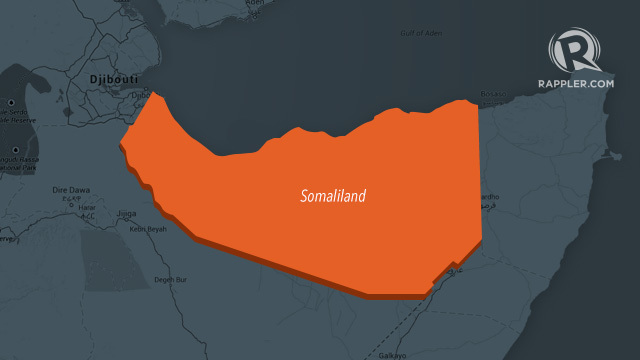
The northern regions of Somaliland and Puntland have broken away to govern themselves. Most of Somalia is controlled by various Islamist militias, although some of the moderate Islamist groups support the government.
Sheik Sharif Ahmed has his task cut out as the new president with the burden of reconciling Somalia's 10 million people and to put an end to 18 years of bloodshed. Somalia's government controls only parts of the capital, Mogadishu, with the help of several thousand African Union troops.

Thursday, January 29, 2009

Somalia: Among fixing a broken world


Medeshi Jan 29, 2009
Fixing a broken world
From The Economist print edition
The planet’s most wretched places are not always the most dangerous

IN ALMOST any discussion of world affairs, there is one thing on which doves and hawks invariably agree: much more needs to be done to shore up states that are failing, in a state of collapse, or so poor that they are heading in that direction.
For development-minded people, such benighted places are an obvious concern because of their desperate suffering; and for hard-nosed strategists, states that hardly work are places where terrorists could step into the vacuum. Indeed there is a certain convergence between these points of view: aid workers agree that security is essential to prosperity, and generals want economic development to boost security.
In America these days, defence planners say they worry more about weak states, even non-states, than about strong ones. “Ungoverned, undergoverned, misgoverned and contested areas” offer fertile grounds for terrorists and other nefarious groups, says the Pentagon’s National Defence Strategy, issued last year. The penning of that document was overseen by the defence secretary, Robert Gates, who will remain in charge of defence policy under Barack Obama. Large chunks of its language could have been issued by bleeding-heart aid agencies or the United Nations: it speaks of the need to “build the capacity of fragile or vulnerable partners” and to address “local and regional conflicts” that exacerbate tensions and encourage drug-smuggling, gun-running and other illegality. To the chagrin of old-school sceptics, nation-building is now an integral part of American strategy.
Similarly, the European Union’s declared security strategy sees state failure as an “alarming” phenomenon. It opines that: “Neighbours who are engaged in violent conflict, weak states where organised crime flourishes, dysfunctional societies or exploding population growth on its borders all pose problems for Europe.”
A rather precise taxonomy is offered by Robert Cooper, a British diplomat and Eurocrat, in his book, “The Breaking of Nations”. He splits the world into three zones: Hobbesian or “pre-modern” regions of chaos; areas ruled effectively by modern nation-states; and zones of “postmodern” co-operation where national sovereignty is being voluntarily dissolved, as in the European Union. In his view, chaos in critical parts of the world must be watched carefully. “It was not the well-organised Persian Empire that brought about the fall of Rome, but the barbarians,” he writes.
Strategists have worried about failing states ever since the end of the cold war. At first, zones of war and chaos were seen primarily as threats to the people living within them, or not far away. But since the attacks on America in September 2001 such places have increasingly been seen as a threat to the entire world. Western intervention is now justified in the name of fighting terrorism, not just of altruism.
Take the case of Somalia: America sent troops there in 1992 to help the United Nations stave off a humanitarian catastrophe, but the armed chaos of Mogadishu soon drove it out. In recent years, America has again been active in that region, carrying out air strikes in Somalia against suspected jihadist camps. It supported Ethiopia’s military invasion in 2006 to defeat the Islamist militias that had taken power in Mogadishu (arguably causing even more chaos) and is now backing an African peacekeeping mission for the same reasons. The waters off the Somali coast, moreover, have become one of the prime zones of piracy at sea, disrupting shipping through the Suez Canal. Even China has felt the need to send warships to the Gulf of Aden to protect its shipping.
Afghanistan, too, is often seen as a classic example of the perils of collapsing states: acute poverty and years of civil war led to the rise of the Taliban and allowed al-Qaeda to turn into a global menace. After the American-led intervention in 2001, both have rebated themselves across the border in Pakistan’s lawless tribal regions, from where they wage a growing insurgency in southern Afghanistan, destabilise Pakistan and plot attacks against Western targets around the world.
Western intelligence agencies say that, with the recent improvement in security in Iraq (a totalitarian state that became a failed state only after the American-led invasion), the world’s jihadists now prefer to head for Pakistan, Somalia or Yemen.
Misrule, violence, corruption, forced migration, poverty, illiteracy and disease can all reinforce each other. Conflict may impoverish populations, increase the availability of weapons and debilitate rulers. Weak governments, in turn, are less able to stop corruption and the production and smuggling of arms and drugs, which may in turn help finance warlords, insurgents and terrorists.
Instability breeds instability. The chronic weaknesses of civil institutions in Sierra Leone and Liberia contributed to the outbreak of devastating civil wars in both countries, fuelled by the profits from the illegal smuggling of “blood diamonds”. Meanwhile war and genocide in Rwanda contributed to the collapse of the Democratic Republic of Congo in the 1990s. The chaos there, sustained in part by fighting over mineral resources, sucked in Rwanda, Burundi and Uganda. Chad and Sudan support rebels in each other’s countries.
At the very least, there is evidence that economic growth in countries next to failing states can be badly damaged. And if a poorly functioning but important oil-producing state like Nigeria were to fall apart, the economic fallout would be global. Moreover, weak governments may lack the wherewithal to identify and contain a pandemic that could spread globally.
That said, the interplay of these factors is hard to describe, and the very definition of failed states and ungoverned spaces is anything but simple. Few states have completely failed, except perhaps for Somalia. And even here, the territory is not completely ungoverned. A part of the country, called Somaliland, is more or less autonomous and stable—and another bit, Puntland, is relatively calm, although it is the source of much piracy. The region to the south is dominated by warring clans, but even here some aspects of normal life, such as mobile telephone networks, manage to survive.
Lesser breeds before the law
One starting point in any analysis of failed countries is the theory of Max Weber, the father of social science. He defined the state as the agency which successfully monopolises the legitimate use of force. But what does legitimate mean? In some places, state power is exercised, brutally but effectively, by whoever is top dog in a perpetual contest between kleptocrats or warlords whose behaviour is lawless in every sense.
If definitions are elusive, what about degrees of state failure? Perhaps the most detailed study is the index of state weakness in developing countries drawn up by the Brookings Institution, a think-tank in Washington, DC. This synthesises 20 different indicators and identifies three “failed” states—Somalia, Afghanistan and the Democratic Republic of Congo—along with 24 other “critically weak” ones. One striking feature of such tables is that states fail in different ways. Among the ten worst performers, Iraq is comparatively wealthy and does well in social welfare, but is highly insecure; Zimbabwe is comparatively secure, but ruined economically and politically. The next ten-worst performers are even more mixed.
The collapse of states is as varied as the states themselves. Some were never functioning states at all, just lines drawn on maps by colonisers. Many African borders encompassed lots of ethnic groups and divided some of them. When the colonialists left, so did the bureaucracies that supported these entities, abandoning them to poverty, civil war or both. The cold war helped fuel many conflicts, for instance in Angola and Mozambique, where superpowers backed rival factions. Other parts of Africa, such as Somalia, fell apart after the withdrawal of superpower support.
The conflicts of Central America died down in the years following the end of the cold war. But the fighting in Colombia has dragged on, as the FARC guerrillas finance themselves through drugs and kidnapping. The end of Soviet communism freed or created many countries in Europe. Some prospered as they were absorbed into NATO and the European Union, while others fragmented bloodily, notably Yugoslavia. Enclaves of “frozen conflicts” remain on Russia’s periphery—for example Abkhazia, South Ossetia and Transdniestria which survive as unrecognised statelets with the Kremlin’s support.
Whichever way state collapse is assessed, it will always be an imperfect measure of priorities for policymakers. On a map of the world using the Brookings index of weak states, the epicentre is self-evidently sub-Saharan Africa, particularly around Congo, with blobs of red in Iraq, Afghanistan and Myanmar. But this overlaps only in part with, say, the ungoverned spaces that America’s State Department regards as the nastiest havens for international terrorists, such as al-Qaeda.
On that list, Iraq and Afghanistan figure prominently—but in these countries, arguably, the problem is more one of national insurgencies than international terror. Once the tribes of western Iraq (whose grievances were local) had been induced to switch sides to the Americans, al-Qaeda was quickly evicted from that area. Al-Qaeda’s senior leaders are sheltering in Pakistan, yet this ranks as only the 33rd- weakest state on the Brookings index.
One area of concern is the Sahel, a vast semi-arid area south of the Sahara desert. The Americans fear that in this region Islamist terrorists could begin co-operating with existing rebel outfits, such as the Tuareg, or with drug smugglers. The Pentagon has created a new Africa Command to help monitor the area more closely and train local government forces.
The State Department identifies other ungoverned spaces such as Yemen (30th on the Brookings index), parts of Colombia (47th), the seas between the Philippines (58th) and Indonesia (77th), bits of Lebanon (93rd) and the “tri-border area” between Brazil, Argentina and Paraguay (none ranked as particularly weak).
Conversely many of the most wretched places in the world—Congo, Burundi, Zimbabwe, Haiti, Myanmar and North Korea—are not known as havens for international terrorists. Attacks linked to al-Qaeda, moreover, have been conducted in well-run countries such as Britain and Spain. For American counter-terrorism officials, the biggest terrorist threat to the homeland is posed by European radicals who are able to travel to America more freely than, say, a Yemeni. Some scholars worry about social breakdown in poor mega-cities. But to regard the British Midlands and the banlieues of Paris as ungoverned spaces would be stretching a point.
The common denominator for al-Qaeda’s activity is not state failure, but the fact that attacks are carried out by extremists claiming to act in the name of the world’s Muslims. Their safe havens are not necessary geographical but social. Being based in a remote spot, far from government authorities, may be important for training, building esprit de corps and, in the view of intelligence agencies, trying to develop chemical and biological weapons.
But for al-Qaeda, remoteness alone is not enough. Terrorists need protection too, and that has to be secured from local populations as in Pakistan’s tribal belt. International terrorists, moreover, need to be able to travel, communicate and transfer funds; they need to be within reach of functioning population centres. Stewart Patrick of the Council on Foreign Relations, an American think-tank, argues in a forthcoming book that international terrorists do not find the most failed states particularly attractive; they prefer “weak but moderately functional” states. The shell of state sovereignty protects them from outside intervention, but state weakness gives them space to operate autonomously.
Afghanistan’s history is telling. Al-Qaeda was forged from the Arab volunteers who had fought with the Afghan mujahideen against the Soviet occupation of the country. With the end of the cold war and the fall of the communist government in Kabul, the country fell into civil war. Arab fighters largely pulled out in dismay.
Some went to Bosnia and Chechnya. Others intensified insurgencies back home in Egypt and Algeria. Osama bin Laden found shelter in Sudan under the protection of its Islamist regime. What took him back to Afghanistan was the rise of the Taliban. Afghanistan at that time was not an ungoverned space, but a state sponsor of terrorism; indeed, al-Qaeda arguably became a terrorist sponsor of a state.
Terrorism aside, what of other global plagues? Afghanistan is still the world’s biggest source of the opium poppy, despite the presence of foreign troops. Next is Myanmar, also near the bottom of the pile. But Colombia, though not “critically” weak, is the biggest producer of cocaine. The cocaine routes pass through countries of all sorts; Mexico is among the top performers in the Brookings index, but is the main drugs highway to America. Similarly, piracy depends on geography. A non-existent state may allow pirates to flourish, but without the proximity of a shipping route they have no targets to prey on.
Measures of corruption, such as Transparency International’s Corruption Perceptions Index, correlate strongly with the index of state weakness. But here too there are anomalies: Russia is ranked as a middling country in terms of state weakness, but does worse in the corruption index; Italy scores below some African countries.
When it comes to pandemics, there is no simple correlation between disease and dysfunctional states. The countries suffering most from HIV/AIDS are in southern Africa: apart from Zimbabwe, most governments in that region are quite well run. The states that have seen the most cases of the deadly H5N1 strain of bird flu are Indonesia, Vietnam, China and Egypt, none of them among the worst cases of misrule or non-rule.
Everybody agrees that more effective government around the world is desirable, especially for those living in or near broken countries. Failed states always cause misery, but only sometimes are they a global threat. Given that failures come in so many varieties, fixing them is bound to be more of an art than a science.

News about the former British protectorate of Somaliland

Medeshi
Makwaia wa KUHENGA
Daily News; Thursday,January 29, 2009
News about the former British protectorate of Somaliland
News about the former British protectorate of Somaliland which broke away from mainstream Somalia in 1991 with the ouster of the former military ruler, General Siad Barre, is scanty. One has to browse the Internet to find out what is happening.
I did this week. The news is that Somaliland will be holding Presidential Elections on March 29, this year, complete with competing voices in the country's polity which includes a fully-fledged Parliament, House of Elders and House of Representatives.
With a population of 3.5 million people, Somaliland has three major political parties. The last vote was taken in 2003 and the next vote which was due last year but delayed for some reason will now take place in March. In the last vote, Dahin Riyaale Kahin of the 'Unity, Democracy and Independence Party' won the vote. He is expected to stand again this year, challenged by a buoyant opposition.
A dispatch by Reuters I gleaned on the Internet says: "Somaliland hopes this year''s presidential elections will lead to international recognition of the northern Somali enclave as an independent country, according to officials. "The polls are seen by many as an acid test for the former British protectorate which broke away from Somalia in 1991 when the ouster of former dictator Siad Barre plunged the Horn of Africa into anarchy.
"Somaliland has enjoyed relative peace and prosperity and has held previous democratic elections, but analysts say it is not recognised globally because of concerns that rewriting colonial borders would open a Pandora's Box of other session claims."
Reuters quoted Somaliland's Chairman of the Electoral Commission as saying: "The election is a test for Somaliland's recognition bid."
So non-recognition of this obviously de facto state of Somaliland is most unfortunate given the reality of the fact that Somalia with its capital of Mogadishu in the south, as known and recognized by the international community is, to all intent and purposes; a failed state.
As we have noticed in the intervening period, Mogadishu's Somalia has no government to speak of. The Ethiopian-backed government has but collapsed, preceding which we have witnessed the withdrawal of Ethiopian troops.
The Taliban-like rebel forces, Al-Shabaab, are threatening to capture Mogadishu and impose a Taliban like fundamentalist regime. Coupled with this spectre has been the news of the emergence of Somali pirates on the loose in the high seas in the east coast of Africa. These pirates have become an international scourge demanding concerted international action.
So the question really is: If there is a de facto state of Somaliland in the north which has proved its efficacy as a sustainable state, why has the international community been hesitant to recognize it? Is the caution to avert a Pandora Box really meaningful?
Is it not true that an internationally recognized Somaliland state will be a stabilizing factor in the Horn of Africa rather than the whole area becoming a no man's land or a den of pirates?
These are the questions to be addressed especially by the African Union and the United Nations. And indeed they are the questions requiring the attention of the big boys of this unipolar world we live in these days.
Information made available to me by a Somaliland contact group in the United States -- Somaliland-American Council - has it that Somaliland government authorities have arrested 11 US residents who were caught smuggling Anti-aircraft missiles into Hargeisa, the capital city of Somaliland.
"The Somaliland government has information that indicates these weapons were originated from Eritrea and transported to Galgudud region in Somalia, where the arrested persons were being trained by the Al-Shabaab group now poised to overrun Mogadishu," says the Somaliland-American newsletter. According to the newsletter, Al-Shabaab Taliban-like rebel group has links to Somali Americans living in the United States.
So really, if Somaliland is not supported by offering it formal recognition by the powers that be including the United States and Britain - Somaliland former colonial power - the whole country from the South to the North and indeed the whole Horn of Africa will be engulfed into the flames of a senseless war and piracy eschewed in a bizarre ideology.
To my mind, the best option would be to support a de facto Somaliland state which has proved its sustainability as it has been able to run elected governments and democratic institutions as long as 1991. This will be a spur to the rest of the former unified republic to purge itself of piracy and gangsterism.

Somalia:Who do pirates call to get their cash?


Medeshi Jan 29, 2009
Somalia: Who do pirates call to get their cash?
The hijacking of ships off the coast of Somalia has become a mini-industry, with another seized on Thursday. The ransoms are always paid - but how? Simon Cox goes on the money trail and finds all roads lead to one destination: London.
Piracy off the coast of Somalia is big business. Last year alone pirate gangs were paid an estimated £35m from holding scores of ships and hundreds of crew members to ransom.
But securing their release is the responsibility of a hidden mini-industry of lawyers, negotiators and security teams based nearly 7,000km (4,200 miles) away, in London, UK, the business capital of the world's maritime industry.
The key players in this sector like to keep their activities as discreet as possible but in my investigation I gained access to people involved in every part of the ransom chain.
When a ship's owner discovers one of their fleet has been hijacked, the first port of call for them is normally to a lawyer like Stephen Askins, whose firm is one of the few that deals with kidnaps and ransoms at sea.
"We would expect to be called early," says Mr Askins. "And how you then deal with the negotiations will be a team decision.
There's no official "how to pay a ransom" rulebook - and the uncertainty leads "lots of sensitivity".
"People will do it in different ways," says Mr Askins, "but at the end of the day it's somebody from the owner's side talking to someone from the pirate's side, negotiating their way to a final settlement."
No two kidnaps are the same but the proliferation of attacks off the coast of Somalia in the past year means a pattern has been established where the pirates see it as a business. They may be armed and dangerous but, Mr Askins says, money is their chief motivation.
"They are negotiating for money, therefore anybody who has been on holiday and has tried to bargain with an Egyptian market trader for a carpet will understand how difficult it is to negotiate a conclusion. But we don't have the option of walking away, we have got to keep negotiating."
It's a radical departure from the airline hijackings of previous decades. Then, hijackers, who tended to be politically motivated, knew it was only a matter of time before special forces would be called in and try to kill them. Ransoms were often not paid.
(Photo: Two pirates patrol their captured ship)
But Somali piracy is different. Paying a ransom is not illegal under British law, unless it's to terrorists. And while governments have failed to clamp down to hijackings, a precedent of paying up has been established. So, as soon as pirates set foot on a ship they know pay day is only a matter of time.
The next link in the chain is a specialist negotiator, whose job is to try to reach a reasonable price.
Going rate
Negotiations tend to begin with astronomical demands from the hijackers before the price is bargained downwards.
James Wilkes, who runs specialist maritime risk company Gray Page, which has been involved in negotiations in several hijackings in Somalia, says it can mean daily contact with pirates for several months. The average hijack lasts two months before a ransom is paid.
The going ransom rate is $1m-$2m, but getting to a final figure is like a "tense boardroom negotiation" he says.
"A commercial transaction is probably a good way to describe it. They have hijacked the ship, the crew and its cargo and they want a certain amount of money for its release.
"It's about finding the right way to get the ship released and on the right terms, although human lives are involved and the consequences of something going wrong are quite significant."
But agreeing a ransom leads to an even bigger headache - getting the money to the pirates.
It's fraught with difficulties. The ransom for the Sirius Star oil tanker, hijacked in November, appeared to have been dropped from the air. But normally it means delivering a huge wodge of cash by sea to the hijackers, who will have anchored off the coast of northern Somalia.
Fixed overheads
Once a drop-off boat and crew have been hired and the weather negotiated, there's another big hurdle, according to risk consultant Darren Dickson: more pirates.
Navigating the high seas with a stash of money is not for the fainthearted.
"Some of these people who have done these drop offs by boat actually have to fend off pirates as they are delivering the ransom themselves," says Mr Dickson. His firm has delivered ransoms to several pirate gangs.
Dodging the pirates is only one difficulty - another is to make sure the good guys know what you're up to as well. According to Mr Dickson, of Drum Cussac, it's vital that "you're not going to be looked at as a pirate vessel... then you might get taken out by a naval vessel."
All these specialist services don't come cheap in the UK. Factor in the cost of lawyers, risk consultants, security advisers, as well as the fixed overheads, and delivering the money to the pirates "can lead to doubling the ransom amount," says Simon Beale, a marine underwriter.
Last year Somali pirates pocketed an estimated $50m. Not all of this is going to British lawyers, negotiators and security teams but a fair chunk of it will be. It has led to some criticism, particularly in Spain, that London is profiting from crime.
"I don't think people are trying to exploit the situation," says maritime lawyer Mr Askins. "We are very much trying to do the job we have always done at the rates we would charge in any other case."
And what happens to the tens of millions of pounds that the pirates make?
All the kidnap specialists who deal with the Somali pirates say it's a purely criminal enterprise. But Bruno Schiemsky, a Kenyan arms analyst, believes there is an even darker link - between the pirates and the radical Islamist group al-Shabab.
He says the pirates will pay a percentage of the ransom to al-Shabab - as much as 50 per cent in areas where the group is in control.
"It's an alliance of convenience, which makes it fragile," says Mr Schiemsky, "but for the moment both parties - pirates and al-Shabab - see the value of working together since they have a common enemy, the international community, and this relationship is only getting stronger through time. "
Trying to verify this is difficult. When I ask the Serious Organised Crime Agency if it has any suspicions about where the money was going, I get a firm "no comment".
But the American diplomat chairing a new international group of 24 nations which is looking at tackling Somali piracy said US counter piracy officials wanted to find out more about how pirate operations were paid for and which "outside sources" were involved.
If a link was established between the pirates and terrorists it could create serious problems for all parties involved. As one underwriter summed it up, "we'd all be going to jail".

Somalia: Ethiopian pullout seen likely to aid country's stability


Medeshi Jan 29, 2009

Ethiopian pullout seen likely to aid country's stability

Matt Purple

THE WASHINGTON TIMES
(Photo: A vehicle packed with explosives was detonated outside a base for African Union peacekeepers in the Somali capital of Mogadishu ...)
A suicide attack on African Union peacekeepers punctuated last week's withdrawal. And Islamist rebels Monday took control of the airport and parliament building in Baidoa, the last stronghold of a U.N.-backed government.
But several Africa specialists say that the absence of Ethiopian forces, which drove rebels from the Somali capital in 2006, could help bring about greater stability in the long-term by depriving Somali extremist groups of a substantial recruiting tool.
Ted Dagne, who analyzes Africa for the Congressional Research Service, said the departure of Ethiopians - viewed as an occupying power by many Somalis - could loosen the grip of Al-Shabab, an Islamic militia that gained notoriety during the two-year Ethiopian occupation of the capital. Al-Shabab is often compared to al Qaeda and the Taliban.
"Most of the Shabab joined because they hated Ethiopia and hated what they saw as an aggression," Mr. Dagne said.
Somalia, a country on the Horn of Africa, has been beset by violence for decades, usually among rival warlords competing for power.
The nation has not had a stable government since 1991. Authority is currently vested with the U.N.-backed Transitional Federal Government (TFG), whose top officials have scattered in exile.
Ethiopia invaded Somalia in 2006, hoping to prop up the TFG and repel the Islamic Courts Union, which then controlled Mogadishu.
After the Ethiopian invasion, Al-Shabab spread rapidly, launching frequent guerrilla attacks against Ethiopians and the Somali TFG. Al-Shabab currently controls much of the Somali south, including Kismayo, the nation's third-largest city, pockets of Mogadishu and much of Baidoa.
Al-Shabab rose to prominence after Ethiopian troops repelled the Islamic Courts Union.
Mr. Dagne said that, when the latest bloodshed began, moderate elements fled the country, leaving Islamists to fill the gaps.
Though Shariah law is codified in its constitution, Somalia is considered more secular than many Muslim nations, with most of the fighting carried out by rival warlords rather than religious sects.
Rank and file Somalis joined Al-Shabab, more out of nationalistic pride than subscription to Islamist ideology, Mr. Dagne said.
The militant tactics of Al-Shabab have been condemned worldwide, but the Ethiopian military has also come under criticism amid reports of human rights abuses.
Human Rights Watch recently compiled a report that accused the Ethiopians of war crimes, including raiding mosques and firing indiscriminately into crowds of civilians.
As Ethiopian troops withdrew from Mogadishu, jubilant Somalis reportedly ran into the streets and cheered their departure.
John Prendergast, co-chairman of the Enough Project, which advocates conflict resolution and development in Africa, said that the withdrawal of Ethiopian forces was encouraging. But he cautioned against hastily trying to install a new government.
"The fatal flaw in the past 19 years ... has been the urge by the peacemakers to put something in place immediately," he said. "So they naturally turn to the biggest guns: the warlords and some of the Islamist groups.
"The key to success will be resisting that urge and taking the time to cobble together an alliance among the real authorities on the ground," he said.
Peace negotiations are currently under way in neighboring Djibouti, between the TFG and the Islamist Alliance for the Re-Liberation of Somalia, which is considered moderate compared with Al-Shabab.

A vehicle packed with explosives was detonated outside a base for African Union peacekeepers in the Somali capital of Mogadishu on Saturday.
Thus far, the talks have succeeded in negotiating the resignation of President Abdullahi Yusuf Ahmed and the Ethiopian pullout.
African specialists are urging the Obama administration to support this process, though its effectiveness so far has been limited.
The Bush administration had indicated support for deploying U.N. peacekeeping forces, a strategy Mr. Prendergast said could lead to disaster.
"[The presence of U.N. peacekeepers is] the worst possible scenario, which could be perceived as countering Al-Shabab," he said. "This would provide an almost galvanizing catalyst for support for Al-Shabab, almost as much as the Ethiopians did."
A State Department official downplayed concerns over U.N. involvement and expressed optimism that a new Somali government could be in place shortly. The official requested anonymity because he was not authorized to speak for attribution.
Ultimately, U.S. policy toward Somalia may be dictated in part by the Obama administration's strategy for dealing with Islamic militancy, analysts say.
Al-Shabab shares al Qaeda's vision of uniting the world under Shariah law Mr. Dagne said. "If these people are not contained, not only would they take over Mogadishu, but they would go beyond Mogadishu."

Somaliland: Interview by SAC: Dr. Mohamed Abdi Gabose


Medeshi Jan 29, 2009
SOMALILAND AMERICAN NEWSLETTER
Interview by SAC: Dr. Mohamed Abdi Gabose

You are cordially invited to participate in a conferenced call hosted by Somaliland American Council. The keynote speaker is Dr. Mohamed Abdi Gabose.

Date and Time: Sunday, February 1, 2009 at 1 PM ET (6 PM London time)
Agenda: Current political affairs, voter registration, and presidential elections

To participate in this conference call please do the following: 1 - Call the conference bridge number: Dial-in #: (712) 432-1001
2 - Enter conference Attendee Passcode: 411-293-320 then (enter #)
3 - Please email questions to Dr. Gabose to:

Somaliland American Council

Sheikh Sharif Sheikh Ahmed may become the next president of Somalia


Medeshi
Sheikh Sharif Sheikh Ahmed may become the next president of Somalia
NAIROBI, 29 January 2009
Somalia's parliament, meeting in Djibouti, is expected to elect a new president on 30 January, to replace Abdullahi Yusuf, who resigned at the end of December 2008 after prolonged differences with the prime minister.
Fourteen candidates are vying for the position but observers say two stand out. However, whoever takes over faces the daunting task of trying to rebuild a nation that has been at war for nearly 18 years, leaving more than one million displaced and up to 3.5 million people needing aid. Not only does the winner inherit a broken country but also the task of bringing in those in opposition that are not involved in the current talks, including the militant Al-Shabab group.
Sheikh Sharif Sheikh Ahmed
In his late 40s, he is the leader of a faction of the Eritrea-based Alliance for the Re-liberation of Somalia (ARS). He is also the former chairman of the Union of Islamic Courts (UIC), which was ousted in late 2006 by Ethiopian-backed Somali troops. He is considered a relative moderate and led his group into negotiations with the Transitional Federal Government (TFG).
Ahmed started out as a former lieutenant of faction leader Mohamed Dheere until they fell out in 2003. In the same year, he helped to set up the SiSi neighbourhood Islamic court to combat rampant crime and banditry in the poor neighbourhoods of north Mogadishu. He comes from a long line of religious leaders. He is from the Abgal sub-clan of the Hawiye clan.
After falling out with the secular warlord controlling the town, Ahmed became a secondary school teacher in Mogadishu, where a gang abducted one of his 12-year-old students. The captors demanded a ransom from the boy's family - a moment Ahmed called a turning point. In 2004, he became chairman of the group, now made up of 11 courts and known as the UIC.
Nur Hassan Hussein
In his 70s and popularly known as Nur Ade, he was appointed prime minister in October 2008 by Yusuf. Hussein replaced Ali Mohamed Gedi, who was blamed for contributing to the displacement of hundreds of thousands from Mogadishu. He is considered a pragmatist and cautious. He is credited with overseeing the withdrawal of Ethiopian troops. Hussein is a lawyer by training and a former police colonel, who, until his appointment, had been secretary-general of the Somali Red Crescent Society since 1991. Like his predecessor, Hussein is a member of the Abgal sub-clan of the Hawiye clan, which is dominant in Mogadishu and the surrounding areas.
Other candidates, considered long shots, however, include Maj-Gen Maslah Mohamed Siad, the son of late President Siad Barre, and former Prime Minister Ali Khalif Glayr, who is currently teaching at a university in the United States.
irin

Wednesday, January 28, 2009

Somaliland: A message to the Awdalians

Medeshi Jan 29, 2009
A Message for the Awdalians
Looking into recent complaints of the Awdalian about the Somaliland voter registration, perhaps it would be better for them to choose not to be part of Somaliland in which case , they will have to join their brethren in Djibouti or Ethiopia through mass immigration and exodus leaving the territory behind.
Awdalians have been given a preferences by the Somaliland people in order to alleviate their fears and make them feel comfortable with their guilt of supporting the Siyad Barre regime that has killed thousands of Somalilanders with their support.
Time has changed and Somaliland does not need to appease any certain clan and , should the need arise, the SNM should be called back to take quick action to re-educate certain communities that do not accept the genuineness of Somaliland reconciliations process. This could include both of the Awdalians and others that are still opposing the Somaliland cause. Somalilanders should stand by their motto that any one that does not like Somaliland should leave it otherwise!!!!
Have your say :

China marches on in Africa


Medeshi
China marches on in Africa
By Alistair Thomson
DAKAR, Jan 28 (Reuters) - Chinese businessmen are taking a long-term view and pursuing strategic expansion in Africa even though China's multiplying investments on the continent have lost some lustre in the global downturn.
Beijing and Chinese companies have pledged tens of billions of dollars to Africa in loans and investments mostly to secure raw materials for the world's fastest-growing large economy.
That long-term interest remains intact, despite a worldwide economic slump that has hit China's exports to the rich world and a sharp decline in Africa's mineral shipments to China.
China-Africa trade has surged by an average 30 percent a year this decade, soaring to nearly $107 billion in 2008.
"China is in Africa for the long term, and strategically," said David Shinn, a former U.S. ambassador to Ethiopia and Burkina Faso who teaches at George Washington University's Elliott School of International Affairs.
"They will not veer from this, in my view," he said.
Far from retreating, many Chinese businessmen are hunting for bargains.
Chinese and Indian firms have expressed interest in taking over Zambia's top cobalt producer Luanshya Copper Mines since it halted operations in December, Zambian state media reported.
South Africa's Standard Bank, itself 20 percent owned by the Industrial and Commercial Bank of China (ICBC), said last month it was advising Chinese mining clients on buying opportunities in Africa and elsewhere.
"They are looking at 2009 and saying 'This is a time we see as a very big buying opportunity. We've got the backing from government, we've got the financial means'," Thys Terblanche, the bank's head of mining and metals investment banking, told Reuters.
Beyond mining, Chinese state companies are pushing ahead with strategic energy sector investments and infrastructure; private outfits are continuing to expand in technology areas.
"Some developed Western countries hit by the financial crisis are reducing their investment in Africa. Objectively, this is a powerful opportunity for Chinese businesses to expand their investment and market share in Africa," Cui Yongqian, a former Chinese ambassador to the Republic of Congo and Central African Republic, told a China-Africa trade forum this month.
Trade with Angola, China's biggest source of African crude oil, reached $25.3 billion in 2007 and Beijing has offered Luanda $5 billion in oil-backed loans.
Shenzhen-based Huawei Technologies, China's biggest telecoms equipment maker, is pushing south from its established stamping ground in North Africa.
"I see no reason why they would want to decrease their investments in the telecommunications sector, because that's profitable for them," said George Washington University's Shinn.
"It will vary according to sector and country ... It's very dangerous to generalise about the China-Africa relationship," he said. "They will certainly make tactical retreats where the economy requires it."
LONG-TERM VIEW
Even China's slower economic growth far outpaces that of other major economies. Beijing says it can achieve 8 percent growth in 2009. The IMF says it may cut its forecast to about 5 percent, from the 9 percent it predicted in October.
While competitors lay off workers and delay new projects, China Non-Ferrous Metals Corporation is opening a copper smelter this month in Chambishi town, which Zambia has transformed into a tax-free economic zone to attract Chinese investment.
Zambian President Rupiah Banda and China's Trade Minister Cheng Deming launched a second economic zone this month near the capital Lusaka, where Chinese firms will assemble electrical goods such as television sets and cellphones for export.
"Zambia is still an attractive investment destination (and this will give) confidence to existing firms operating here not to start scaling down their operations," Banda said.
Zambia's Copper Belt is witnessing a growth in Chinese deals.
"In Zambia, mining investment is large-scale and long-term," said Xing Houyuan, director of multinational business at China's Academy of International Trade and Economic Cooperation, which is affiliated to Beijing's Commerce Ministry.
"I don't see any likelihood of a pullback ... Companies won't give up investment plans because of the short term. The biggest impact is likely to be on projects that are still in the planning stage, where the money had not really been committed yet," Xing said.
In Liberia, China Union has just signed a $2.6 billion contract to develop the Bong iron ore deposit.
CONGO AND GUINEA
China also insists the slowdown will not dampen interest.
"We will continue to have a vigorous aid programme here and Chinese companies will continue to invest as much as possible in Africa because it is a win-win solution," Chinese Foreign Minister Yang Jiechi said in South Africa in mid-January.
However, the global slowdown has forced some Chinese businesses to close operations in Africa and prompted a re-think of some of the multi-billion-dollar mega-deals that blazed a trail across the world's poorest continent.
Democratic Republic of Congo and Guinea are cases in point.
DR Congo rode the boom in commodities to attract a wave of foreign investment in its rich but long-neglected copper, cobalt, gold and other mineral resources after post-war elections in 2006. Now that dream is fading.
"We have one processing mill and several workshops in Congo. We have closed them. There are many Chinese-invested firms in Congo and I understand most of them have shut down their operations," said a marketing director at a private firm in China's eastern province of Zhejiang, which supplies cobalt and nickel compounds for use in mobile phone batteries.
"I don't think we will resume production in the factories in Congo any time soon. We expect the economic slowdown could worsen in this year and weigh on the prices further," he said, requesting anonymity because he was not authorised to speak to the media.
Africa's heavy dependence on resource exports means it feels any squeeze more painfully. Global trade fell an annualised 3.7 percent between September 2008 and November last year, its biggest drop since 2001.
Congo's franc has fallen 20 percent against the dollar in less than four months and foreign reserves are at a five-year low. The government is seeking a $200 million bailout from the International Monetary Fund's Exogenous Shocks Facility.
A much-trumpeted $9 billion package of Chinese loans, investment and infrastructure projects in return for Congolese minerals contracts may be cut back to $6 billion, a diplomat in Kinshasa said, partly to appease the IMF which has expressed voiced concern at Congo taking on such huge debts.
Guinea, the world's top exporter of bauxite aluminium ore, had hoped for its own multi-billion-dollar deal with China to build hydropower dams, roads and bridges in return for mines.
Talks have dragged as the economic climate has worsened, hampered by Guinea's instability and a coup last month after the death of President Lansana Conte, said Ahmed Tidiane Diallo, director-general for mining projects at the Mines Ministry.
Gabon, similarly eager to cement a 1.6 trillion CFA franc ($3 billion) contract to develop the 360-million-tonne Belinga iron ore deposit, has accused its Chinese partners of dragging their feet amid the uncertain economic environment. (Additional reporting by Joe Bavier in Kinshasa, Saliou Samb in Conakry, Eric Onstad in London, David Lewis in Dakar, Lucy Hornby and Chris Buckley in Beijing, Moumine Ngarmbassa in N'Djamena, Antoine Lawson in Libreville, Alfred Cang in Shanghai, Mabvuto Banda in Lilongwe, Daniel Wallis in Nairobi; Editing by Louise Ireland and Pascal Fletcher)

Tuesday, January 27, 2009

Donald Rumsfeld to stand trial for war crimes?


Medeshi Jan 27, 2009
Donald Rumsfeld to stand trial for war crimes?
A UN official says there is enough evidence that former US defense secretary Donald Rumsfeld could be brought to justice for war crimes.
The United Nations Special Rapporteur on Torture Manfred Nowak in an interview on Monday told CNN that the international body had enough evidence to prosecute Rumsfeld for his direct authorization of tortures at US detention centers in 2002.
"We have clear evidence," Nowak said. "In our report that we sent to the United Nations, we made it clear that former Defense Secretary Donald Rumsfeld clearly authorized torture methods and he was told at that time by Alberto Mora, the legal council of the Navy, 'Mr. Secretary, what you are actually ordering here amounts to torture.' So, there we have the clear evidence that Mr. Rumsfeld knew what he was doing but, nevertheless, he ordered torture." The UN torture official earlier in an interview with Germany's ZDF television had said that "I think the evidence is on the table."
Nowak said that the United States had an "obligation" to probe former President George Bush's Administration for their involvement in torture.
A bipartisan Senate survey last month revealed that Rumsfeld and other high-ranking administration officials were responsible for detainee abuse at Guantanamo Bay Prison.
The Los Angeles Times said on December 12, 2008 that the report directed its most pointed criticism at Rumsfeld's decision in December 2002 to authorize the use of harsh interrogation techniques at the Guantanamo Bay facility. The report described Rumsfeld's directive as "a direct cause for detainee abuse" at Guantanamo and concluded that it "influenced and contributed to the use of abusive techniques, including military working dogs, forced nudity and stress positions, in Afghanistan and Iraq."
The coercive measures were based on a document signed by Bush in February, 2002.
US new President Barack Obama has ordered for the notorious US facility at Guantanamo to be shut down. But the so-called "enhanced interrogation techniques" have already destroyed the lives of many who had kept for years at US prisons worldwide without even charges.
"It's too painful, it's too deep, it's too dark and fills me with sadness... They did everything they could to destroy me when I was completely innocent," says former US detainee Mohammad Saad describing six years of humiliation, interrogation and ill-treatment under US orders in Egypt, Afghanistan and Guantanamo Bay.

Somalia's Sh . Sharif promises good relations with the neibhouring countries


Medeshi
Somalia's Sh. Sharif promises good relations with neighbouring countries
DJIBOUTI — Somali opposition leader Sheikh Sharif Sheikh Ahmed is vowing to reconcile all warring parties, rebuild his war-ravaged country and improve relations with all neighbors, including arch foe Ethiopia, if elected president.
"I believe there is a big hope of creating a government of national unity," Sheikh Sharif told Reuters on Tuesday, January 27.
"There are no major differences between the Somali people."
Sheikh Sharif, the presidential candidate of the opposition Alliance for the Re-liberation of Somalia (ARS), said it was time for all Somalis to find peace.
"The insurgents had been fighting for the Ethiopian withdrawal. Now they have pulled out of the country, there is no reason to fight and kill more Somalis."
Al-Shebab group seized control of the south-central town of Baidoa, the seat of parliament, on Monday, January 26, a few hours after Ethiopia withdrew its troops.
The group, once an off-shot of Sheikh Sharif's Islamic Courts, had relentlessly fought Ethiopian and government forces and is threatening to continuing fighting until the implementation of Shari`ah.
"If they have a political agenda, we are ready to talk to them. And the second issue may be based on religion, and we are ready to discuss that with them," Sheikh Sharif.
"In this new era, we have to improve security. We will try to join all the forces available, whether they are insurgents, the current security forces or former military," he vowed.
"What these young militia men believe is not what they were born into. We will try to convince them how valuable it is to be a security officer working for the nation's interest."
Peaceful Region
Sheikh Sharif, whose Islamic Courts Union ruled Somalia for six months in 2006 before being ousted by Ethiopian troops, promised better relations with all neighbors.
"It is very, very necessary to improve our relations with the neighboring countries and to end the long dispute between Somalia and Ethiopia."
Ethiopia, traditionally seen by Somalis as a Christian rival, completed its troops withdrawal on Sunday.
Addis Ababa sent thousands of troops to Somalia to topple the Islamic Courts, which briefly restored a rare peace to Somalia.
Sheikh Sharif expressed hope that a detente with Ethiopia would help rebuild his war-wrecked country.
"That will help the region's development, because poverty in the region is encouraging the conflict to continue and we have to stand for eradicating it."
On Tuesday, Somali lawmakers extended by five days the time period needed to elect a new president to replace Abdullahi Yusuf Ahmed who resigned last month.
The parliament was expanded a day earlier to give the ARS 200 seats in the new 500-member legislature as part of a UN-brokered power-sharing deal.
Somalia has had no effective central authority and been embroiled in almost uninterrupted inter-clan and civil strife since the 1991 ouster of former president Mohamed Siad Barre.

SOMALIA: Baidoa capture puts pressure on TFG


Medeshi
SOMALIA: Baidoa capture puts pressure on TFG
NAIROBI, 27 January 2009
The fall of Baidoa in south-western Somalia to Al-Shabab, hours after Ethiopian troops left, raises fresh questions about the viability of the Somali government, a civil society analyst said.
Baidoa, seat of the Transitional Federal Government (TFG), fell to the Islamist group on 26 January. A number of people were killed and injured and families displaced.
"The fall of Baidoa calls into question the viability of the TFG," the analyst said. "If they cannot defend the only town under their control, how can they hope to bring the rest of the country under their control?"
Baidoa fell as representatives of the TFG and a faction of the Eritrea-based Alliance for the Re-liberation of Somalia (ARS), led by Sheikh Sharif Sheikh Ahmed, met in Djibouti to set up a new parliament and elect a president.
The two groups had in November reached a power-sharing deal to double the size of parliament from the current 275 members to 550 members. The meeting in Djibouti voted to seat the extra MPs, according to Abdirahman Abdishakur, the ARS chief negotiator.
The new MPs, he added, would be sworn in "within a day or two”, while the process of electing a new president would take "no more than a couple of days".
However, a civil society analyst, who requested anonymity because of the volatile situation, posed the question: "Where will the new parliament go?"
The capture of Baidoa would also "bring Mogadishu under new and sustained pressure", he said. "They may not be able to capture Mogadishu, but they will be able to apply pressure."
In the past, the insurgents have captured towns and later abandoned them, but the capture of Baidoa signalled their ability to take advantage of any vacuum and expand their sphere of influence, he said.
The Al-Shabab met little resistance as they entered the town, local residents said. "At around 4:30pm local time yesterday, Al-Shabab forces entered and captured Baidao from the TFG. There was some resistance but not much," Ali, a local resident, told IRIN.
LootingAnother local, who requested anonymity, said the group, which was camping on the outskirts of town, had entered after talks with community leaders and stopped looting.
"There was looting of the presidential compound and two other places but that came to an end as soon they came in," he said. "There has been minimum displacement."
A local journalist told IRIN the group captured but later released senior government officials, including transport minister Mohamed Ibrahim Habsade and Aden Saransoor, another former warlord and deputy director of the central bank.
"They have all left for Wajid where they are expected to fly out of the country," he added.
Baidoa had been one of the few towns in the country completely controlled by the government and its Ethiopian allies, and therefore spared the violence witnessed daily in the capital, Mogadishu.
Somalia has been hard hit by a combination of conflict, drought and hyperinflation, creating a humanitarian crisis.
An estimated 3.5 million people need assistance while more than 16,000 civilians have been killed in the conflict between the Ethiopian-backed government and insurgents over the past two years.
Theme(s): (IRIN) Conflict, (IRIN) Governance, (IRIN)

Monday, January 26, 2009

Somali culture embraced in Minnesota

Medeshi
Somali culture embraced in Minnesota
By: Samantha Bushey
Posted: 1/26/09
The Somali Student Association (SSA) hosted the second annual Somali Night, "I Am Somalia" in Atwood Ballroom Saturday.
In the past, the SSA has teamed up with and participated in Africa night, but decided last year to have a separate night devoted to the Somali culture. (Many cultural dances were performed entirely by women on Saturday at Somali Night. Women danced the Buraanbur with Raxmo Ruuxi singing live.)
The night was full of informational videos, cultural dances, poetry, songs and a fashion show.
"This is just to celebrate the Somali culture," president of the SSA, Zamzam Mumin said. "We want to give a full night to educate them (St. Cloud residents and SCSU students)."
In order to enlighten as many people in the St. Cloud community as possible about the Somali culture, the SSA invited the Boys and Girls Club and gave them free tickets for the event.
The night started with a short video giving general information about Somalia, then went into the Somali Anthem followed by a presentation by Abdikariim about unsung heroes of Somalia.
The four unsung heroes talked about were Ahmad Ibrihim Khazi, Mohammed Abdullah Hassan, Hawo Osman and the Somali Youth League that started in 1943 and was Somalia's first political party.
"They laid the foundations for today," Abdikariim said.
After the Buraanbur dance, performed by 12 women while Raxmo Ruuxi sang, came a "History of Somalia" video that went more in depth with information about Somalia including information about its tribes and civil war. (Traditional Somali food was dished up Saturday night at the "I am Somali" culture night in the Atwood Ballroom)
In introducing Khalid Adam with his poetry, Abdimalik said, "I hope you enjoy it because we are the land of poets."
The poem "Duality" was written and recited by Adam. "The sun pulsed red hot vulva… oh the things they did to survive, to live complete… as you dismiss this experience… this is the Somali experience whether you like it or not… we are the ultimate test of endurance… we are the duality that encompasses humanity."
When dinner was served, the audience formed a line on each side of the ballroom, and members of the SSA served everyone the variety of dishes. If someone did not get in line for food, a member of SSA would bring them a plate of food so they could get the full Somali experience. ( sample of the food served at the Somali culture night.)
Having the full Somali experience sometimes made it hard to know what was going on because, "They are using mostly their language so it's kind of difficult," Ram Maharjan, SCSU student, said.
Maharjan thought it would have been easier if they had the English words on the screen during the songs and all parts of the narration when they were not speaking English.
At the end of one of the cultural dances, the Dhiisow, performed by five men and five women, one of the dancers stepped forward and shouted, "We are the Somali. I am Somalia."
When the executive board of SSA went on stage, they thanked Multicultural Student Services and Student Government Association for their help with putting together the second annual Somali Night and Mumin said, "Hopefully we can get more of your support in the future and it will be an endless tradition."

© Copyright 2009 University Chronicle

Sunday, January 25, 2009

Defeated Ethiopia pulls its troops from Somalia

Medeshi Jan 25, 2009
Defeated Ethiopia pulls its troops from Somalia
Ethiopia said Sunday it has withdrawn all its troops from Somalia, two years after the soldiers were deployed to prop up Somalia's transitional government.
The troops arrived in the Ethiopian border town of Dollow on Saturday and were greeted warmly by residents and officials there, the country's defense ministry told CNN.
As troops withdrew from around the Somali capital, Mogadishu, last week, forces from different Islamist groups -- including the hard-line Al-Shabab, which the United States has designated a terror organization -- took control of bases the Ethiopians abandoned.
"The city is almost under Islamist rule," said a local journalist who did not want his name revealed. "You can hear different names of the Islamist groups taking control in many parts of the city."
Ethiopia invaded Somalia in December 2006 to reinstall a U.N.-backed transitional government in Mogadishu after a hardline Islamist group overtook the capital and seized power.
Ethiopia's invasion had the blessing of the United States, which accused the Islamic Courts Union -- which captured Mogadishu earlier that year -- of harboring fugitives from al Qaeda.
The Islamists responded with a guerrilla campaign against government and Ethiopian troops. Efforts to replace the Ethiopians with an African Union -led peacekeeping mission faltered as the violence worsened, and heavy fighting in Mogadishu and other cities drove hundreds of thousands from their homes.
The lawlessness also spilled onto the seas off the Horn of Africa, where international vessels are routinely hijacked by pirates, suspected to be Somali, who demand large ransoms. And the transitional government was wracked by a power struggle between Prime Minister Nur Hassan Hussein and President Abdullahi Yusuf Ahmed, who resigned in December.
Ahmed attempted to fire Hussein for being ineffective. But Hussein said the president did not have the power to fire him, and the vast majority of members of parliament backed Hussein in a vote of confidence.
Hussein said last week that he would run for president, and lawmakers were expected to meet this week.
Ethiopia Defeated
by Abdishakur Jowhar M.D
The Ethiopians came bristling with the hardware of modern warfare. They came looking like Rambo with black stripes painted on black faces. They came brimming with pride, arrogance and the foolishness of man. They let lose their goons on the populace and harvested death and destruction. They emptied the Capital City of its people and made it the exclusive domain of rapid dogs, occupying armies and the barely human dogs-of-war. They watched with glee as Somalis engaged in their national sport of ethnic cleansing one sub-clan at a time and their number one hired help parked himself in Villa Somalia and took on the grizzly task with the enthusiasm of Rwanda's Interahamwe. And in the meantime the Ethiopian occupation force began to wash its soiled feet in the salty water of the Indian Ocean, to satisfy its centuries worth of longing and hoping and scheming for an access to the seas. Mogadishu once rehabilitated by the short lived moderate Islamic Courts became the new killing fields of Africa-the unfortunate.

Oh time! Two short years, full of glory and sacrifice. And the Ethiopians find them self exhausted, broke, demoralized, dragging their dead, leaving, claiming "success" and well, in short defeated. Defeated by al- Shabaab - the spear head of the Resistance. Zenawi, we may ask, who is laughing now? Who is cocky now? Victory to the people! Glory be to be Allah (SWT). Yes to Al-shabaab; I who have been most vehemently opposed to them, find myself no choice but to rejoice with Shebaab today for they have conclusively demonstrated to the Somali people that their mortal enemy could be defeated.

An Unclenched Fist : How Obama can bring stability to Somalia


Medeshi Jan 25, 2009
An Unclenched Fist
Barack Obama has a unique opportunity to bring something resembling stability to Africa's Horn.
Scott Johnson
NEWSWEEK
From the magazine issue dated Feb 2, 2009
As a state, Somalia has racked up more failures than any other on the planet. So said Susan Rice, soon to be Barack Obama's United Nations ambassador, in a Brookings Institution report she coauthored last year. Since then, Somalia's troubles have only worsened: 1.3 million internally displaced people roam the country scavenging for food; the president quit last month; and hard-line Islamist militias, having already taken control of Somalia's south and central regions, now stand poised to tighten their grip on the capital, Mogadishu. Some 10,000 innocent civilians have been killed since January 2007, pirates are terrorizing the coasts, and last month Somalia entered its 19th year without a functioning government. In many ways, Somalia is hardly a state at all.
But as a foreign-policy initiative, Somalia's problems offer Obama a unique chance to sketch a bold path forward in the region. After the Bush administration backed the Ethiopian invasion in 2006, helping to overthrow the moderate Islamic Courts Union, Somalia descended into war, and the Bush policy radicalized an ever-larger portion of the population. But Obama, whose world view embraces the idea of talking to one's enemies, could shift course on this policy failure and increase stability by re-engaging with the Islamists, and in particular with the young fighters who make up the ranks of al-Shabab, the Islamists who have been gaining strength over the last two years and continue to drag Somalia further into chaos.
The window of opportunity for Obama is small and fragile. But two things have happened in Somalia that could make the task easier. First, the hated Ethiopian occupation of Somalia that fueled the growth of al-Shabab is over. Second, Abdullah Yusuf resigned in December as president, paving the way for more moderate and inclusive figures to have greater say. Still, Obama's policy prescriptions would have to be specific, but not overstated. He could temporarily suspend U.S military C-130 flights over Somalia, now a near-constant presence, thereby sending a message that a future policy will not have as its central piece a military component that alienates the very people America needs to bring to the table. Obama could also consider suspending al-Shabab from the terror list temporarily to prove that, as he said in his inaugural speech, America will hold out its hand if its enemies "unclench their fists." A third path would be to open back-channel negotiations with as many hard-line factions as necessary to bring them into talks. Key to any strategy would be a quiet outreach effort to Sheik Hassan Dahir Aweys, considered the father of Somalia's Islamist movement and likely sufficiently powerful to bring enough radicals to heel to make any diplomacy worthwhile. Finally, as Rice hinted in her confirmation hearings, America needs to begin to fashion a regional approach that would address the longstanding border dispute between Ethiopia and Eritrea as part of any move to end Somalia's isolation.
It won't be easy. Al-Shabab poses urgent security concerns to the United States and many of Somalia's neighbors. Some of the group's hard-line leaders have connections to Al Qaeda. More worryingly, Somalia has started to attract American jihadists, including several from Minnesota who traveled there recently to fight. An unknown number may still be training in Shabab training camps in the south, and it's unclear whether their long-term goals lie in Somalia or back in Minnesota. Yet Obama, already beset by doubts about his Muslim heritage, isn't likely to make conciliatory talks with Islamists in Africa his first move. "He would be walking into a trap if he did anything that could lead to charges of being soft on terror," says Sally Healy, a Somalia expert at Chatham House.
But the potential rewards of such a strategy are tantalizing. The Bush administration made a policy out of talking to its enemies in Iraq, including many who had killed American soldiers, and as a result Iraq is calmer and more stable. With two wars already on his plate, Obama would do well to quell a rising storm in Africa's Horn, and the sooner the radicals are tamed, the less likely it is that they'll continue to splinter into the kinds of factions that could eventually return Somalia to the days when warlords ruled the streets. The alternative to engagement, says Rashid Abdi of the International Crisis Group's Somalia team, is that "by the end of the year, we could be talking about over 100 armed groups in Somalia." A further descent into warlordism is likely only to help the spread of radical Islam in the region. So while few doubt that a strategy of engaging with the Islamists could be risky, for Somalia and the rest of the Horn the riskiest option may also be the best.

With Jason McLure in Addis Ababa

Young Somalis Recruited for Jihad?

Medeshi Jan 25, 2009
Recruited For Jihad?
About 20 young Somali-American men in Minneapolis have recently vanished.
Dan Ephron and Mark Hosenball
NEWSWEEK
From the magazine issue dated Feb 2, 2009
It didn't trouble Burhan Hassan's mother that her son had been spending more time at the Abubakar As-Saddique Islamic Center, Minneapolis's largest mosque. A 17-year-old senior at Roosevelt High, Hassan and his family had fled civil war in Somalia when he was a toddler. Some of the other Somali immigrants in the Cedar-Riverside housing project where he lived got drawn into gangs with names like Murda Squad and Somali Mafia. But Hassan was getting good grades and talking about going to college, says his uncle Abdirizak Bihi. When the boy didn't come home from school on Nov. 4, his family assumed he was at the mosque. By evening, his mother had searched his room and found his laptop was gone and clothes were missing. (Photo: Sheik Abdirahman Ahmed, of the Abubakar As-Saddique Islamic Center, in Minneapolis )Later, she discovered his passport had been taken from a drawer she kept locked. "That's when we realized something serious had happened," says Bihi.
Hassan, his family later found out, had boarded a chain of connecting flights to Amsterdam and Nairobi and a boat to Kismaayo in Somalia. The city is a stronghold of al-Shabab, which is one of the country's most hard-line jihadist groups and has close ties to Al Qaeda. He traveled with at least two and up to five other young Somali-Americans from Minneapolis, according to others in the community and law-enforcement officials. Within a day, Hassan phoned home to report he was safe—but when probed, he said he couldn't divulge more and hung up. The call and the circumstances of his sudden disappearance led his family to suspect the worst—that Hassan had somehow been persuaded to join Islamic militants fighting for control of the lawless country.
That suspicion is now shared by counterterrorism officials and the FBI, who are probing whether al-Shabab or other Somali Islamic groups are actively recruiting in a few cities across the United States. The officials say as many as 20 Somali-Americans between the ages of 17 and 27 have left their Minneapolis homes in the past 18 months under suspicious circumstances. Their investigation deepened when one of the missing men, Minnesotan Shirwa Ahmed, blew himself up alongside other suicide bombers in Somalia last October, killing dozens of al-Shabab's political opponents and civilians. Ahmed had also prayed at Abubakar, and within weeks the FBI put the imam of the mosque, Sheik Abdirahman Ahmed, on a no-fly list. Among the questions investigators are asking: Who persuaded the young men to go? Who paid for their flights? And what role, if any, has the mosque played in their alleged recruitment?
Since al-Shabab is on the State Department's list of terrorist organizations, traveling to Somalia to train or fight with the group is illegal. But security officials involved in the investigation have a bigger concern—that a jihadist group able to enlist U.S. nationals to fight abroad might also be able to persuade Somali-Americans to act as sleeper agents here in the United States. Al-Shabab has no history of targeting the U.S. But the group has grown closer to Al Qaeda since the American-backed invasion of Somalia by Ethiopia in 2006. Al-Shabab has since been working with a number of non-Somali operatives wanted by the United States, including Fazul Abdullah Mohammed, an architect of the 1998 attacks on the U.S. embassies in Kenya and Tanzania, according to intelligence officials.
As if to underscore the danger, early last week the FBI and Department of Homeland Security warned in a bulletin for the first time that al-Shabab might try to carry out an attack in America—timed to disrupt the presidential inauguration. A government official, who asked for anonymity discussing sensitive intelligence, tells NEWSWEEK the information came from an informant who notified security officials that people affiliated with al-Shabab might already be here. The tip-off proved to be a false alarm. Still, security officials view the bulletin and the disappearances in Minnesota as a warning that Somalia's brew of lawlessness and radicalism might rebound on the United States. "You have to ask yourself, how long is it before one of these guys comes back here and blows himself up?" says a senior U.S. counterterrorism official, who also wouldn't be quoted on the record discussing intel.
Hassan, like several of the other boys who have gone missing, was raised by a single mother; his father was killed in an accident before the family immigrated. The morning after his disappearance, his family searched for him at hospitals in Minneapolis and then went to the police. Osman Ahmed, another of Hassan's uncles, says by then at least two other Somali families had complained to police that their children had not come home. (The Minneapolis Police Department referred NEWSWEEK to the FBI, which would provide only general information.) In a search of one of the missing boys' rooms, family members found an itinerary issued by a Minneapolis travel agency.
The itinerary, obtained by NEWSWEEK, lists two other travelers in addition to Burhan Hassan and charts a punishing five-leg journey to Mogadishu departing Nov. 1 (the reservations were later changed to Nov. 4). The document is significant because it suggests sophisticated planning. Instead of leaving Minneapolis on the same plane, each young man was to travel alone—one to Chicago and two to Boston on separate flights. The counterterrorism official familiar with the investigation says the staggered departures could be evidence of terrorist "tradecraft." Financing of the trips has also raised suspicions. The multiple flights would have cost at least $2,000 for each traveler and were probably paid for in cash. Osman Ahmed says his nephew had no job and could not have accessed such a large sum.
The disappearances have focused unwanted attention on Abubakar and sown tensions within the community. To date, no one has produced evidence that recruiting was underway at any mosque in the city. But several of the young men who left their homes attended prayers and youth programs at Abubakar, and some family members and community organizers believe there's a connection. The most outspoken of them is Omar Jamal, who runs the Somali Justice Advocacy Center. "Someone at the mosque was getting into the minds of these kids," he says.
Abubakar is wedged between modest single-family homes in a residential neighborhood of Minneapolis. On Fridays, several hundred people gather in the carpeted main hall to pray and hear Imam Abdirahman's sermon; at least 40,000 Somalis live in Minnesota, with the majority concentrated in the Minneapolis–St. Paul area. Though most of the worshipers on a recent Friday appeared to be Somali, the imam delivered his 20-minute sermon first in Arabic, then in English and, finally, in Somali. The topic that day was injustice—more specifically, the injustices Muslims must refrain from committing. The list included suicide. "Don't kill yourself," he exhorted the crowd. "Anyone who does is unfair to himself, and Allah will put him in hellfire."
NEWSWEEK found a small number among those who have worshiped at Abubakar and a recently closed sub-branch known as Imam Shafii Mosque who believed the tone was sometimes extreme. Yusuf Shaba, who writes articles for the Warsan Times, a Somali-English newspaper in Minneapolis, says he and his teenage sons attended a lecture at Imam Shafii Mosque in November by a visiting speaker who had fought in Somalia. His presentation turned into a rant. "He talked about the need for jihad," Shaba says. "He got very emotional." Shaba has since kept his children away.
Imam Abdirahman tells NEWSWEEK that he recalls seeing some of the missing young men at the mosque. But none talked about returning to Somalia. "The youths did not consult their imam, just as they did not consult their elders," he says. He denies that any fighters from Somalia (or other countries) lectured at the mosque, and says Abubakar focuses solely on the community, religion and family: "We give the religious perspective." Asked about the possibility that outsiders might have used the mosque to scout recruits, he says, "Mosques are always open to the public … but I don't know anyone of that kind who recruited [here] or talked to the young men."
The imam says he learned the FBI had placed him on the no-fly list when police at the Minneapolis airport prevented him from traveling to Saudi Arabia in November for the hajj. About the same time, FBI agents began coordinating the return to Minnesota of the remains of Shirwa Ahmed, the young man who blew himself up in Somalia a month earlier. His family buried him at a cemetery in Burnsville, south of Minneapolis. As for Burhan Hassan, his uncle Bihi asks, "How does a child who's been in the U.S. since he was 4 or 5 become convinced to leave his parents and go to war in Somalia?" A number of families across Minneapolis are wondering the same thing.
With Michael Isikoff And Scott Johnson

Saturday, January 24, 2009

Piracy report Around the Somali Coast


Medeshi Jan 24, 2009
Piracy Report
14.01.2009: Gulf of Aden.
Eight pirates armed with guns in two boats attempted to attack a tanker underway. Master raised alarm, sent distress message, contacted coalition warships and took evasive manoeuvres. A coalition warship responded and was ready to dispatch a helicopter. Pirate boats slowed down and aborted the attempt upon noticing the British security team at the bridge wings armed with axes.

13.01.2009:Gulf of Aden.
One boat with six pirates armed with guns / RPG chased a container ship underway. Pirates open fire with RPG. Two warships in the vicinity provided assistance to the vessel. After half an hour the attack was abandoned. The Russian warship chased the pirate boat but was instructed by Aden control not to interfere.

08.01.2009: Kiunga, Kenya.
Heavily armed pirates in a speedboat came alongside a fishing vessel at anchor. They boarded the vessel and tied up all crewmembers. They stole cash, some valuable equipment and forced three crewmembers into their speedboat and escaped. Some of the crew swam ashore and reported the incident to the local police. The fishing vessel was brought back to Mombasa. Kenyan police are investigating the incident.

04.01.2009: Gulf of Aden.
Five pirates, in a speed boat, armed with machine guns attempted to board a tanker underway. Master raised alarm and the contacted coalition warships. The crew activated anti-piracy measures. Pirates came close to the tanker but were unable to board her due to running waters from the fire hoses. Pirates aborted the attempt.

02.01.2009: Gulf of Aden.
Two speed boats with pirates armed with guns and RPG chased a general cargo ship underway. The ship immediately contacted the IMB Piracy Reporting Centre for help. Duty officer at the, 24 hour manned, IMB Piracy Reporting Centre advised master to take evasive manoeuvres to delay and prevent boarding and then immediately contacted coalition naval forces for help. Two warships were dispatched. Meanwhile ship’s crew used various preventive measures and prevented boarding. Later, pirates aborted attempt and moved away.


02.01.2009: Gulf of Aden.
Armed pirates in a boat approached a general cargo ship underway. Master raised alarm, took evasive manoeuvres and contacted coalition warships. Pirates fired upon the ship with rockets and guns. Ship's crew fired rocket flares at the pirate boat which caught fire. Five pirates were apprehended by a coalition helicopter which arrived and shot at the pirate boat.


01.01.2009: Gulf of Aden.
One skiff with six pirates approached a bulk carrier underway. Owners contacted IMB Piracy Reporting Centre for assistance. Duty officer immediately contacted the coalition naval forces to render assistance to crew and vessel. Meanwhile, ship’s crew enforced preventive measure and master reported sighting automatic weapons and RPGs in the skiff. Attack was aborted.


01.01.2009: Gulf of Aden.
Two skiffs approached the bulk carrier from aft. Pirates in both skiffs were armed with automatic weapons and RPGs. Ship made evasive and preventive measures to prevent boarding. Pirates opened fire with automatic weapons at ship. One skiff came very close to ship’s port side. Due to aggressive preventive measures, the pirates aborted the attempted boarding. A warship arrived at location and detained the pirates who claimed that they were fishermen. Pirates threw their weapons into the water. Warship contacted vessel to obtain concrete evidence against the pirates.

Gazans Pray in Open Air

Medesh Jan 24, 2009
Gazans Pray in Open Air
Gazans performed the first Friday payers on January 23, in open air and on the rubble of mosques destroyed in 22 days of Israeli attacks in Gaza. More than 20 mosques were totally destroyed and scores damaged in the Israeli blitz, which also left more than 1,300 people dead and 5,450 wounded.


Guantanamo: A Journey Into the Unknown

Watch video here: http://www.islamonline.net/English/In_Depth/news/GuantanamoBay/Articles/images/gua.shtml

Suicide car bomb kills 14 in Somali capital

Medeshi
Suicide car bomb kills 14 in Somali capital
By Abdi Guled
MOGADISHU, Jan 24 (Reuters) - A suicide car bomb aimed at African Union (AU) peacekeepers in the Somali capital missed its target and killed 13 civilians and a policeman on Saturday.
Islamist insurgents have been battling the country's Western-backed interim government since the start of 2007, and have stepped up attacks since the administration's Ethiopian military allies withdrew from Mogadishu this month.
Abdifatah Shaweye, the city's deputy governor, told Reuters that policemen stationed near an AU base opened fire on the bomb-laden car as it approached, after which it crashed and blew up. Thirteen civilians and a policeman were killed, he said.
"I could see smoke rising near the AU base," witness Abbas Farah said. At least 30 people were wounded, doctors said.
The spokesman for the small AU force AMISIOM, Major Barigye Ba-hoku, said no peacekeepers had been hurt. "That opposition group has massacred only innocent Somali people," he said.
No group immediately claimed responsibility for the attack.
Some analysts fear the Ethiopian withdrawal has left a power vacuum that will be exploited by hardline Islamists from the al Shabaab group, which Washington says is linked to al Qaeda.
The international community is putting pressure on Somali politicians meeting in neighbouring Djibouti this week to form an inclusive government with the main Islamist opposition party and elect a new president next week.
The U.N. envoy to the country told Reuters it was time for the feuding legislators to ditch the concept of winner takes all and seek compromise to end nearly 20 years of war.
The interim government and its Ethiopian military backers have failed to bring stability to the volatile Horn of Africa nation, where more than 16,000 people have been killed in the past two years and 1 million others driven from their homes. (Additional reporting by Ibrahim Mohamed and Abdi Sheikh; Writing by Daniel Wallis; editing by Michael Roddy) news ## for search indexer, do not remove -->

Somaliland seizes Eritrean missile launchers in Hargeisa- official

Medeshi
Somaliland seizes Eritrean missile launchers in Hargeisa- official
January 23, 2008 (ADDIS ABABA) — Local authorities in the self-declared enclave of Somaliland said they seized 10 anti-aircraft missile launchers in the capital, Hargeisa adding they were brought from Eritrea.
The interior minister, Abdullahi Ismail Irro stated today that police caught two men in a house where 10 small one-time use anti-aircraft missile launchers were stored. He added the origin of the weapons is Eritrea and they were convoyed through, Galgadud, the central Somali region.
The Somaliland official added that investigations are going on with the two arrested men but he didn’t provide further details about who is behind this smuggling or its purpose.
However Somaliland, which has good ties with Ethiopia, witnessed last October a series of car bomb attacks. The local government accused the Eritrean government backed Islamists of Al-Shebaab of killing the 24 people as a result of these blasts.
landlocked Ethiopia, wihich has an office in Hargeisa, uses the Red Sea port of Berbera in the Republic of Somaliland to import fuel and goods.
Somaliland, which covers the northwest of Somalia, declared independence from the rest of the Horn of Africa country in 1991 but is not internationally recognized.

Two year sentence for Eritrean woman in Demark for FGM


Medeshi Jan 24, 2009

Genital mutilation sentence - 2 years
A mother of four has been sentenced to two years for allowing the genital mutilation of her daughters.
Denmark's first case involving parents allowing the genital mutilation of their daughters resulted today in a two-year sentence for the mother
.
( Archive photo: Hudan , 6, screams in pain while undergoing circumcision in Hargeisa, Somalia, June 17, 1996. Her sister Farhyia , 18, holds her so she cannot move. - Foto: JEAN-MARC BOUJU )
The major part of the sentence - 1 year and six months - was conditional, while six months was unconditional. The Eritrean woman will not however have to serve a sentence in prison as she has already been in detention for four-and-a-half months.
Father freed
While the mother was sentenced, the father of the girls was found not guilty. The mother's defence attorney said it had not yet been decided whether the mother would appeal her sentence as a matter of principle.
"The important thing is that my client does not have to go to prison again. Two years sounds a lot, but we will now have to think about whether to appeal," says Attorney Jane Ranum.
Third daughter
Apart from the two daughters - now 10 and 12 years old - who had been genitally mutilated, the parents were also charged with planning to have a third daughter mutilated. Both were, however, found not guilty as charged with this latter offence.
Both parents said they had not known that their daughters were to be mutilated. The mother explained in court that she had believed that her daughters were to be treated for a worm infection when her sister took them to a clinic.
Arrested
The parents were arrested in the summer of 2008 when a pre-school teacher claimed to overhear a conversation in which the parents were said to be planning to travel to Sudan to have a now 6 year-old daughter genitally mutliated.
The family father came to Denmark in 1991 as a political refugee. Originally from Eritrea, the parents had lived for several years in Sudan.
Ban
Female genital mutliation - sometimes termed circumcision - has been a criminal offence in Denmark since 2003.

Friday, January 23, 2009

Bush's War on Terror Comes to a Sudden End

Medeshi
Bush's War On Terror Comes to a Sudden End
By Dana PriestWashington Post Staff Writer
Friday, January 23, 2009
President Obama yesterday eliminated the most controversial tools employed by his predecessor against terrorism suspects. With the stroke of his pen, he effectively declared an end to the "war on terror," as President George W. Bush had defined it, signaling to the world that the reach of the U.S. government in battling its enemies will not be limitless.
While Obama says he has no plans to diminish counterterrorism operations abroad, the notion that a president can circumvent long-standing U.S. laws simply by declaring war was halted by executive order in the Oval Office.
Key components of the secret structure developed under Bush are being swept away: The military's Guantanamo Bay, Cuba, facility, where the rights of habeas corpus and due process had been denied detainees, will close, and the CIA is now prohibited from maintaining its own overseas prisons. And in a broad swipe at the Bush administration's lawyers, Obama nullified every legal order and opinion on interrogations issued by any lawyer in the executive branch after Sept. 11, 2001.
It was a swift and sudden end to an era that was slowly drawing to a close anyway, as public sentiment grew against perceived abuses of government power. The feisty debate over the tactics employed against al-Qaeda began more than six years ago as whispers among confidants with access to the nation's most tightly held secrets. At the time, there was consensus in Congress and among the public that the United States would be attacked again and that government should do what was necessary to thwart the threat.
The CIA, which had taken the lead on counterterrorism operations worldwide, asked intelligence contacts around the globe to help its teams of covert operatives and clandestine military units identify, kill or capture terrorism suspects. They set up their first interrogation center in a compound walled off by black canvas at Bagram air base in Afghanistan, and more at tiny bases throughout that country, where detainees could be questioned outside military rules and the protocols of the Geneva Conventions, which lay out the standards for treatment of prisoners of war.
As the CIA recruited young case officers, polygraphers and medical personnel to work on interrogation teams, the agency's leaders asked its allies in Thailand and Eastern Europe to set up secret prisons where people such as Khalid Sheik Mohammed and Ramzi Binalshibh could be held in isolation and subjected to extreme sleep and sensory deprivation, waterboarding and sexual humiliation. These tactics are not permitted under military rules or the Geneva Conventions.
Over time, a tiny circle of federal employees outside these teams got access to some of the reports of interrogations. Some were pleased by the new aggressiveness. Others were horrified. They began to push back gingerly, as did an even smaller number of congressional officials briefed on the reports.
Eventually their worries reached a handful of reporters trying to confirm rumors of people who seemed to have disappeared: a Pakistani microbiologist spirited away in the dead of night in Indonesia. An Afghan prisoner frozen to death at a base code-named the Salt Pit. A German citizen who did not get back on his bus at a border crossing in Macedonia.
Front companies and fictitious people were used to hide a system of aircraft that carried terrorism suspects to "undisclosed locations" and to third countries under a little-known practice called rendition.
Unlike the federal employees, who could go to jail for disclosing the classified program, the reporters and their news outlets were protected by the Constitution -- but not from government pressure. Then-CIA Director Porter J. Goss and, later, Bush summoned top editors of The Washington Post to press their case against disclosing the existence of the secret prison network.
The published reports in The Post and elsewhere earned the news media sharp recriminations from the administration, the Republican leadership in Congress and the public. Government leak investigations were launched. Bush administration officials argued that such methods and operations were necessary to effectively thwart terrorism, noting to this day that there have been no major attacks since 2001.
If there were dissenters back then, they were largely silent.
But in Europe, the reports set off a firestorm of criticism and government investigations in nearly every capital. Washington was pressured to move prisoners out of the secret jails. U.S. government officials scattered throughout the national security and foreign policy agencies scrambled to learn more about operations they knew little about. A growing chorus within the CIA and the State Department began to question how long the secret system of detention and interrogation could survive, and drew up plans for an alternative.
By then, the color-coded terrorist alerts had ended. Police disappeared from roadblocks around the Capitol. Washington the fortress drew millions of visitors again. Some Democratic members of Congress replaced the "war on terror" phraseology with language indicating vigilance and persistence, but not unending combat and military-only options.
On Sept. 6, 2006, Bush announced the transfer of 14 "high-value detainees" from secret prisons to Guantanamo. He suspended the CIA program, but defended its utility and reserved the right to reopen it. The secret was officially out.
Over the next 2 1/2 years, as Democrats gained power in Congress, as the violence in Iraq sapped public support for the president and as the fear of another terrorist attack receded, the debate over secret prisons, renditions and harsh interrogations grew louder. Presidential candidates felt comfortable to include these sensitive subjects in the debate on the efficiency of Bush's war against terrorists, and even on the notion that it was still a war.
During his campaign and again in his inaugural address Tuesday, Obama used a different lexicon to describe operations to defeat terrorists. "As for our common defense, we reject as false the choice between our safety and our ideals," he said. ". . . And for those who seek to advance their aims by inducing terror and slaughtering innocents, we say to you now that our spirit is stronger and cannot be broken; you cannot outlast us, and we will defeat you."
Somaliland: Intelligence Seize Portable Anti-Aircraft Weapons
Fri, Jan 23, 2009
Featured News, Somaliland
Hargeisa (Somalilandpress - Jan 23 2009) - Somaliland Intelligence backed by the Police forces seized a number of portable anti-aircraft weapons in one of the houses inside Hargeisa. The news suggests that around 10 pieces of this weapons have been seized and three persons are arrested over the issue.It is not clear where these weapns came from but uncofirmed news said it has been delieved from Somalia by road and the Somaliland security forces have been following the issue since the last few days.
The Somaliland’s Interior Minister, Mr. Abdilahi Irro said the the weapons were originally sent from Eritrea through Galguduud region of Somalia.This is coming after several suicide bombings targetted UNDP office, Ethiopian Trade Office and the Presidential Palace in Hargesa in October 2008 where 24 persons died and many others were wounded. Somaliland announced that Alshabaab were behind the attacks.

Ethiopia Provides Scholarship for Somaliland Students
Fri, Jan 23, 2009
Featured News, Somaliland
Hargeisa (somalilandpress - 23 Jan 2009) - The Somaliland Ministers of Planning, Foreign Affairs and Finance participated in a event organized for 11 students going to Ethiopia for scholarship. The head of the Ethiopian Trade Office in Somaliland also participated in the event which was held in Maansoor hotel.
The Ethiopian government provided this scholarship for 11 students who are the government employees to improve their level of study and skills. The students will attend the Addis Ababa University in Ethiopia starting from this year.
The Ministers said this is a beginning of more collaboration between the two country in terms of scholarships and improving the government employees capacity and knowledge by providing such scholarships.
“To go and study in a foreign country is not easy and it is where people differ from each other. Remember you are carrying the flag of your country whenever you go” said the Minister of Foreign Affairs telling the students to maintain a regular contact with the Somaliland embassy in Addis.
The Minister of Planning thanked the both the Labor Office and the Civil Education Institute for their continuous efforts to build the capacity of the employees.

Thursday, January 22, 2009

Obama Starts Reversing Bush Policies


Medeshi
Obama Starts Reversing Bush Policies

Guantanamo Order Readied; Lobbying Rules Tightened
By Michael D. ShearWashington Post Staff Writer

Thursday, January 22, 2009
President Obama moved swiftly yesterday to begin rolling back eight years of his predecessor's policies, ordering tough new ethics rules and preparing to issue an order closing the detention facility at Guantanamo Bay, Cuba, which has been at the center of the debate over the treatment of U.S. prisoners in the battle against terrorism.
Acting to address several promises he made during his campaign, Obama met with top generals about speeding the withdrawal from Iraq and gathered his senior economic advisers as he continued to push for a massive spending bill to create jobs.
He also signed a series of executive orders and directives intended to slow the revolving door between government service and lobbying, and ordered his administration to share information more freely with the public.
Today, he will issue another order calling for the closure of Guantanamo Bay within a year, an immediate case-by-case review of the 245 detainees remaining there, and the application of new rules governing the treatment and interrogation of prisoners, including compliance with international treaties that the Bush administration deemed inapplicable to suspects in terrorism cases.
Just hours after his inauguration Tuesday, Obama ordered the suspension of all judicial proceedings at Guantanamo Bay under the auspices of the Bush administration's military commissions system. What is to be done with the prisoners will be part of the review, sources said. Listed options include repatriation to their home nations or a willing third country, civil trials in this country, or a special civil or military system. Prisoners are to be released or transferred on a rolling basis as soon as individual cases are reviewed and determinations made as to whether the detainees can and should be prosecuted, and where.
White House counsel Gregory B. Craig, who has spent the past several weeks drafting the orders, and discussed them with senior Democratic lawmakers in recent days, briefed House Republicans on Capitol Hill yesterday. Rep. C.W. Bill Young (R-Fla.) said Craig told members of Congress to expect "several" executive orders on Guantanamo Bay, including closure of the prison, but did not provide specific language.
House Minority Leader John A. Boehner (R-Ohio) said in a statement that "there are important questions that must be answered before the terrorist detainee facility at Guantanamo Bay can be closed. The key question is where do you put these terrorists?"
Sources familiar with the briefings said Obama also will sign two executive orders altering CIA detention and interrogation rules, limiting interrogation standards in all U.S. facilities worldwide to those outlined in the Army Field Manual, and prohibiting the agency from secretly holding terrorist detainees in third-country prisons.
The actions are dramatic evidence that Obama is ready to use his authority and political capital to turn back some of the most controversial practices of George W. Bush's administration. They also suggest that he believes he needs to push quickly for broad changes.
"What a moment we're in. What an opportunity we have to change this country," Obama said as he announced the new lobbying and disclosure rules during a meeting with his senior staff yesterday.
In a frenetic first full day in office, Obama was everywhere: alone in the Oval Office; in the front pew at an inaugural prayer service at the Washington National Cathedral; swearing in his staff at the Eisenhower Executive Office Building; and, for the first time, meeting with his generals in the White House Situation Room.
Out of an abundance of caution, Obama also welcomed Chief Justice John G. Roberts Jr. to the White House to re-administer the oath of office after the two men fumbled some of the wording during Tuesday's inaugural proceedings.
The new president's day started with a quiet visit to the Oval Office. After a night of dancing at 10 inaugural balls, he arrived at 8:35 a.m., sitting alone for 10 minutes in one of the world's most famous rooms, aides said.
He read a note that Bush had left for him in a desk drawer, a tradition that dates back several presidents. The note was in an envelope marked "To: #44, From: #43," according to a statement from Obama press secretary Robert Gibbs, who did not disclose its contents.
Later in the morning, Obama attended the prayer service. But the serenity of the cathedral quickly gave way to the grinding reality of Obama's new responsibilities, as he placed calls to Middle East leaders, plunging into an arena about which he had remained silent during the 77-day transition period.
Sitting behind an almost bare desk in the Oval Office, Obama called President Hosni Mubarak of Egypt, Prime Minister Ehud Olmert of Israel, King Abdullah II of Jordan and President Mahmoud Abbas of the Palestinian Authority. Obama pledged "active engagement" for a fragile cease-fire between Israel and Hamas in the Gaza Strip, aides said.
"In the aftermath of the Gaza conflict, he emphasized his determination to work to help consolidate the cease-fire by establishing an effective anti-smuggling regime to prevent Hamas from re-arming, and facilitating in partnership with the Palestinian Authority a major reconstruction effort for Palestinians in Gaza," Gibbs said in a statement.
Today, Obama and Vice President Biden will meet at the State Department with Secretary of State Hillary Rodham Clinton, who was confirmed 94 to 2 by the Senate yesterday. Obama plans to announce the selection of former Senate majority leader George J. Mitchell (D-Maine) as Middle East envoy, and former U.N. ambassador Richard Holbrooke as envoy for Afghanistan, Pakistan "and related matters," sources close to the administration said.
Mitchell, who is expected to travel to the region almost immediately upon taking the post, will be charged with restarting the Middle East peace process after the three weeks of violence between Israel and the Palestinian militant group Hamas.
Obama's hour-long discussion with senior national security, military and diplomatic advisers centered on the situation in Iraq and the withdrawal of U.S. troops. Obama listened to presentations by Army Gen. David H. Petraeus, head of U.S. Central Command, and Gen. Ray Odierno, the U.S. commander in Iraq.
The president issued no orders, sources said, but instead outlined his goal of withdrawing all combat troops within 16 months, with a "residual force" of undetermined size remaining to protect U.S. diplomatic and other civilian officials, train Iraqi security forces, and conduct limited counterinsurgency operations. The sources said the war in Afghanistan was only briefly mentioned.
Ali al-Dabbagh, an Iraqi government spokesman, said in an interview yesterday that U.S. officials had not conveyed any specific timetable to officials in his country. But he said the government is speeding up what he called "readiness of its forces" in case of an early withdrawal.
In a statement, Obama said he had "asked the military leadership to engage in additional planning necessary to execute a responsible military drawdown from Iraq." The statement also said Obama will visit the Pentagon to meet with the Joint Chiefs of Staff and plans "a full review of the situation in Afghanistan."
The lobbying rules announced yesterday aim to end what has become a way of life in Washington, where those serving in an administration collect chits that are quickly cashed in once they depart government. Under the new rules, presidential appointees who leave office will not be allowed to lobby any federal agency as long as Obama remains in office.
"It's not about advantaging yourself. It's not about advancing your friends or your corporate clients. It's not about advancing an ideological agenda or the special interests of any organization," Obama told Cabinet members and senior staff at the Eisenhower Executive Office Building. "Public service is, simply and absolutely, about advancing the interests of Americans."
The disclosure rules turn existing law on its head, requiring the government to err on the side of releasing information, not on the side of keeping documents and records secret.
"The old rules said that if there was a defensible argument for not disclosing something to the American people, then it should not be disclosed. That era is over now," Obama declared.
Staff writers Karen DeYoung and Shailagh Murray and staff researcher Julie Tate in Washington and correspondent Anthony Shadid and special correspondent Qais Mizher in Baghdad contributed to this report.

Wednesday, January 21, 2009

Abdillahi Yussuf seeks asylum in Yemen

Medeshi
Former Somali president seeks asylum in Yemen
By AHMED AL-HAJ
SANA, Yemen Somalia's former president, an ex-warlord who was forced from government, sought political asylum in Yemen, arriving Tuesday in a private jet from his impoverished homeland, an aide and a Yemeni security official said.
One of the former president's aides confirmed that Abdullahi Yusuf was offered a permanent home in Yemen, which lies across the Gulf of Aden from Somalia.
Yusuf's decision to seek asylum confirms his retirement from politics in the impoverished Horn of Africa nation, which has not had a functioning government since 1991.
The 75-year-old former warlord resigned in December following a series of public quarrels with his prime minister.
The aide said it was possible Yusuf could return to Somalia or move to a third country, such as the United Arab Emirates or Saudi Arabia.
Yemen and Somalia are two of the world's poorest countries, according to the U.N. Human Development Index.
Yusuf and his family arrived in Yemen aboard a private jet, said the Yemeni security official, adding that the former president will stay at a hotel for few days before moving to a house provided for him.
Both the official and the aide asked for anonymity because they were not authorized to speak to the media.
Two years ago, Ethiopian troops intervened on Yusuf's behalf to drive an Islamic administration out of the Somali capital and much of the country's south. But after Yusuf's government was unable to deliver security or social services, the Islamist insurgency began to regain ground until it controlled all of central and southern Somalia.
The Somali government's presence is now limited to pockets of the capital, Mogadishu, and the parliamentary seat of Baidoa.
The Islamists have splintered into several factions and some have begun fighting each other, raising fears that Somalia may sink deeper into chaos.

Obama Takes Oath, and Nation in Crisis Embraces the Moment

Medeshi
January 21, 2009
Obama Takes Oath, and Nation in Crisis Embraces the Moment
By PETER BAKER
WASHINGTON — Barack Hussein Obama was sworn in as the 44th president of the United States on Tuesday and promised to “begin again the work of remaking America” on a day of celebration that climaxed a once-inconceivable journey for the man and his country. (After the inaugural ceremonies at the Capitol, Barack and Michelle Obama walked part of the way down Pennsylvania Avenue to the White House. )
Mr. Obama, the son of a black man from Kenya and a white woman from Kansas, inherited a White House built partly by slaves and a nation in crisis at home and abroad. The moment captured the imagination of much of the world as more than a million flag-waving people bore witness while Mr. Obama recited the oath with his hand on the same Bible that Abraham Lincoln used at his inauguration 148 years ago.
Beyond the politics of the occasion, the sight of a black man climbing the highest peak electrified people across racial, generational and partisan lines. Mr. Obama largely left it to others to mark the history explicitly, making only passing reference to his own barrier-breaking role in his 18-minute Inaugural Address, noting how improbable it might seem that “a man whose father less than 60 years ago might not have been served at a local restaurant can now stand before you to take a most sacred oath.”
But confronted by the worst economic situation in decades, two overseas wars and the continuing threat of Islamic terrorism, Mr. Obama sobered the celebration with a grim assessment of the state of a nation rocked by home foreclosures, shuttered businesses, lost jobs, costly health care, failing schools, energy dependence and the threat of climate change. Signaling a sharp and immediate break with the presidency of George W. Bush, he vowed to usher in a “new era of responsibility” and restore tarnished American ideals.
“Today, I say to you that the challenges we face are real,” Mr. Obama said in the address, delivered from the west front of the Capitol. “They are serious and they are many. They will not be met easily or in a short span of time. But know this, America, they will be met.”
The vast crowd that thronged the Mall on a frigid but bright winter day was the largest to attend an inauguration in decades, if not ever. Many then lined Pennsylvania Avenue for a parade that continued well past nightfall on a day that was not expected to end for Mr. Obama until late in the night with the last of 10 inaugural balls.
Mr. Bush left the national stage quietly, doing nothing to upstage his successor. After hosting the Obamas for coffee at the White House and attending the ceremony at the Capitol, Mr. Bush hugged Mr. Obama, then left through the Rotunda to head back to Texas. “Come on, Laura, we’re going home,” he was overheard telling Mrs. Bush.
The inauguration coincided with more bad news from Wall Street, with the Dow Jones industrial average down more than 300 points on indications of further trouble for banks.
The spirit of the day was also marred by the hospitalization of Senator Edward M. Kennedy, Democrat of Massachusetts, whose endorsement helped propel Mr. Obama to the Democratic nomination last year. Mr. Kennedy, who has been fighting a malignant brain tumor, suffered a seizure at a Capitol luncheon after the ceremony and was wheeled out on a stretcher.
The pageantry included some serious business. Shortly after he and Vice President Joseph R. Biden Jr.were sworn in, Mr. Obama ordered all pending Bush regulations frozen for a legal and policy review. He also signed formal nomination papers for his cabinet, and the Senate quickly confirmed seven nominees: the secretaries of homeland security, energy, agriculture, interior, education and veterans’ affairs and the director of the Office of Management and Budget.
When he arrives in the Oval Office on Wednesday, aides said, Mr. Obama will get to work on some of his priorities. He plans to convene his national security team and senior military commanders to discuss his plans to pull combat troops out of Iraq and bolster those in Afghanistan. He also plans to sign executive orders to start closing the detention center at Guantánamo Bay, Cuba, and could reverse Mr. Bush’s restrictions on financing for groups that promote or provide information about abortion.
Delays in the confirmation process have left both the State Department and the Treasury Department in the hands of caretakers. But Hillary Rodham Clinton was expected to win Senate confirmation as secretary of state on Wednesday, and the Pentagon remains under the control of Defense Secretary Robert M. Gates, who was kept on from the Bush administration and did not attend the inauguration so someone in the line of succession would survive in case of terrorist attack.
In his address, Mr. Obama praised Mr. Bush “for his service to our nation as well as the generosity and cooperation he has shown throughout this transition.” But he also offered implicit criticism, condemning what he called “our collective failure to make hard choices and prepare the nation for a new age.”
He went on to assure the rest of the world that change had come. “To all other peoples and governments who are watching today,” Mr. Obama said, “from the grandest capitals to the small village where my father was born, know that America is a friend of each nation and every man, woman and child who seeks a future of peace and dignity, and that we are ready to lead once more.”
Some of Mr. Obama’s supporters booed and taunted Mr. Bush when he emerged from the Capitol to take his place on stage, at one point singing, “Nah, nah, nah, nah, hey, hey, hey, goodbye.” By day’s end, Mr. Bush had landed in Texas, where he defended his presidency and declared that he was “coming home with my head held high.”
The departing vice president, Dick Cheney, appeared at the ceremony in a wheelchair after suffering a back injury moving the day before and was also booed.
The nation’s 56th inauguration drew waves of people from all corners and filled the expanse between the Capitol and the Washington Monument. For the first transition in power since the attacks of Sept. 11, 2001, much of the capital was under exceptionally tight security, with a two-square-mile swath under the strictest control. Bridges from Virginia were closed to regular traffic and more than 35,000 civilian and military personnel were on duty.
Mr. Obama secured at least part of his legacy the moment he walked into the White House on Tuesday, 146 years after the Emancipation Proclamation, 108 years after the first black man dined in the mansion with a president and 46 years after the Rev. Dr. Martin Luther King Jr. declared his dream of equality.
Mr. Obama, just 47 years old and four years out of the Illinois State Senate, arrived at this moment on the unlikeliest of paths, vaulted to the forefront of national politics on the strength of stirring speeches, early opposition to the Iraq war and public disenchantment with the Bush era. His scant record of achievement at the national level proved less important to voters than his embodiment of change.
His foreign-sounding name, his childhood in Hawaii and Indonesia and his skin color made him a unique figure in the annals of presidential campaigns, yet he toppled two of the best brand names in American politics — Mrs. Clinton in the primaries and Senator John McCain in the general election.
Mr. Obama himself is descended on his mother’s side from ancestors who owned slaves and he can trace his family tree to Jefferson Davis, the president of the Confederacy. The power of the moment was lost on no one as the Rev. Joseph E. Lowery, one of the towering figures of the civil rights movement, gave the benediction and called for “inclusion, not exclusion; tolerance, not intolerance.”
The Rev. Rick Warren, a conservative minister selected by Mr. Obama to give the invocation despite protests from liberals, told the crowd, “We know today that Dr. King and a great cloud of witnesses are shouting in heaven.”
For all that, Mr. Obama used the occasion to address “this winter of our hardship” and promote his plan for vast federal spending accompanied by tax cuts to stimulate the economy and begin addressing energy, environmental and infrastructure needs.
“Now there are some who question the scale of our ambitions, who suggest that our system cannot tolerate too many big plans,” he said. “Their memories are short, for they have forgotten what this country has already done, what free men and women can achieve when imagination is joined to common purpose and necessity to courage.”
He also essentially renounced the curtailment of liberties in the name of security, saying he would “reject as false the choice between our safety and our ideals.” He struck a stiff note on terrorism, saying Americans “will not apologize for our way of life, nor will we waver in its defense.”
“For those who seek to advance their aims by inducing terror and slaughtering innocents, we say to you now that our spirit is stronger and cannot be broken,” he said. “You cannot outlast us, and we will defeat you.”
But Mr. Obama also added a message to Islamic nations, a first from the inaugural lectern. “To the Muslim world, we seek a new way forward, based on mutual interest and mutual respect,” Mr. Obama said. “To those who cling to power through corruption and deceit and the silencing of dissent, know that you are on the wrong side of history — but that we will extend a hand if you are willing to unclench your fist.”
Mr. Obama’s public day started at 8:45 a.m. when he and his wife, Michelle, left Blair House for a service at St. John’s Church, then joined the Bushes, Cheneys and Bidens for coffee at the White House.
The Obamas’ daughters, Malia, 10, and Sasha, 7, joined them at the Capitol, as did Mrs. Clinton and Mr. McCain, as well as former Presidents Bill Clinton, Jimmy Carter and the elder George Bush.
While emotional for many, the ceremony did not go entirely according to plan. Mr. Biden was sworn in by Justice John Paul Stevens behind schedule at 11:57 a.m., and Mr. Obama did not take the oath until 12:05 p.m., five minutes past the constitutionally proscribed transfer of power.
Moreover, Chief Justice John G. Roberts Jr. stumbled over the 35-word oath, causing Mr. Obama to repeat it out of the constitutional order. Instead of swearing that he “will faithfully execute the office of president of the United States,” Mr. Obama swore that he “will execute the office of president of the United States faithfully.”
Following time-honored rituals, the Obamas attended lunch with lawmakers in Statuary Hall at the Capitol, then rode and walked to the White House, where they watched the parade from a bulletproof reviewing stand. They planned to attend all 10 official inaugural balls before spending their first night in the White House.
In his Inaugural Address, Mr. Obama seemed at times to be having a virtual dialogue with his predecessors. “What is required of us now is a new era of responsibility,” he said, “a recognition on the part of every American that we have duties to ourselves, our nation and the world, duties that we do not grudgingly accept but rather seize gladly.” Mr. Bush and Mr. Clinton likewise called for responsibility at their inaugurations, but Mr. Obama offered little sense of what exactly he wanted Americans to do.
Mr. Obama also seemed to take issue with Ronald Reagan, who declared when he took office in 1981 that “government is not the solution to our problem; government is the problem.” Mr. Clinton rebutted that in 1997, saying, “government is not the problem and government is not the solution.”
Mr. Obama offered a new formulation: “The question we ask today is not whether our government is too big or too small but whether it works, whether it helps families find jobs at a decent wage, care they can afford, a retirement that is dignified. Where the answer is yes, we intend to move forward. Where the answer is no, programs will end.”
Mr. Clinton, at least, applauded the message. In a brief interview afterward, he said Mr. Obama’s installation could change the way America was viewed.
“It’s obviously historic because President Obama is the first African-American president, but it’s more than that,” Mr. Clinton said. “This is a time when we’re clearly making a new beginning. It’s a country of repeated second-chances and new beginnings.”

Tuesday, January 20, 2009

Obama's Moment Arrives


Medeshi
Obama's Moment Arrives
Historians Say He Could Redefine the Presidency
By Barton GellmanWashington Post Staff Writer

Tuesday, January 20, 2009
Barack Obama takes office today with a realistic prospect of joining the ranks of history's most powerful presidents.
The more familiar observation, that he confronts daunting trials, enhances that prospect. Emergencies have always brought commensurate new authority for the presidents who faced them, not only because the public demanded action but also because rival branches of government went along.
Obama arrives with a rare convergence of additional strengths, some of them inherited and some of his own making. Predicting a presidency, to be sure, is hazardous business, and much will depend on Obama's choices and fortune. But historians, recent White House officials and senior members of the incoming team expressed broad agreement that Obama begins his term in command of an office that is at or near its historic zenith.
"The opportunity is there for Obama to recast the very nature of the presidency," said Sean Wilentz, a presidential historian at Princeton. "Not since Reagan have we had as capable a persuader as Obama, and not since FDR has a president come in with quite the configuration of foreign and domestic crises that open up such a possibility for the reconstruction of the executive."
No president has begun his term with so broad a wave of public confidence -- 78 percent approval in the most recent Gallup poll. There are precedents for single-party control of the White House and Congress, but the early signs suggest that House and Senate Democrats will be far more united in loyalty to Obama than their counterparts were to President Jimmy Carter. The Republican opposition, by contrast, appears to be as fractured as at any time since Barrry Goldwater's landslide defeat in 1964. If Obama keeps the loyalty of the online social networks he used to win election, with unprecedented success in fundraising and recruiting, his White House could be the first to harness a meaningful grass-roots movement as an ongoing tool of governance.
The federal government itself is a far more potent instrument, in its breadth and depth of command over national life, than it has ever been before. Largely in response to the threat of terrorism, the Bush years and President Bill Clinton's two terms saw "an incredible period of state-building that's unrivaled in American history except by the creation of the national security state in the 1940s and '50s," said Jack Balkin, a professor of constitutional law at Yale whose blog, Balkinization, is often cited by members of the Obama team.
By necessity or design, and most often by passive acquiescence, Congress and the courts have let presidents do most of the steering of the new and expanded institutions that govern finance, commerce, communications, travel, energy production and especially intelligence gathering. When there were struggles for dominance among the three branches, most of them ended with lopsided victories for the executive.
The legislative power to declare war and ratify treaties, for example, has been deeply eroded by the practice of presidents to launch military operations on their own and to make major international commitments -- such as December's "status of forces" pact with Iraq -- by "executive agreement" rather than by treaty requiring a two-thirds Senate vote. After lengthy controversy over warrantless domestic surveillance in the Bush administration, Congress authorized the program without obtaining any details about what, exactly, is collected and how it is used.
"Really, in the last 80 years we've seen a gradual, and at times not gradual, concentration of power in the executive office," said William P. Marshall, who served as deputy White House counsel under Clinton.
Obama's style of governance will not be President George W. Bush's, but it may not differ quite as much as some supporters expect.
Bush defined his power as supremacy over Congress and courts, adopting Vice President Cheney's doctrine of unbounded freedom of action for the commander in chief and chief law enforcement officer. Eight years of legal and political combat have dealt setbacks to those claims, primarily regarding the detention and treatment of suspected terrorists.
Some Bush administration lawyers now maintain that the president's power has suffered because of it.
"The president's executive authority has been diminished as a result of the national security legal controversies over the last eight years," State Department legal adviser John B. Belling

III said in an interview. "I don't think the courts and Congress are just going to back off completely because the Obama administration is in office."
Jack L. Goldsmith, who held a senior post in the Justice Department, said White House overreaching brought a backlash in which "judicial power has increased at the expense of presidential war power."
Even so, Bellinger and Goldsmith acknowledged that the president usually emerged the victor in practice.
The Supreme Court and Congress insisted, for example, that Bush comply with the Geneva Conventions' ban on "cruel" and "inhuman" interrogations, but thus far they have left it up to the president to interpret those terms. No case or statute impaired the Bush administration's assertion that waterboarding -- a form of controlled suffocation that mimics drowning -- is lawful even now.
Geoffrey Stone, a scholar of executive authority at the University of Chicago Law School, said of Bush: "By overstating something, sometimes you may lose 90 percent of what you overstate, but you wind up moving the residual center line. . . . The limits that have been placed have not come close to the powers that have been concentrated."
Obama disagrees with Bush on waterboarding, and he has pledged to take greater heed of Congress, but he has not disowned the broader assertion that a president may disregard a statute or judge's ruling. Dawn E. Johnsen, Obama's nominee to lead the Justice Department's Office of Legal Counsel, is best known for vigorous critiques of overreaching by Bush and Cheney. But her popular commentaries in Slate and elsewhere have diverted attention from scholarly writings that make a subtler point. Just last year, in the Boston Law Review, she affirmed that "in many circumstances, Presidents may develop, declare, and act upon distinctive, principled constitutional views that do not track those of the Supreme Court or Congress." The trouble with Bush was not that he asserted the power, she wrote, but that he used it wrongly.
A parallel point of view applies to legislation, and to the division of labor between statutes and executive orders.
John D. Podesta, a former White House chief of staff who led the new administration's transition team, was careful to distinguish between Obama's promise to "keep the dialogue with Congress" and his willingness to compromise on core objectives.
"He certainly comes into office with a very powerful set of executive authorities, and I suspect that he will use those authorities in order to get the key policy goals accomplished that he's set for the people," Podesta said in an interview Sunday, referring explicitly to inherent constitutional powers as well as legislation. "Political power gives him the capacity, I suppose, to kind of roll over his opposition, but what he's shown is a keen understanding that lots of change comes when you have dialogue, reach out to Congress and take account of it. That's not to say he'll adjust the goals that he laid before the public in the election."
At the same time, the Obama team is keenly aware, as one top-ranking member of the incoming White House staff said, that "how he chooses to lead, and the kind of choices he makes, will dictate how it all comes out." He added: "Presidential leadership is an ephemeral thing if it's not exercised well or not focused on the right objectives."
Information technology, and the executive's control of its fruits, are widely cited in explaining presidential dominance over Congress. Every recent president has regarded himself as the primary judge of what information to share and what to withhold on grounds of executive privilege or national security.
Here Obama inherits a battle from Bush and Cheney. The Bush administration resisted demands from the House Judiciary Committee, under chairman John Conyers Jr.(D-Mich.), for testimony and records that might expose improper political motives for firing U.S. attorneys. When the committee subpoenaed former White House counsel Harriet E. Miers and Chief of Staff Joshua

B. Bolten, the administration asserted a startling new claim that "the president and his advisers are absolutely immune from testimonial compulsion by a Congressional committee," meaning that Miers and Bolten not only could decline to answer specific questions but need not even show up.
U.S. District Judge John D. Bates ruled last July that the argument was "without any support in the case law," and he ordered Miers to testify. But her successor, Fred Fielding , restated on Friday, in a letter made available to The Washington Post , that "the president directs her . . . not to appear."
Briefs in the Bush administration's appeal are due on Feb. 18, and it will be up to Obama to choose the next step. In a July campaign appearance, Obama called the Bush position "completely misguided," but now he faces the prospect that a future committee might subpoena his own staff.
"It's in everybody's interest to have a negotiated settlement," said Perry Apelbaum, the House committee's chief of staff, and sources close to the incoming Justice team predicted that Obama would find a way to finesse the conflict.
The very ambition of Obama's program, which has grown in proportion to the scale of the global economic collapse, augurs a potentially transformative term in office. Bush's agenda was aggressively expansionist when it came to national security and to his own autonomy as president, but in many spheres he aimed to diminish government's role. There were exceptions, with the No Child Left Behind Act and the Medicare drug benefit, but the central plank of Bush's domestic program called for reducing the government's share of national income and its role as regulator of the environment, free markets and civil rights.
Now there is broad acceptance of a rescue package that comes close to nationalizing large swaths of the private economy. Even in its first iteration, the government's $700 billion expenditure to shore up U.S. financial systems will rival the roughly $1 trillion a year in "discretionary" federal spending -- the portion of the budget, not including interest on loans and mandatory benefits such as Social Security, that is negotiated each year between the White House and Congress. Obama, who told The Post last week that he must "go big" in response to "the biggest emergency since World War II," has spoken elliptically of the prospect that the cost could double.
Congress, the principal power of which is thought to be control of the national purse, has made little pretense of managing these vast expenditures. It will fall to Obama and his subordinates to decide winners and losers in the banking, financial services, automobile and other major industries, a span of control that dwarfs President Harry S. Truman's attempt to seize control of steel production.
The scale of the rescue package undoubtedly means far less money available for other spending priorities, which at first glance may seem to spell doom for expensive campaign promises such as universal health insurance. But the incoming president and his staff appear to be sidestepping that obstacle with a very broad definition of economic rescue.
Obama is arguing, in public and private, that a stable recovery will require fundamental changes in the nation's health-care system and energy infrastructure. Aides said he is signaling that he will try to pay for those changes, in part, with the vast sums authorized for economic recovery.
Beyond even that, Obama is citing the crisis as a moment of opportunity -- in fact, of obligation -- to address the structural imbalance between the defined benefits of Medicare and Social Security and the resources available to meet them. That imbalance has been well known for many years, but several presidents, including Bush, have broken their swords on the strong political resistance to anything that smacks of increased taxes or reduced benefits. Obama told The Post that he will seek a new "bargain" with Americans that would bring the costs of those programs under control.
Obama advisers are aware of the risks of taking on too many tasks at once or of provoking a backlash with too muscular a claim of authority.
"Obviously you want to avoid squandering power, and you want to avoid any sense that you're abusing power," said a top-ranking member of the new White House staff who spoke on the condition of anonymity. He and others cited Obama's promises to include Republicans in consultations and to increase the transparency of White House deliberations.
But the greatest risk, as the new team sees it, is not in tackling too much.
Said Podesta: "The danger is in undershooting rather than overreaching, given the problems the country is facing."
Staff researcher Julie Tate contributed to this report.

"I have a dream" Someday Somaliland will Emerge Strongly in Africa

Medeshi Jan 20, 2009
"I have a dream" Someday Somaliland will Emerge Strongly in Africa
Somaliland is a victim of unspeakable horror of African Union diplomacy, where diplomatic connections and unwritten traditional codes are strong; Somaliland Cause of independence is facing a significant obstacle from the union. The African leaders have failed to hear the voice of freedom of the people of Somaliland for the last 19 years.
Surprisingly, Somaliland struggle for freedom and liberty within African Union is much more difficult than that of 20th century against the white British. Somaliland, a former British Colony, won independence on 26th June 1960 from Great Britain, and mistakenly united with Somalia on 1st July 1960, just four days later. Thirty four African countries recognized Somaliland in these four days, but today after 19 years of struggle to get back its independence from Somalia, the African Union looks very stubborn toward Somaliland independence without having proper reason.
The African diplomacy is overlooking the democracy and social progress in Somaliland, in which Somaliland achieved without the support of African Union and International community. However, this is against the charter of African Union, which assures fair treatment and handling to all African issues.
As Luther Martin King Jr. said, "let us not stumble in the valley of despair. I say to you today, my friends, so even tough we face the difficulties of today and tomorrow." I still have dream that Somaliland will be independent one day, and children/citizens will get back their lost diplomatic rights and will freely move across the world with bride and dignity.
I have a dream, that Somaliland Passport will be most beloved travel document. Somaliland citizens and businessmen will trade freely, and students will join international universities with Somaliland High School Certificates. Somalilanders have lost all these rights due to African Union´s illegal diplomatic embargo on Somaliland.
African Union should stop alienating Somaliland and grant rights of life liberty to its citizens. The union, which is neutral to all Africans according to its charter, should look into Somaliland's cause without considering the traditional AU agenda of not accepting new members.
African Union protects the colonial border, but in other hand, rejects Somaliland based on colonial border. Is this logic? Can the union respect colonial borders across the continent except Somaliland? Somaliland government has submitted membership application to the African Union, and is waiting a positive reply from the union. Somaliland is demanding restoration of its colonial border.
Somaliland fulfilled all requirements of nationhood according to African Union and United Nations charters. However, it remains victim of no-reason because neither African Union nor United Nation is giving Somaliland clear reason to reject Somaliland´s statehood.
Some illogical people believe that the ´failed state of Somalia´ should not be divided or separated. But currently there is nothing called Somalia, and the country has fallen into its knees more than 20 years ago. Somalia sets an example of failure, without any sign of recovering from that failure. Somalia felt into endless comma, so why African Union is forcing Somaliland to wait Somalia until it wakes up from the comma? Will AU continue to force Somaliland to wait even for the next 100 years?
Current diplomatic embargo on Somaliland by the African Union, has alienated it from the rest of the world, and transformed Somaliland into jail. No freedom of movement, education and travel for Somalilanders due to the wrong African Union policies towards it.
The Somalilanders are forced to take-up foreign passports in order to travel freely across the world; the students cannot join international universities like Harvard and Oxford Universities with Somaliland Passport. This is result of diplomatic embargo on Somaliland by the African Union, who overlooked Somaliland demands of independence in last 19 years.
The qualified English-speaking professionals of Somaliland should identify them selves as citizens of Somalia, Ethiopia, or Djibouti…etc in the international job markets because their country, Somaliland, is not recognized diplomatically by African Union. This is creating mistrust in the hearts of these young men and women towards AU. What is it their mistake? Why they don´t have the right to say their true identity as a Somalilander? This is the unfair treatment of African Union and IGAD on Somaliland and its people.
Moreover, these misjudgments did not change Somaliland´s commitment towards better Africa; Somaliland is cooperative with all African countries and organizations. Many African countries have offices in Somaliland capital – Hargiesa, including Ethiopia. Somaliland has trade links with others.
"I have a dream" that Somaliland will overpower the poor policies and diplomatic discrimination by the African Union, and will create brighter future in its part of the world. "I have a dream" that Somaliland will be an oasis of peace and democracy in Africa, and an example to all Africans in development.
Today, overlooked minorities of USA – The African Americans, are making long waited history and occupy the highest post in the country. Barrack Hussein Obama is making history. And for Somaliland, the time will come that Somaliland will occupy the highest post in African Union – Chairman of African Union.
By Abdulaziz Al-Mutairi

Monday, January 19, 2009

Cardiff iyo Daah-furkii Buugaagta (Cardiff Books Launch)

Medeshi Jan 19, 2009
Cardiff iyo Daah-furkii Buugaagta
Buugaag cusub oo lammaane isugu sidkanayd, ayaa sabtidii 13kii Bishii tagtay lagu daah-furay magaalada Cardif.
Xafladda daah-furka oo ay soo qabanqaabisay Jaaliyadda Cardiff, ayaa waxa lagu falanqeeyey labada buug ee kala ah:
Ugu horrayn waxa xafladda furay C/raxmaan Axmed Dooddi oo hadalka ku soo dhoweeyey guddoomiyaha jaaliyadda Cardiif C/raxmaan Cawed oo tilmaamay qiimaha wax-akhrisku ummadaha u leeyahay, isaga oo tusaale u soo qaatay in markii Nebigenna suubban waxyigu ku soo degayey aayaddii ugu horraysay ahayd: “Iqra!” oo ah “Akhri!” Iid Cali Salaan oo isna ka mid ah odayaasha Jaaliyadda ayaa isna madasha hoga-tusaaleeyey ahmiyadda in wax la qoraa dadka ugu fadhido iyo baahida taas maanta loo qabaa inta ay baaxad le’eg tahay.

Intaas ka dib waxa la guda galay daah-furkii buugaagta. “Sida Soomaalidu Geela u Dhaqdo” oo uu qoray Maxamuud X. Ibraahim oo deggan magaalada Oslo, Norway ayaa waxa sharax dheer ka bixiyey qoraaga Maxamed Baashe X. Xasan, isaga oo tilmaamay sababihii curashada buugga, taariikhda geela adduunka iyo saamiga Soomaalidu ka heshay taariikhdaas iyo guud ahaan tirada geela adduunka oo saddex meeloood meel ahaani ku nooshahay arlada Soomaalida. Qoraagu waxa uu tilmaamay aqoonta iyo fekerka ballaadhan oo la xidhiidha habka Soomaalidu geela loo dhaqdo, manaafacaadkiisa kala geddisan, maamulkiisa sida; taranta, sidka, adkaysinka iyo saamaynta uu ku leeyahay afka, hiddaha, dhaqanka, fekerka iyo felsefedda, dhaqaalaha iyo wax-soo-saarka, iyo guud ahaanba kaalinta uu kaga jiro bulshada Soomaaliyeed. Heesaha, gabayada iyo guud ahaan murtida golayaasha geela iyo arlada uu ku dhaqan yahay laga isticmaalo, ayaa galabtaas la soo bandhigay, taas dad badan xiise gaar ku abuurtay.

Buugga labaad ee la soo bandhigayna waxa uu ahaa Hal Aan Tebayey oo laga qoray taariikhda iyo gabayadii abwaankii waddaniga ahaa ee qurbaawiga ahaa Alle ha u naxariito’e Xaaji Aadan Axmed Xasan (Af-qallooc). Warbixin soo jiidatey quluubtii ka qaybgalayaasha xafladdaas oo ku saabsanayd taariikhda la yaabka leh ee Xaaji Aadan Af-qallooc iyo gabayadiisa dhuuxa iyo lafta ka nool, ayaa waxaa soo bandhigay qoraaga buugga Maxamed Baashe X. Xasan.
Xafladda daah-furka buugaagta ee Cardiff, waxa dhextaal u ahaa bandhig suugaaneed. Hal-abuurka Aadan Cumar Maxamed oo loo yaqaan Aadan Gaab oo ka tirsan jaaliyadda Germany. Aadan Gaab waxa uu soo bandhigay maansooyin xiisa badan lahaa oo aqooni ka muuqato, kana hadlayey barbaarinta ubadka iyo qiimaha taariikhda.
Waxa xusuus iyo xiise gaar ah lahaa in xafladdaasi ay ka soo qaybgaleen oo weliba dareen xiise leh muujiyeen dhallinyaro ay da’doodu aad u yar tahay oo xoog u danaynayey dhaqanka, afka iyo suugaantooda.
Hal Aan Tebayey oo laga qoray sooyaalkii iyo gabayadii Alle ha u naxariisto’e abwaankii waddaniga ahaa ee qurbaawiga ahaa Xaaji Aadan Axmed Xasan (Af-qallooc) iyo buuga kaleba hadaad doonayso in’aad mulkido kala xidhiidh Wales- Eng. Awil Saalax Mobile: 07932854645. iyo Abdirahman M-Dooddi mobile: 07939191729.

Remarks at the Arab Economic Summit

Medeshi
Available in: العربية
As Prepared for delivery
Remarks at the Arab Economic Summit
Robert B. Zoellick
President
The World Bank Group
Kuwait
January 19, 2009

Your Highness Emir Sabah al-Ahmad al-Sabah. Your Majesties, Highnesses, Excellencies. Mr. Secretary General of the Arab League. Al-Salamu Alaikum. (Peace be upon you).

Thank you for the invitation to participate in the first Arab Economic Summit. It is a special privilege. I wanted to be here personally to support your effort and to listen and learn from you.

I am particularly pleased to return to Kuwait. It was in Kuwait, when I was speaking at the GCC Banking Conference in 2007, that I received a call to return to Washington to discuss my nomination to head the World Bank Group. So I feel Kuwait launched me to my present post.

During my service as U.S. Trade Representative in earlier years, I spent considerable time with many of you and your countries, because I shared your vision of employing trade to link your economies to wider opportunities, deeper development, and greater growth. I know this is a region with a great history of trade and commerce, which you are committed to restoring and expanding.
I have seen how Arab leaders have taken charge of defining the region’s priorities, identifying the challenges through various declarations – most notably the “Statement on the Process of Development and Modernization” adopted by the Arab Summit in Tunis in 2004. Your priorities – with their emphasis on economic, social, and human development; the alleviation of poverty and illiteracy; protection of the environment; creation of job opportunities and health care in the Arab World – take on an even greater importance today, as we face a global crisis.

Your priorities offer important input to the work of the G-20, whose leaders meet in London this April.
As part of the global response to these dangerous times, I will be urging the G-20 to support a Vulnerability Fund to assist developing countries that cannot afford bailouts and deficits.

This Vulnerability Fund could help meet 3 critical needs. First, poorer countries need safety net programs aligned with their implementation capacity. Second, investment in infrastructure projects that can create jobs while building a foundation for future productivity and growth. And third, finance for small and medium-sized enterprises, so as to help the entrepreneurial private sector create the best safety net: jobs.
The World Bank is ready to assist, through increasing IBRD lending for middle-income countries by $100 billion over 3 years, and fast tracking the $42 billion of IDA grants and no-interest loans for the poorest countries. Through our private sector arm, IFC, we support private investment, recapitalize small banks, assist infrastructure, and scale up trade finance and technical assistance to the private sector. Through our guarantee facilities at MIGA, we can mitigate risks, thereby lowering costs and adding confidence to the private sector.
The Arab World must be part of this global response to crisis. It is a region rich in its natural resources, but more importantly in history, culture, and human potential. It is a region that can – and should – play a larger role in the global economy.
This is necessary if the Arab World is to offer greater opportunities to its own citizens – especially young people. But it is also necessary if international partners are to make progress on shared challenges, from assisting fragile and post-conflict states, to promoting peace, to addressing climate change.
For this reason, shortly after assuming office, I identified working with partners to strengthen development and opportunity in the Arab world as one of the six strategic themes for the World Bank Group.
For too long, the Arab World has been poorly integrated into the global economy, other than through oil. Yet your countries – like all others – are feeling the impact of the global crisis. We can see the effect on government revenues and investment, international trade, consumer confidence, foreign direct investment, and perceived risks and uncertainty by domestic investors. In the Arab World – as elsewhere – the financial crisis that grew into an economic crisis is now becoming an unemployment crisis, and may become a human crisis.

But the challenges facing the Arab World did not start with today’s trials.

Job creation has been a long-standing challenge. Unemployment in the region is high – 14% of the labor force on average, higher than all other regions except Sub-Saharan Africa, and more than double the world average of 6.7%. The unemployment challenge particularly affects young people: youth unemployment is more than twice the overall unemployment rate. Unemployment rates are some 30% higher for women, with a female participation rate in the labor force of only 31% – the lowest in the world.
This has to be linked to education. The quality of education in the Arab World has simply not kept up with the needs of the modern economy. Education systems do not equip students with the skills that they need. Illiteracy remains twice as high as in East Asia or Latin America.

The Arab World must provide meaningful employment to a growing workforce – and these jobs have to come from the private sector. But private sector growth in the region is impeded by barriers to entry and lack of competition, caused by unequal, discretionary, and often preferential arrangements. Improved public sector and corporate governance can help open the door to greater opportunity for more people who want to work and build.
To create jobs, especially for young people, Arab leaders know they need to diversify economies beyond traditional sectors of public sector employment and natural resource extraction; they need to reform education systems; and they need to pursue better trade integration to take advantage of the global market – not just for oil, but for a range of goods and services. Weak regional integration and water scarcity are some of the other key challenges facing the region.

The World Bank Group wants to partner with the Arab World, and stands ready to support your efforts to address these challenges. We are committed to working with the region so that it can truly benefit from inclusive and sustainable globalization.
The Arab World Initiative that we launched last year can support the region’s global and regional integration by sharing successful experiences and partnerships, and identifying solutions to current and future challenges. In our first year, we increased lending to Arab countries to $1.8 billion from $1.2 billion, and IFC boosted its private sector investments to $1.2 billion.
Equally important, we have launched new projects to advance reforms, models of development, and measures of effectiveness.
In the West Bank and Gaza, the Bank Group is assisting Palestinians by providing support in the areas of public sector governance, water and sanitation, municipal development, health and education, social service delivery, and cash transfers to poor and vulnerable families. IFC, our private sector arm, promotes investment in the banking sector, industrial estates, telecom, and tourism, and is working with partners to help finance affordable housing for 30,000 middle- and low-income Palestinian families – a project that can contribute to the broader goal of renewing economic growth in the region.
I would like to add a personal note: Like all of you I have been moved by the tragedy that has befallen the people of Gaza. Most of all, the children, who seem to always bear the brunt of the conflict. I have been in touch with Josette Sheeran, the Executive Director of the World Food Program and others to get first hand accounts and to see how we can support their humanitarian appeal. I will meet with President Abbas today to see how the World Bank can help.

We stand ready to support the international community in Gaza – as well as the West Bank – once the situation stabilizes and allows us to fully resume our development mission.

We have made strides working together on food security and malnutrition in the face of the sharp rise in food prices last year. I would like to recognize in particular Saudi Arabia’s generous contribution of $500 million to the World Food Program.
The World Bank is currently working with the Abu Dhabi Food Control Authority to help build a national food strategy program, and IFC, has been working with the private sector in Dubai, Cairo, and Riyadh to identify investments in agriculture production and supply chain logistics projects, which may offer promising opportunities for South-South cooperation. Our new rapid financing facility assisted Djibouti, Somalia, Southern Sudan, West Bank and Gaza, and Yemen.

While food prices have now declined, many factors underlying the volatility in food prices appear here to stay – and as the largest importers of food, Arab countries are more exposed than others to severe swings in food prices. The World Bank Group is ready to assist countries in the region to improve food security in a variety of ways.
We are also working closely with the Arab, Islamic, and regional Development Funds and Banks on the “Energy for the Poor” initiative launched by Saudi Arabia’s King Abdullah last June. This initiative will help the poorest countries meet their energy needs in efficient and sustainable ways. It offers an excellent opportunity to forge a new and effective partnership with the Arab World, with shared responsibility for practical, tangible results.

Yet the Arab World can play a bigger role at the global level.

First, we can advance a development partnership and South-South cooperation. For almost 50 years, Arab societies have been at the forefront of giving development aid. More recently, development aid has not been commensurate with the region’s ability and past generosity. We believe we can work with you to connect aid to your objectives, while achieving greater effectiveness and recognition.
Second, we need to assist with expanding social and economic opportunities in countries within the region or neighboring it.
And third, climate change. The Arab World has been at the receiving end of climate change, with challenges such as desertification and water scarcity. The World Bank can assist.
While Arab and Islamic funds, as well as Sovereign funds, continue to play an important role in providing development assistance and making sound equity investments, there is significant untapped potential for these institutions and for the Bank to work together.
We hope to strengthen our partnership with Arab and Islamic financing agencies: A partnership that builds on the work we are already doing together, and recognizes comparative advantages of different donors. A partnership that achieves real results – for example with the Bank acting as a broker for combining different funding sources and exploring innovative financing of public-private infrastructure.

The economic and social importance of peace in this region is paramount. We need a virtuous cycle of peace, prosperity, and integration – none of which can be achieved without the others.

Of course, the responsibility for defining the region’s priorities must lie first and foremost with the region itself.
At the Bank Group, we are ready to work in partnership with you to achieve these priorities. With effective, accountable institutions; strong support for the business environment; world-class education; full participation of women in society and the economy; and sustainable management of scarce water resources, the region is ready to contribute to, as well as benefit from, an inclusive and sustainable globalization.

Thank you for this opportunity to be with you.
Permanent URL for this page: http://go.worldbank.org/D8RS9I0WR0

Sunday, January 18, 2009

Morgan " the Butcher of Hargeisa " announces bid for Somali presidency


Medeshi

Gen. Morgan Announced to Be a Presidential Candidate for Somalia
Sun, Jan 18, 2009
Gen. Mohamed Said Morgan, one of the Somalia’s MPs has announced that he is running for the Presidency in Somalia and has officially submitted his application to the election committee.

Background:

Mohammed Said Hersi (Majeerteen from the sub-clan Abdirahim) received his military training in both Italy and the USA. As a colonel he was commander of the Mogadishu sector, where the elite units of the Armed Forces were stationed . He then went on to become commander of the Red Barets, responsible for the suppression of the revolt of the Majerteen united in the Somali Salvation Democratic Front (SSDF) in 1982. From 1986 to 1988, as a general, he was the military commander of the 26th military district (the region of Somaliland) and in September 1990 he was appointed as minister of defense and substitute head of state.

In 1988, operations conducted by the Barre government against Somali National Movement (SNM) fighters in the northern part of the country led to the death and imprisonment of thousands of Somaliland civilians by the Somali National Army. Hersi Morgan was in charge of these operations, and thus became known as the "Butcher of Hargeisa."

After the fall of the government on 26 January 1992 Mohammed Said Hersi together with Siad Barre fled from Mogadishu to the South-West of the country. In Gedo he regrouped the army. Together with Barre’s son General Maslah, Mohammed Said Hersi went abroad through Kenya on an arms purchasing mission. According to a report of the Minority Rights Group based in Britain[12] they purchased $27 Million worth of arms and petroleum at various black markets. Mohammed Said Hersi became the chairman of the newly founded Somali National Front (SNF); the remains of the Somali National Army functioned as its militia. The SNF made two efforts (one in April 1991 and the other in April 1992) to recapture the capital Mogadishu. Both efforts failed. The SNF was vanquished by the USC and pushed back to the Kenyan border. It later survived in a diminished form in and around Kismayo. Mohammed Said Hersi then tried to unite the Marehan with the other Darod (Ogaden and Majeerteen) to conquer the region around Kismayo. Siad Barre fled to Kenya in April 1992.[13] On January 8, 1993 Mohammed Said Hersi was one of the signatories of agreement reached at the UN-sponsored Informal Preparatory Meeting on National Reconciliation, and the March 1993 Conference on National Reconciliation in Somalia, both in Addis Ababa, Ethiopia.[14][15] However, fighting continued in the country unabated.
In December 1993, Mohammed Said Hersi's troops captured Kismayo, and awaited the departure of Belgian UN peacekeepers who were stationed there. His troops had taken advantage of the UN's preoccupation with Mohamed Farah Aidid and had rearmed and regrouped.[16] Mohammed Said Hersi remained in control of Kismayo until 1999. In that period Hersi Morgan cooperated with his former enemies, the Majerteen of the SSDF. Operating from Kismayo, Mohammed Said Hersi was also active in the Kenyan border area. His militia rarely fought those Siyad Hussein, Col. Omar Jess, Ahmed Hashi which also operated in this region; instead they devoted most of their energies to preying upon IDPs and refugees. The area around Dobley refugee camp earned a reputation as one of the most dangerous and violent places in the entire region; women gathering firewood in the bush were routinely raped by predatory militiamen, aid convoys were looted, and refugees subjected to extortion and shakedowns.[17]
After the SNF had split up between Marehan and other factions Hersi had lost his position as leader of that faction. He then joined the Somali Patriot Movement (SPM), which consisted of Darod tribe militias, the Rahanweyn Resistance Army, and the South Somali National Movement (SSNM). Hersi Morgan was head of the self created entity Jubaland between September 3, 1998June 11, 1999. However he lost the territory to the Juba Valley Alliance (JVA) under Ahmed Warsame in 1999 and only briefly recaptured Kismayo on 6-7 Aug 2001. The town remained in the hands of the JVA until 2006.

Transitional National Government
Hersi Morgan was present at the conclusion of the peace Talks in Kenya (2002-2004) in which a transitional Somali Transitional National Government (later to become the Transitional Federal Government) was formed. This conclusion, however, was put to risk in September 2004 by the withdrawal of Said Hersi Morgan, who prepared his forces to attack Kismayu, controlled by the JVA which had ousted him in 1999.
Ambassador Kiplagat requested IGAD to impose sanctions against Hersi Morgan for withdrawing from the peace process. The JVA and other warlords began to mobilize forces to oppose him. In September there was some fighting at a distance from Kismayu and the local population fled, but within some days the conference facilitators had persuaded Hersi Morgan to return to Nairobi and re-join the reconciliation conference, although he was not selected as a member of parliament. According to Amnesty International "his presence at the peace talks, more than any of the other warlords, had highlighted the significance of the issue of impunity and its effect on human rights in the future."
In May 2005 Said Hersi Morgan left Nairobi to pay a short visit with his militia in Mogadishu and talked to representatives of the USC. The battle between the militia and the ICU for the control of the capital would start February 2006. Members of this same USC have been the victim of atrocities of troops of Said Hersi Morgan in 1992. In that year the SNF retook with assistance of the Kenyan military (in violation of a United Nations Security Council arms embargo), the Gedo region. In October 1992, the SNF captured the town of Bardera, committing atrocities against civilians who were thought to have supported the USC (solely on the basis of their clan identity) and greatly disrupting relief efforts.
In 1991, when Said Hersi was minister of defense in the Barre government, there still were 54,000 soldiers under his command. Fourteen years later only 1,000 of those remain.
Morgan's militia is currently based in the Ethiopian town of Gode, located in the southern Ogaden. The family of Mohammed Hersi Morgan lives in the United States.

Accusations of war crimes
Mohammed Said Hersi "Morgan" is held to be a war criminal by many in Somalia and abroad. A member of the British Parliament, Andrew Robathan, stated that "it is generally accepted that General Morgan, who was in Siad Barre's Government at the time, was responsible for the shooting of a large part of the male population [of Hargeysa]." (4 Feb 2004) An independent paper written for the UNHCR by Professor Kenneth Menkhaus in August 2003 stated, "General Morgan is a political pariah, likely to be the first Somali leader charged with war crimes at some point in the future." However, as yet no charges have been leveled against General "Morgan" by any international criminal court.

Despite of all of the above , the General wants to become the president of Somalia.

Saturday, January 17, 2009

Israel breaking law with Gaza war


Medeshi Jan 17, 2009
Israel breaking law with Gaza war
The president of the United Nations General Assembly has accused Israel of violating international law with its war on Gaza in which almost 1,100 Palestinians have been killed, nearly half of them civilians.
"Gaza is ablaze. It has been turned into a burning hell," Miguel d'Escoto Brockmann told an emergency session of the UN General Assembly in New York on Thursday.
He said Israel's offensive was "a war against a helpless, defenceless and imprisoned people" and accused Israel of carrying out attacks on civilian targets.
"The violations of international law inherent in the Gaza assault have been well documented: collective punishment, disproportionate military force [and] attacks on civilian targets, including homes, mosques, universities, schools," he said.
He also rebuked UN member-states for their lack of action over the crisis, saying: "The [UN Security Council] may have found itself unable or unwilling to take the necessary steps to impose an immediate ceasefire, but outsourcing that effort to one or two governments, or through the quartet, does not relieve the council of its own responsibilities under the UN charter.
"The council cannot disavow its collective responsibility. It cannot continue to fiddle while Gaza burns."Ryad Mansour, the Palestinian observer at the UN, called for an independent investigation of Israel's "grave breaches and systematic violations of international law".
"Since this crisis began, it is without a doubt that a multitude of war crimes have been perpetrated by the occupying power [Israel]," he said while also calling for "measures for the protection of the defenceless Palestinian civilian population."
Gabriela Shalev, the Israeli ambassador to the UN, dismissed the session as a "cynical, hateful and politicised [attempt] to de-legitimize Israel's fundamental right to defend its citizens".

Gaza war 'genocide'

The emergency meeting had been requested by the 118-member UN member states making up the non-aligned movement.
An Israeli delegate had sought to block the session on procedural grounds by arguing that under the UN charter the 192-member assembly could not rule on a matter already being tackled by the Security Council, but the move was dismissed.
D'Escoto noted that the Security Council last week had called for a Gaza ceasefire leading to the withdrawal of Israeli forces.
"Prime Minister Olmert's recent statement disavowing the authority of Resolution 1860 [the Security Council resolution] clearly places Israel as a state in contempt of international law and the United Nations," d'Escoto added.
He urged the assembly to agree its own non-binding assembly resolution reflecting "the urgency of our commitment to end this slaughter" in Gaza.
Israel has continued its offensive regardless of the resolution which was also rejected by Hamas.
D'Escoto, a former Nicaraguan foreign minister, told Al Jazeera on Tuesday that Israel's killings of Palestinians in Gaza amounted to "genocide".
Almost 1,100 Palestinians have been killed during Israel's Gaza offensive, which Israel says is to stop Palestinian rocketfire coming from Gaza.

For Obama, a Party Tempered by Tough Times

Medeshi
For Obama, a Party Tempered by Tough Times
By Alec MacGillis
Washington Post Staff Writer
Saturday, January 17, 2009
When a train pulls out of Philadelphia today carrying President-elect Barack Obama on a symbolic journey to Washington, it will set off a four-day inaugural celebration of unprecedented ambition that has been calibrated to strike a balance between marking a moment many thought would never come and setting a tone that suits the sober economic times.
The event's planners want to conjure optimism about the country's ability to rebound from a deep downturn, yet do not want to create unrealistic expectations for Obama -- a tension that will dominate the early months of his administration. So they have tried to take into account the reality of the times while satisfying the desire to celebrate the first black president in the nation's history and the first Democratic commander in chief in eight years.
"It is a celebration, so it should be a joyous and festive moment. But this is also a serious moment for the country, so we're constantly going to be trying to communicate both those elements," said Jim Margolis, a consultant who produced Obama's campaign ads and is helping to oversee the inaugural planning.
"We didn't go out with an objective to say, 'When an act walks out on stage there can't be scenery or it has to be austere, and we're only going to let one person with an acoustic guitar sing into a microphone.' There will be strong, well-performed events, which is appropriate in an inaugural," he said. "What we're trying to do . . . is show that we're cognizant of what the nation is facing but that we also make sure people are provided a wonderful entertainment experience."
After weeks of anticipation, that experience will officially begin today, as the first of hundreds of thousands of out-of-town visitors descend on a Washington that, despite frigid temperatures, was making final preparations for their arrival. Obama, who was in Ohio to speak at a factory yesterday, will not hold a public event when he arrives at Union Station this evening but will be greeted just up the road by an expected 20,000 or more at Baltimore's War Memorial Plaza.
The official welcoming event in the District will be tomorrow, a star-studded show in front of the Lincoln Memorial. Planners will try to infuse the celebrity gala with sobriety by having the musicians and actors deliver
(Photo: Workers haul a stack of folding chairs in preparation for tomorrow's concert at the Lincoln Memorial. The show will be part of four days of inaugural festivities. (By Bill O'leary -- The Washington Post)
thematically linked performances instead of just a collection of greatest hits -- though those selected to give readings include Hollywood stars not known for their gravity. To further ground the celebrations in the needs of the moment, the main theme Monday will be community service -- that is, until nightfall, when revelers will head to a slew of inaugural eve galas.
Trying to set just the right message throughout it all is a team that made its mark pulling off big campaign events that pushed the bounds of traditional political stagecraft: an Obama address before 200,000 people in Berlin after a presidential-style world tour; the Democratic convention acceptance speech at a football stadium; a half-hour TV special that ended by cutting to a live shot of Obama speaking at a rally.
Driving those events was the desire to make Obama, a young upstart running against a seasoned opponent, look presidential, a task that risked his appearing presumptuous. Mark Squier, a consultant who helped produce the convention for the Democratic National Committee, said the Obama team was adept at matching the theatrics to the moment.
At the convention, "it was, 'Hey, we're still a movement that can draw 80,000 to a stadium, but let's also be clear that what we're departing into is something that's incredibly serious: the presidency,' " he said.
Now that Obama is about to move into the
(Photo: Barack Obama's team has experience with big events, including the Democratic National Convention, above, but there is no precedent for this inauguration. By Preston Keres -- The Washington Post)
White House, the same impresarios who built him up in stature are in some sense seeking to achieve the opposite by signaling that even as he takes power, he remains the same person who started out as a community organizer and launched his campaign in small Iowa towns. Planners say the first priority of Obama and his wife, Michelle, was that the inauguration be as inclusive as possible, in keeping with a campaign driven by grass-roots support.
"We want to make sure that people understand that those core beliefs that fueled the campaign . . . that none of that has changed," Margolis said.
But the expected size of the crowds and the tough security measures have raised concerns about how open the celebration will really be. The inaugural committee's tight grip on information has also made the planning process less than transparent.
In a video about the inauguration released this week, Obama almost seemed to encourage people to stay away if they are worried about the conditions they would encounter. Tuesday will "mean long lines, a tough time getting around and most of all, a lot of walking on what could be a very cold winter day. Fortunately, you don't have to brave the crowds and commotion in order to participate in this celebration," he said, before listing activities on preceding days or ways to watch on TV.
The goal of accessibility helped drive Obama's decision to arrive on rail from Philadelphia, accompanied by voters he encountered on the campaign trail, a trip that planners say will allow people along the route to feel a part of the inaugural event. (The trip also echoes Abraham Lincoln's arrival for his inauguration and capitalizes, one last time, on the Amtrak commute of Vice President-elect Joseph R. Biden Jr., who will join the train in Wilmington, Del.)
(Photo: Florida fifth-graders take in rehearsals for the inaugural concert at the Lincoln Memorial. Thousands of visitors are expected to start arriving in the area today. (By Bill O'leary -- The Washington Post)
The grass-roots renewal theme prompted Monday's planned activity. Obama will take part in community service and is urging others to do the same around the country, with a video released this week calling attention to a new Web site, http://usaservice.org/, where volunteers are linked with service opportunities.
To honor those serving abroad, Michelle Obama is hosting a concert geared toward military children at the Verizon Center on Monday night, starring Miley Cyrus and the Jonas Brothers and to be broadcast on the Disney Channel. The concert is free but not open to the general public, with tickets targeted to preselected military families and Boys & Girls Clubs.
Making things inclusive led to one of the biggest decisions: opening for the inauguration the western end of the Mall, an area that had been used as a staging area for the parade. But the principle also sparked controversy when Obama invited evangelist Rick Warren to deliver the inaugural invocation, despite their difference on gay rights.
To get more uncredentialed faces into the prime seats, two separate essay contests were organized, with inaugural tickets as prizes. And Tuesday night, the committee has added to the usual lineup of official balls a "youth ball" and a low-cost Neighborhood Ball, which is set for broadcast on ABC and for which many tickets were directed at D.C. community groups.
The desire to keep the inauguration consistent with the campaign also drove the decision to forbid corporate or political action committee donations and limit contributions to $50,000. But the bulk of the committee's money -- it hopes to raise $45 million -- has come from big donors, with 420 people giving the maximum. Many voters who sent donations to Obama's campaign have complained online about the repeated requests to send money for the inauguration.
Some aspects of the event are not as novel as the Obama team suggests. The Clintons in 1993 stressed inclusivity, with a collection of booths on the Mall featuring food and crafts from around the country, a free show at the Lincoln Memorial produced by Quincy Jones and a free children's concert at the Kennedy Center. "We tried to open up the inaugural in a way it hadn't been in the past," said Debbie Willhite, who helped with that inauguration and later directed the 1997 festivities.
President Bush tried to make his 2001 inauguration as unifying as possible after the Florida recount fight, and in 2005 wrestled with how to celebrate his reelection when the war in Iraq was going poorly. Democrats chided him for the $42 million cost of the 2005 inaugural events, but Jeanne Phillips, an oil executive who chaired both inaugurations, said the figure was within reason.
"We were mindful there was a war and respectful of that fact, but it was important for the soul of the country to move forward and have an inaugural ceremony," she said. "We were low-key both times."
Still, the scale of the Obama undertaking sets it apart. The Clintons honored charity by letting people attend dress rehearsals of the presidential gala free if they brought canned goods for food banks; the Obama team is trying to create a nationwide online service network. Both the Clintons and Bushes had some massive TV screens, but not the 20 that will be lined up all the way down the Mall.
Above all, there are the numbers. With Obama's big campaign rallies, his team of advisers over time was able to gauge roughly how large a crowd to expect. But this is its first inauguration, and one for which precedent offers limited guidance.
Margolis dismissed the notion that all the talk of security and travel restrictions would scare people away. Visitors "are coming filled with hope, excitement and optimism, and recognize the enormity of any inaugural, so there's going to be a lot of good will," he said. "This is people who really want to be there and are willing to put up with some delays."
John Clemons, for one, is undaunted. He is a lawyer from southern Illinois who has known Obama since he was a state senator and who reserved his hotel room in Washington long before Obama clinched the Democratic nomination.
He fully expects the Obama team to "keep to their tradition of staging phenomenal events," and he sees nothing wrong with putting on a big celebration at a time of economic crisis.
"There's a kind of human nature thing where you party before the bad times, like that the Band song 'The Last Waltz,' " he said. "Well, this is the last waltz. We're going to have some hard times in 2009, so I'm spending my money now."

Friday, January 16, 2009

US denies Olmert influenced UN vote


Medeshi Jan 16, 2009
US denies Olmert influenced UN vote
Olmert described Bush as an unparalleled friend of Israel
The US has denied that a telephone call made by Ehud Olmert, the Israeli prime minister, to George Bush, the US president, led to the US abstaining in a UN vote on the Gaza war last week.
In a speech late on Monday, Olmert said Condoleezza Rice, the US secretary of state, was left "pretty shamed" at the vote and had to abstain on a resolution she had helped arrange.
Sean McCormack, a US state department spokesmen, who was with Rice at the UN last week during debate on the security council resolution, said the remarks were "just 100 per cent, totally, completely untrue".
McCormack said that Washington had no plans to seek clarification from Israel.
Mark Regev, a spokesman for Ehud Olmert, said the Israeli leader stood by his remarks.
Telephone influence
The Israeli prime minister said on Monday that he demanded to talk to Bush last Thursday, minutes before a vote in the UN Security Council on a resolution calling for an immediate ceasefire in Gaza.
"He [Bush] gave an order to the secretary of state and she did not vote in favour of it, a resolution she cooked up, phrased, organised and manoeuvred for"
Ehud Olmert"When we saw that Rice, for reasons we did not really understand, wanted to vote in favour of the resolution ... I looked for President Bush," Olmert said.
Bush, who Olmert said was taken off a stage in Philadelphia where he was making a speech, said he was not informed on the resolution and was "not familiar with the phrasing".
"I'm familiar with it. You can't vote in favour." Olmert claimed telling the US president.
"He [Bush] gave an order to the secretary of state and she did not vote in favour of it, a resolution she cooked up, phrased, organised and manoeuvred for," Olmert said.
Bush was in Philadelphia on Thursday morning and gave a 27-minute speech on education policy that ended about 10 hours before the UN vote and there was no interruption of the public event.
The Israeli prime minister described Bush as an "unparalleled friend" of Israel.
UN call
Fourteen of the security council's 15 members supported the legally binding resolution, which has until now failed to stop Israel's offensive in Gaza.
Olmert criticised the UN resolution, saying that "no decision, present or future, will deny us our basic right to defend the residents of Israel".
Israel launched its offensive on December 27, in what it said was an attempt to stop Hamas firing rockets into southern Israel from Gaza. After an intensive air campaign in the first week, Israel sent ground forces into Gaza in the second week of fighting and continues to push deeper into the strip.

Mogadishu after the end of 2 years brutal occupation

Medeshi Jan 16, 2009
Mogadishu after 2 years of brutal occupation
Residents of Mogadishu, the capital of Somalia, celebrated the end of two years of brutal occupation by the arch enemy Ethiopia and came out to the streets today. Jubilant residents have filled Mogadishu Stadium and other locations vacated by the departing Ethiopian forces in the capital.
Read more: http://www.hiiraan.com/news/2009/Jan/wararka_maanta16-5539.htm

Qatar, Mauritania cut Israel ties


Medeshi Jan 16, 200
Qatar, Mauritania cut Israel ties
Qatar and Mauritania have severed economic and political ties with Israel in protest against the war in Gaza.
The move announced on Friday followed calls by Bashar al-Assad, the Syrian president, and Khaled Meshaal, the exiled leader of Hamas, for all Arab nations to cut ties with Israel.
(Photo: Emir of Qatar)
Addressing leaders at an emergency Arab summit in Doha, the Qatari capital, al-Assad declared that the Arab initiative for peace with Israel was now "dead".
He said Arab countries should cut "all direct and indirect" ties with Israel in protest against its offensive in Gaza.
"Syria has decided that indirect peace negotiations with Israel will be halted," he said.
His comments were echoed by Khaled Meshaal, the exiled leader of Hamas, the Palestinian group that controls the Gaza Strip.
Meshaal also called on Arab leaders to cut all ties with Israel, stressing Hamas would not accept Israeli conditions for a ceasefire.
Egypt and Jordan are the only Arab countries who have signed peace treaties with Israel and have Israeli embassies.
Ceasefire offer
Hamas has proposed a year-long, renewable ceasefire if Israel immediately ends its offensive in Gaza and lifts its crippling blockade of the territory.
Israel wants to ensure that Hamas, and other Palestinian fighters, will not be able to re-arm during any truce.
Speaking from Ankara, Recep Tayyip Erdogan, the Turkish prime minister, said Israel should be barred from the United Nations while it continues to ignore UN demands to end the fighting in Gaza.
"How is such a country, which totally ignores and does not implement resolutions of the UN Security Council, allowed to enter through the gates of the UN?" he said.
Erdogan's comments came hours ahead of Friday's official visit to Turkey by Ban Ki-moon, the UN secretary general.
The Turkish leader also added his voice to widespread condemnation of Israel's bombing of a UN compound in Gaza on Thursday.
"The UN building in Gaza was hit while the UN secretary general was in Israel... this is an open challenge to the world, teasing the world," he said.
Diplomatic efforts to broker a ceasefire have intensified over recent days with emergency meetings being held in Qatar, Turkey, Kuwait and Egypt.
The UN secretary-general also visited the West Bank on Friday and Tzipi Livni, Israel's foreign minister, is flying to the US for talks.
Arab divisions
However, Friday's emergency Arab summit in Doha, the Qatari capital, has highlighted the divisions within the Arab world, with Egypt and Saudi Arabia declining to attend, preferring instead to send delegates to a meeting of foreign ministers in Kuwait.
Amr Moussa, the secretary-general of the Arab League, admitted on Friday that the Arab nation's reaction to the war on Gaza was "in a very big chaos".
The Palestinian political factions Hamas, Islamic Jihad and the Popular Front for the Liberation of Palestine (PFLP) are also at the Doha summit.
Hashem Ahelbarra, Al Jazeera's correspondent in Doha, said the delegates in Qatar recognise the legitimacy of the Gazan factions, whereas Egypt, Saudi Arabia and Western nations have sidelined them from ceasefire talks.
"You have two camps: The so-called moderate Arab countries, Saudi Arabia, Egypt, Jordan, some Gulf monarchies like the UAE, and those who are trying to say that we totally disagree with the US attempt to implement a new Middle East."
Ahelbarra said the "moderate camp" is uncomfortable with Hamas's ties with Iran and suspects that the Iranian leadership is using some Arab countries to further its influence in the region.
He said that the latter group believes it has the duty to convey the anti-war feeling of the Arab street and condemn Israel's actions.
Talks are continuing in Cairo over an Egypt-sponsored truce, with Amos Gilad, the Israeli chief negotiator, telling Egyptian officials Israel wants an open-ended ceasefire.
Israel is demanding that rocket fire from Gaza ceases and that an international force is established to prevent weapons being smuggled into Gaza.
Livni, due to arrive in Washington DC on Friday, will meet Condoleezza Rice, the outgoing US secretary of state, to discuss a potential US role in stopping weapons being smuggled into Gaza.
Rice said: "The Memorandum of Understanding that Foreign Minister Livni and I will sign should be thought of as one of the elements... to bring about a durable ceasefire.
"Among them is to do something about the weapons smuggling."

UN orders Eritrea's withdrawal from disputed Djibouti border

Medeshi
UN orders Eritrea's withdrawal from disputed Djibouti border
15 January - The UN Security Council has ordered Eritrea to withdraw its forces from a disputed border region with Djibouti. The border dispute that burst into fighting in June 2008, killed at least 35 people and left dozens wounded.

The Security Council unanimously adopted a resolution yesterday, giving Eritrea five weeks ultimatum to withdraw its forces and all their equipment and ensure that no military presence or activity would be pursued in Ras Doumeira and Doumeira island.
The resolution, drafted by France, demanded Eritrea to comply immediately with its demands and in any case, no later than five weeks after the adoption of the resolution.
It welcomed the fact that Djibouti withdrew its forces from the disputed areas as requested by the council last June and condemned Asmara's refusal to vacate the disputed land.
The council said it would review the situation six weeks from the adoption of this resolution on the basis of a report on the compliance by both parties with their obligations to be submitted by UN chief Ban Ki-moon in six weeks.
Last October, the United States had warned Eritrea that it faced appropriate action from the council if it refused to cooperate to resolve its border dispute with Djibouti peacefully.
The Council encouraged the African Union and the Arab League to strengthen their efforts to engage both parties in diplomacy, and asked Mr Ban to contact both organisations before reporting back on the matter within six weeks.
Last June's confrontation was the first clash since 1996. The two countries had in the past clashed twice over the border area at the southern end of the Red Sea, in 1996 and 1999.Eritrea which gained independence in 1993 from Ethiopia has been a menace in the horn of Africa having been involved in two serious conflicts on border demarcation with its neighbours and is still recovering from its 1998 war with Ethiopia.
Tension between the Horn of Africa countries has been high since 16 April 2008 when Eritrean troops raided Ras Doumeira, a disputed promontory on the shores of the Red Sea.
Source: Afro News

Somali executed for 'apostasy'

Medesh Jan 16, 2009
Somali executed for 'apostasy'
An Islamist militia has executed a Somali politician who they accused of changing his religion by working with non-Muslim Ethiopian forces.
An Islamist spokesman in the port of Kismayo told the BBC that Abdirahman Ahmed was shot dead on Thursday.
Mr Ahmed had worked with Kismayo's former warlord - the MP Barre Hiraale - who is accused of attempting to retake the city with Ethiopian backing.
He is believed to be the first politician executed by the Islamists.
Ethiopian forces are pulling out of Somalia, two years after they intervened to try to oust Islamists from the capital Mogadishu.
But their mission to prop up the interim government is widely regarded as a failure as various Islamist group have recently advanced and once more control much of the country.
A group of hardline Islamists retook the coastal city of Kismayo last August.
Islamist authorities in the city stoned a 12-year-old girl to death for adultery in November, although her aunt said she had been raped.
In Mogadishu, tens of thousands of people have gathered at the football stadium, a former Ethiopian base, to celebrate the withdrawal of Ethiopian forces.
Talks about power-sharing between moderate Islamists and the government earlier resumed in neighbouring Djibouti.
'Denied body'
Relatives of Abdirahman Ahmed - also known as Waldiire - told the BBC he did not have a lawyer present during his trial in a Sharia court.
They say he was arrested about a week ago and they were informed of his death sentence on Thursday morning.
Sheikh Hassan Yakub - the spokesman for Kismayo's Islamist administration - told the BBC's Somali Service that Mr Ahmed had admitted during his interrogation that he worked with those backed by Ethiopia.
This, he said, was the basis for the court's opinion that he had changed his religion.
The relatives said they had asked the authorities to allow Mr Ahmed to go into exile.
But he was executed after afternoon prayers on Thursday.
After the shooting, his brother pleaded to be able to bury his body, however, he was told the burial had already been done.
Mr Ahmed used to be the spokesman for the Jubba Valley Alliance - one of the factions which battled for control of Somalia during the 1990s.
Earlier this month, Mr Hiraale and his fighters took some towns from the hardline Islamist group al-Shabab in Gedo region, north of Kismayo.
Observers at the time said Mr Hiraale was being armed by the withdrawing Ethiopian troops - an allegation he denied.
Al-Shabab is on the US list of terrorist groups.

Thursday, January 15, 2009

Somali prime minister announces he will run for presidency


Medeshi Jan 15, 2009
Somalia PM announces he will run for presidency
MOGADISHU (AFP) — Somali Prime Minister Nur Hassan Hussein will run for the country's presidency, he announced Thursday.
"I served the nation as premier and I want to be elected president and promote peace and harmony," he told reporters at Mogadishu airport before flying out on a trip to Djibouti.
"My immediate task would be to promote dialogue in order to achieve a lasting peace, if I am elected," he added.
"Somalia needs more reconciliation... to have a stable government. I will also give more attention to development and reconstruction."
Somalia's parliament will on January 26 elect a president to replace Abdullahi Yusuf Ahmed, who resigned on December 29 after having tried and failed to sack Hussein as prime minister.
Yusuf's bid to push Hussein out of his job was thwarted when parliament backed the prime minister with a massive vote of confidence.
Hussein, 70, was appointed prime minister in November 2007.
He launched the internationally-backed peace process that saw the signing in in Djibouti of a ceasefire with the moderate Islamist opposition in October 2008.
He and the Yusuf clashed on their approach to the opposition: during his time as president Yusuf had poor relations with the opposition, who accused him of obstructing the peace process.
Somalia's parliament will elect its new president by secret ballot.
The winner must garner a two-thirds majority of the votes. If not, a second and third round of voting is called. In the last round, the winner would only need a simple majority.
Conflict in Somalia and power struggles that erupted since 1991 have scuppered successive initiatives to restore any semblance of order.
Hardline Islamist fighters are continuing their military campaign against the government

SOMALILAND: Maternal mortality in decline but still worrying


SOMALILAND: Maternal mortality in decline but still worrying
HARGEISA, 15 January 2009 (IRIN) - Improved healthcare facilities have considerably reduced the rate of maternal mortality in the self-declared republic of Somaliland, but officials say much more still needs to be done.
In 1997, 1,600 out of every 100,000 women giving birth were estimated to die in Somaliland.
Anwar Mohamed Eggeh, Somaliland's director-general in the Ministry of Health and Labour, told IRIN the rate in 2006 was 1,044 per 100,000.
He attributed this to “increasing health facilities in the main towns and remote areas, as well as improvement in living standards. However, the rate is still high, so the Ministry, with the collaboration of UNICEF [the UN Children’s Fund] and EU, is planning to further reduce the rate, establishing new health facilities for the general public.
"There are not enough facilities such as maternal health centres in the country compared to the population, and we want to reduce maternal mortality as we did child mortality, which we reduced by 50 percent,” he added.
Edna Aden Ismail, who set up a maternity and teaching hospital in Hargeisa in 2002, said the facility had contributed to the reduction in maternal deaths.
“We train professional midwives in the hospital, who are now working in the main town hospitals, such as Burou, Lasanod, Borama, Hargeisa Group hospitals,” she told IRIN.
“The other factor is we have enough equipment, professional midwives, nurses and doctors here and the most serious cases are referred to this hospital. Only 32 mothers died in our hospital out of 8,307, and many of them could have been saved if they had arrived at the hospital early enough,” she added.
Antenatal care was still inadequate in Somaliland, according to Ugaso Jama Guled, a midwife and activist fighting female genital mutilation/cutting, which she said was a major contributor to the territory’s high rate of maternal deaths.
She said other factors included pre-eclampsia, hypertension, abortions, pulmonary embolism, ectopic pregnancy and ruptured uteruses.
"Most Somaliland mothers die because of prolonged bleeding, pre-eclampsia, hypertension, infection and malnutrition, caused by lack of a balanced diet," Ugaso said.

Wednesday, January 14, 2009

Ethiopia - Dignitaries active in business


Medeshi Jan 14, 2009


Ethiopia - Dignitaries active in business
Now that the EPRDF has been in power for almost two decades, its leaders have had time to accumulate wealth. We make a roundup – by no means exhaustive - of their activity.
Azeb Mesfin, the wife of Prime Minister Meles Zenawi, takes no mean interest in the world of business and sometimes has been highly interventionist in defending the commercial interests of those close to her. She recently put the spoke in the wheels of the firm Nyala Motors over the importing of UD Nissan lorries; conversely she has lobbied in favour of Sunshine Construction whose executives Samuel Tadesse and Fetlework Elala are close to her. Moreover, Azeb Mesfin is believed to have a stake in Alfa University College and in property in Addis Ababa.
(Photo: Azeb Mesfin with Meles Zenawi)

The Minister for Foreign Affairs, Seyoum Mesfin, is for his part at the head of a unit producing ceramics for the construction industry. It is winning all of the contracts, to such an extent that it has pushed some of its rivals to close down. Asefaw Yirga, the manager of Ase Marble, is believed to be one of them. He committed suicide on 20 December. Seyoum Mesfin also owns several tens of lorries registered in his name. Addisu Legese, the Deputy Prime Minister currently on the way out, owns a hotel at Bahr Dar, which is the stopping place for all the officials visiting this town. The State Minister for Public Works, Arkebe Oqubay Mitiku, owns two buildings in the capital, while one advisor to the Prime Minister, Bereket Simon, owns a rental building and a fleet of lorries transporting oil products from Djibouti. The Police Commissioner Workineh Gebreyehu is at the head of an import-export company which has no difficulty in getting foreign currency when it needs it. A band of generals is very active in the property market, buying and selling villas and plots of land, beginning with the army chief of staff, General Samora Younis, who owns a building in the smart neighbourhood of Bole.

The Ethiopian government recently attributed plots of land in Addis Ababa together with money for building, to some generals, mainly Tigrayans. Samora Younis, Yohannes Gebre Meskel and a few others are among the lucky beneficiaries of this scheme.


Source: Nzt

More international support for Somaliland could help stabilise the Horn of Africa


Medeshi
More international support for Somaliland could help stabilise the Horn of Africa
Dr Charles Tannock MEP says former British protectorate’s call for sovereignty should be reconsidered
Strasbourg, 14 January 2009 – The time has come to consider more seriously Somaliland’s quest for independence as the situation in the Horn of Africa deteriorates further, Conservative MEP Charles Tannock said today ahead of a parliamentary debate on the situation in the Horn of Africa.
Dr Tannock, a member of the European Parliament’s foreign affairs committee, said that an independent Somaliland, supported by the international community, could potentially be a force for stability and good governance in an otherwise hopeless region.
Somaliland was formerly a British protectorate that became briefly independent in 1960 but then chose to be absorbed into the Somali Republic. In 1991 as Somalia descended into chaos following the death of dictator Siad Barre, Somaliland once again opted to go its own way. However, Somaliland is not recognized internationally as a sovereign state by any country, despite having developed the symbols and functional governance of an independent state.
Dr Tannock said:
“Somaliland is the only cohesive and functional public authority in Somalia.
“The people of Somaliland benefit from a relatively benign government and progressive institutions as well as having symbols of statehood such as a separate currency and flag. Perhaps it’s time we began to consider more seriously Somaliland’s quest for independence.
“An independent Somaliland, supported by the international community, could be a force for stability and progress in an otherwise hopeless region, and could be an ally in fighting the scourge of piracy off the Somali coast.
“Certainly the people of Somaliland would be justified in asking why the international community is so reluctant to recognize their country but was so quick to recognize Kosovo.”

Egyptian teacher abducted in Burao , Somaliland

Medeshi Jan 14, 2009
Egyptian teacher abducted in Burao, Somaliland
Officials say gunmen have abducted an Egyptian teacher in Burao, Somaliland.
Senior government official Jama Abdullahi says the kidnappers armed with pistols stopped Mohamed Mustafa Ibrahim and bundled him into a car late Tuesday as he went to a mosque in the town of Burao.
The kidnapping is assessed to be related with commercial/livestock business disagreements between the local community and the government of Somaliland. This incident is reminiscent of another incident in 2008 where foreign fishermen were kidnapped to pressure the government. More kidnappings and attempts of internationals/foreigners are likely to occur in the near future within Somaliland if the situation is not addressed.
All staff of Aid agencies operating in Somaliland have already been advised to exercise extreme caution whilst travelling outside Hargeisa town.
Burao is the second largest town in the self-declared Republic of Somaliland.
Somaliland police chief Ahmed Saqadhe Dubad said Wednesday that his officers are searching for the kidnappers.
Somaliland declared its independence from Somalia in 1991 but hasn't received international recognition. It has been relatively peaceful, avoiding the anarchy of the rest of Somalia.

Tuesday, January 13, 2009

SOMALIA: Inside a pirate network

Medeshi Jan 13, 2009
SOMALIA: Inside a pirate network
HARGEISA, Hassan* and Mohamed* were fishermen in Bossaso, in the self-declared autonomous region of Puntland, northeastern Somalia, but turned to piracy out of desperation and lack of alternative livelihoods.
However, in August 2008, coastguards from the self-declared republic of Somaliland arrested them after they strayed into the region's waters. In September, they were each sentenced to 15 years in prison for their role in the piracy that has intensified off Somalia's waters in recent years.
Hassan and several others jailed on piracy charges spoke to IRIN between August and December from two prisons in Somaliland.

Hassan said: "I participated in two missions which we planned in Bossaso; the first in February [2008]. As part of a group of eight, we went to Ras Azayr area in Puntland in search of some foreign vessels. We did not find anything. We thought that since there were no foreign vessels operating in Puntland waters, we could go to Somaliland.
"I met up with a group of five men in Berbera and we agreed to operate in Somaliland waters. Unfortunately, Somaliland coastal guards captured us before we could do anything. I was later charged with organising piracy activities in Somaliland.
"I agreed to engage in piracy because we wanted to get back at the illegal foreign vessels that were fishing in our waters, denying us a livelihood. We targeted foreign cargo vessels for that reason."
Explaining how a pirate network works, Mohamed, who was sentenced in December, said: "I was captured in [Somaliland's] His District alongside four other men captured by coastguards on 13 December. I was sentenced to 20 years in prison.
"I, as do most pirates, consider myself as having been performing the duties of a coastguard. We usually work in groups of seven to 10 people. Often, our missions are financed by individuals and businessmen who collect half of the ransoms paid.
"Many people who opt to become pirates do so because authorities such as those in Puntland contribute to the degrading of the sea's environment by licensing foreign ships which use illegal fishing methods.”
Omar*, another of the jailed pirates, added: "Piracy has become booming business in Puntland territories; we receive the fuel and logistics from local business people. For example, when a kidnapped vessel pays ransom, 50 percent of it is taken by the people who invested their money; the pirates only get 50 percent."

However, he was quick to point out that pirates did not attack any ship coming to Bossaso.
"No one will attack any ship toward Bossaso because the local people who support the pirates will not agree to the hosting of those kidnapped in their area, so the ships coming to Bossaso are safe from piracy."
The pirates consider the ransom they get to be retribution for the ships that fish illegally off Somali waters.
"The ransom they pay is somehow a punishment for their illegal activity in the Somali water, especially in the era without government," one of the pirates said.
*Not their real names

Theme(s): (IRIN) Conflict, (IRIN) Human Rights, (IRIN) Water & Sanitation
[ENDS]

Monday, January 12, 2009

Obama pays public tribute to Lincoln's unifying legacy


Medeshi

Obama pays public tribute to Lincoln's unifying legacy

By Guy Adams in Los AngelesMonday, 12 January 2009

Barack Obama paid a visit to the Lincoln Memorial at the weekend, publicly honouring the man who inspired his career and whose legacy is to provide a major theme for the inauguration in eight days.
The President-elect took his family to the monument on Saturday night, where they admired the statue of the 16th President, before studying the inscriptions of his greatest speeches, including the Gettysburg Address.
(Photo: Barack Obama and his family leave the Lincoln Memorial )
It was the latest indication that Mr Obama intends to begin his presidency citing his hero, an opponent of slavery who led the abolitionist North during the Civil War of 1861-65.
He has decided to be sworn into office using Abraham Lincoln's bible, and will spend three days this week travelling by train from Philadelphia to Washington, following the final leg of an identical journey taken by Lincoln.
The theme of Mr Obama's inauguration week, "A New Birth of Freedom", was inspired by Lincoln's speeches, while the menu for the lunch following his swearing-in is a replica of the one enjoyed by his predecessor.
According to the Joint Congressional Committee on Inauguration Ceremonies, which has published recipes on its internet site, 200 guests will be served on plates identical to the fine bone china ordered for the White House by Lincoln's wife, Mary.
The appetiser will be seafood stew, while the main course is to be "a brace of American birds". This will have duck breast with sour-cherry chutney and herb-roasted pheasant, all served with molasses, sweet potatoes and winter vegetables. Lincoln, who grew up on the frontier in Kentucky and Indiana, was a fan of root vegetables and game. The "apple cinnamon sponge cake" being prepared for dessert is said to provide a nod to Mr Lincoln's love of both apples and cake.
Mr Obama and Abraham Lincoln have plenty in common. Both overcame poor backgrounds to become successful lawyers in Illinois. They share a skill for inspirational speechmaking, and both took office at a time of political turbulence.
Although opponents detect a whiff of the PR stunt in the President-elect's efforts to ally himself with such a pivotal figure, Mr Obama's affection for Lincoln appears to go back a long way. It is mentioned throughout Mr Obama's book The Audacity of Hope, and was also cited when he announced his decision to run for the presidency in Springfield, Illinois, on the steps of the Old Capitol, where Lincoln was a legislator.

SOMALIA: Three teaspoons a day to keep starvation at bay?


Medeshi Jan 12, 2009
SOMALIA: Three teaspoons a day to keep starvation at bay?
JOHANNESBURG, Ready-to-eat blended food has revolutionised the treatment of children who are acutely malnourished. In a pilot project, the UN Children's Agency (UNICEF) will use a similar product not to treat, but to prevent malnutrition in conflict- and drought-ridden Somalia.
( mother and her malnourished child in Beletweyne, Hiiraan region: Somalia has one of the world’s highest levels of malnutrition, with Global Acute Malnutrition rates of an estimated 18.6 percent)
In the biggest trial of Plumpy'doz, a variation of Plumpy'nut, a ready-to-use therapeutic food (RUTF), UNICEF plans to reach 100,000 children by mid-January.
Plumpy'doz is similar to Plumpy’nut in that it is possible to treat a child at home, without refrigeration, even where hygiene conditions are poor.
Somalia has one of the world’s highest levels of malnutrition, with Global Acute Malnutrition rates of an estimated 18.6 percent, topping 20 percent in some areas, and 28 percent in displaced people’s camps in Bossaso, northeast Somalia. Anything over 15 percent can be regarded as an emergency.
In the trial, children between six and 36 months old will receive three teaspoons of the paste of milk powder, sugar, peanut paste, oil, minerals and vitamins three times a day for eight months. Unlike Plumpy'nut, Plumpy'doz is a supplementary food, which comes in jars and is dispensed before children become malnourished; it has the same amount of micronutrients but a quarter of the calories.
Proper nutrition in the first three years is critical for the long-term health and growth of the child, as recent studies have shown.
"We are not saying that we can cull [eradicate] malnutrition, which is a complex problem, with Plumpy'doz, [but] we hope to make a difference to thousands of children in Somalia, where access to quality complementary food for young children remains difficult due to drought, extreme poverty and in addition high food prices," said Fitsum Assefa, UNICEF's nutrition specialist for Somalia.
A worsening drought, the global food crisis and a falling currency pushed the cost of imported cereals in Somalia up by almost 400 percent in 2007/2008, according to the Food and Agriculture Organization (FAO). Somalia is behind Zimbabwe in the countries worst hit by food inflation, according to Assefa. Milk and water are scarce.
(Photo: Packets of Plumpy'nut in a warehouse: UNICEF will use Plumpy'doz, a variation of Plumpy'nut, in a pilot project to prevent malnutrition in Somalia)
Besides handing out Plumpy'doz to mothers, UNICEF will promote exclusive breastfeeding, a natural immune booster up to six months, and breastfeeding with complementary food for two years. Only 13 percent of Somali infants younger than six months are exclusively breastfed, according to UNICEF.

Effectiveness debate
However, there is a lack of scientific evidence to back the effectiveness of ready-to-use foods (RUSFs) in preventing malnutrition. The World Health Organization (WHO), which initiated debate on the use of RUSFs to prevent malnutrition in 2008, has underlined the need for clinical trials.
"It was decided that any new RUSFs [...] as effective as any other existing RUSFs in aiding growth [and] reducing morbidity can be used, but simultaneously organisations should also hold clinical trials to test efficacy in carefully controlled circumstances," said André Briend, a WHO official and inventor of Plumpy'nut.
No clinical trials of Plumpy'doz have been undertaken.
UNICEF decided to go ahead with the intervention following the findings of the pioneer trial by Médecins Sans Frontières (MSF) of Plumpy'doz in Niger in 2007.
(Photo: A doctor examines a malnourished child in Hargeisa: UNICEF plans to reach 100,000 Somali children by mid-January in the biggest trial of Plumpy'doz, a ready-to-use therapeutic food )
In that trial, 62,000 children between six and 36 months in the district of Guidan Roumdji in the Maradi region were given Plumpy’doz. The NGO did not record a peak in malnutrition during the lean season from May to September as it usually did, said Stéphane Doyon, leader of MSF’s nutrition team.
After the trial, a national nutrition survey conducted by the World Food Programme and UNICEF in Niger recorded the lowest levels of malnutrition in the country in Guidan Roumdji, further strengthening MSF’s belief that the intervention worked.
However, there have been some questions around the technical basis of the Niger trial, which was not held within a controlled environment. The children’s total calorific intake was not monitored. "It was not a clinical trial; I am sure someone will hold a clinical trial. We are satisfied with our findings which will be published soon," said Doyon.
The policy-making UN Standing Committee on Nutrition formally endorsed the RUTF approach in 2007, saying it could be used to treat three-quarters of children with severe acute malnutrition.
The use of RUTF for prevention, rather than treatment has only just begun. After their Guidan Roumdji trial, MSF rolled out Plumpy’doz in the whole Maradi and neighbouring Zinder regions. Agencies are considering its use in Sudan.
Cost issues
Critics of the peanut paste cure have often said Plumpy’Nut and Plumpy’doz are too expensive, milk powder being the most expensive ingredient.
"Plumpy'doz is not that expensive – it costs 12 US cents a bottle," said Doyon. But the costs add up as a child could use a bottle a week for three years. Scientists are looking at cheaper options, using soya instead of milk, he explained.
Manufacturing the paste locally could also help bring down costs. The paste is being made in several African countries such as Niger, Ethiopia, Malawi, Tanzania, the Democratic Republic of Congo, Kenya, Ghana and South Africa.
Theme(s): (IRIN) Health & Nutrition

Ethiopia, Nigeria and Somalia are likely to break apart in the next few years" - US investor

Medeshi Jan 12, 2009
Ethiopia, Nigeria and Somalia are likely to break apart in the next few years" - US investor
US investor believes Ethiopia likely to break apart
A US businessman backed by former CIA and state department officials says, Ethiopia, Nigeria and Somalia are likely to break apart in the next few years. Philippe Heilberg, a former Wall Street banker and chairman of New York-based Jarch Capital told Financial Times that he is in contact with rebels in Sudan’s western region of Darfur and dissidents in Ethiopia and the government of the breakaway state of Somaliland. According to FT, the investor just bought 400,000 hectares of land – an area the size of Dubai in South Sudan from a war lord.
He was quoted as saying, "“If you bet right on the shifting of sovereignty then you are on the ground floor. I am constantly looking at the map and looking if there is any value,".
He told the Financial Times, “You have to go to the guns, this is Africa,” Read the entire article from Financial Times and have your say.
Here is more from the Financial Times.
“I am sure Paulino [Sudanese War Lord] has killed many, but I am sure he did it in protection of his people,” Mr Heilberg told the Financial Times.
(Photo: Philippe Heilberg , Jarch Capital)

Sunday, January 11, 2009

Somali pirate's body washes ashore with $153,000


Medeshi Jan 11, 2009
Somali pirate's body washes ashore with $153,000
MOGADISHU, Somalia – The body of a Somali pirate who drowned just after receiving a huge ransom washed onshore with $153,000 in cash, a resident said Sunday, as the spokesman for another group of pirates promised to soon free a Ukrainian arms ship.
Five pirates drowned Friday when their small boat capsized after they received a reported $3 million ransom for releasing a Saudi oil tanker. Local resident Omar Abdi Hassan said one of the bodies had been found on a beach near the coastal town of Haradhere and relatives were searching for the other four.
"One of them was discovered and they are still looking for the other ones. He had $153,000 in a plastic bag in his pocket," he said Sunday.
The U.S. navy released photos of a parachute dropping a package onto the deck of the Sirius Star, and said the package was likely to be the ransom delivery.
But five of the dozens of pirates who had hijacked the tanker drowned when their small boat capsized as they returned to shore in rough weather. Three other pirates survived but also lost their share of the ransom.
Graeme Gibbon Brooks, managing director of the British company Dryad Maritime Intelligence Service Ltd, said the incident was unlikely to deter attacks.
"The loss or potential loss of the ransom means the pirates will be all the more keen to get the next ransom in," he said. "There are people lining up to be pirates."
The Sirius Star had been held near the Ukrainian cargo ship MV Faina, which was loaded with 33 Soviet-designed battle tanks and crates of small arms. The same day the Sirius Star was released, the family members of the Faina crew appealed for help, saying they were not being kept informed about the negotiations or the state of their loved ones' health.
But a pirate spokesman assured The Associated Press on Sunday that the 20 crew members on the MV Faina were doing well.
"The cargo is still there unharmed and the crew is healthy," Sugule Ali said. "Once the negotiations end in mutual understanding, the ship, its crew and the cargo as well will be released."
There have been several false alarms about the release of the MV Faina since it was seized last September. Ali said the pirates were still negotiating with the ship's owners.
"Nothing has changed from our previous demand of $20 million ransom for the release of the ship, but as negotiations continue we are likely to reduce the amount," he said. He declined to give further details.
American warships have been closely monitoring the Faina amid fears that some of the weapons onboard could be taken onshore and fall into the hands of Islamic insurgents.
The shaky Somali government is battling insurgents the U.S. State Department says are linked to al-Qaida. But the situation is complicated by clan militias and rivalries within the Islamist movement.
Somalia has not had a functioning government since 1991 and its lawless coastline is a perfect haven for pirates, who attacked 111 ships in the Gulf of Aden and kidnapped 42 of them last year alone. The multimillion dollar ransoms are one of the only ways to make money in the impoverished Horn of Africa nation.
An international flotilla including U.S. warships has been patrolling the area. The flotilla has stopped many attacks, but the area is too vast to keep all ships safe.

All routes to D.C. guarded for Obama inauguration

Medeshi
All routes to D.C. guarded for Obama inauguration
Security tightens ahead of ceremonies
BY TODD SPANGLER • FREE PRESS WASHINGTON STAFF • January 11, 2009
WASHINGTON -- As the U.S. Secret Service, Washington Metropolitan Police, U.S. Coast Guard and other agencies prepare for an unprecedented level of security around Barack Obama's Jan. 20 inauguration, they may be leaving out one piece of advice for the public:

(Photographers check out photo angles Saturday at the site of President-elect Barack Obama's upcoming inauguration on the west side of the U.S. Capitol in Washington, D.C.
INAUGURAL SECURITY MEASURES
Believe us, there's going to be more security in Washington at the presidential inauguration than you can squeeze into this spot, but here are some highlights and some Web sites where you can check it all out:
LAW ENFORCEMENT: Thousands, if not tens of thousands, of personnel will be on site from the U.S. Secret Service, Washington police, U.S. Coast Guard, etc.
AIR, WATER RESTRICTIONS: Other than regularly scheduled commercial flights, a 30-mile restricted-airspace zone is being drawn around Washington. And there are closures on the Potomac River for boats.
STREET CLOSURES: A 3 1/2 -square-mile section of downtown Washington is being closed to traffic and the bridges from Virginia are being closed to private vehicles, too. (Though there are some pedestrian and mass transit/bus crossings.)
ACCESS POINTS: To get to the inaugural parade, attendees will have to funnel through 13 security points. No coolers, backpacks, pets or bicycles -- plus much, much more.
DIVE IN: There's a plethora of information on security restrictions, with maps, transportation tips, advice (like keeping small children at home) and much more at the following Web sites:
U.S. Secret Service: www.secretservice.gov/presidential_inaugural.shtml
Washington, D.C., inaugural page: www.inauguration.dc.gov
Presidential Inaugural Committee: www.pic2009.org
Joint Congressional Committee on Inaugural Ceremonies: www.inaugural.senate.gov
Mass Transit: www.wmata.com/getting_around/metro_events/inauguration.cfm
Federal Aviation
Administration: www.faa.gov/news/media/public_advisory_inauguration_2009.pdf
U.S. Coast Guard: www.piersystem.com/go/doc/651/246060/cq-svann )

Get used to it
Obama's election has law enforcement in overdrive leading up to the events nine days from today in the nation's capital, with Potomac River restrictions on boats; street and bridge closings that effectively treat Virginia as if the Civil War were still being fought, and a restricted airspace zone reaching as far as Baltimore and halfway out into the Chesapeake Bay.
A 3 1/2 -square-mile chunk of downtown Washington will be closed to traffic, and Obama is getting a brand, spanking new (and heavily armored) Cadillac limo to tool around in.
"It's an unprecedented level of security," said David Heyman, director and senior fellow of the Homeland Security Program at the Center for Strategic and International Studies in Washington.
Now, no one expects inaugural-type levels of security to attend Obama's every move for the next four (or eight) years. But his popularity -- a recent Gallup poll showed 65% of Americans believe he will make a good president -- plus his historic standing as the nation's first African-American president, mean big crowds are expected to follow him everywhere.
And big crowds need big security.
The inauguration is a case in point: Officials expect as many as 2 million people to attend his swearing in and the inaugural parade up Pennsylvania Avenue -- far more than the 1.2 million who lined up to see Lyndon B. Johnson get sworn in by Chief Justice Earl Warren in 1965.
Add to it the heightened security in place around presidents, cabinet members and other top officials since the attacks of Sept. 11, 2001, and it explains why so much protection is in place. At this month's inauguration, there will be thousands of law enforcement officials at the ready (the Secret Service won't talk about how many) and 13 tightly controlled access points to even get to the Mall or to see the parade.
The Department of Homeland Security's color-coded advisory system is at yellow, indicative of an elevated risk. But they say there is no "credible, specific intelligence suggesting an imminent threat" involving the inauguration.
Meaning that for any event with this many people, where the president -- and many other luminaries -- is involved, in this wide-open of a venue, this is the new normal.
Standard operating procedure.
Skilled countersnipers
The Secret Service protects the president, and it does so in relative silence. It doesn't talk about the threats it's investigating, generally, and it avoids any discussion of personnel numbers on any given detail, how many cameras might be watching an event, or even what its agents can do.
Asked to verify a news media report that its sharpshooters could hit a teacup from 1,000 feet, spokesman Edwin Donovan would go no further than, "Our countersnipers are very skilled and highly trained."
He made one thing perfectly clear, however: The public -- and the news media -- may worry that Obama faces greater threats because of his historic standing, but it doesn't change how the protection is provided. Threats are investigated, regardless of who the president is. Credible ones bring more security.
Venues are secured. Crowds are dealt with.
"In terms of preparation, it's the same methods. It's no different than any other inauguration," said Reginald Ball, president of iSekurity -- an identity theft protection service based in Washington and Auburn Hills -- who retired from the Secret Service after 30 years and was part of security for George H.W. Bush's inauguration.
A former agent in the Detroit Field Office, Ball said for Secret Service personnel, every day of protecting the president is like the Super Bowl, a game they can't lose. That said, the blueprint for security is already known -- and is just improved upon.
That blueprint has been built through many successes and a few failures. A president hasn't been injured in an assassination attempt since John Hinckley Jr. tried unsuccessfully to kill Ronald Reagan outside the Washington Hilton in 1981. (Reagan was shot and recovered.) But there have been threats, including against Obama. For instance, before this year's election, a couple of men in Tennessee were accused of planning widespread violence against blacks to be capped with an attempt on Obama's life.
The Service is always monitoring such threats, investigating each.
"The assets that are at the disposal of the Secret Service are unbelievable," said Ball, declining to say what they are capable of in terms of security.
Still, there is reason to believe that Obama could present more of a security task than, say, George W. Bush. Obama's events on the campaign trail attracted huge crowds, for instance. His populist politics could keep big numbers of people coming, too. His children now go to school in Washington, requiring protection.
A Secret Service detail was attached to Obama on the campaign trail earlier than usual.
Meanwhile, some news media reports immediately after Obama's election in November suggested an increase in the threats against him -- though there has been no recent indication of credible threats.
In fact, if anything, the last few weeks have shown Obama trying to escape the news media spotlight -- such as when he ducked the journalists covering him during his holiday vacation in Hawaii -- an early indication perhaps that he could be having a hard time living inside the bubble that now contains him.
There are times, says Ball, when the protective unit may urge a president to cancel an event, feeling it can't be secured. But they can't tell him what to do -- like getting out of his car during the inaugural parade, for instance.
So the Secret Service designs what security it can provide and makes situations as safe as possible -- like getting the president to walk on a particular block of the parade route that it can secure.
"You talk about being hyped up and your adrenaline pumping? You're ready," said Ball.

Saturday, January 10, 2009

Can Puntland´s Farole Put an End to the Somali Piracy Phenomenon Now?


Medeshi Jan 10, 2009
Can Puntland´s Farole Put an End to the Somali Piracy Phenomenon Now?
By M. S. Megalommatis
"I am one of the founding fathers [of Puntland] who helped enact the Provisional Constitution [of 1998]", Mr. Farole, the newly elected president of the semi-autonomous province of Puntland said. "It is a historic democratic election in Puntland, making me the region's fourth president since 1998. I hope I will bring some changes", Farole said after being elected. But first opposition responses in Puntland reacted angrily to the election of Abdirahman Mohamed (nicknamed Faroole) a former banker and Puntland finance Minister under Presidents Hashi and Yusuf as well as minister of Planning & International Cooperation under Mohamud Muse Hersi [nicknamed Muse Adde] and stated that he only won with the financial backing of a dubious exploitation company.
Farole was using his website, Garowe Online ´http://www.garoweonline.com´, created weeks after his departure from Puntland in 2006 and maintained by his son to expose mistakes of the former president. Farole's opponents also predict now serious clashes between resigned TFG President Abdullahi Yussuf's clan - the Omar Mahamoud - with Faroole's Isse Mahamud sub-clan, though both hail from the dominant Majeerteen clan. "If his legacy is to be taken at face value, then Farole is by far the single most corrupt government official Puntland has seen so far. As the finance minister, Farole bankrupted the State setting off its deep descendent into fiscal and economic crises - that was before the dim-witted Adde arrived at the scene to clear its coffers" stated Mohamed A. Ali. "The dispute with the President [of Puntland, Gen. Muse Adde] happened as we were in the process of finalizing the Five-Year Development Plan" which was authored by the Ministry of Planning, Farole countered. Farole and former Puntland president Muse Adde – who were allies during the 2005 election – disagreed strongly on an oil deal the then Puntland leader signed unilaterally with that small mining firm based in Australia, Range Resources.
When Muse engineered thereafter a parliament plot to sack him in February 2006, Farole supporters prohibited lawmakers from entering the parliament building in Garowe, the capital of Puntland. Three young men were gunned down in front of parliament hall in the government's crackdown, causing political uproar and a security nightmare for the government. When later questioned as to the rationale for such actions, he categorically denied of any involvement. Thanks to the late Islam Mohamed, further bloodshed was averted. Farole has lived in Melbourne / Australia since, where he is said to be a doctoral candidate in the history department at La Trobe University, and returned only two months ago to Puntland. "When I left, Puntland was well-established with security, law and order and on the correct path. There were no pirates, no [illegal militia] roadblocks", Farole stated and he has been an outspoken critic of Range's rights to Puntland's resources since the initial agreement was signed by Muse Adde, which gave the Australian company Range Resources as well as their Canadian joint venture partner, Africa Oil - co-sponsored by Sweden's Lundin family's wealth from Lundin Oil -, exclusive mineral and oil rights to Puntland in 2005. "We don't deal with any of the opposition leaders", said Range's executive director, Peter Landau recently, but insiders insist that the company had invested in both major candidates.
It remains to be seen if President Farole will maintain his former opposition to Range Resources' neo-colonial rights he criticized so vehemently in the past. And he also first has to declare how he will structure the future development in Puntland. Back in 2005 and as Minister of Planning and International Cooperation, Mr. Farole said he supported efforts to ensure that aid agencies "operated in all parts of Puntland" at a time when the region was still reeling from the effects of the 2004 Indian Ocean tsunami. President Farole's win will create another tsunami - that's for sure - question is only if this one will help and empower Puntlanders in general or if it just will be a turning tide for the benefit of himself and his sub-clan. Forle, however, has vowed to eradicate piracy and human trafficking originating from Puntland.
American Chronicle

5 Somali pirates drown with ransom share


Medeshi Jan 10, 2009
5 Somali pirates drown with ransom share
MOGADISHU, Somalia – Five of the Somali pirates who released a hijacked oil-laden Saudi supertanker drowned with their share of a reported $3 million ransom after their small boat capsized, a pirate and port town resident said Saturday.
Pirate Daud Nure says the boat with eight people on board overturned in a storm after dozens of pirates left the Sirius Star following a two-month standoff in the Gulf of Aden that ended Friday.
(Photo :AP – A parachute dropped by a small aircraft drops over the MV Sirius Star at anchor, in this U.S. Navy photo, … )
He said five people died and three people reached shore after swimming for several hours. Daud Nure was not part of the pirate operation but knew those involved.
Jamal Abdulle, a resident of the Somali coastal town of Haradhere, close to where the ship was anchored also confirmed that the boat sank and that the eight's portion of the ransom money that had been shared between dozens of pirates was lost.
U.S. Navy photos showed a parachute, carrying what they described as "an apparent payment," floating toward the tanker. The Sirius Star and its 25-member crew had been held since Nov. 15. Its cargo of crude oil was valued at US$100 million at the time.
The capture was seen as a dramatic demonstration of the pirates' ability to strike high value targets hundreds of miles offshore.
On the same day the Saudi ship was freed, pirates released a captured Iranian-chartered cargo ship, Iran's state television reported Saturday. It said the ship Daylight was carrying 36 tons of wheat when it was attacked in the Gulf of Aden Nov. 18 and seized by pirates. All 25 crew are in good health and the vessel is sailing toward Iran, the TV report said.
The U.S. Navy announced this week it will head a new anti-piracy taskforce after more than 100 ships were attacked last year. NATO and the European Union already have warships patrolling the Gulf of Aden and have intervened to prevent several ships from being captured.
More than a dozen ships with about 300 crew members are still being held by pirates off the coast of Somalia, including the weapons-laden Ukrainian cargo ship MV Faina, which was seized in September.
The multimillion dollar ransoms are one of the few ways to earn a living in the impoverished, war-ravaged country. Somalia has not had a functioning government since 1991 and nearly half of its population depends on aid.

Friday, January 9, 2009

Yoshia Morishita : News articles about Somalia in relation to Japan

Saturday, Jan. 10, 2009
SDF weapons rules may be eased to fight piracy
Kyodo News
A bill is being drafted to make it easier for the Self-Defense Forces to use their weapons if they engage in antipiracy missions off Somalia, government sources said Friday.
The Liberal Democratic Party-New Komeito ruling bloc kicked off debate Friday, and the government hopes to submit the bill to the Diet to deploy Maritime Self-Defense Force ships off Somalia, where piracy has been rampant. Any government bill must be endorsed by the ruling bloc before going to the Diet.
window.google_render_ad();
The relaxed rules may allow the MSDF to fire on armed ships to prevent piracy even when not under attack, stirring concern of violating the war-renouncing Constitution.
A coalition panel held its first meeting on the issue Friday, but the discussion did not specifically mention easing the rules on arms use — apparently out of consideration for Buddhist-backed New Komeito, which is traditionally dovish.
Nevertheless, Gen Nakatani, a former Defense Agency chief and LDP member who cochairs the project team with New Komeito's Shigeki Sato, told other panel members at the outset of the meeting to act "so we can take steps swiftly."
According to the government sources, the bill states the need to protect non-Japanese ships and crew from pirates under Japanese law, arguing that antipiracy operations are "an important and urgent issue that the international community should tackle (together)."
The government is also mulling over the various situations in which the SDF should be allowed to use arms.
Currently, SDF personnel are allowed to use weapons only to protect themselves, foreign troops and civilians under their care, and in emergency evacuations.
Another issue the government is looking at is whether Japanese criminal law can be applied to piracy "no matter what the criminals' nationalities are or where the crimes are perpetrated," the bill said.
The use of a Penal Code provision that criminalizes interference with government officials in the execution of their duties is also being considered.
Given that other countries patrolling off Somalia often hand captured pirates to Somali authorities, Japan will still need to clarify how much it could touch upon antipiracy activities, the sources said.
Warships from the United States, the European Union and elsewhere have been patrolling off the Horn of Africa nation to crack down on piracy, which has expanded substantially in recent years.
Japanese officials and lawmakers have been talking about sending the MSDF to join the international effort, but no established legal framework exists for such duty.
The government also is considering applying a maritime police-action provision

Doc abducted in Ethiopia freed safely
The Yomiuri Shimbun
A Japanese woman kidnapped by an armed group in Ethiopia in September has been freed, the Foreign Ministry said Thursday morning.
The ministry said it confirmed Keiko Akahane, a 32-year-old doctor, had no major injuries and was in good condition. Wilhem Sools, a Dutch male nurse who was abducted with Akahane, also was released safely, the ministry said.
Akahane and the nurse work for the French medical aid group Medicins du Monde (MDM).
Akahane was released Wednesday afternoon, and was handed over to MDM. MDM then reported her release to the Japanese Embassy in Kenya. Akahane was transferred to an airport in Nairobi, and Ambassador Shigeo Iwatani met her there.
Akahane was still in Nairobi as of Thursday morning and was to undergo a medical examination, the Foreign Ministry said.
The ministry refused to answer whether a ransom was paid to the armed group for Akahane's release.
Negotiations with the armed group for the release of Akahane and the nurse were conducted mainly by MDM, the Foreign Ministry said. The ministry said it would not announce the details of Akahane's release or any statement from her because MDM was expected to do so soon.
Akahane was engaged in medical activities in the Ogaden region in eastern Ethiopia on behalf of MDM. She was abducted in the region, which is close to the border of Somalia, on Sept. 22 with the Dutch nurse by the armed group. The two were then taken to Mogadishu, the Somali capital.
Many Somalis live in the Ogaden region, and armed Somali groups go in and out the region. Antigovernment forces seeking independence from Ethiopia also are active in the region, creating political uncertainty.
A string of abductions targeting foreigners took place last year in Somalia and neighboring regions. Six to eight foreigners including members of another French humanitarian support group are still being held in Mogadishu.
At a press conference held Thursday morning, Chief Cabinet Secretary Takeo Kawamura said, "We condemn this despicable criminal act of abduction."
Kawamura said the government will ask Japanese citizens to stay away from foreign danger zones. He also said the government would urge nongovernmental organizations to be more safety conscious. "When the groups go to dangerous areas to help people in need, it is important for those groups to do the best they can to inform their people of the dangers present in such areas," Kawamura said.
===
Abductors say ransom paid
By Shiomi Kadoya
Yomiuri Shimbun Correspondent
JOHANNESBURG--An armed group that freed Japanese doctor Keiko Akahane and a Dutch nurse Wednesday has claimed it received a ransom in exchange for releasing them, it was learned Thursday.
According to a source in Nairobi who phoned the armed group on Wednesday night, a man who claimed to be a spokesman for the armed group told the source that the group freed Akahane and the nurse Wednesday afternoon after confirming the ransom had been paid.
The man reportedly said the armed group had received the money and reportedly transferred the two to Nairobi from an airport in Mogadishu.
The transfer was kept secret to avoid the attention of the local media, the man told the source.
The armed group first demanded the release of group members imprisoned in Ethiopia in exchange for freeing the two. The group then demanded that MDM pay 3 million dollars (279 million yen) as ransom, but MDM refused the demand. Finally, the group demanded the Japanese government pay 1 million dollars as ransom for the release of Akahane by a deadline of Dec. 10.
(Jan. 9, 2009)

Court revives lawsuit against former Somali PM (M. Ali Samatar)

Medeshi Jan 9, 2009
Court revives lawsuit against former Somali PM
By MATTHEW BARAKAT
ALEXANDRIA, Va. (AP) — A federal appeals court has reinstated a human rights lawsuit against a former prime minister of Somalia who is accused of overseeing killings and other atrocities.
The 4th U.S. Circuit Court of Appeals in Richmond ruled Thursday that plaintiffs can sue Mohamed Ali Samantar of Fairfax, Va., who was defense minister and prime minister of Somalia in the 1980s and early 1990s under dictator Siad Barre.
The lawsuit alleges that Samantar was responsible for killings, rapes and torture, including waterboarding, of his own people while in power, particularly against disfavored clans.
The lawsuit was filed in 2004 at federal court in Alexandria under the Torture Victim Protection Act. U.S. District Judge Leonie Brinkema tossed out the case in 2007, ruling that Samantar was entitled to immunity under a separate U.S. law, the Foreign Sovereign Immunities Act.
But the appellate court ruled that the law does not extend immunity to individuals, only to foreign states themselves and their agencies.
The ruling sets up a split among federal circuits. The 9th U.S. Circuit Court of Appeals in California, for instance, has ruled that individuals are eligible for immunity under the law.
Samantar's lawyer, Fred B. Goldberg, said Friday that he intends to appeal — he can ask to 4th Circuit for a rehearing or appeal to the U.S. Supreme Court. The fact that a circuit split exists makes it more likely that the Supreme Court would agree to hear an appeal, he said.
Samantar has declined numerous requests for an interview.
Pamela Merchant — executive director for the San Francisco-based Center for Justice and Accountability, which brought the suit on behalf of several Somali plaintiffs, said it only makes sense that Samantar, who has lived in the U.S. for more than 10 years, should be subject to U.S. law.
"It is an important step in ensuring that human rights abusers who seek safe haven in the U.S. will be held accountable in our courts," she said in a statement.
The appeals court's ruling was unanimous, with Judge William B. Traxler, an appointee of Bill Clinton, writing the opinion, joined by Judge Robert B. King, also a Clinton appointee. Judge Allyson Kay Duncan, an appointee of George W. Bush, writing a concurring opinion that differed only on one small point.
Background : http://www.cja.org/cases/samantar.shtml

Ethiopia clamps down on khat dens


Medeshi Jan 9,2009
Ethiopia clamps down on khat dens

A crackdown has been launched in the Ethiopian capital on unlicensed parlours where boys and young men chew khat, a narcotic green leaf.
Addis Ababa city council has ordered raids on the backrooms where people also smoke shisha pipes and gamble.
Although khat is not banned, officials say boys skip school and steal to fund their pleasures in the parlours.
Other illegal activities such as trading stolen mobile phones are also reported to take place in khat dens.
The mild narcotic - which can cause users to experience excitement, euphoria and loss of appetite - is popular in parts of East Africa, especially Somalia, and Yemen.
During the clampdown in Addis Ababa, where the cheap narcotic has recently become popular with the young jobless, the BBC's Elizabeth Blunt saw shisha pipes being smashed, while playing cards and khat were burned.
Police have been slapping notices on the doors of unlicensed khat parlours, although the leaf is still openly sold on the streets.
Culture
The police have no way of stopping people sitting by the side of the road and chewing the drug.
Addis Ababa city council's head of justice and legal affairs Tsegaye HaileMariam made it fairly clear to our correspondent that he wished khat was a banned substance in Ethiopia.
However, exports of the drug bring in large amounts of foreign currency.
Muslims from the eastern Ethiopian city of Harar and the Somali region to the south-east chew the leaf as part of their culture.
In those areas, our correspondent says, the cream of society retires after lunch to rooms elegantly prepared with low couches and cushions to munch khat, drink sweet tea and smoke shisha pipes, while discussing the issues of the day.
She adds MPs, senior officials, security chiefs and university professors have invited her to join them in chewing khat.
But the use of the drug is now spreading to new areas of the country.

Thursday, January 8, 2009

Israel and the Palestine conflict: Read the other side of the story

Medeshi Jan 9, 2009
The Israeli /Palestine conflict
My argument with a religious extremist that God has created mankind to live in peace , justice and equality to all and for all and to a certain time until He decides to revoke so has inspired me to write this simple artice . My argument with this certain person last night was confirmation of the ignorant religious extremists and close minded people who believe in death and destruction as a solution to any problem in all parts of the world. People come and go in a way or the other and in some way, the way they have left may be defined as suffering or glory (massacre or martyrdom).
My opponent in the argument was a person who enjoys all the privileges of a citizenship in the United kingdom better than me but , at the same time is not grateful for being given all the privileges of freedom.
I have offered this friend of mine, last night after he sent me a text message about the Gaza massacre, a platform for discussion about the cause of this war. I told him that I don’t support , as a Muslim, aggressors without a justifiable cause and that I am against any war and its support by the current powers of the world . I, also , offered this person to have a glimpse of the other side of the warring parties’ argument about the conflict(I:e Israel ) , but instead the person I was talking to got angry and called me un- Islamic and an infidel . As an elder and a person used to settling conflicts under a tree in accordance to the tradition of the country that I came from ( Somaliland ) I have come to the following conclusion about the current Gaza conflict:

Unless the Palestinian understand that Israel has been here and will go nowhere, then there will be no peace
Unless the Israelis stop using force to get what they want unjustifiably, then they will have no peace
All Muslims should encourage reconciliation between the Palestinians and the Jews as well as between the Muslims and the Christians; otherwise all of us including the Jews, the Muslims and the Christians will endup in a prolonged suffering and self destruction.
We, as Muslims have seen enough of the Israeli killing of the Palestinians , so let us give a chance to the other side of the story and why Israel is fighting the Arabs.
Click here to see and read:
To know more about the Palestine /Israeli conflict, please click on this link
http://fight-terror.tk/


Abdurahman Farole Elected New President Of Somalia's Puntland


Medeshi Jan 8, 2009
Abdurahman Farole Elected New President Of Somalia's Puntland
Somalia (AFP)--Puntland's parliament on Thursday elected Abdurahman Mohamed Farole as the new president of the semi-autonomous northern region of Somalia.
Farole, who received 49 votes in the 66-member house, replaces Adde Musa Hirsi, who was ousted in the first round of voting.
He becomes the third president of Puntland, a region which declared its autonomy in 1998. Puntland's first president, Abdullahi Yusuf Ahmed, resigned as Somali president late last month.
Farole held the finance portfolio under Yusuf and was one of the main opposition leaders during Adde Musa's tenure.
The coast of Puntland is a major hub for pirates who have turned the Gulf of Aden into the world's most dangerous waters, wreaking panic in the world's shipping industry.
Puntland's security apparatus was depleted by Yusuf's Ethiopia-backed war effort against the Islamists and has become largely lawless. Several foreign reporters and aid workers were kidnapped there in recent months. (END) Dow Jones Newswires
01-08-090517ET
Copyright (c) 2009 Dow Jones & Company, Inc.

Obama : Show of togetherness in the Oval Office

Medeshi Jan 8, 2009
Show of togetherness in the Oval Office
By Leonard Doyle in Washington
Thursday, 8 January 2009
As reunions go, it was an exclusive one, a living tableau of US history for which every surviving president, and the incoming one, came to the White House for lunch.
(Photo: The first gathering of all living presidents at the White House since 1981 took place as George Bush Snr, President-elect Barack Obama, George W Bush, Bill Clinton and Jimmy Carter came together for lunch)
Barack Obama joined George Bush Jnr, Bill Clinton, George Bush Snr and Jimmy Carter in the Oval Office, all grinning for the cameras. The mood was light and collegial. "I love this rug," Mr Clinton whispered to Mr Bush, a variation on his "I love your tie", which he saves for people he does not care for. The event was Mr Obama's idea. Mr Bush jumped at it.
It was the first gathering of all living presidents at the White House since 1981, when Richard Nixon, Gerald Ford, Jimmy Carter and Ronald Reagan, then president, came together before leaving for the funeral of Anwar Sadat, the Eygptian president and Nobel Peace Prize winner. On that day, they discussed the darkening situation in the Middle East, a subject surely raised at yesterday's lunch. All the former presidents have had experiences with Middle East wars and no doubt had advice for Mr Obama, who will soon be juggling the hot potato of Israel and Hamas

Why Eritrea Should Matter to the United States

Medeshi Jan 9, 2009
Why Eritrea Should Matter to the United States
By Scott A Morgan
In less than two weeks Barack Obama will assume the Presidency of the United States. This means that after eight years of the Bush Administration there stands an excellent chance of some wholesale changes in American Foreign Policy. We have heard of several potential challenges for the Incoming President but there is one which has not generated much Interest.

At this time there are stark differences between the United States and Eritrea. One of the Basic Concerns is in the Area of Human Rights. The First major area of concern is Freedom of Religion. At this time only 4 Faiths are allowed to practice in the Country. These four are: Orthodox, Lutheran, Catholic and Muslim. While the Current Government allows these Faiths to function there has been intervention over the last several years.
Another Concern has to be Freedom of the Press. Since a Crackdown on Dissent occurred in 2001 several Journalists have been detained without Charges in undisclosed locations throughout the Country. At least one reporter and several other Dissidents including a Vice-President of the Country have died in custody. Other concerns include Forced Conscription and the Repression of Civil Society.
But the factor that most strategists in the US will focus on is the role the Country is playing in regional tensions. Currently a long running Border Dispute with Ethiopia remains unresolved despite mediation by a third party. The countries whose leaders were ironically allies during the struggle against the Marxist Ethiopian Government fought a struggle that resulted in the Independence of Eritrea being seen.
Another dispute that is currently ongoing is with neighboring Djibouti. What makes this conflict an area of concern is the fact that the Headquarters for the US Military Horn of Africa Task Force is in this country. Although the Eritrean Government has seen fit only to seize a few square kilometers near the border the longer this conflict remains unresolved the greater the chance for another conflict to erupt.
Finally there is the fiasco known as Somalia. The Government in Asmara has been a vocal critic of the Ethiopian Intervention in the Country. For its part the State Department has accused the Eritrean Government of supporting the Islamist Insurgency in Somalia. In recent weeks the Country has stated that it has been the Policy of the Bush Administration that has been the root cause of spike in Piracy in the Gulf of Aden.
There is some hope that a change in Washington towards what many hope will be a more friendly Administration will be a benefit towards Africa. In some areas there may be a maintaining of current Policies in place. So this means that from a viewpoint looking at the US it may be more of the same.
In Eritrea itself there may be some Elements that may want to be an instrument of change themselves. A Group known as the RSADO (Red Sea Afar Democratic Organization) has launched a series of attacks against Military Targets. This effort known as Operation Ali Osman Mear can be seen as just the latest evidence of the frustration of the Political Opposition.
In General the United States has assisted any effort to promote Democratic Change. Whether its by having Embassy Officials attend court hearings of the Opposition to overt Military Assistance to those who have been struggling for their ideals there always has been a helping hand.
So with the current failure of the mission in Somalia will this mean that there will be an increase in scrutiny of Eritrea? We will find out soon enough.
The Author Publishes Confused Eagle on the Internet and Comments on US Policy towards Africa. Confused Eagle can be found at morganrights.tripod.com

Somalia: 'WORLD'S WORST HUMANITARIAN CRISIS'


Medeshi Jan 8, 2009
Somalia in turmoil
At a glance
In detail
Timeline
'WORLD'S WORST HUMANITARIAN CRISIS'
More than one in 10 Somalis have been forced out of their homes by conflict as Islamist insurgents who ruled the country briefly in 2006 battle against the Ethiopian-backed government. Years of anarchy since the fall of dictator Mohamed Siad Barre in 1991, combined with frequent drought and rampant inflation, have turned Somalia into the world's worst humanitarian crisis, according to the U.N.
More than 3.2 million need humanitarian aid
More than 1.1 million displaced
Infrastructure in tatters and little law and order
Somalia's Transitional Federal Government is unpopular and virtually powerless in a country where warlords, Islamist insurgents and Ethiopian-backed Somali government forces clash almost daily.
Aid workers say Somalia has more than 1.1 million internally displaced people and their numbers are swelled by an exodus of thousands of civilians each month from the capital, Mogadishu, under attack from Islamists fighting to take control of it.
Six months of strict rule by the Islamists in 2006 brought relative peace to Mogadishu. That rule ended when troops from Ethiopia, a key U.S. ally, helped restore the transitional government. Foreign involvement fuelled opposition locally and internationally and appeared to boost support for the Islamists, with some analysts saying U.S. accusations of al Qaeda involvement became a self-fulfilling prophesy.
Hundreds of thousands of people have fled Mogadishu since the end of 2006. Aid agencies say that the 15 km (10 mile) stretch of road between the capital and the town of Afgoye is probably the largest concentration of displaced people on the planet. In September 2008, an estimated 300,000 people were camped along the side of the road.
Somalia is the most pressing humanitarian emergency in the world - even worse than the crisis in Sudan's western Darfur region, the country representative for the U.N. refugee agency, UNHCR, said in 2008.
The U.N. Office for the coordination of Humanitarian Affairs said in October 2008 that 3.2 million people need humanitarian aid. The shortages are caused by conflict, high inflation and frequent drought. But food distribution is hindered by pirate attacks on sea deliveries, roadblocks, and armed attacks on aid convoys.
Aid agencies rank Somalia one of the most dangerous places in the world to work, and few organisations base international staff there.
It is also the world's second deadliest country for journalists, after Iraq, says the Committee to Protect Journalists.

The self-declared state of Somaliland, in the north of the country, is relatively safe compared with the rest of Somalia, but another northern semi-autonomous region - Puntland - has become out-of-bounds for international aid workers since several kidnapping incidents.
Puntland wants to remain part of Somalia. Somaliland declared independence in 1991 and, although not recognised internationally, it has a functioning government, police force and currency.
The African Union has deployed troops to replace the Ethiopian troops whose presence has inflamed the conflict. Ethiopia began withdrawing its soldiers in January 2009 having failed to stem the Islamist insurgency. But AU troops complain they are under-funded and under-staffed.
KEY FACTS
Total population (2006) = 8.4 million (UNICEF 2008)
Life expectancy (2006) 47 =(UNICEF 2008)
Internally displaced people =1.1 million (OCHA, September 2008)
Refugees from Somalia (2007)=457,000 (UNHCR)
People in need of humanitarian aid =3.2 million (OCHA, Oct 2008)
Doctors per 100,000 people =4 (UNDP 2007)
Population with access to safe water (2004)=29 percent (UNICEF 2008)

Children under five under height for age (2000-2006)=38 percent (UNICEF 2008)

Children under five underweight (2000-2006)=36 percent (UNICEF 2008)

under-five mortality rate (2006) =145 per 1,000 live births (UNICEF 2008)

Children attending primary school (2000-2006) =Boys - 24 percent; Girls - 20 percent (UNICEF 2008)
Time Line
1960 - Independence sees unification of Somali peoples ruled since late 19th century by Britain and Italy
1969 - Army seizes power in bloodless coup. Major-General Mohamed Siad Barre takes control
1990 - Rebel Somali National Movement, United Somali Congress and Somali Patriotic Movement form alliance to topple Siad Barre
1991
Power struggle between rival clan warlords Mohamed Farah Aideed and Ali Mahdi Mohamed erupts into violence. Thousands of civilians are killed and wounded
Former British protectorate of Somaliland declares unilateral independence
1992
Rival warlords sign U.N.-sponsored ceasefire in early 1992 but fail to agree on monitoring provisions
April - U.N. Security Council approves deployment of ceasefire observers. Siad Barre flees into exile days later
Sept - Warlord Farah Aideed returns to Mogadishu and rules out deployment of U.N. troops
Dec - Security Council endorses full-scale military operation led by United States. U.S. Marines hit Mogadishu's beaches in "Operation Restore Hope"
1993
Jan - At U.N. talks in Addis Ababa, feuding clan militias sign first of many pacts to stop fighting
Oct - Eighteen U.S. Army Rangers and one Malaysian killed when Somali militias shoot down two U.S. helicopters in Mogadishu. Hundreds of Somalis die in ensuing fighting. U.S. mission formally ends in March 1994
1995 - U.N. peacekeepers withdraw
1998 - Puntland region in northern Somalia declares independence
2000
May - Somali National Peace Conference brings together more than 2,000 participants
Aug - Transitional National Government (TNG) is established to try to unite warring Somalis
2003
Sept - Factions agree to a transitional constitution and set five-year term for elections after TNG mandate expires in August
2004
Oct - Ethiopian-backed warlord Abdullahi Yusuf elected Somali president by lawmakers. In December, new Prime Minister Mohammed Ali Gedi swears in 27 ministers in Kenya
2005
Feb - Somali president and prime minister arrive in central Somali town of Jowhar for first time since their government was formed in Kenya
2006
Jan - Somalia's president and parliamentary speaker reach deal to end government rift by holding parliamentary meeting inside Somalia within 30 days
Feb 26 - Parliament holds first meeting inside country since interim government was formed
March - U.N. warns famine could kill 10,000 people a month if rainy season fails
Fierce fighting breaks out in Mogadishu between warlords and Islamist militants. European Commission officially recognises Somalia's interim government, and signs pact with government making it easier for EC to channel aid to Somalia
May - Another bout of violence breaks out between Islamic militia and warlords, killing around 150 people
Jun - Islamist militia take control of Mogadishu
Arab League begins mediation between Islamists and government. Interim government and Islamic Courts movement recognise each other in their first direct high-level talks in Sudan
Jul - Ethiopian troops reported to have crossed into Somalia. Ethiopia denies. U.N. Security Council expresses willingness to consider long-delayed deployment of foreign peacekeepers. Interim government postpones peace talks, accusing Islamists of violating a ceasefire
Growing number of ministers quit interim government, after trying unsuccessfully to remove prime minister from power. Diplomats say move is in protest at Gedi's reluctance to engage with Islamists, and is aimed at facilitating peace talks. One minister is assassinated outside a mosque in Baidoa
A conventional passenger plane flies in and out of Mogadishu's re-opened international airport for first time in 11 years
Aug - Somalia's cabinet dissolved
Gedi swears in slimmed-down, 31-member cabinet but doesn't appoint any Islamists
Sep - Islamists and interim government meet at talks hosted by Arab League and agree to unified military front, but stall on political issues over Islamists' demand for Ethiopia to withdraw troops
East African Intergovernmental Authority on Development (IGAD) continues to push forward a plan to send peacekeepers to Somalia, despite opposition by both Islamists and interim government
Gunmen kill Italian nun working at a children's hospital in north Mogadishu
Somalia's first known suicide bombing targets president in Baidoa. Attack kills five people including Yusuf's brother. Administration blames al Qaeda
Islamists take control of port city of Kismayu, saying they're defending country from any invasion attempts by Ethiopia or Uganda
Oct - Islamists declare holy war against Ethiopia, which they accuse of invading Somalia to help the interim government. Ethiopia still denies any incursion
Nov - Islamists capture town near semi-autonomous Puntland, which has strong ties with Ethiopia. Transitional government and Islamists fail to meet for scheduled peace talks
Report by U.N. Monitoring Group says 10 countries, including members of IGAD bloc of six eastern African countires, continue to violate U.N. arms embargo
Dec - Aid agencies say worst floods in years kill more than 100 people and affect at least 350,000
Security Council passes resolution endorsing African peacekeepers for Somalia
Islamists tell Ethiopia to leave Somalia within seven days or face war. Fighting starts on Dec 19 following end of deadline
Ethiopia publically admits military involvement in Somalia. Ethiopian jets strike Islamist-controlled airport of Baledogle, Somalia's biggest military airfield, and Mogadishu
Somali government forces and Ethiopian allies march into Mogadishu after Islamist rivals abandon the city
2007Jan - Somali government and Ethiopian troops seize Kismayu, the Islamists' last remaining stronghold. U.S. forces launch air strikes in south Somalia, targeting suspected al Qaeda cell. More U.S. strikes follow over coming months. Three-month state of emergency declared by interim government
Feb - Security Council authorises African Union peacekeeping mission
Mar - First Ugandan peacekeepers arrive. Insurgents drag soldiers' bodies through Mogadishu during heavy fighting with Ethiopian and government forces. Ethiopian helicopter gunships fire rockets on insurgents' strongholds in north Mogadishu in first use of aerial power in capital
May - U.N. aid chief John Holmes says aid workers are only reaching about a third of thousands who fled Mogadishu. He calls it world's worst displacement crisis in terms of numbers and access. World Food Programme says increasing piracy is threatening food supplies
Jun - Ethiopia says will withdraw troops once peace is established
Jul - National reconciliation conference opens in Mogadishu amid upsurge in violence. Islamist leaders refuse to attend
Sep - New opposition alliance meets in Asmara, Eritrea, and says it will campaign for military and diplomatic solution to conflict
Oct - Prime Minister Ghedi resigns
Nov - U.N. special envoy Ahmedou Ould-Abdallah says humanitarian crisis is worst in Africa. Nur Hassan Hussein sworn in as new prime minister. U.N. says 1 million Somalis now displaced, and nearly 200,000 fled Mogadishu in previous fortnight
2008
Jan - Many aid agencies pull out international staff after series of kidnappings and killings, including incidents in Puntland, formerly regarded as relatively safe
May - Ethiopia says it will keep troops inside Somalia until Islamists are defeated
U.N. Security Council allows countries to send warships to tackle pirates in Somalia's waters
Jun - Government signs three-month ceasefire pact with opposition Alliance for Re-Liberation of Somalia, which says Ethiopian troops will leave Somalia within 120 days. Islamists reject deal, vowing to continue fighting until all foreign troops have left
Jul - Head of U.N. Development Programme in Somalia, Osman Ali Ahmed, killed by gunmen in Mogadishu. World Food Programme says surge in attacks on aid workers is threatening entire aid response, and warns resulting humanitarian disaster would rival that of 1992-3 famine
Oct - Coordinated suicide car bombings across relatively peaceful regions of Somaliland and Puntland kill at least 30 people
Somali government and faction of Alliance for Re-Liberation of Somalia sign ceasefire in Djibouti and agree to national unity govt, dependent on Ethiopian troop withdrawal by early 2009
Fighting reported between Islamic Courts and al Shabaab Islamist factions near Mogadishu
Nov - President Abdullahi Yusuf says Islamists control most of country and warns government could completely collapse
Yusuf and Prime Minister Nur Hassan Hussein fail to agree new cabinet or form new transitional government by Nov. 12 deadline set by Africa's Inter-Governmental Authority on Development. Hardline Islamists do not attend new round of peace talks in Djibouti. Ethiopia says will withdraw troops by end-2008
Dec - Yusuf sacks Hussein. Parliament votes to reinstate him, but Yusuf names former interior minister Mohamed Mohamud Guled as new prime minister, deepening rifts in fractured government. Guled resigns, saying he does not want to be stumbling block to peace process, and Hussein reinstated. Yusuf resigns and Parliament speaker Sheikh Aden Madobe becomes interim president in line with the constitution. Elections due to be held within 30 days
2009
Jan - Ethiopia begins withdrawing its troops

Wednesday, January 7, 2009

Massacre in Gaza


Medeshi Jan 7, 2009

Robert Fisk: Why do they hate the West so much, we will ask
Wednesday, 7 January 2009
A child injured in the Israeli bombardment of a UN school yesterday is taken to Shifa hospital in Gaza City
Related Articles
Israel plans three-hour daily respite from bombing
Massacre of innocents as UN school is shelled
Brown calls for international action over Gaza crisis
Donald Macintyre: So what will it take for Israel to stop fighting?
Deborah Orr: There wouldn't have been Gaza rockets without the blockade
Fares Akram: I heard the news... it's time to evacuate my pregnant wife

So once again, Israel has opened the gates of hell to the Palestinians. Forty civilian refugees dead in a United Nations school, three more in another. Not bad for a night's work in Gaza by the army that believes in "purity of arms". But why should we be surprised?
Have we forgotten the 17,500 dead – almost all civilians, most of them children and women – in Israel's 1982 invasion of Lebanon; the 1,700 Palestinian civilian dead in the Sabra-Chatila massacre; the 1996 Qana massacre of 106 Lebanese civilian refugees, more than half of them children, at a UN base; the massacre of the Marwahin refugees who were ordered from their homes by the Israelis in 2006 then slaughtered by an Israeli helicopter crew; the 1,000 dead of that same 2006 bombardment and Lebanese invasion, almost all of them civilians?
What is amazing is that so many Western leaders, so many presidents and prime ministers and, I fear, so many editors and journalists, bought the old lie; that Israelis take such great care to avoid civilian casualties. "Israel makes every possible effort to avoid civilian casualties," yet another Israeli ambassador said only hours before the Gaza massacre. And every president and prime minister who repeated this mendacity as an excuse to avoid a ceasefire has the blood of last night's butchery on their hands. Had George Bush had the courage to demand an immediate ceasefire 48 hours earlier, those 40 civilians, the old and the women and children, would be alive.
What happened was not just shameful. It was a disgrace. Would war crime be too strong a description? For that is what we would call this atrocity if it had been committed by Hamas. So a war crime, I'm afraid, it was. After covering so many mass murders by the armies of the Middle East – by Syrian troops, by Iraqi troops, by Iranian troops, by Israeli troops – I suppose cynicism should be my reaction. But Israel claims it is fighting our war against "international terror". The Israelis claim they are fighting in Gaza for us, for our Western ideals, for our security, for our safety, by our standards. And so we are also complicit in the savagery now being visited upon Gaza.
I've reported the excuses the Israeli army has served up in the past for these outrages. Since they may well be reheated in the coming hours, here are some of them: that the Palestinians killed their own refugees, that the Palestinians dug up bodies from cemeteries and planted them in the ruins, that ultimately the Palestinians are to blame because they supported an armed faction, or because armed Palestinians deliberately used the innocent refugees as cover.
The Sabra and Chatila massacre was committed by Israel's right-wing Lebanese Phalangist allies while Israeli troops, as Israel's own commission of inquiry revealed, watched for 48 hours and did nothing. When Israel was blamed, Menachem Begin's government accused the world of a blood libel. After Israeli artillery had fired shells into the UN base at Qana in 1996, the Israelis claimed that Hizbollah gunmen were also sheltering in the base. It was a lie. The more than 1,000 dead of 2006 – a war started when Hizbollah captured two Israeli soldiers on the border – were simply dismissed as the responsibility of the Hizbollah. Israel claimed the bodies of children killed in a second Qana massacre may have been taken from a graveyard. It was another lie. The Marwahin massacre was never excused. The people of the village were ordered to flee, obeyed Israeli orders and were then attacked by an Israeli gunship. The refugees took their children and stood them around the truck in which they were travelling so that Israeli pilots would see they were innocents. Then the Israeli helicopter mowed them down at close range. Only two survived, by playing dead. Israel didn't even apologise.
Twelve years earlier, another Israeli helicopter attacked an ambulance carrying civilians from a neighbouring village – again after they were ordered to leave by Israel – and killed three children and two women. The Israelis claimed that a Hizbollah fighter was in the ambulance. It was untrue. I covered all these atrocities, I investigated them all, talked to the survivors. So did a number of my colleagues. Our fate, of course, was that most slanderous of libels: we were accused of being anti-Semitic.
And I write the following without the slightest doubt: we'll hear all these scandalous fabrications again. We'll have the Hamas-to-blame lie – heaven knows, there is enough to blame them for without adding this crime – and we may well have the bodies-from-the-cemetery lie and we'll almost certainly have the Hamas-was-in-the-UN-school lie and we will very definitely have the anti-Semitism lie. And our leaders will huff and puff and remind the world that Hamas originally broke the ceasefire. It didn't. Israel broke it, first on 4 November when its bombardment killed six Palestinians in Gaza and again on 17 November when another bombardment killed four more Palestinians.
Yes, Israelis deserve security. Twenty Israelis dead in 10 years around Gaza is a grim figure indeed. But 600 Palestinians dead in just over a week, thousands over the years since 1948 – when the Israeli massacre at Deir Yassin helped to kick-start the flight of Palestinians from that part of Palestine that was to become Israel – is on a quite different scale. This recalls not a normal Middle East bloodletting but an atrocity on the level of the Balkan wars of the 1990s. And of course, when an Arab bestirs himself with unrestrained fury and takes out his incendiary, blind anger on the West, we will say it has nothing to do with us. Why do they hate us, we will ask? But let us not say we do not know the answer.
Indy

Tuesday, January 6, 2009

Somaliland and Djibouti

Medeshi Jan 6, 2009
Geographically, Djibouti is located at North-West of Somaliland. The famous city of Zayla at Sarar region of Somaliland serves as major trade link between the two countries; the countries exchange millions of dollars in trade every year. both Djibouti and Somaliland share common major businessmen.
The people of both the countries share language, religion, culture and are kinsmen in addition to history of living in peace and harmony. Both Somali tribes in Djibouti are also citizens of Somaliland and vice versa.
In 2003, Former Minister of Tourism in Somaliland was Nephew of Minister of Interior Affairs in Djibouti. This illustrates the deep-rooted traditional relation between Somaliland and Djibouti.
President of Djibouti Ismail Omer Gelle praised Somaliland democracy progress, peace and security development during Eid Prayer. The audience welcomed the president´s statements on Somaliland, which showed the wide and increasing support for Somaliland independence between Djibouti people. Also, Somaliland government supported Djibouti against Eritrean illegal intrusion in Djibouti territory, by sending thousands of livestock as support.
At each summer, you can see large number of Djibouti citizens moving around the major cities in Somaliland like Boorame, Gabiley and Hargiesa. The people of Djibouti come to Somaliland to escape from the blazing summer heat of Djibouti. In Somaliland, they feel like home, and even majority of them own houses and relatives in Somaliland. Somalilanders call Djibouti citizens ´Yaa Khii´ which identifies the person is from Djibouti. These are deeply-rooted connections between two countries.
Before the independence of Djibouti on 1977, the Somalilanders played vital role in the campaign of liberation Djibouti from France, and even French Forces deported large number of Djibouti citizens with Somaliland roots back to Republic of Somaliland. Majority of deportees were active in the struggle against the colonizer. The citizens of both Djibouti and Somaliland have very respected roles in the struggle against the colonizing forces in the region. Both people won their independence without bloodshed and signed agreements which led the colonizers to leave.
The First Lady of Djibouti is one of those citizens with Somaliland roots, in addition to other important cabinet members and MPs. The people of both sides, Djibouti and Somaliland, share common culture, language, tradition and religion.
However, in East Africa, where diplomatic connections and unwritten traditional codes are especially strong, Somaliland democracy is facing a significant obstacle from African Union. But the hardworking Somaliland diplomacy will soon overcome the obstacles, and lead the country towards independence.
The recent visit of Somaliland President Dahir Riyale Kahin to Djibouti strengthened the commercial and political ties between the two countries. The two Border Guard Forces of Somaliland and Djibouti coordinate on border security. Djibouti authority is very much satisfied the peaceful border with Somaliland.
No illegal smuggle, human trafficking and armed violence cross into Djibouti territory from Somaliland. This is very excellent point, in which the Djibouti authority appreciates always. Today, Ethiopia and Kenya are suffering of the illegal arms entering in their countries from lawless Somalia. So Djibouti should be lucky to have democratic and peaceful Somaliland.
By Abdulaziz Al-Mutairi

No such thing as United Nations


Medeshi Jan 6, 2009
No such thing as United Nations
By Linda Heard
I NEVER imagined I would one day agree with that bizarre neoconservative warmonger John Bolton, who was briefly the US ambassador to the United Nations. In 1994, Bolton was quoted as saying "There's no such thing as the United Nations. If the UN secretary building in New York lost 10 stories, it wouldn't make a bit of difference". I differ from Bolton only on one point. The entire expensive and useless organization founded in 1945 to prevent wars and pursue human rights should be demolished because it has failed to live up to its charter over and over again.
On Saturday night, the UN Security Council met in a closed-door emergency session so as to agree a resolution on Gaza, where more than 520 Palestinians have been murdered and over 3,000 wounded. But due to American pro-Israel bias, hypocrisy and double standards its members couldn't even come up with a joint statement calling for an immediate cease-fire.
For once, Britain broke with its joined-at-the-hip US ally and demanded an end to the aggression whereas only last week it, too, had blocked UN calls for a cease-fire. It seems that Britain's Prime Minister Gordon Brown has decided he is no longer willing to provide Washington with moral cover but unfortunately this is too little, too late.
Saturday's stalemate is a repeat of attempts in the summer of 2006 to end Israel's war on Gaza that robbed the lives of 1,200 civilians. Then, the US and Britain, both veto-holders, stood together against the rest of the world and allowed the carnage to go on until it looked like Israel was receiving an unexpected bloody nose.
The council's current inaction was too much for the president of the UN General Assembly Miguel d'Escoto Brockman, who termed it "a monstrosity". "Once again, the world is watching in dismay the dysfunction of the Security Council," he said, while blaming certain countries for playing politics.
Article 1 of the UN Charter headed "Purposes of the United Nations" calls for the body "to maintain international peace and security, and to that end: To take collective measures for the prevention and removal of threats to the peace; and for the suppression of acts of aggression or other breaches of the peace, and to bring about by peaceful means, and in conformity with the principles of justice and international law, adjustment or settlement of international disputes..."
Article 73 states members of the UN which have responsibilities for the administration of territories whose people have not attained a full measure of self-government must recognize the principle that the interests of the inhabitants of these territories are paramount and must ensure, with due respect for the culture of the peoples concerned, their political, economic, social and educational advancement, their just treatment and their protection against abuses".
The UN has failed on all the above points and more. It does not maintain international peace and security. It does not suppress acts of aggression or settle international disputes and it does not censure Israel's willful failure to hold the interests of the occupied Palestinians paramount and protect them against abuses.
The charter is further based on the sovereign equality of all its members. This fine sentiment has turned out to be a huge joke. There is no equality amongst members and there cannot be as long as the five permanent members of the Security Council have veto power - a power, by the way that cannot be withdrawn unless the five veto-holders agree.
In reality, the 192 member states are under the boot of the five veto-holders. This situation makes a mockery of the term United Nations. There are the five bosses and then there are the others.
To be precise, there are six bosses, one unofficial. Israel and the US are practically one when it comes to foreign policy and, thus, Israel receives carte blanche to produce undeclared nuclear weapons, carry out a policy of extrajudicial assassinations as well as bomb and invade neighboring countries at will. The US vetoes most resolutions critical of Israel and blocks all resolutions binding under Chapter 7.
No wonder Israel feels free to publicly confront the veracity of UN representatives who say there is a severe humanitarian crisis in Gaza and expel those it doesn't like such as UN Special Rapporteur Richard Falk, who says he was treated like some sort of security threat locked in "a tiny room that smelled of urine and filth". Falk received such appealing treatment all because he had spoken out against Israel's violations of international humanitarian law.
A fair and just world formed by the true will of all the international community requires a nonelitist body where all nations are empowered with a vote that counts. Moreover, such an organization should not be headquartered in the US where delegates are vulnerable to being browbeaten, threatened, bribed and monitored as occurred in the run-up to the 2003 invasion of Iraq. Instead, a neutral home such as Switzerland or even Dubai should be considered.
In the meantime, Israel continues its bloodletting in Gaza unimpeded while the United Nations will continue to be nothing more than an empty debating society, to borrow an expression from George W. Bush. It needs either a shake-up or a demolition squad. As it stands it shames us all.

The Kenya-Somalia border : Eastern crossing


The Kenya-Somalia border
Eastern crossing
Jan 6th 2009
From Economist.com
Where paradise and purgatory meet
Monday
(Paradise ?)
THIS is a diary of a week in paradise. Not heavenly paradise, or Eden, but a third usage of the term: tropical paradise. Today, I am in Lamu on the north coast of Kenya. This narrow, blistering archipelago has been on the posh end of the hippy trail since the 1970s. For centuries before that, a mongrel mix arrived on the trade winds: Omanis, Yemenis, Persians, Indians, Malays, Comorians, Somalis, Africans from the length of the Swahili coast, Portuguese, Germans, and British. Some added to the rich Sufi traditions of Lamu’s mosques; all played a part in fashioning an urban culture alternately pious and decadent, which even now has no need for cars and is only incidentally electrified.
For tourists, Lamu is what happens when “Arabian Nights” meets “The Blue Lagoon”, with Africa looming planetary and red just across the tidal channel. For the rich, it is a playground at the donkey-shit-littered end of a circuit that starts with Gstaad. Some of the same hippies who were here in the 1970s have since come into money and returned to build palatial villas along the Shela beach, on the ocean side of Lamu Island.
Lamu tolerates a seamy undertow of sex and drugs, with rock-hard beach boys doing some of the delivering, as long as it stays behind closed doors. And during the Christmas season, when the weather is hot and clear, a few of the wealthiest families in Europe congregate at Shela to swim, snorkel, fish, and, especially, to party. Lights of the social scene, such as Prince Ernst of Hanover, bring with them a peculiarly modern court of nobles, financiers and supermodels.
ShutterstockParadise?
My plan is different. I am interested in the proximity of purgatory to paradise. I want to head north to the Somali border and find out what the villagers—hunter-gatherer Boni people—and Kenyan border patrols in the remote Kiunga district think about the resurgence of jihadist fighters in the mangrove swamps just across the border. Might they invade Kenya? What then?
These were the same fighters, the Shabab (Youth), who formed the armed wing of the Islamic Courts Union, which in 2006 briefly ruled much of south and central Somalia, before being cut apart by United States and Ethiopian air strikes. Somalia is too dangerous now for me to do any useful reporting. Yet it is the world’s worst humanitarian emergency and, I believe, one of its most pressing strategic concerns. If Somalia is allowed to fail, there will be no intervention for other failing states in Africa.
First, though, I have to get up there. A speedboat is the only way, leaving in the morning between the tides. That gives me an evening in Lamu. I meet a friend, Andrew, who has turned his back on a career in London publishing to restore and sell houses in Lamu town. After a couple of drinks we push past absent donkeys and wind through the narrow alleys to his splendid home for dinner. The best town houses have four floors, with a courtyard below and a roof garden to catch the ocean breeze.

In Andrew’s study, so suspended, are piles of books, journals, and maps. We find Ras Chiamboni, the village on the Somali side of the border where jihadist fighters have been trained, on a colonial-era nautical chart. This was a time when Chiamboni was Italian. It might have been for that reason, or in reference to the phallic spit of land extending out from the village, that the British knew it as Dick’s Head.
Later, when Andrew walks me back to my hotel, the town has become labyrinthine. An open sewer trickles alongside, choked here and there with dung and fetid strips of plastic. We pass men bedding down in the doorways of their homes, the better to watch the stars above and the passers-by. Other perfectly restored homes await their owners’ return from Zurich or Antwerp. With such contrasts between the intimately local and the showily global, Lamu would be a fine place for a modern nativity.

Tuesday
A BLINDING dawn in paradise. I sip mango juice and take notes as the paramount chief of Lamu district, Jamal Fankupy, explains some of the challenges of his job. The chief’s office is where the desperate pitch up. It is at the centre of almost every African soap opera, even if in reality the stories are demeaning and sometimes horrific: a girl whose insides are ripped up by an illegal abortion, a case of incest, illiterate men swindled by documents they could not read, and endless land disputes.
I ask Jamal about the attentions of the United States, which has a military base an hour’s speedboat ride away from Lamu town, on the African mainland. The base’s overt hearts-and-minds mission may be a cover to allow a secret commando unit, Taskforce 88, easy access to speedboats and a helipad for “black ops” insertions into Somalia. Jamal says the Americans are good friends. He is grateful for the primary schools they build.
AFP
The Lamu archipelago was the hiding place for Fazul Mohammed , a Comorian believed to be a leader of al-Qaeda in east Africa. The FBI believes Fazul was one of the operatives responsible for the 1998 bombing of the American embassy in Nairobi, which killed 213 and wounded 5000, nearly all of them Kenyans. It also accuses him of carrying out an attack on a hotel in Mombasa in 2002, which killed 15. He is one of the FBI’s most wanted, with a $5m bounty on his head. He moves between Somalia and Kenya at sea on shark fishing boats or trading dhows. He may also have entered on foot through the bush. He holds several passports under different aliases. He was nearly caught in a recent raid in Malindi, further down the Kenyan coast.
Even if Fazul is caught, intelligence types in Nairobi will remain nervous about Lamu. It is impossible to track the movement of radicals into and out of Somalia. Some think a terrorist attack on the town is only a matter of time.
Jamal thinks such fears are overdone. He does not believe jihadist fighters in Somalia will cross into Kenya. “They would lose more than they could gain.” Nor is he concerned about a Mumbai-style attack, aimed at killing some foreigners and scaring the rest away. “Lamu is one of the greatest centres of Muslim learning and culture in Africa,” he says. “It is a Muslim town. Muslims would suffer more than anyone. They would have to think very hard about such an attack.”
We turn to the day-to-day challenges of life in paradise. “The main problem is transport. Just getting access to remoter villages is hard. You’re always trying to catch the tides. If you delay you get stuck.” He checks the time on his mobile phone. “Speaking of which, it is time for you to go. I will walk with you to the jetty.”
Jamal introduces me to Ali Mzungo, a speedboat captain. After some negotiation, Ali agrees to take me north to Kiunga district and to sleep out for a night or two on the boat while I stay ashore. He is in a hurry. “The tides,” he says. I throw my bag into his Miami blue skiff and jump down. Ali hands down a box of papayas, white bread, and margarine.
We pound away over the tidal channel and up the dredged course between the mainland and Manda island, which elephants cross at low tide, then north along the western shore of Pate island. We rip past the shark-fishing boats then out into open waters, smacking hard into the swell.
Ali is concerned. We’ve waited too long. The water is sluicing out of the mangrove swamp like the last grains from a sand-timer when at last we reach Kiwaiyu Island. We need to somehow work our way through the swamp now or wait until the night for the turning of the tide. Ali jumps out and beckons me to follow. Together we push the boat through knee-deep shallows towards the infested narrows of the swamp. We hop back in. Very slowly, with extreme caution, Ali edges forward down the channel and across the still sinking waters of a wide lagoon, until at last we reach an azure cut of deep water on the far side. We blur then past Kiwaiyu’s dreamy “eco-lodges”, pound north, and come to a halt on a white beach south of the border at Kiunga, a spot chosen partly because it is the end of mobile-phone reception in Kenya.
I wade ashore. The sun is sinking but still the sweat pours off me. Paradise is as hot as hell. What I need now is a slug of water and a hut to hang my mosquito net.

Dropping the Ball? US Policy Towards Somaliland

Medeshi Jan 6, 2009
Dropping the Ball? US Policy Towards Somaliland
By Scott A Morgan
Currently the main focal point regarding US Interests towards Somalia just happens to be Piracy. A Close second just happens to be restoring a functioning Centralized Government. But there is one group that has been reaching out to Washington but it is apparent that the reply is Silence.
Since the collapse of the last Somali Government back in 1991 the country has been plagued by Anarchy. Several Attempts to restore order have failed. On more than one occasion Ethiopian Forces have been introduced into the situation in a vain attempt to restore law and order. At this time the neighboring country is pulling out its forces.
Unlike Puntland and the Area around the Capital Mogadishu the Republic known as Somaliland has been relatively peaceful. A previous attempt by a Transitional Government saw the Regional Capital Hargeisa attacked by the pro-Government Militias. Since that time this particular region has prospered economically.
Unlike the rest of the impoverished and decimated parts of Somalia reports indicate that Somaliland has not been a source of or targets of the piracy that plagues the Gulf of Aden. French Special Forces used the former US Naval Base at Berbera to launch a successful rescue mission on a hijacked luxury yacht.
In 2007 the President of Somaliland and his Prime Minister made a visit to the United States. They were attempting to get the United States to determine that Somaliland was an independent state and to send Financial and Military Aid as well. In 2008 the US Undersecretary of State for African Affairs paid a visit to the Somaliland Capital and that is the last we have heard of any contact.
So why should the US be interested in Somaliland ? First of all there are Elections scheduled to take place during the first part of this year. The Fact that democratic elections will be taking place and that they are multi-party elections should be heralded inside the beltway. The Registering of independent political parties should also garner the interest of both the IRI (International Republican Institute) and the NDI (National Democratic Institute.)
This Electoral Cycle in what has the potential to be an emerging Democratic State in a Region that is plagued by Islamist radicals has to be taken at face value. The Defense Department is currently the only part of the Government that has any contact with the Somaliland Government. So this factor could lead to attacks by those who have sympathy to Al-Qaida.

What has to be an area of concern is what appears to be a lack of movement by the Bush Administration. Why no action regarding any potential contact has been taken in 10 months is mind-boggling. This ,however , could become a viable solution when/if it is determined that supporting the Transitional Government in Baidoa is a Fool’s Errand.
It is believed that the situation in Somalia will be one of the first Foreign Policy tests for the incoming Obama Administration. I pray that He passes this one.
The Author publishes Confused Eagle on the Internet and comments on US policy towards Africa. Confused Eagle is at morganrights.tripod.com

Sunday, January 4, 2009

Kenya, Uganda look on nervously as 2009 heralds Somalia chaos


Medeshi Jan 4, 2009
Kenya, Uganda look on nervously as 2009 heralds Somalia chaos
(Photo: Somali al-Shabaab insurgents arrive in Mogadishu on Decemcer 27, 2008. The insurgents have vowed to continue waging war until Somalia becomes an Islamic state.)
By FRED OLUOCH
Does Somalia have any chance of ever returning to peace?
That is the question on everyone’s lips as debate rages over whether the recent resignation of president Abdullahi Yusuf could further destabilise Somalia or present an opportunity for a fresh, workable realignment of forces in the country.
Abdullahi, who was elected to head the Transitional Federal Government (TFG) in 2004 in Nairobi, has achieved very little in the years since and was of late seen as a stumbling block rather than an agent of the restoration of peace in Somalia.
While the withdrawal of Ethiopian forces, beginning Friday last week, has also added to the anxiety, the situation is further complicated by the fact that the mandate of the TFG is scheduled to end by December 2009 and attempts to renew the mandate of a government that does not enjoy legitimacy in the eyes of the people will only lead to further divisions.
Experts in Somali affairs such as Bethuel Kiplagat are now urging all interested parties in Somalia, especially the Inter-Governmental Authority on Development (Igad), to move quickly to ensure that the Somalia peace process holds.
However, Mr Kiplagat — the Kenyan diplomat who was the chief mediator in the Somali peace talks — is optimistic that the TFG can pick up from where Abdullahi Yusuf left off if the Somalis stick to the Charter that was agreed upon in Nairobi in 2004.
That Charter (constitution) stipulates that a president can either resign or be impeached, to be replaced by the Speaker of parliament; and the Speaker, Sheikh Aden Madobe, has duly taken over.
Mr Kiplagat’s view is in line with those who see the exit of Abdullahi Yusuf and the withdrawal of Ethiopian forces as an opportunity to re-launch a credible political process that could bring together the TFG and the Islamic moderates, the Alliance for the Re-Liberation of Somalia, which signed the Djibouti Accord in August last year.
The question is whether the parliament will remain intact or disintegrate, given that it is composed of former warlords, including Abdullahi Yusuf himself, who were all included as Members of Parliament to block them from returning to their clan or sectional enclaves and resuming fighting among themselves.
Once the Ethiopians complete their withdrawal, the small, ill-equipped African Union force may well follow suit if other African states do not quickly send more peacekeeping personnel to Somalia.
The hardline militants, al-Shabaab, have vowed to continue waging war until Somalia becomes an Islamic state.
There may be brief anxiety following Abdullahi Yusuf’s resignation and the Ethiopian withdrawal, but if the Somalis can hold on to the Charter, then stability could just be attained.
“The point is that you cannot continue to have a government that does not enjoy the support of the people and it is time the parties embrace the Djibouti Accord if the peace process is to succeed,” said Mr Kiplagat.
The Djibouti Accord was signed in August 2008 and brought together the TFG and the Alliance for the Re-liberation of Somalia, led by Sheikh Sharif Ahmed, the former leader of the Union of Islamic Courts.
The objective was to create a powerful political alliance, capable of stabilising the country, marginalising the radicals and stemming the tide of Islamist militancy.
One of the major aspects of this agreement was the decision to increase the number of MPs from the current 275 to 500, making room for the moderate Islamists and other interest groups.
Mr Kiplagat believes that the expansion of parliament is possible provided they follow the constitution on how to appoint extra MPs, using the agreed 4.5 formula.
This means, the appointments must take into account the four major clans, and the five smaller clans grouped into one unit.
Their selection will involve traditional and political leaders, the question being whether this selection can be done before or after the Islamists agree to a power-sharing arrangement. The MPs will then elect a new president.
Still, the focus will be on Abdullahi Yusuf, who immediately after resigning retreated to his former base in Puntland, raising fears that he is planning to entrench himself in the semi-autonomous region and could refuse to co-operate with the future leader of the TFG.
He has been blamed for failing to transform TFG into a government that enjoys legitimacy among the population.
He has had a shaky relationship with top officials of his government, beginning with his differences with the former speaker, Sharif Hassan Sheikh Aden.
A former warlord in the semi-autonomous Puntland, Abdullahi Yusuf was always considered too close to Ethiopia to bring the rest of the country together.
Ethiopia and Somalia have a historic rivalry going back centuries and Abdullahi Yusuf was basically seen as a stooge by many who still harbour deep suspicion of Ethiopia’s designs, especially Addis Ababa’s policy in the Ogaden region, with its ethnic Somali population.
Under Abdullahi Yusuf’s leadership, the TFG failed over four years to create a broad-based government, with the president facing accusations of marginalising large parts of the population and exacerbating existing divisions.
No part of the mandate that the TFG was given in 2004 has been implemented.
This mandate included peace and reconciliation through a structured national healing programme, the strengthening of the federal regions and the democratisation of Somalia through a national general election.
The nadir of his inability to govern and lead the reconciliation process came with his botched last-minute attempt to sack Prime Minister Nur Hassan Hussein.
The challenge for the next TFG leader is that a section of Alliance for the Re-liberation of Somalia, led by the controversial Sheikh Hassan Dahir Aweys, had earlier maintained that it would not join the peace process when the Ethiopians go, nor work with TFG.
Mr Aweys, who is based in Eritrea, refused to participate in the Djibouti talks and Somali observers suspect that he is more sympathetic to al-Shabaab, which he credits for defeating the TFG.
Equally significant is what steps the US takes following the withdrawal of Ethiopian troops and the resurgence of the Islamic militants.
In late 2006, Ethiopian troops, with the support of the US, entered Somalia to oust the Islamic government, which the Pentagon suspected of harbouring Al Qaeda operatives.
Today, the Islamists are back, waging a brutal insurgency that has killed thousands of people and steadily gained ground against the Ethiopians, the TFG and their allies.
Taking advantage of a power struggle inside the transitional government, al-Shabaab has already pushed within a few kilometres of Mogadishu, previously an Ethiopian and TFG stronghold.

Withdrawal of Meles Zenawi's troops from Somalia


Medeshi
withdrawal of Meles Zenawi's troops from Somalia
January 4th, 2009
After 2 years of wreaking havoc in Somalia and suffering a humiliating defeat, the Meles regime in Ethiopia this week is forced to withdraw its invading army.
Ginbot 7 believes that the invasion of Somalia was unnecessary, and the result has been devastating for both the people of Somalia and Ethiopia in terms of losses of lives and scarce resources.
Humanitarian agencies estimate that over 10,000 Somali civilians have been killed and 2 million were made homeless as a direct result of the invasion of Somalia by Meles Zenawi's regime. Thousands of young Ethiopians who were sent to fight the senseless war in Somalia have been wounded and killed in vain. Hundreds of millions of dollars were spent in the war that could have been used to feed starving children. In short, the decision by the Meles dictatorship to invade Somalia had been extremely harmful to Ethiopia and the whole Horn of Africa region.
Meles Zenawi and all the government officials in Ethiopia who had planned and executed the Somalia invasion must be held accountable for not only harming the short and long term interests of Ethiopia in the region, but equally importantly for committing war crimes, including torture, rape and mass murder against Somali civilians.
Ginbot 7 is thus demanding the immediate resignation of Meles Zenawi and his regime. We urge all Ethiopian civic and political groups to come together and work to bring an end to the TPLF devastating rule that is the root cause of most of the suffering in Ethiopia today

Ginbot 7

US fails to break Somali Insurgents


Medeshi Jan 4 , 2009
US fails to break Somali Insurgents
By Martin Plaut BBC News
The Ethiopian army is preparing to leave Somalia almost two years after it invaded to oust Islamists who had taken control of large areas of the country.
The Ethiopians are withdrawing without having broken the power of what Prime Minister Meles Zenawi described in 2006 as the leaders of the jihadist movement, responsible for "terrorist outrages".
But the Ethiopian departure also marks a reverse for US President George W Bush's policy in the Horn of Africa.
It was the bombing of the American embassies in Kenya and Tanzania by al-Qaeda in 1998 - attacks that left hundreds dead and thousands wounded - that transformed Washington's approach towards the Horn of Africa.
America was convinced that Somalia, having been without a government since 1991, was an ideal conduit through which al-Qaeda could advance into the region from the Arabian peninsular.
At first, the US response was cautious, with memories of its previous intervention in Somalia in 1993, when the dead bodies of its troops were dragged through the streets of Mogadishu in an incident made famous by the film Black Hawk Down.
But after President Bush came to power in January 2001, all this changed.
In 2002, Washington established what was called the Combined Task-Force, Horn of Africa. Based in Djibouti, its 1,700 troops were there to fight terrorism in the region.
A year later, Washington allocated $100m (£70m) to an East African Counter-Terrorism initiative, described as an inter-agency task force working across the region.
But it was after 2005 that the United States really became directly involved in Somalia.
'Extremists'
Concerned about the rise of the Union of Islamic Courts, America supported the creation of the Alliance for Restoration of Peace and Counter-Terrorism.
This brought together a group of Somali warlords who aided the US by snatching alleged al-Qaeda operatives taking refuge in Somalia.
The US is reported to have paid the warlords around $150,000 a month to support these operations.
In June 2006, the Islamic Courts took power in Mogadishu and attempted to reach an accommodation with Washington.
This failed after hardliners in the Courts movement declared holy war against Ethiopia, following Addis Ababa's incursions into Somalia.
The senior US envoy to Africa, Jendayi Frazer, said publicly that the Islamic Courts were controlled by members of al-Qaeda.
"The top layer of the Courts are extremists. They are terrorists," she said.
Despite this, Washington attempted to prevent a full-scale Ethiopian invasion.
General John Abizaid was sent to Addis Ababa in 2006 to warn Prime Minister Meles that an invasion would be disastrous. It will become Ethiopia's Iraq, he is reported to have said.
The warning was brushed aside, and Ethiopian troops went in, driving the Islamists out of Mogadishu.
Failed strategy
Whatever Washington's misgivings, there is little doubt that once Ethiopia was committed to an invasion, the US provided intelligence, military targeting and logistical support to Ethiopian forces in Somalia.
Ethiopia managed to install the internationally-recognised, but weak Transitional Federal Government.
At first, it appeared as if the strategy had succeeded. The Islamists were routed and continued to be harassed by Ethiopian forces.
But the Islamists, bolstered by some of the most powerful hardliners in al-Shabaab, regrouped and fought back.
The US military attempted to hit the hardliners whenever they emerged - using aircraft, warships and special forces to attack al-Shabaab on at least five occasions.
But the strategy has failed to break the hardliners.
When Ethiopia invaded, al-Shabaab had around 600 fighters. Today, intelligence sources suggest they number between 2,000 and 3,000.
Washington has said little about its covert war in Somalia, but it has little to show for years of effort and hundreds of millions of dollars.
With Somalia now without a president or an effective parliament, and with the Islamists stronger than before Ethiopia invaded, American policy towards the Horn appears to have run into the sand.

Saturday, January 3, 2009

Uganda mulls exiting Somalia


Medeshi
Uganda mulls exiting Somalia
Sat, 03 Jan 2009
Uganda has warned that it may withdraw its troops from peacekeeping duties in Somalia, as insurgents appeared to begin seizing territory.
"Uganda is going to consider withdrawing its troops from Somalia and it will do so as soon as possible after weighing the risks on the ground," Deputy Foreign Minister Henry Okello Oryem said on Saturday.
Uganda has demanded a UN peacekeeping force of 8,000 troops, but UN Secretary General Ban Ki-moon has rejected the calls, saying there is "no peace to keep."
Somalia has been embroiled in chaos ever since the 1991 ouster of dictator Mohamed Siad Barre.
The crisis deepened after the Ethiopian invasion sparked a bloody insurgency that has killed over 10,000 civilians and displaced around 1 million.


Somali fighters fill Ethiopia vacuum

Jan 03, 2009

Fighters from different opposition factions in Somalia have begun expanding their territories as Ethiopia quits the violence-hit country.
On Saturday, Gunmen affiliated with the Union of Islamic Courts (UIC) as well as others with alleged links to the Alliance for the Re-liberation of Somalia (ARS) started armed operations in different parts of the Somali capital, a Press TV correspondent reported.
The UIC gunmen seized the Mogadishu bases recently vacated by the Ethiopian soldiers. The soldiers had intervened in 2006 to support the country's trouble-ridden caretaker government.
The Ethiopian entry was hoped to cure the perennial instability in the country which has done without a functioning government since 1991.
The UIC, in the saddle at the time, were ousted by the Ethiopians. They, however, have managed to seize control of most of Somalia struggling ever since to push the Ethiopians back.
Mostly as a result of their opposition, the government's span of control has also been restricted to some parts of Mogadishu and Baidoa, the seat of the Somali parliament.
"Our mission is not to fight anyone or begin a new round of fighting but to restore peace as we did in 6 months of 2006," the spokesman for the oppositionists, Abdi Rahim Isse Addow was reported as saying.
"Our troops are right now in control of three strategic military bases vacated by Ethiopian troops in Mogadishu," he added.
Amid the escalation of attacks on the Ethiopians and the growth of the soldiers' unpopularity among the Somali public, the country's leadership and the ARS strongmen voted for their withdrawal during Djibouti peace talks.
Other armed men, believed to be associated with the ARS, also reportedly took control of 9 outposts in Hodon and Howlwadaag districts south of the capital.
Joint Somali security forces are supposed to fill the power vacuum. Ethiopians, though, recently disarmed and demobilized many government soldiers fearing they would join the resistant groups.

Saudi Minister : Saudis are “arrogant and racist,”


Medeshi Jan 03, 2009
Gosaibi vindicated
Saudis are “arrogant and racist,”
Samir Al-Saadi Arab News —
JEDDAH: The majority of Saudis and non-Saudis agree with Labor Minister Ghazi Al-Gosaibi’s statement that Saudis are “arrogant and racist,” according to an Arab News survey. Al-Gosaibi made his controversial comments on Dec. 28, while addressing the heads of labor departments in Saudi provinces. (Photo: Labor Minister Ghazi Al-Gosaibi )
“In the past we adulated foreigners for they would be doctors from whom we sought treatment, or teachers from whom we sought knowledge, or accountants who we’d ask to organize or run our businesses,” said Al-Gosaibi, who was criticized by some for the comments.
“It is disappointing that we have been infiltrated by some arrogance and even more racism. We have started to picture ourselves better than those who come to participate with us in our development,” he said.
In a survey conducted by Arab News, 8 out of 10 non-Saudis (including Arabs, Asians and Westerners) and 9 out of 10 Saudis agreed with Al-Gosaibi’s statement that Saudis are “arrogant and racist.” However, a similar number of respondents disagreed with the minister’s view that there has been a shift in Saudi attitudes toward foreigners: that professional non-Saudis who were treated with respect in the past are now treated as if they are laborers.
Those surveyed said Saudis trust non-Saudi doctors, especially Western doctors, more than their Saudi counterparts.
Ahmed, a Saudi physician, said, “Yes, we have to admit that some arrogance and racism has entered Saudi society. One cannot generalize but it’s there. It’s sensed.”
Hamed, a Kenyan national of Yemeni background who has lived in the Kingdom for more than 30 years, said, “Discrimination hasn’t always been the case ... but over the past years it isn’t the case that just the one-on-one treatment that has changed, even the system has. You feel it whether you’re buying a water truck or getting your iqama renewed. This contradicts Islamic teachings, which the Kingdom’s supposed to represent.”
Hadi Al-Fakeeh, managing editor of Okaz newspaper, agreed with Al-Gosaibi. “In the past, the majority of Saudis were illiterate and so people looked at foreign professionals with the utmost adulation. They used to settle for anything. Today, with the power of knowledge and public awareness, citizens have a more critical eye. Therefore, their bar of standards has raised and they do not settle for anything but the best,” he said.
Badr Al-Mutawie, a prominent Saudi journalist, described the minister’s comments as “harsh.” He suggested the comments should be the topic of discussion in a future national dialogue.
“You’re shown attitude even when going through standard procedures,” said Salim, 43, a foreigner who has been married to his Saudi wife for 14 years. “When my wife’s traveling alone and is passing through immigration and customs, I have to be present even though she has a document permitting her to travel. Why? Because her husband isn’t Saudi. It’s as if being non-Saudi makes me a non-man.”
The surv