Visit Medeshi English page here : http://www.medeshi.com/

Tuesday, December 30, 2008

Somalia facing further power struggles


Medeshi Dec 30, 2008
Somalia facing further power struggles
By Peter Greste

With few friends at home and abroad, Abdullahi Yusuf had little choice but to quit as Somalia's president.
His decision to go could not have come at a more critical point for Somalia.
In his nationally broadcast resignation speech, Mr Yusuf reminded Somalis of the promise he had made when he was elected more than four years ago.
"When I took power, I pledged three things," he said.
"If I was unable to fulfil my duty, I will resign.
"Second, I said I would do everything in my power to make government work across the country. That did not happen either.
"Third, I asked the leaders to co-operate with me for the common good of the people. That did not happen."
There is no doubt President Yusuf failed on all of those counts.
The radical al-Shabab rebels now control almost all of central and southern Somalia, apart from a few districts of Mogadishu and the town of Baidoa where the government is based.
Power struggle
But it is the third pledge - to get the support of parliament - that ultimately triggered his departure.
President Yusuf had been locked in a bruising power struggle with his Prime Minister Nur Hassan Hussein for months, particularly over the prime minister's attempts to draw moderate Islamists into the government.
Two weeks ago, he tried to sack Prime Minister Nur, only to have parliament declare the dismissal unconstitutional, and then pass a vote of confidence in the prime minister.
At the same time, Somalia's neighbours turned on the president, accusing him of being the chief obstacle to peace.
On 5 January, Ethiopia is due to withdraw the last of its troops from Somalia.
Along with a handful of African Union troops from Uganda and Burundi, they have been one of the few shields protecting the Somali government from the al-Shabab rebels.
There is still no sign that the Ethiopians are packing up, and they may yet decide to delay their departure once more.
But publicly at least, they are still sticking to the 5 January deadline, and assuming they are going, diplomats have sensed an opportunity.
"If there's one thing that al-Shabab has been able to use to get support, it's the Ethiopian presence," said one western diplomat who declined to be named.
"Nobody in Somalia trusts their motives, so it's been easy for al-Shabab to use them as a rallying point. But if they go, it will make it much harder for [the Islamists] to hold on to that support.
"Yusuf's resignation also makes it much easier to build a new, more moderate and inclusive government which is what Prime Minister Nur has been trying to do all along."
In a statement, the UN's Special Representative for Somalia, Ahmedou Ould Abdallah, pointed out that: "It is the first time in Somalia's modern history that a president has decided to leave office peacefully."
It was, he said, "a patriotic and courageous decision".
But he also invited Somalis both inside the country and abroad to "take this opportunity to rise above their differences".
He said it is a time for unity and solidarity.
That is largely because both the president's resignation and the Ethiopian withdrawal also present a great danger for Somalia.
Power vacuum
There is now a real danger that unless the international community led by Mr Abdallah can build a solid and stable government soon, the rival factions will once again tear the country up in a new struggle to fill the power vacuum.
It may already be too late.
On Monday, a relatively new group, Ahlu Sunna Waljamaca was engaged in fighting al-Shabab after it seized two towns in central Somalia over the weekend.
Ahlu Sunna Waljamaca presents itself as a moderate Islamic organisation, and it has pledged to oust al-Shabab altogether - something that some analysts say points to a growing resentment of the hardliners.
But experienced observers say the newcomers look more like a cover for a collection of clan-based warlords trying to exploit the current political and military upheaval than a genuine force of clerics.
Either way, Somalia is faced with yet another period of violence that is far more likely to hurt the civilians already struggling with some of the worst humanitarian conditions in the world, than it is the politicians.
Story from BBC NEWS:

Somalis Reportedly Welcome President Yusuf’s Resignation


Medeshi Dec 30, 2008

Somalis Reportedly Welcome President Yusuf’s Resignation
By Peter Clottey Washington,
Somalis have reportedly welcomed the resignation of President Abdullahi Yusuf of the transitional federal government after he was accused of being the stumbling block to the peace process. Some Somalis have also reportedly accused the former President of being the biggest warlord in the government, which they said has energized the support base of the Islamist fundamentalist group Al-Shabab. The international community reportedly pressured former president Yusuf to resign after he unilaterally sacked Prime Minister Nur Hassan Hussein, which nearly led to the collapse of the transitional federal government. Ibrahim Nur is a Somali parliamentarian and a member of the transitional government. He tells reporter Peer Clottey there was no need for the Somali parliament to rush in choosing the successor to president Yusuf.
"When the president resigned, automatically the speaker of parliament takes over as a temporary president until we elect a new president. In our constitution, states that in 30 days and within those 30 days, we have to elect a new president. But this comes at a time when we are already in the process of the Djibouti Peace Agreement and if that process is finished within that month then maybe we would go to Djibouti and elect with the reconciliation a new president, from the Somali opposition and the Somali government," Nur noted.
He said there was no need to rush into electing a new president.
"You know, we don't just want to hurry automatically, but we want to see if the opposition would all come together because we need all the opposition to be part of the Djibouti process. Until we reach that stage, we want our speaker to be the temporary president and we want to really go into real reconciliation so that the speaker would continue to be the temporal president as we continue to resolve problems in the country," he said.
Nur said Somalis want all hands on deck to resolve the country's problems.
"We are saying that anyone who has Somalia at heart and any opposition is welcome to join us in finding solutions to this country's needs," Nur pointed out.
He said Somalia would have to go through the process in order to get back on its feet after a long time without a functioning government.
"You know for Somalia it has been 18 long years of civil war. It is not automatically going to be resolved with only one conference. We need to gradually and step by step move forward as a position and we want all the opposition on board the Djibouti process. And the TFG (Transitional Federal Government) we want to say welcome to anyone who wants to be part of the Djibouti process and we want to say welcome," he said.
Some political analysts say Abdullahi Yusuf's resignation, after reportedly coming under deepening international pressure, could usher in a period of more chaos as Islamic militants scramble for control of the country while the transitional federal government controls only pockets of the capital, Mogadishu, and the seat of parliament in Baidoa.
Meanwhile, Washington supported Yusuf's resignation and praised his efforts to bring peace and stability to Somalia. A statement by acting deputy spokesman Gordon Duguid urged officials in Somalia to intensify efforts to achieve a government of national unity and to enhance security through formation of a joint security force.
Source: VOA, Dec 30, 2008
window.google_render_ad();

Ethiopia Will Suspend Power Exports to Neighbors, Reporter Says


Medeshi Dec 30, 2008
Ethiopia Will Suspend Power Exports to Neighbors, Reporter Says
By Jason McLure
(Bloomberg) -- Ethiopia will suspend electricity exports to neighboring Sudan and Djibouti while it deals with a local shortage because of delays in completing new power projects, the Reporter said.
Ethiopia’s state-run electricity utility, which produces between 700 and 800 megawatts of electricity, faces a 100- megawatt shortfall due to growing demand and delays in the construction of new hydropower dams, the Addis Ababa-based newspaper said, citing Energy Minister Alemayehu Tegenu.
Construction of the Tekeze dam in northern Ethiopia, on a tributary of the Blue Nile River, has been delayed because the ground on which it was being built wasn’t strong enough, the report said. A second hydropower facility in southern Ethiopia has been delayed for over a year because a boring machine digging a 26-kilometer (16-mile) tunnel has been stuck underground, it said.
Ethiopia signed memorandums of understanding with Sudan and Djibouti to export power and is completing a feasibility study to send power to Kenya. The country plans to build as many as nine new dams over the next 10 years.

U.S. Losing 'Secret' War in Somalia

Medeshi
U.S. Losing 'Secret' War in Somalia
By David Axe December 30, 2008
For several years the U.S. military has fought a covert war in Somalia, using gunships, drones and Special Forces to break up suspected terror networks -- and enlisting Ethiopia's aid in propping up a pro-U.S. "transitional" government. It's a relatively unknown front in the "war on terror," and one where the U.S. and its allies are losing ground, fast.
Two years ago, the U.S. military fought alongside Ethiopian troops in a lightning-fast armored assault deep into Somalia aimed at destroying the Islamic government, which the Pentagon suspected of harboring Al Qaeda operatives. Today the Islamists are back, waging a brutal insurgency that has killed thousands of people and steadily gained ground against the occupying Ethiopians and their allies in the transitional government.
Last week, taking advantage of a power struggle inside the transitional government, the Islamists pushed to within five miles of Mogadishu, previously an Ethiopian and government stronghold. Just goes to show: the political front can be one of the most important in modern counter-insurgency campaigns.
The escalating fighting has all sorts of ramifications. U.N. food convoys feeding half the country (mostly with U.S.-donated food) have been disrupted. And efforts to create a Somali judiciary capable of prosecuting piracy cases have been sidelined.
While security in Iraq has improved by the day, Somalia and Afghanistan continue their slides into chaos, on Washington's watch.
WIRED

The US Role in Somalia's Calamity
By Chris Albin-Lackey
Pirates have put Somalia back on the international agenda, but Somalia's people have yet to receive as much protection as the international tankers off-shore. The brutal, widely ignored conflict in Somalia has crept back into the headlines only after spawning a massive humanitarian crisis and Islamist extremism, as well as piracy. But to deal with these issues, the Obama administration will have to break with failed policies that have helped push Somalia into calamity.
Two years ago Somalia stood at a crossroads. After 16 anarchic years without a government, a coalition of Islamic courts had taken control of the capital, Mogadishu, bringing both ominously harsh rule and unprecedented stability. But Somalia's powerful neighbor Ethiopia saw the rise of the bellicose courts as a threat to its national security, and the Bush administration accused the Islamic courts leadership of harboring terrorism suspects -- including individuals suspected of plotting the 1998 US Embassy bombings in Kenya and Tanzania. When Ethiopia intervened militarily to crush the Islamic courts in December 2006, Washington supported its operation.
The last two years have been an unmitigated disaster for the people of Somalia. The conflict pits the Ethiopian forces and Somalia's ineffectual, internationally backed transitional government against a powerful but fragmented insurgency. All sides have routinely committed war crimes and serious human rights abuses. I have interviewed young girls raped by militiamen from the transitional government; mothers whose children were cut to pieces by indiscriminate Ethiopian bombardment; and common laborers shot in the streets by insurgent fighters who saw them as unsupportive of their cause.
Thousands of civilians have been killed, more than a million people are displaced from their homes, and millions of people teeter at the edge of famine. Aid workers, who had managed to assist Somali communities even during the most lawless periods before 2006, have been the targets of dozens of killings and kidnappings in 2008 and now watch helplessly from neighboring Kenya as the situation spirals out of control.
America's most visible response to the crisis has been a series of air strikes against terrorism suspects that have mostly killed civilians. The air strikes--and the way in which US officials have ignored overwhelming evidence of Ethiopian and transitional government war crimes -- have fueled anti-American sentiment.
US policy not only has displayed a callous disregard for the basic human rights of Somalis, but it has failed on its own terms, breeding the very extremism it sought to eliminate. Drawing on widespread hostility to the Ethiopian intervention and resentment of the abuses, insurgents loosely grouped under the banner of a group called Al-Shabaab ("youth") have become the most powerful military force on the ground. Al-Shabaab's leaders preach a kind of Islamist extremism that had never managed to take root in Somalia before the nightmare of the last two years. Meanwhile attacks at sea by Somali pirates have grown, unchecked, a product of the lawless chaos that prevails on land. Ethiopia says its battered military will soon withdraw, leaving US policymakers desperate to empower relatively moderate Somali opposition leaders to fill the vacuum.
The Somali crisis is also a regional problem. Tens of thousands of civilians are fleeing into fragile Kenya, which now has the world's largest concentration of refugees, and thousands more face abuses or even death on dangerous journeys across the Gulf of Aden to Yemen. And the unresolved border conflict between Eritrea and Ethiopia continues to exacerbate regional tension, with each government supporting opposing sides in Somalia.
The Obama administration has an opportunity to bring a fresh approach to this escalating, complex crisis. It will have to weigh diplomatic initiatives involving all the countries in the region, the viability of the transitional government forces and peacekeeping forces in Somalia, and the role of the United States military. Accountability for the serious abuses that underpin both the suffering of Somalia's people and the growth of violent extremism is only one element in these challenges, but it is critical. It will mean publicly demanding accountability from all of the parties responsible for war crimes on the ground -- including Ethiopia, Washington's most important strategic ally in the region. The US relationship with Ethiopia is important, but complacency toward war crimes in Somalia will undermine US efforts to address the broader crisis.
There is no easy solution to Somalia, but Washington can show that it is ready to address the challenge by quickly appointing a high-level US envoy on the Horn of Africa and supporting a UN commission of inquiry to investigate the most serious crimes. These steps cannot undo the damage failed US policies have caused in Somalia but they would send the message that the Obama administration is moving in a new and more principled direction.

One Somalilander among Seven Africans Begin Rotary World Peace Fellowships


Medeshi Dec 30, 2008
Giving Peace a Chance: Seven Africans Begin Rotary World Peace Fellowships
EVANSTON, Illinois
Amid daily headlines of civil war, suicide attacks, ethnic violence and social unrest emerges some welcome positive news.
The Rotary Foundation of Rotary International -- a humanitarian service organization dedicated to world peace and understanding -- has awarded seven Africans to study peacemaking and conflict resolution at the Rotary Centers for International Studies located at leading universities in England, Japan, Australia, Argentina, and the United States.
The African fellows in the 2008-10 class hail from Somalia, Zambia, Gambia, Nigeria, Togo, Kenya and Sierra Leone.
Launched in 2002, this innovative approach to world peace is a master's level program aimed at equipping the next generation leaders with skills needed to reduce the threat of war and violence. The Peace Fellows are selected every year in a globally competitive process in which applicants must demonstrate a commitment to peace through their personal, academic and professional achievements.
Like the members of the classes preceding them, the 60 students in the 2008-10 class are a diverse group, representing 33 countries and an array of professional and cultural backgrounds. Their interests and areas of expertise include education, international law, economic development, journalism, and social justice. The seven African fellows are:


- Mahamoud Abdi Sheikh Ahmed of Borama, Somalia, a team leader with the
Norwegian Refugee Council in Somaliland, which provides basic
education to children of displaced families. Ahmed's own childhood was
interrupted by inter-clan violence, forcing his family to flee to
Ethiopia. Ahmed eventually returned to Borama, became a teacher and
manager and newscaster of a local TV station. He will attend the Rotary
Center at the University of Bradford, England.
- Elias Courson of Porthacourt, Nigeria, worked with the non-profit
organization "Our Niger Delta" to address community development and
conflict resolution. He believes that his Rotary Fellowship will sharpen
his understanding of the causes of conflicts in Nigeria and will prepare
him to work towards an implementation of humanitarian law standards in
Nigeria. He is attending the Rotary Center at the University of
California, Berkeley, USA.
- Murtala Touray of Bakau, Gambia, initiated the first national
civil society coalition in Gambia to observe the election process and
mobilize mass participation in voting. He is attending the Rotary Center
at the University of Bradford, England.
- Yawo Tekpa of Lome, Togo, had to flee his home country in 2002 to
avoid political persecution for his efforts towards student rights and
social justice. After gaining asylum in the United States he earned a
bachelor's degree in peace studies at the University of California,
Berkeley. Tekpa worked as an outreach coordinator for Amnesty
International. He is attending the Rotary Center at the University of
California Berkeley, USA.
- Teddy Foday-Musa of Freetown, Sierra Leone, founded the Sierra
Leonean chapter of the World Peace Prayer Society and has worked as a
teacher. It is his belief that peace and good governance are the gateway
for development of Sierra Leone and Africa as a continent. He is
attending the Rotary Center at the University of Queensland.
- Francis Kabosha of Mporokos, Zambia, has worked on projects to
address water preservation and malnutrition in his country as a member of
the District Development Coordination Committee and Southern African
Regional Disaster Response Team. He is attending the Rotary Center at the
University of Bradford.
- Joseph Hongo of Nairobi, Kenya, has worked with the AMANI Forum,
a nonprofit organization that advocates for dialogue and peaceful
conflict resolution and aims to organize Parliamentarians for sustainable
peace in the Great Lakes region. He is attending the Rotary Center at the
University of Queensland, Australia.


"One of my most memorable experiences was observing the peace negotiation between the government of Uganda and Lord's Resistance Army rebels in Juba," says Hongo, who most recently assessed the underlying issues of the post-election violence in Kenya. "The responsibility to bring this country to peace and tolerance rests with Kenyans. It may take long, be difficult and sometimes involve sacrifice of certain interests, but eventually all Kenyans will enjoy the fruits of their hard work, for generations to come."
In addition to the two-year program, the Rotary Center at the Chulalongkorn University in Bangkok offers an intensive, three-month course aimed at mid-level professionals in governments, NGOs, and international industry. After five sessions, 18 African professionals have completed the peace studies program in Thailand.
Liberian peace activist Richelieu Allison was a member of the first graduation class. He is the regional director of the West African Youth Network, a group that mobilizes and trains young people to restore peace and human rights in West Africa. Inspired by the peace fellowship program, he now plans to put what he has learned into practice. With the help of the Rotary Foundation and the Rotary Club of Freetown in Sierra Leone, Allison is organizing in March 2009 a three-week peace caravan through Liberia, Sierra Leone, Guinea and Ivory Coast.
"The aim of the caravan is to promote peace, unity and reconciliation in the war affected countries in West Africa and to increase the involvement of local people in the peace building process," says Allison.
Rotary Foundation Chair Jonathan Majiyagbe notes that 363 Rotary Center alumni, including 31 Africans, already are making a difference in key decision-making positions in governments and organizations around the world.
"It is this growing network of peace fellows that makes me believe that peace is possible and Africa will have a peaceful and prosperous future," said Majiyagbe, a lawyer from Kano, Nigeria.
Rotary is the world's largest privately funded source of international scholarships and has more than 30,000 Rotary clubs in over 200 countries and geographic regions. For more information visit www.rotary.org
Distributed by PR Newswire on behalf of Rotary International

Monday, December 29, 2008

SOMALIA: Fresh turmoil, uncertainty as president resigns

Medeshi
SOMALIA: Fresh turmoil, uncertainty as president resigns
NAIROBI, 29 December 2008 (IRIN) - Fresh turmoil and uncertainty loom for the people of Somalia - already ravaged by displacement, conflict, drought and hyper-inflation - after the country’s interim president resigned on 29 December.
Abdullahi Yusuf Ahmed resigned after disagreements with parliament and his prime minister, as well as pressure from the international community.
"President Abdullahi Yusuf resigned at around 1000am local time. The speaker of parliament, Sheikh Aden Madobe, is now the acting president until a new one is elected," Abdi Haji Gobdon, the government spokesman told IRIN.
Gobdon said parliament had to elect a new president within 30 days, according to the interim constitution.
Yusuf's resignation comes days after the man he appointed as prime minister, Mohamed Mahamud Guled, resigned - in defiance of parliament.
Yusuf, a former warlord, was elected four years ago to a five-year term in the hope that he would bring peace and stability to the war-torn country.
According to local sources, Yusuf, in a resignation speech, told parliament he had failed to do so, and blamed both Somalis and the international community for his failure.

Clash with premier
Yusuf and the Prime Minister Nur Hassan Hussein had clashed over attempts to negotiate a peace deal with the Islamist-led armed opposition.
Yusuf was opposed to peace talks held in Djibouti which brought together representatives of the Transitional Federal Government (TFG) and a faction of the Eritrea-based opposition group, the Alliance for the Reliberation of Somalia (ARS), led by Sheikh Sharif Sheikh Ahmed.
The ex-president regarded these talks as "a plan to weaken his power", said a Somali political observer. "He saw the whole process as a way to sideline him."
According to the observer, Yusuf could still pose a serious obstacle to peace in the country. "He will most likely re-establish his political base in Puntland and use that as a bargaining chip."
A member of parliament in the Yusuf camp, who requested anonymity, told IRIN Yusuf was pressured into resigning by the international community.
"He was forced to resign and it will not lead to peace and stability," said the MP who was speaking from Galkayo, Yusuf's home town.
“Warlordism”
A Somali civil society source told IRIN Yusuf's departure would be positive if it meant the end of "warlordism" in the country.
"If it marks the end of a warlord era then it is positive and we welcome it."
He said the resignation should be accompanied by serious changes in the TFG "if anything positive is to come out of it".
A Nairobi-based regional analyst who preferred anonymity, welcomed Yusuf's resignation, calling it "very positive".
"This is a very positive and long-awaited step that removes impediments to the Djibouti peace process," he said, adding that considerable challenges remain.
He said the TFG and the Djibouti wing of ARS need to move quickly to form a broad-based government. "They need to move with greater urgency to form a unity government and bring in others opposed to the process."
Ethiopian forces
Many Somalis will remember Yusuf as the man who brought Ethiopian forces into Somalia, which led to a fierce insurgency and the displacement of over a million people.
Over the past couple of months, insurgents comprising Islamist Al-Shabab, nationalists and militia clans opposed to foreign forces, have taken control of more than a dozen localities, according to a local journalist.
The TFG has control only over Mogadishu and the town of Baidoa, 240km southwest of Mogadishu, where the parliament is based.
At least 16,000 Somalis died between 2007 and 2008 and more than 30,000 were injured, according to local human rights groups. According to the UN, 2.6 million Somalis need assistance. That number is expected to reach 3.5 million by the end of the year.
Somalia has the highest levels of malnutrition in the world, with up to 300,000 children acutely malnourished annually, according to the UN Children’s Fund (UNICEF).
(Yusuf will be remembered as the man who brought Ethiopian forces into Somalia - file photo)

Sunday, December 28, 2008

War Games: Children playing soldiers in Mogadishu


Medeshi Dec 28, 2008
War Games: Children playing soldiers in Mogadishu
I am trying to show the world what Somalia is," says Somali photographer Abubakar Albadri. "When you are a photographer in the field you cannot close your eyes and say I cannot take these and leave. You cannot cry. You must take what is there.
"In Mogadishu there are no social services and no infrastructure. A lot of children are playing war games instead of going to school. You can see them playing in the street: they divide themselves into three groups, the insurgents, the Ethiopian forces and the transitional government forces. Most of them usually like to take the role of the insurgents so that they can be the strong group, because they believe the transitional government forces are usually defeated.
"When they play they have some things filled with ash, and they throw those so they can show smoke and bombs. It is a pity because they are raw material for the fighting, because they already know how to fight. The indoctrination of the next generation of Somali fighters has already begun. I feel shame when I see these children and I can't do anything for them."
Abubakar Albadri was interviewed by the BBC World Service.

Occupied Somalia: Two Years after the Invasion


Medeshi
Occupied Somalia: Two Years after the Invasion
Dec 28, 2008
Two years ago this week in December 2006, the TPLF regime, an agent for foreign powers in the Horn of Africa backed by the US Administration, invaded and occupied the sovereign nation of Somalia in blatant violation of all international laws and principles.
It is to be recalled that in delivering a speech to parliament the Premier of the mercenary regime termed the invasion of a defenseless country using excessive military hardware both on land and air as a ‘war’ and that his troops achieved 100% success. He further stated that his troops managed to establish a never before seen peace in Somalia and declared that they would withdraw within a few weeks having restored ‘comprehensive peace and stability.’
Threatened by the six months of peace which the Somali people were able to achieve through their own initiative, certain members of the international community not only voiced their support for the illegal invasion but even fell short of words in their praise for the TPLF regime’s lawless actions. Some even ventured to say that Western nations could learn a valuable lesson from the TPLF’s military expertise in their war on terrorism, while others made claims about the development of a new stage for national reconciliation in Somalia.
While the TPLF regime and its masters were busy basking in the glory of their bogus victory, others who had taken a practical stock of the developments maintained that just because the TPLF troops managed to easily occupy defenseless Somali towns could not be considered as a military victory, and predicted that Ethiopian troops were being plunged into a quagmire of prolonged war and that external interference in Somalia could only lead to further chaos. In an interview he conducted just before the invasion, President Isaias Afwerki said: “The invasion on the Somali people that is being contemplated is only a march in to a quagmire.”
Today, two years later, the consequences of the invasion are clear for everyone to see. It has become more than evident that the US strategy in this case has been completely erroneous. And the ineffective so-called transitional government installed in Mogadishu by the TPLF troops could gain neither control nor acceptance among the Somali people. Furthermore, the initial euphoria of the TPLF troops soon came to an embarrassing conclusion as the dead bodies of their comrades lined the streets of Mogadishu. The fierce opposition of the Somali people spiraled out of the control and soon spread to the Somali seacoast and the Indian Ocean, morphing into a global threat. Bewildered by the Somali people’s fierce and unremitting resistance, the TPLF regime has been forced to look for another military force to replace its troops and make a humiliating exit.
As a result of the invasion, the Somali people had in the past two years endured extent of massacre, destruction, and displacement unprecedented even under the rule of the warlords. No other crimes on humanity committed in the 21st century could compare to the atrocities committed against the Somali people. The fact that the modern world that prides itself on its civilized laws and principles could not put an end to the crimes on humanity in Somalia will mark a very dark chapter in its history.


Shabait

HRW Says US Intervention Worsening Somalia Crisis


Medeshi Dec 28, 2008

HRW Says US Intervention Worsening Somalia Crisis

Report:
This past year, Somalis have experienced the worst violence in a decade. In a new report, Human Rights Watch says the United States is only making the crisis worse. The report states, “The United States, treating Somalia primarily as a battlefield in the global war on terror, has pursued a policy of uncritical support for transitional government and Ethiopian actions, and the resulting lack of accountability has fueled the worst abuses.” We speak to HRW’s Leslie Lefkow.
Guest:
Leslie Lefkow, Leads Human Rights Watch’s Horn of Africa research team and contributed to the latest Human Rights Watch report on Somalia, “So Much to Fear: War Crimes and the Devastation of Somalia.”
AMY GOODMAN: Two years after US-backed Ethiopian troops invaded Somalia, they are set to withdraw from the war-ravaged country by the end of this year. The African Union, meanwhile, has announced it will extend the mandate of its 3,400-member force in the capital city of Mogadishu by another two months.
The US-backed transitional government is facing new setbacks after an official appointed to be prime minister last week just resigned, following opposition from the Somali parliament and threats of sanctions from East African leaders.
This past year, Somalis have experienced the worst violence in a decade, according to the group Doctors without Borders, that lists Somalia among the worst humanitarian crises of the year. A new report by Human Rights Watch states, “The last two years are not just another typical chapter in Somalia’s troubled history. The human rights and humanitarian catastrophe facing Somalia today threatens the lives and livelihoods of millions of Somalis on a scale not witnessed since the early 1990s.”
Over a million Somalis have been displaced from their homes, and thousands have been killed. Two-thirds of the population in Mogadishu, the capital, have fled. The Human Rights Watch report is called “So Much to Fear.” It says the United States is only making the crisis worse. The report states, “The United States, treating Somalia primarily as a battlefield in the global war on terror, has pursued a policy of uncritical support for transitional government and Ethiopian actions, and the resulting lack of accountability has fueled the worst abuses.”
I’m joined on the phone right now from Amsterdam by one of the authors of the report. Leslie Lefkow leads Human Rights Watch’s Horn of Africa research team.
Welcome to Democracy Now!, Leslie. Your major findings?
LESLIE LEFKOW: Thanks for having me on the program. Yeah, this report that we’ve just released is the second major investigation that we’ve done into what’s been happening in Somalia over the last two years, and we find that all of the warring parties, so the Ethiopians, the forces of the Somali transitional government and the insurgents, have all been responsible for massive and heinous abuses: indiscriminate bombardment of civilians, looting, rape, arbitrary detentions on a tremendous scale. And it’s really the effect of these crimes, these very serious international crimes, that have forced two-thirds of the population of Mogadishu to flee the city in a way that we really haven’t seen anywhere else in the world perhaps since the war in Chechnya some years ago.
AMY GOODMAN: And what about the role of, well, for example, out country, the United States? What role has it played in Somalia?
LESLIE LEFKOW: Well, the US policy in Somalia has been problematic on two levels. It’s been problematic because the most visible face of US policy has been twofold. It’s been a series of air strikes in different parts of Somalia, targeting suspected terrorists, individuals. There have been a handful of individuals who were suspected of having links to al-Qaeda who have been sheltering in Somalia for some years. And the US has launched at least four air strikes at different times over the last couple of years, most of which have failed to hit the target and have hit civilians, injured civilians and killed civilians instead. So that’s been problematic, because, you know, the fact that civilians have been the main casualties of these attacks has been a source of real grievance to Somalis.
The second layer of the problem is the fact that the US is perceived as backing the Ethiopian intervention unconditionally. The US and Ethiopia are very close partners in the war on terror in the region in the Horn of Africa, and the fact that Ethiopian forces have also been committing serious abuses and that these abuses have been met with utter silence in Washington by the US makes—it creates the perception among many Somalis that the US doesn’t care what the cost of this war is on civilians and really has no concern for the welfare of ordinary Somalis.
AMY GOODMAN: What do you think needs to happen right now, Leslie Lefkow?
LESLIE LEFKOW: Well, you know, Somalia is a very complex problem. There are many layers to it. There’s regional layers. There’s an internal political crisis. But I think, you know, there are a number of steps that Human Rights Watch sees where we think we could—you know, that could lead to some progress. And number one among those is the need for accountability. One of the problems is Somalia has been considered to be a kind of free-fire zone by all of the parties, by the Ethiopians, by the US, you know, where anything goes. And we need to see a new awareness and recognition of the crimes that have happened, so, you know, statements condemning these crimes, statements that we would see coming out of Washington if it were probably any other country. So that kind of recognition of the crimes and real support for accountability, an end to this impunity that has governed—you know, that has reigned in Somalia for years now. So, for example, we would like to see the US support a commission of inquiry to investigate the crimes by all parties and to look at different kinds of mechanisms to bring the perpetrators of crimes to justice.
But there are other—you know, there are other political steps that also need to be taken. There needs to be real support for an inclusive political process that will include all the actors. One of the main problems with the peace process over the last eight months has been that the main group with the guns, the more radical Islamic groups that control much of southern Somalia, are actually not involved in the peace process.
AMY GOODMAN: Well, I want to talk more about the peace process with a Somali activist who I just met in Stockholm. I want to thank you, Leslie Lefkow, for joining us, of Human Rights Watch. And we will link to your report on our website, democracynow.org.

US Senator Russ Feingold's call for a new strategy in the Horn of Africa


Posted by Medeshi on Dec 28, 2008

US Senator Russ Feingold's call for a new strategy in the Horn of Africa

(Djibouti Dec 22– )Today, U.S. Senator Russ Feingold (D-WI) called for a new strategy to address instability, terrorism and the humanitarian crisis in Somalia and the Horn of Africa while visiting Djibouti, which is hosting the Somalia peace process. Feingold, Chairman of the U.S. Senate Foreign Relations Subcommittee on African Affairs, met with the President and Foreign Minister of Djibouti, the Prime Minister of the Somali Transitional Federal Government (TFG), the leadership of the opposition Alliance for the Re-Liberation of Somalia, the United Nations Special Representative for Somalia, the President of Somaliland, and members of Somalia's civil society. He also visited the U.S. base in Djibouti, home to the military's Combined Joint Task Force - Horn of Africa.
"There is both an urgent need and an opportunity for a new U.S. policy for Somalia and the Horn of Africa," Feingold said. "With the security and humanitarian crisis deepening, the expansion of the Shebab terrorist group, the announced withdrawal of Ethiopian troops from Somalia, and a fragile peace process, it is critical that the incoming Obama Administration take immediate steps to develop a new, comprehensive strategy for Somalia and the region. Disjointed policies in Somalia have often undermined one another, ultimately proving counterproductive. Moving forward, we must address direct threats at the same time that we confront the ongoing humanitarian and human rights crisis, supporting legitimate governance institutions, promote accountability and rule of law and work to undercut the appeal of violent extremism. The current situation is not just a disaster for the people of Somalia and the region. It is a direct threat to America's national security."
Feingold has led efforts in the Senate to focus on this critical region of the world. He authorized legislation, passed by Congress, requiring the administration to develop a comprehensive stabilization and reconstruction strategy for Somalia and has consistently called on the international community to commit the necessary resources and attention to stabilize Somalia and rebuild its institutions. Recently, insurgent militias in Somalia have overtaken several strategic towns as they march toward the capital city of Mogadishu. They now control territory throughout southern and central Somalia. Ethiopian troops supporting the TFG have announced plans to withdraw at the end of the year, which could lead to a power vacuum. Feingold has stated that instability in the country has enabled the recent rise in pirate attacks off the Somali coast.
On March 11, 2008, Feingold chaired a full Foreign Relations Committee hearing on U.S. policy options for the Horn of Africa. The New York Times has labeled Feingold "the Senate's leading expert on Somalia." This is his ninth official visit to Africa. He last visited the continent in August 2007 when he traveled to the Democratic Republic of Congo and Uganda. He is on a three-country tour that includes Germany, the headquarters of the Department of Defense's Africa Command, and Tanzania.

Listening to Occupied Somalia

Medeshi
Listening to Occupied Somalia
December 28, 2008:

On Christmas day, a UAV crashed outside the Somali town of Baidoa. Ethiopian occupiers in the area rushed to the scene, and kept people away. The UAV was believed to be an American Predator. Local civilians reported that a small aircraft had been circling the Baidoa area for at least a day. Earlier this year, another Predator came down near the town of Marka, further south.
The U.S. and France have a counter-terror task force in Djibouti, Somalias neighbor in the north. Manned and unmanned recon aircraft operate out of Djibouti, as do American and French special operations troops. Predators have fired Hellfire missiles at Islamic radical leaders over the last year, killing several of them.
(Photo: Evil-eyes A Marine CH-46E helicopter )
Baidoa is the headquarters of the Transitional National Government, a coalition of clans and warlords, that is fighting several groups of Islamic radicals. Ethiopia has a army force of about 15,000 in Somalia, but is in the process of withdrawing them. There are also nearly 2,000 African Union peacekeepers in Mogadishu, southeast of Baidoa, and these troops are likely to withdraw in the next six months as well. All that's keeping an eye on Somalia are U.S. UAVs, taps in local electronic communication, and a network of informants on the ground, maintained by U.S. Army Special Forces and the CIA.
Strategy Page

Friday, December 26, 2008

Losing Somalia, US Eyes Somaliland


Medeshi Dec 26, 2008
Losing Somalia, US Eyes Somaliland
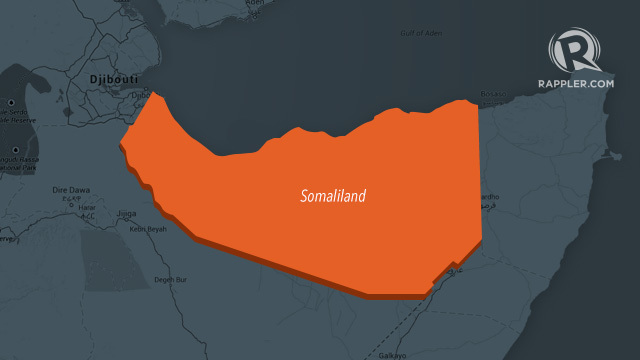
American officials are now examining whether the US should give support to the region's independence.CAIRO — With its allies failing to destabilize war-racked Somalia, the US is turning its attention to the breakaway Somaliland as the new card to play in the strategic Horn of Africa region.
"Somaliland should be independent," one defense official told the Washington Post on Tuesday, December 4.
Somaliland is an autonomous region in the north-western portion of Somalia that advocates independence from Mogadishu.
The breakaway territory of some 3.5 million people declared independence in 1991, but is not internationally recognized.
American officials are now examining whether the US should give support to the region's independence.
They argue that Somaliland could offer greater potential for US military assistance inside Somalia.
"We should build up the parts that are functional and box in" unstable regions, particularly around Mogadishu, said the defense official.
Somaliland's leaders have long distanced themselves from Somalia's central transitional government.
The region has escaped much of the chaos and violence that plagued Somalia since neighboring Ethiopia sent in troops to oust the Islamic Courts in favor of the interim government.
Since then, Somalia has plunged into abyss with daily shooting and fighting.
Difficult Option
The Pentagon's plan is facing opposition from the State Department, which believes Washington should not recognize Somaliland until the African Union does.
"We do not want to get ahead of the continental organization on an issue of such importance," Assistant Secretary of State Jendayi E. Frazer told the Post.
The issue is diplomatically sensitive because recognizing Somaliland could set a precedent for other secession movements seeking to change colonial-era borders, opening a Pandora's box in the region.
"We're caught between a rock and a hard place because they're not a recognized state," recognizes a senior official in the US Department of Defense.
Other Pentagon officials fault the State's view altogether.
"The State Department wants to fix the broken part first," said the defense official. "That's been a failed policy."
In Djibouti, US military officials are eager to engage Somaliland.
"We'd love to, we're just waiting for State to give us the okay," said Navy Capt. Bob Wright, head of strategic communication for the Combined Joint Task Force Horn of Africa.
The force is composed of about 1,800 US troops who conduct military training and reconstruction projects in the region.
Washington says Somalia as the greatest source of instability in the Horn of Africa.
Pro-Ethiopia
But as US officials mull their options, they stand stubborn in supporting their Ethiopian ally in the war-torn nation.
"Any government that provides Somalis with assistance we support, including Ethiopia," a senior defense official affirmed.
In recent months, several human rights groups have spoken out against Ethiopian violations in Somalia.
They accuse Ethiopian forces of abuses such as raping, indiscriminate killing of civilians and bombing and burning of entire villages.
"I am unaware of specific allegations regarding the conduct of the Ethiopian troops," said the Pentagon official.
Ethiopia has long been a strong ally of Washington in the strategic Horn of Africa.
For years the US has been pouring weapons, military advisers and millions of dollars in military aid into Ethiopia, and the American military has trained Ethiopian troops at bases in the eastern region.

From Bristol to Mogadishu, with love


Medeshi Dec 26, 2008
From Bristol to Mogadishu, with love
The BBC's Mohamed Olad Hassan meets a Mogadishu family that depends for money on a relative living and working in the UK. The relative works in a warehouse in Bristol, and supports eight families back in Somalia with the money he makes.
Living in Mogadishu, the capital of a lawless country, is far from easy.
Thousands of its residents have already fled Somalia as a result of violence between Islamist insurgents and Ethiopian troops, which back the weak but UN-recognised government of Somalia.
The country's official unemployment rate is close to 100%.
Many people have little choice but to live in camps for internally displaced people. Some in Mogadishu depend solely on remittances from their relatives abroad. Others run small businesses.
Abdulahi Husein Aboti is a 33-year-old father of four - two sons and two daughters. The family lives together in a troubled zone in the south of the capital. Most of his neighbours and his relatives have already fled.
Because the Ethiopians have bases nearby, the area is always a prime target for the insurgents.
Staying in the city
But, unlike many others, he has decided to remain in his own home, with his wife, 24-year-old Anisa, and their children. He says he doesn't have enough money to enable the family to seek shelter in a safer part of the city.
"I know everything is from God," he says.
"We remain here because living in IDP camps is not healthy and I can't afford to pay for medicine for my kids if they fall ill.
(Photo: Aboti and Anisa live in southern Mogadishu with their four children)
"We live here and every time fighting goes on around us, we duck while it is going on and then come out once it subsides."
Despite such risks surrounding his family, Aboti is more worried about what would happen to his children and wife if his brother - who lives and works in the UK city of Bristol - were to lose his job.
He says that because of the global financial crisis the money sent back by his brother has already decreased by a quarter.
"My family depends completely on my brother in Britain, who sends us $150 every month.
"I have no job here and nowhere else to turn. I'm waiting for my destiny. He has dropped the amount he was sending us from $200 to $150," he said.
Balancing the budget
"Now we live a simple life, but it's not a real one. You can imagine, $150 is just not enough for a family like ours. The kids need milk and food - which are expensive. You even need money for water here.
"But I am really worried that this false life might turn into nothing if my brother Abdi Husein, in Bristol, loses his current job or if the financial crisis gets any worse," Aboti said.
His wife Amisa too senses that times could get even tougher for her family. But she points out that it will be her, not Aboti, who will feel the pain of feeding a family with a very restricted income. She is the one who manages the family budget.
"If you are short of money in Mogadishu, planning family meals is very difficult, because the prices of essential food stuffs fluctuate so much," Anisa explains.
"For example, one day you go to market and buy something. The next morning the prices have already changed but your income always remains the same, so how do you manage? It's like living just for the sake of living."
"But my worst fear would be if my children's paternal uncle in Britain - our only tower of our strength and the sole bread-winner for my family - were to lose his job as a result of the current financial crisis," she said.

Story from BBC NEWS:

Chinese navy to patrol Somali Coast

Medeshi Dec 26, 2008
Chinese navy to patrol Somali coast
Three Chinese naval vessels are to leave for the waters off Somalia to start anti-piracy operations.The two destroyers and a supply ship will have about 70 special operations troops aboard, the state-run Xinhau news agency reported.
The destroyers, Haikou and Wuhan, are said to be two of China's most sophisticated warships and will set sail on Friday.Rear Admiral Du Jingcheng, the mission commander, told Xinhau: "We have made special preparations to deal with pirates, even though these waters are not familiar to us."
"Our primary target is not striking them but dispelling them.
"If the pirates make direct threats against the warships or the vessels we escort, the fleet will take counter measures."
A surge in attacks this year in the Gulf of Aden and Indian Ocean has pushed up insurance costs, brought the pirates tens of millions of dollars in ransom payments and prompted foreign warships to patrol the area.
While China's growing wealth and influence have seen it involved in peacekeeping operations around the world, it has traditionally kept troops close to home, reflecting a doctrine of non-interference in other nations' affairs.Possible Japanese deploymentThe Chinese deployment comes as Japan also considers sending ships to the area.Taro Aso, the Japanese prime minister, ordered Yasukazu Hamada, the defence minister, to move ahead with deliberations on how the armed forces could act, the government's senior spokesman told the Reuters news agency."He ordered the defence minister to speed up considerations," Takeo Kawamura, the chief cabinet secretary, said.The dispatch could prove a legal and diplomatic hurdle for Japan, whose military activities overseas are restricted by its pacifist constitution.
Japan's forces have not engaged in combat since the second world war though Japanese forces have been in Iraq to help in reconstruction.
Source:Agencies

Qatar, Malawi, Angola and Ethiopia on top of GDP growth forecasts, 2009


Medeshi Dec 26, 2008
Ethiopia 4th Fastest Growing Economy in the World in 09 - Economist
(nazret) - The Economist magazine predicts Ethiopia's economy to grow by more than 7% in 2009 and predicts the country to be the 4th fastest growing economy for 2009. According to the Economist Intelligence Unit, GDP growth forecasts for 2009, Qatar will be the fastest economy with a GDP growth of close to 14% followed by Malawi, Angola and Ethiopia. Ethiopia's economy is expected to grow faster than red-hot Chinese economy in 2009. The latest GDP growth forecast was published on page 169 of the US edition of The Economist magazine (The Economist December 20th-January 2 2009)
Ethiopia has been described as the fastest non-oil economy in Africa by IMF. CIA World Factbook puts Ethiopia's GDP at $56.05 billion (2007 est. PPP) / $19.43 billion (2007 est. official exchange rate). The Economist's, The World in 2009 magazine, predicts Ethiopia's GDP to reach $31 Billion (PPP $71 Billion) in 2009. If Ethiopia can sustain the economic growth of the last few years, Ethiopia could become the biggest economy in East Africa in few years time.

Nzt

Somaliland records drop in landmine accidents


Medeshi
Somaliland records drop in landmine accidents
HARGEISA, 26 December 2008 (IRIN) - The Republic of Somaliland recorded a sharp drop in landmine-related accidents in 2008 compared with 2007, a mine clearance organisation official has said.
Hassan Ahmed Kosar, operations officer for the Halo Trust, the only international mine clearance organisation currently operating in Somaliland, said 15 accidents - down from 45 in 2007 - were recorded in Somaliland in 2008.
(Photo : A de-mining official uses a metal detector to check for landmines in Somaliland)
"Most of the accidents were caused by unexploded ordnance [UXO] and anti-tank mines planted in roads during the confrontation between the SNM [Somali National Movement - the liberation organisation in Somaliland between 1981 and 1991] and [former Somali President] Siyad Barre's regime in the late 1980s, as well as during the Ogaden war between Somalia and Ethiopia in the late 1970s," Kosar told IRIN on 22 December in Somaliland's capital, Hargeisa.
(Photo : The wreckage of a truck that hit a landmine in Somaliland)
Kosar said Somaliland was one of five unrecognised nations to have signed the international landmine ban treaty, adding that the government had destroyed 3,014 anti-personnel mines in its stores in 2003.
He said the Halo Trust had destroyed more than 3,614 landmines or UXO, 90,694 small arms, and 37,760 anti-tank mines since 1999.
According to the Somaliland Mine Action Centre (SMAC), a government body, over two million mines were planted in Somaliland between 1964 and 1990.
Abdirahman Yusuf, a SMAC operations officer, said: "According to the last survey - conducted in collaboration with international mine clearance organisations, particularly the Halo Trust - over 600 roads were mined during the war; there are also 300 minefields scattered throughout the country."
International demining efforts
Demining operations have been going on in Somaliland since 1991.
Rimfire, a UK-based mine clearance organisation, began its first demining project in Somaliland in 1992-1993, clearing over 64,000 landmines and UXO.
“We are much bigger than Rimfire in terms of manpower and we also use modern demining equipment," the Halo Trust’s Kosar said.
In 2003 the Danish Demining Group (DDG) cleared landmines from 300 roads. Santa Barbara, an international mine clearance organisation, was also active in Somaliland 2000-2002.
The Halo Trust is carrying out a new landmine survey due for completion in late 2009. Kosar made a plea for more international funding to speed up mine clearance operations.

Thursday, December 25, 2008

Mark Bowden: In Somalia, guns of anarchy still reign


Medeshi
Mark Bowden: In Somalia, guns of anarchy still reign
Wednesday, Dec. 24, 2008

In 1999, when I was touring the United States to promote my book "Black Hawk Down," the story of an ill-fated U.S. raid against a rebel warlord in the Somali capital of Mogadishu, I was often invited to college campuses, where I was fond of asking audiences whether there were any anarchists among them. Occasionally a scruffy student or two would raise a hand.
"Good news," I'd tell them. "You don't have to wait. Go to Somalia. Check it out."

When I was last there in 1997, Somalia had already been rudderless for six years. Mogadishu lay in rubble, like a city hit by a natural disaster. Every wall was pockmarked with holes from bullets and cannon blasts. Gunmen in pickup trucks terrorized the streets. Unbelievably, in the decade since then, it has only gotten worse.
While the world has largely stood by, the Horn of Africa has served as a laboratory for anarchy -- and the results aren't pretty. Somalia today is teetering on the edge of becoming an Islamist state while harboring terrorists who export its chaos to its neighbors.
"Here we have a country that has been in crisis for nearly 20 years," Ahmedou Ould-Abdallah, the U.N. special representative for Somalia, said to me by phone from Nairobi. "And we say, 'Well OK, we'll chase down some pirates and send some bags of rice.' It is not enough."
Today 3 million Somalis, half the country's population, rely on food handouts from the United States and Europe, delivered by increasingly harassed humanitarian organizations. Millions who could afford to have fled.
Meanwhile, Islamist terrorist groups train and hatch plots against targets in neighboring countries: The al-Qaida cell that bombed the U.S. embassies in Nairobi and Dar es Salaam in 1998 was and still is based in Somalia. Since then, the same group and another have successfully bombed a Mumbai resort, attempted to shoot down an Israeli passenger jet and carried out a number of assassinations and other killings, including that of an Italian nun in the town of Elwak, near the border with Kenya. Local mullahs enforce horribly brutal penalties for acts that most of the world doesn't even consider criminal.
And now, pirates -- nothing more than the general criminal chaos spilled from land to sea -- ply the waters off Somalia's thousand-mile coastline.
A flimsy "transitional" authority, a coalition of warlords supported by the United Nations, ostensibly governs the country, but it spends most of its time arguing from the safety of neighboring capitals over power it doesn't have.
Back in 1997, few Somalis believed that the world's cold shoulder would endure. People would line up in the street outside the gates of the compound where I stayed while researching my book to see me. Sightings of Americans were then so rare that most people refused to believe that I was just a writer. Many preferred to believe that I was on a secret mission for the United Nations or the United States, that I was laying the groundwork for the return of nation-building, for the restoration of law and order, basic services and sanity.
They are still waiting for that. Meanwhile, because there is no government, there are no public schools, no universities, no courts, no trash collection, no electrical grid (Mogadishu nights are filled with the steady hammering of generators) -- none of the basic services of a civil society.
Owning anything of value in Somalia means having to arm yourself, because someone more powerful will eventually try to take it away. You can tell a person's relative importance by the length of his armed entourage as he moves through the streets. Young men with nothing else to do are lured into these private armies by promises of food, money, shelter and a steady supply of narcotic khat.
When President-elect Barack Obama takes office, he can help greatly simply by putting a stop to U.S. missile attacks on suspected Islamist terrorists. Whatever is gained by eliminating one murderous zealot is lost by turning entire Somali communities against Western aid efforts.
Somalia has a lesson for the rest of the world. It's an old lesson, but one that we have yet to learn: Ignoring a problem does not kill it or contain it. A lawless zone soon enough becomes a danger to more than those trapped in its borders. We will have to engage with whoever comes to power in Somalia next, both for humanitarian reasons and in the best interests of the region and the world.
Mark Bowden is an author and national correspondent for the Atlantic.

Somalia president expected to resign


Somalia president expected to resign
The departure of Abdullahi Yusuf, long seen as a stabilizing force, could reignite clan warfare -- or pave the path toward peace.

By Edmund Sanders December 25, 2008

Reporting from Nairobi, Kenya -- Somalia's aging president is expected to resign in the coming days, aides said Wednesday, succumbing to threats of impeachment and international sanctions over his refusal to support a national reconciliation plan.
Abdullahi Yusuf, a warlord-turned-statesman, was once widely viewed as the linchpin of Somalia's transitional government. But in recent months, Yusuf, 74, has repeatedly clashed with the prime minister and has come to be regarded as an obstacle to peace.

Yusuf's departure would mark a turning point for the Horn of Africa nation. It could reignite clan warfare, but it also could clear the way for a new power-sharing government that includes a key Islamist opposition faction.
"Yusuf was always a liability to Somalia and to the peace process," said Ali Said Omar Ibrahim, head of the Center for Peace and Democracy, a Somali peace advocacy group. "This is going to help bring in a new era for Somalia by helping different stakeholders come together to decide the country's future."
Last week, Yusuf tried to fire the prime minister he appointed a year ago, Nur Hassan Hussein. Since the U.N.-recognized government was formed in 2004, Yusuf has had similar confrontations with others who challenged his authority, including the previous prime minister and parliament speaker.

Parliament rejected the effort to oust Hussein, and Western nations, including the United States, voiced their support for the prime minister. Some African countries, Kenya among them, threatened to impose a travel ban and asset freeze against Yusuf.
"He has come to a juncture whereby it serves a good purpose for him to yield," said Abdulrizak Durgan, a Yusuf advisor. He said the president had been facing pressure to step down for nearly a year.
"Nobody can make this decision for him," Durgan said. "He may still defy us all."
Aides say Yusuf will use the days ahead to consult with his clan leaders and make security arrangements for a return to his native Puntland in northern Somalia.
In an interview Tuesday, the prime minister declined to comment on Yusuf's possible resignation. Both men are in Somalia.
The primary dispute between the two is a reconciliation deal negotiated by Hussein, who sought to make peace with a moderate faction of the Islamic Courts Union, a religious alliance that briefly controlled the capital, Mogadishu, and southern Somalia in 2006.
Under the terms of the deal, the opposition group would receive half of the seats in a new parliament, expected to take power in early 2009.
Yusuf complained that the agreement handed too much power to a single clan and failed to include key Islamist militias that have been fueling an insurgency for two years.
If approved by parliament, the deal also probably would end Yusuf's tenure because new parliamentary elections are expected for both president and prime minister.
Experts say the so-called Djibouti agreement, named for the tiny African nation where it was signed this year, may be the last chance to salvage Somalia's government. Somalia has not had a functioning national government since 1991.
Some Yusuf supporters, however, predicted that parliament would be unable to select a new president. Mistrust is so pervasive that shouting matches are common, and one notorious session ended in a chair-tossing brawl.
"Yusuf is what holds [together] this experiment," said Mohamoud Ali, a Yusuf supporter and Foreign Ministry official.
Under Somalia's transitional charter, the speaker of parliament assumes the president's duties if he resigns and a new president should be elected within 30 days. But some lawmakers said they might delay the presidential election until February, when the new unity parliament should be in place.
Another key question is how Yusuf's clan, the Darod, will respond. Some fear the Darod will take the president's resignation as an insult, possibly setting the stage for a renewal of clan warfare between north and south. Puntland, home to most Darod, might also attempt to declare its independence. Though ruled by an autonomous government, Puntland to date has not sought to become an independent state.
Aides to the prime minister said efforts were underway to court the president's clan, including assurances that a top post in the new government -- either president, prime minister or speaker -- would be reserved for the Darod.
The political shake-up comes as Ethiopian troops, who have been supporting and protecting the transitional government since 2006, are preparing to withdraw. Experts say that about 3,400 African Union troops from Uganda and Burundi currently in Somalia will not be enough to counter the growing threat of Islamist insurgents, including Shabab, a militia designated by the United States as a terrorist group.
Shabab, which has rejected the Djibouti agreement, controls much of southern Somalia and parts of Mogadishu. It is vowing to retake all of southern Somalia and set up a strict Islamic-based government.
The prime minister, however, said his peace deal would bring stability.
"I'm not expecting to see a vacuum that will bring problems," Hussein said in the interview. "Let's be optimistic."

Turkey's IHH initiates cataract surgeries in Somaliland


Medeshi Dec 25, 2008
Turkey's IHH initiates cataract surgeries in Somalia
The IHH, which initiated cataract surgeries in African countries of Benin Ghana, Togo, Niger, Chad and Sudan, has recently launched a similar project in Somaliland.

World Bulletin / News Desk Cataract surgeries in Somaliland region of Hargeisa started on December 25, 2008 and 800 cataract patients have been brought to the light so far. A health team of two doctors and seven nurses are performing surgeries. The Somali Health Ministry appreciated the fact that all surgeries have been successful.

Patients pleased to see light

Old and young, man and woman patients who were able to recognize the light after surgery sent regards and thanks to charitable people of Turkey through our foundation.
"May Allah be pleased with the charitable person who helped bring me to the light. I will always pray for him/her," said Qirdisi after the surgery. Muhammad Dedbus, 47, said he had been suffering from cataract for five years, but could not undergo surgery due to financial hardships. I did not believe it when I first heard people were operated on free-of-charge, he said, and added "I and my son left the village and came here to find out whether the news was true. I learnt that the IHH was performing cataract surgeries free-of-charge and underwent surgery. Thank Allah I can see the light again. May Allah be pleased with people of Turkey."
100,000 people to undergo surgery The IHH aims to treat 10,000 cataract patients in Somalia within a year. In Africa, 12,000 patients have been brought to the light so far. When the cataract project is completed, 100,000 people will have been operated on.
Voluntary doctors, nurses needed

Cataract surgeries are funded by donations from charitable people of Turkey. Donation worth 100 new Turkish liras is enough to bring a cataract patient to the light. Doctors and nurses coming from Turkey as well as local doctors and nurses are performing cataract surgeries.
Source : World Bulletin

Somaliland children to benefit from health package


Somaliland children to benefit from health package
Published on 24/12/2008
By Peter Orengo
More than one million children in Somalia will benefit from a health package funded by the international community.
The programme will improve the survival rates of all children and women against preventable diseases.
On Wednesday, a campaign Child Health Days was launched in Hargeisa, the capital of Somaliland by Vice-President Ahmed Yusuf Yasin, who urged every family to participate in the programme.
"I recommend to everyone to take their children to be vaccinated. This campaign is important because it will lead to social improvement and development of Somaliland."
The country is plagued by limited social services, poor health infrastructure and a volatile security situation.
Unicef and WHO have partnered with local authorities and NGOs to protect children under five against preventable childhood diseases and water-borne illnesses.
The children will undergo immunisation against measles, diphtheria, whooping cough, tetanus and polio.
Speaking at the launch, Unicef representative for Somaliland, Christian Balslev-Olesen said: "We aim to reach every single child with this high-impact life-saving package of interventions. Working together, we can protect children and their mothers against preventable diseases."
Sourec : the Standard

Tuesday, December 23, 2008

Sanctions imposed on Somalia head


Medeshi Dec 23, 2008
Sanctions imposed on Somalia head
The East African regional grouping Igad has decided to impose sanctions on Somali President Abdullahi Yusuf Ahmed and his associates.
In a communique after a meeting of foreign ministers in Ethiopia it backed Prime Minister Nur Hassan Hussein, whom the president tried to dismiss.
The grouping also discussed ways to replace Ethiopian troops when they pull out of Somalia in the next few weeks.
African Union commission head Jean Ping said Nigeria was ready to send troops.
Torn by internal conflict, Somalia has been without an effective central government for more than 15 years.
Infighting
The BBC's Elizabeth Blunt in Addis Ababa says there was no doubt whose side this meeting of the Inter-governmental Authority on Development (Igad) was on.
In a place of honour on the platform was Ahmed Mohammed Goala, the Somali prime minister's newly appointed foreign minister, not his predecessor, who had been associated with President Abdullahi, our correspondent says.
At the end of the meeting, the foreign ministers of the six member states expressed their support for Mr Nur and his newly appointed cabinet, and said they regretted the attempt by the president to replace him last Sunday.
Mr Abdullahi said the government had been "paralysed by corruption, inefficiency and treason" and failed to bring peace.
However, Somalia's parliament declared the sacking illegal and passed a vote of confidence in Mr Nur by a huge majority on Monday.
In the communique issued at the end of the meeting, Igad gave its strong backing to Mr Nur and his government.
"[Igad] regrets the attempts by President Abdullahi Yusuf to unconstitutionally appoint a new prime minister that Igad does not recognise, and decides to impose sanctions on him and his associates immediately," it said.
It also called on other countries to take similar measures.
Our correspondent says that in addition to the infighting in the Somali government, the imminent departure of Ethiopian troops from the country overshadowed the meeting.
Ethiopian Foreign Minister Seyoum Mesfin said his country's decision to pull out over the coming weeks was "irrevocable".
Igad formally thanked the Ethiopians for the sacrifices they had made to advance the cause of peace in Somalia, but made no appeal to them to change their mind and stay.
The issue of peacekeeping will be considered further at a meeting of the African Union's Peace and Security Council on Monday.
Ministers now have the task of trying to beef up the AU's mission in Somalia, which will no longer have the comfort of knowing it can call for Ethiopian back-up when needed, our correspondent adds.
At the Igad meeting, the president of the African Union Commission said Nigeria had promised to send a battalion of about 850 soldiers to Somalia next month, and that Burundi and Uganda would each send an additional battalion.
Story from BBC NEWS:

SOMALIA: IDPs prefer camps to war-torn Mogadishu


Medeshi
SOMALIA: IDPs prefer camps to war-torn Mogadishu
NAIROBI, 22 December 2008 (IRIN) - Shukri Mohamed, a mother of seven, is not ready to return home to Mogadishu, despite changing camps four times since she was displaced by violence in 2007.
"I will only return when the last Ethiopian soldier leaves Mogadishu; because they [insurgents] say they won't stop fighting until the Ethiopians leave," she told IRIN on 22 December.
Ethiopia, which sent troops to support the Transitional Federal Government (TFG), had indicated it would leave by the end of 2008.
Mohamed, like many internally displaced persons (IDPs) in the war-torn country, is pessimistic about returning home soon.
"All this talk about them [Ethiopians] leaving and peace agreements has not changed anything," she said. "We have to see it to believe it. I hope we will soon be back home but I doubt it."
Mohamed is one of tens of thousands of civilians who fled Mogadishu to escape fighting between Ethiopian-backed government forces and insurgents in the past two years.
She said she and her family moved from one IDP camp to another whenever fighting caught up with them. "At one point, the family was sleeping under a tree, that was the hardest part, but I'd rather keep them [the children] safe under a tree,” she said.
Mohamed, who ran a shop in Towfiq area of north Mogadishu, now lives with her family in an IDP camp in Karan district.
At the camp, she said, they received food aid - "at least now my children don’t go hungry”.
A civil society activist in Mogadishu, who requested anonymity, told IRIN that many IDPs would be reluctant to return to their homes “even if the guns fall silent tomorrow”.
He said there was doubt about the departure of the Ethiopian soldiers, and "even if they do that the fighting will not stop”.
Many IDPs had lost everything, he said, adding that their homes had either been destroyed or looted in the civil war that has been raging for years.
"Many others were small-scale traders and lost the little they had and have no idea where to start,” the activist said, adding that in camps, IDPs received various services, such as food, water and some health and sanitation facilities, which they would not find if they returned to their homes.
"To many, the camps offer some sort of security. It will require a great deal of convincing, planning and support to get them back, if and when the fighting stops and the Ethiopians leave,” the activist said.
A ceasefire between the TFG and a faction of the Eritrea-based Alliance for the Re-liberation of Somalia, led by Sheikh Sharif Sheikh Ahmed, has been in place since early June; however, it had not had much effect in Mogadishu, said one local journalist, who requested anonymity.
“It seems that every time they sign something, things get worse in the city,” he said. Mogadishu had seen some of the worst fighting since then, he added.
Health issues
Abikar Sheekhey, a volunteer doctor visiting makeshift IDP camps outside the city, said the health of the displaced was "not getting better".
He said that on his latest visit on 22 December to the camp in Karan, he saw people suffering from diarrhoea, TB and other respiratory and skin diseases. "Almost 90 percent of the patients I see are children," he said.
Meanwhile, a local human rights group said that at least 16,000 Somalis died between 2007 and 2008 and more than 30,000 were injured. Ali Sheikh Yassin, acting chairman of the Mogadishu-based Elman Human Rights Organization, told IRIN those were the numbers his group was able to verify.
“I am certain that the real figures are much higher as there are many unaccounted for.”
Yassin said more than a million people had been displaced by the violence. ah/mw
Theme(s): (IRIN) Conflict, (IRIN) Refugees/IDPs [ENDS]

Hidden Genocide in Somalia: UN

Medeshi Dec 23, 2008
Hidden Genocide in Somalia: UN
ADDIS ABABA — The United Nations warned on Monday, December 22, about a hidden genocide in the war-torn Horn of African country of Somalia.
(More than 10,000 civilians have been killed in Somalia over the past two years. (Reuters)
"There is a hidden genocide in Somalia which has sacrificed entire generations," UN special envoy to Somalia Ahmedou Ould Abdallah told a meeting of the African Union Peace and Security Council (PSC) in Addis Ababa, reported Agence France Presse (AFP).
Somalia has been ravaged by violence since Ethiopian troops invaded the country in 2006 to topple the ruling Islamic Courts at the request of the weak interim government.
More than 10,000 civilians have been killed, over a million displaced and a third of the population dependent on emergency aid.
In an August report, the Human Rights Watch accused the warring parties of committing serious war crimes and massive human rights violations.
The New York-based watchdog particularly slammed Ethiopian forces for "deliberate attacks" on civilians and hospitals.
But Somali's problem go beyond the current conflict as the country has been without a central government for more than 17 years.
Alarming
The UN urged African countries to help achieve peace in the war-wrecked country.
"The Somali problem is a problem for the whole region," said Abdallah.
"The security situation in Somalia is alarming…piracy is escalating against the background of weakening leadership and insurgents control nearly all the country with the exception of Mogadishu and Baidoa," the PSC said in a statement.
It called on Ethiopia to delay a move to withdraw its 3,000 forces from Somalia to allow for reinforcements.
"We appeal to Ethiopia to consider phasing out withdrawal, until such time (when) more troops from Nigeria, Uganda and Burundi are deployed in Somalia."
About 850 Nigerian troops are expected to strengthen the 3,200 AU peacekeepers from Uganda and Burundi, to prevent a security vacuum when the Ethiopians leave.
The AU said they were expected soon but no concrete time has been given.
Uganda and Burundi have a battalion each ready to go, but need financial support and equipment to deploy.
Ethiopian minister of state Tekeda Alemu said their pullout decision was irreversible.
"The decision to withdraw troops from Somalia was a commitment made by the country's authorities to parliament and will not be changed."

Secuity Council Report on Somaliland


Medeshi
Dec 23 , 2008
Part of the Security Council Report on (Somalia) Somaliland

43. The Somaliland authorities maintain a total security establishment of
approximately 22,000 security personnel, including military, police and intelligence
services. There is no air force or navy, but a small civilian coast guard functions
under the auspices of the Ministry of the Interior.
44. Somaliland security forces are paid and equipped principally with tax revenues
raised by the administration. In 2008, the total security budget was $7,830,717,
equivalent to 49 per cent of the total Somaliland budget ($16,140,804). The security
component was further broken down as follows:
• military: $4,629,341
• custodial corps: $881,768
• police: $2,287,862
• Ministry of the Interior: $31,746
45. Supplementary assistance to the police is provided by the European
Commission, the British Government, the UNDP rule of law programme, and IOM.
The Somaliland authorities and Ethiopian Government also cooperate closely on
security matters, and Ethiopia reportedly provides training for Somaliland military
officers.
S/2008/769
16 08-60473
46. Somaliland is currently not an active belligerent in the Somali conflict, but its
claim to independence and dispute with the Puntland administration over Sool and
eastern Sanaag regions could potentially lead to armed conflict in future. In October
2007, Somaliland forces and allied militias took control of the town of Laas Anood,
capital of the Sool region, which is also claimed by Puntland.
Somaliland army
47. The chain of command of the Somaliland army is as follows: Commander-in-
Chief: President Daahir Rayale Kaahin; Minister of Defence: Abdillahi Ali Ibrahim;
and Chief of Staff: Nuh Ismail Tani.
48. Budgetary allocations for the Somaliland army are based on an effective
strength of 16,000, and open source estimates range as high as an improbable
64,000. A March 2004 security sector workshop assessed total strength of the army
at 11,000 members, of which 6,000 were war widows, invalids and elderly who were
nevertheless still on the payroll.
Somaliland Police Force
49. The chain of command of the Somaliland Police Force is as follows: Minister
of the Interior: Abdillahi Ismail Ali ‘Irro’; and Chief of Staff: Mohamed Sanqadhi
Dubad.
50. The strength of the Somaliland Police Force is estimated at 3,000. UNDP
supports a 400-strong Special Protection Unit, which provides site protection and
armed escort for humanitarian operations.
Somaliland Custodial Corps
51. The chain of command of the Somaliland Custodial Corps is as follows:
Minister of Justice: Ahmed Ali Asowe.
52. The Custodial Corps consists of 1,540 armed guards, posted at various prisons
around the territory.
Somaliland National Intelligence Agency
53. The chain of command of the Somaliland National Intelligence Agency is as
follows: political authority: President Daahir Rayale Kaahin; and Director General:
Mohamed Nur Osman.
54. The Somaliland National Intelligence Agency serves as the principal
intelligence and counter-terrorism service of the Somaliland authorities, and
contains the Immigration Department.
55. It is apparently funded from the Somaliland budget through the Ministry of the
Presidency. It reportedly receives additional support from foreign donors, including
IOM and the Government of the United Kingdom.

Somalia: To Move Beyond the Failed State

INTERNATIONAL CRISIS GROUP - NEW REPORT
Somalia: To Move Beyond the Failed State
Nairobi/Brussels, 23 December 2008: Somalia’s latest transitional government is collapsing, but there is a chance to rescue a dire humanitarian and security situation if Western and other powers fundamentally revise their approach to a political solution.
Somalia: To Move Beyond the Failed State,* the latest International Crisis Group report, argues that the announced withdrawal at year’s end of the Ethiopian army, which intervened in December 2006, opens a new period of uncertainty and risk but also provides a chance to launch an inclusive political process. “The world is preoccupied with a symptom – piracy – instead of concentrating on a political settlement, the core of the crisis”, says Rashid Abdi, Crisis Group’s Somalia Analyst. “There is no quick fix to Somalia’s tragedy, but this opportunity must not be missed”.
The Transitional Federal Government (TFG) has failed to create a broad-based government and now exists almost solely in name. President Abdillahi Yusuf has marginalised most of the population, exacerbated divisions and become a liability. Talks begun in Djibouti eight months ago have accomplished little, not least because the parts of the Islamist insurgency with the most guns and territory are not participating.
Opposition to Ethiopia’s occupation has been the one issue on which the fractious insurgency agrees. When that glue is removed, infighting will likely increase, making it hard for the militias to sustain a military victory and creating political opportunities. The international community has been reluctant to engage with the Islamist opposition. U.S. air strikes at suspected foreign extremists have increased the insurgency’s popularity.
There is reason to believe that despite radical posturing, a significant majority in the Islamist insurgency would engage in a political process that does not seek to criminalise it and offers them a role in future governance. There is no other practical course than to reach out to it in an effort to stabilise the security situation with a ceasefire and then move on with a process that addresses the root causes of the conflict. In the course of that effort, the insurgents will need to provide assurances about the kind of Islamic state they envisage as well as clarify their rejection of foreign groups like al-Qaeda.
The African Union peacekeeping mission (AMISOM) originally sent to Mogadishu to relieve the Ethiopians is unable to fulfil its task and will be at increasing risk following their withdrawal. But it would be a bad idea to try to send a UN peacekeeping mission in now, as the U.S. wants the Security Council to do, when there is no viable peace process and enough troops cannot be found. The order of priorities must be a political settlement, then UN peacekeepers.
“One way or another, Somalia is likely to be dominated by Islamist forces”, argues Daniela Kroslak, Crisis Group’s Africa Program Deputy Director. “It makes sense, therefore, to offer the incentives of international recognition and extensive assistance in return for an agreement that is based on compromises by all major Somali actors and promotes the rights and well-being of all Somalis”.

Sunday, December 21, 2008

Somalia crisis talks in Ethiopia

Medeshi Dec 21, 2008
Somalia crisis talks in Ethiopia
Ethiopia is hosting a series of talks on the deepening crisis in its neighbour, Somalia.
Foreign ministers from east Africa are meeting in the capital, Addis Ababa, to be followed by talks by the African Union's peace and security council.
The emergency meetings come after Ethiopia decided to withdraw its troops from Somalia by the end of December.
Islamist insurgents are gaining ground again after Ethiopia intervened two years ago to help government forces.
Different Islamist groups now control much of southern Somalia once more.
The Ethiopian troops and forces loyal to the interim Somali government are limited to parts of Mogadishu and the central town of Baidoa, where parliament is based.
Twin crises
The transitional government is in disarray, says the BBC's Elizabeth Blunt in Addis Ababa, after President Abdullahi Yusuf Ahmed attempted to sack Prime Minister Nur Hassan Hussein - a move the prime minister and parliament rejected.
With the president facing impeachment, it is not clear how much of a government is left for Somalia's neighbours in the East African regional grouping, Igad, and the AU to support, says our correspondent.
When the Ethiopian soldiers leave Somalia, the small African Union peacekeeping force will be on its own.
Only a tiny handful of countries answered a call from UN Secretary General Ban Ki-moon to send forces to help, and no-one has volunteered to fill a leadership role.
It is these twin political and security crises that the foreign ministers from the East African regional organisation Igad (Inter-governmental Authority on Development) and the AU's peace and security council will seek to address at their meetings on Sunday and Monday.
About one million people have fled their homes, many after fierce fighting in Mogadishu between Islamists and the Ethiopia-backed government forces.
Some three million people need food aid - about one-third of the population.
Somalia has not had a functioning national government since 1991, when warlords overthrew President Mohamed Siad Barre and then turned on each other.
Story from BBC NEWS:

Somali group seeks Sharia expansion


Medeshi Dec 21, 2008
Somali group seeks Sharia expansion
Fighters with Al-Shabab, an armed group that has taken control of the southern city of Kismayu, have told Al Jazeera they plan to impose Islamic law across Somalia.
Kismayu, Somalia's third biggest city, was once one of the most dangerous places in the south of the country.
However, relative calm has been restored to Kismayu after the Al-Shabab Mujahideen Movement and one of its key allies, the Raaskambooni Camp Mujahideen, seized control of the city from local clans three months ago.
Abu Ayman, the leader of the Raaskambooni Camp Mujahideen, told Al Jazeera: "We want to use Kismayu as an example and a model of our rule to the rest of Somalia.
"Our aim is to get residents in faraway towns inviting us to come and govern them according to the way of Allah. The calm in Kismayu has benefited its down-trodden most."
Most of Kismayu’s residents agree with Ayman, saying they are now able to go about normal life without fear of attacks by marauding gangs of armed men who had terrorised them periodically for nearly 18 years.
"I remember times when young boys with knives used to rob us of our daily earnings. Now we can carry lots of money without any fear of being robbed," Mohammed Fundi, a porter and Kismayu resident, said.
Seyyid Ali, also a porter in the city, said: “We used to be sort of enslaved. When we load six lorries, we used to be paid for just one or two. Today we get wages equal to our output. We have justice here.”
Peace, at a price
But Mohammed Adow, Al Jazeera’s correspondent in Kismayu, said the apparent peace had come at a price.
“International aid agencies, the lifeline of Somalia’s poor, fled the town because of the fighting.
"They have still not returned as the Islamists have little tolerance for anything - or anyone – foreign," he said.
Adow said that "the suffering is huge as the poor are largely left to fend for themselves".
Kismayu has been left with just one hospital to serve the needs of nearly one million people from the city and surrounding areas.
The hospital used to be run by Medicins Sans Frontier, who were forced to abandon the centre eight months ago after members of staff were killed by fighters.
Now, it is common for just one doctor to be on duty at a time, and medical supplies are dwindling.
Total breakdown
Dr Ali Hassan, who works at the hospital, said: “Our needs are many. Imagine a hospital like this operating without assistance from government or aid agencies. We have a shortage of drugs, equipment and staff are not motivated in any way."
"They [residents] have survived the vagaries of war. They have weathered the almost 20 changes in Kismayu’s administrations over the past 18 years and its people have learned to live with and obey any group that has the upper hand," he said.
Somalia has had no effective government since a coup removed Siad Barre from power in 1991, leading to an almost total breakdown in law and order across most of the country.
The only relative stability experienced by some parts of the country came during the brief six-month rule of the Islamic Courts Union in 2006.
However, they were driven out of the capital Mogadishu, and other areas, by Ethiopian and government troops – sparking an upsurge in fighting.
Ethiopia is due to remove its troops from war-torn Somalia by the end of the year.
Source:
Al Jazeera

How Bush Failed Somalia


Medeshi Dec 21, 2008
How Bush Failed Somalia
Two years ago the United States intervened in East African politics in a way that has been responsible for the deaths of untold thousands of people, has created the pirate problem, and is breeding a new generation of anti-American jihadists.
Matthew Yglesias December 18, 2008 web only
Americans don't spend much time thinking about Somalia. And what time we do spend has in recent months been focused on somewhat amused accounts of the uptick in pirate activity off the Somali coast. But the piracy is but a symptom of the larger problem of lawlessness and anarchy in Somalia. To Americans who have paid no attention to East Africa in the time between the departure of U.S. forces from Somalia in 1995 and the recent spate of pirate attacks, this situation may appear merely endemic to the region. But it's not. The Somali situation was, in many ways, improving as of two years ago. At which point the Bush administration initiated a new adventure that, like most Bush administration deeds, was ill-conceived and worked out poorly. In this case, it destroyed the country, has been responsible for the deaths of untold thousands of people, has created the pirate problem, and is breeding a new generation of anti-American jihadists.
And nobody in the United States seems to have noticed.
In part, this is because Somalia is an obscure corner of the world. And in part it's because the crucial events took place almost exactly two years ago -- during the Christmas season when most journalists were on vacation and most people weren't following the news.
Two years ago, most of Somalia was under the control of a militia called the Islamic Courts Union. This was, as the name suggests, an Islamist movement that arose out of sharia courts that had begun to provide some measure of local judicial authority amid Somalia's anarchy. Eventually, the ICU acquired armed forces and was able to seize control of the capital city, Mogadishu, and begin expanding its control over broader and broader swaths of the country. The ICU was not made up of nice people, and it didn't have a model of governance that was going to win any human-rights awards. What's more, one of the forces it was fighting against was the de jure government, the so-called Transitional Federal Government, a ragtag and essentially powerless group that had been put together some years prior under United Nations auspices. But the ICU did manage to bring a degree of actual law and order to the territories it supervised, and it wasn't trying to pick any fights with the United States. It was, in short, an improvement over the previous 15 years or so of anarchy.
But during the middle of the decade, the United States military had been building increasingly close ties with Ethiopia, hoping to turn that country into our key regional proxy. And Ethiopia and Somalia have traditionally been rivals. As the TFG got weaker, it also drew closer to Ethiopia. And when ICU forces attached the TFG's holdout in the south central city of Baidoa on Dec. 20, Ethiopian forces came to the TFG's rescue. By Dec. 24 -- Christmas Eve -- Ethiopian forces announced that they were staging a counterattack aimed at routing the ICU. The United States supported the operation, both with intelligence and some direct special-forces engagement and also diplomatically, which is crucially important since U.S. military assistance was how Ethiopia built their best-in-the-region military force. Before New Year's Eve, Ethiopians were in control of Mogadishu and began an occupation of the country in the name of the TFG.
To those of us who were both paying attention and chastened by the misadventure in Iraq, this looked like a recipe for disaster. Here was a largely Christian country (Ethopia), operating with the support of the United States, trying to occupy a largely Islamic country (Somalia) whose population has historically been at odds with the former. The inevitable results would be insurgency, death, destruction, anarchy, and the development of a more dangerous strain of Islamism as the United States sent the message that we were the enemy of all Somali Islamists whether or not they had any quarrel with us.
Some conservatives took note of these events to engage in some of their usual short-sighted bloody-mindedness. James Robbins observed in National Review that “Ethiopia is in it to win, nice to see a country in the developing world (or anywhere for that matter) that can take care of business." TNR‘s James Kirchick hailed the Ethiopian invasion as just and the U.S. participation, a worthy counterterrorism strategy.
Of course what actually happened was a downward spiral of insurgency, violence, criminality, piracy, death, destruction, and humanitarian tragedy. Over the summer, the U.N. decided the humanitarian situation was "worse than Darfur." Somalia has the world's highest rate of malnutrition. Because of the precarious security situation, it's extraordinarily difficult for humanitarian-aid organizations to operate. And because of the dismal record of foreign interventions in Somalia, no foreign countries are interested in intervening to stabilize things.
Of course the United States and the Bush administration are hardly the only blameworthy actors here. But we are blameworthy. We could have just minded our own business. But instead, in a fit of thoughtlessness, we initiated a policy that nobody in the States paid much attention to and that over a period of years has prompted massive human suffering around the world. And the Bush administration is continuing to make things worse in its final weeks in office. I can only hope that the incoming Obama administration will spend some time thinking about Somalia and learning not only specific policy lessons but also developing a sense of humility about the damage that can be done when the world's only superpower thrashes around carelessly.

US search for local link to Somaliland bombing


Medeshi
US homeland security looks for local link to Somaliland bombing
By Harvey Morris in New York
Published: December 20 2008
US authorities are targeting the country's Somali community following the discovery of a US link in a recent suicide bombing in Somaliland and the unexplained disappearance of young Somali-American men from the US.
More than a dozen Somali-American families in the midwest have reported their sons missing, fearing they may have fled to join al-Qaeda-linked groups in east Africa.
Establishing the youths' whereabouts has become more urgent since the perpetrator of a suicide bomb in autonomous Somaliland in October was identified as a naturalised American from Minneapolis, the Financial Times has learnt.
Members of the 70,000-strong Somali community in the state fear local imams are indoctrinating young men to join Islamist radicals fighting the western-backed transitional government in Mogadishu. Many of the youths, aged about 18 and 19, were American-born, said Omar Jamal, a community leader.
The spread of home-grown fundamentalism among American Muslims would mark a new trend in the US, although countries in Europe, including the UK, have been victims of attacks carried out by locally born Muslims.
The Federal Bureau of Investigation, following standard practice, refused to confirm or deny an investigation was under way. A spokesman said the agency was aware of the disappearances and feared some of the missing had gone to fight in Africa. There was no evidence they planned terror attacks on home soil.
The local Somali community fears they may have gone to join the al-Qaeda-linked al-Shabaab, an organisation that could try to seize Mogadishu if, as expected, Ethiopia pulls out the troops it has stationed in the capital since it intervened in Somalia two years ago.
The only other presence standing in the Islamists' way is an ineffective African peacekeeping force that Washington wants the UN to replace. Condoleezza Rice, US secretary of state, was at the UN this week to try to overcome the resistance of US allies to deploying a UN force.
Mr Jamal, a Somali community representative in Minneapolis, said US authorities recently prevented a local imam, suspected of recruiting Somali-American youths, from flying out of the US.
"There has been a conscious process of recruitment through mosques in the area. Our concern is that they'll be radicalised in Somalia and then sent back here," said Mr Jamal.

Saturday, December 20, 2008

Somalia : The shining stupidity of the US Vice-President and the Ethiopian Prime Minister


Gwynne Dyer: The U.S. and Ethiopia's blunder in Somalia
By Gwynne Dyer
Statesmen ought to have a special prize just for themselves, like fools have the Darwin Awards. The Darwin Awards commemorate very stupid people who did a service to human evolution by accidentally removing themselves from the gene pool. The statesman’s equivalent could be called something like the Cheney-Zenawi Award.
I mention this because the shining stupidity of the US Vice-President and the Ethiopian Prime Minister are on special display this week, as the Ethiopian army prepares to withdraw from Somalia two years after its foredoomed invasion, leaving the country in the hands of precisely the people whom they wanted to eliminate. We need negative role models too, and you couldn’t ask for worse than this pair.
(Dick Cheney's shades reflect a strange being)
I can’t actually prove that getting Ethiopia to invade Somalia was Dick Cheney’s brainchild, but it smells exactly like a Dick Cheney idea: crude, violent, and barking up entirely the wrong tree. Just like invading Iraq, in fact.
As for Ethiopian Prime Minister Meles Zenawi, he had already distinguished himself by becoming obsessed with the stupidest border war in modern African history. It wasn’t his fault to start with: Ethiopia was attacked out of the blue in 1998 by the insanely aggressive regime in Eritrea, but Ethiopian troops drove the Eritreans back. By the ceasefire in mid-2000, Ethiopia had recovered all the ground it lost at the start.
An international commission found Eritrea guilty of aggression, and another one arbitrated all the disputed stretches of border, granting Ethiopia most of its claims. Both sides said they would accept the rulings—and then Zenawi walked away from the deal. He has been getting ready for another war with Eritrea ever since.
Going to war with Eritrea again would mean defying the United Nations ruling, so Zenawi needed the backing of some great power that could protect him from the UN’s censure. Who better than the United States, which has assiduously ignored and belittled the UN under the Bush administration? Now what could Ethiopia do for the Bush administration in return?
Well, it could invade Somalia. Washington didn’t want to put American troops into Somalia again, having had its nose bloodied in 1993, but it did want to overthrow the civilian regime that was restoring peace in southern Somalia and put its favourite warlord in power instead. Ethiopian troops would do the job just as well.
I think I can see the self-satisfied smirk on Cheney’s face as he closed the deal: another triumph for the subtle master of geopolitics. I can’t make out the look on Zenawi’s face, but maybe he was smiling too. Too clever by half, as the saying goes.
The job was to overthrow the Union of Islamic Courts, a mass movement funded by local merchants in Mogadishu who wanted to end the constant robberies and kidnaps that made life impossible in the Somali capital. The UIC mobilised the desire of ordinary Somalis for an end to the violence that had ravaged the country for fifteen years, and the peace they brought to Mogadishu soon spread over most of southern Somalia.
Unfortunately the courts were “Islamic” and they wanted to enforce sharia law, which in Washington’s book made them practically terrorists. They did have a few unsavoury allies, notably an extremist militia called al-Shebab, but they gave people in Mogadishu their first real hope of security and justice. They should not have been destroyed.
The Ethiopian army invaded Somalia in December 2006, drove the Islamic Courts out of Mogadishu, and installed Abdullahi Yusuf, the president of the “Transitional Federal Government” (TFG) of Somalia, in power. Well, not exactly in power, since the citizens and militias of Mogadishu immediately began attacking the hated Ethiopians, who only controlled whatever was in their gunsights. As for Abdullahi Yusuf, he only controlled a suite of rooms and some telephones.
He was originally chosen as president of the TFG, with ample US support, at a conclave of Somali warlords dignified with the name of “parliament” in Kenya in 2004. He would never have made it back to Mogadishu without the help of the Ethiopian army, and accepting that help made him deeply suspect in the eyes of most Somalis.
The resistance has driven the Ethiopian army out of most of southern Somalia in the past two years, and now the Ethiopians are going home. Abdullahi Yusuf will have to leave too, since he has no supporters except the Ethiopians and the Americans. Which will leave Mogadishu in the hands not of the Union of Islamic Courts, alas, but rather of the extremist militias that have pushed the UIC aside during their struggle against the foreign troops.
It’s almost as perverse as the Bush administration’s decision to eliminate Iran’s two great enemies in the Gulf, Saddam Hussein’s Iraq and the Taliban in Afghanistan. Ethiopia and the United States have not only plunged Somalia needlessly back into war. They have made it possible for the nastiest, craziest extremists, people who think it is their duty to kill other Muslims with “un-Islamic” haircuts, to take power in Mogadishu.
The world needs a Cheney-Zenawi Award for Gross Political Stupidity, and I know who the first nominees should be.
Gwynne Dyer’s new book, Climate Wars, has just been published in Canada by Random House.

Friday, December 19, 2008

The rise of the Shabab


The rise of the Shabab
Dec 18th 2008 KIUNGA
From The Economist print edition
Islamist fighters are taking over swathes of Africa’s most utterly failed state
Reuters
FOR all its paradisal waters, golden dunes and swanky “eco-lodges”, life in Kenya’s coastal district of Kiunga, just a few miles from the border with Somalia, is hard. The place is remote, hungry and thirsty. The harvest and the wells have failed again. Fishermen have no boats, only frayed nets cast from shore. Their catch rots for want of refrigeration. But what makes the village elders more nervous than anything is their proximity to Somalia.
During a war in the 1960s between Kenya and Somali bandits, known as “shifta”, who were egged on by Somalia, Kiunga was evacuated. These days a rough track, impassable during the rains, barely connects the two countries. The border has been closed since December 2006, when jihadist fighters in Somalia retreated headlong from Mogadishu, the capital, and Kismayo, a southern port, into the mangrove swamps around Ras Kamboni, just inside Somalia. There they were shredded by Ethiopian artillery and American air raids.

An attack on Kenya by Somali jihadists based near the border is unlikely. Resurgent fighters still train there but look north. They belong to the Shabab (Youth), the armed wing of the former Islamic Courts Union that was all but wiped out two years ago. The presence of hated Ethiopian troops in Somalia, together with a corrupt and hapless transitional Somali government, gave the Shabab a chance to regroup.
Money and arms from Eritrea, which wants to use Somalia to hurt Ethiopia, as well as from some Arab countries, enabled it to recruit. Several thousand have signed up in the past year. They attend large training camps in southern Somalia where one of the instructors is said to be a white American mujahideen. They are expected to disavow music, videos, cigarettes and qat, the leaf Somali men chew most afternoons to get mildly high. Thus resolved, they wrap their faces in scarves and seek to fight the infidel. In return, they get $100 a month, are fed, and can expect medical treatment and payments if they are wounded, as well as burial costs and cash for their families if they are killed.
The Shabab now controls much of south Somalia and chunks of Mogadishu. It took Kismayo a few months ago. The port of Marka, which takes in food aid, fell more recently. Many fighters are loosely grouped around two older jihadist commanders with strongholds near Kenya’s border, Mukhtar Robow and Hassan Turki.
Mr Robow celebrated the recent festival of Eid al-Adha by hosting prayers in Mogadishu’s cattle market. How sweet it would be at Eid, he told the gathering, if instead of slaughtering an animal in praise of Allah, they would slaughter an Ethiopian. On a visit to Marka he was only slightly less belligerent. He urged reconciliation—except with enemies of Islam. There are many of those, it seems. Hundreds of Somali aid workers, human-rights campaigners and journalists have been killed or exiled. Foreigners have been shot and kidnapped, in two cases just across Somalia’s border, in Kenya and Ethiopia. Where it cannot exert control, the Shabab excuses banditry. Borrowing tactics from Afghanistan’s Taliban, it spreads chaos to build a new order.
The Shabab has learnt from its mistakes in 2006, when it was overwhelmed in a few days by the Ethiopian army. It is now more pragmatic and more aggressive. This time round, it is apparently not picking fights with wealthy qat merchants. Men can chew what they like—but won’t be “clean enough” to get a lucrative job in Kismayo’s port. Education is encouraged. Girls can go to school. Charcoal burning is forbidden for the sake of the environment.
But the Shabab has also tightened its own security. Alleged spies for the transitional government or for Ethiopia are routinely beheaded with blunt knives. Mr Turki, the jihadist leader who lives mostly in the bush near the Kenyan border, sleeps in different houses when he is in a town. Public floggings and executions strike fear. So do masked faces. “Before, we knew who killed our relatives,” says a Kismayo merchant. “Now we don’t even know that.”
Most tellingly, the Shabab has learnt how to get hold of money faster. It concentrates its fighters in towns where there is money to be earned. The aim is to create an army that puts Islamist identity above divisive clan loyalties. Shabab commanders say a pious state will emerge once weaker militias have been disarmed. Some reckon that the Shabab shares some of the ransoms earned by pirates who operate out of the central Somali port of Haradheere. Those in Puntland, farther north, are apparently beyond the Shabab’s reach.
Ethiopia says it will withdraw its troops within weeks, once ships evacuate the 3,000 Ugandan and Burundian peacekeepers under the African Union’s aegis holed up in Mogadishu. Somalia’s transitional government looks even feebler than before. This week the president, Abdullahi Yusuf, an ageing warlord, sacked his prime minister, Nur Hussein, blaming him for what the president called a corrupt, inept and traitorous government. Mr Hussein refused to resign, and won a vote of confidence in parliament. Mr Yusuf went ahead and appointed his own prime minister anyway. More factional fighting beckons.
The UN says Somalia is the world’s worst humanitarian emergency. Some 3.2m people are said to need aid. The UN, which says 40,000 Somali children could soon starve to death, expects fighting over food to break out, another reason the Shabab wants to control the ports. Pirates make it hard to deliver aid. Their activities may be curtailed after the UN Security Council this week let foreign governments chase pirates in Somalia itself as well as at sea. But the piracy will probably continue as long as the catastrophe on land does.
George Bush’s administration backed some of Mogadishu’s worst warlords as part of its war on terror. President Obama will have to take a new tack. The AU force has proved ineffective but a bigger or more robust intervention, by America or any other country, is not expected; this week Condoleezza Rice, America’s secretary of state, called in vain for UN peacekeepers to be sent. A new American administration is unlikely to urge negotiation any time soon with the Shabab; it is still listed as a terrorist group by the Americans and may indeed shelter al-Qaeda people. It may have sleeper agents in Kenya and even in Britain. It has certainly become stronger.

Pirate attacks threaten food price hikes in African nations


Medeshi Dec 19, 2008
Pirate attacks threaten food price hikes in African nations
Pirate attacks wreaking havoc on one of the world's key shipping routes could cause sharp price hikes for food deliveries to African countries that can little afford it, port operators say.
"The costs of maritime transport will be affected -- either by a detour to avoid the Gulf of Aden route or by insurance fees -- and will be directly passed on to consumers," said Jerome Ntibarekerwa, head of the Port Management Association of Eastern and Southern Africa.
"For African countries, especially those that are isolated, the cost of transporting imported products already represents 70 percent of the final consumer price."
Pirates have attacked more than 100 ships since the start of the year in the Gulf of Aden and Indian Ocean off lawless and conflict-torn Somalia despite the recent presence of foreign navies in the region seeking to stop them.
In the latest wave of attacks, pirates hit three ships in the Gulf of Aden on Tuesday while Chinese sailors backed up by international naval vessels fought off attackers trying to hijack their vessel.
International efforts to counter the increasingly bold raids were boosted late Tuesday when the United Nations Security Council approved operations against the pirates' land lairs in Somalia.
But the threat of repercussions for both the region and the rest of the world remains -- and the loot currently held by the pirates is a clear illustration.
They now hold at least 15 ships, including a Saudi-owned super-tanker with two million barrels of crude oil and an arms-laden Ukrainian cargo vessel.
While residents of African nations are facing increases in prices on food and other imports, the ports themselves are also at risk, officials say.
Ntibarekerwa spoke of the possibility of "seeing certain companies frankly deserting our ports, causing slowdowns in merchandise transport and making it impossible to send our exports."
He said the pirate attacks threatened "serious implications" for ports.
Authorities in Djibouti, a small nation bordering Somalia that relies heavily on shipping, are particularly concerned.
"Piracy is among our biggest worries," said Djibouti Transport Minister Hassan Bahdon.
With Somalia, which has not had a functioning government for almost two decades, unable to clamp down on the pirates itself and international navies struggling to patrol the vast region, port officials say coastal African nations must unite against the problem.
"We are going to raise this problem at the next (African Union) summit in January to attempt to find a common position on the problem and to harmonise our legislative frameworks," said Imed Zamit, head of the African Union's maritime transport unit.
He said "indispensable African trade occurs by sea and through the ports."
The port management association is also attempting to have its members adopt a common approach that authorises land military operations that would allow them to pursue pirates.
"The draft agreement is ready. All that's left is for the member states to accept it," said Ntibarekerwa. "We must also discuss cooperation between the European Union (anti-piracy) force and our member states, and the installation of a common anti-piracy operations centre, likely in Djibouti."
A European Union naval force started anti-piracy operations on December 8 and has six warships, three surveillance planes and four helicopters.
Ntibarekerwa said countries in southern and eastern Africa have not been unified in their approach because some have not been as badly affected by piracy as others.
But that attitude cannot last, he said, "because piracy and its consequences, along with the global financial and economic crisis, will have a particularly negative effect on our line of business in Africa."

Somalis leaving Minn. for jihad


Medeshi Dec 19, 2008
Somalis leaving Minn. for jihad
By Oren Dorell, USA TODAY
MINNEAPOLIS — Mohamud Ali Hassan once told the Somali grandmother who raised him that he'd become a doctor and care for her.
The Somali immigrant, who moved to the "Land of 10,000 Lakes" when he was 8, had good grades at the University of Minnesota and called Muslims to prayer at his mosque, where he also slept during the holy month of Ramadan.
But on Nov. 1, Hassan disappeared, as have a dozen other boys and young men here — two days after another young Muslim from Minnesota blew himself up as a suicide bomber in Somalia.
Hassan, 18, called his grandmother to say he was back in Somalia, where an Islamist militia is trying to take over the Horn of Africa nation. What he was doing there, he did not say.
Now the FBI is asking questions, as are members of the Somali community. The Abubakar As-Saddique Islamic Center denies any wrongdoing, but many here suspect that the mosque and its imam are radicalizing their youth to become jihadists in an Islamic holy war overseas or perhaps even in the United States
"They are very powerful, whoever got into his mind and got him to do this," says Hassan's grandmother Fadumo Elmi, 83. "We were forced out of our country one time. We don't want to be forced out of here."
Details of the disappearances are few, but what little is known is cause for concern, says Abdizirak Bihi, a community activist who represents six families of young men who disappeared in early November.
Among them was Bihi's nephew, Burhan Hassan, 17, a high school junior.
All were good students, had no problems with the law, Bihi says. All were raised by single mothers and spent a lot of time in the Abubakar As-Saddique Islamic Center.
The center is the largest mosque in the Twin Cities. Bihi worries it is preaching a radical Islamic ideology to vulnerable young men.
Shirwa Ahmed, 19, who left in August with no notice to his family, was among five terrorists who blew themselves up Oct. 29 in an attack that killed 24 people in Somalia, Bihi says.
"We are wanting the government and politicians to investigate who is responsible for sending our kids and we are requesting the American government to help us to get us back our kids." Bihi says.
Other Somali immigrants worry the disappearances may foretell dangers for their adopted nation. "That kid that blew himself up in Somalia could have done it here in Minneapolis," says Omar Jamal, executive director of the Somali Justice Advocacy Center in St. Paul.
Special Agent E.K. Wilson of the FBI in Minneapolis would not say whether his agency is investigating the mosque. Bihi and Elmi said the FBI has talked to them and others about the missing.
Wilson said the FBI knows that Muslims here have been going overseas to fight.
"We're aware that a number of Somali men have traveled from around the United States including Minneapolis to potentially fight overseas," Wilson said.
A lawyer for the Abubaker As-Saddique Islamic Center denied any involvement in planning or financing the men's travels or any political indoctrination.
"The mosque has taken a position that it would never take a stand on any political issues," says lawyer Mahir Sherif in San Diego. "We do not support terrorism or any kind of suicide bombing or act of violence."
He said federal authorities last month prevented the mosque's religious leader, Sheik Abdirahman Ahmed, from flying to Mecca.
Somalia has been plagued by lawlessness, terrorism and warfare since the collapse of the military government in 1991. In recent years, a radical Islamist militia that seeks to impose Islamic law captured the capital of Mogadishu, where 18 U.S. soldiers died in the infamous "Blackhawk Down" battle of 1993. Troops from Ethiopia invaded in 2006 to counter the Islamists, who have been praised by Osama bin Laden.
Yusuf Shaba, who writes about Islamic ideology and radicalism for the Warsan Times, a Somali-English monthly newspaper published in Minneapolis, says he decided to speak out about what he considers Islamic indoctrination at Minneapolis mosques because he doesn't want his sons to follow the same path he did.
Shaba, 34, joined Al Ittihad Al-Islami (Islamic Union) at age 16 and was wounded at age 19 in Somalia. Al Ittihad was Somalia's largest Islamic terrorist group in the 1990s.
Shaba says jihadists generally recruit young men from among two groups: those shunned by their families because they've turned to drugs, gangs or alcohol; and the sons of families who forbid exposure to Western culture and allow them to socialize only at the mosque.
Shaba says he and his three teenage sons attended a program two months ago at Abubaker As-Saddique Islamic Center, where a former Somali warrior sat in a circle with other young people and delivered a passionate recitation of his experiences during the Somali civil war.
Some mosques also screen videos about the war in Afghanistan and about Muslim victims of perceived injustices in such places as Nigeria and the Palestinian territories. "They give them all the grievances that Osama Bin Laden has," Shaba says. "They talk about nothing but jihad and it's the best thing that can happen to a Muslim."
When the brainwashing is done and the teachers are confident students will do anything asked of them, the teachers give them tazkia, or clearance, to get more specialized training in the United States or abroad, Shaba says.
"The people who trained us encouraged us to not get married, to sever our ties with our families, so that when the mission comes we won't worry about family."
Shaba says similar activities occur at Minnesota Da'wah Institute in St. Paul, another mosque. Sheik Mahamud Hassan, the institute's imam, says nothing like that is happening as his mosque. "It's liars," he says. "I'm not missing any members."
Elmi wrapped herself in her shawl and sobbed as she thought of Hassan in her one bedroom apartment in a Minneapolis public housing high rise. Outside, snow covered the parking lot and temperatures were below zero.
They moved to the United States in 1996, when Hassan was 8 and after his father was killed in the civil war. Hassan was obedient, but after going to the mosque, "He was completely changed."
"I thought the mosque would be a much safer place than the night clubs and bars," she said, crying. "I don't want God to curse me because I say something bad about the mosque."

Somalia and the war on terror: The third front revisited


Medeshi Dec 19, 2008
Somalia and the war on terror: The third front revisited
Matthew Blood

Exploring Somalia’s fate under the Bush administration’s war on terror, Matthew Blood argues that the US has simply taken an already brutalised people and brutalised them even more. With warlordism, criminality, and piracy ever increasing, the author ponders whether the marked anti-Western sentiment and greater radicalisation of Islamic authority in the country will lead to violent future backlash within locations in the West from disaffected Somalis.

Somalia today is approaching a cataclysm not seen since the early 1990s, and the US role has added in no small part to the misery that once again engulfs the war-weary Horn of Africa nation.
The brutal Ethiopian military occupation of Somalia that began on Christmas Eve 2006 has sustained heavy losses over the past 20 months. The conflict has strained Ethiopian resources and Addis Ababa is currently reviewing its overall strategy. What remains of Somalia's Transitional Federal Government (TFG), barring a massive new foreign military intervention, teeters on the edge of collapse. In its place an already powerful Islamist insurgency is strengthening rapidly. Warlordism, criminality, and piracy are reaching new heights. All the while, the Somali population remains under siege, caught between abuses on all sides as its society literally disintegrates.
Underwriting a significant portion of the bloodshed has been a US administration engaged in expansive warfare with a preference for covert military operations. Somalia has long been of strategic interest to US policy makers. The country sits next to the strait of Bab al-Mandeb, a key oil transit waterway between the Red Sea and the Indian Ocean – the second closest point between Africa and the Middle East. During the Cold War the dictatorship of General Siad Barre was the long-time recipient of generous amounts of US military and economic largesse. In 1991, after years of unrest, rebellion, and protracted drought, Barre's regime collapsed into famine, war, and chaos. George H. W. Bush ordered US forces into the country a year later in support of the United Nations relief program, culminating in the Battle of Mogadishu and the now-famous Black Hawk Down incident.
At the time of the US withdrawal and international disengagement, no single actor was strong enough to establish and maintain control. Somalia fractured along semi-permanent tribal lines and warlord fiefdoms that would come to define the country's social and political landscape. For more than a decade and a half, the territory was left to fester in ungoverned criminality and violence, only rarely making international headlines.
September 2001 and the wars in the Middle East brought renewed US focus to the Horn of Africa. For some time, a diverse group of Islamists, clan leaders, businesspeople, militia heads, and civic actors had been coalescing into what would in 2005 become the Union of Islamic Courts (UIC), a heterogeneous movement seeking to establish a semblance of law and order after years of chaos.
The courts proved to be well organised, disciplined, and effective civil administrators. They were popular with average Somalis, even the less devout, all of whom were desperate for relief from the criminal gangs and brutality that had long ruled their country. The Islamists also began to challenge the weak, faction-ridden TFG – the successor to 13 previous failed attempts at creating a central government – which had been confined to the provincial town of Baidoa, headed by President Abdullahi Yusuf, closely linked to Mogadishu's warlords.
Alarmed at the Islamic Courts' growing strength and popularity, in early 2006 the CIA began supplying significant quantities of arms and money to a coalition of secular Mogadishu warlords under the name Alliance for the Restoration of Peace and Counter-Terrorism (ARPCT). The CIA programme had been a poorly conceived attempt to hunt down the small number of al-Qaeda affiliated individuals involved in the 1998 bombings of the US embassies in Kenya and Tanzania, then thought to be hiding in Somalia. But the operation failed disastrously and, according to reports, ‘the payoffs added to an anarchic situation that led many Somalis to turn to the Islamic Courts for protection’ (Washington Post, 13 May 2007).
The Islamists struck preemptively and decisively, routing the warlords and seizing control of Mogadishu within a matter of weeks. For six months in 2006, the Union of Islamic Courts proceeded to establish security and the provision of basic social services in much of Somalia for the first time in 15 years. The peace provided by the Islamists also came with more conservative social policies and a type of sharia law. For average Somalis, however, the security of the courts brought a brief respite from their usual suffering.
The Bush administration, seeing Somalia and the Islamic Courts through the lens of its war on terror and, having botched the earlier warlord programme, began stepping up aid to long-time ally and neighboring Ethiopian autocrat Meles Zenawi. Zenawi has held power in Ethiopia since the early 1990s. During a crackdown against popular protests after fraudulent elections in 2005, Zenawi's security forces massacred nearly 200 people, injured 760 more, and arrested an additional 20,000, among them opposition leaders, foreign aid workers, and journalists. Nonetheless, since 2002, Ethiopia has received nearly US$25 million in overt US military assistance while at least 100 US military personnel currently work inside Ethiopia in advisory positions as part of what the Pentagon characterises as a ‘close working relationship’ with the Ethiopian military.
Less than two weeks before the invasion, in mid-December 2006, Assistant Secretary of State for African Affairs Jendayi Frazer publicly declared, ‘The Council of Islamic Courts is now controlled by al-Qaeda cell individuals, east Africa al-Qaeda cell individuals.’ The claim was dubious and he provided no evidence. Horn of Africa specialist Ken Menkhaus noted in February 2007 that the Islamic Courts ‘movement as a whole was far from an al-Qaeda front. Only three foreign al-Qaeda operatives were said by the US to be in hiding in Mogadishu, a number far lower than those suspected of residing in neighboring Kenya.’
Assistant Secretary Frazer warned of ‘a risk [that] Al Qaeda may take up bases in Somalia,’ but denied that the United States would take military action against the courts. Similarly, then-UN Ambassador John Bolton told reporters in early December 2006, ‘[t]he United States strongly believes that a sustainable solution in Somalia should be based on credible dialogue between the [TFG] and the UIC and we continue to work with our African and other partners toward that end.’
Behind the scenes, General John Abizaid, at the time US Central Command (USCENTCOM) commander, had already visited Addis Ababa to express some last minute reservations to Prime Minister Zenawi. The decision had been made, though, and ultimately Washington lent its support to the invasion.
The Ethiopian military crossed the Somali border on 24 December 2006 and later reports indicated that ‘CIA agents traveled with the Ethiopian troops, helping to direct operations’ (the London Independent, 9 February 2008). The United States provided important satellite intelligence and other battleground information from unmanned Predator drones. ‘A lot of what we taught them was used to fight that global War on Terror,’ observed a US military advisor who had trained Ethiopian soldiers now fighting in Somalia. In terms of weaponry, he noted, ‘They got what they needed.’
US Special Forces also conducted periodic operations inside Somali territory, possibly moving out of a rumored CIA base in eastern Ethiopia. The full extent and exact type of activity is not known, but reports of their movements have been confirmed by Somali officials. As TFG Prime Minister Nur Hassan Hussein explained to reporters in February 2008, ‘The presence of the CIA, the presence of [US] troops, is not a big issue. We like that they are here. But right now they don't have a permanent military presence. They come in and out.’
US warships moved into position off the coast of Somalia in anticipation of the invasion. Acting on intelligence from the ground, Washington ordered bombing raids targeting what it believed to be Islamic militants. US-piloted AC-130 gunships and cruise missiles have blasted Somali territory at least a half dozen times since January 2007. The first of these air raids killed what turned out to be 70 Somali goat herders whom the Pentagon had initially claimed were Islamic fighters. After several other attempts, in May 2008, the bombings finally succeeded in killing the leader of the al-Shabaab militia, Aden Hashi Ayro. The strike also demolished the surrounding homes, killing ten others and leading to anti-US protests.
The Ethiopian military captured Mogadishu before New Year's Day 2007. The most powerful army in the region devastated organized UIC forces. But the remaining militants fled and quickly melted back into the larger civilian population. As predicted, the collapse of the Islamic Courts and the subsequent Ethiopian occupation led to a relentless Iraq-style insurgency – one that has been rapidly gaining strength.
The insurgents have successfully used roadside bombs, hit-and-run attacks, and assassinations targeted at government officials to assault the TFG and its Ethiopian backers. Increasingly, they have routed Ethiopian and TFG military forces in direct confrontations, moving to capture and hold swathes of territory for extended periods of time.
Ethiopian and TFG forces, for their part, responded with a ferocious campaign to root out militants in Mogadishu and surrounding areas. The vicious counterinsurgency has seen the regular shelling of densely populated urban neighbourhoods. Distinctions between civilians and insurgents are often irrelevant to security forces that frequently prey on the Somali population. Looting, rape, torture, mutilation, and cutting the throats of victims are regular tactics of Ethiopian and TFG forces. These are the same methods the Ethiopian military has used to suppress another ongoing insurgency in the Ogaden desert. The most recent report from Amnesty International recounts episodes too horrific to quote here.
Thus, Somalis are caught in the crossfire between Ethiopian and TFG security forces, insurgents, warlords, criminals, and US gunships. The ‘more common complaint among ordinary Somalis,’ according to reporters however, ‘is that the Ethiopians are “indiscriminate” in their reprisals – and that this is why Mogadishu has been emptied of people.’
The human cost has been staggering. The forces of war and drought are rapidly converging on the Horn of Africa nation in a perfect storm against the Somali population. The civilian death toll since the invasion is fast approaching 10,000. More than a million people have fled their homes, including half of Mogadishu, and are now living in squalid, makeshift refugee camps.
The food and fuel crisis that has affected international markets has combined with the disruption of fighting, looting, inflation, and a failure of the seasonal rains to push Somalia to the absolute brink. The country now stands on the verge of famine on a scale not seen since the early 1990s when an estimated 300,000 Somalis starved to death. Recent UN estimates hold that more than 3.25 million people, nearly half the population, are currently in need of food aid. International officials have long been calling the situation the most horrific humanitarian disaster on the African continent.
As in Iraq, the war on terror in Somalia has become a self-fulfilling prophecy, sowing the increasing radicalisation and anti-Westernisation of an entire population of poor Third World people. In recent months there has been new evidence of foreign fighters inside Somalia – decidedly not the case when Jendayi Frazer declared two weeks prior to the invasion that Somalia was ‘now controlled by al-Qaeda cell individuals.’
While the leadership of the Islamic Courts was originally a mix of moderate and conservative Islamic actors, the insurgency no longer maintains this character. A peace agreement between the former moderate elements of the courts, now called the Alliance for the Re-Liberation of Somalia, and the TFG has already concluded to no effect. The old leaders of the Courts no longer control the insurgency. Battle-hardened al-Shabaab militants, perhaps poised to succeed the Transitional Federal Government, espouse a far more radical and anti-Western Islamic ideology.
For the moment, the intervention in Somalia appears to be coming full circle. In September two Somalis in their early 20s were arrested at a German airport on suspicion of planning terrorist attacks somewhere in the West. They were released due to insufficient evidence, but German intelligence officials believe the men were arrested too early.
Somalia has indeed been a third front in the war on terror. A quiet front, but a front nonetheless. Six months after the Ethiopian invasion, Defense Department spokesperson Bryan Whitman told reporters, ‘The very nature of some of our operations, as well as the success of those operations, is often predicated on our ability to work quietly with our partners and allies.’ Now, almost two years into the occupation, few can still maintain delusions of success in the Horn of Africa. Perhaps most troubling is that the current episode must be seen against the background of the recent creation of AFRICOM and the larger militarisation of US foreign policy in Africa.
What becomes of Somalia remains to be seen. What is certain is that the US has taken a group of the world's most destitute, desperate, and brutalised people and brutalised them some more. We might expect to see angry young Somalis bringing violence to the West in the future. Whether we know it or not, we have certainly brought it to them. This is the Bush administration's legacy and it will be with us for a long time to come.

Ethiopia leaves Uganda in Somalia quagmire


Medeshi Dec 19, 2008
Ethiopia leaves Uganda in Somalia quagmire
By Rosebell Kagumire
By January 2009, many fighting Somali factions might have what they have been hoping for – the withdrawal of Ethiopian troops from their country. Recently, Ethiopia announced it intends to pull out its troops by the end this month, ending a two-year occupation of the lawless Horn of African nation.
(Photo: Burundian flag is passed on to Former Force Commander as Ugandan troops and Somali security officers welcome the first Burundi battalion early 2008)
The withdraw is in line with the Djibouti Accord, agreed upon in June this year by the Transitional Federal Government (TFG )in Somalia and the opposition the Alliance for Re-liberation of Somalia (ARS) better known as “The Alliance”.
The Ethiopians will only retain their troops around the border areas if all goes according to plan.
Although Ethiopia’s presence has been unpopular among Somalis who saw it as foreign occupation, the troops have held areas which would most likely by now be under the Islamist militants.
Analysts have warned that the withdrawal of Ethiopian troops will leave a vacuum which the militants might take advantage of to spread mayhem to more parts of Somalia. The Islamists already control much of the country and TFG under President Abdullahi Yusuf only controls Mogadishu and Baidoa.
Such a vacuum will no doubt have an impact on the 1,700 Burundian and 1,700 Ugandan troops on peacekeeping mission in Somalia.
The spokesperson for the African Union Mission in Somalia (AMISOM) Maj. Barigye Bahoku told The Independent that they hope the African Union (AU) nations live up to their pledge of sending more troops in Somalia.
“The withdrawal of Ethiopia is based on the fact that there are adequate forces to fill the vacuum they will leave behind. Whether it’s AU or UN this must be worked on very soon,” said Barigye.
In a recent Nairobi IGAD Heads of State Summit, the leaders once again called for generation of troops and there has also been talk of UN deploying in Somalia.
“In the initial mandate we were supposed to be there for six months and the UN takes over but that didn’t happen,” said Maj. Bahoku. “We are still hoping by the time the Ethiopians start withdrawing, more troops will be on the ground.”
However the lack of logistics to fund more troops in Somalia must be overcome as soon as possible for these extra troops to deploy.
Nicolas Bwakira, the AU envoy to Somalia, said it will cost at least $200 million to increase the number of AU troops from the current 3,400 to about 8,000.
Ugandan troops have only been confined in Mogadishu where they guard the Mogadishu Airport and seaport, the K4 junction (the main access route to and from Mogadishu) and the presidential palace. The Burundians are in one station at the former Somalia national university.
Although the mission has been generally less costly in terms of troop loss with ten soldiers – one Burundian and nine Ugandans killed, the peacekeepers remain targeted by extremist groups in Somalia
As recent as last month, the Islamists staged a botched attack on AU peacekeepers base.
Dr Paddy Musana, head of the Peace and Conflict Studies Program at Makerere University says the withdrawal of Ethiopian troops will less likely endanger Ugandans under the AMISOM.
“Uganda’s stand has been diplomacy and so far they have done a great job,” Musana said. “If they continue to tow this line of neutrality they will eventually be in good books of Somalis – even the militants.”
It’s unclear how hardliners like Al Qaeda linked Al Shabab will react to the withdrawal especially with increased TFG facing infighting.
There are worries that the current fights between President Yusuf and Prime Minister Nur Hassan Hussein could pose yet another threat to the presence of the AMISOM. The AU Commission Chairman, Dr. Jean Ping has already warned that the AU force could also leave if government in-fighting continues.
The current troop mandate expires in February 2009. Burundi’s Defence minister Germain Nikyoyankana last week said his country will pull troops from Somalia only after studying the situation and consulting with Uganda. Musana said Uganda’s presence in Somalia is more beneficial now more than ever if it can use its new position as on the UN Security Council to bring more international attention the situation in Somalia.
However Musana warns that Uganda must not be seen to push American or western interests.
“The moment Ugandans in Somalia are seen to be outrightly in bed with US, it will not only spell doom to Ugandan soldiers in Mogadishu but also for Kampala.”
Uganda recently been on high terror alert and groups like Al Shabab have vowed to fight Uganda’s presence in their country Somalia.
Somalia has been in a state of anarchy since 1991 when dictator Mohamed Siad Barre was ousted.
The failure of the international community to respond to the Somali situation where more than 10,000 civilians have been killed since 2007 has been manifested in the increase in piracy in Somali waters especially in the Gulf of Aden.
What the international community especially, US and UN decide to do in the face of spill over effects from the Somalia lawlessness that has made important sea routes bordering Somalia impassable is what might ultimately determine the future of AMISOM, and the peace for the people of Somalia.

Somali fighters warn Western powers


Medeshi Dec 19 , 2008
Somali fighters warn Western powers
An armed group battling Ethiopian forces in Somalia has told Al Jazeera it will take its fight beyond the country once it defeats its rivals.
"We are fighting to lift the burden of oppression and colonialism from our country ... We are defending ourselves against enemies who attacked us," Abu Mansoor, the leader of the al-Shabaab's movement, said.
(Abu Mansoor said al-Shabaab will fight "oppression" elsewhere once Ethiopian forces are defeated [AFP])
"Once we are successful with that we will fight on and finish oppression elsewhere on earth," he said.
Al-Shabaab, meaning youth, split last year from the Islamic Courts Union which controlled much of Somalia, including the capital Mogadishu, until it was pushed out by government and Ethiopian troops in 2006.
It has since retaken large areas of central and southern Somalia and is putting increased pressure of the transitional government, which exercises little control from its base in the town of Baidoa.
'Islamic rule'
In Marka, just 90km from the capital Mogadishu, Ibrahim Almaqdis, one of the fighters told Al Jazeera: "We wish to tell Bush and our opponents our real intentions.
"We will establish Islamic rule from Alaska and Chile to South Africa, Japan, Russia, the Solomon Islands and all the way to Iceland, be warned, we are coming."
Abu Mansoor said that al-Shabaab's ranks had been bolstered by foreign fighters and urged others to join, saying that a core principle of the group was that all Muslims are citizens of Somalia.
"Many have already died fighting our cause and many others are here with us," he said.
"We shall welcome any Muslim from any part of the world who wants to join us. We will allow him to wed our daughters and share our farms."
The group was created in 2001 by four Somali men who had trained in Afghanistan and is listed as a "terrorist organisation" by the United States.
Relative peace
The Islamic Courts Union brought relative peace to the Horn of Africa nation during its six months in control, enforcing strict laws and renewing hopes that the Somalia would become stable enough to allow aid agencies the freedom to operate.
However, their defeat by the Ethiopian and government forces has brought renewed violence as various anti-government forces have mounted near-daily attacks.
In Marka, Al Jazeera found people welcoming al-Shabaab and dressing their children like the fighters who have been the only people to bring some semblance of peace to
Somalia in recent years.More than one million people have been displaced by the fighting in Somalia, one third of the population rely on emergency food aid and the chaos has helped fuel kidnappings and piracy off the coast.
Source: Al Jazeera

Somalia nearing disaster


Medeshi Dec 19, 2008
Somalia nearing disaster
Unthinkable as it may seem Somalia looks set to plunge into a wave of even greater chaos when Ethiopian and African Union troops withdraw later this month

The international community now seems resigned to Somalia’s status as the world’s most failed state yet - almost unimaginably - the country is perilously close to a wider human catastrophe.
6,500 Ethiopian and African Union troops are due to withdraw from Somalia at the end of this month. Their legacy will be a complete power vacuum which risks triggering an even fiercer civil war between the heavily armed factions riven by competing visions of extreme Islamic militancy.
The major world powers have only engaged again in the region because of a spate of pirate attacks in the Gulf of Aden. The possibility of unrestrained anarchy in Somalia has naturally heightened diplomatic activity on wider security issues in the Horn of Africa.
But the prospects for the Somali people look bleak from any perspective. Edward Mason of Independent Diplomat, said: “It’s a slow burn disaster largely ignored by the world’s media and governments – the result in large part of a catastrophically negligent international policy towards Somalia.”
UN resolution 1851, agreed this week, now permits any country to employ, “any means necessary” to pursue pirates on land and air. The emphasis of the international community’s response to Somalia is clearly still on force. The US could exert huge influence but since 2001 their agenda has not extended beyond what is deemed necessary action in the “war on terror”. They were strong supporters of the Ethiopian incursion into Somalia two years ago.
UN Secretary General Ban Ki-Moon has tried and failed to persuade 50 countries to lead or contribute to a peacekeeping force. There were hopes Turkey might volunteer but Ankara has now refused. Their reluctance is understandable; the UN has not even sent a reconnaissance mission to fully assess the security risk.
Somalia now looks too difficult a political issue for any power to resolve. The prospects for peace are as derelict as the ‘ghost capital’ of Mogadishu.
The current Transitional Federal Government (TFG) has never exerted anything like controlling power; what little they had is dwindling fast. The dominant military force of insurgents amongst the various splinter groups in southern central Somalia is Al-Shabab (or the ‘lads’). They have overrun several towns in recent weeks, including the strategic ports of Kismayo and Merca – they are now threatening Mogadishu.
Al-Shabab adhere to an extreme interpretation of Sharia; like the former Taliban Government in Afghanistan, they wield severe punishment for anyone indulging in the ‘un-Islamic’ activities of listening to music or watching a film. One local commentator blamed the US for the irresistible ascendancy of Al-Shabab: “America has created precisely the radicalised security threat they so feared."
Somalia already has the worst famine situation in the world. World Food Programme spokesman, Peter Smerdon, based in Nairobi, said: “The figures are very substantial. There are now 3.4 million Somalis entirely dependent on humanitarian aid. This year we have supplied 260,000 tonnes of food.”
Al-Shabab’s control of the main port for aid supply, Merca, makes the supply routes of food look increasingly precarious. Smerdon said, “so far their presence has not been affected the aid programme. We are impartial. We deal with the authorities on the ground whoever they are. Security is our biggest problem. Across Somalia, 33 aid-related workers have been killed since January. It’s been a bad year.”
The Human Rights Watch report, So Much to Fear published last week, sets out in chilling detail the oppression and degradation of the people of Somalia.
The author, Chris Albin-Lackey, provided ample evidence of casual murders carried out regularly by troops from the TFG as well the Ethiopian occupiers effectively acting in a “climate of impunity”.
Sally Healy of the international analysis organisation, Chatham House, said the future was, “unpredictable and negative,” but blamed the Ethiopian intervention itself for, “generating a terrible insurgency” and fuelling the “historical enmity” between the two countries.
The threat to the lives of the main population is clear; already one million people have been displaced, another million live abroad. More than 800,000 have left the capital since last year. The Dadaab refugee camp, just over the border in Kenya, holds over 220,000 people - about the same population as Derby.
The fragile democracy of the former British Protectorate of Somaliland in the north has also been targeted. Al-Shabab set off a series of co-ordinated suicide attacks in Hargeisa in October killing about 30.
Michael Walls of Somaliland Focus UK said: “It is high time western nations reconsidered their strategies and looked to support those bits of Somalia that are currently functioning. Otherwise, we risk once again losing those rare flickers of hope that have so long been extinguished as the developed world continues to blunder its way through the world's most protracted and profound 'national' political crisis.”
After the troops withdraw, a few sparks of hope may yet emanate from a new more, enlightened US presidency. Obama has a long list of international crises to unpick following eight years of Bush/Cheney unilateralism.
But not even Barack Obama, blessed with the unique presidential attributes of a constructive and collegiate view of international relations, combined with an East African heritage may be able to resolve the intractable problem of Somalia. After twenty years of bloody chaos there are no levers left to pull.

Ethiopia misses Somali deadline

Medeshi Dec 19, 2008
Ethiopia misses Somali deadline
Ethiopia has missed the deadline set out in a peace deal to withdraw its forces from Somalia, but has promised to go by the end of December.
The recent agreement between the transitional government and Islamist opposition set Friday as the deadline.
A BBC reporter in the capital says the troops are still in their bases.
"Our total withdrawal... will be by the end of this month, the prime minister has made it very clear," Ethiopia's London ambassador told the BBC.
Ethiopia went into Somalia two years ago to help government forces drive Islamist forces from the capital.
But different Islamist forces have been gaining ground in recent months and now control much of southern Somalia once more.
The BBC's Mohamed Olad Hassan in Mogadishu says in the past two weeks the Ethiopians have been setting up bases in villages along the tarmac road between the capital and Baidoa - their possible exit road.
A small African Union peacekeeping force has indicated it may leave with the Ethiopians unless it gets reinforcements.
Berhanu Kebede, the Ethiopian ambassador to the UK, said Ethiopia's presence had given Somalis an opportunity to participate in political dialogue.
"The conducive environment we created has not been properly used both by international community and the Somalis themselves," he said on the BBC's Network Africa programme.
About one million people have fled their homes - many after fierce fighting in Mogadishu between Islamists and the Ethiopia-backed government forces.
Some three million people need food aid - about one third of the population.
Somalia has not had a functioning national government since 1991 when warlords overthrew the regime of President Mohamed Siad Barre and then turned on each other.
Story from BBC NEWS:

Wednesday, December 17, 2008

Why History Can't Wait

Medeshi Dec 17, 2008
Why History Can't Wait
Person of the Year 2008
By David Von Drehle
You probably sat in a fancier conference room the last time you refinanced or heard a pitch about life insurance. There's a table, some off-brand mesh office chairs, a bookcase that looks as if it had been put together with an Allen wrench and instructions in Swedish.
To reach this room, you pass through a cubicle farm lightly populated by quiet young people. Either they have just arrived or they are just leaving, because their desks are almost bare. The place has a vaguely familiar feel to it, this air of transient shabbiness and nondescriptitude. You can't quite put your finger on it ...
"It's like the set of The Office," someone offers.
Bingo.
It is here that we find Barack Obama one soul-freezingly cold December day, mentally unpacking the crate of crushing problems — some old, some new, all ugly — that he is about to inherit as the 44th President of the United States. Most of his hours inside the presidential-transition office are spent in this bland and bare-bones room. You would think the President-elect — a guy who draws 100,000 people to a speech in St. Louis, Mo., who raises three-quarters of a billion dollars, who is facing the toughest first year since Franklin Roosevelt's — might merit a leather chair. Maybe a credenza? A hutch?
But he doesn't seem to notice. Obama is cheerfully showing his visitors around, gripping the souvenir basketball he received from Hall of Famer Lenny Wilkens, explaining a snapshot taken the day he played pickup with the University of North Carolina hoops team. ("They are so big and so fast and so strong, you know.") Then, since those two items basically exhaust the room's décor, Obama sits down on one of the mesh chairs and launches into a spoken tour of his world of woes. It's a mind-boggling journey, although he shows no signs of being boggled — unless you count the increasingly prevalent salt in his salt-and-pepper hair. By now we are all accustomed to that Obi-Wan Kenobi calm, though we may never entirely understand it. In a soothing monotone, he highlights the scariest hairpin turns on his itinerary, the ones that combine difficulty with danger plus a jolt of existential risk.

"It is not clear that the economy's bottomed out," he begins, understatedly. (The morning newspaper trumpets the worst unemployment spike in more than 30 years.) "And so even if we take a whole host of the right steps in terms of the economy, two years from now it may not have fully recovered." That worries him. Also Afghanistan: "We're going to have to make a series of not just military but also diplomatic moves that fully enlist Pakistan as an ally in that region, that lessen tensions between India and Pakistan, and then get everybody focused on rooting out militancy in a terrain, a territory, that is very tough — and in an enormous country that is one of the poorest and least developed in the world. So that, I think, is going to be a very tough situation.
"And then the third thing that keeps me up at night is the issue of nuclear proliferation," Obama continues, sailing on through the horribles. "And then the final thing, just to round out my Happy List, is climate change. All the indicators are that this is happening faster than even the most pessimistic scientists were anticipating a couple of years ago."
Score that as follows: one imploding economy, one deteriorating war in an impossible region and two versions of Armageddon — the bang of loose nukes and the whimper of environmental collapse. That's just for starters; we'll hear the unabridged version shortly.
But first, there is a bit of business to be dealt with, having to do with why you are reading this story in this magazine at this time of the year. It's unlikely that you were surprised to see Obama's face on the cover. He has come to dominate the public sphere so completely that it beggars belief to recall that half the people in America had never heard of him two years ago — that even his campaign manager, at the outset, wasn't sure Obama had what it would take to win the election. He hit the American scene like a thunderclap, upended our politics, shattered decades of conventional wisdom and overcame centuries of the social pecking order. Understandably, you may be thinking Obama is on the cover for these big and flashy reasons: for ushering the country across a momentous symbolic line, for infusing our democracy with a new intensity of participation, for showing the world and ourselves that our most cherished myth — the one about boundless opportunity — has plenty of juice left in it.
See pictures of Obama's nation of hope.
See pictures of Obama's college years.
But crisis has a way of ushering even great events into the past. As Obama has moved with unprecedented speed to build an Administration that would bolster the confidence of a shaken world, his flash and dazzle have faded into the background. In the waning days of his extraordinary year and on the cusp of his presidency, what now seems most salient about Obama is the opposite of flashy, the antithesis of rhetoric: he gets things done. He is a man about his business — a Mr. Fix It going to Washington. That's why he's here and why he doesn't care about the furniture. We've heard fine speechmakers before and read compelling personal narratives. We've observed candidates who somehow latch on to just the right issue at just the right moment. Obama was all these when he started his campaign: a talented speaker who had opposed the Iraq war and lived a biography that was all things to all people. But while events undermined those pillars of his candidacy, making Iraq seem less urgent and biography less relevant, Obama has kept on rising. He possesses a rare ability to read the imperatives and possibilities of each new moment and organize himself and others to anticipate change and translate it into opportunity.

The real story of Obama's year is the steady march of seemingly impossible accomplishments: beating the Clinton machine, organizing previously marginal voters, harnessing the new technologies of democratic engagement, shattering fundraising records, turning previously red states blue — and then waking up the day after his victory to reinvent the presidential-transition process in the face of a potentially dangerous vacuum of leadership. "We always did our best up on the high wire," says his campaign manager, David Plouffe.
Obama's competence fills him with a genuine self-confidence. "I've got a pretty healthy ego," he allows. That's clear when he offers a checklist for voters to use in judging his performance two years from now. It's quite an agenda. Listen: "Have we helped this economy recover from what is the worst financial crisis since the Great Depression? Have we instituted financial regulations and rules of the road that assure this kind of crisis doesn't occur again? Have we created jobs that pay well and allow families to support themselves? Have we made significant progress on reducing the cost of health care and expanding coverage? Have we begun what will probably be a decade-long project to shift America to a new energy economy? Have we begun what may be an even longer project of revitalizing our public-school systems?"
There's more: "Have we closed down Guantánamo in a responsible way, put a clear end to torture and restored a balance between the demands of our security and our Constitution? Have we rebuilt alliances around the world effectively? Have I drawn down U.S. troops out of Iraq, and have we strengthened our approach in Afghanistan — not just militarily but also diplomatically and in terms of development? And have we been able to reinvigorate international institutions to deal with transnational threats, like climate change, that we can't solve on our own?"
And: "Outside of specific policy measures, two years from now, I want the American people to be able to say, 'Government's not perfect; there are some things Obama does that get on my nerves. But you know what? I feel like the government's working for me. I feel like it's accountable. I feel like it's transparent. I feel that I am well informed about what government actions are being taken. I feel that this is a President and an Administration that admits when it makes mistakes and adapts itself to new information.'"
Can he really achieve all that? Plenty of voters will be happy if he aces only Item 1 on his list. But the essence of both Obama's strength and his promise is that, according to a recent poll, a strong majority of Americans believe he will accomplish most of what he aims to do. For having the confidence to sketch that kind of future in this gloomy hour and for showing the competence that makes Americans hopeful that he will pull it off, Barack Obama is Time's Person of the Year for 2008.
I. Simple CompetenceIn some tellings, Obama's journey to the white house started with his little-noticed but carefully nuanced speech against the Iraq war in 2002. In other versions, it began with his electrifying address to the Democratic Convention in 2004. Those moments blazed with potential, true, but something more was necessary: a certain appetite among the electorate. The country had to be hungry for the menu he offered, and in that sense, his path's true beginning lay in the drowned precincts of New Orleans in the sweltering, desperate late summer of 2005.
Hurricane Katrina blew away the last gauzy veil from an ugly specter of executive incompetence in American politics. When the people of New Orleans needed leadership, the Republican Administration in Washington proved useless. The Democratic governor and mayor were pitiful. At long last, our government was united — but under an appalling banner of fecklessness. The moral bankruptcy of the spin doctors was laid bare: no soul remained gullible enough to believe that Brownie was doing a heckuva job.
After Katrina, demand collapsed for the very qualities that Obama lacked as a candidate: empty boasts, finger-pointing, backstabbing and years of experience inside a government that couldn't deliver bottled water to the stranded citizens of a major U.S. city. Spare us the dead-or-alive bravado, the gates-of-hell bluster, the melodrama of the 3 a.m. phone call. A door swung open for a candidate who would merely stand and deliver. Simple competence — although there's nothing simple about it, not in today's intricate, interdependent, interwoven, intensely dangerous world.
See pictures of Barack Obama's campaign behind the scenes.
See pictures of Obama on Flickr.
His official theme was change, but a specific kind of change: the nuts-and-bolts kind you can see and measure. Voters were invited to believe because Obama kept delivering the goods. Certainly he made mistakes and gave up on some ideas while doubling back on others — his promise to stick to the existing campaign-finance system, for example. On the whole, though, he was a doer. Obama told people that a black man could win white votes. In Iowa he proved it. He said a broad-gauge campaign could win in GOP strongholds; along came Indiana and Virginia and North Carolina. He declared that a new approach to politics would topple the old Clinton-Bush seesaw, and topple it he did. He sank the three-pointer with the cameras rolling. Made a speech in a football stadium feel intimate. Some might say these are not exactly Churchillian achievements, but in the land of the hapless, the competent man is king. In the end, his campaign e-mail list numbered some 13 million people, of whom more than 3.5 million put actual skin in the game — money, volunteer hours or both. Obama's most formidable opponent, Hillary Clinton, tried to convince voters that he was all talk and no action, a vessel empty but for intoxicating fumes. Yet he was the one whose campaign ran like clockwork, while hers was a fratricidal mess. And by Nov. 4, the strongest party in the U.S. was no longer the Republican Party or the Democratic Party; it was the Obama Party.
II. Filling the Vacuum"A presidential campaign is like an MRI of the soul," says David Axelrod, Obama's chief strategist. "And one of the great revelations of this process, certainly the most thrilling revelation to me, was to learn what a great manager this guy is. We had no way of knowing that when we started. When he decided to run, we had no political infrastructure at all. There was just a handful of us, and we were setting off to challenge the greatest political operation in the Democratic Party."
Keep in mind that Obama, as Rudy Giuliani put it at the Republican Convention in September, had "never led anything, nothing, nada" — certainly not a sprawling organization spread from coast to coast. But he did have a philosophy of leadership, which he explains like this: "I don't think there's some magic trick here. I think I've got a good nose for talent, so I hire really good people. And I've got a pretty healthy ego, so I'm not scared of hiring the smartest people, even when they're smarter than me. And I have a low tolerance of nonsense and turf battles and game-playing, and I send that message very clearly. And so over time, I think, people start trusting each other, and they stay focused on mission, as opposed to personal ambition or grievance. If you've got really smart people who are all focused on the same mission, then usually you can get some things done."
Stop and look back at those last few words, because they are a telltale sign of Obama's pragmatism. A persistent question during the campaign — it became the heart of John McCain's message in the closing weeks — was whether Obama was some kind of radical, a terrorist-befriending socialist masquerading as Steady Freddy. As he builds his Administration, though, he is emerging as a leader who just wants to "get some things done." (Read "The New Liberal Order.")
Obama is a businesslike boss. He prefers briefing papers tightly written and shows up for meetings fully prepared. He expects people to challenge him when they think he is wrong and to back up their ideas with facts. He's not a shouter — "Hollering at people isn't usually that effective," he explains — but if he thinks you've let him down, you'll know it. "What was always effective with me as a kid — and Michelle and I find it effective with our kids — is just making people feel really guilty," he says. "Like 'Boy, I am disappointed in you. I expected so much more.' And I think people generally want to do the right thing, and if you're clear to them about what that right thing is, and if they see you doing the right thing, then that gives you some leverage."
Again, take a second to reread, this time the bit where he says "people generally want to do the right thing." Trust of this kind has been in short supply for many years in American politics, where the dominant attitude is that every disagreement is a sign of bad faith and every opponent is assumed to be malevolent. Obama's attitude was ridiculed as kumbaya naiveté during the campaign, but trust proved to be essential to his victory. His campaign entrusted millions of volunteers with unprecedented authority to download information about prospective voters, to assign themselves to make phone calls and canvass their own neighborhoods and apartment buildings, and to keep the campaign abreast of their progress. A typical presidential effort is top-down, intensely protective of its data and strategies. Obama's approach seemed to court mischief or even chaos. "There was a lot of snickering among the political pros," says Plouffe. "They couldn't believe that we were giving people we didn't know access to our data and trusting them to handle it honestly. But it was enormously important because it made people feel that much more accountable: 'These are my three blocks, and everyone's counting on me.'"
See pictures of Obama on Flickr.
See the Six Degrees of Barack Obama.
Yes, Obama could talk — like nobody's business — but talk didn't win the election. According to the daily tracking polls, the tumblers clicked into place precisely at the moment the financial hurricane hit, when the wizards of Wall Street proved as incompetent as Oz and neither the President nor the leaders of Congress nor the Treasury boss nor Senator McCain could deliver a rescue package. When this group failure provoked a stock-market crash in early October, Americans asked, "Can't anybody here play this game?" Astounding as it would have seemed scant months before, their gaze fell on the one fixed point in the widening gyre: a guy named Barack Hussein Obama. (See pictures of Barack Obama's family tree.)
III. Fear ItselfAs White House Chief of Staff during the final years of the Clinton Administration, John Podesta became accustomed to short nights and emotional roller coasters. Still, he found it a bit strange to be headed to the airport in the predawn darkness of Nov. 5 — just a few hours after the election of a Democratic President. Was Obama really going to chair a major strategy session the morning after winning the longest and most grueling campaign on record? How about a day off?
Long before Election Day, Obama decided that an ordinary transition wouldn't do. Given the shaky economy and two wars, he knew that the winner of the election — whoever it turned out to be — would face instant and daunting challenges. He wanted to be ready. "What I was absolutely convinced of was that, whether it was me or John McCain, the next President-elect was going to have to move swiftly," Obama recalls. He deployed Podesta in midsummer to lead an unusually elaborate preparation for a possible Obama presidency. McCain accused him of overconfidence and vanity, of measuring the Oval Office drapes. To Obama, it was simply a matter of prudence. (See pictures from the historic Election Day.)
Podesta had long been planning the return of a Democrat to the White House, and his think tank, the Center for American Progress, was already preparing detailed briefings on conditions in the various departments of government. As the financial system went into free fall in September, Podesta's team pressed the FBI to work overtime on security screenings of potential Obama nominees. Now, as he boarded a 6 a.m. flight to Chicago, Podesta carried a list of more than 100 candidates who had passed their background investigations and were ready for confirmation on Day One. Instead of taking a day off, the new President-elect celebrated his victory with a five-hour meeting.
Obama had been pondering whether he should step to center stage or wait in the wings as the turbulent last months of the Bush Administration played out. His aides were all over the map. Some advised him to go quietly about his business in Chicago and insist that America has just one President at a time. For Obama to succeed, they argued, the country needed to see his Inauguration as a clean break, a new sunrise. Others floated the idea of immediately starting the First Hundred Days, perhaps asking George W. Bush to appoint Obama's choices to key offices so that they could get to work by late November.
Obama was leery of appearing to shoulder responsibility for problems before he had any real authority to fix them. Bush's bank of political capital was busted, and Obama wasn't about to take ownership of the toxic assets. On the other hand, he didn't want to repeat the dysfunctional transition of power from Herbert Hoover to Roosevelt in the dark hours of the Great Depression. F.D.R.'s silence between his election and his Inauguration may have deepened the crisis. By 5 p.m. on Nov. 5, when Podesta walked out of that meeting — not 24 hours after the polls closed — Obama was far ahead of the normal transition process, having homed in on finalists for many of his key staff and Cabinet positions. But he hadn't yet decided how public to be about it.
Within two days, however, events forced his hand. On Friday, Nov. 7, Obama convened a meeting of his economic advisers in Chicago, and the tone of their comments was chilling. The stock market was plunging; credit remained tight; fresh unemployment numbers were shocking. "There was just a very dramatic deterioration" in the days after the election, says Timothy Geithner, Obama's choice for Treasury Secretary. On previous occasions when the group had gathered, someone could always be counted on to find potential upsides in dismal forecasts, while Paul Volcker, the 81-year-old former chairman of the Federal Reserve, reliably closed each meeting with a gloomy soliloquy. On this day, though, there was no positive scenario for Volcker to deflate. Everyone in the room was grim.
See pictures of the global financial crisis.
See pictures of Obama's nation of hope.
Obama opened the meeting by reflecting on his dilemma: act now or wait until January? By the end of the session, he had concluded that, like it or not, he must "accelerate all of our timetables," as he put it, "in appointments not just on the Cabinet but also our White House team, in structuring economic plans so that we can start getting them to Congress and hopefully begin work — even before I'm sworn in — on some of our key priorities around the economy, on laying the groundwork for a national-security team that can take the baton in a wartime transition." There was no time for the "traditional postelection holiday." Vacations would have to wait until Christmas.
Transition is such a gentle word. We make the transition from youth to adulthood or from the dinner table to the den. For Obama, though, the concept was freighted with danger. "He was very focused on the basic perils of the gap between the election and the Inauguration, at a time when the economy was clearly deteriorating and the markets were very fragile," Geithner explains. In certain powerful respects, Obama felt compelled to begin his presidency immediately. Markets needed to size up his economic team and hear what he planned to do. Congressional leaders, contemplating a colossal economic-stimulus package, needed to know where he was headed. Military leaders, key allies and opportunistic enemies were all keen to know just how dovish the anti-Iraq-war President intended to be. Obama concluded that hanging back would create a dangerous leadership void in the short-term and compound his troubles come January. And nothing that has happened since that Nov. 7 decision — the crisis at Citigroup, the drama of the automakers or the assault on Mumbai — has made the transfer of power look any less perilous.
He could not have predicted when he set out to become President that he would face such circumstances. The distance from the birth of his campaign to these first days of his fledgling presidency could be counted in months but measured in light-years. When he announced his candidacy on a frigid morning in Springfield, Ill., in 2007, Iraq was a disaster, and the Dow was still headed upward past 14,000. So this moment was a test not only of his speed but also of his flexibility. Obama proved lithe, indeed, persuading Robert Gates, Bush's Secretary of Defense, to remain in his post and asking Clinton, a constant critic of Obama's foreign policy views during their primary battle, to be his Secretary of State. Priority 1 was the economic team, however. There his task was to find a mix of people familiar enough to signal stability but fresh enough to promise change, and to design a stimulus strategy dramatic enough to inspire markets to swallow their panic. (See pictures of Obama's White House team.)
In the days leading up to Thanksgiving, Obama delivered. Having promised to govern from the middle, he rolled out a bright purple team of economic advisers, neither red nor blue. Geithner had served in various posts under both Bush and Bill Clinton. As president of the New York Fed, he was well known to Wall Street but relatively unknown on Main Street — just the blend of experience and newness that Obama was seeking. His budget director, Peter Orszag, had fans across the political spectrum, and his in-house oracle, Volcker, was a Democrat who fought inflation alongside Ronald Reagan. Larry Summers, named to run the economics team from the White House, was a Clinton stalwart.
Unveiling these and other picks at a series of daily press conferences, Obama assured the public that he wanted to move fast, so fast that trainloads of money might be ready for him to dispatch across the country with a stroke of his pen on Inauguration Day. The idea of another wave of spending horrifies America's surviving conservatives, but most economists support it — some with enthusiasm, some with resignation. Obama realized that the stimulus package could be a vehicle for launching his broad domestic agenda. His ambitious campaign promises — to reform health care, cut taxes for low- and moderate-income earners and steer the U.S. toward a new energy economy — had seemed doomed by the yawning budget deficit (some $200 billion a month, according to the latest projections). But call these projects "stimulus," and suddenly a ship headed for the reef of economic disaster might sail through Congress flying the flag of economic recovery. With even Republican economists talking about hundreds of billions in new spending, the sky's the limit. A dream of health-care reformers — electronic medical records — is now economic stimulus because Obama will pour money into hospitals for computers and clerical workers. His tax cut is stimulus because it puts spending money in the pockets of working Americans. His pledge to repair the nation's infrastructure is a stimulus plan for construction workers, while his energy strategy is stimulus for the people who will modernize government buildings, update public schools and improve the electrical grid.
See pictures of Obama's nation of hope.
See pictures of Obama's college years.
Of course, the bullet points are easy to list; far harder is the task of spending vast sums — perhaps $1 trillion over two years — efficiently, effectively and quickly enough to spur the economy. Washington's three goblins — waste, fraud and abuse — are watching with hungry eyes. Obama has cast Orszag as a flinty keeper of the purse strings, but he has no intention of letting his opportunity go by. "I don't think that Americans want hubris from their next President," Obama says, noting that McCain received nearly 47% of the vote last month. However, "I do think that we received a strong mandate for change. And I know that people have said, 'Well, what does this change word mean? You know that it's sort of ill defined.' Actually, we defined it pretty precisely during the campaign, and I'm trying to define it further for people during this transition," he says. "It means a government that is not ideologically driven. It means a government that is competent. It means a government, most importantly, that is focused day in, day out on the needs and struggles, the hopes and dreams of ordinary people."
IV. Into the BreachMore than 75 years ago, a new president took the oath of office amid economic catastrophe and admonished the nation that "the only thing we have to fear is fear itself." Today generations of Americans are experiencing a harsh tutorial in the true meaning of that resonant diagnosis. Fear is kryptonite to the economy, which cannot operate efficiently without broad and well-founded confidence — that wise investments will gain value, that balance sheets mean what they say, that contracts will be honored and bills paid.
The events of the past autumn produced the sharpest drop in consumer confidence ever recorded, and a similar wave of fear cratered credit markets. Obama notes the very real structural flaws in the economy, but he is also aware of the role that fear plays. "Nobody trusts other people's books anymore. And people decide, 'Well, I'm just going to hold on to my cash for a while,'" he explains. "And that compounds the crisis. And all that results in a contraction in lending, in consumer spending, which then has a real impact on Main Street. And so what starts off as psychological is now very real."
Just like our banks and our carmakers, America's shattered confidence is in serious need of a bailout. And the thing about competence is that it nourishes fresh confidence. "Yes, we can" is both an affirmation of optimism and the essential claim of the competent. When the slogan is rooted in a record of accomplishment — when tomorrow's yes-we-can is backed up by yesterday's yes-we-did — confidence and competence begin to feed on each other. This virtuous cycle of possibility isn't the whole of leadership, but it is an important part and perhaps the element most needed in today's sea of troubles. (See pictures of Obama's nation of hope.)
After the election, veteran Democratic pollster Peter Hart convened one last focus group to ask Virginia voters why a state that gave Bush an 8-point victory four years ago chose Obama by 6 points this time. Their responses clustered around the crucial connection between competence and confidence. They told Hart they were drawn to Obama's self-assured and calming personality. They felt he was "honest," a "straight shooter" — in other words, a person who does what he says he will do. Their confidence in Obama wasn't starry-eyed; they hadn't been swept away by his stadium speeches. They saw a man who can get some things done, at a time when so many of their leaders, from Pennsylvania Avenue to Wall Street, cannot. He made moderates feel hopeful, and even among many core Republicans who did not ultimately vote for him, Obama inspired admiration. Viewing these comments through the results of his national surveys, Hart discerned a surge of good feeling that he had not seen in a generation: "a sense of real hope," he says, "and the kind of broad bipartisan support that has not been in evidence since the 1980 Reagan election."
Obama has begun to turn his thoughts to his Inaugural Address. According to strategist Axelrod, he is looking for the right mixture of bracing and boost in a speech that will be "both sober and hopeful." He may signal a new day by announcing a plan to stem the foreclosure crisis, which aides say is in the works. As the gray Chicago sky frowns outside his conference-room window, Obama rehearses his message. Americans "should anticipate that 2009 is going to be a tough year," he says. Then he adds, "If we make some good choices, I'm confident that we can limit some of the damage in 2009. And that in 2010 we can start seeing an upward trajectory on the economy."
A few days after this interview, Illinois Governor Rod Blagojevich reminded the country that some aspects of politics will never change. Government is a human enterprise, after all, and Obama, like everyone else, is bound by its limits and subject to human frailty. Nevertheless, if he has shown anything this year, Obama has made it clear that he knows how to write new playbooks and do things in new ways. Which is a compelling quality right now. His arrival on the scene feels like a step into the next century — his genome is global, his mind is innovative, his world is networked, and his spirit is democratic. Perhaps it takes a new face to see the promise in a future that now looks dark. What's in store for Obama's America? "I don't have a crystal ball," he says. But the measure of his success in menacing times can be found in the number and variety of people who consider the question with eagerness alongside their dread.
—David Von Drehle with reporting by Massimo Calabresi and Michael Duffy / Washington
See pictures of Obama's college years.
See pictures of the Civil Rights movement from Emmett Till to Barack Obama.

Liars and War Criminals


Medeshi Dec 17, 2008
Donkeys, Liars and War Criminals
By Alemayehu G. Mariam
(Photo: weeping old women- The combatants in Somalia have inflicted more harm on civilians than on each other.)
What a difference two years make! In December 2006, Zenawi invaded Somalia to save it from the "terrorist axis of evil" -- Al Qaeda, Al Shabaab and the Islamic Courts Union. In January 2007, he reassured the world, "We will be out of Somalia in a few weeks." A year ago he likened opposition members of his Parliament who opposed his Somali invasion to that faithful beast of burden, the donkey. He said "both have big eyes, but suffer from myopia; and have big ears, but don't hear." This past September, he declared triumphantly that he had fully achieved his primary objective of destroying and neutralizing the Somali "jihadist" threat to Ethiopia. A few days ago he told his parliament African Union troops have asked for help as they prepare to cut and run out of Somalia: "The African Union, Uganda and Burundi have all asked us to stay behind and provide protection for the safe passage of their troops." Uganda's deputy foreign minister, Okello Oryem, said that is a complete fabrication: "This is absolutely not true and this is contrary to everything we have said. Our position has always been that if Ethiopia pulls out of Somalia, we will increase our presence there. Uganda is prepared to increase its battalion if there is a need." In the 104-page report So Much to Fear: War Crimes and the Devastation of Somalia, Human Rights Watch indicted the Zenawi regime and its military forces in Somalia, the Somali Transitional Federal Government (TFG), and Somali insurgent forces for war crimes involving "widespread and serious violations of the laws of war. Frequent violations include indiscriminate attacks, killings, rape, use of civilians as human shields, and looting."
The Evidence of War Crimes

HRW's cumulative evidence on war crimes in Somalia is staggering:

Since January 2007 (the onset of Zenawi's invasion) at least 870,000 civilians have fled the chaos in Mogadishu alone -- two-thirds of the city's population. Across south-central Somalia, 1.1 million Somalis are displaced from their homes.

[Following the invasion] Insurgent fighters quickly adopted hit-and-run tactics…Ethiopian and TFG forces developed patterns of responding to those attacks that have since become part of the day-to-day reality of life in Mogadishu -- reacting to indiscriminate mortar attacks in kind, with devastating barrages of rocket, mortar, and artillery fire across populated neighborhoods.

ENDF [Ethiopian National Defense Forces] forces in Mogadishu have routinely and indiscriminately bombarded populated residential areas of Mogadishu since March 2007. They have made regular use of "Katyusha" rockets in Mogadishu, often fired from BM-21 "Grad" multiple-rocket launchers.

Ethiopian forces carried out similar indiscriminate bombardments in fighting in the strategically important town of Beletweyne. ENDF forces responded by indiscriminately bombarding large swathes of the western districts of the town for three days beginning in July 2008. Humanitarian organizations estimated that at the end of July, 74,000 people—more than 75 percent of the town's population—had been displaced as a direct result of the bombardment and related fighting.

There have been increased reports in 2008 of Ethiopian forces responding to insurgent ambushes and other attacks by firing indiscriminately into populated areas… particularly in Mogadishu, Baidoa, and along the Mogadishu-Afgooye road.

In 2008 the human rights and humanitarian situation in Somalia deteriorated into unmitigated catastrophe… Two long years of escalating bloodshed and destruction have devastated the country's people and laid waste to its capital Mogadishu.

During the past two years life in Mogadishu has settled into a horrifying daily rhythm with Ethiopian, TFG, and insurgent forces conducting urban firefights and pounding one another with artillery fire with no regard for the lives of hundreds of thousands of civilians trapped in the city. The bombardments are largely indiscriminate… Insurgents lob mortar shells from populated neighborhoods… and Ethiopian and TFG forces respond with sustained salvos of mortar, artillery, and rocket fire that destroy homes and their inhabitants… TFG forces, often commanded or accompanied by Ethiopian troops, commit assaults, rapes, killings, and pillage of civilians during house-to-house search operations…. The discipline of Ethiopian soldiers in Somalia has broken down to the point where they increasingly are responsible for violent criminality.

TFG and ENDF forces frequently respond to insurgent attacks by firing mortar shells, artillery, and "Katyusha" rockets—the last being weapons that are inherently indiscriminate when used in populated areas—towards the neighborhoods from which they took fire.

ENDF soldiers have been implicated in serious violations of human rights and humanitarian law against Somali civilians with increasing frequency since the end of 2007.
The Art of Hocus Pocus

On the same day the HRW report was released, the regime's Ministry of Foreign Affairs swiftly responded with a befuddled and incoherent critique of the report's "methodology" and "specific findings".[1] The official statement, in the usual categorically dismissive manner, rejected the HRW report because it was based on "flawed methodology, unsubstantiated allegations, hearsay and second-hand information conversations with anonymous informants." In typical self-serving and sanctimonious hand-wringing style, the statement also declared that it was Ethiopia's manifest destiny to bring peace to the warring factions in Somalia, and is now leaving because peace had become elusive there: "Ethiopia has persistently tried to facilitate peaceful resolution of the problems among the people of Somalia, not least by sponsoring a whole series of peace conferences since 1992… It was natural for Ethiopia to lend whatever assistance it could when called upon by the Government of Somalia… [Unable] to create a credible ongoing peace process… Ethiopia felt it appropriate to withdraw its forces by the end of the year."

Remarkably, the official statement glosses over the serious accusations of war crimes and denies responsibility for any unlawful killing of Somali civilians. It even makes the comical argument that most of the Somali casualties since 2006 were not real "civilians". Rather, "many of the claimed casualties have in fact been of fighters not civilians." The statement denies the occurrence of any specific collateral damage (unintended civilian casualties) from combat operations by "Ethiopian" forces. It categorically and emphatically rejects the occurrence of any barbaric practices of war such as throat-slitting and body mutilation, and attributes such monstrous practices exclusively to Al Shabaab fighters. "Ethiopian" forces would never commit such atrocities because the "the Ethiopian military would not deploy under-trained troops in a combat zone like Mogadishu and… training in human rights and humanitarian law is part of the core curricula of all the country's military training institutions at all levels…"

The regime's criticism of HRW's methodology, -- that is the claim that the HRW report consist of "unsubstantiated allegations, hearsay and second-hand information conversations with anonymous informants" -- shows willful ignorance of facts and constitutes a feeble attempt at diversion from the serious war crimes allegations. The fact of the matter is that by any objective measure, there is nothing unusual or improper about HRW's "methodology". In "So Much to Fear," HRW employed the same standard investigative techniques and methods it has used in all other cases of suspected war crimes/crimes against humanity. It has not used any questionable techniques in its Somalia investigation. As a matter of fact, HRW's basic investigative techniques are not much different than those used in ordinary criminal investigations which involve gathering evidence from victims, eyewitnesses, confidential informants, officials, experts and any others sources that are capable of producing material and relevant evidence. In its Somalia report, HRW "interviewed more than 80 victims and eyewitnesses to the patterns of abuse documented in this report." They interviewed "dozens of analysts, Somali civil society activists, humanitarian workers, diplomats, medical staff, and journalists, some of whom were also eyewitnesses to the events described in this report." HRW also "met with TFG officials including Prime Minister Nur Hassan Hussein, with ARS officials, including Sheikh Sharif Ahmed and Sharif Hassan Sheikh Aden, and with UN officials, including UN Special Representative of the Secretary-General (SRSG), Ahmedou Ould-Abdallah… European Commission officials in Nairobi." Beyond these evidence gathering techniques, HRW is also experienced in the acquisition of aerial and ground imagery, and analysis of combat operations information regarding collateral damage, cluster munitions and time sensitive targeting as evidenced in another recent report, Collective Punishment War Crimes and Crimes against Humanity in the Ogaden Area of Ethiopia's Somali Regional State (June, 2008).2

The fact of the matter is that HRW used well-established criminal investigative techniques and procedures. But implicit in the "methodological" criticism is the subtle attempt to cast aspersions on the credibility of HRW as an impartial international human rights organization and create doubt on its investigative methods. The self-serving criticism must be challenged with facts. First, it is an irrefutable fact that there are few organization in the world that have the breadth and depth of war crimes/crimes against humanity investigative experience than Human Rights Watch (and Amnesty International). In the past decade alone, HRW has extensively and repeatedly documented war crimes and gross human rights violations in every corner of the world including Rwanda, Liberia, Uganda, the Sudan, Iraq, the former Yugoslavia, East Timor, Zimbabwe, Chechnya, China, Iran, North Korea, Cuba, Sri Lanka and many other countries. Second, HRW has a stellar reputation for impartiality, neutrality, and integrity. Its reports are used in policy making by the highest legislative, executive and judicial bodies in most democratic countries in the world. Third, the countries that lash out against HRW most vociferously are countries with significant and lengthy records of human rights abuses. For instance, China has criticized HRW for preparing its country report "out of thin" air. Sudan savagely criticized HRW after it called for punitive sanctions against the top leaders in the Sudan who supervised the killing fields in Darfur. Last March Robert Mugabe dismissed a report by HRW on Zimbabwe as "rubbish". A few months ago, Hugo Chavez threw out HRW from Venezuela, claiming that "[HRW] dressed up as human rights defenders, are financed by the United States. They are aligned with a policy of attacking countries that are building new economic models."

Despite these transparent investigative procedures, one of the central criticisms of HRW by the Zenawi regime revolves around HRW's unwillingness to turn over the names and addresses of the victims who gave evidence: "HRW gives no names of its informants and no addresses, though it does claim to have interviewed some people over the telephone in Mogadishu." One can only shudder thinking about what they could do with the names and addresses of victims and informants!

What is also equally puzzling in the official statement is the regime's emphatic assertion that, "It should be made clear that Human Rights Watch's first time effort to expose abuses committed by Al-Shabab and other extremist forces in Mogadishu does not make its unsubstantiated allegations against Ethiopia any more credible." Simply stated, the fact that HRW is telling the truth about Al Shabaab and the other insurgents for the first time does not mean it is telling the truth about "Ethiopian forces" this time around. Curiously, the regime's logic compels a much different conclusion: If HRW's evidence and allegations concerning war crimes/crimes against humanity against "Ethiopian" forces are untrue,mutatis mutandis (allowing other things to change accordingly), HRW's evidence and allegations on Al-Shabaab and the other insurgent groups must be equally untrue. In other words, HRW's allegations that Al Shabaab used civilians as "human shields", it indiscriminately used mortars and remote-detonated explosive devices in populated areas, engaged in targeted killings, coerced recruitment and engaged in the use of child soldiers, etc., must also be untrue. It does not make logical sense for HRW to tell the unvarnished truth about Al Shabaab atrocities and fabricate unmitigated lies about atrocities committed by "Ethiopian" forces. As the old saying goes, what is good for the goose is good for the gander!
War Crimes

"War crimes" include a broad class of crimes under international law. There are at least four distinct categories of such crimes: 1) grave breaches of the Geneva Conventions of 12 August 1949, 2) violations of the "Laws and Customs of War", 3) genocide and 4) crimes against humanity (large-scale atrocity directed at civilian population including murder, torture, rape, etc.) Prosecution of war crimes raise many technical, legal and procedural issues as evidenced in the International Criminal Tribunal for the Former Yugoslavia, the International Criminal Tribunal for Rwanda and the Special Court for Sierra Leone. Some of these issues are jurisdictional, e.g. where to bring the legal action, whether to use an ad hoc tribunal or the International Criminal court. Others are logistical, e.g. how to identify, capture, arrest and transport suspects to the venue of the tribunal. Still other issues involve prosecutorial strategy, e.g. how widely to cast the prosecutorial dragnet, whether to prosecute anyone implicated in atrocities or only those most culpable and responsible, how to distinguish between leaders who gave the orders to commit war crimes from those who actually carried out the worst offenses and those whose offenses were minimal. For instance, many of these issues arose in the Rwandan case. Prosecution of more than 100,000 Rwandan war crimes suspects proved to be an impossibility. For that reason, the Rwandan prosecution focused on the planners and leaders of the genocide, those in positions of authority who authorized, aided and abetted the commission of the genocidal crimes, notorious killers and torturers and others.

The Prima Facie Case for War Crimes: Collateral Damage and Concealment Warfare

At the core of the prima facie (on its first appearance) case in the HRW allegations are two central issues: 1) criminal liability for collateral damage, and 2) lawful responses to "concealment warfare". Collateral damage generally involves excessive injury or damage to civilians from unintentional or incidental military actions. Intentional targeting of civilians as a military objective is a war crime. Protocols I and II of the 1949 Geneva Conventions codify the principles of distinction, proportionality, necessity and humanity in assessing collateral damage for war crimes purposes. These Protocols require that military objects be distinguished from civilian ones prior to attack in a combat theater. For instance, the principle of proportionality requires that attacks on a specific military objective are impermissible if they "may be expected to cause incidental loss of civilian life or injury that would be excessive in relation to the concrete and direct military advantage anticipated." A responsible military commander is expected to first determine if the target is a military objective, and then decide whether the collateral damage from destruction of the target is proportionate to the military advantage of destroying it. Combat planners are required to "take all feasible precautions in the choice of means and methods of attack with a view to avoiding, and in any event to minimizing, incidental loss of civilian life…" Similarly, the doctrine of military necessity under the Protocols requires that there be some military advantage gained from the destruction of a target. "Concealment warfare" is often used by insurgents who commingle among the civilian population and launch attacks. For instance, some insurgent groups operating in urban combat environments employ the tactic of placing the civilian population at the center of conflict in an effort to create a more favorable battle space, and maximize their survivability against forces they are unable to engage under conventional terms. Concealment warfare poses special problems for conventional forces by combining military and civilian targets in the combat theatre increasing substantially the likelihood of significant civilian casualties.

One of the key legal issues in a future Somalia war crimes prosecution is likely to be whether the commanders of the "Ethiopian" forces in launching an attack or counterattack on insurgents concealed in civilian areas knew or should have known their actions would cause excessive incidental death or injury to civilians in relation to the concrete and direct overall military advantage anticipated, but failed to take appropriate mitigating actions. Another issue of criminal liability is likely to involve command responsibility under the Additional Protocol I of 1977 to the Geneva Conventions of 1949 which provides: "The fact that a breach of the Conventions or of this Protocol was committed by a subordinate does not absolve his superiors from …responsibility … if they knew, or had information which should have enabled them to conclude in the circumstances at the time, that he was committing or about to commit such a breach and if they did not take all feasible measures within their power to prevent or repress the breach." Under this provision, command responsibility liability may go well beyond the actions or omissions of "Ethiopian" military commanders on the battlefields. Indeed there are many other legal issues that could be raised in a future war crimes prosecution.


HRW's Big Message: War Crimes and Crimes Against Humanity Will Be Punished

Over the past two decades, war crimes have been committed on a mind-boggling scale throughout the world. Most of them have gone unpunished. A year before the Rwandan genocide, the New York Times put out an editorial that began: "Commit atrocities on a large enough scale and you can get away with it." That prophetic statement proved to be true in Rwanda in 1994 and later in other African countries. The message in the HRW report is not that the Somali war crimes suspects will be identified and prosecuted anytime soon, but rather those criminals should be on notice that the evidence is piling up against them for that day when justice will catch up with them. War criminals generally do not believe they will ever be caught by the long arm of the law. Radovan Karadzic believed as much. He became a mythical figure among some Serbs for evading arrest for war crimes for so many years. In the end, he was caught and is now facing justice in The Hague. No doubt, those who committed war crimes in Somalia will also be caught and brought to justice. But HRW's report is important both for calling international attention to the "daily horrors of life in Somalia" and for resetting a universal tone of moral outrage so eloquently expressed over one-half century ago by Robert H. Jackson, United States Supreme Court Associate Justice and Chief Prosecutor Nuremberg Tribunals: "The wrongs which we seek to condemn and punish have been so calculated, so malignant and so devastating, that civilization cannot tolerate their being ignored because it cannot survive their being repeated." War crimes must never be tolerated!

1 http://www.ena.gov.et/EnglishNews/2008/Dec/08Dec08/75097.htm
2 http://www.hrw.org/sites/default/files/reports/ethiopia0608_1.pdf

Chinese ship rescued from pirates


Medeshi Dec 17, 2008
Chinese ship rescued from pirates
An international naval force has rescued a Chinese ship from Somali pirates, a day after the UN authorised troops to pursue the bandits on land in a bid to tackle the increasing problem of piracy in the Gulf of Aden.
Troops rescued the Chinese-owned Zhenhua 4 on Wednesday, a sign that foreign navies patrolling the shipping lane linking Europe to Asia are adopting tougher tactics.
(Photo: The Indian navy captured 23 Somali and Yemeni pirates earlier this week)
A Kenyan maritime group said the crew on the Chinese vessel had locked themselves in their cabins and radioed for help.
A warship and two helicopters came and fired on the pirates, but did not kill them, it said.
Chinese state media said a "multilateral" force with helicopters hovered over the ship and successfully fought off the pirates.
The Chinese boat was one of four vessels captured by pirates on Tuesday.
A yacht, an Indonesian tugboat and a Turkish cargo ship were also seized, Andrew Mwangura from the East African Seafarers Assistance programme said.
Piracy off the coast of Somalia this year has earned gunmen millions of dollars in ransom and hiked shipping insurance costs.
The seizures have prompted some of the world's biggest shipping firms to switch routes from the Suez Canal and send cargo vessels around southern Africa instead - which could push up the cost of commodities and manufactured goods.
Land operations
Warships patrolling the seas off Somalia and escorting ships have not been enough to tackle the pirates.
But a new UN Security Council resolution, adopted unanimously, allows states to take "all necessary measures in Somalia, including in its airspace" to stop the pirates.
The Somali government, which controls only the capital Mogadishu and the city of Baidoa, has said it does not have the resources to tackle the problem.
The pirates are mostly based in the northern Puntland region.
Officials there welcomed the UN initiative.
"We ... have agreed to support this resolution," Abdulqadir Muse Yusuf, Puntland's assistant minister for fisheries, said.
"We want our security forces to work with the UN forces because we are the main victims of piracy."
Divided government
Mohammed Adow, Al Jazeera's correspondent who recently returned from Somalia, said it will be very difficult for any countries volunteering to fight pirates on Somali soil to do so.
"They would need a partner in Somalia and this is lacking - most of central and southern Somalia is controlled by Islamists and mujahidin militias.
"If they see any foreign forces coming in, they will direct their war on them.
"Also, there are huge logistic problems. There are no proper roads, nothing you can talk about in terms of infrastructure."
Adding to these problems is the political crisis which has escalated during the last week.
Abdullahi Yusuf Ahmed, Somalia's president, has sacked the government and appointed a new prime minister despite the parliament's support for the current premier, Nur Hassan Hussein.
Al Jazeera's correspondent said that the divided parliament and tensions between Hussein's faction of government and Yusuf's faction is raising fears of armed conflict between the two blocks.
Nineteen ships and nearly 400 crew are still being held in pirate hideouts along the Somali coast.

Somali leader faces impeachment

Medeshi Dec 17, 2008
Somali leader faces impeachment
Somali MPs have voted to start impeachment proceedings against President Abdullahi Yusuf, accusing him of being a "stumbling block to peace".
He must now appear before parliament to defend himself. The motion would need a two-thirds majority to succeed.
The move in Baidoa comes a day after the president named a new prime minister in defiance of parliament.
It also prompted neighbouring Kenya to announce sanctions against the Somali president and his associates.
'Miscalculation'
According to the Somali parliament's motion, President Yusuf stands accused of being a stumbling block to peace; of behaving like a dictator and of failing to push the peace process forward after four years as president.
He is also charged with side-lining some of the communities.
The BBC's Peter Greste in the Kenyan capital, Nairobi, says this is coded language referring to the increasingly bitter clan rivalries that have deepened under his leadership.
President Yusuf's biggest miscalculation appears to have been a decision to sack Prime Minister Nur Hassan Hussein and his cabinet on Sunday, for "failing to deliver peace", he says.
President Yusuf and Mr Nur had clashed in recent months over attempts to deal with the Islamist-led armed opposition.
Our reporter says the government badly needs a unified front if it is to find peace with Islamist insurgents who now control almost all of southern Somalia.
The Ethiopian troops, which helped government forces drive Islamist forces from Mogadishu two years ago, are due to pull out in just over two weeks.
A small African Union peacekeeping force has indicated it may leave with the Ethiopians unless it gets reinforcements.
About one million people have fled their homes - many after fierce fighting in Mogadishu between Islamists and the Ethiopia-backed government forces.
Somalia has not had a functioning national government since President Mohamed Siad Barre was overthrown in 1991.
Story from BBC NEWS:

Tuesday, December 16, 2008

Somali Book Launch in Dubai


Medeshi Dec 16, 2008
Daah-furka Buugaagta ee DUBAI iyo Qoraaga Maxamed Bashe

Dadka Soomaalida ah ee wax-akhriska iyo suugaanta xiiseeya ee ku dhaqan waddanka Isu-tagga Imaaraadka Carabta waxa lagu wargelinayaa in galabnimada Khamiista ee habeenka Jimcuhu soo gelayo ee maalinta ugu horraysa sannadka cusub ee 1st Jan. 2009 lagu daah-furi doono magaalada Dubai ee dalka UAE buugaag saddexan ah oo laga qoray Soomaalida iyo waayaheeda.

Buugaagtaas saddexanka ah waxa qoray Maxamed Baashe X. Xasan oo habeenkaas goob-joog noqon doona xafladdaas daah-firka. Buugaagtu waxa ay kala yihiin:

HAL AAN TEBAYEY: Baal-taariikheedkii iyo Gabayadii Xaaji Aadan Axmed Xasan (Af-qallooc):
GURI WAA HAWEEN: Kartida iyo Kasmada Haweenka Soomaalida
HAL KA HALEEL: Sooyaalka iyo Suugaanta Hadraawi

Xafladda buugaagtaas lagu gardaadinayo, waxa ka qayb geli doona dad magac weyn ku leh bulshada dhexdeeda oo ay ka mid yihiin aqoonyahano Soomaali ah, Odoyaal, haween, wiilal iyo gabdho u heellan suugaanta Soomaalida. Waxa laga wada imanayaa dhammaan magaalooyinka ugu dhowdhow Dubai ee Imaaraadka Carabta dhammaantiis iyo waddamada la jaarka ah sida Cummaan iyo Qatar." Abwaan Cali Sugulle Dun-carbeed ayaa ka mid ah abwaannada habeenkaas xafaladda ka qayb qaadanaya.

Goorta: Galabta Jimcuhu soo gelayo 1st Jan 2009 (7 PM- 11 PM)

Goobta:. AL BUSTAN CENTRE (HOTEL)

Al Nahda Road - Al Qussais (behind Ahli Club)

The Hall is near the food court

Dubai (border of Sharijah)

Tel: 971-4-263-0000

Website:www.al-bustan.com

Contacts in Dubai:

971-50-715-8155

971-50-504-7763

Somali Book Launch in Dubai, waa munaasibad dahabi ah oo xambaarasan mafaatiixdii dhaqanka dhigaalka iyo ereyga qoran laxaadkiisa.

Ka soo qayb-gal wacan iyo kal-furnaan ballaadhan!

Monday, December 15, 2008

U.S. Condemns Dispute Among TFG Leadership


Medeshi
U.S. Condemns Dispute Among TFG Leadership

Monday, December 15, 2008
Efforts by President Yusuf to remove Prime Minister Nur Hassan Hussein undermine the Transitional Federal Government (TFG) and efforts to promote peace and stability. Divisions within the TFG, as manifested by efforts to remove the Prime Minister, threaten to undermine Djibouti peace process. We have confidence in the Prime Minister and urge the TFG leadership to work cooperatively together for the good of all the people of Somalia. It is important that the Parliament also support efforts to achieve unity and peace.

We strongly support the Djibouti peace process and welcome efforts by the Alliance for the Re-liberation of Somalia to cooperate with representatives of the TFG to advance the work of the High-Level and Joint Security Committees in Mogadishu. We urge the TFG leadership to approach its work in the same businesslike manner.

HOL

Somali parliament votes to reinstate prime minister

Medeshi
By Mohamed Ahmed
Monday, December 15, 2008
BAIDOA, Somalia (Reuters) - Somalia's parliament voted on Monday to reinstate Prime Minister Nur Hassan Hussein after he was sacked by the president, plunging the fragile government of the Horn of African nation into further disarray.
President Abdullahi Yusuf said on Sunday he had fired Hussein after they disagreed on a new cabinet demanded by donor countries and regional leaders at a time Islamist insurgents are camped on the outskirts of the capital Mogadishu.
Islamists control most of southern Somalia and Ethiopian troops supporting the Western-backed government are due to leave by the end of the year, fueling fears of a power vacuum and more violence in the already chaotic country.
Sheikh Aden Madobe, speaker of Somalia's parliament, said 143 of 170 legislators present in Baidoa had voted to reinstate Hussein and some called for Yusuf to stand down -- but the president's spokesman rejected the vote as unconstitutional.
Yusuf and Hussein, who had been in the job for only about a year, have been at loggerheads for a while and both claim the constitution supports their position.
Hussein's falling out with Yusuf began when he fired Mogadishu's mayor, a key ally of the president. The two also differ on the direction of U.N.-hosted talks that aim to get the government to share power with the moderate Islamist opposition.
In Mogadishu, hundreds of people protested against the president's decision to sack his prime minister.
RIFT AT THE TOP
The rift at the top of the weak, interim government is blamed by some regional diplomats for stalling the peace process and is worrying the African Union (AU).
AU Commission Chairman Jean Ping said late on Sunday the prime minister's dismissal would undermine efforts to bring peace and further weaken the transitional federal government.
"The chairperson ... urges them to overcome the internecine divisions that are consuming their energy, in order to meet the daunting challenges confronting their country," Ping said.
The AU has 3,200 peacekeepers from Burundi and Uganda guarding key sites in Mogadishu, but Ethiopia has said the African troops plan to pull out when it withdraws its forces.
Burundi's Defence Minister Germain Niyoyankana said on Monday the AU mission would be staying put, however.
"We were surprised by the (Ethiopian) statement. Burundi has never said it was going to withdraw its troops from Somalia," he told a news conference, adding that Burundi had another 850 troops to add to its 1,700 soldiers in Somalia.
"We will send more troops if we get sufficient equipment."
Ethiopia has said its decision to pull out was final and blamed the international community for failing to fund the AU mission, AMISOM, to its planned strength of 8,000 troops.
A local rights group says 16,200 civilians have been killed in the insurgency since the start of last year when the allied Somali-Ethiopian forces drove the Islamists from the capital.
About 1 million people have been uprooted, and 3.2 million -- more than a third of the population -- need emergency aid. The chaos has also helped fuel kidnappings in Somalia and an explosion of piracy offshore.
Source: Reuters, Dec 15, 2008

DAY 81 - The FAINA crisis


Medeshi
DAY 81 - The FAINA crisis
Monday, December 15
Efforts for a peaceful release continued, but the now over two-and-a-half months long stand-off concerning Ukrainian MV FAINA is not yet solved finally, though intensive negotiations have continued.
Too many rumours surround the saga of the release of the Ukrainian vessel, but hope is indicated that in the coming days the long awaited release will happen.
ECOTERRA Intl. renewed it's call to solve the FAINA and the SIRIUS STAR cases with first priority and peaceful in order to avert a human and environmental disasters at the Somali coast. Anybody encouraging hot-headed and concerning such difficult situations inexperienced and untrained gunmen to try an attempt of a military solution must be held responsible for the surely resulting disaster.
CLEARINGHOUSE: NEWS FROM OTHER ABDUCTED SHIPS
In the mystery surrounding the case of the MT ACTION local reports speak of a suicide of the Georgian chief engineer, which occured 6 days before the release of the ship. Out of desperation that the ship and crew would not be released the man is said to have jumped from the highest point into the engine room, where he died. Thereafter a tug-boat from Mombasa was finally launched to deliver the ransom. The vessel was released on 12th December but due to its engine problems requested a naval escort. It is not known if that escort was provided and since initial reports spoke of 3 crew-members having died, further investigations are underway.
Reports from Riyadh suggest that Secretary-General of the Saudi National Security Council (NSC) Prince Bandar Bin Sultan Bin Abdulaziz is now in charge of following the sea piracy issue and making contacts with the governments and pro-Saudi groups in the Red Sea and Horn of Africa. He is thereby also tasked to sort out the issue concerning the Saudi Aramco’s Sirius Star oil tanker which is held sea-jacked since 16/11/08. The Saudis continue indirect contacts with the pirates to get the oil tanker released as soon as possible.
With the latest captures and releases still at least 16 foreign vessels with a total of at least 330 crew members (of which 91 are Filipinos) are held in Somali waters and are monitored on our actual case-list, while several other cases of ships, which were observed off the coast of Somalia and have been reported or reportedly disappeared without trace or information, are still being followed.
Over 124 incidences (including attempted attacks, averted attacks and successful sea-jackings) have been recorded to far for 2008 with until today 55 factual sea-jacking cases (incl. the presently held 16). Several other vessels with unclear fate (not in the actual count), who were reported missing over the last ten years in this area, are still kept on our watch-list, though in some cases it is presumed that they sunk due to bad weather or being unfit to sail. In the last four years, 22 missing ships have been traced back with different names, flags and superstructures.
OTHER RELATED NEWS
Somali pirates fired two rocket-propelled grenades and automatic weapons at a cargo ship in the Gulf of Aden before a foreign navy helicopter intervened to foil the attack, according to a Kenyan maritime official. Andrew Mwangura, who heads the Kenyan chapter of the East African Seafarers Assistance Programme, did not identify the targeted vessel but said in a statement that the attack took place on Saturday.
"The pirates fired two rockets and many shots from their automatic weapons," he said. "A coalition helicopter came to assist the ship and the pirates aborted the attempt." The IMB confirmed that a general cargo ship was attacked in the Gulf of Aden at position 13:43 North – 048:17 East, on 13.12.2008 at 11h45 UTC (15h45 local time) in an incident separate from the morning attack that day on MV GIBE and the intervention by the Indian navy, which later in the day saw 24 alleged pirates arrested.
In a statement and proposal welcomed i.a. by ECOTERRA Intl., Mr. Pinto, the former shipping secretary to the Government of India remembers that when the Stolt Valor was first hijacked in September maritime experts pleaded for meaningful intervention by government. This was turned down by mandarins in the Indian Ministry of External Affairs. It is a Japanese-owned vessel, the argument went, registered in Hong Kong and hijacked in Somalian waters. So how does the Indian government come into the picture? The fact that almost the entire crew from the Captain downwards was Indian was conveniently forgotten.
This in spite of the fact that the courageous wife of the Captain was moving heaven and earth to get someone somewhere to intervene in an outrageous situation and to re-establish the principle that Indian lives and interests must be protected wherever and whenever they are threatened. The action of the Indian navy has not come a day too soon but they cannot rest on their laurels, says Mr. Pinto.
The Stolt Valor has been released after an unspecified sums were paid by its Japanese owners but not before the crew went through an ordeal that lasted more than 3 weeks. MV Delight manned largely by Indians has been hijacked and her hapless crew must wait in hope and fear for a similar rescue package. This is no time to debate the morality of taking action against a ship that does not fly the Indian flag.
As the largest supplier of trained officer manpower to the world maritime industry should India agonise about the morality of taking action against a foreign vessel outside our territorial waters or must it send out a strong message that it will defend its nationals whenever they are in peril? To hesitate would not only make bright young Indians seriously reconsider a career at sea but disrupt vital trade routes to and from the country, Mr. Pinto stated.
The only question for Mr. Pinto is whether the Indian navy should act on its own or in concert with some international grouping. There might be some misgivings about joining the largely US-led group of 14 maritime nations based in Djibouti but there are other alternatives. The matter was raised at a meeting of the International Maritime Organisation (IMO) but the reaction of both the Europeans as well as the Americans was at best lukewarm.
It is clear that as long as European or American lives are not in danger the seriousness of the situation will not be appreciated at the IMO. In these circumstances what should India do? One alternative would be for the maritime administration to involve the Indian Ocean Rim Memorandum of Understanding which was set up mainly for port state control activities but which can easily extend its mandate to checking piracy.
This grouping consists of countries of the Indian Ocean who are concerned that old, polluting vessels should not be allowed free access to the region. From naming and shaming owners of rust buckets that have long passed their sell-by date to checking a scourge that can seriously affect both international trade and our shipping interests is but a short step. Policy makers must take this step urgently. India’s seafarers no less than India’s vital interests demand nothing less, Mr. Pinto stated.
Meanwhile, Somalia's Transitional Federal Government (TFG) has largely fallen apart and TFG President Abdullahi Yussuf Ahmed sacked today Prime Minister Nur Hassan Hussein, saying his government has failed to extend the federal system and security to the nation. Abdullahi Yusuf said he would nominate a replacement for Nur Hassan Hussein within three days.
But Hussein rejected the move saying the president had no power with out the consent of a parliamentary no-confidence vote. Hussein, a former Red Crescent official appointed 13 months ago, has reportedly been at loggerheads with Yusuf over efforts to reach a reconciliation agreement with an Islamist-led opposition. Under the constitution of Somalia's U.N.-backed government, Yusuf needs parliamentary approval for dismissing the prime minister.
After several years of efforts from all sides, and international support the TFG has also lost most (at least 80 percent) of the 15,000 soldiers and police that foreign aid paid to equip and train. The men have gone back to their clans and warlords, taking their uniforms and weapons with them. The ranks of Somalia's army and police have been gutted as most soldiers and police officers have deserted, often taking their weapons and vehicles, according to a new U.N. Security Council report.
The chairman of the council's Monitoring Group on Somalia said on Thursday that this was one of the main sources of weapons and ammunition in Somalia, along with illegal imports from Yemen and purchases of arms for opposition groups with funds from various domestic and foreign financiers. There has been "an 80 percent erosion and attrition in the (interim government's) security sector, by which over 15,000 soldiers and police had deserted or defected along with their arms, uniforms, skills and vehicles in some cases," South Africa's U.N. Ambassador Dumisani Kumalo told the council. A U.N. arms embargo has been in place on the now lawless Horn of Africa country since 1992.
The United Nations has been unable to put together a multinational military force to stabilize Somalia, which diplomats said means the lawless Horn of Africa country might be left to fend for itself.
In a report to the UN Security Council, Secretary-General Ban Ki-moon had made it clear that the kind of force that would be needed for Somalia was beyond the capabilities of blue helmet peacekeepers, who are typically deployed to monitor an existing peace agreement and not to crush an insurgency. Ban said the initial stabilization force would need around two brigades - roughly 10,000 troops - and would have to be a "highly capable, self-sustaining, expeditionary force with full capability to defend itself against hostile threats." Council diplomats said that UN officials had been lobbying countries to lead or join an international "coalition of the willing."
But so far none is willing to supply troops. They said Ban had hoped to persuade Turkey, a NATO member with a strong military and a predominantly Muslim country like Somalia, to lead the force. But Ankara turned him down. "One country has offered to provide airlifts, logistical support and funding," a diplomat told Reuters. He declined to name the country but others said it was the United States. "No one wants to go to Somalia, it's too risky," he said. For months members of Somalia's transitional government and the African Union have pleaded with the Security Council to authorize a UN peacekeeping force that could take over from AU troops, who say they are incapable of stabilizing Somalia.
The US delegation has circulated to the 15-nation council a draft resolution that would give countries the right to pursue pirates on land as well as at sea. Council members including Indonesia and South Africa said they were not impressed. "They need to deal with the problem of piracy in a holistic manner," Indonesia's UN Ambassador Marty Natalegawa said, adding that he could not support the text in its present form. "Piracy is a symptom of a larger problem."
Brian T. Watson of Swampscott comments: If we think we can ignore a host of rising global crises and discount the roughly 3 billion people in the world who are becoming increasingly victimized by First World behavior and indifference, we are sadly mistaken. Far out to sea, the incongruous sight of five or six, reed-thin, barefoot, tribal Somalis with AK-47s climbing rope ladders to grab shiny luxury yachts and enormous freighters and tankers should shock us into deeper thinking about our world.
A lack of intelligence gathering is hampering efforts to combat the increasing problem of piracy off the coast of Somalia, a top US official warned yesterday. Secretary of Defence Robert Gates said only by gathering more information about those responsible for the wave of attacks and hijackings of vessels would coalition forces be able to bring the situation under control. "The need for increasing maritime security has been highlighted by the recent high-profile acts of pirate attacks off the coast of Somalia and in the Gulf of Aden," he told delegates attending the second day of the Manama Dialogue security conference. Meanwhile, Prime Minister Shaikh Khalifa bin Salman Al Khalifa received US Under-Secretary of State for Political Affairs William Joseph Burns on the sidelines of the forum yesterday and reviewed the progress of bilateral relations at all levels. They affirmed the importance of overcoming crises through dialogue.
The Premier stressed the importance of dialogues and forums in achieving security and stability in the world. Mr Gates, in his speech, dwelled on the global effects of terrorism. "As with terrorism, piracy is a problem that has serious international implications and should be of particular concern to any country that depends on the sea for commerce," he said during the conference of 25 states, which has been organised by Bahrain and the UK-based think tank the International Institute for Strategic Studies (IISS) as a forum where delegates in regional security can meet to discuss key issues. Mr Gates warned that US adversaries would be "sorely mistaken" to test Barack Obama's resolve in the Gulf as Iran shunned a regional security conference.
"Anyone who thought that the upcoming months might present opportunities to 'test' the new administration would be sorely mistaken," he said. "The president-elect and his team, myself included, will be ready to defend the interests of the US, and our friends and allies, the moment he takes office on January 20," he said and added "I bring from President-elect Obama a message of continuity and commitment to our friends and partners in the region". Piracy in the Gulf of Aden will only be defeated by a strong government in Somalia, the commander of the French naval operation in the Indian Ocean said on Sunday. "We will not end this phenomenon unless we have a Somali government that has the means to act on its territory to fight piracy," Vice-Admiral Gerard Valin said on the sidelines of the regional security conference. Valin also hailed the European Union naval mission in the Gulf of Aden.
"It is really a leap forward, since this is the first time that a coalition has been formed with the mission of fighting piracy," he told AFP. Yemeni Deputy Foreign Minister Ali Hassan said at the conference on Sunday that his country was prepared to provide full support within the framework of UN resolutions. Yemen shares the Gulf of Aden with Somalia and no waters outside the Exclusive Economic Zone (EEZ) of these two states exist.
The shipping corridor designated by NATO and CTF 150 runs inside the Yemeni EEZ. However Ahmad al-Kibsi, a political science professor at the University of Sanaa who attended the conference, said his country alone, or even aided by its neighbours, would not be able to fight off the pirates. "We need international support," Kibsi said. It also has transpired that large numbers of Yemeni nationals are among the pirates in the Gulf of Aden.
At the Eastern part of Somaliland - in the Northwest of Somalia -, the Minister of Interior from the breakaway Republic of Somaliland said, security forces clashed with pirates and arrested five. In a press conference, the police commissioner said the Somaliland coastal guards attacked a boat carrying a number of pirates at the border between Somaliland and the Somalia region of Puntland. The statement revealed that they arrested five of the pirates, who were planning to carry out piracy activities in Somaliland, with weapons and a boat. The Minister of Interior said the mission was successful and thanked both the Somaliland security forces and the local residents who helped them during the operation. This is the first time that Somaliland directly clashes with pirates from Somalia in its sea.
The NATO engagement, officially called Operation Allied Provider, which began escorts to enable WFP-chartered ships to deliver humanitarian aid ended. Its warships successfully escorted cargo vessels bearing 30,000 tons of aid to the troubled nation but failed to prevent a surge in pirate attacks. "I do believe that the presence of naval units in this area is fundamental to provide security," Italian Admiral Giovanni Gumiero said in a teleconference with AP from the destroyer Durand de la Penne.
Gumiero said deterring pirate attacks has proven very challenging, mainly because it is almost impossible to differentiate between pirate boats and fishing vessels. "They use the same boats, they wear the same clothes, and if you see these guys they look like ordinary fishermen," he said. NATO is considering mounting another naval mission to the Horn of Africa.
Chinese military strategists and international relations experts are debating whether China should dispatch its navy to the troubled waters off Somalia. The debate was first kicked off by Major-General Jin Yinan of the National Defense University, when he stated last week that "nobody should be shocked" if the Chinese government one day decides to send navy ships to deal with the pirates.
The general's views came after two Chinese ships - a fishing vessel and a Hong Kong-flag ship with 25 crew aboard - were seized by Somali pirates in mid November. Jin gave no sign that such a naval mission was under immediate consideration, but he said China's growing influence has made it likely that the government might use its forces in security operations far from home. While the military strategist is urging an active deployment, other scholars think the government should be cautious before a decision is made. The Chinese military vessels should go there "only within the UN framework," said Pang Zhongying, a professor of international relations with Renmin University of China.
India is to station a naval surveillance aircraft in the Gulf of Aden to boost its anti-piracy efforts in the region, a newspaper report on Sunday quoted a military officer as saying. "Our plan is to base a maritime reconnaissance aircraft at Djibouti," the Times of India quoted the unnamed senior naval officer as saying. There was no immediate official confirmation of the report.
Somali pirates have robbed with around 30 mio US $ ransom payments comparatively little in the international crime scene. Investigators say a violent gang of Eastern European jewel thieves with about 200 members in the group — all linked by village and blood — have been scooping up this year jewels worth more than $132 million in bold robberies in Dubai, Switzerland, Japan, France, Germany, Luxembourg, Spain and Monaco. Question is why no EU, NATO or US force is launched against this gang. Are they criminals or are they terrorists or even pirates of the high end (not the high seas)?
Now — while there is a unique opportunity for contrast and comparison on the world stage — is the time to vigorously pursue an agreement on a formal international definition of "terrorist" and "terrorism. Likewise the term pirates must be clearly defined, which also must include the other criminals of the high seas, which sea-jack or destroy local fishing vessels and the livelihood of local communities during their illegal fishing operations. The new outline of definitions must brand the dumping of toxic or nuclear waste as crimes against humanity to be dealt with by the ICC while the term genocide causing war-criminals must not just be reserves for those, which are not liked by the global war-mongers.
"Granted, this likely would involve diplomatic give-and-take on the part of the United States (especially concerning the term "enemy combatant"), and the final definitions might not be entirely agreeable to every faction in our political landscape, says Patrick Nolan, but he states that it would also be a unique opportunity to show leadership and initiative on the world stage around an issue that would be beneficial to the interests of most of the international community.
Formal and clear definitions that would put states and non-state actors on one or the other side of international law would formalize our relationship as an international, peace-loving and justice-seeking community with terrorists, war-criminals and international organized crime. Then we also could come to a new and clear understanding for the definition of legitimate freedom fighters per se - and not only when they serve the interests of political or economic blocks elsewhere.
Even bigger hoists are scooped up by the insurance industry today after the premiums for the passage through the Gulf of Aden and Suez Canal were drastically increased. Ship owners are having to pay up to $1.5 million a vessel to insure ships sailing up the coast of Somalia and through the Gulf of Aden. With an average of nearly 20,000 vessels taking that route per year, the earnings of the insurers and their agents are astronomical. And at the end global consumers and taxpayers are paying for all of this white/black/blue- or as far as their Somali counterparts are concerned no-collar crime.
While the world debates about piracy the majority of Eyl residents are furious at the bad reputation that pirates have brought to the village. They accept that pirates have supporters and friends within the community but they feel powerless to do anything against them, the TIMES reported. Abdinur Said, a shopkeeper in Eyl, also complained that the pirates spent most of their money elsewhere, though he admitted that they did make a contribution to the local economy. “During their stay they buy goods, use restaurants and coffee shops,” he said. “But all the stories we hear in the world media that the pirates are treated like heroes and kings are false and untrue.” Most of the pirate leaders and their affiliates within the governance structures are clearly identifiable.
ANOTHER APOCALYPSE NOW ?
WTN 14th December 2008
Still-President Bush will ask the UN to broaden its anti-piracy role in Somalia, in what is likely to be his final foreign policy move in the White House. The White House wants the UN to send peacekeepers to the Horn of Africa to replace the mostly Ethiopian force, rather than deploy an armada of warships to the region. "I expect in the coming weeks we will work within the UN to give the international system better policy tools to more effectively address the problem and its root causes," State Department spokesman Sean McCormack told reporters.
The Bush administration is talking up a plan to take on the Somali pirates threatening cruise ships and other vessels in the Gulf of Aden -- not only at sea, but on land and in Somali air space. The United States is working on a resolution at the UN Security Council to stabilize Somalia that would address the piracy issue, a senior US diplomat said confirmed last week. The U.S. has already circulated a draft United Nations Security Council resolution. International vessels patrolling the Gulf of Aden would be then granted permission to use "any means necessary" to chase the pirates into their hiding places on land. The proposal marks one of the Bush administration's last major foreign policy initiatives, and the Associated Press notes that if the U.S. military gets involved, it would mark a dramatic turnabout in policy.
The US commander tasked with tackling Somali piracy, has already refused the idea of attacking the bandits from land or the air. On Friday, Vice Admiral Bill Gortney, who commands the U.S. Navy's Fifth Fleet in Bahrain and oversees a coalition of navies fighting piracy off Somalia, also expressed concern about the difficulty in identifying the pirates and said a land or aerial attack could mistakingly target civilians as the pirates are "irregulars -- they don't wear uniforms."
"If you're going to do kinetic strikes into the pirate camps, the positive ID and the collateral damage concerns cannot be overestimated," said Vice Adm. Bill Gortney. The United States lacks the intelligence needed to pursue the fight against pirates on Somali soil, U.S. Defense Secretary Robert Gates said then on Saturday. "With the level of information we have at the moment, we're not in a position to do that kind of land-based operation," Gates told a regional security conference in Bahrain. "Our first need is intelligence, (to know) who is behind it." Referring to media reports that "two to three clans or extended families" were behind the pirate attacks on ships off the Somali coast, Gates said: "If we can identify who those clans are then we can operate on land under the auspices of the United Nations and seek out ways to minimize collateral damage."
Rahul Roy-Chaudhury, an expert for maritime security at the International Institute for Strategic Studies, said the international military response to piracy off the Somali coast lacked coordination.
"Military efforts to combat piracy continue to be fairly ad hoc, and not in terms of any strategic thinking or in terms of any attempted institutionalization," he said as reported by Reuters.
The Security Council could meet to debate this resolution coming Tuesday, a senior official said, speaking off the record. "Everybody is very concerned about the piracy issue, it is obviously a growing problem," said this source. "The international community is very united, but hasn't had the opportunity to speak with one voice on it," said the official. "A lot of countries were involved in trying to stop the piracy, but there had been very uncoordinated efforts so far to deal with this problem." Somalia's TFG government meanwhile is welcoming a call by the United States to have international authorization to hunt Somali pirates on land. Somali government spokesman Abdi Haji Gobdon said that the government will offer any help it can.
"The government cordially welcomes the United Nations to fight pirates inland and (on) the Indian Ocean," said Hussein Mohamed Mohamud, spokesman for Somali President Abdullahi Yusuf. "We're also willing to give them a hand in case they need our assistance," Mohamud told Reuters in the capital Mogadishu. But regional analysts see these statements in the wake of the usual Somali approach: "Welcome with open hands - give us something!"
"We are not happy because the United Nations never implements what they endorse," Abdulqadir Muse Yusuf, Puntland's assistant fisheries minister, told Reuters in Bosasso. "We urge them to fight the pirates on land and in our waters. We would also like them to empower our security forces so that we can participate in the global war on piracy too."
Chris Floyd comments in the Baltimore Chronicle: The U.S. wants to turn the ravaged land into an international "free fire zone, as . He explains: And now the Bush Regime -- going out in a Götterdämmerung of blood and fury aimed at the world (and at the American people) -- wants to intensify the chaos in Somalia, laying it bare to more invasions, "precision strikes," death squad operations, renditions and other atrocities, this time coming from not just from Washington and its Terror War proxies but from all directions. This is the answer of the American militarist state to any problem, such as piracy or terrorism: the blunderbuss assault of massive military force by land, sea and air; vast destruction, social collapse -- and immeasurable, unbounded human suffering.
World leaders have to deal "properly" with piracy off the Somalian coast, UK Defence Secretary John Hutton said. The problem had to be looked at strategically, with restoring law and order in the region a priority, Mr. Hutton said, but it was "too early" to talk about directly intervening in war-torn Somalia, which he described as a "basket case".
Diplomats who have seen the American draft said it speaks of taking “all necessary measures ashore in Somalia,” including air attacks, to prevent piracy. It also calls for the creation of a central clearing house in the region for information about the pirates and discourages the payment of ransom for captured ships. Opposition came on two grounds. Some diplomats said the Security Council had not done enough to bring stability to Somalia, which they called the root cause of the problem. U. Joy Ogwe, the Nigerian ambassador, said that while African states supported measures to fight piracy, “It is because we are not engaged on the ground that we see so much threat on the seas.” In addition, some opponents said enough concessions had already been made in allowing foreign powers to encroach on Somalia’s territorial waters. However, concerned countries fighting piracy along the 3025 kilometre (1,880-miles) Somali coastline would need to get approval from the Somali government and would have to notify U.N. Secretary-General Ban Ki-moon before taking any such action.
US Secretary of State Condoleezza Rice will present a draft UN Security Council resolution this week calling for permission to "take all necessary measures ashore in Somalia", but it has already being suggested that Russia, Indonesia and China will prevent the resolution from being carried.
Somalia has seen continuous conflict since 1991 and its weak, Western-backed government is still fighting Islamist insurgents. The U.S. military was involved in Somalia in 1992-1993. That culminated in deadly clashes in Mogadishu that forced the withdrawal of American forces from the country

Somaliland offers port to fight pirates


Medeshi Dec 15, 2008
JOHANNESBURG
A breakaway region of Somalia with a name that is bound to confuse outsiders - Somaliland - plans to offer its harbor on the Gulf of Aden as a base for U.S., British and Indian warships to battle pirates.
In the process, Somaliland hopes to raise its international profile and ultimately advance its campaign to become an independent nation that is recognized worldwide.
"This crisis is not going to go away by itself, but we can solve it," Somaliland President Dahir Rayale Kahin told The Washington Times by telephone.
"We will place the deep-water port of Berbera at the disposal of the U.S., British, Indian and other navies, but our [proposal] goes well beyond that," Mr. Kahin said.
Somaliland consists of the northern leg of Somalia, which was cobbled together from former British and Italian colonies.
Somaliland declared independence from a dysfunctional Somali government in 1991. Since then, it has stayed out of the international spotlight.
It avoided the famine and violence that first made Somalia a household name with the 1992-93 U.S. invasion. It also remained unaffected by the near-takeover by the rest of the country by Islamic militants, which prompted an invasion by Ethiopian troops in 2006.
Mr Kahin said now is not the time to discuss sovereignty for Somaliland.
"The piracy problem is far greater in the short term than any talk of flags and embassies," he said.

Somaliland : Scenes from the voter registration in Togdheer

Photos from the voter regitartion process that started in Togdheer region on Saturday the 13th of Dec 2008.
Seen here are Ahmed Yassin( Right), the vice president of Somaliland, Abdirahman ( centre) , the speaker of the parlaiment and Awil (far left) , the Finance minster of Somaliland.
This is the first time in the history of Somaliland that a voter registation took place in Somaliland even during the previous era of the elected governments in the sixties.
The turn out for the first 2 days has been smooth with over 30,000 person registering to participate in the coming local and presidential elections in Somaliland .

Voter registration in Hargeysa

Somaliland voter registration resumed
In 2nd December - In the Republic of Somaliland, voter registration resumed amidst heavy security, following a delay caused by an October terrorist attack. Presidential and local elections are planned for early 2009.
According to local media sources, the registration programme resumed on the 2nd of Dec in the local region of Marodi Jeh, made up of 377 local registration locations guarded by members of the Somaliland police force. According to these same sources, participation of local residents appeared to have been steady with long lines outside the registration locations from 6:30 am until around noon prayers. Marodi Jeh, which is the most populated region of Somaliland, is expected to provide a strong test of the registration programme. Te programme for the first time include the use of bio-metric technology for registering voters in the 2009 presidential and local assemblies polls. Among those who registered this morning at various locations around Hargeisa, included the President of Somaliland, Dahir Rayale Kahin, the leaders of the two Somaliland opposition parties, Kulmiyee and UCID, Ahmed Mohamed Mohamud and Faisal Ali Warabe. Speaking to local media outside the registration office, Somaliland President Rayale presented his new voter registration card, which included his photograph, name and other personal information. Mr Rayale encouraged the people of Somaliland to take part in the voter registration programme in order to exercise their democratic rights. Also addressing the Somaliland media at their respective registration locations, the leaders of Somaliland's opposition parties, Mr Mohamud and Mr Warabe, welcomed the resumption of the voter registration programme after the recent terrorist attacks and also displayed their new voting cards. According to local media sources, the majority of the registration locations around Marodi Jeh region appear to be conducting their work, although there are reports of at least ten locations in which the registration officers reported some technical difficulties, which had led to delays. The voter registration drive programme is expected to take at least six day in the Marodi Jeh province, with offices open from 6am till 8pm local time. For other, less central provinces, it is yet to be announced a detailed schedule.Somaliland has been a self-ruled entity since 1991, when the former British colony unilaterally declared its renewed independence from former Italian Somalia. During the last 17 years, Somaliland has developed a well-functioning democracy, with free and fair elections being held regularly, according to international observers. Somaliland's drive to be recognised by the international community however has failed so far.The country's reputation of a safe harbour in an otherwise unstable Horn of Africa region has been challenged by several terrorist attacks. The latest was on 29 October, with bombs exploding simultaneously at the presidential palace and the Ethiopian embassy in the capital, Hargeisa. The attacks, bearing the fingerprint of al-Qaeda, killed around 20 civilians and caused an interruption in the country's voter registration.


Photos: HDW
Somaliland

Sunday, December 14, 2008

Shoes thrown at Bush on Iraq trip


Medesh Dec 14, 2008
Shoes thrown at Bush on Iraq trip
President Bush's farewell visit to Iraq is marred by an incident in which two shoes are thrown at him during a news conference.
'Endgame' for US mission in Iraq
'Subtle shift' to US role in Iraq
See Video of shoes thrown at Bush: Shoes hurled at Mr Bush

Shoes thrown at Bush on Iraq trip
A surprise visit by US President George Bush to Iraq has been overshadowed by an incident in which two shoes were thrown at him during a news conference.
An Iraqi journalist was wrestled to the floor by security guards after he called Mr Bush "a dog" and threw his footwear, just missing the president.
The soles of shoes are considered the ultimate insult in Arab culture.
During the trip, Mr Bush and Iraqi PM Nouri Maliki signed the new security agreement between their countries.
The pact calls for US troops to leave Iraq in 2011 - eight years after the 2003 invasion that has in part defined the Bush presidency.
Speaking just over five weeks before he hands over power to Barack Obama, Mr Bush also said the war in Iraq was not over and more work remained to be done.
His previously unannounced visit came a day after US Defence Secretary Robert Gates told US troops the Iraq mission was in its "endgame".
'Size 10'
In the middle of the news conference with Mr Maliki, a reporter stood up and shouted "this is a goodbye kiss from the Iraqi people, dog," before hurtling his shoes at Mr Bush, narrowly missing him.
"All I can report is a size 10," Mr Bush said according to the Associated Press news agency.
The shoe thrower was taken away by security guards and the news conference continued.
Correspondents called it a symbolic incident. Iraqis threw shoes and used them to beat Saddam Hussein's statue in Baghdad after his overthrow.
'American security'
Mr Bush's first stop upon arriving in Baghdad was the Iraqi presidential palace in the heavily-fortified Green Zone, where he held talks with President Jalal Talabani.
"The work hasn't been easy but it's been necessary for American security, Iraqi hope and world peace," Mr Bush said during his talks with Mr Talabani.
The Iraqi president called Mr Bush "a great friend for the Iraqi people, who helped us liberate our country".
The BBC's Humphrey Hawksley, in Baghdad, says the key issue at present is exactly how American troops will withdraw within the next three years and what sort of Iraq they will leave behind.
The US media has just published details of a US government report saying that post invasion reconstruction of Iraq was crippled by bureaucratic turf wars and an ignorance of the basic elements of Iraqi society.
The report is circulating among US officials in draft form, says the New York Times.
It reveals details of a reconstruction effort that cost more than $100bn (£67bn) and only succeeded in restoring what was destroyed in the invasion and the widespread looting that followed it, the newspaper said.
Troop promises
Mr Bush's visit, unannounced in advance and conducted under tight security, follows the approval last month of a security pact between Washington and Baghdad that calls for US troops to be withdrawn from Iraq by the end of 2011.
US troops are first to withdraw from Iraqi cities, including Baghdad, by June next year.
Defence Secretary Gates said on Saturday that "the process of the drawdown" had begun.
"We are, I believe, in terms of the American commitment, in the endgame here in Iraq," he told US troops at an airbase near Baghdad.
Mr Gates has been picked to stay on as defence secretary by President-elect Barack Obama.
President Bush leaves the White House in less than six weeks. He said in a recent interview with ABC News that the biggest regret of his presidency was the false intelligence that Iraq had weapons of mass destruction.
Finding these was one of the key justifications for the invasion. None were ever found.
Mr Obama has promised to bring home US combat troops from Iraq in a little over a year from when he takes office in January.
More than 4,200 US troops and tens of thousands of Iraqi civilians and security personnel have been killed since the invasion in 2003.
There are currently about 149,000 US soldiers in Iraq, down from last year's peak of 170,000 after extra troops were poured in to deal with a worsening security situation.
As Mr Bush arrived in Baghdad, Gen David Petraeus, the head of the US Central Command, which includes Iraq, said attacks in the country had dropped from 180 a day in June 2007 to 10 a day now.
In a sign of modest security gains in Iraq, Mr Bush was welcomed with a formal arrival ceremony - a flourish that was not part of his previous three visits.
He arrived in the country on Air Force One, which landed at Baghdad International Airport in the afternoon, after a secretive Saturday night departure from Washington on an 11-hour flight.
Story from BBC NEWS:

Ethiopia’s Zenawi denies peace talks with rebel OLF


Medeshi
Ethiopia’s Zenawi denies peace talks with rebel OLF
Sunday 14 December
(ADDIS ABABA) — Ethiopian Prime Minister Meles Zenawi denied reports saying that Ethiopian government has agreed to hold peace talks with the Oromo Liberation Front (OLF) without preconditions
“There are no started, ongoing or planned talks with OLF” Meles replied to a question raised from opposition MPs in parliament on Thursday.
Despite his denial a mediation team drawn from Oromo elders recently said that they have met the Prime Minister in person and he told them that his country is ready to hold talks with the group without any preconditions.
But Meles agreed that there were many elders that demanded and given permission and support from government in an effort to convince the group to come to a peaceful, democratic and legal way of struggle, which he said the efforts didn’t seem to work out so far.
"Ethiopia welcomes any political group at home or abroad for peace talks but only on one condition," said Prime Minister Zenawi.
"That body has first to agree to accept, respect and safe-guard the nation’s constitution" he said. He further added "OLF in a clear and concrete words didn’t yet assured us that it accepts Ethiopia’s constitution."
"As far as this stand is not changed negotiation with OLF or any other group is impossible. No body can change, improve or negotiate over the constitution," he stressed.
The OLF is an organization established in1973 by Oromo nationals to promote self-determination for the majority Oromo people against what they call "Ethiopia’s colonial rule".
Ethiopian government considers the group as a “terror group” and holds it responsible for different bomb attacks including to the latest bomb blast that blew a town minibus near the ministry of foreign affairs.

Somaliland forces apprehend five suspected pirates


Medeshi Dec 14, 2008
Somaliland forces apprehend five suspected pirates
Authorities in Somaliland said Saturday that local security forces captured five men suspected of planning to carry out piracy activities off the coast of the region, reports reaching here said.
The local coast guards managed to apprehend the five men along with their weapons and boat following a short exchange of gunfire in the Sanag province, Abdulahi Ismael Irro, Interior Minster, told reporters in Hargiesa, the capital of the self-proclaimed republic of Somaliland .


Irro said at a news conference in Hargeisa that there were no casualties from the gun fight between the suspected pirates and local coast guards, adding that the men were from the neighboring semiautonomous Somali region of Puntland, hotbed for the piracy off Somalia.
Somaliland has not received international recognition for its secession from Somalia since the collapse of the Somali government in 1991. However the region enjoys relative stability and has its separate self-government, flag, police and military forces and currency.
An international conference on piracy in Somalia concluded this week in the Kenyan capital Nairobi . A number of international warships are currently deployed off Somali to fight piracy while the UN Security Council is expected to authorize further actions to deal with the scourge.
More than a hundreds ships have been attacked off Somali coast while nearly half of that figure have actually been pirated but most were released after huge ransoms were reportedly paid.

How do you tackle piracy?

Medeshi Dec 14, 2008
How do you tackle piracy?
By Frank Gardner

BBC security correspondent, Bahrain
On the tranquil island state of Bahrain, home to the headquarters of the US Navy's powerful 5th Fleet, defence ministers, admirals and officials from 25 countries have gathered to discuss, amongst other regional problems, the thorny issue of Somali pirates.
(Photo : Robert Gates, waving, called for ships to better protect themselves)
Over the past year, delegates were told, there had been a 300% increase in attempted and actual attacks on shipping in the region, with 17 ships and around 300 crew members currently being held for ransom off the Somalia coast.
In a keynote speech on Saturday the US Defence Secretary, Robert Gates, called on commercial shipping companies to do more to protect their vessels transiting the Gulf of Aden or sailing past the Horn of Africa.
Instead of stopping when challenged by pirates, he said, they should accelerate and pull up their ladders as there had been plenty of recent instances of ships outmanoeuvring the pirates.
He also suggested that another possible preventative measure could be to post armed guards onboard, but shipping sources in London were quick to dismiss this as impractical.
A leading maritime lawyer told the BBC that if insurers could prove that an armed clash with pirates constituted "unlawful use of weapons at sea" then the insurance company would be unlikely to pay up for any damage or loss of the ship and its cargo.
No shipping company, said the lawyer, would want that.
One option under discussion here in the Gulf is possible military action against pirate bases on land, since nearly everyone agreed that tackling pirates at sea is only dealing with the symptoms of the problem, not the root cause.
The US is sponsoring a draft UN Security Council resolution that would authorise - with permission from the weak Somali government - attacks on pirate land bases.
But while Mr Gates said he believed that the problem came from two or three extended Somali clans, the US did not yet have enough intelligence on which individuals were involved to go after them without causing civilian casualties.
The one thing that had been established, said US naval officers, was that there was no connection between piracy and terrorism.
Consequences
If that changed, they said, then the rules of engagement were likely to become a lot more robust.
Britain's Defence Secretary John Hutton added his own views on piracy, telling the BBC in an interview that the world was paying a price for ignoring Somalia's descent into lawlessness and that piracy was the result.
He said the nature of the threat had changed dramatically over the last 12 months and that the problem stemmed from the pirates' bases on land.
"We haven't been as involved in Somalia as we should have been. This is the consequence.
"It could get worse unless we try and resolve this problem with our regional partners and friends and allies around the world. The piracy is a manifestation of failed states.
"It could take other manifestations: terrorism, drugs, people trafficking and so on. We cannot allow these remote parts of the world to descend into this type of chaos."
International prison?
Finally, there is the question of how to prosecute those accused of piracy.
Senior naval officers from the US, France and other nations agreed here that there was an urgent need to establish an international legal framework for prosecution.
Currently navies are reluctant to arrest alleged pirates as in most cases there was nowhere to take them to stand trial.
What was needed, said some officers, was an international court, backed by the UN, with perhaps even an international prison for those convicted.
Story from BBC NEWS:

Uganda says AU will follow Ethiopian forces out of Somalia


Medeshi Dec 14 , 2008
Uganda says AU will follow Ethiopian forces out of Somalia
Nairobi/Kampala - A Ugandan government official on Friday confirmed that the African Union peacekeeping force in Somalia will pull out should Ethiopia stick to its promise of withdrawing its troops before the end of the year.

(Photo: African Union (AU) Peacekeeping Forces patrol a street in Mogadishu)
'If the Ethiopians pull out ... the AU force will pull out because it will not have adequate numbers,' James Mugume, permanent secretary at the Ugandan Foreign Ministry, told Deutsche Presse-Agentur dpa.
The Ethiopian government in late November said it would extract its several thousand soldiers unconditionally by the end of the year.
Ethiopian Prime Minister Meles Zenawi on Thursday broke the news that the AU force would also leave and promised to help the Ugandan and Burundian peacekeepers, numbering around 3,000, to pull out.
Ethiopian forces invaded in 2006 to help kick out the Islamic Courts' Union (ICU) - a hardline Islamist regime that was in power for six months.
A bloody insurgency in Southern and Central Somalia then kicked off in early 2007.
Aid agencies say around 10,000 civilians have died and over 1 million have fled as al-Shabaab, a militant splinter group of the ICU, has made huge gains.
The insurgent group is now perched on the edge of Mogadishu and is on the verge of over-running the squabbling and ineffective Transitional Federal Government.
Should both Ethiopia and the AU leave, the only force standing between the insurgents and victory would be a collection of pro- government armed militia and poorly trained recruits.
A report by the UN monitoring group on Somalia, released Thursday, said that 80 per cent of Somalia's soldiers and police - some 15,000 - had deserted or defected, often taking their weapons and vehicles with them.
The AU's top diplomat, Jean Ping, said Friday that he hoped the Ugandan and Burundian forces could be persuaded to stay.
Mugume, however, said that the AU force would only remain in Somalia if long-standing calls for a UN peacekeeping force to be deployed were answered.
'If the Ethiopians are replaced by other troops like UN peacekeepers, a number of about 8,000, we will stay,' he said.
However, the UN has appeared reluctant to deploy and analysts say this is unlikely to change.
'I don't think there is a realistic prospect for substitute troops,' Roger Middleton, Horn of Africa analyst at London-based think tank Chatham House, told dpa.
The AU force was supposed to have been much larger, but many nations have failed to meet their commitments. As a result, the AU force is undermanned and overwhelmed.
Ping said that he had asked other African countries to contribute troops to bring the AU force up to the full complement of 8,000 originally envisaged.
Middleton said that the AU peacekeepers would have little choice but to leave should the Ethiopians stick to their promise to go.
'If the Ugandans stayed ... they would become greater targets,' he said. 'Even if they stayed, I don't think they would have a stabilizing impact. Their force is tiny and can't even secure (Mogadishu) airport.'
Hardline Islamists have refused to talk peace unless the Ethiopians first left Somalia, but it is not clear if they will now come to the table or continue to advance.
Al-Shabaab has already rejected a peace deal agreed between moderate opposition figures and the government.
There are fears that in the absence of the common enemy, the Ethiopians, the insurgent groups will splinter and begin fighting, creating more chaos.
However, Middleton said that the worst-case scenario would be that al-Shabaab remained united and decided to finish off the government.
'The scariest scenario is that al-Shabaab holds together ... and we see an al-Shabaab regime with the attended radicalization of the population.'
The US says that al-Shabaab has links to al-Qaeda. In May it launched an airstrike that killed al-Shabaab leader Aden Hashi Ayro.
Al-Shabaab has also been implementing strict sharia, or Islamic law, in the towns it has seized from the government.
So far this year, a teenage girl has been stoned to death for adultery after being raped and people have been whipped for dancing and playing music.
The developments are also unlikely to be good news for plans to fight a surge in piracy off Somalia, which peaked with the recent seizure of a Saudi supertanker carrying crude oil worth 100 million dollars.
Delegates at a international conference on Thursday said that piracy was inextricably linked to the insecurity in Somalia and called for stronger efforts to help build a stable government.
The Horn of Africa nation has been plagued by chaos and civil war since the ouster of dictator Mohamed Siad Barre in 1991.

The last ditch : Yussuf fires Nur Adde


Medeshi Dec 14 , 2008
Somalia president says has fired prime minister
By MOHAMED OLAD HASSAN, Associated Press Writer
Mohamed Olad Hassan, Associated MOGADISHU, Somalia .

Somalia's president fired the prime minister Sunday, saying he failed to bring security to a nation struggling with a violent insurgency and political turmoil.
(Photo: AP – A member of the armed militia for the Islamic Union Courts poses with a recoiless rifle, during training … )
President Abdullahi Yusuf announced the decision in Baidoa, one of the few towns the government still controls now that Islamic militants have taken over most of the country.
"The government has been paralyzed by corruption, inefficiency and treason," Yusuf said, adding that he will name a new prime minister in three days.
Somalia has been without an effective government since 1991, when warlords overthrew a dictatorship and then turned on one another. Thousands of civilians have been killed since early 2007, when Islamic militants began a brutal insurgency.
The prime minister, Nur Hassan Hussein, said he will challenge the move. The president needs parliament's approval to remove the prime minister, but Yusuf said that legally there is no government in place anyway because two-thirds of ministers have already resigned.
"The president was speaking in his usual personal capacity, which is always contrary to the country's existing rules and regulations," Hussein told The Associated Press.
Somalia is at a dangerous crossroads. Ethiopia, which has been protecting the Somali government, recently announced it would withdraw its troops by the end of this month. This will leave the government vulnerable to Islamic insurgents, who have captured most of southern Somalia and move freely inside the capital, Mogadishu.
In the past they have brought a semblance of security to a chaotic country, but have done it by carrying out public executions and floggings.
On Saturday, fighters loyal to the most powerful arm of the Islamist movement — al-Shabab — publicly executed by firing squad two men accused of killing their parents in southern Somalia.
Civilians have borne the brunt of the violence surrounding the insurgency, with thousands killed or maimed by mortar shells, machine-gun crossfire and grenades. The United Nations says there are around 300,000 acutely malnourished children in Somalia, but attacks and kidnappings of aid workers have shut down many humanitarian projects.
The lawlessness, meanwhile, has allowed piracy to flourish off the coast, with bandits taking in about $30 million in ransoms this year alone.
Somalia has urged the United Nations to send a peacekeeping force, which the U.N. Security Council said is possible if the country can improve its security situation.
The United States worries Somalia could be a terrorist breeding ground, and accuses al-Shabab — "The Youth" — of harboring the al-Qaida-linked terrorists who allegedly blew up the U.S. embassies in Kenya and Tanzania in 1998.
In the past, international forces have not fared well in Somalia.
A U.N. peacekeeping force met disaster in 1993, when militiamen shot down two U.S. Army Black Hawk helicopters and battled U.S. troops, killing 18.
The troops from Ethiopia — the region's military powerhouse — have come under regular attack since arriving two years ago. They have been largely confined to urban bases, as have the 2,600 African Union peacekeepers so far sent for a mission that was approved at 8,000 members.

Saturday, December 13, 2008

Neglected Sanaagland: See photos of what is left of the famous Dayaha school


Medeshi Dec 13, 2008

Neglected Sanaagland
It has always been the case since the former governments of Somalia that Sanaagland was neglected for a reason or the other. This time it inexcusable to see how development projects are kept confined to the western part of Somaliland while the east is forgotten under the pretext of security reasons which the government uses as a scare tactic to prevent NGO's move to Sanaag.

While more than the number of schools required for Hargiesa region has been built even in the remote areas of Aw Barkhadle , the most needed school of Dayaha is left for the shepherds to shelter. This is very unfair to Sanaagland which may opt for a greater Somalia in the near future if policy change on the part of the current Somlaliland government is not introduced soon.

The following images are some what is left of Dayaha school which , like Sheikh Intermediate and Secondary schools , has been among the best schools built by the British colonizers in the late fifties.
Medeshi

Friday, December 12, 2008

HORN OF AFRICA: Rural poor rocked by wobbly dollar


HORN OF AFRICA: Rural poor rocked by wobbly dollar
GENEVA, 12 December 2008 (IRIN) -
Fluctuations in the US dollar during 2008 have had devastating results for people in rural parts of the Horn of Africa as the value of remittances fell at the same time as the cost of living went up, according to the International Federation of Red Cross and Red Crescent Societies (IFRC).
"The decline, by more than 35 percent in some cases, affected many people," said Roger Bracke during the launch in Geneva of a US$95 million appeal to help 2.2 million needy people in Djibouti, Ethiopia, Kenya and Somalia over the next five years.
Bracke, who headed a two-month study into the food crisis in the Horn of Africa, said families who were dependent on relatives working abroad, mainly in the Gulf, found themselves receiving less money or none at all.
This was also true for rural families who sent members to cities to work, but then received no remittances, as the cost of living shot up, forcing labourers to keep all the money for their own needs.
"The average family [in the Horn of Africa] spends 80 percent or more of their income on food, in a normal time. So the increase has made it impossible," Bracke told reporters. "There is no money for healthcare, less for education."
Droughts have wreaked havoc in countries such as Kenya and Djibouti, where, respectively, three and four rainy seasons were deemed "failures”.
"In rural Djibouti it is almost impossible to survive. Key water sources have dried up," said the Red Cross official, warning that the current humanitarian crisis was "more than just the drought".
Famine risk
According to the IFRC, some 20 million people in the Horn of Africa are at risk of famine.
The president of the Ethiopian Red Cross, Shimelis Adugna, said the first promises to end hunger in Africa made during the 1970s have gone unfulfilled, and worse.
"Not only are children still going to bed hungry, more are going hungry and more are dying," he said.
The situation has destroyed the livelihoods of many farmers, and the IFRC said its five-year plan would include a recovery aspect, to help them get back on their feet. This would include creating new and alternative jobs for former pastoralists.
It also warned that a dying out of traditional lifestyles would also lead to rapid urbanisation, which would need to be handled correctly to avoid a health crisis in the cities.

Ethiopia's PM Declares 'Mission Accomplished' in Somalia


Medeshi
Ethiopia's PM Declares 'Mission Accomplished' in Somalia

By Peter Heinlein


Addis Ababa 11 December 2008
Ethiopia's Prime Minister Meles Zenawi has declared "mission accomplished" in Somalia, and told parliament Ethiopian troops will be home from their controversial two-year military mission within weeks. Mr. Meles also pledged Ethiopia would guarantee the safety of African Union peacekeepers in Somalia, should they choose to withdraw.
The Ethiopian leader admitted it has been impossible to crush the Islamist extremist al-Shabab forces and establish a stable government in the two years since he dispatched troops to neighboring Somalia. But he said that was not Ethiopia's objective.
That, he said, is the job of the United Nations, which gave legitimacy to Somalia's Transitional Federal Government; the African Union, which initially pledged to send 8,000 peacekeepers that he thought would quickly replace Ethiopian soldiers; and the international community.
But in answering questions in parliament, Mr. Meles said he was bringing the troops home confident they had accomplished the twin missions of preventing the establishment of a militant Islamic regime, and giving the international community time to intervene.
"Our main mission was to defuse the plan orchestrated by Eritrea, accompanied by al-Shabab, and anti-peace elements in Ethiopia, he said. "We have defused it in a way that it cannot come again. That is, if we feel there are signs it is coming back again, we can take action. We did that in the first two weeks. Our second mission was to give the international community and Somali peace forces time to accomplish their mission of bringing lasting peace to Somalia. We consider two years enough time. So we have accomplished both our missions. Unfortunately, it has not been possible to bring lasting peace to Somalia."
Urgent efforts are underway to bolster the 3,400-member AU force known as AMISOM, and possibly transform it into a U.N. peacekeeping mission. If that fails, however, and the international community abandons Somalia, Mr. Meles said he has assured Burundi and Uganda, the two AMISOM troop contributors, that Ethiopia will guarantee safe departure of the peacekeepers.
"When we intervened in Somalia, there were forces that stood by our side," he saidi. "So when we think of withdrawing from Somalia, we also think about how those countries will withdraw their troops. When we withdraw, the Burundi and Uganda forces have told us that if we withdraw, they might like to withdraw. They have told us they would need our assistance to withdraw form Somalia. They say it would be better if we escort them first, then we withdraw."
AU Peace and Security Commissioner Ramtane Lamamra is in New York for talks with U.N. secretary-general and Security Council ambassadors about ways of preventing a collapse of Somalia's transitional government after Ethiopia leaves.
African Union diplomats in Addis Ababa said the international community is showing a heightened awareness of the severity of Somalia's crisis. The U.N. Security Council is said to be preparing a ministerial-level meeting on Somalia next week. The African Union Peace and Security Council will hold a similar session the following week.
Even so, diplomats said it would take months to replace the several-thousand Ethiopian troops who are going home, much less to bring the AMISOM force up to its authorized strength of 8,000, or to transform it to a more robust U.N. peacekeeping mission.
In what are seen as significant political developments, the leader of the opposition Alliance for the Re-Liberation of Somalia returned to Mogadishu this week after a two-year absence, and the transitional government's parliament is assembling for a meeting Saturday aimed at affirming a power-sharing deal.

'Thousands' desert Somalia forces


Medeshi Dec 12, 2008
'Thousands' desert Somalia forces
More than 80% of Somalia's soldiers and police - about 15,000 members - have deserted, some taking weapons, uniforms and vehicles, the UN says.
The head of the UN monitoring group on Somalia, Dumisani Kumalo, said Islamist insurgents got many of their weapons and ammunition from the deserters.
The head of the Somali police rejected the UN's report.
Meanwhile, the African Union wants peacekeepers from Burundi and Uganda to stay when Ethiopian troops leave soon.
In the UN report, Mr Kumalo, the South African ambassador, also said most of the Somali government's security budget - supposedly 70% of its total budget - disappeared through corruption.
The Somali police chief, Abdi Awale, said all the money had been properly spent, and only a few soldiers and police officers had deserted.
Peacekeeper pledge
With Somalia's fragile transitional government facing a growing insurgency, the African Union's top diplomat said he hoped the 3,400 peacekeepers currently stationed in Mogadishu would stay - despite claims by the Ethiopian prime minister that they would leave.
"We have asked the African countries to increase their participation in Somalia, asked the UNSC (UN Security Council) to join us there, and to the AU partners to help us financing this force," Jean Ping said.
"A withdrawal from Somalia is something we cannot accept, not only the AU, but also the rest of the world," he said, according to AFP news agency.
Mr Ping's comments come in response to a statement in the Ethiopian parliament by Prime Minister Meles Zenawi that African Union peacekeepers wanted to leave Somalia.
The AU force, from Uganda and Burundi, had been expected to stay and even beef up its presence to make up for the planned Ethiopian pull-out at the end of the month.
Ethiopia has said Burundi and Uganda have asked its army to help their peacekeepers pull-out, but Burundi and Uganda have denied this.
The United Nations Security Council is due to consider a US proposal to send a full UN peacekeeping force to Somalia - something the AU has been pressing for.
Ethiopia troops intervened two years ago to oust Islamist forces from the capital, Mogadishu.
But different Islamist factions are again in control of much of southern Somalia.
Story from BBC NEWS:

Teen disappears: 'Mom, I'm in Somalia'


Medesh Dec 12, 2008
Teen disappears: 'Mom, I'm in Somalia'
His mother spoke to her son just a few days ago over the phone. To her shock, she says, he told her he was no longer in the United States.
"Mom, I'm in Somalia! Don't worry about me; I'm OK," the mother quoted her son as saying.
Details of how he got there and what has transpired in his life since his November disappearance are sketchy. His mother, who agreed to be identified only as Amina, says her son has clearly changed.
"He was different," she said of his attitude on the phone. Watch a report on missing Somalis »
Hassan is one of more than a dozen young men of Somali descent -- many U.S. citizens -- to have disappeared from Minneapolis over the past six months, according to federal law enforcement authorities. Authorities say young men have also disappeared in Boston, Massachusetts; Portland, Maine; and Columbus, Ohio.
"A number of young Somali men have traveled from throughout the United States to include Minneapolis to Somalia, potentially to fight," said FBI Special Agent E.K. Wilson.
Amina speaks about her son in the past tense, almost as if he were dead. She worries about him night and day.
"Now that he's gone, I can't sleep," she said. Watch Amina talk about her son »
The fear among the Somali community in Minneapolis is that their young men are being preyed upon and recruited to fight jihad, or holy war, in Somalia. Some have even called to tell their parents not to look for them.
"Those I talked to were completely shocked and dismayed as to what happened. They were completely in disbelief," said Omar Jamal of the Somali Justice Advocacy Center, based in St. Paul, Minnesota.
Don't Miss
US may pursue pirates in Somalia, U.N. sources say
Rights group berates West over Somalia failure
28 killed in Somalia fighting
The shock is magnified by what happened to one of them: Authorities say a 27-year-old named Shirwa Ahmed blew himself up in an apparent suicide bombing in northern Somalia in October.
Amina doesn't like to think about that and refuses to believe that her son could be learning similar tactics.
She and her son lived in an apartment along the Mississippi River in a thriving Somali neighborhood in Minneapolis. Hassan's father died years ago, and she raised him as a single parent. Hassan's other siblings have all moved out.
"I'm feeling empty tonight, like I have [nothing]," she said.
Amina says she now forgets to cook. It's gotten so bad that when she's out shopping, she'll often feel that her son is back home again. She'll quickly return, only to remember he's still away.
She struggles when she recalls how smart he is and how he was studying to become a doctor. Holding up a copy of his high school class schedule, which includes Advanced Placement courses in mathematics, chemistry and biology, she says Hassan was to graduate in May.
He wanted to attend college in Arizona, and he wanted her to move there with him.
"He was planning to be a physician assistant. He told me to move ... to Arizona because he said in Arizona, we can get [those jobs] as soon as possible after graduating," she said. "His expectations were high."
She added, "He doesn't like to fight. Sometimes, he was a comedian. He likes to laugh or to say things that make you laugh. He was a very kind person."
Amina says her son has called a few times, most recently Saturday. She says that each time, it feels as if her son is being watched or listened to by at least one or two other men, because she can hear other voices in the background.
"It's like a kidnapped person. And he has no freedom, because if he said, 'Mom, I have to leave here; I have no life,' then they would kill him."
The question that plagues Amina and just about everyone in Minneapolis' Somali community is: How could these young men who were well-educated and who stayed out of trouble in the United States wind up in war-torn Somalia, possibly as fighters?
In Hassan's case, his mother fled the nation when she was pregnant with him, and they eventually came to the United States to escape the country's violence. She says her son's demeanor changed a couple months before he disappeared. He became more withdrawn, and she doesn't know why.
Other local Somalis have voiced concern that, because a large number of the men missing attended the same Islamic center after school, it could have played a role.
Amina does not believe the center itself played a role but thinks there are certain people associated with it who may be involved.
On Monday, representatives of the mosque, Abubakar As-Saddique Islamic Center, held a news conference to address the issue. The mosque's attorney, Mahir Sherif, strongly denied any allegations that it is connected to the men's disappearance, saying the center "has not and will not recruit for any political cause."
"I haven't talked to any of them [since the stories came out]. I haven't seen any of them fighting," Sherif said. "I mean, I would be speculating. I'm hearing what everybody else hears."
Amina keeps hoping her son will return and that somebody in the community will come forward with more information.
"I'm asking for those who took my son or know anything about it to come forward. I'm asking you kindly to help and facilitate how to make possible to return [him]. Most sincerely."

Don't Miss
US may pursue pirates in Somalia, U.N. sources say
Rights group berates West over Somalia failure
28 killed in Somalia fighting

Thursday, December 11, 2008

Puppet government near collapse in Somalia


Medeshi Dec 11 ,2008
Puppet government near collapse in Somalia
By Abayomi Azikiwe Editor, Pan-African News Wire
The Ethiopian government on Nov. 25 announced it was withdrawing its military forces from neighboring Somalia. This represents a defeat for the foreign policy aims of Washington, which encouraged the government of Meles Zenawi to invade Somalia in December 2006.
(Map : Green : Somalia)
The Ethiopian military force is now down to some 2,000 troops from an initial 12,000. The Ethiopians are supposed to be replaced by 8,000 African Union “peacekeeping” forces.
However, only 2,600 AU troops, supplied by the U.S.-backed countries of Uganda and Burundi, have been deployed in the capital of Mogadishu. Other nations such as Nigeria, Ghana, Malawi and Kenya, which had pledged to send troops, have not deployed any.
In a candid statement, President Abdullahi Yusuf of the U.S.-backed Transitional Federal Government in Somalia, which is bolstered militarily by the Ethiopian army, said the regime is “on the verge of collapse.” (Reuters, Nov. 16) Fighters from the al-Shabaab organization have not only taken control of vast areas of the country, but are openly challenging the puppet forces inside Mogadishu.
“Most of the country is in the hands of Islamists and we are only in Mogadishu and Baidoa, where there is daily war,” said Yusuf, speaking before an assembly of 100 Somali legislators in Kenya.
Yusuf spoke about the fragility of the TFG government, saying: “We, ourselves, are behind the problems and we are accountable in this world and in the hereafter. Islamists have been capturing all towns and now control Elasha. It is every man for himself if the government collapses.”
In a further sign of disarray, Yusuf accused Prime Minister Nur Hassan Hussein of the political problems within the regime. The government has failed to appoint a new cabinet since the previous one was dissolved months ago.
Resistance forces advance
As the TFG bickered over cabinet seats within an ineffective regime, reports from the ground in Somalia indicated that the al-Shabaab resistance movement had taken control of the port town of Barawe, located approximately 110 miles from the capital. During the week of Nov. 10, the movement seized the town of Merka, where a strategic airstrip is located.
In Mogadishu, where the TFG claims it still maintains control, al-Shabaab fighters operate openly, carrying out recruitment drives and training exercises. The organization is already presenting itself as a parallel government to the U.S.-backed TFG.
The resistance forces also consist of groups within the Union of Islamic Courts that are negotiating agreements with the TFG in Djibouti. This faction, led by Sheik Hassan Dahir Aweys, has been described as more “moderate” than al-Shabaab, which was the youth wing of the UIC during its burgeoning period of influence prior to the Ethiopian invasion.
Another prominent Islamic leader, Sheik Hassan Dahir Aweys, who was also a part of the UIC, has rejected talks with the TFG until the Ethiopians withdraw. The U.S. government has accused Aweys of supporting “terrorism” and has actively discouraged the TFG from reaching any agreement with his forces.
An article in the Nov. 24 Chicago Tribune by correspondent Paul Salopek points out the central role of the U.S. government in the current situation in Somalia.
“It is a standoff war in which the Pentagon lobs million-dollar cruise missiles into a famine-haunted African wasteland the size of Texas, hoping to kill lone terror suspects who might be dozing in candlelit huts. The raids’ success or failure is almost impossible to verify,” writes Salopek.
“It is a covert war in which the CIA has recruited gangs of unsavory warlords to hunt down and kidnap Islamic militants and ... secretly imprison them offshore, aboard U.S. warships.”
Salopek states that U.S. efforts in this Horn of Africa nation are bound to result in another defeat: “It is a policy time bomb that will be inherited by the incoming Obama administration: a little-known front in the global war on terrorism that Washington appears to be losing, if it hasn’t already been lost.”
The article quotes Ken Menkhaus, a leading Somalia scholar at Davidson College in North Carolina: “Somalia is one of the great unrecognized U.S. policy failures since 9/11. By any rational metric, what we’ve ended up with there today is the opposite of what we wanted.”
Will policy change under Obama?
It is not yet clear whether the incoming U.S. administration will make any significant changes in its military policy toward the Horn of Africa. However, President-elect Barack Obama’s selection of several top-level Clinton administration figures indicates a continuing reliance on military force in the region.
Bill Clinton inherited the invasion of Somalia initiated by the George H.W. Bush administration in December 1992. The situation grew tense during 1993, leading to coordinated resistance by the Somali masses that forced the U.S. to withdraw from the country in 1994.
This Nov. 20 the U.N. Security Council passed a unanimous resolution to impose sanctions against so-called “pirates, arms smugglers and perpetrators of instability in Somalia.” (AP, Nov. 21)
The council’s “quick approval of the British-sponsored resolution was followed by an open meeting on the deteriorating situation in Somalia—both on land and at sea off its nearly 3,900-km coastline, which includes some of the world’s most important shipping routes.”
Deputy U.S. Ambassador to the U.N. Rosemary DiCarlo appealed for immediate measures to address the situation in the Horn of Africa, which is threatening an Oct. 26 ceasefire agreement between some Islamic groups and the TFG. The more militant resistance forces such as al-Shabaab are not party to the Oct. 26 agreement.
DiCarlo called for strengthening the 3,450 African Union troops in Mogadishu, supposedly so much-needed food aid can be delivered to the population—the same excuse given for the U.S. intervention in 1992.
DiCarlo said that if 6,000 AU forces from various countries cannot be mobilized, then the U.N. should intervene directly in Somalia.
A greater U.N., U.S. or E.U. military involvement in the Horn of Africa will prove disastrous for these entities. The Somali people have a proven history of successful resistance against imperialist intervention.
The peoples of the U.S. and the E.U. have no desire to see their governments drawn into a protracted struggle in this region. The anti-war forces in these countries must oppose military intervention and uphold the right of self-determination and sovereignty for the Somali people and other nations throughout the Horn of Africa.
Articles copyright 1995-2008 Workers World. Verbatim copying and distribution of this entire article is permitted in any medium without royalty provided this notice is preserved. Workers World, 55 W. 17 St., NY, NY 10011

Pirates cashed in $120 mln in 2008: UN


Medeshi
Thursday, December 11, 2008
NAIROBI (AFP) — Somali pirates have raked in more than 120 million dollars in ransom money since the start of 2008, the United Nations' top envoy for Somalia said at an international conference here on Thursday.
Ahmedou Ould Abdallah said pirates had attacked 32 ships since October alone and warned the 140 delegates gathered in Nairobi that "the threat of piracy cannot and should not be underestimated anymore."
"They may have collected over 120 million dollars (91.3 million euros) for this year, with total impunity," he said.
"This unprecedented rise in piracy is threatening the very freedom and safety of maritime trade routes, affecting not only Somalia and the region, but also a large percentage of world trade," he said.
Ould Abdallah also said it was key to identify and target the financiers of the pirates boarding the ships, most of whom are former coastguards and seasonal fishermen.
Handout image from Britain's Ministry of Defence shows boats from HMS Cumberland intercepting a suspect pirate dhow
"Countries that can do so should trace, track and freeze the assets of the backers of the pirates," the UN envoy said.
"They deserve to be brought to justice and prevented from harming their country, its economy and reputation. Impunity and lack of respect for human rights have no doubt encouraged piracy," he added.
Pirates have redistributed ransom money to ensure the local coastal communities' support and have also reinvested in better equipment, such as bigger engines for their speedboats and satellite phones.
The pirates holding the Sirius Star, a 330-metre (1100-foot) Saudi super-tanker carrying two million barrels of crude, even have a money-counting machine should the 3.5 million dollars they have demanded come in cash.
But a maritime official in Kenya argued that only a fraction of the ransom money paid for the release of ships goes through Somalia.
"Most of it ends up in Nairobi, Mombasa, the United Kingdom, Canada etc.," the official said on condition of anonymity. "Ransom money goes through Kenya so it means that the security system here is part of the problem."
He argued that if the international community wanted to apply pressure on the backers of Somali piracy, they should start looking in Nairobi, a key hub for Somali trade and business.
"Harardhere is not a pirate den, the real pirate den is Nairobi," the official said. Harardhere is the port north of Mogadishu near where the Sirius Star and other hijacked ships are being held. SOURCE: AFP, Thursday, December 11, 2008

SPECIAL REPORT: A Marshall Plan for Africa

Medeshi Dec 11, 2008
SPECIAL REPORT: A Marshall Plan for Africa
MANAMA -- Piracy in the Horn of Africa has recently grabbed the front pages of newspapers around the world after Somali pirates successfully hijacked several cargo ships, including a Saudi-owned super tanker, the Sirius Star, with $100 million dollars worth of oil on board.
(Photo: A French anti-piracy unit undergoes a naval exercise in the Mediterranean Sea near Toulon, southern France in preparation to tackle pirates off the coast of Somalia who have sown panic throughout the shipping world and caused some firms to reroute to the Cape of Good Hope - hiking costs and causing delays . )
These modern-day buccaneers operating in the troubled waters off the coast of Somalia and Yemen, have extorted what is no less than kings' ransoms in exchange for the safe return of ships, crews and cargoes.
As of this publishing the pirates continue to hold a number of vessels and their crews.
Newspapers and television stations are not the only ones following developments in the Horn of Africa. The recent spike in piracy has also aroused the attention of security and military officials around the world, particularly after intelligence sources began linking some of them to Islamist terrorist groups affiliated with al-Qaida.
In the last 12 months more than 120 ships, according to the World Maritime Union, have been attacked by pirates and about 40 – in other words one out of every three ships attacked has been successfully hijacked.
Indeed, piracy in the Horn of Africa is such a hot topic these days that it is piquing the interest of the world's top security experts. The London-based International Institute for Strategic Studies is devoting an entire session to studying this new phenomenon and to discuss ways to successfully deter modern piracy, during the institute's annual symposium on Gulf security that will be held in Bahrain Dec. 12-15.
The West in general, and the European Union and the United States in particular, were somewhat slow to react to the threat. This delay allowed the pirates to become bolder and more daring. It has also allowed them to acquire more sophisticated weapons with the ransom they received.
But now, after months of failing to respond to the challenge posed by these pirates, the EU has finally begun to take action.
As of Monday, the European Union launched a new initiative in the area, Operation Atlanta, a joint effort by its 27 member nations. This was the first naval mission of its kind, the aim of which is to try and eradicate this new plague and growing threat to international shipping.
By no means will the mission be an easy one, given the size of the area in question – three times the size of France – and the means at their disposal to police that zone.
The initial task force counts only six warships and three maritime patrol planes.
Britain and France, two former colonial powers in Africa have taken the lead in the fight against modern day piracy, along with Greece, a country where a high percentage of the word's merchant ships are registered, providing the country with an important revenue stream. Germany and Italy are sending gunboats and France and Spain are contributing fighter planes from a nearby French military base in Djibouti still used by the French Foreign Legion.
So challenging is the task that the European Union is asking non-EU members to participate in the joint naval task force.
While no doubt this is a positive development - and it should inject some much needed confidence among vessels of the world's merchant marine and pleasure cruises, both of which have been the target of international piracy - action should have been taken months ago, when the problem was still manageable and when the pirates were not as well armed and equipped.
The fact that these hijackers were able to make fortunes now gives them additional clout and resources. A few million dollars goes a long way in the Horn of Africa, one of the poorest regions on earth.
Pirates know how to invest the money they steal. A good portion of it is "reinvested" in the tools of their trade.
Modern seaborne plunderers are equipped with speedboats fitted with powerful outboard engines, often more powerful than those used by the authorities. They are also equipped with automatic weapons, light artillery and sophisticated navigational equipment.
Now if that was not bad enough, according to intelligence sources, many pirates also have links with militant Islamist organizations.
Of course brute military force alone is not the solution and will only solve the problem temporarily, if that. What is needed is a mini-Marshall plan to help develop the region, in turn offering Somalis a viable alternative to joining marauding gangs of criminals, be they on land or at sea.
Cracking down on piracy and crime is indeed a must, however logic demands that the thousands of unemployed and aimless youth in the Horn of Africa be offered a way out of their misery.

World's neglect of Somalia to blame for piracy, say diplomats


World's neglect of Somalia to blame for piracy, say diplomats
Africa News
Dec 11, 2008,
Nairobi - The world's long-term neglect of conflict-stricken Somalia has created the current boom in piracy in the Gulf of Aden, diplomats and UN officials said Wednesday as the second day of an international conference on piracy began in Nairobi.
'The Somali leadership ... and the international community have neglected Somalia,' UN Special Representative for Somalia Ahmedou Ould-Abdallah said. 'Piracy is one of the most important consequences of this neglect.'
Over 140 delegates from 45 countries - including ambassadors, ministers and technical experts - have gathered in the Kenyan capital to look at how to increase cooperation in fighting Somali pirates, in particular the thorny legal aspects of the issue.
The increase in piracy this year has coincided with a degeneration of the security situation in Somalia, where the Transitional Federal Government is crumbling under a fierce Islamist insurgency.
Ould-Abdallah said 32 vessels had been attacked in the last two months alone, with 12 being successfully seized.
Around 15 ships and 300 crew members are in the hands of pirates, including a Saudi supertanker carrying crude oil worth 100 million dollars and a Ukrainian ship carrying a cargo of 33 tanks and other military equipment.
The surge in piracy has prompted increased patrols along the Somali coast by the North Atlantic Treaty Organization, Russia, India and France.
The EU on Tuesday also formally launched operation 'Atalanta,' a year-long mission relying on up to six warships and two or three maritime patrol aircraft at any one time
However, Kenyan Foreign Minister Moses Wetangula, opening the conference on behalf of President Mwai Kibaki, said that until the world addressed the root cause of the piracy - insecurity on the ground - no progress would be made.
'If the major powers paid one-tenth of their responsibility to Somalia, compared to the 100 per cent paid to Iraq, Afghanistan or the former Yugoslavia ... we wouldn't be here today,' he read from a statement attributed to Kibaki.
Piracy in Somali has its roots in the early 1990s, when illegal fishing trawlers and ships dumping toxic waste took advantage of the collapse of the regime of dictator Mohamed Siad Barre in 1991 to target Somali waters.
Fishermen began seizing the foreign ships, saying they were defending their coastline. Now piracy in Somalia has morphed into a multimillion-dollar industry, with gunmen commanding huge ransoms for the ships they seize.
Ould-Abdallah said pirates may have made over 120 million dollars from ransoms this year alone.
Andrew Mwangura, head of the Kenyan branch of the East African Seafarers' Association, on Tuesday called for dialogue with the pirates to address their grievances.
While delegates at the conference said that the insecurity in Somalia had to be addressed, calls for dialogue with the young gunmen were rejected.
'These other things like illegal fishing and toxic dumping need to be addressed, but it is no excuse for the behaviour of these gangsters,' German Ambassador to Kenya Walter Lindner told Deutsche Presse-Agentur dpa on the sidelines of the conference.
Somalia has been embroiled in chaos ever since Barre's ouster, but the crisis has deepened since Ethiopian forces helped kick out a hardline Islamist regime for the last half of 2006, sparking the insurgency.
At least 10,000 civilians have died and over a million have fled since early 2007. The insurgents have made huge gains and are now perched on the edge of Somali capital Mogadishu.
Somali President Abdullahi Yusuf Ahmed, in a statement read out at the start of the conference, called for UN peacekeepers to be deployed to help an undermanned and overwhelmed African Union force.
'Somalia has been abandoned by the whole world,' the statement said. 'It is high time (the world) examines its conscience and comes to rescue Somalia now.'


Sharif back in Mogadishu as death toll hits 16,210

MOGADISHU , Somalia's moderate Islamist leader Sheikh Sharif Ahmed returned to Mogadishu for the first time in two years on Wednesday and a local rights group said fighting had killed 16,210 civilians since then.
Security was tightened in the capital as Sharif, who is in talks with the country's Western-backed interim government, was rushed to a hotel in a northern district of the city surrounded by government troops and Islamist militiamen.
The U.N. special envoy to Somalia, Ahmedou Ould-Abdallah, said Sharif's return was "most welcome", while the sight of gunmen who used to shoot at each other now working side by side cheered many of the capital's war-weary residents.
"His enemies have welcomed him as a friend today ... Sharif's presence will minimise the violence, even if it doesn't end it completely," said 44-year-old local Hassan Garaad.
"Islamists wearing turbans and soldiers with uniforms together in one place is a peaceful sign for Mogadishu."
Sharif was one of two main leaders of a sharia courts group driven from the capital by government soldiers and their Ethiopian military allies at the start of last year.
ISLAMISTS BATTLE
Sharif's return brought a rare ray of hope to some Somalis. But experts say he has little influence over Islamist hardliners who have steadily gained ground to control most of the south, and are camped on the outskirts of Mogadishu.
Exposing splits in the Islamist ranks, the latest battle between two rebel factions killed at least four people days ahead of a planned Ethiopian military withdrawal that could leave the capital open for an insurgent assault.
Witnesses said hardline al Shabaab fighters clashed with more moderate Islamic Courts militia on Tuesday in El Garas, 50 km (30 miles) southeast of the central town of Dusamareb. Both sides fired heavy machine guns and rocket-propelled grenades.
Spokesman from neither side were immediately available.
Addis Ababa has become increasingly frustrated by the financial cost, by feuding between its leaders, and the absence of a serious, international effort to pacify Somalia.
Now Ethiopia says it will pull out its troops by the end of December, leaving a probable power vacuum and more bloodshed.
The Mogadishu-based Elman Peace and Human Rights Organisation has been tracking the casualties since Islamist insurgents launched a rebellion against Somalia's interim government and its Ethiopian military allies early in 2007.
Elman said 7,574 civilians had been killed so far in 2008, adding to 8,636 killed the year before. In a report, it said nearly 29,000 people had been wounded over that two-year period.
The Islamists' main weakness is the rift between hardliners such as Shabaab -- which the United States accuses of having links to al Qaeda -- and the more moderate elements such as Sharif's.
Presidential spokesman Hussein Mohamed Mohamud told Reuters Sharif was a peace-loving leader who would change the situation in the country for the better. "He will also tell the truth to Somalis who were confused and disturbed by al Shabaab," he said.

Ethiopia says AU peacekeepers to quit Somalia too

Medeshi
Ethiopia says AU peacekeepers to quit Somalia too
Thu 11 Dec 2008
By Tsegaye Tadesse
ADDIS ABABA (Reuters) - African Union peacekeepers in Somalia have asked Ethiopian troops planning to leave the country at the end of the year to help them quit Mogadishu too, Ethiopian Prime Minister Meles Zenawi said on Thursday.
There are 3,200 soldiers from Uganda and Burundi guarding strategic sites in the capital, which has been the focus of a two-year Iraq-style insurgency by Islamist rebels battling the Horn of Africa nation's Western-backed interim government.

The withdrawal of the foreign forces could leave the door open for an insurgent assault.
Ethiopian troops have been supporting the administration, but Meles has become increasingly frustrated by feuding among its leaders, the financial cost of the operation and the absence of any serious, international effort to pacify Somalia.
Addis Ababa says it will withdraw its forces at the end of December, and Meles said the AU soldiers wanted to leave too.
"The African Union, Uganda and Burundi have all asked us to stay behind and provide protection for the safe passage of their troops," Meles told parliament.
"The AU troops in Somalia are our comrades in arms, we have responsibility to provide safe passage during their withdrawal."
Ethiopia's decision to pull out was final, he said, and he blamed the international community for failing to fund the AU mission, AMISOM, to its planned strength of 8,000 troops.
An Ethiopian withdrawal could create a power vacuum and leave Mogadishu vulnerable to a takeover by the Islamists, who now control most of the south and central regions and are camped on the outskirts of the city.
The ill-equipped AU troops would not be able to stop that, even if it were in their mandate. Ugandan and Burundian military spokesmen were not immediately available to comment.
SHARIF CONDEMNS FIGHTING
Some residents were cheered on Wednesday when moderate Islamist leader Sheikh Sharif Ahmed returned to Mogadishu for the first time in two years. His opposition faction is in U.N.-led talks with President Abdullahi Yusuf's government.
But the rebels remain deeply divided, and witnesses said clashes between other Islamist gunmen and pro-government forces killed at least 10 people in the city early on Thursday.
"We attacked five government bases and even neared the presidential palace this morning," Sheikh Abdirahman Isse Adow, spokesman for the Islamic Courts, told Reuters.
Experts say Sharif has little influence over Islamist hardliners including the al Shabaab group, which the United States accuses of having links to Osama bin Laden's al Qaeda.
At a news conference, Sharif condemned the bloodshed and urged the opposition to unite.
"All Islamists must stop fighting and resolve their differences at the negotiating table," he said. "We are very disappointed with those who claim jihad and attack Ethiopian troops who have already agreed to pull out."
A prominent Islamist hardliner, Sheikh Hassan Dahir Aweys, said Sharif's return proved he had joined the "enemies".
"This will only fuel war and bring more harm," Aweys told Reuters by telephone from Asmara. "You saw there was more fighting in Mogadishu this morning and we shall not cease it."
A local rights group says the insurgency had killed 16,210 civilians since the start of last year, when allied Somali-Ethiopian forces drove the Islamists from the capital.
About 1 million people have been uprooted, and 3.2 million -- more than a third of the population -- need emergency aid. The chaos has also helped fuel an explosion of piracy offshore.

Somalia backs U.S. plan to hunt pirates

Medeshi
Somalia backs U.S. plan to hunt pirates
By Abdi Sheikh
Thursday, December 11, 2008; 7:48 AM
MOGADISHU (Reuters) - Somalia's government has welcomed a call by the United States for countries to have U.N. authority to hunt down Somali pirates on land as well as pursue them off the coast of the Horn of Africa nation.
(Photo: A. Yussuf shopping at a mall in central London )
A surge in piracy this year in the busy Gulf of Aden and Indian Ocean off Somalia has driven up insurance costs, brought the gangs tens of millions of dollars in ransoms, and prompted foreign navies to rush to the area to protect shipping.
Diplomats at the United Nations said the U.S. delegation there had circulated a draft resolution on piracy for the Security Council to vote on next week.
A draft text seen by Reuters says countries with permission from Somalia's government "may take all necessary measures ashore in Somalia, including in its airspace" to capture those using Somali territory for piracy.
"The government cordially welcomes the United Nations to fight pirates inland and (on) the Indian Ocean," said Hussein Mohamed Mohamud, spokesman for Somali President Abdullahi Yusuf.
"We're also willing to give them a hand in case they need our assistance," Mohamud told Reuters in the capital Mogadishu.
Somalia has seen continuous conflict since 1991 and its weak Western-backed government is still fighting Islamist insurgents. The chaos has helped fuel the explosion in piracy: there have been nearly 100 attacks in Somali waters this year, despite the presence of several foreign warships. The gunmen are holding about a dozen ships and nearly 300 crew.
Among the captured vessels are a Saudi supertanker loaded with $100 million of crude oil, the Sirius Star, and a Ukrainian cargo ship carrying some 30 Soviet-era tanks, the MV Faina.
Many of the pirates are based in Somalia's semi-autonomous northern region of Puntland. An official there said he was skeptical whether the international community would take action.
"We are not happy because the United Nations never implements what they endorse," Abdulqadir Muse Yusuf, Puntland's assistant fisheries minister, told Reuters in Bosasso.
"We urge them to fight the pirates on land and in our waters. We would also like them to empower our security forces so that we can participate in the global war on piracy too."
There are already several international naval operations off Somalia, including a NATO anti-piracy mission. The European Union agreed Monday to launch anti-piracy naval operations in the area, involving warships and aircraft.
The U.N. special envoy to Somalia, Ahmedou Ould-Abdallah, told an international meeting on piracy in Kenya Thursday that the pirates were "threatening the very freedom and safety of maritime trade routes, affecting not only Somalia and the region, but also a large percentage of world trade."
(Additional reporting by Duncan Miriri in Nairobi; Writing by Daniel Wallis; editing by Mark Trevelyan)

Tuesday, December 9, 2008

Pirates 'put down hostage revolt'

Medeshi Dec 9 , 2008
Pirates 'put down hostage revolt'
Somali pirates say they have thwarted an apparent revolt by the crew of a hijacked Ukrainian cargo ship, according to reports.
An unnamed pirate told the AFP news agency that sailors of the MV Faina tried to "harm" two of their captors.
The ship is carrying 33 tanks and other weaponry and was seized by pirates two and half months ago.
A Ukrainian foreign ministry spokesman said they had not received any information of the incident.
"Some crew members on the Ukrainian ship are misbehaving," the pirate said.
"They tried to harm two of our gunmen late Monday. This is unacceptable, they risk serious punitive measures.
"Somalis know how to live and how to die at the same time, but the Ukrainians' attempt to take violent action is misguided."
Surprise attack
He claimed that two of the pirates were taken by surprise when a group of crew members attacked them.
"Maybe some of the crew are frustrated and we are feeling the same but our boys never opted for violence, this was a provocation," he told AFP by telephone.
Another report of the incident, by Russian Ren TV, quoted one of the pirates as saying that the crew responsible would be "seriously punished".
Gunmen seized the Kenya-bound MV Faina, carrying 33 tanks, grenade launchers and ammunition, on 24 September.
The ship, which is currently anchored off the pirate stronghold of Harardhere, has a mostly Ukrainian crew of 21.
Pirates had initially demanded a ransom of $20m (£13.5m).
In November, a Kenyan maritime official confirmed that a deal had been struck between the ship's owner and the pirates, and that the two sides were discussing the ship's release.
Details of the agreement have not been revealed.
Meanwhile, the British commander in charge of the EU's anti-piracy mission says the force will station armed guards on vulnerable cargo ships in the Gulf of Aden.
Rear Admiral Phillip Jones says his priority is to ensure safe passage for ships transporting food aid to Somalia.
The EU force - which includes four ships and two maritime reconnaissance aircraft - will take over from Nato ships on Monday.
Rear Adm Jones said the task facing the mission was enormous.
"I'd be the first to admit that a naval force itself cannot eradicate piracy... but we can still make a significant contribution to combating piracy," he said.
The task force - codenamed operation Atalanta and working under a UN mandate - is not allowed to board seized ships or to free crews held hostage.
Story from BBC NEWS:

Witnesses: Ethiopians troops pouring into Somalia

Witnesses: Ethiopians troops pouring into Somalia
By MOHAMED SHEIKH NOR
MOGADISHU, Somalia (AP)
Ethiopian troops are pouring into neighboring Somalia to fight radical Islamists who have taken over much of the country, raising fears of more violence in a country fighting a deadly insurgency and piracy, witnesses and the Somali government said Tuesday.
The Ethiopians' advance comes just weeks before they are scheduled to withdraw after an unpopular, two-year presence here. The Ethiopians are integral to protecting the Western-backed government, and their planned withdrawal at the end of the month will likely herald the administration's collapse.
Dahir Dhere, a Somali military spokesman, said the Ethiopians are "helping the Somali people and they will get rid of al-Shabab," referring to the extremist Islamic group that is advancing steadily toward the capital, Mogadishu.
The phone of Ethiopian foreign ministry spokesman Wahde Belay rang unanswered.
Somalia has been in chaos for nearly two decades, and the country's Western-backed transitional government has failed to assert any real control since it was formed in 2004. Ethiopia — the region's military powerhouse — sent thousands of troops here in late 2006 to help oust the Islamic extremists, who soon launched an Iraq-style insurgency.
The Somali troops and their Ethiopian allies have come under near-daily attack from the militants.
The Associated Press interviewed nearly a dozen residents of towns near the Somali-Ethiopian border, who say troops from Ethiopia have been streaming into the country in recent days.
In Balan Bal, another town on the countries' border, hundreds of Ethiopian troops riding 14 military vehicles entered the city Monday, said resident Ahmed Sheik Roble.
"The Ethiopian troops took positions at a former military base and a police station," he said. "Some of the troops started to dig trenches while others started to patrol the city."
The United States fears that Somalia could be a terrorist breeding ground, and accuses al-Shabab of harboring the al-Qaida-linked terrorists who allegedly blew up the U.S. embassies in Kenya and Tanzania in 1998.
Ethiopia recently announced it would withdraw its troops by the end of this month, leaving Somalia's government vulnerable to insurgents, who have captured most of southern Somalia and even move freely in the capital.
The Shabab declared an Islamic state in a region of southern Somalia on Sunday, establishing posts including a governor, security official and chief judge, according to the U.S-based SITE Intelligence Group, which monitors extremist sites. The declaration is the latest sign of the Shabab's steady advance.
Associated Press Writer Mohamed Olad Hassan contributed to this report.

Piracy in Somalia


Medeshi Dec 9 , 2008


David Miliband
Foreign Secretary
Yesterday marked the launch of the European Union's naval mission to tackle piracy in the Gulf of Aden and along the Somali Coast, under British command. It is a hugely tough job, inextricably linked to the ground situation in Somalia, but vital for global trade and security. The mission's key roles are to protect World Food Programme humanitarian deliveries to Somalia, protecting other vulnerable shipping and deterring and disrupting piracy more widely.


The mission, called Operation "Atalanta", also includes airborne surveillance in known piracy high risk areas. Warships and patrol aircraft from eight nations including the UK are so far committed to participate in "Atalanta", and the EU has made clear it would welcome participation by non-EU member states too, in recognition that this is a shared international problem and responsibility. It is a good example of the EU bringing together the resources of member states to good effect.

“So Much to Fear” : War Crimes and the Devastation of Somalia

So Much Fear : War Crimes and the Devastation of Somalia
(Human Rights report )

Summary
Medeshi Dec9, 2008
Somalia is a nation in ruins, mired in one of the world’s most brutal armed conflicts
of recent years. Two long years of escalating bloodshed and destruction have
devastated the country’s people and laid waste to its capital Mogadishu. Ethiopian,
Somali transitional government, and insurgent forces have all violated the laws of
war with impunity, forcing ordinary Somalis to bear the brunt of their armed struggle.
Beyond its own borders Somalia has had a reputation for violent chaos since the
collapse of its last central government in 1991. When Ethiopian military forces
intervened there in late 2006 the country already bore the scars of 16 conflict-ridden
years without a government.

But the last two years are not just another typical chapter in Somalia’s troubled
history. The human rights and humanitarian catastrophe facing Somalia today
threatens the lives and livelihoods of millions of Somalis on a scale not witnessed
since the early 1990s.

In December 2006 Ethiopian military forces, acting at the invitation of the
internationally recognized but wholly ineffectual Somali Transitional Federal
Government (TFG), intervened in Somalia against the Islamic Courts Union (ICU). The
ICU was a coalition of shari’a (Islamic law) courts that had taken control of
Mogadishu in June 2006 after ousting the various warlords who controlled most of
the city. At the time the ICU had begun what might have been a dramatic rise to
power across much of south-central Somalia. But Ethiopia viewed that development
with great alarm; leading figures associated with the ICU had openly threatened war
on Ethiopia and talked of annexing the whole of Ethiopia’s eastern Somali region.

Ethiopia’s ally the TFG was corrupt and feeble and it welcomed the Ethiopian military
support. In 2006 it had a physical presence in only two towns, provided no useful
services to Somalis, and with the ICU’s ascendancy was becoming increasingly
irrelevant. The United States, which denounced ICU leaders for harboring wanted
terrorists, supported Ethiopia’s actions with political backing and military assistance.
The Ethiopian military easily routed the ICU’s militias. For a few days it appeared that
they had won an easy victory and that the TFG had ridden Ethiopia’s coattails into
power in Mogadishu. But the first insurgent attacks against Ethiopian and TFG forces
began almost immediately and rapidly built towards a protracted conflict that has
since grown worse with every passing month. Opposition forces coalesced around a
broad group of ICU leaders, former parliamentarians, and others known as the
All